Article

Enhancement and Optimization of Workability and Physical Properties of RAP Concrete Incorporating Silica Fume and Superplasticizer for Sustainable Construction


by
Ahmed Hasan Alwathaf
Department of Civil Engineering, Faculty of Engineering, Al-Ahliyya Amman University, Amman 19111, Jordan
Appl. Sci. 2026, 16(8), 3747; https://doi.org/10.3390/app16083747
Submission received: 2 March 2026 / Revised: 2 April 2026 / Accepted: 8 April 2026 / Published: 11 April 2026

Featured Application

Sustainable structural concrete and rigid cement pavement.

Abstract

Reclaimed asphalt pavement (RAP) is a large but underutilized resource for sustainable concrete production; however, its use in structural applications is limited by concerns regarding reduced workability and durability. This study investigates the interactions between RAP and silica fume (SF) as well as superplasticizer (SP), and identifies optimal RAP concrete mixtures through the individual incorporation of SF and SP to enhance workability, durability-related indicators, water absorption, and density. RAP replaced 0–100% of coarse aggregate, SF was added at 0–21%, and SP at 0–2.1%, with a fixed water–cement ratio of 0.48. Six mix categories were prepared: control, RAP, SF, SP, RAP–SF, and RAP–SP. SF and SP were examined separately to isolate their interactions with RAP before they were combined with other cementitious materials. RAP increased slump via a lubricating effect but increased water absorption, with the density stabilizing at 50% RAP and peaking at 75% RAP due to improved particle packing. Although SF’s influence was limited by the fixed w/c ratio, in moderate-to-high (50–100%) RAP mixes it achieved very low water absorption (≤1.1%) and increased density (up to 7.6%), confirming its pore-refinement effect. SP achieved the greatest workability gains (up to 58% slump increase) at high RAP levels but contributed less to durability, highlighting SF’s stronger pore-refinement role. Most RAP–SF and RAP–SP mixes satisfied severe-environment durability limits, confirming their potential for sustainable, high-performance RAP concrete without compromising structural reliability.

1. Introduction

The growing demand for sustainable construction practices has spurred the integration of waste and recycled materials into cement and concrete production. Among these, Recycled Asphalt Pavement (RAP) presents a promising but underutilized alternative to natural aggregates, offering advantages in terms of availability, cost efficiency, and environmental impact reduction [1,2]. RAP has been extensively and successfully applied in hot and warm mix asphalt for road construction and rehabilitation, where it enhances material efficiency and conserves virgin aggregates and bitumen [3,4,5]. However, its incorporation into cement concrete remains relatively limited, primarily because of concerns regarding the reduced mechanical performance and durability associated with the lower quality and higher porosity of RAP aggregates [6]. Despite these drawbacks, the necessity of utilizing RAP in concrete arises from two pressing factors: the global depletion of natural aggregate resources and the growing need to recycle and repurpose RAP instead of landfilling. Recent studies suggest that with proper engineering approaches, particularly the use of supplementary cementitious materials and chemical admixtures, RAP’s shortcomings can be mitigated, thereby enabling the production of sustainable, resource-efficient concrete that aligns with circular economy goals [7].
Several studies have evaluated the impact of RAP on the mechanical behavior of concrete. It has been generally observed that increasing RAP content tends to reduce compressive strength and stiffness. This decline is primarily attributed to the aged bitumen coating, higher porosity, and weaker aggregate–paste bonding, which collectively deteriorate the interfacial transition zone (ITZ) and increase the void content [8,9]. Tam et al. [10] reported that these effects become more pronounced at higher RAP contents, where the reduced mechanical interlock between the coated aggregates and the cement matrix significantly impairs load transfer. Recent experimental work has confirmed this trend, showing compressive strength losses of varying magnitudes depending on the RAP quality, particle size distribution, and surface preparation [11,12]. Pavement-quality concrete prepared with coarse RAP has also been found to exhibit reduced stiffness and strength unless mitigated by improved gradation, higher paste volumes, or the addition of mineral admixtures, such as silica fume [13].
In conventional concrete, SF is known to reduce permeability and refine pore structure, thereby decreasing water absorption and enhancing resistance to aggressive environmental agents [14,15]. Several studies on RAP concrete have echoed these benefits. Katkhuda et al. [16] found 10% SF to be optimal for improving mechanical strengths in concrete containing 20–60% RAP, while Ashteyat et al. [17] observed reduced water absorption and improved abrasion resistance in RAP–RCA roller-compacted concrete. In roller-compacted concrete with 50% RAP, replacing cement with 3–12% microsilica increased all mechanical strengths. The optimal 9% MS improved compressive strength by 20%, tensile splitting by 6%, and flexural strength by 2%, showing MS effectively offsets strength losses from high RAP content [18]. Alwathaf et al. [7] conducted a comprehensive study on the mechanical properties of concrete, systematically evaluating silica fume (SF) and superplasticizer (SP) as separate variables across different RAP replacement percentages. The study showed that while RAP reduced both compressive and tensile strengths, the use of SF and SP facilitated remarkable strength recovery. These additives significantly improved the strength parameters, especially at higher RAP contents, with compressive strength recovery of up to 58%.
Superplasticizers (SPs), or high-range water-reducing admixtures, offer an effective means of enhancing the workability of concrete mixes without increasing the water-to-cement ratio. SPs facilitate better dispersion of cement particles, improving flowability and enabling more thorough compaction, which are essential factors for minimizing entrapped air and pore connectivity [19,20,21]. Some researchers have observed marginal improvements in mechanical strength and workability with the use of superplasticizers and supplementary cementitious materials (SCMs), such as fly ash and silica fume, when added to recycled concrete aggregates (RCA) [22,23,24]. Hashemi et al. [25] tested 0.25% and 0.50% SP in roller-compacted concrete pavement (RCC) with 12% and 15% cement, assessing fresh/hardened properties, durability, UPV, and FESEM. Results show 0.50% SP improved workability, strength, and density while reducing porosity. However, the narrow SP dosage range, absence of long-term durability data, and single SP type limit broader applicability.
Concrete mixes containing RAP typically exhibit increased water absorption and reduced density, compromising durability. However, an experimental study revealed that with a precise mix design, varying water–cement ratios and cement types, RAP’s negative effects on density, porosity, strength, and electrical resistivity can be mitigated [26]. SF notably improves the durability of RAP concrete by refining pore structure, reducing water absorption, and limiting chloride ion penetration. Mixtures with 10% RAP and 6% SF outperformed conventional concrete in terms of durability, while even 100% RAP mixes with SF showed considerable resistance under acidic conditions [27]. Additionally, RAP mortars with 25–50% replacement and SF exhibited strength gains after 90 days of sulfate exposure, indicating enhanced resistance to aggressive environments through SF’s pozzolanic and pore-refinement effects [28]. Moreover, the inclusion of SPs can offset durability losses in concrete with recycled aggregates by improving internal structure and reducing water absorption and capillarity [29]. Recent findings have also shown that the SP dosage significantly influences the slump, water absorption, and density of RAP-containing concrete mixes [30].
Despite the extensive body of research on RAP concrete, important gaps remain. A key challenge in developing sustainable RAP-based concrete lies in the limited investigation of the independent effects of SF and SP on fresh and physical properties. Most existing studies (e.g., Refs. [25,26,27]) examine these additives within limited RAP replacement ranges, narrow dosage intervals, or in combined systems, which obscures their distinct interaction mechanisms and individual contributions. In addition, the majority of available work focuses primarily on mechanical properties, with comparatively limited attention given to fundamental durability- and workability-related indicators such as water absorption, density, and slump. The scarcity of data on these conventional physical durability indices restricts practical guidance for achieving denser and less permeable RAP concrete mixtures, thereby highlighting a significant knowledge gap that warrants systematic investigation.
This study addresses the lack of systematic research on the independent effects of SF and SP on the fresh and physical properties of concrete with RAP. Focusing on key performance indicators, slump, water absorption, and density, which influence both constructability and durability, the experimental program was designed to isolate the effect of each admixture, avoiding confounding from combined usage, and observe any enhancement regarding the workability and durability indicators, hardened water absorption, and density. Different concrete mix series were prepared: RAP without admixtures, RAP with SF, RAP with SP, and a control mix without RAP. RAP was incorporated at 0%, 25%, 50%, 75%, and 100% replacement levels, with SF dosed at 0%, 7%, 14%, and 21%, and SP at 0%, 0.7%, 1.4%, and 2.1%. Standardized tests were used to measure slump to assess workability, oven-dry density to evaluate compaction and void content, and water absorption to determine permeability-related durability. These findings establish a clear understanding of the specific contributions of SF and SP to the performance of RAP concrete, providing a basis for informed mix optimization before integrating these admixtures in combination or in advanced sustainable concrete designs. The observed effects of SF in this study are inherently constrained by the fixed water-to-cement ratio (0.48), which restricted mix adjustments and directly influenced both water absorption and density.

2. Materials and Methods

2.1. Portland Pozzolan Cement (PPC)

Portland Pozzolan Cement (PPC), produced in Jordan and conforming to ASTM C 150 [31] Type II specifications, was employed in this study. The physical properties of the cement are presented in Table 1, and its chemical composition is provided in Table 2. As shown in Table 1, the specific gravity of Portland-pozzolan cements (3.08) is slightly lower than that of ordinary Portland cement (OPC), which is about 3.15. This reduction is due to the inclusion of pozzolanic materials, which generally have lower densities than clinkers.

2.2. Natural Aggregate (NA)

Locally available natural coarse and fine aggregates were used in this study, consisting of dolomite, limestone, and natural sand. Both aggregate types met the requirements of ASTM C-33 [32]. We conducted a sieve analysis, presented in Figure 1, to confirm their well-graded nature. Table 3 lists the specific gravities and water absorption data for the fine and coarse natural aggregates, which had a maximum nominal size of 25 mm, as per the ASTM standards.

2.3. Recycled Asphalt Pavement Aggregate (RAP)

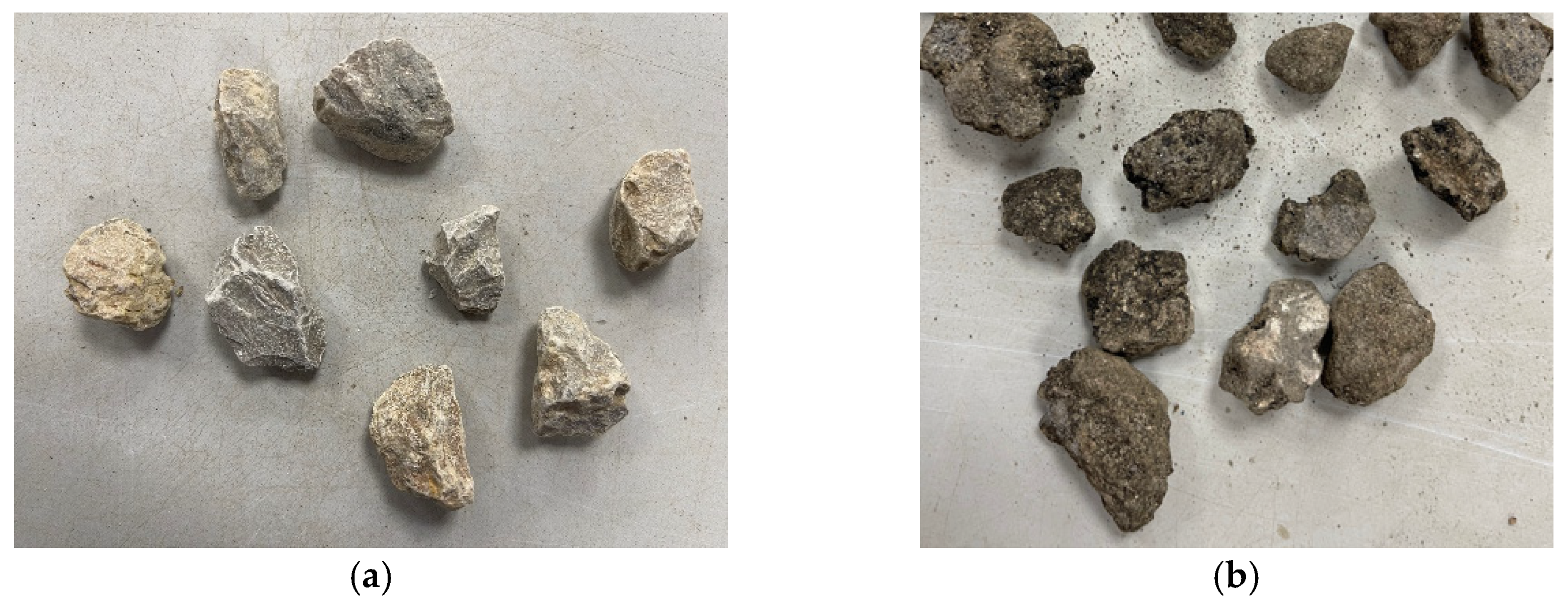
The RAP aggregate used in this study was obtained from a road construction waste dump in Amman, Jordan. This material, originally hot-mix asphalt, featured aggregate particles with an asphalt coating (see Figure 2b). The waste asphalt pavement rubble underwent crushing, sieving, and grading to achieve sizes comparable to those of natural aggregates, with no prior washing or treatment. This approach of matching coarse RAP size to natural aggregate size was vital for minimizing test result variations. Furthermore, the use of untreated and unwashed RAP aggregates aimed to reduce environmental impact and costs, consistent with real-world applications.
Specific gravity and water absorption data for the fine and coarse RAP aggregates are listed in Table 4. The coarse RAP used in this study was retained on a 4.75 mm sieve. An extraction test, conforming to ASTM D2172 [33], revealed that the aging asphalt content attached to the aggregate was 5.324% by weight. Concrete mixtures incorporated RAP at replacement ratios of 0%, 25%, 50%, 75%, and 100% by the weight of the natural coarse aggregate.

2.4. Silica Fume (SF)

The silica fume (SF) utilized in this research conformed to ASTM C1240 [34] and had a specific gravity of 2.2. In the concrete mixtures, SF was incorporated at dosages (as a percentage of cement weight) of 0%, 7% (1.05 kg), 14% (2.1 kg), and 21% (3.15 kg). This range of SF content was chosen to ensure that the optimal dosage would fall within the studied values [15,35,36,37].

2.5. Superplasticizer (SP)

The key objective of this study was to investigate the impact of superplasticizer (SP) on concrete containing RAP aggregates. We also aimed to determine whether the interaction of RAP concrete with SP would align with that of conventional concrete and to identify any potential enhancements in physical properties. To achieve these objectives, the water-cement (w/c) ratio was kept constant at 0.48. This w/c ratio was selected considering control concrete mixtures without SP, striking a balance between workability and strength, which is typical for conventional concrete mixes (0.40 to 0.60) in the absence of SP [19,21,22].
A polycarboxylate-ether superplasticizer (high-range water reducer) compliant with EN 934 part 2 was used. The properties of the resin are summarized in Table 5. To ensure that the optimal range was covered, the superplasticizer dosages applied in the concrete mixes (liters per 100 kg of cement) were 0% (0 mL), 0.7% (600 mL), 1.4% (1200 mL), and 2.1% (1890 mL) [20,23,24].
The selected SF (0–21%) and SP (0–2.1%) ranges were designed to capture both optimal and potentially adverse effects, as no systematic studies have previously investigated their interaction with RAP as a new sustainable material. The upper limit of 21% SF was deliberately included to observe any point of diminishing returns or negative impacts on workability and durability, while the SP range reflects typical practice with a slight extension to evaluate its influence across varying RAP contents.

2.6. Concrete Mixtures

In this study, 35 concrete mixtures were prepared, all maintaining a constant water-to-cementitious material ratio of 0.48. Table 6 lists the mixture ratios by weight for the control mix ingredients. Concrete mixtures were prepared using a mechanical mixer and subjected to standard compaction. The specific compositions and dosages of all concrete mixtures are presented in Table 7a–f. Table 7a–d presents the reference mixes as follows: (a) Control-Mix (0% RAP, 0% SF, 0% SP), (b) RAP-Mixes (0% SF, 0% SP), (c) SF-Mixes (0% RAP, 0% SP), and (d) SP-Mixes (0% RAP, 0% SF). While Table 7 (e and f) details mixes incorporating RAP, SF, and SP as follows: (e) is for RAP-SF-Mixes (0% SP) and (f) is for RAP-SP-Mixes (0% SF).
To clarify the mix designations in Table 7, the initial part indicates the percentage of coarse aggregate RAP replacement, and the subsequent part specifies the percentage of the agent content (SF or SP). For instance, “RAP0-00” identifies the control mix using 100% natural aggregate (NA) with no RAP, SF or SP, while “RAP100-SF21” denotes a mix with 100% RAP aggregate and 21% SF content. It is important to note that the sum of the RAP and NA contents in any mixture consistently equaled 100%. Our investigation of SF and SP was conducted separately.
Specimens were prepared, and tests were carried out in accordance with ASTM C143/C143M-12 [38], ASTM C642-21 [39], and ASTM C138/C138M-17a [40].

3. Results and Discussion

To understand how RAP, SF, and SP interact, we first studied the effect of each component separately. This approach provides a foundational understanding of the individual impacts of these additives on the properties of concrete before analyzing their combined effects. All the experimental results and statistical indices are given in Appendix A.

3.1. Effect of RAP Content (RAP-Mixes)

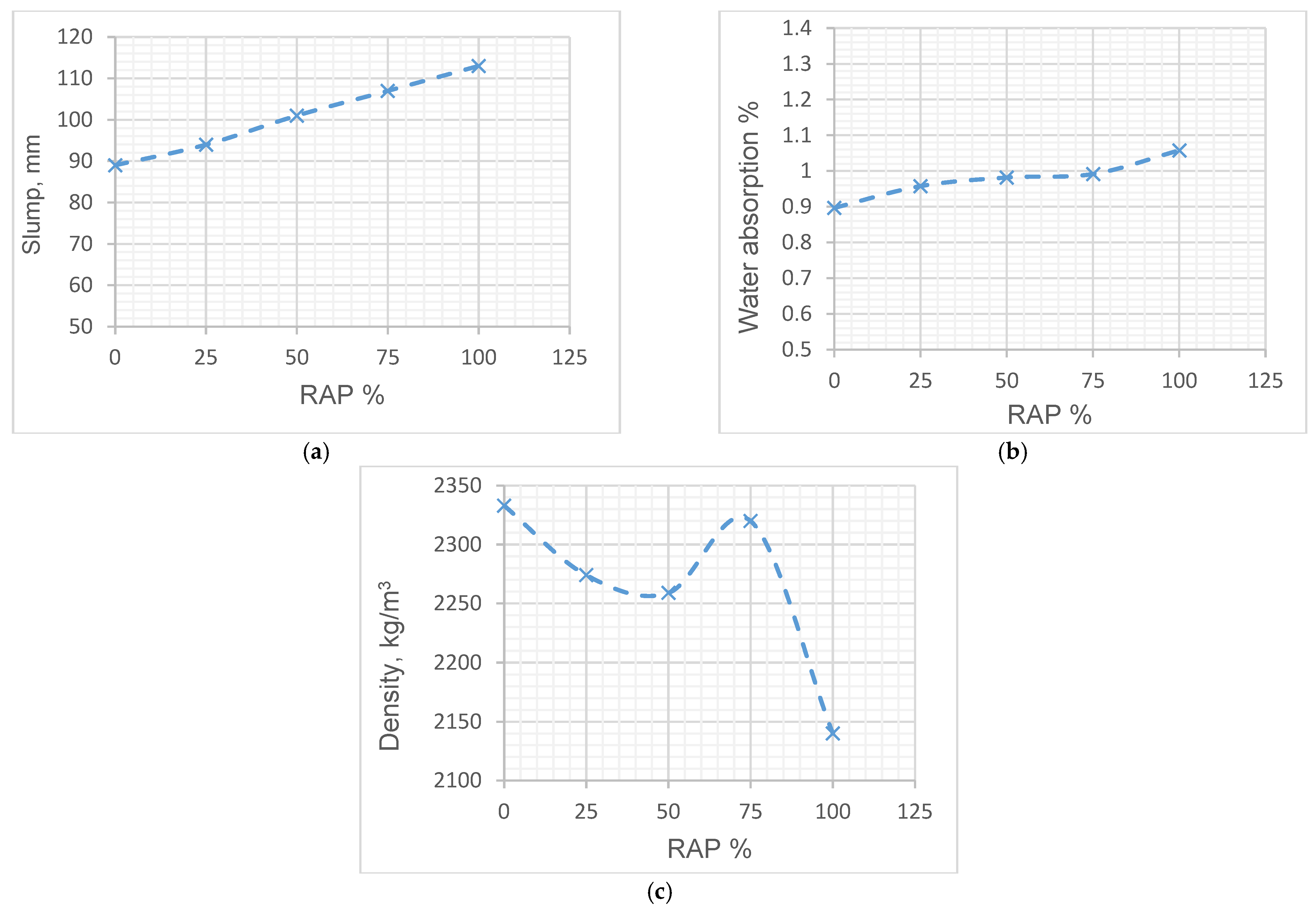
As shown in Figure 3a (RAP-Mixes), the addition of RAP significantly increased the slump of the concrete mixes from 89 mm at 0% RAP (Control Mix) to 113 mm at 100% RAP. This improved workability is primarily due to the lubricating effect of the bituminous coating on the RAP aggregates, which reduces friction between particles. The more rounded shape of the RAP particles and the hydrophobic nature of the asphalt further enhanced the fluidity of the mixture by limiting water absorption and increasing the amount of free water available.
As shown in Figure 3b, water absorption increased steadily with the RAP content, from 0.897% at 0% RAP to 1.058% at 100% RAP. This is due to RAP’s high porosity, microcracks, and aged asphalt residues from prolonged environmental exposure and recycling. RAP’s porous nature also weakens its bond with the cement matrix, contributing to higher permeability. Even though the water-cement (w/c) ratio for all mixes was constant at 0.48, the inclusion of RAP significantly affected the slump and water absorption.
The density results shown in Figure 3c indicate a nonlinear response to increasing RAP content. As expected, the control mix (0% RAP) recorded the highest density at 2333 kg/m3, while the 100% RAP mix dropped to 2140 kg/m3. This decline is primarily due to the lower specific gravity and higher porosity of the RAP aggregates compared to those of natural aggregates, which result from long-term exposure and mechanical degradation during milling. However, a noticeable increase in density (2320 kg/m3) was observed at the 75% RAP replacement level. This unexpected trend is likely due to improved particle packing between the natural and RAP aggregates at this specific content, where the heterogeneity in shape and angularity contributed to better interlocking and reduced voids. Additionally, the aged asphalt film on the RAP may have reduced internal friction during compaction, thereby minimizing air entrapment and increasing overall density.

3.2. Effect of SF Content (SF-Mixes)

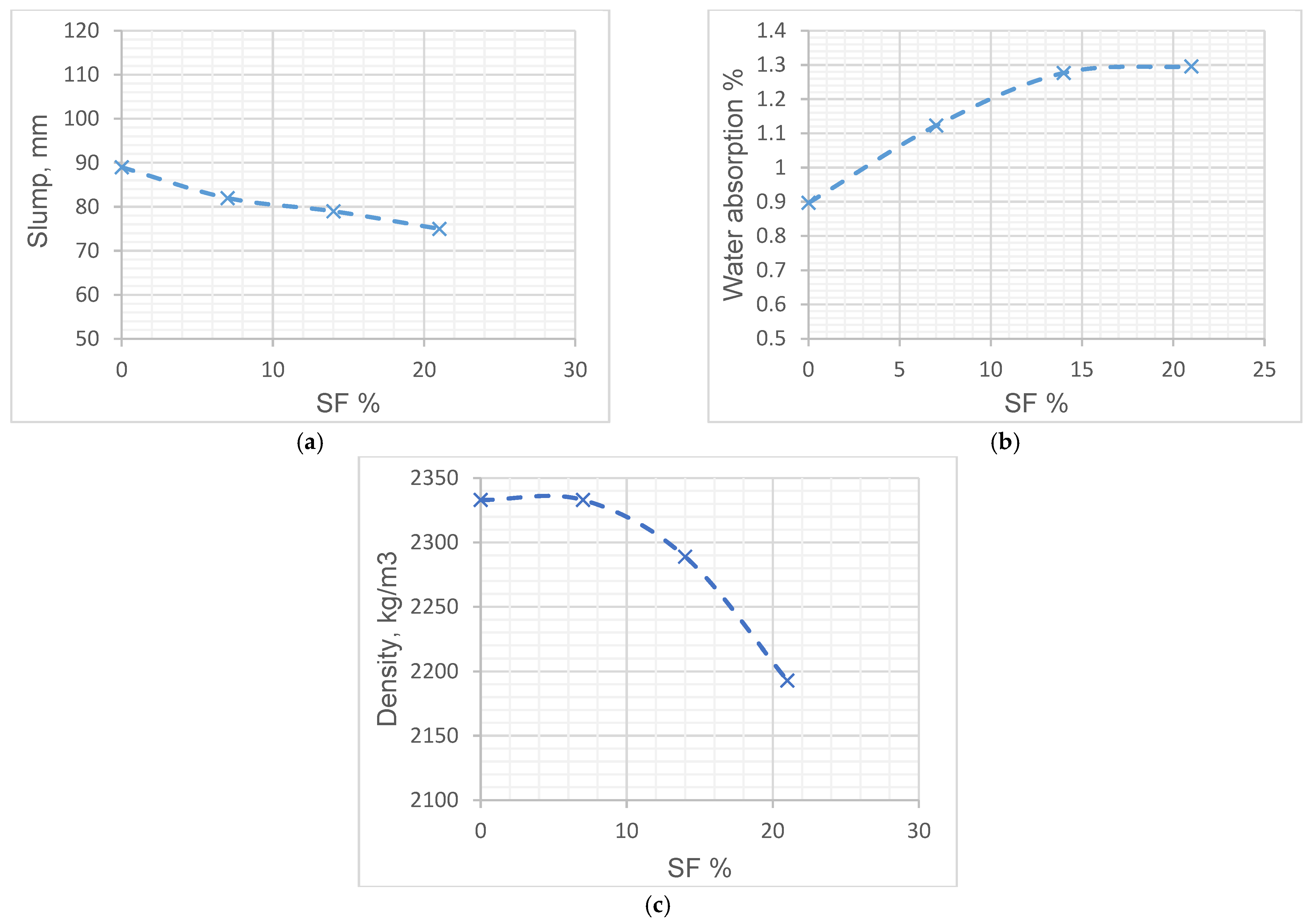
The test results for the SF-Mixes, used to examine the effect of adding SF, are presented in Figure 4. As shown in Figure 4a, the slump decreased from 89 mm at 0% SF to 75 mm at 21% SF. This was an expected outcome, as the very high surface area of SF increases the water demand of the mix. Because the water-to-cement (w/c) ratio was kept constant for all mixes, there was not enough free water to maintain the same level of workability, resulting in a lower slump.
Although SF typically reduces permeability through its microfiller and pozzolanic effects, our results show an unexpected increase in water absorption with increasing SF content (Figure 4b). This occurred because of the constant water-to-cement (w/c) ratio, which led to reduced workability, as observed in the slump test results (Figure 4a). This poor workability hindered proper compaction, resulting in more entrapped air and ultimately negating the densifying benefits of SF. This finding aligns with the existing literature, which notes that SF’s high fineness increases the water demand, limiting the free water available for proper compaction [41]. Furthermore, at higher dosages (14–21%), the pozzolanic activity may have plateaued due to a limited supply of calcium hydroxide. This causes the excess SF to act as an inert filler, increasing the internal friction. The combination of poor compaction and limited pozzolanic activity explains the increase in hardened water absorption and reduction in concrete density [42].

3.3. Effect of SP Content (SP-Mixes)

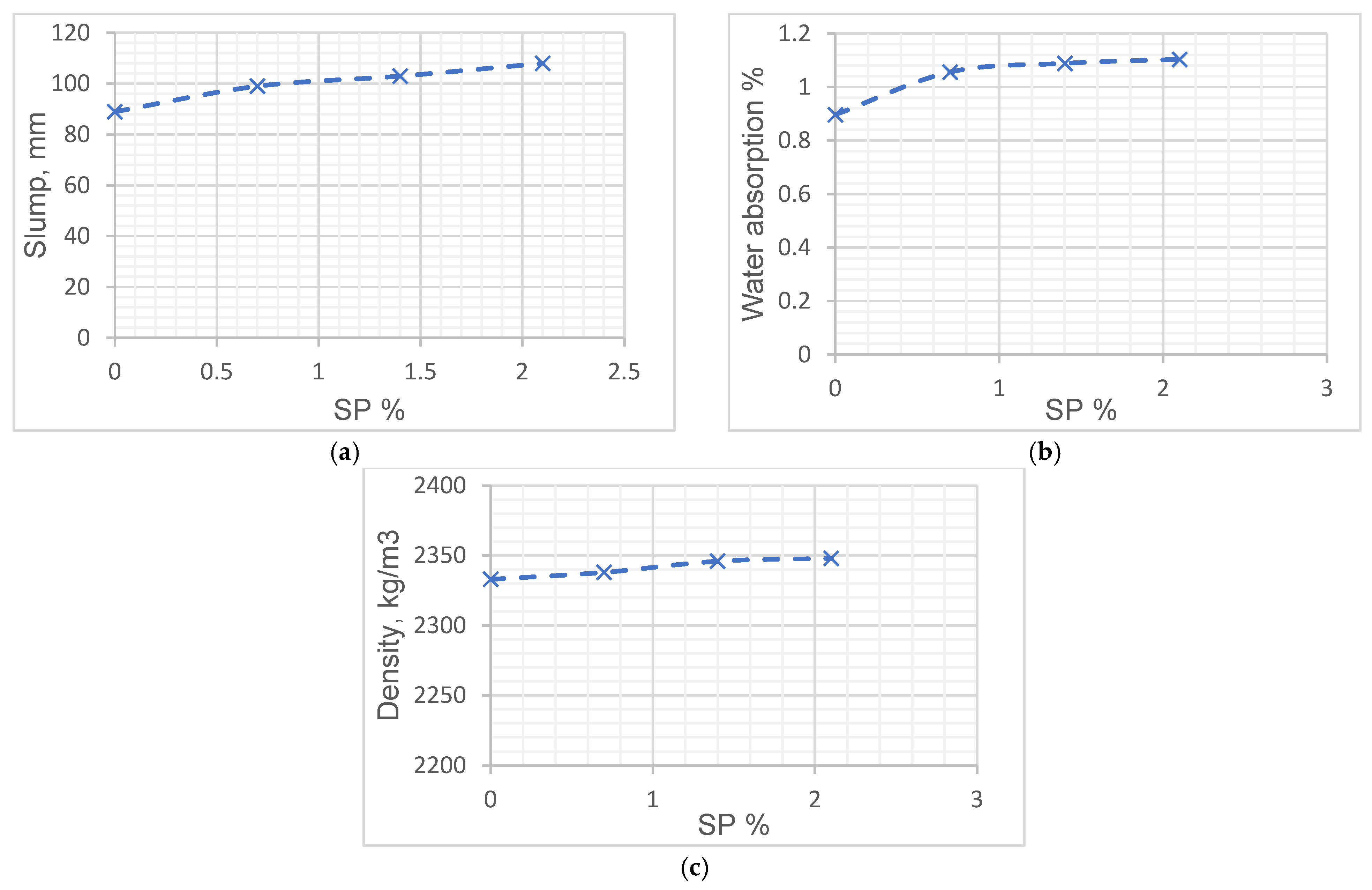
Figure 5a shows that increasing the superplasticizer (SP) content from 0% to 2.1% significantly increased the slump values from 89 mm to 108 mm, which improves the flowability and workability. As illustrated in Figure 5c, this led to a slight but corresponding increase in concrete density, rising from approximately 2333 kg/m3 to 2348 kg/m3. This confirms that SP enhances particle dispersion, allowing for better compaction and a denser final product.
Interestingly, despite the increase in density, the water absorption also showed a slight increase, from about 0.897% at 0% SP to 1.104% at 2.1% SP, as shown in Figure 5b. This seemingly contradictory trend can be explained by the mechanism of SP in altering pore structure. While SP disperses cement particles and promotes more efficient packing, the resulting high fluidity may increase bleeding and micro-segregation in the fresh state. Upon hardening, this process can leave behind a more continuous capillary pore network, even though the bulk density is improved. Water absorption is governed more by pore continuity than by density, indicating that the presence of interconnected capillary pores dominates the absorption response. This behavior has been previously documented and highlights that without supplementary cementitious materials to refine the pore structure, the capillary network remains open to water [16,25]. These findings highlight a potential trade-off between improved fresh properties and pore structure integrity when using SP in RAP-containing mixtures. Further investigation using detailed microstructural characterization techniques (e.g., SEM or MIP) is recommended to validate these mechanisms and provide a more comprehensive understanding of the observed behavior.

3.4. The Interaction Between RAP and SF (RAP-SF-Mixes)

3.4.1. The Interaction Between RAP and SF in Terms of RAP Content

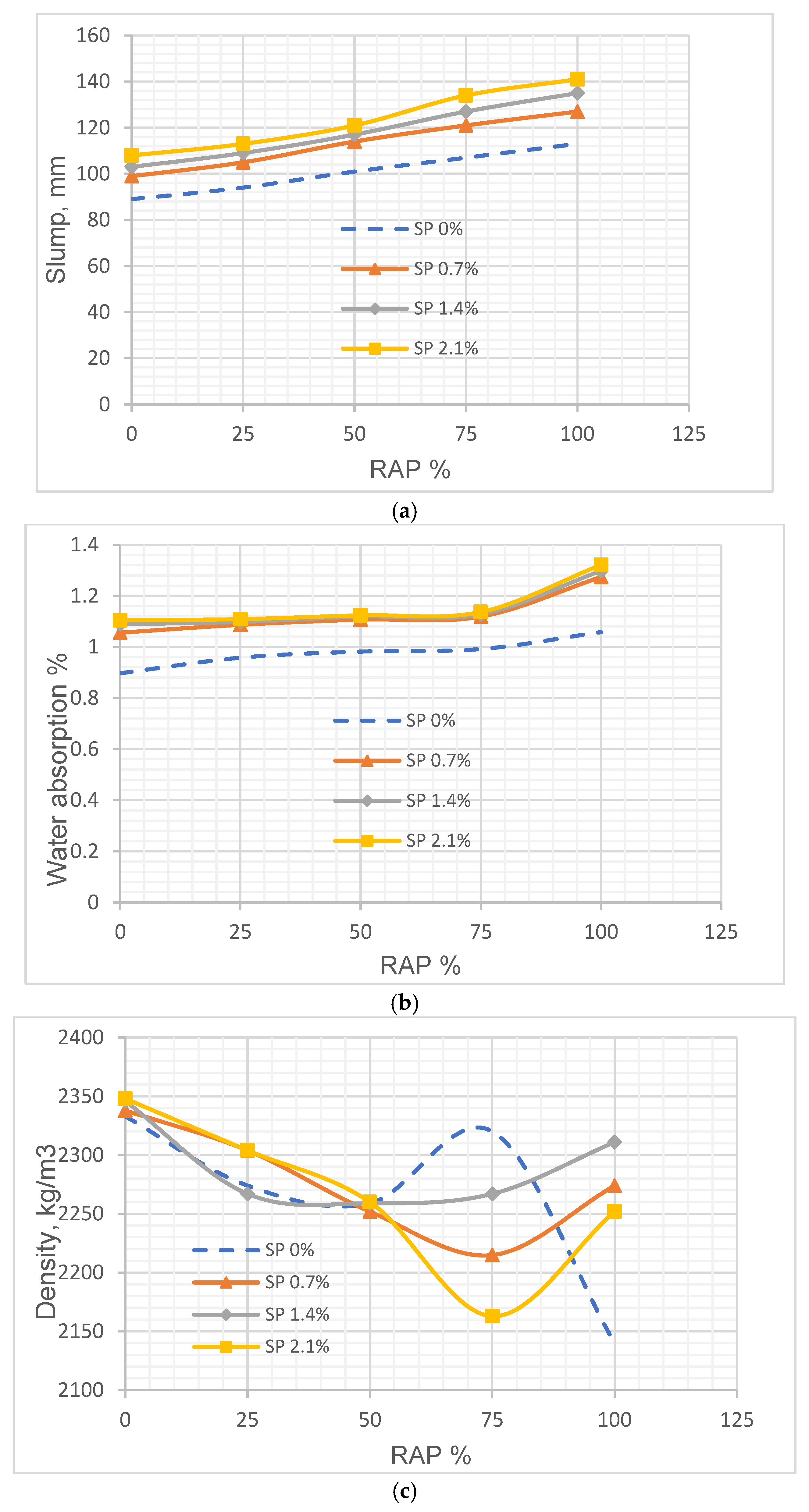
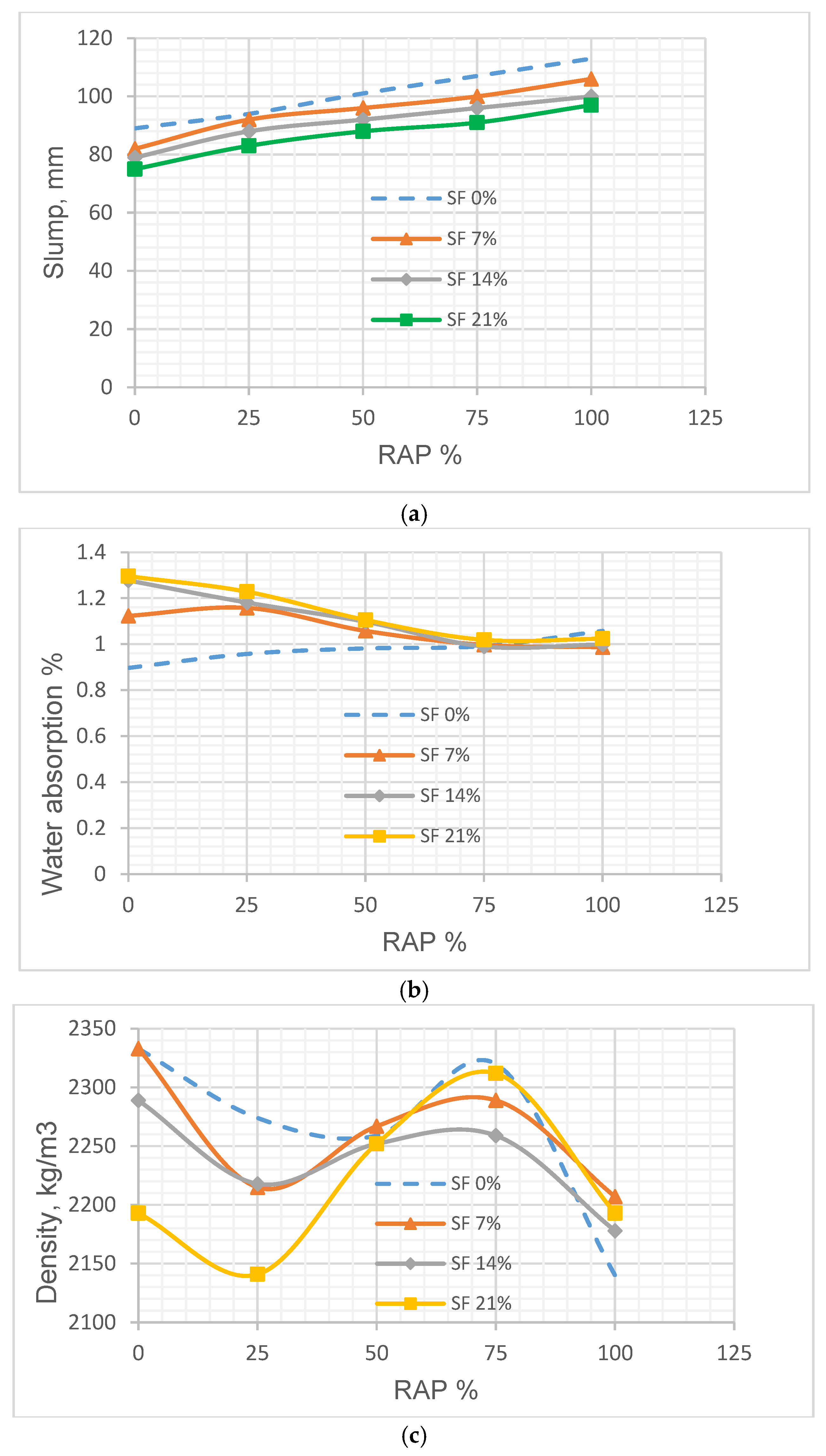
This section presents the experimental results on the influence of varying RAP replacement ratios (0%, 25%, 50%, 75%, and 100%) on the physical properties of concrete, including slump, water absorption, and density, for all levels of SF content. Figure 6 illustrates the test results for the RAP-SF mixes. The dashed line represents the reference mixes with 0% SF (RAP-Mixes), which allows for easy comparison.
The test results (Figure 6a) demonstrated a clear and consistent increase in slump with increasing RAP content across all SF content levels. Although RAP aggregates are generally more porous, their surface film behaves similarly to a pre-wetted surface, which, combined with the residual asphalt acting as a plasticizing agent, contributes to improved workability. These observations confirm that RAP inclusion tends to enhance slump despite its porosity and the SF content level.
Water absorption results (Figure 6b) reveal complex interactions between RAP content and SF. In the absence of SF (RAP-Mixes), water absorption increased steadily with RAP. However, with SF additions (7%, 14%, and 21%), water absorption progressively decreased and subsequently stabilized at RAP content exceeding 50%. This improvement is attributed to SF’s pozzolanic activity and microfiller effect, which densify the interfacial transition zone (ITZ) and refine pore structure, reducing capillary connectivity. At higher RAP contents, where voids are more pronounced, the benefits of SF are magnified [43].
Interestingly, in all SF series, slump increased with RAP content due to the hydrophobic bitumen-coated surfaces, which limited water absorption and increased the amount of free water. However, water absorption increased with RAP only in the 0%SF series, likely due to its high internal porosity. This suggests a two-stage mechanism: initially, the hydrophobic asphalt coating prevents water ingress, enhancing workability; over time, water penetrates the porous RAP and increases its absorption. In this context, an alkaline environment alone did not significantly reduce absorption. However, with the addition of SF, the pozzolanic reaction between amorphous silica and calcium hydroxide in the alkaline pore solution generates a secondary C–S–H gel, which densifies the matrix, strengthens the ITZ, and mitigates water uptake [44].
As shown in Figure 6c, all RAP-SF mixes exhibited similar density behavior, showing a clear and consistent increase at 50% and 75% RAP replacement levels across all SF contents. This trend was particularly noticeable in the mixes with 21% SF. As explained before for RAP-Mixes, this unusual increase in density is likely due to improved particle packing at this specific range of RAP content. The heterogeneity in the size, shape, and texture of the natural and RAP aggregates likely contributed to better interlocking and reduced voids, resulting in improved compactness and overall lower density.

3.4.2. The Interaction Between RAP and SF in Terms of SF Content

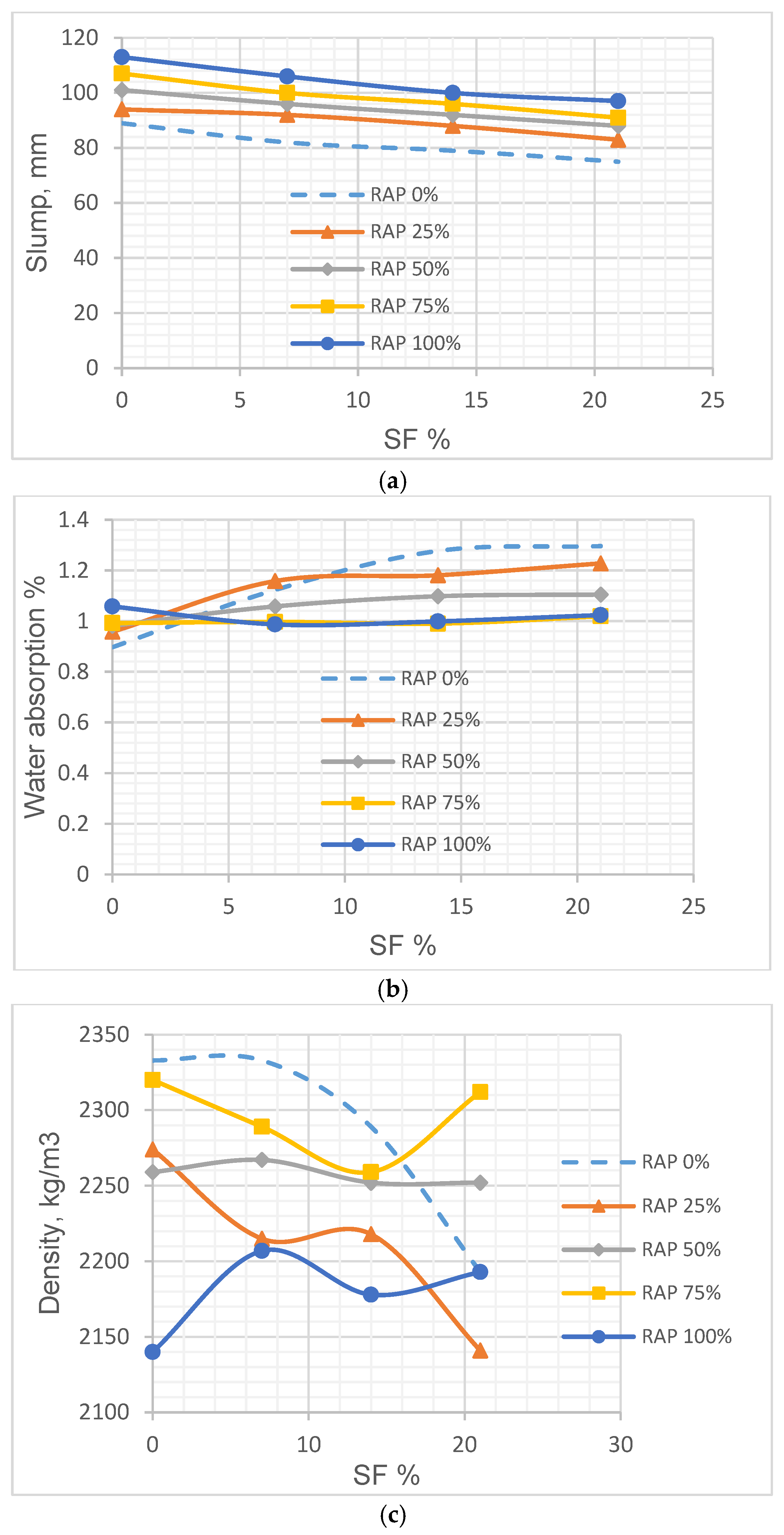
This section presents the experimental results on the influence of varying SF replacement ratios (0%, 7%, 14%, and 21%) on the physical properties of concrete, including slump, water absorption, and density, for all levels of RAP replacement. Figure 7 illustrates the test results for the RAP-SF mixes. The dashed line represents the reference mixes with 0% RAP (SF-Mixes), which allows for easy comparison.
Unlike RAP, SF consistently reduced the slump across all RAP replacement contents, as shown in Figure 7a, while maintaining a constant water-cement ratio. As explained previously for SF-Mixes, this reduction is mainly due to SF’s ultrafine particles and high surface area of SF, which increase the water demand and paste viscosity. Its pozzolanic reactivity also accelerates matrix stiffening, thereby limiting workability. Although RAP’s bitumen in RAP may initially improve slump, an increase in the SF content overrides this effect, resulting in reduced flowability.
The effect of SF on water absorption depended on the level of RAP replacement. As shown in Figure 7b, for mixes with 25% and 50% RAP, water absorption initially increased with increasing SF content up to 14% before plateauing. This initial rise is likely due to the reduced workability at higher SF dosages, which leads to poorer compaction and increased air entrapment. Beyond 14% SF, the stabilization of water absorption suggests that a physical and chemical threshold was reached, where particle packing neared its maximum and the supply of calcium hydroxide became insufficient to continue the pozzolanic reactions. In contrast, for mixes with higher RAP contents (75% and 100%), water absorption remained relatively constant across all SF levels. In these cases, the inherent porosity and bitumen coating of the RAP aggregates had a dominant effect on moisture transport, making the microstructural changes caused by the SF less significant. This indicates that as the RAP content increases, the control of water absorption shifts from the binder to aggregate properties.
The effect of SF on concrete density was also closely linked to the level of RAP replacement, as shown in Figure 7c. For mixes with 0% and 25% RAP, density slightly but consistently decreased as the SF content increased. This is likely due to reduced workability from the SF, which hindered compaction and led to more air voids. At 50% RAP, the density relatively stabilized across all SF contents. This suggests a balance in which the negative impact of RAP’s low specific gravity was offset by the micro-filler effect of SF. In contrast, at higher RAP contents (75% and 100%), no consistent trend was observed in density. The low density, high porosity, and bitumen coating of the RAP aggregates were the dominant factors, overshadowing any potential densifying effect of the SF. Minor fluctuations in density at these levels were likely caused by local variations rather than a systematic response to SF content [26].

3.5. The Interaction Between RAP and SP (RAP-SP-Mixes)

3.5.1. The Interaction Between RAP and SP in Terms of RAP Content

This section presents the experimental results on the influence of varying RAP replacement ratios (0%, 25%, 50%, 75%, and 100%) on the physical properties of concrete, including slump, water absorption, and density, across all levels of all superplasticizer (SP) contents. Figure 8 illustrates the test results for the RAP-SP Mixes. The dashed line represents the reference mixes with 0% SP (RAP-Mixes), which allows for easy comparison.
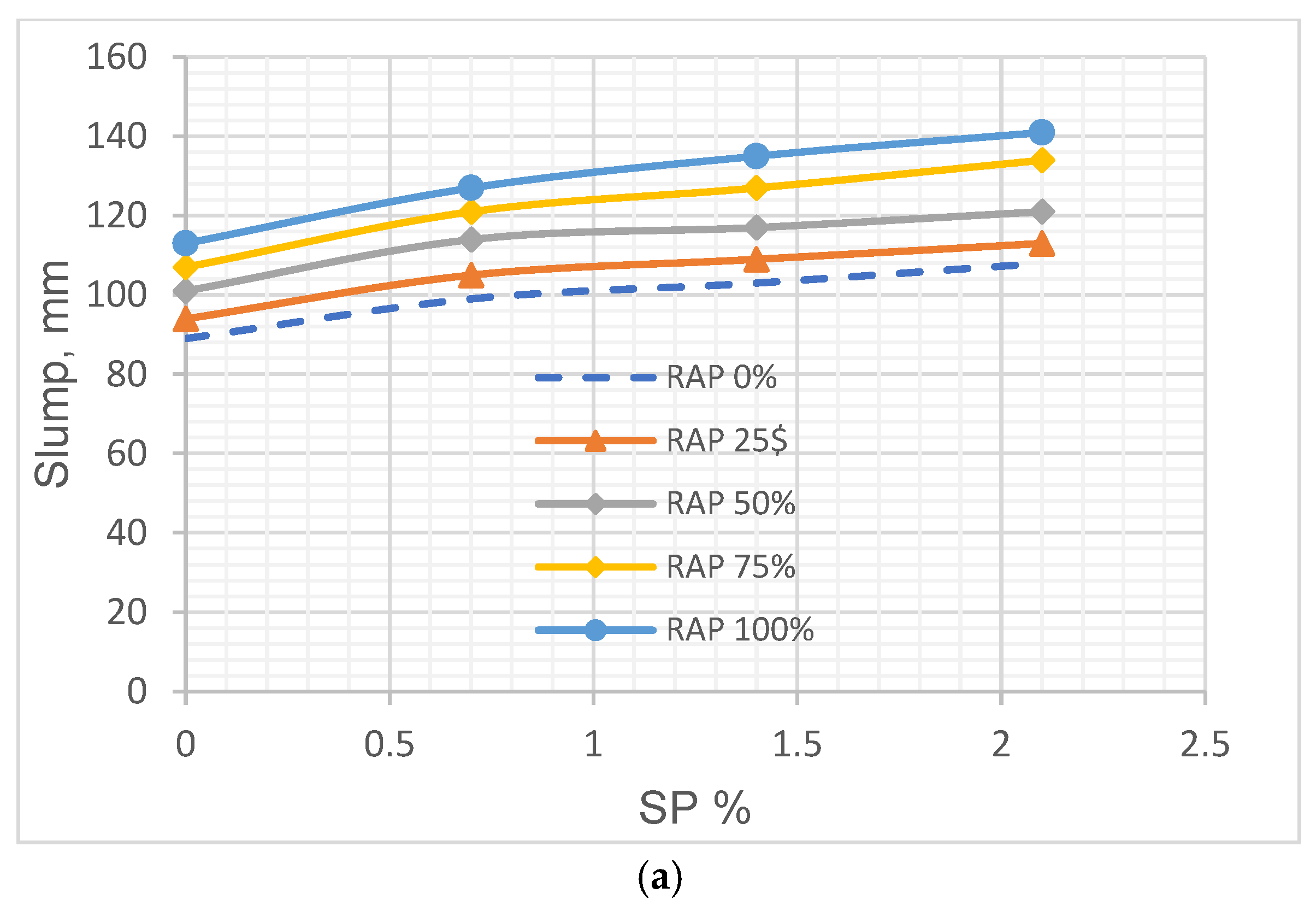
As shown in Figure 8a, increasing the RAP content led to a consistent increase in the slump across all SP levels. This occurred even though the water-to-cement (w/c) ratio was maintained constant at 0.48. The residual asphalt coating on the RAP particles likely reduced the internal friction, improving the flowability and lubricating effect of the mix. This effect became more pronounced at higher RAP and SP dosages, where the combined influence of the superplasticizer and hydrophobic RAP enhanced paste mobility without the need for additional water. This observation is consistent with the study by Hashemi et al. [25], who found that RAP improves the flow of fresh concrete, especially when combined with high-range water reducers under fixed water content.
Figure 8b shows that water absorption steadily increased with higher RAP content across all SP levels, despite a constant w/c ratio. This increase was attributed to the aged and porous microstructure of RAP aggregates, which contained microcracks and voids that absorbed and retained water. Although SP promotes better compaction, it does not significantly offset the absorptive nature of RAP. Interestingly, while the overall concrete density fluctuated, water absorption followed a consistent trend. This confirms that absorption is more sensitive to pore connectivity than to bulk density. Thus, the absorption behavior of RAP concrete is primarily governed by capillary continuity, not by the total water content. The slump jump from 0% SP to 0.7% SP allows better flow and more RAP exposure to mixing water, which could actually increase water accessibility and absorption early on, leading to a noticeable upward step.
As seen in Figure 8c, concrete density generally declined with increasing RAP content due to RAP’s lower specific gravity. However, with a constant w/c ratio, variations in density reflect the combined influence of SP and RAP on packing efficiency and air entrapment. A density drop occurred at 75% RAP for the 0.7% and 2.1% SP mix. This contrasts with the RAP-SF mixes, which showed an increase in density at the same 75% RAP replacement level across all SF contents (see Figure 6c). This was likely caused by overdispersion or minor segregation effects induced by the superplasticizer, which reduced the compactness achieved during consolidation. Interestingly, at 100% RAP, this trend reversed: RAP–SP mixes regained density due to more uniform gradation and reduced interfacial mismatch, whereas RAP–SF mixes experienced a density decline as the packing benefit of mixed aggregates was no longer present. This contrast emphasizes that SF primarily improves density through microfiller and pozzolanic effects at intermediate RAP contents, while SP influences density via rheological behavior, which can enhance or disrupt aggregate packing depending on the replacement level. The 1.4% SP series exhibited an intermediate behavior. The divergence between the stable trend of water absorption and fluctuating density supports the idea that density reflects compaction, while absorption tracks microstructure. Kong et al. [45] reported similar decoupling between density and absorption in materials with complex pore systems.

3.5.2. The Interaction Between RAP and SP in Terms of SP Content

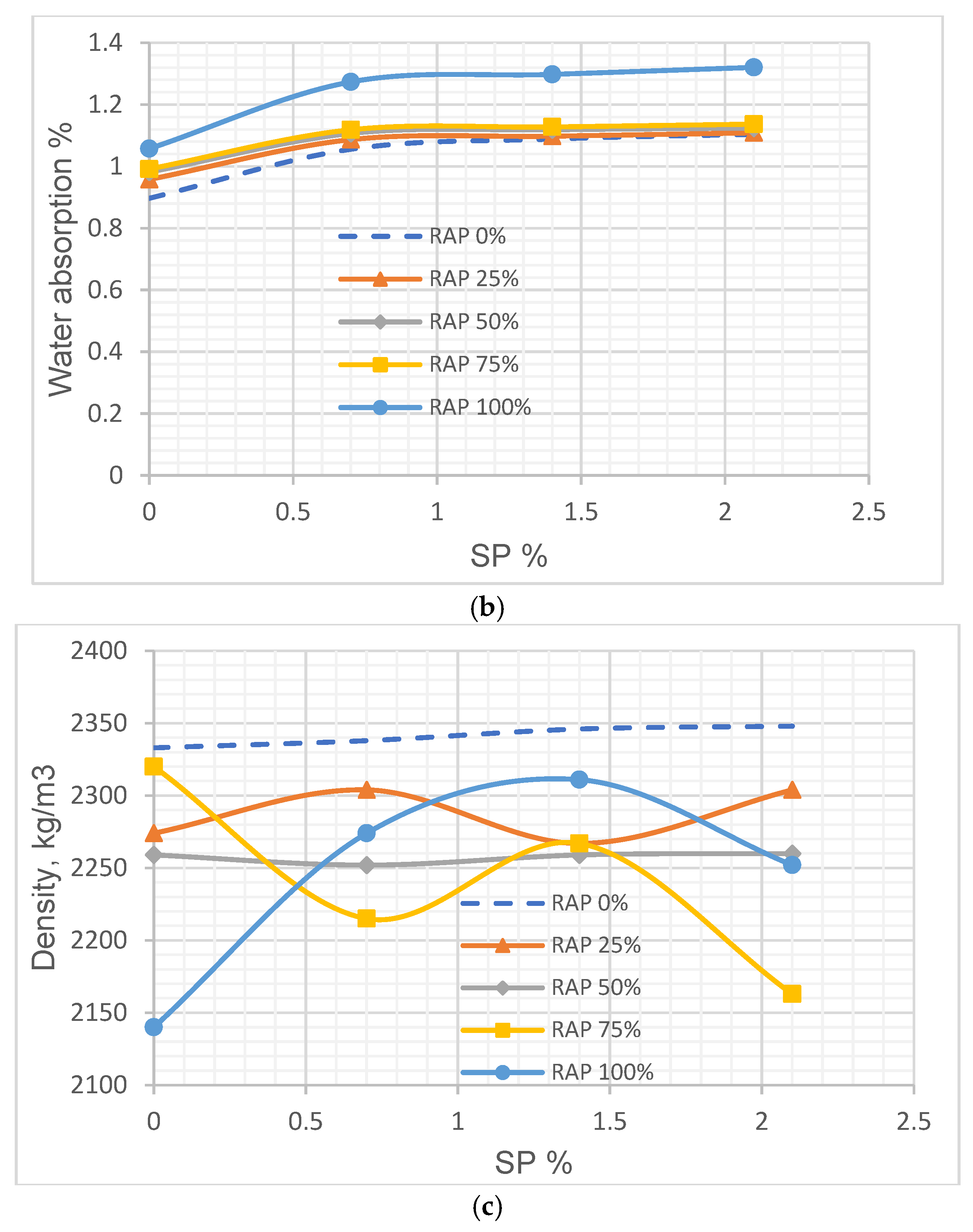
This section details the experimental findings on how varying SP dosage ratios (0%, 0.7%, 1.4%, and 2.1%) affect the physical properties of concrete, including slump, water absorption, and density across all RAP replacements. Figure 9 presents the test results for the RAP-SP mixes. To provide a clear basis for comparison, the dashed line in each figure represents the reference mix containing 0% RAP.
As shown in Figure 9a, increasing the SP content led to a consistent increase in slump across all RAP replacement levels. The dispersing action of polycarboxylate-ether molecules on cement particles reduces internal friction and releases trapped water, thereby enhancing flowability. This effect was further improved in mixes containing RAP, where the residual bitumen coating acted as a lubricant. However, the increase in slump became less pronounced at higher SP dosages (above 1.4%), suggesting the dispersing effect had reached saturation, and paste cohesiveness increased under a constant water-cement (w/c) ratio.
Figure 9b shows that water absorption generally increased with higher SP content for all RAP replacement ratios. This trend is counterintuitive because superplasticizers are known to improve compaction and reduce porosity. However, the increase in slump caused by the SP can lead to a more open pore structure if the mixture is not properly consolidated, which can increase the interconnectedness of pores and thus enhance water absorption. However, at higher SP dosages, the rate of increase in water absorption diminished, suggesting improved matrix compaction and reduced additional benefit from further SP addition. Overall, the reduced sensitivity at higher SP levels reflects a balance between SP efficiency, limited water availability, and the intrinsic influence of RAP on the rheology and porosity of concrete.
The relationship between SP content and concrete density is more complex and non-linear than the trends observed for slump and water absorption, as it is highly dependent on the RAP content. For low-to-moderate RAP mixes (0–50%), density showed a slight increase or remained stable with increasing SP. At 50% RAP, density stabilized across all SP contents. This suggests that 50% RAP is the optimal packing ratio, creating a “structural equilibrium” in density that is not significantly affected by superplasticizers. However, high-RAP mixes (75% and 100%) exhibited more complex behavior. The 100% RAP series density increased to a peak at approximately 1.4% SP before, while the 75% RAP series showed no clear trend, with density decreasing, increasing, and decreasing again. This complex response is due to SP’s dual effect: it improves compaction up to an optimal SP dosage but can cause over-dispersion and segregation at higher levels, leading to a density drop. The irregular behavior of the 75% RAP mix suggests that it is particularly sensitive to this balance. These findings emphasize the need to optimize SP dosage to balance workability, compaction, and stability for mixes containing RAP.

3.6. Optimal Content

This section presents an analysis of the test results and optimal content ranges for workability, water absorption (WA), and density across key concrete variables: RAP, SF, and SP.

3.6.1. Indicators of Workability and Durability

When compared to typical conventional concrete slump ranges (75–100 mm for a similar w/c), RAP mixes containing ≥75% RAP and ≥1.4% SP exceeded these workability benchmarks, as shown in Table 8a. This offers potential advantages in terms of placement and compaction. However, excessive slump (>130 mm) can increase the risk of segregation in high-RAP, high-SP mixes if not properly controlled [46].
As shown in Table 8b, water absorption ranged from 0.897% (0% RAP + 0% SF) to 1.321% (100% RAP + 2.1% SP). In the SF series, moderate-to-high RAP replacement (50–100%) combined with 7–21% SF yielded absorption values around 1.00–1.02%, which is lower than that reported for RAP concretes (2.9–3.2% for roller-compacted concrete pavement) [25]. This confirms SF’s pore-refinement effect, even in high-RAP systems (because the w/c is constant, higher RAP increases the free water needed for SF to react and fill the pores). The Comité euro-international du béton [47] classifies concrete quality based on its water absorption. Concrete is considered good if its water absorption is less than 3%, average if it is between 3% and 5%, and poor if it exceeds 5%.
In the SP series, although SP improved density (as shown in Table 8c), it did not lower absorption to the same degree, likely because the improvement in packing from better compaction does not necessarily alter the microstructure as effectively as SF’s pozzolanic reaction. The lowest absorption in the SP mixes (1.087%) occurred at 25% RAP + 0.7% SP. Density results ranged from 2140 kg/m3 (100% RAP + 0% SF) to 2348 kg/m3 (0% RAP + 2.1% SP). Values above 2250 kg/m3, observed in mixes such as 50% RAP + 7% SF and 75% RAP + 21% SF, fall within the conventional concrete range (2200 to 2500 kg/m3), indicating sufficient compaction and low void content [48].

3.6.2. Normalized Slump, WA, and Density

Table 9 presents the normalized values of slump, water absorption, and density for all mixes. These normalized values were obtained by dividing the slump, water absorption, and density of each mix by the corresponding values of the control mix (0% RAP, 0% SF, and 0% SP). Regarding slump, adding RAP and SP increases the slump and improves workability. The best workability in the SF series was observed at higher RAP levels and lower SF contents (e.g., 1.27 at 100% RAP and 0% SF), as shown in Table 9a. This signifies a 27% improvement compared to the control mix. In the SP series, the highest workability was achieved at higher RAP levels and higher SP contents (e.g., 1.58 at 100% RAP and 2.1% SP), which represents a 58% improvement over the control mix.
Lower water absorption indicates more impervious concrete with fewer connected pores, making the lowest values particularly significant. The findings in Section 3.4 and Section 3.5 show that adding RAP or SP generally increased water absorption. In contrast, the addition of SF did improve water absorption for some RAP contents, but this effect was limited due to the constant w/c ratio, as previously detailed. For instance, as shown in Table 9b, water absorption (WA) increased to 1.18 for the 100% RAP mix. After adding 7% SF, the WA was reduced to 1.10, representing a 7.2% improvement. Similarly, for the 75% RAP mix, WA initially increased to 1.11. After adding 14% SF, the WA was reduced to 1.10, which corresponds to a 0.9% improvement. Tracing the minimum values revealed that in the SP series, the lowest WA occurred at lower RAP levels and lower SP contents (e.g., 1.07 at 25% RAP and 0% SP). In the SF series, two conditions produced low absorption: lower RAP levels and lower SF contents (e.g., 1.07 at 25% RAP and 0% SF) and higher RAP levels with moderate SF contents (e.g., 1.10 at 75–100% RAP and 7–14% SF), indicating a more complex RAP–SF interaction.
As discussed in Section 3.4 and Section 3.5, adding RAP generally reduced density, and adding SF and SP may improve density at some RAP contents (Table 9c). As noted in WA, the addition of SF improved the density for some RAP contents, but this effect was limited due to the constant (w/c) ratio. For instance, as shown in Table 8c, density decreased to 0.92 for the 100% RAP mix. After adding 7% SF, the density was increased to 0.95, representing a 3.3% improvement. Similarly, for the 100% RAP mix, density initially decreased to 0.92. After adding 1.4% SP, the density increased to 0.99, which corresponds to a 7.6% improvement. In the SP series, the highest density was observed at lower RAP levels and higher SP contents (e.g., 1.01 at 0% RAP and 2.1% SP). In the SF series, higher density values appeared at lower RAP levels and lower SF contents (e.g., 1.00 at 0% RAP and 0–7% SF) and at moderate-to-high RAP levels across all SF contents (e.g., 0.99 at 75% RAP and 0–21% SF). Notably, the 50% RAP series maintained a constant density (0.97) across all SF and SP content levels.
Alwathaf et al. [7] determined that the optimal contents of SF and SP for improving the compressive strength of RAP concrete were 5–7% SF and 0.7–1.4% SP, respectively. They also found that the greatest improvements were observed at high RAP contents. These findings are consistent with the density-optimal contents identified in this study, which suggests that the mechanisms responsible for strength and density enhancement are fundamentally the same.

3.6.3. Durability Implications

In terms of concrete durability, WA ≤ 1.1% and density ≥ 2250 kg/m3 are generally associated with low chloride diffusion coefficients (<8 × 10⁻¹² m2/s) and carbonation depths under 5 mm after one year of natural exposure [47,49]. Based on this benchmark, mixes such as 50% RAP + 7% SF and 75% RAP + 21% SF are predicted to perform comparably to high-quality conventional concrete in chloride-laden or freeze–thaw environments. In essence, a WA of ≤1.1% represents highly durable concrete that performs exceptionally well in aggressive environments, offering superior protection against long-term deterioration.
While high SP dosages offer substantial placement benefits, their durability gains are less pronounced than those from SF, underscoring the need to balance workability requirements with long-term performance objectives. For structural-grade RAP concrete, the optimum balance appears to be in the 50–75% RAP range with moderate SF or 25–50% RAP with moderate SP, depending on whether durability or workability is prioritized.
The durability benchmarks for water absorption (≤1.1%) and density (≥2250 kg/m3) were adopted from the literature and are consistent with commonly reported ranges for durable conventional and recycled aggregate concrete. Previous studies indicate that lower water absorption (typically below 2–3%) and higher density (above ~2200 kg/m3) are associated with improved durability and reduced porosity. Given the similarity between RAP and recycled aggregates in terms of physical characteristics, these thresholds are considered appropriate for comparative evaluation; however, they should be interpreted within the specific context of RAP-based mixtures. In this study, the term “optimal” refers to mixes that achieve a balanced performance in terms of durability-related properties, primarily satisfying both the water absorption and density criteria, rather than optimizing a single parameter.

4. Conclusions

This study conducted an experimental investigation into the workability, water absorption, and density of concrete incorporating RAP. This research specifically assessed the individual and interactive effects of varying contents of RAP (0–100% coarse aggregate replacement), silica fume (SF) (0–21%), and superplasticizer (SP) (0–2.1%), while maintaining a constant water-to-cement ratio of 0.48. Six mix categories were prepared: control, RAP, SF, SP, RAP–SF, and RAP–SP. It is important to note that the results presented here are specific to the conditions and limitations of this investigation. Based on these experimental findings, the following conclusions can be drawn:
  • RAP Effect: RAP consistently increased slump due to its bitumen-coated surface, which reduced aggregate water absorption and released more free water into the mix. However, it also increased overall water absorption and reduced density, with a notable stabilization in density at 50% RAP for both the SF and SP series. A density peak was observed at 75% RAP for all SF series, while a reduction in density occurred in the SP series.
  • SF Effect: SF reduced the slump because of its high surface area and water demand. At low RAP levels, this led to higher water absorption and lower density due to poor workability and compaction. Conversely, at moderate-to-high RAP contents (50–100%), SF significantly refined the pore structure, reducing water absorption (≤1.1%) and increasing density (up to 7.6%), confirming a positive synergistic effect with RAP. The observed effects of SF in this study are inherently constrained by the fixed water-to-cement ratio (0.48), which restricted mix adjustments and directly influenced both water absorption and density.
  • SP Effect: The addition of SP substantially improved workability, achieving up to a 58% slump increase in high-RAP mixes (100% RAP, 2.1% SP). While this enhanced compaction in some cases, it also increased water absorption, indicating a more interconnected pore network. Its effect on density was less consistent than that of SF, depending on the RAP content and dosage optimization.
  • Optimal Mixes: RAP–SF mixes at 50–100% RAP replacement with 7–14% SF showed the most balanced performance, combining improved density, very low water absorption, and satisfactory workability. Most RAP–SF and RAP–SP mixes satisfied durability limits for severe exposure, confirming the potential of RAP concrete for sustainable structural applications without compromising reliability.
  • Future Work: Further research should explore variable water–cement ratios and optimized SF–SP combinations to enhance compaction and refine pore networks, alongside long-term studies under cyclic loading, freeze–thaw, and fire exposures. Direct porosity measurements (e.g., SEM and MIP) are recommended to validate the inferred microstructural changes.

Funding

This research received no external funding.

Institutional Review Board Statement

Not applicable.

Informed Consent Statement

Not applicable.

Data Availability Statement

The article includes all the research data.

Acknowledgments

The authors acknowledge the support provided by AL-AHLIYYA AMMAN UNIVERSITY.

Conflicts of Interest

The author declares no conflicts of interest.

Appendix A

Table A1. Statistical indices (Mean, Standard Deviation and Coefficient of Variation) of the experimental results.
NoMix DesignationSlumpWater AbsorptionDensity
MeanStandard Deviation, SDCoefficient of Variation, CVMeanStandard Deviation, SDCoefficient of Variation, CVMeanStandard Deviation, SDCoefficient of Variation, CV
(mm)(mm)(%)(%)(kg/m3)(kg/m3)
1RAP0-008944.49%0.8970.0222.50%2333180.77%
2RAP25-00944.54.79%0.9580.0262.71%2274200.88%
3RAP50-001015.25.15%0.9820.0292.95%2259220.97%
4RAP75-001076.15.70%0.9920.0333.33%2320251.08%
5RAP100-0011376.19%1.0580.043.78%2140281.31%
6RAP0-SF7823.84.63%1.1230.0252.23%2333190.81%
7RAP0-SF14793.74.68%1.2770.0292.27%2289200.87%
8RAP0-SF21753.64.80%1.2960.032.31%2193210.96%
9RAP0-SP0.7994.24.24%1.0560.0211.99%2338170.73%
10RAP0-SP1.41034.34.17%1.0890.021.84%234616.50.70%
11RAP0-SP2.11084.54.17%1.1040.0191.72%2348160.68%
12RAP25-SF7924.85.22%1.1580.032.59%2215210.95%
13RAP50-SF7965.15.31%1.0580.0292.74%2267220.97%
14RAP75-SF71005.45.40%0.9970.0282.81%2289231.00%
15RAP100-SF71065.85.47%0.9870.0292.94%2207241.09%
16RAP25-SF14884.75.34%1.1810.0322.71%221821.50.97%
17RAP50-SF149255.43%1.0980.0312.82%225222.51.00%
18RAP75-SF14965.45.63%0.990.033.03%225923.51.04%
19RAP100-SF141005.95.90%0.9990.0323.20%2178251.15%
20RAP25-SF21834.65.54%1.2280.0362.93%2141221.03%
21RAP50-SF218855.68%1.1050.0343.08%2252231.02%
22RAP75-SF21915.56.04%1.0190.0333.24%231224.51.06%
23RAP100-SF219766.19%1.0240.0353.42%2193261.19%
24RAP25-SP0.71054.44.19%1.0870.0252.30%230418.50.80%
25RAP50-SP0.71144.94.30%1.1070.0272.44%225219.50.87%
26RAP75-SP0.71215.54.55%1.1190.0292.59%2215210.95%
27RAP100-SP0.71276.24.88%1.2740.0352.75%2274241.06%
28RAP25-SP1.41094.54.13%1.0980.0262.37%2267190.84%
29RAP50-SP1.411754.27%1.1190.0282.50%2259200.89%
30RAP75-SP1.41275.64.41%1.1280.0312.75%226721.50.95%
31RAP100-SP1.41356.44.74%1.2980.0382.93%231124.51.06%
32RAP25-SP2.11134.64.07%1.1090.0282.52%230419.50.85%
33RAP50-SP2.11215.24.30%1.1240.032.67%226020.50.91%
34RAP75-SP2.11345.94.40%1.1370.0332.90%2163221.02%
35RAP100-SP2.11416.84.82%1.3210.0423.18%225225.51.13%

References

  1. Yu, J.; Lin, Z.; Zou, G.; Yu, H.; Leng, Z.; Zhang, Y. Long-term performance of recycled asphalt mixtures containing high RAP and RAS. J. Road Eng. 2024, 4, 36–53. [Google Scholar] [CrossRef]
  2. Zaumanis, M.; Mallick, R.B. Review of very high-content reclaimed asphalt use in plant-produced pavements: State of the art. Int. J. Pavement Eng. 2015, 16, 39–55. [Google Scholar] [CrossRef]
  3. Abdel-Jaber, M.T.; Al-shamayleh, R.A.; Ibrahim, R.; Alkhrissat, T.; Alqatamin, A. Mechanical properties evaluation of asphalt mixtures with variable contents of reclaimed asphalt pavement (RAP). Results Eng. 2022, 14, 100463. [Google Scholar] [CrossRef]
  4. Naser, M.; Abdel-Jaber, M.T.; Al-shamayleh, R.; Louzi, N.; Ibrahim, R. Evaluating the effects of using reclaimed asphalt pavement and recycled concrete aggregate on the behavior of hot mix asphalts. Transp. Eng. 2022, 10, 100140. [Google Scholar] [CrossRef]
  5. Naser, M.; Abdel-Jaber, M.T.; Al-Shamayleh, R.; Ibrahim, R.; Louzi, N.; AlKhrissat, T. Improving the mechanical properties of recycled asphalt pavement mixtures using steel slag and silica fume as a filler. Buildings 2023, 13, 132. [Google Scholar] [CrossRef]
  6. Jaawani, S.; Franco, A.; De-Luca, G.; Coppola, O.; Bonati, A. Limitations on the Use of Recycled Asphalt Pavement in Structural Concrete. Appl. Sci. 2021, 11, 10901. [Google Scholar] [CrossRef]
  7. Alwathaf, A.H.; Abdel Jaber, M.T.; Hunaiti, Y.M. Enhancement and optimization of the mechanical properties in cement concrete with Recycled Asphalt Pavement (RAP). Buildings 2025, 15, 108. [Google Scholar] [CrossRef]
  8. Debbarma, S.; Ransinchung, G.D. Achieving sustainability in roller compacted concrete pavement mixes using reclaimed asphalt pavement aggregates—State of the art review. J. Clean. Prod. 2020, 287, 125078. [Google Scholar] [CrossRef]
  9. Singh, S.; Ransinchung, G.; Kumar, P. Feasibility study of RAP aggregates in cement concrete pavements. Road Mater. Pavement Des. 2019, 20, 151–170. [Google Scholar] [CrossRef]
  10. Tam, V.W.; Soomro, M.; Evangelista, A.C. A review of recycled aggregate in concrete applications (2000–2017). Constr. Build. Mater. 2018, 172, 272–292. [Google Scholar] [CrossRef]
  11. Suebsuk, J.; Horpibulsuk, S.; Phunpeng, V.; Panpipat, P.; Chaidachatorn, K.; Kroehong, W.; Somna, R. Concrete mix design: Optimizing recycled asphalt pavement in Portland cement concrete. Constr. Build. Mater. 2024, 455, 139180. [Google Scholar] [CrossRef]
  12. Rout, M.K.D.; Sahdeo, S.K.; Biswas, S.; Roy, K.; Sinha, A.K. Feasibility Study of Reclaimed Asphalt Pavements (RAP) as Recycled Aggregates Used in Rigid Pavement Construction. Materials 2023, 16, 1504. [Google Scholar] [CrossRef] [PubMed]
  13. Sandra, A.K.; Kumar, J.S.; Sharma, S.K.; Sssv, G.R. Properties of pavement quality concrete prepared with coarse RAP containing different percentages of asphalt. Urban Plann. Transp. Res. 2022, 11, 2154257. [Google Scholar] [CrossRef]
  14. Bhanja, S.; Sengupta, B. Influence of silica fume on the tensile strength of concrete. Cem. Concr. Res. 2005, 35, 743–747. [Google Scholar] [CrossRef]
  15. Siddique, R. Utilization of silica fume in concrete: Review of hardened properties. Resour. Conserv. Recycl. 2011, 55, 923–932. [Google Scholar] [CrossRef]
  16. Katkhuda, H.N.; Shatarat, N.K.; Hyari, K.H. Effect of silica fume on mechanical properties of concrete containing recycled asphalt pavement. Struct. Eng. Mech. Int. J. 2017, 62, 357–364. [Google Scholar] [CrossRef]
  17. Ashteyat, A.M.; Obaidat, A.T.; Al Tawalbeh, B.; Kırgız, M.S. Upcycling of recycled asphalt pavement aggregate and recycled concrete aggregate and silica fume in roller-compacted concrete. In Advance Upcycling of By-Products in Binder and Binder-Based Materials; Woodhead Publishing: London, UK, 2024; pp. 251–276. [Google Scholar] [CrossRef]
  18. Rezaei, M.R.; Abdi Kordani, A.; Zarei, M. Experimental investigation of the effect of Micro Silica on roller compacted concrete pavement made of recycled asphalt pavement materials. Int. J. Pavement Eng. 2020, 23, 1353–1367. [Google Scholar] [CrossRef]
  19. Jhatial, A.; Sohu, S.; Lakhiar, M.; Shahzaib, J.; Buriro, A. Effectiveness of Locally Available Superplasticizers on the Workability and Strength of Concrete. Civ. Eng. J. 2018, 4, 2919–2925. [Google Scholar] [CrossRef]
  20. Antoni; Halim, J.G.; Kusuma, O.C.; Hardjito, D. Optimizing polycarboxylate based superplasticizer dosage with different cement type. Procedia Eng. 2017, 171, 752–759. [Google Scholar] [CrossRef]
  21. Mbadike, E. Effect of superplasticizer on the Compressive strength of concrete. Int. J. Nat. Appl. Sci. 2011, 7, 37–40. [Google Scholar]
  22. Alsadey, S.; Omran, A. Effect of Superplasticizers to Enhance the Properties of Concrete. Des. Constr. Maint. 2022, 2, 84–91. [Google Scholar] [CrossRef]
  23. Braymand, S.; François, P.; Feugeas, F.; Fond, C. Rheological properties of recycled aggregate concrete using superplasticizers. J. Civ. Eng. Archit. 2015, 9, 591–597. [Google Scholar] [CrossRef]
  24. Pereira, P.; Evangelista, L.M.; De-Brito, J.M. The effect of superplasticizers on the mechanical performance of concrete made with fine recycled concrete aggregates. Cem. Concr. Compos. 2012, 34, 1044–1052. [Google Scholar] [CrossRef]
  25. Hashemi, M.; Shafigh, P.; Asadi, I.; Mahpour, A.; Samadian, A. The effect of superplasticizer admixture on the engineering characteristics of roller-compacted concrete pavement. Int. J. Pavement Eng. 2020, 23, 2432–2447. [Google Scholar] [CrossRef]
  26. Russo, N.; Filippi, A.; Carsana, M.; Lollini, F.; Redaelli, E. Recycling of RAP (Reclaimed Asphalt Pavement) as aggregate for structural concrete: Experimental study on physical and mechanical properties. Discov. Civ. Eng. 2024, 1, 99. [Google Scholar] [CrossRef]
  27. Singh, S.; Ransinchung, R.N.G.D.; Kumar, P. Performance evaluation of RAP concrete in aggressive environment. J. Mater. Civ. Eng. 2018, 30, 04018231. [Google Scholar] [CrossRef]
  28. Abraham, S.M.; Ransinchung, G.D. Effects of Reclaimed Asphalt Pavement aggregates and mineral admixtures on pore structure, mechanical and durability properties of cement mortar. Constr. Build. Mater. 2019, 216, 202–213. [Google Scholar] [CrossRef]
  29. Matias, D.; de Brito, J.; Rosa, A.; Pedro, D. Durability of concrete with recycled coarse aggregates: Influence of superplasticizers. J. Mater. Civ. Eng. 2013, 26, 06014011. [Google Scholar] [CrossRef]
  30. Alwathaf, A.; Jaber, M.T.; Hunaiti, Y. Experimental investigation on the Effect of Superplasticizer on Concrete Containing Recycled Asphalt Pavement (RAP). In E3S Web of Conferences; EDP Sciences: Paris, France, 2024; Volume 586, p. 04002. [Google Scholar] [CrossRef]
  31. ASTM C 150; Standard Specification for Portland Cement. ASTM International: West Conshohocken, PA, USA, 2012.
  32. ASTM C-33; Standard Specification for Concrete Aggregates. ASTM International: West Conshohocken, PA, USA, 2023.
  33. ASTM D2172; Standard Test Methods for Quantitative Extraction of Bitumen From Bituminous Paving Mixtures. ASTM International: West Conshohocken, PA, USA, 2010.
  34. ASTM C 1240; Standard Specification for Silica Fume Used in Cementitious Mixtures. ASTM International: West Conshohocken, PA, USA, 2020.
  35. Li, L.; Xuan, D.; Sojobi, A.O.; Liu, S.; Chu, S.H.; Poon, C.S. Development of nano-silica treatment methods to enhance recycled aggregate concrete. Cem. Concr. Compos. 2021, 118, 103963. [Google Scholar] [CrossRef]
  36. Abd-Elhakam, A.; Awad, E. Influence of self-healing, mixing method and adding silica fume on mechanical properties of recycled aggregates concrete. Constr. Build. Mater. 2012, 35, 421–427. [Google Scholar] [CrossRef]
  37. Kou, S.C.; Poon, C.S.; Agrela, F. Comparisons of natural and recycled aggregate concretes prepared with the addition of different mineral admixtures. Cem. Concr. Compos. 2011, 33, 788–795. [Google Scholar] [CrossRef]
  38. ASTM C143/C143M-12; Standard Test Method for Slump of Hydraulic-Cement Concrete. ASTM International: West Conshohocken, PA, USA, 2012.
  39. ASTM C642-21; Standard Test Method for Density, Absorption, and Voids in Hardened Concrete. ASTM International: West Conshohocken, PA, USA, 2020.
  40. ASTM C138/C138M-17a; Standard Test Method for Density (Unit Weight), Yield, and Air Content (Gravimetric) of Concrete. ASTM International: West Conshohocken, PA, USA, 2017.
  41. Aïtcin, P.C. High Performance Concrete, 1st ed.; CRC Press: Boca Raton, FL, USA, 1998. [Google Scholar] [CrossRef]
  42. Siddique, R. Properties of concrete incorporating high volumes of class F fly ash and san fibers. Cem. Concr. Res. 2004, 34, 37–42. [Google Scholar] [CrossRef]
  43. Dilbas, H.; Şimşek, M.; Çakır, Ö. An investigation on mechanical and physical properties of recycled aggregate concrete (RAC) with and without silica fume. Constr. Build. Mater. 2014, 61, 50–59. [Google Scholar] [CrossRef]
  44. Wang, A.; Zheng, Y.; Zhang, Z.; Liu, K.; Li, Y.; Shi, L.; Sun, D. The durability of alkali-activated materials in comparison with ordinary Portland cements and concretes: A review. Engineering 2020, 6, 695–706. [Google Scholar] [CrossRef]
  45. Kong, D.L.; Sanjayan, J.G.; Sagoe-Crentsil, K. Comparative performance of geopolymers made with metakaolin and fly ash after exposure to elevated temperatures. Cem. Concr. Res. 2007, 37, 1583–1589. [Google Scholar] [CrossRef]
  46. Stanley, C. The use and abuse of the slump test for measuring the workability of concrete. In Proceedings of the 36th Conference on Our World in Concrete and Structures, Singapore, 14–16 August 2011. [Google Scholar]
  47. CEB-FIP. Diagnosis and assessment of concrete structures—State of art report. CEB Bull. 1989, 192, 83–85. [Google Scholar]
  48. Mehta, P.K.; Monteiro, P.J.M. Concrete: Microstructure, Properties, and Materials, 4th ed.; McGraw-Hill Education: New York, NY, USA, 2014. [Google Scholar]
  49. Zhang, S.P.; Zong, L. Evaluation of relationship between water absorption and durability of concrete materials. Adv. Mater. Sci. Eng. 2014, 2014, 650373. [Google Scholar] [CrossRef]
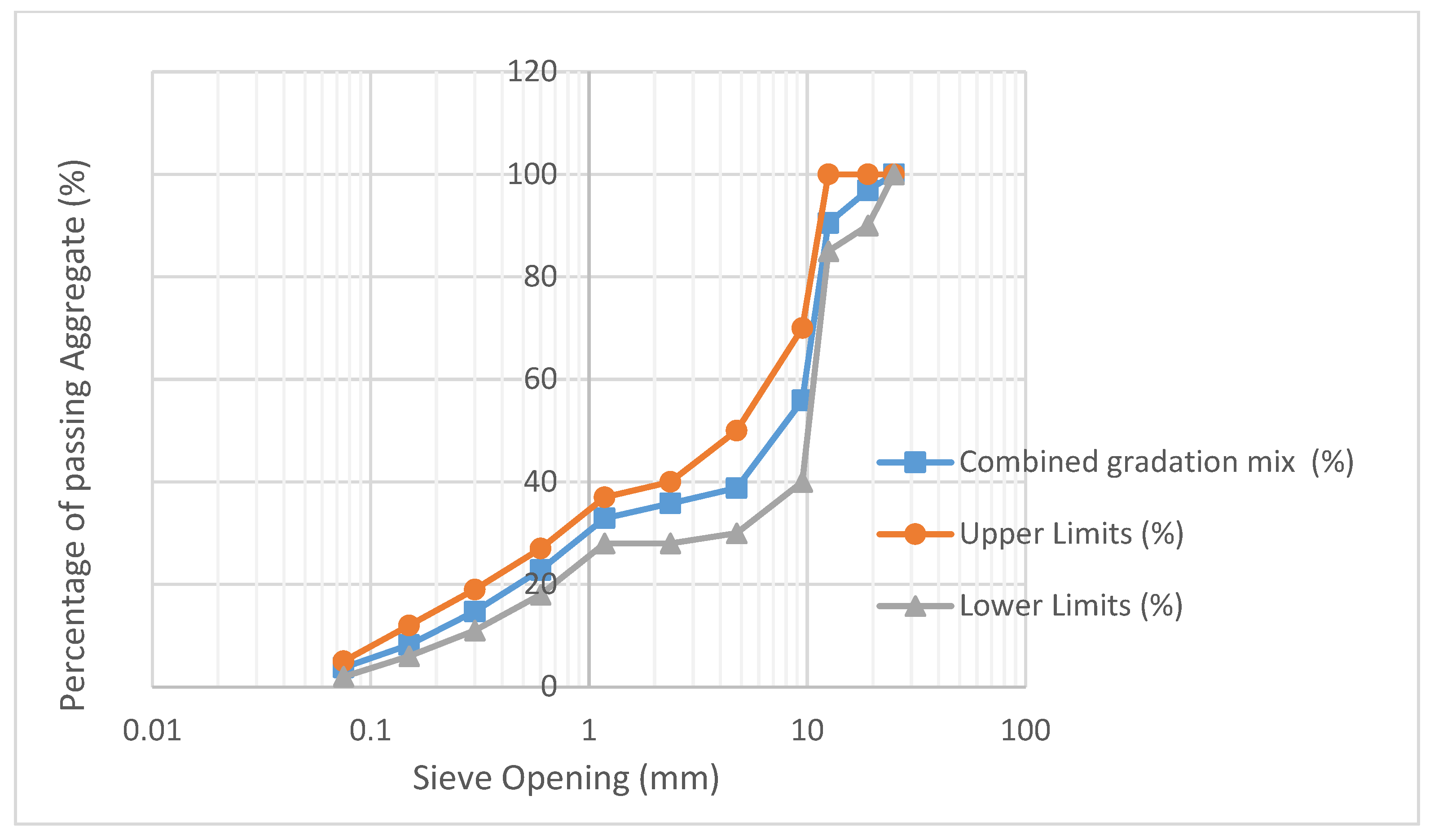
Figure 1. Sieve analysis of combined aggregates with standard limit (%passed).
Applsci 16 03747 g001
Figure 2. Coarse Aggregate used in the study: (a) Natural aggregates; (b) RAP aggregates.
Applsci 16 03747 g002
Figure 3. Effect of RAP content in RAP-Mixes on (a) slump, (b) water absorption, and (c) density.
Applsci 16 03747 g003
Figure 4. Effect of SF content in SF-Mixes on (a) slump, (b) water absorption, and (c) density.
Applsci 16 03747 g004
Figure 5. Effect of SP content in SP-Mixes on (a) slump, (b) water absorption, and (c) density.
Applsci 16 03747 g005
Figure 6. Effect of RAP content in RAP-SF mixes on (a) slump, (b) water absorption, and (c) density.
Applsci 16 03747 g006
Figure 7. Effect of SF content in RAP-SF mixes on (a) slump, (b) water absorption, and (c) density.
Applsci 16 03747 g007
Figure 8. Effect of RAP content in RAP-SP mixes on (a) slump, (b) water absorption, and (c) density.
Applsci 16 03747 g008
Figure 9. Effect of SP content in RAP-SP mixes on (a) slump, (b) water absorption, and (c) density.
Applsci 16 03747 g009aApplsci 16 03747 g009b
Table 1. Physical properties of Portland Pozzolan Cement.
Physical RequirementsResultsStandard Values
Specific Gravity3.083.15
Fineness (Blaine) cm2/g4750-
Soundness (Expansion) mm3.5≤10
Table 2. Chemical properties of cement.
Chemical CompositionTest Value (%)
Loss on ignition (LOI)1.55
Insoluble Residue7.50
MgO4.75
SO33.06
Chloride Content0.03
CaO53.8
SiO223.5
Al2O36.30
Fe2O32.00
K2O0.85
Free Lime1.85
Table 3. Specific gravity and absorption for natural fine and coarse aggregates.
Type of TestCoarse AggregateFine Aggregate
Specific Gravity2.7582.585
Water Absorption (%)0.6820.785
Table 4. Specific gravity and absorption for fine and coarse RAP aggregates.
Type of TestCoarse AggregateFine Aggregate
Specific Gravity2.2712.31
Water Absorption (%)2.964.582
Table 5. Properties of superplasticizer.
AppearanceSpecific GravitypH ValueChloride Content (%)
Brown Liquid1.10 ± 0.03 g/cm36.0 ± 1≤0.10 by mass
Table 6. Control mix ingredients.
Cement
(Kg/m3)
Water
(Kg/m3)
Fine Aggregates
(Kg/m3)
Coarse Aggregates
(Kg/m3)
5002408101150
Table 7. Reference Mixes: (a) Control Mix. (b) RAP-Mixes. (c) SF-Mixes. (d) SP-Mixes. (e) RAP-SF Mixes. (f) RAP-SP Mixes.
NoMix DesignationRAP%SF Content %SP Content %
(a)
1RAP0-00000
(b)
2RAP25-002500
3RAP50-005000
4RAP75-007500
5RAP100-0010000
(c)
6RAP0-SF7070
7RAP0-SF140140
8RAP0-SF210210
(d)
9RAP0-SP0.7000.7
10RAP0-SP1.4001.4
11RAP0-SP2.1002.1
(e)
12RAP25-SF72570
13RAP50-SF75070
14RAP75-SF77570
15RAP100-SF710070
16RAP25-SF1425140
17RAP50-SF1450140
18RAP75-SF1475140
19RAP100-SF14100140
20RAP25-SF2125210
21RAP50-SF2150210
22RAP75-SF2175210
23RAP100-SF21100210
(f)
24RAP25-SP0.72500.7
25RAP50-SP0.75000.7
26RAP75-SP0.77500.7
27RAP100-SP0.710000.7
28RAP25-SP1.42501.4
29RAP50-SP1.45001.4
30RAP75-SP1.47501.4
31RAP100-SP1.410001.4
32RAP25-SP2.12502.1
33RAP50-SP2.15002.1
34RAP75-SP2.17502.1
35RAP100-SP2.110002.1
Table 8. Test results of slump, water absorption, and density for all mixes.
(a) Slump (mm)
RAPSF %SP %
07142100.71.42.1
0% RAP898279758999103108
25% RAP9492888394105109113
50% RAP101969288101114117121
75% RAP1071009691107121127134
100% RAP11310610097113127135141
(b) Water absorption (%)
RAPSF %SP %
07142100.71.42.1
0% RAP0.8971.1231.2771.2960.8971.0561.0891.104
25% RAP0.9581.1581.1811.2280.9581.0871.0981.109
50% RAP0.9821.0581.0981.1050.9821.1071.1191.124
75% RAP0.9920.9970.991.0190.9921.1191.1281.137
100% RAP1.0580.9870.9991.0241.0581.2741.2981.321
(c) Density (kg/m3)
RAPSF %SP %
07142100.71.42.1
0% RAP23332333228921932333233823462348
25% RAP22742215221821412274230422672304
50% RAP22592267225222522259225222592260
75% RAP23202289225923122320221522672163
100% RAP21402207217821932140227423112252
Table 9. Normalized values of slump, water absorption, and density for all mixes *.
(a) Normalized Slump
RAPSF %SP %
07142100.71.42.1
0% RAP1.000.920.890.841.001.111.161.21
25% RAP1.061.030.990.931.061.181.221.27
50% RAP1.131.081.030.991.131.281.311.36
75% RAP1.201.121.081.021.201.361.431.51
100% RAP1.271.191.121.091.271.431.521.58
(b) Normalized Water absorption
RAPSF %SP %
07142100.71.42.1
0% RAP1.001.251.421.441.001.181.211.23
25% RAP1.071.291.321.371.071.211.221.24
50% RAP1.091.181.221.231.091.231.251.25
75% RAP1.111.111.101.141.111.251.261.27
100% RAP1.181.101.111.141.181.421.451.47
(c) Normalized Density
RAPSF %SP %
07142100.71.42.1
0% RAP1.001.000.980.941.001.001.011.01
25% RAP0.970.950.950.920.970.990.970.99
50% RAP0.970.970.970.970.970.970.970.97
75% RAP0.990.980.970.990.990.950.970.93
100% RAP0.920.950.930.940.920.970.990.97
* Normalized to the control mix: RAP0-00.
Disclaimer/Publisher’s Note: The statements, opinions and data contained in all publications are solely those of the individual author(s) and contributor(s) and not of MDPI and/or the editor(s). MDPI and/or the editor(s) disclaim responsibility for any injury to people or property resulting from any ideas, methods, instructions or products referred to in the content.