


Abstract
Digital Product Passports came with the promise to bring about supply chain transparency. However, since their emergence, several adoption barriers have been identified primarily due to stakeholder disengagement and misaligned incentives. To this end, while regulatory mandates drive compliance, passive information repositories often fail to generate meaningful participation from suppliers and/or consumers. In consideration of this shortcoming, the present work proposes a Digital Product Passport framework enriched by gamification elements as a means of transforming transparency from burden to opportunity and individual motivations to collective transparency goals. In greater detail, the framework addresses supplier reluctance through competitive transparency scoring and value sharing mechanisms and further engages consumers through interactive product journey narratives and impact visualisation. The work contributes to the behavioural design research field by proposing an alternative framework that leverages intrinsic and extrinsic motivation in order to overcome traditional barriers to supply chain transparency. To contextualise these ideas, we provide illustrative scenarios demonstrating how gamification mechanisms could create self-reinforcing feedback loops between suppliers and consumers.
1. Introduction
The global push toward supply chain transparency has reached an inflexion point with regulatory pressures, consumer demands, and sustainability imperatives converging to create new requirements for product lifecycle visibility [1,2]. However, despite the substantial technological investments, persistent information asymmetries between upstream suppliers and downstream consumers continue to impede resource allocation and informed decision-making [3]. In consideration of the bigger picture, such disparities can undermine sustainability efforts and/or intensify power imbalances which, in practical terms, affects disproportionately Small and Medium-Sized Enterprises (SMEs) within the global value networks [4].
To this end, Digital Product Passports (DPPs) have emerged with the promise to tackle these issues by offering lifecycle documentation from raw material extraction through to end-of-life processing [5,6]. The European Union’s Ecodesign for Sustainable Products Regulation mandates DPP implementation across multiple sectors as a means of achieving a regulatory shift toward radical transparency [7]. However, early implementations have revealed critical engagement failures, with the most prevalent one being the low stakeholder participation which has been attributed to the fact that either suppliers view data provision as a costly compliance burden [8] or consumers rarely access the available information [9].
The abovementioned issues point to two interconnected problems that remain unresolved in both the academic literature and managerial practice. From an academic standpoint, although existing DPP research has extensively catalogued technical architectures and regulatory requirements [5,6], it has largely neglected the behavioural mechanisms that determine whether stakeholders actually engage with such systems. The gap is significant because, as recent platform studies have demonstrated, the validity of digital trace proxies for measuring complex constructs such as “experience” or “engagement” cannot be assumed but must be critically scrutinised [10]. From a managerial perspective, supply chain managers face a concrete operational dilemma: they invest substantial resources in DPP infrastructure but observe persistently low participation rates because the systems fail to address the fundamental question of “what is in it for me?” for each stakeholder tier. The misalignment between system design and stakeholder motivation represents both a technical shortcoming and a strategic failure that undermines the return on transparency investments and perpetuates the very information asymmetries that DPPs were designed to eliminate.
To address the aforementioned problems, the present work proposes an alternative solution that integrates gamification mechanisms into DPP systems in order to create incentive structures that realign stakeholder motivations with transparency objectives. The rationale for such integration is grounded in the observation that gamification has demonstrated the capacity to reshape competitive dynamics in digital platform contexts—for instance, by influencing how platform operators strategically manage recommendation systems to balance competing manufacturer interests and market competition [11]. Analogously, in the DPP domain, gamification can serve as the mechanism through which adoption barriers are systematically mapped to targeted behavioural interventions: trust deficits are addressed through reputation ecosystems and peer validation, incentive misalignments are corrected through transparent value distribution models, and engagement fatigue is countered through progressive disclosure quests and narrative-driven discovery journeys. In order to operationalise our vision, we adopted a three-tier research methodology that addresses both theoretical foundations and practical implementation challenges. First, we identify and analyse the behavioural barriers preventing meaningful stakeholder engagement with current DPP systems; second, we develop a conceptual framework that integrates game design principles with supply chain transparency requirements in order to demonstrate how gamified elements generate self-reinforcing participation cycles; and third, we architect a multi-stakeholder value system that addresses equitable benefit distribution in order to illustrate how gamification can generate new economic models that reward transparency contributions while preserving regulatory compliance and market competitiveness.
Accordingly, this work addresses three interconnected research questions: (1) What behavioural barriers prevent meaningful stakeholder engagement with current DPP systems? (2) How can gamification mechanisms be systematically mapped to these barriers to create incentive-aligned transparency ecosystems? (3) What value distribution models could ensure equitable benefit sharing across heterogeneous supply chain actors?
By addressing the aforementioned questions, the present work offers two key managerial implications that help explain phenomena observed in practice. First, the framework provides supply chain managers with actionable strategies for converting the “compliance burden” perception into a competitive differentiation opportunity; the illustrative scenarios in Section 4 demonstrate how, for example, a tier-2 supplier can leverage gamified transparency scoring to attract new buyers and command premium positioning—a mechanism that directly addresses the persistent managerial challenge of justifying transparency investments to stakeholders who perceive no immediate return. Second, the value distribution models proposed herein offer a practical blueprint for resolving the “who pays and who benefits” dilemma that has stalled many industry-wide DPP initiatives, by introducing data dividends, transparency premiums, and innovation bounties as concrete instruments for equitable benefit sharing.
2. Background and Motivation
2.1. Information Sharing Barriers in Industrial Supply Chains
The promise of transparent, interconnected, supply chains remains largely unfulfilled due to the lack of effective protocols for information exchange across industrial networks [12,13]. Consider the typical automotive supply chain: a tier-one supplier might possess detailed knowledge about component specifications and manufacturing processes but this information rarely flows to downstream partners or end consumers. The reason behind this disconnection is not merely a technical problem but rather it reflects a complex interplay of competitive dynamics where information asymmetry often serves as a strategic advantage. In fact, companies guard their data against transparency which is viewed as a potential threat to negotiating power rather than an opportunity for collective value creation [14].
Crucially, trust—or more precisely, its absence emerges—as the central impediment. When a textile manufacturer shares production data with a fashion brand, they risk exploitation through price pressures, supplier switching, or competitive intelligence leakage. Technical fragmentation compounds such trust deficits even more. Legacy enterprise resource planning systems speak different languages, both literally and figuratively. A supplier’s SAP installation might encode product attributes differently than a retailer’s Oracle system thus, creating semantic gaps that automated translation struggles to bridge. Even when companies invest in integration platforms, the underlying data models often reflect fundamentally different conceptualisations of products, processes, and value. Most critically, current approaches to supply chain transparency fail to address the incentive misalignment at their core; for instance, why should a component manufacturer invest resources in traceability when the benefits accrue primarily to brand owners and consumers?
2.2. Digital Product Passports
Digital Product Passports are considered a complex combination of technical standards (i.e., database architectures, storytelling platforms) and regulatory requirements (i.e., compliance mechanisms) [15,16]. According to recent studies, their emergence in the contemporary industrial landscape reflects a broader paradigmatic shift in how practitioners conceptualise products which are no longer perceived as static objects but, instead, are understood as dynamic assemblages comprising materials, processes, and relationships that extend across temporal and spatial dimensions [13].
In their most radical form, DPPs could fundamentally alter the information architecture of global commerce by democratising access to previously blurred supply chain data [17]. In this case, the concept extends beyond simple data disclosure to encompass the ways knowledge is produced, validated, and circulated within industrial networks. The aforementioned claims are in line with the latest research which suggests that well-designed DPP implementations have the potential to redistribute informational power from large corporations to smaller suppliers, consumers, and civil society organisations who previously lacked access to detailed product provenance data [18]. Indeed, supply chain visibility has been shown to moderate the relationship between sustainable practices and overall sustainability performance, suggesting that transparency functions not merely as a reporting mechanism but as a strategic enabler of sustainable outcomes [19].
Notwithstanding the foregoing, the literature also reveals significant tensions between the transformative possibilities of DPPs and the practical realities of implementation. Current DPP initiatives often struggle to balance competing demands for standardisation and flexibility, regulatory compliance and commercial innovation, data transparency and competitive advantage [16]. Therefore, understanding how these tensions apply in practice requires careful examination of the specific mechanisms through which DPPs create, capture, and distribute value across complex stakeholder networks.
2.2.1. The Data Architecture of Trust
The technical scaffolding supporting DPPs (e.g., blockchain ledgers, IoT sensors, semantic web standards) matters less than the social architecture they enable [17,20]. For instance, when a small-scale farmer uploads soil health data to a DPP system, they are not merely complying with traceability requirements; instead, they are staking a claim in the digital commons which helps them to assert their existence and expertise in global value chains that have historically rendered them invisible [18]. Therefore, it can be contended that the social architecture of participation relies on trust that operates at multiple interconnected levels starting from the technical, which includes cryptographic protocols and distributed ledger technologies that provide immutable records and verification mechanisms [20] to the institutional, which covers matters related to governance frameworks that must establish clear rules for data access, modification rights, and dispute resolution [21], and the social, where trust emerges through repeated interactions, reputation building, and community validation processes that cannot be fully encoded in technical systems [18].
However, even within multi-layered trust architectures, current DPP frameworks often reproduce existing power asymmetries where larger corporations maintain editorial control over data presentation and accessibility [16,18]. For instance, can luxury brands curate which supplier stories appear prominently while burying less flattering details about working conditions or environmental impacts? Such power dynamics underline the need to anchor DPP technical standards in fundamental questions of information democracy and algorithmic governance. What appear to be neutral technological choices (e.g., data validation protocols, user-centric interface design, search algorithms) actually embed specific values and assumptions about whose knowledge counts and how it should be presented [17]. Therefore, the challenge lies in developing systems that balance the need for data quality and verification with principles of inclusive participation and equitable representation across diverse stakeholder communities.
2.2.2. Economic Mechanisms and Value Capture
The most sophisticated DPP implementations recognise that information has economic value that must be fairly distributed [13,15]. For instance, when suppliers contribute high-quality data (e.g., detailed process parameters, third-party certifications, multimedia content), they create assets that enhance product value. In a sense, it resembles the so-called progressive systems that implement revenue sharing mechanisms through which suppliers receive micro-payments when consumers access their contributed content or when their transparency metrics drive purchasing decisions [22]. In doing so, it enables suppliers to move beyond competing solely on cost—a race to the bottom that favours large-scale operations—but, instead, to differentiate through storytelling [23], authenticity [24], and transparency [25].
However, the economic viability of DPP systems, as examined through a multi-stakeholder lens, faces structural challenges that extend beyond simplified cost–benefit calculations. Recent empirical works [13,26] reveal the existence of a complex ecosystem wherein value creation and capture mechanisms must align with the diverse—and often conflicting—incentives that characterise multi-tiered supply chains. To illustrate this complexity, Gieß and Möller [15] have demonstrated that early adopters frequently bear implementation costs that are disproportionate to their immediate benefits, whilst the majority of value accrual occurs amongst downstream actors.
In addition, as Ducuing & Reich [27] argue, the economic models that underpin DPP systems must also navigate the inherent tension between the opportunities for data monetisation and the provision of public good. To this end, even though the transparency that is achieved through data disclosure has been shown to generate significant social value (e.g., improved sustainability outcomes, enhanced consumer protection), traditional market mechanisms have been proven insufficient to capture such positive externalities.
Other studies have shown that sustainable DPP ecosystems require new competitive advantages beyond traditional cost reduction [20,21]. For instance, companies that invest in transparency systems should be able to capture premium market values through brand authenticity and consumer trust. However, whether these economic incentives will drive widespread adoption across industries remains unclear.
To address these challenges, Navaia and colleagues [28] propose the adoption of hybrid economic frameworks that blend market-driven incentives with regulatory requirements and collaborative industry efforts. However, the main challenge in this case concerns the creation of architectures that reward both data quality and completeness whilst maintaining accessibility for smaller suppliers who lack the requisite technical infrastructure for advanced data management systems [29].
2.3. Gamification in Industrial Contexts
The theoretical foundations for integrating gamification into industrial contexts draw primarily from Self-Determination Theory (SDT), which holds that intrinsic motivation emerges when three fundamental psychological needs are satisfied: autonomy (sense of volition), competence (feeling effective), and relatedness (connection with others) [30]. In the context of supply chain transparency, SDT provides a framework for understanding why compliance-driven approaches often fail: mandatory disclosure requirements may satisfy external reporting needs but neglect the psychological mechanisms that sustain voluntary engagement. Expectancy Theory further informs this perspective by suggesting that motivation depends on the perceived value of outcomes and the belief that effort leads to performance [31]. When suppliers cannot perceive clear pathways from transparency investments to tangible benefits, rational disengagement follows.
In the present context, researchers argue that gamification has the potential to transform routine activities (e.g., data entry) into meaningful processes wherein each contribution can be considered as a measurable achievement that accumulates toward tangible rewards [32]. Notably, effective industrial gamification implementations require the alignment of game mechanics with genuine value creation processes [33]. To this end, when suppliers proceed to upload (for example) batch traceability data, the provision of tangible benefits (e.g., priority access to orders, reduced audit requirements, improved visibility in buyer searches) becomes essential. Such approaches contrast with the current systems that merely provide virtual badges or similar tokenistic rewards.
Likewise, the end-user’s perspective—when examined from a consumer-centric viewpoint—presents equally compelling possibilities for implementation. Consider, for instance, a scenario wherein consumers scan their newly purchased products (e.g., sneakers) to initiate a narrative journey that traces the product’s creation process. Within this framework, each supplier (e.g., the cotton farmer, the dye house, the assembly factory) who has contributed useful and relevant data becomes a distinct ‘character’ in the unfolding story. In other words, gamification, in this context, is utilised as a mechanism that facilitates the creation of emotional connections between consumers and the individuals whose labour contributes to the final product. Within this paradigm, suppliers find themselves competing beyond the traditional metrics of price and quality as they are now required to consider also the richness and reliability of their data contributions.
Nevertheless, it is imperative to acknowledge the potential emergence of dark patterns within gamified systems [34]. The psychological mechanisms that encourage positive engagement can also be exploited to target human vulnerabilities such as the creation of addictive loops that prioritise data quantity over quality or the promotion of unhealthy competition that has the potential to undermine the collaborative relationships which are essential to the supply chain functionality [35].
At this juncture, it is important to position the present work relative to the existing body of knowledge. Prior studies have examined gamification in isolated industrial settings—such as workforce training [36], manufacturing assembly [37], and production logistics [38]—but none has systematically mapped gamification mechanisms to the specific adoption barriers that characterise DPP ecosystems. Our work differs from the aforementioned contributions in three respects. First, existing gamification research in industrial contexts typically focuses on single-stakeholder scenarios (e.g., employee motivation), the present framework explicitly addresses multi-stakeholder dynamics across heterogeneous supply chain tiers. Second, unlike studies that treat gamification as a generic engagement tool, we ground each proposed mechanism in a specific behavioural barrier identified through the DPP literature, thereby providing a theoretically motivated mapping rather than an ad hoc application of game elements. Third, recent scholarship on digital platform dynamics has demonstrated that the strategic design of platform mechanisms—such as recommendation algorithms and scoring systems—fundamentally shapes competitive outcomes among platform participants [10,11]. Our framework extends this insight to the DPP domain by conceptualising the gamified transparency scoring engine as a platform mechanism that strategically influences supplier behaviour and market positioning instead of treating it as a passive measurement tool.
2.4. Open Challenges and Research Problem
The examination of pertinent literature reveals three critical challenges that current DPP frameworks fail to address. First, existing implementations have been shown to risk the systematic exclusion of small-scale producers who lack the necessary resources required for meaningful participation. Even though recent initiatives have attempted to bridge this divide through the provision of training programmes and the development of simplified interfaces, researchers argue that such approaches merely address symptoms rather than the fundamental root causes [17,18]. Moreover, effective DPP participation—in addition to the acquisition of the necessary technical skills—requires knowledge advancement in data literacy, strategic thinking capabilities with regard to the information value assessment, and sustained resource availability for ongoing system engagement. Second, the literature suggests that technology implementation alone cannot resolve what researchers have identified as a fundamental challenge of transforming entrenched practices and deeply rooted mindsets. According to [15], such transformation necessitates the design and implementation of interventions that can simultaneously address (1) individual psychological factors, (2) organisational cultural dynamics, and (3) broader market mechanisms. Such multi-level challenges represent a complexity that current DPP frameworks have demonstrably failed to address. Third, despite the vast investments that have been made to supply chain transparency technologies, meaningful adoption of DPP systems continues to remain limited. The authors in [13] attribute this limitation to the fundamental failure of these systems to provide both behavioural change mechanisms and incentive alignment structures. The abovementioned, interconnected, challenges create a self-perpetuating vicious cycle wherein limited stakeholder engagement serves to justify minimal investment allocations which, subsequently, perpetuate the persistent blurriness within the global supply chains.
3. The Conceptual Framework
3.1. Framework Development
The proposed framework emerged through a systematic synthesis of behavioural design principles, supply chain transparency literature, and contemporary gamification theory. In greater detail, the design process commenced with an analysis of existing DPP implementations [11,14,31] in order to identify recurring adoption barriers with particular emphasis on stakeholder disengagement patterns and systematic incentive misalignments. Accordingly, we examined the most prevalent gamification mechanisms in order to map which game design patterns are most relevant to industrial contexts [32,33,34]. Finally, we designed the system architecture by integrating the abovementioned information while maintaining regulatory compliance and technical feasibility.
The resulting proposal (Figure 1) was refined through iterative design thinking sessions that considered diverse stakeholder perspectives—from small-scale suppliers to multinational brands and end consumers—resulting in four key components: (1) a distributed data architecture, (2) the gamified engagement mechanisms, (3) the multi-stakeholder feedback loops, and (4) the value distribution systems.
Figure 1.
Conceptual framework for gamification-enabled digital product passport system.
3.2. System Architecture
The design of gamified DPP systems, from the system’s architecture lens, must reconcile what researchers have identified as “competing requirements”, which include (1) openness versus privacy considerations, (2) engagement versus compliance mechanisms, and (3) individual incentives versus collective benefits [13,36]. To overcome these obstacles, the proposed architecture adopts a modular design approach which enables diverse stakeholder groups to interact based on their locally defined rules while also maintaining connectivity to the broader ecosystem. Central to this design is the “transparency commons” layer, which is a shared data space, where verified product information is accessible to all participating stakeholders without relying on centralised control. On the grounds of this foundational layer, the architecture is further delineated into the following core layers:
- The “Digital Product Passport Infrastructure” functions as the principal framework for the systematic storage and organisation of supplier data into standardised records. In practical terms, each product is assigned a unique digital identifier that encapsulates details like material composition, manufacturing processes, supply chain traceability, and maintenance history. In doing so, we enforce the adoption of a consistent data format which helps to ensure that the system works seamlessly across different stakeholders and is also capable of scaling effectively. In addition, it lays the groundwork for the calculation of the transparency score and other related features that are available to the consumer interaction interface.
- The “Transparency Scoring Engine” uses Artificial Intelligence-driven algorithms to calculate supplier transparency scores, in real time, based on a balanced evaluation system which weights data completeness, verification status, engagement, and content quality. In addition, it includes peer benchmarking within industries to help stakeholders spot areas for improvement by comparing their performance against multiple metrics (e.g., transparency points earned from data contributions, impact tokens tied to verified sustainability efforts, engagement scores based on consumer interactions).
- The “Consumer Interface” is designed for end-users with the aim to bridge the gap between complex data and practical insights. In greater detail, it enables consumers to explore manufacturing histories, review transparency ratings, and uncover key details about a product’s origins. In addition, it simplifies complex supply chain data into clear, user-friendly, formats by spotlighting metrics like sustainability achievements, carbon emissions, worker welfare, material traceability, and environmental compliance. Users can compare products against industry standards or personal values, explore interactive maps of transportation routes and production sites, and engage with dynamic visualisations that bring a product’s story to life. The system also tracks user preferences through profiles as a means of delivering personalised recommendations and tailored content based on individual sustainability priorities.
3.3. Gamification Elements
Drawing upon established behavioural design principles [33], the gamification layer supports data transparency and completeness through the following interconnected mechanisms:
- Progressive Disclosure Quests: The system employs a tiered, point-based, approach to incentivise progressive information sharing. Participants accumulate points by providing diverse data types ranging from foundational information (e.g., facility identification, operational certifications, primary contact details) to environmental performance indicators (e.g., energy consumption metrics, waste management protocols, water usage records) and social impact aspects (e.g., worker welfare reports, community engagement initiatives, fair wage compliance verification). Accordingly, achievement thresholds unlock pre-defined benefits based on the organisation’s ranking. For instance, Bronze level provides enhanced platform visibility, Silver level enables direct engagement with consumers and downstream partners, whereas Gold level grants access to premium buyer networks and sustainable finance opportunities.
- Collaborative Value Chains: The framework extends beyond individual achievements in an effort to unite supply chain partners to engage in collective transparency enhancement. For instance, when all suppliers meet the predetermined transparency targets for a specific product, they become eligible for mutually shared benefits which include premium platform placement, reduced transaction fees, priority access to sustainable financing, and participation in exclusive marketing campaigns. Adopting such an approach can help to increase accountability, improve supply chain visibility, and strengthen trust among network participants while encouraging operational alignment toward shared sustainability goals.
- Consumer Discovery Journeys: For end-users, product exploration has been reconceptualised as an adventure game paradigm. The scanning of a product initiates a “discovery journey” through which each supplier node offers mini-games, educational content modules, or Augmented Reality experiences. Consumers accumulate “impact points” through deep engagement with product stories which, subsequently, can be utilised to unlock rewards from participating conscious brands including exclusive product offerings, sustainability consultations, and charitable donations to specific causes.
- Reputation Ecosystems: Suppliers and consumers also develop interconnected reputations within the system’s architecture. In greater detail, supplier reputation derives from data quantity and quality metrics (e.g., accuracy of submitted information, completeness of documentation, multimedia content richness) whereas consumer reputation reflects engagement depth and sharing influence parameters (e.g., review quality scores, social media reach, consistency of engagement, verification participation rates). In a sense, the reputational scores function as tradable assets within the ecosystem by influencing various system-related operations which include but are not limited to search ranking, financing term determinations, access to premium features, and partnership opportunities.
- Dynamic Narrative Generation: The system also leverages Artificial Intelligence mechanisms to synthesise the contributed data into compelling product journey visualisations, comparative impact assessments, and personalised consumer insights. In simple words, suppliers compete for placement in the algorithmically generated narratives. The core idea behind this competitive dynamic is to establish self-reinforcing cycles where quality improvements by one supplier pressure others to enhance their transparency efforts as a means of gradually raising baseline standards across the entire ecosystem.
3.4. Stakeholder Incentives and Feedback Loops
The system’s success depends on creating self-reinforcing feedback loops that align individual incentives with collective benefits through the following interconnected cycles:
- The Commercial Incentive Feedback Loop: Suppliers contributing more data build trust with buyers and consumers. Accordingly, the degree of developed trust, translates into commercial benefits which may include faster payment terms, reduced audit requirements, or premium pricing. The rationale behind these benefits is to incentivise further transparency by creating an upward spiral of openness and value creation.
- The Consumer Intelligence Feedback Loop: When consumers engage with product stories, their interactions generate data for suppliers (e.g., features that resonate well, existing information gaps, stories that spread through social networks). Suppliers can then utilise this feedback to refine their transparency strategies and create more engaging content that drives further consumer interest.
- The Collective Learning Feedback Loop: As more supply chains participate, the system accumulates pattern data about effective transparency practices. By utilising machine learning algorithms, we can identify which data types, what storytelling approaches, and how gamification mechanisms drive the desired outcomes. Based on these insights, we can then offer feedback to all stakeholders in order to raise the collective transparency capability of the entire network.
- The Operational Excellence Feedback Loop: By utilising the feedback that suppliers receive from consumer engagement and other sources of collective intelligence insights, they can improve both their transparency practices and their actual supply chain operations. Such operational improvements can lead to the creation of better stories to tell and more interesting data to share, which can attract greater consumer engagement and provide richer feedback for further refinement.
3.5. Value Distribution Across the Chain
Traditional supply chains concentrate value capture at brand and retail levels with upstream suppliers competing primarily on cost [39]. The proposed gamified DPP system introduces four value distribution mechanisms which are:
- Data Dividends: The system implements a “data dividend” structure where value generated from aggregated supply chain data—sold to market researchers, sustainability analysts, and AI training companies—flows back to data contributors proportionally. For instance, a farmer whose field data contributes to agricultural AI development receives ongoing micropayments.
- Transparency Premiums: Products with high transparency scores can charge premium prices, with smart contracts automatically distributing the extra revenue across the supply chain according to each participant’s contribution to openness. In other words, financial incentives flow directly to those who contribute most to supply chain openness.
- Innovation Bounties: Brands and retailers post “transparency challenges” for specific data needs or storytelling innovations. Suppliers who address these challenges receive bounty payments. The proposed loop helps to establish a marketplace where creativity and problem-solving generate value beyond compliance requirements.
- Social Capital Conversion: Reputation and engagement points convert to tangible benefits (e.g., sustainable finance access, preferred supplier status, innovation partnership invitations). In a sense, value creation shifts from pure cost competition toward demonstrated transparency performance.
4. Illustrative Application Scenarios
To illustrate the framework’s potential application, we present three hypothetical scenarios that demonstrate how different stakeholder groups might interact with a gamified DPP system. These illustrative cases are not empirical validations but rather thought-out experiments designed to render abstract mechanisms concrete and to highlight the behavioural dynamics the framework seeks to enable. Each scenario draws upon documented challenges in supply chain transparency literature to construct plausible implementation pathways.
4.1. Scenario A: Supplier Engagement Pathway
Consider how the system affects a typical tier-2 supplier—a mid-sized leather tannery in Mexico who supplies chrome-tanned leather to footwear manufacturers. Like most tier-2 suppliers they operate on thin margins with limited direct brand contact. The facility maintains standard certifications (e.g., ISO 9001, LWG Bronze) [40] but struggles to differentiate from dozens of similar operations. When their main buyer mandates participation in the gamified DPP platform, the facility manager views it as another compliance requirement. However, the platform’s structure shifts this dynamic by introducing an alternative approach to achieve the end goal. For instance, instead of submitting documents into a black box, each data upload contributes to a visible transparency score that buyers can filter by. As such, the facility’s journey toward transparency begins with the uploading of basic documentation (e.g., certifications, photographs of the facility, data on its capacity) which triggers the platform’s achievement system that serves a two-fold purpose: on the one hand, to guide facilities toward meaningful transparency improvements through progressive milestones and, on the other, to highlight high-value information gaps that, when addressed, unlock significant platform benefits. Through this guided process, the facility discovers that documenting its water treatment process—a system already in place to meet local compliance standards—unlocks the ‘Environmental Steward’ status which improves their search ranking. Encouraged by the initial success and the subsequent uptick in visibility among prospective buyers, the facility manager recognises an opportunity to further distinguish the tannery in a crowded market. The strategic decision follows to leverage the platform’s achievement system to explore additional high-impact areas. By tracing the origins of their raw materials—an endeavour that builds on their existing commitment to sustainability—the facility can now showcase a more comprehensive narrative of accountability which, in turn, unlocks additional badges. The aforementioned efforts soon translate into measurable business outcomes. New buyers, drawn by the tannery’s enhanced transparency score and demonstrated sustainability credentials, initiate partnerships that validate the investment in transparency infrastructure.
The provided example demonstrates the mechanisms through which the proposed system can transform regulatory requirements into competitive advantages by strategically aligning supplier incentives with the evolving buyer demands. It can, thus, be argued that when the cultivation of transparency yields discernible competitive advantages—rather than constituting an operational expense—it creates incentives for continuous improvement that extend beyond adherence to regulatory mandates.
4.2. Scenario B: Consumer Discovery Journey
An illustrative case from the consumer’s perspective involves an architect in Amsterdam who identifies as a conscious consumer but time and expertise constraints prohibit him from validating the sustainability claims of his purchases. After purchasing a new leather jacket from a brand asserting ‘ethical sourcing’ methodologies, he engages with the associated DPP tag with a discernible degree of scepticism due to his prior encounters with QR codes that usually led to generic marketing content or certification documents that are difficult to interpret. In this instance, however, engagement with the tag initiates an immersive and interactive journey. The platform discerns the user’s geographic location and preferred language and renders a visual map that details the jacket’s creation process. Each designated point on this map signifies a distinct stage in the product’s lifecycle. Upon selecting the tanning workshop, for example, he does not encounter prosaic lists of certifications but, instead, is presented with a rich multimedia narrative which includes a time-lapse video illustrating the leather’s transformation from raw hide to supple material, information regarding tanning techniques that preclude the use of harmful chemicals, and visual introductions to the craftspeople whose expertise contributes to the jacket’s creation. Subsequently, an integrated mini-game allows him to match traditional tools with their respective functions; a process that upon completion yields points that unlock supplementary content. At the same time, the ‘impact calculator’ feature within the platform demonstrates quantitatively how the consumer’s purchasing decisions generate effects throughout the supply chain. The data indicate that selecting this transparently sourced jacket, as opposed to conventional alternatives, supports 47 employment positions, prevents 23 kg of chemical pollution, and contributes to the preservation of traditional craft knowledge. In this case, the abovementioned information is presented as verified data, directly linked to specific individuals and locations that the architect has encountered through the virtual interface, instead of abstract assertions. Motivated by this experience, the individual shares his interactive journey on social media platforms where peers engage with his content, discover the brand, and embark on their own transparency journeys—each becoming a node in an expanding network of informed consumption.
In this example the system connects the consumer to a global network of producers and other conscious consumers. The transformation of products into narrative vehicles alters fundamentally the value proposition of transparency. Indeed, when consumers become active participants in transparency networks, instead of passive recipients of certification labels, they create market pressure for authentic disclosure that regulatory frameworks struggle to achieve independently.
4.3. Scenario C: Retailer Network Dynamics
At the industry level, system dynamics analysis reveals emergent behavioural patterns that characterise transparency adoption processes. To put this in perspective, we take as an example a major Swedish furniture retailer who implements the platform for their textile supplier network as part of the forthcoming compliance requirements of the new EU legislation. Suppliers demonstrate varying engagement levels with large organisation achieving high transparency scores rapidly—by treating the requirements as another certification within existing compliance portfolios—whilst smaller suppliers struggle with the documentation requirements and the digital interfaces. In this case, the tiered achievement system creates market segmentation; high-scoring suppliers receive preferential treatment while low-scoring entities face delisting risks. However, an unexpected dynamic emerges among mid-tier suppliers. Those positioned just below the qualification thresholds invest disproportionately in transparency improvements in order to ensure supply chain survivability. In addition, they form informal consortiums—collaborative structures for sharing documentation costs and exchanging practices—in order to distribute the financial and operational burdens associated with such enhancements. Even though consumer engagement remains limited, participating consumers provide critical feedback and actionable insights. Based on this input, the platform’s analytics system reveals distinctions between actively explored elements (e.g., worker conditions, environmental impacts) and those receiving minimal attention (e.g., technical certifications).
The presented patterns illuminate how the gamified transparency system can reshape market dynamics across the supply chain by creating incremental improvements rather than revolutionary changes. In a sense, transparency becomes another competitive dimension alongside price, quality, and delivery. In other words, even though the gamification elements do not transform suppliers into transparency champions, they provide structure and motivation for gradual improvement within existing business constraints. Likewise, the emergent collaboration pattern demonstrates how gamification can inadvertently democratise transparency capabilities. For instance, instead of reinforcing existing power asymmetries—where large suppliers dominate through superior resources—the system creates pathways for smaller players to achieve competitive parity through collective action.
5. Deployment Considerations
5.1. Technical Requirements and Integration Challenges
The optimistic vision of seamless digital transparency collides with the reality of legacy systems, competing standards, and resource constraints. Therefore, developing and deploying a gamified DPP system requires navigating technical complexities that would challenge even well-resourced multinationals, let alone SMEs. In order to tackle this issue, we provide some indicative recommendations that account for multiple integration pathways. For instance, for resource-constrained suppliers, a mobile-first progressive web application approach that supports offline data entry through local storage, automatic synchronisation when connectivity resumes, and photo-based data capture using computer vision APIs for automatic text extraction from certificates and labels could facilitate participation by eliminating the need for expensive hardware or constant connectivity. Likewise, the SMS gateway can support structured data collection through keyword-based commands (e.g., ‘CERT organic cotton 30-05-25’) to automatically create certification records. Cross platform messaging apps integration can enable multimedia data submission through familiar messaging interfaces. In this case, the core design principle is to meet suppliers where they are technologically by offering multiple entry points that bypass immediate obstacles while ensuring that they maintain control over their data and freedom of choice of what to share.
5.2. Cross-Industry and Cross-Regional Scalability
The scalability of gamified DPP systems across industries and regions presents distinct challenges that warrant careful consideration. From a technical perspective, industries with established digital infrastructures (e.g., automotive, electronics) may achieve faster adoption compared to sectors characterised by fragmented supply chains and legacy systems (e.g., textiles, agriculture). Regulatory heterogeneity constitutes another scalability dimension; while the European Union’s ESPR provides a relatively unified framework, global supply chains must navigate divergent disclosure requirements across jurisdictions with varying data protection regimes and product liability frameworks. Cultural factors further complicate scalability, as gamification mechanisms that resonate in competitive, individualistic contexts may prove less effective in cultures that prioritise collective harmony over individual achievement. For instance, public leaderboards that motivate suppliers in some regions might generate resistance or gaming behaviours in others. Addressing these scalability challenges requires modular system architectures that permit localised customisation whilst maintaining interoperability, alongside governance frameworks capable of accommodating regulatory diversity without fragmenting the transparency commons.
5.3. Evaluation Metrics and Effectiveness Measures
Conventional KPIs (e.g., user adoption rates, data volumes, transaction counts) tell only part of the story [41]. To tackle this issue, we propose a scorecard approach that captures multiple dimensions of impact as follows:
- Transparency Depth: To measure information richness, we propose the documentation of completeness scores (e.g., percentage of required fields filled), the collection of third-party verification rates (e.g., ratio of independently verified vs. self-reported data), and the calculation of granularity indices (e.g., levels of detail from raw materials to final product).
- Trust Velocity: To assess relationship formation speed, we propose the tracking of supplier progression timelines (e.g., days from onboarding to full disclosure), the analysis of consumer engagement metrics (e.g., scan-to-return rates, time spent exploring content), and the computation of network density calculations (e.g., new connections formed per quarter between previously unlinked actors).
- Value Distribution Equity: To analyse economic flows, we propose the examination of margin differentials (e.g., comparing profit margins between tiers), the assessment of revenue share coefficients (e.g., percentage of premium captured at each level), and the evaluation of price transparency indices (e.g., correlation between disclosed costs and final pricing).
- Behavioural Persistence: To evaluate sustained engagement, we propose the construction of retention curves (e.g., participation rates at 3, 6, 12 months post incentive), the development of activity depth metrics (e.g., quality scores for contributions over time), and the identification of intrinsic motivation indicators (e.g., voluntary contributions beyond minimum requirements).
- Network Effects: To quantify value multiplication, we propose the formulation of innovation indices (e.g., new practices adopted across network), the mapping of collaboration heat maps (e.g., frequency and depth of inter-member projects), and the measurement of collective leverage metrics (e.g., negotiation outcomes achieved through unified action).
- Unintended Consequences: To detect negative behaviours, we propose the deployment of statistical anomaly flags (e.g., improbable data patterns near reward thresholds), the monitoring of exclusion indicators (e.g., dropout rates correlated with resource requirements), and the observation of competition indices (e.g., information hoarding frequency, aggressive tactics replacing collaboration). Systematic monitoring prevents gamification from undermining collaborative objectives.
5.4. Governance, Ethics, and Legal Compliance
The governance-related challenges inherent in a gamified DPP system extend beyond the boundaries of traditional platform management. Clearly, balancing between efficiency mechanisms and distributed legitimacy requires the concurrent consideration of multiple aspects across diverse domains including the establishment of equitable methods for the determination of the reward criteria, the implementation of robust methods and mechanisms to prevent system manipulation by powerful actors, and the development of clear protocols for the administration of potentially problematic practice disclosures. A possible way to deal with such issues is by adopting the commons management principles [42] which conceptualise governance as a nested system of decision rights within which authority emerges from stakeholder participation instead of traditional ownership structures. Nevertheless, even in this case, critical questions arise with regard to both representation and power distribution. For instance, should voting rights be allocated based on transaction volumes? Should they instead reward data quality to incentivise transparency? Or should they adhere to democratic principles to ensure equitable voice irrespective of size? Such design choices influence directly whether the system reinforces existing power structures or challenges them. To this end, research on platform cooperativism [43,44] suggests that hybrid governance models may offer a resolution to such issues, though the empirical evidence to substantiate this kind of claims remains limited.
Ethical considerations within the field of gamification also reveal conflicting dynamics with behavioural economics researchers highlighting both the effectiveness of game mechanics in enhancing user engagement [45,46] and their potential to create exploitative dynamics [34,47]. A possible way to understand this issue is through the notion of the “digital labour” which assumes heightened significance when suppliers are, in effect, compelled to compete for visibility through progressive data disclosure practices. In such scenarios, the drive for engagement can inadvertently foster an environment of digital labour, where actions are performed out of necessity rather than genuine volition. Consequently, we believe that the development of new theoretical frameworks is imperative in order to enable a clearer delineation between those gamification strategies that are genuinely empowering and those that prove to be, by their nature, extractive.
Legal compliance is yet another dimension that exposes what [48] describe as the fundamental gap between territorial jurisdiction principles and contemporary networked operational realities. The problem in this case is two-fold: on the one hand, traditional regulatory frameworks presuppose clearly defined geographic boundaries, and, on the other, contemporary DPP systems generate transnational data flows that inherently defy such categorical delineations. Such a discrepancy underscores the urgent need for “regulatory interoperability” standards (i.e., technical protocols) designed to enable systems to adapt dynamically to local regulatory requirements while preserving global operational coherence).
Finally, intellectual property rights within collaborative transparency systems challenge conventional paradigms of knowledge ownership. When value generation stems from collective disclosure processes, instead of individual innovation, traditional intellectual property frameworks are rather inadequate [49]. In response to this shortcoming, we suggest the adoption of a shared knowledge system (i.e., the information commons), wherein value accrues through utilisation rather than exclusionary practices. However, in order for this paradigm shift to be realised, the formulation of alternative models for attribution mechanisms and benefit distribution frameworks is required.
6. Discussion
The proposed framework addresses three systemic barriers—the persistent trust deficits among heterogeneous stakeholder groups, the misaligned economic incentive structures, and the increasing engagement fatigue across participating actors—which have consistently hindered transparency initiatives. The illustrative scenarios presented in Section 4 demonstrate how these abstract constructs translate into observable transformations: suppliers transition from anonymous commodity providers to recognised craftspeople whose transparency efforts return measurable competitive advantages while consumers shift from passive purchasers to active participants who develop informed connections with producers. The micro-level behavioural adaptations, when aggregated through the framework’s feedback loops, catalyse macro-level sectoral shifts. Such stakeholder engagement mechanisms parallel findings in corporate social responsibility research, where electronic word-of-mouth has been shown to mediate the relationship between green behaviour and stakeholder outcomes [50]. Ultimately, by establishing a dynamic feedback loop between suppliers and consumers that generates compounding network effects as adoption scales, the framework creates a self-reinforcing ecosystem wherein transparency becomes both economically rational and behaviourally sustainable.
Beyond the technical features, such a system must demonstrate tangible improvements across multiple dimensions including the working condition, the environmental outcome, and the economic equity [51]. In order to realise such multifaceted benefits, it is essential to integrate strategies that redefine stakeholder engagement and reconfigure value articulation. For instance, in pursuit of advancing economic equity, the integration of storytelling elements can enable suppliers to generate income from different aspects of their products or services that were previously unrecognised or uncaptured within conventional business approaches [52]. Furthermore, providing consumers with verifiable transparency narratives helps to build their trust; something that has been linked to a greater willingness to pay for products and, in turn, helps to create fairer and more balanced market conditions [12]. In a similar vein, to improve environmental outcomes, systematically documenting the use of resources and the level of emissions throughout the supply chain makes it possible to identify, monitor and, therefore, manage waste and pollution more effectively [53]. Additionally, incorporating gamified elements to encourage sustainable practices can motivate efforts that go beyond basic legal requirements by transforming environmental responsibility into a positive strategic element for an organisation [54]. In consideration of the above, it can be asserted that, while direct improvements to working conditions and other social benefits resulting from these strategies might develop gradually, their combined positive impact can be substantial over time, as these cumulative effects have the potential to exceed initial expectations and contribute to more comprehensive and lasting positive changes within the system.
Nevertheless, the practical implementation of such a framework is not without its inherent challenges. For instance, complex technical difficulties may arise from the integration of new systems with pre-existing legacy infrastructures. Such challenges may, in turn, precipitate critical concerns with regard to accessibility and digital equity, especially for smaller-scale organisations who might lack the requisite technological capabilities or financial resources [55]. More pressingly, unresolved governance issues must be navigated with particular emphasis on those that concern the data ownership and the equitable distribution of value generated. Addressing such complexities necessitates the establishment of new institutional models capable of mediating diverse stakeholder interests while concurrently safeguarding the system’s intrinsic credibility and operational trustworthiness. Furthermore, while the strategic incorporation of gamified elements can demonstrably enhance stakeholder engagement and improve operational responsiveness, it is crucial to acknowledge that, as an approach, it does not represent a panacea for the entrenched structural inequities that often characterise the global trade networks.
From a managerial standpoint, the framework’s implications can be illustrated through two concrete examples drawn from current industry practice. First, consider the EU Battery Regulation (2023/1542), which mandates digital product passports for all industrial and electric vehicle batteries by February 2027. Manufacturers such as those in the European battery alliance currently face supplier resistance to data sharing, especially from upstream mining operations in regions with limited digital infrastructure. The proposed gamified progressive disclosure quests offer these manufacturers a practical tool for incentivising incremental data contributions; instead of demanding full lifecycle data at the outset—an approach that has proven counterproductive—the tiered achievement system allows mining cooperatives to begin with basic certifications and progressively expand their contributions as tangible benefits (e.g., preferred supplier status, reduced audit frequency) materialise. Second, in the fashion industry, where brands such as those participating in the Fashion Transparency Index struggle to obtain meaningful data beyond tier-1 suppliers, the collaborative value chains mechanism provides a solution by creating shared incentives for complete supply chain transparency. When all suppliers within a product’s chain collectively meet transparency targets, the resulting collective benefits—including premium market positioning and access to sustainable finance—create peer pressure dynamics that organically extend data sharing to previously opaque supply chain tiers.
Considering the above, it can be argued that transparency relies more on building strong, trust-based, relationships instead of the accumulation of diverse data points. Fundamentally, the design of any system inherently shapes the behaviours it rewards and, by extension, the economic and social structures it helps to support or change. Therefore, in order to achieve a true transformation in this context, it is essential to balance between the imperative to innovate and the equally critical considerations of responsibility. Above all, success depends on firmly embedding core values—such as transparency, equity, and sustainability—into both the system’s foundational design and its ongoing governance mechanisms. Attaining this objective, however, necessitates a shift in perspective wherein supply chains are considered collaborative environments for collective value creation instead of zero-sum competitions.
7. Conclusions, Limitations, and Future Research Directions
The proposed framework comes with two principal conclusions that carry implications for both theory and practice. The first, and arguably most consequential, is that transparency in supply chains can be reconceptualised from a compliance cost to a competitive asset through the mechanism of gamified value redistribution. The underlying mechanism operates as follows: when transparency contributions are systematically linked to tangible benefits—through data dividends, transparency premiums, and reputation ecosystems—the economic calculus for individual stakeholders shifts from “transparency as burden” to “transparency as investment”. The framework’s progressive disclosure quests create measurable pathways through which, for example, a tier-2 supplier’s data contributions directly translate into improved search visibility, buyer access, and premium pricing opportunities. In practical terms, it is suggested that supply chain managers should design DPP systems as active value generation platforms wherein each stakeholder’s contribution is visibly rewarded. For the EU’s forthcoming DPP mandates across textiles, batteries, and construction products, it implies that regulatory frameworks should incorporate incentive architectures alongside compliance requirements to maximise adoption rates and data quality.
The second key conclusion is that multi-stakeholder feedback loops, as opposed to unidirectional information flows, constitute the critical architectural principle for sustainable DPP ecosystems. The mechanism behind this conclusion rests on the observation that current DPP systems operate as linear information pipelines—from supplier to system to consumer—whereas the proposed framework establishes bidirectional feedback channels through which consumer engagement data flow back to suppliers, informing their transparency strategies and content development. The cyclical architecture creates network effects: as more consumers engage with product stories, the data generated become increasingly valuable to suppliers, who in turn produce richer content that attracts further consumer engagement. For practitioners, the recommendation carries a direct implication: investments in consumer-facing interface design and engagement analytics are not supplementary features but essential infrastructure that drives the entire system’s value proposition. Industry consortia developing shared DPP platforms should therefore allocate resources equally to both data ingestion/storage and consumer engagement mechanisms that complete the feedback cycle.
Notwithstanding the above, the present analysis operates within certain boundaries that must also be acknowledged. First, and most significantly, the framework remains entirely theoretical. The illustrative scenarios presented in Section 4 are hypothetical thought experiments designed to demonstrate potential application pathways rather than empirical case studies. No pilot implementations have been conducted; the behavioural dynamics described represent theoretically informed projections instead of observed outcomes. Consequently, the actual effectiveness of the proposed gamification mechanisms in generating sustained engagement and equitable value distribution remains to be empirically established. Second, the cultural adaptability of gamification mechanisms requires investigation, as strategies effective in one context may fail in another [56]. Third, the long-term sustainability of extrinsic motivation through gamification needs longitudinal studies to understand whether initial engagement translates into persistent behavioural change [57]. In this regard, recent research on ecosystem orchestration has identified key practices and mechanisms for the design and maturation of DPP ecosystems across industrial supply chain tiers [58], with analyses of gamification antecedents, mediators, and outcomes for sustainable consumption providing a promising evaluative lens for the mechanisms proposed herein [59]. As such, future research should focus on the conduct of (1) empirical studies to test the framework’s effectiveness across different supply chain contexts and cultural settings, (2) technical research to develop bias detection algorithms for AI-mediated gamification systems, and (3) governance research to explore adaptive models that balance stakeholder interests while maintaining system integrity as regulatory requirements evolve.
Author Contributions
Conceptualization, A.C. and F.P.; methodology, A.C.; formal analysis, A.C.; investigation, A.C. and A.B.; writing—original draft preparation, A.C.; writing—review and editing, F.P., A.B. and C.S.; visualization, A.C.; supervision, C.S. All authors have read and agreed to the published version of the manuscript.
Funding
This research received no external funding.
Institutional Review Board Statement
Not applicable.
Informed Consent Statement
Not applicable.
Data Availability Statement
The original contributions presented in the study are included in the article, further inquiries can be directed to the corresponding author.
Conflicts of Interest
The authors declare no conflicts of interest.
Abbreviations
The following abbreviations are used in this manuscript:
| DPP | Digital Product Passport |
| SME | Small and Medium-Sized Enterprise |
References
- Budler, M.; Quiroga, B.F.; Trkman, P. A review of supply chain transparency research: Antecedents, technologies, types, and outcomes. J. Bus. Log. 2024, 45, 12368. [Google Scholar] [CrossRef] [Scilit]
- Jodlbauer, H.; Brunner, M.; Bachmann, N.; Tripathi, S.; Thürer, M. Supply Chain Management: A Structured Narrative Review of Current Challenges and Recommendations for Action. Logistics 2023, 7, 70. [Google Scholar] [CrossRef] [Scilit]
- Swink, M.; Sant’Ana Gallo, I.; Defee, C.; da Silva, A.L. Supply chain visibility types and contextual characteristics: A literature-based synthesis. J. Bus. Log. 2024, 45, 12366. [Google Scholar] [CrossRef] [Scilit]
- Zimmermann, R.; Soares, A.; Bonnin Roca, J. The moderator effect of balance of power on the relationships between the adoption of digital technologies in supply chain management processes and innovation performance in SMEs. Ind. Mark. Manag. 2024, 118, 44–55. [Google Scholar] [CrossRef] [Scilit]
- Lopes, C.; Barata, J. Digital product passport: A review and research agenda. Procedia Comput. Sci. 2024, 246, 981–990. [Google Scholar] [CrossRef] [Scilit]
- Wicaksono, H.; Mengistu, A.; Bashyal, A.; Fekete, T. Digital product passport (DPP) technological advancement and adoption framework: A systematic literature review. Procedia Comput. Sci. 2025, 253, 2980–2989. [Google Scholar] [CrossRef] [Scilit]
- European Commission. Ecodesign for Sustainable Products Regulation; European Commission: Brussels, Belgium, 2024; Available online: https://commission.europa.eu/energy-climate-change-environment/standards-tools-and-labels/products-labelling-rules-and-requirements/ecodesign-sustainable-products-regulation_en (accessed on 5 July 2025).
- Jensen, S.F.; Kristensen, J.H.; Adamsen, S.; Christensen, A.; Waehrens, B.V. Digital product passports for a circular economy: Data needs for product life cycle decision-making. Sustain. Prod. Consum. 2023, 37, 242–255. [Google Scholar] [CrossRef] [Scilit]
- Plociennik, C.; Pourjafarian, M.; Nazeri, A.; Windholz, W.; Knetsch, S.; Rickert, J.; Ciroth, A.; Lopes, A.d.C.P.; Hagedorn, T.; Vogelgesang, M.; et al. Towards a digital lifecycle passport for the circular economy. Procedia CIRP 2022, 105, 122–127. [Google Scholar] [CrossRef] [Scilit]
- Kim, O.; Lee, J. The Experience Paradox: Problematizing a Common Digital Trace Proxy on Crowdfunding Platforms. J. Theor. Appl. Electron. Commer. Res. 2025, 20, 270. [Google Scholar] [CrossRef] [Scilit]
- Zhou, C.; Li, H.; Zhang, L.; Ren, Y. Optimal Recommendation Strategies for AI-Powered E-Commerce Platforms: A Study of Duopoly Manufacturers and Market Competition. J. Theor. Appl. Electron. Commer. Res. 2023, 18, 1086–1106. [Google Scholar] [CrossRef] [Scilit]
- Schäfer, N. Making transparency transparent: A systematic literature review to define and frame supply chain transparency in the context of sustainability. Manag. Rev. Q. 2023, 73, 579–604. [Google Scholar] [CrossRef] [Scilit]
- Zhang, A.; Seuring, S. Digital product passport for sustainable and circular supply chain management: A structured review of use cases. Int. J. Log. Res. Appl. 2024, 27, 2513–2540. [Google Scholar] [CrossRef] [Scilit]
- Zhu, Y.; Yu, D. Digital transformation and firms’ bargaining power: Evidence from China. J. Bus. Res. 2024, 183, 114851. [Google Scholar] [CrossRef] [Scilit]
- Gieß, A.; Möller, F. Exploring the value ecosystem of digital product passports. J. Ind. Ecol. 2025, 29, 561–573. [Google Scholar] [CrossRef] [Scilit]
- Psarommatis, F.; May, G. Digital Product Passport: A Pathway to Circularity and Sustainability in Modern Manufacturing. Sustainability 2024, 16, 396. [Google Scholar] [CrossRef] [Scilit]
- Greiner, M.; Seidenfad, K.; Langewisch, C.; Hofmann, A.; Lechner, U. The Digital Product Passport: Enabling Interoperable Information Flows Through Blockchain Consortia for Sustainability. In Innovations for Community Services; Phillipson, F., Eichler, G., Erfurth, C., Fahrnberger, G., Eds.; Communications in Computer and Information Science; Springer: Cham, Switzerland, 2024; Volume 2109. [Google Scholar]
- Carvalho, C.; Silva, C.J.; Abreu, M.J. Circular Economy: Literature Review on the Implementation of the Digital Product Passport (DPP) in the Textile Industry. Sustainability 2025, 17, 1802. [Google Scholar] [CrossRef] [Scilit]
- Saqib, Z.A.; Zhang, Q. Impact of sustainable practices on sustainable performance: The moderating role of supply chain visibility. J. Manuf. Technol. Manag. 2021, 32, 1421–1443. [Google Scholar] [CrossRef] [Scilit]
- Voulgaridis, K.; Lagkas, T.; Angelopoulos, C.M.; Boulogeorgos, A.A.A.; Argyriou, V.; Sarigiannidis, P. Digital product passports as enablers of digital circular economy: A framework based on technological perspective. Telecommun. Syst. 2024, 85, 699–715. [Google Scholar] [CrossRef] [Scilit]
- Pelt, R.V.; Jansen, S.; Baars, D.; Overbeek, S. Defining blockchain governance: A framework for analysis and comparison. Inf. Syst. Manag. 2021, 38, 21–41. [Google Scholar] [CrossRef] [Scilit]
- Kouhizadeh, M.; Zhu, Q.; Alkhuzaim, L.; Sarkis, J. Blockchain Technology and the Circular Economy: An Exploration. In Circular Economy Supply Chains: From Chains to Systems; Bals, L., Tate, W.L., Ellram, L.M., Eds.; Emerald Publishing Limited: Leeds, UK, 2022; pp. 189–213. [Google Scholar]
- Yin, C.-C.; Tang, Y.-C.; Chiu, H.-C.; Hsieh, Y.-C.; Lai, Y.-T. Telling an authentic story by aligning with your product type and price. J. Bus. Res. 2023, 161, 113799. [Google Scholar] [CrossRef] [Scilit]
- Li, X.; Lim, M.-F.; Ramlee, A.N.A.; Chekima, B. Brand Authenticity: A 21-Year Bibliometric Review and Future Outlook. SAGE Open 2024, 14, 21582440241268847. [Google Scholar] [CrossRef] [Scilit]
- Liu, Y.; Heinberg, M.; Huang, X.; Eisingerich, A.B. Building a competitive advantage based on transparency: When and why does transparency matter for corporate social responsibility? Bus. Horiz. 2023, 66, 517–527. [Google Scholar] [CrossRef] [Scilit]
- Siems, E.; Seuring, S.; Schilling, L. Stakeholder roles in sustainable supply chain management: A literature review. J. Bus. Econ. 2023, 93, 747–775. [Google Scholar] [CrossRef] [Scilit]
- Ducuing, C.; Reich, R.H. Data governance: Digital product passports as a case study. Compet. Regul. Netw. Ind. 2023, 24, 3–23. [Google Scholar] [CrossRef] [Scilit]
- Navaia, E.; Moreira, A.; Ribau, C. Differentiation Strategy and Export Performance in Emerging Countries: Mediating Effects of Positional Advantage among Mozambican Firms. Economies 2023, 11, 44. [Google Scholar] [CrossRef] [Scilit]
- Chen, X.; Peng, Y.; Wang, X.; Wang, P. Capacity sharing between competing manufacturers: A collective good or a detrimental effect? Int. J. Prod. Econ. 2024, 268, 109107. [Google Scholar] [CrossRef] [Scilit]
- Ryan, R.M.; Deci, E.L. Self-determination theory and the facilitation of intrinsic motivation, social development, and well-being. Am. Psychol. 2000, 55, 68–78. [Google Scholar] [CrossRef]
- Vroom, V.H. Work and Motivation; Wiley: New York, NY, USA, 1964. [Google Scholar]
- Ciuchita, R.; Heller, J.; Köcher, S.; Köcher, S.; Leclercq, T.; Sidaoui, K.; Stead, S. It is Really Not a Game: An Integrative Review of Gamification for Service Research. J. Serv. Res. 2022, 26, 3–20. [Google Scholar] [CrossRef] [Scilit]
- Sharma, W.; Lim, W.M.; Kumar, S.; Verma, A.; Kumra, R. Game on! A state-of-the-art overview of doing business with gamification. Technol. Forecast. Soc. Change 2024, 198, 122988. [Google Scholar] [CrossRef] [Scilit]
- Srivastava, G.; Bag, S.; Rahman, M.S.; Pretorius, J.H.C.; Gani, M.O. Examining the dark side of using gamification elements in online community engagement: An application of PLS-SEM and ANN modeling. Benchmarking 2023, 30, 2921–2947. [Google Scholar] [CrossRef] [Scilit]
- Baliga, A.J.; Goel, A.; Chavi, C.Y.; Guda, S.; Kumar, R. Mental health among B2B salespeople: A morphological analysis. J. Bus. Res. 2025, 188, 115093. [Google Scholar] [CrossRef] [Scilit]
- Bitrián, P.; Buil, I.; Catalán, S.; Merli, D. Gamification in workforce training: Improving employees’ self-efficacy and information security and data protection behaviours. J. Bus. Res. 2024, 179, 114685. [Google Scholar] [CrossRef] [Scilit]
- Dolly, M.; Nimbarte, A.; Wuest, T. The effects of gamification for manufacturing (GfM) on workers and production in industrial assembly. Robot. Comput. Integr. Manuf. 2024, 88, 102722. [Google Scholar] [CrossRef] [Scilit]
- Warmelink, H.; Koivisto, J.; Mayer, I.; Vesa, M.; Hamari, J. Gamification of production and logistics operations: Status quo and future directions. J. Bus. Res. 2020, 106, 331–340. [Google Scholar] [CrossRef] [Scilit]
- Ahsan, T.; Mirza, S.S.; Gull, A.A.; Majeed, M.A. How to deal with customer and supplier concentration to attain sustainable financial growth? The role of business strategy. Bus. Strategy Environ. 2023, 32, 4600–4619. [Google Scholar] [CrossRef] [Scilit]
- ISO 9001:2015; Quality Management Systems—Requirements. International Organization for Standardization: Geneva, Switzerland, 2015.
- Queiroz, M.M.; Fosso Wamba, S.; De Bourmont, M.; Telles, R. Blockchain adoption in operations and supply chain management: Empirical evidence from an emerging economy. Int. J. Prod. Res. 2021, 59, 6087–6103. [Google Scholar] [CrossRef] [Scilit]
- Pichancourt, J.; Brias, A.; Bonis, A. Integrating adaptation pathways and Ostrom’s framework for sustainable governance of social-ecological systems in a changing world. PeerJ 2025, 13, e18938. [Google Scholar] [CrossRef] [Scilit]
- Atanasova, A.; Eckhardt, G.M.; Laamanen, M. Platform cooperatives in the sharing economy: How market challengers bring change from the margins. J. Acad. Mark. Sci. 2025, 53, 419–438. [Google Scholar] [CrossRef] [Scilit]
- Lee, C.A.; Chow, K.M.; Chan, H.A.; Lun, D.P.-K. Decentralized governance and artificial intelligence policy with blockchain-based voting in federated learning. Front. Res. Metr. Anal. 2023, 8, 1035123. [Google Scholar] [CrossRef] [Scilit]
- Gao, F. Advancing Gamification Research and Practice with Three Underexplored Ideas in Self-Determination Theory. TechTrends 2024, 68, 661–671. [Google Scholar] [CrossRef] [Scilit]
- van Roy, R.; Zaman, B. Unravelling the ambivalent motivational power of gamification: A basic psychological needs perspective. Int. J. Hum. Comput. Stud. 2019, 127, 38–50. [Google Scholar] [CrossRef] [Scilit]
- Dah, J.; Hussin, N.; Zaini, M.K.; Isaac Helda, L.; Senanu Ametefe, D.; Adozuka Aliu, A. Gamification is not Working: Why? Games Cult. 2025, 20, 934–957. [Google Scholar] [CrossRef] [Scilit]
- Coche, E.; Kolk, A.; Ocelík, V. Unravelling cross-country regulatory intricacies of data governance: The relevance of legal insights for digitalization and international business. J. Int. Bus. Policy 2024, 7, 112–127. [Google Scholar] [CrossRef] [Scilit]
- Zheng, G.; Ul Haq, M.Z.; Huo, B.; Zhang, Y.; Yue, X. Leveraging intellectual capital for building a supply chain circular economy system: A knowledge-based view. Int. J. Prod. Econ. 2024, 272, 109225. [Google Scholar] [CrossRef] [Scilit]
- Saqib, Z.A.; Ikram, M.; Qin, L. Mediating role of eWOM’s in green behavior interaction and corporate social responsibility: A stakeholder theory perspective. Int. J. Ethics Syst. 2025. [Google Scholar] [CrossRef] [Scilit]
- Dahlmann, F.; Brammer, S.; Roehrich, J.K. Navigating the “performing-organizing” paradox: Tensions between supply chain transparency, coordination, and scope 3 GHG emissions performance. Int. J. Oper. Prod. Manag. 2023, 43, 1757–1780. [Google Scholar] [CrossRef] [Scilit]
- Jain, S.; Sharma, D.K.; Sharma, M. Mapping Green Supply Chain Practices: An Extensive Bibliometric Review with the SPAR-4-SLR and TCCM Framework. NMIMS Manag. Rev. 2024, 32, 118–136. [Google Scholar] [CrossRef] [Scilit]
- Hettiarachchi, B.D.; Brandenburg, M.; Seuring, S. Connecting additive manufacturing to circular economy implementation strategies: Links, contingencies and causal loops. Int. J. Prod. Econ. 2022, 246, 108414. [Google Scholar] [CrossRef] [Scilit]
- Behl, A.; Sampat, B.; Gaur, J.; Pereira, V.; Laker, B.; Shankar, A.; Shi, Y.; Roohanifar, M. Can gamification help green supply chain management firms achieve sustainable results in servitized ecosystem? An empirical investigation. Technovation 2024, 129, 102915. [Google Scholar] [CrossRef] [Scilit]
- Dadsena, K.K.; Pant, P.; Paul, S.K.; Pratap, S. Overcoming strategies for supply chain digitization barriers: Implications for sustainable development goals. Bus. Strategy Environ. 2024, 33, 3887–3910. [Google Scholar] [CrossRef] [Scilit]
- Christopoulos, A.; Sprangers, P. Integration of educational technology during the COVID-19 pandemic: An analysis of teacher and student receptions. Cogent Educ. 2021, 8, 1964690. [Google Scholar] [CrossRef] [Scilit]
- Kirchner-Krath, J.; Dijkstra-Silva, S.; Morschheuser, B.; von Korflesch, H.F.O. Gameful systems for corporate sustainability: Systematic review, conceptual framework and research agenda on gamification and sustainable employee behavior in companies. Internet Res. 2026, 36, 513–550. [Google Scholar] [CrossRef] [Scilit]
- Jensen, S.F.; Kristensen, J.H.; Christensen, A.; Wæhrens, B.V. An ecosystem orchestration framework for the design of digital product passports in a circular economy. Bus. Strategy Environ. 2024, 33, 7100–7117. [Google Scholar] [CrossRef] [Scilit]
- Lim, W.M.; Das, M.; Sharma, W.; Verma, A.; Kumra, R. Gamification for sustainable consumption: A state-of-the-art overview and future agenda. Bus. Strategy Environ. 2025, 34, 1510–1549. [Google Scholar] [CrossRef] [Scilit]
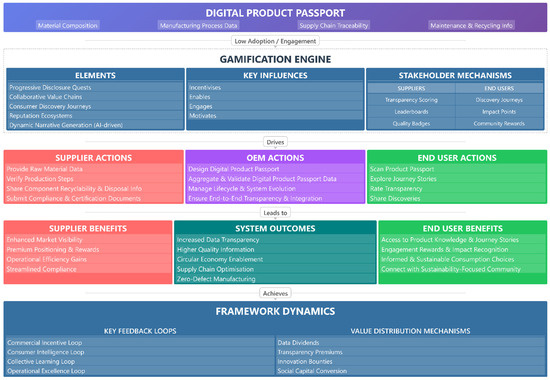
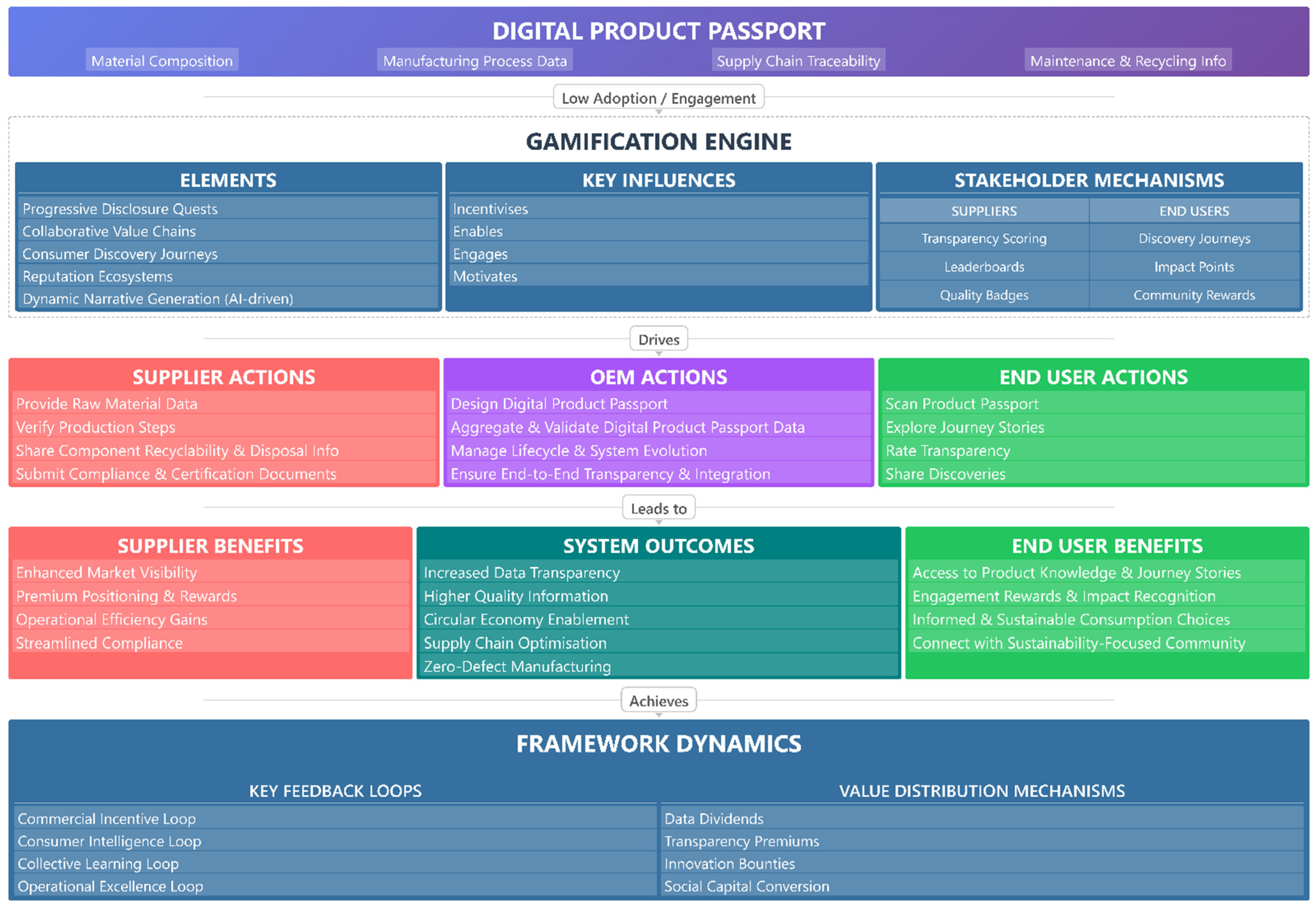
Disclaimer/Publisher’s Note: The statements, opinions and data contained in all publications are solely those of the individual author(s) and contributor(s) and not of MDPI and/or the editor(s). MDPI and/or the editor(s) disclaim responsibility for any injury to people or property resulting from any ideas, methods, instructions or products referred to in the content. |
© 2026 by the authors. Licensee MDPI, Basel, Switzerland. This article is an open access article distributed under the terms and conditions of the Creative Commons Attribution (CC BY) license.