


Abstract
Issues related to the environmental safety of transport vehicles, the operation of which leads to environmental pollution, continue to be highly relevant. In this work, we consider the use of biofuel mixed with diesel fuel for internal combustion engines operating at low temperatures. This approach does not reduce the efficiency of transport, while also solving the issue of organic waste recycling. In this work, we address the possibility of reducing environmental pollution using carbon-neutral blended fuels based on esters of waste cooking oil (WCO), biobutanol, and diesel fuel for transport, tractor, and other equipment powered by a diesel internal combustion engine. In terms of the rate of biofuel implementation, Russia is still lagging behind the EU, China, and Japan, largely due to, inter alia, its climatic conditions with cold and long winters. The article also provides data on the possibility of using mixed biofuels under sub-zero temperatures. The process of forming a volumetric fuel supply through the common rail injector of the D4CB engine under changes in fuel pressure and drive pulse duration was also investigated, with the corresponding regression dependencies being presented. The losses of heat supplied into the cylinder when using a blend of diesel fuel and biodiesel (with 20 wt% butanol) in comparison with diesel fuel were analytically calculated. This made it possible to identify a function for adjusting fuel supply to compensate for power losses. The lubricity of fuel blends was assessed using the HFRR method.
1. Introduction
Today, the issues related to global energy security are becoming increasingly pressing. Engines used in mining, road, and construction vehicles are notorious for polluting the environment with harmful substances and greenhouse gases. In this regard, the development of carbon-free or carbon-neutral energy is of particular relevance. The main focus is on the use of electric drive technologies for transportation and other engineering systems. However, even according to the most optimistic estimates, it will be impossible to completely replace engines consuming fossil fuels in the near future [1,2,3]. In the mining, metallurgical, agricultural, and road transportation industries, the internal combustion engine (ICE) continues to be the main power source. In this regard, the task of reducing the carbon footprint of ICE-powered motor vehicles and tractors remains relevant. This task can be achieved by replacing fossil fuels, either completely or partially, with carbon-neutral fuels, e.g., those based on plant materials [1,2,3,4,5,6,7,8,9].
Numerous studies show that vegetable oils can be used as an additive to diesel fuel [5,6,7,9]. However, such oils cannot be used in their pure form due to high viscosity values, especially at sub-zero temperatures. The viscosity of oils can be reduced in several ways [1,3,7,8], such as
- by blending with less viscous components (diesel fuel, alcohols, kerosene, etc.);
- using the reaction of esterification to extract the main components in the form of the biodiesel and glycerol fraction;
- through a combination of the former two options.
Our review of theoretical and experimental studies shows that the use of biodiesel fuels has a beneficial effect on ecological indicators [6,7,10,11,12,13], which is a particularly important factor for equipment operating in quarries and other confined spaces. A large number of studies showed that methyl, ethyl, isopropyl, and butyl alcohols can be used to obtain esters [1,3,4,8,13,14,15,16,17,18,19,20,21,22,23,24,25,26,27,28,29]. The first two options have been investigated in greater detail due to their affordable cost. At the same time, some researchers indicate that esters based on high-atomic alcohols have lower values of the cloud point and the cold filter plugging point (CFPP) than methyl esters [1,21]. It was also noted that it is not economically feasible to produce fuels directly from agricultural crops, such as grains [10,25].
In this regard, the production of biodiesel from waste cooking oils appears more promising due to the possibility of utilizing wastes from public catering outlets [22,23,24,25,26,27,28,29].
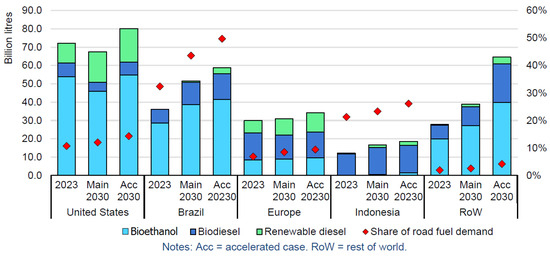
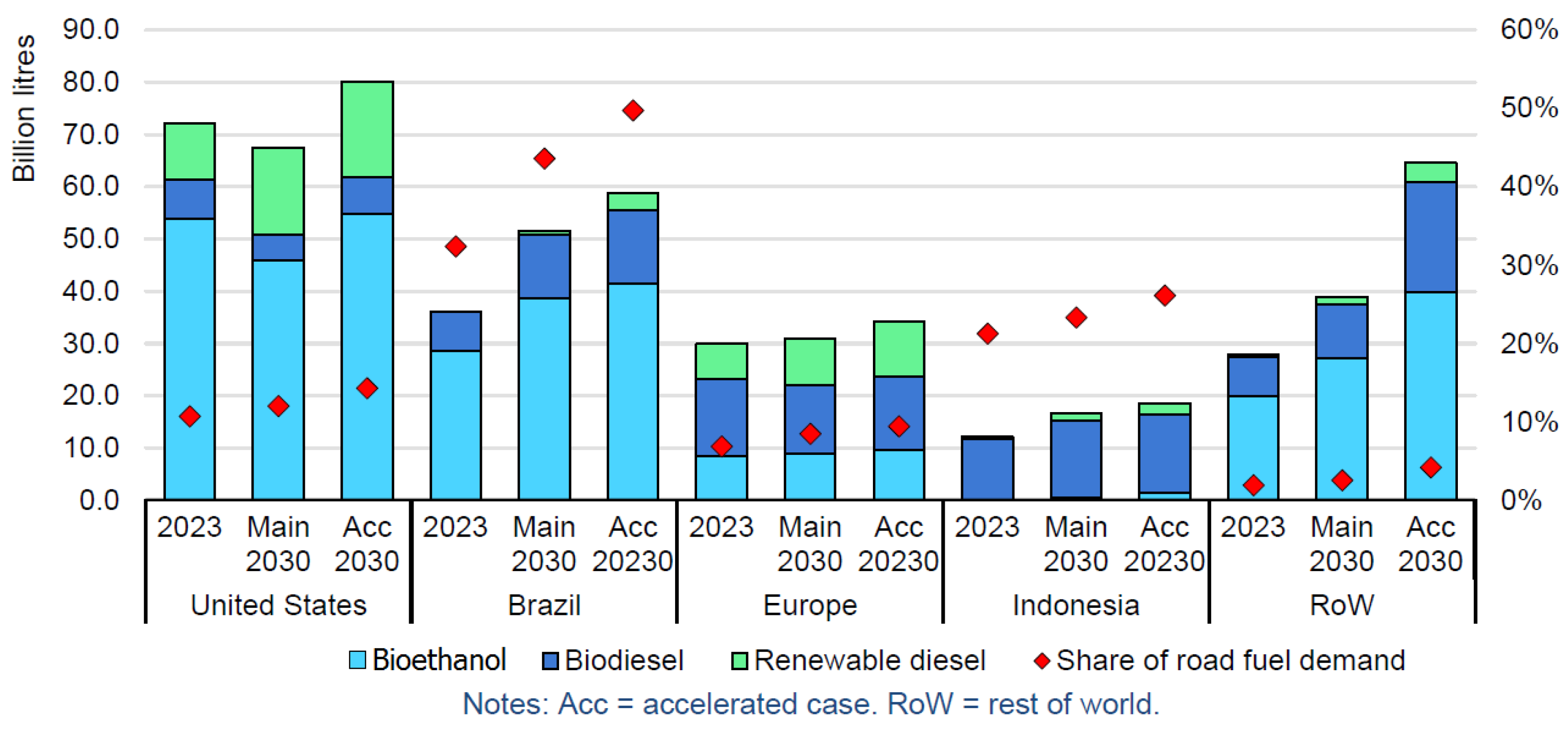
Figure 1 provides a forecast for renewable diesel fuel consumption for the period up to 2030, showing continued growth in demand for renewable fuels, including biodiesel [30].
Figure 1.
Demand of biofuel consumption in different countries [30].
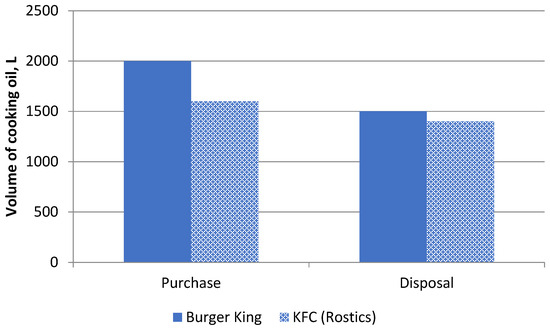
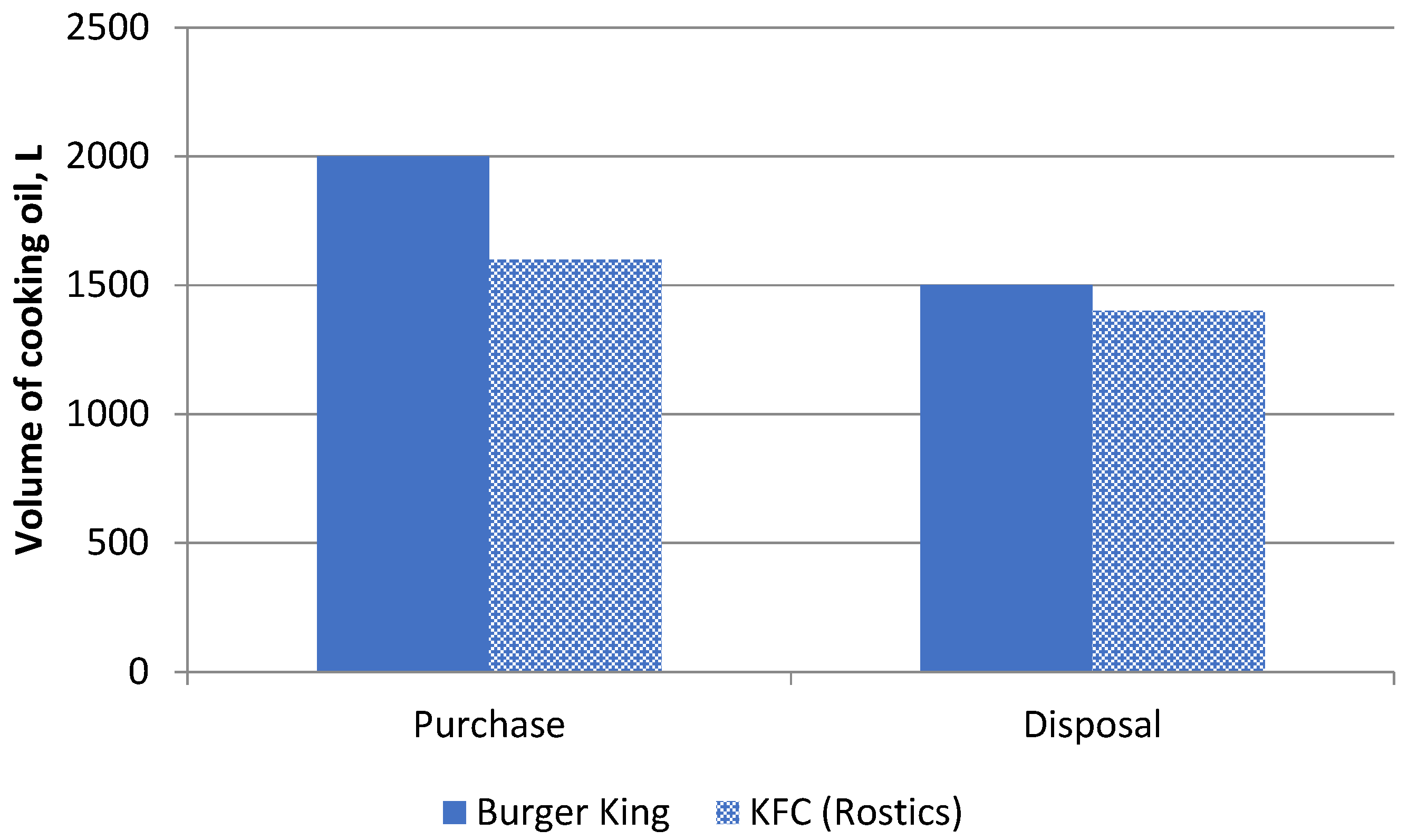
Sunflower oil is the most common vegetable oil used for cooking purposes in Russia. Figure 2 compares the volumes of purchases and disposal of waste vegetable oils using the example of two popular fast-food outlets in the city of Irkutsk (Russia). For example, the Burger King chain disposes of about 1500 L of waste cooking oil monthly, while KFS (Rostics) disposes of 1400 L (Figure 2).
Figure 2.
Comparative diagram of average purchases and disposal of cooking oil per month by two fast-food outlets.
It should also be noted that the use of waste sunflower oil esters for producing diesel fuels for different kinds of equipment has not been sufficiently studied. A significant factor restraining the use of biodiesel-based fuel compositions is their limited applicability throughout the year due to the prevalence of periods with low ambient temperatures. Therefore, the task of expanding the application temperature range of mixed fuels is also highly relevant.
2. Theoretical Backgrounds
The characteristics of biodiesel and blended fuels differ from those of the original diesel fuel, primarily in terms of chemical composition. This inevitably affects the power and efficiency of the engine and the equipment as a whole. Let us consider the underlying reasons for such effects when switching to biodiesel fuels.
As a rule, the working process efficiency of an internal combustion engine is assessed by the parameter of brake-specific fuel consumption, which depends on both the characteristics of the fuel and the perfection of energy conversion, determined by the efficiency.
where brake-specific fuel consumption, g/kWt·h, is the lower calorific value, MJ/kg, and is the efficiency.
The lower calorific value changes when fuels are blended [5,10,12]. The total lower calorific value of the blend is determined as follows
where are the ratios of diesel fuel (df) and biodiesel (bd) in a blend respectively; are the lower calorific values of diesel fuel and biodiesel in a blend respectively, MJ/kg.
Thus, the total lower calorific value can be determined by the characteristics of the components included in the mixture (Table 1).
Table 1.
Characteristics of the studied fuels used in calculations [8,19].
According to Table 1, it is possible to calculate the heat value that was brought into the cylinder from the fuel blend:
where is the mass fuel supply, mg/str; is the volumetric fuel supply, mm3/str; is the fuel density, mg/mm3.
An analysis of Formula (2) allows us to make a conclusion about the influence of fuel supply and fuel characteristics on both the amount of heat supplied to the cylinder and the brake-specific fuel consumption.
The ecological efficiency (the achieved reduction in carbon dioxide emission from replacement of fossil fuel) may be calculated as follows. The complete burning of 1 kg of fuel requires 8/3 of oxygen [5]. Then, the integrated mass of carbon dioxide (assumption about completeness of reaction) may be calculated by this formula:
where is the travel fuel consumption kg/km or fuel consumption per hour kg/h; is the mass ratio of carbon in fuel.
The total mass ratio of carbon depending on the mass ratio of biodiesel in the blend is determined as follows:
where is the biodiesel ratio in the fuel blend; is the mass ratio of carbon in diesel fuel; is the mass ratio of carbon in biodiesel.
The mass of the non-renewable part of carbon dioxide emission is determined using the formula
3. Materials and Methods
In order to obtain waste vegetable oil ether, oil samples from food catering outlets were collected. These oils were subjected to an esterification reaction. Potassium or sodium alkalis (JSC “Baza No. 1 Chimreactivov”, Staraya Kupavna, Russia), as well as butyl alcohol (LLC Scientific-and-production association “Selkor”, Saint Petersburg, Russia), were used as a catalyst. Butanol was selected for the following reasons. First, the use of polyhydric alcohol ethers for the reaction allows biodiesel and glycerin to be obtained much faster than when using methyl or ethyl alcohol. Secondly, this reaction is possible with a higher content of water in the waste oil. Third, butanol-based ether is non-hygroscopic and less chemically aggressive than methyl or ethyl esters of fatty acids. In addition, this type of ether shows better low-temperature properties. In particular, the pour point and cloud point are 7–10 °C lower than those of methyl ethers.
Biodiesel from waste oil was extracted using the following method.
- The raw material (oil) was purified from the smallest impurities and water (the initial mass of the used vegetable oil was 300 g). To that end, the oil was settled, filtered, and heated to a high temperature in order to remove water, followed by cooling.
- A part of butanol (20% of the WCO) was mixed with an alkaline catalyst, sodium hydroxide (not less than 1% of the WCO)
- The mixture was heated to 60–80 °C and stirred at this temperature for about 1 h.
- The blend extracted as a result of the reaction did not separate, forming a viscous conglomerate of glycerin-soap fraction and biodiesel. Therefore, after cooling below 30 °C, it was filtered through a gauze filter
- The obtained biodiesel was washed with warm water to obtain a pure biodiesel fuel.
The obtained biodiesel fuel is a transparent oily liquid of an amber color with a specific faint odor. To reduce the viscosity and density of the biodiesel, it was decided to use an additive of butanol, which amounted to 20 wt%. The resulting new composition will be hereafter referred to as B20B.
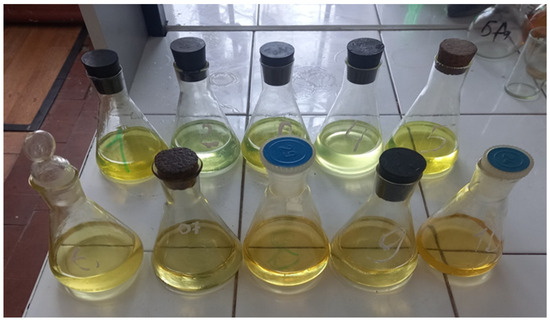
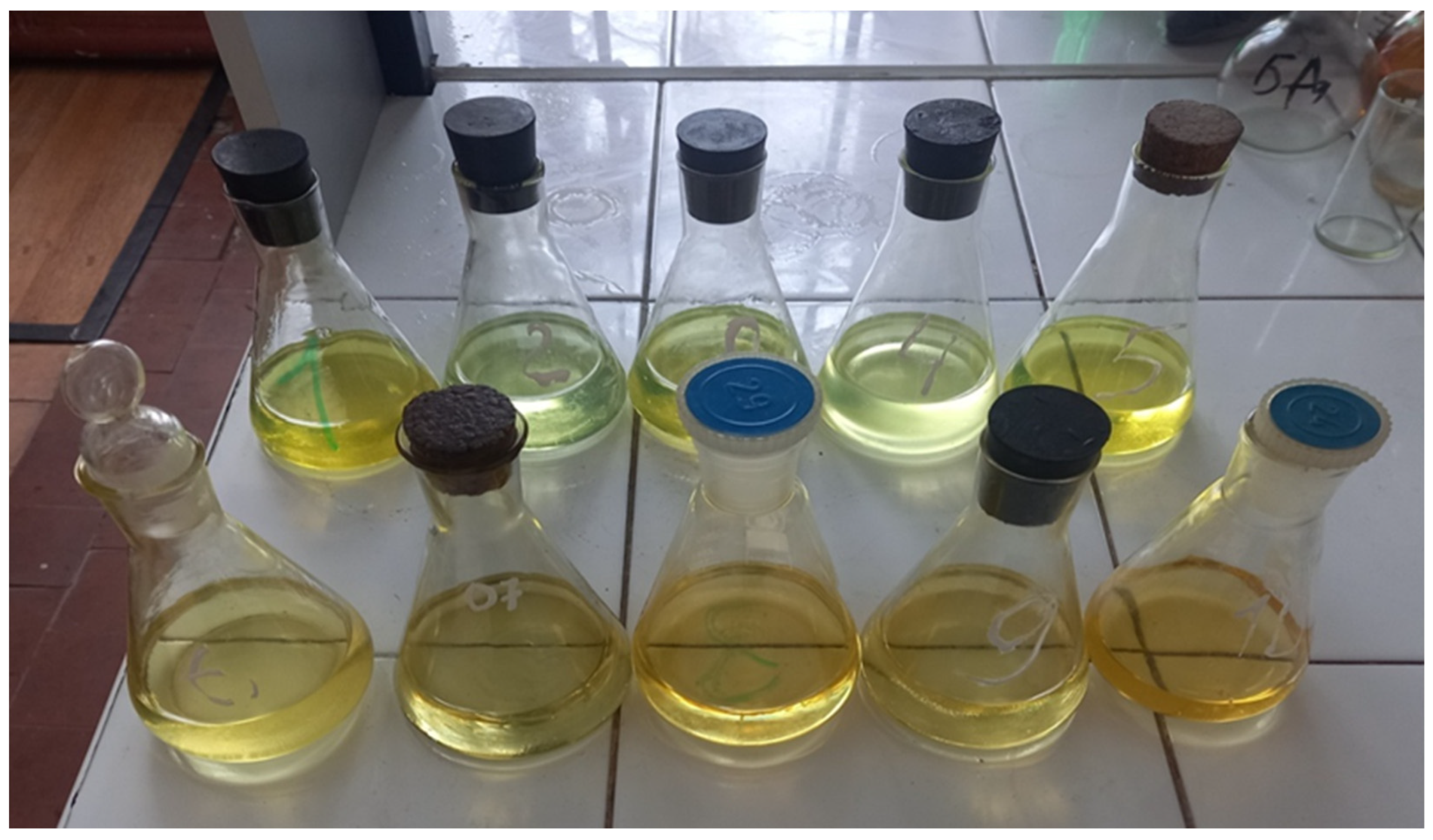
Subsequently, samples of the obtained biodiesel and B20B were mixed with diesel fuel. In this case, two samples were mixed with summer diesel fuel: one containing 20% of biodiesel, and the other containing 20% of B20B. The other samples were mixed with winter diesel fuel in proportions of 20, 40, 60, and 80 wt% B20B and one—20% of biodiesel (Figure 3, Table 2).
Figure 3.
Samples of diesel–biodiesel fuel blends (an explanation of the numbers is shown in Table 2).
Table 2.
Decryption of samples with winter/summer diesel fuel.
The viscosity and density parameters were measured for each sample. The viscosity of the samples was measured at temperatures of −20 °C, 0 °C, 20 °C and 40 °C. Negative and zero temperatures were achieved by placing the samples in natural conditions (i.e., the samples were frozen outside).
Experiments to determine the fuel supply characteristics were conducted on a test bench for testing fuel supply systems. The injector of the 0445110279 common rail system of the D4CB engine (“Hyundai Motor Group”, Seoul, Republic of Korea) installed in the research laboratory of INRTU was used.
Subsequently, the injectors were operated on each type of fuel blend under pressures and driving pulse widths typical of the tested D4CB engine. The volumetric fuel supply and back leakages were measured.
Lubricity values were determined by the HFRR method [31,32]. To that end, specially prepared polished plates with a ball diameter of 6 mm were immersed in the fuel (mixture) during testing. A degreaser was used to treat the surfaces before and after testing. The fuel for testing was measured out using a medical sterile syringe before loading into the setup. The fuel poured into the setup was preheated to an operating temperature of 60 °C. This temperature was maintained for each fuel sample throughout the entire study. The process of high-frequency reciprocating motion of the ball (50 Hz, amplitude 1 mm) along the plate located at the bottom of the bath with the fuel under testing lasted 75 min for each experiment. Upon completion, the fuel was replaced with another sample, and the ball–plate pair was changed.
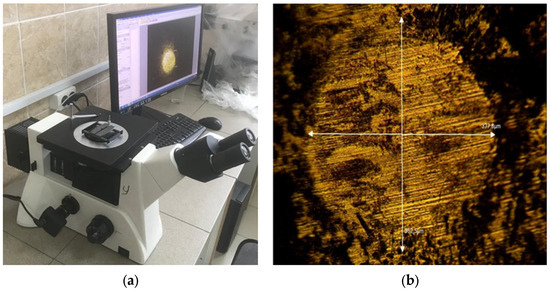
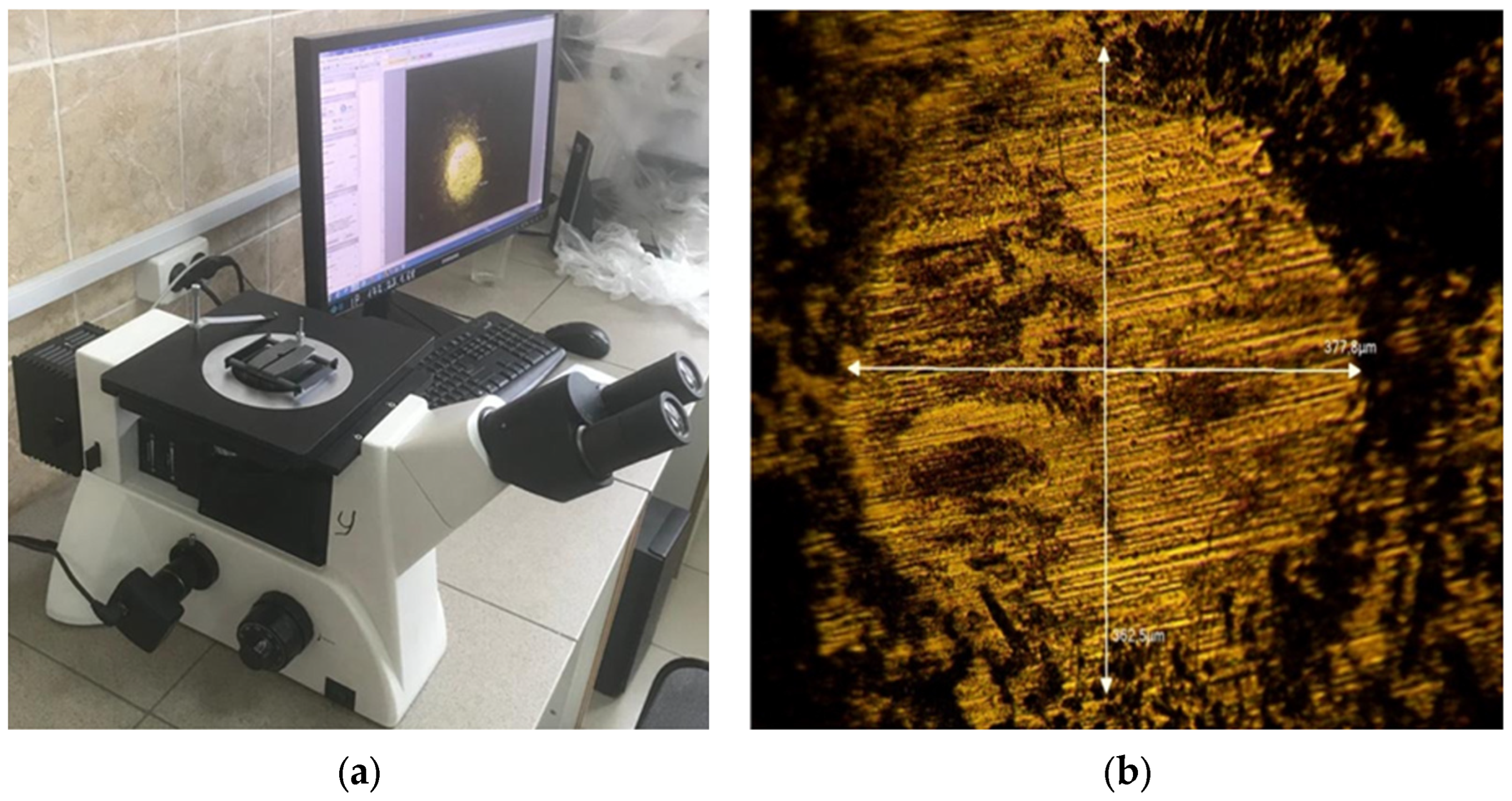
A ToupCam microscope (“Hangzhou ToupTek Photonics Co., Ltd.”, Hangzhou, China) equipped with a UCMOS09000KPB digital camera was used to visually assess wear scar diameters and measure their size (Figure 4a). The camera has the maximum resolution of 3488 × 2616 (approximately 9,000,000 pixels). The small pixel size of 1.67 µm × 1.67 µm and the high sensitivity allow wear marks to be seen in great detail.
Figure 4.
Equipment for measuring the wear scar diameter by the HFRR method: (a)—ToupCam digital microscope; (b)—photo of the wear scar diameter (pattern).
The camera has a USB interface and is connected to a PC. To view the digital image from the camera, the ToupView 3.5 specialized software was installed.
The uncorrelated mean wear scar diameter MWSD, µm, was calculated using the formula
where x is the wear spot size perpendicular to the direction of reciprocating motion, µm; and y is the wear spot size parallel to the direction of reciprocating motion, µm.
The adjusted wear scar diameter WS1.4, µm, was calculated, taking into account the absolute saturated vapor pressure using the formula
where HCF is the humidity correction factor. For unknown fuel, HCF = 60.
4. Results and Discussion
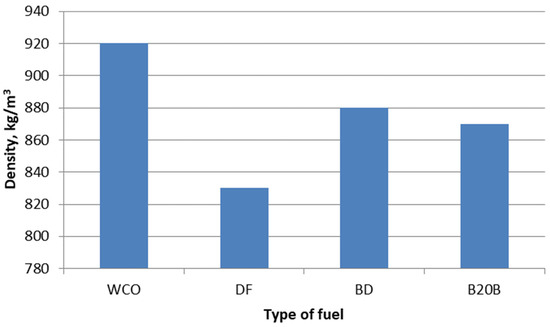
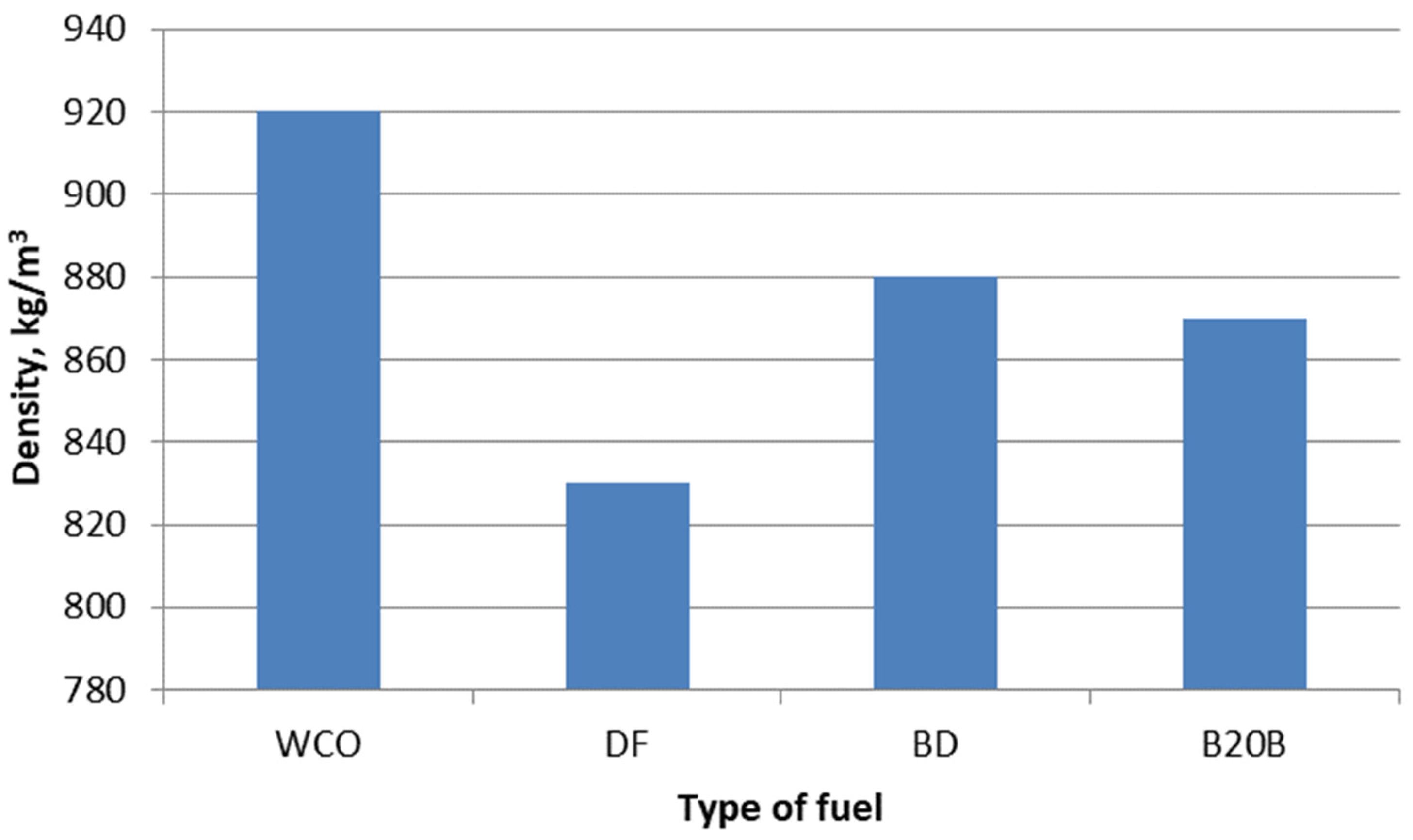
The experiments showed that the density of the extracted biodiesel was 880 kg/m3 at the temperature of 20 °C, which is higher than that of winter diesel fuel of 825 kg/m3 (for summer diesel fuel 830 kg/m3) and lower than that of the original waste cooking oil of 920 kg/m3 (Figure 5).
Figure 5.
Distribution of fuel densities. WCO—waste cooking oil; DF—diesel fuel; BD—biodiesel; B20B—biodiesel + 20 wt% butanol.
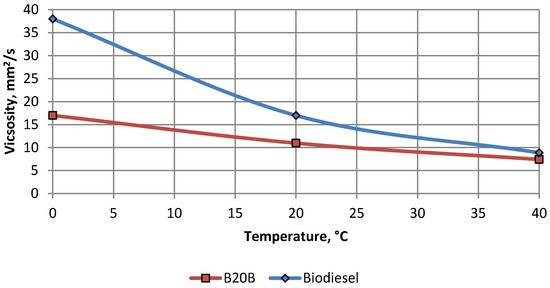
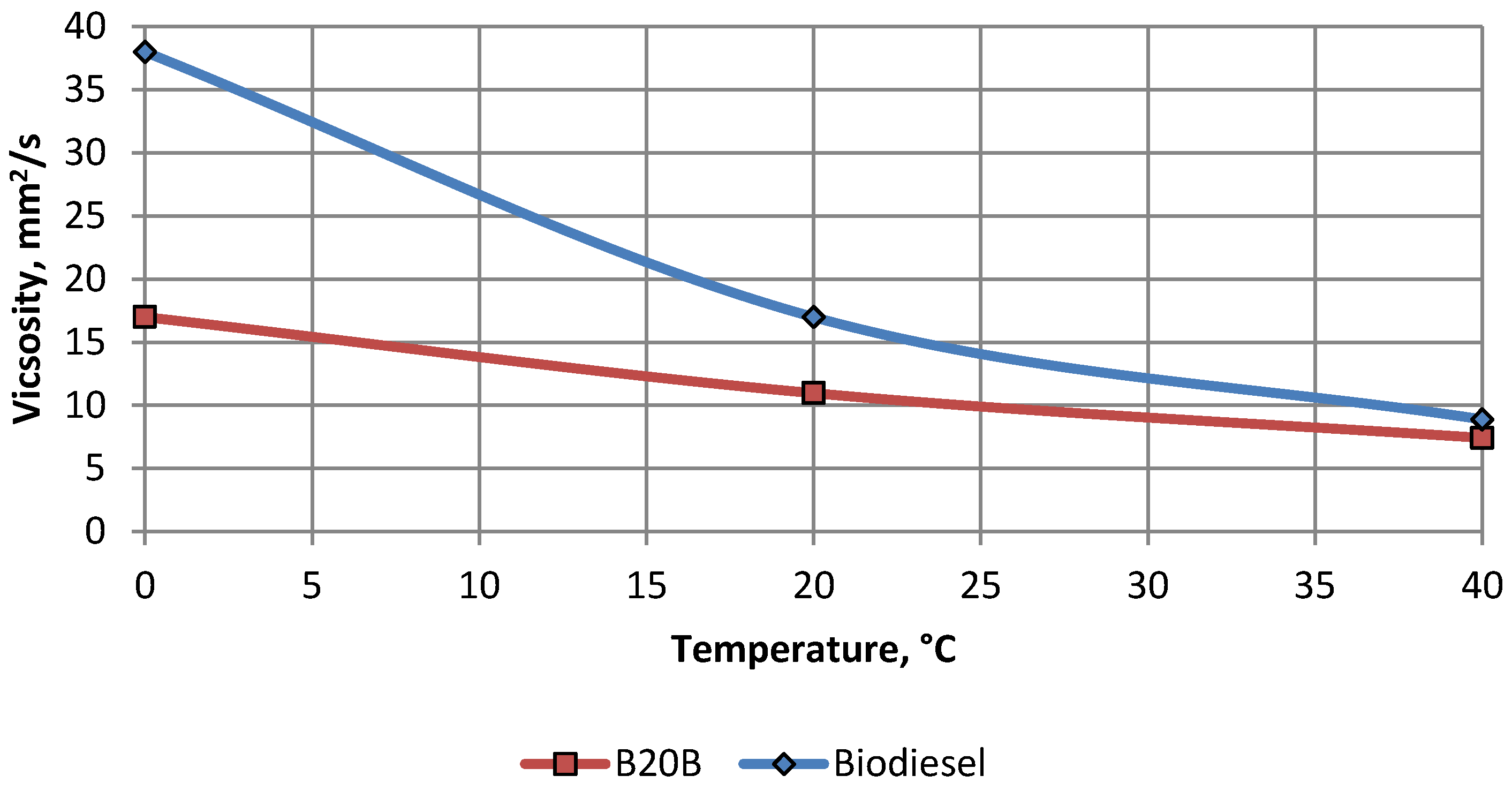
The addition of butanol to biodiesel resulted in a decrease in viscosity. A comparison of the viscosity of biodiesel without additives and B20B is shown in Figure 6.
Figure 6.
Biodiesel viscosity vs. temperature.
The analysis of the data presented in Figure 6 allows us to conclude that the viscosity at a temperature of 0 °C decreased almost twofold, although remaining high for the basic values of diesel fuel. Therefore, the compositions with diesel fuel were selected for further study.
Our experiments showed that blends of biodiesel, butanol, and diesel fuels mix easily, forming a homogeneous liquid, and do not separate further.
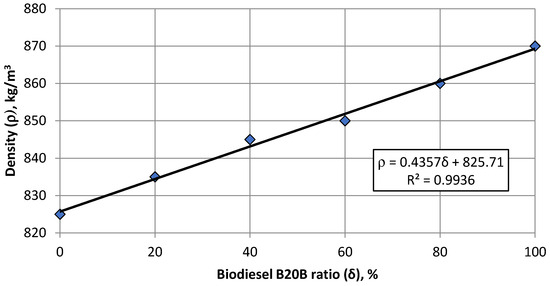
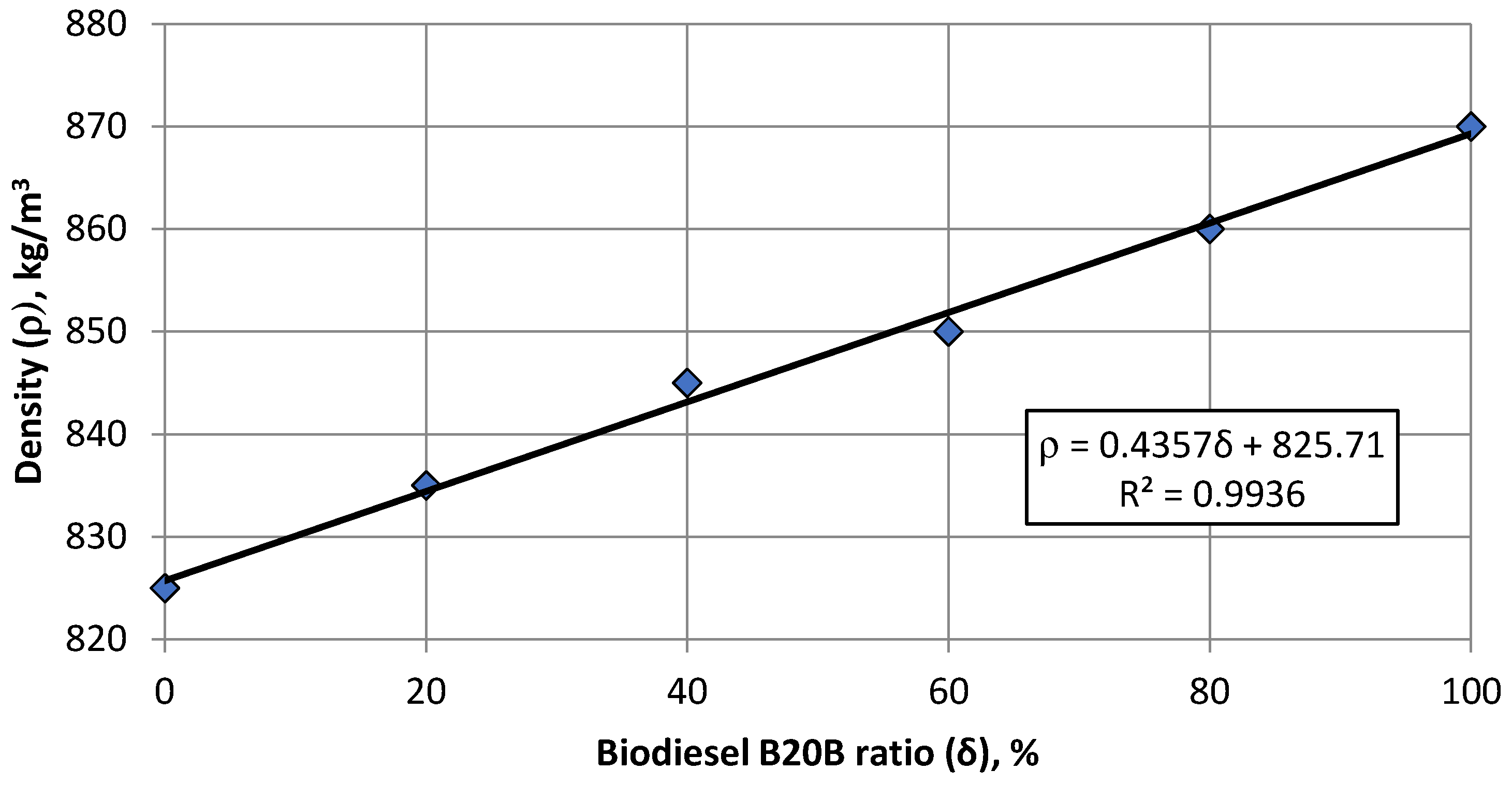
The dependence of the density of blended fuels vs. the share of biodiesel in winter diesel (Figure 7) fuel showed a linear increase in density along with an increase in the B20B biodiesel concentration.
Figure 7.
Effect of the biodiesel ratio in a blend on density.
The analysis of the graph data showed that, in terms of density and viscosity, the mixed fuel based on B20B biodiesel and winter diesel fuel complies with GOST 32511–2013 for mixtures with a biodiesel content of up to 40 wt%. However, the key indicator for determining the share of biodiesel in the fuel is its low-temperature properties, in particular viscosity at lower temperatures as well as cloud and cold filter plugging points.
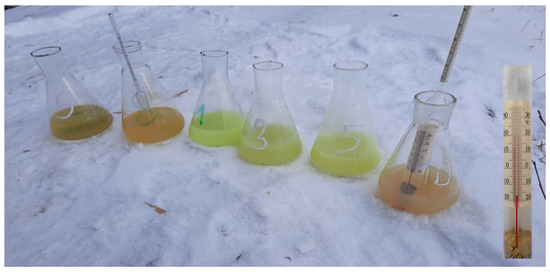
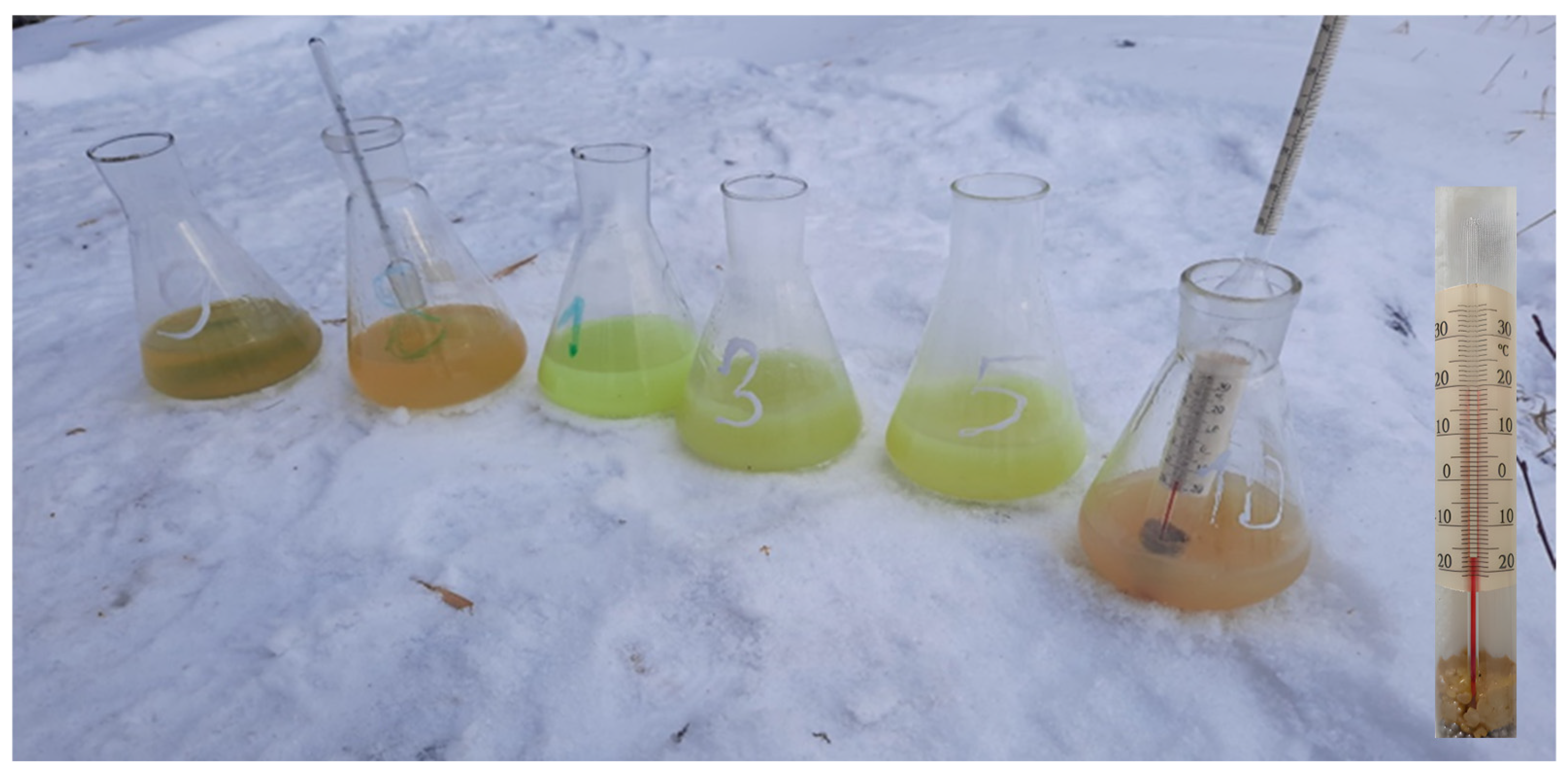
Freezing of samples under natural conditions revealed that samples 1, 3, 5, 8, 9, 10 (see Table 2) became cloudy and thickened at a temperature of −20 °C; in view of this, the viscosity of these samples was not determined (Figure 8). These are samples of fuels based on summer diesel fuel and a high percentage of biodiesel B20B (60 wt% and greater, Table 2).
Figure 8.
Clouded or jellied samples of biodiesel–diesel blends at −20 °C (an explanation of the numbers is shown in Table 2).
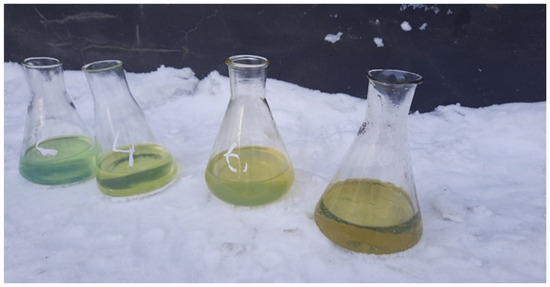
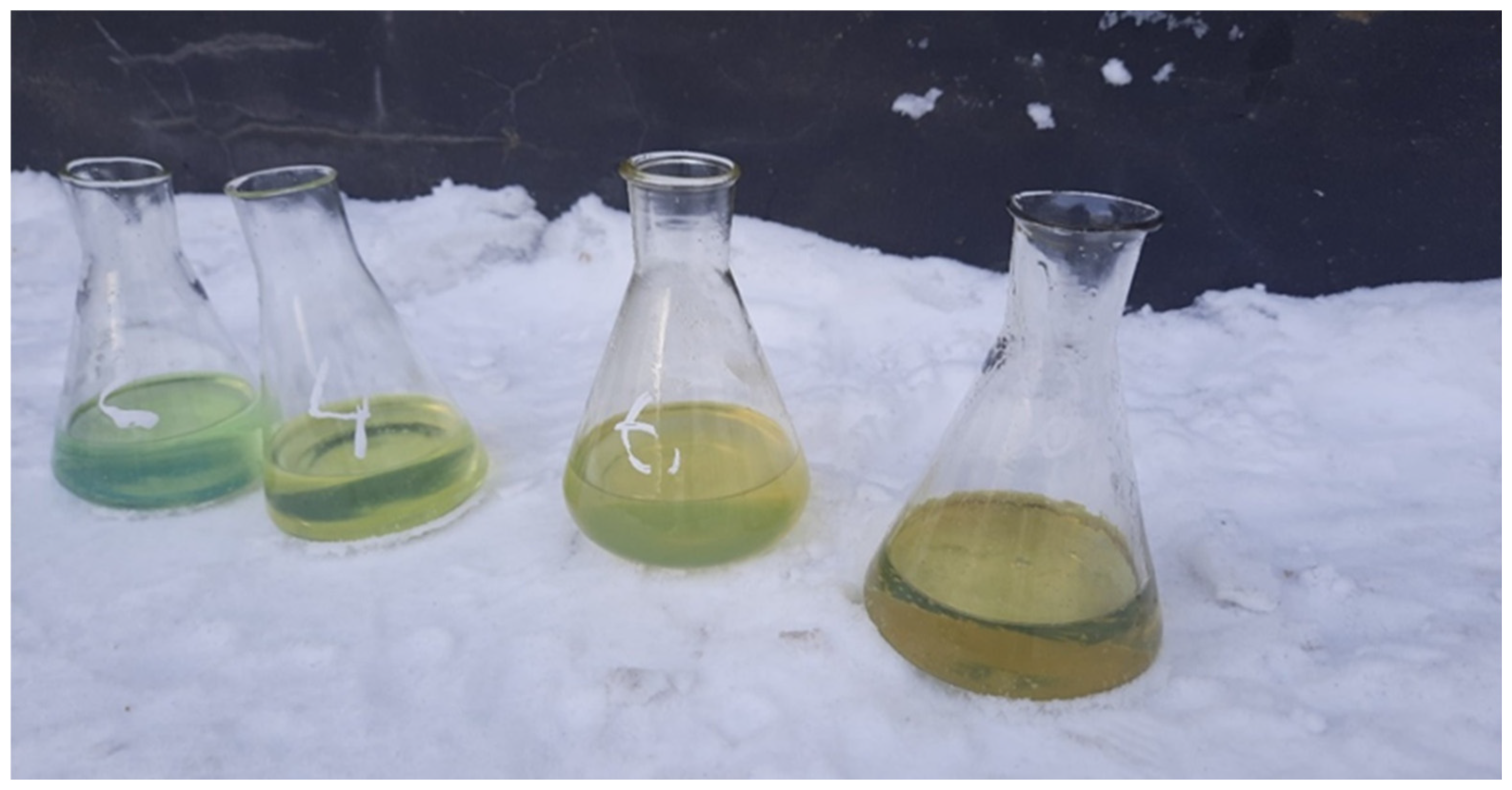
At the same time, four samples did not become cloudy and retained their fluidity (Figure 9). These are samples 2, 4, 6, 7 (see Table 2).
Figure 9.
Samples of biodiesel–diesel blends retaining fluidity at −20 °C (an explanation of the numbers is shown in Table 2).
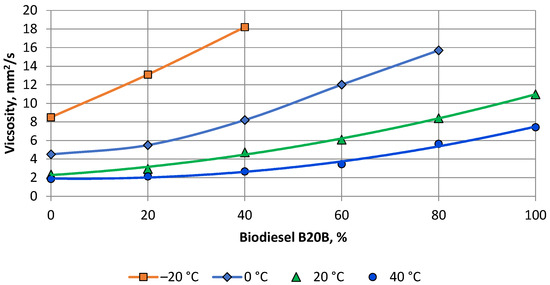
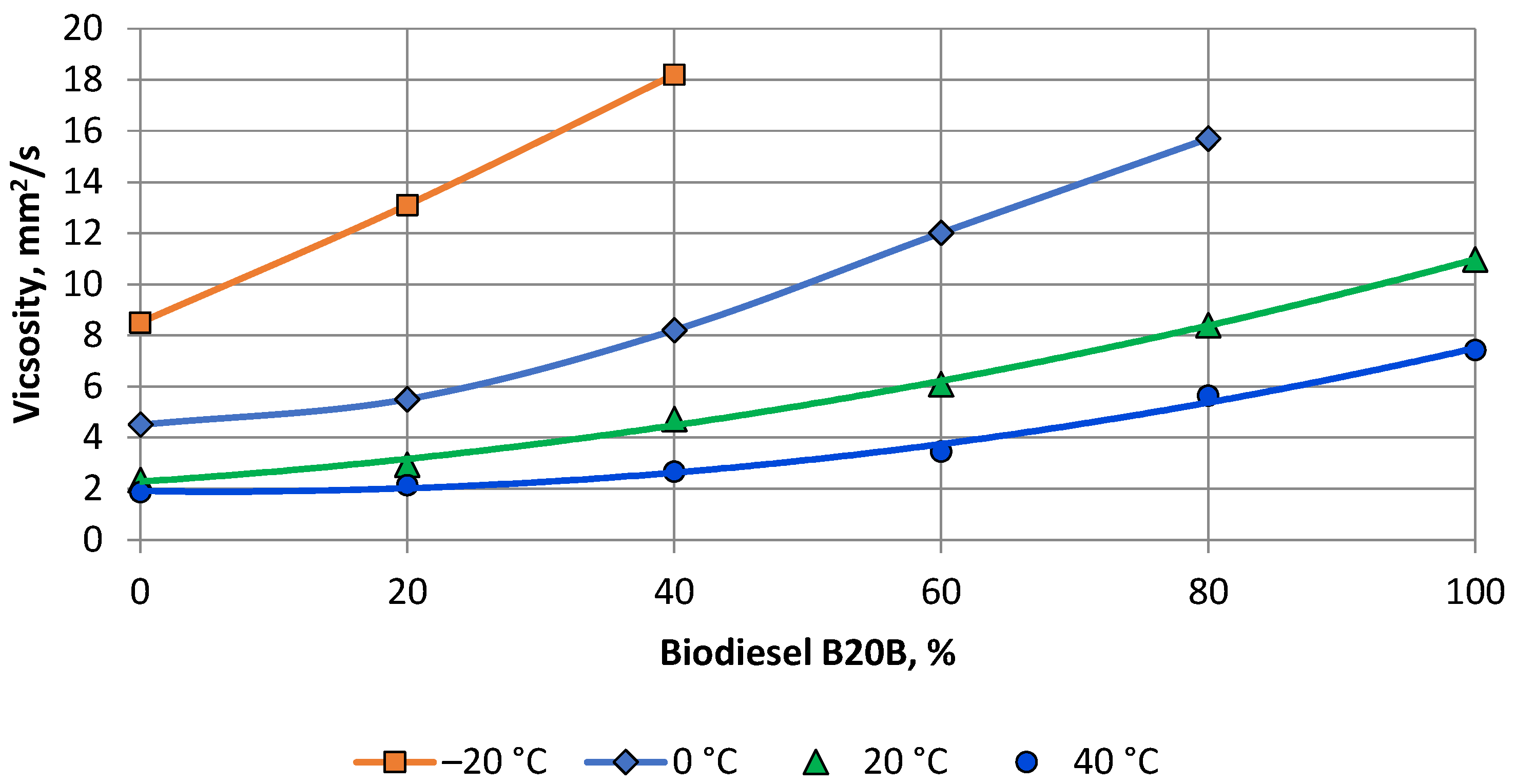
The combined graph depicting the dependence of the viscosity of the studied samples on the content of biodiesel in the blend with winter diesel fuel is presented in Figure 10.
Figure 10.
Effect of biodiesel B20B ratio in a blend on viscosity under temperatures from −20 to +40 °C.
The revealed effects indicate that the viscosity of the mixed fuel at 40 °C meets the GOST requirements for compositions with a biodiesel content of up to 60%; however, such a composition can be used only at temperatures up to 0 °C. The fluidity and filterability of fuels at temperatures of −20 °C is achieved only for fuels with a biodiesel content of up to 40 wt%. At the same time, it is impossible to recommend such a mixture for operation at a temperature of −20 °C due to significant viscosity and poor filterability. For this blend, the maximum temperature is about −10 °C. This temperature is maximal for a blend of winter diesel fuel and 20 wt% of pure biodiesel from waste cooking oil.
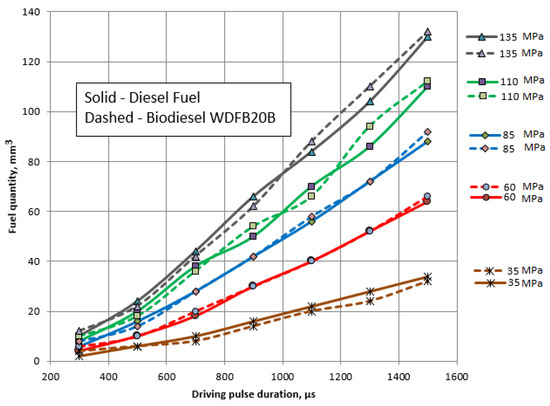
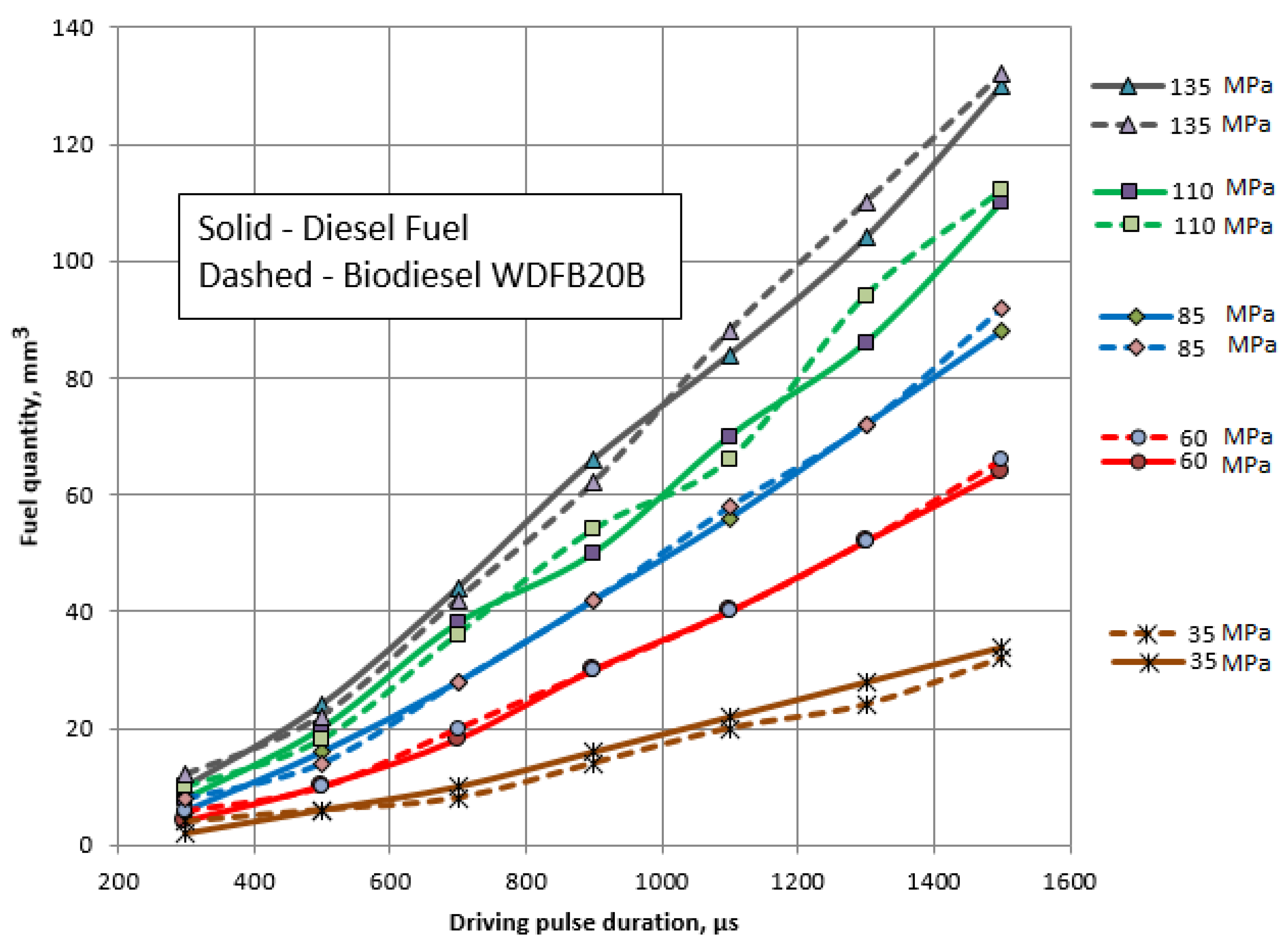
The analysis of the data presented in Figure 11 revealed that the volumetric fuel supply remains virtually unchanged when using diesel fuel and a mixture of diesel fuel and biodiesel WDFB20B (20 wt%). Similar data were obtained for other proportions of biodiesel with butanol additives in the mixture. In this regard, the dependence of the volumetric fuel supply on the pressure in the accumulator and the duration of driving pulse [33,34] is assumed to be the same for both cases.
Figure 11.
Dependence of fuel quantity on driving pulse duration and fuel pressures of the common rail diesel injector 0445110279. Solid line—diesel fuel; dashed line—blend of diesel and B20B biodiesel (20% by weight).
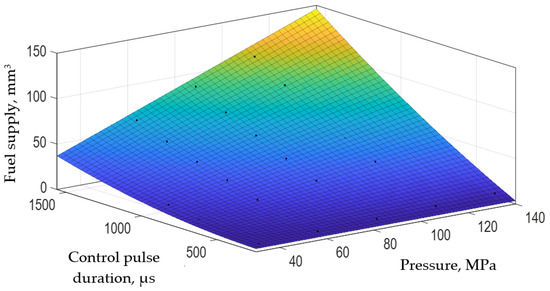
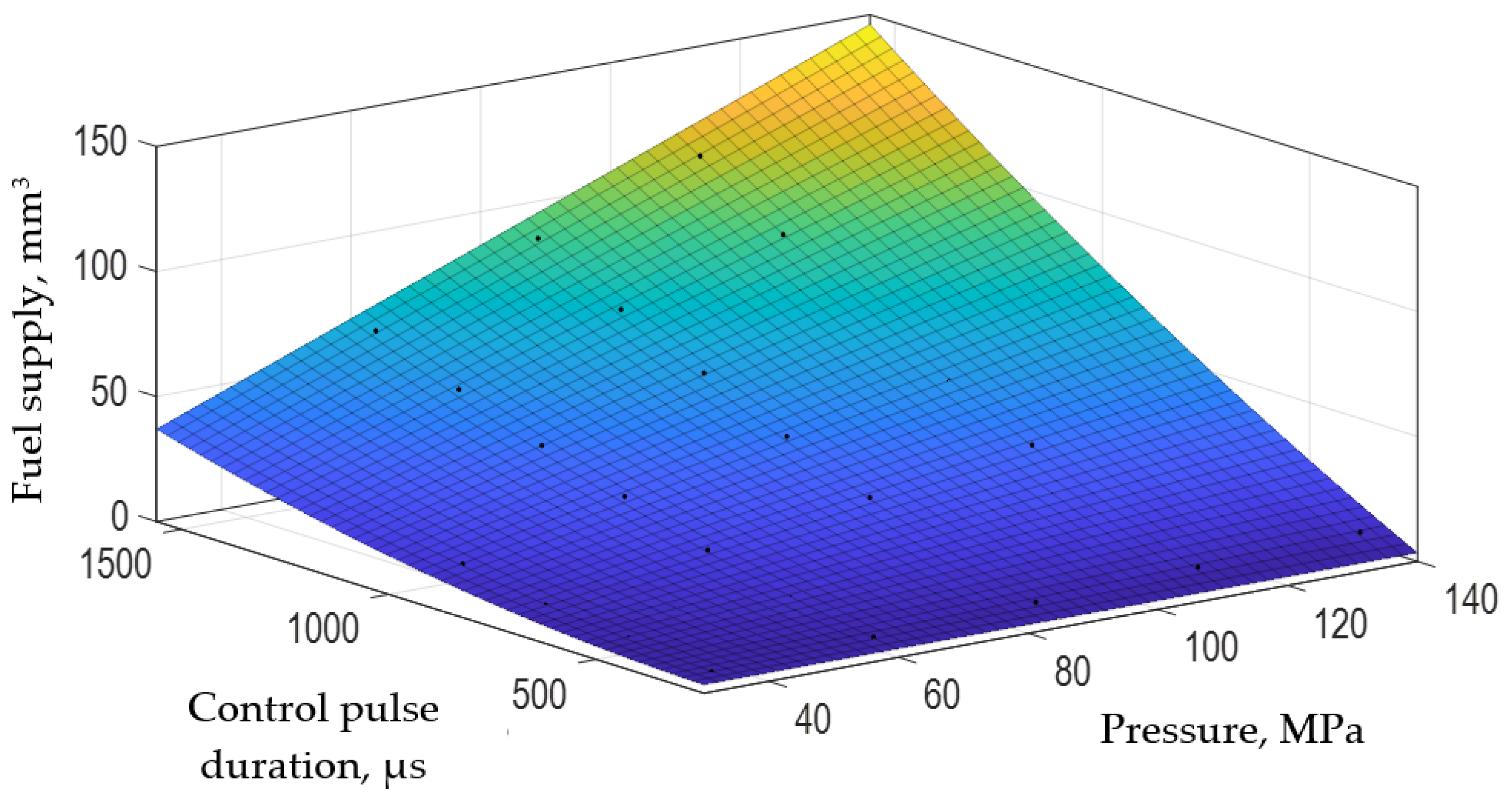
The response surface (Figure 12) and regression model of the process of fuel supply are obtained taking into account the statistical significance of the terms included in the second-order polynomial:
Figure 12.
Response surface based on the regression model of the process of volumetric fuel supply (common rail injector, engine D4CB).
Statistical assessment of the regression model describing the process of volumetric fuel supply presented in Table 3.
Table 3.
Statistical assessment of the regression model describing the process of volumetric fuel supply.
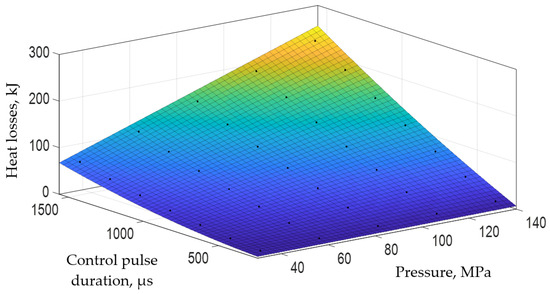
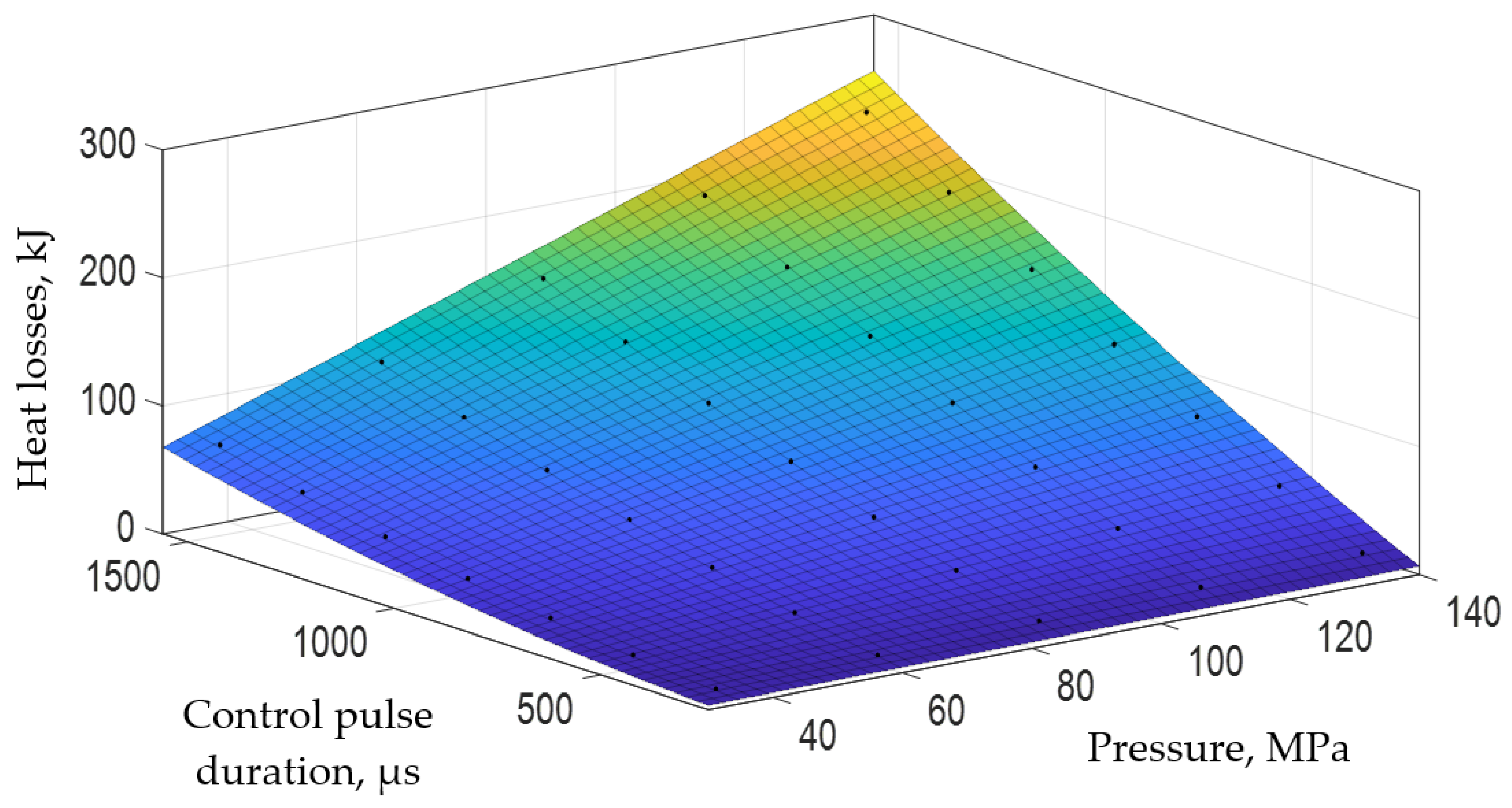
The calculation of the amount of heat brought into the cylinder using expressions (1)–(3) established that the heat release of biodiesel WDFB20B in comparison with pure diesel fuel is reduced by an average of 5%. This circumstance is illustrated in the form of a graphical dependence presented in Figure 13.
Figure 13.
Dependence of heat losses brought into the cylinder when using a blend of diesel fuel and biodiesel WDFB20B relative to pure diesel fuel.
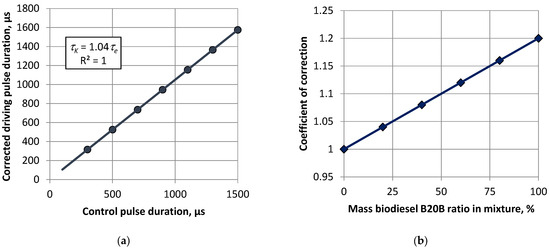
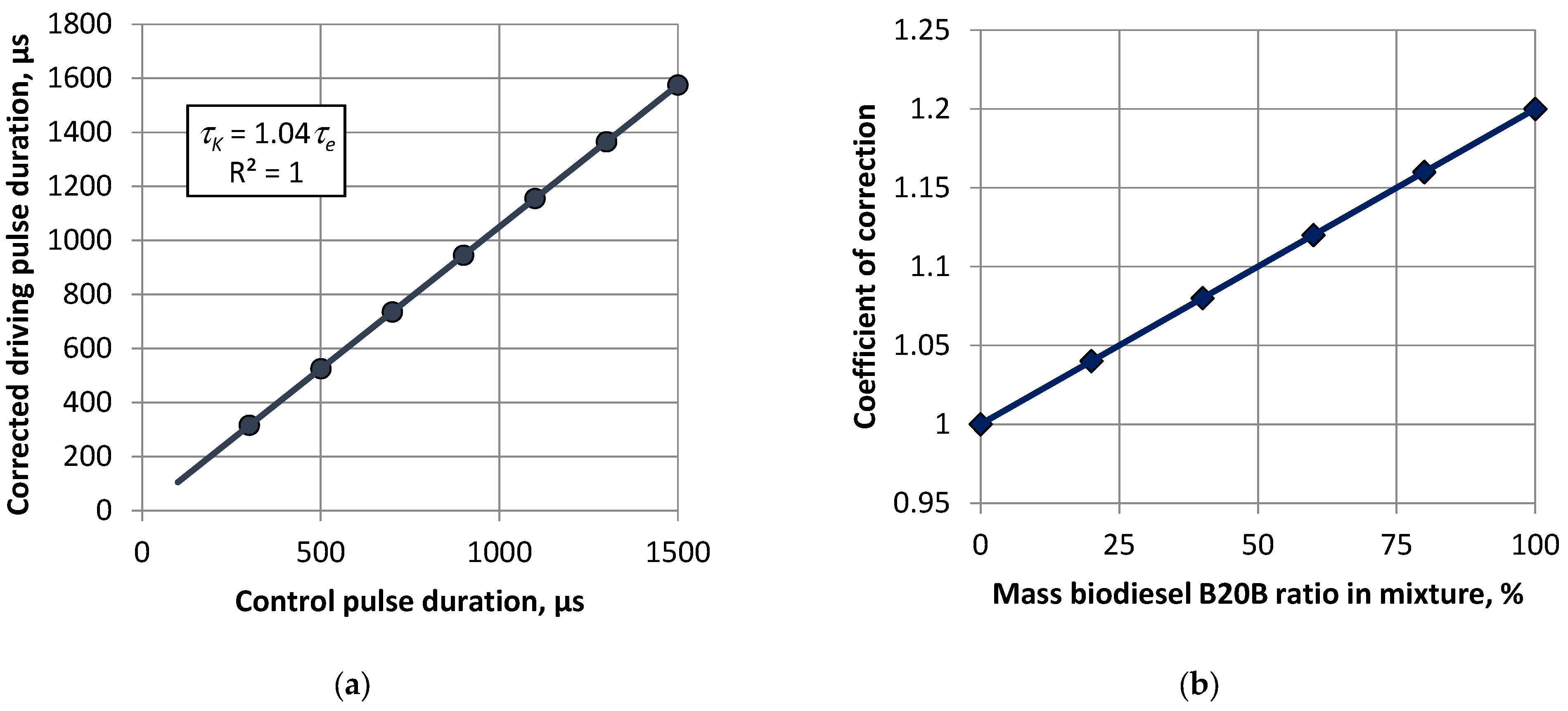
The presented results indicate that, in order to compensate for engine power losses, the control pulse width of injectors should be corrected. This indicator depends on the content of biodiesel in the blend. Then, the second-order regression polynomial describing the process of fuel supply takes the form
where —correction function of the control pulse duration of injectors depending on biodiesel mass ratio in the fuel blend δ.
The graphs of the correction functions for the duration of control pulse in order to compensate for power losses when changing from diesel to a blended fuel, for biodiesel WDFB20B and compositions with the content of biodiesel ranging from 0 to 100%, are shown in Figure 14a and Figure 14b, respectively.
Figure 14.
Correction function for pulse duration aimed at restoring power when changing from diesel fuel to a blended fuel: (a) for biodiesel WDFB20B; (b) under changing the ratio of biodiesel WDFB20B in the mixture.
The analysis of Figure 14a,b showed that, when using biodiesel based on waste vegetable oil with butanol additives, it is advisable to restore power by increasing the driving pulse width. This driving pulse is linearly dependent on the share of biodiesel in the blend.
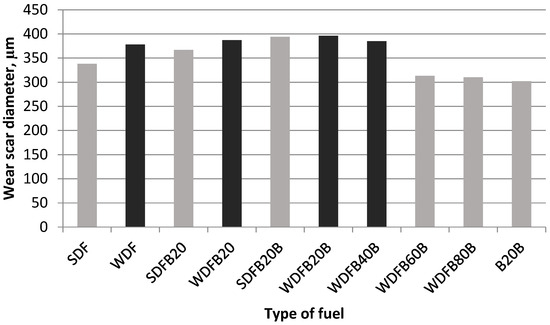
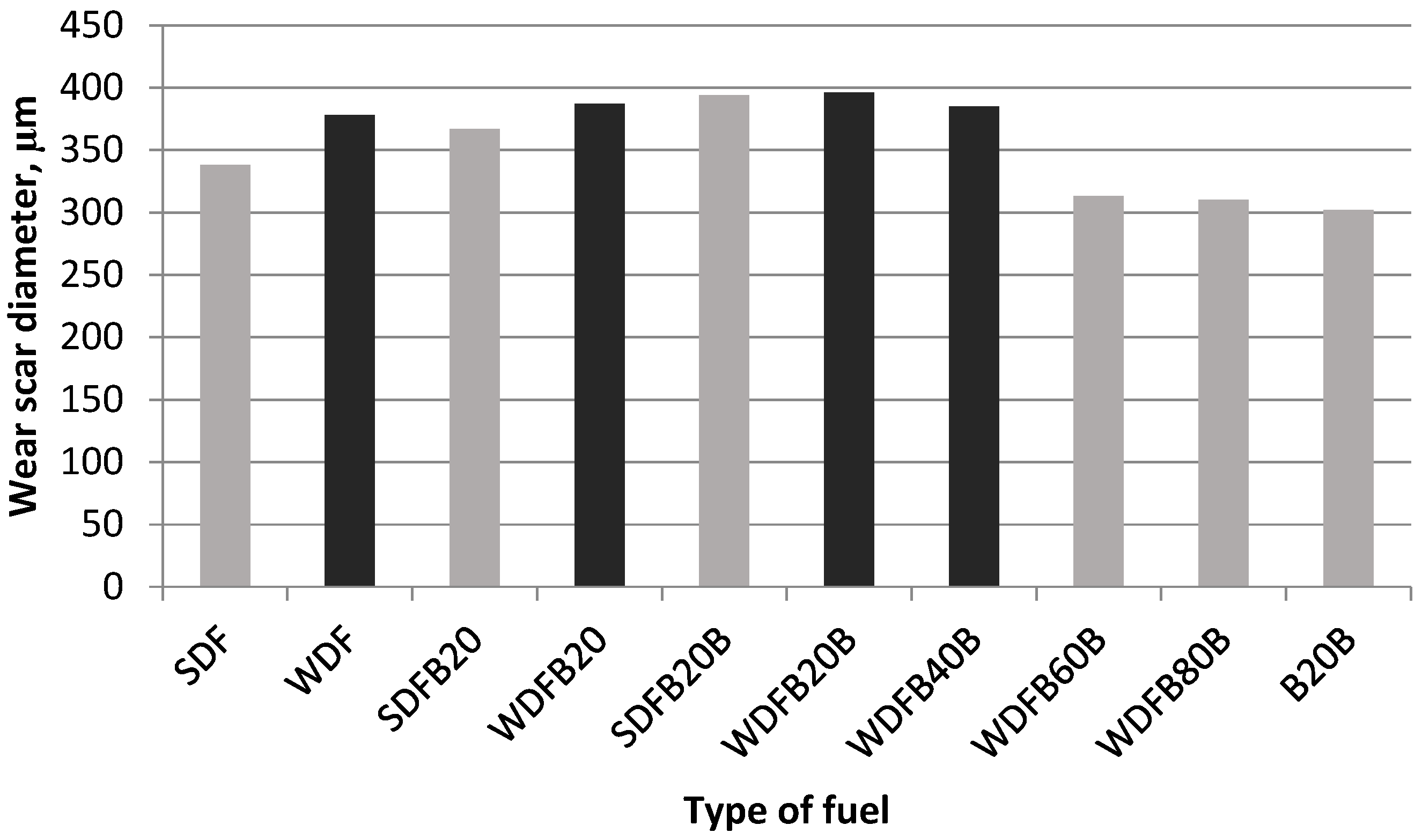
The results of determining the lubricity of the studied blends are presented in Figure 15.
Figure 15.
Comparison of lubricity of fuel mixtures by determining the wear scar diameter (dark—the samples of biodiesel–diesel blends retaining fluidity at −20 °C).
The conducted research and the data obtained (Figure 15) allowed us to conclude that, in general, all the compositions under study meet the GOST requirements in terms of lubricating properties. According to the results obtained by the HFRR method, the addition of butanol into the fuel blend slightly increases the wear scare diameter (up to 5%).
5. Conclusions
- The use of biodiesel extracted from waste vegetable (cooking) oil at low temperatures is possible only in a blend with winter diesel fuel up to 20 wt% and ambient temperatures of up to −10 °C.
- To improve the low-temperature properties of biodiesel blends with winter diesel fuel, it is recommended to add 20 wt% butanol. This makes it possible to use blended fuels with a concentration of 20% biodiesel B20B at ambient temperatures down to −20 °C, as well as at temperatures down to −10 °C under the share of diesel fuel substitution of up to 40%.
- Using calculations and experiments, a characteristic of the volumetric fuel supply for the common rail system was derived. This is a second-order regression polynomial that relates the fuel pressure and the driving pulse width.
- It was established that for the tested engine and its injectors, the proportion of biodiesel with butanol additive has virtually no effect on the volumetric fuel supply over the entire range of pressures and driving pulse widths.
- When using fuel mixtures based on biodiesel extracted from waste vegetable (cooking) oil as an additive to diesel fuel, a decrease in power is observed due to a change in the amount of heat brought into the cylinder. It can be compensated by increasing the duration driving pulse width which depends on the percentage of biodiesel in the blend linearly.
- All studied fuel blends have virtually no effect on lubricity and adjusted wear scar diameter less than 400 µm in all cases.
Author Contributions
Conceptualization, S.N.K.; methodology, S.N.K. and N.V.N.; validation, D.I.; formal analysis, D.A.T.-T.; investigation, S.N.K. and A.V.N.; resources, S.N.K. and N.V.N.; data curation, D.I.; writing—original draft preparation, S.N.K., S.P.O. and A.V.N.; writing—review and editing, N.V.N. and F.A.V.; visualization, A.A.T.; supervision, S.N.K. All authors have read and agreed to the published version of the manuscript.
Funding
This research received no external funding.
Institutional Review Board Statement
Not applicable.
Informed Consent Statement
Not applicable.
Data Availability Statement
The data underlying this article will be shared upon reasonable request to the corresponding author.
Conflicts of Interest
The authors declare no conflicts of interest.
References
- Knothe, G.; Krahl, J.; Van Gerpen, J. The Biodiesel Handbook, 2nd ed.; AOCS Press: Champaign, IL, USA, 2010; 494p. [Google Scholar]
- Marchuk, A.; Likhanov, V.A.; Lopatin, O.P. Alternative Energy: Methanol, Ethanol and Alcohol Esters of Rapeseed Oil as Eco-Friendly Biofuel. Theor. Appl. Ecol. 2019, 3, 80–86. [Google Scholar] [CrossRef] [Scilit]
- Jani, D.B. Critical review on use of different types of bio-diesel as sustainable fuel for Internal Combustion Engines. Open J. Archit. Eng. 2021, 3, 1–7. [Google Scholar] [CrossRef] [Scilit]
- Obergruber, M.; Hönig, V.; Procházka, P.; Kučerová, V.; Kotek, M.; Bouček, J.; Mařík, J. Physicochemical Properties of Biobutanol as an Advanced Biofuel. Materials 2021, 14, 914. [Google Scholar] [CrossRef] [Scilit]
- Krivtsov, S.N.; Krivtsova, T.I.; Skrebnev, K.E.; Syrbakov, A.P. Method for Calculating Carbon Dioxide Emissions of Cars Using Vegetable Oil as a Diesel Fuel Additive. Adv. Eng. Res. 2019, 188, 189–193. [Google Scholar] [CrossRef] [Scilit]
- Čedík, J.; Pexa, M.; Holůbek, M.; Mader, D.; Pražan, R. Effect of Sunflower and Rapeseed Oil on Production of Solid Particles and Performance of Diesel Engine. Agron. Res. 2018, 16, 985–996. [Google Scholar] [CrossRef]
- Che Mat, S.; Idroas, M.Y.; Hamid, M.F.; Zainal, Z.A. Performance and Emissions of Straight Vegetable Oils and its Blends as a Fuel in Diesel Engine: A Review. Renew. Sustain. Energy Rev. 2018, 82, 808–823. [Google Scholar] [CrossRef] [Scilit]
- Obergruber, M.; Hönig, V.; Jenčík, J.; Hájek, J.; Schlehöfer, D.; Herink, T. Lignocellulosic Bioethanol and Biobutanol as a Biocomponent for Diesel Fuel. Materials 2021, 14, 5597. [Google Scholar] [CrossRef] [Scilit]
- Nieto Garzón, N.A.; Oliveira, A.A.M.; Bazzo, E. Heat Release Rates of Straight Soybean and Diesel Oil Blends in a Compression Ignition Engine. Appl. Sci. 2024, 14, 9215. [Google Scholar] [CrossRef] [Scilit]
- Eremeeva, A.M.; Marinets, A.R.; Oleynik, I.L.; Povarov, V.G. Recycling of Waste Cooking Oils into a Biodiesel Fuel: Kinetics and Analysis. Recycling 2026, 11, 41. [Google Scholar] [CrossRef] [Scilit]
- Özgün, A.K.; Eryılmaz, T.A. Comparative Study of Engine Performance and Exhaust Emissions of Biodiesel and Its Blends Produced from Waste Cooking Oil and Neutralized Waste Cooking Oil. Int. J. Automot. Eng. Technol. 2018, 7, 88–97. [Google Scholar] [CrossRef] [Scilit]
- Chiavola, O.; Recco, E. Emission Performance of a Diesel Engine Fuelled with Petrol Diesel, Green Diesel, and Waste Cooking Oil Blends. J. Combust. 2018, 2018, 4819175. [Google Scholar] [CrossRef] [Scilit]
- Sharief, S.G.; Jitendra, G.; Ammaji, S. Experimental Evaluation of Performance and Emissions of Dual-Blended Bio-Diesels with Diesel as an Alternative Fuel for Diesel Engines. Int. J. Res. Appl. Sci. Eng. Technol. (IJRASET) 2019, 7, 2573–2579. [Google Scholar] [CrossRef] [Scilit]
- Tucki, K.; Bączyk, A.; Klimkiewicz, M.; Mączyńska, J.; Sikora, M. Comparison of Energy Performance and Toxicity of Diesel Engine Fuelled with Diesel Oil, Rapeseed Oil and Oil Mixture. IOP Conf. Ser. Earth Environ. Sci. 2019, 214, 012102. [Google Scholar] [CrossRef] [Scilit]
- Demirbas, A. Comparison of Transesterification Methods for Production of Biodiesel from Vegetable Oils and Fats. Energy Convers. Manag. 2008, 49, 125–130. [Google Scholar] [CrossRef] [Scilit]
- Emeji, I.C.; Afolabi, A.S.; Kalala, J.; Abdulkareem, A.S. Optimization and Characterization of Biofuel from Waste Cooking Oil. In Proceedings of the World Congress on Engineering, London, UK, 1–3 July 2015; Springer: Berlin/Heidelberg, Germany, 2015; Volume II. [Google Scholar]
- Arenas Dávila, E.; Urribarrí, A.; Sánchez, J.; Rincón, M.; Martínez, K.; González, E.; Aiello Mazzarri, C. Production of Biodiesel by Esterification and Transesterification from Waste Cooking Oils. Rev. Fac. Agron. (LUZ) 2021, 38, 105–127. [Google Scholar] [CrossRef] [Scilit]
- Sangian, H.F.; Paendong, M.P.; Rombang, J.R.; Lametige, J.A.; Pasau, G.; Bobanto, M.; Purwadi, R.; Thahir, R.; Sadjab, B.A.; Masinambow, V.A.J.; et al. Study of Aqueous Ethanol-Diesel-Biodiesel Prepared by Near-Isochoric Sub Critical Trans-Esterification. WSEAS Trans. Environ. Dev. 2022, 18, 333–346. [Google Scholar] [CrossRef] [Scilit]
- Aworanti, O.A.; Ajani, A.O.; Agarry, S.E. Process Parameter Estimation of Biodiesel Production from Waste Frying Oil (Vegetable and Palm oil) using Homogeneous Catalyst. J. Food Process Technol. 2019, 10, 811. [Google Scholar] [CrossRef] [Scilit]
- Rizzi, M.; Furtado, J.C.; da Costa, A.B.; Gerbase, A.E.; Ferrão, M.F. Método do Enxame de Partículas para Otimização de Modelos de Regressão Multivariada Empregados na Determinação de Biodiesel em Blendas Biodiesel/Óleo Vegetal/Diesel. Rev. Virtual Quim. 2016, 8, 1877–1892. Available online: http://rvq.sbq.org.br (accessed on 2 February 2026). [CrossRef] [Scilit]
- Hönig, V.; Pexa, M.; Mařík, J.; Linhart, Z.; Zeman, P. Biobutanol Standardizing Waste Cooking Oil as a Biofuel. Pol. J. Environ. Stud. 2017, 26, 69–78. [Google Scholar] [CrossRef] [Scilit]
- Sarno, M.; Iuliano, M. Biodiesel Production from Waste Cooking Oil. Green Process Synth 2019, 8, 828–836. [Google Scholar] [CrossRef] [Scilit]
- Um Min Allah, F.; Alexandru, G. Waste Cooking Oil as Source for Renewable Fuel in Romania. IOP Conf. Ser. Mater. Sci. Eng. 2016, 147, 012133. [Google Scholar] [CrossRef] [Scilit]
- Khan, N.; Park, S.H.; Kadima, L.; Bourdeau, C.; Calina, E.; Edmunds, C.W.; Pursel, D.P. Locally Sustainable Biodiesel Production from Waste Cooking Oil and Grease Using a Deep Eutectic Solvent: Characterization, Thermal Properties, and Blend Performance. ACS Omega 2021, 6, 9204–9212. [Google Scholar] [CrossRef] [Scilit]
- Primandari, S.R.P.; Arafat, A. Feasibility of waste cooking oil as biodiesel feedstock. J. Phys. Conf. Ser. 2021, 1940, 012081. [Google Scholar] [CrossRef] [Scilit]
- Namini, A.S.; Jung, S.; Altınçekiç, N.G.; Noh, H.; Khalilzadeh, M.A.; Liu, Z.; Varma, R.S.; Jang, H.W.; Kim, D.; Shokouhimehr, M. Utilization of sustainable nanocatalysts for the conversion of vulnerable waste oil into biodiesel. J. Mol. Struct. 2025, 1338, 142166. [Google Scholar] [CrossRef] [Scilit]
- Bhran, A.A. A Comparative Techno-Economic Analysis of Waste Cooking Oils and Chlorella Microalgae for Sustainable Biodiesel Production. Processes 2025, 13, 3526. [Google Scholar] [CrossRef] [Scilit]
- Thanushree, S. Waste to Wheels: Bio-Diesel Synthesis from used Cooking Oil. Int. J. Creat. Open Res. Eng. Manag. 2026, 2, 1–9. [Google Scholar] [CrossRef] [Scilit]
- Rutah, D.F.; Mudhoo, A.; Surroop, D. Effects of process parameters on transesterification of waste cooking oil for biodiesel production: A review. In Chemical Papers; Springer: Berlin/Heidelberg, Germany, 2026. [Google Scholar] [CrossRef] [Scilit]
- Renewables 2024: Analysis and Forecast to 2030; IEA Publications: Paris, France, 2024. Available online: https://www.iea.org/reports/renewables-2024 (accessed on 3 February 2026).
- Meyer, K.; Livingston, T.C. Diesel Fuel Lubricity Requirements for Light Duty Fuel Injection Equipment. In Proceedings of the CARB Diesel Fuel Quality—Public Hearing, Sacramento, CA, USA, 20 February 2003. [Google Scholar]
- Kuszewski, H.; Jaworski, A.; Szpica, D. Comparative Study of the Lubricity of Hydrotreated Vegetable Oil, Diesel, and Their Blends Using Four-Ball Testing: Focus on Scuffing Load. Energies 2025, 18, 3141. [Google Scholar] [CrossRef] [Scilit]
- Ferreira, B.E.P.; Moreira, V.G.; Nazareno, T.G.; Hanriot, S.M. The Effects of Injection Pressure and Energizing Time on the Combustion of an Engine Fueled with Diesel Oil and Ethanol Blend. In 2020 SAE Brasil Congress & Exhibition; SAE Technical Paper; SAE Publications: Warrendale, PA, USA, 2021. [Google Scholar] [CrossRef] [Scilit]
- Krivtsov, S.N.; Yakimov, I.V.; Ozornin, S.P. Numerical analysis and experimental studies on solenoid common rail diesel injector with worn control valve. IOP Conf. Ser. Mater. Sci. Eng. 2018, 327, 042057. [Google Scholar] [CrossRef] [Scilit]

Disclaimer/Publisher’s Note: The statements, opinions and data contained in all publications are solely those of the individual author(s) and contributor(s) and not of MDPI and/or the editor(s). MDPI and/or the editor(s) disclaim responsibility for any injury to people or property resulting from any ideas, methods, instructions or products referred to in the content. |
© 2026 by the authors. Licensee MDPI, Basel, Switzerland. This article is an open access article distributed under the terms and conditions of the Creative Commons Attribution (CC BY) license.