Abstract
The kickout has become a key source of possession in Ladies Gaelic Football (LGF), with successful teams winning 80% of their own and 29% of the opposition kickouts (KO). Several investigators have alluded to the role of strategy in Gaelic games; however, none have successfully identified, defined, or measured the impact of these strategies on the game. This novel study aims to identify and define the strategies used by Senior Inter-County LGF teams to win their own and opposition KOs, developing a valid and reliable analysis system to analyse KO performance in LGF. Eighty-nine games (2172 kickouts) from the 2019–2023 TG4 All-Ireland Senior LGF Championship were analysed using NacSport Scout. Four offensive and three defensive strategies have been newly identified, defined and analysed. A generalised linear mixed model was employed to model the key predictors of successful possession from the kickout. Numbers committed and both offensive and defensive strategies used were found to have significant influences on KO outcome, with a zonal press with 11+ players and the Flat 4 strategy being the most effective for winning the kickout. The findings of the current study provide a novel insight for coaches, players, pundits and analysts for kickout strategies employed by LGF teams.
1. Introduction
Gaelic Football (GF) as a sport is one of a family of Gaelic Games which are embedded in the fabric of Irish life, contributing to 1.6 billion in economic activity and comprising 9.8% of employment in sport on the island of Ireland. The evolution of kickout (KO) strategies in Gaelic Football (GF) in recent years has transformed the shape of both the men’s and women’s game [1]. Where previously midfield contests to win the long KO created exciting, chaotic battlegrounds, the new strategies usually negate contests using short, risk-averse KOs to secure possessions and build slow, often boring phases of attack [1,2]. While it is clear that tactical strategies are implemented at inter-county and club level in GF, this “revolution” has not been reflected in academic research. Several investigators have alluded to the role of strategy in both men’s [2,3,4] and Ladies Gaelic Football (LGF) [1,5] and measured quantifiable outcomes such as KOs won/lost; however, none have successfully defined, measured or evaluated how and why and what impact these restart strategies are having on the game.
Strategy and tactics are used in team sport to create an imbalance as each team aims to generate disorder in its opponent’s organisation, whilst maintaining its own stability and organisation [6]. Strategy enables individual and group actions to be organised to produce collective execution, increasing the diversity and unpredictability of the teams’ actions [7]. Analysing team strategy in invasion sports is complex [8]. It takes significant volumes of data to distinguish between set tactical patterns induced by team strategy, or random behaviours that are a consequence of instantaneous adjustment to adversity [7]. GF literature is in its infancy and to date has focused largely on investigating match events including shots, turnovers, passing and kickouts [2,3,4,9,10,11,12,13] without considering the behavioural patterns or strategies. Accepting the argument that sports performance comprises a complex series of interrelationships between a wide variety of performance variables, then simple frequency data does not capture the full complexity of a performance [8]. While GF is chaotic in nature, the KO as a set piece is an aspect in the game where teams can optimise strategies to retain possession and create scoring opportunities. Possession from KOs is a key source of scores in both women’s (49%) and men’s GF (52%) [3,5]. Therefore, this proof-of-concept investigation seeks to answer the research question: Is it possible to define, observe and measure KOs set piece formations in a systematic and reliable fashion in LGF?
Many invasion sports, including rugby [14], Australian Football [15], basketball [7,16], volleyball [17] and soccer [18,19,20,21,22] have successfully defined the strategies employed in their sport. These investigations used a quantitative approach, which evolved due to the increase in match data available, particularly using motion tracking technologies (e.g., global positioning system (GPS) and automatic video tracking) [23]. The quality and magnitude of the data set available in professional sport are key enablers to the research conducted in professional invasion team sports. These large datasets combining performance and positional metrics are not currently available in GF, as there is no international market to incentivize commercial sports data providers to invest in GF data generation, as they have in soccer or basketball.
Thus, the methods employed in these professional sports are not feasible in GF and prove to be a significant constraint on research design. Even though many GF teams use GPS tracking [24], these data are not centrally available. GF is amateur in nature as the players are not paid; however, the level of player preparation and sport science support is often on par with some professional sports, particularly in men’s GF [24]. In the absence of a commercial data provider, match analysis is usually conducted at the local level, often using a single camera feed. With the obvious limitations this brings, the development of a systematic and reliable observational framework to analyse KO strategies which could be used across different levels in the sport to analyse KO strategy could provide considerable value to coaches and analysts. While there are some rule differences between KOs in the men’s and women’s game, mainly that the goalkeeper in LGF is permitted to take the KO from the hand, rather than a kicking tee, the principles of KO strategy employed seem to be similar. The framework proposed by Francis et al. [25] will be used to support the development of definitions and an appropriate observation system and protocol.
In LGF, the ability to win your own and the opposition KO has been shown as a significant influence on match outcome [1]. Securing possession from your own and opposition KOs is one way successful LGF teams impose their dominance on opposition, with winning teams consistently winning significantly more KO possession than their opponents (80% versus 71%) [1]. KOs are increasingly viewed as controllable set pieces where LGF teams can execute strategies to win the ball and create scoring opportunities, for instance, winning teams create 14% more scores from their own long KOs and 28% more scores from opposition short KOs than losing teams [1,5]. McColgan and colleagues’ [1] benchmark investigation strongly suggested that KO strategies were employed by LGF teams and that these seemed to be a key influencing factor along with KO duration and distance to winning one’s own and opposition KOs. This investigation’s primary aim is to identify and define KO strategies used by Senior Inter-County LGF teams whilst also developing a valid and reliable analysis system to analyse KO performance in LGF based on Francis et al.’s framework [25].
2. Materials and Methods
2.1. Match Sample
This observational analysis included 2172 of the 3081 KOs from the 2019, 2020, 2021, 2022, and 2023 LGF Senior Inter-County Championship. Due to poor camera angles and score replays, 908 KOs (29.4%) are excluded from the current sample as the KO is not visible. Match footage was publicly available and sourced from the LGFA, TV providers, county boards, intercounty management, and analysts.
2.2. Operational Definitions
All performance indicators are defined for operational purposes (Table 1). 19/27 definitions were identified following a review of previously published and validated LGF PA research. New definitions for offensive and defensive strategies were developed in five stages based on Francis et al.’s framework [25].
Table 1.
Operational definitions for the analysis of the kickout strategy in Ladies Gaelic.
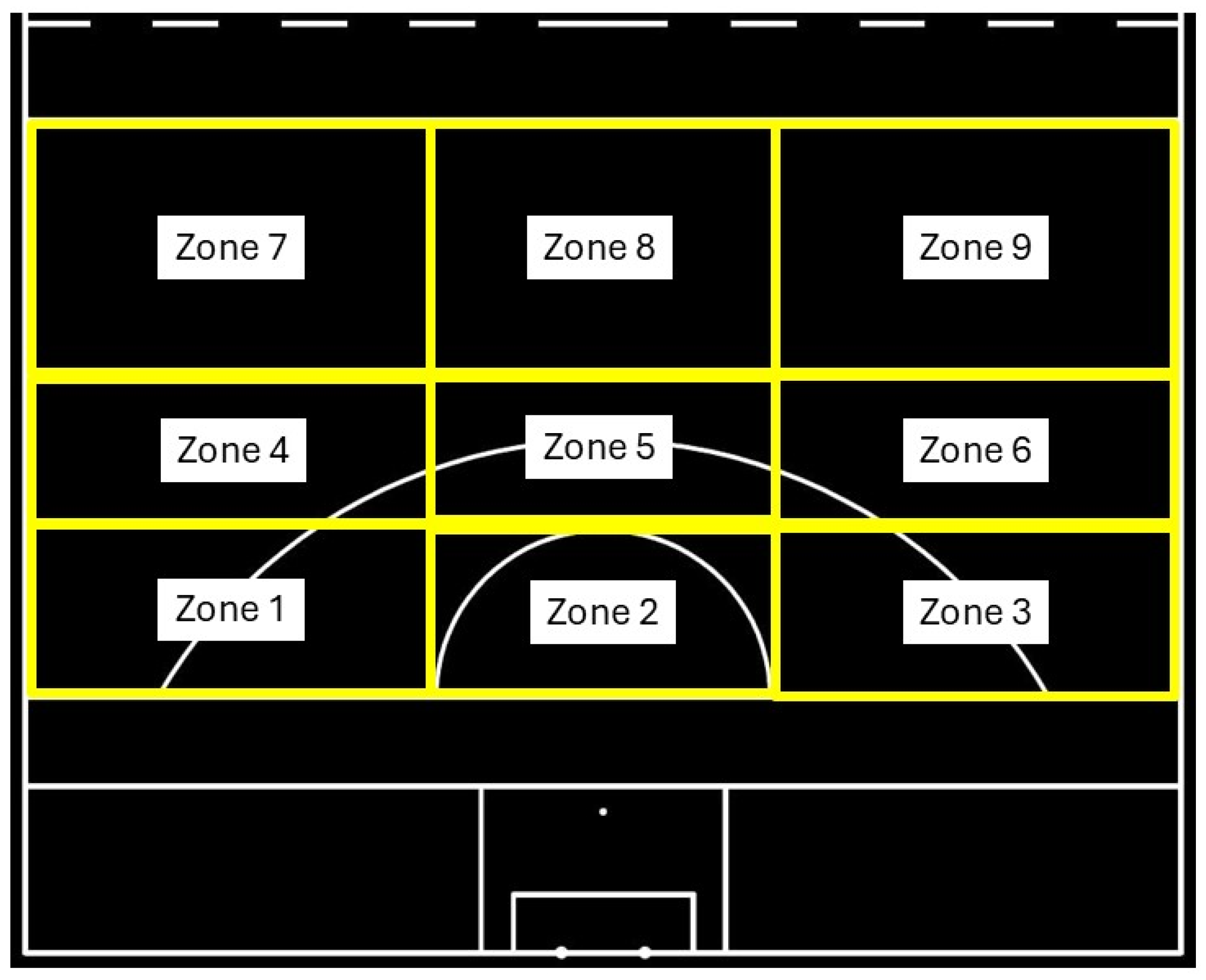
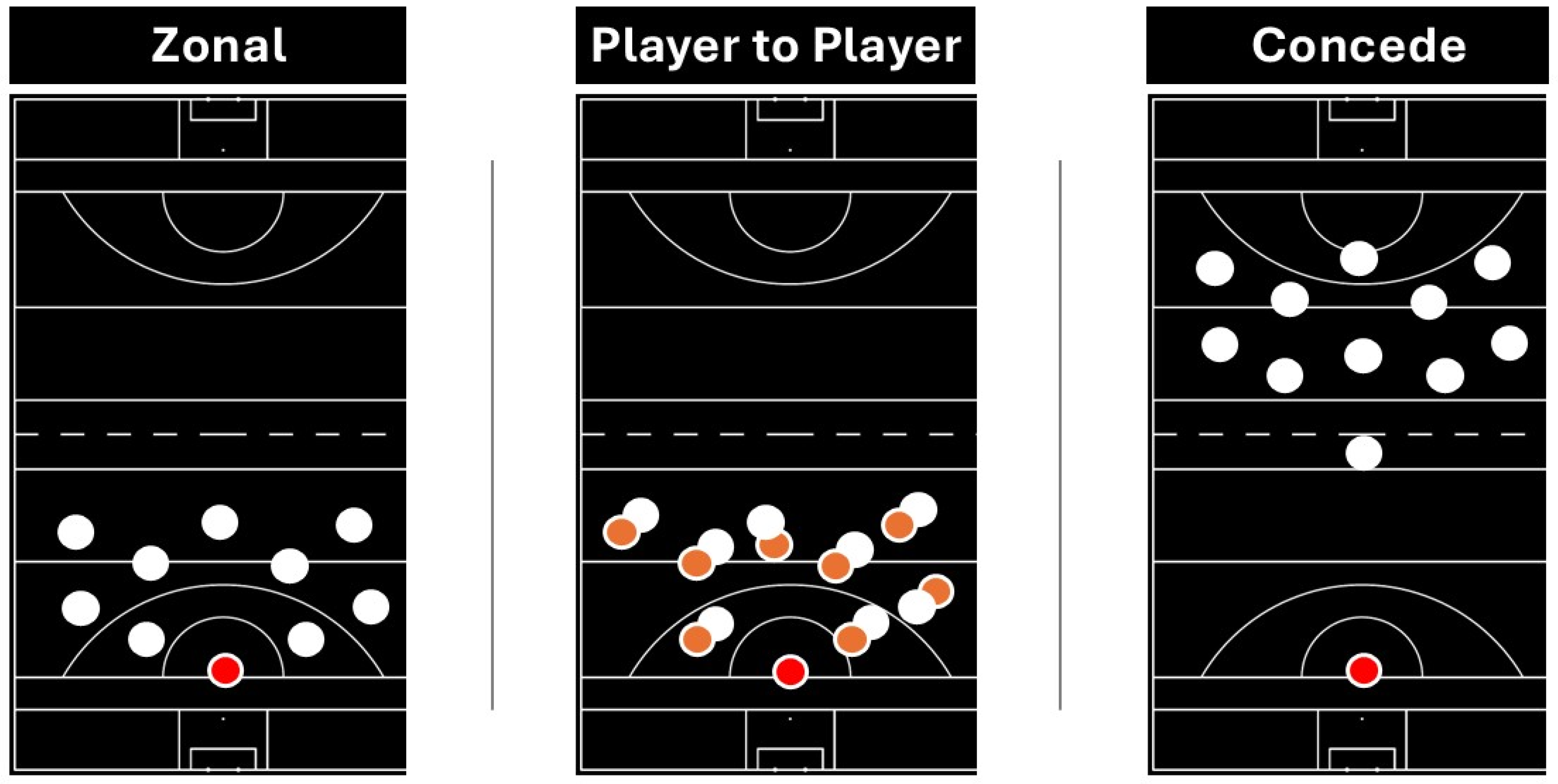
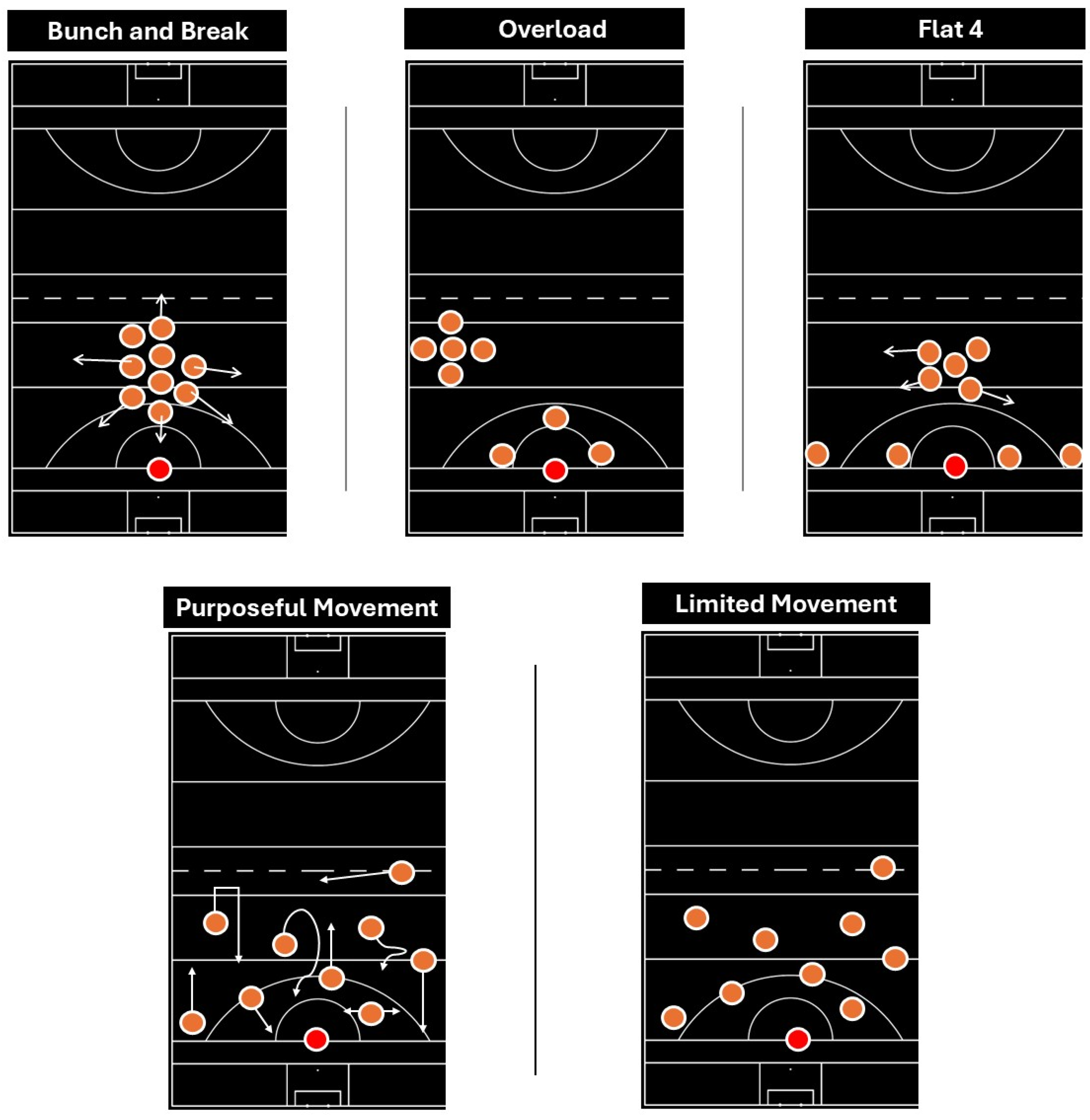
First, the hand notation and analysis of KOs from six randomly selected games (n = 382) were conducted to identify if patterns were observable during KO movements. This process identified four offensive patterns and three defensive patterns. These KOs were included in the final analysis. Second, a draft list of strategy variables and operational definitions was developed from a review of literature investigating strategies in invasion games and the knowledge of the authors. Video clips of each strategy variable were created with text and voiceover to ensure the typology and proposed definitions were an accurate representation of the actual action. Third, the draft operational definitions and videos were circulated to a group of current senior intercounty coaches (n = 5) and goalkeepers (n = 4) with over 100 years combined experience and given 1 week to scrutinise the information. During the week, the coaches and goalkeepers were asked to review the list of proposed definitions and provide their opinions as to whether the variables would allow the collection of objective data regarding the strategies used during KO movements. Fourth, minor adaptations were made to the definitions following an online validation panel meeting [25]. The offensive strategy originally defined as Cluster was suggested by the panel to change to Bunch and Break. A second suggestion was to measure the effectiveness of the defensive strategies by counting the number of defensive players in the opposition 65. Both suggestions were accepted and amendments made. Fifth, guided by feedback from the expert panel in the validation meeting, amendments were made, and the list was recirculated for each of the participants to agree to the proposed definitions. No additional meetings were required, resulting in the final list of performance indicators (n = 32) defined for operational purposes in Table 1. Visual illustrations of pitch zones, defensive and offensive strategies are produced in Figure 1, Figure 2 and Figure 3.
Figure 1.
Kickout location zones for kickout strategy analysis in Ladies Gaelic Football.
Figure 2.
Three defensive kickout strategies deployed in Ladies’ Gaelic Football (Illustrated using white counters).
Figure 3.
Four offensive kickout strategies are deployed in Ladies Gaelic Football (illustrated using orange counters), and the failed execution of the strategy is defined as Limited Movement.
2.3. Reliability
An inter-operator reliability study was conducted on six randomly selected games, inclusive of 200 KOs, with a Level 3 GAA performance analyst. Cohen’s Kappa was used to calculate the reliability of KO events, KO Outcome and KO strategies; all variables returned an acceptable level of inter-rater agreement ranging from 0.981 to 1.00.
2.4. Procedure
All games were analysed using the NacSport Scout software version 9. A custom-built tagging panel was created to code each match and analyse all KOs. A total of 32 indicators were analysed across all KOs. After the matches were analysed, they were visually reviewed to ensure no tagging errors were made and no events were missed. Following the completion of coding, the data were exported to Microsoft Excel (Microsoft, Redmond, WA, USA).
2.5. Statistical Analysis
All statistical analyses were performed using SPSS for Windows (Version 29, SPSS Inc., Chicago, IL, USA) with a statistical significance of ≤0.05 accepted. A generalised linear mixed model with a logit link was conducted to examine the effect of offensive and defensive strategies on kickout success, with game ID included as a random effect. The results showed that both offensive strategy (p < 0.001) and defensive strategy (p < 0.001) had a significant overall effect on kickout success. The variance attributable to game ID was 0.108 (ICC = 0.032, SE = 0.059, p = 0.069), indicating a small level of clustering by game. Although a warning indicated that the Hessian matrix was not positive definite, this is likely attributable to the relatively small between-game variance (ICC = 0.032). Inspections of parameter estimates and standard errors indicated no evidence of instability, and the model was therefore retained.
3. Results
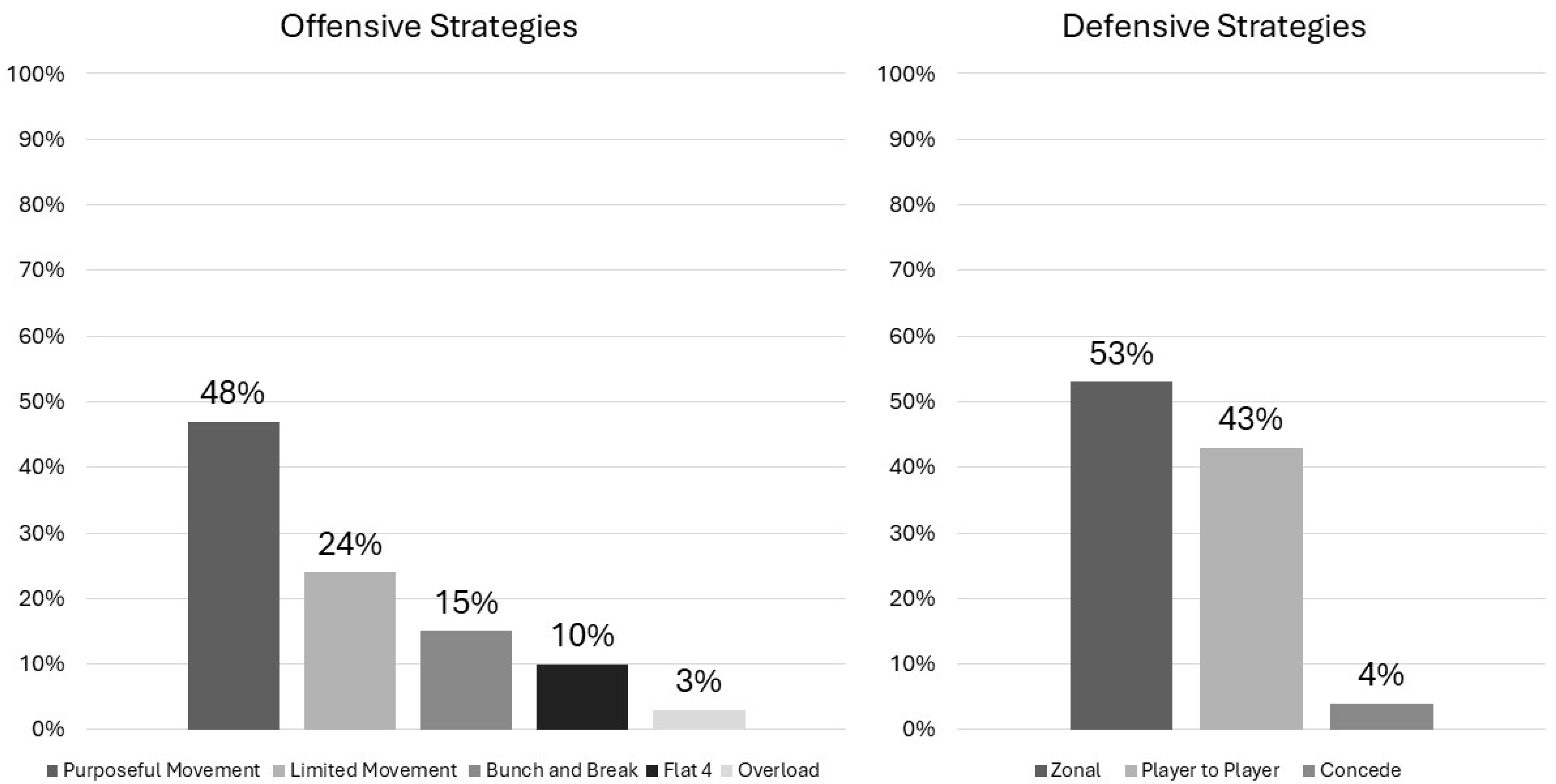
The frequency and relative success of different KO strategies are reported in the context of long and short KOs (Table 2). Analysis indicated that teams use deliberate offensive strategy on their own KO 76% of the time, with Limited Movement accounting for the remainder (Figure 4). Purposeful Movement was the most frequent strategy observed (48%), with an 84% retention rate. Movement is critical for LGF teams to secure possession from their own KO, as when teams were found to have Limited Movement, they won just 47% of their own KOs. The generalised linear mixed model indicated that the Flat 4 strategy is 6 times more effective for winning the KO than the concede strategy (B = 1.82, p < 0.001, OR = 6.18), closely followed by Purposeful Movement which was 5 times (B = 1.68, p < 0.001, OR = 5.38), Bunch and Break 3.5 times more likely (B = 1.26, p < 0.001, OR = 3.54) and the Overload strategy is almost 2 times more likely (B = 0.68, p = 0.009, OR = 1.97) (Table 3). Despite the lower chances of retention observed with the overload strategy (60%), it was the most successful at creating scores and goals (Net Points Per KO = 0.42); however, it was used only 3% of the time.
Table 2.
A detailed breakdown of the frequency of LGF KO strategies considering the impact of distance kicked on the success of offensive and defensive KO strategies (N = 2173).
Figure 4.
Frequency of each offensive (n = 2172) and defensive (n = 2172) strategy.
Table 3.
Table displaying generalised Linear mixed model analysis of variables predicting KO outcome (successful/unsuccessful), with Concede and Limited Movement used as the reference category.
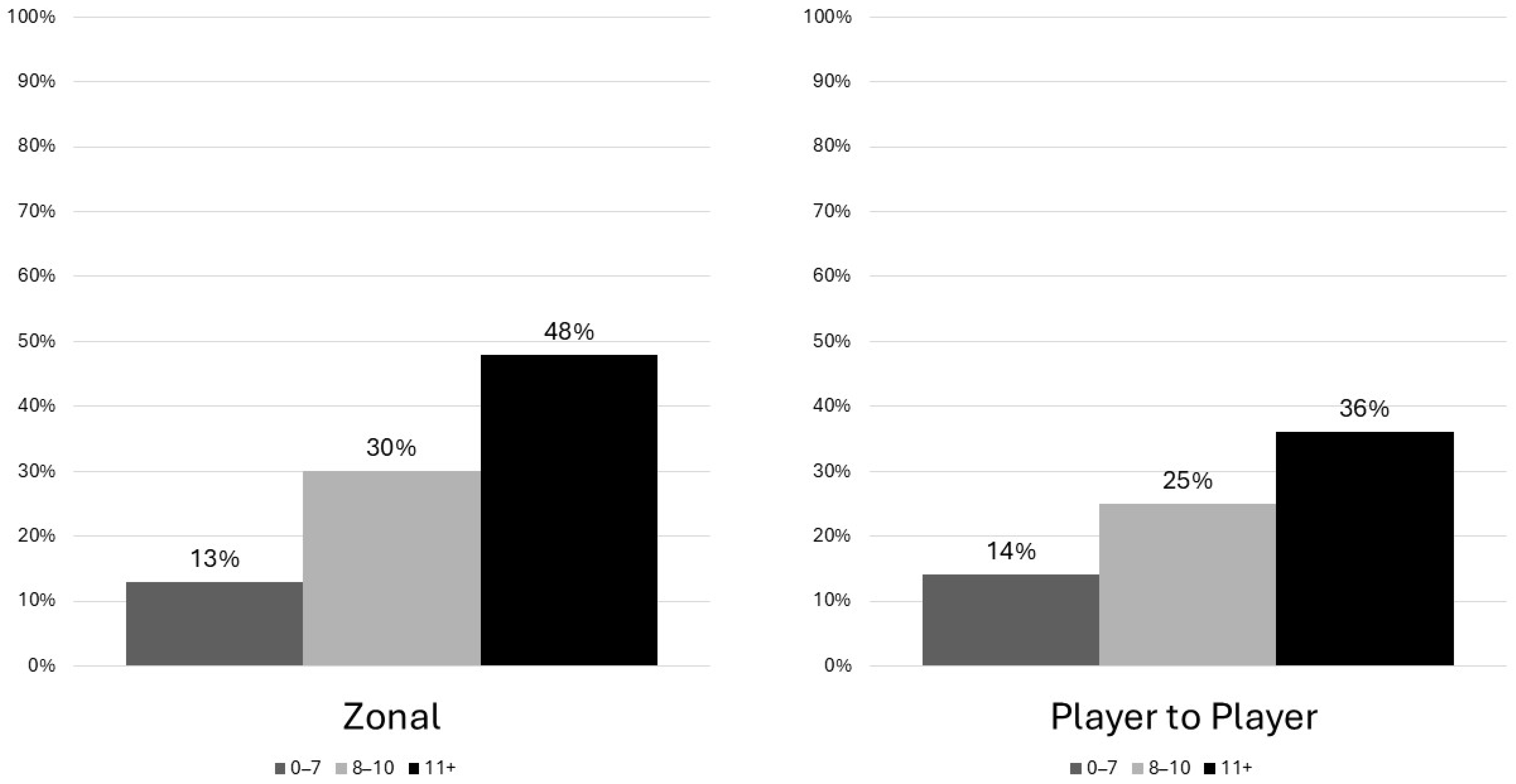
Defensive findings suggest that the Zonal press was most used and successful in LGF, with teams adopting the strategy on 53% of opposition KOs, winning 29%. The Zonal press was the most productive from a scoring perspective, as LGF teams scored 0.52 points per opposition KO retained. Increasing the number of players committed to the zonal and player-to-player strategies showed a higher rate of success on the opposition KOs (Figure 5). Generalised linear mixed model regression found that teams that commit a higher number of players to the opposition’s KO have a significantly higher chance of securing possessions with both Zonal and Player-to-Player strategies. A zonal press with 11+ players was the most successful; teams were 10 x more likely to win the opposition KO compared to teams that conceded the KO (B = −2.31, p <0.001, OR = 0.10). Findings suggest that committing 8–10 players on the Zonal (B = −1.78, p <0.001, OR = 0.17) and Player to Player (B = −1.66, p = 0.002, OR = 0.19) press increases the chances of winning the opposition kickout by 5–6 times (Table 3). KO duration influences this, as it is apparent that teams take between 6 and 10 s following the ball going dead to commit 8–10 defensive players inside the opposition’s 65. Thus, as the distribution time for the KO increases, the number of Kos, which the opposition commits 11+ players inside the opposition 65, also increases. The strategy to concede the KO completely was observed 4% of the time. When teams concede the KO, they reported a higher but non-significant subsequent turnover rate (73%) and a lower concession of scores (27%) than when teams press the opposition KO (69% turnover, 31% score). Teams that conceded the opposition’s KO conceded fewer goals than teams that decided to press the KO.
Figure 5.
Variation in the success of LGF defensive KO strategies in terms of percentage opposition KO won when executing a Zonal or Player-to-Player press with different numbers of players involved (n = 2172).
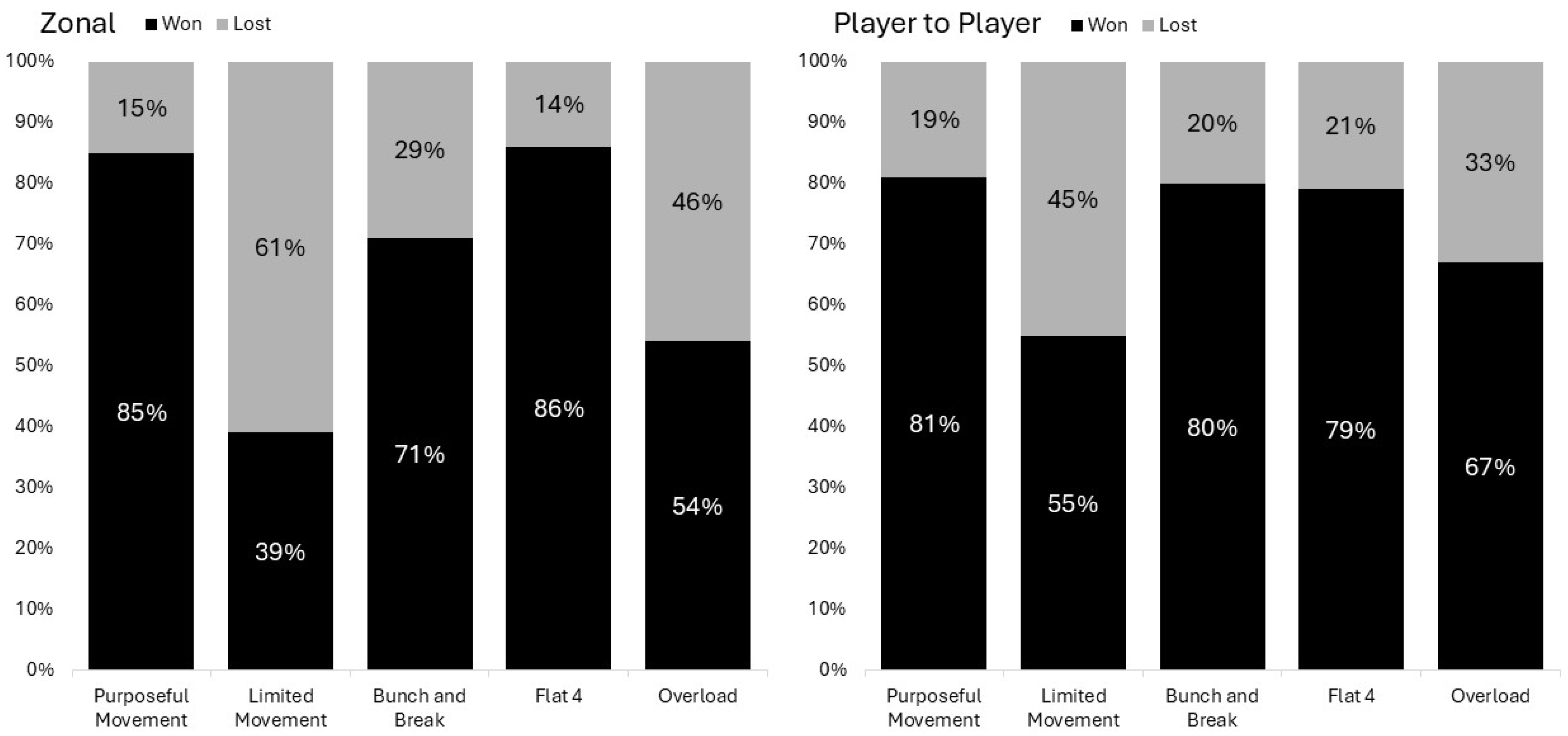
When facing a Zonal defensive strategy with 8+ players, the Flat Four (86%) and Purposeful Movement (85%) strategies remain the most successful at retaining possession for the kicking team (Figure 6). When facing a Player-to-Player press, Purposeful Movement remains the most successful strategy (81%) but is less effective than when used against a Zonal defence (85%).
Figure 6.
Percentage KO retention across all LGF Offensive strategies facing a Player-to-Player and Zonal press (n = 2172).
The Bunch and Break strategy retention increased by almost 10%, and the Flat Four reduced by 10% against the Player-to-Player press. There was nearly a 20% difference observed in the retention of KOs against the Zonal (39%) and Player to Player (55%) defensive strategies when KO teams were observed to have limited movement (Figure 6).
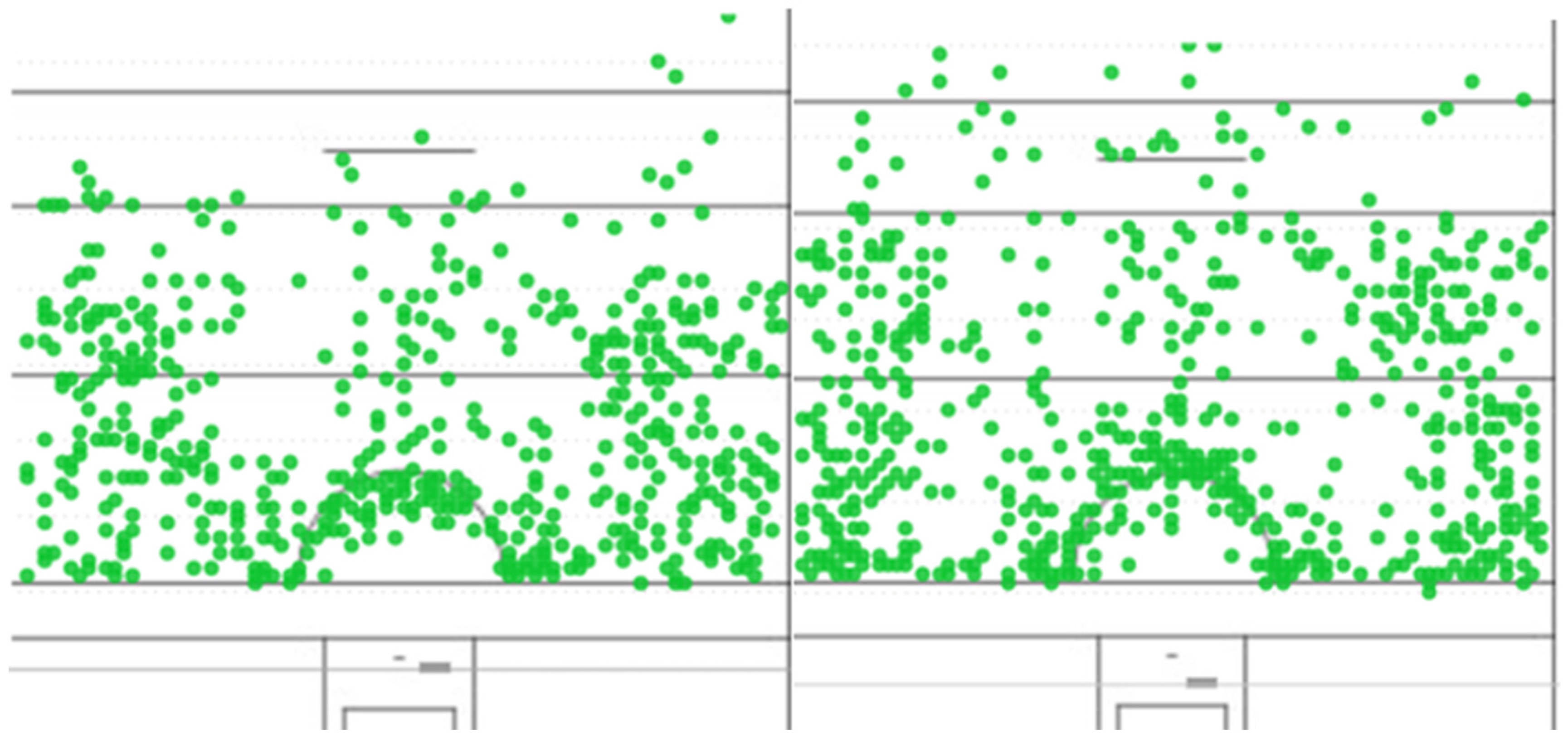
Mapping the KOs secured against a Zonal and Player-to-Player press (Figure 7) illustrates the central areas occupied by opponents in setting up the press and highlights that the wide zones are more successful for LGF teams securing possession against a defensive strategy. When the number of contested KOs across the total sample was observed in the context of defensive strategy, 65% of the KOs facing a Player-to-Player strategy resulted in contested KOs, significantly higher than that reported when teams adopted a Zonal strategy, 60%.
Figure 7.
Location mapping of LGF KOs won against Zonal and Player-to-Player strategies (n = 2172).
4. Discussion
This novel paper is the first to define and measure KO strategies used by LGF teams in Senior Inter-County Championship football. Most previous PA research in GF focused on investigating isolated variables and benchmark profiles for success in differing contexts [3,4,5]. These investigations did not consider the dynamic actions or strategies employed to gain possession and create or deny scoring opportunities in this complex game [26,27,28]. This proof-of-concept study provides a valid process for analysts using a single camera feed to reliably analyse team KO strategy in GF. Using Francis et al.’s [25] framework to develop and agree on operational definitions, four offensive and three defensive strategies for LGF were defined and reported.
The aim of the strategy is to create space (offensive) or protect space (defensive) to maximise scoring opportunities [7]. Five different categories of offensive KO dynamics were identified and observed in LGF; these include four different offensive strategies, in addition to incidences where no strategy was evident (Limited Movement (24%)). Three out of four offensive strategies involved players starting in a set position, Flat Four (10%), Bunch and Break (15%) and Overload (3%), with the final strategy observed when there was no set pattern or position, but a number of dynamic runs were made by the offensive team (Purposeful Movement (47%)). It is important when considering findings to recognise that there is a range in execution of each strategy, some instances where it is perfectly executed, and some where execution is poor. Measuring the difference between high and low levels of execution of each strategy was beyond the scope of this project; however, this work lays the foundation for a deeper examination of factors leading to the successful execution of strategies.
Previous research in LGF suggested that strategies were used by senior inter-county teams to win the long KO [1], resulting in a significantly higher shot and score return from longer KOs. Analysis indicated that the Overload strategy was frequently used by LGF teams to win long KOs, and teams observed in this strategy created 0.42 net points per KO retained. The Overload strategy seems to be most successful during long KOs when offensive teams create a numerical advantage over their defensive opponent in an area of the pitch, predominantly the wings. This strategy affords the offensive KO team knowledge of where the ball is going to go, and based on their understanding of the goalkeepers’ kicking style, players can time runs to be in position to win the breaking ball. The numerical advantage not only helps to gain possession of the initial KO but also provides the attacking team with the support runners to transition quickly up the pitch and create an attack before their opponents set up defensively. This ability for teams to provide support for the player in possession, carry the ball and break a tackle was previously associated with creating successful counterattacks in men’s GF [12].
Research in LGF has identified that teams kick a significantly higher percentage of their KOs to the wings [1,5]. The Bunch and Break strategy observed optimises the chances of winning KO possession on the wings, resulting in teams winning 77% of KOs. This strategy was the most frequently used of the set-piece offensive strategies identified (15% frequency). In other invasion sports, this style of play has been associated with players aiming to stretch opposition defensive players to create a greater effective playing space, in turn, allowing easier passage of the ball to win the initial possession and transition up the pitch to create scoring opportunities [29].
The interaction between offensive and defensive strategies is complex in every invasion sport [7,15,23], and the continuously dynamic nature of LGF allows multiple performance solutions to emerge to achieve the same or similar goal of winning possession. This study found that some defensive strategies were more successful than others in counteracting particular offensive set-pieces, for example, the Bunch and Break was 10% more successful against a Player-to-Player press than a Zonal press. This is potentially due to defensive teams gathering centrally while the offensive team marks Player-to-Player, making it a foot race to the wings, requiring the offensive team to find just one player to get free. In contrast, zonal players will occupy the space outside the Bunch and Break limiting areas into which an offensive player can run. Thus, playing against a Zonal defence requires offensive teams to be more clinical with the goal kick and more dynamic in their movement to win the ball. This interaction between strategies is similar to other sports. Forcer and colleagues’ [22] review paper noted how varying team formations during soccer matches cause different physical outputs depending on the formation faced by the opposition, in terms of the number and nature of runs made by players.
Previous research reported that LGF teams opt for short KOs 64% of the time [1]. The Flat 4 was identified as the most successful strategy used by teams to secure the ball short along the 21 m line, and teams won 91% of KOs that were kicked short when in this formation. This strategy forces opposition to commit four players to the front line of the press if they choose to cut out the short option, leaving more space for a long ball, which eliminates four opposition players with one pass and potentially creates an attacking opportunity. Purposeful Movement was the most common strategy observed and proved to be very effective (84% retention). Our coaching experience affords us the insight to recognise that specific teams run particular patterns involving Purposeful Movement; however, identifying or naming these is very difficult, thus they are grouped under this umbrella term. It is also evident that for teams with the most accurate goalkeepers, the Purposeful Movement instruction for outfield players may be to just find space and run with intent into it, as the more highly skilled goalkeepers can pick out those players in the moment. The successful execution of Purposeful Movement requires the majority of attacking players committing ‘hard runs’ into space, which will engage opponents. Where Purposeful Movement and hard runs are not executed, the observed outcome is Limited Movement, with a retention rate of 47%, a significant reduction from 84%. On average, LGF teams were observed to have Limited Movement on 24% of Kos; however, losing teams were observed in this pattern three times more (21%) than their winning opposition (7%). The stark difference between the winning and losing teams’ performance may be explained by the quality of coaching. We contend that the two key elements of Purposeful Movement, hard runs and goalkeeper vision and accuracy, need to be coached effectively for the strategy to be executed efficiently. The difference between Purposeful and Limited Movement is the intent with which players make their runs. Running intensity has been found to impact attacking phases of play in professional soccer, with measures of high-speed running during attacking phases being associated with a positive influence on match outcome [30]. It is still possible to win the KO when in Limited Movement; however, the opposition defensive strategy was shown to be a huge influencing factor on this. Teams found with Limited Movement playing against a Player-To-Player press lost almost half of their KOs (45%), and this increased to losing nearly two-thirds of the KOs (61%) against a Zonal Press.
LGF teams’ ability to gain possession from the opposition’s KO has previously been linked to match success [1,5]. The current study has identified three different defensive strategies used by LGF teams to win opposition KOs. Two of the strategies aim to win the KO directly from the opposition goalkeeper as close to the opposition goals as possible, using a Zonal marking method where players occupy space or a Player-to-Player method where players attempt to stay within 1 m of the opposition during the KO movements. The third strategy was only seen 4% of the time and sees opposition teams concede the initial KO and drop off to set up a ‘Mid-block’ in the midfield area or defensive areas of the pitch. Although frowned upon by Gaelic Games commentators [31], conceding the KO seems to have some benefits. It was noted that teams that conceded the KO employed this strategy when playing against a strong wind, possibly to prevent their opponents from using the breeze to their advantage and to build a platform for a long KO. Teams never win primary possession of the opposition’s KO, but by conceding the KO and setting up defensively, LGF teams conceded five times fewer goals and recorded a 73% turnover rate on opposition ball.
This was significantly higher than teams trying to turn the ball over after a Zonal (69%) or Player-to-Player press (67%). Given the significance of scoring goals to match outcomes in LGF [5], it is easy to see why this is an attractive option for teams, although it is used sparingly (4% of the time). The risk-reward dividend needs to be considered when deciding what defensive strategy to use. Although conceding the kickout allows teams to set up defensive structures, consequently conceding five times fewer goals, this tactic reduces their chances of winning possession close to the goal, and they must work harder to get into scoring positions.
The zonal press was the most used (53% frequency), and most successful with teams winning the opposition KO 29% of the time. This was closely followed by the Player-to-Player strategy, used 43% of the time with 26% success. Teams that were successful in executing a defensive strategy scored 50% of the possessions gained. This ‘high pressing style’ has been linked with successful match outcomes in elite soccer in comparison to the ‘low block’ [32]. Despite the Zonal strategy being most successful at turning over opposition KOs, the Player-to-Player press had a higher number of KOs contested KOs (65% vs. 60%). A key difference between men’s and LGF KOs is the range that the respective goalkeepers can kick the ball. McColgan and colleagues [1] identified a ‘drop zone’ between the 21 and 65 m lines for LGF, an area which is much smaller than in the men’s game. As the aim of defensive strategies is to minimise the space available for the opposition goalkeeper to find a passing option, LGF teams are increasing the number of players inside the ‘drop zone’. This would not be as effective in men’s GF due to the longer range of KO available to offensive teams [4]. The number of players committed to press the opposition KO has a significant impact on the KO outcome. LGF teams won just 14% of opposition KOs when committing only 7 players or fewer to a Zonal press. Increasing that number to between 8 and 10 Zonal players increased the chances of winning the opposition KO by six times, and committing 11+ players increased the chances by 10 times compared to conceding and saw a 48% retention on the opposition KO. A similar, but less effective pattern was observed with the Player-to-Player press, where having 8–10 players within the 65 increases chances of success by six times compared to conceding the KO. Interestingly, committing 11+ players in a Player-to-Player formation does not have the same impact as the Zonal press. While the chances of success on the opposition KO increased, it was only by 5 times compared to 10 times with the Zonal press. This may be down to the execution of the strategies, as it only takes one player to switch off in a Player-to-Player press for the opposition to win the KO, and the chances of that happening will be higher as more players are involved. Similar patterns have been observed in AFL, where defensive teams have reported higher turnover rates by increasing the number of players in a zone of the pitch as a defensive mechanism to close down space quickly and limit the opposition’s ability to gain possession of the ball [15]. Successfully executing the Player-to-Player press KO requires high levels of concentration, fitness, and, maybe most importantly, speed to go “touch tight” with any opposing player. A zonal press is more forgiving to the players who may switch off or be slower to take their positions but still requires high levels of concentration and aggression.
The quality of execution will determine the success of the strategy, and the ability of a team to coordinate its decision-making is crucial when dealing with the opposition strategy. Teams need to be adaptable to the strategy they are facing, be it offensive or defensive. This study may aid coaches to understand and devise KO strategies at the club and county level; however, it is crucial to understand that setting up a strategy is not enough to be successful. What separates team performance is the execution of the KO strategy, which is potentially down to the quality of players and the coaching environment.
5. Conclusions
While this investigation analysed over 2000 KOs across five seasons of LGF, the sample excluded 29.4% of the total KOs available due to the nature of the video available. Replays of a previous shot or score are one of the main problems when trying to analyse the KO as these delayed the camera feed returning to real time, and the KO was missing. This poses as a limitation to this research, as replays are shown after key events such as goals and important scores, thus missing a possible key kickout and the ability to measure how teams use strategy to win KOs after a key event. The exclusion rate of KOs included in the sample based on team, year and stage of the competition is also worth listing as a limitation, as more successful teams create more scoring opportunities, therefore potentially missing more KOs from these teams due to replays. This emphasises the need to consider the way our games are recorded and the importance of ensuring the provision of an uninterrupted feed for research and analysis purposes. Creating a central Gaelic Games Game Intelligence Platform to establish protocol, collect video recordings and potentially track data from Senior Inter-County games would significantly enhance the quality of research being conducted and facilitate the development of a better understanding of how our games are being played to inform administrators, games development, coaches and commentators.
This proof-of-concept research establishes that offensive and defensive structures are present during Kos; however, further work is required to test if it is possible to categorise the quality of strategy execution, which may be a valuable measure for coaches. In addition, contextual variables such as the impact of game state, stage of competition, the quality of opposition, weather conditions or temporal variables were not considered here. Further investigation is needed as these factors have been shown to affect offensive and defensive setups in other sports [33]. The research team engaged with elite coaches and goalkeepers as part of the validation process to develop operational definitions. Future investigations could benefit from increased stakeholder participation to drive research questions and interpretation of findings in a co-productive manner [34].
Despite the widespread use of game strategy in club and county GF, this is the first paper in any code of Gaelic games to identify strategies employed by teams to gain possession from KOs. This novel work provides definitions and a vocabulary that may be used by coaches and analysts to identify strategies and evaluate their effectiveness. It also provides a point-in-time analysis of the types of KO strategy evident in this four-year window (2019–23) as a report on the current state of the game, and a benchmark for future research as game strategy evolves. While this paper considered the KO strategy, it is apparent that GF coaches are very innovative and strategies for other facets of the game are continually evolving. Academic literature in the field has not kept pace with this innovation. Our paper provides a valuable template for researchers to investigate and report game strategy in a Gaelic Games context, which may be particularly pertinent at a juncture when significant rule changes are being implemented in men’s GF [35].
Supplementary Materials
The following supporting information can be downloaded at: http://doi.org/10.13140/RG.2.2.16923.07206.
Author Contributions
A.M.: Conceptualization, Data curation, Formal Analysis, Investigation, Methodology, Validation, Visualisation, Writing—Original Draft. J.B.: Methodology, Validation, Writing—Review and Editing. D.E.—Formal Analysis. D.G.: Writing—Review and Editing. D.M.: Conceptualization, Methodology, Validation, Supervision, Writing—Review and Editing. All authors have read and agreed to the published version of the manuscript.
Funding
This research was funded by the TU Dublin PhD Scholarship Programme.
Institutional Review Board Statement
Not applicable.
Informed Consent Statement
Not applicable.
Data Availability Statement
The data that support the findings of this study can be found at: http://doi.org/10.13140/RG.2.2.16923.07206 (Supplementary Materials).
Acknowledgments
The authors would like to thank Lyn Savage and William Harmon from the LGFA for their continued support for this project. We also wish to thank the intercounty goalkeepers and coaches who gave their time generously to participate in the study validation panel. Finally thanks to Katy Herron for her assistance with the reliability element of the work.
Conflicts of Interest
The authors declare no conflict of interest.
Abbreviations
The following abbreviations are used in this manuscript:
| LGF | Ladies Gaelic Football |
| GF | Gaelic Football |
| PA | Performance Analysis |
| KO | Kickout |
References
- McColgan, A.; Bradley, J.; McKenna, O.; Byrne, A.; Twomey, L.; Gaul, D.; Martin, D. Investigating successful kickout performance in senior inter-county Ladies Gaelic Football. Int. J. Perform. Anal. Sport 2024, 25, 405–418. [Google Scholar] [CrossRef]
- Daly, D.; Donnelly, R. Data analytics in performance of kick-out distribution and effectiveness in senior championship football in Ireland. J. Sport Anal. 2018, 4, 15–30. [Google Scholar] [CrossRef]
- McGuckin, B.; Bradley, J.; Hughes, M.; O’Donoghue, P.; Martin, D. Determinants of successful possession in elite Gaelic football. Int. J. Perform. Anal. Sport 2020, 20, 420–431. [Google Scholar] [CrossRef]
- Timmons, K.; Collins, K.; Mangan, S. An analysis of the effectiveness of kickouts in sub-elite Gaelic football. Int. J. Perform. Anal. Sport 2022, 22, 526–540. [Google Scholar] [CrossRef]
- Kelly, G.; McKenna, O.; Courtney, S.; Collins, K.; Bradley, J.; Martin, D. Benchmarking successful performances in elite ladies Gaelic football. Int. J. Perform. Anal. Sport 2021, 22, 51–65. [Google Scholar] [CrossRef]
- Garganta, J. Trends of tactical performance analysis in team sports: Bridging the gap between research, training and competition. Rev. Port. Ciências Desporto 2009, 9, 81–89. [Google Scholar] [CrossRef]
- Lamas, L.; Santana, F.; Heiner, M.; Ugrinowitsch, C.; Fellingham, G. Modeling the offensive-defensive interaction and resulting outcomes in basketball. PLoS ONE 2015, 10, e0144435. [Google Scholar] [CrossRef]
- Borrie, A.; Jonsson, G.K.; Magnusson, M.S. Temporal pattern analysis and its applicability in sport: An explanation and exemplar data. J. Sport Sci. 2002, 20, 845–852. [Google Scholar] [CrossRef]
- Lynch, P.; Carroll, R. To compare the type of passing in Gaelic football at senior inter-county level historically to modern day. Int. J. Perform. Anal. Sport 2017, 17, 986–995. [Google Scholar] [CrossRef]
- McGuigan, K.; Hughes, M.; Martin, D. Performance indicators in club level Gaelic football. Int. J. Perform. Anal. Sport 2018, 18, 780–795. [Google Scholar] [CrossRef]
- McGuigan, K.; Collins, K. Understanding the impact of pitch location on shot outcome in Gaelic football–where is the scoring zone? Int. J. Perform. Anal. Sport 2021, 21, 491–506. [Google Scholar] [CrossRef]
- Gamble, D.; Bradley, J.; McCarren, A.; Moyna, N.M. Team performance indicators which differentiate between winning and losing in elite Gaelic football. Int. J. Perform. Anal. Sport 2019, 19, 478–490. [Google Scholar] [CrossRef]
- Bradley, J.; O’Donoghue, P. Counterattacks in elite Gaelic football competition. Int. J. Perform. Anal. Sport 2011, 11, 159–170. [Google Scholar] [CrossRef]
- Wheeler, K.W.; Mills, D.; Lyons, K.; Harrinton, W. Effective defensive strategies at the ruck contest in rugby union. Int. J. Sport Sci. Coach. 2013, 8, 481–492. [Google Scholar] [CrossRef]
- Alexander, J.P.; Spencer, B.; Mara, J.K.; Robertson, S. Collective team behaviour of Australian Rules football during phases of match play. J. Sports Sci. 2019, 37, 237–243. [Google Scholar] [CrossRef] [PubMed]
- Ferreira, A.P.; Volossovitch, A.; Gomes, F.; Didier, S. Defensive strategy and critical match episodes in basketball game: Analysing the teams’ success. In Performance Analysis of Sport IX, 1st ed.; Routledge: Abingdon, UK, 2013; pp. 129–135. [Google Scholar]
- Luangtrongkit, S.; Kongtongkum, P.; Rangubhet, K. Offensive Patterns Analysis of Thai Nation Team in Volleyball Women’s Nations League. Am. J. Sport Sci. 2022, 12, 12–19. [Google Scholar] [CrossRef]
- Fernandez-Navarro, J.; Fradua, L.; Zubillaga, A.; Ford, P.R.; McRobert, A.P. Attacking and defensive styles of play in soccer: Analysis of Spanish and English elite teams. J. Sports Sci. 2016, 34, 2195–2204. [Google Scholar] [CrossRef] [PubMed]
- Grehaigne, J.F.; Bouthier, D.; David, B. Dynamic-system analysis of opponent relationships in collective actions in soccer. J. Sports Sci. 1997, 15, 137–149. [Google Scholar] [CrossRef]
- Casal, C.A.; Maneiro, R.; Ardá, T.; Losada, J.L.; Rial, A. Analysis of corner kick success in elite football. Int. J. Perform. Anal. Sport 2015, 15, 430–451. [Google Scholar] [CrossRef]
- Pulling, C.; Robins, M.; Rixon, T. Defending corner kicks: Analysis from the English Premier League. Int. J. Perform. Anal. Sport 2013, 13, 135–148. [Google Scholar] [CrossRef]
- Forcher, L.; Forcher, L.; Waesche, H.; Jekauc, D.; Woll, A.; Altmann, S. The influence of tactical formation on physical and technical match performance in male soccer: A systematic review. Int. J. Sports Sci. Coach. 2023, 18, 1820–1849. [Google Scholar] [CrossRef]
- Lamas, L.; Barrera, J.; Otranto, G.; Ugrinowitsch, C. Invasion team sports: Strategy and match modeling. Int. J. Perform. Anal. Sport 2014, 14, 307–329. [Google Scholar] [CrossRef]
- Gaelic Players Association. State of Play Equality Snapshot for Female Intercounty Gaelic Games; Gaelic Players Association: Dublin, Ireland, 2023. [Google Scholar]
- Francis, J.; Owen, A.; Peters, D.M. A new reliable performance analysis template for quantifying action variables in elite men’s wheelchair basketball. Front. Psychol. 2019, 10, 16. [Google Scholar] [CrossRef]
- Hughes, M.D.; Bartlett, R.M. The use of performance indicators in performance analysis. J. Sports Sci. 2002, 20, 739–754. [Google Scholar] [CrossRef] [PubMed]
- McGarry, T.; Anderson, D.I.; Wallace, S.A.; Hughes, M.D.; Franks, I.M. Sport competition as a dynamical self-organizing system. J. Sports Sci. 2002, 20, 771–781. [Google Scholar] [CrossRef] [PubMed]
- Mackenzie, R.; Cushion, C. Performance analysis in football: A critical review and implications for future research. J. Sports Sci. 2013, 31, 639–676. [Google Scholar] [CrossRef]
- Vilar, L.; Araújo, D.; Davids, K.; Bar-Yam, Y. Science of winning soccer: Emergent pattern-forming dynamics in association football. J. Syst. Sci. Complex. 2013, 26, 73–84. [Google Scholar] [CrossRef]
- Modric, T.; Versic, S.; Drid, P.; Stojanovic, M.; Radzimiński, Ł.; Bossard, C.; Sekulic, D. Analysis of running performance in the offensive and defensive phases of the game: Is it associated with the team achievement in the UEFA Champions League? Appl. Sci. 2021, 11, 8765. [Google Scholar] [CrossRef]
- Madden, K.; The Irish News. Conceding the Kickout Is the Biggest Blight in Gaelic Football; Irish News Ltd.: Dublin, Ireland, 2017. [Google Scholar]
- Plakias, S.; Tsatalas, T.; Armatas, V.; Tsaopoulos, D.; Giakas, G. Tactical situations and playing styles as key performance indicators in soccer. J. Funct. Morphol. Kinesiol. 2024, 9, 88. [Google Scholar] [CrossRef]
- Maneiro, R.; Losada, J.L.; Casal, C.A.; Ardá, A. The influence of match status on ball possession in high performance women’s football. Front. Psychol. 2020, 11, 487. [Google Scholar] [CrossRef]
- Smith, B.; Williams, O.; Bone, L.; the Moving Social Work Co-production Collective. Co-production: A resource to guide co-producing research in sport, exercise, and health sciences. Qual. Res. Sport Exc. Health 2023, 15, 159–187. [Google Scholar] [CrossRef]
- GAA Football Review Committee. Available online: https://www.gaa.ie/api/images/image/upload/prd/oqznpj4g6gi3ucb4wlrh.pdf (accessed on 25 November 2025).
Disclaimer/Publisher’s Note: The statements, opinions and data contained in all publications are solely those of the individual author(s) and contributor(s) and not of MDPI and/or the editor(s). MDPI and/or the editor(s) disclaim responsibility for any injury to people or property resulting from any ideas, methods, instructions or products referred to in the content. |
© 2026 by the authors. Licensee MDPI, Basel, Switzerland. This article is an open access article distributed under the terms and conditions of the Creative Commons Attribution (CC BY) license.