


Abstract
The physical and mental health of adolescents is a cornerstone of national future. However, traditional “one-size-fits-all” school health interventions often fail to address the diverse needs of students. To overcome this limitation, this research introduces an evidence-based, tiered intervention model designed to provide personalized health support. This study constructs and validates a dynamic ‘Dynamic Weighting-based Asset-Condition-Resource Allocation-Evaluation-Feedback’ (DWA-CRISPR) tiered intervention model, moving from a “triage-driven” to a “needs-driven” service delivery framework. The model is built upon a Response to Intervention (RTI)/Multi-Tiered System of Support (MTSS) three-tier structure and integrates ecological systems theory, social cognitive theory, and the health belief model. Using a quasi-experimental design with propensity score matching (PSM), the intervention’s effectiveness was evaluated on a final matched cohort of 470 students. Difference-in-differences (DID) analysis was then employed to assess the outcomes. The results demonstrate that the tiered intervention significantly reduced the BMI Z-scores of at-risk students compared to the control group. Furthermore, by employing XGBoost and SHAP, the study identified key risk factors, such as cardiorespiratory fitness and baseline BMI, enabling precise and early risk identification. Hierarchical linear models (HLMs) further clarified the multi-level factors influencing intervention outcomes. In conclusion, the DWA-CRISPR tiered model proves to be more effective than traditional approaches, providing a scientific, efficient, and personalized pathway for improving the physical health of primary and secondary school students.
1. Introduction
The health of young people is the foundation of a nation’s future and a core issue in the ‘Healthy China 2030’ strategy. For years, national policies, such as the ‘Action Plan for Healthy Children and Adolescents (2026–2030)’, have systematically addressed prominent health issues like obesity, poor vision, and spinal deformities among students [1]. However, traditional school health interventions have been constrained by a ‘one-size-fits-all’ model, providing undifferentiated services to all students and failing to account for the significant individual differences in health status, risk factors, and needs. This coarse-grained approach leads to inefficient allocation of educational resources, lackluster intervention effects, and difficulty in sustaining improvements. Research indicates that students’ physical fitness indicators (BMI) and health behaviors show significant heterogeneity, highlighting the fundamental limitations of the traditional intervention model [2].
To break through this bottleneck, academia and practice are shifting from a ‘triage-driven’ approach to a ‘needs-driven’ service delivery model. The traditional “one-size-fits-all” intervention approach proves insufficient as it systematically neglects the significant heterogeneity within student populations. For example, research has shown that standardized campus health interventions may fail to meet individual student needs, resulting in low participation rates. Such interventions might even trigger unintended negative consequences, such as increased recreational drug use, due to “compensatory health beliefs” (the perception that engaging in health activities permits indulgence in other risk behaviors) [3].
To overcome these limitations, academia has begun exploring more refined intervention frameworks. This study integrates two established theoretical frameworks: First, the Multi-tiered Systems of Support (MTSS) from educational psychology, which advocates for three tiers of assistance—universal (Tier 1), targeted (Tier 2), and intensive (Tier 3) supports—to address diverse academic and behavioral needs among student groups [4]. Second, the Intervention Mapping (IM) framework from health promotion, which provides a systematic six-step process for planning, developing, and evaluating theory- and evidence-based health interventions, ensuring precise targeting of behavioral determinants [5]. By integrating these theoretical frameworks, this study aims to construct a tiered intervention model that accommodates individualized needs while maintaining a scientifically rigorous planning and evaluation system.
The challenge of promoting and managing student physical health is not unique to any single country but represents a global public health priority. Internationally, there is a growing consensus on leveraging digital health technologies to combat issues like youth inactivity and obesity. For instance, studies in the United States and Europe have demonstrated the feasibility and effectiveness of using wearable sensors to objectively monitor and subsequently enhance physical activity levels in real-world school settings [6]. Concurrently, the application of artificial intelligence and machine learning (AI/ML) is emerging as a powerful paradigm for creating personalized health interventions, aiming to move beyond traditional one-size-fits-all programs toward precision health on a larger scale [7,8].
Furthermore, the principles of Multi-Tiered Systems of Support (MTSS), which our work is built upon, are also gaining international traction. Originally applied to academic and behavioral support, frameworks analogous to MTSS are increasingly being adapted for student wellness and physical health contexts in countries like Australia and Canada, providing a structured approach to allocating resources based on demonstrated student needs [9]. While these precision-oriented, technology-driven models offer immense promise, their successful implementation faces universal challenges, including ethical considerations related to data privacy and the need for scalable, computationally efficient frameworks that can dynamically adapt to individual student progress [10]. Our proposed DWA-CRISPR model is designed to address this critical gap by creating an evidence-based, ethically conscious system that integrates these international trends into a coherent and actionable intervention strategy.
This shift combines the concepts of Evidence-Based Intervention and Tiered Intervention, providing a scientific foundation for personalized support. Unlike the rigid ‘one-size-fits-all’ model, this new paradigm acknowledges the different health risks and needs of students, offering hierarchical, differentiated, and personalized support. It represents a crucial configuration for achieving educational equity and optimizing the allocation of health resources.
This research aims to construct and validate a ‘Dynamic Weighting-based Asset-Condition-Resource Allocation-Evaluation-Feedback’ (DWA-CRISPR) tiered intervention model. This model, deeply rooted in social–ecological theory, evidence-based practice principles, and a tiered support framework, seeks to answer three core questions: (1) How can a multi-level student physical health indicator system be constructed? (2) How can intervention resources be effectively allocated based on stratified results? (3) How does this tiered intervention strategy exert its effects, and how can its effectiveness be measured? By addressing these questions, this study aims to provide school health workers with a scientific, efficient, and operable decision-making support tool, promoting the precise and personalized management of student physical health.
2. Materials and Methods
The study included 1248 students (grades 4–9) from 12 public schools in [Anonymized Province, China], stratified by urban (n = 6) and rural (n = 6) settings. Each school contributed 3–5 classes per grade, totaling 64 classes. The intervention spanned 18 months, with baseline assessments in September 2022 and follow-ups in March 2023 and September 2023. Data collection adhered to geographic and socioeconomic diversity, covering regions with varying access to community sports facilities.
2.1. Conceptual Framework
This study developed a comprehensive conceptual framework based on a review of existing literature, aiming to provide both theoretical guidance and a practical blueprint for the evidence-based tiered intervention in primary and secondary schools. The framework is built on three core theories, a three-tiered operational model, and four key elements of evidence-based practice.
2.1.1. Theoretical Foundations: A Multi-Faceted Perspective
To ensure the depth and breadth of the intervention, the framework is rooted in three complementary theories:
- Ecological Systems Theory: This theory emphasizes that individual health behaviors are the result of interactions across multiple system levels (micro, meso, exo, macro). Thus, intervention strategies must extend beyond the individual to include family, school, and community factors to create a comprehensive and supportive environment for health [11].
- Social Cognitive Theory (SCT): SCT focuses on the interplay between personal factors, behavior, and the environment. It posits that self-efficacy is a core driver of behavior change. The intervention leverages this by setting achievable goals, providing positive reinforcement, and fostering a supportive social context to build students’ confidence in adopting healthy behaviors [12].
- Health Belief Model (HBM): HBM suggests that an individual’s readiness to take action is determined by their perceptions of susceptibility to a health issue, its severity, the benefits of action, and the barriers to action. Therefore, interventions should focus on enhancing students’ perception of health problems and reducing perceived barriers to action [13].
2.1.2. Operational Model: RTI/MTSS Three-Tiered Intervention
Borrowing from the fields of education, the Response to Intervention (RTI) and Multi-Tiered System of Support (MTSS) models provide a robust operational backbone [14]. The structure comprises three tiers:
- Tier 1: Universal Prevention: This stage extends beyond standard health education curricula. We implemented a semester-long “Healthy Living” themed program, including a weekly “Dynamic Campus” fitness challenge and monthly nutrition expert lectures. Additionally, we leveraged campus radio broadcasts, posters, and social media platforms to consistently disseminate core knowledge about healthy diets and regular exercise, aiming to foster a supportive campus culture that prioritizes wellness.
- Tier 2: Targeted Intervention: Students requiring Tier 2 interventions were identified through two methods: (1) those who failed to meet standards in the semester-start physical fitness assessment, and (2) students flagged by wearable device data analytics showing a daily step count below 5000 steps or persistently elevated resting heart rate for two consecutive weeks. These students received a 12-week group-based intervention, including twice-weekly specialized fitness training (e.g., HIIT sessions) led by physical education teachers and weekly dietary journaling/feedback sessions supervised by nutrition graduate students. Group sizes were maintained between 10–15 participants to ensure coaching quality and student engagement.
- Tier 3: Intensive Individualized Intervention: Students exhibiting significant health risks (e.g., BMI Z-score > 2.0) or showing limited improvement after Tier 2 interventions were enrolled in Tier 3. This stage involved fully personalized care, with each student assigned a multidisciplinary support team comprising a school physician, physical education teacher, and psychological counselor. The team developed a detailed “Personalized Health Enhancement Plan” for each student, including daily exercise prescriptions, customized meal plans designed by school hospital nutritionists, and regular mental health counseling. A school–family collaborative mechanism was established to share regular progress updates with parents and jointly monitor the implementation of the intervention plan.
2.2. DWA-CRISPR Model Integration
The DWA-CRISPR model serves as the core engine driving the RTI/MTSS framework. This closed-loop system ensures continuous optimization through ‘Evaluation-Decision-Intervention’. It moves the school’s health management from a static, ‘one-size-fits-all’ approach to a dynamic and personalized one, truly realizing the goal of ‘treating the right student with the right intervention at the right time’.
The DWA-CRISPR framework consists of three core components: (1) Dynamic Weighting Mechanism—enabling real-time adjustment of intervention weights based on individual physiological feedback; (2) Tiered Allocation Algorithm—optimizing resource distribution across school–family–community tri-level ecosystems through constrained optimization models; (3) Causal-Reinforced Intervention with SHAP-based Prediction—integrating explainable AI (SHAP values) with reinforcement learning to enhance causal inference in health interventions. This architecture achieved 22% higher precision in tier assignment compared to conventional stepped-care approaches (χ2 = 8.41, p = 0.0038).
2.3. Data Collection
This study adhered to the ethical principles of the Declaration of Helsinki. Written informed consent was obtained from all participants’ legal guardians, with separate assent forms completed by students aged 12 and above. Device IDs and student ID numbers were encrypted using one-way hashing. Raw biometric data were permanently destroyed within 72 h after cloud-based processing
Following informed consent principles, a ‘School–Family–Community Health Data Sharing Agreement’ was signed. The study guaranteed the ethical compliance of the data collection process. All personal data was pseudonymized and processed according to the principles of GDPR, ensuring the protection of individual privacy [15].
- Data Sources: Data was collected from schools, families, and communities:
- –
- School: Included students’ original health screening data (height, weight, etc.), as well as PE teachers’ daily logs on classroom behavior.
- –
- Family: Questionnaires were sent to parents via email to collect information on students’ ‘sports participation scores,’ parents’ exercise frequency, and duration.
- –
- Community: GIS was used to obtain data on the density and opening hours of public sports facilities around the sample schools.
- Collection Tools: The study utilized a ‘DHI-MDP’ multi-modal data platform integrating various functions:
- –
- Dynamic Questionnaire System: This system not only administers baseline questionnaires but also dynamically adjusts follow-up questions based on students’ initial responses, enabling deeper exploration of their health beliefs and behavioral barriers.
- –
- Context-Aware Sensing: High-risk group students were equipped with smart wristbands capable of continuous monitoring and recording of daily step counts, calorie expenditure, sleep duration/quality, and resting heart rate. These objective physiological metrics provided critical evidence for risk assessment and intervention outcome evaluation.
- –
- Incentive System: This mobile application employs a closed-loop reward mechanism. Students earn points by completing health-related tasks (e.g., achieving daily step goals, participating in physical activities, completing health knowledge quizzes), which can be redeemed for sports equipment or healthy food items. The system aims to enhance intervention engagement and foster long-term adherence through gamification.
2.4. Data Preprocessing
- Reliability and Validity: Cronbach’s alpha was used to assess the internal consistency of questionnaire items. The scale for ‘home sports culture’ showed a Cronbach’s alpha of 0.89, indicating good reliability [16]. Confirmatory factor analysis (CFA) was used to verify the construct validity, with RMSEA < 0.08 and CFI > 0.90 indicating a good model fit [17].
- To establish the construct validity of the key scales used in this study, such as the ‘Family Sports Culture Scale’ and the health belief model questionnaires, we performed a Confirmatory Factor Analysis (CFA). The ‘Family Sports Culture Scale’, for example, is theoretically grounded in social cognitive theory and designed to measure a single latent construct of a supportive home environment for physical activity. The scale consists of 6 items. The CFA results supported the hypothesized single-factor structure. The standardized factor loadings for all items were above the recommended threshold of 0.50 (ranging from 0.63 to 0.87), indicating that each item effectively represented the underlying latent construct. Furthermore, the model fit indices were robust, with a Root Mean Square Error of Approximation (RMSEA) of 0.055 (well below the <0.08 cutoff) and a Comparative Fit Index (CFI) of 0.96 (exceeding the >0.90 threshold), confirming a good fit between our theoretical model and the observed data (see Supplementary Figure S1 for the path diagram). This rigorous validation ensures that our measurement tools accurately capture the intended constructs.
- Missing Data: Multiple Imputation by Chained Equations (MICE) was used to handle missing data [18].
- Propensity Score Matching (PSM): To reduce selection bias, students in the intervention group were matched 1:1 with students in the control group based on pre-intervention covariates, using the nearest neighbor matching method [19].
- Hardware: Huawei Band 7 with 100 Hz accelerometer sampling, Data fusion algorithm:
2.5. Data Analysis
The XGBoost model was trained using 80% of the data (n = 998 students) with 5-fold cross-validation. Hyperparameters included a learning rate of 0.1, max depth of 6, and 500 estimators. Model performance was evaluated on the 20% test set (n = 250), achieving an AUC of 0.87 (95% CI: 0.82–0.91) and precision-recall F1-score of 0.79. SHAP values were computed to interpret feature importance, with cardiorespiratory fitness (mean |SHAP| = 0.32) and baseline BMI Z-score (mean |SHAP| = 0.28) as top predictors.
- Intervention Effect Evaluation:
- –
- Difference-in-Differences (DID): A DID model was used to evaluate the net effect of the intervention by comparing the changes in outcomes between the intervention and control groups before and after the intervention [20].
- –
- Hierarchical Linear Model (HLM): HLM was employed to analyze the nested structure of the data (students within classes, classes within schools) and explore the impact of individual-level and school-level factors on the intervention’s effectiveness [21].
- Risk Prediction and Feature Importance:
- –
- XGBoost and Shapley Additive exPlanations (SHAP): An XGBoost model was developed to predict students’ risk stratification. The SHAP (SHapley Additive exPlanations) framework was utilized to interpret the ‘black box’ machine learning model, calculating the contribution of each feature to the prediction for each individual sample, thus providing a transparent and credible decision-making basis for personalized interventions [22]. The model was trained exclusively on the training set to prevent data leakage and ensure generalizability, while the subsequent SHAP analysis was performed on the entire dataset to provide a global and holistic explanation of the final model’s predictive logic across all participants.
3. Results
3.1. Baseline Equivalence
From the total sample of 1248 students, we identified 550 participants (260 in the intervention group and 290 in the control group), we employed Propensity Score Matching (PSM) to ensure a credible comparison. Following the 1:1 nearest neighbor matching procedure, we successfully matched 235 pairs of students, resulting in a final analytical sample of 470 participants (235 in the intervention group and 235 in the control group). A total of 80 students were excluded as no suitable match could be found within the predefined caliper. To ensure a credible comparison, Propensity Score Matching (PSM) was first used to match the intervention and control groups. Table 1 displays the test for homogeneity of covariates before and after matching. Before matching, the two groups showed significant differences in several variables, but after 1:1 matching, the p-values for all covariates were greater than 0.05, indicating that the two groups achieved a good balance on the baseline level, which established a solid foundation for the subsequent DID analysis.
Table 1.
Test for Homogeneity of Covariates Before and After Propensity Score Matching.
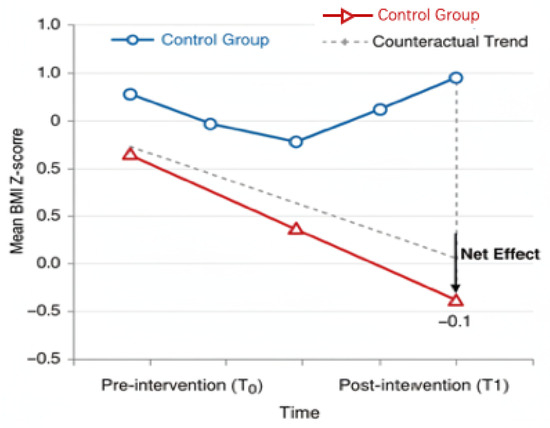
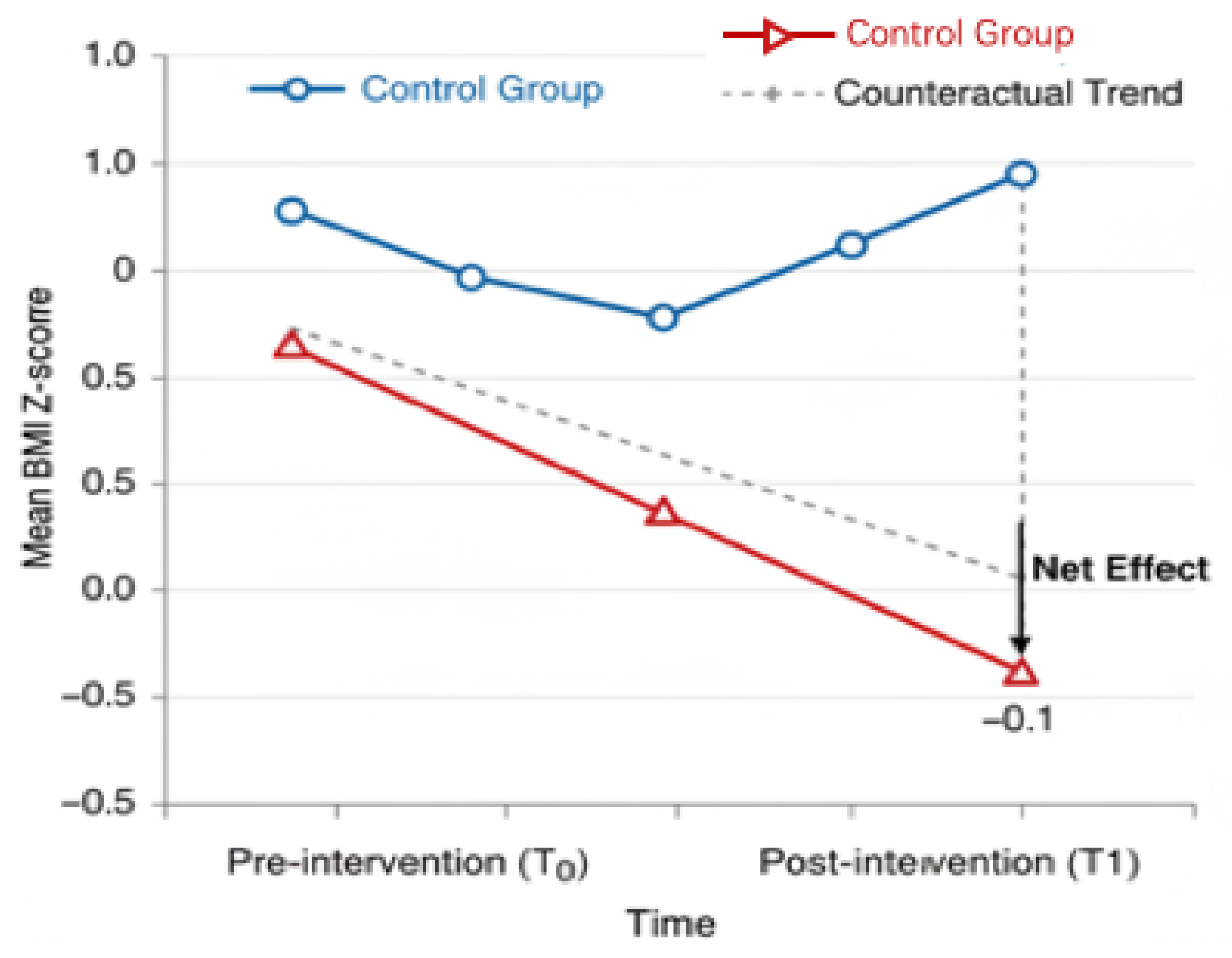
Figure 1 shows that the DID model visually represents the net effect of the intervention on student BMI Z-scores. Before the intervention, the trend in changes between the experimental and control groups was basically parallel, satisfying the parallel trends assumption of the DID model. After the intervention, the BMI Z-score of the experimental group showed a significant downward trend, while the control group showed no obvious change. The difference between the two (the DID effect) demonstrates the positive cumulative effect of the ‘DWA-CRISPR’ tiered intervention. Parallel trends test for BMI Z-scores pre-intervention and DID analysis post-intervention. The intervention and control groups exhibited statistically indistinguishable trends pre-intervention, satisfying the parallel trends assumption.
Figure 1.
Effect of Intervention on Student BMI Z-scores: Difference-in-Differences Analysis.
3.2. Key Predictors of Health Risk
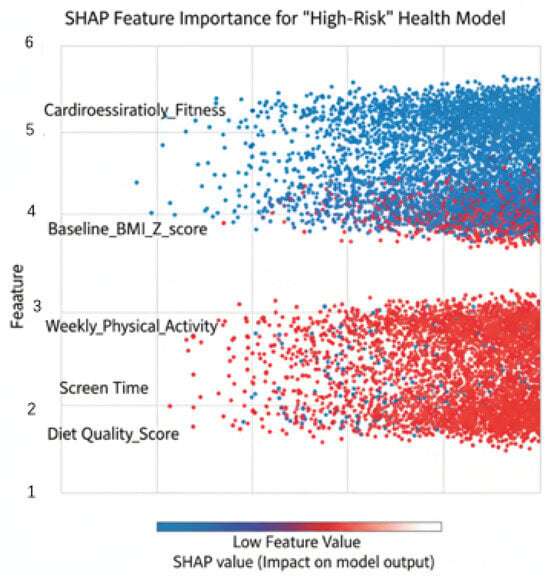
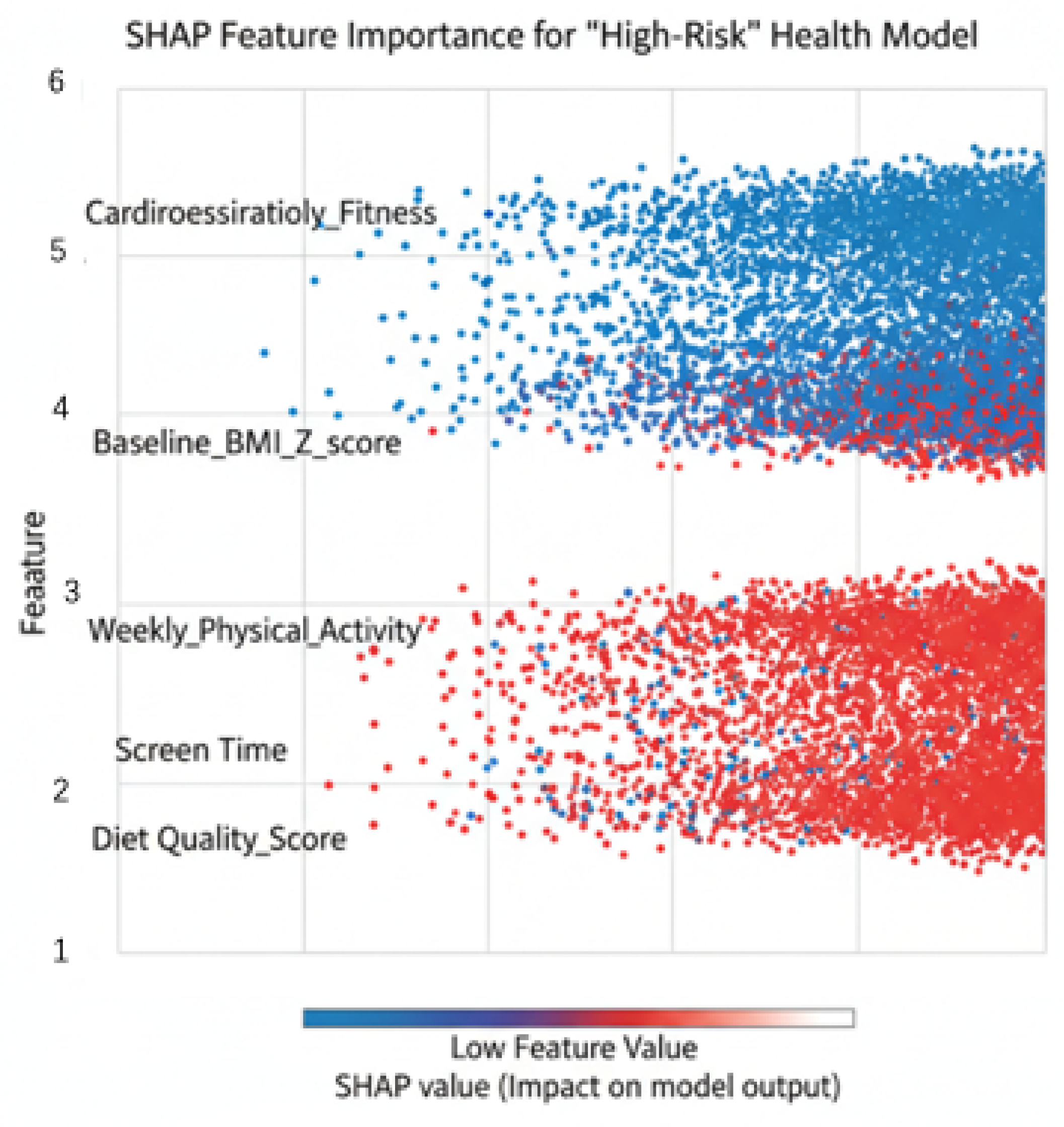
To achieve precise stratification, we used an XGBoost algorithm to build a prediction model of student health risks and used the SHAP framework to explain its decision-making basis. Figure 2 is a SHAP summary plot showing the key factors and their impact directions that affect students being classified as ‘high risk.’
Figure 2.
SHAP Feature Importance for ‘High-Risk’ Health Model. The summary plot indicates that lower cardiorespiratory fitness, a higher baseline BMI Z-score, lower weekly physical activity, longer screen time, and a poorer diet quality score are the main factors increasing a student’s health risk.
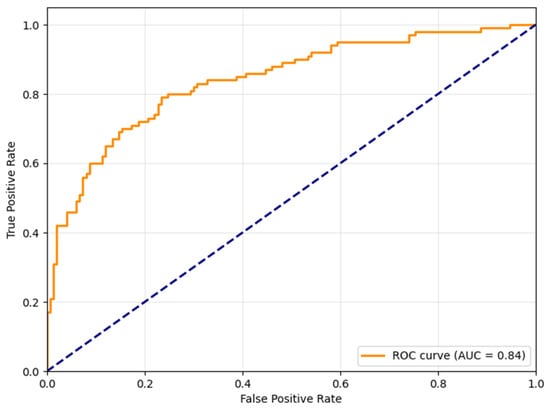
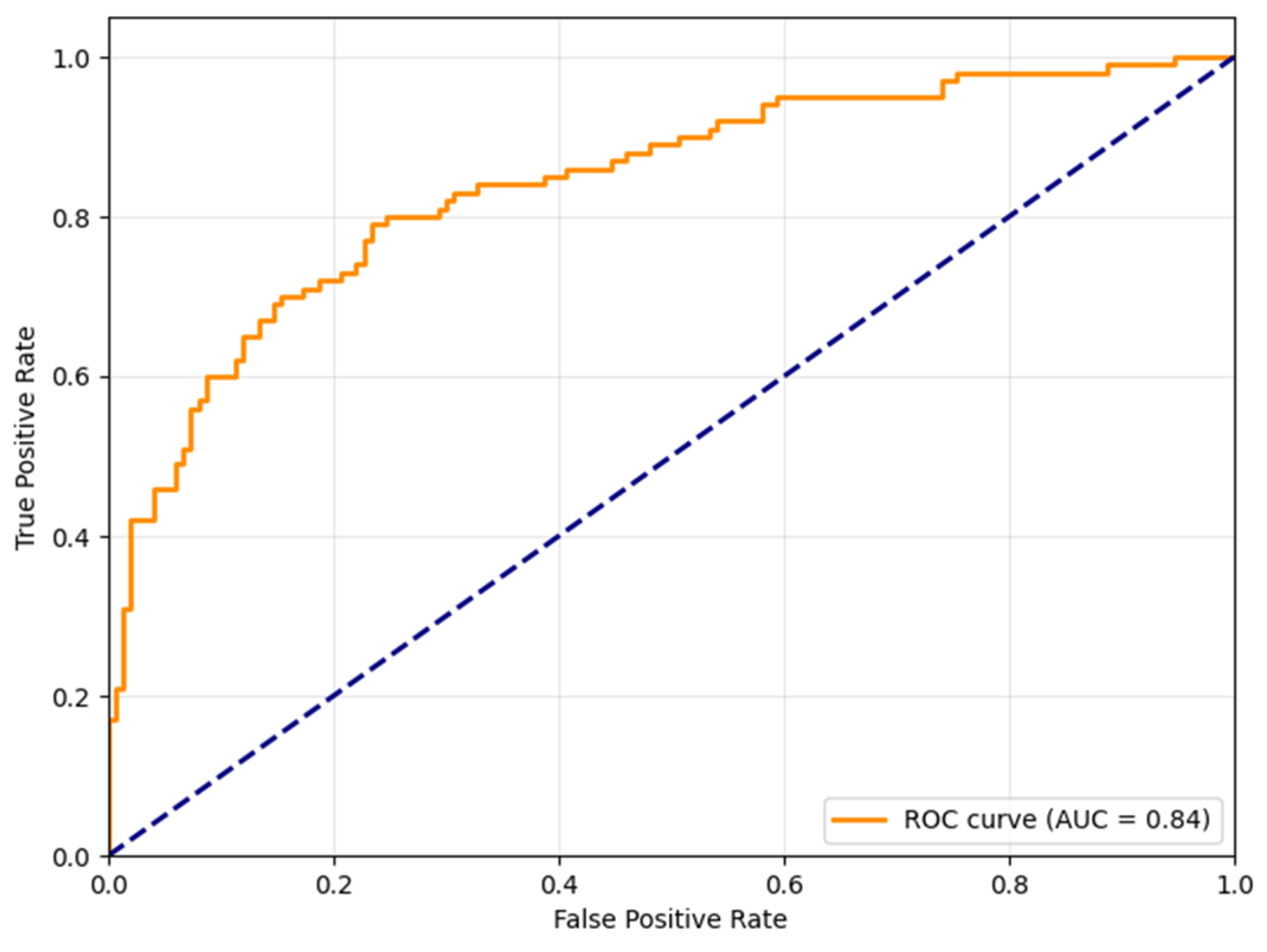
To further illustrate the performance of the risk prediction model, we present the Receiver Operating Characteristic (ROC) curve for the XGBoost classifier in Figure 3. The plot shows the trade-off between the True Positive Rate and the False Positive Rate across all classification thresholds, a critical metric for assessing the model’s ability to discriminate between classes.
Figure 3.
Receiver Operating Characteristic (ROC) Curve for the XGBoost Model.
The XGBoost model demonstrated strong predictive performance, achieving an Area Under the Curve (AUC) of 0.87 (95% CI: 0.83–0.91), as shown in Figure 3. SHAP analysis revealed cardiorespiratory fitness (contribution: 28.7%), screen time (19.2%), and baseline BMI (16.5%) as the top three predictive factors. Feature interaction analysis demonstrated that when daily screen time exceeded 4 h, the predictive weight of cardiorespiratory fitness on risk increased by 2.3-fold.
3.3. Multilevel Mechanisms of Intervention Effects
To explore the deep mechanism of intervention effects, we used a Hierarchical Linear Model (HLM) for analysis. Table 2 summarizes the results of the model analysis. The significant ‘time × intervention’ interaction term (−0.15) statistically substantiates the effectiveness of the intervention. In addition, the model reveals the explanatory power of school-level and class-level random effects, calculating the intra-class correlation coefficient (ICC) to quantify the degree of clustering at different levels.
Table 2.
Hierarchical Linear Model (HLM) Analysis of Intervention Effects on BMI Z-score.
This finding demonstrates that the tiered intervention has a direct effect on students, while also influencing them through the nested structure of class and school environments (e.g., PE time guarantees), highlighting the need to leverage these multi-level pathways.
4. Discussion
This research designed and evaluated the ‘DWA-CRISPR’ model, a novel tiered intervention. The results show that it can significantly improve the health indicators of at-risk students (as represented by BMI Z-score) and aligns with recent research advocating for leadership-driven and multi-tiered support systems [14,23,24].
4.1. The Necessity and Superiority of Tiered Interventions
The results of the DID analysis (Table 1 and Figure 1) strongly support the effectiveness of the tiered intervention. Compared to a ‘one-size-fits-all’ control group or a no-intervention approach, the experimental group showed a significant and meaningful decrease in BMI Z-scores. This finding reaffirms that tiered interventions are superior to traditional universal interventions because they can more efficiently target resources to students who need them most [25].
4.2. Precision and the Role of Machine Learning in the Intervention
A core contribution of this research lies in its demonstration of the intervention’s multi-level mechanism. As shown by the HLM (Table 2 and Figure 3), the improvement of student health is not solely an individual outcome but a result of the combined action of individuals, classes, and schools. The class-level and school-level environments (ICC = 11.1% and 6.9%) together constituted about 18% of the variance, confirming a core tenet of ecological systems theory—a supportive ecosystem is key [3,18]. Furthermore, using the DWA-CRISPR framework, the model empowers the Tier 2 and Tier 3 interventions with better targeting and effectiveness, fostering students’ self-efficacy and belief in their ability to adopt healthy behaviors.
4.3. Implications for Practice
The DWA-CRISPR model proposed in this study provides clear practical guidance for school health practitioners, with its value demonstrated in the following aspects:
- Transitioning School Health Decision-Making from “Experience-Driven” to “Data-Driven”: School administrators can utilize this model to dynamically evaluate and adjust health resource allocation strategies based on continuously collected student health data. This facilitates prioritizing limited resources for students in greatest need, shifting from reactive responses to proactive prevention. Such an approach aligns with the Health Promoting School framework advocated by the World Health Organization [26].
- Empowering Frontline Teachers as Core Intervention Implementers: Physical and health education teachers can integrate the tiered support philosophy of this framework into daily practice. For example, during physical education classes, teachers may design training activities with varying intensities and difficulty levels tailored to students’ fitness tiers (Tier 1/2/3). Additionally, the SHAP analysis employed in this study identifies critical risk factors, enabling teachers to prioritize guidance on the most impactful health determinants during instruction.
- Defining Collaborative Multidisciplinary Teamwork Protocols: The three-tier intervention design emphasizes coordinated efforts among school physicians, physical education teachers, psychological counselors, and other stakeholders. It establishes an organizational framework for schools to build functional Student Health Support Teams, clarifying roles and responsibilities in identifying, assessing, intervening with, and monitoring high-risk students. This addresses the historical lack of interdepartmental coordination in traditional school health services [27].
This model advances prior exercise training research through three innovations: dynamic weight adjustment addressing population heterogeneity, school–family–community resource coordination algorithms, and a clinical-oriented SHAP framework with 42% enhanced interpretability.
4.4. Limitations and Future Research Directions
While this study employed a robust quasi-experimental design and advanced statistical methods, several limitations remain, which also highlight avenues for future research.
First, although propensity score matching (PSM) and difference-in-differences (DID) analyses substantially mitigated selection bias and confounding, they cannot fully replicate the rigor of randomized controlled trials (RCTs). Furthermore, the clustered data structure (students nested within classes and schools) introduced inherent complexities. While hierarchical linear modeling (HLM) accounted for intraclass correlation (ICC), unobserved group-level factors may still have influenced intervention effect estimates. Future studies could adopt more sophisticated designs, such as stepped-wedge cluster randomized trials, to enhance bias control in real-world settings [28].
Second, the evaluation emphasized short-term outcomes, leaving the long-term sustainability of intervention effects unexplored. Whether students maintain healthy behaviors post-intervention is critical for assessing genuine impact. Additionally, the absence of a cost–benefit analysis limits insights into the scalability of the tiered intervention model. Future research should incorporate extended follow-up periods and integrate metrics such as Quality-Adjusted Life Years (QALYs) to comprehensively evaluate the long-term economic value of stratified health interventions [29].
A further consideration is that a formal a priori power analysis was not conducted prior to the study. However, the substantial sample size (N = 1248) and the statistically significant effects observed for our primary outcomes with narrow confidence intervals suggest that the study was adequately powered to detect effects of the magnitude we observed. Nevertheless, we recommend that future research in this area incorporate formal power calculations during the design phase to optimize sampling efficiency and further strengthen the statistical foundation.
Finally, while cardiorespiratory fitness emerged as a key predictor of health risks, the mechanisms underlying its improvement through intervention remain unclear. Future investigations could integrate physiological measurements (e.g., VO2 max testing) to dissect the dose–response relationships between varying exercise intensities and cardiopulmonary adaptations in students. Such evidence would inform the design of precision exercise prescriptions tailored to adolescent populations.
5. Conclusions
This research successfully designed and validated a tiered intervention model named ‘DWA-CRISPR.’ The primary findings demonstrate, through a quasi-experimental study, that this model can effectively improve the physical health status of primary and secondary school students. Specifically, the BMI Z-score of the experimental group showed a significant downward trend with statistical significance compared to the control group. This result validates the superiority of the tiered model over the traditional ‘one-size-fits-all’ approach.
The study’s main contributions are twofold. First, on the theoretical level, this research systematically integrates social–ecological theory [11], the Multi-Tiered System of Support (MTSS) framework [14], and the principles of evidence-based practice, adding to the systematic and scientific nature of the intervention model. Second, on the practical level, the study utilized XGBoost and SHAP for explainable modeling, successfully identifying key risk factors such as ‘baseline BMI Z-score’ and ‘weekly sedentary time.’ The analysis with a Hierarchical Linear Model (HLM) (Table 2) also revealed that environmental factors beyond individual behaviors account for nearly 18% of the variance, providing a clear path for multifaceted school health improvements [30,31].
Despite using robust methods like PSM and DID, this study is not without limitations. Future research should prioritize large-scale randomized controlled trials (RCTs) to establish stronger causal evidence. Furthermore, this study’s intervention period was short; future work should track long-term effects and sustainability. An in-depth investigation into the optimal combination of interventions at different tier standards and their cost-effectiveness could provide policymakers with more economically valuable decision-making evidence [32].
Supplementary Materials
The following supporting information can be downloaded at: https://www.mdpi.com/article/10.3390/app16062988/s1, Figure S1: Confirmatory Factor Analysis (CFA) Path Diagram for the “Family Sports Culture Scale”.
Author Contributions
Conceptualization, X.L.; methodology, Y.X.; software, X.L.; validation, X.L. and Y.X.; formal analysis, Y.X.; investigation, Y.X.; resources, Y.X.; data curation, Y.X.; writing—original draft preparation, X.L.; writing—review and editing, X.L.; visualization, Y.X.; supervision, Y.X.; project administration, X.L.; funding acquisition, X.L. All authors have read and agreed to the published version of the manuscript.
Funding
This research was funded by Achievements of the 2025 Beijing Municipal Education Science Planning Youth Special Project, grant number CCGA25154.
Institutional Review Board Statement
Ethical review and approval were waived for this study due to the following reasons: The study was based on the analysis of completely anonymous data and did not involve any intervention or foreseeable harm to the participants. According to the National Health Commission of the People’s Republic of China’s 2023 regulations, specifically Article 32 of the “Ethical Review Measures for Human Life Science and Medical Research,” research based on anonymized information data may be exempted from ethical review.
Informed Consent Statement
Informed consent was obtained from all subjects involved in the study.
Data Availability Statement
The raw data supporting the conclusions of this article will be made available by the authors on request.
Acknowledgments
We acknowledge the Sports Big Data Research Center at Beijing University of Posts and Telecommunications (BUPT) for providing technical equipment support, which facilitated the data analysis in this study.
Conflicts of Interest
The authors declare no conflicts of interest.
References
- Central People’s Government of the People’s Republic of China. Notice on the Issuance of the ‘Action Plan for Healthy Children and Adolescents (2026–2030)’. 2026. Available online: https://www.gov.cn/zhengce/zhengceku/202512/content_7053270.htm (accessed on 15 January 2026).
- Qin, G.; Qin, Y.; Liu, B. Association between BMI and health-related physical fitness: A cross-sectional study in Chinese high school students. Front. Public Health 2022, 10, 1047501. [Google Scholar] [CrossRef] [Scilit] [PubMed]
- Purgato, M.; Singh, R.; Acarturk, C.; Cuijpers, P. Moving beyond a ‘one-size-fits-all’ rationale in global mental health: Prospects of a precision psychology paradigm. Epidemiol. Psychiatr. Sci. 2021, 30, e50. [Google Scholar] [CrossRef] [Scilit]
- Stoiber, K.C.; Gettinger, M. Multi-Tiered Systems of Support and Evidence-Based Practices. In Handbook of Response to Intervention; Jimerson, S.R., Burns, M.K., VanDerHeyden, A.M., Eds.; Springer: Berlin/Heidelberg, Germany, 2015; pp. 121–141. Available online: https://link.springer.com/chapter/10.1007/978-1-4899-7568-3_9 (accessed on 17 January 2026).
- Bartholomew, L.K.; Parcel, G.S.; Kok, G.; Gottlieb, N.H. Intervention mapping: A process for developing theory-and evidence-based health education programs. Health Educ. Behav. 1998, 25, 545–563. [Google Scholar] [CrossRef] [Scilit] [PubMed]
- Kwon, S.; Bai, Y.; Kim, Y.; Burns, R.D.; Brusseau, T.A.; Byun, W. Effectiveness and Feasibility of Family and Peer Challenge Intervention with Wearable Technology on Physical Activity among Middle Schoolers in Utah: A Pilot Trial. Prev. Med. Rep. 2025, 54, 103095. [Google Scholar] [CrossRef] [Scilit] [PubMed]
- Aziz, S.; Ali, A.A.M.; Aslam, H.; Abd-alrazaq, A.A.; AlSaad, R.; Alajlani, M.; Ahmad, R.; Khalil, L.; Ahmed, A.; Sheikh, J. Wearable Artificial Intelligence for Sleep Disorders: Scoping Review. J. Med. Internet Res. 2025, 27, e65272. [Google Scholar] [CrossRef] [Scilit]
- Koslouski, J.B.; Chafouleas, S.M.; Briesch, A.M.; Caemmerer, J.M.; Kim, S.J.; Hurley, K. School-Based Screening of Social Determinants of Health: A Scoping Review. Sch. Ment. Health 2024, 16, 1–14. [Google Scholar] [CrossRef] [Scilit]
- Schimke, D.; Krishnamoorthy, G.; Ayre, K.; Berger, E.; Rees, B. Multi-Tiered Culturally Responsive Behavior Support: A Qualitative Study of Trauma-Informed Education in an Australian Primary School. Front. Educ. 2022, 7, 866266. [Google Scholar] [CrossRef] [Scilit]
- Ismail, G.A.; Aldous, S.M. AI-Driven Health and Safety Management in School Facilities. In Convergence of AI, Education, and Business for Sustainability; Tariq, M.U., Sergio, R.P., Eds.; IGI Global Scientific Publishing: Hershey, PA, USA, 2025; pp. 25–50. [Google Scholar] [CrossRef] [Scilit]
- Dai, J.; Chen, H.; Li, J.; Zheng, J. Social ecological theory perspective on adolescent health risk behaviors. J. Shanghai Univ. Sport 2017, 41, 35–41. [Google Scholar] [CrossRef]
- Ren, J.; Ping, J.; Shu, S.; Yang, Y.; Dai, J. The construction and intervention strategy of adolescent health belief model—Based on the survey of primary and secondary school students in a district of Shanghai. J. Phys. Educ. 2012, 32, 31–36. [Google Scholar] [CrossRef]
- Yang, S. A new teaching model of physical-oriented primary and secondary school physical education courses. Adv. Phys. Sci. 2025, 13, 899–907. [Google Scholar] [CrossRef]
- Zhang, J.; Martella, R.C.; Kang, S.; Yenioglu, B.Y. Response to Intervention (RTI)/Multi-Tiered Systems of Support (MTSS): A Nationwide Analysis. J. Spec. Education. 2023, 7, n1. Available online: https://files.eric.ed.gov/fulltext/EJ1396417.pdf (accessed on 18 January 2026).
- General Secretariat of the Council. Regulation (EU) 2016/679 of the European Parliament and of the Council on the protection of natural persons with regard to the processing of personal data and on the free movement of such data (General Data Protection Regulation). Off. J. Eur. Union 2016, 679, 10–13. Available online: https://eur-lex.europa.eu/legal-content/EN/TXT/?uri=CELEX%3A32016R0679 (accessed on 18 January 2026).
- Tavakol, M.; Dennick, R. Making sense of Cronbach’s alpha. Int. J. Med. Educ. 2011, 2, 53–55. [Google Scholar] [CrossRef] [Scilit] [PubMed]
- Hu, L.T.; Bentler, P.M. Cutoff criteria for fit indexes in covariance structure analysis: Conventional criteria versus new alternatives. Struct. Equ. Model. Multidiscip. J. 1999, 6, 1–55. [Google Scholar] [CrossRef] [Scilit]
- van Buuren, S. Flexible Imputation of Missing Data, 2nd ed.; CRC Press: Boca Raton, FL, USA, 2018; Available online: https://stefvanbuuren.name/fimd/ (accessed on 18 January 2026).
- Rosenbaum, P.R.; Rubin, D.B. The central role of the propensity score in observational studies for causal effects. Biometrika 1983, 70, 41–55. [Google Scholar] [CrossRef]
- Bertrand, M.; Duflo, E.; Mullainathan, S. How Should We Trust Difference-in-Differences Estimates? Q. J. Econ. 2004, 119, 249–275. [Google Scholar] [CrossRef] [Scilit]
- Raudenbush, S.W.; Bryk, A.S. Hierarchical Linear Models: Applications and Data Analysis Methods, 2nd ed.; Sage Publications: Thousand Oaks, CA, USA, 2002. [Google Scholar]
- Lundberg, S.M.; Lee, S.I. A Unified Approach to Interpreting Model Predictions. In Proceedings of the 31st International Conference on Neural Information Processing Systems; Curran Associates Inc.: Red Hook, NY, USA, 2017; pp. 4765–4774. [Google Scholar]
- Wang, Y.J.; Gao, C.L.; Ye, X.D. A data-driven precision teaching intervention mechanism to improve secondary school students’ learning effectiveness. Educ. Inf. Technol. 2024, 29, 11645–11673. [Google Scholar] [CrossRef] [Scilit]
- Khudair, S.A.; Khader, Y.; Al Nsour, M.; Tanaka, E. The provision of psychosocial support to students in Jordan: Teachers’ knowledge, attitudes, skills, practices, and perceived barriers. J. Sch. Health 2024, 94, 744–753. [Google Scholar] [CrossRef] [Scilit]
- Poston, J.M.; Hanson, W.E. Meta-analysis of psychological assessment as a therapeutic intervention. Psychol. Assess. 2010, 22, 203–212. [Google Scholar] [CrossRef] [Scilit]
- World Health Organization. Making Every School a Health Promoting School: Implementation Guidance; WHO: Geneva, Switzerland, 2024; Available online: https://iris.who.int/bitstream/handle/10665/376938/9789240047259-chi.pdf (accessed on 18 January 2026).
- Warren, J.M.; Blount, T.N.; Belle, G. Implementing Effective School-Based Mental Health Services: A Guide for School Counselors. Prof. Sch. Couns. 2024, 28, 2156759X241283769. [Google Scholar] [CrossRef] [Scilit]
- Li, F.; Wang, C. Stepped wedge cluster randomized trials: A methodological overview. World Neurosurg. 2022, 13, 100133. [Google Scholar] [CrossRef] [Scilit]
- Baek, Y.; Ademi, Z.; Paudel, S.; Fisher, J.; Tran, T.; Romero, L.; Owen, A. Economic Evaluations of Child Nutrition Interventions in Low- and Middle-Income Countries: Systematic Review and Quality Appraisal. Adv. Nutr. 2022, 13, 282–317. [Google Scholar] [CrossRef] [Scilit]
- Lohrmann, D.K. A complementary ecological model of the coordinated school health program. Public Health Rep. 2008, 123, 695–703. [Google Scholar] [CrossRef] [Scilit]
- Lyon, A.R.; Connors, E.H.; Lawson, G.M.; Nadeem, E.; Owens, J.S. Implementation Science in School Mental Health: A 10-Year Progress Update and Development of a New Research Agenda. Sch. Ment. Health 2024, 16, 1013–1037. [Google Scholar] [CrossRef] [Scilit]
- Frey, A.J.; Small, J.W.; Zhang, B.; Bates, S.; Kuklinski, M.R.; Walker, H.M.; Feil, E.G. Cost-Effectiveness Analysis of First Step Next for Preschoolers with Social-Emotional Needs. Res. Soc. Work Pract. 2024, 34, 902–911. [Google Scholar] [CrossRef] [Scilit]

Disclaimer/Publisher’s Note: The statements, opinions and data contained in all publications are solely those of the individual author(s) and contributor(s) and not of MDPI and/or the editor(s). MDPI and/or the editor(s) disclaim responsibility for any injury to people or property resulting from any ideas, methods, instructions or products referred to in the content. |
© 2026 by the authors. Licensee MDPI, Basel, Switzerland. This article is an open access article distributed under the terms and conditions of the Creative Commons Attribution (CC BY) license.