


Abstract
The purpose of this research is to examine the impact of industrial noise levels ranging from 74 to 76 dB—which fall below the legal limit of 80 dB—on complex physiological and psychological stress responses of workers. The study employs a multimodal approach, combining objective acoustic measurements according to the EN ISO 9612:2009 standard with the monitoring of physiological parameters, specifically galvanic skin response (GSR), blood pressure, and heart rate, complemented by subjective assessments through questionnaires. Key findings revealed that the C-weighted noise level LCEX (r = 0.67) demonstrates a stronger correlation with stress response and heart rate (r = 0.66) than the standard A-weighted filter (LAEX). Although noise explains only approximately 4% of heart rate variability (R2 ≈ 0.04), providing indirect support for the multifactorial nature of stress, subjectively, 71% of workers expressed a need for noise reduction due to accompanying symptoms such as headaches and tinnitus. The highest level of cardiovascular load was consistently recorded at workstation SZ7. The results suggest that industrial noise may represent a contributing factor to psychosocial risk even at levels below regulatory limits. The results provide indirect support for the hypothesis that low-frequency noise (LFN) components play a role in psychosocial stress, suggesting the need for further investigation using detailed spectral analysis in the prevention of industrial psychosocial diseases.
1. Introduction
Most people encounter the concept of the work environment at some point in their lives and become an integral part of it for a certain period of time. There are many definitions of the work environment, but each of them points to a common goal. For example, Kubani, in his publication “Psychology of Work,” defines the work environment as an environment that represents the sum of natural and artificial conditions under which a worker performs work activities, which affect him or her and are conditioned by the level of development of human society. The working environment will therefore be influenced by the organization of work, the workplace, the state of technical development, the architectural design of work interiors and exteriors, the physical factors of the workplace, and the hygienic level of operations and work [1].
As mentioned by the author, but also by many others, the working environment also includes various conditions and factors affecting the person who works in it and is therefore part of it. The influencing factors of the working environment can be divided into physical and psychological, or psychosocial, in terms of their impact, and their impact on employees can be described as positive or negative. The positive effects of workplace factors are desirable because they help maintain or even increase work performance and quality, and last but not least, they also have a positive impact on employee health. Conversely, the negative effects of the work environment are undesirable, and efforts are made to minimize them as much as possible [1,2].
These influences in particular give rise to hazardous factors in the working environment that can seriously affect human health. Long-term or repeated exposure to these factors can cause damage to employees’ health, resulting in long-term incapacity for work, damage to health resulting in an inability to work in a given position, and thus the need for transfer to another position, or even permanent incapacity for work. If a link can be established between the health condition that has damaged the employee’s health and the work they perform at their workplace, the employee may be granted an occupational disease [2,3].
Today’s world is characterized by increasing demands on work, particularly in terms of productivity, performance, efficiency, quality, and qualifications. In order for an employee to perform well, the employer’s priority should be to ensure occupational health and safety and reduce workplace risks. Inadequate work requirements, whether unreasonably demanding or unreasonably simple, have short-term consequences (stress, fatigue, monotony, saturation), which, however, can develop into more serious mental or psychosomatic illnesses in the long term [4,5,6].
Mental workload is a factor that represents the sum of all assessable influences of work, working conditions, and the working environment on a person’s cognitive, sensory, and emotional processes, which affect them and cause states of increased mental tension and stress on psychophysiological functions. Mental stress in the performance of work tasks is also caused by factors that are difficult to assess precisely, such as the social climate in the workplace, management style, unclear tasks, bullying, and many others. New manifestations of mental workload have even appeared in connection with so-called working from home. It is therefore becoming very important for employers to recognize unreasonable demands and factors that cause psychological stress, assess them, and introduce adequate measures to suppress and minimize short-term negative consequences, which will ultimately lead to the minimization of mental and psychosomatic illnesses caused by work [5].
Increased attention has been paid to assessing mental workload in recent years. The results of statistical assessments of mental workload in the workplace show that the prevalence of stress symptoms among workers is increasing, not only in Slovakia but also in the EU and other countries. In fact, they are the second most common cause of health problems at work, after MSDs, which are statistically the most common cause of incapacity for work in the long term. Excessive mental workload and stress in the workplace contribute to absenteeism due to illness and thus to economic losses for both companies and insurance companies. These factors prompted the creation of the Framework Agreement on Work-Related Stress, which was adopted by the Council of the European Communities in October 2004 [4,6].
Although noise is a ubiquitous factor and it is difficult to isolate the effects of noise in the workplace on the human body, it is necessary that research be devoted to this issue to help detect risks and implement appropriate preventive measures [7].
Although some researchers argue that noise exposure is not a valid indicator of mental health outcomes, other research points to some link between this factor and the psyche. It is clear that noise is not the sole and definite cause of psychological distress, but its influence cannot be ruled out [8].
Research shows that noise not only has a negative impact on hearing but also contributes, among other things, to psychological discomfort, resulting in an overall impact on increased psychological strain at work. A collective of authors [9] states that the effect of noise on stress has been studied many times, and it has been shown that the presence of noise can induce restlessness, exhaustion, depression, increased sympathetic tone or stomach upset in humans as a result of the presence of stress [9].
According to the authors [10], a link between noise and physiological stress has been demonstrated. The basic biological mechanism of action of high levels of noise has been proven, based on the stimulation of physiological arousal through the activation of the endocrine system and the autonomic nervous system, resulting in an increase in the level of stress hormones [10].
The theory of the effect of noise on hormonal regulation is also supported by another publication [11]. Other authors dealing with this issue describe an interactive stress model that explains how noise-induced psychological stress contributes to cardiovascular, respiratory and metabolic disease risks. Repeated or frequent stress thus induced throws the body out of homeostasis and triggers a cascade of physiological reactions. Elevated concentrations of stress hormones have been observed in many studies investigating the effects of noise [11].
A research team in China has also looked at the link between occupational noise and mental health [12]. The authors highlight the need to distinguish between subjectively perceived noise and objectively measured noise. This is because perceived noise has a more widespread negative impact on mental health compared to measured noise. This points to the individuality of each person, which needs to be taken into account in research, especially when it comes to psychological perception and stress. The level of perceived noise is influenced by many factors, such as gender, age, level of education or occupation, indicating individual differences in noise sensitivity and psychological adaptability. As a result of the investigation, higher levels of perceived noise have been shown to be associated with an increased risk of anxiety and depression, suggesting a relationship between noise exposure and a person’s psyche [12].
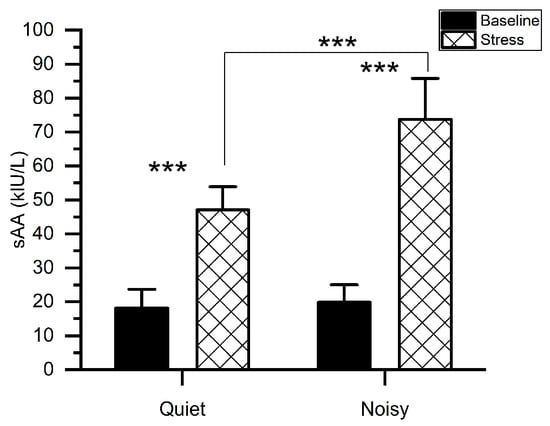
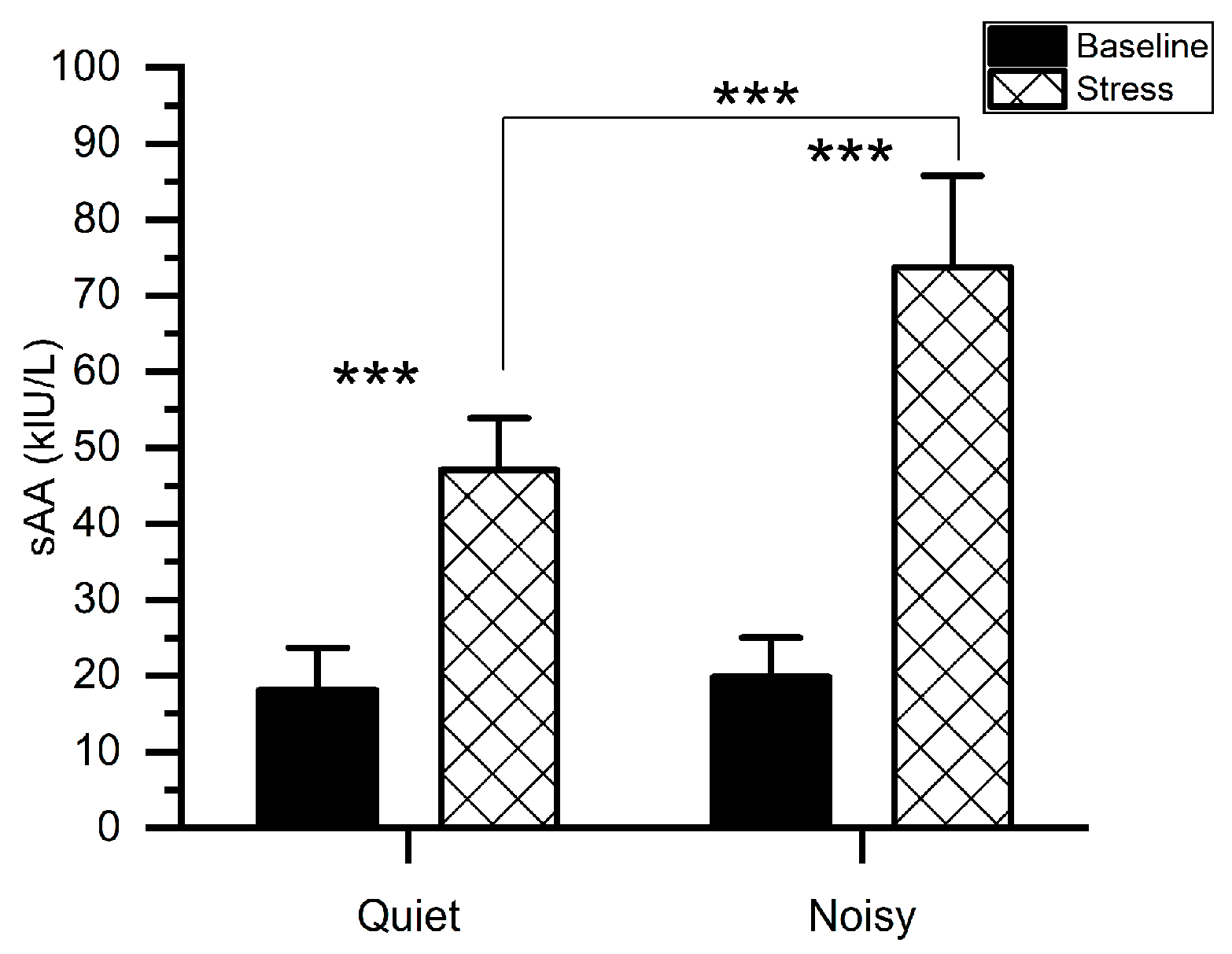
In order to prove the impact of a noisy environment on mental state, researchers in Malaysia [8] conducted research where they monitored brain activity using Electroencephalography (EEG). At the same time, salivary alpha amylase activity was monitored before and immediately after performing a task. This enzyme is involved in the metabolism of carbohydrates and starches, responds to stress stimuli and increases substantially in response to them. During the research, probands performed the same type of work in a quiet environment and in a noisy environment. Subsequently, the levels of alpha amylase were observed, as well as the results of an EEG that was performed in the frontal area. The results of the experiment showed an increase in salivary alpha amylase levels in the noisy environment as well as a decrease in cognitive activity, suggesting that noise causes an increase in stress. Figure 1 shows a comparison of salivary alpha amylase levels in quiet and noisy environments [8].
Figure 1.
Comparison of salivary alpha-amylase (sAA) levels under quiet (left) and noisy (right) occupational environments (*** statistically significant differences) [8].
The impact of noise on psychological well-being has also been investigated in relation to stressors in open-office offices. During the experiment, the effects of the open-office environment were compared with those of a conventional office environment where noise levels are lower. The obtained parameters indicated a decrease in psychological well-being and an increase in stress levels due to the effects of a busy and noisy open-office environment compared to a quiet private office. In addition to the subjective opinion of the probands, objective parameters such as heart rate and skin conductance were also monitored, which increased in direct proportion to the increasing serpentine stress level [13,14].
Another research [15] was based on a similar principle, comparing stress levels in two environments with different noise levels. In this case, a comparison was made between workers working in a noisy factory area and workers working in a quieter administrative area of the factory, based on their subjective perception of noise and feelings of stress. The research also showed a significant relationship between noise intensity and perceived stress level [15].
The same conclusion was reached in a study [16], in which simulation algorithms were used to study the correlation between stress and noise levels. This study highlighted the importance of using protective work equipment for hearing protection. Their application led to a reduction in the level of stress in the workplace, again showing the correlation between the presence of noise and the presence of stress [16].
The negative impact of the presence of noise in the workplace has also been reviewed in [17,18,19,20], which highlight the impact of noise and unsuitable working conditions on overall human health [17,18,19,20].
The assessment of mental workload can also be performed by recording the electrophysiological properties of the skin, which change when exposed to stress stimuli. This phenomenon can be used for non-invasive monitoring of the body’s response to stress and mental strain. The change in electrical skin resistance depending on external stimuli is referred to as the psychogalvanic reflex. It is characterized by a change in skin resistance, which makes it possible to record impedance, resistance, conductivity, or potential differences on the skin surface to monitor the bioelectrical activity of the skin. Changes in the electrical conductivity of the skin are caused by small changes in sweat secretion on the skin. The more sweat is secreted, the more conductive the skin is. The activity of the sweat glands is caused by the activity of the sympathetic nervous system. When it is suppressed or relaxed, skin conductivity also decreases. Sensors used to monitor stress and mental strain also work on this principle [21,22,23,24].
In addition to the above methods of monitoring mental stress, others are also used, such as the heart rate variability method, especially on smart watches and bracelets, and monitoring changes in body temperature and blood volume on the wrist [25].
Despite the extensive literature [26] on occupational noise, several research gaps remain. First, most studies focus on noise levels exceeding the 80 dB threshold, while the psychosocial and physiological impacts of sub-threshold noise (74–76 dB) are often overlooked [27,28,29]. Second, standard noise assessments rely primarily on A-weighting, which may fail to capture the invasive effects of low-frequency components on the autonomic nervous system [30,31]. Furthermore, there is a lack of multimodal research conducted during actual work shifts that integrates objective acoustic data with continuous physiological monitoring, such as GSR and heart rate. This study addresses these gaps by examining stress responses in a real-world industrial environment where noise levels are within legal limits but potentially harmful to long-term health.
2. Materials and Methods
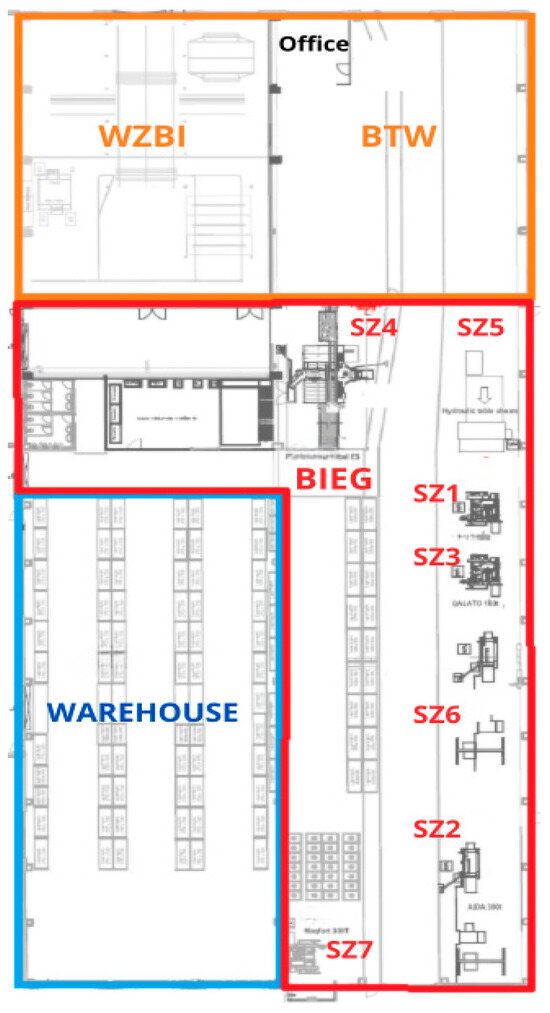
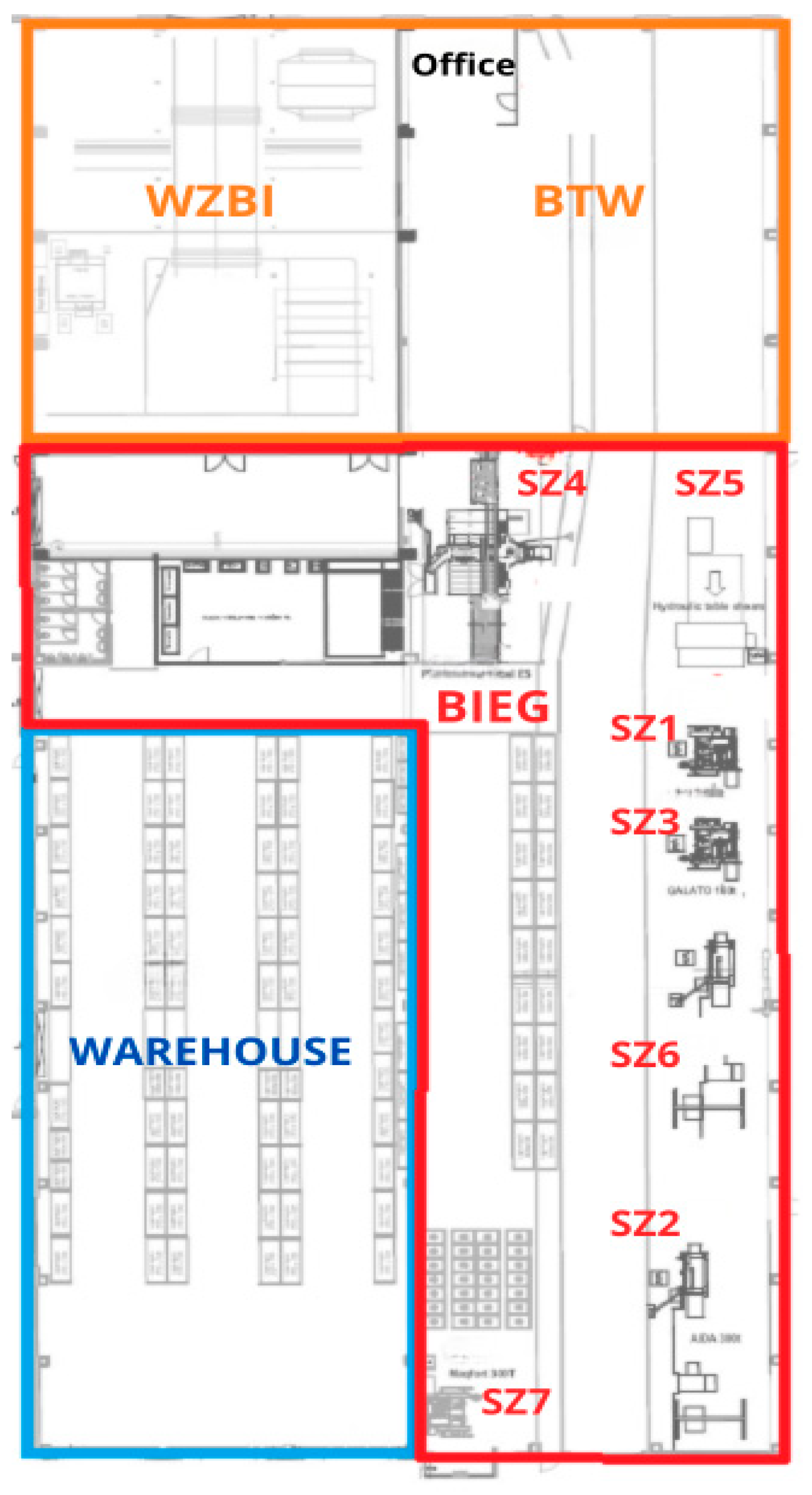
Measurements to confirm the hypothesis of a correlation between noise exposure in the workplace and increased mental stress were carried out at the BIEG workplace. The BIEG workplace—New Production Hall H3—measures 40 × 88 m and consists of two 20 m wide bays. One of them houses four presses (bending, edging, assembly) for sheet metal and SG 6 sheet metal shears. Behind the glass wall are the WZBI and BTW workplaces. A FinnPower E5-25 punching center was placed next to the RICO hydraulic shears near this wall. Then there is a Trumpf 6000 laser, which cuts metal material. The second hall serves as a storage area. The floor of the hall is epoxy cast, and the walls are made of sandwich panels. The 9.5 m high ceiling is made of trapezoidal sheet metal with skylights. The layout of the workstations and the location of the measuring points are shown in the site plan, Figure 2.
Figure 2.
Layout of workstations.
Employees manufacture metal parts for white goods. The BIEG department operates in two shifts, except for the E5 machine, which operates in three shifts. Employees in the neighboring WZBI department work in two shifts and only one shift at the RICO shears. Shifts are 8 h long, including a 0.5 h break. Hall H3 is mainly used for cutting, bending, and pressing sheets with a thickness of 0.5 to 2.0 mm (galvanized, stainless steel). Employees’ job description:
BIEG press workplace: used for trimming and forming sheet metal parts. Employees operate five eccentric presses (Galato, Aida, Maqfort). Pressing can be performed in automatic mode, with the press operator only removing the pressed parts from the conveyor belt. However, manual operation prevails in most cases, with employees manually inserting sheets into the press and, after machining, also manually removing the blanks and placing them in transport containers. Some molds need to be cleaned with compressed air after removing the blank. Employees can take turns working on individual presses as needed.
BIEG shears workplace: one employee per shift operates the FinnPower punching center. The machine creates holes of the required shape and size in the sheet metal according to a set program. The entire process is automated, including the feeding of sheet metal and the removal of finished parts. The operator only supervises the operation of the machine; they either stay at the machine’s control panel or prepare tools for the next type of product in the area at the rear of the machine. One or two employees operate the RICO HGR automatic guillotine shears, which cut the sheets processed by the punching center into smaller parts. The operator manually collects the cut parts from the conveyor belt and places them in a container.
In the adjacent WZBI workplace, employees manufacture mold parts on metalworking machines according to documentation, and the manufactured parts are then assembled into finished molds.
Noise level measurements were performed using a Bruel&Kjaer type 2250-S sound level meter at seven measuring points (SZ1–SZ7). The measurements were performed in accordance with EN ISO 9612:2009. During the measurements, the sound level meter microphone was mounted on a tripod in the employees’ workspace at a height of 1.5 m above the floor (or at ear level for employees). A shift-wide noise exposure measurement was performed. The relevant BIEG department managers were responsible for ensuring that safe working practices were followed during the measurement of low-frequency noise exposure.
2.1. Working Conditions and Measurement Time
Experimental noise exposure measurements were performed at one BIEG workplace on seven machines, SZ1–SZ7. During the measurements, the microclimatic conditions at the workplaces were as described in Table 1. Measurements were performed in two separate periods to capture the impact of varying microclimatic conditions and to ensure data reliability. As shown in Table 1, the temperature range during these periods varied between 11 °C and 22 °C, reflecting seasonal fluctuations in the industrial hall. To account for circadian rhythms and shift-related fatigue, measurements were strategically scheduled during both morning and afternoon shifts. While the two-fold repetition represents a snapshot of exposure, it allowed for the verification of consistency. By comparing results from both periods (Table 2), we observed that the hierarchy of stress responses across workstations remained stable, despite seasonal temperature fluctuations, thereby strengthening confidence in the reliability of the findings.
Table 1.
Microclimate conditions at measuring stands.
Table 2.
Measured values of noise exposure, stress response, blood pressure, and heart rate.
2.2. Preparation and Course of Measurement at the BIEG Workplace
When measuring noise levels at the BIEG workplace for various machines SZ1 to SZ7, a Bruel&Kjaer noise analyzer, model 2250-S, was used. This analyzer was placed on a stable tripod with flexible blocks to isolate the analyzer from vibrations and minimize measurement errors. This method is the most common for noise measurement, where consistency can be achieved through measurement and evaluation.
Before the measurement, the measurement parameters were set, i.e., the sound level meter filter was set. At the beginning, measurements were performed with a weighting filter A for all machines SZ1–SZ7. After the measurement was completed, the obtained data was saved, and then the analyzer was set to measure with a C-weighted filter. After saving the obtained data, measurements were again performed with a Z-weighted filter. All measurements had the same duration.
The BZ-5503 software was used to evaluate the measured values from the sound analyzer, to which the data from the measuring device was exported. The noise level was measured at the height of the receiver and at ground level, specifically at a height of 1.5 m above the ground. We calibrated the sound analyzer before starting each measurement. In order to minimize distortion of the measured noise level, it was necessary to minimize the amount of reflective surface around the sound analyzer.
During a series of measurements at the BIEG workplace on various machines, we adhered to the default position for measuring noise indoors. This position included a distance of at least 1 m from walls or other reflective surfaces, a height between 1.2 m and 1.5 m above the floor, and a distance of 1.5 m from windows. The person operating the equipment during the measurement was at a reasonable distance (2 m) behind the measuring device.
All interfering objects can affect the frequency response of the microphone, especially at higher frequencies, and the effect of directionality is evident at lower frequencies. The measurement results have a standard deviation in the range of 1.0 to 1.5 dB and a measurement uncertainty in the range of 2.2 to 2.6 dB. The data obtained were statistically processed to achieve an adequate presentation of the research results.
2.3. Methodology for Measuring Noise Exposure
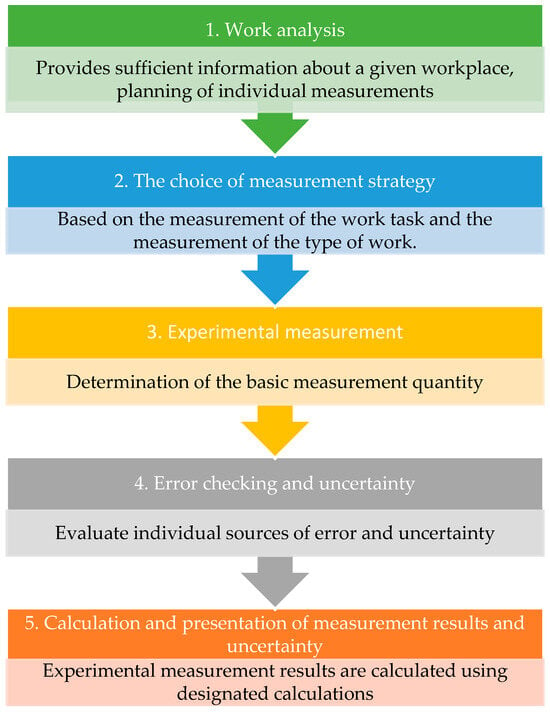
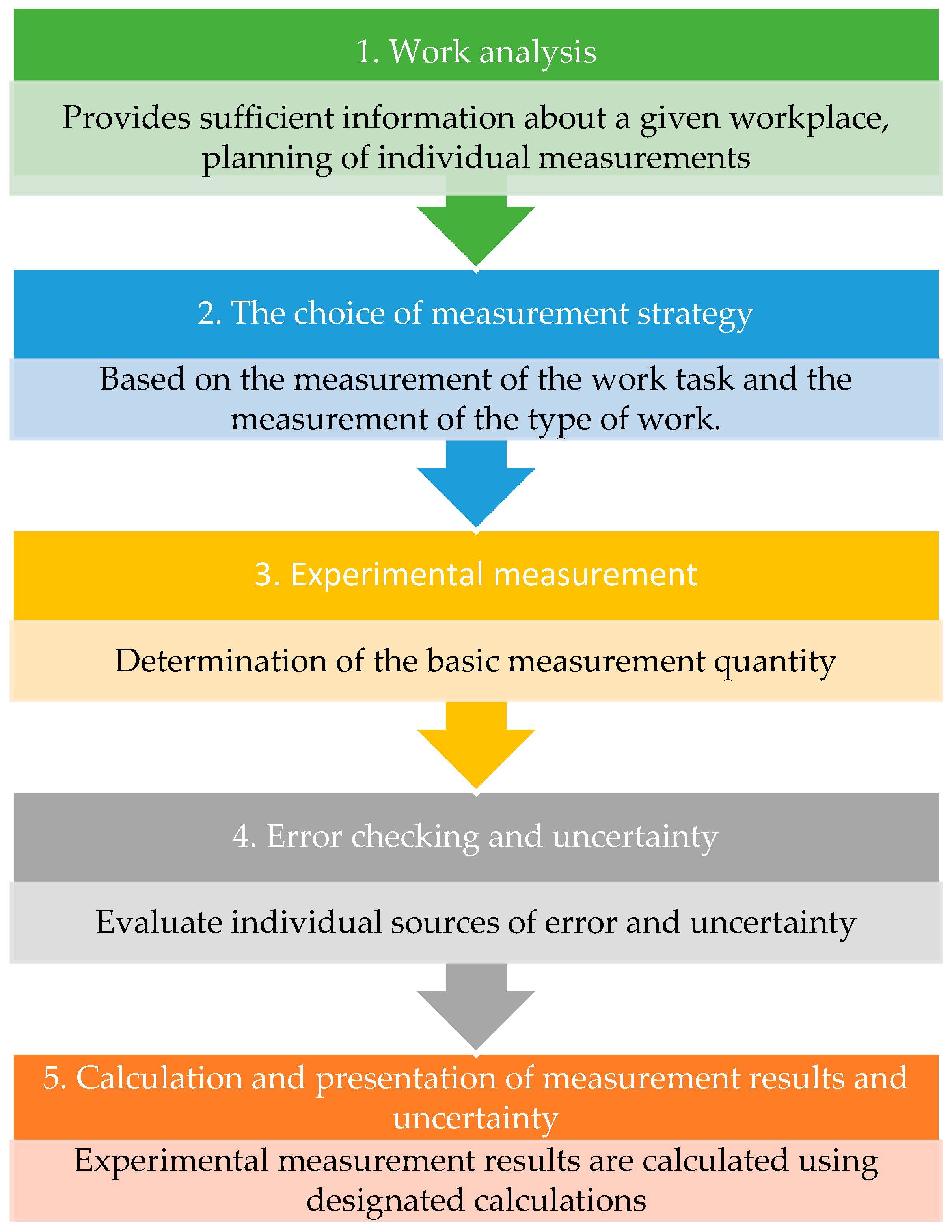
Noise exposure measurements were performed in accordance with the STN EN ISO 9612:2009 standard. This standard specifies the procedure for measuring noise exposure, which is shown in Figure 3.
Figure 3.
Measurement methodology.
When performing measurements, work task (operation) measurement strategies were selected depending on specific work activities. The measurement operator must ensure that the recorded data are sufficiently representative of the work activity in question.
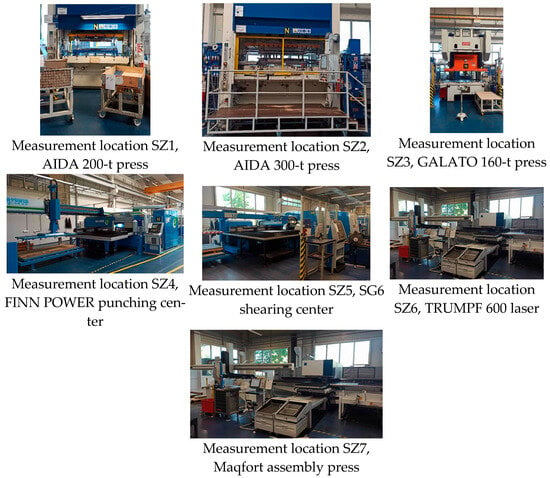
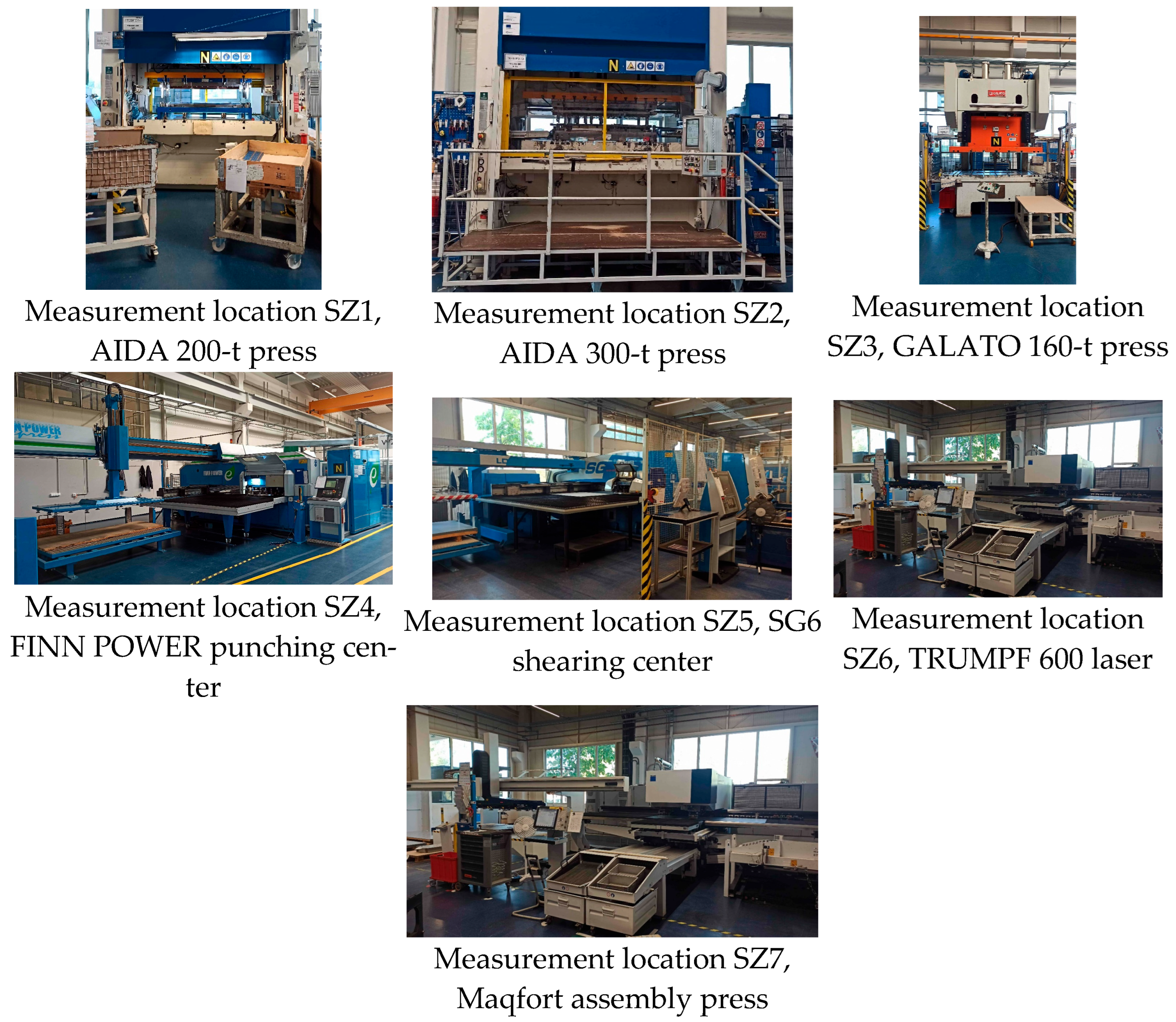
When using a work task measurement strategy, it is necessary to divide the normal working day of workers or groups of workers with the same noise exposure into individual work tasks. The interval between each measurement should be long enough to accurately reflect the average equivalent sound pressure level during a given work task. The measured parameters were LAeq, LCeq, and LZeq. The measurement points were located at the machines, as shown in Figure 2. The hall contains the following machinery: SZ1—200-ton eccentric press, SZ2—300-ton eccentric press, SZ3—160-ton and 25-ton eccentric presses, SZ4—shears, punching center, SZ5—cutting center, SZ6—600 laser, and SZ7—assembly press (see Figure 4).
Figure 4.
Workstations SZ1–SZ7.
To eliminate any other illnesses and determine subjective perceptions of noise and stress exposure, subjects were given questionnaires. To quantify the physiological stress response, GSR was monitored simultaneously with acoustic measurements. Sensors were applied to the index and middle fingertips—where the skin is most sensitive—to capture real-time changes in skin conductivity resulting from sweat gland activity. This non-invasive method serves as a direct measure of sympathetic nervous system activation, where increased conductivity reflects the intensity of psychophysiological arousal and stress reactivity within the noisy industrial environment. This procedure respects the biological principle where changes in the electrical conductivity of the skin are directly related to the activity of the sweat glands controlled by the sympathetic nervous system. Although we did not artificially adjust the skin condition (humidity/temperature) to maintain high ecological validity of the field research, measurements were taken after the subject had stabilized at rest for 10 min.
The resulting diagram shows an increase in the curve when the subject is exposed to a stress factor. The graphical output from the GSR sensor measurement does not provide information about the positive or negative degree of activation but only about its intensity. It is used to perform analyses to determine the level of stress in humans, determine biological feedback, reactivity to stimuli, and more.
Along with noise measurement and recording of electrical skin activity, blood pressure and heart rate measurements were also performed simultaneously, the values of which are also associated with stress levels. Exposure to a stress factor causes an increase in blood pressure and heart rate.
2.4. Evaluation of the Initial Questionnaire
To quantify subjective perceptions, the questionnaire employed a 5-point Likert scale for key indicators of noise annoyance and stress (where 1 = ‘not at all’ and 5 = ‘extremely’). Participants were asked to rate the frequency and intensity of symptoms such as headaches and tinnitus. The reported 71% demand for noise reduction was calculated based on the percentage of respondents who selected the top two levels of the scale (4 and 5), indicating a high perceived necessity for workplace intervention. The questionnaire was designed as a structured self-report instrument tailored to the industrial setting of the BIEG facility. It consisted of two main dimensions: (1) Physiological Symptomatology, where workers rated the frequency of headaches and tinnitus, and (2) Psychosocial Impact, assessing perceived noise annoyance and stress levels using a 5-point Likert scale. To ensure reproducibility, these subjective reports were cross-validated through semi-structured interviews and field observations.
Primary data gathered via the initial questionnaires underwent a systematic qualitative analysis, involving a rigorous evaluation of participant responses to identify subjective perceptions of noise and stress. To ensure a comprehensive understanding of the workplace environment, this dataset was triangulated with direct field observations and semi-structured interviews conducted with the subjects. Although the generalizability of qualitative findings is inherently limited by the specific industrial context, the study prioritizes high ecological validity and internal reliability through methodological rigor. This multimodal approach facilitates a nuanced interpretation of psychosocial stressors, providing essential context for the objective physiological measurements recorded during the research.
2.5. Measured Values of Noise Exposure and Stress Response
The measured values of noise exposure and stress response were summarized in Table 2 and subsequently subjected to statistical analysis in order to demonstrate the hypothesis of the impact of noise exposure on the psychosocial health of employees. A total of 21 subjects aged between 25 and 50 participated in the study. However, this sample (n = 21) represents the total available workforce at the specialized workplace under investigation. Experimental measurements were performed at each of the seven monitored workstations (SZ1–SZ7) by three independent subjects. To ensure the objectivity of the physiological measurements, an initial health history questionnaire was administered as part of the methodology. Analysis of the questionnaires confirmed that none of the subjects had a pre-existing cardiovascular diagnosis at the time of the study, allowing for more accurate monitoring of blood pressure and heart rate changes in direct response to noise exposure. To eliminate the influence of transient external factors and ensure the reliability of the data, all measurements were conducted across two separate periods for reasons of repeatability. This approach allowed for the verification of consistency in both acoustic exposure levels and the subjects’ physiological stress responses under actual working conditions. The data presented in Table 2 for the first and repeated measurements demonstrate a high degree of consistency in both acoustic exposure levels and physiological reactivity. No significant between-period variations were observed that would contradict the identified correlations, suggesting that the observed stress responses are robust across different operational contexts.
3. Results
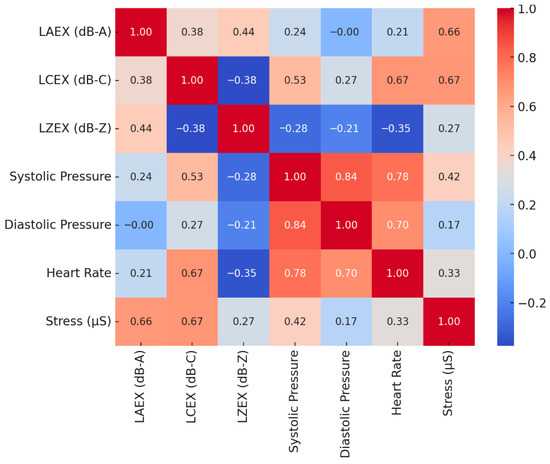
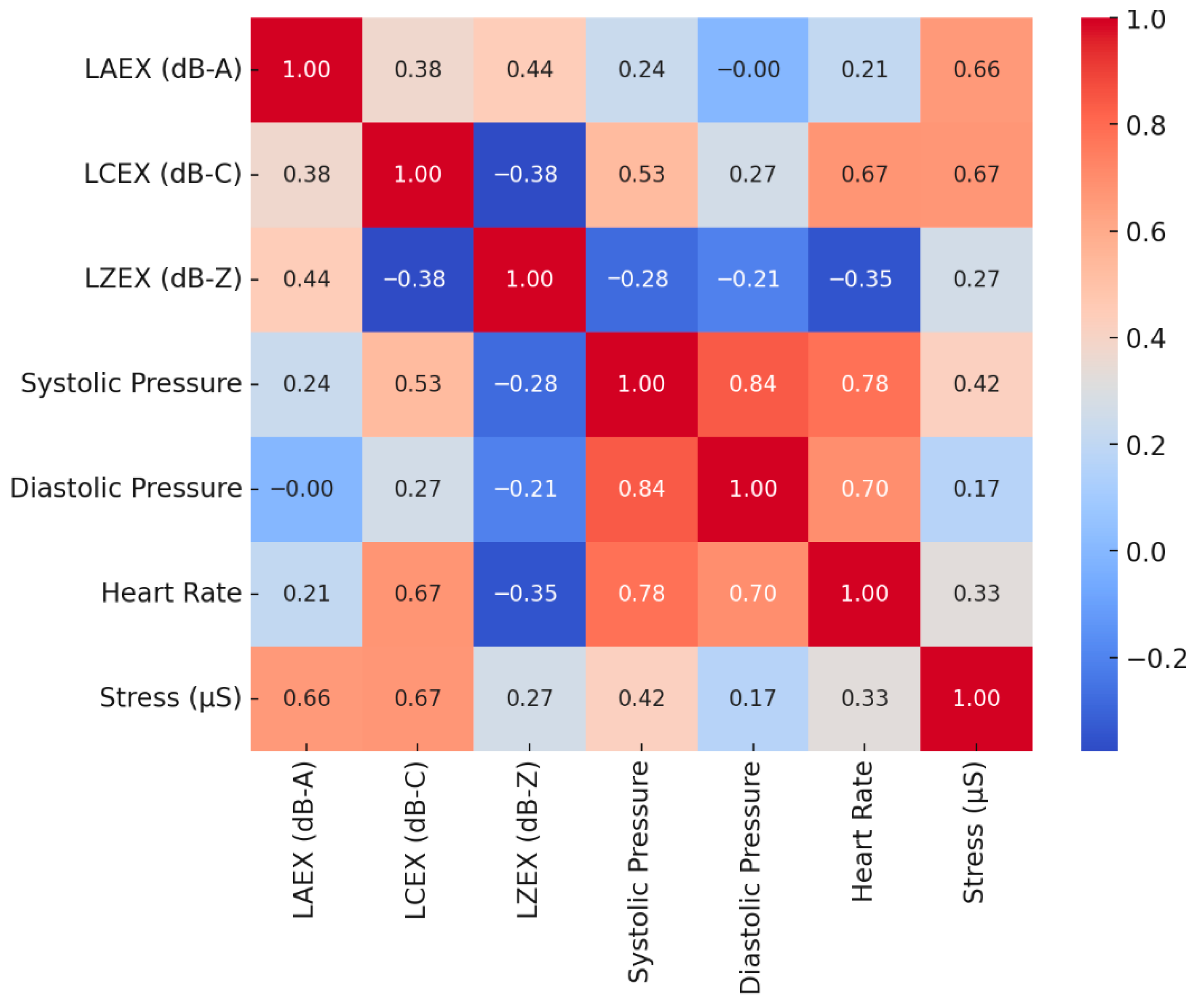
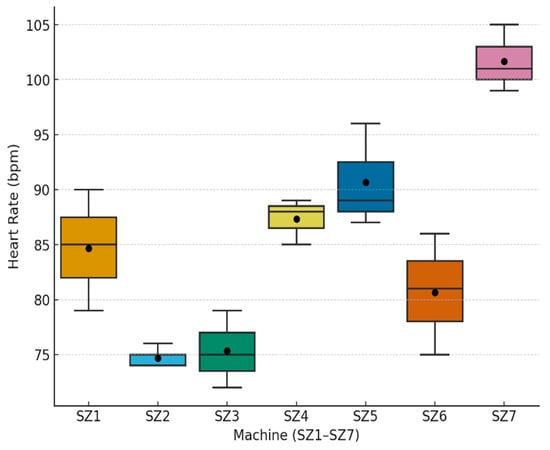
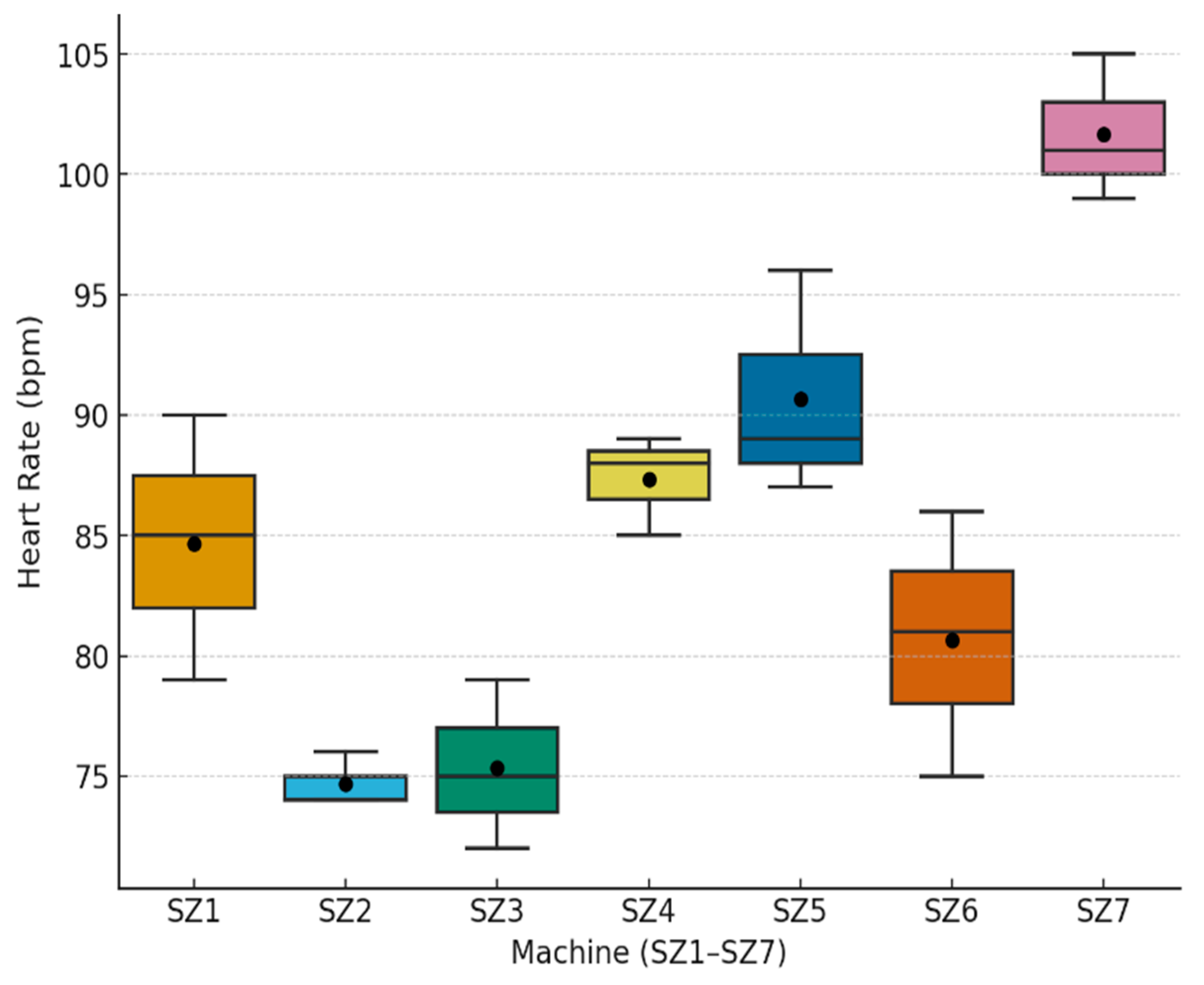
The resulting values obtained during the research were then statistically processed in order to demonstrate the relationship between noise in the workplace and the physiological and psychological response of the human organism to this stimulus. The statistical analyses show the following (Figure 5, Figure 6, Figure 7, Figure 8, Figure 9 and Figure 10).
Figure 5.
Correlation matrix: noise, blood pressure, heart rate, and stress.
Figure 6.
Boxplot—heart rate by machine (aggregated).
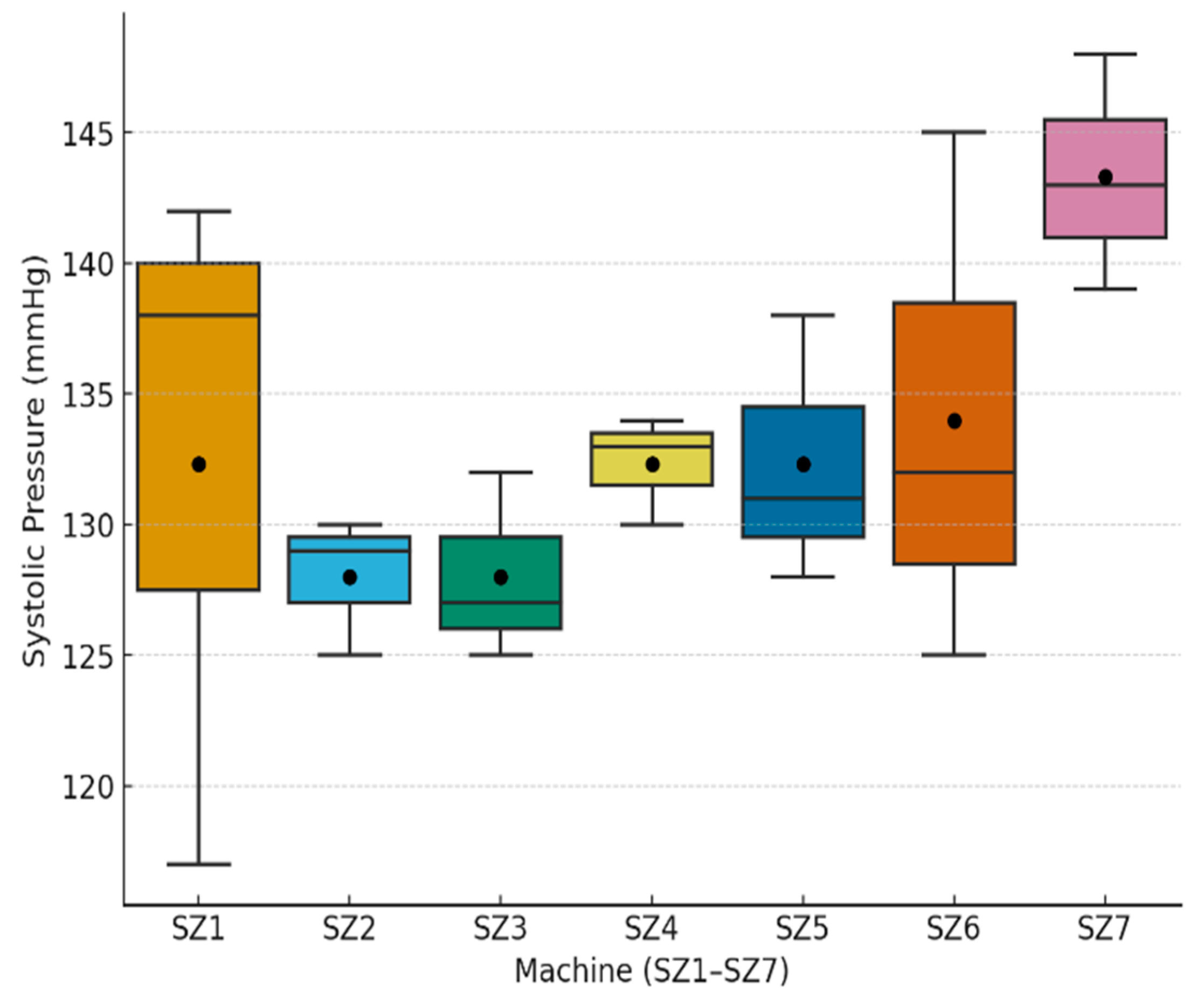
Figure 7.
Boxplot—systolic blood pressure by machine (aggregated).
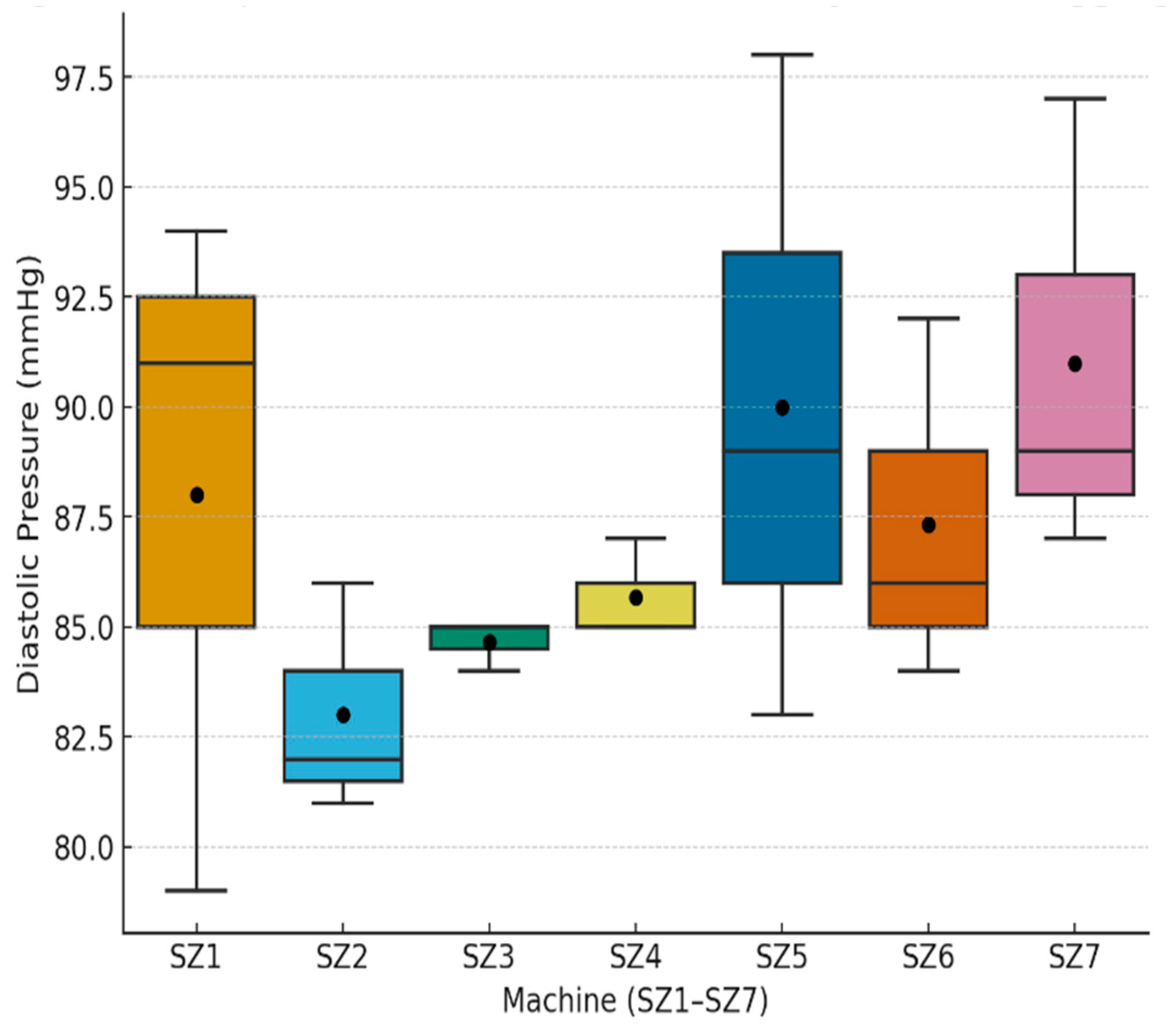
Figure 8.
Boxplot—diastolic blood pressure by machine (aggregated).
Figure 9.
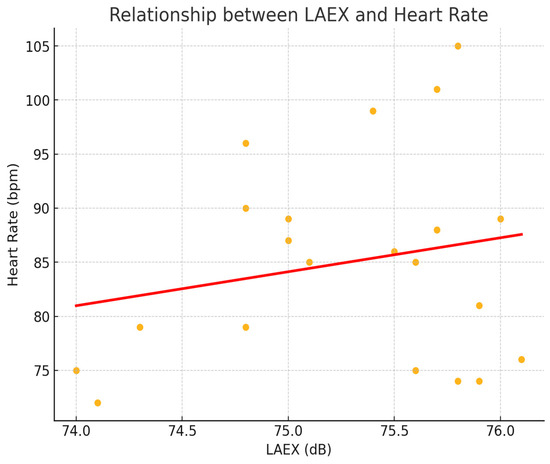
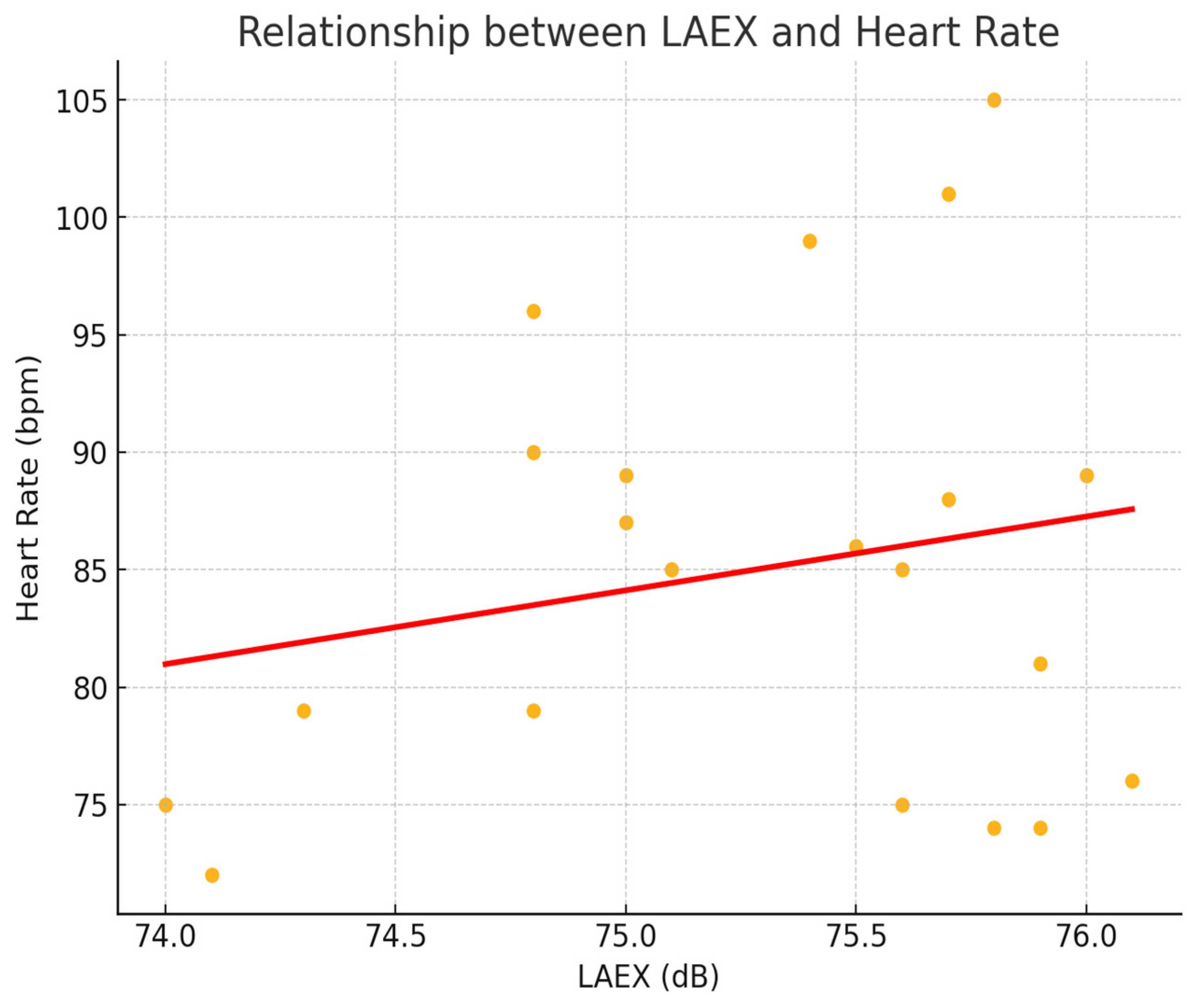
Scatter plot—relationship between LAEX and heart rate.
Figure 10.
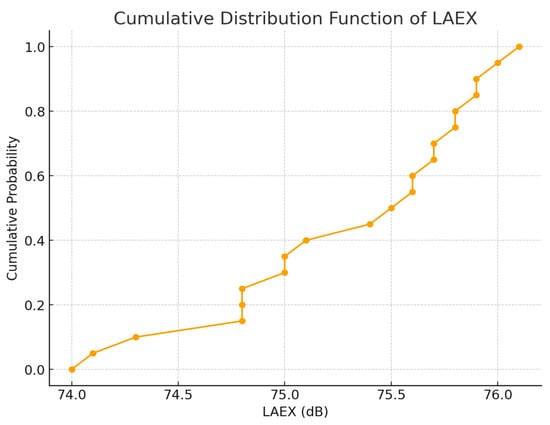
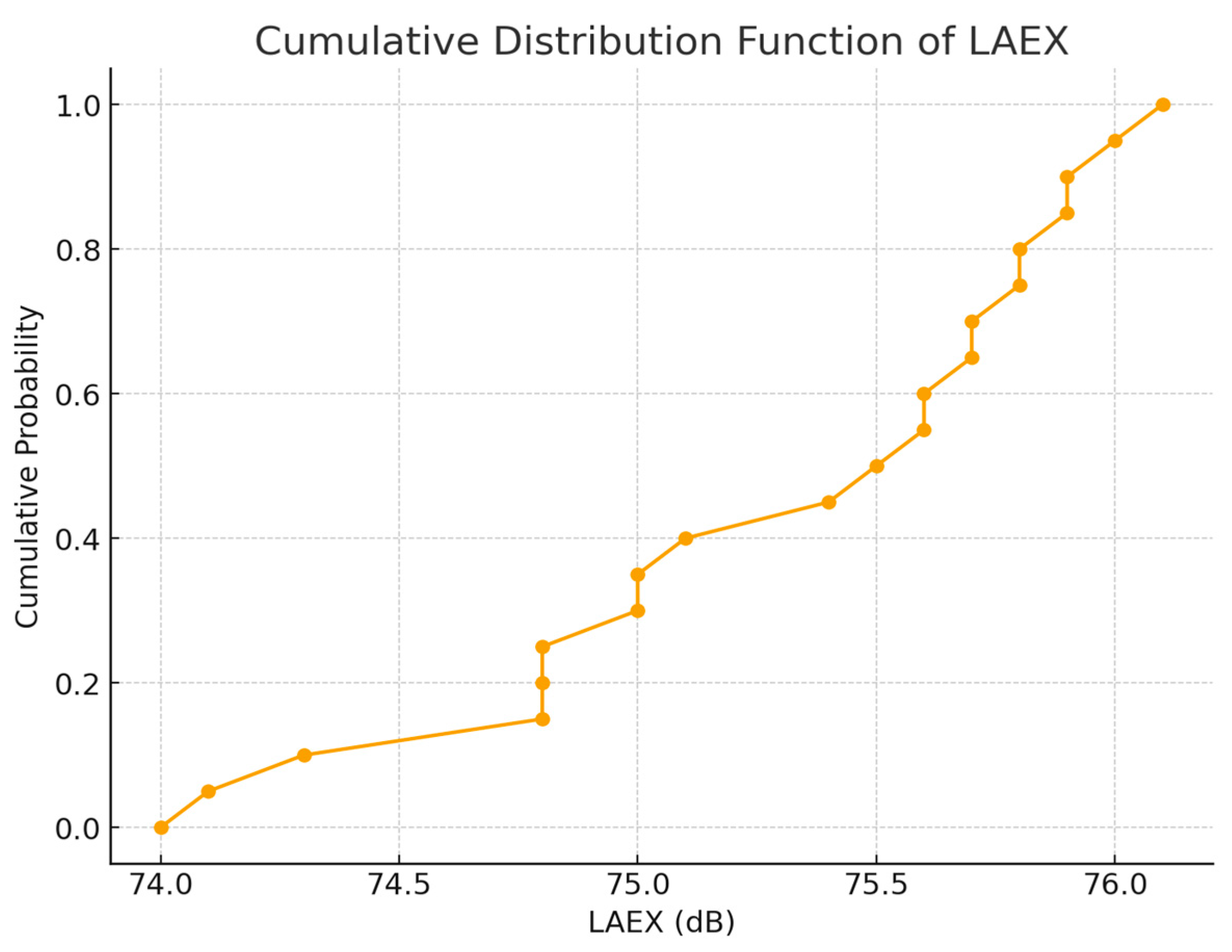
Cumulative distribution function of LAEX.
The correlation analysis (Figure 5) revealed several important relationships. Systolic and diastolic blood pressure were strongly correlated (r = 0.84), which was expected as both indicators represent related cardiovascular functions. Systolic pressure also showed a strong correlation with heart rate (r = 0.78). Among noise indicators, LCEX demonstrated a moderate-to-strong correlation with both heart rate (r = 0.67) and stress levels measured by GSR (r = 0.67). Similarly, LAEX showed a moderate correlation with stress (r = 0.66). These findings suggest that noise exposure, particularly when measured with C-weighting, is associated with increased physiological strain, reflected in elevated heart rate and stress response.
The aggregated boxplot (Figure 6) illustrates the variation in heart rate across machines SZ1–SZ7. Workers at SZ7 show the highest heart rate levels, with both the median and the upper range being considerably elevated. In contrast, machines such as SZ3 and SZ6 exhibit lower median values and less variability. This provides indirect support for the hypothesis that certain machines, particularly SZ7, are associated with higher physiological load and potentially greater psychosocial risk.
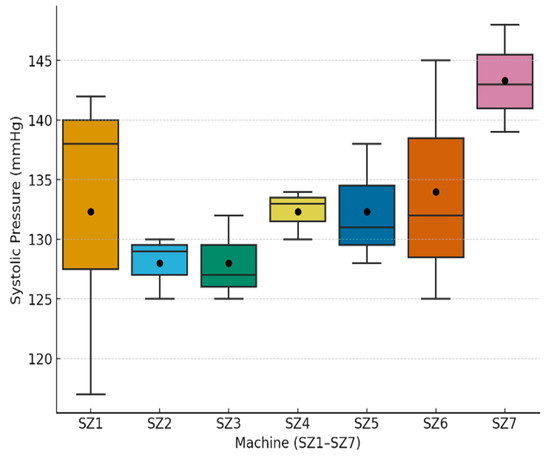
The distribution of systolic blood pressure varied considerably across machines. The highest median values and the broadest range were observed at SZ7, suggesting increased cardiovascular strain for workers operating this machine. In contrast, SZ3 and SZ6 displayed lower and more stable systolic values, indicating comparatively reduced physiological load (Figure 7).
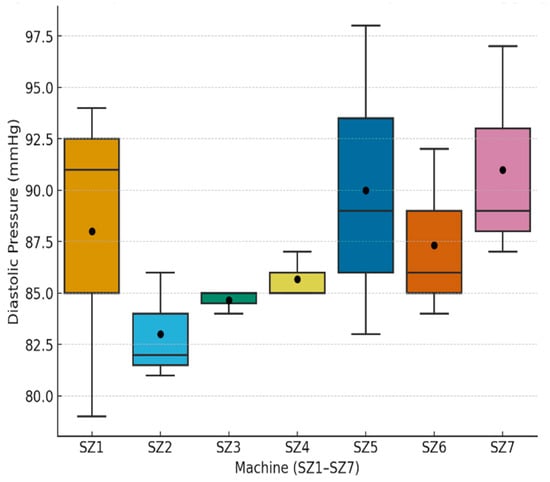
Similar trends were observed for diastolic blood pressure (Figure 8). SZ7 again showed elevated values, with both the median and upper quartile higher than those of other machines. On the other hand, SZ2 and SZ3 presented lower median values, highlighting that not all workplaces exert the same cardiovascular burden.
The scatter plot (Figure 9) shows a weak but positive association between A-weighted noise levels (LAEX) and heart rate. The regression line indicates that higher noise exposure tends to correspond with slightly elevated heart rate values. However, the coefficient of determination (R2 ≈ 0.04) suggests that noise explains only a small fraction of heart rate variability, implying that additional factors such as workload, stress, and individual health conditions contribute significantly to cardiovascular response.
The cumulative distribution curve of LAEX (Figure 10) demonstrates that the majority of measurements cluster between 74 and 76 dB. This indicates a relatively stable noise environment across machines, with only minor deviations. Nevertheless, even within this limited range, physiological responses varied considerably, suggesting that subjective perception and task-specific factors may amplify the effect of noise on stress and cardiovascular strain.
4. Discussion
This study provides evidence from noise measurements, physiological monitoring (blood pressure, heart rate, and skin conductance as an indicator of stress), and subjective responses from a workplace survey. The measured A-weighted noise levels (LAEX) across machines ranged between 74 and 76 dB, while C-weighted levels (LCEX) averaged around 75 dB and Z-weighted levels (LZEX) ranged between 77 and 81 dB. The cumulative distribution function of LAEX (Figure 10) indicated that most values clustered within a narrow range, confirming a relatively stable acoustic environment. The correlation matrix (Figure 5) revealed strong associations between cardiovascular indicators: systolic and diastolic blood pressure were highly correlated (r = 0.84), and systolic pressure showed a strong relationship with heart rate (r = 0.78). Among the noise indicators, LCEX demonstrated moderate-to-strong correlations with both heart rate (r = 0.67) and stress (r = 0.67). LAEX also correlated with stress (r = 0.66), highlighting the link between noise exposure and physiological strain. The aggregated boxplot of heart rate across machines (Figure 6) showed that SZ7 had the highest median and range of values, indicating elevated cardiovascular load. Machines SZ3 and SZ6 displayed lower and more stable values, suggesting reduced strain. The systolic (Figure 7) and diastolic (Figure 8) blood pressure distributions confirmed this trend: SZ7 consistently showed higher values compared to other machines. In contrast, SZ2 and SZ3 demonstrated lower medians, suggesting heterogeneity in physiological impact depending on machine type and task. The scatter plot with regression line (Figure 9) illustrated a weak but significant positive association between LAEX and heart rate. Although higher noise levels corresponded to slightly increased heart rate, the low explanatory power (R2 ≈ 0.04) indicated that other factors strongly influence cardiovascular response. Subjective perception of noise confirmed the objective findings. A total of 71% of workers expressed the need to reduce noise levels, while 33% reported increased stress, 29% reported headaches, and 14% reported tinnitus. These complaints align with the elevated physiological responses observed at high-noise machines.
This study provides evidence that noise in the workplace, even at levels of 74–76 dB, which are well below the legal limit of 80 dB, may represent a contributing factor to psychosocial risk. An integrated approach combining acoustic measurements with monitoring of physiological parameters (heart rate, blood pressure, GSR) and subjective assessments by workers revealed key links between the acoustic environment and cardiovascular stress.
However, as the regression model explains only a small fraction of heart rate variability (R2 ≈ 0.04), it is evident that cardiovascular responses are predominantly driven by other factors, such as physical workload and task complexity. Within this complex multifactorial context, the Allostatic Load theory is presented here as a potential explanatory framework rather than a definitive conclusion; we hypothesize that even minor, chronic autonomic activation could contribute to cumulative physiological wear and tear over extended periods. However, given the low explanatory power of our current model, these findings should be interpreted with caution and serve primarily as a basis for further longitudinal research rather than as conclusive evidence of direct causality.
The insufficiency of the current 80 dB threshold for assessing psychosocial health lies in its focus on preventing noise-induced hearing loss. Standard assessments rely primarily on A-weighting, which is designed to mimic the human ear’s sensitivity to mid-to-high frequencies but effectively filters out low-frequency noise (LFN) components. Our findings demonstrate that these LFN components, captured more accurately by, can trigger measurable physiological arousal even at sub-threshold levels (74–76 dB). Therefore, regulatory compliance does not necessarily equate to the absence of health-relevant stressors.
Key scientific findings and contributions:
- Importance of C-weighted noise: Research has shown that LCEX correlates more strongly with physiological stress (r = 0.67) than the standard LAEX (r = 0.66). This provides indirect support for the hypothesis that certain machines, particularly SZ7, are associated with higher physiological load and potentially greater psychosocial risk. It must be noted, however, that while LCEX demonstrates a stronger correlation with physiological indicators than LAEX, this observation offers only indirect evidence regarding the impact of LFN. Due to the absence of narrow-band spectral decomposition or octave band analysis in this field study, the observed effects cannot be definitively attributed to specific low-frequency mechanisms. The observed stronger correlation of LCEX with physiological stress suggests that metrics capturing more energy in the lower frequencies may be more sensitive indicators of autonomic arousal. Unlike high-frequency sounds, which are effectively attenuated by standard auditory filters (reflected in A-weighting), LFN components possess higher energy and penetration power, allowing them to directly stimulate physiological arousal through the activation of the autonomic nervous system. This stimulation triggers a sympathetic response, characterized by increased sweat gland activity (measured via GSR) and elevated cardiovascular parameters. Furthermore, LFN acts as a persistent low-level stressor that contributes to the ‘Allostatic Load’—a cumulative wear and tear on the body caused by chronic autonomic activation. Because LFN is often perceived as more ‘invasive’ and annoying than its decibel level would suggest, it creates a state of constant psychophysiological tension that standard regulatory limits fail to capture.
- Identification of high-risk workplaces: Workplace SZ7 was repeatedly identified as the most critical in terms of cardiovascular stress. Although the noise environment in the hall is relatively stable, the variability of physiological responses suggests that the nature of the specific work task and subjective perception of noise may amplify the effects of exposure.
A significant limitation of this study is the relatively small sample size (n = 21), which may restrict the statistical power and generalizability of the findings. Although this sample represents the total available workforce at the specialized BIEG workplace, we acknowledge that such a cohort size makes it challenging to fully control for individual variability, including age (ranging from 25 to 50 years), work experience, and underlying health predispositions. While the health history questionnaire excluded subjects with diagnosed cardiovascular diseases, micro-biases such as stress sensitivity or pre-hypertension tendencies may still be present and influence physiological reactivity. Furthermore, the low coefficient of determination (R2 ≈ 0.04) observed in the heart rate analysis provides indirect support for the hypothesis that noise explains only a small fraction of the total variance. A further limitation is the difficulty in isolating the specific contribution of noise from the physical workload at complex stations like SZ7. Given the multifactorial nature of stress, where noise explains only a small fraction of the variance (R2 ≈ 0.04), the observed cardiovascular strain must be viewed as a multimodal outcome of the entire work process. Combined with the small sample size, this may lead to wider confidence intervals, necessitating a cautious interpretation of the results, particularly the elevated cardiovascular load at workstation SZ7. However, the study’s primary strength remains its high ecological validity, as it captures real-time physiological responses to sub-threshold noise (74–76 dB) during actual work shifts. These findings serve as a critical foundation for future research, which will prioritize sample expansion and more rigorous covariate control to further isolate the specific impact of industrial noise from confounding individual factors.
Furthermore, it is critical to distinguish between the identified statistical associations and direct causality. While the correlation indicates a meaningful link between noise exposure and stress indicators, this field study does not definitively prove that noise is the sole cause of the observed physiological changes. Due to the practical constraints of a real-world industrial setting, several confounding variables remained uncontrolled, including work intensity (e.g., the frequency of manual press operations), individual psychological sensitivity, and fatigue accumulation throughout the shift.
Specifically, at workstation SZ7, the elevated physiological response is attributable to a synergy of factors. While noise exposure plays a role, the response is significantly amplified by task-specific characteristics, such as repetitive manual operations, high work intensity, and the physical activity inherent in assembly at the Maqfort press. The differences observed across workstations thus reflect the combined influence of acoustic and non-acoustic occupational factors. The low coefficient of determination (R2 ≈ 0.04) further underscores the multifactorial nature of stress, suggesting that noise explains only a small fraction of the variance. Without variable adjustment for work-rest intervals or multi-collinearity testing in the regression models, our findings should be interpreted as environmental associations rather than direct causal effects. These results highlight the need for future controlled longitudinal studies to better isolate noise from task-related physical and psychological stressors.
Scientific Contribution and Innovation
The primary contribution of this study lies in the development and field validation of a multimodal measurement framework for assessing the psychophysiological impact of sub-threshold occupational noise exposure in a high-precision industrial environment. Unlike studies relying solely on subjective surveys or isolated acoustic parameters, this research integrates synchronized acoustic measurements (LAEX, LCEX, LZEX), continuous galvanic skin response (GSR) monitoring, and cardiovascular indicators (blood pressure and heart rate) collected during real operational shifts.
Methodologically, the study advances the assessment of low-frequency noise exposure by comparatively applying multiple frequency weighting filters within the same measurement protocol. Although detailed narrow-band spectral decomposition was not the primary objective, the parallel evaluation of A-, C-, and Z-weighted equivalent exposure levels enables indirect quantification of the contribution of low-frequency components under real industrial conditions. This comparative filter approach is presented as a practical and reproducible alternative for industrial environments where full spectral analysis is not feasible, though it remains a proxy for detailed acoustic characterization.
The correlation analysis between acoustic parameters and physiological stress indicators provides empirical validation of the sensitivity of LCEX and LZEX metrics in detecting autonomic activation under sub-threshold exposure conditions. Even marginal differences in correlation coefficients indicate measurable methodological sensitivity when assessing psychosocial load beyond conventional regulatory compliance metrics.
Furthermore, the study establishes a structured measurement protocol that can be replicated in comparable industrial settings. The synchronization of environmental and physiological datasets enables cross-domain validation and reduces reliance on single-indicator interpretation. From a technical standpoint, the proposed framework contributes to refining occupational noise diagnostics by extending assessment beyond A-weighted regulatory standards toward a multi-parameter evaluation model.
Although conducted in a single industrial facility, the measurement architecture and analytical procedure are transferable to other automated manufacturing environments characterized by continuous low-frequency noise components. The methodological design therefore offers a scalable basis for future experimental, longitudinal, or intervention-oriented research.
5. Conclusions
This study provides indirect evidence that industrial noise levels between 74 and 76 dB—well below current regulatory limits—induce measurable physiological and psychological stress. Our research highlights that C-weighted noise levels (LCEX) correlate more strongly with heart rate and galvanic skin response (r = 0.67) than standard A-weighted levels (LAEX). These findings suggest that LCEX may serve as a useful proxy for identifying potential risks associated with lower-frequency noise components. Given the limited explanatory power of our current model, LCEX should be viewed as a supplementary tool for psychosocial risk assessment rather than a direct measure of LFN-induced causality.
While noise exposure accounts for only a small fraction of heart rate variability (R2 ≈ 0.04), confirming the multifactorial nature of occupational stress, its chronic presence acts as a persistent stressor. These objective findings are corroborated by subjective reports, where 71% of workers expressed a need for noise reduction due to symptoms such as headaches (29%) and tinnitus (14%). Within the framework of Allostatic Load theory, even these sub-threshold noise levels may contribute to cumulative physiological wear and tear over extended periods.
Our findings contribute to the broader occupational health discussion by highlighting that noise below legal limits acts as a persistent low-level stressor. Instead of implying immediate regulatory change, we propose that LCEX and LZEX metrics be integrated into safety protocols as supplementary tools for nuanced risk assessment. This approach moves beyond mere regulatory compliance toward proactive health prevention, identifying potential psychosocial risks that standard decibel-based limits fail to capture. To improve worker well-being, industrial safety protocols must transition from generic to targeted risk management. For workstation SZ7, we recommend a dual approach: technical measures to reduce low-frequency noise and ergonomic interventions to mitigate physical strain, such as optimizing manual operations and scheduling frequent recovery breaks to address the combined occupational load.
Future research with larger longitudinal samples is already being prepared to further isolate the specific impact of industrial noise from other confounding occupational stressors. This upcoming phase will focus on validating the observed preliminary trends across diverse manufacturing contexts and refining the predictive power of multi-variable stress models.
Author Contributions
Conceptualization, M.B., D.P. and M.T.; methodology, M.B. and D.P.; validation, D.P., M.B., M.T. and R.T.; formal analysis, R.T. and R.J.; investigation, D.P. and M.B.; resources, M.B.; data curation, R.T. and R.J.; writing—original draft preparation, D.P., M.B. and M.T.; writing—review and editing, D.P., M.B., R.T. and R.J.; visualization, M.T.; supervision, M.B. and D.P.; project administration, M.B. and D.P. All authors have read and agreed to the published version of the manuscript.
Funding
This research received no external funding.
Institutional Review Board Statement
The study was conducted in accordance with the Declaration of Helsinki.
Informed Consent Statement
Informed consent was obtained from all subjects involved in the study.
Data Availability Statement
The original contributions presented in this study are included in the article. Further inquiries can be directed to the corresponding author.
Acknowledgments
This contribution is the result of the project APVV no. 19-0367 “Framework for an integrated process security management approach for an intelligent enterprise”.
Conflicts of Interest
The authors declare no conflicts of interest.
Abbreviations
The following abbreviations are used in this manuscript:
| EEG | Electroencephalography |
| GSR | Galvanic Skin Response |
| LFN | Low-frequency noise |
References
- Kubani, V. Work Psychology, 1st ed.; University of Presov: Presov, Slovakia, 2011; p. 59. [Google Scholar]
- Pereira, E.; Sigcha, L.; Silva, E.; Sampaio, A.; Costa, N.; Costa, N. Capturing Mental Workload Through Physiological Sensors in Human–Robot Collaboration: A Systematic Literature Review. Appl. Sci. 2025, 15, 3317. [Google Scholar] [CrossRef] [Scilit]
- National Labour Inspectorate. Occupational Safety and Health. Available online: https://www.ip.gov.sk/bozp/pracovne-prostredie/ (accessed on 10 August 2025).
- Sventekova, E.; Osvaldova Makovicka, L.; Dlugos, I.; Maly, S. Mental workload as a risk factor of the work environment. Kriz. Manaz. 2021, 20, 25–32. [Google Scholar] [CrossRef] [Scilit]
- Richter, G.; Gruber, H.; Uścilowska, A.; Kriebel, J.; Neuberger, O.; Wilpert, B. ISSA—Risk Assessment Guide for Small and Medium-Sized Enterprises; The International Social Security Association: Dortmund, Germany, 2008. [Google Scholar]
- Giorgi, A.; Ronca, V.; Vozzi, A.; Sciaraffa, N.; di Florio, A.; Tamborra, L.; Simonetti, I.; Aricò, P.; Di Flumeri, G.; Rossi, D.; et al. Wearable Technologies for Mental Workload, Stress, and Emotional State Assessment during Working-Like Tasks: A Comparison with Laboratory Technologies. Sensors 2021, 21, 2332. [Google Scholar] [CrossRef] [Scilit] [PubMed]
- Mrázková, E.; Kovalová, M.; Čada, Z.; Gottfriedová, N.; Rychlý, T.; Škerková, M. High-Frequency Audiometry in Women with and without Exposure to Workplace Noise. Int. J. Environ. Res. Public Health 2021, 18, 6463. [Google Scholar] [CrossRef] [Scilit]
- Alyan, E.; Saad, N.M.; Kamel, N.; Yusoff, M.Z.; Zakariya, M.A.; Rahman, M.A.; Guillet, C.; Merienne, F. Frontal Electroencephalogram Alpha Asymmetry during Mental Stress Related to Workplace Noise. Sensors 2021, 21, 1968. [Google Scholar] [CrossRef] [Scilit] [PubMed]
- Mohamed, A.O.; Paleologos, E.K.; Howari, F.M. Noise pollution and its impact on human health and the environment. In Pollution Assessment for Sustainable Practices in Applied Sciences and Engineering; Butterworth-Heinemann: Oxford, UK, 2021; Chapter 19; pp. 975–1026. [Google Scholar] [CrossRef] [Scilit]
- Tao, Y.; Chai, Y.; Kou, L.; Kwan, M. Understanding noise exposure, noise annoyance, and psychological stress: Incorporating individual mobility and the temporality of the exposure-effect relationship. Appl. Geogr. 2020, 125, 102283. [Google Scholar] [CrossRef] [Scilit]
- Pretzsch, A.; Seidler, A.; Hegewald, J. Health Effects of Occupational Noise. Noise Pollut. 2021, 7, 344–358. [Google Scholar] [CrossRef] [Scilit]
- Yang, S.; Fu, Z.; Dong, S.; Yang, B.; Li, Z.; Feng, C.H.; Reinhardt, J.D.; Shi, W.; Jia, P.; Zeng, H.; et al. Association between perceived noise at work and mental health among employed adults in Southwest China. J. Affect. Disord. 2023, 343, 22–30. [Google Scholar] [CrossRef] [Scilit]
- Sander, E.J.; Marques, C.; Brit, J.; Stead, M.; Baumann, O. Open-plan office noise is stressful: Multimodal stress detection in a simulated work environment. J. Manag. Organ. 2021, 27, 1021–1037. [Google Scholar] [CrossRef] [Scilit]
- Jimenez-Molina, A.; Retamal, C.; Lira, H. Using Psychophysiological Sensors to Assess Mental Workload During Web Browsing. Sensors 2018, 18, 458. [Google Scholar] [CrossRef] [Scilit]
- Ardiyansyah, D.; Kahar, F.; Suratman Sri Rejeki, D.S.; Pramatama, S.; Yusuf, M. The Relationship between Noise Level and Work Stress. Int. J. Med. Sci. Clin. Res. Stud. 2023, 3, 100–104. [Google Scholar] [CrossRef] [Scilit]
- Milad, A.; Saeid, Y.; Ahmad, M. Noise Exposure and Job Stress—A Structural Equation Model in Textile Industries. Arch. Acoust. 2020, 45, 601–611. [Google Scholar] [CrossRef] [Scilit]
- Kamal, E.; Reza, T.; Taybeh, K.; Samira, R.; Farshad, A. Evaluation of occupational noise exposure and general health of workers in industrial sites: A case study. Work 2021, 68, 115–121. [Google Scholar] [CrossRef] [Scilit]
- Burella, G.; Moro, L. A Comparative Study of the Methods to Assess Occupational Noise Exposures of Fish Harvesters. Saf. Health Work 2021, 12, 230–237. [Google Scholar] [CrossRef] [Scilit]
- Araújo Alves, J.; Neto Paiva, F.; Torres Silva, L.; Remoaldo, P. Low-Frequency Noise and Its Main Effects on Human Health—A Review of the Literature between 2016 and 2019. Appl. Sci. 2020, 10, 5205. [Google Scholar] [CrossRef] [Scilit]
- Sinay, J.; Balazikova, M.; Dulebova, M.; Markulik, S.; Kotianova, Z. Measurement of low-frequency noise during CNC machining and its assessment. Measurement 2018, 119, 190–195. [Google Scholar] [CrossRef] [Scilit]
- Pidech, J.; Neubert, M.S.; Chuchuen, O. Influence of multitasking-induced mental workload on electrodermal activity and human cortisol. In Proceedings of the 15th Biomedical Engineering International Conference (BMEiCON), Tokyo, Japan, 28–30 October 2023; pp. 1–5. [Google Scholar] [CrossRef] [Scilit]
- Sriranga, A.K.; Lu, Q.; Birrell, S. A Systematic Review of In-Vehicle Physiological Indices and Sensor Technology for Driver Mental Workload Monitoring. Sensors 2023, 23, 2214. [Google Scholar] [CrossRef] [Scilit] [PubMed]
- Gjoreski, M.; Kolenik, T.; Knez, T.; Luštrek, M.; Gams, M.; Gjoreski, H.; Pejović, V. Datasets for Cognitive Load Inference Using Wearable Sensors and Psychological Traits. Appl. Sci. 2020, 10, 3843. [Google Scholar] [CrossRef] [Scilit]
- Fritz, T.; Begel, A.; Müller, S.C.; Yigit-Elliott, S.; Züger, M. Using Psycho-physiological Measures to Assess Task Difficulty in Software Development. In Proceedings of the 36th International Conference on Software Engineering, Hyderabad, India, 31 May–7 June 2014; pp. 402–413. [Google Scholar] [CrossRef] [Scilit]
- Morales, A.; Barbosa, M.; Morás, L.; Cazella, S.C.; Sgobbi, L.F.; Sgobbi, L.F.; Sene, I.; Marques, G. Occupational Stress Monitoring Using Biomarkers and Smartwatches: A Systematic Review. Sensors 2022, 22, 6633. [Google Scholar] [CrossRef] [Scilit]
- Jakobsen, J. Danish Guidelines on Environmental Low Frequency Noise, Infrasound and Vibration. J. Low Freq. Noise Vib. Act. Control 2001, 20, 141–148. [Google Scholar] [CrossRef] [Scilit]
- Mirowska, M. Evaluation of Low Frequency Noise in Dwellings. New Polish Recommendation. In Proceedings of the 9th International Meeting on Low Frequency Noise and Vibration, Aalborg, Denmark, 17–19 May 2000; pp. 117–124. [Google Scholar] [CrossRef] [Scilit]
- Sloven, P. A Structured Approach to LFS-Complaints in the Rotterdam Region of the Netherlands. J. Low Freq. Noise Vib. Act. Control 2001, 20, 75–84. [Google Scholar] [CrossRef] [Scilit]
- Balážiková, M.; Pačaiová, H.; Tomašková, M. A Proposal for Risk Assessment of Low-Frequency Noise in the Human–Machine–Environment System. Appl. Sci. 2023, 13, 13321. [Google Scholar] [CrossRef] [Scilit]
- DIN 45680; Messungen und Bewertung Tieffrequenter Geräuschimmissionen in der Nachtbarschaft—Beiblatt 1 Hinweise zur Beurteilung bei Gewerblichen Anlagen. Beuth Verlag: Berlin, Germany, 1997. Available online: https://www.beuth.de/en/standard/din-45680/2917742 (accessed on 20 October 2025).
- SOSFS 1996:7/E; Indoor Noise and High Sound Levels. Socialstyrelsen: Stockholm, Sverige, 1996.

Disclaimer/Publisher’s Note: The statements, opinions and data contained in all publications are solely those of the individual author(s) and contributor(s) and not of MDPI and/or the editor(s). MDPI and/or the editor(s) disclaim responsibility for any injury to people or property resulting from any ideas, methods, instructions or products referred to in the content. |
© 2026 by the authors. Licensee MDPI, Basel, Switzerland. This article is an open access article distributed under the terms and conditions of the Creative Commons Attribution (CC BY) license.