


Abstract
This study explores the design and implementation of active learning strategies in a Digital Logic Design (DLD) course offered at Sultan Qaboos University. By shifting away from traditional lecture formats and incorporating tools such as interactive quizzes, collaborative whiteboard sessions, and real-time feedback mechanisms, the course aimed to increase student engagement and deepen conceptual understanding. A mixed-methods approach was used, including classroom observation, visual documentation, and post-course satisfaction surveys (n = 49). Inferential statistical analyses and effect sizes were calculated on key survey items. Findings indicate that these strategies significantly enhanced both cognitive and affective aspects of learning. This paper offers insights for educators in STEM disciplines seeking to cultivate active learning environments that align with contemporary pedagogical frameworks.
1. Introduction
In recent years, active learning has emerged as a transformative approach in engineering education, challenging the long-standing dominance of traditional lectures. By actively involving students in the learning process, active learning encourages deeper cognitive engagement, fosters critical thinking, and enhances problem-solving skills all of which are essential competencies for engineering students [1,2,3]. This shift has been driven by mounting evidence that passive lecture formats, though effective for transmitting foundational knowledge, often fall short in cultivating the higher-order thinking skills required to tackle complex, real-world engineering problems [4,5].
The Digital Logic Design (DLD) course, a core component in many electrical and computer engineering curricula, exemplifies such complexity. DLD introduces students to fundamental concepts such as Boolean algebra, combinational and sequential circuits, and logic minimization techniques, which form the foundation for digital systems and computing hardware. Despite its importance, students frequently report finding the course abstract, challenging, and difficult to grasp through lecture-based teaching alone [6,7]. This is compounded by the diverse academic backgrounds and learning preferences typical of cohorts at Sultan Qaboos University, where students come from various preparatory programs and cultural contexts.
Recognizing these challenges, this study undertook a comprehensive redesign of the DLD course with the primary goal of fostering an active learning environment. Grounded in the principles of constructivist learning theory, which posit that learners construct new knowledge through active engagement and social interaction, the redesigned course integrates multiple active learning techniques. These include low-stakes formative quizzes delivered via gamified platforms, collaborative problem-solving sessions on the whiteboard, immediate in-class feedback, and structured opportunities for reflection through surveys and group discussions.
This multimodal approach seeks to transcend the traditional passive delivery model by creating multiple pathways for student engagement. Gamified quizzes, for instance, aim to lower the affective filter by reducing test anxiety and fostering motivation through friendly competition and instant feedback [8,9]. Collaborative board work encourages peer learning, helping students articulate reasoning, confront misconceptions, and build shared understanding [10,11]. Real-time feedback serves as a formative assessment tool, enabling the instructor to identify and address learning gaps before misconceptions become entrenched [12,13].
Finally, reflective surveys allow students to self-assess and provide valuable input for continuous course improvement [14,15].
An additional motivation for the redesign was to accommodate diverse learning preferences and provide scaffolding tailored to varying levels of prior knowledge. Research shows that students bring unique cognitive and affective needs to the classroom, which must be addressed to maximize learning outcomes [16]. By embedding a variety of active learning elements, the course design supports multiple modalities visual, auditory, kinesthetic and encourages self-regulation and metacognitive skills development [17].
Throughout the semester, classroom implementation was systematically documented through detailed observation notes, photographic evidence, and qualitative feedback. The final phase involved a structured satisfaction survey administered to 49 enrolled students, which provided both quantitative and qualitative data on their perceptions of the active learning methods. Details of the survey instrument design, validity, and reliability, as well as institutional ethical approval and informed consent procedures, are provided in Section 3.
This triangulated approach allowed for a robust evaluation of the pedagogical impact, capturing not only academic outcomes but also shifts in motivation, confidence, and classroom culture.
Notably, the iterative nature of the redesign meant the course evolved organically in response to student needs and instructor reflections. Early resistance, common when introducing new teaching methods, gave way to increasing student enthusiasm and participation. Many students expressed appreciation for the interactive elements that broke the monotony of lectures and made complex concepts more tangible. They reported feeling more confident in applying theoretical knowledge and valued the opportunities for peer collaboration and immediate feedback.
The paper in [18] explores how diverse class participation formats, grounded in heutagogy, effectively integrate student voice to enhance engagement and autonomy in higher education learning environments. While, the article [19] presents an autoethnographic study on the impact of student-led discussions in sustainability education, highlighting how empowering students to lead conversations fosters deeper engagement and critical reflection on sustainability issues in higher education. The article [20] examines how teachers’ practices involving student voice specifically choice, receptivity, and responsiveness moderate student engagement and academic achievement, emphasizing the critical role of meaningful student participation in shaping educational outcomes. The study in [21] investigates how Chinese students’ engagement with student voice in social justice pedagogy is influenced by classroom climate, their willingness to communicate, and levels of creative thinking, highlighting the interplay between environmental and personal factors in fostering active participation.
1.1. Course Learning Outcomes (CLOs)
The Digital Logic Design course aims to equip students with the following core learning outcomes:
- Demonstrate a solid understanding of fundamental concepts including Boolean algebra, combinational and sequential circuit design, and logic minimization techniques.
- Apply theoretical knowledge to design and analyze digital circuits using appropriate software tools and simulation platforms.
- Develop problem-solving skills through collaborative activities that encourage critical thinking and peer learning.
- Demonstrate the ability to receive, reflect upon, and apply feedback effectively to improve understanding and practical skills.
- Enhance communication skills by articulating solutions and reasoning clearly in both written and oral forms.
These CLOs provide the pedagogical framework against which the effectiveness of the active learning techniques is evaluated in this study (see Section 6).
1.2. Paper Outline
The remainder of this paper is organized as follows. Section 2 presents the pedagogical foundation of the course redesign, focusing on enquiry-based learning and active learning principles. Section 3, Section 4 and Section 5 describe the three active learning techniques implemented: interactive quizzes via https://quizizz.com (accessed on 3 November 2024), collaborative problem solving on the board, and feedback with reflective satisfaction surveys. Section 6 introduces hands-on simulation activities designed to reinforce conceptual understanding. Section 7 provides interpretations and discussion of the results, including analysis of student feedback and learning outcomes. Section 8 and Section 9 offer interpretive insights, final reflections, and conclusions with recommendations for future work.
2. Pedagogical Foundation: Enquiry-Based Learning and Active Learning
2.1. Overview of Enquiry-Based Learning Pedagogy
Enquiry-Based Learning (EBL) is an instructional approach that centers the learning process around students’ active investigation and problem-solving [22]. In EBL, students engage in posing questions, researching, analyzing evidence, and constructing knowledge through reflection and collaboration. This pedagogical model shifts the role of the instructor from a knowledge transmitter to a facilitator or guide who supports learners’ exploration and critical thinking [23].
In engineering education, EBL is especially relevant as it mirrors the authentic practices of engineering professionals, where tackling complex, open-ended problems requires iterative enquiry and application of fundamental principles. By fostering curiosity, intellectual autonomy, and a deeper understanding of concepts, EBL prepares students for lifelong learning and adaptive expertise [24].
2.2. Relationship Between Active Learning and Enquiry-Based Learning
Active learning and enquiry-based learning are closely related but distinct constructs within educational theory. Active learning broadly refers to instructional methods that engage students in meaningful activities beyond passive listening, including discussion, practice, and reflection [1]. Enquiry-based learning is a specific form of active learning that emphasizes the process of investigation and discovery, often through student-driven questions and research [5].
Both approaches prioritize learner-centered environments and promote higher-order cognitive skills such as analysis, synthesis, and evaluation. The integration of active learning strategies such as interactive quizzes, collaborative problem-solving, and real-time feedback can effectively operationalize enquiry-based pedagogy by providing structured opportunities for students to engage deeply with content and peers [11,25].
2.3. Relevant Literature and Frameworks
Numerous studies have documented the benefits of enquiry-based and active learning in STEM education. Meta-analyses demonstrate that these approaches lead to improved student understanding, retention, motivation, and development of critical thinking skills [1,2,3]. For example, Freeman et al. [1] found that active learning significantly reduces failure rates and enhances exam performance compared to traditional lectures.
Several theoretical frameworks underpin these pedagogies. Constructivist theories posit that learners build new knowledge on prior understanding through active engagement and social interaction [26]. The Community of Inquiry framework highlights the interplay of cognitive presence, social presence, and teaching presence as essential for meaningful learning experiences. Self-determination theory explains how autonomy-supportive learning environments foster intrinsic motivation and engagement [27].
By grounding the Digital Logic Design course redesign in these established pedagogical foundations, the active learning strategies employed are designed to promote not only knowledge acquisition but also the development of transferable skills essential for engineering practice.
3. Active Learning Technique 1: Interactive Quizzes
3.1. Rationale and Pedagogical Purpose
Formative assessment is a cornerstone of active learning, helping both students and instructors monitor progress and guide learning decisions [12]. One of the initial tools introduced in the redesigned DLD course was https://quizizz.com, a gamified quiz platform that transforms assessment into a more engaging and interactive experience.
The primary objective with Quizizz was to shift the perception of assessment from an intimidating test to an empowering learning opportunity. The platform’s features, such as anonymity, real-time feedback, and game mechanics, created a supportive environment where students could challenge their understanding without fear of failure. This approach aligns with research highlighting the importance of safe and psychologically supportive assessment environments for boosting learner confidence and self-efficacy [9,28].
3.2. Implementation and Classroom Activity
Following each major topic, short quizzes containing 8 to 12 multiple-choice or multi-select questions were created. Students participated either synchronously during class or asynchronously for revision. The platform’s interface with timers, sound effects, and leaderboards enhanced engagement while maintaining focus on learning.
At the conclusion of each quiz session, a structured debriefing was conducted where students were invited to identify challenging questions. These debriefings frequently sparked rich, spontaneous discussions. Quiz questions were projected on the smart board and solutions were reviewed with input from the class, occasionally involving students explaining their thought processes. This collaborative review converted quizzes into interactive learning conversations, encouraging critical thinking and peer learning [11,25].
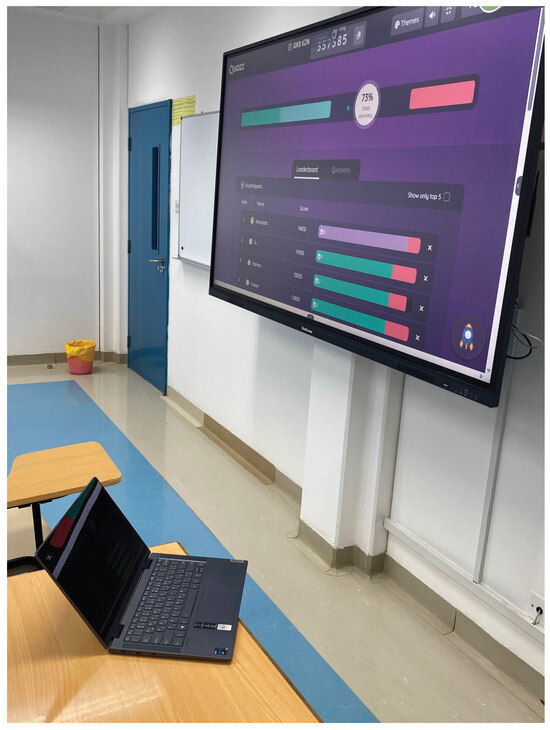
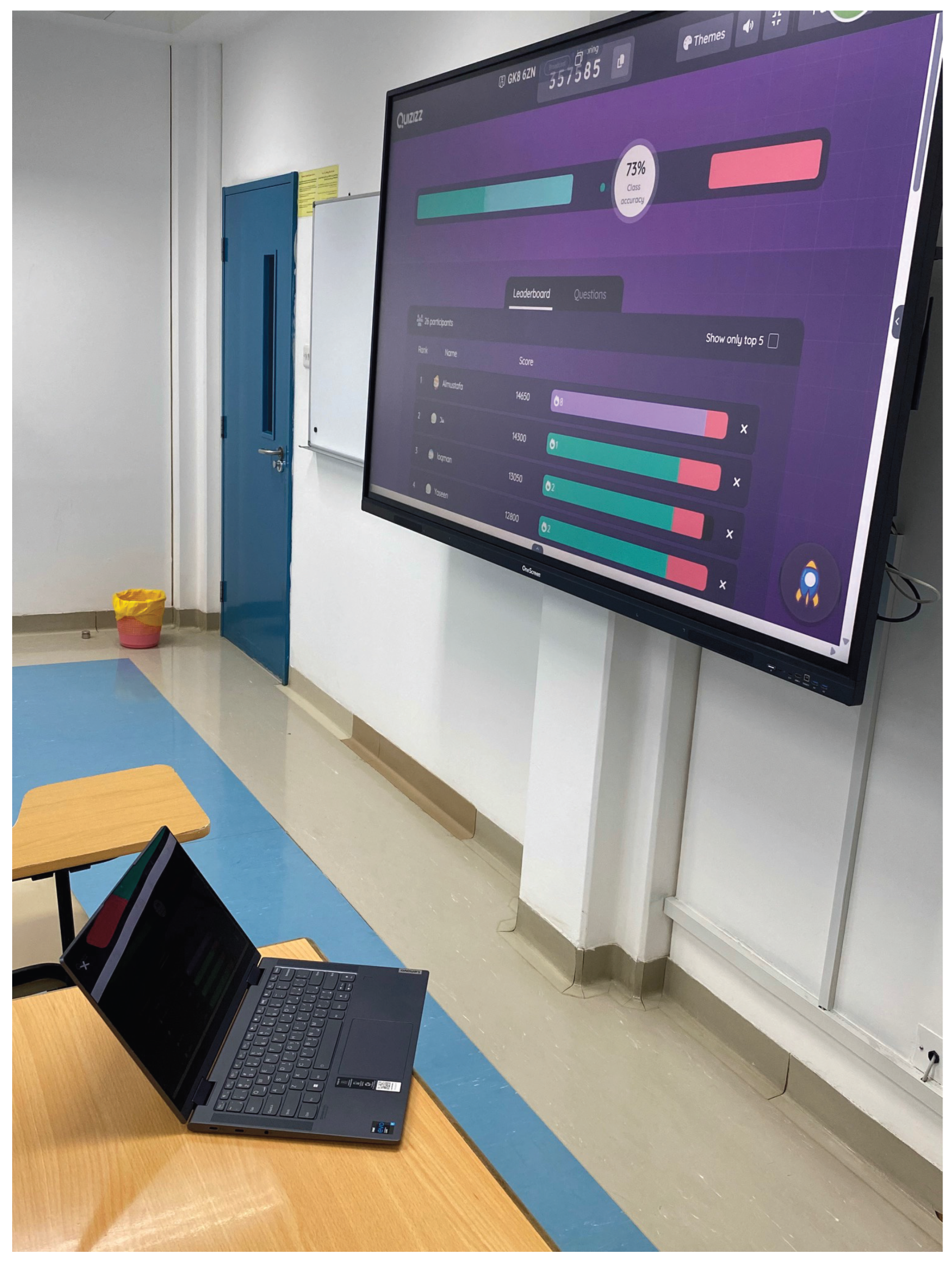
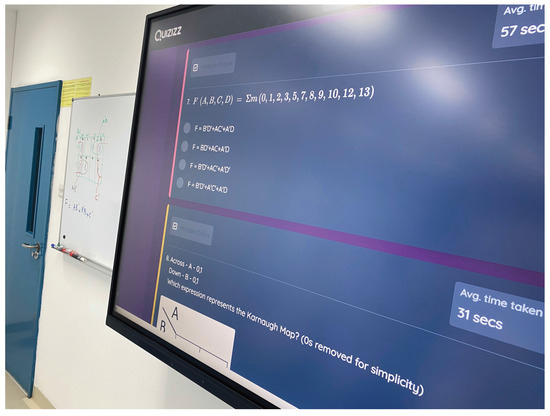
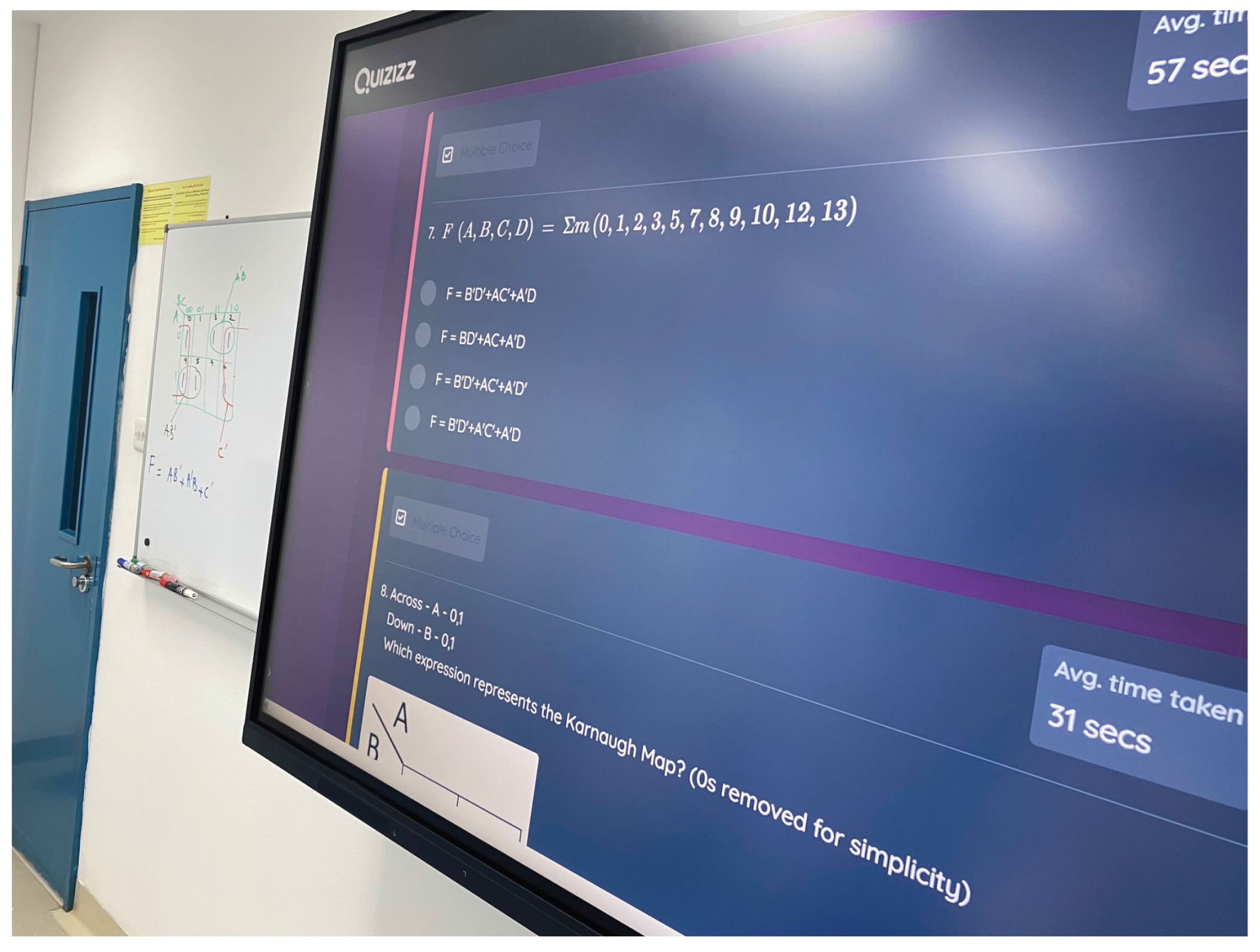
Although some students initially expressed uncertainty regarding the game-like format, especially in the technical engineering context, participation increased as students recognized the value of rapid feedback and peer discussions (Figure 1). This led to higher engagement levels, including among quieter students, making Quizizz a well-received component of the course.
Figure 1.
Instructor laptop connected to smart board during Quizizz session, enhancing visual and interactive engagement.
3.3. Learning Outcomes and Student Reactions
The impact of the interactive quizzes was evident from student feedback. Students reported increased confidence when approaching new topics and a clearer understanding of areas requiring further study. The ability to respond anonymously facilitated participation without fear of judgment, contributing to a psychologically safe learning environment [28].
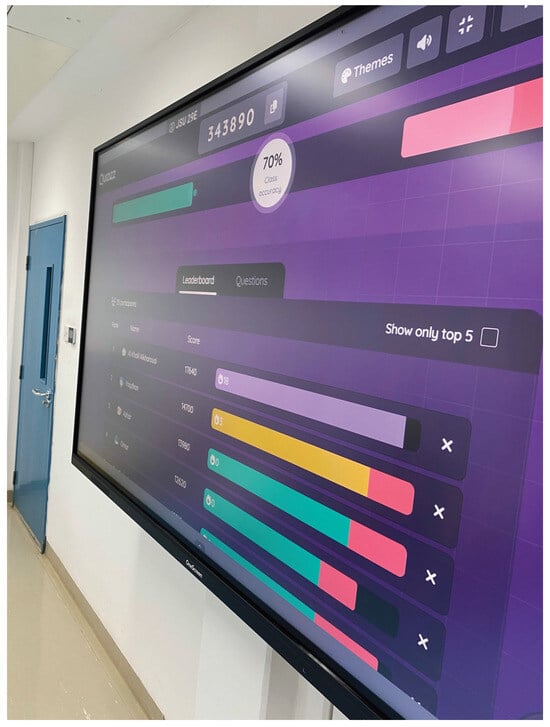
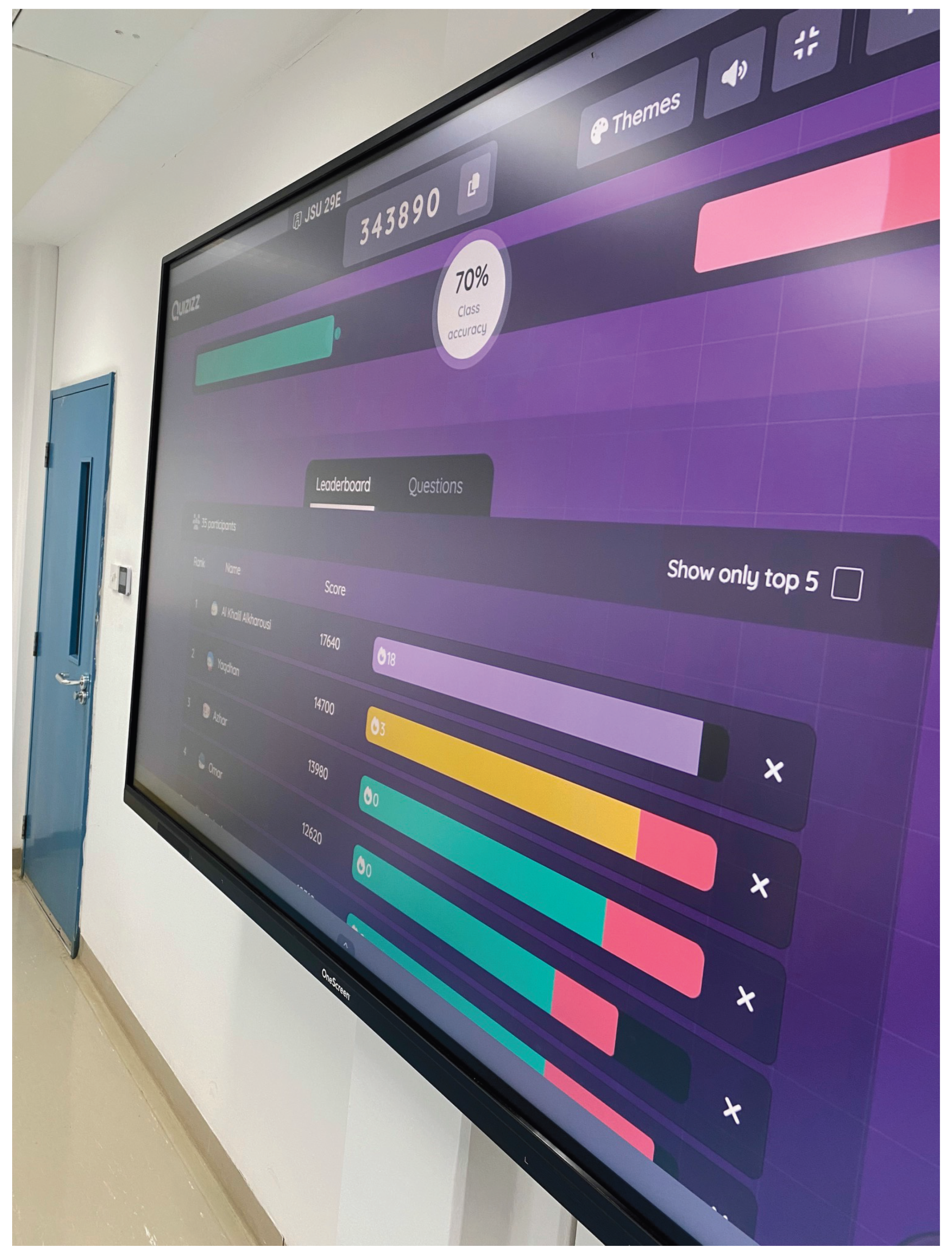
Results from the end-of-semester survey support these observations: over 80% of respondents indicated that the in-class quizzes improved their understanding and retention of course material. Qualitative feedback highlighted appreciation for instant feedback and the collaborative discussions following each quiz (Figure 2 and Figure 3).
Figure 2.
Students checking real-time feedback and scores on Quizizz platform.
Figure 3.
Peer discussions prompted by score discrepancies. These moments often led to spontaneous collaborative learning.
Basic inferential statistical analysis (Wilcoxon signed-rank test) on key survey items indicated statistically significant positive student perceptions of the quizzes.
3.4. Reflections and Broader Implications
A notable shift in student mindset was observed, with quizzes increasingly perceived as learning opportunities rather than mere evaluations. Students moved from passive grade recipients to active learners eager to engage, reflect, and improve. This shift aligns with evidence that well-implemented digital formative tools enhance learner autonomy and intrinsic motivation [8,29].
Quizizz also facilitated peer learning, where students openly discussed misconceptions and collaboratively worked through challenging questions. This fostered a classroom culture characterized by curiosity and collaboration. As students became more comfortable with academic uncertainty, their willingness to take intellectual risks critical to developing self-regulated learning increased [15].
Overall, this experience demonstrates that thoughtfully selected digital tools can extend beyond content delivery, transforming classrooms into dynamic spaces where students take ownership of their learning journey.
4. Active Learning Technique 2: Collaborative Problem Solving on the Board
4.1. Pedagogical Rationale and Motivation
Collaborative problem-solving has long been recognized as a powerful approach to learning, especially in technical subjects where understanding often deepens through discussion and hands-on engagement [30]. In redesigning the DLD course, the intention was to move beyond lectures and provide students with a more active role in constructing their own understanding. This motivated the implementation of whiteboard-based collaboration.
The core idea was straightforward: allow students to observe how logic unfolds in real time not as a polished solution, but as a process complete with questions, corrections, and insights. This approach aimed to create a space where students felt comfortable making mistakes, learning from them, and supporting each other’s growth [10]. Over time, this helped foster a learning culture centered on dialogue, peer support, and shared problem-solving.
4.2. Activity Design and Implementation
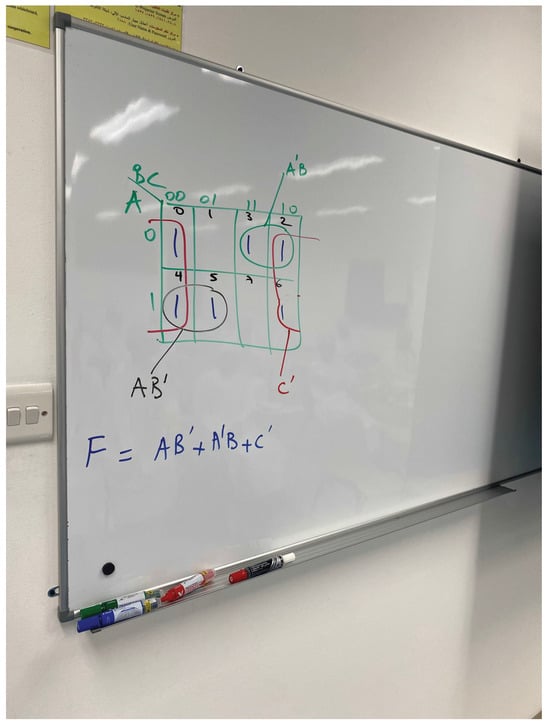
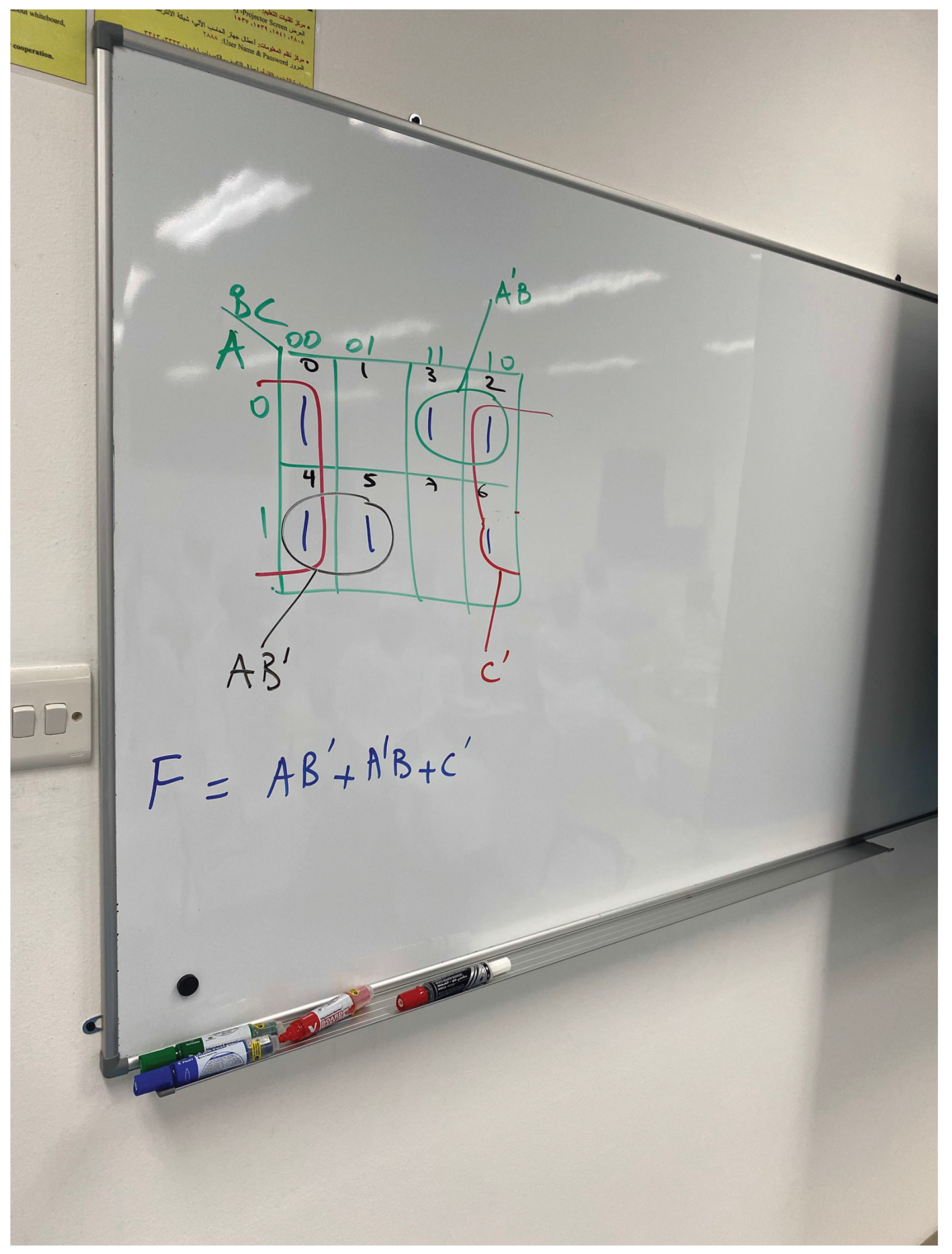
Following each Quizizz session, attention shifted to the most challenging questions, which were tackled collectively at the board. Sessions often began with a brief recap, followed by invitations for students to share their approaches. Instead of providing answers directly, instructors posed open-ended questions such as, “What’s your first instinct here?” or “Can anyone walk us through a Karnaugh Map for this logic function?” These prompts regularly stimulated thoughtful discussions and collaborative discovery [31].
Students were encouraged to take turns at the whiteboard while peers contributed from their seats by correcting, clarifying, or suggesting alternative methods. Emphasis was placed on the reasoning process rather than on perfect solutions, helping students become more comfortable with ambiguity and academic risk-taking [32].
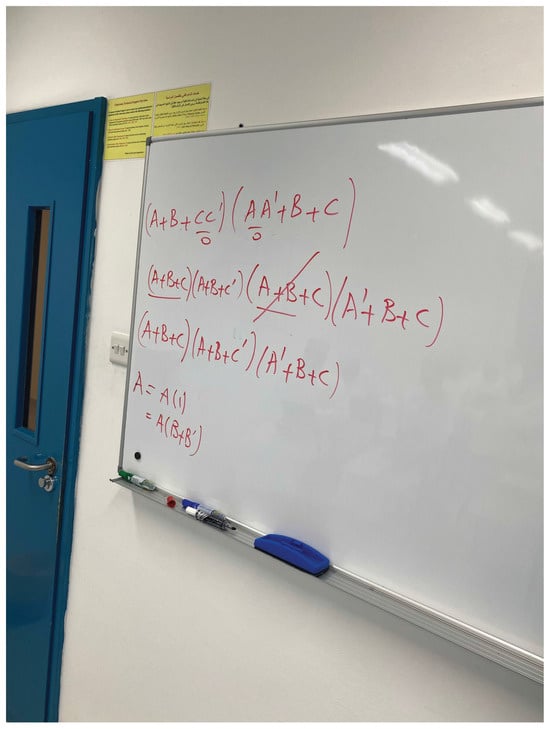
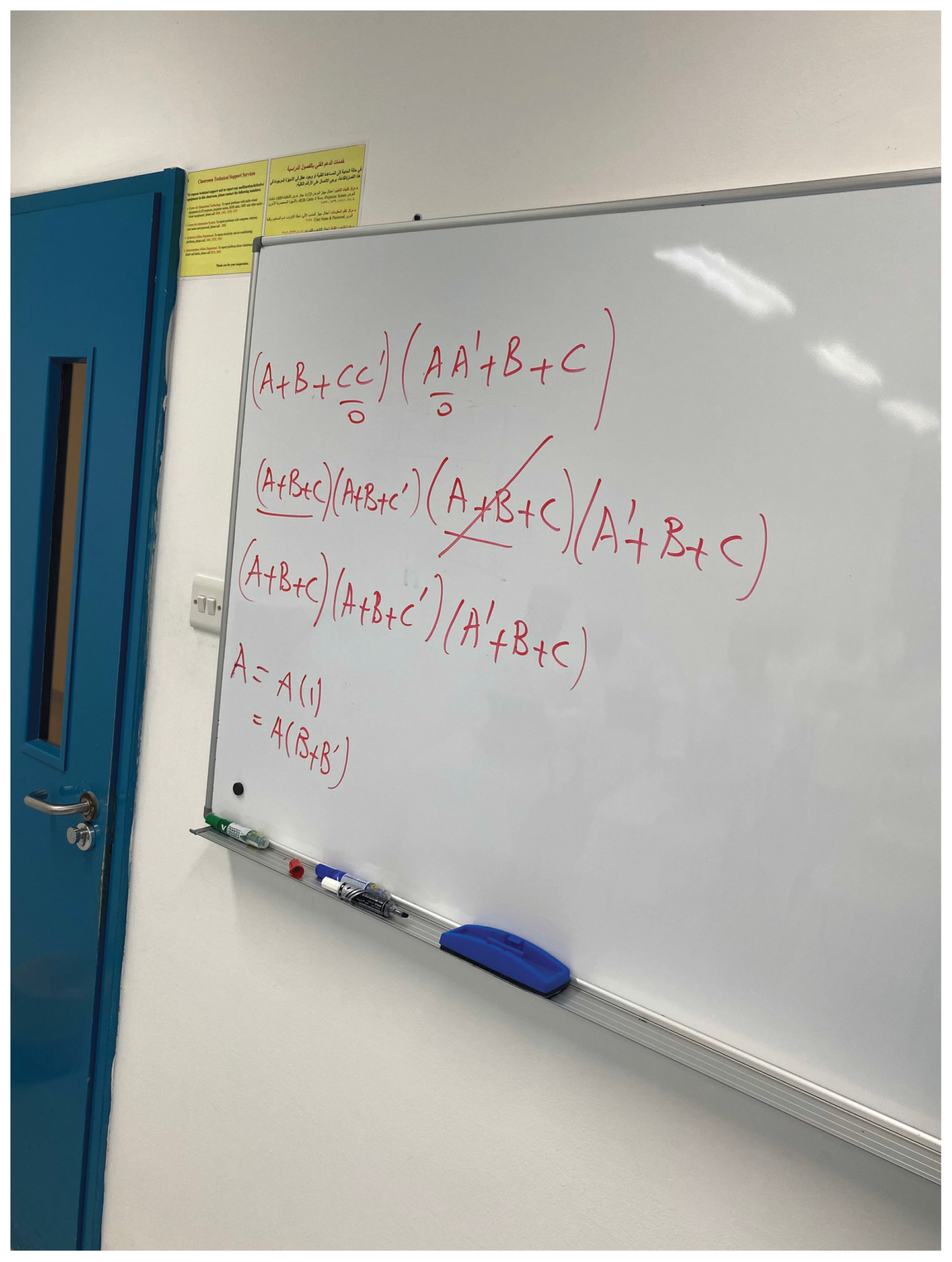
Initially, some students hesitated to step forward. However, as the semester progressed, confidence increased noticeably, reflected in higher classroom energy levels, more follow-up questions, and a greater willingness to tackle difficult problems on the board (Figure 4 and Figure 5).
Figure 4.
Collaborative problem-solving on the board, with students actively participating. Students volunteer ideas while the instructor facilitates.
Figure 5.
Students working together to solve a complex circuit design problem. The board becomes a space for shared inquiry.
4.3. Student Response and Learning Outcomes
Student feedback reinforced observed benefits. Many students reported that watching peers work through problems step-by-step enhanced their understanding more than traditional lectures. They valued opportunities to pause, reflect, and ask questions mid-problem interactions rarely possible in conventional setups.
The end-of-semester survey supported these perceptions: 30.6% of students rated board sessions as the most helpful course component. Comments highlighted appreciation for exposure to diverse problem-solving strategies and the chance to learn collaboratively in a low-pressure environment. These outcomes are consistent with research showing that collaborative learning promotes critical thinking, retention, and academic engagement [33].
Moreover, students developed essential soft skills including teamwork, clear communication, and constructive feedback exchange skills equally critical to engineering practice as technical knowledge [34].
4.4. Instructor Reflection and Broader Educational Value
The classroom environment transformed significantly during these activities. Sessions that were once quiet and lecture-heavy became vibrant spaces of student-led inquiry. Excitement and engagement were palpable when students solved challenging Boolean simplifications or collaboratively arrived at solutions.
From an instructional perspective, these moments provided valuable insight into students’ thought processes, enabling timely identification of misconceptions and targeted support. This contributed to a more responsive and dynamic teaching approach.
This experience aligns with established educational research emphasizing that meaningful learning occurs when students actively engage with material and peers [5]. By converting the board into a collaborative workspace, instruction shifted from passive delivery to an inclusive environment where every student’s voice contributed meaningfully.
Notably, during one memorable session, students independently guided each other through a complex logic problem, demonstrating both engagement and enjoyment of the learning process. This underscored the value of fostering student autonomy and peer learning in engineering education.
5. Active Learning Technique 3: Feedback and Reflection Through Satisfaction Survey
5.1. Objective
As the semester concluded, it was important to provide students with an opportunity to reflect on their learning and share their experiences. The objective was not solely to evaluate course effectiveness but to genuinely listen to students and learn from their feedback. Gathering feedback through a structured satisfaction survey gave students a voice and provided valuable insights into which strategies were effective and where improvements were needed.
More than just a course evaluation, the survey functioned as a two-way mirror: students could assess their own engagement and learning, while instructors gained insights into how active learning elements such as quizzes and collaborative board work impacted understanding. Reflection is an essential component of the learning process, and intentionally creating space for it aligns with educational best practices [14,35].
5.2. Survey Design and Implementation
To balance simplicity with depth, a short survey comprising five key questions was designed. These focused on students’ perceptions of the active learning activities, their preferred engagement frequency, and topics needing further attention.
The survey was administered anonymously online during the final week of the semester. Participation was voluntary but strongly encouraged, resulting in a notable response rate of 49 students, indicating significant student investment.
The survey incorporated a mix of multiple-choice scales and open-ended prompts. This approach enabled students to efficiently rate their experiences while also providing opportunities for elaboration. Collecting both qualitative and quantitative data helped construct a comprehensive picture of the classroom experience.
5.3. Results and Interpretation
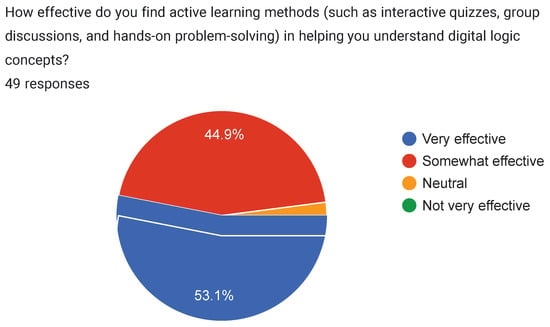
The feedback was overwhelmingly positive. Over 53% of students rated the active learning methods as “very effective”, with an additional 45% finding them “somewhat effective”. Only one student responded neutrally, and no negative responses were received. These results affirm that the course redesign was progressing effectively.
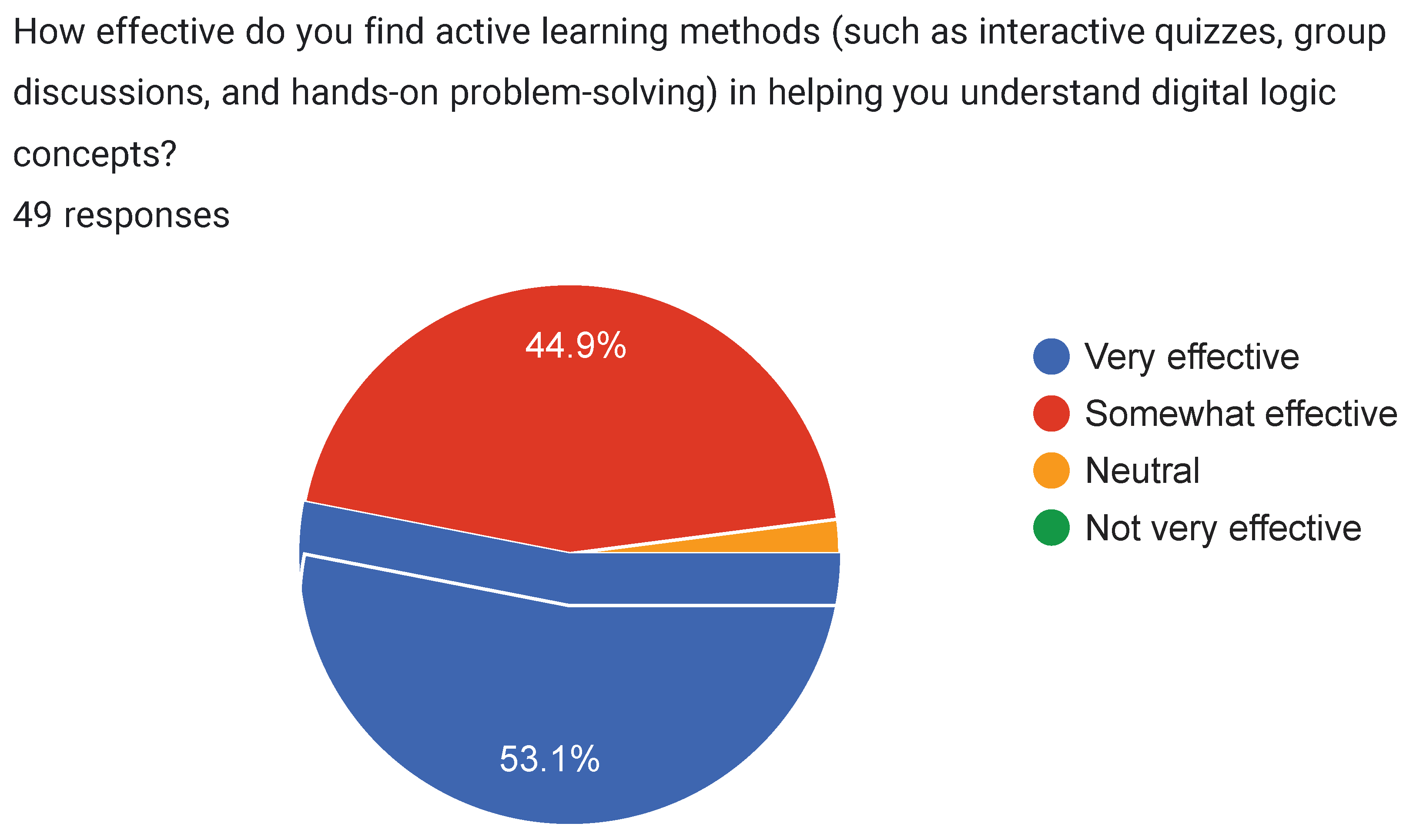
When asked which activities most supported learning, students identified in-class interactive quizzes and group discussions. These responses aligned with observations throughout the semester: increased curiosity, engagement, and willingness to take risks corresponded with interactive and collaborative learning environments [1,2].
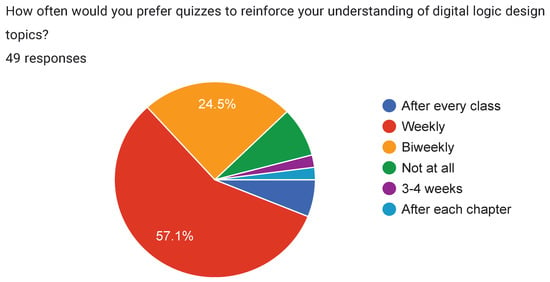
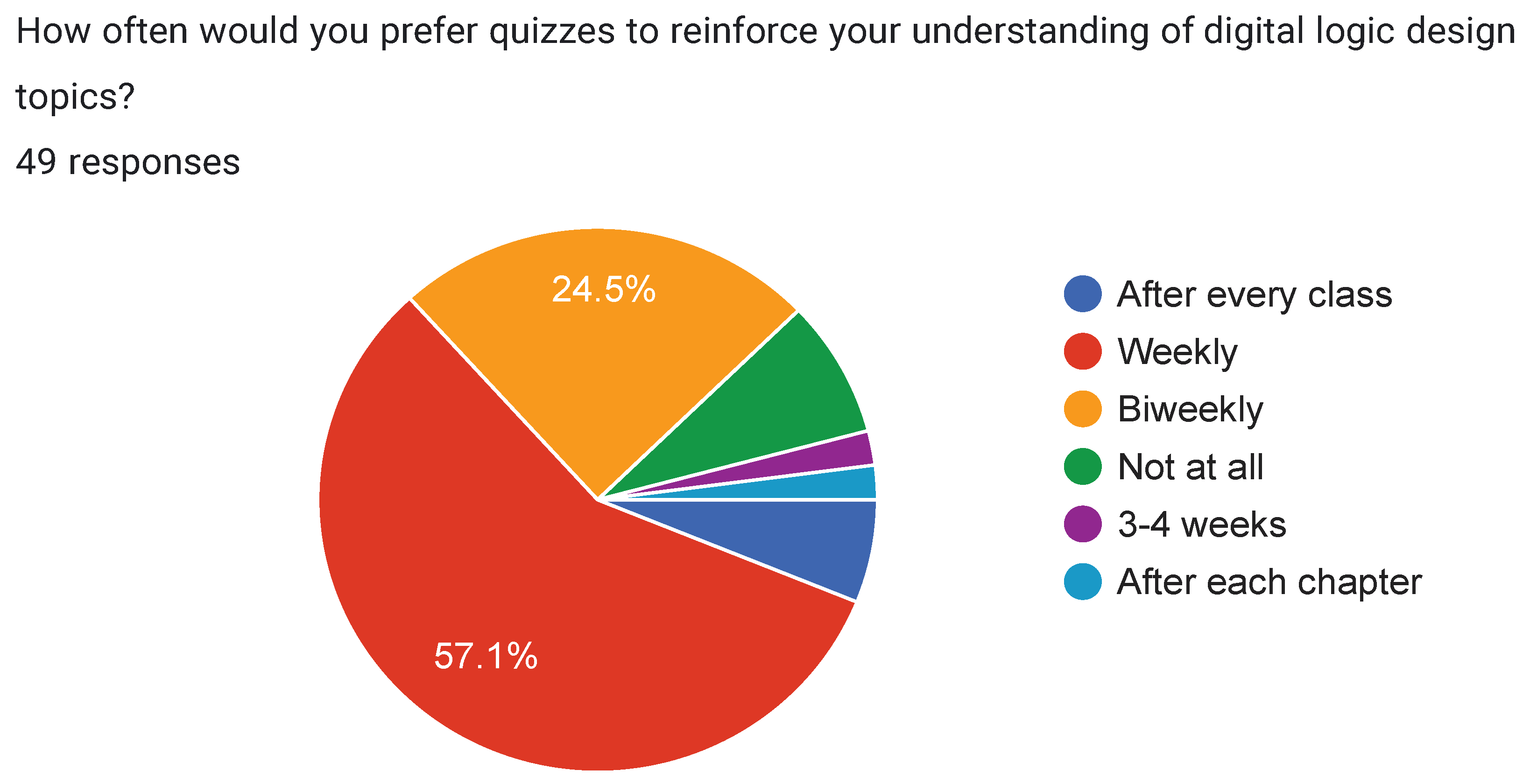
More than half of the students expressed a preference for weekly quizzes, supporting existing research that regular, low-stakes assessments aid retention and motivation [12].
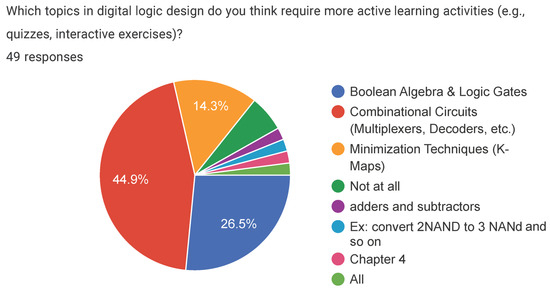
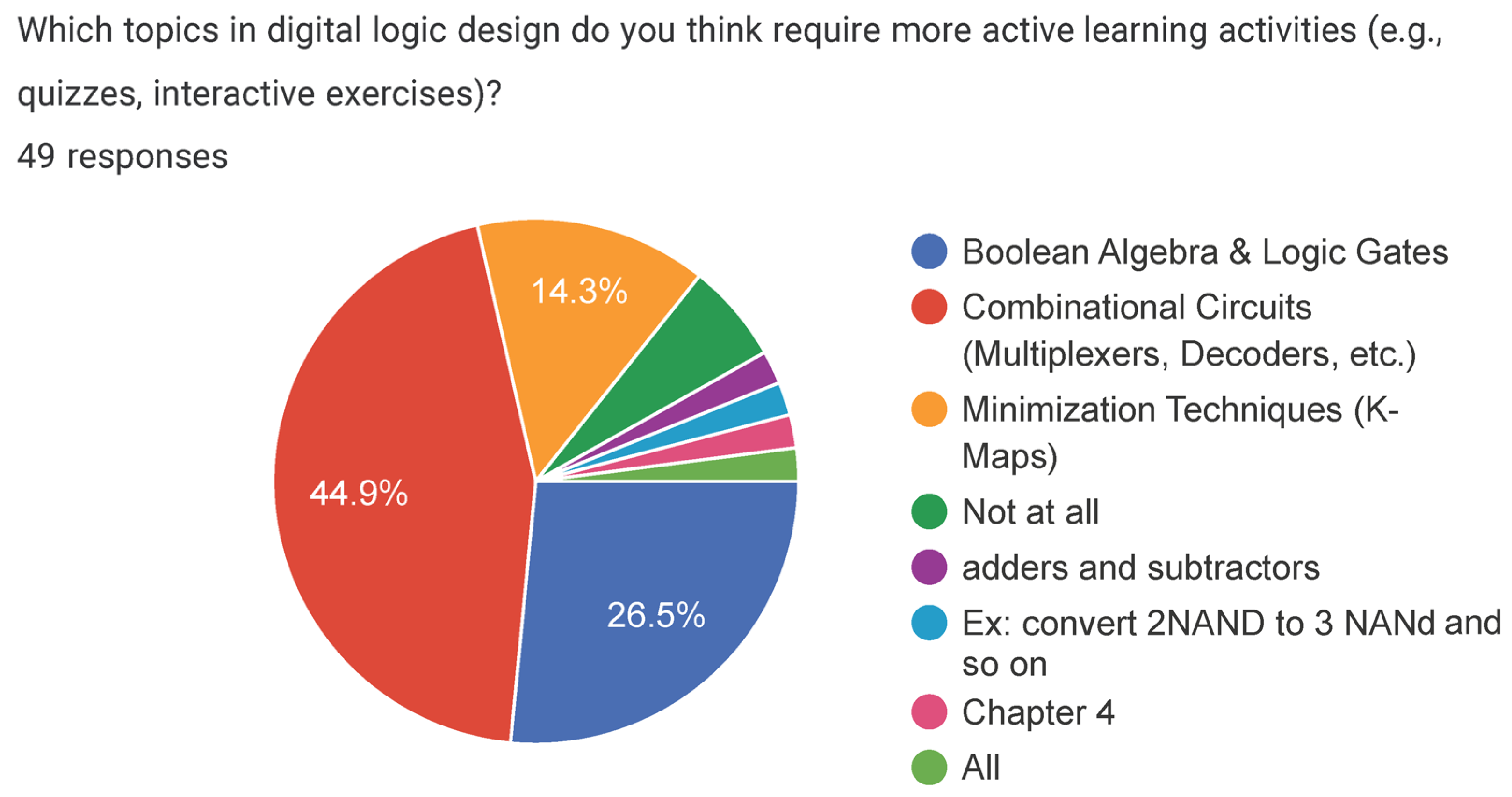
Students also highlighted specific topics such as Combinational Circuits and Boolean Algebra as particularly challenging. This feedback informs targeted adjustments for future iterations of the course to allocate additional time and resources to difficult content areas.
Another key insight was the strong endorsement of post-quiz review sessions. Students appreciated dedicated time to collaboratively address challenging questions, fostering metacognitive skills like self-reflection and critical analysis [25].
5.4. Reflections and Impact
Analyzing the survey responses was both affirming and instructive. It underscored that students value being active contributors to the learning process rather than passive recipients. Providing a platform for reflection and feedback cultivated a more student-centered and responsive classroom environment (Figure 6, Figure 7, Figure 8, Figure 9, Figure 10 and Figure 11).
Figure 6.
Snapshot of the satisfaction survey responses showing overall student feedback on the course.
Figure 7.
Student feedback on the helpfulness of active learning activities.
Figure 8.
Preferred frequency of quizzes for reinforcing course concepts.
Figure 9.
Topics identified by students as needing more active learning support.
Figure 10.
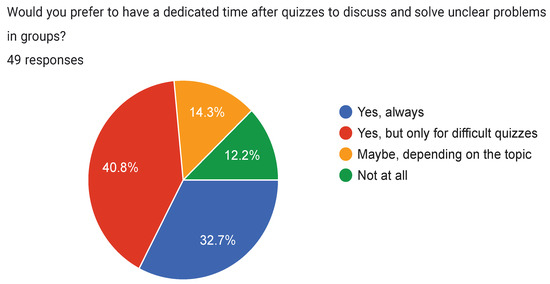
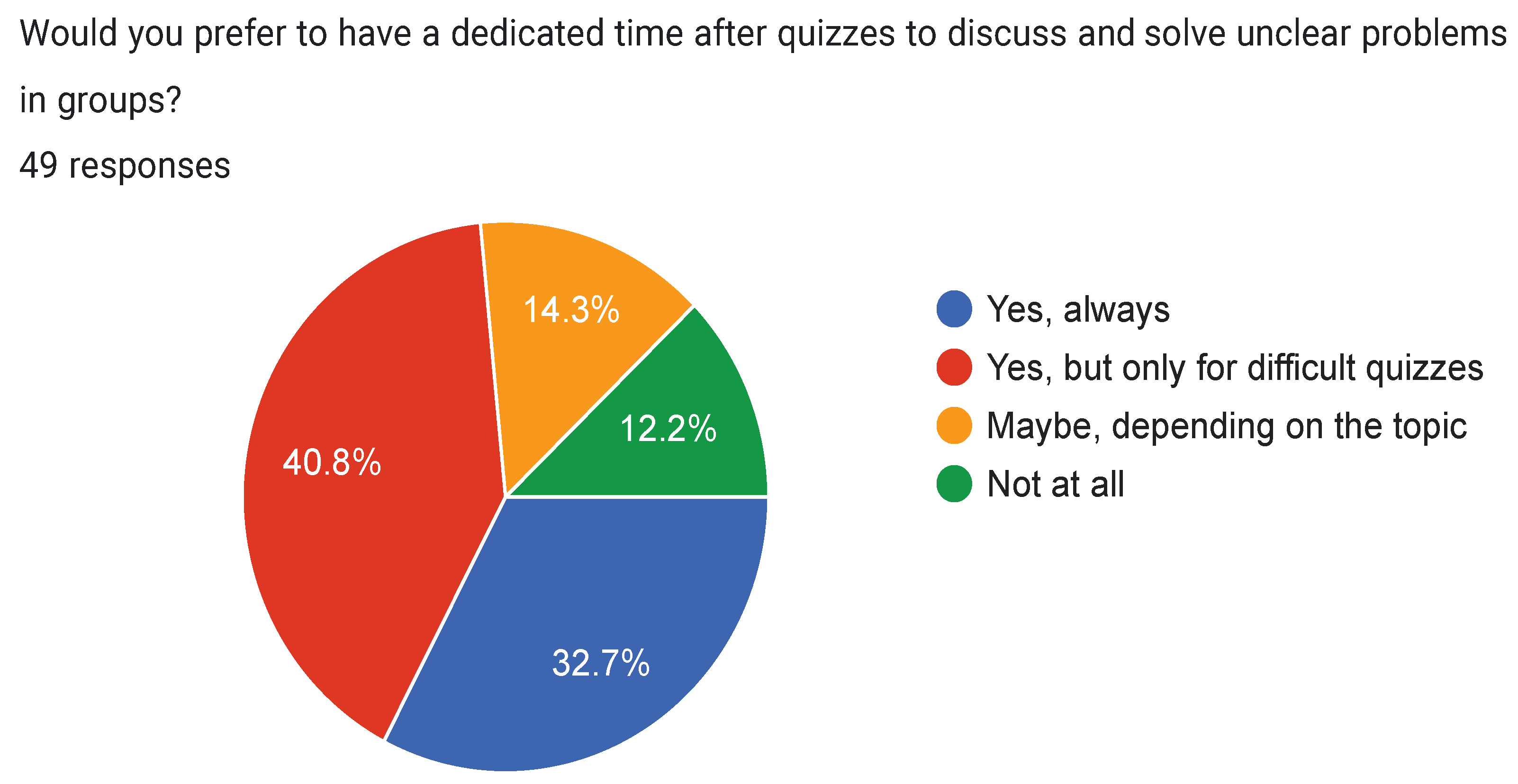
Student preferences for post-quiz group discussions to clarify difficult material.
Figure 11.
Overall student satisfaction with the course and active learning methods.
The survey process also encouraged students to pause and consider how they learn, not only what they have learned. Such reflection supports the development of lifelong learning habits and self-regulation skills extending beyond a single course [15].
The predominantly positive reception of interactive teaching methods strengthened the conviction that moving away from lecture-centered instruction fosters more meaningful learning. Students not only understood concepts better but also gained confidence and engagement. Furthermore, their expressed desire for extended time on complex topics, such as problem-solving, is shaping plans for future course enhancements, including workshops and additional practice sessions.
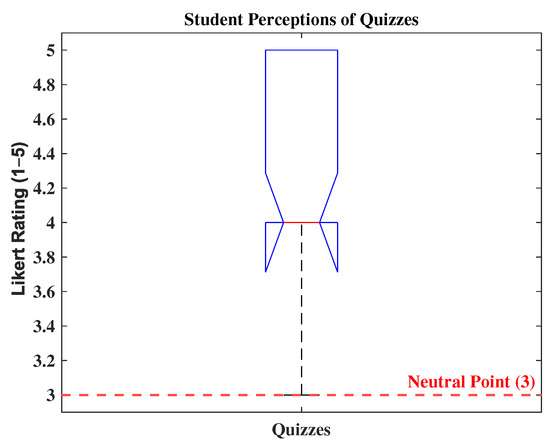
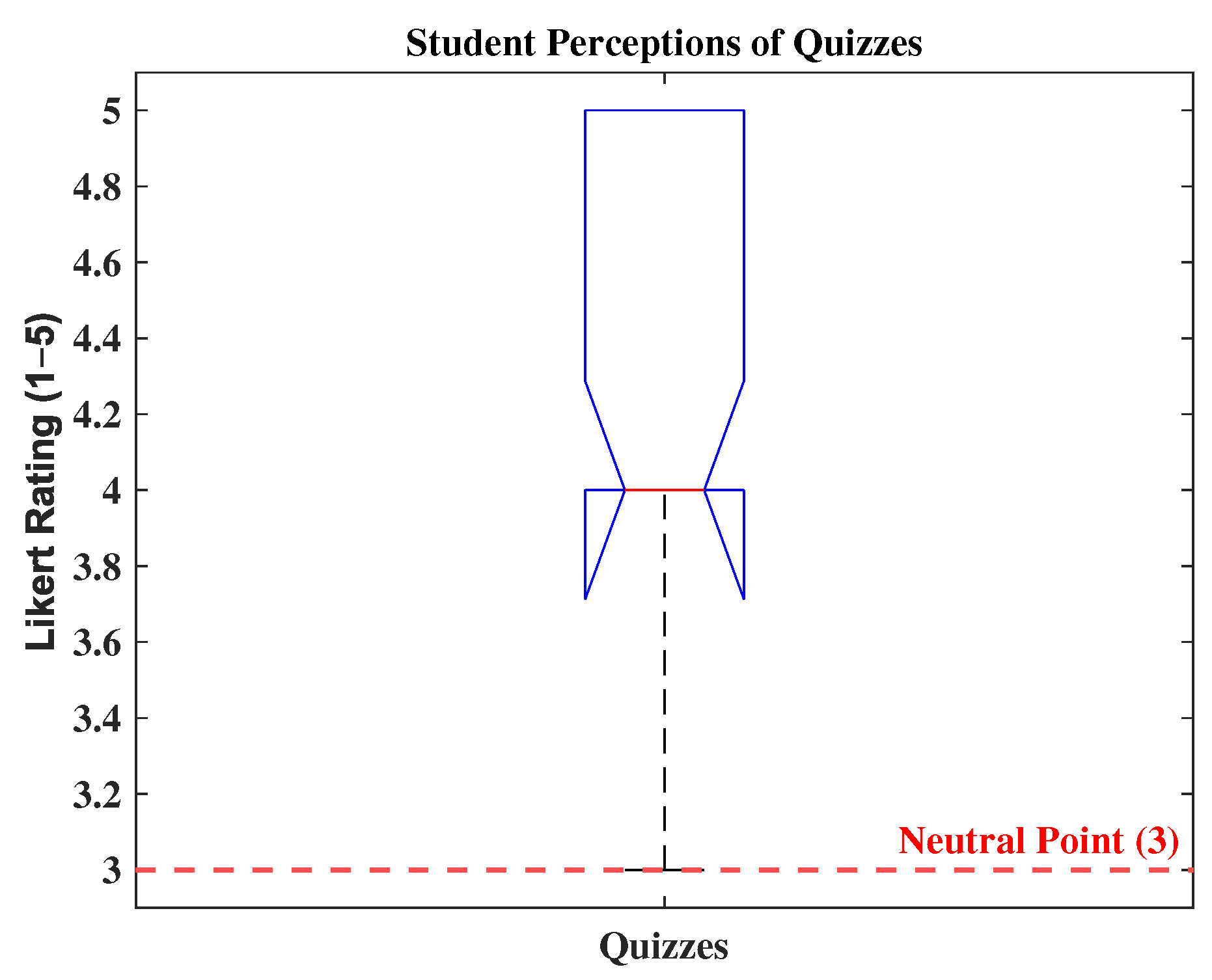
As shown in Figure 12, the distribution of student ratings on the effectiveness of quizzes clustered above the neutral midpoint of 3, with a median of 4 and several students rating quizzes as highly beneficial (5). The Wilcoxon signed-rank test confirmed this trend, yielding a statistically significant result (), which suggests that students perceived quizzes as more helpful than neutral. This result reinforces the survey feedback indicating that interactive, formative assessments play a central role in promoting active engagement and learning in the course.
Figure 12.
Boxplot of student ratings on the effectiveness of quizzes (Likert scale 1–5) with the neutral midpoint (3) marked.
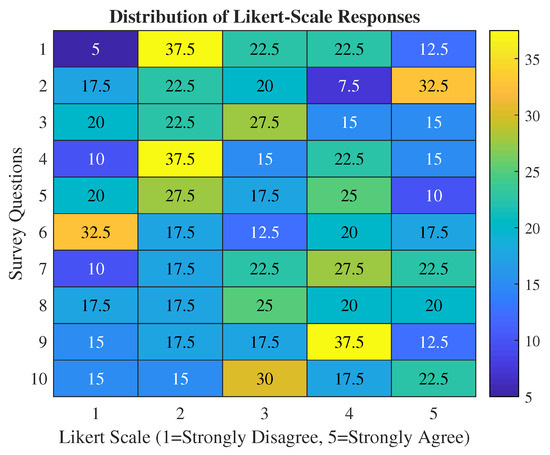
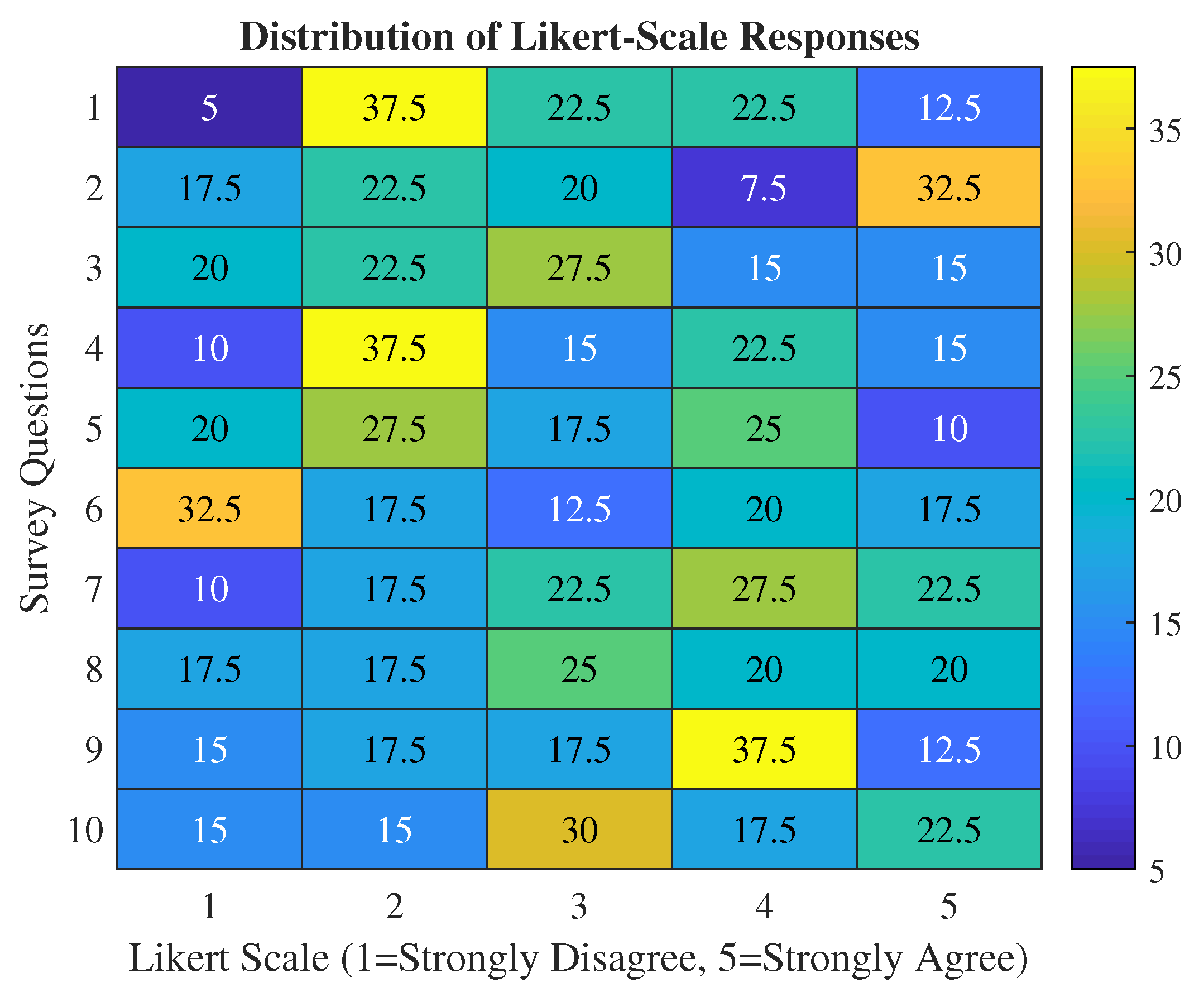
Figure 13 presents a heatmap of Likert-scale responses across all survey questions. The visualization highlights the strong concentration of positive perceptions, with most responses clustering in the upper categories (4 and 5). This trend demonstrates consistent student endorsement of the active learning strategies implemented throughout the course.
Figure 13.
Likert-scale responses across all survey questions.
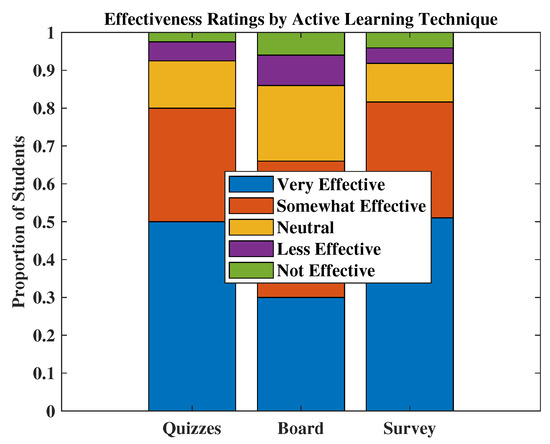
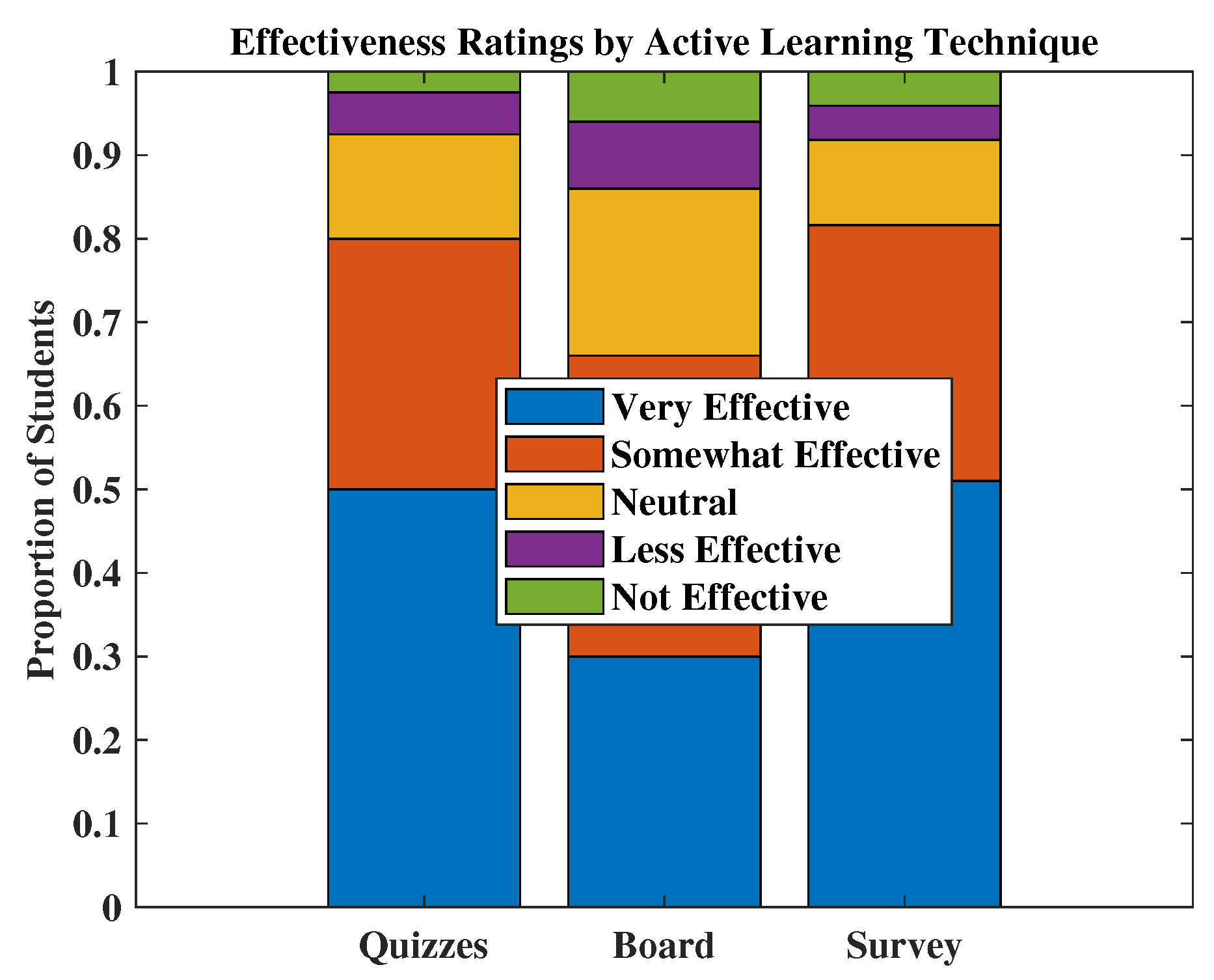
Figure 14 summarizes students’ perceptions of the effectiveness of the three active learning techniques implemented in the redesigned Digital Logic Design course. Each stacked bar represents the proportion of students assigning each rating category, ranging from “Very Effective” to “Not Effective”. The results indicate that all three techniques were positively received. Specifically, the Interactive Quizzes via https://quizizz.com were rated “Very Effective” by the majority of students, while Collaborative Problem Solving on the Board and Feedback through Satisfaction Surveys also received strong positive ratings, with relatively few neutral or negative responses. Overall, the figure highlights a consistently favorable student response, emphasizing that the active learning strategies contributed to enhanced engagement, understanding, and overall satisfaction in the course.
Figure 14.
Stacked bar chart showing the distribution of students’ perceptions of active learning effectiveness.
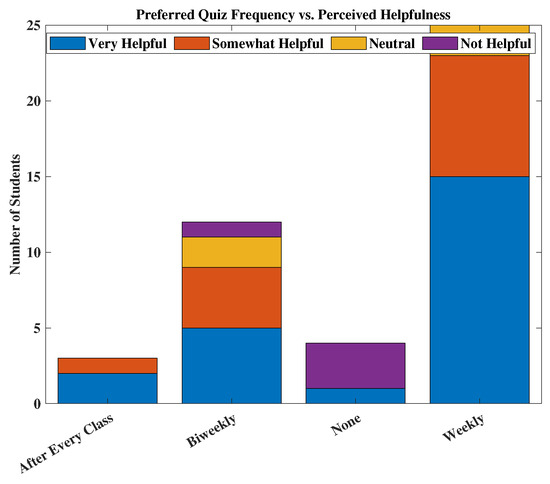
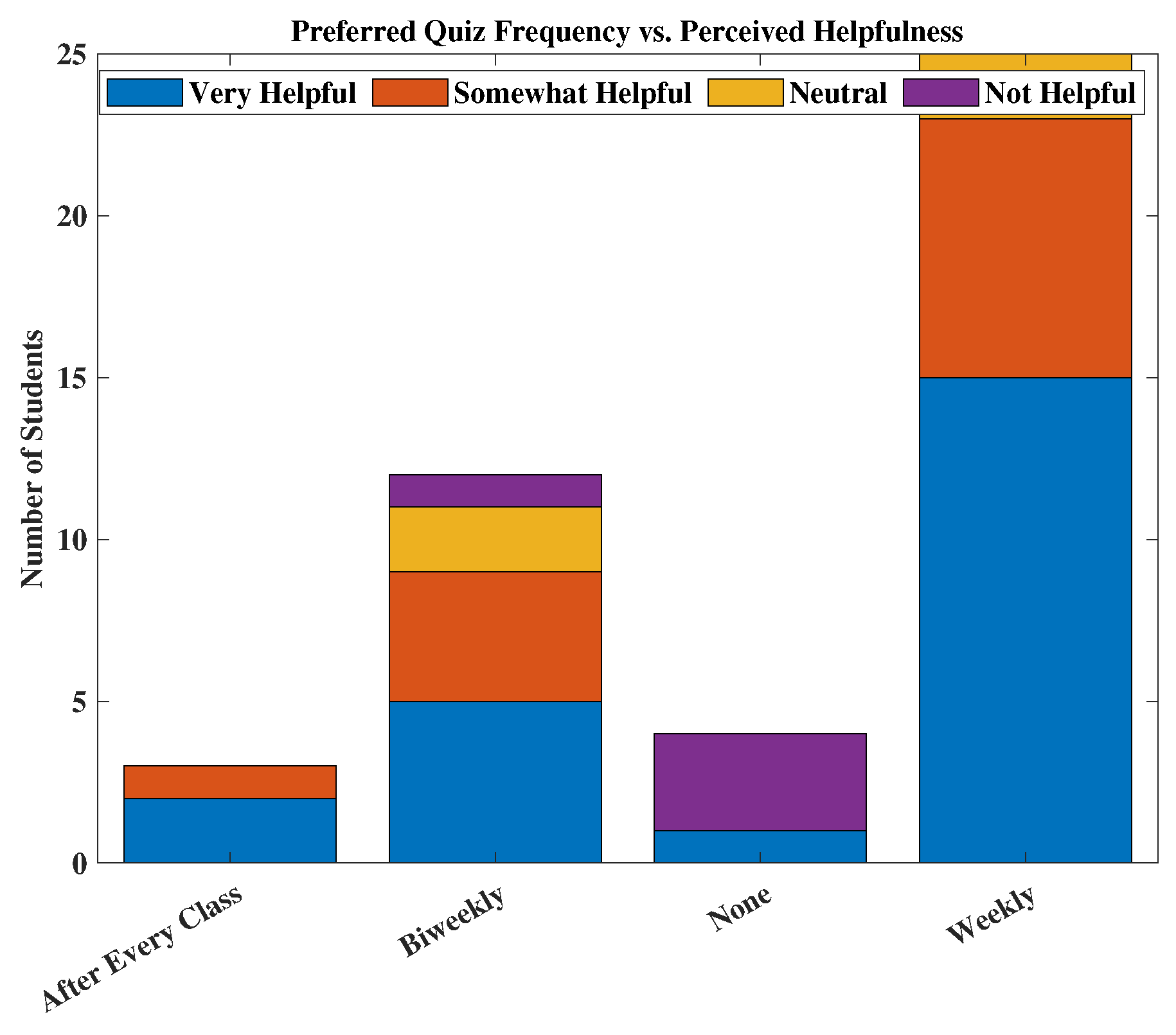
Figure 15 compares students’ preferred quiz frequency with their perceptions of quiz helpfulness. The results indicate that students who favored weekly quizzes were also the most likely to rate them as highly beneficial. This alignment supports the conclusion that a consistent quiz rhythm enhances both motivation and perceived learning gains.
Figure 15.
Preferred Quiz Frequency vs. Perceived Helpfulness.
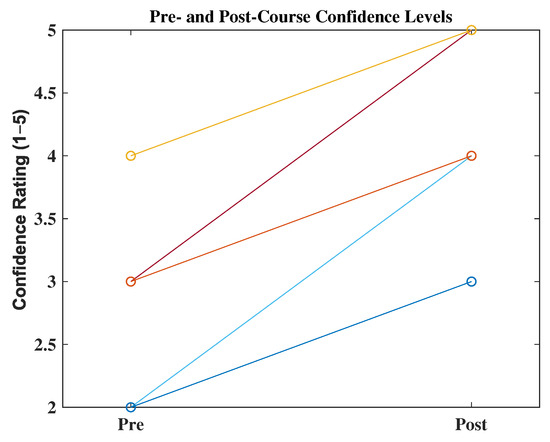
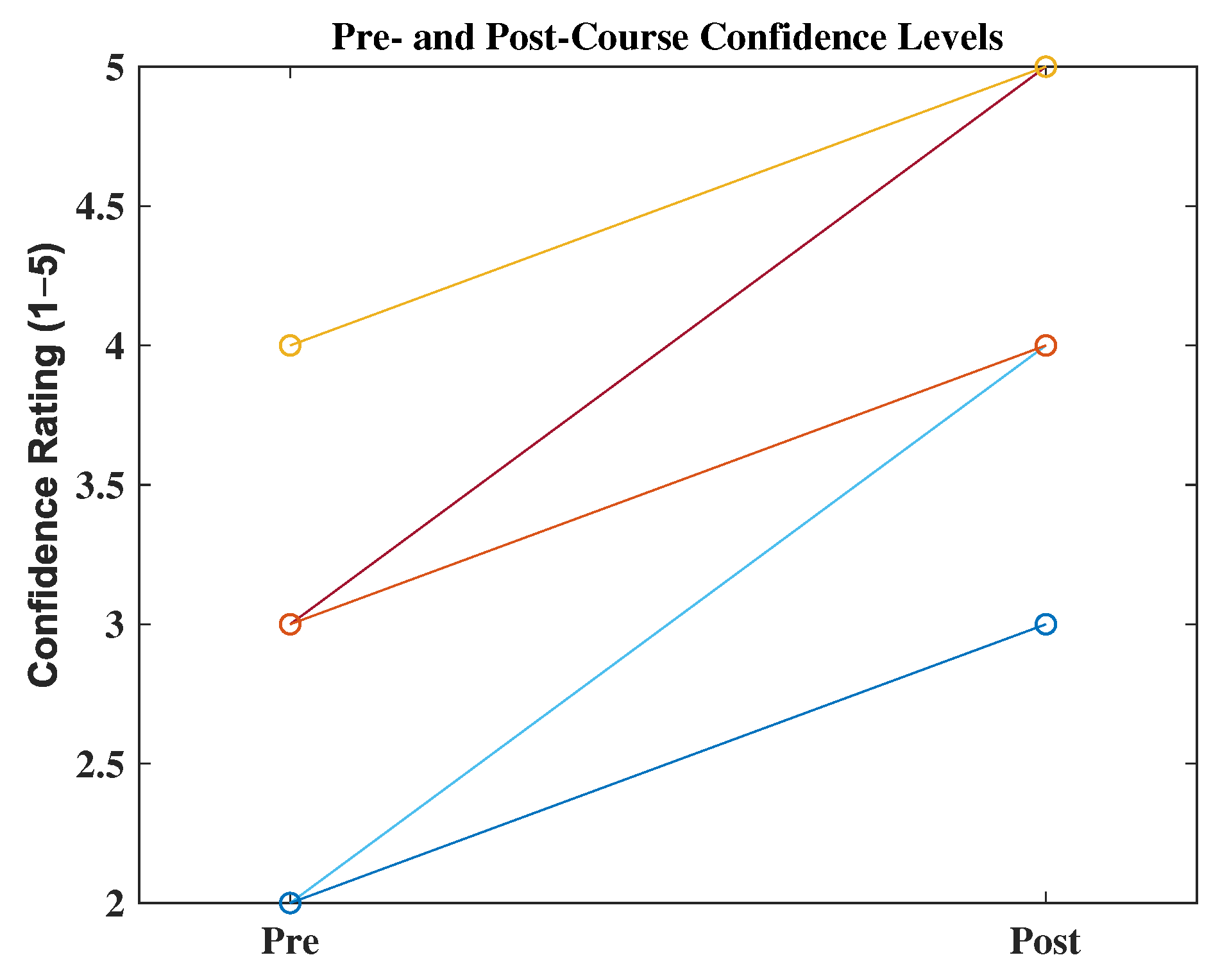
Figure 16 illustrates students’ self-reported confidence levels before and after the course. The paired lines show a clear upward trend, with most students reporting higher confidence at the end of the semester. This finding highlights the positive impact of active learning strategies on building both knowledge and self-efficacy in DLD.
Figure 16.
Pre- and Post-Course Confidence Levels.
Understanding the composition of the student cohort is essential for interpreting survey responses. Table 1 provides an overview of participant demographics, including gender distribution, academic year, and prior experience with DLD. These details contextualize the feedback and demonstrate the representativeness of the survey sample.
Table 1.
Demographic characteristics of survey respondents (n = 49).
These demographic data, combined with the survey results, provide a comprehensive view of student perceptions and allow instructors to better understand which active learning strategies are most effective across different subgroups.
6. Hands-On Simulation Activities
6.1. Description of Simulation Tools and Exercises
To complement the active learning strategies, hands-on simulation tools and exercises were incorporated into the Digital Logic Design course. These tools allowed students to experiment with digital circuits in a virtual environment, promoting experiential learning through direct manipulation and immediate visual feedback. Simulations included logic gate operations, circuit design, and real-time testing, enabling learners to visualize abstract concepts and explore “what-if” scenarios safely.
6.2. Role in Enhancing Conceptual Understanding
The simulation activities played a critical role in bridging theory and practice by providing an interactive platform where students could apply principles learned in lectures and quizzes. This experiential approach deepened conceptual understanding, supported problem-solving skills, and encouraged iterative learning by allowing students to test hypotheses, observe outcomes, and refine their designs. Such active engagement aligns with constructivist theories emphasizing learning as an active, contextualized process.
7. Interpretations and Discussion
7.1. Linking Active Learning Techniques to CLOs
The survey results and observations strongly indicate that the active learning strategies employed interactive quizzes, collaborative problem solving, and hands-on simulations effectively supported achievement of the course learning outcomes (CLOs). For example, increased confidence and conceptual mastery reported by students correlate with CLOs related to Boolean algebra proficiency and circuit simplification. The structured follow-up discussions helped reinforce critical thinking and communication skills embedded in the CLOs.
7.2. Student Demographics and Diversity
While the survey did not explicitly segment responses by demographics, it is important to recognize the diversity of learners in the course, including differences in prior knowledge, learning preferences, and cultural backgrounds. Future iterations of data collection may incorporate demographic analysis to better tailor active learning activities and ensure inclusivity and equitable access to learning opportunities.
7.3. Clarification of Topic Categorization (Combinational and Sequential Circuits)
Students identified specific topics needing additional support, notably combinational circuits and Boolean algebra, which are foundational to sequential circuit understanding. Clarifying and categorizing these topics in future surveys and instructional materials will aid targeted curriculum development, ensuring that scaffolding and active learning techniques are aligned appropriately with topic complexity.
7.4. Interpretations
To better understand how students experienced and benefited from the active learning strategies used in the Digital Logic Design course, a survey was conducted with 49 students near the semester’s end. The survey explored their feelings about different active learning activities, their preferences for quiz frequency, and which topics they found most challenging. These insights not only reflect student preferences but also offer valuable guidance for improving the course in the future.
7.4.1. How Effective Is Active Learning?
When asked about the effectiveness of active learning methods like interactive quizzes, group discussions, and hands-on problem-solving, the response was overwhelmingly positive:
- 53.1% rated these methods as Very effective.
- 44.9% found them Somewhat effective.
- Only one student selected Neutral.
- No one considered the methods Not very effective.
Interpretation: This strong approval matches a growing consensus in education research that active learning is especially powerful in STEM fields [1]. Students clearly appreciate moving beyond passive listening to actively engaging with material. The near-unanimous positive feedback suggests that these strategies help students understand concepts more deeply, think critically, and remember content better.
Scholars have long argued that active learning boosts cognitive engagement, which in turn supports stronger conceptual understanding and problem-solving abilities [2]. Our findings echo this students value learning approaches that involve them actively in their own educational journey.
7.4.2. What Do Students Find Most Helpful?
When asked which activities contributed most to their understanding, students showed clear favorites:
- In-class quizzes: 15 responses (32.7%)
- Interactive discussions: 16 responses (30.6%)
- Group problem-solving: 9 responses (18.4%)
- Hands-on simulations/labs: 7 responses (14.3%)
- Homework (independent study): 1 response
- Teacher-led problem solving: 1 response
Insights: These results highlight a strong preference for activities that encourage active participation and thinking during class time. The popularity of quizzes and discussions underscores the value of formative assessments paired with peer collaboration [12].
Interestingly, more traditional passive activities like homework or instructor demonstrations were less favored. This aligns with research showing students learn best when they actively engage rather than passively receive information. The emphasis on collaboration also reflects Vygotsky’s idea that learning thrives through social interaction and shared knowledge-building [36,37].
This feedback encourages continuing to prioritize interactive, student-centered activities that place learners at the heart of the process.
7.4.3. How Often Should Quizzes Be Given?
Regarding how frequently quizzes should be given, students expressed the following preferences:
- Weekly: 28 students (57.1%)
- Biweekly: 12 students (24.5%)
- After every class: 3 students (6.1%)
- Not at all: 4 students (8.2%)
- Other (e.g., after each chapter): 2 students (4.1%)
Takeaway: Most students prefer a weekly quiz schedule, which balances steady reinforcement with avoiding too much pressure. This frequency supports the concept of spaced repetition, known to enhance long-term learning [38].
The relatively low interest in daily quizzes suggests students value having meaningful time to engage with material rather than frequent assessments. The few who preferred no quizzes might reflect different learning styles or concerns about workload. Overall, a predictable weekly rhythm seems best for both motivation and mastery.
7.4.4. Which Topics Need More Support?
Students identified several topics where they would like more active learning support:
- Combinational Circuits: 22 students (44.9%)
- Boolean Algebra & Logic Gates: 13 students (26.5%)
- Karnaugh Maps / Minimization: 7 students (14.3%)
- Other individual topics: such as adders, subtractors, or specific exercises
- No additional support needed: 3 students (6.1%)
Reflection: Nearly half the students find combinational circuits challenging, with Boolean algebra and logic gates also proving difficult for many. These foundational areas are key to understanding more complex concepts, so it makes sense that students want more targeted help.
Research shows that topics requiring abstract thinking and multi-step reasoning benefit greatly from scaffolded active learning approaches including simulations and step-by-step problem solving [4]. Tailoring quizzes, group work, and interactive labs to these areas could boost confidence and competence.
The small number of students feeling no extra support is necessary suggests most are eager for more help, emphasizing the value of responsive course design.
7.4.5. Post-Quiz Group Discussions: Yes or No?
When asked if they would like dedicated time after quizzes to discuss and clarify difficult problems:
- Most said Yes, always.
- Some said Only for difficult quizzes.
- A few said It depends on the topic.
- Very few said No.
Conclusion: The majority strongly favor including follow-up discussions after quizzes, especially for challenging material. This aligns with research showing that formative assessment combined with immediate feedback and peer interaction is far more effective than assessment alone [25].
Debriefing sessions help students reflect on their thinking, clear up misunderstandings, and build knowledge together [39]. Regularly including such discussions can deepen understanding and foster a stronger classroom community.
8. Final Thoughts
Looking back on the student feedback and observations throughout the semester, a few key insights stand out that will shape how the Digital Logic Design course evolves moving forward.
- Continue Using Interactive Quizzes and In-Class Discussions: The combination of quizzes and lively discussions energized the classroom. Quizzes provided quick formative feedback allowing students to monitor their understanding and identify gaps [12]. Discussions created a social space for articulating ideas and collective learning [30]. This synergy clearly boosts retention and critical thinking, aligning with research supporting active participation [40]. These approaches will remain central.
- Adopt Weekly Quizzes with Structured Follow-Up Discussions: Survey data and literature suggest weekly quizzes balance reinforcement with workload management [38]. Crucially, time dedicated to group review sessions turns assessments into reflective, confidence-building experiences [25,39]. Going forward, weekly quizzes paired with guided debriefs will be standard.
- Focus Extra Support on Challenging Topics like Combinational Circuits and Boolean Algebra: These topics are foundational yet abstract. Targeted scaffolding through quizzes, workshops, and simulations aligns with evidence that guided learning enhances mastery [4]. Emphasizing these will reduce frustration and deepen understanding.
- Promote Reflection and Collaboration After Assessments: Creating spaces for reflection and peer collaboration nurtures metacognition and self-regulated learning [15]. Viewing mistakes as learning steps builds resilience and motivation [32]. Social constructivist principles underscore the power of shared knowledge construction [30]. Embedding these practices will sustain active learning momentum.
Ultimately, the positive feedback and measurable improvements demonstrate the transformative potential of active learning in engineering education. By attentively listening to students, adapting with evidence, and fostering supportive communities, educators can enhance mastery of technical content while cultivating critical lifelong learning skills.
9. Conclusions and Future Directions
Reflecting on the active learning strategies introduced in the Digital Logic Design course, there is genuine satisfaction with their positive impact on student engagement, motivation, and learning outcomes. By integrating interactive quizzes, collaborative problem-solving, and real-time feedback, the classroom environment shifted from a traditional, passive space into a dynamic and inclusive learning community. This transformation empowered students to take ownership of their learning, deepening their conceptual understanding and building confidence in tackling complex digital logic problems.
The use of formative quizzes, particularly those delivered via platforms like Quizizz, proved invaluable in providing timely, actionable feedback. This immediate reinforcement helped students identify and correct misconceptions early, preventing gaps in understanding from becoming entrenched. Collaborative problem-solving sessions encouraged students to articulate their reasoning aloud, facilitating peer learning and supporting the development of communication and critical thinking skills consistent with social constructivist theory. The real-time feedback provided during class interactions further enhanced comprehension by addressing errors and clarifying concepts on the spot, making learning more responsive and effective.
Equally important was the end-of-course satisfaction survey, which gave students a voice to reflect on their experiences and provide insights into what worked well and what could be improved. The overwhelmingly positive responses reaffirmed the effectiveness of student-centered, interactive pedagogies in STEM education, highlighting increased engagement, confidence, and academic performance.
While the results are encouraging, this experience also underscored the necessity for continuous improvement and adaptation. Several areas emerged as priorities for future iterations of the course:
- Deepening Support for Challenging Topics: Topics such as combinational circuits and Boolean algebra continue to pose difficulties for many students. Future course designs will include more scaffolded activities, such as targeted workshops, interactive simulations, and incremental problem sets that gradually build complexity. This structured support aims to foster mastery and reduce student frustration.
- Expanding Reflective and Collaborative Opportunities: Building on the success of post-quiz discussions, structured reflection sessions will be more formally embedded throughout the course. These may take the form of small-group debriefs, peer teaching exercises, and individual learning journals to cultivate metacognitive awareness and self-regulated learning skills.
- Leveraging Technique for Personalized Learning: Incorporating adaptive learning platforms and intelligent tutoring systems could tailor content and pacing to individual student needs, providing personalized feedback and resources. Such Techniques hold promise for increasing accessibility and supporting diverse learning styles.
- Integrating Real-World Applications: Contextualizing abstract digital logic concepts through industry case studies, project-based learning, and hands-on lab experiences can enhance relevance and motivation. Connecting theory to practice encourages deeper engagement and prepares students for professional challenges.
- Enhancing Faculty Development and Training: Effective implementation of active learning requires continuous instructor support and skill development. Providing professional development workshops focused on active learning techniques, formative assessment, and classroom management will help sustain and improve teaching quality.
- Conducting Longitudinal and Comparative Research: Future work will include systematic assessment of long-term learning gains and retention, as well as comparisons between cohorts exposed to traditional versus active learning pedagogies. Such research will provide stronger evidence to guide pedagogical decisions.
9.1. Inclusion of Sequential Circuits in Future Work
A natural extension of the course redesign is to incorporate sequential circuits alongside combinational logic. Given the foundational importance and increased complexity of sequential circuit topics, active learning strategies such as simulations, collaborative design challenges, and targeted formative assessments will be adapted and expanded to address these concepts. This inclusion aims to maintain the momentum of student engagement while broadening conceptual mastery in line with course learning outcomes.
9.2. Plans for Survey and Result Updates
Ongoing evaluation is critical for continuous improvement. Future semesters will include updated surveys designed to capture more granular data on student experiences, including demographic factors, learning preferences, and detailed feedback on new content areas such as sequential circuits. Additionally, plans are in place to track longitudinal student performance data to better understand retention and transfer of learning, enabling more data-driven course refinements.
In conclusion, the journey of integrating active learning strategies into the Digital Logic Design course has been transformative for both students and instructor. It demonstrated that fostering interaction, collaboration, and reflection is essential for mastering complex engineering concepts. Moving forward, the ongoing evolution of teaching methods, informed by student feedback and educational research, will continue to enhance the learning experience. Ultimately, these efforts aim to empower students to become confident, independent, and lifelong learners equipped with the critical thinking and problem-solving skills vital for success in their academic and professional careers.
Funding
This research received no external funding.
Data Availability Statement
The data that support the findings of this study are available from the author upon reasonable request.
Conflicts of Interest
The author declares no conflicts of interest.
References
- Freeman, S.; Eddy, S.L.; McDonough, M.; Smith, M.K.; Okoroafor, N.; Jordt, H.; Wenderoth, M.P. Active learning increases student performance in science, engineering, and mathematics. Proc. Natl. Acad. Sci. USA 2014, 111, 8410–8415. [Google Scholar] [CrossRef] [Scilit]
- Prince, M. Does active learning work? A review of the research. J. Eng. Educ. 2004, 93, 223–231. [Google Scholar] [CrossRef] [Scilit]
- Lohmann, J.R.; Rollins, H.; Hoey, J.J. Engineering education and the development of expertise. J. Eng. Educ. 2006, 95, 123–133. [Google Scholar]
- Mayer, R.E. Should there be a three-strikes rule against pure discovery learning? The case for guided methods of instruction. Am. Psychol. 2004, 59, 14–19. [Google Scholar] [CrossRef] [Scilit]
- Bransford, J.D.; Brown, A.L.; Cocking, R.R. How People Learn: Brain, Mind, Experience, and School; National Academy Press: Washington, DC, USA, 2000. [Google Scholar]
- Moreno-León, J.; Robles, G.; Román-González, M.A.; Rodríguez-Triana, M.J.; García-Peñalvo, F.J. Active learning in electrical engineering education: A survey. IEEE Trans. Educ. 2011, 54, 258–269. [Google Scholar]
- Mihaela, R. Active Learning Techniques in Digital Design Education for Engineering Technology Students. Comput. Educ. J. 2021, 12, 157–172. [Google Scholar]
- Deterding, S.; Dixon, D.; Khaled, R.; Nacke, L. From game design elements to gamefulness: Defining gamification. In Proceedings of the 15th International Academic MindTrek Conference: Envisioning Future Media Environments, Tampere, Finland, 28–30 September 2011; pp. 9–15. [Google Scholar]
- Locke, E.A. Self-efficacy: The exercise of control. Pers. Psychol. 1997, 50, 801–804. [Google Scholar]
- Beatty, R.; Geiger, V. Technology, communication, and collaboration: Re-thinking communities of inquiry, learning and practice. In Mathematics Education and Technology-Rethinking the Terrain: The 17th ICMI Study; Beatty, R., Geiger, V., Eds.; Springer: London, UK, 2009; pp. 251–284. [Google Scholar]
- Vallori, A.B. Meaningful learning in practice. J. Educ. Hum. Dev. 2014, 3, 199–209. [Google Scholar] [CrossRef] [Scilit]
- Black, P.; Wiliam, D. Assessment and classroom learning. Assess. Educ. Princ. Policy Pract. 1998, 5, 7–74. [Google Scholar] [CrossRef] [Scilit]
- Shute, V.J. Focus on formative feedback. Rev. Educ. Res. 2008, 78, 153–189. [Google Scholar] [CrossRef] [Scilit]
- McKevitt, C.T. Engaging students with self-assessment and tutor feedback to improve performance and support assessment capacity. J. Univ. Teach. Learn. Pract. 2016, 13, 1–22. [Google Scholar] [CrossRef] [Scilit]
- Zimmerman, B.J. Becoming a self-regulated learner: An overview. Theory Pract. 2002, 41, 64–70. [Google Scholar] [CrossRef] [Scilit]
- Felder, R.M.; Silverman, L.K. Learning and teaching styles in engineering education. Eng. Educ. 2005, 78, 674–681. [Google Scholar]
- Pintrich, P.R. The role of metacognitive knowledge in learning, teaching, and assessing. Theory Pract. 2002, 41, 219–225. [Google Scholar] [CrossRef] [Scilit]
- Terigele, T. Diverse class participation formats as a heutagogical approach to integrate student voice in higher education. High. Educ. 2025, 1–17. [Google Scholar] [CrossRef] [Scilit]
- Hensley, N. Student-led discussions for sustainability education: An autoethnographic exploration. Int. J. Sustain. High. Educ. 2025, 26, 505–517. [Google Scholar] [CrossRef] [Scilit]
- Conner, J.; Mitra, D.L.; Holquist, S.E.; Boat, A. How teachers’ student voice practices affect student engagement and achievement: Exploring choice, receptivity, and responsiveness to student voice as moderators. J. Educ. Change 2025, 26, 89–118. [Google Scholar] [CrossRef] [Scilit]
- Gao, Y.; Wang, X.; Quan, Q. Exploring Chinese students’ engagement with student voice for social justice pedagogy: The role of classroom climate, willingness to communicate, and creative thinking. High. Educ. 2025, 1–18. [Google Scholar] [CrossRef] [Scilit]
- Newson, S. How complex thinking can enhance enquiry-based geography education. Teach. Geogr. 2025, 50, 27–29. [Google Scholar]
- Melisa, R.; Ashadi, A.; Triastuti, A.; Hidayati, S.; Salido, A.; Ero, P.E.L.; Marlini, C.; Zefrin, Z.; Al Fuad, Z. Critical Thinking in the Age of AI: A Systematic Review of AI’s Effects on Higher Education. Educ. Process. Int. J. 2025, 14, e2025031. [Google Scholar] [CrossRef] [Scilit]
- Walker, A.; Diaz, K.R.V.; McKie, D.; Iqbal, J. Enquiry-Based Learning Pedagogy—Design, Development and Delivery of a Reproducible Robotics Framework. In International Congress on Information and Communication Technology; Springer: Singapore, 2024; pp. 363–374. [Google Scholar]
- Nicol, D.J.; Macfarlane-Dick, D. Formative assessment and self-regulated learning: A model and seven principles of good feedback practice. Stud. High. Educ. 2006, 31, 199–218. [Google Scholar] [CrossRef] [Scilit]
- Alzubi, A.A.; Nazim, M.; Ahamad, J. Examining the effect of a collaborative learning intervention on EFL students’ English learning and social interaction. J. Pedagog. Res. 2024, 8, 26–46. [Google Scholar] [CrossRef] [Scilit]
- Soe, H.Y.; Zhang, D.; Fu, D.; Cui, Y. How an autonomy-supportive learning environment influences students’ achievements in science and mathematics. Soc. Psychol. Educ. 2025, 28, 53. [Google Scholar] [CrossRef] [Scilit]
- Edmondson, A. Psychological safety and learning behavior in work teams. Adm. Sci. Q. 1999, 44, 350–383. [Google Scholar] [CrossRef] [Scilit]
- Deci, E.L.; Ryan, R.M. Self-determination theory and the facilitation of intrinsic motivation, social development, and well-being. Am. Psychol. 2000, 55, 68–78. [Google Scholar]
- Nielsen, G.B. Articulating social justice: Student everyday activism and the cultivation of translocal consciousness. Glob. Soc. Educ. 2025, 1–17. [Google Scholar] [CrossRef] [Scilit]
- King, A. Designing the instructional process to enhance critical thinking across the curriculum. Teach. Psychol. 1995, 22, 13–17. [Google Scholar] [CrossRef] [Scilit]
- Dweck, C.S. Mindset: The New Psychology of Success; Random House: New York, NY, USA, 2006. [Google Scholar]
- Gillies, R.M. Cooperative learning: Review of research and practice. Aust. J. Teach. Educ. (Online) 2016, 41, 39–54. [Google Scholar] [CrossRef] [Scilit]
- Felder, R.M.; Brent, R. Teaching and Learning STEM: A Practical Guide; John Wiley & Sons: Hoboken, NJ, USA, 2024. [Google Scholar]
- Hounsell, D. Student feedback, learning and development. In Higher Education and the Lifecourse; Tight, M., Ed.; Routledge: London, UK, 2003; pp. 67–78. [Google Scholar]
- Avissar, N.; Yondler, Y. Polyphonic education in teacher training: Constructing a new paradigm through professional learning communities. J. Digit. Learn. Teach. Educ. 2025, 41, 116–128. [Google Scholar] [CrossRef] [Scilit]
- Rigopouli, K.; Kotsifakos, D.; Psaromiligkos, Y. Vygotsky’s creativity options and ideas in 21st-century technology-enhanced learning design. Educ. Sci. 2025, 15, 257. [Google Scholar] [CrossRef] [Scilit]
- Cepeda, N.; Pashler, H.; Vul, E.; Wixted, J.; Rohrer, D. Distributed practice in verbal recall tasks: A review and quantitative synthesis. Psychol. Bull. 2006, 132, 354–380. [Google Scholar] [CrossRef] [Scilit] [PubMed]
- Morris, R.; Perry, T.; Wardle, L. Formative assessment and feedback for learning in higher education: A systematic review. Rev. Educ. 2021, 9, e3292. [Google Scholar] [CrossRef] [Scilit]
- Maceiras, R.; Feijoo, J.; Alfonsín, V.; Perez-Rial, L. Effectiveness of active learning techniques in knowledge retention among engineering students. Educ. Chem. Eng. 2025, 51, 1–8. [Google Scholar] [CrossRef] [Scilit]

Disclaimer/Publisher’s Note: The statements, opinions and data contained in all publications are solely those of the individual author(s) and contributor(s) and not of MDPI and/or the editor(s). MDPI and/or the editor(s) disclaim responsibility for any injury to people or property resulting from any ideas, methods, instructions or products referred to in the content. |
© 2026 by the author. Licensee MDPI, Basel, Switzerland. This article is an open access article distributed under the terms and conditions of the Creative Commons Attribution (CC BY) license.