


Abstract
This study examined the long-term effects of nanobubble-saturated water (NBSW) on silty clay loam and sandy loam soils, with an emphasis on soil moisture dynamics, water balance, compaction, and electrical conductivity (EC) over a 1.5-year experimental period. NBSW did not induce a significant long-term increase in soil moisture storage compared to conventional watering, though there were short-term changes. In both soils, NBSW caused higher cumulative evaporation and reduced leaching in water partitioning. Compaction increased over time, and this response was stronger under NBSW, with a greater increase in silty clay loam than in sandy loam. EC remained higher in both soils under NBSW treatment, with a greater temporal increase in sandy loam and permanently higher levels in silty clay loam, indicating more dissolved-ion retention in the soil profile and less leaching. Compaction and EC were normalized to the maximum measured soil moisture. This study reveals that NBSW has a greater long-term influence on water-loss partitioning and root-zone solute dynamics than it does on long-term soil water storage.
1. Introduction
Nanobubbles (NBs) have gained extensive attention over the past two decades because of their broad range of applications in science and technology, such as water treatment, biomedical engineering, nanomaterials, and crop yield improvement [1,2,3,4,5]. NBs are gas bubbles in liquids with a diameter of <200 nm and have unique physical characteristics [1]. NBs can be generated using a wide range of gases such as air, N2, O2, H2, Ar, and CO2. This highlights the adaptability of NB technology to different application requirements [1,6,7]. They remain stable in water for a long time due to their negatively charged surface (zeta potential), while macrobubbles increase in size, rise quickly, and burst at the surface of the water [8,9]. Furthermore, the internal pressure of NBs in liquids is substantially higher than that of the environment around them, which causes the gas to dissolve faster [10,11]. This unique characteristic of NBs—highly efficient gas solubility—has previously been described in the supersaturation of oxygen gas in water [1,9]. The oxygen pressure (pO2) values in water rise with decreasing bubble size [12], which indicates that NBs increase pO2 values in water more than microbubbles (10–50 mm in diameter) [1,8]. High oxygen gas solubility of microbubbles has been shown to help oxygenate hypoxic tissues [13,14,15]. Different types of NBs have varying application potentials. For instance, the potential of air NBs as a versatile tool for improving soil health was emphasized [16]. Further studies also showed that air NBs significantly increased rice plant nutrient absorption and utilization [17]. Another study revealed that the negatively charged surface of air NBs enhanced nutrient absorption by plant roots and enhanced nutrient ion bioavailability by attracting positively charged ions from the soil [18,19,20]. Besides this, it has been documented that oxygen nanobubbles (ONBs) transport oxygen-rich water to the crop rhizosphere, increasing oxygen availability and promoting aerobic microbial groups while inhibiting anaerobic communities. This leads to a decrease in bacterial diversity but an increase in microbial functions associated with nitrification and nitrogen fixation [21,22,23,24]. Structural equation modeling revealed that NBSW has both direct and indirect effects on soil fertility and crop yield, influencing soil bacterial communities [24]. Additionally, it has been demonstrated that ONB improves the yield and quality of cucumbers [21], tomatoes [22], cotton [24], and maize [25]. Furthermore, soil texture is considered a crucial factor as it has a significant impact on soil characteristics that control water and nutrient dynamics, thereby influencing drainage, water retention, and topsoil evaporation [26,27,28,29].
Despite prior research showing that air and oxygen NBSW can cause transient changes in soil moisture dynamics and soil–substance interactions, the persistence and cumulative effects of NB application over longer periods are relatively unknown, particularly in studies that directly compare air and oxygen NBSW under the same conditions. Specifically, there is a lack of systematic evidence regarding how extended NB watering affects soil chemical and physical indicators such as electrical conductivity (EC), soil compaction, and water storage. Furthermore, most previous studies do not clearly distinguish moisture-driven variability from structural or chemical changes. This limits the ability to detect longer-term NB-related shifts in soil behavior and water balance across different soil textures. Therefore, the objectives of this study were to (1) quantify the long-term effects of air and oxygen NBSW on soil moisture storage; (2) determine whether NBSW increases soil structural compaction compared to conventional water; and (3) assess the effect of NBSW watering on soil EC dynamics in two distinct soil types.
2. Materials and Methods
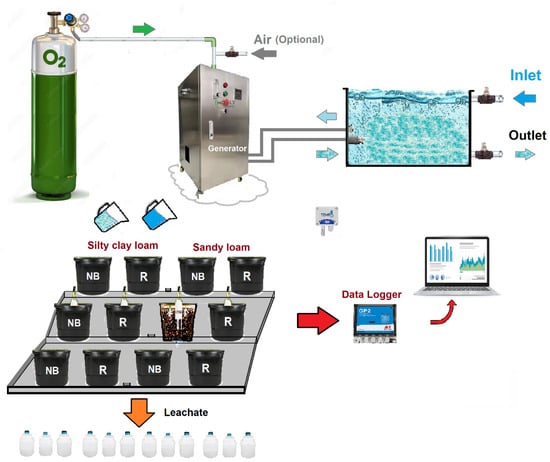
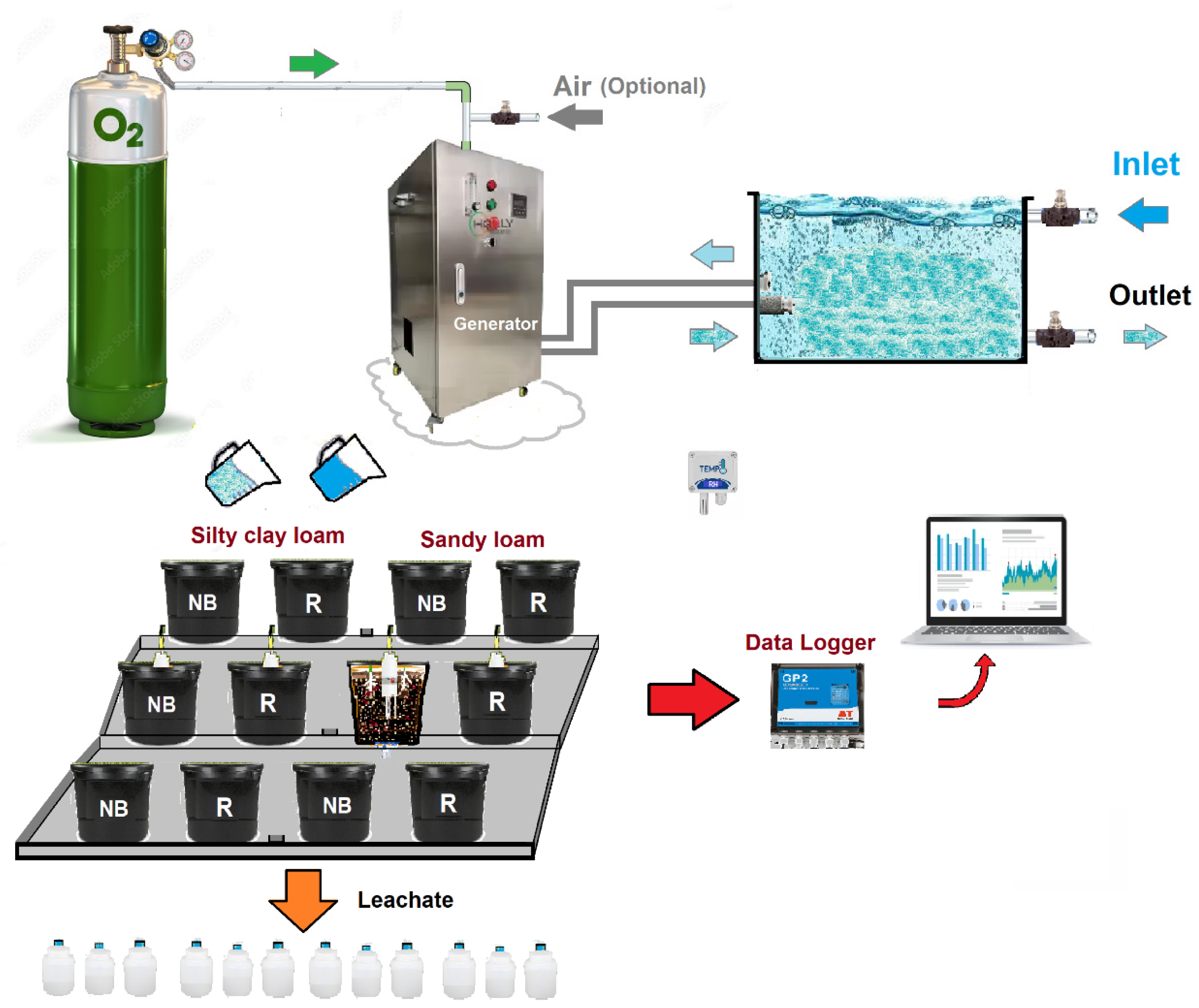
As a continuation and extension of the work reported earlier [30], this study presents new insights supported by substantial additional analyses and reports on laboratory experiments conducted at Vytautas Magnus University in Kaunas, Lithuania, from 5 June 2024 to 13 January 2026. The current study expands the monitoring duration and focuses on the cumulative soil chemical and physical responses to long-term NB treatment. Two parallel experiments were carried out with distinct soil textures: E1 (silty clay loam) and E2 (sandy loam). The silty clay loam used in E1 consisted of 13.95% clay, 64.25% silt, and 21.8% sand, whereas E2’s sandy loam contained 0.60% clay, 27.96% silt, and 71.45% sand. Experiments E1 and E2, each involved six soil buckets and a single type of soil, divided into two scenarios with three replicates each: scenarios 1 and 2 in E1 and scenarios 3 and 4 in E2. Watering treatments consisted of air NB, ONB, and conventional water as controls. To generate NBSW, the same water used for conventional watering was saturated with either ambient air NBs or ONBs using a pressurized gas–liquid mixing process with the HLYZ-002 NB generator (HOLLY Technology, Yixing, China). A compressed oxygen cylinder filled with high-pressure oxygen (50 L, 315 bar, EN ISO 14175-01-0) [31] was used for supplying oxygen to the ONB generator. The scheme of the experimental setup is shown in Figure 1.
Figure 1.
Scheme of the experimental setup [R—conventional water, NB—nanobubble-saturated water]. Retrieved from [26].
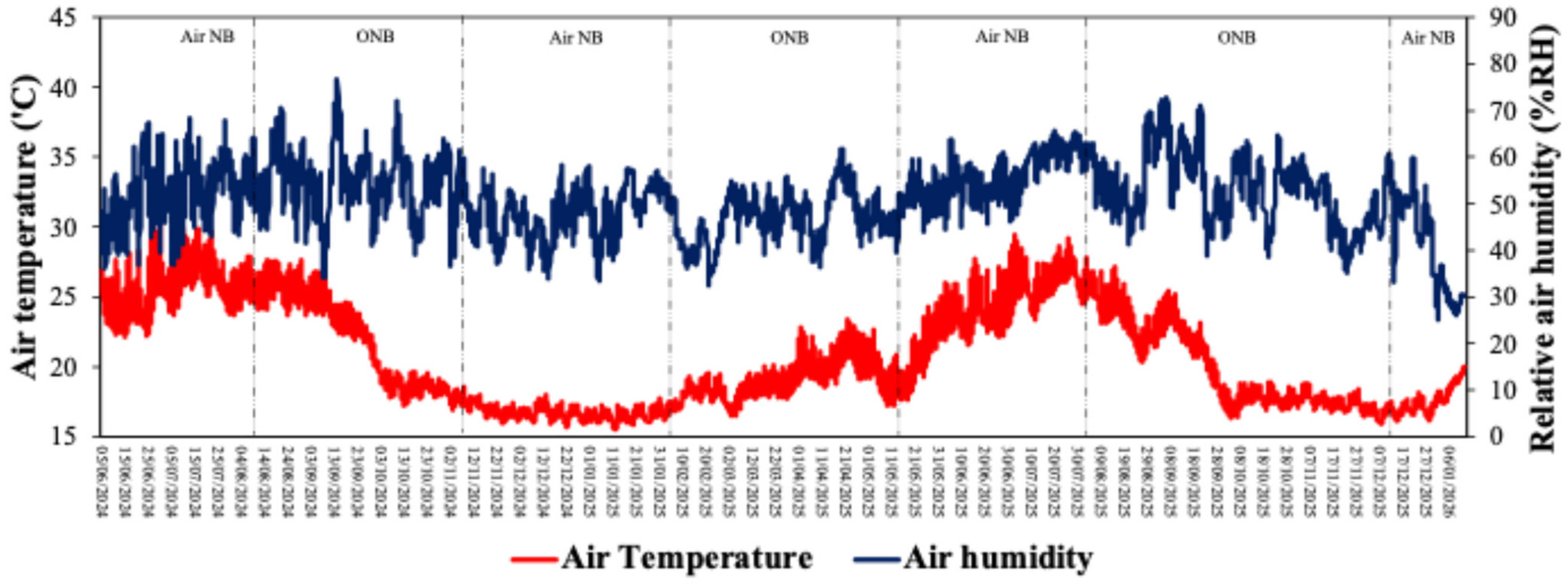
The ambient conditions in the lab were continually measured. Throughout the experiment, calibrated sensors were used to record the air temperature and relative humidity at every 3 h interval. The temperature and relative humidity ranged from 15.5 to 30.5 °C and 25.2 to 76.6%, respectively. Air-dried soils were homogenized (10 mm sieve), stored in buckets, and enriched with 200 g of composted sludge (≈33 t/ha; 7.5 mm sieve). The composted sludge was thoroughly mixed with the soil to provide an organic matter and nutrient source, as well as offer a larger food supply to microorganisms in the experimental matrix. The composted sludge comprised 30.27% organic matter (OM), with total nutrient contents of 1.18% N, 0.44% P, and 0.47% K. Buckets with a total volume of 12 L (22 cm height) were prepared in three replicates per experiment with equal air-dried soil moisture. They were incubated for one week and fitted with moisture sensors positioned at two-thirds of the soil depth and designed to record every 3 h volumetric water content using ML3 ThetaProbe sensors (Delta-T Devices, Cambridge, UK) connected to a GP2 data logger (Delta-T Devices). Topsoil moisture (0–6 cm) was measured every 1–2 days by using the WET-2 digital sensor probe (ICT International, Armidale, Australia). In addition, whole-bucket soil moisture was determined gravimetrically by weighing the buckets. Gravimetric measurements were used as a reference for calibrating sensor-based volumetric water content, allowing the derivation of corrected bucket-scale soil moisture values. Gravimetric checks showed minimal variability across replicates (≤2%); therefore, mean calibrated soil moisture values in each scenario were presented. In order to assess vertical soil moisture redistribution and wettability, the soil moisture ratio (R), defined as the ratio of moisture content in the top layer to that in the deeper layer measured at the same time, was used:
Wupper—water content of topsoil layer (vol%); Wdeeper—water content of deeper soil layer (vol%).
Values of R > 1.0 indicated a relative accumulation of moisture in the upper layer, which could be associated with evaporation-dominated conditions or limited downward water movement, whereas values of R < 1.0 reflected greater moisture content in the deeper layer, which suggested higher downward movement and evaporation of water. To standardize initial conditions and provide a consistent water input, depending on the scenarios, all buckets were pre-watered one day before monitoring to near-field capacity with 2.75 L of either NBSW or conventional water. Watering was carried out at 35 events, which resulted in a total of 36.5 L per bucket. In the NBSW scenarios, air NB was used 15 times (17.30 L) and ONB in 17 events (16.45 L), whereas the corresponding control scenarios got 36.5 L per bucket of conventional water. Leachate water was collected and measured after each watering session to determine water losses. Buckets were also weighed frequently to monitor total bucket water storage over time. Cumulative water input, measured leachate volume, and changes in bucket water storage were then used to quantify water loss and its partitioning, with evaporation-related loss calculated as the residual after accounting for leachate and storage change.
Soil compaction was evaluated using cone penetration resistance (CI). Cone penetrometer tests were performed at irregular intervals under varied soil moisture conditions with a BK-PE1 portable penetrometer (Biobase®, Jinan, China). To compare treatments, CI was computed based on its temporal dynamics and moisture-normalized metrics. Since soil moisture has a significant effect on the CI, which increases as the soil dries even in the absence of structural compaction, weighted averages, for instance, could be biased by wetter or drier periods and might not effectively distinguish between short-term moisture impacts and real structural compaction. To address this limitation, CI was normalized to the maximum measured soil moisture, which removed the moisture effect from individual measurements while maintaining temporal resolution. This approach made it possible to identify long-term effects in the structural compaction of the soil. Normalization was performed as follows:
Wobs—measured soil moisture (vol.%); Wmax—maximum soil moisture corresponding to the CI measurements (vol.%); CIobs—measured cone resistance (kg/cm2).
A WET-2 sensor probe (ICT International, Armidale, Australia) was used to monitor soil electrical conductivity (EC), moisture content, and temperature in the top 0–6 cm topsoil layer. To accomplish consistent observations and comparable datasets, the ML3 ThetaProbe and WET-2 soil moisture sensors were intercalibrated before the experiments.
Soil EC is significantly affected by soil moisture content, since wetter soils conduct ions more effectively, while drier soils have lower EC values due to reduced water availability. As a result, EC measurements might reflect transient moisture conditions rather than actual changes in soil chemical characteristics. Therefore, all data were normalized using concurrently recorded soil moisture in order to account for this impact and assess actual temporal changes in soil EC. Soil moisture and the corresponding EC were recorded at each measurement. The maximum soil moisture recorded during the observation period of EC was used as a reference value, and EC normalization was determined using the following equation:
Wobs—soil moisture at the time of EC measurement (% vol.); Wmax—maximum measured soil moisture (% vol.); ECobs—measured EC (mS m−1).
This normalization scaled EC data to a common reference (maximum) soil moisture level, minimizing the impact of temporal soil moisture changes. Using Wmax as a reference provided a physically meaningful baseline, representing the EC that would be expected if soil moisture were equal to the reference condition. As a result, normalized EC values represented variations in soil solute dynamics caused by chemical processes, rather than short-term moisture variability.
Statistical comparisons among treatments across soil textures and watering treatments were performed with PAST (v4.0). Significance of differences between scenarios was assessed using the Kruskal–Wallis non-parametric test.
3. Results
3.1. Air Temperature, Relative Humidity, and Soil Moisture Dynamics
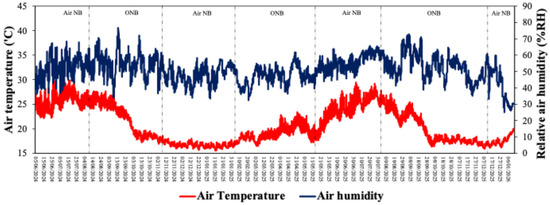
Figure 2 demonstrates a variation between warmer periods with lower RH and cooler periods with greater RH. Higher air temperatures were often related to lower relative humidity, which indicated increased evaporation demand, while cooler periods were associated with decreased evaporation potential.
Figure 2.
Temporal variation of air temperature and relative air humidity.
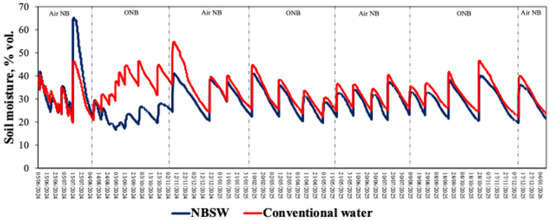
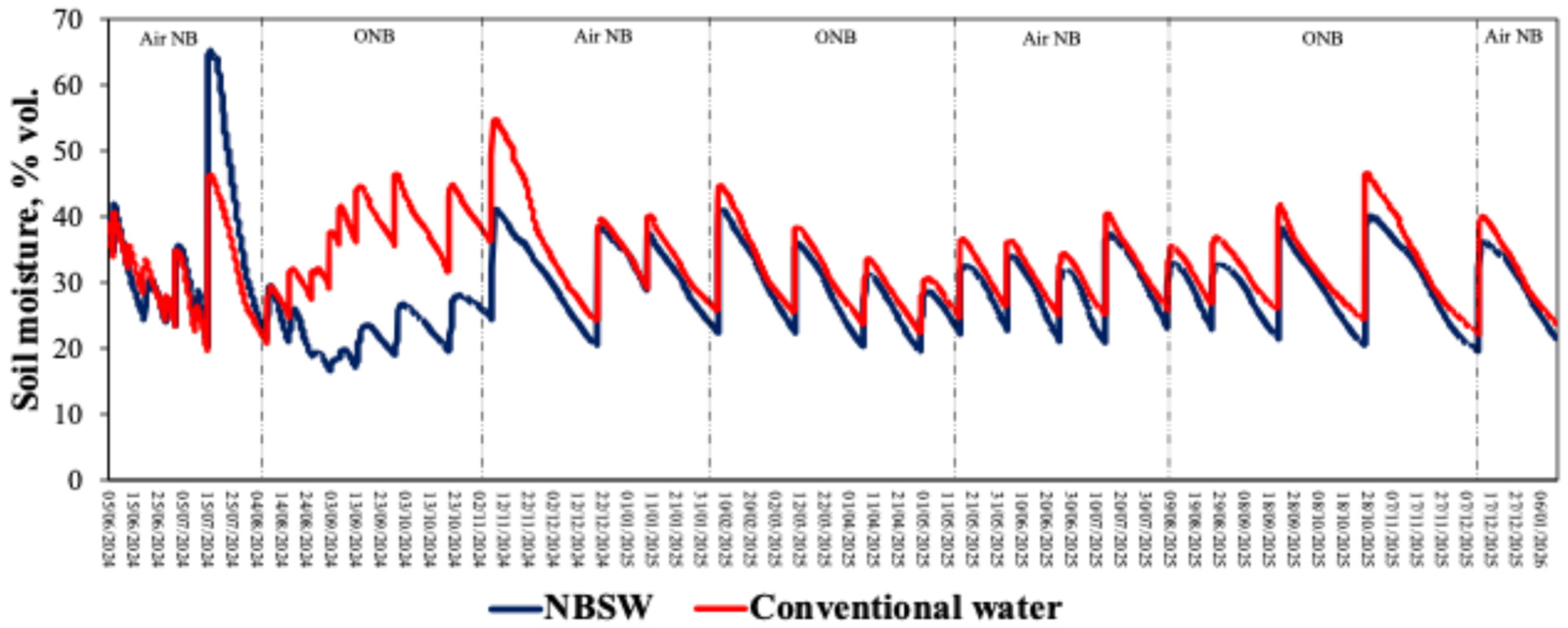
The results revealed that NBSW did not show a statistically significant long-term change in soil water-holding capacity (p > 0.05) compared with conventional water. While there were short-term differences during some environmental phases, moisture levels for NB and conventional water treatments were very similar in the long term. Long-term soil moisture storage was predominantly determined by soil texture and cumulative water input, rather than NB watering, since Wobs values stabilized across both soil types over time. Figure 3 illustrates the soil moisture dynamics in experiment E1’s scenarios 1 and 2. In the experiment, the first air NB phase (higher temperature, lower RH) resulted in a mean Wobs of 30.1% for NBSW and 30.4% for conventional water. The following ONB phase revealed a significant change. The NBSW averaged 26.9%, which is much lower than the 35.2% measured in conventional water. This phase was marked by rising air temperatures and low RH (Figure 2), which are linked with greater evaporation potential. During this period, soil moisture with NB watering decreased more quickly after watering events than under conventional watering, which shows more short-term water loss. This gap was also likely driven by the temporary increase in microbial activity in the fresh compost-amended soil. The difference reduced during the cooler period (mean Tair =16.7 °C) to 31.0% under air NB vs. 36.9% under conventional water. The next ONB phase showed a smaller gap (29.3% in vs. 31.7% in conventional watering). In the warmer air NB phase (mean Tair = 23.3 °C), values were 28.0% (air NB) and 30.4% (conventional water), whereas the final ONB phase remained comparable (29.3% vs. 31.8%). Overall, by the end of monitoring, treatment means converged to 29.9% (air NB) and 31.7% (conventional water).
Figure 3.
Soil moisture dynamics in scenarios 1 and 2 in experiment E1.
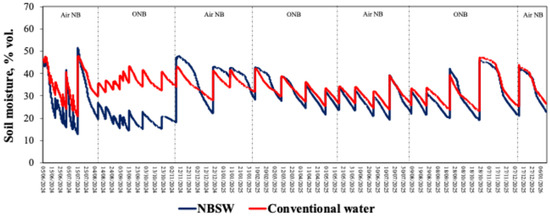
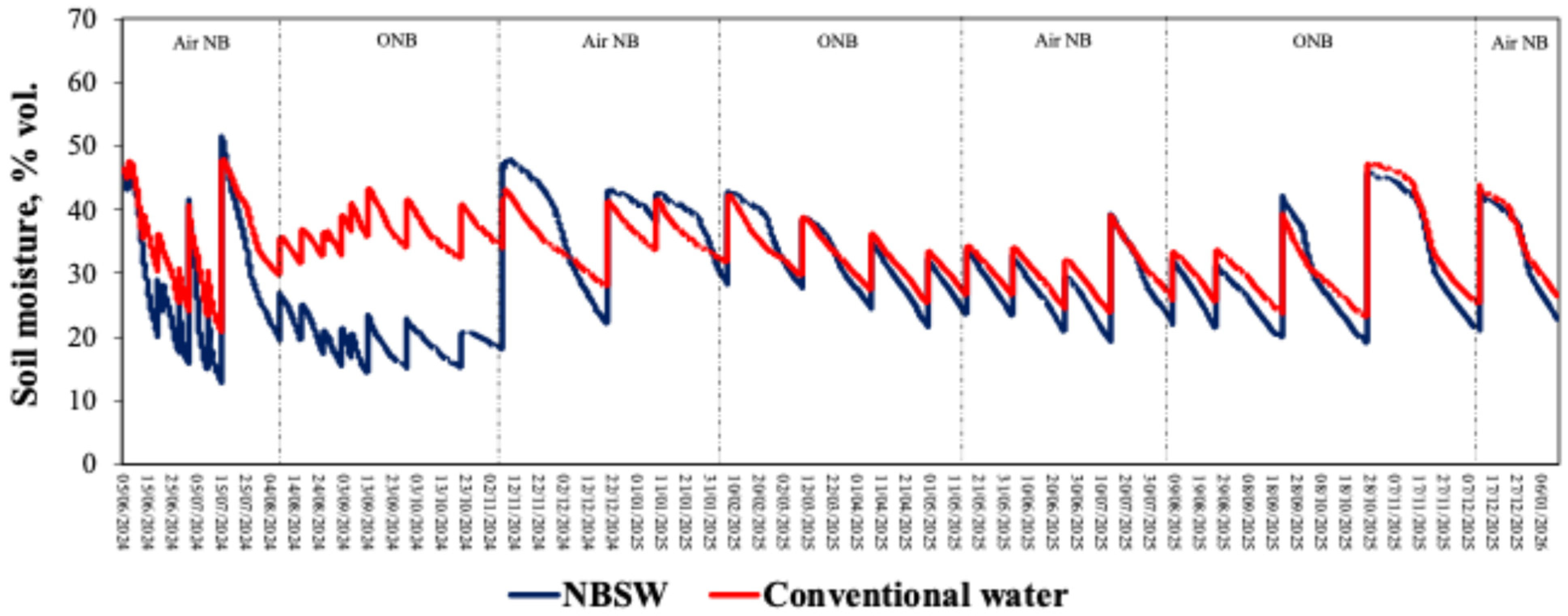
The sandy loam had very dynamic behavior, with rapid variations and a temperature-dependent inversion of moisture storage (Figure 4). Compared to silty clay loam, sandy loam showed quicker decreases in Wobs after watering, which reflects a reduced water-holding capacity and more sensitivity to the atmospheric conditions. In sandy loam, despite high temperature, early-stage air NB showed lower mean Wobs than conventional water (26.6% vs. 33.0%), and the experiment’s highest loss happened during the ONB phase (22.3% vs. 36.7%). In the following phase, differences were smaller: air NB 34.4% vs. conventional 35.7%; ONB 32.8% vs. conventional 33.1%; during a warmer phase, air NB 26.7% vs. conventional 29.5%; and, in the final ONB phase, 27.1% vs. 29.2%. In the end, moisture levels were statistically identical, with the air NB treatment averaging 34% and the conventional water 35%. In sandy loam, repeated NB treatment did not improve soil water storage, and long-term Wobs was determined by soil texture and environmental conditions rather than watering type.
Figure 4.
Soil moisture dynamics in scenarios 3 and 4 in experiment E2.
Across both air NB and ONB phases, the biggest short-term differences between NB and conventional watering happened during periods of increased evaporation potential, although soil moisture curves were almost comparable under cooler and more humid scenarios. Thus, the water balance analysis confirmed that the greater moisture loss under NBSW during warm and dry phases correlated with higher cumulative evaporation rather than increased leaching (p < 0.05). Furthermore, these short-term variations did not change over time, and soil water storage under NB watering was consistently similar to conventional water across both soil types. These findings demonstrate that, despite phase-specific short-term responses related to environmental conditions and watering type, NBSW did not result in long-term improvements in soil moisture storage under either air NB or ONB application.
3.2. Cumulative Soil Water Balance
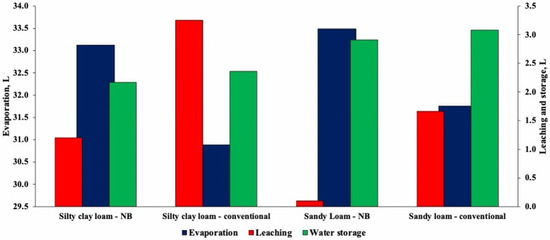
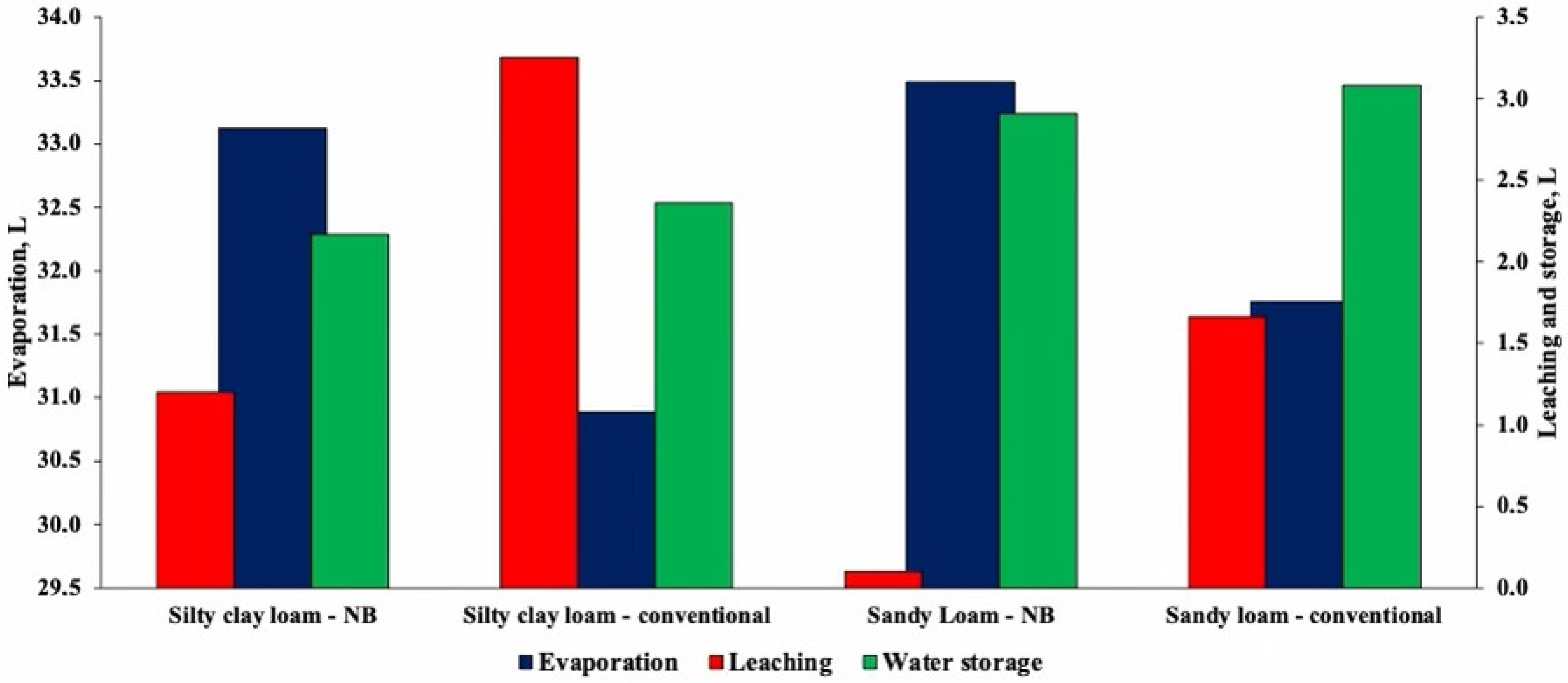
Despite matching long-term soil moisture storage, total water losses varied between the NB and conventional treatments. In the silty clay loam, the NB treatment caused a cumulative leachate volume of 1.2 L, which was much lower than the 3.2 L measured for conventional water. However, the NB treatment had a larger cumulative evaporation (33.1 L) than the conventional water (30.9 L). Finally, water storage was comparable, with 2.1 L remaining in the NB treatment and 2.4 L in conventional water.
In sandy loam, cumulative evaporation was 33.5 L with NBSW, compared to 31.8 L under conventional water, while cumulative leaching was 0.1 L (NB) vs. 1.7 L (conventional). The final water storage was almost similar (2.9 L NB vs. 3.1 L conventional). While the soil moisture time series showed no long-term increase in moisture retention under NB watering, the cumulative balance shows that NB watering was associated with higher evaporation and lower leaching than conventional water in both soil types (Figure 5). This demonstrates a change in water partitioning from leaching to evaporation, which was more significant under NB than conventional watering.
Figure 5.
The soil water balance for experiments E1 and E2.
3.3. Soil Moisture Redistribution
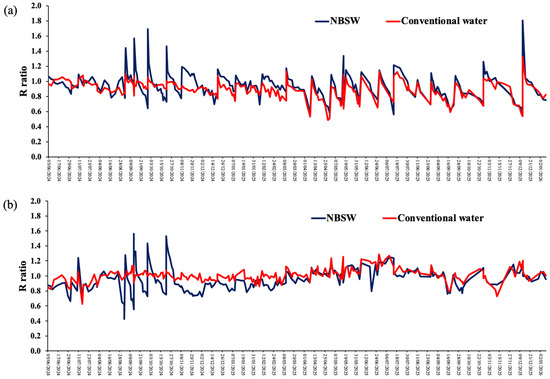
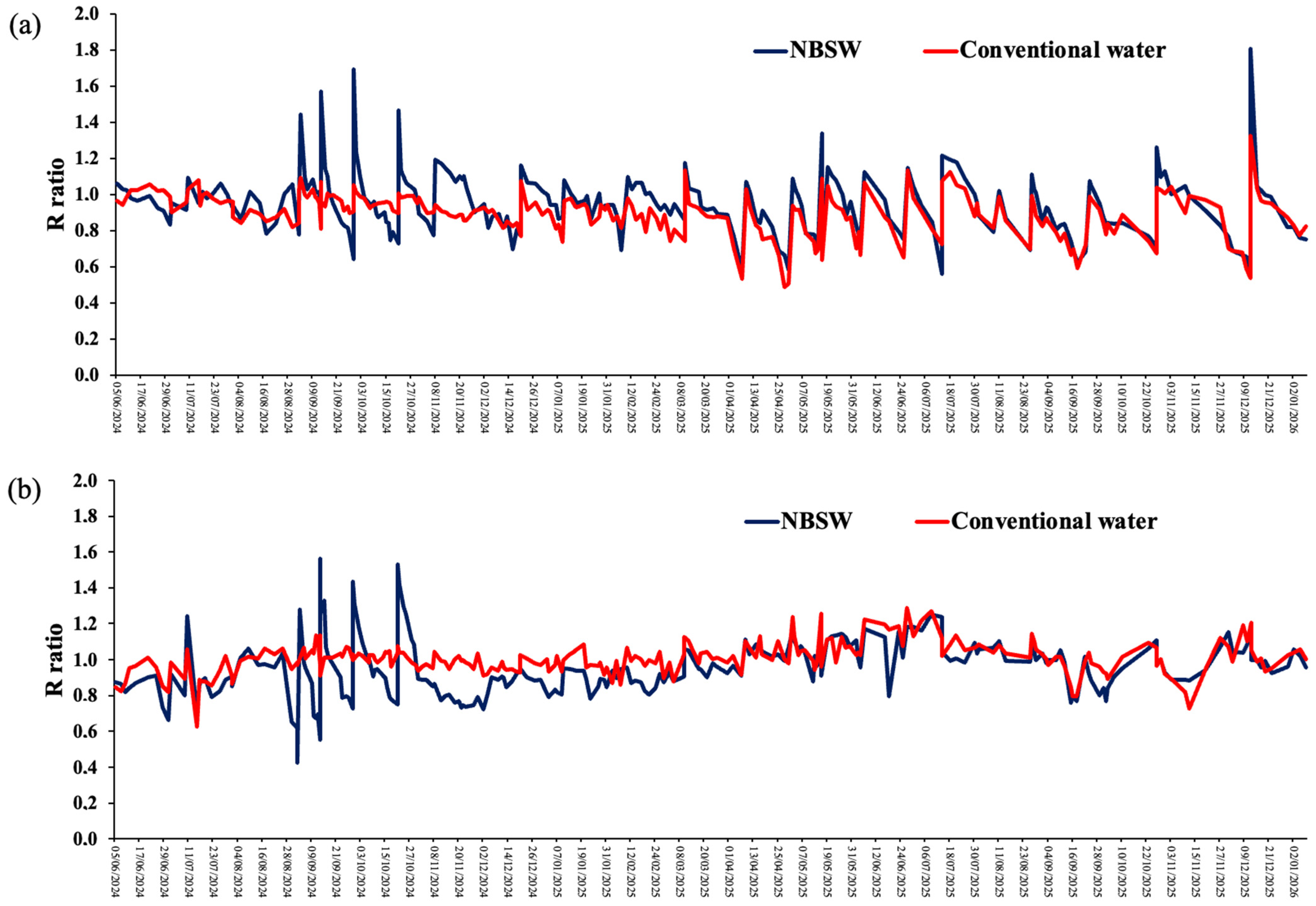
The temporal dynamics of the soil moisture ratio (R), as shown in Figure 6, further revealed the differences in evaporation and percolation processes. In silty clay loam soil, NBSW showed R ≥ 1.0 in 37.2% of measurements, compared to 14.5% with conventional water (Figure 6a). This suggests that under NB watering, the surface soil layer had a higher moisture content than the deeper layer. Occasional events with R ≥ 1.0 have been measured, showing high short-term accumulation of water in the topsoil layer after watering events. These peaks were transient and corresponded with watering cycles, following which moisture redistribution to deeper layers happened. In sandy loam soil (Figure 6b), R ≥ 1.0 occurred in 34.9% of observations under NBSW. However, R values varied significantly more than in conventional water. Conventional watering resulted in a higher frequency of R ≥ 1.0 (54.9%) and reduced variability, which indicated a more uniform vertical moisture distribution across soil layers. The contrasting patterns between the two soil types show that NBSW changed vertical soil moisture dynamics in different ways depending on soil texture.
Figure 6.
Temporal dynamics of the R ratio in experiments (a) E1 and (b) E2.
3.4. Soil Compaction
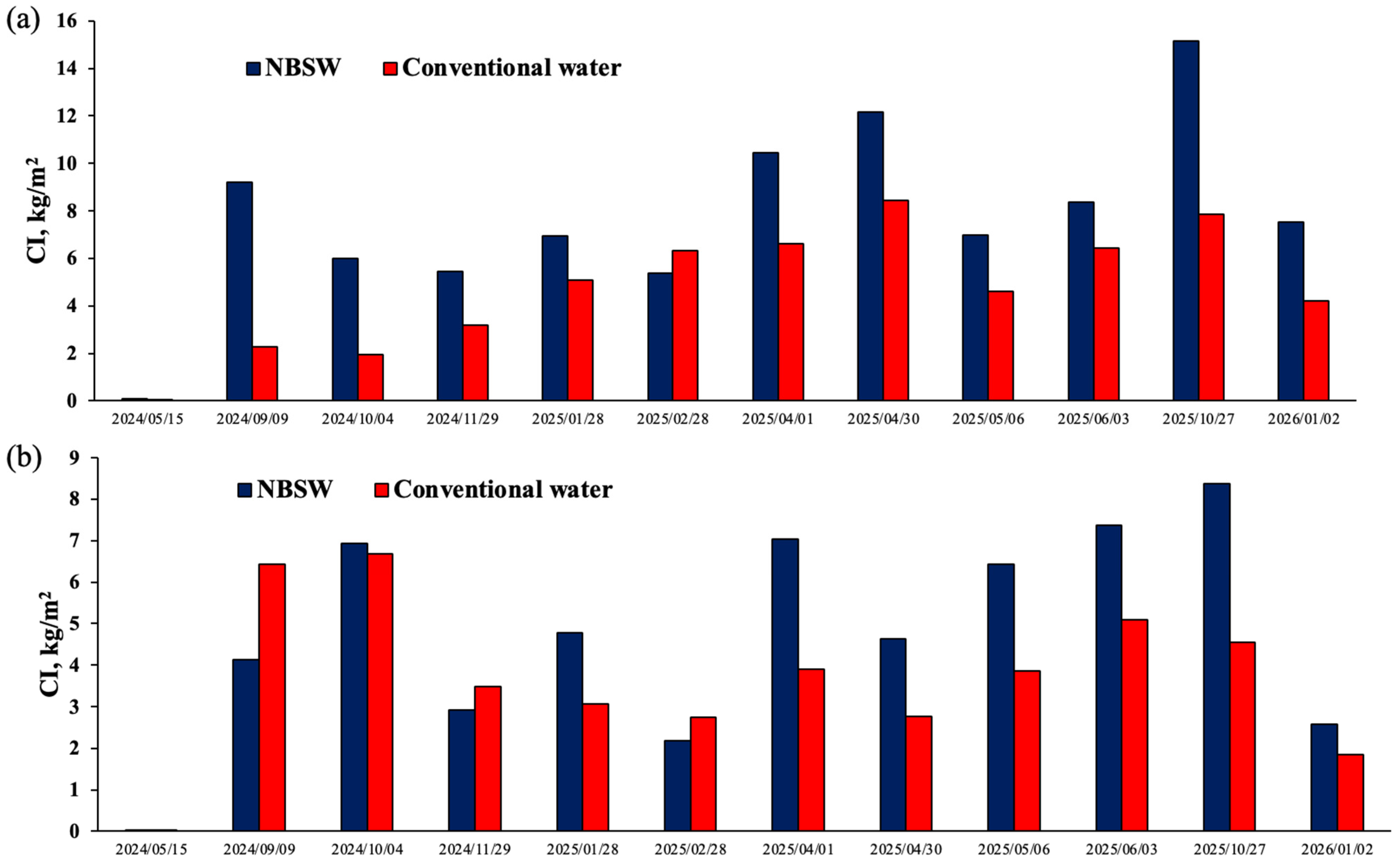
In silty clay loam soil, NB watering resulted in an average soil moisture-weighted compaction of 11.36 kg/m2, compared to 7.56 kg/m2 with conventional water. The corresponding values for sandy loam soil were 6.32 kg/m2 and 5.30 kg/m2, respectively. The findings clearly show that NBSW increased soil compaction, particularly in the silty clay loam.
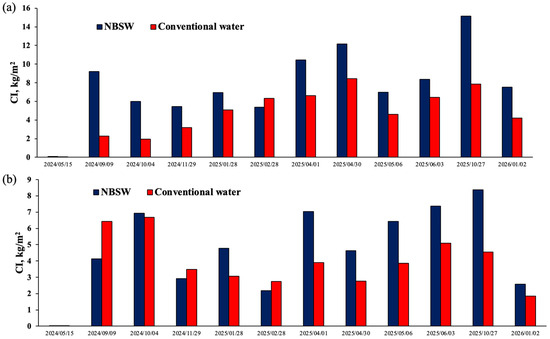
The normalized CI findings revealed that in silty clay loam soil, the NB watering technique increased compaction much more over time. The normalized CI values during NB watering increased from 0.1 kg m−2 when the soil was air-dried at the start of the experiment to a maximum of 15.2 kg m−2 throughout soil moisture contents ranging from 1.0 to 29.0% (vol%). On the other hand, even while conventional watering covered a wider soil moisture range of 1.0 to 36.5% (vol.), it resulted in lower CI values, ranging from 0.1 to 8.43 kg m−2. CI values in the silty clay loam soil were consistently higher during NB watering than under conventional watering over the monitoring period (Figure 7a).
Figure 7.
Normalized cone resistance in experiments (a) E1 and (b) E2.
In sandy loam soil, an increasing normalized CI trend was measured (Figure 7b) only under NB watering. The CI for this treatment varied from 0.1 to 8.37 kg/m2, under soil moisture levels ranging from 1.0 to 32.0% (vol.). Conventional watering, in contrast, resulted in CI values that ranged from 0.1 to 6.67 kg/m2 throughout a similar soil moisture range (1.0–36.7% vol.) but did not show a higher values trend. These findings demonstrate that NBSW can also increase soil compaction in sandy loam soil, although the magnitude of this effect is smaller than in clay loam.
3.5. Electrical Conductivity
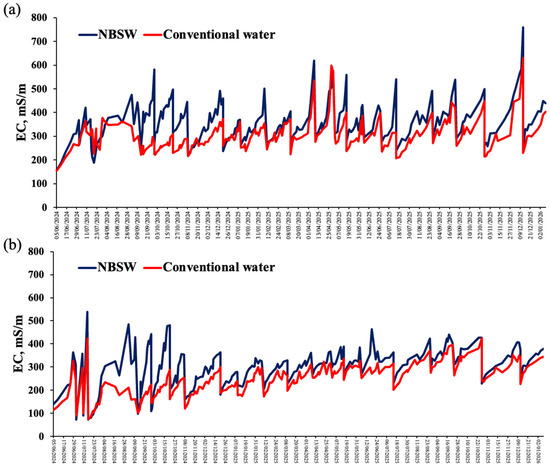
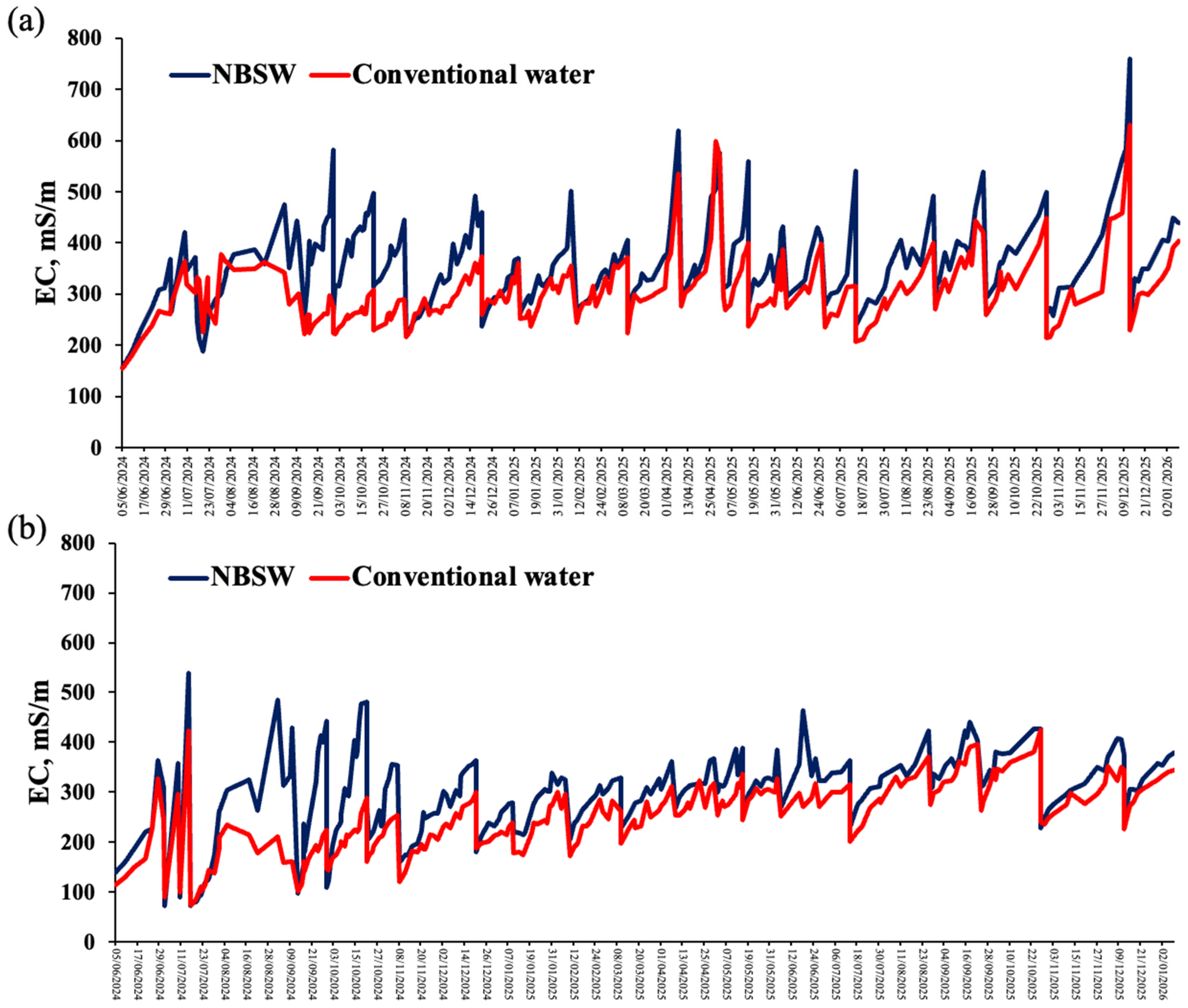
EC was measured in both experiments under NBSW and conventional water (Figure 8a,b). In silty clay loam, EC through NB watering varied from 131 to 264 mS m−1 (soil moisture: 11.8–42.9 vol.%), whereas EC under conventional watering showed 133 to 312 mS m−1 (soil moisture: 11.8–40.5 vol.%). The NB treatment varied from 60 to 297 mS m−1 (soil moisture: 7.4–40.7 vol.%) in sandy loam, while conventional watering ranged from 67 to 259 mS m−1 (soil moisture: 9.5–41.0 vol.%). In both experiments, EC showed a strong dependence on soil moisture content, with higher EC values generally measured at higher soil moisture contents. After normalizing for soil moisture, EC values in both soil types were consistently greater with NB watering than under conventional watering. The temporal patterns of normalized EC in either soil showed no decreasing trends under either watering treatment, implying net accumulation of salts over time. In general, the results demonstrate that NBSW was associated with higher soil EC compared to conventional water application in both experiments. Sandy loam had a more significant temporal increase, whereas silty clay loam remained continuously stable and increased EC levels without a clear temporal trend.
Figure 8.
Temporal dynamics of normalized EC in experiments (a) E1 and (b) E2.
4. Discussion
4.1. Soil Water Storage and Transient NB Responses
The long-term monitoring of soil moisture dynamics showed that the application of NBSW does not result in a greater long-term change in the soil water storage. Instead, the effects were very transitory and controlled by the interaction of biological activity and environmental factors. Previous studies [32] have shown that the most significant active impact of NBSW, which is increased dissolved oxygen, does not persist over time and is highly dependent on the surrounding environment. This provides support for the idea that NBSW effects are transient and influenced by the environment. This is also consistent with the high pressure inside NBs, which allows the gas to dissolve into the water rather than persist as bubbles for an extended period of time [1,33]. The biggest difference in soil moisture content between NBSW and conventional water treatments occurred early in the experiment, corresponding to high ambient temperatures and active decomposition of composted sludge. It is possible that NBSW, which has high dissolved oxygen levels and internal pressure, contributed to conditions that favor biological activity. Although detailed measurements of microorganisms were not conducted, the oxygen-rich environment likely increased aerobic microbial respiration and organic matter decomposition. Under conditions of high metabolic activity, microbial water consumption and heat generation increased, which, when combined with high atmospheric evaporation demand, resulted in the fast loss of soil moisture seen in NBSW treatments. As the experiment continued, the compost stabilized, and microbial activity reduced due to seasonal temperature declines. As a result, the moisture retention for NB and conventional water got closer, which showed that the effects of NBs on soil moisture are the indirect result of biological stimulation rather than permanent physical changes to the soil matrix. Recent studies have shown that the impacts of ONB on soil characteristics are likely more controlled by microbes. According to other research, ONBs significantly change the structure of bacterial communities, which promotes particular organisms that are in charge of the turnover of organic matter and therefore indirectly affect soil aggregates [34]. Recent studies confirm that using ONB can speed up aerobic microbial respiration, especially in soils enriched in organic matter, which results in greater breakdown and metabolic heat [30]. This stimulation of biological activity is known to be most intense during the initial stages of incubation, where high metabolic rates contribute to rapid moisture loss through increased evaporation [35]. Furthermore, studies show that these hydrological effects are temporary; the differences in moisture retention between conventional water and NBSW treatments decrease as the organic substrates stabilize and microbial activity decreases. This suggests that the impact of NBs is primarily driven by transient biological stimulation rather than long-term structural changes to the soil matrix [30].
4.2. Soil Water Losses and Partitioning
A key observation was the short-lived moisture spikes in the sandy loam. This pattern indicates a transitory change in how water enters the soil, rather than a long-term increase in water storage. After long dry periods, sand particles can become somewhat water-repellent because organic material on the particles likely becomes hydrophobic, which slows penetration. In this case, air NBs potentially help in the initial wetting process. Because NBSW can exhibit surface-active behavior, it can reduce the effective surface tension of infiltrating water, which allows it to penetrate through hydrophobic surfaces and wet the soil more evenly. Once the water-repellent layer is disrupted and the soil’s natural hydrophilicity is restored, further applications of NBSW have much less effect. This suggests that NBs may help with transitory hydrophobicity, but they do not boost the soil’s water storage capacity when wettability is reestablished. Previous research [36] has shown that soil water repellency is a transient condition that frequently gets very strong after extended dry periods. It typically corresponds to hydrophobic organic films on soil particles, which can slow and reduce infiltration capacity, particularly in porous media like sand. Water repellency is reported to be more visible in sandy soils, where sand particles may be covered with hydrophobic organic compounds, and repellent zones might be difficult to wet again even after extended watering [37]. In addition, repellency occurs when soil moisture content falls below a critical level, with sandy soils being less resistant to hydrophobic films [38].
The results revealed that the impact of NBSW on soil water balance, especially the partitioning of evaporation and percolation, was strongly dependent on soil texture, which results in contrasting hydraulic behaviors in silty clay loam vs. sandy loam. In fine-textured silty clay loam, applying NBSW frequently resulted in a moisture ratio (R) greater than 1.0, which led to the accumulation of water in the upper soil layer. The reason for this effect is attributable to the interaction of reduced surface tension and the clay matrix. While NBs allow penetration into surface micropores, the high capillary forces and poor hydraulic conductivity of clay restrict fast deep percolation. Therefore, water remains at the surface, where it is most exposed to atmospheric evaporative demand. As a result, there is a significant shift in partitioning that deep leaching is substantially restricted while the water is effectively retained in the evaporation zone, increasing cumulative evaporation. This process clarifies the reason that clay soils treated with NBSW showed increased cumulative evaporation and less leaching. In contrast, sandy loam soil has a dynamic moisture regime, with fast variations between infiltration and evaporation. NBSW likely improves hydraulic connectivity by forming thin, continuous water films over sand particles. This increases quick downward drainage because of gravitation while also improving upward capillary flow during the drying process. As a result, the top layer dries fast (R < 1.0) because of effective moisture redistribution. However, cumulative evaporation remains high due to the sustained supply of water from deeper layers through increased capillary continuity. Thus, in coarse-textured soils, NBs promote the hydrological cycle by boosting infiltration and evaporation fluxes rather than increasing static storage. In silty clay loam, after NBSW watering, water tends to stay more in the top layer (R ≥ 1.0), while, in sandy loam, R fluctuates more under NBSW, which indicates a less uniform vertical moisture distribution over time compared with conventional watering. The literature indicates that near-surface water availability and losses are determined by texture-dependent evaporation stages as well as the balance of retention and downward transmission [39]. Fine-textured soils may retain more water at the top and maintain evaporation for a longer period, but coarse, sand-rich soils move water downward more quickly due to bigger pore gaps and macropore pathways, which leads to reduced total moisture retention [39,40]. In parallel, pore-scale water entry and distribution are sensitive to capillary pressure and wettability, which are directly related to surface tension and interface curvature, as well as whether the wetting phase distributes on solid surfaces and displaces the non-wetting phase [41]. Together, these processes provide a consistent physical basis for explaining contrasting evaporation and percolation behavior across soil textures, as well as linking near-surface storage with potential atmospheric losses [39,40,41].
This shift in water partitioning has significant implications for agricultural sustainability and environmental protection. By retaining moisture in the topsoil layer or increasing capillary connectivity, NBSW may help more effectively hold water in the active root zone, which is directly helpful to plant absorption during early growth stages or dry periods. Furthermore, the observed reduction in percolation across both soil types indicates that NBSW might be an important strategy for regulating contaminant movement. Limiting the amount of water that drains below the root zone reduces the leaching of dissolved nutrients and harmful agrochemicals into groundwater. Furthermore, this also involves a trade-off since the reduced downward movement may result in increased salinity due to higher EC and compaction in the root zone, which might be potentially detrimental over time, particularly in silty clay loam and under dry climatic conditions.
4.3. Soil Compaction
The results revealed that long-term NB watering can increase soil compaction in the absence of mechanical loosening. This impact was most noticeable in silty clay loam, where normalized cone resistance values increased over time. Two synergistic mechanisms likely occurred for two main reasons. First, NBs have a significant negative electrical charge. When they penetrate the soil, this charge pushes small clay particles and prevents them from forming proper aggregates. These separated small particles float into the gaps between the bigger soil particles. When the soil dries, the particles settle and act like cement, which clogs the pores and makes the soil dense. Weakening of repulsive forces may also take place throughout the decomposition of composted sludge as both NB-bound and soil particle-bound cations attenuate the effective electrostatic repulsion among negatively charged soil particles, potentially functioning as a “charge screening” bridge that mitigates interparticle repulsion. Second, since NBSW causes the surface to evaporate faster, the top layer of soil may go through several cycles of being very wet and then very dry. In clay soils, this quick change is unfavorable. Wet conditions cause soil aggregates to break down, while quick drying leads them to shrink and solidify into a crust. Over time, the two processes of particles clogging the pores and the surface forming a crust resulted in the increased compaction levels. Under practical agricultural conditions, increasing compaction can make root development more difficult and reduce soil aeration. This may limit the potential benefits of NBSW, especially in finer-textured soils where compaction is higher. Thus, if NBSW is applied in the field, its effect on compaction should be considered together with its effects on soil moisture and solute movement, and additional management practices may be needed to reduce surface sealing or improve soil structure. In addition, compaction-driven structural change is relevant for how moisture is retained and released during subsequent wetting-drying, since previous studies [42] have demonstrated that the soil water retention relationship may shift when deformation alters the void ratio and pore-space structure. In that approach, retention is treated as hysteretic and path-dependent during drying vs. wetting, and mechanical volumetric change is regarded as a state variable with the potential to modify the apparent retention response across repeated moisture cycles. Therefore, the long-term moisture behavior observed alongside increasing cone resistance may be explained not just by changes in moisture itself but also by gradual changes in the soil pore structure that affect how water is retained [42]. Although the laboratory setup allowed for extensive analysis of the processes involved, field-scale validation would offer a more representative assessment to determine whether similar patterns occur under natural conditions with varying boundary settings.
4.4. Electrical Conductivity
The results demonstrated an increase in salt (EC) accumulation in the soils treated with NBSW. This is a direct effect of the enhanced biological activity and evaporation. The oxygen in the NB caused the microorganisms’ activity to break down organic matter (compost) much quicker than usual. As organic matter breaks down, nutrients and minerals (ions) are released into the soil solution. Plants typically benefit from this, but if these nutrients are released too fast and not washed away, they accumulate as salts. In sandy soil, the frequent evaporation pulled these released salts to the surface (white residues were occasionally observed). Since sandy soil does not retain nutrients effectively, they remained dissolved in the water and accumulated in the root zone as it evaporated. This resulted in an increase in EC that was measured. In clay soil, as the soil became more compacted and water tended to remain on the top, there was insufficient deep drainage to wash excess salts from the soil profile. These salts got trapped. Previous research [43] highlights that higher EC reflects higher concentrations of dissolved ions in soil water, and when organic matter inputs release ions into the soil solution, EC can increase, with the measured signal also strongly influenced by soil water content through changes in ion solubility and mobility [43]. In parallel, ONB applications have been associated with increased soil microbial activity and faster turnover of more unstable organic carbon, which suggests a potential pathway for faster ion release from decomposing organic material under oxygenated conditions [34]. When ions are in solution, evaporation can cause upward water flow, which concentrates solutes and promotes the accumulation of salt in topsoil layers [44]. Texture also influences this result. Sandy soils have low ion-holding capacity, so ions remain primarily in pore water. However, clay-rich soils can retain ions more strongly and, due to slower drainage and higher water retention, be more sensitive to salt accumulation in the root zone; fine textures can also enhance capillary rise, which transports salts upward under dry conditions [43,45].
5. Conclusions
This study reveals that NBSW did not induce a significant long-term increase in soil moisture storage compared to conventional watering, and the effects on soil moisture were short-lived. In both soils, NBSW consistently changed water partitioning, resulting in increased cumulative evaporation and decreased leaching, whereas the final stored water remained comparable to conventional watering. The response varied by soil texture; silty clay loam had more frequent top layer moisture accumulation under NBSW, whereas sandy loam had higher short-term variability in vertical moisture redistribution. Over time, NBSW treatment had a greater impact on compaction than conventional watering over time, particularly on silty clay loam compared to sandy loam. Moisture-normalized EC remained higher under NBSW in both soils, with sandy loam showing an apparent increase and silty clay loam maintaining continuously higher values. The EC data show increased accumulation of dissolved ions in the soil profile under NBSW, along with decreased leaching. Overall, NBSW did not improve long-term soil water storage, but it did consistently change water-loss partitioning and root-zone solute dynamics, which could have implications for plant growth conditions (water and solute availability around roots) and water-quality protection due to decreased downward movement. It is suggested that future studies validate these findings in field-scale experiments across different soil textures to determine if similar shifts in water partitioning, EC, and compaction may occur under the seasonal fluctuations and field management. Furthermore, considering hysteretic water retention together with soil deformability could be useful in future analyses, particularly considering the compaction trends seen in this study.
Author Contributions
Conceptualization, A.P.; methodology, A.P.; investigation, Y.A. and A.P.; resources, A.P.; formal analysis, Y.A. and A.P.; writing—original draft preparation, Y.A.; writing—review and editing, A.P.; visualization, Y.A. and A.P.; supervision, A.P. All authors have read and agreed to the published version of the manuscript.
Funding
This research received no external funding.
Institutional Review Board Statement
Not applicable.
Informed Consent Statement
Not applicable.
Data Availability Statement
The original contributions presented in this study are included in the article.
Acknowledgments
This research was supported by Vytautas Magnus University, Lithuania.
Conflicts of Interest
The authors declare that they have no known competing interests.
References
- Agarwal, A.; Ng, W.J.; Liu, Y. Principles and applications of microbubble and nanobubble technology for water treatment. Chemosphere 2011, 84, 1175–1180. [Google Scholar] [CrossRef] [Scilit]
- Kalogerakis, N.; Kalogerakis, G.C.; Botha, Q.P. Environmental applications of nanobubble technology: Field testing at industrial scale. Can. J. Chem. Eng. 2021, 99, 24211. [Google Scholar] [CrossRef] [Scilit]
- Iijima, M.; Yamashita, K.; Hirooka, Y.; Ueda, Y.; Yamane, K.; Kamimura, C. Promotive or suppressive effects of ultrafine bubbles on crop growth depend on bubble concentration and crop species. Plant Prod. Sci. 2021, 25, 78–83. [Google Scholar] [CrossRef] [Scilit]
- Pingale, B.N.; Singh, S.D.; Yadav, A. Potential impacts of increasing atmospheric carbon dioxide on yield and plant growth of rice (Oryza sativa) and maize (Zea mays) crops. Indian J. Agric. Sci. 2017, 87, 1041–1050. [Google Scholar] [CrossRef] [Scilit]
- Wu, Y.; Lyu, T.; Yue, B.; Tonoli, E.A.M.; Verderio, Y.; Ma, G.; Pan, G. Enhancement of tomato plant growth and productivity in organic farming by agri-nanotechnology using nanobubble oxygation. J. Agric. Food Chem. 2019, 67, 10823–10831. [Google Scholar] [CrossRef] [Scilit]
- Zhou, Y.; Han, Z.; He, C.; Feng, Q.; Wang, K.; Wang, Y.; Luo, N.; Dodbiba, G.; Wei, Y.; Otsuki, A.; et al. Long-term stability of different kinds of gas nanobubbles in deionized and salt water. Materials 2021, 14, 1808. [Google Scholar] [CrossRef] [Scilit] [PubMed]
- Khan, P.; Zhu, W.; Huang, F.; Gao, W.; Khan, N.A. Micro-nanobubble technology and water-related application. Water Supply 2020, 20, 2021–2035. [Google Scholar] [CrossRef] [Scilit]
- Matsuki, N.; Ichiba, S.; Ishikawa, T.; Nagano, O.; Takeda, M.; Ujike, Y.; Yamaguchi, T. Blood oxygenation using microbubble suspensions. Eur. Biophys. J. 2012, 41, 571–578. [Google Scholar] [CrossRef] [Scilit]
- Takahashi, M.; Chiba, K.; Li, P. Free-radical generation from collapsing microbubbles in the absence of a dynamic stimulus. J. Phys. Chem. B 2007, 111, 1343–1347. [Google Scholar] [CrossRef] [Scilit] [PubMed]
- Eriksson, J.C.; Ljunggren, S. On the mechanically unstable free energy minimum of a gas bubble which is submerged in water and adheres to a hydrophobic wall. Colloids Surf. A Physicochem. Eng. Asp. 1999, 159, 159–163. [Google Scholar] [CrossRef] [Scilit]
- Ljunggren, S.; Eriksson, J.C. The lifetime of a colloid-sized gas bubble in water and the cause of the hydrophobic attraction. Colloids Surf. A Physicochem. Eng. Asp. 1997, 130, 151–155. [Google Scholar] [CrossRef] [Scilit]
- Li, P.; Takahashi, M.; Chiba, K. Enhanced free-radical generation by shrinking microbubbles using a copper catalyst. Chemosphere 2009, 77, 1157–1160. [Google Scholar] [CrossRef] [Scilit]
- Bitterman, H. Bench-to-bedside review: Oxygen as a drug. Crit. Care 2009, 13, 205. [Google Scholar] [CrossRef] [Scilit]
- Abdelsalam, M.; Cheifetz, I.M. Goal-directed therapy for severely hypoxic patients with acute respiratory distress syndrome: Permissive hypoxemia. Respir. Care 2010, 55, 1483–1490. [Google Scholar] [CrossRef] [Scilit] [PubMed]
- Guo, S.; Dipietro, L.A. Factors affecting wound healing. J. Dent. Res. 2010, 89, 219–229. [Google Scholar] [CrossRef] [Scilit]
- Arablousabet, Y.; Povilaitis, A. Assessing the role of air nanobubble saturated water in enhancing soil moisture, nutrient retention, and plant growth. Sustainability 2024, 16, 5727. [Google Scholar] [CrossRef] [Scilit]
- Wang, Y.; Wang, S.; Sun, J.; Dai, H.; Zhang, B.; Xiang, W.; Hu, Z.; Li, P.; Yang, J.; Zhang, W. Nanobubbles promote nutrient utilization and plant growth in rice by upregulating nutrient uptake genes and stimulating growth hormone production. Sci. Total Environ. 2021, 800, 149627. [Google Scholar] [CrossRef] [Scilit] [PubMed]
- Calgaroto, S.; Azevedo, A.; Rubio, J. Flotation of quartz particles assisted by nanobubbles. Int. J. Miner. Process. 2015, 137, 64–70. [Google Scholar] [CrossRef] [Scilit]
- Pal, P.; Anantharaman, H. CO2 nanobubbles utility for enhanced plant growth and productivity: Recent advances in agriculture. J. CO2 Util. 2022, 61, 102008. [Google Scholar] [CrossRef] [Scilit]
- Minamikawa, K.; Makino, T. Oxidation of flooded paddy soil through irrigation with water containing bulk oxygen nanobubbles. Sci. Total Environ. 2020, 709, 136323. [Google Scholar] [CrossRef] [Scilit]
- Sun, Y.; Wang, S.; Niu, J. Microbial community evolution of black and stinking rivers during in situ remediation through micro-nano bubble and submerged resin floating bed technology. Bioresour. Technol. 2018, 258, 187–194. [Google Scholar] [CrossRef] [Scilit]
- Zhou, Y.; Bastida, F.; Zhou, B.; Sun, Y.; Gu, T.; Li, S.; Li, Y. Soil fertility and crop production are fostered by micro-nano bubble irrigation with associated changes in soil bacterial community. Soil Biol. Biochem. 2020, 141, 107663. [Google Scholar] [CrossRef] [Scilit]
- Liu, Y.; Zhou, Y.; Wang, T.; Pan, J.; Zhou, B.; Muhammad, T.; Zhou, C.; Li, Y. Micro-nano bubble water oxygation: Synergistically improving irrigation water use efficiency, crop yield and quality. J. Clean. Prod. 2019, 222, 835–843. [Google Scholar] [CrossRef] [Scilit]
- Pendergast, L.; Bhattarai, S.P.; Midmore, D.J. Benefits of oxygation of subsurface drip-irrigation water for cotton in a Vertosol. Crop Pasture Sci. 2013, 64, 1171–1181. [Google Scholar] [CrossRef] [Scilit]
- Abuarab, M.; Mostafa, E.; Ibrahim, M. Effect of air injection under subsurface drip irrigation on yield and water use efficiency of corn in a sandy clay loam soil. J. Adv. Res. 2013, 4, 493–499. [Google Scholar] [CrossRef] [Scilit] [PubMed]
- Saffih-Hdadi, K.; Défossez, P.; Richard, G.; Cui, Y.-J.; Tang, A.-M.; Chaplain, V. A method for predicting soil susceptibility to the compaction of surface layers as a function of water content and bulk density. Soil Tillage Res. 2009, 105, 96–103. [Google Scholar] [CrossRef] [Scilit]
- Novotny, E.H.; de Azevedo, E.R.; de Godoy, G.; Consalter, D.M.; Cooper, M. Determination of soil pore size distribution and water retention curve by internal magnetic field modulation at low field 1H NMR. Geoderma 2023, 431, 116363. [Google Scholar] [CrossRef] [Scilit]
- Ye, C.; Zheng, G.; Tao, Y.; Xu, Y.; Chu, G.; Xu, C.; Chen, S.; Liu, Y.; Zhang, X.; Wang, D. Effect of Soil Texture on Soil Nutrient Status and Rice Nutrient Absorption in Paddy Soils. Agronomy 2024, 14, 1339. [Google Scholar] [CrossRef] [Scilit]
- Lehmann, P.; Merlin, O.; Gentine, P.; Or, D. Soil Texture Effects on Surface Resistance to Bare-Soil Evaporation. Geophys. Res. Lett. 2018, 45, 10398–10405. [Google Scholar] [CrossRef] [Scilit]
- Povilaitis, A.; Arablousabet, Y. Transient effects of air and oxygen nanobubbles on soil moisture retention and soil-substance interactions in compost-amended soil. Water 2025, 17, 1923. [Google Scholar] [CrossRef] [Scilit]
- EN ISO 14175:2008; Welding Consumables-Gases and Gas Mixtures for Fusion Welding and Allied Processes. International Organization for Standardization: Geneva, Switzerland, 2008.
- Tekile, A.; Kim, I.; Lee, J.-Y. Extent and persistence of dissolved oxygen enhancement using nanobubbles. Environ. Eng. Res. 2016, 21, 427–435. [Google Scholar] [CrossRef] [Scilit]
- Li, H.; Hu, L.; Song, D.; Lin, F. Characteristics of micro-nano bubbles and potential application in groundwater bioremediation. Water Environ. Res. 2014, 86, 844–851. [Google Scholar] [CrossRef] [Scilit]
- Chen, W.; Bastida, F.; Liu, Y.; Zhou, Y.; He, J.; Song, P.; Kuang, N.; Li, Y. Nanobubble oxygenation increases crop production via soil structure improvement: The perspective of microbially mediated effects. Agric. Water Manag. 2023, 282, 108263. [Google Scholar] [CrossRef] [Scilit]
- Liang, C.; Das, K.C.; McClendon, R.W. The influence of temperature and moisture contents regimes on the aerobic microbial activity of a biosolids composting blend. Bioresour. Technol. 2003, 86, 131–137. [Google Scholar] [CrossRef] [Scilit] [PubMed]
- Doerr, S.H.; Shakesby, R.A.; Walsh, R.P.D. Soil water repellency: Its causes, characteristics and hydro-geomorphological significance. Earth-Sci. Rev. 2000, 51, 33–65. [Google Scholar] [CrossRef] [Scilit]
- Cisar, J.L.; Williams, K.E.; Vivas, H.E.; Haydu, J.J. The occurrence and alleviation by surfactants of soil-water repellency on sand-based turfgrass systems. J. Hydrol. 2000, 231–232, 352–358. [Google Scholar] [CrossRef] [Scilit]
- Bayad, M.; Chau, H.W.; Trolove, S.; Moir, J.; Condron, L.; Bouray, M. The relationship between soil moisture and soil water repellency persistence in hydrophobic soils. Water 2020, 12, 2322. [Google Scholar] [CrossRef] [Scilit]
- Amazirh, A.; Merlin, O.; Er-Raki, S.; Bouras, E.; Chehbouni, A. Implementing a new texture-based soil evaporation reduction coefficient in the FAO dual crop coefficient method. Agric. Water Manag. 2021, 250, 106827. [Google Scholar] [CrossRef] [Scilit]
- Rodrigues, J.R.; Solander, K.C.; Cropper, S.; Newman, B.D.; Collins, A.D.; Warren, J.M.; Negron-Juarez, R.; Gimenez, B.O.; Spanner, G.C.; Menezes, V.d.S.; et al. Soil water percolation and nutrient fluxes as a function of topographical, seasonal and soil texture variation in Central Amazonia, Brazil. Hydrol. Process. 2024, 38, e15148. [Google Scholar] [CrossRef] [Scilit]
- Pyrak-Nolte, L.J.; Nolte, D.D.; Chen, D.; Giordano, N.J. Relating capillary pressure to interfacial areas. Water Resour. Res. 2008, 44, W06408. [Google Scholar] [CrossRef] [Scilit]
- Badakhshan, E.; Vaunat, J.; Scarfone, R. A hysteretic water retention model incorporating the soil deformability and its application to rainfall-induced landslides. Comput. Geotech. 2025, 178, 106912. [Google Scholar] [CrossRef] [Scilit]
- Kim, H.N.; Park, J.H. Monitoring of soil EC for the prediction of soil nutrient regime under different soil water and organic matter contents. Appl. Biol. Chem. 2024, 67, 1. [Google Scholar] [CrossRef] [Scilit]
- Zheng, W.; Yang, Z.; Wang, X.; Wang, H.; Yu, X.; Wang, L.-P.; He, B. Impacts of evaporation and inundation on near-surface salinity at a coastal wetland park. Mar. Pollut. Bull. 2022, 185, 114373. [Google Scholar] [CrossRef] [Scilit]
- Omar, M.M.; Shitindi, M.J.; Massawe, B.H.J.; Pedersen, O.; Meliyo, J.L.; Fue, K.G. Modeling the electrical conductivity relationship between saturated paste extract and 1:2.5 dilution in different soil textural classes. Front. Soil Sci. 2024, 4, 1421661. [Google Scholar] [CrossRef] [Scilit]
Disclaimer/Publisher’s Note: The statements, opinions and data contained in all publications are solely those of the individual author(s) and contributor(s) and not of MDPI and/or the editor(s). MDPI and/or the editor(s) disclaim responsibility for any injury to people or property resulting from any ideas, methods, instructions or products referred to in the content. |
© 2026 by the authors. Licensee MDPI, Basel, Switzerland. This article is an open access article distributed under the terms and conditions of the Creative Commons Attribution (CC BY) license.