


Abstract
The Kocayayla Pb–Zn ± Cu vein-type mineralization is located in the Biga Peninsula, northwestern Türkiye. This study aims to constrain the geological, geochemical, and isotopic characteristics of the mineralization and to clarify its genetic classification. The deposit is hosted mainly by andesitic and basaltic andesitic rocks as well as schists and is structurally controlled by E–W-trending strike-slip faults. Mineralogical and petrographic identifications, XRD analyses, whole-rock geochemistry, and sulfur isotope data were integrated to evaluate ore-forming processes. Mineralization is temporally and spatially associated with propylitic and phyllic to argillic alteration and is concentrated within zones of intense silicification and chloritization, accompanied by quartz, sericite, kaolinite/nacrite, chlorite, and carbonate assemblages. The ore assemblage is dominated by galena, sphalerite, and subordinate chalcopyrite, with minor fahlore-group minerals. Rare earth element patterns of ore samples (whole rock) overlap with those of the wall rocks, whereas Pb–Zn enrichment reflects selective hydrothermal metal transport. Sulfur isotope compositions show limited internal variation and indicate sulfur derived predominantly from H2S-dominated magmatic–hydrothermal fluids. Regional comparison of δ34S datasets and reported Au contents across the Biga Peninsula indicates that Au-rich intermediate-sulfidation epithermal systems exhibit broader and more variable sulfur isotope ranges, whereas Au-poor intermediate-sulfidation epithermal systems show relatively restricted and near-zero δ34S values. These features collectively support the classification of the Kocayayla mineralization as an Au-poor intermediate-sulfidation epithermal Pb–Zn system.
1. Introduction
Western Anatolia is one of the most geodynamically complex regions of the Alpine–Himalayan orogenic belt, shaped by successive episodes of subduction, collision, and extension since the Mesozoic era [1,2,3]. This intricate tectonic evolution has led to the juxtaposition of distinct continental fragments, ophiolitic complexes, metamorphic basements, and extensive magmatic and sedimentary cover sequences, particularly across the Biga Peninsula [4,5]. In this structurally diverse framework, hydrothermal mineralization—particularly Pb–Zn ± Cu ± Ag ± Au vein systems—emerged as a result of regionally significant tectono-magmatic processes [6,7].
The Biga Peninsula, located in northwestern Türkiye, hosts a wide range of geological units reflecting its long and complicated geodynamic history. The area comprises tectonic zones such as the Rhodope Massif, the Sakarya Continent, and the İzmir–Ankara (IASZ) and Intra-Pontide suture zones (IPSZ), which are separated by ophiolitic belts and high-angle fault systems [4,8] (Figure 1). These tectonic domains provide an ideal framework for understanding crustal-scale processes, including the generation and emplacement of magmas, metamorphism, and hydrothermal fluid circulation—all of which are critical in ore-forming systems [9,10].
Figure 1.
Geotectonic map of Western Anatolia and Balkans (modified after Ref. [11]).
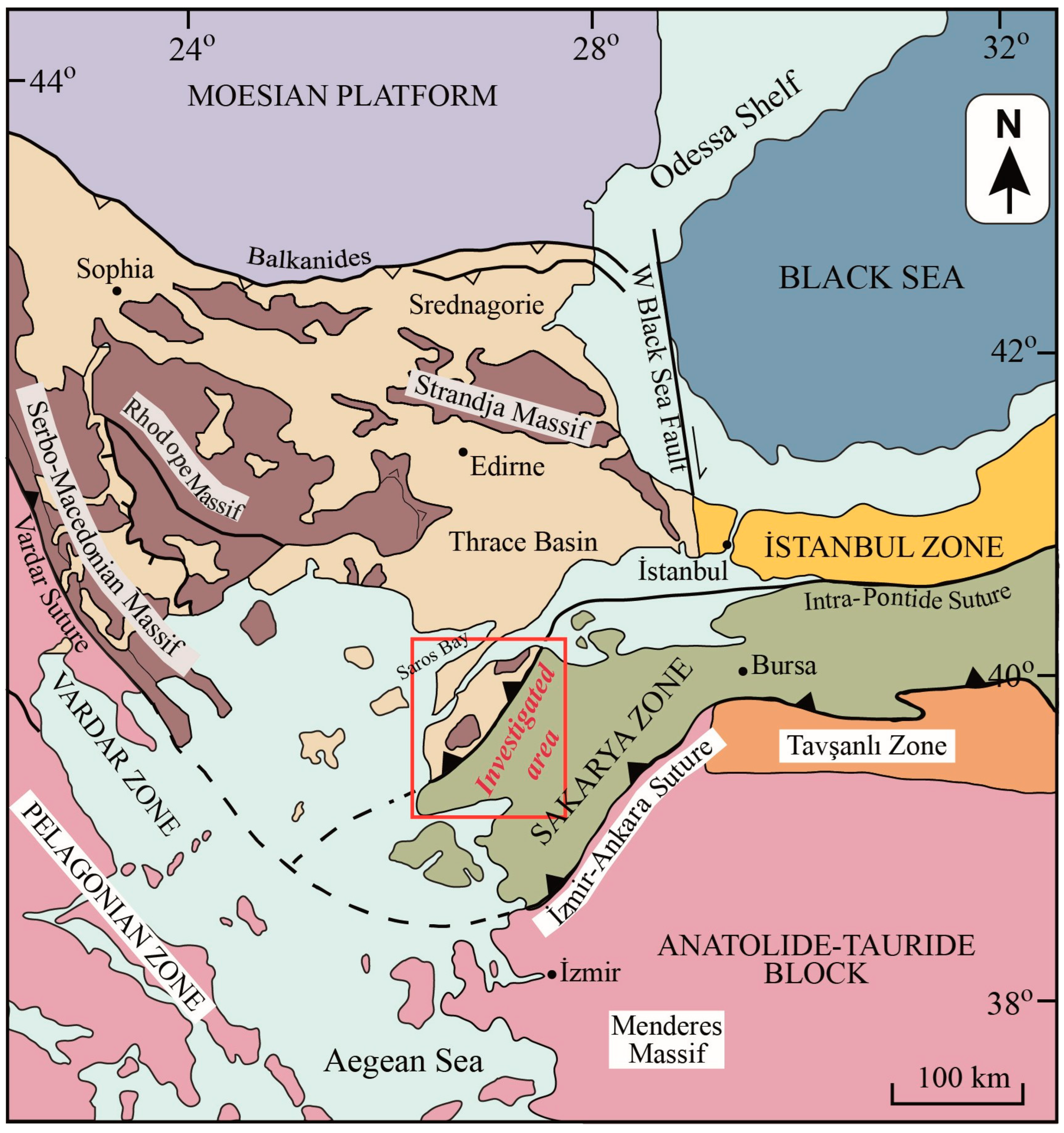
The collision of the Sakarya Continent with adjacent tectonic blocks, notably the Anatolide–Tauride platform, resulted in extensive magmatism in the region throughout the Cenozoic era. This magmatism is characterized by calc-alkaline to ultrapotassic volcanic and plutonic rocks, which are both temporally and spatially associated with extensional tectonics, particularly the formation of NE–SW trending graben systems [5,12]. These magmatic pulses also provided both heat and metallic resources that enabled the development of diverse ore deposits [13,14].
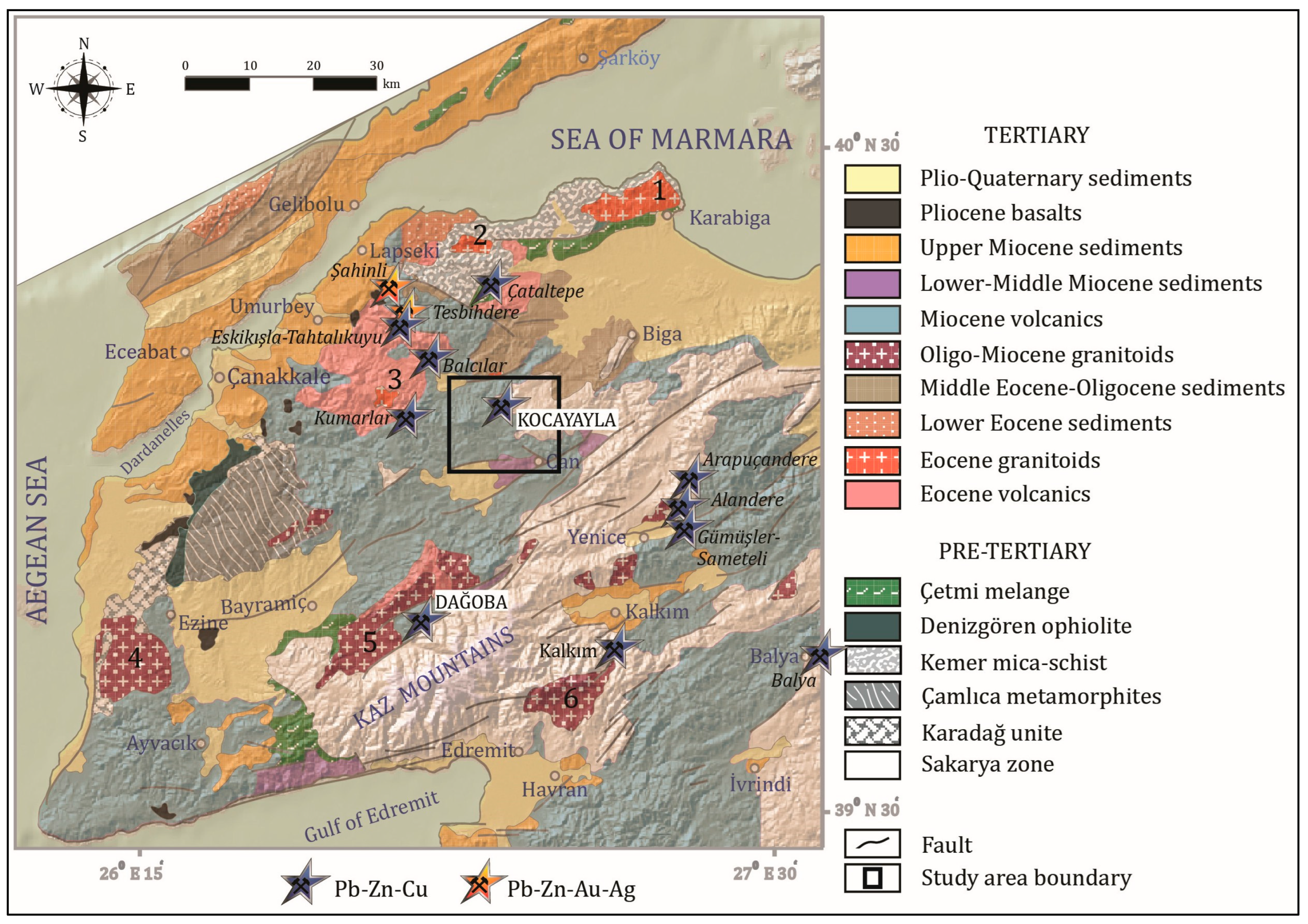
Türkiye, as part of the Tethyan Metallogenic Belt, has a wide range of mineral deposit types, including IOCG, skarn, porphyry, epithermal, and MVT–SEDEX systems [15,16,17,18,19,20,21,22,23,24,25,26,27,28,29]. The Biga Peninsula stands out as one of the country’s most significant metallogenic sub-regions, containing numerous Pb–Zn ± Cu ± Ag ± Au mineralizations that have been exploited since antiquity. A subset of these deposits is primarily associated with carbonate host rocks and exhibits alteration zones marked by calc-silicate mineral assemblages typical in distal skarn alteration (e.g., Balya, Çataltepe, Çatalakdere, Çulfaçukuru, Karaaydın, Bağırkaçdere, Fırıncıkdere, Halılar, and Dağoba). In contrast, other occurrences are characterized by alteration assemblages dominated by quartz ± barite, calcite, chlorite, and clay minerals, without calc-silicate phases, and are interpreted as intermediate-sulfidation epithermal systems hosted by volcanic and metasedimentary rocks (e.g., Alandere, Kozcağız-Tepetarla, Karadoru, Arapuçandere, Gümüşler-Sameteli, Eskikışla, Tahtalıkuyu, Tespihdere, Azıtepe, Şahinli, and Balcılar) [26,30,31,32,33] (Table 1).
Sulfur isotopes have been employed as a significant geochemical tracer to clarify the origin and evolution of ore-forming fluids in hydrothermal systems. Variations in δ34S signatures provide essential information into the nature of the sulfur reservoir, including magmatic, marine, and biologically cycled sources, as well as the main physicochemical and redox conditions during mineralization. In complex tectono-magmatic areas like the Biga Peninsula, Pb–Zn mineralizations correlate to various geological settings, involving contact metasomatic skarns and shallow epithermal environments [28,31,33]. The distinct mineralization types provide a significant framework for examining isotopic variability due to variations in geological setting, fluid sources, and physicochemical conditions. Systematic sulfur isotope characterization of sulfide and sulfate minerals from these deposits enhances our understanding of sulfur cycling within distinct hydrothermal regimes and supports the refinement of regional metallogenic models. Furthermore, comparative δ34S analysis across different deposit types enables the identification of dominant sulfur sources and the evaluation of their spatial and genetic associations for various mineralization styles.
Although numerous Pb–Zn ± Cu occurrences have been documented in the Biga Peninsula, the genetic interpretation of some of them remains uncertain, particularly for deposits lacking diagnostic calc-silicate alteration minerals. Such systems have been variably interpreted as distal skarn-related mineralization or as separate intermediate-sulfidation epithermal systems [24,28,34]. In addition, variations in metal associations, ranging from Au-poor Pb–Zn-dominated assemblages to locally Au-enriched polymetallic systems, have not been systematically evaluated within a genetic framework. This limitation partly reflects the scarcity of integrated datasets combining alteration mineralogy, whole-rock geochemistry, and sulfur isotope systematics, leaving sulfur sources and controls on metal enrichment, especially gold, insufficiently constrained at the regional scale.
Within this regional context, the Kocayayla Pb–Zn ± Cu vein-type mineralization provides a suitable example of a structurally controlled system developed along E–W- and NE–SW-trending fault zones, where gold-poor base-metal assemblages and the associated alteration patterns can be evaluated using an integrated geological, geochemical, and sulfur isotope approach. Accordingly, we address this gap by evaluating whether sulfur isotope systematics can discriminate among Au-poor and Au-rich epithermal systems and distal skarn-related mineralization, using this deposit as a case study.
Table 1.
The main characteristics of the Pb–Zn mineralizations in the Biga Peninsula (revised and expanded with new data from [27].
The aim of this study is to constrain the genetic classification of the Kocayayla Pb–Zn ± Cu mineralization within the metallogenic framework of the Biga Peninsula through the integration of detailed field observations, petrography and ore microscopy, X-ray diffraction (XRD) analyses of alteration assemblages, whole-rock geochemistry, and sulfur isotope data. These complementary datasets are employed to elucidate the hydrothermal processes and sulfur sources responsible for mineralization. In particular, sulfur isotope signatures are evaluated as a robust geochemical criterion for discriminating sulfur sources and refining genetic interpretations of vein-type Pb–Zn mineralization in the Biga Peninsula, as well as for helping to distinguish distal skarn from intermediate-sulfidation epithermal systems and gold-rich versus gold-poor polymetallic styles.
2. Materials and Methods
2.1. Mineralogy and Petrography
Thin and polished sections were prepared at the Thin Section and Polishing Laboratory affiliated with the Geological Engineering Department of Ankara University. These sections were examined using a Leica DM/LSP polarizing microscope, and comprehensive petrographic observations were documented. To highlight the mineral contents and textural characteristics, representative thin section images were taken.
Four ore-bearing and altered samples (KYG13-02, KYG13-04, KYG13-07, and KYY21-01) were sent to the ARGETEST Mineral Processing R&D Lab and Analysis Services (AGT) for semi-quantitative XRD analyses (XRD Qn analysis package) in order to identify alteration minerals, as some minerals could not be conclusively identified in thin and polished sections. The detailed information about collected samples and implemented methods is given in Supplementary Table S1. Analyses were performed at room temperature on representative powdered samples. Prior to analysis, samples were dried, crushed, and pulverized to <75 µm. XRD analyses were carried out using a Rigaku MiniFlex 600 diffractometer with Cu Kα radiation (40 kV, 30 mA). Data were collected over a 2θ range of 3–70° at a scanning rate of 0.02°/s using a vertical θ–2θ goniometer and a NaI (Tl) scintillation detector. Semi-quantitative phase abundances were obtained by Rietveld refinement using PDXL software. Mineral phases below ~2 wt.% may not be reliably detected. The results of the analyses are presented in Supplementary Table S2.
2.2. Geochemistry
Geochemical analysis was carried out on six samples of ore-bearing and altered rocks samples and eight samples of wall rocks (Supplementary Table S1). Three samples (KOC13-01, KOC13-02, and KYY13-05) were sent to Canadian Bureau Veritas Analysis Laboratories (ACME) for geochemical analysis, while eleven samples (KOC21-01, KOC21-03, KOC21-04, KOC21-06, KYG13-01, KYG13-02, KYG13-04, KYG13-06, KYG13-07, KYY21-01, and KYY21-02) were sent to AGT laboratories.
2.2.1. ACME Laboratories Methods
All samples were initially fragmented using a hammer and subsequently reduced to particle sizes smaller than 0.5 cm by a jaw crusher. The crushed material was then pulverized to <200 mesh using a Fritsch grinder. Approximately 20 g of the powdered samples were sealed in nylon bags and submitted to the ACME laboratories for major, trace, and rare earth element analyses by using LF200 and AQ200 commercial methods. For chemical preparation, the samples were fused with a LiBO2/Li2B4O7 flux in crucibles within a high-temperature furnace. The resulting cooled glass beads were dissolved in ACS-grade nitric acid and subsequently analyzed by ICP-ES for major element compositions and by ICP-MSS for trace element compositions. The method dedection limits (MDLs) were reported as 0.01% for major oxides with exceptions Fe2O3 (0.04%) and Cr2O3 (0.002%), 20 ppm for Ni, 8 ppm for V, 1 ppm for Ba, Be, Sn, Zn, and Sc, 0.5 ppm for Sr, W, As, Se, and Ga, 0.3 ppm for Nd, 0.2 ppm for Co and Th, 0.1 ppm for Cs, Rb, Zr, Mo, Cu, Pb, Ni, Cd, Sb, Bi, Ag, U, Y, Tl, La, and Ce, 0.05 ppm for Sm, Gd, Dy, and Yb, 0.03 ppm for Er, 0.02 ppm for Pr, Eu, and Ho, 0.01 ppm for Tb, Tm, Lu, and Hg, and 0.05 ppb for Au. Loss on ignition (LOI) was evaluated by igniting a split of each sample and calculating the corresponding mass loss. The analytical results obtained from ACME laboratories, together with the associated QC data, are presented in Supplementary Table S3.
2.2.2. AGT Laboratories Methods
After the eleven samples were sent to AGT laboratories, the weight of the samples with the system record opened were taken and dried at 80 °C in a controlled manner. The entire sample was crushed in a laboratory jaw crusher so that <2 mm constitutes 70% (Terminator). Depending on the selected grinding package, the sample was divided using a riffle splitter and a grinding sample is taken. The remaining sample was pressed so that it does not come into contact with air or was tied up and archived. A crush quality control (QC) sample was taken every 20 samples. Crushers were cleaned with pure quartz and air after each crushing operation. The portion to be ground varies according to the selected sample preparation package, being 500 g for PREP70-500 and 1000 g for PREP70-1000. The sample taken for grinding was ground in chrome steel (ceramic upon request) pots with disk grinders to a particle size of 85% −75 μm. A Pulv. QC sample was taken every 20 samples. The pots were cleaned with pure quartz and air after each sample grinding process. Two quartz samples were taken before each batch grinding, and these samples were also sent for analysis. A master pulp sample was taken homogeneously from the pulped sample (in a non-magnetic envelope and paper bag), placed in sealed packages, and sent to the relevant unit for rock pulp chemical analysis. In the laboratory, the samples were analyzed using the XRF method (XRF WR-01 analysis package) for major element compositions and the ICP-MS for trace element (GAR 05 analysis package) and rare earth element (REE) (GAR 07 analysis package) compositions. Approximately 10–100 g of sample was collected, and 75% of the sample, ground to a grain size of −75 μm, was pressed into aluminum caps under a pressure of 40 tons for 3–15 s using a hydraulic press to form flat-surfaced disks. These disks were then placed into an XRF spectrometer. The intensities of fluorescent X-rays emitted by the elements in the sample were measured, and the major element composition of the sample was obtained by applying calibration curves, equations, and corrections based on inter-element interactions. An aliquot of the sample previously prepared for trace element and REE analysis was weighed into Teflon vessels. The sample was digested by the successive addition of HF, HClO4, HCl, and HNO3 acids at specific time intervals on a heating plate. The completely dissolved sample was transferred to a volumetric flask, diluted, and the concentrations of elements included in the analytical package were determined using an ICP-MS instrument. For the determination of LOI, a pre-weighed aliquot of each sample was placed in a pre-tared porcelain crucible and heated at 1000 ± 50 °C until a constant mass was attained. Following heating, the crucible containing the residue was allowed to cool and subsequently reweighed. MDLs were 0.01% for major oxides; 0.5 ppm for Ba, V, Zr, Cu, Pb, Zn, Ni, As, Bi, Se, Ga, Th, U, Sc, Tl, La, Gd, Tb, Dy, Ho, Er, Yb, and Lu; 0.2 ppm for Be and Cd; 0.3 ppm for Co, Mo, and Ce; 1 ppm for Sn, Sr, W, Sb, Y, Pr, Sm, and Tm; and 0.1 ppm for Ag. The LOI value was then calculated based on the mass difference between the initial and final measurements. The analytical results obtained from AGT laboratories, together with the associated QC data, are presented in Supplementary Table S4.
2.3. Sulfur Isotope
Sulfur isotope analyses of the selected samples were performed at the University of Arizona (USA), Environmental Isotope Laboratory (Supplementary Table S1). δ34S values were measured in the laboratory on a continuous-fluid gas ratio mass spectrometer (ThermoQuest Finnigan Delta PlusXL). Samples were calcined at 1030 °C. An elemental analyzer (Costech) using C and O2 and V2O5 was paired with the mass spectrometer. Standards were based on many other sulfide and sulfate materials compared between laboratories and international standards such as OGS-1 and NBS123. The calibration is linear in the range of −10 to +30 per mil. Accuracy is approximately ±0.15 or better (1 s).
3. Results
3.1. Geological Framework
3.1.1. Regional Geological Setting
Western Anatolia is shaped by a series of tectonic processes, characterized by nearly parallel suture zones and continental blocks that are segmented by ophiolitic assemblages. The northwestern Anatolia is defined by four major basement tectonic units arranged from northwest to southeast: the Rhodope Massif, IPSZ, the Sakarya Continent, and IASZ [1,4].
The Biga Peninsula, from bottom to top, includes the following principal geological units: (1) Kazdağ Massif: medium- to high-grade metamorphic rocks, Çamlıca metamorphic sequence, and Kemer mica schist; (2) segments of the Karakaya Complex seen only in the easternmost part of the region; (3) the Middle Cretaceous Çetmi melange associated with accretionary processes; (4) the Denizgören ophiolite (Lower Cretaceous) which tectonically overlies the Ezine Zone; and (5) Cenozoic igneous rocks and sedimentary formations [4,5,61]. These units are bounded by recent tectonic features, including normal faults, low-angle mylonitic shear zones, and extensional detachments that are part of the North Anatolian Fault system (Figure 2) [4,8].
In the Biga Peninsula, the Çamlıca metamorphic sequence, which constitutes a significant part of the Rhodope Massif [4], is observed in the northwestern sections of Ezine and Karabiga. These sequences and the Sakarya continent are separated by a steep fault zone that transects the ophiolitic remnants belonging to IPSZ [4,10]. Geological formations associated with the Sakarya Continent are exposed in the eastern part of the Ayvacık–Karabiga region. The basement of the Sakarya Continent is made up of two primary rock units: (1) Paleozoic continental metamorphic rocks (Kazdağ Massif) and (2) Permo-Triassic metamorphic units of the Karakaya Complex, which tectonically overlie the older Paleozoic basement [62,63]. Younger formations within the Sakarya Continent consist primarily of post-Triassic metasedimentary successions (Figure 2) [63].
IPSZ originated from the collision between the Sakarya Continent and the Rhodope Massif [2,4,64]. During the Cretaceous period, these continental masses were subducted within a north-dipping zone [1]. Before deposition of the Upper Campanian–Maastrichtian undeformed sedimentary cover, these tectonic units amalgamated into a complex mosaic [65]. IASZ characterizes the collision boundary between the Anatolide–Tauride platform and the Sakarya Continent [1]. The northern arm of the Neo-Tethys Ocean that once lay between these tectonic domains was completely subducted in a northward direction underneath the Sakarya Continent before the Middle Eocene period [2,66]. Following this collision, the Sakarya-derived units and the Bornova flysch were unconformably overlain by terrestrial and shallow marine sequences in the Middle Eocene. This stratigraphic superposition confirms that the collision event was completed in the Middle Eocene [67] (Figure 2).
Cenozoic rocks cropping out in the Biga Peninsula consist of sedimentary cover sequences, volcanic units, and intrusive bodies (Figure 2). Volcanism in the Peninsula began during the Late Paleocene, post-dating the collision of the Anatolide–Tauride blocks with the Sakarya Continent [4,68]. Volcanic products ranging in age from the Middle Eocene to the Middle Miocene exhibit mainly calc-alkaline characteristics, whereas those from the Late Miocene to Pliocene show ultrapotassic to sodic-alkaline affinities. The former group is linked to subduction-related processes, while the latter is attributed to the Aegean extensional regime [5] (Figure 2). Volcanic and plutonic activity during the Eocene–Miocene is widespread throughout NW Anatolia, e.g., [13,69,70].
The second pulse of magmatism, dated to the Late Oligocene–Early Miocene, is represented by granitoid intrusions and contemporaneous volcanics with compositions similar to earlier Eocene magmatism [71]. Granitoids in the Biga Peninsula fall into two chronological groups: Eocene and Oligo-Miocene [72,73,74]. Eocene granitoids such as Karabiga, Gürece, and Kuşçayırı are located in the northwestern part, while Oligo-Miocene intrusions such as Kestanbol, Bayramiç-Evciler, and Eybek occur in the southeastern parts of the Peninsula. Notably, the younger granitoids are spatially aligned with NE–SW striking faults that bound extensional grabens in the region (Figure 2).
Figure 2.
Simplified geological map and main Pb–Zn ± Cu ± Au ± Ag occurrences of the Biga Peninsula (1–Karabiga 2–Gürece, 3–Kuşçayır, 4–Kestanbol, 5–Bayramiç-Evciler, and 6–Eybek granitoids) (modified after Refs. [34,63,69,75,76]).
3.1.2. Local Geology
The basement of the study area is represented by the Paleozoic Palamut phyllite member, which corresponds to the upper levels of the Çamlıca metamorphics and consists of phyllite with marble lenses interlayered with mica–graphite ± chlorite ± epidote schists. These basement units are unconformably overlain by andesite, basaltic andesite, pyroclastic, and volcaniclastic rocks of the Middle Eocene Şahinli formation, together with basalt, sandstone, and claystone units of the Bilaller member within the Şahinli formation. These units are unconformably overlain by turbiditic sandstone, marl, mudstone, limestone, and reef limestone of the Upper Eocene Ceylan Formation, which is transitional with the Korudere Ignimbrite Member represented by ignimbrites and lapilli tuffs [77,78] (Figure 3).
Figure 3.
Geological map of Kocayayla Pb–Zn ± Cu deposit and surrounding [77,78].
The Oligocene–Miocene Doğaca granitoid, composed of granodiorites–quartz diorites, intrusively cuts the Palamut phyllite member. This unit is unconformably overlain by the Lower Miocene Çan formation, consisting of lacustrine conglomerate, sandstone, mudstone, limestone, and marl alternations locally containing coal, together with andesite, trachyandesite, and pyroclastic rocks of the Lower Miocene Ezine volcanics, which are transitional with each other. The Çan Formation and the Ezine volcanics are unconformably overlain by rhyolite, perlite, ignimbrite, and tuff of the Middle Miocene Işıkeli rhyolite. These units are in turn unconformably overlain by fluvial conglomerate, sandstone, mudstone, and siltstone of the Pliocene Bayramiç formation. All rock units are unconformably covered by Quaternary alluvial deposits [77,78] (Figure 3).
In the Kocayayla Pb–Zn ± Cu deposit and its vicinity, the predominant lithologies include sericite–graphite schist, andesite, basaltic andesite, and granodiorites–quartz diorites (Figure 3 and Figure 4). Sericite–graphite schists are dark gray to black in color and display well-developed schistosity in outcrop. Thin section observations reveal a strongly foliated fabric defined by alternating graphite-rich bands and quartz–sericite layers. Graphite occurs as fine, fibrous, or thread-like aggregates that are aligned parallel to the schistosity planes (Figure 4b,c). These aggregates impart the rock’s characteristic dark coloration. Quartz is fine- to medium-grained and commonly exhibits undulatory extinction (Figure 4b). It forms the main framework of the schist together with sericite. Sericite is extremely fine-grained and anhedral and occurs intergrown with quartz and graphite within the foliated matrix (Figure 4b). In addition to matrix quartz, secondary quartz fills veinlets and microfractures that crosscut the schistosity. There, it commonly occurs as relatively coarse-grained crystals. These veinlets are locally associated with minor calcite. Occasionally, very fine-grained opaque minerals are observed, typically aligned parallel to the foliation planes. Chlorite and epidote are either absent or present only in trace amounts, failing to constitute rock-forming phases in the studied schists.
Figure 4.
(a) General view of sericite–graphite schists in the field, (b,c) thread-like graphite, fine-grained quartz and sericite within sericite–graphite schist (plane-polarized and cross-polarized light), (d) general view of andesite, (e,f) altered andesite with large plagioclase phenocrysts (plane-polarized and cross-polarized light), (g) general view of intensely weathered granodiorite, (h,i) equigranular quartz, orthoclase, hornblende, and biotite assemblage in granodiorites. (Abbreviations: Bi: biotite, Grp: graphite, Hbl: hornblende, Op: opaque mineral, Or: orthoclase, Plg: plagioclase, Qtz: quartz, Ser: sericite).
The andesites and basaltic andesites in the study area often exhibit a color range from pinkish to dark gray and usually have a porphyritic structure (Figure 4d). Their principal mineral content is characterized by plagioclase, amphibole, and pyroxenes, accompanied by minor quantities of biotite. These altered volcanic rocks locally contain enclaves. Plagioclase is the most abundant mineral phase and exhibits compositions ranging from andesine to labradorite, as estimated using the Michel–Lévy method. Most plagioclase crystals are affected by sericitization. Mafic minerals are represented by amphibole (hornblende) and pyroxenes, some of which occur as euhedral crystals. The groundmass is composed of volcanic glass and microlites; however, due to the extremely fine grain size and pervasive alteration, its textural characteristics could not be distinctly identified. Biotite occurs in minor amounts together with amphibole and pyroxenes, and the crystals are observed to be partially to completely opacitized. Minor amounts of disseminated opaque minerals are also present (Figure 4e,f).
Granodiorites–quartz diorites are gray in the field and display a holocrystalline, medium- to coarse-grained granular texture (Figure 4g). In outcrop scale, they are commonly locally weathered and may contain mafic enclaves. The mineral assemblage is dominated by plagioclase and quartz, accompanied by subordinate K-feldspar, biotite, and amphibole. Plagioclase is the most abundant mineral phase, exhibiting as medium- to coarse-grained crystals and frequently displaying polysynthetic twinning. Optical determinations utilizing the Michel–Lévy method indicate that plagioclase compositions vary from oligoclase to andesine. Inclusions of biotite and hornblende are locally observed within plagioclase crystals. Both plagioclase and K-feldspar are frequently affected by sericitization and, to a lesser extent, kaolinization. Quartz occurs as medium- to coarse-grained, anhedral crystals and shows undulatory extinction. Mafic minerals are mainly represented by hornblende and biotite. Hornblende is identified by its green color, strong pleochroism, and characteristic cleavage, whereas biotite forms platy crystals with light to dark brown pleochroism and perfect basal cleavage; some biotite grains show partial chloritization. Pyroxene is rare and occurs as colorless, euhedral to subhedral relic crystals, commonly exhibiting two cleavages and low to moderate interference colors, and locally altered to uralite. Disseminated opaque minerals are occasionally associated with biotite and hornblende. Accessory phases include apatite, zircon, and sphene (Figure 4h,i).
3.1.3. Wall Rock, Structure, Alteration and Mineralization
Mineralization is observed mainly within intensely silicified andesites and basaltic andesites as well as schist. In the underground mine workings, sericite schists and sericite–graphite schists occur beneath the volcanic sequence, and these metamorphic units are overlain by andesites and basaltic andesites. An abandoned gallery is developed along a vein approximately 1.5–2 m thick. Mineralization is mainly observed within strike-slip faults trending approximately E–W, which locally display a vertical component. Faults trending NE–SW have been identified in both volcanic and metamorphic rock units and are locally crosscut by younger, barren veins (Figure 5a–d).
Figure 5.
(a) Old gallery bounded by a fault trending N70°E, (b) coarse-grained sulfide ores, (c) disseminated pyrite and chalcopyrite within a quartz vein, (d) faults cutting through volcanic and metamorphic rocks, containing fine-grained disseminated ore, and a younger barren vein crosscutting these structures.
Silicification and chloritization are prevalent in the vicinity of the veins and mineralized zones, with chloritization being particularly intense in areas characterized by brecciated ore textures. XRD analyses reveal the presence of two principal alteration zones. The first zone corresponds to phyllic to argillic alteration assemblage and is characterized by the association of sericite, quartz, kaolinite and/or nacrite, and pyrite. The second alteration zone is defined by a propylitic alteration assemblage comprising chlorite, calcite and/or dolomite, quartz, and pyrite (Supplementary Table S2). The occurrence of kaolinite within this zone is limited and is interpreted as a local overprint related to late-stage hydrothermal fluid activity rather than a primary component of the propylitic assemblage.
Mineralization occurs as coarse-grained sulfide crystals hosted by intensely silicified volcanic rocks and as disseminated sulfide phases within quartz veins. Ore microscopy indicates hypogene mineralization composed of galena, sphalerite, pyrite, chalcopyrite, fahlore-group minerals (tetrahedrite and tennantite), and magnetite. At the macroscopic scale, the ore assemblage is dominated by galena, sphalerite, pyrite, and chalcopyrite, whereas bornite and enargite are rare and occur locally.
Galena commonly occurs as medium- to coarse-grained, euhedral crystals, locally exceeding 2 mm in size (Figure 6a). Textural relationships show that galena locally surrounds chalcopyrite, while in some cases galena itself is enclosed by magnetite. Partial replacement of galena by cerussite is observed in several grains (Figure 6b), and in some samples the altered portions exceed the preserved primary galena.
Figure 6.
(a) Association of galena, sphalerite, and chalcopyrite, (b) cerussite alteration in galena, (c) association of chalcopyrite, tetrahedrite, pyrite, and sphalerite, and chalcopyrite exsolution in sphalerite, (d) euhedral garnet grains in galena and sphalerite, and pyrite inclusions in tetrahedrite, (e) formation of supergene pyrolusite, (f) sphalerite and chalcopyrite inclusions within galena (Please see Table 1 for the mineral abbreviations).
Sphalerite occurs over a wide grain-size range, from fine- to coarse-grained, and is generally subhedral. It commonly forms intergrowths with galena. Two textural varieties are distinguished: sphalerite with chalcopyrite exsolution textures (Cpy-I) and sphalerite lacking such textures (Cpy-II) (Figure 6c). Partial supergene alteration of sphalerite to smithsonite is locally present.
Pyrite occurs as disseminated (Py-I) and skeletal (Py-II) varieties. Disseminated pyrite forms fine- to coarse-grained, euhedral crystals up to 1.5–2 mm in size (Figure 6d) and is commonly observed as inclusions within galena, sphalerite, and quartz, or enclosed by sphalerite and galena (Figure 6f). Skeletal pyrite is typically coarser, displays irregular and strongly deformed textures (Figure 6e), and is locally replaced by galena. Fractures within skeletal pyrite commonly show sieve-like textures filled by quartz and calcite.
Chalcopyrite is one of the least abundant sulfide minerals in the studied sections. It occurs as fine-grained, subhedral to anhedral crystals, either as exsolution lamellae within sphalerite (Cpy-I) or as crosscutting grains, inclusions, and locally coarse-grained crystals (Cpy-II) (Figure 6c,f). Chalcopyrite–sphalerite intergrowths are common. Chalcopyrite also occurs as inclusions within galena, locally surrounds and replaces galena, and fills fractures within galena. Very fine-grained chalcopyrite is occasionally observed as inclusions within fahlore.
Fahlore minerals occur as fine- to medium-grained crystals and are commonly associated with chalcopyrite, galena, and sphalerite (Figure 6d). Both tetrahedrite and tennantite are present, with tennantite being the dominant variety. Inclusions of chalcopyrite and pyrite are frequently observed within fahlore grains.
Supergene minerals identified in the studied sections include cerussite, smithsonite, pyrolusite, and limonite. Quartz, calcite, and barite, as the gangue minerals, are generally seen together in ore veins. Quartz is mostly semi-euhedral to euhedral and medium- to coarse-grained. Calcite is observed as semi-euhedral and coarse-grained, typically seen with pressure twins. Barite is generally fine- to medium-grained and semi-euhedral. Barite, especially when observed together with euhedral quartz in ore veins, is mostly observed in a rod-like form. The paragenetic sequence diagram is given in Figure 7 for the Kocayayla mineralization.
Figure 7.
Paragenetic sequence diagram of the Kocayayla Pb–Zn ± Cu deposit.
3.2. Geochemistry
3.2.1. Geochemical Classification
The major oxide, trace element, and rare earth element (REE) compositions of ore samples and the associated wall rocks (metamorphic, volcanic and plutonic rocks) from the Kocayayla Pb–Zn mineralization are presented in Supplementary Table S2. The schist samples display low to moderate SiO2/Al2O3 ratios and variable Fe2O3/K2O ratios, and are mainly distributed within the shale and Fe-shale fields (Figure 8a). Volcanic rock samples show a limited distribution characterized by low Nb/Y and Zr/Ti ratios and plot within the andesite, basaltic andesite, and basalt fields (Figure 8b). Plutonic rock samples are characterized by moderate to high SiO2 contents and variable total alkali concentrations and plot across the syenitic to quartz diorite–granodiorite fields on the SiO2 − Na2O + K2O diagram; however, they are described as having a granodiorite–quartz diorite composition based on petrographic observations. This discrepancy likely reflects hydrothermal alteration and/or K-metasomatism. Such secondary processes may have modified the total alkali content of the rock, shifting its composition toward more alkali-rich field in the SiO2 vs. Na2O + K2O diagram (Figure 8c). Volcanic rock samples are predominantly located above the boundary separating the tholeiitic and calc-alkaline series and within the calc-alkaline field, whereas plutonic rock samples plot within the calc-alkaline series field (Figure 8d). Both volcanic and plutonic rock samples fall within the metaluminous field and exhibit A/CNK ratios below 1 (Figure 8e).
Figure 8.
(a) log(SiO2/Al2O3) vs. log(Fe2O3/K2O) diagram [79], (b) Nb/Y vs. Zr/Ti diagram [80], (c) SiO2 vs. Na2O + K2O diagram [81], (d) AFM diagram [82], (e) Al2O3/CaO + Na2O + K2O (A/CNK) vs. Al2O3/Na2O + K2O (A/N) diagram [83].
3.2.2. Geochemical Composition
To evaluate trace element behavior across different lithologies, volcanic rocks were normalized to the andesite reference compositions of [84,85], whereas plutonic rocks and schists were normalized to the low-Ca granitic rock and shale reference values of [84], respectively (Table 2, Figure 9a). Rare earth element distributions were assessed using chondrite-normalized values after Ref. [86] (Figure 9b). In addition, relationships between total REE contents (ΣREE) and fractionation and anomaly parameters (ΣREE–(Pr/Yb)cn, ΣREE–Ce/Ce*, ΣREE–Eu/Eu*) are illustrated in Figure 10a–c.
Table 2.
Reference rock values used in this study.
Figure 9.
(a) Multi-element (spider) diagram normalized to reference rocks, (b) REE patterns normalized to Ref. [86] chondrite (gray area: ore zone).
Figure 10.
(a) ΣREE–(Pr/Yb) cn, (b) ΣREE–Ce/Ce*, (c) ΣREE–Eu/Eu* relationships.
Major Oxide Composition
Volcanic wall rocks (andesite–basaltic andesite) are characterized by SiO2 contents of 45.86–46.28 wt%, Al2O3 of 17.07–18.39 wt%, Fe2O3(t) of 7.79–9.09 wt%, CaO of 9.24–10.39 wt%, Na2O of 2.82–3.98 wt%, and K2O of 1.47–1.81 wt%. Granodiorite samples display SiO2 concentrations ranging from 58.79 to 67.43 wt%, Al2O3 from 15.76 to 17.30 wt%, Fe2O3(t) from 2.42 to 5.41 wt%, CaO from 4.17 to 6.67 wt%, Na2O from 3.15 to 4.15 wt%, and K2O from 2.24 to 6.75 wt%. Graphite schist samples show a lot of variation in their composition. SiO2 ranges from 25.46 to 67.06 wt%, Al2O3 from 8.70 to 14.23 wt%, Fe2O3(t) from 3.15 to 10.30 wt%, CaO from 2.52 to 23.81 wt%. Ore samples display very broad ranges in major oxide contents, including SiO2 = 31.16–65.26 wt%, Al2O3 = 12.56–24.33 wt%, Fe2O3(t) = 2.01–15.60 wt%, CaO = 0.24–20.03 wt% (Supplementary Tables S3 and S4).
Trace Element Composition
Volcanic wall rocks contain relatively low base-metal concentrations, with Cu = 1.6–4.6 ppm, Pb = 2.1–15.7 ppm, Zn = 87.0–104.8 ppm, and As = 0.8–9.5 ppm. Granodiorite samples yield Cu = 7.5–9.9 ppm, Pb = 3.9–84.5 ppm, Zn = 35.0–64.8 ppm, and As = 0.2–7.8 ppm. In contrast, graphite schist samples locally display elevated base-metal contents (Pb = 48.1–149.0 ppm, Cu = 18.4–92.2 ppm, Zn = 62.0–117.8 ppm, As = 3.0–61.3 ppm). Ore samples are characterized by pronounced enrichment in base metals and associated elements, including Pb = 25.3–33,200 ppm, Zn = 116.6–9151.5 ppm, Cu = 6.4–601.1 ppm, As = 0.2–76.5 ppm, as well as elevated Cd (0.10–36.84 ppm), Sb (0.50–34.86 ppm), and Ag (0.05–7.46 ppm) (Supplementary Tables S3 and S4).
REE Composition
REE data are presented in Supplementary Tables S3 and S4, and chondrite-normalized patterns are shown in Figure 9. Volcanic wall rocks display ΣREE values of 73.0–98.4 ppm with (Pr/Yb)cn ratios of 2.34–2.92, whereas granodiorite samples show a wider ΣREE range (66.5–432.0 ppm) and higher (Pr/Yb)cn values (3.79–8.65). One plutonic sample (KOC21-01) shows an anomalously high LREE signal (La–Ce–Pr) relative to the other plutonic rocks. This outlier is most plausibly controlled by heterogeneously distributed REE-bearing accessory phases (e.g., allanite/monazite ± apatite/titanite), consistent with its comparatively elevated P2O5 and Th–U contents. Graphite schists yield ΣREE values of 109.2–118.5 ppm and (Pr/Yb)cn ratios of 5.29–7.51 (Figure 10a). Ore samples show ΣREE contents of 45.0–101.9 ppm and (Pr/Yb)cn ratios of 1.76–4.52, overlapping with but generally lower than those of the wall rocks (Figure 10a). Ce/Ce* values cluster around unity for all lithologies (volcanic rocks: 0.94–0.95; granodiorite: 0.94–0.99; graphite schist: 0.97–1.06; ore: 0.90–1.02), indicating the absence of significant Ce anomalies (Figure 10b). Eu/Eu* ratios range from 0.98 to 1.00 in volcanic rocks, 0.60–0.94 in granodiorite, 0.65–0.75 in graphite schist, and 0.66–1.06 in ore samples (Figure 10c, Supplementary Tables S3 and S4).
The chondrite-normalized REE patterns of ore samples (gray field in Figure 9b) fall very close to the compositional envelope of the volcanic wall rocks.
Overall, the studied rock groups display broadly similar chondrite-normalized patterns characterized by LREE enrichment relative to HREE and weak to moderate negative Eu anomalies. Volcanic, plutonic, and schist samples share comparable overall fractionation trends, indicating broadly related crustal source characteristics. The main differences are expressed in the absolute enrichment levels, with some plutonic samples showing stronger LREE enrichment, whereas schists generally display smoother and more uniform patterns. Despite minor variations, the overall geochemical signatures indicate a consistent regional geochemical affinity among the studied lithologies.
3.3. Stable Isotope
Sulfur Isotope
The frequency histogram and variation ranges of δ34S sulfur isotope values that belong to the western part of the Biga Peninsula [34,56,87] are shown in Figure 11, and the δ34S isotope compositions are shown in Table 3.
Figure 11.
(a) Frequency histogram showing the regional distribution of samples analyzed for sulfur isotopes, (b) variation ranges of sulfur isotope values (n: number of samples).
Table 3.
Sulfur isotope values of the Pb–Zn deposits in the western part of the Biga Peninsula (* Ref. [26]: average homogenization temperature of sphalerite-I fluid inclusions, ** Ref. [34]: average homogenization temperature of sphalerite-I fluid inclusions) (n.i.e.,: not in equilibrium).
Upon examining the sulfur isotope results, most of the samples—excluding those from the Balcılar mineralization—fall between approximately −3.0‰ and +3.0‰. The sulfur isotope ratios for the Dağoba mineralization range from −1.1‰ to −3.2‰ (average −2.5‰), while those of the Kocayayla mineralization vary between −0.6‰ and +5.9‰ (average +1.8‰). The sulfur isotope values of sulfide minerals from the Koru mineralization range between −5.2‰ and −0.1‰ (avg. −2.8‰), whereas the values for galena from the Balcılar mineralization lie between −11.9‰ and −10.4‰ (avg. −11.2‰). Sulfide minerals from the Çataltepe mineralization show δ34S values ranging from −0.5‰ to +1.5‰ (avg. +0.7‰).
Among the Pb–Zn mineralizations in the Biga Peninsula, barite has been identified only in the Koru [56] and Balcılar [87] deposits. No sulfate minerals have been reported in other mineralizations. The sulfur isotope values of barite range from +14.9‰ to +17.3‰ (avg. +16.47‰) for the Koru mineralization, and from +13.3‰ to +19.5‰ (avg. +15.82‰) for the Balcılar mineralization.
4. Discussion
4.1. Mineralization Style
At Kocayayla, Pb–Zn ± Cu mineralization is concentrated within intensely silicified and chloritized zones of andesites and basaltic andesites as well as schists developed along E–W-trending faults, where alteration zoning transitions from propylitic to phyllic–argillic assemblages. The main ore stage, dominated by sphalerite and galena with subordinate chalcopyrite, is closely associated with this transitional alteration domain, whereas supergene processes locally produced cerussite, smithsonite, and limonite. In the Kocayayla mineralization, (i) the dominance of sphalerite–galena ± chalcopyrite assemblages, (ii) the presence of quartz–sericite ± chlorite alteration without the accompaniment of advanced argillic minerals, (iii) the absence of mineral assemblages such as alunite–pyrophyllite that are characteristic of high-sulfidation epithermal systems, (iv) the lack of calc-silicate parageneses typical of skarn systems, (v) the development of mineralization along structurally controlled trends, and (vi) the localization of mineralization within andesitic–basaltic andesitic volcanic and schist host rocks together indicate that the ore-forming system can be classified as an intermediate-sulfidation epithermal Pb–Zn mineralization (Figure 7).
4.2. Element Behaviors and Effects on Mineralization
The trace element geochemistry of the Kocayayla vein-type Pb–Zn ± Cu mineralization provides important constraints on element mobility, fluid–rock interaction, and the processes controlling metal concentration. As demonstrated in the Results section (Figure 9a), ore samples are strongly enriched in Pb and Zn, accompanied by elevated Cd, Sb, Ag, and locally Cu, whereas the wall rocks (volcanic rocks, granodiorite, and schist) display significantly lower and more restricted concentration ranges for these elements. Such element associations and enrichment patterns are characteristic of hydrothermal vein-type Pb–Zn systems, in which base metals are transported as chloride- and bisulfide-complexes and precipitated in structurally controlled conduits [88,89].
The pronounced enrichment of Pb relative to other base metals, together with the persistent association of Zn and subordinate Cu, reflects the dominance of galena–sphalerite ± chalcopyrite mineralization within the Kocayayla veins. Experimental data and observations from some other hydrothermal systems indicate that Pb and Zn can be transported more efficiently than many lithophile elements in moderate-temperature hydrothermal fluids, producing sharp geochemical contrasts between ore and host rocks [89]. The co-enrichment of Cd, Sb, and Ag in the ore samples further supports a hydrothermal origin, as these elements commonly substitute into galena and sphalerite lattices or occur as minor sulfosalt phases in vein-type Pb–Zn deposits [88]. The enrichment of Cd, Ag, and Sb in sphalerite and associated sulfides is consistent with experimentally and empirically documented trace element incorporation mechanisms in Zn sulfides, where Cd commonly substitutes for Zn in solid solution, whereas Ag and Sb are accommodated through coupled substitutions or occur as nanoscale sulfosalt inclusions [90,91]. Such chalcophile element partitioning reflects evolving hydrothermal fluid composition and temperature-dependent incorporation during sulfide growth.
In contrast, elements such as Zr, Nb, Th, and Y, which are commonly considered relatively immobile during hydrothermal alteration, show limited variation between ore and wall-rock samples and display near-flat patterns in reference-normalized spider diagrams (Figure 9a). This behavior indicates that these elements largely preserve the primary lithological signature of the host rocks and were not significantly redistributed during mineralization. This difference reflects that base metals were selectively enriched during hydrothermal mineralization, whereas numerous lithophile elements maintained their background lithological signatures [88,89]. However, it is crucial to remember that even elements that are commonly assumed to be immobile (such as Zr) can be affected by hydrothermal conditions. This emphasizes the importance of examining these trends within a normalized, comparative perspective [92]. The Kocayayla dataset suggests that such effects were minor compared to the pronounced enrichment observed for Pb–Zn and associated metals (Supplementary Tables S3 and S4).
Schist wall rocks locally exhibit elevated Pb, Zn, and As concentrations relative to volcanic and granodioritic wall rocks (Supplementary Tables S3 and S4), indicating that these lithologies were more susceptible to hydrothermal metal uptake. This behavior can be attributed to increased permeability along foliation planes and enhanced fluid–rock interaction in schists, a feature commonly reported from structurally controlled vein systems [88]. Nevertheless, the absence of systematic alteration zoning and the irregular distribution of metal enrichment suggest that mineralization at Kocayayla was controlled primarily by localized fracture and vein networks rather than by regionally extensive metasomatic halos.
Trace element systematics demonstrate that base-metal enrichment at Kocayayla resulted from selective hydrothermal transport and precipitation superimposed on largely unmodified lithological backgrounds. This decoupling between metal-rich elements and largely immobile lithophile elements is a defining characteristic of vein-type hydrothermal Pb–Zn mineralization [88,89].
4.3. REE Source(s) of Ore and Host Rocks
REE data provides additional constraints on the source characteristics of the hydrothermal system and its interaction with the host rocks (Supplementary Tables S3 and S4). As presented in the Geochemistry section, both ore and wall-rock samples display broadly similar chondrite-normalized REE patterns, characterized by LREE-enriched trends and relatively flat HREE segments (Figure 9b and Figure 10). Importantly, the REE patterns of ore samples plot entirely within the compositional envelope defined by the volcanic wall rocks (Figure 9b), indicating that REE distributions were largely inherited from the host lithologies rather than introduced by the mineralizing fluids.
The similarity of ΣREE contents and (Pr/Yb)cn ratios between ore samples and volcanic wall rocks (Figure 10a) suggests that the hydrothermal fluids responsible for Pb–Zn mineralization were REE-poor and did not significantly modify the primary REE budget of the host rocks. In hydrothermal vein systems, REE are commonly characterized by limited mobility and tend to reflect protolith composition unless fluid–rock interaction is exceptionally intense or fluid chemistry is highly unusual [88,93].
Ce/Ce* ratios close to 1 for all lithologies (Figure 10b) indicate the absence of pronounced Ce anomalies and suggest that redox conditions during fluid circulation were insufficient to cause significant Ce fractionation. Although strong Ce anomalies may develop in oxidizing and/or alkaline aqueous environments [93,94], such conditions are not indicated by the Kocayayla dataset (Supplementary Tables S3 and S4).
Eu/Eu* values range from weakly negative to near-neutral across both ore and wall-rock samples (Figure 10c). The more pronounced negative Eu anomalies observed in granodiorite and schist samples reflect the dominant influence of magmatic differentiation and plagioclase-related processes in the protoliths. The preservation of similar Eu behavior in ore samples indicates that hydrothermal alteration did not significantly overprint the original REE signatures of the host rocks [95].
Taken together, the REE data indicate that the hydrothermal fluids involved in the formation of the Kocayayla Pb–Zn mineralization were not enriched in REE and that the REE characteristics of the ore were largely inherited from the surrounding volcanic host rocks. This observation favors a model in which the mineralizing fluids were dominated by meteoric and/or externally derived waters that interacted with the wall rocks during circulation, rather than being strongly REE-enriched magmatic fluids. Such fluid compositions are commonly inferred for structurally controlled Pb–Zn vein systems, where base-metal transport is efficient but REE mobility remains limited [89,93].
In summary, the REE geochemistry of the Kocayayla deposit supports a genetic model in which Pb–Zn mineralization developed through hydrothermal fluids that selectively concentrated base metals while largely preserving the REE signature of the host rocks. The combined trace element and REE evidence thus indicates a hydrothermal vein-type system with limited magmatic REE contribution, consistent with observations from similar Pb–Zn deposits worldwide [88,89].
4.4. Geothermometry of Sulfur Isotopes
Sulfur isotope geothermometry applied to coexisting sphalerite–galena mineral pairs, using the equations of Ref. [96], produced highly variable and largely implausible temperature estimates (Table 3). Similarly, previous studies employed sulfur isotope geothermometry (e.g., Refs. [56,97] for Koru; Ref. [53] for Arapuçandere; Ref. [45] for Handeresi; Ref. [34] for Çataltepe). In contrast, fluid inclusion studies have yielded more constrained and credible temperature estimates for some deposits: ~180.2 °C for Balcılar [98] and 220–300 °C for Çataltepe [34]. The inconsistency between the fluid inclusion temperatures and those inferred from sulfur isotope geothermometry—along with the occurrence of negative ΔSp-Gn values in some isotopic pairs—indicates that isotopic equilibrium between sphalerite and galena was not achieved during ore formation [96,99].
4.5. Redox State
The δ34S_sulfide–δ34S_sulfate diagram is a valuable tool for evaluating the redox characteristics of ore-forming fluids, estimating the δ34S value of total sulfur (∑S), and determining the SO42−/H2S ratio [99,100,101,102]. Even in cases where sulfate minerals are absent in the examined deposits, this diagram can still be constructed using sulfur isotope data in conjunction with equilibrium temperature estimates and fluid inclusion homogenization temperatures [31,33,103]. The δ34S values of aqueous H2S in isotopic equilibrium with sulfide minerals were derived using sulfur isotope geothermometry applied to galena–sphalerite pairs (see Table 3) and δ34S values of other sulfides, such as pyrite and chalcopyrite, based on equilibrium temperatures calculated from the equations of [96].
The δ34S values of H2S in equilibrium with sulfide minerals range from −5.3‰ to 0.3‰ (Table 3). Although both epithermal Pb–Zn and distal skarn-type Pb–Zn deposits appear to represent different formation styles, previous studies have demonstrated that these two deposit types share similar formation conditions, timing, and ore mineral characteristics, suggesting that they formed under comparable physicochemical environments. Fluid inclusion and isotope studies on distal Pb–Zn skarn and epithermal Pb–Zn mineralizations in the Biga Peninsula further indicate that both systems exhibit overlapping homogenization temperatures, salinity ranges, and comparable δ34S distributions, particularly during the late stages of ore formation. Field observations also suggest that the main distinction lies in the presence or absence of carbonate host rocks: calc-silicate mineral assemblages characteristic of skarn systems develop in carbonate-bearing sections, whereas such assemblages are absent in carbonate-free host rocks [26,31,34,87]. The δ34S isotope data from this study support that interpretation. No significant difference was observed in δ34S or δ34S_H2S values between the two deposit types. The primary difference lies in the nature of the host rocks [26,31,34,87]. Kocayayla and Dağoba mineralizations predominantly fall within the epithermal field. The Kocayayla sulfide mineralization lies entirely along the H2S-dominated reducing line (R = 0) (Figure 12). This suggests that the ore-forming fluids at Kocayayla may have been relatively reducing and rich in H2S.
Figure 12.
δ34S_sulfate–δ34S_sulfide diagram of the Kocayayla and similar Pb–Zn mineralizations in the Biga Peninsula. The sulfur isotope data are plotted within the context of porphyry and epithermal deposits (pH = 4–5) using the equilibrium sulfur isotope fractionation model between sulfate and sulfide in ore-bearing fluids [104] (see Figure 11 for color legend).
4.6. Source of Sulfur and δ34S Evidence for Mineralization Styles in Biga Peninsula
Sulfur isotope analysis of sulfide and sulfate minerals is useful to recognize the sulfur source and fluid evolution in the hydrothermal ore-forming systems. In the Biga Peninsula, Pb–Zn mineralizations show systematic changes in δ34S values. These variations are due to differences in the style of mineralization, the source of the fluid, and the physicochemical conditions during ore formation [33].
The sulfur isotope data from this study show that the δ34S values of most sulfide minerals cluster near 0‰ and have relatively narrow ranges. The Dağoba mineralization exhibits particularly limited δ34S variability, in contrast to the Kocayayla deposit, which displays a slightly broader yet still restricted range. Similar isotopic signatures have been previously documented from various deposits, including Çataltepe, Koru, Balya, and Kalkım [34,38,39,45,56] (Figure 13). Established sulfur isotope models indicate that δ34S values close to 0‰ are characteristic of magmatic sulfur, while strongly negative values typically signify bacterial reduction, and positive values are frequently linked to seawater-derived sulfate (e.g., [96,99,101,102]. Ref. [96] suggested that δ34S values ranging from −3‰ to +3‰ suggest a magmatic sulfur source. Ref. [105] stated that Zn skarn deposits usually have δ34S values between −5‰ and +5‰. Ref. [106] suggested that Pb–Zn–Ag skarn deposits in Kosovo with δ34S values between −5.5‰ and +10‰ are also consistent with the magmatic sulfur origin. In contrast, the galena from the Balcılar mineralization have δ34S values between −10.4‰ and −11.9‰. Balcılar is a magmatic-hydrothermal deposit [87], but its sulfur isotope values are much lower than what is usually found in magmatic sulfur. Ref. [87] noted the absence of any isotopically light sulfur source in the surrounding geological environment, whereas depleted δ34S values could indicate biological sulfur fractionation. They interpreted the δ34S values of galena as indicative of a significant magmatic contribution to the ore-forming fluids. However, the unusually low δ34S values for a magmatic-hydrothermal system require further explanation. The authors have proposed that these values result from a boiling process within the magmatic-derived hydrothermal fluid. Boiling leads to loss of H2, which increases the fluid’s oxidation state. In such oxidizing conditions, the H2S/SO42− ratio decreases markedly, causing preferential partitioning of δ34S into the sulfate phase. This results in sulfide minerals that are relatively depleted in δ34S, thus producing more negative δ34S values. The sulfur isotope compositions of barite samples from the Balcılar and Koru mineralizations closely resemble those of marine sulfate. Reference [87] identified two distinct generations of barite within the Balcılar deposit. The heavier δ34S values (19.5‰ and 19.7‰) of the secondary barites are compatible with Eocene seawater-derived sulfate. The authors also reported the lower δ34S values (13.3–14.6‰) in some barite samples, which they interpreted as having originated from the same marine sulfate source but were slightly modified due to isotopic exchange with micron-scale sulfides formed during mineralization. Similarly, the δ34S values of barite from the Koru mineralization fall within the range of Late Tertiary marine sulfate values (17.4–22.9‰; Ref. [107]) [56]. The sulfur in these barites is interpreted to have been derived either from sulfate (SO42−) dissolved in the pore waters of adjacent volcano-sedimentary sequences or from sulfate minerals precipitated from Late Tertiary seawater.
This isotopic homogeneity suggests that there is limited interaction with external sulfur reservoirs and supports a model of proximal fluid genesis from a magmatic body. Intermediate-sulfidation epithermal Pb–Zn mineralizations found at Alandere, Kozcağız-Tepetarla, Karadoru, Arapuçandere, Gümüşler-Sameteli, Eskikışla, Tahtalıkuyu, Tespihdere, Azıtepe, Şahinli, and Balcılar (Figure 2, Table 1) exhibit almost −13 to + 6 of δ34S values, often trending towards negative values [26,28,30,57,87]. This difference suggests a more complex sulfur input, which may involve a reduction in sedimentary sulfate or organic sulfur in shallower crustal settings. Such signatures are typical of epithermal environments, where fluid–rock interactions, meteoric water mixing, and redox oscillations can strongly influence sulfur speciation and isotope fractionation. The Au-bearing Pb–Zn mineralizations in Eskikışla, Tahtalıkuyu, Tespihdere, Azıtepe, Şahinli, and Balcılar (Figure 2, Table 1) consistently plot on the negative axis of δ34S versus (Figure 13). These isotopic values not only distinguish them from the skarn-type deposits but also indicate a unique hydrothermal regime possibly marked by more reducing conditions, greater fluid mixing, or sulfur sourced from organic-rich sedimentary strata. The presence of enhanced gold suggests the participation of low-salinity, volatile-rich fluids, typically indicative of a porphyry to epithermal transition [108]. In this context, Ref. [19] also noted that the Kocayayla deposit could be associated with porphyry-related mineralization.
Figure 13.
Distribution of δ34S (‰) values of sulfide minerals in selected Pb–Zn deposits of the Biga Peninsula (obtained data from Çataltepe [34]; Balya [39]; Çatalakdere, Çulfaçukuru, Karaaydın, Handeresi, Bağırkaçdere, Fırıncıkdere [33,45]; Halılar [32]; Alandere [31,33]; Kozcağız-Tepetarla [31]; Karadoru [33,109]; Arapuçandere [31,51,53]; Gümüşler-Sameteli [33]; Eskikışla [110]; Tahtalıkuyu [110]; Azıtepe [57]; Tespihdere [30,57]; Şahinli [30]; Balcılar [87]).
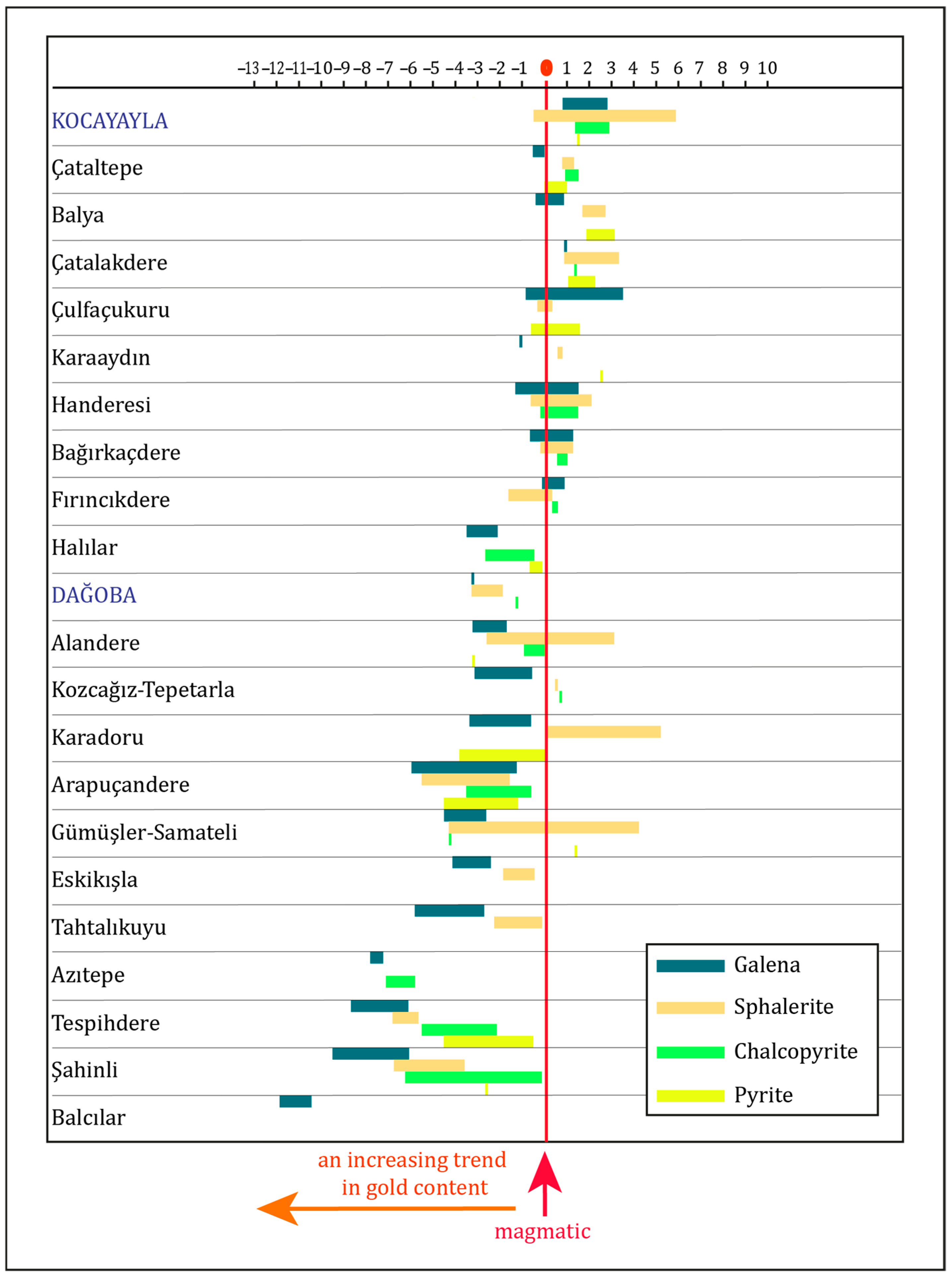
The δ34S data collectively identify two geochemically and genetically distinct mineralization trends in the Biga Peninsula. The skarn-related systems reflect deeper magmatic sulfur sources and relatively constant redox conditions, while the epithermal systems exhibit varying isotopic compositions affected by crustal fluid evolution and interactions with host rocks.
5. Conclusions
The local geology of the Kocayayla area is characterized by a Paleozoic metamorphic basement intruded by Oligocene–Miocene granitoids and unconformably overlain by Eocene to Pliocene volcanic and sedimentary successions, with andesitic to basaltic andesitic rocks and granodiorites–quartz diorites which are the dominant lithologies in the vicinity of the Pb–Zn ± Cu mineralization.
Field observations, XRD results, and ore microscopy indicate that Pb–Zn ± Cu mineralization at Kocayayla occurs within structurally controlled veins hosted by intensely silicified and chloritized andesitic and basaltic andesitic rocks as well as schists.
Ore microscopy studies revealed a hypogene mineral assemblage consisting of galena, sphalerite, pyrite, chalcopyrite, fahlore (tetrahedrite–tennantite group), and magnetite. Supergene alteration products include cerussite, smithsonite, pyrolusite, and limonite.
Major and trace element compositions together with REE patterns indicate that the geochemical signatures of volcanic, plutonic, and schistose wall rocks are largely controlled by their protoliths, whereas ore samples show pronounced enrichment in Pb and Zn and associated elements due to selective hydrothermal addition, without significant modification of primary REE systematics.
Sulfur isotope analyses of the Kocayayla mineralization yielded δ34S values ranging from −0.6‰ to +5.9‰, with an average of +1.8‰, indicating a relatively narrow distribution near 0‰. Because isotopic equilibrium could not be demonstrated for most samples, reliable temperature estimates could not be obtained. Nevertheless, one equilibrated sulfide pair yields a tentative formation temperature of ~327 °C based on sulfur isotope geothermometry. Considering the inherent uncertainties of sulfur isotope thermometry (commonly on the order of ±10–40 °C), this value should be regarded only as an approximate indication of moderate-temperature hydrothermal conditions rather than a precise temperature estimate. These sulfur isotope signatures suggest that the ore-forming fluids were likely H2S rich formed under relatively reducing conditions.
Sulfur isotope compositions and regional comparisons indicate that the Kocayayla Pb–Zn ± Cu deposit shows affinities with distal skarn-related Pb–Zn systems recognized elsewhere in the Biga Peninsula. However, the alteration mineralogy at Kocayayla is dominated by silicification, sericitization, and chloritization and lacks diagnostic calc-silicate assemblages typical of skarn environments. This absence of skarn-type alteration minerals, together with the structurally controlled vein-style mineralization, supports a more reasonable classification of the Kocayayla deposit as an epithermal Pb–Zn system.
Sulfur isotope data from Pb–Zn mineralizations in the Biga Peninsula demonstrate that Au-poor epithermal systems are characterized by narrow and internally consistent δ34S ranges, whereas Au-bearing epithermal mineralizations display more negative δ34S signatures, reflecting more complex redox evolution and sulfur cycling.
Supplementary Materials
The following supporting information can be downloaded at https://www.mdpi.com/article/10.3390/app16052604/s1, Table S1: The general information of samples collected from the Kocayayla Pb–Zn ± Cu deposit; Table S2: The composition and abundance of the minerals in the altered rock samples obtained from XRD technique; Table S3: The geochemical results (ACME laboratories) of the wall and altered rocks from the Kocayayla Pb–Zn ± Cu deposit with quality control reports; Table S4: The geochemical results (AGT laboratories) of the wall and altered rocks from the Kocayayla Pb–Zn ± Cu deposit with quality control reports.
Author Contributions
Conceptualization, methodology, investigation, writing—original draft, writing—review and editing, visualization, and supervision (S.A. and G.D.). All authors have read and agreed to the published version of the manuscript.
Funding
This study was partly supported by the Scientific Research Office of Ankara University (BAPRO) under grant number 13B4343009.
Data Availability Statement
All data are included in the manuscript and Supplementary Materials.
Acknowledgments
The authors would like to thank İ. Sönmez Sayılı, Erkan Yılmazer, and Mustafa Haydar Terzi for providing constructive and positive contributions that improved the manuscript. We are especially grateful to Cevat Bircan (AGT) for his help and assistance with the geochemical and XRD analysis.
Conflicts of Interest
The authors declare no conflicts of interest.
Abbreviations
The following abbreviations are used in this manuscript:
| ACME | Canadian Bureau Veritas Analysis Laboratories |
| AGT | ARGETEST Mineral Processing R&D Lab and Analysis Services |
| Aln | alunite |
| Apy | arsenopyrite |
| Au | native gold/electrum |
| Bi | biotite |
| Bis | bismuthinite |
| Bn | bornite |
| Brt | barite |
| Bxb | bixbyite |
| Cal | calcite |
| Ccp | chalcopyrite |
| Cct | chalcocite |
| Cer | cerussite |
| Chl | chlorite |
| Cpx | clinopyroxene |
| Cv | covellite |
| Eng | enargite |
| Ep | epidote |
| Fh | fahlore |
| Gn | galena |
| Goe | goethite |
| Grt | garnet |
| Grp | graphite |
| Hbl | hornblende |
| Hem | hematite |
| IASZ | İzmir–Ankara suture zone |
| Ill | Illite |
| Ilv | ilvaite |
| IPSZ | Intra-Pontide suture zone |
| Jrs | jarosite |
| Kln | kaolinite |
| Lm | limonite |
| Luz | luzonite |
| Mag | magnetite |
| MDL | method dedection limit |
| Mlc | malachite |
| MnOx | manganese oxides |
| Mo | molybdenite; |
| Mrc | marcasite |
| Op | opaque |
| Orp | orpiment |
| Or | orthoclase |
| Plg | plagioclase |
| Po | pyrrhotite |
| Py | pyrite |
| Qtz | quartz |
| REE | rare earth element |
| Rlg | realgar |
| Ser | sericite |
| Smt | smithsonite |
| Smc | smectite |
| Sp | sphalerite |
| Tnt | tennantite |
| Ttr | tetrahedrite |
| XRD | X-ray diffraction |
| Wo | wollastonite |
References
- Şengör, A.M.C.; Yılmaz, Y. Tethyan evolution of Turkey: A plate tectonic approach. Tectonophysics 1981, 75, 181–241. [Google Scholar] [CrossRef] [Scilit]
- Okay, A.I.; Tüysüz, O. Tethyan sutures of northern Turkey. Geol. Soc. Lond. Spec. Publ. 1999, 156, 475–515. [Google Scholar] [CrossRef] [Scilit]
- Bozkurt, E. Late alpine evolution of the central menderes massif, western Turkey. Int. J. Earth Sci. 2001, 89, 728–744. [Google Scholar] [CrossRef] [Scilit]
- Okay, A.İ.; Satır, M. Coeval plutonism and metamorphism in a latest Oligocene metamorphic core complex in northwest Turkey. Geol. Mag. 2000, 137, 495–516. [Google Scholar] [CrossRef] [Scilit]
- Altunkaynak, Ş.; Genç, Ş.C. Petrogenesis and time-progressive evolution of the Cenozoic continental volcanism in the Biga Peninsula, NW Anatolia (Turkey). Lithos 2008, 102, 316–340. [Google Scholar] [CrossRef] [Scilit]
- Rabayrol, F.; Hart, C.J.R. Petrogenetic and tectonic controls on magma fertility and the formation of post-subduction porphyry and epithermal mineralization along the late Cenozoic Anatolian Metallogenic Trend, Turkey. Min. Depos. 2021, 56, 279–306. [Google Scholar] [CrossRef] [Scilit]
- Sanchez, M.G.; McClay, K.; King, A.R.; Wijbrans, J. Cenozoic Crustal Extension and Its Relationship to Porphyry Cu-Au-(Mo) and Epithermal Au-(Ag) Mineralization in the Biga Peninsula, Northwestern Turkey. In Tectonics and Metallogeny of the Tethyan Orogenic Belt; Richards, J.P., Ed.; Society of Economic Geologists Inc.: Littleton, CO, USA, 2016; Volume 19, pp. 113–156. [Google Scholar]
- Bonev, N.; Beccaletto, L. From syn- to post-orogenic Tertiary extension in the North Aegean region: Constraints on the kinematics in the eastern Rhodope-Thrace, Bulgaria-Greece and the Biga Peninsula, NW Turkey. Geol. Soc. Spec. Publ. 2007, 291, 113–142. [Google Scholar] [CrossRef] [Scilit]
- Beccaletto, L.; Steiner, C. Evidence of two-stage extensional tectonics from the northern edge of the Edremit Graben, NW Turkey. Geodin. Acta 2005, 18, 283–297. [Google Scholar] [CrossRef] [Scilit]
- Okay, A.I.; Satır, M.; Siebel, W. Pre-Alpide orogenic events in the Eastern Mediterranean region. Geol. Soc. Mem. 2006, 32, 389–405. [Google Scholar] [CrossRef] [Scilit]
- Okay, A.I.; Satır, M. Upper Cretaceous eclogite-facies metamorphic rocks from the Biga Peninsula, northwest Turkey. Turk. J. Earth Sci. 2000, 9, 47–56. [Google Scholar]
- Yılmaz, Y.; Genç, S.C.; Gürer, O.F.; Bozcu, M.; Yılmaz, K.; Karacik, Z.; Altunkaynak, Ş.; Elmas, A. When did the western Anatolian grabens begin to develop? Geol. Soc. Spec. Publ. 2000, 173, 353–384. [Google Scholar] [CrossRef] [Scilit]
- Genç, Ş.C.; Yılmaz, Y. An example of post-collisional magmatism in Northwestern Anatolia: The Kızderbent volcanics (Armutlu peninsula, Turkey). Turk. J. Earth Sci. 1997, 6, 33–42. [Google Scholar]
- Köprübaşı, N.; Aldanmaz, E. Geochemical constraints on the petrogenesis of Cenozoic I-type granitoids in Northwest Anatolia, Turkey: Evidence for magma generation by lithospheric delamination in a post-collisional setting. Int. Geol. Rev. 2004, 46, 705–729. [Google Scholar] [CrossRef] [Scilit]
- Yılmazer, E.; Kuşu, İ.; Demirela, G. A-B-Kafa Mineralizations in Divriği: Alteration zoning and zoning. Geol. Bull. Turk. 2003, 46, 17–34. [Google Scholar]
- Yılmazer, E.; Güleç, N.; Kuşcu, İ.; Lentz, D.R. Geology, geochemistry, and geochronology of Fe-oxide Cu (±Au) mineralization associated with Şamlı pluton, western Turkey. Ore Geol. Rev. 2014, 57, 191–215. [Google Scholar] [CrossRef] [Scilit]
- Yigit, O. Gold in Turkey, a Missing Link in Tethyan Metallogeny. Ore Geol. Rev. 2006, 28, 147–179. [Google Scholar] [CrossRef] [Scilit]
- Yigit, O. Mineral deposits of Turkey in relation to Tethyan Metallogeny: Implications for future mineral exploration. Econ. Geol. 2009, 104, 19–51. [Google Scholar] [CrossRef] [Scilit]
- Yigit, O. A prospective sector in the tethyan metallogenic belt: Geology and geochronology of mineral deposits in the Biga peninsula, NW Turkey. Ore Geol. Rev. 2012, 46, 118–148. [Google Scholar] [CrossRef] [Scilit]
- Kuşcu, İ.; Yılmazer, E.; Güleç, N.; Bayır, S.; Demirela, G.; Gençalioğlu Kuşcu, G.; Kuru, G.S.; Kaymakçı, N. U-Pb and 40Ar-39Ar Geochronology and isotopic constraints on the genesis of copper-gold−bearing iron oxide deposits in the Hasançelebi district, Eastern Turkey. Econ. Geol. 2011, 106, 261–288. [Google Scholar] [CrossRef] [Scilit]
- Kuşcu, İ.; Tosdal, R.M.; Gencalioğlu-Kuşcu, G.; Friedman, R.; Ullrich, T.D. Late Cretaceous to Middle Eocene magmatism and metallogeny of a portion of the southeastern Anatolian orogenic belt, east-central Turkey. Econ. Geol. 2013, 108, 641–666. [Google Scholar] [CrossRef] [Scilit]
- Kuşcu, İ.; Tosdal, R.M.; Gençalioğlu-Kuşcu, G. Episodic porphyry Cu (-Mo-Au) formation and associated magmatic evolution in Turkish Tethyan collage. Ore Geol. Rev. 2019, 107, 119–154. [Google Scholar] [CrossRef] [Scilit]
- Öztürk, H.; Kasapçı, C.; Cansu, Z.; Hanilçi, N. Geochemical characteristics of iron ore deposits in central eastern Turkey: An approach to their genesis. Int. Geol. Rev. 2016, 58, 1673–1690. [Google Scholar] [CrossRef] [Scilit]
- Akıska, S. Crystallization conditions and compositional variations of silicate and sulfide minerals in the Pb-Zn skarn deposits, Biga Peninsula, NW Turkey. Ore Geol. Rev. 2020, 118, 103322. [Google Scholar] [CrossRef] [Scilit]
- Aluç, A.; Kuşcu, İ.; Peytcheva, I.; Cihan, M.; Von Quadt, A. The late Miocene Öksüt high sulfidation epithermal Au-Cu deposit, Central Anatolia, Turkey: Geology, geochronology, and geochemistry. Ore Geol. Rev. 2020, 126, 103795. [Google Scholar] [CrossRef] [Scilit]
- Bozkaya, G.; Bozkaya, Ö.; Banks, D.A.; Gökçe, A. P-T-X Constraints on the Koru Epithermal Base-Metal (±Au) Deposit, Biga Peninsula, NW Turkey. Ore Geol. Rev. 2020, 119, 103349. [Google Scholar] [CrossRef] [Scilit]
- Hanilçi, N.; Öztürk, H.; Banks, D. Geological, geochemical and microthermometric characteristics of the Hakkari region Zn-Pb deposits, SE Turkey. Ore Geol. Rev. 2020, 125, 103667. [Google Scholar] [CrossRef] [Scilit]
- Demirela, G.; Akıska, S. Evaluation of Pb isotope systematics and metal sources of the Biga Pb-Zn Province (NW Turkey) and comparison with the Pb isotope systematics of the Rhodope Massif. J. Afr. Earth Sci. 2022, 187, 104445. [Google Scholar] [CrossRef] [Scilit]
- Terzi, M.H.; Yılmazer, E.; Kuşcu, İ.; Oyman, T.; Bozan, S. Mineralogy, fluid inclusion and stable isotope characteristics of the Inlice (Konya, Turkey) high sulfidation epithermal gold deposit: Implications for hydrothermal evolution and ore genesis. Geochemistry 2024, 84, 126040. [Google Scholar] [CrossRef] [Scilit]
- Yilmaz, H.; Oyman, T.; Sönmez, F.N.; Arehart, G.B.; Billor, Z. Intermediate sulfidation epithermal gold-base metal deposits in Tertiary subaerial volcanic rocks, Sahinli/Tespih Dere (Lapseki/Western Turkey). Ore Geol. Rev. 2010, 37, 236–258. [Google Scholar] [CrossRef] [Scilit]
- Çiçek, M.; Oyman, T.; Palmer, R.P. Variation of Cu, Fe, S and Pb isotopes in sulfides from hydrothermal mineralization from the Yenice region in Çanakkale, Biga Peninsula, NW Turkey. Ore Geol. Rev. 2021, 136, 104255. [Google Scholar] [CrossRef] [Scilit]
- Yildirim, D.K. Genesis of the Halılar Metasediment-Hosted Cu-Pb (±Zn) Mineralization, NW Turkey: Evidence from Mineralogy, Alteration, and Sulfur Isotope Geochemistry. Minerals 2022, 12, 991. [Google Scholar] [CrossRef] [Scilit]
- Demirela, G.; Akıska, S.; Akıska, E. Mineralogical-petrographical features, geochemical characteristics, and S isotope variability of Pb-Zn deposits in the Sakarya fragment of the Biga Peninsula (NW Türkiye). Turk. J. Earth Sci. 2023, 32, 772–807. [Google Scholar] [CrossRef] [Scilit]
- Demirela, G. Geology and Genesis of the Çataltepe (Lapseki/Çanakkale) Pb-Zn±Cu±Ag Deposit. Ph.D. Thesis, Ankara University, Ankara, Türkiye, 2011. (In Turkish) [Google Scholar]
- Gjelsvik, T. Investigations of lead-zinc deposits in northwest Anatolia, Turkey. Bull. Min. Res. Exp. 1962, 59, 60–68. (In Turkish) [Google Scholar]
- Wagner, G.A.; Pernicka, E.; Seeliger, T.C.; Öztunalı, E.; Baranyı, I. Geologische untersuchungen zur fruhen metallurgie in NW-Anatolien. Bull. Min. Res. Exp. 1985, 101, 45–81. [Google Scholar]
- Bozan, S. Balya (Balıkesir) Pb-Zn Yatağının Jeolojisi, Jeokimyası ve İzotop Karakteristikleri. Master’s Thesis, Aksaray University, Aksaray, Türkiye, 2016. (In Turkish) [Google Scholar]
- Demirela, G.; Bozan, S. Balya (Balıkesir) Pb-Zn Yatağı’nın Jeolojisi, Jeokimyası ve İzotop Karakteristikleri; Report No: 2014-003; Aksaray University Scientific Research Project: Aksaray, Türkiye, 2016. (In Turkish) [Google Scholar]
- Oyman, T.; Bozan, S.; Çiçek, M.; Chiaradia, M.; Kuşcu, İ. Metal source and the origin of the Darıderesi Pb-Zn (Ag) veins in the Balya Mining District, NW Türkiye: Constraints from ore mineral chemistry, fluid inclusions and S-Pb isotopic signatures. All Earth 2023, 35, 210–241. [Google Scholar] [CrossRef] [Scilit]
- Yücelay, M.A. The Etude of Çanakkale-Kalkım-Handeresi Pb-Zn-Cu Area; Report No: 5720; MTA Project: Ankara, Türkiye, 1976. (In Turkish) [Google Scholar]
- Ayan, M. Geochronological and petrological studies of the Eybek granodiorite pluton (Edremit). Fac. Sci. L’Universite D’Ankara 1979, 22, 19–31. [Google Scholar]
- Çetinkaya, N.; Karul, B.; Yenigün, K.; Önal, R. Report of Turkish–Germany Project Biga Peninsula on the Research Project of Metallic Mines (Pb–Zn–Cu); Report No: 7745; MTA Project: Ankara, Türkiye, 1983. (In Turkish) [Google Scholar]
- Marchev, P.; Larson, P.; Rogers, G.; Vaselli, O.; Raicheva, R. Crustal thickness control on the Sr, Nd, and O isotopic variation in the Macedonean–Rhodope–North Aegean magmatic belt (MRNAMB). In Proceedings of the International Volcanological Congress IAVCEI, Ankara, Türkiye, 12–16 September 1994. [Google Scholar]
- Akıska, S. Cu-Pb-Zn occurrences of the Yenice (Çanakkale) Area. Ph.D. Thesis, Ankara University, Ankara, Türkiye, 2010. (In Turkish) [Google Scholar]
- Akıska, S.; Sayılı, İ.S.; Demirela, G. Geology, mineralogy and the Pb, S isotope study of the Kalkım Pb-Zn±Cu deposits, Biga Peninsula, NW Turkey. J. Geosci. 2013, 58, 379–396. [Google Scholar] [CrossRef] [Scilit]
- Doyuran, M. The Preliminary Study of Pb-Zn Mineralizations Between Evciler-Dağoba (Bayramiç/Çanakkale); Report No: 4976; MTA Project: Ankara, Türkiye, 1970. (In Turkish) [Google Scholar]
- Atılgan, İ. The Geology of Sofular-Bekten-Nevruz-Çakır Villages in the NorthernYenice (Çanakkale); Report No: 5613; MTA Project: Ankara, Türkiye, 1975. (In Turkish) [Google Scholar]
- Yenigün, K. The Geological Report of the Çanakkale-Yenice-Çakır Village Pb-Zn-Cu Mineralization; Report No: 6564; MTA Project: Ankara, Türkiye, 1978. (In Turkish) [Google Scholar]
- Çağatay, A. Geology and mineralogy of western Anatolian lead- zinc deposits and some comments about their genesis. Geol. Bull. Turk. 1980, 23, 119–132, (In Turkish with English Abstract). [Google Scholar]
- Anıl, M. Genesis of the Pb-Zn-Cu mineralizations and relations with Tertiary volcanism in Yenice area (Arapuçandere-Kurttaşı, Sofular and Kalkım-Handeresi). Jeol. Müh. Derg. 1984, 8, 19–30. (In Turkish) [Google Scholar]
- Örgün, Y.; Gültekin, A.H.; Önal, A. Geology, mineralogy and fluid inclusion data from the Arapucan Pb-Zn-Cu-Ag deposit, Canakkale, Turkey. J. Asian Earth Sci. 2005, 25, 629–642. [Google Scholar] [CrossRef] [Scilit]
- Bozkaya, G.; Gökçe, A.; Grassineau, N.V. Fluid Inclusion and Stable Isotope Characteristics of the Arapuçandere Pb-Zn-Cu Deposits, Northwest Turkey. Int. Geol. Rev. 2008, 50, 848–862. [Google Scholar] [CrossRef] [Scilit]
- Bozkaya, G. Sulphur- and lead-isotope geochemistry of the Arapuçandere lead–zinc–copper deposit, Biga Peninsula, northwest Turkey. Int. Geol. Rev. 2011, 53, 116–129. [Google Scholar] [CrossRef] [Scilit]
- Bozkaya, G.; Banks, D.A. Physico-chemical controls on ore deposition in the Arapucandere Pb-Zn-Cu-precious metal deposit, Biga Peninsula NW Turkey. Ore Geol. Rev. 2015, 66, 65–81. [Google Scholar] [CrossRef] [Scilit]
- Yalçınkaya, N. Koru Köyü (Lapseki-Çanakkale) Pb-Zn-Ag Yatağının Jeolojik, Mineralojik ve Jeokimyasal İncelemesi. Master’s Thesis, Çanakkale Onsekiz Mart University, Çanakkale, Türkiye, 2010. [Google Scholar]
- Bozkaya, G.; Gökçe, A. Lead and sulfur isotope studies of the Koru (Çanakkale, Turkey) lead-zinc deposits. Turk. J. Earth Sci. 2009, 18, 127–137. [Google Scholar] [CrossRef] [Scilit]
- Bozkaya, G.; Banks, D.A.; Özbas, F.; Wallington, J. Fluid processes in the Tesbihdere base-metal-Au deposit: Implications for epithermal mineralization in the Biga Peninsula. Cent. Eur. J. Geosci. 2014, 6, 148–169. [Google Scholar] [CrossRef] [Scilit]
- Çiçek, M.; Oyman, T. Origin and evolution of hydrothermal fluids in epithermal Pb-Zn-Cu±Au±Ag deposits at Koru and Tesbihdere mining districts, Çanakkale, Biga Peninsula NW Turkey. Ore Geol. Rev. 2016, 78, 176–195. [Google Scholar] [CrossRef] [Scilit]
- Özdemir, S. Çanakkale-Balcılar Polimetal Cevherleşmesi Oluşumunun Incelenmesi. Master’s Thesis, Ankara University, Ankara, Türkiye, 2011. (In Turkish) [Google Scholar]
- Demirela, G.; Akıska, S.; Sayılı, İ.S.; Kuşcu, İ. Geology and the alteration features of the Çataltepe (Lapseki-Çanakkale) Pb-Zn±Cu±Ag deposit. Yerbilimleri 2014, 35, 109–136. (In Turkish) [Google Scholar]
- Aysal, N. Mineral chemistry, crystallization conditions and geodynamic implications of the Oligo-Miocene granitoids in the Biga Peninsula, Northwest Turkey. J. Asian Earth Sci. 2015, 105, 68–84. [Google Scholar] [CrossRef] [Scilit]
- Bingöl, E.; Akyürek, B.; Korkmazer, B. Biga Yarımadasının jeolojisi ve Karakaya Formasyonunun bazı özellikleri. In Cumhuriyetin 50. Yılı Yerbilimleri Kongresi Tebliğleri; MTA Enstitüsü: Ankara, Türkiye, 1975; pp. 70–77. [Google Scholar]
- Okay, A.I.; Siyako, M.; Bürkan, K.A. Geology and tectonic evolution of the Biga peninsula. Bull. Tech. Univ. Istanb. 1991, 44, 191–255. [Google Scholar]
- Okay, A.; Satir, M. Geochronology of Eocene plutonism and metamorphism in northwest. Geodin. Acta 2006, 19, 251–266. [Google Scholar] [CrossRef] [Scilit]
- Yılmaz, Y.; Genç, Ş.C.; Yiǧitbaş, E.; Bozcu, M.; Yılmaz, K. Geological evolution of the late Mesozoic continental margin of Northwestern Anatolia. Tectonophysics 1995, 243, 155–171. [Google Scholar] [CrossRef] [Scilit]
- Harris, N.B.W.; Kelley, S.; Okay, A.İ. Post-collisional magmatism and tectonics in northwest Anatolia. Contrib. Mineral. Petrol. 1994, 117, 241–252. [Google Scholar] [CrossRef] [Scilit]
- Genç, Ş.C.; Altunkaynak, S. Eybek graniti (Biga yarımadası, KB Anadolu) üzerine: Yeni jeokimya verileri ışığıda yeni bir değerlendirme. Yerbilimleri 2007, 28, 75–98. [Google Scholar]
- Bozkurt, E.; Mittwede, S.K. Introduction to the geology of Turkey—A synthesis. Int. Geol. Rev. 2001, 43, 578–594. [Google Scholar] [CrossRef] [Scilit]
- Altunkaynak, S. Collision-driven slab breakoff magmatism in northwestern Anatolia, Turkey. J. Geol. 2007, 115, 63–82. [Google Scholar] [CrossRef] [Scilit]
- Dilek, Y.; Altunkaynak, S. Cenozoic crustal evolution and mantle dynamics of post-collisional magmatism in western Anatolia. Int. Geol. Rev. 2007, 49, 431–453. [Google Scholar] [CrossRef] [Scilit]
- Altunkaynak, S.; Dilek, Y.; Genç, Ş.C.; Sunal, G.; Gertisser, R.; Furnes, H.; Foland, K.A.; Yang, J. Spatial, temporal and geochemical evolution of Oligo–Miocene granitoid magmatism in western Anatolia, Turkey. Gondwana Res. 2012, 21, 961–986. [Google Scholar] [CrossRef] [Scilit]
- Yılmaz, Y. Comparison of young volcanic associations of western and eastern Anatolia under compressional regime; a review. J. Volcanol. Geotherm. Res. 1990, 44, 69–87. [Google Scholar] [CrossRef] [Scilit]
- Altunkaynak, S.; Yılmaz, Y. The kozak pluton and its emplacement. Geol. J. 1999, 34, 257–274. [Google Scholar] [CrossRef] [Scilit]
- Delaloye, M.; Bingöl, E. Granitoids from western and northwestern Anatolia: Geochemistry and modeling of geodynamic evolution. Int. Geol. Rev. 2000, 42, 241–268. [Google Scholar] [CrossRef] [Scilit]
- Siyako, M.; Bürkan, K.A.; Okay, İ.A. Biga ve Gelibolu Yarımadaları’nın Tersiyer jeolojisi ve hidrokarbon olanakları. Türkiye Petrol Jeologları Derneği Bülteni 1989, 1, 183–199. [Google Scholar]
- Beşir, D. Koru Köyü (Lapseki-Çanakkale) Pb-Zn-Ag Yatağının Jenetik Incelenmesi. Master’s Thesis, University of Dokuz Eylül, İzmir, Türkiye, 2003. [Google Scholar]
- Duru, M.; Pehlivan, Ş.; Ilgar, A.; Dönmez, M.; Akçay, A.E. 1/100000 Ölçekli Türkiye Jeoloji Haritaları: Ayvalık-İ17 Paftası; No: 102; MTA Publication: Ankara, Türkiye, 2008. [Google Scholar]
- Dönmez, M.; Akçay, A.E.; Duru, M.; Ilgar, A.; Pehlivan, Ş. Türkiye Jeoloji Haritaları: Çanakkale-H17 Paftası; MTA Publication: Ankara, Türkiye, 2008. [Google Scholar]
- Herron, M.M. Geochemical classification of terrigenous sands and shales from core or log data. J. Sediment. Res. 1988, 58, 820–829. [Google Scholar] [CrossRef] [Scilit]
- Winchester, J.A.; Floyd, P.A. Geochemical discrimination of different magma series and their differentiation products using immobile elements. Chem. Geol. 1977, 20, 325–343. [Google Scholar] [CrossRef] [Scilit]
- Cox, K.G.; Bell, J.D.; Pankhurst, R.J. The Interpretation of Igneous Rocks; George Allen and Unwin: London, UK, 1979; p. 450. [Google Scholar]
- Irvine, T.N.; Baragar, W.R.A. A guide to the chemical classification of the common volcanic rocks. Can. J. Earth Sci. 1971, 8, 523–548. [Google Scholar] [CrossRef] [Scilit]
- Shand, S.J. Eruptive Rocks: Their Genesis, Composition, Classification, and Their Relation to Ore-Deposits with a Chapter on Meteorite; John Wiley & Sons: New York, NY, USA, 1943. [Google Scholar]
- Turekian, K.K.; Wedepohl, K.H. Distribution of the elements in some major units of the Earth’s crust. Geol. Soc. Am. Bull. 1961, 72, 175–192. [Google Scholar] [CrossRef] [Scilit]
- Taylor, S.R. Trace element chemistry of andesite and associated calc-alkaline rocks. Or. Dep. Geol. Miner. Ind. Bull. 1969, 65, 43–64. [Google Scholar]
- Boynton, W.V. Cosmochemistry of the rare earth elements: Meteorite studies. In Developments in Geochemistry; Henderson, P., Ed.; Elsevier: Amsterdam, The Netherlands, 1984; pp. 63–114. [Google Scholar] [CrossRef] [Scilit]
- Bozkaya, G.; Banks, D.A. Sulfur isotope geochemistry and mineralogy of Balcilar vein type barite-sulphide mineralization, Biga peninsula, NW Turkey. Pamukkale Univ. J Eng. Sci. 2016, 22, 200–205. [Google Scholar] [CrossRef] [Scilit]
- Lottermoser, B.G. Rare earth elements and hydrothermal ore formation processes. Ore Geol. Rev. 1992, 7, 25–41. [Google Scholar] [CrossRef] [Scilit]
- Hedenquist, J.W.; Lowenstern, J.B. The role of magmas in the formation of hydrothermal ore deposits. Nature 1994, 370, 519–527. [Google Scholar] [CrossRef] [Scilit]
- Cook, N.J.; Ciobanu, C.L.; Spry, P.G.; Voudouris, P. Participants of IGCP-486. Understanding gold-(silver)-telluride-(selenide) mineral deposits. Episodes 2009, 32, 249–263. [Google Scholar] [CrossRef] [Scilit]
- Frenzel, M.; Voudouris, P.; Cook, N.J.; Ciobanu, C.L.; Gilbert, S.; Wade, B.P. Evolution of a hydrothermal ore-forming system recorded by sulfide mineral chemistry: A case study from the Plaka Pb–Zn–Ag deposit, Lavrion, Greece. Miner. Depos. 2022, 57, 417–438. [Google Scholar] [CrossRef] [Scilit]
- Rubin, J.N.; Henry, C.D.; Price, J.G. The mobility of zirconium and other “immobile” elements during hydrothermal alteration. Chem. Geol. 1993, 110, 29–47. [Google Scholar] [CrossRef] [Scilit]
- Bau, M.; Dulski, P. Comparing yttrium and rare earths in hydrothermal fluids from the Mid-Atlantic Ridge: Implications for Y and REE behaviour during near-vent mixing and for the Y/Ho ratio of Proterozoic seawater. Chem. Geol. 1999, 155, 77–90. [Google Scholar] [CrossRef] [Scilit]
- Möller, P.; Bau, M. Rare-earth patterns with positive cerium anomaly in alkaline waters from Lake Van, Turkey. Earth Planet. Sc. Lett. 1993, 117, 671–676. [Google Scholar] [CrossRef] [Scilit]
- Taylor, S.R.; McLennan, S.M. The Continental Crust: Its Composition and Evolution; Blackwell Scientific Publications: Oxford, UK, 1985. [Google Scholar]
- Ohmoto, H.; Rye, R.O. Isotopes of sulfur and carbon. In Geochemistry of Hydrothermal Ore Deposits, 2nd ed.; Barnes, H.L., Ed.; Wiley: New York, NY, USA, 1979; pp. 509–567. [Google Scholar]
- Bozkaya, G.; Gökçe, A. Koru (Çanakkale) Pb-Zn yataklarının jeolojisi, cevher mikroskopisi ve sıvı kapanım özellikleri. Cumhur. Yerbilim. Derg. 2001, 18, 55–70. [Google Scholar]
- Bozkaya, G. Fluid inclusion and stable isotope (O, H and S) evidence for the origin of the Balcilar vein type barite-galena mineralization in Çanakkale, Biga Peninsula, NW Turkey. J. Geochem. Explor. 2009, 101, 8. [Google Scholar] [CrossRef] [Scilit]
- Seal, R.R., II. Sulfur isotope geochemistry of sulfide minerals. Rev. Mineral. Geochem. 2006, 61, 633–677. [Google Scholar] [CrossRef] [Scilit]
- Fifarek, R.H.; Rye, R.O. Stable-isotope geochemistry of the Pierina high-sulfidation Au-Ag deposit, Peru: Influence of hydrodynamics on SO2−-H2S sulfur isotopic exchange in magmatic-steam and steam-heated environments. Chem. Geol. 2005, 215, 253–279. [Google Scholar] [CrossRef] [Scilit]
- Rye, R.O.; Ohmoto, H. Sulfur and Carbon Isotopes and ore genesis: A review. Econ. Geol. 1974, 69, 826–842. [Google Scholar] [CrossRef] [Scilit]
- Marini, L.; Moretti, R.; Accornero, M. Sulfur isotopes in magmatic-hydrothermal systems, melts, and magmas. Rev. Mineral. Geochem. 2011, 73, 423–492. [Google Scholar] [CrossRef] [Scilit]
- Li, J.X.; Qin, K.Z.; Li, G.M.; Evans, N.J.; Zhao, J.X.; Cao, M.J.; Huang, F. The Nadun Cu-Au mineralization, central Tibet: Root of a high sulfidation epithermal deposit. Ore Geol. Rev. 2016, 78, 371–387. [Google Scholar] [CrossRef] [Scilit]
- Hutchinson, W.; Finch, A.A.; Boyce, A.J. The sulfur isotope evolution of magmatic-hydrothermal fluids: Insights into ore- forming processes. Geochim. Cosmochim. Acta 2020, 288, 176–198. [Google Scholar] [CrossRef] [Scilit]
- Bowman, J.R. Stable-isotope systematics of skarn. In Mineralized Intrusion-Related Skarn Systems; Lentz, D.R., Ed.; Mineralogical Association of Canada: Ottawa, ON, Canada, 1988; Volume 26, pp. 99–145. [Google Scholar]
- Palinkas, S.S.; Palinkas, L.A.; Renac, C.; Spangenberg, J.E.; Lüders, V.; Molnar, F.; Maliqi, G. Metallogenic model of the Trepca Pb-Zn-Ag Skarn Deposit, Kosovo: Evidence from fluid inclusions, rare earth elements, and stable isotope data. Econ. Geol. 2013, 108, 135–162. [Google Scholar] [CrossRef] [Scilit]
- Claypool, G.E.; Holser, W.T.; Kaplan, I.R.; Sakai, H.; Zak, I. The age curves of sulfur and oxygen isotopes in marine sulfate and their mutual interpretation. Chem. Geol. 1980, 28, 199–260. [Google Scholar] [CrossRef] [Scilit]
- Heinrich, C.A. The physical and chemical evolution of low-salinity magmatic fluids at the porphyry to epithermal transition: A thermodynamic study. Min. Depos. 2005, 39, 864–889. [Google Scholar] [CrossRef] [Scilit]
- Kıray, D. Karadoru–Karaköy (Çanakkale) Arasındaki Pb–Zn–Cu Cevherleşmelerinin Jeolojik ve Jeokimyasal Özellikleri. Master’s Thesis, Süleyman Demirel University, Isparta, Türkiye, 2010. [Google Scholar]
- Yıldırım, D.K. Koru (Çanakkale) Yöresi Kurşun-Çinko Cevherleşmelerinin Oluşum Mekanızmasının Jeokimyasal Modellemesi. Ph.D. Thesis, Istanbul Technical University, İstanbul, Türkiye, 2013. [Google Scholar]
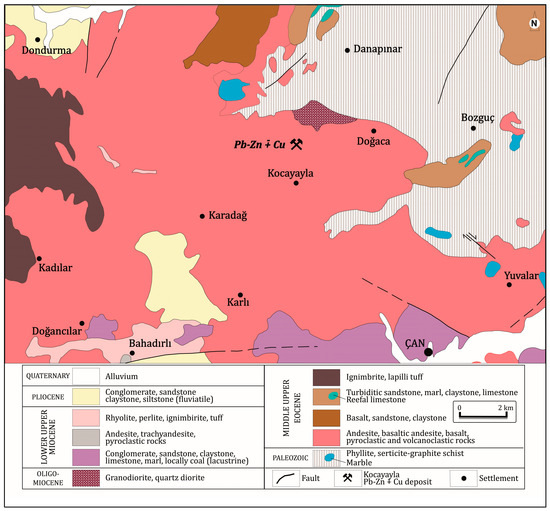
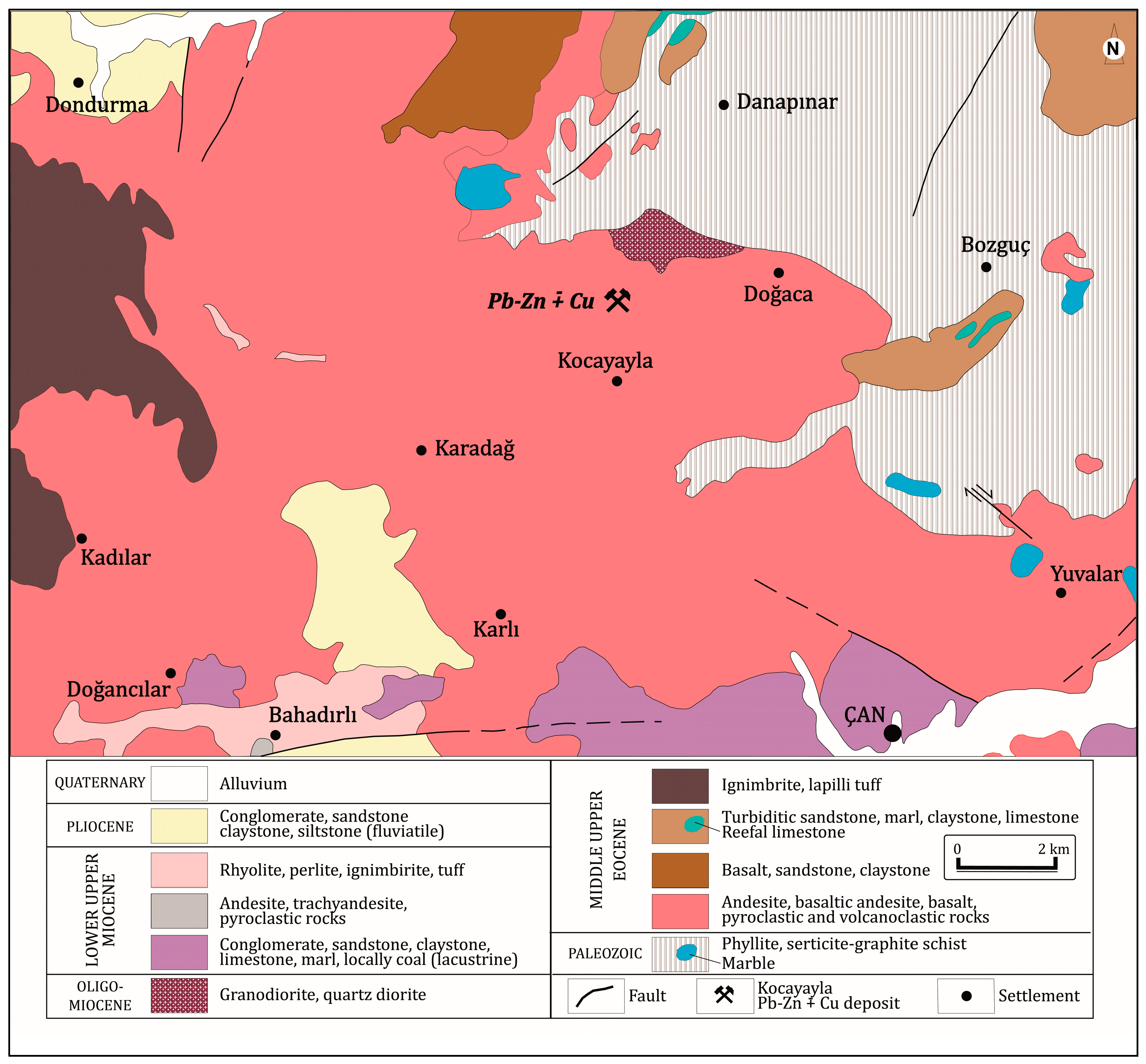
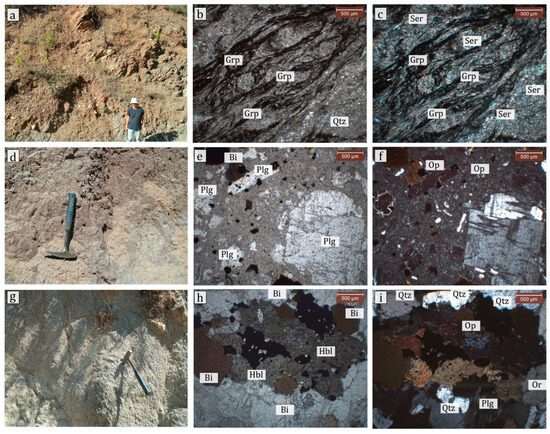
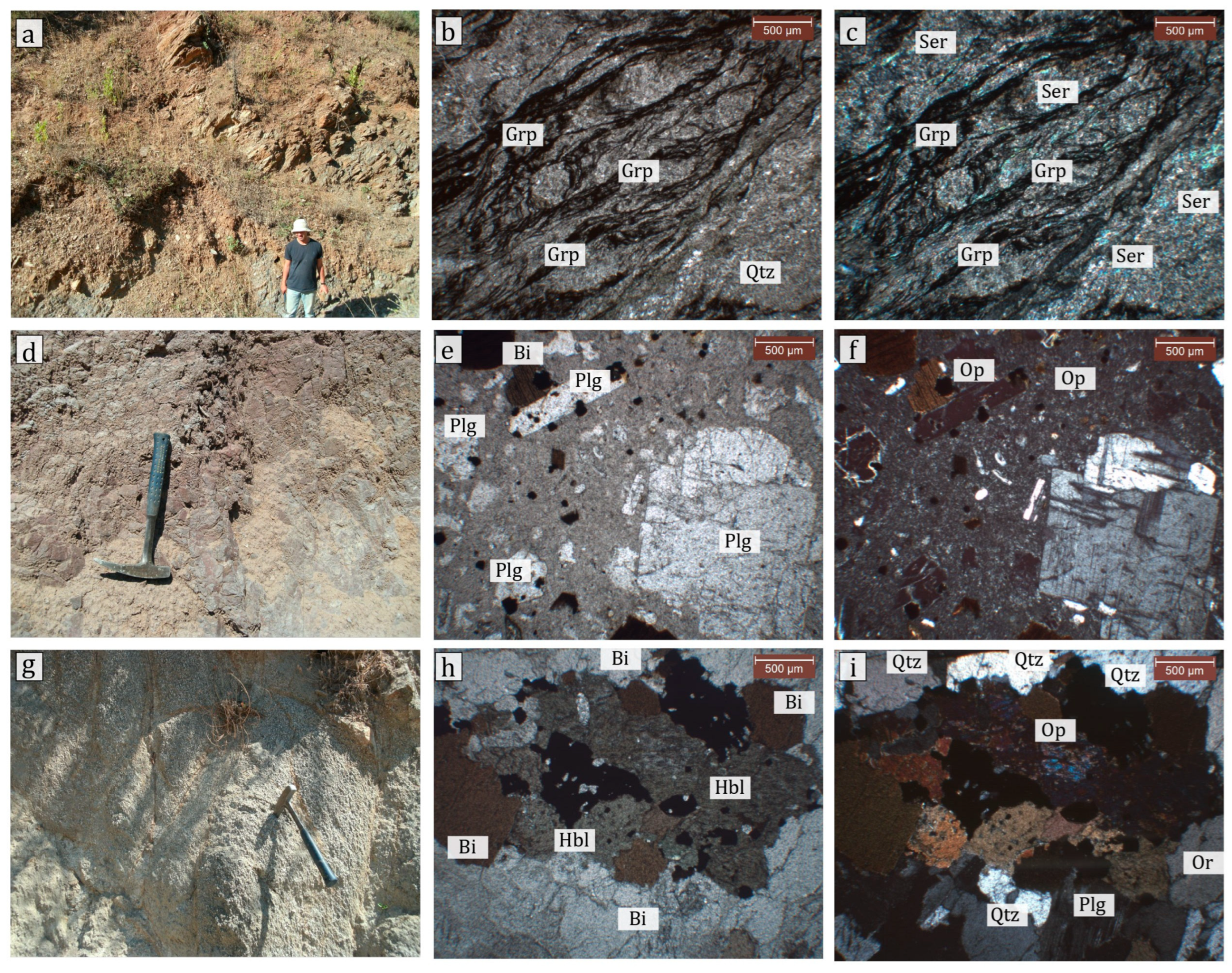
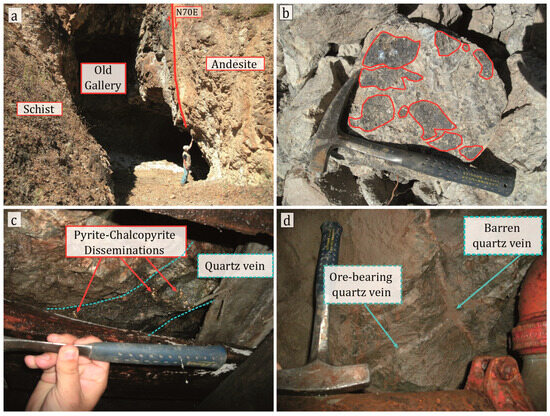
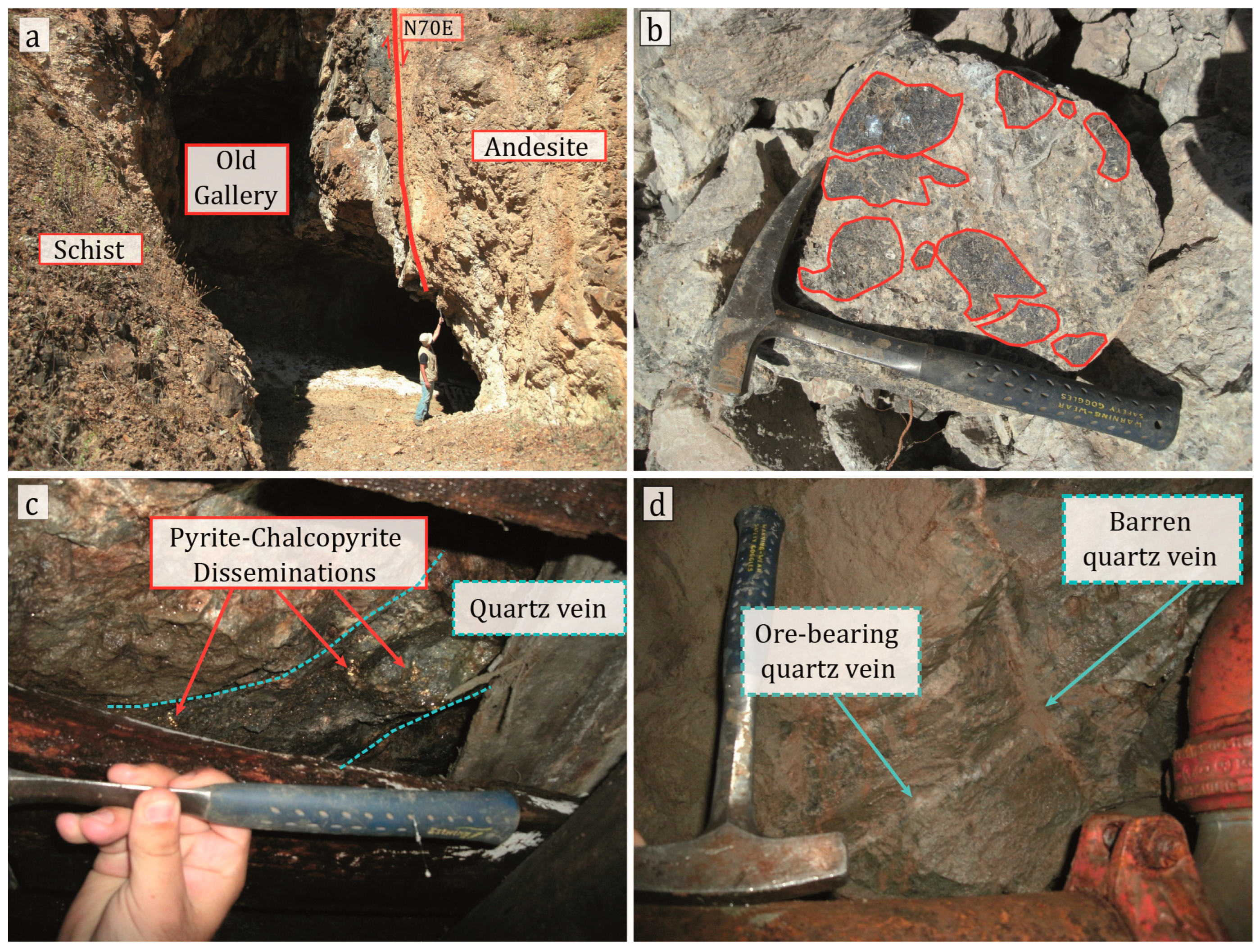
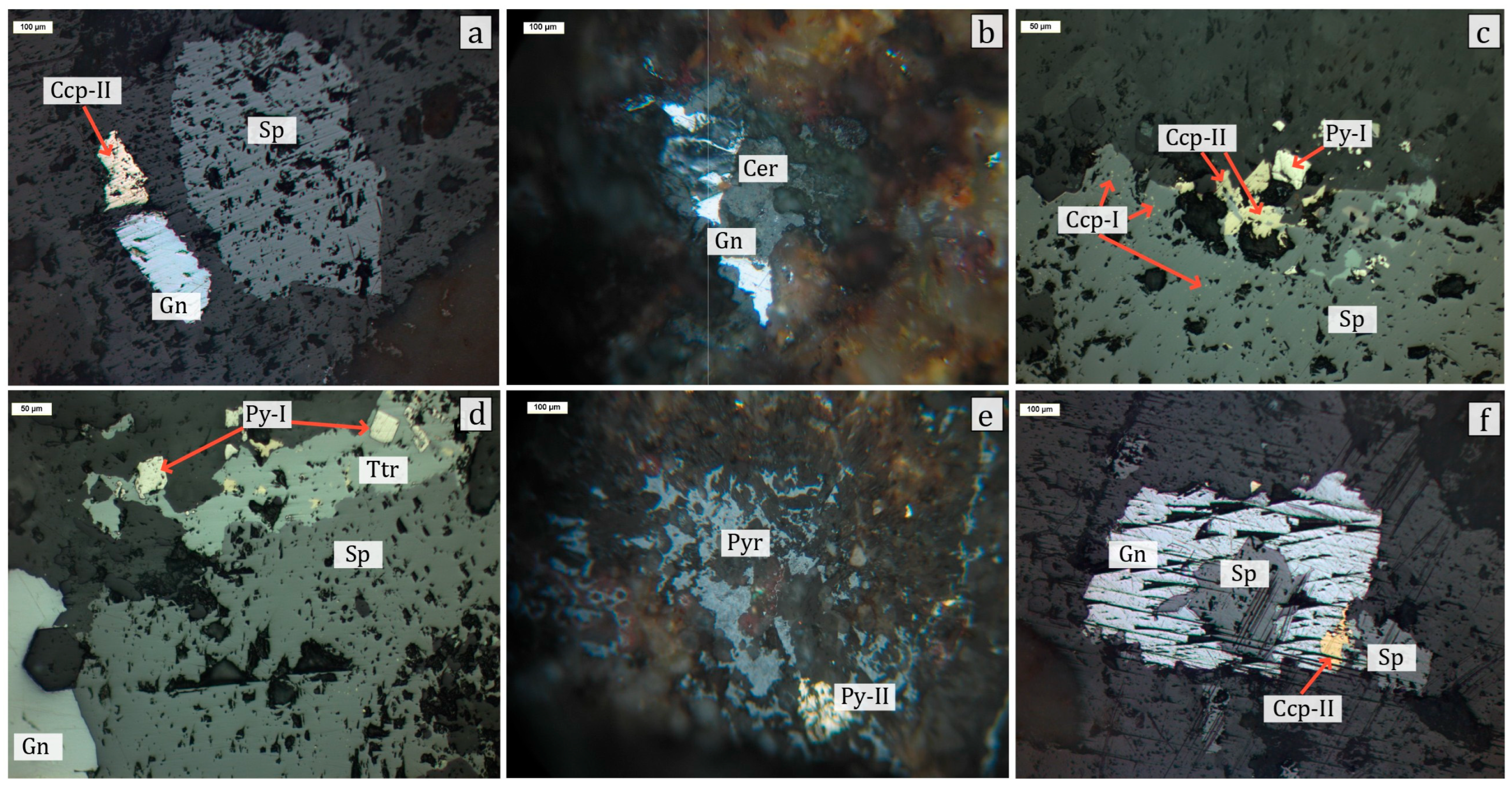
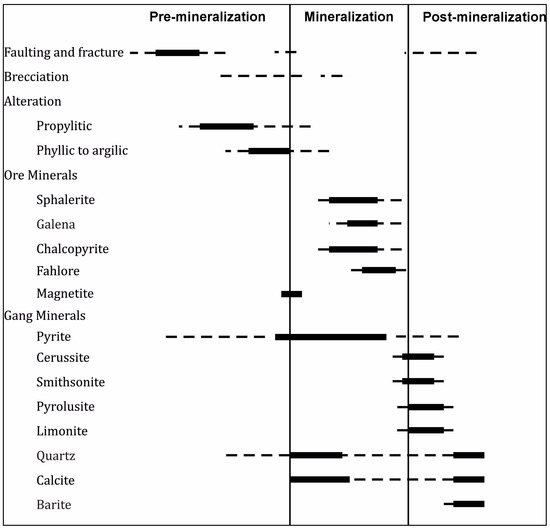
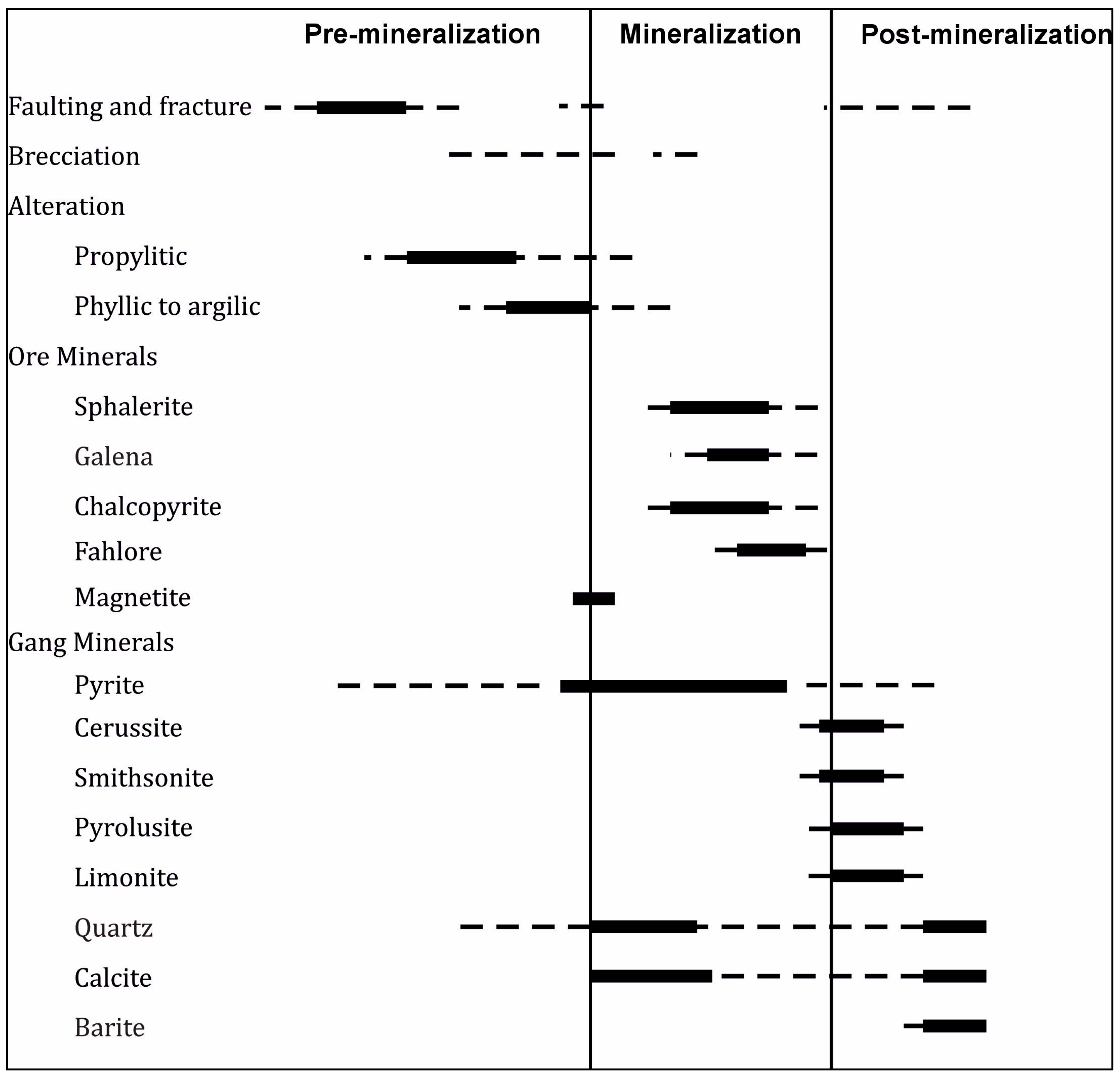
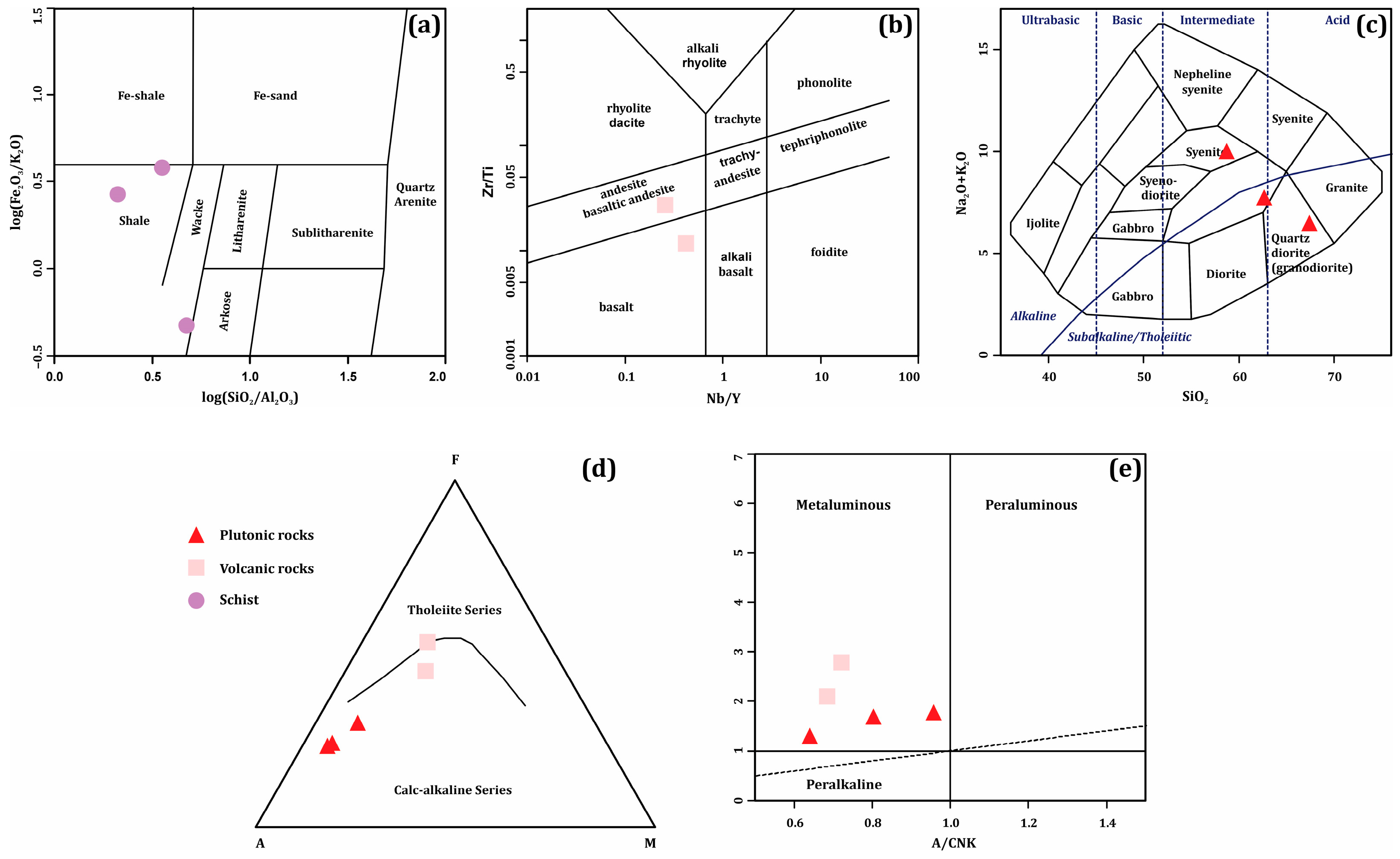
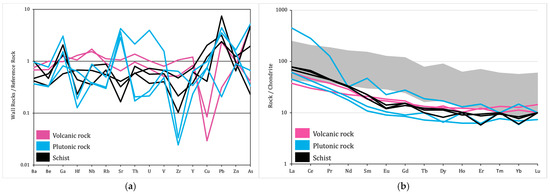
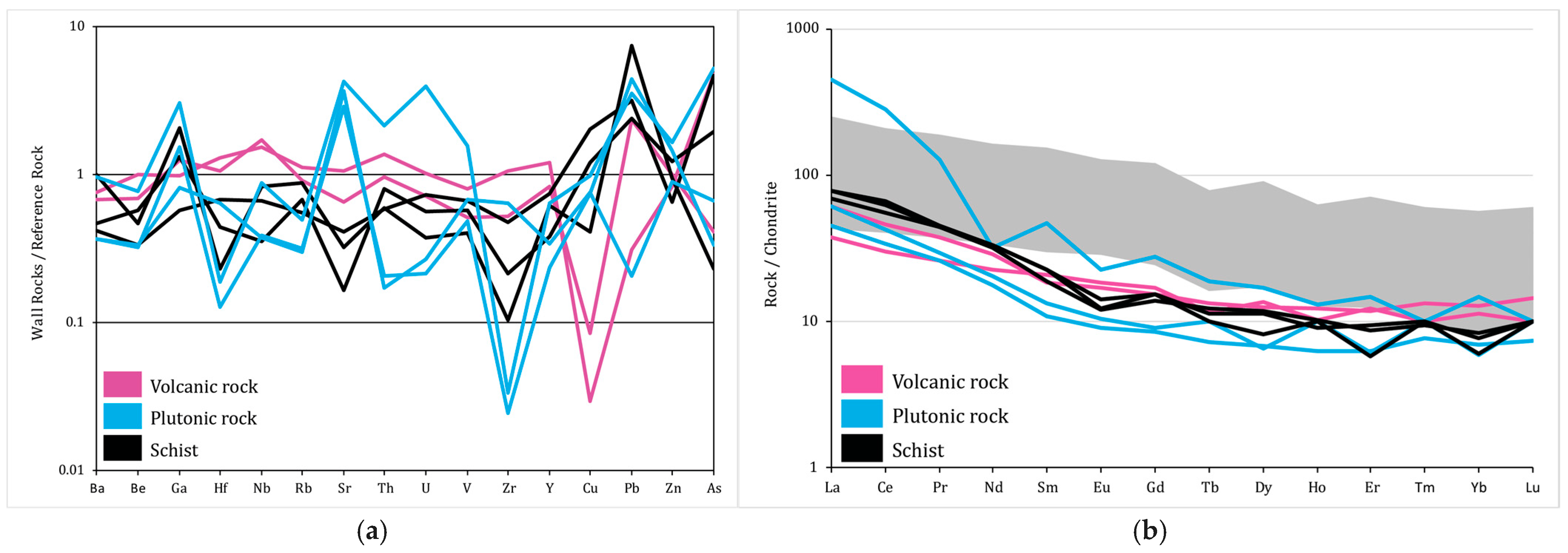
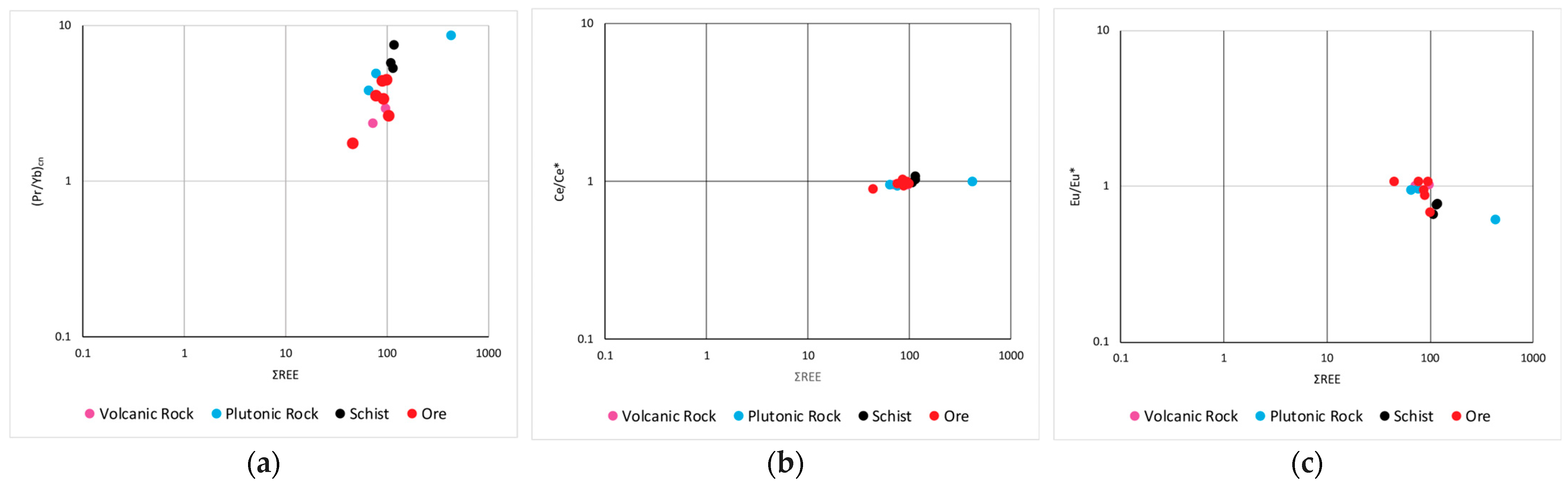
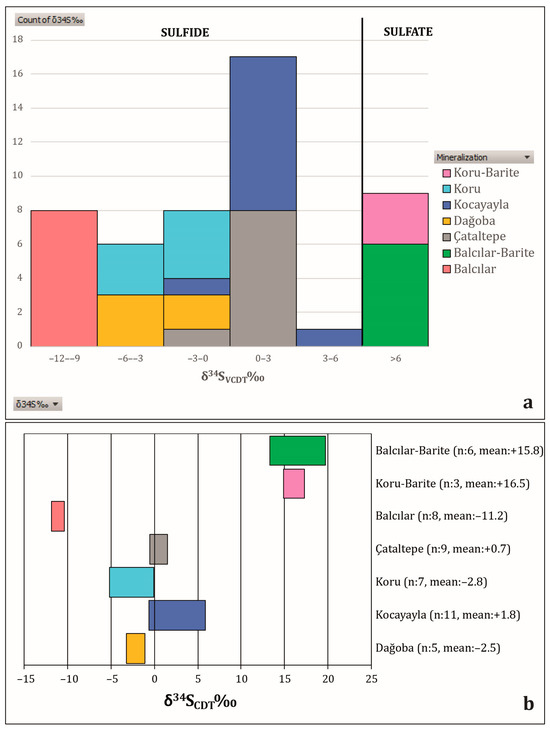
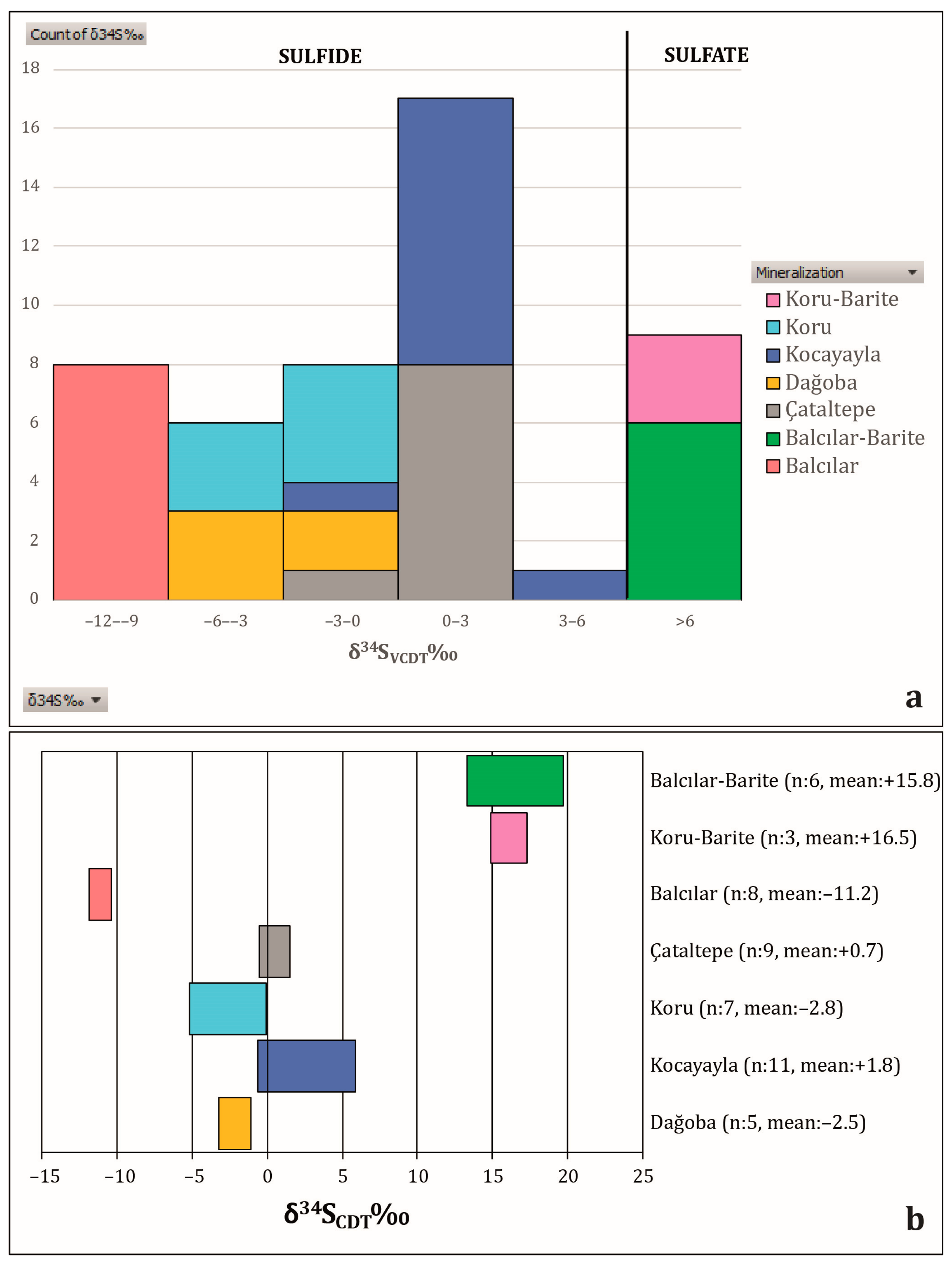
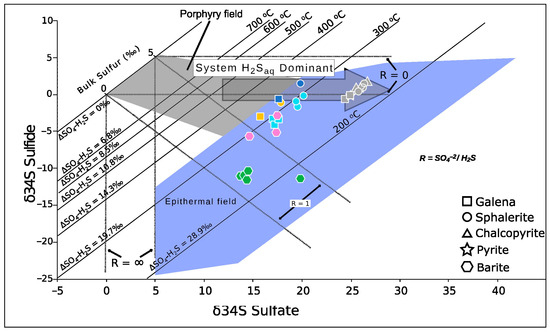
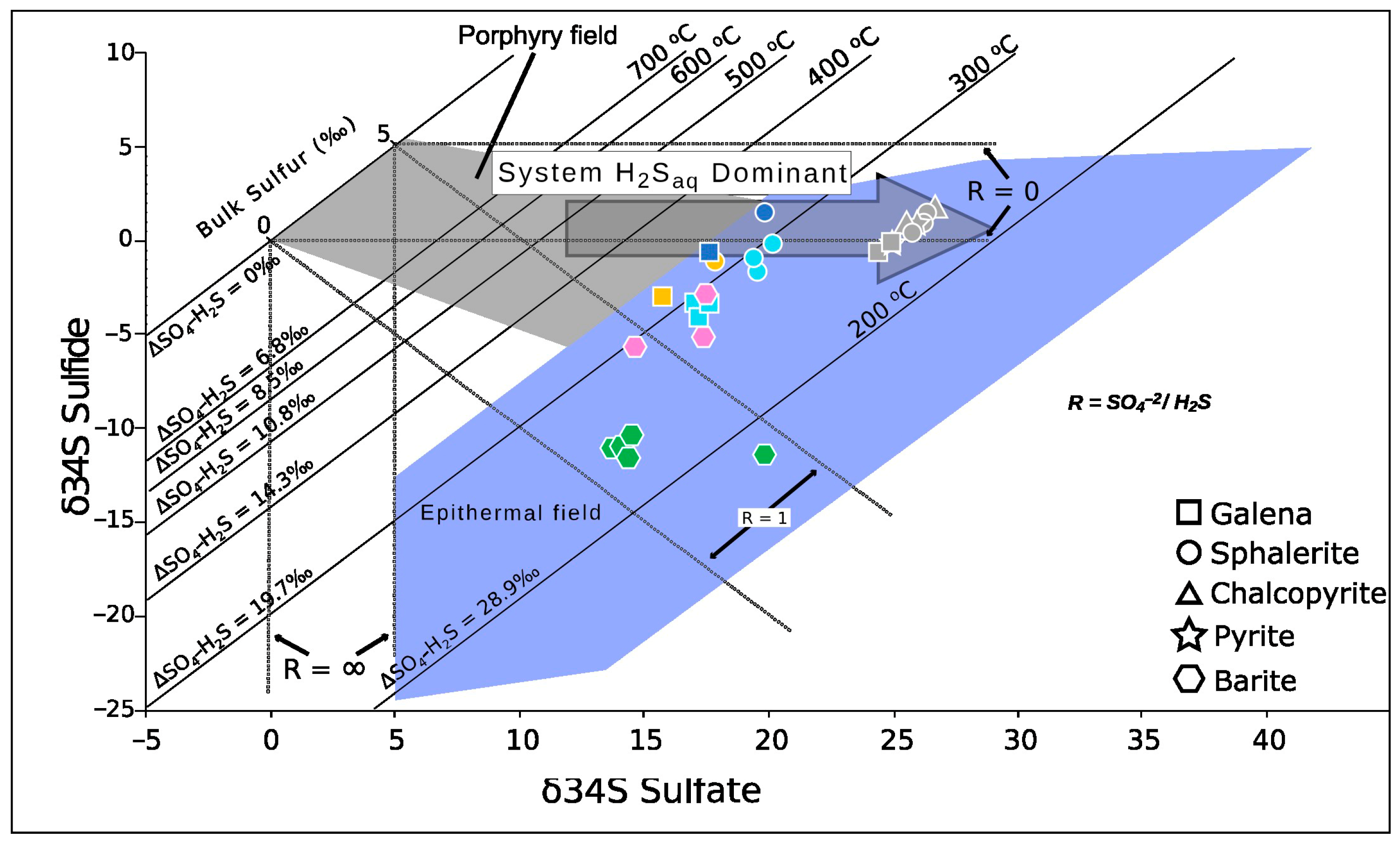

Disclaimer/Publisher’s Note: The statements, opinions and data contained in all publications are solely those of the individual author(s) and contributor(s) and not of MDPI and/or the editor(s). MDPI and/or the editor(s) disclaim responsibility for any injury to people or property resulting from any ideas, methods, instructions or products referred to in the content. |
© 2026 by the authors. Licensee MDPI, Basel, Switzerland. This article is an open access article distributed under the terms and conditions of the Creative Commons Attribution (CC BY) license.