


Abstract
Industrial almond by-products (ABPs, almond oil cake) and tomato by-products (TBPs, mixture of peel and seeds) are nutrient-rich residues that could enhance the nutritional value of gluten-free pasta and support sustainable waste reduction. This study investigated the impacts of ABP or TBP incorporation and the extrusion screw speed on rice-based pasta quality. Rice pasta (control) and pasta enriched with ABP or TBP at different rates (2.5%, 5.0%, 7.5% and 10.0%) were processed by extrusion-cooking at two screw speeds (50 and 90 rpm), and their quality (cooking loss, water absorption capacity, hardness, firmness, adhesiveness and color) was evaluated, as well as energy requirements during processing (specific mechanical energy (SME)). The results showed that an increase in the ABP and TBP rates had a more pronounced positive effect on cooking loss, water absorption capacity, yellowness and redness values. Moreover, comparable hardness and firmness, but lower adhesiveness values, were recorded in cooked rice–ABP-enriched pasta. However, cooked pasta enriched with TBP had lower hardness than the control pasta. Regarding energy consumption, pasta processed with a higher by-product rate at a higher screw speed showed similar SME as compared to the control pasta. In this regard, ABP can be used successfully from 7.5 to 10.0% in rice–ABP pasta formulations without compromising its technological properties. However, the optimization of the additive rate of TBP requires further study.
1. Introduction
Pasta is considered a staple food worldwide due to its taste, long shelf life and affordable price [1]. It is commonly based on durum wheat semolina [2]. The gluten-free product market is expected to grow at a compound annual growth rate of 10.1% from 2026 to 2033 [3]. These products are not only consumed by patients who suffer from gluten-related diseases but also by consumers who seek a healthy gluten-free diet [4,5,6]. Unfortunately, gluten-free pasta made from conventional gluten-free raw materials has a high glycemic index and lower content of vitamins, fiber and bioactive compounds, which may contribute to other health problems, such as obesity, cardiovascular diseases and metabolic disorders [7,8,9]. In this context, according to FAO recommendations, pasta can be a carrier of health-promoting compounds, and enriching pasta has significant nutritional importance [10].
Food waste refers to food discarded throughout the food supply chain. One third of the world’s produced food is wasted—including most agro-industrial by-products [11]. In this context, different approaches, such as the implementation of a circular bio-economy that relies on the reuse and reintegration of food by-products into the food supply chain, will help to establish a sustainable food system, promote the production of value-added products and minimize waste [12,13,14].
Tomato by-products (peels, seeds and pulp) are generated in vast quantities from the tomato processing industry. Wasting invaluable by-products presents significant disposal issues and contributes to environmental burdens [15]. Therefore, recent research has been carried out on the incorporation of tomato by-products in conventional pasta [16,17,18] due to their nutritional value. This includes protein (15.08–24.67%), fatty acids (2–16.24%), dietary fiber (39.11–59.03% on a dry basis) and lycopene (80–90% of the total carotenoids and polyphenols, depending on the variety or the geographical location of the cultivation area) [15,19].
Other notable examples of agro-industrial by-products include seed oil cakes, which are the residues obtained after pressing oil from seeds and nuts [20]. Regarding almond seeds, these residues retain significant amounts of fat (7.9–13.8%) and are rich in protein (27.83%), fiber (16.12%) and bioactive compounds (mainly polar phenolic compounds (823–2064 mg/kg)) [21,22,23]. Therefore, almond by-products offer opportunities for valorization and food reintegration in several products, such as gluten-free fresh pasta [24] and premixes for bakery products [25].
Moreover, recent research has been carried out on the inclusion of other plant by-products, which are valuable sources of protein, fatty acids, dietary fiber and bioactive compounds, in gluten-free pasta, including carrot pomace [26,27], grape pomace [28,29], olive pomace [30,31], linseed by-products [32,33] and parsley leaves [34]. However, the incorporation of fiber-rich by-products in gluten-free pasta processing may alter the cooking and technological properties of enriched gluten-free pasta.
Extrusion-cooking is a technology with significant potential for by-product valorization. It combines the effects of moisture, pressure, temperature and mechanical shear forces, which supports the transformation of plant materials within the extruder, and further enhances the techno-functional and textural properties of the extrudates [35,36,37]. Extrusion-cooking is considered an environmentally friendly processing method due to its low cost, short processing time, versatility and energy savings [37,38].
Currently, there are no studies about the fortification of gluten-free pasta with almond by-products and tomato by-products via extrusion-cooking. Therefore, the aim of this study was to investigate the effects of the additive type and the rate of almond and tomato by-product inclusion, as well as variable screw speeds, on newly developed enriched gluten-free pasta characteristics and on the extrusion-cooking efficiency.
2. Materials and Methods
2.1. Raw Materials
Rice flour was provided by Ebro Ingredients (Wormer, The Netherlands) and its proximate composition was as follows: moisture content 12.72%, protein 9.57%, lipid 0.64%, ash 0.27% and total fiber 6.05%. Tomato by-products (TBPs) were collected from Maison Latina (Chelghoum Laid, Mila, Algeria), and the mixture consisting of the peel and seeds left after tomato processing was dried until it reached 10.39% moisture content, with a composition of protein at 17.56%, lipids at 7.04%, ash at 3.95% and total fiber at 49.65%. Almond by-products (ABPs) were supplied as almond dry cake after pressing by Bioazir (Maison de l’Artisanat, Souk Ahres, Algeria) at moisture content of 7.90%, with protein content of 44.79%, lipid content of 25.48%, ash of 4.45% and total fiber of 41.46%. By-products were ground using a HR-30B electric grinder machine (Zhejiang Horus Industry and Trade Co., Ltd., Yongkang, China) and sieved to obtain powders with a particle size below 500 µm.
2.2. Pasta Processing
Rice flour and different amounts of almond or tomato by-products were selected to develop two enriched pasta formulations (rice–ABP pasta and rice–TBP pasta). The additive rate of each by-product was varied according to different levels (2.5%, 5.0%, 7.5% and 10.0%) of the total weight of the rice flour–ABP or rice flour–TBP mixtures.
Each batch (3 kg) was prepared separately, maintaining the appropriate ratios depending on the selected by-product content. Afterwards, tap water was added gradually under continuous mixing to obtain 30% final moisture in the blends. The mixtures were then left for 30 min in tightly closed containers to equilibrate the moisture distribution.
Before the extrusion-cooking process, the mixtures were sieved, thus allowing the homogenous blending of the components. The moisture content of each mixture was then analyzed once again using an MA50R moisture analyzer (Radwag, Radom, Poland). The extrusion-cooking and processing of ABP-enriched pasta and TBP-enriched pasta was carried out separately using the single-screw extruder EXP-45-32 (Zamak Mercator, Skawina, Poland) equipped with a forming die with 5 openings with a diameter of 1.2 mm each. Processing was performed with a barrel length to diameter ratio of L/D = 20, at a temperature profile ranging between 62 and 112 °C, across five extruder sections at screw speeds of 50 (SS1) and 90 rpm (SS2).
The 18 extruded samples were subsequently dried at room temperature (24 °C) for 24 h until the final moisture content of approximately 10% was reached. After drying, the samples were placed in hermetic plastic bags until further analyses. Images of the dry and cooked pasta processed at 90 rpm were taken with a Nikon Coolpix 4500 digital camera (Nikon Corporation, Tokyo, Japan) so as to visualize the effects of the used additives on the appearance of the newly developed pasta.
2.3. Cooking Quality
2.3.1. Optimal Cooking Time
The optimal cooking time (OCT) of pasta was determined via three replications according to the AACC-approved 66-50 method [39], modified by Chillo et al. [40]. Herein, a 5 g pasta sample was immersed in 150 mL of boiling water. At regular intervals (30 s), a pasta strand was removed and squeezed between two Plexiglass plates. The OCT corresponded to the time at which the white non-hydrated core of the pasta completely disappeared.
2.3.2. Water Absorption Capacity and Cooking Loss
Pasta samples were cooked in 150 mL of boiled water at their optimum cooking times. After draining for 5 min, the pasta was weighed and the water absorption capacity (WAC) was determined in triplicate as the ratio of the weight of cooked pasta to the weight of raw pasta. Cooking loss (%) was assessed three times as the ratio of the mass of residues released from the pasta in the cooking water after drying at 105 °C in an air oven, namely the SLW 53 STD (Pol-Eko, Wodzisław Śląski, Poland), to a constant weight to the mass of dry pasta [41].
2.4. Texture Measurement
The textural properties of pasta samples were evaluated by employing a ZwickRoell BDO-FB0.5 TH instrument (Zwick GmbH & Co., Ulm, Germany) equipped with a 0.5 N load cell and operated at a test speed of 3.3 mm/s. Data acquisition and analysis were performed through the application of the TestXpert® 10.11 software provided by the producer. For dry pasta samples, hardness was determined as the maximum cutting force (N) required to break individual pasta strands using a Warner-Bratzler cutting knife, with five replicate measurements. Cooked pasta samples (at OCT) underwent texture characterization through the double compression test up to 50% compression by means of an OTMS (Ottawa Texture Measuring System) cell (Zwick GmbH & Co., Ulm, Germany). This test assessed two key parameters: firmness, recorded as the peak force (N) in the first compression cycle, and adhesiveness, measured as the work (mJ) necessary to overcome the surface attraction between the sample and the cell material surface. This comprehensive approach enabled a quantitative evaluation of both the structural integrity in dry pasta and eating quality attributes in cooked pasta products [41].
2.5. Color Measurement
The color profiles of uncooked and cooked pasta were measured by means of a NH310 portable colorimeter (3NHTechnology Co. Ltd., Shenzhen, China) with five replicates in the CIE-Lab color space. The parameter L* indicates lightness (0 = black, 100 = white), a* values indicate redness (positive value) or greenness (negative value) and b* values indicate yellowness (positive value) or blueness (negative value) [42].
2.6. Processing Efficiency and Specific Mechanical Energy
During the single-screw extrusion-cooking process, the key processing parameters were monitored via the extruder’s control LCD screen. The obtained data included the extrusion pressure (bar), torque (Nm), engine load (%) and active power (kW). Additionally, the processing efficiency (kg/h) was evaluated in triplicate as the amount of sample produced over a specific time period by applying the following equation:
where Q—processing efficiency (kg/h), m—mass of the obtained extrudate (kg), t—measurement time (h).
The specific mechanical energy (SME), a critical parameter reflecting the energy consumption per unit of processed material, was calculated based on the extruder’s characteristics and process output using the following equation [41]:
where SME—specific mechanical energy (kWh/kg), n—screw rotations (rpm), L—engine load (%), P—electric power (kW), nmax—maximum screw rotations (rpm), Q—process efficiency (kg/h).
2.7. Statistical Analysis
Significant differences between mean values were determined by applying one-way analysis of variance (ANOVA), followed by Tukey’s honestly significant differences post hoc test at a 95% confidence level. Two-way ANOVA was employed to determine the effect of each factor, i.e., the additive rate (2.5%, 5.0%, 7.5% and 10.0%) and screw speed (50 rpm and 90 rpm), on the different responses (cooking and technological properties) via the R open-source statistical software, version 4.3.1 (R Core Team, 2023).
Pearson’s linear correlation coefficients (r) were also calculated to determine the strength of the linear correlations between quantitative variables, employing IBM SPSS Statistics, version 20.0 (IBM, Armonk, NY, United States).
3. Results and Discussion
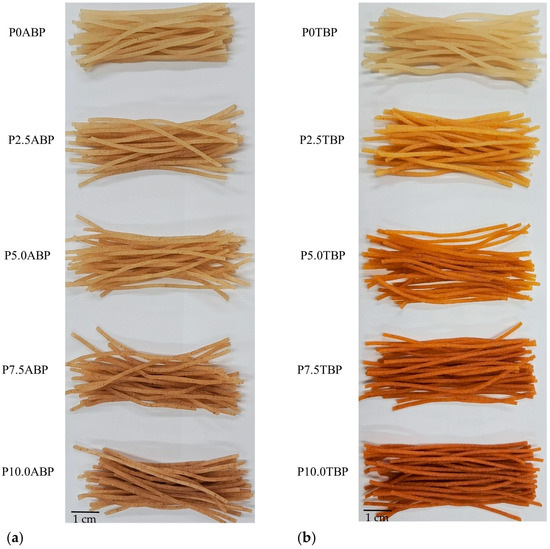
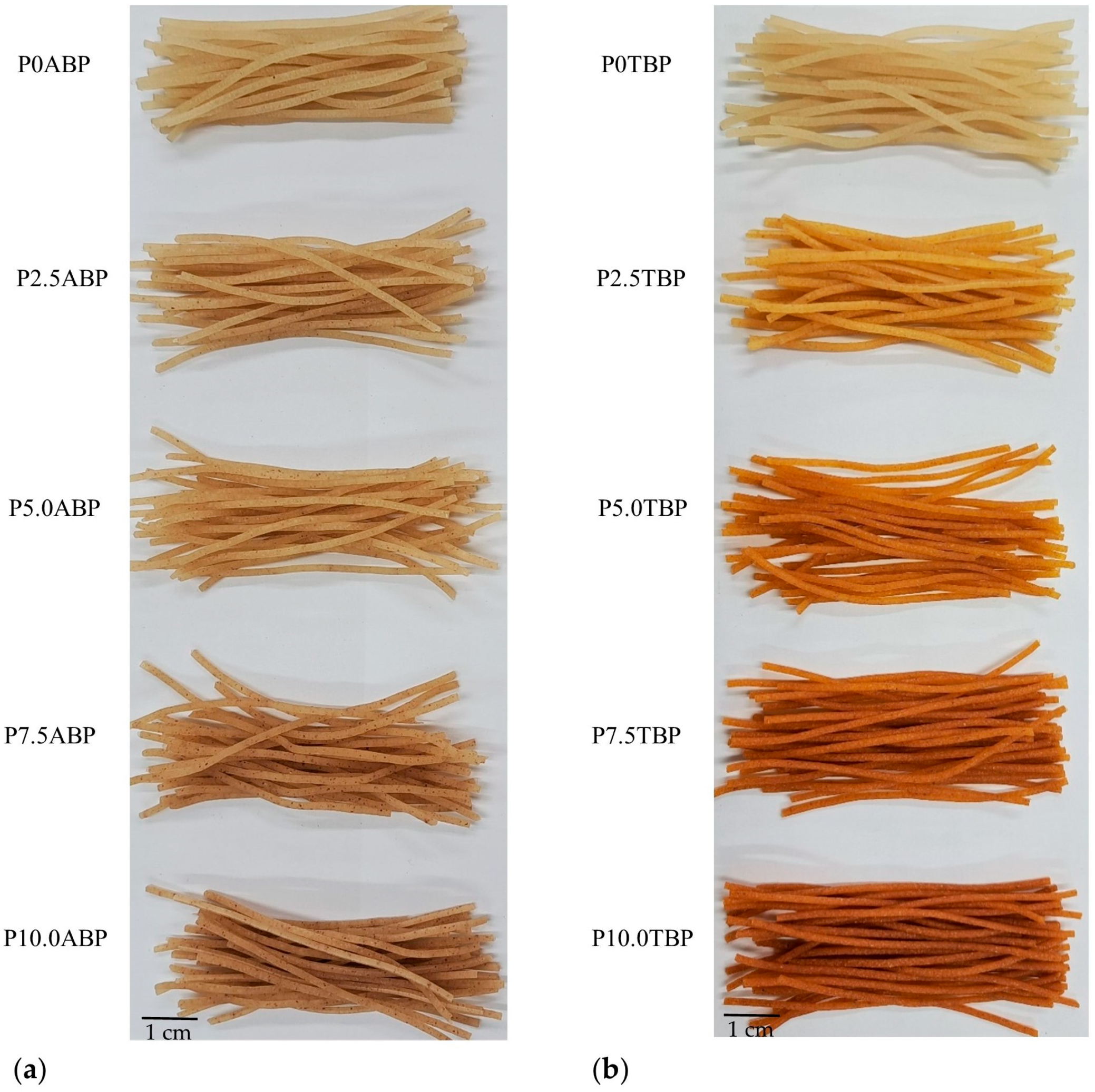
Almond and tomato by-products are nutrient-rich and were found to enhance the nutritional value of gluten-free pasta while supporting sustainable waste reduction. ABP- and TBP-enriched pasta were effectively processed by extrusion-cooking, and this action increased ABP and TBP inclusion in the precooked pasta matrix and gave a coherent structure that could resist heat treatment after cooking [43]. Raw uncooked pasta enriched with ABP showed a compact structure and smooth surface, without any disruption of the pasta matrix (Figure 1a), compared to tomato-enriched pasta, which presented a weaker structure but more attractive color properties, even at low TBP additive rates (Figure 1b).
Figure 1.
Uncooked ABP–rice pasta (a) and TBP–rice pasta (b) processed at 90 rpm with different additive rates.
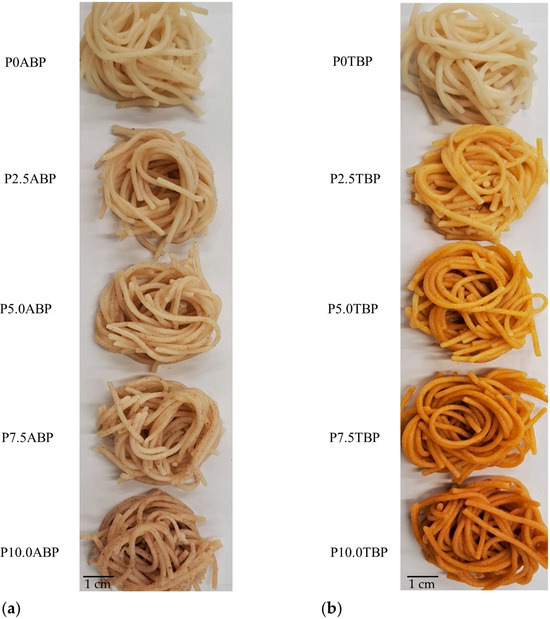
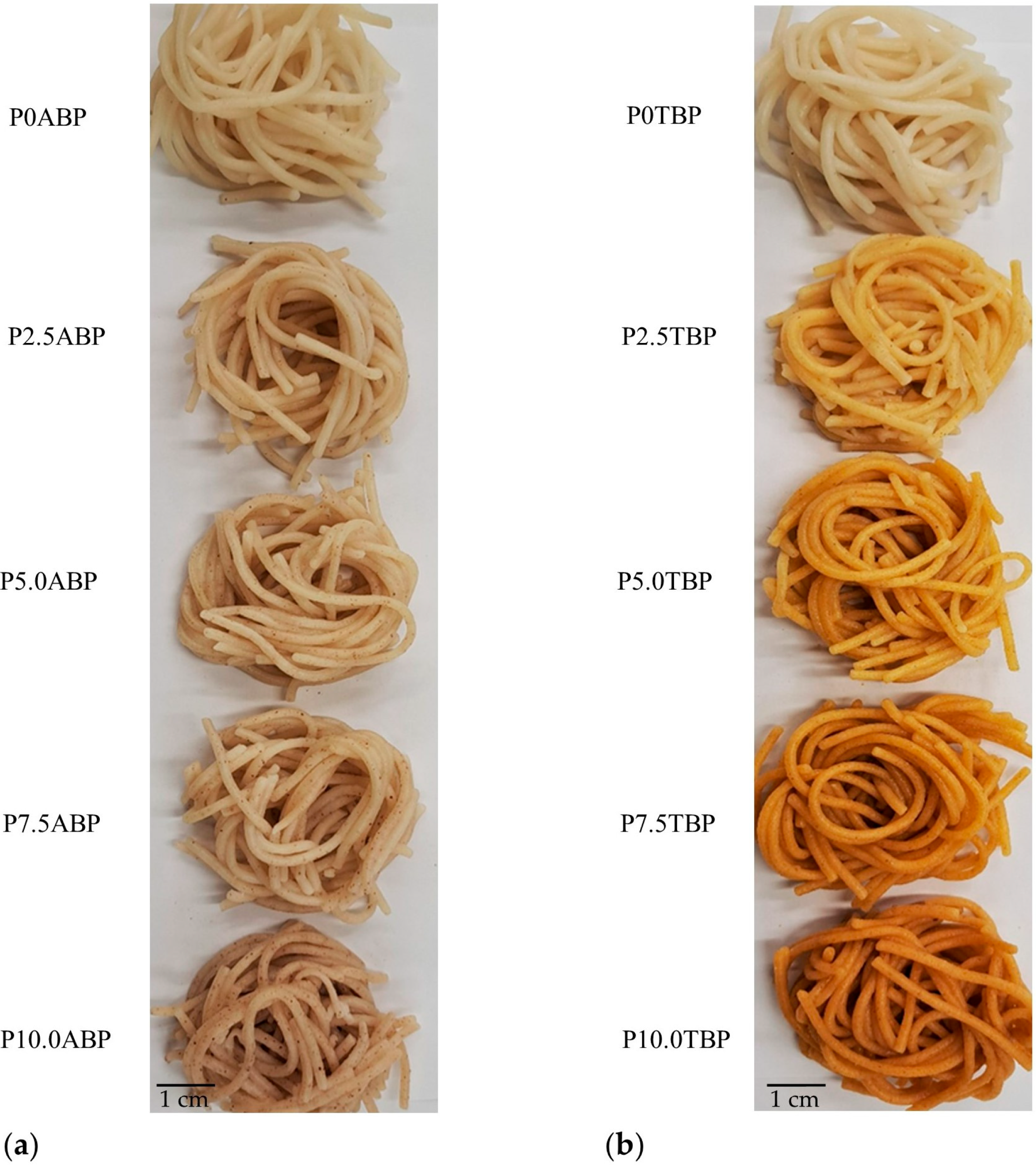
After cooking, ABP-enriched pasta had better extensibility and elongation, with a slightly oily surface that had a positive effect in preventing sample stickiness (Figure 2a). In contrast, TBP-enriched pasta had significantly higher stickiness at a higher additive rate (Figure 2b). Regarding color properties, increased TBP additive rates led to higher color intensities compared to ABP-enriched pasta, which was characterized by visible by-product particles in the pasta matrix.
Figure 2.
Cooked ABP–rice pasta (a) and TBP–rice pasta (b) processed at 90 rpm with different additive rates.
Cooking quality, textural attributes and color properties are considered major quality attributes of pasta that can influence consumer acceptability. Table 1 and Table 2 show the effects of an increased additive rate (AR) and screw speed (SS) on selected properties of gluten-free pasta enriched with ABP and TBP, respectively. We found that an increased ABP additive rate had significantly stronger effects on the textural attributes (adhesiveness) and color properties (lightness, redness and yellowness) of uncooked and cooked pasta. However, changing the screw speed had a more pronounced effect on the cooking quality (cooking loss and water absorption capacity) and textural attributes (hardness). Moreover, the firmness and specific mechanical energy were significantly influenced by the interaction effect of the ABP additive rate and screw speed (AR × SS). Regarding TBP-enriched pasta, an increased additive rate had a significantly greater influence on most of the selected properties—cooking quality (water absorption capacity), textural attributes (hardness and firmness), specific mechanical energy and color properties (lightness, redness and yellowness)—of both uncooked and cooked pasta. Here, changing the screw speed was found to have a slight effect on cooking loss. Moreover, adhesiveness was found to be influenced by the interaction effect of both the additive rate and screw speed.
Table 1.
Two-way ANOVA for cooking quality, texture, color properties and energy consumption of rice–ABP-enriched pasta.
Table 2.
Two-way ANOVA for cooking quality, texture, color properties and energy consumption of rice–TBP-enriched pasta.
3.1. Cooking Loss and Water Absorption Capacity
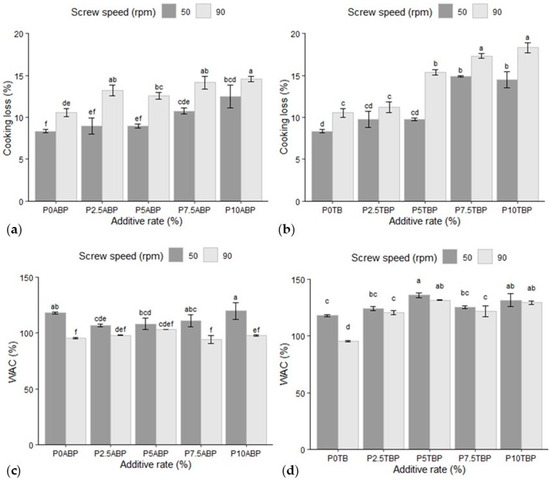
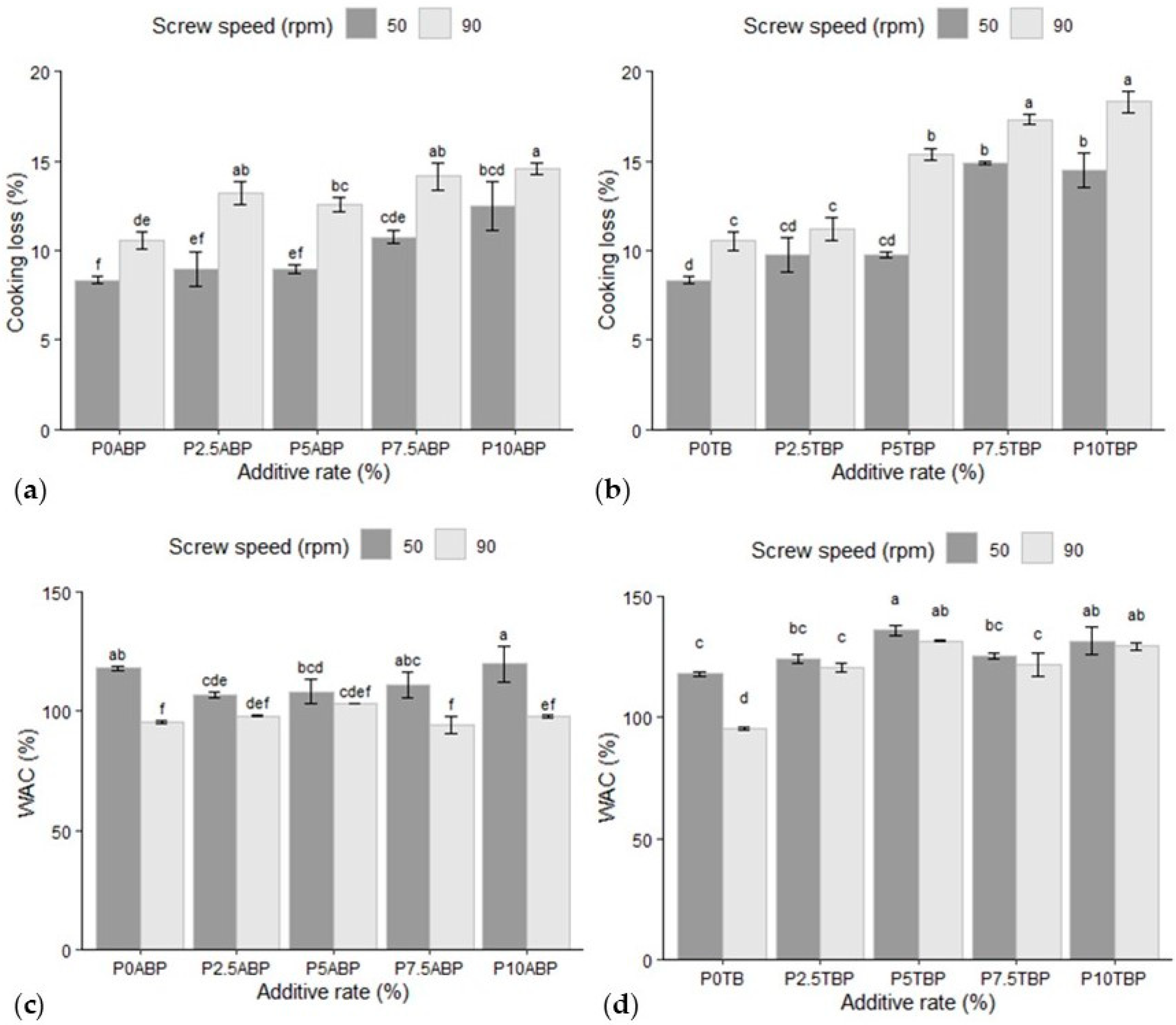
The cooking loss of rice–ABP and rice–TBP pasta processed by extrusion-cooking at different screw speeds is demonstrated in Figure 3a,b. The results showed that increasing the additive rate of ABP in pasta samples processed at a lower speed (SS1—50 rpm) induced a significant increase in cooking loss (r = 0.611)—from 8.35% for the control sample to 12.49% for the sample with 10.0% of ABP.
Figure 3.
Effects of additive rate and screw speed on cooking loos (a) and water absorption capacity (c) of rice–ABP pasta and cooking loss (b) and water absorption capacity (d) of rice–TBP pasta. a–f: Means with the same superscripts are not significantly different (p > 0.05).
Our result is lower than that found by Chao et al. [44] when substituting wheat flour with 10% of starch–lipid complexes. However, we found that the addition rate of TBP had a remarkably greater positive influence (r = 0.824) on cooking loss (from 8.35% to 14.47%), with values that were higher than those reported by Bouasla and Wójtowicz [45]. Indeed, the sample consisting of larger amounts of ABP (10.0%) had lower cooking loss (12.49%) than the sample with 7.5% of TBP (14.88%) processed at the same screw speed (50 rpm). This outcome was likely due to the chemical composition of the fiber-rich TBP by-product, which was characterized by higher fiber content than that of ABP, and this could decrease starch gelatinization and, as a consequence, increase cooking loss [33,46,47]. Furthermore, an increased screw speed during gluten-free pasta processing brought about a significant (p < 0.05) increase in cooking loss (r = 0.702) for samples created with the same ABP additive rate. Here, SS was found to have the most significant effect on CL, as confirmed by the highest F-test values both for ABP (Table 1) and TBP (Table 2) pasta. These outcomes could have been due to the larger diameters of samples (2.07 mm) processed at higher screw speeds, which required longer cooking times, as compared to samples processed at lower screw speeds (1.62 mm). In addition, a shorter residence time inside the extruder when using higher screw speeds may have led to a lower gelatinization rate, leading to enhanced solid loss during cooking [48,49].
Moreover, an increased additive rate (10.0% of ABP) had a slight but significant effect (p < 0.05) on WAC compared to the control sample (Figure 3c) extruded at the same 50 rpm screw speed (118.09–119.58%). However, the variation of the screw speed had a more pronounced effect on WAC. Our work demonstrated a water absorption capacity that followed a trend that was contrary to the screw speed increase (r = −0.82). Samples processed at a higher screw speed (SS2) with a higher ABP additive rate (10.0%) were characterized by lower WAC values (97.69%) compared to the ABP pasta created at a lower (SS1) screw speed (119.58%).
This suggests that the screw speed significantly affects the WAC of the supplemented pasta, possibly due to the thermomechanical interactions and shear forces applied to pasta dough during extrusion-cooking, resulting in modified starch properties, restricting sample water penetration and water absorption [50,51]. Nevertheless, the inclusion of TBP by-products as additives (Figure 3d) had a more significant (p < 0.05) effect (Table 2) on the WAC (118.09–131.52%) of enriched gluten-free pasta samples than did the inclusion of ABP. Here, a more significant effect of the screw speed was noted through higher F-test values (Table 1). In this regard, Cumhur et al. [49] found that samples with higher cooking loss also exhibited higher water absorption capacities. The WAC results were higher in TBP pasta, possibly due to the lower gelatinization rate and the formation of a discontinued starch network, which was triggered by TBP’s high fiber content and could facilitate easier water penetration into the pasta matrix [17,33].
3.2. Textural Attributes of Pasta
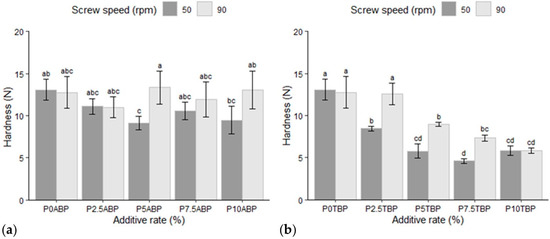
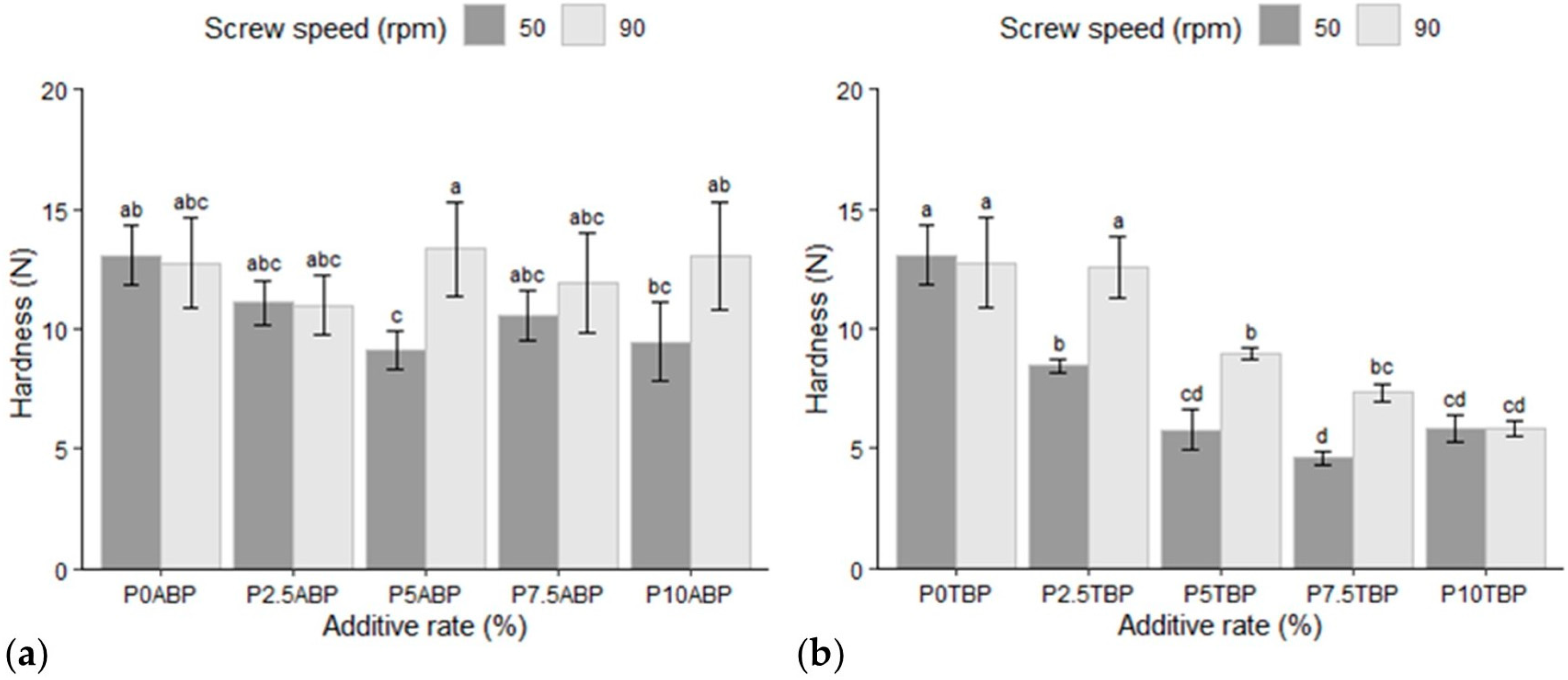
The additive rate and screw speed had significant effects (p < 0.05) on dry pasta’s hardness; however, changing the screw speed had a more pronounced effect on the hardness (high F-test value, Table 1) when ABP was added (Figure 4a). Accordingly, an increased screw speed (SS2) led to the highest hardness value (13.32 N) of dry pasta processed at the ABP additive rate of 5.0%. We believe that increased shear forces induced by the higher screw speed could have increased the rigidity of more crystalline regions during extrusion [52]. In contrast, the addition of TBP flour to pasta had a strong (high F-test value, Table 2) but negative effect (r = −0.83) on the hardness value, as the TBP additive rate increased the hardness value of dry products to 5.68 N (at a 10.0% additive rate) compared to the control sample (13.07 N) (Figure 4b).
Figure 4.
Effects of additive rate and screw speed on hardness of dry rice–ABP pasta (a) and rice–TBP pasta (b). a–d: Means with the same superscripts are not significantly different (p > 0.05).
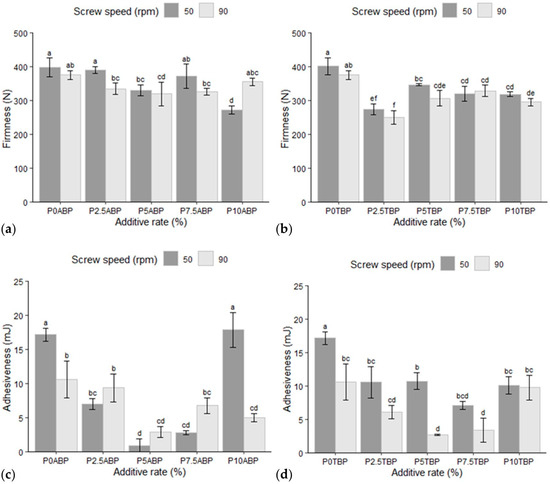
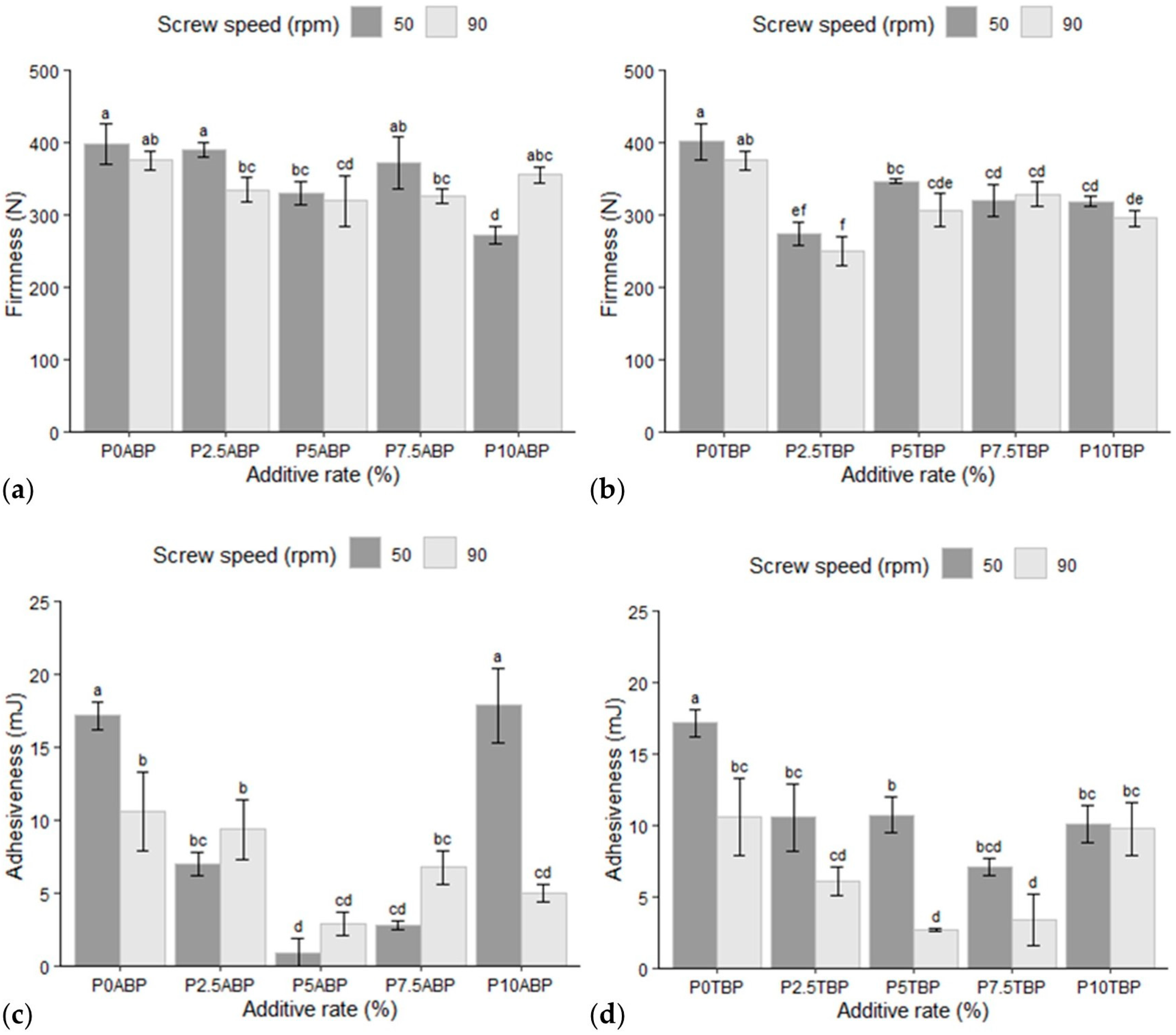
These findings align with those found by Padalino et al. [46] and Alinovi et al. [53] when adding pepper and chestnut flour to pasta, respectively. This supplementation was reported to contribute to the formation of a discontinued starch network and the decreased gelatinization of starch during the conventional pasta-making process—causing a weak structure. In our work, the addition of ABP induced a significant (p < 0.05, Table 1) decrease in cooked pasta’s firmness values (398.25–272.50 N) for samples extruded at lower screw speeds compared to the control sample (Figure 5a). Pasta processed at higher screw speeds was characterized by having lower firmness with only slight differences, except for the P10ABP sample with 10.0% of almond by-product addition. In this sample, processing at 90 rpm (SS2) improved pasta firmness. Overall, the results were lower than those obtained for the control cooked pasta. These results align with those found by Chao et al. [44].
Figure 5.
Effects of additive rate and screw speed on textural attributes of firmness (a) and adhesiveness (c) of rice–ABP pasta and firmness (b) and adhesiveness (d) of rice–TBP pasta. a–f: Means with the same superscripts are not significantly different (p > 0.05).
The higher firmness values (>300 N) for samples with a higher ABP additive rate could be the result of amylose–lipid complex formation and the insolubility of these complexes during cooking [54]. However, in another work, increased amylose–lipid complex formation was found to increase the pasta’s component loss during cooking and led to a further firmness decrease [44]. A similar tendency (Table 2) was observed for samples enriched with a higher TBP additive rate (Figure 5b) compared to the control sample, indicating the effect of higher fiber concentrations in samples, preventing starch gelatinization during pasta processing by extrusion-cooking [33,46]. In this case, the most significant decrease in firmness was noted when 2.5% of TBP flour was added. Other samples showed small and insignificant differences regarding both the additive level and variable screw speeds applied during gluten-free pasta processing.
An increased ABP additive rate significantly (p < 0.05, Table 1) decreased cooked pasta’s adhesiveness value to 2.78 mJ in samples extruded at a lower screw speed (SS1), as compared to the control pasta (17.15 mJ). Generally, the results were notably lower, except for the P10ABP sample extruded at a low screw speed, which showed similar adhesiveness to the control pasta processed under the same conditions (Figure 5c). Moreover, an increased TBP additive rate in pasta processed at lower speeds demonstrated decreased adhesiveness values (from 10.09 to 7.13 mJ) compared to the control sample (Figure 5d), but the differences were less significant. In this case, the applied screw speed was the most important factor, as the F-test values were the highest (Table 2).
However, the highest TBP additive rate (10.0%) yielded a higher pasta adhesiveness value (9.75 mJ) compared to the sample enriched with the same amount of ABP (5.00 mJ) and processed at a higher speed. These results are in line with those found by Padalino et al. [16], Cumhur et al. [49] and Kang et al. [55], who reported that increased additive rates of vegetable by-products rich in fiber and sugar increased the adhesiveness values of pasta products. This could have been due to a higher affinity for water, which triggered higher solubility during pasta cooking [26,42].
3.3. Color Profiles of Uncooked and Cooked Pasta
The results of the color profile assessment of uncooked and cooked pasta are presented in Table 3. An increased ABP additive rate induced a significant (p < 0.05, Table 1) lightness decrease (r = −0.91) in pasta samples (87.81–84.42) and a significant increase in the red index (r = 0.97) and yellowness values (r = 0.97), probably due to the color of the almond by-products (L* = 68.83, a* = 7.05, b* = 13.97). However, ABP-enriched pasta was still characterized by a low redness index (1.72–3.77), with a slight yellowness increase (8.98–11.79) compared to the control sample (Table 3).
Table 3.
Color profiles of uncooked and cooked rice–ABP pasta.
However, the effect of the TBP additive rate was more evident in both the uncooked and cooked pasta’s color profiles (Table 2). A higher TBP additive rate caused a significant (p < 0.05) reduction (r = −0.92) in lightness values (87.52–77.10) and a greater increase (r = 0.94) in both the redness index (−1.51–11.97) and yellowness (r = 0.90) values (8.71–24.78) compared to control samples (Table 4). These outcomes could have been due to the color profile of the tomato by-product, which was characterized by a high redness index and yellowness value (L* = 69.44, a* = 14.33, b* = 25.39). These findings align with the results of Cumhur et al. [49], who reported that samples enriched with greater amounts of sugar and amino acids and exposed to high temperatures during the extrusion-cooking underwent Maillard reactions, resulting in a significantly darker color. Similarly, Teterycz and Sobota [17], Kadri et al. [18] and Bayrakcı and Bilgiçli [27] found that increased carotenoid content in tomato and carrot by-products generated significant increases in the yellowness values of conventional pasta.
Table 4.
Color profiles of uncooked and cooked rice–TBP pasta.
In contrast, variable extrusion conditions had an influence only on the cooked ABP-enriched pasta’s lightness. Similarly, Nasehi et al. [56] reported no significant effects of extrusion on the color attributes of full-fat soy-enriched pasta. However, it was found that the oxidation reaction induced by heat treatment after cooking caused the partial loss of carotenoid pigments and a decreased color profile (lightness, redness and yellowness values) in all cooked samples [20,57].
3.4. Specific Mechanical Energy
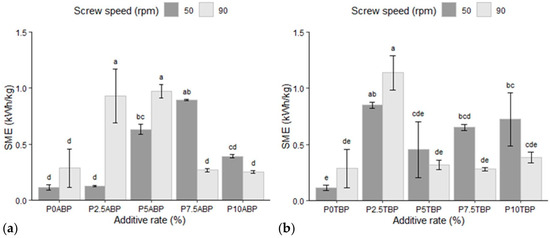
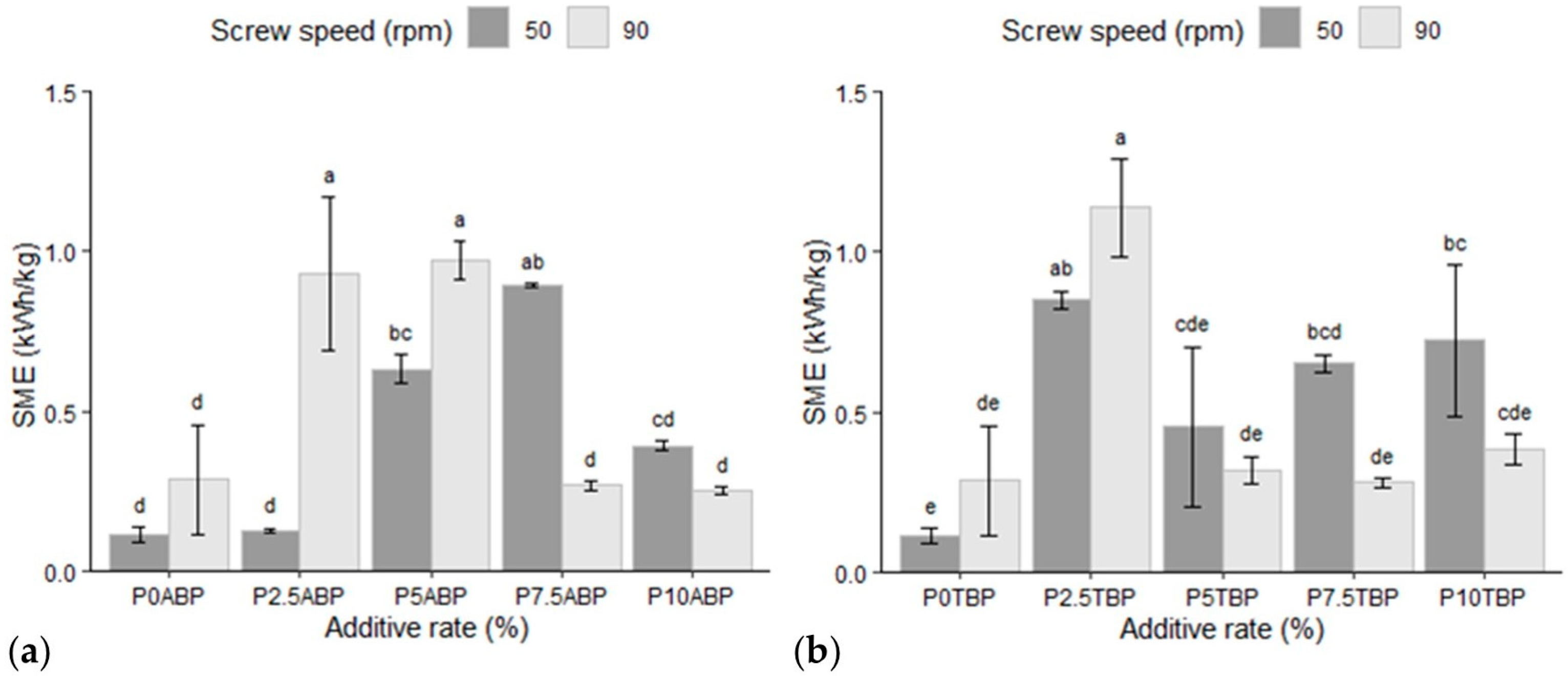
Samples of supplemented gluten-free pasta manufactured at a higher screw rotational speed (SS2) with low ABP and TBP additive rates (below 5.0%) exhibited significantly higher SME values (Figure 6a). However, samples with high ABP (more than 5.0%) additive rates processed at higher screw speeds showed decreased SME values (0.25 kWh/kg). These results align with those found by De Pilli et al. [58] during the extrusion of wheat starch. This resulted in increased amounts of oleic acid. We believe that the observed lower SME values during the processing of samples produced at both higher ABP additive rates and screw speeds could be due to the lubrication effect of ABP fat content during extrusion. A similar trend was observed for samples extruded with TBP flour and, in this case, the differences were less significant (Figure 6b). Meanwhile, the increased SME values for samples created with a higher additive rate and processed at a lower screw speed (SS1) suggest that, when the pasta was present for a longer time inside the extruder barrel, the fiber-rich components led to greater viscosity and required more energy to be processed due to enhanced shear forces.
Figure 6.
Effects of additive rate and screw speed on specific mechanical energy (SME) of rice–ABP pasta (a) and rice–TBP pasta (b). a–e: Means with the same superscript are not significantly different (p > 0.05).
Under higher screw speeds, raw materials containing more than 5.0% of by-products were transported much faster, and the lubrication effect generated by the fiber and fat in the tested by-products was more evident. The lubrication effect during the extrusion-cooking of starchy materials could favor the retention of lipid fractions and enhance starch–lipid complex formation in rice flour-based pasta products [50].
4. Conclusions
The additive rate of almond and tomato by-products showed different impacts on the developed gluten-free pasta processed at various screw speeds via single-screw extrusion-cooking. Indeed, a higher ABP additive rate (10.0%) yielded lower cooking loss compared to samples produced with 7.5% of TBP flour. Comparable hardness and firmness and lower adhesiveness values were found for samples processed with higher ABP incorporation rates when compared to the control sample. In contrast, pasta samples created at a higher TBP additive rate had lower hardness and comparable firmness and adhesiveness values when compared to the control. Moreover, a higher TBP additive rate (10.0%) had an influence on the water absorption capacity and generated pronounced yellowness and redness values when compared to ABP-enriched pasta. Regarding the specific energy consumption, samples with higher additive amounts of ABP and TBP flours and processed at higher speeds had similar SME values as compared to the control. These findings highlight the potential to incorporate large amounts of almond by-products without compromising the technological properties, thereby improving the nutritional properties of gluten-free pasta and supporting the development of new formulations to achieve sustainable food systems and minimize food waste. However, further research is needed to gain a deeper understanding of the internal structure and to evaluate the sensorial characteristics in order to assess consumer acceptance.
Author Contributions
Conceptualization, L.B. and A.W.; methodology, H.B., A.B. and A.D.; software, H.B. and A.W.; validation, A.W. and A.B.; formal analysis, H.B.; investigation, H.B., A.B., A.W., M.C., J.S. and M.M.; resources, A.W. and L.B.; data curation, H.B., M.C., J.S. and M.M.; writing—original draft preparation, H.B., A.B. and A.W.; writing—review and editing, H.B., A.B., A.D. and A.W.; visualization, H.B., A.B. and A.W.; supervision, A.B., A.D. and A.W.; project administration, L.B. All authors have read and agreed to the published version of the manuscript.
Funding
This research received no external funding.
Institutional Review Board Statement
Not applicable.
Informed Consent Statement
Not applicable.
Data Availability Statement
The data presented in this study are available on request from the corresponding author.
Acknowledgments
The authors thank Marek Milanowski for his kind support during sample processing.
Conflicts of Interest
The authors declare no conflicts of interest.
Abbreviations
The following abbreviations are used in this manuscript:
| ABP | Almond by-product |
| TBP | Tomato by-product |
| AR | Additive rate |
| SS | Screw speed |
| CL | Cooking loss |
| WAC | Water absorption capacity |
| SME | Specific mechanical energy |
References
- Sissons, M. Development of Novel Pasta Products with Evidence Based Impacts on Health—A Review. Foods 2022, 11, 123. [Google Scholar] [CrossRef] [Scilit]
- Gómez, M.; Braojos, M.; Fernández, R.; Parle, F. Utilization of By-Products from the Fruit and Vegetable Processing Industry in Pasta Production. Appl. Sci. 2025, 15, 2189. [Google Scholar] [CrossRef] [Scilit]
- Gluten-Free Products Market Size. Industry Report, 2033. Available online: https://www.grandviewresearch.com/industry-analysis/gluten-free-products-market (accessed on 13 February 2026).
- Khairuddin, M.A.N.; Lasekan, O. Gluten-Free Cereal Products and Beverages: A Review of Their Health Benefits in the Last Five Years. Foods 2021, 10, 2523. [Google Scholar] [CrossRef] [Scilit] [PubMed]
- Oladeji, O.S.; Said, F.M.; Daud, N.F.S.; Adam, F. Advancing Gluten-Free Noodles Development through Sustainable and Nutritional Interventions. Appl. Food Res. 2025, 5, 101209. [Google Scholar] [CrossRef] [Scilit]
- Xhakollari, V.; Daniele, G.M.; Cianciabella, M.; Medoro, C.; Paradiso, V.; Canavari, M. Exploring the Sensory Characteristics and Understanding Consumer Acceptance of Gluten-Free Pasta. Eur. Food Res. Technol. 2025, 251, 1305–1317. [Google Scholar] [CrossRef] [Scilit]
- El Khoury, D.; Balfour-Ducharme, S.; Joye, I.J. A Review on the Gluten-Free Diet: Technological and Nutritional Challenges. Nutrients 2018, 10, 1410. [Google Scholar] [CrossRef] [Scilit]
- Difonzo, G.; De Gennaro, G.; Pasqualone, A.; Caponio, F. Potential Use of Plant-based By-products and Waste to Improve the Quality of Gluten-free Foods. J. Sci. Food Agric. 2022, 102, 2199–2211. [Google Scholar] [CrossRef] [Scilit]
- Maghaydah, S.; Abu-Ghoush, M.; Hayajneh, W.; Iqbal, S. Development and Characterization of High-Fiber, Gluten-Free Pasta for Celiac Disease Patients. Appl. Sci. 2024, 14, 3779. [Google Scholar] [CrossRef] [Scilit]
- Bianchi, F.; Tolve, R.; Rainero, G.; Bordiga, M.; Brennan, C.S.; Simonato, B. Technological, Nutritional and Sensory Properties of Pasta Fortified with Agro-industrial By-products: A Review. Int. J. Food Sci. Technol. 2021, 56, 4356–4366. [Google Scholar] [CrossRef] [Scilit]
- Nordin, N.H.; Kaida, N.; Othman, N.A.; Akhir, F.N.M.; Hara, H. Reducing Food Waste: Strategies for Household Waste Management to Minimize the Impact of Climate Change and Contribute to Malaysia’s Sustainable Development. IOP Conf. Ser. Earth Environ. Sci. 2020, 479, 012035. [Google Scholar] [CrossRef] [Scilit]
- Cillo, V.; Petruzzelli, A.M.; Ardito, L.; Del Giudice, M. Understanding Sustainable Innovation: A Systematic Literature Review. Corp. Soc. Responsib. Environ. 2019, 26, 1012–1025. [Google Scholar] [CrossRef] [Scilit]
- Aschemann-Witzel, J.; Stangherlin, I.D.C. Upcycled By-Product Use in Agri-Food Systems from a Consumer Perspective: A Review of What We Know, and What Is Missing. Technol. Forecast. Soc. Change 2021, 168, 120749. [Google Scholar] [CrossRef] [Scilit]
- Ansari, S.A.; Kumar, T.; Sawarkar, R.; Gobade, M.; Khan, D.; Singh, L. Valorization of Food Waste: A Comprehensive Review of Individual Technologies for Producing Bio-Based Products. J. Environ. Manag. 2024, 364, 121439. [Google Scholar] [CrossRef] [Scilit] [PubMed]
- Eslami, E.; Carpentieri, S.; Pataro, G.; Ferrari, G. A Comprehensive Overview of Tomato Processing By-Product Valorization by Conventional Methods versus Emerging Technologies. Foods 2022, 12, 166. [Google Scholar] [CrossRef] [Scilit]
- Padalino, L.; Conte, A.; Lecce, L.; Likyova, D.; Sicari, V.; Pellicanò, T.M.; Poiana, M.; Del Nobile, M.A. Functional Pasta with Tomato By-Product as a Source of Antioxidant Compounds and Dietary Fibre. Czech J. Food Sci. 2017, 35, 48–56. [Google Scholar] [CrossRef] [Scilit]
- Teterycz, D.; Sobota, A. Use of High-Protein and High-Dietary-Fibre Vegetable Processing Waste from Bell Pepper and Tomato for Pasta Fortification. Foods 2023, 12, 2567. [Google Scholar] [CrossRef] [Scilit]
- Kadri, F.; Bouasla, A.; Amrani, M.; Baibout, A.K.; Benchettah, H.; Hidalgo, A.; Barkat, M. Pasta Fortification with Tomato Peel By-Product: Impact on Technological and Antioxidant Properties. Carpathian J. Food Sci. Technol. 2024, 16, 169–180. [Google Scholar] [CrossRef] [Scilit]
- Nour, V.; Panaite, T.D.; Ropota, M.; Turcu, R.; Trandafir, I.; Corbu, A.R. Nutritional and Bioactive Compounds in Dried Tomato Processing Waste. CYTA J. Food 2018, 16, 222–229. [Google Scholar] [CrossRef] [Scilit]
- Gałkowska, D.; Pycia, K.; Krykhta, A. Fortification of Durum Wheat Pasta with Nut Oil Cake: Effects on Nutritional and Technological Properties. Molecules 2025, 30, 3411. [Google Scholar] [CrossRef] [Scilit]
- Ojeda-Amador, R.M.; Fregapane, G.; Salvador, M.D. Chemical Characterization of Virgin Almond and Hazelnut Oils and Their By-Products. Eur. J. Lipid Sci. Technol. 2019, 121, 1900114. [Google Scholar] [CrossRef] [Scilit]
- Ollani, S.; Peano, C.; Sottile, F. Recent Innovations on the Reuse of Almond and Hazelnut By-Products: A Review. Sustainability 2024, 16, 2577. [Google Scholar] [CrossRef] [Scilit]
- Bansal, A.; Kaur, T.J. Nutritional Profile and Functional Attributes of Almond Press Cake as a Sustainable Food Source. Adv. Res. 2025, 26, 639–648. [Google Scholar] [CrossRef] [Scilit]
- Martínez, M.L.; Marín, M.A.; Gili, R.D.; Penci, M.C.; Ribotta, P.D. Effect of Defatted Almond Flour on Cooking, Chemical and Sensorial Properties of Gluten-free Fresh Pasta. Int. J. Food Sci. Technol. 2017, 52, 2148–2155. [Google Scholar] [CrossRef] [Scilit]
- Burbano, J.J.; Correa, M.J. Almond Flour a By-product of Oil Extraction: Nutritional Characterisation and Impact on Rheological Properties of Premixes for Bakery Products. Int. J. Food Sci. Technol. 2024, 59, 3126–3133. [Google Scholar] [CrossRef] [Scilit]
- Gull, A.; Prasad, K.; Kumar, P. Effect of Millet Flours and Carrot Pomace on Cooking Qualities, Color and Texture of Developed Pasta. LWT-Food Sci. Technol. 2015, 63, 470–474. [Google Scholar] [CrossRef] [Scilit]
- Bayrakcı, H.; Bilgiçli, N. Improvement of Bioactive Components and Technological Quality of Gluten-Free Pasta with Utilization of Different Carrot Powders, Guar Gum and Pregelatinization Application. Foods 2024, 13, 4101. [Google Scholar] [CrossRef] [Scilit]
- Gaita, C.; Alexa, E.; Moigradean, D.; Conforti, F.; Poiana, M.-A. Designing of High Value-Added Pasta Formulas by Incorporation of Grape Pomace Skins. Rom. Biotechnol. Lett. 2020, 25, 1607–1614. [Google Scholar] [CrossRef] [Scilit]
- La Gatta, B.; Rutigliano, M.; Liberatore, M.T.; Dilucia, F.; Palmitessa, M.; Di Luccia, A.; Lamacchia, C. Effect of the Addition of Freeze-Dried Grape Pomace on Fresh Tagliatelle Gluten Network and Relationship to Sensory and Chemical Quality. Foods 2023, 12, 2699. [Google Scholar] [CrossRef] [Scilit]
- Simonato, B.; Trevisan, S.; Tolve, R.; Favati, F.; Pasini, G. Pasta Fortification with Olive Pomace: Effects on the Technological Characteristics and Nutritional Properties. LWT Food Sci. Technol. 2019, 114, 108368. [Google Scholar] [CrossRef] [Scilit]
- Ferreira, D.M.; Oliveira, B.C.C.; Barbosa, C.; Costa, A.S.G.; Nunes, M.A.; Oliveira, M.B.P.P.; Alves, R.C. Pasta Incorporating Olive Pomace: Impact on Nutritional Composition and Consumer Acceptance of a Prototype. Foods 2024, 13, 2933. [Google Scholar] [CrossRef] [Scilit]
- Betrouche, A.; Estivi, L.; Colombo, D.; Pasini, G.; Benatallah, L.; Brandolini, A.; Hidalgo, A. Antioxidant Properties of Gluten-Free Pasta Enriched with Vegetable By-Products. Molecules 2022, 27, 8993. [Google Scholar] [CrossRef] [Scilit]
- Pasini, G.; Arp, C.G.; De Leo, S.; Brandolini, A.; Estivi, L.; Hidalgo, A. Technological and Nutritional Characteristics of Gluten-Free Pasta Enriched with Tomato and Linseed By-Products. Food Sci. Nutr. 2025, 13, e71105. [Google Scholar] [CrossRef] [Scilit]
- Sęczyk, Ł.; Świeca, M.; Gawlik-Dziki, U.; Luty, M.; Czyż, J. Effect of Fortification with Parsley (Petroselinum Crispum Mill.) Leaves on the Nutraceutical and Nutritional Quality of Wheat Pasta. Food Chem. 2016, 190, 419–428. [Google Scholar] [CrossRef] [Scilit]
- Wang, N.; Bhirud, P.R.; Sosulski, F.W.; Tyler, R.T. Pasta-Like Product from Pea Flour by Twin-Screw Extrusion. J. Food Sci. 1999, 64, 671–678. [Google Scholar] [CrossRef] [Scilit]
- Wójtowicz, A.; Mościcki, L. Influence of Extrusion-Cooking Parameters on Some Quality Aspects of Precooked Pasta-Like Products. J. Food Sci. 2009, 74, E226–E233. [Google Scholar] [CrossRef] [Scilit] [PubMed]
- Fernandes, S.D.S.; Vargas-Solórzano, J.W.; Carvalho, C.W.P.; Ascheri, J.L.R. Innovative Gluten-Free Fusilli Noodle Formulation: Leveraging Extruded Japanese Rice and Chickpea Flours. Foods 2025, 14, 2524. [Google Scholar] [CrossRef] [Scilit] [PubMed]
- Alam, M.S.; Kaur, J.; Khaira, H.; Gupta, K. Extrusion and Extruded Products: Changes in Quality Attributes as Affected by Extrusion Process Parameters: A Review. Crit. Rev. Food Sci. Nutr. 2016, 56, 445–473. [Google Scholar] [CrossRef] [Scilit]
- AACC. American Association of Cereal Chemistry Approved Methods, 10th ed.; American Association of Cereal Chemists International: St. Paul, MN, USA, 2000. [Google Scholar]
- Chillo, S.; Laverse, J.; Falcone, P.M.; Del Nobile, M.A. Effect of Carboxymethylcellulose and Pregelatinized Corn Starch on the Quality of Amaranthus Spaghetti. J. Food Eng. 2007, 83, 492–500. [Google Scholar] [CrossRef] [Scilit]
- Bouasla, A.; Wójtowicz, A. Gluten-Free Rice Instant Pasta: Effect of Extrusion-Cooking Parameters on Selected Quality Attributes and Microstructure. Processes 2021, 9, 693. [Google Scholar] [CrossRef] [Scilit]
- Bouasla, A.; Wójtowicz, A.; Zidoune, M.N. Gluten-Free Precooked Rice Pasta Enriched with Legumes Flours: Physical Properties, Texture, Sensory Attributes and Microstructure. LWT-Food Sci. Technol. 2017, 75, 569–577. [Google Scholar] [CrossRef] [Scilit]
- Pismag, R.Y.; Polo, M.P.; Hoyos, J.L.; Bravo, J.E.; Roa, D.F. Effect of Extrusion Cooking on the Chemical and Nutritional Properties of Instant Flours: A Review. F1000Research 2024, 12, 1356. [Google Scholar] [CrossRef] [Scilit] [PubMed]
- Chao, C.; Liang, S.; Sun, B.; Zhang, Y.; Yang, Y.; Wang, S. Effects of Starch-Lipid Complexes on Quality and Starch Digestibility of Wheat Noodles. Starch/Stärke 2024, 76, 2300155. [Google Scholar] [CrossRef] [Scilit]
- Bouasla, A.; Wójtowicz, A. Rice-Buckwheat Gluten-Free Pasta: Effect of Processing Parameters on Quality Characteristics and Optimization of Extrusion-Cooking Process. Foods 2019, 8, 496. [Google Scholar] [CrossRef] [Scilit] [PubMed]
- Padalino, L.; Mastromatteo, M.; Lecce, L.; Cozzolino, F.; Del Nobile, M.A. Manufacture and Characterization of Gluten-Free Spaghetti Enriched with Vegetable Flour. J. Cereal Sci. 2013, 57, 333–342. [Google Scholar] [CrossRef] [Scilit]
- Ciccoritti, R.; Nocente, F.; Sgrulletta, D.; Gazza, L. Cooking Quality, Biochemical and Technological Characteristics of Bran-Enriched Pasta Obtained by a Novel Pasta-Making Process. LWT Food Sci. Technol. 2019, 101, 10–16. [Google Scholar] [CrossRef] [Scilit]
- Colonna, P.; Mercier, C. Macromolecular Modifications of Manioc Starch Components by Extrusion-Cooking with and without Lipids. Carbohydr. Polym. 1983, 3, 87–108. [Google Scholar] [CrossRef] [Scilit]
- Cumhur, A.M.; Tiga, B.H.; Kumcuoglu, S.; Tavman, S. Development of Extruded Noodles Incorporated with Dried Vegetables and the Evaluation of Quality Characteristics. An. Acad. Bras. Ciênc. 2022, 94, e20211401. [Google Scholar] [CrossRef] [Scilit]
- De Pilli, T.; Jouppila, K.; Ikonen, J.; Kansikas, J.; Derossi, A.; Severini, C. Study on Formation of Starch–Lipid Complexes during Extrusion-Cooking of Almond Flour. J. Food Eng. 2008, 87, 495–504. [Google Scholar] [CrossRef] [Scilit]
- Wang, L.; Duan, W.; Zhou, S.; Qian, H.; Zhang, H.; Qi, X. Effects of Extrusion Conditions on the Extrusion Responses and the Quality of Brown Rice Pasta. Food Chem. 2016, 204, 320–325. [Google Scholar] [CrossRef] [Scilit]
- De Pilli, T.; Derossi, A.; Talja, R.A.; Jouppila, K.; Severini, C. Study of Starch-Lipid Complexes in Model System and Real Food Produced Using Extrusion-Cooking Technology. Innov. Food Sci. Emerg. Technol. 2011, 12, 610–616. [Google Scholar] [CrossRef] [Scilit]
- Alinovi, M.; Paciulli, M.; Rinaldi, M.; Barbanti, D.; Chiavaro, E. Effect of Chestnut Flour Fortification on Physico-chemical Characteristics of Gluten-free Fresh Pasta. Int. J. Food Sci. Technol. 2023, 58, 3360–3370. [Google Scholar] [CrossRef] [Scilit]
- De Pilli, T.; Derossi, A.; Severini, C. Cooking Quality Characterisation of ‘Spaghetti’ Based on Soft Wheat Flour Enriched with Oat Flour. Int. J. Food Sci. Technol. 2013, 48, 2348–2355. [Google Scholar] [CrossRef] [Scilit]
- Kang, M.J.; Bae, I.Y.; Lee, H.G. Rice Noodle Enriched with Okara: Cooking Property, Texture, and in Vitro Starch Digestibility. Food Biosci. 2018, 22, 178–183. [Google Scholar] [CrossRef] [Scilit]
- Nasehi, B.; Mortazavi, S.A.; Razavi, S.M.A.; Mahallati, M.N.; Karim, R. Optimization of the Extrusion Conditions and Formulation of Spaghetti Enriched with Full-Fat Soy Flour Based on the Cooking and Color Quality. Int. J. Food Sci. Nutr. 2009, 60, 205–214. [Google Scholar] [CrossRef] [Scilit]
- Raina, S.; Gupta, A.; Singh, A.; Surasani, V.K.R.; Sharma, S. Functionality of Pasta Enriched with Pumpkin Seed Meal: Cooking Quality, Techno-functional Properties, Textural and Structural Characterisation. Int. J. Food Sci. Technol. 2023, 58, 2735–2743. [Google Scholar] [CrossRef] [Scilit]
- De Pilli, T.; Legrand, J.; Derossi, A.; Severini, C. Effect of Proteins on the Formation of Starch–Lipid Complexes during Extrusion Cooking of Wheat Flour with the Addition of Oleic Acid. Int. J. Food Sci. Technol. 2015, 50, 515–521. [Google Scholar] [CrossRef] [Scilit]

Disclaimer/Publisher’s Note: The statements, opinions and data contained in all publications are solely those of the individual author(s) and contributor(s) and not of MDPI and/or the editor(s). MDPI and/or the editor(s) disclaim responsibility for any injury to people or property resulting from any ideas, methods, instructions or products referred to in the content. |
© 2026 by the authors. Licensee MDPI, Basel, Switzerland. This article is an open access article distributed under the terms and conditions of the Creative Commons Attribution (CC BY) license.