


Abstract
Background: Growing interest in sustainable packaging materials, such as recycled polyethylene terephthalate (rPET), raises the question of whether they can effectively replace traditional glass in packaging cold-pressed vegetable oils, which are particularly susceptible to oxidation. Methods: Rapeseed oil and golden flaxseed oil were analyzed after 6 months of storage in glass and rPET bottles at 4 °C and 21 °C. Peroxide value, tocopherol content, sterol and oxyphytosterol profiles, color parameters, and triacylglycerol composition were evaluated using validated ISO/AOCS, HPLC, and GC methods; results were subjected to ANOVA statistical analysis. Results: Temperature was shown to be the main factor determining the rate of degradation, and flaxseed oil exhibited significantly lower oxidative stability compared with rapeseed oil. At 21 °C, a rapid increase in peroxide value, intensive tocopherol degradation, greater sterol losses, and deterioration of color were observed, particularly in samples stored in rPET. At 4 °C, the rate of change was markedly lower, and differences between glass and rPET remained minimal. Conclusions: Glass provides the best protection against oxidation; however, rPET can serve as a suitable packaging material for vegetable oils with higher oxidative stability stored under refrigerated conditions; at room temperature, it promotes a noticeable deterioration in oil quality.
1. Introduction
Cold-pressed vegetable oils are a valuable source of unsaturated fatty acids, tocopherols, sterols, and other bioactive compounds; however, their high nutritional value is associated with considerable susceptibility to oxidation. The oxidative stability of such oils depends not only on their chemical composition but also on external factors such as temperature, light exposure, and the barrier properties of the packaging. In traditional industrial and commercial practice, glass is the material most commonly used for packaging cold-pressed oils, mainly due to its excellent impermeability to oxygen and light, as well as its chemical inertness. In recent years, however, interest has grown in alternative, more sustainable packaging materials, including bottles made from recycled polyethylene terephthalate (rPET). This material is characterized by a lower carbon footprint compared with glass production, reduced energy consumption, and the possibility of multiple recycling, making it attractive from the perspective of the circular economy [1,2,3,4]. At the same time, rPET exhibits a certain degree of oxygen and light permeability, which may negatively affect the quality of products highly sensitive to oxidation, such as vegetable oils rich in polyunsaturated fatty acids. Previous studies do not provide a clear answer as to whether rPET can replace glass in the storage of cold-pressed oils without significantly compromising their stability, and the available literature most often refers to oils with relatively high oxidative stability, such as rapeseed oil. There is a lack of detailed comparative analyses including oils with varying susceptibility to oxidation, particularly highly unstable oils such as golden flaxseed oil [5,6,7]. Understanding the impact of packaging material on the degradation of tocopherols, sterols, triacylglycerols, and the formation of oxyphytosterols is crucial for both food safety and practical recommendations for producers. The aim of this study was to assess whether rPET could serve as a practical and more sustainable alternative to glass in the storage of cold-pressed vegetable oils with different levels of oxidative stability. This research was conducted on two oils with contrasting susceptibility to oxidation: rapeseed oil, considered relatively stable, and golden flaxseed oil, one of the most oxidation-prone oils [8,9,10,11,12,13,14]. The analysis included a comparison of key quality parameters during storage at two temperatures (4 °C and 21 °C) and in two types of packaging (glass and rPET), enabling an evaluation of both technological and environmental aspects of rPET application.
2. Materials and Methods
2.1. Materials
Rapeseed oil and golden flaxseed oil (Semco brand, Śmiłowo, Wielkopolskie, Poland) were used in this study. The internal standard 5α-cholestane was purchased from Sigma-Aldrich (St. Louis, MO, USA). Authentic sterol standards (β-sitosterol, campesterol, and stigmasterol) used for identification and calibration were purchased from Sigma-Aldrich (St. Louis, MO, USA). 19-Hydroxycholesterol (Steraloids, Newport, RI, USA) was used as a reference compound for method verification. The silylation reagent BSTFA [N,O-bis(trimethylsilyl)trifluoroacetamide] with 1% TMCS (trimethylchlorosilane) was purchased from Fluka Chemie (Buchs, Switzerland). SEP-PAK amino cartridges were sourced from Waters (Milford, MA, USA). HPLC solvents included acetonitrile (80%, phase A) and dichloromethane (20%, phase B), both purchased from Sigma-Aldrich. Additional reagents used in this study were n-hexane and 1,4-dioxane (Merck, Darmstadt, Germany), nickel sulfate solution, methylene chloride, sodium thiosulfate, acetic acid, chloroform, and potassium iodide (Sigma-Aldrich, St. Louis, MO, USA). The list of all analytical reference standards and identified target compounds together with their CAS registry numbers is provided in Table 1. Oxidized sterol standards used for method verification and calibration included 7-ketositosterol, 7β-hydroxysitosterol, and 5,6-epoxysitosterol (α/β form, as specified in the supplier certificate).
Table 1.
Reference standards and target analytes used in this study with corresponding CAS registry numbers.
2.2. Storage of Samples
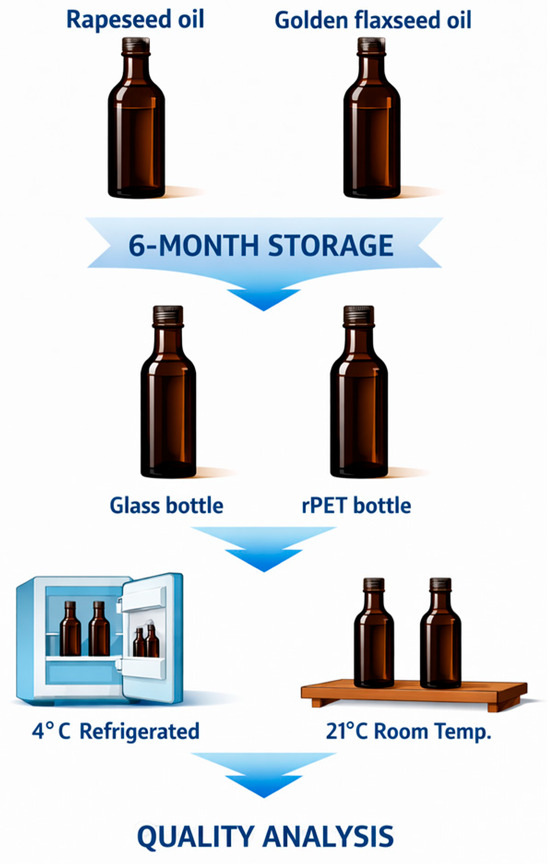
The samples were stored for 6 months at two temperatures: 4 ± 1 °C and 21 ± 2 °C, in two types of packaging: dark glass bottles and bottles made of recycled polyethylene terephthalate (rPET). The bottles had a volume of 250 mL and a wall thickness of approximately 1.2 mm each. The glass bottles were dark brown, while the rPET bottles were light amber in color (Figure 1).
Figure 1.
Storage conditions of the oils used in this study.
All bottles were closed with identical polyethylene (PE) screw-caps, ensuring that the type of closure did not influence oxygen permeability. Each bottle was filled to approximately 98% of its total volume, leaving an air headspace of about 2%, which was controlled gravimetrically to maintain consistent filling levels among all samples. Controlling the filling and headspace minimized differences in oxygen availability between packaging types and ensured uniform storage conditions. The rPET bottles used in this study were certified for food contact in accordance with EU Regulation No. 2022/1616 on recycled plastic materials and articles intended to come into contact with food. They were manufactured from 100% post-consumer recycled polyethylene terephthalate (rPET) obtained from previously used food-grade PET beverage bottles. No additional barrier layers, internal coatings, or oxygen scavengers were applied. The absence of active barrier layers could contribute to a slightly higher oxygen and light permeability compared with glass packaging, which is considered and discussed in Section 3. For each storage time point (0, 2, 4, and 6 months), independent, originally sealed bottles were used and opened only once, so that each analysis was performed destructively and no bottle was repeatedly opened during storage. Storage was carried out under limited light exposure. Analyses were performed at four time points: on the day of purchase (0 month) and after 2, 4, and 6 months of storage. The samples were stored under limited light exposure, defined as dim ambient light below 50 lux, with no direct sunlight and no artificial light directed at the samples. At 4 °C, samples were stored in a refrigerator, away from the internal lamp and exposed only to occasional door opening. At 21 °C, storage took place in a laboratory room under normal ambient light used for daily work, without direct sunlight and without a controlled light–dark cycle; no additional light was directed at the samples. Table 2 summarizes the main physical and optical characteristics of the glass and rPET bottles used for oil storage. The parameters were determined based on supplier specifications and typical literature data for commercial packaging materials.
Table 2.
Packaging characteristics of glass and rPET bottles used for storage of edible oils.
2.3. Sterols
Sterols were determined according to the AOCS Official Methods Ch 6–91 (2009) and Cg 5–97 (2009) [15,16]. Oil samples were saponified with 2 M methanolic potassium hydroxide for 18 h. The unsaponifiable matter containing sterols was extracted with a mixture of hexane and methyl tert-butyl ether (1:1, v/v). After solvent evaporation, the residues were derivatized using a silylation reagent (BSTFA + 1% TMCS) from Fluka Chemie (Buchs, Switzerland). The sterol derivatives were analyzed using a gas chromatograph (Agilent 7820A, Santa Clara, CA, USA) equipped with a flame ionization detector (FID) and a DB-35MS capillary column (25 m × 0.20 mm, 0.33 μm; J&W Scientific, Folsom, CA, USA). A 0.5 μL aliquot was injected in splitless mode. The oven temperature program was as follows: 280 °C for 20 min and then an increase to 290 °C at 0.7 °C/min with a 5 min hold, followed by a ramp up to 320 °C at 30 °C/min and a final 5 min hold. Hydrogen was used as the carrier gas at a flow rate of 2 mL/min. Identification of individual sterols was based on comparison of retention times with those of authentic reference standards (β-sitosterol, campesterol, and stigmasterol) subjected to the same derivatization procedure. Quantification was performed using 5α-cholestane as an internal standard. The concentrations of individual sterols were calculated from calibration curves established for authentic sterol standards, assuming a linear correlation between peak area and concentration. The final results were expressed as mg of sterol per g of oil. In the flame ionization detector (FID), hydrogen was supplied as the fuel gas at a flow rate of 40 mL/min, while purified air was introduced at 400 mL/min. Nitrogen was used as a make-up gas at a flow rate of 25 mL/min to ensure optimal detector sensitivity and stability [17].
2.4. Oxidized Phytosterol Derivatives
Oxidized phytosterol derivatives were analyzed according to the method described by Rudzińska et al. [18,19]. Lipids were extracted using the Folch procedure with the addition of 0.006% BHT to prevent further oxidation. The lipid extracts were transesterified with sodium methoxide, and the resulting mixture was extracted with chloroform. Oxidized sterol derivatives were purified using SEP-PAK NH2 cartridges (Waters). The purified fractions were silylated with BSTFA + 1% TMCS and analyzed using a gas chromatograph (Agilent 7820A, Santa Clara, CA, USA) equipped with a flame ionization detector (FID) and a DB-35MS capillary column (25 m × 0.20 mm × 0.33 µm; J&W Scientific). Hydrogen was used as the carrier gas at a flow rate of 2 mL/min. In the FID, hydrogen and air were supplied at flow rates of 40 mL/min and 400 mL/min, respectively, while nitrogen was used as the make-up gas (25 mL/min) to ensure optimal sensitivity and detector stability. The oven temperature program was as follows: from 50 °C to 270 °C at 25 °C/min, then from 270 °C to 290 °C at 1 °C/min, followed by a final hold at 290 °C for 95 min.
Identification of oxidized phytosterol derivatives was performed using two approaches: direct retention time matching with authentic reference standards when available, and retention time and relative retention time assignment based on characteristic elution order reported in the literature and validated in-house under identical chromatographic conditions. Because GC–FID does not provide structural confirmation as mass spectrometry does, compounds without available reference standards were reported as tentatively identified. Quantification was performed using 19-hydroxycholesterol as the internal standard. Calibration curves were prepared for representative standards, and the amounts of oxidized phytosterol derivatives were expressed as 19-hydroxycholesterol equivalents (µg/g of oil). Linear calibration relationships were verified for all quantified compounds [20].
2.5. Tocopherols and Plastochromanol-8
For the analysis, 200 mg of oil was dissolved in 5 mL of n-hexane, and 10 µL of the solution was injected into a normal-phase HPLC (NP-HPLC) system. Chromatographic separation was performed on a Waters HPLC system (Waters, Milford, MA, USA) equipped with a 2998 photodiode array (PDA) detector, a 474 fluorescence detector (FLD), and a LiChrosorb Si 60 column (250 × 4.6 mm, 5 µm; Merck, Darmstadt, Germany). The mobile phase consisted of n-hexane and 1,4-dioxane at a 96:4 (v/v) ratio, delivered at a flow rate of 1.0 mL/min. Fluorescence detection was carried out at an excitation wavelength of 295 nm and an emission wavelength of 330 nm. The PDA detector was used to support peak identification, while quantitative analysis was based on fluorescence detection. Tocopherols and plastochromanol-8 were identified by comparing retention times with those of authentic reference standards. Quantitative determination of individual tocopherol homologues (α-, β-, γ-, and δ-tocopherol) and plastochromanol-8 was performed using external calibration curves constructed from pure analytical standards. Calibration curves showed linear responses within the tested concentration ranges. Results were expressed as mg per 100 g of oil. The analytical procedure followed the methodology described by Siger et al. [21].
2.6. Color Determination
Color measurements were performed using the spectrophotometric method described in AOCS Official Method Cc 13c-50 [22], with a Shimadzu TCC-240A spectrophotometer. Prior to analysis, the instrument was calibrated using a standard nickel sulfate solution at 25–30 °C. The zero and 100% transmittance (0 absorbance) points were adjusted against methylene chloride in a cuvette. Oil samples were prepared by mixing 0.5 g of diatomaceous earth with 300 g of oil for 2.5 min at 250 rpm at room temperature. The prepared samples were transferred to cuvettes, and absorbance (A) was recorded with a precision of ±0.001 at wavelengths of 460, 550, 620, and 670 nm. The photometric color index was calculated according to the following equation:
where
Photoelectric color index = 1.29(A460) + 69.7(A550) + 41.2(A620) − 56.4(A670)
- A460, A550, A620, and A670 are the absorbance values measured using a spectrophotometer at wavelengths of 460, 550, 620, and 670 nm, respectively.
2.7. Triacylglycerols (TAG)
Triacylglycerol composition was analyzed using an HPLC system equipped with an evaporative light scattering detector (ELSD) (1260 Infinity II, Agilent Technologies, Santa Clara, CA, USA). Separation was performed on an InfinityLab Poroshell 120 EC-C18 column (4.6 × 100 mm, 2.7 µm; Agilent Technologies, USA) maintained at 30 °C. The mobile phase consisted of acetonitrile (phase A) and dichloromethane (phase B). The initial mobile phase composition was 80% A and 20% B, which was linearly changed to 55% A and 45% B over 30 min. Between 30 and 40 min, the composition was returned to the initial conditions and held for an additional 10 min. Samples were diluted in dichloromethane prior to injection. ELSD detection parameters were as follows: evaporator temperature 30 °C, nebulizer temperature 30 °C, gas flow 1.60 SLPM, and gain 1.0. Identification of individual TAG species was performed by comparing retention times with those of authentic TAG reference standards, including trilinolein (LnLnLn), oleodilinolein (OLnLn), dioleoyl-linoleoyl-glycerol (OOL), triolein (OOO), palmitoyl-dioleoyl-glycerol (POO), and palmitoyl-oleoyl-linoleoyl-glycerol (POL), analyzed under identical chromatographic conditions. All analyses were performed in five replicates [23,24].
2.8. Determination of Peroxide Value
The peroxide value was determined according to ISO 3960. A 1 g portion of oil was transferred into a 250 mL Erlenmeyer flask with a ground-glass stopper. Twenty milliliters of solvent (glacial acetic acid:chloroform, 3:2, v/v) was added, followed by 1 mL of freshly prepared saturated potassium iodide solution. The flask was stoppered, shaken for 1 min, and kept in the dark for 5 min. Then, 30 mL of distilled water and 5–10 drops of 1% starch solution were added, and the mixture was titrated immediately with 0.002 M sodium thiosulfate solution until the blue color disappeared (stable endpoint for at least 0.5 min). A blank determination was performed in parallel, and its sodium thiosulfate consumption did not exceed 0.5 mL. All samples were analyzed in duplicate. The peroxide value (PV), expressed as mg O2/kg of oil, was calculated using the following equation:
where
PV = (a − b) × c × 1000/m
- PV—peroxide value, expressed in mg O2/kg of fat,
- a—volume of sodium thiosulfate solution used for titration of the sample (mL),
- b—volume of sodium thiosulfate solution used for titration of the blank (mL),
- c—molar concentration of the sodium thiosulfate solution (mol/L),
- m—mass of the fat sample (g),
- 1000—conversion factor from grams to kilograms [25].
2.9. Statistical Analysis
Statistical analyses were conducted using Statistica software, version 13.3 (StatSoft, Tulsa, OK, USA). The effects of storage time, temperature, and packaging type were assessed using analysis of variance (ANOVA). When significant differences were detected (p < 0.05), post hoc comparisons were performed using Tukey’s test. All experiments were performed using three independent bottles (n = 3). Peroxide value measurements were performed in duplicate for each sample, while TAG analysis was conducted in five instrumental replicates.
3. Results and Discussion
3.1. Sterols Degradation
At the beginning of storage (0 months), rapeseed oil contained 4.2 mg/g of total sterols, with β-sitosterol, campesterol, brassicasterol, stigmasterol, and cholesterol and small amounts of Δ5-avenasterol, Δ7-avenasterol, and Δ7-stigmasterol identified. Golden flaxseed oil contained 5.5 mg/g sterols, primarily β-sitosterol, stigmasterol, campesterol, brassicasterol, Δ7-campesterol, and Δ5-avenasterol. Detailed changes in concentrations of individual sterols during storage are presented in Table 3. The degradation patterns depended on oil type, storage temperature, storage time, and packaging material [26,27,28].
Table 3.
Changes in individual sterol concentrations in rapeseed oil during storage [mg/g oil]. Results are presented as mean ± standard deviation (n = 3).
The levels of rapeseed oil sterols determined in this study and presented in Table 3 above deviate from the standard levels outlined in the Codex Alimentarius Standard for Named Vegetable Oils (CXS 210-1999) (https://www.fao.org/fao-who-codexalimentarius/sh-proxy/tr/ (accessed on 5 February 2026)). This standard represents reference values for commercially available vegetable oils and does not account for natural variability associated with plant cultivar, growing conditions, seed maturity, processing technology, and extraction method.
The rapeseed oil analyzed in the present study originated from a specific production batch and therefore reflects the inherent compositional variability of real commercial samples. Furthermore, the presented data describe relative contributions of individual sterols within the total sterol fraction, which may lead to percentage differences when compared with literature values reported using different normalization approaches.
3.1.1. Rapeseed Oil
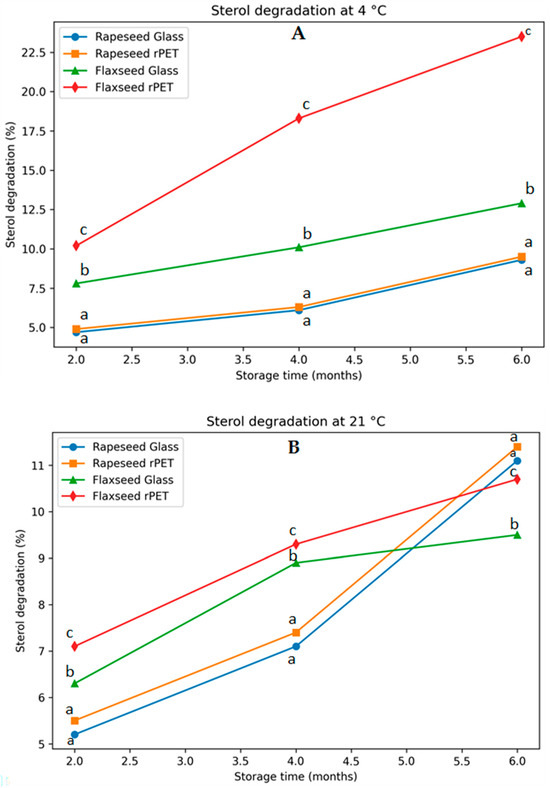
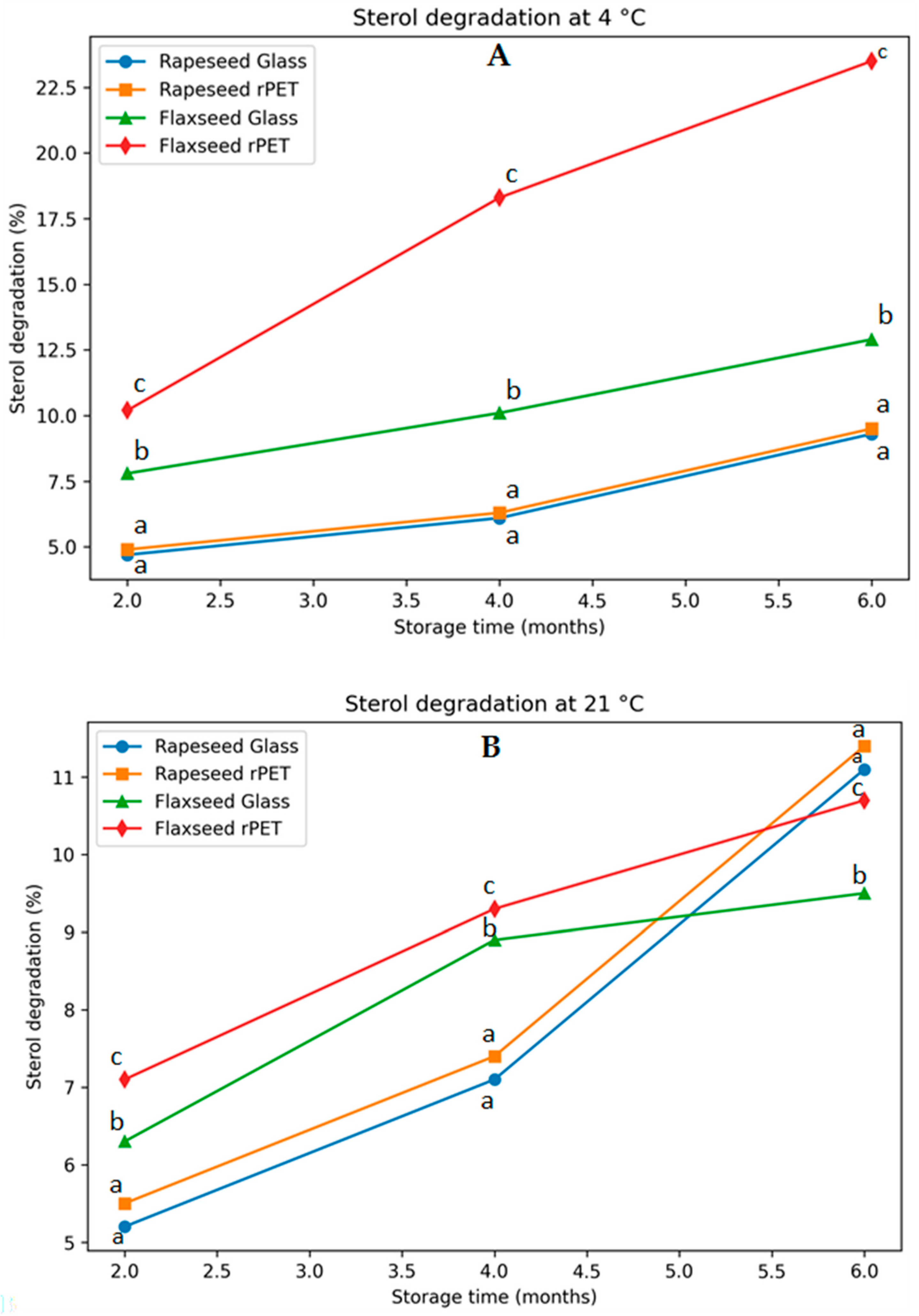
At 4 °C, sterol degradation in rapeseed oil remained low and did not differ significantly between glass and rPET packaging (p > 0.05) (Figure 2A). Increasing the storage temperature to 21 °C significantly accelerated sterol degradation (p < 0.05), regardless of packaging material (Figure 2B). These results indicate that temperature was the dominant factor governing sterol stability in rapeseed oil, while the influence of packaging material was relatively minor.
Figure 2.
Changes in sterol degradation in rapeseed oil and golden flaxseed oil stored in glass and rPET packaging at (A) 4 °C and (B) 21 °C for 2, 4, and 6 months. Initial total sterol content was 4.2 mg/g in rapeseed oil and 5.5 mg/g in golden flaxseed oil. Lower case letters (a, b, c) indicate statistically significant differences among treatments (p < 0.05; one-way ANOVA with Tukey’s post hoc test).
3.1.2. Golden Flaxseed Oil
Baseline sterol concentrations of golden flaxseed oil at time zero are reported descriptively in the text, while detailed quantitative changes during storage are presented in Figure 2 to avoid data redundancy. Storage temperature had a stronger impact on sterol stability in golden flaxseed oil than in rapeseed oil. At 4 °C, degradation proceeded slowly and did not differ significantly between packaging types (p > 0.05) (Figure 2A). In contrast, at 21 °C, sterol degradation increased markedly, with significantly higher losses observed in rPET compared with glass packaging (p < 0.05) (Figure 2B), indicating a combined effect of high temperature and increased oxygen permeability.
3.1.3. Comparison of Oils
The markedly faster degradation of sterols in flaxseed oil compared with rapeseed oil is not solely a direct consequence of its higher content of polyunsaturated fatty acids, particularly α-linolenic acid. This effect is mainly associated with the higher susceptibility of polyunsaturated fatty acids to lipid peroxidation, which leads to increased formation of lipid hydroperoxides and reactive oxygen species. These reactive intermediates act as secondary oxidizing agents that initiate and propagate sterol oxidation, especially through hydrogen abstraction at the C7 position of the sterol molecule. Packaging material also affected sterol stability at elevated temperature, with rPET allowing greater oxygen permeability than glass. The interaction between oil type, temperature, and packaging material thus plays a crucial role in determining oxidative stability. These results clearly indicate that while rapeseed oil remains relatively stable under most storage conditions, flaxseed oil requires both low temperature and glass packaging to effectively limit sterol degradation [26,27,28,29].
Overall, sterol degradation was governed primarily by storage temperature and oil composition, while the effect of packaging material became significant only in highly oxidation-prone flaxseed oil stored at elevated temperatures, highlighting a strong interaction between intrinsic lipid susceptibility and oxygen barrier properties of the packaging.
3.2. Oxidized Phytosterol Derivatives
Oxidized phytosterol derivatives were quantitatively determined using 19-hydroxycholesterol as an internal standard and expressed as internal standard equivalents (µg/g of oil), as described in Section 2.4. Relative distributions (%) were calculated based on the summed peak areas of the following derivative classes assigned to each parent sterol: 7α-hydroxy-, 7β-hydroxy-, 5,6-epoxy- (α and/or β), triol-, and 7-keto-derivatives of β-sitosterol, campesterol, and stigmasterol (where detected). Total oxy-β-sitosterols, total oxy-campesterols, and total oxy-stigmasterols represent the sum of the quantified oxidized derivatives assigned to the respective sterol backbone. Relative distributions (%) are additionally reported to facilitate comparison of oxidation patterns between oils, packaging materials, and storage conditions. Table 3 presents total sterol concentrations, whereas the distribution of oxidized phytosterol derivative classes (7-hydroxy-, epoxide-, and 7-keto-sterols) is shown in Table 4 and Table 5.
Table 4.
Changes in the proportions of oxidized β-sitosterol, campesterol, and stigmasterol derivatives in rapeseed oil stored for 6 months at 4 °C and 21 °C in glass and rPET packaging. Results are presented as mean ± standard deviation (n = 3).
Table 5.
Changes in the proportions of oxidized derivatives of β-sitosterol, campesterol, and stigmasterol in golden flaxseed oil stored for 6 months at 4 °C and 21 °C in glass and rPET packaging. Values represent mean ± standard deviation (n = 3).
In the initial samples of both oils, six major oxidized phytosterol derivative classes were detected: 7α-hydroxy-, 7β-hydroxy-, β-epoxy-, α-epoxy-sterols, triols, and 7-keto-derivatives originating from campesterol, stigmasterol, and β-sitosterol. Oxidized derivatives of brassicasterol were not determined due to analytical limitations associated with their reliable identification using the GC–FID technique. In rapeseed oil, 7β-hydroxy phytosterol oxidation products (42%) and β-epoxysterols (25%) were the predominant compounds, followed by triol derivatives (19%) and 7-ketosterols (14%). Oxidized β-sitosterol derivatives accounted for 57% of the total oxyphytosterol fraction, while campesterol and stigmasterol derivatives represented 34% and 6%, respectively, reflecting the natural sterol composition of rapeseed oil and the relatively higher oxidative stability of β-sitosterol compared with other sterols [12,30,31,32,33,34].
3.2.1. Rapeseed Oil
At 4 °C, changes in the oxyphytosterol profile were minor. In glass bottles, the proportion of oxy-β-sitosterols decreased to 55%, whereas oxy-campesterols and oxy-stigmasterols increased to 36% and 9%, respectively. Very similar values were observed in rPET bottles (53%, 36.5%, and 9.5%; Table 4), indicating no significant effect of packaging material under refrigerated conditions (p > 0.05).
At 21 °C, the transformation of oxyphytosterols was more pronounced. In glass packaging, oxy-β-sitosterols reached 55%, while, in rPET, they decreased to 50% (p < 0.05). The increase in oxidized campesterol and stigmasterol derivatives was greater in rPET, suggesting that oxygen permeability of the packaging material contributes to sterol oxidation at elevated storage temperatures (Table 4) [12,30,31,32,33,34].
3.2.2. Golden Flaxseed Oil
In the initial golden flaxseed oil samples, 7β-hydroxysterols dominated (50%), followed by β-epoxysterols (22%), triols (20%), and 7-ketosterols (8%). Oxidized derivatives of β-sitosterol accounted for 65% of total oxyphytosterols, while campesterol and stigmasterol derivatives represented 25% and 10%, respectively (Table 5). This distribution reflects the natural sterol profile of flaxseed oil and its high susceptibility to oxidation resulting from its exceptionally high α-linolenic acid content.
At 4 °C, changes were moderate. In glass bottles, oxy-β-sitosterols decreased slightly to 63%, oxy-campesterols increased to 27%, and oxy-stigmasterols reached 13%. In rPET bottles, oxidation was more pronounced, with the proportions reaching 60%, 30%, and 18% (p < 0.05), indicating higher oxygen permeability of rPET compared with glass even under refrigerated conditions. At 21 °C, the greatest changes were observed. Oxy-β-sitosterols decreased to 55–60%, whereas oxy-campesterols and oxy-stigmasterols increased to 30–32% and 18–20%, respectively. The most pronounced shifts occurred in flaxseed oil stored in rPET packaging, reflecting a combined effect of high polyunsaturated fatty acid content and increased oxygen permeability. Highly reactive sterols such as campesterol and stigmasterol oxidized rapidly under these conditions, leading to a marked increase in their oxidized derivatives (Table 5).
Overall, rapeseed oil exhibited relatively high oxidative stability at both temperatures, with only minor differences between glass and rPET packaging. In contrast, flaxseed oil was highly sensitive to oxidative stress, and rPET packaging markedly accelerated oxyphytosterol formation, particularly at elevated temperatures. These results demonstrate that oil composition, storage temperature, and packaging material jointly determine sterol oxidation dynamics in unrefined vegetable oils [12,30,31,32,33,34].
3.3. Tocopherols and Plastochromanol-8
In the initial samples, γ-, α-, and δ-tocopherols were detected in both rapeseed and golden flaxseed oils, whereas trace amounts of β-tocopherol were detected in golden flaxseed oil. Total tocopherol contents were comparable between fresh samples of both oils. Changes in tocopherol levels during storage were strongly influenced by oil type, storage temperature, storage time, and packaging material. Among the individual tocopherol homologues, α-tocopherol exhibited the highest degradation rate during storage, particularly at elevated temperatures and in samples stored in rPET packaging. This behavior is consistent with its role as the most active chain-breaking antioxidant in lipid systems, which results in preferential consumption during oxidative stress. In contrast, γ- and δ-tocopherols showed relatively greater stability, reflecting their lower reactivity toward lipid peroxyl radicals. Similar degradation patterns have been previously reported for cold-pressed vegetable oils subjected to thermal and oxidative stress.
3.3.1. Rapeseed Oil
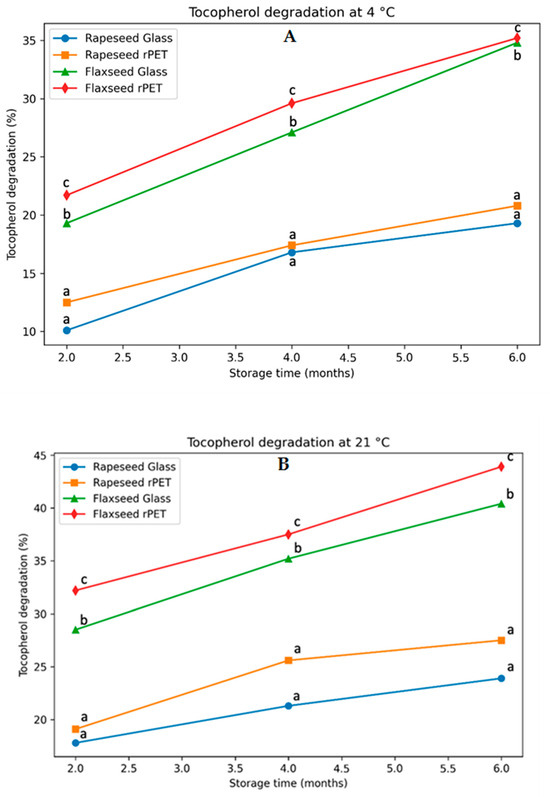
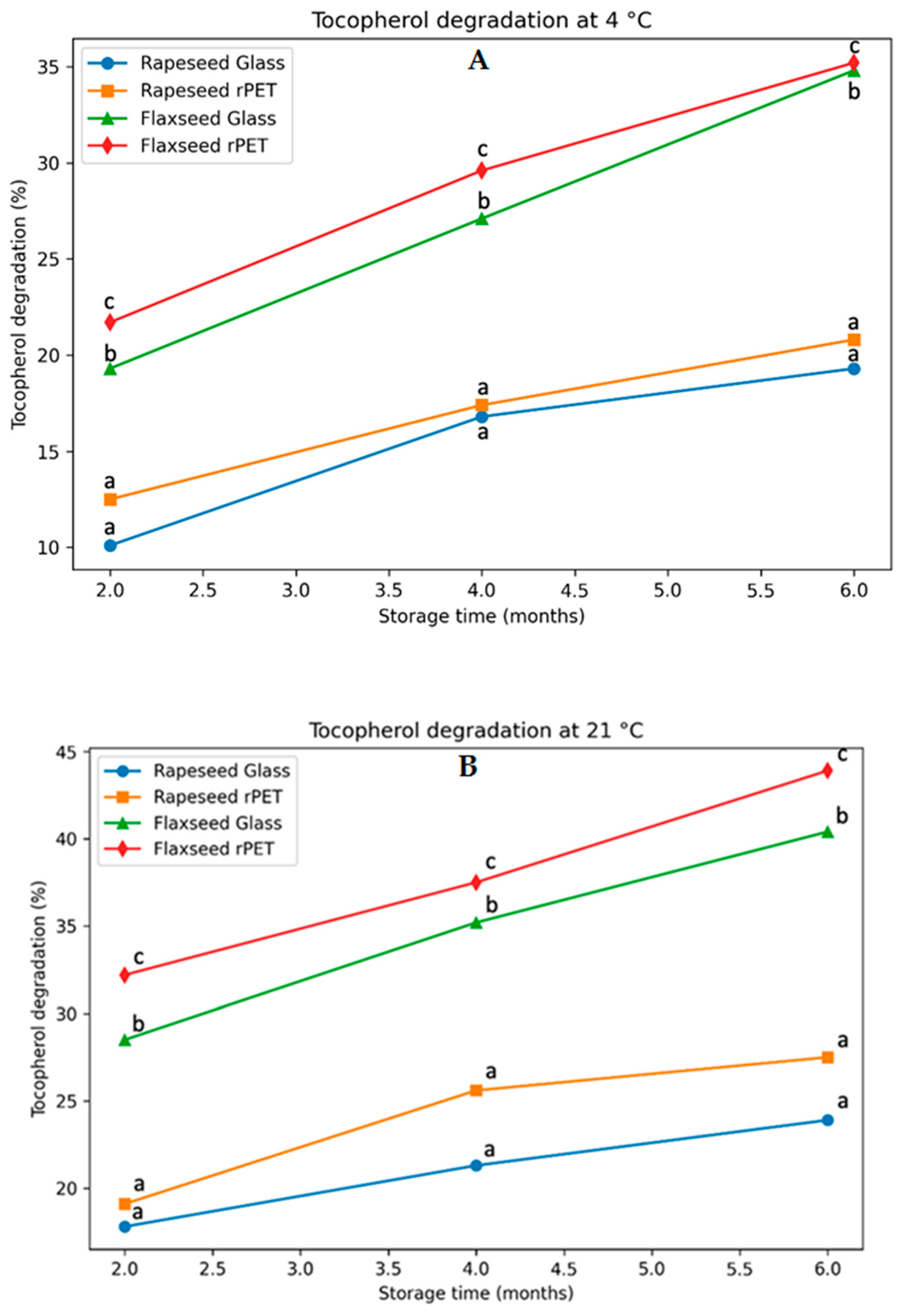
At 4 °C, tocopherol degradation in rapeseed oil was limited and comparable between glass and rPET packaging, indicating that low temperature effectively slowed oxidation processes. The protective effect of refrigeration outweighed the influence of packaging material, and no statistically significant differences were observed between storage variants (p > 0.05) (Figure 3A). At 21 °C, tocopherol depletion proceeded significantly faster (p < 0.05), confirming the dominant role of temperature in accelerating oxidative reactions. Although both packaging types exhibited similar degradation trends, samples stored in rPET showed consistently higher losses, which can be attributed to increased oxygen and light permeability of the polymer material. Nevertheless, temperature remained the primary factor governing tocopherol stability in rapeseed oil (Figure 3A) [35,36,37,38].
Figure 3.
Changes in tocopherol degradation in rapeseed oil and golden flaxseed oil stored in glass and rPET packaging at (A) 4 °C and (B) 21 °C for 2, 4, and 6 months. Lower case letters (a, b, c) indicate statistically significant differences among treatments (p < 0.05; one-way ANOVA with Tukey’s post hoc test).
3.3.2. Golden Flaxseed Oil
Golden flaxseed oil exhibited substantially higher tocopherol degradation rates than rapeseed oil under all storage conditions. Even at 4 °C, progressive tocopherol depletion was observed, reflecting the high susceptibility of this oil to oxidation due to its extremely high α-linolenic acid content. Slightly higher losses were recorded in rPET packaging, indicating that oxygen diffusion through the polymer material contributes to oxidative deterioration even under refrigerated conditions (Figure 3B). At 21 °C, tocopherol degradation in flaxseed oil was the most pronounced among all tested samples. Elevated temperature combined with high PUFA content and increased oxygen permeability of rPET created highly favorable conditions for rapid oxidation, resulting in strong depletion of tocopherols, particularly α-tocopherol, which is consumed first during oxidative stress (Figure 3B). Overall, rapeseed oil showed relatively high tocopherol stability, whereas flaxseed oil was considerably more susceptible to degradation, with the effect of packaging material becoming especially important at elevated temperatures [39,40,41].
These results confirm that tocopherol depletion closely follows the intensity of lipid oxidation and is strongly modulated by both oil composition and oxygen barrier properties of the packaging [39,40,41].
3.4. Color Determination
Color is an important quality parameter of edible oils, reflecting the degree of oxidative stability and the degradation of natural pigments such as carotenoids and chlorophylls. Oils rich in unsaturated fatty acids—including rapeseed and golden flaxseed oils—are particularly susceptible to photo-oxidative processes, the rate of which depends on temperature, light exposure, and the barrier properties of the packaging material. Materials with higher oxygen and light permeability, such as rPET, may accelerate pigment degradation, whereas glass provides superior protection due to its impermeability and chemical inertness [42,43,44].
3.4.1. Rapeseed Oil
In the initial sample (0 months), rapeseed oil exhibited a low photometric color index (0.47), indicating minimal pigment degradation (Table 6). Both storage temperature and packaging material had a significant effect on the changes observed during 6 months of storage. All samples stored at 21 °C showed a greater increase in color index than those stored at 4 °C, which reflects the acceleration of oxidative reactions and pigment degradation at higher temperatures. The most pronounced increase was observed in rPET at 21 °C (1.79), indicating advanced photo-oxidative deterioration. Oil stored in glass exhibited a noticeably smaller increase in color index compared with the corresponding rPET samples. After 6 months, values for glass-stored oil were 0.80 at 4 °C and 1.24 at 21 °C. In contrast, oils stored in rPET reached substantially higher values: 1.02 at 4 °C and 1.79 at 21 °C. Thus, rPET did not provide sufficient protection against oxidative degradation, which can be attributed to its higher permeability to oxygen and partial permeability to light.
Table 6.
Photometric color index of rapeseed oil. Values represent mean ± standard deviation (n = 3).
The smallest changes occurred when oil was stored in glass at 4 °C, whereas the largest changes occurred in rPET at 21 °C. This indicates a strong synergistic effect of elevated temperature and lower barrier properties of the packaging material on color deterioration [8,45,46,47,48,49].
3.4.2. Golden Flaxseed Oil
Golden flaxseed oil exhibited much faster color degradation than rapeseed oil due to its extremely high content of α-linolenic acid, which strongly promotes oxidative reactions. A significant increase in the photometric color index was observed under all storage conditions (Table 7), confirming the oil’s high susceptibility to pigment oxidation. Temperature had a particularly strong influence. The increase in color index at 21 °C was more than twice as high as at 4 °C, and the greatest among all tested conditions. Oil stored in rPET at 21 °C reached an index value of 2.22, indicating advanced pigment degradation. Glass provided the best stability for flaxseed oil: 0.95 at 4 °C and 1.41 at 21 °C, while, in rPET, color index values were significantly higher: 1.27 at 4 °C and 2.22 at 21 °C. Differences between the materials were substantial, especially at 21 °C, demonstrating the sensitivity of flaxseed oil to even minimal oxygen ingress.
Table 7.
Photometric color index of golden flaxseed oil. Values represent mean ± standard deviation (n = 3).
The combination of glass and a temperature of 4 °C resulted in the smallest color change. The combination of rPET and temperature 21 °C produced the most severe pigment degradation. Temperature had a dominant effect, amplified in oils with high PUFA content. Packaging material played an important role, especially in flaxseed oil, where rPET allowed significantly faster oxidative degradation [8,45,46,47,48,49].
3.5. Triacylglycerols (TAG)
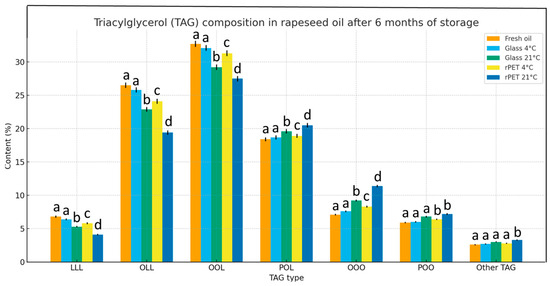
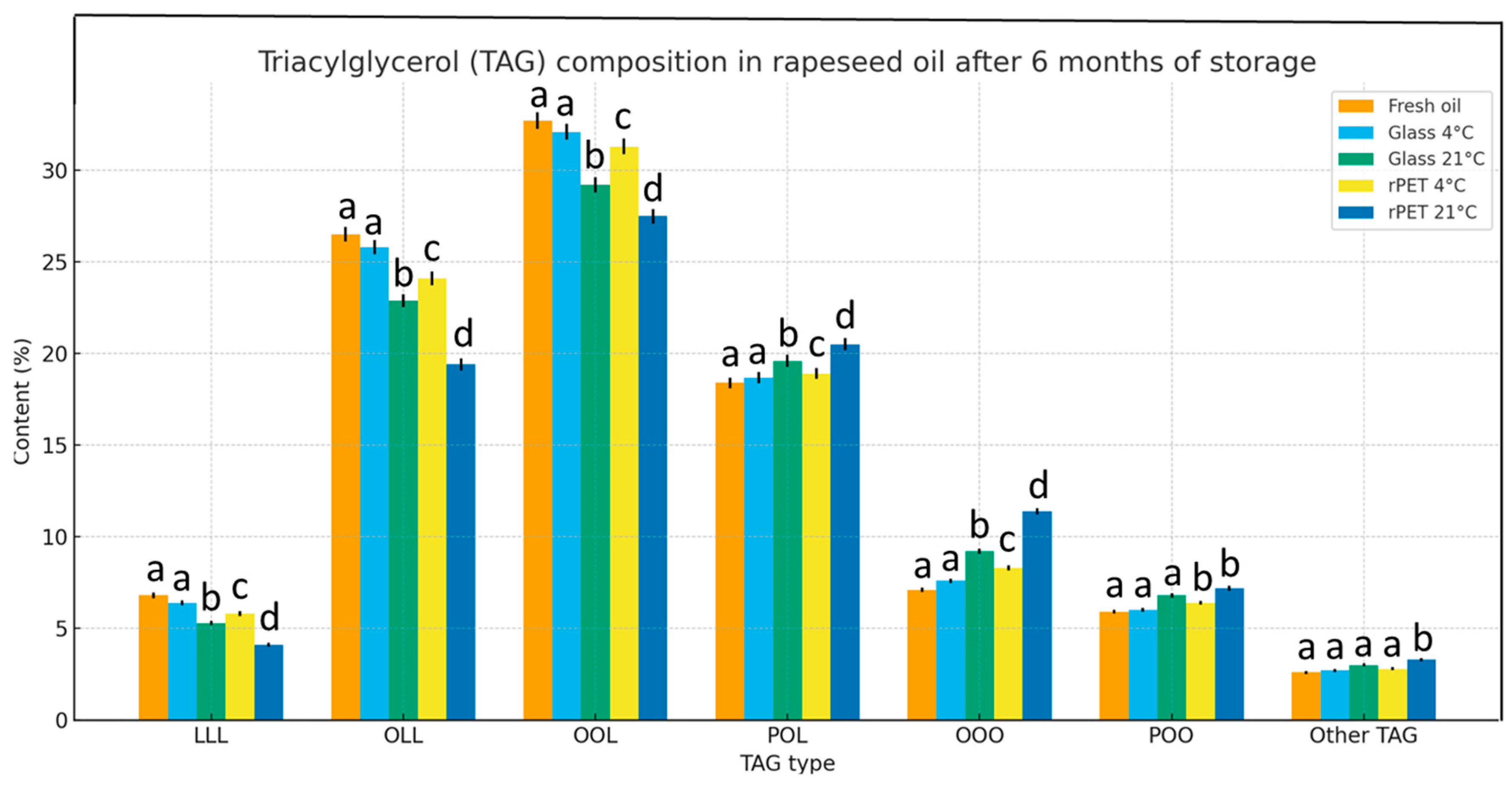
Changes in triacylglycerol composition were analyzed to provide molecular-level insight into oxidative degradation processes observed during storage under different packaging and temperature conditions. The initial TAG composition of rapeseed oil is presented in Table 8, whereas alterations observed after six months of storage are shown in Figure 4.
Table 8.
Content of key triacylglycerol (TAG) fractions in rapeseed oil (fresh sample, 0 months). Values represent mean ± standard deviation (n = 3).
Figure 4.
Changes in the content of key triacylglycerol (TAG) fractions in rapeseed oil after six months of storage under different packaging and temperature conditions. Lower case letters (a, b, c, d) indicate statistically significant differences among treatments (p < 0.05; one-way ANOVA with Tukey’s post hoc test). TAG abbreviations: Ln—linolenic acid (18:3), L—linoleic acid (18:2), O—oleic acid (18:1), P—palmitic acid (16:0).
3.5.1. Rapeseed Oil
In the fresh rapeseed oil sample, the dominant triacylglycerols were OOL (32.7%), OLnLn (26.5%), and POL (18.4%), which corresponds well to the typical TAG profile of this oil. The most highly unsaturated TAG species, particularly LnLnLn and OLnLn, showed a gradual decrease during storage under all tested conditions. The smallest changes in TAG composition were observed in oil stored in glass packaging at 4 °C, indicating that low temperature and high oxygen barrier properties effectively limited oxidative degradation. In contrast, storage at 21 °C, particularly in rPET packaging, resulted in a pronounced reduction of highly unsaturated TAG species and a simultaneous increase in more saturated and monounsaturated TAG fractions. This pattern reflects selective oxidation of polyunsaturated acyl chains and the relative accumulation of more oxidation-resistant TAG species. These changes were consistent with the moderate increase in peroxide value observed under the same conditions, confirming that oxidation primarily affected highly unsaturated TAG fractions, whereas more stable TAG species accumulated as secondary products [50,51,52,53,54,55,56,57].
3.5.2. Golden Flaxseed Oil
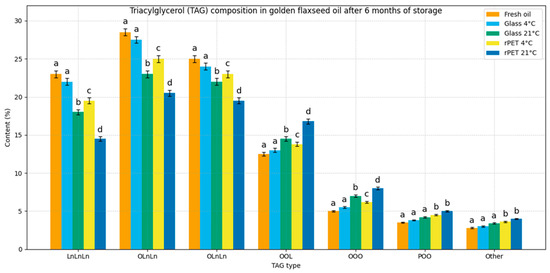
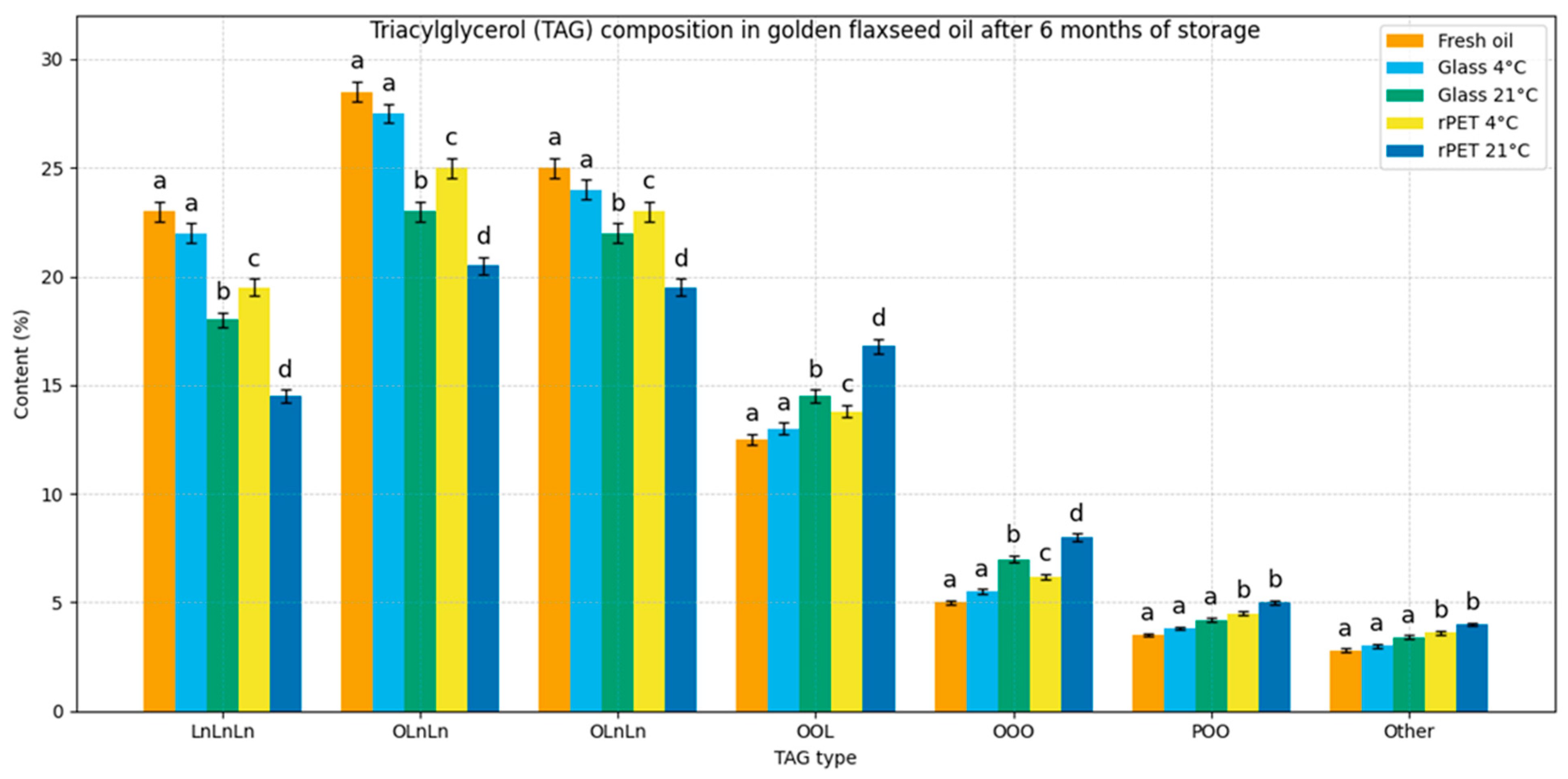
The TAG profile of golden flaxseed oil was dominated by highly unsaturated triacylglycerols, mainly LnLnLn (22.8%), LLnO (28.4%), and OLnLn (24.7%) (Table 9), reflecting the characteristically high α-linolenic acid content of flaxseed oil. After six months of storage, a clear reduction in highly unsaturated TAG species was observed under all tested conditions (Figure 5). The lowest degree of degradation occurred in oil stored in glass packaging at 4 °C, whereas markedly greater changes were detected at 21 °C. The most pronounced modifications were observed in flaxseed oil stored in rPET packaging at 21 °C, confirming the combined effect of high polyunsaturated fatty acid content and increased oxygen permeability [50,51,52,53,54,55,56,57].
Table 9.
Content of key triacylglycerol (TAG) fractions in golden flaxseed oil (fresh sample, 0 months). Values represent mean ± standard deviation (n = 3).
Figure 5.
Changes in the content of key triacylglycerol (TAG) fractions in golden flaxseed oil after six months of storage. Lower case letters (a, b, c, d) indicate statistically significant differences among treatments (p < 0.05; one-way ANOVA with Tukey’s post hoc test). Abbreviations: Ln—α-linolenic acid (18:3), L—linoleic acid (18:2), O—oleic acid (18:1), P—palmitic acid (16:0).
These results clearly demonstrate very intense oxidative processes under these conditions.
3.6. Determination of Peroxide Value
3.6.1. Rapeseed Oil
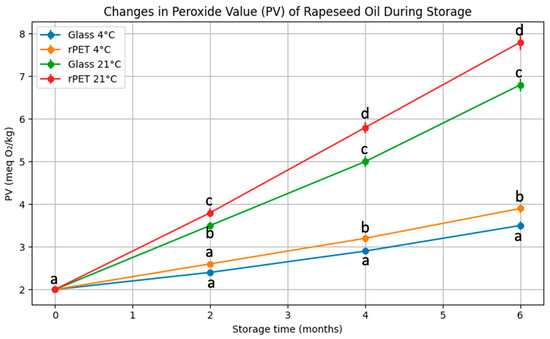
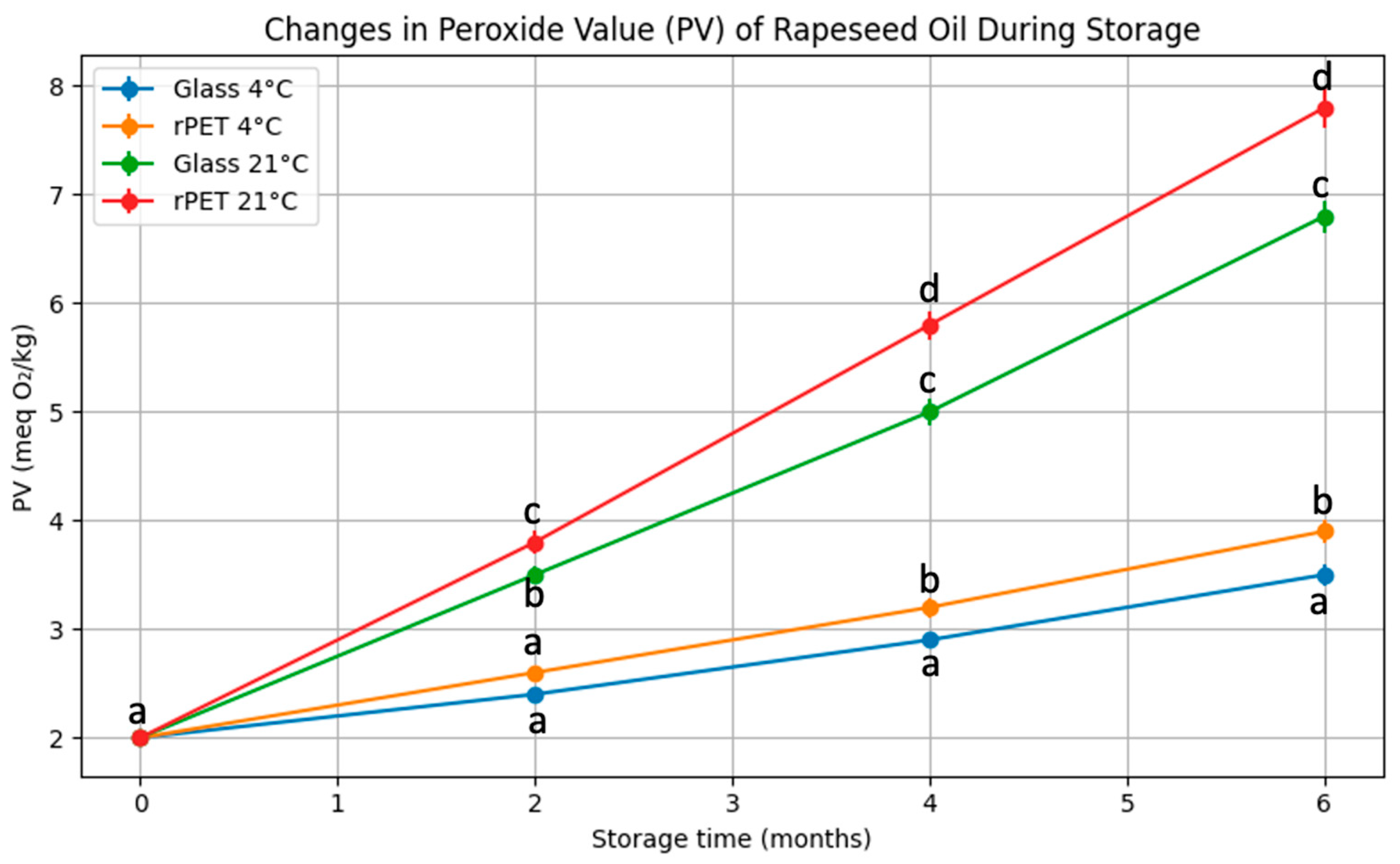
Changes in peroxide value (PV) of rapeseed oil stored for six months in two types of packaging (glass and rPET) and at two temperatures, 4 °C and 21 °C, are presented in Figure 6. In all cases, PV increased over time; however, the rate of oxidation depended strongly on both storage temperature and packaging material. The lowest increase in PV was observed at 4 °C, regardless of packaging type, indicating that reduced temperature effectively limited lipid peroxidation. Storage at 21 °C markedly accelerated oxidative processes, and the differences between glass and rPET became more pronounced at this temperature. At 21 °C, oils stored in rPET exhibited the highest PV values, which highlights the influence of oxygen permeability of polymer-based materials under conditions of increased thermal stress [25,58,59,60,61,62].
Figure 6.
Changes in peroxide value (PV) of rapeseed oil stored for six months in glass and rPET packaging at 4 °C and 21 °C. Different lowercase letters indicate statistically significant differences among treatments (p < 0.05; one-way ANOVA followed by Tukey’s post hoc test).
3.6.2. Golden Flaxseed Oil
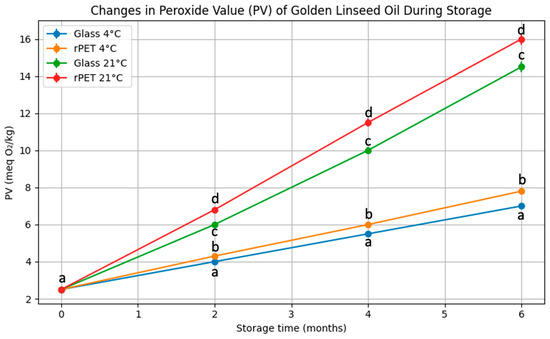
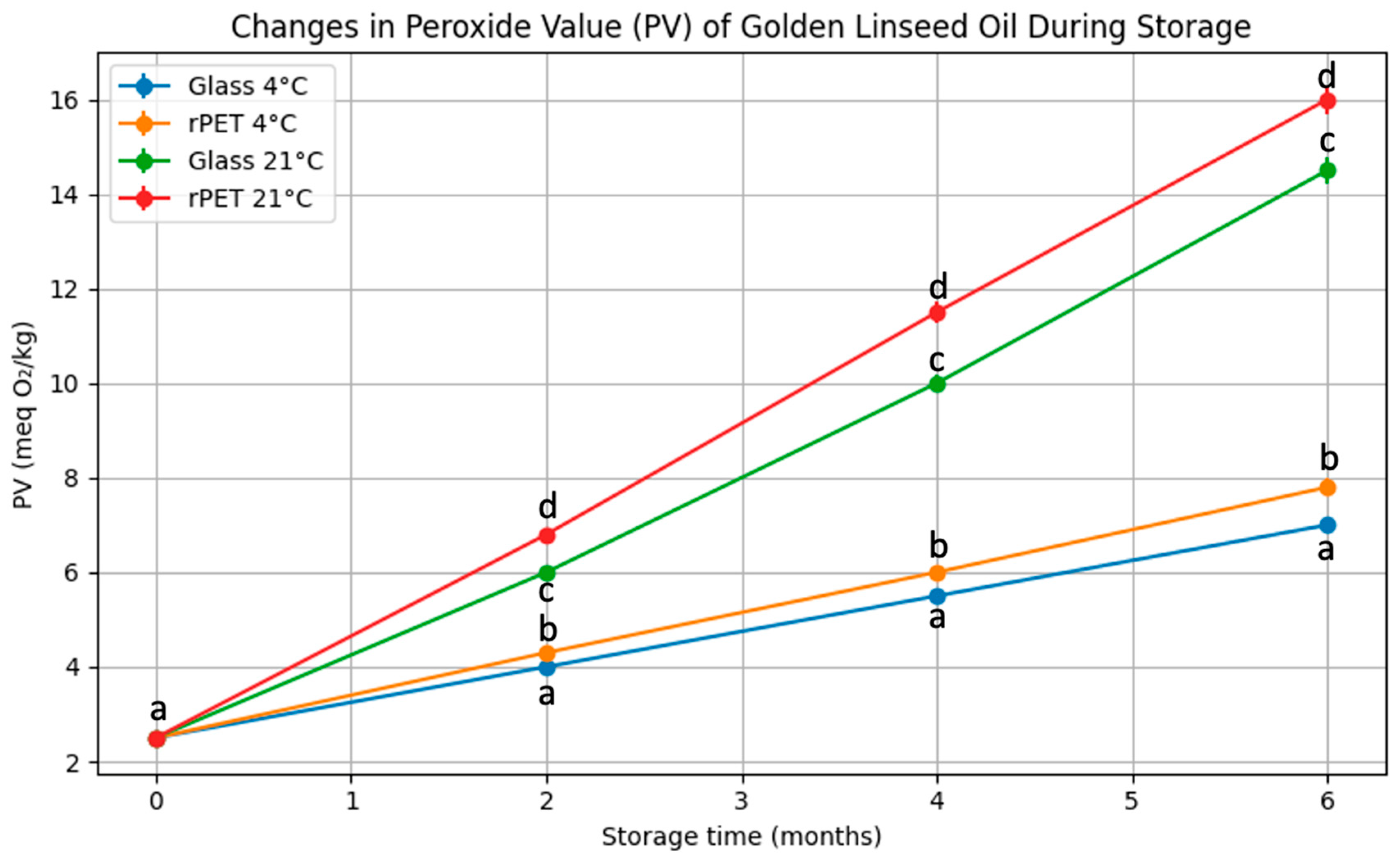
PV changes in golden flaxseed oil stored at 4 °C and 21 °C in glass and rPET packaging are shown in Figure 7. Due to its very high content of polyunsaturated fatty acids, flaxseed oil exhibited considerably lower oxidative stability than rapeseed oil. PV increased steadily in all storage variants, although the rate of oxidation was strongly determined by temperature and oxygen permeability of the packaging. Even at 4 °C, a gradual rise in PV was observed, though oxidation proceeded relatively slowly, and differences between glass and rPET remained minor. This confirms that refrigeration substantially reduces oxidation but cannot completely suppress it in an oil with inherently low oxidative stability. At 21 °C, the increase in PV was rapid and substantial.
Figure 7.
Changes in peroxide value (PV) of golden flaxseed oil stored for six months in glass and rPET packaging at 4 °C and 21 °C. Different lowercase letters indicate statistically significant differences among treatments (p < 0.05; one-way ANOVA followed by Tukey’s post hoc test).
The highest PV values were recorded in flaxseed oil stored in rPET, reflecting the lower barrier properties of this packaging material. Although glass provided better protection, it did not prevent intense peroxide formation at the elevated temperature. These results clearly show that flaxseed oil requires particularly strict storage conditions and is significantly more susceptible to oxidation than rapeseed oil. Peroxide value changes provided an integrated measure of primary oxidation processes and were consistent with alterations observed in tocopherols, sterols, and TAG composition [25,58,59,60,61,62].
4. Conclusions
The oxidative stability of the investigated oils was strongly dependent on the type of raw material, storage temperature, and barrier properties of the packaging. Rapeseed oil exhibited substantially higher resistance to oxidation than golden flaxseed oil, which is consistent with its fatty acid profile, characterized by the predominance of monounsaturated fatty acids and a relatively low content of highly reactive α-linolenic acid. As a result, the rate of peroxide value increase and the degradation of tocopherols and phytosterols were markedly slower in rapeseed oil, regardless of the packaging material used. Under refrigerated conditions (4 °C), differences between glass and rPET were minimal, indicating that the moderate oxygen permeability of rPET does not significantly affect oxidative deterioration at low temperatures. At 21 °C, differences between packaging materials became more pronounced; however, even under these conditions, rapeseed oil stored in rPET did not degrade substantially faster than oil stored in glass. This suggests that rPET may serve as a safe and practical packaging alternative for rapeseed oil, particularly when exposure to light is limited and storage temperatures are low. Flaxseed oil demonstrated an entirely different oxidative behavior. Owing to its very high α-linolenic acid content, even minimal oxygen availability resulted in a rapid increase in peroxide value and accelerated degradation of tocopherols and sterols. The most pronounced differences between glass and rPET were observed at 21 °C, where the higher oxygen permeability and partial light transmittance of rPET significantly intensified oxidation processes. Under these conditions, flaxseed oil exhibited the steepest rise in PV, the greatest loss of bioactive components, and marked changes in color and triacylglycerol composition. Even at 4 °C, flaxseed oil remained considerably less stable than rapeseed oil; although differences between packaging types were smaller, glass consistently provided superior protection against oxidation. In summary, the suitability of rPET as a packaging material depends primarily on the intrinsic oxidative stability of the oil. For rapeseed oil, rPET can be considered a sustainable and effective alternative to glass, particularly under refrigerated conditions. In contrast, for flaxseed oil—whose inherently low oxidative stability requires maximal barrier protection—rPET is insufficient. These findings underscore the importance of selecting packaging materials based on the lipid composition and expected storage conditions of the oil.
In future research, we intend to conduct an environmental LCA analysis comparing rPET and glass. We plan to perform migration and safety assessments of rPET in accordance with EU regulations, investigate the mechanisms of photo-oxidation in polymers versus glass, and examine the effect of multiple PET recycling cycles on oxygen permeability.
Author Contributions
Conceptualization, M.R. and J.I.-K.; methodology, M.R., J.I.-K., E.G.-S. and A.S.; software, M.R. and J.I.-K.; validation, A.S., E.G.-S., M.R. and J.I.-K.; formal analysis, M.R., J.I.-K. and A.S.; investigation, M.R. and J.I.-K.; resources, M.R., J.I.-K., E.G.-S. and A.S.; data curation, M.R., J.I.-K., E.G.-S. and A.S.; writing—original draft preparation, J.I.-K. and M.R.; writing—review and editing, J.I.-K. and M.R.; visualization, J.I.-K. and M.R.; supervision, M.R.; project administration, M.R. and J.I.-K.; funding acquisition, M.R. All authors have read and agreed to the published version of the manuscript.
Funding
This research was funded by the National Science Centre, Poland, grant number 2021/43/B/NZ9/00345.
Institutional Review Board Statement
Not applicable.
Informed Consent Statement
Not applicable.
Data Availability Statement
The original contributions presented in this study are included in the article; further inquiries may be directed to the corresponding author.
Conflicts of Interest
The authors declare that they have no conflicts of interest.
Abbreviations
ALA: α-Linolenic Acid; ANOVA: Analysis of Variance; AOCS: American Oil Chemists’ Society; BSTF: N,O-Bis(trimethylsilyl)trifluoroacetamide; BHT: Butylated Hydroxytoluene; EC: European Commission; ELSD: Evaporative Light Scattering Detector; FID: Flame Ionization Detector; GC: Gas Chromatography; HPLC: High-Performance Liquid Chromatography; ISO: International Organization for Standardization; LCA: Life Cycle Assessment; LLL: Trilinoleic; LLO: Linoleoyl–linolenoyl–oleoyl triacylglycerol TAG; OLL: Oleo-dilinoleic; OOL: Dioleo-linoleic; MS: Mass Spectrometry; NP-HPLC: Normal Phase High-Performance Liquid Chromatography; OTR: Oxygen Transmission Rate; PDA: Photodiode Array Detector; PET: Polyethylene Terephthalate; PLnO: Palmito-linolenoyl-oleic TAG; POL: Palmito-oleo-linoleic; POO: Palmito-dioleoyl TAG; PUFA: Polyunsaturated Fatty Acids; PV: Peroxide Value; rPET: Recycled Polyethylene Terephthalate; SD: Standard Deviation; SML: Specific Migration Limit; TAG: Triacylglycerols; TMCS: Trimethylchlorosilane; UV-Vis: Ultraviolet–Visible Spectroscopy.
References
- Marcelino, C.S.; Gomes, V.E.d.S.; Marangoni Júnior, L. Post-Consumer Recycled PET: A Comprehensive Review of Food and Beverage Packaging Safety in Brazil. Polymers 2025, 17, 594. [Google Scholar] [CrossRef] [Scilit] [PubMed]
- Bharadwaj, C.; Purbey, R.; Bora, D.; Chetia, P.; Maheswari, R.U.; Duarah, R.; Dutta, K.; Sadiku, E.R.; Varaprasad, K.; Jayaramudu, J. A Review on Sustainable PET Recycling: Strategies and Trends. Mater. Today Sustain. 2024, 27, 100936. [Google Scholar] [CrossRef] [Scilit]
- Tian, Q.; Chen, Y.; Liu, H.; Wang, X.; Zhu, S.; Li, S.; Chen, Z.; Ma, A. Review of Risk Substances in the Recycling of Food Contact Materials—Polyethylene Terephthalate (PET). Agric. Prod. Process. Storage 2025, 1, 4. [Google Scholar] [CrossRef] [Scilit]
- Miralles, P.; Fuentes-Ferragud, E.; Socas-Hernández, C.; Coscollà, C. Recent Trends and Challenges in the Non-Targeted Analysis and Risk Assessment of Non-Intentionally Added Substances from Plastic Food Contact Materials. Toxics 2025, 13, 543. [Google Scholar] [CrossRef] [Scilit]
- Spatari, C.; Ioele, G.; Ragno, G.; Grande, F.; De Luca, M. Photo and Thermal Stress of Linseed Oil and Stabilization Strategies. J. Food Sci. Technol. 2019, 56, 614–623. [Google Scholar] [CrossRef] [Scilit]
- Douny, C.; Razanakolona, R.; Ribonnet, L.; Milet, J.; Baeten, V.; Rogez, H.; Scippo, M.-L.; Larondelle, Y. Linseed Oil Presents Different Patterns of Oxidation in Real-Time and Accelerated Aging Assays. Food Chem. 2016, 208, 111–115. [Google Scholar] [CrossRef] [Scilit]
- Ansorena, D.; Ramírez, R.; Lopez de Cerain, A.; Azqueta, A.; Astiasaran, I. Oxidative Stability and Genotoxic Activity of Vegetable Oils Subjected to Accelerated Oxidation and Cooking Conditions. Foods 2023, 12, 2186. [Google Scholar] [CrossRef] [Scilit]
- Tawfik, M.S.; Huyghebaert, A. Interaction of Packaging Materials and Vegetable Oils: Oil Stability. Food Chem. 1999, 64, 451–459. [Google Scholar] [CrossRef] [Scilit]
- Ramezani, R. The Effect of Packaging Materials and Storage Condition on the Oxidative Stability of Refined Sunflower Oil. Food Sci. Technol. Res. 2004, 10, 350–354. [Google Scholar] [CrossRef] [Scilit]
- Zarazir, C.; Rajab, M.; Obeid, H.; Toufaily, J.; Toufeili, I.; Hamieh, T. Impact of Plastic Packaging Materials and Storage Time on the Quality Parameters of Lebanese Extra Virgin Olive Oil under Real-Time Storage Conditions. Am. J. Anal. Chem. 2019, 10, 647–665. [Google Scholar] [CrossRef]
- Farris, S.; Buratti, S.; Benedetti, S.; Rovera, C.; Casiraghi, E.; Alamprese, C. Influence of Two Innovative Packaging Materials on Quality Parameters and Aromatic Fingerprint of Extra-Virgin Olive Oils. Foods 2021, 10, 929. [Google Scholar] [CrossRef] [Scilit]
- Marcinkowski, D.; Bochniak, M.; Wereńska, M.; Czwartkowski, K. The Influence of Storage Conditions of Cold-Pressed Rapeseed Oil on Its Quality Parameters. Appl. Sci. 2023, 13, 11746. [Google Scholar] [CrossRef] [Scilit]
- Wroniak, M.; Rękas, A. Nutritional Value of Cold-Pressed Rapeseed Oil during Long-Term Storage as Influenced by Packaging Material, Exposure to Light and Oxygen, and Storage Temperature. J. Food Sci. Technol. 2016, 53, 1338–1347. [Google Scholar] [CrossRef] [Scilit] [PubMed]
- Bhatnagar, A.S.; Prasanth Kumar, P.K.; Hemavathy, J.; Gopala Krishna, A.G. Fatty Acid Composition, Oxidative Stability, and Radical Scavenging Activity of Vegetable Oil Blends with Coconut Oil. J. Am. Oil Chem. Soc. 2009, 86, 991–999. [Google Scholar] [CrossRef] [Scilit]
- AOCS. Official Method Ch 6–91: Determination of the Composition of the Sterol Fraction of Animal and Vegetable Oils and Fats by TLC and Capillary GLC. In Official Methods and Recommended Practices of the American Oil Chemists’ Society; AOCS Press: Champaign, IL, USA, 2009; pp. 4–7. [Google Scholar]
- AOCS. Official Method Cg 5–97: Oven Storage Test for Accelerated Aging of Oils. In Official Methods and Recommended Practices of the American Oil Chemists’ Society; AOCS Press: Champaign, IL, USA, 2009; pp. 13–14. [Google Scholar]
- Igielska-Kalwat, J.; Rudzińska, M.; Grygier, A.; Kmiecik, D.; Cieślik-Boczula, K.; Dwiecki, K.; Smułek, W. Analysis of Phytosterols Encapsulated in Pegylated Liposomes. Sci. Rep. 2025, 15, 29652. [Google Scholar] [CrossRef] [Scilit] [PubMed]
- Rudzińska, M.; Cieślik-Boczula, K.; Grygier, A.; Kmiecik, D.; Dwiecki, K.; Jarzębski, M. Stigmasterol and Its Esters Encapsulated in Liposomes: Characterization, Stability, and Derivative Formation. Food Chem. 2025, 465, 142039. [Google Scholar] [CrossRef] [Scilit] [PubMed]
- Rudzińska, M.; Muśnicki, C.; Wąsowicz, E. Phytosterols and Their Oxidized Derivatives in Seeds of Winter Oilseed Rape. Rośliny Oleiste 2003, 24, 51–66. [Google Scholar]
- Igielska-Kalwat, J.; Rudzińska, M.; Grygier, A.; Kmiecik, D.; Cieślik-Boczula, K.; Tomaszewska-Gras, J. Changes in Resveratrol Containing Phytosterol Liposomes During Model Heating. Molecules 2025, 30, 4645. [Google Scholar] [CrossRef] [Scilit]
- Siger, A.; Kachlicki, P.; Czubiński, J.; Polcyn, D.; Dwiecki, K.; Nogala-Kałucka, M. Isolation and Purification of Plastochromanol-8 for HPLC Quantitative Determinations. Eur. J. Lipid Sci. Technol. 2014, 116, 413–422. [Google Scholar] [CrossRef] [Scilit]
- AOCS. Official Method Cc 13c-50: Color of Fats and Oils, Spectrophotometric Method. In Official Methods and Recommended Practices of the AOCS; American Oil Chemists’ Society: Champaign, IL, USA, 2025. [Google Scholar]
- Wang, J.; Han, Y.; Wang, X.; Li, Y.; Wang, S.; Gan, S.; Dong, G.; Chen, X.; Wang, S. Adulteration Detection of Qinghai-Tibet Plateau Flaxseed Oil Using HPLC-ELSD Profiling of Triacylglycerols and Chemometrics. LWT 2022, 160, 113300. [Google Scholar] [CrossRef] [Scilit]
- Cunha, S.C.; Oliveira, M.B.P.P. Discrimination of Vegetable Oils by Triacylglycerols Evaluation of Profile Using HPLC/ELSD. Food Chem. 2006, 95, 518–524. [Google Scholar] [CrossRef] [Scilit]
- ISO 3960:2017; Animal and Vegetable Fats and Oils—Determination of Peroxide Value—Iodometric (Visual) Endpoint Determination. International Organization for Standardization: Geneva, Switzerland, 2017.
- Tynek, M.; Pawłowicz, R.; Gromadzka, J.; Tylingo, R.; Wardencki, W.; Karlovits, G. Virgin Rapeseed Oils Obtained from Different Rape Varieties by Cold Pressed Method – their Characteristics, Properties, and Differences. Eur. J. Lipid Sci. Technol. 2012, 114, 357–366. [Google Scholar] [CrossRef] [Scilit]
- Ma, Q.; You, S.; Yu, H.; Li, J.; Zhao, D.; Xu, B.; Liu, L. Thermal Oxidation of Phytosterols in Purified Vegetable Oils with Typical Fatty Acid Compositions. Eur. J. Lipid Sci. Technol. 2025, 127, e70026. [Google Scholar] [CrossRef] [Scilit]
- Johnsson, L.; Dutta, P.C. Determination of Phytosterol Oxides in Some Food Products by Using an Optimized Transesterification Method. Food Chem. 2006, 97, 606–613. [Google Scholar] [CrossRef] [Scilit]
- Ryan, E.; Mccarthy, F.O.; Maguire, A.R.; O’Brien, N.M. Phytosterol Oxidation Products: Their Formation, Occurrence, and Biological Effects. Food Rev. Int. 2009, 25, 157–174. [Google Scholar] [CrossRef] [Scilit]
- Lau, V.W.; Journoud, M.; Jones, P.J. Plant Sterols Are Efficacious in Lowering Plasma LDL and Non-HDL Cholesterol in Hypercholesterolemic Type 2 Diabetic and Nondiabetic Persons. Am. J. Clin. Nutr. 2005, 81, 1351–1358. [Google Scholar] [CrossRef] [Scilit] [PubMed]
- Lin, Y.; Knol, D.; Valk, I.; van Andel, V.; Friedrichs, S.; Lütjohann, D.; Hrncirik, K.; Trautwein, E.A. Thermal Stability of Plant Sterols and Formation of their Oxidation Products in Vegetable Oils and Margarines upon Controlled Heating. Chem. Phys. Lipids 2017, 207, 99–107. [Google Scholar] [CrossRef] [Scilit] [PubMed]
- Savage, G.P.; Dutta, P.C. Formation and Content of Phytosterol Oxidation Products in Foods. In Cholesterol and Phytosterol Oxidation Products Analysis, Occurrence, and Biological Effects, 1st ed.; Guardiola, F., Ed.; AOCS Publishing: New York, NY, USA, 2002; pp. 319–334. [Google Scholar] [CrossRef] [Scilit]
- Verleyen, T.; Sosinska, U.; Ioannidou, S.; Verhé, R.; Dewettinck, K.; Huyghebaert, A.; de Greyt, W. Influence of the Vegetable Oil Refining Process on Free and Esterified Sterols. J. Am. Oil Chem. Soc. 2002, 79, 947–953. [Google Scholar] [CrossRef] [Scilit]
- Halvorsen, B.L.; Blomhoff, R. Determination of Lipid Oxidation Products in Vegetable Oils and Marine Omega-3 Supplements. Food Nutr. Res. 2017, 55, 5792. [Google Scholar] [CrossRef] [Scilit]
- Shahidi, F.; De Camargo, A.C. Tocopherols and Tocotrienols in Common and Emerging Dietary Sources: Occurrence, Applications, and Health Benefits. Int. J. Mol. Sci. 2016, 17, 1745. [Google Scholar] [CrossRef] [Scilit]
- Mrázková, M.; Sumczynski, D.; Orsavová, J. Influence of Storage Conditions on Stability of Phenolic Compounds and Antioxidant Activity Values in Nutraceutical Mixtures with Edible Flowers as New Dietary Supplements. Antioxidants 2023, 12, 962. [Google Scholar] [CrossRef] [Scilit]
- Normand, L.; Eskin, N.A.M.; Przybylski, R. Effect of Tocopherols on the Frying Stability of Regular and Modified Canola Oils. J. Am. Oil Chem. Soc. 2001, 78, 369–373. [Google Scholar] [CrossRef] [Scilit]
- Velasco, J.; Dobarganes, C. Oxidative Stability of Virgin Olive Oil. Eur. J. Lipid Sci. Technol. 2002, 104, 661–676. [Google Scholar] [CrossRef] [Scilit]
- Choo, W.S.; Birch, J.; Dufour, J.P. Physicochemical and Quality Characteristics of Cold-Pressed Flaxseed Oils. J. Food Compos. Anal. 2007, 20, 202–211. [Google Scholar] [CrossRef] [Scilit]
- Tabee, E.; Azadmard-Damirchi, S.; Jägerstad, M.; Dutta, P.C. Effects of α-Tocopherol on Oxidative Stability and Phytosterol Oxidation during Heating in Some Regular and High-Oleic Vegetable Oils. J. Am. Oil Chem. Soc. 2008, 85, 857–867. [Google Scholar] [CrossRef] [Scilit]
- Laguerre, M.; Lecomte, J.; Villeneuve, P. Evaluation of the Ability of Antioxidants to Counteract Lipid Oxidation: Existing Methods, New Trends and Challenges. Prog. Lipid Res. 2007, 46, 244–282. [Google Scholar] [CrossRef] [Scilit]
- St. Angelo, A.J.; Vercellotti, J.; Jacks, T.; Legendre, M. Lipid Oxidation in Foods. Crit. Rev. Food Sci. Nutr. 1996, 36, 175–224. [Google Scholar] [CrossRef] [Scilit]
- Frankel, E.N. Lipid Oxidation: Mechanisms, Products and Biological Significants. J. Am. Oil Chem. Soc. 1984, 61, 1908–1917. [Google Scholar] [CrossRef] [Scilit]
- Matthäus, B.; Brühl, L. Quality of Cold-Pressed Edible Rapeseed Oil in Germany. Nahrung 2003, 47, 413–419. [Google Scholar] [CrossRef] [Scilit]
- Oomah, B.D. Flaxseed as a Functional Food Source. J. Sci. Food Agric. 2001, 81, 889–894. [Google Scholar] [CrossRef] [Scilit]
- Colín-Chávez, C.; Vicente-Ramírez, E.B.; Soto-Valdez, H.; Peralta, E.; Auras, R. The Release of Carotenoids from a Light-Protected Antioxidant Active Packaging Designed to Improve the Stability of Soybean Oil. Food Bioprocess Technol. 2014, 7, 3504–3515. [Google Scholar] [CrossRef] [Scilit]
- Kucuk, M.; Caner, C. Effect of Packaging Materials and Storage Conditions on Sunflower Oil Quality. J. Food Lipids 2005, 12, 222–231. [Google Scholar] [CrossRef] [Scilit]
- Pignitter, M.; Stolze, K.; Gartner, S.; Dumhart, B.; Stoll, C.; Steiger, G.; Kraemer, K.; Somoza, V. Cold Fluorescent Light as Major Inducer of Lipid Oxidation in Soybean Oil Stored at Household Conditions for Eight Weeks. J. Agric. Food Chem. 2014, 62, 2297–2305. [Google Scholar] [CrossRef] [Scilit] [PubMed]
- Díez-Betriu, A.; Bustamante, J.; Romero, A.; Ninot, A.; Tres, A.; Vichi, S.; Guardiola, F. Effect of the Storage Conditions and Freezing Speed on the Color and Chlorophyll Profile of Premium Extra Virgin Olive Oils. Foods 2023, 12, 222. [Google Scholar] [CrossRef] [Scilit]
- Shahidi, F.; Zhong, Y. Lipid Oxidation and Improving the Oxidative Stability. Chem. Soc. Rev. 2010, 39, 4067–4079. [Google Scholar] [CrossRef] [Scilit]
- Kamal-Eldin, A. Lipid Oxidation Pathways, 1st ed.; AOCS Publishing: New York, NY, USA, 2003; pp. 1–36. [Google Scholar] [CrossRef] [Scilit]
- Imran, M.; Nadeem, M. Triacylglycerol Composition, Physico-Chemical Characteristics and Oxidative Stability of Interesterified Canola Oil and Fully Hydrogenated Cottonseed Oil Blends. Lipids Health Dis. 2015, 14, 138. [Google Scholar] [CrossRef] [Scilit]
- Herchi, W.; Sakouhi, F.; Arráez-Román, D.; Segura-Carretero, A.; Boukhchina, S.; Kallel, H.; Fernández-Gutierrez, A. Changes in the Content of Phenolic Compounds in Flaxseed Oil During Development. J. Am. Oil Chem. Soc. 2011, 88, 1135–1142. [Google Scholar] [CrossRef] [Scilit]
- Matthäus, B. Oxidation of Edible Oils. In Oxidation in Foods and Beverages and Antioxidant Applications; Decker, E.A., Elias, R.J., McClements, D.J., Eds.; Woodhead Publishing: Sawston, Cambridge, UK, 2010; Volume 6, pp. 183–238. [Google Scholar] [CrossRef] [Scilit]
- Gómez-Alonso, S.; Mancebo-Campos, V.; Desamparados Salvador, M.; Fregapane, G. Oxidation Kinetics in Olive Oil Triacylglycerols under Accelerated Shelf-Life Testing (25–75° C). Eur. J. Lipid Sci. Technol. 2004, 106, 369–375. [Google Scholar] [CrossRef] [Scilit]
- Robertson, G.L. Food Packaging: Principles and Practice, 3rd ed.; CRC Press: Boca Raton, FL, USA, 2012; pp. 237–289. [Google Scholar] [CrossRef] [Scilit]
- Siracusa, V.; Rocculi, P.; Romani, S.; Dalla Rosa, M. Biodegradable Polymers for Food Packaging: A Review. Trends Food Sci. Technol. 2008, 19, 634–643. [Google Scholar] [CrossRef] [Scilit]
- Choe, E.; Min, D.B. Mechanisms and Factors for Edible Oil Oxidation. Compr. Rev. Food Sci. Food Saf. 2006, 5, 169–186. [Google Scholar] [CrossRef] [Scilit]
- Pokorný, J. Antioxidants in Food Preservation. In Handbook of Food Preservation, 2nd ed.; Rahman, M.S., Ed.; CRC Press: Boca Raton, FL, USA, 2007; pp. 259–286. [Google Scholar] [CrossRef] [Scilit]
- Gharby, S.; Harhar, H.; Guillaume, D.; Haddad, A.; Matthäus, B.; Charrouf, Z. Oxidative Stability of Edible Argan Oil: A Two-Year Study. LWT-Food Sci. Technol. 2011, 44, 1–8. [Google Scholar] [CrossRef] [Scilit]
- Morris, D.H. Flax—A Health and Nutrition Primer, 4th ed.; Flax Council of Canada: Winnipeg, MB, Canada, 2007. [Google Scholar]
- Sanmartin, C.; Venturi, F.; Sgherri, C.; Nari, A.; Macaluso, M.; Flamini, G.; Quartacci, M.F.; Taglieri, I.; Andrich, G.; Zinnai, A. The Effects of Packaging and Storage Temperature on the Shelf-Life of Extra Virgin Olive Oil. Heliyon 2018, 4, e00888. [Google Scholar] [CrossRef] [Scilit]

Disclaimer/Publisher’s Note: The statements, opinions and data contained in all publications are solely those of the individual author(s) and contributor(s) and not of MDPI and/or the editor(s). MDPI and/or the editor(s) disclaim responsibility for any injury to people or property resulting from any ideas, methods, instructions or products referred to in the content. |
© 2026 by the authors. Licensee MDPI, Basel, Switzerland. This article is an open access article distributed under the terms and conditions of the Creative Commons Attribution (CC BY) license.