


Abstract
The field of biology offers great inspiration for sustainable design solutions through the exploration and implementation of biobased materials in architecture. Research on this topic is increasingly viewed as a key pathway to addressing climate change, partly because biobased materials have lower embedded energy, can be integrated into circular economy strategies, can be produced locally, and in some cases, biobased materials have been shown to have similar or improved mechanical and hygrothermal properties compared to standard construction materials. However, significant challenges need to be addressed to facilitate a smooth and consistent transition toward a biobased construction industry. Some of these barriers relate to growth processes, cultural perceptions, standardization, and mass production of materials. Another barrier is transitioning from micro-scale structures developed in laboratory settings to metre-scale structures used in architectural applications. Upscaling biobased materials requires adjustments in growth techniques, workspaces, material manipulation tools, and post-processing to ensure the materials meet the requirements for use in the built environment. This document examines bacterial cellulose in this context, illustrating the process followed to upscale the production of the material and adapt it from a controlled lab environment to a larger architectural scale. The study presents and assesses the steps taken to adapt lab growing conditions, harvesting and drying techniques, and coating choices, among other critical procedures. The barriers and opportunities encountered through this process contribute to the ongoing discussion on shifting from traditional to biobased materials in the built environment. Moreover, this research underscores the transformative role that biobased materials like bacterial cellulose can play in advancing sustainable architectural practices and highlights the importance of interdisciplinary efforts to bridge laboratory research and large-scale built design.
1. Introduction
In architectural practice, materials derived from living organisms have long been incorporated into design. Examples include wood for structural components, plant-based cladding and roofing systems, and natural fabrics in temporary architecture. While these materials have been utilized for centuries, a new generation of materials grown or derived from biological products are increasingly acknowledged for their potential to address environmental challenges. In the construction sector, materials extraction, transportation, and production are significant contributors to energy consumption and greenhouse gas (GHG) emissions [1]. Designers today are increasingly mindful of their material choices, as certain biomaterials offer advantages such as local production, reduced transportation and energy costs, shorter degradation cycles, and compatibility with circular economic processes [2,3]. For instance, mycelium-based materials can utilize agricultural or industrial waste streams during their growth phase, effectively diverting waste from landfills [4]. Moreover, many biomaterials can be grown at room temperature, enabling communities to manage resources more sustainably while reducing energy use. Despite these benefits, biomaterials face several challenges in their adoption as alternatives to conventional building materials. Societal perceptions, professional standards, and policy frameworks present barriers that need collaborative efforts between designers, communities, and policymakers to overcome. Furthermore, to scale biomaterials for architectural applications, research must address changes in materials’ characteristics and durability while improving cultivation and harvesting techniques.
Beyond quantitative aspects, biomaterials also provide opportunities to challenge long-standing architectural paradigms, particularly regarding materials’ and buildings’ expected lifespan. Traditionally, architecture has relied on durable materials like concrete, stone, and brick to create structures designed for permanence. However, biomaterials, often characterized by shorter lifespans, encourage architects to explore designs that embrace natural cycles of growth, decay, and renewal [5,6]. Projects featuring responsive facades or growing building components, once theoretical, are now influencing architectural practice. These approaches, rooted in biology, show an increasing interest in biomimicry, biophilia, and other biologically inspired design methods [7,8]. Biomaterials’ shorter lifespans and environmental advantages provide valuable insights for advancing sustainable design models along these alternative design approaches.
Bacterial Cellulose
Among the various biomaterials available, this research emphasizes bacterial cellulose (BC) and its potential uses at different scales. Cellulose, the most common biopolymer on Earth, is usually linked to plant sources but can also be produced by bacteria, fungi, and algae. Specifically, bacteria such as Acetobacter and the Gluconacetobacter genus are highly efficient cellulose producers because of their ability to generate highly pure cellulose [9,10]. Bacterial cellulose can be grown through either static or agitated fermentation methods [11]. Static fermentation creates continuous biofilms in shallow containers, whereas agitated fermentation produces small cellulose particles or fibres. Yields depend on cultivation methods, substrates, and factors like temperature, pH, and fermentation time [12,13]. Notably, bacterial cellulose can reach nearly pure cellulose content, often exceeding the 40–60% cellulose levels typically obtained from plant sources [3].
Bacterial cellulose has unique properties that make it promising for tackling climate challenges. For instance, BC films are self-adhesive, allowing for seamless repairs and layered reinforcements [14]. Its hydrophilic nature, moisture absorption, and water vapour permeability make it comparable to leather products [15]. When dried, BC can lose up to 91.8% of its weight, which significantly changes its structure, but freeze-drying or low-temperature drying methods can help preserve its properties [10]. Additives like polyvinyl acetate (PVA) or starch can further improve BC’s mechanical properties and elasticity, as well as optimize material yield and growth time [13]. Cellulose from the Symbiotic Cultures of Bacteria and Yeast (SCOBY) is especially useful for experimentation because of its ease of cultivation [12].
Bacterial cellulose is increasingly used across various industries, showcasing its versatility as a biobased material [13]. In the food industry, it has long been used in products such as nata de coco [16] and, more recently, in kombucha-based packaging for dry goods [17]. In healthcare, it has applications in artificial blood vessels [18], cartilage scaffolds, wound dressings, drug delivery systems, and tympanic membrane repair [10]. Its absorbent and structural qualities are also used in wastewater treatment for heavy metal removal [12] and in paper manufacturing to improve moisture resistance and strength [11]. The fashion industry has also adopted bacterial cellulose as a sustainable alternative to traditional textiles, creating seamless clothes and fabric-like surfaces [19,20,21]. These diverse applications demonstrate that bacterial cellulose has moved beyond experimental use and is now integrated into numerous industrial processes.
This broad uptake has been enabled by the expansion of bacterial nanocellulose biosynthesis beyond laboratory environments over the past decade, driven by advances in fermentation technologies and increased industrial interest. Large-scale production facilities operate across multiple regions worldwide, primarily optimized for applications requiring thin films, membranes, and precisely controlled microstructures [22,23]. These developments demonstrate the technical feasibility of scaling bacterial cellulose production within an industrial context [24]. However, the material formats, production volumes, and performance criteria underpinning these established uses differ fundamentally from those required in architectural construction. While architectural and design research has explored bacterial cellulose through experimental approaches, such as moulding techniques, growth-based fabrication, three-dimensional and four-dimensional printing, and applications in furniture, interior finishes, and demonstrator-scale assemblies [8,14,25], these investigations remain largely exploratory. Critical challenges related to material thickness, mechanical robustness, durability, environmental impact, and logistical integration at architectural scales persist [25,26]. In this sense, the global expansion of bacterial nanocellulose biosynthesis simultaneously confirms the maturity of the material in industrial contexts while exposing a structural gap between existing production models and the requirements of meaningful architectural implementation [27].
Over the past few years, the BIOM_Lab team has been exploring the growth and manipulation of bacterial cellulose membranes within the scope of architectural research. This work has addressed questions about the material’s resilience to extreme variations in temperature and humidity, wind forces, different forms of precipitation, and its potential interactions with living organisms. Additionally, the research has examined scaling up sample sizes and adjusting the material’s properties to bridge the gap between experimental lab production and the practical needs of construction materials for architecture. The initial experiments involved monitoring the degradation of 10 × 10 cm bacterial cellulose samples in two distinct locations in subarctic and continental regions of Canada [28]. Building on these results, larger samples (around 60 × 60 cm) were created and subjected to similar environmental conditions, with added exposure to natural wind forces. Finally, an invitation to participate in the Nuit Blanche event in September 2024 offered an opportunity to explore the challenges and possibilities of designing an installation where bacterial cellulose could manifest at an architectural scale. This document details the modifications made to the previous small-scale bacterial cellulose production processes at the BIOM_Lab, the challenges faced, and the lessons learned through this ongoing research.
2. Materials and Methods
The cultivation and manipulation techniques for bacterial cellulose samples vary significantly across different scales. Smaller specimens are easily grown, harvested, dried, and treated in traditional wet labs, but upscaling to metre-scale samples requires larger facilities and adapted protocols. The samples were grown in a temperature-controlled non-sterile environment at the University of Manitoba campus in Winnipeg, Canada, and the techniques employed at three scale ranges, defined as small (under 15 cm), medium (up to 60 cm), and large (1 m or larger), are described below.
2.1. Growth Protocols
The ratios of the bacterial cellulose growth medium remain unchanged in upscaled experiments, with quantities in Table 1 extrapolated for larger containers. All samples are maintained at 25–28 °C in a dark environment for 10–14 days. The mother culture and residual kombucha are reused after 5–6 growth cycles with no significant reduction in bacterial cellulose production or quality.
Table 1.
Bacterial cellulose medium culture ratios.
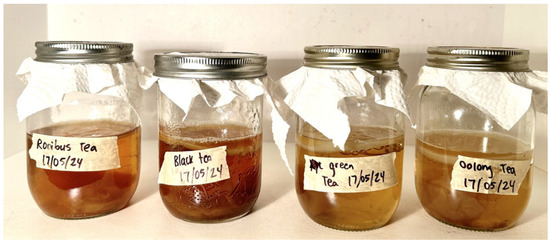
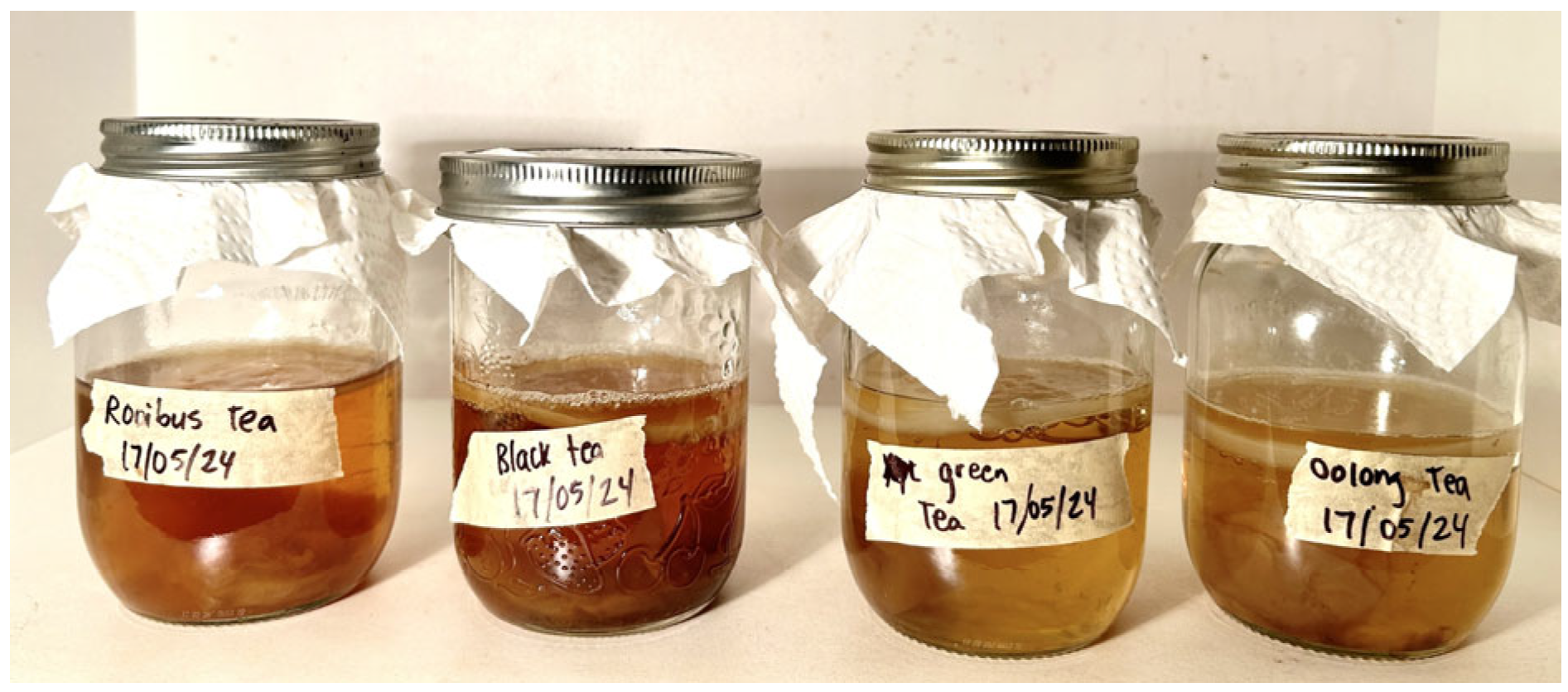
Small-size samples are cultivated in glass jars covered with paper towels to allow air exchange (see Figure 1). Multiple jars can be stored on shelves, and membrane growth tends to remain consistent and homogeneous year-round.
Figure 1.
Small samples of bacterial cellulose in glass jars.
Medium-size samples are grown in commercial-grade plastic containers with dimensions between 73 × 40 cm and 60 × 40 cm. The containers are filled with medium up to 5 cm in height, and the plastic lids are perforated and covered with paper towel filters to facilitate air exchange. Between four and five containers can be stored vertically in metal racks to optimize space utilization.
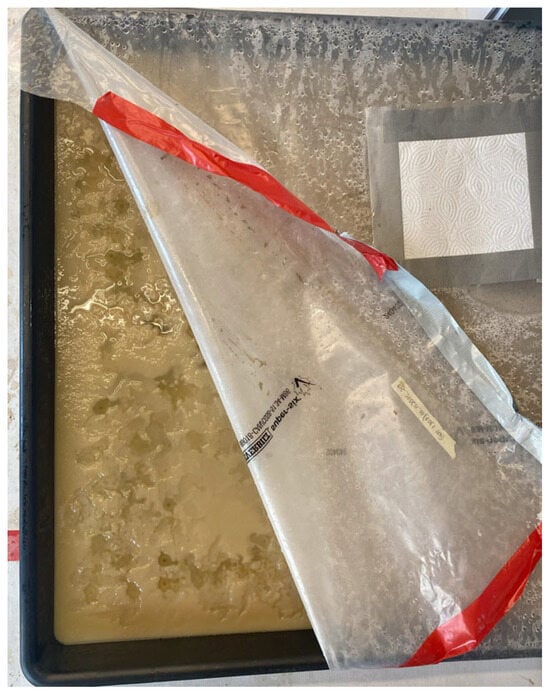
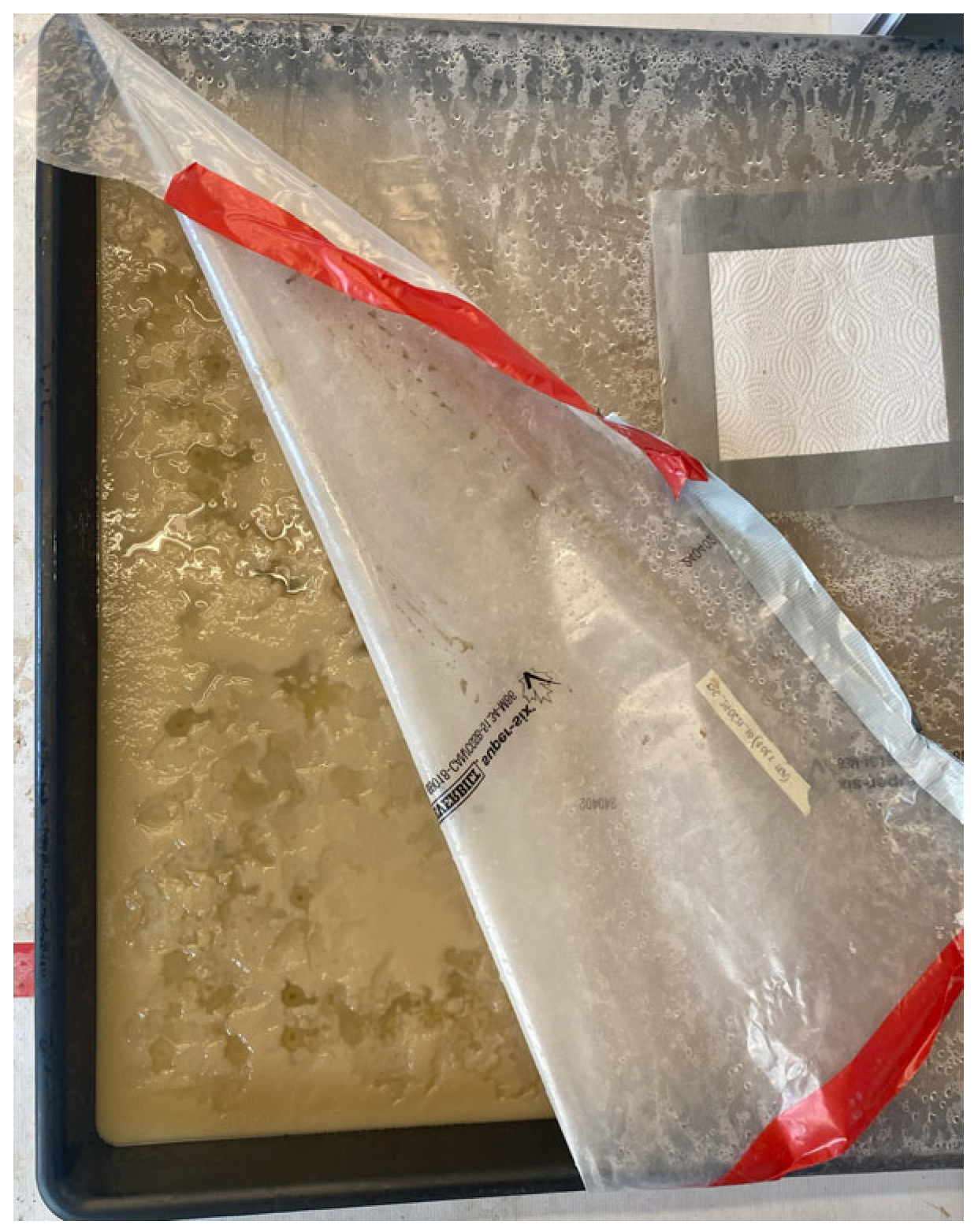
Large-size samples are cultivated in industrial containers (1 × 1 m) or small pools (1.2 × 1.2 m or 2 m diameter), filled with medium up to 5 cm in height. Transparent plastic sheets perforated and patched with paper towels cover these containers (see Figure 2). Membranes grown at this scale tend to be less homogeneous. Current lab arrangements allow for two large containers to be stored vertically (one on the floor and another on a horizontal surface). This setup presents limitations, as harvesting becomes challenging when many large containers are stacked vertically, and appropriate storage structures need to be designed.
Figure 2.
Large-size container.
An additional 40 m2 space temporarily accommodated increased production, enabling bacterial cellulose production to scale up by 32 m2 per month.
2.2. Harvesting Protocols
Harvesting occurs after 10–14 days of growth, when most membranes reach a thickness of 3–6 mm. If the room temperature is not maintained within the optimal range (24–28 °C) or the mother culture is not replaced regularly, the bacterial cellulose thickness decreases. While the general principles of harvesting remain consistent across all container sizes, the process for small, medium, and large containers varies significantly.
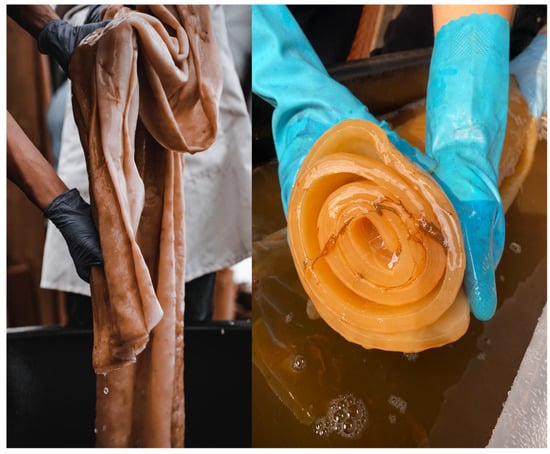
Ten to fifteen small and medium containers are harvested by one person in under three hours, with the membrane peeled, drained, and transferred to the drying area. Large membranes are heavy, slippery, and more challenging to handle. Two people are needed to roll and drain the BC before moving it into a safe container (see Figure 3). Frequent spills occur during manipulation, and membranes can tear or break if not handled delicately. Harvesting 10–15 large typically takes two people 4–5 h.
Figure 3.
Harvesting process of large-size samples of bacterial cellulose.
Harvesting is coordinated with the preparation for the next growth cycle, and both tasks are completed on the same shift. Generally, a full day is dedicated to preparing the new medium, harvesting the bacterial cellulose, and refilling the containers for the next batch.
2.3. Drying Protocols
Bacterial cellulose can be freeze-dried, oven-dried, or air-dried at ambient temperature. The samples discussed in this document have all been dried at ambient temperature, either indoors or outdoors. Once fully dried, the membranes’ thickness is reduced to 1–2 mm. However, despite these similarities, drying processes vary depending on the size of the samples.
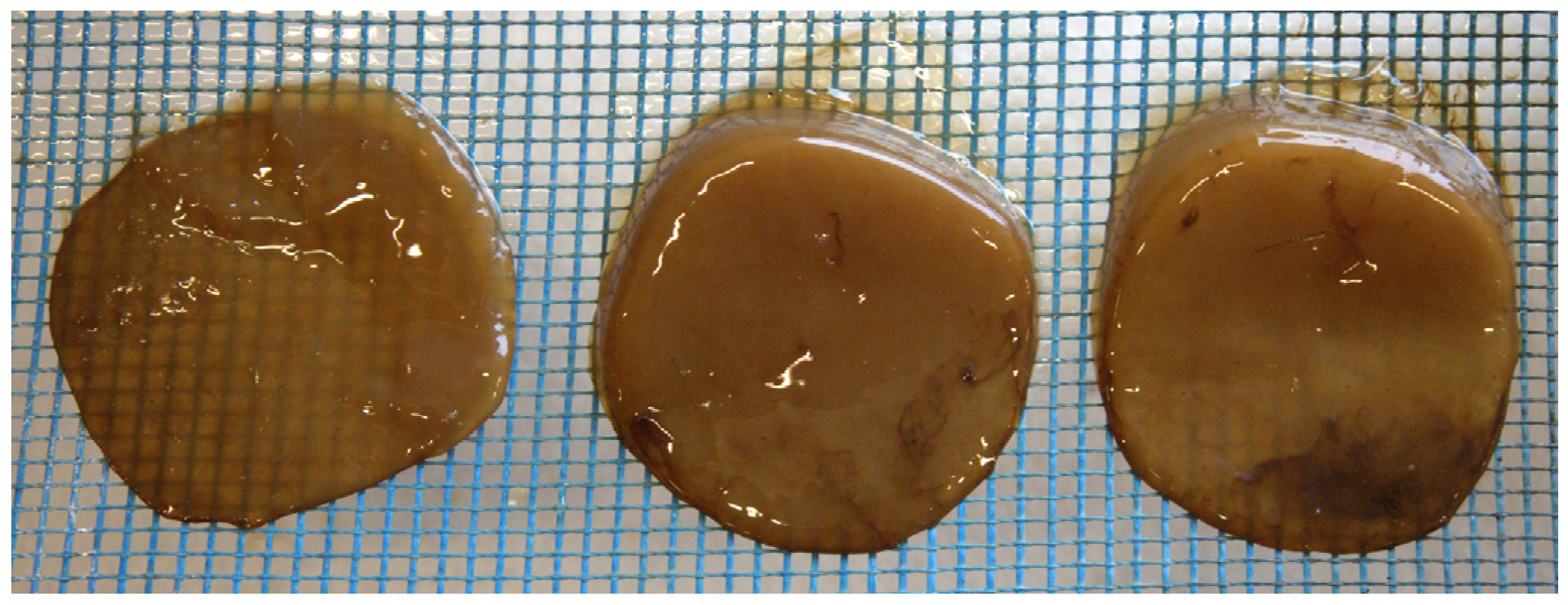
Small-size samples of bacterial cellulose are spread on horizontal plastic screens (see Figure 4) to dry for one to two days. In conditions of high relative humidity, the samples can be flipped daily to ensure even exposure on both sides of the membrane.
Figure 4.
Small samples of bacterial cellulose drying on a horizontal plastic mesh.
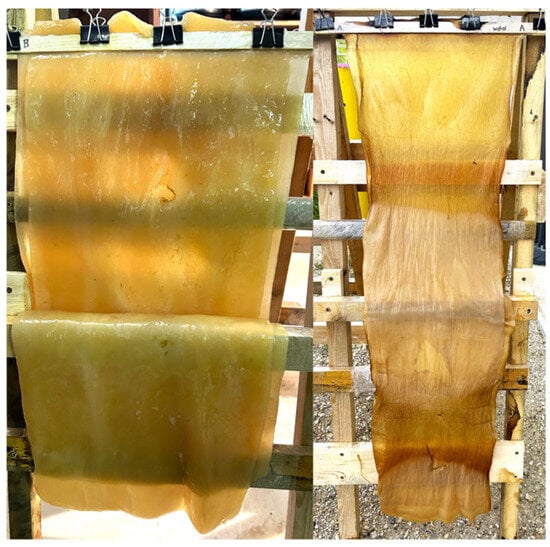
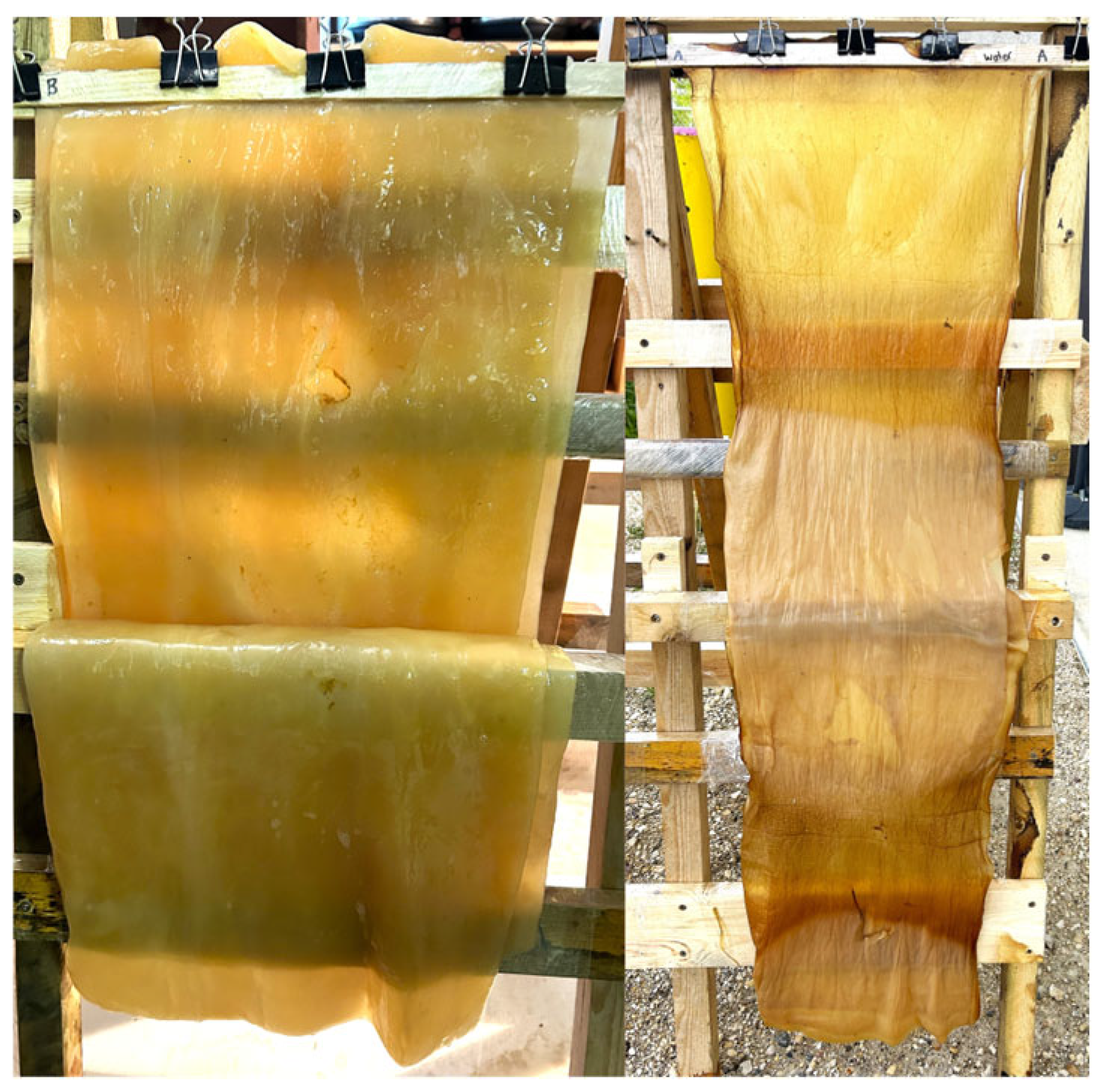
Medium-size samples can be dried either horizontally or vertically. In horizontal arrangements, the membranes are positioned on supports that minimize contact with the framework. Vertical drying involves suspending the membranes on vertical racks (see Figure 5). Due to greater airflow exposure, drying is faster in vertical arrangements, with membranes drying in two to three days. In contrast, horizontal drying can take five to seven days.
Figure 5.
Medium-size samples drying on vertical rack structure.
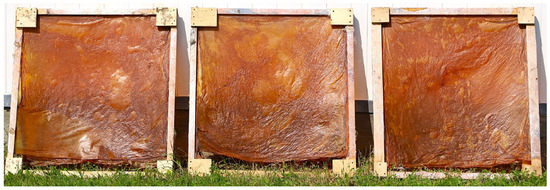
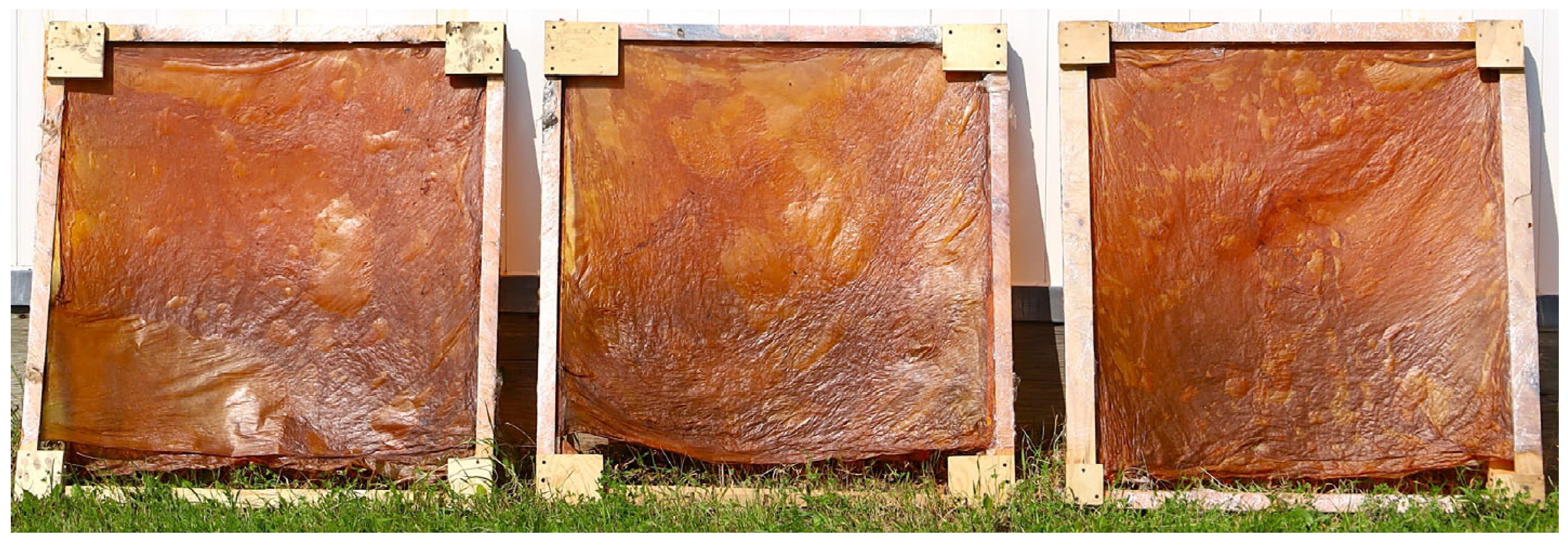
Large-size multilayered samples (composed of two or three overlapping bacterial cellulose membranes) are exclusively dried vertically. These membranes are pressed together between wooden frames and clamped on three sides to prevent tearing or breaking under their weight (see Figure 6). During warmer months (May–September), the frames are placed outdoors, allowing the membranes to dry fully within five to seven days. In cooler months (October–April), indoor drying takes approximately seven to ten days.
Figure 6.
Large-size samples drying outdoors supported on wooden frames.
2.4. Pre and Post Drying Treatments
2.4.1. Dyeing Techniques
Several dyeing techniques have been tested, both during and after growth. One approach to altering the colour of bacterial cellulose involves modifying the tea used in the growth medium. Green tea, Rooibos tea, and Oolong tea result in lighter-coloured samples than those grown in a Black tea medium. Additionally, natural juices from fruits and vegetables can be added to the growth medium to alter the colour of the membranes further. Bacterial cellulose grown with berry juices or beet juice, for example, produces particularly vibrant results (see Figure 7). However, this method requires significant quantities of natural juice, making it impractical for large-size containers.
Figure 7.
Sample of bacterial cellulose coloured using plant-based dye diluted in growth medium.
Post-harvest dyeing is the most effective method for altering the appearance of bacterial cellulose. Small- and medium-size samples can be immersed in dye-filled receptacles for even coloration, whereas large samples are more efficiently dyed using brush painting techniques. This approach optimizes dye usage and reduces the time required for application.
2.4.2. Coating Techniques
Bacterial cellulose membranes are hydrophilic and can absorb and retain significant amounts of water. This characteristic helps protect the material from becoming brittle, as it captures and releases humidity from the surrounding atmosphere, which is particularly noticeable during winter months when samples stored in indoor, conditioned spaces with low relative humidity become fragile. In contrast, outdoor samples avoid this issue, as they self-regulate by absorbing and releasing water vapour in cycles aligned with weather conditions. Over the past three years, we have consistently observed that outdoor-kept samples withstand winter climates more effectively.
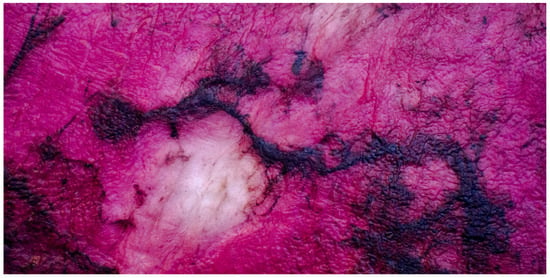
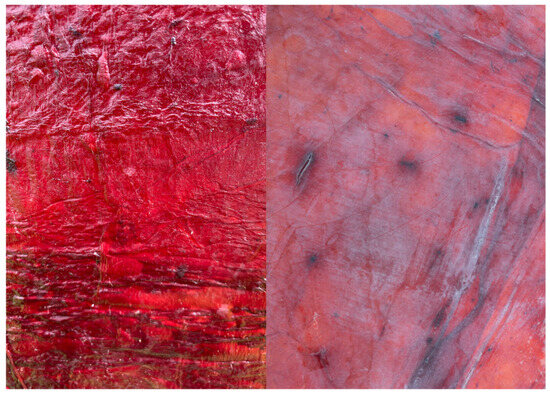
To enhance water resistance and waterproofing for outdoor use, three coating techniques were tested:
- Coconut oil: applied by hand (see Figure 8), in warm temperatures, the oil creates a greasy and slippery texture, while in cold environments, it solidifies quickly, forming an effective protective layer.
Figure 8.
Left: Freshly applied coconut oil coating over BC sample. Right: Coconut oil coating on an outdoor sample. Picture taken on January 2025.
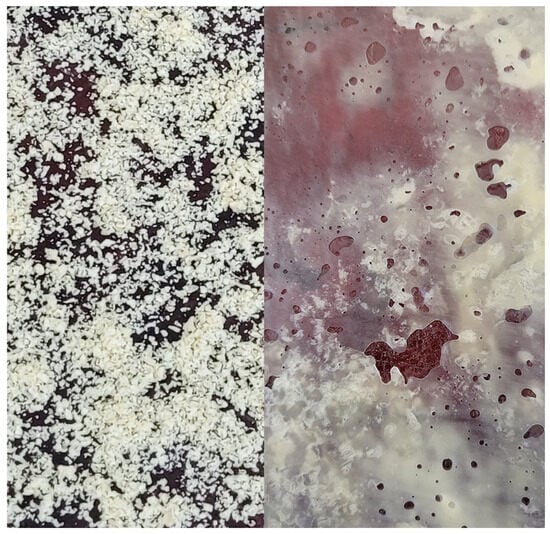
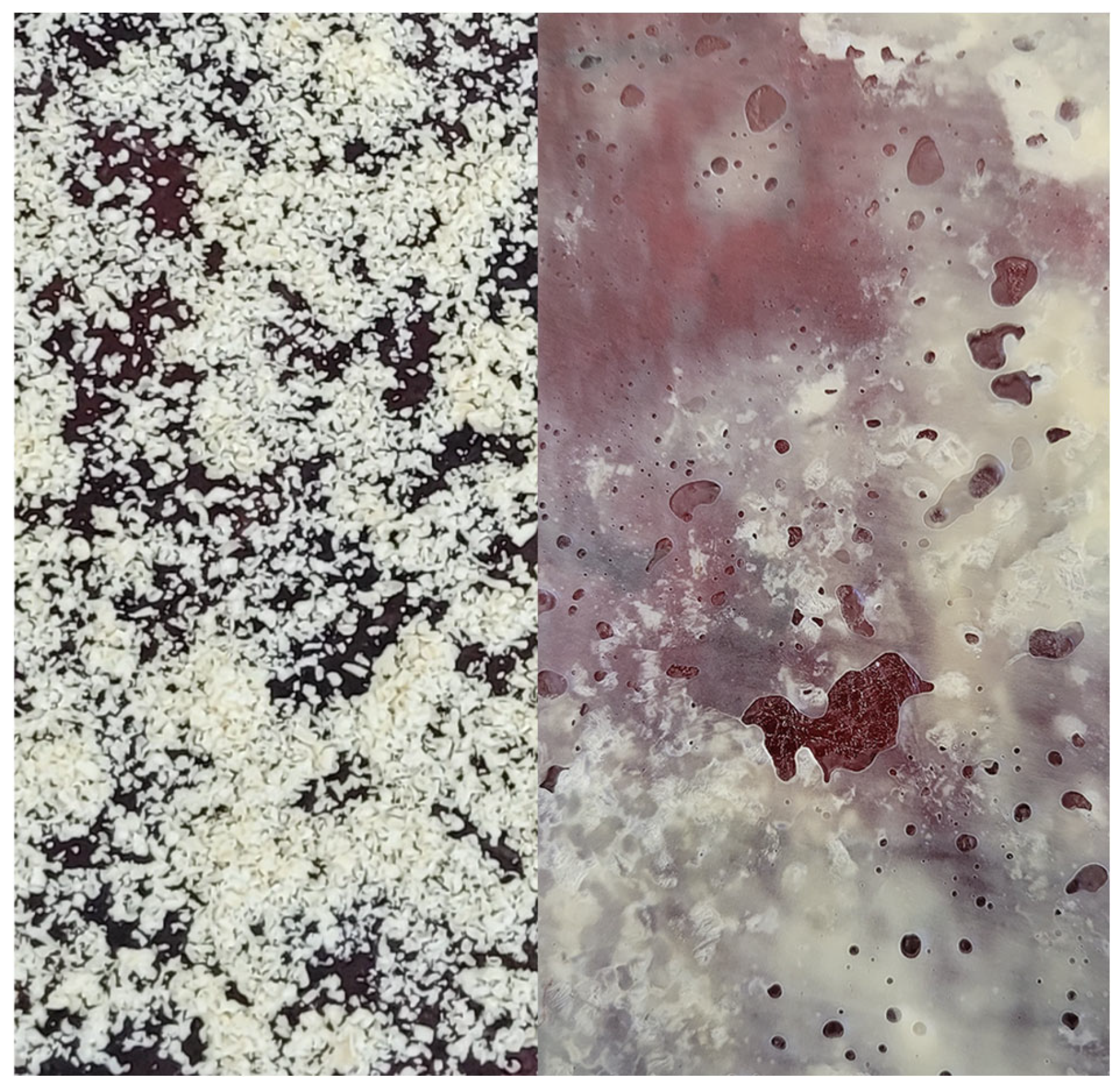
- Beeswax application is more labour-intensive. A solid block of beeswax is grated and distributed evenly over the horizontal membrane, then melted using a heat source (see Figure 9). The resulting layer provides water resistance but adds a characteristic white or yellow coloration. However, it cracks easily when the material is moved or folded.
Figure 9.
Left: Beeswax grated and placed over BC sample before applying heat. Right: Beeswax dried over BC sample after applying heat.
- Polyurethane-based wood finish applied in two layers with a brush over a clean and dry bacterial cellulose membrane. This process is fast and straightforward. While the size of the sample does not affect the application method, larger specimens require ample space for preparation and handling.
2.4.3. Layering Techniques
Layering or overlapping wet bacterial cellulose samples is a method used to increase the strength of the dried material. The process involves allowing two or more layers to merge as they dry, forming a single, multilayered material. Previous studies [28] have demonstrated that three layers of uncoated bacterial cellulose can endure subarctic and continental temperatures for extended periods without significant degradation.
During the layering process, small membranes are placed on top of each other. Although the drying time is slightly longer, no modifications to the drying protocols are necessary. For medium-size and large-size membranes, overlapping significantly increases the weight of the samples and extends the drying time. As a result, additional measures are required to support the material during the drying process.
2.4.4. Assembly Techniques
Bacterial cellulose bonds easily to cellulose-rich materials, including other bacterial cellulose samples and untreated plant-based materials. However, effective methods for attaching bacterial cellulose to other construction elements are still under investigation.
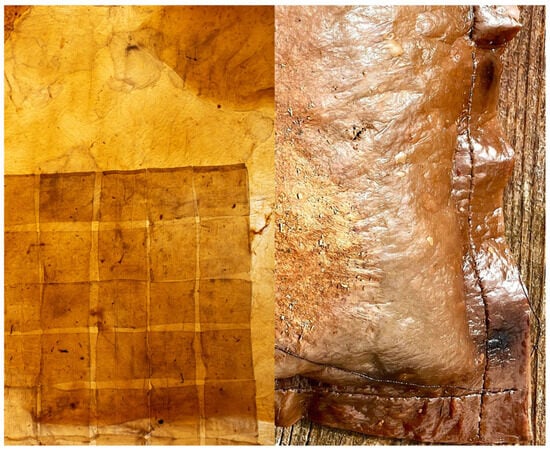
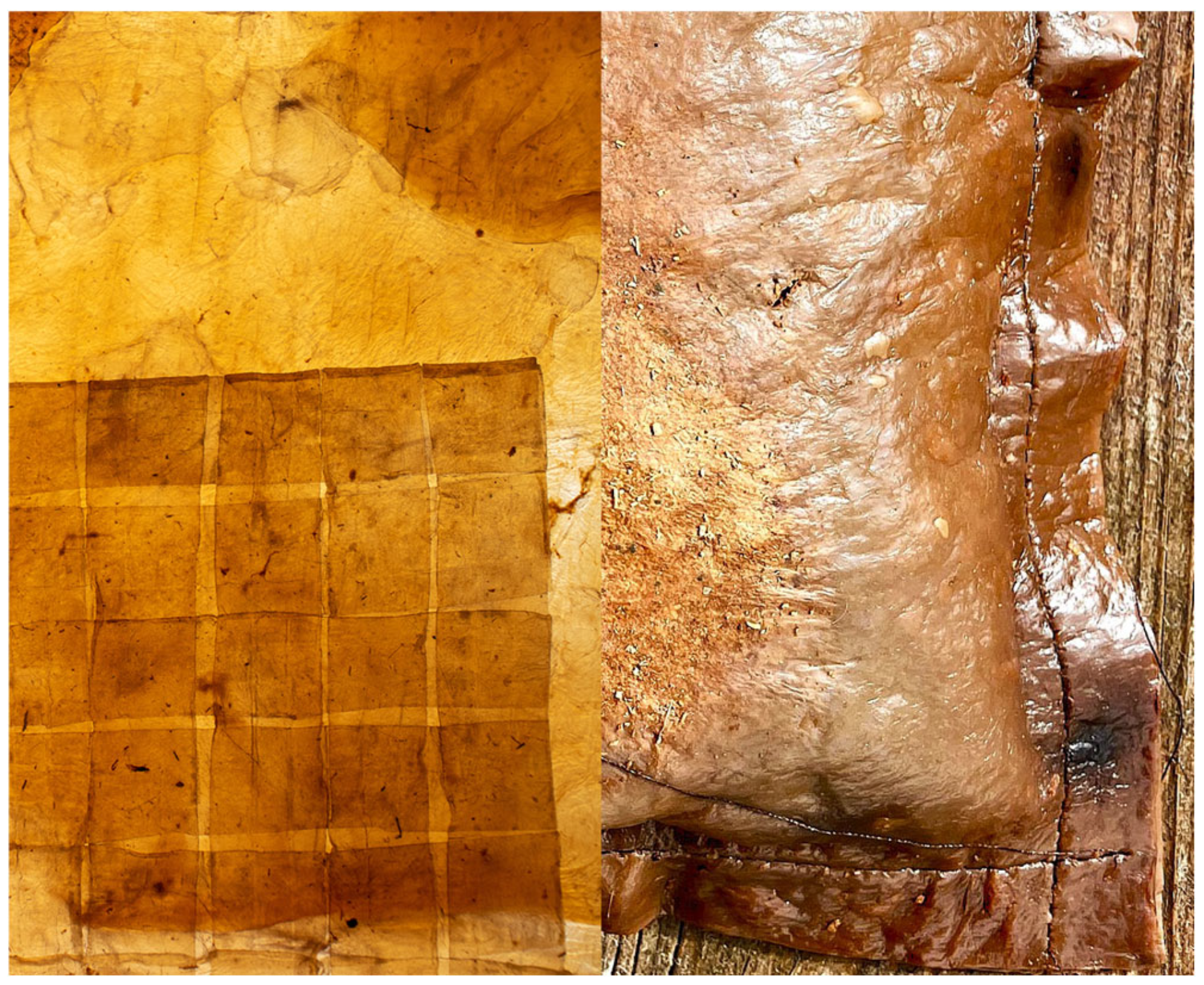
Small samples have been successfully joined using bacterial cellulose as a binding agent (see Figure 10). Heat has also been applied to lightly melt and glue two membranes together, while sewing techniques have shown potential but require further refinement (see Figure 10).
Figure 10.
Left: Samples of BC glued together. Right: Sewed BC samples.
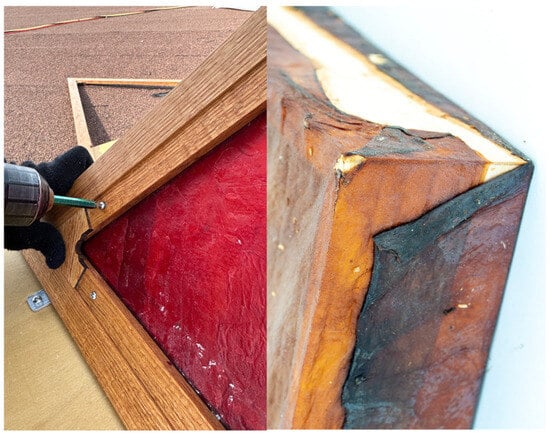
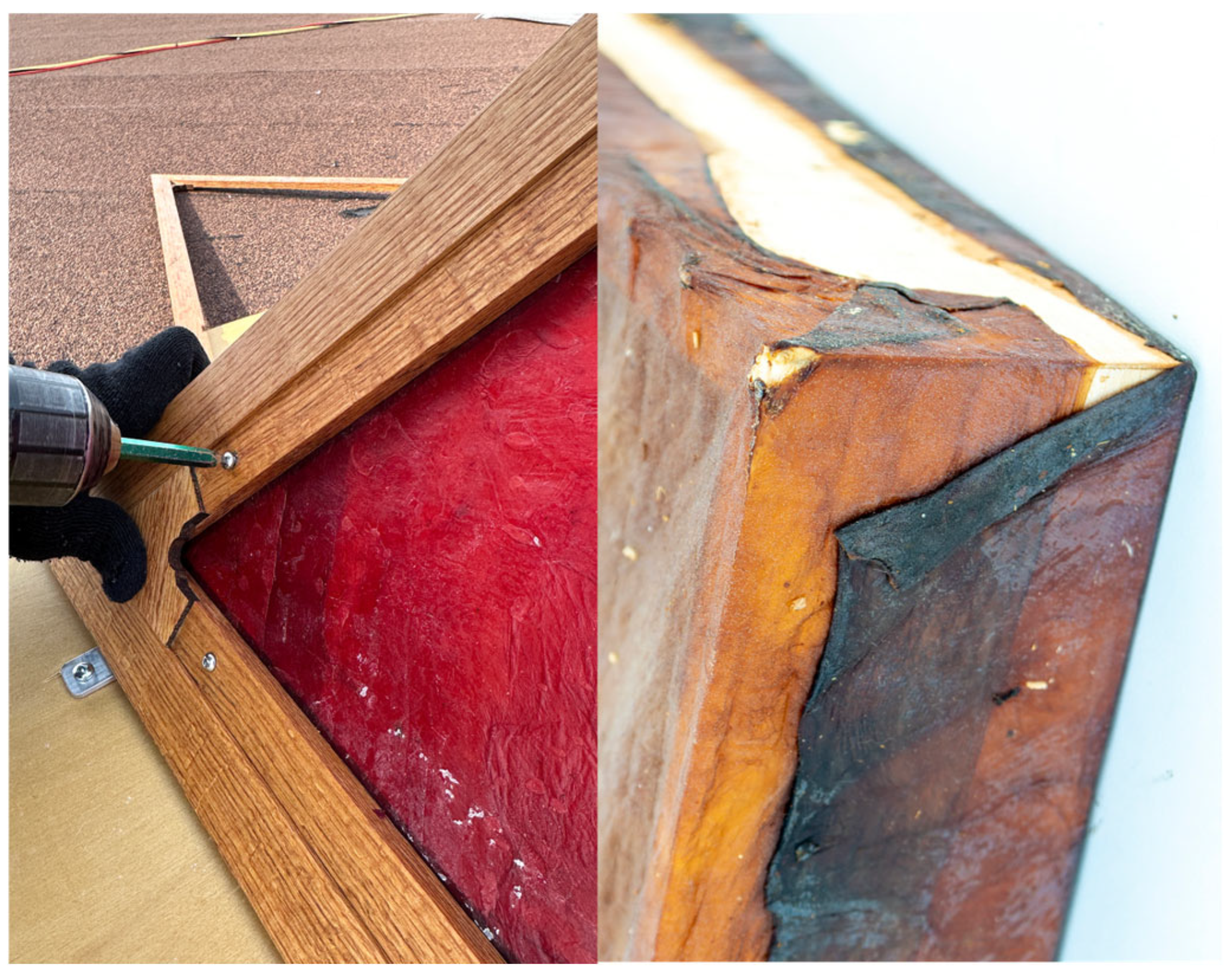
Medium-size samples can be wrapped around wooden structures with good results or sandwiched between wooden frames for a more secure hold (see Figure 11).
Figure 11.
Left: BC sample held between wooden frames. Right: BC sample dried over and attached to a wooden frame.
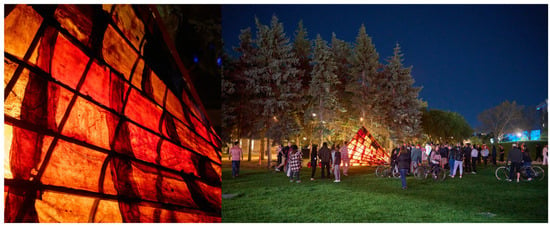
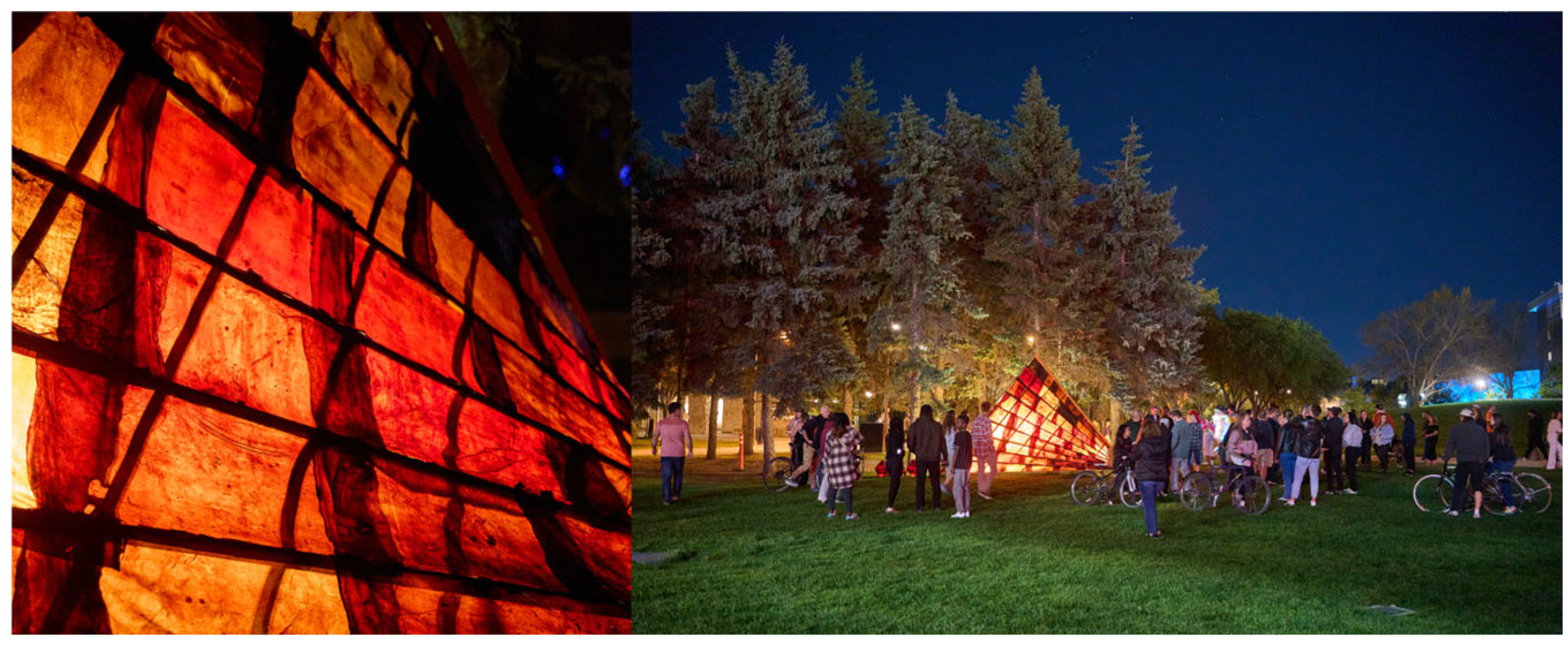
Large samples require secondary structures to prevent excessive flapping and tearing. For the Nuit Blanche installation, large samples were stapled to a wooden frame to create a continuous wall of dyed bacterial cellulose (see Figure 12). The following section includes a full description of this structure.
Figure 12.
Left: Detail of Nuit Blanche installation. Right: Nuit Blanche installation and participants. Images by David Lipnowski (with permission from Nuit Blanche Winnipeg, Culture Days Manitoba).
3. Results
The development of a 5 × 5 m structure utilizing bacterial cellulose, as depicted in Figure 12, provided valuable insights into scaling up production and assembly processes, which was the primary aim of this exercise. The development of the Hyperbolic Cellulose exhibition spanned twelve weeks from initiation to completion during the summer of 2024, with ten weeks dedicated to growing, dyeing, drying, and coating the membranes. During this time, the space required to accommodate 20 large containers had to be tripled by temporarily using two satellite facilities in nearby campus buildings. These spaces lacked proper control over temperature, humidity, and sunlight, which led to uneven membrane growth during the first two cycles (four weeks). As a result, at least 10 of the 20 containers produced substandard membranes. To address these challenges, several adjustments were made. Air exchange surfaces in container covers were increased, pH levels were corrected, and the volume of growth medium in containers was reduced. Additionally, two overarching strategies were implemented: producing 5–10% more bacterial cellulose than required to account for losses and strategically layering lower-quality membranes with higher-quality ones.
Harvesting the initial batch of large membranes revealed significant difficulties, resulting in a high rate of tears and breaks. Consequently, the harvesting process was revised to include two people instead of one. While spills are infrequent with small samples and occasional with medium-size containers, large-container harvesting repeatedly caused medium to spill during draining and transferring. Protective carpets were introduced to minimize disruptions, and after several attempts, rolling the heavier membranes was found to be the most effective method for maintaining their integrity while facilitating drainage.
Drying protocols varied depending on the size and layering of the membranes. Small samples dried efficiently at room temperature with minimal effort, but medium and large multilayered samples required more time and additional adaptations. Initial tests involved horizontally drying the membranes on frames with plastic mesh. While this method increased airflow exposure, it often led to membranes adhering to the mesh and tearing during removal. This technique is now limited to smaller, thicker samples that can be monitored daily. Forced air was later introduced to speed up the drying process, particularly for layered samples that exceeded seven days of drying time. The most reliable method was vertically suspending membranes, which maximized airflow exposure and optimized space in the lab. However, this method presents challenges for larger membranes due to their weight, which can cause tears at attachment points. A secondary horizontal bar for medium-size membranes helps distribute the load between two support points, while large membranes require framing on at least three sides to maintain their integrity. This framing technique has also resolved issues with folding and warping observed in earlier drying methods. Though more space-intensive, it has been effective during warmer months when samples can be dried outdoors. Its viability during winter is still being tested.
Dyeing techniques were explored both for their esthetic potential and to enhance the material’s translucency, which creates striking colour and texture effects for indoor and outdoor applications. Dyeing small- and medium-size samples through immersion in dye baths proved feasible but inefficient for larger surfaces. Larger membranes required disproportionate amounts of dye, and residual kombucha drained into the dye baths during immersion, complicating the process. While smaller samples could be drained easily, larger membranes retained more liquid, making them harder to handle without risk of damage. To address these challenges, brush painting was tested as an alternative, optimizing dye usage but increasing time and labour requirements. The outcome was a semi-translucent red bacterial cellulose wall, which was especially appreciated by the public for its colourful appearance. Visitors noted how the material’s appearance evolved with the transition from natural to artificial light, revealing subtle patterns and colour variations. Beyond visual engagement, the installation elicited a strong tactile response, and many visitors expressed a desire to touch the material, often doing so repeatedly, suggesting curiosity about its texture, flexibility, and perceived fragility. This tactile engagement frequently became an entry point for conversation, prompting questions about the material’s fabrication process, biological origin, and environmental implications. In numerous instances, these exchanges extended beyond explanation, as visitors began to draw connections to their own experiences and ideas, ranging from associations with textiles, food fermentation, and craft practices to speculative applications in architecture, furniture, or everyday objects. Rather than remaining passive observers, members of the public actively contributed interpretations and suggestions, indicating that the material’s unfamiliar yet approachable qualities fostered a participatory form of engagement and positioned the installation as a catalyst for dialogue about material processes, sustainability, and alternative modes of production.
For the Hyperbolic Cellulose installation, polyurethane wood finish was selected as a coating solution due to its superior waterproofing capabilities compared to other options tested on medium-size samples over 6–8 months (e.g., beeswax, coconut oil). While environmentally preferable, beeswax and non-coated alternatives were ruled out because they could not reliably protect the material against heavy rain on the day of the event. Coconut oil was also excluded due to its greasy texture, which would have complicated assembly in warm temperatures. Two layers of polyurethane were applied during the final 3–4 weeks before the event, and the membranes were stored until installation.
The prefabricated wood structure, constructed at the Center for Architectural Structures and Technology (U of Manitoba), featured a double-curvature geometry (hyperbolic paraboloid) that served as a scaffold for the bacterial cellulose panels. On the event day, the membranes were stapled to the wooden frame, allowing for a quick and efficient assembly process completed within 6–7 h by a team of 4–5 people. However, disassembling the structure proved more challenging than expected. Removing the staples caused significant damage to many membranes, likely due to the short time allocated for dismantling, inadequate lighting, and limited practice with this technique.
4. Discussion and Conclusions
While locally grown materials with reduced embedded energy offer clear potential benefits compared to conventional construction materials, significant obstacles remain in integrating them into the building industry.
Experimentation with bacterial cellulose revealed that the material’s properties vary considerably with size. Reinforcement techniques, such as multilayered samples and protective coatings, helped address some challenges associated with larger specimens. However, transitioning from small-scale lab samples to architectural-scale products brings logistical and spatial challenges. The production, manipulation, and exploration of biomaterials at larger scales demand dedicated spaces designed collaboratively by researchers and industry partners. The current arrangement of large bioreactors, as outlined above, is neither optimized for space efficiency nor harvesting processes, and the temporary use of campus facilities is an unsustainable long-term solution. Dedicated facilities with hygrothermal control systems, next-generation bioreactors, and efficient harvesting setups must be envisioned and developed in collaboration with stakeholders to scale biomaterials effectively.
Further exploration of drying methods is also necessary, particularly incorporating mechanical ventilation systems to reduce drying times. These developments will also impact bacterial cellulose’s overall life cycle assessment and storage requirements. Beyond production challenges, a more comprehensive characterization of bacterial cellulose and its potential applications in the built environment remains essential. Although this and other studies have examined its performance in temporary structures, its weathering behaviour, and its use in furniture and panelling, there is still no conclusive ranking of bacterial cellulose among comparable construction materials. Bacterial cellulose shows promise in applications such as exterior shading elements, where it could outperform some textile materials. However, a significant gap persists between the vision for biomaterials presented in research settings and their perceived potential among design professionals and the construction industry. Prototypes, along with robust dissemination of results and industry collaborations, are crucial to bridging this divide.
Time is critical when working with bio-based materials and poses important scheduling implications. In this exercise, the promise of locally grown bacterial cellulose required the research team to act as the manufacturing partner: specifying, producing, and ensuring the material’s quality and availability. At this stage of development, growing, harvesting, and preparing bacterial cellulose was the lengthiest phase of the project. For the Nuit Blanche installation, 10 weeks (five growing cycles) were needed to produce enough membranes to cover approximately 20 m2 using 20 large containers (three layers of bacterial cellulose per membrane). Production rates were inconsistent, and several containers failed to yield membranes of sufficient thickness and uniformity. Replicating consistent material properties across batches has not yet been achieved. To address this issue, overproduction and the strategic layering of membranes with varied qualities were implemented, but this raises broader questions about the reliability of biobased materials.
The optimization of growth chambers, bioreactors, post-harvesting labs, and appropriate storage facilities is critical to ensuring the successful integration of biomaterials into construction practices. These efforts, combined with continued research, industry collaboration, and public engagement, will help define the role of biomaterials in shaping the future of sustainable architectural design. Unlike engineered materials, which are designed to be precise and predictable, biobased materials often lack these characteristics. While this is sometimes viewed as a limitation, it also presents an opportunity for designers and the building industry to reimagine how these materials can be integrated into architectural projects. Bacterial cellulose, for instance, offers a unique challenge for researchers, students, and professionals to find innovative applications and explore the transition of biomaterials from the lab to the land.
Funding
This research was funded by the Government of Canada through the New Frontiers Research Fund: Explorations (NFRFE-2021-00906).
Data Availability Statement
All data currently available for sharing are included in the document.
Conflicts of Interest
The author declares no conflict of interest.
References
- Huovila, P.; Pouffary, S.; Svenningsen, N.; Graham, P. Common Carbon Metric: Protocol for Measuring Energy Use and Reporting Greenhouse Gas Emissions from Building Operations; Draft for Pilot Testing; United Nations Environment Program (UNEP): Nairobi, Kenya, 2010. [Google Scholar]
- Imhof, B.; Gruber, P. Built to Grow—Blending Architecture and Biology; Edition Angewandte; Birkhäuser: Basel, Switzerland, 2016. [Google Scholar]
- Camere, S.; Karana, E. Fabricating materials from living organisms: An emerging design practice. J. Clean. Prod. 2018, 186, 570–584. [Google Scholar] [CrossRef] [Scilit]
- Appels, F.V.W.; Camere, S.; Montalti, M.; Karana, E.; Jansen, K.M.; Dijksterhuis, J.; Krijgsheld, P.; Wösten, H.A. Fabrication factors influencing mechanical, moisture- and water-related properties of mycelium-based composites. Mater. Des. 2019, 161, 64–71. [Google Scholar] [CrossRef] [Scilit]
- Oxman, N.; Ortiz, C.; Gramazio, F.; Kohler, M. Material ecology. CAD Comput. Aided Des. 2015, 60, 1–2. [Google Scholar] [CrossRef] [Scilit]
- Ling, A.S. Design by Decay, Decay by Design; Massachusetts Institute of Technology: Cambridge, MA, USA, 2018. [Google Scholar]
- Reichert, S.; Menges, A.; Correa, D. Meteorosensitive architecture: Biomimetic building skins based on materially embedded and hygroscopically enabled responsiveness. Comput. Aided Des. 2015, 60, 50–69. [Google Scholar] [CrossRef] [Scilit]
- Cheng, T.; Tahouni, Y.; Sahin, E.S.; Ulrich, K.; Lajewski, S.; Bonten, C.; Wood, D.; Rühe, J.; Speck, T.; Menges, A. Weather-responsive adaptive shading through biobased and bioinspired hygromorphic 4D-printing. Nat. Commun. 2024, 15, 10366. [Google Scholar] [CrossRef] [Scilit]
- Klemm, D.; Heublein, B.; Fink, H.-P.; Bohn, A. Cellulose: Fascinating Biopolymer and Sustainable Raw Material. Angew. Chem. (Int. Ed.) 2005, 44, 3358–3393. [Google Scholar] [CrossRef] [Scilit] [PubMed]
- Klemm, D.; Cranston, E.D.; Fischer, D.; Gama, M.; Kedzior, S.A.; Kralisch, D.; Kramer, F.; Kondo, T.; Lindström, T.; Nietzsche, S.; et al. Nanocellulose as a natural source for groundbreaking applications in materials science: Today’s state. Mater. Today 2018, 21, 720–748. [Google Scholar] [CrossRef] [Scilit]
- Skočaj, M. Bacterial nanocellulose in papermaking. Cellulose 2019, 26, 6477–6488. [Google Scholar] [CrossRef] [Scilit]
- Laavanya, D.; Shirkole, S.; Balasubramanian, P. Current challenges, applications and future perspectives of SCOBY cellulose of Kombucha fermentation. J. Clean. Prod. 2021, 295, 126454. [Google Scholar] [CrossRef] [Scilit]
- Avcioglu, N.H. Bacterial cellulose: Recent progress in production and industrial applications. World J. Microbiol. Biotechnol. 2022, 38, 86. [Google Scholar] [CrossRef] [Scilit]
- Gazzar, N.; Estévez, A.; Abdallah, Y. Bacterial Cellulose as a base material in biodigital architecture (between bio-material development and structural customization). J. Green Build. 2021, 16, 173–199. [Google Scholar] [CrossRef] [Scilit]
- Domskiene, J.; Sederaviciute, F.; Simonaityte, J. Kombucha bacterial cellulose for sustainable fashion. Int. J. Cloth. Sci. Technol. 2019, 31, 644–652. [Google Scholar] [CrossRef] [Scilit]
- Blanco Parte, F.G.; Santoso, S.P.; Chou, C.-C.; Verma, V.; Wang, H.-T.; Ismadji, S.; Cheng, K.-C. Current progress on the production, modification, and applications of bacterial cellulose. Crit. Rev. Biotechnol. 2020, 40, 397–414. [Google Scholar] [CrossRef] [Scilit]
- Aduri, P.; Rao, K.A.; Fatima, A.; Kaul, P.; Shalini, A. Study of biodegradable packaging material produced from scoby. Res. J. Life Sci. Bioinform. Pharm. Chem. Sci. 2019, 5, 389. [Google Scholar]
- Keshk, S.M.A.S. Bacterial Cellulose Production and its Industrial Applications. J. Bioprocess. Biotech. 2014, 4, 150. [Google Scholar] [CrossRef]
- Ng, F.M.C.; Wang, P.W. Natural Self-grown Fashion From Bacterial Cellulose: A Paradigm Shift Design Approach In Fashion Creation. Des. J. 2016, 19, 837–855. [Google Scholar] [CrossRef] [Scilit]
- Galdino da Silva, C.J.; de Medeiros, A.D.L.M.; de Amorim, J.D.P.; do Nascimento, H.A.; Converti, A.; Costa, A.F.S.; Sarubbo, L.A. Bacterial cellulose biotextiles for the future of sustainable fashion: A review. Environ. Chem. Lett. 2021, 19, 2967–2980. [Google Scholar] [CrossRef] [Scilit]
- Massoud, P.; AbouSeada, N.; M.SAada, A.; Zolfakkar, M. Creating sustainable and flexible architectural skin with microbial cellulose-based material: Synthesis and mechanical characterization. J. Umm Al-Qura Univ. Eng. Archit. 2024, 15, 455–466. [Google Scholar] [CrossRef] [Scilit]
- Cruz, M.A.; Flor-Unda, O.; Avila, A.; Garcia, M.D.; Cerda-Mejía, L. Advances in Bacterial Cellulose Production: A Scoping Review. Coatings 2024, 14, 1401. [Google Scholar] [CrossRef] [Scilit]
- Mukherjee, P.; Sivaprakasam, S.; Sekharan, S. Bacterial Cellulose Synthesis, Characterization, and Its Application in Food Packaging/Functional Foods. In Food Coatings and Preservation Technologies; Wiley: Hoboken, NJ, USA, 2024; pp. 611–642. [Google Scholar]
- Venturelli, G.; Villa, F.; Petraretti, M.; Guagliano, G.; Levi, M.; Petrini, P. Bacterial Cellulose for Scalable and Sustainable Bio-Gels in the Circular Economy. Gels 2025, 11, 262. [Google Scholar] [CrossRef] [Scilit]
- Derme, T.; Mitterberger, D.; Tanna, U. Growth Based Fabrication Techniques for Bacterial Cellulose Three-Dimensional Grown Membranes and Scaffolding Design for Biological Polymers. In Proceedings of the ACADIA 2016: POSTHUMAN FRONTIERS: Data, Designers, and Cognitive Machines, Ann Arbor, MI, USA, 27–29 October 2016. [Google Scholar]
- Kniep, J.; Thundathil, M.; Rezwan, K.; Nazmi, A.R. Biofabricating Three-Dimensional Bacterial Cellulose Composites Using Waste-Derived Scaffolds. Appl. Sci. 2025, 15, 6396. [Google Scholar] [CrossRef] [Scilit]
- Guevara, K.M.; Martínez-Valenzuela, G.; Sánchez-Vásquez, V.; Guerrero-Ruiz, K.; Fiallos-Cárdenas, M. Trends and perspectives on bacterial nanocellulose: A comprehensive analysis from the three helixes of innovation. Mater. Today Sustain. 2025, 30, 101090. [Google Scholar] [CrossRef] [Scilit]
- Garcia-Holguera, M. Biomaterials for designed decay and increased resources accesibility: The potential of bacterial cellulose. In Proceedings of the CEES 2023, 2nd International Conference on Construction, Energy, Environment & Sustainability, Funchal, Portugal, 27–30 June 2023. [Google Scholar]

Disclaimer/Publisher’s Note: The statements, opinions and data contained in all publications are solely those of the individual author(s) and contributor(s) and not of MDPI and/or the editor(s). MDPI and/or the editor(s) disclaim responsibility for any injury to people or property resulting from any ideas, methods, instructions or products referred to in the content. |
© 2026 by the author. Licensee MDPI, Basel, Switzerland. This article is an open access article distributed under the terms and conditions of the Creative Commons Attribution (CC BY) license.