


Abstract
Background: Basketball is an intermittent sport characterized by repeated high-intensity efforts interspersed with periods of active recovery. The physical and cognitive demands of the sport expose its players to multiple sources of stress, which may be associated with alterations in sleep and, in turn, with changes in athletic performance. The aim of this systematic review was to synthesize available evidence on whether stress-related sleep disturbances are associated with changes in specific performance factors in basketball players. Methods: A systematic search was conducted in PubMed, Web of Science, and Scopus (January 2010–July 2025). Studies assessing stress, sleep, and at least one performance-related outcome in basketball players were included. Methodological quality and risk of bias were assessed using the Oxford Levels of Evidence and design-specific critical appraisal tools for observational and non-randomized studies. Due to methodological heterogeneity, no meta-analysis was performed, and a qualitative descriptive synthesis was performed. The review protocol was registered in PROSPERO (registration number: 1185938). Of the 202 records identified, 23 remained after screening, and 14 met the inclusion criteria and were included in the qualitative synthesis, requiring the assessment of stress, sleep, and performance outcomes in basketball players. Results: Most included studies reported associative relationships between competition or training-related stress and reduced sleep quality or duration, as well as alterations in selected basketball performance outcomes. Across studies, patterns emerged linking elevated competitive and personal stress, insufficient sleep and recovery outcomes, and performance-related changes, despite substantial variability in study design and measurement approaches. Conclusions: Overall, the evidence suggests that basketball-specific performance factors may be sensitive to stress-related sleep disturbances. These associative patterns underscore the importance of considering psychological well-being, recovery strategies, and sleep management in applied basketball contexts. Rather than supporting prescriptive intervention models, the findings highlight the value of integrated monitoring approaches that combine stress, sleep, and performance assessment to support player readiness and performance outcomes.
1. Introduction
Basketball is an intermittent sport that combines explosive actions such as accelerations, decelerations, changes in direction, and jumps, which impose high physical and cognitive demands on players [1,2]. Scientific literature has shown that sports performance is not solely determined by physical and physiological parameters, but also by a range of intrinsic and extrinsic factors as well [3,4]. In this regard, recovery strategies are considered crucial for optimizing performance and reducing injury risk [5,6]. Among these strategies, sleep is recognized as one of the primary physiological and psychological recovery mechanisms available to athletes [7,8].
Both the quantity and quality of sleep have been associated with athletic performance in basketball, influencing physical and cognitive domains when deficits are present [8,9,10], particularly during periods of congested competition schedules [11]. Conversely, adequate and restorative sleep has been linked to lower injury incidence [12,13] and to improved technical and physical basketball performance [14], making it a key factor within the sports community and particularly in basketball [15,16].
However, the competitive structure of basketball often constrains sufficient rest opportunities [11]. Factors such as late-night or early-morning practice, frequent travel, time zone shifts, and late screen exposure can negatively impact sleep duration and quality by disrupting circadian rhythms. These stressors, commonly present in elite basketball environments, contribute to internal desynchronization, which compromises physiological and cognitive recovery processes essential for optimal performance [7]. Additionally, the physical, psychological stress, and insufficient sleep have been associated with reduced psychological resilience, decreased motivation, impaired emotional regulation, and a diminished capacity to cope with training- and competition-related stress [12,14,17]. It is widely accepted that insufficient sleep is associated with performance declines, partly due to the accumulation of physiological and psychological stress responses [18].
Despite growing interest in the relationship among stress, sleep, and performance, existing basketball-specific reviews have typically examined these factors in isolation or have not explicitly focused on how stress-related sleep disturbances relate to specific performance outcomes. This limits the ability to interpret which basketball performance factors may be most sensitive to the combined influence of stress and impaired sleep. Although injury incidence associated with sleep loss has been reported in some contexts, it has rarely been examined as a primary outcome in studies that jointly assess stress, sleep, and performance in basketball players [19].
In recent years, systematic reviews have increasingly examined the role of sleep in athletic performance, both in general athletic populations [20,21] and in intervention-based or sleep-deprivation contexts [22]. In basketball specifically, a recent systematic review by Ochoa-Lácar et al. [7] synthesized evidence on sleep, recovery, performance, and injury risk, providing an important overview of how sleep-related outcomes. However, this review primarily focused on sleep itself. It did not systematically examine how stress-related sleep disturbances are associated with specific performance factors and recovery indicators, without explicitly examining how stress-related sleep disturbances are associated with distinct basketball performance factors. As a result, it remains unclear which physical, technical, or cognitive performance factors may be particularly sensitive to the combined effects of stress and sleep disturbances.
Evidence from other sports suggests that stress may influence the sleep-performance relationships. Reviews in soccer [23] and general athletic populations [12,21] acknowledge stress as a contextual factor but do not systematically synthesize its interaction with sleep or its association with sports-specific performance outcomes. Consequently, applying these findings to basketball—which is characterized by unique competitive demands, schedule congestion, and travel requirements-remains limited.
Theoretical frameworks provide useful context for interpreting these associations. Sleep supports biological processes such as tissue repair, energy metabolism restoration, memory consolidation, and emotional regulation [24]. Competition-induced sleep loss can negatively impact motor, cognitive, and physiological functions essential for optimal performance [8,10]. Mental fatigue from prolonged cognitive and emotional demands may affect reaction time [25], sustained energy during intermittent efforts [26], focus, and technical execution [27]. Concurrently, stress triggers physiological alterations—such as increased cortisol levels, immune system disruption, and sleep disorders—that detrimentally impact training and match performance [9,28]. Stress is considered here as encompassing psychological, physiological, and autonomic indicators; findings are interpreted according to each operationalization. These frameworks are included to contextualize observed associations, rather than to serve as a basis for theory testing. Prolonged exposure to stress, common in professional basketball, can lead to chronic fatigue, overtraining, and reduced performance [29]. Stress activates the hypothalamic–pituitary–adrenal axis, increasing cortisol and disrupting sleep onset and maintenance [30]. In turn, inadequate sleep heightens athletes’ susceptibility to stress, creating a negative feedback loop that impairs recovery and performance [31].
Models such as the Load–Recovery–Adaptation framework emphasize balancing training and competition demands with adequate recovery to support positive adaptation and reduce maladaptive outcomes [32]. Within this context, sleep is a central, yet variably operationalised, component whose interaction with stress may influence performance across a competitive season. In the present review, stress is conceptualized as a multidimensional construct encompassing psychological (e.g., self-reported mood and perceived stress), physiological (e.g., hormonal responses), and autonomic indicators, as operationalised in the included studies. Sleep is primarily assessed by subjective questionnaires and/or objective monitoring tools for sleep duration and quality. Performance is understood broadly to include physical, technical, cognitive, and availability-related outcomes relevant to basketball performance contexts. These constructs are interpreted according to their operationalization in each study, without assuming equivalence across measurement approaches.
This systematic review provides a descriptive, basketball-specific synthesis of studies examining the interplay between stress, sleep disturbances, and performance outcomes. Unlike prior reviews, which typically address these factors individually or across multiple sports, this review focuses on how they have been jointly examined in basketball, highlighting patterns, methodological gaps, and areas for future research.
Therefore, the main aim of this systematic review is to synthesize available evidence on whether stress-related sleep disturbances are associated with changes in specific basketball performance factors. Due to the descriptive aim of the review and the absence of a sufficiently consistent theoretical or empirical framework integrating stress, sleep, and performance in basketball, no formal conceptual model was proposed. Instead, the review was guided by broad research questions aimed at synthesizing and mapping the available evidence. By adopting a cautious, evidence-aligned approach, this review seeks to support future research by improving conceptual clarity and to inform applied practitioners by clarifying what can and cannot be drawn from the current basketball-specific literature.
This review provides a descriptive synthesis of examining stress, sleep, and performance in basketball players, focusing on identifying which physical, technical, and cognitive performance factors appear to be sensitive to stress-related sleep disturbances. The review incorporates current scientific literature and considers sport-specific contextual factors such as travel, congested schedules, training loads, and competitive demands. Rather than testing a predefined framework, the review seeks to clarify how these relationships have been operationalised, which performance factors appear most sensitive, and where conceptual and methodological gaps remain.
2. Materials and Methods
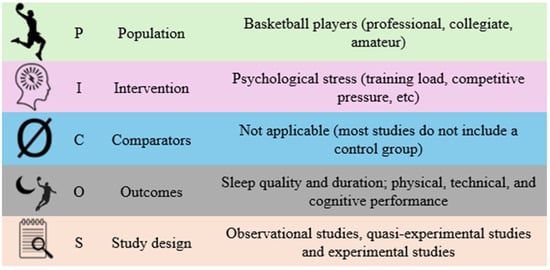
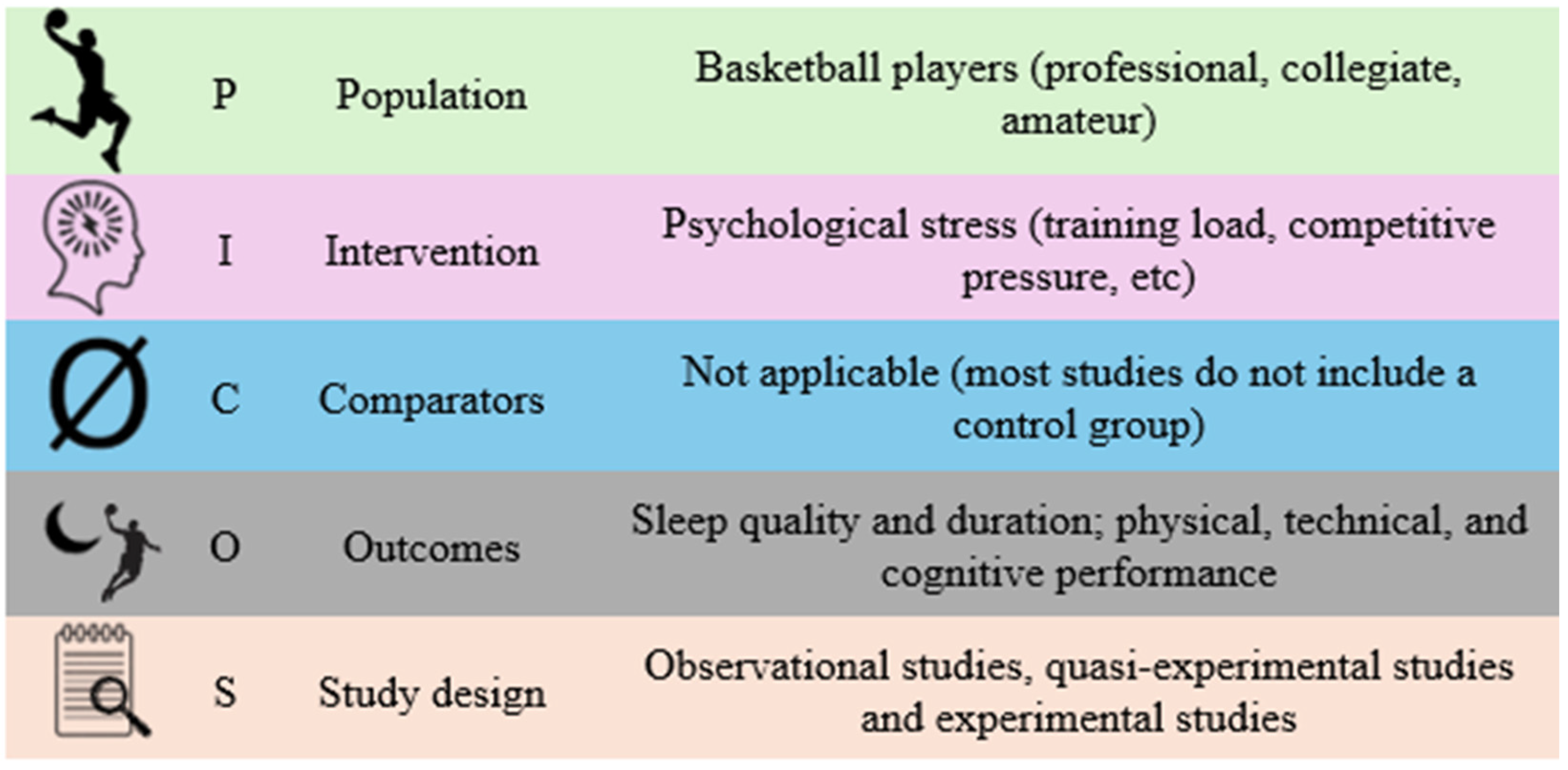
This systematic review adhered to the Preferred Reporting Items for Systematic Reviews and Meta-Analyses (PRISMA)® guidance [33]. The electronic databases employed for the search included PubMed, Scopus, and Web of Science (WOS), between 1 January 2010 and 1 July 2025. The last search was conducted on 1 July 2025. Keywords were selected using experts’ opinions and based on previous reviews conducted on stress, sleep, and performance in basketball [7,34]. The search algorithm using the PICOS® approach [35] (population, intervention, comparators, outcomes, and study design) (Figure 1) using the following databases: PubMed, Scopus, and Web of Science (WOS). For Medline, both Medical Subject Headings (MeSH) and free-text terms were used as follows: (“Basketball” [MeSH Terms] OR basket*) AND (“Stress, Psychological” [MeSH Terms] OR stress OR “psychological stress”) AND (“Sleep” [MeSH Terms] OR “Sleep Quality” [MeSH Terms] OR sleep OR “sleep quality”) AND (“Performance” [MeSH Terms] OR “Athletic Performance” [MeSH Terms] OR performance). Equivalent search structures were adapted for Scopus and WOS. The reference lists of included studies were also screened to identify additional relevant articles (Supplementary Materials File S1).
Figure 1.
PICOS model for inclusion criteria definition. Authors’ own work. PROSPERO nº 1185938.
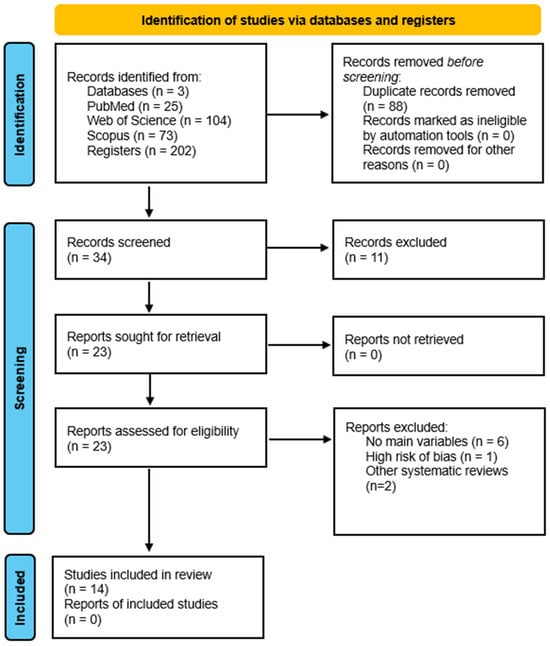
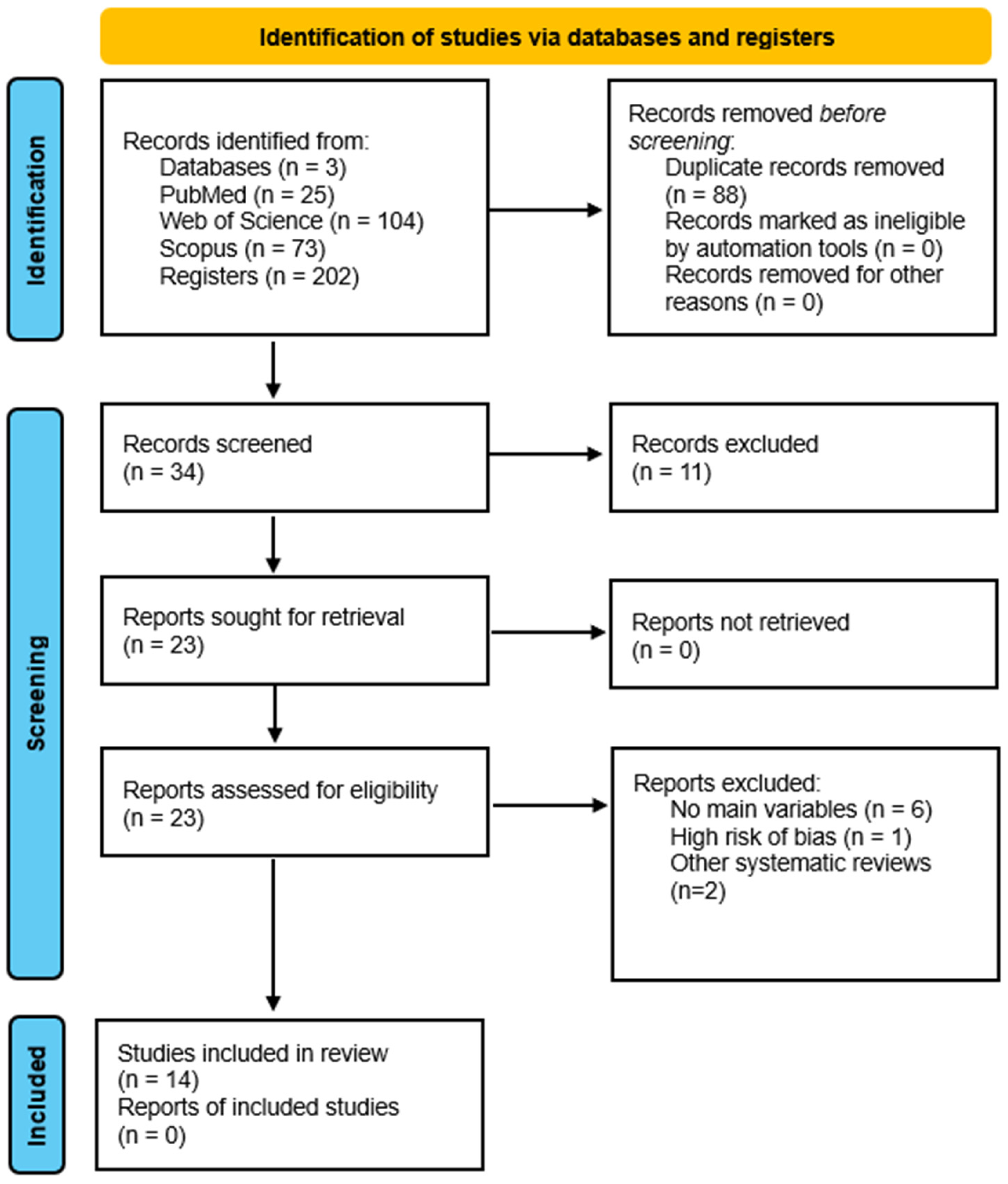
The sources of the found articles were also reviewed to identify, add, and comment on the most important studies on the subject using a snowball sampling method, whereby each article leads to other relevant articles [36]. This review protocol was registered with the Prospective Register of Systematic Reviews (PROSPERO) on 6 November 2025 (registration number 1185938) (Figure 2).
Figure 2.
Diagram flow of the review.
2.1. Eligibility Criteria
The PICOS® criteria were employed to select eligible studies. The inclusion and exclusion criteria for this systematic review are detailed in Table 1. Duplicate identification was carried out using Mendeley reference management software® (v. 2.111.0, Copyright © 2024 Elsevier Ltd., Barcelona, Spain). The authors J.O.-L. and E.F.-G. conducted a screening process for the title, abstract, and reference list of each study to locate potentially relevant studies. A third author (J.C.-G.) participated in discussions to address any discrepancies in the selection process.
Table 1.
Selection criteria used according to the PICOS model.
2.2. Data Extraction
After identifying and excluding duplicates, the results were exported to an Excel document (Microsoft Office®, 2016, Microsoft Inc., Redmond, Washington, WA, USA), and three tables were created, one for each database (PubMed, WOS, and Scopus). These tables recorded the author’s name, date, title, and keywords of all conducted studies, arranged alphabetically based on the first author’s name. After reviewing the title and results, the inclusion and exclusion criteria were applied. Data extraction was performed independently by two reviewers (J.O.-L. and E.F.-G.). Inter-rater reliability during the study selection process showed a high level of agreement between reviewers. Any disagreements were resolved through discussion and consensus. The studies meeting the inclusion criteria were reviewed to extract relevant data on how stress and sleep disturbances impact basketball performance. Any discrepancy among the authors was resolved through discussion with a third author (J.C.-G.).
2.3. Study Selection
Study selection occurred in three stages: (1) title screening, (2) abstract screening, and (3) full-text assessment. Inclusion and exclusion criteria were applied at each stage. A PRISMA flow diagram [33] illustrates the identification, screening, and final selection process.
A total of 23 studies were identified through systematic database searches. After title and abstract screening, full texts were assessed for eligibility (J.O.-L.). Six studies were excluded for not addressing all three core variables (stress, sleep, and performance in basketball players), and one [37] was excluded due to a high risk of bias based on the Cochrane risk of bias tool. Two additional studies [7,34] were excluded as they were systematic reviews without original empirical data (J.O.-L., E.F.-G.) and thus did not meet the inclusion criteria for primary research. Ultimately (J.O.-L., E.F.-G.), 14 studies [23,37,38,39,40,41,42,43,44,45,46,47,48,49] were included in the systematic review.
The inclusion and exclusion criteria indicated in the full articles were then used to select the studies to be included in this review (J.O.-L., E.F.-G.). The authors reached a consensus on the suitability of 92% of the studies included in the review. This suggests that the majority of the studies analyzed met the established criteria and were relevant to the research objectives. However, in 8% of the studies where disagreement arose, the decision was made to include a third author (J.C.-G.) to provide an additional perspective and clarify the choice. This collaborative approach helped to resolve differences and strengthen the validity of the selection process by incorporating a range of opinions and experiences into the evaluation of the studies. The final analysis was based on studies that were of high quality and relevant.
2.4. Methodological Quality Assessment
The methodological quality of the included studies was first assessed using the Oxford Levels of Evidence (OLE), developed by the Center for Evidence-Based Medicine (OCEBM, 2011). This scale ranks scientific evidence based on study design, giving greater weight to more rigorous methodologies. All included studies were level 2b, reflecting moderate-quality evidence from observational or non-randomized designs. Level 1 corresponds to systematic reviews of randomized controlled trials (RCTs), while level 5 refers to expert opinion without empirical support (Table 2). The OLE was selected given that this review includes a wide variety of study designs, whereas tools such as PEDro or MINORS are restricted to specific types of research (PEDro to RCTs and MINORS to clinical non-randomized studies). Therefore, OLE provides a more appropriate and consistent framework for assessing the heterogeneous evidence included in this review. To assess risk of bias and study quality, the Joanna Briggs Institute (JBI) critical appraisal tools were applied according to study type (observational, quasi-experimental). This allowed systematic assessment of study strengths and limitations relevant to interpretation.
Table 2.
OLE Scale.
The following table (Table 3) summarizes the OLE levels of the included studies:
Table 3.
Applied OLE Scale.
3. Results
3.1. Methodological Quality
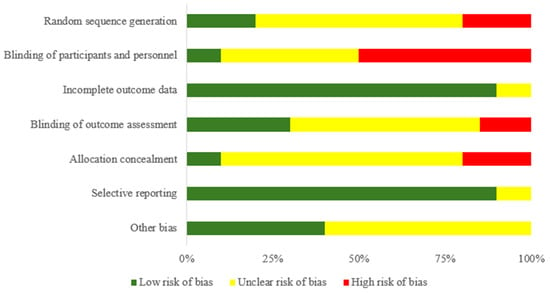
To estimate risk of bias, we applied the Cochrane Collaboration guidelines® [50], assessing internal validity, confounding variables, measurement objectivity, and clarity of reporting. Six bias domains were evaluated: selection bias, performance bias, detection bias, attrition bias, reporting bias, and other biases (e.g., conflicts of interest or design flaws). Most studies showed low risk in participant selection, sleep measurement, attrition, and reporting. However, moderate risks were identified in stress assessment (due to unvalidated or self-reported questionnaires) and confounding variable control. In addition to evidence grading, the methodological quality and risk of bias of the included studies were independently assessed using the Joanna Briggs Institute (JBI) critical appraisal tools. Design-specific JBI checklists were applied according to each study’s methodological approach (observational, longitudinal, or quasi-experimental). The JBI framework was selected because it is specifically suited for non-randomized studies and heterogeneous designs, which predominated in the present review. The critical appraisal evaluated key methodological domains, including participant selection, measurement validity and reliability, identification and control of confounding variables, completeness of outcome data, and clarity of statistical reporting (Figure 3).
Figure 3.
Risk of Bias graph: review of the author’s judgments about each risk of bias item for each included study.
3.2. Synthesis of Results
For interpretative clarity, findings are reported according to the type of stress indicator used in each study (psychological, physiological, autonomic, or computational), rather than assuming equivalence across stress constructs. Results were analyzed using a descriptive qualitative approach, grouping findings around the three dependent variables: stress, sleep, and basketball performance. An Excel matrix was used to organize the 14 selected studies by methodological design, participant competitive level, measurement tools, and key outcomes. Stress was operationalised using psychological, physiological, and autonomic indicators, and findings were interpreted according to each type of measurement rather than assuming equivalence.
Studies were categorized based on their design (observational, quasi-experimental, longitudinal, RCTs) and participant level (amateur, university, professional). Sleep assessment tools included actigraphy, wellness questionnaires, and scales like the Hooper Index; stress was measured using tools like POMS or salivary cortisol [51]; performance was evaluated through physical tests, RPE scores [52], and injury incidence. A statistical meta-analysis was not feasible due to methodological heterogeneity in study designs, variables, and instruments. Instead, a frequency analysis identified consistent patterns: 11 of the 14 studies (79%) reported that high stress levels were associated with reduced sleep quality and duration, which negatively impacted basketball performance (Table 4).
Findings from the 14 selected studies report that 11 (79%) reported associations between higher stress levels, reduced sleep quality or duration, and impaired basketball performance. These results were synthesized into three thematic areas, reflecting descriptive patterns rather than causal relationships. Differences between competitive levels should not be interpreted as reflecting higher basal stress in professional athletes, but rather variations in stress exposure, recovery windows, and contextual demands. Sleep and recovery are further influenced by health status, pain, stimulant use, and other behavioral factors, which were not consistently controlled for across studies. Here, “tight schedules” refers to reduced recovery time between training, travel, and competition, potentially increasing accumulated fatigue and sleep disruption.
3.2.1. Stress from Competition and Training Loads
Studies by Chou et al. [39], Conte et al. [42,43], and Doeven et al. [47] found that congested schedules, intense workloads, or consecutive games were associated with higher stress and impaired sleep, which in turn correlated with reductions in key performance variables. For example, Conte et al. [43] reported increased hormonal disruption and perceived fatigue, while Chou et al. [39] observed associations between higher stress and decreased shooting accuracy and overall performance readiness.
3.2.2. Insufficient Sleep and Recovery Outcomes
Watson et al. [45], Clemente et al. [23], García et al. [49], and Sansone et al. [46] demonstrated that shorter sleep duration was associated with greater fatigue, poorer recovery, and increased injury risk, affecting players’ consistent availability and adaptation across the season. For instance, Watson et al. [45] and Taber et al. [38] identified sleep and stress as key predictors of performance and injury risk, while Clemente et al. [23] linked poor sleep with reduced adaptation throughout the season.
3.2.3. Sleep Optimization as a Buffer Against Stress
Some interventional studies explored strategies such as planned naps, load regulation, or sleep hygiene. These interventions were associated with improvements in stress or performance outcomes in limited contexts; however, evidence remains preliminary and cannot be generalized. For example, Souabni et al. [48], Brini et al. [41], and Taber et al. [38] reported that naps were linked to improved agility, speed, and accuracy, but these findings are descriptive and context-specific.
In summary, the most consistently reported consequences of high stress and insufficient sleep were increased fatigue, decreased accuracy, and impaired physiological adaptation. These findings highlight the intertwined relationships between stress, sleep, and performance in basketball, while emphasizing the descriptive nature of current evidence and avoiding causal claims.
Table 4.
Summary table of the studies included in the systematic review.
4. Discussion
This systematic review aimed to examine how stress-related factors are associated with sleep quality and duration and how these relationships relate to performance outcomes in basketball players. Overall, the findings suggest consistent associations between higher levels of stress, impaired sleep, and changes in basketball performance across physical, technical, and recovery-related domains. Across the included studies, a majority reported that increased stress levels were accompanied by reductions in sleep quality or duration, which were in turn associated with decrements in selected performance indicators such as shooting accuracy, perceived readiness, recovery status, and availability for training and competition. These observations are in line with previous literature highlighting sleep as a critical component of athlete recovery and performance regulation in basketball [7,53].
One of the most relevant contributions of this systematic review is the descriptive synthesis of evidence indicating that stress, stemming from both competitive factors (congested schedules, travel, internal and external performance pressure) and personal factors (anxiety, mental fatigue), is frequently associated with sleep disturbances, including altered sleep timing and reduced sleep efficiency [44]. The interpretation of findings remains limited to associative patterns due to the moderate risk of bias in several studies, particularly in stress assessment relying heavily on subjective questionnaires (Hooper Index, POMS, TQR) [54]. Moreover, the term “stress” encompassed heterogeneous constructs across the included studies (e.g., psychological self-reports, physiological markers, autonomic indices, and computational proxies), which are related but not equivalent. As a consequence, the interpretation of findings is necessarily limited to associative patterns rather than reflecting a unified or causal stress construct, particularly in high-demand professional contexts.
Across the 14 included studies (2013–2024), research interest has increased notably in recent years, with 9 studies published from 2021 onwards, indicating a growing focus on stress, sleep, and performance in basketball.
Regarding sample size (N), studies were characterized by small cohorts (range: 7–28 participants), consistent with applied field research in basketball. Samples were predominantly male (13/14 studies) and largely drawn from professional, elite, or NCAA populations, with only one study including female athletes, one study focusing on youth players, and one study conducted in amateur players, limiting external validity across broader basketball populations.
In terms of study design, the literature was dominated by observational and quasi-experimental approaches, including observational (n = 4), comparative observational (n = 3), longitudinal (n = 2), and quasi-experimental designs (n = 2). Additional designs included prospective, pilot, preliminary clinical trial, and machine-learning-based predictive studies (n = 1 each). No large-scale randomized controlled trials were identified.
Concerning variables, all studies examined combinations of sleep-, stress-, recovery-, load-, or performance-related variables, often within congested competitive or training contexts. Sleep was most frequently assessed using subjective self-report tools (e.g., wellness scores, sleep diaries), with objective measures such as actigraphy used in a minority of studies. Stress was primarily evaluated through perceptual self-report instruments (e.g., Hooper Index, POMS), occasionally complemented by physiological or autonomic markers (e.g., cortisol, HRV, machine-learning-derived indicators). Performance-related outcomes were included in 12 of the 14 studies, encompassing physical performance tests, readiness, fatigue, injury risk, recovery status, or predictive performance metrics, while two studies did not assess direct performance outcomes.
Overall, this table highlights a body of evidence characterized by recent growth, small and highly selected samples, heterogeneous observational designs, and a predominant reliance on subjective measures of sleep and stress. Although performance outcomes were commonly included, methodological heterogeneity and limited population diversity reinforce the exploratory nature of the evidence and underscore the need for larger, more diverse, and methodologically robust studies in basketball.
Eight studies documented that shorter sleep duration was consistently linked to increased fatigue, impaired readiness, and reduced technical execution. In some cases, poorer sleep was also associated with higher injury incidence or reduced player availability, as reported by Watson et al. [20] and Clemente et al. [23]. These patterns suggest both acute and chronic sleep restriction can differentially affect physiological and cognitive recovery, indicating cumulative effects when combined with stress exposure. Importantly, injury outcomes were not a primary endpoint in most studies; therefore, conclusions regarding injury risk should be considered exploratory rather than definitive. Nonetheless, these associations are biologically plausible, as insufficient sleep has been linked to slower reaction time, elevated perceived fatigue, and reduced cognitive processing speed, all of which may compromise neuromuscular control and decision-making in basketball performance contexts [44].
A limited number of studies explored interventions aimed at mitigating stress or improving sleep, including napping strategies [49] and neuromodulation approaches [48] have also been identified. These studies reported preliminary positive effects in reducing stress and improving selected performance or recovery outcomes. However, given the small number of experimental studies, heterogeneous protocols, and limited sample sizes, these findings should be interpreted as indicative of potential avenues for future research rather than as evidence supporting generalized intervention frameworks or prescriptive recommendations.
Regarding methodological quality, most of the included studies presented acceptable levels of evidence (level 2b) and a low risk of bias in key domains such as participant selection and sleep measurement. Nonetheless, there was some variability in the instruments used to assess stress (e.g., subjective questionnaires vs. salivary cortisol), as well as in the definitions and methods for evaluating performance [39,42]. Due to the high methodological heterogeneity observed across the included studies—particularly regarding stress assessment tools, sleep measurement techniques, and performance testing protocols—it was not possible to ensure sufficient comparability among outcomes. This lack of consistency precluded the execution of a quantitative meta-analysis, as pooling data under such diverse methodological conditions would compromise both the validity and reliability of the synthesized results. Consequently, a narrative synthesis was deemed more appropriate for accurately reflecting the current state of the evidence. Future research should prioritize the use of standardized and validated protocols to improve cross-study comparability and facilitate robust meta-analytic approaches.
The findings of this systematic review suggest that both psychological stress and sleep quality could represent relevant factors associated with basketball players’ athletic performance. Consequently, these factors could warrant consideration within recovery and fatigue management strategies in basketball contexts. However, given the predominantly observational nature of the available evidence, such applied implications should be interpreted cautiously and not as prescriptive guidelines.
After analyzing the findings of this systematic review, several future research directions are identified. First, there is a clear need for experimental and longitudinal studies employing validated instruments and combinations of objective and subjective measures. Additionally, interventions aimed at improving rest and managing stress—such as active recovery strategies, mindfulness-based approaches, scheduled naps, or technological sleep-monitoring tools—represent promising areas for further investigation, rather than established best practices. Furthermore, future research should include more diverse samples in terms of gender, age, and competitive level to generate more representative and generalizable evidence.
While previous systematic reviews have explored the role in athletic performance and recovery [20,21], and others have considered stress or fatigue as performance-relevant variables, basketball-specific evidence integrating stress-related sleep disturbances with performance outcomes remains fragmented. Reviews such as those by Craven et al. [54] and Cunha et al. [55] focused primarily on sleep-deprivation or sleep-enhancement interventions across multiple sports. More specifically, Ochoa-Lácar et al. [7] provided a sport-specific synthesis of sleep and recovery in basketball players but did not systematically consider stress as a moderating or interacting factor influencing sleep–performance relationships. Similarly, Clemente et al. [23] explored the interrelations between sleep, training load, and injury in professional soccer players, but did not assess stress as a moderating or mediating variable in performance outcomes. Other works, such as Charest and Grandner [12], discussed the psychological dimensions of sleep and performance, yet without focusing on a specific sport or the integrated relationship between the three variables. Collectively, these works highlight the need for greater conceptual clarity when examining how stress-related sleep disturbances relate to performance within basketball-specific contexts.
Several limitations of the current literature should be acknowledged. First, there is a scarcity of high-quality randomized controlled trials examining stress, sleep, and performance concurrently in basketball, which limits causal inference. Second, the heavy reliance on subjective measures for stress and recovery introduces potential reporting bias. Third, female athletes and youth or amateur populations remain underrepresented, restricting the generalisability of findings [56]. Finally, it should be acknowledged that the sample sizes of the included studies are generally small, which is characteristic of applied field-based research in high-performance sport. Such sample sizes reflect the practical and logistical constraints inherent to elite and competitive sporting environments and should be interpreted within this context. Addressing these limitations should be a priority for future research.
Future studies would benefit from longitudinal and experimental designs employing validated and clearly differentiated stress constructs, alongside objective sleep and performance measures. Greater inclusion of female players, youth athletes, and diverse competitive levels would further strengthen the evidence base. Importantly, future research should aim to clarify which specific performance domains are most sensitive to stress-related sleep disturbances under different competitive conditions.
In summary, this systematic review provides a cautious, basketball-specific synthesis of existing evidence on the associations between stress, sleep, and performance. Rather than proposing new theoretical models or prescriptive frameworks, it clarifies where consistent patterns emerge and where substantial uncertainty remains. By delineating methodological limitations and contextual factors inherent to basketball, this review aims to support future research development and to assist practitioners in interpreting sleep- and stress-related evidence within applied performance settings.
5. Conclusions
The results of this systematic review suggest that stress-related factors are in line with impaired sleep quality and duration, and that these sleep disturbances are, in turn, linked to changes in selected performance-related outcomes in basketball players. Across the reviewed literature, sleep appears to play a relevant role in athletic performance and performance regulation, with potential implications for physical readiness, cognitive functioning, and players’ availability. However, the strength of these conclusions is constrained by the overall quality of the evidence, which is predominantly observational and characterized by moderate risk of bias, particularly in the assessment of stress and the control of confounding variables.
The interpretation of findings is further limited by restricted external validity, as most included studies were conducted in male, high-level or professional basketball players, with limited representation of female athletes, youth populations, or lower competitive levels. Consequently, the observed should be interpreted cautiously and should not be assumed to generalize across all basketball contexts or athlete populations.
The conclusions can be directly linked to the three thematic patterns identified in the Results: competitive and personal stress exposure, insufficient sleep and recovery outcomes, and sleep optimization as a potential buffer against stress. These patterns suggest the relevance of considering psychological well-being, recovery strategies, and sleep management in applied basketball contexts. Rather than proposing prescriptive intervention models, the review highlights the value of integrated monitoring approaches that combine stress, sleep, and performance assessment to support player readiness and performance outcomes.
6. Practical Applications
Monitoring sleep and stress-related indicators may be relevant within performance monitoring and recovery management in basketball, particularly in high-demand competitive contexts. These considerations reflect applied insights derived from patterns observed in the reviewed literature rather than prescriptive intervention models.
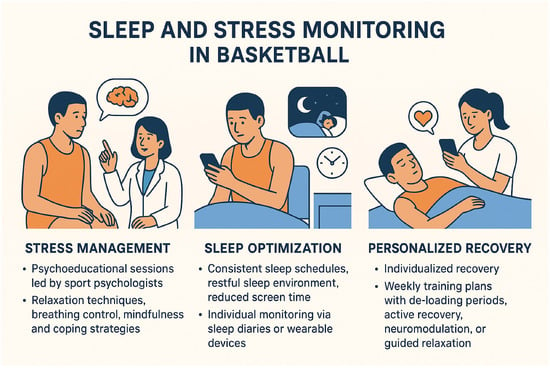
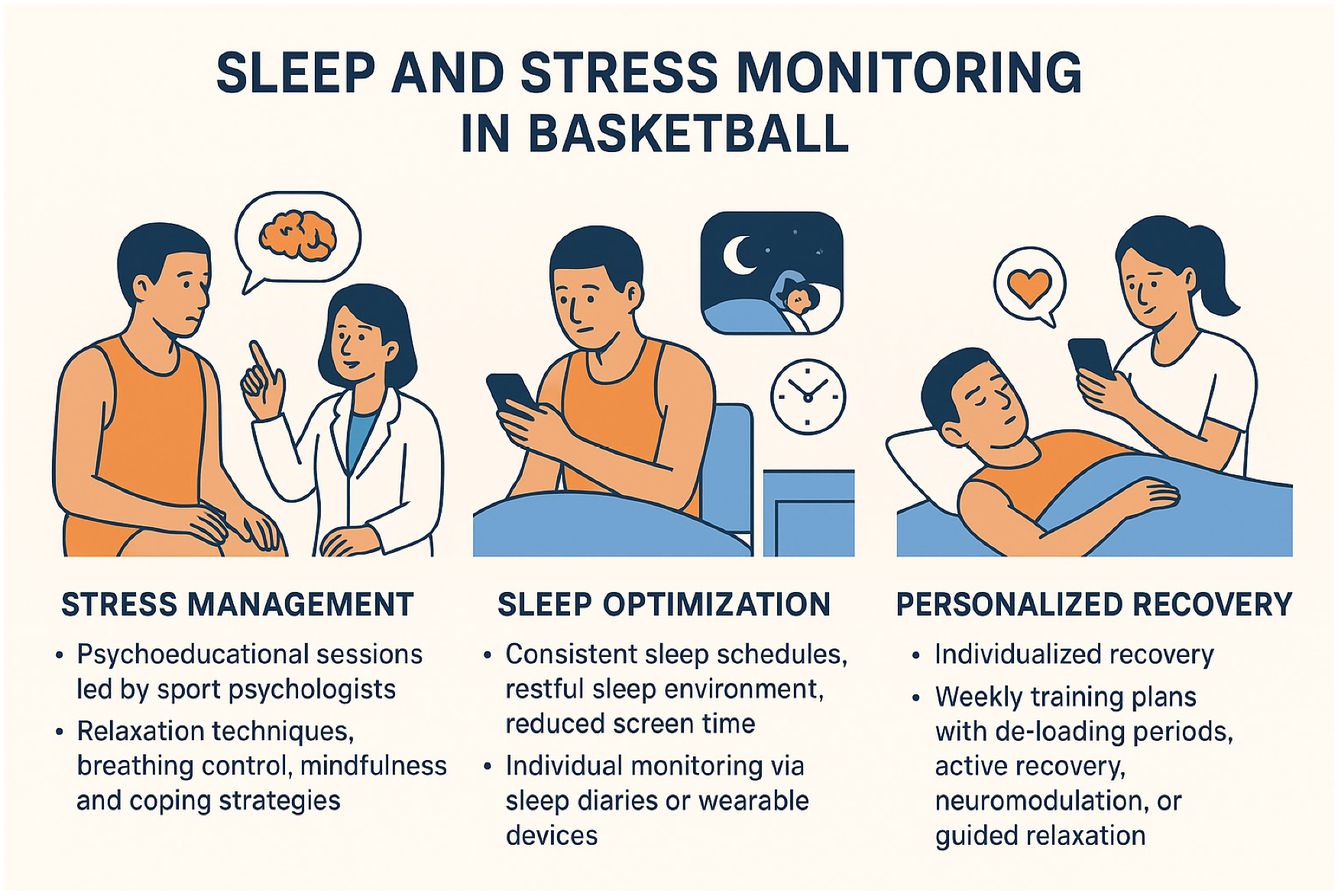
Some studies describe integrated approaches combining stress awareness, sleep-related behaviors, and recovery monitoring, which can be conceptually grouped into complementary domains [57]. Psychoeducational strategies led by sport psychologists—such as relaxation, breathing control, mindfulness, and coping strategies—have been proposed as potential tools to support psychological well-being, although their basketball-specific effectiveness remains insufficiently established [58]. Perceived stress is commonly monitored using self-report tools such as the Hooper Index or the Profile of Mood States (POMS), providing subjective information when interpreted alongside other monitoring data [39,40].
Sleep hygiene practices (e.g., consistent schedules, optimized sleep environments, reduced screen exposure) supported by sleep diaries or wearable monitoring have also been highlighted [20,28], while short naps (20–40 min) during high-demand periods may help mitigate stress and support performance [10,43]. Recovery strategies such as workload adjustment, active recovery, neuromodulation, and guided relaxation are frequently embedded within broader recovery management frameworks [59,60], although current evidence does not allow firm conclusions regarding their effectiveness in targeting stress-related sleep disturbances in basketball. Overall, these considerations should be viewed as hypothesis-generating, reinforcing the need for further high-quality experimental research (Figure 4).
Figure 4.
Representation of practical applications. Image generated using ChatGPT (OpenAI), GPT-5.2.
Supplementary Materials
The following supporting information can be downloaded at: https://www.mdpi.com/article/10.3390/app16041787/s1, File S1: PRISMA 2020 Checklist [33].
Author Contributions
J.O.-L. and E.F.-G. conceived the idea and designed the study; J.O.-L. and E.F.-G. conducted the literature search and data extraction; J.O.-L., J.C.-G. and E.F.-G. performed the data analysis and interpretation; J.O.-L., J.C.-G., A.V. and E.F.-G. drafted the first version of the manuscript; J.O.-L., J.C.-G., A.V. and E.F.-G. critically revised the manuscript. All authors have read and agreed to the published version of the manuscript.
Funding
This research received no external funding.
Institutional Review Board Statement
Not applicable.
Informed Consent Statement
Not applicable.
Data Availability Statement
No new data were created or analyzed in this study.
Conflicts of Interest
The authors declare no conflicts of interest.
References
- Stojanović, E.; Stojiljković, N.; Scanlan, A.T.; Dalbo, V.J.; Berkelmans, D.M.; Milanović, Z. The Activity Demands and Physiological Responses Encountered During Basketball Match-Play: A Systematic Review. Sports Med. 2018, 48, 111–135. [Google Scholar] [CrossRef] [Scilit]
- Cao, S.; Li, Z.; Wang, Z.; Geok, S.K.; Liu, J. The Effects of High-Intensity Interval Training on Basketball Players: A Systematic Review and Meta-Analysis. J. Sports Sci. Med. 2025, 24, 31–51. [Google Scholar] [CrossRef] [Scilit] [PubMed]
- Dupuy, O.; Douzi, W.; Theurot, D.; Bosquet, L.; Dugué, B. An Evidence-Based Approach for Choosing Post-Exercise Recovery Techniques to Reduce Markers of Muscle Damage, Soreness, Fatigue, and Inflammation: A Systematic Review with Meta-Analysis. Front. Physiol. 2018, 9, 403. [Google Scholar] [CrossRef] [Scilit] [PubMed]
- Altarriba-Bartes, A.; Peña, J.; Vicens-Bordas, J.; Casals, M.; Peirau, X.; Calleja-González, J. The Use of Recovery Strategies by Spanish First Division Soccer Teams: A Cross-Sectional Survey. Physician Sportsmed. 2021, 49, 297–307. [Google Scholar] [CrossRef] [Scilit] [PubMed]
- Calleja-González, J.; Terrados, N.; Mielgo-Ayuso, J.; Delextrat, A.; Jukic, I.; Vaquera, A.; Torres, L.; Schelling, X.; Stojanovic, M.; Ostojic, S.M. Evidence-Based Post-Exercise Recovery Strategies in Basketball. Physician Sportsmed. 2016, 44, 74–78. [Google Scholar] [CrossRef] [Scilit]
- Mihajlovic, M.; Cabarkapa, D.; Cabarkapa, D.V.; Philipp, N.M.; Fry, A.C. Recovery Methods in Basketball: A Systematic Review. Sports 2023, 11, 230. [Google Scholar] [CrossRef] [Scilit]
- Ochoa-Lácar, J.; Singh, M.; Bird, S.P.; Charest, J.; Huyghe, T.; Calleja-González, J. How Sleep Affects Recovery and Performance in Basketball: A Systematic Review. Brain Sci. 2022, 12, 1570. [Google Scholar] [CrossRef] [Scilit]
- Mah, C.D.; Mah, K.E.; Kezirian, E.J.; Dement, W.C. The Effects of Sleep Extension on the Athletic Performance of Collegiate Basketball Players. Sleep 2011, 34, 942–950. [Google Scholar] [CrossRef] [Scilit]
- Halson, S.L. Sleep in Elite Athletes and Nutritional Interventions to Enhance Sleep. Sports Med. 2014, 44, 13–23. [Google Scholar] [CrossRef] [Scilit]
- Fullagar, H.H.K.; Skorski, S.; Duffield, R.; Hammes, D.; Coutts, A.J.; Meyer, T. Sleep and Athletic Performance: The Effects of Sleep Loss on Exercise Performance, and Physiological and Cognitive Responses to Exercise. Sports Med. 2015, 45, 161–186. [Google Scholar] [CrossRef] [Scilit]
- Calleja-Gonzalez, J.; Marques-Jimenez, D.; Jones, M.; Huyghe, T.; Navarro, F.; Delextrat, A.; Jukic, I.; Ostojic, S.M.; Sampaio, J.E.; Schelling, X.; et al. What Are We Doing Wrong When Athletes Report Higher Levels of Fatigue from Traveling Than from Training or Competition? Front. Psychol. 2020, 11, 194. [Google Scholar] [CrossRef] [Scilit]
- Charest, J.; Grandner, M.A. Sleep and Athletic Performance: Impacts on Physical Performance, Mental Performance, Injury Risk and Recovery, and Mental Health. Sleep Med. Clin. 2020, 15, 41–57. [Google Scholar] [CrossRef] [Scilit] [PubMed]
- Milewski, M.D.; Skaggs, D.L.; Bishop, G.A.; Pace, J.L.; Ibrahim, D.A.; Wren, T.A.L.; Barzdukas, A. Chronic Lack of Sleep Is Associated with Increased Sports Injuries in Adolescent Athletes. J. Pediatr. Orthop. 2014, 34, 129–133. [Google Scholar] [CrossRef] [Scilit] [PubMed]
- Mata-Ordoñez, F.; Carrera Bastos, P.; Domínguez, R.; Jesús Sánchez-Oliver, A. Importancia Del Sueño En El Rendimiento y La Salud Del Deportista. e-Motion Rev. Educ. Mot. Investig. 2018, 70–82. [Google Scholar] [CrossRef] [Scilit]
- Huyghe, T.; Scanlan, A.T.; Dalbo, V.J.; Calleja-González, J. The Negative Influence of Air Travel on Health and Performance in the National Basketball Association: A Narrative Review. Sports 2018, 6, 89. [Google Scholar] [CrossRef] [Scilit]
- Singh, M.; Bird, S.; Charest, J.; Huyghe, T.; Calleja-Gonzalez, J. Urgent Wake up Call for the National Basketball Association. J. Clin. Sleep Med. 2021, 17, 243–248. [Google Scholar] [CrossRef] [Scilit]
- Erlacher, D.; Ehrlenspiel, F.; Adegbesan, O.A.; El-Din, H.G. Sleep Habits in German Athletes before Important Competitions or Games. J. Sports Sci. 2011, 29, 859–866. [Google Scholar] [CrossRef] [Scilit]
- Jones, C.M.; Tenenbaum, G. Adjustment Disorder: A New Way of Conceptualizing the Overtraining Syndrome. Int. Rev. Sport Exerc. Psychol. 2009, 2, 181–197. [Google Scholar] [CrossRef] [Scilit]
- Lewis, M. It’s a Hard-Knock Life: Game Load, Fatigue, and Injury Risk in the National Basketball Association. J. Athl. Train. 2018, 53, 503–509. [Google Scholar] [CrossRef] [Scilit]
- Watson, A.M. Sleep and Athletic Performance. Curr. Sports Med. Rep. 2017, 16, 413–418. [Google Scholar] [CrossRef] [Scilit]
- Kaczmarek, F.; Bartkowiak-Wieczorek, J.; Matecka, M.; Jenczylik, K.; Brzezińska, K.; Gajniak, P.; Marchwiak, S.; Kaczmarek, K.; Nowak, M.; Kmiecik, M.; et al. Sleep and Athletic Performance: A Multidimensional Review of Physiological and Molecular Mechanisms. J. Clin. Med. 2025, 14, 7606. [Google Scholar] [CrossRef] [Scilit]
- Gupta, L.; Morgan, K.; Gilchrist, S. Does Elite Sport Degrade Sleep Quality? A Systematic Review. Sports Med. 2017, 47, 1317–1333. [Google Scholar] [CrossRef] [Scilit]
- Clemente, F.M.; Mendes, B.; Bredt, S.D.G.T.; Praça, G.M.; Silvério, A.; Carriço, S.; Duarte, E. Perceived Training Load, Muscle Soreness, Stress, Fatigue, and Sleep Quality in Professional Basketball: A Full Season Study. J. Hum. Kinet. 2019, 67, 199–207. [Google Scholar] [CrossRef] [Scilit] [PubMed]
- Carskadon, M.A. Sleep in Adolescents: The Perfect Storm. Pediatr. Clin. 2011, 58, 637–647. [Google Scholar] [CrossRef] [Scilit] [PubMed]
- Van Cutsem, J.; Marcora, S.; De Pauw, K.; Bailey, S.; Meeusen, R.; Roelands, B. The Effects of Mental Fatigue on Physical Performance: A Systematic Review. Sports Med. 2017, 47, 1569–1588. [Google Scholar] [CrossRef] [Scilit] [PubMed]
- Smith, M.R.; Marcora, S.M.; Coutts, A.J. Mental Fatigue Impairs Intermittent Running Performance. Med. Sci. Sports Exerc. 2015, 47, 1682–1690. [Google Scholar] [CrossRef] [Scilit]
- Cao, S.; Geok, S.K.; Roslan, S.; Sun, H.; Lam, S.K.; Qian, S. Mental Fatigue and Basketball Performance: A Systematic Review. Front. Psychol. 2022, 12, 819081. [Google Scholar] [CrossRef] [Scilit]
- Sargent, C.; Lastella, M.; Halson, S.L.; Roach, G.D. The Impact of Training Schedules on the Sleep and Fatigue of Elite Athletes. Chronobiol. Int. 2014, 31, 1160–1168. [Google Scholar] [CrossRef] [Scilit]
- Kellmann, M. Preventing Overtraining in Athletes in High-Intensity Sports and Stress/Recovery Monitoring. Scand. J. Med. Sci. Sports 2010, 20, 95–102. [Google Scholar] [CrossRef] [Scilit]
- Vgontzas, A.N.; Chrousos, G.P. Sleep, the Hypothalamic-Pituitary-Adrenal Axis, and Cytokines: Multiple Interactions and Disturbances in Sleep Disorders. Endocrinol. Metab. Clin. 2002, 31, 15–36. [Google Scholar] [CrossRef] [Scilit]
- Meerlo, P.; Sgoifo, A.; Suchecki, D. Restricted and Disrupted Sleep: Effects on Autonomic Function, Neuroendocrine Stress Systems and Stress Responsivity. Sleep Med. Rev. 2008, 12, 197–210. [Google Scholar] [CrossRef] [Scilit] [PubMed]
- Gabbett, T.J. The Training-Injury Prevention Paradox: Should Athletes Be Training Smarter and Harder? Br. J. Sports Med. 2016, 50, 273–280. [Google Scholar] [CrossRef] [Scilit] [PubMed]
- Page, M.J.; McKenzie, J.E.; Bossuyt, P.M.; Boutron, I.; Hoffmann, T.C.; Mulrow, C.D.; Shamseer, L.; Tetzlaff, J.M.; Akl, E.A.; Brennan, S.E.; et al. The PRISMA 2020 Statement: An Updated Guideline for Reporting Systematic Reviews. BMJ 2021, 372, n71. [Google Scholar] [CrossRef] [Scilit] [PubMed]
- Pernigoni, M.; Ferioli, D.; Calleja-González, J.; Sansone, P.; Tessitore, A.; Scanlan, A.T.; Conte, D. Match-Related Fatigue in Basketball: A Systematic Review. J. Sports Sci. 2024, 42, 1727–1758. [Google Scholar] [CrossRef] [Scilit]
- O’Connor, D.; Green, S.; Higgins, J.P. Defining the Review Question and Developing Criteria for Including Studies. In Cochrane Handbook for Systematic Reviews of Interventions: Cochrane Book Series; Wiley: Hoboken, NJ, USA, 2008; pp. 81–94. [Google Scholar]
- Horsley, T.; Dingwall, O.; Sampson, M. Checking Reference Lists to Find Additional Studies for Systematic Reviews. Cochrane Database Syst. Rev. 2011, 2011, MR000026. [Google Scholar] [CrossRef] [Scilit]
- Drevon, D.; Fursa, S.R.; Malcolm, A.L. Intercoder Reliability and Validity of WebPlotDigitizer in Extracting Graphed Data. Behav. Modif. 2017, 41, 323–339. [Google Scholar] [CrossRef] [Scilit]
- Taber, C.B.; Sharma, S.; Raval, M.S.; Senbel, S.; Keefe, A.; Shah, J.; Patterson, E.; Nolan, J.; Sertac Artan, N.; Kaya, T. A Holistic Approach to Performance Prediction in Collegiate Athletics: Player, Team, and Conference Perspectives. Sci. Rep. 2024, 14, 1162. [Google Scholar] [CrossRef] [Scilit]
- Chou, C.C.; Wang, F.T.; Wu, H.H.; Tsai, S.C.; Chen, C.Y.; Bernard, J.R.; Kuo, Y.C.; Liao, Y.H. “The Competitive Season and Off-Season”: Preliminary Research Concerning the Sport-Specific Performance, Stress, and Sleep in Elite Male Adolescent Basketball Athletes. Int. J. Environ. Res. Public Health 2021, 18, 13259. [Google Scholar] [CrossRef] [Scilit]
- di Fronso, S.; Nakamura, F.Y.; Bortoli, L.; Robazza, C.; Bertollo, M. Stress and Recovery Balance in Amateur Basketball Players: Differences by Gender and Preparation Phase. Int. J. Sports Physiol. Perform. 2013, 8, 618–622. [Google Scholar] [CrossRef] [Scilit]
- Brini, S.; Abderrahman, A.B.; Clark, C.C.; Zouita, S.; Hackney, A.C.; Govindasamy, K.; Granacher, U.; Zouhal, H. Sex-Specific Effects of Small-Sided Games in Basketball on Psychometric and Physiological Markers during Ramadan Intermittent Fasting: A Pilot Study. BMC Sports Sci. Med. Rehabil. 2021, 13, 56. [Google Scholar] [CrossRef] [Scilit]
- Brini, S.; Ardigò, L.P.; Clemente, F.M.; Raya-González, J.; Kurtz, J.A.; Casazza, G.A.; Castagna, C.; Bouassida, A.; Nobari, H. Increased Game Frequency Period Crossing Ramadan Intermittent Fasting Decreases Fat Mass, Sleep Duration, and Recovery in Male Professional Basketball Players. PeerJ 2023, 11, e16507. [Google Scholar] [CrossRef] [Scilit] [PubMed]
- Conte, D.; Kamarauskas, P. Differences in Weekly Training Load, Well-Being, and Hormonal Responses between European- and National-Level Professional Male Basketball Players during the Pre-Season Phase. Int. J. Environ. Res. Public Health 2022, 19, 15310. [Google Scholar] [CrossRef] [Scilit] [PubMed]
- Conte, D.; Kamarauskas, P.; Ferioli, D.; Scanlan, A.T.; Kamandulis, S.; Paulauskas, H.; Lukonaitienė, I. Workload and Well-Being across Games Played on Consecutive Days during in-Season Phase in Basketball Players. J. Sports Med. Phys. Fit. 2021, 61, 534–541. [Google Scholar] [CrossRef] [Scilit] [PubMed]
- Watson, A.; Johnson, M.; Sanfilippo, J. Decreased Sleep Is an Independent Predictor of In-Season Injury in Male Collegiate Basketball Players. Orthop. J. Sports Med. 2020, 8, 2325967120964481. [Google Scholar] [CrossRef] [Scilit]
- Sansone, P.; Conte, D.; Li, F.; Tessitore, A. Investigating the Effects of Athlete Reported Pre-Training Well-Being and Recovery on Subsequent Training Loads in Basketball Players. J. Sports Med. Phys. Fit. 2023, 63, 957–963. [Google Scholar] [CrossRef] [Scilit]
- Doeven, S.H.; Brink, M.S.; Huijgen, B.C.H.; de Jong, J.; Lemmink, K.A.P.M. Managing Load to Optimize Well-Being and Recovery during Short-Term Match Congestion in Elite Basketball. Int. J. Sports Physiol. Perform. 2021, 16, 45–50. [Google Scholar] [CrossRef] [Scilit]
- Souabni, M.; Souabni, M.J.; Hidouri, S.; Ammar, A.; Younes, M.; Hammouda, O.; Driss, T. Napping and Heart Rate Variability in Elite Athletes. Biol. Sport 2024, 41, 213–221. [Google Scholar] [CrossRef] [Scilit]
- García, F.; Fernández, D.; Vázquez-Guerrero, J.; Font, R.; Moreno-Planas, B.; Álamo-Arce, D.; Medina-Ramírez, R.; Mallol-Soler, M. Recovery of the Physiological Status in Professional Basketball Players Using NESA Neuromodulation Treatment during Different Types of Microcycles in Season: A Preliminary Randomized Clinical Trial. Front. Physiol. 2022, 13, 1032020. [Google Scholar] [CrossRef] [Scilit]
- Souabni, M.; Hammouda, O.; Souabni, M.J.; Romdhani, M.; Driss, T. 40-Min Nap Opportunity Attenuates Heart Rate and Perceived Exertion and Improves Physical Specific Abilities in Elite Basketball Players. Res. Sports Med. 2023, 31, 859–872. [Google Scholar] [CrossRef] [Scilit]
- Cumpston, M.; Li, T.; Page, M.J.; Chandler, J.; Welch, V.A.; Higgins, J.P.; Thomas, J. Updated Guidance for Trusted Systematic Reviews: A New Edition of the Cochrane Handbook for Systematic Reviews of Interventions. Cochrane Database Syst. Rev. 2019, 10, ED000142. [Google Scholar] [CrossRef] [Scilit]
- Hoover, S.J.; Winner, R.K.; Mccutchan, H.; Beaudoin, C.C.; Judge, L.W.; Jones, L.M.; Leitzelar, B.; Hoover, D.L. Mood and Performance Anxiety in High School Basketball Players: A Pilot Study. Int. J. Exerc. Sci. 2017, 10, 604–618. [Google Scholar] [CrossRef] [Scilit]
- Lupo, C.; Tessitore, A.; Gasperi, L.; Gomez, M.A.R. Session-RPE for Quantifying the Load of Different Youth Basketball Training Sessions. Biol. Sport 2017, 34, 11–17. [Google Scholar] [CrossRef] [Scilit]
- Craven, J.; McCartney, D.; Desbrow, B.; Sabapathy, S.; Bellinger, P.; Roberts, L.; Irwin, C. Effects of Acute Sleep Loss on Physical Performance: A Systematic and Meta-Analytical Review. Sports Med. 2022, 52, 2669–2690. [Google Scholar] [CrossRef] [Scilit] [PubMed]
- Cunha, L.A.; Costa, J.A.; Marques, E.A.; Brito, J.; Lastella, M.; Figueiredo, P. The Impact of Sleep Interventions on Athletic Performance: A Systematic Review. Sports Med. Open 2023, 9, 58. [Google Scholar] [CrossRef] [Scilit] [PubMed]
- Thomson, A.; Hayes, M.; Hanlon, C.; Toohey, K.; Taylor, T. Women’s Professional Sport Leagues: A Systematic Review and Future Directions for Research. Sport Manag. Rev. 2023, 26, 48–71. [Google Scholar] [CrossRef] [Scilit]
- Calleja-González, J.; Mielgo-Ayuso, J.; Sampaio, J.; Delextrat, A.; Ostojic, S.M.; Marques-Jiménez, D.; Arratibel, I.; Sánchez-Ureña, B.; Dupont, G.; Schelling, X.; et al. Brief Ideas about Evidence-Based Recovery in Team Sports. J. Exerc. Rehabil. 2018, 14, 545–550. [Google Scholar] [CrossRef] [Scilit]
- Bentley, T.G.K.; D’Andrea-Penna, G.; Rakic, M.; Arce, N.; LaFaille, M.; Berman, R.; Cooley, K.; Sprimont, P. Breathing Practices for Stress and Anxiety Reduction: Conceptual Framework of Implementation Guidelines Based on a Systematic Review of the Published Literature. Brain Sci. 2023, 13, 1612. [Google Scholar] [CrossRef] [Scilit]
- Kiviniemi, A.M.; Hautala, A.J.; Kinnunen, H.; Tulppo, M.P. Endurance Training Guided Individually by Daily Heart Rate Variability Measurements. Eur. J. Appl. Physiol. 2007, 101, 743–751. [Google Scholar] [CrossRef] [Scilit]
- Fateev, I. Developing Personalized Recovery Strategies for Athletes: Methods and Approaches. Am. J. Sports Sci. 2023, 11, 50. [Google Scholar] [CrossRef] [Scilit]

Disclaimer/Publisher’s Note: The statements, opinions and data contained in all publications are solely those of the individual author(s) and contributor(s) and not of MDPI and/or the editor(s). MDPI and/or the editor(s) disclaim responsibility for any injury to people or property resulting from any ideas, methods, instructions or products referred to in the content. |
© 2026 by the authors. Licensee MDPI, Basel, Switzerland. This article is an open access article distributed under the terms and conditions of the Creative Commons Attribution (CC BY) license.