


Abstract
Public speaking anxiety (PSA) is a prevalent anxiety-related condition that impairs academic and professional functioning. Virtual Reality Exposure Therapy (VRET) is effective for PSA, but existing systems that add physiological monitoring either rely on laboratory multi-sensor equipment or record data without any classification. This paper presents a VRET system for PSA that combines a three-level graded public speaking exposure protocol, continuous pulse rate (PR) and pulse rate variability (PRV) monitoring with the EmbracePlus wrist-worn biosensor, and post-session binary stress classification using Support Vector Machine (SVM) and Random Forest (RF) classifiers. Ten participants completed the VR session. Subjective Units of Distress Scale (SUDS) scores increased across levels, from a mean of 2.40 at Level 1 to 5.40 at Level 2 and 7.70 at Level 3, supporting the graded exposure design and the SUDS-based labelling. Under subject-independent leave-one-subject-out cross-validation, RF achieved a mean accuracy of 73.57% (95% CI: 60.2–86.2%) and an F1-score of 73.15%, with 80.24% precision and 67.33% recall. SVM achieved an accuracy of 67.86%, with lower values than RF on all metrics. Post-session responses indicated positive usability. These findings suggest that PR and PRV features from a single wrist-worn device can support binary stress classification in VRET without laboratory equipment.
1. Introduction
Public Speaking Anxiety (PSA) is among the most prevalent anxiety-related conditions, consistently estimated to affect a substantial proportion of the general population, and is characterized by intense fear of negative evaluation, physiological arousal, and cognitive interference that can severely impair academic and professional functioning [1,2]. Established treatments such as Cognitive Behavioral Therapy (CBT) and in-vivo exposure therapy are clinically effective but constrained by financial cost, limited therapist availability, and the social stigma that continues to deter help-seeking, leaving a large proportion of affected individuals without access to care [1,2].
Virtual Reality Exposure Therapy (VRET) has emerged as an accessible and evidence-based alternative, delivering graded exposure to public speaking stimuli in controllable simulated environments. A meta-analysis of eleven studies involving 508 participants confirmed that VRET produced a large significant reduction in PSA relative to control conditions (d = −1.39, p < 0.001), with an effect size comparable to in-vivo exposure therapy [2], and a separate meta-analysis confirmed outcomes comparable to CBT maintained at follow-up [3]. The growing availability of consumer-grade VR hardware has further enabled VRET systems to be deployed outside clinical settings [1].
Despite this evidence, prior studies that combine VRET with physiological monitoring either rely on laboratory-grade equipment such as EEG headsets and multi-sensor rigs [4,5], or record physiological data passively without applying any classification pipeline [6]. Studies applying machine learning to physiological signals during VR do so outside a VRET context or using equipment not suitable for self-administered deployment [7,8,9]. Consumer wrist-worn wearables measuring PR and PRV have been validated as reliable proxies for heart rate variability with correlation against ECG exceeding r = 0.99 [10], yet to the best of our knowledge no prior study has combined consumer-grade VRET for PSA, a single commercially available wrist-worn wearable, and a validated post-session machine learning stress classification pipeline using participant-reported stress labels, within a single integrated and empirically evaluated system.
This paper addresses this gap by presenting a VRET system for PSA combining an immersive public speaking environment with continuous wearable PR and PRV recording and a post-session machine learning stress classification pipeline, all on commercially available hardware. The contributions are: (1) a complete VRET system for PSA with three graded scenarios and continuous wearable PR and PRV monitoring; (2) a SUDS-grounded post-session machine learning pipeline employing SVM and RF classifiers, evaluated on real participant data using subject-independent validation; and (3) a pilot empirical evaluation combining objective physiological measurement, SUDS-based distress scoring, and pre- and post-session questionnaires. Real-time adaptive environment control is identified as the primary direction for future work.
The remainder of this paper is organized as follows. Section 2 provides background on PSA, VRET, wearable physiological sensing, and machine learning for stress classification. Section 3 reviews related work. Section 4 describes the system framework. Section 5 describes materials and methods. Section 6 presents the experimental results. Section 7 discusses the findings and limitations. Section 8 concludes with directions for future work.
2. Background
2.1. Public Speaking Anxiety (PSA)
Public Speaking Anxiety (PSA) is a performance-specific subtype of Social Anxiety Disorder (SAD), recognized under the DSM-5 performance-only specifier and characterized by intense fear restricted to speaking or performing before others rather than broader social interaction [11]. SAD is the most common anxiety disorder, with a lifetime prevalence of 12.1% in the United States [12], and PSA represents its most prevalent performance-specific form.
PSA manifests as a triad of physiological arousal (elevated heart rate, trembling, sweating), negative self-focused cognitions (fear of incompetence, anticipatory worry), and behavioral avoidance of speaking situations [13]. Onset is typically early, occurring by age 11 in approximately 50% of cases and by age 20 in approximately 80%, and the disorder is a risk factor for depression and substance abuse if untreated [11].
2.2. Virtual Reality Exposure Therapy (VRET)
Exposure therapy operates through inhibitory learning, in which repeated confrontation with feared stimuli in the absence of the anticipated aversive outcome forms new associations that suppress the original fear response [14]. VRET delivers this mechanism within computer-generated interactive environments accessed through a head-mounted display (HMD) that tracks head movement and renders stereoscopic visual stimulation, giving users a sense of presence within the virtual scene [15]. For PSA specifically, VRET presents graded virtual public speaking scenarios with precisely controlled parameters such as audience size, audience reactivity, and speaker salience [16]. The degree of control over these parameters is a key advantage of VRET over in vivo exposure, as stimulus intensity can be incrementally adjusted to match the participant’s current tolerance, supporting the graduated exposure principle without requiring access to real audiences or public settings [15].
2.3. Wearable Physiological Sensing and Pulse Rate Variability
Heart Rate Variability (HRV) reflects the dynamic interplay between the sympathetic and parasympathetic branches of the autonomic nervous system. The Task Force of the European Society of Cardiology established foundational HRV standards, defining RMSSD as a reliable time-domain index of short-term parasympathetic activity [17]. Under psychological stress, sympathetic activation suppresses parasympathetic tone, producing reduced HRV and elevated heart rate; this pattern is consistently observed during public speaking tasks [18]. Consumer wrist-worn wearables derive an analogous measure, Pulse Rate Variability (PRV), from photoplethysmography (PPG), an optical technique that detects beat-to-beat changes in blood volume beneath the skin surface. PRV from consumer-grade PPG devices has been validated as a reliable proxy for ECG-derived HRV, with correlation coefficients exceeding r = 0.99 in stress assessment contexts [10], confirming that a single wrist-worn wearable is technically sufficient for physiological stress monitoring outside a clinical laboratory.
2.4. Machine Learning for Physiological Stress Classification
Machine learning (ML) refers to the use of algorithms that learn patterns from labelled data and apply them to classify unseen instances [19]. In physiological stress detection, the task is typically framed as binary classification, distinguishing a stress state from a non-stress state based on features extracted from time-series biosensor data. Support Vector Machine (SVM) finds the optimal decision boundary that maximizes the margin between classes, making it well suited to high-dimensional feature spaces with limited samples [20]. Random Forest (RF) constructs an ensemble of decision trees and aggregates their outputs, which reduces overfitting and produces stable classifications even on small datasets [21]. Both classifiers have been widely applied to wearable physiological data for stress and anxiety detection and serve as the analytical foundation of the present study.
3. Related Work
This section reviews the six most directly related prior studies across three research streams: VRET for public speaking anxiety, machine learning stress classification during VR therapy, and ML stress classification from consumer wearable devices. Table 1 summarizes each study across the dimensions most relevant to the proposed system.
Table 1.
Summary of related work.
Premkumar et al. [16] randomized 73 high-social-anxiety adults to self-guided VRET with live HR and frontal alpha asymmetry biofeedback or VRET alone across three weekly sessions. PSA improved post-treatment in both groups; the biofeedback group showed a steadier FAA reduction in the first session and greater self-reported arousal reduction across the three sessions. The system required a Microsoft Band 2 wristband and a Muse EEG headset, making it a multi-device laboratory setup. No automated stress classification was applied to the physiological data.
Artemi et al. [6] randomized 39 university students with clinically significant PSA to a single-session personalized VR exposure protocol or a control condition. HR and HRV measured as RMSSD were recorded at baseline and during speech tasks using laboratory ECG equipment. The VRE group showed significant reductions in subjective distress (p < 0.001) and HR (p < 0.001), with HR returning to baseline, but no significant HRV change was observed. The null HRV result motivates a multi-feature ML approach rather than relying on a single HRV metric. Physiological data were recorded passively with no classification pipeline applied.
Rahman et al. [4] proposed an ML pipeline for arousal detection in biofeedback-driven self-guided VRET specifically for PSA. Eight classifiers including SVM, RF, MLP, KNN, and DT were evaluated on publicly available EEG and HRV benchmark datasets to predict arousal states, with RF achieving 87.5% accuracy on the EEG dataset. A biofeedback framework providing HR and brain laterality index feedback within the VR environment was also implemented using an Emotiv EPOC Flex EEG headset. This is the most directly analogous ML pipeline to the proposed system, sharing the same PSA focus and the same classifier family. The key limitation is that all classifiers were validated on benchmark datasets only, not on real participant physiological data recorded during actual therapeutic sessions.
Chun et al. [7] recorded HR and galvanic skin response in real time during VR therapy sessions across 32 patients with Social Anxiety Disorder over six sessions. Logistic regression and random forest classifiers predicted anxiety-symptom severity and VR sickness from the physiological data, with RF achieving an AUC of up to 0.94. The system required clinical-grade sensing with GSR alongside HR, predicted questionnaire-severity subdomains rather than a binary stress state, and was not specific to PSA or consumer-deployable.
Mevlevioğlu et al. [8] developed a real-time anxiety classification framework inside a VR environment, applying a convolutional neural network to physiological signals from 29 participants completing a VR adaptation of the emotional Stroop task. The system collected PPG, electrodermal activity, and frontal EEG simultaneously and classified three levels of anxiety, none, mild, and severe, achieving 75% accuracy under leave-one-out cross-validation. This study establishes that ML-based anxiety classification within a live VR session is technically feasible and provides a direct accuracy benchmark. However, the system required a three-signal laboratory rig including an EEG headset and used a Stroop cognitive task rather than a graded public speaking exposure protocol, making it unsuitable for self-administered consumer deployment and not specific to PSA.
Campanella et al. [22] applied random forest, SVM, and logistic regression classifiers to photoplethysmographic and electrodermal activity signals recorded from the Empatica E4 wrist-worn wearable, the direct predecessor of the EmbracePlus device used in the proposed study, across 29 subjects performing stress-inducing tasks. Twenty-seven features were extracted from the PPG and EDA signals and fed into the three classifiers for binary stress versus non-stress classification, with the random forest achieving the highest accuracy of 76.5% across all features. This study is the most hardware-comparable prior work to the proposed system, using the same Empatica device family, the same RF and SVM classifiers, and the same binary stress framing. The key differences are that EDA was included alongside PPG rather than using PR and PRV alone, labels were derived from task conditions rather than participant-reported SUDS scores, and the study was conducted entirely outside a VR or therapeutic context.
Across these six studies, each component of the proposed system is independently validated: VRET reduces PSA and provokes genuine physiological responses [6,16]; an ML pipeline using HRV features can detect arousal in a VRET context specifically for PSA [4]; ML classification of HR-based signals during live VR therapy achieves meaningful accuracy [7,8]; and commercially available Empatica wrist wearables support RF-based binary stress classification [22]. However, no prior study unites all three pillars. Studies combining VRET with physiological monitoring either require laboratory-grade multi-sensor equipment [7,8,16] or record physiology passively without any classification pipeline [6]. The only prior ML pipeline specifically proposed for PSA in VRET was validated on benchmark datasets, not on real participant data from actual therapeutic sessions [4]. The hardware-comparable wearable study has no VR or PSA context [22]. To the best of our knowledge, no prior study has combined consumer-grade VRET for PSA, a single commercially available wrist-worn wearable recording PR and PRV only, and a post-session ML stress classification pipeline grounded in participant-reported SUDS labels, within a single integrated and empirically evaluated system.
4. System Framework
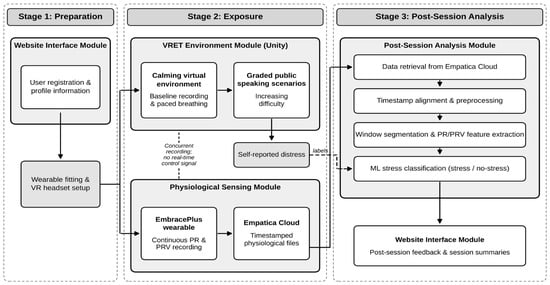
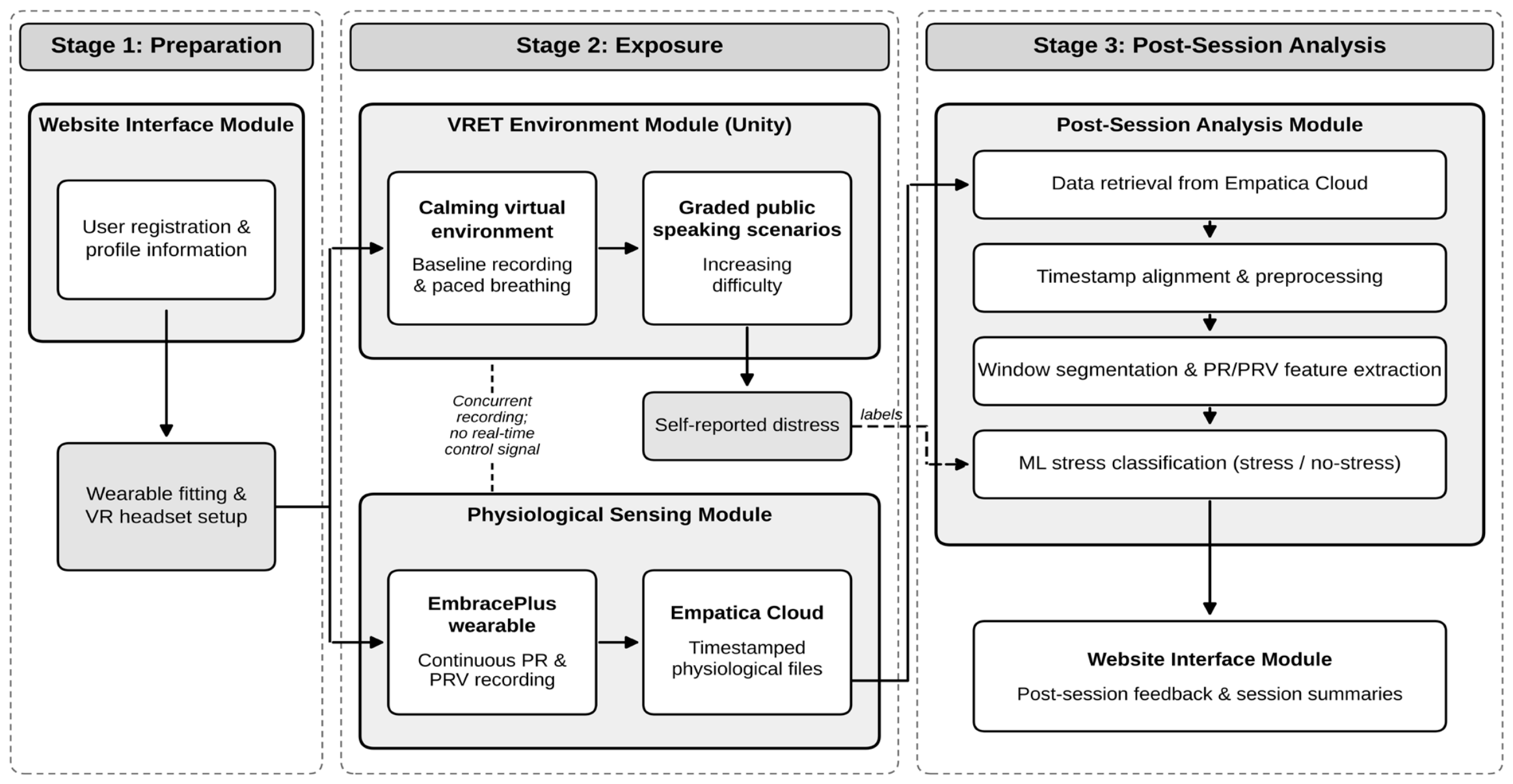
The proposed system is a VRET system for graded public speaking exposure, combined with an assessment of the user’s physiological stress response after the session. The framework has four connected components: an immersive VR environment, a wearable physiological sensor, an offline machine learning analysis pipeline, and a web-based support interface. The framework separates exposure delivery from physiological interpretation. Physiological signals are recorded continuously while the user is in VR, but they are processed and classified only after the session ends. The proposed system therefore supports retrospective stress assessment. It does not adapt the virtual environment in real time based on physiology. Figure 1 shows the system components and the flow of data between them. The architecture is modular. Each module has a clearly defined role:
Figure 1.
The system framework.
- •
- VRET environment module. This module is developed in Unity and deployed on a standalone VR headset. It presents the virtual scenes, controls how the session progresses, and handles user interaction. The scenes include a calming environment for baseline recording and preparation, followed by public speaking scenarios with increasing difficulty. Difficulty is raised by changing the setting, the audience, and the environmental stimuli.
- •
- Physiological sensing module. The user wears an EmbracePlus wrist monitor throughout the session. It records the cardiac signals the system analyzes, pulse rate (PR) and pulse rate variability (PRV). The device sends the recordings to the Empatica Cloud, where they are stored as timestamped files for later retrieval. This module runs alongside the VR application but does not send control signals to it.
- •
- Post-session analysis module. This module converts the exported physiological records into representations suitable for machine learning. It then applies trained classifiers to label segments of the session as stress or no-stress.
- •
- Website interface module. This module is the user-facing layer for registration, managing user information, and presenting session summaries. It provides information and does not monitor or control the exposure.
The workflow runs in three stages that link these modules. In the preparation stage, the user registers through the website, puts on the wearable, and is set up in the headset. In the exposure stage, the user moves through the virtual environments while the wearable records physiological activity in the background. At set points, the user also reports perceived distress, which provides a subjective measure alongside the physiological data. In the post-session stage, the recordings are retrieved from the Empatica Cloud and passed to the analysis module. The resulting stress classifications are compiled into feedback and summaries that are delivered through the website. Because the classifier outputs are used only in this final stage, no scene transitions or relaxation prompts are triggered by automated stress detection. This keeps the exposure procedure controlled and identical for every participant, while still allowing physiological responses to be examined across the whole session afterward.
This design has two benefits. First, it separates the VR application from the analysis pipeline, so either can be refined independently. For example, new exposure scenarios can be added or alternative classifiers can be tested without changing the rest of the system. Second, it reduces the computational load and connectivity requirements during the session, which makes the system practical for controlled experimental and clinical-support settings. The specific implementation of each component is described in Section 5, including the hardware specifications, experimental protocol, data preprocessing, feature extraction, and model training and evaluation.
Figure 1 presents an overview of the proposed system framework. PR and PRV are recorded with the EmbracePlus wearable during graded virtual public speaking exposure, retrieved through the Empatica Cloud, and processed offline to produce stress classifications and session summaries. The feedback pathway is a post-session review and does not adapt the virtual environment in real time.
5. Materials and Methods
5.1. Participants
Ten participants aged 18 to 24 years were recruited from a university population. This sample size reflects the pilot nature of the study, which aimed to evaluate the feasibility of the integrated system rather than to test a clinical hypothesis; therefore, no a priori power analysis was conducted. All participants reported clinically relevant discomfort when speaking in public, operationalized as a baseline Subjective Units of Distress Scale (SUDS) score of 4 or above. Participants with prior experience in VR-based therapeutic interventions were excluded. Written informed consent was obtained prior to enrolment, and participants were free to withdraw at any stage without consequence. The study was conducted in accordance with the Declaration of Helsinki [23].
5.2. Apparatus
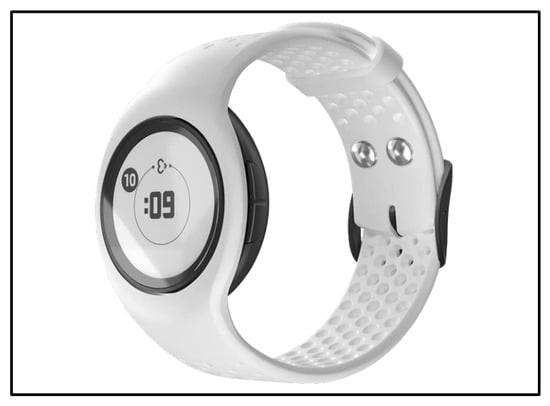
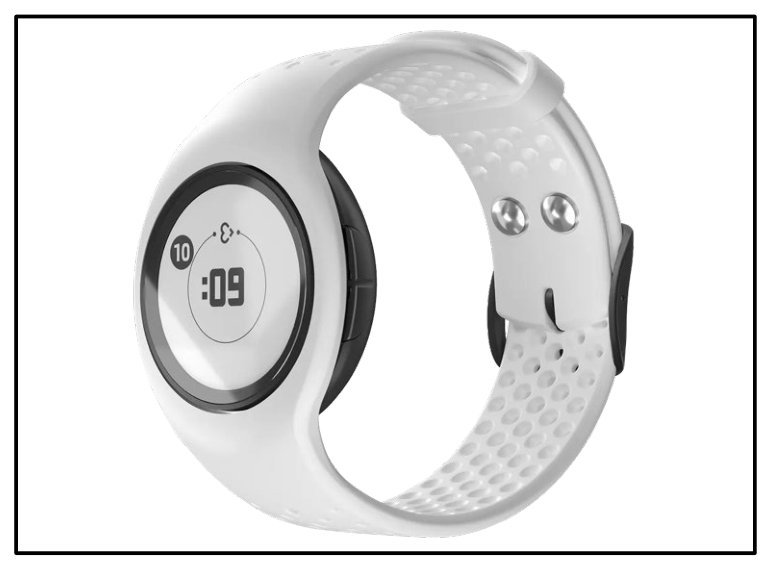
Physiological data were acquired using the EmbracePlus wrist-worn biosensor (Empatica Inc., Boston, MA, USA), shown in Figure 2, placed on the non-dominant wrist for the duration of each session. The device captures pulse rate (PR) and pulse rate variability (PRV) via a photoplethysmography (PPG) optical sensor, in addition to electrodermal activity, skin temperature, and movement via accelerometry [24]. PR and PRV were the signals of interest in the present study. Data were streamed continuously via Bluetooth Low Energy to the Empatica Cloud platform and exported post-session as timestamped CSV files via AWS S3.
Figure 2.
EmbracePlus biosensor.
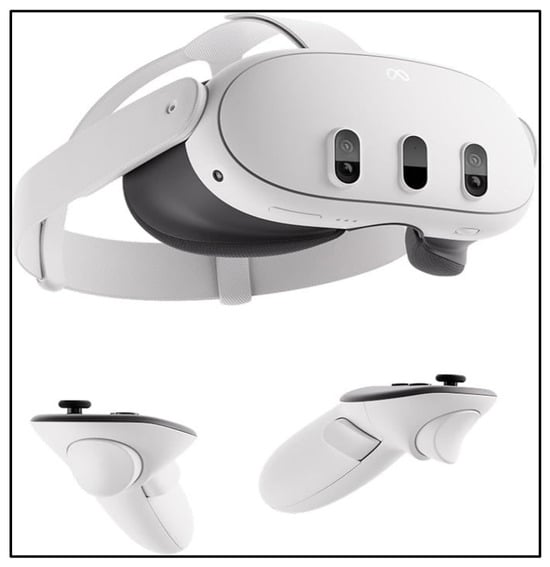
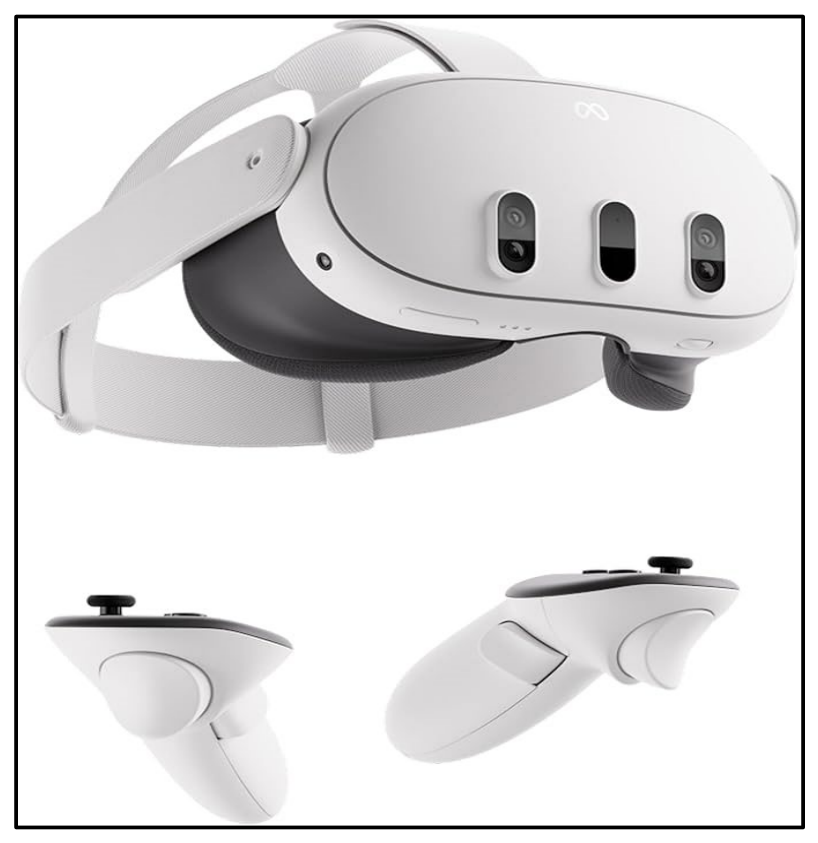
VR sessions were delivered through a Meta Quest 3 standalone headset (Meta Platforms Inc., Menlo Park, California, United States), shown in Figure 3, which provides stereoscopic 3D rendering and six-degree-of-freedom inside-out head tracking without external sensors or tethering. The VR application was developed in Unity XR, deployed directly to the headset, and managed all scene transitions, session timing, and controller-based interaction.
Figure 3.
Meta Quest 3 headset.
5.3. VR Session Design
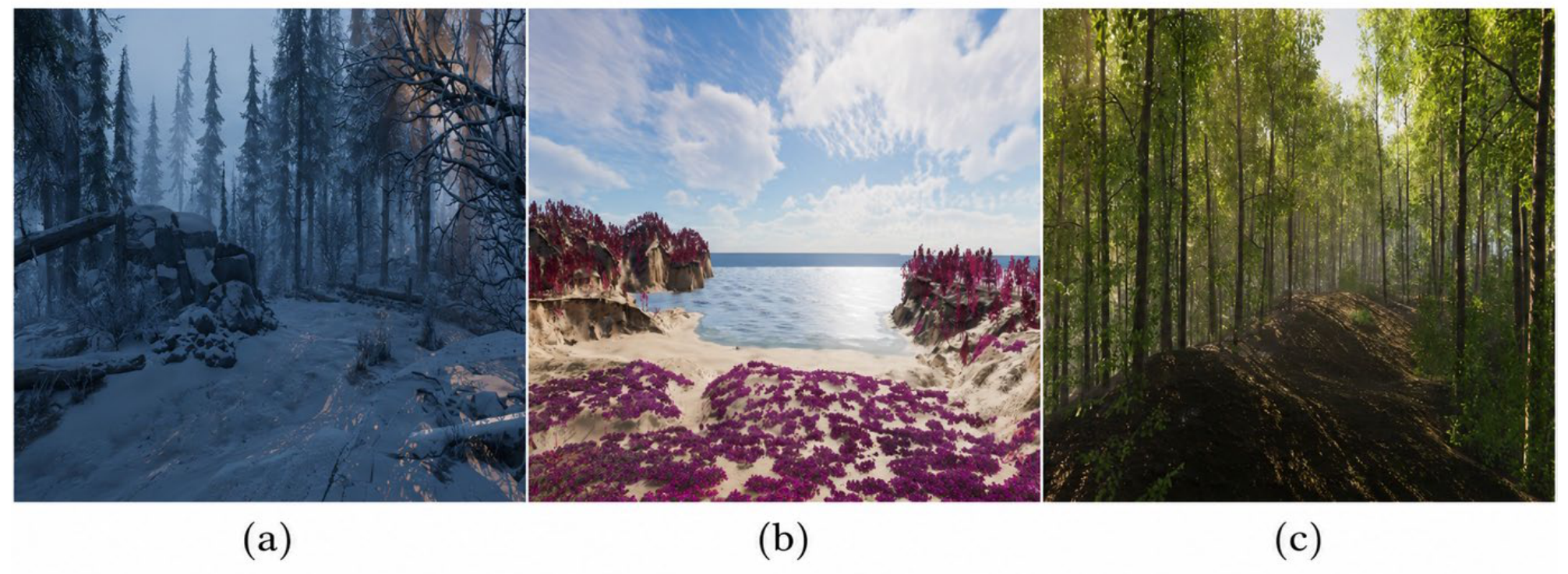
The VR session was structured as a three-phase protocol. In the first phase, participants selected one of three calming virtual environments, namely a winter landscape, a beach, or a forest, as shown in Figure 4, and remained seated for 60 s while the EmbracePlus recorded a physiological baseline. This resting period allowed participants to settle before exposure; the baseline recording was not used as a reference or for normalization in the classification pipeline. In the second phase, a paced-breathing exercise was delivered within the VR environment to support pre-exposure arousal regulation before the speaking task began.
Figure 4.
Calming virtual environments used during the baseline phase: (a) winter landscape, (b) beach, (c) forest.
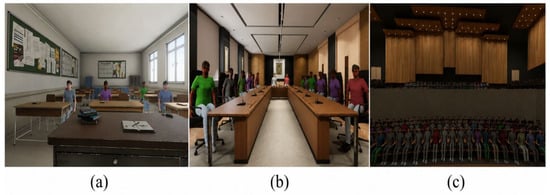
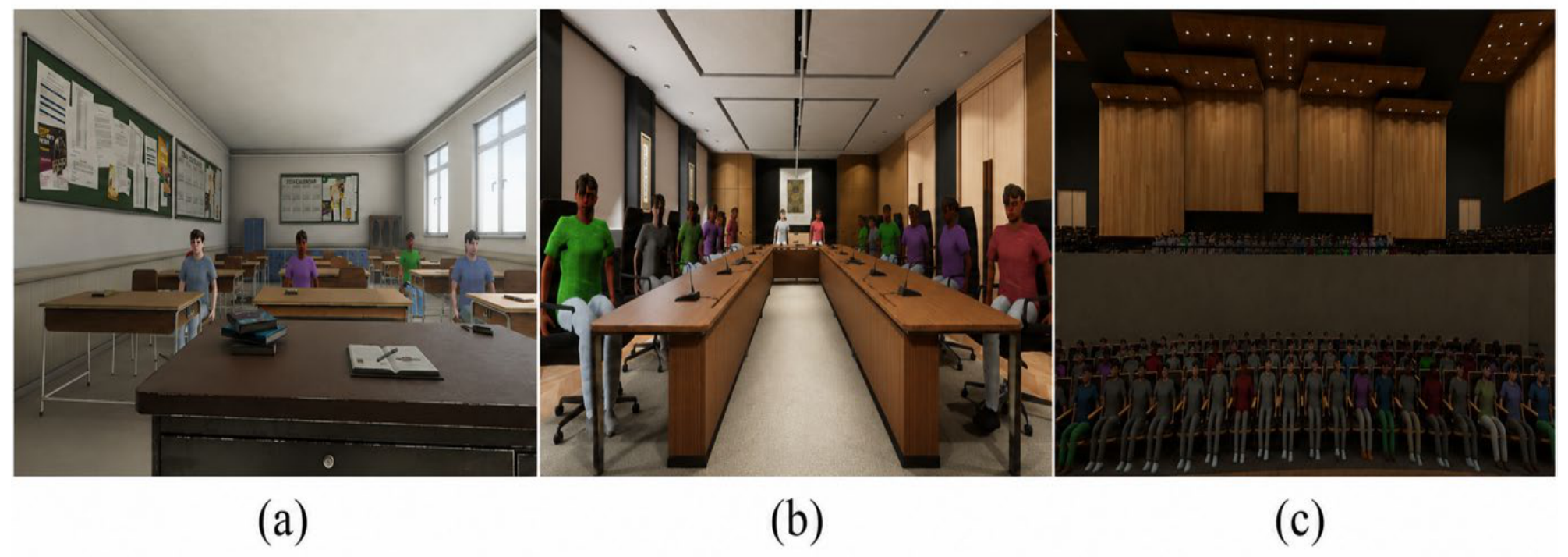
The third phase consisted of graded public speaking exposure across three sequential levels of increasing environmental intensity, as illustrated in Figure 5. Level 1 (Figure 5a) presented a virtual classroom with a small, passive audience, representing the lowest exposure demand. Level 2 (Figure 5b) introduced a meeting room setting with a larger and more attentive audience. Level 3 (Figure 5c) placed participants in a virtual auditorium with the largest audience, directed gaze behavior, and ambient sound, representing the highest exposure demand. Audience behavior, lighting intensity, and ambient sound were systematically varied across levels to modulate arousal, and all participants progressed through the three levels in order without repetition.
Figure 5.
Graded public speaking exposure environments: (a) virtual classroom (Level 1), (b) meeting room (Level 2), (c) virtual auditorium (Level 3).
5.4. Procedure
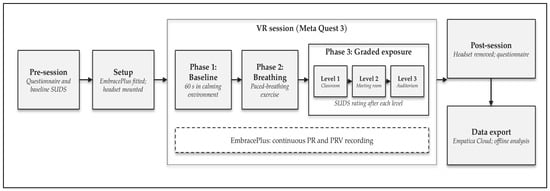
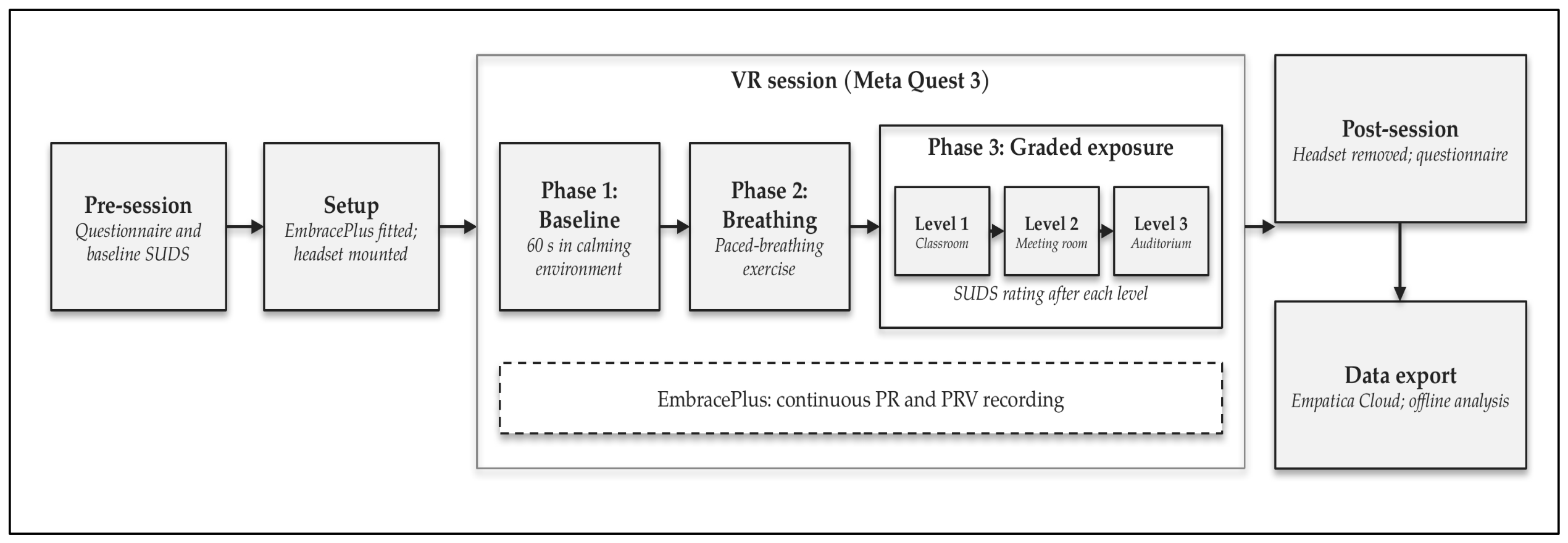
On arrival, each participant completed a pre-session questionnaire and provided a baseline SUDS rating; the full experimental procedure is illustrated in Figure 6. The EmbracePlus was fitted and verified as recording before the session commenced. Participants were then assisted in mounting the Meta Quest 3 headset and given unstructured time to acclimatize to the virtual environment. The session proceeded through the three phases described in Section 5.3. At the conclusion of each exposure level, participants rated their perceived distress using a SUDS slider embedded in the VR interface. On completing Level 3, the headset was removed and participants completed a post-session questionnaire. The EmbracePlus recorded continuously from the start of the baseline phase through to the end of Level 3. Physiological data were retrieved from the Empatica Cloud following each session for offline analysis. Total session duration was approximately 30 to 45 min.
Figure 6.
Overview of the experimental procedure.
5.5. Subjective Measures
Perceived anxiety was assessed at five time points using the Subjective Units of Distress Scale (SUDS), a widely used single-item measure rated from 0 (no distress) to 10 (maximum distress): prior to the session, immediately after each of the three exposure levels, and following session completion. SUDS scores were retained as a complementary subjective measure alongside the physiological data. A post-session questionnaire additionally collected participant ratings of system usability, interface clarity, VR immersion, and overall comfort, and was analyzed descriptively to assess system acceptability.
5.6. Physiological Data Preprocessing
The PR and PRV files exported from the Empatica Cloud were merged into a unified per-participant dataset by aligning on Unix timestamps. The EmbracePlus exports PR and PRV as minute-level aggregates, so each participant’s record contained one PR value (bpm) and one PRV value (RMSSD, ms) per minute. Preprocessing steps included removal of extraneous metadata columns and chronological sorting of all observations. No missing samples were present in the recorded sessions; therefore, no imputation was required. The resulting dataset provided a continuous physiological record spanning the full session from the resting baseline through to the end of the Level 3 exposure.
5.7. Feature Extraction
The merged dataset was segmented into fixed-length non-overlapping five-minute windows (window length = stride = 5 min), aligned to five-minute clock boundaries. Because PR and PRV were available at a one-minute resolution, each window contained up to five samples; windows with fewer than three samples, which occurred only at the start or end of a recording, were discarded. This produced 28 windows in total (two or three per participant). The five-minute length was chosen so that each window contained enough minute-level samples to compute variability and trend features, while still yielding approximately one window per exposure level within sessions lasting 11–16 min.
Ten time-domain features were extracted per window: mean PR, standard deviation of PR, maximum PR, minimum PR, and slope of PR, mean PRV (RMSSD), standard deviation of PRV, maximum PRV, minimum PRV, and slope of PRV. The slope was computed as the difference between the last and first values in the window divided by the number of samples. These features capture the central tendency, variability, and directional trend of autonomic arousal within each segment and are consistent with established time-domain feature sets for physiological stress classification [25].
Frequency-domain HRV features (e.g., LF and HF power) were not extracted, because they require beat-to-beat inter-beat intervals, whereas the EmbracePlus export provides PRV only as minute-level RMSSD values.
5.8. Stress Labelling
Binary stress labels were assigned to each feature window in two steps. First, each window was associated with an exposure level. Because the times of transitions between levels were not recorded, the windows of each participant were divided into three equal consecutive segments corresponding to Level 1, Level 2, and Level 3, assuming uniform progression through the session. The SUDS score reported at the end of each level was then assigned to the windows of that level.
Second, a binary stress label was derived from the associated SUDS score using a threshold of 5: windows with a SUDS score of 5 or above were assigned the label Stress (1), and windows with a score below 5 were assigned the label No Stress (0). This threshold was selected as the midpoint of the 0 to 10 scale, providing a symmetric boundary between the lower and upper halves of the distress range. The resulting binary labels served as the supervision signal for the machine learning classifiers. As no universally established clinical cut-off exists for binary SUDS classification, the robustness of this choice was examined through a sensitivity analysis across thresholds of 4, 5, and 6, and through a comparison with objective physiological indicators (Section 6.2).
5.9. Classification and Evaluation
Two supervised binary classifiers were selected as the primary models: a Support Vector Machine (SVM) and a Random Forest (RF). Both were chosen on the basis of prior work (Section 2) and fixed before the experimental data were collected. Prior to application to the experimental data, both models were validated on the Wearable Device Dataset from Induced Stress and Structured Exercise Sessions [26], a public benchmark containing labelled physiological recordings acquired with the Empatica E4, the direct hardware predecessor of the EmbracePlus, to verify pipeline functionality.
The SVM used a radial basis function (RBF) kernel (C = 2, gamma = ‘scale’), with features standardized to zero mean and unit variance. The RF consisted of 200 trees with a maximum depth of 6 and a minimum of two samples per split. Both classifiers used balanced class weights, which weight each class inversely to its frequency in the training data. As the two classes were close to balanced (15 Stress and 13 No Stress windows), no resampling was applied, and the F1-score was reported alongside accuracy.
Given the limited sample size, model performance was evaluated using leave-one-subject-out (LOSO) cross-validation, in which all windows from one participant were held out as the test set while the model was trained on the remaining nine participants. This procedure was repeated for each of the ten participants, ensuring that no participant contributed data to both training and testing. LOSO was adopted as the primary evaluation, and five-fold stratified cross-validation was also computed for comparison. In the five-fold scheme, windows were randomly assigned to folds with stratification by class label, so windows from the same participant could appear in both the training and test folds; this scheme may therefore overestimate performance.
For comparison, four additional classifiers (logistic regression [LR], k-nearest neighbors [KNN], decision tree [DT], and Gaussian naive Bayes [GNB]), a majority-class baseline, and PR-only and PRV-only feature sets were also evaluated under LOSO (Supplementary Tables S2 and S3).
To prevent information leakage, feature standardization for SVM was fitted on the training data only within each iteration, and no participant-specific baseline normalization was applied. Under LOSO, all windows of the held-out participant, including those spanning the baseline and breathing phases, were excluded from training.
Classification performance was quantified by accuracy, precision, recall, and F1-score, and uncertainty was quantified with 95% confidence intervals (CIs) estimated by a participant-level cluster bootstrap with 5000 resamples. Because RF training involves random sampling, all RF evaluations were repeated with 20 random seeds, and RF results are reported as the mean ± standard deviation across seeds. The RF confusion matrices and per-participant results were averaged across seeds, and the RF CIs were computed on the seed-averaged performance. To compare the SUDS-based labels with objective physiological measures, the mean PR and PRV of Stress and No Stress windows were computed for each participant and compared using a two-sided Wilcoxon signed-rank test (n = 10 participants).
6. Results
6.1. Subjective Distress Trajectories
Table 2 presents the SUDS scores reported by each participant at the end of each exposure level. Mean distress increased monotonically across all three levels, rising from 2.40 at Level 1 to 5.40 at Level 2 and 7.70 at Level 3. This progressive increase was consistent across all ten participants, each of whom reported a higher score at each successive level without exception. At Level 1, all participants scored below the stress labelling threshold of 5, with scores ranging from 1 to 4. At Level 2, scores ranged from 3 to 8, with seven of ten participants meeting or exceeding the threshold. At Level 3, scores ranged from 5 to 10, with all participants at or above the threshold. These trajectories confirm that the graded exposure protocol successfully elicited increasing levels of perceived distress across the session and support the validity of the SUDS-based binary labelling strategy applied in the classification pipeline.
Table 2.
SUDS scores per participant across the three exposure levels.
6.2. Classification Performance
Table 3 presents the classification performance of the SVM and RF models under LOSO and five-fold cross-validation. Under subject-independent LOSO evaluation, RF achieved a mean accuracy of 73.57% (SD = 2.86% across seeds; 95% CI: 60.2–86.2%), precision of 80.24%, recall of 67.33%, and F1-score of 73.15%, while SVM achieved an accuracy of 67.86% (95% CI: 56.7–79.3%), precision of 75.00%, recall of 60.00%, and F1-score of 66.67%.
Table 3.
Classification performance of SVM and RF under LOSO and five-fold cross-validation (95% CIs in brackets; RF: mean of 20 random seeds).
Performance under LOSO was lower than under five-fold cross-validation (RF: 76.96%; SVM: 75.00%), as expected when the model is tested on participants unseen during training. The wide confidence intervals reflect the small sample and indicate that these estimates should be interpreted with caution.
Table 4 reports the LOSO results for each participant. Because each LOSO fold corresponds to one held-out participant, the table also shows the class distribution of each test fold; every test fold contained at least one window of each class, and the corresponding training folds contained 11–12 No Stress and 13–14 Stress windows.
Table 4.
Per-participant LOSO results (SVM and RF: correct/total windows; RF: mean of 20 random seeds).
RF correctly classified all windows for three participants (P5, P8, and P10) across all seeds, with the lowest performance for P1 (0.5/2), whereas SVM correctly classified all windows for two participants (P7 and P10), with the lowest performance for P6 (1/3). This variation across participants reflects individual differences in physiological stress responses and further indicates that the pooled estimates should be interpreted with caution given the small number of windows per participant.
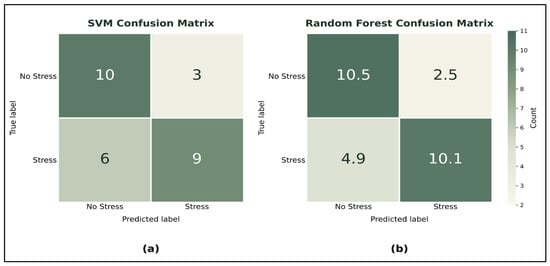
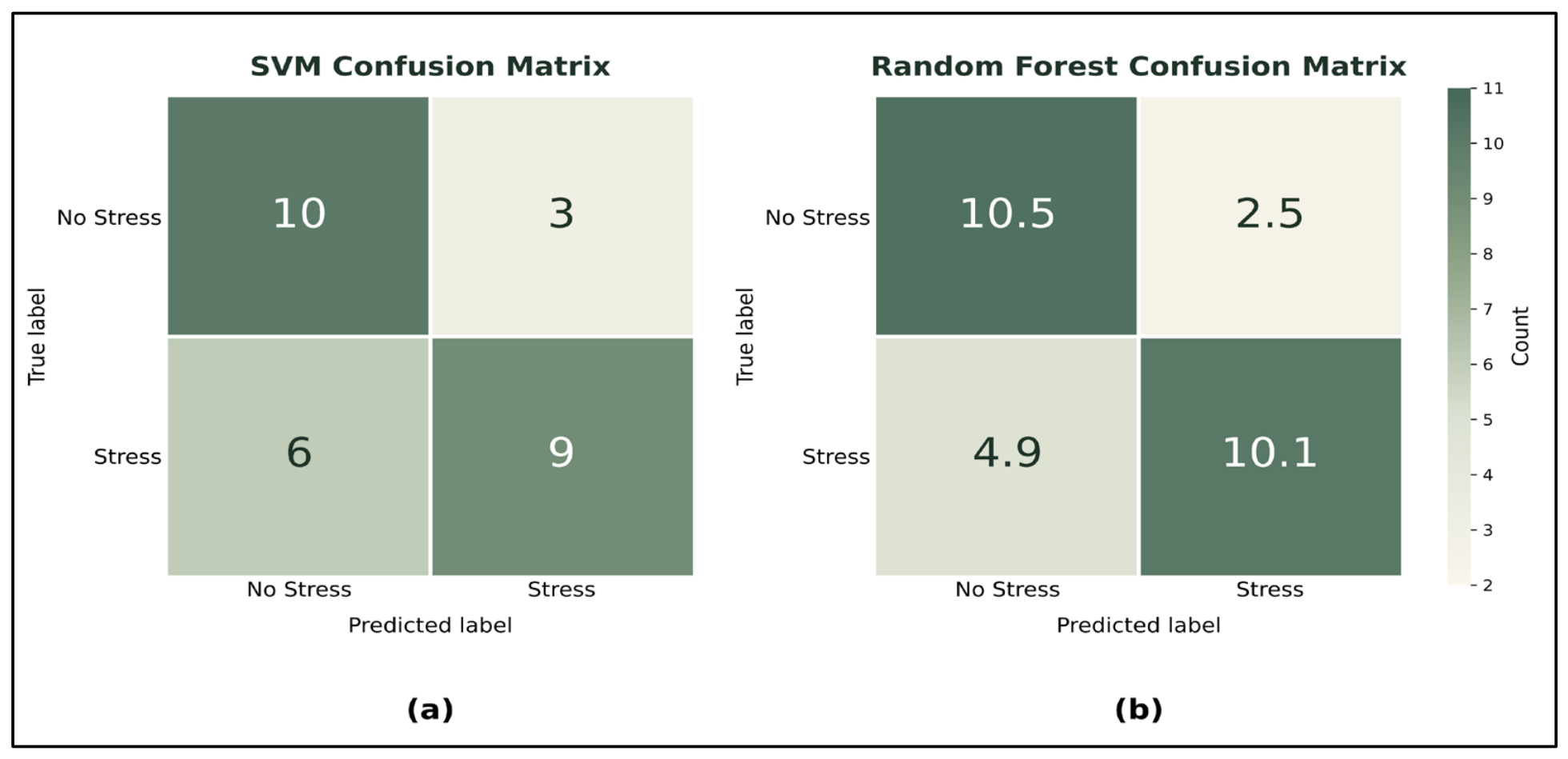
The LOSO confusion matrices for SVM and RF are presented in Figure 7a and Figure 7b, respectively. The SVM model correctly classified 10 of 13 No Stress windows and 9 of 15 Stress windows, generating 3 false positives and 6 false negatives. The RF model correctly classified on average 10.5 of 13 No Stress windows and 10.1 of 15 Stress windows, generating 2.5 false positives and 4.9 false negatives.
Figure 7.
Confusion matrices under LOSO cross-validation: (a) SVM, (b) Random Forest (mean of 20 random seeds).
The lower number of false positives accounts for the higher precision of RF, indicating that the ensemble model was more conservative in assigning the Stress label. Both models produced more false negatives than false positives, indicating that some stress windows from unseen participants were not detected.
To assess the sensitivity of the results to the SUDS labelling threshold, the LOSO evaluation was repeated with thresholds of 4 and 6 (Table 5). Performance remained broadly stable across thresholds, with RF F1-scores ranging from 0.70 to 0.74 and SVM F1-scores from 0.64 to 0.67. Although a threshold of 6 yielded a higher RF accuracy (79.29%), it produced a less balanced class distribution (11 Stress versus 17 No Stress windows), whereas a threshold of 5 provided the most balanced classes (15 versus 13) with a comparable RF F1-score.
Table 5.
Sensitivity of LOSO performance to the SUDS threshold (RF: mean of 20 random seeds).
Supplementary Tables S2 and S3 compare SVM and RF with additional classifiers and feature sets under LOSO. All additional classifiers performed above the majority-class baseline, which assigns every window to the Stress class (53.57%). LR (75.00%) and KNN (71.43%) achieved accuracy similar to that of RF (73.57%), while RF retained the highest precision. Models trained on PR features alone performed similarly to or better than those trained on all features, whereas PRV features alone yielded lower accuracy, although still above the baseline.
To complement the subjective SUDS-based labels with objective physiological evidence, the mean PR and PRV of Stress and No Stress windows were compared within each participant. Averaged across participants, Stress windows showed a higher mean PR (91.32 versus 84.58 bpm) and a lower mean PRV (74.44 versus 78.65 ms) than No Stress windows, with higher PR observed in seven and lower PRV in eight of the ten participants (per-participant values are provided in Supplementary Table S1). Both differences were statistically significant (Wilcoxon signed-rank test, W = 7, p = 0.037), indicating that the SUDS-derived labels were consistent with the expected physiological stress response. EDA was not included in the exported dataset and could therefore not be used for this comparison.
6.3. System Usability and User Experience
Post-session questionnaire responses indicated broadly positive perceptions of the system across all evaluated dimensions. Participants reported a mean pre-session nervousness rating of 3.80 out of 5, reflecting moderate baseline anxiety prior to the VR session. A mean post-session agreement rating of 4.30 out of 5 was recorded for the statement that participants felt less nervous after the session. All participants rated the progression of exposure levels as helpful, with 70% assigning the maximum score of 5 and 30% assigning a score of 4, yielding a mean rating of 4.70 out of 5.
7. Discussion
This study examined whether a consumer-grade VRET system for PSA, monitored by a single wrist-worn device, can support post-session stress classification. The findings suggest that it can, and they also highlight several factors that will shape how such a system should be developed further.
First, the classification results rest on a plausible physiological basis. Within most participants, stress windows showed a higher PR and a lower PRV, consistent with increased sympathetic and reduced parasympathetic activity under threat. Artemi et al. [6] similarly found that HR, measured with laboratory ECG, tracked changes in distress during VR public speaking tasks. The present findings indicate that this response can be captured by a wrist-worn PPG device, even at a minute-level resolution and without beat-to-beat data. This supports the use of PR and PRV alone as a practical basis for stress detection in consumer VRET.
The ablation analysis indicated that PR features alone performed similarly to or better than the combined feature set, whereas PRV features alone performed less well, possibly because PRV was available only as minute-level aggregates rather than beat-to-beat intervals. The combined feature set was defined before the experiment, as PRV, recorded as RMSSD, is an established marker of autonomic regulation [25]. Because the observed differences amounted to only one to two windows, these results do not justify removing PRV, and its contribution should be re-examined with beat-to-beat data in a larger sample.
Second, the gap between LOSO and five-fold performance, together with the variation in accuracy across participants, indicates that stress responses differ substantially between individuals. A model trained on some participants does not transfer equally well to others. Because the protocol already includes a resting baseline phase, future versions could use each participant’s baseline to normalize their features, allowing the classifier to detect changes relative to that person rather than relative to the group.
Third, the difference between RF and SVM was small and their confidence intervals overlapped, so neither model can be considered clearly superior on this sample. The additional classifiers performed similarly, with LR and KNN reaching accuracy comparable to that of RF (Supplementary Table S2). RF produced fewer false positives, resulting in higher precision, which is clinically relevant since false stress detections in a therapeutic context could lead to unnecessary intervention. Both models, however, produced more false negatives than false positives, meaning that some stress episodes were missed.
The main contribution of this study lies in its system configuration rather than in classification accuracy alone. To our knowledge, it is the first to combine consumer-grade VRET for PSA, a single commercially available wrist-worn device recording only PR and PRV, and an ML pipeline evaluated on real participant data from live exposure sessions using subject-independent validation. The RF accuracy was comparable to that of Campanella et al. [22], who used the same Empatica device family with an additional EDA sensor and achieved 76.5% accuracy. Mevlevioğlu et al. [8] reported 75% accuracy with three simultaneous signals including an EEG headset, although for a three-class rather than a binary task. The higher accuracy of 87.5% reported by Rahman et al. [4] was obtained on benchmark datasets rather than on real participant data from live therapeutic sessions.
These studies were selected because they are the closest prior work combining VR or wrist-worn sensing with stress or anxiety classification; however, none used the same combination of task, sensors, and validation, which is precisely the gap addressed here. The present results therefore show that comparable performance can be obtained with a simpler, single-device setup, rather than exceeding prior accuracy.
Relying on a single commercially available wrist-worn device also reduces cost and setup complexity compared with multi-sensor laboratory systems. The positive usability ratings support the system’s acceptability, consistent with prior evidence on the tolerability of single-session VRET for PSA [5,6].
This study should be regarded as a pilot evaluation. The sample of ten participants yielded 28 analysis windows, and no a priori power analysis was conducted; consequently, the confidence intervals around all performance estimates are wide, and the results should not be generalized beyond the studied population without replication in a larger, multi-site cohort. EDA and skin temperature recorded by the EmbracePlus were not included in the pipeline and may improve performance in future work.
Most importantly, the classification pipeline operates post-session rather than in real time. Real-time physiological classification within the VR session is the primary direction for future work, as it would enable dynamic modulation of exposure intensity in response to the participant’s physiological state.
8. Conclusions
This paper presented a VRET system for PSA that integrates a three-level graded public speaking exposure protocol, continuous wearable PR and PRV monitoring via the EmbracePlus, and a post-session binary stress classification pipeline using SVM and RF classifiers. The system was evaluated with ten participants, yielding subject-independent (leave-one-subject-out) accuracies of 73.57% (mean across seeds) for RF and 67.86% for SVM, alongside a monotonic increase in participant-reported distress across exposure levels and broadly positive usability ratings.
The results provide preliminary evidence that PR and PRV features extracted from a single wrist-worn device can support binary stress classification, although replication in larger samples is required to confirm this. To the best of our knowledge, this is the first study to combine consumer-grade VRET for PSA, a single commercially available wrist-worn wearable, and a SUDS-grounded ML classification pipeline validated on real participant data within a single integrated system.
The primary limitation is the small sample size, which constrains the generalizability of the findings. Future work should replicate this evaluation with larger and more diverse samples, incorporate a control condition, and extend the pipeline to include EDA and skin temperature signals recorded by the EmbracePlus. Most critically, transitioning the classification pipeline from post-session to real time would enable dynamic adaptation of exposure intensity based on the participant’s physiological state, representing the essential next step toward a fully adaptive consumer VRET system for PSA.
Supplementary Materials
The following supporting information can be downloaded at: https://www.mdpi.com/article/10.3390/app162311731/s1, Table S1: Mean pulse rate (PR) and pulse rate variability (PRV) in No Stress and Stress windows for each participant; Table S2: LOSO performance of additional classifiers compared with SVM and RF; Table S3: LOSO performance of SVM and RF trained on PR-only, PRV-only, and combined feature sets.
Author Contributions
D.A., R.A., and L.A. conceived, performed, analyzed, and interpreted the experiments and also drafted the manuscript. S.A. analyzed, validated, reviewed, and edited the manuscript. N.A. and A.A.-N. designed, supervised, reviewed, and edited the manuscript. All authors have read and agreed to the published version of the manuscript.
Funding
This scientific paper was supported by a research grant from the Research, Development, and Innovation Authority (RDIA) of the Kingdom of Saudi Arabia (Grant number: 13461-imamu-2023-IMIU-R-3-1-HW-).
Institutional Review Board Statement
This research was approved by the Institutional Review Board (IRB) (project# 959/2026) at Imam Mohammad Ibn Saud Islamic University, and the procedures were found to be acceptable on ethical grounds for research involving human subjects.
Informed Consent Statement
Informed consent was obtained from all subjects involved in the study.
Data Availability Statement
The data presented in this study are available on request from the corresponding author due to privacy or ethical restrictions.
Acknowledgments
The authors would like to thank the Research, Development, and Innovation Authority (RDIA) of the Kingdom of Saudi Arabia for funding this research through Grant No. (13461-imamu-2023-IMIU-R-3-1-HW-).
Conflicts of Interest
The authors declare no conflicts of interest.
References
- Lindner, P.; Miloff, A.; Fagernäs, S.; Andersen, J.; Sigeman, M.; Andersson, G.; Furmark, T.; Carlbring, P. Therapist-led and self-led one-session virtual reality exposure therapy for public speaking anxiety with consumer hardware and software: A randomized controlled trial. J. Anxiety Disord. 2019, 61, 45–54. [Google Scholar] [CrossRef] [Scilit] [PubMed]
- Reeves, R.; Curran, D.; Gleeson, A.; Hanna, D. A Meta-Analysis of the Efficacy of Virtual Reality and In Vivo Exposure Therapy as Psychological Interventions for Public Speaking Anxiety. Behav. Modif. 2022, 46, 937–965. [Google Scholar] [CrossRef] [Scilit] [PubMed]
- Morina, N.; Kampmann, I.; Emmelkamp, P.; Barbui, C.; Hoppen, T.H. Meta-analysis of virtual reality exposure therapy for social anxiety disorder. Psychol. Med. 2021, 53, 2176–2178. [Google Scholar] [CrossRef] [Scilit] [PubMed]
- Rahman, M.A.; Brown, D.J.; Mahmud, M.; Harris, M.; Shopland, N.; Heym, N.; Sumich, A.; Turabee, Z.B.; Standen, B.; Downes, D.; et al. Enhancing biofeedback-driven self-guided virtual reality exposure therapy through arousal detection from multimodal data using machine learning. Brain Inform. 2023, 10, 14. [Google Scholar] [CrossRef] [Scilit] [PubMed]
- Premkumar, P.; Heym, N.; Myers, J.A.C.; Formby, P.; Battersby, S.; Sumich, A.L.; Brown, D.J. Augmenting self-guided virtual-reality exposure therapy for social anxiety with biofeedback: A randomised controlled trial. Front. Psychiatry 2024, 15, 1467141. [Google Scholar] [CrossRef] [Scilit] [PubMed]
- Artemi, T.-F.; Konstantinou, T.; Naziri, S.; Panayiotou, G. Virtual Reality-Assisted, Single-Session Exposure for Public Speaking Anxiety: Improved Self-Reports and Heart Rate but No Significant Change in Heart Rate Variability. Virtual Worlds 2025, 4, 27. [Google Scholar] [CrossRef] [Scilit]
- Chun, J.Y.; Kim, H.-J.; Hur, J.-W.; Jung, D.; Lee, H.-J.; Pack, S.P.; Lee, S.; Kim, G.; Cho, C.-Y.; Lee, S.-M.; et al. Prediction of Specific Anxiety Symptoms and Virtual Reality Sickness Using In Situ Autonomic Physiological Signals During Virtual Reality Treatment in Patients with Social Anxiety Disorder: Mixed Methods Study. JMIR Serious Games 2022, 10, e38284. [Google Scholar] [CrossRef] [Scilit] [PubMed]
- Mevlevioğlu, D.; Tabirca, S.; Murphy, D. Real-Time Classification of Anxiety in Virtual Reality Therapy Using Biosensors and a Convolutional Neural Network. Biosensors 2024, 14, 131. [Google Scholar] [CrossRef] [Scilit] [PubMed]
- Physiological Signal Analysis and Stress Classification from VR Simulations Using Decision Tree Methods|MDPI. Available online: https://www.mdpi.com/2306-5354/10/7/766 (accessed on 9 June 2026).
- Tsai, Y.-Y.; Chen, Y.-J.; Lin, Y.-F.; Hsiao, F.-C.; Hsu, C.-H.; Liao, L.-D. Photoplethysmography-based HRV analysis and machine learning for real-time stress quantification in mental health applications. APL Bioeng. 2025, 9, 026103. [Google Scholar] [CrossRef] [Scilit] [PubMed]
- Stein, M.B.; Stein, D.J. Social anxiety disorder. Lancet 2008, 371, 1115–1125. [Google Scholar] [CrossRef] [Scilit] [PubMed]
- Kessler, R.C.; Berglund, P.; Demler, O.; Jin, R.; Merikangas, K.R.; Walters, E.E. Lifetime prevalence and age-of-onset distributions of DSM-IV disorders in the National Comorbidity Survey Replication. Arch. Gen. Psychiatry 2005, 62, 593–602. [Google Scholar] [CrossRef] [Scilit] [PubMed]
- Bodie, G.D. A Racing Heart, Rattling Knees, and Ruminative Thoughts: Defining, Explaining, and Treating Public Speaking Anxiety. Commun. Educ. 2010, 59, 70–105. [Google Scholar] [CrossRef] [Scilit]
- Craske, M.G.; Treanor, M.; Conway, C.C.; Zbozinek, T.; Vervliet, B. Maximizing exposure therapy: An inhibitory learning approach. Behav. Res. Ther. 2014, 58, 10–23. [Google Scholar] [CrossRef] [Scilit] [PubMed]
- Freeman, D.; Reeve, S.; Robinson, A.; Ehlers, A.; Clark, D.; Spanlang, B.; Slater, M. Virtual reality in the assessment, understanding, and treatment of mental health disorders. Psychol. Med. 2017, 47, 2393–2400. [Google Scholar] [CrossRef] [Scilit] [PubMed]
- Frontiers|Augmenting Self-Guided Virtual-Reality Exposure Therapy for Social Anxiety with Biofeedback: A Randomised Controlled Trial. Available online: https://www.frontiersin.org/journals/psychiatry/articles/10.3389/fpsyt.2024.1467141/full (accessed on 9 June 2026).
- T. F. of the E. S. of C. the N. A. S. of P. Electrophysiology. Heart Rate Variability. Circulation 1996, 93, 1043–1065. [Google Scholar] [CrossRef] [Scilit]
- Schiweck, C.; Piette, D.; Berckmans, D.; Claes, S.; Vrieze, E. Heart rate and high frequency heart rate variability during stress as biomarker for clinical depression. A systematic review. Psychol. Med. 2019, 49, 200–211. [Google Scholar] [CrossRef] [Scilit] [PubMed]
- Mitchell, T.M. Machine Learning. McGraw-Hill, New York.—References—Scientific Research Publishing. 1997. Available online: https://www.scirp.org/reference/referencespapers?referenceid=2261499 (accessed on 11 June 2026).
- Cortes, C.; Vapnik, V. Support-vector networks. Mach. Learn. 1995, 20, 273–297. [Google Scholar] [CrossRef] [Scilit]
- Breiman, L. Random Forests. Mach. Learn. 2001, 45, 5–32. [Google Scholar] [CrossRef] [Scilit]
- Campanella, S.; Altaleb, A.; Belli, A.; Pierleoni, P.; Palma, L. A Method for Stress Detection Using Empatica E4 Bracelet and Machine-Learning Techniques. Sensors 2023, 23, 3565. [Google Scholar] [CrossRef] [Scilit] [PubMed]
- World Medical Association. World Medical Association Declaration of Helsinki: Ethical principles for medical research involving human subjects. JAMA 2013, 310, 2191–2194. [Google Scholar] [CrossRef] [Scilit] [PubMed]
- The E4 Wristband Has Been Sunset—Choose EmbracePlus. Available online: https://www.empatica.com/research/e4-sunset/ (accessed on 11 June 2026).
- Shaffer, F.; Ginsberg, J.P. An Overview of Heart Rate Variability Metrics and Norms. Front. Public Health 2017, 5, 258. [Google Scholar] [CrossRef] [Scilit] [PubMed]
- Hongn, A.; Bosch, F.; Prado, L.; Bonomini, P. Wearable Device Dataset from Induced Stress and Structured Exercise Sessions. PhysioNet 2025. [Google Scholar] [CrossRef]

Disclaimer/Publisher’s Note: The statements, opinions and data contained in all publications are solely those of the individual author(s) and contributor(s) and not of MDPI and/or the editor(s). MDPI and/or the editor(s) disclaim responsibility for any injury to people or property resulting from any ideas, methods, instructions or products referred to in the content. |
© 2026 by the authors. Licensee MDPI, Basel, Switzerland. This article is an open access article distributed under the terms and conditions of the Creative Commons Attribution (CC BY) license.