


Abstract
Calcined Ca/Fe layered double hydroxides (CLDHs) obtained at 300, 500, and 700 °C were investigated for adsorption and immobilization in cement matrices. The effects of calcination temperature on the physicochemical properties and adsorption behavior of CLDHs were analyzed, followed by an assessment of their ability to suppress leaching from cement under acidic and alkaline conditions. The results showed that calcination substantially changed the phase composition and structural properties of the Ca/Fe-LDH. Although CLDH-700 exhibited the lowest specific surface area, it showed the highest uptake, indicating that adsorption was not governed solely by the surface area. XRD analysis further demonstrated that CLDH-300, CLDH-500, and CLDH-700 all underwent hydration-induced reconstruction of their layered structures after adsorption. After incorporated into cement, the addition of CLDH generally reduced the releasing of as the addition amounts increased. Furthermore, the leaching behavior was strongly dependent on pH, curing age, and LDH calcination temperature. CLDH-700 exhibited a better retention ability at the early curing stage, whereas CLDH-300 showed better long-term retention under alkaline conditions. The enhanced immobilization might be attributed to the coupled effects of CLDH-induced changes in cement hydration, while the resulting Ca/Fe-containing phases may further contribute to retention. These findings demonstrate that calcination-induced structural reconstruction of Ca/Fe-LDHs provides a promising strategy for enhancing the immobilization of in cementitious matrices and highlights the importance of evaluating sorbent performance under realistic cement hydration and leaching conditions.
1. Introduction
The long-term management of radioactive waste requires effective containment strategies to prevent the migration of potentially mobile radionuclides into the geochemical environment. Among these radionuclides, selenium-79 (79Se) is of particular concern because of its extremely long half-life on the order of 105 years [1]. Se can occur in several oxidation states, with selenate (, Se(VI)) being particularly important under oxidizing conditions [1,2]. It is difficult to immobilize effectively within conventional solidification matrices due to its high solubility and low affinity toward many mineral surfaces [3,4]. Therefore, developing efficient strategies for the long-term immobilization of is essential for the safe disposal of 79Se-bearing radioactive wastes.
Cement solidification is widely used for the treatment and disposal of radioactive and hazardous wastes owing to its low cost, simple processing, mechanical stability, and suitability for large-scale applications [5,6,7]. The immobilization of contaminants within cementitious matrices can involve several processes, including incorporation into hydration products, surface adsorption, chemical interaction, precipitation, and physical encapsulation. Calcium silicate hydrate (C-S-H), calcium hydroxide, ettringite, and hydrocalumite constitute the major phases responsible for the development of the cement matrix and contaminant retention. is mainly immobilized in the AFm (alumina-ferric oxide-monosulfate) phases and Aft (ettringite) phase [8,9,10]. Moreover, the chemical stability and migration behavior of can be strongly influenced by the surrounding leaching environment [3,11,12]. These limitations highlight the need for functional additives capable of providing additional binding sites and enhancing the long-term retention of within cementitious matrices.
Layered double hydroxides (LDHs) and their calcined products, layered double metal oxides (CLDHs), are promising anion adsorbents due to their large surface area and exchangeable interlayer anions. These properties give LDHs and CLDHs distinct advantages for capturing radioactive anions. In recent years, LDHs and CLDHs have also been incorporated into cement-based materials as functional additives, serving as both reactive fillers and anion-capturing phases [13]. Previous studies have shown that the fine particles and relatively high surface area of CLDHs can provide heterogeneous nucleation sites and a filling effect, which promotes the formation and distribution of early hydration products, such as C-S-H and Aft [14,15].
Aqueous adsorption experiments showed that the metal composition of the LDH layers affects the stability of anions within the layered structure. For Se oxyanions, Fe-containing LDHs remove Se not only through anion exchange but also through the formation of inner-sphere complexes between Se oxyanions and Fe(III) sites in the layers [16,17]. This coordination interaction contributes to the enhanced chemical immobilization of Se. In addition, Ca/Fe-containing LDHs are particularly attractive for cementitious applications because their Ca- and Fe-containing phases may interact with cement hydration products while simultaneously providing potential binding sites for [16]. Calcination temperature can substantially alter the phase composition, crystallinity, defect structure, local coordination environment, and chemical reactivity of the resulting Ca/Fe-containing oxide phases. Although these calcined products may all exhibit the rehydration-induced recovery of LDH-like layered structures, the physicochemical characteristics of the reconstructed phases may differ, leading to distinct adsorption capacities. Furthermore, once incorporated into cement, the intrinsic -binding properties of the CLDHs may interact with cement hydration and phase evolution, resulting in complex changes in retention and leaching behavior. Therefore, understanding the role of Ca/Fe-CLDH on adsorption in cement-based immobilization is critical for optimizing CLDH-modified cementitious materials.
In this study, Ca/Fe-LDH was calcined at 300, 500, and 700 °C to obtain CLDH-300, CLDH-500, and CLDH-700, respectively. Their intrinsic adsorption capacities were first evaluated in aqueous solution. Then, the CLDHs were incorporated into cement at different dosages, and the resulting leaching behavior was investigated under acidic and alkaline conditions at different curing times. By analyzing the structural changes of the CLDH-modified cement matrices, the role of Ca/Fe-LDH for immobilization in cementitious waste forms was investigated under laboratory conditions. This work aims to provide a laboratory-scale reference for understanding the interaction between CLDH-derived phases and in cementitious systems.
2. Methods and Materials
2.1. Preparation of Samples
All chemical reagents utilized in this work were of analytical grade, including iron (III) chloride hexahydrate (FeCl3·6H2O, 99%), calcium chloride hexahydrate (CaCl2·6H2O, 99%), sodium selenate (Na2SeO4), sodium hydroxide (NaOH), and nitric acid (HNO3, 65%).
The Ca/Fe-LDH precursor was synthesized using a coprecipitation method. First, 0.02 mol CaCl2·6H2O and 0.01 mol FeCl3·6H2O were dissolved into 50 mL deionized water to obtain the mixing solution. Then, the mixing solution and 2 M NaOH were dropped slowly into the beaker and stirred at room temperature for 24 h to obtain the coprecipitation solution with pH at 11.5. The NaOH addition rate was dynamically adjusted according to the pH variation rather than maintained at a constant rate. After the addition was completed, the resulting suspension was continuously stirred for 24 h at room temperature. The synthesis was conducted under ambient atmospheric conditions without specific protection against atmospheric CO2. The coprecipitation solution was centrifuged using deionized water until the leaching solution was neutral. The precipitate was subjected to freeze-drying for 24 h to obtain the Ca/Fe-LDH sample. The Ca/Fe-LDH was calcined in a box furnace at temperatures of 300, 500, and 700 °C, respectively, resulting in calcined samples CLDH-300, CLDH-500, and CLDH-700. The calcination time was 5 h, and the heating rate was 5 °C/min.
The ordinary Portland cement (P.O 42.5) was used in this study and the material composition of the experimental cement was measured by X-ray fluorescence spectroscopy (XRF), as shown in Table 1. The relatively high content of Al2O3 may affect the formation of Al-containing hydration products, but the quantitative determination of the contents of each clinker phase was not conducted. The synthesized CLDH was dry-mixed with cement and sodium in a certain mass ratio (as shown in Table 2), and the liquid–solid ratio in 0.4 of deionized water was added for stirring. The cement slurry obtained after stirring was poured into the cement mold and left to stand for 24 h. After the mold was removed and the sample was formed, it was cured for 7 days and 28 d under constant temperature of 20 ± 1 °C and constant humidity of 98%, respectively. After the samples were collected, they were dried in a freeze-drying machine, ground and stored for subsequent experiments. It should be noted that, in this experiment, a relatively high content of Na2SeO4 (2.4 g per 20 g of cement, equivalent to approximately 5 wt.% of Se in the cement mass) was adopted to promote the fixation of Se and ensure that the Se concentration in the leaching test could be measured. This content is intended for mechanism studies on a laboratory scale and does not represent the composition of specific radioactive waste.
Table 1.
Elemental composition of cement in the present work (wt%).
Table 2.
Preparation conditions of the cement specimens (g).
2.2. Isothermal Adsorption Experiments
Appropriate concentrations of 20 ppm, 30 ppm, 40 ppm, 50 ppm, 60 ppm, 80 ppm, and 100 ppm Na2SeO4 solutions were prepared. The solution was mixed with a known mass of CLDHs with a solid–liquid ratio of 2 g/L and shaken in a constant temperature incubator at 25 °C and 200 rpm for 24 h. After equilibration, the supernatant was filtered through a 0.45 μm filter and stored in centrifuge tubes for further analysis. The collected solid samples were vacuum-dried and stored for further characterization. All experiments were conducted in duplicate (n = 2). Langmuir and Freundlich model fittings of the isothermal adsorption data were performed according to Equations (1) and (2), respectively.
where Ce is the equilibrium sorbate concentration in solution (mg/L), qe is the equilibrium adsorption capacity (mg/g), qmax is the maximum adsorption capacity (mg/g), KL (L/mg) is the Langmuir constant related to adsorption affinity, and KF and n are the Freundlich adsorption constants related to adsorption capacity and intensity, respectively.
2.3. Toxicity Characteristic Leaching Procedure (TCLP)
In this study, leaching tests were conducted at initial pH at pH 4.7 and pH 12.0 using 1.0 g of solid residue suspended in a 10 mL aqueous solution to determine the dissolved concentrations of Se. According to Environmental Agency Notification No. 46 in Japan, the leaching experiments were carried out in duplicate (n = 2) for 6 h at 100 rpm and 28 °C. The leachates were collected after 6 h of shaking, and the solid residues were dried for additional examination after being filtered through membrane filters with pore sizes of 0.45 μm.
2.4. Methods of Analysis
The material composition of the experimental cement was determined using X-ray fluorescence spectrometer (XRF, Tiger S8, Bruker, German). The morphologies of CaFe-LDH and CLDHs were examined using scanning electron microscopy (SEM, GeminiSEM 300, Carl Zeiss AG, Oberkochen, Germany). The specific surface area and pore structure were determined by N2 adsorption–desorption measurements using a surface area and porosity analyzer (ASAP 2460, Micromeritics Instrument Corp., Norcross, GA, USA). The specific surface area was calculated using the Brunauer–Emmett–Teller (BET) method. The pore-size distribution was determined using the Barrett–Joyner–Halenda (BJH) method based on the adsorption branch, with the Halsey thickness equation and Faas correction. The average pore diameter was calculated using the 4V/A method. Prior to the measurements, the samples were degassed at 300 °C for 6 h. X-ray diffraction (XRD, Rigaku Corp, Tokyo, Japan) patterns were recorded on a Rigaku Ultima IV diffractometer using Cu Kα radiation (40 kV, 40 mA, λ = 1.54184 Å) with a Ni filter at a scanning speed of 2°/min and a scanning step of 0.02°. The functional groups of the solid samples’ surface were determined using the Fourier-Transform Infrared Spectrometer (FTIR, Nicolet i50, Thermo Scientific, Waltham, MA, USA). The elemental content of Se was measured using an inductively coupled plasma optical emission spectrometer (ICP-OES, iCAP 6300, Thermo Fisher Scientific, Waltham, MA, USA).
3. Results and Discussion
3.1. Characterization of CaFe-LDH Under Different Calcination Temperatures
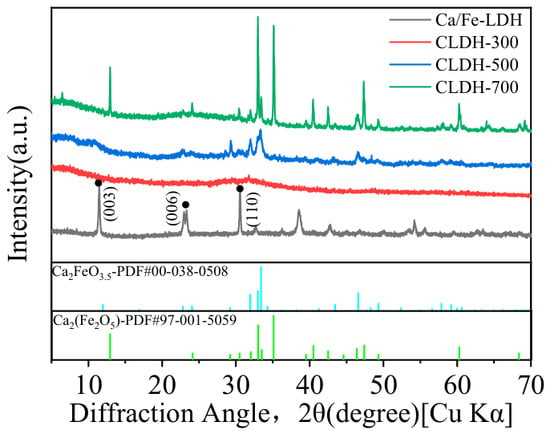
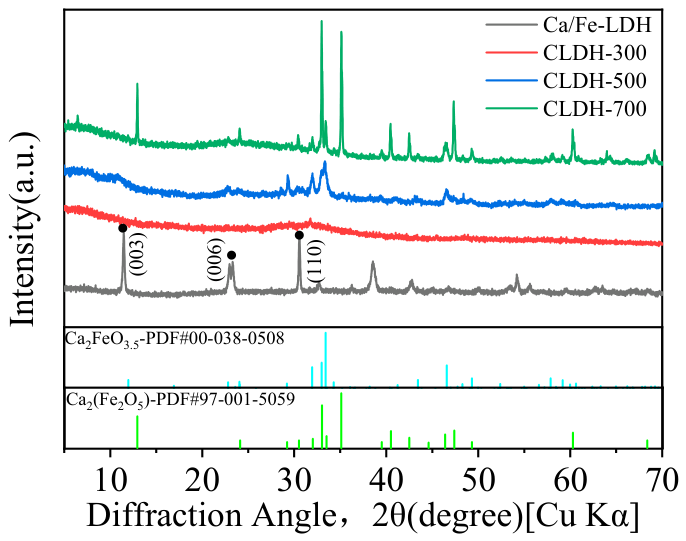
Figure 1 shows the XRD patterns of Ca/Fe-LDH and Ca/Fe-CLDHs obtained at different calcination temperatures. The characteristic diffraction peaks at (003), (006), and (110) confirm the successful synthesis of Ca/Fe-LDH [18]. After calcination at 300 °C, these characteristic peaks were significantly weakened and eventually disappeared. When the calcination temperature increased to 500 °C, new diffraction peaks appeared, which were consistent with Ca2FeO3.5 (PDF#00-038-0508). With a further increase in temperature to 700 °C, the diffraction peaks showed a high degree of agreement with those of Ca2Fe2O5 (PDF#97-001-5059). The thermal evolution process of Ca/Fe-LDH involves a series of dehydration and structural decomposition reactions. Initially, the physically adsorbed and interlayer water molecules are gradually removed during heating. As the temperature increases further, the metal hydroxide layers undergo dehydroxylation, causing the original layered structure to collapse. Subsequently, the generated Ca and Fe species undergo solid-state rearrangement and crystallization, forming the Ca-Fe oxide phase. Previous studies on Ca-Fe LDHs have shown that, during the heat treatment process, CaO, Fe2O3, and various Ca-Fe oxide phases are formed, and their phase composition depends on the calcination temperature and experimental conditions [19,20]. These results indicate that increasing the calcination temperature can promote the further structural rearrangement and crystallization of the Ca-Fe phases. Overall, increasing the calcination temperature progressively altered the phase composition and crystallinity of Ca/Fe-LDH. The products obtained at the above three calcination temperatures were respectively named as CLDH-300, CLDH-500, and CLDH-700.
Figure 1.
XRD patterns of Ca/Fe-LDH and CLDHs calcined at different temperatures.
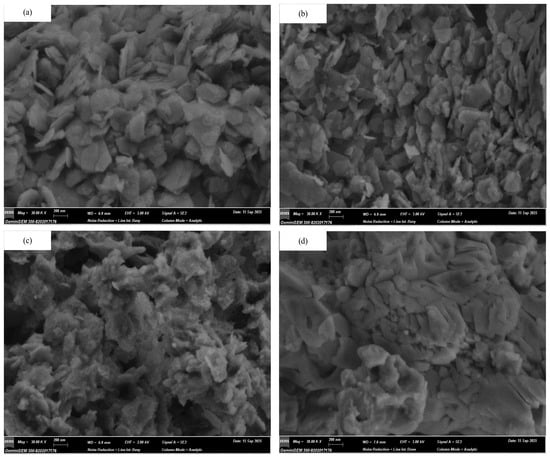
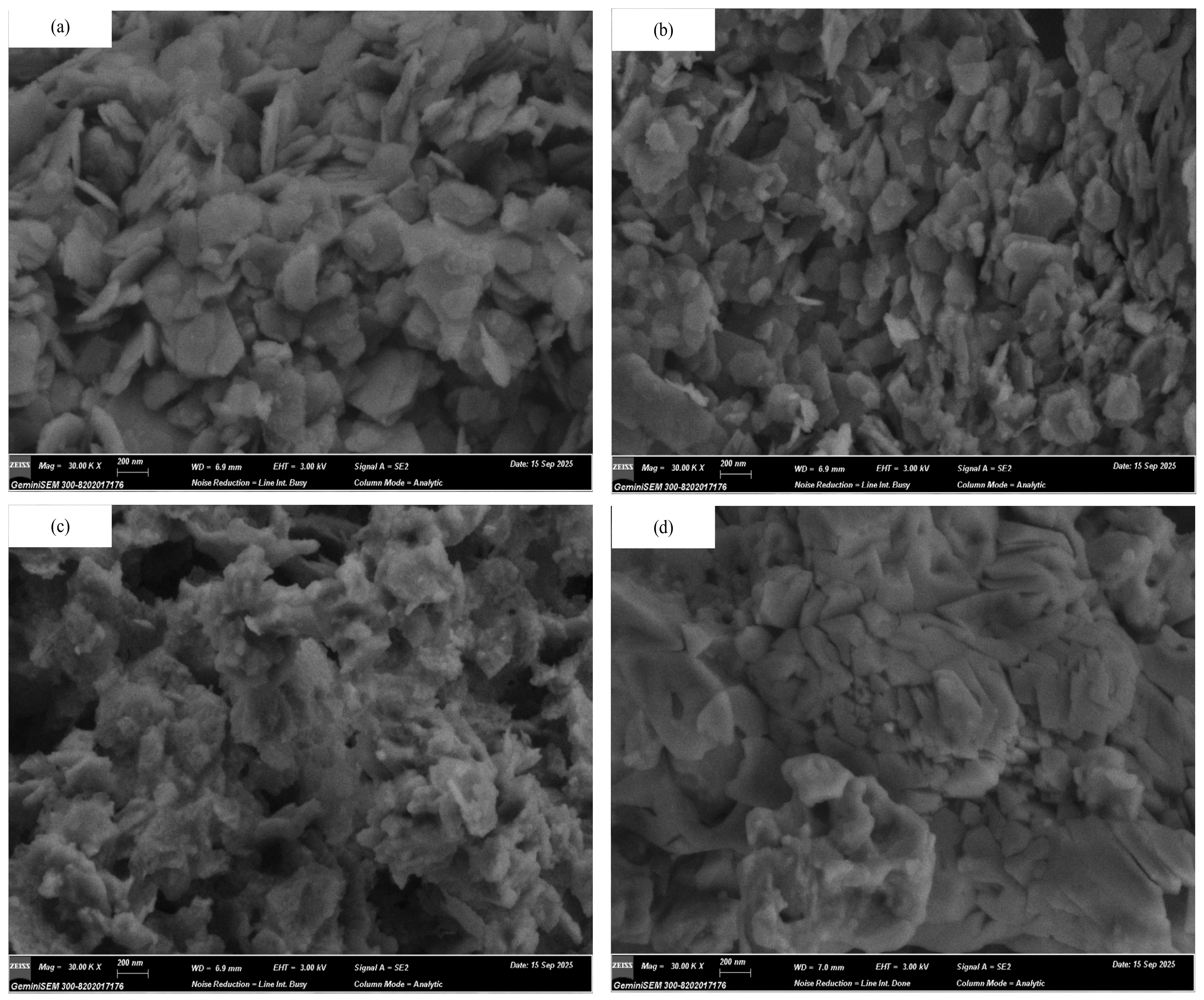
As shown in Figure 2, SEM characterization was performed on Ca/Fe-LDH and its calcined products CLDHs. The uncalcined Ca/Fe-LDH (Figure 2a) exhibited a well-defined lamellar morphology with stacked plate-like structures, which is characteristic of the typical morphology of LDHs. After calcination at 300 °C, CLDH-300 (Figure 2b) showed a slight curling and fragmentation of the plate-like structures, accompanied by a tendency toward structural collapse and particle refinement. At 500 °C, CLDH-500 (Figure 2c) lost most of its layered morphology and exhibited numerous irregularly curled structures, with the original plate-like features almost completely disappearing. The morphology was mainly composed of relatively dense blocks or amorphous aggregates. At 700 °C, Ca/Fe-CLDH-700 (Figure 2d) developed a denser agglomerated morphology with less distinct particle boundaries.
Figure 2.
SEM images of Ca/Fe-LDH and the corresponding CLDHs: (a) Ca/Fe-LDH, (b) CLDH-300, (c) CLDH-500, and (d) CLDH-700.
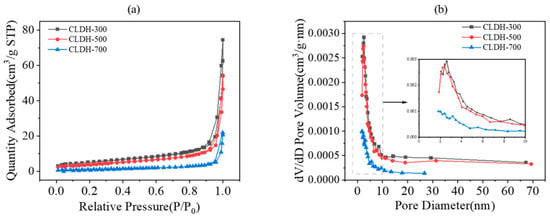
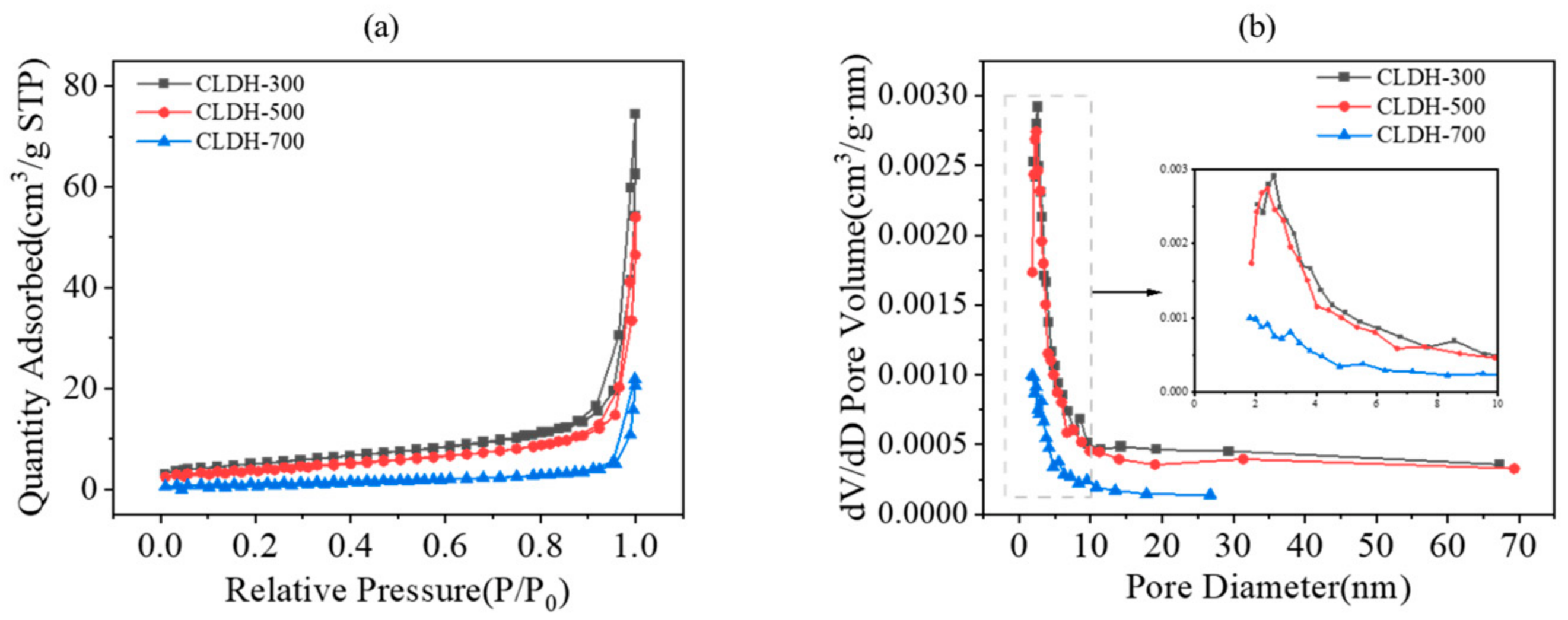
The nitrogen adsorption–desorption isotherms and average pore size distribution diagrams of Ca/Fe-CLDH are shown in Figure 3, and the specific parameters are presented in Table 3. From the nitrogen adsorption–desorption isotherms (Figure 3a) and the average pore size distribution diagram (Figure 3b), it can be observed that all three Ca/Fe-CLDHs have typical mesoporous (2–50 nm) structural characteristics dominated by slit pores. According to Table 3, as the calcination temperature increases, the specific surface area, unit pore volume, and average pore size of the CLDHs samples gradually decrease. This indicated that Ca/Fe-CLDH undergoes layer-collapse and gradually transforms into a dense mixed oxide as the temperature rises, resulting in a contraction of the pore structure. Overall, increasing the calcination temperature from 300 to 700 °C progressively promoted the phase transformation, particle aggregation, and textural densification of Ca/Fe-LDH, resulting in a marked decrease in specific surface area, pore volume, and average pore diameter. These results demonstrate that calcination temperature is an important factor governing the structural and textural characteristics of Ca/Fe-CLDHs.
Figure 3.
(a) Nitrogen adsorption–desorption isotherms and (b) average pore-size distributions of CLDHs.
Table 3.
BET data of Ca/Fe-CLDH.
3.2. Selenate Adsorption of CLDHs in Aqueous Solution
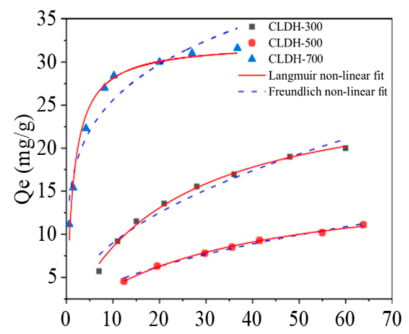
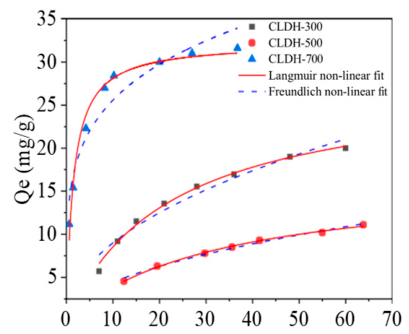
Figure 4 shows the isothermal adsorption model fitting curves of CLDH-300, CLDH-500, and CLDH-700 for adsorbing . The specific parameters are presented in Table 4. It can be seen that CLDH-700 exhibits the highest theoretical adsorption capacity of 32.12 mg/g, followed by CLDH-300 with 25.53 mg/g, and CLDH-500 has the lowest adsorption amount of 18.55 mg/g for . As shown in the results of the adsorption models, the Langmuir model provided a better fit than the Freundlich model for all three CLDHs. This suggests that adsorption may be predominantly associated with a finite number of relatively homogeneous and energetically favorable adsorption sites. CLDH-700 exhibited not only the highest theoretical maximum adsorption capacity (32.12 mg/g), but also the highest KL (0.684 L/mg), which indicated CLDH-700 performs the strongest adsorption affinity for .
Figure 4.
Isotherm model fitting curves for after adsorption on Ca/Fe-CLDHs.
Table 4.
Isotherm parameters for adsorption on Ca/Fe-CLDH.
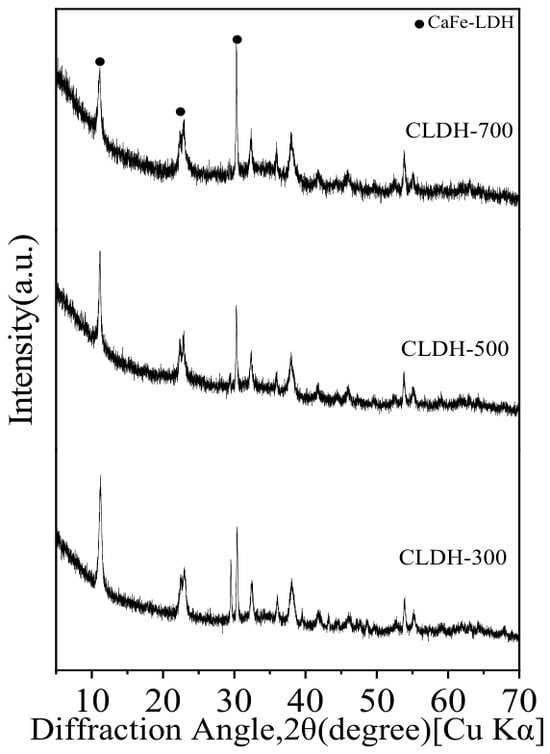
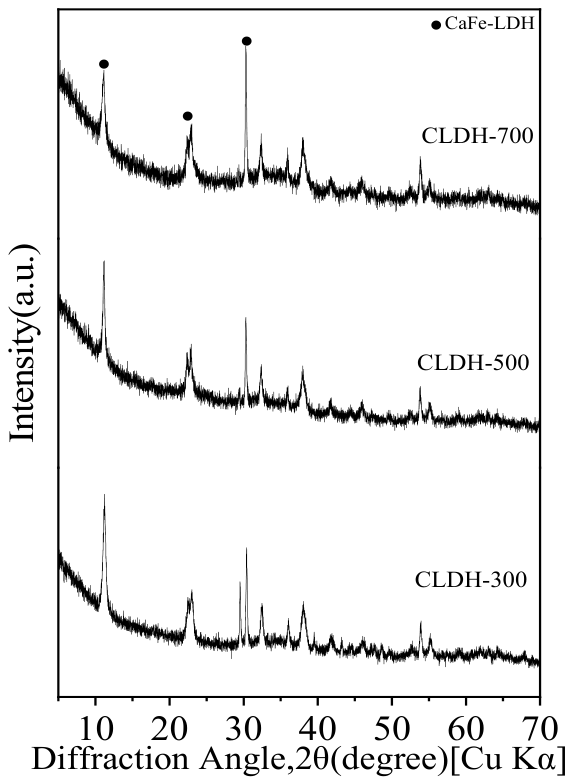
Figure 5 shows the XRD results of CLDHs after adsorbing . From the XRD results, it is clear that calcined LDH-derived oxides can reconstruct their layered structure upon hydration in an aqueous environment. The d003 value changed from 0.77 nm before adsorption to 0.79–0.80 nm after adsorption, which is consistent with the possible accommodation of in the interlayer region. However, the potential contribution of incorporation cannot be excluded, as the experiments were not conducted under a CO2-free atmosphere. This behavior is consistent with the well-known memory effect of layered double hydroxides, whereby calcined LDH-derived oxides can partially restore their layered structure upon exposure to water. The simultaneous occurrence of structural reconstruction and uptake suggests that the rehydration process may contribute to immobilization by regenerating layered domains and associated anion-retention sites [21,22]. However, because all three CLDHs exhibited a certain degree of structural reconstruction while their adsorption capacities differed substantially, the extent of structural recovery alone cannot account for the observed adsorption performance. In particular, the highest uptake of CLDH-700 despite its lowest specific surface area indicates that the adsorption performance was not governed solely by the textural properties of the calcined materials. The markedly higher Langmuir affinity constant of CLDH-700 together with the reappearance of LDH-like reflections after adsorption are consistent with, but do not directly prove, a possible contribution from the chemical characteristics of the partially reconstructed Ca/Fe-containing phases and the retention of by the metal oxides that did not participate in the rehydration reaction [16,23]. They may also reflect differences in the reactivity and reconstruction behavior of the oxide precursors formed at different calcination temperatures. However, because direct local coordination data was not obtained in this study, the proposed chemical interaction should be regarded as a plausible interpretation rather than a confirmed mechanism. Within this limitation, the results indicate that calcination temperature influences the physicochemical properties of the oxide precursors and, consequently, the adsorption behavior of the reconstructed LDH-like phases.
Figure 5.
XRD patterns of Ca/Fe-CLDHs after adsorption of .
3.3. Selenate Leaching Behavior from CLDH-Containing Cement Matrix
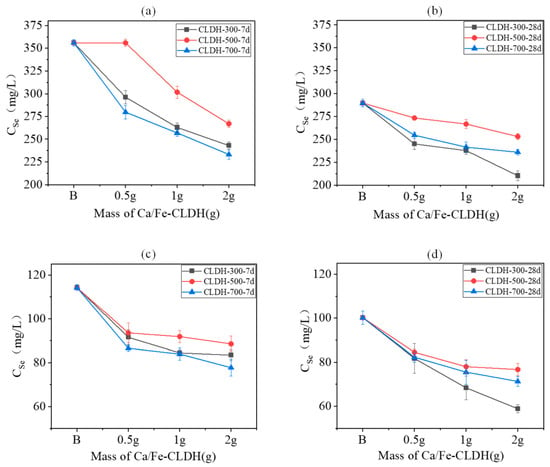
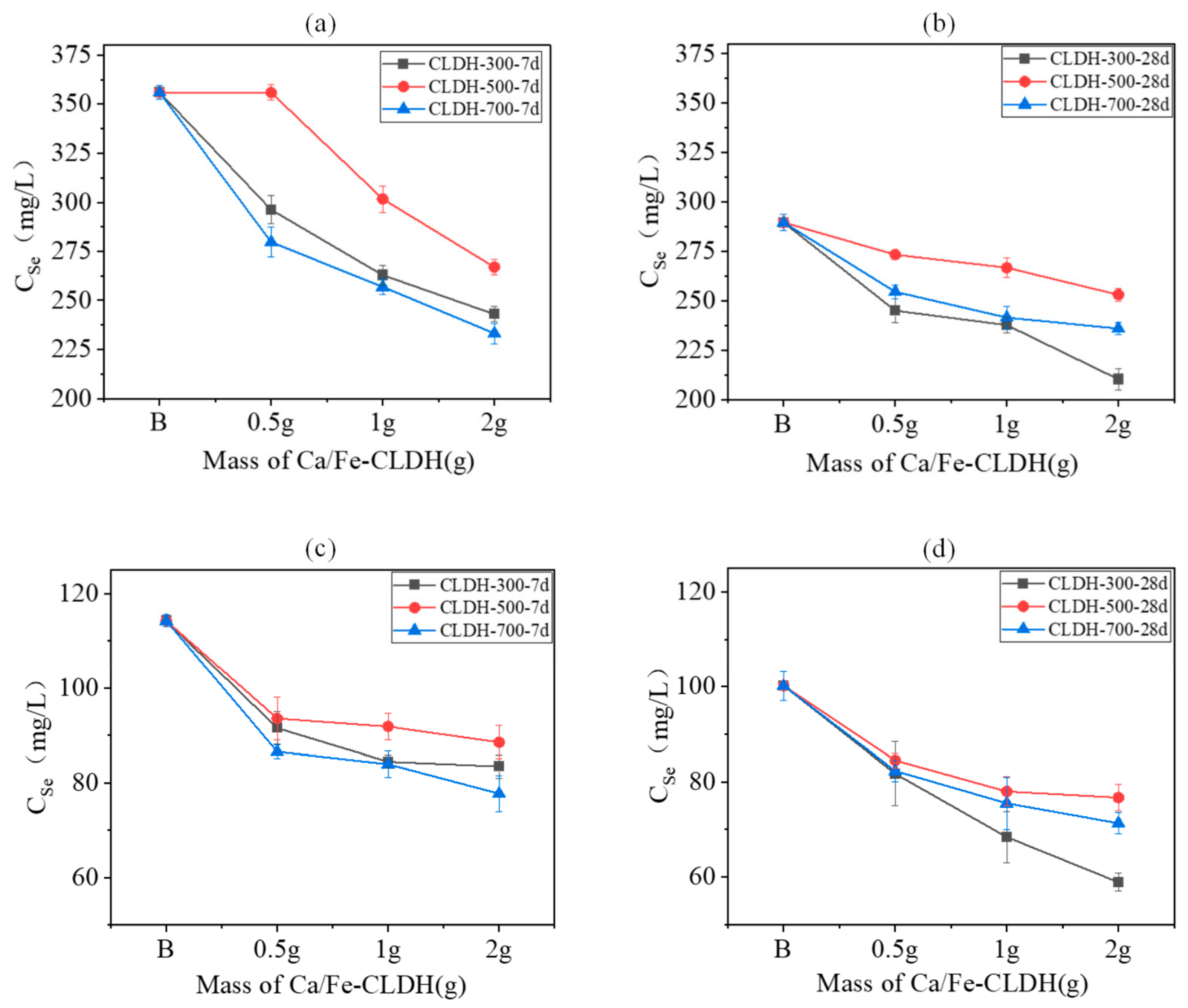
The leaching results of the dissolved total Se concentration from cement specimens was shown in Figure 6. It can be seen that the Se concentrations released from the cement specimens were strongly dependent on both the leaching environment and the incorporation of CLDH. In general, the addition of CLDH resulted in a lower Se concentration in the leachates compared with the corresponding blank cement, demonstrating the effectiveness of calcined Ca/Fe-LDH in suppressing release from the cement matrix. A pronounced difference in release was observed between the acidic (Figure 6a,b) and alkaline (Figure 6c,d) conditions. The Se concentrations under acidic conditions were substantially higher than those measured under alkaline conditions for both 7 and 28 d cured specimens. For the blank samples, the leaching of Se concentration was 356 mg/L at pH 4.7, whereas it was only 114 mg/L at pH 12 after 7 d of curing. A similar difference was also observed for the 28 d specimens. This was consistent with the alkaline cement environment which was more favorable for the retention of within the cementitious matrix [9,24,25,26]. The relatively low Se release under alkaline conditions can be associated with the highly alkaline pore environment generated during cement hydration. Under such conditions, the continued hydration and formation of hydration products can progressively reduce the accessibility of dissolved Se to the leaching solution. The influence of curing age was also evident from the comparison between the 7 and 28 d specimens. This indicates that continued cement hydration contributed to the progressive immobilization of Se. As hydration proceeded, the cement matrix became increasingly developed, which likely reduced the mobility and transport pathways available for the dissolved Se species [27,28].
Figure 6.
Leaching curves of from Ca/Fe-CLDH cement systems under different pH conditions: (a,b) pH = 4.7, and (c,d) pH = 12.0.
From Figure 6, it was clear that increasing the CLDH dosage generally enhanced the immobilization of Se, although the magnitude of this effect depended on the curing age and leaching pH. It also should be noted that maintaining a constant total liquid-to-solid ratio resulted in a simultaneous increase in the w/c ratio from 0.40 to 0.44 with increasing CLDH dosage. Therefore, the effect of the CLDH dosage cannot be fully decoupled from the effect of the w/c ratio in the present design. Under acidic conditions (Figure 6a), the 7 d specimens exhibited a particularly clear dosage-dependent decrease in Se release. Under alkaline conditions (Figure 6c), the effect of the CLDH dosage was also evident. This indicated that increasing the amount of CLDH provided additional capacity for Se retention within the cement matrix. Compared to CLDH-300 and CLDH-500, CLDH-700 exhibited the best inhibitory effect on the leaching of . However, for the 28 d specimens (Figure 6b,d), the dosage effect of CLDH-300 became more pronounced, with the lowest Se concentration observed at the highest dosage. In contrast, CLDH-500 generally showed relatively weaker immobilization performance under the investigated conditions. The enhanced early age performance of CLDH-700 is consistent with its relatively high adsorption capacity and adsorption affinity observed in the aqueous system. In contrast, the better long-term performance of CLDH-300 under alkaline conditions may be associated with its larger specific surface area, which could facilitate its interaction with the cement pore solution and promote sustained retention during prolonged curing through hydration reactions [29,30,31]. This indicates that, as the curing time changes, the dominant factors may also change. In the early stage, the inherent adsorption and reactivity of CLDH are more important, while, in the later stage, the interaction mediated by the surface area of the pore solution and the gradual maturation of the hydrated matrix become more crucial.
3.4. Phase and Hydration Evolution of CLDH-Modified Cement Matrices
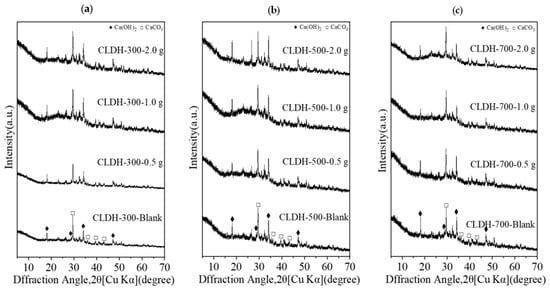
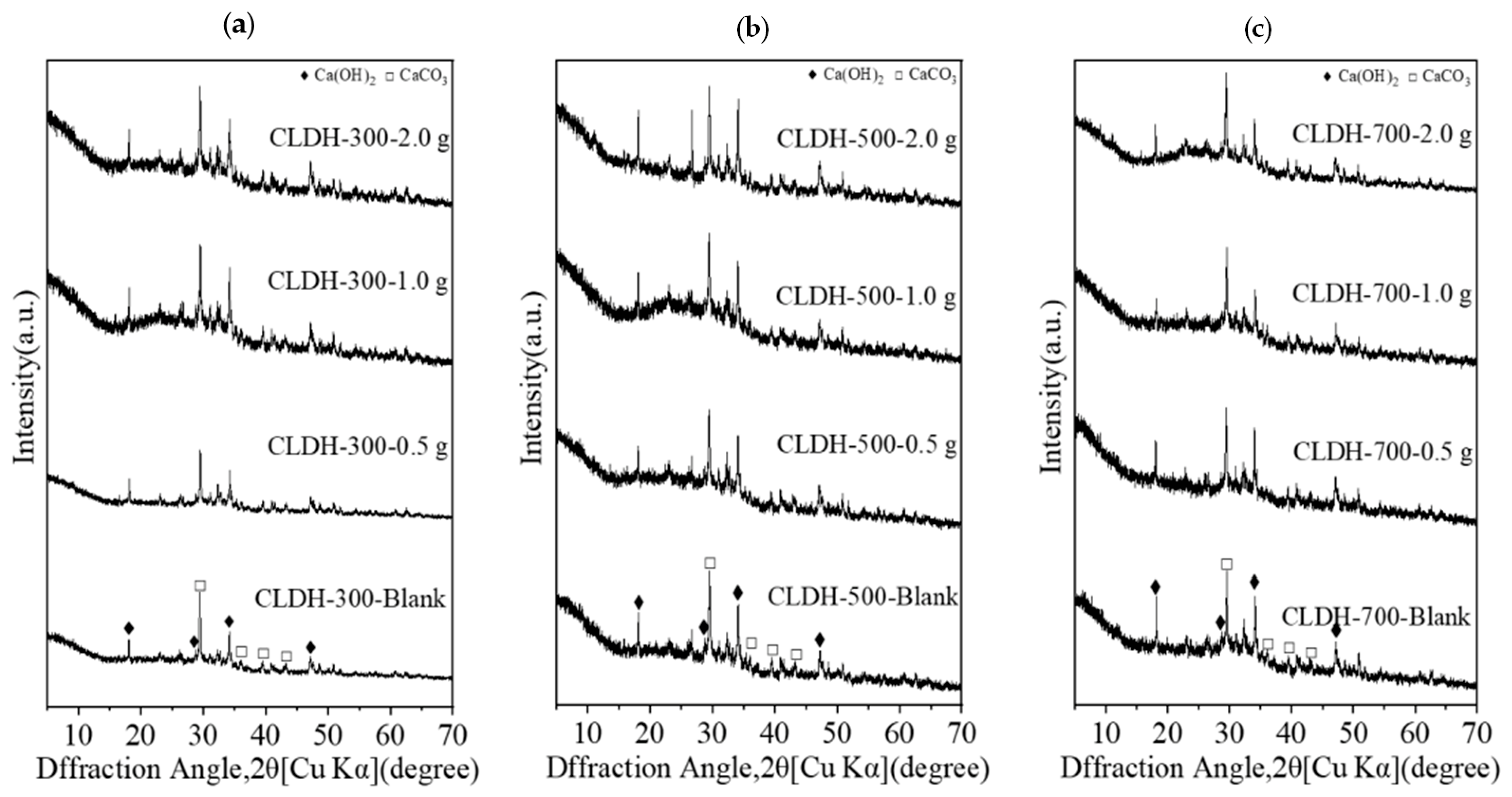
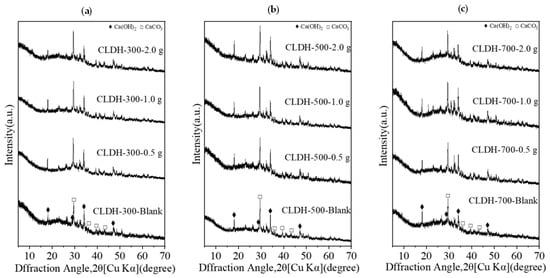
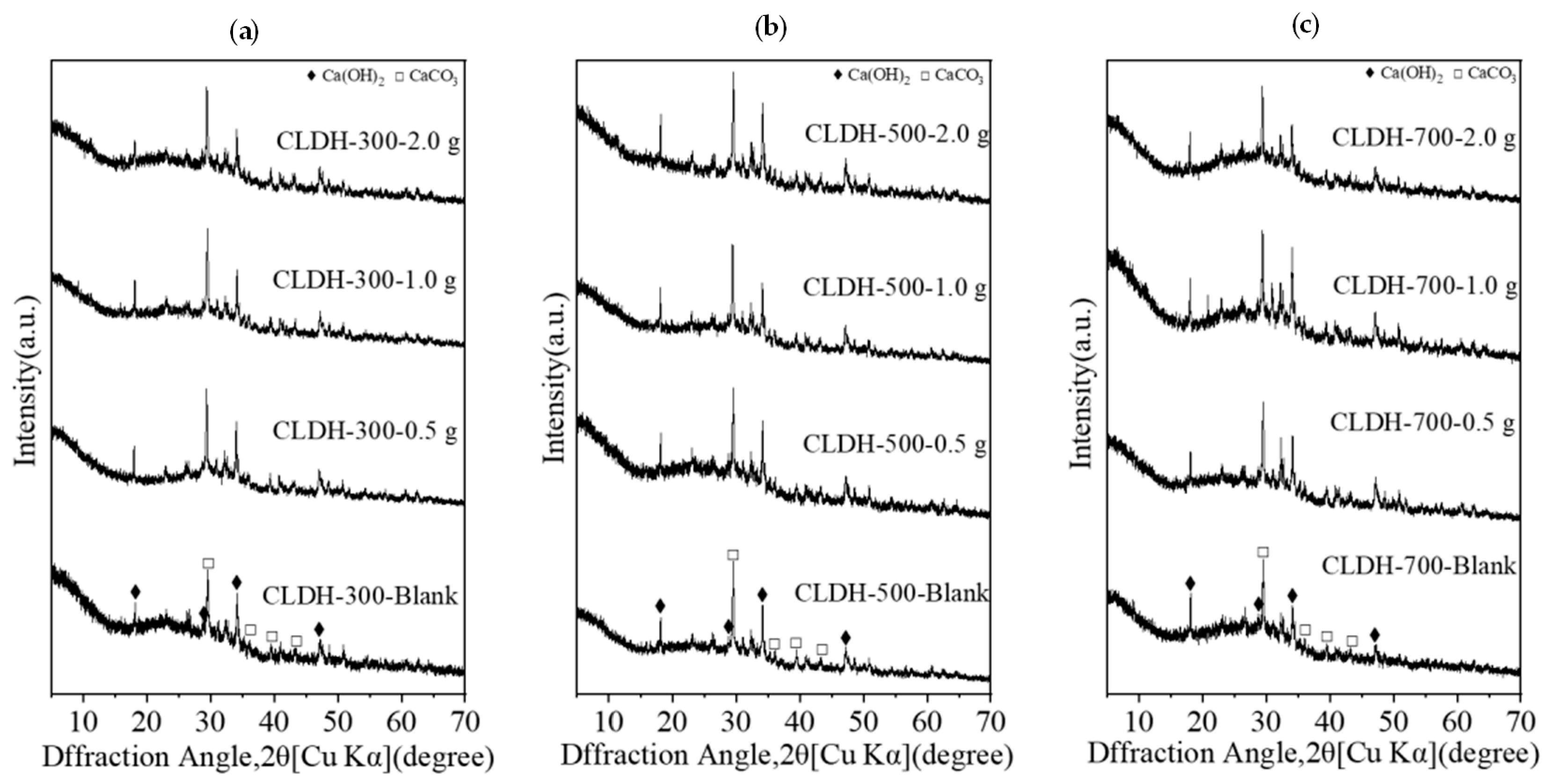
The phase evolution of the CLDH-containing cement matrices after curing was investigated by XRD and FTIR, with the corresponding patterns obtained after 7 and 28 d of curing. As shown in Figure 7, the XRD patterns of all specimens exhibited similar major diffraction features after 7 d curing, indicating that the incorporation of CLDH did not fundamentally change the crystalline phase assemblage of the cement matrix. Similar, no distinct new diffraction peaks were detected after 28 days of curing, and no clear LDH-like layered reflections were observed in the CLDH-containing samples (Figure 8). However, the characteristic diffraction features associated with the cement hydration products, including portlandite (Ca(OH)2), calcite (CaCO3) and amorphous C–S–H-type hydration products, were observed in both curing periods. Therefore, the XRD results are interpreted primarily as evidence for the persistence of the major crystalline phases rather than as direct evidence for the formation of specific -bearing crystalline phases. Although distinct LDH reflections were not detected in the cured cement matrices, the hydration-induced reconstruction observed in the aqueous experiments suggests that the partial reconstruction of CLDH may also occur under the water-rich and highly alkaline conditions of cement curing [29,32,33]. A comparison between the 7 and 28 d samples showed that the major crystalline phases remained generally similar. The broad diffuse contribution associated with poorly crystalline hydration products is consistent with the progressive development and maturation of C–S–H-type phases. However, the progressive development of cement hydration products may further restrict transport and alter the local chemical environment. The Ca/Fe-containing phases derived from CLDH may additionally contribute to retention. Therefore, the lower Se leaching observed for 28 d specimens can be partly associated with the continued development of the hydrated cement matrix.
Figure 7.
XRD patterns of Ca/Fe-CLDH cement solidified specimens after 7 d of curing: (a) CLDH-300, (b) CLDH-500, and (c) CLDH-700.
Figure 8.
XRD patterns of Ca/Fe-CLDH cement solidified specimens after 28 d of curing: (a) CLDH-300, (b) CLDH-500, and (c) CLDH-700.
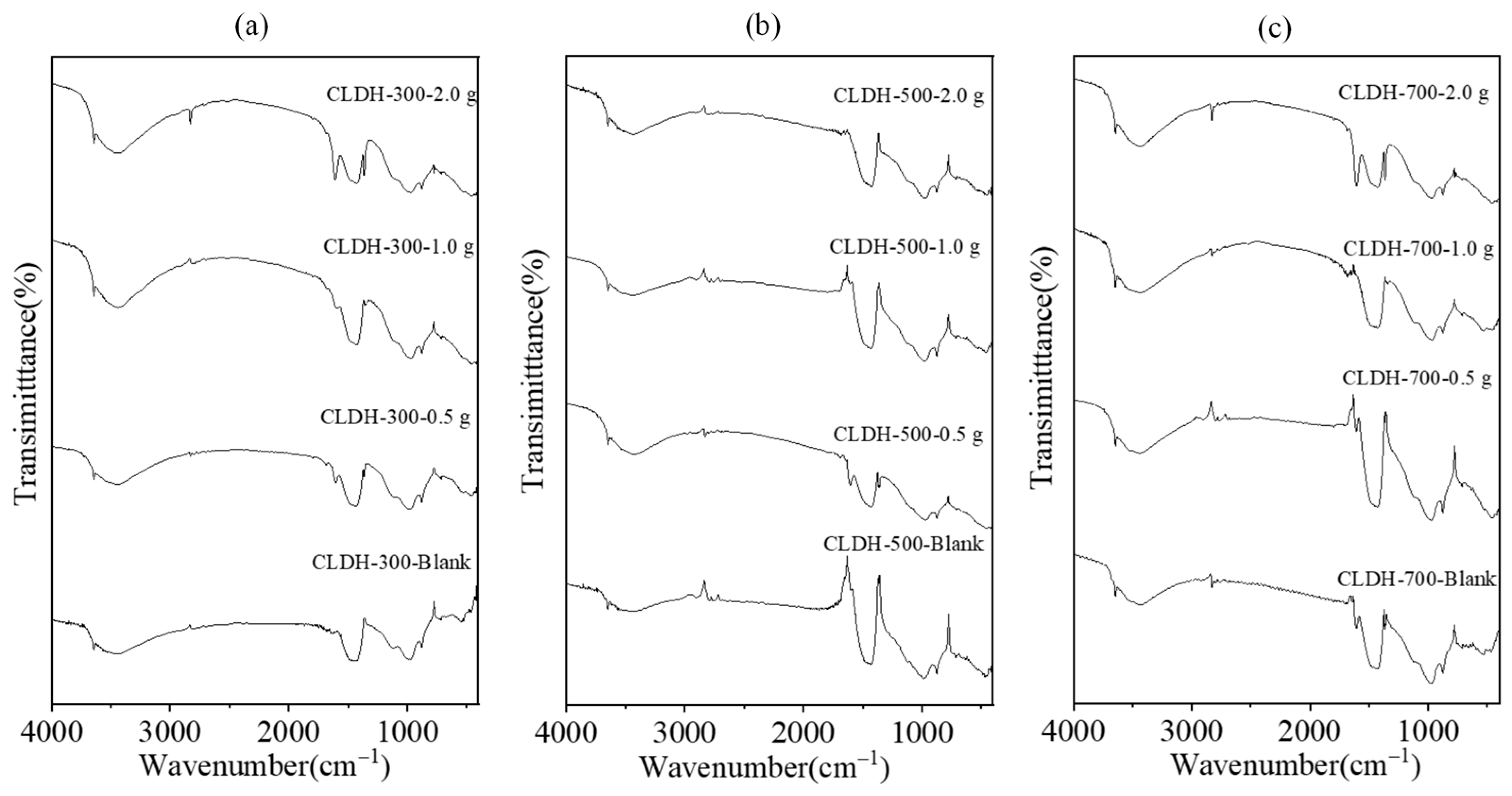
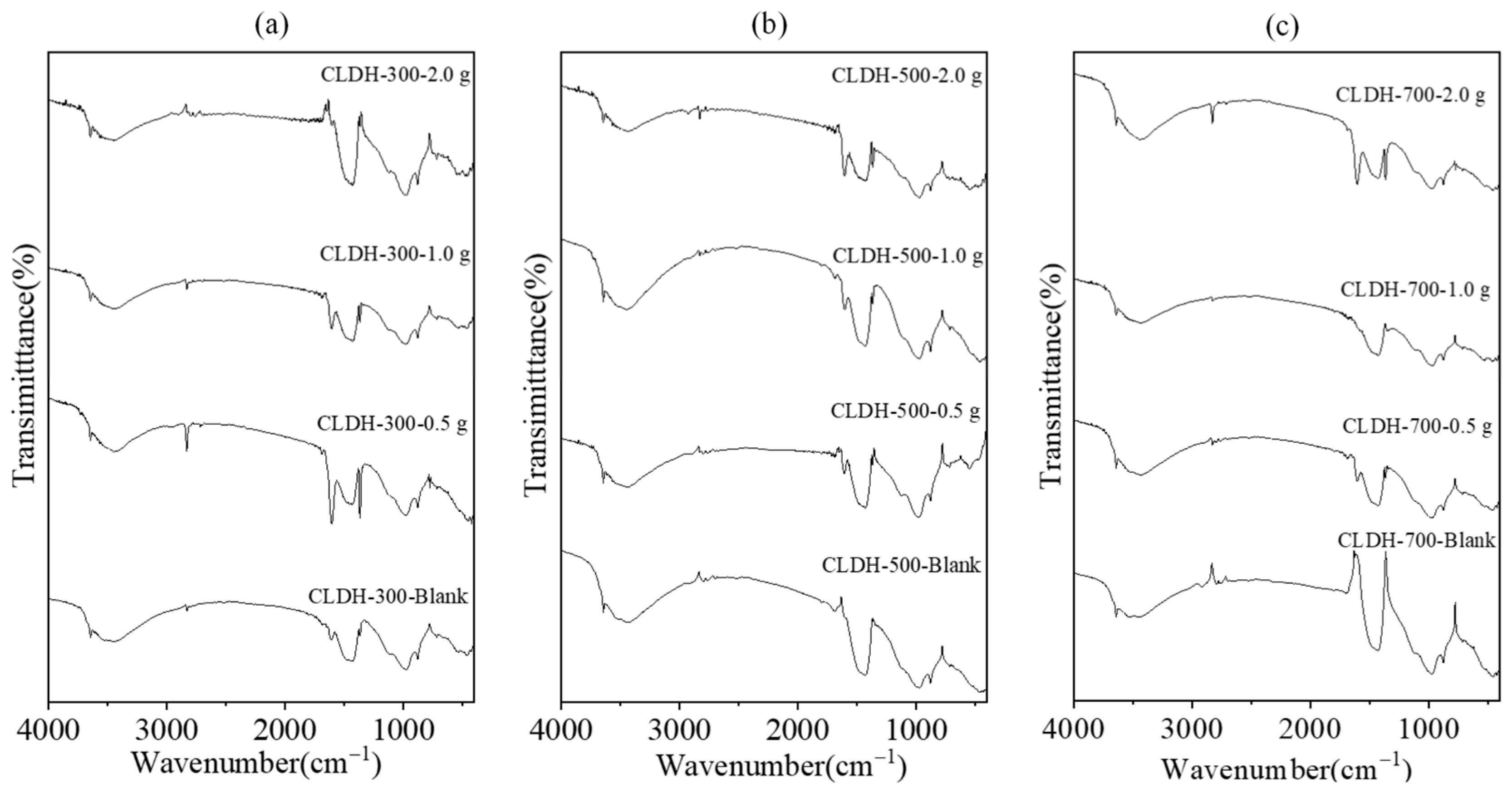
The FTIR spectra (Figure 9 and Figure 10) provided complementary information on the chemical environment of the hydrated cement matrix after 7 and 28 d curing, respectively. The broad absorption band in the 3200–3600 cm−1 region is attributed to O–H stretching vibrations associated with hydroxyl groups and bound water, whereas the band near 1640 cm−1 can be assigned to the bending vibration of H–O–H [34]. The carbonate-related bands in the 1400–1500 cm−1 region, together with the band near 870 cm−1, are consistent with CaCO3 identified by XRD. The absorption features in the 900–1100 cm−1 region are mainly associated with Si–O stretching vibrations of silicate species and are therefore related to C–S–H-type hydration products. Importantly, the major FTIR bands were retained after CLDH incorporation, and no completely new dominant absorption band was observed. Instead, changes were mainly reflected in the relative intensity and shape of the existing bands. Moreover, these changes were not strictly monotonic with increasing the CLDH dosage from 0.5 to 2 g, indicating that the spectral response resulted from the combined contributions of cement hydration, carbonate-containing phases, bound water, and CLDH-derived phases. This observation is consistent with the XRD results and suggests that CLDH primarily modified the local hydration environment and phase evolution rather than producing a readily detectable new crystalline phase. Therefore, the complex pore-solution chemistry, cement hydration, and possible reconfiguration of CLDH all have significant effects on the retention of . The observed immobilization performance cannot be solely attributed to the adsorption capacity of CLDH; other retention pathways related to the cement matrix should also be considered.
Figure 9.
FTIR spectra of Ca/Fe-CLDH cement systems after 7 d of curing: (a) CLDH-300, (b) CLDH-500, and (c) CLDH-700.
Figure 10.
FTIR spectra of Ca/Fe-CLDH cement systems after 28 d of curing: (a) CLDH-300, (b) CLDH-500, and (c) CLDH-700.
Based on the XRD, FTIR, and leaching results, the retention of in the CLDH-amended cement system is proposed to involve several possible pathways: (i) Anion exchange within reconstructed LDH-like interlayers: The reappearance of LDH-like layered reflections in the XRD patterns after aqueous adsorption indicates that the partial reconstruction of the layered structure occurs upon contact with the selenate solution and provides a structural locus for anion exchange. And it is also possible that this would happen in the CLDH-containing cement system that incorporated into the LDH-like interlayer. (ii) Surface interaction with Ca/Fe-containing phases: The markedly reduced leaching observed after the CLDH addition cannot be attributed solely to changes in the textural properties of CLDH, particularly because CLDH-700 exhibited the lowest specific surface area among the tested materials but showed the strongest immobilization performance in the cementitious matrix. This indicates that the immobilization of in the cementitious system was governed by factors beyond the surface area and pore structure, and points to the chemical reactivity of the Ca/Fe oxide surfaces formed at different calcination temperatures. (iii) Cement hydration products: The incorporation of Ca/Fe-CLDH may modify the hydration environment and the chemical characteristics of the cement matrix. In the cured matrices, the diffraction features of portlandite, calcite, and poorly crystalline C–S–H-type phases appeared across all formulations and curing ages, whereas no distinct Se-bearing crystalline phase was detected, indicating that selenium is more likely associated with the hydrated matrix. However, higher-resolution speciation approaches would offer the further refinement of the relative contributions of the individual pathways in future studies.
Previous studies have demonstrated the potential of different materials for Se immobilization, although their effectiveness depends on the material composition and immobilization environment. Guo et al. investigated the adsorption of and by ettringite, demonstrating the role of cement hydration products in Se incorporation [8]. In comparison, conventional LDH-based materials have primarily been studied for Se removal from aqueous solutions. Yang et al. reported enhanced selenium adsorption by calcined LDHs compared with their uncalcined counterparts [35], while Schellenger et al. demonstrated the uptake of Se oxyanions by Mg-Fe-LDHs through anion exchanging [36]. Furthermore, Tian et al. investigated the use of CLDH as an additive in geopolymer matrices for Se immobilization, highlighting the potential of CLDHs in cementitious related waste forms [37]. Compared with these previous studies, the present work extends the investigation to Ca/Fe-CLDH-modified conventional cement systems and evaluates their retention under different curing and leaching conditions. Notably, the aqueous adsorption performance of the CLDHs did not fully correspond to their leaching inhibition performance in cement. Although CLDH-700 exhibited the highest selenate adsorption capacity despite having the lowest specific surface area, the immobilization performance in cement was also influenced by the additive dosage, curing time, and leaching environment. In particular, CLDH-700 generally exhibited better leaching inhibition than CLDH-300 and CLDH-500, whereas the relative contributions of different CLDHs varied with the experimental conditions. These results emphasize the interaction between CLDHs and the cement hydration environment.
4. Conclusions
Calcination substantially changed the phase composition and structural properties of Ca/Fe-LDHs, resulting in distinct adsorption behaviors. Although CLDH-700 had the lowest specific surface area, it exhibited the highest uptake, indicating that adsorption was not governed solely by the surface area. All three CLDHs underwent hydration-induced structural reconstruction after adsorption, demonstrating the contribution of the LDH memory effect to uptake. When incorporated into cement, CLDH generally reduced leaching, with the increasing of CLDH addition amounts. The immobilization performance depended on the curing age, leaching pH, and calcination temperature, with CLDH-700 showing better retention at the early curing stage and CLDH-300 exhibiting better long-term retention under alkaline conditions. XRD and FTIR results indicated that CLDH incorporation affected the hydration of the cement matrix to immobilize but without producing a clearly detectable new dominant crystalline phase. The enhanced immobilization was likely associated with the combined effects of cement hydration, CLDH hydration-induced reconstruction, and the contribution of Ca/Fe-containing phases to retention. Overall, the results highlight the importance of calcination temperature and cement hydration conditions in determining the performance of Ca/Fe-CLDHs for immobilization in cementitious matrices.
The results of this study should be regarded as laboratory-scale evidence of the relative selenium retention behavior of CLHD when mixed with cement-based materials, and may provide a reference to qualify a cement-based waste form for engineering disposal. The main significance lies in two aspects: (i) the calcination temperature of Ca/Fe-CLDH has been proven to be an effective variable for regulating the absorption efficiency of sulfates, providing a practical basis for the selection of modification formulae; and (ii) combining the adsorption isotherms with leaching tests provides a feasible method for comparing different formulations at the laboratory scale. Moreover, although the acidic and alkaline leaching tests demonstrated the potential of Ca/Fe-CLDHs for immobilization in cementitious matrices, the effects of coexisting anions, particularly and , remain unclear. Further studies are needed to evaluate their potential competitive effects and clarify the immobilization behavior of under more complex cementitious conditions. In addition, the cement samples were evaluated after 7 d and 28 d of curing, while the leaching tests were completed within a relatively short period of time. Although the results indicated that Ca/Fe-CLDH had the potential to improve the immobilization of Se under the conditions studied, these results cannot directly infer their long-term retention performance in the form of cement-based waste. To assess the sustained immobilization effect of Se and the evolution of the related cement-based phases, long-term leaching and durability tests under more representative environmental conditions are still required.
Author Contributions
Conceptualization, M.W. and P.D.; methodology, M.W.; investigation, X.W.; data curation, P.D.; formal analysis, P.D.; writing—original draft preparation, M.W.; writing—review and editing, L.W. and Y.L.; supervision, M.W. and L.W. All authors have read and agreed to the published version of the manuscript.
Funding
This research was funded by project ZR2023QB165 supported by the Shandong Provincial Natural Science Foundation.
Institutional Review Board Statement
Not applicable.
Informed Consent Statement
Not applicable.
Data Availability Statement
The data presented in this study are available from the corresponding author upon reasonable request.
Conflicts of Interest
The authors declare no conflicts of interest.
References
- Jörg, G.; Bühnemann, R.; Hollas, S.; Kivel, N.; Kossert, K.; Van Winckel, S.; Gostomski, C.L.V. Preparation of radiochemically pure 79Se and highly precise determination of its half-life. Appl. Radiat. Isot. 2010, 68, 2339–2351. [Google Scholar] [CrossRef] [Scilit] [PubMed]
- Kim, B.; Ma, H.-M.; Oh, S.; Um, W. Immobilization of radioactive selenate ettringite using metakaolin-based geopolymer waste form. J. Nucl. Mater. 2026, 632, 156901. [Google Scholar] [CrossRef] [Scilit]
- Peak, D.; Sparks, D.L. Mechanisms of Selenate Adsorption on Iron Oxides and Hydroxides. Environ. Sci. Technol. 2002, 36, 1460–1466. [Google Scholar] [CrossRef] [Scilit] [PubMed]
- Chen, J.; Xu, Y.; Wang, R.; Ye, J.; Zhang, W. Enhancing the immobilization of radioactive anions in cement-based materials using layered double Hydroxides: A review. Prog. Nucl. Energy 2026, 195, 106295. [Google Scholar] [CrossRef] [Scilit]
- Shi, C.; Fernández-Jiménez, A. Stabilization/solidification of hazardous and radioactive wastes with alkali-activated cements. J. Hazard. Mater. 2006, 137, 1656–1663. [Google Scholar] [CrossRef] [Scilit] [PubMed]
- Lidiane, F.J.; Cézar, A.C.; Marilda, B.B.; Janaíde, C.R. A Solidification and Stabilization Process in Cementitious Materials: A Review. J. Hazard. Toxic. Radioact. Waste 2026, 30, 03126003. [Google Scholar] [CrossRef] [Scilit]
- Byeon, H.; Park, J. Statistical analysis of effects of test conditions on compressive strength of cement solidified radioactive waste. Nucl. Eng. Technol. 2023, 55, 876–883. [Google Scholar] [CrossRef] [Scilit]
- Guo, B.; Sasaki, K.; Hirajima, T. Selenite and selenate uptaken in ettringite: Immobilization mechanisms, coordination chemistry, and insights from structure. Cem. Concr. Res. 2017, 100, 166–175. [Google Scholar] [CrossRef] [Scilit]
- Baur, I.; Johnson, C. Sorption of Selenite and Selenate to Cement Minerals. Environ. Sci. Technol. 2003, 37, 3442–3447. [Google Scholar] [CrossRef] [Scilit] [PubMed]
- Deng, H.; Tang, S.; Hu, J.; Klemczak, B.; Atabaev, F.B.; Borg, R.P. Molecular dynamics investigation of seawater ion adsorption and diffusion in calcium sulfoaluminate cement hydrates: A comparative study of ettringite and monosulfoaluminate. J. Build. Eng. 2026, 131, 117340. [Google Scholar] [CrossRef] [Scilit]
- Chen, Z.; Zhang, P.; Brown, K.G.; van der Sloot, H.A.; Meeussen, J.C.L.; Garrabrants, A.C.; Wang, X.; Delapp, R.C.; Kosson, D.S. Impact of oxidation and carbonation on the release rates of iodine, selenium, technetium, and nitrogen from a cementitious waste form. J. Hazard. Mater. 2023, 449, 131004. [Google Scholar] [CrossRef] [Scilit] [PubMed]
- De Weerdt, K.; Bernard, E.; Kunther, W.; Pedersen, M.T.; Lothenbach, B. Phase changes in cementitious materials exposed to saline solutions. Cem. Concr. Res. 2023, 165, 107071. [Google Scholar] [CrossRef] [Scilit]
- Li, K.; Hu, J.; Nong, Y.; Chen, Z.; Li, J.; Wang, Y.; Chen, Y. Investigation on chloride adsorption stability in cement paste incorporated with CLDHs under sulfate attack: Experiment and molecular dynamics. Constr. Build. Mater. 2026, 538, 147360. [Google Scholar] [CrossRef] [Scilit]
- Zhou, Z.; Zhang, Z.; Zhu, Y.; Zhang, W.; Feng, C.; Li, C.; Wang, A.; Bernal, S.A.; Jiang, Z. The micro-mechanical reinforcement mechanism of alkali-activated cement by CLDH seeding: A cross-scale investigation. Cem. Concr. Compos. 2026, 170, 106555. [Google Scholar] [CrossRef] [Scilit]
- Wang, Y.; Wang, P.; Zhang, S.; Wu, J.; Liu, Y.; Niu, D. Performance analysis of calcined Mg-Al layered double hydroxides (CLDH) and its effect on the durability of concrete under the combined action of temperature and sulfate attack. Constr. Build. Mater. 2025, 484, 141656. [Google Scholar] [CrossRef] [Scilit]
- Paikaray, S.; Hendry, M.J.; Essilfie-Dughan, J. Controls on arsenate, molybdate, and selenate uptake by hydrotalcite-like layered double hydroxides. Chem. Geol. 2013, 345, 130–138. [Google Scholar] [CrossRef] [Scilit]
- Wethangkaboworn, P.; Yoshimura, M.; Nishikori, G.; Nishiyama, T.; Kameda, T. Assessment of Selenate Adsorption from Industrial Wastewater Using Chloride-Type Layered Double Hydroxides. ACS ES T Water 2026, 6, 4200–4213. [Google Scholar] [CrossRef] [Scilit]
- Al-Jaberi, M.; Naille, S.; Dossot, M.; Ruby, C. Interlayer interaction in Ca–Fe layered double hydroxides intercalated with nitrate and chloride species. J. Mol. Struct. 2015, 1102, 253–260. [Google Scholar] [CrossRef] [Scilit]
- Bugris, V.; Ádok-Sipiczki, M.; Anitics, T.; Kuzmann, E.; Homonnay, Z.; Kukovecz, Á.; Kónya, Z.; Sipos, P.; Pálinkó, I. Thermal decomposition and reconstruction of CaFe-layered double hydroxide studied by X-ray diffractometry and 57Fe Mössbauer spectroscopy. J. Mol. Struct. 2015, 1090, 19–24. [Google Scholar] [CrossRef] [Scilit]
- Park, J.Y.; Yoo, S.B.; Cho, H.-B.; Lee, H.-S.; Choa, Y.-H. CaFe-Based Layered Double Oxides With Superior Iron Alloy Corrosion Inhibition Behaviors in Aggressive Seawater Environment. Front. Chem. 2022, 10, 813008. [Google Scholar] [CrossRef] [Scilit] [PubMed]
- Ye, H.; Liu, S.; Yu, D.; Zhou, X.; Qin, L.; Lai, C.; Qin, F.; Zhang, M.; Chen, W.; Chen, W.; et al. Regeneration mechanism, modification strategy, and environment application of layered double hydroxides: Insights based on memory effect. Coord. Chem. Rev. 2022, 450, 214253. [Google Scholar] [CrossRef] [Scilit]
- Li, M.; Chowdhury, T.; Kraetz, A.; Jing, H.; Dopilka, A.; Farmen, L.; Sinha, S.; Chan, C. Layered Double Hydroxide Sorbents for Removal of Selenium from Power Plant Wastewaters. ChemEngineering 2019, 3, 20. [Google Scholar] [CrossRef] [Scilit]
- Park, J.Y.; Lee, J.; Lim, M.; Go, G.-M.; Cho, H.-B.; Lee, H.-S.; Choa, Y.-H. Structure-modulated CaFe-LDHs with superior simultaneous removal of deleterious anions and corrosion protection of steel rebar††Electronic supplementary information (ESI) available. RSC Adv. 2021, 11, 10951–10961. [Google Scholar] [CrossRef] [Scilit] [PubMed]
- Wang, M.; Sasaki, K. Effect of amino acids on the stability of anionic pollutants in fly ash blended cement. J. Environ. Chem. Eng. 2022, 10, 107926. [Google Scholar] [CrossRef] [Scilit]
- Baur, I.; Johnson, C.A. The solubility of selenate-AFt (3CaO·Al2O3·3CaSeO4·37.5H2O) and selenate-AFm (3CaO·Al2O3·CaSeO4·xH2O). Cem. Concr. Res. 2003, 33, 1741–1748. [Google Scholar] [CrossRef] [Scilit]
- Rojo, I.; Grivé, M.; Rovira, M.; Riba, O.; García Cobos, D.; Domenech, C.; Pablo, J. Immobilization and Long-term Evolution of Selenate in Portland Cement. MRS Proc. 2011, 1265, 215–220. [Google Scholar] [CrossRef] [Scilit]
- John, E.; Lothenbach, B. Cement hydration mechanisms through time—A review. J. Mater. Sci. 2023, 58, 9805–9833. [Google Scholar] [CrossRef] [Scilit]
- de Oliveira, A.M.; Oliveira, A.P.; Vieira, J.D.; Junior, A.N.; Cascudo, O. Study of the development of hydration of ternary cement pastes using X-ray computed microtomography, XRD-Rietveld method, TG/DTG, DSC, calorimetry and FTIR techniques. J. Build. Eng. 2023, 64, 105616. [Google Scholar] [CrossRef] [Scilit]
- Almeida, A.A.; Dos Santos, C.C.; Santos, R.M.M.; Elkaim, E.; Beauvois, A.; Pulcinelli, S.H.; Briois, V.; Santilli, C.V. Relevance of layered double hydroxides and their derived mixed oxides nanoparticles in the crystallization of cement hydration phases: A time-resolved study of the kinetic mechanism. Constr. Build. Mater. 2026, 506, 144886. [Google Scholar] [CrossRef] [Scilit]
- dos Santos, C.C.; Almeida, A.A.; Pulcinelli, S.H.; Santilli, C.V. Relevance of Specific Surface of Mixed Oxide Derived from Layered Double Hydroxides on the Rheological Properties and Porosity of Cement Pastes. ACS Appl. Mater. Interfaces 2024, 17, 13050–13064. [Google Scholar] [CrossRef] [Scilit] [PubMed]
- Wu, Y.; Duan, P.; Yan, C. Role of layered double hydroxides in setting, hydration degree, microstructure and compressive strength of cement paste. Appl. Clay Sci. 2018, 158, 123–131. [Google Scholar] [CrossRef] [Scilit]
- Yoon, S.; Moon, J.; Bae, S.; Duan, X.; Giannelis, E.P.; Monteiro, P.M. Chloride adsorption by calcined layered double hydroxides in hardened Portland cement paste. Mater. Chem. Phys. 2014, 145, 376–386. [Google Scholar] [CrossRef] [Scilit]
- Liu, J.; Gao, X.; Chen, T. Effect of SiO2-modified calcined layered double hydroxides on the properties of cement-based material: Crucial role of the phase-transformation induced by alkaline pore solution. Cem. Concr. Res. 2024, 178, 107465. [Google Scholar] [CrossRef] [Scilit]
- Bouzar, B.; Mamindy-Pajany, Y.; Hurel, C. Innovative Reuse of Fly Ashes for Treatment of a Contaminated River Sediment: Synthesis of Layered Double Hydroxides (LDH) and Chemical Performance Assessments. Waste Biomass Valorization 2023, 14, 3923–3945. [Google Scholar] [CrossRef] [Scilit]
- Yang, L.; Shahrivari, Z.; Liu, P.K.T.; Sahimi, M.; Tsotsis, T.T. Removal of Trace Levels of Arsenic and Selenium from Aqueous Solutions by Calcined and Uncalcined Layered Double Hydroxides (LDH). Ind. Eng. Chem. Res. 2005, 44, 6804–6815. [Google Scholar] [CrossRef] [Scilit]
- Schellenger, A.E.P.; Choi, S.; Onnis-Hayden, A.; Larese-Casanova, P. Selenium oxyanion exchange with Mg(II)-Fe(III) and Fe(II)-Fe(III) layered double hydroxides. Appl. Clay Sci. 2021, 200, 105959. [Google Scholar] [CrossRef] [Scilit]
- Tian, Q.; Guo, B.; Sasaki, K. Immobilization mechanism of Se oxyanions in geopolymer: Effects of alkaline activators and calcined hydrotalcite additive. J. Hazard. Mater. 2020, 387, 121994. [Google Scholar] [CrossRef] [Scilit] [PubMed]

Disclaimer/Publisher’s Note: The statements, opinions and data contained in all publications are solely those of the individual author(s) and contributor(s) and not of MDPI and/or the editor(s). MDPI and/or the editor(s) disclaim responsibility for any injury to people or property resulting from any ideas, methods, instructions or products referred to in the content. |
© 2026 by the authors. Licensee MDPI, Basel, Switzerland. This article is an open access article distributed under the terms and conditions of the Creative Commons Attribution (CC BY) license.