


Abstract
The Lower Silurian Qalibah Formation is a key component of the Arabian Basin petroleum system and hosts the organic-rich Qusaiba Member, a major source rock for Paleozoic hydrocarbon reservoirs in Saudi Arabia. Despite its importance, the micro-scale sedimentological characteristics and depositional processes of the Qalibah Formation remain poorly constrained. This study presents a microfacies analysis integrated with sedimentological and ichnological observations from Qalibah Formation outcrops in the Qassim Region, Saudi Arabia. Five microfacies were identified, from bottom to top: (1) massive claystone with sparse bioturbation (BI 0–1), (2) claystone with starved ripples, (3) massive to graded siltstone, (4) massive to laminated sandstone, and (5) rippled and low-angle laminated sandstone with moderate bioturbation (BI 2–3). These microfacies record suspension-settling, sediment-laden density-flow deposition, and tractional reworking. Trace fossils, including Phycosiphon and mantle-and-swirl structures, occur mainly within event-bed siltstones, suggesting opportunistic colonization following rapid deposition. Sandier microfacies exhibit greater diversity of trace fossils, which disrupt primary sedimentary fabrics. Vertical coarsening-upward facies relationships are interpreted to represent deposition within a deltaic system evolving from offshore to distal prodelta to proximal delta-front environments. These results improve understanding of sediment transport and biogenic modification, and provide insights into heterogeneity in mud-dominated unconventional systems.
1. Introduction
Mud-dominated sedimentary successions have traditionally been interpreted as relatively homogeneous successions and products of low-energy depositional environments characterized by suspension-settling deposition in relatively deep and quiescent marine settings. This interpretation largely stems from the apparent homogeneity of mudstones at outcrop scale and the limited sedimentary structures [1,2,3]. However, advances in sedimentological research over the past several decades have significantly altered this perception. Recent studies have demonstrated that mudstones commonly preserve a wide range of micro-scale sedimentary structures indicative of dynamic depositional processes resulting in graded laminae, ripple cross-lamination, and erosional surfaces [4,5,6,7]. These structures may suggest processes such as turbidity currents, hyperpycnal flows, and storm-induced sediment transport, which play a critical role in the deposition of fine-grained sediments [8,9]. Each of these processes can leave subtle signatures in fine-grained sediments that may only be visible under microscopic examination. For example, hyperpycnal flows have been increasingly recognized as important mechanisms for transporting fine-grained sediments from river mouths into marine basins; however, it is challenging to recognize their presence in distal settings due to subtle changes in grain size [9,10,11,12,13]. Consequently, microfacies analysis has become an essential approach for understanding the depositional history and environmental conditions associated with mud-dominated successions.
The Silurian Qalibah Formation of Saudi Arabia is one of the most important stratigraphic units within the Paleozoic petroleum system of the Arabian Basin. The lower portion of the formation, the Qusaiba Member, contains organic-rich mudstones that serve as the primary source rock for hydrocarbons accumulated in several Paleozoic reservoirs across the Arabian Plate. These mudstones have also attracted increasing attention as potential unconventional hydrocarbon reservoirs due to their high organic content and widespread distribution [14,15]. Previous investigations of the Qalibah Formation have largely focused on regional stratigraphy, basin evolution, and palynological evidence used to infer depositional environments (e.g., [14,16,17]). These studies suggest that the formation was deposited during a major marine transgression following the Late Ordovician glaciation [18,19,20,21]. Rising sea levels flooded large portions of the Arabian Peninsula, creating a broad epicontinental sea where fine-grained sediments accumulated over an extensive area [18,19,20,21].
Despite the regional importance of the Qalibah Formation, relatively few studies have focused on its micro-scale sedimentological characteristics [22]. Understanding the distribution of microfacies within mud-dominated successions is critical because subtle variations in grain size, mineralogy, and sedimentary structures can significantly influence reservoir properties such as porosity, permeability, total organic carbon preservation and mechanical behavior.
In addition to sedimentological features, trace fossils preserved within these sediments provide valuable insights into paleoenvironmental conditions. Ichnological observations help constrain factors such as oxygen availability, nutrient supply, sedimentation rate, and substrate consistency. In many cases, trace fossil assemblages reveal environmental stress conditions that cannot be identified solely from physical sedimentary structures [23,24,25,26].
The primary objective of this study is therefore to provide microfacies characteristics of the Qalibah Formation through detailed petrographic analysis integrated with ichnological observations. Five microfacies were identified within the outcrops, each characterized by distinct sedimentological and ichnological features that provide a basis for interpreting depositional processes and environmental settings. By integrating these observations with regional sedimentological interpretations and the vertical stratigraphic relationships, this study develops a depositional model for the studied succession while acknowledging the limitations of interpreting specific depositional mechanisms from non-unique sedimentary features. Furthermore, the study discusses the potential implications of microfacies variability for reservoir heterogeneity, recognizing that these implications require further evaluation through direct petrophysical measurements. This approach contributes to the understanding of depositional variability in fine-grained successions and provides a geological framework for future investigations of unconventional mudstone reservoirs both regionally and globally.
2. Geological Setting
The Qalibah Formation was deposited during the Early Silurian within the Arabian Basin, an extensive intracratonic basin that developed across the Arabian Plate. This basin formed as a result of tectonic subsidence combined with global sea-level rise following the Late Ordovician glaciation [19,27,28]. Within Saudi Arabia, the Qalibah Formation is widely exposed in several regions including the Tabuk Region, the Qassim Region, and the Wajid Plateau [20,21]. The formation typically ranges between 700 and 900 m in thickness and consists predominantly of fine-grained siliciclastic sediments.
Stratigraphically, the Qalibah Formation is subdivided into two major members: the Qusaiba Member and the Sharawra Member. The Qusaiba Member forms the lower part of the formation and is dominated by organic-rich mudstones and siltstones [14,17]. These rocks were deposited under relatively low-energy marine conditions and commonly contain abundant graptolite fossils. The Sharawra Member overlies the Qusaiba Member and contains a higher proportion of siltstone and sandstone. Sedimentary structures such as graded bedding, ripple lamination, and hummocky cross-stratification indicate deposition under more energetic conditions influenced by gravity flows and storm activity [29,30,31].
The depositional architecture of the Qalibah Formation was likely influenced by a combination of factors including sediment supply from nearby continental areas, basin topography inherited from glacial erosion, and hydrodynamic conditions within the marine basin. River systems draining adjacent landmasses transported siliciclastic sediments into the basin where they were redistributed by density flows and storm processes. These interactions produced a complex sedimentary system characterized by the interbedding of mudstones, siltstones, and sandstones representing environments ranging from distal prodelta settings to more proximal delta-front environments [19,30,32,33].
3. Materials and Methods
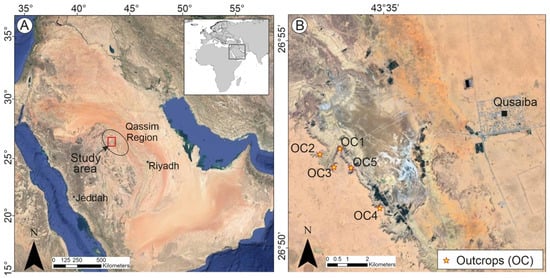
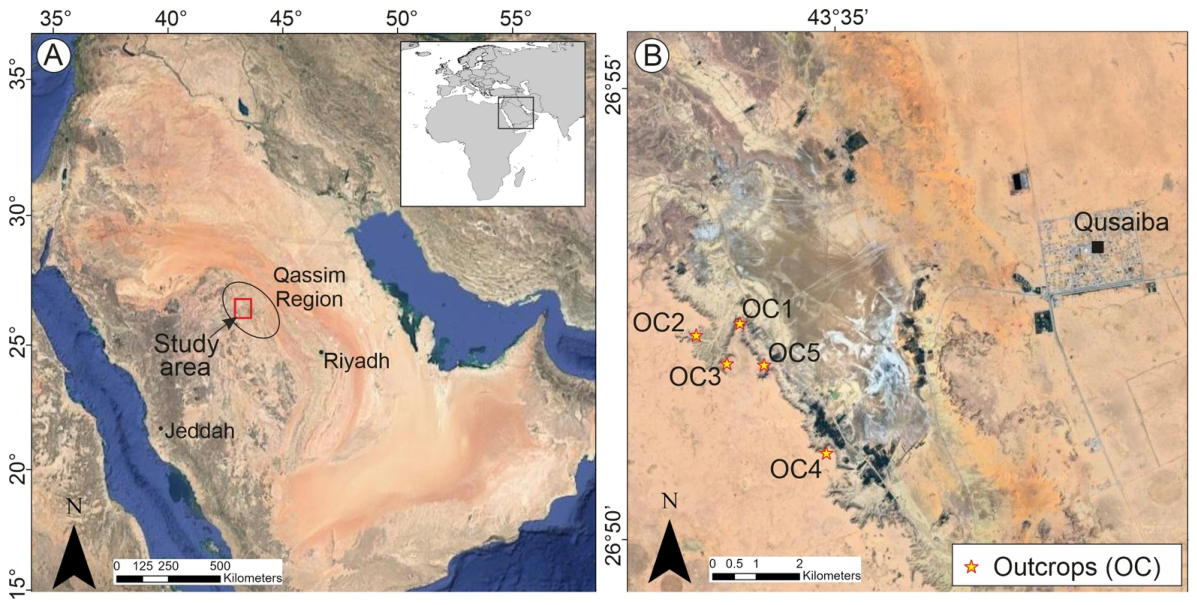
This study is based on 87 thin sections analyzed from five outcrops situated in the Qassim Region of Saudi Arabia (Figure 1, Table 1). Field investigations involved detailed sedimentological logging of stratigraphic sections to document lithology, grain size, sedimentary structures, bioturbation intensity, and trace fossil assemblages. Thin sections were selected to adequately represent the observed microfacies diversity and their stratigraphic distribution (Table 1).
Figure 1.
(A) Location map of the study area. (B) Close-up satellite image showing the location of the outcrops.
Table 1.
Number of thin sections representing each microfacies and their distribution among the studied outcrops.
Representative samples were prepared as standard petrographic thin sections. Field-scale structures were recorded during logging, whereas petrographic observations were restricted to features demonstrably preserved in thin section. The thin-section sampling strategy was designed to capture the range of lithologies, sedimentary fabrics, and ichnological characteristics observed within the studied succession. Grain-size terms are qualitative visual estimates; no image-based grain-size distribution or point-counting analysis was performed. Thin sections were examined under plane- and cross-polarized light at various magnifications in order to identify relative grain size distribution, sedimentary structures, and ichnological features. Special attention was given to identifying lamination patterns, graded bedding, and ripple marks that may indicate specific sediment transport processes. Blue-dyed epoxy was used to identify pore spaces; apparent blue areas were not converted to porosity values.
Microfacies were differentiated based on the combined characteristics of grain size, primary sedimentary structures, and ichnological attributes. Particular attention was given to variations in the relative abundance of clay-, silt-, and sand-sized particles, the presence of grading and lamination, and evidence of erosional processes, including sharp and erosive basal contacts and mud rip-up clasts where preserved. Special attention was also given to identifying subtle sedimentary structures, including ripple lamination and grading, that may provide evidence of sediment transport and depositional processes. The degree to which primary sedimentary fabrics were preserved or disrupted by bioturbation was considered alongside the occurrence and distribution of trace fossils when distinguishing individual microfacies.
Trace fossil assemblages and degree of bioturbation intensity were recorded at the field scale. Bioturbation intensity was assessed using the bioturbation index (BI), which provides a semi-quantitative measure of the degree to which original sedimentary structures have been disrupted by biological activity. This index ranges from BI 0, indicating no bioturbation, to BI 6, indicating complete homogenization of the sediment [34]. Thin-section observations were used to document the morphology and preservation of individual trace fossils and to support their identification where diagnostic features were preserved. Given that two-dimensional sections may not reveal the full geometry, trace-fossil identifications were evaluated cautiously, particularly where the observed morphology could also be explained by abiogenic processes (e.g., [35]). The resulting ichnological observations were considered in relation to sedimentary fabrics and microfacies characteristics to evaluate potential environmental stresses affecting benthic organisms, including variations in sedimentation rate and substrate stability.
The integration of field observations with petrographic analysis allowed the identification of five distinct microfacies within the studied interval. Petrographic observations were mainly used to characterize sample-scale textures and fabrics, whereas field logging provided information on outcrop-scale lithology and bioturbation intensity. Depositional interpretations were developed by evaluating the combined evidence from grain size, sedimentary structures, bed/lamina characteristics, and ichnological attributes.
4. Results
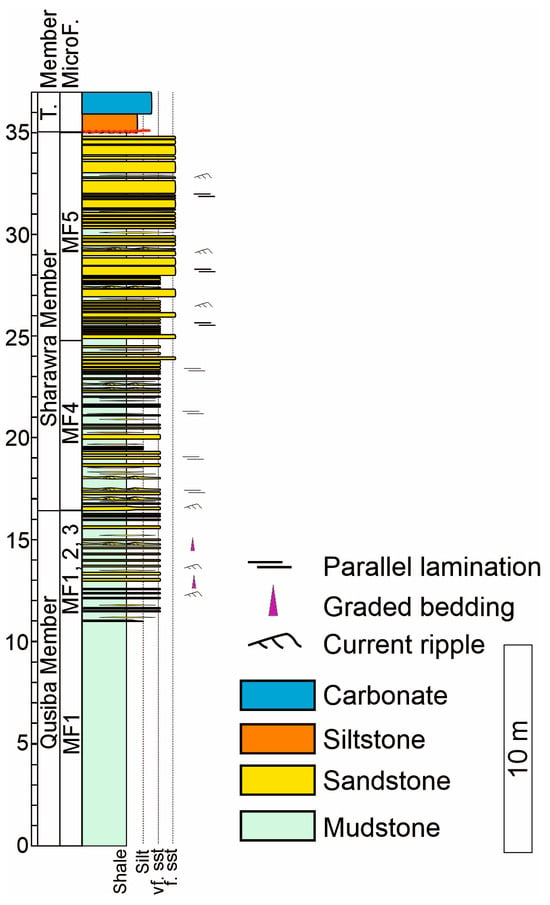
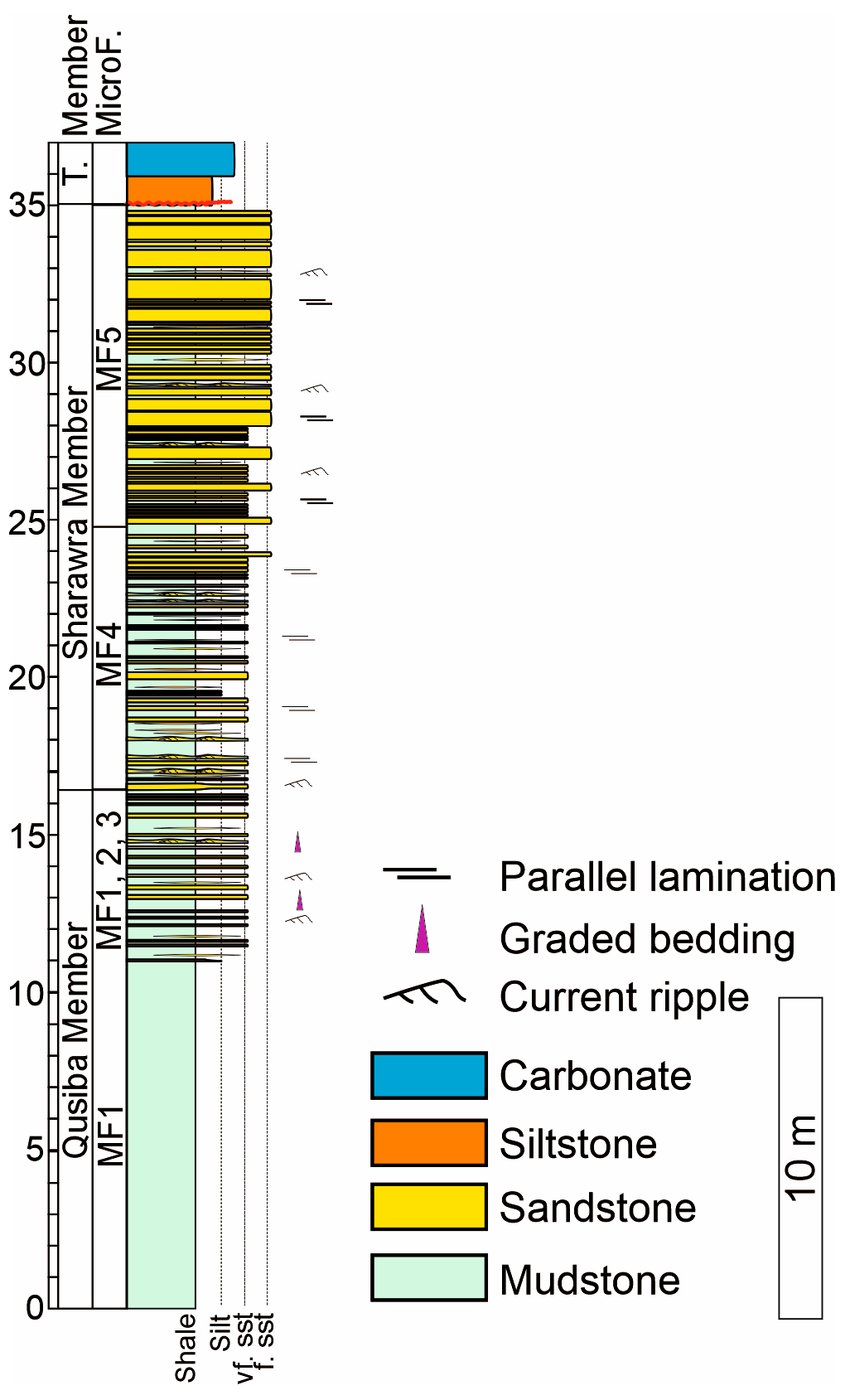
Detailed petrographic and sedimentological analysis of the Qalibah Formation reveals five distinct microfacies based on grain size, sedimentary structures, and ichnological characteristics (Figure 2). These microfacies record a range of depositional processes from suspension settling to high-energy traction currents and event-driven sedimentation.
Figure 2.
Composite, representative stratigraphic column of the Qalibah Formation, and vertical distribution trends of the microfacies.
4.1. Microfacies 1: Massive Claystone with Sparse Bioturbation
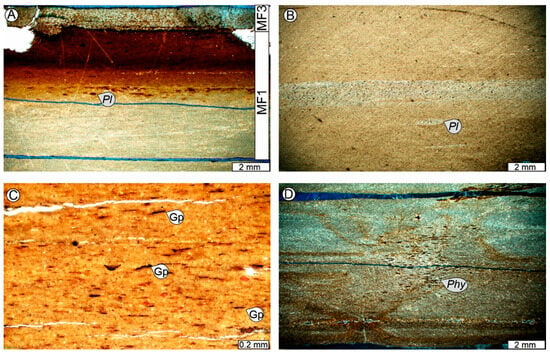
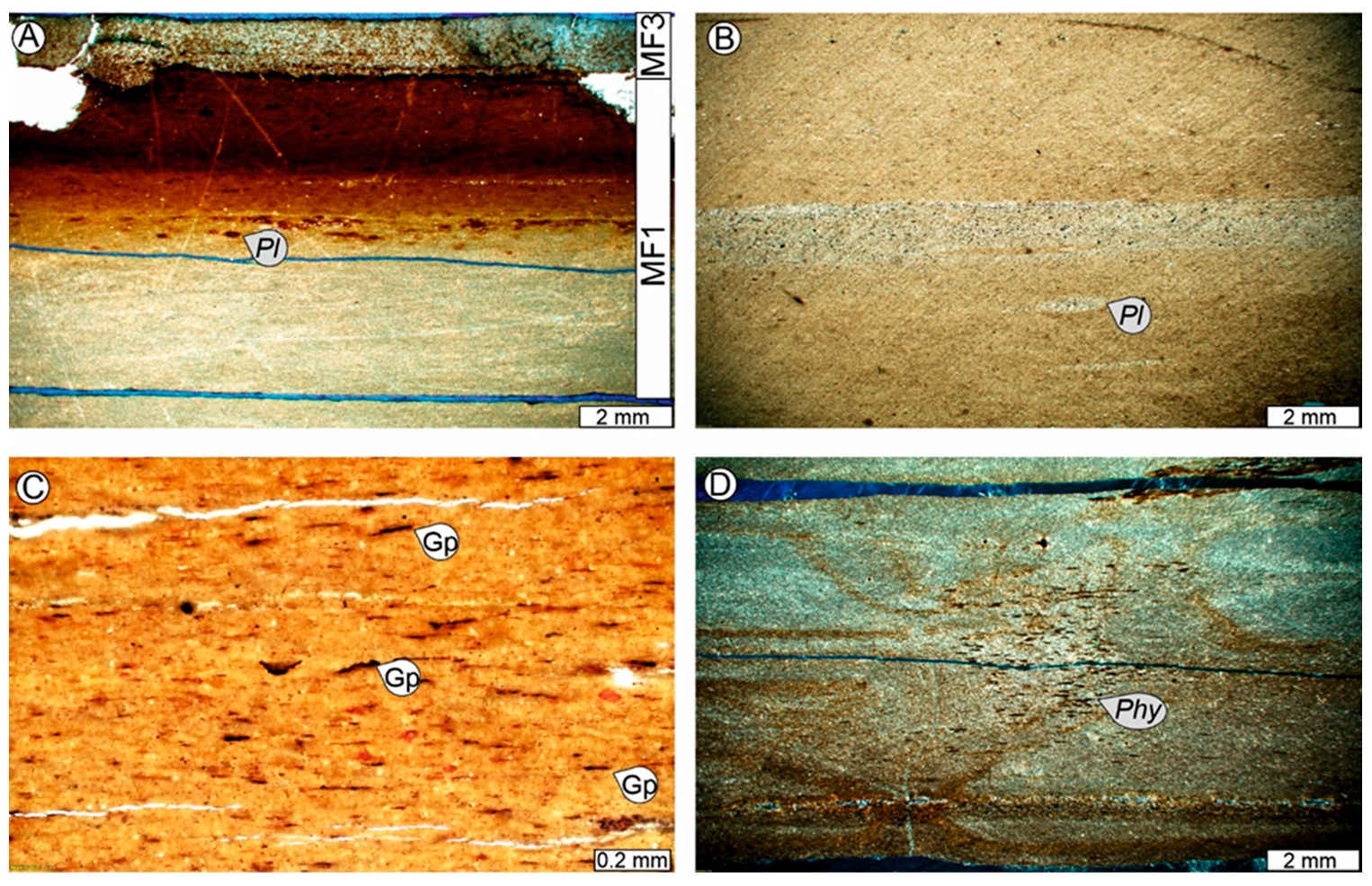
Microfacies 1 (MF1) consists of massive claystone composed predominantly of clay-sized particles with minor silt content. In thin sections, the fabric appears structureless to faintly mottled, with no well-developed primary sedimentary structures (Figure 3A,B). Graptolites are common, and organic matter is commonly disseminated within the matrix, contributing to the dark coloration observed in some intervals (Figure 3C). The bioturbation intensity is sparse (BI 0–1) and is represented by trace fossils, including Planolites, Multina and Phycosiphon (Figure 3C,D). These trace fossils are typically confined to localized zones, suggesting limited colonization; however, preservation and substrate heterogeneity may also play a role.
Figure 3.
Representative thin section images of MF1. (A) Massive fabric of MF1 overlain by MF3. (B) Faint lamination in MF2, accompanied by sparse bioturbation. (C) Graptolite preserved within MF1. (D) Localized bioturbation. Pl: Planolites; Phy: Phycosiphon; Gp: Graptolite.
MF1 records mud accumulation with little preserved physical structure. The overall characteristics of MF1 indicate deposition in a low-energy, mud-dominated setting dominated by suspension settling, likely corresponding to distal prodelta or offshore environments where fine-grained sediments accumulated under relatively quiet hydrodynamic conditions [1,3]. The absence of well-defined sedimentary structures may suggest that deposition occurred primarily through suspension settling of fine-grained material. Such conditions are typical of relatively low-energy environments located distal from major sediment sources. The sparse biogenic activity likely reflects a combination of high sedimentation rates, low nutrient availability, and unstable substrate conditions rather than persistent anoxia due to low organic matter content, although other parameters such as sediment dilution and organic influx should be considered [36,37].
4.2. Microfacies 2: Claystone with Isolated Starved Ripples
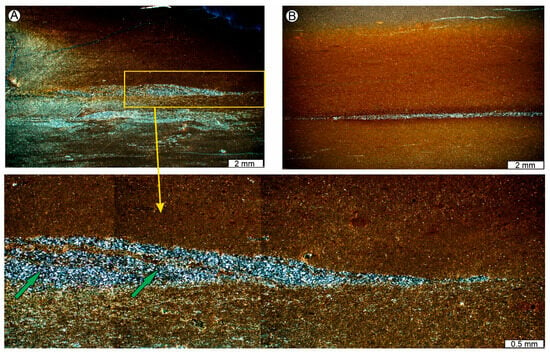
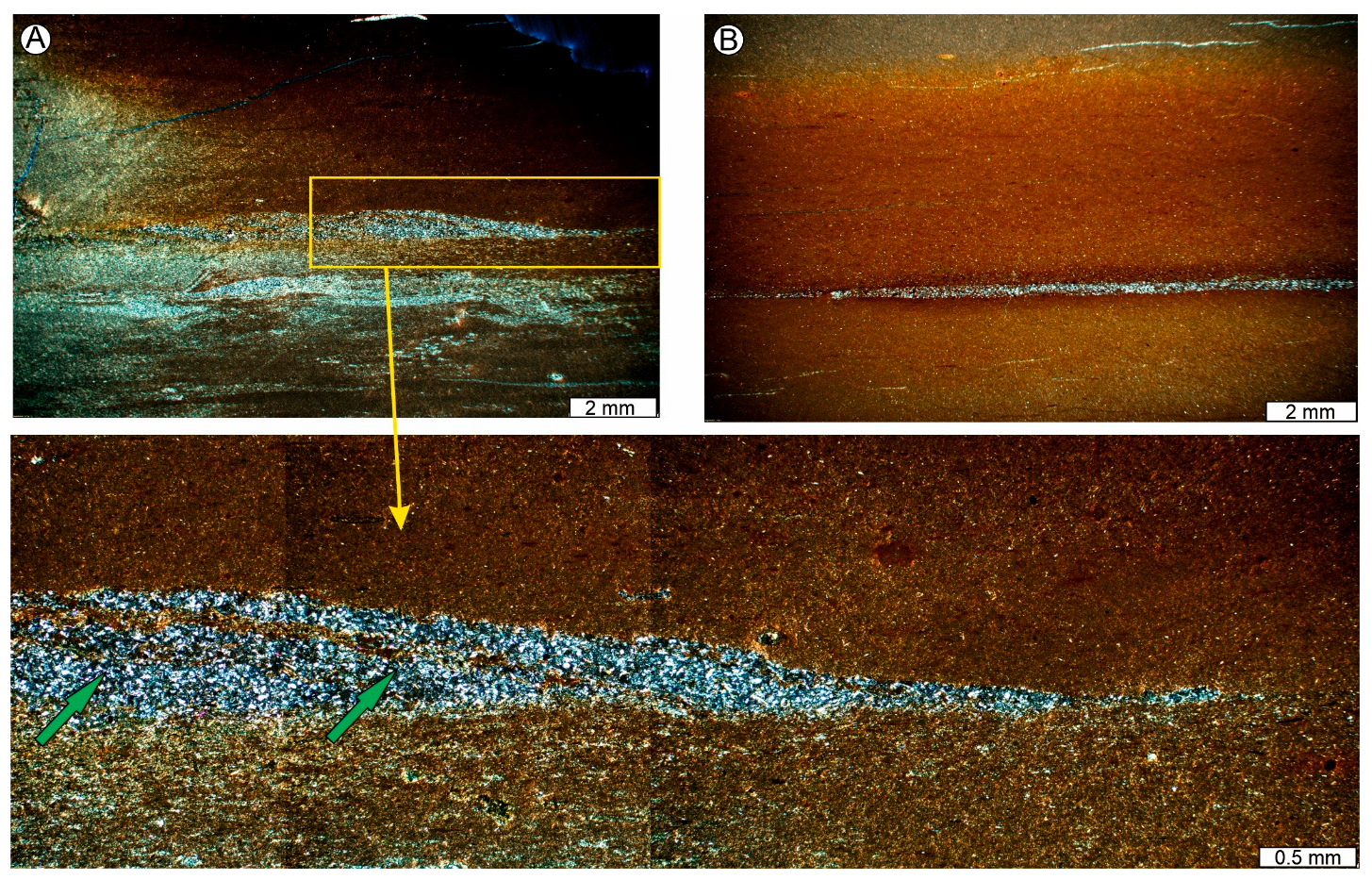
Microfacies 2 (MF2) is characterized by claystone containing relatively small-scale silt-sized ripples that are interpreted as starved ripples herein. These ripples are typically thin, discontinuous, and characterized by low-amplitude undulatory laminae, indicating limited sediment supply during their formation (Figure 4). The ripple crests are often asymmetrical, suggesting formation under weak unidirectional currents. Bioturbation intensity is zero (BI 0).
Figure 4.
(A) An example of MF2 showing a well-preserved starved ripple. The green arrows mark the foreset laminae. (B) Tail of a starved ripple
MF2 records intermittent reworking of fine-grained sediments by weak bottom currents, indicating slightly more dynamic conditions compared with MF1, but still within a generally low-energy depositional setting [5]. The presence of these starved ripples indicates that even mud-dominated depositional environments may experience intermittent current activity. These currents may be generated by tidal processes, storm-related flows, contour currents or density currents associated with sediment influx from river systems. The scarcity of biogenic structures likely reflects unstable substrate conditions associated with intermittent current activity and fluctuating sedimentation rates, which can inhibit sustained colonization [38,39]. Overall, this microfacies is interpreted to represent environments within the prodelta region of a deltaic system where weak bottom currents periodically rework fine-grained sediments deposited from suspension.
4.3. Microfacies 3: Massive to Graded Siltstones
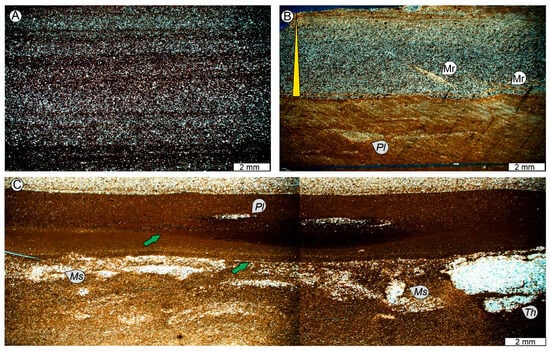
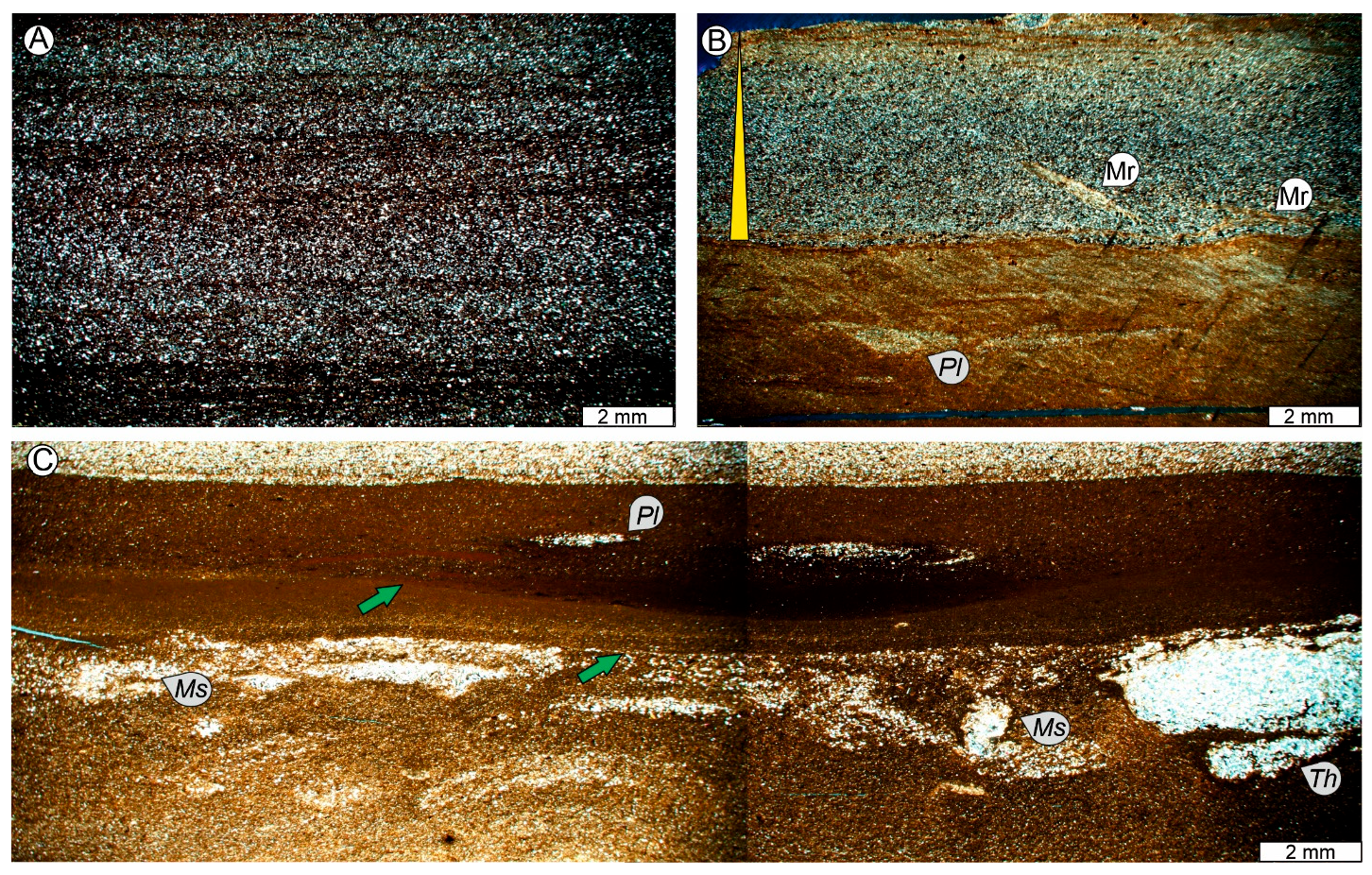
Microfacies 3 is characterized by massive to normally graded siltstone displaying sharp to erosive basal contacts and frequent occurrence of mud rip-up clasts (Figure 5). The beds/laminae typically show normal grading trends from relatively coarser silt at the base to finer silt and clay toward the top, although some intervals appear structureless. These gradings were observed in most of the thin section. MF3 is commonly interbedded with massive claystone (MF1) and claystone with isolated starved ripples (MF2) (Figure 3A), forming recurring mud–silt alternations (Figure 2). Bioturbation within MF3 is generally sparse to low-moderate (BI 1–2) and is represented by Thalassinoides, Phycosiphon, and mantle and swirl structures (Figure 5B,C). Trace fossils are unevenly distributed and commonly occur near the upper portions of beds, suggesting colonization following deposition.
Figure 5.
Representative images of MF3. (A) Example of laminated MF3. (B) An example of a well-developed normally graded lamina(yellow triangle). (C) Photomosaic of a thin section showing sparse to moderate bioturbation in MF3. Note that some beds are erosive (green arrows). Ms: mantle and swirl structure; Mr: Mud rip-up clast; Pl: Planolites; Th: Thalassinoides.
The interbedding between MF1, MF2 and MF3 possibly reflects fluctuations between suspension settling and episodic events. This association is interpreted to represent a depositional system dominated by intermittent event beds punctuating otherwise low-energy conditions. The presence of erosive bases and incorporated mud clasts indicates significant substrate scouring, suggesting relatively high-energy flow conditions. The presence of Phycosiphon indicates deposit-feeding behavior under stressed conditions, while Thalassinoides may suggest intermittent periods of improved substrate conditions for infaunal colonization [36,40]. Mantle and swirl structures are characterized by irregular, curved and swirling sedimentary features. Similar structures have been described in association with the movement of sediments through soft to soupy substrates [37]. Their morphology may be consistent with deformation and mixing of unconsolidated sediment; however, such structures are not uniquely diagnostic of a particular deformation mechanism or depositional process. In the present study, mantle-and-swirl structures are therefore described as features consistent with deformation of unconsolidated sediment, while their precise origin remains uncertain.
The combination of massive to graded bedding, erosive basal contacts, and mud rip-up clasts is compatible with sediment gravity-flow processes, but they do not uniquely distinguish turbidity currents from hyperpycnal flows or storm-enhanced density flows. Accordingly, a hyperpycnal origin is considered a possible interpretation rather than a demonstrated depositional mechanism [9,41]. Nevertheless, the upper Qusaiba Member and lower Sharawra Member had been previously documented to display frequent density flow deposits, potentially hyperpycnal flow deposits [22]. Graded bedding reflects waning flow conditions, while the erosive bases and rip-up clasts indicate high shear stress at the onset of deposition. Importantly, the predominantly muddy character of these event beds suggests deposition in a relatively distal part of the depositional system, where density flows had decelerated and deposited their fine-grained sediment load. Although the association with a delta-influenced marine setting is consistent with river-derived sediment delivery, the specific contribution of hyperpycnal flows remains a plausible interpretation rather than a uniquely demonstrated mechanism. Overall, MF3 is interpreted to represent distal, mud-rich event deposits generated by density-flow event bed recording episodic sediment transport into a predominantly low-energy, mud-dominated marine setting [8,10].
4.4. Microfacies 4: Massive to Laminated Sandstone
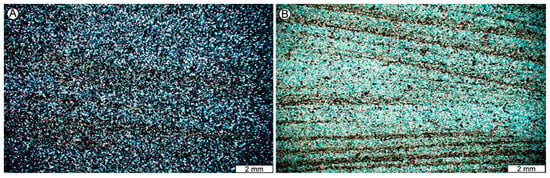
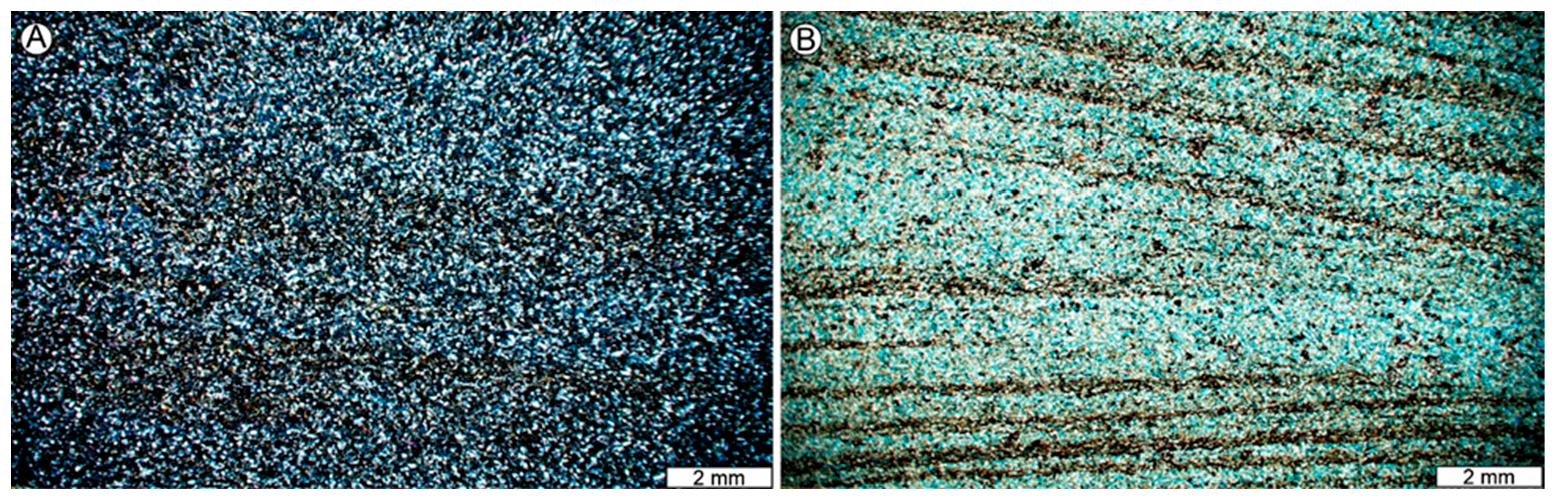
Microfacies 4 (MF4) is composed of very fine-grained sandstone characterized by a predominantly massive to parallel-lamination, with subordinate mud content (Figure 6). Bioturbation is absent (BI 0), and no trace fossils were observed within this microfacies. The sand-rich composition distinguishes MF4 from the underlying mud-dominated microfacies, which may be interpreted as higher-energy conditions. The absence of observed bioturbation (BI 0) may be interpreted to reflect rapid sediment accumulation or recurrent depositional events [36,40]. Although these characteristics are not uniquely diagnostic of a particular depositional mechanism, previous studies have documented storm-related deposits in the approximately equivalent stratigraphic interval of the Qalibah Formation [31]. This regional evidence supports storm activity as a plausible contributor to MF4 deposition. However, because the observed massive to parallel-laminated fabric can also occur in sediment gravity-flow deposits, a contribution from turbidity currents cannot be excluded. Accordingly, MF4 is interpreted as an event-deposited sandstone potentially associated with storm-related processes and sediment gravity flows, while acknowledging that the available observations do not unequivocally distinguish between these mechanisms.
Figure 6.
A representative image of MF4 showing (A) massive to (B) laminated nature.
4.5. Microfacies 5: Current Rippled Sandstone with Low-Angle Lamination
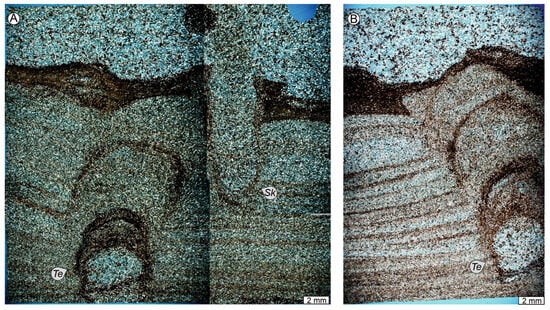
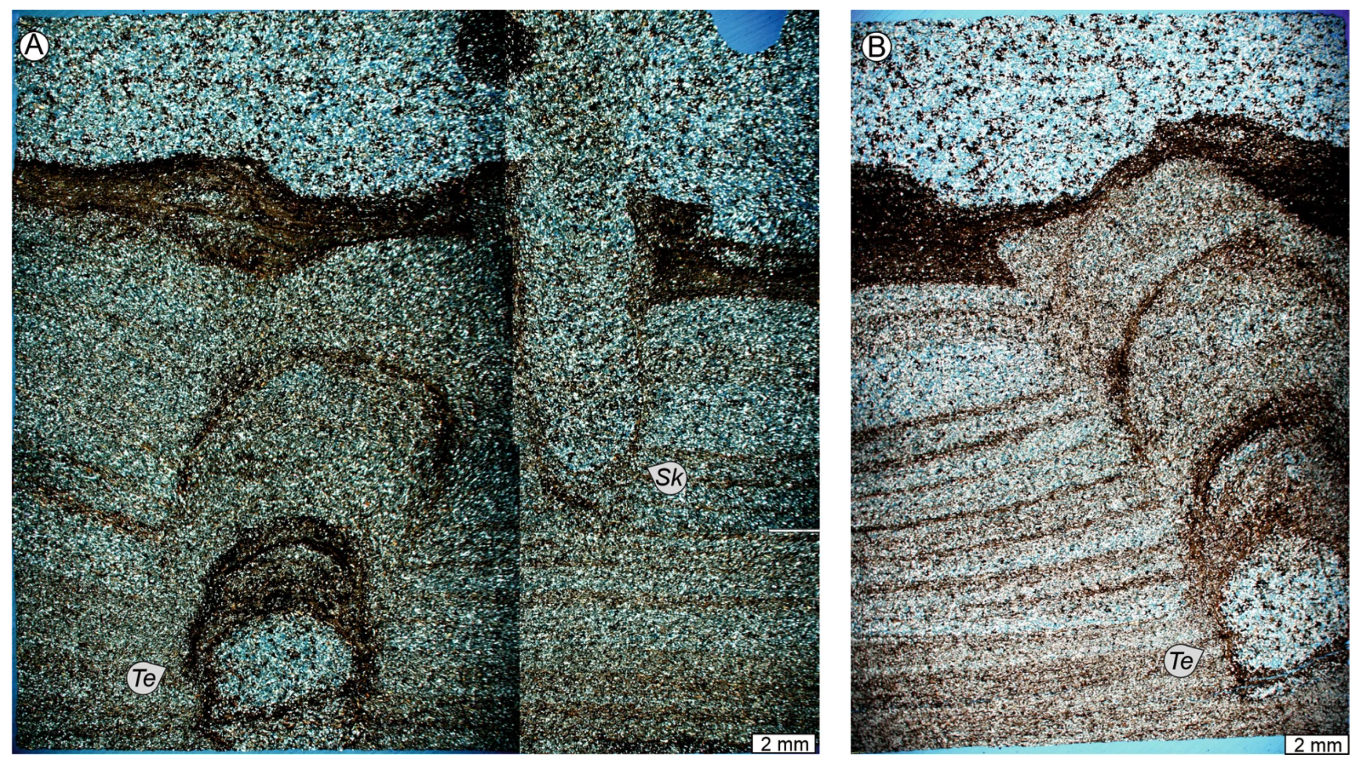
Microfacies 5 (MF5) is characterized by very fine- to fine-grained sandstone displaying well-developed current ripple lamination and low-angle cross-lamination (Figure 7). The sandstone is typically moderately sorted, with a relatively uniform grain-size distribution and minor mud content. Primary sedimentary structures are well preserved in less bioturbated intervals. Bioturbation intensity is moderate (BI 2–3), making MF5 the most biogenically reworked facies identified in this study. Burrows partially disrupt primary sedimentary structures, producing a mottled fabric in thin section (Figure 7). Trace fossil assemblages are dominated by deposit-feeding and dwelling structures, including protrusive Teichichnus, Planolites, and Skolithos.
Figure 7.
Photomosaic images of MF5. (A) Skolithos (Sk) and protrusive Teichichnus (Te). (B) Another example of protrusive Teichichnus.
The moderate intensity and diversity of bioturbation may suggest that environmental conditions were comparatively more favorable than in the underlying microfacies. Increased nutrient availability, more stable substrate conditions and reduced sedimentation rates likely promoted sustained infaunal colonization [38,39].
The presence of protrusive Teichichnus suggests active sediment reworking and vertical adjustment of organisms in response to changing sedimentation conditions, while Planolites reflects deposit-feeding behavior within relatively stable substrates [36,40]. Based on its sedimentological and ichnological characteristics, MF5 is interpreted to record deposition involving tractional sediment transport and subsequent or intermittent benthic colonization. The observed current-ripple lamination and low-angle bedding are consistent with sediment transport and bedform development under relatively higher-energy environments.
5. Discussion
The five microfacies document variation in grain size, sedimentary fabric, event-bed preservation, and bioturbation within the studied Qalibah Formation succession. These observations are consistent with deposition under variable suspension-settling, tractional, and sediment-laden flow conditions. A delta-influenced marine setting model provides a possible regional framework for these relationships.
The vertical succession of microfacies records an overall transition from mud-dominated Qusaiba deposits (MF1–MF2) to increasingly silt-rich and sand-rich deposits of the Sharawra Member (MF3–MF5) (Figure 2). This upward change is consistent with a shift from relatively distal, low-energy depositional settings toward more proximal, delta-influenced environments, potentially reflecting deltaic progradation.
The lower part of the Qusaiba Member is dominated by MF1 (Figure 2), which consists of massive claystone deposited primarily through suspension settling under low-energy conditions. Such deposits are characteristic of distal prodelta to offshore environments, where fine-grained sediments accumulate in relatively quiet water conditions [1,3]. The absence of well-developed physical sedimentary structures, combined with sparse bioturbation, suggests limited bottom-current activity and relatively high sedimentation rates or low nutrient availability, which may have periodically inhibited benthic colonization [36]. Previous studies in the study area reported low total organic carbon contents [31], which were interpreted as consistent with relatively well-oxygenated depositional conditions. This interpretation suggests that persistent oxygen limitation may not have been the principal factor controlling the low bioturbation intensity in MF1, although total organic carbon does not independently constrain bottom-water oxygenation.
The upper Qusaiba Member is dominated by MF2, characterized by claystone with isolated starved ripples. This transition indicates an increase in hydrodynamic variability, with the introduction of weak bottom currents capable of reworking fine-grained sediments. Starved ripples in mud-dominated successions have been widely interpreted as evidence of intermittent tractional processes under limited sediment supply [5]. These features indicate that the depositional system was no longer purely dominated by suspension settling, but instead influenced by episodic current activity, possibly related to distal expressions of density currents.
Microfacies 3 (MF3) occurs in both the upper Qusaiba Member and the lower Sharawra Member, marking a critical shift in depositional processes. The presence of massive to graded siltstone with erosive bases and mud rip-up clasts is consistent with deposition from sediment-laden flows (e.g., turbidity currents and hyperpycnal flows); however, additional sedimentological and stratigraphic evidence is needed to support these mechanisms [9,41]. The recurring interbedding of MF3 with MF1 and MF2 reflects alternations between background sedimentation and episodic high-energy events, which is a common feature in river-dominated deltaic systems [10].
The ichnological characteristics of MF3 provide additional constraints on depositional conditions. Sparse to moderate bioturbation (BI 1–2), dominated by Phycosiphon, Thalassinoides, and mantle and swirl structures, is interpreted to represent increased sedimentation rates that periodically stressed benthic communities, allowing opportunistic colonization following depositional events. The presence of mantle and swirl structures may further indicate mixing of unconsolidated sediment, potentially soupy substrates, which are commonly associated with rapidly deposited fine-grained sediments from event deposits (e.g., hyperpycnal flows) [37,42]. Therefore, substrate consistency and high sedimentation rate remain possible controls on the observed bioturbation pattern.
The transition into the Sharawra Member is marked by the increasing abundance of sand-rich microfacies, particularly MF4, which dominates the lower to middle Sharawra Member. MF4 represents massive to laminated fine-grained sandstone deposited under relatively high-energy conditions. The lack of bioturbation (BI 0) suggests that sedimentation rates remained high and environmental conditions were unstable, preventing colonization [36,40]. These deposits are interpreted to represent turbidity currents and possibly storm-generated density flows, reflecting a more proximal position within the depositional system.
MF5 becomes dominant in the upper Sharawra Member. This microfacies records a significant change in depositional conditions, characterized by well-developed current ripple lamination, low-angle cross-lamination, and moderate bioturbation (BI 2–3). The presence of tractional sedimentary structures indicates sustained current activity. A proximal, delta-influenced setting remains a possible interpretation when considered alongside the broader stratigraphic succession, but this environmental assignment is not uniquely established by the characteristics of MF5 alone. Compared with MF4, the greater bioturbation intensity suggests that benthic organisms had more opportunity to colonize and modify the substrate, possibly suggesting increased nutrient availability and reduced sedimentation rates [38,39]. Although I do not have direct porosity measurements, blue-dyed epoxy reveals apparent pore space within the examined thin section, particularly in burrowed zones of MF5 and MF3; however, no quantitative porosity or permeability measurements were obtained. The images therefore document pore-space distribution qualitatively and do not demonstrate that bioturbation increased or decreased net porosity (Figure 5C and Figure 7). Quantitative integration of petrographic observations with porosity and permeability measurements will be necessary to establish the relationships between microfacies characteristics and reservoir properties, similar to Usman et al. [35,43], who demonstrated that the relationship between sedimentary fabric, ichnological characteristics, diagenesis, and reservoir quality must be evaluated using petrographic and petrophysical measurements.
Several factors may account for the observed variations in bioturbation intensity across the Qalibah Formation, including oxygen availability, nutrient supply, sedimentation rate, and substrate consistency for colonization. However, these parameters were not independently quantified in this study. Although the low total organic values reported for the Qusaiba Member provide information on organic-carbon abundance, they do not independently constrain bottom-water oxygenation because organic-carbon content is also influenced by organic-matter supply, preservation, and sediment dilution (e.g., [31,44]). Similarly, the inferred delta-influenced setting does not by itself establish nutrient availability at the sediment-water interface. Consequently, oxygenation and nutrient availability are considered possible environmental controls rather than demonstrated causes of the observed ichnological patterns.
Microfacies analysis facilitates the identification of microscale bioturbation, which is often difficult to recognize during field observations, and provides insights into the environmental stresses experienced by infaunal organisms. It is particularly valuable in mud-dominated systems, where it can help constrain depositional conditions and identify the presence and characteristics of event beds [45]. However, in siliciclastic sandstones, microfacies analysis alone may be insufficient to establish robust interpretations of depositional environments, as these typically require the integration of sedimentary structures across multiple scales (e.g., [35,39,40,46,47]). Accordingly, incorporating larger-scale sedimentological observations and facies analysis can complement the microfacies interpretations presented here, particularly for the Sharawra Member.
The five microfacies identified in the studied Qalibah Formation succession document variations in lithology, sedimentary fabric, depositional processes, and bioturbation. These variations provide a geological basis for assessing potential reservoir heterogeneity. However, the implications for porosity, permeability, and reservoir quality remain unquantified because direct petrophysical measurements were not undertaken. Future studies integrating microfacies analysis with quantitative pore-space characterization, mineralogical data, and petrophysical measurements are required to establish the relationships between sedimentological characteristics and reservoir properties.
6. Conclusions
This study identifies five distinct microfacies within the Qalibah Formation that record a transition from low-energy, mud-dominated deposition in the Qusaiba Member to higher-energy, sand-prone environments in the Sharawra Member. The lower Qusaiba Member is dominated by suspension-settled claystones (MF1), while the upper Qusaiba Member reflects increased hydrodynamic variability (MF2) and episodic input from density flow deposits (MF3). The overlying Sharawra Member records a shift to more proximal conditions, with event-driven sand deposition (MF4) and traction-dominated, bioturbated delta-front settings (MF5).
Ichnological data provide critical insights into substrate conditions and sedimentation rate, showing that stressed, unconsolidated substrates limited colonization in finer-grained facies, whereas improved conditions in MF5 allowed moderate bioturbation and sediment reworking. These biogenic processes have the potential to play a role in modifying reservoir properties, although porosity and permeability remain uncertain because the geometry, infill, preservation, and diagenetic modification of the structures were not quantitatively evaluated.
Overall, the Qalibah Formation is interpreted to represent a river-dominated deltaic system with strong vertical variability. This study highlights the value of microfacies analysis in resolving depositional processes in fine-grained unconventional reservoirs. Future work integrating macro-facies analysis, stratigraphic architecture, and petrophysical properties would further enhance depositional models and reservoir characterization.
Funding
This research received no external funding.
Institutional Review Board Statement
Not applicable.
Informed Consent Statement
Not applicable.
Data Availability Statement
The original contributions presented in this study are included in the article. Further inquiries can be directed to the corresponding author.
Acknowledgments
The author sincerely thanks the editor and the three anonymous reviewers for their careful evaluation of the manuscript and for their constructive and insightful comments. Their suggestions have helped to improve the overall quality of the manuscript. The author also thanks Mutasim Osman and Ammar J. Abdlmutalib for their help in the fieldwork. Thanks to Habeeb Ahmed Al-Abbas for his help in thin section preparations.
Conflicts of Interest
The author declares no conflicts of interest.
References
- Bohacs, K.M. Contrasting expressions of depositional sequences in mudrocks from marine to non marine environs. In Shales and Mudstones; Schieber, J., Zimmerle, W., Sethi, P.S., Eds.; E. Schweizerbart’sche: Stuttgart-West, Germany, 1998; pp. 33–78. [Google Scholar]
- Macquaker, J.; Bohacs, K.M. On the accumulation of mud. Geology 2007, 318, 1734–1735. [Google Scholar] [CrossRef] [Scilit] [PubMed]
- Schieber, J. Deposition of Mudstones and Shales: Overview, Problems, and Challenges. In Shales and Mudstones; Schieber, J., Zimmerle, W., Sethi, P.S., Eds.; E. Schweizerbarth’sche Verlagsbuchhandlung: Stuttgart-West, Germany, 1998; Volume I, pp. 131–146. [Google Scholar]
- Schieber, J.; Southard, J.B. Bedload transport of mud by floccule ripples–direct observation of ripple migration processes and their implications. Geology 2009, 37, 483–486. [Google Scholar] [CrossRef] [Scilit]
- Schieber, J.; Southard, J.B.; Schimmelmann, A. Lenticular shale fabrics resulting from intermittent erosion of water-rich muds-interpreting the rock record in the light of recent flume experiments. J. Sediment. Res. 2010, 80, 119–128. [Google Scholar] [CrossRef] [Scilit]
- Schieber, J.; Southard, J.B.; Thaisen, K. Accretion of mudstone beds from migrating floccule ripples. Science 2007, 318, 1760–1763. [Google Scholar] [CrossRef] [Scilit] [PubMed]
- Stow, D.A.; Hernández-Molina, F.J.; Llave, E.; Sayago-Gil, M.; del Río, V.D.; Branson, A. Bedform-velocity matrix: The estimation of bottom current velocity from bedform observations. Geology 2009, 37, 327–330. [Google Scholar] [CrossRef] [Scilit]
- Bhattacharya, J.P.; Howell, C.D.; MacEachern, J.A.; Walsh, J.P. Bioturbation, sedimentation rates, and preservation of flood events in deltas. Palaeogeogr. Palaeoclimatol. Palaeoecol. 2020, 560, 110049. [Google Scholar] [CrossRef] [Scilit]
- Mulder, T.; Syvitski, J.P.M.; Migeon, S.; Faugeres, J.-C.; Savoye, B. Marine hyperpycnal flows: Initiation, behavior and related deposits. A review. Mar. Pet. Geol. 2003, 20, 861–882. [Google Scholar] [CrossRef] [Scilit]
- Bhattacharya, J.P.; MacEachern, J.A. Hyperpycnal rivers and prodeltaic shelves in the Cretaceous seaway of North America. J. Sediment. Res. 2009, 79, 184–209. [Google Scholar] [CrossRef] [Scilit]
- Hovikoski, J.; Virtasalo, J.J.; Wetzel, A.; Muthre, M.; Strasser, M.; Proust, J.-N.; Ikehara, K. Bioturbation in the hadal zone. Nat. Commun. 2025, 16, 1401. [Google Scholar] [CrossRef] [Scilit] [PubMed]
- Nakajima, T. Hyperpycnites deposited 700 km away from river mouths in the central Japan Sea. J. Sediment. Res. 2006, 76, 60–73. [Google Scholar] [CrossRef] [Scilit]
- Wilson, R.D.; Schieber, J. Muddy prodeltaic hyperpycnites in the lower Genesee Group of Central New York, USA: Implications for mud transport in epicontinental seas. J. Sediment. Res. 2014, 84, 866–874. [Google Scholar] [CrossRef] [Scilit]
- Jones, P.J.; Stump, T.E. Depositional and tectonic setting of the Lower Silurian hydrocarbon source rock facies, Central Saudi Arabia. Am. Assoc. Pet. Geol. (AAPG) Bull. 1999, 83, 314–332. [Google Scholar] [CrossRef] [Scilit]
- Lüning, S.; Craig, J.; Loydell, D.K.; Štorch, P.; Fitches, B. Lower Silurian ‘hot shales’ in North Africa and Arabia: Regional distribution and depositional model. Earth-Sci. Rev. 2000, 49, 121–200. [Google Scholar] [CrossRef] [Scilit]
- Senalp, M.; Al-Duaiji, A.A. Qasim Formation: Ordovician Storm- and Tide-Dominated Shallow-Marine Siliciclastic Sequences, Central Saudi Arabia. GeoArabia 2001, 6, 233–268. [Google Scholar] [CrossRef] [Scilit]
- Miller, M.; Melvin, J. Significant new biostratigraphic horizons in the Qusaiba Member of the Silurian Qalibah Formation of central Saudi Arabia, and their sedimentologic expression in a sequence stratigraphic context. GeoArabia 2005, 10, 49–92. [Google Scholar] [CrossRef] [Scilit]
- Inan, S.; Goodarzi, F.; Mumm, A.S.; Arouri, K.; Qathami, S.; Ardakani, O.H.; İnan, T.; Tuwailib, A.A. The Silurian Qusaiba Hot Shales of Saudi Arabia: An integrated assessment of thermal maturity. Int. J. Coal Geol. 2016, 159, 107–119. [Google Scholar] [CrossRef] [Scilit]
- Konert, G.; Afifi, A.M.; Al-Hajri, S.A.; Droste, H.J. Paleozoic stratigraphy and hydrocarbon habitat of the Arabian plate. GeoArabia 2001, 6, 407–442. [Google Scholar] [CrossRef] [Scilit]
- Melvin, J. Lithostratigraphy and depositional history of Upper Ordovician and lowermost Silurian sediments recovered from the Qusaiba-1 shallow core hole, Qasim region, central Saudi Arabia. Rev. Palaeobot. Palynol. 2015, 212, 3–21. [Google Scholar] [CrossRef] [Scilit]
- Stump, T.E.; Al-Hajri, S.; Van der Eem, J.G.L.A. Geology and biostratigraphy of the Late Precambrian through Palaeozoic sediments of Saudi Arabia. Rev. Palaeobot. Palynol. 1995, 89, 5–17. [Google Scholar] [CrossRef] [Scilit]
- Ayranci, K. Microscale bioturbation as a first order control on distal prodelta to offshore mudrock reservoirs. Sci. Rep. 2026, 16, 28282. [Google Scholar] [CrossRef] [Scilit] [PubMed]
- Gingras, M.K.; MacEachern, J.A.; Dashtgard, S.E. Process Ichnology and the elucidation of physico-chemical stress. Sediment. Geol. 2011, 237, 115–134. [Google Scholar] [CrossRef] [Scilit]
- La Croix, A.D.; MacEachern, J.A.; Ayranci, K.; Hsieh, A.; Dashtgard, S.E. An ichnological-assemblage approach to reservoir heterogeneity assessment in bioturbated strata: Insights from the Lower Cretaceous Viking Formation, Alberta, Canada. Mar. Pet. Geol. 2017, 86, 636–654. [Google Scholar] [CrossRef] [Scilit]
- MacEachern, J.A.; Bann, K.L. Departures from the archetypal deltaic ichnofacies. Geol. Soc. Lond. Spec. Publ. 2023, 522, 175–213. [Google Scholar] [CrossRef] [Scilit]
- MacEachern, J.A.; Bann, K.L.; Gingras, M.K.; Zonneveld, J.-P.; Dashtgard, S.E.; Pemberton, S.G. Developments in Sedimentology; Knaust, D., Bromley, R.G., Eds.; Elsevier: Amsterdam, The Netherlands, 2012; Volume 64, pp. 103–138. [Google Scholar]
- Mahmoud, M.D.; Vaslet, D.; Husseinei, M.I. The lower Siluria Qalibah Formation Saudi Arabia: An Important Hydrocarbon Source Rock. Am. Assoc. Pet. Geol. (AAPG) Bull. 1992, 76, 1491–1506. [Google Scholar] [CrossRef] [Scilit]
- Melchin, M.J.; Mitchell, C.E.; Holmden, C.; Štorch, P. Environmental changes in the Late Ordovician–early Silurian: Review and new insights from black shales and nitrogen isotopes. GSA Bull. 2013, 125, 1635–1670. [Google Scholar] [CrossRef] [Scilit]
- Abbas, M.A.; Kaminski, M.A.; Dogan, A.U. Source, tectonic setting, and facies distribution of the Silurian Sharawra Formation, the Old Qusaiba village, central Saudi Arabia. J. Afr. Earth Sci. 2017, 130, 48–59. [Google Scholar] [CrossRef] [Scilit]
- Al-Hajri, S.; Paris, F. Age and palaeoenvironment of the Sharawra Member (Silurian of north-western Saudi Arabia). Geobios 1998, 31, 3–12. [Google Scholar] [CrossRef] [Scilit]
- Osman, M.; Ayranci, K.; Mustapha, K.A.; Gramajo, E.; Rached, R.M.; Finkbeiner, T.; Mowafi, M. Integrated sedimentological and geochemical characterization of the Silurian Qalibah Formation in central Saudi Arabia: Implications to paleoenvironmental reconstruction and organic richness evaluation. Mar. Pet. Geol. 2025, 181, 107498. [Google Scholar] [CrossRef] [Scilit]
- Ahlbrandt, T.S.; Pollastro, R.M.; Schenk, C.J. Undiscovered Oil and Gas Resources of Lower Silurian Qusaiba-Paleozoic Total Petroleum Systems, Arabian Peninsula; Report No. 008-02; USGS: Reston, VA, USA, 2002.
- Wender, L.E.; Bryant, J.W.; Dickens, M.F.; Neville, A.S.; Al-Moqbel, A.M. Paleozoic (Pre-Khuff) Hydrocarbon Geology of the Ghawar Area, Eastern Saudi Arabia. GeoArabia 1998, 3, 273–302. [Google Scholar] [CrossRef] [Scilit]
- Taylor, A.M.; Goldring, R. Description and analysis of bioturbation and ichnofabric. J. Geol. Soc. 1993, 150, 141–148. [Google Scholar] [CrossRef] [Scilit]
- Usman, M.; Siddiqui, N.A.; Zhang, S.; Ramkumar, M.; Mathew, M.; Sautter, B.; Beg, M.A. Ichnofacies and sedimentary structures: A passive relationship with permeability of a sandstone reservoir from NW Borneo. J. Asian Earth Sci. 2020, 192, 103992. [Google Scholar] [CrossRef] [Scilit]
- Buatois, L.A.; Mángano, M.G. Organism–Substrate Interactions in Space and Time; University Press: Cambridge, UK, 2011. [Google Scholar]
- Lobza, V.; Schieber, J. Biogenic sedimentary structures produced by worms in soupy, soft muds; observations from the Chattanooga Shale (Upper Devonian) and experiments. J. Sediment. Res. 1999, 69, 1041–1049. [Google Scholar] [CrossRef] [Scilit]
- Buatois, L.A.; Gingras, M.K.; Maceachern, J.; MánGano, M.G.; Zonneveld, J.-P.; Pemberton, S.G.; Netto, R.G.; Martin, A. Colonization of brackish-water systems through time: Evidence from the trace-fossil record. Palaios 2005, 20, 321–347. [Google Scholar] [CrossRef] [Scilit]
- MacEachern, J.A.; Bann, K.L.; Bhattacharya, J.P.; Howell, C.D.J. River Deltas-Concepts, Models, and Examples; Giosan, L., Bhattacharya, J.P., Eds.; SEPM Society for Sedimentary Geology: Claremore, OK, USA, 2005; Volume 83, pp. 49–85, Special Publication. [Google Scholar]
- Pemberton, S.G.; Spila, M.; Pulham, A.J.; Saunders, T.; MacEachern, J.A.; Robbins, D.; Sinclair, I.K. Ichnology and Sedimentology of Shallow to Marginal Marine Systems: Ben Nevis and Avalon Reservoirs, Jeanne d’Arc Basin; Geological Association of Canada: St. John’s, NL, Canada, 2001; Volume 15. [Google Scholar]
- Zavala, C.; Arcuri, M. Intrabasinal and extrabasinal turbidites: Origin and distinctive characteristics. Sediment. Geol. 2016, 337, 36–54. [Google Scholar] [CrossRef] [Scilit]
- Schieber, J. Simple gifts and buried treasures-implications of finding bioturbation and erosion surfaces in black shales. Sediment. Rec. 2003, 1, 4–8. [Google Scholar] [CrossRef] [Scilit]
- Usman, M.; Siddiqui, N.A.; Mathew, M.; Zhang, S.; El-Ghali, M.A.; Ramkumar, M.; Jamil, M.; Zhang, Y. Linking the influence of diagenetic properties and clay texture on reservoir quality in sandstones from NW Borneo. Mar. Pet. Geol. 2020, 120, 104509. [Google Scholar] [CrossRef] [Scilit]
- Stein, R. Organic carbon and sedimentation rate–Further evidence for anoxic deep-water conditions in the Cenomanian/Turonian Atlantic Ocean. Mar. Geol. 1986, 72, 199–209. [Google Scholar] [CrossRef] [Scilit]
- Ayranci, K.; Harris, N.; Dong, T. Sedimentological and ichnological characterization of the Middle to Upper Devonian Horn River Group, British Columbia, Canada: Insights into mudstone depositional conditions and processes below storm wave base. J. Sediment. Res. 2018, 88, 1–23. [Google Scholar] [CrossRef] [Scilit]
- MacEachern, J.A.; Bann, K.L. Recent Advances in Models of Siliciclastic Shallow-Marine Stratigraphy; Hampson, G.J., Steel, R.J., Burgess, P.B., Dalrymple, R.W., Eds.; Society for Sedimentary Geology (SEPM): Claremore, OK, USA, 2008; Volume 90, pp. 73–116. [Google Scholar]
- Gingras, M.K.; Räsänen, M.E.; Pemberton, S.G.; Romero, L.P. Ichnology and sedimentology reveal depositional characteristics of bay-margin parasequences in the Miocene Amazonian Foreland Basin. J. Sediment. Res. 2002, 72, 871–883. [Google Scholar] [CrossRef] [Scilit]

Disclaimer/Publisher’s Note: The statements, opinions and data contained in all publications are solely those of the individual author(s) and contributor(s) and not of MDPI and/or the editor(s). MDPI and/or the editor(s) disclaim responsibility for any injury to people or property resulting from any ideas, methods, instructions or products referred to in the content. |
© 2026 by the author. Licensee MDPI, Basel, Switzerland. This article is an open access article distributed under the terms and conditions of the Creative Commons Attribution (CC BY) license.