


Abstract
The incorporation of recycled materials, such as Reclaimed Asphalt Pavement (RAP) and Reclaimed Asphalt Shingles (RAS), has become an important approach for improving material reuse and promoting sustainability. Because aging can adversely affect binder performance, rejuvenating agents are commonly introduced to recover selected properties of aged binders and facilitate their subsequent use. In this context, the present study examines the rheological response of asphalt binders by considering three primary variables: binder origin, aging severity, and the presence or absence of a rejuvenating additive. Different aging states were produced through laboratory conditioning using the Rolling Thin Film Oven (RTFO), Pressure Aging Vessel (PAV), and Vacuum Degassing Oven (VDO). The resulting changes in binder behavior were characterized using five rheological and mechanical tests: Frequency Sweep Testing (FST), Linear Amplitude Sweep (LAS), Multiple Stress Creep Recovery (MSCR), Bending Beam Rheometer (BBR), and Rotational Viscometer (RV). Quantitatively, viscosity increased by approximately 45% for Source 1 and 6% for Source 2 after RTFOT, reaching 1.396 and 1.196 Pa.s after PAV aging, respectively. At −12 °C, BBR stiffness was 203 and 173 MPa, while m-values were 0.325 and 0.341, demonstrating measurable source-dependent differences in aging response. The corresponding recoverable strains at 3.2 kPa were 1.20% and 0.90%, respectively, whereas the non-recoverable strain fractions reached 98.85% and 99.10%. According to the MSCR test results, the corresponding recoverable strains at 3.2 kPa were 1.20% and 0.90%, respectively, whereas the non-recoverable strain fractions reached 98.85% and 99.10%. This study evaluates the effects of environmental exposure and aging on the performance characteristics of asphalt binders. Two PG64-22 binders sourced from different origins were comparatively characterized in terms of their mechanical and rheological properties. Laboratory aging procedures were employed to simulate binder deterioration, followed by an assessment of the extent to which rejuvenation can restore the performance of aged binders. Overall, binder stiffness increased with aging, whereas the addition of rejuvenators reduced stiffness. These changes were quantitatively characterized using the relevant experimental tests. Although some differences were observed among binder sources, the overall trends in aging and rejuvenation responses were similar, suggesting that binder source had a limited influence on the evaluated properties under the conditions investigated.
1. Introduction
The long-term performance of asphalt pavements depends largely on the engineering and rheological properties of bitumen binders, which govern the viscoelastic response of asphalt mixtures under traffic loading and environmental exposure. Throughout their life cycle, bitumen binders are subjected to aging processes that progressively alter their physical, rheological, and chemical characteristics. These changes may begin during production, transportation, storage, and construction and continue throughout the pavement’s service life. Oxidation and the loss of volatile components, particularly under elevated temperatures and prolonged exposure to oxygen, are among the primary mechanisms responsible for binder aging. Environmental factors, including moisture, solar radiation, and ultraviolet (UV) irradiation, may also influence binder degradation. Furthermore, repeated traffic loading interacts with aging-related changes in binder properties, potentially contributing to the development of pavement distresses and a reduction in long-term pavement performance. Oxidative aging progressively alters the binder structure and can significantly modify its mechanical and rheological behavior. As the binder undergoes long-term aging, increased stiffness and reduced flexibility may contribute to pavement distresses such as fatigue cracking, raveling, and loss of aggregate–binder adhesion, including stripping. Various additive materials are used to reduce the aging effect on binders. The modifying additive materials are either added directly to the bitumen or used as admixtures. Bitumen is a critical constituent of asphalt pavements, and its performance characteristics warrant particular attention as demand for paving materials continues to increase while petroleum resources become increasingly constrained. Although refinery feedstocks may yield binders with comparable conventional properties, such as penetration and asphaltene content, their compositional characteristics can vary substantially depending on crude-oil origin. Bitumen production in the United States involves petroleum feedstocks obtained from geographically diverse regions, including North and South America, Africa, and the Middle East. Consequently, differences in crude-oil origin and refinery feedstock characteristics may be reflected in the rheological and mechanical behavior of the resulting binders. These source-dependent characteristics become particularly relevant when binders are subjected to traffic loading, climatic exposure, and progressive aging. Accordingly, this study comparatively evaluates the mechanical and rheological characteristics of original PG64-22 binders obtained from different sources to examine the extent to which binder origin influences their performance characteristics. The aging of the binder before the addition was investigated, and the impact of a rejuvenator on the aging process was evaluated.
Nevertheless, the interaction between binder source, progressive aging, and rejuvenation recovery has not been sufficiently clarified for binders with comparable PG classifications. The novelty of this study lies in systematically distinguishing source-dependent aging behavior from rejuvenation-induced recovery across multiple aging stages and rejuvenator dosages. By providing a quantitative comparison of these effects, the study addresses an important gap in current binder-aging research and offers additional insight into the extent and limitations of performance recovery after prolonged aging.
1.1. Challenges
Despite the widespread use of asphalt pavements, several challenges remain in ensuring their long-term performance under varying traffic loads and environmental conditions. Material procurement, transportation, and construction practices, together with site-specific climatic and environmental factors, can influence pavement performance throughout its service life. Therefore, appropriate pavement design, systematic performance evaluation, and timely maintenance and preservation strategies are essential to mitigate deterioration and extend pavement service life. Asphalt pavement performance progressively declines as repeated traffic loading interacts with environmental exposure throughout the service life. Aging of asphalt pavements is associated with binder stiffening and an increased susceptibility to various distresses, including fatigue cracking, stripping, thermal cracking, reflective cracking, and moisture-induced damage. Road rutting can result from repeated traffic loading combined with temperature variations and other environmental factors. In regions where studded tires are widely used to improve vehicle traction on snow- and ice-covered roads, tire–pavement interaction may further contribute to pavement surface wear and deformation. Rutting can compromise pavement serviceability and safety on highways, as well as on driveways and parking facilities. Moreover, regional limitations in the availability of suitable feedstocks may increase dependence on imported crude oil-derived materials for bitumen binder production. In addition, end-of-life asphalt pavements should be properly assessed and managed to minimize potential environmental risks associated with their disposal, recycling, or reuse.
1.2. Resource Depletion and the Use of Recycled Materials
The combined challenges of increasing traffic loading and diminishing access to suitable material resources have stimulated the development of alternative strategies for sustainable pavement construction and maintenance. At the end of their service life, aged bitumen binders may be rejuvenated using suitable additives to restore some of their rheological properties and facilitate their potential reuse. This approach can reduce the demand for virgin binder materials, minimize waste generation, and support more sustainable asphalt pavement construction practices. Among the materials currently incorporated into asphalt recycling practices, Reclaimed Asphalt Pavement (RAP) and Recycled Asphalt Shingles (RAS) represent two of the most extensively utilized sources. Reclaiming these materials at a specific rate is a significant achievement both for the economy and the environment. Such recycling operations were used for various reasons (e.g., solid waste disposal problems, decreasing initial costs, and conservation of natural resources i.e., aggregate, binder, and energy). According to the test results, adverse effects on the costs of asphalt mixtures containing aged binders at or above 15% were observed [1]. In this way, using RAS can not only reduce the cost of asphalt mix paving by significant amounts but also conserve energy and protect the environment [2]. According to estimates reported by the U.S. Environmental Protection Agency, a substantial quantity of asphalt shingles is discarded annually. Incorporating Recycled Asphalt Shingles (RAS) into asphalt mixtures can provide both environmental and economic benefits by diverting waste from disposal, conserving material resources, reducing the environmental burden associated with pavement construction, and lowering material-related costs [3,4]. The limited availability of raw materials and the increased vehicle traffic have brought together various solutions.
1.3. Resource Variability
As highways accommodate a substantial proportion of freight and passenger transportation, the materials used in pavement construction play a critical role in infrastructure performance and sustainability. Accordingly, road construction practices should prioritize efficient raw material utilization, reduced energy consumption, material recycling, and cost-effective engineering solutions. Evaluating alternative material sources is therefore essential to achieving the required mechanical properties and long-term pavement performance while minimizing environmental impacts. Furthermore, the intensive use of virgin natural resources can increase construction costs and place additional pressure on the environment. In response to these challenges, improving material efficiency and increasing the use of reclaimed resources are essential strategies for conserving finite natural resources while controlling pavement-related costs [5]. In this regard, renewable materials such as crumb rubber, waste engine oil, waste vegetable oils, polymers, fibers, and rejuvenators such as hydroline are used by adding bitumen.
2. Literature
Temperature-dependent binder behavior is commonly characterized through performance-based rheological and mechanical testing [6,7,8]. During pavement service, the binder is exposed to interacting environmental and loading conditions that progressively alter its viscoelastic response. Among these deterioration processes, aging is particularly influential because it can modify both the rheological characteristics and key engineering properties of the binder. Progressive aging generally increases stiffness and brittleness while diminishing the binder’s ability to accommodate repeated loading, thereby increasing susceptibility to fatigue-related damage and other forms of pavement distress [9,10,11,12,13,14]. Luo et al. [15] examined the mechanisms of moisture-induced peeling in RAP binder at the molecular level, demonstrating that aging increases moisture sensitivity and that rejuvenators reduce it, improving the binder’s performance. Airey et al. [16] characterized the dynamic rheological response of asphalt binders over a range of temperatures and loading frequencies. Polymer- and tire-rubber modification enhanced the viscoelastic response, particularly at elevated temperatures and low frequencies, as evidenced by higher complex shear modulus values. Binder aging is driven primarily by physicochemical changes caused by oxygen exposure, ultraviolet radiation, and temperature variations. These effects progressively alter the binder’s molecular structure and rheological response. Mixture characteristics, including air-void content, aggregate mineralogy, porosity, and morphology, further influence aging by controlling the transport of oxygen and heat within the pavement structure. Consequently, the combined effects of environmental exposure and mixture characteristics govern the rate and extent of binder aging [16]. Abbas et al. [17] evaluated the influence of RAS incorporation on asphalt mixture performance using a PG 58-28 binder and RAS contents of 0%, 5%, 7%, and 10%. Their findings showed that increasing RAS content enhanced resistance to permanent deformation but also increased susceptibility to early-stage thermal cracking. Moreover, RAS incorporation intensified binder aging, with the effect becoming more pronounced at higher RAS dosages under long-term aging conditions. Abdullah et al. [18] investigated nanoparticle-modified asphalt binders and mixtures, with particular emphasis on their structural and morphological characteristics. Their study examined the influence of nanoparticle type, dosage, and modification procedure on binder and mixture performance. The findings highlight the potential of polymeric nanocomposites and other nanomaterials to enhance the engineering properties and overall performance of asphalt pavement materials. Abdullah et al. [19] examined the role of montmorillonite (MMT) modification in mitigating short- and long-term aging of asphalt binders. MMT incorporation enhanced viscosity, rutting resistance, and fatigue performance, while FTIR analysis indicated a reduction in the rate of aging-related chemical changes. These findings suggest that MMT can improve binder durability and delay oxidative aging. Aguirre et al. [20] investigated melamine–formaldehyde microcapsules as a controlled-delivery system for asphalt binder rejuvenators. Their experimental program considered three binder conditions, including laboratory-aged PG70-22 and PG76-22 binders and binder recovered from RAP. The rejuvenator provided recovery of both high- and low-temperature properties in PG70-22, whereas its effectiveness was temperature-dependent for the other binders, with recovery primarily observed at high temperature for the RAP-derived binder and at low temperature for PG76-22. Ahmedzade et al. [21] evaluated recycled polypropylene as a polymer modifier for asphalt binder applications. Their results demonstrated that incorporating waste polypropylene can enhance the performance-related properties of bitumen, indicating its potential as a sustainable alternative for binder modification in highway pavements. Karakas [22] carried out that asphalt binder aging increases stiffness and reduces flexibility, whereas rejuvenating agents mitigate aging-induced deterioration and polymer modification enhances deformation resistance and long-term pavement performance, as demonstrated by rheological testing and finite element analysis. Al-Azri et al. [23] investigated in-situ binder oxidation using field cores collected from Texas highway pavements and compared the observed aging with laboratory-conditioned neat binder. The results showed measurable hardening both within the surface region and at depths of approximately 4–6 in., indicating that oxidative aging extends beyond the pavement surface. Alavi et al. [24] established a link between oxidative aging and the evolving viscoelastic response of asphalt binders through laboratory-simulated long-term aging. Changes in complex modulus were evaluated alongside carbonyl development in recovered binders, revealing a strong association between oxidation-induced chemical changes and the continuous relaxation spectrum. These findings demonstrate that carbonyl evolution can serve as an indicator of aging-related changes in binder rheology. Ali et al. [25] compared several rejuvenator chemistries, including oleic acid, paraffinic and naphthenic oils, tall oil, and aromatic extracts, for restoring the performance of aged asphalt binders. Rejuvenation produced a pronounced improvement in fatigue resistance, whereas the effect on rutting susceptibility varied among the formulations. The study demonstrated that rejuvenator composition plays a critical role in achieving an appropriate balance between the low- and high-temperature properties of aged binders. Al-Rub et al. [26] developed a mechanistic–phenomenological framework to represent oxidative aging and the associated hardening of bituminous materials. The model incorporated elastic, viscoplastic, and damage-related responses and successfully reproduced aging-induced changes in mechanical behavior across asphalt binders and other aging-sensitive materials. The study demonstrated the applicability of constitutive modeling for quantitatively describing the mechanical consequences of oxidative aging. Al-Rub et al. [26] developed a constitutive framework to quantify the mechanical consequences of oxidative aging in bituminous materials. The formulation integrates elastic, viscoplastic, and visco-damage mechanisms and captures the progressive evolution of material response with aging. Its applicability was verified across asphalt binders and other aging-sensitive material classes, demonstrating its potential for mechanistic prediction of aging-induced degradation. Apeagyei [27] evaluated antioxidant-based strategies for mitigating oxidative hardening in asphalt binders. Several antioxidant formulations, including Irganox 1010, DLTDP/furfural, vitamin E, Irgafos P-EPQ, carbon black, and hydrated lime, were examined as binder modifiers. The results indicated that antioxidant incorporation can mitigate aging-induced hardening while improving both high- and low-temperature performance, highlighting its potential for enhancing binder durability. Araujo et al. [28] systematically evaluated the aging susceptibility of asphalt binders incorporating hydrated lime, reactive ethylene terpolymer (RET), polyphosphoric acid (PPA), and styrene–butadiene–styrene (SBS). The modified binders exhibited improved resistance to oxidative and photo-induced degradation, with hydrated lime, PPA, and SBS showing particularly favorable effects. These findings demonstrate that modifier chemistry can substantially influence the thermal stability and long-term durability of both unmodified and polymer- or mineral-modified binders. Arega et al. [29] investigated the effect of natural-wax-based warm-mix asphalt (WMA) additives on binder performance under different aging conditions. WMA incorporation reduced binder stiffness but increased susceptibility to permanent deformation after short-term aging. Under prolonged aging, the WMA-modified binder exhibited reduced fracture resistance compared with the conventionally aged binder, indicating a potential trade-off between workability-related benefits and long-term performance. Asli et al. [30] investigated waste cooking oil (WCO) as a bio-based rejuvenator for aged bituminous binders. Binder properties were evaluated before and after aging with and without WCO treatment. The results indicated that WCO rejuvenation produced no significant change in either softening point or viscosity relative to the corresponding unmodified binder, suggesting a limited effect on these conventional properties.
3. Materials and Method
The rheological properties of the asphalt binders were characterized using Bohlin Gemini HR and Bohlin DSR II dynamic shear rheometers, a Brookfield DV-III Ultra rotational viscometer, and a bending beam rheometer (BBR). Aging was performed using a Humboldt H-30068.2F rolling thin-film oven and an Applied Test Systems pressure aging vessel, followed by vacuum degassing. Rheometer control and data acquisition were conducted using rSpace software.The initial stage of the study systematically characterized the rheological response and aging-induced performance evolution of binders obtained from different sources. Two other sources of PG64-22, obtained from various sources, are used as a control binder commonly used in Illinois and the Midwest region of USA. The crude oil type is a PG64-22 grade binder, and no data regarding SARA components has been obtained. The second experimental phase involved subjecting the original bitumen binders to controlled short- and long-term aging conditions to characterize their aging-induced performance changes. A renewable rejuvenating agent was incorporated into aged bitumen binders to evaluate its effectiveness in modifying their rheological properties during subsequent aging. The rejuvenated binders were then subjected to secondary aging for 5, 10, 15, and 60 h to investigate the durability of the rejuvenation effect and the evolution of binder rheological properties under different temperature conditions. The extended PAV durations of 5, 10, 15, and 60 h were employed as accelerated laboratory aging conditions to systematically capture the progressive evolution of binder rheology and evaluate rejuvenation effectiveness under increasingly severe aging states. These durations were intended to establish controlled aging severity levels rather than to represent specific field service-life periods. In the literature, rejuvenator dosages in mixtures containing recycled asphalt pavement (RAP) are generally chosen in the range of 2–10% and the selection is based on the RAP ratio, the aging status of the bitumen and the mechanical/rheological preliminary test results [31,32,33,34,35]. Rejuvenate agents, namely Hydroline H90T (later expressed as R1), are used at application rates of 3%, 6%, and 9% by mass of the aged binder. Previous studies have demonstrated controlled rejuvenation protocols for aged asphalt binders using waste-derived oils. Zhang et al. [36] incorporated 3% waste engine oil (WEO) at 160 °C and 1200 rpm for approximately 15 min, whereas Madhu et al. [37] employed 5% waste cooking oil (WCO) under the same temperature, mixing speed, and duration. Kumar et al. [33] investigated 3–6% WEO at 170 °C and 1200 rpm for 20 min. Across these studies, the rejuvenators were mechanically blended under controlled conditions to achieve uniform dispersion within the aged binder. In the study, the rejuvenator was blended with aged binders through a mechanical stirrer. The modified binder was prepared at 160 °C using a mixing speed of 1200 rpm for 15 min to ensure uniform dispersion and compositional consistency throughout the upper, middle, and lower layers of the binder. To enable a systematic comparison of PG64-22 binders from different sources, their physical and mechanical properties were experimentally characterized. The unaged original asphalt binder without rejuvenator was used as the reference condition, whereas the aged asphalt binder without rejuvenator was defined as the 0% rejuvenator control. Hydroline H90T was incorporated into the aged asphalt binders at dosages of 3%, 6%, and 9% by binder weight. Therefore, the 0% dosage represents the corresponding aged asphalt binder without rejuvenator and does not represent a rejuvenator-treated unaged binder. The sequential 1-PAV–rejuvenation–secondary PAV protocol was designed to evaluate the durability of rejuvenation effects under continued aging. The initial 1-PAV treatment represents the aged state of the binder prior to rejuvenation, whereas the subsequent PAV treatment represents accelerated secondary aging after rejuvenation.
3.1. Study Limitation
A limitation of the present study is that the mechanism underlying the observed rejuvenation effect could not be independently resolved. No chemical characterization, such as Fourier-transform infrared spectroscopy (FTIR) or SARA fractionation, was performed for modified and unmodified binder. Hydroline H90T was not independently evaluated through the rheological testing protocol. In addition, no dedicated dilution-control mixture was prepared to quantify the contribution of physical softening. Consequently, the present results demonstrate the rheological restoration of aged asphalt binder after Hydroline H90T addition, but they do not allow the physical dilution effect to be quantitatively distinguished from potential chemical interactions or regeneration. Future research incorporating rheological characterization of the neat rejuvenator, dilution-control experiments, and complementary chemical analyses would be valuable for clarifying the underlying rejuvenation mechanisms. However, MSCR testing was not performed on the aged binders containing different dosages of Hydroline H90T. Therefore, the present dataset cannot be used to quantitatively determine the rejuvenator-induced recovery of high-temperature rutting resistance or changes in Jnrdiff. Due to experimental limitations, additional MSCR testing could not be performed. This explicitly limits the interpretation of the MSCR results to the baseline response of the short-term aged binders and does not draw direct conclusions regarding the high-temperature recovery effect of the rejuvenator.
3.2. Main Testing Plan
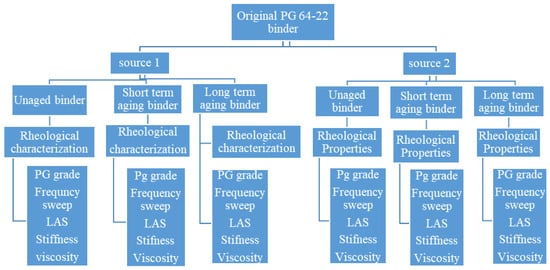
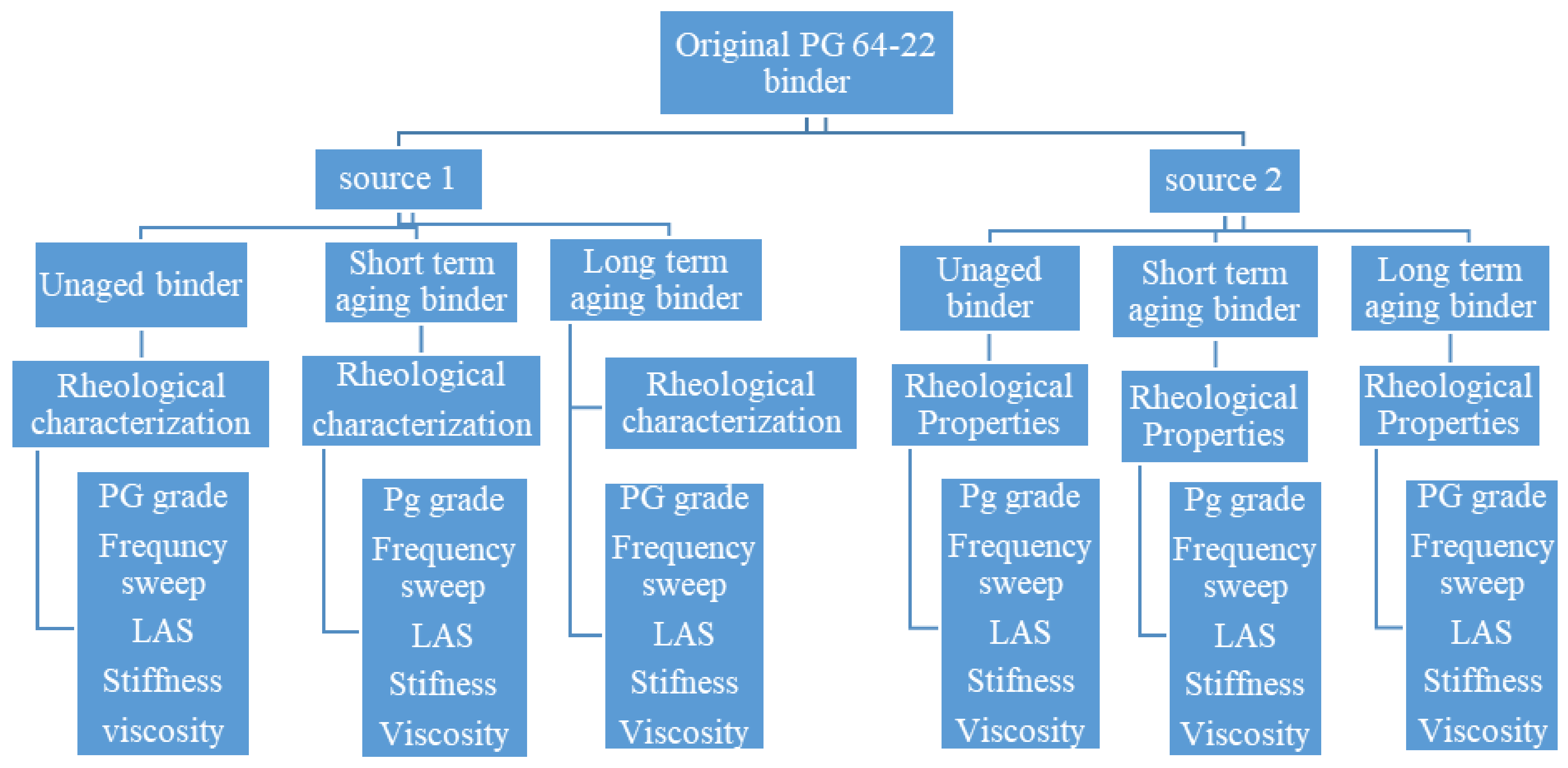
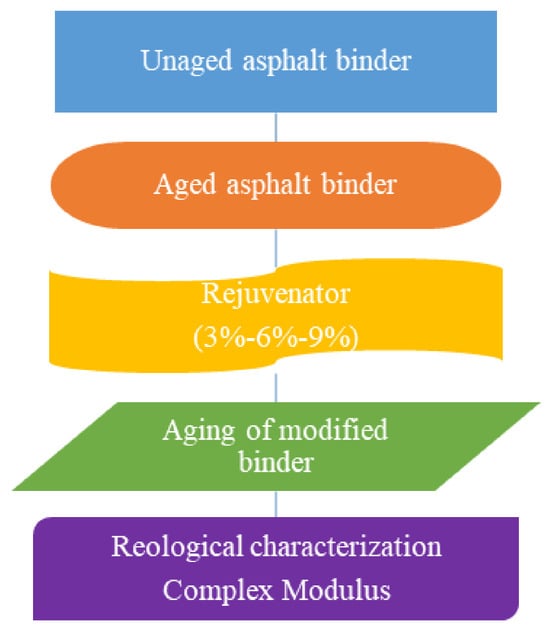
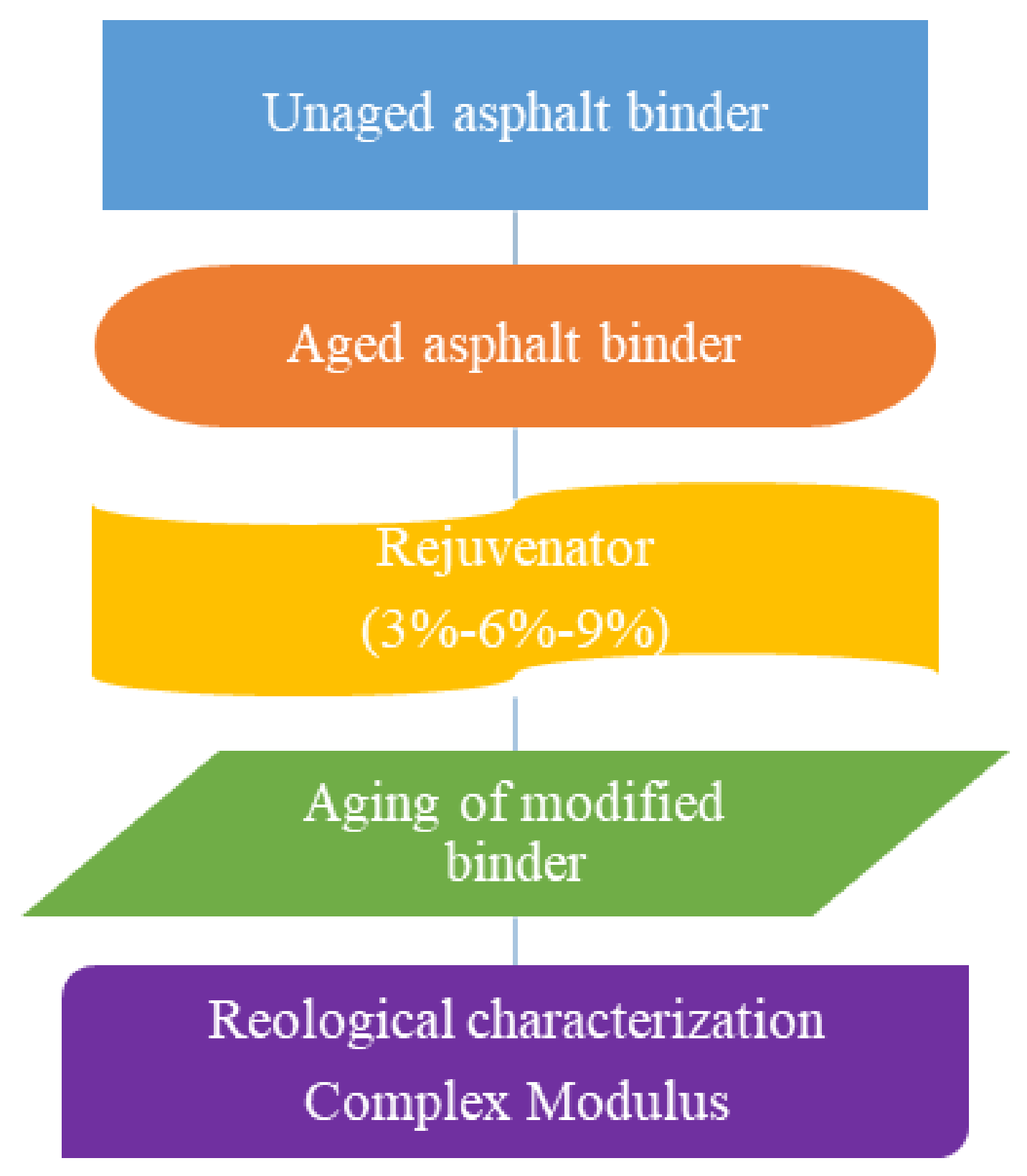
A two-stage experimental framework was established to investigate the source-dependent behavior, aging response, and rejuvenation performance of two PG64-22 bitumen binders. In the first stage, the original binders from the two sources were characterized to establish their baseline performance. The binders were subsequently subjected to RTFO conditioning followed by one PAV cycle to produce a controlled long-term-aged state. In the second stage, the aged binders were treated with R1 rejuvenator and evaluated to quantify the resulting changes in performance. The experimental matrix therefore comprised three binder conditions: original, aged, and rejuvenated-aged. DSR, BBR, and RV tests were conducted to characterize the corresponding rheological, low-temperature, and viscosity-related properties. Three independent replicates were prepared for each test condition to enhance experimental repeatability and reliability. The overall testing sequence and experimental matrix for the two binder sources and the rejuvenation phase are illustrated in Figure 1 and Figure 2, respectively.
Figure 1.
Different sources of PG64-22 binders testing plan.
Figure 2.
Modified binder test section.
4. Result
4.1. PG Classification of Binders According to Their Sources
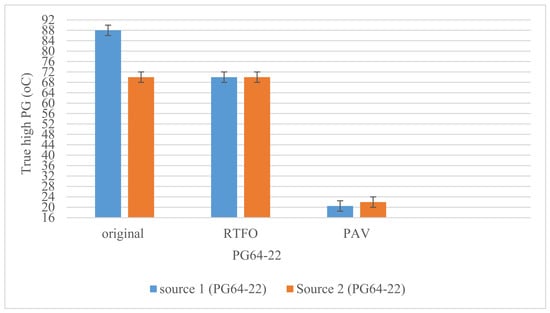
DSR testing was conducted in accordance with AASHTO R 49-09 [38] to characterize the high-temperature performance grades of the PG64-22 binders obtained from different sources. Table 1 summarizes the true high-temperature performance grades of the original, short-term-aged (RTFO-conditioned), and long-term-aged (PAV-conditioned) binders, while Figure 3 provides a comparative representation of their performance evolution. Although both binders were classified as PG64-22, their measured high-temperature properties exhibited source-dependent differences across the aging conditions.
Table 1.
Comparison of true high-temperature PG grades for binders of different origins.
Figure 3.
Comparison of the true high-temperature PG grades of binders from different sources.
The experimental findings demonstrated that the two binders, although classified as PG64-22, exhibited discernible differences in their performance characteristics. Source 1 exhibited a true high-temperature grade of 88 °C, compared with 70 °C for Source 2, representing an 18 °C difference in the measured high-temperature performance. The two sources showed identical RTFOT high-temperature values 70 °C, while their PAV values were relatively close 20.5 and 22 °C, respectively. These results demonstrate that a common PG classification does not necessarily indicate identical rheological characteristics or aging-related performance.
4.2. Mass Loss Characteristics of Asphalt Binders
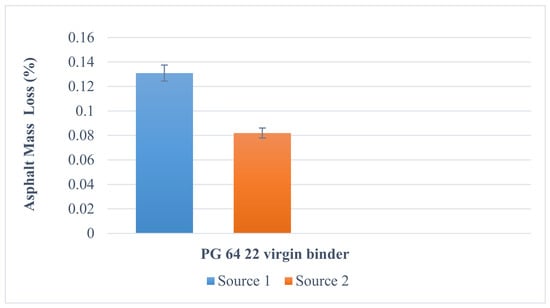
The two binders, both classified as PG64-22, were obtained from different sources and subjected to short-term aging using the Rolling Thin Film Oven (RTFO) procedure in accordance with AASHTO T 240 [39]. The corresponding mass loss values are presented in Figure 4. Both binders remained within the applicable specification limits; however, Source 2 exhibited a 37% lower mass loss than Source 1, indicating comparatively lower mass loss during short-term aging.
Figure 4.
Mass loss characteristics of asphalt binders from different sources.
4.3. Linear Amplitude Sweep Characterization of Asphalt Binders
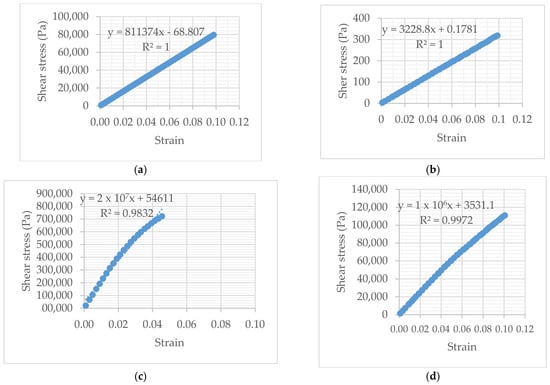
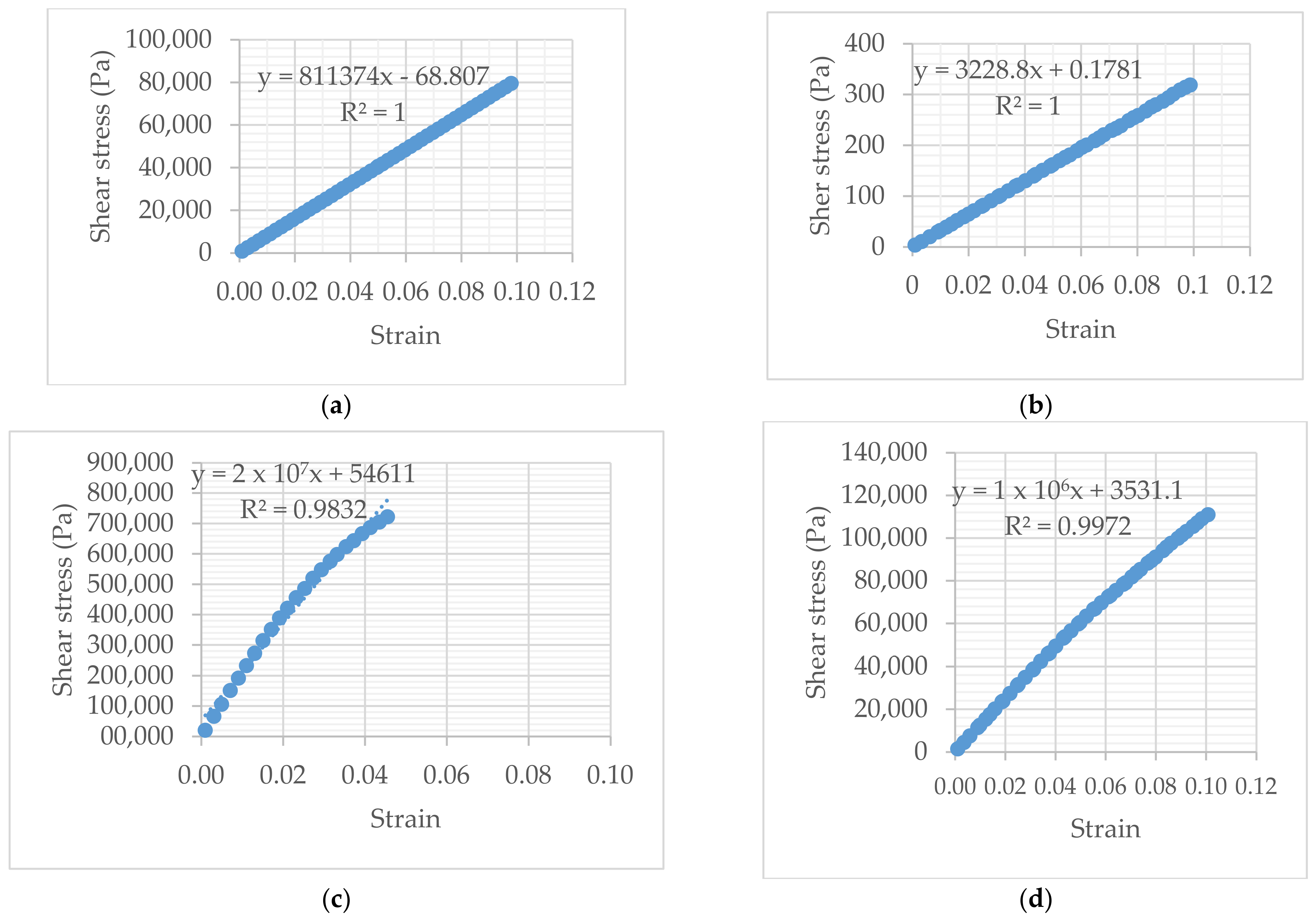
The linear amplitude sweep (LAS) test was employed to characterize the viscoelastic and damage-related response of the asphalt binders under progressively increasing strain amplitudes. The test was conducted under strain-controlled conditions, with the strain amplitude increased from 0.1% to 10%. This strain range was applied to both the unaged and long-term-aged binder specimens to facilitate a consistent assessment of their damage evolution and fatigue-related response. The temperature and loading frequency conditions adopted for the LAS analysis are summarized in Table 2.
Table 2.
Original and PAV binder LAS test parameter.
Figure 5.
Shear stress–strain linearity of the original PG64-22 binder: ithf (a), itlf (b), lthf (c), ltlf (d) shear stress–strain linearity.
Figure 6.
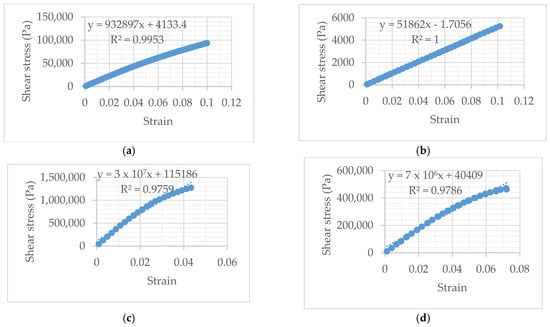
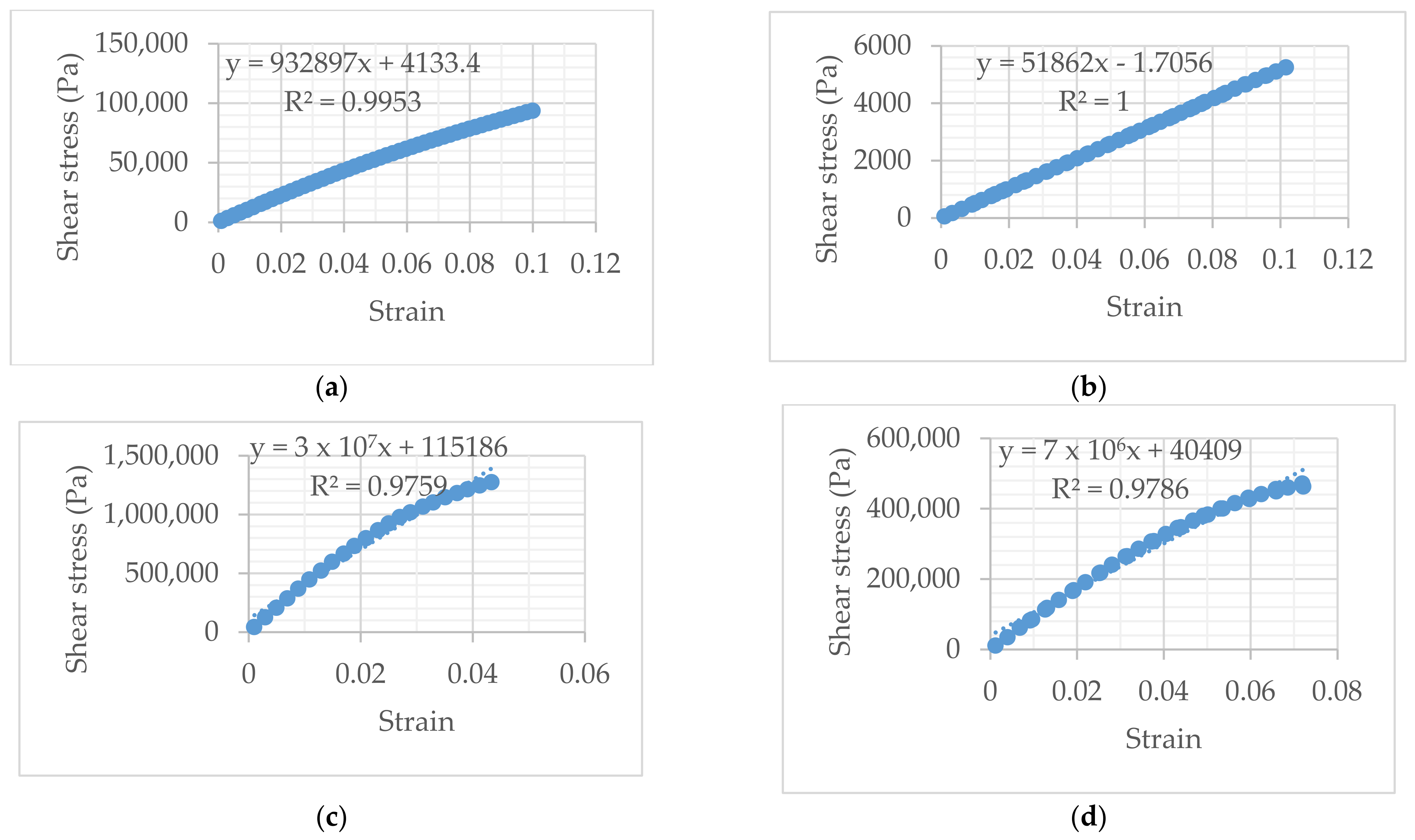
Shear stress–strain linearity of PG64-22 binder after PAV 1 aging under different testing conditions: ithf (a), itlf (b), lthf (c), ltlf (d).
The parameters employed in the LAS analysis of the strain–stress response are presented in Table 3.
Table 3.
Maximum stress–strain parameters obtained from the LAS test.
The LAS test results indicate that long-term aging substantially altered the rheological characteristics of the binders. Aging-induced hardening resulted in an increase in the maximum stress, reflecting the greater resistance of the binder to deformation. Despite this stiffening effect, the brittle aged binder exhibited a slight increase in the maximum deformation at elevated stress levels. Furthermore, the strain values obtained from the LAS analysis remained within the accepted 1% deviation from the applied strain throughout the frequency sweep, confirming the consistency of the imposed loading conditions.
4.4. LAS-Based Evaluation of Asphalt Binder Fatigue Resistance
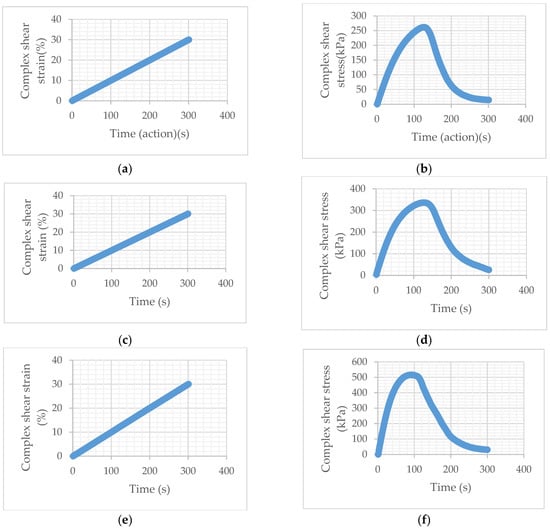
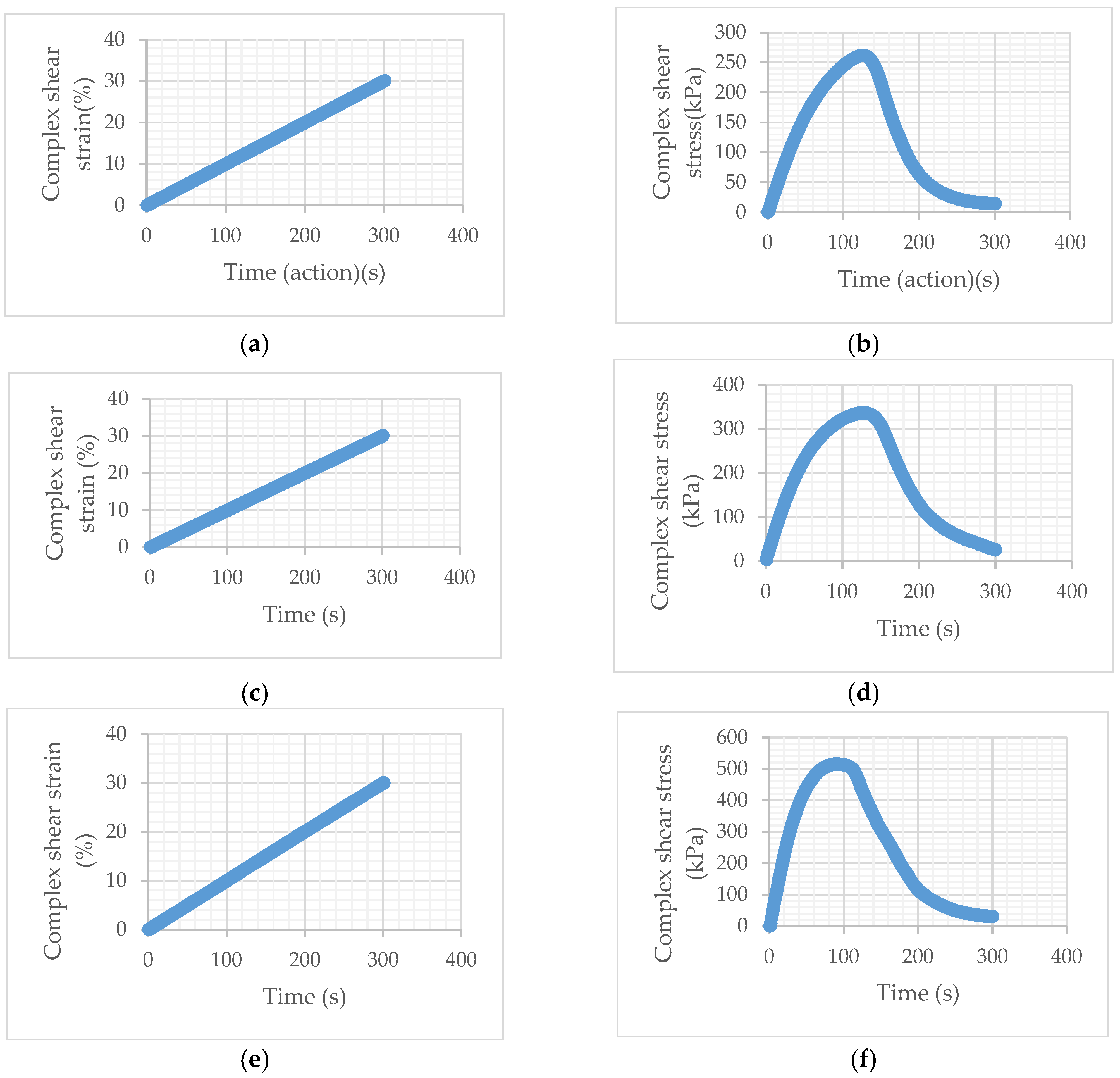
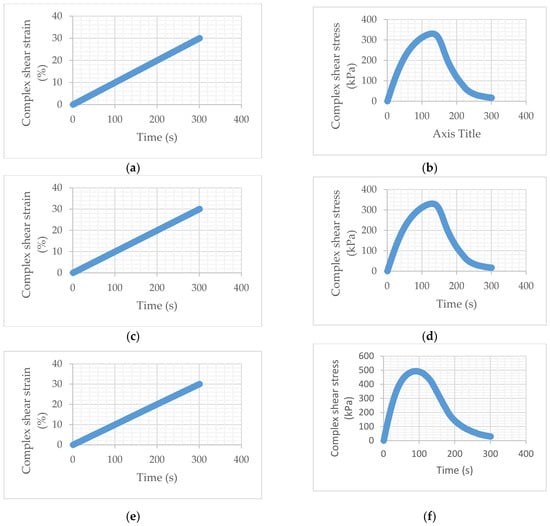
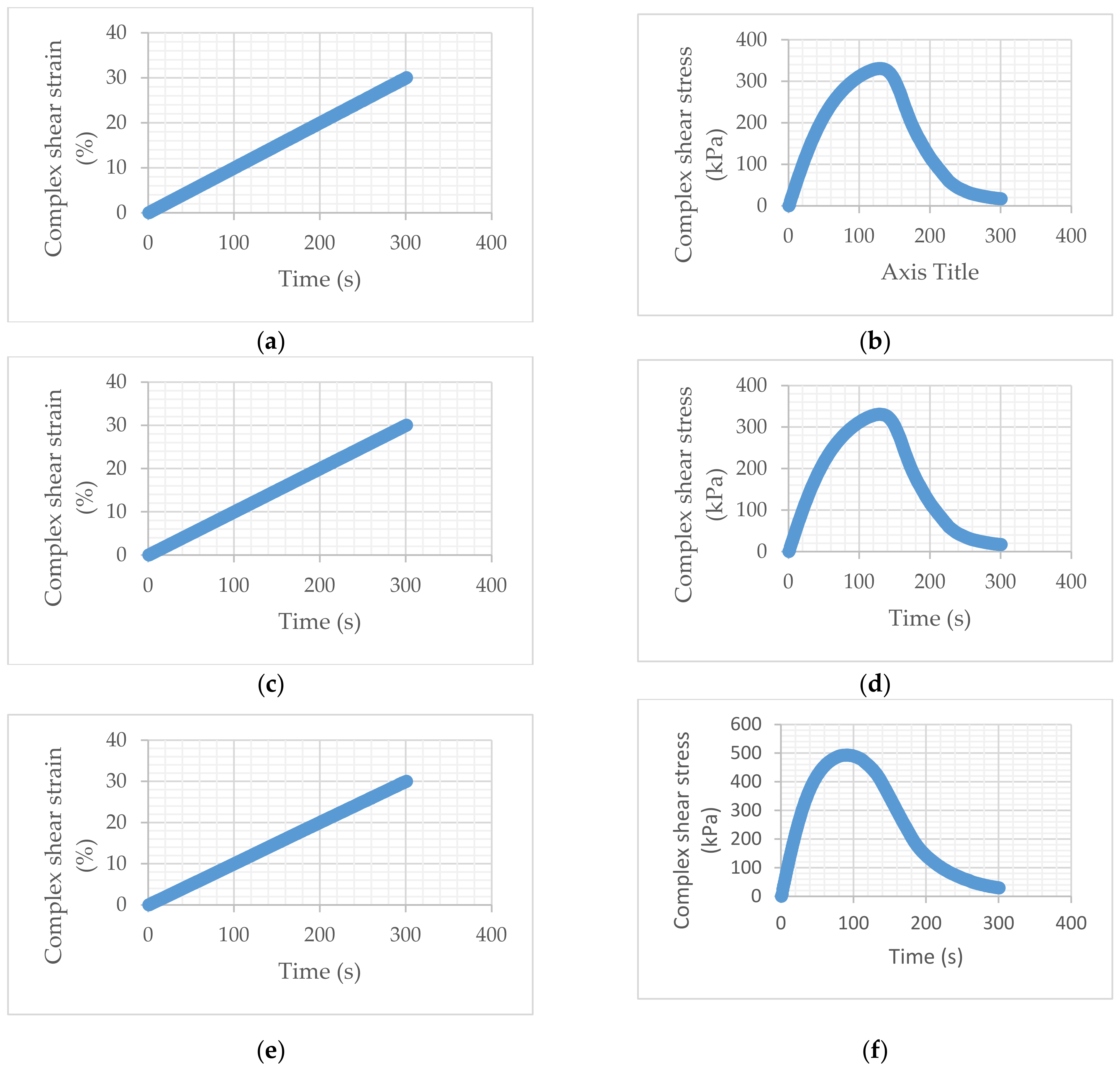
The DSR measurements were conducted in accordance with the temperature-controlled AASHTO T 315 protocol. Frequency- and amplitude-sweep procedures were employed to characterize the rheological response and damage behavior of the asphalt binders, respectively. The amplitude sweep was performed at a constant strain level of 1% and a temperature of 25 °C under strain-controlled oscillatory shear loading. For the frequency sweep, the binders were subjected to oscillatory loading over the specified frequency range of 0.1–100 Hz at each test temperature. The resulting complex shear modulus and complex shear stress were evaluated as functions of loading time to characterize the time-dependent response of the binders. The LAS results were used to characterize the strain-dependent viscoelastic response; however, quantitative \( N_f\) values were not reported because the available graphical results do not contain the complete numerical parameters required for direct fatigue-life calculation. Figure 7 and Figure 8 illustrate the fatigue response of the asphalt binders obtained from different origins. As illustrated in these figures, the stress and strain responses exhibited a time-dependent increase, followed by a subsequent decrease after the first PAV aging cycle. This behavior indicates a notable change in the fatigue response of the binders following long-term aging.
Figure 7.
Time-dependent complex shear strain and stress responses of the Source 1 PG64-22 binder under aging conditions: (a,b) unaged, (c,d) short-term aged, and (e,f) long-term.
Figure 8.
Time-dependent complex shear strain and stress responses of the Source 2 PG64-22 binder under different aging conditions: (a,b) unaged, (c,d) short-term aged, and (e,f) long-term.
As illustrated in Figure 7, the peak complex shear stress exhibited a pronounced increase with aging, rising from approximately 260 kPa in the unaged condition to 340 kPa following short-term aging and reaching nearly 520 kPa after long-term aging. Relative to the unaged state, these values represent increases of approximately 31% and 100%, respectively. In contrast, the strain associated with the peak stress remained nearly unchanged at approximately 12% for the unaged and short-term-aged binders but declined to about 9% after long-term aging. The concurrent increase in peak shear stress and reduction in the associated strain indicate a substantial stiffening of the binder and a shift toward a more brittle mechanical response as aging progresses.
As shown in Figure 8, the complex shear strain followed an approximately linear progression, increasing from an initial value near 0% to about 30% over the 300 s loading period, irrespective of the aging condition. In contrast, the complex shear stress exhibited a distinct peak response. Conditions 1 and 2 reached peak stresses of approximately 330–340 kPa at 120–130 s, whereas Condition 3 reached approximately 490–500 kPa at 90–100 s. Thus, Condition 3 exhibited approximately 45–50% higher peak shear stress and reached its peak approximately 20–30 s earlier than the other two conditions, indicating substantially greater resistance to the applied shear loading.
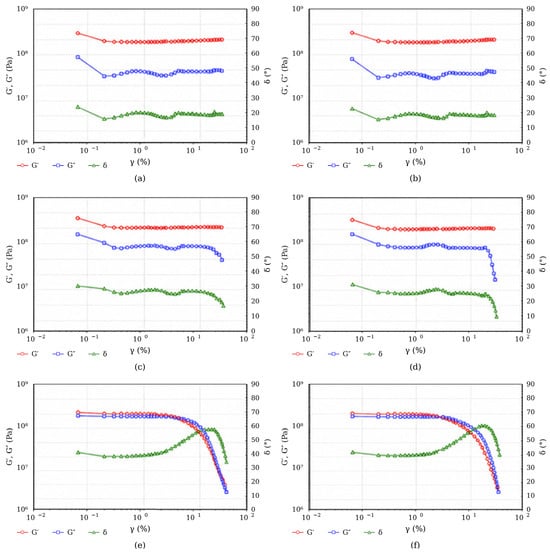
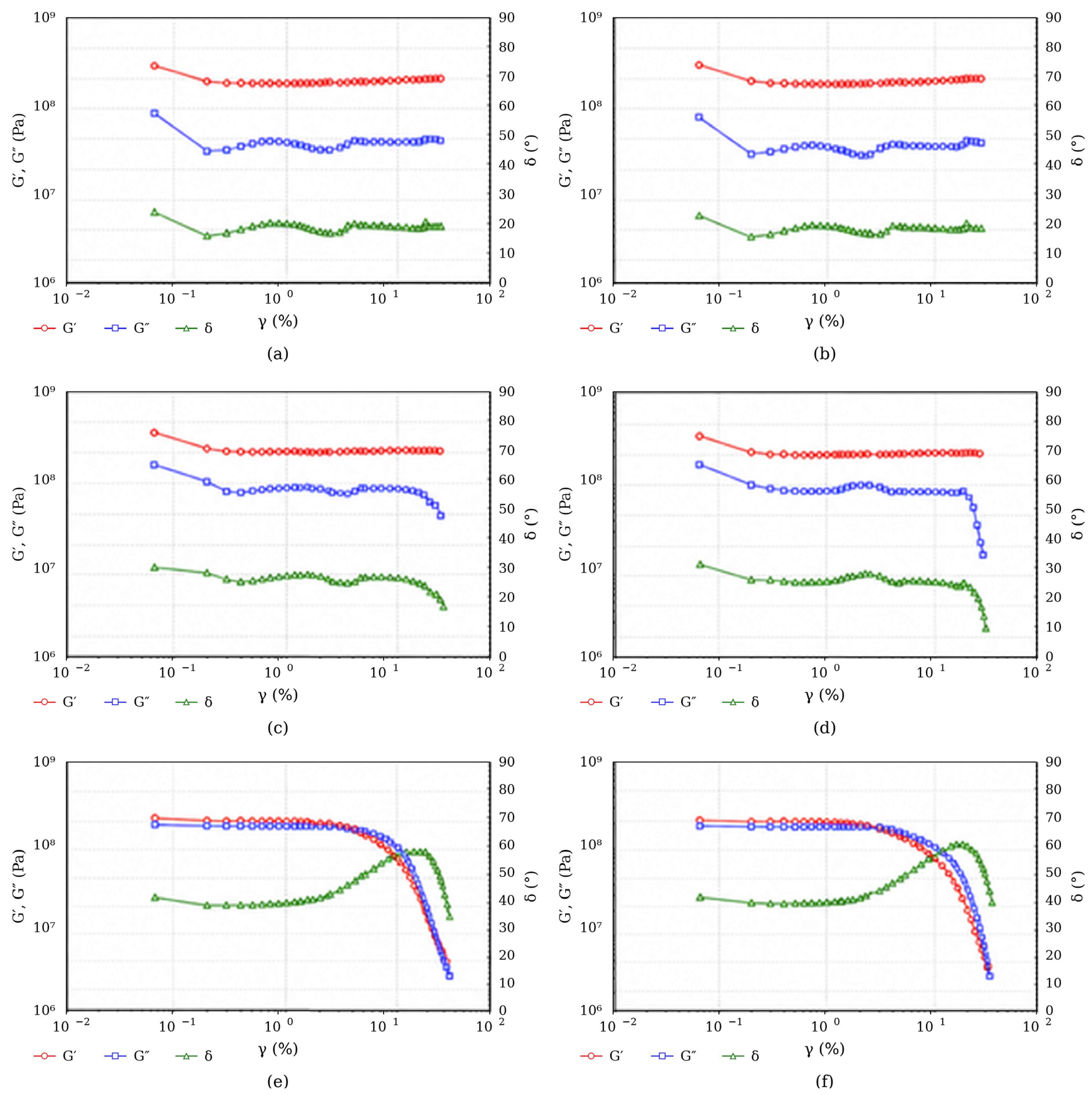
The variations in phase angle, complex modulus, and shear strain as a function of the applied loading conditions are illustrated in Figure 9.
Figure 9.
Shear strain-dependent evolution of the elastic modulus, viscous modulus, and phase angle under different binder aging conditions: (a,b) unaged, (c,d) RTFO-aged, and (e,f) PAV-aged.
As shown in Figure 9, the responses obtained for the two binder sources followed broadly comparable trends. The fatigue-related response was characterized by a progressive reduction in the complex modulus, elastic modulus, viscous modulus, and phase angle as the complex shear strain increased, particularly after aging. These changes suggest that aging altered the viscoelastic response of the asphalt binders and contributed to a deterioration in their resistance to fatigue-induced damage. The results demonstrate a clear strain-dependent evolution of the viscoelastic response under the three investigated conditions. Under Condition 1, (G′) decreased from approximately 20–25 kPa to 11–13 kPa, while (G″) declined from about 55–60 kPa to 40–45 kPa with increasing strain. Under Condition 2, the initial (G′) and (G″) values were approximately 40–45 and 70–75 kPa, respectively, decreasing to about 10–15 and 20–25 kPa at high strain. In contrast, Condition 3 exhibited substantially higher initial stiffness, with both modulus components approaching (9 × 10³) kPa, followed by a pronounced reduction of nearly two orders of magnitude at high strain. Meanwhile, the phase angle increased from approximately 40–45° to nearly 60°, indicating a progressive shift toward a more viscous response. Overall, the results indicate relatively stable viscoelastic behavior at low-to-intermediate strain levels for Conditions 1 and 2, whereas Condition 3 exhibits substantially greater initial stiffness followed by pronounced strain-induced softening.
4.5. Frequency Sweep Characterization of Asphalt Binder Rheology
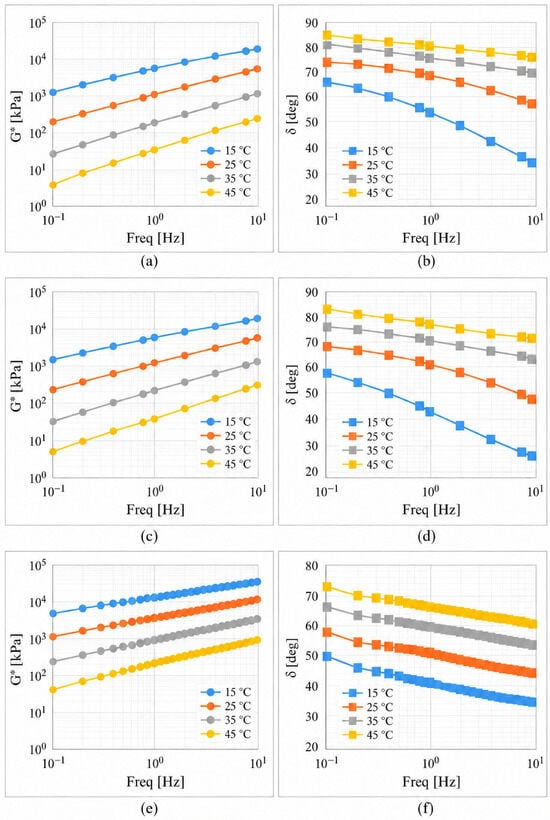
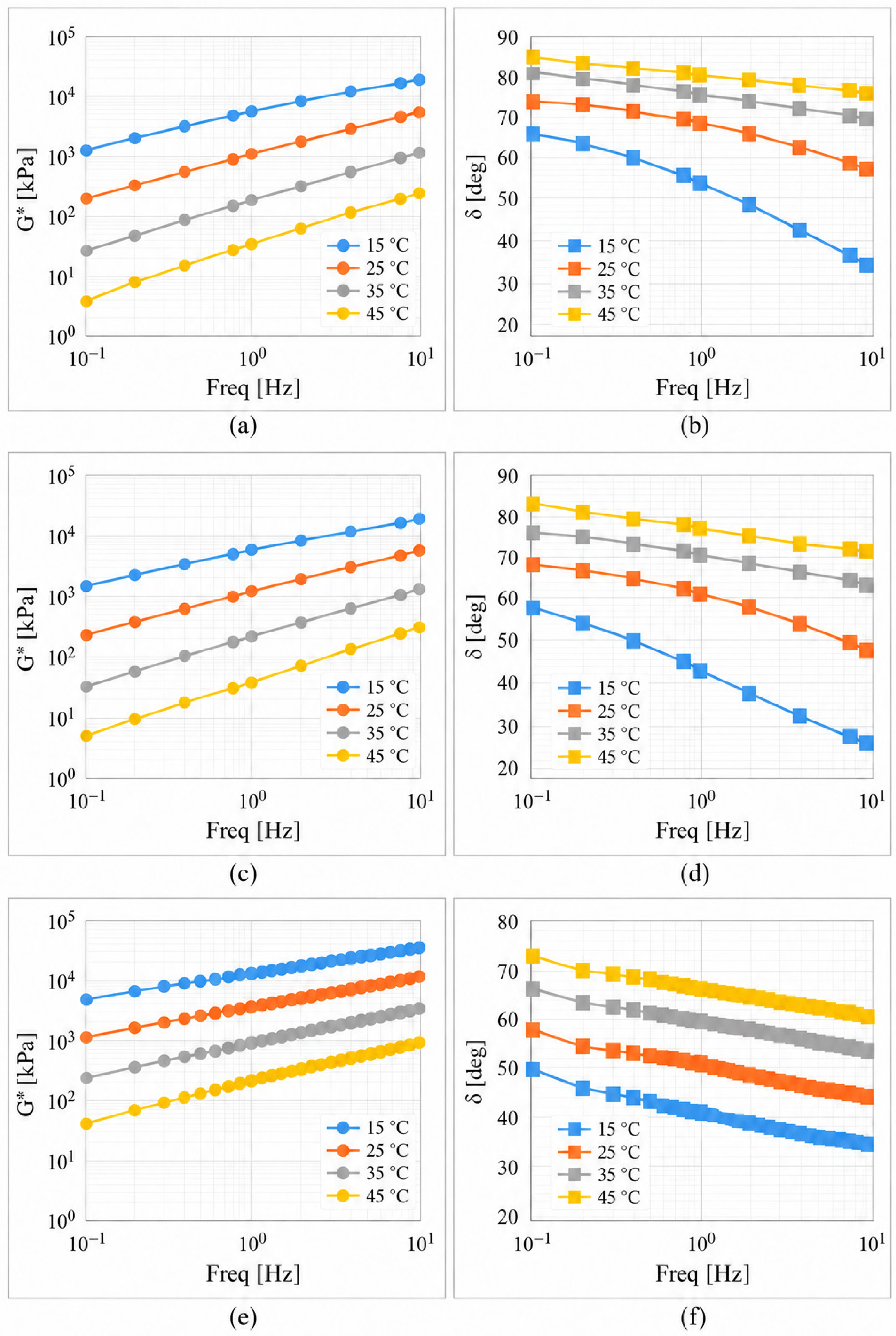
A frequency sweep test was conducted to characterize and compare the rheological behavior of the two binder sources over a range of loading frequencies. The measurements were performed under strain-controlled oscillatory loading at temperatures ranging from 15 to 45 °C, while the frequency was varied between 0.16 and 16 Hz. The rheological responses of the unaged, short-term-aged, and long-term-aged binders were evaluated based on the relationships between the complex modulus and frequency, as well as between the phase angle and frequency. The temperature and frequency conditions adopted for the frequency sweep testing are summarized in Table 4.
Table 4.
Temperature and frequency conditions for the frequency sweep analysis.
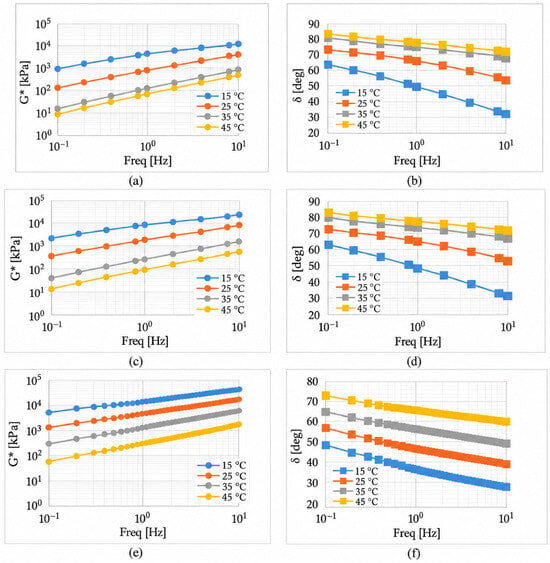
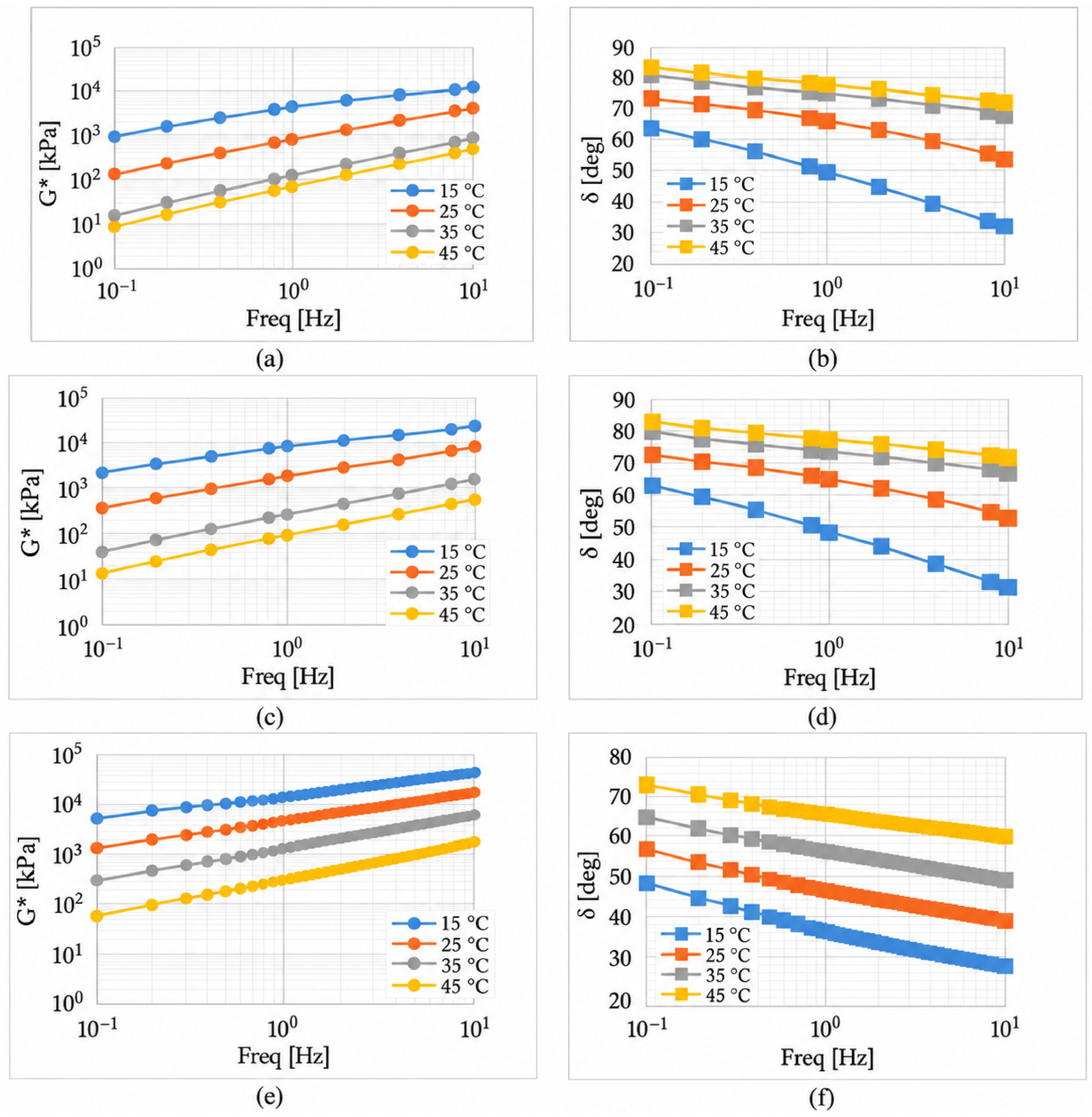
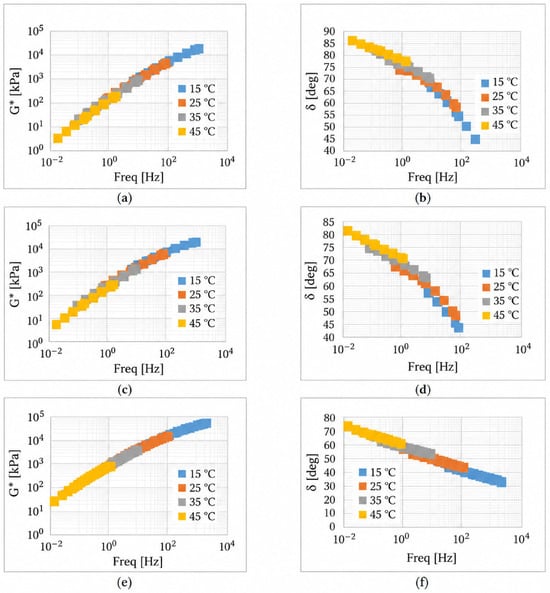
The frequency-dependent variations in the complex shear modulus (G*) and phase angle (δ) are presented in Figure 10 and Figure 11 respectively. At low and intermediate testing temperatures, G* increased progressively with increasing frequency, whereas δ exhibited an inverse trend. The highest G* values were recorded at the lowest test temperature of 15 °C, while the corresponding phase angle values were minimized under the same conditions, indicating a predominantly elastic and stiff response. Long-term aging further increased G* and reduced δ, reflecting an aging-induced increase in binder stiffness and a greater elastic contribution to the overall rheological response.
Figure 10.
Source 1 original PG64-22 binder (a,b), PG64-22 binder after RTFO (c,d), PG64-22 binder after 1 PAV (e,f) complex modules-frequency and phase angle-frequency relationship, respectively.
Figure 11.
Source 2 original PG64-22 binder (a,b), PG64-22 binder after RTFO (c,d), PG64-22 binder after 1. PAV (e,f) complex modules-frequency and phase angle-frequency relationship, respectively.
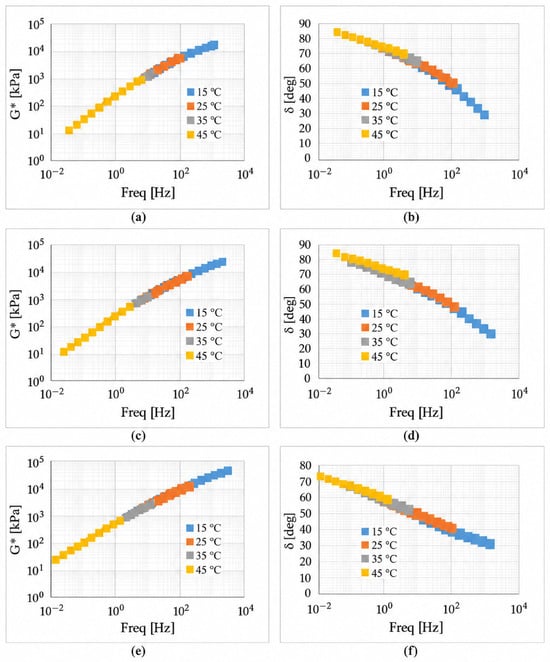
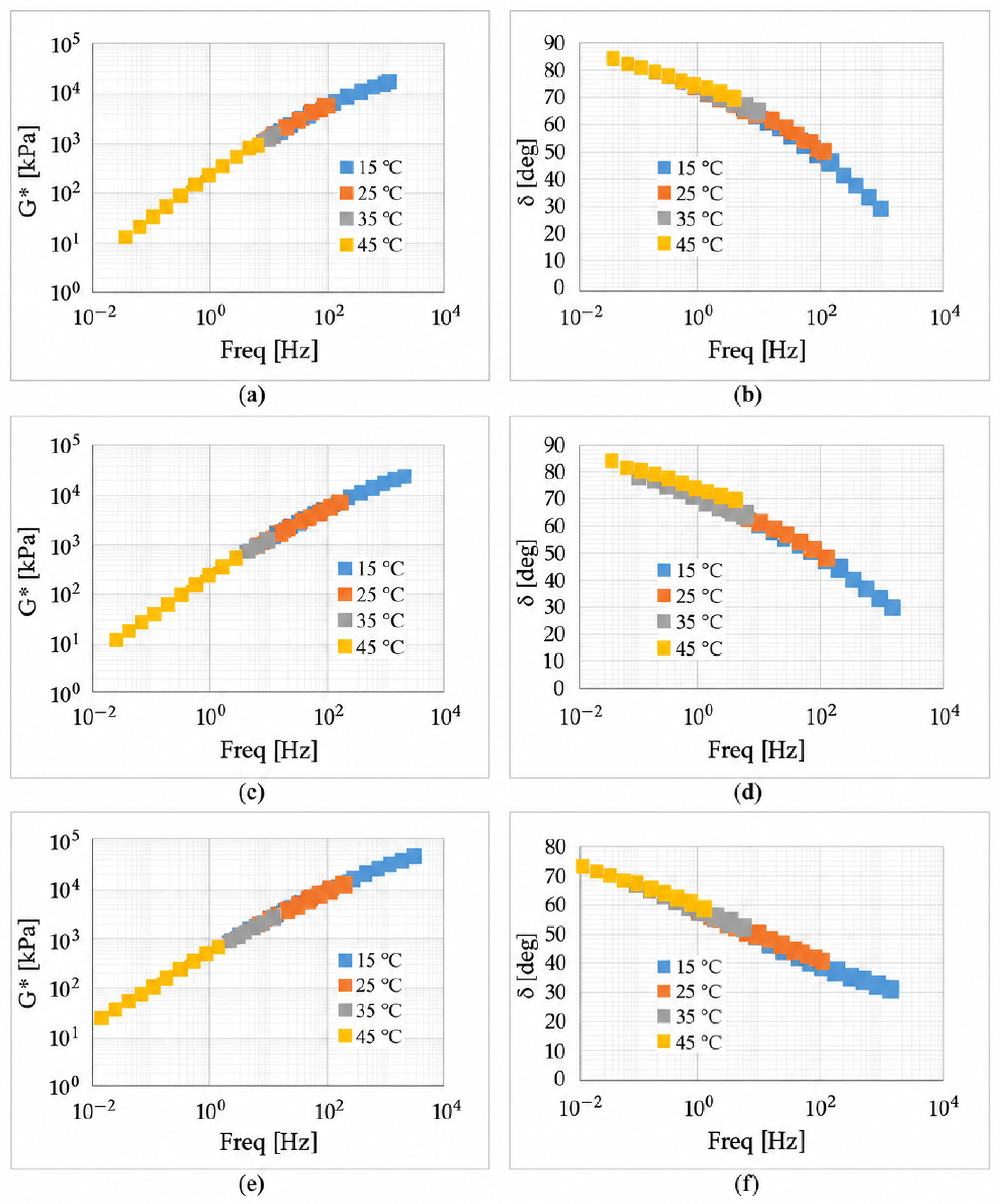
At the highest investigated temperature of 45 °C, the phase angle reached its maximum level, whereas G* attained its lowest values, indicating a transition toward a softer and more viscous response. The two binder sources exhibited comparable frequency-dependent trends across the investigated temperature range. The DSR measurements were subsequently used to construct the master curves for G* and δ, which are presented in Figure 12 and Figure 13, respectively.
Figure 12.
Master curves for G* and δ, original PG64-22 binder (a,b), PG64-22 binder after RTFO (c,d), PG64-22 binder after 1 PAV (e,f) (source 1).
Figure 13.
Master curves for G* and δ, original PG64-22 binder (a,b), PG64-22 binder after RTFO (c,d), PG64-22 binder after 1 PAV (e,f) (source 2).
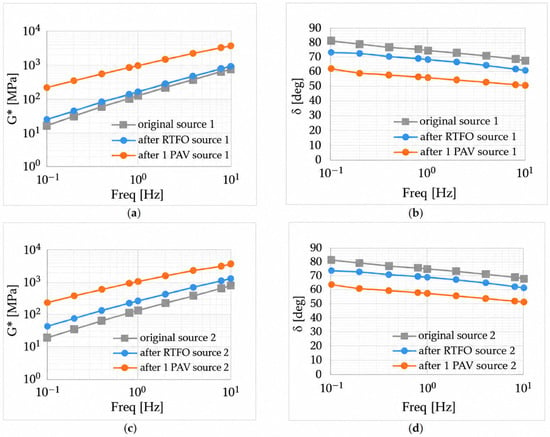
Figure 14 presents the frequency sweep results obtained to assess the rheological response of the asphalt binder before and after aging. The unaged and RTFO-aged conditions exhibited closely comparable rheological responses, indicating limited changes following short-term aging. In contrast, long-term aging resulted in a clear increase in the complex shear modulus (G*) accompanied by a reduction in the phase angle (δ), indicating increased stiffness and a greater elastic contribution to the binder response. Overall, the investigated aging conditions produced consistent rheological trends.
Figure 14.
Rheological response obtained from frequency sweep testing: (a,b) Source 1, and (c,d) Source 2.
4.6. Multiple Stress Creep Recovery Characterization of Asphalt Binders
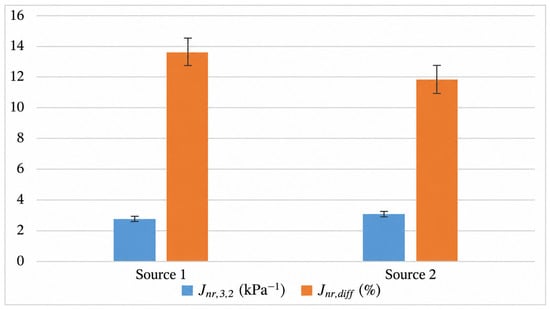
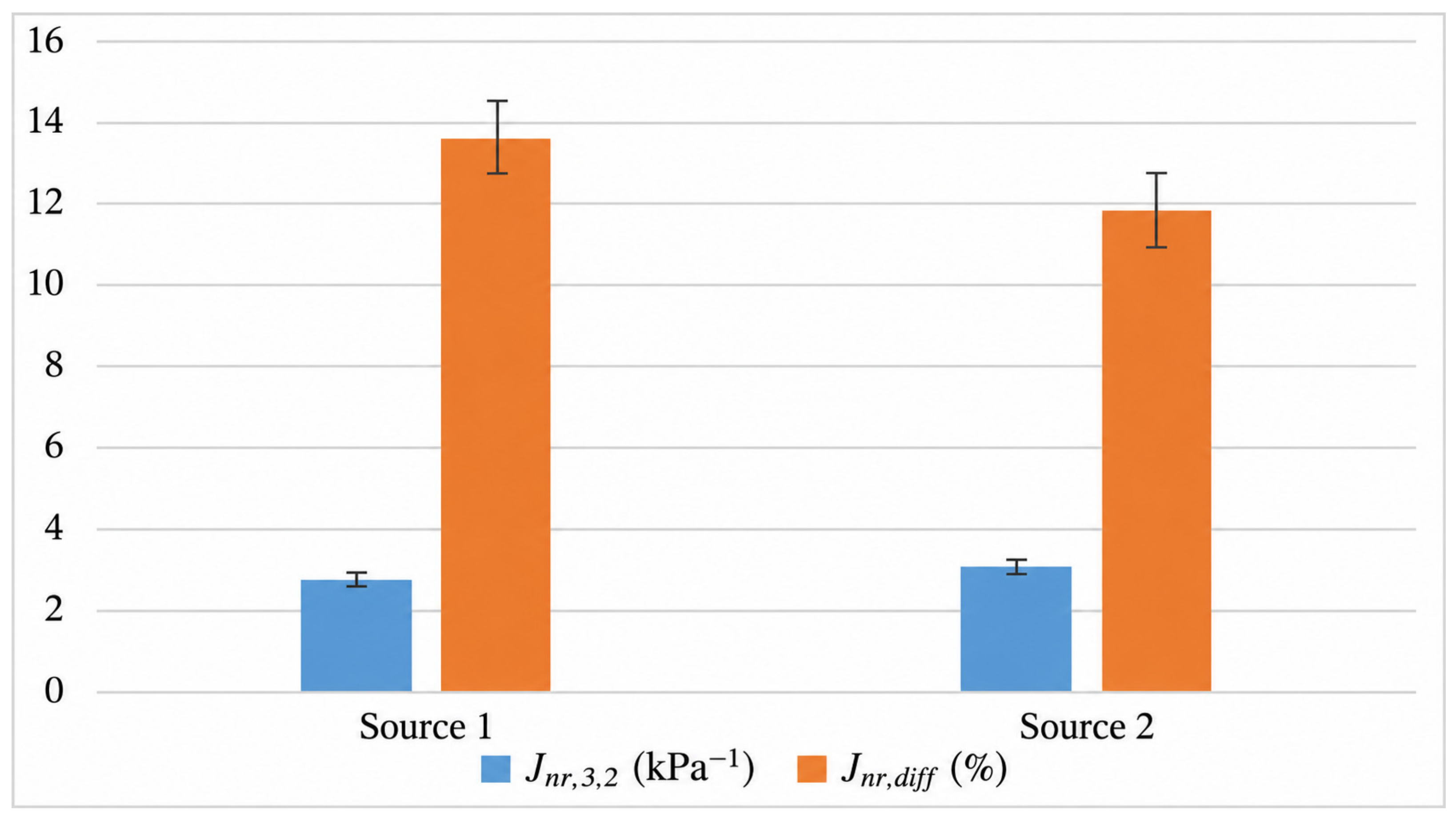
The Multiple Stress Creep Recovery (MSCR) test was developed within the framework of the NCHRP 9-10 research program [40] and has been widely adopted to characterize the high-temperature rutting susceptibility of asphalt binders under varying stress levels. In the present study, MSCR testing was conducted in accordance with the AASHTO T 350 standard [41] to evaluate the response of the binders to different simulated traffic loading conditions at elevated service temperatures. The tests were performed on short-term-aged binder specimens at 64 °C. The resulting MSCR parameters are summarized in Table 5, while the non-recoverable creep compliance values, including Jnr3.2 and Jnr,diff, are presented in Figure 15.
Table 5.
High-temperature creep recovery parameters of asphalt binders from different sources.
Figure 15.
Determining of different sources of PG64 22 non-recoverable creep compliance.
When Figure 15 was determined, it was shown that all sources of binder creep compliance test results were close to each other. Jnr3,2 value of source two was 12% higher than source one. T Source 1 exhibited an approximately 15% higher Jnrdiff value than Source 2, demonstrating a measurable difference in the non-recoverable compliance response between the two binder sources. Figure 15 shows that the two binder sources exhibited relatively similar non-recoverable creep responses after short-term RTFO aging. The Jnr3,2 value was 2.749 kPa−1 for Source 1 and 3.079 kPa−1 for Source 2, with Source 2 exhibiting approximately 12.0% higher non-recoverable creep compliance. In contrast, the Jnrdiff values were 13.65% and 11.85% for Sources 1 and 2, respectively, indicating an approximately 15.2% higher stress-sensitivity index for Source 1. The corresponding recoverable strains at 3.2 kPa were 1.20% and 0.90%, respectively, whereas the non-recoverable strain fractions reached 98.85% and 99.10%. Overall, these results indicate relatively comparable high-temperature creep behavior between the two sources, with measurable differences in non-recoverable deformation and stress sensitivity. It should be noted that these MSCR results characterize only the short-term RTFO-aged binders. Consequently, the available results are insufficient to quantitatively characterize the contribution of Hydroline H90T to the restoration of high-temperature rutting resistance.
4.7. BBR-Based Evaluation of Flexural Creep Stiffness and m-Value of Asphalt Binders
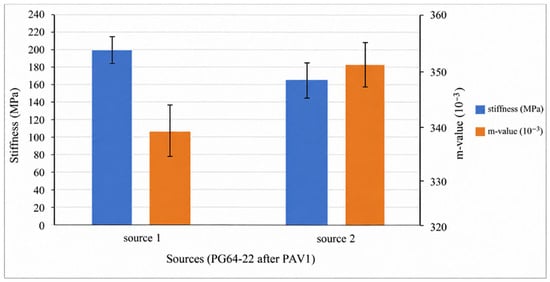
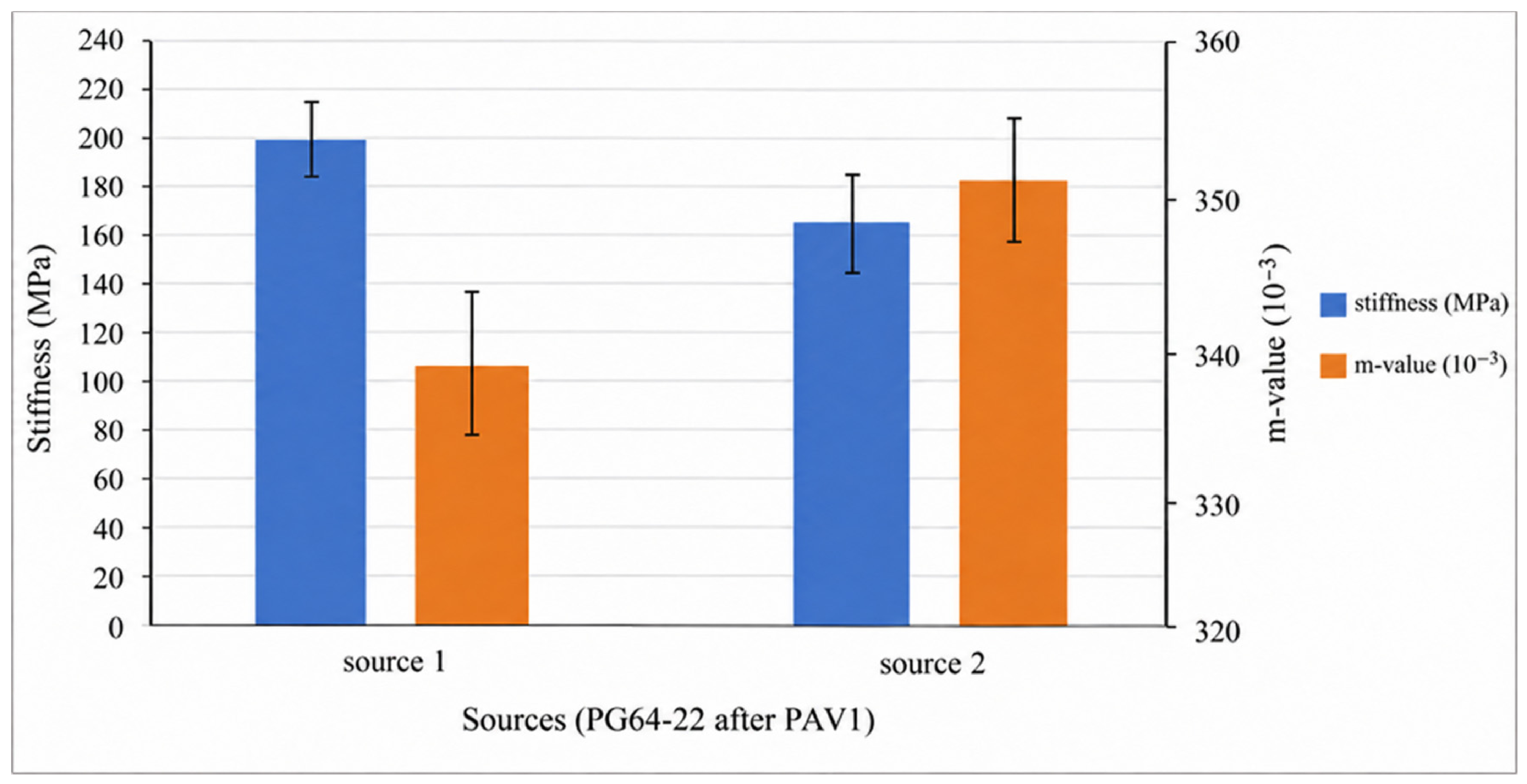
Low-temperature creep behavior was characterized by means of the Bending Beam Rheometer (BBR) for the two PG64-22 binder sources. Prior to testing, the binders underwent one cycle of pressure aging (1-PAV) to represent long-term aging conditions. BBR measurements were conducted at −12 °C following the requirements of AASHTO M 320 [42]. Flexural creep stiffness (S) and the corresponding m-value were considered to assess the low-temperature response of the binders. However, BBR testing was not performed on the aged binders containing Hydroline H90T. Therefore, the effect of rejuvenation on BBR creep stiffness and m-value cannot be directly quantified. Thus, the master-curve analysis provides an indirect basis for evaluating the rheological effects of rejuvenation at low temperatures, without constituting direct evidence of improved BBR-derived low-temperature performance. The BBR-derived stiffness and m-value measured at a loading time of 60.0 s are summarized in Table 6. In accordance with the specified performance criteria, the creep stiffness is limited to a maximum of 225 MPa, as greater stiffness is associated with increased development of thermally induced stresses. Conversely, an m-value of at least 0.316 is required, since lower values reflect a reduced capacity of the binder to dissipate or relax thermal stresses.
Table 6.
BBR-derived low-temperature rheological parameters.
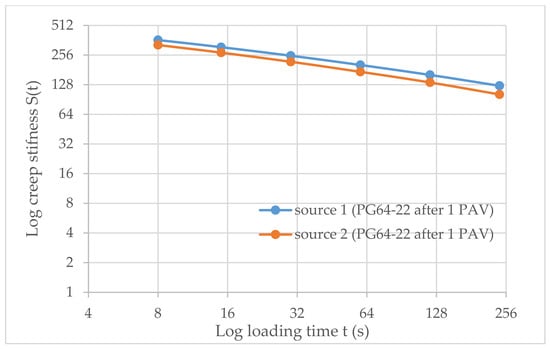
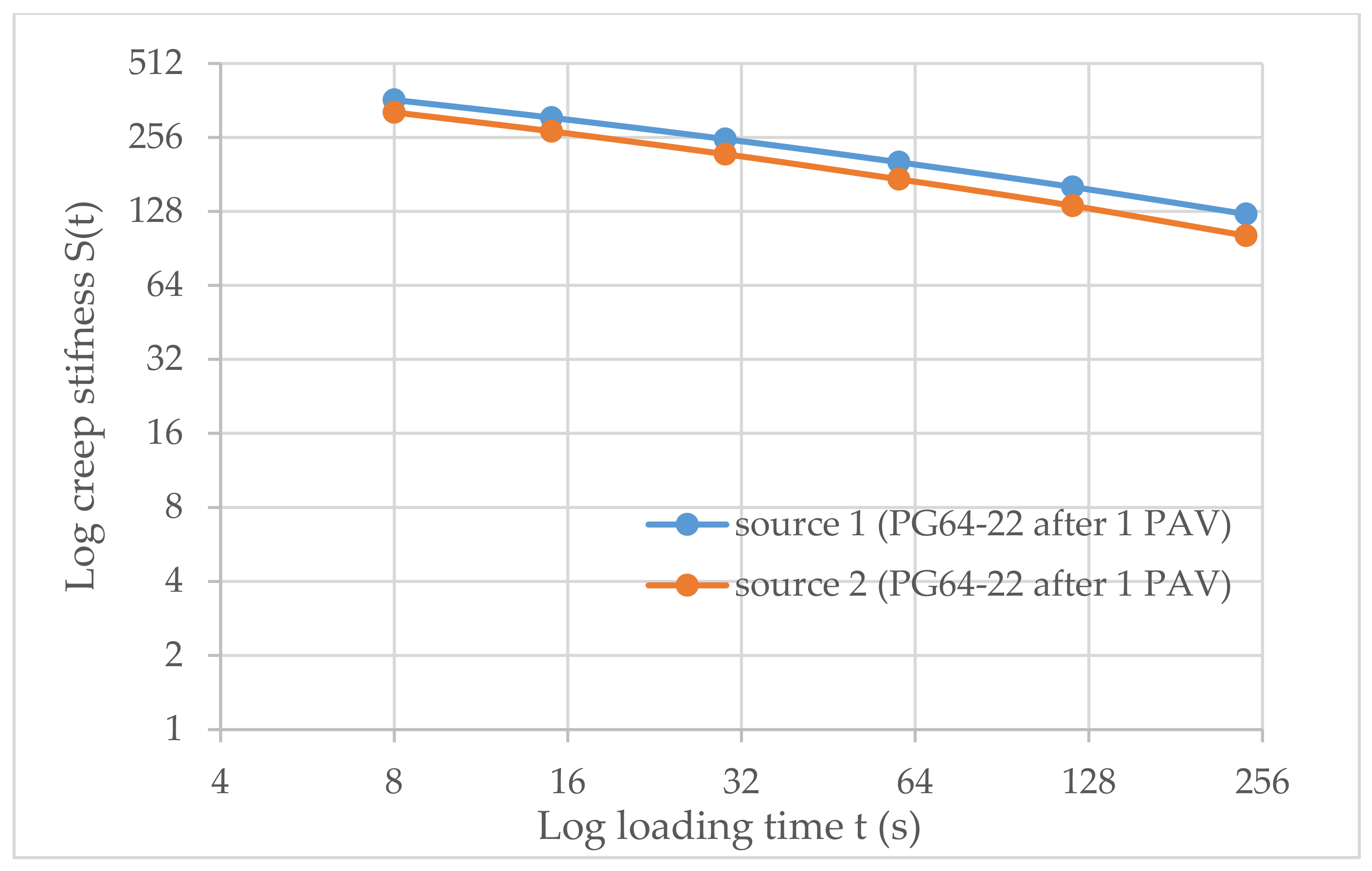
Figure 16 indicates a clear dependence of creep stiffness on loading duration. As further observed in Figure 17, Sources 1 and 2 follow comparable time-dependent stiffness trajectories, characterized by a consistent degree of parallelism.
Figure 16.
Time-dependent evolution of creep stiffness under BBR loading.
Figure 17.
BBR stiffness and m-value of long-term-aged PG64-22 binders from different sources.
Stiffness and m-value ratios of source one and source two are given in Figure 17.
In accordance with Figure 17, the stiffness of source one is 17.3% higher than that of source two, whereas the m-value ratio of source two is 7.69% higher than that of source one. Despite having the same PG rating, there are minor differences between the two sources. The BBR testing in the present study was limited to the original binders; therefore, BBR-based evaluation of the effect of rejuvenation on low-temperature performance was not performed.
4.8. Viscosity Profiles of PG64-22 Binders from Different Sources
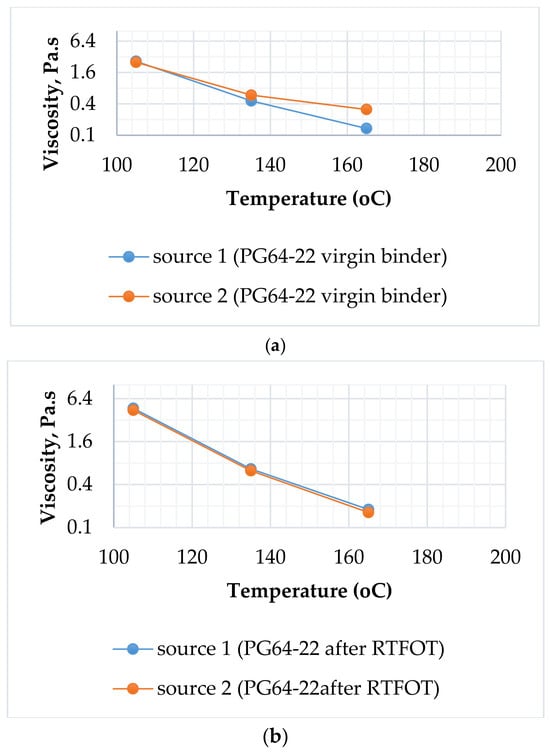
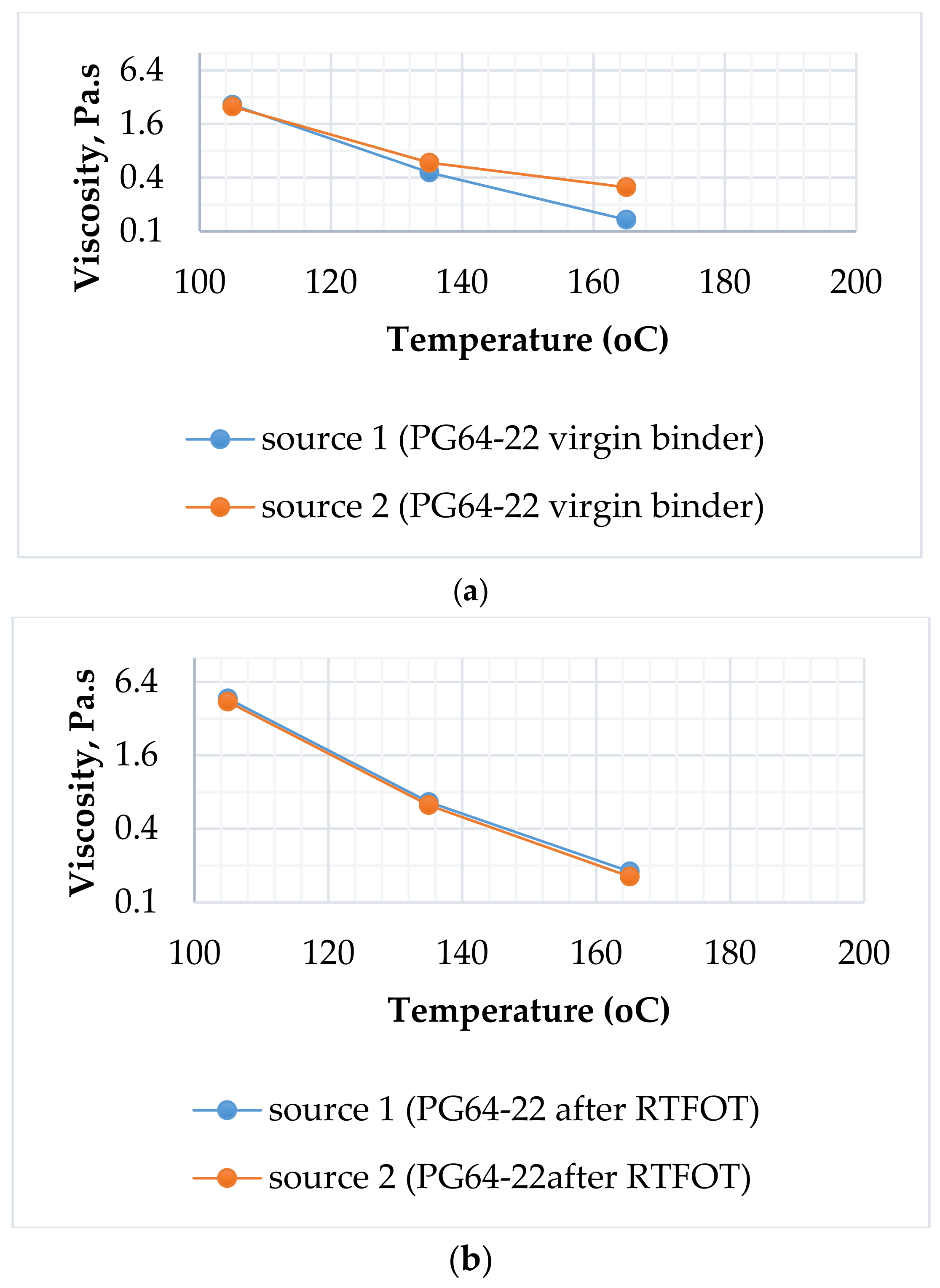
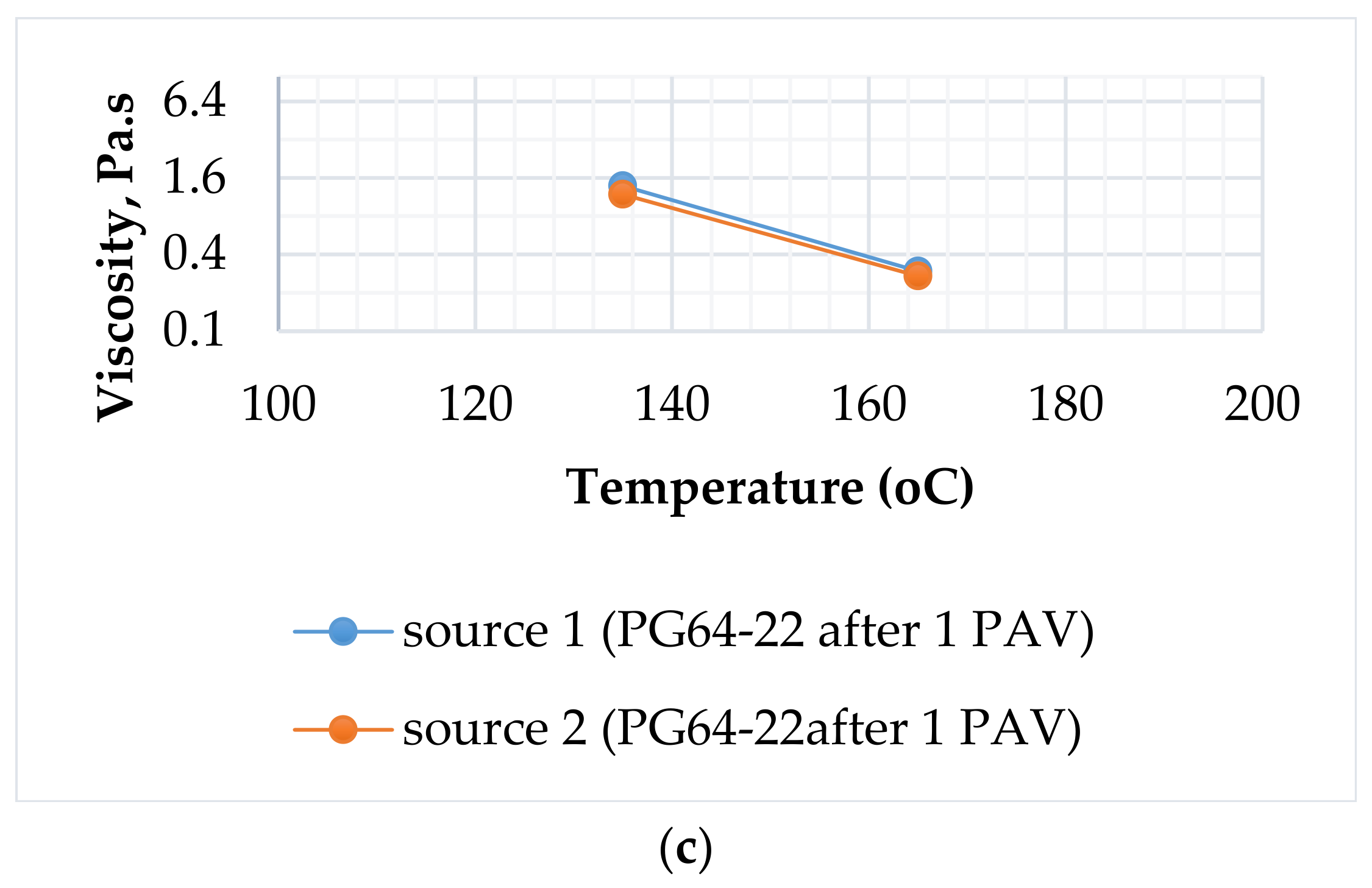
Rotational viscosity measurements were conducted on binders from different sources in their unaged, short-term-aged, and long-term-aged states. Measurements were obtained at 105, 135, and 165 °C to characterize the temperature-dependent flow behavior relevant to asphalt production and construction operations. The resulting viscosity–temperature data are summarized in Table 7.
Table 7.
Rotational viscosity of PG64-22 binders at different temperatures and aging conditions.
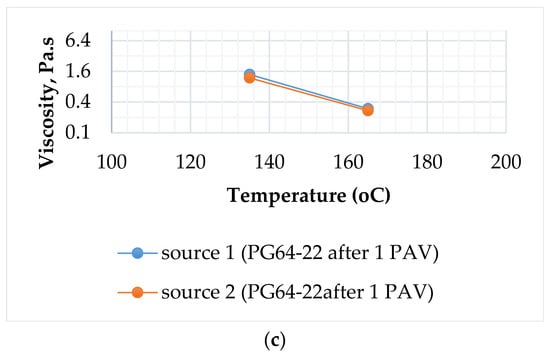
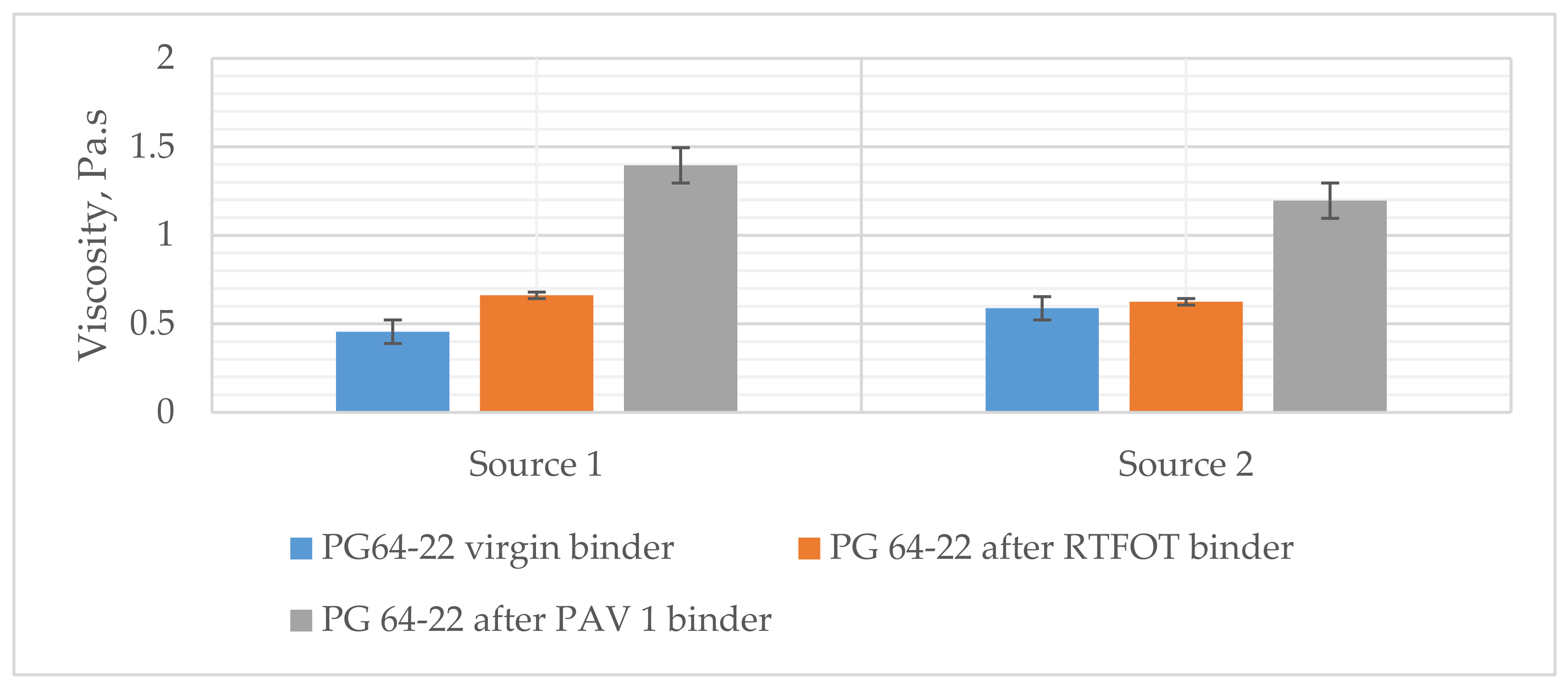
The two binder sources exhibited broadly comparable viscosity–temperature trends, although measurable differences were observed depending on temperature and aging condition. At 135 °C, which is particularly relevant to asphalt binder handling and construction, viscosity increased consistently with aging for both sources. For Source 1, the viscosity increased from 456 cP for the virgin binder to 662.5 cP after RTFO aging and 1396 cP after 1-PAV aging. Similarly, Source 2 exhibited an increase from 588 cP to 625 cP and 1196 cP, respectively. These results indicate a clear increase in flow resistance associated with progressive aging. At 165 °C, the viscosity values were generally lower and the differences between aging conditions were less systematic, particularly for Source 2, for which the viscosity decreased from 313 cP for the virgin binder to 162.5 cP after RTFO aging before increasing to 271 cP after 1-PAV aging. Therefore, the viscosity response should be interpreted as temperature- and aging-condition-dependent rather than as a uniformly increasing trend across all test conditions. Overall, the two sources showed comparable viscosity–temperature behavior, with aging producing the most pronounced increase in viscosity at 135 °C.
As shown in Figure 18, the viscosity–temperature profiles exhibited a high degree of consistency among the investigated binders. Aging produced no substantial divergence in their viscosity behavior, indicating that the temperature-dependent flow characteristics remained broadly comparable across the different sources.
Figure 18.
Representative viscosity–temperature profiles for (a) unaged, (b) short-term-aged, and (c) long-term-aged binders.
Figure 19 presents the viscosity behavior of the PG64-22 binders under different aging conditions.
Figure 19.
Viscosity response of PG64-22 binder at different aging stages.
The viscosity measurements obtained at 135 °C were broadly consistent among the different binder sources, irrespective of their aging condition. A progressive increase in viscosity was observed following short- and long-term aging, reflecting the corresponding increase in binder stiffness. Nevertheless, all measured values remained within the limits specified by the relevant AASHTO requirements.
4.9. Measured Binder Properties and Rorresponding Specification Limits
The control binders were tested to determine their unaged and short-term-aged (RTFO) critical high temperatures in accordance with AASHTO T315 [43]. The essential values of low-temperature, long-term-aged (PAV) samples were determined in accordance with AASHTO T313 [44]. The results are shown in Table 8.
Table 8.
Properties of unaged and aged control binders from different sources.
Asphalt binder PG64-22 product meets AASHTO M320 [45] specification requirements.
4.10. Rheological Response of Asphalt Binders to Hydroline H90T Rejuvenation
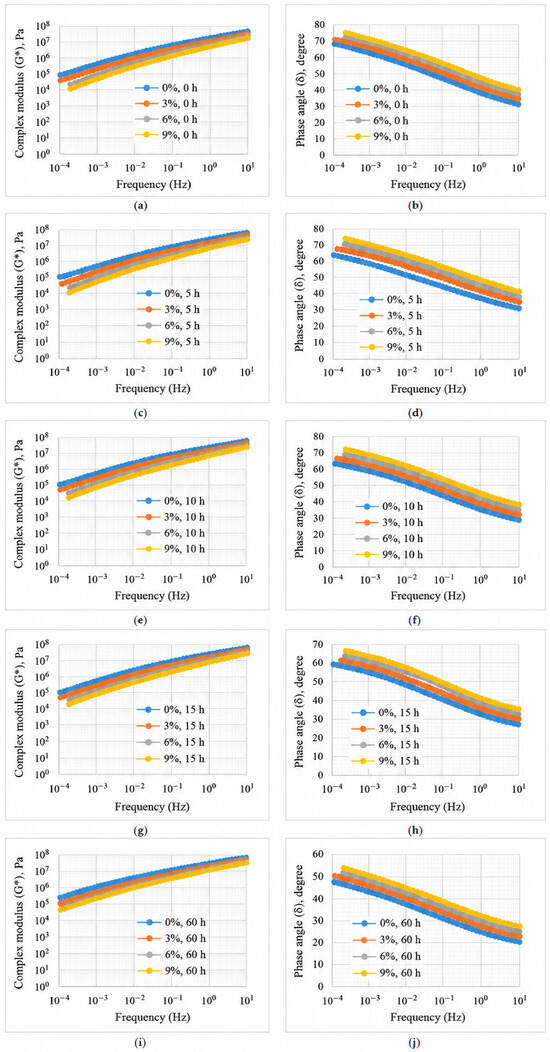
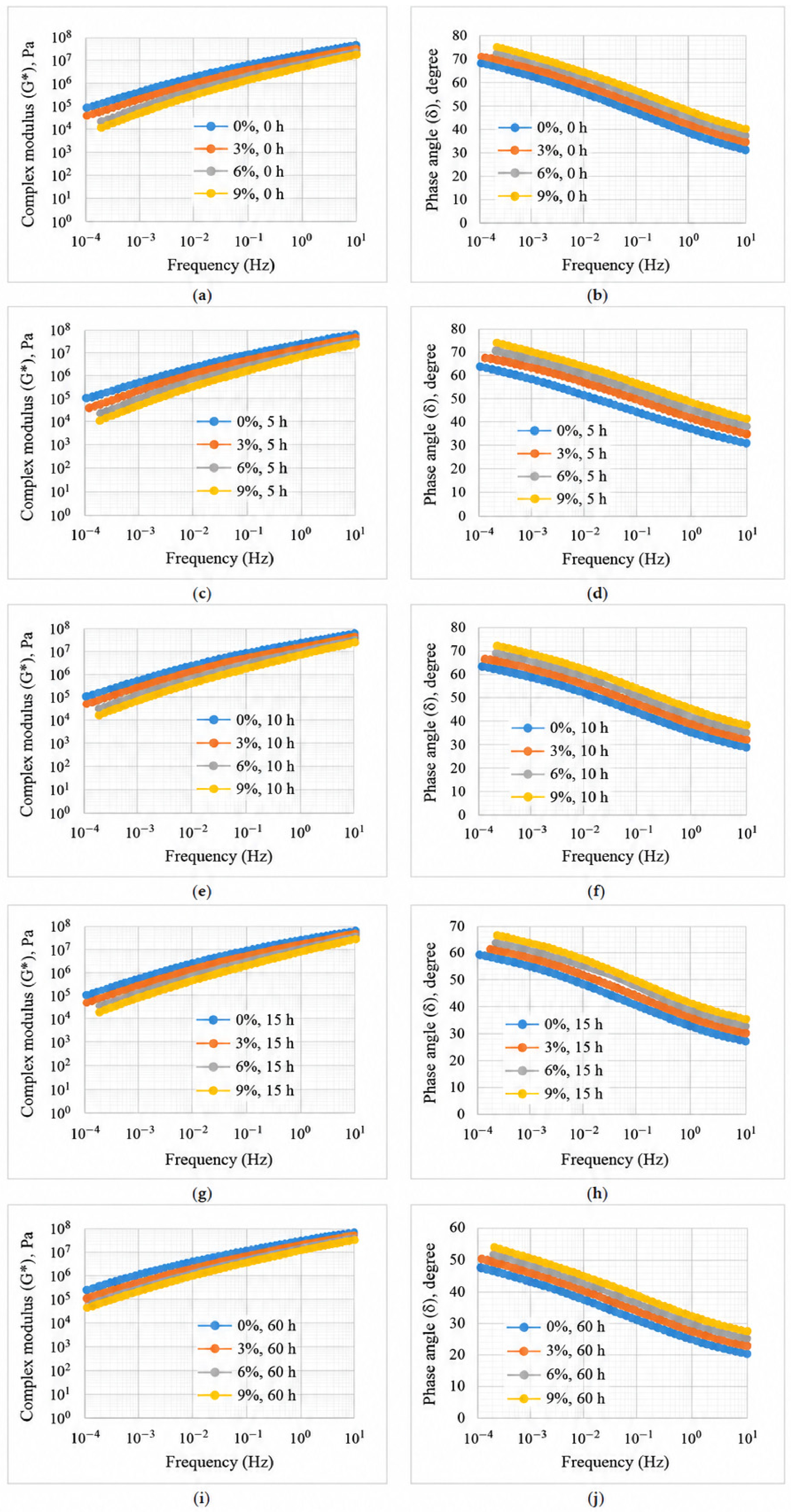
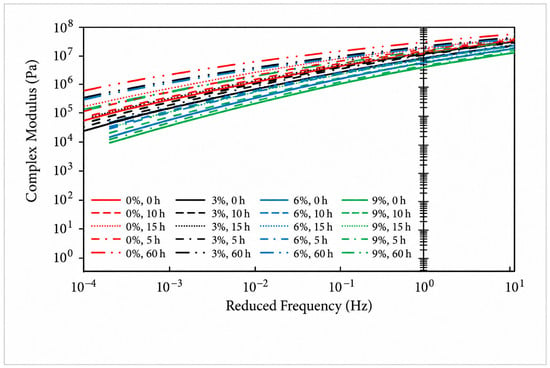
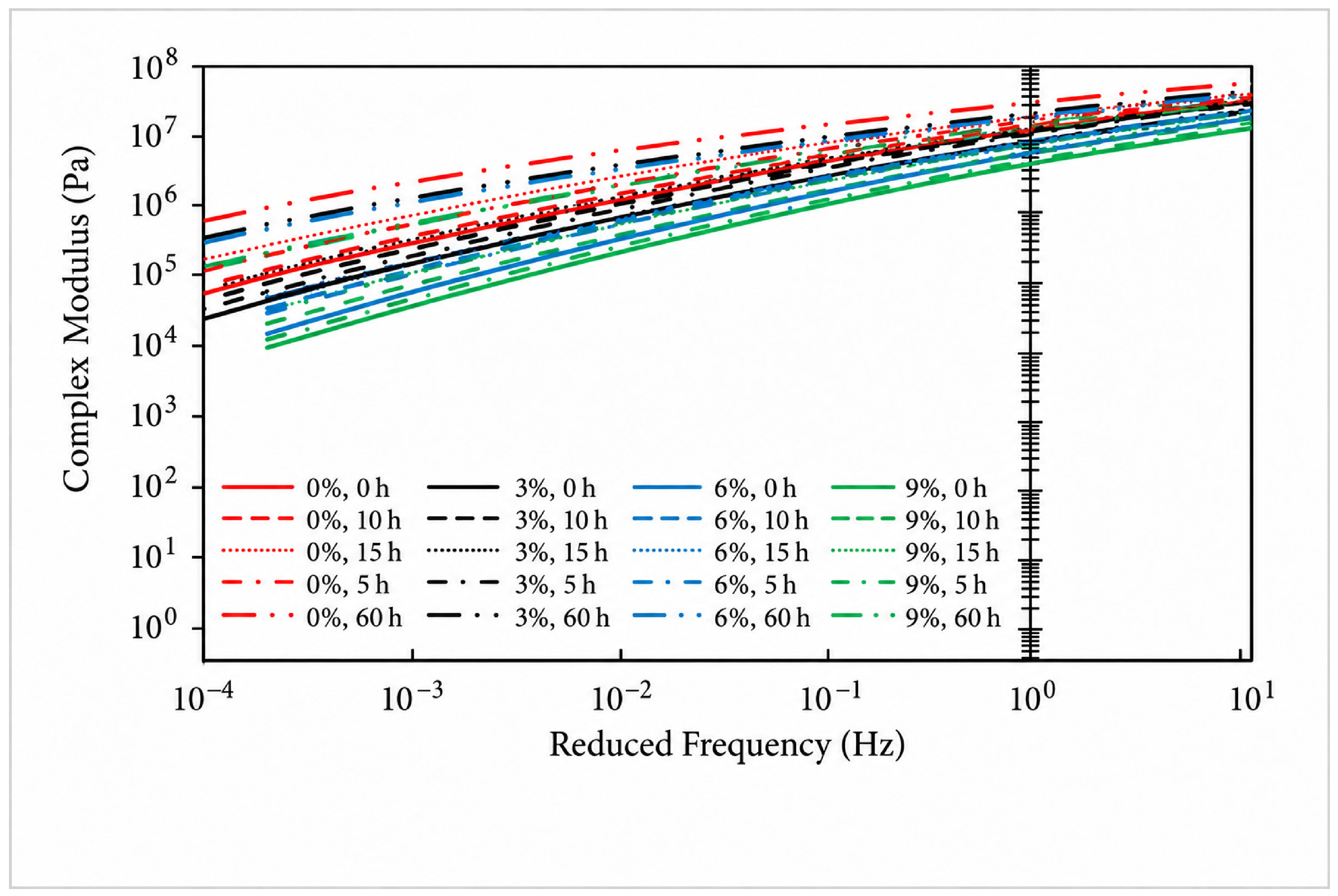
Temperature–frequency sweep measurements were performed using a DSR on the binders following one PAV cycle. Hydroline H90T was then introduced at concentrations of 3%, 6%, and 9% by binder mass. After rejuvenator incorporation, the specimens underwent extended PAV conditioning for 5, 10, 15, and 60 h to examine the rheological response under progressively intensified aging conditions. DSR measurements were conducted over a temperature range of 15–45 °C in 10 °C increments, with frequencies varying from 0.1 to 100 Hz at each test temperature. The resulting rheological data were subsequently used to construct master curves based on the Christensen–Andersen model [46]. The DSR measurements were used to construct master curves for the complex shear modulus (G*) and phase angle (δ). As illustrated in Figure 20, aging substantially modifies the rheological response of the binders, as reflected by the changes in the G* master curves. For the non-rejuvenated binders, progressive aging results in a downward displacement of the phase-angle master curves, which is consistent with the increased stiffness and reduced viscous contribution associated with aging. Figure 21 further demonstrates the corresponding increase in binder stiffness with aging, manifested by an upward shift in the G* master curve. In contrast, the addition of the rejuvenator produces a downward shift in the stiffness-related response, indicating a reduction in the effective binder stiffness.
Figure 20.
Complex modulus and phase angle master curves under different aging conditions and rejuvenator contents: (a) complex modulus at 0% rejuvenator; (b) complex modulus at 3%; (c) complex modulus at 6%; (d) complex modulus at 9%; (e) comparison of complex modulus curves at 0–9%; (f) phase angle at 0% rejuvenator; (g) phase angle at 3%; (h) phase angle at 6%; (i) phase angle at 9%; and (j) comparison of phase angle curves at 0–9%.
Figure 21.
G* and δ master curves for different aging conditions (15 °C reference temp.).
5. Discussion
PAV aging is a controlled laboratory procedure designed to simulate the long-term oxidative aging of asphalt binders; however, it should not be considered a direct representation of a specific period of in-service pavement aging. he relationship between laboratory PAV aging and long-term in-service aging requires careful consideration when interpreting the aging behavior of asphalt binders. PAV conditioning is primarily intended to accelerate oxidative aging under controlled temperature, pressure, and duration, thereby providing a practical laboratory method for evaluating the long-term aging susceptibility of asphalt binders. In contrast, field aging is a considerably more complex and heterogeneous process involving not only oxidation but also the coupled effects of temperature fluctuations, ultraviolet radiation, moisture, oxygen availability, traffic-induced damage, pavement permeability, and seasonal environmental variations. The relationship between PAV duration and field aging is affected by binder characteristics, climate, traffic loading, pavement structure, and environmental conditions. Therefore, the conversion relationships reported in ASTM-based studies should be regarded as approximate and context-dependent rather than universally applicable. In particular, their direct applicability to the PG64-22 binder under the conditions of the present study has not been independently verified. Accordingly, the 5, 10, 15, and 60 h PAV periods used herein are interpreted as controlled levels of accelerated aging, rather than as direct equivalents of 12, 24, 46, or other specific years of pavement service. This distinction is important to avoid overestimating or misrepresenting the degree of field aging based solely on PAV duration. Since the present study did not include an independent rheological characterization of the neat rejuvenator, a dedicated dilution-control experiment, or chemical characterization such as FTIR or SARA fractionation, the individual contributions of physical dilution and chemical regeneration cannot be isolated from the available data. Therefore, the observed rheological improvement is interpreted as the overall rejuvenation effect of Hydroline H90T and should not be considered direct evidence of a specific chemical regeneration mechanism. The rheological changes observed during aging and rejuvenation can be interpreted in the context of the chemical and colloidal evolution of asphalt binders reported in previous studies. Oxidative aging promotes the formation of oxygen-containing functional groups, particularly carbonyl and sulfoxide species, which increase the polarity and intermolecular association of the binder. Aging may also shift the relative distribution of the SARA fractions toward a more polar and rigid structure, including an increase in the relative contribution of asphaltene-like components and a reduction in the mobility of the maltene phase. These changes restrict molecular mobility and increase the cohesive interactions within the binder, thereby producing an increase in complex modulus (G*) and stiffness accompanied by a reduction in phase angle (δ). The observed rheological evolution in the present study is therefore consistent with the established chemical nature of oxidative aging, although direct chemical confirmation was beyond the scope of the present experimental program. The effect of rejuvenator dosage can similarly be interpreted in terms of changes in the effective viscoelastic composition of the aged binder. Rejuvenators introduce relatively mobile components into the oxidized asphalt binder and can partially rebalance the maltene phase, increasing molecular mobility and reducing the effective stiffness of the aged binder. At moderate dosages, this process results in a decrease in G* and viscosity and an increase in δ, indicating partial recovery of the viscoelastic response. With increasing rejuvenator dosage, the magnitude of softening becomes more pronounced because a larger proportion of the aged binder is influenced by the mobile rejuvenator phase. The particularly strong response observed at the 9% dosage may therefore reflect a high-dosage dilution and mobility-enhancing effect, rather than complete reversal of oxidative aging. Importantly, rejuvenation does not necessarily remove the carbonyl and sulfoxide groups generated during oxidation; instead, it primarily modifies the physical balance and mobility of the aged binder. Accordingly, the rheological recovery observed in this study should not be interpreted as direct evidence of chemical restoration. Complementary FTIR, SARA, and molecular-scale analyses would be required to verify the corresponding chemical changes and to distinguish physical softening from actual chemical recovery. However, the present study was designed to evaluate the rheological changes primarily through rotational viscosity measurements at selected temperatures, rather than to establish a complete viscosity–temperature model. Therefore, an Arrhenius relationship was not constructed.
6. Conclusions and Recommendation
In this study, different sources of the same PG binders were used for performance testing. Rheological properties of binders were investigated. It was found that the binders exhibited similar rheological properties, both unaged and aged, regardless of their source. No substantial source-related differences were observed in the rheological properties under the investigated conditions. Hydroline H90T partially modified the low-temperature rheological response of the aged binders, as indicated by the master-curve results. However, as BBR testing was not performed on the rejuvenated binders, this observation should not be interpreted as direct evidence of improved BBR-based low-temperature performance. It is recommended that more chemical tests be performed, focusing on combinations of saturates, asphaltenes, aromatics, and resins (SARA). Also, more sources can be included in the analysis. In the bitumen, oxidation occurred over time due to environmental conditions, leading to aging and hardening.
Furthermore, Hydroline H90T, hereafter designated as R1, was evaluated as a potential rejuvenating additive for aged asphalt binders. Binder specimens were prepared at different R1 dosages and subsequently subjected to varying PAV conditioning durations to assess the evolution of rheological properties under progressive aging, both with and without rejuvenation. The influence of R1 incorporation on the rheological response of the investigated binders was systematically evaluated. For the PG64-22 binders examined, R1 produced a measurable modification of the low-temperature rheological response after aging, indicating its potential to partially mitigate aging-induced stiffening. For a given aging condition, the incorporation of the rejuvenator resulted in a reduction in the complex shear modulus (G*), indicating a decrease in binder stiffness. In contrast, G* increased progressively with extended PAV conditioning, reflecting the stiffening effect associated with continued aging. The difference in G* between the initial (0 h) and most severe (60 h) aging conditions generally became more pronounced as the rejuvenator dosage increased, except at the 9% dosage, where this trend was not maintained.The results indicate that the rejuvenating effect of R1 was progressively moderated with increasing aging severity. Slight source-related differences were observed; however, aging and rejuvenation effects dominated the rheological response of the binders.” It should be used a specific rejuvenator for better understanding of the effect, instead of Hydroline 90. Although both binders were classified as PG64-22, the present study did not include comprehensive physicochemical characterization of their source-dependent compositions. Therefore, the relatively minor differences observed in their rheological responses cannot be attributed exclusively to binder source, as compositional variability and experimental uncertainty may also contribute to the observed behavior. The results indicate that binders with the same PG classification can exhibit different rheological and aging responses depending on their source. However, the present study evaluates source-related differences primarily from a physical and rheological perspective; therefore, the contribution of chemical composition cannot be quantified. Future studies incorporating SARA fractionation, FTIR, and related chemical characterization are needed to establish the relationship between binder origin, chemical composition, and aging behavior. Further investigations incorporating a larger number of binder sources and complementary chemical characterization techniques, such as SARA fractionation and FTIR spectroscopy, are warranted to elucidate the relationships among binder composition, source, aging, and rheological performance. The rejuvenation results obtained in this study are specifically associated with Hydroline H90T (R1) and the investigated dosage range of 3–9%. Under the experimental conditions considered, R1 reduced the stiffness of aged binders and improved their low-temperature rheological response, indicating an effective softening and rejuvenation effect. However, these findings should not be generalized to rejuvenating agents with different chemical compositions or rejuvenation mechanisms. Comparative studies involving chemically distinct rejuvenators and multiple dosage levels are recommended to establish the extent to which the observed rheological response depends on rejuvenator chemistry, binder source, and aging severity.
7. Future Works
Performance tests such as Flexibility Index test will be applied by lose mix and supplying core samples at various periods in the test area. Flexibility Index tests will be applied different test sections, 6-month and 12 month core samples, respectively. In addition, the extraction performance of the bitumen will be examined by applying the extraction test to the core samples in order to determined performance of bitumen aging. Furthermore, the Fourier transform infrared spectrometry FTIR test will be used to evaluate the chemical properties of the bitumen. The test steps are illustrated below.
- Core samples are implemented volumetric test;
- Core samples are carried out with flexible index test (top–bottom);
- Bitumen is determined with chemical characterization;
- Binders are applied binder performance test (direct tension test).
Funding
This research was supported by the Scientific and Technological Research Council of Turkey (TUBITAK) through the 2219 International Postdoctoral Research Fellowship Program.
Data Availability Statement
All data supporting the findings of this study are presented within the manuscript. Additional information or data may be obtained from the corresponding author upon reasonable request.
Acknowledgments
The author gratefully acknowledges the Illinois Center for Transportation for its valuable support and collaboration in sample preparation and experimental testing.
Conflicts of Interest
The author declares no conflicts of interest.
References
- Stone, M.; Herndon, D.A.; Back, E.D.; Amirkhanian, S.N. Assessment of Recycled Asphalt Paving Unit Cost Risk: A Case Analysis. In Proceedings of the Construction Research Congress 2016, San Juan, PR, USA, 31 May–2 June 2016. [Google Scholar] [CrossRef] [Scilit]
- Zhou, F.; Li, H.; Im, S.; Hu, S.; Button, J.W.; Epps, J.A.; Scullion, T. Use of Recycled Asphalt Shingles in HMA; Transportation Research Board (TRB): Washington, DC, USA, 2014. [Google Scholar]
- The U.S. Energy Information Administration (EIA). Available online: https://knoema.com/atlas/sources/EIA (accessed on 3 January 2017).
- Davis, J. Using Recycled Asphalt Shingles in Asphalt Pavements. Available online: http://asphaltmagazine.com/using-recycled-asphalt-shingles-in-asphalt-pavements (accessed on 3 January 2017).
- Lodge, A. Variability and Characteristics of Recycled Asphalt Shingles Sampled from Different Sources. Master’s Theses, Louisiana State University, Baton Rouge, LA, USA, 2013. [Google Scholar]
- WesTrack Forensic Team Consensus. Superpave Mix Design; Superpave Series; Asphalt Institute: Lexington, KY, USA, 1996; 117p. [Google Scholar]
- Ilıcalı, M.; Tayfur, S.; ve Ozen, H. Asphalt and Applications; ISFALT: Istanbul, Turkey, 2001; 280p. [Google Scholar]
- Whiteoak, D. Shell Bitumen Handbook; ISFALT: Istanbul, Turkey, 2004. [Google Scholar]
- Airey, G.D. Rheological properties of styrene butadiene styrene polymer modified road bitumens⋆. Fuel 2003, 82, 1709–1719. [Google Scholar] [CrossRef] [Scilit]
- Bell, C.A. Summary Report on Aging of Asphalt-Aggregate Systems; Transportation Research Board: Washington, DC, USA, 1989. [Google Scholar]
- Fernández-Gómez, W.D.; Vides-Berdugo, A.C.; Roncallo-Contreras, S.P.; Bautista-Rondón, F.; Rondón-Quintana, H.A.; Reyes-Lizcano, F.A. Effects of environmental aging and ultra violet radiation on asphalt mixture dynamic modulus, permanent deformation and fatigue life. Rev. Fac. Ing. Univ. Antioq. 2016, 2016, 89–96. [Google Scholar] [CrossRef] [Scilit]
- Kim, T.W.; Baek, J.; Lee, H.J.; Choi, J.Y. Fatigue performance evaluation of SBS modified mastic asphalt mixtures. Constr. Build. Mater. 2013, 48, 908–916. [Google Scholar] [CrossRef] [Scilit]
- Newcomb, D.; Martin, A.E.; Yin, F.; Arambula, E.; Park, E.S.; Chowdhury, A.; Brown, R.; Rodezno, C.; Tran, N.; Coleri, E.; et al. Short-Term Laboratory Conditioning of Asphalt Mixtures; The National Academies Press: Washington, DC, USA, 2015; pp. 9–52. [Google Scholar]
- Yin, F.; Arámbula-Mercado, E.; Martin, A.E.; Newcomb, D.; Tran, N. Long-term ageing of asphalt mixtures. Road Mater. Pavement Des. 2017, 18, 2–27. [Google Scholar] [CrossRef] [Scilit]
- Luo, L.; Yang, S.; Oeser, M.; Liu, P. Moisture damage mechanism of asphalt mixtures containing reclaimed asphalt pavement binder: A novel molecular dynamics study. J. Clean. Prod. 2024, 475, 143711. [Google Scholar] [CrossRef] [Scilit]
- Airey, G.D.; Grenfell, J.R.A.; Apeagyei, A.; Subhy, A.; Presti, D.L. Time dependent viscoelastic rheological response of pure, modified and synthetic bituminous binders. Mech. Time-Depend. Mater. 2016, 20, 455–480. [Google Scholar] [CrossRef] [Scilit]
- Abbas, A.R.; Mannan, U.A.; Dessouky, S. Effect of recycled asphalt shingles on physical and chemical properties of virgin asphalt binders. Constr. Build. Mater. 2013, 45, 162–172. [Google Scholar] [CrossRef] [Scilit]
- Abdullah, M.E.; Zamhari, K.A.; Buhari, R.; Kamaruddin, N.H.M.; Nayan, N.; Hainin, M.R.; Hassan, N.A.; Jaya, R.P.; Yusoff, N.I.M. A Review on The Exploration of Nanomaterials Application in Pavement Engineering. J. Teknol. 2015, 73, 69–76. [Google Scholar] [CrossRef] [Scilit]
- Abdullah, M.E.; Zamhari, K.A.; Buhari, R.; Nayan, M.N.; Rosli, H.M. Short Term and Long Term Aging Effects of Asphalt Binder Modified with Montmorillonite. Key Eng. Mater. 2013, 594–595, 996–1002. [Google Scholar] [CrossRef] [Scilit]
- Aguirre, M.A.; Hassan, M.M.; Shirzad, S.; Daly, W.H.; Mohammad, L.N. Micro-encapsulation of asphalt rejuvenators using melamine-formaldehyde. Constr. Build. Mater. 2016, 114, 29–39. [Google Scholar] [CrossRef] [Scilit]
- Ahmedzade, P.; Fainleib, A.M.; Günay, T.; Grigoryeva, O. Usage of Recycled Postconsumer Polypropylene in Bituminous Binder. Tek. Dergi 2016, 27, 7497–7513. [Google Scholar]
- Karakas, A.S. Evaluation of Aging Effects on Asphalt Binders and Pavements: Rheological Responses to Rejuvenators and Numerical Analysis of Polymer Modification. Polymers 2026, 18, 759. [Google Scholar] [CrossRef] [Scilit] [PubMed] [PubMed Central]
- Al-Azri, N.; Jung, S.; Lunsford, K.; Ferry, A.; Bullin, J.; Davison, R.; Glover, C. Binder Oxidative Aging in Texas Pavements: Hardening Rates, Hardening Susceptibilities, and Impact of Pavement Depth. Transp. Res. Rec. J. Transp. Res. Board 2006, 1962, 12–20. [Google Scholar] [CrossRef] [Scilit]
- Alavi, M.Z.; Hajj, E.Y.; Morian, N.E. Approach for Quantifying the Effect of Binder Oxidative Aging on the Viscoelastic Properties of Asphalt Mixtures. Transp. Res. Rec. J. Transp. Res. Board 2013, 2373, 109–120. [Google Scholar] [CrossRef] [Scilit]
- Ali, A.W.; Mehta, Y.A.; Nolan, A.; Purdy, C.; Bennert, T. Investigation of the impacts of aging and RAP percentages on effectiveness of asphalt binder rejuvenators. Constr. Build. Mater. 2016, 110, 211–217. [Google Scholar] [CrossRef] [Scilit]
- Abu Al-Rub, R.K.; Darabi, M.K.; Kim, S.-M.; Little, D.N.; Glover, C.J. Mechanistic-based constitutive modeling of oxidative aging in aging-susceptible materials and its effect on the damage potential of asphalt concrete. Constr. Build. Mater. 2013, 41, 439–454. [Google Scholar] [CrossRef] [Scilit]
- Apeagyei, A.K. Laboratory evaluation of antioxidants for asphalt binders. Constr. Build. Mater. 2011, 25, 47–53. [Google Scholar] [CrossRef] [Scilit]
- Amazonas de Sá Araujo, M.F.; de Freitas Cunha Lins, V.; Pasa, V.M.D.; Leite, L.F.M. Weathering aging of modified asphalt binders. Fuel Process. Technol. 2013, 115, 19–25. [Google Scholar] [CrossRef] [Scilit]
- Arega, Z.; Bhasin, A.; Motamed, A.; Turner, F. Influence of Warm-Mix Additives and Reduced Aging on the Rheology of Asphalt Binders with Different Natural Wax Contents. J. Mater. Civ. Eng. 2011, 23, 1453–1459. [Google Scholar] [CrossRef] [Scilit]
- Asli, H.; Ahmadinia, E.; Zargar, M.; Karim, M.R. Investigation on physical properties of waste cooking oil—Rejuvenated bitumen binder. Constr. Build. Mater. 2012, 37, 398–405. [Google Scholar] [CrossRef] [Scilit]
- Li, Y.; He, Y.; Hu, Q.; Li, Z.; Zhang, J.; Zhao, X. Performance evaluation of aged asphalt rejuvenated with waste cooking oil on rheological and chemical characteristics. Intell. Transp. Infrastruct. 2024, 3, liae002. [Google Scholar] [CrossRef] [Scilit]
- Xie, C.; Ye, Q.; Fan, L.; Weng, A.; Liu, H. Study on Rheological Properties of Waste Cooking Oil and Organic Montmorillonite Composite Recycled Asphalt. Buildings 2024, 14, 3149. [Google Scholar] [CrossRef] [Scilit]
- Kumar, V.; Aggarwal, P.; Jain, S. Optimising waste cooking oil and waste engine oil as rejuvenators: A comprehensive study on recycled mixtures. Int. J. Pavement Eng. 2024, 25, 2389422. [Google Scholar] [CrossRef] [Scilit]
- Afridi, H.F.; Khan, D.; Khan, W.A.; Jamal, H.; Durrani, A.A.; Afridi, M.A.; Milad, A. Utilizing waste engine oil and Sasobit to improve the rheological and physiochemical properties of RAP. Discov. Civ. Eng. 2024, 1, 131. [Google Scholar] [CrossRef] [Scilit]
- Luo, Y.; Zhang, K. Review on Performance of Asphalt and Asphalt Mixture with Waste Cooking Oil. Materials 2023, 16, 1341. [Google Scholar] [CrossRef] [Scilit] [PubMed]
- Zhang, F.; Li, H.; Zou, X.; Cui, C.; Shi, Y.; Wang, H.; Yang, F. Performance and Simulation Study of Aged Asphalt Regenerated from Waste Engine Oil. Coatings 2022, 12, 1121. [Google Scholar] [CrossRef] [Scilit]
- Madhu, K.; Raj, J.A.; Shibu, N.; Viswa, G. Assessing recycled asphalt pavement: Impact of waste cooking oil and waste engine oil as rejuvenators on mechanical properties. Res. Eng. Struct. Mater. 2024, 11, 663–678. [Google Scholar] [CrossRef] [Scilit]
- AASHTO R 49-09 (2018); Practice for Determination of Low-Temperature Performance Grade (PG) of Asphalt Binders. American Association of State Highway and Transportation Officials: Washington, DC, USA, 2018.
- AASHTO T240; Standard Method of Test for Effect of Heat and Air on a Moving Film of Asphalt Binder (Rolling Thin-Film Oven Test). American Association of State Highway and Transportation Officials: Washington, DC, USA, 2022.
- Bahia, H. Superpave Protocols for Modified Asphalt Binders; NCHRP 09-10; The Asphalt Institute: Lexington, KY, USA, 2001. [Google Scholar]
- AASHTO_0007-2 T350; Multiple Stress Creep Recovery. American Association of State and Highway Transportation Officials: Washington, DC, USA, 2019.
- AASHTO M 320; Standard Specification for Performance-Graded Asphalt Binder. American Association of State and Highway Transportation Officials: Washington, DC, USA, 2022.
- AASHTO T315; Standard Method of Test for Determining the Rheological Properties of Asphalt Binder Using a Dynamic Shear Rheometer (DSR). American Association of State and Highway Transportation Officials: Washington, DC, USA, 2022.
- AASHTO T 313; Standard Method of Test for Determining the Flexural Creep Stiffness of Asphalt Binder Using the Bending Beam Rheometer (BBR). American Association of State and Highway Transportation Officials: Washington, DC, USA, 2022.
- AASHTO M320-23; Standard Specification for Performance-Graded Asphalt Binder. American Association of State and Highway Transportation Officials: Washington, DC, USA, 2023.
- Christensen, D.W.; Anderson, D.A. Interpretation of Dynamic Mechanical Test Data for Paving Grade Asphalt Cements. J. Assoc. Asph. Paving Technol. 1992, 61, 67–112. [Google Scholar]

Disclaimer/Publisher’s Note: The statements, opinions and data contained in all publications are solely those of the individual author(s) and contributor(s) and not of MDPI and/or the editor(s). MDPI and/or the editor(s) disclaim responsibility for any injury to people or property resulting from any ideas, methods, instructions or products referred to in the content. |
© 2026 by the author. Licensee MDPI, Basel, Switzerland. This article is an open access article distributed under the terms and conditions of the Creative Commons Attribution (CC BY) license.