


Abstract
With the rapid advancement of industrial intelligence, equipment predictive maintenance (PdM) has emerged as a critical enabler for intelligent operation and maintenance (O&M) systems. However, conventional machine learning-based PdM methods are inherently constrained by scarce labeled fault samples, weak cross-condition generalization, and a lack of advanced causal reasoning capabilities in complex industrial process environments. Recent advances in large language models (LLMs) and generative artificial intelligence (GAI) have created unprecedented opportunities to fundamentally overcome these persistent PdM limitations. This paper presents a comprehensive review and future perspective on LLM applications for PdM in industrial process systems and proposes a hierarchical “Capability-Domain-Method (CDM)” taxonomy to establish a unified analytical framework for this fast-growing research field. Based on a systematic analysis of the 103 core research papers published between 2016 and 2026, this work comprehensively summarizes the latest research on LLMs for predictive maintenance from three core technical dimensions: data augmentation, model adaptation, and knowledge reasoning and decision-making. Data augmentation methods generate high-fidelity fault samples and degradation patterns to mitigate industrial data scarcity and class imbalance. Model adaptation techniques empower general-purpose pre-trained LLMs to adapt to specific equipment and complex industrial environments. Knowledge reasoning and decision-making approaches integrate external industrial domain knowledge, autonomous reasoning mechanisms, and maintenance decision processes to improve the performance of fault diagnosis, root cause analysis, and maintenance decision-making. Furthermore, this paper discusses key challenges related to operational reliability, deep domain adaptation, unified evaluation standards, and unified deployment efficiency. Finally, future research directions are advised, including physics-informed large models, industrial domain-specific models, autonomous maintenance agents, and standardized open benchmarking platforms, to accelerate the paradigm shift in PdM from data-driven pattern to knowledge-driven and autonomous decision-making.
1. Introduction
Propelled by the rapid development of the industrial Internet, intelligent manufacturing systems, and industrial artificial intelligence systems, predictive maintenance (PdM) has evolved into one of the most strategically critical development directions in modern intelligent industrial operation and maintenance (O&M) systems. The core goal of PdM is to enable proactive and optimized maintenance prior to equipment failure. This is achieved by monitoring equipment operating conditions, analyzing its degradation patterns, and predicting its health evolution trend, thereby reducing downtime losses, cutting maintenance costs, and improving overall system reliability [1].
1.1. Research Background
The equipment maintenance paradigms have evolved sequentially from corrective and preventive maintenance to predictive maintenance, as illustrated in Figure 1. Corrective maintenance is a passive post-failure remediation strategy with relatively high operational and downtime costs; preventive maintenance is a structured approach to equipment upkeep that follows a predefined schedule—regardless of the actual condition of an asset. PdM enables condition-based, on-demand maintenance based on equipment health assessment, making it a more economical and efficient paradigm.
Figure 1.
Evolution of equipment maintenance paradigms.
The implementation of PdM relies on four core supporting technologies: equipment condition monitoring, anomaly detection, fault diagnosis, and remaining useful life (RUL) prediction. Among these core technologies, anomaly detection is applied to identify abnormal equipment operating states, fault diagnosis is applied to analyze specific fault types and root causes, and RUL prediction is used to evaluate the future degradation trend and remaining available service time of equipment [2,3]. In recent years, driven by the rapid development of sensor technology and industrial data acquisition technology, massive volumes of high-dimensional, multi-source, and continuous time-series data have been generated from industrial equipment, providing a solid foundation for data-driven PdM research [4]. At present, PdM has been widely applied in a variety of key industrial fields such as rotating machinery, battery health management systems, power grid operation systems, and intelligent manufacturing production lines [1,5,6]. With the continuous increase in the complexity of modern industrial systems, PdM is evolving from independent single-fault diagnosis to the integration of perception, diagnosis, prediction, and decision-making. Cutting-edge technologies such as digital twins, knowledge graphs, and intelligent decision-making are being used to achieve full-lifecycle health management [4,7].
1.2. Current Challenges
In recent years, data-driven methods built on machine learning and deep learning have achieved remarkable progress in the field of PdM research. Representative deep learning models, including convolutional neural networks (CNNs), Long Short-Term Memory Networks (LSTMs), AutoEncoders (AEs), and Transformers, have been widely applied in core PdM tasks such as fault diagnosis and RUL prediction [2,3]. Traditional data-driven PdM methods can automatically extract discriminative features from raw industrial monitoring data and achieve high accuracy under specific working conditions, yet they still exhibit notable limitations when applied in complex real-world industrial scenarios. Firstly, these data-driven PdM methods heavily rely on sufficient labeled training data. However, in real industrial scenarios, fault samples are generally scarce and unevenly distributed in the datasets, which significantly degrades the cross-scenario generalization capability of the models [1,6]. Secondly, these methods show relatively poor cross-condition and cross-equipment transferability, and their diagnostic and prediction performance is prone to significant degradation when the operating conditions shift [3,4]. Thirdly, traditional deep learning methods lack unified knowledge reasoning capability, making it difficult to effectively integrate unstructured industrial information such as maintenance logs and domain expert experience. Meanwhile, their inherent insufficient interpretability severely limits their large-scale application in critical industrial scenarios [2,8].
1.3. Recent Advances
With the rapid development of LLMs and generative artificial intelligence (GAI/GenAI), PdM has obtained a new technical path. Compared with traditional deep learning PdM models, LLMs possess significantly stronger feature representation capability, in-context learning capability, and reasoning capability [4,5]. Transformer-based pre-trained models can effectively capture long-term temporal dependencies in industrial time-series data and achieve cross-task transfer via prompt learning and parameter-efficient fine-tuning strategies [3,9]. Meanwhile, LLMs can seamlessly integrate multi-source heterogeneous industrial information, including sensor monitoring signals, unstructured maintenance logs, domain knowledge graphs, and digital twin data, to provide strong support for interpretable fault reasoning and intelligent maintenance decision-making [7,8]. In addition to the knowledge reasoning capability mentioned above, GAI has also significantly enhanced the data modeling performance of PdM. Representative generative models, including Generative Adversarial Networks (GANs), Variational AutoEncoders (VAEs), and Denoising Diffusion Probabilistic Models (DDPMs), can effectively learn the implicit distribution of real industrial fault data and generate high-quality synthetic fault samples, thereby effectively alleviating the long-standing class imbalance problem in PdM datasets [1,6]. In addition, the rapid development of technologies, such as Retrieval-Augmented Generation (RAG), multi-agent collaboration systems, and domain-specific industrial agents, has promoted the evolution of PdM from a data analytics tool toward an intelligent cognition and autonomous decision-making system [7,8], thereby changing the technical landscape of the entire intelligent industrial operation and maintenance sector.
1.4. Research Motivation
To date, a number of review papers have begun to focus on the application of large models in the industrial field, but most relevant work is focused on specific scenarios such as power grid operation and maintenance, battery RUL prediction, or industrial digital twins [4,5,7]. Overall, the existing review literature still lacks a systematic classification framework for LLM-driven PdM, and the in-depth analysis of its key technology pathways, core problems, and LLM-oriented engineering application challenges is still insufficient [3,8,9].
In response to the aforementioned challenges and limitations in existing research, this paper argues that a review and structured summary of the LLM-driven PdM literature from a holistic perspective is urgently needed to fill the critical gap in the unified classification framework and methodological organization of current relevant work. To this end, this article focuses on the topic of equipment PdM driven by LLMs, systematically reviews the latest relevant research progress, and places special emphasis on the capability evolution, methodological system and application challenges of LLMS in industrial scenarios. This article proposes a novel hierarchical classification system named the “Capability–Domain–Method” (CDM) framework for LLM-driven PdM. It systematically classifies and summarizes diverse PdM task scenarios and their corresponding key technology pathways from three core capability dimensions: data augmentation, model adaptation, knowledge reasoning, and intelligent decision-making. On this basis, the application characteristics and development context of relevant existing research are comprehensively reviewed.
The main contributions of this paper are summarized as follows:
- A unified hierarchical classification system, namely the CDM framework, has been proposed for the research field of LLM-driven equipment PdM, and a systematic analytical framework has been established from model capabilities to equipment PdM tasks and implementation technologies.
- Based on this classification system, a comprehensive analysis has been conducted on the research progress of LLM-driven PdM in the three core capability directions: data augmentation, model adaptation, and knowledge reasoning and decision-making. The typical technical routes, representative application scenarios, and development context of relevant research in this field were summarized.
- This paper systematically identifies the key challenges currently faced by relevant research across four critical dimensions: model trustworthiness, industrial domain knowledge integration, unified evaluation criteria, and resource-constrained edge deployment. Correspondingly, we put forward targeted future development directions, including physics-informed large models, dedicated PdM intelligent agents, lightweight domain-specific models, and a standardized open-source evaluation platform.
The remainder of this paper is organized as follows. Section 2 introduces the literature retrieval methodology and the proposed CDM classification framework, and elaborates on its construction logic and advantages. Subsequently, Section 3, Section 4 and Section 5 systematically review the research progress of LLMS in PdM from the three core capability dimensions: data augmentation, model adaptation, and knowledge reasoning and intelligent decision-making, respectively. Section 6 summarizes publicly available datasets relevant to PdM. Section 7 presents the key challenges currently faced by the research community and outlines prospective future development directions. Section 8 summarizes the limitations of this review. Finally, Section 9 concludes the paper.
2. Research Method and Classification System
Systematic Literature Review (SLR) is a rigorous and standardized literature integration research method. It systematically collects and integrates the relevant literature on specific research questions through pre-defined retrieval strategies, screening criteria, and analytical methods. Its core characteristics are that the process is reproducible and transparent, and the results are objective and rigorous [10].
2.1. Literature Retrieval and Screening Methods
To ensure the comprehensiveness and objectivity of this study, we followed the standard SLR process and conducted a rigorous retrieval, screening, and classification of relevant studies on LLMS in the field of equipment PdM. The specific steps are as follows:
2.1.1. Literature Retrieval Strategy
The literature retrieval for this review was completed in March 2026, covering four widely influential academic databases: Web of Science, IEEE Xplore, ScienceDirect, and China National Knowledge Infrastructure (CNKI). The retrieval time span was set from 1 January 2016 to 31 March 2026 to capture the complete development trajectory of this interdisciplinary field from its emergence to the present.
Considering the indexing characteristics of different databases, we have designed corresponding retrieval paradigms to balance recall and precision. The specific search keyword combination strategy is as follows:
IEEE Xplore: (“predictive maintenance” OR “PdM”) AND (“Large Language Models”), with the search scope limited to “Metadata.”
ScienceDirect: (“predictive maintenance” OR “PdM”) AND (“Large Language Models”), limited to the “Title, abstract or author-specified keywords” fields.
Web of Science: (“predictive maintenance” OR “PdM”) AND (“Large Language Models”), limited to the “Topic” field.
For the China National Knowledge Infrastructure (CNKI) database, the retrieval query was formulated as (“predictive maintenance” + “预测性维护” + “PdM”) * (“Large Language Models” + “大模型” + “大型语言模型”), to fully cover both Chinese and English expression conventions of the target terms within the database.
2.1.2. Literature Screening and Classification Process
A total of 134 related studies were initially obtained through the preliminary retrieval. Duplicate records were identified by cross-checking DOI information, article titles, authors, and publication information, and three duplicate papers were removed, leaving 131 unique studies for further screening.
It should be noted that although the literature retrieval was centered on the terms “predictive maintenance/PdM” and “Large Language Models/LLMs”, the technical scope identified during the subsequent full-text screening was broader than the retrieval terminology itself. Technologies such as generative AI, GANs, diffusion models, digital twins, multimodal models, and intelligent agents were not used as independent search terms. Instead, they were identified during full-text analysis when they appeared as supporting techniques, enabling components, or integrated modules within the retrieved LLM-related PdM studies. These technologies were included only when they directly contributed to the corresponding LLM-driven PdM workflow.
The inclusion criteria were defined as follows: (1) the study was directly related to predictive maintenance or LLM-related technologies applied in industrial scenarios; (2) the study contained substantive technical analysis, methodological investigation, experimental research, or meaningful review contributions relevant to the scope of this review; and (3) the study was published as an academic journal or conference paper within the predefined retrieval period.
- The research content is unrelated to predictive maintenance or LLM-driven technologies applied in industrial scenarios;
- The article only provides viewpoints, resembles comments, or lacks substantive technical content;
- The article is not an academic journal or conference paper, such as news articles or blogs.
The 131 unique studies were then sequentially screened against the predefined eligibility criteria. Thirteen studies were excluded based on Criterion 1, a further 15 were excluded under Criterion 2, and no exclusions were made under Criterion 3. This resulted in 28 studies being removed during the screening stage, leaving 103 high-quality core studies retained for subsequent classification, synthesis, and trend analysis. The entire screening procedure strictly followed the methodology established by Carvalho et al. [10] in their review of machine learning applications in PdM, which guaranteed the scientific rigor and full transparency of the selection process. In addition to the 103 core studies, five supporting references were employed to provide methodological background and conceptual clarification. The distinction between these two groups and corresponding CDM category assignments, including overlapping classifications, are detailed in Supplementary Table S1.
2.2. Proposed Classification System
With the continuous expansion of LLM-driven technology applications in the field of equipment predictive maintenance, related research is no longer limited to a single fault diagnosis or RUL task but gradually extends to multiple levels, such as data augmentation, model adaptation, knowledge reasoning and decision-making. However, most existing review studies summarize the literature from the perspectives of model architectures or specific tasks, which makes it difficult to reveal the functional relationships among different technical routes throughout the PdM process [1,2,6]. To bridge this gap, this paper proposes a CDM hierarchical classification system, as shown in Figure 2, which systematically reviews the main directions and intrinsic relationships of LLM-driven PdM research.
Figure 2.
CDM hierarchical taxonomy for LLM-driven equipment predictive maintenance.
The proposed classification system organizes existing research from the perspective of the core capabilities of LLMs in equipment PdM. Instead of classifying studies according to model types, this framework focuses on the functional role of LLMs in the PdM process, namely, how to generate data, how to adapt to industrial scenarios, and how to utilize knowledge for reasoning and decision-making. Based on the above idea, our study categorizes PdM based on LLMs into three core capability layers: data augmentation, model adaptation, and knowledge reasoning and decision-making.
The data augmentation layer mainly addresses the problems of scarce fault samples, class imbalance, and the difficulty in obtaining complete degradation process data in industrial scenarios. This layer includes two technical routes: generative data augmentation and simulation-driven data augmentation. The former constructs fault samples and degradation process data by generating models, while the latter uses digital twins or physical models to simulate equipment operating conditions and fault evolution processes, providing better training data for tasks such as fault diagnosis, anomaly detection, and remaining useful life prediction.
The model adaptation layer mainly focuses on the applicability of transferring general-purpose LLMs to equipment predictive maintenance scenarios. Since general-purpose large models lack domain knowledge such as equipment mechanisms, industrial semantics, and operating conditions, they cannot directly meet the requirements of equipment maintenance tasks. Therefore, relevant studies usually improve the models’ understanding of industrial scenarios through parameter-efficient fine-tuning, prompt tuning, full-parameter fine-tuning, domain adaptation, and transfer learning. By combining lightweight optimization with hardware deployment adaptation, they further enhance their practical applicability in edge devices and cloud-edge collaborative environments.
The knowledge reasoning and decision-making layer focuses on leveraging the capabilities of LLMs in knowledge understanding, logical reasoning, and task planning, enabling PdM to further expand from single state recognition to fault explanation, root cause analysis, and maintenance decision generation. Related studies mainly focus on intrinsic reasoning capability, knowledge-enhanced reasoning, equipment predictive maintenance decision reasoning, and autonomous maintenance agents. Through methods such as chain-of-thought reasoning, multi-step fault reasoning, RAG, knowledge graphs, maintenance strategy generation, and agent systems, the analysis, explanation, and decision support capabilities of large models in complex equipment operation and maintenance scenarios are improved.
From the perspective of the overall process, these three capability layers are not independent of each other, but constitute a progressively advancing technical chain, as shown in Figure 3. The data augmentation layer solves the problem of insufficient industrial data and provides a foundation for model training. The model adaptation layer is responsible for transferring general-purpose large models to the industrial field and achieving knowledge alignment. On this basis, the knowledge reasoning and decision-making layer completes fault analysis and maintenance decision-making, ultimately supporting the intelligent application of PdM systems. Thus, these three layers form a complete technical closed loop from data and models to decision-making.
Figure 3.
Progressive relationship and technical closed loop among the three core capabilities.
Compared with the commonly used model-based classification or task-based classification in the existing review literature, the CDM classification system proposed in this paper has three advantages. Firstly, this framework is capability-centered and can uniformly organize different technical routes such as GANs, Transformers, LLMs, and agents, thereby avoiding frequent changes in the classification system caused by rapid model iteration. Secondly, this framework can reflect the actual functional positioning of LLMs in PdM and reveal the intrinsic relationships among data generation, knowledge transfer, and intelligent reasoning. Thirdly, this framework has good extensibility and can naturally accommodate emerging research directions such as digital twins, multimodal large models, and industrial agents, providing a unified analytical perspective and a systematic organizational approach for subsequent research.
2.3. Literature Statistical Analysis and Research Development Trends
Based on the 103 core studies screened in the previous section, this section conducts statistical analysis from three aspects: annual publication volume, evolution of research hotspots, and distribution of capability dimensions. The purpose is to reveal the development trajectory and current research focuses of equipment predictive maintenance based on large models.
2.3.1. Literature Publication Trends on LLM-Driven Equipment Predictive Maintenance Research
No relevant research literature before 2023 was found in this retrieval, indicating that this interdisciplinary field started relatively late and is basically synchronized with the outbreak of large language model technology. In 2023, there were only two relevant studies, indicating that the field is still in the initial exploration stage. In 2024, the number of published studies increased to 15, indicating that the academic community is beginning to pay attention to the potential of large models in industrial operation and maintenance. In 2025, the publication volume of relevant research literature has experienced explosive growth, reaching 81 articles, accounting for 78.6% of the total sample. This rapid growth is mainly due to the development of generative artificial intelligence technology and the application of RAG and intelligent agents in industrial scenarios. As of March 2026, five new research papers have been published, indicating that this field still maintains a high level of research popularity. The annual changes in the number of published studies in this field over the past four years are shown in Figure 4.
Figure 4.
Annual publication trend of LLM-driven predictive maintenance research.
These data show that research based on LLMs has presented a significant explosive growth trend in the field of equipment predictive maintenance. Overall, the research on LLM-driven PdM is in a rapid growth stage and has become an important frontier direction for intelligent industrial operation and maintenance.
2.3.2. Evolution Analysis of Research Hotspots
Based on the distribution of literature topics over the years, the research hotspots in this field have shown phased evolution characteristics. The evolution process of research hotspots in LLM-driven PdM is shown in Figure 5.
Figure 5.
Evolution of research trends in LLM-driven predictive maintenance. The numbers in the circles indicate the number of CDM category assignments for each research direction in the corresponding year.
From the perspective of research hotspot evolution, relevant studies in 2023 remained at an early stage, focusing primarily on intrinsic reasoning capabilities and predictive maintenance decision-making reasoning. Since 2024, the research scope has progressively broadened to cover five key emerging directions: generative data augmentation, parameter-efficient fine-tuning, lightweight model design and hardware deployment adaptation, knowledge-augmented reasoning, and autonomous maintenance agents. In 2025, research output and activity expanded substantially across all three predefined core capability families. Notably, parameter-efficient fine-tuning and autonomous maintenance agents each attained 14 distinct CDM category assignments, trailed by generative data augmentation with 12 assignments and knowledge-augmented reasoning with 10 assignments, collectively positioning these four thematic directions as the most empirically prominent research hotspots within the analyzed corpus. Overall, LLM-driven PdM research is evolving from early exploration toward the coordinated development across data augmentation, model adaptation, and knowledge reasoning and decision-making.
2.3.3. Literature Distribution Across Different Research Directions
Figure 6 presents the proportion distribution of the literature across the three core capability dimensions. In the classification procedure, we mainly allocate each study based on its dominant technical contribution, in order to make the three capability families as mutually exclusive as possible. However, a few studies made clear and substantial contributions to more than one capability family, thus being classified into multiple categories. Consequently, a total of 110 category assignments were completed for 103 core papers. The distribution of the 110 category assignments by research topic is as follows: knowledge, reasoning and decision-making accounts for the largest share at 47.3% (52 assignments), followed by model adaptation at 29.1% (32 assignments), and data augmentation at 23.6% (26 assignments). Therefore, these percentages represent the relative distribution of the 110 category assignments, rather than three strictly mutually exclusive subsets of the 103 core papers. This limited overlap reflects the integrated nature of LLM-driven PdM, while the dominant-capability principle was applied to minimize cross-category contamination to the greatest extent feasible.
Figure 6.
Proportional distribution of the three core capabilities.
3. Data Augmentation
Data augmentation refers to the process of expanding available training data through generation, reconstruction, simulation, or transformation, with the aim of alleviating data scarcity and distribution imbalance while improving model performance and generalization [1,6]. For equipment PdM, data augmentation is mainly used to address issues such as scarce fault samples, incomplete degradation trajectories, and insufficient data under diverse operating conditions [5].
3.1. Generative Data Augmentation
Generative data augmentation mainly leverages generative models and LLM-based approaches to learn the underlying distributions of equipment operating data, fault data, and health-state sequences, and expands the training samples through generation, completion, or reconstruction. It is commonly used for tasks such as fault sample generation and degradation process generation [3,4,9].
3.1.1. Fault Sample Generation
Fault sample generation is an important application of generative data augmentation in large-model-driven equipment predictive maintenance. In industrial predictive maintenance scenarios, real-world fault samples often suffer from issues such as limited sample sizes, imbalanced class distributions, difficulties in collecting rare or extreme faults, incomplete observations of degradation processes, and insufficient representation of long-term temporal patterns. By leveraging their capabilities in sequence modeling, autoregressive generation, in-context learning, and cross-modal representation, large models can learn underlying distributional patterns from limited operational, fault, and monitoring data and generate or reconstruct augmented samples that preserve dynamic consistency and fault-related semantics. These augmented samples can provide additional data support for tasks such as fault diagnosis, health-state assessment, and remaining useful life prediction [6,9].
Most intuitively, large models can be used to learn the latent distribution of industrial time-series signals, thereby generating fault samples with similar dynamic characteristics. For industrial Internet of Things (IoT) time-series data, Imani et al. used the temporal dependency modeling capability of Transformers to perform serialized representation and generative expansion for industrial IoT data. By capturing long-range temporal correlations, this method generates time-series samples with consistent dynamic characteristics, enabling limited operation data to be expanded into augmented samples that can be used for model training [11]. Singh et al. further utilized the autoregressive generation capability of LLMs based on Transformer to generate manufacturing process time-series data, providing a data augmentation approach to address the issues of insufficient operation data and scarce fault samples in manufacturing systems [12].
DDPM is a type of generative models that realize data generation by gradually adding noise to data and learning the reverse diffusion process [13,14,15]. The forward diffusion process can be expressed as:
where x0 is the original sample, xt is the sample after adding noise in step t, ϵ is Gaussian noise, and is the cumulative coefficient of noise adjustment.
The reverse process achieves data generation by gradually learning stepwise denoising, which can be modeled as:
where θ is the model parameters.
The model training objective is usually to minimize the error between predicted noise and real noise:
where ϵθ is the predicted noise.
The core principles of diffusion models are illustrated in Figure 7.
Figure 7.
Schematic diagram of the core principles of diffusion models. Solid arrows indicate the forward diffusion process, whereas dashed arrows indicate the reverse denoising process.
In the context of rotating machinery fault diagnosis, Mian and Kundu investigated the application of diffusion models for fault sample augmentation. By generating high-fidelity synthetic time-series data, they alleviated fault data imbalance and consequently improved the training efficiency and fault recognition performance of diagnostic models [1]. Garcia et al. processed multivariate time-series signals such as vibration and pressure signals of industrial equipment using diffusion-based generative methods. Through noise addition and denoising mechanisms, they reconstructed data and generated abnormal samples, thereby enabling the augmented fault dataset to support unsupervised anomaly detection tasks [16].
In addition to the Transformer- and diffusion-based generation methods mentioned above, GANs are also among the classic approaches for industrial data generation and augmentation [1]. The basic training mechanism of GANs is shown in Figure 8. The generator takes random noise as input to generate synthetic samples, while the discriminator determines whether the input samples are real or generated. During training, the two networks are continuously optimized through adversarial learning, enabling the generator to gradually learn a distribution that approximates the real data distribution.
Figure 8.
Basic training mechanism of GAN.
The training process of GANs can be expressed as the following minimax optimization problem:
where G denotes the generator, D denotes the discriminator, Pdata(x) denotes the real fault data distribution, pz(z) denotes the random noise distribution, and G(z) denotes the generated fault samples.
In the PdM scenario of photovoltaic equipment, Mellit and Kalogirou summarized the applications of Deep Convolutional Generative Adversarial Networks (DCGANs) and conditional Generative Adversarial Networks (cGANs) in fault diagnosis of photovoltaic equipment based on infrared thermal imaging technology. By learning the temperature distribution characteristics of hotspots, short circuits, and contamination, these methods generate synthetic infrared images to alleviate the problem of insufficient fault samples and enhance diagnostic performance across working conditions and equipment conditions [6]. Mahale et al. used Conditional Tabular Generative Adversarial Networks (CTGANs) to generate vehicle fault samples, thereby supplementing the training data gap caused by the lack of real fault cases [17]. These methods extend data generation from sensor time-series signals to infrared images and structured tabular data, providing a basis for multi-source fault sample augmentation.
In addition to directly generating new fault samples, large models can also enhance the usability of fault data through feature enhancement and missing data reconstruction. Zhou et al. converted battery time-series signals into token sequences and introduced a point-level masked reconstruction task for self-supervised learning of missing observations, enabling the model to capture degradation representations during battery operation and improve the representation learning capability of long-sequence data, thereby providing a feature basis for subsequent fault detection and health state assessment [18]. Chen et al. used multimodal learning and feature fusion methods to perform representation learning on wear particle data, enhancing the expression capability of time-series features and fault features related to wear states [19]. Although these methods may not directly generate entirely new samples, they can improve the feature-level representation of limited fault data, making them an important complement to large-model-driven fault sample generation.
3.1.2. Degradation Process Generation
Degradation process generation is another important application of generative data augmentation in equipment PdM. Its primary objective is to characterize the temporal evolution of equipment health status and generate or extend status sequences with continuous degradation characteristics [1,3,5]. Unlike fault sample generation, which mainly focuses on augmenting discrete fault categories or abnormal samples, degradation process generation places greater emphasis on the dynamic evolution of equipment from normal operation and gradual performance degradation to failure [2]. By leveraging their capabilities in long-sequence modeling, in-context learning, and autoregressive prediction, large models can learn degradation trends from historical operational data, monitoring signals, and health indicator sequences, thereby providing data support for degradation trajectory modeling, health-state prediction, and remaining useful life estimation [1,4,9].
Regarding degradation trajectory modeling, existing research mainly transforms equipment operating signals, condition monitoring data, or health indicator sequences into time-series representations that can be processed by large models to characterize the temporal evolution of equipment status. Rong et al. used LLMs combined with in-context learning and reinforcement learning mechanisms to model 6G network status sequences and characterized the degradation evolution process of system operating status over time, reflecting the LLMs’ application in modeling complex system status sequences [20]. In the battery health management scenario, Liu et al. used a large language model enhanced by seasonal-trend decomposition using LOESS (Locally Estimated Scatterplot Smoothing) to model battery capacity degradation trajectories and achieve time-series prediction of battery health status. The results showed that large models can capture long-term degradation patterns in batteries by incorporating trend decomposition methods [21]. Yunusoglu et al. used the LLM framework combined with differential voltage analysis (DVA) feature extraction and polynomial regression to model and predict the complete degradation trajectory of LTO batteries from a healthy status to a capacity degradation threshold, providing a methodological reference for battery degradation process generation and capacity degradation trend estimation [22].
In addition to battery degradation trajectories, large models have also been used to model the long-term degradation process of rotating machinery and power equipment. Tao et al. transformed vibration signals into degradation token sequences, enabling large models to learn and generate bearing degradation trajectories, and achieve long-term remaining useful life prediction under cross-condition settings [3]. Zhang et al. used LLMs to perform regression and time-series analysis on historical and real-time operating data of power equipment and constructed a prediction model for equipment degradation trajectory. They achieved the generation of full-lifecycle performance degradation curves and the estimation of equipment remaining useful life [23]. These studies transform equipment operating signals, health indicators, and historical maintenance data into time-series or token sequences that can be processed by large models, enabling them to capture state evolution and predict future degradation trends.
In addition, degradation process generation not only focuses on continuous health-state sequences but also includes modeling the relationship between failure time and lifetime evolution. Esteban et al. used a Transformer-based survival analysis model to simulate the time process from equipment operation to fault occurrence, and realized failure time prediction in PdM, providing methodological support for equipment remaining useful life analysis and degradation stage determination [24]. Overall, the role of large models in degradation process generation is mainly reflected in representing historical state sequences, predicting future degradation trajectories, and modeling failure-time distributions, thereby providing data support for health-state assessment, remaining useful life prediction, and maintenance timing decisions in PdM.
3.2. Simulation-Driven Data Augmentation
Simulation-driven data augmentation mainly relies on virtual simulation environments, digital twin systems, or physical models to simulate and expand equipment operating states, fault evolution, and degradation processes [4,5,7]. Unlike generative data augmentation, which directly learns data distributions from historical data, simulation-driven methods place greater emphasis on operating-condition constraints, physical consistency, and virtual–real mapping. They are typically used for multi-condition sample generation, fault process simulation, and PdM model training [2,4].
3.2.1. Digital Twin-Driven Data Augmentation
Digital twin-driven data augmentation mainly relies on virtual simulation environments to map, reconstruct, and infer the operating states of real-world equipment or systems. By integrating multi-source monitoring data, historical operational data, and physics-based models, digital twins can generate augmented data under diverse operating conditions, degradation stages, and fault modes. Compared with methods that rely solely on real-world data, digital twins can establish a virtual–real integrated environment for data generation and state inference when fault samples are scarce, cross-source data are inconsistent, or equipment states are difficult to fully observe, thereby providing additional data support for fault diagnosis, health assessment, and PdM model development [1,4,5].
In terms of data interaction and state understanding in digital twin systems, LLMs are mainly used to improve the semantic understanding ability of digital twin systems for equipment states, operating data, and maintenance requirements. Luo et al. proposed the ChatTwin framework, which uses a large language model to construct a natural language interface for digital twins, allowing users to interact with digital twin systems through natural language, thereby improving the capabilities of data invocation, state querying, and intelligent analysis in PdM scenarios [7]. Su et al. embedded LLMs into a tower crane digital twin system to enhance the semantic parsing and state reasoning capabilities for multi-source monitoring data, indicating that the LLMs can improve the understanding and state judgment capabilities of digital twin systems for complex operational data [25].
For data generation and virtual simulation-based augmentation, large models can be integrated with digital twin environments to generate and expand equipment operational data, fault states, and degradation processes. Ayobo-Abongo et al. proposed integrating generative AI, including GANs, vision-language models, and LLMs, with a power asset digital twin system. Through data generation, visual parsing, and intelligent decision-making, this approach enhances the support capability of digital twins for equipment state perception and predictive maintenance [26]. Dubey et al. embedded generative AI models, such as VAEs, neural networks, and LLMs, into the aviation digital twin systems to realize virtual simulation augmentation and state inference of multi-source operational data, thereby improving the predictive maintenance and decision analysis capabilities for complex system equipment [27]. These studies combine large models, generative models, and digital twin systems, enabling digital twins to not only reproduce equipment operating status but also expand data samples under different working conditions, degradation stages, and fault modes through virtual simulation.
In addition, LLMs can also be used for parameter extraction and model construction in the digital twin modeling process. Aumann et al. used LLMs to automatically extract parameters from type test reports and constructed a thermal digital twin model of medium-voltage switchgear, achieving high-fidelity temperature simulation and long-term thermal anomaly detection based on deviations [28]. This study transforms unstructured test reports into structured parameters that can be used for digital twin modeling, enabling the LLMs to participate in equipment mechanism model construction, simulation parameter configuration, and anomaly detection processes.
Digital twin-driven data augmentation also requires attention to the interpretability of augmented data and prediction results. Neupane et al. combined the SHAP (SHapley Additive exPlanations) interpretation method with a large language model to perform interpretable analysis on the prediction results of automotive digital twins, achieving visualization and linguistic explanation of the model decision-making process [29]. Although this study did not directly generate new fault samples, it improved the transparency and credibility of digital twin prediction results and supported the interpretation and application of augmented data for maintenance decision-making. Taken together, these studies show that digital twin-driven data augmentation is not limited to simulation-based data generation but also encompasses multi-source data fusion, state semantic understanding, automatic parameter extraction, virtual reasoning, and prediction result interpretation, thereby supporting data construction, state assessment, and maintenance decision-making in equipment predictive maintenance.
3.2.2. Physics Model-Assisted Data Augmentation
Physics model-assisted data augmentation incorporates physical laws, degradation mechanisms, or constraint equations into large-model-driven data generation and state evolution analysis. This ensures that the augmented data not only approximate the statistical distribution of real-world data but also satisfy, to some extent, requirements for physical consistency and interpretability. In equipment predictive maintenance, synthetic data generated solely through data-driven methods may not fully comply with equipment operating boundaries, material properties, energy transfer relationships, or fault evolution laws. Therefore, incorporating physical priors, domain knowledge, and constraint information into the large-model generation process can help produce data that better reflect equipment operating principles, thereby supporting fault sample augmentation, state trajectory generation, and remaining useful life prediction [3,5].
In terms of performance degradation analysis under physical constraints, Yang et al. used LLMs to guide the symbolic regression search process and restricted the generation of candidate equations through physical constraint information, achieving interpretable modeling and equation discovery of the relationship between the performance degradation process and power devices’ lifespan [30]. This method combines the generation capability of the LLMs with symbolic regression, physical constraints, and lifetime relationship analysis, enabling the model to introduce domain constraints in the candidate equation search process, thereby supporting physical process simulation, lifetime prediction, and mechanism interpretation. Fan Xiaorong embedded the mechanical performance variation laws of elevators, including physical priors such as vibration harmonics, impacts, and sudden tension changes, into the sequence generation process of large models, and used fault evolution constraints to guide future health status prediction [31]. These studies transform equipment state transition patterns into constraints within the generation process, making the generated or predicted state sequences more consistent with actual fault evolution processes.
In addition to state evolution constraints, physical parameters associated with manufacturing processes and operating stages can also be incorporated as conditional information into the generation and prediction processes of large models. Singh et al. injected manufacturing physical constraints such as material composition into the generation process of large models to synthesize multi-parameter time-series data that conforms to physical laws, providing support for data expansion and process state analysis in manufacturing systems [12]. Morales et al. injected key physical parameters (including pressure, speed, and temperature) of injection, ejection, lubrication, and mold closing stages, as domain knowledge into an LLM, and combined them with LightGBM to achieve anomaly classification and predictive maintenance reasoning for high-pressure die casting (HPDC) molds [32]. These methods introduce physical parameters, process stages, and operating constraints into the model input or generation process, enabling large models to combine actual working conditions to complete state identification, anomaly classification, and maintenance prediction when facing manufacturing equipment and complex industrial processes.
Compared with purely data-driven generative data augmentation, physics model-assisted methods place greater emphasis on improving the consistency between augmented data and equipment operating principles. These studies show that physical priors, constraint equations, and process parameters can serve as constraints or contextual information in the generation process of large models, enabling augmented data to better reflect the state evolution patterns and operating boundaries of real equipment while preserving the statistical characteristics of the original data. This provides a basis for fault diagnosis, remaining useful life prediction, and maintenance decision-making in PdM.
4. LLM Adaptation for PdM
Large model adaptation primarily addresses the domain gap between general-purpose large models and equipment predictive maintenance tasks. Through parameter fine-tuning, prompt optimization, transfer learning, and model compression techniques, large models can be adapted to better understand industrial data, maintenance knowledge, and equipment operating patterns. Since PdM tasks typically involve heterogeneous data from multiple sources, including vibration, temperature, current, pressure, images, text reports, and maintenance records, directly applying general-purpose large models may not meet the requirements of fault diagnosis, remaining useful life prediction, and maintenance decision-making. Therefore, achieving cost-effective adaptation of large models under limited industrial data and computational resources has become a critical step toward applying large models to equipment predictive maintenance [6,9,33].
4.1. Parameter-Efficient Fine-Tuning Adaptation
Parameter-efficient fine-tuning (PEFT) refers to a model adaptation approach that introduces a small number of trainable parameters while freezing most of the parameters in the pre-trained large model. These methods are mainly designed to alleviate the high computational cost, large memory consumption, and overfitting problems associated with full-parameter fine-tuning, particularly in industrial scenarios with limited training samples. In PdM-related research, PEFT is mainly applied to model adaptation and cross-operational-condition transfer learning tasks in industrial equipment data scarcity conditions [3,9,34,35].
4.1.1. Adapter and LoRA
Adapter and LoRA are two widely used parameter-efficient adaptation methods. Their basic idea is to introduce a small number of trainable parameters while freezing the main parameters of the pre-trained large model to achieve task-specific model adaptation [36]. In equipment predictive maintenance scenarios, these methods are mainly employed to reduce the fine-tuning costs of adapting large models to industrial tasks while improving their ability to represent equipment degradation sequences, industrial signals, and maintenance knowledge.
Zhan et al. combined LLMs with PEFT methods and transferred pre-trained models to gearbox degradation sequence representation modeling tasks through low-parameter adaptation. This approach reduced the fine-tuning costs while improving degradation representation capability and model generalization performance [37]. Lai et al. utilized parameter-efficient fine-tuning techniques such as LoRA to inject industrial signal–text alignment functionality into large models, while freezing the main model parameters, thereby supporting multi-task joint modeling and representation enhancement, and achieving low-cost adaptation [9]. Natrayan et al. adopted the LoRA low-rank adaptation method to fine-tune a large model to complete fault diagnosis tasks while keeping model parameters frozen, achieving effective adaptation to fault diagnosis scenarios [38]. For industrial maintenance knowledge adaptation, Jin et al. applied LoRA and used a parameter-efficient strategy to fine-tune the LLaMA-7B large language model, enabling the model to better adapt to industrial maintenance knowledge-related tasks [39]. Li Yanlin and Liu Yanyan employed the LoRA technology to perform parameter-efficient fine-tuning on the ChatGLM-6B large language model. By freezing the original model parameters and only updating the low-rank adaptation layers, the model retained the capabilities acquired during pre-training while learning wind power maintenance knowledge [33].
Huang et al. introduced a parameter-efficient fine-tuning strategy based on LoRA and QLoRA technology for the Qwen2.5-7B model to complete electric vehicle motor fault diagnosis and predictive maintenance tasks. By freezing most of the pre-trained model parameters and updating only a small number of learnable parameters, this method achieved effective injection of industrial fault knowledge [34]. Liu et al. constructed domain-specific instruction data based on fault scenario graphs and employed LoRA-based supervised fine-tuning technology on the Llama 3 model to achieve domain adaptation for fault reasoning and maintenance recommendation tasks [8]. Sun et al. utilized a curriculum learning strategy to guide LoRA fine-tuning, training the model progressively according to knowledge difficulty levels and enhancing the modeling capability of the LLMs for social manufacturing domain knowledge through low-rank parameter updates [40]. Rosati et al. adopted a parameter-efficient fine-tuning method based on 4-bit quantization, namely QLoRA, to adjust the Meta Llama 3 large language model using domain-specific data, enabling the model to better understand and generate domain knowledge related to industrial product management and production line operations [41].
Adapters and their variants have also been applied to lightweight adaptation of large models in industrial tasks. Erak et al. employed an Adapter variant to perform parameter-efficient fine-tuning of the Phi-2 large model. By training only a small number of low-rank adaptation parameters, this method achieved an accuracy of 80.30% on 3GPP standard question-answering tasks, and its performance is comparable to that of the GPT-4o large model [42]. Liu et al. combined frozen GPT-2 large model backbone network parameters with text prototype reprogramming techniques to construct a lightweight adaptive strategy like an adapter. This method only trained a lightweight projection layer parameter to map battery time-series features to semantic representations that can be understood by the LLMs, thereby achieving cross-modal time-series forecasting without updating the backbone network parameters of the large model [21].
Overall, these studies have introduced low-rank adaptation layers, lightweight projection layers, or reprogramming modules during large model adaptation, enabling large models to be efficiently applied to PdM tasks such as degradation modeling, fault diagnosis, maintenance knowledge question answering, and health prediction while reducing the cost of parameter updates.
4.1.2. Prompt Fine-Tuning
Prompt fine-tuning mainly enhances the task adaptation capability of the LLMs in specific industrial scenarios through task descriptions, contextual constraints, example demonstrations, and output format specifications [43].
Abdelli et al. converted time-series data into digit-level tokens and embedded them into structured prompt templates, enabling the GPT-4o-mini large model to perform prediction, anomaly detection, and missing value imputation in optical telemetry data under zero-shot conditions. The proposed method had better performance than GRU (Gated Recurrent Unit) and Transformer models [44]. Tan and Carroll designed zero-shot prompts to provide SCADA (Supervisory Control and Data Acquisition) dataset features and task descriptions to GPT-4o and DeepSeek-V3 large models, guiding them to automatically generate complete machine learning classification pipeline code [45].
In the field of building operation and maintenance, Abbasa et al. adopted few-shot prompting to guide LLMs in expanding abbreviations, standardizing terminology, and mapping heterogeneous data of BMS (Building Management System) and BEM (Building Energy Model) to BRICK ontology, achieving an F1 score of 98% on the Soda Hall dataset [46]. Erak et al. designed a structured prompt that includes retrieved contexts and step-by-step reasoning instructions to guide the Phi-2 model fine-tuned by LoRA techniques to perform 3GPP standard question-answering and achieve parameter-efficient domain adaptation [42].
Furthermore, Braunisch et al. decomposed the assembly drawing recognition tasks into multiple independent subtasks and designed zero-shot prompts with format constraints and negative filtering mechanisms for each task, improving the controllability of complex industrial image understanding tasks [47]. Yu et al. employed structured prompt templates to guide LLMs in automatically extracting equipment fault entities from nuclear power plant documents and supporting dynamic knowledge base updates [48].
Overall, prompt fine-tuning improves the ability of LLMs to understand industrial data, domain-specific terminology, and task objectives without significantly increasing training costs. It has become an important approach for adapting general-purpose large models to specialized scenarios such as PdM.
4.2. Domain Adaptation and Transfer
In predictive maintenance scenarios, equipment environments, operating conditions, sensor configurations, and data acquisition methods often vary across applications, resulting in performance degradation when models are applied to different equipment, operating conditions, or data distributions. Therefore, improving the adaptability of large models across diverse scenarios is a key challenge in their application to industrial predictive maintenance.
4.2.1. Multi-Scenario Adaptation
Multi-scenario adaptation primarily focuses on improving the robustness of large models across different operating conditions, equipment types, and data distributions. Large models possess capabilities such as semantic understanding, cross-modal alignment, and unified feature representation, which can help mitigate the effects of industrial data heterogeneity and distribution shifts, thereby improving domain adaptation and cross-domain transfer performance [2,9].
To adapt to operating conditions, Zhang et al. addressed the problem of complex operating conditions in wind turbine fault diagnosis by employing multimodal data fusion techniques to input vibration, acoustic, temperature, and visual information into LLMs, enabling the LLMs to adapt to different fault states and operating conditions [49]. Cimen et al. utilized LLMs to semantically understand 6G network state information and combined optimization methods to achieve dynamic adaptation in different communication scenarios, enabling the system to maintain relatively stable resource scheduling performance under environmental changes. This work demonstrates the capability of large models to understand states and make adaptive adjustments under dynamic operating conditions [50].
For cross-equipment transfer, Wang et al. achieved fault diagnosis and predictive maintenance task transfer across different equipment through cross-modal alignment and unified feature representation learning based on multi-source industrial data. Their results indicate that unified representation learning can reduce the impact of equipment differences on model generalization performance [51]. In order to address the common problem of data distribution shift in cross-equipment and cross-operating-condition scenarios, Kandukuri et al. employed data distribution shift correction methods to align cross-equipment and cross-operating-condition data, so that the model maintains relatively stable representation capabilities under distribution variations and improves the robustness of large models in industrial adaptation scenarios [52].
By incorporating dynamic operating condition adaptation, cross-equipment unified representation learning, and distribution shift correction, large models can better adapt to complex industrial environments and support PdM tasks such as fault diagnosis, health-state assessment, and remaining useful life prediction.
4.2.2. Few-Shot Transfer
Few-shot transfer mainly leverages the pre-trained representation capabilities of large models or time-series foundation models and transfers general temporal representations to predictive maintenance tasks with limited fault samples, degradation samples, and lifetime labels through zero-shot prediction, few-shot prompting, feature mapping, or small sample fine-tuning [53].
Wang et al. proposed a zero-shot prompt-driven cross-domain knowledge transfer approach based on the pre-trained knowledge representation capability of LLMs. By employing analogical reasoning to establish knowledge mappings between the source domain and the target domains, the proposed method demonstrated strong transfer and generalization capabilities in few-shot and even zero-shot scenarios [53]. Zhang et al. utilized the in-context learning capability of large-scale pre-trained models to achieve time-series prediction through pattern matching and feature transfer under few-shot conditions [54].
Abdelli et al. proposed a zero-shot transfer framework based on LLMs, which directly transferred pre-trained LLMs to optical network telemetry prediction tasks through prompt learning. The framework achieved cross-domain generalization without fine-tuning or large-scale labeling data in the target domain [44]. Sajjadi et al. utilized pre-trained models to learn general degradation features from source equipment and performed fine-tuning adaptation using a small number of target equipment samples, enabling predictive modeling in target equipment scenarios [55].
Overall, these studies mainly adapt large models from source domains or general time-series tasks to specific predictive maintenance scenarios through pretrained temporal representations, in-context learning, feature mapping, and few-shot fine-tuning. These approaches provide feasible solutions for degradation modeling and remaining useful life prediction under limited data conditions.
4.3. Large Model Lightweighting and Hardware Deployment Adaptation
Large model lightweighting and hardware deployment adaptation mainly address the computing, storage, and real-time response requirements for deploying large models in industrial environments [56]. Since predictive maintenance tasks are commonly deployed on edge devices, sensor terminals, industrial gateways, or cloud-edge collaborative systems, large models require model compression, hierarchical task allocation, edge-side preprocessing, and cloud-based inference to reduce deployment costs while meeting real-time requirements for equipment condition monitoring, anomaly detection, and maintenance decision-making [6,57].
4.3.1. Edge Model Lightweighting and Cloud-Edge Collaborative Deployment
Edge model lightweighting and cloud-edge collaborative deployment enable large models to adapt to industrial environments with limited computing resources through lightweight model deployment, model compression, and cloud-edge task partitioning. Kannadasan et al. constructed a lightweight contextual large language model using model pruning and knowledge distillation techniques, achieving real-time semantic analysis and low-cost inference of IoT data on edge devices [56].
Patel and Muthuswamy proposed a hierarchical intelligent transformation approach for traditional industrial equipment. Through collaborative design of edge data acquisition, digital twin modeling, and cloud-based AI analysis, the operational status perception and predictive maintenance data support capabilities of traditional industrial equipment have been enhanced [57]. Okuno et al. regarded the LLMs as the central-side intelligent foundation, supporting on-demand capability invocation across different application scenarios, and providing governance support for responsibility isolation, compliance constraints, and audit tracking in cloud-edge collaborative deployment [58].
Rosamma et al. constructed a cloud-edge collaborative hybrid architecture by combining small language models (SLMs) and LLMs. In this architecture, the SLMs perform lightweight preprocessing and local inference at the edge, while LLMs conduct complex data analysis in the cloud [59]. Hong Dexin et al. developed a collaborative architecture consisting of a cloud-based large model platform and edge sensing terminals based on a large-model-enabled smart socket. Through cloud inference and local data preprocessing, the system achieved intelligent air-conditioning control, energy optimization, and predictive maintenance [60].
4.3.2. Real-Time Inference Optimization
Real-time inference optimization mainly focuses on improving the response speed, scheduling efficiency, and task execution capability of large models in industrial IoT, equipment operation and maintenance scenarios. Jia et al. optimized the inference process of LLMs through dynamic batch scheduling and the FlexiDecode decoding scheduling mechanism, improving real-time inference efficiency and response capability in industrial IoT scenarios [61].
Chandrakumaran has achieved real-time decision support capabilities in industrial operation and maintenance scenarios through LLM-driven SAP (enterprise-level industrial software platform) data analysis and an automated task execution mechanism [62]. Hong Dexin et al. constructed a collaborative system that integrates a cloud-based large model platform and edge sensing terminals, combining local data preprocessing with cloud inference for air-conditioning operation status analysis, intelligent control, and predictive maintenance tasks [63].
Overall, existing studies mainly improve the deployment feasibility and real-time service capabilities of large models in predictive maintenance scenarios through model compression, inference scheduling, edge-side preprocessing, and cloud-based complex analysis.
5. Knowledge Reasoning and Decision-Making
Knowledge reasoning and decision-making are important components of large-model-enabled predictive maintenance. By leveraging the semantic understanding, logical reasoning, knowledge retrieval, and task planning capabilities of large models, these methods can analyze equipment conditions and fault interpretation, root cause analysis, and maintenance strategy generation [1,63].
5.1. Intrinsic Reasoning Capability
Intrinsic reasoning capability refers to the ability of large models to perform condition assessment, anomaly analysis, and fault interpretation based on their inherent language understanding, contextual modeling, and logical reasoning capabilities acquired during pre-training, without introducing external knowledge bases or additional tools [53].
5.1.1. Chain-of-Thought Reasoning
Chain-of-thought (CoT) reasoning in large models mainly utilizes the stepwise reasoning mechanism of LLMs to decompose complex industrial problems into multiple intermediate reasoning steps. In the scenarios of equipment predictive maintenance, this approach can be applied to tasks such as anomaly assessment, fault mechanism analysis, and maintenance decision interpretation. It enables models to perform progressive analysis by integrating equipment conditions, fault symptoms, and contextual information [1,53].
Zhu et al. employed chain-of-thought prompts to guide the LLMs in performing stepwise inference, thereby enhancing their reasoning and judgment capabilities in anomaly detection tasks [63]. Liu et al. utilized chain-of-thought reasoning to guide the LLMs in conducting stepwise inference and multi-model answer evaluation for professional question answering in the aerospace manufacturing industry [64]. Wang et al. utilized the zero-shot reasoning capability of the LLMs and the prompt-driven analogy retrieval mechanism to perform semantic and morphological decomposition of design knowledge, and achieved analogical reasoning and innovative concept generation through cross-domain mapping [53]. Liu et al. evaluated the multi-step reasoning and problem-solving capabilities of GPT-3.5 and GPT-4 in CMRP (Certified Maintenance and Reliability Professional) maintenance and reliability engineering problems [65]. Lakas et al. utilized LLMs to decompose smart home instructions and perform stepwise reasoning, thereby enabling multi-step decision-making for complex tasks [66]. Overall, these studies mainly employ chain-of-thought prompts, stepwise reasoning, and analogy mapping approaches to enable the LLMs to perform more structured reasoning processes in complex industrial knowledge scenarios.
5.1.2. Multi-Step Fault Reasoning
Multi-step fault reasoning focuses on decomposing the equipment fault analysis process into multiple consecutive inference stages, including condition identification, anomaly localization, fault propagation analysis, cause inference, and explanation generation [8,67]. In equipment predictive maintenance, fault phenomena are usually formed through the joint effects of operating conditions, component relationships, and environmental factors. Therefore, models need to progressively derive diagnostic results through multiple rounds of information updates and multi-stage reasoning processes [8,68,69].
Ghafari et al. summarized the main implementation approaches of multi-step fault reasoning and pointed out that these methods decompose fault propagation processes into multi-stage reasoning chains, enabling progressive inference and causal analysis of fault sources and propagation paths [1]. Russell-Gilbert employed LLMs to jointly model industrial monitoring data and historical equipment status, decomposed equipment operation analysis into a multi-stage inference process through stepwise reasoning, and achieved state decomposition and fault propagation analysis [68]. Wang et al. introduced a continuous entity reasoning mechanism to continuously model and dynamically update entity states in multi-turn dialogs, enabling the LLMs to maintain effective multi-step reasoning capability and information consistency in long-context dependency tasks [69].
For multimodal anomaly interpretation and maintenance knowledge reasoning, Fu et al. combined visual discrimination models with the LLMs to construct a multimodal reasoning mechanism for semantic understanding and interpretation generation of industrial anomaly features [70]. Li Zhenfei et al. utilized LLMs to perform progressive semantic reasoning and hierarchical interpretation generation on the diagnosis results of bearing fault and proposed a multi-step fault analysis process [71]. Arumuganainar et al. leveraged LLMs to progressively infer and generate fault diagnosis rules from the statistical features of hydraulic pump time-series data. By integrating dynamic threshold adjustment, feature weighting, and confidence scoring, this method achieved classification and identification of multiple fault patterns [72].
These studies incorporate mechanisms such as chain-of-thought reasoning, entity state updating, multimodal interpretation, and rule generation into fault analysis processes, enabling large models to decompose equipment states, infer fault propagation paths, and interpret diagnostic results for predictive maintenance tasks.
5.2. Knowledge-Augmented Reasoning
Knowledge-augmented reasoning refers to incorporating domain knowledge from external knowledge bases, technical documents, maintenance records, or knowledge graphs into the reasoning process of large models, enabling them to perform fault diagnosis, condition assessment, and maintenance decision-making based on retrievable and traceable industrial knowledge [1,5,8].
5.2.1. Retrieval-Augmented Generation
Retrieval-Augmented Generation (RAG) refers to retrieving relevant information from external knowledge bases, technical documents, or maintenance records before generating responses or reasoning results for large models, and using the retrieved information as contextual input for model inference. In predictive maintenance scenarios, this approach is commonly applied to tasks such as equipment knowledge question answering, fault diagnosis, maintenance recommendation generation, and industrial document analysis [8,17]. The workflow of RAG is illustrated in Figure 9.
Figure 9.
Schematic diagram of the complete workflow of RAG.
Luo et al. enhanced the semantic understanding capability of industrial data based on the RAG mechanism. By introducing retrieved information, the method achieved structured analysis of multi-source operational data and health status identification, thereby improving predictive maintenance capabilities [73]. For vehicle fault diagnosis tasks, Mahale et al. combined machine learning models with the RAG framework. Machine learning was used to identify vehicle fault states, while RAG retrieved domain knowledge to assist in fault analysis, improving diagnostic accuracy and interpretability [17].
Mahmoud et al. developed an O-RAN intelligent assistant based on RAG. The system retrieves relevant installation and configuration documents from the knowledge base and utilizes generative models to integrate retrieved information to achieve intelligent knowledge question answering [74].
The RAG has also been applied in industrial technical document analysis and structured information extraction. Mohammed et al. proposed a RAG-based large language model ensemble approach, which integrates FAISS (Facebook AI Similarity Search)-based semantic retrieval and multi-model parallel reasoning to extract and fuse industrial component specification information [75]. Medeiros et al. combined RAG with decomposition retrieval and the HyDE strategy for semantic question answering of industrial PROFIBUS technical documents [76].
To generate maintenance recommendations, Xue Hao et al. combined time-series data analysis with RAG, using knowledge graphs and historical maintenance records to constrain and optimize maintenance recommendations generated by the LLMs [77]. To address the problem of machine tool fault diagnosis in complex manufacturing environments, Liu et al. constructed a scenario graph-enhanced industrial large language model architecture. By combining structured fault maintenance knowledge with large models through RAG, the proposed method achieves multi-hop reasoning based on retrieved information and generated maintenance strategy recommendations [8].
Collectively, RAG provides more reliable contextual knowledge support for large models in predictive maintenance tasks by retrieving and incorporating external knowledge, supporting applications such as knowledge question answering, fault diagnosis, maintenance recommendation generation, and industrial document analysis.
5.2.2. Knowledge Graph Reasoning
Knowledge graph reasoning mainly represents equipment, faults, components, operating conditions, and maintenance knowledge in a structured manner through entities, relationships, and rules. Based on the associative relationships in the knowledge graph, it supports fault localization, condition analysis, and maintenance reasoning [78].
Ding et al. introduced knowledge graphs into the LLMs for fault localization and condition analysis. By modeling entity relationships from network resources and combining semantic reasoning, the proposed method achieved multi-step analysis of network conditions, significantly reducing fault localization time and supporting resource optimization and fault localization [78]. Zhou et al. characterized the relationships between equipment and faults through knowledge graphs and continuously updated operational status information using incremental learning. This approach alleviated the catastrophic forgetting problem to an extent, while improving the fault detection accuracy across different datasets and real-world scenarios [79]. Fan et al. extract entity relationships from power documents via LLMs and fuse knowledge graphs, addressing the issues of fragmented knowledge, scarce fault samples and poor model interpretability in predictive maintenance [80]. Guo Haodong constructed a fault diagnosis knowledge graph for railway signaling equipment for the task of fault diagnosis. Through entity extraction, relationship modeling, and graph reasoning, this method achieved structured representation and correlation analysis of equipment fault knowledge [81]. In these studies, knowledge graphs mainly support equipment knowledge organization, fault relationship representation, and reasoning path construction. By integrating structured domain knowledge, LLMs can perform condition assessment and fault analysis.
5.3. Predictive Maintenance Decision Reasoning
Predictive maintenance decision reasoning focuses on applying the semantic understanding, knowledge reasoning, and task planning capabilities of large models to the maintenance decision-making process, enabling models to generate auxiliary judgments related to fault causes, equipment risks, maintenance timing, and maintenance strategies [51]. Unlike the aforementioned knowledge-augmented reasoning that mainly focuses on the integration of external knowledge, predictive maintenance decision reasoning emphasizes further advancing from condition identification results to root cause analysis, strategy generation, and maintenance optimization [82,83].
5.3.1. Fault Root Cause Analysis
Fault root cause analysis is mainly used to infer the sources and underlying mechanisms of faults from abnormal phenomena, monitoring data, equipment conditions, and historical records. It is a key component of predictive maintenance decision-making. Durão et al. combined multi-source data fusion and anomaly identification methods to model the condition of additive manufacturing equipment and perform fault localization analysis, thereby improving the decision support capabilities of predictive maintenance [83]. Liu et al. utilized the reasoning capability of large models combined with root cause analysis to identify the fault causes in industrial fault diagnosis tasks [84]. Zhao et al. integrated a data-driven fault detection and diagnosis method enhanced by LLMs, and achieved predictive maintenance decision reasoning capabilities for industrial process systems through fault root cause analysis [2]. Chabane et al. integrated sensor anomaly data with equipment domain knowledge bases using a large language model enhanced by RAG. By inferring the relationships among anomaly features, historical fault patterns, and equipment knowledge, the large model generated potential fault causes and diagnostic evidence [82]. Fault root cause analysis helps establish the relationship between equipment abnormal phenomena and potential fault mechanisms, providing a basis for diagnostic interpretation and maintenance decision-making in predictive maintenance [5,85].
5.3.2. Maintenance Strategy Generation
Maintenance strategy generation mainly focuses on the process of developing maintenance plans after identifying equipment anomalies, assessing their status, and assessing risks. It typically utilizes LLMs to generate work order processing recommendations, maintenance priorities, task allocation schemes, or operational optimization strategies [85,86].
Lowin employed association rule mining to construct historical maintenance knowledge, and combined it with the semantic understanding capability of the LLMs to achieve fault identification and maintenance strategy generation in facility management work orders [86]. Hu et al. used LLMs to perform semantic analysis and joint reasoning of industrial operational conditions and task scheduling information, combining equipment condition understanding with the maintenance decision-making process for collaborative scheduling and risk optimization in predictive maintenance [87].
In the maintenance task allocation and recommendation scenarios, Kamat et al. utilized LLMs to construct a hierarchical task classification and routing mechanism, which achieved automatic identification of digital workflow requests and allocation of maintenance handling strategies [88]. Palma et al. proposed a large language model-driven approach for predictive maintenance, which analyzes equipment condition information through the LLMs and generates interpretable maintenance recommendations and decision support [89].
The LLMs have also been applied to maintenance decision-making in energy systems and infrastructure. Shahin et al. reviewed the application scenarios of the LLMs in hydrogen energy systems and demonstrated their decision-support role in predictive maintenance and operational optimization through case studies [85]. Kumar et al. utilized LLMs to combine crack detection results with multi-source parameters, generating structured reports containing maintenance urgency levels and recommended solutions, providing references for infrastructure maintenance decision-making [90]. The key issue in generating maintenance strategies is to transform equipment condition information into executable maintenance arrangements, extending predictive maintenance from fault identification to the maintenance decision-making stage.
5.3.3. Risk Assessment and Maintenance Optimization
Risk assessment and maintenance optimization primarily focus on evaluating equipment health conditions, fault risks, and maintenance priorities, and using prediction results to determine optimal maintenance timing and adjust operational strategies.
In battery, vehicle, and industrial equipment maintenance scenarios, Li et al. leveraged foundation models to learn cross-task representations of battery degradation, providing stable health state representations as inputs for LLMs. The LLMs further performed temporal reasoning and state fusion to achieve continuous prediction of battery health status and remaining useful life (RUL), thereby enhancing risk assessment and decision-making capabilities in predictive maintenance [5]. Bhat et al. complete vehicle health modeling and fault risk grading based on multi-source vehicle data, automatically generate maintenance strategies via LLMs, and address the problems of vague maintenance priorities and unbalanced allocation of maintenance resources in traditional maintenance [91]. Morales et al. combined LightGBM prediction outputs with LLM-assisted analysis to evaluate equipment risk levels and optimize maintenance decision priorities [32].
In the scenarios of energy equipment and infrastructure operation and maintenance, Bhattacharyya et al. employed artificial intelligence and LLM-based approaches to analyze the reliability and operational risks of small-scale hydropower distributed generation systems, and optimized operation and maintenance strategies to improve system stability [36]. Khalifeh and Ghanem utilized the Time LLM Transformer to model IoT time-series data, including photovoltaic panel temperature, humidity, light intensity, and voltage, in order to classify the cleanliness and soiling conditions of photovoltaic panels. This approach identified the risk of power generation degradation caused by soiling and provided decision support for determining the optimal cleaning maintenance schedules [92].
The results of risk assessment not only characterize the likelihood of equipment failure but also provide quantitative guidance for maintenance timing, resource allocation, and operational adjustments.
5.4. Autonomous Maintenance Agents
Autonomous maintenance agents typically use LLMs as the core component and integrate mechanisms such as tool invocation, task decomposition, knowledge retrieval, environment perception, and feedback updating, enabling the model to extend from condition understanding and fault analysis to maintenance recommendation generation and task execution processes [93,94,95]. In the scenarios of equipment predictive maintenance, these systems not only provide information question-answering or result interpretation functions but are also increasingly applied to industrial data analysis, interactive diagnosis, maintenance-assisted decision-making, and operation and maintenance process automation.
5.4.1. Agent-Based Maintenance Systems
Agent-based maintenance systems generally take large models or large-model-driven agents as the core, which perform interactive diagnosis and auxiliary decision-making for equipment operation and maintenance by perceiving equipment conditions, invoking maintenance knowledge, decomposing analysis tasks, and generating decision recommendations. Unlike traditional models that mainly focus on single prediction results, agent-based maintenance systems emphasize the coordination among data understanding, knowledge utilization, tool usage, and task execution, thereby improving the autonomous analysis capability and interpretability of predictive maintenance processes [96,97].
In the context of industrial data analysis and equipment condition interpretation, Ballari and Souissi have developed a modular LLM Agent framework that integrates real-time sensor data with tool-invocation and task-decomposition mechanisms to achieve automated industrial data analysis and decision generation [96]. Tomkou et al. designed an LLM-driven industrial interactive system that integrates semantic understanding, knowledge mapping, and XR (Virtual Reality, VR; Augmented Reality, AR; Mixed Reality, MR) interaction into an agent framework for multi-round dialog reasoning and operation guidance in maintenance scenarios [97]. Carvalho et al. developed an LLM-driven equipment maintenance agent that combines equipment sensor data with historical maintenance information to achieve real-time condition perception, anomaly diagnosis, and autonomous maintenance decision-making [98].
In the scenarios of human–computer interaction and mobile maintenance, Leiva-Araos et al. developed an agent-based maintenance system that can automatically collect sensor data, predict equipment faults with LLMs, independently distribute maintenance work orders and push safety alerts to mobile terminals [99]. Weerawardhana et al. fine-tuned and selected pre-trained LLMs, including the FLAN-T5, Mistral, OPT, Gemma, and BART models, and deployed the optimal generative model as a mobile conversational agent for vehicle fault diagnosis and maintenance recommendation generation [100]. Lin et al. integrated LLMs, AI agents and RAG mechanisms to build an intelligent manufacturing virtual assistant, which resolves the problems of data silos and low manual diagnosis efficiency in predictive maintenance [101]. Keskin et al. integrated LLMs with multi-agent collaboration mechanisms, enabling the system to autonomously invoke data retrieval, analysis, and visualization tools to achieve manufacturing equipment condition monitoring, anomaly identification, and maintenance decision support [102].
In the context of operational perception and industrial collaboration, Aduh et al. adopted vision-language models to conduct semantic perception and risk modeling for operation scenarios. The perception outputs were integrated into the motion planning pipeline, and a perception-coordination control mechanism was established via pre-execution risk assessment and strategy adjustment, which addresses the issue that conventional predictive maintenance cannot realize advanced fault prediction [103]. Agrawal et al. further integrated digital twins, LLM agents, and machine learning models to realize multi-agent collaborative equipment state analysis, predictive evaluation and interactive decision-making within a unified industrial system, which addresses the common problems of insufficient equipment failure prediction accuracy and poor cross-system data synergy existing in traditional predictive maintenance [104].
The research focus of agent-based maintenance systems is gradually shifting from individual prediction results toward comprehensive condition understanding, knowledge utilization, and interactive decision-making throughout the equipment operation and maintenance process.
5.4.2. Closed-Loop Autonomous Maintenance
Closed-loop autonomous maintenance emphasizes connecting condition perception, task analysis, strategy generation, action execution, and feedback updating, enabling agents to continuously adjust maintenance behavior based on equipment operating conditions [105,106].
Romero and Suyama integrated the language understanding capabilities with the agent execution mechanisms in industrial automation scenarios. Through task decomposition and tool invocation, they achieved autonomous execution of operational processes, thereby improving the automation and autonomous maintenance capabilities of industrial systems [107]. Based on this, Wang et al. further developed a closed-loop autonomous maintenance approach based on query expansion, output evaluation, and feedback updating. This method enables agents to evaluate and iteratively update generated results, providing a mechanism foundation for autonomous maintenance agents and intelligent decision-making [106]. For PHM (Prognostics and Health Management) tasks, Cha et al. utilized LLMs to construct autonomous agents, which achieved automated decision execution for condition analysis, fault diagnosis, and remaining useful life prediction through multi-step reasoning and tool-invocation mechanisms [105]. In cloud infrastructure operation and maintenance scenarios, Zhang et al. combined LLMs with multimodal monitoring data to achieve fault diagnosis, anomaly detection, diagnostic report generation, and operation and maintenance decision support [49]. Closed-loop autonomous maintenance integrates feedback updates into the equipment operation and maintenance process, enabling agents to continuously refine their analysis results and execution strategies in response to changing equipment conditions.
6. Open-Source Datasets for Equipment Predictive Maintenance
Open-source datasets are an important foundation for large-model-based equipment predictive maintenance research, providing standardized and reproducible data support for model training, algorithm validation, and method comparison. Since real industrial data commonly suffer from high acquisition cost, difficult annotation processes, complex operating conditions, and imbalanced sample distributions, open-source datasets can effectively alleviate the scarcity of industrial data and facilitate the implementation of key tasks such as fault diagnosis, remaining useful life prediction, health state assessment, and anomaly detection [1,4,5].
This section organizes and summarizes commonly used open-source datasets in equipment predictive maintenance research, introducing the sources, research objects, and main characteristics of different datasets. According to the corresponding equipment types and application scenarios, these datasets are categorized into mechanical equipment datasets, industrial system datasets, energy system datasets, battery system datasets, and general-purpose data platform datasets. Furthermore, in order to facilitate data acquisition and utilization in subsequent research, this paper compiled the publicly available download links for each dataset, as presented in Table 1, providing references for dataset selection, model training, and experimental validation in large-model-based equipment predictive maintenance research.
Table 1.
Common open-source datasets for predictive maintenance.
6.1. Mechanical Equipment Datasets
The mechanical equipment datasets mainly support fault diagnosis, condition monitoring, degradation analysis, and RUL prediction of rotating machinery, aero-engines, and critical components. They typically include vibration signals, operating parameters, and degradation data.
The CWRU Bearing Dataset, provided by Case Western Reserve University (CWRU), includes vibration signals from normal and faulty bearings collected under different load and speed conditions, which are widely used for bearing fault diagnosis.
The FEMTO-ST/PRONOSTIA, XJTU-SY and IMS Bearing Datasets are widely utilized for bearing degradation analysis and RUL prediction. Among them, the FEMTO-ST/PRONOSTIA and IMS datasets both acquire full-life vibration data of rolling bearings from normal operation to failure, while the XJTU-SY dataset provides degradation data of 15 bearings under various rotational speeds and loads with diverse failure modes covered.
The MFPT Bearing Fault Dataset, provided by the Mechanical Fault Prevention Technology (MFPT) Association, includes vibration signals from normal and faulty bearings, covering inner race, outer race, and rolling element faults, for fault identification and diagnosis.
The PU Bearing Dataset, collected by Paderborn University, includes vibration and motor current signals from healthy bearings and artificially or physically damaged bearings, supporting bearing condition monitoring under complex operating conditions.
The NASA C-MAPSS Dataset is generated using the C-MAPSS (Commercial Modular Aero-Propulsion System Simulation) model, consisting of four subsets (FD001–FD004), to simulate the turbofan engine degradation under different operating conditions and fault modes. It is widely used for aero-engine degradation modeling and RUL prediction.
The NASA IGBT Accelerated Aging Dataset contains degradation data of insulated gate bipolar transistor (IGBT) devices obtained from accelerated aging experiments, including key parameters such as voltage and current, and is used for health assessment and lifetime prediction of power electronic devices.
6.2. Industrial System Datasets
The industrial system datasets mainly support production process monitoring, anomaly detection, fault diagnosis, and intelligent operation and maintenance research, typically with multivariate data features and complex temporal dependencies.
The Tennessee-Eastman Process (TEP) Dataset is a classic industrial process fault diagnosis dataset generated by a chemical process simulation model. It contains 53 process variables, normal operating data, and 21 typical fault conditions.
The AI4I 2020 Predictive Maintenance Dataset is a simulated industrial predictive maintenance database that includes equipment operating parameters and fault labels, commonly used for predictive maintenance model training and anomaly detection.
The SKAB Dataset, collected by Skolkovo Institute of Science and Technology (Skoltech), contains multi-source sensor signals from an industrial water pump, including acceleration, current, voltage, pressure, temperature, and flow rate, as well as annotations of anomalies and change points.
6.3. Energy System Datasets
The energy system datasets mainly focus on the operational monitoring, anomaly analysis, fault diagnosis, and performance prediction of renewable energy equipment, power systems, and power generation facilities.
The Kelmarsh Wind Farm SCADA Dataset, released by Cubico Sustainable Investments Ltd. (London, UK), contains long-term SCADA data for multiple wind turbines, including wind speed, power output, temperature, and blade pitch angle, and supports wind turbine condition monitoring and fault analysis.
The Penmanshiel Wind Farm SCADA Dataset, also released by Cubico Sustainable Investments Ltd., provides multi-year operational data and event logs for multiple wind turbines, covering power output, environmental conditions, and operational states.
The UCI Combined Cycle Power Plant Dataset contains several years of operational data from a combined cycle power plant and uses environmental parameters to predict net power output, supporting energy system performance modeling.
Open Power System Data is an open power system data platform that provides time-series data on European power generation, load, electricity prices, and renewable energy, supporting power system analysis and modeling.
The Grid Event Signature Library (GESL) contains real power system disturbance events, including voltage, current, and frequency waveforms, and is mainly used for grid event detection and classification.
6.4. Battery System Datasets
The battery system datasets mainly support lithium-ion battery degradation analysis, state of health (SOH) estimation, and RUL prediction.
The CALCE Battery Dataset (CS2_38, CS2_34, MS, MS_2), released by the Center for Advanced Life Cycle Engineering (CALCE) at the University of Maryland, contains voltage, current, capacity, and internal resistance data collected during battery cycling. The CS dataset series includes prismatic lithium cobalt oxide batteries, while the MS dataset series includes nickel manganese cobalt (NMC) pouch batteries. These datasets are widely used for battery health assessment and lifetime prediction.
6.5. General-Purpose Data Platform
The Azure Open Datasets, provided by Microsoft, aggregate publicly available datasets from multiple fields, including environment, transportation, healthcare, economic, and machine learning data. It supports integration with the Azure Machine Learning ecosystem and provides data resources for data analysis, model training, and artificial intelligence research.
7. Challenges and Future Directions
Although LLMs have demonstrated significant potential in equipment predictive maintenance, their practical deployment in industrial scenarios still faces challenges related to trustworthiness, domain adaptation, performance evaluation, and engineering implementation. Since predictive maintenance requires high levels of accuracy, safety, and reliability, in-depth research is urgently needed to address these key issues and promote the effective deployment of LLM technology in industrial operation and maintenance.
7.1. Trustworthiness, Safety, and Reliability Issues
When generating diagnostic conclusions, fault interpretations, and maintenance recommendations, LLMs may produce responses that appear plausible but are factually incorrect. In predictive maintenance scenarios, such hallucinations not only affect fault identification and equipment health assessment but may also mislead maintenance personnel into taking inappropriate actions, resulting in equipment damage, production downtime, or even safety risks. This issue is particularly critical in safety-sensitive fields such as aerospace, power systems, energy, and rail transportation, where incorrect diagnostic interpretations or maintenance recommendations may lead to substantial engineering losses.
Furthermore, the reasoning process of LLMs is often insufficiently transparent, making it difficult for maintenance personnel to directly assess whether the basis of model conclusions is reliable. When dealing with complex operating conditions, multi-source sensor data, and incomplete maintenance records, LLMs may make overly confident judgments based on limited or biased information. In addition to the hallucination-related risks, LLM-driven PdM systems may also encounter safety failure modes induced by anomalous sensor inputs, data distribution shifts, insufficient domain knowledge, or unanticipated model behaviors. Therefore, before deploying large-scale model-based predictive maintenance systems in industrial environments, reducing model hallucinations, validating generated outputs, quantifying uncertainty, and establishing safety constraint mechanisms are essential challenges that must be addressed.
Beyond technical reliability and safety issues, ethical considerations must also be carefully addressed in industrial PdM applications. LLM-driven maintenance systems typically require access to heterogeneous industrial data, including equipment operation logs, production records, and historical maintenance archives, which inherently involve sensitive proprietary industrial knowledge and data privacy concerns. Furthermore, when maintenance decisions are partially generated or assisted by LLMs, the responsibility attribution between human operators and intelligent systems should be clearly defined. Therefore, maintaining appropriate human oversight, improving decision transparency, and establishing responsible deployment mechanisms are essential to ensure the trustworthy application of LLMs in industrial predictive maintenance.
7.2. Domain Adaptation and Generalization Capability
General-purpose LLMs are primarily trained on large-scale open-domain corpora and general-purpose tasks, and their knowledge does not inherently include industrial domain knowledge such as equipment degradation mechanisms, fault propagation paths, process constraints, and maintenance experience [1,5]. Predictive maintenance tasks typically involve complex equipment structures, long-term operating conditions, nonlinear degradation processes, and variations across multiple operating conditions. Therefore, relying solely on general semantic understanding capabilities is insufficient to fully support domain-specific tasks such as fault diagnosis and remaining useful life prediction.
In industrial scenarios, data often suffers from issues such as limited fault samples, incomplete labels, shifts in operating condition distributions, and unstable data quality, making it difficult for LLMs to achieve reliable adaptation through simple fine-tuning. Without physical mechanism constraints, generated predictions may be statistically reasonable but inconsistent with the actual operating principles of equipment. Therefore, integrating physical models, digital twins, knowledge graphs, and expert knowledge into large models and developing predictive maintenance models that combine data-driven capabilities with industrial mechanism constraints remain important challenges for future research.
7.3. Absence of Specialized Evaluation Criteria for LLM-Driven PdM
At present, evaluation of LLM-based predictive maintenance still mainly relies on traditional machine learning metrics, such as accuracy, F1-score, Mean Squared Error (MSE), Mean Absolute Error (MAE), and Mean Absolute Percentage Error (MAPE). Although these metrics can reflect model prediction performance to some extent, they cannot fully characterize the more complex capability requirements of industrial scenarios. Critical unresolved limitations persist in this domain, including evaluating knowledge reliability, reasoning consistency, model interpretability, maintenance decision-making effectiveness, and the mitigation of potential safety risks.
The evaluation of LLM-based equipment predictive maintenance should not be limited to the accuracy of prediction results. It should also consider whether the reasoning process is trustworthy, whether the interpretation is consistent with equipment mechanisms, whether the generated recommendations are executable, and whether risks are controllable in the event of erroneous outputs. In fault diagnosis tasks, models should not only provide fault categories but also explain the sources of anomalies, identify related components and possible causes, and provide corresponding maintenance recommendations. In maintenance decision-making tasks, models should not only generate maintenance plans but also consider risk levels, downtime costs, maintenance resource constraints, and safety requirements. Therefore, evaluation criteria for LLM-based PdM should not be restricted to a single numerical metric but should cover multiple dimensions, including predictive performance, mechanism consistency, prediction reliability, decision effectiveness, and safety robustness.
The lack of unified evaluation criteria directly makes it difficult to conduct fair comparisons across different studies, thereby hindering the accumulation, reuse, and continuous optimization of related technologies. In the long term, this fragmented evaluation approach may hinder the establishment of verifiable, transferable, and generalizable methodologies for LLMs-based predictive maintenance. Therefore, there is an urgent need to establish evaluation criteria specifically designed for LLM-based PdM to support systematic capability assessment and industrial deployment.
7.4. Deployment Challenges in Industrial Environments
Equipment predictive maintenance systems are typically deployed at industrial sites, edge gateways, sensor terminals, or cloud–edge collaborative platforms, where real-time performance, system stability, and resource efficiency are critical requirements. However, LLMs often contain billions of parameters and incur high inference costs, making direct deployment on resource-constrained industrial edge devices challenging. For tasks such as vibration monitoring, motor condition identification, battery health management, and production-line anomaly detection, LLMs often need to process large volumes of real-time data and respond within a short time, while their inference latency may not meet the requirements of real-time maintenance.
Meanwhile, industrial communication networks and computing environments are not always stable. Although cloud-based inference provides greater computational power, it may be constrained by communication latency, data privacy, and system reliability issues. Edge deployment facilitates real-time responses but is limited by computational capacity, storage, and energy budgets. Therefore, balancing model performance, inference speed, deployment cost, and data security remains a major bottleneck in the practical implementation of LLM-based predictive maintenance.
7.5. Future Research Directions
Based on the challenges identified above, future research on LLM-driven predictive maintenance should prioritize the end-to-end development of reliable, adaptive, and deployable intelligent maintenance systems. Emerging technologies, including physics-informed learning, industrial digital twins, and autonomous agents, provide promising opportunities to overcome the current limitations of industrial PdM. The above research directions are expected to further promote the practical implementation of LLM-enabled maintenance systems in complex industrial environments.
To address challenges related to trustworthiness, future research should develop trustworthy LLM frameworks for equipment PdM. Before generating diagnostic conclusions and maintenance recommendations, such frameworks should incorporate mechanisms such as knowledge retrieval, rule verification, physical constraints, and safety boundary control to perform multi-level validation of model outputs. For critical diagnostic results, evidence sources, reasoning processes, and confidence estimates should be provided alongside the generated outputs, enabling maintenance personnel to better assess the reliability of the conclusions. Future intelligent maintenance should not only generate diagnostic results but also provide traceable, verifiable, and interpretable diagnostic evidence.
To address challenges related to domain adaptation, future research should promote deeper integration between LLMs and industrial mechanism models. Equipment degradation processes are typically influenced by multiple factors, including load, temperature, material properties, structural characteristics, operating conditions, and maintenance history. Purely data-driven approaches often fail to fully capture the underlying mechanisms governing these processes. Therefore, physical models, digital twin systems, knowledge graphs, and expert rules can be incorporated into model training, fine-tuning, and reasoning processes, enabling models to learn data distributions while adhering to equipment operating principles. Future research may gradually evolve from simple domain knowledge injection toward collaborative modeling that integrates data-driven, knowledge-driven, and mechanism-driven approaches, thereby improving model generalization and adaptability across diverse industrial scenarios.
To address the lack of evaluation criteria for LLM-based PdM, future research should establish comprehensive evaluation frameworks tailored to industrial applications. Such frameworks should cover representative PdM tasks, including fault diagnosis, anomaly detection, RUL prediction, maintenance strategy generation, risk assessment, and intelligent operation and maintenance. Beyond conventional performance metrics, evaluation should consider multiple dimensions, including robustness, interpretability, reasoning reliability, real-time performance, safety, and decision-making effectiveness. In addition, evaluation methods should be developed to assess industrial knowledge question answering, fault reasoning chains, maintenance recommendation quality, and human–machine collaboration effectiveness. By establishing unified benchmark datasets, standardized task settings, and open evaluation platforms, the comparability and reproducibility of different LLM-driven PdM approaches can be further improved.
To address deployment bottlenecks, future research should develop lightweight, edge-oriented, and cloud-edge collaborative deployment strategies for large models. Related engineering practices in other real-time monitoring domains have shown that lightweight AI models can be effectively deployed on resource-constrained IoT devices, indicating that such edge-oriented deployment paradigms may provide useful references for industrial PdM [108]. For scenarios with strict real-time requirements, lightweight models can be deployed at the edge to perform preliminary anomaly detection, feature extraction, and rapid response, while cloud-based LLMs handle complex reasoning, knowledge retrieval, and maintenance decision-making tasks. Technologies such as model compression, knowledge distillation, quantized inference, parameter-efficient fine-tuning, and dynamic inference scheduling will become important approaches for reducing deployment costs. Future industrial PdM systems may evolve toward collaborative architectures involving rapid edge perception, deep cloud reasoning, and local feedback execution, enabling efficient and scalable deployment of LLM-based PdM systems in practical industrial environments.
To meet the requirements of autonomous maintenance, LLM-driven predictive maintenance systems may gradually evolve from standalone diagnostic tools into autonomous maintenance agents. These agents can not only understand equipment conditions and fault information but also call external tools, retrieve maintenance knowledge, generate maintenance plans, and continuously optimize strategies based on execution feedback. Furthermore, multi-agent collaboration mechanisms can be developed, with different agents responsible for condition monitoring, fault diagnosis, risk assessment, resource scheduling, and maintenance planning, thereby forming a closed-loop maintenance system that integrates perception, analysis, decision-making, execution, and feedback. With the continuous integration of industrial data, domain knowledge, and agent technologies, LLMs are expected to become core components that connect industrial data, knowledge, decisions, and execution.
Overall, future research on LLM-driven PdM should move beyond merely optimizing prediction performance toward building trustworthy, adaptive, and autonomous industrial intelligence systems. By integrating emerging technologies such as physics-informed models, industrial digital twins, and intelligent agents with standardized evaluation benchmarks and efficient deployment pipelines, LLMs and related large-model technologies are expected to play a pivotal role in advancing the intelligent operation and maintenance of complex industrial systems.
This section systematically summarizes the main challenges faced by equipment PdM based on LLMs and proposes possible future development directions, including trustworthiness risks, domain adaptation difficulties, lack of evaluation systems, and engineering deployment bottlenecks. Furthermore, corresponding future research directions are discussed, including trustworthy LLM-based systems, physics-informed knowledge integration, standardized evaluation frameworks, efficient deployment strategies, and autonomous maintenance agents, as illustrated in Figure 10.
Figure 10.
Challenges and future research directions of LLM-driven equipment predictive maintenance.
8. Limitations of This Review
Although this review provides a systematic analysis of LLM-driven predictive maintenance, it should be acknowledged that there are some limitations.
Firstly, the literature retrieval process was conducted based on selected academic databases and predefined search strategies. Although multiple representative databases were considered, some relevant studies may not have been included, especially emerging studies that have not yet been widely indexed. Secondly, due to the rapid development of LLMs and industrial artificial intelligence technologies, this review may not fully capture the latest research progress after the defined retrieval period.
In addition, although the proposed CDM framework provides a systematic perspective for organizing existing research, the classification process may involve a certain degree of subjectivity, as some studies simultaneously cover multiple capability families. Furthermore, the reviewed studies employed heterogeneous databases, evaluation metrics, and experimental settings, which makes direct quantitative comparison among different approaches challenging. Future research should establish more standardized benchmarks and evaluation protocols to facilitate fair comparison of LLM-driven approaches.
9. Conclusions
With the rapid development of LLMs, the new models and methods are constantly being applied in the field of equipment predictive maintenance, subsequently triggering an explosive growth in related academic research. Meanwhile, although existing literature reviews have touched upon topics related to predictive maintenance based on LLMs, they still lack a comprehensive and systematic investigation that focuses specifically on LLM-driven PdM, encompassing its key technologies, application progress, and development trends. Hence, it is not only necessary but crucial to conduct a review of existing research in this field.
This paper conducts a comprehensive review of the research progress on LLM-driven PdM and proposes a hierarchical “Capability–Domain–Method” (CDM) analysis framework for this domain. Guided by this framework, this paper summarizes the related research progress and identifies existing challenges from the perspectives of data augmentation, model adaptation, and knowledge reasoning &decision-making. Existing research has demonstrated that LLM-based approaches can effectively integrate multi-source heterogeneous data, domain knowledge, and maintenance experience, exhibiting significant application potential in key PdM tasks such as fault diagnosis, anomaly detection, RUL prediction, and maintenance decision-making. Consequently, these capabilities are driving a paradigm shift in PdM, moving from traditional data-driven approaches towards knowledge-augmentation and intelligent decision-making paradigms.
Nevertheless, current research still faces several key challenges, including poor industrial data quality, high domain adaptation costs, limited model interpretability and trustworthiness, difficulties in real-time deployment, and incomplete safety governance mechanisms. Future research should focus on strengthening the integration of LLMs and other large-model-based technologies with industrial mechanisms, knowledge graphs, digital twins, and intelligent agent technologies. Meanwhile, open benchmark datasets and standardized evaluation frameworks need to be further developed to improve the generalization, verifiability, and engineering applicability of models under diverse and complex industrial operating conditions. Ultimately, these efforts will drive PdM systems toward greater intelligence, reliability, and autonomy.
Supplementary Materials
The following supporting information can be downloaded at: https://www.mdpi.com/article/10.3390/app16199962/s1, Table S1: Classification of Core Studies and Supporting References with CDM Category Assignments.
Author Contributions
Conceptualization, X.M. and H.W.; methodology, X.M. and H.W.; investigation, X.M. and H.W.; formal analysis, X.M.; writing—original draft preparation, X.M.; writing—review and editing, Z.X.; supervision, Z.X.; project administration, Z.X. All authors have read and agreed to the published version of the manuscript.
Funding
This research was funded by the Shandong Provincial Key R&D Program (Major Science and Technology Innovation Project), grant number 2021CXGC011204, and the Shandong Provincial Key R&D Program (Science and Technology-based SMEs Innovation Capability Improvement Project), grant number 2024TSGC0106. The APC was funded by the Shandong Provincial Key R&D Program (Major Science and Technology Innovation Project), grant number 2021CXGC011204, and the Shandong Provincial Key R&D Program (Science and Technology-based SMEs Innovation Capability Improvement Project), grant number 2024TSGC0106.
Data Availability Statement
No new data were created or analyzed in this study. Data sharing is not applicable to this article.
Acknowledgments
The authors sincerely thank Wei Wang for his support and contributions to this collaborative research project.
Conflicts of Interest
The authors declare no conflicts of interest.
Abbreviations
The following abbreviations are used in this manuscript:
| PdM | Predictive maintenance |
| O&M | Operation and maintenance |
| LLMs | Large Language Models |
| GAI | Generative Artificial Intelligence |
| CDM | Capability-Domain-Method |
| RUL | Remaining Useful Life |
| CNNs | Convolutional Neural Networks |
| LSTMs | Long Short-Term Memory Networks |
| AEs | AutoEncoders |
| GANs | Generative Adversarial Networks |
| VAEs | Variational AutoEncoders |
| DDPMs | Denoising Diffusion Probabilistic Models |
| RAG | Retrieval-Augmented Generation |
| SLR | Systematic Literature Review |
| CNKI | China National Knowledge Infrastructure |
| IoT | Internet of Things |
| DCGANs | Deep Convolutional Generative Adversarial Networks |
| cGANs | Conditional Generative Adversarial Networks |
| CTGANs | Conditional Tabular Generative Adversarial Networks |
| DVA | Differential voltage analysis |
| SHAP | SHapley Additive exPlanations |
| HPDC | High-pressure die casting |
| PEFT | Parameter-efficient fine-tuning |
| GRU | Gated Recurrent Unit |
| SCADA | Supervisory Control And Data Acquisition |
| BMS | Building Management System |
| BEM | Building Energy Model |
| SLMs | Small language models |
| CoT | Chain-of-thought |
| CMRP | Certified Maintenance and Reliability Professional |
| FAISS | Facebook AI Similarity Search |
| VR | Virtual Reality |
| AR | Augmented Reality |
| MR | Mixed Reality |
| PHM | Prognostics and Health Management |
| TEP | Tennessee-Eastman Process |
| CWRU | Case Western Reserve University |
| MFPT | Mechanical Fault Prevention Technology |
| C-MAPSS | Commercial Modular Aero-Propulsion System Simulation |
| IGBT | Insulated-gate bipolar transistor |
| GESL | Grid Event Signature Library |
| SOH | State of health |
| CALCE | Center for Advanced Life Cycle Engineering |
| NMC | Nickel–manganese–cobalt |
| MSE | Mean Squared Error |
| MAE | Mean Absolute Error |
| MAPE | Mean Absolute Percentage Error |
References
- Mian, T.; Kundu, P. A Comprehensive Review on Generative Artificial Intelligence Models for Fault Diagnostics and Prognostics of Rotating Machineries. Eng. Appl. Artif. Intell. 2026, 166, 113594. [Google Scholar] [CrossRef] [Scilit]
- Zhao, S.; Yang, H.; Kareck, T.L.; Khan, F.; Wang, Q. Data-driven fault detection and diagnosis in industrial process systems: A systematic review and perspective. Reliab. Eng. Syst. Saf. 2026, 270, 112159. [Google Scholar] [CrossRef] [Scilit]
- Tao, L.; Zhao, Z.; Wang, X.; Li, B.; Zhan, W.; Su, X.; Wang, X.; Lian, Z. DeFIANT: A Degradation-Aware Large Model Paradigm for Generalizable RUL Prediction. Mech. Syst. Signal Process. 2025, 238, 113236. [Google Scholar] [CrossRef] [Scilit]
- Banad, Y.M.; Sharif, S.S.; Rezaei, Z. Artificial Intelligence and Machine Learning for Smart Grids: From Foundational Paradigms to Emerging Technologies with Digital Twin and Large Language Model-Driven Intelligence. Energy Convers. Manag. X 2025, 28, 101329. [Google Scholar] [CrossRef] [Scilit]
- Li, S.; Gao, H.O.; You, F. AI for Science in Electrochemical Energy Storage: A Multiscale Systems Perspective on Transportation Electrification. Nexus 2024, 1, 100026. [Google Scholar] [CrossRef] [Scilit]
- Mellit, A.; Kalogirou, S. Recent Advances in the Application of Infrared Thermographic Imaging and Embedded Artificial Intelligence for Fault Diagnosis and Predictive Maintenance of Photovoltaic Plants: Challenges and Future Directions. Renew. Sustain. Energy Rev. 2025, 223, 116057. [Google Scholar] [CrossRef] [Scilit]
- Luo, P.; Wen, X.; Jiang, Y.; Pärn, E.; Brilakis, I. ChatTwin: Bridging the Usability Gap to Digital Twin Adoption in Infrastructure Operations and Maintenance with a Natural Language Interface. Autom. Constr. 2026, 181, 106655. [Google Scholar] [CrossRef] [Scilit]
- Liu, C.; Song, J.; Tang, D.; Wang, L.; Zhu, H.; Cai, Q. Probing a Novel Machine Tool Fault Reasoning and Maintenance Service Recommendation Approach through Data-Knowledge Empowered LLMs Integrated with AR-Assisted Maintenance Guidance. Adv. Eng. Inform. 2025, 66, 103460. [Google Scholar] [CrossRef] [Scilit]
- Lai, Y.; Wu, Z.; Chen, M.; Liu, C.; Shao, H. FR-LLM: Multi-Task Large Language Model with Signal-to-Text Encoding and Adaptive Optimization for Joint Fault Diagnosis and RUL Prediction. Reliab. Eng. Syst. Saf. 2026, 269, 112091. [Google Scholar] [CrossRef] [Scilit]
- Carvalho, T.P.; Soares, F.A.A.M.N.; Vita, R.; Francisco, R.d.P.; Basto, J.P.; Alcalá, S.G.S. A systematic literature review of machine learning methods applied to predictive maintenance. Comput. Ind. Eng. 2019, 137, 106024. [Google Scholar] [CrossRef] [Scilit]
- Imani, M.; Imanifard, A.; Majidi, B.; Shamisa, A. Applications of Large Language Models in Industrial Internet of Things Education. In Proceedings of the 2025 11th International Conference on Web Research (ICWR); IEEE: Piscataway, NJ, USA, 2025; pp. 257–263. [Google Scholar]
- Singh, M.; Challagundla, J.; Karnal, P.; Ganapathy, G.; Shah, V.; Arora, R. LLMs as Master Forgers: Generating Synthetic Time Series Data for Manufacturing. In Proceedings of the 2024 International Conference on Image Processing, Computer Vision and Machine Learning (ICICML); IEEE: Piscataway, NJ, USA, 2024; pp. 2053–2059. [Google Scholar]
- Ćelić, J.; Bronzin, T.; Horvat, M.; Jović, A.; Stipić, A.; Prole, B.; Maričević, M.; Pavlović, I.; Pap, K.; Mikota, M.; et al. Generative AI in E-Maintenance: Myth or Reality? In Proceedings of the 2024 47th MIPRO ICT and Electronics Convention (MIPRO); IEEE: Piscataway, NJ, USA, 2024; pp. 1911–1919. [Google Scholar]
- Aishwarya, S.; Selvamurugan, C.; Parthiban, K.G.; Nathan, B.; Manoj Prabhakar, J.; Mohamed Noordeen, A. Generative AI in Focus: A Comprehensive Review of Leading Models Across Modalities. In Proceedings of the 2024 4th International Conference on Ubiquitous Computing and Intelligent Information Systems (ICUIS); IEEE: Piscataway, NJ, USA, 2024; pp. 1–9. [Google Scholar] [CrossRef] [Scilit]
- Chang, P.; Li, H.; Quan, S.F.; Lu, S.; Wung, S.F.; Roveda, J.; Li, A. A transformer-based diffusion probabilistic model for heart rate and blood pressure forecasting in intensive care unit. Comput. Methods Programs Biomed. 2024, 246, 108060. [Google Scholar] [CrossRef] [Scilit]
- Garcia, J.; Rios-Colque, L.; Peña, A.; Rojas, L. Condition Monitoring and Predictive Maintenance in Industrial Equipment: An NLP-Assisted Review of Signal Processing, Hybrid Models, and Implementation Challenges. Appl. Sci. 2025, 15, 5465. [Google Scholar] [CrossRef] [Scilit]
- Mahale, Y.; Kolhar, S.; More, A.S. Automated Vehicle Fault Diagnosis and Report Generation Using Hybrid Machine Learning with Multi-Step RAG Approach. Discov. Comput. 2025, 28, 283. [Google Scholar] [CrossRef] [Scilit]
- Zhou, S.; Liu, R.; Wang, Y.; Lu, J.; Jiang, B. BatteryBERT for Realistic Battery Fault Detection Using Point-Masked Signal Modeling. In Proceedings of the 2025 7th International Conference on Industrial Artificial Intelligence (IAI); IEEE: Piscataway, NJ, USA, 2025; pp. 1–6. [Google Scholar]
- Chen, Y.; Lei, F.; Zhen, X.; Li, X.; Zhang, L. Refining and Adaption: Multi-Modal Learning in Wear Debris Analysis. In Proceedings of the 2025 International Joint Conference on Neural Networks (IJCNN); IEEE: Piscataway, NJ, USA, 2025; pp. 1–8. [Google Scholar]
- Lan, F.; Zhang, J.; Li, Y.; Chen, Q.; Zhao, M.; Luo, Y. Leveraging Large Language Models for Enhanced Design and Analysis in Power Engineering. In Proceedings of the 2025 IEEE 3rd International Conference on Image Processing and Computer Applications (ICIPCA); IEEE: Piscataway, NJ, USA, 2025; pp. 636–641. [Google Scholar]
- Raza, M.; Jahangir, Z.; Riaz, M.B.; Saeed, M.J.; Sattar, M.A. Industrial Applications of Large Language Models. Sci. Rep. 2025, 15, 13755. [Google Scholar] [CrossRef] [Scilit]
- Yunusoglu, A.; Le, D.; Isik, M.; Tiwari, K.; Dikmen, I.C.; Karadag, T. Battery State of Health Estimation Using LLM Framework. In Proceedings of the 2025 26th International Symposium on Quality Electronic Design (ISQED); IEEE: Piscataway, NJ, USA, 2025; pp. 1–8. [Google Scholar]
- Zhang, J.; Lan, F.; Chen, Q.; Li, Y.; Zhao, M.; Luo, Y. Large Language Model-Driven Innovations in Power Engineering Design and Their Influence on System Efficiency. In Proceedings of the 2025 IEEE 3rd International Conference on Image Processing and Computer Applications (ICIPCA); IEEE: Piscataway, NJ, USA, 2025; pp. 520–524. [Google Scholar]
- Esteban, A.; Cobilean, V.; Nawaratne, R. Predictive Maintenance with Large Language Models and Transformer-Based Survival Analysis. In Proceedings of the IECON 2024—50th Annual Conference of the IEEE Industrial Electronics Society; IEEE: Piscataway, NJ, USA, 2024. [Google Scholar]
- Su, Z. Integrating Digital Twin and Large Language Models for Advanced Tower Crane Monitoring. In Proceedings of the 2025 6th International Conference on Electrical, Electronic Information and Communication Engineering (EEICE); IEEE: Piscataway, NJ, USA, 2025; pp. 1133–1137. [Google Scholar]
- Ayobo-Abongo, D.; Jaafar, W.; Langar, R. Generative AI-Assisted Digital Twin for Power Asset Management. IEEE Commun. Mag. 2025, 63, 46–52. [Google Scholar] [CrossRef] [Scilit]
- Dubey, A. Generative AI-Powered Digital Twins in Aviation: A Framework for Intelligent Simulation and Decision Making. In Proceedings of the 2025 IEEE International Symposium on Emerging Metaverse (ISEMV); IEEE: Piscataway, NJ, USA, 2025; pp. 150–156. [Google Scholar]
- Aumann, E.; Khalil, M.; Naja, M.O. A Thermal Twin of Medium-Voltage Switchgears for Predictive Maintenance. IET Conf. Proc. 2025, 2025, 303–307. [Google Scholar] [CrossRef] [Scilit]
- Narang, N.K. Mentor’s Musings on Architectural & Standardization Imperatives for the Application of Large Language Models in Internet of Things. IEEE Internet Things Mag. 2025, 8, 4–12. [Google Scholar] [CrossRef] [Scilit]
- Yang, C.; Cui, A.; Yu, H.; Cui, H. LLM-PDPC-SR: Physics-Informed Equation Discovery of Power Device Physical Characteristics. IET Conf. Proc. 2025, 2025, 301–309. [Google Scholar] [CrossRef] [Scilit]
- Fan, X. Research on a theoretical framework for large-model-driven elevator multimodal data fusion and fault prediction. Mod. Eng. Sci. Technol. 2025, 4, 149–152. (In Chinese) [Google Scholar] [CrossRef]
- Morales, A.S.; Plentz, P.; Bertinetti, L.; Rahmig, H.F.C.; Oliveira, M.G.; Filho, D.F.; Emilio, A.; Mabille, T.; Bulcão, R.; Sene, I. Digital Transformation in HPDC: Maintenance Forecasting and Remaining Useful Life of Die. In Proceedings of the 2025 IEEE 30th International Conference on Emerging Technologies and Factory Automation (ETFA); IEEE: Piscataway, NJ, USA, 2025; pp. 1–8. [Google Scholar]
- Li, Y.; Liu, Y. Research on preventive maintenance of wind power equipment based on large language models. China New Technol. New Prod. 2025, 14, 42–44. (In Chinese) [Google Scholar] [CrossRef]
- Huang, K.; Chen, Q. Motor fault diagnosis and predictive maintenance based on a fine-tuned Qwen2.5-7B model. Processes 2025, 13, 2051. [Google Scholar] [CrossRef] [Scilit]
- He, J.; Zhou, C.; Ma, X.; Berg-Kirkpatrick, T.; Neubig, G. Towards a unified view of parameter-efficient transfer learning. In Proceedings of the 10th International Conference on Learning Representations (ICLR 2022), Virtual Event, 25–29 April 2022. [Google Scholar]
- Bhattacharyya, A.; Mukherjee, S. Using Artificial Intelligence to Improve Reliability and Operational Efficiency of Small-Scale Hydroelectric Distributed Generation. In Proceedings of the 2025 IEEE Rural Electric Power Conference (REPC); IEEE: Piscataway, NJ, USA, 2025; pp. 48–53. [Google Scholar]
- Zhan, W.; Tao, L.; Zhao, Z.; Huang, Z.; Lian, Z. Exploration of Gearbox Multi-Step Remaining Useful Life Prediction Based on LLM and PEFT. In Proceedings of the 2025 16th International Conference on Reliability, Maintainability and Safety (ICRMS); IEEE: Piscataway, NJ, USA, 2025; pp. 1–6. [Google Scholar]
- L, N.; Kaliappan, S.; Velankanni, T.R.; Lakshmi, N.; M, R. LoRA Enhanced Large Language Models for Fault Diagnosis in Smart Factories. In Proceedings of the 2025 IEEE 5th International Conference on ICT in Business Industry & Government (ICTBIG); IEEE: Piscataway, NJ, USA, 2025; pp. 1–6. [Google Scholar]
- Congzhong, J.; Bo, J.; Hao, S.; Liangjun, C.; Xiran, W.; Yang, Z.; Deji, W. Research on Intelligent Maintenance System for Vertical Cigarette Sorting Cabinets Based on Large Language Models. In Proceedings of the 2025 IEEE 3rd International Conference on Sensors, Electronics and Computer Engineering (ICSECE); IEEE: Piscataway, NJ, USA, 2025; pp. 235–238. [Google Scholar]
- Sun, K.; Han, Y.; Zhao, Z.; Huang, G.Q. CL-Tuning: A Curriculum Learning-Based Progressive Fine-Tuning Framework for Large Language Models in Social Manufacturing. In Proceedings of the 2025 IEEE 21st International Conference on Automation Science and Engineering (CASE); IEEE: Piscataway, NJ, USA, 2025; pp. 3373–3378. [Google Scholar]
- Rosati, R.; Antonini, F.; Muralikrishna, N.; Tonetto, F.; Mancini, A. Improving Industrial Question Answering Chatbots with Domain-Specific LLMs Fine-Tuning. In Proceedings of the 2024 20th IEEE/ASME International Conference on Mechatronic and Embedded Systems and Applications (MESA); IEEE: Piscataway, NJ, USA, 2024; pp. 1–7. [Google Scholar]
- Erak, O.; Alabbasi, N.; Alhussein, O.; Lotfi, I.; Hussein, A.; Muhaidat, S.; Debbah, M. Leveraging Fine-Tuned Retrieval-Augmented Generation with Long-Context Support: For 3GPP Standards. In Proceedings of the 2024 IEEE Globecom Workshops (GC Wkshps); IEEE: Piscataway, NJ, USA, 2024; pp. 1–6. [Google Scholar]
- Liu, X.; Zheng, Y.; Du, Z.; Ding, M.; Qian, Y.; Yang, Z.; Tang, J. GPT understands, too. AI Open 2024, 5, 208–215. [Google Scholar] [CrossRef] [Scilit]
- Abdelli, K. Zero-Shot Forecasting of Optical Network Telemetry Using Large Language Models. J. Opt. Commun. Netw. 2025, 17, 1148. [Google Scholar] [CrossRef] [Scilit]
- Tan, Y.W.; Carroll, J. LLMs in Wind Turbine Gearbox Failure Prediction. Energies 2025, 18, 4659. [Google Scholar] [CrossRef] [Scilit]
- Ababsa, F.; Zheng, Z.; Yahya, E.; Farazdaghi, E.; El Meouche, R.; Marie, S. Enhancing Digital Continuity and Interoperability in Building Energy Management: A Digital Twin Approach with Large Language Models. In Proceedings of the 2025 11th International Conference on Control, Decision and Information Technologies (CoDIT); IEEE: Piscataway, NJ, USA, 2025; pp. 113–118. [Google Scholar]
- Braunisch, N.; Serikov, D.; Ristin, M.; Otto, B.; Sadurski, M.; Van De Venn, H.W.; Wollschlaeger, M. Recognizing and Integrating Legacy Assembly Diagrams into Industry 4.0. In Proceedings of the IECON 2025—51st Annual Conference of the IEEE Industrial Electronics Society; IEEE: Piscataway, NJ, USA, 2025; pp. 1–6. [Google Scholar]
- Yu, N.; Ren, H.; Tang, X.; Qing, C.; Zhang, T.; Yang, X.; Yang, W. Research on Automatic Labeling of Nuclear Power Equipment Operational History Data Based on Large Language Models. IET Conf. Proc. 2025, 2025, 47–50. [Google Scholar] [CrossRef] [Scilit]
- Zhang, Y.; Zhao, Z.; Zhang, D.; Dai, J. Optimization of Large Language Models with Multimodal Data Training for Fault Diagnosis in Wind Turbine Systems. In Proceedings of the 2025 International Conference on Power Electronics and Electric Drives (PEED); IEEE: Piscataway, NJ, USA, 2025; pp. 172–176. [Google Scholar]
- Çimen, S.; Altıntaş, M.; Duru, I.; Karahan, S.N.; Yazıcı, I. An Overview of Large Language Models in 6G Radio Access Networks. In Proceedings of the 2025 International Conference on Electrical, Communication and Computer Engineering (ICECCE); IEEE: Piscataway, NJ, USA, 2025; pp. 1–6. [Google Scholar]
- Wang, T.; Zhang, B.; Jiang, D.; Li, D. A Multimodal Large Language Model Framework for Intelligent Perception and Decision-Making in Smart Manufacturing. Sensors 2025, 25, 3072. [Google Scholar] [CrossRef] [Scilit]
- Kandukuri, S.T.; Tangrand, K.; Vognild, L.K.; Olimstad, G. Automated Knowledge Graph Generation for Hydropower Plants Using ISO 81346 and RAG-Enhanced Large Language Models. In Proceedings of the 2025 14th International Conference on Renewable Energy Research and Applications (ICRERA); IEEE: Piscataway, NJ, USA, 2025; pp. 875–880. [Google Scholar]
- Wang, B.; Zhao, X.; Zuo, H.; Song, Y.; Han, J.; Childs, P.; Chen, L. From analogy to innovation: A creative conceptual design approach leveraging large language models. Adv. Eng. Inform. 2025, 67, 103427. [Google Scholar] [CrossRef] [Scilit]
- Zhang, L.; Cheng, W.; Zhang, S.; Xing, J.; Nie, Z.; Chen, X.; Lan, D.; Liu, Y.; Yang, Y.; Pang, Z. How Large AI Model Empowers Time-Series Forecasting for the Operation and Maintenance of Industrial Automation System? IEEE Trans. Ind. Inf. 2025, 21, 8201–8213. [Google Scholar] [CrossRef] [Scilit]
- Sajjadi, P.; Dinmohammadi, F.; Shafiee, M. Machine Learning in Prognostics and Health Management of Cyber-Physical Systems: A Review. IEEE Access 2025, 13, 162320–162354. [Google Scholar] [CrossRef] [Scilit]
- Kannadasan, T. Lightweight Contextual LLMs for IoT Data Interpretation in Smart Cities. In Proceedings of the 2025 International Conference on Visual Analytics and Data Visualization (ICVADV); IEEE: Piscataway, NJ, USA, 2025; pp. 909–914. [Google Scholar]
- Patel, D.; Muthuswamy, S. An Open Framework for Smart Retrofitting of Legacy Industrial Machines Towards Industry 4.0. In Proceedings of the TENCON 2024—2024 IEEE Region 10 Conference (TENCON); IEEE: Piscataway, NJ, USA, 2024; pp. 971–974. [Google Scholar]
- Okuno, M.J.; Okuno, H.G. Modular Legal Personhood for AI Use Cases. In Proceedings of the 2025 IEEE International Symposium on Technology and Society (ISTAS); IEEE: Piscataway, NJ, USA, 2025. [Google Scholar]
- S, R.K. Small Language Models and Their Role in Hybrid AI Architectures for Big Data Analytics. In Proceedings of the 2024 International Conference on Sustainable Communication Networks and Application (ICSCNA); IEEE: Piscataway, NJ, USA, 2024; pp. 594–599. [Google Scholar]
- Hong, D.; Xu, W.; Wu, J. Research on an Intelligent Transformation Scheme for Existing Air Conditioners Based on Large-Model Smart Sockets. Electr. Appl. 2025, 1, 70–75. (In Chinese) [Google Scholar] [CrossRef]
- Jia, X.; Gu, B.; Chen, J.; Gao, L.; Pang, W.; Lv, G.; Qu, Y.; Cui, L. Dynamic Batch Processing with FlexiDecode Scheduler for Efficient LLM Inference in IIoT. Big Data Min. Anal. 2025, 8, 1307–1323. [Google Scholar] [CrossRef] [Scilit]
- Chandrakumaran, A. Enhancing SAP Predictive Maintenance and Industrial Analytics with LLM-Driven Automation. In Proceedings of the 2025 IEEE Madhya Pradesh Section Conference (MPCON); IEEE: Piscataway, NJ, USA, 2025; pp. 238–244. [Google Scholar]
- Zhu, B.; Xiong, G.; Yuan, M.; Shen, Z.; Zhu, F.; Chen, S.; Dong, X.; Liu, S.; Chen, J. Cluster-LLM: Adaptive Real-Time Time-Series Anomaly Detection Using LLMs. In Proceedings of the 2025 IEEE International Annual Conference on Complex Systems and Intelligent Science (CSIS-IAC); IEEE: Piscataway, NJ, USA, 2025; pp. 665–671. [Google Scholar]
- Liu, B.; Cui, Z.; Hu, S.; Li, X.; Lin, H.; Zhang, Z. LLM Evaluation Based on Aerospace Manufacturing Expertise: Automated Generation and Multi-Model Question Answering. In Proceedings of the 2025 IEEE 12th Joint International Information Technology and Artificial Intelligence Conference (ITAIC); IEEE: Piscataway, NJ, USA, 2025; pp. 360–368. [Google Scholar]
- Liu, X.; Vatn, J.; Yin, S.; Maithani, V. Performance of ChatGPT on CMRP: Potential for Assisting Maintenance and Reliability Professionals Using Large Language Models. In Proceedings of the IECON 2023—49th Annual Conference of the IEEE Industrial Electronics Society; IEEE: Piscataway, NJ, USA, 2023; pp. 1–7. [Google Scholar]
- Lakas, A.; Kulkarni, P.; Jamil, N.; Pradeep, B. Towards an LLM-Powered Smart Home for Efficient and Safe Living Environment. In Proceedings of the 2025 IEEE 14th International Conference on Consumer Electronics—Berlin (ICCE-Berlin); IEEE: Piscataway, NJ, USA, 2025; pp. 138–143. [Google Scholar]
- Niu, J.; Hu, F.; Zhou, W. Methods and Pathways for Empowering High-End Equipment Manufacturing with Large Language Models. China Heavy Equip. 2025, 4, 12–17+36. (In Chinese) [Google Scholar] [CrossRef]
- Russell-Gilbert, A.; Sommers, A.; Thompson, A.; Cummins, L.; Mittal, S.; Rahimi, S.; Seale, M.; Jaboure, J.; Arnold, T.; Church, J. AAD-LLM: Adaptive Anomaly Detection Using Large Language Models. In Proceedings of the 2024 IEEE International Conference on Big Data (BigData); IEEE: Piscataway, NJ, USA, 2024; pp. 4194–4203. [Google Scholar]
- Wang, Y.; Li, X.; Yu, H.; Hu, F.; Wang, G.; Lei, D. Continuous Entity Reasoning for Multi-Turn Medical Dialog Generation. IEEE Trans. Consum. Electron. 2025, 71, 10681–10694. [Google Scholar] [CrossRef] [Scilit]
- Tee, F.S.; Bee Theng, L.; Kit Tsun, M.T.; Foo Yijia, D. LLM-Based Hybrid Framework for Industrial Anomaly Detection for Smart Manufacturing. In Proceedings of the 2025 IEEE International Conference on Artificial Intelligence in Engineering and Technology (IICAIET); IEEE: Piscataway, NJ, USA, 2025; pp. 1–6. [Google Scholar]
- Li, Z.; Yuan, T.; Zhu, G.; Yang, C.; Mei, Y. Bearing Fault Diagnosis and Predictive Maintenance Based on MSCNN-LSTM and Large Language Models. Manuf. Autom. 2025, 47, 72–79. (In Chinese) [Google Scholar] [CrossRef]
- Arumuganainar, A.; Kushal; P, A.D. Beyond Traditional ML: LLM-Powered Rule-Based Hydraulic Pump Fault Diagnosis. In Proceedings of the 2025 1st International Conference on AIML-Applications for Engineering & Technology (ICAET); IEEE: Piscataway, NJ, USA, 2025; pp. 1–7. [Google Scholar]
- Luo, J.; Ouyang, C.; Jing, Y.; Fang, H.; Xiao, Y.; Zhang, Q.; Li, R. Application of LLM Techniques for Data Insights in DHP. In Proceedings of the 2024 IEEE 4th International Conference on Digital Twins and Parallel Intelligence (DTPI); IEEE: Piscataway, NJ, USA, 2024; pp. 656–661. [Google Scholar]
- Mahmoud, H.; Zhang, Y.; Lu, C.; Odedra, V.; Ismail, K.; Mi, D.; He, Z.; Chen, F.; Liu, H. O-RAN Assistant: Leveraging RAG for Installation, Configuration, and Information for O-RAN. In Proceedings of the IEEE INFOCOM 2025—IEEE Conference on Computer Communications Workshops (INFOCOM WKSHPS); IEEE: Piscataway, NJ, USA, 2025; pp. 1–6. [Google Scholar]
- Mohammed, M.A.; Talburt, J.R.; Claasssens, L.; Marais, A. Retrieval-Augmented Multi-LLM Ensemble for Industrial Part Specification Extraction. In Proceedings of the 2025 17th International Conference on Knowledge and System Engineering (KSE); IEEE: Piscataway, NJ, USA, 2025; pp. 1–6. [Google Scholar]
- Medeiros, T.; Medeiros, M.; Andrade, M.; Silva, M.; Silva, I.; Gaffurini, M.; Brandão, D.; Ferrari, P. Tailoring RAG Strategies for Industrial Protocols: A Comparative Study on PROFIBUS Document Retrieval Using Gemma and GPT Models. In Proceedings of the 2025 IEEE 30th International Conference on Emerging Technologies and Factory Automation (ETFA); IEEE: Piscataway, NJ, USA, 2025. [Google Scholar]
- Xue, H.; Qin, Q.; Fan, K.; Ma, J. Research on Predictive Maintenance of Water Transmission and Distribution Equipment Based on Time-Series Analysis and Large Model Retrieval Enhancement. J. Water Wastewater Eng. 2025, 61, 175–180. (In Chinese) [Google Scholar] [CrossRef]
- Ding, H.; Chao, Y.; Li, X.; Chen, X.; Kong, X.; Zhang, X. A Knowledge Graph–Enhanced Large Language Model Framework for Intelligent Network Resource Management. In Proceedings of the 2025 6th International Conference on Big Data, Artificial Intelligence and Internet of Things Engineering (ICBAIE); IEEE: Piscataway, NJ, USA, 2025; pp. 528–531. [Google Scholar]
- Zhou, Z.; Sun, H.; Qian, G. An Intelligent Large Knowledge Framework in Predictive Maintenance. In Proceedings of the 2025 IEEE International Annual Conference on Complex Systems and Intelligent Science (CSIS-IAC); IEEE: Piscataway, NJ, USA, 2025; pp. 361–369. [Google Scholar]
- Fan, X.; An, N.; Liang, X.; Wang, X.; Wang, Z.; Fei, B. Entity Relationship Generation in the Power Field Based on Document-Level. In Proceedings of the 2025 6th International Conference on Big Data & Artificial Intelligence & Software Engineering (ICBASE); IEEE: Piscataway, NJ, USA, 2025; pp. 265–272. [Google Scholar]
- Guo, H.D. Research on construction technology of railway signal equipment fault diagnosis knowledge graph. TranspoWorld 2025, 19, 26–30. (In Chinese) [Google Scholar] [CrossRef]
- Chabane, B.; Abdul-Nour, G.; Komljenovic, D. Optimizing Performance of Equipment Fleets Under Dynamic Operating Conditions: Generalizable Shift Detection and Multimodal LLM-Assisted State Labeling. Sustainability 2025, 18, 132. [Google Scholar] [CrossRef] [Scilit]
- Durão, L.F.C.S.; Schmitt, F.; Paz, J.C.R.A.; Silva, D.D.; Zancul, E.; Kirchner, E. Applying AI in Supporting Additive Manufacturing Machine Maintenance: An Information Architecture. Z. Wirtsch. Fabr. 2025, 120, 208–213. [Google Scholar] [CrossRef] [Scilit]
- Liu, Y.; Zhang, W.; Bao, Z.; Chai, X.; Gu, M.; Jiang, W.; Zhang, Z.; Tian, Y.; Wang, F.-Y. Brain-Like Cognition-Driven Model Factory for IIoT Fault Diagnosis by Combining LLMs with Small Models. IEEE Internet Things J. 2025, 12, 32296–32309. [Google Scholar] [CrossRef] [Scilit]
- Shahin, M.; Simjoo, M. Potential Applications of Innovative AI-Based Tools in Hydrogen Energy Development: Leveraging Large Language Model Technologies. Int. J. Hydrog. Energy 2025, 102, 918–936. [Google Scholar] [CrossRef] [Scilit]
- Lowin, M. A Text-Based Predictive Maintenance Approach for Facility Management Requests Utilizing Association Rule Mining and Large Language Models. Mach. Learn. Knowl. Extr. 2024, 6, 233–258. [Google Scholar] [CrossRef] [Scilit]
- Hu, L.; Pan, L.; Qi, R. AMR and AGV Robotics Integrated with AI for Enhanced Textile Manufacturing Efficiency. In Proceedings of the 2025 7th International Conference on Internet of Things, Automation and Artificial Intelligence (IoTAAI); IEEE: Piscataway, NJ, USA, 2025; pp. 462–465. [Google Scholar]
- Kamat, D.; Arora, P.; Bhan, L.P.; Siddappa, S. Intelligent and Adaptive Multi-Tiered Taxonomy for Digital Workplace Request Fulfilment Automations and Remediations. In Proceedings of the 2023 IEEE International Conference on Cloud Computing in Emerging Markets (CCEM); IEEE: Piscataway, NJ, USA, 2023; pp. 191–201. [Google Scholar]
- Palma, G.; Cecchi, G.; Rizzo, A. Large Language Models for Predictive Maintenance in the Leather Tanning Industry: Multimodal Anomaly Detection in Compressors. Electronics 2025, 14, 2061. [Google Scholar] [CrossRef] [Scilit]
- Sanjay Kumar, K.J.; Amritha Nandini, K.L.; Saran Dharshan, S.P.; Sowmya, V.; Bandaragoda, T. Automated Crack Analysis and Reporting in Civil Infrastructure Using Generative AI. In Proceedings of the IECON 2024—50th Annual Conference of the IEEE Industrial Electronics Society; IEEE: Piscataway, NJ, USA, 2024. [Google Scholar] [CrossRef] [Scilit]
- Bhat V, M.; Grandhi, A.S.; Ravi, A.; Naik, G.N.; Kudtarkar, S.A.; M R, A. AI-Driven Priority-Based Predictive Maintenance of Automotive Systems. In Proceedings of the 2025 9th International Conference on Computational System and Information Technology for Sustainable Solutions (CSITSS); IEEE: Piscataway, NJ, USA, 2025; pp. 1–6. [Google Scholar]
- Khalifeh, A.; Ghanem, R. Solar Panel Soiling Classification Using Machine Learning Algorithms. In Proceedings of the 2024 25th International Arab Conference on Information Technology (ACIT); IEEE: Piscataway, NJ, USA, 2024; pp. 1–5. [Google Scholar]
- Ge, C.; Zhang, G.; Wang, Y.; Shao, D.; Song, X.; Wang, Z. Research Status and Development Trends of Artificial Intelligence in Smart Agriculture. Agriculture 2025, 15, 2247. [Google Scholar] [CrossRef] [Scilit]
- Etheredge, C.; Brown, H.; Donatelli, T.; Farrington, S. The Future of Availability: Integration of AI in RAM Operations. In Proceedings of the 2025 Annual Reliability and Maintainability Symposium (RAMS); IEEE: Piscataway, NJ, USA, 2025; pp. 1–6. [Google Scholar]
- Li, Z.K. Application and development trends of artificial intelligence in industrial automation. In Proceedings of the 2025 Engineering New Technologies and New Methods Experience Exchange Conference, Chongqing, China, 26 July 2025; pp. 130–132. [Google Scholar]
- Ballari, A.; Souissi, O. A Modular Architecture for Agentic Decision-Making in Industrial Analytics. In Proceedings of the 2025 International Conference on Intelligent Systems: Theories and Applications (SITA); IEEE: Piscataway, NJ, USA, 2025; pp. 1–8. [Google Scholar]
- Tomkou, D.; Fatouros, G.; Andreou, A.; Makridis, G.; Liarokapis, F.; Dardanis, D.; Kiourtis, A.; Soldatos, J.; Kyriazis, D. Bridging Industrial Expertise and XR with LLM-Powered Conversational Agents. In Proceedings of the 2025 21st International Conference on Distributed Computing in Smart Systems and the Internet of Things (DCOSS-IoT); IEEE: Piscataway, NJ, USA, 2025; pp. 1050–1056. [Google Scholar]
- Carvalho, A.; Boyle, F.; Daly, J.; Walsh, J. Building Artificial Intelligence Agents with Large Language Models for Autonomous Interpretation of Equipment Sensor Data: P2. In Proceedings of the 2025 IEEE International Conference on Computation, Big-Data and Engineering (ICCBE); IEEE: Piscataway, NJ, USA, 2025; pp. 269–274. [Google Scholar]
- Leiva-Araos, A.; Kalasapudi, V.S.; Jiang, A.; Kaushal, H. Evaluating Smart Building Features for Fire, Electrical, and Life Safety: A Rapid Human-LLM Framework for Literature Review and Research Mapping. IEEE Access 2025, 13, 173312–173333. [Google Scholar] [CrossRef] [Scilit]
- Weerawardhana, W.A.A.; Pallegama, P. Generative AI Based Mobile Application for Vehicle Breakdown and Maintenance Assistance. In Proceedings of the 2025 5th International Conference on Advanced Research in Computing (ICARC); IEEE: Piscataway, NJ, USA, 2025; pp. 1–6. [Google Scholar]
- Lin, C.-Y.; Tsai, T.-H.; Tseng, T.-L. Generative AI for Intelligent Manufacturing Virtual Assistants in the Semiconductor Industry. IEEE Robot. Autom. Lett. 2025, 10, 4132–4139. [Google Scholar] [CrossRef] [Scilit]
- Keskin, Z.; Joosten, D.; Klasen, N.; Huber, M.; Liu, C.; Drescher, B.; Schmitt, R.H. LLM-Enhanced Human–Machine Interaction for Adaptive Decision-Making in Dynamic Manufacturing Process Environments. IEEE Access 2025, 13, 44650–44661. [Google Scholar] [CrossRef] [Scilit]
- Aduh, E.; Wang, F.; Randle, D.; Wang, K.; Shah, P.; Mitash, C.; Nambi, M. Avoiding Object Damage in Robotic Manipulation. In Proceedings of the 2024 IEEE/RSJ International Conference on Intelligent Robots and Systems (IROS); IEEE: Piscataway, NJ, USA, 2024; pp. 9518–9525. [Google Scholar]
- Agrawal, C. Integrating Digital Twins, LLM Agents, and Machine Learning for Advanced Smart Manufacturing Systems. In Proceedings of the 2025 International Conference on Algorithms, Data Mining, and Information Technology (ADMIT); IEEE: Piscataway, NJ, USA, 2025; pp. 1–6. [Google Scholar]
- Cha, M.; Yoon, S.; Kim, S.; Kang, D.; Nam, K.; Lee, T.; Kim, J.-Y. Large Language Model-Based Autonomous Agent for Prognostics and Health Management. Machines 2025, 13, 831. [Google Scholar] [CrossRef] [Scilit]
- Wang, B.; Wang, C.; Zhou, Z.; Sun, Y.; Yang, S.; Huang, Y.; Cui, Y.; Wang, Y.; Al-Otaibi, Y.D.; Bashir, A.K.; et al. Automatic Toxicity Evaluation for Human-LLM Conversations in Flexible Manufacturing System with Duplex Fine-Tuned LLMs. IEEE Internet Things J. 2025, 12, 40894–40905. [Google Scholar] [CrossRef] [Scilit]
- Romero, M.L.; Suyama, R. Agentic AI for Intent-Based Industrial Automation. In Proceedings of the 2025 16th IEEE International Conference on Industry Applications (INDUSCON); IEEE: Piscataway, NJ, USA, 2025; pp. 437–444. [Google Scholar]
- Geng, Z.; Wang, Y.; Pan, W.; Yu, C.; Bai, Z.; Zhang, H. Real-Time Discrimination of Earthquake Signals by Integrating Artificial Intelligence Technology into IoT Devices. Commun. Earth Environ. 2025, 6, 73. [Google Scholar] [CrossRef] [Scilit]
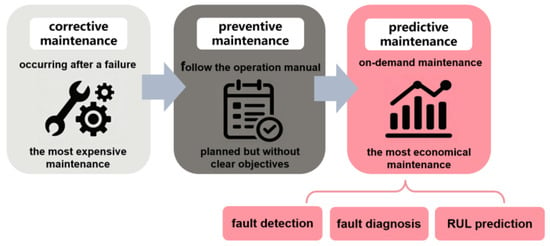
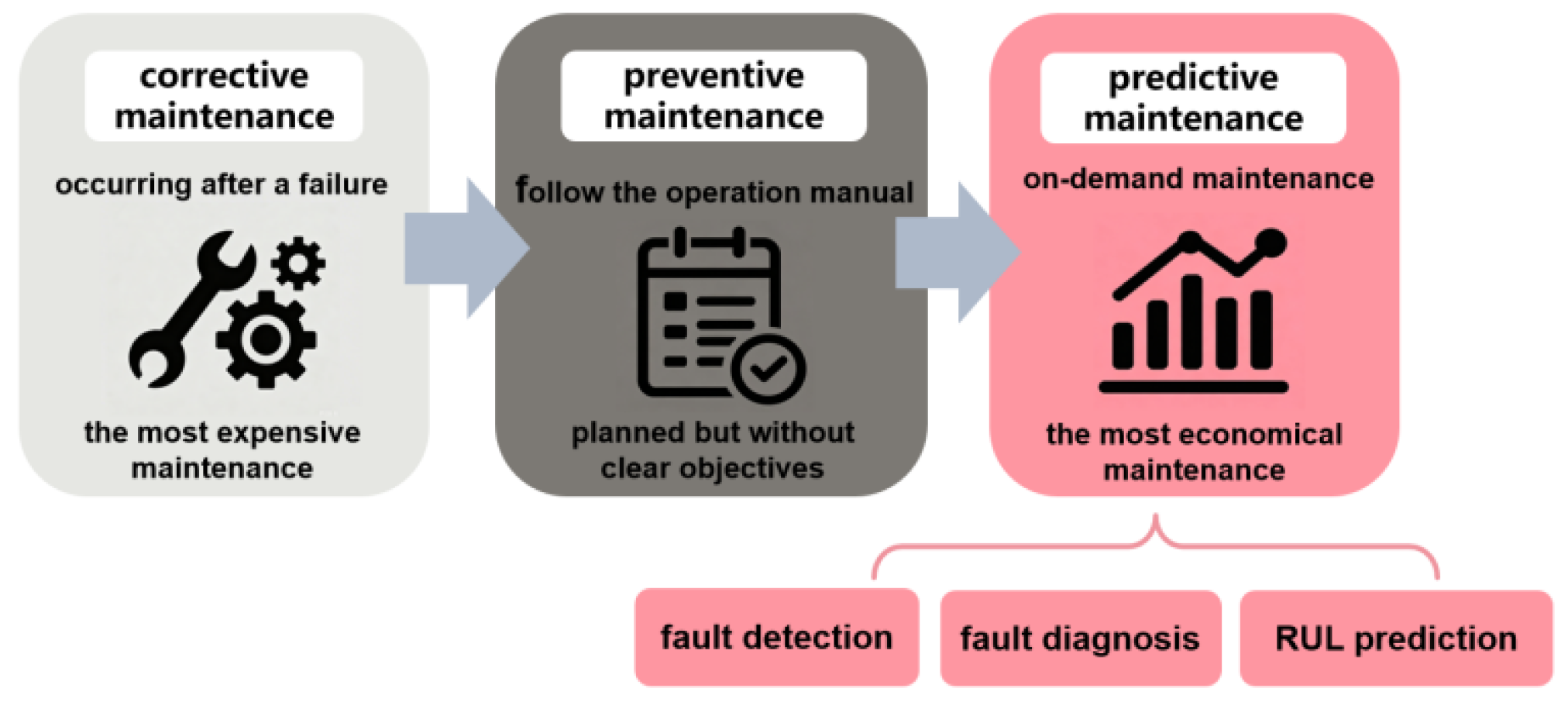
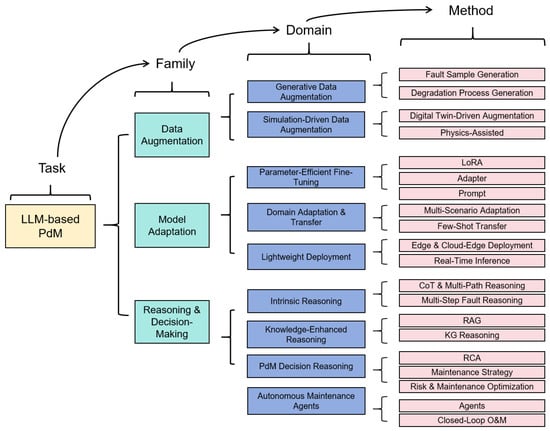
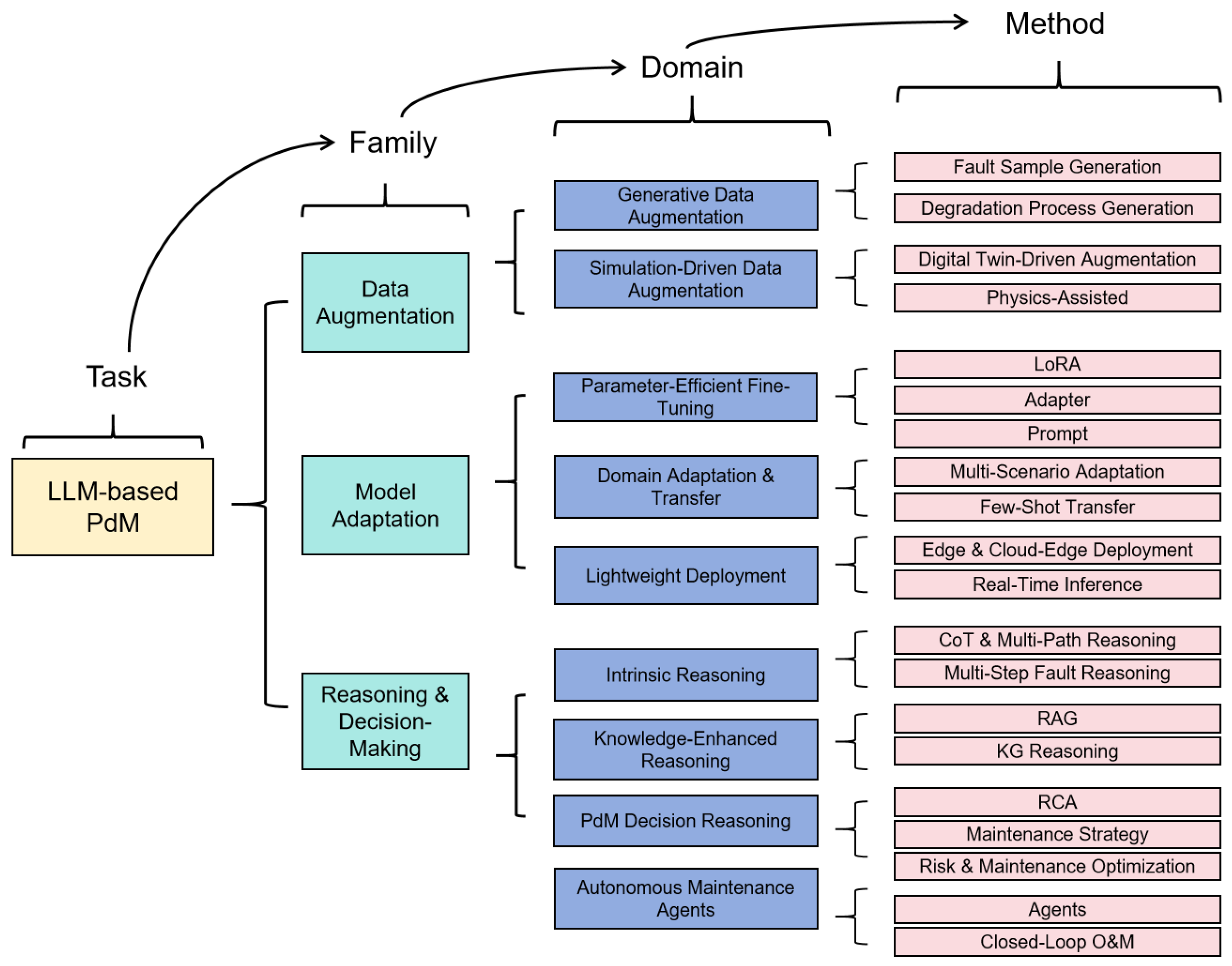
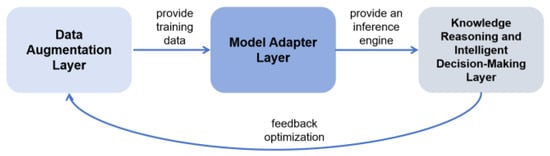
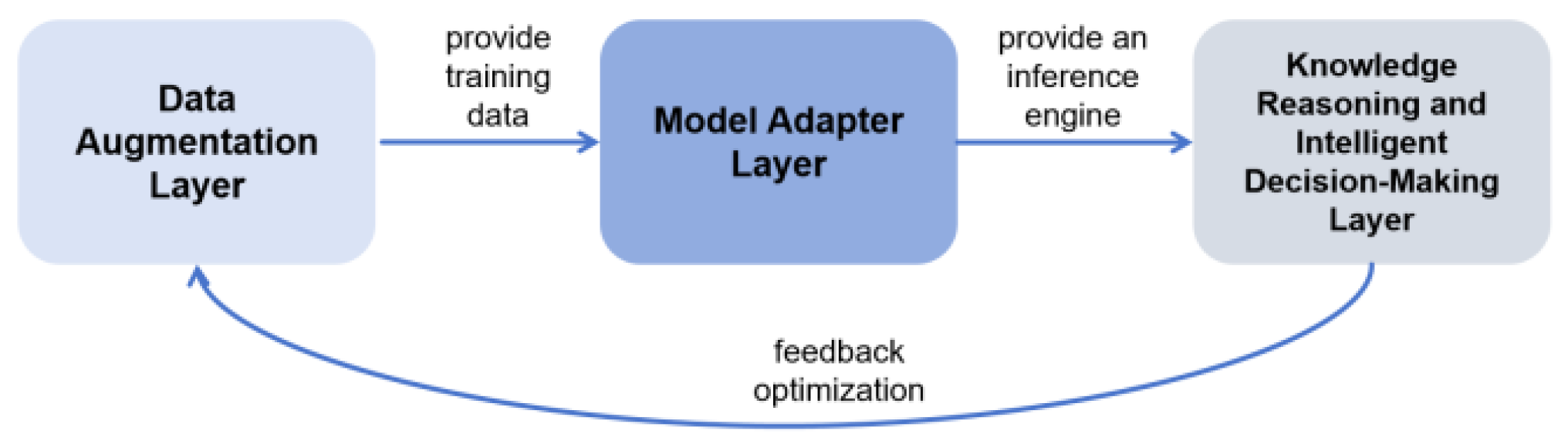
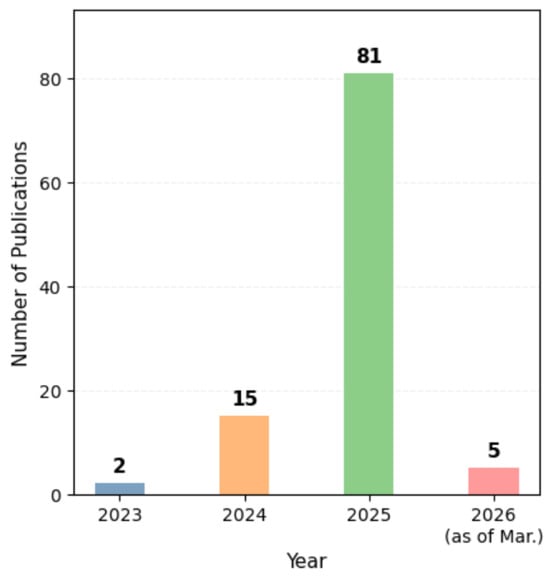
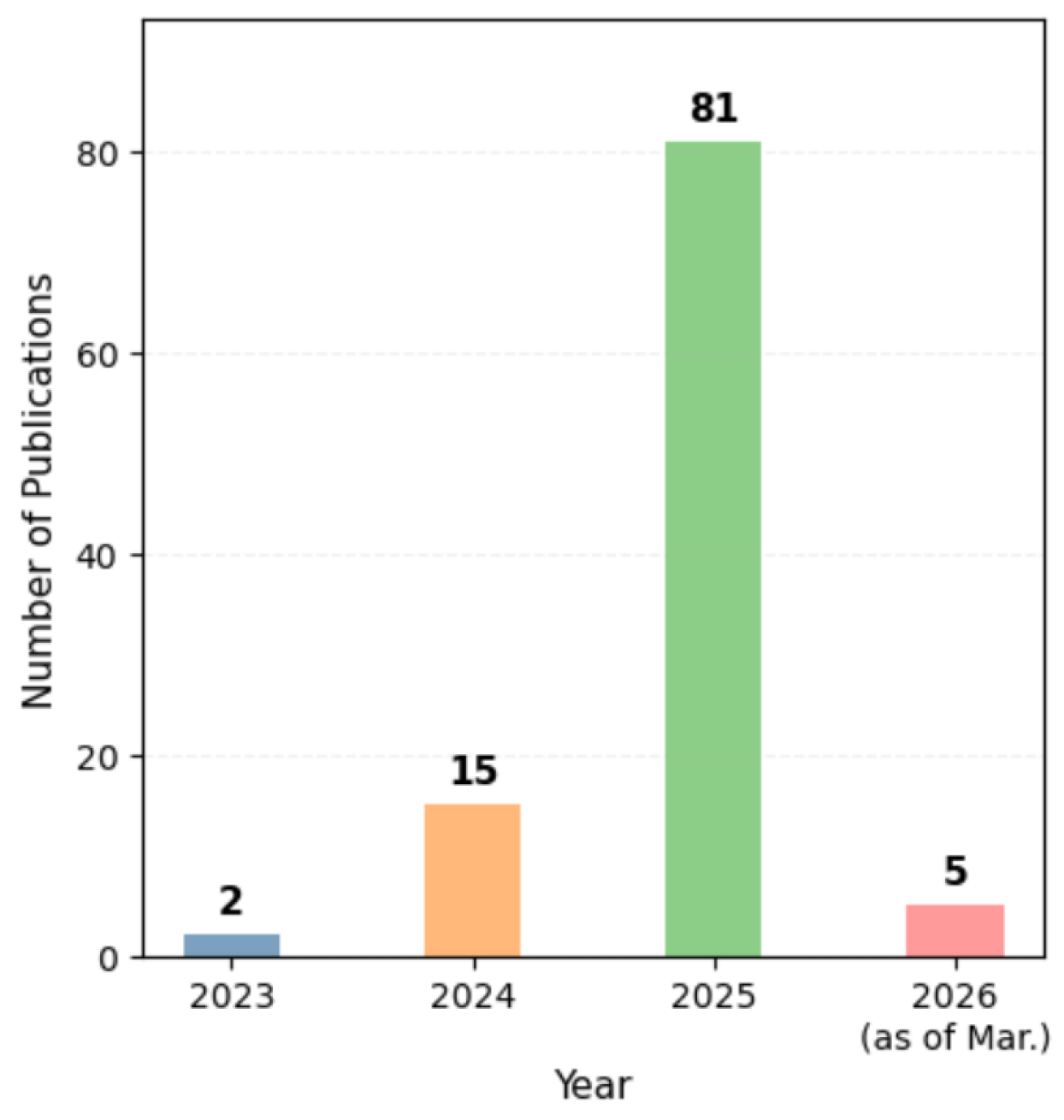
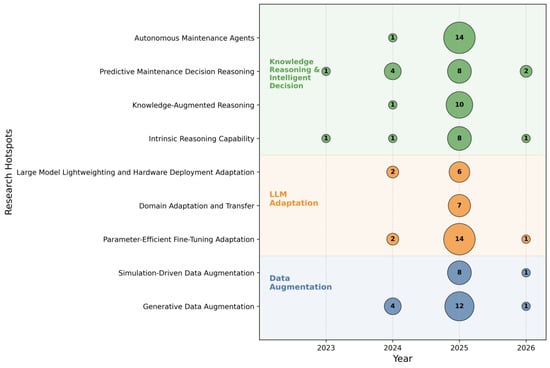
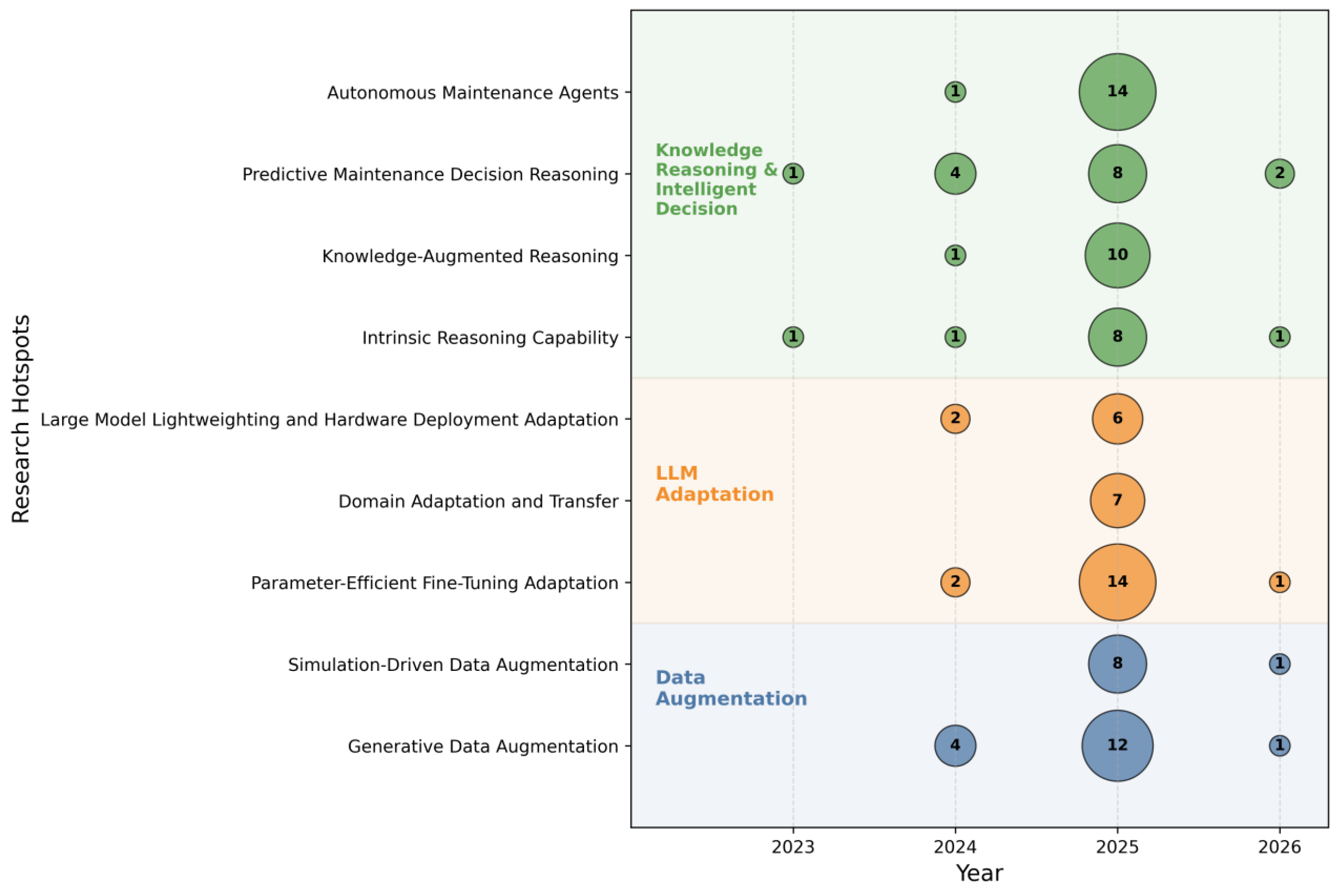
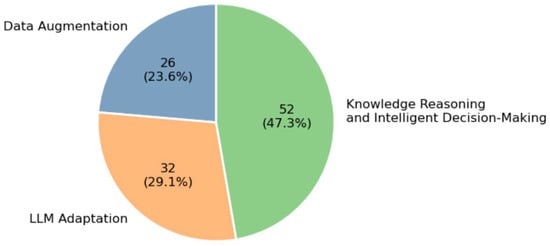
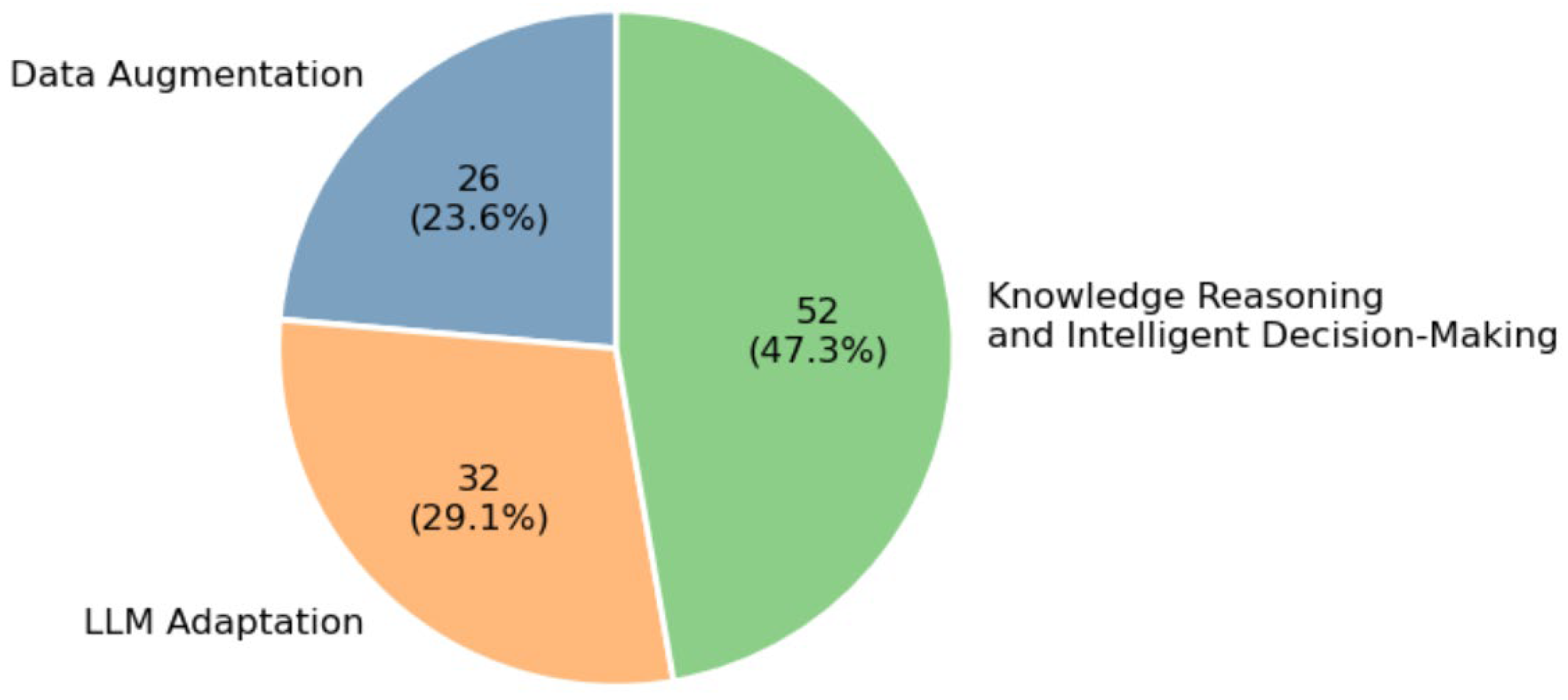
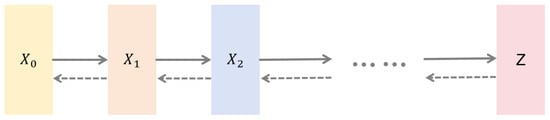
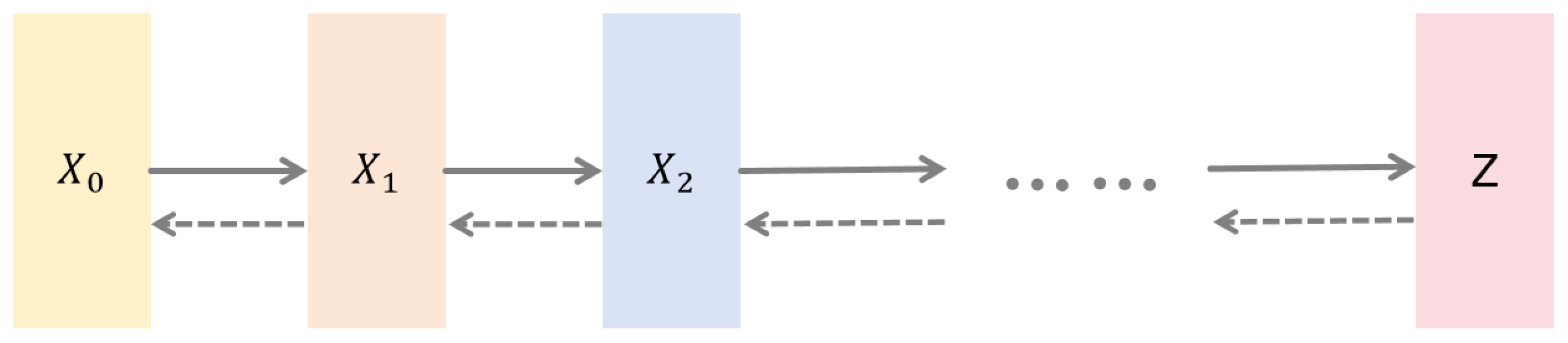
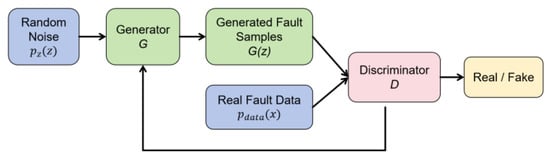
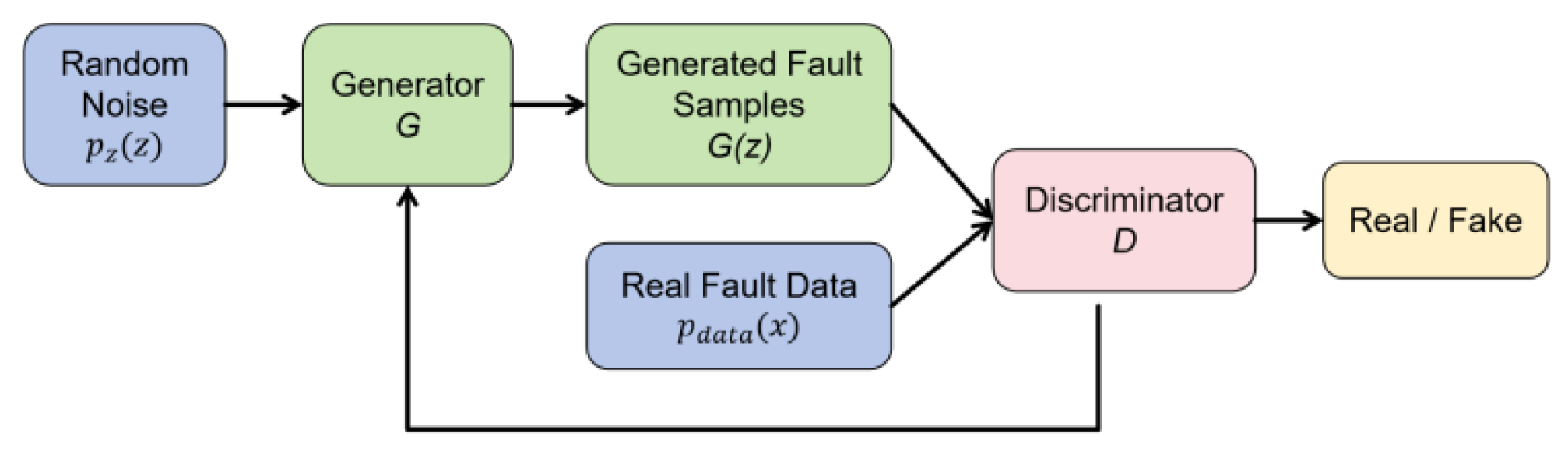
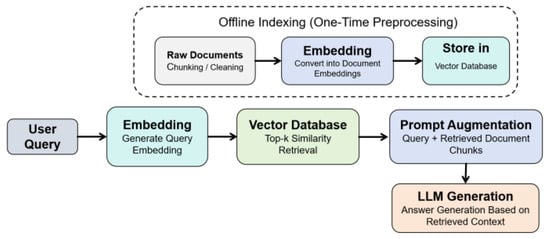
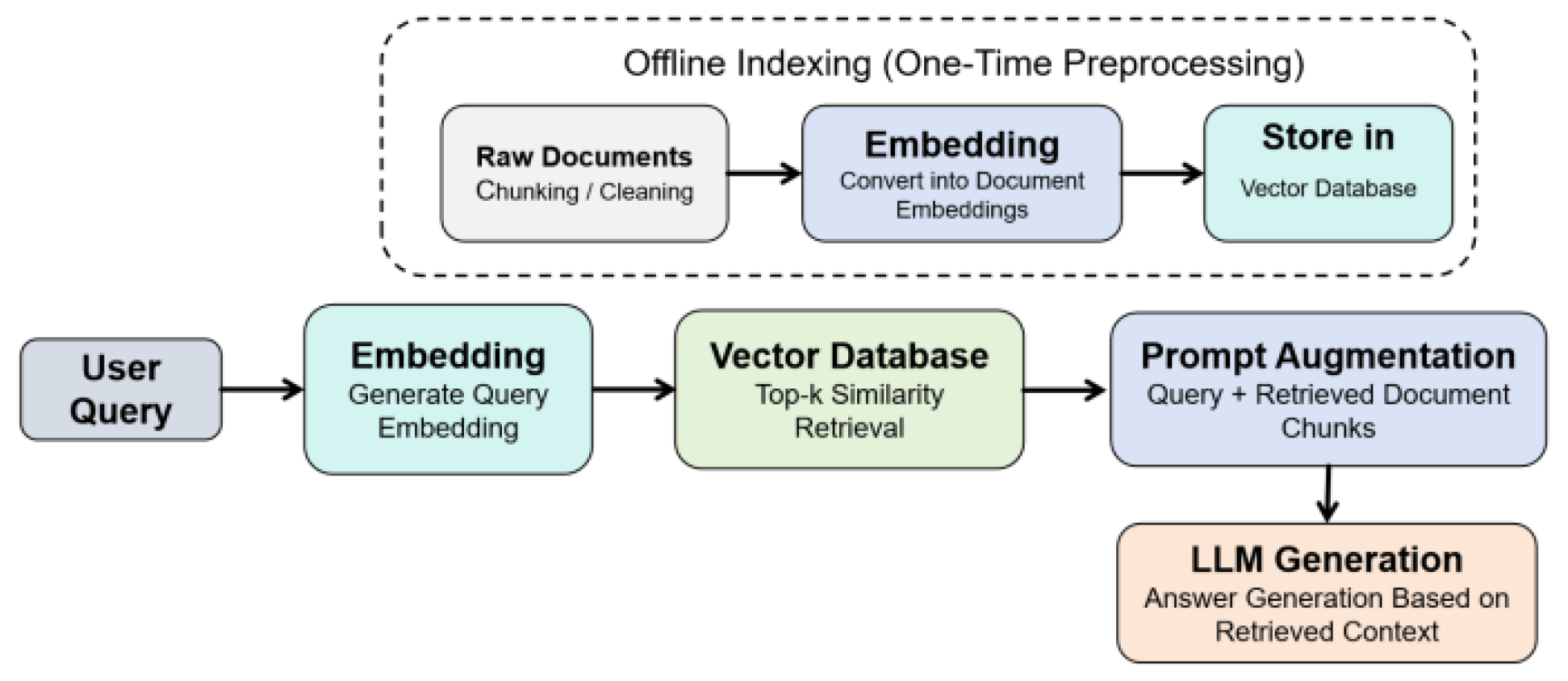
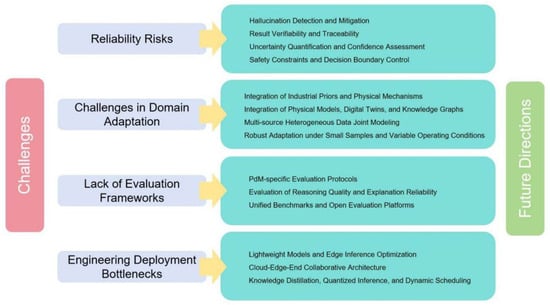
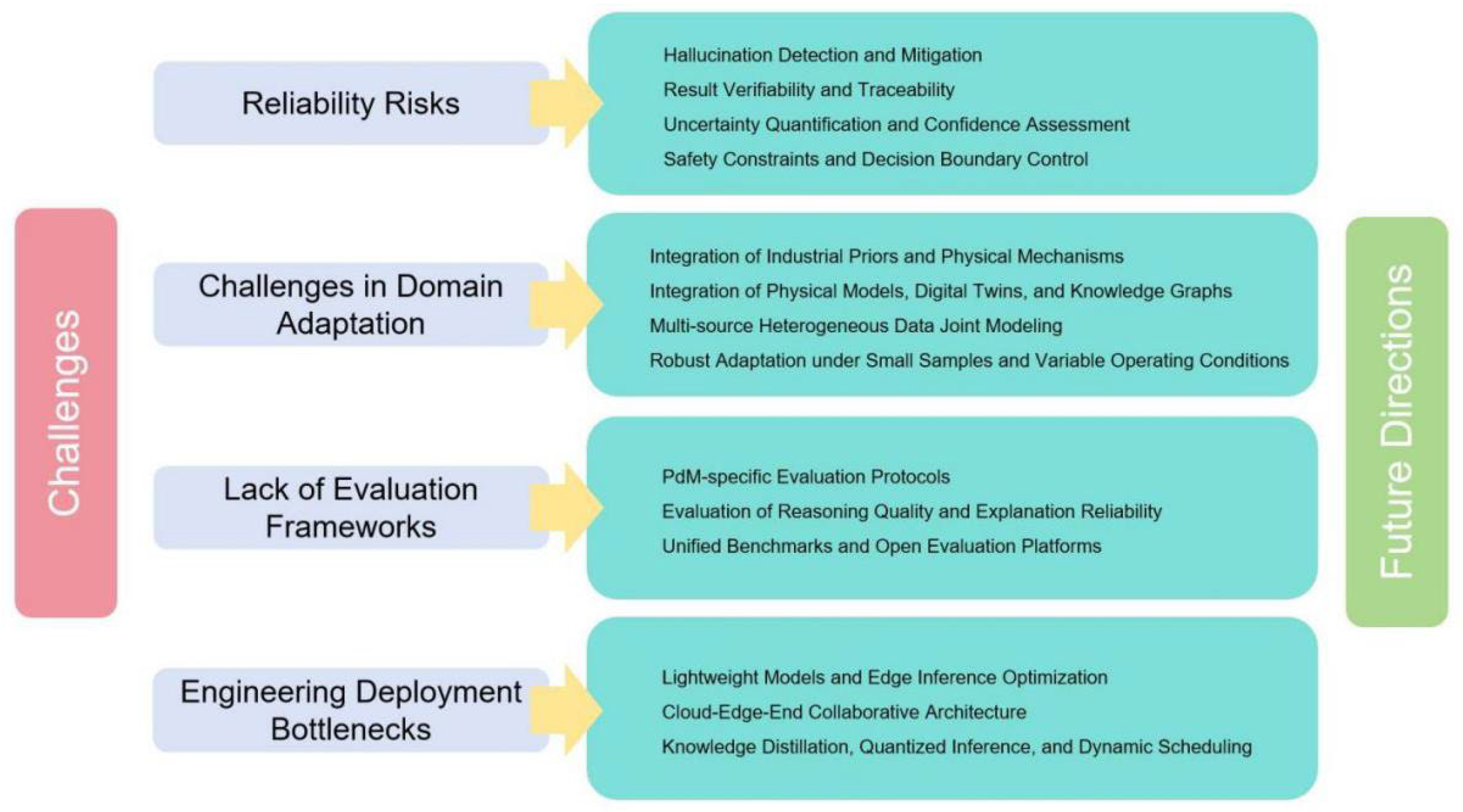

Disclaimer/Publisher’s Note: The statements, opinions and data contained in all publications are solely those of the individual author(s) and contributor(s) and not of MDPI and/or the editor(s). MDPI and/or the editor(s) disclaim responsibility for any injury to people or property resulting from any ideas, methods, instructions or products referred to in the content. |
© 2026 by the authors. Licensee MDPI, Basel, Switzerland. This article is an open access article distributed under the terms and conditions of the Creative Commons Attribution (CC BY) license.