


Abstract
Prolonged driving is associated with musculoskeletal loading, muscle fatigue, and discomfort, which may adversely affect driver performance and well-being. This study investigated the effects of seat-integrated low-frequency acoustic vibration on muscle mechanical properties and electromyographic responses during real-world driving. Twenty healthy adults participated in a randomized crossover study and completed two driving sessions under vibration and control conditions. Each driving session lasted approximately 50–60 min on a mixed urban–highway route, and in the vibration condition, low-frequency acoustic vibration was delivered to the lumbar region for 20 min, beginning 20 min after driving onset. Trunk flexibility, lumbar muscle mechanical properties (natural frequency and dynamic stiffness), upper trapezius median frequency, and integrated electromyography (iEMG) were assessed before and after driving. Compared with the control condition, the vibration condition yielded significantly greater improvements in trunk flexibility (p = 0.025), lower lumbar muscle natural frequency (p = 0.004), reduced dynamic stiffness (p = 0.032), increased median frequency (p = 0.001), and decreased iEMG activity (p = 0.008), with moderate-to-large between-condition effect sizes (Cohen’s d = 0.70–1.73). These findings indicate that low-frequency acoustic vibration may attenuate driving-related increases in muscle tone and stiffness. The observed increase in median frequency and decrease in iEMG are consistent with reduced neuromuscular fatigue and muscular activation demands during prolonged driving. Within the constraints of a small, predominantly male sample of healthy adults and a single seat–vehicle configuration, these preliminary findings suggest that seat-integrated low-frequency acoustic vibration may be a potentially useful, non-invasive strategy for supporting musculoskeletal function and neuromuscular efficiency during prolonged driving. Larger and more diverse studies are needed to confirm these effects, optimize vibration parameters, and evaluate long-term responses across different driver populations and vehicle environments.
1. Introduction
In recent years, vehicles have evolved beyond simple means of transportation into extensions of personal living spaces [1], resulting in increased time spent by drivers within the vehicle [2,3]. Prolonged driving is associated with physical fatigue, musculoskeletal loading, and reduced concentration, all of which are recognized as important contributors to impaired driving performance and increased traffic accidents [4]. Sustained sitting posture, limited movement, and continuous exposure to driving demands can induce changes in muscle mechanical properties and neuromuscular function, potentially leading to discomfort, fatigue, and reduced postural stability during prolonged sitting and driving [5,6]. Concurrently, advances in automotive interior technology have expanded the role of seating systems from passive comfort provision toward active driver-state monitoring and fatigue intervention. This paradigm shift has prompted growing interest in in-cabin wellness technologies—including embedded biosensors, adaptive lumbar support, and vibrotactile stimulation—that can operate unobtrusively during driving [7].
Various interventions have been proposed to mitigate the adverse physiological effects associated with prolonged driving. Stretching and massage are among the most widely investigated approaches for reducing musculoskeletal loading and promoting recovery [8]. Although stretching has demonstrated beneficial effects on pain reduction and flexibility, its practical application during driving is limited [9]. Consequently, seat-integrated interventions that can be delivered without interrupting driving have attracted increasing attention.
Among these approaches, vibration-based stimulation has emerged as a promising method for influencing muscle function and fatigue-related responses. In the present study, the term low-frequency acoustic vibration refers to audio-frequency mechanical oscillations (nominally 20–60 Hz, within the lower end of the human audible range) generated by an audio-signal-driven actuator embedded in the seat and transmitted to the body as a tactile mechanical stimulus rather than as an airborne sound. This distinguishes it from (i) whole-body vibration (WBV), which typically involves broadband, uncontrolled low-frequency oscillations (<20 Hz) transmitted through the vehicle chassis or a vibrating platform to the entire body, and from (ii) conventional focal mechanical vibration, which is generally delivered by rotational or eccentric-mass motors producing a single dominant frequency. In contrast, the present system uses a leaf-spring actuator driven by predefined low-frequency audio-frequency signals to deliver spectrally defined, localized vibration to the lumbar region through direct contact with the seat surface, without altering the overall driving environment or generating audible sound at the driver’s ear. Although seat-integrated acoustic vibration and WBV may share partially overlapping frequency ranges, their exposure characteristics differ in terms of transmission pathway, spatial distribution, and duration of exposure [10]. Consequently, findings from occupational WBV studies, which primarily address prolonged exposure to chassis- or platform-transmitted vibration, cannot be directly extrapolated to seat-integrated acoustic vibration systems employing localized stimulation. Nevertheless, the WBV safety literature provides important context for interpreting vibration exposure and informed the selection of the stimulation parameters used in the present study. Previous studies have reported that mechanical stimulation, including vibration and massage, may promote muscle relaxation, improve circulation, and facilitate recovery processes [11,12]. Furthermore, vibration-induced stimulation has been shown to influence neuromuscular activity and muscle mechanical behavior, potentially contributing to improved muscle performance and reduced fatigue [13,14]. Despite these findings, the physiological effects of low-frequency acoustic vibration integrated into automotive seating systems remain insufficiently understood.
In addition, much of the existing evidence has been obtained under laboratory or simulated conditions, which may not adequately reflect the complex physiological demands of real-world driving [7,15]. Actual driving involves continuous interactions among traffic conditions, vehicle dynamics, road characteristics, and driver behavior, all of which may influence musculoskeletal and neuromuscular responses. Therefore, evaluating the effects of seat-integrated vibration systems under real-world driving conditions is essential to establish their practical relevance.
Although prior work has separately examined whole-body vibration transmitted through the vehicle chassis [16,17], seat-integrated mechanical massage systems based on rolling or pneumatic actuators [7,11,12], and focal muscle vibration applied in laboratory or clinical settings [18,19,20], these studies differed considerably in vibration modality, stimulation characteristics, exposure protocol, and experimental environment, making direct comparisons difficult. Three gaps therefore remain that motivate the present study. First, whole-body vibration research has predominantly characterized the adverse effects of uncontrolled road- and engine-induced oscillations, rather than the potential of a controllable, spectrally defined stimulus delivered for therapeutic purposes. Second, seat-integrated massage studies have relied mainly on static or simulator-based protocols and have not concurrently quantified changes in muscle mechanical properties and electromyographic fatigue indices. Third, focal muscle vibration has yielded promising neuromuscular effects but has been evaluated almost exclusively outside driving contexts, leaving its translational relevance to in-cabin applications unresolved. To address these gaps, the present study evaluates a seat-integrated, low-frequency acoustic vibration system—delivered through embedded leaf-spring actuators rather than rolling or pneumatic mechanisms—during actual on-road driving, while simultaneously assessing trunk flexibility, lumbar muscle mechanical properties (tone and stiffness), and surface EMG-derived fatigue indices (median frequency and iEMG). This combination of a seat-integrated low-frequency acoustic vibration system, an ecologically valid real-world driving environment, and a multimodal biomechanical–electrophysiological assessment distinguishes the present study from previous investigations and provides new evidence regarding the physiological responses to vibration during actual driving.
Accordingly, the purpose of this study was to investigate whether seat-integrated low-frequency acoustic vibration could modulate muscle mechanical properties and electromyographic responses during real-world driving. Electromyographic responses of the upper trapezius were evaluated because prolonged driving has consistently been associated with fatigue-related neuromuscular changes in this muscle. By examining changes in trunk flexibility, lumbar muscle elasticity, fatigue-related electromyographic indicators, and muscle activation patterns, this study aimed to provide evidence regarding the potential role of low-frequency acoustic vibration in supporting musculoskeletal function during prolonged driving and to contribute to the development of evidence-based automotive seating technologies. We hypothesized that seat-integrated low-frequency acoustic vibration would improve muscle mechanical properties and attenuate fatigue-related electromyographic responses compared with a non-vibration control condition.
2. Materials and Methods
2.1. Participants
Twenty healthy adults voluntarily participated in this study. Participants were recruited through public advertisements and were enrolled after receiving a detailed explanation of the study objectives and procedures and providing written informed consent. The inclusion criteria were as follows: (1) age ≥ 20 years; (2) possession of a valid driver’s license with at least one year of driving experience; (3) body mass index (BMI) between 18 and 30 kg/m2, representing normal-weight to overweight adults, to reduce potential variability in vibration transmission and muscle mechanical measurements associated with extreme body composition; and (4) absence of musculoskeletal symptoms affecting driving performance. Exclusion criteria included: (1) current treatment for musculoskeletal disorders; (2) history of neurological disease; (3) cardiovascular disease; (4) pregnancy; and (5) consumption of substances that could influence physiological responses or driving performance, including alcohol, tobacco, caffeine, or medication, within 24 h before testing. Participants were informed that they could withdraw from the study at any time without penalty. Throughout the experimental sessions, participants were continuously monitored for discomfort or adverse reactions. This study was approved by the Institutional Review Board of Konyang University (KYU-2023-04-0222-002) and was conducted in accordance with the Declaration of Helsinki. The demographic characteristics of the participants are presented in Table 1.
Table 1.
Participant characteristics (n = 20).
An a priori sample size calculation was performed using G*Power software (version 3.1.9.7) during the study planning stage. Based on the selected statistical model, the calculation indicated that a total sample size of 20 participants was required. Accordingly, 20 healthy adults were recruited and completed both experimental conditions [15].
Participants were recruited without restrictions based on sex. Consequently, the final sample reflected the characteristics of the volunteer population and consisted of 19 men and 1 woman. Because only one female participant was enrolled, sex-specific analyses were not statistically feasible. Therefore, all participants were analyzed as a single group, and the findings should be interpreted primarily as representative of a predominantly male sample. This limitation is further discussed in Section 4.
2.2. Experimental Procedure
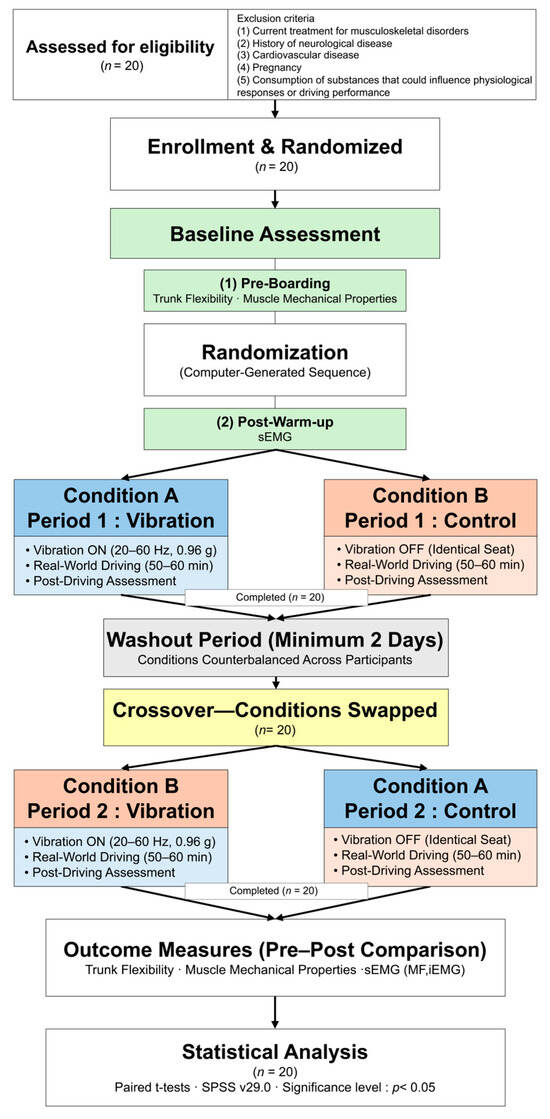
A randomized crossover design, with the order of experimental conditions determined by a computer-generated random sequence, was employed to investigate the effects of seat-integrated low-frequency acoustic vibration during real-world driving. The complete experimental workflow is illustrated in Figure 1.
Figure 1.
Experimental flowchart of the randomized crossover design.
Each participant completed two experimental sessions under different conditions:
- Vibration condition (seat-integrated acoustic vibration activated);
- Control condition (identical seat without vibration activation).
2.3. Study Design
Prior to testing, participants were instructed to avoid strenuous exercise, alcohol, caffeine, smoking, and medications that could influence physiological responses for at least 24 h.
All experiments were conducted using the same vehicle. The cabin temperature was maintained at approximately 21.5 °C, and participants were instructed not to use mobile devices during driving.
At the beginning of each session, baseline assessments of trunk flexibility and lumbar muscle mechanical properties were performed. Following a standardized five-minute warm-up period, surface electromyography (sEMG) electrodes were attached bilaterally to the upper trapezius muscles. Anatomical landmarks were marked with a surgical skin marker prior to electrode placement to facilitate consistent repositioning between sessions, and all electrode placements were performed by the same experienced examiner.
Participants subsequently completed the driving task under either the vibration or control condition. Upon completion of the driving session, all outcome measures were reassessed using the same procedures and examiner. Outcome assessments were performed by the same examiner, who was blinded to the experimental condition. The two experimental sessions were separated by a minimum washout period of 2 days to minimize potential carryover effects, and the order of conditions was counterbalanced across participants.
2.4. Driving Route and Real-World Driving Conditions
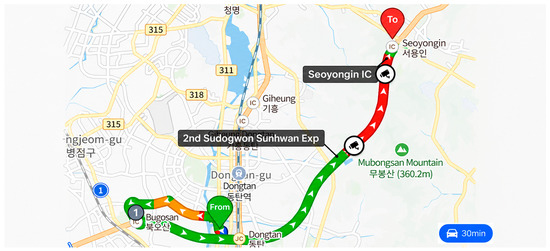
To evaluate physiological responses under real-world driving conditions, an 18 km driving route consisting of both urban and highway environments was established (Figure 2).
Figure 2.
Driving route.
The urban section covered approximately 4 km between the DSC Research Institute and Buk-Osan Tollgate and included traffic signals and frequent acceleration–deceleration events. The highway section covered approximately 14 km between Buk-Osan Interchange and West Yongin Tollgate and represented relatively steady-speed driving conditions.
The average driving speed was approximately 60 km/h in urban sections and 100 km/h on highways. Total driving duration ranged from 50 to 60 min depending on traffic conditions.
All participants drove the same vehicle while wearing seatbelts and maintaining both hands on the steering wheel. Physiological data acquisition was supervised by a trained investigator seated in the rear passenger seat.
The vibration intervention was initiated 20 min after the start of driving and was applied for 20 min during the vibration condition only.
To improve experimental consistency, all participants completed the same predefined driving route during daytime. Whenever possible, the driving trials were scheduled outside peak traffic hours to minimize excessive traffic congestion. Although minor variations in traffic conditions were unavoidable due to the real-world driving environment, the driving route and experimental procedures were standardized across all participants to reduce environmental variability.
2.5. Low-Frequency Acoustic Vibration Intervention
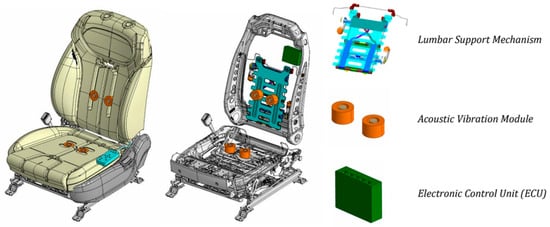
A seat-integrated low-frequency acoustic vibration system was used to provide mechanical stimulation during driving. The intervention was designed to deliver acoustic vibration to the lumbar region through internally mounted leaf-spring actuators embedded within the seat structure. Unlike conventional massage systems that rely on rolling mechanisms or pneumatic inflation, the present system generated low-frequency mechanical oscillations transmitted directly through the seating surface. The structural components of the intervention system are illustrated in Figure 3.
Figure 3.
Configuration of the seat-integrated acoustic vibration intervention system.
To ensure consistency across participants, all stimulation parameters were standardized prior to data collection. The vibration stimulus consisted of five discrete frequencies (20, 30, 40, 50, and 60 Hz) presented sequentially throughout the intervention. The system did not employ a continuous frequency sweep or broadband vibration signal; instead, predefined discrete frequencies were applied sequentially according to the programmed operating protocol. The reported peak acceleration (0.96 g) and displacement amplitude (0.60 mm) were measured under a 20 Hz operating condition. These values represent manufacturer-reported system output parameters and were not directly measured at the participant–seat interface. Identical stimulation parameters were maintained for all participants throughout the experiment in accordance with the predefined operating program of the seat-integrated low-frequency acoustic vibration system. The vibration exposure was characterized by frequency, peak acceleration, and displacement amplitude, in accordance with current recommendations for reporting vibration interventions [21]. Stimulation was delivered bilaterally to the mid-lumbar region, approximately corresponding to the L3–L5 vertebral levels, through two embedded leaf-spring actuators integrated within the seat.
The intervention was applied for 20 min using an intermittent duty cycle consisting of 60 s of vibration followed by 30 s of rest. Following the initial 20 min of uninterrupted driving, the first EMG recording (PRE) was obtained, after which the vibration system was activated. This timing allowed participants to first undergo an initial period of uninterrupted driving, during which early neuromuscular responses associated with prolonged driving could develop. This timing was informed by previous prolonged-driving studies, which have shown that neuromuscular fatigue and discomfort develop progressively during continuous driving and are commonly evaluated after an initial uninterrupted driving period [22]. Accordingly, the intervention was designed to evaluate the effectiveness of seat-integrated vibration after the onset of physiological loading rather than as a preventive stimulus applied at the beginning of the driving task. Once activated, the vibration system remained active for the subsequent 20 min. Participants were not permitted to modify the stimulation settings during the experiment.
In the control condition, participants completed the identical driving protocol using the same seat with the vibration function deactivated.
The vibration parameters and experimental conditions are summarized in Table 2.
Table 2.
Stimulation parameters of the low-frequency acoustic vibration intervention.
2.6. Outcome Measures
2.6.1. Trunk Flexibility
Trunk flexibility was assessed using a standardized sit-and-reach test. Participants sat on the floor with their knees fully extended and reached forward along a measurement scale using both hands. Two trials were performed, and the average value was used for analysis.
The test was selected as a practical indicator of posterior chain flexibility and potential changes in muscle extensibility associated with prolonged sitting and driving.
The sit-and-reach test was included to assess changes in posterior chain flexibility following prolonged driving. Prolonged sitting has been associated with changes in hamstring flexibility, lumbar mobility, and perceived discomfort, and the sit-and-reach test has previously been used to evaluate these responses following sustained sitting exposure. Furthermore, the sit-and-reach test is a valid field-based measure of hamstring extensibility, making it suitable for assessing flexibility-related changes associated with prolonged driving.
2.6.2. Lumbar Muscle Mechanical Properties
Muscle mechanical properties were evaluated using a MyotonPRO device (Myoton AS, Tallinn, Estonia) [23]. Measurements were obtained from the lumbar erector spinae muscles at the L4–L5 level. The L4–L5 level was selected as the standardized anatomical site for MyotonPRO assessment and was used consistently for all participants to ensure measurement reproducibility.
Participants were positioned in a prone lying position and instructed to breathe normally while remaining relaxed throughout the measurement. The measurement site was identified using anatomical landmarks and palpation, marked on the skin to ensure consistent probe placement, and all assessments were performed by the same examiner. The MyotonPRO automatically delivered five consecutive mechanical impulses, and the average value was used for analysis.
The MyotonPRO quantifies tissue mechanical characteristics by applying a brief mechanical impulse to the skin surface and recording the resulting damped oscillations. The primary outcomes included oscillation frequency (Hz), reflecting intrinsic muscle tone, and dynamic stiffness (N/m), reflecting resistance to deformation.
To ensure measurement consistency, anatomical landmarks were identified and marked prior to testing. Five consecutive measurements were obtained at each site, and mean values were used for statistical analysis. All measurements were performed by the same experienced examiner.
2.6.3. Electromyographic Responses
Surface electromyography (sEMG) was used to evaluate muscle activation and fatigue responses during driving. Bipolar Ag/AgCl electrodes were placed bilaterally over the upper trapezius muscles following SENIAM recommendations after appropriate skin preparation. EMG signals were recorded bilaterally, and the average values of the left and right upper trapezius muscles were used for statistical analysis.
The upper trapezius was selected because it contributes to steering-wheel stabilization and upper-body postural control during driving and has been frequently examined in studies investigating driving-related muscular workload and fatigue [24,25]. Surface EMG of the lumbar muscles was not recorded because continuous contact between the lumbar electrodes and the seat back during driving could introduce motion artifacts and compromise signal quality. Previous research has demonstrated that prolonged low-level activation of the upper trapezius during driving is associated with the development of muscular fatigue and discomfort, making this muscle a suitable indicator of driving-related neuromuscular responses [26].
Median frequency (MF) and integrated EMG (iEMG) were calculated as indices of muscle fatigue and muscle activation, respectively [27].
EMG recordings were obtained during driving at two time points. The first recording (PRE) was obtained immediately after the initial 20 min of uninterrupted driving and immediately before activation of the seat-integrated low-frequency acoustic vibration system. The second recording (POST) was obtained during the final 5 min of the 40 min driving task while the vibration system remained active. In the control condition, EMG recordings were obtained at the corresponding time points following the identical driving protocol without vibration. For iEMG analysis, a 5 min recording window was used for both PRE and POST conditions. The rectified EMG signals obtained during each 5 min recording period were integrated to calculate the iEMG values.
To evaluate muscle fatigue, participants performed a 5 s maximal voluntary isometric shoulder abduction before and immediately after driving. Median frequency (MF) was calculated from the middle 3 s segment of each contraction and was used as an indicator of fatigue-related changes in motor unit recruitment and muscle fiber conduction velocity. A standardized MVC task was used to provide a consistent contraction condition for MF analysis, thereby minimizing variability associated with changes in steering behavior, upper-limb posture, and vehicle movement during on-road driving.
Raw EMG signals were processed using a 20–450 Hz band-pass filter and a 60 Hz notch filter. Low-frequency motion artifacts associated with vehicle vibration and body movement were minimized by removing signal components below 20 Hz. Artifact-contaminated segments exceeding ±3 standard deviations from the root mean square (RMS) mean were excluded from analysis.
Muscle activation was quantified using integrated electromyography (iEMG) obtained from stable signal segments recorded during driving. Because the primary objective of this study was to compare within-subject physiological responses between vibration and control conditions under identical driving conditions, iEMG values were analyzed as relative within-participant changes rather than normalized to maximal voluntary contraction values. This approach has been adopted in previous studies examining changes in muscle activity during prolonged driving tasks [25,26].
2.7. Statistical Analysis
All statistical analyses were performed using IBM SPSS Statistics version 29.0 (IBM Corp., Armonk, NY, USA). Descriptive statistics are presented as mean ± standard deviation (SD). The normality of all continuous variables was assessed using the Shapiro–Wilk test. A randomized crossover design was employed; therefore, differences between the vibration and control conditions were evaluated using paired comparisons. Paired t-tests were used to compare pre- and post-driving measurements within each condition and to compare change scores (post minus pre) between the vibration and control conditions. The outcome measures included trunk flexibility, lumbar muscle oscillation frequency, lumbar muscle stiffness, EMG median frequency, and integrated EMG. As this was an exploratory physiological study designed to comprehensively evaluate the effects of seat-integrated low-frequency acoustic vibration, no single primary outcome measure was prespecified. Therefore, each outcome was analyzed independently according to its predefined physiological objective. The level of statistical significance was set at p < 0.05 for all analyses.
3. Results
Unlike the other outcome measures, the PRE and POST EMG recordings were obtained during the driving task. PRE corresponded to the recording obtained 20 min after driving onset, whereas POST corresponded to the recording obtained during the final 5 min of the 40 min driving task. For the outcome measures presented as changes, delta values were calculated as the difference between the post-driving and pre-driving measurements (Δ = post-driving − pre-driving). For EMG variables, the change values were calculated based on the corresponding PRE and POST recording periods during the driving task. No significant differences in baseline (pre-driving) values were observed between the vibration and control conditions for any outcome measure (all p > 0.05), confirming the adequacy of the crossover design. Table 3 presents the pre- and post-driving values for all outcome measures under both experimental conditions. The magnitude of change observed during the driving session is summarized in Table 4. Significant between-condition differences were identified for trunk flexibility, lumbar muscle mechanical properties, trapezius median frequency, and trapezius muscle activation.
Table 3.
Pre- and post-driving values under each condition.
Table 4.
Changes in outcome measures between conditions.
3.1. Changes in Trunk Flexibility
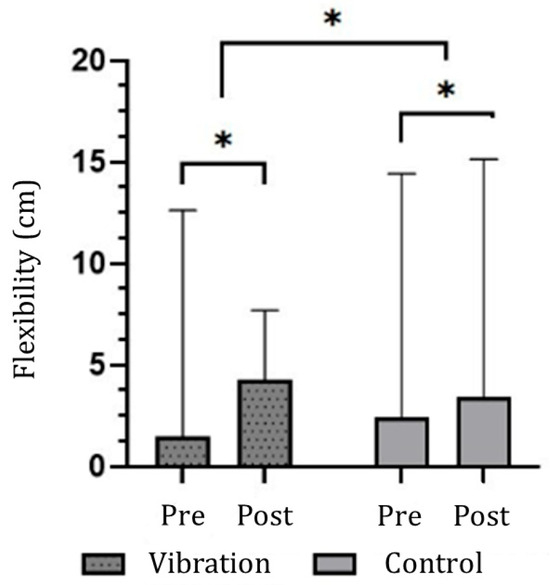
Changes in trunk flexibility are presented in Figure 4 and Table 4. The vibration condition demonstrated a significantly greater increase in trunk flexibility than the control condition (2.79 ± 2.72 cm vs. 1.04 ± 1.96 cm, p = 0.025). The corresponding effect size was moderate-to-large (Cohen’s d = 0.74).
Figure 4.
Changes in trunk flexibility between vibration and control conditions. Bars represent the mean change values calculated as post-driving minus pre-driving measurements (Δ = post-driving − pre-driving), * indicates a statistically significant difference between conditions (p < 0.05).
3.2. Changes in Lumbar Muscle Mechanical Properties
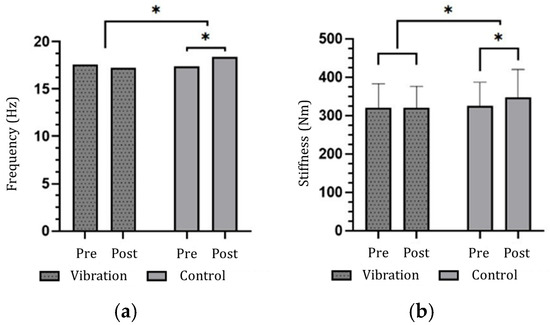
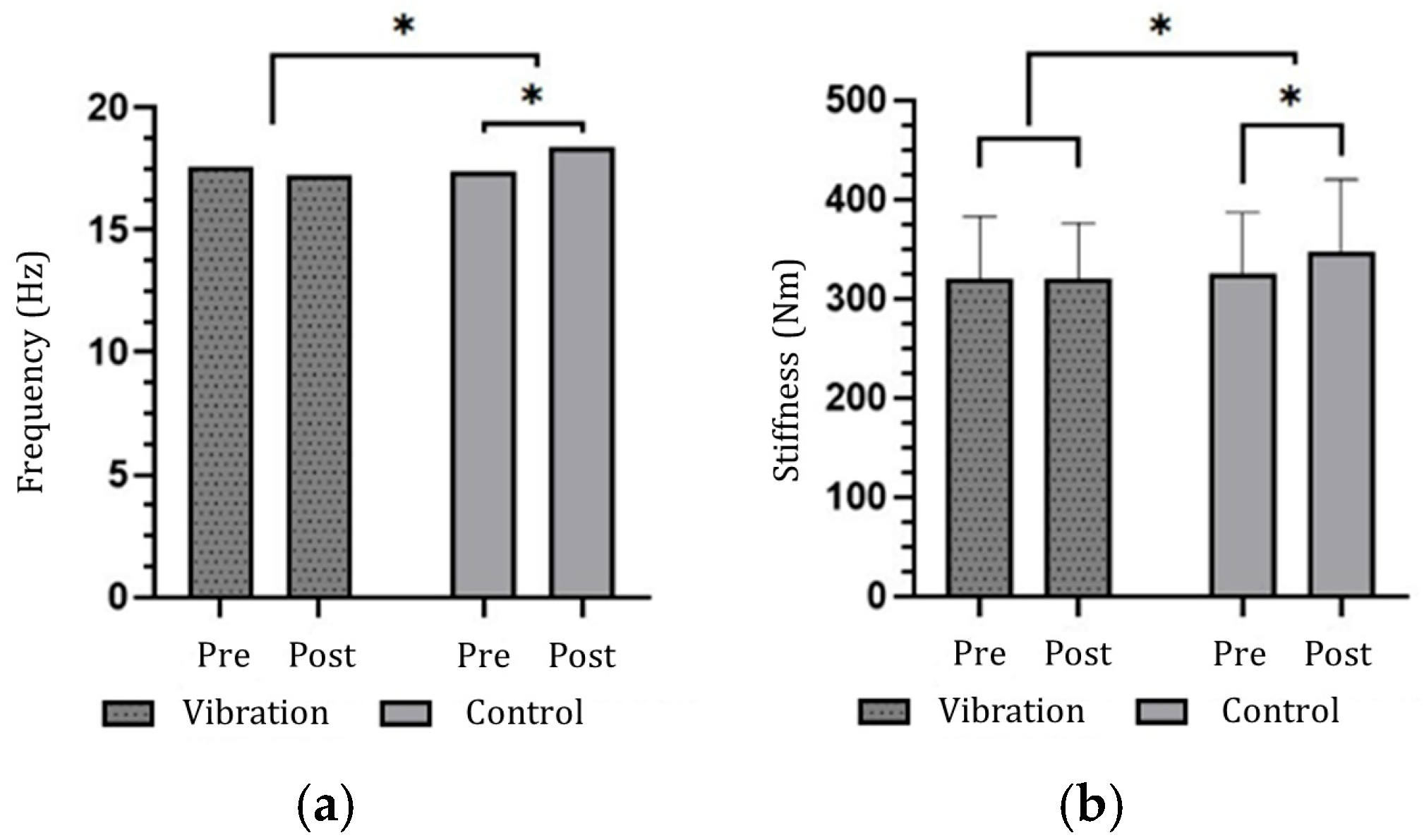
Changes in lumbar muscle mechanical properties are shown in Figure 5 and summarized in Table 3 and Table 4.
Figure 5.
Changes in lumbar muscle mechanical properties between vibration and control conditions: (a) natural frequency; (b) dynamic stiffness. Bars represent the mean change values calculated as post-driving minus pre-driving measurements (Δ = post-driving − pre-driving), * indicates a statistically significant difference between conditions (p < 0.05).
3.2.1. Natural Frequency
A significant between-condition difference was observed for lumbar muscle natural frequency (p = 0.004). Natural frequency decreased following vibration exposure (−0.33 ± 1.22 Hz), whereas an increase was observed under the control condition (0.96 ± 1.45 Hz). The effect size was large (Cohen’s d = 0.96) (Figure 5a).
3.2.2. Dynamic Stiffness
A significant between-condition difference was also observed for lumbar muscle dynamic stiffness (p = 0.032). Dynamic stiffness decreased in the vibration condition (−8.70 ± 41.89 N/m), whereas an increase was observed in the control condition (21.60 ± 44.05 N/m). The corresponding effect size was moderate-to-large (Cohen’s d = 0.70) (Figure 5b).
3.3. Changes in Electromyographic Fatigue Responses
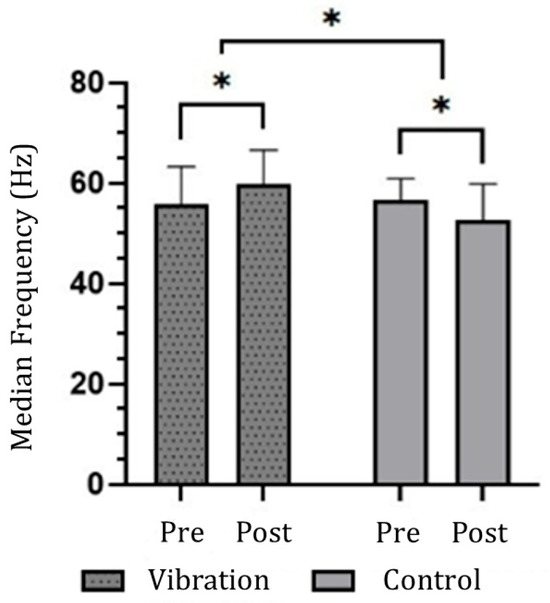
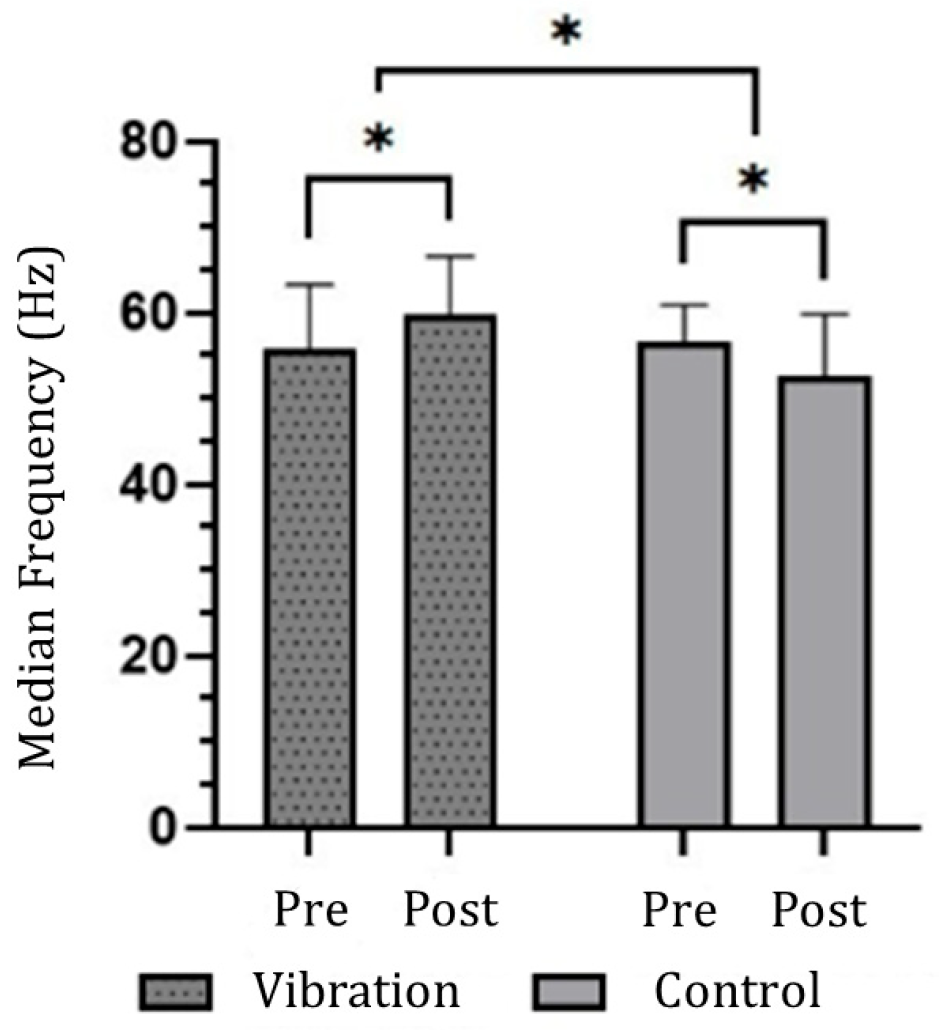
Changes in trapezius median frequency are presented in Figure 6 and summarized in Table 3 and Table 4. A significant between-condition difference was identified (p = 0.001). Median frequency increased following vibration exposure (4.23 ± 4.54 Hz), whereas a decrease was observed in the control condition (−3.96 ± 4.94 Hz). The observed effect size was very large (Cohen’s d = 1.73).
Figure 6.
Changes in electromyographic median frequency of the upper trapezius muscle between vibration and control conditions. Bars represent the mean change values calculated between PRE and POST EMG recordings during the driving task, * indicates a statistically significant difference between conditions (p < 0.05).
3.4. Changes in Electromyographic Activity
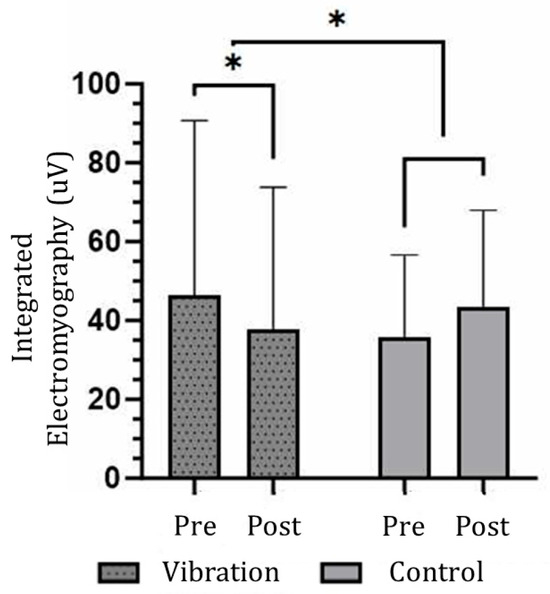
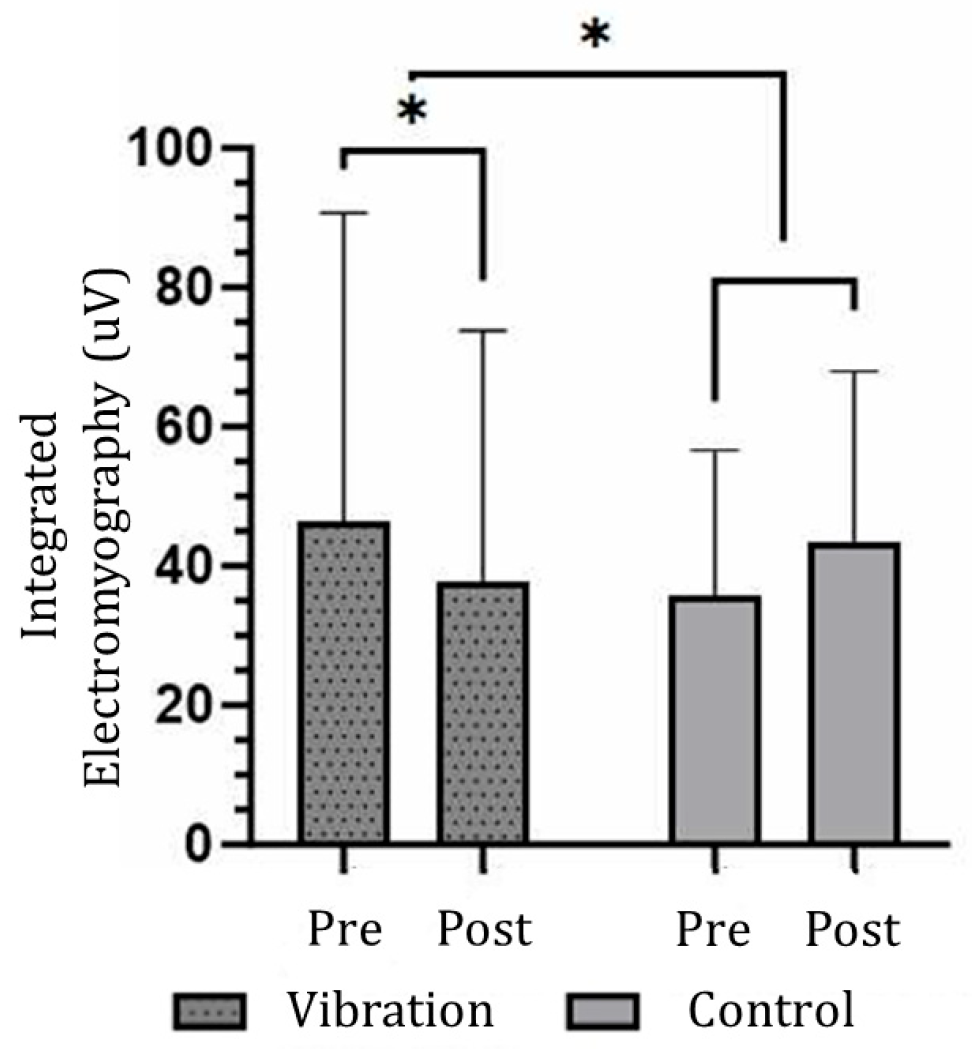
Changes in trapezius muscle activation measured using integrated electromyography (iEMG) are shown in Figure 7 and summarized in Table 3 and Table 4. A significant between-condition difference was observed (p = 0.008). iEMG decreased in the vibration condition (−8.45 ± 13.28 μV), whereas an increase was observed in the control condition (7.66 ± 21.82 μV). The corresponding effect size was large (Cohen’s d = 0.89).
Figure 7.
Changes in integrated electromyographic activity of the upper trapezius muscle between vibration and control conditions. Bars represent the mean change values calculated between PRE and POST EMG recordings during the driving task, * indicates a statistically significant difference between conditions (p < 0.05).
4. Discussion
4.1. Principal Findings
The present study investigated the effects of seat-integrated low-frequency acoustic vibration on muscle mechanical properties and electromyographic responses during real-world driving. The principal findings were that vibration exposure significantly increased trunk flexibility, reduced lumbar muscle tone and stiffness, increased median frequency, and reduced integrated electromyographic activity compared with the control condition.
These findings suggest that low-frequency acoustic vibration may influence both musculoskeletal and neuromuscular responses during prolonged driving [11,12,28]. Specifically, participants exposed to vibration exhibited reduced muscle stiffness and lower muscular demand without interrupting the driving task under real-world conditions. Collectively, these results provide preliminary evidence that seat-integrated low-frequency acoustic vibration may contribute to mitigating physiological responses associated with prolonged driving. However, because multiple related physiological outcomes were evaluated without formal adjustment for multiple comparisons, the present findings should be interpreted as exploratory and require confirmation in larger confirmatory studies.
4.2. Effects on Muscle Mechanical Properties
The vibration condition elicited significant improvements in trunk flexibility and lumbar muscle mechanical properties. Compared with the control condition, vibration exposure resulted in lower lumbar muscle natural frequency and reduced dynamic stiffness. These findings suggest that low-frequency acoustic vibration may help maintain muscle compliance and reduce stiffness associated with prolonged sitting.
Previous studies have demonstrated that mechanical stimulation can promote muscle relaxation, increase local circulation, and reduce passive muscle tension. Consistent with these findings, vibration-based interventions have also been reported to alter the viscoelastic characteristics of skeletal muscle through repeated mechanical oscillation [11,12]. The present findings extend these observations by demonstrating similar physiological responses under real-world driving conditions. The observed improvement in trunk flexibility may be explained, at least in part, by reduced lumbar muscle tone and stiffness, which could facilitate lumbar mobility following prolonged driving.
Because prolonged driving typically requires sustained postural stabilization with limited movement, gradual increases in lumbar muscle stiffness may occur over time [29,30]. The observed reduction in stiffness following vibration exposure suggests that acoustic vibration may partially counteract these effects and contribute to the maintenance of favorable muscle mechanical properties during driving.
However, because the sit-and-reach test reflects flexibility of the posterior chain, including both the lumbar region and the hamstring muscles, the observed improvement should not be interpreted as evidence of a direct effect on hamstring extensibility. Rather, the findings may reflect improved lumbar mobility together with non-specific changes in movement performance associated with localized vibration.
4.3. Effects on Electromyographic Responses
The present study demonstrated significant changes in electromyographic responses following vibration exposure. Median frequency increased whereas integrated electromyographic activity decreased under the vibration condition compared with the control condition.
Median frequency is commonly used as an indicator of muscle fatigue and reflects physiological changes in motor unit firing behavior and muscle fiber conduction velocity [24,25]. The increase in median frequency observed in the present study suggests a reduced fatigue response following vibration exposure.
In contrast, integrated EMG represents the overall magnitude of muscle activation. The reduction in iEMG observed under the vibration condition may indicate that less muscular effort was required to maintain postural control during driving [16]. Although the EMG signals were not normalized to maximal voluntary contractions and should therefore be interpreted cautiously, the within-subject crossover design allowed relative comparisons between experimental conditions. As described in Section 2.3, electrode repositioning variability was minimized through standardized anatomical landmarking and consistent examiner placement.
The upper trapezius muscle was selected because it plays an important role in steering-wheel stabilization and upper-body postural control during driving and has frequently been used in previous electromyographic investigations of driving-related muscular workload and fatigue [25,27]. Although the vibration intervention was applied locally to the lumbar region, neuromuscular adaptations may not be restricted to the stimulated tissues. Changes in sitting posture and trunk stabilization demands may influence muscle activation patterns throughout the upper body. Consequently, the observed changes in upper trapezius activity may reflect secondary adaptations to altered postural and biomechanical demands during prolonged driving [31,32]. However, because postural kinematics (e.g., trunk alignment and head position) were not evaluated in the present study, this proposed mechanism cannot be directly verified. Therefore, the relationship between lumbar vibration and upper trapezius electromyographic responses should be interpreted cautiously until confirmed by future studies incorporating simultaneous kinematic and electromyographic measurements.
The large effect size observed for median frequency (Cohen’s d = 1.73) should be interpreted with caution. Although vibration-based interventions have been reported to influence neuromuscular responses, direct comparisons with previous studies are difficult because of differences in vibration modality, stimulation site, exposure protocol, outcome measures, and experimental conditions. Furthermore, because the present study involved a relatively small sample and evaluated only a single-session intervention, the possibility that sampling variability or other uncontrolled factors contributed to the observed effect size cannot be completely excluded. Therefore, the present findings should be interpreted cautiously until confirmed by larger studies employing larger sample sizes and independent validation.
The reduction in muscle activation observed under the vibration condition may therefore indicate improved neuromuscular efficiency and reduced muscular demand during driving.
The present findings should also be interpreted within the context of the intervention timeline. Both experimental conditions involved an identical initial 20 min period of uninterrupted driving before the vibration intervention was introduced. Therefore, the observed between-condition differences represent the additional physiological effects of seat-integrated low-frequency acoustic vibration applied during the second half of the driving session rather than the effects of vibration throughout the entire driving period. Future studies should investigate different intervention timings and exposure durations to determine the optimal application strategy for prolonged driving.
4.4. Potential Physiological Mechanisms
Several physiological mechanisms may explain the beneficial effects of low-frequency acoustic vibration observed in the present study. Previous studies have suggested that mechanical vibration may influence muscle spindle sensitivity, modify afferent sensory input, and alter neuromuscular regulation through repeated stimulation of mechanoreceptors [18,19,20]. Such sensory stimulation may facilitate muscle relaxation and reduce excessive muscle tension by modulating reflex activity within the neuromuscular system [18,19,20].
In addition, repetitive low-frequency oscillatory stimulation may improve local circulation and tissue perfusion [33]. Improved local circulation has been proposed to facilitate oxygen delivery, metabolic waste removal, and recovery of the stimulated musculature through circulatory and neuromuscular mechanisms [33,34,35].
The changes in lumbar muscle mechanical properties observed in the present study appear to support this interpretation. Compared with the control condition, participants exposed to acoustic vibration exhibited lower natural frequency and reduced dynamic stiffness after driving. Because increased muscle tone and stiffness are commonly associated with prolonged static postures and sustained muscular loading [36], these findings suggest that acoustic vibration may attenuate the gradual development of passive muscle tension during driving.
The electromyographic findings may further support this explanation. Median frequency increased under the vibration condition, whereas integrated EMG activity decreased. An increase in median frequency is generally interpreted as reflecting a lower degree of fatigue-related alteration in motor unit behavior, whereas reduced integrated EMG may indicate decreased muscular effort required to maintain postural stability [16]. Together, these findings suggest that vibration exposure may have reduced neuromuscular demands during driving while preserving muscular function.
Importantly, the concurrent changes observed in flexibility, lumbar muscle mechanical properties, and electromyographic variables suggest that seat-integrated low-frequency acoustic vibration may influence both local muscle mechanical properties and broader neuromuscular responses during prolonged driving. These findings indicate that the effects of acoustic vibration may extend beyond the directly stimulated lumbar region. However, the mechanisms responsible for the observed changes in the upper trapezius muscle require further consideration. One possible explanation is that low-frequency vibration applied to the lumbar region may have influenced neuromuscular regulation beyond the stimulated area through mechanical transmission, proprioceptive input, or reflex-mediated pathways [18,19,20]. Alternatively, the observed reduction in upper trapezius muscle activation may reflect secondary postural adaptations resulting from altered trunk mechanical properties during prolonged sitting. Because trunk stabilization and shoulder girdle control are functionally interconnected during driving, reduced lumbar stiffness or improved trunk mobility may have modified the postural demands placed on the upper trapezius muscle [29,30]. A generalized relaxation response affecting systemic muscle tone may also have contributed to the observed changes. These interpretations are consistent with previous findings showing that low-frequency vibration can influence muscle activation and fatigue-related responses [17,37]. Although the present study cannot distinguish among these mechanisms, the findings provide evidence that lumbar-targeted acoustic vibration may induce regionally distributed neuromuscular responses during prolonged driving. Future studies incorporating direct measures of spinal reflex activity, posture control, and autonomic responses are needed to clarify the underlying mechanisms.
4.5. Implications for Real-World Driving
The present study extends existing evidence on vibration-based interventions by demonstrating their effects under real-world driving conditions. Whereas many previous studies have relied on laboratory or simulator-based protocols [15,16,17], the current findings were obtained during actual road driving, thereby enhancing their practical relevance.
From an application perspective, the results suggest that low-frequency acoustic vibration can be incorporated into vehicle seating systems without requiring interruption of the driving task or active participation from the driver. This characteristic may distinguish seat-integrated vibration from conventional interventions such as stretching or exercise, which are difficult to implement during driving [9].
As vehicle interiors increasingly incorporate user-centered technologies aimed at enhancing occupant comfort and well-being [38], seat-integrated acoustic vibration may represent a feasible approach for supporting physiological responses associated with prolonged driving. Practical considerations for technology integration warrant further investigation. These include power consumption, potential interference with existing vehicle noise-vibration-harshness (NVH) characteristics, actuator durability, and cost-effectiveness relative to alternative in-cabin wellness systems. Future research should also examine whether the physiological responses observed in the present study translate into measurable benefits in perceived comfort, fatigue-related outcomes, and long-term musculoskeletal health.
4.6. Strengths and Limitations
This study has several strengths. First, physiological responses were evaluated during actual road driving rather than in a laboratory or simulator environment, thereby enhancing ecological validity. Second, the randomized crossover design minimized inter-individual variability and enabled direct within-subject comparisons between experimental conditions. Third, both muscle mechanical properties and electromyographic responses were assessed, providing a comprehensive evaluation of musculoskeletal and neuromuscular adaptations to low-frequency acoustic vibration during driving.
Several limitations of this study should be acknowledged. First, the sample size was relatively small, and the participant cohort consisted predominantly of males (19 males and 1 female). Therefore, the statistical power and generalizability of the findings are limited, and the results should be interpreted primarily as representative of healthy young adult males. Future studies should recruit larger, sex-balanced cohorts to improve the generalizability of the findings.
Second, the present study focused primarily on objective physiological outcomes. Subjective measures, such as perceived comfort, perceived fatigue, vibration acceptability, and overall driving experience, as well as objective driving performance measures (e.g., steering behavior, lane-keeping ability, and braking performance), were not evaluated. Future studies should integrate physiological, subjective, and driving performance outcomes to provide a more comprehensive assessment of the effectiveness and practical applicability of seat-integrated low-frequency acoustic vibration.
Third, electromyographic assessment was limited to the upper trapezius muscles and utilized non-normalized integrated EMG values. Although the randomized crossover design minimized between-subject variability and anatomical landmarks were carefully marked to standardize electrode placement across sessions, direct neuromuscular responses of the lumbar paraspinal muscles could not be evaluated. In addition, relatively large inter-individual variability was observed in baseline iEMG values. Although no statistically significant baseline difference was identified between the two experimental conditions, future studies should incorporate normalized EMG procedures, formal outlier diagnostics, sensitivity analyses, and lumbar electromyography to provide a more comprehensive understanding of the local and systemic neuromuscular effects of seat-integrated vibration. Additionally, incorporating objective trunk kinematic assessments, such as IMU-based posture monitoring during driving, would help determine whether changes in upper trapezius activity are accompanied by alterations in sitting posture or trunk alignment.
Fourth, although participants were randomly assigned to balanced treatment sequences and a two-day washout period was implemented between crossover sessions to minimize potential carryover effects, formal statistical evaluation of period, sequence, and carryover effects was not performed. In addition, the adequacy of the two-day washout interval for complete recovery of muscle mechanical properties following prolonged driving has not been fully established. Therefore, potential crossover-related bias and residual physiological effects between sessions cannot be completely excluded. If present, such residual effects could have reduced the physiological contrast between experimental conditions, potentially leading to an underestimation of the true intervention effect. Future crossover studies should incorporate crossover-specific statistical approaches, such as linear mixed-effects models or repeated-measures ANOVA with period and sequence effects explicitly modeled, together with appropriate washout periods to further strengthen the internal validity of crossover comparisons.
Fifth, only short-term responses during a single driving session were investigated. Therefore, the long-term physiological and functional effects of repeated exposure to seat-integrated low-frequency acoustic vibration remain unknown and should be examined in future longitudinal studies.
Finally, only a single vibration protocol (20–60 Hz, 60 s on/30 s off, 20 min) was evaluated. Because vibration frequency, amplitude, exposure duration, and stimulation pattern may influence physiological responses, future studies should investigate dose–response relationships using different vibration parameters to identify the optimal stimulation protocol for prolonged driving.
5. Conclusions
This study investigated the effects of seat-integrated low-frequency acoustic vibration on muscle mechanical properties and electromyographic responses during real-world driving. The results demonstrated that exposure to low-frequency acoustic vibration significantly increased trunk flexibility, modified lumbar muscle mechanical properties toward reduced muscle tone and stiffness, increased median frequency, and reduced integrated electromyographic activity compared with the control condition.
These findings provide preliminary evidence that seat-integrated low-frequency acoustic vibration applied after an initial period of uninterrupted driving may contribute to maintaining musculoskeletal function and modulating neuromuscular responses during prolonged driving. Because multiple related physiological outcomes were evaluated without formal adjustment for multiple comparisons, these findings should be interpreted cautiously until confirmed by larger confirmatory studies using prespecified statistical analysis plans. The observed reductions in muscle stiffness and muscular activation, together with the improvement in fatigue-related electromyographic indicators, suggest that seat-integrated low-frequency acoustic vibration may represent a promising approach for mitigating physiological responses associated with prolonged driving, although these findings require confirmation in larger studies employing more comprehensive statistical analyses and fully characterized intervention parameters; however, these findings should be interpreted cautiously given the small, predominantly male sample and the evaluation of a single seat-integrated vibration system. Furthermore, the use of real-world driving conditions provides preliminary evidence supporting further investigation of vibration-based technologies for future vehicle seating systems. Future studies should investigate the long-term effects of repeated exposure, optimize vibration parameters, and determine whether similar responses are observed across different driver populations and vehicle environments. Particular attention should be given to sex-balanced cohorts.
Author Contributions
Conceptualization, M.-M.J. and D.-S.P.; methodology, M.-M.J. and D.-S.P.; formal analysis, M.-M.J.; investigation, M.-M.J.; data curation, M.-M.J.; writing—original draft preparation, M.-M.J.; writing—review and editing, D.-S.P.; supervision, D.-S.P. All authors have read and agreed to the published version of the manuscript.
Funding
This paper was supported by the Konyang University Research Fund in 2026.
Institutional Review Board Statement
The study was conducted in accordance with the Declaration of Helsinki and approved by the Institutional Review Board of Konyang University (KYU-2023-04-0222-002).
Informed Consent Statement
Informed consent was obtained from all subjects involved in the study.
Data Availability Statement
The data presented in this study are available from the corresponding author upon reasonable request.
Acknowledgments
The authors would like to thank Daechang Seat Co., Ltd. (Hwaseong-si, Republic of Korea) and Hyundai Motor Company (Seoul, Republic of Korea) for their technical support and cooperation related to the evaluation of the seat-integrated low-frequency acoustic vibration system. The authors also appreciate their assistance in facilitating the experimental setup and vehicle-based evaluation procedures.
Conflicts of Interest
The authors declare no conflicts of interest.
References
- Schartmüller, C.; Riener, A.; Wintersberger, P.; Frison, A.K.; Ng, A.; York, P. Automated Cars as Living Rooms and Offices: Challenges and Opportunities. In Proceedings of the CHI Conference on Human Factors in Computing Systems, Honolulu, HI, USA, 25–30 April 2020; pp. 1–8. [Google Scholar] [CrossRef] [Scilit]
- Metz, D. Drivers’ Perspectives of Car Dependence. Urban Plan. 2023, 8, 126–134. [Google Scholar] [CrossRef] [Scilit]
- Muñoz, J.S.; Duboz, L.; Pucci, P.; Ciuffo, B. Why Do We Rely on Cars? Eur. Transp. Res. Rev. 2024, 16, 17. [Google Scholar] [CrossRef] [Scilit]
- Han, H.; Li, K.; Li, Y. Monitoring Driving in a Monotonous Environment: Classification and Recognition of Driving Fatigue Based on Long Short-Term Memory Network. J. Adv. Transp. 2022, 2022, 6897781. [Google Scholar] [CrossRef] [Scilit]
- Adachi, M.; Nobukawa, S.; Inagaki, K. Assessment of Driver Fatigue-Related Brain Responses and Causal Factors during Driving under Different Traffic Conditions. Front. Appl. Math. Stat. 2024, 5, 1373516. [Google Scholar] [CrossRef] [Scilit]
- Jiang, W.; Ma, C.; Xu, M.; Li, Y.; Zhou, Q. Investigation of the Correlation between Multiple Physiological Signals in the Lower Limbs during Long-Term Driving. Results Eng. 2025, 28, 107295. [Google Scholar] [CrossRef] [Scilit]
- Behzad, A.; Michael, I.; Eniyandunmo, D.; Andrews, D.M.; Cole, S.; Arthurs, K.L.; Kim, E. Assessing Driver Comfort and In-Chair Movements in an Automotive Seat with Anti-Fatigue Massage Function. Appl. Sci. 2025, 15, 5566. [Google Scholar] [CrossRef] [Scilit]
- Lee, J.H.; Gak, H.B. Effects of Self Stretching on Pain and Musculoskeletal Symptoms of Bus Drivers. J. Phys. Ther. Sci. 2014, 26, 1911–1914. [Google Scholar] [CrossRef] [Scilit] [PubMed]
- Jeon, J.-J.; Jeon, S.-H.; Yang, K.-J.; Choi, H.; Cho, H.-Y.; Hahm, S.-C. Self-Stretching Exercises with Kinesio Taping for Management of Chronic Nonspecific Neck Pain in Taxi Drivers: A Randomized Controlled Trial. Complement. Ther. Med. 2024, 80, 103010. [Google Scholar] [CrossRef] [Scilit] [PubMed]
- ISO 2631-1:1997; Mechanical Vibration and Shock—Evaluation of Human Exposure to Whole-Body Vibration—Part 1: General Requirements. 2nd ed. ISO: Geneva, Switzerland, 1997.
- Chu, H.; Park, S.-J.; Jeong, Y.; Kim, S.; Yeom, S.-R.; Lee, S.; Youn, B.-Y. Effect of a Massage Chair (BFM-M8040) on Neck and Shoulder Pain in Office Workers: A Randomized Controlled Clinical Trial. Heliyon 2023, 9, e20287. [Google Scholar] [CrossRef] [Scilit] [PubMed]
- Fu, M.; Zhang, L.; Huang, H.; Chen, G. Effect of Massotherapy on Fatigue Recovery Using a Smart Massage Chair: A Randomized Controlled Trial. J. Mech. Med. Biol. 2022, 22, 2240046. [Google Scholar] [CrossRef] [Scilit]
- Wang, Z.; Wei, Z.; Li, X.; Lai, Z.; Wang, L. Effect of Whole-Body Vibration on Neuromuscular Activation and Explosive Power of Lower Limb: A Systematic Review and Meta-Analysis. PLoS ONE 2022, 17, e0278637. [Google Scholar] [CrossRef] [Scilit] [PubMed]
- Bonanni, R.; Cariati, I.; Romagnoli, C.; D’Arcangelo, G.; Annino, G.; Tancredi, V. Whole Body Vibration: A Valid Alternative Strategy to Exercise? J. Funct. Morphol. Kinesiol. 2022, 7, 99. [Google Scholar] [CrossRef] [Scilit] [PubMed]
- Lecocq, M.; Lantoine, P.; Bougard, C.; Allègre, J.-M.; Bauvineau, L.; Bourdin, C.; Marqueste, T.; Dousset, E. Neuromuscular Fatigue Profiles Depends on Seat Feature during Long Duration Driving on a Static Simulator. Appl. Ergon. 2021, 90, 103118. [Google Scholar] [CrossRef] [Scilit] [PubMed]
- Park, D.J.; Lee, J.W.; Park, J.H.; Song, J.T.; Ahn, S.J.; Jeong, W.B. Neck/Shoulder Muscle Fatigue of Military Vehicle Drivers Exposed to Whole-Body Vibration on Field Terrain Road. Int. J. Automot. Technol. 2020, 21, 115–121. [Google Scholar] [CrossRef] [Scilit]
- Mirakhorlo, M.; Kluft, N.; Desai, R.; Cvetković, M.; Irmak, T.; Shyrokau, B.; Happee, R. Simulating 3D Human Postural Stabilization in Vibration and Dynamic Driving. Appl. Sci. 2022, 12, 6657. [Google Scholar] [CrossRef] [Scilit]
- Cabezaolias, C.; Raya, R.; Sanchez, C.; Rodriguez, R.; Urendes, E. Effect of Focal Muscle Vibration on sEMG Activity during Repeated Elbow Movements in Healthy Adults. J. Neuroeng. Rehabil. 2026, 23, 2. [Google Scholar] [CrossRef] [Scilit] [PubMed]
- Calderone, A.; Galasso, S.; De Nunzio, A.M.; Leo, A.; Balletta, T.; Quartarone, A.; Calabrò, R.S. Exploring the Impact of Muscle Vibration Therapy in Neurologic Rehabilitation: A Systematic Review. Arch. Rehabil. Res. Clin. Transl. 2025, 7, 100478. [Google Scholar] [CrossRef] [Scilit] [PubMed]
- Tseng, W.Y.; Tseng, I.H.; Chou, L.W. The Effects of Sensory Electrical Stimulation and Local Vibration on Motor Learning and Motor Function. Phys. Ther. Res. 2025, 28, 9–13. [Google Scholar] [CrossRef] [Scilit] [PubMed]
- van Heuvelen, M.J.G.; Rittweger, J.; Judex, S.; Sañudo, B.; Seixas, A.; Fuermaier, A.B.M.; Tucha, O.; Nyakas, C.; Marín, P.J.; Taiar, R.; et al. Reporting Guidelines for Whole-Body Vibration Studies in Humans, Animals and Cell Cultures: A Consensus Statement from an International Group of Experts. Biology 2021, 10, 965. [Google Scholar] [CrossRef] [Scilit] [PubMed]
- Jagannath, M.; Balasubramanian, V. Assessment of Early Onset of Driver Fatigue Using Multimodal Fatigue Measures in a Static Simulator. Appl. Ergon. 2014, 45, 1140–1147. [Google Scholar] [CrossRef] [Scilit] [PubMed]
- Lettner, J.; Królikowska, A.; Ramadanov, N.; Oleksy, Ł.; Hakam, H.T.; Becker, R.; Prill, R. Evaluating the Reliability of MyotonPro in Assessing Muscle Properties: A Systematic Review of Diagnostic Test Accuracy. Medicina 2024, 60, 851. [Google Scholar] [CrossRef] [Scilit] [PubMed]
- Katsis, C.D.; Ntouvas, N.E.; Bafas, C.G.; Fotiadis, D.I. Assessment of Muscle Fatigue during Driving Using Surface EMG. Biomed. Eng. 2004, 1, 417–422. [Google Scholar]
- Hostens, I.; Ramon, H. Assessment of Muscle Fatigue in Low-Level Monotonous Task Performance during Car Driving. J. Electromyogr. Kinesiol. 2005, 15, 266–274. [Google Scholar] [CrossRef] [Scilit] [PubMed]
- Schneider, L.; Sogemeier, D.; Jaitner, T.; Buchner, A.; Stutzig, N. Adaptions in back muscle activity in long-haul truck drivers during prolonged driving with and without seat-integrated stimulation. Int. J. Ind. Ergon. 2023, 96, 103475. [Google Scholar] [CrossRef] [Scilit]
- Chen, Y.; Li, S.; Kuang, J.; Zhang, X.; Zhou, Z.; Li, E.-J.; Chen, X.; Meng, X. Biomechanical Monitoring of Exercise Fatigue Using Wearable Devices: A Review. Bioengineering 2025, 13, 13. [Google Scholar] [CrossRef] [Scilit] [PubMed]
- Crawford, C.; Boyd, C.; Paat, C.F.; Price, A.; Xenakis, L.; Yang, E.; Zhang, W. The Impact of Massage Therapy on Function in Pain Populations: A Systematic Review and Meta-Analysis of Randomized Controlled Trials. Pain Med. 2016, 17, 1353–1375. [Google Scholar] [CrossRef] [Scilit] [PubMed]
- Jung, M.C.; Mo, S.M. Correlation between Muscular Activity and Vehicle Motion during Double Lane Change Driving. Sensors 2024, 24, 5982. [Google Scholar] [CrossRef] [Scilit] [PubMed]
- Škvor, P.; Jankovský, M.; Natov, P.; Dvořák, J.; Zlatuška, K. The Effect of Different Road Types on Timber Truck Drivers by Assessing the Load Environment of Drivers through Monitoring Changes in Muscle Tension. Forests 2022, 13, 1565. [Google Scholar] [CrossRef] [Scilit]
- Zenasni, S.; Dousset, E.; Aramaki, M.; Kronland-Martinet, R.; Ystad, S.; Monnoyer, J.; Marqueste, T. Influence of Vibratory Stimuli on Postural Muscle Tone Adjustments and Sensation of Discomfort in Seated Posture. Results Eng. 2025, 27, 106622. [Google Scholar] [CrossRef] [Scilit]
- Alawneh, O.; Rassas, B.; Zhong, X.; Xi, J.; Faieghi, R.; Xi, F. The Role of Muscle Forces in Neck Comfort for Static Seating: A Pilot Study. Front. Mech. Eng. 2024, 10, 1373545. [Google Scholar] [CrossRef] [Scilit]
- Alenazy, F.O.; Elderdery, A.Y.; Subbarayalu, A.V.; Alzahrani, B.; Manni, E.; Mills, J.; Ameer, M.A.; Said, S.M. Effect of Mechanical Vibration on Peripheral Blood Flow in Laboratory Exposure: A Narrative Review. Int. J. Occup. Med. Environ. Health 2026, 39, 99–111. [Google Scholar] [CrossRef] [Scilit] [PubMed]
- Wellauer, V.; Benrath, J.; Baeyens, R.; Hohenauer, E.; Clijsen, R. Acute Effects of Percussive Therapy on Thigh Muscle Microcirculation and Oxygenation. J. Funct. Morphol. Kinesiol. 2026, 11, 154. [Google Scholar] [CrossRef] [Scilit] [PubMed]
- Kim, Y.S.; Kwak, J.J.; Park, H.G.; Lee, W.L.; Lee, K.J. Vibration-Based Recovery Interventions Improve Perceived Fatigue, Blood Lactate Clearance, and Isokinetic Muscle Function Following Exercise-Induced Fatigue in Amateur Swimmers. Appl. Sci. 2026, 16, 4245. [Google Scholar] [CrossRef] [Scilit]
- Pickard, O.; Burton, P.; Yamada, H.; Schram, B.; Canetti, E.F.D.; Orr, R. Musculoskeletal Disorders Associated with Occupational Driving: A Systematic Review Spanning 2006–2021. Int. J. Environ. Res. Public Health 2022, 19, 6837. [Google Scholar] [CrossRef] [Scilit] [PubMed]
- Yoon, J.Y.; Kang, S.R.; Kim, H.S.; Won, Y.H.; Park, S.H.; Seo, J.H.; Ko, M.H.; Kim, G.W. Effects of Low-Frequency Whole-Body Vibration on Muscle Activation, Fatigue, and Oxygen Consumption in Healthy Young Adults: A Single-Group Repeated-Measures Controlled Trial. J. Sport Rehabil. 2022, 31, 984–992. [Google Scholar] [CrossRef] [Scilit] [PubMed]
- Zhang, X.; Huang, Y.; Ma, C.; Zhao, D.; Huang, C. Design Considerations for Redefining Vehicle Cabin Comfort: A User-Centered Perspective Based on Large-Scale Text Mining. In Proceedings of the IASDR 2025: Design Next, Taipei, Taiwan, 2–5 December 2025. [Google Scholar] [CrossRef] [Scilit]

Disclaimer/Publisher’s Note: The statements, opinions and data contained in all publications are solely those of the individual author(s) and contributor(s) and not of MDPI and/or the editor(s). MDPI and/or the editor(s) disclaim responsibility for any injury to people or property resulting from any ideas, methods, instructions or products referred to in the content. |
© 2026 by the authors. Licensee MDPI, Basel, Switzerland. This article is an open access article distributed under the terms and conditions of the Creative Commons Attribution (CC BY) license.