


Abstract
This study investigated the effects of partial substitution of diesel fuel with hydrogen in dual-fuel operation on the engine operating characteristics, energy performance, and exhaust emissions of a compression-ignition passenger car engine. Hydrogen was supplied into the intake manifold, and the vehicle was tested on a chassis dynamometer at a constant vehicle speed under varying load conditions. To avoid the onset of abnormal combustion, the maximum stable H2 mass fraction under diesel–hydrogen dual-fuel operation had to be reduced from 19% to 11% as engine load increased over the brake mean effective pressure (BMEP) range of 0.38–0.88 MPa, while the corresponding H2 volume fraction in the intake air increased from 4.2% to 6.3%. Hydrogen addition reduced diesel fuel consumption and CO2 emissions, although its effect depended strongly on engine load. At a 10% H2 mass fraction, diesel fuel consumption decreased by 20–25%, and CO2 emissions decreased by 17–21%. At low load, hydrogen addition improved brake thermal efficiency (BTE) and reduced NOx emissions. At higher loads, reaching the hydrogen flammability limit reduced the excess-air ratio, deteriorated diesel combustion quality, and increased NOx emissions and the exhaust smoke absorption coefficient. Higher H2 concentrations reduced combined NOx + HC emissions at low load but increased them at medium and high loads. Overall, hydrogen enrichment was most effective at low and medium loads, below the abnormal combustion onset limit, indicating that load-sensitive hydrogen dosing is required for efficient and environmentally favourable diesel–hydrogen dual-fuel operation.
1. Introduction
The decarbonization of the transport sector has become one of the most pressing challenges of the past decade, and increasingly stringent emission requirements for diesel-powered passenger cars continue to drive the development of innovative propulsion and fuel technologies. Although electric vehicles are gaining market share, compression ignition (CI) engines remain relevant in several passenger car segments due to their high efficiency and reliability [1,2]. Therefore, partial substitution of fossil diesel with alternative, carbon-free, or less carbon-intensive fuels represents a realistic near- and medium-term pathway for reducing emissions from existing and future CI engine applications. Among these fuels, hydrogen is considered one of the most promising candidates [3,4].
Hydrogen, as a supplementary fuel in diesel engines, offers several specific advantages: it produces no direct CO2 emissions during combustion, while its high flame speed and wide flammability limits can promote faster and stable combustion [5,6]. However, hydrogen delivery via the intake manifold displaces a portion of the intake air, which can reduce volumetric efficiency and the excess-air ratio. Furthermore, the accelerated combustion process may require adjustments to diesel injection timing in order to avoid excessive pressure rise, combustion instability, or abnormal combustion events [7]. In parallel, ammonia is also being investigated as a hydrogen carrier or as a direct zero-carbon fuel component for dual-fuel operation, offering a potential pathway for reducing carbon-based emissions [8].
Hydrogen-diesel dual-fuel systems, implemented in both passenger cars and heavy-duty vehicles, have been reported to reduce carbon dioxide (CO2), carbon monoxide (CO), hydrocarbons (HCs), and smoke emissions, particularly at moderate hydrogen fractions and under suitable operating conditions [1,9,10]. The reduction in CO2 emission is mainly associated with the lower carbon content of the total fuel supplied to the engine, since hydrogen contains no carbon, In addition, CO and HC emissions may decrease due to improved combustion completeness and the high flame speed of hydrogen, while smoke reductions exceeding 40% have been reported at optimized hydrogen ratios [4,11,12]. The benefits of hydrogen enrichment have also been observed when supplementing alternative fuels, such as n-pentanol or fish oil methyl ester, where additional reductions in CO, HCs, and CO2 have been reported [13,14].
The effect of hydrogen addition on nitrogen oxide (NOx) emissions is more complex. At low and medium engine loads, NOx emissions may decrease when hydrogen addition does not substantially increase in-cylinder temperature or when exhaust gas recirculation (EGR) is effectively applied. However, at higher loads and larger hydrogen shares, NOx emissions can increase as a result of higher combustion temperatures and faster heat release [3,6,10]. Studies on passenger cars, trucks, and buses indicate broadly similar trends, although the magnitude of the effect depends on engine design, load, air availability, injection strategy, EGR operation, and aftertreatment performance [15,16]. Research on ammonia/hydrogen dual-fuel engines further shows that optimization of injection strategy and compression ratio can help reduce NOx emissions and improve compliance with stringent emission requirements [17].
The hydrogen fraction in the fuel blend is a critical factor in diesel–hydrogen dual-fuel operation. Moderate hydrogen addition can improve combustion efficiency and reduce carbon-based emissions; however, the optimum hydrogen fraction depends strongly on engine load, air availability, injection strategy, and the method used to supply hydrogen [2,18]. Excessive hydrogen addition may reduce volumetric efficiency, decrease the excess-air ratio, increase NOx emissions, and promote combustion instability or knock-like abnormal combustion phenomena. Studies on passenger cars indicate that a balanced hydrogen share must be selected to achieve emission reductions while maintaining stable engine operation [1,9]. Similar trends have been observed in dual-fuel engines operating with natural gas and hydrogen, particularly at partial loads, where moderate hydrogen enrichment can improve performance and emission indicators, whereas excessive hydrogen addition may induce knock or unstable combustion [19].
Environmental indicators are closely linked to operational parameters. The excess air coefficient (λ) increases in hydrogen-enriched dual fuel, favoring leaner combustion and reducing CO and HC emissions, but also raising the potential for knock and requiring precise control of injection timing [5,20]. Engine speed, torque, and temperature studies show that hydrogen enrichment can enhance torque and brake thermal efficiency (BTE), but the accelerated combustion process demands optimization of diesel injection and EGR strategies to remain within emission limits [1,7].
Brake specific fuel consumption (BSFC) in hydrogen–diesel dual-fuel mode is generally reduced, as hydrogen offers higher energy content and more complete oxidation. However, exceeding the optimal hydrogen range can diminish the efficiency benefit due to volumetric efficiency losses or combustion instability [20]. Studies with real passenger vehicles on chassis dynamometers confirm that dual-fuel operation permits emission and fuel consumption reductions without major engine modifications [2,9].
Although hydrogen-diesel dual-fuel technology offers a promising route for emission reduction, several key research gaps remain to be addressed. In particular, the load-dependent effect of hydrogen addition on combustion stability, brake thermal efficiency, fuel consumption, and regulated emissions in passenger cars requires further systematic experimental assessment. Moreover, the practical hydrogen dosing limit under different load conditions remains insufficiently defined, especially when hydrogen is supplied into the intake manifold. And standardized experimental methodologies and reporting protocols are needed to enable direct comparison between studies [1,2,21]. Optimizing pilot injection timing and quantity has also been shown to significantly affect the emissions and efficiency balance in hydrogen-diesel dual-fuel engines, especially at low loads [22].
In summary, hydrogen-enriched diesel combustion in passenger cars can contribute to reductions in CO, CO2, HC, and smoke emissions and fuel consumption, while maintaining relatively high engine efficiency and torque. However, the optimal hydrogen share must be carefully selected, since excessive hydrogen addition may increase NOx emissions, promote combustion instability, and reduce the effectiveness of emission-control strategies. Although hydrogen–diesel dual-fuel combustion has been extensively investigated and reported in the scientific literature, relatively few studies have comprehensively assessed the maximum applicable hydrogen fraction before the onset of abnormal combustion, fuel-use efficiency, and post-aftertreatment emissions expressed in g/km from production diesel passenger cars tested on a chassis dynamometer. Therefore, the principal objective of the present study was to identify a load-dependent hydrogen-dosing window by quantitatively evaluating the effects of hydrogen addition on the energy and environmental performance of a standard diesel passenger car over a range of brake mean effective pressure (BMEP) values. Specifically, the following research tasks were defined: (1) determine the maximum hydrogen fraction that could be supplied before unstable engine operation or the onset of abnormal combustion; (2) quantify changes in intake-air mass flow, manifold absolute pressure (MAP), and the excess-air ratio; (3) evaluate changes in diesel fuel and hydrogen consumption and BTE; and (4) assess the corresponding CO2, HC, and NOx emissions and exhaust smoke levels. For the vehicle-level emission assessment, gaseous emissions were expressed as distance-specific values in g/km, consistent with the unit used in Euro emission standards for light-duty vehicles. These values were used to compare the investigated steady-state operating modes and were not interpreted as regulatory type-approval results.
2. Materials and Methods
2.1. Experimental Equipment and Test Conditions
The present study investigates the effect of partial hydrogen substitution of diesel fuel on the performance, fuel consumption, and exhaust emissions of a CI passenger car engine. Experimental tests were carried out using a 2007 VOLVO S60 (Volvo Car Corporation, Gothenburg, Sweden) passenger car equipped with a turbocharged direct-injection diesel engine. The main technical specifications of the engine are presented in Table 1.
Table 1.
Technical specifications of the tested VOLVO S60 diesel engine.
The Euro 4 standard specifies the following permissible emission limits for diesel passenger cars: CO = 1.00 g/km, HC + NOx = 0.30 g/km, and NOx = 0.25 g/km. A separate HC limit is not defined. This is due to the low baseline of HC emissions in diesel engines, whereas NOx represents one of the main regulated pollutants. Therefore, under the Euro 4 standard for light-duty diesel vehicles, legislation does not specify an individual HC limit. Instead, it limits the combined HC + NOx value while also setting a separate NOx limit. This approach avoids the unfavorable emission trade-off, where the reduction in one pollutant results in the increase in another. In addition, agreements between the European Commission and the automotive industry aimed to reduce the average CO2 emissions of the passenger car fleet to 140 g/km by 2008–2009 [23].
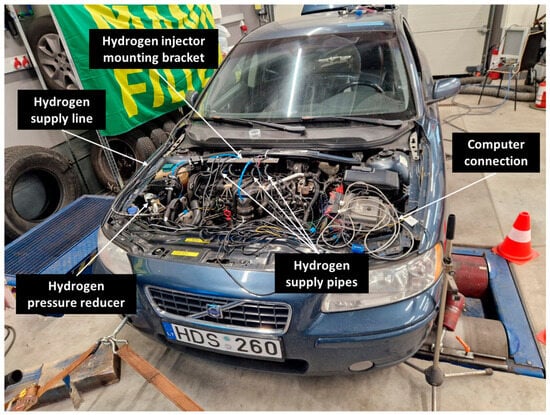
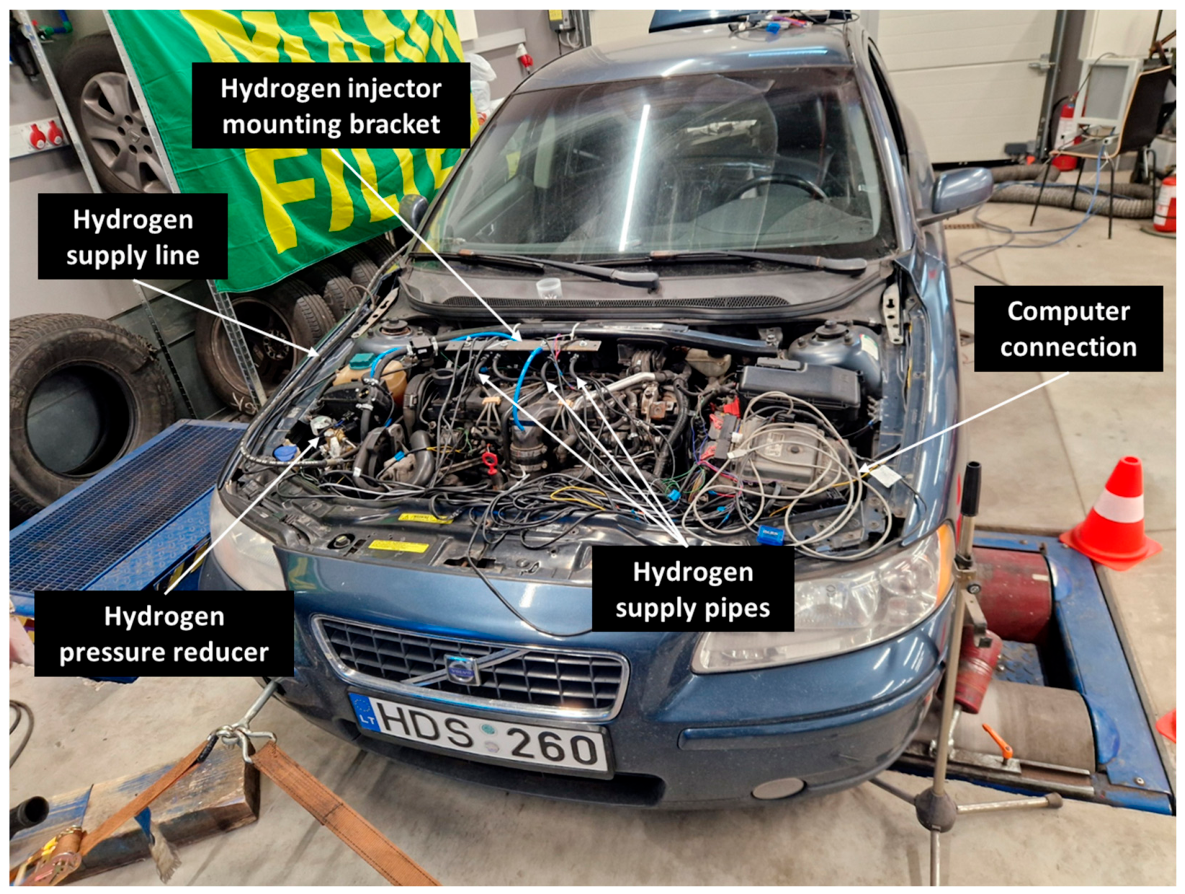
Hydrogen was stored in 200 bar cylinders located outside the laboratory building. The pressure was reduced before delivery to the injection system, with a maximum supply pressure of 4.0 bar and an operating injection pressure of approximately 1.2 bar. Hydrogen was supplied through five HANA H2003 (HANA EMS Co., Ltd., Hwaseong-si, Republic of Korea) gaseous-fuel injectors located downstream of the turbocharger, in the intake manifold as close to the intake valves as possible. Sequential hydrogen injection was controlled by an ALEX Idea (ALEX Sp. z o.o., Kleosin, Poland) programmable ECU and synchronized using the first-cylinder diesel injector signal. No additional intake-system modifications were made to prevent backfire. After back-fire occurred during the initial tests, the hydrogen flow rate was reduced and the engine operating limits were defined accordingly. Figure 1 shows a car equipped with a hydrogen supply system.
Figure 1.
Layout of the hydrogen supply and injection system installed in the engine compartment of the tested Volvo S60 passenger car.
Unlike spark ignition engines, CI diesel engines operate with heterogeneous air–fuel mixture formation and auto-ignition initiated by high compression temperatures. Hydrogen possesses significantly different physicochemical properties compared with diesel fuel, including high flame speed, wide flammability limits, low ignition energy, and carbon-free combustion characteristics. Since hydrogen was introduced in gaseous form into the intake manifold, it displaced part of the inducted air, which may influence volumetric efficiency and combustion characteristics.
During the experiments, the operating condition of the diesel particulate filter (DPF) was monitored using a Bosch KTS 560 (Robert Bosch GmbH, Plochingen, Germany) diagnostic system. Measurements were performed only when the DPF differential pressure/clogging-related parameter remained within a relatively narrow and stable range, indicating comparable DPF loading conditions between the test points. If active DPF regeneration was detected or initiated by the engine control unit, the test sequence was interrupted and the corresponding data were excluded from the analysis. Measurements were resumed only after the regeneration process had been completed and the engine and exhaust aftertreatment system had returned to stable steady-state operating conditions. This procedure was applied to minimize the influence of aftertreatment transients on tailpipe emission repeatability.
Engine operating parameters were monitored using a Bosch KTS 560 diagnostic system connected to the engine control unit. The recorded parameters included engine speed, engine coolant temperature, engine oil temperature, engine torque, intake air mass flow rate, intake air temperature, intake manifold pressure, lambda value, and the diesel injection-related parameters available through the standard diagnostic interface. These data were used to monitor the stability of each test point and to support the interpretation of changes in air supply, boost pressure, and excess-air ratio during hydrogen–diesel dual-fuel operation. However, the standard diagnostic system did not provide a complete crank-angle-resolved injection profile, including separate pilot, main, and post-injection timing, injection duration, injector needle lift, or high-frequency rail-pressure fluctuations. Therefore, detailed analysis of the diesel injection strategy was outside the scope of the present vehicle-level study.
Vehicle loading conditions were controlled using a MAHA LPS 3000 (MAHA Maschinenbau Haldenwang GmbH & Co. KG, Haldenwang, Germany) chassis dynamometer. The dynamometer enabled steady-state operation under controlled engine load conditions. The technical characteristics of the dynamometer are presented in Table 2.
Table 2.
Technical specifications of the MAHA LPS 3000 chassis dynamometer.
Diesel fuel consumption was measured using an electronic scale, while hydrogen consumption was determined using a Rheonik RHE08 (Rheonik Messtechnik GmbH, Odelzhausen, Germany) Coriolis mass flow meter (accuracy ± 0.10%; repeatability ± 0.05%). The hydrogen mass fraction in the total fuel energy supply was varied from 0% to 20% by mass.
Engine operating parameters were monitored using Bosch diagnostic equipment and onboard ECU data acquisition. Recorded parameters included engine speed, intake air mass flow rate, boost pressure, and intake air temperature. For this Volvo S60, the data acquisition rate is 2 Hz.
Exhaust gas emissions were measured downstream of the exhaust aftertreatment system using an AVL DiCom 4000 (AVL List GmbH, Graz, Austria) exhaust gas analyzer and a MAHA MDO2-LON (MAHA Maschinenbau Haldenwang GmbH & Co. KG, Haldenwang, Germany) diesel smoke opacity meter (Table 3). The AVL analyzers were used to measure concentrations of CO, CO2, HC, NOx, and excess air ratio λ. Smoke formation was determined with MAHA by measuring the exhaust smoke absorption coefficient, k [m−1].
Table 3.
Technical specifications of the AVL DiCom 4000 emission analyser and MAHA MDO2-LON diesel opacimeter (smoke only).
The experiments were conducted on a chassis dynamometer under steady-state operating conditions at a constant vehicle speed of 65 km/h, corresponding to an engine speed of 2600 rpm. Engine loading was controlled by applying different wheel braking forces, starting from a 500 N, given that a Volvo S60 travelling at 65 km/h encounters a driving resistance of approximately 400 N. Since the maximum traction force generated by this car is around 3000 N at the given speed, additional loads of 1000 N, 1500 N, and 2000 N were selected to represent driving scenarios such as overtaking, driving uphill, and towing a trailer. After accounting for power losses in the drivetrain and losses associated with tire rolling resistance, the applied braking forces were converted into the corresponding diesel engine brake powers of 20.0 kW, 29.1 kW, 38.1 kW, and 47.1 kW, respectively. The load was increased stepwise across the investigated operating range while maintaining thermally and operationally stable conditions at each measurement point. Under real-road steady-state driving conditions at 65 km/h, the power demand of the tested vehicle did not exceed 9 kW.
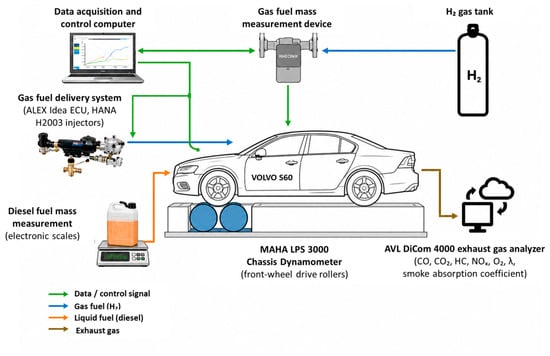
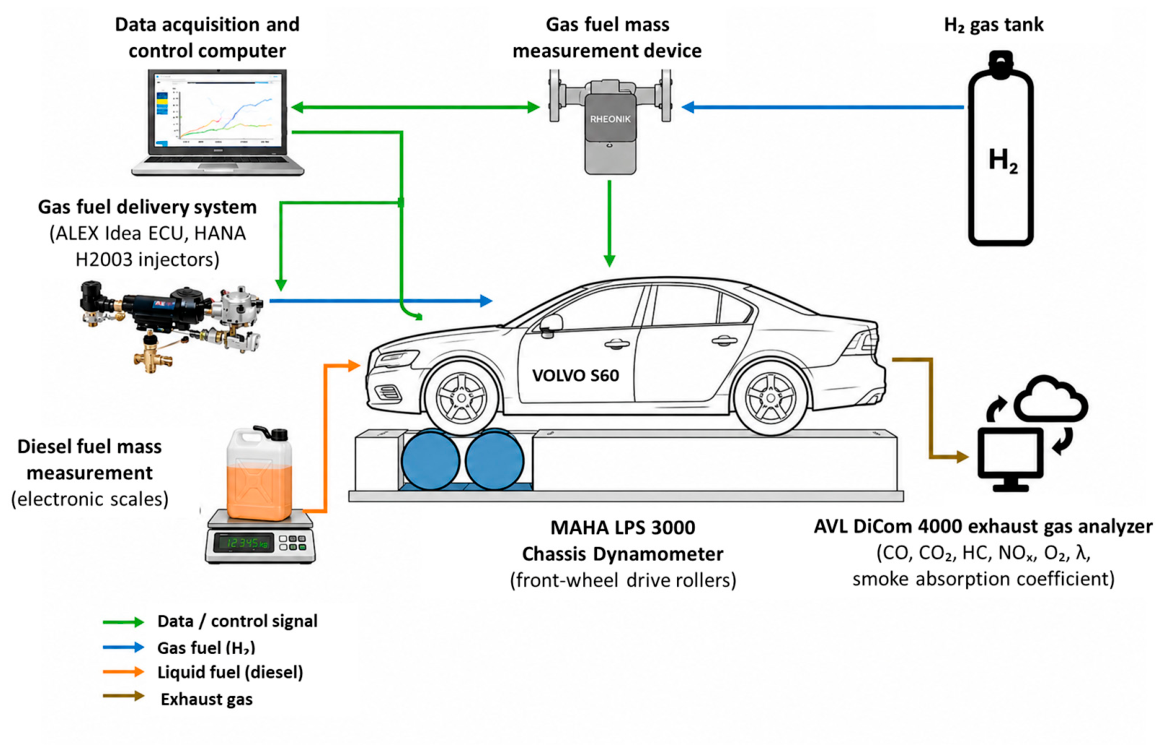
A schematic representation of the experimental setup is presented in Figure 2.
Figure 2.
Chassis dynamometer test scheme.
Engine load was expressed using a normalized load parameter—the brake mean effective pressure (BMEP), which represents the engine brake output normalized by its displacement, [MPa] [24]:
After conversion of the tested load points into BMEP, the corresponding values were 0.38 MPa, 0.54 MPa, 0.72 MPa, and 0.88 MPa.
For each load condition, the hydrogen supply to the intake air of the dual fuel engine was gradually increased. The hydrogen content, expressed as mass concentration [%] in the diesel–hydrogen dual-fuel, was increased until abnormal combustion began, as indicated by severe engine and vehicle vibration, jerking, sudden power loss, and clearly audible abnormal combustion or backfire noise. The original engine ECU calibration was not modified. A secondary ECU controlled only the hydrogen injectors and was synchronized using the first-cylinder diesel injector signal. Diesel injection timing and quantity, rail pressure, turbocharger operation, and EGR remained controlled by the original ECU. Diesel injection pressure and timing were not recorded separately. The selected vehicle speed and engine load were maintained by the driver and the chassis dynamometer. As the hydrogen supply increased, the original ECU automatically reduced the diesel injection quantity.
The brake thermal efficiency (BTE) of the engine was calculated as follows:
where BD and BH2—diesel-fuel mass and hydrogen mass flow rates, respectively [kg/h]; LHVm_D and LHVm_H2—lower heating values of diesel fuel and hydrogen on a mass basis, respectively [MJ/kg].
Before each measurement point, the engine was operated at the selected speed and load until thermally and operationally stable conditions were reached. Thermal stabilization was assessed based on engine coolant and engine oil temperature, while operational stabilization was evaluated from the stability of engine speed, intake air mass flow rate, boost pressure, diesel fuel consumption, hydrogen flow rate, and exhaust-gas emission readings. Measurements were started only after these parameters remained approximately constant for at least 3–5 min and no visible drift was observed. At every operating condition, fuel consumption, hydrogen consumption, engine operating parameters, and exhaust emissions were recorded. Each experimental point was repeated three times, and the presented results correspond to the average values of repeated measurements. Experimental variability was evaluated using the standard deviation (SD) calculated from the three repeated measurements. The values presented in the figures correspond to arithmetic means, while the error bars indicate ±1 standard deviation. The reported variability reflects both measurement repeatability and the uncertainty associated with the measuring instruments.
2.2. Fuels
The investigated fuel modes consisted of pure diesel operation and diesel–hydrogen dual-fuel operation with different hydrogen fractions. The main physicochemical properties of diesel fuel and hydrogen are summarized in Table 4.
Table 4.
Main properties of diesel fuel and hydrogen.
The tested operating points were selected to evaluate the influence of hydrogen addition on engine performance, brake thermal efficiency, fuel consumption, and exhaust emissions under different load conditions.
For calculating the energy performance indicators of dual fuel operation, the lower heating value of the diesel–H2 dual-fuel mixture was determined based on the mass fraction of each fuel component measured during the experiment. Taking into account the mass concentration of the fuel components, the stoichiometric air–fuel ratio of the dual-fuel was also calculated.
2.3. Calculation of Pollutant Emissions
In this study, the emissions of CO, HCs, NOx, and CO2, expressed in g/km, were approximately calculated based on the pollutant concentrations measured by the exhaust gas analyzer, the exhaust gas mass flow rate, and the vehicle speed [23,25]. The wet exhaust gas mass flow rate Bexh.wet was determined as follows, [kg/h]:
where Bair—the intake air mass flow rate [kg/h]; BD—the diesel fuel mass consumption [kg/h]; BH2—the hydrogen mass consumption [kg/h].
The dry exhaust gas mass flow rate Bexh.dry was calculated as follows, [kg/h]:
where Ha—absolute humidity of the intake air [g H2O/kg dry air]; wHD—mass fraction of elemental hydrogen in diesel fuel [kg H/kg diesel fuel].
The pollutant mass flow rate was calculated from the pollutant molar fraction, the exhaust-gas mass flow rate, and the ratio between the pollutant and exhaust-gas molar masses. Distance-specific emissions were subsequently obtained by normalizing the pollutant mass flow rate by vehicle speed [24,25,26].
For pollutants whose concentration in the exhaust gas was measured in percent, namely CO and CO2, the emission was calculated using the following equation:
where Ei—the emission of pollutant (i) [g/km]; Ci(%)—the concentration of the pollutant [%]; Mi—the molar mass of pollutant (i) [g/mol]; Mexh.dry—the molar mass of the dry exhaust gas mixture [g/mol]; v—the vehicle speed [km/h].
The mean molar mass of the dry exhaust-gas mixture was calculated separately for each operating point as follows:
where yi—molar fraction of exhaust-gas component (i), determined from the measure concentrations of the individual components, including O2, CO2, CO, HC, and NOx; Mi—molar mass of component (j) [g/mol]. .
The nitrogen molar fraction was determined by difference:
For pollutants whose concentration in the exhaust gas was measured in ppm, namely HC and NOx, the emission was calculated using the following equation:
where Ci(ppm)—the concentration of pollutant (i) [ppm].
Using this methodology, approximate distance-specific pollutant emissions were calculated in g/km to compare diesel and hydrogen–diesel dual-fuel operation under steady-state conditions at a constant vehicle speed of 65 km/h and different engine loads. These values are intended solely for comparative analysis of the investigated operating modes. They do not represent cycle-averaged type-approval emissions determined according to the Worldwide harmonized Light vehicles Test Cycle (WLTC) and therefore should not be interpreted as demonstrating compliance or non-compliance with the Euro 4 emission limits.
3. Results
This section presents the results of an experimental investigation of a dual-fuel diesel vehicle, with emphasis on combustible-mixture composition, energy performance, and environmental indicators.
3.1. Combustible Charge Formation
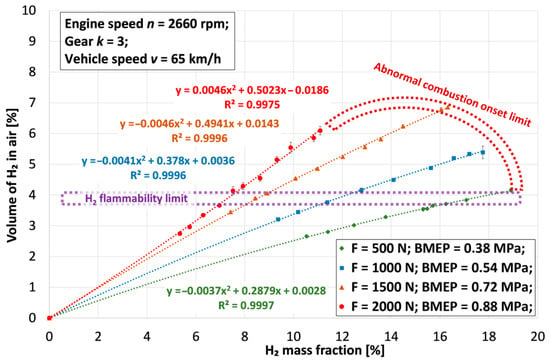
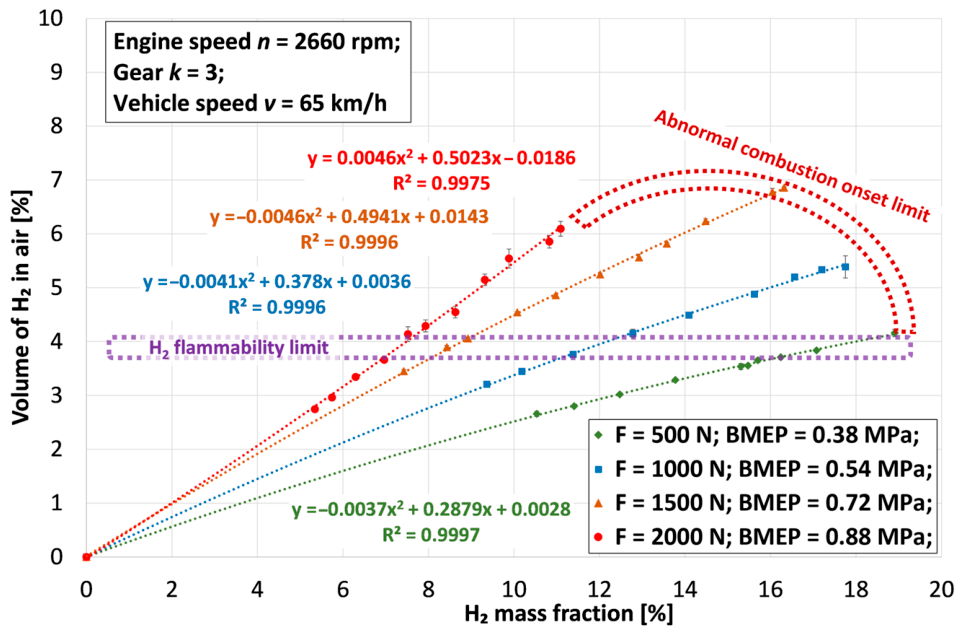
The composition and flammability characteristics of the combustible charge in a dual-fuel engine depend on the H2 mass fraction, the diesel-fuel quantity injected per cycle, and the excess-air ratio, with the latter two parameters varying with engine load. The volumetric concentration of hydrogen in the engine intake air increased more markedly at higher vehicle loads, as the mass of injected diesel fuel was greater under these conditions. The lower flammability limit of hydrogen in air, approximately 4 vol.%, was reached at H2 mass concentrations of 18.0%, 12.1%, 8.4% and 6.7%, when the engine was operated at loads of 0.38 MPa, 0.54 MPa, 0.72 MPa, and 0.88 MPa, respectively (Figure 3). In the cylinder of an operating engine, the flammability limit of H2 in air varies depending on pressure and temperature. However, it can be assumed approximately that, once the hydrogen concentration exceeds the indicated values at the corresponding loads, the flame front will propagate through the hydrogen–air mixture after the onset of initial diesel combustion. At higher loads and temperatures, hydrogen may also ignite before diesel combustion begins due to the elevated in-cylinder temperature. As engine load increased from 0.38 MPa to 0.88 MPa, abnormal combustion began at approximately 19%, 18%, 15%, and 11% H2 by mass in the diesel–hydrogen fuel mixture, corresponding to approximately 4.2%, 5.5%, 6.6%, and 6.3% H2 by volume in the intake air, respectively.
Figure 3.
Dependence of the volumetric hydrogen concentration in air on engine load and hydrogen concentration under dual-fuel operation.
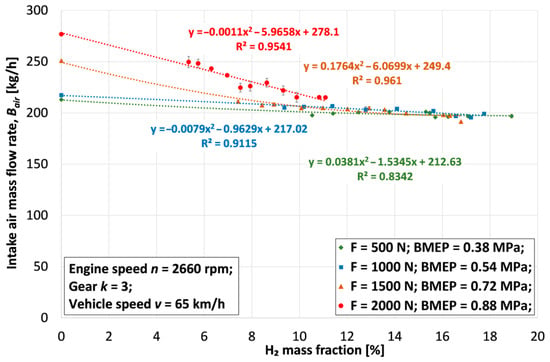
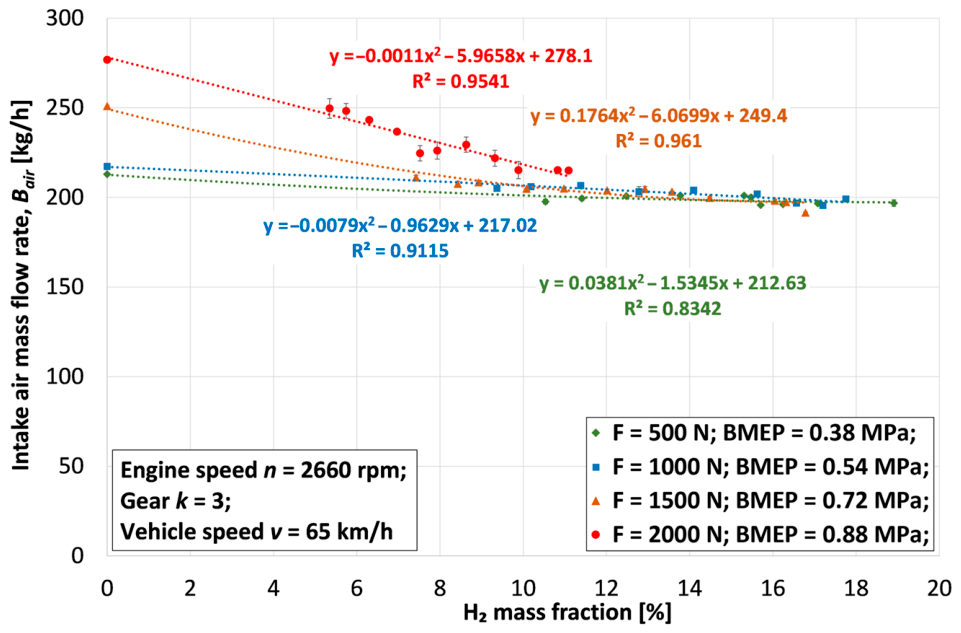
Increasing the H2 mass concentration in the dual fuel increased the volumetric concentration of H2 in the intake air and reduced the intake air mass flow rate (Bair). The most pronounced decrease in Bair was observed at a load of 0.88 MPa. When the H2 mass concentration in the dual fuel was increased from 0% to 10%, the intake air mass flow rate decreased from 277 kg/h to 218 kg/h, corresponding to a reduction of 21% (Figure 4). At the lower load of 0.38 MPa, the decrease in Bair was less pronounced. Increasing the H2 concentration from 0% to 10% reduced the intake air mass flow rate from 213 kg/h to 205 kg/h, corresponding to a decrease of 3.6%. When the H2 concentration was further increased to 19%, the intake air mass flow rate decreased to 199 kg/h, representing an overall reduction of 6.5%.
Figure 4.
Dependence of intake air flow rate on engine load and hydrogen concentration under dual-fuel operation.
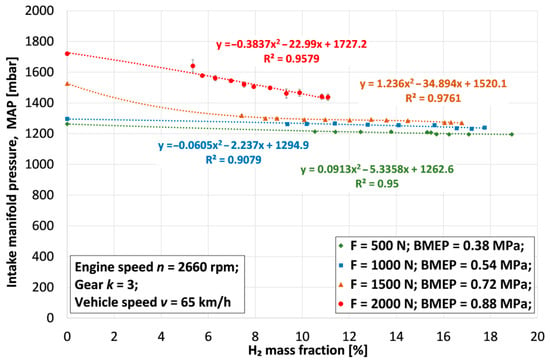
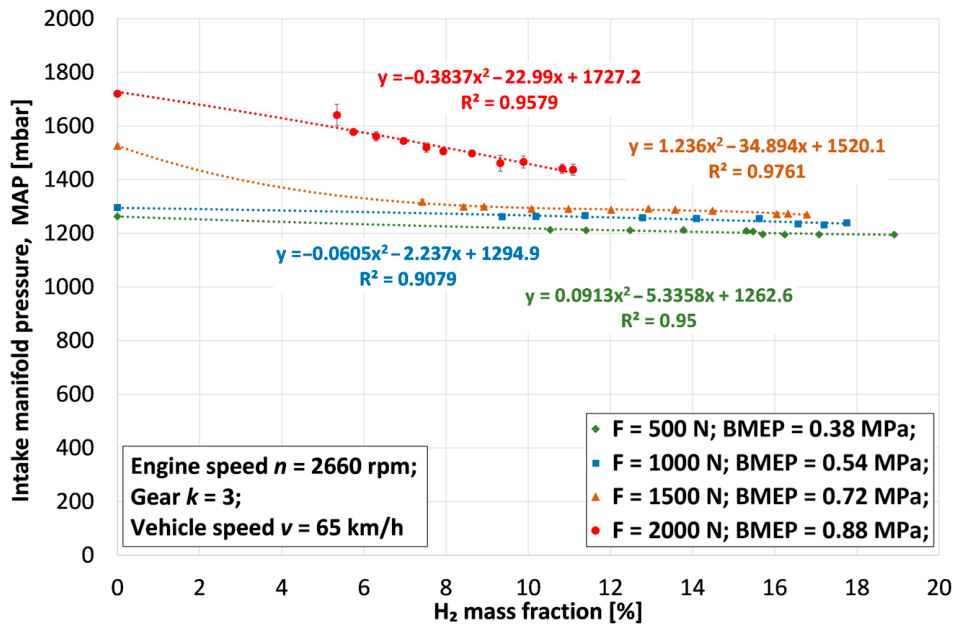
Hydrogen addition to the intake air also substantially reduced the pressure developed by the turbocharger, expressed as manifold absolute pressure (MAP). This parameter correlated with Bair (Figure 4 and Figure 5). As the intake air mass decreased, the exhaust gas mass flow rate also decreased, since the density and mass contribution of hydrogen are considerably lower than those of air. A further possible mechanism contributing to the decrease in MAP involves changes in combustion phasing associated with the higher flame propagation rate of hydrogen. Earlier and shorter combustion may allow a longer period for gas expansion before exhaust-valve opening, potentially reducing the exhaust-gas temperature and the enthalpy available to the turbine. Similar reductions in exhaust-gas temperature during hydrogen–diesel dual fuel operation have been reported in the literature [27,28,29]. However, because the exhaust-gas temperature, exhaust-manifold pressure and turbocharger speed were not measured in the present study, the contribution of this mechanism to the observed reduction in MAP could not be experimentally confirmed. At a load of 0.88 MPa, increasing the H2 mass concentration in the dual fuel from 0% to 10% reduced MAP from 1720 mbar to 1460 mbar, corresponding to a decrease of 15%. At the lower load of 0.38 MPa, the reduction in MAP was less pronounced. Increasing the H2 concentration from 0% to 10% decreased the intake manifold pressure from 1263 mbar to 1220 mbar, corresponding to a reduction of 3.4%. When the H2 concentration was further increased to 19%, MAP decreased to 1195 mbar, representing an overall reduction of 5.4%. The present results were obtained using the original engine and boost-control calibration. A dedicated hydrogen–diesel calibration with load-dependent control of boost pressure, hydrogen dosing, diesel injection, and EGR could help maintain the air supply and mitigate the adverse effects observed at higher loads. However, this requires further experimental investigation.
Figure 5.
Dependence of intake manifold pressure on engine load and hydrogen concentration under dual-fuel operation.
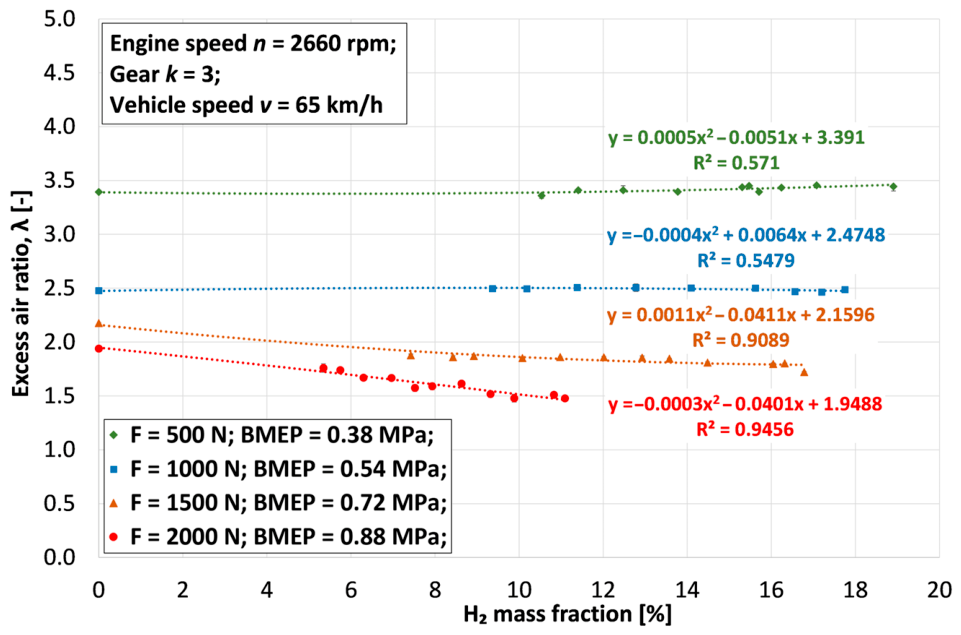
As the H2 mass concentration in the dual fuel increased, the excess-air ratio changed only slightly at lower loads of 0.38 MPa and 0.54 MPa, whereas it decreased at higher loads of 0.72 MPa and 0.88 MPa. This is because, at higher loads, the total amount of fuel supplied to the cylinder increases, including the mass of H2. Due to its low density and the relatively large volume, it occupies in the cylinder, hydrogen reduces the mass of air entering the cylinder. When analysing cylinder filling, it should also be considered that hydrogen combustion requires a higher amount of air [34.5 kg of air per 1 kg of H2] and that H2 has a higher lower heating value [120 MJ/kg]. The latter has the opposite effect, reducing the air demand because a lower total fuel mass is required.
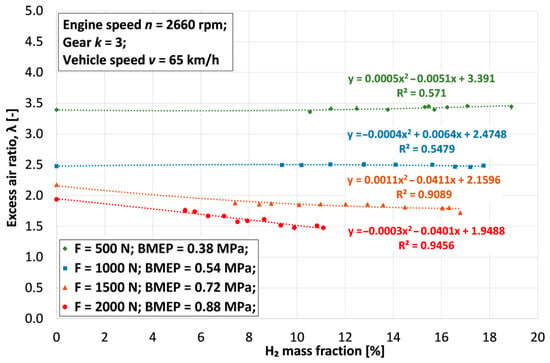
At a load of 0.88 MPa, increasing the H2 mass concentration in the dual fuel from 0% to 10% reduced the excess-air ratio, λ, from 1.94 to 1.51, corresponding to a decrease of 22% (Figure 6). At the lower load of 0.72 MPa, the reduction in λ was less pronounced. Increasing the H2 concentration from 0% to 10% decreased λ from 2.18 to 1.85, corresponding to a reduction of 15%. When the H2 concentration was further increased to 17%, λ decreased to 1.75, representing an overall reduction of 20%. When the load was reduced to 0.38 MPa and 0.54 MPa, the effective efficiency of the engine increased, which reduced fuel consumption. As a result, the excess-air ratio did not decrease with increasing H2 concentration up to 19%, until abnormal combustion phenomena were observed in the engine.
Figure 6.
Dependence of the excess-air ratio on engine load and hydrogen concentration under dual-fuel operation.
3.2. Energy Performance Indicators
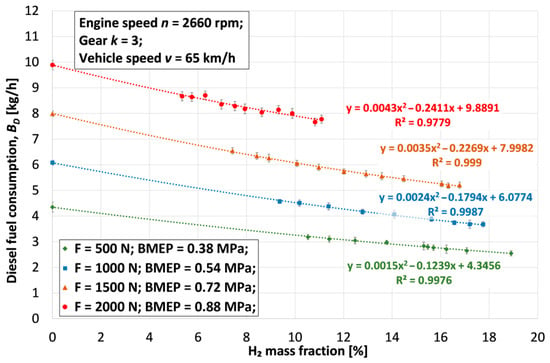
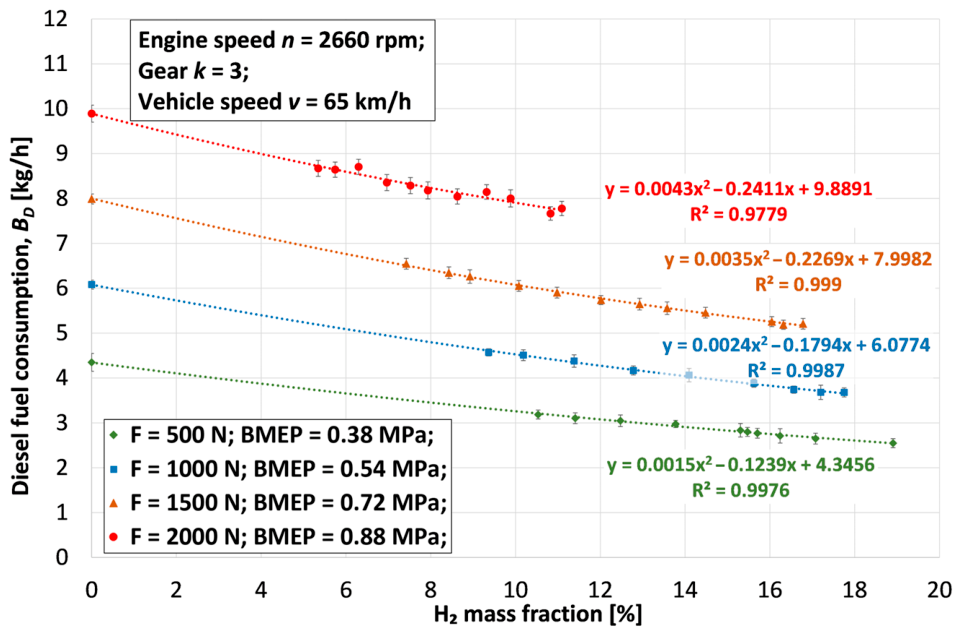
Due to the different lower heating values of diesel fuel and H2, it is not appropriate to evaluate their total mass consumption directly. Therefore, the changes in the mass consumption of each fuel were assessed separately as the hydrogen mass fraction was increased under different engine load conditions. Diesel fuel mass consumption, BD [kg/h], increased gradually from 4.35 kg/h to 9.89 kg/h, corresponding to an increase of approximately 2.27 times, as the engine load rose from 0.38 MPa to 0.88 MPa, corresponding to increases of approximately 2.32 times (Figure 7). The relative increase in fuel consumption was approximately 2.2% lower than the increase in load, owing to an approximately 3% improvement in engine brake thermal efficiency as BMEP increased from 0.38 to 0.88 MPa. Diesel fuel consumption decreased in proportion to the increasing energy share of H2 in the fuel mixture. This energy share increased more rapidly than the H2 mass concentration because the lower heating value of hydrogen was approximately 2.82 times higher than that of diesel fuel (Table 3). Changes in BTE resulting from hydrogen addition also contributed to this behaviour. When H2 mass concentration of 10% was reached at loads ranging from 0.38 MPa to 0.88 MPa, diesel fuel consumption decreased to approximately 3.25 kg/h and 7.90 kg/h, respectively, corresponding to reductions of 20% and 25% relative to diesel-only operation. At the 0.38 MPa load, increasing the H2 concentration to 19% further reduced diesel fuel mass consumption to 2.55 kg/h, representing a 41% decrease compared with diesel-only operation.
Figure 7.
Dependence of diesel fuel consumption on engine load and hydrogen concentration under dual-fuel operation.
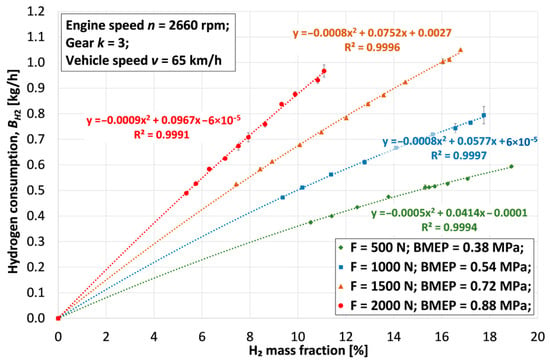
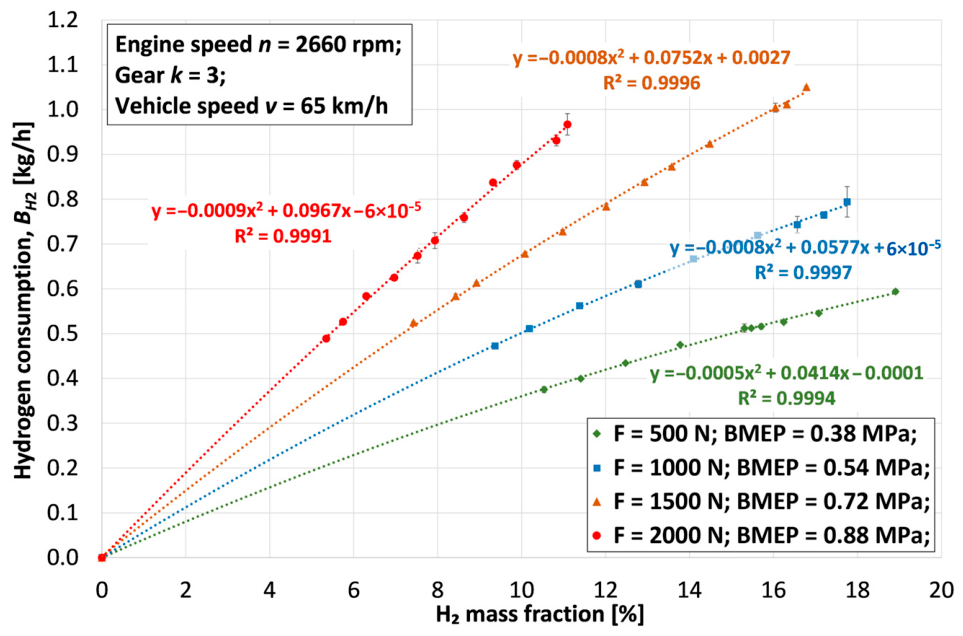
The mass consumption of hydrogen supplied to the engine, BH2 [kg/h], depended directly on both the H2 concentration in the dual fuel and the engine load. At a H2 mass concentration of 10% in the dual fuel, hydrogen consumption was approximately 0.36 kg/h and 0.88 kg/h at loads of 0.38 MPa and 0.88 MPa, respectively. At the 0.38 MPa load, increasing the H2 concentration to 19% raised hydrogen consumption to 0.59 kg/h. This represents increased 1.64 time compared with the case of 10% H2, although the H2 concentration in the dual fuel increased by a factor of 1.9 (Figure 8). This indicates that, under this load condition, increasing the H2 concentration improves the BTE of the engine.
Figure 8.
Dependence of hydrogen consumption on engine load and hydrogen concentration under dual-fuel operation.
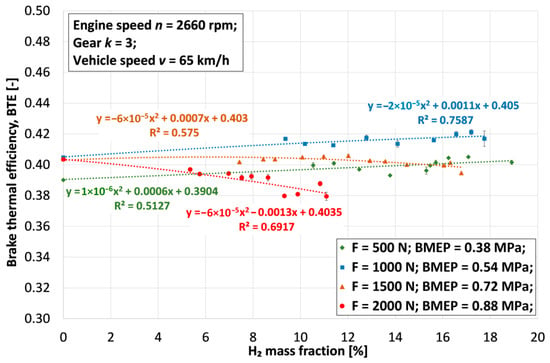
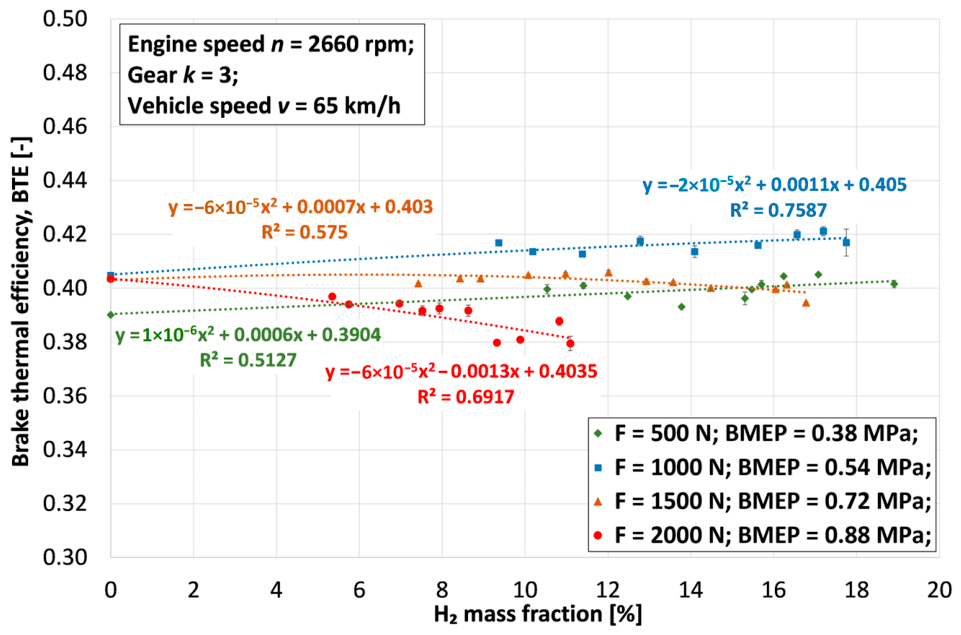
The BTE of the dual-fuel diesel engine was calculated by jointly considering the mass consumption rates of diesel fuel and hydrogen, together with the lower heating values of both fuels, under different vehicle load conditions. When the engine operated on diesel fuel without hydrogen addition, the lowest brake thermal efficiency, BTE = 0.390, was obtained at a load of 0.38 MPa (Figure 9). When the load was increased to 0.54 MPa, 0.72 MPa, and 0.88 MPa, BTE increased slightly to 0.403–0.405. This improvement can be attributed to more efficient combustion and an increase in the mechanical efficiency of the engine at higher loads.
Figure 9.
Dependence of engine thermal efficiency on engine load and hydrogen concentration under dual-fuel operation.
As the H2 mass concentration increased, the engine BTE exhibited different trends depending on the engine load. At lower loads of 0.38 MPa and 0.54 MPa, hydrogen addition increased BTE, whereas at higher loads of 0.72 MPa and 0.88 MPa, it reduced BTE. This behaviour can be attributed to changes in the combustion-quality balance caused by hydrogen addition. On the one hand, H2 can promote more complete diesel combustion; on the other hand, due to its low density and relatively large occupied volume in the cylinder, it reduces the amount of air available for diesel combustion, thereby deteriorating the combustion process.
At a H2 mass concentration of 10%, BTE increased to approximately 0.397 and 0.414 at loads of 0.38 MPa and 0.54 MPa, respectively, corresponding to increases of 1.8% and 2.0%. In contrast, at a load of 0.88 MPa, BTE decreased to 0.384, representing a 4.9% reduction compared with operation without hydrogen addition. The decrease in engine BTE caused by hydrogen addition at higher loads of 0.72–0.88 MPa was mainly related to the reduced air mass in the cylinder. Under these conditions, a considerable part of the cylinder volume was occupied by low-density hydrogen, and the excess-air ratio decreased from 2.2–1.94 to 1.7–1.5 (Figure 5). The reduced air availability deteriorated diesel combustion quality and decreased overall fuel combustion efficiency.
3.3. Environmental Indicators
Pollutant emissions [g/km] were calculated by taking into account the concentration of individual pollutants in the exhaust gas flow, the exhaust gas mass flow rate, and the vehicle driving speed. It should be noted that the vehicle was equipped with a functioning exhaust after-treatment system, including an oxidation–reduction catalytic converter and a particulate filter, which significantly reduced pollutant emissions.
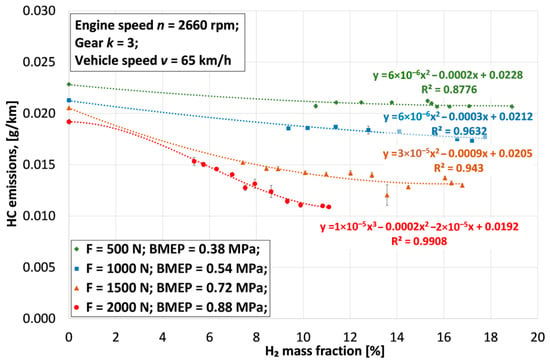
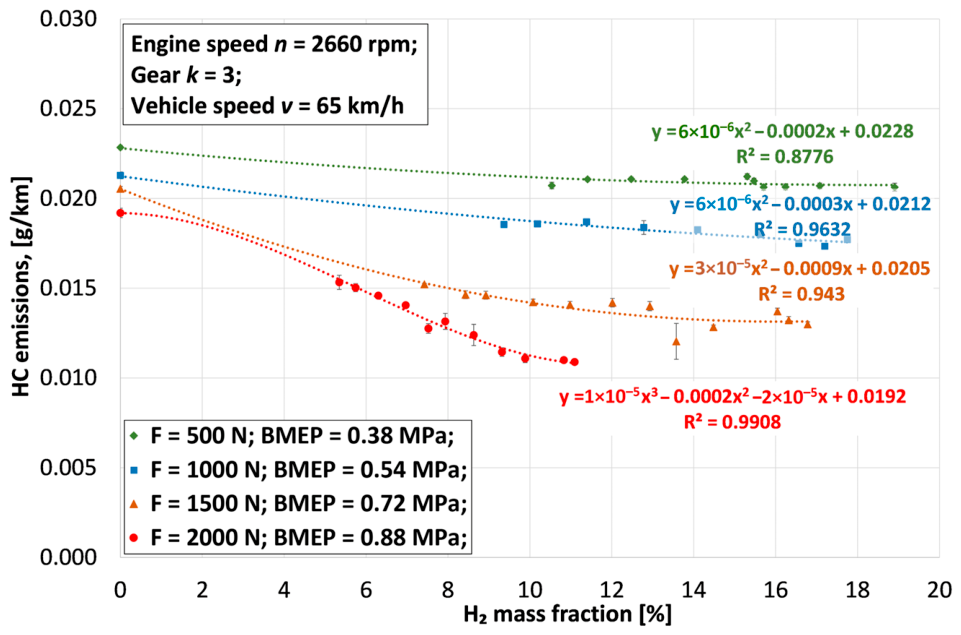
When the engine load was increased from 0.38 MPa to 0.88 MPa without H2 addition, unburned HC emissions decreased from 0.0239 g/km to 0.0192 g/km, corresponding to a reduction of 20%, mainly due to the increased combustion temperature (Figure 10). HC emissions decreased further as the energy share of H2 in the dual fuel increased, since hydrogen addition increased the combustion rate and temperature. At a H2 mass concentration of 10%, HC emissions decreased to approximately 0.0212 g/km and 0.0124 g/km at loads of 0.38 MPa and 0.88 MPa, respectively, corresponding to reductions of 11% and 35%. At the 0.38 MPa load, increasing the H2 concentration to 19% further reduced HC emissions to 0.0208 g/km, representing a 13% decrease compared with operation without H2 addition. At the 0.88 MPa load, H2 addition was more effective in reducing HC emissions because combustion occurred at a higher temperature under these conditions.
Figure 10.
Dependence of hydrocarbon emissions on engine load and hydrogen concentration under dual-fuel operation.
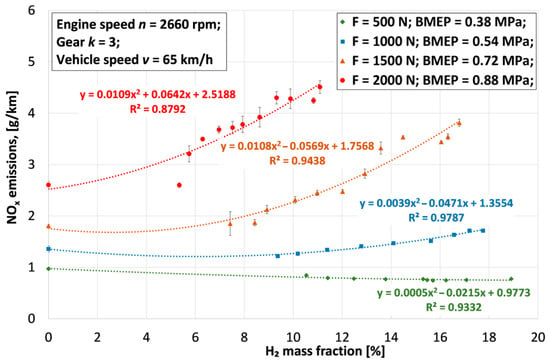
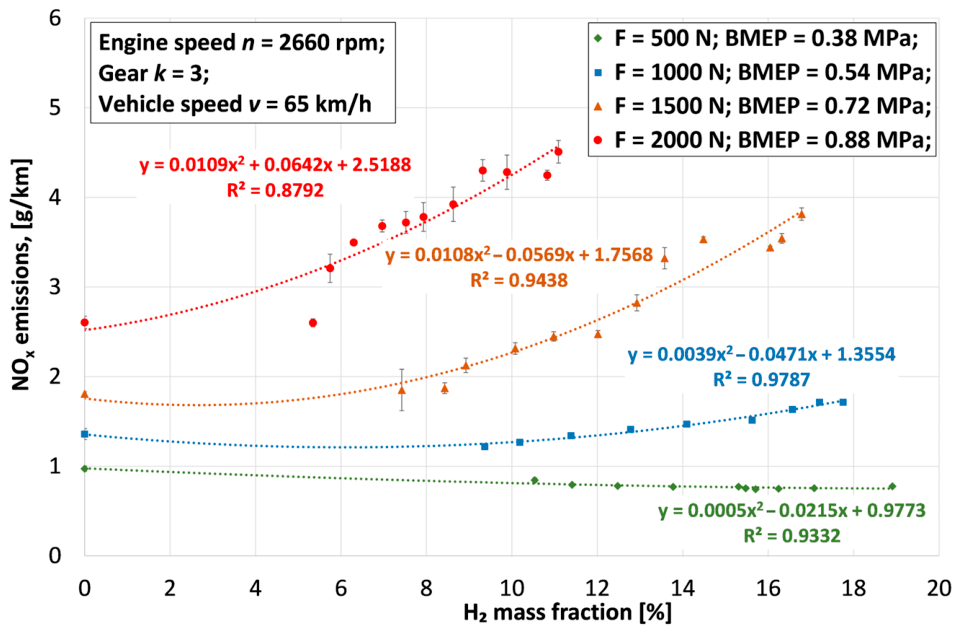
As the engine load increased from 0.38 MPa to 0.88 MPa without H2 addition, NOx emissions, which are formed under high combustion-temperature conditions, increased from 0.97 g/km to 2.60 g/km, corresponding to a 168% increase (Figure 11). The formation of thermal NOx in diesel engines is strongly governed by local peak temperature, oxygen availability, and the residence time of the burned gases at high temperature [30,31]. The variation in NOx emissions with H2 addition depended on the engine load. At a load of 0.38 MPa, reaching a H2 mass concentration of 10% reduced NOx emissions to 0.82 g/km, corresponding to a decrease of 15%. At a H2 concentration of 19%, NOx emissions decreased further to 0.78 g/km, representing a 20% reduction compared with operation without H2 addition. At BMEP values of 0.54, 0.72, and 0.88 MPa, relatively low H2 mass fractions, up to approximately 12%, 8%, and 5%, respectively, did not result in a measurable increase in NOx emissions. This trend suggests that, under these conditions, hydrogen addition did not cause a sufficiently large change in local peak temperature or high-temperature residence time to intensify thermal NOx formation. Similar reductions at low and medium engine loads have been attributed to the lower pilot-diesel quantity, a reduced contribution of diesel fuel to the premixed combustion phase, and a limited increase in local peak temperature. The displacement of part of the intake air by gaseous hydrogen may additionally reduce the oxygen available for thermal NOx formation. Overall, the measured NOx response suggests that, at lower engine loads and while the H2 concentration in the intake air remained below its approximate lower flammability limit (Figure 3), any potential increase in combustion temperature caused by H2 addition was either insufficient to intensify thermal NOx formation or was offset by the effects of the reduced diesel-fuel quantity, changes in combustion phasing, and reduced oxygen availability. However, because in-cylinder pressure and temperature were not measured, these mechanisms are presented as literature-supported interpretations of the observed emission trends [4,32,33]. After the H2 concentration exceeded the flammability limit, NOx emissions increased markedly. This increase may be attributed to the higher flame propagation velocity of hydrogen and the resulting intensification of premixed heat release, which increased the in-cylinder temperature and prolonged the duration of high-temperature conditions, thereby promoting thermal NOx formation. Similar increases in NOx emissions, peak cylinder pressure, heat-release rate, and combustion temperature with increasing hydrogen addition have been reported in previous experimental studies [27,34,35,36]. Increasing the H2 concentration from 0% to 10% at loads of 0.72 MPa and 0.88 MPa increased NOx emissions from 1.81 g/km to 2.28 g/km and from 2.60 g/km to 4.27 g/km, corresponding to increases of 26% and 64%, respectively. Further increases in H2 concentration at higher loads resulted in a pronounced rise in NOx emissions.
Figure 11.
Dependence of nitrogen oxide emissions on engine load and hydrogen concentration under dual-fuel operation.
For contextual purposes, the calculated distance-specific emissions may be considered alongside the numerical Euro 4 limits. However, these values cannot be used for a direct regulatory comparison or compliance assessment because the measurements were obtained at individual steady-state operating points rather than over WLTC. Under all investigated load conditions, NOx emissions during operation without H2 addition exceeded the Euro 4 limit of 0.25 g/km. At the highest investigated load, BMEP = 0.88 MPa, the NOx exceedance reached approximately 10 times the regulatory limit. This can be explained by the fact that, under this operating condition and at an engine speed of approximately 2660 rpm, the engine developed about 47 kW of power. This output was more than five times higher than the power required for the Volvo S60 passenger car to maintain a speed of 65 km/h under the test conditions. During a standardized light-duty vehicle emission test cycle, similar engine load levels are typically reached only during intensive acceleration phases. Therefore, the distance-specific emissions obtained under the present steady-state conditions are not methodologically equivalent to the cycle-averaged emissions determined over a complete WLTC. A comparison of NOx and HC emissions showed that NOx emissions, expressed in g/km, were approximately two orders of magnitude higher than HC emissions. Therefore, at medium and high loads, the increase in NOx emissions caused by increasing the H2 concentration up to 10–11% could not be compensated for by the simultaneous reduction in HC emissions. As a result, the combined NOx + HC emissions increased with increasing H2 concentration under these operating conditions. After reducing the engine load to BMEP = 0.38 MPa, corresponding to approximately 20 kW, it was observed that the H2 mass concentration in the dual fuel could be increased up to 19% without abnormal combustion. Over the entire investigated H2 concentration range at this load, both NOx and HC emissions decreased. This indicates that, at lower engine loads, the use of higher H2 concentrations, approximately 15–19%, may be rational for reducing combined NOx + HC emissions, provided that the abnormal combustion onset limit is not reached.
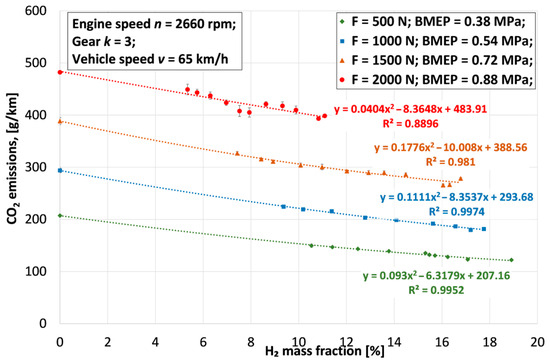
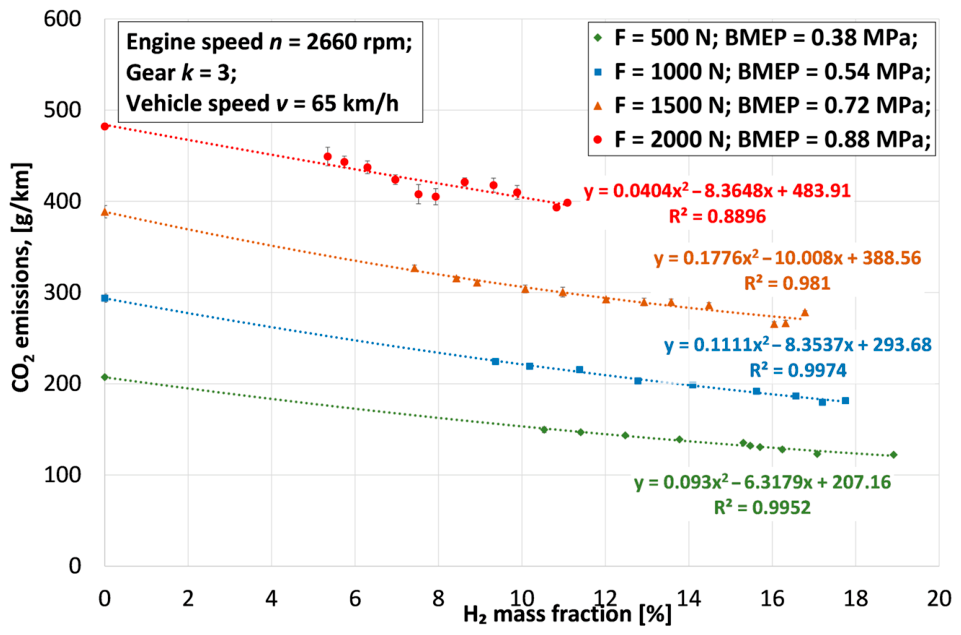
Carbon dioxide (CO2) emissions depend directly on fuel consumption, the carbon-to-hydrogen (C/H) ratio of the fuel, and combustion quality. CO2 emissions are additionally affected by the oxidation after-treatment catalyst, which oxidizes incomplete combustion products such as CO and HCs. With an increase in engine load from 0.38 MPa to 0.88 MPa, corresponding to an increase of approximately 2.32 times, CO2 emissions gradually increased from 207 g/km to 482 g/km, or approximately 2.33 times (Figure 12). This increase was mainly associated with the 2.28 times increase in fuel consumption (Figure 6). CO2 emissions decreased in correlation with the increasing H2 mass fraction in the dual fuel, as the C/H ratio decreased and hydrogen addition substantially reduced the carbon mass fraction in the fuel. At a H2 mass concentration of 10% and loads ranging from 0.38 MPa to 0.88 MPa, CO2 emissions decreased to 155 g/km and 405 g/km, respectively, corresponding to reductions of 21% and 17%. At the 0.38 MPa load, increasing the H2 concentration to 19% reduced CO2 emissions to 118 g/km, representing a 40% decrease compared with operation without H2 addition. Under lower-load conditions of 0.38 MPa and 0.54 MPa, the relative decrease in CO2 emissions correlated with the reduction in diesel fuel mass consumption as the H2 concentration increased. However, at a load of 0.88 MPa, CO2 emissions decreased less intensively than diesel fuel consumption, because abnormal combustion phenomena associated with increasing H2 concentration reduced the BTE of the engine.
Figure 12.
Dependence of carbon dioxide emissions on engine load and hydrogen concentration under dual-fuel operation.
The European Commission target value of 140 g/km for average passenger car CO2 emissions was exceeded over the entire investigated load range during operation without H2 addition. This was mainly due to the elevated engine loads applied in the experiment, which resulted in higher fuel consumption. At a load of 0.38 MPa, reducing the carbon content of the fuel by increasing the H2 concentration above 12% and approaching the abnormal combustion onset limit at 19% decreased CO2 emissions, expressed in g/km, below the European Commission target value. At the higher investigated loads, CO2 emissions also decreased with increasing H2 concentration up to the abnormal combustion onset limit; however, only at BMEP = 0.54 MPa did the CO2 emissions approach the target value.
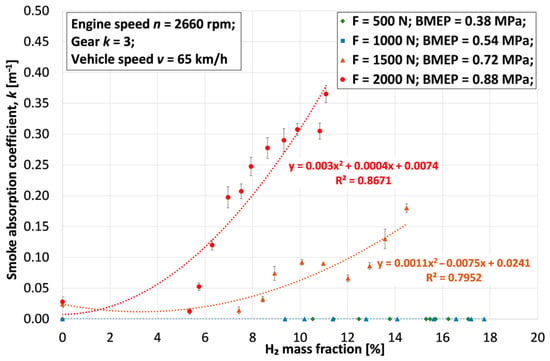
Diesel engine exhaust smoke formation, expressed by the exhaust smoke absorption coefficient, k [m−1], is directly related to fuel composition and combustion quality, which are governed by various factors, including the excess-air ratio, diesel fuel atomization quality, combustible-mixture swirl, the formation of fuel-rich mixture zones, combustion temperature, and other parameters. In the present study, the excess-air ratio decreased with increasing engine load, thereby promoting smoke formation. During diesel-only operation, the exhaust smoke absorption coefficient, k, increased from 0 m−1 at loads of 0.38 MPa and 0.54 MPa to 0.025 m−1 and 0.030 m−1 at loads of 0.72 MPa and 0.88 MPa, respectively (Figure 13). At loads of 0.38 MPa and 0.54 MPa, increasing the H2 additive mass concentration up to the maximum tested limit did not affect the exhaust smoke absorption coefficient, which remained at 0 m−1. This was due to the sufficiently high excess-air ratio maintained under these conditions, λ = 2.5–3.5, limited the formation of locally fuel-rich regions and provided sufficient oxygen for the oxidation of soot precursors and soot particles. In addition, because the hydrogen concentration did not reach the flammability limit, H2 burned after diffusing and mixing with burning diesel droplets throughout the combustion chamber volume. The diesel particulate filter installed in the tested vehicle also substantially reduced the amount of particulate matter reaching the tailpipe and therefore contributed to the very low measured smoke levels.
Figure 13.
Dependence of the exhaust smoke absorption coefficient k, on engine load and hydrogen concentration under dual-fuel operation.
At loads of 0.72 MPa and 0.88 MPa, the exhaust smoke absorption coefficient increased with progressively greater intensity as the H2 additive concentration increased. Increasing the H2 mass concentration to 10% raised the exhaust smoke absorption coefficient to 0.07 m−1 and 0.31 m−1, respectively, which was approximately 2.5 and 10 times higher than in the diesel-only case. With a further increase in H2 concentration, the exhaust smoke absorption coefficient increased more sharply, reaching 0.14 m−1 at a H2 concentration of 14% under the 0.72 MPa load and 0.38 m−1 at a H2 concentration of 11% under the 0.88 MPa load. Similar increases in black carbon and particulate emissions during hydrogen–diesel dual-fuel operation have been reported under high-load or non-optimized air-path conditions. These trends have been associated with reduced boost pressure, lower in-cylinder oxygen availability, deteriorated oxidation conditions within diesel-spray regions, and reduced late-cycle soot oxidation [15,37,38,39]. This confirms that the increase in smoke observed in the present study was most likely caused not by hydrogen acting directly as a soot precursor, since hydrogen contains no carbon, but by the reduced availability of oxygen in locally fuel-rich diesel-spray regions and the resulting suppression of soot oxidation.
The pronounced increase in the exhaust smoke absorption coefficient with increasing H2 mass concentration in the dual fuel at medium and high engine loads can be explained by the simultaneous reductions in excess air and the amount of oxygen available for diesel-fuel combustion. At BMEP = 0.88 MPa, increasing the H2 mass fraction from 0% to 10% reduced the intake-air mass flow by 21%, MAP by 15%, and the excess-air ratio from 1.94 to 1.51. Two mechanisms probably contributed to this trend. First, hydrogen occupies a larger fraction of the cylinder volume, thereby displacing part of the intake air. Second, once the hydrogen concentration in the intake air approached or exceeded its approximate lower flammability limit, hydrogen combustion consumed part of the available oxygen, leaving less oxygen for the combustion of locally fuel-rich diesel-spray regions and for the subsequent oxidation of the soot formed.
4. Conclusions
- The study showed that hydrogen injection into the intake manifold of a dual-fuel diesel engine had a clearly expressed load-dependent effect. At lower loads, H2 addition improved the combustion process, increased BTE, and reduced pollutant emissions. However, at higher loads, its positive effect was limited by the decreasing air mass in the cylinder, which deteriorated diesel combustion quality. As the H2 mass concentration in the diesel–hydrogen dual fuel increased, the volumetric hydrogen concentration in the intake air increased markedly, while the turbocharger boost pressure decreased. These two effects jointly reduced the mass of air entering the cylinder.
- The monitored ECU diagnostic parameters indicated a clear change in engine operating conditions when the hydrogen concentration in the intake air approached and exceeded the estimated lower flammability limit of approximately 4 vol.% under the present test conditions. Below this limit, hydrogen addition mainly contributed to the diesel-controlled combustion process. After this limit was exceeded, the hydrogen–air mixture could participate more actively in rapid premixed combustion. As a result, part of the oxygen was consumed by hydrogen combustion, while the excess air available for diesel droplet combustion decreased not only because of the volume occupied by H2, but also because of the oxygen consumed during H2 oxidation. This interpretation is supported by the observed changes in intake air mass flow rate, intake manifold pressure, lambda value, emissions, and smoke formation; however, detailed confirmation of the in-cylinder combustion mechanism would require crank-angle-resolved cylinder-pressure measurements.
- Hydrogen addition increased the BTE of the engine at lower loads; however, at higher loads, especially above 0.72 MPa, the efficiency decreased. This indicated that the positive effect of hydrogen on combustion rate and combustion completeness was suppressed by the reduced air mass in the cylinder and less favourable conditions for diesel combustion.
- The analysis of environmental indicators revealed different load-dependent trends. CO2 and HC emissions decreased with increasing H2 concentration because the carbon fraction in the dual fuel was reduced and combustion was intensified. However, after the assumed H2 flammability limit had been reached, the exhaust smoke absorption coefficient increased, especially at medium and high loads, due to the reduced excess-air ratio and deteriorated diesel combustion quality. At low load, increasing the H2 concentration reduced NOx emissions, whereas at medium and high loads NOx emissions increased significantly after the H2 concentration exceeded the flammability limit. However, at low load conditions, up to approximately 0.38 MPa, increasing the H2 concentration up to the abnormal combustion onset limit reduced the combined NOx + HC emissions, indicating a favourable emission trend under low-load operation.
- At a low load of approximately 0.38 MPa, abnormal combustion was recorded after the H2 mass concentration had reached about 19%, corresponding to approximately 4.2% H2 by volume in the intake air. However, as the load increased to approximately 0.88 MPa, abnormal combustion occurred at a H2 mass concentration of about 11%, corresponding to approximately 6.3% H2 by volume in the intake air. The observed unstable engine operation and abnormal combustion phenomena confirmed that excessive H2 addition, particularly at higher loads, caused undesirably rapid combustion and irregular pressure fluctuations. These findings indicated the need to limit the H2 concentration and to apply appropriate engine-control adjustments to ensure safe and efficient operation of a diesel–hydrogen dual-fuel engine.
In summary, hydrogen addition into the intake manifold of a turbocharged diesel engine was energetically and environmentally most effective at low and medium loads, before the hydrogen flammability limit and abnormal combustion onset limit had been reached. Under these conditions, diesel fuel consumption, CO2 emissions, HC emissions, and, in some cases, NOx emissions decreased. Therefore, practical application of hydrogen–diesel dual-fuel operation requires load-sensitive H2 dosing control, taking into account combustion stability, Euro emission constraints for NOx + HC, and CO2 emission targets.
Author Contributions
Conceptualization, A.R. and S.P.; methodology, A.R. and S.P.; software, S.P. and D.K.; validation, S.P., G.M., S.S. and D.K.; formal analysis, A.R., S.P. and G.M.; investigation, S.P., G.M., S.S. and D.K.; resources, S.P. and G.M.; data curation, A.R. and S.P.; writing—original draft preparation, A.R., S.S. and D.K.; writing—review and editing, A.R., S.S. and D.K.; visualization, A.R. and S.S.; supervision, S.P. All authors have read and agreed to the published version of the manuscript.
Funding
This research received no external funding.
Institutional Review Board Statement
Not applicable.
Informed Consent Statement
Not applicable.
Data Availability Statement
The data presented in this study are available on request from the corresponding author.
Conflicts of Interest
The authors declare no conflicts of interest.
Abbreviations
The following abbreviations are used in this manuscript:
| A/F | Air–fuel ratio |
| Bair | Intake air mass flow rate |
| BD | Diesel fuel mass consumption |
| Bexh.dry | Dry exhaust gas mass flow rate |
| BH2 | Hydrogen mass consumption |
| BMEP | Brake mean effective pressure |
| BSFC | Brake-specific fuel consumption |
| BTE | Brake thermal efficiency |
| C/H | Carbon-to-hydrogen ratio |
| CI | Compression ignition |
| Ci | Concentration of pollutant |
| CO | Carbon monoxide |
| CO2 | Carbon dioxide |
| ECU | Electronic control unit |
| EGR | Exhaust gas recirculation |
| Ei | Emission of pollutant |
| H2 | Hydrogen |
| HC | Hydrocarbon |
| k | Exhaust smoke absorption coefficient |
| LHVm | Lower heating value on a mass basis |
| LHVV | Lower heating value on a volume basis |
| MAP | Manifold absolute pressure |
| Mexh.dry | Molar mass of the dry exhaust gas mixture |
| Mi | Molar mass of pollutant |
| n | Engine speed |
| NOx | Nitrogen oxides |
| O2 | Oxygen |
| WLTC | Worldwide harmonized light vehicles test cycle |
| λ | Excess-air ratio |
References
- Akhtar, M.U.S.; Asfand, F.; Khan, M.I.; Mishra, R.; Ball, A.D. Performance and Emissions Characteristics of Hydrogen-Diesel Dual-Fuel Combustion for Heavy-Duty Engines. Int. J. Hydrogen Energy 2025, 143, 454–467. [Google Scholar] [CrossRef] [Scilit]
- Scrignoli, F.; Pisapia, A.M.; Savioli, T.; Mancaruso, E.; Mattarelli, E.; Rinaldini, C.A. Exploring Hydrogen–Diesel Dual Fuel Combustion in a Light-Duty Engine: A Numerical Investigation. Energies 2024, 17, 5761. [Google Scholar] [CrossRef] [Scilit]
- Chintala, V.; Subramanian, K.A. A Comprehensive Review on Utilization of Hydrogen in a Compression Ignition Engine under Dual Fuel Mode. Renew. Sustain. Energy Rev. 2017, 70, 472–491. [Google Scholar] [CrossRef] [Scilit]
- Dimitriou, P.; Kumar, M.; Tsujimura, T.; Suzuki, Y. Combustion and Emission Characteristics of a Hydrogen-Diesel Dual-Fuel Engine. Int. J. Hydrogen Energy 2018, 43, 13605–13617. [Google Scholar] [CrossRef] [Scilit]
- Gültekin, N.; Gülcan, H.E.; Ciniviz, M. Investigation of the Effects of Hydrogen Energy Ratio and Valve Lift Amount on Performance and Emissions in a Hydrogen-Diesel Dual-Fuel Compression Ignition Engine. Int. J. Hydrogen Energy 2024, 49, 352–366. [Google Scholar] [CrossRef] [Scilit]
- Liu, X.; Seberry, G.; Kook, S.; Chan, Q.N.; Hawkes, E.R. Direct Injection of Hydrogen Main Fuel and Diesel Pilot Fuel in a Retrofitted Single-Cylinder Compression Ignition Engine. Int. J. Hydrogen Energy 2022, 47, 35864–35876. [Google Scholar] [CrossRef] [Scilit]
- Farzam, R.; McTaggart-Cowan, G. Hydrogen-Diesel Dual-Fuel Combustion Sensitivity to Fuel Injection Parameters in a Multi-Cylinder Compression-Ignition Engine. Int. J. Hydrogen Energy 2024, 49, 850–867. [Google Scholar] [CrossRef] [Scilit]
- Tutak, W.; Jamrozik, A. Analysis of the Application of Ammonia as a Fuel for a Compression-Ignition Engine. Energies 2025, 18, 3217. [Google Scholar] [CrossRef] [Scilit]
- Jamrozik, A.; Tutak, W. The Impact of Ammonia and Hydrogen Additives on the Combustion Characteristics, Performance, Stability and Emissions of an Industrial DF Diesel Engine. Appl. Therm. Eng. 2024, 257, 124189. [Google Scholar] [CrossRef] [Scilit]
- Serrano, J.; Jiménez-Espadafor, F.J.; López, A. Analysis of the Effect of Different Hydrogen/Diesel Ratios on the Performance and Emissions of a Modified Compression Ignition Engine under Dual-Fuel Mode with Water Injection. Hydrogen-Diesel Dual-Fuel Mode. Energy 2019, 172, 702–711. [Google Scholar] [CrossRef] [Scilit]
- Ali Abuelnour, M.; Farid Muhamad Said, M.; Abuelnuor, A.A.A. Numerical Investigation of Hydrogen-Diesel Dual Fuel Engine: Combustion and Emissions Characteristics under Varying Hydrogen Concentration and Exhaust Gas Recirculation. Fuel 2024, 377, 132794. [Google Scholar] [CrossRef] [Scilit]
- Gültekin, N.; Ciniviz, M. Experimental Investigation of the Effects of Energy Ratio and Combustion Chamber Design on Engine Performance and Emissions in a Hydrogen-Diesel Dual-Fuel CRDI Engine. Atmos. Pollut. Res. 2024, 15, 102235. [Google Scholar] [CrossRef] [Scilit]
- Pachiannan, T.; Zhong, W.; Balasubramanian, D.; Alshehri, M.A.; Pugazhendhi, A.; He, Z. Enhancing Engine Performance, Combustion, and Emission Characteristics through Hydrogen Enrichment in n-Pentanol/Diesel Blends: A Study on Advanced Combustion Strategies for Reduced Emissions. Int. J. Hydrogen Energy 2025, 98, 741–750. [Google Scholar] [CrossRef] [Scilit]
- Sathyamurthy, R. Performance and Emission Characteristics of Fish Oil Methyl Ester in Direct Injection Diesel Engine with Hydrogen Enrichment—An Experimental Approach. Results Eng. 2025, 26, 104983. [Google Scholar] [CrossRef] [Scilit]
- Guan, M.; Rochussen, J.; Steiche, P.; Sapkota, N.; Farzam, R.; McTaggart-Cowan, G.; Rogak, S.N.; Kirchen, P. Characterizing Hydrogen-Diesel Dual-Fuel Performance and Emissions in a Commercial Heavy-Duty Diesel Truck. Int. J. Hydrogen Energy 2024, 86, 1085–1096. [Google Scholar] [CrossRef] [Scilit]
- Li, J.; Shankar, M.K.U.; Zhai, G.; Wang, C.; Yeoh, G.H.; Kook, S.; Chan, Q.N. Techno-Economic Analysis of Hydrogen–Diesel Dual-Fuel Engines as a Transitional Decarbonization Strategy for Mining Haul Trucks. Energy Fuels 2025, 39, 22703–22721. [Google Scholar] [CrossRef] [Scilit]
- Wang, B.; Yang, C.; Wang, H.; Hu, D.; Duan, B.; Wang, Y. Study on Injection Strategy of Ammonia/Hydrogen Dual Fuel Engine under Different Compression Ratios. Fuel 2023, 334, 126666. [Google Scholar] [CrossRef] [Scilit]
- Gültekin, N.; Ciniviz, M. Experimental Investigation of the Effect of Hydrogen Ratio on Engine Performance and Emissions in a Compression Ignition Single Cylinder Engine with Electronically Controlled Hydrogen-Diesel Dual Fuel System. Int. J. Hydrogen Energy 2023, 48, 25984–25999. [Google Scholar] [CrossRef] [Scilit]
- Ekin, F.; Ozsoysal, O.A.; Arslan, H. The Effect of Using Hydrogen at Partial Load in a Diesel-Natural Gas Dual Fuel Engine. Int. J. Hydrogen Energy 2022, 47, 18532–18550. [Google Scholar] [CrossRef] [Scilit]
- Zareei, J.; Prasad, K.D.V.; Kareem, A.K.; Chandra, S.; Shavkatov, N.; Rodriguez-Benites, C.; Grimaldo Guerrero, J.W.; Ghazaly, N.M.; Akhmetshin, E.M. Optimizing Diesel Engine Performance and Emissions with Diesel-Hydrogen Mixtures: Impact of Injector Configuration, Angle, and Pressure. Energy Convers. Manag. X 2024, 23, 100678. [Google Scholar] [CrossRef] [Scilit]
- Sarıkoç, S. Effect of H2 Addition to Methanol-Gasoline Blend on an SI Engine at Various Lambda Values and Engine Loads: A Case of Performance, Combustion, and Emission Characteristics. Fuel 2021, 297, 120732. [Google Scholar] [CrossRef] [Scilit]
- Xu, T.; Wei, M.; Li, Z.; Ji, Q.; Sun, P.; Liu, J. Influence of Pilot Injection Strategy on In-Cylinder Combustion, Emissions and Energy Efficiency of Hydrogen/Diesel Dual-Fuel Engine at Low Load. Fuel 2025, 399, 135614. [Google Scholar] [CrossRef] [Scilit]
- Emission Standards: Europe: Cars and Light Trucks. Available online: https://dieselnet.com/standards/eu/ld.php?utm_source=chatgpt.com (accessed on 9 July 2026).
- Heywood, J.B. Internal Combustion Engine Fundamentals, 2nd ed.; McGraw-Hill Education: New York, NY, USA, 2018. [Google Scholar]
- Commission Delegated Regulation (EU) 2017/654 of 19 December 2016 Supplementing Regulation (EU) 2016/1628 of the European Parliament and of the Council with Regard to Technical and General Requirements Relating to Emission Limits and Type-Approval for Internal Combustion Engines for Non-Road Mobile Machinery. Volume 102. EUR-Lex. 2016. Available online: https://eur-lex.europa.eu/eli/reg_del/2017/654/oj (accessed on 22 July 2026).
- Valverde, V.; Giechaskiel, B. Assessment of Gaseous and Particulate Emissions of a Euro 6d-Temp Diesel Vehicle Driven >1300 Km Including Six Diesel Particulate Filter Regenerations. Atmosphere 2020, 11, 645. [Google Scholar] [CrossRef] [Scilit]
- Szwaja, S.; Pukalskas, S.; Juknelevicius, R.; Rimkus, A. Combustion Analysis of the Renewable Fuel HVO and RME with Hydrogen Addition in a Reciprocating Internal Combustion Engine. Energies 2025, 18, 3381. [Google Scholar] [CrossRef] [Scilit]
- Karagöz, Y.; Sandalcı, T.; Yüksek, L.; Dalkılıç, A.S.; Wongwises, S. Effect of Hydrogen–Diesel Dual-Fuel Usage on Performance, Emissions and Diesel Combustion in Diesel Engines. Adv. Mech. Eng. 2016, 8, 1687814016664458. [Google Scholar] [CrossRef] [Scilit]
- Farzam, R.; Liko, B.; Bebar, A.; Dev, S.; Stevenson, D.; Guo, H.; McTaggart-Cowan, G. Performance and Emissions Characteristics of Hydrogen-Diesel Heavy-Duty Engines: The Influence of Engine Control Parameters. Int. J. Hydrogen Energy 2025, 109, 1325–1340. [Google Scholar] [CrossRef] [Scilit]
- Koten, H. Hydrogen Effects on the Diesel Engine Performance and Emissions. Int. J. Hydrogen Energy 2018, 43, 10511–10519. [Google Scholar] [CrossRef] [Scilit]
- Sandalcı, T.; Karagöz, Y. Experimental Investigation of the Combustion Characteristics, Emissions and Performance of Hydrogen Port Fuel Injection in a Diesel Engine. Int. J. Hydrogen Energy 2014, 39, 18480–18489. [Google Scholar] [CrossRef] [Scilit]
- Sharma, P.; Dhar, A. Effect of Hydrogen Supplementation on Engine Performance and Emissions. Int. J. Hydrogen Energy 2018, 43, 7570–7580. [Google Scholar] [CrossRef] [Scilit]
- Juknelevičius, R.; Rimkus, A.; Pukalskas, S.; Matijošius, J. Research of Performance and Emission Indicators of the Compression-Ignition Engine Powered by Hydrogen—Diesel Mixtures. Int. J. Hydrogen Energy 2019, 44, 10129–10138. [Google Scholar] [CrossRef] [Scilit]
- Bhowmik, C.; Deb, M.; Tarafdar, A.; Panda, J.K.; Bhiradi, I.; Thirugnanasambandam, A.; Gugulothu, S.K. AI-Driven Performance and Emission Forecasting in Diesel–Hydrogen Dual-Fuel Engines: A Machine Learning Approach. J. Therm. Anal. Calorim. 2025, 150, 20815–20846. [Google Scholar] [CrossRef] [Scilit]
- Krishnamoorthy, A.; Ganesan, N. Energy, Exergo-Economic, Sustainability, and Combustion Analysis of a Dual-Fuel Diesel Engine Operating with Hydrogen Fuel. Int. J. Hydrogen Energy 2025, 142, 269–291. [Google Scholar] [CrossRef] [Scilit]
- Xu, Y.; Cheng, S.; Tu, Z.; Li, J. Effects of Hydrogen Addition in Intake Air on Combustion and Emission of Diesel Engines. Energy Sources Part Recovery Util. Environ. Eff. 2024, 46, 1831–1842. [Google Scholar] [CrossRef] [Scilit]
- Gallo, Y.; Malmborg, V.B.; Simonsson, J.; Svensson, E.; Shen, M.; Bengtsson, P.-E.; Pagels, J.; Tunér, M.; Garcia, A.; Andersson, Ö. Investigation of Late-Cycle Soot Oxidation Using Laser Extinction and in-Cylinder Gas Sampling at Varying Inlet Oxygen Concentrations in Diesel Engines. Fuel 2017, 193, 308–314. [Google Scholar] [CrossRef] [Scilit]
- Pundir, B.P.; Kumar, R. Combustion and Smoke Emission Studies on a Hydrogen Fuel Supplemented DI Diesel Engine. In Proceedings of the 2007 Fuels and Emissions Conference, Cape Town, South Africa, 23 January 2007. [Google Scholar] [CrossRef] [Scilit]
- Gelé, R.; Mancaruso, E.; Rossetti, S.; Rousselle, C.; Brequigny, P. Study of a CI Engine for Off-Road Application in Diesel-Hydrogen Dual Fuel Configuration. In Proceedings of the 17th International Conference on Engines and Vehicles, Capri, Italy, 7 September 2025. [Google Scholar] [CrossRef] [Scilit]

Disclaimer/Publisher’s Note: The statements, opinions and data contained in all publications are solely those of the individual author(s) and contributor(s) and not of MDPI and/or the editor(s). MDPI and/or the editor(s) disclaim responsibility for any injury to people or property resulting from any ideas, methods, instructions or products referred to in the content. |
© 2026 by the authors. Licensee MDPI, Basel, Switzerland. This article is an open access article distributed under the terms and conditions of the Creative Commons Attribution (CC BY) license.