1. Introduction
In today’s digital age, the incorporation of information technology into government operations has deeply transformed transparency and service delivery in the public sector [
1]. Over the last two decades, numerous governments have implemented e-government platforms to improve the quality of services and increase the transparency of their activities [
2]. This process usually begins with the enactment of specific legislation to support, facilitate and streamline public sector functions, for instance, Chile’s Law 21180 [
3].
Considering the substantial use of public resources, particularly in purchasing goods and services and in hiring personnel (e-procurement), it is crucial to rely on effective and efficient digital procurement systems. In many countries, these systems are centralized through web platforms to enhance transparency throughout the procurement process [
4,
5]. Strong oversight not only enables proactive transparency but also improves supplier interaction, reduces corruption, strengthens public trust, increases procurement efficiency, and attracts new business partners [
6]. However, the mere existence of digital platforms and updated legislation does not automatically translate into integrity, accountability, or higher public trust. Public procurement remains one of the most exposed areas to corruption risks and mismanagement.
In view of these possible perceptual dissonances, having more transparent, robust, and subject-to-audit systems is part of our proposal. However, the integration of these technologies entails multiple challenges such as the crisis of confidence in democratic institutions, transparency, and citizen participation to achieve “Open Government”, technological optimism, and the digital gap in access to technology [
7].
A well-designed software architecture allows structuring data, integrating multiple government systems, and providing reliable metrics on the transparency of electronic procedures. Having a platform based on a well-defined software architecture would allow real-time monitoring of these processes, centralizing information, detecting anomalies, and improving accountability. This reinforces transparency and prevents corruption by providing auditable and accessible records, ensuring that government operations remain open, traceable, and trustworthy [
8,
9].
This is essential to reduce corruption in public electronic procedures, as it allows for the detection of irregularities and the generation of automated reports on institutional transparency performance [
10,
11].
In response to this problem, we propose the implementation of a project aimed at public institutions to support the assessment of transparency in electronic procedures through a maturity-based diagnostic approach. The proposed platform enables public institutions to assess their transparency maturity and evaluate the degree to which their organizational practices align with the transparency dimensions represented in the proposed maturity model. The solution consists of the development of a web service, where the institutions and their functionaries will have access to a survey designed to evaluate the different levels of transparency in the organization.
This objective was addressed by designing and implementing a microservices-based architecture that integrates a web-based self-assessment instrument, maturity indicator processing, secure data management, automated report generation, and AI-assisted recommendations. The technical evaluation, based on load testing and code-quality analysis, provided evidence that the proposed architecture can support transparency assessment processes under realistic operating conditions. Our contribution consists of providing a technological structure that facilitates the collection and analysis of data on transparency, on the one hand, and offering a tool that helps to identify areas for improvement in the management of government administrative processes, on the other.
2. Background
2.1. The Role of E-Government in Public Sector Transparency
One opportunity that is envisaged for increasing the transparency of government processes and improving the quality of public services is the implementation and use of information technologies in the field of e-government [
12,
13,
14]. In different countries, these initiatives are supported and regulated through laws on the use of information technology in the public sector [
15]. Thus, when purchasing goods or services and hiring staff, governments use electronic procurement and contracting systems, often linked to procurement web portals, in order to achieve a transparent process [
16].
As various authors point out [
17,
18,
19], these systems are expected to increase active transparency and improve relations with suppliers, resulting in a decrease in corrupt practices, increased trust in public institutions, and increased productivity in procurement processes.
2.2. Legitimacy Crisis of Public Institutions
Public sector procurement is precisely one of the main areas in which corruption operates [
20,
21,
22]; it is hoped that by making these processes transparent and giving citizens greater control, confidence in the government will increase. This issue is particularly relevant in Chile, since, according to [
23], although Chilean civil servants are relatively motivated in their work, satisfied with their jobs and committed to public service, there is a low level of internal trust, with ethics and integrity being the main areas for improvement [
24].
One of the factors that has most persistently undermined the legitimacy of public institutions in different regions of the world is the recurrence of corruption and deficiencies in state management [
25]. Recent reports have documented irregularities in the procurement of goods and services, manipulation of tendering processes, budgetary misappropriations, and arbitrary appointments in the civil service [
26,
27]. High-profile cases such as the financial collapse of the healthcare system in the United Kingdom, bribery networks in infrastructure megaprojects in Latin America, political corruption schemes in Eastern Europe and Asia, and the discretionary use of post-pandemic recovery funds have reinforced a perception of public mistrust that transcends national contexts [
28,
29].
Public procurement procedures (both for goods and services) and staff selection processes account for a large proportion of critical observations regarding transparency, traceability, and efficiency in public spending [
30,
31]. Despite regulatory reforms and the incorporation of technologies promoted under the umbrella of open government and international commitments to transparency, corruption perception indicators remain high, even in countries with consolidated legal frameworks [
29,
32]. This contradiction reveals a structural paradox: although states are making progress in digitizing their systems, the lack of effective mechanisms for auditing, interoperability and digital accountability allows areas of opacity to persist, undermining institutional trust [
28].
For instance, in Chile, 63% of the population considers that state agencies and public institutions, specifically municipalities, are not transparent in their operations or are corrupt, as cases of embezzlement and fraud to the public treasury have increased in recent years [
33]. However, this perception can be contrasted with Chile’s position as the country with the second lowest perception of corruption in South America, only behind Uruguay [
34].
2.3. Technological Foundations for Transparency-Oriented E-Government Systems
E-government systems that manage electronic public procedures play a key role in national transparency agendas [
10] and are directly related to the challenge of transparency and citizen participation presented. In this regard, a solid technological framework is necessary to fulfill this aim.
Summarizing the findings of [
7,
35],
Table 1 shows the match between challenges and possible ways to deal with them.
Although the table outlines the main challenges associated with digital transformation in the public sector, these issues also reveal a deeper structural need: governments require technological solutions capable of supporting transparency policies and operationalizing them in a measurable, auditable, and scalable manner [
10,
26]. Furthermore, many of the challenges identified, such as citizen participation, accountability, and the prevention of corruption, depend heavily on the availability of robust software architectures that ensure secure, reliable, and standardized data flows across public institutions [
15,
36]. Without such architectures, transparency becomes fragmented, difficult to evaluate, and highly dependent on the technological maturity of each institution [
18].
The growing emphasis on transparency and integrity in public administration has driven efforts to design systems to manage electronic procedures and also enable the assessment of how transparent those procedures actually are [
31]. This need for systematic measurement and verification creates a natural transition toward technical proposals that integrate quality attributes, auditing mechanisms, and interoperability standards into their architectural design [
9,
37].
Given this context, recent research has increasingly focused on analyzing software architectures, auditing frameworks, and transparency-oriented e-government solutions. These studies provide a robust foundation for understanding how different technological approaches attempt to address the structural challenges identified above [
25,
38].
2.4. Conceptual Definition of Transparency in E-Government
In this study, transparency in the context of e-government is understood as the institutional capability to provide accessible, traceable, auditable, and verifiable information regarding electronic procedures, enabling internal and external stakeholders to examine how public decisions are made, executed, and controlled.
This definition integrates perspectives from the transparency and e-government literature, where transparency is not limited to information disclosure, but also encompasses traceability of processes, accountability of actors, and the integrity of digital records [
10,
16,
31]. Accordingly, transparency is operationalized through technical mechanisms that support auditability, consistency, and controlled access to procedural data rather than through ad hoc publication of isolated information.
Within this framework, digital transparency is achieved when electronic government systems systematically enable the reconstruction and verification of procedural flows, responsibilities, and outcomes, contributing to institutional trust and corruption prevention [
11,
20,
21].
2.5. Conceptual Foundations of the Transparency Maturity Model
A transparency maturity model is a structured framework that evaluates the capability of an organization to progressively develop and institutionalize a specific organizational domain through successive maturity levels. Unlike binary compliance approaches, maturity models provide a staged representation of organizational capabilities, allowing institutions to assess their current state, identify improvement opportunities, and monitor their progress over time [
39]. In the context of electronic government, this approach enables transparency to be evaluated as an organizational capability rather than as the mere publication of information [
15].
The proposed model is organized into six transparency dimensions: Institutionalization, Goods Procurement, Services Procurement, Personnel Recruitment, Communication, and Accountability. Each dimension represents a complementary organizational perspective required to achieve transparent electronic procedures. Together, these dimensions provide a comprehensive view of transparency practices across the entire organizational process.
The model defines five progressive maturity levels: Initial, Developing, Coordinating, Managing, and Systematic. Each assessment question is associated with a specific maturity level. In turn, each transparency dimension is represented by a set of maturity indicators associated with the five maturity levels. The maturity of each dimension is estimated from the aggregated scores obtained for its associated indicators. The maturity scores obtained for each dimension are subsequently aggregated to determine the overall transparency maturity profile of the evaluated institution.
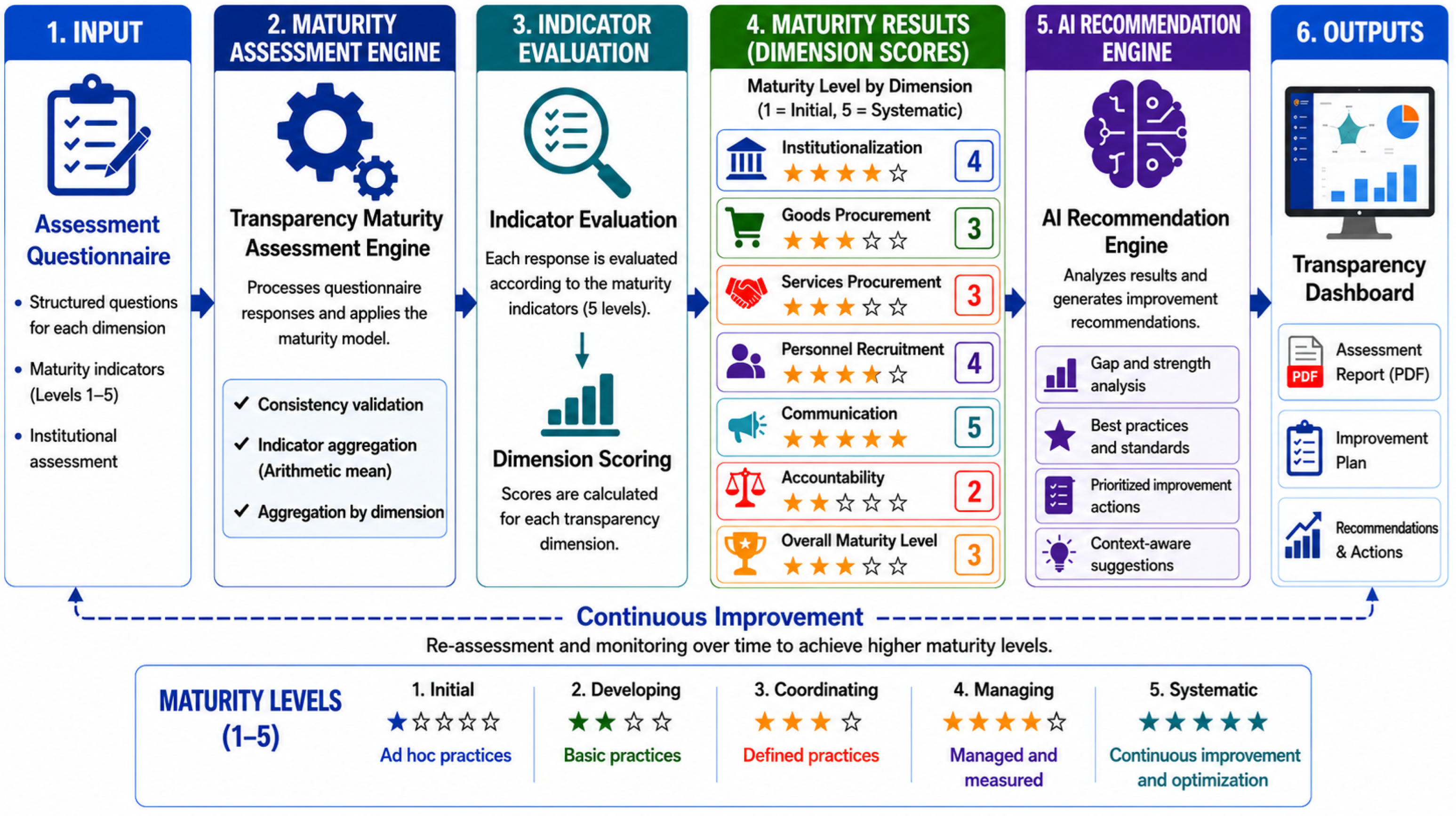
Figure 1 summarizes how the conceptual transparency maturity model is operationalized by the proposed software platform. The assessment process begins when an institutional user completes a structured questionnaire designed according to the transparency maturity model. Each question represents one or more maturity indicators associated with a specific transparency dimension. The collected responses are then processed by the assessment engine to evaluate the implementation of transparency practices and determine the maturity achieved for each dimension.
Each maturity indicator is assessed through one or more questionnaire items using a five-point Likert scale, where higher scores indicate a greater degree of implementation of the evaluated transparency practice. Indicator scores are aggregated using the arithmetic mean to obtain the maturity score for each transparency dimension. The maturity calculation is performed in two successive aggregation stages.
First, the maturity score of each transparency dimension is computed as follows:
where
denotes the maturity score of transparency dimension
d,
is the score assigned to the
i-th maturity indicator, and
n is the total number of indicators associated with that dimension.
Second, the overall institutional maturity level is computed as follows:
where
represents the overall institutional maturity level,
is the maturity score of dimension
d, and
k is the total number of transparency dimensions included in the assessment.
To strengthen the reliability of the assessment, the platform additionally performs a consistency analysis by comparing the responses provided by different participants within the same institution. This analysis does not modify the maturity score itself; rather, it provides complementary evidence regarding the degree of organizational agreement in the implementation of transparency practices. Lower consistency suggests that a given practice is not uniformly understood or implemented across the institution, whereas higher consistency indicates greater institutionalization of the evaluated practices.
The resulting maturity profile constitutes the basis for the generation of dashboards, benchmarking analyses, and AI-assisted improvement recommendations aimed at supporting continuous transparency improvement.
Once all indicators have been evaluated, the platform aggregates the dimension scores to determine the institution’s overall transparency maturity level. These results are subsequently analyzed by the AI recommendation engine, which generates context-aware improvement recommendations based on the identified weaknesses. Finally, the validated recommendations and maturity assessment results are presented through interactive dashboards and downloadable reports, providing decision makers with a comprehensive overview of the institution’s transparency performance.
For example, suppose an institution completes the assessment questionnaire for the Goods Procurement dimension. The aggregated responses produce a maturity score corresponding to the Developing level because formal procurement procedures exist, but accountability mechanisms remain incomplete. After the maturity profile is calculated, the recommendation engine retrieves best practices associated with the missing indicators and generates improvement recommendations focused on strengthening accountability procedures. These validated recommendations are then incorporated into the institutional dashboard and downloadable assessment report.
3. Related Work
The development of software architectures oriented to modernization and transparency in government systems has been the subject of several studies.
In [
40], the development and impact of the NTC-EDGE is presented. NTC-EDGE stands for the National Telecommunications Commission (NTC) of the Philippines and the Electronic Data Governance and Evaluation (EDGE) System, a platform implemented to modernize regulatory processes through a microservices architecture. Its main objective is to improve the efficiency, security, and accessibility of government telecommunications services. The NTC-EDGE was designed under a microservices architecture, enabling modularity and scalability of the system. Advanced security measures were implemented, such as AES256 encryption and biometric authentication, in line with international standards. Agile and DevOps methodologies were adopted, ensuring iterative improvements and efficient integration into the existing infrastructure. Despite its benefits, integration with legacy systems and scalability for regions with less access to technology remain challenges.
In [
41], the paper discusses an e-government software architecture design that integrates real-time processing with a blockchain-as-a-service platform. This architecture supports transparency in government entities by enabling affidavits and payment transactions to be processed efficiently while maintaining interoperability through an enterprise service bus. The case study focuses on an environmental agency and demonstrates how the architecture can improve regulatory contributions and financial transactions, thereby promoting transparency and accountability in government operations.
The paper [
36] presents an architectural solution for a social open data platform (SPOD) aimed at enhancing transparency in Public Administration (PA). It facilitates citizen participation by enabling social interaction through open data, allowing users to collaboratively share, interpret, and discuss information. The architecture is designed to be sustainable and reusable, integrating existing platforms while ensuring compliance with privacy regulations. This approach promotes more inclusive democratic participation and improves the efficiency of government processes through the accessibility of open data.
As a complement to the related work presented, our proposal suggests the possibility of using our platform as an input for open data initiatives, facilitating the visualization and analysis of transparency metrics by citizens and control agencies. Although our system is oriented to the self-assessment of transparency in electronic procedures, its integration with open platforms could strengthen its impact by providing key information for monitoring and continuous improvement of administrative management.
Although previous studies have proposed software architectures to improve transparency, interoperability, or open data management in e-government environments, most of them focus on supporting operational government services rather than assessing institutional transparency itself. In contrast, the proposed platform is specifically designed to operationalize a transparency maturity model through an integrated architecture that supports evidence collection, maturity assessment, indicator generation, traceable diagnostics, and AI-assisted recommendation generation. Consequently, the scientific contribution of this work lies not merely in the adoption of a microservices architecture, but in the architectural operationalization of a transparency maturity model through domain-specific evaluation workflows, traceable diagnostics, and AI-assisted recommendation generation.
3.1. Evaluation of Transparency in Governments
Transparency in government institutions has been a widely studied topic in recent years, especially in the context of electronic platforms that aim to improve accountability and reduce corruption. The following is a brief review of the literature on models, standards, and technologies used in the evaluation of transparency in governments.
3.2. Electronic Platforms for Transparency Evaluation
Several studies have explored the implementation of digital platforms to enhance government transparency. For example, Gorwa and Ash discuss how digital platforms have evolved to improve transparency and trust in society, highlighting cases such as the use of open data in government policies [
42].
Przeybilovicz and Cunha propose a model based on open data to monitor the capacity of governments to comply with their policies, using e-transparency tools to improve public oversight of state budgets [
43].
3.3. Government Transparency Models and Standards
The relationship between the adoption of digital technologies and transparency can be approached from works such as that of Jopang et al., where they analyze how e-government can increase citizen trust by providing access to clear information on government operations [
44].
Furthermore, Hochstetter et al. (2023) present a review of e-government initiatives focused on digital public procurement, highlighting the importance of electronic processes to improve accountability [
25].
3.4. Technologies Used in Digital Government Systems
The advances in technologies such as Big Data and Blockchain have paved new opportunities for monitoring government transparency. Moreno et al, developed an open data platform based on Big Data to analyze and verify the quality of governmental data in real time [
45].
In addition, Wijaya et al. examine the challenges of cybersecurity and equitable access to digital government platforms, critical aspects for the implementation of transparency-oriented software architectures [
1].
3.5. Software Architectures Applied in Transparency
Some architectures identified in the literature are presented below.
Multi-agent systems for e-government transparency [
46]. Albuquerque et al. present an architecture based on multi-agent systems (MAS) for the distribution of e-government processes. This approach improves transparency by organizing information and distributing responsibilities efficiently in public systems.
E-Gov transparency implementation Using Multi-Agent System [
47]. In a subsequent study to the above-mentioned in [
48], the same authors applied the architecture to the lawsuit distribution system at the Superior Labor Court of Brazil, demonstrating that the MAS paradigm emphasizes the alignment of information systems with the governmental operating environment.
e-Governance software architecture techniques [
49]. Bhukya and Pabboju address the design of architectures in e-governance, centering on the interaction between government systems, citizens, and businesses through digital technologies. The study emphasizes the need for modular and scalable architectures to ensure transparency and efficiency in digital government.
Research on transparent access to government data [
38]. Li et al. propose an architecture for transparent access to government data, based on semantic interoperability and heterogeneous channel coupling. This structure facilitates efficient access to public information without altering pre-existing platforms.
4. Materials and Methods
The development of the software architecture presented in this paper is part of applied research, methodologically guided by the Design Science Research (DSR) approach [
50], which focuses on solving real problems by building innovative artifacts that extend human and organizational capabilities. Design Science always starts from a problematic situation in a specific context and, through an iterative process, seeks to develop effective technological solutions. One of the important characteristics to bear in mind in this approach is that it allows the different phases it proposes to be developed through the application of other research methods that are relevant to both the phase and the context in which it is applied. This gives the paradigm great flexibility, as it is possible to apply a different methodological framework for each phase, according to the needs of the problem being addressed.
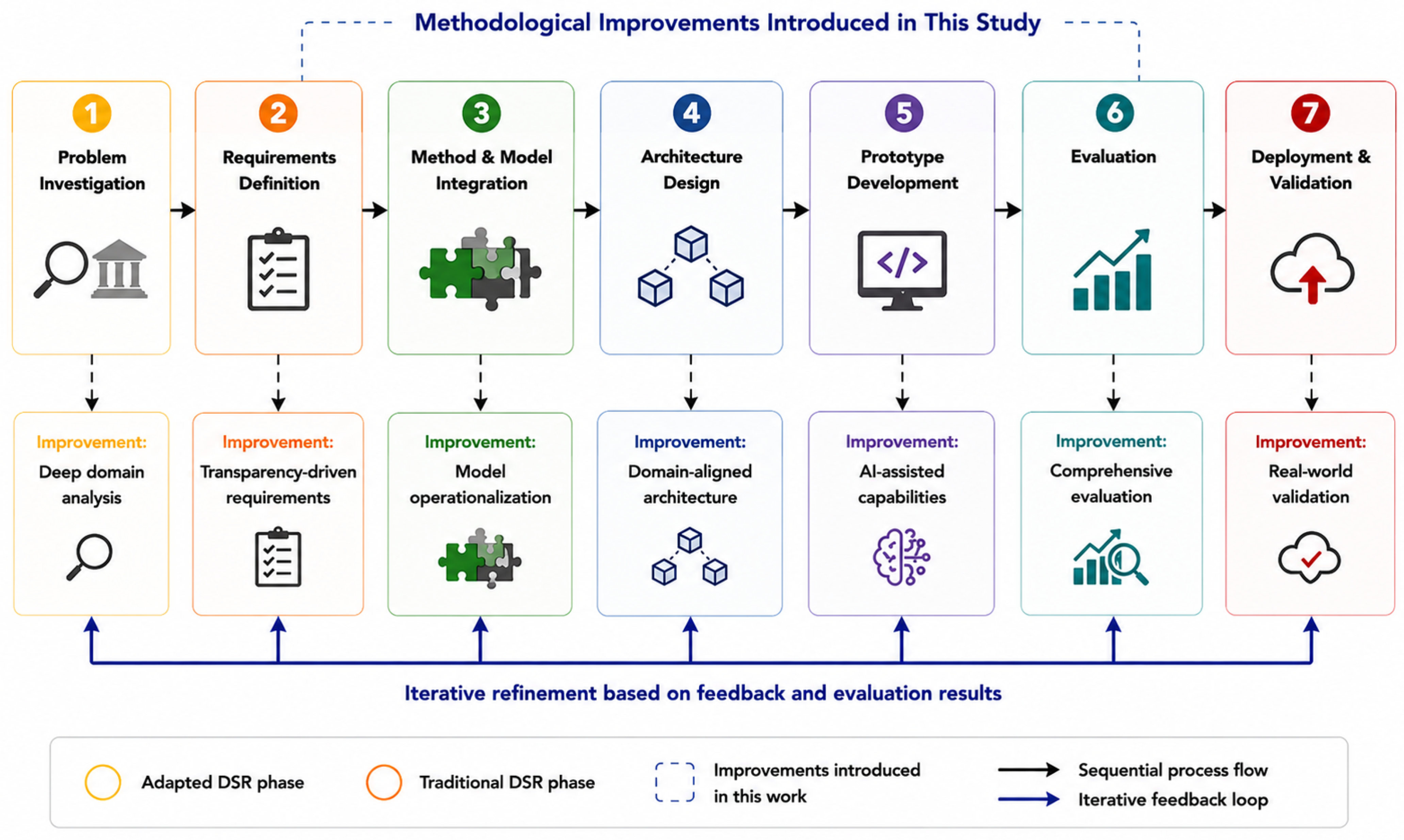
The cycle proposed by Design Science comprises six fundamental stages: problem identification, definition of solution objectives, design and development of the artifact, demonstration of its applicability, evaluation of its effectiveness, and communication of the results. These phases allow for a logical progression from context analysis to implementation and dissemination of the designed solution, as illustrated in
Figure 2.
Although the proposed research methodology is grounded in the Design Science Research (DSR) framework,
Figure 2 illustrates the methodological adaptations introduced in this work to address the specific requirements of transparency assessment in public organizations. These adaptations include the integration of the transparency maturity model into the design process, the explicit incorporation of evidence collection and traceable evaluation workflows, the architectural alignment with transparency-specific requirements, the integration of AI-assisted recommendation services, and the inclusion of longitudinal validation in real organizational environments. Consequently,
Figure 2 represents not only the adopted DSR process but also the methodological enhancements proposed in this study.
For the purposes of this research, these stages have been organised into four integrated methodological phases: (i) Problem investigation, which covers the stages of ‘Problem identification’ and ‘Objective definition’; (ii) Proposal design, which defines the design of the solution, as well as the techniques and tools used, covering ‘Design and development’ and ‘Demonstration’; (iii) Evaluation of the proposal, which describes the validation framework, including the measurement instruments and the validation process applied (‘Evaluation’); and (iv) Communication, which corresponds to the dissemination of the results, and in this study, this stage is embodied in the present article. The Communication phase does not introduce additional methodological procedures beyond those described above, as it is materialized through the structure, analysis, results, and discussion presented in this article, in accordance with the Design Science Research paradigm.
4.1. Phase 1: Problem Investigation
The aim of this phase is to describe the problem as a knowledge problem, since the goal is to understand the problem under study. In this context, we have addressed the difficulties that public entities face in complying with transparency standards in the procurement of goods and services. Achieving transparency in these processes requires an effort that goes beyond Active Transparency (the obligation of state agencies to publish useful, timely, and relevant information on their websites) [
52]. In particular, it requires the creation of an organizational culture in which transparency is a fundamental pillar.
This is a good opportunity to provide mechanisms that enable entities to efficiently manage progress towards achieving the required levels of transparency. These tools would enable: (i) self-assessment of transparency levels in the procurement processes for goods, services, and personnel contracts; (ii) evaluation of organizational maturity in relation to transparency; and (iii) proposals for recommendations on how to advance towards achieving transparency levels.
4.2. Phase 2: Proposal Design
In this phase, we designed and implemented a web platform that operationalizes a previously developed maturity-based methodology to diagnose transparency in electronic procedures of public entities [
15]. This solution combines (i) a diagnostic methodology based on a transparency maturity model and (ii) a web platform that allows public institutions to self-assess their level of transparency and obtain tailored recommendations for improvement.
The development followed an agile and iterative–incremental approach, using the Scrum framework to manage evolving requirements from collaborating entities [
53]. Each iteration produced an executable version of the system that was reviewed with stakeholders, allowing us to refine both functional and non-functional requirements and to align the scope with institutional constraints. Requirements elicitation, the definition of the system boundaries and the identification of the technological resources were documented in a Software Requirements Specification (SRS).
From an architectural perspective, we implemented a microservices-based design. The backend services were developed in Java using Spring Boot, while the frontend was implemented as a single-page application in Vue.js. The core of the platform is organised around independent APIs that manage users and roles (administrators, institutional managers, auditors), institutions and their processes, survey delivery and response collection, and results and recommendations. All services persist their data in a PostgreSQL database, and some components interact with external services such as OpenAI and TeXLive to generate diagnostic profiles and downloadable reports.
DevOps practices were used throughout the project, with containerized deployments and continuous integration/continuous delivery (CI/CD) pipelines to automate build, test, and deployment stages. Testing activities combined unit, integration, and load tests. The latter focused on critical routes such as authentication and the listing of institutions under high concurrency (300 requests per second), ensuring that the platform remains responsive and stable under realistic usage scenarios.
For the demonstration phase, we deployed the functional prototype of the e-Transparency platform in a production-like environment and enabled its use through formal collaboration agreements with four public entities. These agreements allowed us to conduct pilot applications of the diagnostic instrument, collect data under real operating conditions, and generate descriptive analyses and recommendations by dimension. This combination of architectural design and field deployment provides evidence of the technical feasibility, institutional adoption, and practical utility of the proposed solution for diagnosing transparency maturity and guiding improvement plans in electronic procurement processes.
The transparency assessment implemented by the platform follows a structured evaluation workflow. Public institutions complete the maturity-based diagnostic instrument through the Survey API, where assessment evidence is collected and validated. The Results API processes these responses to calculate maturity indicators for each transparency dimension defined by the underlying maturity model, generating an institutional transparency profile. Based on these indicators, the platform identifies strengths, weaknesses, and improvement opportunities, while the RAG component generates contextualized recommendations exclusively from the aggregated assessment results. In this way, the proposed architecture operationalizes the conceptual definition of transparency presented in
Section 2.4 by transforming assessment evidence into measurable, traceable, and auditable transparency indicators.
4.3. Phase 3: Evaluation of the Proposal
The third phase focuses on evaluating to what extent the proposed methodology and platform influence institutional transparency over time. To this end, we designed a validation protocol structured as a longitudinal quasi-experiment with three consecutive measurements in the same organizations, separated by approximately three months. This design enables the establishment of a baseline and the monitoring of changes in transparency practices after the delivery of diagnostic results and recommendations.
The validation protocol includes: (i) specification of the experimental conditions and criteria for selecting participating entities; (ii) administration of the maturity-based diagnostic instrument through the platform; and (iii) statistical analysis of the data to examine consistency and sensitivity of the model by dimension. Measurements are collected using Likert-type scales embedded in the web platform, which facilitates comparisons between rounds and across the different axes of the model.
During the initial deployment, the prototype was tested under real operating conditions in four public entities. At the time of reporting, the platform had recorded 120, 73, and 5 responses in three of these institutions, with the fourth still in the survey dissemination phase. For security and confidentiality reasons, neither the identities of the participating institutions nor institution-specific information can be disclosed in this work.
These data provide an empirical baseline to estimate institutional transparency levels and to guide subsequent longitudinal evaluations. Future rounds will enable us to analyze whether the combination of the maturity-based methodology and the platform generates sustained improvements in transparency, and to identify which dimensions (e.g., procedural traceability, access to information, internal control) are more sensitive to the intervention in different organizational contexts.
5. Architecture Proposal Considerations
Although the proposed platform adopts well-established software engineering technologies, including microservices, REST APIs, and containerized services, its architecture was not conceived as a generic web application. Instead, it was designed to operationalize the specific requirements of transparency assessment in public organizations. These requirements include the management of transparency maturity models, the structured collection of evidence associated with electronic procedures, the generation of auditable institutional diagnostics, the traceability of evaluation processes, and the production of improvement recommendations. Consequently, the architectural decisions presented in this section are driven not only by software quality attributes but also by the functional and governance requirements inherent to transparency evaluation.
We opted for a microservices architecture, decoupled and domain-oriented (user APIs, institutions, results, RAG and surveys) to meet ISO/IEC 25010 quality attributes (Scalability, Reliability, Efficiency, Maintainability) in a context of high concurrency and traceability required by digital government. This design allows us to: (i) isolate failures and deploy by service with DevOps/CI-CD; (ii) reinforce security through robust authentication, permission control, and fine-grained auditing; (iii) optimize performance with caching, connection pooling, and indexing; and (iv) ensure availability with database replication. Load testing and bottleneck analysis guided these decisions (authentication, queries, and concurrency), confirming that the architecture is capable of providing auditable and traceable access, interoperating with external services, and generating automated reports for oversight and continuous improvement of transparency.
All architectural decisions are explicitly aligned with the aforementioned quality objectives. Design factors are defined in accordance with ISO/IEC 25010 (Scalability, Reliability, Efficiency, Maintainability) and specified taking into account the operating context: technological constraints, user requirements, and relevant design patterns. To assess the alignment between the architecture and these objectives, an Architecture Analysis Method (AAM) is applied, which allows risks and their impact on quality to be identified, trade-offs between attributes to be analyzed, and the solution to be optimized before large-scale deployment. This approach ensures a robust, scalable, and maintainable architecture, in line with international standards and the transparency demands of the public sector.
Although transparency is not explicitly defined as a quality attribute in ISO/IEC 25010, this study considers transparency as an emergent property derived from the combined application of multiple quality characteristics. In particular, security, reliability, and maintainability enable auditability, traceability, and controlled access to procedural data, which constitute core technical enablers of transparency in e-government systems.
In addition, the proposed architecture explicitly addresses interoperability challenges commonly observed in e-government systems. By adopting a microservices-based design with independent services exposed through standardized REST APIs and JSON/HTTPS communication, the platform reduces tight coupling between components and facilitates integration with external institutional systems. This approach enables controlled interoperability and incremental adoption without requiring structural changes to the existing government information systems.
The following diagrams illustrate how the proposed architecture operationalizes the transparency assessment process. Before presenting the architectural views,
Table 2 summarizes how the principal domain requirements are translated into architectural decisions and software components.
Figure 3 illustrates how the architecture operationalizes the transparency assessment process. Unlike a conventional information system, the platform organizes its components around the lifecycle of institutional transparency evaluation, including evidence collection, maturity assessment, results generation, and recommendation delivery. Consequently, each architectural component fulfills a specific function within the transparency assessment process rather than serving as a generic data management service.
5.1. Context Diagram
Figure 3 presents the key elements that constitute the e-Transparency system from a general perspective. The system core is at the center of the figure, representing its central architecture and the main functionalities it offers.
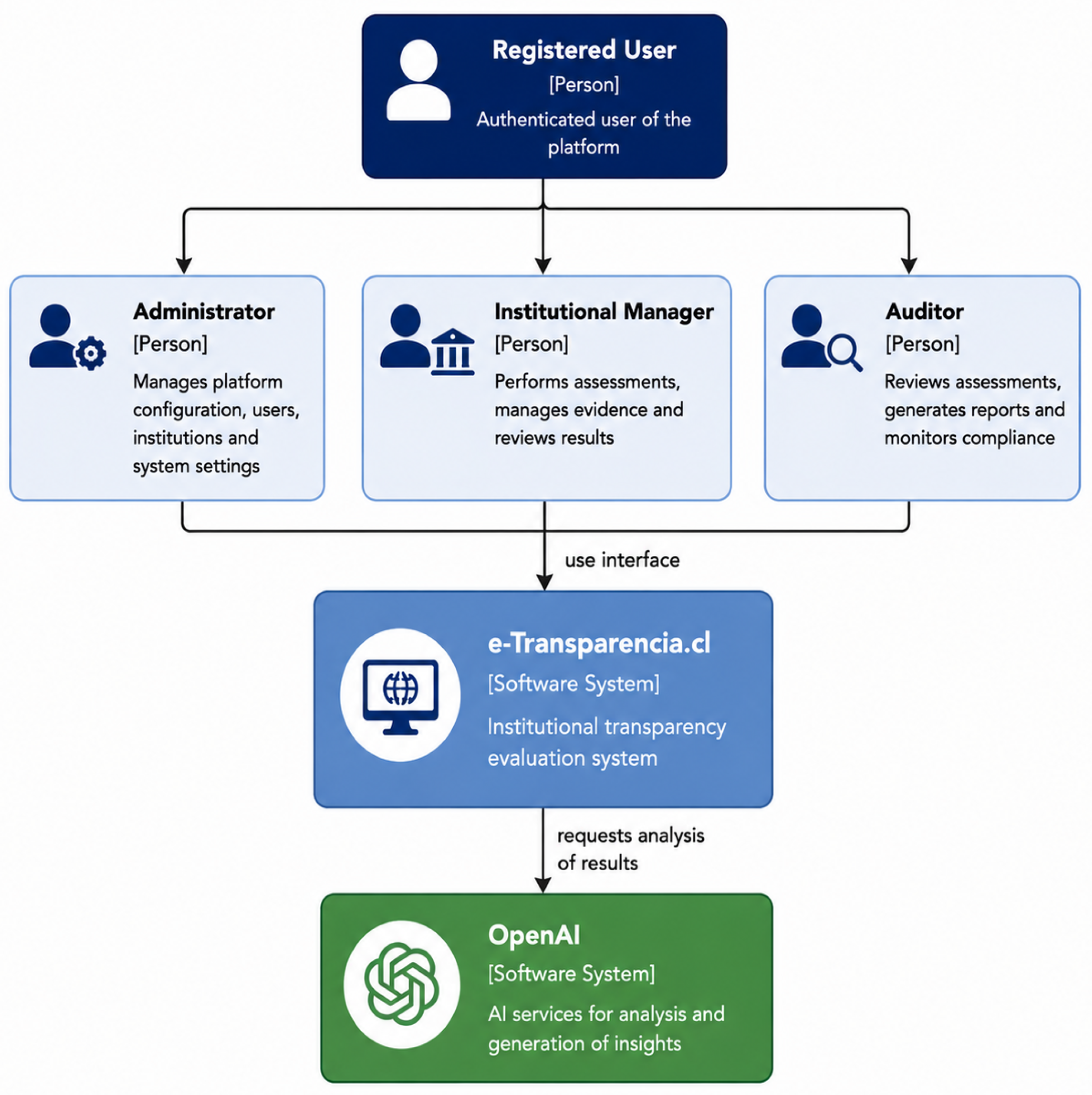
At the top, the three types of users who can interact with the system are identified, each with different levels of access and responsibilities within the platform. These users play a fundamental role in managing and supervising digital transparency, supporting the assessment of institutional transparency practices and facilitating access to government information.
At the top of the diagram, the authenticated users who interact with the platform are identified. These users assume different roles within the system (Administrator, Institutional Manager, and Auditor), each with specific permissions and responsibilities during the transparency assessment process.
The e-Transparencia system is at the center of an ecosystem of actors that interact with the platform. Authenticated users can assume three specific roles within the platform: Administrator, Institutional Manager, and Auditor, each with different levels of access and responsibilities throughout the transparency assessment process. Access to the platform begins through a public landing page available to any visitor. Since unauthenticated visitors do not interact with the platform’s functional services, they are not represented as actors in the context diagram. The system also communicates with an external artificial intelligence service, specifically the OpenAI API, which is used for advanced processing and analysis of the information generated by the platform.
5.2. Container Diagrams
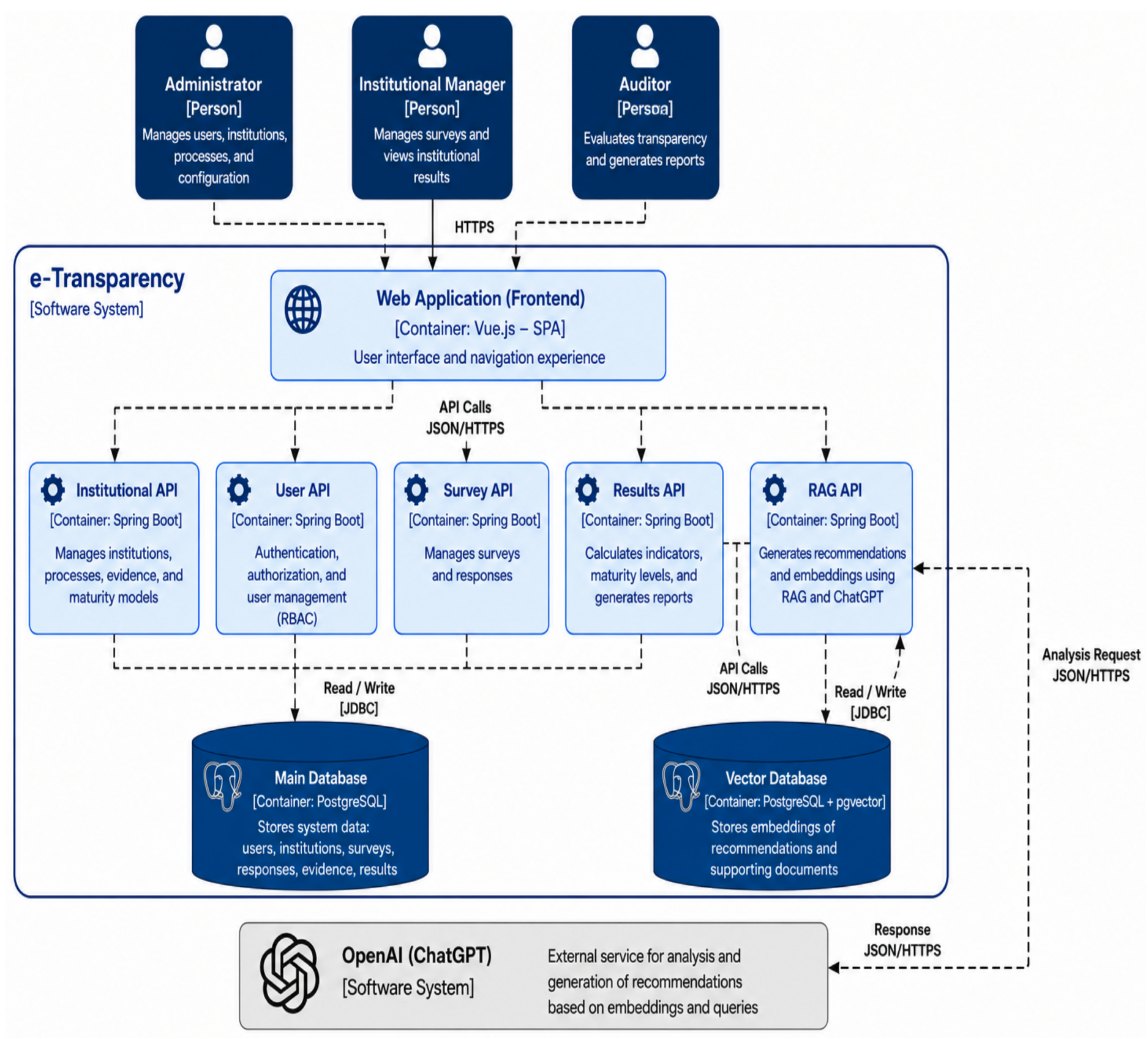
In the container diagram shown in
Figure 4, it is evident that the system adopts a service-oriented architectural style. The architecture is supported by two databases: one oriented towards the management of resources associated with recommendations, and another focused on the registration of users, processes, and other elements that require a solid relational structure.
The system incorporates five independent APIs, each responsible for specific processes and with low coupling between them. The exception is the Results API, which maintains a direct dependency on the RAG API for generating recommendations using the external artificial intelligence service.
5.3. Component Diagrams
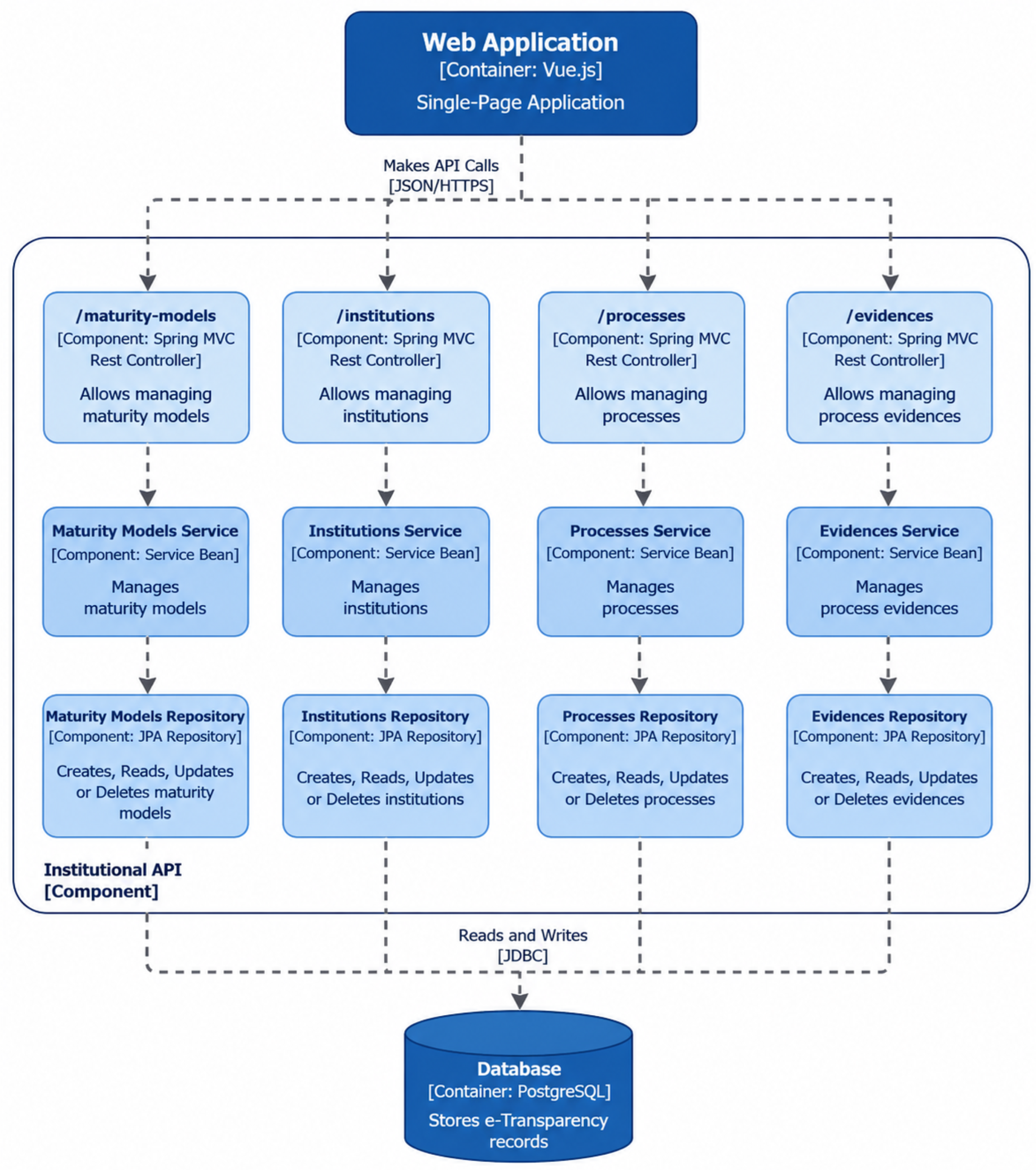
As the platform’s operational services share a uniform architectural pattern based on REST controllers, business services and persistence repositories, their representation was consolidated into a single component diagram with the aim of reducing structural redundancy and improving the technical clarity of the manuscript.
Figure 5 presents the component diagram of the Institutional API, used as a common architectural representation for the User, Institutional, Survey, and Results APIs.
These services follow a common layered architectural pattern implemented in Spring Boot and integrated with relational databases via JPA. Communication between microservices takes place through decoupled REST interfaces, facilitating interoperability, maintainability, and functional scalability within the e-Transparency ecosystem. Because all operational services share the same implementation layers (Controller, Service, and Repository),
Table 3 focuses exclusively on their distinct technical responsibilities and managed functionalities, while the common architectural structure is represented by the component diagram shown in
Figure 5.
Among these services, the Institutional API acts as a hub for contextual coordination within the platform: it provides the organizational information required by the survey, results, and recommendations modules to function, without directly intervening in the analytical processing or in the external artificial intelligence services. Its loose coupling with these modules is consistent with the principle of independence between microservices established in the architectural decision described at the start of this section.
5.4. Institutional API
As shown in
Figure 5, the Institutional API manages the organizational structure of the participating entities and centralizes the management of institutions, processes, and metadata required for transparency assessments. The API implements a layered architecture based on Spring Boot, comprising REST controllers, business services, and persistence repositories. Its function is to provide the institutional context for linking surveys, results, and recommendations, whilst maintaining loose coupling with the analytical and reporting modules. At the architectural level, this service acts as a functional coordination layer within the ecosystem, facilitating interoperability between components without directly intervening in analytical processing or external artificial intelligence services.
5.5. RAG API
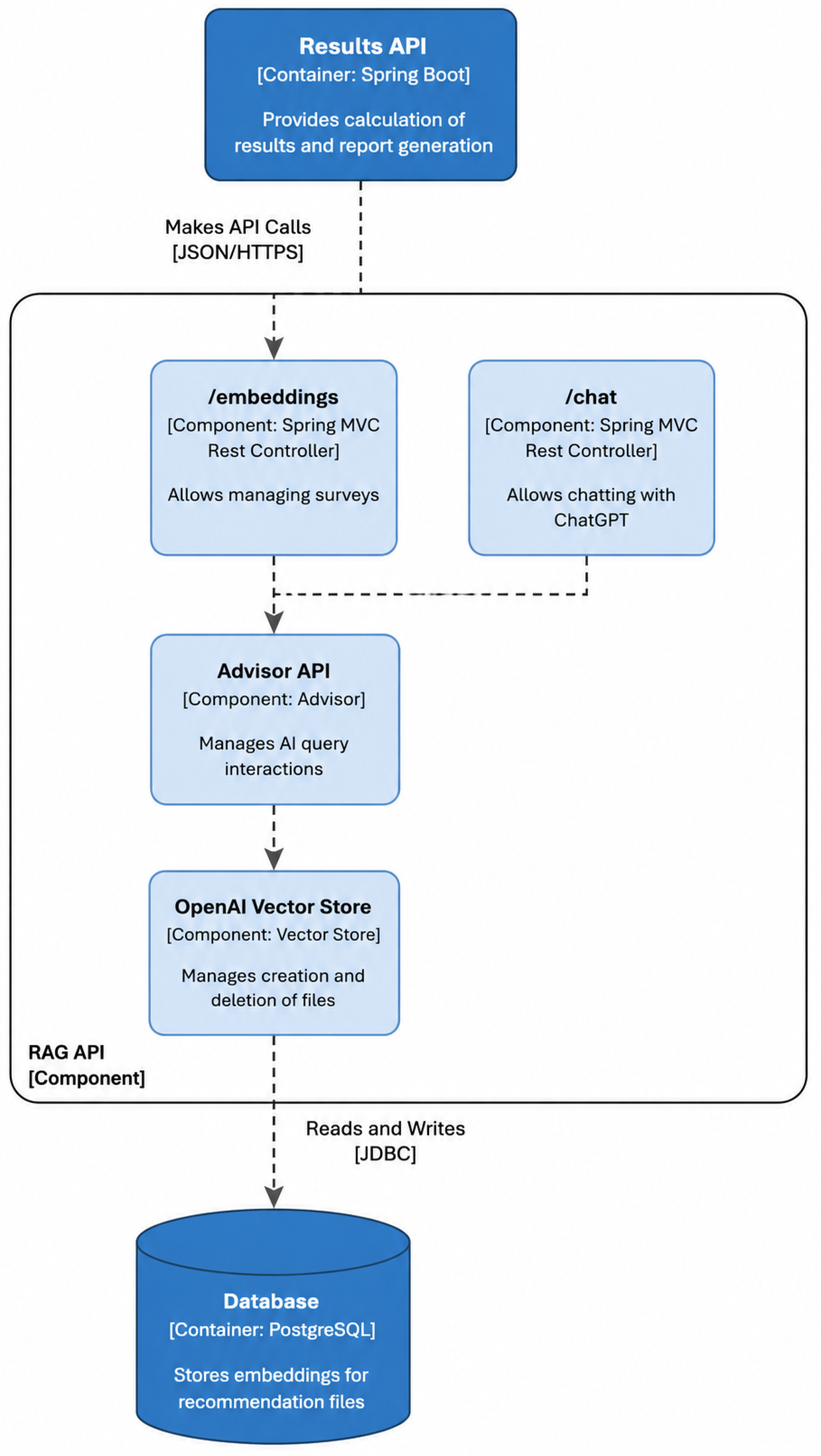
Unlike conventional operational services, which are primarily based on CRUD operations and transactional logic, the RAG API incorporates semantic processing flows, embedding generation and contextual information retrieval through vector storage. Thanks to this specialized architecture and its integration with external artificial intelligence services, the component maintains an independent representation in
Figure 6.
This module encapsulates interactions with external AI services and operates exclusively on previously aggregated and processed evaluation results, avoiding direct access to transactional data or raw survey responses. The component’s architecture integrates mechanisms for embedding generation, semantic queries and contextual information retrieval, providing automated recommendation generation capabilities and diagnostic support for institutional evaluation processes. This explicit separation between the operational layer and the analytical layer enhances auditability, privacy, and control over institutional data.
5.6. AI Recommendation Validation
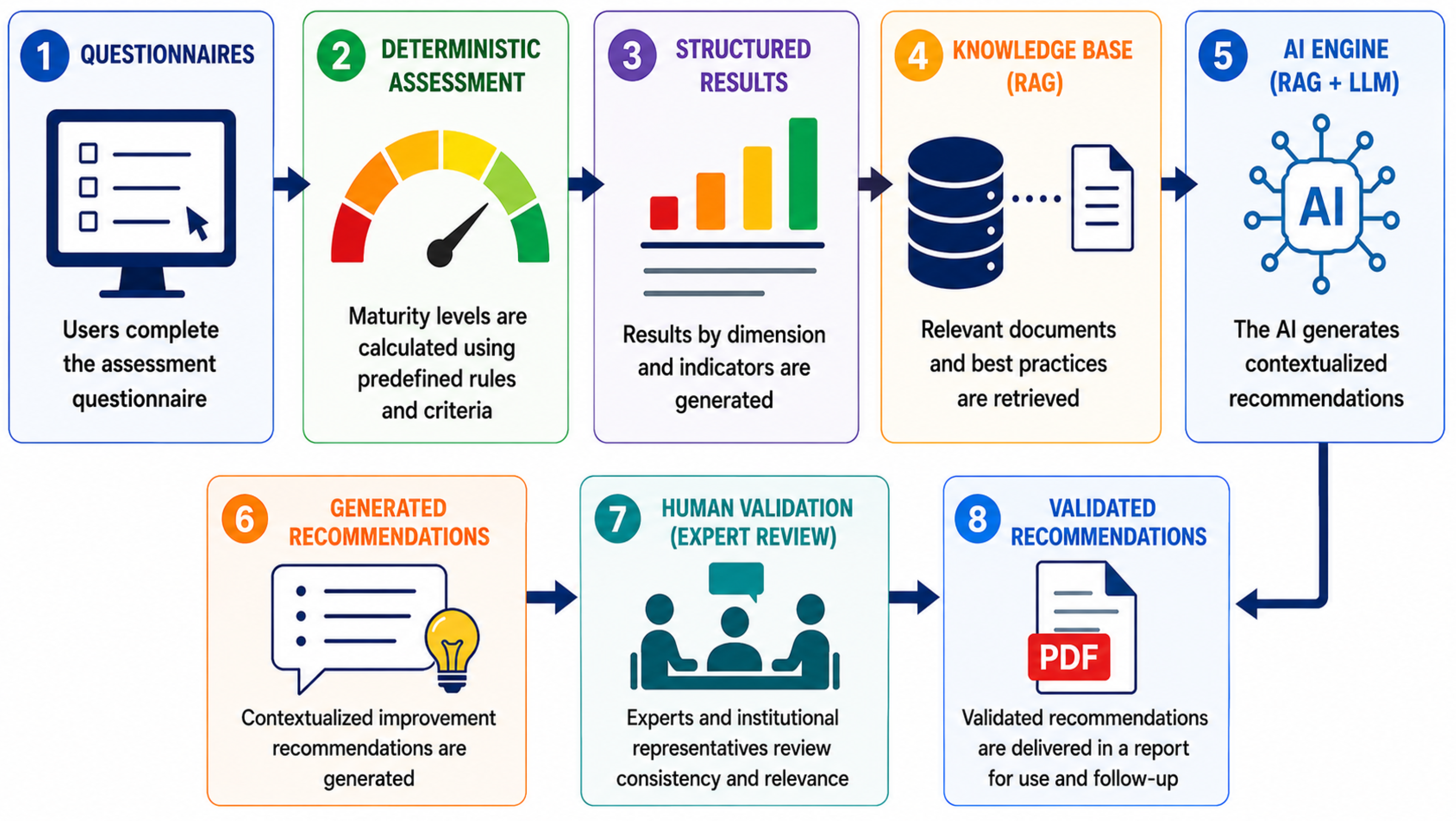
Although the platform incorporates a Retrieval-Augmented Generation (RAG) module to generate contextualized recommendations, the AI output is not directly considered as a final decision. As illustrated in
Figure 7, the recommendation process follows a multi-stage validation workflow. First, transparency maturity levels are computed using deterministic assessment algorithms based on questionnaire responses and predefined scoring rules. The RAG module then retrieves only relevant supporting documents and structured assessment results, which are provided as contextual input to the Large Language Model. Finally, the generated recommendations are reviewed by researchers and institutional representatives during feedback sessions before being incorporated into institutional improvement plans. This human-in-the-loop approach combines deterministic assessment, controlled knowledge retrieval, and expert validation to ensure the consistency, relevance, and applicability of the generated recommendations.
5.7. Prototype Implementation
To demonstrate that the proposed architecture has been fully implemented, the e-Transparency platform was deployed as a web-based application accessible through
https://etransparencia.cl, accessed on 1 April 2026. The platform supports the complete transparency assessment workflow, including user authentication, transparency assessment management, institutional monitoring, and AI-assisted recommendation generation.
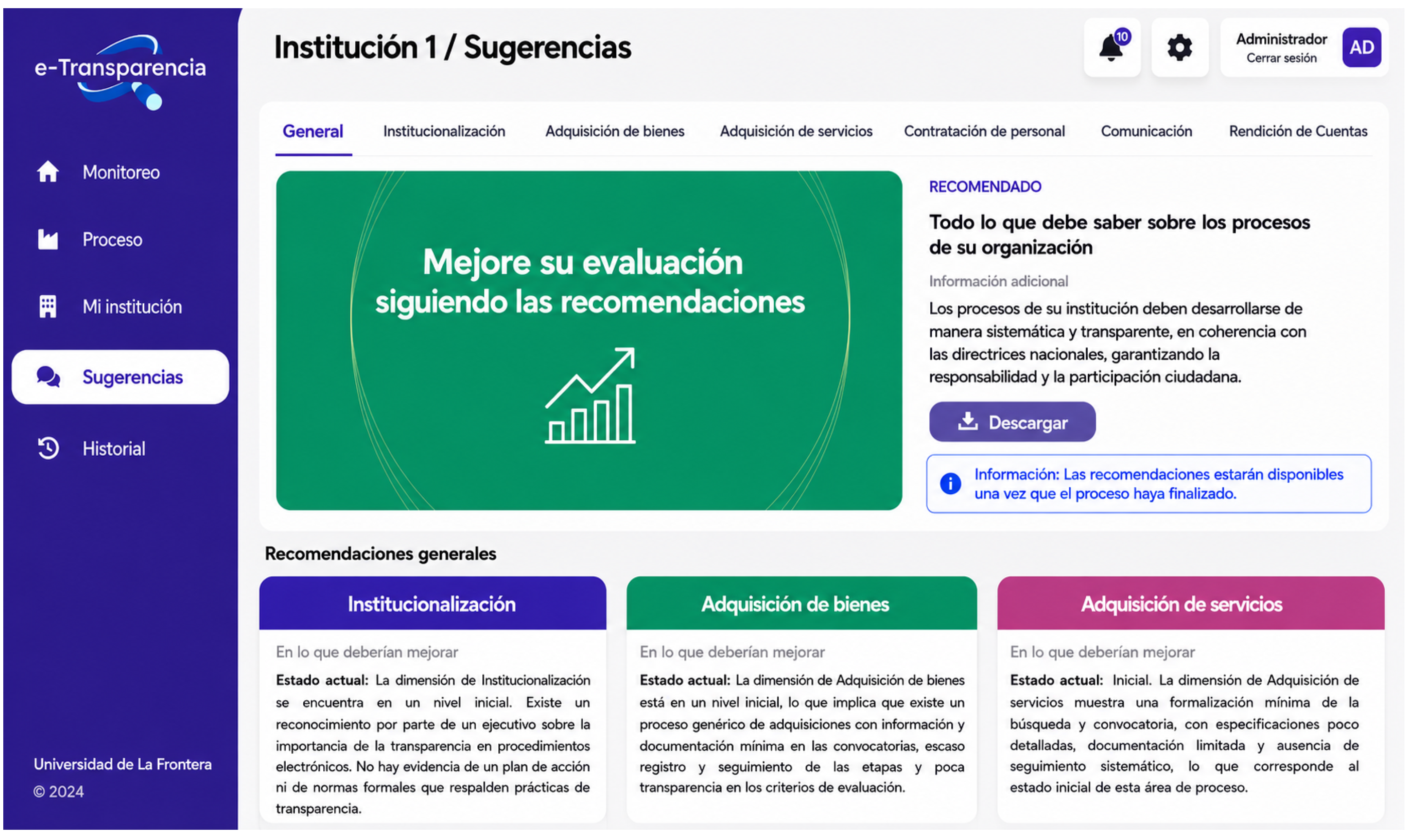
Figure 8,
Figure 9 and
Figure 10 present representative interfaces of the operational platform, illustrating the main stages of this workflow: secure access to the system, centralized monitoring of transparency assessments, and the generation of contextualized recommendations based on the assessment results.
5.7.1. Authentication Interface
Figure 8 presents representative interfaces of the operational system corresponding to the principal functional modules described throughout the architecture. These interfaces provide evidence that the proposed architecture has been implemented as a fully operational software platform rather than remaining a conceptual architectural design.
The screenshots shown in
Figure 6 correspond to the operational version currently deployed in Chile. Therefore, the user interface appears in Spanish, which is the native language of the target users and participating public institutions. The language of the interface does not affect the architectural or functional aspects discussed in this study.
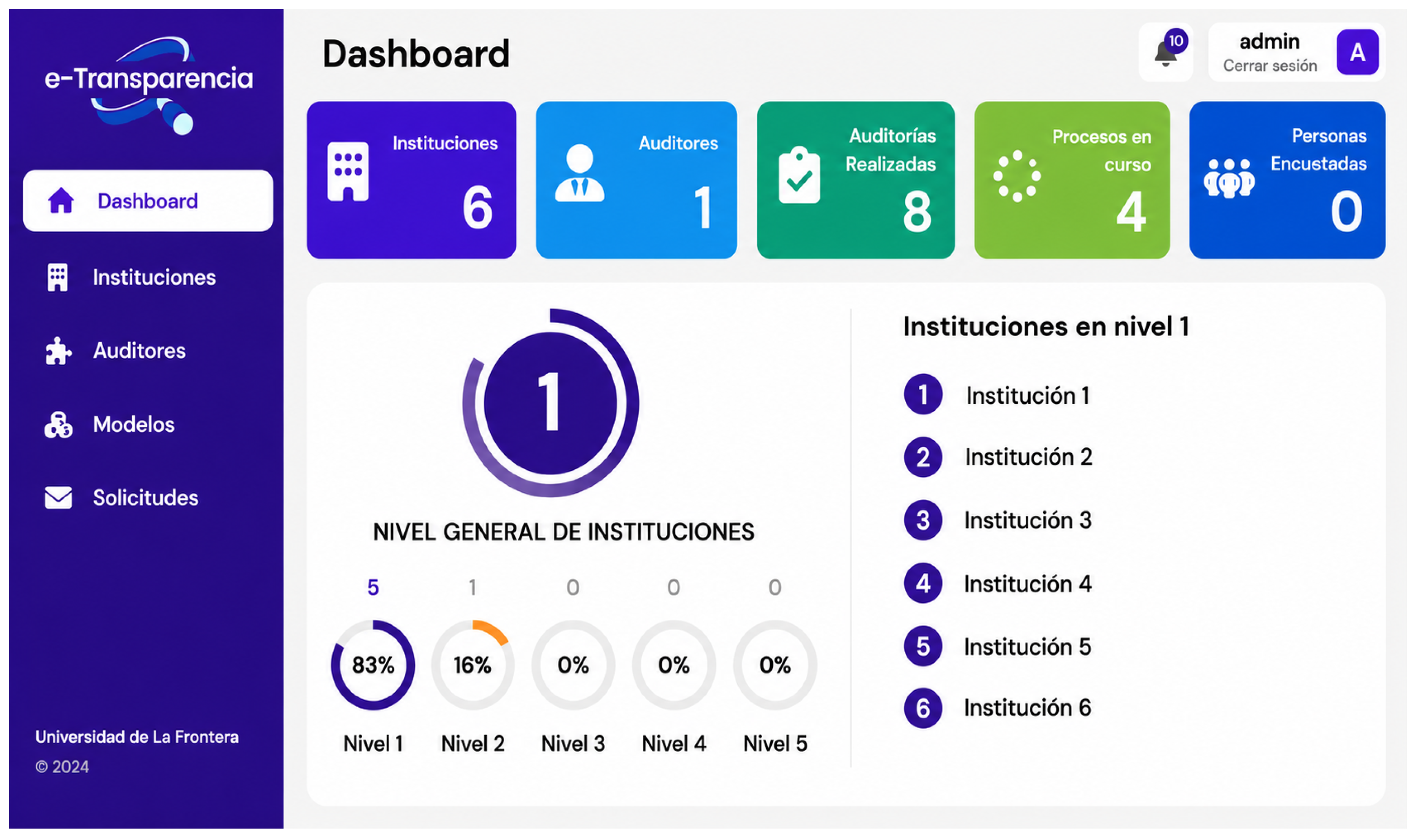
5.7.2. Administrator Dashboard
Figure 9 illustrates the administrator dashboard of the e-Transparency platform. This interface provides a comprehensive overview of the operational status of the platform, including registered institutions, evaluated processes, completed assessments, and the average transparency maturity level. It also presents graphical summaries of maturity distributions, institutional rankings, evaluation progress, historical trends, and recent platform activities. Furthermore, the navigation menu provides access to institution management, user administration, evaluation processes, reporting, and system configuration modules, supporting centralized management of the platform.
5.7.3. AI-Assisted Recommendation Interface
Figure 10 illustrates the recommendation interface generated after completing the transparency assessment. Once the evaluation process has finished and the maturity indicators have been calculated, the platform uses the RAG component to generate contextualized recommendations based exclusively on the aggregated assessment results. Recommendations are organized according to the transparency dimensions defined by the maturity model, allowing users to navigate between dimensions and identify specific improvement opportunities. For each dimension, the system summarizes the current maturity level, highlights detected weaknesses, and provides actionable guidance to support institutional improvement. Additionally, users can download a comprehensive PDF report containing the complete diagnostic results and the corresponding recommendations for all evaluated dimensions.
6. Data Privacy, Security, and Ethical Considerations
Given the sensitive nature of electronic government procedures, data privacy, security, and ethical considerations are critical aspects of the proposed e-Transparency platform. Prior research has emphasized that transparency initiatives in e-government must be accompanied by strong safeguards to protect institutional integrity, prevent misuse of information, and maintain public trust [
10,
11,
27].
This requirement becomes particularly relevant when advanced digital technologies such as external large language model (LLM) services are integrated into transparency-oriented platforms, as these may introduce additional risks related to data exposure and accountability [
28,
32].
6.1. Data Scope and Anonymization
The proposed architecture is explicitly designed to prevent the transmission of personally identifiable information (PII) or institution-specific sensitive records to external services. Data exchanged with the LLM component is strictly limited to aggregated, anonymized, and non-identifiable information derived from survey results and transparency maturity indicators.
This approach aligns with established principles of transparency evaluation in e-government, which stresses that analytical processing should rely on abstracted metrics rather than raw operational data [
15,
16]. No raw survey responses, user identities, institutional names, or procedural evidence are transmitted outside the platform.
Before invoking the LLM service, all inputs undergo a preprocessing stage that removes direct identifiers and contextual elements that could enable re-identification. This design decision reduces privacy risks while preserving the analytical value required for diagnostic reporting [
20,
21].
6.2. Security Controls and Access Management
Security controls are enforced through multiple architectural mechanisms aligned with best practices for e-government systems. Authentication is implemented using JWT-based mechanisms combined with role-based access control (RBAC) to ensure that only authorized users can access specific functionalities and datasets. These mechanisms are widely recognized as essential for secure and auditable public sector information systems [
8,
9].
Audit logging mechanisms record critical actions, including survey submissions, result generation, and report access. This supports traceability and institutional accountability, which are core requirements for transparency-oriented digital platforms [
10,
32].
From an implementation perspective, security is enforced through multiple complementary mechanisms. Authentication is implemented using JSON Web Tokens (JWT), while role-based access control (RBAC) restricts access to platform services according to the permissions assigned to each user role. Passwords are stored using secure hashing mechanisms, and all communications between clients and microservices are protected through HTTPS. In addition, each microservice validates authentication tokens independently before processing requests, ensuring decentralized access control consistent with the microservices architecture. Security-related events, including authentication attempts and privileged operations, are recorded to support auditability and traceability during transparency assessments.
6.3. Ethical and Regulatory Considerations
The integration of external LLM services raises ethical and regulatory concerns, particularly in public sector environments where decision-making authority and data stewardship must remain under institutional control. Prior studies on digital governance highlight the importance of ensuring that automated systems do not replace human accountability or obscure responsibility for public decisions [
26,
28].
In the proposed platform, the LLM is used exclusively as a supportive component for synthesizing textual summaries and recommendations based on predefined transparency models. Evaluative authority and decision-making remain entirely with public officials and institutional stakeholders, in line with established principles of transparency, accountability, and ethical governance [
6,
31].
6.4. Risk Mitigation and Future Enhancements
Despite the safeguards described above, residual risks remain, including dependency on third-party services and evolving regulatory requirements related to artificial intelligence in the public sector. The literature on digital transformation in government auditing emphasizes the need for continuous risk assessment and adaptive governance mechanisms [
27,
32].
As future work, the architecture can be extended to support on-premise or sovereign LLM deployments, allowing public institutions to retain full control over the overall processing components. Additionally, alignment with emerging AI governance frameworks and data protection regulations will be periodically evaluated as part of the platform’s evolution, ensuring sustained compliance with transparency and accountability principles in e-government environments [
1,
25].
7. Results
To validate the e-Transparency architecture, we conducted a set of technical evaluations focused on load testing, performance analysis, and code quality metrics, complemented by evidence from pilot deployments in public entities. These analyses allowed us to identify architectural risks, assess the interaction between quality attributes, and compare initial and recent performance outcomes after infrastructure and backend optimizations.
7.1. Load Testing of Critical Routes
A total of four load-testing rounds were executed, with the most recent tests performed after migrating the system to a virtual private server (VPS). The tests targeted the main high-traffic endpoints: the authentication route (/v1/api/auth/login) and the institution listing route (/v1/api/institutions?page=0). Each scenario considered 300 samples (300 requests per second) to simulate a high-concurrency environment.
To facilitate the interpretation of the technical evaluation,
Table 4 summarizes the load-testing configuration and the principal performance results obtained for the critical routes evaluated under high-concurrency conditions. The table provides a concise overview of the response behavior observed during the load-testing experiments and complements the detailed discussion presented below.
Early tests identified performance degradation and stability issues:
Authentication route (/v1/api/auth/login): A progressive increase in response time was observed from 1344 ms on the first request to 12,009 ms on the last request, indicating a possible degradation in performance as the load increases.
Institutions listing route (/v1/api/institutions?page=0): From 90 concurrent requests, the server started throwing HTTP errors 403 (Forbidden) and 500 (Internal Server Error), suggesting overload or processing capacity limitations.
After optimization, in the most recent test round (post-VPS migration and backend improvements), the authentication endpoint showed consistently low response times, reaching a maximum of approximately three seconds for the 300th virtual user. Also, the institution listing endpoint achieved comparable performance, with stable response times and no critical errors.
These improvements align with the project’s progress reports, which highlight backend optimizations and signal the need for continued database tuning and potential migration to a cloud-managed database service for better support of complex queries.
7.2. Identifying Architectural Risks and Their Impact on Software Quality
Several factors affecting system performance and stability under high concurrency were identified. These architectural risks were derived from the empirical evidence obtained during the technical evaluation presented in
Section 5.1.
Table 5 summarizes the observed evidence supporting each identified risk, together with the corresponding software quality attribute and its estimated impact.
The empirical evidence presented in
Table 5 provides the basis for the identification of the following architectural risks and their potential impact on software quality attributes:
7.3. Code Quality and Coverage Metrics
In addition to performance tests, we analyzed code quality and coverage using SonarQube. The user management and institutional management APIs, which support the main operational flows of the system, currently exhibit a robust level of test coverage over the implemented functionalities, indicating that the core business logic is systematically exercised by automated tests.
The survey API, responsible for aggregating and processing survey responses across institutions, is the most recent component. Although its coverage level is lower compared with the other APIs, a thorough semantic cleaning process was performed to ensure clarity, maintainability, and efficiency of the code. SonarQube metrics indicate that this API exceeds the minimum quality thresholds of the platform, which supports its readiness for extension and maintenance in future iterations.
7.4. Synthesis of Architectural Validation
Taken together, the load tests and code quality analyses provide evidence that the proposed microservices architecture can sustain demanding usage scenarios while maintaining acceptable response times and a controlled level of technical debt. The latest test campaigns demonstrate that, under 300 requests per second, critical routes such as authentication and institution listing maintain response times in the order of seconds, without service-level failures.
These findings are aligned with the project’s internal reporting, which concludes that the prototype has reached a stable version of the e-Transparency platform, with performance optimizations already implemented in the backend and ongoing efforts to improve database performance through possible cloud migration strategies. In parallel, the pilot deployments in four public entities confirm both the technical feasibility of the architecture and its practical utility as a diagnostic tool, providing a solid foundation for the subsequent longitudinal validation of the maturity model and for future large-scale deployments in public administration contexts.
7.5. Architecture Optimization Before Large-Scale Deployment
Based on the above findings, the following optimizations have been proposed to improve the scalability and reliability of the system:
Optimization of queries and database
- –
Implementation of indexes in critical queries.
- –
Use of caching to reduce database load.
- –
Configuration of connection pooling to improve efficiency.
Improvement of server infrastructure
- –
Use of load balancers to distribute requests evenly.
- –
Implementation of auto-scaling to handle traffic spikes.
- –
Configuration of appropriate limits on timeouts and concurrent processes.
Optimization of session management
- –
Use of JWT tokens to reduce load on the authentication server.
- –
Implementation of distributed storage for sessions.
Error handling and recovery strategies
- –
Implementation of message queues to handle failed requests.
- –
Reduction in automatic retries to prevent system overload.
These strategies will improve system performance under high loads and ensure a better experience for end users. With these optimizations, e-Transparency will be better prepared to scale to production environments without compromising service stability and security.
The current evaluation focuses on establishing a technical and operational baseline of the proposed architecture within a longitudinal research design. While transparency-related aspects are captured through maturity indicators and auditability mechanisms, a comparative evaluation of transparency performance against existing solutions requires multiple measurement cycles and broader institutional deployment. Such comparative transparency assessments are therefore identified as future work.
7.6. Limitations
Although the proposed architecture demonstrated satisfactory technical performance, this study has some limitations. The evaluation focused on the technical validation of the proposed software architecture rather than on a comprehensive assessment of long-term transparency outcomes across different institutional contexts. In addition, although the architecture integrates AI-assisted recommendation services, this study did not independently evaluate the quality or effectiveness of the generated recommendations. These aspects will be addressed in future work through broader institutional deployments and longitudinal evaluations.
8. Conclusions and Future Work
In this study, we address the critical need to strengthen transparency in government entities in the context of digitalization.
This objective was addressed by designing and implementing a microservices-based architecture that integrates a web-based self-assessment instrument, maturity indicator processing, secure data management, automated report generation, and AI-assisted recommendations. The technical evaluation, based on load testing and code-quality analysis, provided evidence that the proposed architecture can support transparency assessment processes under realistic operating conditions.
This paper presented the design and architectural validation of an e-Transparency platform that operationalizes a maturity-based methodology to diagnose transparency in electronic procedures of public entities. The solution integrates a microservices architecture, a web-based self-assessment instrument, and an automated reporting module, enabling public organizations to obtain a structured diagnosis of their transparency practices and tailored recommendations for improvement in procurement and related processes.
From a technical perspective, the study demonstrates the definition and validation of a microservices architecture, explicitly justified based on the ISO/IEC 25010 quality attributes (particularly Scalability, Reliability, and Efficiency). The proposed design, which incorporates load balancing, database replication, and JWT-based authentication, has proven to be a robust and flexible framework capable of handling the high concurrency and security requirements of e-government platforms.
The latest load tests and code-quality analyses indicate that the current prototype is stable and capable of sustaining demanding usage scenarios. Under stress conditions of 300 requests per second, critical routes such as authentication and institution listing maintain response times in the order of seconds without service-level failures, while SonarQube metrics show that the core APIs exhibit adequate coverage and controlled technical debt. These results support the suitability of the proposed architecture for environments where high concurrency, auditability, and reliability are key requirements.
By applying Design Science Research (DSR), we were able to propose the architecture and subject it to performance testing. This early-stage evaluation identified critical bottlenecks, especially in authentication and concurrent queries. The resulting optimizations (such as query indexing, caching, and message queue implementation) validate that the proposed architecture meets the performance requirements necessary for deployment in real public administration environments and highlight the importance of interoperability and adherence to international quality standards as mechanisms to reduce corruption and improve trust in government transparency initiatives.
In terms of adoption, the platform has already been deployed in four public entities, enabling the first pilot applications of the diagnostic instrument. The responses collected in these institutions provide an initial empirical baseline of transparency maturity across different organizational contexts and demonstrate the practical utility of the platform as a decision-support tool.
Future work will focus on three main lines. First, completing the planned longitudinal validation with successive measurement rounds in participating entities to assess whether the combination of the maturity model and the platform leads to measurable improvements in specific dimensions of transparency over time. Second, advancing in the optimization of database performance and exploring migration to managed cloud database services to further reduce response times and support larger-scale deployments. Third, extending the model and platform to other domains of public management, such as social programs, permits and subsidies, and integrating additional analytics and visualization capabilities that allow institutions to monitor trends, compare units and prioritize interventions.
Overall, the results suggest that the proposed architecture and platform constitute a feasible and scalable approach to strengthening transparency in e-government, particularly in the highly sensitive area of public procurement, and provide a solid foundation for future research and large-scale implementation in public administrations.



 ,
,