


Abstract
The digital transformation has revolutionized document management, making Digital Transaction Management (DTM) systems essential for enhancing efficiency, security, and regulatory compliance in a wide range of organizations. This paper investigates the challenges, innovations, and state-of-the-art solutions in DTM platforms, with a focus on their integration with emerging technologies such as Artificial Intelligence (AI) and blockchain. In particular, the work introduces a reference architecture for next-generation DTM platforms, emphasizing blockchain-based security, smart-contract-based automation, and semantics-enhanced document retrieval and analysis. A case study in the utilities sector illustrates the benefits of the envisioned proposal, showcasing its suitability for managing complex, high-volume workflows. This research provides a foundation for future developments in resilient and interconnected DTM solutions, addressing the evolving demands of modern organizations within the broader digital ecosystem.
1. Introduction
The advent of digital technologies has radically transformed the way organizations approach document management, ushering in a new era of operational efficiency and strategic innovation. In this ever-evolving landscape, the digitalization and traceability of document workflows emerge not merely as operational conveniences but as foundational pillars for achieving enhanced efficiency, bolstered security, and stringent regulatory compliance. In this context, DTM technologies and systems have assumed a pivotal role, offering advanced and scalable solutions for managing documents in digital formats, thus enabling organizations to streamline complex workflows and reduce dependencies on traditional paper-based workflows and systems.
In both the private and public sectors, organizations of varying scales and domains are increasingly acknowledging the strategic importance of proper management of the document lifecycle. Documents, once considered mere administrative byproducts, are now recognized as critical assets with inherent value in terms of governance, accountability, and business intelligence. The document lifecycle is a multifaceted process, encompassing key stages such as creation, modification, sharing, and archival. Each phase presents unique challenges and opportunities, requiring the adoption of robust tools and methodologies to ensure seamless transitions while maintaining integrity and security. Moreover, the growing emphasis on document preservation and notarization has heightened the need for compliance with technical standards and regulatory frameworks. Such measures are essential for ensuring the legal validity of documents, thereby underpinning the reliability of organizational processes.
This investigation begins with a comprehensive analysis of state-of-the-art DTM architectures and technologies, examining current market solutions and their efficacy in addressing the demands of modern document workflows. In particular, shallow semantic content and mismatches between workflow specifications, documents, and metadata emerge as barriers preventing end-to-end solutions with flexible intelligent automation. Additionally, strong security and trust guarantees of transaction data integrity are not provided with conventional technologies in cross-organization distributed contexts. In order to fill these research gaps, the paper explores the integration and transformative impact of emerging technologies such as AI and blockchain. These advancements offer promising avenues for enhancing automation, strengthening security, and fostering trust within digital document ecosystems. However, current state-of-the-art DTM platforms include them in an isolated and fragmented fashion, at best. This paper aims to overcome the limits of such segregation, guided by the following research questions:
- RQ1: What services and capabilities are needed to guarantee stronger data security, transaction integrity, and more flexible decentralized collaboration in DTM platforms, and how can they integrate with functional components?
- RQ2: How can intelligent document management capabilities be integrated into DTM platforms to enable smarter workflows?
- RQ3: What benefits in terms of security, automation, and semantic management emerge in real-world use cases in the enterprise sector?
The adopted research methodology is design-oriented and architecture-driven, focusing on:
- analysis of the state of the art and identification of research gaps;
- architecture design;
- validation through a case study;
- explicit definition of qualitative evaluation criteria for the proposed approach with respect to security, interoperability, automation, and traceability.
The resulting outcome is thus not merely an aggregation of technologies, but rather a systematic integration at the workflow and component-interaction levels, distinguishing it from existing works that only provide partial integrations. Specific innovation contributions include:
- a unified reference architecture for DTM platforms, consolidating emerging technologies into an end-to-end approach to intelligent workflow management, hyperautomation, robust security, and traceability;
- the integration in DTM platforms of AI-based Natural Language Processing (NLP) methods and components for document processing automation, ontology-based semantic enrichment and information extraction, document retrieval and question answering;
- the integration of blockchain technology for decentralization of transaction recording, data integrity and security, workflow adaptation via smart contracts, real-time transaction tracking, long-term distributed content storage and notarization services;
- a case study analyzing how the proposed DTM evolution supports real business needs of enterprises in the utilities sector, chosen due to its strong requirements of variety, volume, velocity, and complexity in document management.
The remainder of the paper is as follows. Section 2 outlines current DTM architectural paradigms and features. Section 3 presents a review of the state of the art, including an analysis of market needs and dynamics, as well as a discussion of relevant academic and industrial research work, highlighting the research gap motivating this paper. Section 4 introduces the novel DTM architecture and describes integrated modules in detail. Section 5 describes two different use cases, illustrating the expected benefits of AI and blockchain technologies in the proposed security- and automation-oriented architecture. Open challenges for the full realization of the proposed paradigm are discussed in Section 6. Finally, the conclusion of the paper outlines perspectives for further evolution of DTM solutions and the role these systems can play in a world increasingly characterized by interactions within and among cyber–physical systems.
2. Digital Transaction Management Platforms
2.1. From Electronic Document Management to Digital Transaction Management
The evolution in the technological landscape of document management systems, from Electronic Document Management Systems (EDMSs) to Digital Transaction Management Systems (DTMSs), is a reflection of the increasing demand from businesses and government agencies to replace outdated systems with more adaptable, secure, and scalable digital platforms. Changes in corporate procedures, the growth of the digital market, and the introduction of cutting-edge technologies are the main drivers behind this transition. The market recognizes four primary categories of systems:
- EDMS;
- Electronic Records Management System (ERMS);
- Enterprise Content Management System (ECMS);
- DTMS.
EDMSsoffer capabilities for archiving, indexing, and retrieving electronic files. They were introduced to digitize document management. These technologies have helped make it feasible for businesses to forego large amounts of paperwork, which has improved data retention and search efficiency. Using technologies like Optical Character Recognition (OCR) to identify text in pictures, advanced search enables users to locate documents fast using keywords. Documents can be accurately and quickly accessed by sorting them by relevance based on prior searches or user role. Since an EDMS maintains a consistent folder organization through a preset file structure, it lowers the chance of missing or redundant documents. This facilitates finding and eliminates filing mistakes or duplication, which could reduce output. Furthermore, an EDMS streamlines and lowers errors in the sending and handling of forms by automating a number of daily operations, including sending electronic forms for approval. Digital forms simplify system integration and reduce the need for error-prone manual data entry. Another crucial component is version management, which keeps track of modifications and permits rolling back to earlier iterations of a document to guarantee that changes are traceable. However, departmental collaboration and integration with other business systems have been hampered by their restrictive architecture, which is based on information “silos”.
ERMSs are a natural evolution of EDMSs, focusing on the management of records and data with legal or regulatory value. ERMS systems not only store documents but also ensure that they are treated according to specific retention policies and compliance regulations. The functionality of EDMSs is carried over into ERMSs, along with some new features: (i) an index of all the records stored therein allows users to quickly identify which files have already been archived and properly catalogued for later searches; (ii) an assurance that documents adhere to pre-established retention periods and that they will be securely archived or overwritten after the pre-established time period has elapsed; (iii) a guarantee that documents to be maintained can be opened and used for the whole duration required for retention, ensuring their integrity. Even though these systems guarantee data integrity and governance, their shortcomings in real-world commercial contexts have been highlighted by their slow automation capabilities and inability to swiftly adapt to changing market demands.
ECMSs have the capability to handle corporate content of all kinds in addition to documents, including communications, photos, and videos. Centralized corporate information management has been the main goal of these systems in order to enhance collaboration, simplify compliance, and offer advanced content search and access capabilities.
Although DMS, ERMS, and ECMS have been crucial document management solutions, they all have serious technological drawbacks that have arisen as businesses and the public sector have moved toward organizational models known as “data-driven companies”. Due to the numerous document transactions carried out in accordance with end-to-end process logics that span IT silos horizontally, data is increasingly in-transitrather than only being kept and managed in IT silos. Since the aforementioned traditional systems have a tendency to segregate data, it is challenging to integrate information across different company divisions and adjust to changing business needs. As a result, corporate processes become less flexible and more complex to administer. In addition, older systems need to be heavily customized in order to accommodate increasing data quantities as companies grow larger. Rapid expansion and innovation are significantly impeded by a lack of scalability of these solutions. Furthermore, data security, especially in the context of document transactions on open networks, is not guaranteed by traditional systems. The risk of a data breach and the difficulty in tracking the life cycle of documents through the various business processes are critical issues.
DTMSs mark a significant evolution in document management, shifting the focus from simple archiving to managing digital transactions based on documents. In addition to ensuring secure collaboration and legally valid electronic signatures, DTMS offer interoperability across platforms and countries, while complying with regulations. These scalable and flexible systems enable complete digitalization of processes, and are able to integrate emerging technologies such as blockchain and AI for advanced traceability and security.
2.2. DTMS Conceptual Architecture and Functions
Figure 1 depicts a conceptual layered architecture of DTM systems. Each layer has a specific role and interacts with the others to ensure seamless service to the end user [1].
Figure 1.
Conceptual architecture of a DTMS.
The presentation layer serves as the primary interface for end users, allowing for functionalities such as searching, filtering, and organizing documents. This layer streamlines document access by providing an intuitive, role-based interface. Users can efficiently search, filter, and view relevant documents, minimizing the time and effort needed to find and retrieve information. Collaborative features, such as commenting, shared editing, and workflow creation, enhance cooperative work on documents, boosting productivity and simplifying revision and approval management. The presentation layer also supports user interface customization, allowing organizations to tailor the system to their specific needs. Users can configure views, sorting preferences, and other settings to create a more personalized and efficient experience. This adaptability enhances operational efficiency and provides an optimized user experience. Furthermore, advanced security and access control mechanisms ensure that only authorized users can view or modify sensitive documents. Access can be restricted at the document or folder level, guaranteeing confidentiality through role-based authentication and authorization.
The services layer manages essential control functions for client services and external interfaces, offering web services through REpresentational State Transfer (REST) and Simple Object Access Protocol (SOAP) Application Programming Interface (API) gateways. This layer ensures the scalability and reliability of the DTM platform by filtering network traffic (e.g., through firewall rules) to prevent attacks and using load balancing to manage request distribution under heavy load. This layer interacts with the business layer to handle document-related tasks, ensuring that incoming API requests are executed efficiently and securely.
The business layer orchestrates the workflow of document transactions by managing document operations such as conversion, transaction workflows, and communication services. The Workflow Engine ensures that all document-related processes, from initiation to completion, follow the defined business logic. This engine manages tasks such as document approval, routing, and state transitions within the document lifecycle. Additionally, the Security module safeguards document transactions by enforcing security protocols such as encryption and authentication. Document metadata and logs are monitored continuously by the Event Management component, ensuring traceability and accountability for each transaction. The business layer interacts with the data layer for the storage, retrieval, and indexing of documents, making sure that all transactions comply with business rules and security requirements.
The data layer handles the storage and retrieval of all documents and transactional data. This layer is responsible for the underlying database, asynchronous communication mechanisms, and the document archive. Data replication techniques are employed to ensure reliability and continuity in the event of a system failure, while load balancing helps manage large data volumes by distributing the load across multiple servers. The data layer ensures that the system remains scalable by allowing the addition of more storage nodes as the volume of data grows. It also employs data backup strategies to protect against data loss, ensuring the integrity and availability of transactional data at all times.
2.3. Technical and Regulatory Standards
This section outlines the technical standards of the technologies implemented in DTM processes and focuses on the regulations defined by the European Union (EU) regarding this matter.
In the context of digital transactions and electronic document management, several types of electronic signature can be identified. Understanding the distinctions and requirements of these signatures is essential in order to guarantee their legal validity and security.
A Simple Electronic Signature (SES) refers to any digital information attached to or logically associated with other electronic data. This form of signature is the most basic type of electronic signature. The signatory uses it to authenticate their identity and confirm the integrity of the signed document, but no formal certificate is required. Among electronic signatures, the Advanced Electronic Signature (AES) distinguishes itself due to its enhanced security features with respect to SES. AES is the most widespread kind of electronic signature because it strikes an ideal balance between convenience and security. An AES must meet the following stringent requirements [2]:
- Uniquely Linked to the Signatory: The signature must be distinctly associated with the individual who signs the document via encrypted codes.
- Capable of Identifying the Signatory: It must reliably identify the person who signs.
- Sole Control of Signature Creation Data: The signature creation data must be used under the exclusive control of the signatory, ensuring high confidence in the authenticity of the signature.
- Data Integrity: The signature must be linked to the signed data in such a way that any subsequent changes to the data can be detected.
The Qualified Electronic Signature (QES) offers a step further in security and legal standing. This type of signature not only meets all the requirements of an AES but also involves additional constraints. It must be created using a certified device (Qualified Electronic Signature Creation Device) that satisfies specific standards for security. Moreover, a QES is based on a qualified certificate issued by a trusted service provider, ensuring the signature’s validity and authenticity. Table 1 provides a comparative analysis of the three primary types of electronic signatures. The comparison aims to clarify their distinct characteristics and the scenarios in which each type is most applicable, offering a foundation for selecting the appropriate signature type based on legal and technical requirements.
Table 1.
Comparison of Electronic Signature Types.
The significance of these types of electronic signatures is underscored by the adoption of Regulation 910/2014 by the EU on 23 July 2014 [2], known as electronic IDentification Authentication and trust Services (eIDAS). This regulation provides a comprehensive framework for electronic identification and trust services, aiming to enhance the security and legal recognition of electronic transactions across EU member states.
The attributes of these signatures are crucial for various applications. They attribute authorship of a document to the signatory, thereby asserting the signatory’s consent to the document’s content. When used correctly, an electronic signature ensures authenticity, non-repudiation, and integrity.
Advanced DTM solutions should support a comprehensive set of functionalities that integrate QES among the core capabilities. This is to ensure the highest legal validity of the business use case being implemented and the maximum Level of Assurance (LoA) for the signatory, achievable through certified identity recognition based on a qualified electronic certificate.
The EU has integrated the previous regulation with a new Regulation No. 1183, published on 11 April 2024 [3], outlining an additional overarching framework for digital identification. From this framework emerges a new standard for trust services, which includes electronic signature certificates, electronic seal certificates, website authentication certificates, or certificates for the provision of other trust services. As depicted in Figure 2, during the signing phase of a document, a file named “cryptographic envelope” is generated. It contains the original electronic document, the cryptographic evidence of the signature (the hash of the original document encrypted with the private signing key), and the public key for verifying the signature included in the signer’s identity certificate. Creating the “cryptographic envelope” ensures the document cannot be modified and guarantees the authenticity of the signer, as third parties can verify the identity of the signer by means of their public key.
Figure 2.
Cryptographic envelope.
There are three types of “cryptographic envelopes” that differ based on type or format: PAdES, CAdES, and XAdES.
PDF Advanced Electronic Signatures (PAdES) is an electronic signature standard based on the Portable Document Format (PDF) [4]. The format includes additional information beyond the standard signature, such as public key certificates used for the signature, timestamps, and more. It provides various modes for signing, depending on whether the document is prepared to accept signatures, making the document more easily accessible but limited to signing PDF documents. Moreover, the PDF format allows managing different versions of the same document without invalidating the applied digital signatures. A PDF document can be prepared for digital signing using desktop publishing or office tools compliant with the PDF standard. The PAdES format implements versioning functionality: each subsequent version retains the unchanged full history of versions of the document, including digital signatures. Any modification to the document (additional signatures or addition of text/images) generates a new version containing the original unchanged version. This feature of the PAdES envelope makes it particularly suitable for chaining signatures of different subjects and for scenarios where document changes, such as protocol data, are necessary after signing.
CMS Advanced Electronic Signatures (CAdES) is an electronic signature standard based on the Cryptographic Message Syntax (CMS) data format defined by IETF RFC 5652 [5]. The CAdES format was developed to provide a standard format for CMS-based electronic signatures, adding information such as public key certificates used for the signature, timestamps (indicating the time of signature), and other security details. CAdES allows signing any type of document, using the .p7m file extension for the cryptographic envelope. However, the content of this file can only be viewed through suitable software capable of “unpacking” the signed document. While this format allows signing any type of file, it has the drawback of not allowing easy viewing of the signed document. In the case of CAdES-signed documents, only one version of the document exists within the cryptographic envelope, meaning any subsequent annotations (such as protocol signature data) would require exporting the document to its original, unsigned format to make changes. These changes would otherwise invalidate the signatures, highlighting a limitation of CAdES: it results in two separate documents, one with the digital signature of the document signer and another with protocol signature data.
XML Advanced Electronic Signatures (XAdES) is an electronic signature standard based on the Extensible Markup Language (XML) data format developed by the World Wide Web Consortium (W3C). XAdES is designed to meet specific security requirements such as unique identification of the signer, integrity of signed data, non-repudiation of the signature, and the ability to verify signature validity even over time. The format adds information beyond the standard signature, including public key certificates used for the signature, timestamps, and other security details. Similar to PAdES, XAdES does not require the “packaging/unpacking” of the document for interpretation, allows access to document metadata, and supports signing specific parts of a document, especially useful for documents signed by multiple parties where each signs their respective section. This format has gained popularity in Application-to-Application (A2A) scenarios, where digitally signed data and document flows are managed by computer applications. The adoption of electronic invoicing exemplifies a common use case where XAdES demonstrates its benefits. As depicted in Figure 3, XAdES defines six profiles, with each profile including and extending the requirements of the previous one:
Figure 3.
XAdES profiles.
- XAdES-BES: Basic format meeting minimum legal requirements of the European Regulation on electronic signatures, providing basic authentication and integrity assurance.
- XAdES-T (timestamp): Adds a timestamp field to indicate the exact date and time of signing.
- XAdES-C (complete): Includes XAdES-BES and adds all data (certificate and reference to the revocation list for checking the revocation of the signer’s identity certificate).
- XAdES-X (extended): Adds timestamps to references introduced by XAdES-C.
- XAdES-X-L (extended long-term): Adds certificates and information for long-term, over-time verification of the signed document, allowing future verification even if the original verification source is no longer available.
- XAdES-A (archival): Adds the capability to periodically insert timestamps (e.g., yearly) to generate a historical record of signatures in the archived document, preventing the weakening of the signature over the document’s archiving period.
3. State of the Art
3.1. Business Requirements
During the lockdowns caused by the global COVID-19 pandemic in 2020, digital communication technologies were one of the most widely adopted approaches for interacting in various contexts such as education, work, and interpersonal relationships. As reported by the Digital Economy and Society Index (DESI) [6], there was an increase in the adoption of digital solutions by businesses and citizens within the EU, albeit in different ways, as well as by public administrations. This index shows that, even after the pandemic period, there has been a rise in the use of technologies related to Industry 4.0 within the EU. This changed the paradigm of digital services from a centralized to a decentralized approach, where industries rely more on specialized external services to accelerate and optimize their business workflow. The greatest advances have been witnessed in the fields of cloud computing and AI. Before the worldwide pandemic, 34% of services were provided fully digitally; after the pandemic, this percentage rose to 50%, according to the 2022 DESI. Furthermore, the adoption of cloud computing services grew from 24% in 2019 to 41% in 2021.
From these premises, the DTM market value has been estimated as USD 7.1 billion in 2025 and forecast to reach USD 100.5 billion in 2035, with a Compound Annual Growth Rate (CAGR) of 30.4% [7]. Therefore, the electronic document proves to be a central element in digitalization processes, and non-compliance with regulatory and technical standards, as reported in Section 2.3, results in the downside of preventing the use of electronic documents with full legal validity.
The global process and transaction management sector is highly fragmented today, with DocuSign, the main player, listed on NASDAQ since 2018 after an Initial Public Offering (IPO) of over USD 4 billion and generating only 25.9% of its revenue outside the American market in the last fiscal year [8]. The business capabilities of the DTM platform offered by DocuSign, based on a model that implements sufficient security and compliance levels for the American market, are not fully adequate to the regulations and standards of the European Union regarding electronic identity and qualified electronic signatures for non-repudiation of signed documents, making this player’s competitiveness in the European context fragile. Conversely, the European document market is reaching a level of maturity and opportunity for all sector players, offering DTM solutions that comply with the standards and regulations issued by the EU on topics such as the authenticity of the electronic document, its integrity, and its admissibility in commercial disputes and anti-fraud cases. The position of the EU was first clarified with eIDAS [2], which provides uniform regulations for all member states on the certified electronic identification of individual citizens and the legal validity of electronic signatures, and then with Regulation 679/2016 on the protection of personal data [9] a.k.a. General Data Protection Regulation (GDPR). These elements are promising for the adoption of DTM solutions, culminating with the introduction of Regulation 1183/2024 [3] on European Digital Identity (EID).
The following subsections analyze potential customer pains and gains, i.e., obstacles and benefits in the path to digital adoption in the world of document transactions.
3.1.1. Customer Pains
Public administrations and businesses recognize the potential of digitalization and the results achievable from its adoption, but in most cases these opportunities remain untapped due to the slowness and difficulty with which they respond to the need for change. The main difficulties are listed in the following points:
- Revenue decline. The lack of a shift toward digital prevents access to new markets (European and global) and thus to new and significant opportunities.
- Costly digital adoption. Although its benefits are widely recognized, digitalization is often perceived as costly in terms of time and expenses.
- Failure in customer acquisition and retention. Digital services whose access and usage are based on interaction methods that are too complex for users fail to respond quickly to their customers (e.g., rapid finalization of a sales contract for goods and services, specific needs regarding the functionalities of a digital service, etc.), leading customers to abandon the service, even during the purchasing process.
- High operational costs. Managing the last mile of a process that should be entirely digital but remains partially analog, such as digital-native commercial contracts on a Customer Relationship Management (CRM) that are still printed for legal signature, represents one of the major cost items for a company. Even in highly digital scenarios, the intensive maintenance activity on various IT systems contributing to digitalize the tasks comprising document processes, often heterogeneous and poorly interconnected, remains a significant cost factor.
- Operational inefficiency. Managing non-automated processes with limited user-collaboration tools requires back-office activities and interaction among multiple involved parties in labor-intensive and time-consuming tasks with low productivity. The consistency of business data of final customers is also at risk due to duplication across different storage systems and repositories (EDMS, ERMS, ECMS).
- Frustrating user experience. Both workers and end-users experience frustrating service usage, with long waiting times for the processing of an approval workflow and digital signature, and access to multiple purpose-built software applications (the aforementioned EDMS, ERMS, ECMS) and user interfaces to reconstruct the status and completion of processes.
- Lack of trust. Relying on new models increasingly based on digital identity and IT systems that exchange documents over open networks, without holistic solutions covering compliance, process, and technology requirements, along with frequent news about cybersecurity incidents and data breaches due to mismanagement of security policies (e.g., lack of classification and protection of documents), are all high-risk factors generating concern and barriers to a company’s digital development.
3.1.2. Customer Gains
The benefits that can be achieved through digitalization mainly involve increased productivity and collaboration, including the ability to interoperate with business partners and end customers at the national and international levels (cross-border business) in a borderless manner. The main advantages are listed in the following points:
- Access to new markets, increasingly mediated by protocols and rules shaped by digital transformation and digital trust, and further governed by heterogeneous sector-specific regulations.
- Reduction in processing times: the closure of a business agreement, activation of new contracts, billing-payment cycle, and production of corporate books are just a few examples of processes that can be optimized in terms of time and human resource use.
- Monitoring and measurement of new Key Performance Indicators (KPIs) related to business processes to optimize the organization, including Business Process Outsourcing (BPO) initiatives.
- Acquisition of new customers and retention of existing ones with commercial proposals using easy-to-understand technologies, designed with friendly user experience features (e.g., activation of new digital contracts entirely remotely).
- Reduction of fraud risk and loss of information relevant to the company (reduction of data breach risks).
- Regulatory compliance on the electronic document, certified identification of business actors, and non-repudiation of business document transactions in the transition from traditional to digital business modes.
- Environmental, Social, and Governance (ESG): commitment to environmental sustainability and to a circular economy perspective can be certified by enabling “zero paper” processes and employee work modes observing “clean desk policies”. For large companies in the EU, this can be a valuable addition to their sustainability reports used to transparently communicate their performance in ESG areas, as introduced in the European context primarily through the Directive 2014/95/EU [10], a.k.a. Non-Financial Reporting Directive (NFRD).
3.2. Market Analysis
As discussed in Section 3.1, DTM-based technologies are growing in popularity compared to their paper-based counterparts. Since this section focuses on market positioning and industrial dynamics of DTM platforms, the analysis mainly relies on widely adopted commercial market reports, particularly Gartner and Aragon Research. Complementarily, the scientific and technological perspectives on DTM architectures, AI integration, and blockchain-enabled workflows are discussed in Section 3.3.
Gartner regularly publishes reports, such as the “Magic Quadrant” and the “Hype Cycle,” which evaluate and rank companies and technologies based on various parameters [11,12,13]. This work focuses on two categories of interest: Content Services Platforms (CSPs) and Contract Lifecycle Management (CLM). Metrics for comparison include:
- Completeness of vision: Assesses a company’s ability to understand future market needs and develop a product or service strategy aligned with those needs.
- Ability to execute: Measures a company’s ability to effectively deliver products or services to the market, including quality of execution, financial stability, and responsiveness to customer needs.
- Innovation: Evaluates a company’s ability to introduce new ideas, products, or services into the market and anticipate trends.
- Financial performance: Looks at a company’s financial stability and its ability to invest in operations, research, and development.
- Market strategy: Reviews the clarity and coherence of a company’s market strategy, including growth and diversification plans.
- Customer experience: Assesses the overall customer experience, including factors like customer support, product implementation, and overall satisfaction.
- Product/service functionality: Examines the specific features and capabilities of the product or service offered by the company.
- Geographic execution: Evaluates a company’s presence and strength in various geographic regions.
The Gartner Magic Quadrant is a framework that uses a quadrant matrix to visualize vendor assessments based on two dimensions: completeness of vision and ability to execute. It is published annually and provides a market map for technology vendors in a given sector, helping clients evaluate and select vendors that best fit their needs. Vendors in the Magic Quadrant are positioned in one of four quadrants:
- Leaders: Vendors in this quadrant demonstrate strong execution capabilities and a complete market vision, making them the top performers in their sector.
- Challengers: These vendors have good execution capabilities but lack a comprehensive market vision.
- Visionaries: Vendors in this quadrant have a complete market vision but weaker execution capabilities.
- Niche Players: These vendors demonstrate lower execution and vision capabilities compared to the leaders, challengers, and visionaries.
The Gartner Magic Quadrant also provides a detailed analysis of the strengths and weaknesses of vendors, helping clients make informed decisions when choosing suppliers.
Gartner has defined DTM as a set of technologies and services that enable the fully digital management of a wide range of transactional processes. These processes may include digital signatures, document management, order management, invoicing, and other critical business functions. Gartner first mentioned DTM in the 2015 “Magic Quadrant for Enterprise Content Management”: this report was produced yearly since 2005, and in 2015 DTM was listed as one of the key features of ECMSs. Since then, Gartner has published additional reports on DTM, including the “Magic Quadrant for Content Services Platforms” starting in 2018, recognizing DTM as an essential feature of CSPs. Gartner’s latest reports on CSP platforms suggest that the market has reached a high level of maturity, with many vendors maintaining a long-standing presence. Changes in the CSP market have been gradual rather than revolutionary. The key characteristics of the current market state are as follows:
- Slow market growth: The CSP market, including platforms with collaboration tools, grew by 10.8% in 2021 as organizations responded to the COVID-19 emergency. However, growth slowed to 7.5% on average in subsequent years.
- Continual consolidation of vendors: Gartner has observed ongoing consolidation of providers in the CSP market since the market coverage began in 2001. Of the 67 vendors originally listed in the Magic Quadrant for CSP platforms, 33 remain, while 16 have merged with OpenText, and 5 have merged with Hyland.
- Widespread adoption of Microsoft 365: Microsoft 365 is now widely used to meet collaboration and sharing needs, supported by tools like Microsoft SharePoint and OneDrive.
- Minimal functional differentiation: Most CSP platforms offer similar capabilities, with only minor distinctions. No single provider has demonstrated the ability to integrate diverse and innovative features such as process automation, content intelligence, productivity intelligence, and security intelligence in one solution.
Aragon Research’s report series over the years has highlighted the importance of leveraging DTM technologies to upgrade company services [14,15,16]. With increasing sophistication, DTM technologies have set a new quality standard in various sectors, including: General Sales Contracts, Supplier Contracts, Consumer Real Estate, Commercial Real Estate, Mergers and Acquisitions, Nondisclosure Agreements, Offer Letters. DTM technologies have become an indispensable asset in the global competitive landscape. As businesses increasingly adopt digital solutions to streamline processes, reduce costs, and enhance customer experiences, the strategic importance of DTM continues to grow. Both Gartner and Aragon Research recognize DTM as a transformative force that enables companies to remain agile and competitive in an ever-evolving market. By integrating DTM solutions, organizations not only optimize their operations but also position themselves for long-term success, ensuring they can effectively meet the demands of the digital age.
3.3. Related Work
The convergence of AI and blockchain technology has opened new opportunities for enhancing the efficiency, security, and automation of DTM platforms and broader transactional systems. Recent studies have explored various aspects of this integration, particularly focusing on how AI capabilities can be paired with blockchain’s decentralized architecture to address the challenges of scalability, security, and automation in complex document management systems. Various approaches have been proposed, each addressing different aspects of document management, including cloud-based architectures, Machine Learning (ML) algorithms, and tools. The aim of this review is therefore not to claim that the individual enabling technologies considered in this paper are novel in isolation. Rather, the objective is to clarify how existing research addresses them in a fragmented or domain-specific manner, and to position our contribution as a systematic integration of these capabilities within a unified, general-purpose DTM reference architecture. In this sense, the novelty of the proposal lies in the architectural consolidation of complementary AI-based document processing, semantic enrichment, workflow automation, and blockchain-based notarization mechanisms, rather than in the introduction of a single new technological paradigm.
A significant contribution to cloud-based document management comes from [17], which proposes a cloud-based signature solution for DTM. The work integrates multiple components to satisfy both functional and non-functional requirements, with a particular focus on remote electronic signatures. The approach emphasizes security issues and the scalability of cloud solutions but fails to thoroughly examine the integration of AI, a factor crucial to automating document operations and enhancing user adaptability, as suggested in other works.
As a demonstration of the significance of AI in document management, ref. [18] presents an Intelligent Document Management System (IDMS) that employs ML, Optical Character Recognition (OCR), and Natural Language Processing (NLP). Their hybrid method for document extraction produces remarkably accurate results, especially for structured documents like identity cards and invoices. The SECHash framework [19] demonstrates the usefulness of blockchain and OCR in e-government contexts: the immutability and authenticity of documents are ensured by utilizing OCR to extract data from submitted files with blockchain for document notarization, even though the focus is still restricted to particular document types, such as invoices. In a complementary perspective, the approach in [20] combines OCR with AI-based leveraging sentence transformers for automating the evaluation of document revisions.
Ref. [21] discuss methods and schemes for using ML in automating document management business processes. The work in [22] presents an approach to building a model of an intelligent EDMS using ML techniques in order to optimize each of the document management subsystems. In line with the AI-driven elements of our proposal, these works place a strong emphasis on improving document operations by using ML algorithms to minimize human interactions. Although both studies point out important areas where the current EDMSs might be improved, especially in terms of user adaptation and system flexibility, they do not consider how blockchain integration can help ensure document validity and immutability.
Ref. [23] investigate the personalization of document management systems by introducing an adaptation algorithm that employs neural networks to customize the EDMS interface to each user’s demands. This method highlights the potential of AI in creating user-friendly interfaces that enhance the user experience by learning from interactions with other users. Despite the fact that this work greatly enhances user interaction with EDMS, it ignores the wider implications of blockchain for document notarization, which is essential for safe digital transaction management tools.
In the context of digital identities, ref. [24] explore how blockchain and AI can redefine digital identity management. This work underscores the role of AI, particularly facial recognition systems and algorithms, in securing digital identities and how blockchain enhances the integrity of identity data. Although the primary emphasis of this research is on digital identities rather than document management more specifically, its investigation of blockchain is consistent with our architecture’s adoption of blockchain for document notarization, suggesting a shared theme regarding employing distributed ledger technology to improve security.
Another interesting research direction comes from [25], which presents a semi-automatic legal knowledge management system utilizing to classify and cross-reference legal documents in order to make legislation more accessible. This methodology, while mostly focused on the legal field, shows how may be used to partially automate labor-intensive operations, making it highly relevant for document retrieval and classification in broader document management systems. The work of [26], which proposes an AI-based ontological framework for managing bilingual documents, further illustrates the versatility of AI in document classification and retrieval, especially when handling multilingual content. A Naive Bayes classifier is designed to identify relationships between the documents while an approach based on link analysis is used for ranking the documents according to the users’ queries. Overall, the work enhances document accessibility, although it does not address the notarization process.
An innovative Decentralized Document Management System (DDMS) is presented in [27] to enhance document security and integrity in Document Management Systems (DMSs). This approach leverages blockchain, InterPlanetary File System (IPFS), and a secret-sharing scheme to ensure secure, distributed control over document access and integrity by dividing access keys among multiple participants. The system distributes encrypted digital documents across a decentralized network, requiring multiple participants to reconstruct access keys through Smart Contracts (SCs), thus addressing common security concerns such as unauthorized access and tampering. This study demonstrates how decentralized architecture, combined with blockchain, can mitigate the vulnerabilities associated with centralized systems, particularly in contexts where high confidentiality is required.
As summarized in Table 2, earlier research offers insightful results on cloud-based architectures, AI-driven document processing, semantic document management, and blockchain-based security. The table should therefore be interpreted as evidence that these technologies have mainly been investigated through partial, task-specific, or domain-specific integrations, rather than as a claim that they have never been combined before. Several works address document extraction, classification, or semantic retrieval, whereas others focus on blockchain-based integrity, authentication, or decentralized storage. However, a unified end-to-end DTM architecture systematically combining OCR, AI-based, ML, semantic modeling, blockchain notarization, and security-oriented workflow management remains only partially addressed in the literature.
Table 2.
Technologies in recent DTM platform architectures (✓: supported, ✗: not supported).
Accordingly, the architecture outlined in Section 4 should be understood as an incremental but systematic architectural contribution. Its novelty lies in the coordinated orchestration of complementary technologies within a coherent reference model for next-generation DTM, supporting document processing, workflow automation, semantic enrichment, traceability, and notarization within compliance-constrained workflows, rather than in the introduction of a single new technological paradigm.
4. Enhancing Digital Transaction Management Platforms
4.1. Proposed Architecture
Although many industry and academic stakeholders regard a DTM system as a “black box” mediating between documentary sources and end users who benefit from its digital services, this section aims to delineate the internal modules of a DTM system and their respective functionalities, building upon the conceptual model discussed in Section 2.2. As depicted in Figure 4, these components operate cooperatively, facilitating the creation, processing, signing, authentication, and storage of digital transactions. This representation highlights how documentary sources, core processing modules, and external stakeholders are connected within a single workflow, covering the full lifecycle from document generation to notarization and archiving. From an implementation standpoint, the proposed architecture is a modular, event-oriented platform in which document-management services, trusted-signature services, AI-based processing modules, blockchain notarization services, and long-term archiving systems exchange state changes through formalized application interfaces. The blockchain layer is not used as a repository for document content, but as a distributed evidence layer where cryptographic proofs, lifecycle events, timestamps, and selected metadata are recorded in an immutable and verifiable form. Logical-functional details of each module are explored below.
Figure 4.
Proposed DTM architecture.
Authentication & Security: The Authentication & Security module is crucial for maintaining transaction integrity and security in DTM systems, ensuring user authentication and protecting sensitive information. Several methods of authentication can be used to safeguard the user’s legitimacy. Traditional authentication employs username and password; more sophisticated methods, such as Two-Factor Authentication (2FA), improve security by requiring extra verification elements like hardware tokens, confirmation codes, or biometric authentication (e.g., fingerprint, face recognition, or iris scans). Sensitive data protection can be achieved through robust encryption techniques. Encryption can be applied to secure data stored on servers, as well as during their transit among DTM components. Robust cryptography techniques, including Advanced Encryption Standard and Rivest–Shamir–Adleman (RSA), in conjunction with secure communication protocols like Transport Layer Security (TLS) thwart unauthorized access and ensure data confidentiality. In blockchain-enabled deployments, this module also manages the mapping between platform identities and cryptographic identities used by the distributed ledger. The Hyperledger Fabric (https://github.com/hyperledger/fabric, accessed on 20 June 2026) permissioned blockchain has been integrated in the architecture as a reference implementation. In Fabric, each participating organization is associated with a Membership Service Provider (MSP), which issues and validates the digital certificates required to sign transaction proposals and enforce access policies. This enables fine-grained authorization at the channel, smart-contract (also known as chaincode), and transaction levels, ensuring that only authenticated and authorized actors can notarize document events, invoke contractual logic, or access reserved transaction evidence. The security perimeter also includes replay-attack prevention, audit logging, key-rotation policies, and the protection of signing keys through hardware or software security modules, especially when qualified or advanced electronic signatures are involved.
Document composition: The Document Composition component creates personalized documents by encoding data from different input formats such as HyperText Markup Language (HTML) or XML, as well as turning user content and layouts into the common PDF standard. Additionally, it offers document compression algorithms to optimize file sizes for storage and transfer, and decompression to restore documents to their original state post-transmission for further processing activities [28]. In the proposed architecture implementation, document composition is also responsible for producing stable and reproducible document representations before signing or notarization. This is relevant because even minimal changes in layout, metadata, encoding, or embedded resources may alter the cryptographic hash used as evidence. Therefore, the module should normalize document structure, embedded fonts, metadata fields, and output profiles before a digest is generated. It may also expose document identifiers, version numbers, template identifiers, and structured metadata to the workflow engine and to the blockchain module, allowing each generated document to be represented as a unique digital asset within the DTM lifecycle.
Trusted Services: Trusted Services module verifies the legitimacy, integrity, and authenticity of electronic documents in accordance with eIDAS guidelines. In order to preserve legal validity, it offers long-term document preservation, safe signatory authentication via digital certificates, and support for qualified and advanced electronic signatures that are just as valid as handwritten ones [29]. Furthermore, it confirms the validity of digital certificates, guaranteeing their authenticity at the moment of signing documents. This module interoperates with Qualified Trust Service Providers (QTSPs), timestamping authorities, identity providers, and legally compliant preservation services. Its role is complementary to blockchain notarization: while the blockchain records immutable technical evidence of document events, trusted services provide legally recognized identities, qualified certificates, qualified timestamps, and preservation guarantees. The prototype DTM deployment federates these services through middleware connectors, recording on-chain only cryptographic evidence of the performed trusted operations, such as certificate validation outcomes, timestamp references, signature verification results, and preservation package identifiers.
Signing Services: With support for digital and biometric signatures as well as compliance with international standards like PAdES and CAdES, the Signing Services module in a DTM system securely oversees the electronic signature process. In order to preserve validity, it checks the consistency of signed documents and looks for any changes. The module responds to local regulations, ensuring compliance with applicable legal frameworks in different jurisdictions. It also safely keeps signature data for validity and traceability, assisting with audits and legal issues. At the technical implementation level, signing services expose signature-request, signature-validation, and signature-status APIs to the workflow orchestrator. Each signature event can be transformed into a notarizable lifecycle event containing the document identifier, the hash of the signed artifact, the signer identifier or certificate reference, the signature format, the timestamp, and the outcome of certificate validation. These data should be persisted on the ledger as evidence, whereas the signed document remains in the document store or in an off-chain compliant archiving system, as explained in Section 4.2. This separation preserves scalability and privacy, while enabling independent verification of whether a specific document version was signed by an authorized actor at a given time.
Process Design: An automated rule-definition system, notification management, and graphical modeling are some of the methods that the Process Design module in a DTM system fosters effective workflow and process design. To guarantee efficient operations, users may easily visualize workflows, automate procedures based on predetermined criteria, and set up timely notifications. In order to properly handle disruptions, the module manages exceptions and permits customization to meet particular business demands. When smart contracts are integrated, process design also defines which workflow states are merely internal to the DTM and which states require notarization or automated contractual execution. Business rules can be modeled as event-condition-action patterns: a document-state transition generates an event, the event is validated against workflow and access policies, and, if required, a chaincode function is invoked to update the notarized document asset or evaluate contractual conditions. This design allows the platform to keep conventional process-management flexibility while delegating critical evidence and deterministic enforcement to the blockchain layer.
Approval Workflow: The Approval Workflow component manages document approval procedures in a DTM system, ensuring compliance with regulatory policies through customized rule and responsibility hierarchy definitions. Task assignments are automated, relevant users receive notifications, and deadlines are appropriately managed to avoid delays. The module provides thorough tracking of approval history by logging all activities for audit and compliance purposes. It allows for flexibility in responding to different organizational needs and circumstances by supporting both sequential and parallel workflows. A distinctive feature of this component is the interfacing with blockchain notarization and AI-based document processing modules which will be fully discussed in Section 4.2 and Section 4.3. In the proposed workflow, the Approval Workflow module orchestrates document-state transitions, configurable signing cycles, metadata extraction procedures, and blockchain-based notarization events through coordinated interactions among the workflow engine, trusted-signature services, AI modules, and archiving components. Each relevant transition, such as draft creation, approval request, approval completion, signature request, signature completion, rejection, release, or preservation, is modeled as an event carrying a minimal and verifiable payload. This payload includes the document identifier, version identifier, cryptographic digest, actor or role, timestamp, workflow state, and references to the corresponding off-chain artifact. The approval engine then invokes the blockchain module to register the transition and, when predefined conditions are satisfied, triggers a smart contract function that updates the document lifecycle state or activates an automated contractual clause.
Tracking: The Tracking module monitors the status and progression of documents within the DTM system, offering real-time insights and comprehensive auditing capabilities. It allows users to track document positions, receive personalized progress notifications, and log viewing and editing activities for audit purposes. The module generates detailed, customizable reports on document flow metrics, aiding performance analysis and workflow optimization. The productivity, security, and transparency of document workflow management are enhanced by these elements. In the proposed approach, tracking is implemented at two complementary levels. The operational level records platform events in conventional logs and monitoring systems, while the evidence level stores selected event proofs on the blockchain. This dual representation supports both efficient internal monitoring and independent third-party verification. Since the ledger is append-only, the tracking component can reconstruct the full notarized audit trail of a document.
Archiving: This functional block offers a range of features that enable users to archive documents for an extended period of time, apply retention policies to guarantee their integrity over time, and retrieve them promptly when needed. It guarantees the preservation of digital documents in accordance with document retention regulations and laws. The process of long-term archiving of digital documents involves storing them in a safe and reliable location for a period of time specified by regulations or business requirements. While archiving, documents must be protected from unauthorized changes, data loss and deterioration over time. The archiving module is designed as an off-chain persistence layer connected to the blockchain evidence layer. In this configuration, the original document, the signed artifact, and the preservation package are stored in a compliant archive or in a controlled document repository, while the ledger stores hashes, timestamps, preservation identifiers, and lifecycle metadata. The storage reference is notarized on-chain, enabling later verification by recomputing the document hash and comparing it with the immutable value recorded in the ledger. This approach avoids storing personal or business-sensitive content directly on-chain and is consistent with privacy-by-design principles.
Analytics & Reporting: The Analytics and Reporting component offers tools for analyzing the data generated by a DTM system and creating customized reports on the document flow activities in order to provide a detailed view of the operations and identify any areas for improvement or critical issues. Reports generated in standardized and customizable formats provide detailed information on the number of documents signed, approved, and archived, as well as the timescales associated with these activities. This module can be integrated with existing business intelligence tools within the DTM organization and can offer the capability to export data generated by the DTM system and combine it with other data sources to gain a more complete and in-depth view of business operations. This module distinguishes between operational metrics and evidence metrics. Operational metrics include processing latency, approval duration, queue length, signature turnaround time, and archiving throughput. Evidence metrics include notarization latency, number of lifecycle events recorded on-chain, failed endorsement attempts, smart contract execution outcomes, and the consistency between the DTM state and the ledger state. Such indicators support both managerial optimization and compliance-oriented audit activities.
Dispatching: The Dispatching module is responsible for efficiently distributing documents to the appropriate recipients within the workflow in the DTM system through different communication channels, ensuring security and compliance with privacy regulations. Furthermore, this component handles the traceability of document deliveries: the system records and tracks information regarding the timestamp of sending, the channel used and the delivery status. This information is critical for tracking the status of deliveries, checking whether documents have been delivered correctly, and identifying any problems or delays in distribution. In cross-organization workflows, dispatching is also able to generate notarizable delivery events, such as “document sent”, “document received”, “delivery failed”, or “access granted”. Only the proof of the delivery event, rather than the transmitted document itself, is written to the ledger. This enables transparent accountability, while preserving the confidentiality of the transported content.
4.2. Integration of Blockchain Technology in DTM
Blockchain technology has emerged as a transformative solution in the domain of DTM, offering unprecedented levels of transparency, traceability, and security. In order to address RQ1, the blockchain component is implemented in the proposed architecture as an evidence-management and contract-execution layer integrated with the workflow orchestrator, the signing services, the archiving system, and the analytics module. A permissioned blockchain is particularly suitable for enterprise DTM scenarios, because it allows identifiable organizations to participate in a shared ledger while preserving access control, governance, and regulatory accountability. For this reason, Hyperledger Fabric has been selected as the reference implementation.
Decentralization and Data Integrity: By decentralizing transaction recording, blockchain ensures that all parties involved possess synchronized copies of transaction records. This shift significantly enhances data integrity and security, as the risks of data tampering and fraud are substantially mitigated. Any alteration of a record requires consensus from a majority of network participants, creating a robust defense against malicious activities. In the Fabric-based configuration, participating organizations operate peers that maintain the ledger and execute or validate chaincode. Channels provide isolated logical networks for specific groups of participants, allowing different document processes or business ecosystems to be separated according to confidentiality and governance requirements. The orderer service establishes the chronological ordering of endorsed transactions and distributes blocks to peers, while each peer validates transactions and commits them to its local ledger copy. This architecture makes it possible to obtain shared consistency without relying on a single centralized repository.
Cryptographic Security: Each transaction is cryptographically linked to its predecessor, forming a chain that is inherently resistant to modification. This cryptographic linkage maintains the authenticity and integrity of transaction data, in line with the X.509 standard for certificate validation [30]. Additionally, the application of hash functions alerts the network to potential discrepancies in transaction data. For document notarization, the platform computes a cryptographic digest, for example SHA-256, over the canonical representation of the document or over the signed artifact. The digest, timestamp, document identifier, version identifier, signer/actor reference, and storage reference are then submitted as transaction data. Since even a minimal alteration of the document produces a different digest, later verification can be performed by recalculating the hash of the retrieved artifact and comparing it with the digest recorded on-chain. The block header, transaction list, transaction validation metadata, and previous-block hash jointly provide an immutable chronological structure for this evidence.
Smart Contracts: The use of smart contracts automates the execution of transactions based on predefined conditions, streamlining workflows and eliminating the need for intermediaries. SCs are algorithms written in code that perform specific actions through predetermined rules, operating on an “if-then” construct. For instance, a smart contract can define rules for staking a token, providing liquidity to a pool, or facilitating cryptocurrency swaps, as specified in the ERC standards [31,32,33,34]. In the proposed DTM architecture, smart contracts are exploited to encode lifecycle rules for document assets, such as permitted state transitions, required signatures, approval thresholds, expiration dates, preservation obligations, or contractual penalties. Each document is represented on the ledger as a digital asset with a persistent state and a history of immutable transitions. Chaincode functions can then create the asset, update its state, verify whether all required approvals have been collected, check whether a signature package is complete, or emit events when contractual conditions are satisfied. This mechanism reduces the need for third-party involvement, thereby minimizing transaction costs while ensuring reliable execution.
Smart Legal Contracts: They further refine the smart contract concept by linking legal prose, structured data, and executable logic. The Accord Project (https://accordproject.org/, accessed on 20 June 2026) has been adopted as a reference framework in the proposed design: it distinguishes between the natural-language template of a contract, the data model defining its variables, and the executable logic that evaluates contractual clauses. In the proposed DTM platform, this separation is valuable because it allows the legal text to remain intelligible to human parties while enabling deterministic execution of selected clauses by smart contracts. For example, a delivery, signature, payment, or approval clause can be modeled as a condition evaluated against notarized workflow events.
Enhanced Electronic Signatures: Platforms dedicated to electronic signatures in DTM can integrate blockchain to enhance security and compliance. Blockchain technology provides a robust method for verifying authenticity and preventing tampering of electronically signed documents, which aligns with secure tokenization practices [35]. The integration has been designed as a sequence of verifiable interactions: the DTM requests a signature, the signing service produces a PAdES or CAdES artifact, the trusted service validates the certificate and timestamp, and the blockchain module records the resulting cryptographic evidence. The ledger entry does not replace the electronic signature or the qualified trust service; rather, it strengthens the auditability of the signature event by recording the evidence of its occurrence, the document version to which it applies, and the related validation outcome.
Credibility of Notarization: The ability to notarize documents through blockchain enhances the credibility of electronically signed agreements within distributed transaction environments, fostering greater trust among parties involved. This is particularly relevant in sectors such as real estate, where secure transactions are critical. Notarization is implemented by registering a digest and associated lifecycle metadata on-chain. The platform can therefore prove that a document or event existed in a specific form at a specific time, without exposing the document contents. This is especially relevant for regulated processes, in which organizations must demonstrate authenticity, integrity, non-repudiation, and traceability during audits or disputes.
Real-Time Transaction Tracking: Organizations can achieve real-time transaction tracking, which is essential for maintaining regulatory compliance and ensuring accountability. Continuous visibility fosters trust among stakeholders, allowing independent verification without the need for centralized authority. In the proposed approach, real-time tracking is implemented through blockchain events. Hyperledger Fabric supports block events, transaction events, and chaincode events. Chaincode events have been selected as they are particularly relevant for DTM integration: external listeners can subscribe to them through Software Development Kits (SDKs) and update dashboards, workflow states, or notification services when a notarized transition is committed. This enables asynchronous coordination between the ledger and the application layer.
Resilience Against Failures: Blockchain’s distributed nature ensures resilience against single points of failure, making systems more robust. Financial institutions can maintain operations during network disruptions or cyberattacks, ensuring continuous availability of transaction data. In the proposed enterprise DTM architecture, resilience depends not only on ledger replication but also on the separation of responsibilities among client applications, endorsing peers, committing peers, orderer nodes, off-chain storage, and trusted-service connectors. If one application component fails, the ledger can still preserve the committed evidence; if one peer is unavailable, other peers can continue to validate and store transactions according to the endorsement and channel policies.
Data Interoperability: The integration of blockchain facilitates improved data interoperability between different systems and organizations. Using standardized protocols and data formats, stakeholders can share information seamlessly, reducing friction in transaction processes and encouraging collaboration across industry boundaries, as also discussed in [36]. Interoperability implementation has been based on a middleware layer exposing RESTful interfaces to the DTM platform. The interface translates document events into chaincode invocations and ledger events into application notifications, mediating the integration with external systems such as electronic-signature platforms, timestamping authorities, certified preservation services, enterprise registries, Enterprise Resource Planning (ERP) and CRM systems, and document repositories.
Decentralized Identifiers (DIDs): The implementation of DIDs enhances security and privacy in DTM. DIDs allow individuals to manage their identities without relying on a centralized authority, promoting user empowerment and reducing the risks of identity theft [37]. Integrating DIDs into blockchain systems provides a more secure method for verifying user identities. In the proposed implementation, referring to European deployment contexts, the identity layer is also integrated with national and European identity mechanisms, while preserving the distinction between user authentication, certificate-based signing, and ledger-level transaction authorization. This separation reduces architectural ambiguity and supports compliance with eIDAS-oriented trust models.
IPFS Integration: IPFS improves the capabilities of the blockchain in DTM by providing a decentralized method to store user credentials and documents [38]. Unlike traditional storage methods that may lack transparency, IPFS ensures that data is distributed across the network, mitigating the risks associated with centralization. When combined with blockchain, IPFS enables the secure and efficient management of digital identities and documents, facilitating real-time access while preserving data integrity and confidentiality. In fact, the blockchain stores only the content identifier, digest, timestamp, and relevant lifecycle metadata, while the document content remains off-chain. This architectural pattern keeps the ledger lightweight and avoids the irreversible publication of personal or confidential data. This synergy supports the implementation of Self-Sovereign Identity (SSI) paradigms, where users can manage their credentials without compromising privacy or transparency. Moreover, the unique content addressing mechanism of IPFS allows efficient retrieval and sharing of documents, further streamlining digital transaction processes.
Blockchain integration, however, introduces performance and deployment trade-offs, especially in enterprise and IoT/edge environments, where transaction validation, consensus latency, smart contract execution, and ledger growth may affect scalability [39,40]. In the proposed DTM architecture, these costs are mitigated by avoiding full-document on-chain storage: documents remain in the archiving system or in off-chain storage, while only compact proofs, such as hashes, timestamps, lifecycle metadata, and references to archived resources, are written to the ledger. Therefore, ledger storage is largely decoupled from document size, whereas the blockchain workload depends mainly on notarization and state-transition events. Further scalability is supported through Fabric permissioned deployment, asynchronous notarization, event batching, and tuning consensus mechanisms for resource-constrained environments [41]. Batching is particularly useful when a high number of low-risk lifecycle events must be recorded, whereas immediate notarization should be reserved for legally or operationally critical events such as qualified signature completion, release approval, contract activation, or preservation closure.
The adoption of blockchain raises important legal and regulatory considerations, including challenges related to jurisdiction and governance. Organizations must ensure compliance with existing laws while advocating for frameworks that support innovation and protect consumers.
4.3. Artificial Intelligence for Workflow Automation, Semantic Search and Question Answering
Focusing on RQ2, the investigation identifies Explainable Artificial Intelligence (XAI) techniques [42] as a key element in ensuring transparency and interpretability of automated decision-making processes, particularly in complex domains such as digital transaction management, where reasoning over document content must be both accurate and explainable. Semantic annotation and enrichment of texts therefore become a pivotal process that underpins various advanced tasks in and automated knowledge management [43]. The ability to accurately interpret and extract structured meaning from unstructured text is crucial. Especially in complex domains such as DTM, the ability to automatically extract and process contractual clauses, obligations, and associated entities enhances the operational efficiency of organizations. In the context of next-generation DTM platforms, integrating AI and blockchain technologies, semantic annotation provides the foundation for automating document processing workflows, ensuring greater precision in managing digital contracts and enabling seamless interaction between AI-driven systems and human operators.
Within the scope of the proposed DTM platform, these technologies should be interpreted as enabling components for AI-driven document processing and semantic-enrichment workflows, rather than as independently benchmarked AI modules. The current prototype mainly focuses on operational integration aspects, including metadata extraction, document categorization, transaction auditing, and support for semantic document retrieval within compliance-oriented document-management processes.
Semantic annotation refers to the process of enriching unstructured text by associating specific parts of the text with relevant, structured information from knowledge bases, ontologies, or other predefined data sources. This allows for the identification of critical components such as named entities, relationships, and domain-specific concepts, which can then be leveraged for various downstream tasks such as semantic search, automatic document summarization, or requirements extraction. In DTM systems, semantic annotations ensure that contractual documents are machine-readable and interpretable, enabling the automation of decision-making processes, including verification, compliance checks, and risk assessments.
The semantic annotation process is typically carried out in a series of well-defined steps, each of which requires sophisticated techniques. Below, we outline the key steps involved in the semantic annotation process and discuss the associated technologies.
4.3.1. Preprocessing for Text Annotation
Preprocessing is an essential first step that prepares the raw text for semantic analysis. It typically involves several sub-tasks aimed at normalizing and structuring the text in a manner that is suitable for subsequent ML or rule-based analysis. These preprocessing steps could include:
- OCR: Optical character recognition transforms unstructured digitized printed materials into text which can undergo further processing steps. Conventional OCR tools are based on a combination of computer vision and ML with Word Error Rate (WER) minimization against a language- and sometimes domain-dependent vocabulary; Tesseract OCR (https://github.com/tesseract-ocr/tesseract, accessed on 20 June 2026) is a widely adopted open source library of this kind. Recently emerging approaches are employing either Large Language Models (LLMs) for post-OCR text error correction [44] or direct image-to-text large multimodal models [45] such as DeepSeek-OCR (https://github.com/deepseek-ai/DeepSeek-OCR, accessed on 20 June 2026) and Qwen-VL (https://github.com/QwenLM/Qwen-VL, accessed on 20 June 2026). OCR output is associated with confidence scores and document-region coordinates, so that in DTM workflows uncertain fields can be routed to human validation before being used for signature preparation, metadata extraction, or smart contract activation.
- Text Normalization: Text normalization ensures consistency in the representation of textual data. It involves converting all text to lowercase, removing punctuation and special characters, and standardizing elements such as date formats, numerical values, and units of measurement. In legal and contractual documents, where precision is critical, normalization is a vital task. Tools like regular expressions or domain-specific libraries in Python 3.14 such as regex (https://pypi.org/project/regex/, accessed on 20 June 2026) are frequently employed to handle this step. For notarized workflows, normalization must not alter the signed artifact used for legal evidence. Instead, it operates on a derived processing representation, while the canonical document version used for hashing and signing remains preserved.
- Tokenization: It is the process of breaking down the text into smaller units, such as words, phrases, or symbols, known as tokens. This step is fundamental for subsequent analysis as it allows the system to treat the text as a sequence of discrete elements. Libraries such as NLTK (https://www.nltk.org/, accessed on 20 June 2026), SpaCy (https://spacy.io/, accessed on 20 June 2026), and Stanford NLP (https://nlp.stanford.edu/, accessed on 20 June 2026) offer robust tokenization methods that support various languages and are designed to handle domain-specific challenges such as legal terminology in contracts.
- Part-of-Speech (POS) Tagging: It assigns grammatical labels (e.g., nouns, verbs, adjectives) to each token in the text, providing valuable syntactic information that aids in entity recognition and relationship extraction [46]. This step is particularly important in legal and technical texts, where identifying the role of specific terms (e.g., obligations, rights, parties involved) is essential for understanding the document’s structure. State-of-the-art libraries, such as SpaCy and Stanford NLP, offer advanced POS tagging capabilities that are highly adaptable to specific domains.
The preprocessing phase lays the groundwork for more complex tasks, such as Named Entity Recognition (NER), relationship extraction, and ontology-based information retrieval. By normalizing and structuring the text, the system becomes capable of handling large volumes of documents and identifying key entities and concepts in a scalable and automated manner.
4.3.2. Named Entity Recognition
NER is one of the core components of semantic annotation, responsible for identifying and classifying entities such as names of people, organizations, locations, dates, and monetary amounts within the text [47]. It is indispensable in the context of DTM, where entities like contract parties, effective dates, and financial terms must be extracted with high accuracy. In workflows involving notarization and smart contracts, extracted entities become typed attributes of the document asset, for example counterpart identifiers, signing roles, deadlines, payment amounts, or preservation classes. These attributes are validated before they are persisted as ledger metadata or used by contractual logic.
Modern NER systems rely heavily on machine learning algorithms and are increasingly incorporating deep learning models to enhance their precision and adaptability across domains. The most commonly used algorithms for NER include:
- Rule-Based Approaches: Rule-based NER systems rely on pre-defined patterns, such as regular expressions or domain-specific heuristics, to identify entities. Although effective for detecting entities with well-defined formats (e.g., phone numbers, dates, or postal codes), these approaches often lack the flexibility required to handle more nuanced cases, such as ambiguous or context-dependent entities [48].
- Machine Learning-Based NER: More advanced NER systems use ML models trained on annotated corpora to automatically learn and classify entities. Conditional Random Fields (CRFs) [49] and Support Vector Machines (SVMs) [50] were some of the earliest ML algorithms applied to NER. These models excel at learning sequential dependencies in text, making them highly effective for entity recognition tasks. However, they often require extensive feature engineering and are less adaptable to new domains without significant re-training.
- Deep Learning-Based NER: Recent advances in deep learning have revolutionized NER by reducing the need for manual feature engineering and allowing for greater adaptability. Recurrent Neural Networks (RNNs), particularly Long Short-Term Memory (LSTM) networks, have been used to capture long-term dependencies in text sequences, improving the ability to recognize entities across complex sentences [51]. Transformer-based models such as BERT (Bidirectional Encoder Representations from Transformers) [52] have further advanced NER by leveraging large-scale pre-training on vast text corpora. BERT models can be fine-tuned for specific NER tasks, offering state-of-the-art performance in recognizing and classifying entities across various domains, including legal and financial texts [53]. Tools such as SpaCy, AllenNLP (https://allenai.org, accessed on 20 June 2026), and Hugging Face (https://huggingface.co/, accessed on 20 June 2026) provide pretrained models that can be customized for domain-specific applications.
The success of NER lies in its ability to handle ambiguity and contextual dependencies in text, which is particularly important in legal documents where terms like “party” or “agreement” can have multiple meanings depending on the context.
4.3.3. Relationship Recognition and Entity Linking
Beyond identifying individual entities, semantic annotation must also recognize relationships between these entities [54]. Relationship recognition involves classifying the logical connections between entities, such as identifying the relationship between a person and an organization (e.g., “employee of” or “CEO of”) or between two companies (e.g., “subsidiary of” or “partner of”). For DTM processes, relationship recognition is particularly relevant for identifying obligations between parties, dependencies among approvals, references between annexes and master agreements, and relations between contractual clauses and document lifecycle events.
This step often requires ML models that are specifically trained to capture relational patterns in text. Deep learning architectures, such as CNNs (Convolutional Neural Networks) and Transformer-based models, have shown significant promise in relationship extraction by learning from large annotated datasets. In some cases, domain-specific ontologies or knowledge bases could be further employed to define and constrain the types of relationships that can be identified. Once entities and relationships have been identified, entity linking is performed to associate recognized entities with entries in a structured knowledge base, such as DBpedia, Wikidata, or a domain-specific ontology. Tools such as DBpedia Spotlight (https://www.dbpedia-spotlight.org, accessed on 20 June 2026) or Wikifier (https://wikifier.org, accessed on 20 June 2026) facilitate this process by linking mentions of entities to their canonical representations in external knowledge sources. This is particularly valuable in Digital Transaction Management (DTM) systems, where linking contract terms or obligations to standardized legal ontologies ensures consistency and enables more accurate compliance checks and risk assessments.
4.3.4. Ontology-Based Information Extraction
Ontology-Based Information Extraction (OBIE) is an advanced technique that leverages domain-specific ontologies to extract structured information from unstructured text. In contrast to rule-based or statistical approaches, OBIE is grounded in formal representations of knowledge, allowing for more precise and semantically meaningful annotations.
In DTM, where complex legal and financial documents must be interpreted with precision, OBIE could provide an extended framework for extracting contractual clauses, obligations, and rights based on predefined ontologies that model the structure of legal agreements. This enables automatic verification and auditing of contractual terms, ensuring that all parties comply with their obligations. OBIE also acts as an intermediate layer between document analysis and blockchain automation. Document types, actor roles, lifecycle states, signature requirements, retention rules, and contractual conditions are concepts defined in the reference ontology and aligned with workflow models and smart contract interfaces, reducing ambiguity when translating document content into executable operations.
Key tools for OBIE include semantic frameworks such as Apache Jena (https://jena.apache.org, accessed on 20 June 2026) and ontology management platforms such as Protégé (https://protege.stanford.edu, accessed on 20 June 2026). These tools can be combined with ML algorithms to create hybrid systems that incorporate both rule-based and statistical methods for information extraction.
4.4. Semantic Search and Question Answering for Digital Transaction Management
The advent of advanced AI techniques, particularly in the fields of semantic search and Question Answering (QA), could further revolutionize DTM platforms. These technologies enable the retrieval of highly relevant information from large corpora of documents, even when the user queries are formulated in natural language. The ability to semantically interpret a query and link it to relevant contractual clauses, entities, or specific obligations within a digital transaction framework significantly enhances decision-making capabilities.
Semantic search involves retrieving documents or document fragments that align with the meaning of the user’s query, rather than relying solely on keyword matching. In DTM contexts, semantic search allows legal professionals, contract managers, or business stakeholders to retrieve highly specific information from large digital contract repositories, even if their queries do not match the exact terminology present in the document. For example, a query such as “what are the payment terms?” can return the relevant section of a contract, even if the original document does not contain the exact phrase “payment terms”, but rather phrases as “remuneration structure” or “compensation agreement”. When the repository includes notarized documents, search results also expose verification metadata, such as document version, signature status, preservation status, notarization timestamp, and ledger transaction reference. This allows users not only to retrieve the relevant clause, but also to assess whether the retrieved information belongs to a legally relevant, signed, preserved, or notarized version of the document.
The performance of semantic search systems has been greatly enhanced by recent developments in, especially with the rise of transformer-based models (e.g., BERT [52], its variant Legal-BERT [55], or GPT [56]), which enable them to interpret the larger context of both the query and the document content. By leveraging large pre-trained models fine-tuned on legal or financial corpora, DTM systems can bridge the gap between domain-specific terminology and user-friendly search interfaces. In the prototype implementation of the proposed DTM architecture currently under development, semantic search is combined with access-control checks and evidence filters. A user can retrieve only the documents and metadata for which they have authorization, and the system distinguishes between draft, approved, signed, dispatched, and archived versions.
In addition to semantic search, QA systems provide a more interactive way of retrieving precise information from DTM platforms. They are capable of returning not only documents but specific answers to user queries. QA systems in DTM typically involve two phases: document retrieval and answer extraction. First, the system uses semantic search to identify the most relevant document(s) in response to the user’s query. Then, answer extraction is performed using models that pinpoint the exact passage within the document that answers the query. A question such as “What are the conditions for contract renewal?” could return the specific sentence or paragraph that outlines renewal terms, without requiring the user to sift through the entire document. For high-assurance DTM scenarios, QA answers should be accompanied by provenance information, including the source document identifier, version, page or clause reference, signature state, and notarization reference. For this purpose, an early prototype of an ontology-based provenance tracking module has been implemented, leveraging the PROV-O provenance ontology [57] to formally model annotations for each artifact, human and automatic agents, and operations performed within the platform. This limits the risk of presenting extracted answers without adequate legal or procedural context.
Integrating semantic search and QA into DTM systems can streamline document retrieval, automated compliance monitoring, and risk analysis, enabling users to achieve tangible benefits in real-world applications of extracting relevant contract clauses, verifying regulatory compliance, and performing due diligence on large document repositories. The combined use of AI-based retrieval, blockchain notarization, and smart contract state management therefore enables a more robust knowledge layer for DTM platforms: users can search and query document contents, while the system preserves verifiable evidence of document integrity, lifecycle state, and contractual execution.
5. Case Study: Next-Generation DTM for the Utilities Sector
This section explores how the proposed technological and architectural evolution of DTM platforms supports real-world enterprise use cases. The utilities sector provides an illustrative scenario, given its extensive workflows and various document types.
5.1. Deployment Guidelines
To assess the viability of the proposed DTM architecture, a deployment model is explained within a cloud or hybrid cloud environment. Based on the conceptual architecture described in Section 2.2 and the detailed framework in Section 4.1, this deployment adopts a microservice-based model as illustrated in Figure 5. In this view, the architecture is translated into a cloud-native deployment perspective, where each layer corresponds to loosely coupled microservices, enabling scalability, modularity, and resilience.
Figure 5.
DTM platform deployment diagram.
The infrastructure described in this section reflects the operational configuration adopted for the prototype workflows discussed in Section 5.2 and Section 5.3. In particular, the proposed platform coordinates document-management services, trusted-signature providers, AI-driven metadata extraction modules, blockchain notarization services, and compliant archiving systems through event-driven interactions among cloud-native microservices.
The deployment is structured into four primary layers:
- Presentation Layer: This layer interacts with end-users, internal operators, and third-party applications via multiple interfaces:
- –
- Internal Web User Interface (UI) and Mobile Client Apps: Interfaces for internal operators to interact with the system.
- –
- End-User Web UI: Provides a secure interface for external users to access workflows and services.
- –
- 3rd Party Applications: Enables integration with external systems via APIs for enhanced interoperability.
All interfaces are deployed as cloud-native services, ensuring high availability and fault tolerance. - Services Layer: This layer encapsulates the core, document composition, trusted, and signing services, deployed as independent microservices:
- –
- Core Services: Includes API Gateway and Authentication services, which serve as entry points, managing access control and traffic routing. These components leverage autoscaling capabilities in the cloud for performance optimization.
- –
- Document Composition Services: Handles document generation workflows, such as PDF generation. These services are deployed in containerized environments to enable scalability and seamless updates.
- –
- Trusted Services: Ensures compliance and integrity through Signature Compliance and Digital Certificate Validation services. These services employ native cloud practices, such as externalized configurations.
- –
- Signing Services: Supports PAdES and CAdES signature mechanisms, deployed independently to enhance modularity and scalability.
- Business Layer: This layer focuses on process orchestration, notarization, and AI-based document processing:
- –
- Workflow Orchestrator: Manages task coordination and document workflows using the Saga pattern for distributed transaction management and fault tolerance.
- –
- Blockchain Module: Executes the notarization procedure to ensure tamper-proof document verification. Importantly, due to efficiency documents are not stored on the ledger; only metadata and hashes are recorded for security and auditability. The blockchain component supports hybrid solutions, combining public and private elements. This design choice bounds blockchain overhead in practical deployments. The blockchain module is triggered only for selected lifecycle events requiring notarization, traceability, or auditability, while document generation, AI-based analysis, metadata extraction, and long-term archiving remain off-chain. In the proposed implementation, the blockchain infrastructure follows a permissioned deployment model, where notarization transactions are validated and replicated only among authorized consortium peers. Workflow services interact with the ledger through dedicated blockchain modules exposing REST-based interfaces, while only hashes, timestamps, lifecycle metadata, and references to archived resources are recorded on-chain in order to preserve compliance with privacy and retention constraints. The notarization asset is maintained as a JSON-based structure stored in the blockchain world state and associated with the corresponding ledger transaction identifier.
- –
- AI Module: Provides document analysis, metadata extraction, and transaction auditing capabilities. These AI-driven services are deployed on scalable infrastructure to support dynamic processing demands. In the prototype configuration, the AI layer is implemented through Python/FastAPI (https://fastapi.tiangolo.com/, accessed on 20 June 2026) microservices integrated with a Qwen2.5-7B-Instruct Large Language Model (LLM) (https://huggingface.co/Qwen/Qwen2.5-7B-Instruct, accessed on 20 June 2026) and connected to the workflow orchestration layer via REST APIs. The multimodal Qwen2.5-VL-7B-Instruct LLM (https://huggingface.co/Qwen/Qwen2.5-VL-7B-Instruct, accessed on 20 June 2026) can be integrated as an alternative. Table 3 compares characteristics of the two models. The module supports automatic extraction of accounting and contractual metadata, contextual document classification, consistency verification of extracted fields, and AI-assisted document analysis.
- Data Layer: This layer includes storage and blockchain infrastructure, providing secure and reliable data management:
- –
- Document Storage: Cloud-based storage solutions for securely handling documents, integrated with other services.
- –
- Archiving System: Ensures compliance with retention policies while managing long-term document storage.
- –
- Public/Private Blockchain: Used for recording notarization metadata, ensuring document integrity and resilience to tampering.
The data layer follows a Software as a Service (SaaS) model, offering loosely coupled services to support individual microservices with independent, localized storage where needed.
Table 3.
Features of reference LLMs.
The suggested deployment framework could encompass a range of cloud-native microservice designs, including:
- API Gateway Pattern: Centralized access control and routing for all microservices.
- Service Mesh: Ensures secure, resilient service-to-service communication with observability features.
- Distributed Data Management: Independent databases for each service to reduce cross-service dependencies.
- Asynchronous Messaging for Resilience: Uses message queues for service interactions, improving fault tolerance and reliability.
In the case studies illustrated below, the proposed architecture is instantiated by combining a document-management hub, a qualified signing service, and a private permissioned blockchain service. This is not intended to prescribe a single implementation path, but to clarify how the modules of Figure 5 may interact in practice. The document-management hub orchestrates the workflow and exchanges metadata through REST APIs and JavaScript Object Notation (JSON) messages; the signing service applies the required electronic signature and returns the signed document and signature status; the blockchain service computes or receives the final document hash, records the notarization event on the ledger, and returns the corresponding transaction identifier. A later verification step is deterministic: the archived document is retrieved, its hash is recomputed, and the value is compared with the one stored on-chain. This deployment avoids on-chain document storage and enables objective assessment through observable outputs, namely the signed document, the blockchain transaction identifier, and the verification result. Implementing this architecture within a cloud or hybrid cloud setup guarantees scalability, high availability, and resilience, meeting the operational demands of DTM systems.
From a technology-readiness perspective, the proposed architecture can be positioned at an intermediate maturity level. The reference model has been instantiated through prototype workflows in a relevant enterprise scenario, integrating document-management services, qualified signing services, AI-based metadata extraction, and blockchain notarization. Accordingly, its current maturity can be interpreted as approximately aligned with a Technology Readiness Level (TRL) between 4 and 5: the main architectural principles and component interactions have been validated in a relevant environment, while production-scale deployment still requires extended testing, hardening, and operational qualification. The pathway toward industrial deployment can therefore be structured into four main steps: (i) consolidating the prototype into pilot workflows involving representative document classes, enterprise users, and operational scenarios; (ii) completing a KPI-based assessment of workflow latency, notarization overhead, metadata-extraction accuracy, interoperability, and operational costs; (iii) strengthening integration with existing enterprise systems, trust-service providers, identity-management services, and compliant archiving platforms; (iv) progressively scaling the platform toward production workflows under explicit security, compliance, monitoring, governance, and service-level management procedures.
5.2. Digital Contract Signing Process
This section describes the complete workflow for the digital contract signing process within the proposed DTM system. This process involves the generation of a digital contract, multiple digital signature requests, metadata retrieval, and final storage for long-term preservation. The key components involved in this workflow are the Contract Responsible, the Client, the Signing Services, the Document Composition system, and the Archiving System. Figure 6 illustrates the interaction between these components in the context of a cloud-native architecture. The workflow is further clarified by the sequence of interactions, which makes explicit the orchestration role of the Workflow Module (WfM) and the separation between document generation, signing, and archiving phases. In the implemented prototype, the workflow orchestration is managed through configurable document-lifecycle policies coordinating document ingestion, signing-cycle definition, interaction with trusted-signature services, blockchain-based notarization events, metadata propagation, and compliant archiving procedures through event-driven communication among the involved services. In particular, the implemented workflow integrates the ARXivar document-management platform (https://www.arxivar.com/, accessed on 20 June 2026) trusted-signature services provided by Namirial (https://www.namirial.com/, accessed on 20 June 2026), and a blockchain notarization layer based on Hyperledger Fabric. Once the signing workflow is completed, a cryptographic hash of the signed document is generated and registered together with timestamp and lifecycle metadata, enabling future integrity verification without exposing full document contents on-chain.
Figure 6.
Digital Contract Signing Workflow.
The steps of the workflow are as follows:
- S1: Digital Contract Generation. The customer’s CRM initiates the process by providing the data required for document generation to the WfM; then it invokes the Document Composition Module (DcM), which generates a PDF version of the contract. The WfM rearranges the data and compiles the document.
- S2: Request PAdES Signature for the Contract Responsible Person. Once the contract is completed, the WfM requests a PAdES digital signature using the Signing Service Module (SsM) for the Contract Responsible Person, who verifies their identity through the Authentication and Security service, and the PAdES signature is applied to the document.
- S3: Request PAdES Signature for the Customer. After the contract has been signed by the Responsible Person, the WfM requests a PAdES digital signature using the SsM for the Customer. The Customer uses the SsM to apply their PAdES signature, and the signed document is returned to the WfM.
- S4: Request Automatic CAdES Signature for the Release Responsible Person. Once both signatories have signed the contract, the WfM requests an automatic CAdES signature for the Release Responsible Person to the SsM. This ensures the integrity and authenticity of the contract.
- S5: Metadata Recovery and Contract Submission. After the final signature is applied by the Release Responsible Person, the WfM sends the retrieved metadata to the DcM and a copy of the signed contract is distributed to the signatories through the Orchestrator Module (OM).
- S6: Document Preservation. The WfM requests a digital signature using the SsM for the Archiving Responsible Person and, once signed, an electronic seal is applied.
- S7: Creation of Digital Folder. The WfM requests the creation of a digital folder organizing documents of the same type using the Archiving Workflow Module (AwM). This ensures proper categorization and easy retrieval of documents.
- S8: Request Automatic Signature for the Archiving Responsible Person. Once the folder is closed, the WfM requests an automatic signature for the Archiving Responsible Person to the SsM and a digital seal is provided.
- S9: Document Stored and Made Searchable by Metadata. In the end, the contract is securely stored by the AwM in the Archiving System. It is now searchable through the metadata previously stored, allowing authorized users to easily access the document in the future.
The entire process is compliant with cloud-native microservice architecture patterns, ensuring scalability, security, and resilience in document management. The interaction between the components is asynchronous and leverages event-driven communication patterns to maintain system efficiency and responsiveness.
5.3. Accounting Books Workflow
This section describes a complete workflow for accounting-book management process with the previously described DTM system. This process implements two additional core modules, the Artificial Intelligence Module (AiM) and the Blockchain Module (BcM), to further clarify the crucial role these new actors play in the Business Workflow. The new proposed example still illustrates the interaction between these components in the context of a cloud-native architecture. This interaction is illustrated in Figure 7, which details the accounting books workflow by including additional steps for metadata extraction and blockchain updates, thus highlighting how traceability and auditability are ensured throughout the document lifecycle. The accounting-books workflow reuses the same core infrastructure introduced for the digital-contract scenario, including the document-management platform, workflow orchestration services, trusted-signature modules, compliant archiving services, and blockchain-based notarization mechanisms. The main differences concern the activation of AI-driven metadata extraction procedures and additional lifecycle updates on the blockchain layer in order to support traceability, auditability, and integrity verification for accounting-document management.
Figure 7.
Accounting Book Workflow.
The steps of the workflow are as follows:
- S1: Accounting book generation. The customer’s CRM initiates the process again, providing the data required to generate the initial spool, which may be in a simple text format. This first spool is sent via API to the WfM.
- S2: Data Check. The WfM receives the initial spool and verifies the accuracy and consistency of the retrieved data. The second check makes sure that, once data are correctly composed, the continuity of the accounting books is respected.
- S3: Document composition. When all the checks are passed, the WfM requests a PDF version of the book from the DcM, correctly indexing the pages against the annual report.
- S4: Blockchain usage. The first step in properly creating a fiscal report requires an immutable history for the document. The BcM provides an immutable record of document creation by recording the corresponding timestamp on the blockchain.
- S5: Collecting Metadata. The generated PDF document version is returned to the WfM which validates the metadata and contacts the newly added AiM module. The implementation of AI can provide benefits, e.g., by retrieving all annual indexes for the fiscal document across the yearly reports in a significantly lower amount of time. The extracted metadata includes company identifiers, accounting-period information, tax-related attributes, and contextual document-classification data associated with the processed accounting document.
- S6: Request Automatic CAdES Signature for the Release Responsible Person. Once the accounting book is completed, the WfM requests an automatic CAdES signature for the Release Responsible Person to the SsM.
- S7: Blockchain update. The WfM invokes the BcM for an update on the lifecycle of the document: the book can now be released.
- S8: Document Preservation. The WfM requests a digital signature using the SsM for the Archiving Responsible Person and, once signed, an electronic seal is applied.
- S9: Creation of Digital Folder. The AwM requests the creation of a digital folder to the Archiving System for the correct storage of this document. The document is stored, and the folder closed. A closing folder timestamp is sent back to the WfM.
- S10: Request Automatic Signature for the Archiving Responsible Person. Once the folder is closed, the WfM requests an automatic signature for the Archiving Responsible Person to the SsM and a digital seal is provided.
- S11: Blockchain Update. The BcM is reached by the WfM for an update on the lifecycle of the document: the book is now correctly stored.
- S12: Accounting Book Stored and Made Searchable by Metadata. In the end, the accounting book is securely stored by the AwM in the Archiving System. It is now searchable through the enhanced metadata previously retrieved, allowing authorized users easy access in the future.
The integration of BcM provides enhanced integrity and dependability guarantees, along with transaction traceability and process auditability. The metadata analysis capabilities of the AiM enable advanced resource discovery for business intelligence and management decision support, making the platform useful not only for transaction processing and data preservation, but also for continuous value extraction from data. This transforms the large amounts of documents stored by enterprises in the utilities sector from a liability and a burden to an asset.
The digital-contract and accounting-book workflows constitute a limited proof-of-concept demonstration of the proposed architecture. They provide preliminary evidence of architectural feasibility through observable workflow outputs, including signed artifacts, extracted metadata, notarized lifecycle events, blockchain transaction identifiers, and verification results. This demonstration does not replace formal expert evaluation or production-scale quantitative benchmarking, which remain planned validation activities.
Future quantitative assessment activities include KPIs related to computational costs, scalability, metadata-extraction accuracy, document-classification precision, workflow-processing latency, blockchain-notarization overhead, and reduction of manual document-processing effort. The current contribution should therefore be interpreted as a prototype-oriented architectural and integration validation of AI- and blockchain-enabled DTM workflows, rather than as a large-scale benchmark evaluation performed under production-scale workloads. The discussion in the next section highlights the most significant open challenges.
6. Discussion and Open Challenges
This work proposes a general architecture providing a unified reference model for next-generation DTM platforms. Its main limitations concern the transition from an architectural integration model to a fully operational enterprise platform. This section analyzes the most relevant open challenges in achieving this goal.
6.1. Architectural Challenges
The proposal consolidates document composition, trusted signing, AI-based processing, semantic enrichment, workflow orchestration, blockchain notarization, dispatching, analytics, and archiving into a coherent event-oriented architecture. However, the coordination of these modules requires precise interface contracts, shared metadata models, and consistent lifecycle-state definitions across heterogeneous services. Without such formalization, the risk is to reproduce integration silos at the microservice level, even if the overall platform is conceptually unified.
A first architectural limit concerns the alignment between the DTM workflow state and the blockchain state. In the proposed model, the blockchain is not used to store document contents, but only cryptographic proofs, timestamps, lifecycle events, and selected metadata. This design choice is necessary to balance confidentiality, scalability, and compliance, but it also requires careful synchronization between the off-chain DTM repositories and the on-chain evidence layer. If the archiving system, workflow engine, and ledger record different versions or inconsistent states of the same document, the value of notarization may be weakened. Future implementations should therefore introduce explicit consistency guarantees between workflow events, document identifiers, version identifiers, preservation package identifiers, and blockchain transaction references.
A second limitation concerns the level of abstraction of the proposed architecture. The model is intended as a general-purpose DTM reference architecture rather than as a domain-specific implementation for a single class of documents or workflows. This enhances reusability, but it also requires adaptation when applied to sectors characterized by highly specific legal, organizational, or technical constraints. In the utilities sector discussed in Section 5, for example, the same platform may need to support customer contracts, supplier agreements, technical reports, regulatory communications, internal approvals, and maintenance-related documents. These document classes differ in lifecycle, retention rules, signature requirements, access-control policies, and evidentiary value. Therefore, the architecture needs to include domain-specific configuration layers, ontologies, workflow templates, and smart-contract models, as outlined in Section 4.2 and Section 4.3.
A further architectural boundary concerns the role of AI. As explained in Section 4.3, in the proposed approach AI and modules support document classification, metadata extraction, semantic enrichment, semantic search, question answering, and transaction auditing. These capabilities improve automation and knowledge discovery, but they should not be interpreted as replacing legally relevant human decisions, qualified trust services, or formal compliance checks. In high-assurance DTM workflows, AI output should remain explainable, traceable, and auditable, especially when it affects contractual interpretation, approval routing, or compliance assessment. For this reason, AI-generated annotations and extracted metadata should be represented as evidence-enriched but revisable artifacts, linked to document versions, source passages, confidence scores, and human validation events.
6.2. Implementation and Interoperability Challenges
The implementation of the proposed DTM architecture raises several issues related to integration, deployment, security, and lifecycle management. Since the platform is conceived as a cloud-native or hybrid-cloud system based on loosely coupled microservices, a primary implementation challenge is the reliable orchestration and interoperability of heterogeneous components. Document-management services, trusted-signature providers, AI modules, blockchain services, archiving systems, and external enterprise systems such as CRM, ERP, Human Resources (HR) platforms, and office productivity tools must exchange events and metadata through stable APIs. This requires not only technical interoperability, but also shared assumptions about document states, actor roles, signature status, preservation status, and transaction semantics.
Specifically, a first such challenge concerns document format interoperability and canonicalization. Since blockchain notarization depends on cryptographic hashes, the document composition module must generate stable and reproducible representations before signing or notarization. Even minor changes in layout, embedded fonts, metadata fields, compression, or encoding may alter the hash of a document. Therefore, the implementation should include robust normalization procedures for PDF generation, template management, versioning, and metadata cleaning. This is particularly relevant when PAdES, CAdES, or XAdES envelopes are used, because each format may introduce different constraints on document readability, packaging, versioning, and long-term validation. For example, PAdES is well suited to human-readable signed PDFs and multi-signature scenarios, whereas XAdES is more appropriate in application-to-application exchanges involving structured XML data. The platform should therefore include format-aware processing pipelines and conversion rules that preserve legal validity and hash stability.
A second implementation challenge concerns the integration with trusted services. The proposed architecture requires interaction with QTSPs, timestamping authorities, identity providers, certificate-validation services, and legally compliant preservation systems. These services are external to the core DTM platform but essential for validity. Middleware connectors should therefore manage certificate validation, signature verification, timestamp acquisition, preservation package creation, and error handling.
A third challenge concerns the secure management of identities and keys. The architecture relies on a distinction between platform identities, signing identities, and blockchain identities. In Hyperledger Fabric-based deployments, organizations are associated with MSPs, certificates, peers, channels, and endorsement policies. This makes permissioned governance possible, but it also increases operational complexity. Certificate lifecycle management, key rotation, revocation, access-control updates, and protection of signing keys through hardware or software security modules become critical implementation requirements.
AI components introduce additional challenges. OCR, document classification, semantic annotation, ontology-based information extraction, semantic search, and question answering pipelines require model selection and possibly fine-tuning, as well as validation datasets, monitoring, and periodic updates. Since document formats and business language evolve over time, AI modules should be managed through Machine Learning Operations (MLOps)-like processes, including model versioning, performance monitoring, drift detection, and human-in-the-loop correction [58]. In compliance-sensitive DTM scenarios, every AI-generated annotation should be linked to the model version, input document version, extraction timestamp, confidence level, and validation status.
Semantic interoperability poses further challenges. The proposed use of ontology-based information extraction, annotation, search, and question answering requires shared conceptual models for document types, actors, obligations, rights, lifecycle states, and more. Without such models, AI modules may extract useful information but fail to align it with workflow automation or smart-contract execution.
A further limitation concerns the practical transition from prototype workflows to sustainable industrial deployment. Although off-chain storage and selective notarization reduce blockchain-related scalability issues, production settings still require careful resource planning with respect to document volumes, lifecycle events, concurrent users, and verification requests. Interoperability with legacy enterprise systems may also require non-trivial adaptation, because existing platforms often rely on heterogeneous data models, proprietary interfaces, and organization-specific workflow conventions. Moreover, implementation costs include not only software deployment, but also integration middleware, trusted-service connectors, security hardening, compliance assessment, user training, and long-term operational governance. These aspects define important boundary conditions for the industrial adoption of the proposed architecture.
In this perspective, an additional interoperability challenge affects cross-organization and cross-border platform implementations. DTM workflows increasingly involve business partners, suppliers, customers, public administrations, and service providers operating under different technical infrastructures and legal regimes. The architecture should therefore expose standardized APIs, support secure event exchange, and provide verifiable evidence packages that can be interpreted outside the originating organization. In this perspective, blockchain evidence, qualified signatures, qualified timestamps, semantic metadata, and provenance records should be packaged in a way that supports auditability and portability across organizational boundaries.
Finally, implementations should address operational resilience. Event-driven workflows must handle retries, duplicate messages, service failures, asynchronous blockchain confirmation, temporary unavailability of trusted services, and inconsistencies between local workflow state and ledger state. Idempotent APIs, event logs, compensating actions, and monitoring dashboards are therefore necessary to make the proposed architecture robust under real enterprise conditions.
6.3. Experimental Challenges
The validation of AI- and blockchain-enabled DTM platforms is challenging because the system exposes functional, legal, security, semantic, and organizational dimensions. The case study in the utilities sector in Section 5 demonstrates the applicability of the architecture to complex document workflows, but a broader experimental evaluation requires quantitative benchmarks, realistic workloads, and domain-specific datasets. In order to assess the feasibility and benefits of the proposal, relevant KPIs must be identified and evaluated accurately, including computational costs, scalability, metadata-extraction accuracy, document-classification precision, workflow-processing latency, blockchain-notarization overhead, and reduction of manual document-processing effort.
A first experimental challenge concerns dataset availability. Enterprise DTM datasets often contain contracts, personal data, commercial information, technical documents, and other sensitive records. These documents cannot usually be shared publicly, which limits reproducibility and comparison with other approaches. Synthetic datasets may help evaluate scalability and workflow latency, but they may not capture the linguistic complexity, formatting heterogeneity, and domain-specific terminology of real enterprise documents. Future experiments should therefore combine anonymized real-world corpora, synthetic document collections, and controlled benchmark workflows.
A second challenge concerns the evaluation of AI modules. OCR accuracy, metadata extraction, clause recognition, semantic annotation, document classification, semantic search, and question answering should be evaluated both separately and jointly. Separate evaluation is useful to identify weaknesses in individual modules, while end-to-end evaluation is necessary to measure their actual impact on DTM workflows. For example, a metadata-extraction error may affect workflow routing, smart-contract invocation, search results, or compliance checks. Therefore, experiments should measure not only classical metrics such as precision, recall, and F1-score, but also downstream workflow effects such as incorrect routing, missing signatures, delayed approvals, or failed notarization events.
A third challenge concerns blockchain performance evaluation. Since the proposed architecture avoids storing full documents on-chain and records only compact proofs, the relevant metrics must include not only document size, but also the number and frequency of notarized lifecycle events. Experiments should distinguish between critical events, such as signature completion, contract activation, preservation closure, or approval release, and low-risk events, such as intermediate workflow updates. This distinction is important because immediate notarization may be required for legally or operationally relevant events, whereas batching or asynchronous notarization may be sufficient for lower-priority events, as explained in Section 4.2.
A fourth challenge concerns the evaluation of semantic search and question answering under access-control constraints. In DTM platforms, users should retrieve only documents and metadata they are authorized to access. Therefore, search quality cannot be measured only by relevance, but also by security correctness, provenance completeness, and legal-context awareness. The use of formal provenance models such as PROV-O [57] can support this type of evaluation.
Finally, experimental validation should include user-oriented and organizational metrics. Since DTM systems are adopted to reduce operational inefficiency, improve trust, and support compliance, evaluation should also measure indicators such as approval duration, signature turnaround time, back-office workload reduction, number of manual corrections, audit preparation time, and user satisfaction. These metrics would make the assessment closer to the business requirements discussed in the manuscript.
6.4. Blockchain Dependency Risks
In the proposed approach, blockchain acts as an evidence-management and contract-execution layer integrated with the workflow orchestrator, signing services, archiving system, and analytics module, while documents remain off-chain. This design aims to reduce storage, privacy, and compliance risks, but it also means that the DTM platform must continue to operate correctly when blockchain services are delayed, temporarily unavailable, or subject to governance changes.
A first blockchain dependency risk concerns performance. Transaction validation, endorsement, consensus, block creation, and ledger replication introduce latency. In high-volume DTM workflows, recording every minor lifecycle event on-chain may increase overhead without producing proportional evidentiary value. For this reason, blockchain usage should be selective. Critical events such as qualified signature completion, approval release, contract activation, dispatch confirmation, preservation closure, or revocation should be notarized with priority. Less critical events may be aggregated, batched, or recorded off-chain with periodic anchoring on the ledger, as discussed in Section 4.2.
A second risk concerns governance. Permissioned blockchain platforms such as Hyperledger Fabric are suitable for enterprise DTM because they support identifiable organizations, access control, channels, endorsement policies, and regulatory accountability. However, these features require governance agreements among participating organizations. Decisions must be made about peer ownership, channel membership, endorsement policies, certificate authorities, smart-contract upgrades, ledger retention, dispute management, and incident response. Without clear governance, the blockchain layer may become a source of organizational complexity rather than a trust-enhancing infrastructure. Interoperability-oriented blockchain architectures [59] address this problem only partially, as core issues for shared governance remain.
A third issue concerns smart-contract rigidity. Smart contracts can encode lifecycle rules, but business workflows often evolve due to regulatory changes, organizational restructuring, or new contractual models. If smart contracts are too rigid, they may limit process adaptability. Future implementations should therefore define upgradeable and versioned smart-contract models, with clear migration procedures and audit trails for changes in contractual logic.
A fourth dependency issue concerns long-term sustainability. DTM records may need to remain verifiable for many years. The platform should therefore address ledger growth, cryptographic algorithm obsolescence, certificate expiration, revocation data preservation, smart-contract maintainability, and long-term access to off-chain documents. Periodic re-hashing, timestamp renewal, preservation package updates, and migration strategies should be considered to ensure that blockchain-based evidence remains usable over the full document retention period.
A final issue concerns the relationship between blockchain evidence and legal evidence, which is analyzed in greater depth in the next subsection with respect to the European Union and, specifically, the Italian regulatory framework.
6.5. Regulatory Compliance Limitations
The workflows described in Section 5, based on the use of blockchain for the recording and notarization of contractual events, are consistent with the objectives of the regulations currently in force in the European Union and particularly in Italy, but they require certain further technical and procedural integrations in order to ensure full legal compliance. The main regulatory references have been analyzed in Table 4.
Table 4.
Summary of European and Italian regulatory references.
Blockchain can guarantee the immutability and traceability of records, providing a “technically certain date” through document hashes recorded on distributed nodes. However, this mechanism, if used in isolation, is not yet fully equivalent to a qualified electronic time stamp. Italian Law 12/2019 [61] opens up the possibility for blockchain to be recognized as a time-validation tool, but the absence of official technical requirements issued by the Digital Italy Agency (AgID), the public body regulating the application of Information and Communication Technology (ICT) technologies to the public sector, currently prevents the data recorded on blockchain from having legal enforceability against third parties.
To ensure full enforceability against third parties and the highest evidentiary value, the workflows should integrate:
- qualified or digital electronic signature;
- qualified electronic time stamp issued by a QTSP;
- where applicable, compliant electronic preservation or a certificate of conformity issued by a public official in the cases provided for by law.
In this way, digital notarization through blockchain can become legally relevant, provided that it forms part of a document management system integrated with tools recognized by the eIDAS Regulation, the Digital Administration Code, and the AgID Guidelines.
The proposed case study represents a technically advanced and legally grounded solution, provided that it is integrated with the trust services required by the regulations currently in force. Blockchain notarization is already partially legitimized today and may constitute technical evidence of integrity and temporality, but the highest evidentiary value and full enforceability against third parties are achieved only by combining this technology with qualified signatures and qualified electronic time stamps. Looking ahead, the evolution of eIDAS and the expected intervention by AgID at the technical-regulatory level could enable blockchain to become a notarization tool fully recognized under European and Italian positive law. At present, however, the regulatory pathways established in the European Union and in Italy do not align perfectly with the proposed framework.
7. Conclusions
This paper has explored the transformative impact of digital technologies on document management, emphasizing the critical role of DTM systems in addressing contemporary organizational challenges. Starting from a comprehensive investigation of state-of-the-art DTM platforms from business and technological standpoints, a reference architecture for next-generation DTM systems has been presented. Particular attention has been given to the integration of AI and blockchain technologies, which offer significant potential for enhancing security, automation, and efficiency in document workflows. The core contribution of the work is architectural and methodological rather than technological or empirical, addressing research questions on the integration of intelligent document management technologies and on the adoption of blockchain-based decentralization, security, process automation and notarization capabilities to increase transaction integrity and enable smarter, more flexible workflows in DTM platforms. A case study analyzing two scenarios in the utilities sector addresses a further research question on the potential benefits and applicability of these advancements, showcasing the expected improvements with respect to the state of the art that can be achieved by full realizations of the proposed paradigm in handling complex document management.
Looking forward, this work lays the foundation for future research on DTM evolution in the contexts of cyber–physical systems and extended collaboration in increasingly interconnected digital ecosystems. The convergence of smart contracts and AI capabilities can bolster advanced hyperautomation capabilities, including automated on-the-fly workflow generation and reconfiguration, to adapt business processes to new operational conditions and to high-level goals established by organizations’ decision-makers. From this perspective, the integration of agentic Generative AI (GenAI) can grant significant improvements in automated workflow configuration, e.g., with the specification of formal business process models in Business Process Definition Metamodel (BPDM) and related languages. Furthermore, GenAI can enhance the information extraction and analysis capabilities from document corpora as well as human–machine interaction, by fine-tuning several intelligent assistants to the needs of clients, workers, and managers.
In many business sectors, the Digital Twin (DT) paradigm is increasingly adopted to enable accurate representations of physical objects, processes and environments via virtual counterparts, with bidirectional data flows supporting monitoring and control activities. Current endeavors at integrating DT solutions, however, are mostly carried out as one-off projects, with limited standardization and rationalization of technologies and architectures. Next-generation DTM systems, supported by scalable blockchain and smart contract infrastructures, can provide a solid infrastructure underpinning a new wave of organizational DT solutions with enhanced security, traceability and interoperability within and across organizational borders.
As organizations continue to adopt these advanced technologies into overall architectural and operational paradigms, the insights provided in this work will support the adoption of more resilient, efficient, and compliant document management solutions. The provided analysis of open issues has outlined the road ahead for researchers and practitioners. In particular, bringing the purported vision and model completely to fruition requires, on one hand, regulatory updates to grant the highest evidentiary value and full enforceability to blockchain notarization. On the other hand, complete technical validation and quantitative experiments are required to evaluate the proposed approach by means of full system tests in relevant business environments. For this reason, the current prototype is undergoing consolidation and an experimental campaign is planned to identify and assess qualitative and quantitative KPIs.
Author Contributions
Conceptualization, S.I., M.P. and F.S.; methodology, M.P., F.S. and M.R.; software, L.L. and E.P.; validation, C.F. and A.P.; formal analysis, S.I. and E.P.; investigation, M.P., C.F. and A.P.; resources, M.P. and L.L.; data curation, C.F., A.P. and L.L.; writing—original draft preparation, S.I., C.F., L.L., M.P. and E.P.; writing—review and editing, A.P., F.S. and M.R.; visualization, C.F. and L.L.; supervision, M.P. and F.S.; project administration, A.P. and E.P.; funding acquisition, M.R. All authors have read and agreed to the published version of the manuscript.
Funding
The research was supported by the Digital Enterprise grant (grant number NIL6S28), co-funded by Lutech S.p.A. and the European Regional Development Fund for Apulia Region 2014/2020 Operating Program.
Data Availability Statement
The original contributions presented in this study are included in the article. Further inquiries can be directed to the corresponding author.
Conflicts of Interest
L.L., M.P. and E.P. are employed by Lutech S.p.A.; S.I., A.P., F.S. and M.R. are partners in donkeyPower S.r.l. The authors declare that they have no known competing financial interests or personal relationships that could have appeared to influence the work reported in this paper.
Abbreviations
The following abbreviations are used in this manuscript:
| 2FA | Two-Factor Authentication |
| 3D | three-dimensional |
| A2A | Application-to-Application |
| AES | Advanced Electronic Signature |
| AI | Artificial Intelligence |
| AiM | Artificial Intelligence Module |
| API | Application Programming Interface |
| AR | Augmented Reality |
| AwM | Archiving Workflow Module |
| BcM | Blockchain Module |
| BIM | Building Information Modeling |
| BPDM | Business Process Definition Metamodel |
| BPO | Business Process Outsourcing |
| CAdES | CMS Advanced Electronic Signatures |
| CAGR | Compound Annual Growth Rate |
| CG | Code Generation |
| CLM | Contract Lifecycle Management |
| CMS | Cryptographic Message Syntax |
| CoAP | Constrained Application Protocol |
| CRM | Customer Relationship Management |
| CSP | Content Services Platform |
| CV | Computer Vision |
| DcM | Document Composition Module |
| DDMS | Decentralized Document Management System |
| DESI | Digital Economy and Society Index |
| DID | Decentralized Identifier |
| DL | Description Logic |
| DMS | Document Management System |
| DRL | Deep Reinforcement Learning |
| DT | Digital Twin |
| DTDL | Digital Twins Definition Language |
| DTM | Digital Transaction Management |
| DTMS | Digital Transaction Management Systems |
| EC | Edge Computing |
| ECM | Enterprise Content Management |
| ECMS | Enterprise Content Management System |
| ECPS | Energy Cyber–Physical System |
| EDMS | Electronic Document Management System |
| EDT | Energy Digital Twin |
| EID | European Digital Identity |
| eIDAS | electronic IDentification Authentication and trust Services |
| ERMS | Electronic Records Management System |
| ERP | Enterprise Resource Planning |
| ESG | Environmental, Social, and Governance |
| ETL | Extract, Transform and Load |
| EU | European Union |
| GDPR | General Data Protection Regulation |
| GenAI | Generative AI |
| GIS | Geographic Information System |
| GUI | Graphical User Interface |
| HR | Human Resources |
| HTML | HyperText Markup Language |
| HTTP | Hypertext Transfer Protocol |
| HVDN | High Voltage Distribution Network |
| IAM | Identity and Access Management |
| ICT | Information and Communication Technology |
| IDMS | Intelligent Document Management System |
| IED | Intelligent Electronic Device |
| IETF | Internet Engineering Task Force |
| IIoT | Industrial Internet of Things |
| IoT | Internet of Things |
| IPFS | InterPlanetary File System |
| IPO | Initial Public Offering |
| IRI | Internationalized Resource Identifier |
| JSON | JavaScript Object Notation |
| KG | Knowledge Graph |
| KPI | Key Performance Indicator |
| LDP | Linked Data Platform |
| LLM | Large Language Model |
| LMM | Large Multimodal Model |
| LoA | Level of Assurance |
| M2M | Machine-to-Machine |
| ML | Machine Learning |
| MLOps | Machine Learning Operations |
| MQTT | Message Queuing Telemetry Transport |
| MR | Mixed Reality |
| MSP | Membership Service Provider |
| NFRD | Non-Financial Reporting Directive |
| NLP | Natural Language Processing |
| NLU | Natural Language Understanding |
| NUI | Natural User Interface |
| OBIE | Ontology-Based Information Extraction |
| OCR | Optical Character Recognition |
| OIDC | OpenID Connect |
| OM | Orchestrator Module |
| OWL | Web Ontology Language |
| PAdES | PDF Advanced Electronic Signatures |
| PAT | Process Analytical Technology |
| Portable Document Format | |
| PEP | Procedure Execution ontology |
| PEV | Plug-in Electric Vehicle |
| PMU | Phasor Measurement Unit |
| PSDT | Power System Digital Twin |
| QA | Question Answering |
| QES | Qualified Electronic Signature |
| QTSP | Qualified Trust Service Provider |
| RAG | Retrieval-Augmented Generation |
| RDBMS | Relational Database Management System |
| RDF | Resource Description Framework |
| REST | REpresentational State Transfer |
| RFC | Request For Comments |
| RL | Reinforcement Learning |
| RSA | Rivest–Shamir–Adleman |
| SaaS | Software as a Service |
| SAML | Security Assertion Markup Language |
| SC | Smart Contract |
| SCADA | Supervisory Control and Data Acquisition |
| SDK | Software Development Kit |
| SEAS | Smart Energy Aware Systems |
| SES | Simple Electronic Signature |
| SGAM | Smart Grid Architecture Model |
| SIoT | Social Internet of Things |
| SNS | Social Networking Service |
| SOA | Service Oriented Architecture |
| SOAP | Simple Object Access Protocol |
| SPS | Smart Power System |
| SSI | Self-Sovereign Identity |
| SsM | Signing Service Module |
| SW | Semantic Web |
| SWoT | Semantic Web of Things |
| TA | Task Automation |
| TG | Text Generation |
| TLS | Transport Layer Security |
| TRL | Technology Readiness Level |
| UI | User Interface |
| URI | Uniform Resource Identifier |
| URL | Uniform Resource Locator |
| VR | Virtual Reality |
| W3C | World Wide Web Consortium |
| WER | Word Error Rate |
| WfM | Workflow Module |
| XAdES | XML Advanced Electronic Signatures |
| XAI | eXplainable Artificial Intelligence |
| XML | Extensible Markup Language |
References
- González-Aparicio, M.T.; Younas, M.; Tuya, J.; Casado, R. A transaction platform for microservices-based big data systems. Simul. Model. Pract. Theory 2023, 123, 102709. [Google Scholar] [CrossRef] [Scilit]
- European Parliament. Regulation (EU) No 910/2014 of the European Parliament and of the Council of 23 July 2014 on Electronic Identification and Trust Services for Electronic Transactions in the Internal Market and Repealing Directive 1999/93/EC. In Official Journal of the European Union; Publications Office of the European Union: Luxembourg, 2014; Volume 257, pp. 73–114. Available online: https://data.europa.eu/eli/reg/2014/910/2024-10-18 (accessed on 20 June 2026).
- European Parliament. Regulation (EU) 2024/1183 of the European Parliament and of the Council of 11 April 2024 Amending Regulation (EU) No 910/2014 as Regards Establishing the European Digital Identity Framework. In Official Journal of the European Union; Publications Office of the European Union: Luxembourg, 2024; Volume L, 2024/1183, pp. 1–56. Available online: https://data.europa.eu/eli/reg/2024/1183/oj (accessed on 20 June 2026).
- ISO 32000-2:2020; Document Management—Portable Document Format. Technical Report; International Organization for Standardization: Geneva, Switzerland, 2020. Available online: https://www.iso.org/standard/75839.html (accessed on 20 June 2026).
- Housley, R. Cryptographic Message Syntax (CMS); Technical Report; Internet Engineering Task Force (IETF): Wilmington, DE, USA, 2009; Available online: https://datatracker.ietf.org/doc/html/rfc5652 (accessed on 20 June 2026).
- European Commission. Digital Economy and Society Index (DESI) 2022. 2022. Available online: https://digital-strategy.ec.europa.eu/it/library/digital-economy-and-society-index-desi-2022 (accessed on 26 March 2026).
- Future Market Insights Inc. Digital Transaction Management Market Size and Share Forecast Outlook 2025 to 2035; Technical report; Future Market Insights Inc.: Newark, DE, USA, 2025; Available online: https://www.futuremarketinsights.com/reports/digital-transaction-management-market (accessed on 16 February 2026).
- Alpha Spread Ltd. Docusign Inc. Revenue Breakdown; Technical report; Alpha Spread Ltd.: Hong Kong, China, 2026; Available online: https://www.alphaspread.com/security/nasdaq/docu/financials/revenue-breakdown (accessed on 26 March 2026).
- European Parliament. Regulation (EU) 2016/679 of the European Parliament and of the Council of 27 April 2016 on the Protection of Natural Persons with Regard to the Processing of Personal Data and on the Free Movement of Such Data, and Repealing Directive 95/46/EC. In Official Journal of the European Union; Publications Office of the European Union: Luxembourg, 2016; Volume 119, pp. 1–88. Available online: https://data.europa.eu/eli/reg/2016/679/2016-05-04 (accessed on 20 June 2026).
- European Parliament. Directive 2014/95/EU of the European Parliament and of the Council of 22 October 2014 Amending Directive 2013/34/EU as Regards Disclosure of Non-Financial and Diversity Information by Certain Large Undertakings and Groups Text with EEA Relevance. In Official Journal of the European Union; Publications Office of the European Union: Luxembourg, 2014; Volume 330, pp. 1–88. Available online: http://data.europa.eu/eli/dir/2014/95/oj (accessed on 20 June 2026).
- Gartner Inc. Magic Quadrant for Content Services Platforms, 2021; Technical report; Gartner Inc.: Stamford, CT, USA, 2021; Available online: https://www.gartner.com/en/documents/4007000 (accessed on 20 June 2026).
- Gartner Inc. Market Guide for Content Services Platforms, 2023; Technical report; Gartner Inc.: Stamford, CT, USA, 2023; Available online: https://www.gartner.com/en (accessed on 20 June 2026).
- Gartner Inc. Gartner Magic Quadrant for Contract Life Cycle Management; Technical report; Gartner Inc.: Stamford, CT, USA, 2023; Available online: https://www.gartner.com/en/documents/7159730 (accessed on 20 June 2026).
- Lundy, J. The Aragon Research Globe for Digital Transaction Management, 2019; Technical report; Aragon Research Inc.: Morgan Hill, CA, USA, 2018; Available online: https://aragonresearch.com/aragon-research-globe-for-digital-transaction-management-2019/ (accessed on 20 June 2026).
- Lundy, J. The Aragon Research Globe for Digital Transaction Management, 2021; Technical report; Aragon Research Inc.: Morgan Hill, CA, USA, 2021; Available online: https://aragonresearch.com/the-aragon-research-globe-for-digital-transaction-management-2021/ (accessed on 20 June 2026).
- Lundy, J. The Aragon Research Globe for Digital Transaction Management, 2022; Technical report; Aragon Research Inc.: Morgan Hill, CA, USA, 2022; Available online: https://aragonresearch.com/the-aragon-research-globe-for-digital-transaction-management-2022/ (accessed on 20 June 2026).
- Marian, M.; Stîngă, F.; Cusman, A.; Cerbulescu, C.; Popescu, D.; Ionică, D. A Technical Investigation towards a Cloud-Based Signature Solution. In 2023 24th International Carpathian Control Conference (ICCC); IEEE: Piscataway, NJ, USA, 2023; pp. 254–258. [Google Scholar] [CrossRef] [Scilit]
- Pandey, M.; Arora, M.; Arora, S.; Goyal, C.; Gera, V.K.; Yadav, H. AI-based Integrated Approach for the Development of Intelligent Document Management System (IDMS). Procedia Comput. Sci. 2023, 230, 725–736. [Google Scholar] [CrossRef] [Scilit]
- Azzam, F.; Jaber, M.; Saies, A.; Kirresh, T.; Awadallah, R.; Karakra, A.; Barghouthi, H.; Amarneh, S. The Use of Blockchain Technology and OCR in E-Government for Document Management: Inbound Invoice Management as an Example. Appl. Sci. 2023, 13, 8463. [Google Scholar] [CrossRef] [Scilit]
- Prasetyo, A.; Supangkat, S.H.; Anggara, D.W. Automated System for Monitoring and Evaluation of Environmental Document Revision Based on Text Extraction and Data Analysis Technology. In Proceedings of the 2025 International Conference on ICT for Smart Society (ICISS), Bandung, Indonesia, 3–4 September 2025; pp. 1–6. [Google Scholar] [CrossRef] [Scilit]
- Abdukhalilova, L.; Ilyashenko, O.; Alchinova, D. Applying machine learning methods in electronic document management systems. Technoecon. Int. J. 2023, 2, 61–71. [Google Scholar] [CrossRef]
- Sambetbayeva, M.; Kuspanova, I.; Yerimbetova, A.; Serikbayeva, S.; Bauyrzhanova, S. Development of Intelligent Electronic Document Management System Model Based on Machine Learning Methods. East.-Eur. J. Enterp. Technol. 2022, 1, 115. [Google Scholar] [CrossRef] [Scilit]
- Obukhov, A.; Krasnyanskiy, M.; Nikolyukin, M. Algorithm of adaptation of electronic document management system based on machine learning technology. Prog. Artif. Intell. 2020, 9, 287–303. [Google Scholar] [CrossRef] [Scilit]
- Kavut, S. Digital Identities in the context of Blockchain and Artificial Intelligence. Selçuk İletişim 2021, 14, 529–548. [Google Scholar] [CrossRef] [Scilit]
- Boella, G.; Di Caro, L.; Leone, V. Semi-automatic knowledge population in a legal document management system. Artif. Intell. Law 2019, 27, 227–251. [Google Scholar] [CrossRef] [Scilit]
- Alothman, A.F.; Wahab Sait, A.R. Managing and Retrieving Bilingual Documents Using Artificial Intelligence-Based Ontological Framework. Comput. Intell. Neurosci. 2022, 2022, 4636931. [Google Scholar] [CrossRef] [Scilit] [PubMed]
- Han, J.; Son, Y. Design and implementation of a decentralized document management system. Expert Syst. Appl. 2024, 262, 125516. [Google Scholar] [CrossRef] [Scilit]
- Zhang, F.; Zhai, J.; Shen, X.; Mutlu, O.; Chen, W. Efficient Document Analytics on Compressed Data: Method, Challenges, Algorithms, Insights. Proc. VLDB Endow. 2018, 11, 1522–1535. [Google Scholar] [CrossRef] [Scilit]
- Kutyłowski, M.; Błaśkiewicz, P. Advanced Electronic Signatures and eIDAS–Analysis of the Concept. Comput. Stand. Interfaces 2023, 83, 103644. [Google Scholar] [CrossRef] [Scilit]
- Cooper, D.; Santesson, S.; Farrell, S.; Boeyen, S.; Housley, R.; Polk, W. Internet X.509 Public Key Infrastructure Certificate and Certificate Revocation List (CRL) Profile; Technical report; Internet Engineering Task Force (IETF): Wilmington, DE, USA, 2008; Available online: https://www.rfc-editor.org/rfc/rfc5280 (accessed on 20 June 2026).
- Fabian Vogelsteller and Vitalik Buterin. ERC-20 Token Standard. Ethereum Improvement Proposal 20. 2015. Available online: https://eips.ethereum.org/EIPS/eip-20 (accessed on 20 June 2026).
- Entriken, W.; Shirley, D.; Evans, J.; Sachs, N. ERC-721 Non-Fungible Token Standard. Ethereum Improvement Proposal 721. 2018. Available online: https://eips.ethereum.org/EIPS/eip-721 (accessed on 20 June 2026).
- Dossa, A.; Ruiz, P.; Vogelsteller, F. ERC-1400 Security Token Standard. Ethereum Improvement Proposal 1400. 2018. Available online: https://github.com/ethereum/EIPs/issues/1411 (accessed on 20 June 2026).
- Radomski, W.; Cooke, A.; Castonguay, P.; Therien, J.; Binet, E.; Sandford, R. ERC-1155 Multi Token Standard. Ethereum Improvement Proposal 1155. 2019. Available online: https://eips.ethereum.org/EIPS/eip-1155 (accessed on 20 June 2026).
- Jones, M.; Bradley, J.; Sakimura, N. JSON Web Token (JWT). RFC 7519. 2015. Available online: https://www.rfc-editor.org/rfc/rfc7519 (accessed on 20 June 2026).
- Ruta, M.; Scioscia, F.; Ieva, S.; Loseto, G.; Pinto, A.; Tomasino, A. Blockchain and Knowledge Representation for Service-oriented Smart Mobility Platforms. Blockchain Res. Appl. 2025, 7, 100335. [Google Scholar] [CrossRef] [Scilit]
- W3C Credentials Community Group. Decentralized Identifiers (DIDs) v1.0. 2021. Available online: https://www.w3.org/TR/did-core/ (accessed on 20 June 2026).
- Benet, J. InterPlanetary File System (IPFS). 2014. Available online: https://ipfs.io/ (accessed on 20 June 2026).
- Xue, H.; Chen, D.; Zhang, N.; Dai, H.N.; Yu, K. Integration of blockchain and edge computing in internet of things: A survey. Future Gener. Comput. Syst. 2023, 144, 307–326. [Google Scholar]
- Nguyen, T.; Nguyen, H.; Gia, T.N. Exploring the integration of edge computing and blockchain IoT: Principles, architectures, security, and applications. J. Netw. Comput. Appl. 2024, 226, 103884. [Google Scholar] [CrossRef] [Scilit]
- Haque, E.U.; Shah, A.; Iqbal, J.; Ullah, S.S.; Alroobaea, R.; Hussain, S. A scalable blockchain based framework for efficient IoT data management using lightweight consensus. Sci. Rep. 2024, 14, 7841. [Google Scholar] [CrossRef] [Scilit] [PubMed]
- Fasciano, C.; Loseto, G.; Pinto, A.; Ruta, M.; Scioscia, F. A propagation-based ranking semantics in Explainable Bipolar Weighted Argumentation. Eng. Appl. Artif. Intell. 2025, 142, 109767. [Google Scholar] [CrossRef] [Scilit]
- Salloum, S.A.; Khan, R.; Shaalan, K. A Survey of Semantic Analysis Approaches. In Proceedings of the International Conference on Artificial Intelligence and Computer Vision; Springer: Berlin/Heidelberg, Germany, 2020; pp. 61–70. [Google Scholar] [CrossRef] [Scilit]
- Guan, S.; Lin, M.; Xu, C.; Liu, X.; Zhao, J.; Fan, J.; Xu, Q.; Greene, D. Prep-OCR: A complete pipeline for document image restoration and enhanced OCR accuracy. In Proceedings of the 63rd Annual Meeting of the Association for Computational Linguistics (Volume 1: Long Papers); Association for Computational Linguistics: Kerrville, TX, USA, 2025; pp. 15413–15425. [Google Scholar] [CrossRef] [Scilit]
- Wang, J.; Yang, Z.; Hu, X.; Li, L.; Lin, K.; Gan, Z.; Liu, Z.; Liu, C.; Wang, L. GIT: A Generative Image-to-text Transformer for Vision and Language. Trans. Mach. Learn. Res. 2022. Available online: https://openreview.net/pdf?id=b4tMhpN0JC (accessed on 20 June 2026). [CrossRef] [Scilit]
- Chiche, A.; Yitagesu, B. Part of speech tagging: A systematic review of deep learning and machine learning approaches. J. Big Data 2022, 9, 10. [Google Scholar] [CrossRef] [Scilit]
- Li, J.; Sun, A.; Han, J.; Li, C. A Survey on Deep Learning for Named Entity Recognition. IEEE Trans. Knowl. Data Eng. 2020, 34, 50–70. [Google Scholar] [CrossRef] [Scilit]
- Eftimov, T.; Koroušić Seljak, B.; Korošec, P. A rule-based named-entity recognition method for knowledge extraction of evidence-based dietary recommendations. PLoS ONE 2017, 12, e0179488. [Google Scholar] [CrossRef] [Scilit] [PubMed]
- McCallum, A.; Li, W. Early results for Named Entity Recognition with Conditional Random Fields, Feature Induction and Web-Enhanced Lexicons. In Proceedings of the Seventh Conference on Natural Language Learning at HLT-NAACL 2003, Edmonton, AB, Canada, 31 May–1 June 2003; pp. 188–191. [Google Scholar] [CrossRef] [Scilit]
- Ekbal, A.; Bandyopadhyay, S. Named Entity Recognition using Support Vector Machine: A Language Independent Approach. Int. J. Electr. Comput. Eng. 2010, 4, 589–604. [Google Scholar]
- Unanue, I.J.; Borzeshi, E.Z.; Piccardi, M. Recurrent neural networks with specialized word embeddings for health-domain named-entity recognition. J. Biomed. Inform. 2017, 76, 102–109. [Google Scholar] [CrossRef] [Scilit] [PubMed]
- Devlin, J.; Chang, M.W.; Lee, K.; Toutanova, K. BERT: Pre-training of Deep Bidirectional Transformers for Language Understanding. In Proceedings of the 2019 Conference of the North American Chapter of the Association for Computational Linguistics: Human Language Technologies, Volume 1 (Long and Short Papers); Association for Computational Linguistics: Minneapolis, MN, USA, 2019; pp. 4171–4186. [Google Scholar] [CrossRef] [Scilit]
- Sun, C.; Yang, Z.; Wang, L.; Zhang, Y.; Lin, H.; Wang, J. Biomedical named entity recognition using BERT in the machine reading comprehension framework. J. Biomed. Inform. 2021, 118, 103799. [Google Scholar] [CrossRef] [Scilit] [PubMed]
- Ruta, M.; Scioscia, F.; Loseto, G.; Pinto, A.; Fasciano, C.; Capurso, G.; Di Sciascio, E. Internet of conscious things: Ontology-based social capabilities for smart objects. Future Internet 2024, 16, 327. [Google Scholar] [CrossRef] [Scilit]
- Chalkidis, I.; Fergadiotis, M.; Malakasiotis, P.; Aletras, N.; Androutsopoulos, I. LEGAL-BERT: The Muppets straight out of Law School. In Findings of the Association for Computational Linguistics: EMNLP 2020; Association for Computational Linguistics: Kerrville, TX, USA, 2020; pp. 2898–2904. [Google Scholar] [CrossRef] [Scilit]
- Brown, T.; Mann, B.; Ryder, N.; Subbiah, M.; Kaplan, J.D.; Dhariwal, P.; Neelakantan, A.; Shyam, P.; Sastry, G.; Askell, A.; et al. Language models are few-shot learners. Adv. Neural Inf. Process. Syst. NeurIPS 2020, 33, 1877–1901. [Google Scholar]
- Lebo, T.; Sahoo, S.; McGuinness, D.; Belhajjame, K.; Cheney, J.; Corsar, D.; Garijo, D.; Soiland-Reyes, S.; Zednik, S.; Zhao, J. PROV-O: The PROV Ontology. W3C Recommendation, World Wide Web Consortium (W3C), 30 April 2013. Available online: https://www.w3.org/TR/prov-o/ (accessed on 20 June 2026).
- Loconte, D.; Ieva, S.; Pinto, A.; Gramegna, F.; Loseto, G.; Scioscia, F.; Ruta, M. A Serverless Cloud-to-Thing Framework for TinyMLOps Workflows. In Proceedings of the 1st ECAI Workshop on Machine Learning Operations, Bologna, Italy, 25 October 2025. [Google Scholar]
- Ren, K.; Ho, N.M.; Loghin, D.; Nguyen, T.T.; Ooi, B.C.; Ta, Q.T.; Zhu, F. Interoperability in Blockchain: A Survey. IEEE Trans. Knowl. Data Eng. 2023, 35, 12750–12769. [Google Scholar] [CrossRef] [Scilit]
- Italian Republic. Legislative Decree No. 82 of 7 March 2005 (Digital Administration Code). Gazzetta Ufficiale della Repubblica Italiana, No. 112, 16 May 2005. Available online: https://www.gazzettaufficiale.it/eli/id/2005/05/16/005G0104/sg (accessed on 20 June 2026).
- Italian Republic. Law No. 12 of 11 February 2019, Conversion into Law, with Amendments, of Decree-Law No. 135 of 14 December 2018 Containing Urgent Provisions on Support and Simplification for Enterprises and Public Administration. Gazzetta Ufficiale della Repubblica Italiana, No. 36, 12 February 2019. Available online: https://www.gazzettaufficiale.it/eli/id/2019/02/12/19G00017/sg (accessed on 20 June 2026).
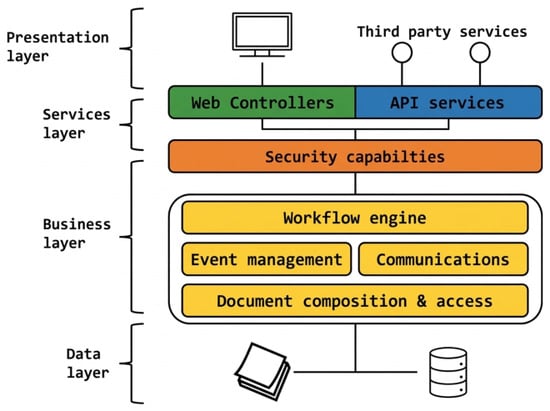
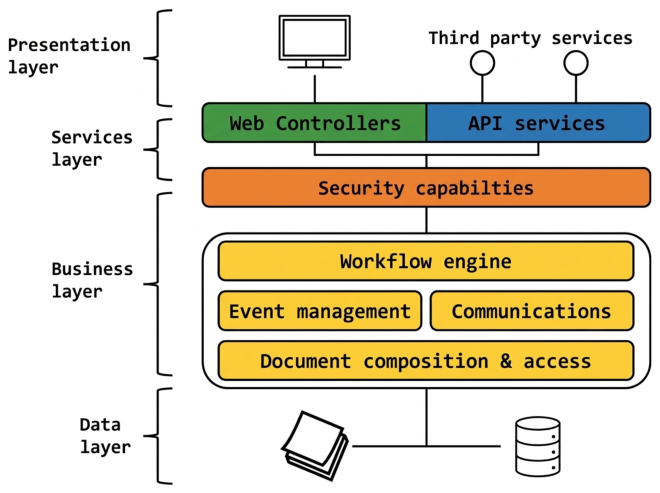
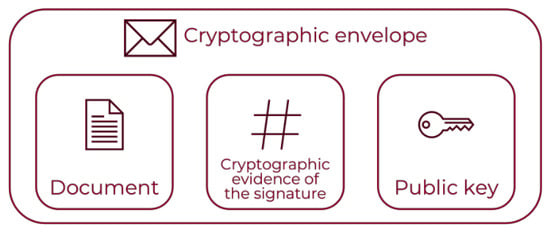
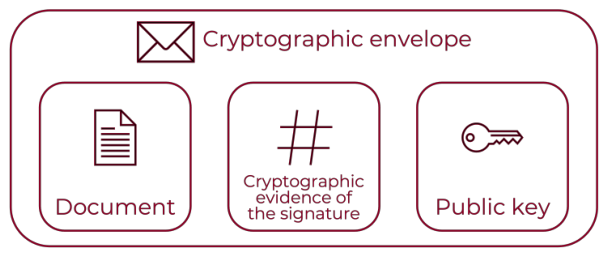
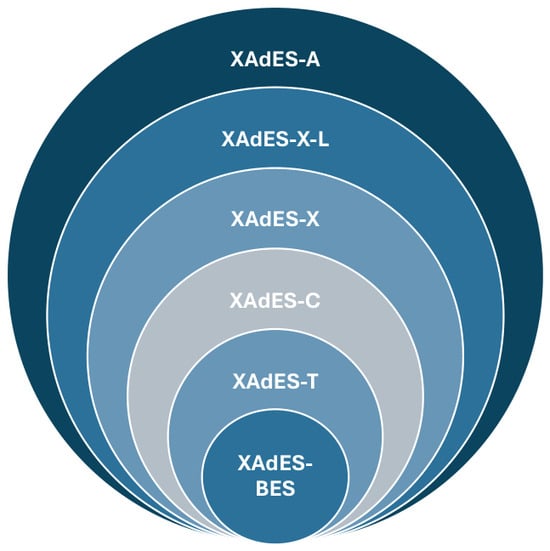
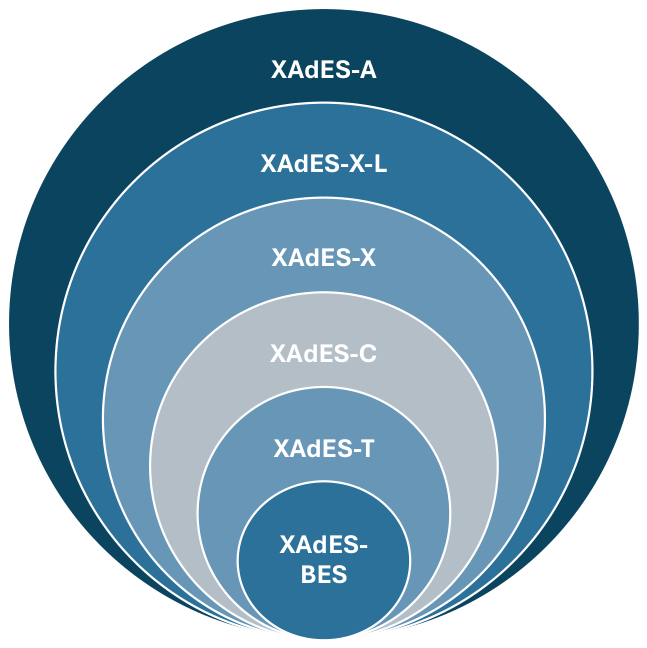
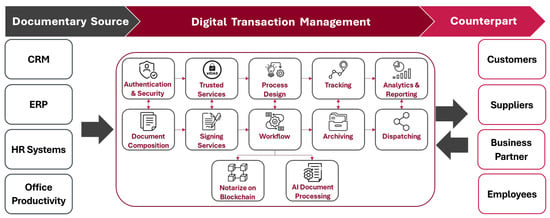
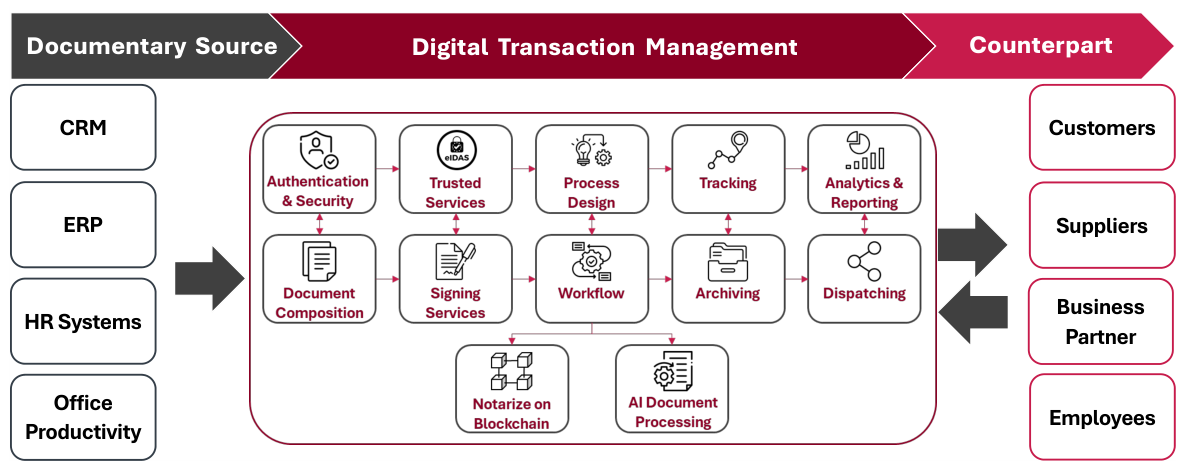
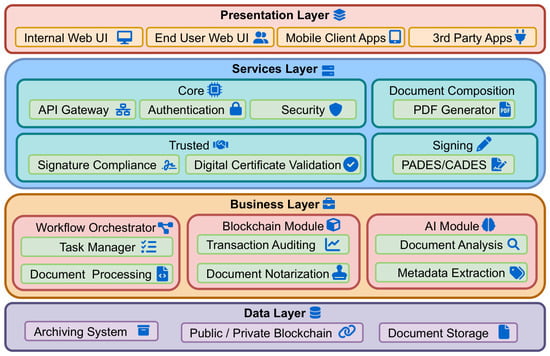
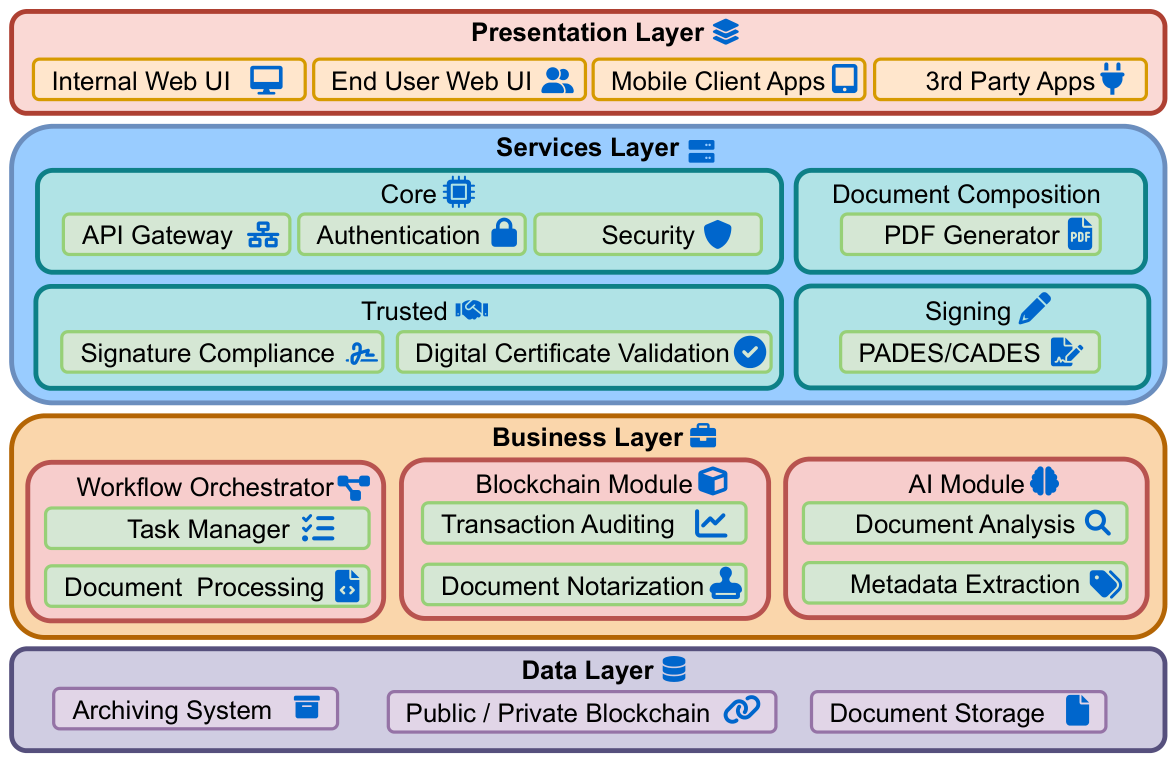
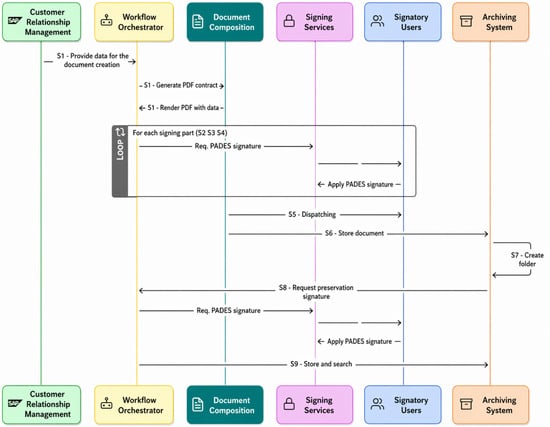
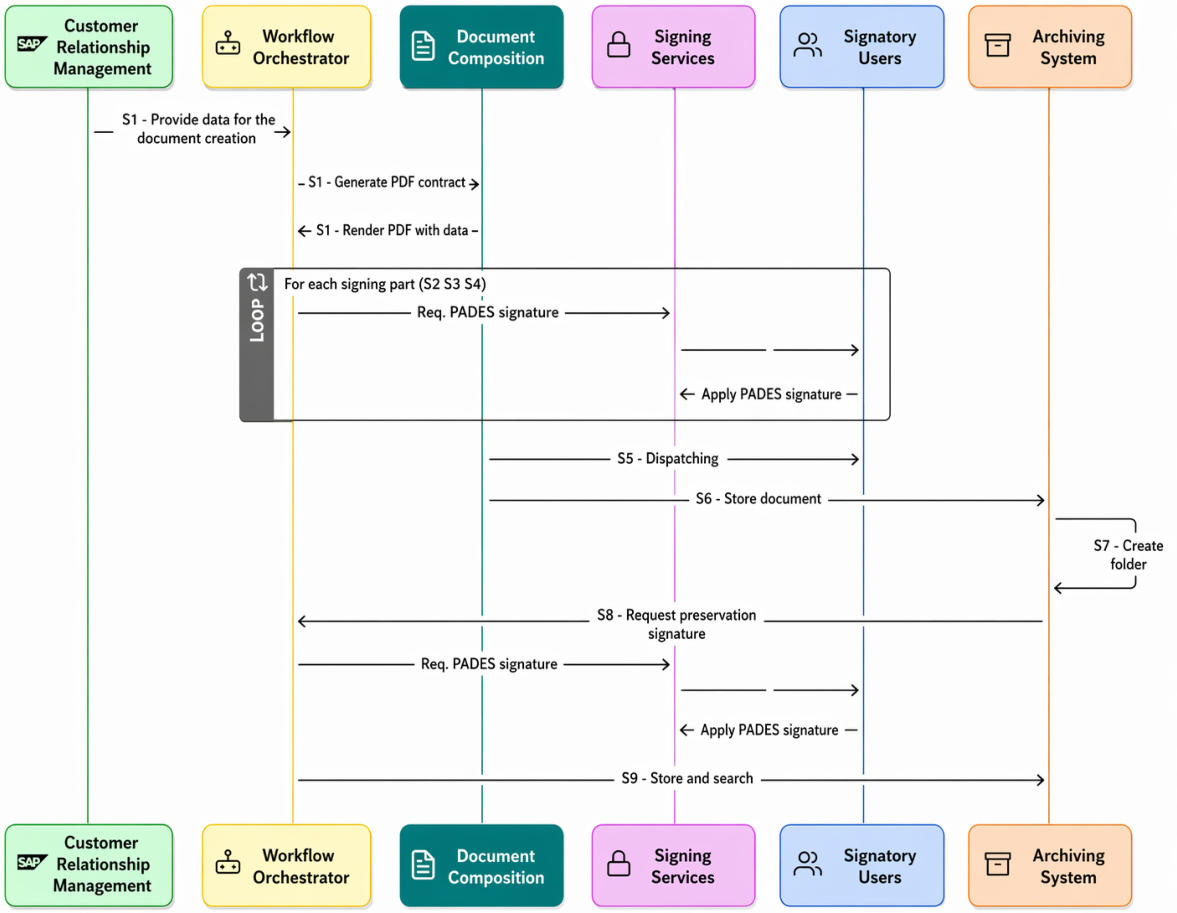
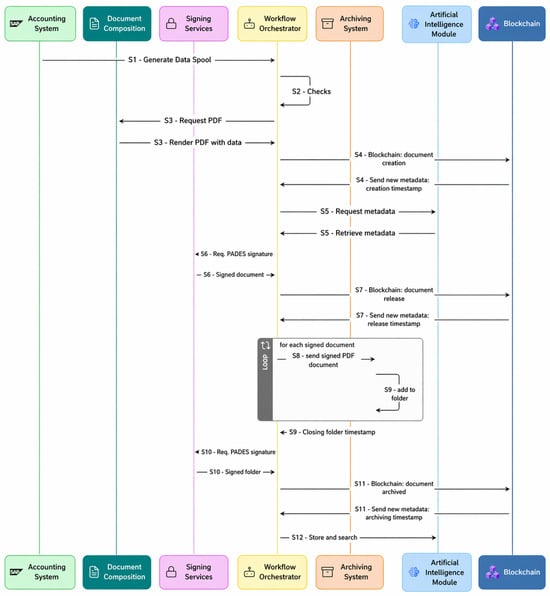

Disclaimer/Publisher’s Note: The statements, opinions and data contained in all publications are solely those of the individual author(s) and contributor(s) and not of MDPI and/or the editor(s). MDPI and/or the editor(s) disclaim responsibility for any injury to people or property resulting from any ideas, methods, instructions or products referred to in the content. |
© 2026 by the authors. Licensee MDPI, Basel, Switzerland. This article is an open access article distributed under the terms and conditions of the Creative Commons Attribution (CC BY) license.