


Featured Application
This review supports the design, validation and critical assessment of electrochemical sensors for point-of-care, wearable, environmental, food safety, agricultural and in vivo applications where routine calibration is impractical or undesirable. By distinguishing genuinely calibration-free measurements from factory-calibrated, self-referenced, ratiometric, matrix-corrected, calibration-light and model-assisted approaches, it provides a practical framework for assessing whether a reported result is supported by an internally constrained measurement relationship, validated parameter sources and appropriate uncertainty evidence. The framework is particularly relevant to disposable and field-deployable devices, where sensor-to-sensor variability, matrix transfer, drift, fouling, reproducibility, reagent stability and reference-method agreement often determine whether a promising sensing concept can become a reliable measurement tool.
Abstract
Calibration-free electrochemical sensing is increasingly promoted as a route to simpler, more deployable analytical devices. However, the term is used inconsistently, ranging from genuinely absolute measurement to factory-calibrated, ratiometric, self-referenced, drift-corrected or model-assisted operation. This review critically examines what calibration-free sensing can and cannot mean in electrochemical analysis. We argue that a strict claim requires that the reported measurand be obtained from an internally constrained physical, chemical or stoichiometric relationship, with the required parameters known, controlled or independently measured within an uncertainty framework. Potentiometric, amperometric, coulometric, impedimetric, biosensing and affinity-based approaches are compared to show where empirical calibration is removed and where it is shifted to fabrication, internal correction, model fitting, matrix correction or context-specific validation. Particular attention is given to coulometric and thin-layer systems, geometry-constrained devices, electrochemical aptamer-based sensors and self-diagnostic platforms. We propose a classification scheme, a decision tree and a minimum assumption map linking measurand definition, electrochemical signals, signal-to-result relationships, parameter sources, uncertainty, matrix transfer, reproducibility and independent-method agreement. The review provides a practical framework for distinguishing genuinely calibration-free measurements from calibration-reducing, conditionally calibration-free and drift-corrected strategies.
1. Introduction
Electrochemical sensors are widely presented as enabling technologies for analytical measurements outside conventional laboratories. Their appeal is well established: they can be miniaturised, mass-produced, integrated with portable electronics, operated with small sample volumes and deployed in clinical, environmental, food safety, agricultural, wearable and in vivo settings [1,2]. In these contexts, however, the practical value of a sensor is not determined only by its sensitivity, selectivity or response time. It is also determined by whether the reported result remains reliable when the sensor is used by non-specialists, in variable matrices, at varying temperatures or pH levels, after storage, or during prolonged operation. Calibration is therefore not a secondary procedural detail. It is one of the central operations by which an electrochemical response is converted into an analytical measurement.
The desire to remove, minimise or automate calibration has consequently become a major driver in sensor research. Calibration-free operation promises simpler workflows, a lower user burden, reduced reagent consumption, faster field decisions and improved suitability for continuous monitoring. These advantages are particularly important where conventional calibration is inconvenient or impossible, such as in implanted or wearable sensors, disposable point-of-care tests, autonomous environmental networks and rapid screening devices used far from trained analytical laboratories. This motivation has been recognised for some time. It has been argued that calibration-free chemical sensors are possible, but only through robust sensing materials and appropriate readout methodologies, rather than by simply declaring a sensor calibration-free [3]. The more recent biosensor and wearable sensor literature has similarly emphasised that real-world translation requires devices that go beyond sensitivity and selectivity to address calibration, drift, biofouling, stability, and operation in complex media [4,5,6].
Despite this importance, the expression “calibration-free” is used inconsistently across the electrochemical sensing literature. In some cases, it describes sensors that are factory-calibrated before use. In others, it refers to systems that use an internal reference signal, a ratiometric output, a blank correction, a model-based equation, a standardised electrode geometry or an assumed Nernstian, Cottrellian, coulometric or kinetic relationship. These approaches are not equivalent. A pre-calibrated glucose strip, a dual-frequency electrochemical aptamer-based sensor, a self-referenced pH sensor, a confined-volume coulometric device and a ratiometric nanomaterial-based biosensor may all reduce the practical burden of calibration, but they do not remove the same sources of uncertainty [7,8,9,10,11]. Treating them as a single “calibration-free” category risks obscuring the analytical assumptions on which each measurement depends.
In practice, these distinctions can lead to misleading claims when they are not made explicit. A disposable device may be described as calibration-free because the user does not perform calibration, even though the measurement relies on factory calibration, batch acceptance criteria, and reagent stability [12,13,14]. A potentiometric sensor may be described as calibration-free because it follows an approximately Nernstian slope, even though the reported concentration may still depend on activity coefficients, reference stability, membrane selectivity and matrix composition [15,16]. Similarly, an amperometric or voltammetric sensor may be treated as calibration-free because a theoretical current–concentration relationship is invoked, while diffusion coefficients, active areas, electrode geometries, conversion efficiencies or background currents are assumed rather than independently constrained [2,17,18]. In these cases, calibration has not necessarily been removed; it has been shifted to manufacturing control, theoretical assumptions, matrix correction or unreported model parameters.
This ambiguity matters because calibration performs several different functions in electrochemical analysis. It compensates for uncertainty in electrode areas, surface states, active-site density, double-layer contributions, mass transport, diffusion coefficients, electron-transfer kinetics, solution resistance, reference electrode stability, reagent activity, fouling, matrix composition, temperature, and instrumental response [17,19,20,21]. It may also absorb unrecognised deviations from ideal electrochemical theory. In potentiometry, for example, the Nernst equation provides a thermodynamic basis for relating potential to ion activity, but practical measurements still depend on activity coefficients, reference electrode stability, membrane selectivity, junction potentials and matrix composition [15,16]. In amperometry and voltammetry, current is related to concentration only under specified transport, kinetic and geometric conditions [17,18]. In coulometry, Faraday’s law can provide a direct route to the amount of substance, but only when the conversion efficiency, electron stoichiometry, sample volume and background charge are controlled [8,17,21]. Thus, a sensor cannot be regarded as calibration-free merely because no external calibration curve is recorded during use. The more important question is whether the omitted calibration step has been replaced by a valid physical, chemical, stoichiometric or metrological constraint.
Recent developments illustrate both the promise and the difficulty in this area. Dual-frequency electrochemical aptamer-based sensors use square-wave voltammetric signals at different frequencies to generate ratiometric outputs that reduce sensor-to-sensor variability and drift [22,23,24]. These systems provide some of the clearest examples of calibration reduction in molecular biosensing, particularly in complex biological matrices. However, their performance still depends on aptamer affinity, probe density, frequency selection, batch reproducibility, matrix effects and the stability of the assumed ratiometric relationship [23,25]. Similarly, self-calibrating and multimodal biosensors use internal reference signals to improve accuracy in food, environmental and biomedical applications, but the presence of an internal reference does not automatically make the measurement calibration-free [9,11,26,27]. Voltammetric pH sensors based on relative peak potentials can mitigate the effects of reference electrode drift by using two pH-dependent electrochemical responses in the same voltammogram. However, the reported pH still depends on the stability of the electrode chemistry, the validity of the peak potential relationship, the selected pH scale and matrix-specific responses [28]. Confined-volume, thin-layer, and co-facing electrode systems offer an alternative route in which device geometry and transient or charge-based responses may help constrain the relationship among the signal, amount, concentration, and transport under defined assumptions [8,29,30,31].
The literature, therefore, contains important examples of calibration-free, calibration-light, self-referenced, ratiometric and model-assisted electrochemical sensors, but it lacks a consistent cross-platform framework for judging the strength of these claims. Several valuable reviews have addressed related aspects of this problem. Reviews of wearable sensors, continuous electrochemical biosensors, self-calibrating biosensors and glucose monitoring systems discuss calibration, drift, biofouling, device variability and translation as important practical barriers [4,5,13,26]. More directly, calibration-free operation has been critically examined for solid-contact ion-selective electrodes and related ion-selective electrode platforms, in which reproducible standard potentials, potential drift, reference stability, phase-boundary potentials and ion-to-electron transduction are central to the claim [32,33]. These contributions are valuable, but they do not provide a general framework for comparing calibration-free claims across major electrochemical sensing modes, including potentiometric, amperometric, voltammetric, coulometric and impedimetric methods, or across common sensor and calibration-reduction strategies, including biosensing, affinity-based sensing, factory calibration, ratiometric readout and model-assisted interpretation. What is still missing is a critical, measurement-centred review that asks a more fundamental question: when does an electrochemical signal contain enough internally constrained information to produce a reliable analytical result without empirical calibration against the target analyte under the intended conditions of use?
This question is not merely semantic. Overstating calibration-free capabilities can lead to poor analytical transfer from buffers to real samples, the underestimation of matrix effects, inadequate uncertainty reporting and unrealistic claims of field readiness. Conversely, dismissing all calibration-free claims as impossible would ignore genuine progress in coulometric, ratiometric, differential, internally referenced and confined-volume electrochemical measurements. A more useful approach is to identify which type of calibration has actually been removed, which assumptions have replaced it and whether those assumptions have been experimentally validated to the level required for the intended application.
Scope and Literature Selection
This critical review addresses the above gap by examining calibration-free electrochemical sensing as a conceptual and metrological problem rather than as a time-limited systematic survey. The aim is not to count how many papers describe calibration-free sensors within a defined publication window but to determine when such claims are analytically justified. The literature was therefore selected to include foundational electroanalytical and metrological sources, representative electrochemical sensing modes, papers making explicit calibration-free or calibration-reducing claims and translational examples in which calibration, drift, fouling, matrix transfer, reproducibility or independent validation are central barriers.
Papers were identified from the author’s existing electroanalytical literature base, citation tracing from key articles and targeted searches of bibliographic and publisher databases, including Web of Science, Scopus, Google Scholar and publisher platforms. Search terms included combinations of “calibration-free electrochemical sensor”, “self-calibrating electrochemical sensor”, “calibration-light sensor”, “ratiometric electrochemical sensor”, “self-referenced electrochemical sensor”, “factory-calibrated glucose sensor”, “solid-contact ion-selective electrode”, “potentiometric sensor”, “coulometric ion sensor”, “thin-layer coulometry”, “confined-volume electrochemistry”, “co-facing electrodes”, “model-assisted electrochemical sensor”, “impedimetric biosensor”, “electrochemical aptamer-based sensor” and “wearable electrochemical biosensor”.
No strict lower date limit was applied to the foundational electrochemical, potentiometric, coulometric and uncertainty literature, because older sources define the principles on which calibration-free claims still depend. For contemporary sensor examples, emphasis was placed on studies from the past two decades, with recent papers included when they illustrated current approaches to wearable, in vivo, point-of-care, environmental, disposable or affinity-based sensing. Studies were discussed in detail when they clarified a distinct form of calibration dependence, illustrated a calibration-free or calibration-reducing strategy or exposed analytical limitations such as hidden model parameters, matrix effects, biofouling, device-to-device variability, drift, uncertainty or a lack of independent validation. The review is therefore selective by design, but the selection is governed by the analytical role that each example plays in developing the classification and validation framework.
The review offers four main contributions. First, it defines calibration-free sensing as an analytical condition rather than a marketing descriptor. Second, it distinguishes between calibration-free, pre-calibrated, factory-calibrated, self-referenced, ratiometric, matrix-corrected, model-assisted and calibration-light approaches. Third, it identifies where calibration is hidden in electrochemical measurements, including the electrode geometry, transport regime, surface chemistry, thermodynamic activity, biological recognition, matrix effects and signal processing. Fourth, it proposes practical criteria for evaluating calibration-free claims, including measurand definition, signal-to-result relationships, parameter sources, uncertainty analysis, matrix transfer, reproducibility, stability and comparisons with independent reference methods. By reframing calibration-free electrochemical sensing as a question of measurement validity, this review aims to support more rigorous sensor design, more transparent reporting and a more realistic assessment of field-deployable electrochemical technologies.
2. What Does Calibration Do in Electrochemical Sensing?
Calibration is often treated as a routine analytical step, but in electrochemical sensing, it serves a deeper function. It links an experimentally observed electrochemical response, such as potential, current, charge or impedance, to a defined chemical measurand under specified conditions. Without this link, an electrochemical signal is not yet an analytical result. It may indicate that an electroactive process, ion transfer process, binding event or interfacial change has occurred, but it does not by itself establish the amount, concentration, activity, flux or rate of the target species. Calibration is therefore the practical operation through which a sensor response is placed on an analytical scale.
In idealised electrochemical systems, this link may appear to be supplied by theory. Potentiometry relates electrode potential to ion activity through the Nernst equation. Amperometry and voltammetry relate current to concentration through mass transport, electrode kinetics and electrode geometry. Coulometry relates charge to the amount of substance through Faraday’s law. Impedimetry relates frequency-dependent electrical responses to interfacial charge transfer, capacitance, diffusion or dielectric properties [17,34]. These relationships are powerful, but they are not automatically sufficient for calibration-free analysis. Each depends on parameters and assumptions that must either be known independently, controlled by design or absorbed into an empirical calibration step.
For this reason, calibration in electrochemical sensing often compensates for imperfect knowledge of the measurement system. In amperometric and voltammetric sensors, the signal may depend on the active electrode area, diffusion coefficient, diffusion-layer geometry, convection, mediator concentration, film thickness, double-layer charging, uncompensated resistance and heterogeneous electron transfer kinetics [17,34]. In modified electrodes and biosensors, additional variables enter, including catalyst loading, enzyme activity, receptor coverage, probe orientation, membrane permeability, nonspecific adsorption and fouling [5,35]. In potentiometric sensors, calibration may compensate for deviations from the ideal Nernstian slope, reference electrode drift, liquid junction potentials, membrane ageing, selectivity limitations and activity coefficient changes [3,16,36]. Even when the analytical response appears linear, the slope and intercept frequently contain multiple hidden contributions that are difficult to know a priori [19,37].
The distinction between signal and measurand is therefore central. The signal is the electrochemical quantity measured by the instrument, such as potential, current, charge, impedance or a peak parameter, whereas the measurand is the chemical quantity intended to be reported, such as activity, concentration, amount of substance, enzymatic activity, binding occupancy or a threshold classification. An electrochemical sensor may respond reproducibly to a target in buffer, but the measurand required in practice may be the concentration in plasma, activity in seawater, total amount in a confined volume, enzymatic activity in a biological sample or a threshold classification in a field matrix. These are not equivalent analytical tasks. For example, a potentiometric response is fundamentally related to ion activity, whereas many applications require concentration [16,36]. An amperometric current may reflect concentration only when the transport regime, electrode geometry and diffusion coefficient are known or constant [2,17]. A biosensor response may reflect enzyme turnover, receptor occupancy or interfacial binding rather than the intended measurand, unless the biochemical and electrochemical steps are adequately constrained. Calibration often hides these translations by empirically mapping the observed signal to the desired measurand under selected conditions [5,35].
This is also why calibration cannot be separated from metrological traceability and measurement uncertainty. A measurement result must be traceable to a stated reference through a documented chain, with each step contributing to the uncertainty [38]. In routine analytical chemistry, method validation requires the assessment of performance characteristics such as selectivity, calibration function, working range, limit of detection, precision, trueness or bias, measurement uncertainty and ruggedness [37]. The removal of a calibration curve does not remove these requirements. It merely shifts the burden of proof onto the physical model, device architecture, internal reference, material stability or manufacturing reproducibility that is claimed to replace calibration.
In this review, calibration is therefore understood broadly. It includes not only the construction of an external concentration–response curve, but also any operation that establishes the relationship between the electrochemical response and the measurand. This includes factory calibration, batch calibration, single-point calibration, standard addition, internal referencing, blank correction, ratiometric normalisation, theoretical modelling, matrix matching and comparison with a reference method. Some of these operations reduce the user burden; others reduce uncertainty; others simply transfer calibration from the end user to the manufacturer or to the assumptions embedded in the measurement model. These differences are analytically important.
A useful way to view calibration-free claims is to ask what role the missing calibration would normally have played. If it had corrected only a stable offset, then internal referencing may be sufficient. If it had corrected sensor-to-sensor variability in the electrode area or probe loading, then ratiometric or differential readout may be appropriate. If it had corrected changes in the diffusion coefficient, viscosity or mass-transport regime, then a geometry capable of measuring or constraining transport independently may be needed. If it had corrected for matrix-dependent activity coefficients, fouling or biochemical inhibition, then the claim would be much harder to justify without matrix-specific validation. Thus, the analytical strength of a calibration-free claim depends not on the absence of a calibration curve but on whether the remaining unknowns are small, controlled or independently measurable.
This perspective leads to the classification proposed in this review, in which calibration-free claims are separated from more limited but still valuable reductions in calibration burden. Pre-calibrated disposable devices may be highly useful, but their accuracy depends on manufacturing reproducibility, batch stability and quality control [2,3]. Self-referenced or ratiometric sensors may reduce drift, surface-loading variation, or sensor-to-sensor variability, but still require validation of the relationships between internal signals [22,23,24]. Model-assisted sensors may avoid empirical calibration only when the relevant model parameters are known with acceptable uncertainty [19,37]. On this basis, we define truly calibration-free electrochemical sensing as a measurement in which the measurand is obtained from internally constrained physical, chemical, or stoichiometric information rather than from an empirical target calibration performed under comparable conditions. Such cases are possible, but they are narrower than the term “calibration-free” often implies.
The rest of this review builds from this premise. Before judging whether a sensor is calibration-free, one must identify the measurand, the electrochemical signal, the model or reference linking the two, the assumptions embedded in this link and the uncertainty introduced by each assumption. These elements also form the basis of the decision framework proposed later in the review. Only then can calibration-free sensing be assessed as an analytical claim rather than a convenient description of simplified operation.
3. A Proposed Classification of Calibration Dependence
The term “calibration-free” is useful only when separated from neighbouring concepts that reduce the calibration burden without eliminating calibration dependence. In practice, many electrochemical sensors described as calibration-free still rely on a calibration hierarchy, a manufacturing correction, a fixed sensitivity factor, an internal reference, a matrix model or a previously established empirical relationship. These strategies can be analytically valuable, but they do not have the same metrological status. A classification of calibration dependence is therefore needed before individual sensing modes can be evaluated.
This review proposes that electrochemical sensors should not be classified by whether the user records a calibration curve at the time of measurement, but by where the signal-to-result relationship is established and what assumptions make this relationship valid. On this basis, calibration dependence can be grouped into eight broad categories: conventionally calibrated, pre-calibrated, calibration-light, self-referenced, ratiometric, matrix-corrected, model-assisted and genuinely calibration-free systems. These categories are not always mutually exclusive. For example, a sensor may be pre-calibrated and internally referenced or ratiometric and model-assisted. However, the classification is useful because each category hides calibration in a different place and therefore requires different validation evidence.
3.1. Conventionally Calibrated Sensors
Conventionally calibrated electrochemical sensors use empirical standards to determine the response function under defined conditions. The most common form is a multi-point calibration curve relating the current, potential, charge, impedance or a derived voltammetric parameter to the analyte concentration or activity. This approach remains the reference case for most analytical electrochemistry because it directly accounts for the combined effects of the electrode area, surface state, mass transport, temperature, matrix composition, reagent activity and instrumental response in a measured calibration function [2,17,21]. The strength of this approach is its experimental grounding. Its limitation is that the calibration is only valid under the conditions, matrix, range and time window for which it was established.
Conventional calibration is therefore not a weakness by default. In many applications, it is the most transparent way to define the analytical scale and estimate uncertainty. Problems arise when a calibration generated in buffer is treated as transferable to biological, food, environmental, or agricultural samples without evidence that the slope, intercept, and response mechanism remain unchanged. In such cases, the calibration curve may provide precision under idealised conditions while failing to establish trueness in the intended matrix. For this reason, a conventionally calibrated sensor can be analytically stronger than a nominally calibration-free sensor if the latter has not demonstrated control of the variables that calibration would normally correct.
3.2. Pre-Calibrated and Factory-Calibrated Sensors
Pre-calibrated sensors shift the calibration step from the user to the manufacturer, the instrument, the production batch or the software system. Disposable blood-glucose test strips provide the clearest example. These devices are often used without user calibration, but they are not calibration-free in the strict analytical sense. Their performance depends on factory calibration, batch acceptance criteria, reagent stability, electrode manufacturing reproducibility, coding or code-free correction strategies, and validation against reference measurement procedures [12,13,14].
This distinction is important because the user experience can be calibration-free while the measurement system remains calibration-dependent. In blood-glucose monitoring systems, for example, the reported result depends on design verification, metrological traceability, analytical performance evaluation, system accuracy testing, influence quantity evaluation, reagent stability assessment and user performance evaluation [14]. The relevant standard makes clear that these systems still rely on calibration and traceability, even when the user does not perform the calibration. The measured glucose result is linked to reference measurement procedures through manufacturer-controlled calibration, quality control and validation steps [14]. Thus, the absence of user calibration is achieved by transferring calibration and quality control upstream, not by eliminating them.
The analytical strength of pre-calibrated sensors depends on whether manufacturing variability remains small relative to the required uncertainty. For glucose strips, lot-to-lot variability, haematocrit effects, electrochemical interferents, sample application, temperature, reagent degradation and user technique can all affect the reported result [12,13]. This makes pre-calibrated systems highly practical but analytically conditional. They should be described as factory-calibrated, code-free, batch-calibrated or user calibration-free rather than truly calibration-free unless the response is obtained from internally constrained measurement information rather than from prior empirical calibration.
3.3. Calibration-Light Sensors
Calibration-light sensors reduce the frequency, complexity or number of calibration standards required. This category includes single-point calibration, periodic recalibration, blank correction, standard addition, drift correction, the use of a stored calibration slope and calibration transfer between similar devices. These approaches can be attractive in field-deployable or continuous monitoring contexts because they reduce the user burden while preserving an empirical link between the signal and the measurand.
However, calibration-light operation should not be confused with calibration-free operation. A single-point correction may compensate for an offset but not for a change in slope. A stored slope may remain valid only if the electrode area, surface chemistry, reagent activity, transport regime and temperature remain constant. Standard addition can correct matrix effects but still requires the addition of a known standard and assumes a linear response over the relevant concentration range. Periodic recalibration can manage drift, but it also acknowledges that the sensor response is not fully constrained internally. Calibration-light strategies are therefore best understood as compromises between analytical rigour and operational simplicity.
3.4. Self-Referenced Sensors
Self-referenced sensors use an internal signal to correct for changes that would otherwise require calibration or frequent recalibration. The internal reference may be a second redox process, an invariant peak, a background response, a reference electrode process, a nonresponsive recognition element or a second channel exposed to the same environment. In favourable cases, this strategy can reduce errors associated with electrode-to-electrode variation, reference drift, surface fouling, sample volume, evaporation or instrumental fluctuation, provided that the internal signal tracks the dominant source of variation affecting the analytical signal [7,22,39].
The limitation is that this condition is not automatically satisfied. If the reference signal corrects only for a stable offset, it cannot correct slope changes. If it corrects the electrode area, it may not correct matrix-dependent kinetics. If it corrects reference-potential drift, it may not correct activity coefficient changes, fouling or biochemical inhibition. For example, self-referenced voltammetric pH sensing can reduce the dependence on an external reference electrode by using relative peak positions within the same voltammogram, but the pH result still depends on the electrode chemistry, pH scale, solution composition and stability of the underlying potential–pH relationship [28]. Self-referencing is therefore a powerful calibration reduction strategy, but it is not automatically calibration-free.
3.5. Ratiometric Sensors
Ratiometric sensors report the ratio of two signals rather than a single absolute response. This strategy is common in electrochemical aptamer-based sensors, nanomaterial-based biosensors and multimodal sensing platforms. The attraction is clear: ratios can reduce errors associated with probe loading, electrode area, baseline drift, signal loss, partial fouling and sensor-to-sensor variability. Dual-frequency electrochemical aptamer-based sensors are a particularly important example because they exploit frequency-dependent square-wave voltammetric responses to improve the correction of drift and device variability in complex environments [7,22,23,24,39].
Ratiometric sensing, however, does not remove calibration unless the ratio is linked to the measurand through a validated physical or chemical relationship. A ratio can be more stable than an absolute current while still requiring empirical calibration against the analyte concentration. In electrochemical aptamer-based systems, the ratio may depend on the aptamer affinity, probe density, electron transfer kinetics, frequency selection, surface architecture, matrix composition and stability of the binding-induced signal change [7,22,23,24,39,40]. In nanomaterial-mediated systems, the internal reference may improve the accuracy but may also introduce additional assumptions about reference stability, co-localisation, independence from the target reaction and equal susceptibility to fouling or matrix effects [9,11]. Thus, ratiometric output should be interpreted as a calibration-reducing strategy, not as calibration-free operation, unless the analytical ratio itself is independently constrained and validated as the signal-to-result relationship.
3.6. Matrix-Corrected Sensors
Matrix-corrected sensors use additional information to compensate for sample-dependent effects. This may include the pH, ionic strength, haematocrit, viscosity, temperature, conductivity, dissolved oxygen, protein fouling, interferent concentration or sample dilution. In electrochemical glucose strips, for example, haematocrit, electrochemical interferents, the temperature, the sample volume and strip filling can strongly influence the assay outcome [12,13]. Influence quantities, such as the packed cell volume and interfering substances, must be evaluated, and system accuracy must be assessed using procedures that account for reagent lots, sample distribution, reference measurement procedures and user performance [14].
Matrix correction is analytically valuable because many electrochemical sensors fail not in buffer but during matrix transfer. However, a matrix-corrected sensor is not necessarily calibration-free. Correction models may be empirical, matrix-specific, population-specific or valid only within a limited range of influence quantities. A correction for temperature may not correct fouling; a correction for haematocrit may not correct electroactive interferents; and a correction developed in one biological fluid may not transfer to another. Matrix-corrected sensing should therefore be reported with the range of validated matrix conditions, evidence that the correction reduces matrix-dependent bias, the residual uncertainty after correction and confirmation that the correction remains valid across the intended storage, handling and operational conditions of the sensor.
3.7. Model-Assisted Sensors
Model-assisted sensors use theoretical or semi-empirical equations to calculate the measurand from the electrochemical response. Examples include Nernstian potentiometric models, Cottrell-type transient current models, kinetic enzyme models, diffusion reaction models, equivalent-circuit models in impedimetry and finite element descriptions of confined or microstructured electrodes. These approaches can reduce the need for empirical calibration when the model parameters are known independently and the experimental system closely conforms to the model assumptions [2,17,21].
The weakness of model-assisted sensing is that model parameters are often treated as known when they are only assumed. Diffusion coefficients, active areas, film thicknesses, heterogeneous rate constants, double-layer capacitances, background currents, binding constants, enzyme activity and solution resistances can vary across devices, matrices and operating conditions. When these parameters are fitted using standards, calibration has not been removed; it has been embedded in the model. A model-assisted sensor approaches calibration-free operation only when the required parameters are fundamental constants, independently measured quantities, tightly controlled by design or explicitly included in the uncertainty budget [19,37].
This distinction is particularly important for impedimetric sensors. Equivalent-circuit and impedance spectroscopy models can provide useful descriptors of interfacial behaviour, but the fitted parameters are not always unique and may not correspond directly to a single chemical measurand [41]. A change in charge transfer resistance, capacitance or Warburg element may indicate binding, fouling, film swelling, ion transport, roughness change or solution conductivity. Without an independently constrained relationship between the fitted parameter and the measurand, impedimetric sensing remains model-assisted and calibration-dependent rather than calibration-free.
3.8. Truly Calibration-Free Sensors
In the strict sense proposed here, a truly calibration-free electrochemical sensor is one in which the measurand is obtained from internally constrained physical, chemical or stoichiometric information, rather than from empirical target calibration performed under comparable conditions. This definition still allows prior characterisation of the measurement system. Device dimensions, electrode spacing, reagent identity, electron stoichiometry, solution volumes, reference stability, and instrumental performance may still need to be known or verified. The defining feature is that the result does not rely on an empirical analyte–response curve to determine sensitivity under the conditions of use.
Coulometry provides one of the strongest routes towards this condition because charge can be related to the amount of substance through Faraday’s law when the electron stoichiometry and conversion efficiency are known [2,17,21]. Confined-volume and co-facing electrode systems can also reduce calibration dependence because the geometry constrains mass transport and, in some cases, allows concentration and diffusion effects to be separated from transient current responses [29,30,42]. However, these systems should not be automatically grouped with strict coulometric calibration-free sensors. Their classification depends on whether the analytical result is obtained from charge and quantitative conversion or from transient current fitting using a transport model. In the latter case, they are better described as model-assisted, geometry-constrained calibration reduction systems unless the required parameters are independently known or controlled and the relationship has been validated in the intended matrix.
For systems that meet the requirements for calibration-free operation only within a limited scope, the term “conditionally calibration-free” is useful because it makes the validated operational envelope explicit. Such an envelope may include a fixed sample matrix, controlled ionic strength or pH, a narrow concentration or activity range, a specified temperature interval, a standardised electrode geometry, a known sample volume, a defined storage time or a validated range of interfering species. For example, a thin-layer coulometric or confined-volume device may be calibration-free with respect to empirical sensitivity under a controlled geometry, volume, and stoichiometry, but only if the conversion efficiency, background charge, and matrix effects remain within validated limits [8,17,21,31,43,44]. Similarly, a ratiometric or self-referenced biosensor may be calibration-reducing, or conditionally calibration-free with respect to drift or sensor-to-sensor variability, only if the internal reference continues to track the dominant error source across the intended matrix and operating time [22,45,46]. The term should therefore not be used as a weaker substitute for validation. It should be accompanied by an explicit statement of the matrix, range, temperature, geometry, lifetime, and uncertainty conditions under which the calibration-free claim is valid.
Truly calibration-free sensing is therefore possible, but it is a narrow claim. It is most credible when the sensor design constrains the variables that usually determine sensitivity, the measurand is clearly defined, the electrochemical model is physically valid, and the remaining uncertainty is quantified. It is least credible when the claim rests only on the absence of a user-generated calibration curve, the use of an internal reference or the observation that a signal is linear in buffer.
3.9. Consequences for Reporting Calibration-Free Claims
The proposed classification changes how calibration-free electrochemical sensors should be reported. A manuscript should state not only that calibration was avoided but also which calibration step was avoided: user calibration, device-specific calibration, batch calibration, matrix-matched calibration, empirical sensitivity determination or calibration against target standards under the intended conditions of use. It should also state where the signal-to-result relationship was established and which assumptions were used to replace the missing calibration step. A sensor may justifiably be described as user calibration-free, factory-calibrated, self-referenced, ratiometric, calibration-light, matrix-corrected or model-assisted without being described as truly calibration-free. This terminology has practical analytical consequences because each descriptor requires different validation evidence.
For conventional calibration, validation should focus on the calibration function, working range, trueness, precision, matrix transfer and uncertainty [37,38]. For pre-calibrated sensors, validation should include manufacturing reproducibility, batch effects, reagent stability, traceability and user performance. For self-referenced and ratiometric sensors, validation should demonstrate that the internal signal corrects the dominant source of variation and remains coupled to the analytical signal across matrices and time. For matrix-corrected sensors, the correction must be validated across the relevant range of influence quantities. For model-assisted sensors, model parameters must be independently known, controlled or included in the uncertainty budget. For genuinely calibration-free sensors, the strongest evidence is agreement with an independent reference method across matrices, devices, operators, and time without empirical adjustment to the target analyte.
This framework is summarised in Table 1. Its purpose is not to discourage calibration-free sensor development but to make the claim testable. The practical value of calibration-free sensing depends on analytical transparency: the fewer empirical calibration steps a sensor uses, the more clearly its hidden assumptions must be identified, validated and reported.
Table 1.
Proposed classification of calibration dependence in electrochemical sensing.
Because these categories can overlap in practical devices, the classification should not be applied as a forced single-label system. The primary category should identify where the main signal-to-result relationship is established and what most strongly replaces empirical target calibration. Additional descriptors should be used when they identify secondary mechanisms of calibration reduction. For example, a disposable glucose strip may be described as factory-calibrated and matrix-corrected if it relies on manufacturer calibration and correction for influence quantities. A self-referenced sensor may also be ratiometric if the result is reported as a ratio of two signals. A matrix-corrected sensor may also be model-assisted if the correction relies on an empirical or mechanistic model. In such cases, the strongest claim should be assigned according to the evidence available: user calibration-free, factory-calibrated, calibration-light, self-referenced, ratiometric, matrix-corrected, model-assisted, conditionally calibration-free or truly calibration-free. The purpose of Table 1 is therefore not to force mutually exclusive categories but to make explicit where calibration dependence remains and what evidence is required to support the terminology used.
Throughout this review, the term “calibration-free” is therefore reserved for systems in which empirical target calibration is replaced by an internally constrained and independently validated signal-to-result relationship. Terms such as “user calibration-free”, “factory-calibrated”, “calibration-light”, “self-referenced”, “ratiometric”, “matrix-corrected”, “model-assisted”, “calibration-reducing”, and “conditionally calibration-free” are used only when they describe the specific way in which calibration dependence has been reduced, shifted or bounded.
4. Calibration-Free Claims Across Electrochemical Sensing Modes
The classification proposed above can be applied to individual electrochemical sensing modes. This is necessary because calibration dependence varies across potentiometry, amperometry, voltammetry, coulometry, impedimetry, and biosensing. Each mode has a different theoretical basis, a different primary signal and different assumptions that must be satisfied before the result can be obtained without empirical calibration. In this sense, calibration-free sensing is not a universal property of electrochemical sensors. It is a mode-specific and measurand-specific claim.
4.1. Potentiometric Sensors: Activity, Selectivity and Reference Stability
Potentiometric sensors are often presented as strong candidates for calibration-free measurement because their ideal response is described by the Nernst equation. In principle, the measured potential is logarithmically related to ion activity, and the theoretical slope is determined by the temperature and the ion’s charge. This gives potentiometry a direct thermodynamic foundation that is not available to many current-based sensors [15,17]. However, this theoretical advantage does not automatically make potentiometric sensors calibration-free in practical analysis.
The first limitation is that potentiometric sensors respond to ion activity, whereas many analytical applications require concentration [15,34]. Activity and concentration coincide only under restricted conditions or when activity coefficients are known or controlled. In biological fluids, seawater, food extracts, environmental samples, and agricultural matrices, ionic strength, complexation, pH, competing ions, and matrix composition can alter the relationship between activity and total concentration. A potentiometric signal may therefore correctly reflect ion activity but still fail to provide the concentration required for the intended application. Calibration, matrix matching or independent control of the ionic strength is often used to bridge this gap.
The second limitation is selectivity. Ion-selective electrodes do not respond only to the primary ion; they respond according to a selectivity pattern determined by the membrane, ionophore, ion exchanger, sample composition and interfering ions [15]. At trace levels, ion fluxes across the membrane and the composition of the inner electrolyte can further influence the apparent lower detection limit, response shape and stability [47]. These effects mean that even when the response slope is close to Nernstian, the intercept, detection limit, and apparent activity may depend on the membrane history, conditioning, sample composition, and interfering species.
Reference stability is the third major constraint. Potentiometry is a relative measurement, and the measured potential includes contributions from both the indicator electrode and the reference system. Liquid junction potentials, reference electrode drift, chloride leakage, matrix-dependent junction behaviour and miniaturised reference instability can all introduce errors that the Nernst equation does not account for [15,34]. A sensor may therefore be theoretically calibration-free with respect to the indicator electrode response, but practically calibration-dependent because the reference system is not invariant.
For these reasons, potentiometric sensors are best considered calibration-free only under carefully defined conditions. A strong claim requires that the measurand is ion activity, the slope is theoretically constrained or independently verified, the reference potential is stable, selectivity is adequate for the matrix, and activity coefficient effects are either irrelevant, controlled or included in the uncertainty budget. If the intended measurand is the concentration in a variable matrix, the claim should usually be weakened to calibration-light, matrix-corrected or model-assisted rather than truly calibration-free.
4.2. Amperometric and Voltammetric Sensors: Hidden Sensitivity Factors
Amperometric and voltammetric sensors are more difficult to justify as calibration-free because the measured current normally contains several hidden sensitivity factors. Under idealised conditions, current can be related to concentration through a defined mass-transport regime, electrode geometry, electron stoichiometry and transport parameters such as the diffusion coefficient. For example, limiting currents, peak currents, and transient currents can be described by well-established electrochemical theory when the relevant geometry, transport regime and kinetic assumptions are satisfied [17,18,42]. However, these equations do not eliminate the need for calibration unless all required parameters are known or sufficiently well constrained.
In practice, the current response depends on the active electrode area, roughness, surface state, diffusion coefficient, viscosity, convection, supporting electrolyte, electrode kinetics, uncompensated resistance, double-layer charging and background current [17,18,42]. Modified electrodes introduce additional uncertainty due to the film thickness, catalyst loading, nanomaterial dispersion, porosity, mediator concentration, permeability, adsorption, and fouling [2,13]. A calibration curve often compensates for these combined variables by empirically defining the sensitivity. If the calibration curve is removed without independently constraining these variables, the measurement is not calibration-free; it is underdetermined.
Voltammetric sensors can also appear more analytically specific than they are. The peak position, peak height, peak area and peak shape can provide information about redox identity, transport, kinetics and mechanisms, but these features are not independent of the matrix and electrode conditions. Peak currents may change with the diffusion coefficient or electrode area; peak potentials may shift with the pH, reference drift, electron-transfer kinetics or uncompensated resistance; and apparent electrocatalytic improvements may arise from altered surface areas or mass transport rather than improved kinetics [17,18,42]. These dependencies are particularly important for nanostructured electrodes, where increased current is often interpreted as improved sensing performance even when the underlying sensitivity factor is not physically separated from area or transport effects.
Amperometric and voltammetric sensors can still reduce the calibration burden in several ways. Standardised disposable electrodes may reduce electrode-to-electrode variability. Internal redox references may correct drift or surface loading. Ratiometric signals may improve reproducibility. Microelectrodes and confined geometries may better constrain mass transport. However, these strategies do not automatically eliminate the need for calibration. They reduce selected sources of uncertainty, and their success depends on whether these sources are the dominant contributors to measurement error.
A current-based sensor should therefore be described as truly calibration-free only when the current-to-measurand relationship is fixed by independently known quantities, such as the geometry, diffusion, electron number, conversion efficiency or a validated transport model. Otherwise, amperometric and voltammetric sensors are more accurately described as calibrated, calibration-light, model-assisted, self-referenced or ratiometric.
4.3. Coulometric Sensors: The Strongest Route Towards Absolute Quantification
Coulometry provides one of the most credible routes towards calibration-free electrochemical measurement because charge is directly related to the amount of substance through Faraday’s law. In contrast to current, which depends strongly on instantaneous mass transport, electrode geometry and kinetic conditions, the total charge can provide an absolute measure of the number of electrons transferred when electrolysis is quantitative, and the electron stoichiometry is known [15,17,21]. This makes coulometry conceptually closer to gravimetry or titrimetry than to response slope-based sensing.
The strength of coulometry is that the analytical scale need not be empirically determined as an amperometric calibration slope. If all analyte molecules in a known volume are converted through a known electron transfer reaction, the measured charge can be converted to an amount using physical constants and stoichiometry. This is the strongest form of calibration-free electrochemical logic because it replaces empirical sensitivity with a stoichiometric constraint.
However, practical coulometry is calibration-free only when several stringent requirements are met. Conversion must be complete, or the conversion efficiency must be known. Background charge, double-layer charging, mediator reactions, oxygen reduction, side reactions, leakage currents and capacitive contributions must be controlled or subtracted. The electron stoichiometry must be unambiguous, and the relevant sample volume must be known. In complex matrices, fouling, adsorption, coupled chemical reactions and competing redox species can distort the measured charge. Thus, coulometry has a stronger theoretical basis than most sensing modes, but it still requires careful validation [15,17,21].
It is useful to distinguish three related but analytically different approaches. Exhaustive coulometry is the strongest case because the analyte is quantitatively converted and the integrated charge is related to the amount through Faraday’s law, provided that the electron stoichiometry, conversion efficiency, blank charge and sample volume are controlled [15,17,21]. Thin-layer coulometry strengthens this logic by confining the sample to a small, well-defined volume, which can reduce diffusion distances, shorten the electrolysis time and support near-complete conversion under a controlled geometry [37,38]. Transient current fitting in confined or co-facing geometries is different. In these systems, the current-time response may contain information about the concentration, diffusion and geometry, but the result often depends on a transport model and parameters such as electrode spacing, diffusion coefficients, the active area, the redox stoichiometry, background currents and boundary conditions [29,30,48,49]. Such systems can be powerful calibration-reducing platforms, but they should be described as strictly calibration-free only when the required parameters are independently known or controlled, the model is validated in the intended matrix, and the uncertainty associated with the fitted result is quantified.
This distinction is important because these approaches rely on different analytical logic. Exhaustive and thin-layer coulometry depend primarily on the stoichiometry, conversion efficiency, sample volume, blank correction and charge recovery. Confined-geometry chronoamperometry and co-facing electrode systems depend more strongly on the validity of the transport model, electrode spacing, electrode alignment, sample volume, boundary conditions, diffusion coefficient and background current. In all cases, the calibration-free claim remains conditional. The strongest validation evidence is not merely linearity, but the recovery of known amounts, control of blanks and side reactions, reproducibility across devices, robustness in the intended matrix and agreement with independent reference methods [37,38].
4.4. Impedimetric Sensors: Model-Rich but Rarely Calibration-Free
Impedimetric sensors are attractive because they can detect interfacial changes without requiring a redox-active analyte. They are widely used in affinity biosensing, film characterisation, corrosion, membrane studies and interfacial monitoring. The measured impedance spectrum can contain information about solution resistance, double-layer capacitance, charge-transfer resistance, diffusion, dielectric behaviour and film properties [50]. This richness is also the reason that impedimetric sensors are rarely calibration-free in the strict analytical sense.
The central difficulty is that impedance parameters are model-dependent. A fitted charge-transfer resistance, capacitance, constant-phase element or Warburg component is not a direct chemical measurand. It is an interpreted parameter derived from an assumed equivalent circuit or physical model. Different circuit models may fit the same data, and the same fitted parameter may change due to several processes, including target binding, nonspecific adsorption, film swelling, surface roughness, ion redistribution, solution conductivity, fouling or changes in electrode area [50]. Without an independently constrained model, the impedance response is an indirect descriptor rather than an absolute measurement.
This does not mean that impedimetric sensors are weak. They can be highly sensitive to interfacial change and useful for label-free detection. However, label-free does not mean calibration-free. In many impedimetric biosensors, the response is obtained by measuring the change in charge-transfer resistance before and after target exposure, and then mapping this change to concentration via an empirical calibration curve. The absence of a label removes one reagent or process step; it does not remove the need to establish the signal-to-result relationship.
This distinction is important because “label-free” and “calibration-free” refer to different analytical issues. Label-free sensing refers to an assay format in which the target is detected without an added enzymatic, fluorescent, redox or nanoparticle label. Calibration-free quantification describes the metrological status of the measurement, where the reported result can be obtained without an empirical target-response relationship under the conditions of use. An impedimetric sensor may therefore be label-free while still requiring calibration if the change in charge-transfer resistance, capacitance, phase angle or a fitted equivalent-circuit parameter must be empirically related to the analyte concentration. Conversely, removing the label does not remove uncertainties associated with surface coverage, nonspecific adsorption, film swelling, solution conductivity, electrode roughness, fouling or model non-uniqueness [41,50].
An impedimetric sensor could approach calibration-free operation only if the impedance feature used for quantification had a unique interpretation and was linked to the measurand through an independently validated physical model with known parameters and a defensible uncertainty budget. This is rarely the case for complex biological or environmental matrices. For most practical systems, impedimetric sensing should therefore be described as model-assisted or calibration-dependent, even when it is label-free, self-referenced or internally normalised.
4.5. Biosensors and Affinity Sensors: Recognition Does Not Remove Calibration
Biosensors introduce an additional layer of calibration dependence because the electrochemical response is coupled to a biochemical recognition event. Enzymes, antibodies, aptamers, peptides, nucleic acids, receptors and cells can provide excellent selectivity, but recognition alone does not establish an analytical scale [2,13,51]. The signal may reflect catalytic turnover, binding occupancy, conformational change, electron-transfer distance, mediator cycling, steric blocking, film permeability or interfacial reorganisation. Each of these processes can be affected by matrix composition, temperature, pH, ionic strength, fouling, probe density and biological stability.
Enzyme biosensors illustrate the issue clearly. The measured current may be related to product formation or mediator turnover, but the response depends on enzyme loading, enzyme activity, substrate transport, oxygen or mediator availability, inhibition, film thickness and reaction kinetics [13]. A stable enzyme layer may allow a reproducible calibration curve, but it does not make the sensor calibration-free unless the catalytic and transport steps are independently constrained. In practical matrices, inhibition and fouling can change the apparent sensitivity even when the electrochemical detection step remains unchanged.
Affinity biosensors face a different but related problem. In aptamer-, antibody- and receptor-based sensors, the signal often reflects fractional occupancy or a binding-induced interfacial change rather than the total concentration directly [2,51]. Quantitative interpretation, therefore, depends on the affinity, surface density, binding kinetics, regeneration, nonspecific adsorption and matrix-dependent binding behaviour. Electrochemical aptamer-based sensors have made important progress because their reagentless, reversible and conformation-linked responses enable continuous monitoring, and dual-frequency interrogation can reduce drift and sensor-to-sensor variability [7,39,40,52]. However, even these systems require validation of the relationship between the ratiometric signal and concentration across devices, matrices and time.
For electrochemical aptamer-based and other affinity sensors, it is important to distinguish between calibration-free, individual calibration-free and drift-corrected continuous operation. In the strict sense used in this review, calibration-free operation requires that the reported concentration or activity can be obtained without an empirical target calibration under the conditions of use. Individual calibration-free operation is a weaker but practically important claim: it means that each sensor does not require its own calibration curve because a population-level, batch-level or ratiometric relationship can be transferred across devices. Drift-corrected continuous sensing is different again. In this case, internal reporters, paired frequencies, differential signals or reference channels are used to correct for signal decay, biofouling, baseline drift or sensor-to-sensor variability during operation, but the corrected signal may still require an empirical relationship with the measurand. This distinction is particularly important for wearable and in vivo biosensors, where probe density, surface fouling, tissue responses, nonspecific adsorption, temperature, mass transport, and biological degradation can change the response over time [5,22,45,46,53]. Dual-reporter and dual-frequency electrochemical aptamer-based sensors therefore provide strong examples of calibration-reducing and drift-corrected sensing, but they should be described as truly calibration-free only when the ratio-to-measurand relationship, matrix transfer, device reproducibility and time-dependent stability have been validated without device-specific empirical adjustment.
For biosensors, the most defensible calibration-free claims are therefore those in which the biochemical recognition event is reversible, the signal is internally referenced, the relevant binding or catalytic relationship is stable, and the matrix does not alter the biochemical or electrochemical step beyond the validated uncertainty. Otherwise, biosensors should be described as calibrated, pre-calibrated, ratiometric, self-referenced or calibration-light. The presence of a biological recognition element improves selectivity, but it does not remove the need to establish how the electrochemical response maps onto the measurand.
Overall, comparisons across sensing modes show that calibration-free operation is easiest to justify when the electrochemical signal is directly constrained by thermodynamics or stoichiometry and hardest to justify when the signal is mediated by empirical sensitivity factors, interfacial models or biological recognition layers. Potentiometry and coulometry have the strongest theoretical bases, but they still require careful control of activity, reference stability, selectivity, stoichiometry and conversion. Amperometric, voltammetric, impedimetric and biosensing platforms can reduce the calibration burden, but most remain calibration-dependent unless their hidden sensitivity factors are independently constrained.
5. Analytical Limits and Validation Requirements for Calibration-Free Electrochemical Sensing
The preceding sections show that calibration-free electrochemical sensing is not defined solely by the absence of a calibration curve. It is defined by whether the relationship between the electrochemical response and the measurand is sufficiently constrained by theory, stoichiometry, the device geometry, internal referencing, manufacturing control or independently measured parameters. This makes validation more demanding, not less. When empirical calibration is removed, the assumptions that replace it must be explicitly identified and tested.
5.1. Define the Measurand Before Claiming Calibration-Free Operation
A calibration-free claim cannot be evaluated unless the measurand is clearly defined. This is often overlooked in sensor papers, where terms such as “detects glucose”, “measures lead”, “measures pH” or “monitors a biomarker” may be used without specifying whether the reported quantity is activity, concentration, total amount, free ion concentration, enzymatic activity, flux, binding occupancy, or a classification relative to a clinical or regulatory threshold. These distinctions determine which electrochemical model is relevant, which parameters must be known, and which assumptions must be satisfied before a calibration-free claim can be evaluated.
For example, potentiometric sensors are fundamentally linked to ion activity, while many applications require concentrations. Coulometry can, in principle, provide the amount of substance, but only if the converted species, electron number and sample volume are defined. Biosensors may report a signal related to enzyme turnover or receptor occupancy, which is not necessarily equivalent to the total analyte concentration. Impedimetric sensors may detect an interfacial change without uniquely identifying the chemical quantity responsible for that change. Thus, the first requirement for a calibration-free claim is a precise statement of what is being measured and in what chemical form.
A strong calibration-free claim should therefore state the measurand, the sample matrix, the required reporting units, the expected concentration or activity range and the operational conditions under which the claim is valid. Without this definition, it is impossible to determine whether calibration has truly been removed or merely hidden inside an assumed translation between the signal and target.
5.2. Identify What Calibration Would Normally Correct
The second requirement is to identify what the omitted calibration step would normally have corrected. In conventional electroanalytical calibration, the slope and intercept often absorb multiple contributions, including the active electrode area, diffusion coefficient, transport regime, surface state, film permeability, mediator concentration, temperature, matrix composition, reference stability, fouling, and instrumental response [2,15,17]. Removing the calibration curve does not remove these variables. It requires that they are either negligible, independently known, constrained by design or corrected by an internal measurement.
This is where many calibration-free claims become weak. A sensor may avoid user calibration but still depend on a factory-set sensitivity. It may use a ratiometric signal, but it still depends on a stable binding isotherm. It may use a theoretical equation but still assume a diffusion coefficient, an electrode area or a kinetic parameter. It may use an internal reference, but the reference may not track the dominant source of error. In each case, the analytical question is not whether calibration has disappeared but where the calibration function has been relocated.
A useful reporting practice is therefore to include an assumption map that makes explicit how the electrochemical signal is converted into the reported measurand and where calibration dependence may remain. Such a map should specify the primary signal, the measurand, the equation or relationship that connects them, the required parameters, the source of each parameter and the expected failure modes. This information clarifies whether the sensor is truly calibration-free, factory-calibrated, self-referenced, ratiometric, matrix-corrected, model-assisted or only calibration-reducing. This logic is translated into a practical decision tree and a minimum assumption map in Figure 1A,B.
Figure 1.
Framework for evaluating calibration-free electrochemical sensing claims. (A) Decision tree for assigning calibration-free, calibration-reducing or calibration-dependent status to an electrochemical sensor. (B) Minimum assumption map for reporting calibration-free claims, summarising the key information to be disclosed, including the measurand, electrochemical signal, signal-to-result relationship, parameter sources, uncertainty, validation conditions and final classification.
The figure should be read from the measurand and signal definition through to the source of the signal-to-result relationship, the independence of required parameters, matrix validation, reproducibility and reference-method agreement. In this way, it links the classification proposed in Section 3 with the validation requirements discussed throughout Section 5.
The purpose of the decision tree is not to exclude useful sensors that require some form of calibration, but to assign the claim to the correct analytical category. A device may be highly valuable if it is factory-calibrated, self-referenced, ratiometric or model-assisted; however, these descriptors should not be conflated with truly calibration-free operation unless the signal-to-result relationship is internally constrained and validated in the intended matrix, across devices and against an independent method. In this decision pathway, matrix validation is not a final optional check but a central test of whether the assumptions supporting a calibration-free claim hold outside the conditions under which the signal-to-result relationship was established.
5.3. Demonstrate Matrix Transfer Rather than Buffer Performance Alone
Many calibration-free claims are established under buffer conditions but intended for biological, environmental, food or agricultural matrices. This is a major analytical weakness because real samples introduce effects that calibration often implicitly compensates for. These include ionic strength, pH, viscosity, protein adsorption, dissolved oxygen, electroactive interferents, suspended solids, complexation, nonspecific binding, endogenous enzymes, cell content and temperature variation.
Matrix transfer is therefore one of the strongest tests of a calibration-free claim. A sensor that is calibration-free in buffer may become calibration-dependent in plasma, serum, saliva, urine, seawater, milk, soil extracts or plant sap. This does not mean the sensor is unsuitable; it means the calibration-free claim must be restricted to the validated matrix or supported by evidence of matrix correction. For disposable or point-of-care sensors, validation should also include sample handling, dilution, storage, user operation and reagent stability, because these steps may introduce variability comparable to that of the electrochemical measurement itself. This distinction is well illustrated by disposable glucose-monitoring systems, whose practical reliability depends on manufacturing reproducibility, reagent-layer stability, mediator chemistry, membrane control, user operation and agreement with reference procedures, rather than on the absence of calibration in an absolute sense [10,13,14].
A convincing calibration-free sensor should be tested in the intended matrix, across the intended concentration range, using independent samples rather than only a spiked buffer. Where dilution is used, the dilution factor and its uncertainty should be included. Where matrix correction is used, the range of valid matrix conditions should be reported. Where the sensor is intended for field use, validation should include realistic temperature, sample age and operator conditions.
5.4. Quantify Uncertainty, Not Only Linearity
Linearity is often presented as evidence of analytical reliability, but it is not sufficient for calibration-free sensing. A linear response can still be analytically unreliable if its slope has not been independently established, if its intercept is matrix-dependent, if its sensitivity changes with the device history or operating conditions or if the response is biased relative to the intended measurand. Conversely, a calibration-free method may be nonlinear but still valid if the model is correct and the uncertainty is quantified. The central requirement is therefore not linearity, but traceable and defensible uncertainty in the reported result [19,20].
Uncertainty is especially important when calibration is removed, because fewer empirical corrections are available to compensate for uncontrolled variables. For model-assisted sensors, the uncertainty budget should account for the values assigned to model parameters such as the diffusion coefficient, electrode spacing, active area, binding constant, electron number, sample volume and temperature. For ratiometric sensors, variability should be included in both the signals and the relationship between the ratio and the reported concentration. For coulometric sensors, contributions should include the background charge, charge integration, conversion efficiency, electron stoichiometry and blank subtraction. For factory-calibrated devices, uncertainty should include lot-to-lot variability, reagent stability and user operation [20].
A calibration-free claim should therefore be supported by an uncertainty budget or, at a minimum, by a structured discussion of dominant uncertainty sources. Reporting only the sensitivity, limit of detection and correlation coefficient is not enough. These parameters describe analytical performance, but they do not establish that the measured value is accurate without calibration.
A thin-layer coulometric sensor provides a useful example. In a simple thin-layer coulometric measurement, the reported analyte concentration (c) may be estimated from the blank-corrected charge according to the relationship c = (Q − Qblank)/(zFηconvV), where Q is the integrated charge, Qblank is the blank or background charge, z is the electron stoichiometry, F is the Faraday constant, ηconv is the conversion efficiency, and V is the sample volume. Therefore, removing an empirical calibration curve does not remove uncertainty. Instead, uncertainty is redistributed into the quantities that replace calibration, including charge integration, blank subtraction, stoichiometry, conversion efficiency, volume definition, geometry, matrix effects and device-to-device reproducibility. When the measurement model is sufficiently well-defined, these components can be combined using standard uncertainty propagation approaches. Where the model is incomplete, nonlinear or strongly matrix-dependent, empirical reproducibility studies, matrix recovery experiments, Monte Carlo propagation or comparison with an independent reference method may be more appropriate [19,20]. Table 2 summarises the type of uncertainty budget information that should accompany such a calibration-free claim.
Table 2.
Example template uncertainty budget for a thin-layer coulometric calibration-free sensor.
The same logic can be adapted to other platforms. For geometry-constrained transient current sensors, additional dominant terms would include the diffusion coefficient, electrode spacing, active area, boundary conditions and model adequacy. For dual-frequency electrochemical aptamer-based sensors, dominant terms would include signal-ratio uncertainty, probe density, binding affinity, frequency selection, biofouling, drift correction and device-to-device transferability. The important point is that a calibration-free or calibration-reducing claim should identify which quantities replace empirical calibration and how uncertainty in these quantities is measured, controlled or propagated.
5.5. Test Reproducibility Across Devices, Batches and Time
Calibration-free sensing is especially vulnerable to reproducibility problems because the method cannot rely on a fresh empirical calibration curve to correct each device, batch or measurement session. A sensor that performs well for one electrode, one fabrication batch or one day may still fail as a calibration-free technology if the signal-to-result relationship varies with electrode preparation, reagent lot, storage time, operator, instrument, matrix, or environmental conditions. This is particularly important for disposable electrodes, nanomaterial-modified surfaces, biosensors, aptamer-based sensors and membrane-based devices, where small changes in surface loading, film morphology, reagent activity, membrane composition or interfacial stability can alter the analytical response.
Validation should therefore distinguish repeatability from reproducibility. Repeatability describes short-term variation under similar conditions, whereas reproducibility assesses whether the same measurement logic holds under changed conditions, including independently prepared devices, fabrication batches, reagent batches, operators, instruments, days and storage conditions. This distinction is central to metrological reporting, because a measurement result should be supported by a defined measurand, a stated uncertainty and sufficient information to allow the result and its uncertainty to be evaluated or reproduced [19,20]. For calibration-free operation, reproducibility is not a secondary performance metric; it is part of the evidence that the claimed signal-to-result relationship is intrinsic to the method rather than accidental to a particular device or experiment.
This point is particularly clear for pre-calibrated disposable systems. Their practical success depends on manufacturing reproducibility, lot acceptance, reagent stability, traceability, user operation and agreement with reference procedures, not on the absence of calibration in an absolute sense [10,13,14]. The same principle applies to academic sensor prototypes. A calibration-free claim is stronger when it is demonstrated across multiple independently prepared sensors without device-specific adjustment, fitted correction factors or the post hoc exclusion of poorly performing devices. Conversely, if the relationship must be re-established for each electrode, batch or storage period, the method is better described as calibration-reducing, pre-calibrated, model-assisted or conditionally calibration-free rather than truly calibration-free (Figure 1).
5.6. Compare with an Independent Reference Method
The strongest evidence for calibration-free sensing is agreement with an independent reference method across relevant samples, devices and conditions (Figure 1). This comparison is essential because internally consistent electrochemical behaviour does not necessarily prove analytical accuracy. A sensor may produce reproducible signals and still be biased if the measurement model is incomplete, the matrix affects the response, the reference state is unstable, or the measurand is incorrectly defined. In metrological terms, the result must be traceable to a clearly specified measurand and accompanied by evidence that the uncertainty sources relevant to the intended use have been considered [19,20].
Reference-method comparison should be designed carefully. It should use samples representative of the intended application, include the relevant analytical range and assess both bias and scatter. For clinical, food, environmental or agricultural applications, comparison should not be limited to recovery in buffer or simplified standards. It should include matrix samples, independent sample preparation, appropriate storage and handling and, where possible, blinded or externally analysed samples. Agreement should be evaluated using appropriate method-comparison approaches, not only correlation, because high correlations can coexist with systematic bias, proportional errors and poor agreement between methods [54].
For genuinely calibration-free sensors, independent comparison has a specific role: it tests whether the internally constrained measurement relationship is sufficient without empirical adjustment to the target analyte. If agreement is achieved only after fitting a slope, intercept or matrix-specific correction to reference data, calibration has not been removed; it has been transferred to the comparison stage. If agreement is achieved without such fitting and within a stated uncertainty budget, the calibration-free claim is much stronger. The appropriate question is therefore not only whether the sensor response is linear or reproducible, but also whether the reported measurand agrees with an independent method under the intended conditions of use, without device-specific or matrix-specific empirical recalibration.
5.7. Proposed Reporting Checklist for Calibration-Free Claims
A practical consequence of this review is that calibration-free electrochemical sensors should be reported with more explicit metrological evidence than conventional calibrated sensors. In a calibrated sensor, uncertainty associated with the electrode area, surface state, mass transport, reagent activity or matrix effects may be partly absorbed into the empirical calibration function [2,17,21]. When calibration is removed, these assumptions must instead be stated, justified or included in the uncertainty budget [19,20]. For this reason, authors should report not only that calibration was avoided but also what replaces calibration as the basis for the analytical result.
Table 3 summarises the proposed reporting checklist for calibration-free and calibration-reducing electrochemical sensors. The checklist is intended for authors, reviewers and editors. It does not imply that every sensor must satisfy every criterion to the same level in every application. Rather, it identifies the information needed to judge the strength and scope of a calibration-free claim. Missing items should be justified in relation to the intended use, matrix, analytical range and required uncertainty. The more a sensor avoids empirical calibration, the more clearly it must report the assumptions, parameters and validation evidence that support the signal-to-result relationship.
Table 3.
Proposed reporting checklist for calibration-free and calibration-reducing electrochemical sensing claims.
This checklist complements the decision tree in Figure 1 and the classification in Table 1. Together, they provide a practical route for evaluating calibration-free claims: first, classify where the signal-to-result relationship is established; then, identify the hidden assumptions; and, finally, assess whether the required validation evidence supports the claimed level of calibration independence. The need for this type of structured reporting is consistent with the general principles of analytical method validation and uncertainty evaluation, but is particularly important when empirical calibration is reduced or removed [19,20,37].
5.8. Application Context-Specific Validation Burdens
The criteria proposed above apply to calibration-free claims across electrochemical sensing platforms, but their relative importance changes with the intended application. Some validation burdens are shared across all contexts: the measurand must be defined, the signal-to-result relationship must be justified, required parameters must be known or controlled, uncertainty must be reported, matrix transfer must be tested, reproducibility must be demonstrated, and independent-method agreement should be established where possible. However, the dominant failure modes differ substantially between wearable monitoring, point-of-care testing, food safety screening, environmental sensing, in vivo measurement and disposable device formats.
Table 4 summarises how the same calibration-free framework translates into different application contexts. This comparison is important because a sensor may be calibration-free under laboratory conditions but not under the operational conditions that determine translational value. For example, wearable and in vivo sensors are especially vulnerable to biofouling, tissue response, motion, drift and long-term stability limitations [5,55]. Point-of-care systems must additionally tolerate user variability, sample application errors, reagent ageing and storage conditions, as illustrated by blood-glucose monitoring systems and their performance standards [12,13,14]. Food and environmental sensors face strong matrix variability, interferents, sample heterogeneity, temperature variation and fouling, meaning that calibration-free claims must be validated in realistic matrices rather than only in buffer or simplified standards [34,56,57]. Thus, the core metrological criteria are shared, but the evidence needed to support them is context-specific.
Table 4.
Shared and context-specific validation burdens for calibration-free electrochemical sensing claims.
This comparison also clarifies why calibration-free claims should always be tied to a stated operational envelope. A sensor may be calibration-free with respect to empirical sensitivity in a controlled thin-layer cell, but only conditionally calibration-free in a disposable point-of-care device if sample loading, reagent stability and user operation remain under control. A ratiometric wearable biosensor may reduce drift, but its calibration-free status depends on whether the ratio-to-measurand relationship remains robust to fouling, motion and biological variability. Similarly, an environmental sensor may use a theoretically constrained signal-to-result relationship but still require matrix-specific validation if the pH, ionic strength, natural organic matter or competing redox species alter the response. The same classification should therefore be applied together with the intended-use context, not independently of it.
6. Opportunities for Genuinely Calibration-Free Electrochemical Sensing
The previous sections have emphasised that calibration-free sensing is a narrower claim than is often implied. This does not make the concept unrealistic. Rather, it identifies where genuine progress is most likely to occur. The strongest opportunities arise when the analytical scale is encoded into the measurement principle itself: through stoichiometry, exhaustive conversion, controlled geometry, internally validated ratios, independently known parameters or self-diagnostic operation. In these cases, calibration is not simply hidden in a pre-established response slope but replaced by a constrained relationship between the measurand and a measurable physical or chemical quantity.
6.1. Coulometric and Thin-Layer Approaches
Coulometry remains the most compelling route towards absolute electrochemical quantification because charge can be related directly to the amount of substance through Faraday’s law [8,17,21]. The practical challenge is not the theoretical relationship but the conditions required for it to hold. The sample volume must be known, the electron- or ion-transfer stoichiometry must be defined, the analyte must be quantitatively converted or transferred, and background charge must be controlled [8,31,43,44]. Thin-layer systems are attractive because they reduce the diffusion distance and make exhaustive conversion or transfer experimentally achievable within practical timescales [8,43,44].
This logic has been developed most clearly in thin-layer ion-selective membrane systems operated in a coulometric, rather than conventional potentiometric, mode. Early thin-layer coulometric ion sensors used ionophore-based ion-selective membranes to convert the integrated charge associated with selective ion transfer into the amount or concentration of the ion, aiming to develop robust sensors that do not require frequent recalibration [8]. Subsequent work on potassium-selective membranes showed how background correction and numerical endpoint analysis could improve the agreement between the measured charge and the charge expected from the defined sample volume and ion concentration [31]. More recent all-solid-state and ultrathin membrane designs have further strengthened this route by combining defined sample volumes, thin-layer confinement, ion-selective membranes and charge-based readout for potassium detection in small-volume samples [43,44].
These examples show why thin-layer coulometry is one of the few electrochemical strategies that can plausibly approach strict calibration-free operation. The analytical result is not obtained from an empirical current-concentration slope or from a conventional potentiometric calibration curve, but from the integrated charge required to drive selective ion transfer, the defined sample volume and the relevant charge balance or ion transfer stoichiometry. Nevertheless, the claim remains conditional. Incomplete ion transfer, background charging, membrane capacity, interfering ions, sample volume error, leakage, evaporation, uncompensated matrix effects and uncertainty in endpoint definition can all reintroduce calibration dependence or require empirical correction. The opportunity is therefore strongest when the device geometry, membrane capacity, sample volume and ion transfer efficiency are engineered as fixed design parameters and included in the uncertainty budget.
6.2. Geometry-Constrained Electrochemical Devices
A second opportunity lies in devices in which the geometry sufficiently constrains mass transport so that concentration, diffusion and reaction terms can be separated or independently estimated. Thin-layer and confined-volume systems can reduce the influence of uncontrolled convection and make exhaustive conversion or defined diffusion domains more accessible [8,43,44]. Related geometry-constrained formats, including microfluidic cells, interdigitated electrodes, co-facing electrodes, and generator-collector systems, can also make the electrochemical response more predictable than in open-diffusion geometries [17,29,30,42].
The calibration-free potential of such devices depends on whether the geometry actually constrains the analytical scale. Well-defined electrode spacing, sample volumes or diffusion paths can reduce the number of fitted parameters needed to interpret a current or charge. In favourable cases, transient responses may contain enough information to estimate the concentration without relying on a conventional calibration slope. However, geometry alone does not make a sensor calibration-free. The electrode area, spacing, roughness, active surface fraction, mediator stoichiometry, diffusion coefficients, background current, matrix viscosity, and side reactions still need to be known, controlled or measured independently [8,17,43,44]. A geometry-constrained device should therefore be described as calibration-free only when the signal-to-result relationship is physically constrained and its required parameters are not merely fitted against target standards.
This area is particularly important for translation. Unlike many molecular recognition layers, the device geometry can, in principle, be controlled by fabrication. This creates an opportunity to move calibration-free sensing from a chemical claim to an engineering design principle. The most promising systems will be those in which the cell architecture defines the relevant sample volume or diffusion domain, while internal checks confirm that the assumed transport regime remains valid in the real matrix.
6.3. Ratiometric and Internally Referenced Biosensors
Electrochemical aptamer-based sensors have provided some of the most advanced demonstrations of calibration-reducing, drift-corrected and individual calibration-free biosensing. Their strength lies in reagentless, reversible recognition, and the ability to interrogate binding-induced changes in electron-transfer kinetics across different frequencies, reporters or waveform conditions. Dual-frequency approaches exploit the frequency dependence of electrochemical aptamer-based sensor responses by comparing a target-responsive frequency with a non-responsive or weakly responsive frequency. The resulting ratio reduces the influence of absolute current differences arising from electrode area, probe loading, sensor-to-sensor fabrication variability and drift [22]. Dual-reporter designs use a second redox reporter as an internal reference, allowing the ratio between reporters to correct for fabrication variation and support measurements in whole blood and in vivo [58]. More recent approaches extend this logic beyond conventional square-wave voltammetry. Fast Fourier transform electrochemical impedance spectroscopy applies a multi-frequency perturbation to obtain impedance information across several frequencies in a single rapid measurement, enabling electron-transfer kinetics to be estimated with improved time resolution [59]. Dual-peak square-wave voltammetry provides another route, generating two signals from one redox reporter whose ratio corrects for probe-loading variation [60].
These approaches are important because they address one of the central weaknesses of biosensors: the variability in surface loading, electrode area and signal magnitude across devices. They also show that calibration-free operation does not necessarily require exhaustive conversion. A sensor can reduce or avoid individual calibration if its output is normalised by an internal signal that tracks the dominant source of variation. However, this is not the same as absolute calibration-free measurement in the strict metrological sense. The ratiometric relationship itself must still be established, and constants such as affinity, gain, reporter behaviour, electron-transfer kinetics or binding-curve parameters may depend on the matrix, temperature, ionic strength, pH, fouling and probe architecture.
This distinction is reinforced by calibration studies showing that quantification with electrochemical aptamer-based (EAB) sensors can depend strongly on the calibration medium, blood age and temperature [25]. It is also highlighted by single-use EAB sensors, in which disposable formats introduce additional sensor-to-sensor and batch-to-batch variation, and in which saliva collection, filtering and food or drink residues can compromise accuracy [23]. Thus, the opportunity for EAB sensors is substantial, but the most defensible claim is often not “calibration-free” in an absolute sense. It is more precise to state that these devices can be individual calibration-free, drift-corrected, internally referenced or calibration-reducing under validated conditions.
6.4. Self-Diagnostic and Failure-Aware Sensors
A major opportunity for future calibration-free electrochemical sensing is the development of self-diagnostic devices. In many sensors, calibration compensates for changes that would otherwise be invisible to the user: fouling, reagent depletion, electrode ageing, membrane drift, reference instability, temperature variation or sample-handling errors. If calibration is removed, the sensor must either be insensitive to these effects or measure them internally.
Self-diagnostic sensors could include internal redox references, blank channels, nonresponsive recognition elements, impedance-based surface-state checks, temperature sensors, conductivity measurements, built-in background charge measurements, sample volume verification or reagent integrity indicators. Such diagnostics would not necessarily make a sensor fully calibration-free, but they could prevent false calibration-free claims by identifying when the assumptions required for calibration-free operation have failed. For example, a coulometric sensor could report incomplete conversion or excessive background charge; an aptamer sensor could detect abnormal reference reporter behaviour; and an ion-selective sensor could identify fouling, drift or membrane degradation before reporting a concentration.
This is particularly important for long-term and field-deployed devices. Fouling remains one of the major barriers to stable electrochemical sensing in complex biological and environmental matrices. Reviews of electrochemical biosensors and ion-selective electrodes show that fouling can alter sensitivity, drift, response times, reproducibility and operational lifetimes [5,61]. Antifouling coatings, membranes, cleaning protocols and single-use formats can reduce these effects, but they do not eliminate the need to validate that the signal-to-result relationship holds in the intended matrix. Future calibration-free sensors will therefore need not only better recognition chemistry but also built-in indicators of whether the measurement remains valid.
6.5. Factory Characterisation, Digital Traceability and Embedded Uncertainty
Commercially useful calibration-free devices may not always be calibration-free in the strictest sense. In many cases, the realistic goal is to remove calibration from the user while preserving traceability through manufacturing control, batch characterisation and embedded correction. Disposable glucose-monitoring systems illustrate this distinction: their usability depends on reproducible manufacturing, reagent stability, lot control, user performance and reference-method agreement, rather than on the absence of calibration in an absolute sense [10,13,14].
Future electrochemical sensors could extend this model by embedding batch-specific parameters, uncertainty budgets, and quality-control information into the device or reader. For example, a sensor could contain stored values for the electrode area, membrane capacity, reagent loading, blank charge, diffusion path or internal-reference behaviour, obtained during manufacturing and traceable to defined procedures. Digital device identifiers, QR-coded batch parameters, on-board diagnostics and algorithmic uncertainty propagation could then allow the device to report not only a result but also whether the assumptions supporting that result remain valid.
This approach should be described carefully. Factory characterisation does not create strict calibration-free operation if the analytical scale still depends on empirically determined batch sensitivity. However, it can create robust calibration-light or user calibration-free systems, which may be entirely appropriate for point-of-care, environmental, agricultural or wearable applications. The key requirement is transparency. Authors and manufacturers should distinguish between no user calibration, factory calibration, internal correction, model-assisted calculation and genuinely calibration-free operation.
6.6. Where the Field Should Move Next
The most important future direction is not to apply the term “calibration-free” more broadly, but to use it more precisely. Strict calibration-free electrochemical sensing is most plausible when the analytical result is obtained from an internally constrained relationship, such as charge and stoichiometry in a known volume, or from a geometry-controlled response whose required parameters are independently known. Ratiometric, self-referenced, factory-calibrated, and model-assisted systems are also highly valuable, but their claims should be framed by what has actually been demonstrated. Avoiding user calibration, correcting drift or reducing electrode-to-electrode variability is analytically useful, but it is not automatically equivalent to calibration-free measurement in the strict sense.
A key priority is clearer reporting of how the measured electrochemical quantity becomes the reported analytical result. This signal-to-result relationship is the explicit link between the primary signal, such as potential, current, charge, impedance, a peak parameter, a signal ratio or a fitted model parameter, and the measurand, such as concentration, activity, amount of substance, flux, enzyme activity, binding occupancy or threshold classification. The relationship may be based on Faraday’s law, the Nernst equation, a mass transport model, a binding isotherm, a kinetic model, a ratiometric equation or an equivalent-circuit model. Future studies should state this relationship explicitly and distinguish between parameters that are fundamental constants, independently measured quantities, manufacturing-controlled values, literature assumptions and empirically fitted terms.
For the field to advance, future studies should move beyond showing linear plots, low detection limits and acceptable relative standard deviations under idealised conditions. Calibration-free claims should be tested under conditions that challenge, rather than favour, the proposed measurement logic. This includes matrix transfer, temperature variation, fouling, reagent ageing, storage, operator effects, sample handling, interfering species and independently prepared devices. These factors are not peripheral; they are often the variables that empirical calibration compensates for in conventional methods. If calibration is removed, they must be controlled by design, measured internally or included in the uncertainty budget.
Independent comparison with reference methods should also become routine, but without converting the comparison into a hidden calibration step. Agreement should be evaluated in representative samples and across the intended range of use. If a new slope, intercept or matrix-specific correction must be fitted to match the reference method, the sensor may still be useful, but the claim should be revised to calibrated, calibration-light, model-assisted or conditionally calibration-free.
Finally, future devices should become more failure-aware. Built-in checks for background charge, incomplete conversion, reference instability, fouling, temperature, conductivity, sample volume, reagent integrity or abnormal internal-reference behaviour would make calibration-free claims more credible by identifying when the assumptions supporting the measurement have failed. In this sense, the future of calibration-free sensing is not simply about removing calibration. It is about replacing calibration with transparent physical constraints, internal validation, traceable parameters, explicit uncertainty and built-in evidence that the measurement remains valid under the intended conditions of use.
7. Conclusions
Calibration-free electrochemical sensing is possible, but it is a narrower and more demanding claim than the phrase often suggests. The absence of a user-generated calibration curve does not, by itself, establish calibration-free measurement. A strict claim requires that the reported measurand be derived from an internally constrained physical, chemical or stoichiometric relationship, with the required parameters known, controlled, or independently measured within an appropriate uncertainty framework.
This distinction is important because many valuable electrochemical sensing strategies reduce the calibration burden without eliminating calibration dependence. Factory-calibrated devices, pre-calibrated disposable sensors, ratiometric platforms, self-referenced systems, matrix-corrected responses and model-assisted methods can all improve analytical robustness and practical deployment. However, they should be described according to the evidence actually demonstrated. Labelling all such approaches as calibration-free obscures important differences in traceability, matrix transfer, reproducibility, uncertainty and analytical accuracy.
The strongest calibration-free claims are those in which the analytical scale is built into the measurement principle itself, as in well-controlled exhaustive coulometric and thin-layer systems where charge, stoichiometry, conversion efficiency, blank correction and sample volume are controlled or quantified. Geometry-constrained and co-facing electrode systems can also reduce calibration dependence, but they should be distinguished from strict coulometric measurements when results are obtained via transient current fitting or transport modelling. Biosensors, aptamer sensors, and impedimetric platforms can move towards calibration-free, individual-calibration-free, or drift-corrected continuous operation, but only when their biochemical, interfacial, ratiometric, or model-based assumptions are explicit and validated. Across all sensing modes, the key question is not whether calibration has been avoided operationally, but whether the assumptions that replace calibration have been identified, tested and reported.
Calibration-free claims should also be tied to an intended use context. A sensor may be conditionally calibration-free in a fixed matrix, a narrow range, a controlled temperature interval or a standardised geometry, but may require additional validation when transferred to wearable, in vivo, point-of-care, food safety, environmental or disposable device applications. Shared validation requirements include measurand definition, signal-to-result justification, parameter control, uncertainty reporting, matrix transfer, reproducibility and independent-method agreement. Context-specific burdens, such as user operation, reagent stability, biofouling, drift, storage, sample heterogeneity and long-term deployment, determine whether the claim remains credible under realistic conditions.
Used carefully, “calibration-free” can be a rigorous analytical classification that guides the design of more robust electrochemical sensors. Used loosely, it risks becoming another overstated performance label. The field will benefit from reserving the term for cases where the measurement logic, parameter sources, uncertainty, reproducibility and matrix validity support the claim, while using more precise descriptors such as user calibration-free, factory-calibrated, calibration-light, self-referenced, ratiometric, matrix-corrected, model-assisted, drift-corrected, individual-calibration-free or conditionally calibration-free when these terms better describe the evidence.
Funding
This research received no external funding.
Institutional Review Board Statement
Not applicable.
Informed Consent Statement
Not applicable.
Data Availability Statement
No new data were created or analysed in this study. Data sharing is not applicable to this article.
Conflicts of Interest
The author declares no conflicts of interest.
References
- Thévenot, D.R.; Toth, K.; Durst, R.A.; Wilson, G.S. Electrochemical biosensors: Recommended definitions and classification. Biosens. Bioelectron. 2001, 16, 121–131. [Google Scholar] [CrossRef] [Scilit] [PubMed]
- Wang, J. Analytical Electrochemistry, 3rd ed.; Wiley-VCH: Hoboken, NJ, USA, 2006; p. 272. [Google Scholar]
- Bakker, E. Can calibration-free sensors be realized? ACS Sens. 2016, 1, 838–841. [Google Scholar] [CrossRef] [Scilit]
- Alves, T.M.R.; Deroco, P.B.; Wachholz Junior, D.; Vidotto, L.H.B.; Kubota, L.T. Wireless wearable electrochemical sensors: A review. Braz. J. Anal. Chem. 2021, 8, 22–50. [Google Scholar] [CrossRef] [Scilit]
- Campuzano, S.; Pedrero, M.; Gamella, M.; Serafín, V.; Yáñez-Sedeño, P.; Pingarrón, J.M. Beyond Sensitive and Selective Electrochemical Biosensors: Towards Continuous, Real-Time, Antibiofouling and Calibration-Free Devices. Sensors 2020, 20, 3376. [Google Scholar] [CrossRef] [Scilit] [PubMed]
- Kim, J.; Campbell, A.S.; de Ávila, B.E.-F.; Wang, J. Wearable biosensors for healthcare monitoring. Nat. Biotechnol. 2019, 37, 389–406. [Google Scholar] [CrossRef] [Scilit] [PubMed]
- Arroyo-Currás, N.; Somerson, J.; Vieira, P.A.; Ploense, K.L.; Kippin, T.E.; Plaxco, K.W. Real-time measurement of small molecules directly in awake, ambulatory animals. Proc. Natl. Acad. Sci. USA 2017, 114, 645–650. [Google Scholar] [CrossRef] [Scilit] [PubMed]
- Grygolowicz-Pawlak, E.; Bakker, E. Thin layer coulometry with ionophore based ion-selective membranes. Anal. Chem. 2010, 82, 4537–4542. [Google Scholar] [CrossRef] [Scilit] [PubMed]
- Li, Y.; Liu, D.; Zhu, C.; Shen, X.; Liu, Y.; You, T. Sensitivity programmable ratiometric electrochemical aptasensor based on signal engineering for the detection of aflatoxin B1 in peanut. J. Hazard. Mater. 2020, 387, 122001. [Google Scholar] [CrossRef] [Scilit] [PubMed]
- Wang, J. Electrochemical glucose biosensors. Chem. Rev. 2008, 108, 814–825. [Google Scholar] [CrossRef] [Scilit] [PubMed]
- Zhang, J.; Wang, D.; Li, Y. Ratiometric electrochemical sensors associated with self-cleaning electrodes for simultaneous detection of adrenaline, serotonin, and tryptophan. ACS Appl. Mater. Interfaces 2019, 11, 13557–13563. [Google Scholar] [CrossRef] [Scilit] [PubMed]
- Freckmann, G.; Schmid, C.; Baumstark, A.; Rutschmann, M.; Haug, C.; Heinemann, L. Analytical Performance Requirements for Systems for Self-Monitoring of Blood Glucose With Focus on System Accuracy: Relevant Differences Among ISO 15197:2003, ISO 15197:2013, and Current FDA Recommendations. J. Diabetes Sci. Technol. 2015, 9, 885–894. [Google Scholar] [CrossRef] [Scilit] [PubMed]
- Heller, A.; Feldman, B. Electrochemical glucose sensors and their applications in diabetes management. Chem. Rev. 2008, 108, 2482–2505. [Google Scholar] [CrossRef] [Scilit] [PubMed]
- ISO 15197:2013; In Vitro Diagnostic Test Systems—Requirements for Blood-Glucose Monitoring Systems for Self-Testing in Managing Diabetes Mellitus. International Organization for Standardization: Geneva, Switzerland, 2013.
- Bakker, E.; Pretsch, E. Potentiometric sensors for trace-level analysis. Trac Trends Anal. Chem. 2005, 24, 199–207. [Google Scholar] [CrossRef] [Scilit] [PubMed]
- Mikhelson, K.N. Ion-Selective Electrodes; Springer: Berlin/Heidelberg, Germany, 2013; Volume 81. [Google Scholar]
- Bard, A.J.; Faulkner, L.R. Electrochemical Methods: Fundamentals and Applications; Wiley: New York, NY, USA, 2001. [Google Scholar]
- Compton, R.G.; Banks, C.E. Understanding Voltammetry, 2nd ed.; Imperial College Press: London, UK, 2010. [Google Scholar]
- QUAM:2012.P1; Quantifying Uncertainty in Analytical Measurement. Eurachem: Bucharest, Romania; CITAC: Singapore, 2012.
- JCGM 100:2008; Evaluation of Measurement Data—Guide to the Expression of Uncertainty in Measurement. JCGM: Sèvres, France, 2008.
- Kissinger, P.T.; Heineman, W.R. Laboratory Techniques in Electroanalytical Chemistry, 2nd ed.; Marcel Dekker: New York, NY, USA, 1996. [Google Scholar]
- Li, H.; Dauphin-Ducharme, P.; Ortega, G.; Plaxco, K.W. Calibration-free electrochemical biosensors supporting accurate molecular measurements directly in undiluted whole blood. J. Am. Chem. Soc. 2017, 139, 11207–11213. [Google Scholar] [CrossRef] [Scilit] [PubMed]
- Liu, Y.; Pandey, R.; McCarthy, M.J.; Raymond, O. Single-use electrochemical aptamer-based sensors for calibration-free measurements in human saliva via dual-frequency approaches: Prospects and challenges. Anal. Chem. 2025, 97, 5234–5243. [Google Scholar] [CrossRef] [Scilit] [PubMed]
- Verrinder, E.; Gerson, J.; Leung, K.; Kippin, T.E.; Plaxco, K.W. Dual-frequency, ratiometric approaches to EAB sensor interrogation support the calibration-free measurement of specific molecules in vivo. ACS Sens. 2024, 9, 3205–3211. [Google Scholar] [CrossRef] [Scilit] [PubMed]
- Downs, A.M.; Gerson, J.; Leung, K.K.; Honeywell, K.M.; Kippin, T.; Plaxco, K.W. Improved calibration of electrochemical aptamer-based sensors. Sci. Rep. 2022, 12, 5535. [Google Scholar] [CrossRef] [Scilit] [PubMed]
- Cao, L.; Ye, Q.; Ren, Y.; Gao, B.; Wu, Y.; Zhao, X.; Ling, N.; Chen, M.; Ye, Y.; Wu, Q. Nanomaterial-mediated self-calibrating biosensors for ultra-precise detection of food hazards: Recent advances and new horizons. Coord. Chem. Rev. 2025, 522, 216204. [Google Scholar] [CrossRef] [Scilit]
- Yin, H.; Zhang, Y.; Dong, H.; Liu, L.; Wang, X.; Zhang, Y.; Xu, M.; Zhou, Y. Self-calibrating electrochemical sensors based on uniformly dispersed Ag nanoclusters in nitrogen-doped carbon sheets for determination of nitrite. ACS Appl. Nano Mater. 2022, 5, 9737–9746. [Google Scholar] [CrossRef] [Scilit]
- Chen, Y.; Compton, R. A Calibration-Free pH Sensor Using an In-Situ Modified Ir Electrode for Bespoke Application in Seawater. Sensors 2022, 22, 3286. [Google Scholar] [CrossRef] [Scilit] [PubMed]
- Mruthunjaya, A.K.V.; Hodges, A.M.; Chatelier, R.C.; Torriero, A.A.J. Calibration-Free Disposable Electrochemical Sensor with Co-Facing Electrodes: Theory and Characterisation with Fixed and Changing Mediator Concentration. Electrochim. Acta 2023, 460, 142596. [Google Scholar] [CrossRef] [Scilit]
- Torriero, A.A.J.; Fitz, M.J.; Mruthunjaya, A.K.V. Calibration-free disposable electrochemical sensor with co-facing electrodes for viscosity monitoring of plasma samples. Talanta 2025, 285, 127290. [Google Scholar] [CrossRef] [Scilit] [PubMed]
- Grygolowicz-Pawlak, E.; Bakker, E. Thin layer coulometry ion sensing protocol with potassium-selective membrane electrodes. Electrochim. Acta 2011, 56, 10359–10363. [Google Scholar] [CrossRef] [Scilit]
- Rousseau, C.R.; Bühlmann, P. Calibration-free potentiometric sensing with solid-contact ion-selective electrodes. Trac Trends Anal. Chem. 2021, 140, 116277. [Google Scholar] [CrossRef] [Scilit]
- Sengupta, P.; Koley, D. Calibration-free ion-selective electrodes: A critical review of design strategies, materials, and applications in sensing. Talanta 2026, 300, 129261. [Google Scholar] [CrossRef] [Scilit] [PubMed]
- Pingarrón, J.M.; Labuda, J.; Barek, J.; Brett, C.M.A.; Camões, M.F.; Fojta, M.; Hibbert, D.B. Terminology of electrochemical methods of analysis (IUPAC Recommendations 2019). Pure Appl. Chem. 2020, 92, 641–694. [Google Scholar] [CrossRef] [Scilit]
- Eggins, B.R. Chemical Sensors and Biosensors; John Wiley & Sons Ltd.: Chichester, UK, 2002. [Google Scholar]
- Fry, C.H.; Langley, S.E.M. Ion-Selective Electrodes for Biological Systems; Harwood Academic Publishers: Melbourne, Australia, 2001. [Google Scholar]
- Cantwell, H. Eurachem Guide: The Fitness for Purpose of Analytical Methods—A Laboratory Guide to Method Validation and Related Topics; Eurachem: Teddington, UK, 2025; p. 84. [Google Scholar]
- De Bièvre, P.; Dybkaer, R.; Fajgelj, A.; Hibbert, D.B. Metrological traceability of measurement results in chemistry: Concepts and implementation (IUPAC Technical Report). Pure Appl. Chem. 2011, 83, 1873–1935. [Google Scholar] [CrossRef] [Scilit]
- Dauphin-Ducharme, P.; Yang, K.; Arroyo-Currás, N.; Ploense, K.L.; Zhang, Y.; Gerson, J.; Kurnik, M.; Kippin, T.E.; Stojanovic, M.N.; Plaxco, K.W. Electrochemical aptamer-based sensors for improved therapeutic drug monitoring and high-precision, feedback-controlled drug delivery. ACS Sens. 2019, 4, 2832–2837. [Google Scholar] [CrossRef] [Scilit] [PubMed]
- Plaxco, K.W.; Soh, H.T. Switch-based biosensors: A new approach towards real-time, in vivo molecular detection. Trends Biotechnol. 2011, 29, 1–5. [Google Scholar] [CrossRef] [Scilit] [PubMed]
- Macdonald, J.R. Impedance Spectroscopy: Emphasizing Solid Materials and Systems; Wiley-Interscience: New York, NY, USA, 1987. [Google Scholar]
- Batchelor-McAuley, C.; Kätelhön, E.; Barnes, E.O.; Compton, R.G.; Laborda, E.; Molina, A. Recent Advances in Voltammetry. ChemistryOpen 2015, 4, 224–260. [Google Scholar] [CrossRef] [Scilit] [PubMed]
- Liu, Y.; Crespo, G.A.; Cuartero, M. Approaching to Calibration-Free Ion Detection Based on Thin Layer Coulometry with Ultrathin Ion-Selective Membranes. ACS Meas. Sci. AU 2024, 5, 63–69. [Google Scholar] [CrossRef] [Scilit] [PubMed]
- Tatsumi, S.; Omatsu, T.; Maeda, K.; Mousavi, M.P.S.; Whitesides, G.M.; Yoshida, Y. An all-solid-state thin-layer laminated cell for calibration-free coulometric determination of K+. Electrochim. Acta 2022, 408, 139946. [Google Scholar] [CrossRef] [Scilit]
- Abeykoon, S.W.; White, R.J. Single Voltammetric Sweep Calibration-Free Interrogation of Electrochemical Aptamer-Based Sensors Employing Continuous Square Wave Voltammetry. Anal. Chem. 2024, 96, 6958–6967. [Google Scholar] [CrossRef] [Scilit] [PubMed]
- Li, H.; Arroyo-Currás, N.; Kang, D.; Ricci, F.; Plaxco, K.W. Dual-reporter drift correction to enhance the performance of electrochemical aptamer-based sensors in whole blood. J. Am. Chem. Soc. 2016, 138, 15809–15812. [Google Scholar] [CrossRef] [Scilit] [PubMed]
- Sokalski, T.; Ceresa, A.; Fibbioli, M.; Zwickl, T.; Bakker, E.; Pretsch, E. Lowering the detection limit of solvent polymeric ion-selective membrane electrodes. 2. Influence of composition of sample and internal electrolyte solution. Anal. Chem. 1999, 71, 1210–1214. [Google Scholar] [CrossRef] [Scilit]
- Mruthunjaya, A.K.V.; Chatelier, R.C.; Torriero, A.A.J. Electrochemical Disposable Biosensor to Monitor Dabigatran in Point-of-Care Anticoagulation Therapy. Molecules 2023, 28, 4953. [Google Scholar] [CrossRef] [Scilit] [PubMed]
- Mruthunjaya, A.K.V.; Chatelier, R.C.; Torriero, A.A.J. Calibration-free electrochemical sensor to monitor factor-Xa inhibitors at the point-of-care anticoagulation therapy. Talanta 2024, 270, 125593. [Google Scholar] [CrossRef] [Scilit] [PubMed]
- Barsoukov, E.; Macdonald, J.R. Impedance Spectroscopy: Emphasizing Solid Materials and Systems, 2nd ed.; Macdonald, J.R., Ed.; Wiley-Interscience: New York, NY, USA, 2005. [Google Scholar]
- Lubin, A.A.; Plaxco, K.W. Folding-based electrochemical biosensors: The case for responsive nucleic acid architectures. Acc. Chem. Res. 2010, 43, 496–505. [Google Scholar] [CrossRef] [Scilit] [PubMed]
- Idili, A.; Parolo, C.; Ortega, G.; Plaxco, K.W. Calibration-free measurement of phenylalanine levels in the blood using an electrochemical aptamer-based sensor suitable for point-of-care applications. ACS Sens. 2019, 4, 3227–3233. [Google Scholar] [CrossRef] [Scilit] [PubMed]
- Li, X.; Liu, S.; Huang, X.; Yao, C.; Chen, J.; Gao, L.; Zhou, C.; Wu, Y.; Liu, J.; Li, M.; et al. Aptamers-based wearable electrochemical sensors for continuous monitoring of biomarkers in vivo. Microsyst. Nanoeng. 2025, 11, 241. [Google Scholar] [CrossRef] [Scilit] [PubMed]
- Bland, J.M.; Altman, D.G. Statistical Methods For Assessing Agreement Between Two Methods Of Clinical Measurement. Lancet 1986, 327, 307–310. [Google Scholar] [CrossRef] [Scilit]
- Duan, H.; Peng, S.; He, S.; Tang, S.-Y.; Goda, K.; Wang, C.H.; Li, M. Wearable Electrochemical Biosensors for Advanced Healthcare Monitoring. Adv. Sci. 2025, 12, 2411433. [Google Scholar] [CrossRef] [Scilit] [PubMed]
- Cheng, C.; Chen, H.; Chen, X.; Lu, M. A Simultaneous Calibration and Detection Strategy for Electrochemical Sensing with High Accuracy in Complex Water. ACS Sens. 2024, 9, 3986–3993. [Google Scholar] [CrossRef] [Scilit] [PubMed]
- Diamond, D.; Relyea, R.A.; McCaul, M. Understanding and mitigating global change with aquatic sensors: Current challenges and future prospects. Front. Sens. 2023, 4, 1284043. [Google Scholar] [CrossRef] [Scilit]
- Li, H.; Li, S.; Dai, J.; Li, C.; Zhu, M.; Li, H.; Lou, X.; Xia, F.; Plaxco, K.W. High frequency, calibration-free molecular measurements in situ in the living body. Chem. Sci. 2019, 10, 10843–10848. [Google Scholar] [CrossRef] [Scilit] [PubMed]
- Roehrich, B.; Leung, K.K.; Gerson, J.; Kippin, T.E.; Plaxco, K.W.; Sepunaru, L. Calibration-Free, Seconds-Resolved In Vivo Molecular Measurements using Fourier-Transform Impedance Spectroscopy Interrogation of Electrochemical Aptamer Sensors. ACS Sens. 2023, 8, 3051–3059. [Google Scholar] [CrossRef] [Scilit] [PubMed]
- Zhu, M.; Xie, C.; Xu, F.; Li, S.; Li, H.; Xia, F. Exploring Differential Electron Transfer Kinetics of Electrochemical Aptamer-Based Sensors to Achieve Calibration-Free Measurements. ACS Sens. 2025, 10, 1105–1112. [Google Scholar] [CrossRef] [Scilit] [PubMed]
- Rinn, P.; Boruta, F.; Czermak, P.; Ebrahimi, M. Fouling Control of Ion-Selective Electrodes (ISEs) in Aquatic and Aquacultural Environments: A Comprehensive Review. Sensors 2025, 25, 7515. [Google Scholar] [CrossRef] [Scilit] [PubMed]
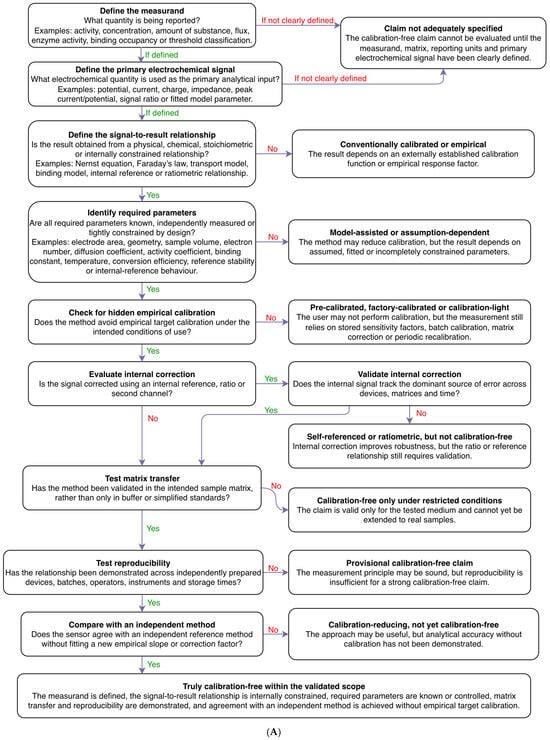
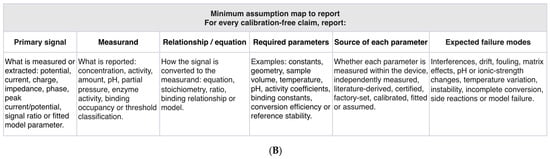
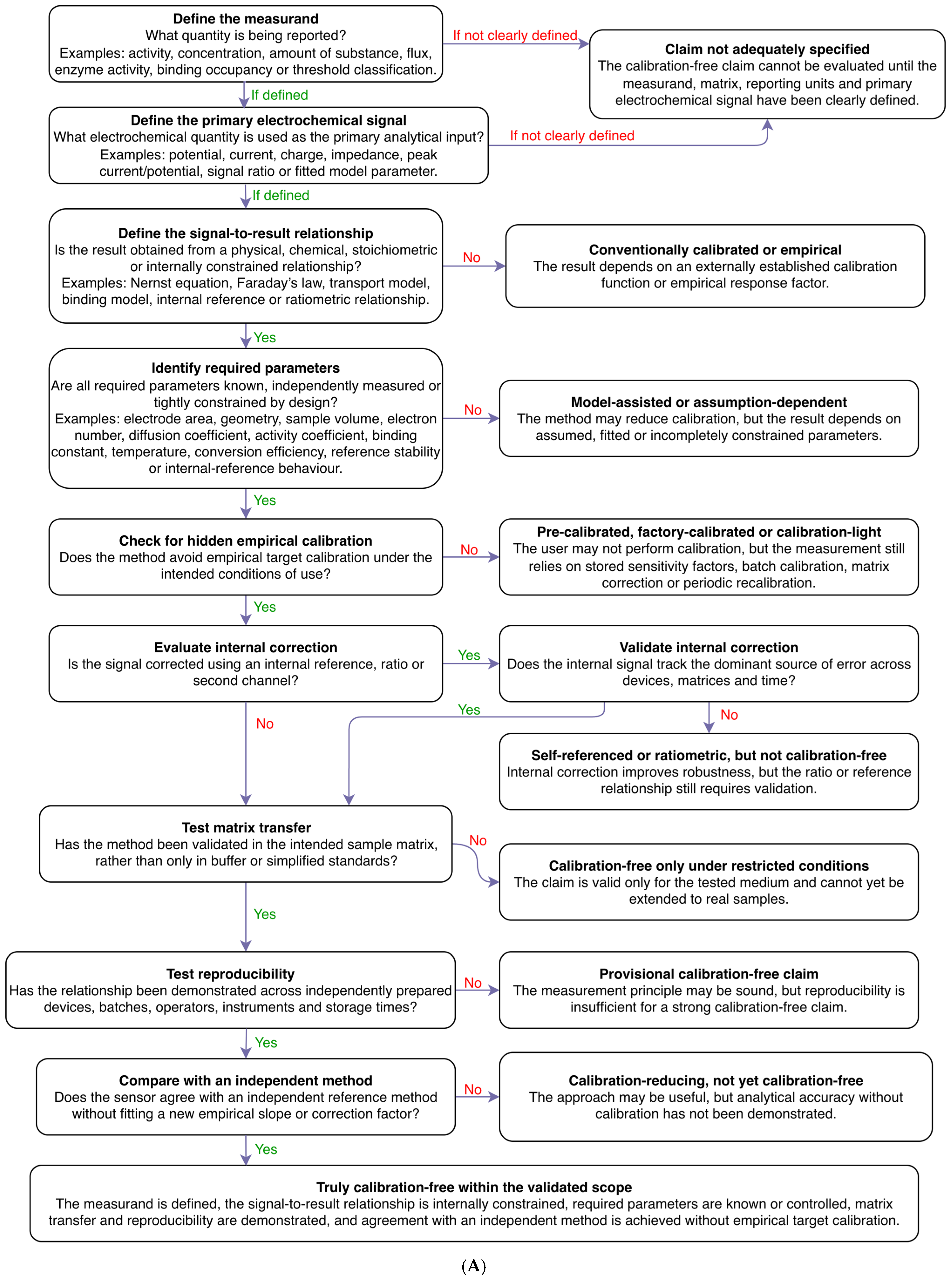
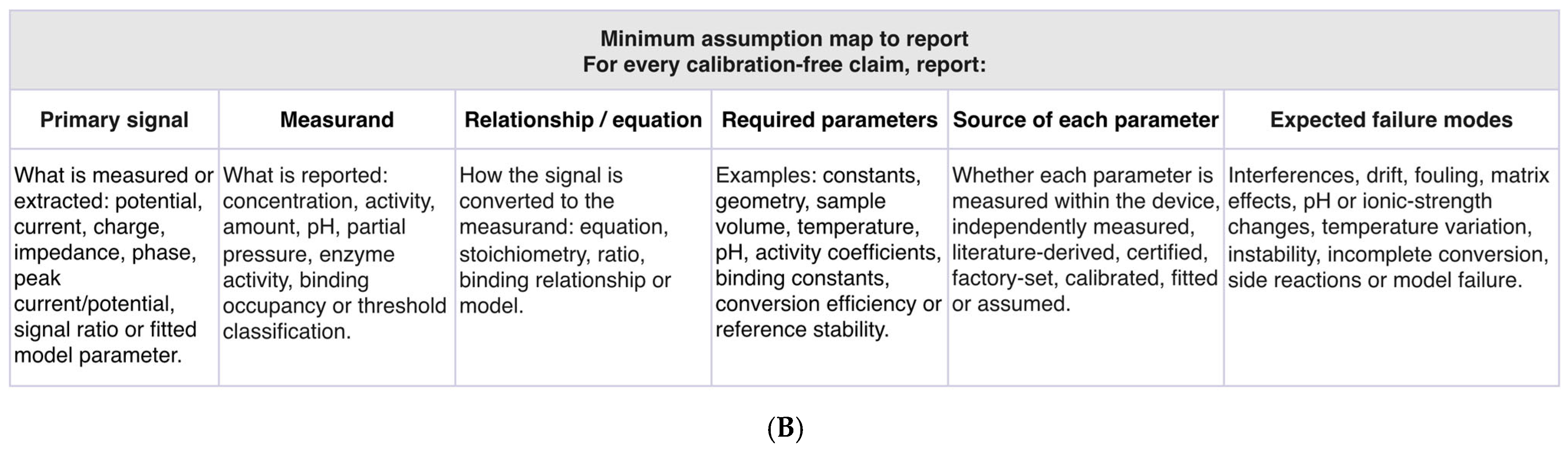

Disclaimer/Publisher’s Note: The statements, opinions and data contained in all publications are solely those of the individual author(s) and contributor(s) and not of MDPI and/or the editor(s). MDPI and/or the editor(s) disclaim responsibility for any injury to people or property resulting from any ideas, methods, instructions or products referred to in the content. |
© 2026 by the author. Licensee MDPI, Basel, Switzerland. This article is an open access article distributed under the terms and conditions of the Creative Commons Attribution (CC BY) license.