


Abstract
In northwestern China, loess is abundant whereas suitable aggregates for rural pavement bases are scarce, yet the transfer from laboratory stiffness of stabilized loess to field support and cement concrete slab response remains unclear. This study aims to establish an Ei–Et–pavement-response framework for cement–curing agent composite-stabilized loess and loess–sand mixtures. Compaction, unconfined compressive strength and uniaxial compression modulus tests were conducted; Et was calculated using a specification-based method, checked by falling weight deflectometer (FWD) back-calculation, and introduced into a three-dimensional finite element model. Composite stabilization markedly improved base stiffness because cementation, curing agent-assisted bonding, gradation optimization and skeleton–filling effects produced a denser load-bearing structure. After 90 days, the compressive modulus increased from 225 MPa for 6% cement-treated loess to 570 MPa for the 45% loess–sand mixture. The calculated Et agreed well with FWD back-calculated field values (R2 = 0.91). Increasing Et from 98.8 to 155.7 MPa reduced slab-bottom stress from 1.7449 to 1.1095 MPa and vertical displacement from 1.7102 to 0.2654 mm. Field engineers can use Et to select local loess-based base materials and coordinate base and slab thickness, provided that compaction quality, water stability and long-term durability are verified.
1. Introduction
For low-volume rural roads, cement concrete pavements remain a practical structural option because of their durability, relatively low maintenance demand and adaptability to different construction conditions. In mountainous areas and regions with restricted material transport, these pavements are particularly attractive because construction can be organized flexibly, the load-bearing mechanism is clear and long-term service performance is generally reliable [1]. Previous long-term pavement studies have also shown that properly designed jointed plain concrete pavements can reduce cracking, faulting and roughness development, thereby lowering maintenance demand over the service life [2]. In addition, cementitious and mineral-modified systems have been widely investigated because they can improve material utilization efficiency, durability and sustainability by enhancing bonding within the matrix and reducing the dependence on high-quality natural aggregates. Longarini et al. reported that fly ash used as a partial replacement of Portland cement can contribute to sustainable concrete construction by improving strength- and durability-related performance and by promoting the reuse of industrial by-products [3].
In the loess regions of northwestern China, however, rural road construction is often limited by scarce local sand and gravel resources, long haulage distances and high construction costs. Loess is widely available and can be used locally, but natural loess usually has developed pores, a loose fabric and a pronounced loss of strength after wetting, which prevents its direct use as a base material with sufficient bearing capacity and long-term stability. Converting local loess into a reliable base material for rural cement concrete pavements is therefore an important engineering problem in loess areas [4,5,6]. For stabilized base materials, durability should be considered together with early strength and stiffness because environmental actions, especially wet–dry cycles, may change the resilient modulus and long-term support capacity of cementitious stabilized base courses [7]. This issue is particularly important for loess-based materials because wetting and environmental cycling can weaken the loose and porous loess structure.
Considerable research has examined loess improvement and its road-engineering applications. Stabilization with hydraulic binders can markedly improve the mechanical properties and engineering suitability of different soils [8]. For loess, cement–curing agent systems have been shown to increase strength and improve microstructure [9], and the mechanical parameters and applicability of lime-stabilized loess have been evaluated in various engineering settings [10]. Studies on artificial structural loess, compacted loess under wet–dry cycles and composite-improved loess have further clarified the macro- and micro-scale mechanisms governing the performance evolution of improved loess [11,12,13]. These studies indicate that appropriately stabilized loess has potential for use in subgrades, base layers and subbase layers.
The feasibility of using stabilized loess in pavement base systems has also been supported from a structural perspective. Lime-slag-stabilized loess can perform as a pavement base material with favorable strength development [14], and the strength-growth behavior of lime-stabilized loess provides useful evidence for engineering applications [15]. Microbially induced carbonate precipitation has also been reported to enhance the hydro-mechanical properties and microstructural stability of loess [16]. In parallel, three-dimensional finite element modeling has been widely used to quantify how base support, loading conditions and structural parameters affect slab-bottom stress and deformation in cement concrete pavements [17], while the effect of local structural parameters on critical pavement stress states has been further explored [18]. Existing work has therefore established separate foundations for loess improvement and cement concrete pavement structural analysis.
Resilient modulus or equivalent stiffness is a key input for mechanistic pavement design because it characterizes the recoverable deformation capacity of pavement layers and foundation materials under traffic-induced loading. Previous studies have evaluated empirical relationships between resilient modulus and permanent deformation in pavement materials [19], demonstrated that a subgrade stress state can strongly affect stress-dependent resilient modulus [20], and developed resilient modulus prediction models for stabilized weak subgrades [21]. Repeated-load resilient modulus testing remains the most direct method for characterizing pavement materials under traffic-induced cyclic loading. However, for cementitious and stabilized pavement materials, complete laboratory characterization is often time-consuming and costly. Previous studies have therefore developed practical relationships between simpler laboratory indices, such as unconfined compressive strength, indirect tensile strength, modulus-related parameters and resilient modulus, to support pavement design applications [22].
For in-service pavement structures, falling weight deflectometer (FWD) testing provides a widely used nondestructive method for evaluating field support conditions. FWD testing measures transient pavement surface deflection under an applied impact load, and layer moduli or equivalent foundation stiffness can be obtained by back-calculating the measured deflection response [23,24]. Related falling-weight-based field implementations have also been reported for pavement condition assessment [25]. Therefore, combining laboratory stiffness parameters with FWD back-calculation provides a practical way to check whether indoor material parameters are consistent with field support behavior. In this study, the soaked uniaxial compression modulus was not assumed to be identical to the cyclic resilient modulus. Instead, it was used as an equivalent laboratory stiffness input Ei for specification-based Et conversion. The proposed framework should therefore be interpreted as a practical stiffness-transfer approach for low-volume rural cement concrete pavements, and repeated-load resilient modulus tests are still needed in future work to further calibrate the relationship between static compression stiffness and traffic-load resilient behavior.
Although previous studies have separately investigated loess stabilization, stabilized base materials and cement concrete pavement response, the parameter-transfer route from laboratory stiffness of composite-stabilized loess to field foundation support and then to slab mechanical response remains insufficiently clarified. In particular, it is still unclear how the indoor base modulus Ei of cement–curing agent stabilized loess and loess–sand mixtures can be converted into the foundation-top equivalent resilient modulus Et, and how this transferred support parameter affects slab-bottom stress and displacement under critical loading conditions. This gap limits the direct use of laboratory material parameters for field base-material selection and structural optimization of low-volume rural cement concrete pavements in loess regions.
Therefore, the aim of this study is to establish and evaluate an Ei–Et–pavement-response framework for composite-stabilized loess bases used in low-volume rural cement concrete pavements. The specific objectives are: (i) to determine the compaction characteristics, early strength and age-dependent compression modulus of cement–curing agent composite-stabilized loess and loess–sand mixtures; (ii) to convert the indoor base modulus into Et using the specification-based method and check its consistency with field FWD back-calculation; and (iii) to quantify the effects of base modulus, base thickness and cement concrete slab thickness on critical-position stress and displacement using a three-dimensional finite element model. The study is intended to provide a practical stiffness-transfer basis for local-material utilization, base-material substitution and structural-parameter selection in loess regions.
The remainder of this paper is organized as follows. Section 2 describes the raw materials, base-material grouping, specimen preparation, Et calculation, FWD field back-calculation and finite element modeling procedures. Section 3 presents the evolution of compression modulus, the field consistency check of Et, and the effects of base modulus, base thickness and cement concrete slab thickness on pavement mechanical response. Section 4 summarizes the main findings, engineering implications, limitations and future research recommendations.
2. Materials and Methods
2.1. Raw Materials and Base-Material Grouping
The loess used in this study was collected from Yuzhong County, Lanzhou, Gansu Province. Loess is widely distributed in this region and can be sourced locally, but in its natural state it has developed pores, a relatively loose structure and strength and stability that deteriorate after wetting. It therefore cannot directly satisfy the bearing-capacity and long-term-stability requirements of base layers for rural cement concrete pavements. To improve the road performance of loess, a KJD-II ionic liquid curing agent and P.O 42.5 ordinary Portland cement were used to form a composite stabilization system. Standard sand conforming to GB/T 17671 was incorporated at different contents to produce stabilized loess base materials with different stiffness levels [26]. The physical index tests of loess were conducted according to the Test Methods of Soils for Highway Engineering (JTG 3430—2020) [27]. The setting time of P.O. 42.5 cement was measured according to GB/T 1346 [28], and the 3 d flexural and compressive strengths were measured according to GB/T 17671 [26]. These cement properties were evaluated according to the requirements of GB 175 [29]. The properties of the KJD-II curing agent were obtained from the manufacturer’s technical certificate. The basic properties of the raw materials are summarized in Table 1.
Table 1.
Basic properties of the raw materials.
Five base-material groups were designed according to preliminary test results and the strength requirements of rural road bases: 6% cement-treated loess, composite-stabilized loess, 15% composite loess–sand mixture, 30% composite loess–sand mixture and 45% composite loess–sand mixture. The 6% cement-treated loess was used as the control. The composite-stabilized loess was prepared by adding 0.02% KJD-II curing agent to the 6% cement-treated loess. The three composite loess–sand mixtures were prepared by replacing loess with 15%, 30% and 45% sand, respectively. The sand contents of 15%, 30% and 45% were selected to represent low, medium and high sand-replacement levels and to establish a clear stiffness gradient for the subsequent Ei–Et–pavement-response analysis. Previous studies have shown that sand admixture and compaction can improve the stiffness and strength behavior of loess-based materials [30], while the interaction among granular particles, fine particles and cementitious binders strongly affects the strength and stiffness of cemented soil systems [31]. From a particle-packing perspective, the addition of standard sand improves the gradation of loess and strengthens the coarse-particle skeleton. Meanwhile, fine loess particles, cement hydration products and curing-agent reaction products can fill interparticle voids and enhance bonding. However, an excessively high sand content may reduce the continuity of the loess–cement–curing agent matrix, weaken cementation between particles and increase the risk of segregation or reduced workability during mixing and compaction. Therefore, 45% sand was adopted as the upper sand-content level in this study to evaluate a high-stiffness composite loess–sand base. It should be noted that this value was used as a practical upper level for the present mixture design, rather than as a universal optimum sand content. All materials were compacted to the same target degree of compaction to ensure comparability. Cement, curing agent and sand contents were calculated relative to the dry loess mass, and sand replaced loess by the corresponding mass fraction.
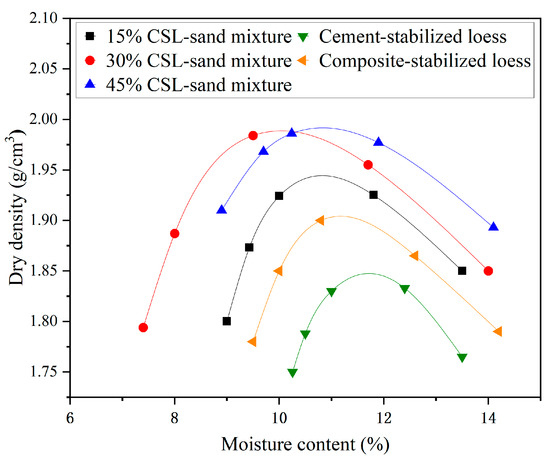
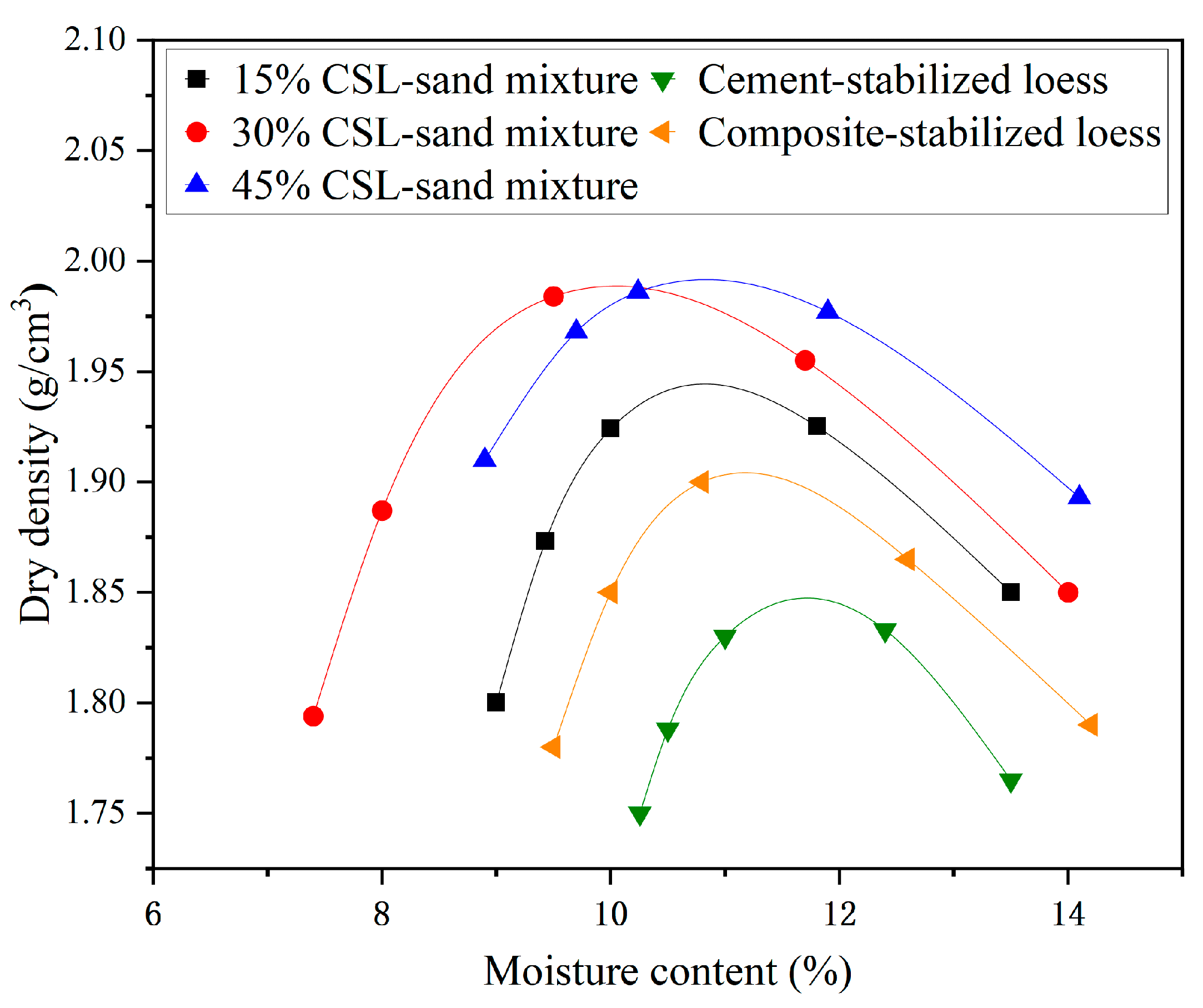
Compaction tests were first conducted to determine the maximum dry density and optimum moisture content of each base material. As shown in Figure 1, increasing the sand content from 15% to 45% generally increased the dry density of the composite loess–sand mixtures and reduced the optimum moisture content. Sand addition improved the particle gradation of the loess, strengthening the coarse-particle skeleton and fine-particle filling effects, which increased mixture compactness. Because sand has a lower specific surface area and lower water absorption capacity than fine loess particles, less water was required to reach the optimum compaction state. The composite-stabilized loess also had a higher maximum dry density than ordinary cement-treated loess, indicating that the curing agent improved interparticle bonding and compaction in the cement–loess system.
Figure 1.
Compaction curves of different stabilized loess base materials.
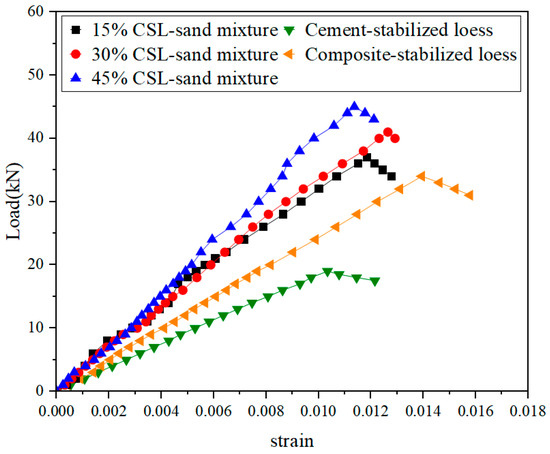
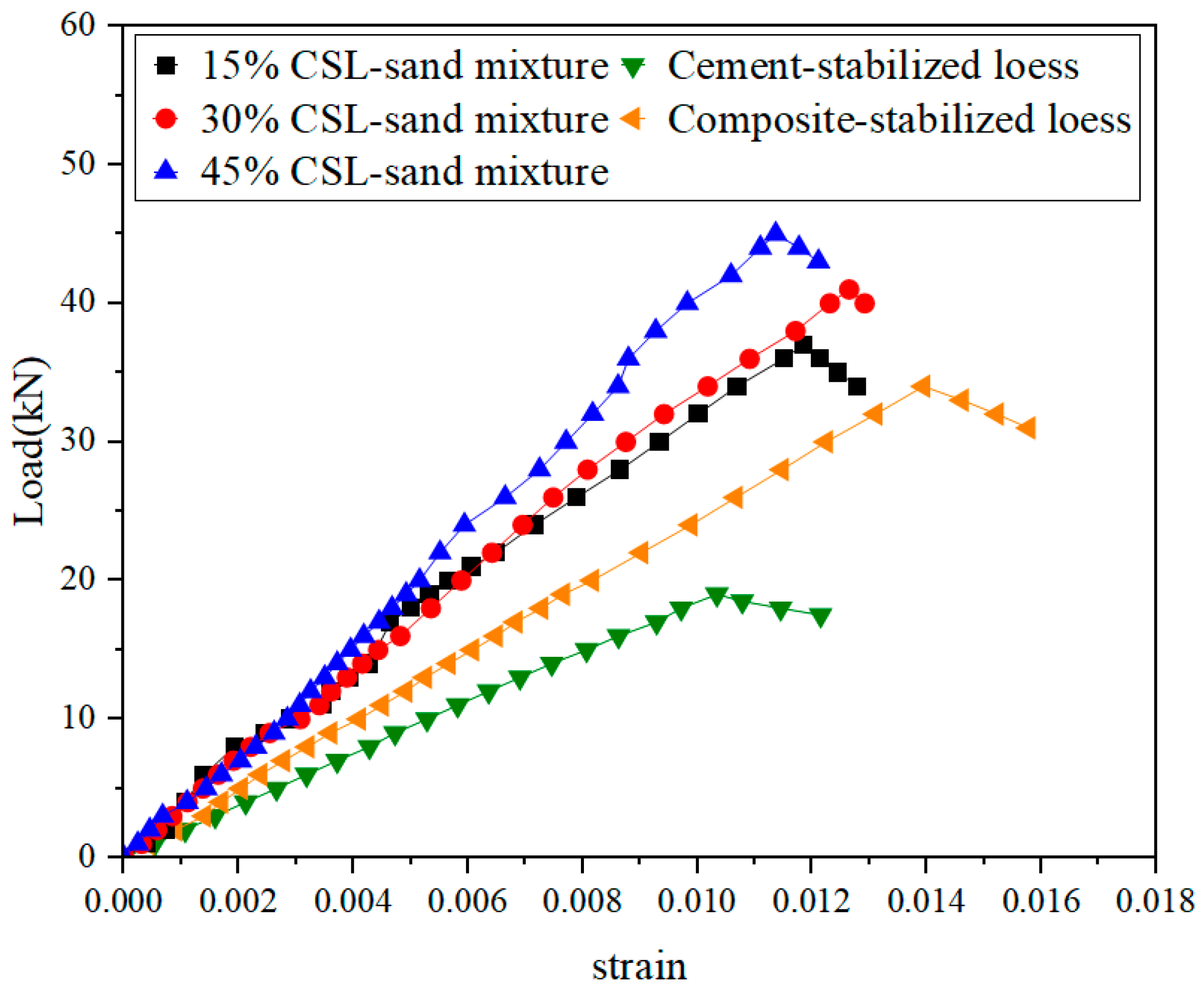
After determining the optimum moisture content and maximum dry density, 7 d unconfined compressive strength tests were conducted to evaluate the early bearing capacity of the base materials. As shown in Figure 2, the 7 d strength of the composite-stabilized loess was clearly higher than that of the 6% cement-treated loess, indicating that the combined action of the KJD-II curing agent and cement improved the early strength of the stabilized loess. With increasing sand content, the strength of the composite loess–sand specimens increased further. Sand addition not only improved gradation and compaction, but also provided a stable skeleton for cement hydration products and curing-reaction products, facilitating a denser and more continuous load-bearing structure. The curing agent and optimized sand gradation therefore jointly enhanced the strength of the loess base materials.
Figure 2.
Load–strain curves of different stabilized loess base materials after 7 d curing.
The mixture proportions, compaction parameters and 7 d unconfined compressive strength values of the five groups are summarized in Table 2 for subsequent specimen preparation, uniaxial compression modulus testing and finite element parameter input. The five materials show a clear gradient in cement content, curing agent content and sand content. As the system changes from cement-treated loess to composite-stabilized loess and then to composite loess–sand mixtures, maximum dry density and 7 d strength generally increase, whereas optimum moisture content generally decreases. These results confirm that the composite stabilization system improves compact ability and early strength, providing the material basis for modulus testing, Et calculation and pavement structural-response analysis.
Table 2.
Base material groups and forming parameters.
2.2. Specimen Preparation and Uniaxial Compression Modulus Testing
Uniaxial compression modulus tests were conducted to obtain the laboratory stiffness parameters of the different composite-stabilized loess base materials. Specimen preparation, standard curing, water immersion and axial compression testing were performed with reference to the Test Methods of Materials Stabilized with Inorganic Binders for Highway Engineering (JTG E51—2009/JTG 3441—2024) [32,33]. The measured parameter in this study was the soaked uniaxial compression modulus, which was used as the equivalent indoor base modulus Ei for subsequent Et calculation and finite element analysis. It should be noted that Ei was not a directly measured cyclic resilient modulus under repeated loading.
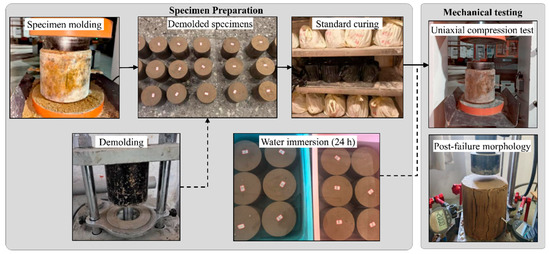
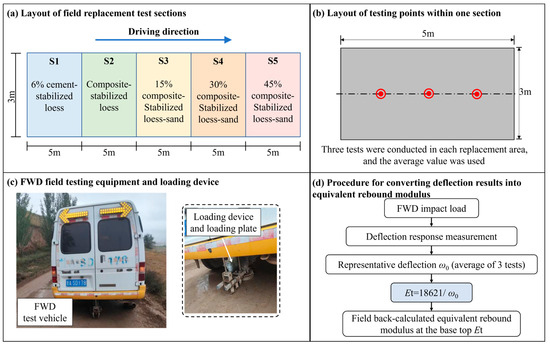
Specimens were prepared using the material groups and forming parameters defined in Section 2.1, including the corresponding optimum moisture content, maximum dry density and target degree of compaction. Cylindrical specimens with dimensions of 150 mm in diameter and 150 mm in height were prepared, with nine replicates for each material group. The specimens were formed by static compaction, sealed immediately after demolding and cured in a standard curing room at 20 ± 2 °C and relative humidity of at least 95%. To examine age-dependent modulus development, specimens were cured for 7, 28 and 90 days. At the specified curing age, all specimens were immersed in water for 24 h before testing. The workflow of specimen preparation and uniaxial compression modulus testing is shown in Figure 3.
Figure 3.
Workflow of specimen preparation and uniaxial compression modulus testing.
A mid-height deformation measurement method was used to reduce the influence of end constraints. Before loading, each specimen was placed at the center of the lower platen to ensure axial compression. Three dial gauges were installed uniformly around the mid-height circumference at 120° intervals to record axial deformation in the middle section. A small preload was applied before formal loading to ensure full contact among the loading head, specimen and measurement devices. Loading was then applied continuously at a constant rate according to the referenced test procedure, and load and deformation were recorded until failure. The uniaxial compression modulus was calculated from the approximately linear part of the load–strain relationship.
2.3. Calculation of Foundation-Top Equivalent Resilient Modulus
Et is an important parameter describing the overall support capacity of the base–subgrade system and is the key intermediate variable connecting indoor material modulus with pavement structural-response analysis. The base modulus Ei of each composite-stabilized loess material was first obtained from the uniaxial compression modulus tests. The base modulus, base thickness and subgrade modulus were then converted into Et using the equivalent resilient modulus method specified for the top of the foundation in the Specifications for Design of Highway Cement Concrete Pavement (JTG D40-2011) [34]. Field Et was back-calculated from FWD deflection tests, and comparison between calculated and back-calculated values was used to check the field consistency of the laboratory-to-field stiffness transfer.
The theoretical foundation-top equivalent resilient modulus was calculated using Equations (1)–(4):
where Et is the equivalent resilient modulus at the top of the foundation (MPa); E0 is the subgrade resilient modulus (MPa); α is the regression coefficient related to the total structural-layer thickness hx; hx is the total thickness of the converted layers below the base (m); n is the number of foundation layers; Ei and hi are the resilient modulus and thickness of layer i, respectively; and Ex is the composite resilient modulus of the converted structural layers. In this study, the rural cement concrete pavement base–subgrade system was considered. The subgrade resilient modulus was set to 60 MPa, base thickness was assigned according to the design conditions, and Ei was obtained from the uniaxial compression modulus tests.
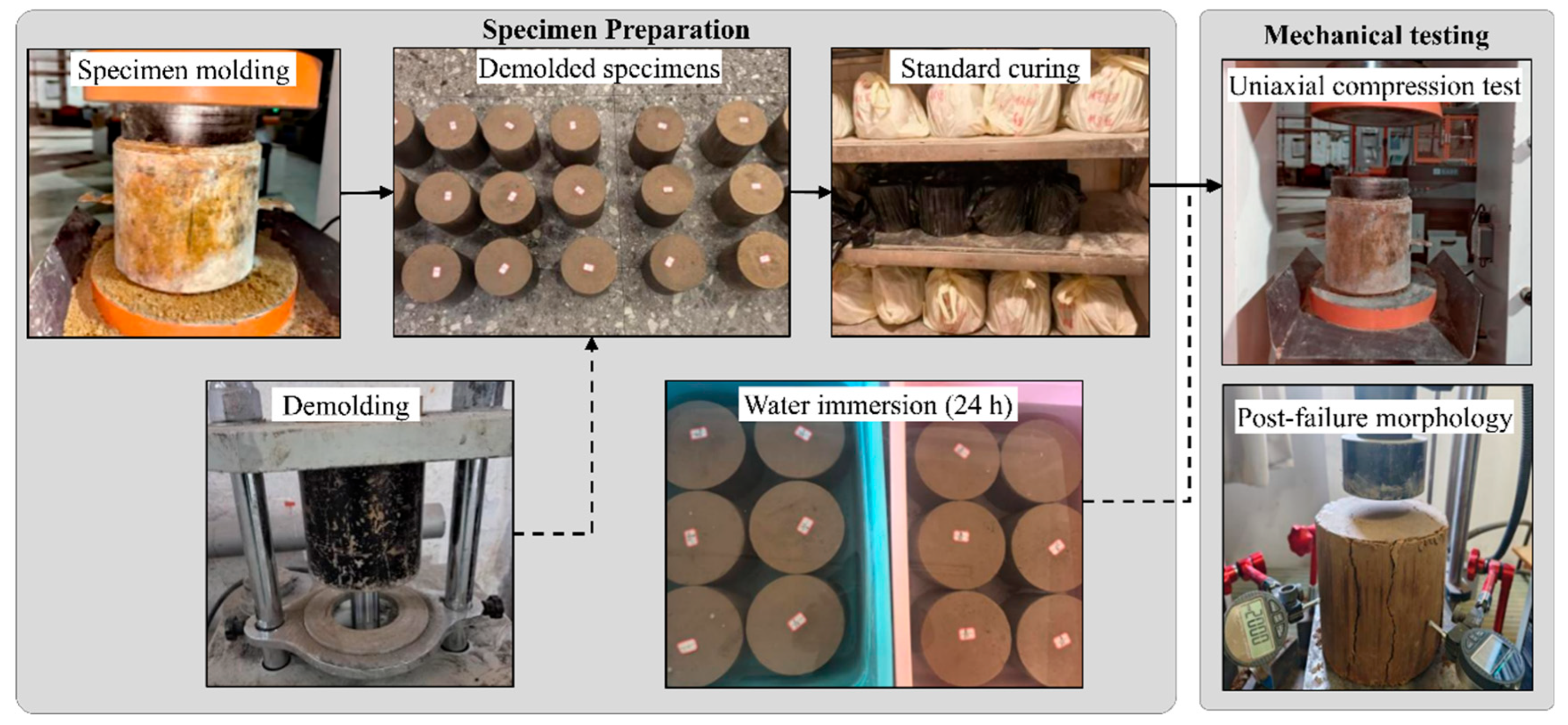
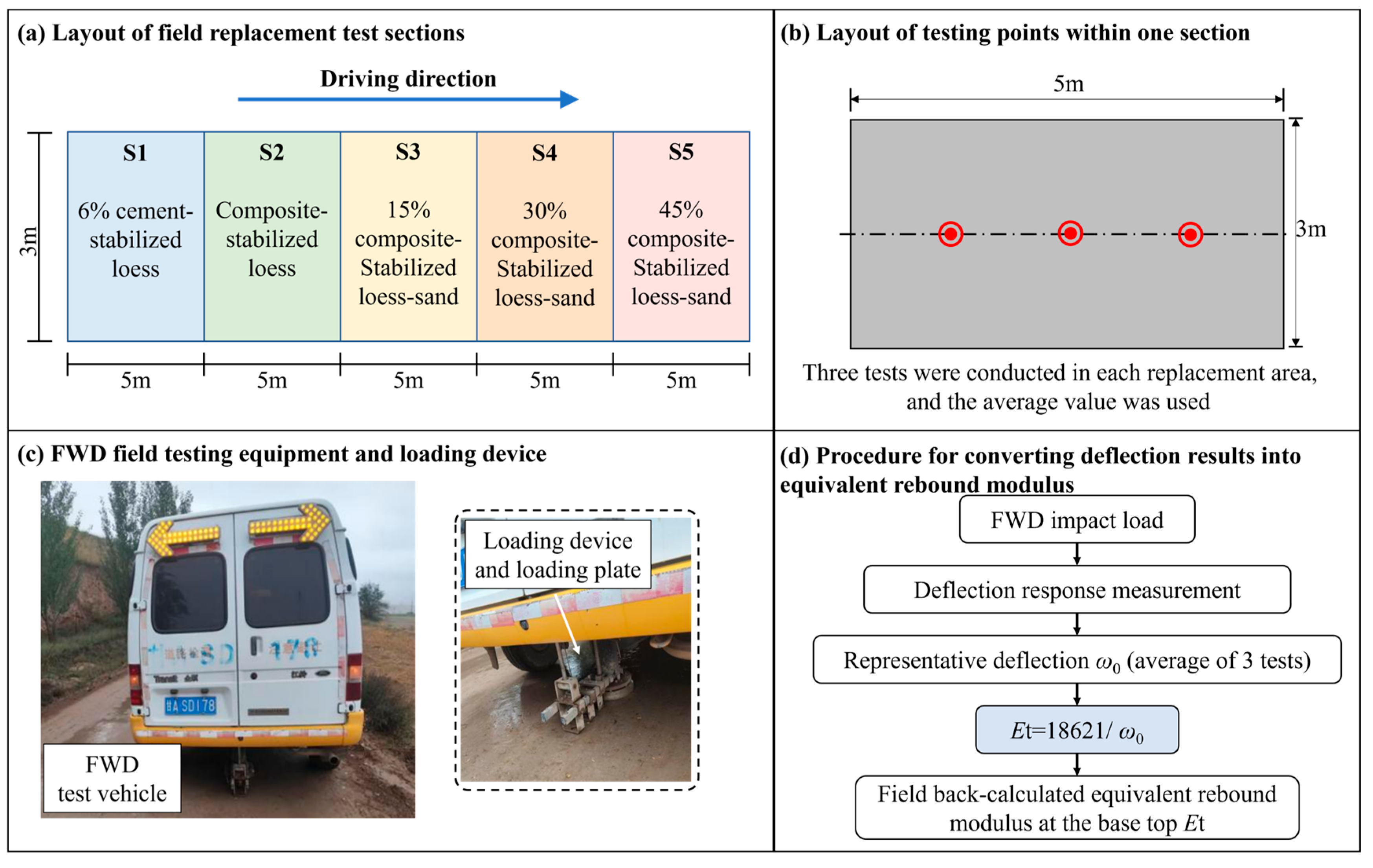
Field replacement sections corresponding to the indoor material groups were constructed to further examine the field consistency of the theoretical conversion. Each test section was replaced and compacted within a rural road area. The replacement area was 5 m long and 3 m wide and corresponded to one of the five base materials. FWD deflection tests were conducted at three locations in each replacement area, and the average value was used as the representative deflection of that section. The FWD procedure was conducted according to JTG 3450—2019 [35] and included equipment positioning, bearing-plate and sensor placement, preloading and zeroing, falling-weight impact loading and deflection response acquisition. The test measures transient pavement surface deformation under impact loading and can be used to evaluate subgrade and pavement-bearing capacity.
The field back-calculated foundation-top equivalent resilient modulus was calculated using Equation (5):
where Et is the field back-calculated equivalent resilient modulus at the top of the foundation (MPa), and ω0 is the representative deflection of the test section in units of 0.01 mm. Field deflection testing was conducted after each replacement section reached the design curing age. Three test positions were arranged in each replacement area, and the average of the three valid deflection measurements was used as the representative value. The layout of the field replacement sections and the FWD testing procedure are shown in Figure 4.
Figure 4.
Layout of field replacement sections and FWD deflection testing.
2.4. Finite Element Pavement Model and Analysis Conditions
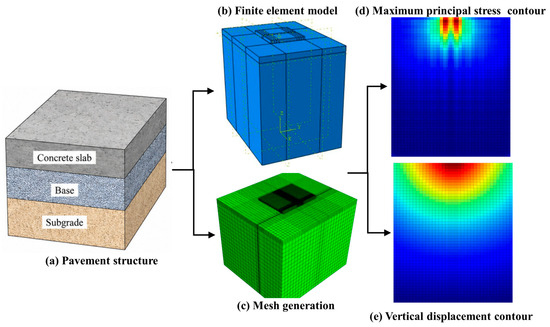
A three-dimensional finite element model was established in Abaqus to analyze how the support stiffness formed by composite-stabilized loess bases affects the mechanical response of rural cement concrete pavements. The model represented a three-layer structure consisting of a cement concrete slab, a composite-stabilized loess base and a subgrade. By varying the base modulus, base thickness and surface layer thickness, the maximum principal stress and maximum vertical displacement at the slab bottom under the critical load were extracted to evaluate the structural response under different Et levels. The finite element analysis therefore transformed the support parameters obtained from laboratory and field tests into internal stress and deformation responses of the pavement.
2.4.1. Geometric Model and Material Parameters
As shown in Figure 5, the finite element model was established as a three-dimensional layered solid model consisting of a cement concrete slab, a composite-stabilized loess base and a subgrade. The reference cement concrete slab had a plan dimension of 3.0 m × 4.0 m. To reduce boundary effects, the composite-stabilized loess base and the subgrade were both modeled with a horizontal plan dimension of 9.0 m × 9.0 m. The cement concrete slab was located at the center of the foundation domain, so that the outer lateral boundaries of the base and subgrade were sufficiently far from the slab edges and the critical loading position.
Figure 5.
Finite element modeling procedure for the concrete pavement structure.
In the reference condition, the cement concrete slab thickness was 0.20 m, the base thickness was 0.18 m and the subgrade calculation depth was 7.0 m. The subgrade depth and the 9.0 m × 9.0 m horizontal domain were adopted to reduce the influence of the bottom and lateral boundaries on slab-bottom stress and vertical displacement near the critical loading position. The model geometry was generated by stacking three solid layers in the vertical direction: the upper layer represented the cement concrete slab; the middle layer represented the composite-stabilized loess base and the lower layer represented the subgrade.
All structural layers were assumed to be homogeneous, isotropic and linear elastic. This simplification was adopted to focus on the relative influence of base stiffness and structural thickness on pavement response. Similar linear-elastic static finite element idealizations have been widely used in three-dimensional analyses of cement concrete pavements for comparative structural-response and parameter studies [17,18]. The elastic modulus and Poisson’s ratio of the cement concrete slab were taken as 30,000 MPa and 0.15, respectively. The base elastic modulus was determined from the 90-day-soaked uniaxial compression modulus tests of the five base-material groups, ranging from 225 MPa to 570 MPa. In the parametric analysis, additional base modulus levels from 200 MPa to 600 MPa were used to obtain continuous response trends. The subgrade resilient modulus was set to 60 MPa according to the design condition used for Et conversion, and the Poisson’s ratios of the base and subgrade were taken as 0.25 and 0.35, respectively. The structural dimensions and material parameters are listed in Table 3.
Table 3.
Structural-layer parameters used in the finite element model.
2.4.2. Interlayer Contact and Boundary Conditions
Interlayer contact directly affects slab stress and the support provided by the base. A surface-to-surface contact relationship was defined between the cement concrete slab and the composite-stabilized loess base, with an interlayer friction coefficient of 0.6 to represent shear transfer. The base and subgrade were connected using a tie constraint, allowing the two layers to deform continuously under vertical loading and enabling the base–subgrade system to participate jointly in load bearing.
The model bottom was fully fixed to restrain vertical and horizontal displacement. Normal displacement constraints were applied to the side faces of the base and subgrade to reduce boundary effects while retaining vertical deformability. No additional constraints were imposed on the sides of the cement concrete slab, allowing free deformation under wheel loading. These boundary conditions reasonably represent the stress state of a cement concrete pavement within a finite computational domain under vehicle load.
2.4.3. Vehicle Loading and Loading Position
Vehicle loading was represented by the standard BZZ-100 axle load specified in JTG D40—2011 [34]. The load was simplified as a vertical static load applied by a dual-wheel group. The single-axle load was 100 kN, the tire contact pressure was 0.7 MPa, the contact area was converted into an equivalent circular loading area with a diameter of 21.3 cm, and the spacing between the dual-wheel centers was 31.96 cm. The load was applied as a surface pressure on the cement concrete slab.
Based on the stress characteristics of cement concrete pavement slab edges and preliminary calculations, the middle of the longitudinal-joint edge was selected as the critical loading position. This position readily produces tensile stress concentration at the slab bottom and is sensitive to changes in base support, making it suitable for evaluating slab cracking risk. Load magnitude, loading area and loading position were kept constant in all parameter studies to ensure comparability.
2.4.4. Mesh Generation and Solution Control
The model was discretized using hexahedral solid elements. Because stress and displacement gradients are large near the wheel-load area, the cement concrete slab was meshed more finely, with local refinement in the tire contact region. The base and subgrade were meshed with gradually coarsening elements from top to bottom to balance calculation accuracy and efficiency. Surface-layer mesh sizes of 10 cm, 7.5 cm and 5 cm were compared. The changes in slab-bottom maximum principal stress and vertical displacement between the 7.5 cm and 5 cm meshes were less than 5%; therefore, the 5 cm mesh was used in subsequent analyses.
2.4.5. Parameter Conditions and Evaluation Indices
The finite element parameter analysis followed the sequence from base material modulus to Et and then to pavement structural response. Three types of conditions were considered to highlight the influence of composite-stabilized loess bases on structural support capacity.
First, measured base-material conditions were analyzed. The 90 d uniaxial compression moduli of the five material groups were used as base elastic moduli in the finite element model, and the resulting slab-bottom maximum principal stress and maximum vertical displacement at the critical loading position were compared.
Second, base-thickness conditions were analyzed. Base thickness was varied under different base modulus levels to determine how increasing base thickness affects Et and critical-position stress, thereby assessing the compensating effect of thickness for low-modulus base materials.
Third, coupled surface layer thickness and Et conditions were analyzed. Under different slab thicknesses, the influence of Et on critical-position stress was evaluated to clarify the joint effect of slab flexural stiffness and overall base–subgrade support stiffness.
Two mechanical response indices were extracted: slab-bottom maximum principal stress and slab-bottom maximum vertical displacement. The maximum principal stress was used to assess tensile cracking risk in the cement concrete slab at the critical loading position, whereas the maximum vertical displacement represented the overall deformation of the pavement structure under wheel load.
2.4.6. Consistency Check of the Finite Element Model
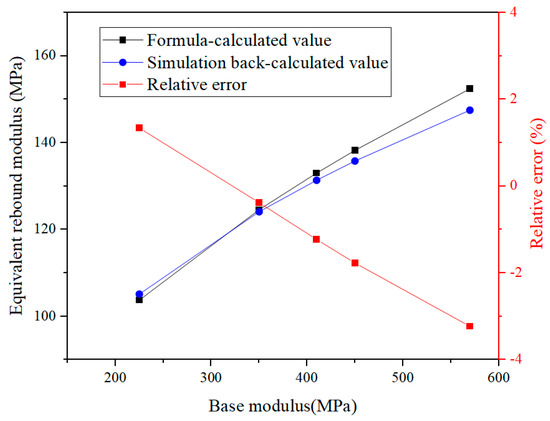
An internal consistency check of the finite element model in representing foundation support stiffness was performed by comparing Et calculated using the JTG D40—2011 specification formula [34] with Et back-calculated from finite element deflection. Pavement structures with different base moduli were analyzed to obtain both formula-calculated and simulation-based back-calculated Et values. Relative errors were then calculated to examine whether the model reproduced the specification-based support-stiffness trend. This check was intended to evaluate the consistency of the modeling procedure for the subsequent parametric analyses, rather than to provide an independent validation of all pavement responses.
As shown in Figure 6, Et values back-calculated from the finite element simulations followed the same increasing trend as those calculated using the specification formula. The relative errors were small in all cases, indicating that the finite element model reproduced the specification-based support-stiffness trend with acceptable consistency. Therefore, the model was used to investigate comparative stress and deformation responses of rural cement concrete pavements with different composite-stabilized loess bases and corresponding Et levels.
Figure 6.
Consistency check between formula-calculated and finite element back-calculated foundation-top equivalent resilient moduli.
3. Results and Discussion
The results are presented according to the parameter-transfer pathway from indoor base modulus Ei to foundation-top equivalent resilient modulus Et and then to pavement structural response. The compression modulus evolution of the composite-stabilized loess materials is first analyzed to define the stiffness inputs for pavement-base modeling. The consistency between theoretical Et and field FWD back-calculated Et is then evaluated. Finally, the effects of base modulus, base thickness and surface layer thickness on Et and the critical mechanical response are discussed to clarify the support effect of composite-stabilized loess bases in rural cement concrete pavement structures.
3.1. Evolution of Compression Modulus in Different Composite-Stabilized Loess Base Materials
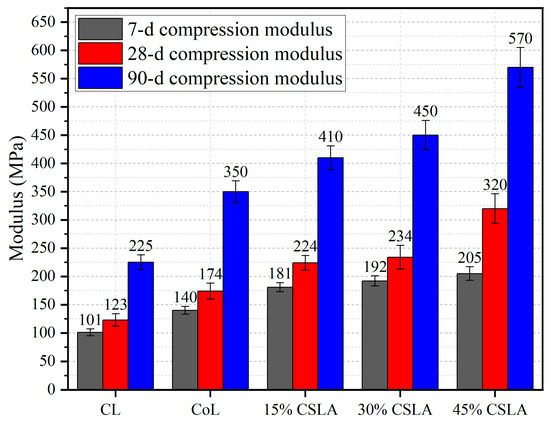
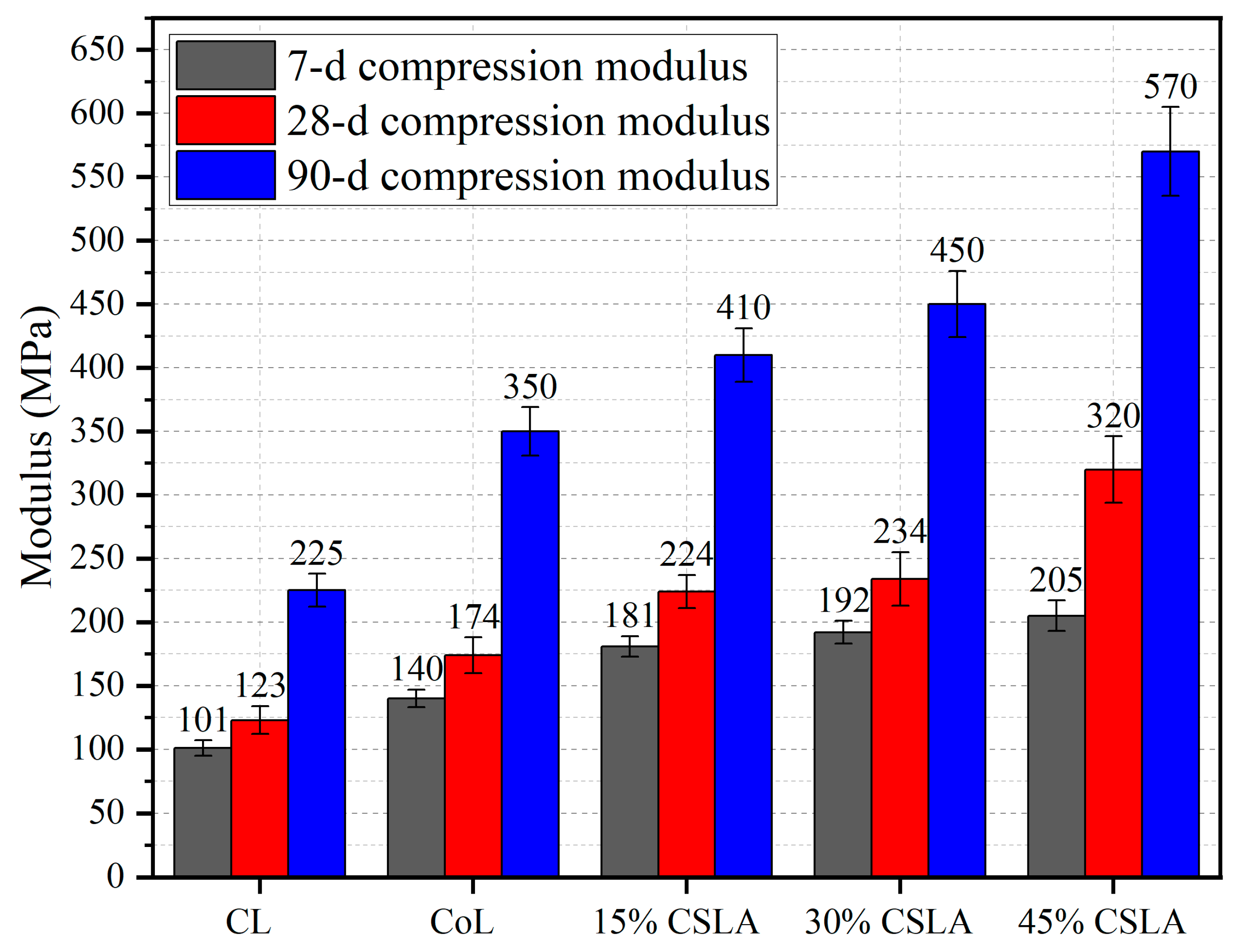
Base material modulus is the fundamental input for Et calculation and finite element structural analysis. To define the stiffness levels of the five composite-stabilized loess base materials, uniaxial compression modulus tests were conducted at curing ages of 7 d, 28 d and 90 d (Figure 7). These data describe the age-dependent resistance of the materials to compressive deformation and provide the indoor modulus parameters used for subsequent Et conversion.
Figure 7.
Changes in uniaxial compression modulus of each base material at different curing ages.
As shown in Figure 7, the uniaxial compression modulus of all five base materials increased continuously with curing age, indicating clear age-dependent development caused by cement hydration and curing-agent-assisted cementation. At 90 d, the moduli of the 6% cement-treated loess, composite-stabilized loess, 15% composite loess–sand mixture, 30% composite loess–sand mixture and 45% composite loess–sand mixture were 225, 350, 410, 450 and 570 MPa, respectively. Material stiffness therefore increased progressively with the introduction of the composite stabilization system and increasing sand content.
The modulus of the composite-stabilized loess was substantially higher than that of the cement-treated loess, showing that the KJD-II curing agent and cement jointly improved interparticle bonding and deformation resistance. Adding sand further increased the modulus because it improved particle gradation, strengthened the coarse-particle skeleton and allowed fine particles and cementitious products to fill skeleton voids more effectively. This produced a denser and more stable load-bearing structure. The 45% composite loess–sand mixture reached a 90 d modulus of 570 MPa, indicating that a high sand content can substantially increase the long-term stiffness of composite-stabilized loess bases.
The five improved loess materials therefore form a clear modulus gradient. This gradient reflects differences in the intrinsic mechanical properties of the materials and determines the Et levels that can be obtained through specification-based conversion. The modulus evolution in Figure 7 is thus the starting point for the subsequent Ei-Et–pavement response analysis.
3.2. Correlation Between Theoretical and Field Back-Calculated Foundation-Top Equivalent Resilient Moduli
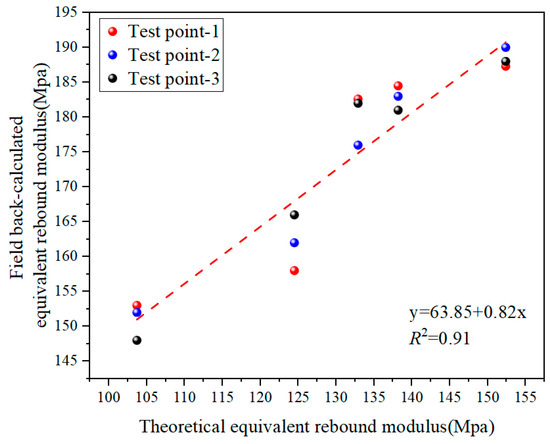
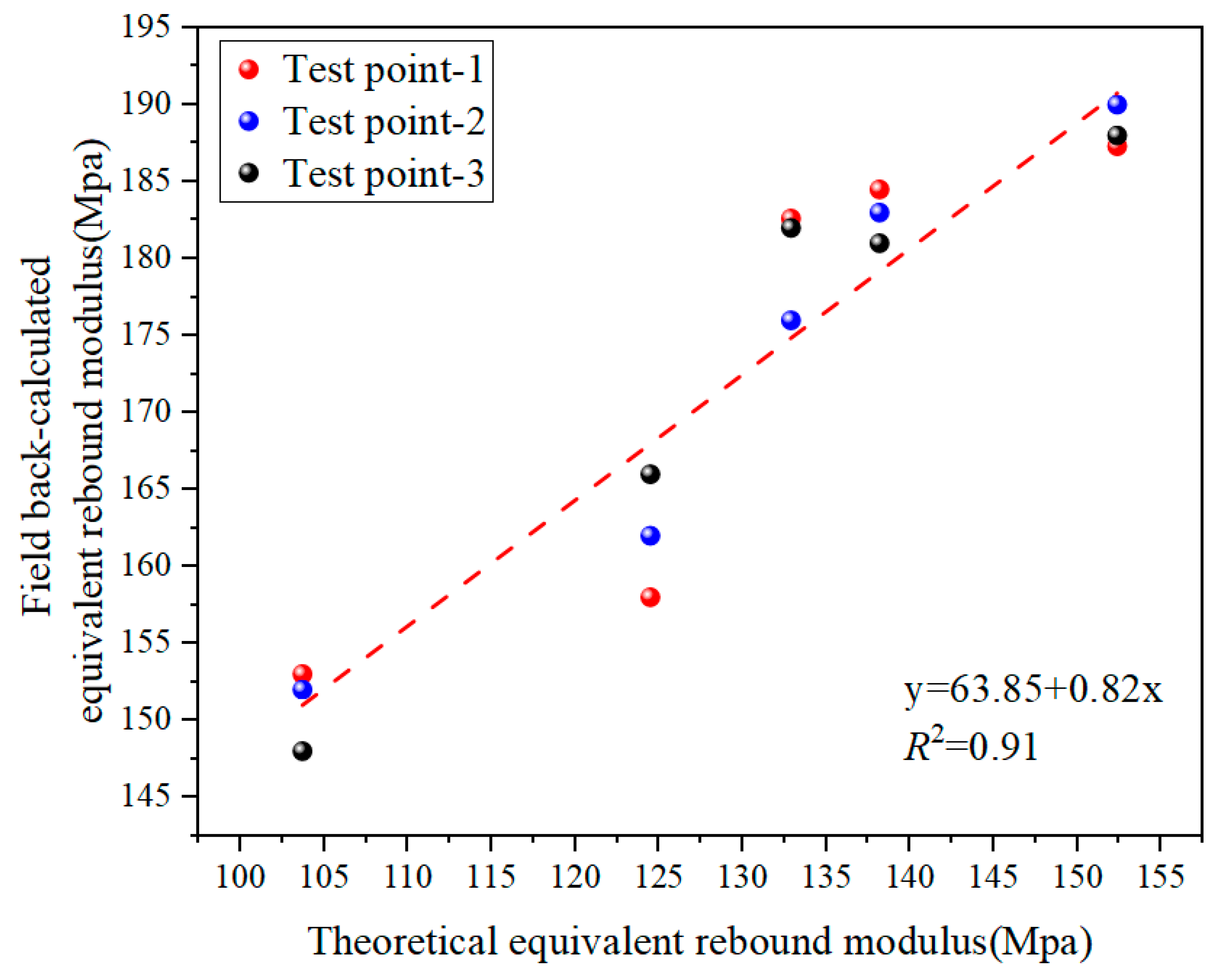
After the indoor compression moduli were obtained, the next question was whether these material parameters could be transferred to field pavement support stiffness. Theoretical Et was calculated using the specification formula, and field Et was back-calculated from FWD deflection tests on the replacement sections. The two sets of values were fitted to evaluate their consistency, as shown in Figure 8.
Figure 8.
Field Consistency Evaluation of the Laboratory-to-Field Stiffness Transfer.
As shown in Figure 8, theoretical Et and field FWD back-calculated Et were strongly correlated, with the fitted relationship y = 63.85 + 0.82x and R2 = 0.91. Within the range of the test sections, the theoretical and field values followed consistent trends. Et calculated from indoor uniaxial compression modulus, base thickness and subgrade modulus captured the variation in actual support stiffness across the field replacement sections. As the base material changed from cement-treated loess to composite-stabilized loess and composite loess–sand mixtures, both theoretical and back-calculated Et generally increased, confirming that Et can represent the influence of different base materials on the overall support capacity of the base–subgrade system.
The field back-calculated values were generally higher than the theoretical values. This difference may be associated with field compaction state, material variability, constraints from the existing subgrade and the overall boundary conditions of the replacement sections. The theoretical calculation is based on an idealized layered elastic system and simplified parameters, whereas FWD back-calculation reflects the combined response of the replacement area, surrounding subgrade and actual compaction state. Some deviation is therefore expected. The relatively high correlation nevertheless indicates that indoor uniaxial compression modulus can be reasonably converted into field Et using the specification formula. Et can therefore serve as a bridge parameter linking indoor material modulus, field support stiffness and finite element model inputs.
3.3. Evolution of Foundation-Top Equivalent Resilient Modulus Under the Combined Effects of Base Modulus and Base Thickness
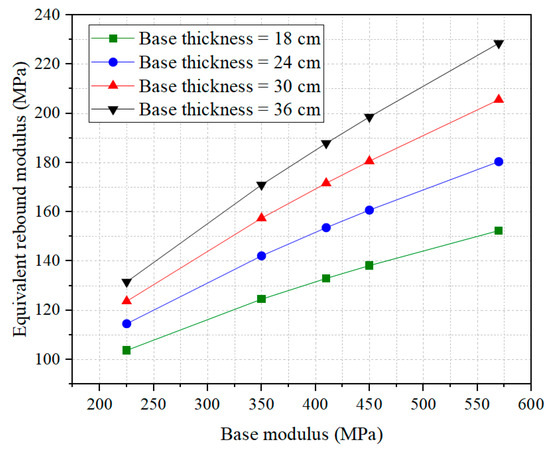
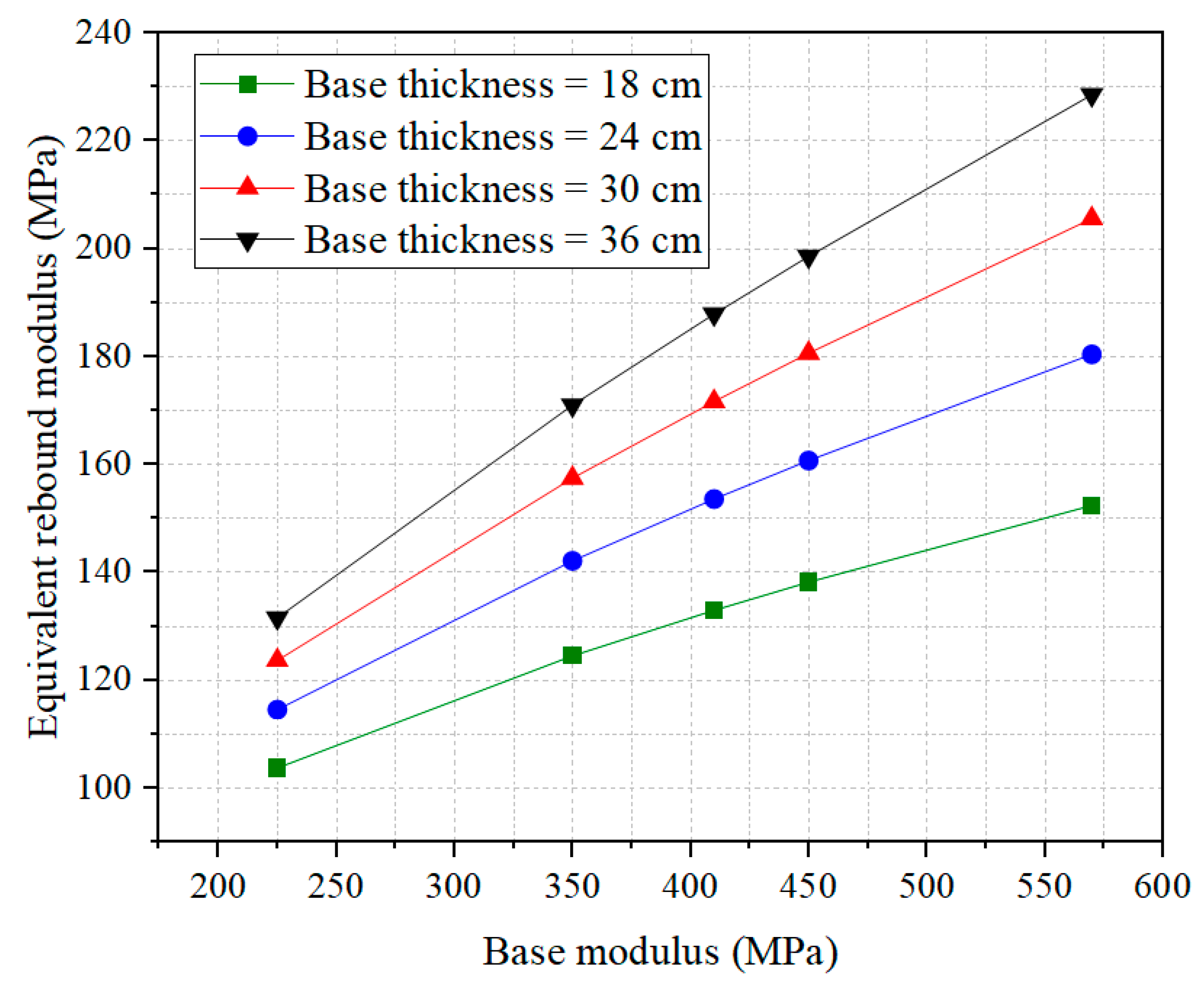
Et is controlled by both base material modulus and base thickness. To clarify their combined effect, the subgrade modulus was kept constant while base modulus and base thickness were varied, and Et was calculated for each combination (Figure 9). The results define the range of support stiffness that can be achieved by different composite-stabilized loess base materials and thicknesses.
Figure 9.
Changes in foundation-top equivalent resilient modulus under the combined effects of base modulus and base thickness.
As shown in Figure 9, Et increased continuously with base modulus at a fixed base thickness, and increasing base thickness also increased Et at a fixed base modulus. For example, with an 18 cm base, increasing the base modulus from 225 MPa to 570 MPa increased Et from approximately 103.7 MPa to approximately 152.4 MPa. At a base modulus of 570 MPa, increasing the base thickness from 18 cm to 36 cm further increased Et to approximately 228.1 MPa. Both material stiffness and base thickness therefore improve the overall support capacity of the base–subgrade system.
The Et curves for thicker bases were located at higher levels, indicating that increasing base thickness enhances load diffusion within the base, reduces stress transmitted directly to the subgrade and increases the equivalent support stiffness of the foundation system. The spacing between the curves for different thicknesses increased as base modulus increased, suggesting that the benefit of increasing base thickness is more pronounced when the base material itself has higher stiffness. A high-modulus composite loess–sand mixture can therefore make better use of the load-bearing function of the base layer when paired with an appropriate thickness.
These results demonstrate a synergistic relationship between base modulus and base thickness. For low-modulus base materials, increasing base thickness can compensate for insufficient material stiffness by raising Et. For high-modulus base materials, a relatively high Et can be achieved at a smaller thickness, improving structural economy. Et therefore captures not only material stiffness differences, but also the contribution of base thickness to overall support capacity.
3.4. Effect of Foundation-Top Equivalent Resilient Modulus on Critical-Position Stress and Displacement Under the Standard Condition
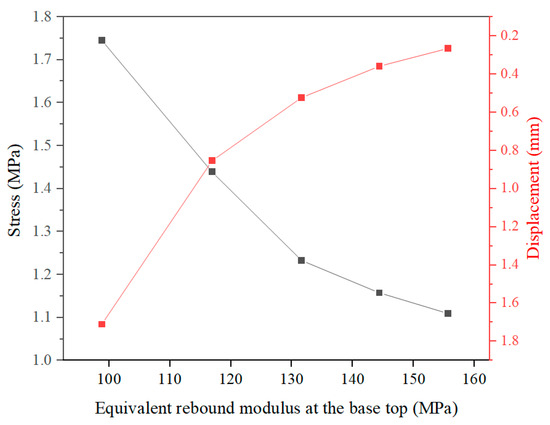
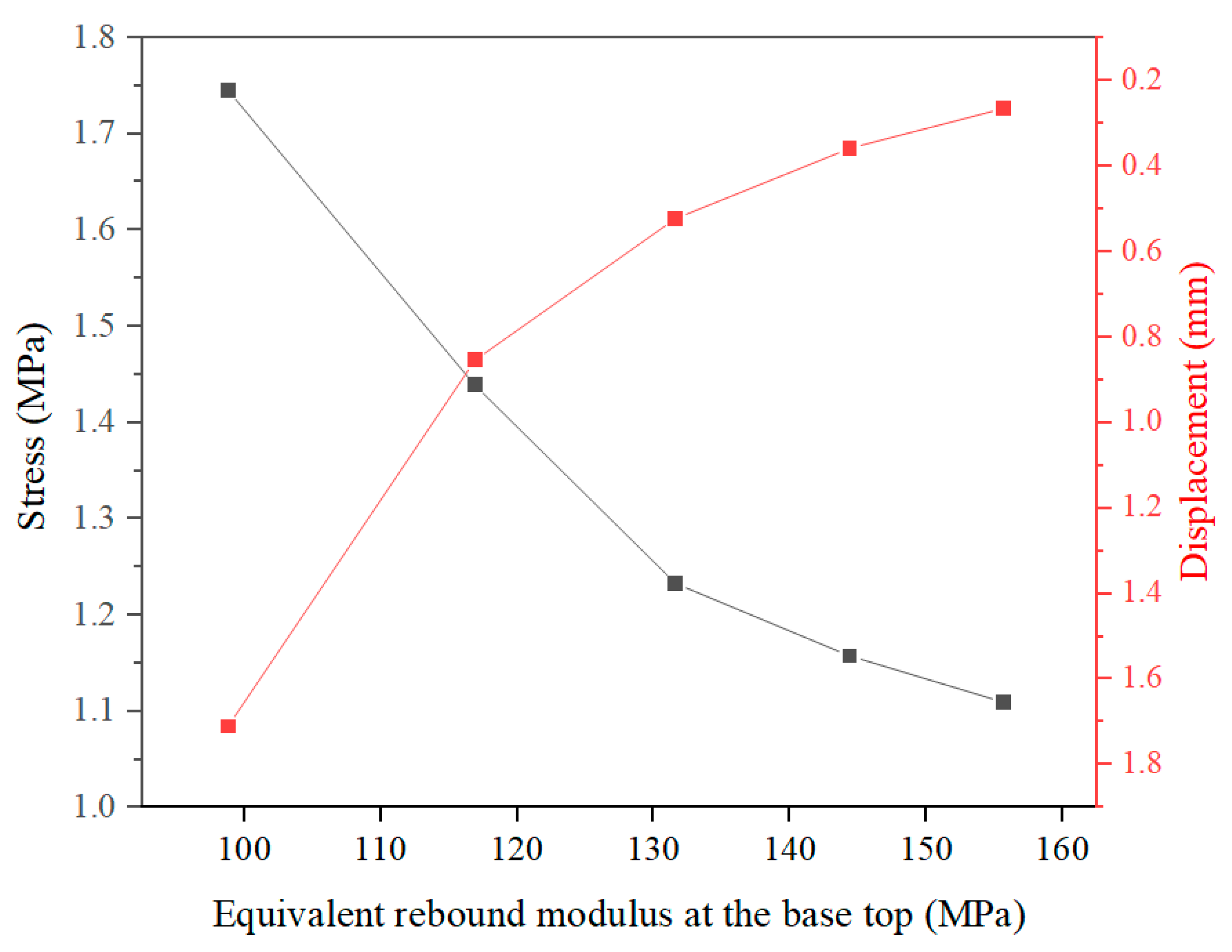
After the Et levels associated with different material and thickness combinations were defined, the influence of Et on cement concrete pavement response was analyzed. Under the standard condition, the subgrade modulus, base thickness, surface layer thickness and critical loading position were fixed, while Et was varied. The maximum principal stress and maximum vertical displacement at the slab bottom were extracted (Figure 10) to evaluate how overall foundation support stiffness controls slab cracking risk and structural deformation.
Figure 10.
Effect of Et on critical-position stress and maximum slab-bottom vertical displacement under the standard condition.
In Figure 10, the horizontal axis is Et converted from parameterized base moduli Ei = 200–600 MPa using the specification formula, while the stress and displacement are the corresponding finite element responses. Both slab-bottom maximum principal stress and maximum vertical displacement decreased as Et increased. Specifically, as Et increased from the lower to the higher level, the critical-position stress decreased from approximately 1.7449 MPa to 1.1095 MPa, and the maximum slab-bottom vertical displacement decreased from approximately 1.7102 mm to 0.2654 mm. Increasing the overall foundation support stiffness therefore substantially reduced both tensile stress and vertical deformation in the concrete slab.
The maximum slab-bottom vertical displacement was more sensitive to changes in Et than the maximum principal stress. As Et increased, the base–subgrade system provided stronger vertical support, restraining overall slab settlement under wheel load and producing a large reduction in displacement. The maximum principal stress was governed jointly by slab flexural stiffness, loading position and base support. It therefore also decreased with increasing Et, but with a more gradual reduction.
Both stress and displacement decreased rapidly at first and then more gradually. In the low Et range, foundation support was insufficient and slab bending deformation was large, so increasing Et rapidly improved the structural stress state. Once Et reached a higher level, the support provided by the base–subgrade system became stronger and the marginal reduction in stress and displacement weakened. This trend indicates that simply pursuing very high foundation support stiffness may not be economically optimal; base material, base thickness and slab thickness should be designed together.
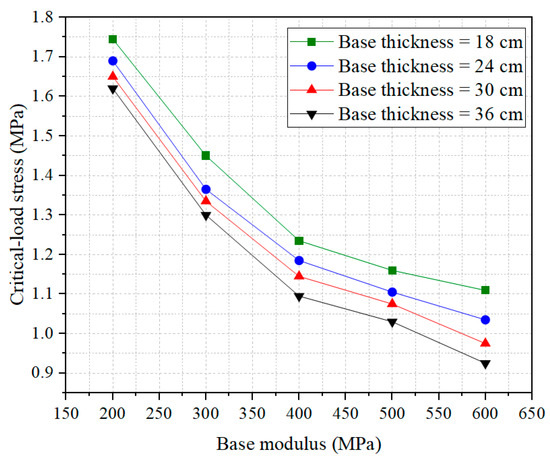
3.5. Critical-Position Stress Response Under the Combined Regulation of Base Modulus and Base Thickness
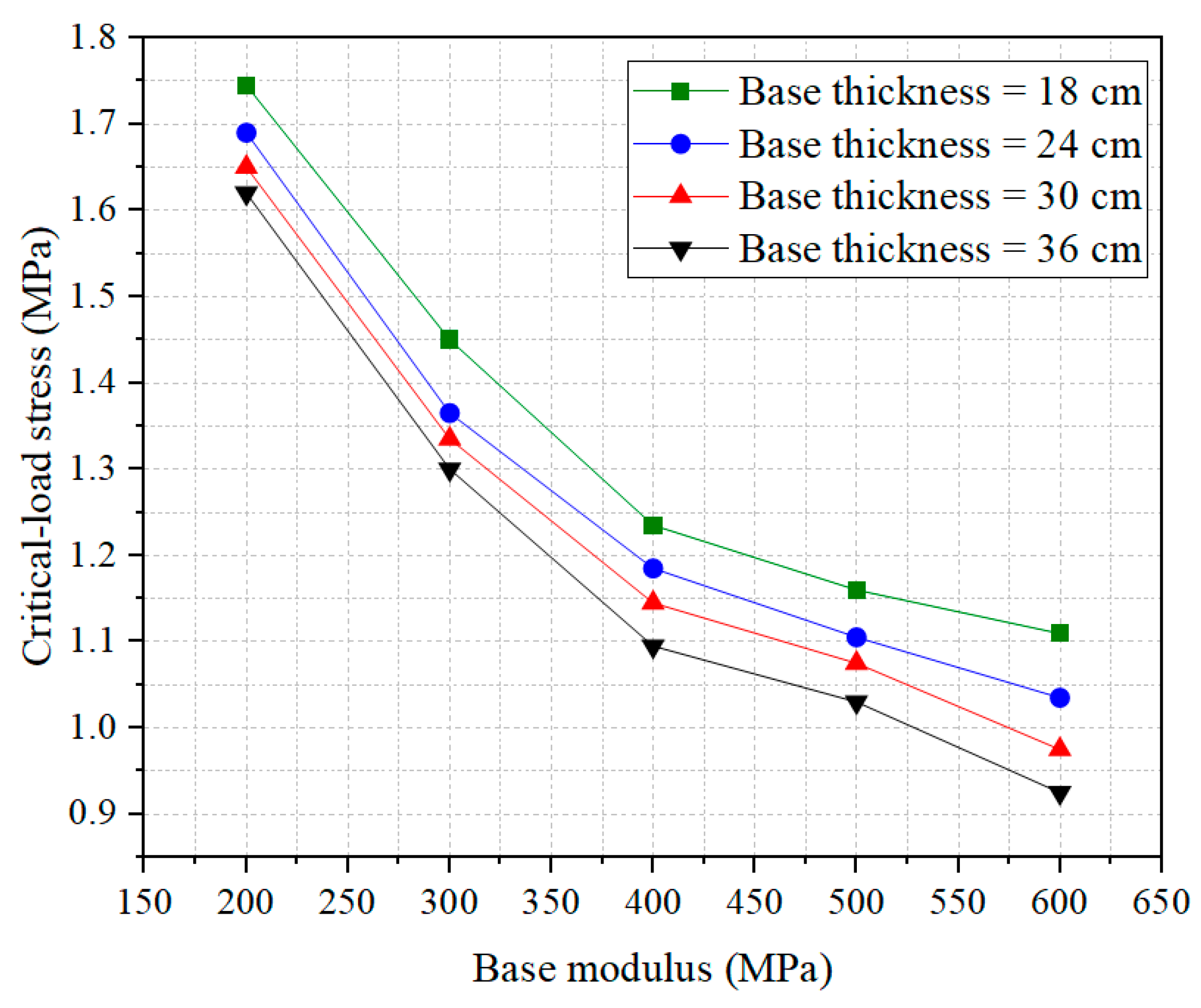
Although Et represents the overall support stiffness of the base–subgrade system, the explicit three-layer pavement structure indicates that the same Et level can be formed through different combinations of base material modulus and base thickness. Therefore, base thickness should not be regarded only as a geometric parameter, but also as a structural variable that regulates load diffusion, stress transfer and the degree of participation of the base layer in load bearing. To clarify this coupling effect, the slab-bottom maximum principal stress at the critical loading position was calculated under different base thicknesses as base modulus and the corresponding converted Et varied. The results are shown in Figure 11.
Figure 11.
Critical-position stress response under the combined effects of base modulus and base thickness.
As shown in Figure 11, the slab-bottom maximum principal stress at the critical loading position decreased continuously with increasing base modulus under all base-thickness conditions. For the 18 cm base, the critical stress decreased from 1.7449 MPa at a base modulus of 200 MPa to 1.1095 MPa at 600 MPa, which is consistent with the stress-reduction trend obtained under the standard condition. This confirms that increasing the stiffness of the composite-stabilized loess base can effectively improve the support provided to the cement concrete slab and reduce tensile stress concentration at the slab bottom. At a given base modulus, increasing the base thickness also reduced the critical stress. For example, when the base modulus was 200 MPa, increasing the base thickness from 18 cm to 36 cm reduced the critical stress from 1.7449 MPa to 1.6200 MPa; when the base modulus was 600 MPa, the corresponding stress decreased from 1.1095 MPa to 0.9250 MPa. This indicates that a thicker base can extend the load-diffusion path, enlarge the load-bearing zone within the base layer and weaken the direct influence of subgrade deformation on the concrete slab.
The coupled response of base modulus and base thickness shows that material stiffness and structural thickness jointly regulate the stress state of the cement concrete slab. Increasing the base modulus mainly enhances the deformation resistance of the stabilized loess material, whereas increasing the base thickness improves the structural capacity of the base layer to diffuse and redistribute wheel loads. The stress reduction was more pronounced when the base modulus increased from a low to a medium level, while the marginal benefit gradually decreased at higher modulus levels. For instance, under the 18 cm base condition, the stress reduction from 200 MPa to 300 MPa was greater than that from 500 MPa to 600 MPa. This nonlinear trend indicates that the improvement in base support stiffness has a clear diminishing-return characteristic once the slab has been adequately supported.
From a design perspective, the base structure of composite-stabilized loess pavements should be optimized by coordinating the base modulus, base thickness and the target foundation-top equivalent resilient modulus Et, rather than by independently maximizing either material stiffness or structural thickness. For sections where sand or other granular materials are limited, a moderately thicker composite-stabilized loess base can compensate for insufficient material stiffness by improving load diffusion and increasing the overall support capacity of the base–subgrade system. For sections where a high-modulus composite loess–sand mixture is available, a conventional base thickness may already provide sufficient support, and excessive thickening would provide only limited additional stress reduction. Therefore, Et can be used as a practical transfer parameter linking indoor base modulus, base thickness and critical pavement response, allowing the base structure to be selected according to local material availability, construction quality and cost constraints.
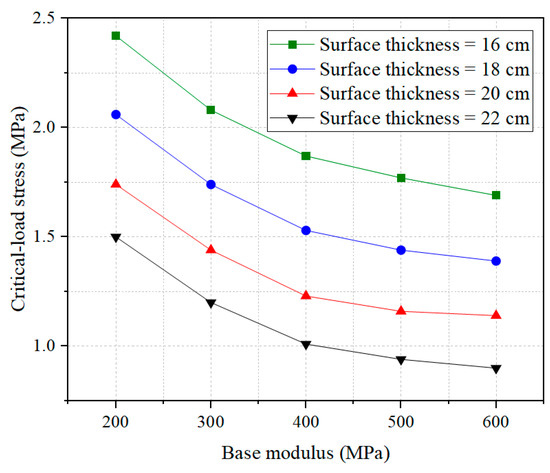
3.6. Critical-Position Stress Response Under the Combined Regulation of Surface Layer Thickness and Base Support Stiffness
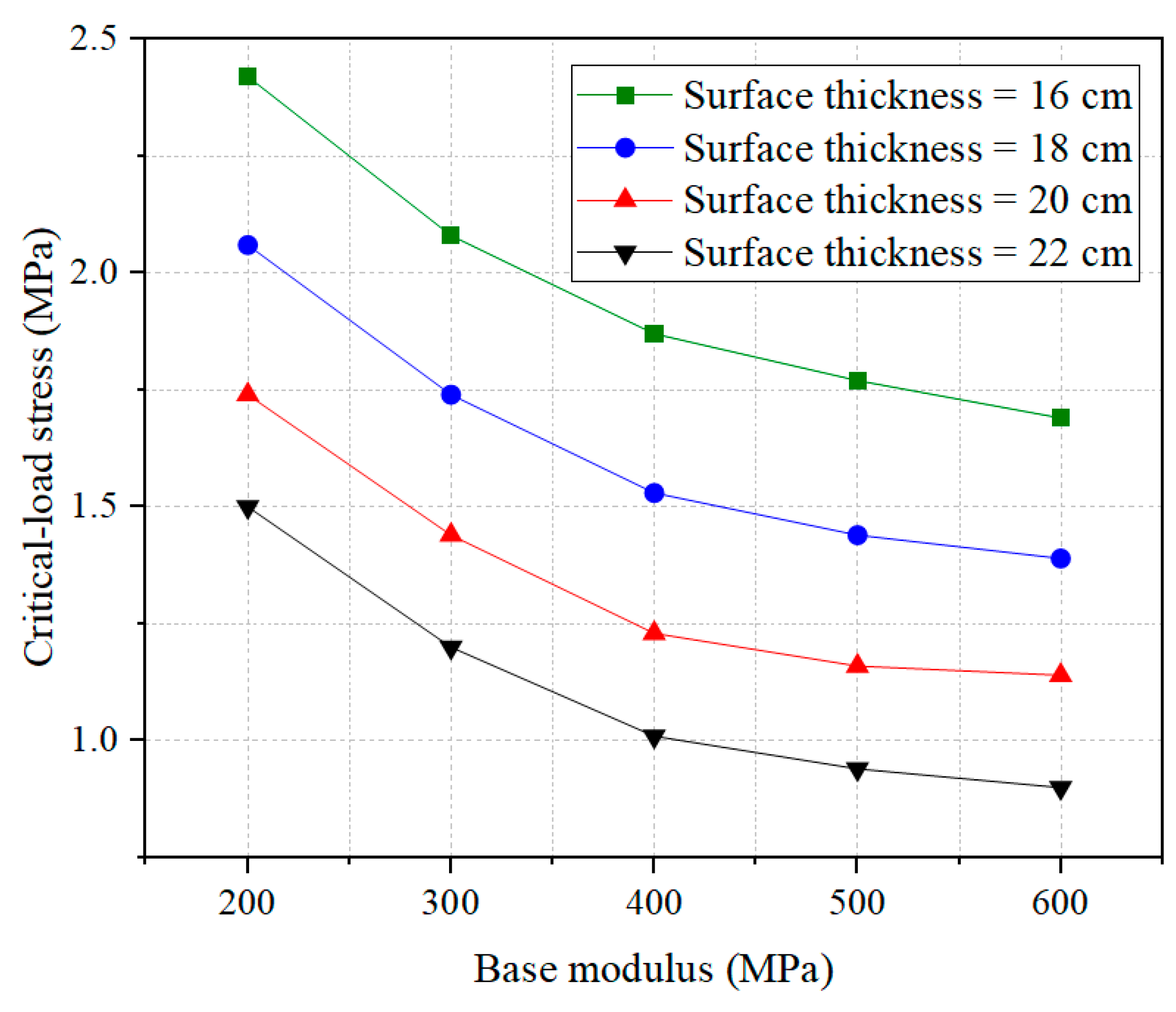
Cement concrete slab thickness is another key structural parameter controlling slab-bottom tensile stress. To analyze its interaction with base support stiffness, critical-position stress was calculated for different slab thicknesses as base modulus or converted Et varied. The results are shown in Figure 12 and illustrate how changes in slab flexural stiffness and overall base–subgrade support stiffness jointly affect cracking risk.
Figure 12.
Critical-position stress response under the combined effects of cement concrete slab thickness and base modulus.
As shown in Figure 12, the critical-position stress decreased continuously with increasing base support stiffness at a fixed slab thickness, while increasing the cement concrete slab thickness also significantly reduced the slab-bottom maximum principal stress at a fixed support stiffness. These results indicate that both improving the base–subgrade support condition and increasing the flexural stiffness of the concrete slab can reduce tensile cracking risk. However, their mechanisms are different: a higher Et mainly limits vertical displacement and slab bending deformation through improved foundation support, whereas a thicker slab directly increases the flexural rigidity and load-bearing capacity of the concrete panel.
The coupled results further reveal a partial equivalence between base support stiffness and slab thickness. In the low-support-stiffness range, increasing Et can produce a stress-reduction effect comparable to increasing the slab thickness. For example, increasing the base modulus from 200 MPa to 300 MPa reduces the stress of the 16 cm slab from 2.42 MPa to 2.08 MPa, which is close to that of the 18 cm slab under the 200 MPa support condition. Similarly, the stress of the 18 cm slab decreases from 2.06 MPa to 1.74 MPa when the base modulus increases from 200 MPa to 300 MPa, which is almost equivalent to the 20 cm slab under the 200 MPa support condition. These comparisons show that improving the base support stiffness can partly substitute for increasing slab thickness, especially when the initial support condition is weak.
Nevertheless, this substitution effect is nonlinear and shows an obvious diminishing-return characteristic. The stress reduction is most significant when support stiffness increases from a low to a medium level, whereas further increases at higher stiffness levels produce only limited additional benefit. Therefore, for low-volume rural cement concrete pavements in loess regions, simply increasing slab thickness or blindly pursuing excessive base modulus is not the most economical design strategy. A more reasonable approach is to adopt a “moderately high base support stiffness plus reasonable slab thickness” structure. In practical application, Et should be used as the key control parameter, and slab thickness optimization should be combined with base strength, compaction quality, water stability, durability and field FWD verification.
4. Conclusions
This study establishes an Ei–Et–pavement-response framework for composite-stabilized loess bases in low-volume rural cement concrete pavements. The main conclusions are drawn according to the research objectives.
- (1)
- For the material-improvement objective, composite stabilization significantly enhanced the strength and stiffness of loess base materials. The 7 d unconfined compressive strength increased from 1.06 MPa for 6% cement-treated loess to 2.87 MPa for the 45% composite loess–sand mixture, and the 90-day compressive modulus increased from 225 MPa to 570 MPa.
- (2)
- For the Ei-Et transfer objective, the specification-based Et values showed good consistency with field FWD back-calculated values. The fitted relationship was y = 63.85 + 0.82x, with R2 = 0.91, indicating that Et can serve as a practical transfer parameter linking indoor base stiffness and field support capacity.
- (3)
- For the pavement-response objective, increasing Et effectively reduced slab-bottom stress and vertical displacement. Under the standard condition, increasing Et from 98.8 MPa to 155.7 MPa reduced the critical-position stress from 1.7449 MPa to 1.1095 MPa and the maximum vertical displacement from 1.7102 mm to 0.2654 mm.
- (4)
- Base modulus, base thickness and cement concrete slab thickness should be coordinated in structural design. Increasing base thickness can compensate for insufficient base modulus, while improving base support can partly substitute for increasing slab thickness in the low-stiffness range. However, the stress-reduction benefit showed a diminishing-return trend at higher support stiffness levels.
- (5)
- Under the analyzed static-load and linear-elastic conditions, the 45% composite loess–sand mixture showed the best support performance among the tested materials. The combination of a 0.20 m cement concrete slab and a 0.18 m composite-stabilized loess base may serve as a preliminary reference structure for low-volume rural cement concrete pavements in loess regions. This provides a practical basis for local-material utilization and coordinated slab–base thickness design.
The present study has several limitations. The field consistency check was based on five representative replacement sections, with three FWD test points in each section, and the finite element analysis used homogeneous, isotropic and linear elastic materials under a static equivalent load. The results should therefore be interpreted as a short-term stiffness-transfer and structural-response evaluation rather than as full evidence of long-term service performance. Water-induced degradation, wet–dry and freeze–thaw cycling, fatigue accumulation and long-term stiffness loss were not directly examined. Future work should include repeated-load resilient modulus testing, expanded FWD monitoring, durability testing under environmental cycles and nonlinear dynamic finite element analysis.
Author Contributions
Conceptualization, S.W., H.W. and X.N.; Methodology, H.W., X.Z., R.W. and C.C.; Validation, S.W.; Formal analysis, H.W., R.W., W.Z. and C.C.; Investigation, S.W., H.W., X.Z., X.N. and W.Z.; Resources, H.W. and X.Z.; Writing—original draft, S.W.; Writing—review & editing, S.W., X.Z. and M.Z.; Visualization, H.W., X.Z. and X.N.; Supervision, S.W. and H.W.; Project administration, H.W.; Funding acquisition, S.W. and H.W. All authors have read and agreed to the published version of the manuscript.
Funding
This material is based in part on work supported by the Research Project of Gansu Provincial Department of Transportation, grant number 2024-08.
Institutional Review Board Statement
Not applicable.
Informed Consent Statement
Not applicable.
Data Availability Statement
The original contributions presented in this study are included in the article. Further inquiries can be directed to the corresponding author.
Conflicts of Interest
Authors Shengzhong Wang and Xiangyu Zhang were employed by the Gansu Provincial Highway Development Center. The remaining authors declare that the research was conducted in the absence of any commercial or financial relationships that could be construed as a potential conflict of interest.
References
- Swarna, S.T.; Gali, R.R.L.; Reddy, M.A.; Mehta, Y. The analysis and design of jointed plain concrete pavements with wider slabs. Road Mater. Pavement Des. 2024, 25, 2664–2684. [Google Scholar] [CrossRef] [Scilit]
- Wang, J.; Luo, X.; Huang, X.; Ye, Y.; Ruan, S. Analysis on effects of joint spacing on the performance of jointed plain concrete pavements based on long-term pavement performance database. Materials 2022, 15, 8132. [Google Scholar] [CrossRef] [Scilit] [PubMed]
- Longarini, N.; Crespi, P.G.; Zucca, M.; Giordano, N.; Silvestro, G. The advantages of fly ash use in concrete structures. Inżynieria Miner. 2014, 15, 141–145. [Google Scholar]
- Firoozi, A.A.; Olgun, C.G.; Firoozi, A.A.; Baghini, M.S. Fundamentals of soil stabilization. Int. J. Geo-Eng. 2017, 8, 26. [Google Scholar] [CrossRef] [Scilit]
- Falah, M.W.; Muteb, H. Applying different soil stabilization mechanisms: A review. Arch. Civ. Eng. 2023, 69, 339–358. [Google Scholar] [CrossRef] [Scilit]
- Barman, D.; Dash, S.K. Stabilization of expansive soils using chemical additives: A review. J. Rock. Mech. Geotech. Eng. 2022, 14, 1319–1342. [Google Scholar] [CrossRef] [Scilit]
- Khoury, N.; Zaman, M.M. Durability of stabilized base courses subjected to wet–dry cycles. Int. J. Pavement Eng. 2007, 8, 265–276. [Google Scholar] [CrossRef] [Scilit]
- Kired, F.; Šešlija, M.; Milović, T.; Starčev-Ćurčin, A.; Bulatović, V.; Radović, N. Stabilization of different soil types using a hydraulic binder. Buildings 2023, 13, 2040. [Google Scholar] [CrossRef] [Scilit]
- Ma, X.; Liu, Y.; Yin, W.; Wang, X.; Guo, S. Experimental study on strength and microstructure of loess improved by CG-2 curing agent and cement. Buildings 2024, 14, 877. [Google Scholar] [CrossRef] [Scilit]
- Guo, J.; Jia, L.; Wei, Z.; Yao, K.; Yang, G.; Bao, D. Mechanical properties estimation of lime stabilized loess applied in various engineering fields. Constr. Build. Mater. 2023, 393, 132130. [Google Scholar] [CrossRef] [Scilit]
- Xi, Y.; Hua, X.; Sun, M.; Zhang, Y.; Yuan, Y. A study on the dynamic strength and index model of artificial structural loess. Buildings 2025, 15, 1227. [Google Scholar] [CrossRef] [Scilit]
- Xi, Y.; Sun, M.; Li, G.; Zhang, J. Crack development in compacted loess subjected to wet–dry cycles: Experimental observations and numerical modeling. Buildings 2025, 15, 2625. [Google Scholar] [CrossRef] [Scilit]
- Xue, C.; Wang, X.; Lian, B.; Luo, L.; Liu, K. Research on the mechanism of composite improvement of loess based on quantitative analysis of microstructure and mechanical strength. Constr. Build. Mater. 2023, 379, 131215. [Google Scholar] [CrossRef] [Scilit]
- Jia, L.; Zhang, L.; Guo, J.; Yao, K.; Lim, S.M.; Li, B.; Xu, H. Evaluation on strength properties of lime-slag stabilized loess as pavement base material. Sustainability 2019, 11, 4099. [Google Scholar] [CrossRef] [Scilit]
- Jia, L.; Guo, J.; Zhou, Z.; Fu, Y.; Yao, K. Experimental investigation on strength development of lime stabilized loess. RSC Adv. 2019, 9, 19680–19689. [Google Scholar] [CrossRef] [Scilit] [PubMed]
- Chen, Y.; Tan, L.; Xiao, N.; Liu, K.; Jia, P.; Zhang, W. The hydro-mechanical characteristics and micro-structure of loess enhanced by microbially induced carbonate precipitation. Geomech. Energy Environ. 2023, 34, 100469. [Google Scholar] [CrossRef] [Scilit]
- Davids, W.G.; Wang, Z.; Turkiyyah, G.; Mahoney, J.P.; Bush, D. Three-dimensional finite element analysis of jointed plain concrete pavement with EverFE2.2. Transp. Res. Rec. 2003, 1853, 92–99. [Google Scholar] [CrossRef] [Scilit]
- Yaqoob, S.; Silfwerbrand, J.; Balieu, R. A parametric study investigating the dowel bar load transfer efficiency in jointed plain concrete pavement using a finite element model. Buildings 2024, 14, 1039. [Google Scholar] [CrossRef] [Scilit]
- Yang, Z.; Sun, J.; Zhang, Y.; Liu, J.; Oh, E.; Ma, Z. A systematic evaluation of the empirical relationships between the resilient modulus and permanent deformation of pavement materials. Buildings 2025, 15, 663. [Google Scholar] [CrossRef] [Scilit]
- Park, H.S.; Kim, B.S.; Kato, S.; Park, S.-W. Suction stress effects on stress-dependent resilient modulus of subgrade soils. Road Mater. Pavement Des. 2024, 25, 1229–1248. [Google Scholar] [CrossRef] [Scilit]
- Hanandeh, S.; Ardah, H.; Ardah, A.I.S.; Abu-Farsakh, M. Prediction of the resilient modulus of stabilized weak subgrade for pavement design structure. Transp. Geotech. 2022, 37, 100856. [Google Scholar] [CrossRef] [Scilit]
- Rashidi, M.; Ashtiani, R.S.; Si, J.; Izzo, R.P.; McDaniel, M. A practical approach for the estimation of strength and resilient properties of cementitious materials. Transp. Res. Rec. 2018, 2672, 152–163. [Google Scholar] [CrossRef] [Scilit]
- Zhao, M.; Liu, Y.; Wang, H.; Xu, X.; Xu, S. Modeling and validation of impact forces for back-calculation of pavement surface moduli. Comput. Aided Civ. Infrastruct. Eng. 2024, 39, 1238–1253. [Google Scholar] [CrossRef] [Scilit]
- Lai, J.-C.; Liu, J.; Huang, C.-W. The application of frequency-temperature superposition principle for back-calculation of falling weight deflectometer. Appl. Sci. 2020, 10, 132. [Google Scholar] [CrossRef] [Scilit]
- Zhao, M.; Liu, Y.; Wu, C.; He, Y.; Xu, X.; Leng, Z. Methodology and field implementation of pavement cavity detection via falling-weight acceleration. NDT E Int. 2026, 160, 103682. [Google Scholar] [CrossRef] [Scilit]
- GB/T 17671—2021; Test Method of Cement Mortar Strength (ISO Method). Standards Press of China: Beijing, China, 2021.
- JTG 3430—2020; Test Methods of Soils for Highway Engineering. China Communications Press: Beijing, China, 2020.
- GB/T 1346—2011; Test Methods for Water Requirement of Normal Consistency, Setting Time and Soundness of the Portland Cement. Standards Press of China: Beijing, China, 2011.
- GB 175—2023; Common Portland Cement. Standards Press of China: Beijing, China, 2023.
- Tankiewicz, M.; Kowalska, M.; Mońka, J. Evaluation of shear strength and stiffness of a loess–sand mixture in triaxial and unconfined compression tests. Materials 2024, 17, 3831. [Google Scholar] [CrossRef] [Scilit] [PubMed]
- Moon, S.W.; Vinoth, G.; Subramanian, S.; Kim, J.; Ku, T. Effect of fine particles on strength and stiffness of cement treated sand. Granul. Matter 2020, 22, 9. [Google Scholar] [CrossRef] [Scilit]
- JTG E51—2009; Test Methods of Materials Stabilized with Inorganic Binders for Highway Engineering. China Communications Press: Beijing, China, 2009.
- JTG 3441—2024; Test Methods of Materials Stabilized with Inorganic Binders for Highway Engineering. China Communications Press: Beijing, China, 2024.
- JTG D40—2011; Specifications for Design of Highway Cement Concrete Pavement. China Communications Press: Beijing, China, 2011.
- JTG 3450—2019; Field Test Methods of Highway Subgrade and Pavement. China Communications Press: Beijing, China, 2019.

Disclaimer/Publisher’s Note: The statements, opinions and data contained in all publications are solely those of the individual author(s) and contributor(s) and not of MDPI and/or the editor(s). MDPI and/or the editor(s) disclaim responsibility for any injury to people or property resulting from any ideas, methods, instructions or products referred to in the content. |
© 2026 by the authors. Licensee MDPI, Basel, Switzerland. This article is an open access article distributed under the terms and conditions of the Creative Commons Attribution (CC BY) license.