Article

Equivalent Resilient Modulus of Composite-Stabilized Loess Bases and Its Influence on Cement Concrete Pavement Response

1
Gansu Provincial Highway Development Center, Lanzhou 730030, China
2
School of Civil Engineering, Northwest Minzu University, Lanzhou 730030, China
3
Gansu Provincial Key Laboratory of Green Engineering Materials and Low-Carbon Construction, Lanzhou 730030, China
4
Industrial Research Institute of Prefabricated Buildings and Energy-Saving Building Materials, Lanzhou 730030, China
*
Author to whom correspondence should be addressed.
Appl. Sci. 2026, 16(13), 6397; https://doi.org/10.3390/app16136397
Submission received: 27 May 2026 / Revised: 13 June 2026 / Accepted: 15 June 2026 / Published: 26 June 2026
(This article belongs to the Special Issue Recent Research in Frozen Soil Mechanics and Cold Regions Engineering)

Abstract

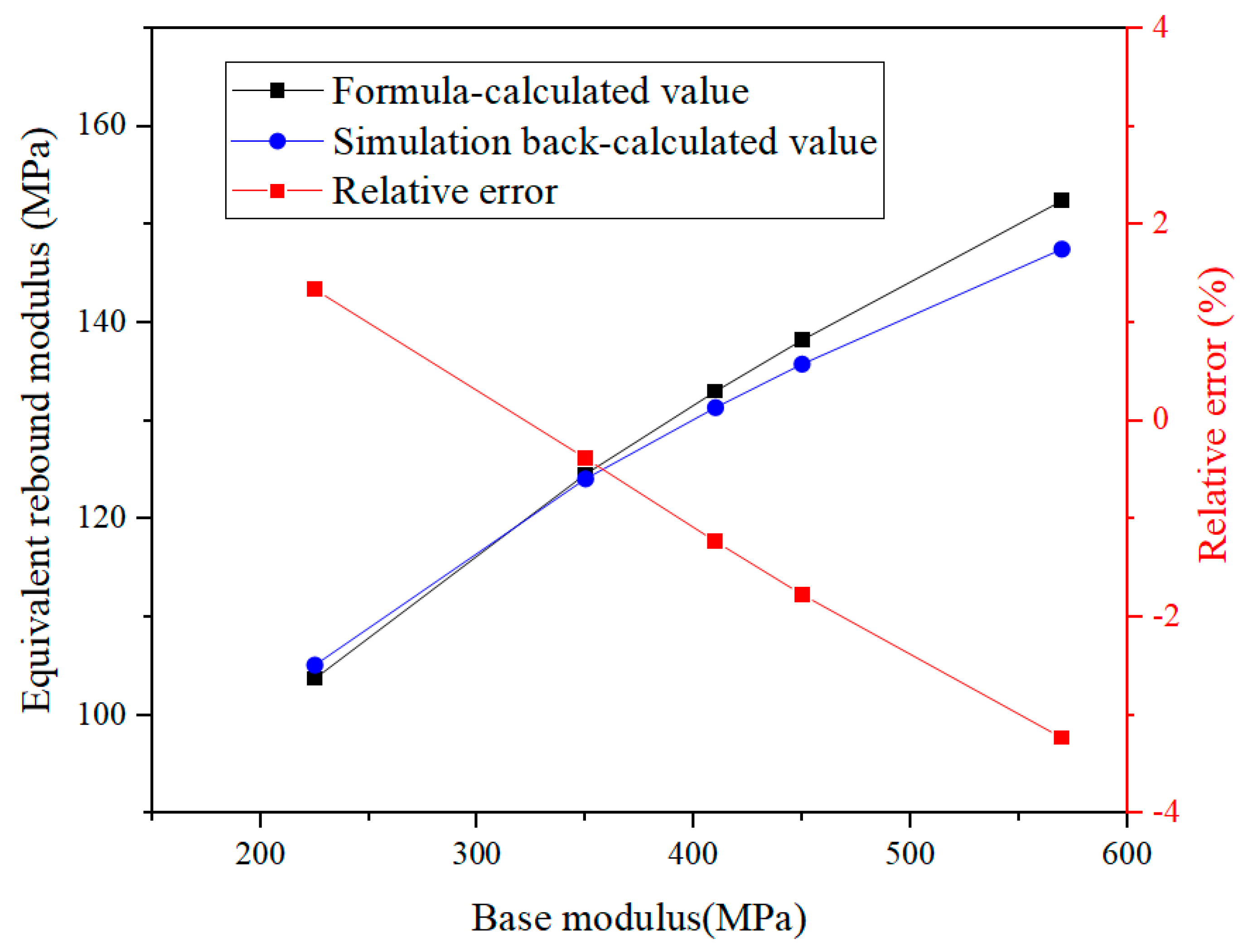
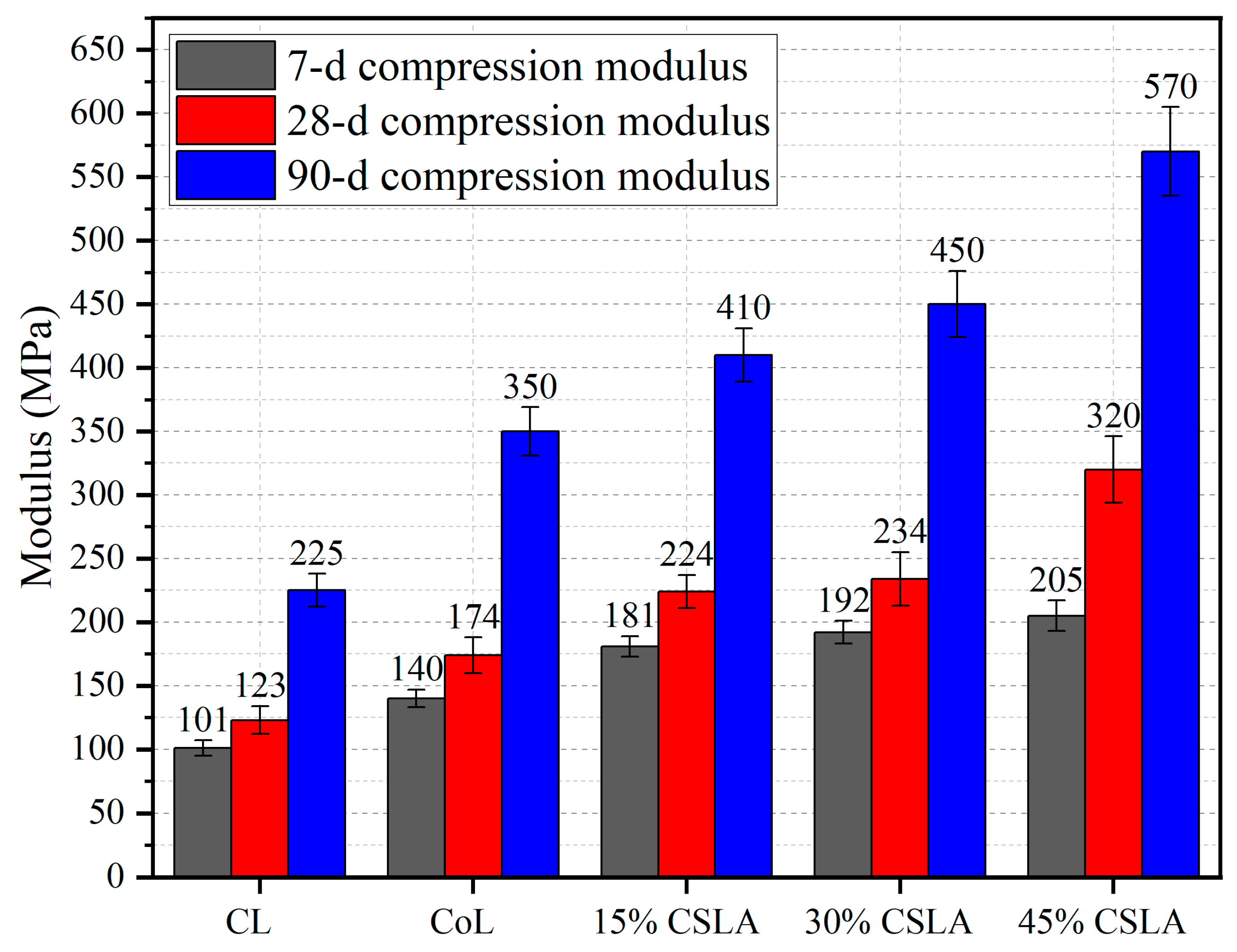
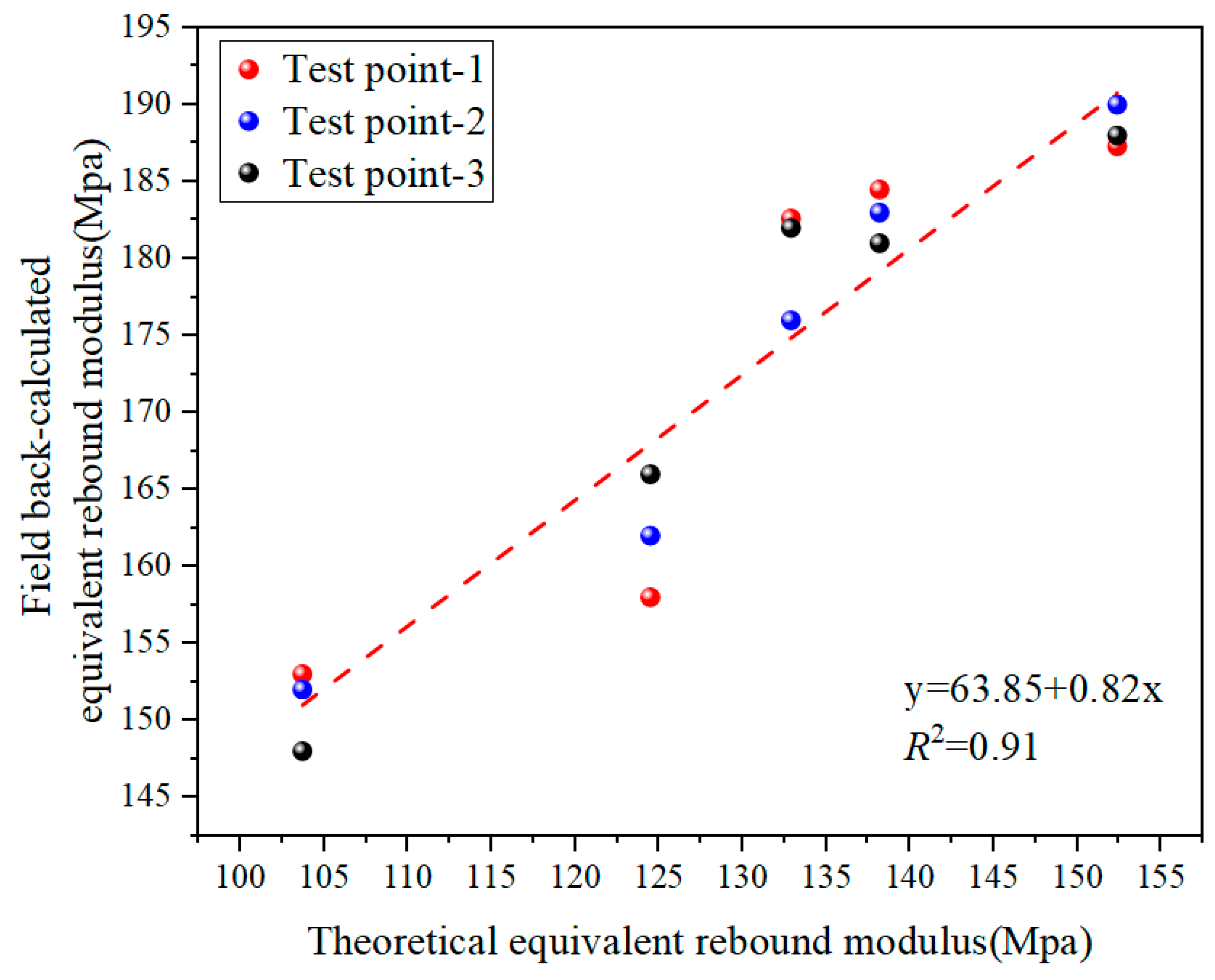
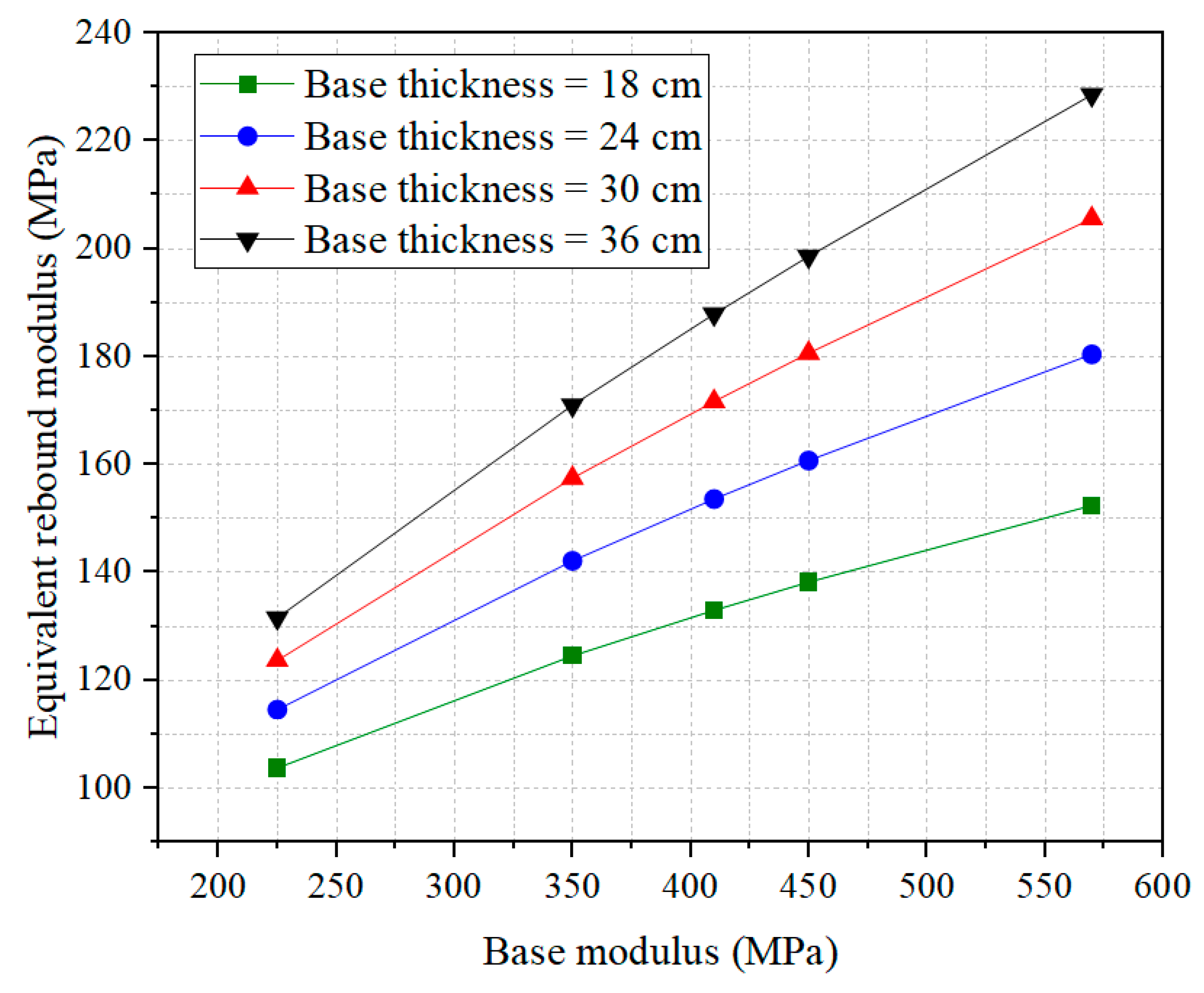
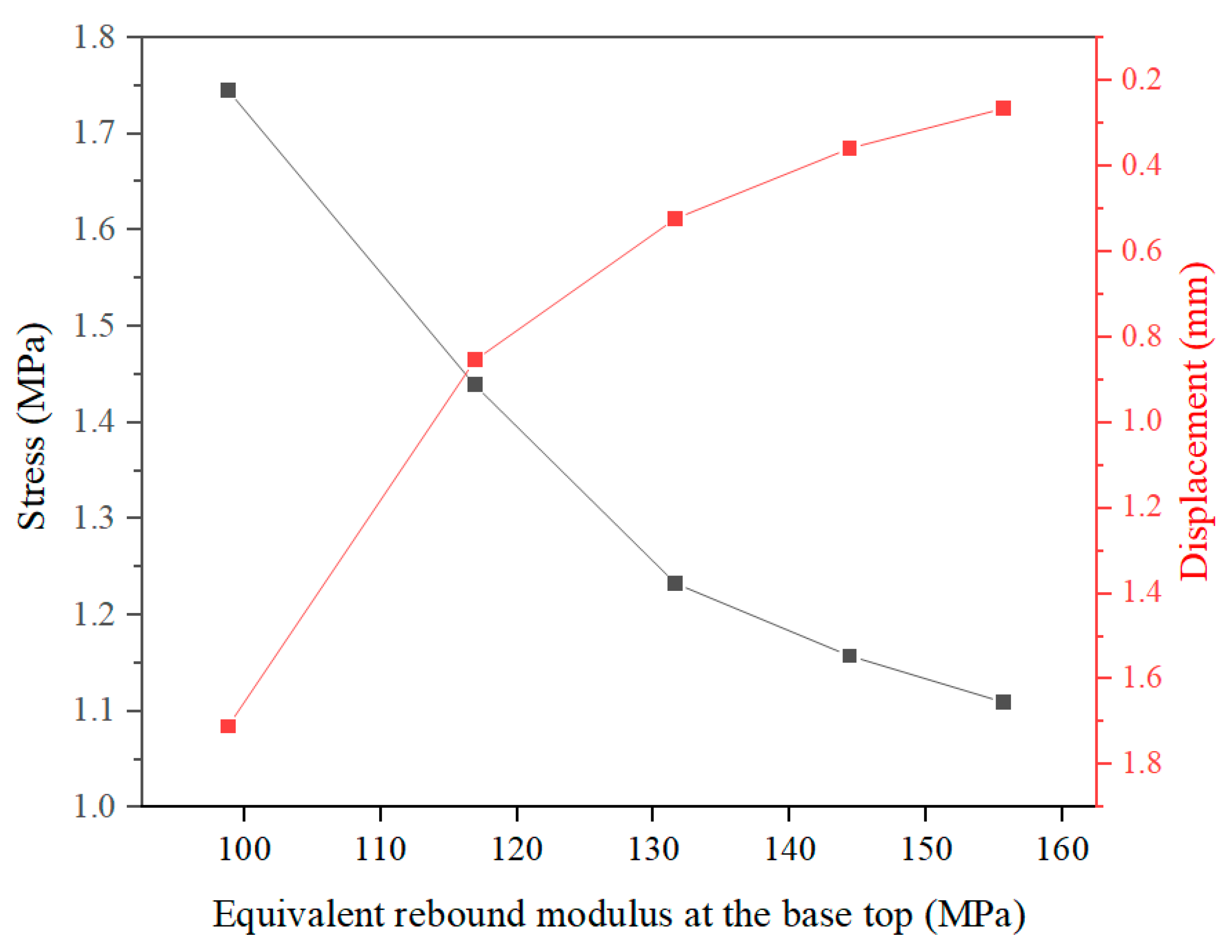
In northwestern China, loess is abundant whereas suitable aggregates for rural pavement bases are scarce, yet the transfer from laboratory stiffness of stabilized loess to field support and cement concrete slab response remains unclear. This study aims to establish an EiEt–pavement-response framework for cement–curing agent composite-stabilized loess and loess–sand mixtures. Compaction, unconfined compressive strength and uniaxial compression modulus tests were conducted; Et was calculated using a specification-based method, checked by falling weight deflectometer (FWD) back-calculation, and introduced into a three-dimensional finite element model. Composite stabilization markedly improved base stiffness because cementation, curing agent-assisted bonding, gradation optimization and skeleton–filling effects produced a denser load-bearing structure. After 90 days, the compressive modulus increased from 225 MPa for 6% cement-treated loess to 570 MPa for the 45% loess–sand mixture. The calculated Et agreed well with FWD back-calculated field values (R2 = 0.91). Increasing Et from 98.8 to 155.7 MPa reduced slab-bottom stress from 1.7449 to 1.1095 MPa and vertical displacement from 1.7102 to 0.2654 mm. Field engineers can use Et to select local loess-based base materials and coordinate base and slab thickness, provided that compaction quality, water stability and long-term durability are verified.
Keywords: composite-stabilized loess base; foundation-top equivalent resilient modulus; uniaxial compression modulus; finite element analysis; cement concrete pavement composite-stabilized loess base; foundation-top equivalent resilient modulus; uniaxial compression modulus; finite element analysis; cement concrete pavement