


Abstract
Human pose estimation (HPE) has advanced rapidly with deep learning, enabling a transition from specialized sensing and multi-view systems toward monocular RGB-based approaches. These developments have expanded applications in healthcare, robotics, sports analytics, and human–computer interaction. However, the growing diversity of deep learning paradigms, ranging from convolutional and recurrent models to graph-based and Transformer-based approaches, has resulted in a fragmented literature, making it difficult to systematically compare methods and guide system design. This paper addresses this challenge by providing a comprehensive survey of deep learning-based monocular HPE methods published over the past decade and introducing a unified modular framework. The proposed framework organizes HPE systems into six modular estimation paradigms, including single-image-based estimation, multi-frame-based estimation, Top-Down and Bottom-Up pose estimation strategies, 2D-to-3D pose reconstruction, and direct 3D estimation. Each module is analyzed in terms of representative approaches, design trade-offs, and practical considerations, supported by algorithmic formulations that outline the computational pipeline at each stage. Unlike prior surveys that primarily catalog methods or report benchmark results in isolation, this work emphasizes how component-level design choices relate to overall system performance. The paper summarizes performance trends on benchmarks including Human3.6M, COCO, and MPII, highlighting persistent challenges such as occlusion and viewpoint variation, and outlines future research directions including interaction-aware modeling, efficient deployment, and improved robustness under real-world conditions.
1. Introduction
Human pose estimation (HPE) has a long and rich history in computer vision research, with several important developments shaping its evolution [1,2]. Two practical trends relevant to modern approaches are particularly notable. One important trend in HPE has been the transition from specialized sensing setups toward RGB-based estimation pipelines. Earlier approaches often relied on additional sensing modalities, such as depth sensors [3,4] and thermal cameras [5], to improve estimation accuracy [6]. While these methods provided richer geometric or environmental information, they also introduced additional hardware requirements, calibration procedures, and integration complexity. With the emergence of deep learning, it has become increasingly feasible to achieve competitive HPE performance using standard RGB imagery alone [7,8], leading to simpler and more unified estimation pipelines. A second major trend is the transition from multi-view setups to single-view (monocular) approaches. Traditional methods often rely on multi-view geometry to improve depth estimation accuracy [9,10], generally achieving higher reconstruction accuracy than monocular approaches under controlled settings. However, these methods require calibrated camera setups and explicit modeling of geometric relationships across views, limiting their applicability in unconstrained environments. More recently, advancements in computer vision and deep learning have enabled accurate pose estimation from a single image [11,12,13,14].
HPE methods have also undergone a significant transformation in data processing, transitioning from hand-crafted feature extraction to automatic feature learning [1]. Traditional methods mainly Random Forests and Support Vector Machines often struggled to capture complex spatial and temporal dependencies [2]. The introduction of deep learning methods, particularly Convolutional Neural Networks (CNNs), enabled models to learn discriminative features directly from input images, leading to substantial improvements in performance [7,8,15]. More recently, Transformer-based methods have further extended this capability by modeling global dependencies across body joints and frames [14,16,17]. Deep learning-based HPE methods have achieved state-of-the-art results on benchmark datasets [18,19], enabling applications such as robotics [20,21], sports science [22], healthcare [23,24], and entertainment [25].
A temporal perspective further helps contextualize the evolution of HPE methods. Rather than treating existing approaches as isolated contributions, they can be grouped based on dominant deep learning paradigms and data acquisition settings over time. Table 1 summarizes this evolution, highlighting both the transition from multi-modal and multi-view setups to monocular RGB-based approaches, as well as the shift from CNN-based local feature extraction to Transformer-based global modeling rather than strict chronological boundaries [14,26,27]. This survey focuses on deep learning-based approaches for monocular human pose estimation over the past decade, with the goal of providing a structured and comprehensive understanding of existing methods. The paper introduces a unified modular framework that decomposes HPE systems into key components and analyzes the design choices within each stage. By organizing and comparing these approaches, this survey aims to provide a clear overview of state-of-the-art methods and serve as a useful reference for researchers and practitioners in the field.
Table 1.
Summary of dominant trends in deep learning-based human pose estimation (HPE), illustrating the transition from multi-view and early monocular systems toward predominantly monocular deep learning-based frameworks.
1.1. Existing Surveys
Several survey papers have been published on HPE [9,31,32,33]. These works provide comprehensive overviews of existing methods, often focusing on categorization and qualitative comparison across different approaches. While they offer valuable insights, they typically emphasize taxonomy rather than a unified perspective on system-level design. Early surveys, such as Holte et al. [9], analyze pre-2012 approaches for pose estimation and activity recognition using multi-view data. Similarly, Liu et al. [31] review body-part parsing methods developed between 2001 and 2015, where conventional techniques such as motion history volume features, hidden Markov models, and random forests are widely used. Gong et al. [32] further extend this analysis by covering model-based, discriminative, and hybrid approaches up to 2016, although recent deep learning approaches are not explored in depth.
More recent surveys incorporate deep learning-based methods. Munea et al. [33] provide a detailed taxonomy of 2D pose estimation techniques and offer comparative analysis across benchmark datasets; however, their study is limited to 2D estimation. Zheng et al. [34] present a comprehensive review of HPE methods across different modalities and learning paradigms, including depth sensors and IMUs. This work extends earlier versions and provides a broad overview of recent developments; however, the inclusion of diverse sensing setups makes it difficult to derive a unified methodology focused on a specific deployment scenario. Across these surveys, a common limitation is the absence of a unified architecture that connects component-level design choices to system-level performance. As a result, it remains challenging to systematically understand how different stages of HPE pipelines interact and influence overall outcomes. A closely related work is the monocular HPE survey by Chen et al. [35], which separates 2D and 3D estimation pipelines and provides a structured comparison of existing approaches. In contrast, our work emphasizes an integrated, end-to-end perspective by decomposing HPE systems into modular components and analyzing the relationships between them. Rather than relying solely on tabular comparisons, this survey focuses on how design choices across different stages relate to system-level accuracy and efficiency. Additional surveys on traditional HPE techniques primarily address pre-deep learning approaches [1,2,36].
1.2. The Contributions
Despite the large number of surveys on human pose estimation (HPE), the literature remains fragmented across diverse frameworks, input representations, and evaluation protocols, making systematic comparison and design understanding difficult. This survey addresses this gap by providing a unified and structured perspective on deep learning-based HPE methods.
The main contributions of this work are as follows:
- We present a modular framework that decomposes HPE systems into six functional components aligned with the computational pipeline, enabling a unified interpretation of existing approaches.
- We provide a structured categorization of deep learning paradigms for monocular HPE and analyze their design trade-offs, highlighting strengths, limitations, and emerging trends.
- We conduct a comparative analysis of state-of-the-art methods across different datasets and evaluation metrics, offering insights into performance trends and practical considerations.
- We discuss key challenges in HPE, including occlusion, generalization, and temporal consistency, and outline potential research directions for future work.
1.3. Paper Organization
The remainder of this paper is organized as follows. Section 2 presents the unified modular framework, which serves as a roadmap for the subsequent discussion. Section 3 and Section 4 describe each module in detail, categorizing existing approaches, outlining algorithmic pipelines, and identifying replaceable components drawn from state-of-the-art methods. Section 7 examines deep learning paradigms including CNNs, RNNs, GCNs, GANs, and Transformer-based methods, that support different modules of the HPE pipeline. Section 6.3 summarizes commonly used datasets, evaluation metrics, and benchmark comparisons. Section 8 discusses practical applications of HPE in fields such as sports analysis, rehabilitation, and human–robot interaction, and highlights directions for future research. Finally, the paper concludes with a discussion of promising future research directions aimed at improving the accuracy, robustness, and applicability of HPE systems.
2. Methodology Overview
To systematically analyze recent advances in human pose estimation (HPE), we propose a unified modular framework and architectural view of modern HPE systems. The proposed architecture in Figure 1 decomposes existing approaches into a sequence of functional components that collectively represent the end-to-end pipeline of modern monocular HPE systems. Unlike prior surveys that primarily categorize methods according to task formulation or architectural paradigms [33,35], the proposed framework emphasizes the underlying computational pipeline shared across heterogeneous HPE systems. This perspective enables a more consistent interpretation of methodological evolution across different model families and estimation paradigms while providing a unified architectural structure for organizing the literature reviewed in this survey.
Figure 1.
Overview of the proposed modular HPE architecture and survey framework. The six modules serve both as a conceptual architecture of modern HPE systems and as the organizational structure used throughout this survey. Modules 1 and 2 correspond to single-image-based and multi-frame-based estimation paradigms, respectively. Modules 3 and 4 represent Top-Down and Bottom-Up pose estimation strategies, while Modules 5 and 6 correspond to 2D-to-3D pose reconstruction and direct 3D estimation. Supporting deep learning paradigms and model families, including CNNs, RNNs, GCNs, GANs, and Transformer-based models, operate across different modules for feature extraction, temporal modeling, structural reasoning, and pose refinement. The red arrow associated with RNNs denotes temporal information flow across consecutive video frames in multi-frame estimation pipelines. GAN-based methods are generally incorporated as auxiliary refinement or regularization mechanisms rather than standalone modules.
Within the proposed architecture, modern HPE systems are organized into six modular estimation paradigms, including single-image-based estimation, multi-frame-based estimation, Top-Down and Bottom-Up pose estimation strategies, 2D-to-3D pose reconstruction, and direct 3D estimation. These six modules form the backbone of the survey and provide a unified structure for comparing otherwise heterogeneous methods. Each module can be instantiated using different computational techniques depending on application requirements and computational constraints. A key advantage of this formulation is that it decouples HPE systems into independent yet interconnected stages, enabling systematic comparison of methodological design choices across the literature. As discussed earlier, prior surveys typically organize methods based on architectural paradigms (e.g., CNN-based, graph-based, or Transformer-based approaches) or task settings (e.g., 2D vs. 3D, single-person vs. multi-person) [33,34,35]. In contrast, the proposed framework organizes the literature according to the functional role of each module within a unified computational pipeline, enabling consistent comparison of methods across different model families and estimation paradigms.
The proposed architecture in Figure 1 separates HPE into functional estimation modules while allowing different deep learning paradigms to operate across multiple stages of the pipeline. Rather than organizing the literature solely according to model families, the survey follows this architectural decomposition and discusses representative methods within each module. For example, CNN-based methods are commonly used for feature extraction and 2D pose estimation, RNNs support temporal modeling in multi-frame estimation, and GCNs are frequently applied for structural reasoning in 3D pose reconstruction. GAN-based approaches are typically incorporated as auxiliary supervision or refinement mechanisms to improve structural plausibility and prediction consistency. This modular decomposition captures how information flows from input representation to final pose estimation, enabling a unified analysis of design choices across otherwise heterogeneous methods.
For clarity, the proposed HPE architecture is discussed from two complementary perspectives. The first examines the architectural components of the pipeline, including input representation, feature extraction, and pose estimation heads, while the second examines six modules corresponding to major estimation paradigms and processing strategies in Figure 1. Together, these perspectives provide the organizational structure for the remainder of the survey.
2.1. Input Representation
Within the proposed HPE architecture shown in Figure 1, input representation forms the primary distinction between Module 1 (single-image-based estimation) and Module 2 (multi-frame-based estimation). The choice of input representation determines the type of information available for pose inference and directly influences the modeling strategies employed throughout the estimation pipeline. HPE methods can therefore be broadly categorized according to their input representation. With recent advances in deep learning, single-image-based estimation has become increasingly practical and widely adopted in modern HPE systems, where each frame is processed independently without temporal context [7,8]. In this case, the input typically consists of a single RGB image that is preprocessed through normalization, resizing, and data augmentation techniques such as scaling, rotation, and flipping to improve robustness and generalization. Here, the term RGB image is used to distinguish monocular color-image-based approaches from RGB-D, depth-assisted, thermal, or other multimodal sensing setups discussed earlier in the introduction. Representative works demonstrate that single-image methods rely on strong appearance priors and learned body representations to resolve depth ambiguity [37,38,39,40]. A second major category is multi-frame or video-based estimation, which leverages temporal redundancy across consecutive frames. Representative approaches include the temporal models proposed by Lea et al. [41], Pavllo et al. [42], and Arnab et al. [43], which demonstrate that temporal information can improve robustness under occlusion and motion blur. In such cases, preprocessing may additionally include temporal sampling, frame alignment, and sequence normalization.
From a modeling perspective, methods operating on these inputs commonly employ temporal modeling strategies such as recurrent modeling (e.g., RNN/LSTM-based methods) and temporal convolutional or attention-based aggregation [41,44,45]. Recent works increasingly favor non-recurrent temporal modeling approaches due to improved parallelization and the ability to capture long-range dependencies [42,46]. Beyond raw RGB inputs, alternative representations have also been explored. For example, some methods use detected 2D keypoints as structured inputs for 3D pose estimation [11], while others incorporate depth maps, heatmaps, or multi-view projections to enrich spatial information [8,12]. These intermediate representations reduce ambiguity and simplify downstream pose reconstruction.
In practice, the choice of input representation directly influences the selection of modeling and optimization strategies. For single-image inputs, regression-based approaches are commonly used due to their simplicity and computational efficiency, particularly in real-time or resource-constrained settings [7,11]. By comparison, multi-frame inputs require temporal modeling techniques to enforce consistency across frames, making them more suitable for dynamic scenarios involving motion blur, occlusion, or rapid articulation [17,42]. Learning-based approaches are generally preferred when large-scale annotated datasets are available, as they can learn complex spatial and temporal relationships directly from data. Conversely, geometric or optimization-based methods are often employed when incorporating structural constraints (e.g., kinematic consistency or body priors) or when annotations are limited, as they provide stronger physical interpretability [37,40]. Single-image inputs offer computational efficiency but lack temporal context, while multi-frame representations improve robustness at the cost of increased computational complexity. Similarly, structured intermediate representations (e.g., 2D keypoints) provide abstraction benefits but depend on the accuracy of upstream detection modules.
2.2. Feature Extraction
Within the proposed HPE architecture, feature extraction serves as a core computational component that operates across multiple modules by transforming preprocessed visual inputs into intermediate feature representations. These representations preserve important information about body structure, appearance, and spatial relationships, providing the foundation for subsequent pose estimation and structural reasoning stages. Rather than directly processing pixel intensities for pose prediction, HPE systems first extract informative visual patterns such as edges, textures, body contours, and joint-related structures. Early approaches primarily rely on convolutional neural networks (CNNs), which remain widely used for visual feature extraction in HPE due to their ability to capture local spatial patterns through hierarchical convolutional operations. Backbone networks such as ResNet [47], VGG [48], Inception [49], MobileNet [50], and EfficientNet [51] are commonly adopted in HPE systems. These CNN-based feature extraction methods can be broadly grouped into two design trends: (i) deep hierarchical feature extraction architectures that emphasize representation capacity and multi-scale feature learning, such as ResNet-based and hourglass-style architectures [8,29], and (ii) lightweight architectures optimized for real-time inference and mobile deployment, such as MobileNet and EfficientNet variants [50,51].
In addition to CNN-based approaches, Transformer-based models have recently been explored for feature representation in HPE, motivated by their ability to capture long-range dependencies and global spatial context [14,52,53]. Unlike CNNs, which rely on local receptive fields, Vision Transformers and hybrid CNN–Transformer architectures leverage self-attention to enable interactions across distant image regions [16]. Representative works include Vision Transformer-based architectures such as ViTPose [14], as well as hybrid methods that combine convolutional and attention mechanisms [46]. These approaches generally achieve improved global context modeling and strong performance on large-scale HPE benchmarks, particularly in scenarios involving occlusion, complex body articulation, and long-range spatial dependencies [14,16]. However, these performance gains often come at the cost of increased training time, higher memory consumption, and greater computational complexity compared to CNN-based methods [52,53]. Consequently, Transformer-based models are typically preferred in high-performance computing environments or offline analysis tasks, whereas lightweight CNN-based backbone networks remain more practical for real-time and resource-constrained deployment scenarios. This shift reflects a broader trend toward incorporating global context into feature representations for HPE.
2.3. Pose Estimation Head
The pose estimation head serves as a core functional component that transforms extracted visual features into structured human joint representations. Operating across multiple estimation modules, it bridges feature extraction and final pose prediction by converting learned feature representations into spatially meaningful joint locations. Existing methods can be broadly categorized into three major paradigms: heatmap-based regression, direct coordinate regression, and token- or query-based representation learning, each reflecting a different formulation of spatial localization [7,8,16].
Heatmap-based methods formulate pose estimation as a dense prediction problem, where each joint is represented as a probability heatmap over spatial locations. Representative methods proposed by Newell et al., Cao et al. and Chen et al. [8,18,54] demonstrate that dense supervision preserves spatial structure and improves robustness to partial occlusion. More recent approaches further enhance this paradigm through high-resolution feature preservation and multi-scale fusion, as seen in HRNet-style architectures [55]. However, a key limitation remains the quantization gap introduced during heatmap decoding, often requiring post-processing strategies such as argmax or soft-argmax, which can reduce sub-pixel accuracy [30,56]. Heatmap-based methods are generally preferred in applications where high spatial precision is required, such as clinical motion analysis, biomechanics, sports performance evaluation, and high-quality 3D pose reconstruction, where accurate joint localization is critical [29,57].
Direct regression methods aim to learn an end-to-end mapping from visual features to joint coordinates without intermediate spatial representations [7]. Early formulations such as Integral Regression [30] demonstrate that probabilistic reformulation of coordinate prediction can bridge the gap between heatmap and regression approaches. Subsequent works improve regression stability through distribution-aware learning and uncertainty modeling [58,59]. While these methods offer computational efficiency and architectural simplicity, they generally depend more heavily on feature quality and can be sensitive to spatial ambiguity, particularly under occlusion or complex articulation [7,30]. This paradigm is advantageous for lightweight or real-time systems where avoiding heatmap post-processing is desirable [50].
Token-based and query-based methods represent a more recent paradigm, where pose estimation is reformulated as a set prediction or token decoding problem. Inspired by Transformer-based backbones, ViTPose [14] and TokenPose [16] represent image regions or joint features as learnable visual tokens that interact through self-attention mechanisms. This formulation reduces reliance on explicit heatmap generation and enables global interactions across all joints [14,16]. Inspired by DETR [60], recent transformer-based pose estimation methods reformulate pose prediction as a query-based set prediction problem, where learnable pose or joint queries are decoded through attention mechanisms to jointly localize body keypoints [61]. These methods are particularly effective in scenarios requiring global reasoning, such as multi-person and whole-body pose estimation [46].
Across these paradigms, a consistent methodological trend is the evolution from dense spatial prediction toward set-based and attention-driven representations [14]. Modern approaches increasingly favor unified architectures that jointly model spatial relationships, reduce post-processing dependency, and improve global consistency [14,16,17]. This reflects a broader transition in HPE from explicit geometric encoding toward implicit representation learning through attention mechanisms [46].
2.4. Module 1: Single-Image-Based Estimation
Within the proposed HPE architecture, Module 1 corresponds to single-image-based HPE, where pose estimation is performed independently for each image without temporal modeling. In the proposed framework, the single-image-based HPE pipeline follows the stages outlined in Algorithm 1, including feature extraction, 2D pose estimation, and 3D pose reconstruction [8,11].
The following stages describe how the previously discussed feature extraction and pose estimation strategies operate within the single-image pipeline.
Feature Extraction (Step 2). Convolutional neural networks are widely used to extract high-level visual features from input images [47,48,50]. More recently, Vision Transformer-based backbones such as ViTPose [14], built upon the ViT architecture [52], have been explored for single-image HPE, offering improved global context modeling at the cost of higher computational requirements.
2D Pose Estimation (Step 3). The extracted feature representations are then used to estimate 2D joint locations [8,29]. Unlike generic feature extraction backbones, pose estimation heads are designed to preserve spatial precision and often incorporate multi-scale fusion mechanisms such as skip connections or hourglass structures. Early work such as DeepPose [7] introduced direct regression of joint coordinates, while subsequent methods commonly adopt heatmap-based formulations, where each joint is represented as a spatial probability map. Representative approaches include Hourglass [8], Cascaded Pyramid Networks [54], OpenPose [18], and HRNet [29]. Regression-based methods, such as Integral Regression [30], provide an alternative formulation with improved computational efficiency.
3D Pose Reconstruction (Step 4). Recovering 3D pose from a single image is inherently ill-posed due to depth ambiguity [11,12]. To address this challenge, prior constraints are introduced to regularize the solution space. These constraints typically encode kinematic structure, such as joint connectivity and bone length consistency, to eliminate implausible poses. Tree-structured graphical models such as pictorial structure models [62] model relationships between body parts and have been applied in both classical and modern pose estimation settings [5,18,63]. However, these joint-based models do not explicitly capture body shape information.
To address this limitation, parametric body models such as SMPL [64] have been developed, representing the human body as a skinned mesh controlled by shape and pose parameters. SMPL takes shape parameters and pose parameters as input, along with a learned joint regressor, to produce both joint locations and mesh vertices. Unlike joint-only models, SMPL enables reconstruction of full body geometry. Neural network-based methods [37,65,66,67] integrate these models with learned image representations to improve accuracy, often using intermediate cues such as heatmaps, segmentation masks, or UV maps. For example, Lassner et al. [67] extend SMPLify through a learning-based formulation that reduces reliance on intermediate optimization, achieving improved reconstruction accuracy. Single-image HPE methods rely on appearance priors and structural constraints to compensate for missing depth information, making them computationally efficient but more sensitive to depth ambiguity and occlusion compared to multi-frame approaches.
2.5. Module 2: Multi-Frame-Based Estimation
Module 2 extends the single-image formulation by incorporating temporal information across consecutive frames to improve robustness and temporal consistency. In multi-frame-based HPE, the pipeline follows the stages outlined in Algorithm 2 by integrating temporal information across consecutive frames. Compared to single-image approaches, video-based methods leverage temporal cues to improve robustness under occlusion, motion blur, and pose ambiguity [42,43].
| Algorithm 1: Single -image-based HPE pipeline |
| Input : Image Output: Estimated 3D pose
|
| Algorithm 2: Multi-frame-based HPE pipeline |
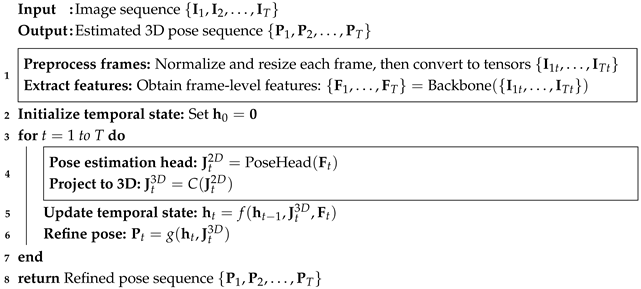 |
Notation: input image(s), extracted features, observed 2D joint locations, estimated 3D joint locations, pose estimate or pose parameters, prior pose estimate, temporal hidden state, 3D-to-2D projection operator, and regularization coefficient.
Conceptual pipelines for Module 1 and Module 2: single-image-based and multi-frame-based HPE. The single-image setting estimates poses independently from individual images, whereas the multi-frame setting incorporates temporal consistency across consecutive frames.
Feature Extraction and Pose Estimation (Steps 1–4). Similar to single-image pipelines, CNNs are used to extract visual features and estimate 2D or 3D poses from individual frames [8,29]. These methods operate in either 2D or 3D space, with 3D approaches generally providing more detailed pose representations at the cost of higher computational complexity [11,12].
Temporal Modeling (Steps 5–7). The key distinction of multi-frame HPE lies in the incorporation of temporal consistency [42,43]. A recurrent model is commonly used to refine pose estimates across frames by maintaining a temporal hidden state. At each time step t, the model updates its hidden state using the previous pose estimate , current features , and the previous hidden state , enabling refinement of the current pose estimate. Early approaches rely on recurrent neural networks (RNNs), particularly LSTM-based models, to capture temporal dependencies. For example, Recurrent 3D Pose Sequence Machines [45] and LSTM Pose Machines [44] use recurrent networks to model pose evolution over time. More recent methods explore alternative formulations, including temporal convolutional networks (TCNs) [41,42], attention-based models, and spatio-temporal Transformers [43,46], which provide improved parallelization and long-range dependency modeling. In general, LSTM-based models are suitable for shorter sequences where sequential processing is acceptable, while TCNs and Transformer-based approaches are preferred for longer sequences due to their ability to process frames in parallel and capture long-range dependencies [41,44].
Multi-frame approaches are particularly effective in addressing real-world challenges such as occlusions, partial observations, and noisy detections. Various methods incorporate temporal priors, data augmentation strategies, or robust optimization techniques to improve stability and generalization [42,43]. Overall, multi-frame HPE methods enhance pose estimation by leveraging temporal information and motion dynamics. Compared to single-image methods, they offer improved robustness and stability, particularly in dynamic or challenging visual conditions, at the cost of increased computational complexity and sensitivity to frame rate and sequence length.
3. Top-Down and Bottom-Up Pose Estimation
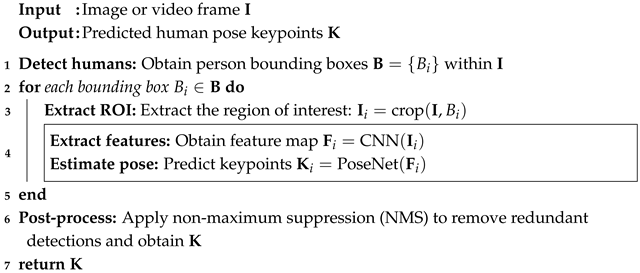
Within the proposed HPE architecture, Modules 3 and 4 correspond to the two widely used paradigms for human pose estimation (HPE): the top-down and bottom-up pipelines [18,68]. These approaches differ in how they localize individuals and estimate joint positions. In the top-down pipeline, the system first detects human instances in the image using a person detector, and then applies a single-person pose estimator to each detected region. This approach generally achieves strong accuracy due to focused estimation within localized regions, which reduces background clutter and scale variation [68,69]. However, its performance depends on the quality of the initial detection stage and may degrade in cases of occlusion, missed detections, or crowded scenes [15]. Additionally, computational cost scales with the number of detected persons.
In contrast, the bottom-up pipeline first detects all body joints in the image and then groups them into individual human poses. This formulation avoids reliance on an explicit person detector and is generally more robust in multi-person scenarios [18,70]. However, the grouping step introduces additional complexity, and performance may be affected by incorrect associations between joints, particularly in crowded scenes [70]. Algorithms 3 and 4 illustrate these pipelines, with shared steps highlighted in boxed regions.
| Algorithm 3: Top-down HPE pipeline |
 |
| Algorithm 4: Bottom-up HPE pipeline |
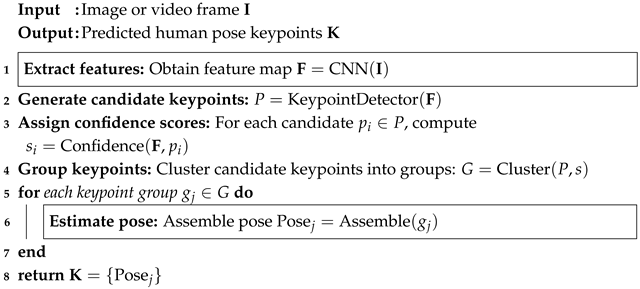 |
Notation: input image or frame, detected bounding boxes, feature map, P candidate keypoints, s confidence scores, G grouped keypoints, and final pose keypoints.
Conceptual pipelines for Module 3 and Module 4: top-down and bottom-up HPE. The top-down approach first detects human instances and then estimates pose within each region of interest, while the bottom-up approach detects candidate keypoints across the full image and groups them into individual poses. Boxed regions highlight shared steps such as feature extraction and pose estimation.
3.1. Module 3: Top-Down Pipeline
Module 3 corresponds to the top-down pose estimation pipeline, which consists of two main components: (i) a human detector that localizes individuals in the image or video by producing bounding boxes, and (ii) a single-person pose estimator that predicts keypoints within each detected region [68,69]. These components operate sequentially to achieve accurate pose estimation. As summarized in Algorithm 3, the feature extraction stage (Step 3) and the pose prediction stage (Step 4) can be flexibly implemented using different frameworks. Cai et al. propose a Residual Steps Network (RSN) to capture fine-grained local representations through intra-level feature fusion [71]. The Stacked Hourglass Network [8] uses multiple stacked modules (e.g., 8 stacks) for iterative refinement and multi-scale feature aggregation. Liu et al. further analyze the impact of different backbone networks [72], including Hourglass and ResNet variants, on pose estimation performance. Notably, configurations such as Hourglass-52 denote network depth rather than the number of stacked modules. The Hourglass architecture itself follows a U-shaped design with repeated downsampling and upsampling stages, along with skip connections to preserve spatial information.
Further improvements are achieved through refinement strategies. Wang et al. introduce a graph-based pose refinement module that iteratively updates keypoints via message passing [73]. Moon et al. propose PoseFix [74], which refines predicted poses using an adapter module that enables compatibility with different pre-trained pose estimators without retraining. Additional works exploring alternative architectures and improvements within the top-down pipeline include [58,68,75,76].
This formulation highlights how different detection, feature extraction, and refinement strategies can be combined within a unified top-down pipeline.
3.2. Module 4: Bottom-Up Pipeline
Module 4 corresponds to the bottom-up pose estimation pipeline, in which human pose estimation is formulated by first detecting individual body keypoints in the image, without prior knowledge of person identities, and then grouping these keypoints into complete human poses. This approach is particularly well-suited for multi-person scenarios, as it does not rely on a separate person detection stage. As summarized in Algorithm 4, the bottom-up pipeline consists of two main components: (i) keypoint detection and (ii) keypoint grouping.
Keypoint Detection (Step 1). This stage extracts feature representations and predicts candidate keypoint locations using CNNs. For example, Cao et al. [18] employ a VGG-based method to predict Part Affinity Fields (PAFs), which encode pairwise relationships between joints as vector fields. Cheng et al. propose HigherHRNet [55], which maintains high-resolution representations across multiple stages for improved keypoint localization. Jin et al. utilize a modified ResNet-50 backbone for feature extraction [77]. Additional paradigms for bottom-up keypoint detection can be found in [78,79,80,81,82].
Keypoint Grouping (Step 4). After detecting candidate keypoints, the next step is to associate them into individual human poses. Various grouping strategies have been proposed in the literature. Jin et al. introduce a hierarchical graph grouping (HGG) module that constructs a graph representation to cluster keypoints into body parts [77]. DeepCut formulates grouping as a subset partitioning problem using a graphical model that incorporates both unary and pairwise relationships [81]. Alternatively, DirectPose [82] predicts keypoints and offsets jointly using a fully convolutional network, followed by non-maximum suppression and grouping.
Overall, bottom-up methods provide a flexible and scalable framework for multi-person pose estimation by decoupling keypoint detection from person localization. Their performance largely depends on the accuracy of keypoint detection and the effectiveness of the grouping strategy.
4. Inference Process
Modules 5 and 6 correspond to two complementary inference strategies for 3D pose estimation: 2D-to-3D pose estimation and direct 3D pose estimation [11,12]. In 2D-to-3D methods, the pipeline first estimates 2D joint locations and then infers the corresponding 3D pose through an additional lifting or optimization stage [11,13]. These approaches often benefit from large-scale 2D datasets and leverage 3D priors or motion constraints to resolve depth ambiguity. In contrast, direct 3D pose estimation methods bypass the intermediate 2D representation and predict 3D joint coordinates directly from the input image [39,40]. This approach usually depends on advanced deep neural networks and requires datasets with accurate 3D annotations. While both approaches face challenges such as occlusion and depth ambiguity, they differ in their assumptions, computational requirements, and error characteristics. These methods are complementary, with 2D-to-3D approaches offering flexibility and data efficiency, and direct 3D methods providing end-to-end learning with potentially improved consistency.
4.1. Module 5: 2D-to-3D Estimation
Module 5 focuses on the 2D-to-3D pose estimation paradigm, which decomposes the reconstruction problem into two sequential stages: (i) 2D joint detection and (ii) lifting or matching from 2D to 3D pose space [11,13].
2D Joint Detection estimates 2D keypoint locations from input images using deep neural networks. Modern approaches commonly rely on CNNs to learn spatial representations and predict joint locations [15,18]. Representative methods include multi-stage networks such as OpenPose [18], which jointly predicts keypoints and Part Affinity Fields, and encoder–decoder models such as Hourglass networks [8], which capture multi-scale spatial information. Despite significant progress, challenges remain in handling occlusions, viewpoint variation, and complex poses.
2D-to-3D Lifting and Matching approaches often incorporate deep learning techniques to learn a mapping from 2D to 3D joint positions. Given 2D joint positions , the objective is to recover corresponding 3D joint positions . This problem is inherently ill-posed due to depth ambiguity and is typically addressed using geometric constraints or learned mappings [11,13]. A common formulation models the projection relationship as , where K is the camera calibration matrix and is the projection operator. The 3D pose can then be estimated by minimizing a reprojection objective:
where encodes prior constraints such as joint consistency or pose plausibility, and controls their influence. This optimization can be solved using iterative nonlinear least-squares methods such as Gauss-Newton [83] or Levenberg-Marquardt optimization [84].
Recent approaches instead learn the 2D-to-3D mapping directly using deep networks. For example, Chen et al. incorporate 3D pose priors to constrain plausible solutions [85], while Li et al. employ mixture density networks to generate multiple 3D hypotheses conditioned on 2D inputs [86]. Zhou et al. propose HEMlets, a heatmap-based representation that encodes geometric cues for part-based 3D estimation [87]. Overall, 2D-to-3D methods provide a flexible and modular approach by leveraging mature 2D pose estimators and incorporating geometric or learned constraints to resolve depth ambiguity.
4.2. Module 6: Direct 3D Estimation
Module 6 addresses the direct 3D human pose estimation paradigm, which aims to predict 3D joint coordinates directly from an input image or image sequence without relying on an intermediate 2D detection stage.
Given an input image , the objective is to estimate the 3D coordinates of K body joints, denoted as . This mapping can be modeled as:
where is a deep neural network parameterized by , represents the predicted 3D pose, and denotes the predicted 3D coordinates of the i-th body joint.
Modern approaches commonly rely on deep learning frameworks to learn this mapping. For example, Kanazawa et al. [39] propose an end-to-end framework for direct 3D human pose and shape estimation from images, while Kolotouros et al. [40] introduce an iterative refinement strategy that improves reconstruction accuracy through feedback-based optimization. Zhou et al. [87] propose a heatmap-based representation that captures both local and global spatial context for improved estimation accuracy. Other methods incorporate attention mechanisms and structured prediction strategies to enhance spatial reasoning and handle complex pose variations [86]. Additionally, integral regression methods [30] bridge heatmap-based and coordinate-based representations by computing continuous joint coordinates from probability distributions, improving robustness to occlusion and quantization errors. Direct 3D estimation methods provide an end-to-end framework for pose prediction, offering improved end-to-end consistency and simplified pipelines, although at the cost of higher annotation requirements and increased sensitivity to training data quality.
5. Evaluation Metrics
This section summarizes the evaluation metrics commonly used in human pose estimation (HPE) for both 2D and 3D tasks. Since different datasets and tasks employ different evaluation protocols, results should be interpreted within their respective contexts rather than directly compared.
5.1. Mean per Joint Position Error (MPJPE)
MPJPE is a standard metric for 3D pose estimation, defined as the average Euclidean distance between predicted and ground-truth joint positions across all samples and joints [88]:
where and denote the predicted and ground-truth 3D coordinates of the j-th joint in the s-th sample, respectively, S is the number of samples (frames), and J is the number of joints. MPJPE is typically reported in millimeters (mm), and lower values indicate better performance.
5.2. Procrustes-Aligned MPJPE (P-MPJPE)
P-MPJPE (Protocol 2) measures MPJPE after similarity (Procrustes) alignment between predicted and ground-truth poses, removing differences in translation, rotation, and scale [88]:
where denotes the optimal similarity (Procrustes) transformation that aligns the predicted pose to the ground-truth pose through rotation, translation, and scale normalization. This metric evaluates structural pose accuracy independent of global alignment. Lower values indicate better performance.
5.3. Average Precision (AP) and Mean Average Precision (mAP)
For 2D pose estimation, performance is commonly evaluated using Average Precision (AP), which measures detection accuracy based on Object Keypoint Similarity (OKS). OKS is the standard COCO keypoint similarity metric, analogous to Intersection over Union (IoU), computed from normalized keypoint distances and keypoint visibility [89]. We follow the COCO evaluation protocol.
where denotes precision at recall level i, represents the change in recall, and N denotes the number of evaluated recall levels.
Precision is defined as:
where (true positives) denotes correctly detected keypoints, and (false positives) denotes incorrect detections that do not correspond to ground-truth keypoints.
Mean Average Precision (mAP) is computed as:
where denotes the average precision evaluated at the k-th category or threshold, and K denotes the total number of evaluated categories or thresholds, depending on the benchmark protocol. AP and mAP are reported as percentages (%), and higher values indicate better performance.
5.4. Percentage of Correct Keypoints (PCKh)
PCKh measures the percentage of correctly localized keypoints within a normalized distance threshold, typically defined relative to head size [90]:
where denotes the number of correctly localized keypoints and denotes the total number of evaluated keypoints. PCKh is reported as a percentage (%), and higher values indicate better performance.
5.5. Average Recall (AR)
Average Recall (AR) evaluates the recall of detected keypoints across multiple thresholds. We report AR under the COCO keypoint evaluation protocol (OKS thresholds) [89]:
where denotes the recall at the k-th evaluation threshold, and K denotes the total number of evaluated thresholds. AR is reported as a percentage (%), and higher values indicate better performance.
The above metrics evaluate different aspects of HPE performance. MPJPE and P-MPJPE are reported in millimeters (mm) and are minimized, while AP, mAP, PCKh, and AR are reported as percentages (%) and are maximized. Due to differences in datasets, annotation standards, and evaluation protocols, results should be interpreted within their respective contexts rather than compared directly across tasks.
6. Experiments
This section presents a comparative evaluation of representative human pose estimation (HPE) methods from multiple perspectives, including accuracy, computational efficiency, and practical applicability. The analysis is based on reported results from publicly available benchmarks and prior studies [88,89,90], covering widely used datasets and evaluation metrics. By consolidating and comparing these results, we aim to provide a structured overview of the current state-of-the-art in HPE [14,29]. This comparison highlights the strengths and limitations of different approaches under various conditions, and offers insights into trade-offs between accuracy, efficiency, and deployment considerations.
Table 2 summarizes representative human pose estimation (HPE) methods across both image-based and video-based settings, highlighting differences in evaluation protocols, dataset characteristics, and modeling approaches. For image-based methods, most approaches operate under the single-image (SI) setting and are evaluated on widely used benchmarks such as MPII [90] and Human3.6M [88]. These methods primarily rely on appearance-based cues and are typically assessed using metrics such as PCKh (↑), AP (↑), and MPJPE (↓). Notably, approaches evaluated on MPII (e.g., Refs. [14,29]) report strong performance under detection-based metrics, reflecting advances in 2D pose estimation. In contrast, methods evaluated on Human3.6M focus on 3D reconstruction accuracy using MPJPE, where performance is influenced by the availability of large-scale annotated training data (e.g., Refs. [11,91]).
The variation in reported metrics and datasets highlights the difficulty of directly comparing methods across different evaluation protocols. For video-based methods, multi-frame (M-F) approaches leverage temporal information across sequences and are typically evaluated on datasets such as MPI-INF-3DHP [92]. These methods generally operate on significantly larger datasets (e.g., millions of frames) and aim to improve robustness and temporal consistency. Compared to single-image approaches, multi-frame methods often achieve improved stability under challenging conditions such as occlusion and motion, although their performance is influenced by sequence length, frame rate, and temporal modeling design. Table 2 illustrates that HPE performance depends not only on model models but also on the choice of dataset, evaluation protocol, and input setting (single-image vs. multi-frame). As a result, comparisons should be interpreted with caution, as differences in experimental setups may significantly impact reported results.
Figure 2 shows the reconstruction error (MPJPE) across different action categories on the Human3.6M dataset. Martinez et al. and Pavllo et al. [11,42] generally achieve lower errors compared to earlier approaches, while Zhou et al. [91] and Mehta et al. [92] exhibit higher reconstruction errors across several actions. More recent methods, including [14,93], demonstrate improved performance, although results still vary depending on the action category. Errors tend to increase for complex actions such as Smoke and WalkD., where some methods [12,17] exhibit significantly higher MPJPE values, indicating challenges due to articulation, occlusion, and viewpoint variation. Overall, the results suggest that while recent approaches improve robustness and consistency, action complexity remains a key factor influencing reconstruction accuracy.
Table 2.
Comparative evaluation of methods on image-based and video-based datasets under different evaluation metrics.
Figure 3 below presents the reconstruction error (P-MPJPE) on the HumanEva dataset under both multi-action (MA) and single-action (SA) settings. Among the compared methods, ref. [42] consistently achieves the lowest error, typically in the range of 10–27 mm across different sequences, highlighting the effectiveness of temporal modeling. In contrast, ref. [11] shows higher errors, reaching up to ∼47 mm in challenging scenarios such as s3 Walk, indicating limitations in handling motion complexity. Pavlakos et al. [12] and Lee et al. [96] demonstrate moderate performance, generally within 17–30 mm. Overall, the results indicate that sequence-aware approaches have been shown to improve accuracy in several studies, particularly for dynamic actions such as Jog.
While Figure 2 and Figure 3 provide a scenario-level comparison of reconstruction errors across different actions and datasets, a more detailed joint-wise evaluation is necessary to understand how estimation accuracy varies across different body parts [11,42]. This fine-grained analysis highlights how different methods handle articulation complexity, particularly for challenging joints such as wrists and elbows [8,29], and provides additional insight into the strengths and limitations of existing approaches.
Figure 2.
Comparative evaluation on Human3.6M. The x-axis represents different action scenarios, while the y-axis shows MPJPE results. Representative Methods [11,12,14,17,29,91,92,93,94,95].
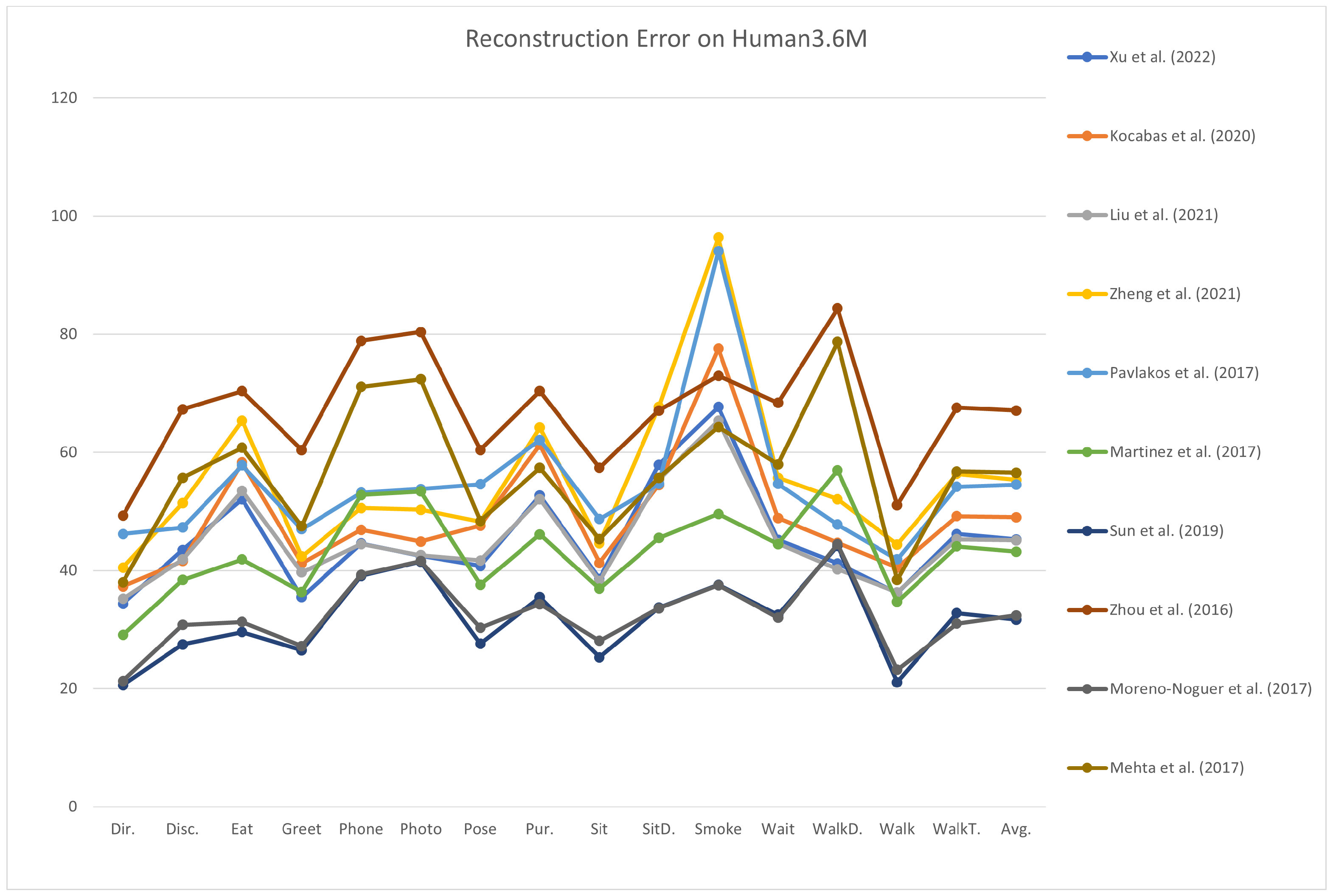
Figure 3.
Comparative evaluation on the HumanEva dataset using Protocol 2 (P-MPJPE, mm). Results from representative methods, including Pavlakos et al. [12], Martinez et al. [11], Lee et al. [96], and Pavllo et al. [42], are shown across different action sequences. Lower values indicate better performance.
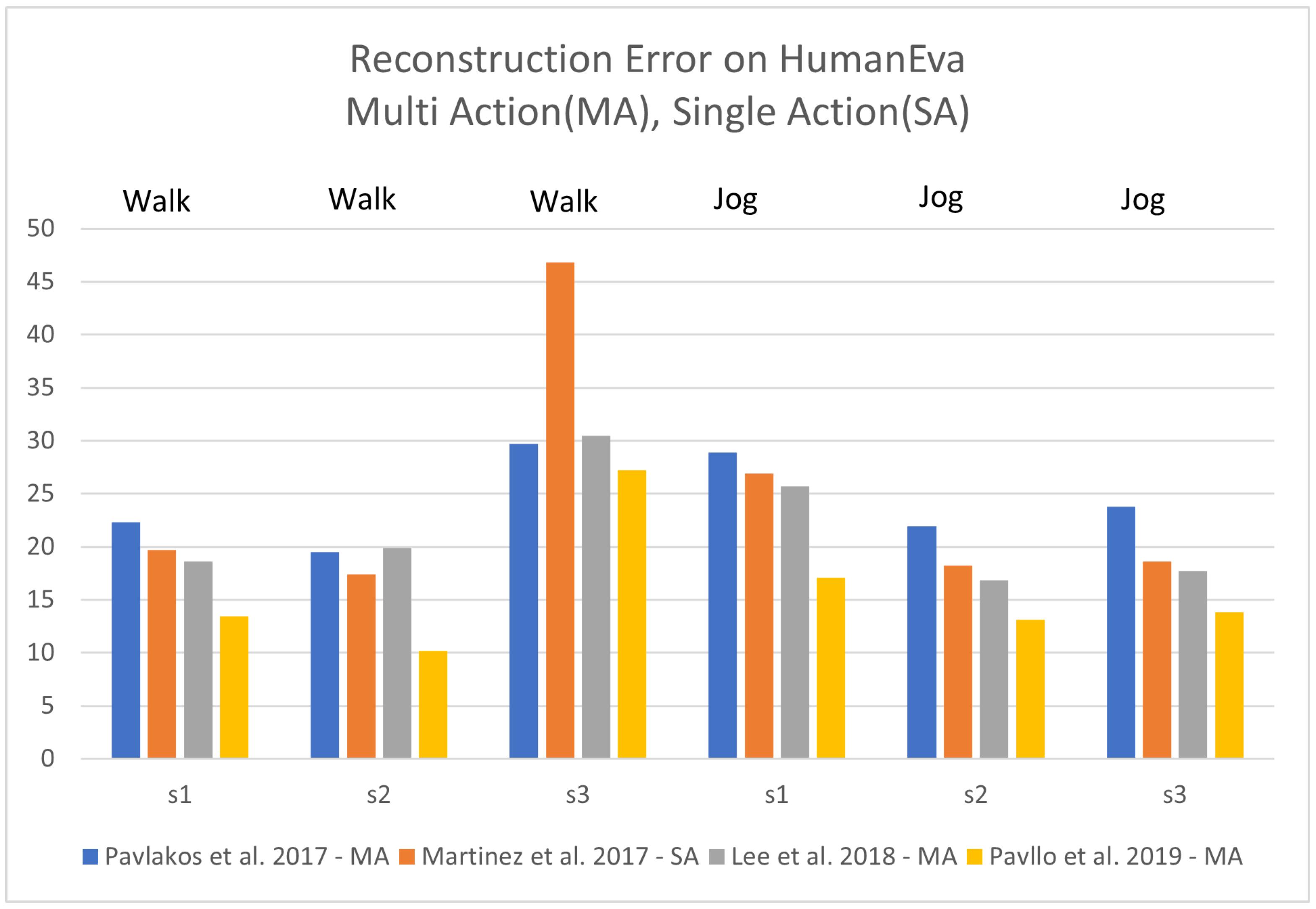
Table 3 compares the performance of methods across different body joints for both 3D (MPJPE, ↓) and 2D (AP, ↑) benchmarks. For 3D pose estimation on Human3.6M, Pavakos et al. [12] achieve lower reconstruction errors compared to earlier regression-based approaches such as [11,91], which exhibit higher errors across several joints. In contrast, for 2D pose estimation on COCO, more recent approaches such as [14] demonstrate improved accuracy under detection-based metrics. Across joints, wrist and elbow regions typically show higher error or lower AP, reflecting their increased articulation complexity and sensitivity to occlusion [8,29]. Overall, the results suggest a consistent improvement trend in both 2D and 3D pose estimation with modern deep learning-based frameworks.
Table 3.
Performance comparison of representative methods across different joints. MPJPE values are reported for 3D datasets (e.g., Human3.6M), while AP is reported for 2D benchmarks (e.g., COCO).
6.1. Comparative Analysis of State-of-the-Art on HPE
This section provides a comparative analysis of representative human pose estimation (HPE) methods based on the modular framework introduced earlier. The evaluation focuses on understanding how different design choices, such as single-image versus multi-frame estimation and 2D-to-3D versus direct 3D inference, affect overall performance [11,39,42]. By analyzing results across multiple benchmarks and metrics, we aim to highlight key trends, strengths, and limitations of current state-of-the-art approaches.
6.1.1. Evaluation for Module 1 and Module 2
To provide a comparative analysis of pose estimation performance, we present evaluation results from Module 1 (single-image-based methods) and Module 2 (multi-frame-based methods). Table 2 summarizes the performance of representative approaches using commonly adopted metrics such as AP (↑) and MPJPE (↓) across different datasets. From the comparison, it can be observed that while multi-frame-based approaches leverage temporal information, their performance gains over single-image-based methods are not always consistently reflected across standard evaluation metrics [42,43]. This variation may be influenced by factors such as dataset characteristics, sequence length, and the effectiveness of temporal modeling, as well as challenges including motion blur, occlusion, and illumination changes.
To further analyze performance trends discussed in Figure 2 for MPJPE across different action scenarios. Despite differences in absolute accuracy, most methods exhibit similar error patterns across activities, indicating that reconstruction error is strongly dependent on motion complexity [11,42]. In particular, scenarios involving rapid movement or self-occlusion tend to produce higher errors, while simpler and more constrained actions yield lower error values.
Table 4 presents the MPJPE performance across different action categories on the Human3.6M dataset. Among the compared methods, ref. [29] achieves the lowest overall error (31.67 mm), demonstrating strong generalization across activities. In contrast, earlier approaches such as [91] exhibit significantly higher errors (up to ∼67 mm on average), indicating limitations in handling complex motion patterns. Xu et al. [14] and Liu et al. [95] achieve moderate performance, with average errors around 45 mm. Across all methods, activities involving complex motion or interaction, such as Smoke, SitD., andWalkD., consistently yield higher errors, while simpler actions such as Directions and Discussion show lower errors. These results highlight the strong dependence of reconstruction accuracy on motion complexity and the effectiveness of modern methods in reducing estimation error.
Table 4.
MPJPE (in mm) measurement on the Human3.6M dataset across different human activities.
6.1.2. Evaluation of Modules 3 and 4
Human pose estimation is commonly performed using two inference paradigms: Top-Down (Module 3) and Bottom-Up (Module 4). To analyze modern Transformer-based Top-Down pipelines, we consider the ViTPose framework [14], which employs a Vision Transformer (ViT)-based backbone and serves as a strong baseline for monocular HPE systems.
Figure 4 presents a comparative analysis of different ViTPose variants across multiple benchmark datasets. The evaluated models include ViTPose-B, ViTPose-L, ViTPose-H, and ViTPose-G, as well as enhanced variants trained using additional multi-task learning strategies (e.g., ViTPose-B*, ViTPose-L*, ViTPose-H*). The “+” notation denotes enhanced multi-task pretraining variants of ViTPose rather than a change in the underlying Top-Down inference paradigm. All evaluated variants follow a Top-Down pose estimation framework, where a human detector first localizes individual persons before pose estimation is performed on cropped image regions [14].
Figure 4.
Comparison of ViTPose and enhanced ViTPose variants trained with additional multi-task objectives across benchmark datasets including COCO, CrowdPose, OCHuman, MPII, and AI Challenger [14]. The table reports input resolution (Res), average precision (AP), average recall (AR), and PCKh metrics across different model scales.
Among these models, larger variants such as ViTPose-H and ViTPose-G generally achieve higher accuracy due to their increased representation capacity and stronger global context modeling. By comparison, lightweight variants such as ViTPose-B and ViTPose-L provide a more favorable trade-off between computational efficiency and pose estimation accuracy, making them more suitable for real-time and resource-constrained applications. Overall, Top-Down Transformer-based approaches benefit from localized person detection, which reduces background interference and improves keypoint localization performance [68,69].
Figure 5 and Figure 6 illustrate the trade-off between accuracy (AP, ↑) and inference speed (throughput, FPS) across different HPE models on the COCO dataset [14,16,29]. Among all methods, ViTPose+-H [14] achieves the highest performance with an AP of 0.734 at 30.2 FPS, demonstrating a strong balance between accuracy and efficiency. Other variants, such as ViTPose+-L (0.703 AP, 33.1 FPS) and ViTPose-H (0.686 AP, 29.4 FPS), also maintain competitive performance while offering slightly improved inference speed. Lightweight models, including ViTPose+-S and ViTPose-S, provide higher throughput (above 33 FPS) with only a modest reduction in accuracy, making them suitable for real-time applications.
Figure 5.
Throughput versus average precision (AP) across different HPE models.
Figure 6.
Performance comparison generated on an NVIDIA RTX 2080 Ti using COCO images of resolution .
Compared to other Transformer-based methods, TransPose-H/A6 [97] (0.641 AP, 31.6 FPS) and TokenPose-L/D24 [16] (0.626 AP, 26.1 FPS) achieve lower accuracy at comparable or reduced speeds. Similarly, CNN-based feature extraction frameworks such as HRNet-W32 [29] achieve higher throughput (43.5 FPS) but at the cost of reduced precision (0.596 AP), highlighting the typical trade-off between speed and accuracy. Overall, these results suggest that ViTPose-based models offer a strong accuracy–efficiency balance compared to prior approaches, with larger variants prioritizing accuracy and smaller variants enabling real-time performance.
6.1.3. Module 5 and Module 6 Evaluation
Modules 5 and 6 represent two distinct paradigms for 3D human pose estimation. Module 5 (2D-to-3D estimation) relies on intermediate 2D joint predictions to reconstruct the 3D pose, whereas Module 6 (direct 3D estimation) predicts 3D joint coordinates directly from the input image [11,39]. The evaluation results on the Human3.6M dataset, summarized in Table 4, indicate that the performance of 2D-to-3D approaches is strongly influenced by the accuracy of the initial 2D joint detection, as reflected in the mean per joint position error (MPJPE) [13,42]. Errors in 2D localization can propagate and significantly affect the final 3D reconstruction quality.
6.2. Qualitative Demonstration
To comprehensively assess the performance of state-of-the-art methods, we analyze 3D pose recovery on the Human3.6M dataset, as illustrated in Figure 7. The qualitative comparison indicates that, although variations in MPJPE exist across methods, the reconstructed poses are visually consistent, suggesting that recent approaches have largely converged in terms of per-frame 3D reconstruction accuracy [11,42].
Figure 7.
Qualitative comparison of reconstructed 3D poses on the Human3.6M dataset across representative methods, including Martinez et al. [11], Hossain et al. [98], Pavllo et al. [42], and Liu et al. [72]. Results are shown for two representative sequences (S9 and S11), illustrating differences in pose reconstruction quality under varying motion complexity.
Furthermore, Figure 8 demonstrates the capability of existing methods to handle challenging video scenarios involving diverse and complex motion patterns. The results show that these approaches can recover plausible 3D poses even under dynamic conditions. However, it is important to emphasize that these observations primarily reflect frame-wise reconstruction quality and do not fully capture temporal consistency or long-range motion coherence, which remain challenging aspects in multi-frame and video-based human pose estimation [42,93].
Figure 8.
Qualitative results of 3D human pose estimation on in-the-wild video sequences from [72]. Each example shows an input frame alongside its reconstructed 3D pose. Despite challenges such as viewpoint variation, occlusion, and complex motion patterns, the method produces visually coherent 3D structures, highlighting its robustness in unconstrained environments.
Figure 7 illustrates qualitative comparisons of reconstructed 3D poses across different methods under two representative scenarios. In relatively simple poses (e.g., S9 Direction), the predicted skeletal structures are visually consistent across methods, indicating that current approaches achieve comparable performance in single-frame reconstruction. However, in more complex scenarios involving articulated motion and interaction (e.g., S11 WalkDog), noticeable variations emerge across methods, particularly in limb positioning and body orientation. These discrepancies highlight the increased difficulty of accurately modeling non-rigid motion and occlusion. Moreover, when these frame-wise predictions are extended to video sequences, temporal inconsistencies become apparent, often manifesting as motion jitter [42]. This limitation is especially critical in applications such as motion retargeting and 3D avatar animation, where smooth temporal transitions are essential. These observations suggest that, while current methods perform well in static or mildly dynamic settings, improving temporal coherence and robustness to complex motion remains an open challenge in video-based 3D human pose estimation.
Figure 8 presents qualitative results on in-the-wild video frames, highlighting the robustness of recent methods under unconstrained conditions. Despite variations in viewpoint, background clutter, and complex motion patterns, the reconstructed 3D poses remain visually consistent and anatomically plausible. However, subtle inaccuracies in limb orientation and depth estimation can still be observed, particularly in challenging poses, indicating that generalization to real-world scenarios remains an open challenge.
6.3. Datasets for HPE Evaluation
A variety of benchmark datasets have been developed to evaluate human pose estimation (HPE) methods under different conditions, ranging from controlled laboratory settings to unconstrained real-world environments.
Human3.6M [88] is one of the most widely used large-scale datasets for 3D human pose estimation. It contains over 3.6 million images and 1373 sequences (approximately 7.47 million frames) captured in a motion-capture studio across 15 activities. The dataset provides both accurate 2D and 3D joint annotations, making it a standard benchmark for evaluating 3D reconstruction methods. Despite its controlled environment, challenges such as viewpoint variation, occlusions, and subtle motion differences still make high-precision estimation non-trivial. MPII [90] is a benchmark dataset for 2D pose estimation, consisting of over 25,000 images and more than 40,000 annotated human poses. It captures diverse activities in natural settings, including sports and daily actions, with significant variations in viewpoint, occlusion, and lighting. The dataset provides annotations for 16 body joints along with visibility labels, and has been extensively used to evaluate robustness in unconstrained environments. COCO (Common Objects in Context) [89] is a large-scale dataset primarily designed for object detection, but widely adopted for multi-person pose estimation. It contains over 330 K images with more than 2.5 million labeled instances, including person keypoints annotated with 17 joints. COCO is particularly valuable for evaluating large-scale, multi-person scenarios with significant background clutter and interaction between subjects.
In addition to these major benchmarks, several specialized datasets address specific challenges in HPE. PoseTrack [99] focuses on pose estimation and tracking in videos, enabling evaluation of temporal consistency. LSP (Leeds Sports Pose) [63] contains images of athletes performing complex motions, emphasizing extreme poses. Penn Action [100] provides annotated video sequences with action labels and human-object interactions. Synthetic datasets such as GTA-IM [101] generate realistic outdoor scenes with precise annotations, facilitating training under diverse conditions. The HumanEva dataset [102] provides synchronized video and motion capture data for accurate 3D evaluation, while the CMU Panoptic dataset [103] offers multi-view recordings of complex multi-person interactions. Finally, datasets such as Occlusion-Person [56] specifically target robustness under partial occlusion. These datasets collectively enable comprehensive evaluation of HPE methods across controlled environments, real-world scenarios, multi-person settings, and challenging conditions such as occlusion and temporal dynamics.
More recently, datasets have been introduced to address limitations related to realism, diversity, and generalization, providing in-the-wild evaluation settings that better reflect real-world scenarios. 3DPW (3D Poses in the Wild) [6] contains outdoor sequences captured using handheld cameras, with ground-truth 3D annotations obtained via IMU-based motion capture. It includes challenging factors such as occlusions, dynamic backgrounds, and varying illumination, making it a standard benchmark for evaluating generalization beyond controlled environments. AGORA [104] is a large-scale synthetic dataset designed for full-body 3D human pose and shape estimation. It provides photorealistic renderings with accurate SMPL annotations, covering diverse body shapes, clothing, viewpoints, and crowd scenarios. Unlike traditional datasets, AGORA emphasizes high-resolution imagery and complex interactions, enabling evaluation under extreme occlusion and multi-person settings. AMASS (Archive of Motion Capture as Surface Shapes) [105] is a large collection of motion capture datasets unified under a common SMPL representation. It contains millions of pose instances across diverse motion types, making it particularly useful for training data-driven models and learning motion priors. However, since AMASS is derived from controlled MoCap data, it lacks visual complexity and is typically used in conjunction with image-based datasets.
7. Deep Learning Paradigms and Model Families
Deep neural networks have become a fundamental component in human pose estimation (HPE), owing to their ability to learn complex spatial representations and model dependencies between body joints. In this section, we review key neural network backbones that have been applied to HPE, including CNNs, RNNs, Graph Convolutional Networks (GCNs), and Generative Adversarial Networks (GANs) [8,15,106,107].
7.1. Convolutional Neural Networks (CNNs)
CNNs remain a foundational component of most HPE systems due to their strong capability for hierarchical feature extraction and spatial reasoning. Within the proposed framework illustrated in Figure 1, CNN-based methods operate across multiple modules, particularly in Top-Down (Module 3) and Bottom-Up (Module 4) pose estimation pipelines, where they are widely used for hierarchical feature extraction and spatial reasoning. Early CNN-based approaches focus on directly predicting joint locations or heatmaps from images. For example, Convolutional Pose Machines (CPMs) [15] introduce a multi-stage frameworks that iteratively refines predictions by modeling spatial dependencies across stages. Similarly, the Stacked Hourglass Network [8] captures both local and global context through repeated bottom-up and top-down pathways, enabling multi-scale feature learning and iterative refinement across stacked modules.
To further improve spatial precision, Cascaded Pyramid Networks (CPNs) [54] leverage multi-scale feature representations to progressively refine joint predictions. Bulat et al. generate dense heatmaps for each joint, preserving spatial structure and improving localization accuracy [108]. In contrast, regression-based methods, DeepPose [7] directly map image features to joint coordinates, offering a simpler formulation but often requiring stronger feature representations to achieve competitive accuracy. CNN-based methods have demonstrated strong performance in both single-person and multi-person pose estimation tasks. However, their reliance on local receptive fields can make modeling long-range dependencies less explicit compared to attention-based methods, motivating the development of Transformer-based methods discussed in subsequent sections.
7.2. Recurrent Neural Networks (RNNs)
RNNs have been widely used in human pose estimation (HPE) to model temporal dependencies across video frames. Within the proposed framework illustrated in Figure 1, RNN-based temporal modeling frameworks primarily support Multi-Frame-Based Estimation (Module 2), where temporal consistency is enforced by refining pose predictions across sequences. In typical HPE pipelines, a sequence of frame-level features extracted by CNNs is fed into an RNN, which outputs temporally consistent pose estimates. By maintaining a hidden state across time, RNNs capture motion dynamics and help mitigate issues such as occlusion, motion blur, and frame-wise prediction noise.
Several extensions of RNNs have been explored for HPE. Recurrent Pose Machines [45] and LSTM Pose Machines [44] model temporal dependencies across sequences, improving pose estimation accuracy in video-based settings. Convolutional LSTM (ConvLSTM) [109] further enhances this formulation by integrating convolutional operations within recurrent units, preserving spatial structure while modeling temporal dynamics. Despite their effectiveness, RNN-based approaches suffer from limitations such as sequential processing, which restricts parallelization and scalability to long sequences. As a result, more recent works increasingly favor temporal convolutional networks (TCNs) and transformer-based models, which offer improved efficiency and long-range dependency modeling [41,42].
7.3. Graph Convolutional Networks (GCNs)
GCNs have emerged as an effective approach for modeling structured relationships between human body joints in pose estimation tasks [106,110]. Unlike CNNs, which operate on regular grid data, GCNs represent the human skeleton as a graph, where joints are treated as nodes and bones define the edges. This formulation enables explicit modeling of spatial dependencies and joint interactions. Within the proposed framework illustrated in Figure 1, GCN-based structural reasoning frameworks are primarily utilized in 2D-to-3D Pose Reconstruction (Module 5) and Direct 3D Estimation (Module 6), where they operate on 2D keypoints or intermediate 3D representations to improve structural consistency. By propagating information across connected joints, GCNs enforce kinematic constraints and reduce implausible pose predictions. Early work such as SemGCN [111] demonstrated the effectiveness of semantic graph convolutions for lifting 2D keypoints to 3D poses, achieving strong performance on benchmark datasets. Extending this idea, spatial-temporal graph convolutional networks (ST-GCNs) incorporate both spatial and temporal edges to model motion dynamics in skeleton-based sequence modeling [112]. Cai et al. introduced non-uniform graph convolution with adaptive kernel weights to better capture heterogeneous relationships between joints [113]. Similarly, Modulated GCN addresses limitations of weight sharing by introducing feature and affinity modulation, allowing the model to dynamically adjust both node transformations and graph connectivity [114]. GCN-based methods provide a principled way to encode human body structure and have shown strong performance in both single-frame and temporal pose estimation tasks. However, their effectiveness depends on the quality of input keypoints, and they are typically used in conjunction with CNN- or transformer-based feature extractors rather than as standalone models.
7.4. Generative Adversarial Networks (GANs)
As illustrated in Figure 1, GAN-based approaches are typically incorporated as auxiliary refinement or regularization components across multiple modules, particularly in 2D-to-3D Pose Reconstruction (Module 5) and Direct 3D Estimation (Module 6). GANs [107] have been explored in human pose estimation (HPE) as a means to enforce structural plausibility and improve robustness under challenging conditions such as occlusion and ambiguous poses. This adversarial formulation encourages the generator to produce anatomically plausible and coherent pose estimates. In most HPE pipelines, GANs function as auxiliary supervision mechanisms rather than standalone pose estimators.
Several works have demonstrated the effectiveness of adversarial learning in pose estimation. Chen et al. [115] introduced a multitask framework that jointly predicts pose heatmaps and occlusion maps, leveraging adversarial training to enforce geometric consistency between joints. Peng et al. [116] proposed a GAN-based approach that integrates data augmentation and network optimization, improving robustness by learning difficult pose variations. Similarly, Chou et al. [117] employed an adversarial network in which the discriminator distinguishes between ground-truth and predicted heatmaps, enabling the generator to learn more realistic pose configurations. Despite these advantages, GAN-based approaches are less commonly used in recent HPE systems compared to CNN- and transformer-based methods [14]. This is largely due to challenges in training stability and increased computational complexity. Consequently, GANs are often incorporated as auxiliary components to enhance prediction quality rather than forming the core neural network paradigm of modern pose estimation pipelines.
7.5. Transformer-Based Methods
Recent approaches leverage Transformer-based methods to model global dependencies across body joints and frames [118]. Transformers employ self-attention mechanisms to capture long-range spatial relationships, making them particularly suitable for modeling complex human body configurations. As illustrated in Figure 1, Transformer-based methods operate across multiple modules of the proposed HPE pipeline by enabling global spatial and temporal reasoning for both 2D and 3D pose estimation tasks. In 2D pose estimation methods, ViTPose [14] and TokenPose [16] represent images or joints as tokens and apply multi-head self-attention to learn global feature interactions. These approaches have demonstrated strong performance on large-scale benchmarks such as COCO by effectively capturing contextual information across the entire image. For 3D pose estimation, Transformer-based models extend this idea by incorporating temporal and structural dependencies. For example, PoseFormer [17] utilizes attention mechanisms over sequences of 2D poses to infer temporally consistent 3D pose representations. Similarly, MixSTE [46] introduces a spatio-temporal encoding strategy that improves modeling of long-range motion dependencies. These models are particularly effective in handling motion dynamics and temporal consistency in video-based settings.
Hybrid models that combine CNN backbones with Transformer modules have also gained popularity in recent HPE systems [95]. In these designs, CNNs are used for efficient low-level feature extraction, while Transformers model global interactions at higher levels, balancing computational efficiency with representational power. Despite their advantages, Transformer-based methods often incur higher computational cost and memory usage compared to CNN-based approaches [52]. As a result, recent research has focused on improving efficiency through lightweight attention mechanisms, token pruning, and hierarchical designs [53,119]. Transformer-based methods represent a significant shift toward global modeling in HPE, enabling improved performance in both 2D and 3D tasks, particularly in scenarios involving occlusion, complex poses, and temporal dependencies [17,46].
As shown in Table 5, CNN-based frameworks generally provide lower computational complexity and higher inference throughput, making them suitable for real-time deployment and resource-constrained environments. Transformer-based approaches often achieve stronger global context modeling and improved performance under occlusion, complex articulation, and long-range spatial dependencies, but typically require higher memory usage and computational overhead. Hybrid CNN–Transformer methods attempt to balance these trade-offs by combining efficient convolutional feature extraction with attention-based global reasoning. Overall, the choice of frameworks depends on the target application, computational budget, and accuracy requirements.
Table 5.
Representative efficiency and performance comparison across CNN-based, Transformer-based, and spatio-temporal HPE models. Reported values are obtained from the original papers or official repositories under their respective evaluation protocols. COCO results are reported on val2017 at input resolution, while Human3.6M results follow Protocol-1 MPJPE using fine-tuned CPN 2D detections. AP (↑) indicates higher values are better, whereas MPJPE (mm, ↓) indicates lower values are better. Since results are obtained under different datasets and protocols, values should be interpreted as representative literature results rather than directly comparable scores.
8. HPE Applications, Challenges, and Future Directions
Monocular human pose estimation (HPE) has significantly expanded the accessibility of 3D human motion data, enabling a wide range of real-world applications. By eliminating the need for specialized motion-capture systems, modern HPE approaches allow scalable and cost-effective analysis of human movement.
Applications. HPE has been widely adopted across multiple domains. In sports analytics and rehabilitation, accurate motion tracking enables performance evaluation, injury prevention, and personalized therapy planning [121,122]. In robotics, large-scale human motion data allows robots to better understand human behavior and improve human–robot interaction [42,93]. In healthcare, pose estimation supports early diagnosis and monitoring of movement disorders such as Parkinson’s disease [123]. In the entertainment industry, HPE has transformed animation and film production by enabling efficient motion capture and realistic character animation [124]. These applications highlight the broad societal and industrial impact of HPE technologies.
Challenges. Despite these advancements, several challenges remain. First, most existing methods primarily focus on single-person or isolated pose estimation and struggle to model complex human–human interactions, especially under severe occlusion [18,46]. Second, temporal consistency remains a critical issue, as frame-wise predictions often introduce motion jitter when applied to video sequences [42,43]. Third, domain generalization is limited, with models trained on controlled datasets often failing to perform robustly in real-world environments [39,40]. Finally, tasks such as motion retargeting require not only accurate pose estimation but also smooth and physically plausible motion reconstruction, which remains challenging.
Future Directions. Addressing these challenges requires advances in several directions. Incorporating interaction-aware modeling, multi-person reasoning, and improved occlusion handling will enhance robustness in complex scenes. Temporal modeling through sequence-based networks, including temporal convolutional networks and spatio-temporal Transformers, can improve motion consistency [17,41]. In addition, integrating physics-based constraints and generative modeling techniques may improve motion realism for applications such as animation and robotics. Finally, the development of more diverse and large-scale datasets, particularly those capturing interaction-heavy and real-world scenarios [6,104], will be essential for improving generalization.
In the following subsections, we further discuss key challenges such as interaction modeling and motion retargeting, and outline potential solutions from both algorithmic and application perspectives.
8.1. Interaction Integration
Modeling interactions between humans and their environment has emerged as a critical challenge in human pose estimation (HPE), particularly in real-world scenarios involving multiple subjects, object manipulation, and occlusion. Traditional HPE methods largely operate under an independent inference paradigm, where each individual is processed separately without explicitly modeling inter-person or human–object relationships. In top-down approaches [12,29,58], human instances are first detected using object detectors such as Mask R-CNN [125] or Faster R-CNN [126], followed by pose estimation within each bounding box. As a result, pose predictions for one individual are independent of others, limiting the ability to capture interaction cues. Similarly, bottom-up methods detect identity-free joints and group them based on heuristic or learned association metrics [81,127], Art Affinity Fields [18], associative embedding [79], or Part Intensity Fields [78]. However, these grouping strategies primarily rely on local spatial cues and do not explicitly model interaction dynamics.
This limitation becomes particularly evident in scenarios involving close physical proximity, occlusion, or coordinated activities, where joint predictions from different individuals become ambiguous. Incorporating interaction-aware modeling into HPE frameworks can provide additional contextual information, enabling more robust and consistent pose estimation under such conditions. Recent research directions focus on integrating interaction reasoning through graph-based representations, attention mechanisms, and multi-agent modeling [17,46]. By capturing relationships between individuals and objects, these approaches aim to resolve ambiguities and improve generalization in complex environments. Moreover, interaction-aware HPE is essential for downstream applications such as human–robot interaction, activity understanding, and immersive virtual or augmented reality systems. Advancing interaction modeling remains a key step toward bridging the gap between controlled benchmark performance and real-world deployment of HPE systems.
8.2. Motion Retargeting
Motion retargeting refers to the process of transferring estimated 3D human poses to animate virtual characters or avatars. This technique is widely used in applications such as animation, gaming, and virtual/augmented reality, where realistic human motion is essential for immersive experiences. By mapping the motion of a real subject onto a target character, retargeting enables intuitive and scalable animation without requiring specialized motion-capture systems [39,93].
Despite strong performance on standard evaluation metrics such as AP and MPJPE, many state-of-the-art HPE methods exhibit noticeable artifacts when their predictions are applied to motion retargeting. As shown in Figure 9, inconsistencies in joint estimation, particularly under occlusion or complex poses, result in incorrect limb placement and structural distortions in the animated character [42,43]. These errors become more pronounced when the target avatar differs significantly in body proportions from the source subject. A critical limitation arises from the lack of temporal coherence in frame-wise pose predictions. Even small variations in joint positions across consecutive frames can accumulate, producing visible jitter in the retargeted motion [42]. While some approaches incorporate temporal regularization, their effectiveness is often limited to short sequences and does not generalize well to diverse real-world scenarios.
Figure 9.
Qualitative comparison of motion retargeting results for a sample from the Human3.6M dataset (S9 Posing). From left to right: input image, ground truth retargeted pose, and outputs from different methods [11,42,72,98]. While all approaches capture the overall pose structure, noticeable differences arise in limb positioning and articulation. In particular, variations in arm orientation and subtle joint misalignments highlight the impact of estimation errors on the final retargeted animation.
From a broader perspective, motion retargeting also provides a valuable feedback signal for improving pose estimation. By evaluating the quality of retargeted motion, it is possible to identify inconsistencies that are not captured by conventional metrics. This observation motivates the development of feedback-driven or closed-loop frameworks, where HPE outputs are refined based on downstream motion quality. In this context, adversarial learning (e.g., GAN-based formulations) [107] can be leveraged to enforce temporal smoothness and structural plausibility, leading to more robust and realistic pose estimation. Integrating motion retargeting into the HPE pipeline highlights a critical gap between benchmark accuracy and real-world usability, and offers a promising direction for future research.
9. Conclusions
This paper presented a comprehensive survey of deep learning-based approaches for human pose estimation (HPE), along with a unified modular framework that organizes existing methods into key components. This framework provides a structured perspective for understanding how different approaches relate to one another and enables systematic analysis of advancements in the field. Our analysis indicates that, despite significant progress in both 2D and 3D pose estimation, current state-of-the-art methods still face important limitations. In particular, most approaches rely on independent inference and lack explicit modeling of human-human and human-object interactions, which restricts robustness in complex real-world scenarios. Additionally, although benchmark performance continues to improve, temporal inconsistency remains a critical issue, often leading to jittering effects in video-based applications such as motion retargeting. These observations highlight a gap between benchmark accuracy and practical deployment. Addressing this gap requires advances in interaction-aware modeling, temporally consistent learning, and more realistic evaluation protocols that better reflect downstream applications. Furthermore, integrating feedback mechanisms, such as retargeting-aware refinement and generative constraints, offers a promising direction for improving both stability and realism of pose estimation.
Looking forward, future research is expected to focus on bridging these challenges through the development of interaction-centric datasets, spatio-temporal frameworks, and physically grounded modeling techniques. Such advancements will be essential for enabling reliable deployment of HPE systems in applications including human–robot interaction, virtual and augmented reality, and intelligent motion analysis. This survey highlights the need to move beyond static accuracy metrics toward holistic evaluation of motion quality, consistency, and real-world applicability, paving the way for the next generation of robust and deployable HPE systems.
Author Contributions
Conceptualization, J.Y., J.S. and S.D.; methodology, S.D. and J.S.; software, S.D.; validation, W.L., B.R.P., Y.L. and T.V.N.; formal analysis, J.S., W.L. and R.L.; investigation, J.Y. and B.R.P.; resources, S.D. and J.S.; data curation, S.D.; writing—original draft preparation, S.D. and J.Y.; writing—review and editing, S.D., J.Y., J.S., W.L., R.L., Y.L. and T.V.N.; visualization, J.Y. and W.L.; supervision, J.Y. and J.S.; project administration, J.Y., T.V.N. and J.S. All authors have read and agreed to the published version of the manuscript.
Funding
This research received no external funding.
Institutional Review Board Statement
Not applicable.
Informed Consent Statement
Not applicable.
Data Availability Statement
The data presented in this study are available upon reasonable request. The data are not publicly available due to privacy or ethical restrictions.
Conflicts of Interest
The authors declare no conflicts of interest.
References
- Poppe, R. Vision-Based Human Motion Analysis: An Overview. Comput. Vis. Image Underst. 2007, 108, 4–18. [Google Scholar] [CrossRef] [Scilit]
- Moeslund, T.B.; Hilton, A.; Krüger, V. A Survey of Advances in Vision-Based Human Motion Capture and Analysis. Comput. Vis. Image Underst. 2006, 104, 90–126. [Google Scholar] [CrossRef] [Scilit]
- Shotton, J.; Fitzgibbon, A.; Cook, M.; Sharp, T.; Finocchio, M.; Moore, R.; Kipman, A.; Blake, A. Real-Time Human Pose Recognition in Parts from Single Depth Images. In Proceedings of the IEEE Conference on Computer Vision and Pattern Recognition (CVPR), Colorado Springs, CO, USA, 20–25 June 2011; pp. 1297–1304. [Google Scholar] [CrossRef] [Scilit]
- Ganapathi, V.; Plagemann, C.; Koller, D.; Thrun, S. Real-Time Human Pose Tracking from Range Data. In Proceedings of the European Conference on Computer Vision (ECCV), Florence, Italy, 7–13 October 2012; pp. 738–751. [Google Scholar] [CrossRef] [Scilit]
- Mehta, D.; Sridhar, S.; Sotnychenko, O.; Rhodin, H.; Shafiei, M.; Seidel, H.P.; Xu, W.; Casas, D.; Theobalt, C. VNect: Real-Time 3D Human Pose Estimation with a Single RGB Camera. ACM Trans. Graph. 2017, 36, 1–14. [Google Scholar] [CrossRef] [Scilit]
- von Marcard, T.; Henschel, R.; Black, M.J.; Rosenhahn, B.; Pons-Moll, G. Recovering Accurate 3D Human Pose in the Wild Using IMUs and a Moving Camera. In Proceedings of the European Conference on Computer Vision (ECCV), Munich, Germany, 8–14 September 2018; pp. 601–617. [Google Scholar] [CrossRef] [Scilit]
- Toshev, A.; Szegedy, C. DeepPose: Human Pose Estimation via Deep Neural Networks. In Proceedings of the IEEE Conference on Computer Vision and Pattern Recognition (CVPR), Columbus, OH, USA, 23–28 June 2014; pp. 1653–1660. [Google Scholar] [CrossRef] [Scilit]
- Newell, A.; Yang, K.; Deng, J. Stacked Hourglass Networks for Human Pose Estimation. In Proceedings of the European Conference on Computer Vision (ECCV), Amsterdam, The Netherlands, 11–14 October 2016; pp. 483–499. [Google Scholar] [CrossRef] [Scilit]
- Holte, M.B.; Tran, C.; Trivedi, M.M.; Moeslund, T.B. Human Pose Estimation and Activity Recognition from Multi-View Videos: Comparative Explorations of Recent Developments. IEEE J. Sel. Top. Signal Process. 2012, 6, 538–552. [Google Scholar] [CrossRef] [Scilit]
- Li, S.; Zhou, X.; Xu, C. Multi-View RGB-D Human Pose Estimation and Action Recognition. In Proceedings of the IEEE International Conference on Robotics and Automation (ICRA), Seattle, WA, USA, 26–30 May 2015; pp. 1–6. [Google Scholar]
- Martinez, J.; Hossain, R.; Romero, J.; Little, J.J. A Simple Yet Effective Baseline for 3D Human Pose Estimation. In Proceedings of the IEEE International Conference on Computer Vision (ICCV), Venice, Italy, 22–29 October 2017; pp. 2640–2649. [Google Scholar] [CrossRef] [Scilit]
- Pavlakos, G.; Zhou, X.; Derpanis, K.G.; Daniilidis, K. Coarse-to-Fine Volumetric Prediction for Single-Image 3D Human Pose. In Proceedings of the IEEE Conference on Computer Vision and Pattern Recognition (CVPR), Honolulu, HI, USA, 21–26 July 2017; pp. 7025–7034. [Google Scholar] [CrossRef] [Scilit]
- Zhou, X.; Huang, Q.; Sun, X.; Xue, X.; Wei, Y. Towards 3D Human Pose Estimation in the Wild: A Weakly-Supervised Approach. In Proceedings of the IEEE International Conference on Computer Vision (ICCV), Venice, Italy, 22–29 October 2017; pp. 398–407. [Google Scholar] [CrossRef] [Scilit]
- Xu, Y.; Zhang, J.; Zhang, Q.; Tao, D. ViTPose: Simple Vision Transformer Baselines for Human Pose Estimation. In Proceedings of the Advances in Neural Information Processing Systems (NeurIPS), New Orleans, LA, USA, 28 November–9 December 2022; Volume 35, pp. 38571–38584. [Google Scholar]
- Wei, S.E.; Ramakrishna, V.; Kanade, T.; Sheikh, Y. Convolutional Pose Machines. In Proceedings of the IEEE Conference on Computer Vision and Pattern Recognition (CVPR), Las Vegas, NV, USA, 27–30 June 2016; pp. 4724–4732. [Google Scholar] [CrossRef] [Scilit]
- Li, Y.; Zhang, S.; Wang, Z.; Yang, S.; Yang, W.; Xia, S.T.; Zhou, E. TokenPose: Learning Keypoint Tokens for Human Pose Estimation. In Proceedings of the IEEE/CVF International Conference on Computer Vision (ICCV), Montreal, QC, Canada, 10–17 October 2021; pp. 11313–11322. [Google Scholar] [CrossRef] [Scilit]
- Zheng, C.; Zhu, S.; Mendieta, M.; Yang, T.; Chen, C.; Ding, Z. 3D Human Pose Estimation with Spatial and Temporal Transformers. In Proceedings of the IEEE/CVF International Conference on Computer Vision (ICCV), Montreal, QC, Canada, 11–17 October 2021; pp. 11656–11665. [Google Scholar] [CrossRef] [Scilit]
- Cao, Z.; Simon, T.; Wei, S.E.; Sheikh, Y. Realtime Multi-Person 2D Pose Estimation Using Part Affinity Fields. In Proceedings of the IEEE Conference on Computer Vision and Pattern Recognition (CVPR), Honolulu, HI, USA, 21–26 July 2017; pp. 7291–7299. [Google Scholar] [CrossRef] [Scilit]
- Bulat, A.; Tzimiropoulos, G. Binarized Convolutional Landmark Localizers for Human Pose Estimation and Face Alignment with Limited Resources. In Proceedings of the IEEE International Conference on Computer Vision (ICCV), Venice, Italy, 22–29 October 2017; pp. 3706–3714. [Google Scholar] [CrossRef] [Scilit]
- Zimmermann, C.; Welschehold, T.; Dornhege, C.; Burgard, W.; Brox, T. 3D Human Pose Estimation in RGBD Images for Robotic Task Learning. In Proceedings of the IEEE International Conference on Robotics and Automation (ICRA), Brisbane, QLD, Australia, 21–25 May 2018; pp. 1986–1992. [Google Scholar] [CrossRef] [Scilit]
- Gao, Q.; Liu, J.; Ju, Z.; Zhang, X. Dual-Hand Detection for Human–Robot Interaction by a Parallel Network Based on Hand Detection and Body Pose Estimation. IEEE Trans. Ind. Electron. 2019, 66, 9663–9672. [Google Scholar] [CrossRef] [Scilit]
- Wang, J.; Qiu, K.; Peng, H.; Fu, J.; Zhu, J. AI Coach: Deep Human Pose Estimation and Analysis for Personalized Athletic Training Assistance. In Proceedings of the 27th ACM International Conference on Multimedia, Nice, France, 21–25 October 2019; pp. 374–382. [Google Scholar] [CrossRef] [Scilit]
- Huang, Z.; Liu, Y.; Fang, Y.; Horn, B.K. Video-Based Fall Detection for Seniors with Human Pose Estimation. In Proceedings of the 4th International Conference on Universal Village (UV), Boston, MA, USA, 21–24 October 2018; pp. 1–4. [Google Scholar] [CrossRef] [Scilit]
- Zou, J.; Li, B.; Wang, L.; Li, Y.; Li, X.; Lei, R.; Sun, S. Intelligent Fitness Trainer System Based on Human Pose Estimation. In Proceedings of the International Conference on Signal and Information Processing, Networking and Computers (ICSINC 2018), Xi’an, China, 12–14 October 2018; pp. 593–599. [Google Scholar] [CrossRef] [Scilit]
- Wang, J.; Wen, C.; Fu, Y.; Lin, H.; Zou, T.; Xue, X.; Zhang, Y. Neural Pose Transfer by Spatially Adaptive Instance Normalization. In Proceedings of the IEEE/CVF Conference on Computer Vision and Pattern Recognition (CVPR), Seattle, WA, USA, 13–19 June 2020; pp. 5831–5839. [Google Scholar] [CrossRef] [Scilit]
- Tome, D.; Toso, M.; Agapito, L.; Russell, C. Rethinking Pose in 3D: Multi-Stage Refinement and Recovery for Markerless Motion Capture. In Proceedings of the International Conference on 3D Vision (3DV), Verona, Italy, 5–8 September 2018; pp. 474–483. [Google Scholar] [CrossRef] [Scilit]
- Pavlakos, G.; Zhou, X.; Derpanis, K.G.; Daniilidis, K. Harvesting Multiple Views for Marker-Less 3D Human Pose Annotations. In Proceedings of the IEEE Conference on Computer Vision and Pattern Recognition (CVPR), Honolulu, HI, USA, 21–26 July 2017; pp. 6988–6997. [Google Scholar] [CrossRef] [Scilit]
- Tompson, J.; Jain, A.; LeCun, Y.; Bregler, C. Joint Training of a Convolutional Network and a Graphical Model for Human Pose Estimation. In Proceedings of the Advances in Neural Information Processing Systems (NeurIPS), Montreal, QC, Canada, 8–13 December 2014; Volume 27, pp. 1799–1807. [Google Scholar]
- Sun, K.; Xiao, B.; Liu, D.; Wang, J. Deep High-Resolution Representation Learning for Human Pose Estimation. In Proceedings of the IEEE/CVF Conference on Computer Vision and Pattern Recognition (CVPR), Long Beach, CA, USA, 15–20 June 2019; pp. 5693–5703. [Google Scholar] [CrossRef] [Scilit]
- Sun, X.; Xiao, B.; Wei, F.; Liang, S.; Wei, Y. Integral Human Pose Regression. In Proceedings of the European Conference on Computer Vision (ECCV), Munich, Germany, 8–14 September 2018; pp. 529–545. [Google Scholar] [CrossRef] [Scilit]
- Liu, Z.; Zhu, J.; Bu, J.; Chen, C. A Survey of Human Pose Estimation: The Body Parts Parsing Based Methods. J. Vis. Commun. Image Represent. 2015, 32, 10–19. [Google Scholar] [CrossRef] [Scilit]
- Gong, W.; Zhang, X.; González, J.; Sobral, A.; Bouwmans, T.; Tu, C.; Zahzah, E.H. Human Pose Estimation from Monocular Images: A Comprehensive Survey. Sensors 2016, 16, 1966. [Google Scholar] [CrossRef] [Scilit] [PubMed]
- Munea, T.L.; Jembre, Y.Z.; Weldegebriel, H.T.; Chen, L.; Huang, C.; Yang, C. The Progress of Human Pose Estimation: A Survey and Taxonomy of Models Applied in 2D Human Pose Estimation. IEEE Access 2020, 8, 133330–133348. [Google Scholar] [CrossRef] [Scilit]
- Zheng, C.; Wu, W.; Chen, C.; Yang, T.; Zhu, S.; Shen, J.; Kehtarnavaz, N.; Shah, M. Deep Learning-Based Human Pose Estimation: A Survey. ACM Comput. Surv. 2023, 56, 1–37. [Google Scholar] [CrossRef] [Scilit]
- Chen, Y.; Tian, Y.; He, M. Monocular Human Pose Estimation: A Survey of Deep Learning-Based Methods. Comput. Vis. Image Underst. 2020, 192, 102897. [Google Scholar] [CrossRef] [Scilit]
- Ji, X.; Liu, H. Advances in View-Invariant Human Motion Analysis: A Review. IEEE Trans. Syst. Man Cybern. Part C Appl. Rev. 2010, 40, 13–24. [Google Scholar] [CrossRef] [Scilit]
- Bogo, F.; Kanazawa, A.; Lassner, C.; Gehler, P.; Romero, J.; Black, M.J. Keep It SMPL: Automatic Estimation of 3D Human Pose and Shape from a Single Image. In Proceedings of the European Conference on Computer Vision (ECCV), Amsterdam, The Netherlands, 11–14 October 2016; pp. 561–578. [Google Scholar] [CrossRef] [Scilit]
- Güler, R.A.; Kokkinos, I. HoloPose: Holistic 3D Human Reconstruction In-the-Wild. In Proceedings of the IEEE/CVF Conference on Computer Vision and Pattern Recognition (CVPR), Long Beach, CA, USA, 15–20 June 2019; pp. 10884–10894. [Google Scholar] [CrossRef] [Scilit]
- Kanazawa, A.; Black, M.J.; Jacobs, D.W.; Malik, J. End-to-End Recovery of Human Shape and Pose. In Proceedings of the IEEE Conference on Computer Vision and Pattern Recognition (CVPR), Salt Lake City, UT, USA, 18–22 June 2018; pp. 7122–7131. [Google Scholar] [CrossRef] [Scilit]
- Kolotouros, N.; Pavlakos, G.; Black, M.J.; Daniilidis, K. Learning to Reconstruct 3D Human Pose and Shape via Model-Fitting in the Loop. In Proceedings of the IEEE/CVF International Conference on Computer Vision (ICCV), Seoul, Republic of Korea, 27 October–2 November 2019; pp. 2252–2261. [Google Scholar] [CrossRef] [Scilit]
- Lea, C.; Flynn, M.D.; Vidal, R.; Reiter, A.; Hager, G.D. Temporal Convolutional Networks for Action Segmentation and Detection. In Proceedings of the IEEE Conference on Computer Vision and Pattern Recognition (CVPR), Honolulu, HI, USA, 21–26 July 2017; pp. 156–165. [Google Scholar] [CrossRef] [Scilit]
- Pavllo, D.; Feichtenhofer, C.; Grangier, D.; Auli, M. 3D Human Pose Estimation in Video with Temporal Convolutions and Semi-Supervised Training. In Proceedings of the IEEE/CVF Conference on Computer Vision and Pattern Recognition (CVPR), Long Beach, CA, USA, 15–20 June 2019; pp. 7753–7762. [Google Scholar] [CrossRef] [Scilit]
- Arnab, A.; Doersch, C.; Zisserman, A. Exploiting Temporal Context for 3D Human Pose Estimation in the Wild. In Proceedings of the IEEE/CVF Conference on Computer Vision and Pattern Recognition (CVPR), Long Beach, CA, USA, 15–20 June 2019; pp. 3395–3404. [Google Scholar] [CrossRef] [Scilit]
- Luo, Y.; Ren, J.; Wang, Z.; Sun, W.; Pan, J.; Liu, J.; Pang, J.; Lin, L. LSTM Pose Machines. In Proceedings of the IEEE Conference on Computer Vision and Pattern Recognition (CVPR), Salt Lake City, UT, USA, 18–22 June 2018; pp. 5207–5215. [Google Scholar] [CrossRef] [Scilit]
- Lin, M.; Lin, L.; Liang, X.; Wang, K.; Cheng, H. Recurrent 3D Pose Sequence Machines. In Proceedings of the IEEE Conference on Computer Vision and Pattern Recognition (CVPR), Honolulu, HI, USA, 21–26 July 2017; pp. 810–819. [Google Scholar]
- Zhang, J.; Tu, Z.; Yang, J.; Chen, Y.; Yuan, J. MixSTE: Seq2seq Mixed Spatio-Temporal Encoder for 3D Human Pose Estimation in Video. In Proceedings of the IEEE/CVF Conference on Computer Vision and Pattern Recognition (CVPR), New Orleans, LA, USA, 19–24 June 2022; pp. 13232–13242. [Google Scholar] [CrossRef] [Scilit]
- He, K.; Zhang, X.; Ren, S.; Sun, J. Deep Residual Learning for Image Recognition. In Proceedings of the IEEE Conference on Computer Vision and Pattern Recognition (CVPR), Las Vegas, NV, USA, 27–30 June 2016; pp. 770–778. [Google Scholar] [CrossRef] [Scilit]
- Simonyan, K.; Zisserman, A. Very Deep Convolutional Networks for Large-Scale Image Recognition. In Proceedings of the International Conference on Learning Representations (ICLR), San Diego, CA, USA, 7–9 May 2015. [Google Scholar] [CrossRef] [Scilit]
- Szegedy, C.; Liu, W.; Jia, Y.; Sermanet, P.; Reed, S.; Anguelov, D.; Erhan, D.; Vanhoucke, V.; Rabinovich, A. Going Deeper with Convolutions. In Proceedings of the IEEE Conference on Computer Vision and Pattern Recognition (CVPR), Boston, MA, USA, 7–12 June 2015; pp. 1–9. [Google Scholar] [CrossRef] [Scilit]
- Howard, A.G.; Zhu, M.; Chen, B.; Kalenichenko, D.; Wang, W.; Weyand, T.; Andreetto, M.; Adam, H. MobileNets: Efficient Convolutional Neural Networks for Mobile Vision Applications. arXiv 2017, arXiv:1704.04861. [Google Scholar] [CrossRef] [Scilit]
- Tan, M.; Le, Q.V. EfficientNet: Rethinking Model Scaling for Convolutional Neural Networks. In Proceedings of the International Conference on Machine Learning (ICML), Long Beach, CA, USA, 9–15 June 2019; pp. 6105–6114. [Google Scholar] [CrossRef] [Scilit]
- Dosovitskiy, A.; Beyer, L.; Kolesnikov, A.; Weissenborn, D.; Zhai, X.; Unterthiner, T.; Dehghani, M.; Minderer, M.; Heigold, G.; Gelly, S.; et al. An Image is Worth 16x16 Words: Transformers for Image Recognition at Scale. In Proceedings of the International Conference on Learning Representations (ICLR), Virtual, 3–7 May 2021. [Google Scholar] [CrossRef] [Scilit]
- Liu, Z.; Lin, Y.; Cao, Y.; Hu, H.; Wei, Y.; Zhang, Z.; Lin, S.; Guo, B. Swin Transformer: Hierarchical Vision Transformer Using Shifted Windows. In Proceedings of the IEEE/CVF International Conference on Computer Vision (ICCV), Montreal, QC, Canada, 10–17 October 2021; pp. 10012–10022. [Google Scholar] [CrossRef] [Scilit]
- Chen, Y.; Wang, Z.; Peng, Y.; Zhang, Z.; Yu, G.; Sun, J. Cascaded Pyramid Network for Multi-Person Pose Estimation. In Proceedings of the IEEE Conference on Computer Vision and Pattern Recognition (CVPR), Salt Lake City, UT, USA, 18–22 June 2018; pp. 7103–7112. [Google Scholar] [CrossRef] [Scilit]
- Cheng, B.; Xiao, B.; Wang, J.; Shi, H.; Huang, T.S.; Zhang, L. HigherHRNet: Scale-Aware Representation Learning for Bottom-Up Human Pose Estimation. In Proceedings of the IEEE/CVF Conference on Computer Vision and Pattern Recognition (CVPR), Seattle, WA, USA, 13–19 June 2020; pp. 5386–5395. [Google Scholar] [CrossRef] [Scilit]
- Zhang, Z.; Wang, C.; Qiu, W.; Qin, W.; Zeng, W. AdaFuse: Adaptive Multiview Fusion for Accurate Human Pose Estimation in the Wild. Int. J. Comput. Vis. 2021, 129, 703–718. [Google Scholar] [CrossRef] [Scilit]
- Wang, J.; Sun, K.; Cheng, T.; Jiang, B.; Deng, C.; Zhao, Y.; Liu, D.; Mu, Y.; Tan, M.; Wang, X.; et al. Deep High-Resolution Representation Learning for Visual Recognition. IEEE Trans. Pattern Anal. Mach. Intell. 2021, 43, 3349–3364. [Google Scholar] [CrossRef] [Scilit] [PubMed]
- Xiao, B.; Wu, H.; Wei, Y. Simple Baselines for Human Pose Estimation and Tracking. In Proceedings of the European Conference on Computer Vision (ECCV), Munich, Germany, 8–14 September 2018; pp. 466–481. [Google Scholar] [CrossRef] [Scilit]
- Geng, Z.; Sun, K.; Xiao, B.; Zhang, Z.; Wang, J. Bottom-Up Human Pose Estimation via Disentangled Keypoint Regression. In Proceedings of the IEEE/CVF Conference on Computer Vision and Pattern Recognition (CVPR), Nashville, TN, USA, 20–25 June 2021; pp. 14676–14686. [Google Scholar] [CrossRef] [Scilit]
- Carion, N.; Massa, F.; Synnaeve, G.; Usunier, N.; Kirillov, A.; Zagoruyko, S. End-to-End Object Detection with Transformers. In Proceedings of the European Conference on Computer Vision (ECCV), Glasgow, UK, 23–28 August 2020; pp. 213–229. [Google Scholar] [CrossRef] [Scilit]
- Shi, D.; Wei, X.; Li, L.; Ren, Y.; Tan, W. End-to-End Multi-Person Pose Estimation with Transformers. In Proceedings of the IEEE/CVF Conference on Computer Vision and Pattern Recognition (CVPR), New Orleans, LA, USA, 19–24 June 2022; pp. 11069–11078. [Google Scholar] [CrossRef] [Scilit]
- Felzenszwalb, P.F.; Huttenlocher, D.P. Pictorial Structures for Object Recognition. Int. J. Comput. Vis. 2005, 61, 55–79. [Google Scholar] [CrossRef] [Scilit]
- Johnson, S.; Everingham, M. Clustered Pose and Nonlinear Appearance Models for Human Pose Estimation. In Proceedings of the British Machine Vision Conference (BMVC), Aberystwyth, UK, 31 August–3 September 2010; pp. 1–11. [Google Scholar] [CrossRef] [Scilit]
- Loper, M.; Mahmood, N.; Romero, J.; Pons-Moll, G.; Black, M.J. SMPL: A Skinned Multi-Person Linear Model. ACM Trans. Graph. 2015, 34, 1–16. [Google Scholar] [CrossRef] [Scilit]
- Tan, J.K.V.; Budvytis, I.; Cipolla, R. Indirect Deep Structured Learning for 3D Human Body Shape and Pose Prediction. In Proceedings of the British Machine Vision Conference (BMVC), London, UK, 4–7 September 2017; pp. 1–11. [Google Scholar] [CrossRef] [Scilit]
- Pavlakos, G.; Zhu, L.; Zhou, X.; Daniilidis, K. Learning to Estimate 3D Human Pose and Shape from a Single Color Image. In Proceedings of the IEEE Conference on Computer Vision and Pattern Recognition (CVPR), Salt Lake City, UT, USA, 18–22 June 2018; pp. 459–468. [Google Scholar] [CrossRef] [Scilit]
- Lassner, C.; Romero, J.; Kiefel, M.; Bogo, F.; Black, M.J.; Gehler, P.V. Unite the People: Closing the Loop Between 3D and 2D Human Representations. In Proceedings of the IEEE Conference on Computer Vision and Pattern Recognition (CVPR), Honolulu, HI, USA, 21–26 July 2017; pp. 6050–6059. [Google Scholar] [CrossRef] [Scilit]
- Papandreou, G.; Zhu, T.; Kanazawa, N.; Toshev, A.; Tompson, J.; Bregler, C.; Murphy, K. Towards Accurate Multi-Person Pose Estimation in the Wild. In Proceedings of the IEEE Conference on Computer Vision and Pattern Recognition (CVPR), Honolulu, HI, USA, 21–26 July 2017; pp. 4903–4911. [Google Scholar] [CrossRef] [Scilit]
- Ning, G.; Liu, P.; Fan, X.; Zhang, C. A Top-Down Approach to Articulated Human Pose Estimation and Tracking. In Proceedings of the European Conference on Computer Vision Workshops (ECCVW), Munich, Germany, 8–14 September 2018; pp. 1–13. [Google Scholar] [CrossRef] [Scilit]
- Insafutdinov, E.; Pishchulin, L.; Andres, B.; Andriluka, M.; Schiele, B. DeeperCut: A Deeper, Stronger, and Faster Multi-Person Pose Estimation Model. In Proceedings of the European Conference on Computer Vision (ECCV), Amsterdam, The Netherlands, 11–14 October 2016; pp. 34–50. [Google Scholar] [CrossRef] [Scilit]
- Cai, Y.; Wang, Z.; Luo, Z.; Yin, B.; Du, A.; Wang, H.; Zhang, X.; Zhou, X.; Zhou, E.; Sun, J. Learning Delicate Local Representations for Multi-Person Pose Estimation. In Proceedings of the European Conference on Computer Vision (ECCV), Glasgow, UK, 23–28 August 2020; pp. 455–472. [Google Scholar] [CrossRef] [Scilit]
- Liu, R.; Shen, J.; Wang, H.; Chen, C.; Cheung, S.C.; Asari, V. Attention Mechanism Exploits Temporal Contexts: Real-Time 3D Human Pose Reconstruction. In Proceedings of the IEEE/CVF Conference on Computer Vision and Pattern Recognition (CVPR), Seattle, WA, USA, 13–19 June 2020; pp. 5064–5073. [Google Scholar] [CrossRef] [Scilit]
- Wang, J.; Long, X.; Gao, Y.; Ding, E.; Wen, S. Graph-PCNN: Two-Stage Human Pose Estimation with Graph Pose Refinement. In Proceedings of the European Conference on Computer Vision (ECCV), Glasgow, UK, 23–28 August 2020; pp. 492–508. [Google Scholar] [CrossRef] [Scilit]
- Moon, G.; Chang, J.Y.; Lee, K.M. PoseFix: Model-Agnostic General Human Pose Refinement Network. In Proceedings of the IEEE/CVF Conference on Computer Vision and Pattern Recognition (CVPR), Long Beach, CA, USA, 15–20 June 2019; pp. 7773–7781. [Google Scholar] [CrossRef] [Scilit]
- Huang, S.; Gong, M.; Tao, D. A Coarse-Fine Network for Keypoint Localization. In Proceedings of the IEEE International Conference on Computer Vision (ICCV), Venice, Italy, 22–29 October 2017; pp. 3028–3037. [Google Scholar] [CrossRef] [Scilit]
- Li, W.; Wang, Z.; Yin, B.; Peng, Q.; Du, Y.; Xiao, T.; Yu, G.; Lu, H.; Wei, Y.; Sun, J. Rethinking on Multi-Stage Networks for Human Pose Estimation. arXiv 2019, arXiv:1901.00148. [Google Scholar] [CrossRef] [Scilit]
- Jin, S.; Liu, W.; Xie, E.; Wang, W.; Qian, C.; Ouyang, W.; Luo, P. Differentiable Hierarchical Graph Grouping for Multi-Person Pose Estimation. In Proceedings of the European Conference on Computer Vision (ECCV), Glasgow, UK, 23–28 August 2020; pp. 718–734. [Google Scholar] [CrossRef] [Scilit]
- Kreiss, S.; Bertoni, L.; Alahi, A. PifPaf: Composite Fields for Human Pose Estimation. In Proceedings of the IEEE/CVF Conference on Computer Vision and Pattern Recognition (CVPR), Long Beach, CA, USA, 15–20 June 2019; pp. 11977–11986. [Google Scholar] [CrossRef] [Scilit]
- Newell, A.; Huang, Z.; Deng, J. Associative Embedding: End-to-End Learning for Joint Detection and Grouping. In Proceedings of the Advances in Neural Information Processing Systems (NeurIPS), Long Beach, CA, USA, 4–9 December 2017; Volume 30, pp. 2277–2287. [Google Scholar]
- Nie, X.; Feng, J.; Zhang, J.; Yan, S. Single-Stage Multi-Person Pose Machines. In Proceedings of the IEEE/CVF International Conference on Computer Vision (ICCV), Seoul, Republic of Korea, 27 October–2 November 2019; pp. 6951–6960. [Google Scholar] [CrossRef] [Scilit]
- Pishchulin, L.; Insafutdinov, E.; Tang, S.; Andres, B.; Andriluka, M.; Gehler, P.V.; Schiele, B. DeepCut: Joint Subset Partition and Labeling for Multi-Person Pose Estimation. In Proceedings of the IEEE Conference on Computer Vision and Pattern Recognition (CVPR), Las Vegas, NV, USA, 27–30 June 2016; pp. 4929–4937. [Google Scholar] [CrossRef] [Scilit]
- Tian, Z.; Chen, H.; Shen, C. DirectPose: Direct End-to-End Multi-Person Pose Estimation. arXiv 2019, arXiv:1911.07451. [Google Scholar] [CrossRef] [Scilit]
- Gauss, C.F. Theoria Motus Corporum Coelestium in Sectionibus Conicis Solem Ambientium; F.A. Perthes: Gotha, Germany, 1877. [Google Scholar]
- Levenberg, K. A Method for the Solution of Certain Non-Linear Problems in Least Squares. Q. Appl. Math. 1944, 2, 164–168. [Google Scholar] [CrossRef] [Scilit]
- Chen, C.H.; Ramanan, D. 3D Human Pose Estimation = 2D Pose Estimation + Matching. In Proceedings of the IEEE Conference on Computer Vision and Pattern Recognition (CVPR), Honolulu, HI, USA, 21–26 July 2017; pp. 7035–7043. [Google Scholar] [CrossRef] [Scilit]
- Li, C.; Lee, G.H. Generating Multiple Hypotheses for 3D Human Pose Estimation with Mixture Density Network. In Proceedings of the IEEE/CVF Conference on Computer Vision and Pattern Recognition (CVPR), Long Beach, CA, USA, 15–20 June 2019; pp. 9887–9895. [Google Scholar] [CrossRef] [Scilit]
- Zhou, K.; Han, X.; Jiang, N.; Jia, K.; Lu, J. HEMlets Pose: Learning Part-Centric Heatmap Triplets for Accurate 3D Human Pose Estimation. In Proceedings of the IEEE/CVF International Conference on Computer Vision (ICCV), Seoul, Republic of Korea, 27 October–2 November 2019; pp. 2344–2353. [Google Scholar] [CrossRef] [Scilit]
- Ionescu, C.; Papava, D.; Olaru, V.; Sminchisescu, C. Human3.6M: Large Scale Datasets and Predictive Methods for 3D Human Sensing in Natural Environments. IEEE Trans. Pattern Anal. Mach. Intell. 2014, 36, 1325–1339. [Google Scholar] [CrossRef] [Scilit] [PubMed]
- Lin, T.Y.; Maire, M.; Belongie, S.; Hays, J.; Perona, P.; Ramanan, D.; Dollár, P.; Zitnick, C.L. Microsoft COCO: Common Objects in Context. In Proceedings of the European Conference on Computer Vision (ECCV), Zurich, Switzerland, 6–12 September 2014; pp. 740–755. [Google Scholar] [CrossRef] [Scilit]
- Andriluka, M.; Pishchulin, L.; Gehler, P.; Schiele, B. 2D Human Pose Estimation: New Benchmark and State of the Art Analysis. In Proceedings of the IEEE Conference on Computer Vision and Pattern Recognition (CVPR), Columbus, OH, USA, 23–28 June 2014; pp. 3686–3693. [Google Scholar] [CrossRef] [Scilit]
- Zhou, X.; Sun, X.; Zhang, W.; Liang, S.; Wei, Y. Deep Kinematic Pose Regression. In Proceedings of the European Conference on Computer Vision Workshops (ECCVW), Amsterdam, The Netherlands, 8–16 October 2016; pp. 186–201. [Google Scholar] [CrossRef] [Scilit]
- Mehta, D.; Rhodin, H.; Casas, D.; Fua, P.; Sotnychenko, O.; Xu, W.; Theobalt, C. Monocular 3D Human Pose Estimation in the Wild Using Improved CNN Supervision. In Proceedings of the International Conference on 3D Vision (3DV), Qingdao, China, 10–12 October 2017; pp. 506–516. [Google Scholar] [CrossRef] [Scilit]
- Kocabas, M.; Athanasiou, N.; Black, M.J. VIBE: Video Inference for Human Body Pose and Shape Estimation. In Proceedings of the IEEE/CVF Conference on Computer Vision and Pattern Recognition (CVPR), Seattle, WA, USA, 13–19 June 2020; pp. 5253–5263. [Google Scholar] [CrossRef] [Scilit]
- Moreno-Noguer, F. 3D Human Pose Estimation from a Single Image via Distance Matrix Regression. In Proceedings of the IEEE Conference on Computer Vision and Pattern Recognition (CVPR), Honolulu, HI, USA, 21–26 July 2017; pp. 2823–2832. [Google Scholar] [CrossRef] [Scilit]
- Liu, R.; Shen, J.; Wang, H.; Chen, C.; Cheung, S.C.; Asari, V.K. Enhanced 3D Human Pose Estimation from Videos by Using Attention-Based Neural Network with Dilated Convolutions. Int. J. Comput. Vis. 2021, 129, 1596–1615. [Google Scholar] [CrossRef] [Scilit]
- Lee, K.; Lee, I.; Lee, S. Propagating LSTM: 3D Pose Estimation Based on Joint Interdependency. In Proceedings of the European Conference on Computer Vision (ECCV), Munich, Germany, 8–14 September 2018; pp. 119–135. [Google Scholar] [CrossRef] [Scilit]
- Yang, S.; Quan, Z.; Nie, M.; Yang, W. TransPose: Keypoint Localization via Transformer. In Proceedings of the IEEE/CVF International Conference on Computer Vision (ICCV), Montreal, QC, Canada, 10–17 October 2021; pp. 11802–11812. [Google Scholar] [CrossRef] [Scilit]
- Hossain, M.R.I.; Little, J.J. Exploiting Temporal Information for 3D Human Pose Estimation. In Proceedings of the European Conference on Computer Vision (ECCV), Munich, Germany, 8–14 September 2018; pp. 68–84. [Google Scholar] [CrossRef] [Scilit]
- Andriluka, M.; Iqbal, U.; Insafutdinov, E.; Pishchulin, L.; Milan, A.; Gall, J.; Schiele, B. PoseTrack: A Benchmark for Human Pose Estimation and Tracking. In Proceedings of the IEEE Conference on Computer Vision and Pattern Recognition (CVPR), Salt Lake City, UT, USA, 18–22 June 2018; pp. 5167–5176. [Google Scholar] [CrossRef] [Scilit]
- Zhang, W.; Zhu, M.; Derpanis, K.G. From Actemes to Action: A Strongly-Supervised Representation for Detailed Action Understanding. In Proceedings of the IEEE International Conference on Computer Vision (ICCV), Sydney, Australia, 1–8 December 2013; pp. 2248–2255. [Google Scholar] [CrossRef] [Scilit]
- Cao, Z.; Gao, H.; Mangalam, K.; Cai, Q.Z.; Vo, M.; Malik, J. Long-Term Human Motion Prediction with Scene Context. In Proceedings of the European Conference on Computer Vision (ECCV), Glasgow, UK, 23–28 August 2020; pp. 387–404. [Google Scholar] [CrossRef] [Scilit]
- Sigal, L.; Balan, A.O.; Black, M.J. HumanEva: Synchronized Video and Motion Capture Dataset and Baseline Algorithm for Evaluation of Articulated Human Motion. Int. J. Comput. Vis. 2010, 87, 4–27. [Google Scholar] [CrossRef] [Scilit]
- Joo, H.; Simon, T.; Li, X.; Liu, H.; Tan, L.; Gui, L.; Banerjee, S.; Godisart, T.; Nabbe, B.; Matthews, I.; et al. Panoptic Studio: A Massively Multiview System for Social Interaction Capture. IEEE Trans. Pattern Anal. Mach. Intell. 2019, 41, 190–204. [Google Scholar] [CrossRef] [Scilit] [PubMed]
- Patel, P.; Huang, C.H.P.; Tesch, J.; Hoffmann, D.T.; Tripathi, S.; Black, M.J. AGORA: Avatars in Geography Optimized for Regression Analysis. In Proceedings of the IEEE/CVF Conference on Computer Vision and Pattern Recognition (CVPR), Nashville, TN, USA, 20–25 June 2021; pp. 13468–13478. [Google Scholar] [CrossRef] [Scilit]
- Mahmood, N.; Ghorbani, N.; Troje, N.F.; Pons-Moll, G.; Black, M.J. AMASS: Archive of Motion Capture as Surface Shapes. In Proceedings of the IEEE/CVF International Conference on Computer Vision (ICCV), Seoul, Republic of Korea, 27 October–2 November 2019; pp. 5442–5451. [Google Scholar] [CrossRef] [Scilit]
- Kipf, T.N.; Welling, M. Semi-Supervised Classification with Graph Convolutional Networks. arXiv 2016, arXiv:1609.02907. [Google Scholar] [CrossRef] [Scilit]
- Goodfellow, I.J.; Pouget-Abadie, J.; Mirza, M.; Xu, B.; Warde-Farley, D.; Ozair, S.; Courville, A.; Bengio, Y. Generative Adversarial Nets. In Proceedings of the Advances in Neural Information Processing Systems (NeurIPS), Montreal, QC, Canada, 8–13 December 2014; Volume 27, pp. 2672–2680. [Google Scholar]
- Bulat, A.; Tzimiropoulos, G. Human Pose Estimation via Convolutional Part Heatmap Regression. In Proceedings of the European Conference on Computer Vision (ECCV), Amsterdam, The Netherlands, 11–14 October 2016; pp. 717–732. [Google Scholar] [CrossRef] [Scilit]
- Shi, X.; Chen, Z.; Wang, H.; Yeung, D.Y.; Wong, W.K.; Woo, W.C. Convolutional LSTM Network: A Machine Learning Approach for Precipitation Nowcasting. In Proceedings of the Advances in Neural Information Processing Systems (NeurIPS), Montreal, QC, Canada, 7–12 December 2015; Volume 28, pp. 802–810. [Google Scholar]
- Li, W.; Du, R.; Chen, S. Semantic-Structural Graph Convolutional Networks for Whole-Body Human Pose Estimation. Information 2022, 13, 109. [Google Scholar] [CrossRef] [Scilit]
- Zhao, L.; Peng, X.; Tian, Y.; Kapadia, M.; Metaxas, D.N. Semantic Graph Convolutional Networks for 3D Human Pose Regression. In Proceedings of the IEEE/CVF Conference on Computer Vision and Pattern Recognition (CVPR), Long Beach, CA, USA, 15–20 June 2019; pp. 3425–3435. [Google Scholar] [CrossRef] [Scilit]
- Yan, S.; Xiong, Y.; Lin, D. Spatial Temporal Graph Convolutional Networks for Skeleton-Based Action Recognition. In Proceedings of the AAAI Conference on Artificial Intelligence, New Orleans, LA, USA, 2–7 February 2018; Volume 32, pp. 7444–7452. [Google Scholar] [CrossRef] [Scilit]
- Cai, Y.; Ge, L.; Liu, J.; Cai, J.; Cham, T.J.; Yuan, J.; Thalmann, N.M. Exploiting Spatial-Temporal Relationships for 3D Pose Estimation via Graph Convolutional Networks. In Proceedings of the IEEE/CVF International Conference on Computer Vision (ICCV), Seoul, Republic of Korea, 27 October–2 November 2019; pp. 2272–2281. [Google Scholar] [CrossRef] [Scilit]
- Zou, Z.; Tang, W. Modulated Graph Convolutional Network for 3D Human Pose Estimation. In Proceedings of the IEEE/CVF International Conference on Computer Vision (ICCV), Montreal, QC, Canada, 10–17 October 2021; pp. 11477–11487. [Google Scholar] [CrossRef] [Scilit]
- Chen, Y.; Shen, C.; Wei, X.S.; Liu, L.; Yang, J. Adversarial PoseNet: A Structure-Aware Convolutional Network for Human Pose Estimation. In Proceedings of the IEEE International Conference on Computer Vision (ICCV), Venice, Italy, 22–29 October 2017; pp. 1212–1221. [Google Scholar] [CrossRef] [Scilit]
- Peng, X.; Tang, Z.; Yang, F.; Feris, R.S.; Metaxas, D. Jointly Optimize Data Augmentation and Network Training: Adversarial Data Augmentation in Human Pose Estimation. In Proceedings of the IEEE Conference on Computer Vision and Pattern Recognition (CVPR), Salt Lake City, UT, USA, 18–22 June 2018; pp. 2226–2234. [Google Scholar] [CrossRef] [Scilit]
- Chou, C.J.; Chien, J.T.; Chen, H.T. Self Adversarial Training for Human Pose Estimation. In Proceedings of the Asia-Pacific Signal and Information Processing Association Annual Summit and Conference (APSIPA ASC), Honolulu, HI, USA, 12–15 November 2018; pp. 17–30. [Google Scholar] [CrossRef] [Scilit]
- Vaswani, A.; Shazeer, N.; Parmar, N.; Uszkoreit, J.; Jones, L.; Gomez, A.N.; Kaiser, Ł.; Polosukhin, I. Attention Is All You Need. In Proceedings of the Advances in Neural Information Processing Systems (NeurIPS), Long Beach, CA, USA, 4–9 December 2017; Volume 30, pp. 5998–6008. [Google Scholar]
- Wang, W.; Xie, E.; Li, X.; Fan, D.P.; Song, K.; Liang, D.; Lu, T.; Luo, P.; Shao, L. Pyramid Vision Transformer: A Versatile Backbone for Dense Prediction without Convolutions. In Proceedings of the IEEE/CVF International Conference on Computer Vision (ICCV), Montreal, QC, Canada, 10–17 October 2021; pp. 568–578. [Google Scholar] [CrossRef] [Scilit]
- Yuan, Y.; Fu, R.; Huang, L.; Lin, W.; Zhang, C.; Chen, X.; Wang, J. HRFormer: High-Resolution Vision Transformer for Dense Predict. In Proceedings of the Advances in Neural Information Processing Systems (NeurIPS), Virtual, 6–14 December 2021; Volume 34, pp. 7281–7293. [Google Scholar]
- Vakanski, A.; Ferguson, J.M.; Lee, S. Mathematical Modeling and Evaluation of Human Motions in Physical Therapy Using Mixture Density Neural Networks. J. Physiother. Phys. Rehabil. 2016, 1, 118. [Google Scholar] [PubMed]
- Suma, E.A.; Lange, B.; Rizzo, A.S.; Krum, D.M.; Bolas, M. FAAST: The Flexible Action and Articulated Skeleton Toolkit. In Proceedings of the IEEE Virtual Reality Conference (VR), Singapore, 19–23 March 2011; pp. 247–248. [Google Scholar] [CrossRef] [Scilit]
- Li, M.H.; Mestre, T.A.; Fox, S.H.; Taati, B. Vision-Based Assessment of Parkinsonism and Levodopa-Induced Dyskinesia with Pose Estimation. J. Neuroeng. Rehabil. 2018, 15, 97. [Google Scholar] [CrossRef] [Scilit] [PubMed]
- Willett, N.S.; Shin, H.V.; Jin, Z.; Li, W.; Finkelstein, A. Pose2Pose: Pose Selection and Transfer for 2D Character Animation. In Proceedings of the 25th International Conference on Intelligent User Interfaces (IUI), Cagliari, Italy, 17–20 March 2020; pp. 88–99. [Google Scholar] [CrossRef] [Scilit]
- He, K.; Gkioxari, G.; Dollár, P.; Girshick, R. Mask R-CNN. In Proceedings of the IEEE International Conference on Computer Vision (ICCV), Venice, Italy, 22–29 October 2017; pp. 2961–2969. [Google Scholar] [CrossRef] [Scilit]
- Ren, S.; He, K.; Girshick, R.; Sun, J. Faster R-CNN: Towards Real-Time Object Detection with Region Proposal Networks. In Proceedings of the Advances in Neural Information Processing Systems (NeurIPS), Montreal, QC, Canada, 7–12 December 2015; Volume 28, pp. 91–99. [Google Scholar]
- Iqbal, U.; Gall, J. Multi-Person Pose Estimation with Local Joint-to-Person Associations. In Proceedings of the European Conference on Computer Vision Workshops (ECCVW), Amsterdam, The Netherlands, 8–16 October 2016; pp. 627–642. [Google Scholar] [CrossRef] [Scilit]
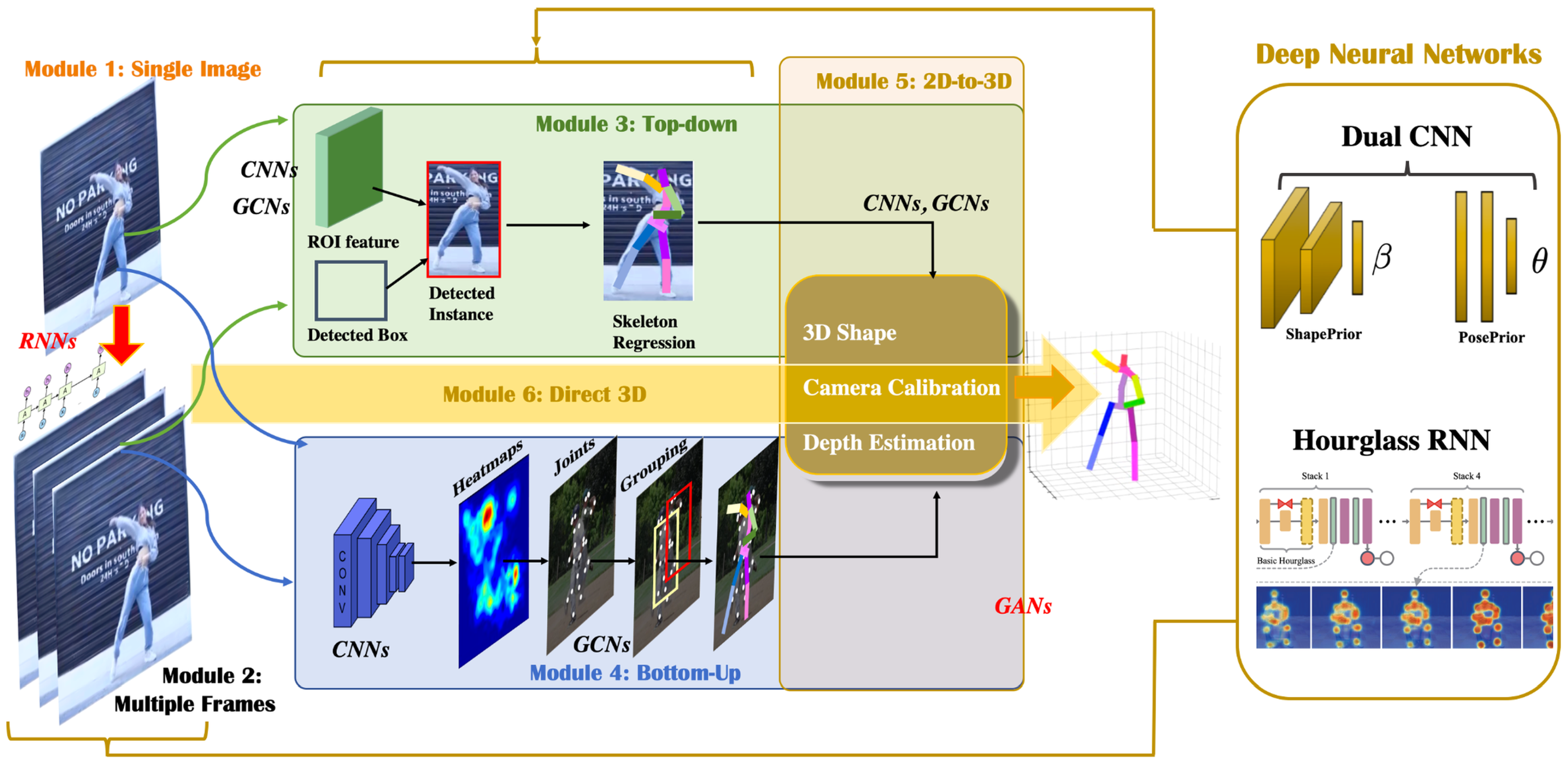
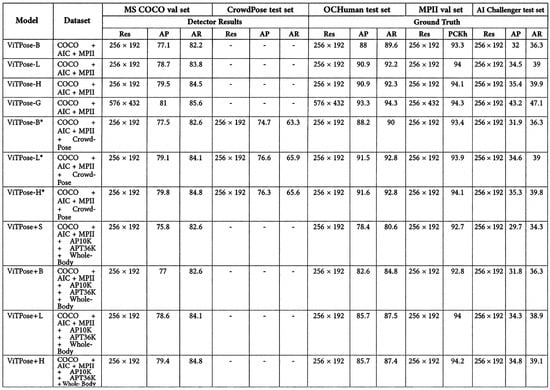
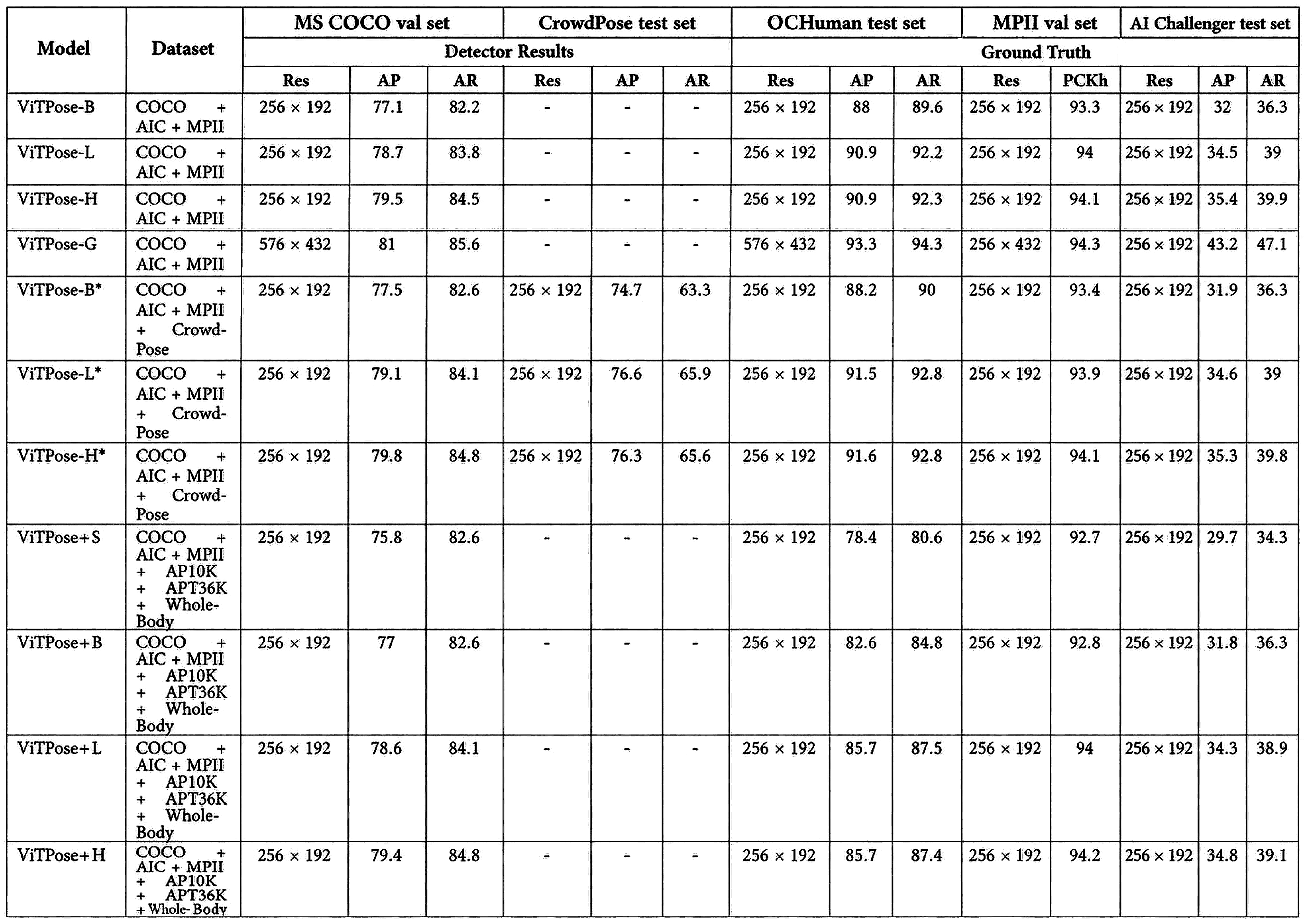
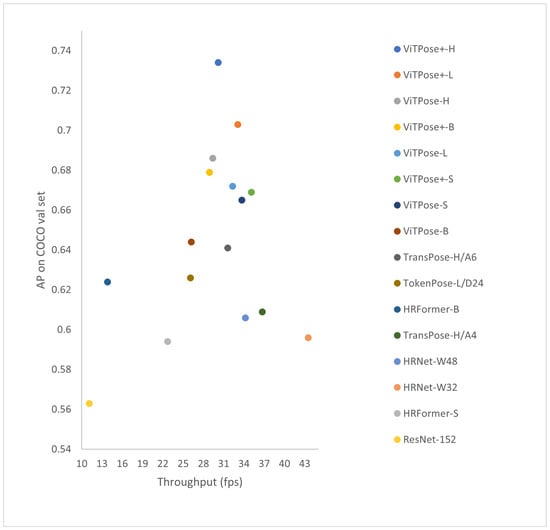
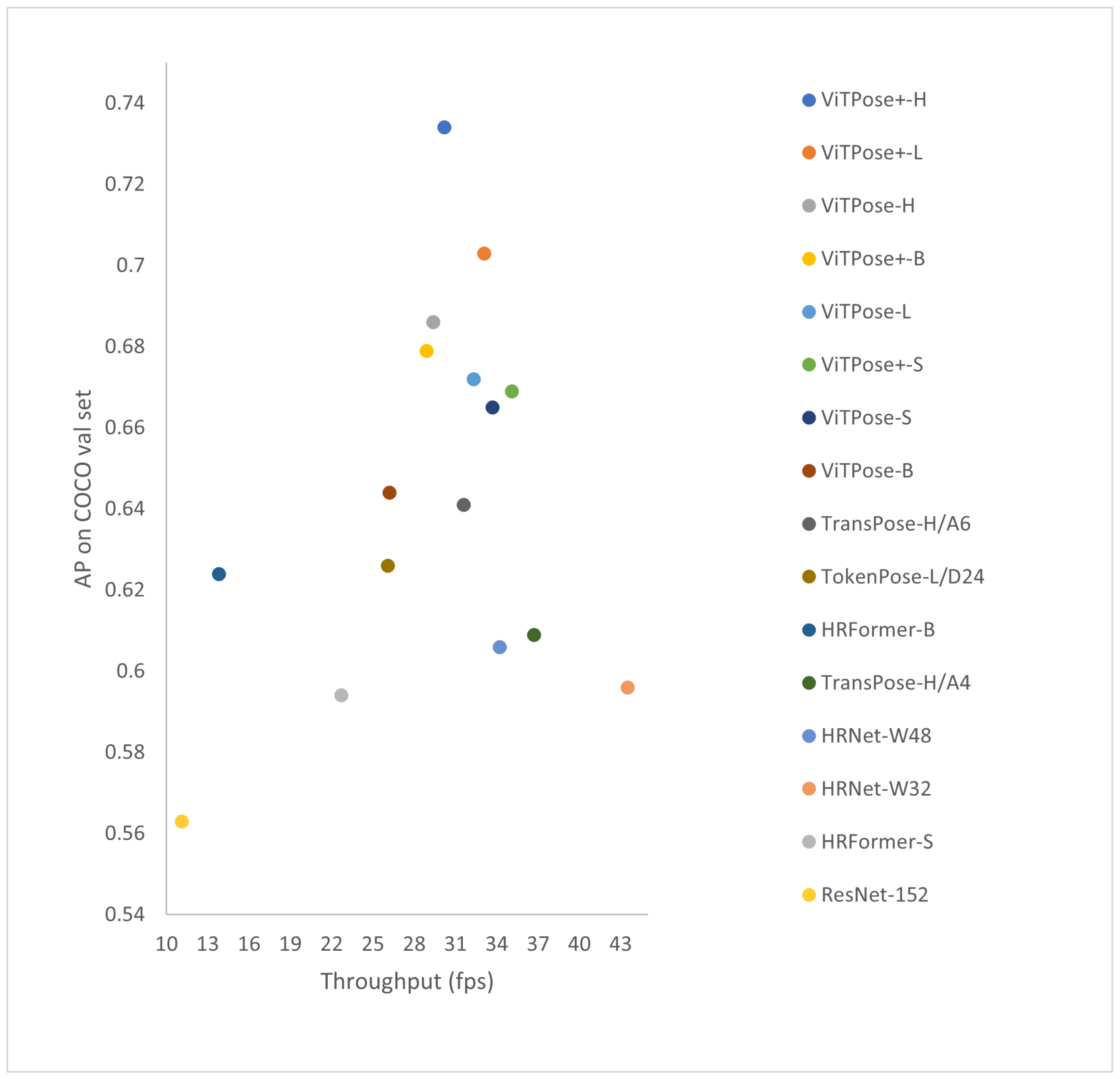
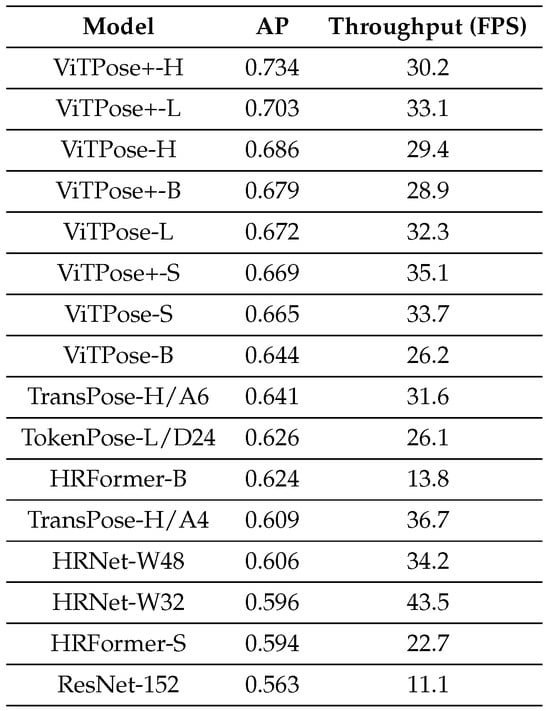
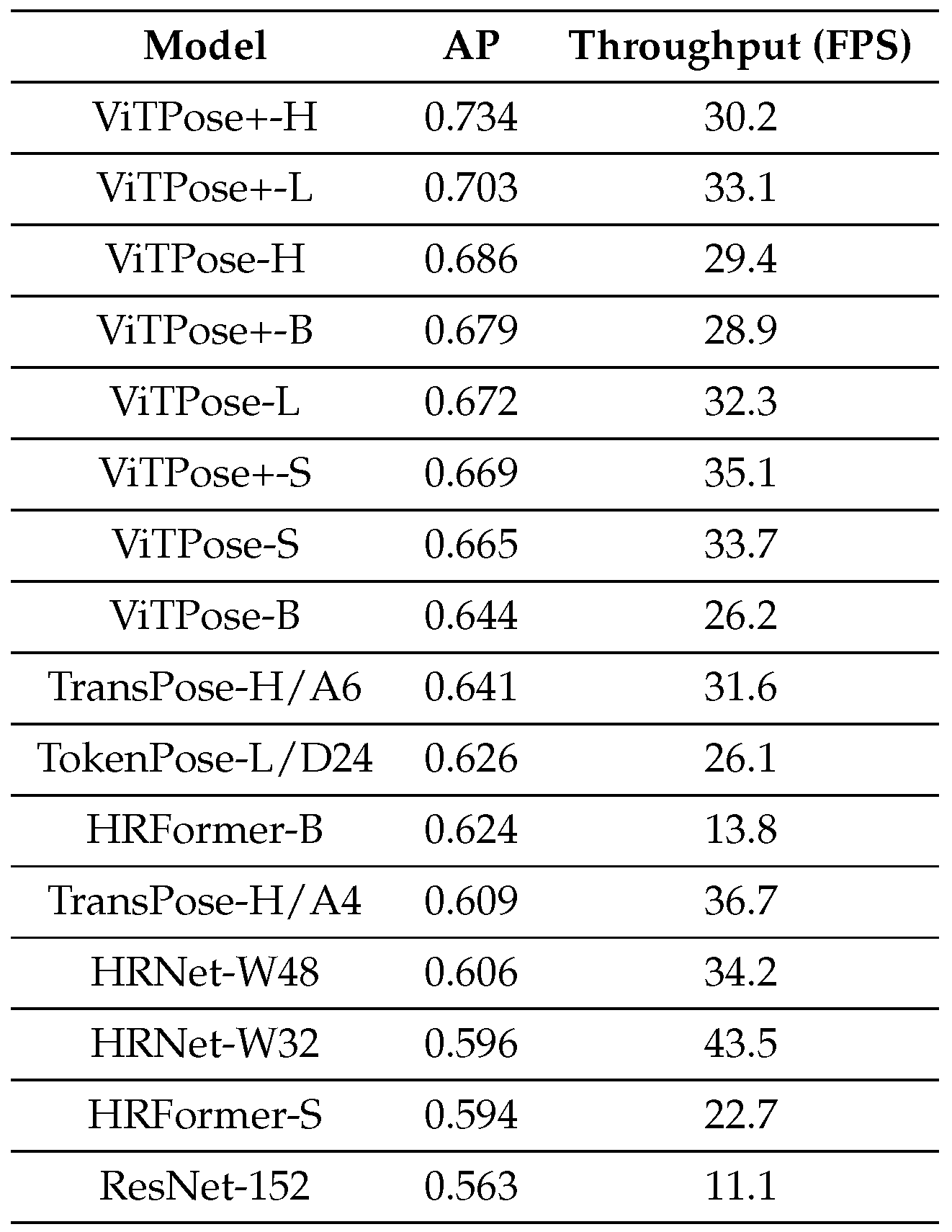
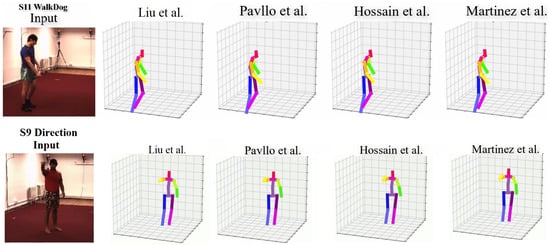
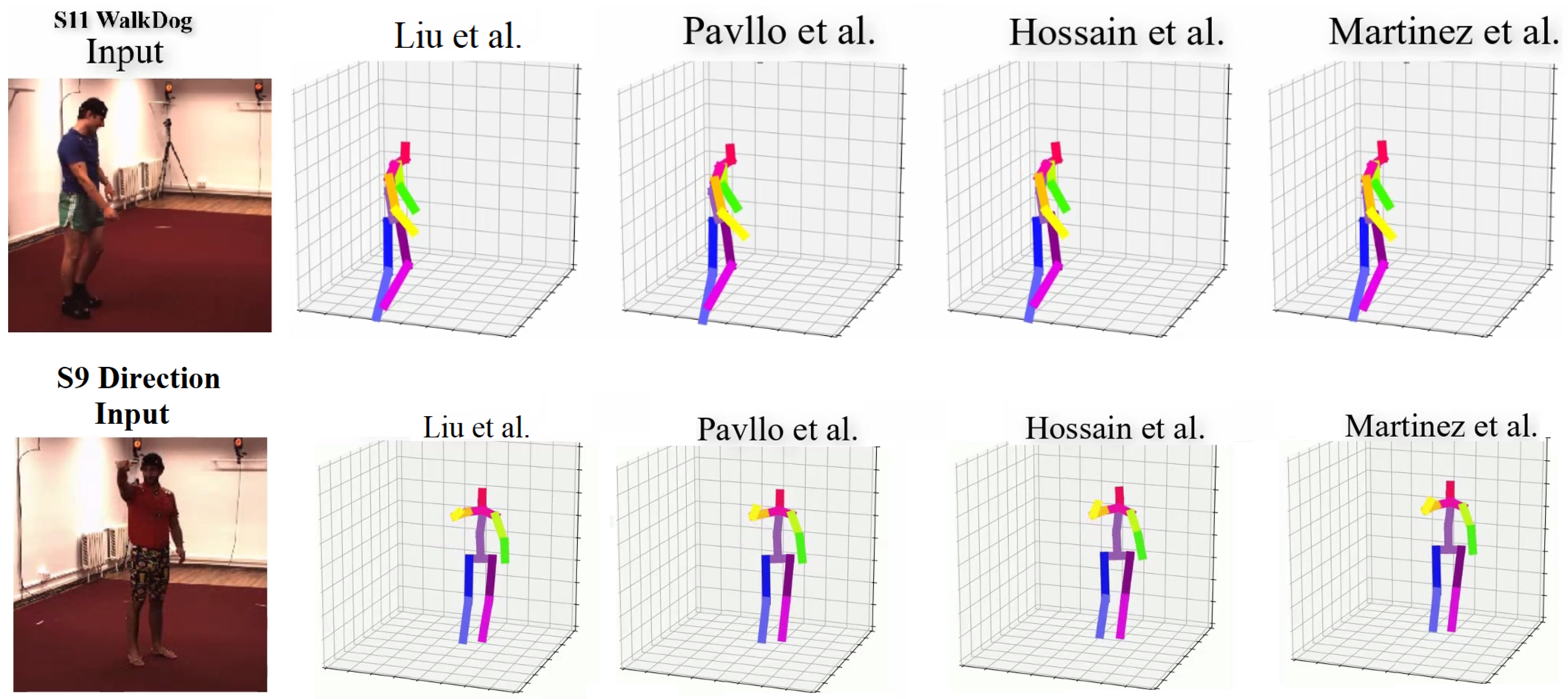
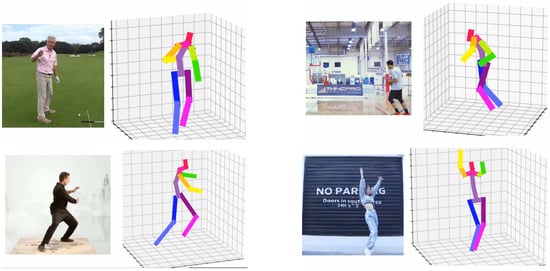
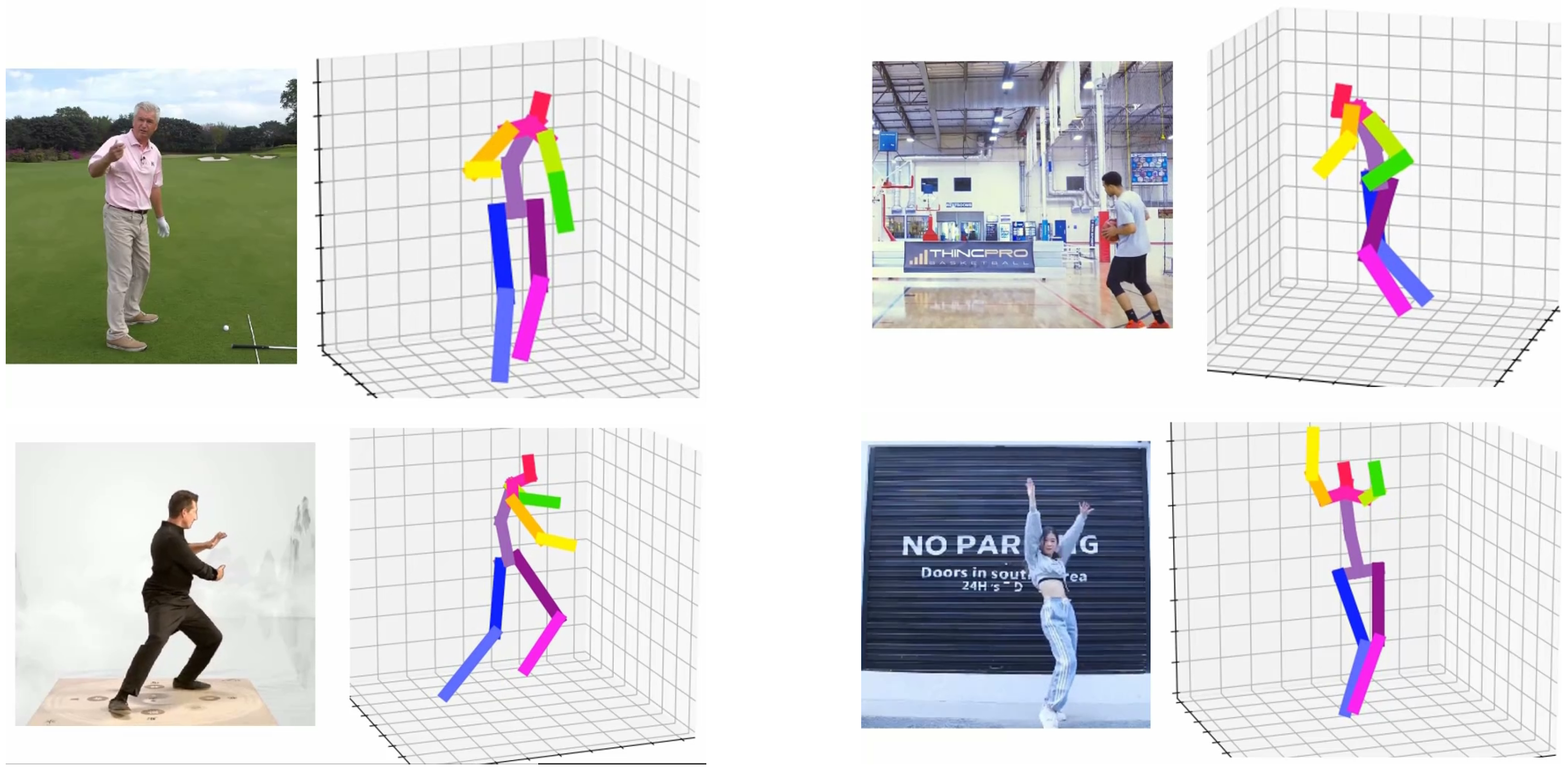
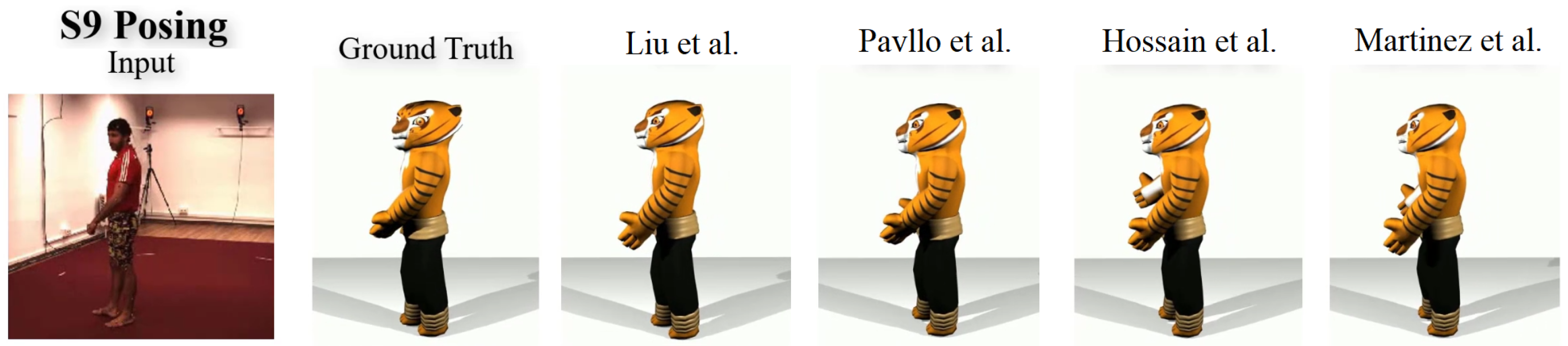

Disclaimer/Publisher’s Note: The statements, opinions and data contained in all publications are solely those of the individual author(s) and contributor(s) and not of MDPI and/or the editor(s). MDPI and/or the editor(s) disclaim responsibility for any injury to people or property resulting from any ideas, methods, instructions or products referred to in the content. |
© 2026 by the authors. Licensee MDPI, Basel, Switzerland. This article is an open access article distributed under the terms and conditions of the Creative Commons Attribution (CC BY) license.