


Abstract
Unmanned aerial vehicle (UAV) object detection plays an essential role in modern visual perception, but it remains challenging because UAV imagery typically contains extremely small, densely distributed objects embedded in complex backgrounds. Conventional detectors, including the recent YOLOv12, are prone to losing critical spatial details during downsampling and often exhibit task misalignment between classification and localization, particularly under severe scale variations. To address these problems, this study proposes SPTD-YOLO, a small-object-aware pyramidal and task-aligned dynamic detector. Specifically, a Small Object Enhanced Pyramid (SOEP) is developed by incorporating SPDConv and CSPOmniKernel to preserve and refine shallow, fine-grained features. In addition, a high-resolution P2 detection layer is introduced to increase spatial grid density and strengthen the structural representation of tiny objects. Furthermore, a Task-Aligned Dynamic Detection Head (TADDH) is designed to decouple and coordinate classification and regression through dynamic convolution and a synergistic dual-gating mechanism. Experiments on VisDrone2019 show that SPTD-YOLO improves mAP@0.5 by 8.37% and mAP@0.5:0.95 by 5.11% over YOLOv12 while maintaining practical efficiency for UAV edge deployment.
1. Introduction
Object detection is a fundamental task in computer vision and underpins a wide range of real-world applications, including intelligent transportation, public safety, disaster response, and environmental monitoring [1,2]. These applications require visual perception systems that can reliably localize and recognize targets in dynamic and unpredictable environments [3]. Although ground-based monitoring systems have been extensively developed, modern surveillance scenarios increasingly demand greater spatial flexibility and broader coverage than fixed cameras can provide [4]. In this context, unmanned aerial vehicles (UAVs) have become indispensable sensing platforms, as they overcome the physical limitations of stationary sensors by offering high spatial mobility and wide-area top-down views [5]. Accordingly, UAV-based object detection has emerged as an important research direction.
However, the shift from ground-level imaging to aerial perspectives introduces substantially more complex visual challenges [6]. In critical scenarios such as large-scale event security and urban emergency response, rapid-response UAVs are frequently deployed to monitor crowd dynamics, track scattered vehicles, and assist ground rescue operations. During mass public gatherings or emergency evacuations, these missions require UAVs to continuously detect highly dense and overlapping targets from high-altitude viewpoints. As a result, small target instances, such as pedestrians and vehicles, often appear at long distances and occupy only a few pixels, sometimes less than 32 × 32 pixels, making them highly susceptible to being obscured by heterogeneous background clutter [7,8].
The VisDrone2019 dataset is a representative benchmark that captures these challenging aerial imaging conditions [6]. Collected from diverse urban scenes, it contains high-resolution images in which targets are densely distributed, affected by frequent viewpoint changes, and characterized by substantial scale variations. Representative examples illustrating these aerial detection challenges are shown in Figure 1. In addition, the dataset covers ten categories from daily scenarios and exhibits a pronounced class imbalance, with a distribution strongly biased toward densely arranged small instances [9]. Taken together, these coupled challenges, including extreme scale compression, spatial crowding, and category imbalance, severely test the feature representation capacity of conventional detection architectures. This difficulty is further amplified by the stringent real-time inference and edge-deployment requirements of onboard UAV platforms [10,11].
Figure 1.
Representative images from the VisDrone2019 dataset illustrating typical challenges in UAV object detection: (a) cluttered urban streets with complex backgrounds; (b) nighttime environments with low illumination; (c) high-altitude perspectives containing extremely small targets; and (d) densely distributed targets with severe occlusion.
Existing UAV-based object detection approaches can generally be categorized into two-stage and one-stage paradigms [12]. Two-stage detectors, including representative models such as Faster R-CNN [1] and more sophisticated extensions like Cascade R-CNN [13], typically obtain strong detection accuracy by first generating candidate regions and then performing further feature refinement and classification. To better accommodate the characteristics of aerial imagery, several specialized two-stage models further incorporate rotation-aware modules, such as RoI Transformer [14], to handle densely distributed objects with arbitrary orientations.
However, in high-resolution UAV images, extracting dense regions of interest (RoIs) for a large number of tiny candidate objects requires computationally expensive RoI Align operations [15]. As a result, these architectures inevitably introduce substantial computational latency and memory overhead, which hinders their deployment on resource-constrained UAV platforms where real-time inference is required [16].
In contrast, one-stage detectors, including classical anchor-based models such as SSD [17] and RetinaNet [18], as well as anchor-free architectures [19], provide more streamlined inference pipelines and a favorable trade-off between speed and accuracy. Nevertheless, directly applying generic one-stage detectors to aerial imagery exposes several domain-specific limitations. UAV scenes are often affected by severe occlusion and heterogeneous backgrounds that may resemble target features, leading to increased false positives [20]. In addition, aerial imaging artifacts, such as motion blur and illumination variations, further degrade the already limited visual cues available for tiny objects [21]. Standard downsampling operations, such as stride-32 sampling in deep feature stages, may cause small objects to disappear before they reach the detection head [22]. They can also lead to severe feature misalignment, where target-related spatial information is overwhelmed by background noise [23].
To address these challenges, recent studies have investigated various specialized improvement strategies. More recently, UAV-oriented YOLO variants have further emphasized small-object-aware feature extraction and adaptive feature fusion. For example, SOD-YOLO [24] improves YOLOv8 for UAV small-object detection by introducing attention-based downsampling to alleviate spatial information loss, while IA-YOLOv8 [25] combines intra-group multi-scale fusion attention with adaptive weighted feature fusion to enhance small-object saliency under complex aerial backgrounds. These methods generally include feature pyramid enhancements, such as BiFPN [26] and AFPN [27], to reduce the loss of shallow information; detection head optimizations, such as decoupled heads [28] and additional high-resolution prediction branches [29], to better preserve texture details; and data-centric solutions, such as SAHI [8] and Mosaic augmentation [30]. Additional high-resolution prediction layers have also been increasingly adopted to improve the localization of tiny UAV objects. Xu et al. introduced extra detection layers into YOLOv8n [31] for VisDrone-oriented UAV detection, demonstrating that denser prediction maps can improve small and partially occluded object detection under edge-deployment constraints. Similarly, MSUD-YOLO [32] extends the YOLOv10s detection hierarchy for multi-scale UAV aerial images, further confirming the importance of high-resolution prediction for small-object perception.
Although these methods can improve detection accuracy, they still present notable limitations in UAV edge-deployment scenarios. In particular, overly complex feature fusion designs may introduce non-negligible computational overhead, increasing FLOPs, memory consumption, and inference latency, thereby weakening real-time performance [33]. Similarly, tiling-based inference methods such as SAHI often incur substantial post-processing delays, making them less suitable for high-frame-rate video analysis. More importantly, many existing approaches mainly mitigate observable symptoms rather than addressing the inherent weaknesses of one-stage detection pipelines in aerial imagery. These weaknesses include extreme foreground–background imbalance, cross-scale feature interference during feature fusion, and insufficient localization sensitivity for densely distributed tiny objects on coarse prediction grids.
Consequently, existing architectural extensions still struggle to fundamentally enhance the intrinsic capability of detection networks to distinguish tiny objects from cluttered backgrounds while maintaining an effective balance between speed and accuracy. Therefore, an efficient and integrated architecture is still needed for UAV edge deployment, one that can preserve fine-grained spatial details, improve tiny-object discrimination and localization, and suppress background interference under strict resource constraints.
This challenge goes beyond what can be addressed by conventional lightweight architectural extensions. It requires a stronger feature extraction paradigm that can jointly model fine-grained local details and broader contextual dependencies. In addition to conventional CNN-based and attention-based architectures, self-similar and recursive neural network architectures have also been investigated for image analysis. These models typically reuse similar computational transformations across different depths or branches, enabling hierarchical visual representations to be learned through repeated structural patterns rather than solely through the stacking of heterogeneous modules. Related recursive convolutional networks and deeply recursive models have demonstrated the potential of repeated refinement and parameter sharing in visual recognition and image restoration tasks. A representative fractal-style architecture is FractalNet [34], which constructs an ultra-deep network by recursively applying a simple expansion rule. The resulting truncated fractal topology contains multiple interacting subpaths of different lengths, allowing the network to aggregate shallow, intermediate, and deep representations without relying on explicit residual connections. Such self-similar designs are relevant to image understanding because natural images often contain repeated structures, scale-dependent patterns, and hierarchical visual cues. Therefore, fractal-style networks provide useful inspiration for enhancing multi-depth and multi-scale feature representation. However, FractalNet was originally developed mainly for image classification rather than dense object detection, and its recursive multi-branch topology may introduce additional computational and memory overhead for real-time UAV deployment. Therefore, although self-similar architectures offer valuable insights into hierarchical feature learning, this work focuses on improving a real-time dense detector by preserving shallow spatial details, introducing high-resolution prediction for tiny objects, and strengthening task-aligned detection. In this regard, attention-enhanced real-time detectors provide a more promising foundation than traditional CNN-dominant one-stage frameworks [35,36].
When balancing detection accuracy and inference speed, the YOLO (You Only Look Once) series has become a de facto standard for time-sensitive perception tasks [37,38]. To reduce the domain gap in UAV and remote sensing imagery, numerous customized YOLO variants have been proposed in recent years. For example, TPH-YOLOv5 [29] incorporates Transformer-based prediction heads to capture global context for densely distributed targets in drone-captured scenes. DPH-YOLOv8 [39] extends the baseline with an additional high-resolution prediction head and coordinate attention [40], thereby reducing background interference for tiny aerial objects. FFCA-YOLO [41] introduces spatial context-aware modules to enhance both fine-grained local details and global semantic information. Similarly, Drone-YOLO [42] optimizes the multi-scale feature aggregation path to achieve a better balance between model size and small-object detection accuracy, while CM-YOLO [43] employs joint local–global semantic mining to suppress complex background noise in adverse environments. Recent studies have continued this trend with more advanced YOLO-based UAV detectors. SOD-YOLO [24] and IA-YOLOv8 [25] focus on attention-enhanced feature extraction and adaptive feature fusion for UAV small objects, whereas DAU-YOLO [44] builds upon YOLOv11 to improve detection performance in drone imagery with dense and overlapping targets. These studies indicate that recent UAV detectors increasingly rely on feature enhancement, attention-guided fusion, and lightweight architectural redesigns to improve small-object detection.
Meanwhile, recent official iterations, ranging from YOLOv8 [45], YOLOv9 [46], and YOLOv10 [47] to YOLOv11 and YOLOv13 [48,49], have continued to advance the YOLO family through simplified hyperparameter settings and NMS-free training strategies. However, despite these domain-specific adaptations and official upgrades, most of these models remain fundamentally constrained by the CNN-dominant paradigm. Without stacking excessively deep networks or introducing complex auxiliary modules, they still struggle to capture long-range dependencies and global contextual cues, limiting their ability to overcome the representation bottlenecks of aerial imagery [50].
In this context, the emergence of YOLOv12 [51] represents an important paradigm shift. As an attention-centric real-time detector, YOLOv12 integrates advanced attention mechanisms directly into an efficient backbone. Compared with its CNN-heavy predecessors, this architecture is better suited to capturing long-range dependencies and global contextual information with high efficiency, making it a suitable foundation for UAV edge deployment.
However, directly applying a vanilla YOLOv12 model trained on general object datasets, such as COCO [52], remains insufficient for the specialized domain of VisDrone2019. This insufficiency is mainly reflected in three architectural bottlenecks. First, conventional stride-based downsampling in the early stages causes irreversible loss of fine-grained spatial details [53], while standard spatial convolutions struggle to capture the global frequency dependencies required to delineate weak-texture and low-contrast targets. Recent lightweight UAV detectors have also attempted to reduce the semantic gap between shallow and deep features. BPD-YOLO [54], for example, redesigns the feature pyramid for UAV small-object detection and emphasizes efficient shallow–deep semantic integration, suggesting that high-resolution details should be complemented with deeper contextual information rather than used independently. Second, the native prediction hierarchy of YOLOv12, which is typically bounded at stride 8, lacks sufficient spatial grid density. For extremely small targets that occupy only a few pixels, such coarse spatial sampling introduces severe quantization errors and boundary dilution. Third, the standard decoupled detection head still suffers from spatial misalignment between classification and bounding box regression [55]. Recent UAV detection studies have also explored dynamic and attention-based detection heads to improve cross-scale representation and task-aware prediction. For instance, UAV-YOLO [56] replaces the standard detection head with a DyHead-based module, enabling dynamic weight allocation and adaptive feature calibration for small targets in complex aerial scenes. However, these methods mainly enhance multi-scale feature interaction, while explicit coordination between classification confidence and localization quality remains insufficient. Without explicit geometric alignment and background suppression mechanisms, the network may optimize conflicting objectives, producing unreliable confidence scores and allowing dominant background clutter to distract attention from tiny objects.
To bridge this research gap, this paper develops SPTD-YOLO, a YOLOv12-based detector tailored to UAV scenarios with densely distributed small targets. By adapting the YOLOv12 framework to the spatial fragility of aerial targets without substantially increasing computational overhead, this study makes the following main contributions:
- Design of the Small Object Enhanced Pyramid (SOEP): To better retain fine spatial cues in shallow feature maps, we introduce a Small Object Enhanced Pyramid in the neck network. The proposed SOEP adopts SPDConv for information-preserving downsampling and incorporates CSPOmniKernel to enhance shallow features from local, large-range, and global frequency perspectives.
- Introduction of a High-Resolution P2 Detection Layer: To improve the representation of very small objects, we add a high-resolution P2 detection layer operating at stride 4. This additional prediction layer provides denser spatial sampling, which helps retain local appearance cues and boundary information for tiny instances.
- Proposal of the Task-Aligned Dynamic Detection Head (TADDH): To reduce the potential misalignment between classification confidence and regression accuracy, we propose a Task-Aligned Dynamic Detection Head. It decouples the two prediction tasks through a dynamic-convolution-based decomposition module. In addition, a synergistic dual-gating mechanism, incorporating SOM and TAP, is used to enhance foreground responses, suppress background interference, and improve geometric consistency.
- Competitive Detection Performance: Experiments on the VisDrone2019 dataset indicate that the proposed SPTD-YOLO can improve small-object detection performance while maintaining a reasonable deployment cost. Compared with the baseline model, the proposed method increases mAP@0.5 by 8.37% and mAP@0.5:0.95 by 5.11%, while introducing only a small increase in model parameters.
The rest of this paper is structured as follows. Section 2 details the proposed SPTD-YOLO architecture, including the designs of the SOEP, the P2 detection layer, and the TADDH. Section 3 presents the experimental settings, dataset descriptions, evaluation metrics, ablation studies, and comparative analyses. Finally, Section 4 summarizes the findings and discusses potential future research directions.
2. Materials and Methods
2.1. Overview of YOLOv12
In this work, YOLOv12 is selected as the reference detector for developing the proposed model. As a recently introduced one-stage detection framework, YOLOv12 achieves an effective compromise between detection accuracy, inference speed, and model complexity [51]. Unlike earlier YOLO variants that mainly rely on CNN-based feature extraction, YOLOv12 places greater emphasis on attention-driven representation learning, enabling the network to capture broader contextual dependencies more efficiently. The baseline architecture illustrated in Figure 2 follows a typical detection pipeline, which includes an attention-enhanced backbone for hierarchical feature extraction, a neck module for multi-scale feature fusion, and a decoupled head for classification and localization prediction [51].
Figure 2.
Overall architecture of the baseline YOLOv12 network.
Specifically, the backbone progressively downsamples the input UAV images to extract hierarchical feature representations. One notable characteristic of this backbone is the incorporation of an Area Attention mechanism, which is designed to capture long-range dependencies and global contextual information while reducing the quadratic computational cost commonly associated with standard Vision Transformers [35,51]. Unlike global self-attention, which computes interactions among all spatial tokens, Area Attention partitions feature maps into grid-like regions and performs attention operations both within individual regions and across aggregated regional representations. This efficiency-oriented design is helpful for real-time inference and edge deployment, as it allows the network to better distinguish objects from complex backgrounds while maintaining a practical speed–accuracy trade-off.
The neck then employs a Path Aggregation Network (PANet) structure [57] to integrate multi-scale features. This aggregation is particularly relevant to small-object detection in aerial scenarios, where the detectability of tiny targets often depends on the effective fusion of high-resolution spatial cues and deeper semantic features. Finally, the prediction head adopts an anchor-free decoupled architecture [28] to produce classification and localization predictions in a single forward pass. This design supports object localization under the viewpoint changes and scale variations commonly observed in aerial imagery [19].
Although this general-purpose architecture provides a competitive foundation for deployment, its default configuration is mainly optimized for generic object detection datasets such as COCO. Therefore, it may not fully address the challenges posed by VisDrone2019. In particular, the native downsampling strides and default attention window settings are not specifically designed for extremely small and densely distributed UAV targets, which may result in the loss of fine-grained spatial details. These limitations motivate the scenario-oriented architectural enhancements proposed in this study.
2.2. Proposed SPTD-YOLO Network
To address the limitations of the vanilla YOLOv12 architecture in UAV small-object detection, this study proposes an improved detector, termed SPTD-YOLO, as shown in Figure 3. Although YOLOv12 provides an effective baseline for real-time detection, its default design is mainly optimized for general-purpose object distributions, where medium- and large-scale targets are relatively dominant. In contrast, UAV-captured images, such as those in the VisDrone dataset, often contain extremely small objects, dense target distributions, heterogeneous backgrounds, and large scale variations. Under these conditions, conventional downsampling operations may lead to the irreversible loss of fine-grained spatial details, while coarse prediction layers may be insufficient for accurately localizing tiny instances. In addition, the inconsistency between classification confidence and localization quality can further affect the robustness of small-object detection [55]. Therefore, a scenario-oriented redesign of the baseline architecture is needed.
Figure 3.
Overall architecture of the proposed SPTD-YOLO. The framework integrates the Small Object Enhanced Pyramid (SOEP), an additional high-resolution detection layer, and the Task-Aligned Dynamic Detection Head (TADDH) to optimize small-object perception.
The proposed SPTD-YOLO follows the efficient backbone–neck–head paradigm of YOLOv12 while introducing several targeted modifications to improve small-object perception in aerial imagery. First, a Small Object Enhanced Pyramid (SOEP) branch is constructed in the neck network. This branch adopts SPDConv [53] for information-preserving downsampling to alleviate the loss of fine spatial details and incorporates CSPOmniKernel [58] to further refine the fused multi-scale features from local, large-range, and global frequency perspectives. Second, instead of adding a conventional high-resolution branch with considerable computational cost, we use the enhanced representations from the SOEP to build a lightweight P2 detection layer. By integrating the upsampled SOEP features with shallow backbone features, this P2 extension provides additional high-resolution spatial support for localizing objects that occupy only a few pixels, while keeping the computational overhead within a reasonable range. Third, the conventional prediction head is replaced with the proposed Task-Aligned Dynamic Detection Head (TADDH). Compared with a standard shared head, TADDH reduces task misalignment by decoupling classification and regression, which helps improve confidence estimation and localization accuracy under challenging small-object conditions.
These three modifications are designed to work in a complementary manner for UAV imagery. The SOEP branch helps reduce feature erosion during early downsampling, the P2 detection layer provides denser spatial grids for localization, and TADDH improves the final prediction quality based on the enhanced multi-scale features. Through this integrated design, SPTD-YOLO aims to balance feature preservation, semantic enhancement, and task-aligned prediction. The proposed network therefore shows improved adaptability to densely distributed, low-resolution, and weakly textured targets in complex aerial scenarios, while largely preserving the inference efficiency of the YOLO family.
2.3. The Small Object Enhanced Pyramid
To improve the representation capability of shallow features for UAV small-object detection, this study designs a Small Object Enhanced Pyramid (SOEP) branch. As shown in Figure 4, Figure 5, Figure 6 and Figure 7, the proposed branch mainly consists of an SPDConv module and a CSPOmniKernel refinement module. Unlike conventional top-down pathways, SOEP introduces an information-preserving downsampling and multi-scale fusion strategy. Specifically, the SPDConv module first rearranges spatial details into the channel dimension before convolution, thereby reducing the loss of fine-grained cues. The preserved shallow features are then concatenated with intermediate backbone features and upsampled deep semantic features. Finally, the CSPOmniKernel module is used to further refine the fused multi-scale representation from local, large-range, and global frequency perspectives.
Figure 4.
Detailed architecture of the SPDConv module. The star symbol denotes a 3 × 3 convolution operation with stride 1.
Figure 5.
Structure of the CSPOmniKernel module.
Figure 6.
Internal architecture of the OmniKernel.
Figure 7.
Detailed designs of the Frequency-Aware Module (FAM) and Frequency-Guided Module (FGM).
Formally, let denote the high-resolution shallow feature from the backbone (at stride 4), denote the intermediate backbone feature (at stride 8), and denote the upsampled deep semantic feature. The multi-scale fusion process can be formulated as:
where denotes channel-wise concatenation, and represents the space-to-depth convolution operation applied to . This operation reduces the spatial resolution of the shallow feature to match that of , while preserving fine-grained spatial details by rearranging them into the channel dimension. denotes the resulting multi-scale fused feature, which integrates high-resolution spatial cues from , intermediate structural information from , and deep semantic information from .
The final enhanced shallow feature is then obtained as:
where denotes the feature refinement module, and represents the final enhanced shallow feature. Crucially, this enriched representation not only serves the standard feature pyramid but also provides a highly discriminative foundation that naturally facilitates the construction of a lightweight detection layer, averting the prohibitive computational cost associated with appending a conventional independent high-resolution branch.
The SPDConv module shown in Figure 4 is adopted to replace conventional stride-based downsampling. Given the input shallow feature
where denotes the real-valued feature space, and , , and represent the number of channels, height, and width of the input shallow feature , respectively.
SPDConv first applies a space-to-depth operation with scale = 2 to rearrange the spatial information into the channel dimension. Specifically, the input feature map is decomposed into four interleaved sub-feature maps:
where denotes one of the four interleaved sub-feature maps generated from the input shallow feature . The indices and represent the spatial coordinates on the downsampled feature map, while denotes the channel index. The offset variables and , where , indicate the four possible spatial sampling positions within each local region of the original feature map. Specifically, different combinations of correspond to four interleaved spatial subsets extracted from . Through this indexing strategy, the spatial information of the original feature map is rearranged into multiple sub-feature maps before channel-wise concatenation.
Each sub-feature map satisfies the following dimensional constraint:
These four sub-features are then concatenated along the channel dimension:
where denotes channel-wise concatenation. , , , and are the four sub-feature maps defined in Equation (4). The concatenated feature is denoted as . After concatenation, the channel dimension is expanded from to , while the spatial resolution is reduced from to .
After that, a non-strided convolution is employed to fuse channels and aggregate local information:
where denotes the concatenated feature obtained in Equation (6). The operator represents a non-strided convolution used to fuse the expanded channel information and aggregate local spatial context. denotes the output feature of the SPDConv module after channel fusion. Through this operation, the feature resolution remains , and the rearranged channel-wise information is integrated for subsequent feature fusion.
Compared with conventional strided convolution or pooling, SPDConv preserves more fine-grained information by transferring spatial details into the channel domain before feature compression, which is particularly beneficial for tiny object perception.
To refine the fused multi-scale feature without introducing excessive computational burden, the feature is then fed into the CSPOmniKernel module, as illustrated in Figure 5. Given the input feature , a convolution is first used for channel projection:
where denotes the multi-scale fused feature obtained from the preceding SOEP fusion stage. represents a convolution operation used for channel projection and feature transformation. The projected feature is denoted as , which serves as the input for the subsequent channel-splitting operation in the CSPOmniKernel module.
Next, the projected feature is divided along the channel axis, producing one branch for feature transformation and another branch that preserves the original information:
where denotes the channel-wise splitting operation. represents the channel number of the projected feature , and denotes the split ratio. Accordingly, represents the transformed branch with channels, which is sent to the OmniKernel block for deep feature refinement, while represents the identity branch with channels, which is directly preserved to reduce computational cost and maintain the original feature information.
where denotes the OmniKernel operation applied to the transformed branch . represents channel-wise concatenation, which combines the refined feature with the preserved identity feature . The outer denotes another convolution used to fuse the concatenated features. The output represents the enhanced shallow feature generated by the CSPOmniKernel module.
This CSP-style design improves feature diversity and gradient propagation, while avoiding the excessive cost caused by processing all channels with large-kernel convolutions.
The OmniKernel module shown in Figure 6 is the core component for feature refinement. It is designed to jointly model local details, large-range spatial structures, and global frequency-aware information. Given the input feature , the module first performs channel projection and nonlinear activation:
where refers the input feature map received by the OmniKernel module, and denotes a point-wise convolution that performs channel mapping. denotes the GELU activation function, and represents the projected and activated feature, which is subsequently fed into the local, large-range, and global branches.
Based on , the local and large receptive-field branches are defined as
where denotes the aggregated spatial feature generated by the local and large-range branches. represents a depth-wise convolution with kernel size . Specifically, is used for local response calibration, while , , and enlarge the receptive field from different spatial directions to capture broader contextual structures.
In parallel, a global branch composed of FAM and FGM is introduced to capture frequency-aware dependencies, and its output is denoted by
where denotes the global frequency-aware feature. represents the Frequency-Aware Module, which performs frequency-domain modulation and channel recalibration, while represents the Frequency-Guided Module, which further strengthens frequency interaction. The nested formulation indicates that the feature is first processed by FAM and then refined by FGM.
Therefore, the overall output of OmniKernel can be written as
where denotes the output of the OmniKernel operation for the input feature . and represent the spatial branch output and the global frequency-aware branch output, respectively. denotes the rectified linear activation function, and represents the final convolution used to fuse the combined feature representation.
Through this design, OmniKernel integrates local texture extraction, large-range structural perception, and global frequency modeling in a unified manner.
As shown in Figure 7, the FAM first performs frequency-aware modulation and channel recalibration. Given the input feature , a global average pooling operation is first used to obtain channel descriptors, and a convolution generates channel weights:
where denotes the input feature of the FAM, which is obtained from the preceding OmniKernel projection stage. represents global average pooling, which is used to generate channel descriptors from . denotes a convolution used to transform the pooled descriptors into frequency-aware channel weights. represents the generated frequency-aware modulation weight.
The feature is then transformed into the frequency domain and modulated by the obtained weights:
where and denote the Fourier transform and inverse Fourier transform, respectively. represents element-wise multiplication. is used to modulate the frequency representation of , and denotes the frequency-modulated feature transformed back into the spatial domain. The absolute-value operation is used to obtain a real-valued feature response after inverse Fourier transformation.
After that, another global average pooling and convolution are used to further recalibrate the feature response:
where denotes the frequency-modulated feature obtained in Equation (16). represents another convolution applied after global average pooling to generate the recalibration weight . is then multiplied with through element-wise multiplication to further recalibrate the feature response. The resulting feature denotes the output of the Frequency-Aware Module.
Based on the output of FAM, the FGM further strengthens frequency interaction through a dual-branch formulation. Specifically, two convolutions are first applied:
where denotes the output feature of the FAM. and represent two independent convolution operations used to generate two feature branches. and denote the two projected branch features used for subsequent frequency-domain interaction in the FGM.
Then, one branch is transformed into the frequency domain and interacts with the other branch through element-wise multiplication:
where and denote the two branch features generated in Equation (18). transforms one branch into the frequency domain, while serves as a modulation branch to interact with the frequency representation of through element-wise multiplication. maps the modulated representation back to the spatial domain, and denotes the magnitude operation. The output represents the frequency-guided feature generated by the FGM.
By combining FAM and FGM, the global branch enables the network to capture complementary frequency-aware representations, which is beneficial for enhancing weak textures, blurred boundaries, and low-contrast small objects in UAV scenes.
In summary, the proposed small object enhanced pyramid first uses SPDConv to preserve fine-grained shallow information during downsampling, and incorporates a multi-scale fusion strategy before employing CSPOmniKernel to refine the feature representation from local, large-range, and global perspectives. Rather than simply appending a prediction head in pursuit of higher accuracy at massive computational expense, our design leverages the resulting enhanced shallow feature as a strategic stepping stone. This allows us to organically derive a lightweight high-resolution detection layer, significantly improving the detection capability for densely distributed small targets while preserving overall network efficiency.
2.4. The Layers
Built upon the small-object enhanced pyramid described above, this work further introduces a dedicated detection layer to explicitly improve the representation and localization of tiny objects in UAV imagery. In the VisDrone2019 scenario, a large proportion of targets occupy only a very limited number of pixels and are frequently embedded in cluttered backgrounds. Under the default YOLOv12 configuration, the detection pipeline mainly relies on progressively downsampled feature maps, which are effective for medium- and large-scale instances but are often insufficient for preserving the fine-grained spatial cues required by tiny targets. As the feature hierarchy becomes deeper, object boundaries, weak textures, and positional details are gradually diluted by repeated stride operations, causing small instances to become indistinguishable from surrounding background noise. Therefore, merely relying on deeper prediction layers is inadequate for the extreme small-object conditions encountered in UAV-based perception.
To address this limitation, we augment the detection pyramid with an additional high-resolution layer operating at stride 4. Compared with the conventional prediction hierarchy of , , and , the proposed layer preserves substantially richer shallow spatial information and provides a denser response map for tiny-object localization. Let the input image size be . The spatial resolution of the multi-scale detection features can be expressed as
where denotes the feature map at the detection level , and represents the pyramid level. and denote the height and width of the input image, respectively, while denotes the channel dimension of the feature map at level . Since the stride of is , the spatial resolution of is reduced to . In particular, , , , and correspond to strides of 4, 8, 16, and 32, respectively.
For a target with width and height in the input image, its effective projection scale on a feature map with stride can be approximately written as
where and denote the width and height of a target object in the input image, respectively, and represents the stride of the corresponding feature map. denotes the approximate effective projection area of the target on the feature map with stride . This formulation shows that the projected area decreases quadratically as the stride increases, which explains why small objects are more easily weakened or lost on coarse detection layers.
By contrast, the layer can retain more local appearance information, which is particularly beneficial for weak-texture and densely distributed targets in UAV scenes.
Structurally, the proposed layer is not constructed as an isolated, computationally expensive shallow branch, but is organically derived from the small-object enhanced pyramid to achieve an optimal balance of shallow details and high-level semantics. Specifically, instead of directly processing raw high-resolution features with heavy convolutional blocks, we upsample the enriched representation generated by the SOEP module and fuse it directly with the uncorrupted, raw high-resolution features from the early backbone stage. This process can be written as
where denotes the final high-resolution feature used for the additional detection layer. represents the enhanced shallow feature generated by the SOEP pathway, and denotes the upsampling operation used to align with the stride-4 spatial resolution of . denotes the original high-resolution shallow feature extracted from the early stage of the backbone. represents channel-wise concatenation, and denotes the subsequent lightweight fusion and refinement operation, which is implemented by an A2C2f module in this work.
Through this design, the layer inherently preserves the pristine spatial structures from the shallow backbone while simultaneously receiving robust semantic and frequency-aware compensation from the SOEP path, thereby alleviating the semantic insufficiency problem typically associated with purely shallow features.
The introduction of the layer brings two important benefits for UAV small-object detection. First, it enhances fine-grained feature preservation. Tiny targets such as distant pedestrians, vehicles, and cyclists often exhibit weak appearance contrast and ambiguous boundaries. A higher-resolution prediction layer is more capable of maintaining discriminative local structures, which is particularly beneficial in crowded scenes and visually noisy environments. Second, the layer improves dense spatial sampling for prediction. Since tiny targets occupy only a few pixels, even a minor offset in feature representation may cause substantial localization errors on coarse feature maps. By contrast, the denser grid distribution of the stride-4 layer provides more candidate positions around each small object, making the detector less sensitive to spatial quantization errors and more robust to slight geometric deviations.
More importantly, the proposed layer is highly complementary to the Task-Align Dynamic Detection Head (TADDH) introduced in Section 2.5. TADDH is designed to reduce the inconsistency between classification confidence and localization quality through task decomposition, dynamic convolution, and dual-gating alignment. However, the effectiveness of such task alignment still depends on the quality of the incoming feature maps. If tiny objects have already been severely degraded during downsampling, subsequent head refinement can only partially compensate for the missing spatial evidence. By introducing the layer before the final prediction stage, SPTD-YOLO provides TADDH with a stronger high-resolution feature basis, enabling the head to perform task-specific decomposition and geometric alignment on more informative small-object representations. In this sense, the layer and TADDH form a cooperative mechanism: the former improves the availability of small-object cues, while the latter improves the quality of task-level prediction built upon those cues.
In addition, the layer also contributes to training stability for tiny targets. In UAV imagery, small objects are highly sensitive to positional perturbations, and coarse-scale prediction maps often fail to provide sufficiently accurate matching signals during the early stages of learning. The high-resolution nature of the layer alleviates this problem by supplying denser prediction support and more discriminative low-level evidence, which facilitates the learning of positive samples for tiny-object instances. As a result, the detector can converge to more reliable localization and classification behaviors under severe scale compression conditions.
It should be noted that introducing an additional high-resolution detection layer inevitably increases the computational burden to some extent. Nevertheless, in the proposed SPTD-YOLO, the branch is embedded into the enhanced pyramid with lightweight fusion operations, aiming to maximize the gain in small-object sensitivity while keeping the overhead within an acceptable range for real-time UAV applications. Therefore, the proposed layer can be regarded as a task-driven structural enhancement specifically tailored to the spatial fragility of VisDrone-style targets. By extending the original detection hierarchy from three scales to four scales, SPTD-YOLO achieves more comprehensive coverage of object sizes and significantly strengthens its perception capability for densely distributed tiny objects in aerial scenes.
2.5. The Task-Aligned Dynamic Detection Head
The Task-Aligned Dynamic Detection Head (TADDH) is meticulously designed to resolve the inherent spatial misalignment between classification and bounding box regression tasks in modern object detectors. Given the enriched multi-scale feature maps from the newly constructed detection hierarchy (i.e., ), TADDH first employs a shared convolutional block equipped with Group Normalization (Conv_GN) [59]. Rather than using conventional residual additions, the outputs of these shared convolutions are aggregated via channel-wise concatenation to extract robust, unified multi-scale representations. To decouple the conflicting optimization objectives of the two branches, these shared features are then fed into parallel Task Decomposition modules. Utilizing layer attention mechanisms and adaptive average pooling, these modules explicitly separate the unified representation into task-specific classification features and regression features. Subsequently, to accommodate the irregular geometric structures of minute objects, a spatial offset generator computes masking and offset parameters directly from the shared features. These parameters guide the Dynamic Deformable Convolution (DyDCNv2) [60] module to dynamically adjust the receptive field of the regression features, achieving preliminary geometric alignment.
To achieve efficient and instance-adaptive task decoupling, we design a dynamic Task Decomposition module with weight-level kernel modulation, as detailed in Figure 8. Instead of directly re-weighting the high-resolution features—which incurs a heavy computational burden—we leverage Global Average Pooling (GAP) and a bottleneck network to generate layer-wise attention weights. Let denote the shared multi-scale feature. The attention weights are computed as:
where denotes the shared multi-scale feature obtained from the shared convolutional block. To capture global channel-wise context, is employed to compress into compact channel descriptors. In addition, denotes the ReLU nonlinearity, while indicates the Sigmoid activation. The generated attention weight is used to adaptively modulate the convolutional kernels according to the current input feature.
Figure 8.
Overall architecture of the Task-Aligned Dynamic Detection Head (TADDH).
The obtained weights are subsequently applied to adjust the static base convolution kernels, which can be expressed as follows:
where denotes the static base convolutional kernel, and represents the layer-wise attention weight generated in Equation (23). denotes element-wise multiplication. denotes the dynamically modulated convolutional kernel, which is generated by re-weighting the static kernel according to the input-dependent attention weight. This dynamic kernel enables the Task Decomposition module to produce task-specific feature representations for classification and regression. The schematic structure of the Task Decomposition module is shown in Figure 9.
Figure 9.
Schematic of the Task Decomposition module.
Finally, an efficient dynamic convolution is implemented using Batch Matrix Multiplication (BMM) to process the feature map, effectively and adaptively disentangling the shared representation into independent feature spaces for classification () and regression ().
Building upon the decoupled and geometrically aligned features, TADDH further introduces a synergistic dual-gating mechanism to enforce strict spatial and semantic consistency across both tasks. This core innovation comprises a Spatial Objectness Mask (SOM) and a Task Alignment Probability (TAP).
Both SOM and TAP are generated using the same lightweight feature-gating template, as illustrated in Figure 10. For an input feature map , the generator first applies a convolution to reduce the channel dimension, followed by a ReLU activation to introduce nonlinearity. The compressed feature is then processed by a convolution to capture spatial dependencies, and a Sigmoid activation is finally used to generate a single-channel spatial response map . This generation pipeline is formulated as:
where is the feature map fed into the lightweight gating generator, with , , and indicating the number of channels, spatial height, and spatial width, respectively. The operator performs channel compression through a point-wise convolution, followed by the ReLU nonlinearity . After channel reduction, is applied to encode spatial response information and transform the compressed feature into a single-channel map. The Sigmoid function then normalizes the response to obtain the spatial heat map . According to the specific input branch, is instantiated as either or .
Figure 10.
The lightweight feature-gating architectural template used to instantiate the Task Align ment Probability (TAP) and the Spatial Objectness Mask (SOM).
Spatial Objectness Mask (SOM): Generated from the decoupled classification feature , the SOM acts as a semantic-guided spatial prior, denoted as . By performing element-wise multiplication with the regression and classification features, the SOM suppresses background responses and guides the network to emphasize foreground object regions during bounding box regression.
Task Alignment Probability (TAP): Derived directly from the shared multi-scale feature , the TAP predicts a spatial alignment score, denoted as . This probability map is used to recalibrate the SOM-filtered classification feature, encouraging the final classification confidence to be more consistent with localization quality.
Through this synergistic gating strategy, the final task-aligned features can be mathematically expressed as:
where denotes the decoupled regression feature, represents the Spatial Objectness Mask generated from the classification-related feature, and denotes element-wise multiplication. represents the foreground-aware regression feature after SOM-based spatial gating. This operation provides a foreground-aware representation for subsequent bounding-box prediction.
For Equation (27), denotes the decoupled classification feature, denotes the Spatial Objectness Mask, and denotes the Task Alignment Probability. denotes the final task-aligned classification feature obtained through spatial gating and task-alignment recalibration. The operator denotes element-wise multiplication, as defined above.
Finally, the aligned and gated features and are projected into the output space through standard convolutions, yielding the bounding box coordinates via a Scale module and the category probabilities. By dynamically coordinating the independent task spaces at the feature level, TADDH improves the precision and robustness of the detector.
3. Experimental Results and Analysis
3.1. Datasets
To evaluate the performance of the proposed method, experiments are conducted on the widely used public benchmark dataset VisDrone2019-DET. The dataset consists of 8629 high-resolution images collected from multiple UAV platforms and is organized into three official splits, including 6471 images for training, 548 images for validation, and 1610 images for testing. It includes ten categories of objects that frequently appear in everyday scenarios. Since the images usually contain numerous densely arranged objects with small scales, VisDrone2019-DET provides a challenging and practical testbed for UAV small object detection in real-world scenarios.
As shown in Figure 11, the sample distribution across the 10 categories in VisDrone2019-DET is highly uneven. Among these categories, car, pedestrian, and van account for relatively large proportions, with sample counts of 8178, 7083, and 6537, respectively. In contrast, categories such as bicycle, bus, and awning-tricycle appear much less frequently, with awning-tricycle having the lowest count of 1604 images. This distribution suggests that the dataset reflects, to some extent, the target occurrence patterns in real UAV surveillance scenes, while also introducing a clear long-tail class imbalance problem. Such imbalance increases the difficulty of model training, particularly for recognizing and accurately localizing minority categories and tiny instances. Therefore, evaluating SPTD-YOLO on VisDrone2019-DET helps assess not only its overall detection capability but also its robustness and generalization ability under complex class distributions and dense small-object scenarios.
Figure 11.
Distribution of image counts across the 10 target categories in the VisDrone2019-DET dataset.
3.2. Experimental Environment
To facilitate the reproducibility of the experimental results, all models were trained and tested on the AutoDL remote computing platform. The complete hardware and software settings are summarized in Table 1. In terms of hardware, the experiments were carried out using one NVIDIA RTX 4090 GPU with 24 GB of video memory, together with a 16-vCPU Intel(R) Xeon(R) Gold 6430 CPU and 120 GB RAM. The software stack consisted of Python 3.10.18, PyTorch 2.2.2, CUDA 12.1, and Ultralytics 8.3.196, which were adopted for both model training and evaluation.
Table 1.
Hardware and software configuration used in the experiments.
This experimental setup provides sufficient computational resources for training and evaluating models on the VisDrone dataset, particularly for small-object detection tasks with relatively high computational requirements.
3.3. Training Parameters
To minimize the impact of variations in training strategies on the comparison results, the experimental setup and hyperparameter configuration were maintained consistently across all baseline and proposed models, with changes limited to the network architecture. The specific hyperparameter settings are summarized in Table 2. For model training, the total number of epochs was configured as 400, the input resolution was set to 640 × 640, and the batch size was fixed at 16. Optimization was performed using SGD with an initial learning rate of 0.01, momentum of 0.937, and weight decay of 0.0005. Additionally, a three-epoch warmup strategy was introduced to enhance training stability in the initial stage.
Table 2.
Training hyperparameter settings.
For data augmentation, several commonly used strategies were retained, including Mosaic, Translate, Scale, and Copy-Paste, to improve the robustness of the model in complex aerial scenes. Meanwhile, the Close Mosaic strategy was applied in the later training stage to reduce the possible negative effect of strong augmentation on final convergence. Unless otherwise specified, all other training settings were kept unchanged across different experiments.
3.4. Evaluation Metrics
To assess the detection capability and deployment cost of SPTD-YOLO, this study reports Precision, Recall, Average Precision (AP), mean Average Precision (mAP), and the number of parameters. A prediction is regarded as correct when its category is matched with the ground truth and the IoU exceeds the given threshold. Precision reflects the reliability of predicted objects, while Recall measures the ability to find existing targets. AP summarizes the precision-recall relationship for one category, and mAP averages AP over all categories. In this work, mAP@0.5 and mAP@0.5:0.95 are used, where the former is calculated at an IoU threshold of 0.5 and the latter averages AP from 0.5 to 0.95 with a step of 0.05. The formulas are given as follows:
where TP, FP, and FN denote true positives, false positives, and false negatives, respectively. represents the number of object categories, and is the average precision of the -th category. In addition, Params is used to indicate model compactness for UAV edge deployment.
3.5. Ablation Experiments
To clearly quantify the independent and combined contributions of the proposed components, ablation experiments with different component combinations were conducted on the VisDrone2019-DET validation set. As summarized in Table 3, the vanilla YOLOv12n baseline achieves a Precision of 40.27%, a Recall of 29.15%, and mAP@0.5 and mAP@0.5:0.95 scores of 27.39% and 15.42%, respectively, with 2.53 M parameters and 5.90 GFLOPs.
Table 3.
Results of ablation experiments in VisDrone2019.
When each component is introduced independently, all three modules improve the detection performance over the baseline. After introducing the Task-Aligned Dynamic Detection Head (TADDH), mAP@0.5 increases from 27.39% to 28.53%, while mAP@0.5:0.95 improves from 15.42% to 16.24%, corresponding to gains of 1.14 and 0.82 percentage points, respectively. This improvement is achieved without increasing the number of learnable parameters, although the computational cost slightly increases from 5.90 to 7.30 GFLOPs. These results suggest that the task-aligned mechanism helps reduce the inconsistency between classification and localization while maintaining a compact parameter scale.
When the Small Object Enhanced Pyramid (SOEP) is introduced independently, the model achieves 30.22% mAP@0.5 and 17.21% mAP@0.5:0.95, improving the baseline by 2.83 and 1.79 percentage points, respectively. This indicates that the combination of SPDConv and CSPOmniKernel is beneficial for preserving shallow fine-grained information and enhancing feature representations for low-contrast targets with limited visual cues. In addition, when the high-resolution detection layer is added independently, the model reaches 31.07% mAP@0.5 and 17.74% mAP@0.5:0.95, corresponding to improvements of 3.68 and 2.32 percentage points over the baseline. Among the individual modules, the detection layer brings the most evident mAP improvement, confirming that denser spatial sampling plays a particularly important role in tiny-object localization.
The combined-component results further demonstrate the complementary effects of the proposed modules. The combination of TADDH and SOEP improves mAP@0.5 and mAP@0.5:0.95 to 31.30% and 17.75%, respectively, achieving gains of 3.91 and 2.33 percentage points over the baseline. When TADDH is combined with the detection layer, the model obtains 34.42% mAP@0.5 and 19.55% mAP@0.5:0.95, indicating that task-aligned prediction can further benefit from high-resolution small-object features. Notably, the SOEP + configuration achieves the highest mAP scores among all ablation settings, reaching 36.07% mAP@0.5 and 20.74% mAP@0.5:0.95. This result suggests that feature preservation and high-resolution prediction are the two most direct contributors to small-object detection accuracy.
After integrating TADDH, SOEP, and the high-resolution detection layer, the final SPTD-YOLO achieves 47.34% Precision, 37.28% Recall, 35.76% mAP@0.5, and 20.53% mAP@0.5:0.95. Compared with the baseline, the final model improves Precision and Recall by 7.07 and 8.13 percentage points, respectively, while mAP@0.5 and mAP@0.5:0.95 increase by 8.37 and 5.11 percentage points.
Although the mAP scores of the complete model are slightly lower than those of the SOEP + configuration, SPTD-YOLO achieves the highest Recall among all ablation settings and maintains a smaller parameter scale than the SOEP + configuration. This indicates that the complete model improves detection completeness and task consistency rather than merely optimizing mAP. In particular, SOEP and the detection layer contribute most directly to small-object accuracy improvement, while TADDH enhances task-aware prediction by introducing dynamic task decomposition and task-aligned prediction. The results also show that the effects of the proposed components are generally complementary but not strictly additive, due to interactions between high-resolution feature fusion and task-aligned prediction. Therefore, SPTD-YOLO is selected as the final architecture by jointly considering detection accuracy, Recall, parameter efficiency, and task-aligned prediction robustness.
Although the proposed SPTD-YOLO increases the computational cost from 5.90 to 22.10 GFLOPs, this increase should be interpreted in relation to the specific requirements of UAV small-object detection. The additional computation mainly comes from the high-resolution detection layer and the enhanced shallow feature fusion pathway. Since the layer operates at stride 4, it retains a much denser spatial grid than the conventional – detection hierarchy, which inevitably increases FLOPs due to the larger feature-map resolution. However, this design directly addresses one of the most critical limitations of the YOLOv12n baseline in VisDrone-style aerial imagery, namely insufficient spatial sampling for tiny and densely distributed targets.
Compared with YOLOv12n, SPTD-YOLO improves mAP@0.5 from 27.39% to 35.76% and mAP@0.5:0.95 from 15.42% to 20.53%, corresponding to gains of 8.37 and 5.11 percentage points, respectively. Recall is also improved from 29.15% to 37.28%, indicating that the additional computation effectively enhances the detector’s ability to locate missed small objects rather than merely increasing model capacity. It is also worth noting that the parameter increase is relatively limited, from 2.53 M to 2.85 M, suggesting that the proposed improvement does not rely on simply enlarging the network. Instead, the additional FLOPs are mainly caused by processing higher-resolution feature maps, which is a task-driven cost for improving small-object sensitivity.
Therefore, the proposed method sacrifices part of the ultra-lightweight computational advantage of YOLOv12n, but obtains a significant improvement in detection accuracy and Recall under dense UAV small-object scenarios. This trade-off is considered reasonable for applications where small-object detection reliability is more important than using the minimum possible FLOPs.
3.6. Comparative Experiment and Analysis of Test Results with Different Network Models
To verify the performance of SPTD-YOLO under fair comparison, a series of experiments were carried out on the VisDrone2019 test set using different representative detection models. As shown in Table 4, the selected comparison methods include the two-stage detector Faster R-CNN, several typical one-stage detectors such as SSD, RetinaNet, FCOS, CenterNet, and EfficientDet, the Transformer-based RT-DETR model, and multiple YOLO-family networks from YOLOv5n to YOLOv13n. The comparison is performed from both accuracy and efficiency perspectives. Specifically, Precision, Recall, mAP@0.5, and mAP@0.5:0.95 are adopted to measure detection performance, while Params, GFLOPs, and FPS are reported to evaluate model size, computational complexity, and inference speed. Through these indicators, the detection capability and practical deployment potential of each model can be analyzed comprehensively.
Table 4.
Performance comparison of different object detection methods on the VisDrone2019 validation set.
In comparison with the baseline YOLOv12n, SPTD-YOLO shows clear improvements across all accuracy metrics. The proposed method increases Precision from 40.27% to 47.34% and Recall from 29.15% to 37.28%. In addition, mAP@0.5 and mAP@0.5:0.95 increase from 27.39% and 15.42% to 35.76% and 20.53%, respectively. Although the introduction of the Small Object Enhanced Pyramid and the detection layer increases the computational cost from 5.90 to 22.10 GFLOPs, the number of parameters increases only slightly from 2.53 M to 2.85 M. This indicates that the proposed modifications improve detection accuracy with a limited increase in learnable parameters, suggesting a reasonable trade-off between accuracy and computational cost for UAV edge applications.
To further strengthen the comparison with UAV-oriented and small-object-aware detectors, three additional representative methods, namely SP-YOLO-n, MTD-YOLO, and FBRT-YOLO, are included in Table 4. These models are closely related to UAV object detection or lightweight small-object detection, and therefore provide more targeted baselines for evaluating the proposed method. Compared with SP-YOLO-n, SPTD-YOLO improves mAP@0.5 from 31.70% to 35.76% and mAP@0.5:0.95 from 18.10% to 20.53%. Compared with MTD-YOLO, SPTD-YOLO achieves higher mAP@0.5 and mAP@0.5:0.95 while requiring fewer GFLOPs and achieving a higher inference speed. Compared with the lightweight FBRT-YOLO, the proposed method also provides a clear improvement in detection accuracy, especially in mAP@0.5 and mAP@0.5:0.95. These comparisons indicate that the performance gain of SPTD-YOLO is not limited to the YOLOv12n baseline, but remains competitive when compared with recent UAV-oriented and small-object-aware detectors. This further verifies the effectiveness of the proposed SOEP, detection layer, and TADDH for UAV small-object detection.
When compared with contemporary lightweight detectors, SPTD-YOLO also demonstrates competitive performance. Among the generic YOLO baselines, YOLOv9t achieves an mAP@0.5 of 28.24%, representing a relatively strong lightweight reference. SPTD-YOLO improves this result by more than 7.5 percentage points, reaching 35.76% mAP@0.5. Moreover, compared with the more computationally demanding RT-DETR, which requires 100.60 GFLOPs, SPTD-YOLO obtains higher accuracy, with 35.76% versus 20.80% mAP@0.5, while using less than one quarter of the computational cost. These results suggest that the scenario-oriented architectural modifications are helpful for handling extreme scale variations, weak textures, and dense target distributions in UAV imagery.
To further explain the rationale for selecting YOLOv12 as the baseline, we analyze it from both quantitative and architectural perspectives. As shown in Table 4, YOLOv12n achieves 27.39% mAP@0.5 and 15.42% mAP@0.5:0.95 with only 5.90 GFLOPs, outperforming RT-DETR, which obtains 20.80% mAP@0.5 and 10.90% mAP@0.5:0.95 while requiring 100.60 GFLOPs. After incorporating the proposed modules, SPTD-YOLO further improves the performance to 35.76% mAP@0.5 and 20.53% mAP@0.5:0.95 with 22.10 GFLOPs, still using much lower computational cost than RT-DETR. These results indicate that YOLOv12 provides a more favorable accuracy–efficiency trade-off for UAV small-object detection. Architecturally, YOLOv12 differs from previous CNN-dominant YOLO variants by introducing an attention-centric design. Its Area Attention mechanism efficiently captures long-range contextual dependencies by dividing feature maps into local regions, while A2C2f combines C2f-style lightweight feature aggregation with attention-based contextual modeling. In addition, R-ELAN improves feature reuse and training stability through residual efficient layer aggregation. These modules make YOLOv12 better suited for extracting both fine-grained local details and broader contextual information in complex UAV scenes. Therefore, YOLOv12 is selected not as a universally superior detector, but as a more suitable and modification-friendly foundation for integrating the proposed SOEP, P2 detection layer, and TADDH under limited computational resources.
In addition to Params and GFLOPs, FPS is further reported to provide a more direct evaluation of inference efficiency. As shown in Table 4, SPTD-YOLO achieves 451.7 FPS while obtaining 35.76% mAP@0.5 and 20.53% mAP@0.5:0.95. This indicates that the proposed method maintains real-time inference capability despite the additional computation introduced by the SOEP branch and the high-resolution detection layer. Compared with heavier detectors such as Faster R-CNN, RetinaNet, FCOS, and RT-DETR, SPTD-YOLO achieves substantially higher accuracy with higher inference speed or lower computational cost. Although SPTD-YOLO introduces more GFLOPs than the YOLOv12n baseline, the increased computation mainly comes from high-resolution feature processing for small-object perception, and the resulting FPS still satisfies the real-time requirements of UAV object detection. Therefore, the proposed model provides a practical balance among detection accuracy, computational complexity, and inference speed.
As shown in Table 5, SPTD-YOLO achieves consistent precision improvements over YOLOv12n across all ten categories on the VisDrone2019 dataset. All class-wise gains are positive, ranging from +1.18% for bus to +12.58% for pedestrian, with an overall precision improvement of +6.14%. Notably, the improvements are observed not only in relatively frequent categories such as pedestrian, car, and van, but also in more challenging small or less frequent categories such as bicycle, tricycle, awning-tricycle, and motor. This indicates that the proposed SOEP, detection layer, and TADDH do not merely improve performance for dominant classes, but enhance the detector’s class-level robustness and small-object discrimination capability in a more comprehensive manner.
Table 5.
Class-wise precision comparison between YOLOv12n and SPTD-YOLO on the VisDrone2019 dataset.
To examine whether the proposed detector remains practical on a less powerful hardware platform, an additional set of inference tests was performed using an NVIDIA RTX 3080 GPU. The results in Table 6 show that SPTD-YOLO obtains 35.76% mAP@0.5 and 20.41% mAP@0.5:0.95, achieving better accuracy than YOLOv12n, RT-DETR, FCOS, and EfficientDet. At the same time, the model runs at 79.4 FPS on the RTX 3080, indicating that it still satisfies the speed requirement for real-time UAV object detection. Although its FPS is lower than that of the compact YOLOv12n baseline because of the added high-resolution P2 prediction layer and strengthened feature aggregation design, the proposed model delivers clear gains in accuracy and recall. In comparison with RT-DETR and FCOS, SPTD-YOLO not only produces superior detection performance but also achieves faster inference with a much smaller computational burden. These findings suggest that the model’s effectiveness is not limited to the high-performance RTX 4090 platform, and that it can still maintain a reasonable balance between accuracy and efficiency under reduced computing resources. Therefore, the RTX 3080 evaluation further demonstrates the deployment potential of SPTD-YOLO in UAV-based detection applications.
Table 6.
Efficiency evaluation of different object detection methods on a lower-compute GPU platform (NVIDIA RTX 3080 (12 GB)).
To further evaluate the cross-platform deployment stability of the proposed method, additional inference experiments were conducted on NVIDIA RTX 2080Ti and RTX 3090 GPUs, as summarized in Table 7. Compared with YOLOv12n, SPTD-YOLO consistently achieves higher detection accuracy on both platforms. On the RTX 2080Ti, SPTD-YOLO improves mAP@0.5 from 26.92% to 35.30% and mAP@0.5:0.95 from 15.24% to 20.04%. Similarly, on the RTX 3090, the proposed model increases mAP@0.5 from 27.11% to 35.57% and mAP@0.5:0.95 from 15.26% to 20.30%. These results demonstrate that the proposed SOEP, P2 detection layer, and TADDH can provide stable accuracy improvements across different GPU platforms. Although SPTD-YOLO introduces higher computational complexity than the lightweight YOLOv12n baseline, it still maintains real-time inference speeds of 146 FPS and 177 FPS on the RTX 2080Ti and RTX 3090, respectively. Therefore, the results in Table 7 further confirm that SPTD-YOLO achieves a favorable balance between detection accuracy and inference efficiency, showing strong practical potential for UAV small-object detection under different hardware conditions.
Table 7.
Efficiency evaluation of YOLOv12n and SPTD-YOLO on a lower-compute GPU platform (NVIDIA RTX 3090 and 2080Ti).
Beyond static evaluation metrics, the training trajectories provide additional evidence of the optimization behavior and stability of the proposed method. Figure 12 shows the mAP@0.5 curves over the 400-epoch training process for representative YOLO variants and RT-DETR. These curves offer a direct comparison of convergence speed and training stability among different models.
Figure 12.
Comparison of map curves between different algorithms.
Compared with the other evaluated models, SPTD-YOLO exhibits a faster increase in mAP@0.5 during the early training stage and gradually stabilizes at a higher performance level. This trend suggests that the Task-Aligned Dynamic Detection Head (TADDH) and the dense spatial sampling provided by the layer may help the network learn more stable feature representations. They may also reduce, to some extent, the optimization conflicts that commonly arise when detecting tiny aerial objects.
3.7. Visualization of Detection Results
As shown in Figure 12, four groups of representative test images were selected for qualitative visualization to provide an intuitive comparison between the baseline model and the proposed SPTD-YOLO under complex UAV scenarios. These examples include daytime urban streets, high-altitude traffic monitoring, backlit long-distance views, and nighttime low-illumination crowd scenes. Overall, YOLOv12 can detect most salient targets, but it still shows some missed detections and occasional localization errors when facing dense object distributions, extreme scale variations, or degraded imaging conditions. In comparison, SPTD-YOLO produces more complete and stable detection results across these scenarios. In particular, for scenes containing distant tiny objects or weak illumination, SPTD-YOLO maintains relatively stable responses, suggesting improved robustness in complex aerial environments.
Specifically, in the first urban street scene, where pedestrians and vehicles are densely distributed against cluttered backgrounds, SPTD-YOLO detects more small-scale targets in the peripheral regions and the middle-to-upper road areas, thereby reducing missed detections compared with YOLOv12. In the second high-altitude scene, where vehicles appear small and sparsely distributed, SPTD-YOLO provides more complete detection of distant targets, indicating better sensitivity to tiny objects under extreme viewpoints. In the third backlit scenario, strong illumination interference and low contrast make object boundaries less distinguishable. Under these conditions, the performance of YOLOv12 is relatively limited, whereas SPTD-YOLO maintains more consistent detection results, which may be attributed to its improved feature preservation and background suppression ability. Finally, in the nighttime scene affected by noise and insufficient brightness, SPTD-YOLO identifies more scattered targets and provides more accurate bounding-box coverage, showing better stability under adverse lighting conditions.
In summary, the qualitative results in Figure 13 indicate that SPTD-YOLO can improve small-object detection in challenging UAV environments. These improvements are mainly reflected in higher recall for dense instances, more accurate localization of weak-texture targets, and stronger resistance to background interference. These observations are generally consistent with the quantitative results and further support the effectiveness of the proposed structural modifications.
Figure 13.
Qualitative comparison of detection results on representative UAV images. From left to right: Original, YOLOv12, and SPTD-YOLO.
4. Conclusions and Future Work
4.1. Conclusions
In this paper, we presented SPTD-YOLO, an improved object detection architecture designed for UAV small-object detection under challenging aerial imaging conditions, including extreme scale variations, dense object distributions, and task misalignment. Based on the attention-centric YOLOv12 baseline, three complementary architectural modifications were introduced.
First, the Small Object Enhanced Pyramid (SOEP) was designed to alleviate the loss of fine-grained spatial details during early downsampling. By integrating information-preserving SPDConv operations with CSPOmniKernel refinement, SOEP enhances shallow feature representations from local, large-range, and global frequency perspectives. Second, a high-resolution detection layer was introduced to provide denser spatial grid sampling for tiny objects. This layer helps bridge deep semantic features and high-resolution spatial cues while avoiding the heavy computational cost commonly associated with independent high-resolution branches. Third, the Task-Aligned Dynamic Detection Head (TADDH) was proposed to reduce the spatial and semantic inconsistency between classification and bounding box regression. Through dynamic weight modulation and a synergistic dual-gating mechanism, including the Spatial Objectness Mask and Task Alignment Probability, TADDH helps improve geometric alignment and suppress background interference.
Experiments on the VisDrone2019-DET benchmark show that SPTD-YOLO improves detection performance compared with the YOLOv12 baseline. Specifically, compared with the baseline, the proposed method increases mAP@0.5 by 8.37 percentage points and mAP@0.5:0.95 by 5.11 percentage points. Meanwhile, the model maintains a relatively small parameter count of 2.85 M, indicating that the performance gains are achieved with limited parameter overhead. These results suggest that SPTD-YOLO provides a practical accuracy–efficiency trade-off for UAV edge-computing applications.
4.2. Limitations and Future Work
Although SPTD-YOLO shows promising improvements in UAV small-object detection, several limitations remain to be further addressed. First, the current experiments are mainly conducted under a fixed experimental setting, and the performance of the proposed model under different computational environments has not been fully evaluated. In practical UAV applications, available hardware may vary from high-performance GPU platforms to low-power embedded devices. Therefore, future work will conduct additional experiments on both high-computing and low-computing platforms, such as desktop GPUs and embedded UAV edge devices, to more comprehensively evaluate inference speed, memory consumption, and deployment stability.
Second, although GFLOPs and parameter numbers are reported to evaluate model complexity, the current study does not include a complete real-world deployment analysis. The proposed SPTD-YOLO increases GFLOPs from 5.90 to 22.10 compared with YOLOv12n, mainly due to the high-resolution detection layer and enhanced shallow feature fusion pathway. Although this computational increase brings clear accuracy gains, with mAP@0.5 improving from 27.39% to 35.76% and mAP@0.5:0.95 improving from 15.42% to 20.53%, the deployment efficiency on actual UAV hardware still requires further verification. Future work will evaluate practical indicators such as FPS, latency, GPU memory usage, power consumption, and model size after deployment, rather than relying only on theoretical GFLOPs.
Third, the influence of input resolution has not been sufficiently analyzed. Since UAV small-object detection is highly sensitive to image resolution, different input sizes may lead to different trade-offs between accuracy and computational cost. Higher-resolution inputs may preserve more tiny-object details but also increase inference latency, while lower-resolution inputs may reduce GFLOPs but cause small targets to disappear. Therefore, future work will investigate multi-resolution settings to identify a more flexible deployment strategy for different UAV scenarios.
Finally, reducing computational cost while maintaining detection accuracy will be an important direction for future research. In particular, the high-resolution feature hierarchy introduced in this work improves small-object sensitivity but also contributes to the increase in GFLOPs. Future work will explore structural pruning, quantization-aware training, lightweight feature fusion, and dynamic inference strategies to reduce redundant computation. The goal is to maintain the detection accuracy and recall of SPTD-YOLO while further decreasing GFLOPs, thereby improving its suitability for real-time deployment on resource-constrained UAV platforms.
Author Contributions
Conceptualization and methodology, J.L., J.Y. and X.T.; software and validation, J.L. and J.Y.; data curation, J.L., M.L. and J.Y.; writing—original draft preparation, J.L., M.L., J.Y. and X.T.; writing—review and editing, J.L., X.T. and Y.Z.; funding acquisition, X.T. and Y.Z. All authors have read and agreed to the published version of the manuscript.
Funding
This work was supported in part by the Science and Technology Development Fund of Macau (grant number 0020/2024/RIA1) and in part by the Wuyi University Hong Kong Macao Joint Research and Development Fund under grant 2022WGALH19.
Institutional Review Board Statement
Not applicable.
Informed Consent Statement
Not applicable.
Data Availability Statement
The original contributions presented in the study are included in the article; further inquiries can be directed to the corresponding author.
Conflicts of Interest
The authors declare no conflicts of interest.
References
- Ren, S.; He, K.; Girshick, R.; Sun, J. Faster R-CNN: Towards Real-Time Object Detection with Region Proposal Networks. IEEE Trans. Pattern Anal. Mach. Intell. 2017, 39, 1137–1149. [Google Scholar] [CrossRef] [Scilit]
- Jiao, L.; Zhang, F.; Liu, F.; Yang, S.; Li, L.; Feng, Z.; Qu, R. A Survey of Deep Learning-Based Object Detection. IEEE Access 2019, 7, 128837–128868. [Google Scholar] [CrossRef] [Scilit]
- Sermanet, P.; Eigen, D.; Zhang, X.; Mathieu, M.; Fergus, R.; LeCun, Y. OverFeat: Integrated Recognition, Localization and Detection using Convolutional Networks. In Proceedings of the International Conference on Learning Representations (ICLR), Banff, AB, Canada, 14–16 April 2014. [Google Scholar]
- Wu, X.; Li, W.; Hong, D.; Tao, R.; Du, Q. Deep Learning for Unmanned Aerial Vehicle-Based Object Detection and Tracking: A Survey. IEEE Geosci. Remote Sens. Mag. 2022, 10, 91–124. [Google Scholar]
- Du, D.; Qi, Y.; Yu, H.; Yang, Y.; Duan, K.; Li, G.; Zhang, W.; Huang, Q.; Tian, Q. The Unmanned Aerial Vehicle Benchmark: Object Detection and Tracking. In Proceedings of the European Conference on Computer Vision (ECCV), Munich, Germany, 8–14 September 2018; CVF: New York, NY, USA, 2018; pp. 348–364. [Google Scholar]
- Du, D.; Zhu, P.; Wen, L.; Bian, X.; Lin, H.; Hu, Q.; Peng, T.; Zheng, J.; Wang, X.; Zhang, Y.; et al. VisDrone-DET2019: The Vision Meets Drones Object Detection Challenge Results. In Proceedings of the IEEE/CVF International Conference on Computer Vision (ICCV) Workshops, Seoul, Republic of Korea, 27 October–2 November 2019. [Google Scholar]
- Yang, C.; Huang, Z.; Hu, N. QueryDet: Cascaded Sparse Query for High-Resolution Small Object Detection. In Proceedings of the IEEE/CVF Conference on Computer Vision and Pattern Recognition (CVPR), New Orleans, LA, USA, 18–24 June 2022; CVF: New York, NY, USA, 2022; pp. 8577–8586. [Google Scholar]
- Akyon, F.C.; Altinuc, S.O.; Temizel, A. Slicing Aided Hyper Inference and Fine-tuning for Small Object Detection. In Proceedings of IEEE International Conference on Image Processing (ICIP); IEEE: New York, NY, USA, 2022; pp. 966–970. [Google Scholar]
- Oksuz, K.; Cam, B.C.; Kalkan, S.; Akbas, E. Imbalance Problems in Object Detection: A Review. IEEE Trans. Pattern Anal. Mach. Intell. 2021, 43, 3388–3415. [Google Scholar] [CrossRef] [Scilit] [PubMed]
- Zhou, Z.; Chen, X.; Li, E.; Zeng, L.; Luo, K.; Zhang, J. Edge Intelligence: Paving the Last Mile of Artificial Intelligence with Edge Computing. Proc. IEEE 2019, 107, 1738–1762. [Google Scholar] [CrossRef] [Scilit]
- Zhou, Q.; Qu, Z.; Guo, S.; Luo, B.; Guo, J.; Xu, Z.; Akerkar, R. On-Device Learning Systems for Edge Intelligence: A Software and Hardware Synergy Perspective. IEEE Internet Things J. 2021, 8, 11916–11934. [Google Scholar] [CrossRef] [Scilit]
- Zou, Z.; Chen, K.; Shi, Z.; Guo, Y.; Ye, J. Object Detection in 20 Years: A Survey. Proc. IEEE 2023, 111, 257–276. [Google Scholar] [CrossRef] [Scilit]
- Cai, Z.; Vasconcelos, N. Cascade R-CNN: Delving into High Quality Object Detection. In Proceedings of Computer Vision and Pattern Recognition 2018; CVF: New York, NY, USA, 2018; pp. 6154–6162. [Google Scholar]
- Ding, J.; Xue, N.; Long, Y.; Xia, G.S.; Lu, Q. Learning RoI Transformer for Oriented Object Detection in Aerial Images. In Proceedings of the IEEE/CVF Conference on Computer Vision and Pattern Recognition 2019; CVF: New York, NY, USA, 2019; pp. 2849–2858. [Google Scholar]
- He, K.; Gkioxari, G.; Dollár, P.; Girshick, R. Mask R-CNN. In Proceedings of the IEEE International Conference on Computer Vision (ICCV), Venice, Italy, 22–29 October 2017; IEEE: New York, NY, USA, 2017; pp. 2961–2969. [Google Scholar]
- Zhang, X.; Zhou, X.; Lin, M.; Sun, J. ShuffleNet: An Extremely Efficient Convolutional Neural Network for Mobile Devices. In Proceedings of the IEEE Conference on Computer Vision and Pattern Recognition 2018; IEEE: New York, NY, USA, 2018; pp. 6848–6856. [Google Scholar]
- Liu, W.; Anguelov, D.; Erhan, D.; Szegedy, C.; Reed, S.; Fu, C.Y.; Berg, A.C. SSD: Single Shot MultiBox Detector. In Computer Vision—ECCV 2016; Springer: Cham, Switzerland, 2016; pp. 21–37. [Google Scholar]
- Lin, T.Y.; Goyal, P.; Girshick, R.; He, K.; Dollár, P. Focal Loss for Dense Object Detection. In Proceedings of the IEEE International Conference on Computer Vision 2017; IEEE: New York, NY, USA, 2017; pp. 2980–2988. [Google Scholar]
- Tian, Z.; Shen, C.; Chen, H.; He, T. FCOS: Fully Convolutional One-Stage Object Detection. In Proceedings of the IEEE/CVF International Conference on Computer Vision 2019; CVF: New York, NY, USA, 2019; pp. 9627–9636. [Google Scholar]
- Xia, G.S.; Bai, X.; Ding, J.; Zhu, Z.; Belongie, S.; Luo, J.; Datcu, M.; Pelillo, M.; Zhang, L. A Large-Scale Dataset for Object Detection in Aerial Images. In Proceedings of the IEEE Conference on Computer Vision and Pattern Recognition 2018; IEEE: New York, NY, USA, 2018; pp. 3974–3983. [Google Scholar]
- Zhu, P.; Wen, L.; Du, D.; Bian, X.; Fan, H.; Hu, Q.; Ling, H. Detection and Tracking Meet Drones Challenge. IEEE Trans. Pattern Anal. Mach. Intell. 2022, 44, 7380–7399. [Google Scholar] [CrossRef] [Scilit]
- Lin, T.Y.; Dollár, P.; Girshick, R.; He, K.; Hariharan, B.; Belongie, S. Feature Pyramid Networks for Object Detection. In Proceedings of the IEEE Conference on Computer Vision and Pattern Recognition 2017; IEEE: New York, NY, USA, 2017; pp. 2117–2125. [Google Scholar]
- Chen, Y.; Han, C.; Wang, N.; Zhang, Z. Revisiting Feature Alignment for One-Stage Object Detection. arXiv 2019, arXiv:1908.01535. [Google Scholar] [CrossRef] [Scilit]
- Li, Y.; Li, Q.; Pan, J.; Zhou, Y.; Zhu, H.; Wei, H.; Liu, C. SOD-YOLO: Small-Object-Detection Algorithm Based on Improved YOLOv8 for UAV Images. Remote Sens. 2024, 16, 3057. [Google Scholar] [CrossRef] [Scilit]
- Yuan, Z.; Gong, J.; Guo, B.; Wang, C.; Liao, N.; Song, J.; Wu, Q. Small Object Detection in UAV Remote Sensing Images Based on Intra-Group Multi-Scale Fusion Attention and Adaptive Weighted Feature Fusion Mechanism. Remote Sens. 2024, 16, 4265. [Google Scholar] [CrossRef] [Scilit]
- Tan, M.; Pang, R.; Le, Q.V. EfficientDet: Scalable and Efficient Object Detection. In Proceedings of the IEEE/CVF Conference on Computer Vision and Pattern Recognition (CVPR), Seattle, WA, USA, 13–19 June 2020; IEEE: New York, NY, USA, 2020; pp. 10778–10787. [Google Scholar]
- Yang, G.; Lei, J.; Zhu, Z.; Cheng, S.; Feng, Z.; Chen, R. AFPN: Asymptotic Feature Pyramid Network for Object Detection. In Proceedings of the 2023 IEEE International Conference on Systems, Man, and Cybernetics (SMC), Honolulu, HI, USA, 1–4 October 2023; IEEE: New York, NY, USA, 2023; pp. 2184–2189. [Google Scholar]
- Ge, Z.; Liu, S.; Wang, F.; Li, Z.; Sun, J. YOLOX: Exceeding YOLO Series in 2021. arXiv 2021, arXiv:2107.08430. [Google Scholar] [CrossRef] [Scilit]
- Zhu, X.; Lyu, S.; Wang, X.; Zhao, Q. TPH-YOLOv5: Improved YOLOv5 Based on Transformer Prediction Head for Object Detection on Drone-captured Scenarios. In Proceedings of the IEEE/CVF International Conference on Computer Vision (ICCV) Workshops, Montreal, QC, Canada, 11–17 October 2021; IEEE: New York, NY, USA, 2021; pp. 2778–2788. [Google Scholar]
- Bochkovskiy, A.; Wang, C.-Y.; Liao, H.-Y.M. YOLOv4: Optimal Speed and Accuracy of Object Detection. arXiv 2020, arXiv:2004.10934. [Google Scholar] [CrossRef] [Scilit]
- Xu, L.; Zhao, Y.; Zhai, Y.; Huang, L.; Ruan, C. Small Object Detection in UAV Images Based on YOLOv8n. Int. J. Comput. Intell. Syst. 2024, 17, 223. [Google Scholar] [CrossRef] [Scilit]
- Zhao, X.; Zhang, H.; Zhang, W.; Ma, J.; Li, C.; Ding, Y.; Zhang, Z. MSUD-YOLO: A Novel Multiscale Small Object Detection Model for UAV Aerial Images. Drones 2025, 9, 429. [Google Scholar] [CrossRef] [Scilit]
- Ma, N.; Zhang, X.; Zheng, H.T.; Sun, J. ShuffleNet V2: Practical Guidelines for Efficient CNN Architecture Design. In Proceedings of the European Conference on Computer Vision (ECCV), Munich, Germany, 8–14 September 2018; CVF: New York, NY, USA, 2018; pp. 122–138. [Google Scholar]
- Larsson, G.; Maire, M.; Shakhnarovich, G. Fractalnet: Ultra-deep neural networks without residuals. arXiv 2016, arXiv:1605.07648. [Google Scholar]
- Dosovitskiy, A.; Beyer, L.; Kolesnikov, A.; Weissenborn, D.; Zhai, X.; Unterthiner, T.; Dehghani, M.; Minderer, M.; Heigold, G.; Gelly, S.; et al. An Image is Worth 16x16 Words: Transformers for Image Recognition at Scale. In Proceedings of the International Conference on Learning Representations (ICLR), Vienna, Austria, 3–7 May 2021. [Google Scholar]
- Carion, N.; Massa, F.; Synnaeve, G.; Usunier, N.; Kirillov, A.; Zagoruyko, S. End-to-End Object Detection with Transformers. In Proceedings of the European Conference on Computer Vision (ECCV), Glasgow, UK, 23–28 August 2020; CVF: New York, NY, USA, 2020; pp. 213–229. [Google Scholar]
- Redmon, J.; Divvala, S.; Girshick, R.; Farhadi, A. You Only Look Once: Unified, Real-Time Object Detection. In Proceedings of the IEEE Conference on Computer Vision and Pattern Recognition (CVPR), Las Vegas, NV, USA, 27–30 June 2016; IEEE: New York, NY, USA, 2016; pp. 779–788. [Google Scholar]
- Redmon, J.; Farhadi, A. YOLOv3: An Incremental Improvement. arXiv 2018, arXiv:1804.02767. [Google Scholar] [CrossRef] [Scilit]
- Wang, J.; Li, X.; Chen, J.; Zhou, L.; Guo, L.; He, Z.; Zhou, H.; Zhang, Z. DPH-YOLOv8: Improved YOLOv8 Based on Double Prediction Heads for the UAV Image Object Detection. IEEE Trans. Geosci. Remote Sens. 2024, 62, 5647715. [Google Scholar]
- Hou, Q.; Zhou, D.; Feng, J. Coordinate Attention for Efficient Mobile Network Design. In Proceedings of the IEEE/CVF Conference on Computer Vision and Pattern Recognition (CVPR), Nashville, TN, USA, 20–25 June 2021; IEEE: New York, NY, USA, 2021; pp. 13713–13722. [Google Scholar]
- Zhang, Y.; Ye, M.; Zhu, G.; Liu, Y.; Guo, P.; Yan, J. FFCA-YOLO for Small Object Detection in Remote Sensing Images. IEEE Trans. Geosci. Remote Sens. 2024, 62, 5611215. [Google Scholar] [CrossRef] [Scilit]
- Liu, M.; Wang, X.; Zhou, A.; Fu, X.; Ma, Y.; Piao, C. UAV-YOLO: Small Object Detection on Unmanned Aerial Vehicle Perspective. Sensors 2020, 20, 2238. [Google Scholar] [CrossRef] [Scilit] [PubMed]
- Hu, J.; Wei, Y.; Chen, W.; Zhi, X.; Zhang, W. CM-YOLO: Typical Object Detection Method in Remote Sensing Cloud and Mist Scene Images. Remote Sens. 2025, 17, 125. [Google Scholar] [CrossRef] [Scilit]
- Wan, Z.; Lan, Y.; Xu, Z.; Shang, K.; Zhang, F. DAU-YOLO: A Lightweight and Effective Method for Small Object Detection in UAV Images. Remote Sens. 2025, 17, 1768. [Google Scholar] [CrossRef] [Scilit]
- Ultralytics. YOLOv8. Available online: https://github.com/ultralytics/ultralytics/tree/main/ultralytics/cfg/models/v8 (accessed on 10 June 2026).
- Wang, C.-Y.; Yeh, I.-H.; Liao, H.-Y.M. YOLOv9: Learning What You Want to Learn Using Programmable Gradient Information. arXiv 2024, arXiv:2402.13616. [Google Scholar] [CrossRef] [Scilit]
- Wang, A.; Chen, H.; Liu, Z.; Jian, Y.; Zheng, C.; Gao, J.; Li, X.; Jiang, C.; Wang, Y. YOLOv10: Real-Time End-to-End Object Detection. arXiv 2024, arXiv:2405.14458. [Google Scholar]
- Ultralytics. YOLOv11. Available online: https://github.com/ultralytics/ultralytics/tree/main/ultralytics/cfg/models/11 (accessed on 10 June 2026).
- Lei, M.; Li, S.; Wu, Y.; Hu, H.; Zhou, Y.; Zheng, X.; Ding, G.; Du, S.; Wu, Z.; Gao, Y. YOLOv13: Real-Time Object Detection with Hypergraph-Enhanced Adaptive Visual Perception. Available online: https://github.com/iMoonLab/yolov13 (accessed on 10 June 2026).
- Cheng, G.; Yuan, X.; Yao, X.; Yan, K.; Zeng, Q.; Han, J. Towards Large-Scale Small Object Detection: Survey and Benchmarks. IEEE Trans. Pattern Anal. Mach. Intell. 2023, 45, 13467–13488. [Google Scholar] [CrossRef] [Scilit]
- Tian, Y.; Ye, Q.; Doermann, D. YOLOv12: Attention-Centric Real-Time Object Detectors. arXiv 2025, arXiv:2502.12524. [Google Scholar]
- Lin, T.Y.; Maire, M.; Belongie, S.; Hays, J.; Perona, P.; Ramanan, D.; Dollár, P.; Zitnick, C.L. Microsoft COCO: Common Objects in Context. In Computer Vision—ECCV 2014; Springer: Cham, Switzerland, 2014; pp. 740–755. [Google Scholar]
- Sunkara, R.; Luo, T. No More Strided Convolutions or Pooling: A New CNN Building Block for Low-Resolution Images and Small Objects. In Machine Learning and Knowledge Discovery in Databases; Springer: Cham, Switzerland, 2023; pp. 443–459. [Google Scholar]
- Chao, M.; Peng, C.; Yun, L.; Zhang, C.; Wang, H.; Chen, Z. A lightweight small object detection model for UAV images based on deep semantic integration. Sci. Rep. 2025, 15, 31888. [Google Scholar] [CrossRef] [Scilit]
- Feng, C.; Zhong, Y.; Gao, Y.; Scott, M.R.; Huang, W. TOOD: Task-Aligned One-Stage Object Detection. In Proceedings of the IEEE/CVF International Conference on Computer Vision (ICCV), Montreal, QC, Canada, 11–17 October 2021; IEEE: New York, NY, USA, 2021; pp. 3490–3499. [Google Scholar]
- Di, X.; Cui, K.; Wang, R.-F. Toward Efficient UAV-Based Small Object Detection: A Lightweight Network with Enhanced Feature Fusion. Remote Sens. 2025, 17, 2235. [Google Scholar] [CrossRef] [Scilit]
- Liu, S.; Qi, L.; Qin, H.; Shi, J.; Jia, J. Path Aggregation Network for Instance Segmentation. In Proceedings of the IEEE Conference on Computer Vision and Pattern Recognition (CVPR), Salt Lake City, UT, USA, 18–22 June 2018; IEEE: New York, NY, USA, 2018; pp. 8759–8768. [Google Scholar]
- Cui, Y.; Ren, W.; Knoll, A. Omni-Kernel Network for Image Restoration. In Proceedings of the AAAI Conference on Artificial Intelligence, Vancouver, BC, Canada, 20–27 February 2024; AAAI: Palo Alto, CA, USA, 2024; pp. 1426–1434. [Google Scholar]
- Wu, Y.; He, K. Group Normalization. In Proceedings of the European Conference on Computer Vision (ECCV), Munich, Germany, 8–14 September 2018; CVF: New York, NY, USA, 2018; pp. 3–19. [Google Scholar]
- Zhu, X.; Hu, H.; Lin, S.; Dai, J. Deformable ConvNets v2: More Deformable, Better Results. In Proceedings of the IEEE/CVF Conference on Computer Vision and Pattern Recognition (CVPR), Long Beach, CA, USA, 15–20 June 2019; IEEE: New York, NY, USA, 2019; pp. 9308–9316. [Google Scholar]
- Zhou, X.; Wang, D.; Krähenbühl, P. Objects as Points. arXiv 2019, arXiv:1904.07850. [Google Scholar]
- Jocher, G. Ultralytics YOLOv5. 2020. Available online: https://github.com/ultralytics/yolov5 (accessed on 10 June 2026).
- Li, C.; Li, L.; Jiang, H.; Weng, K.; Wu, Y.; Fang, L.; Li, X.; Ji, J.; Linn, H.; Cheng, G.; et al. YOLOv6: A Single-Stage Object Detection Framework for Industrial Applications. arXiv 2022, arXiv:2209.02976. [Google Scholar] [CrossRef] [Scilit]
- Yin, S.; Tang, W. Capacity-Aware Lightweight Object Detection for UAV Remote Sensing: Dynamic Coupling Regularity and the SP-YOLO Model Family. Appl. Sci. 2026, 16, 5249. [Google Scholar] [CrossRef] [Scilit]
- Xie, H.; Wang, M.; Cao, R.; Wang, J.; Jiang, Y.; Huang, Q.; Jiang, L. MTD-YOLO: A Multi-Scale Perception Framework with Task Decoupling and Dynamic Alignment for UAV Small Object Detection. Remote Sens. 2025, 17, 3823. [Google Scholar] [CrossRef] [Scilit]
- Xiao, Y.; Xu, T.; Xin, Y.; Li, J. FBRT-YOLO: Faster and Better for Real-Time Aerial Image Detection. In Proceedings of the AAAI Conference on Artificial Intelligence, Philadelphia, PA, USA, 25 February–4 March 2025; AAAI: Palo Alto, CA, USA, 2025; Volume 39, pp. 8673–8681. [Google Scholar]
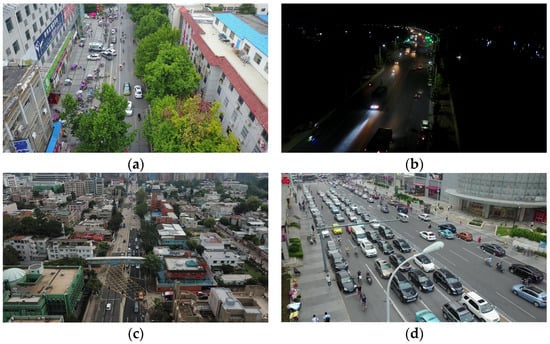
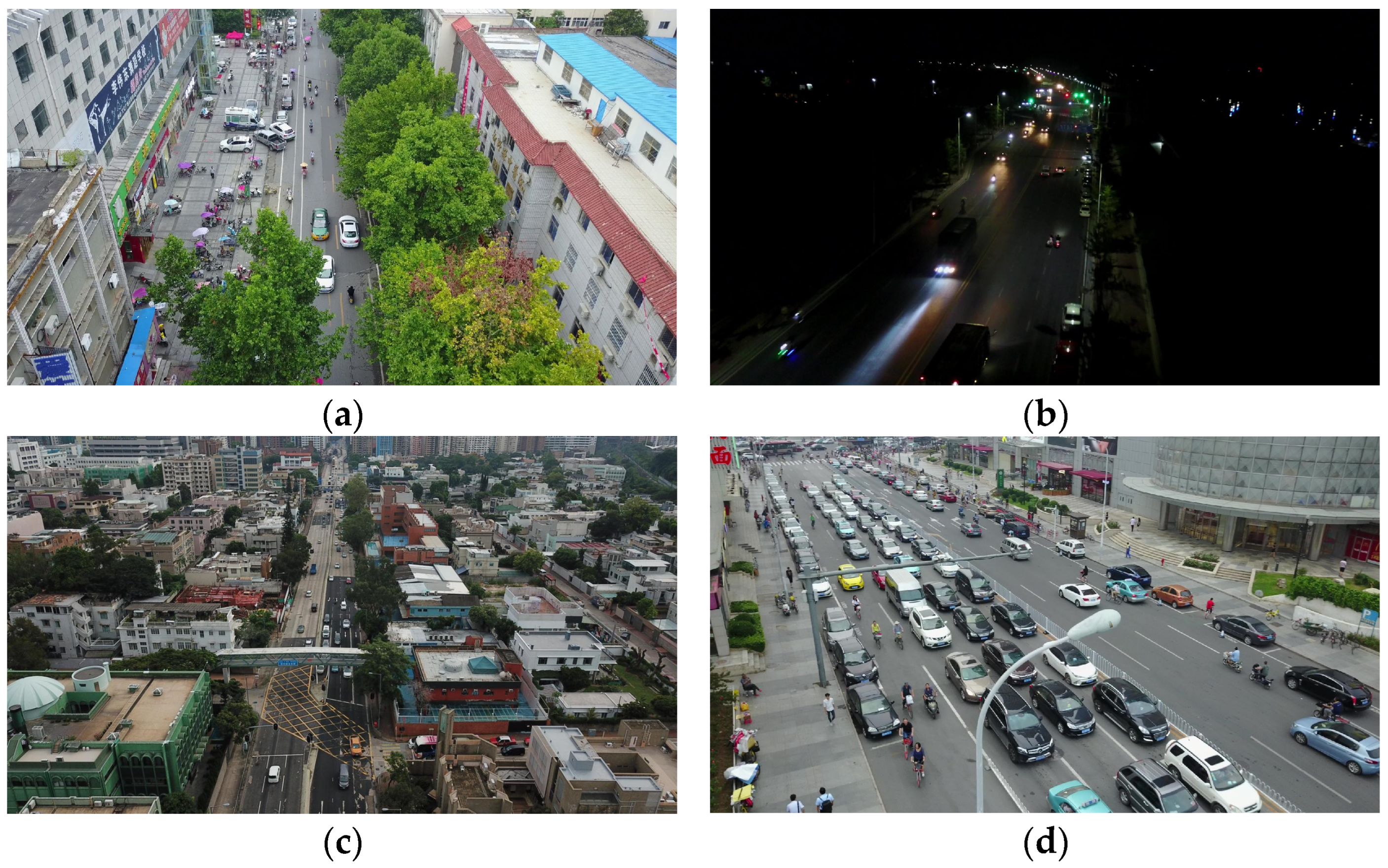
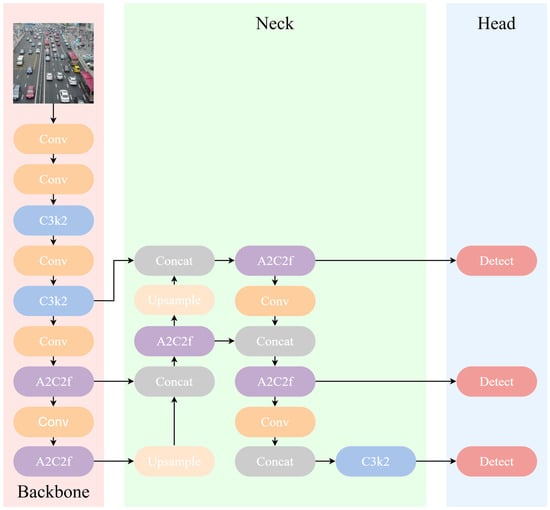
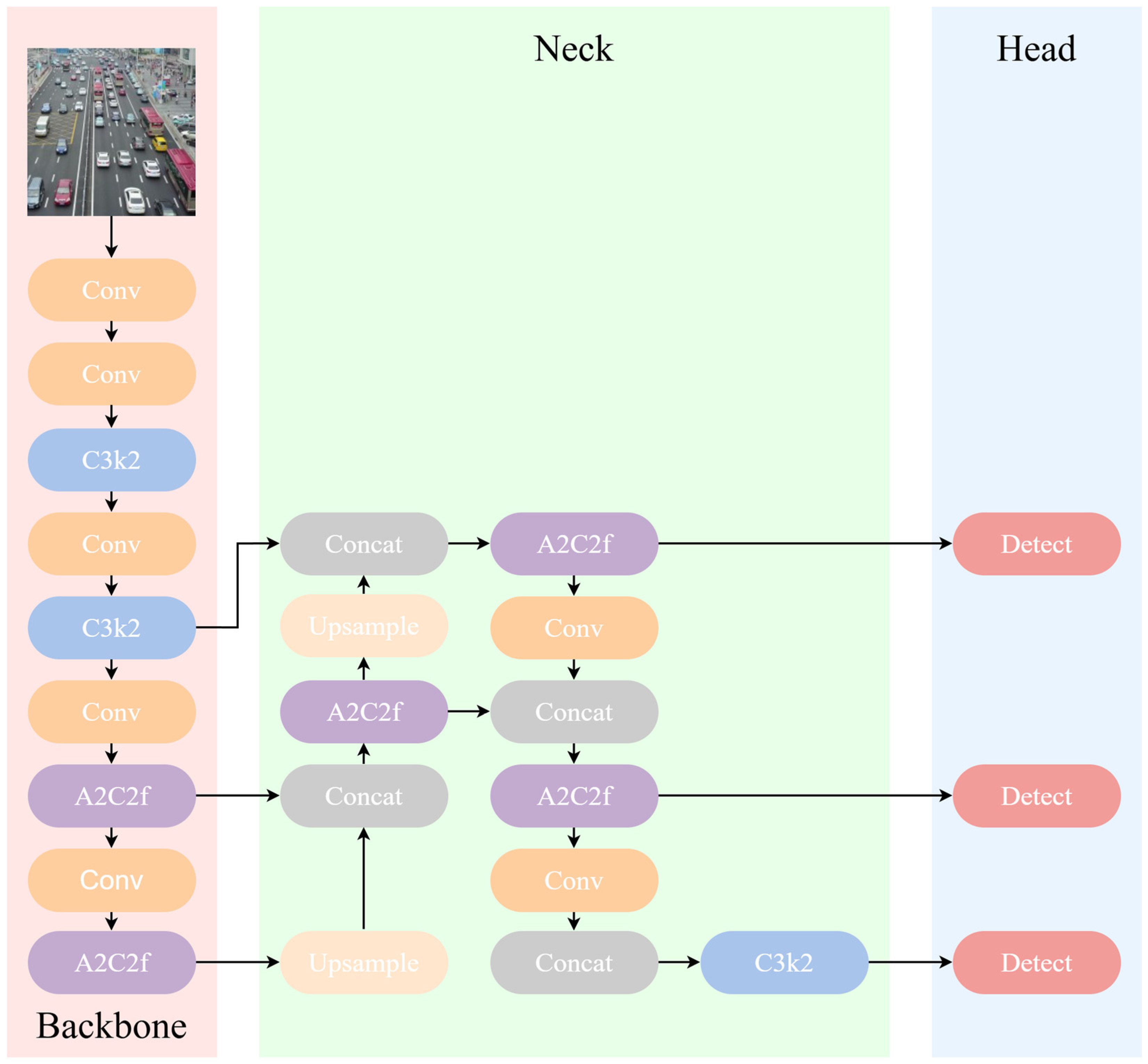
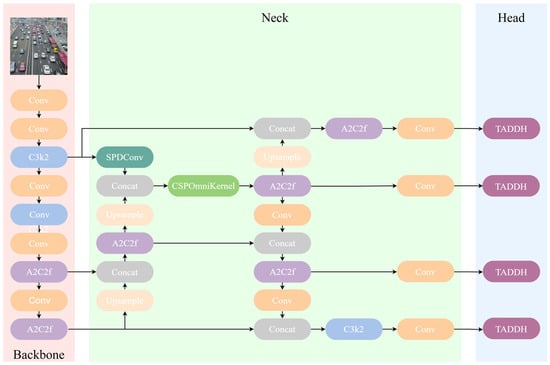
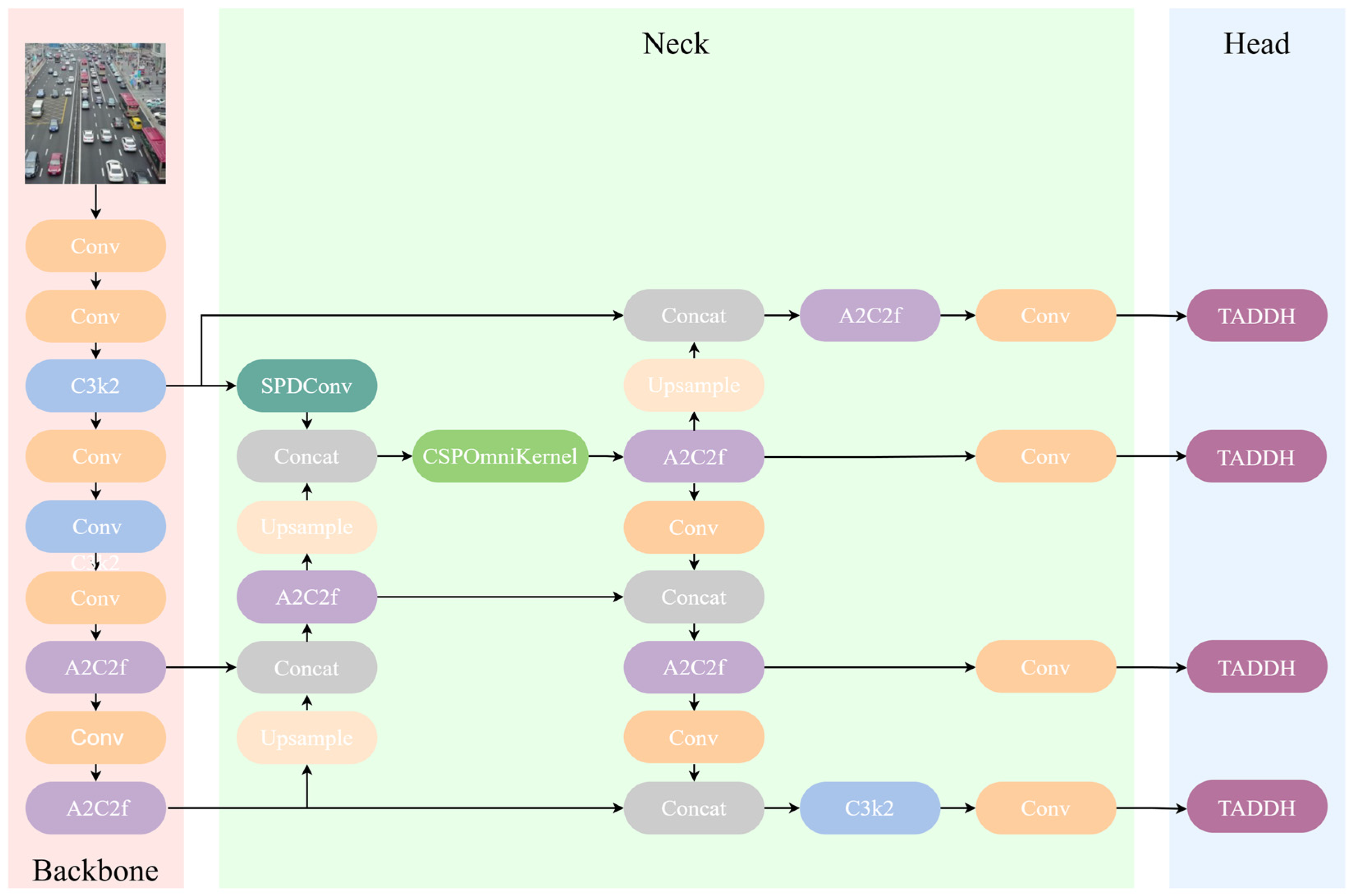
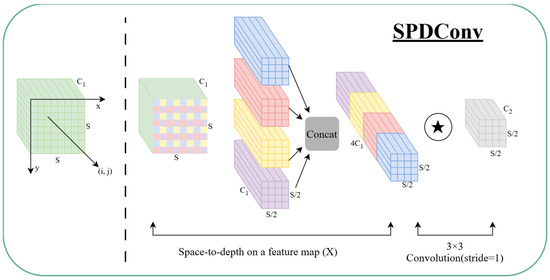
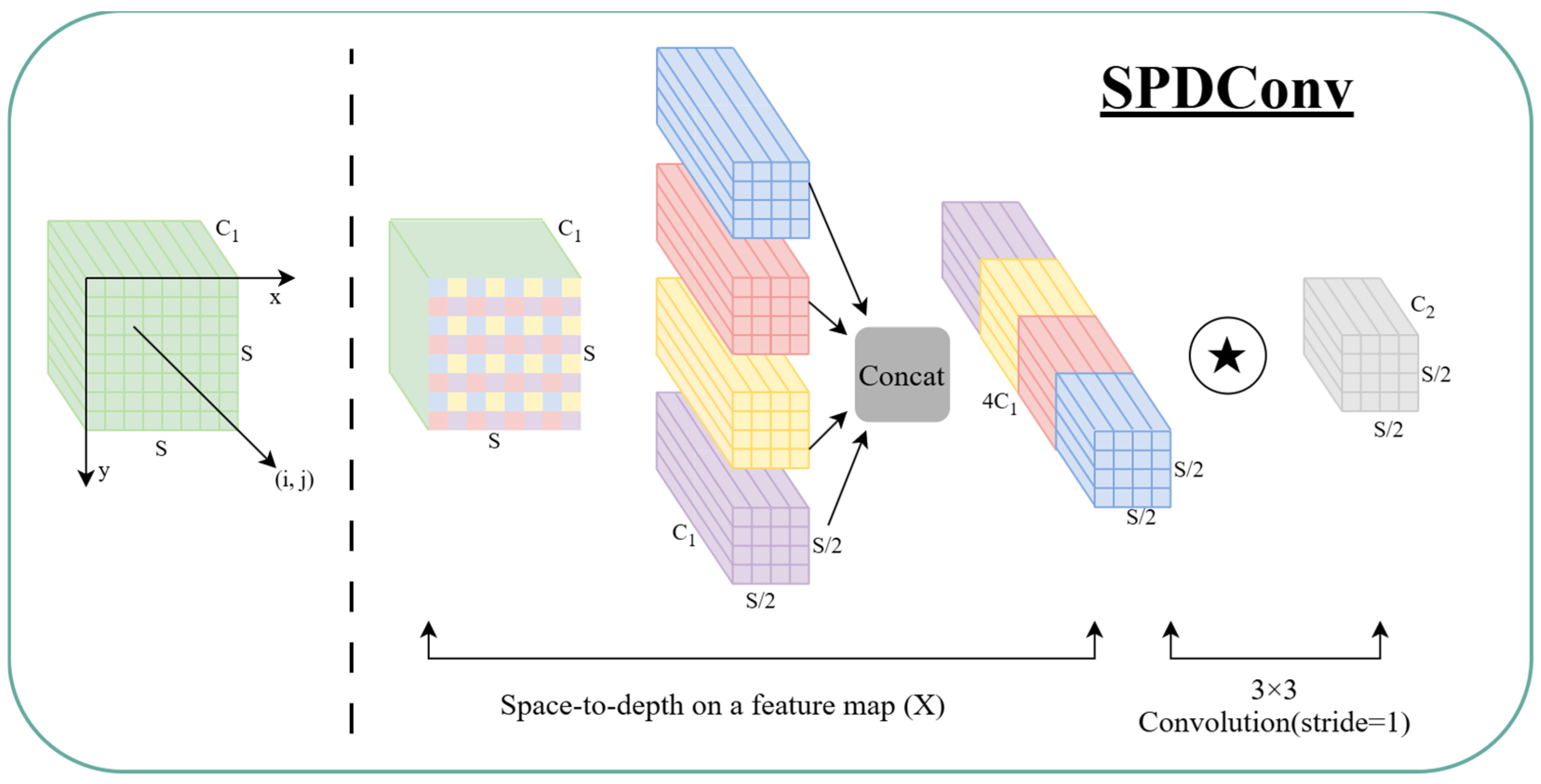
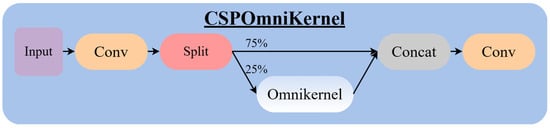
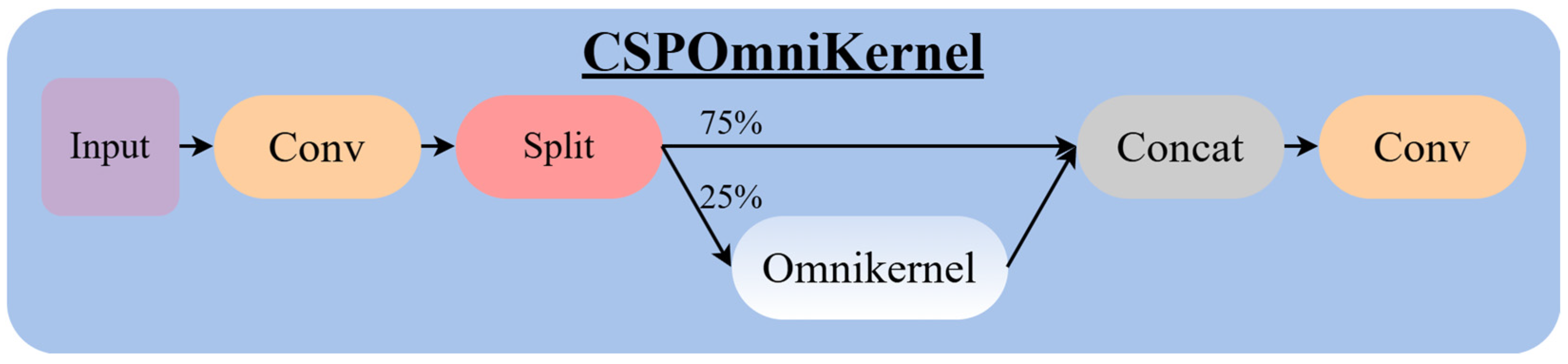
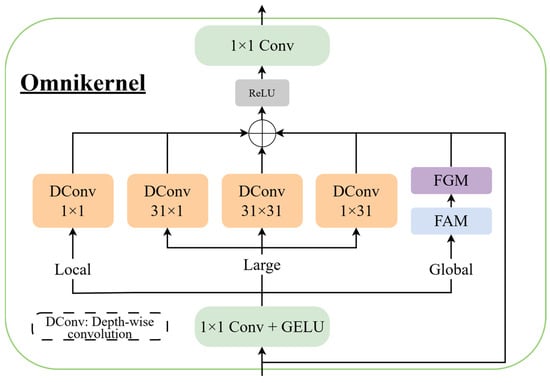
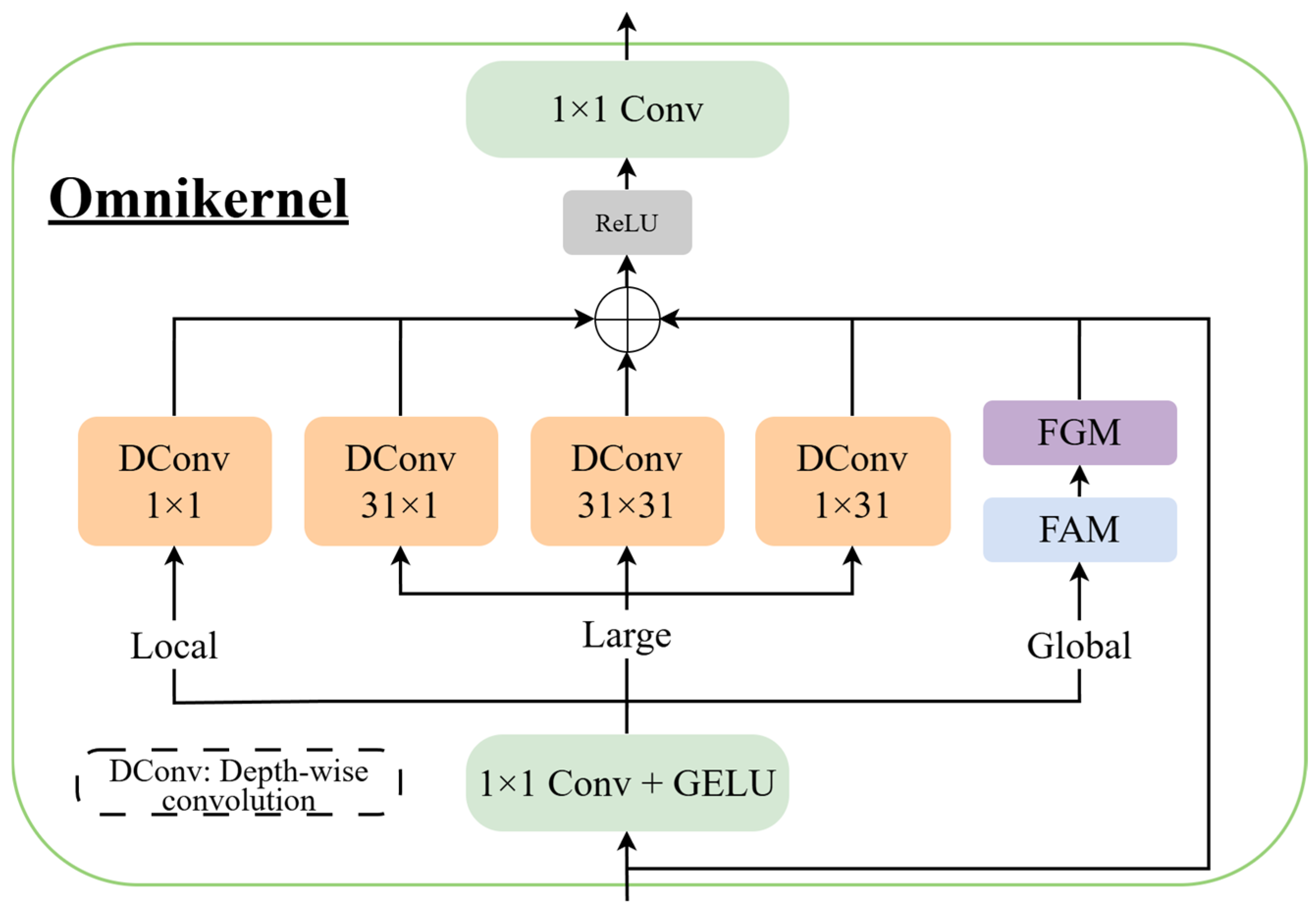
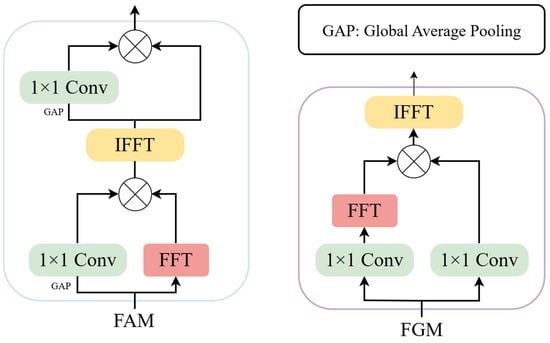
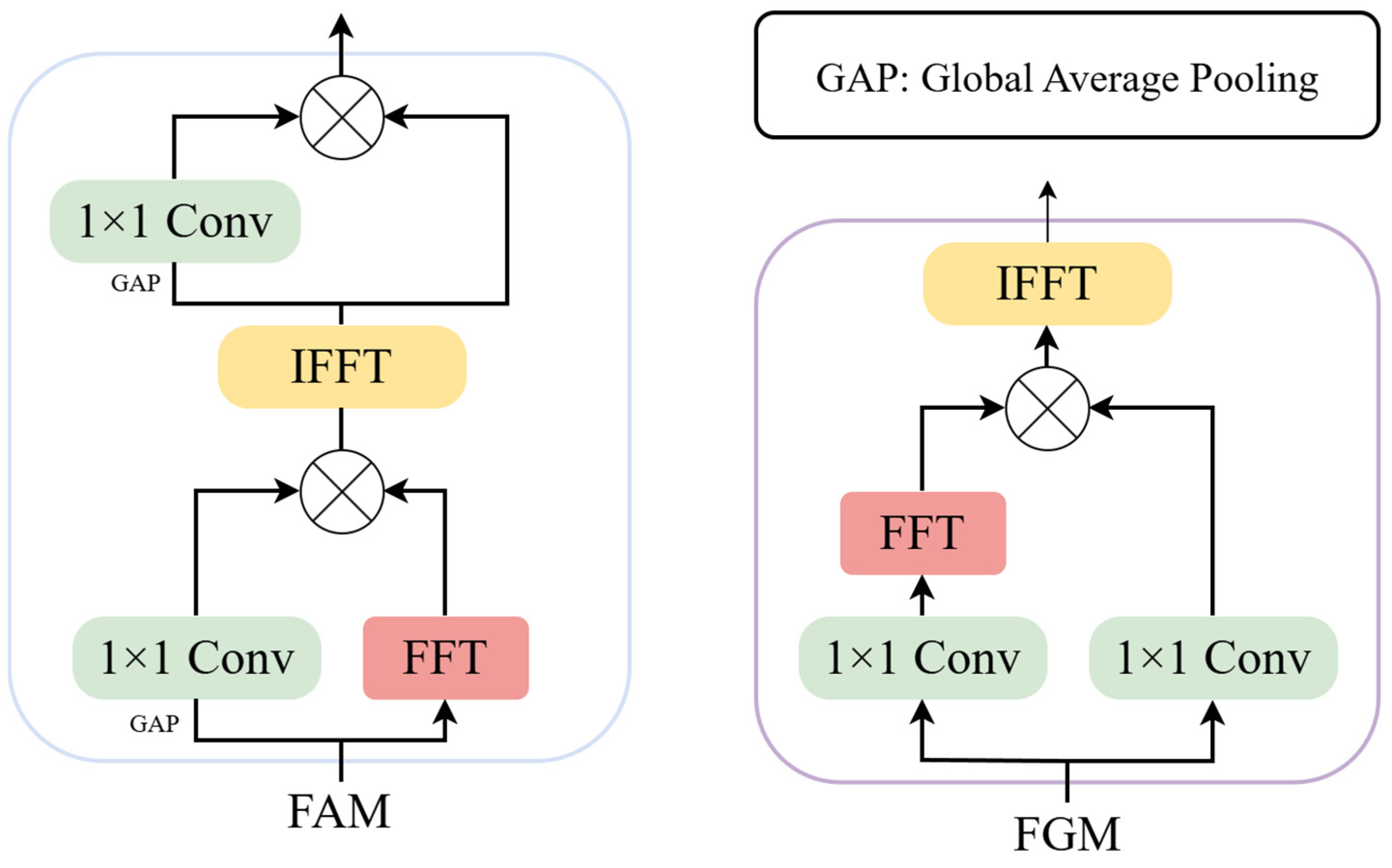
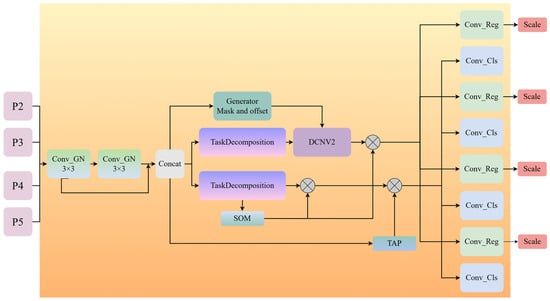
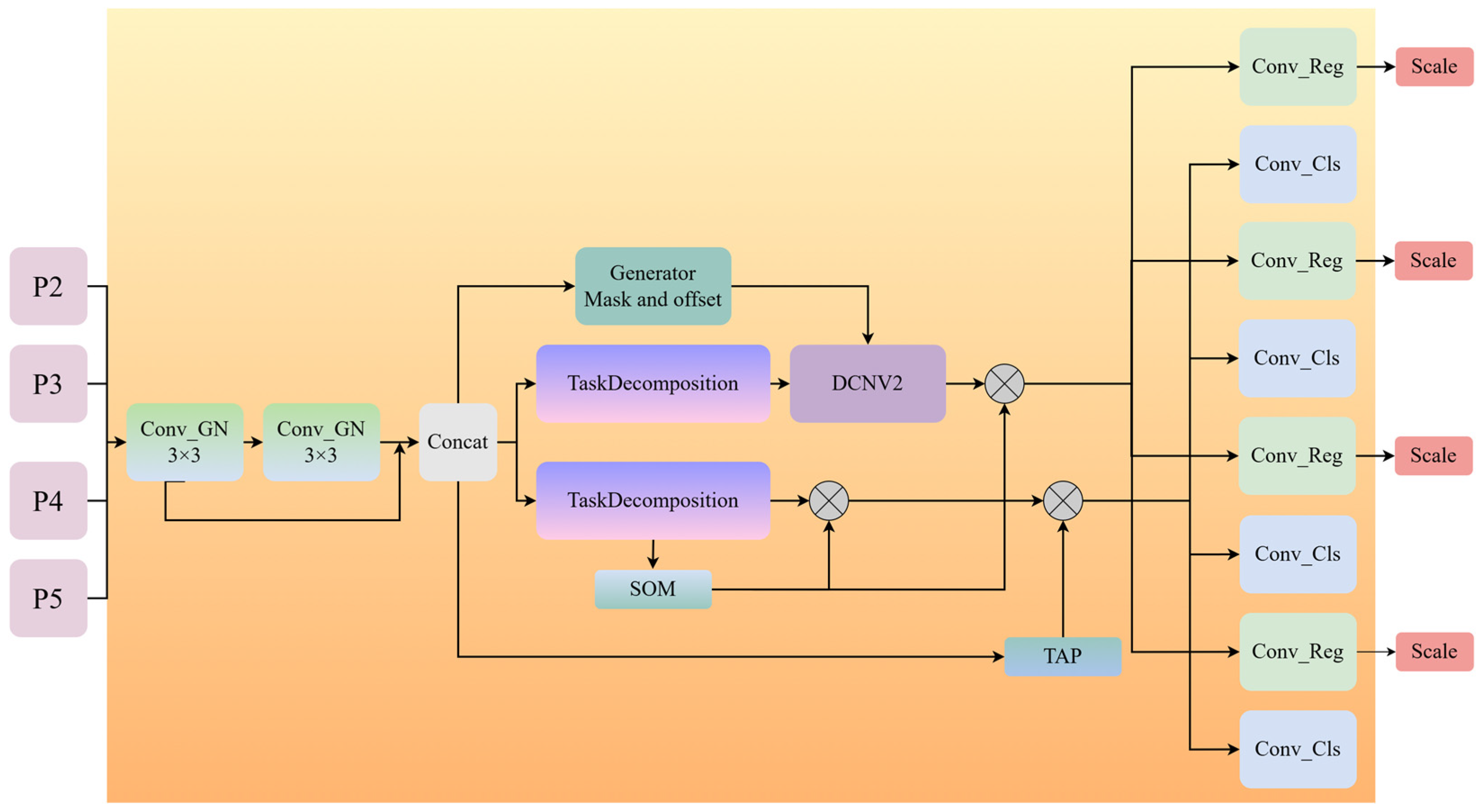
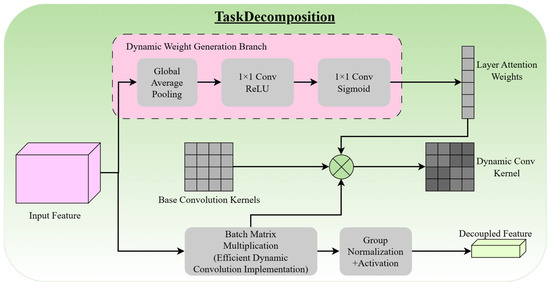
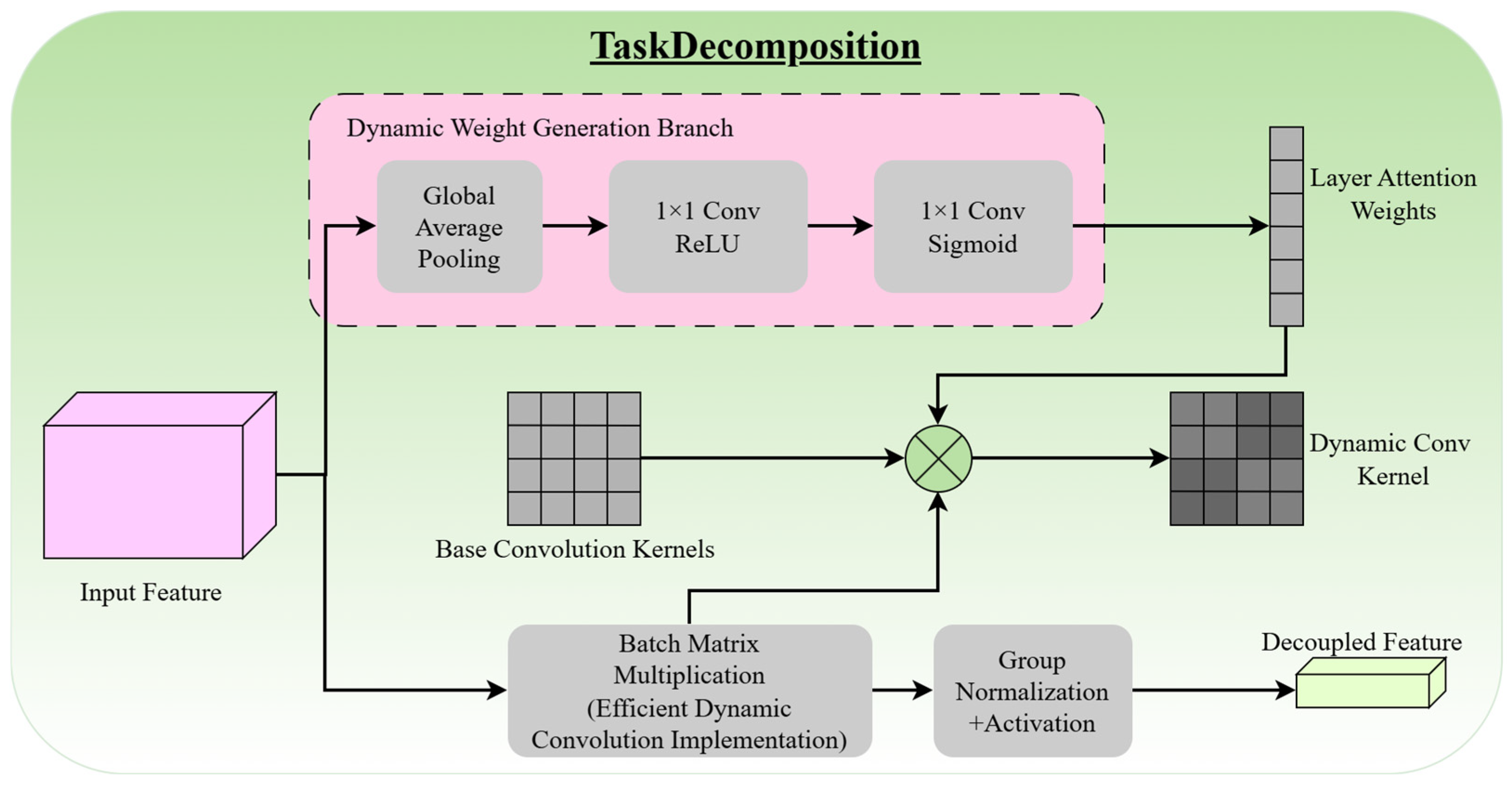
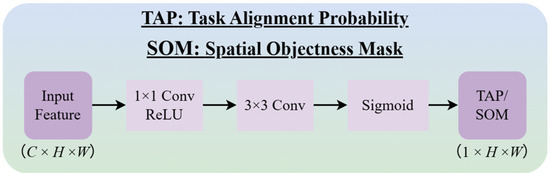
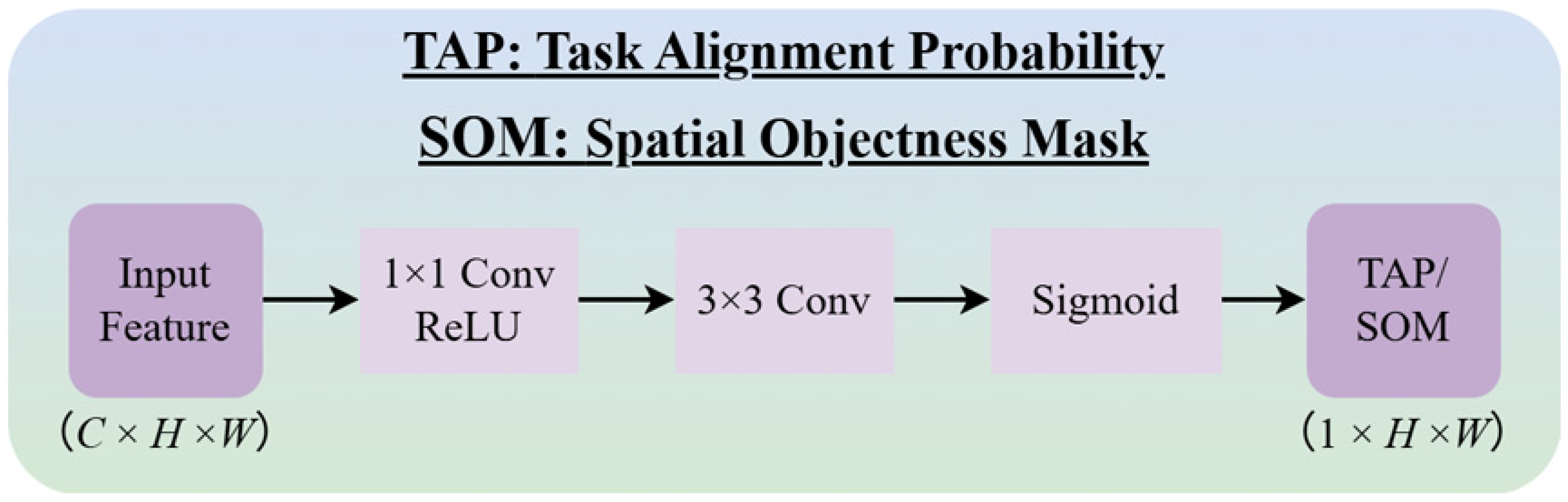
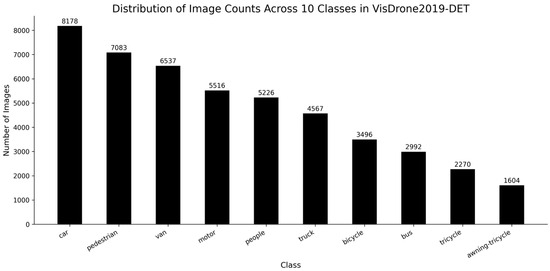
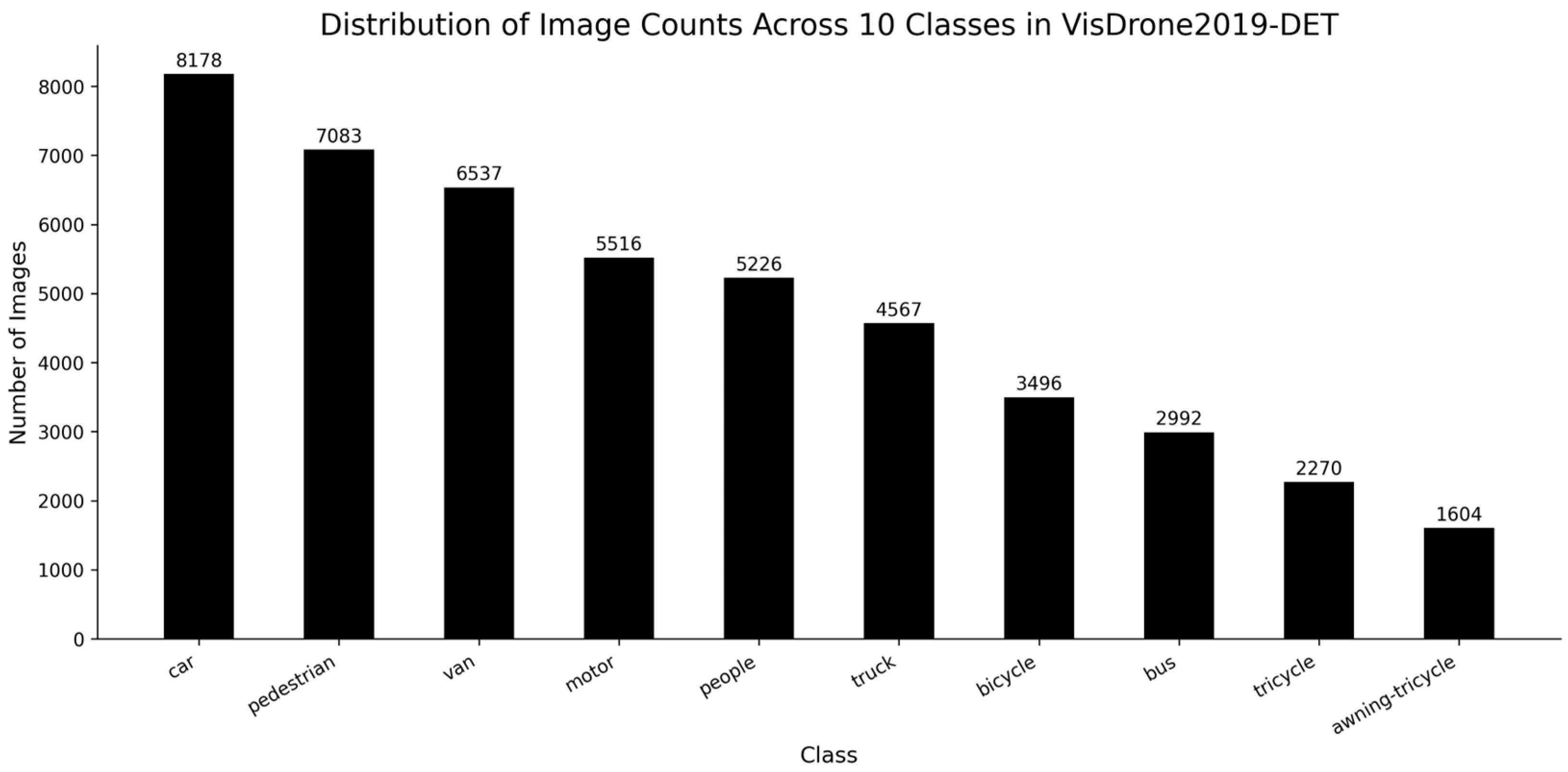
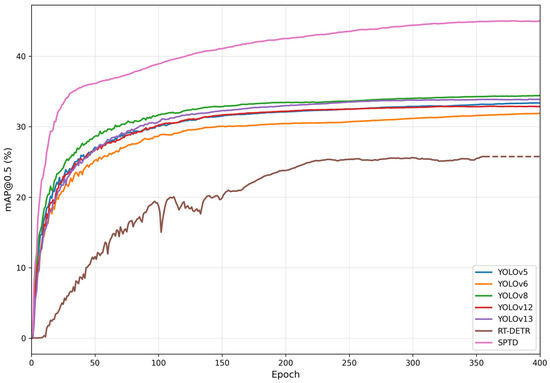
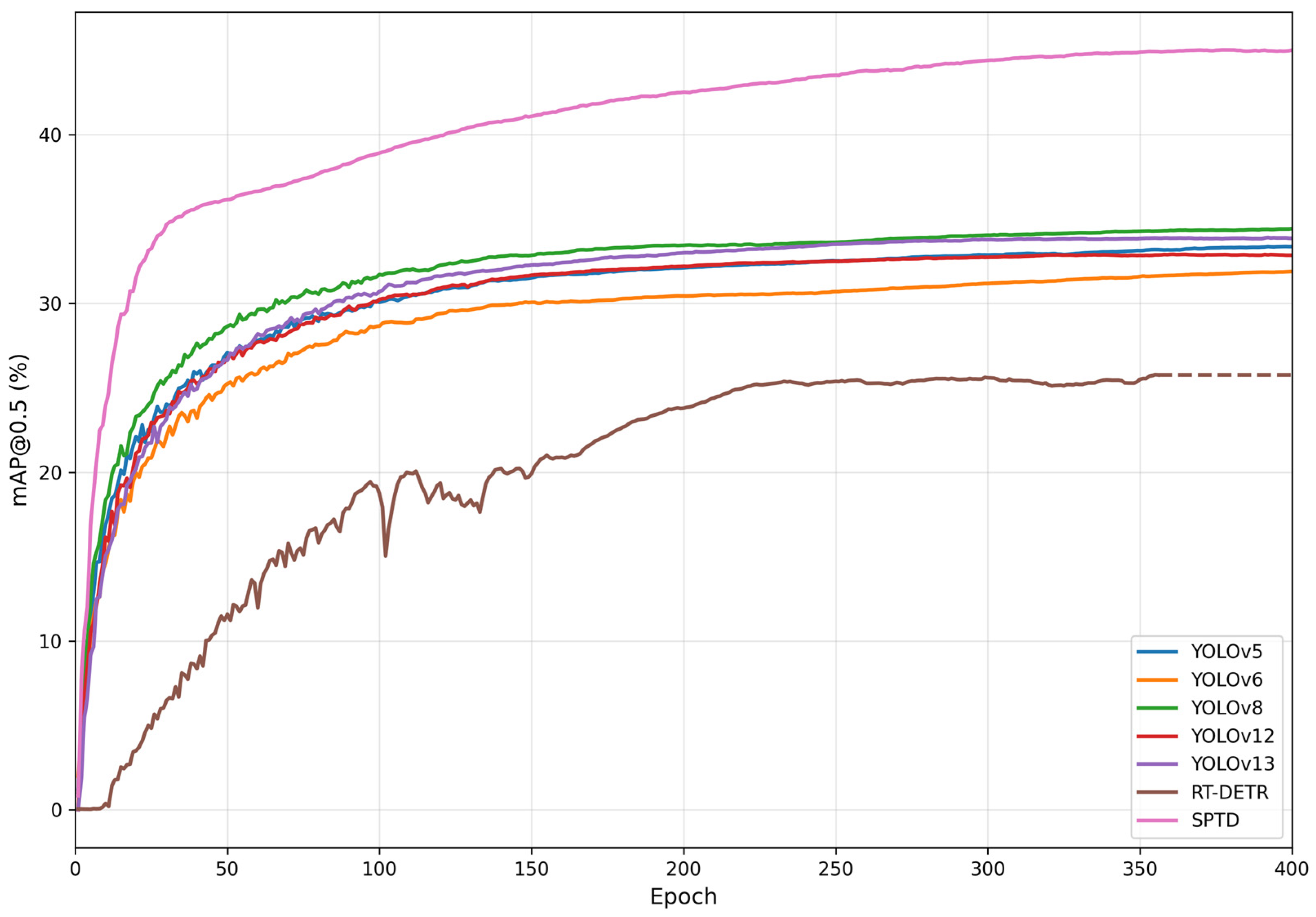
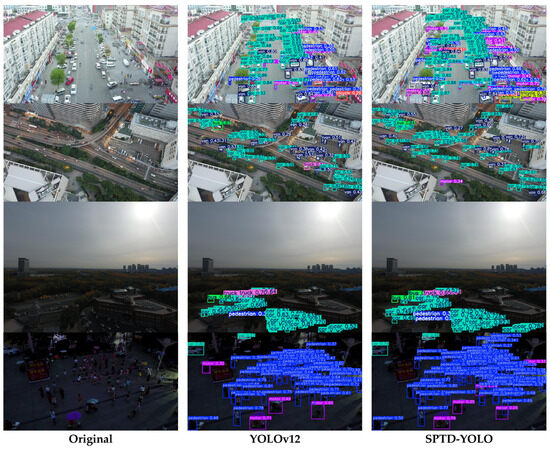
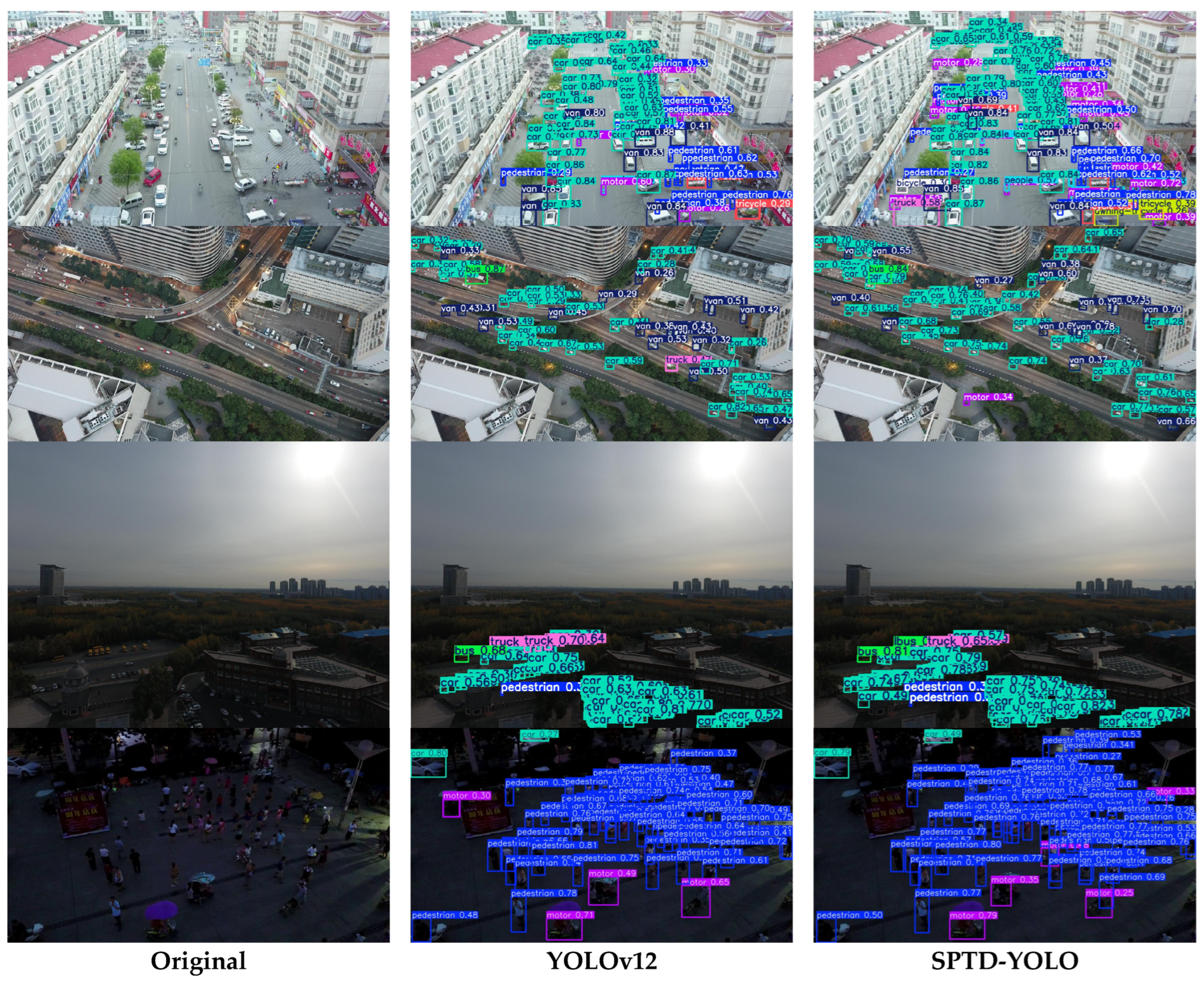

Disclaimer/Publisher’s Note: The statements, opinions and data contained in all publications are solely those of the individual author(s) and contributor(s) and not of MDPI and/or the editor(s). MDPI and/or the editor(s) disclaim responsibility for any injury to people or property resulting from any ideas, methods, instructions or products referred to in the content. |
© 2026 by the authors. Licensee MDPI, Basel, Switzerland. This article is an open access article distributed under the terms and conditions of the Creative Commons Attribution (CC BY) license.