


Abstract
The Pad Bench Press (PBP) is a variation of the traditional bench press used by elite throwers to meet the mechanical demands of explosive upper-body actions in throwing events. The exercise involves a deliberately rapid eccentric phase, where the athlete allows the barbell to descend at high velocity, producing a rebound effect upon impact with the pad. This technique requires years of practice and is typically introduced early in an athlete’s development and refined progressively. The PBP is commonly used during maximal strength and power phases to provide a high-intensity, velocity-specific stimulus with heavy loads. This descriptive and exploratory case study presents a kinematic analysis of two internationally competitive Spanish shot putters, each with over 15 years of experience using the PBP. Barbell velocity data were obtained via 2D video analysis across multiple loads. The descriptive data indicate that, relative to the traditional bench press profiles reported in the literature, the PBP is associated with substantially stable peak velocities and markedly reduced sticking region, particularly at heavy loads. These findings provide a preliminary kinematic characterization of the PBP and suggest that it may offer a mechanically distinct stimulus compared to the traditional bench press, warranting further controlled investigation.
1. Introduction
Track and field throwing events include shot put, discus, javelin, and hammer throw. The main performance determinant in these events is the release velocity of the implement [1], which is associated with the thrower’s ability to generate force rapidly within short time windows (<250 ms) [2,3]. Achieving high release velocities requires the development of maximal strength, power, and rate of force development (RFD) [1,4,5]. Among these qualities, maximal strength plays a foundational role, as it directly supports the other two. Strong evidence indicates that greater maximal strength is closely associated with superior mechanical power and RFD, especially in the 150–250 ms window, which closely matches the force application duration in throwing events [1,6,7,8]. Moreover, throwers with higher levels of maximal dynamic strength in squat, bench press, or power clean consistently demonstrate superior throwing performance [1,4,5,9].
However, developing maximal strength through traditional strength exercises, such as the bench press or back squat, presents specific mechanical limitations for throwers. Bench press and back squat are typically performed at very low movement velocities [10,11]. Moreover, when lighter loads are used with the intention of moving quickly (e.g., 30–50% 1RM), a substantial deceleration phase emerges toward the end of the concentric phase [11,12,13]. This deceleration phase reduces dynamic correspondence with the explosive, continuously accelerating nature of throwing actions [10,12]. Furthermore, near-maximal loads impose a sticking region during the concentric phase, which reduces execution velocity [14,15,16,17,18]. These limitations challenge the specificity training principle and may reduce the effectiveness of traditional strength exercises in developing the neuromuscular qualities required for high-velocity throwing actions.
To address these limitations between the strength development and velocity-specific demands of throwing events, coaches have long integrated periodized strategies that progressively shift emphasis from heavy, slow strength exercises to ballistic, high-velocity movements throughout the competitive year [3,9,19,20]. Furthermore, coaches have implemented training formats that combine both heavy-load, low-velocity strength exercises and light-load, high-velocity movements within the same session (i.e., complex training), or across weekly sessions (i.e., compound training) [3,9,21,22]. The development of these training methodologies highlights the relevance for throwers and coaches of combining high mechanical loading with high execution velocities.
In addition to structured scientific training methods, the culture of coaching athletics incorporates numerous exercise variations based on coaching experience rather than formal scientific validation [23,24,25,26,27]. These exercises, widely used among highly trained athletes, include specialized movements such as the plyometric pull-over used by javelin throwers or the Pad Bench Press (PBP) implemented by shot put, hammer, and discus throwers. The PBP is a variant of the traditional bench press that incorporates a deliberate high-velocity eccentric phase and a rebound effect upon impact with a chest-mounted pad, potentially addressing the mechanical limitations of the traditional bench press described above. Although these methods persist in elite training programs due to their perceived specificity and transferability to throwing performance, no study has formally documented their characteristics. Therefore, this article aims to present the rationale and mechanics behind the PBP, and to provide a first kinematic characterization of its performance in elite shot-put athletes.
2. Exercise Description
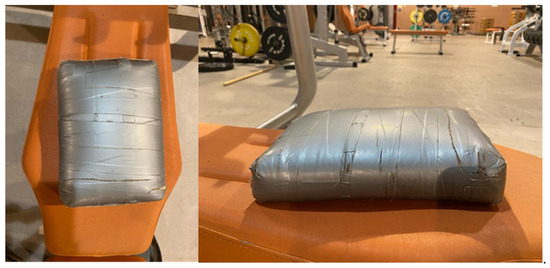
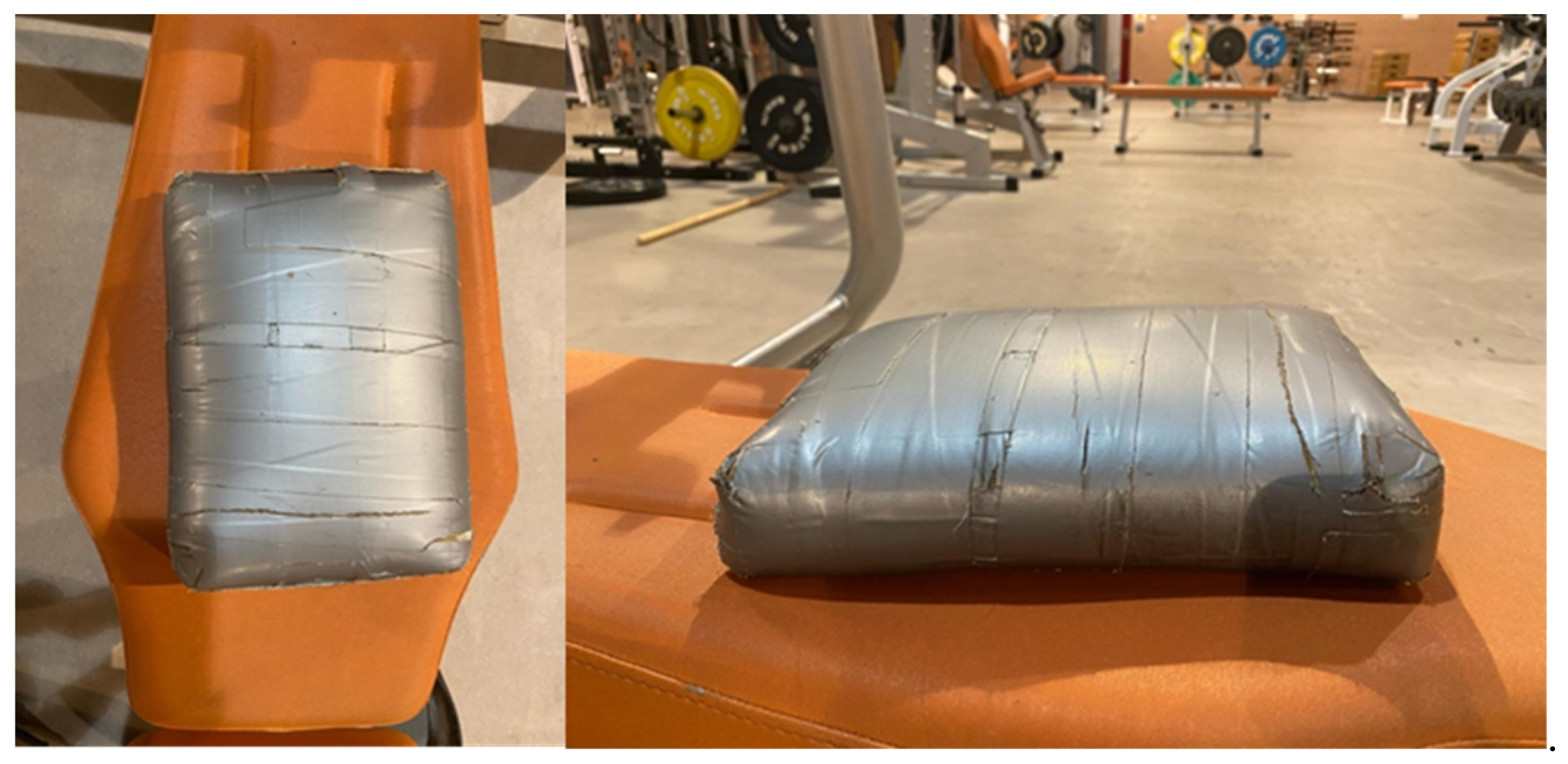
The PBP is a variation of the traditional bench press that incorporates a handcrafted pad placed on the chest. It consists of a wooden rectangle covered by foam and wrapped with adhesive tape (Figure 1). Based upon the coaches’ beliefs and deliberative practices, this pad serves two primary purposes: (1) to reduce tension on the shoulder joint at the lowest point of the lift, and (2) to be a flat and hard surface for the barbell to impact. This impact creates a rebound effect, propelling the bar upward at a high velocity and hypothetically altering the resistance profile, delaying the sticking point, and overcoming the mechanical disadvantage during the concentric phase. This modification may be particularly useful for throwers, who aim to develop upper body strength and power while reducing joint stress [9,28,29].
Figure 1.
The pad. This pad has a foam side facing the athlete’s chest, while the rigid wooden rectangle (29 cm length, 3.5 cm height, and 22 cm width) receives the barbell impact.
The PBP execution (Video S1):
Starting Position: The athlete lies supine on a flat bench with feet firmly planted on the ground, maintaining a stable and slightly arched back position, with the pad placed on the chest. If a foam side is added to the pad, this side is facing the body to protect the sternum and ribs. During the exercise, the athletes place the pad between their chest and their shirt, securing it with a lifting belt to prevent its displacement during movement. The barbell is gripped slightly wider than shoulder width, with elbows completely extended and a supporter facilitating the static position previous the initiation of the movement.
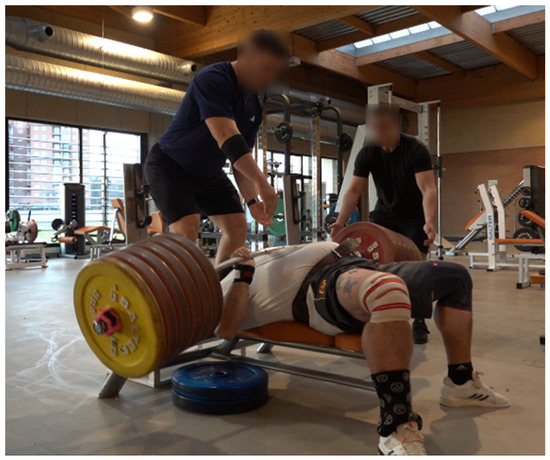
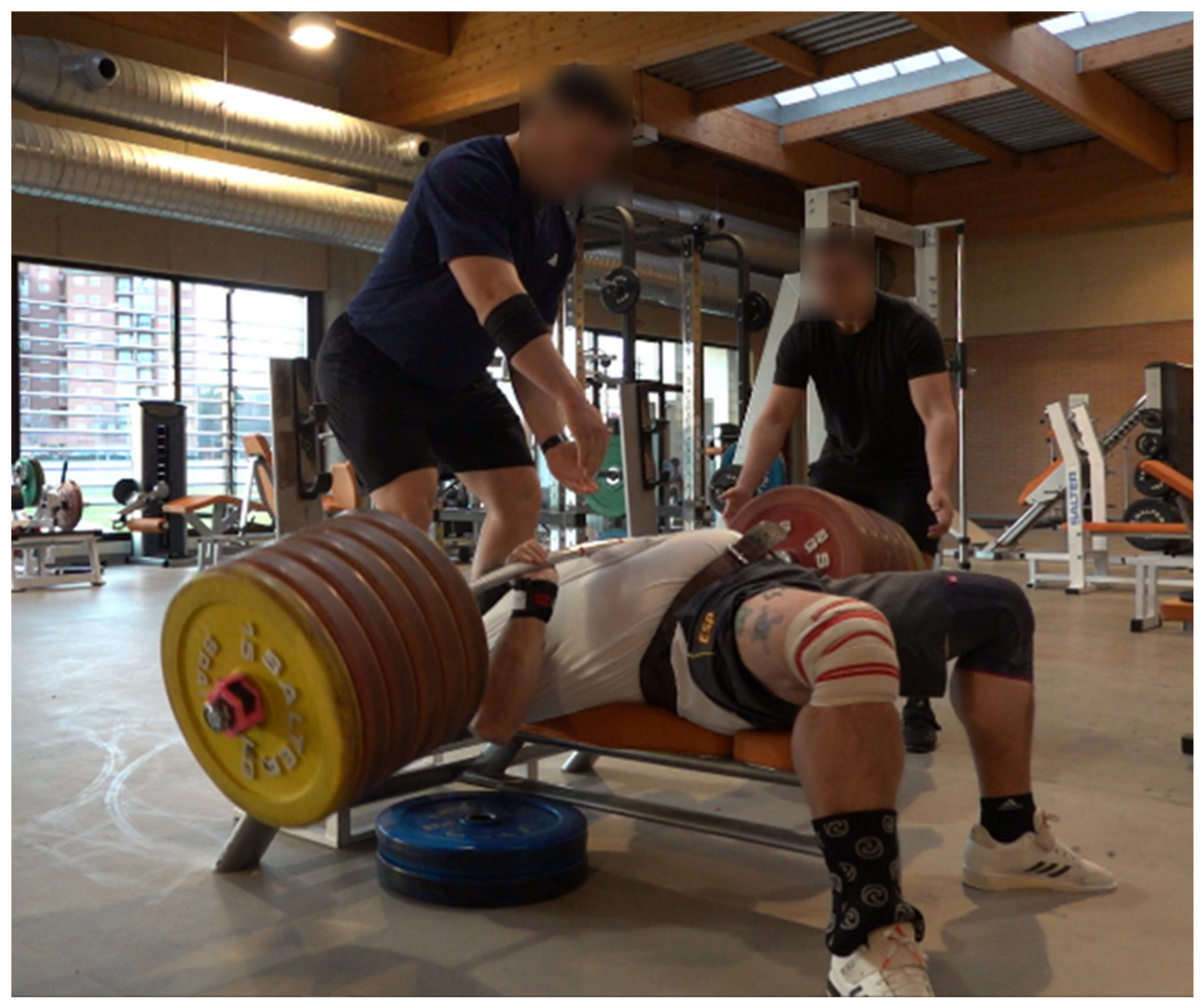
Descent Phase: The athlete initially controls the barbell during the first half of the descent phase, ensuring a stable and coordinated movement pattern. Upon reaching approximately mid-range, the athlete intentionally allows the barbell to drop freely toward the chest to generate a high negative velocity during the downward phase. As the bar approaches the chest, it strikes the rigid wooden surface of the pad, creating a controlled but forceful impact (Figure 2). This aggressive descent significantly increases the negative barbell velocity before contact, facilitating a powerful rebound effect.
Figure 2.
Frame of maximum barbell bending after the impact with the pad, occurring at the end of the descent and beginning of the rebound phases.
Rebound Phase: Upon hitting the pad, the athlete performs a bridging action, where force is transmitted from the legs by slightly elevating the hips and pushing with the arms and chest against the barbell (Figure 2). This coordinated movement hypothetically maximizes the rebound effect, utilizing both the reactive force from the pad and the propulsive action generated by the lower body and upper body. This technique aims to increase the initial upward velocity of the barbell during the propulsive phase.
Propulsive Phase: The athlete takes advantage of the momentum generated from the rebound to press the barbell upward. The increased released velocity hypothetically alters the resistance profile, delaying the sticking point, and overcoming the mechanical disadvantage. Eventually, the athlete should press out to full extension and a supporter must help to rerack the barbell.
When evaluating performance in the PBP, it is essential to account for the bending of the barbell upon impact with the pad (Figure 2). This bending can present challenges when using a linear velocity or position transducer attached to weightlifting barbells, since the recorded velocity may be inaccurately high due to the elastic rebound of the weightlifting barbell [30,31]. An alternative method for assessing this exercise is to utilize kinematic data obtained from video recordings (i.e., classic biomechanical analysis) [32,33]. This approach can effectively track the center of the barbell, which is less affected by the barbell bending [31,34].
To provide scientific insights into the PBP, kinematic characteristics from the PBP performance of two elite shot-put athletes were studied. Additionally, an example of how the tested athletes integrate the PBP into their periodization is provided, along with recommendations and opinions from the participating athletes and their coach.
3. Methods
3.1. Participants
Two elite shot-put throwers were involved, one male and one female, recruited based on their international athletic achievements and extensive experience with the PBP exercise. Since the athletes did not perform the traditional bench press in their regular training program, it was not feasible to directly assess their 1RM in the traditional bench press. After receiving a detailed verbal explanation of the study’s purpose, methodology, and potential risks and benefits, all athletes provided written informed consent in accordance with the guidelines established by the Institutional Review Board of the university of origin (20-LVREX). The study conformed to the principles of World Medical Association’s Declaration of Helsinki.
3.1.1. Male Athlete
The male athlete is a Spanish elite shot putter of 38 years old, with a height of 1.86 m and a body mass of 140.5 kg. He has participated in the Rio 2016 Olympic Games and has been the Spanish National Champion 7 times. His personal best is 20.57 m. The athlete has over 15 years of experience using the PBP as part of his strength training program, with a 300 kg of 1RM in this exercise, making him an ideal candidate to be analyzed.
3.1.2. Female Athlete
The female athlete is a Spanish elite shot putter of 29 years old, with a height of 1.76 m and a body mass of 100.4 kg. She competed in the Tokyo 2020 and Paris 2024 Olympic Games and has been the Spanish National Champion 6 times. Her personal best is 18.80 m, which is currently the Spanish National Record. Like the male athlete, she has over 15 years of experience performing the PBP in her strength training program, with a 150 kg of 1RM in this exercise, making her an ideal candidate to be analyzed.
3.1.3. Rationale for Athlete Selection
Following the methodological approach described by Judge et al. [27,29,35], the selection of these athletes was based on their elite status, extensive competitive experience, and long-term practice with the PBP. Their consistent use of this exercise as a key component of their strength training program ensures the ecological validity and practical relevance of the findings [25,26]. By focusing on elite athletes accustomed to integrating the PBP in their training, this study aims to provide specific insights into the mechanical characteristics and practical applications of the exercise within high-performance shot-put training contexts.
3.2. Procedures
The data were collected during the competitive phase of the 2024 shot-put season in February. The testing sessions took place in the shot putters’ usual training environment on Monday, following the athletes’ sports program established by their athletics coach. The session was integrated into the athletes’ regular training routine, without any specific intervention from the research team. During the testing session, the athletes performed their self-selected warm-up and load-velocity testing protocols (sets, repetitions, and recovery) in accordance with their coach’s guidelines. Both athletes used the pad described in Figure 1.
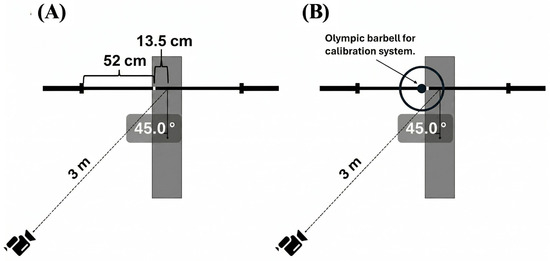
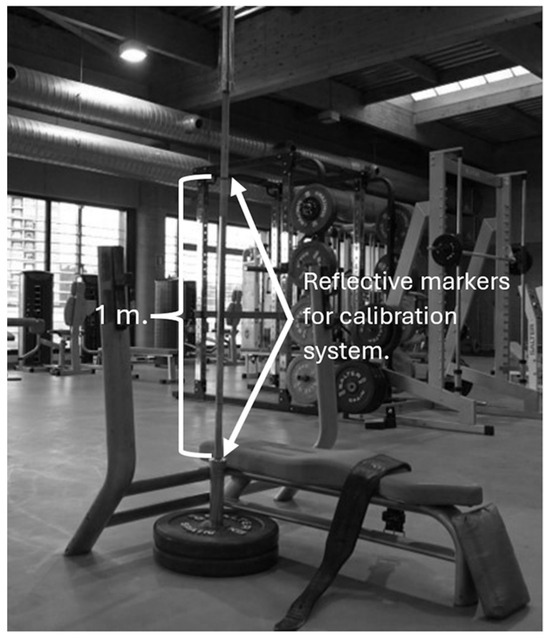
A Sony RX100 VI camera (Sony Corporation, Tokyo, Japan) operating at 120 Hz (1920 × 1080 resolution) was used to record the PBP load-velocity testing protocol. The video data was saved on an SD card and later transferred to a computer for analysis. The camera was positioned 3 m from the athlete at a 45° angle from the right side (Figure 3A) [36,37]. As explained in the previous section, the center of the barbell is the least affected part by barbell bending [30,31], and therefore the most accurate point to capture. A pure frontal view would allow direct capture of the barbell center. However, the athlete’s abdomen and the pad can cover the barbell center. Therefore, the 45° angle represents an optimal position to capture the center area of the barbell. The camera height on the tripod was set at 75 cm, coinciding with the athlete’s right shoulder height while lying on the bench [36]. Because the pad’s position during bar bending prevented visibility of the center of the barbell (Figure 2), we placed the reflected marker (1 cm wide tape) 13.5 cm from the center to be as close as possible to the center while ensuring visibility at all times. For calibration purposes, an Olympic barbell was placed in a vertical position approximately at the location of the athlete’s right shoulder during the PBP (Figure 3B). Two reflective markers were positioned on the barbell, separated by 1 m, creating a calibrated reference scale for subsequent video analysis (Figure 4). This setup was essential to ensure accurate measurement of vertical displacements during the exercise [36]. The camera remained fixed throughout the calibration and testing process to maintain consistent capturing conditions [36].
Figure 3.
Testing and calibration systems setup. (A) Experimental setup showing camera position, distance, angle, and reference dimensions. (B) Calibration setup showing the Olympic barbell used as the reference object for system calibration.
Figure 4.
The reference system.
Given the high velocity achieved immediately after impact with the pad, particularly when using supramaximal loads, a spotter was positioned behind the athlete to ensure safety in case the barbell deviated from its intended path (Figure 2). Although the spotter occasionally covered the barbell markers in the video recording, the vertical position (y-coordinates), the one relevant to this analysis, remained feasible to be identified, since the barbell length exceeded the width of the spotter’s hands. This allowed for manual correction through visual interpolation of the borders [38].
3.3. Data Analysis
A semi-automatic software (Kinovea—0.9.5, Open-Source Software) was employed to extract the y coordinates of the barbell from the recorded videos, which were then exported to spreadsheets. A one-dimensional reference system (1 m height) was positioned vertically to the barbell path and recorded prior to each set to convert the y-coordinates into metric units (Figure 4).
The data was filtered using a fourth-order zero-lag 4 Hz low-pass Butterworth filter. The cut-off frequency was determined through residual comparing the sum of squared differences between the raw and filtered signals across a range of candidate cut-off frequencies [39]. The optimal cut-off was selected as the frequency at which the residual curve showed a clear inflection [39]. Each repetition was segmented by identifying the start and end of the movement as the points of maximum height. The data was then differentiated to calculate barbell velocity, with both peak and mean velocities being computed [39]. All calculations were performed using MATLAB software (R2020a, The MathWorks, Inc., Natick, MA, USA).
For each load, only the repetition with the highest mean concentric velocity was considered for further analysis [40,41,42]. For the purpose of comparison, five key kinematic variables were selected: ascent and descent duration, peak negative and positive velocities, and mean concentric velocity. The inclusion of these variables allowed for a characterization of the PBP kinematic profile. Given the descriptive and exploratory nature of the study, no inferential statistics were applied.
4. Results
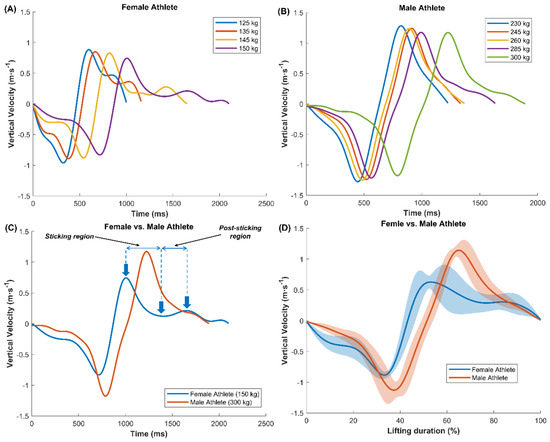
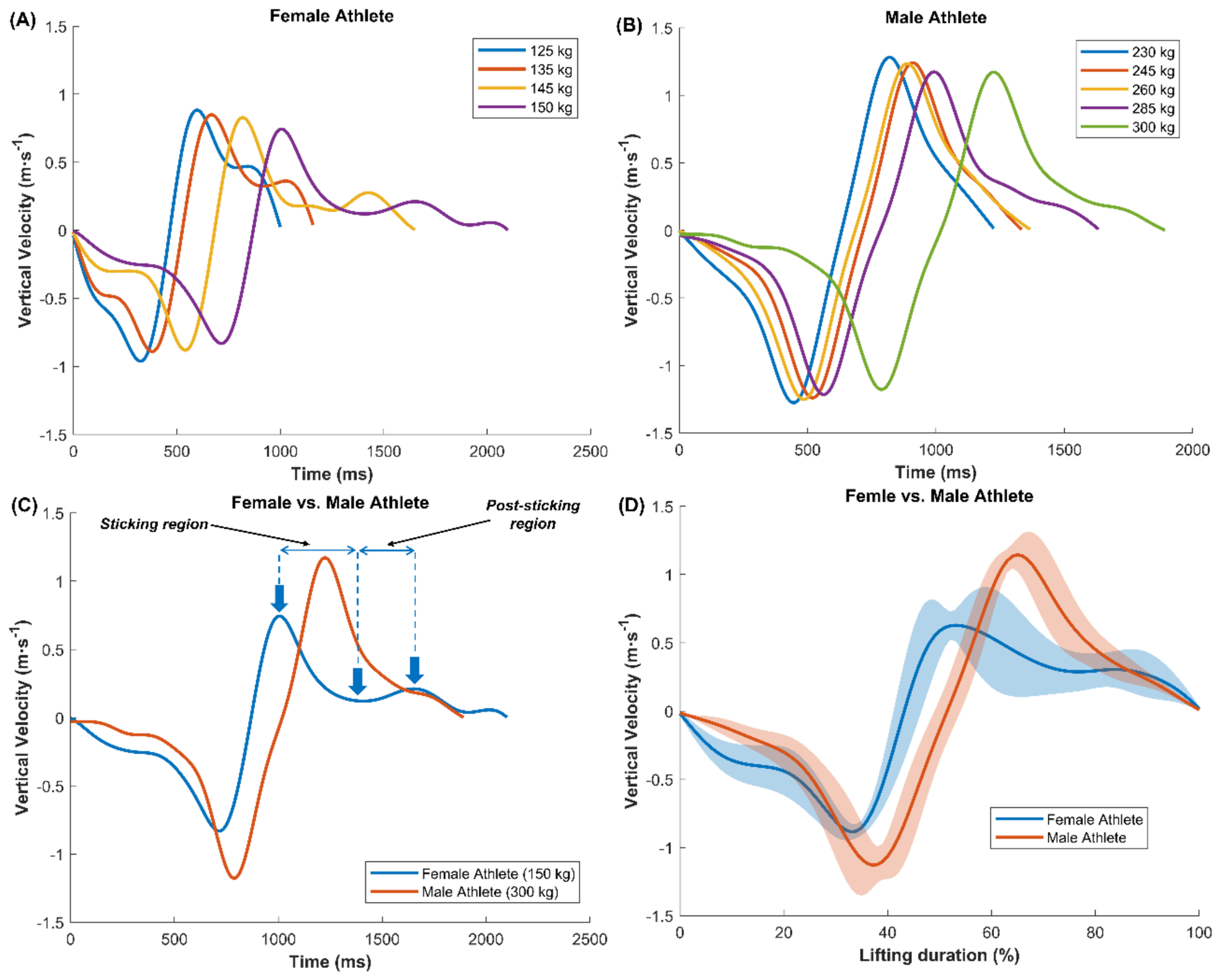
The male athlete exhibited lower variability in velocity–time curves across increasing loads, as indicated by the high degree of overlap up to the heaviest load (Figure 5B) and by the lower standard deviation (SD) compared to the female athlete (Figure 5C). The female athlete showed greater variability than the male athlete, reflected in the longer lifting durations with increasing loads (Figure 5A) and in the higher SD after ≈ 55% of the lift (Figure 5D).
Figure 5.
Vertical velocity–time curves across loads for (A) the female athlete and (B) the male athlete. Panel (C) shows the 1RM loads for both athletes. The sticking region, defined as the interval between the first positive peak velocity to the next minimum [43], is only present in the female athlete. Panel (D) shows the mean ± standard deviation vertical velocity-lifting duration, averaged across loads, for both athletes.
Negative and positive peak velocities were consistently greater for the male athlete compared with the female athlete (Figure 5C, Table 1). The reduction in peak negative velocity, which was achieved just before contacting the pad, was similar in both athletes (Δ = −0.13 m·s−1 in the female, −0.10 m·s−1 in the male) (Table 1). The reduction in positive peak velocity was slightly greater in the female (Δ = −0.14 m·s−1) than in the male athlete (Δ = −0.07 m·s−1). This between-athlete difference was more pronounced for mean concentric velocity (Δ = −0.28 m·s−1 in the female, Δ = −0.17 m·s−1 in the male).
Table 1.
Descent and ascent times, negative and positive peak velocities, and mean concentric velocity for each load in both athletes.
Increasing the load resulted in longer descent and ascent times in both athletes (Table 1). However, the ascent time barely increased in the male athlete (Δ = 0.28 s) compared to the female athlete (Δ = 0.69 s) (Table 1). This difference was due to the sticking region, which was clearly identifiable in the female athlete but absent in the male counterpart (Figure 5C). This sticking region manifested across several submaximal loads in the female athlete, reaching its maximum expression at 1RM (Figure 5A).
The main differences between the male and female athletes in ascent time, positive peak velocity, mean concentric velocity, and sticking region could be related to the greater peak negative velocity achieved by the male athlete (−1.18 to −1.28 m·s−1) compared to the female athlete (−0.83 to −0.96 m·s−1). This greater eccentric velocity likely increased the rebound impulse upon pad contact, thereby increasing positive peak velocity after the impact. The resulting momentum may have been sufficient to overcome the sticking region, reducing both ascent time and mean concentric velocity decrement across loads. However, the longer descent times in the male (0.63–1.03 s) compared to the female athlete (0.47–0.88 s) suggest that this effect could be related to height differences (male 1.86 m, female 1.76 m) or other anthropometric characteristics such as upper limb length, leading to greater time to increase peak eccentric velocity, rather than rebound technique differences. Notably, additional studies are required to determine whether differences in absolute strength, anthropometry or technique can lead to the differences between athletes observed in this descriptive case study, which is, to the best of our knowledge, the first one about the PBP.
5. Discussion
This is the first study to describe the kinematic characteristics of the PBP, an exercise widely adopted by elite throwers but scarcely examined from a scientific perspective. In contrast to previous investigations conducted under laboratory settings with healthy or recreationally trained participants, this study provides ecologically valid data derived from real training sessions performed by elite-level athletes with more than 15 years of experience in this exercise. The findings demonstrate a relatively stable peak velocity across increasing loads and an absent sticking region in the male athlete. The following sections discuss a rationale for the mechanical and practical implications of these findings, outlining the potential mechanical differences between the PBP and the traditional bench press that may be relevant for elite throwers. Consistent with its descriptive design, the findings should be interpreted as preliminary evidence that characterizes the exercise and motivates future controlled investigations, rather than as definitive conclusions. Additionally, examples of the real training programs followed by both athletes, along with subjective insights from the participating athletes and their coach, are provided in the Supplementary Materials.
5.1. From the Traditional Bench Press to the PBP
The bench press is a widely used exercise among athletic throwers due to its ability to develop maximal strength, mechanical power, and its established relationship with throwing velocity in various throwing disciplines [27,29,35]. This exercise specifically targets the upper body muscles, particularly the pectoralis major, triceps brachii, and anterior deltoids, which are essential for generating the high levels of force required during the final phase of the throw [3,44,45,46,47]. Research has demonstrated that elite throwers often exhibit exceptionally high bench press 1RM values, typically ranging from 140 to 220 kg [27,29,35,48], compared to strength-trained amateur men, whose 1RM ranges between 65 and 100 kg [40,49]. Those higher strength levels are hypothesized to enhance throwing performance, as they facilitate the rapid application of force during the release phase, directly impacting the shot’s velocity [44,45,50]. Additionally, the bench press is frequently incorporated in post-activation potentiation enhancement protocols to acutely improve strength and power production prior to competition [3,9,21,22].
Incorporating the bench press into training programs for highly experienced throwers has specific challenges. First, the significant torque and compressive forces were generated on the shoulder joint at the lowest point of the lift [51,52,53,54]. This mechanical disadvantage, combined with the substantial training loads used by elite throwers, may increase the risk of shoulder injuries and discomfort [52,53,54,55]. The repetitive stress imposed on the shoulder during strength and power training, combined with the explosive nature of throwing itself, makes this joint particularly vulnerable for competitive throwers [52,53,54,55]. Second, the bench press is typically performed with heavy loads, resulting in great velocity decrements with increasing loads. Specifically, the athletes can experience reductions in peak velocity of 0.88 to 0.33 m·s−1 [40], compared to the much more stable peak velocities of the female (0.88 to 0.74 m·s−1) and male athletes (1.28 to 1.17 m·s−1) from this study in the PBP. Third is the sticking region (Figure 5C), a key biomechanical challenge of the traditional bench press during the concentric phase. It is the point where the barbell decelerates due to the reduced capacity to generate force at mechanically disadvantageous joint angles and delayed activation of prime movers such as the pectoralis major and triceps brachii [14,15,16,17,18]. This phenomenon is aggravated when lifting near-maximal loads, as the reduced barbell acceleration is associated with suboptimal muscle length–tension relationships and diminished muscle potentiation, which can lead to technique breakdown or complete failure if the lifter is unable to overcome the increased resistance [14,15,16,18]. In the traditional bench press, the sticking region has been reported to last 0.84–0.94 s in the last repetition of a 6RM, and the post-sticking region 1.49–1.82 s [43]. In the PBP, the sticking region lasted 0.40 s in the 1RM from the female athlete, and the post-sticking region 0.24 s, with the sticking region not being identifiable in the male athlete. Fourth, the braking phase at the end of the concentric movement, especially when using lighter loads, is another limitation for elite throwers when performing the traditional bench press. Researchers have shown that when athletes lift at maximal intended velocity with light loads (30–50% 1RM), approximately 40–50% of the concentric phase is spent decelerating the bar to maintain control [41,42,56]. This braking phase results in a marked reduction in bar velocity just before lockout, leading to increased activation of antagonist muscles such as the biceps brachii and posterior deltoids [57]. Consequently, this mechanical difference may decrease dynamic correspondence and ultimately performance in athletes whose sport-specific movements require continuous acceleration up to the point of release [10,58,59,60].
To address these challenges, coaches have implemented variations in grip width (wide vs. close) [52,61], accommodated resistance (chains/rubber bands vs. plates) [62], and throwing the barbell (e.g., bench press throw [58,63]) to optimize force production while attempting to minimize injury risk. Techniques such as bouncing the bar off the chest or using a rebounding motion have also been explored to reduce the impact of the sticking region and enhance bar velocity, particularly in elite throwers [64]. In this context, the bouncing technique (allowing the barbell to rebound off the chest) has been proposed to exploit the stretch–shortening cycle and mitigate the sticking region by increasing eccentric negative loading and subsequent barbell acceleration [64,65]. A previous study on acute effects has shown that incorporating a bounce in the bench press throw enhances average and peak power output and barbell velocity compared with the conventional technique [65], while longitudinal data suggests comparable gains in strength and throwing performance between both approaches, although in handball [64]. Nevertheless, the repeated compressive impact on the thorax inherent to this method may elevate the risk of injury. A recent case report described a rib stress fracture in an elite female sprinter caused by repetitive barbell bouncing during bench press training, emphasizing that the potential mechanical benefits of this technique must be balanced against its safety considerations, particularly in athletes with predisposing factors [66]. In this regard, the pad used in the PBP may hypothetically attenuate the direct compressive forces on the thorax by distributing the impact over a larger surface area. Additionally, the foam layer facing the athlete’s chest may absorb and dissipate part of the impact. However, these assumptions have not been formally tested, and future research should directly measure thoracic impact forces under both conditions before drawing conclusions about the relative safety of the PBP.
The rationale for adopting strategies that optimize mechanical power development lies in the direct relationship between muscular power and throwing performance. Bourdin et al. [67] demonstrated that maximal power output in both the bench press and half squat was strongly correlated with throwing performance across different disciplines (r = 0.71 and r = 0.54, respectively), highlighting that the ability to generate high force rapidly is a critical determinant of release velocity, the main predictor of success in throwing events. Consequently, strength training strategies that enhance power production, such as ballistic or rebound-based movements, may improve the transfer of strength adaptations to sport-specific performance if execution safety and technical control are ensured. In this regard, using the PBP could replicate the mechanical benefits of the rebound strategy, as demonstrated in the present study through shorter lifting durations, higher velocities, and smaller velocity reductions with increasing load, while also hypothetically attenuating the direct impact forces on the chest, although this remains to be formally tested, and thereby potentially reducing injury risk.
5.2. Subjective Insights from Coach and Athletes
To complement the quantitative findings, a set of semi-structured interviews was conducted with the athletes and their coach (provided in Supplementary Material). This qualitative approach was designed to capture experiential perspectives regarding the integration of the PBP in elite shot-put training. The subjective insights provided by the coach and athletes reinforce and contextualize the mechanical findings of this study. Athletes consistently described sensations of greater barbell speed, power, and reactivity when using the PBP, which is consistent with the objectively higher velocities and shorter ascent times observed. The reduced perception of muscular fatigue and the emphasis on the concentric phase reported by the athletes mirror the shorter and less pronounced sticking region quantified under near-maximal loads. The coach’s account of the exercise being designed to replicate the kinetic sequencing and velocity demands of the shot put corresponds directly with the mechanical evidence showing peak barbell velocity immediately after the rebound phase. At the same time, both coach and athletes acknowledged limitations, such as the incomplete range of motion, high neuromuscular demands, and the need to complement the PBP with other pressing variations. Taken together, the convergence of subjective perceptions with quantitative outcomes highlights the ecological validity of the PBP and underscores its potential as a highly specific and transferable training tool for elite throwers.
5.3. Limitations
Several limitations of the present study should be acknowledged. First, the descriptive case study design with two athletes only performing the PBP precludes any inferential statistical analysis or direct comparison with the traditional bench press, limiting the generalizability of the findings. Second, the kinematic analysis was conducted using 2D video at 120 Hz, without concurrent kinetic or electromyographic data. Consequently, neuromechanical and kinetic interpretations, including thoracic impact force reduction by the pad, remain speculative and should be addressed in future studies. Third, the reflective marker was positioned 13.5 cm from the center of the barbell rather than at the midpoint, which may introduce a small measurement error during the bending phase at impact. This may affect velocity data, but not durations. Fourth, no intra-rater reliability assessment was conducted. This study was deliberately designed to maximize ecological validity by recording a real, unmodified training session from elite athletes with a single camera under field conditions. However, this ecologic approach inevitably introduces greater measurement error than laboratory-based protocols. Working with elite athletes, who are exceptionally rare in scientific literature, precludes modifying their training routines or requesting additional repetitions beyond those prescribed by their coach. These constraints are inherent to elite sport research. Future research should address these limitations through larger samples, reliability and crossover designs, and the integration of kinetic and neuromuscular measures.
6. Conclusions
This article provides the first kinematic characterization of the PBP, an exercise used by elite throwers but previously undocumented in the scientific literature. The descriptive data indicate that, relative to the traditional bench press profiles reported in the literature, the PBP is associated with substantially stable peak positive barbell velocities and markedly reduced sticking region, particularly at heavy loads. The subjective insights gathered from coach and athletes further reinforce the ecological validity of these observations, highlighting the perceived benefits of improved velocity and power, reduced discomfort at the lowest point of the lift, and enhanced transfer to throwing performance. Finally, the PBP implementation requires long-term progressive introduction under experienced coaching supervision, since it involves supramaximal eccentric loading and a thoracic impact.
Supplementary Materials
The following supporting information can be downloaded at: https://www.mdpi.com/article/10.3390/app16126014/s1, Table S1: Progression of training volume and intensity during the competitive phase for the male athlete; Table S2: Progression of training volume and intensity during the competitive phase for the female athlete; Video S1: The PBP execution.
Author Contributions
D.M.-F., A.G.-R. and M.A.S. devised the study. F.J.F. and V.R. conducted data collection. D.M.-F. performed the data analysis. D.M.-F., A.G.-R. and M.A.S. conducted the statistical analyses and drafted the manuscript. All authors have read and agreed to the published version of the manuscript.
Funding
This research received no external funding.
Institutional Review Board Statement
The study was conducted in accordance with the Declaration of Helsinki, and approved by the Institutional Review Board of Universidad Camilo José Cela (protocol code. 20-LVREX; date of approval: 17 February 2022).
Informed Consent Statement
Informed consent was obtained from all subjects involved in the study.
Data Availability Statement
Source data are available from the corresponding author upon request. The data are not publicly available due to privacy and ethical restrictions.
Acknowledgments
We would like to thank all the participants who selflessly participated in the study.
Conflicts of Interest
The authors declare no conflict of interest.
References
- Zaras, N.; Stasinaki, A.-N.; Terzis, G. Biological Determinants of Track and Field Throwing Performance. J. Funct. Morphol. Kinesiol. 2021, 6, 40. [Google Scholar] [CrossRef] [Scilit]
- Zaras, N.; Stasinaki, A.E.; Krase, A.A.; Methenitis, S.K.; Karampatsos, G.P.; Georgiadis, G.V.; Spengos, K.M.; Terzis, G.D. Effects of Tapering with Light vs. Heavy Loads on Track and Field Throwing Performance. J. Strength Cond. Res. 2014, 28, 3484–3495. [Google Scholar] [CrossRef] [Scilit]
- Bazyler, C.D.; Mizuguchi, S.; Harrison, A.P.; Sato, K.; Kavanaugh, A.A.; DeWeese, B.H.; Stone, M.H. Changes in Muscle Architecture, Explosive Ability, and Track and Field Throwing Performance Throughout a Competitive Season and After a Taper. J. Strength Cond. Res. 2017, 31, 2785–2793. [Google Scholar] [CrossRef] [Scilit]
- Zaras, N.D.; Stasinaki, A.-N.E.; Methenitis, S.K.; Krase, A.A.; Karampatsos, G.P.; Georgiadis, G.V.; Spengos, K.M.; Terzis, G.D. Rate of Force Development, Muscle Architecture, and Performance in Young Competitive Track and Field Throwers. J. Strength Cond. Res. 2016, 30, 81–92. [Google Scholar] [CrossRef] [Scilit] [PubMed]
- Methenitis, S.K.; Zaras, N.D.; Spengos, K.M.; Stasinaki, A.-N.E.; Karampatsos, G.P.; Georgiadis, G.V.; Terzis, G.D. Role of Muscle Morphology in Jumping, Sprinting, and Throwing Performance in Participants with Different Power Training Duration Experience. J. Strength Cond. Res. 2016, 30, 807–817. [Google Scholar] [CrossRef] [Scilit]
- Suchomel, T.J.; Nimphius, S.; Stone, M.H. The Importance of Muscular Strength in Athletic Performance. Sports Med. 2016, 46, 1419–1449. [Google Scholar] [CrossRef] [Scilit]
- Taber, C.; Bellon, C.; Abbott, H.; Bingham, G.E. Roles of Maximal Strength and Rate of Force Development in Maximizing Muscular Power. Strength Cond. J. 2016, 38, 71–78. [Google Scholar] [CrossRef] [Scilit]
- Comfort, P.; McMahon, J.J.; Lake, J.P.; Ripley, N.J.; Triplett, N.T.; Haff, G.G. Relative Strength Explains the Differences in Multi-Joint Rapid Force Production between Sexes. PLoS ONE 2024, 19, e0296877. [Google Scholar] [CrossRef] [Scilit] [PubMed]
- Anousaki, E.; Zaras, N.; Stasinaki, A.-N.; Panidi, I.; Terzis, G.; Karampatsos, G. Effects of a 25-Week Periodized Training Macrocycle on Muscle Strength, Power, Muscle Architecture, and Performance in Well-Trained Track and Field Throwers. J. Strength Cond. Res. 2021, 35, 2728–2736. [Google Scholar] [CrossRef] [Scilit] [PubMed]
- Haff, G.G.; Nimphius, S. Training Principles for Power. Strength Cond. J. 2012, 34, 2–12. [Google Scholar] [CrossRef] [Scilit]
- Cormie, P.; McGuigan, M.R.; Newton, R.U. Developing Maximal Neuromuscular Power. Sports Med. 2011, 41, 125–146. [Google Scholar] [CrossRef] [Scilit]
- Young, W.B. Transfer of Strength and Power Training to Sports Performance. Int. J. Sports Physiol. Perform. 2006, 1, 74–83. [Google Scholar] [CrossRef] [Scilit]
- Burnie, L.; Barratt, P.; Davids, K.; Stone, J.; Worsfold, P.; Wheat, J. Coaches’ Philosophies on the Transfer of Strength Training to Elite Sports Performance. Int. J. Sports Sci. Coach. 2018, 13, 729–736. [Google Scholar] [CrossRef] [Scilit]
- van den Tillaar, R.; Saeterbakken, A.H. Fatigue Effects upon Sticking Region and Electromyography in a Six-Repetition Maximum Bench Press. J. Sports Sci. 2013, 31, 1823–1830. [Google Scholar] [CrossRef] [Scilit]
- van den Tillaar, R.; Saeterbakken, A.H.; Ettema, G. Is the Occurrence of the Sticking Region the Result of Diminishing Potentiation in Bench Press? J. Sports Sci. 2012, 30, 591–599. [Google Scholar] [CrossRef] [Scilit]
- van den Tillaar, R.; Sæterbakken, A.H. The Sticking Region in Three Chest-Press Exercises with Increasing Degrees of Freedom. J. Strength Cond. Res. 2012, 26, 2962–2969. [Google Scholar] [CrossRef] [Scilit]
- van den Tillaar, R.; Ettema, G. The “Sticking Period” in a Maximum Bench Press. J. Sports Sci. 2010, 28, 529–535. [Google Scholar] [CrossRef] [Scilit] [PubMed]
- Kompf, J.; Arandjelović, O. The Sticking Point in the Bench Press, the Squat, and the Deadlift: Similarities and Differences, and Their Significance for Research and Practice. Sports Med. 2017, 47, 631–640. [Google Scholar] [CrossRef] [Scilit] [PubMed]
- Stone, M.H.; Hornsby, W.G.; Haff, G.G.; Fry, A.C.; Suarez, D.G.; Liu, J.; Gonzalez-Rave, J.M.; Pierce, K.C. Periodization and Block Periodization in Sports: Emphasis on Strength-Power Training—A Provocative and Challenging Narrative. J. Strength Cond. Res. 2021, 35, 2351–2371. [Google Scholar] [CrossRef] [Scilit] [PubMed]
- Kirby, T.J.; Erickson, T.; McBride, J.M. Model for Progression of Strength, Power, and Speed Training. Strength Cond. J. 2010, 32, 86–90. [Google Scholar] [CrossRef] [Scilit]
- Kyriazis, T.; Methenitis, S.; Zaras, N.; Stasinaki, A.-N.; Karampatsos, G.; Georgiadis, G.; Terzis, G. Effects of Complex vs. Compound Training on Competitive Throwing Performance. J. Strength Cond. Res. 2022, 36, 1866–1874. [Google Scholar] [CrossRef] [Scilit] [PubMed]
- Kontou, E.I.; Berberidou, F.T.; Pilianidis, T.C.; Mantzouranis, N.I.; Methenitis, S.K. Acute Effect of Upper and Lower Body Postactivation Exercises on Shot Put Performance. J. Strength Cond. Res. 2018, 32, 970–982. [Google Scholar] [CrossRef] [Scilit]
- DeWeese, B.H.; Hornsby, G.; Stone, M.; Stone, M.H. The Training Process: Planning for Strength–Power Training in Track and Field. Part 1: Theoretical Aspects. J. Sport Health Sci. 2015, 4, 308–317. [Google Scholar] [CrossRef] [Scilit]
- DeWeese, B.H.; Hornsby, G.; Stone, M.; Stone, M.H. The Training Process: Planning for Strength–Power Training in Track and Field. Part 2: Practical and Applied Aspects. J. Sport Health Sci. 2015, 4, 318–324. [Google Scholar] [CrossRef] [Scilit]
- Ericsson, K.A. Towards a Science of the Acquisition of Expert Performance in Sports: Clarifying the Differences between Deliberate Practice and Other Types of Practice. J. Sports Sci. 2020, 38, 159–176. [Google Scholar] [CrossRef] [Scilit]
- Greenwood, D.; Davids, K.; Renshaw, I. How Elite Coaches’ Experiential Knowledge Might Enhance Empirical Research on Sport Performance. Int. J. Sports Sci. Coach. 2012, 7, 411–422. [Google Scholar] [CrossRef] [Scilit]
- Judge, L.W.; Young, M.; Wanless, E. Using Sports Science and Training Theory to Develop Elite Performance: A Case Study of a 2005 World Championship Finalist in the Women’s Shot Put. Int. J. Sports Sci. Coach. 2011, 6, 365–385. [Google Scholar] [CrossRef] [Scilit]
- Bellar, D.; Judge, L.W.; Turk, M.; Judge, M. Efficacy of Potentiation of Performance Through Overweight Implement Throws on Male and Female Collegiate and Elite Weight Throwers. J. Strength Cond. Res. 2012, 26, 1469–1474. [Google Scholar] [CrossRef] [Scilit]
- Judge, L.W.; Bellar, D.; Thrasher, A.B.; Simon, L.; Hindawi, O.S.; Wanless, E. A Pilot Study Exploring the Quadratic Nature of the Relationship of Strength to Performance among Shot Putters. Int. J. Exerc. Sci. 2013, 6, 171–179. [Google Scholar] [CrossRef] [Scilit] [PubMed]
- Chiu, L.Z.F. Mechanical Properties of Weightlifting Bars. J. Strength Cond. Res. 2010, 24, 2390–2399. [Google Scholar] [CrossRef] [Scilit]
- Lake, J.P.; Lauder, M.A.; Smith, N.A. Does Side Dominance Affect the Symmetry of Barbell End Kinematics during Lower-Body Resistance Exercise? J. Strength Cond. Res. 2011, 25, 872–878. [Google Scholar] [CrossRef] [Scilit]
- Chiu, L.Z.F. Biomechanical Methods to Quantify Muscle Effort During Resistance Exercise. J. Strength Cond. Res. 2018, 32, 502–513. [Google Scholar] [CrossRef] [Scilit] [PubMed]
- Garhammer, J. A Review of Power Output Studies of Olympic and Powerlifting: Methodology, Performance Prediction, and Evaluation Tests. J. Strength Cond. Res. 1993, 7, 76. [Google Scholar] [CrossRef] [Scilit]
- Soriano, M.A.; Kipp, K.; Lake, J.P.; Suchomel, T.J.; Marín, P.J.; Sainz De Baranda, M.P.; Comfort, P. Mechanical Power Production Assessment during Weightlifting Exercises. A Systematic Review. Sports Biomech. 2023, 22, 633–659. [Google Scholar] [CrossRef] [Scilit]
- Judge, L.W.; Cheetham, P.J.; Fox, B.; Schoeff, M.A.; Wang, H.; Momper, M.; Dickin, D.C. Using Sport Science to Improve Coaching: A Case Study of Felisha Johnson’s Road to Rio. Int. J. Sports Sci. Coach. 2021, 16, 848–861. [Google Scholar] [CrossRef] [Scilit]
- Garhammer, J.; Newton, H. Applied Video Analysis for Coaches: Weightlifting Examples. Int. J. Sports Sci. Coach. 2013, 8, 581–594. [Google Scholar] [CrossRef] [Scilit]
- Elliott, B.C.; Wilson, G.J.; Kerr, G.K. A Biomechanical Analysis of the Sticking Region in the Bench Press. Med. Sci. Sports Exerc. 1989, 21, 450–462. [Google Scholar] [CrossRef] [Scilit]
- Menychtas, D.; Petrou, N.; Kansizoglou, I.; Giannakou, E.; Grekidis, A.; Gasteratos, A.; Gourgoulis, V.; Douda, E.; Smilios, I.; Michalopoulou, M.; et al. Gait Analysis Comparison between Manual Marking, 2D Pose Estimation Algorithms, and 3D Marker-Based System. Front. Rehabil. Sci. 2023, 4, 1238134. [Google Scholar] [CrossRef] [Scilit]
- Winter, D.A. Biomechanics and Motor Control of Human Movement, 4th ed.; Wiley: Hoboken, NJ, USA, 2009. [Google Scholar]
- García-Ramos, A.; Pestaña-Melero, F.L.; Pérez-Castilla, A.; Rojas, F.J.; Gregory Haff, G. Mean Velocity vs. Mean Propulsive Velocity vs. Peak Velocity: Which Variable Determines Bench Press Relative Load with Higher Reliability? J. Strength Cond. Res. 2018, 32, 1273–1279. [Google Scholar] [CrossRef] [Scilit]
- Sánchez-Medina, L.; González-Badillo, J.; Pérez, C.; Pallarés, J. Velocity- and Power-Load Relationships of the Bench Pull vs. Bench Press Exercises. Int. J. Sports Med. 2013, 35, 209–216. [Google Scholar] [CrossRef] [Scilit]
- Sánchez-Medina, L.; Pérez, C.E.; González-Badillo, J.J. Importance of the Propulsive Phase in Strength Assessment. Int. J. Sports Med. 2010, 31, 123–129. [Google Scholar] [CrossRef] [Scilit] [PubMed]
- Saeterbakken, A.H.; Prieske, O.; Jorung Solstad, T.E.; Stien, N.; van den Tillaar, R.; Larsen, S.; Andersen, V. Does Relative Strength Influence Bench Press Kinematics in Resistance-Trained Men? J. Sports Sci. 2022, 40, 2225–2232. [Google Scholar] [CrossRef] [Scilit] [PubMed]
- Takanashi, Y.; Kohmura, Y.; Aoki, K. Evaluation of Explosive Strength Ability of the Upper Body for Athletic Throwers. J. Hum. Sport Exerc. 2020, 17, 211–224. [Google Scholar] [CrossRef] [Scilit]
- Terzis, G.; Georgiadis, G.; Vassiliadou, E.; Manta, P. Relationship between Shot Put Performance and Triceps Brachii Fiber Type Composition and Power Production. Eur. J. Appl. Physiol. 2003, 90, 10–15. [Google Scholar] [CrossRef] [Scilit]
- Stastny, P.; Gołaś, A.; Blazek, D.; Maszczyk, A.; Wilk, M.; Pietraszewski, P.; Petr, M.; Uhlir, P.; Zając, A. A Systematic Review of Surface Electromyography Analyses of the Bench Press Movement Task. PLoS ONE 2017, 12, e0171632. [Google Scholar] [CrossRef] [Scilit]
- Schick, E.E.; Coburn, J.W.; Brown, L.E.; Judelson, D.A.; Khamoui, A.V.; Tran, T.T.; Uribe, B.P. A Comparison of Muscle Activation Between a Smith Machine and Free Weight Bench Press. J. Strength Cond. Res. 2010, 24, 779–784. [Google Scholar] [CrossRef] [Scilit]
- Sakamoto, A.; Kuroda, A.; Sinclair, P.J.; Naito, H.; Sakuma, K. The Effectiveness of Bench Press Training with or without Throws on Strength and Shot Put Distance of Competitive University Athletes. Eur. J. Appl. Physiol. 2018, 118, 1821–1830. [Google Scholar] [CrossRef] [Scilit] [PubMed]
- Pestaña-Melero, F.L.; Jaric, S.; Pérez-Castilla, A.; Rojas, F.J.; García-Ramos, A. Comparison of Mechanical Outputs Between the Traditional and Ballistic Bench Press: Role of the Type of Variable. J. Strength Cond. Res. 2020, 34, 2227–2234. [Google Scholar] [CrossRef] [Scilit]
- Reis, V.M.; Ferreira, A.J. The Validity of General and Specific Strength Tests to Predict the Shot Put Performance—A Pilot Study. Int. J. Perform. Anal. Sport 2003, 3, 112–120. [Google Scholar] [CrossRef] [Scilit]
- Madsen, N.; McLaughlin, T. Kinematic Factors Influencing Performance and Injury Risk in the Bench Press Exercise. Med. Sci. Sports Exerc. 1984, 16, 376–381. [Google Scholar] [CrossRef] [Scilit]
- Noteboom, L.; Belli, I.; Hoozemans, M.J.M.; Seth, A.; Veeger, H.E.J.; Van Der Helm, F.C.T. Effects of Bench Press Technique Variations on Musculoskeletal Shoulder Loads and Potential Injury Risk. Front. Physiol. 2024, 15, 1393235. [Google Scholar] [CrossRef] [Scilit]
- Kolber, M.J.; Beekhuizen, K.S.; Cheng, M.-S.S.; Hellman, M.A. Shoulder Injuries Attributed to Resistance Training: A Brief Review. J. Strength Cond. Res. 2010, 24, 1696–1704. [Google Scholar] [CrossRef] [Scilit]
- Mausehund, L.; Krosshaug, T. Understanding Bench Press Biomechanics—Training Expertise and Sex Affect Lifting Technique and Net Joint Moments. J. Strength Cond. Res. 2023, 37, 9–17. [Google Scholar] [CrossRef] [Scilit]
- Motlagh, J.G.; Lipps, D.B. The Contribution of Muscular Fatigue and Shoulder Biomechanics to Shoulder Injury Incidence During the Bench Press Exercise: A Narrative Review. J. Strength Cond. Res. 2024, 38, 2147–2163. [Google Scholar] [CrossRef] [Scilit] [PubMed]
- Rodal, M.; Franco-García, J.M.; Carlos-Vivas, J.; García-Muro San José, F.; Pérez Gosálvez, A.; Charneco Salguero, G.; Gianikellis, K.; Pérez-Gómez, J. Spatio-Temporal and Mechanical Analysis of Bench Press Phases: Barbell Kinematics and Dynamics Across Different Load Intensities. Appl. Sci. 2024, 14, 11783. [Google Scholar] [CrossRef] [Scilit]
- Santos, P.D.G.; Vaz, J.R.; Correia, J.; Neto, T.; Pezarat-Correia, P. Long-Term Neurophysiological Adaptations to Strength Training: A Systematic Review with Cross-Sectional Studies. J. Strength Cond. Res. 2023, 37, 2091–2105. [Google Scholar] [CrossRef] [Scilit]
- Newton, R.U.; Kraemer, W.J.; Häkkinen, K.; Humphries, B.J.; Murphy, A.J. Kinematics, Kinetics, and Muscle Activation during Explosive Upper Body Movements. J. Appl. Biomech. 1996, 12, 31–43. [Google Scholar] [CrossRef] [Scilit]
- Cronin, J.; McNair, P.J.; Marshall, R.N. Developing Explosive Power: A Comparison of Technique and Training. J. Sci. Med. Sport 2001, 4, 59–70. [Google Scholar] [CrossRef] [Scilit]
- Cronin, J.B.; McNair, P.J.; Marshall, R.N. Is Velocity-Specific Strength Training Important in Improving Functional Performance? J. Sports Med. Phys. Fit. 2002, 42, 267–273. [Google Scholar]
- Pérez-Castilla, A.; Martínez-García, D.; Jerez-Mayorga, D.; Rodríguez-Perea, Á.; Chirosa-Ríos, L.J.; García-Ramos, A. Influence of the Grip Width on the Reliability and Magnitude of Different Velocity Variables during the Bench Press Exercise. Eur. J. Sport Sci. 2020, 20, 1168–1177. [Google Scholar] [CrossRef] [Scilit]
- McCurdy, K.; Langford, G.; Ernest, J.; Jenkerson, D.; Doscher, M. Comparison of Chain- and Plate-Loaded Bench Press Training on Strength, Joint Pain, and Muscle Soreness in Division II Baseball Players. J. Strength Cond. Res. 2009, 23, 187–195. [Google Scholar] [CrossRef] [Scilit]
- Tsoukos, A.; Brown, L.E.; Terzis, G.; Veligekas, P.; Bogdanis, G.C. Potentiation of Bench Press Throw Performance Using a Heavy Load and Velocity-Based Repetition Control. J. Strength Cond. Res. 2021, 35, S72–S79. [Google Scholar] [CrossRef] [Scilit]
- Løken, J.; Solstad, T.E.J.; Stien, N.; Andersen, V.; Saeterbakken, A.H. Effects of Bouncing the Barbell in Bench Press on Throwing Velocity and Strength among Handball Players. PLoS ONE 2021, 16, e0260297. [Google Scholar] [CrossRef] [Scilit]
- Saeterbakken, A.H.; Loken, J.; Solstad, T.E.J.; Stien, N.; Prieske, O.; Scott, S.; Andersen, V. Acute Effects of Barbell Bouncing and External Cueing on Power Output in Bench Press Throw in Resistance-Trained Men. Front. Physiol. 2022, 13, 899078. [Google Scholar] [CrossRef] [Scilit] [PubMed]
- Fukuda, Y.; Kato, K.; Otoshi, K.; Hakozaki, M.; Kaneuchi, Y.; Matsumoto, Y. Rib Stress Fracture in a Female Athlete Caused by Bouncing the Barbell in Bench Press Exercise: A Case Report. SAGE Open Med. Case Rep. 2024, 12, 2050313X241232863. [Google Scholar] [CrossRef] [Scilit] [PubMed]
- Bourdin, M.; Rambaud, O.; Dorel, S.; Lacour, J.-R.; Moyen, B.; Rahmani, A. Throwing Performance Is Associated with Muscular Power. Int. J. Sports Med. 2010, 31, 505–510. [Google Scholar] [CrossRef] [Scilit] [PubMed]

Disclaimer/Publisher’s Note: The statements, opinions and data contained in all publications are solely those of the individual author(s) and contributor(s) and not of MDPI and/or the editor(s). MDPI and/or the editor(s) disclaim responsibility for any injury to people or property resulting from any ideas, methods, instructions or products referred to in the content. |
© 2026 by the authors. Licensee MDPI, Basel, Switzerland. This article is an open access article distributed under the terms and conditions of the Creative Commons Attribution (CC BY) license.