


Featured Application
Bacupari peel flour can be applied as a natural functional ingredient in fish-based products to enhance dietary fiber content and antioxidant capacity, aligned with current trends toward the use of natural ingredients in food products. Its incorporation in Nile tilapia burgers demonstrates potential for developing value-added seafood products with improved nutritional and technological properties without compromising sensory acceptance.
Abstract
The growing demand for healthier and functional foods has driven the development of fish-based products enriched with natural ingredients that enhance nutritional quality and oxidative stability. This study evaluated the effect of incorporating bacupari peel flour (0, 0.75, 1.5, and 2.25%) into Nile tilapia burgers prepared from filet and mechanically separated meat. Proximate composition, antioxidant capacity (DPPH and ABTS), physicochemical and technological parameters, texture profile, microbiological safety, fatty acid profile during refrigerated storage, and sensory acceptance were determined. The flour exhibited a high fiber content (58.6%) and strong antioxidant activity (>94% inhibition for both DPPH and ABTS assays). Its inclusion significantly increased the fiber content of the burgers (from 3.23% to 6.43%), reduced pH and cooking loss, and enhanced the antioxidant capacity of the products. Changes in color and increased hardness were observed at higher inclusion levels. All treatments complied with microbiological standards and maintained acceptable sensory properties. Although an initial increase in fatty acids was observed with flour addition, a reduction occurred after 14 days of refrigerated storage. Bacupari flour demonstrated potential as a functional ingredient for nutritional enrichment and technological improvement of fish burgers.
1. Introduction
The growing demand for healthier eating habits has driven the development of functional foods and the incorporation of natural compounds with bioactive properties into different food matrices [1]. Plant-based ingredients, rich in phenolic compounds, have been widely investigated due to their antioxidant and antimicrobial activities, as well as their potential to improve the technological and sensory quality of processed products [2]. In this context, there is growing interest in the use of natural ingredients with functional properties as alternatives to synthetic additives in food products [3].
Fish-based products present high nutritional value, being important sources of easily digestible proteins [4] and polyunsaturated fatty acids, such as EPA and DHA [4,5]. However, fish burgers and other restructured fish products are highly susceptible to lipid oxidation [6], moisture loss, texture weakening, and color changes during processing and storage due to the high degree of lipid unsaturation and the structural sensitivity of myofibrillar proteins [7]. In this context, ingredients rich in dietary fiber and phenolic compounds may contribute not only to antioxidant protection, but also to improvements in technological properties such as water retention, cooking yield, texture stability, and nutritional quality [8,9].
Among Brazilian native fruits with bioactive potential, bacupari (Garcinia brasiliensis), found in the Amazon and Cerrado regions, stands out. The fruit is rich in secondary metabolites, such as polyprenylated benzophenones, xanthones, and biflavonoids, which are associated with antioxidant and antimicrobial activities [10,11]. Bacupari can be used in different forms, such as flours [12] or extracts obtained from leaves, seeds, or the whole fruit [13]. Previous studies have demonstrated high antioxidant capacity in extracts and flours derived from bacupari [12], indicating its potential as a natural ingredient for food applications.
Despite the recognized antioxidant potential of Garcinia brasiliensis, studies evaluating the multifunctional effects of bacupari peel flour in fish burgers and other restructured fish products remain scarce, particularly regarding its influence on technological quality, lipid stability, and sensory acceptance.
Therefore, this study aimed to evaluate the effects of incorporating bacupari peel flour into Nile tilapia burgers on proximate composition, antioxidant capacity, technological parameters, microbiological quality, fatty acid profile during refrigerated storage, and sensory acceptance.
2. Materials and Methods
2.1. Bacupari Flour Preparation
Bacupari fruits were collected in December 2024 in Sidrolândia, Mato Grosso do Sul, Brazil. In the laboratory, the fruits were sanitized using a 0.25% sodium hypochlorite solution, followed by rinsing, cutting, and pulping. The peels were separated onto aluminum trays and dried in a forced-air circulation oven at 45 °C for 5 days.
After drying, the peels were ground using a conventional food processor and sieved through a fine mesh sieve (0.5 mm) until a fine powder suitable for analysis was obtained. The flour was packed in polyethylene bags and stored at −18 °C until use in the burger formulations and analytical determinations.
2.2. Burger Formulation
Four formulations of Nile tilapia burgers were developed with different levels of bacupari flour inclusion (0, 0.75, 1.5, and 2.25%), according to the formulation presented in Table 1. A total of 5 kg of burgers was produced per treatment. The inclusion levels were defined based on preliminary trials conducted prior to the experiment. Different concentrations of bacupari flour were initially evaluated, and the selected levels (0.75, 1.5, and 2.25%) were chosen considering technological feasibility and preliminary sensory acceptability during product development.
Table 1.
Composition (%) of Nile tilapia burgers with different concentrations of bacupari flour and other ingredients.
Nile tilapia filets were ground using an industrial food processor (model 22, C.A.F., Rio Claro, Brazil) equipped with a 6 mm grinding plate. After manual homogenization of the ingredients, the burgers were shaped using a manual burger former (HP128, Picelli, Rio Claro, Brazil) with a diameter of 5 cm and a thickness of 1 cm, yielding approximately 100 g per unit. The burgers were grilled on a preheated, greased electric grill at 150 °C for 7 min on each side, totaling 14 min of cooking, or until reaching an appropriate internal temperature (75 °C).
Analyses of proximate composition, caloric value, pH, water activity, water-holding capacity, antioxidant capacity, and microbiological parameters were performed on raw burgers. Color was determined in both raw and grilled burgers. Shear force and texture profile analysis were performed on grilled burgers, as well as sensory evaluation.
2.3. Proximate Composition and Caloric Value Analysis
Proximate composition and caloric value were determined for both bacupari flour and the burgers, with five replicates per treatment. Moisture and ash contents were analyzed according to methods described by AOAC [14]. Lipids were determined using the Bligh and Dyer [15] method. Protein content was determined by the Kjeldahl method, as described by the Adolfo Lutz Institute [16]. Total dietary fiber was determined according to AOAC [14], and total carbohydrates were calculated by difference, as recommended by Merrill and Watt [17].
Caloric value was estimated based on the protein, lipid, and carbohydrate contents obtained from proximate analysis. Energy values were calculated using Atwater factors, considering 4 kcal/g for proteins, 9 kcal/g for lipids, and 4 kcal/g for carbohydrates [17].
2.4. Bioactive Compound Characterization of Bacupari Flour
The extracts were prepared using 10 g of bacupari flour and 100 mL of ethyl acetate under ultrasonic-assisted maceration for 30 min. After filtration, the solid residue was subjected to a second extraction cycle using 100 mL of ethanol under the same conditions. The two liquid fractions obtained were combined, and the total extract was concentrated and dried. The extract was subsequently used for the determination of phenolic compounds, flavonoids, and tannins, and the results were expressed as mg per 100 g of flour. All analyses were performed in triplicate.
The phenolic compounds content was determined using the Folin–Ciocalteu method [18]. A reaction mixture was prepared with 1 mL of the sample, 0.5 mL of Folin–Ciocalteu reagent, and 1 mL of distilled water. After reacting for 1 min, 1.5 mL of 20% (w/v) sodium carbonate was added. The mixture was incubated at room temperature for 120 min, and the absorbance was measured at 760 nm using a spectrophotometer (Global Trade Technology, Jaboticabal, Brazil). Quantification was based on a gallic acid calibration curve (10–1000 µg mL−1; y = 0.0015x + 0.0008, R2 = 0.9875), and the result was expressed in mg GAE per 100 g of flour.
The flavonoid content was determined using an assay with 2% (w/v) aluminum chloride [18]. Equal volumes (1 mL) of the aluminum chloride solution and the sample were mixed. After 15 min at room temperature, the absorbance was read at 430 nm using a spectrophotometer. Quantification was based on a rutin calibration curve (10–50 µg mL−1; y = 0.0105x + 0.0019, R2 = 0.9990), and result was expressed in mg RE per 100 g of flour.
The tannin content was determined using the Folin–Denis method [19]. Equal volumes (0.5 mL) of the Folin–Denis solution and the sample were mixed, and after 3 min, 0.5 mL of 8% (w/v) sodium carbonate was added to the reaction mixture. After 120 min at room temperature, the absorbance was read at 725 nm using a spectrophotometer. Quantification was based on a tannic acid calibration curve (0.5–80 µg mL−1; y = 0.009x + 0.03837, R2 = 0.99826), and result was expressed in the mg TAE per 100 g of flour.
2.5. Antioxidant Capacity
Antioxidant activity was evaluated using the 2,2-diphenyl-1-picrylhydrazyl (DPPH) and 2,2′-azinobis(3-ethylbenzothiazoline-6-sulfonic acid) (ABTS) assays, using extracts obtained from both burgers and bacupari flour.
Burger extracts (1:1 w/v in methanol) were obtained according to a previously described methodology [20], using an Ultra-Turrax homogenizer (IKA®, T10, Wilmington, DE, USA), followed by centrifugation (4000 rpm for 15 min) and filtration through filter paper (basis weight: 80 g/m2; thickness: 205 µm; pore size: 14 µm).
For the determination of antioxidant capacity of bacupari flour, extracts were prepared using 1 g of flour in 10 mL of methanol. The mixture was vigorously shaken for 30 min using a vortex mixer and centrifuged at 4000 rpm for 10 min, according to a previously described method [21].
Antioxidant capacity using the DPPH radical was determined according to a previously described method [22], with modifications. Burger extracts (100 µL) were mixed with 1900 µL of a methanolic DPPH solution (60 μM) and incubated in the dark for 30 min. Absorbance was then measured at 515 nm against pure methanol, and the percentage of inhibition was calculated using Equation (1):
Antioxidant capacity using the 2,2′-azinobis(3-ethylbenzothiazoline-6-sulfonic acid) (ABTS) radical was determined according to a previously described method [23]. The methanolic extract (40 μL) was mixed with 1.96 mL of diluted ABTS reagent (7 mM ABTS and 2.45 mM potassium persulfate) and incubated in the dark for 6 min. The absorbance of the mixture was measured at 734 nm using a UV–Vis spectrophotometer (UV1610, Lleida, São Paulo, Brazil), and the percentage of inhibition was calculated using Equation (1).
Antioxidant activity was expressed as percentage inhibition, which is commonly used to evaluate radical scavenging capacity in food extracts [22,24]. However, the use of Trolox equivalent values could facilitate direct comparisons with results reported in other studies.
2.6. Water Activity, pH, and Color Analysis
Water activity (Aw) was measured in triplicate using an Aqualab device (model Pre Dew Point, Decagon, CA, USA). Prior to analysis, samples were ground to obtain a homogeneous aliquot before being placed in the equipment.
The pH value was determined in ten burger samples and bacupari flour samples per treatment using a pH meter (Testo 205, Testo AG, Lenzkirch, Germany). For flour samples, an extract was prepared by mixing 10 g of bacupari flour with 100 mL of distilled water [16].
Color evaluation was performed using a digital colorimeter (CR-40, Konica Minolta Sensing Inc., Tokyo, Japan), previously calibrated on a white surface. Color parameters were measured directly in bacupari flour and in ten burgers per treatment. The evaluated parameters included L*, a*, b*, and chroma (C*) according to the CIELAB color space. The a* value represents the red (+a*) to green (−a*) axis, while the b* value represents the yellow (+b*) to blue (−b*) axis. The L* value indicates lightness, ranging from white (L* = 100) to black (L* = 0).
2.7. Cooking Loss (CL)
Cooking loss (CL) was determined in ten burgers per treatment. Initially, raw burgers were individually weighed and then grilled on an electric grill (EA-TAC35, Zojirushi Gourmet Sizzler, Osaka, Japan), preheated to 150 °C for 7 min on each side until reaching an internal temperature of 75 °C. After cooling to room temperature, the burgers were weighed again, and cooking loss was calculated according to Equation (2):
2.8. Shrinkage Percentage
Shrinkage percentage of the burgers was determined in ten samples per treatment. For this purpose, the diameters of raw and grilled samples were measured according to a previously described methodology [25], as shown in Equation (3):
2.9. Water-Holding Capacity (WHC)
Water-holding capacity (WHC) was evaluated using burger samples (n = 5 per treatment; ~2 g). Samples were accurately weighed, wrapped in three layers of filter paper, placed in centrifuge tubes, and centrifuged at 10,000× g for 10 min. After centrifugation, samples were removed from the tubes and filter paper and weighed again [26]. WHC was calculated according to Equation (4), where M1 is the sample weight before centrifugation and M2 is the weight after centrifugation:
2.10. Shear Force (SF) and Texture Profile Analysis (TPA)
Shear force (SF) and texture profile analysis (TPA) were performed on ten burgers per treatment using a TA.XTplus texture analyzer (Stable Micro System, Godalming, UK), equipped with a 50 kg load cell and either a Warner–Bratzler blade (for SF measurement) or a cylindrical probe (P/36, 36 mm diameter) for TPA.
For shear force determination, samples with 25 mm diameter and 10 mm height were used. The crosshead speed was set at 2 mm/s, and the maximum force required to cut the samples was recorded according to the described methodology [27].
For TPA, grilled burgers were allowed to rest at room temperature for 1 h before being cut into cylindrical samples (25 mm diameter and 10 mm height). The analyzed parameters included hardness, springiness, cohesiveness, gumminess, chewiness, and resilience, using the following settings: P/36R probe; TPA test mode; pre-test speed of 1.0 mm/s; test speed of 2.0 mm/s; and post-test speed of 2.0 mm/s.
2.11. Microbiological Analysis
Microbiological analyses consisted of the enumeration of Escherichia coli, Salmonella spp., and coagulase-positive Staphylococcus in raw burgers. These analyses are mandatory for fish-based products such as burgers, as established by Brazilian Normative Instruction (IN) No. 313, dated 4 September 2024. The methods used for coagulase-positive Staphylococcus followed ABNT NBR ISO 6888-1:2023, Escherichia coli enumeration followed AOAC Official Method 998.08, and Salmonella spp. detection followed AOAC Official Method 2013.01-SPT for all four formulations.
2.12. Fatty Acid Determination During Refrigerated Storage
The fatty acid profile of the burgers was determined at time 0 and after 14 days of refrigerated storage, in triplicate per treatment.
Sample preparation was carried out using the Bligh and Dyer method [15], followed by methylation using 0.25 mol/L sodium methoxide in methanol–diethyl ether (1:1).
Analyses were performed using a gas chromatograph (Thermo Scientific, Focus GC, San Jose, CA, USA) equipped with a flame ionization detector (FID). An SP-2560 capillary column (30 m × 0.25 mm × 0.20 µm; Supelco, Bellefonte, PA, USA) was used under the following temperature program: initial temperature of 80 °C (0 min), increasing at 7 °C/min up to 240 °C. The injector (split ratio 1:30) was set at 250 °C, and the detector at 260 °C. Hydrogen was used as the carrier gas (3.0 mL/min), with an injection volume of 1 µL. Peak identification was performed by comparison with FAME standards (C8–C22; Sigma-Aldrich, St. Louis, MO, USA).
2.13. Sensory Evaluation Procedures
The sensory analysis was conducted in accordance with ethical standards and approved by the Research Ethics Committee of the Federal University of Grande Dourados (UFGD) (Approval Code: 5.751.599). Informed consent was obtained from all participants prior to the evaluation.
The tests were conducted with 100 untrained panelists aged between 18 and 60 years. Each participant evaluated four samples coded with random three-digit numbers, corresponding to the different treatments. Panelists were asked to taste and evaluate each sample for the following attributes: odor, color, flavor, texture, and overall acceptability, using a nine-point hedonic scale ranging from 1 (dislike extremely) to 9 (like extremely). To avoid interference between samples, participants were instructed to rinse their mouths with water before evaluating each sample, including the first one.
2.14. Statistical Analysis
The experiment was conducted in a completely randomized design (CRD) with four levels of bacupari flour inclusion (0, 0.75, 1.50, and 2.25%). Data were subjected to analysis of variance (ANOVA). Prior to ANOVA, the assumptions of normality and homogeneity of variances were verified using the Shapiro–Wilk and Levene’s tests, respectively. When statistical significance was observed (p < 0.05), means were compared using Tukey’s test at a 5% significance level. For parameters showing a linear response to flour inclusion levels, linear regression analysis was performed. Results were expressed as mean ± standard error.
Sensory data, due to their non-parametric nature derived from hedonic scale scores, were analyzed using the Kruskal–Wallis test, followed by the Dwass–Steel–Critchlow–Fligner multiple comparison test, considering a significance level of 5%. Sensory results were presented as medians and means (indicated by squares). All analyses were performed using Jamovi software (version 2.3.26).
3. Results and Discussion
3.1. Characterization of Bacupari Flour
The values of proximate composition, caloric value, pH, water activity (Aw), color parameters, and antioxidant capacity of bacupari flour are presented in Table 2.
Table 2.
Physicochemical composition, bioactive compounds, color parameters, and antioxidant capacity of bacupari flour.
Bacupari peel flour was primarily characterized by its high dietary fiber content (58.60%), indicating that it is a highly concentrated ingredient in this fraction. This value exceeds those reported for other flours derived from Cerrado fruits, such as baru (24%) [28] and pequi (6.53%) [29], highlighting the technological and nutritional potential of the peel as a functional source of fiber. Fruit peel by-products generally exhibit high concentrations of dietary fiber and phenolic compounds, contributing to both nutritional enrichment and antioxidant activity in reformulated foods [30]. In addition to total content, fruit-derived fibers exhibit superior technological properties, including high water- and oil-holding capacity, colonic fermentability, and lower levels of antinutritional factors [31], reinforcing the potential application of bacupari flour in processed food matrices.
The observed moisture content (19.59%) exceeded the maximum limit of 15% established by RDC No. 263/2005 for flours [32]. Although this value indicates the need for optimization of the drying process for potential commercial application, the water activity (Aw = 0.30) remained low, suggesting that most of the water is strongly bound to the fibrous matrix. Structural polysaccharides present in dietary fiber have a high capacity to bind water molecules, reducing the fraction of free water and, consequently, its availability for microbial growth [33]. Thus, even with relatively high moisture content, the low Aw value may contribute to potential microbiological susceptibility, as discussed for dehydrated plant-based systems [34]. For potential industrial application, optimization of the drying process would be necessary to reduce moisture content to levels compatible with regulatory standards for flours. Strategies such as extended drying times, improved air circulation and lower sample thickness may contribute to greater dehydration efficiency [35]. Furthermore, moisture control would be important to improve storage stability, packaging performance, and shelf life of the flour during commercial storage conditions.
Protein and lipid contents were relatively low (2.21% and 5.47%, respectively). Ash content was 2.56%, and total carbohydrates accounted for 11.33%. The calculated energy value was 339.79 kcal/100 g. Another study reported similar lipid values for mature bacupari peel flour (6.50%), along with higher concentrations of protein (5.58%), ash (4.24%), and carbohydrates (57.49%), while the energy value (310.39 kcal/100 g) was comparable to the present findings [12]. Variations in proximate composition are expected due to differences in cultivars and varieties, maturation stage, geographic and climatic conditions of the harvesting site, as well as processing and storage methods.
The acidic pH of the flour (3.58) is consistent with the intrinsic characteristics of the fruit and similar to values reported in other study [36], although variations may occur depending on maturation stage and drying conditions. This acidity may contribute technologically by reducing pH in food formulations, in addition to acting as an additional microbiological hurdle.
Color parameters indicated a predominantly yellow coloration with a tendency toward red, which is consistent with the presence of carotenoids and phenolic compounds [12]. Flours produced from mature bacupari peels tend to exhibit a stronger reddish hue [12].
Phenolic compounds are an important class of metabolites derived from the secondary metabolism of plant raw materials, with flavonoids being one of the main representatives [37]. The results showed that the total phenolic content of bacupari flour (4055.00 mg GAE 100 g−1) was higher than that reported by Melo et al. [38] and Sousa et al. [39] for the fruit pulp powder and for the fresh pulp, whose values were, respectively, 826 mg GAE 100 g−1 and 358.61 mg GAE 100 g−1. Similarly, Melo et al. [12] evaluated the phenolic compound content in bacupari peel flour, finding a content of 726 mg GAE 100 g−1, a lower value than that observed in the present study. According to these authors, the main phenolic compounds present in the peel flour were quinine (110.52 µg g−1), followed by p-coumaric acid (25.13 µg g−1), m-coumaric acid (25.70 µg g−1) and formononetin (19.07 µg g−1), which contribute to the antioxidant activity of the product and are associated with several beneficial effects on human health.
Naves et al. [37] evaluated the phenolic compound content in the peel, leaves, and seeds of bacupari and concluded that the leaves presented the highest total phenolic content (34,398 mg GAE 100 g−1), a value considerably higher than that found for the fruit peel.
The flavonoid content found in this study was 2103.00 mg RE 100 g−1, suggesting that 51.86% of the phenolic compounds in the peel are flavonoids. This value is higher than that reported by Naves et al. [37] for bacupari peel (1086 mg RE 100 g−1). These authors also reported higher levels of flavonoids in the leaves and seeds of the fruit. Sousa et al. [39] identified the main flavonoids in bacupari pulp, indicating the presence, mainly, of catechin (27.01 µg mL−1) and rutin (9.80 µg mL−1).
Tannins are bioactive compounds that give plant products astringent characteristics [40]. The tannin content in the flour was 201.00 mg TAE 100 g−1. Other authors have not reported the presence of this compound in bacupari pulp [39]. In this sense, a similar observation was made by Purewal et al. [40], who found that tannins in tangerines were concentrated mainly in the peel of the fruit, while the pulp had lower levels.
Antioxidant capacity showed high values, with inhibition greater than 94% in both DPPH and ABTS assays. These results exceed those reported in another study [37] for fruit extracts (60.88% for DPPH) and support the presence of bioactive phenolic compounds [12]. Variations in antioxidant activity may result from differences in extraction methods, solvents used, exposure to light and temperature, as well as genetic and environmental factors [41].
Overall, these results indicate that bacupari flour combines high fiber content, low water activity, and strong antioxidant capacity, characteristics that qualify it as a promising functional ingredient for application in processed foods.
3.2. Characterization of Burgers with Bacupari Flour
3.2.1. Proximate Composition and Caloric Value
The inclusion of bacupari flour significantly affected the proximate composition of Nile tilapia burgers (Table 3). A significant increase in moisture content was observed (p < 0.001), with the highest value recorded in the formulation containing 2.25% inclusion (68.20%). This behavior may be associated with the high water-holding capacity of the fibers present in the flour, particularly the predominant insoluble fraction found in bacupari peel [42]. Insoluble fibers have a porous structure capable of absorbing and retaining water, influencing the distribution of free and bound water within the food matrix [43]. In addition, the partial replacement of starch with a fiber-rich flour may alter the structural balance of the system, favoring greater moisture retention during processing [44]. Similarly, other studies have reported increased moisture content in Nile tilapia burgers with the addition of sweet passion fruit flour (71.7% to 72.7%) [45]. The moisture values observed in these studies are also comparable to those reported for burgers made with tilapia filets, which present moisture levels of approximately 71.96% [27].
Table 3.
Proximate composition and caloric value of Nile tilapia burgers with bacupari flour inclusion.
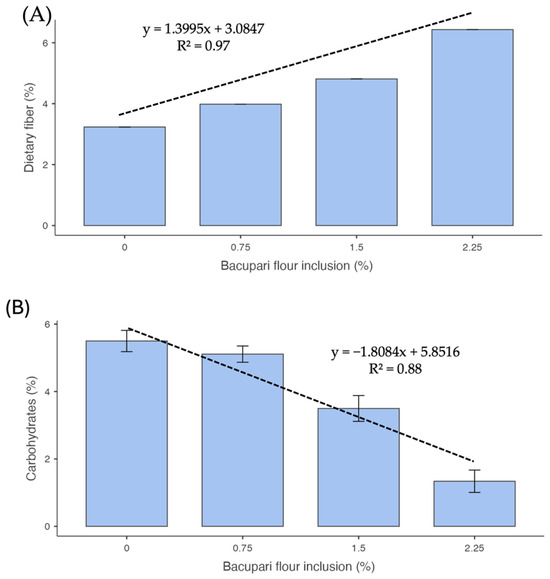
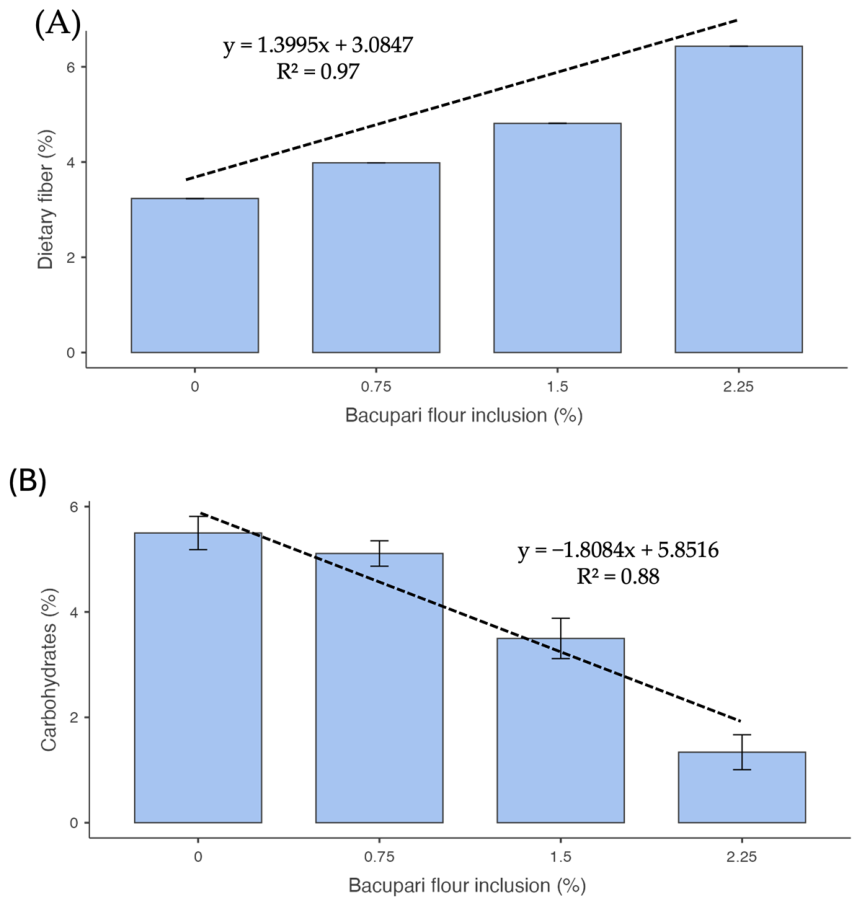
Dietary fiber content showed a significant linear increase (p < 0.001), ranging from 3.23% in the control to 6.43% in the formulation with 2.25% flour inclusion, as also evidenced by linear regression (Figure 1A). This increase classifies the treatment with the highest inclusion level as a “high fiber content” product, according to RDC No. 54/2012 [46], while the other treatments can be classified as a “source of fiber”.
Figure 1.
Linear regression for dietary fiber (A) and carbohydrate (B) contents of Nile tilapia burgers with bacupari flour inclusion.
Concomitantly, a significant reduction in total carbohydrates was observed (p = 0.023), decreasing from 5.50% in the control to 1.34% in the treatment with 2.25% inclusion (Figure 1B). This behavior is related to the proportional replacement of starch, the main source of available carbohydrates in the formulation, by fiber-rich flour, which is not considered an available carbohydrate for nutritional labeling purposes according to RDC No. 429/2020 [47]. The inverse relationship between fiber and carbohydrates was confirmed by the linear regressions shown in Figure 1.
Protein, lipid, and ash contents were not significantly affected (p > 0.05), indicating that flour inclusion did not compromise protein content nor increase the lipid fraction. This result is technologically relevant, as it demonstrates that the reformulation improved fiber content without diluting the protein content of the product, an important aspect in fish-based foods. Similar results regarding the stability of protein and lipid contents after the addition of plant-based flours have been reported in other studies [48,49,50] on tilapia burgers reformulated with different plant ingredients.
Although caloric value did not show a statistically significant difference (p = 0.815), a decreasing trend was observed in formulations with higher flour content (from 156.00 to 138.00 kcal/100 g), possibly due to the reduction in available carbohydrates and their replacement by non-digestible fractions (dietary fiber).
3.2.2. Antioxidant Capacity of the Burgers
The ABTS and DPPH assays are widely used to evaluate free radical scavenging capacity, although they differ in their mechanisms of action, primarily involving electron transfer and/or hydrogen atom transfer [51]. The use of complementary methods is recommended for a more comprehensive characterization of antioxidant activity, as different phenolic compounds may respond differently to each radical system [12].
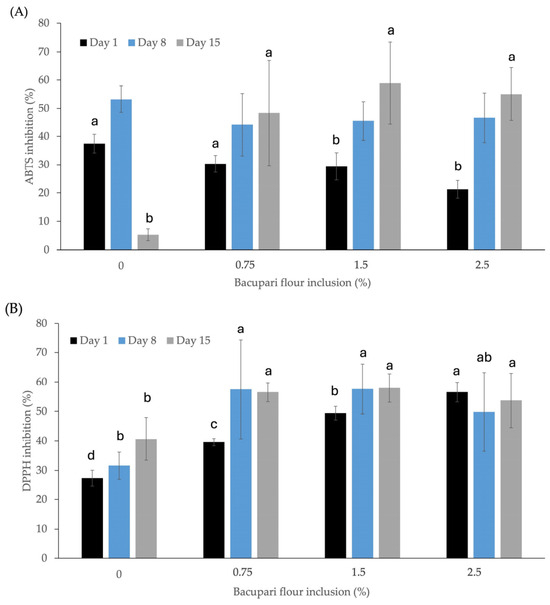
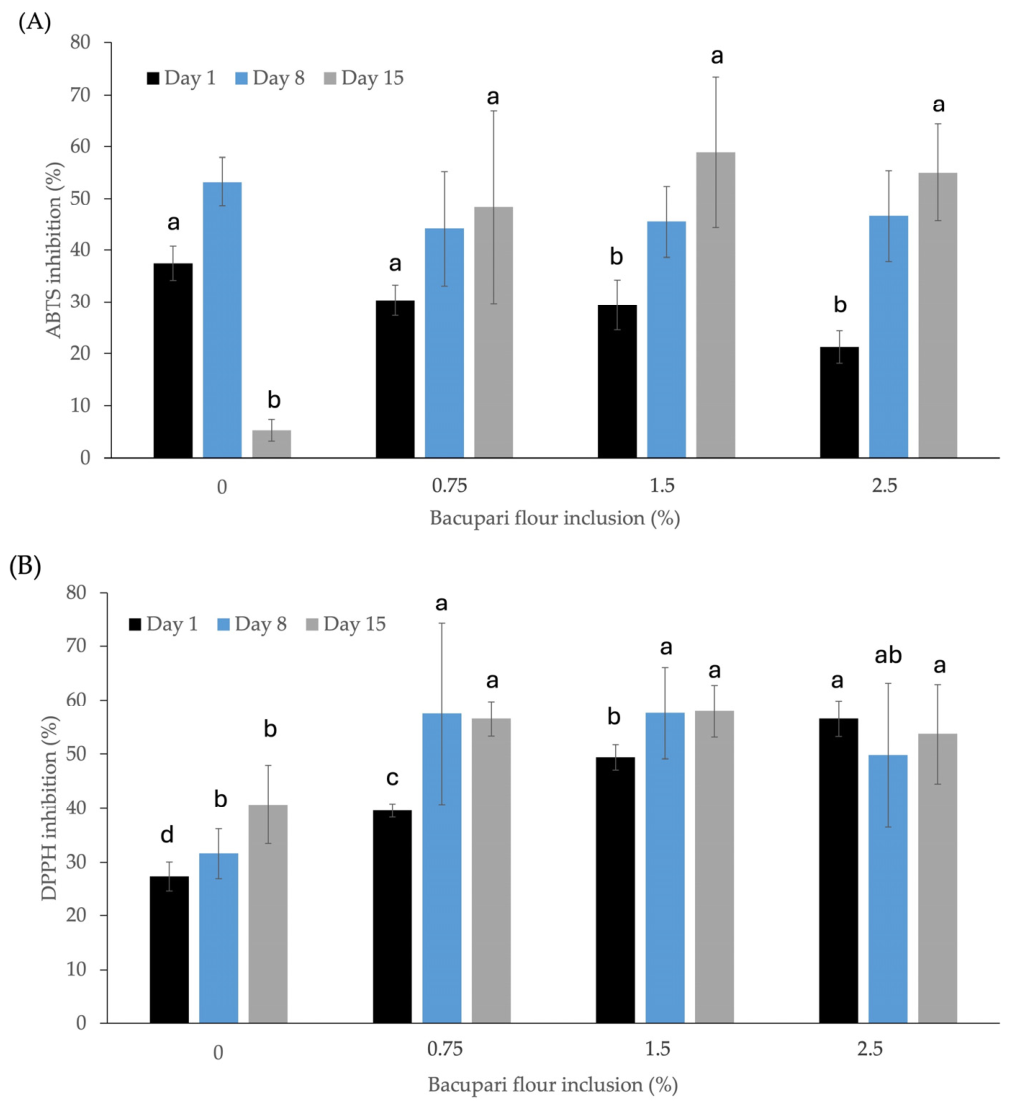
The inclusion of bacupari flour significantly increased (p < 0.05) the antioxidant capacity of Nile tilapia burgers, as evidenced by both ABTS and DPPH assays (Figure 2). In both methods, a concentration-dependent effect was observed, with a progressive increase in radical inhibition percentage as the level of flour inclusion increased. In the ABTS assay, treatments with 1.50% and 2.25% showed the highest inhibition percentages, differing significantly from the control and the 0.75% level. A similar trend was observed in the DPPH assay, in which the formulation with 2.25% exhibited the highest antioxidant activity, followed by the intermediate levels. The control treatment showed the lowest values in both assays.
Figure 2.
Antioxidant capacity measured by ABTS (A) and DPPH (B) assays in Nile tilapia burgers with bacupari flour inclusion. Different letters indicate significant differences (p < 0.05) among treatments.
The observed increase is directly related to the high content of phenolic compounds present in bacupari flour, such as quinine, p-coumaric, m-coumaric, and o-coumaric acids, vanillic acid, hesperetin, and formononetin [12]. These compounds exhibit well-known antioxidant activity and act as electron or hydrogen donors, stabilizing free radicals and interrupting chain reactions [52].
Several studies have shown that the use of extracts and flours from different fruits and plants in fish-based product formulations significantly enhances the ability to neutralize free radicals such as ABTS and DPPH [53,54,55,56,57].
3.2.3. Physicochemical and Technological Parameters of the Burgers
Table 4 presents the evaluated parameters for Nile tilapia burgers with different levels of bacupari flour inclusion. The addition of the ingredient significantly affected (p < 0.001) pH and cooking loss (CL) of the products, without affecting water activity (Aw), shrinkage percentage, or water-holding capacity (WHC) (p > 0.05).
Table 4.
Physicochemical and technological parameters of Nile tilapia burgers with bacupari flour inclusion.
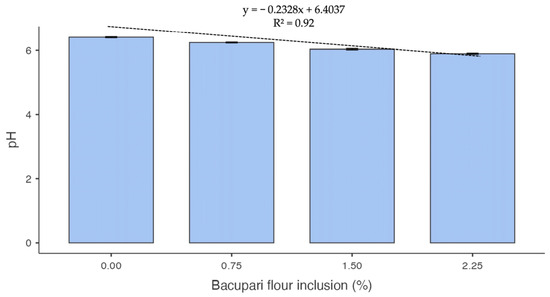
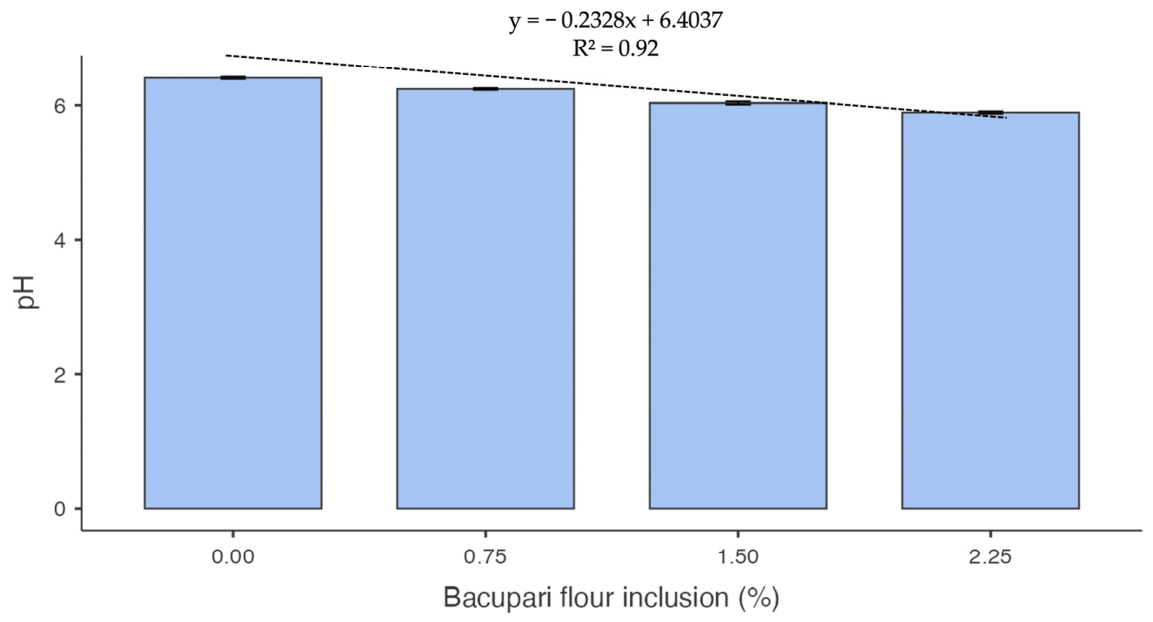
The inclusion of bacupari flour promoted a significant linear reduction in burger pH (Figure 3), with values decreasing from 6.41 in the control to 5.89 in the formulation with 2.25% inclusion. This behavior is directly related to the acidic nature of the flour (pH 3.58), resulting in an acidification effect proportional to the inclusion level.
Figure 3.
pH of Nile tilapia burgers with bacupari flour inclusion.
From a technological perspective, pH reduction may influence the functionality of myofibrillar proteins, as changes in surface charge affect protein–water interactions [58]. Although the values obtained remained above the isoelectric point of muscle proteins (for fish, typically between 5.0 and 5.5) [59], the slight approach toward this range may alter the structural organization of the protein matrix [60], contributing to the observed changes in technological parameters. From a microbiological standpoint, pH reduction may act as an additional hurdle to microbial growth, especially considering that most spoilage bacteria exhibit optimal growth near neutral pH [61].
Cooking loss (CL) was significantly reduced in the treatment with 0.75% inclusion, whereas higher inclusion levels showed intermediate behavior. This result suggests that moderate levels of flour enhance water retention during thermal processing, possibly due to the presence of insoluble fibers with high water absorption and retention capacity [62]. Dietary fibers may physically occupy spaces within the protein network, reducing water and fat exudation during heating [63]. However, at higher inclusion levels, the effect was not linear, which may indicate that excessive plant particles interfere with the continuity of the protein matrix, limiting water retention efficiency. This behavior has been previously reported in reformulated meat products containing fiber-rich ingredients, where technological responses depend on the balance between the protein structure and the added plant fraction [64,65]. It should also be considered that part of the observed technological effects may be associated with the partial replacement of starch by bacupari flour, since starch contributes to water retention and structural stability in restructured fish products [66].
In fish and chicken nuggets enriched with date and quinoa flour, cooking yield increased with higher fiber addition, and treatments with higher fiber levels also showed increased water-holding capacity [67]. This effect is attributed to hydrogen bonding between water molecules and fiber, which prevents water displacement by frying oil, a phenomenon also observed in chicken nuggets containing green pea peel flour [68].
The absence of significant differences in water-holding capacity (WHC) and shrinkage suggests that flour inclusion did not compromise the structural stability of the system. Although dietary fibers contain hydrophilic groups capable of forming hydrogen bonds with water molecules [62], the level of inclusion may not have been sufficient to produce detectable changes under the experimental conditions applied.
The inclusion of bacupari flour significantly affected the color parameters of Nile tilapia burgers, both in raw and grilled forms, as presented in Table 5.
Table 5.
Color parameters of Nile tilapia burgers with bacupari flour inclusion.
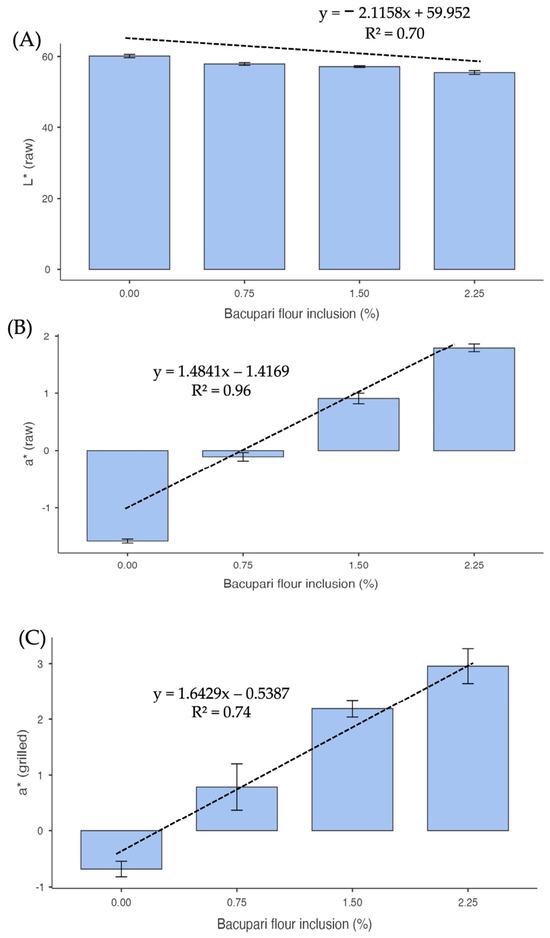
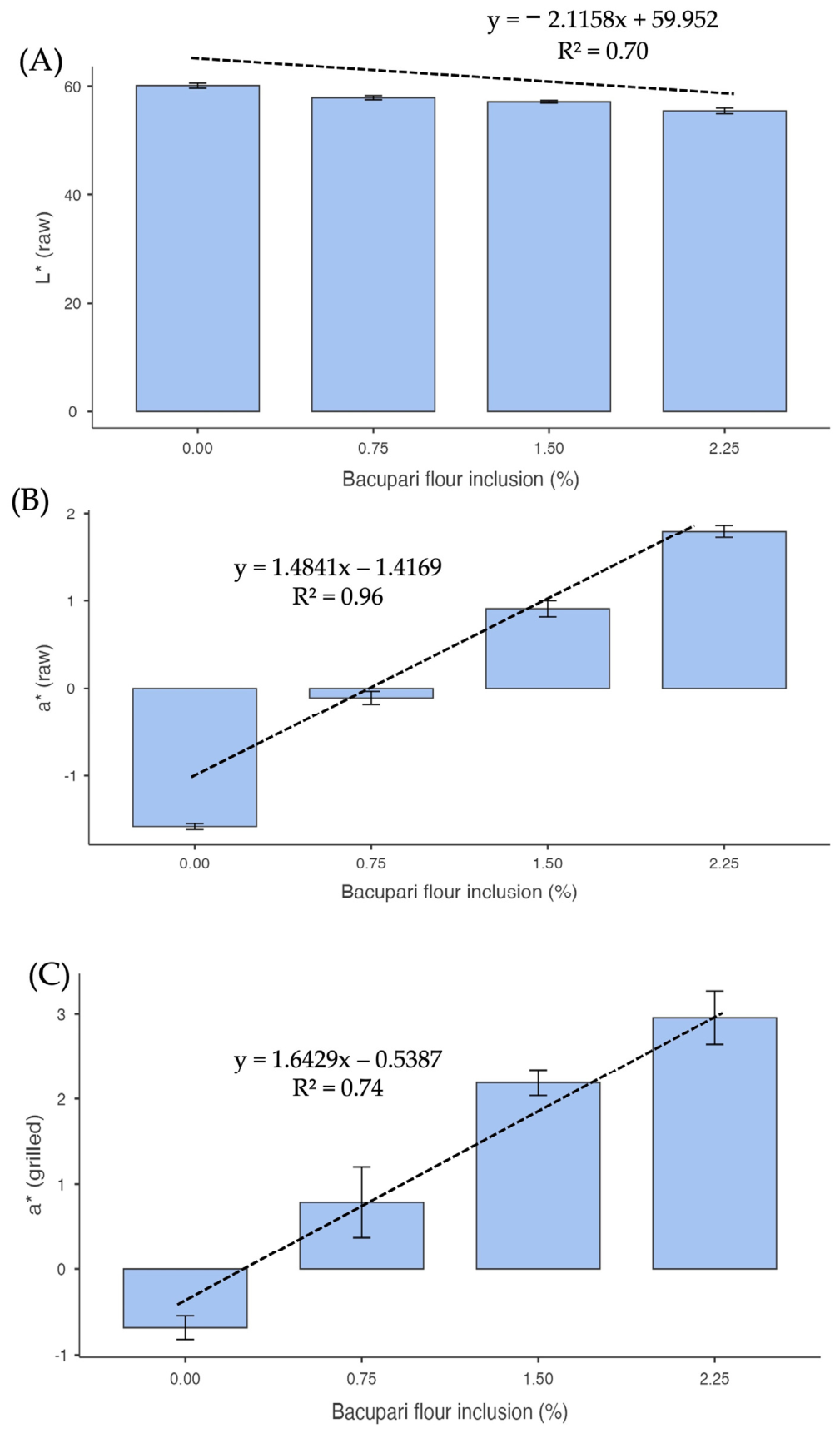
In raw burgers, a significant reduction in lightness (L*) was observed with increasing flour levels, ranging from 60.1 (control) to 55.5 in the treatment with 2.25% inclusion (p < 0.001). This darkening trend was confirmed by the linear regression of L*, as shown in Figure 4A. Redness (a*) increased with flour inclusion, both in raw burgers (Figure 4B) and grilled burgers (Figure 4C), indicating an intensification of the red color on the grilled surface.
Figure 4.
Linear regressions analysis for (A) lightness (L*) in raw burgers; (B) redness (a*) in raw burgers; and (C) redness (a*) in grilled tilapia burgers with bacupari flour inclusion.
After grilling, the pattern of darkening and increased reddish tone was maintained. L* values decreased significantly in treatments with 1.50% and 2.25% flour (p < 0.001), reaching the lowest values (49.90), while treatments with 0% and 0.75% showed significantly higher lightness.
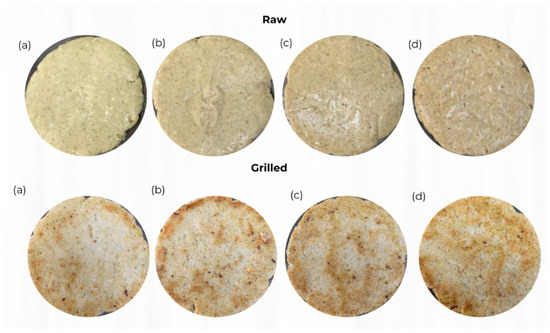
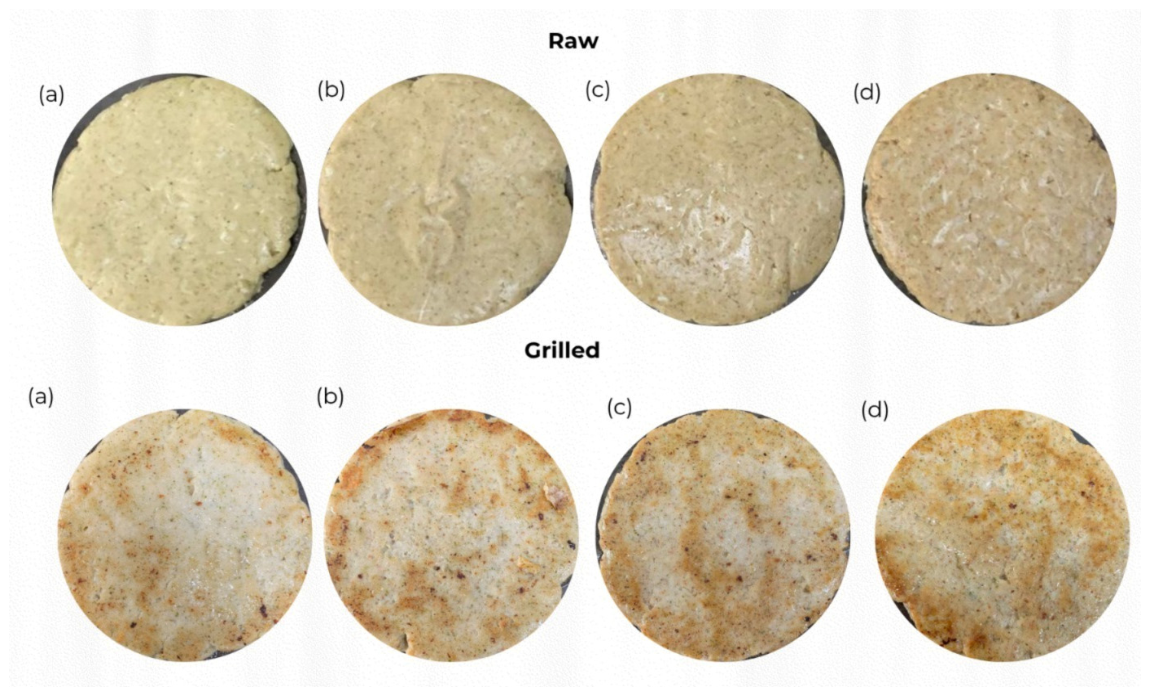
For yellowness (b*), only the treatment with 2.25% differed from the others, presenting the highest value (15.40), indicating a more yellowish tone. Similarly, the C* value was significantly higher in the same treatment (15.70), indicating greater color saturation (p < 0.001). These changes in both raw and cooked burgers can be observed in Figure 5.
Figure 5.
Representation of raw and grilled Nile tilapia burgers according to increasing levels of bacupari flour inclusion. Raw and Grilled burgers: (a) 0%; (b) 0.75%; (c) 1.5%; and (d) 2.25% bacupari flour inclusion.
The reduction in lightness (L*) with increasing flour levels can be mainly attributed to the incorporation of natural pigments present in bacupari peel, which exhibit predominantly yellow-reddish hues (Table 2). The progressive addition of these compounds resulted in gradual darkening of the matrix, a common effect observed when fruit flours rich in phenolic compounds and carotenoids are incorporated into meat products [69,70].
The increase in redness (a*) observed in both raw and grilled burgers suggests a direct contribution of natural pigments, possibly carotenoids [36]. However, beyond pigment incorporation, it is likely that phenolic compounds in the flour interacted with myofibrillar proteins and the lipid fraction, altering surface reflectance of the product [70].
Table 6 presents the effects of bacupari flour inclusion on shear force and texture profile analysis (TPA) parameters of Nile tilapia burgers. Among the evaluated attributes, hardness, gumminess, chewiness, and resilience were significantly affected (p < 0.05), whereas shear force, springiness, and cohesiveness did not show significant differences (p > 0.05).
Table 6.
Shear force and texture profile analysis (TPA) of Nile tilapia burgers with bacupari flour inclusion.
Hardness was significantly higher in the treatment with 2.25% flour (23.30 N) compared to the other inclusion levels, which showed similar values ranging from 15.70 to 16.60 N (p < 0.001). Similarly, gumminess and chewiness showed the highest values in the 2.25% treatment (19.70 and 19.10, respectively), being significantly higher than the other treatments (p < 0.001). Resilience was also significantly affected (p = 0.046), with the 2.25% treatment showing the lowest value (0.482) compared to the 0.75% and 1.50% treatments.
The increase in hardness and chewiness at the highest inclusion level is consistent with findings from other studies [71], which reported similar increases in these parameters in fish burgers formulated with different plant-based flours. According to these authors, such modifications are associated with the ability of these flours to interact with the protein matrix, altering its three-dimensional structure.
In the present study, this effect can be explained by the high proportion of insoluble fibers in bacupari flour, which are capable of absorbing, swelling, and retaining water within their porous matrix [39]. In meat systems, the balance between free and bound water is a key determinant of final texture. Water retention by fibers reduces the fraction of free water, promoting the predominance of bound water, which interacts directly with proteins and structural components [72]. This redistribution of water may result in a more compact and structurally dense matrix, explaining the increased hardness, gumminess, and chewiness observed in the formulation with 2.25% inclusion. In addition to the fiber-rich composition of bacupari flour, the reduction in starch content among formulations may also have contributed to the observed textural modifications [66].
Furthermore, the significant reduction in resilience at the highest inclusion level may be attributed to the interference of plant particles in the formation and continuity of the myofibrillar protein network, resulting in lower structural recovery after compression [73]. Similar results have been reported in pirarucu burgers enriched with pitaya flour, where reduced resilience was associated with modifications in the three-dimensional organization of the protein matrix caused by fiber incorporation [65].
It is important to highlight that, up to the 1.5% inclusion level, no significant changes were observed in textural parameters, indicating that moderate incorporation of bacupari flour does not compromise the mechanical behavior of the product.
3.2.4. Microbiological Analyses
The results of the microbiological analyses of the burgers are presented in Table 7. According to Brazilian Normative Instruction (IN) No. 313, dated 4 September 2024, for burgers made from beef, pork, and other meats, the acceptable limits for coagulase-positive Staphylococcus range from 102 to 104 CFU/g, Escherichia coli should present a minimum of 10 and a maximum of 102 CFU/g, and Salmonella spp. must be absent in 25 g. All burger formulations showed values in compliance with current legislation, remaining below the maximum permitted limits and therefore considered microbiologically safe.
Table 7.
Microbiological analyses of burgers with bacupari flour inclusion.
3.2.5. Fatty Acid Profile at Different Storage Times
The inclusion of bacupari flour significantly influenced (p < 0.001) the fatty acid profile of the burgers at both evaluation times (day 0 and day 14), with a linear increase in individual and total fatty acid contents as the inclusion level increased (Table 8). Linear regressions showed high coefficients of determination (R2 > 0.99), indicating a strong dose-dependent effect.
Table 8.
Fatty acid profile of Nile tilapia burgers with different levels of bacupari flour inclusion during refrigerated storage.
On day 0, a progressive increase in saturated fatty acids (SFAs), particularly C16:0 and C18:0, as well as monounsaturated fatty acids (MUFAs), especially oleic acid (C18:1), was observed. Total SFA content increased from 0.71% (control) to 12.40% (2.25% inclusion), while C18:1 increased from 0.44% to 11.80%. The increase in polyunsaturated fatty acids (PUFAs) was less pronounced.
After 14 days of refrigerated storage, the linear pattern across inclusion levels was maintained; however, a general reduction in the absolute concentrations of fatty acids was observed in all treatments.
The linear increase in fatty acids with bacupari flour inclusion suggests a formulation-driven effect, resulting from the incorporation of the flour’s intrinsic lipid fraction into the burger matrix. Considering that the flour presented a lipid content of 5.47%, its addition directly contributed to the enrichment of the fatty acid fraction, particularly SFAs and MUFAs.
The marked increase in oleic acid (C18:1) can be considered nutritionally relevant, as this fatty acid is associated with beneficial effects on plasma lipid profile and cardiovascular health [74]. However, the PUFA/SFA ratio remained low, indicating that flour inclusion did not substantially alter the balance between more and less unsaturated fatty acid fractions.
The reduction observed in fatty acid contents after 14 days of storage occurred consistently across all treatments, suggesting natural changes in the lipid fraction during refrigerated storage. This reduction may be associated with the susceptibility of unsaturated fatty acids to lipid oxidation, a common process in lipid systems during storage [75,76]. Although direct analyses of lipid oxidation were not performed, it is plausible that part of this decrease is related to oxidative processes typical of systems rich in unsaturated fatty acids.
Despite this, burgers with higher levels of flour inclusion showed significantly greater antioxidant capacity in DPPH and ABTS assays. These results indicate that bacupari flour confers antioxidant potential to the food system, although its effectiveness in specifically protecting the lipid fraction requires further investigation using direct markers of oxidative stability.
3.2.6. Sensory Analysis
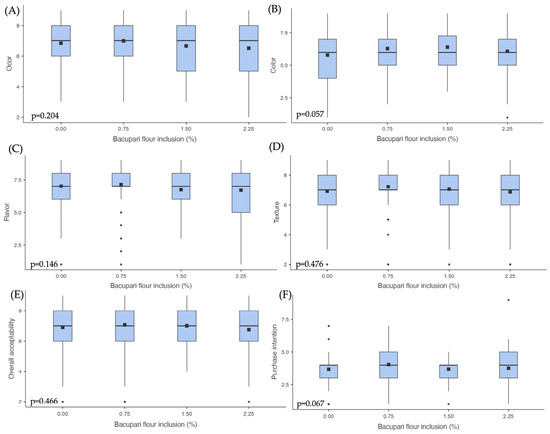
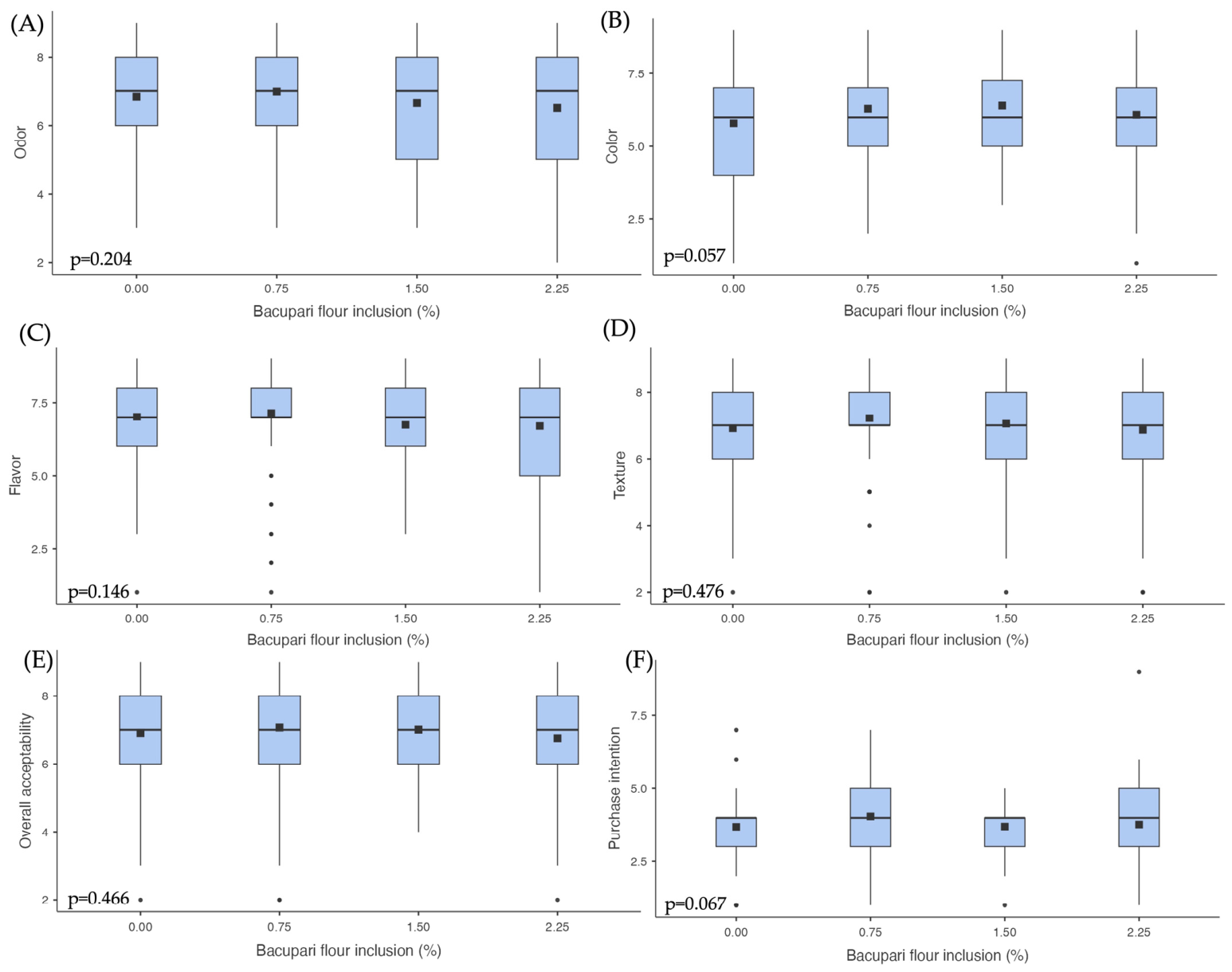
The inclusion of bacupari flour in Nile tilapia burgers did not significantly affect (p > 0.05) hedonic scores for color, odor, flavor, texture, overall acceptability, or purchase intention, even at the highest levels of incorporation (Figure 6). This result is particularly relevant considering that instrumental changes were observed in color and texture parameters, especially increased hardness in the formulation with 2.25% inclusion.
Figure 6.
Sensory analysis of Nile tilapia burgers with bacupari flour inclusion. (A) Odor; (B) Color; (C) Flavor; (D) Texture; (E) Overall acceptability; and (F) Purchase intention, according to bacupari flour inclusion levels (0, 0.75, 1.5, and 2.25%). Bars indicate medians, and squares indicate means.
The absence of a negative impact on sensory perception suggests that the structural modifications promoted by the flour remained within an acceptable threshold for consumers. This behavior indicates that instrumental changes do not always translate into sensory rejection, especially when key attributes such as flavor and juiciness are not compromised [77].
Furthermore, although flour inclusion progressively reduced the pH of the formulations, this acidification was not perceived as an undesirable change in the flavor attribute. This result suggests that the sensory profile of the product was maintained, possibly due to the balance among formulation ingredients and the low sensory impact of the flour at the tested concentrations. A previous study on sausage formulation also reported no negative impact on sensory acceptance, even with increased acidification of the products [78].
From a technological perspective, the maintenance of sensory acceptability combined with increased antioxidant capacity and dietary fiber content indicates the feasibility of using bacupari flour as a functional ingredient in fish burgers without compromising consumer acceptance.
Although the formulation containing 2.25% bacupari flour showed the highest dietary fiber content and antioxidant capacity, the 1.50% inclusion level presented a more balanced combination of functional improvement, technological properties, and sensory acceptance, suggesting its potential as a suitable level for fish burger reformulation.
4. Conclusions
The inclusion of bacupari flour in Nile tilapia burgers promoted nutritional and technological improvements, demonstrating its potential as a natural functional ingredient for fish-based products. The flour significantly increased dietary fiber content and antioxidant capacity while reducing carbohydrate levels and cooking loss. In addition, the incorporation of bacupari flour influenced pH, color, and texture parameters without negatively affecting sensory acceptance or microbiological quality of the burgers. Among the evaluated treatments, the formulation containing 1.50% bacupari flour presented the most balanced combination of functional enhancement, technological characteristics, and sensory acceptability, whereas the 2.25% inclusion level provided the highest dietary fiber and antioxidant values but also promoted more pronounced changes in color and hardness.
Overall, the results indicate that bacupari flour may be applied as a natural ingredient for the development of value-added fish products with improved nutritional quality and antioxidant potential. Furthermore, the use of this Cerrado fruit by-product represents a sustainable alternative for the valorization of agro-industrial residues and may contribute to the development of innovative functional seafood products.
Author Contributions
Conceptualization, E.S.d.R.G.; methodology, E.S.d.R.G.; validation, C.d.S.A.; F.M.d.V.J.; formal analysis, E.S.d.R.G.; investigation, N.G.S., D.O.M.L., J.B., V.F.d.S., R.A.S., C.A.L.C. and E.S.d.R.G.; resources, E.S.d.R.G., F.M.d.V.J. and C.A.L.C.; data curation, N.G.S.; writing—original draft preparation, N.G.S.; writing—review and editing, E.S.d.R.G. and C.d.S.A.; visualization, E.S.d.R.G.; supervision, E.S.d.R.G.; project administration, E.S.d.R.G.; funding acquisition, E.S.d.R.G. All authors have read and agreed to the published version of the manuscript.
Funding
N.G.S., D.O.M.L., J.B., V.F.S. and R.A.S. received scholarships from the Coordination for the Improvement of Higher Education Personnel (CAPES) Finance Code 001, Brazil. E.S.d.R.G. acknowledges the National Council for Scientific and Technological Development (CNPq), Brazil, for the Productivity Research Fellowship (grant number 309348/2025-0).
Institutional Review Board Statement
Sensory analysis was approved by the Human Research Ethics Committee of the Federal University of Grande Dourados (CEP/UFGD), under approval number 5751599.
Informed Consent Statement
Informed consent was obtained from all subjects involved in the study.
Data Availability Statement
The data supporting the findings of this study are available from the corresponding author upon reasonable request.
Conflicts of Interest
The authors declare no conflicts of interest.
References
- Rashidinejad, A. The Road Ahead for Functional Foods: Promising Opportunities amidst Industry Challenges. Future Postharvest Food 2024, 1, 266–273. [Google Scholar] [CrossRef] [Scilit]
- Rathod, N.B.; Ranveer, R.C.; Benjakul, S.; Kim, S.; Pagarkar, A.U.; Patange, S.; Ozogul, F. Recent Developments of Natural Antimicrobials and Antioxidants on Fish and Fishery Food Products. Compr. Rev. Food Sci. Food Saf. 2021, 20, 4182–4210. [Google Scholar] [CrossRef] [Scilit]
- Asioli, D.; Aschemann-Witzel, J.; Caputo, V.; Vecchio, R.; Annunziata, A.; Næs, T.; Varela, P. Making Sense of the “Clean Label” Trends: A Review of Consumer Food Choice Behavior and Discussion of Industry Implications. Food Res. Int. 2017, 99, 58–71. [Google Scholar] [CrossRef] [Scilit]
- Pal, J.J.P.; Shukla, B.N.; Maurya, A.K.; Verma, H.O.; Pandey, G.; Amitha, A. A Review on Role of Fish in Human Nutrition with Special Emphasis to Essential Fatty Acid. Int. J. Fish. Aquat. Stud. 2018, 6, 427–430. [Google Scholar]
- Chen, J.; Jayachandran, M.; Bai, W.; Xu, B. A Critical Review on the Health Benefits of Fish Consumption and Its Bioactive Constituents. Food Chem. 2022, 369, 130874. [Google Scholar] [CrossRef] [Scilit]
- Secci, G.; Parisi, G. From Farm to Fork: Lipid Oxidation in Fish Products. A Review. Ital. J. Anim. Sci. 2016, 15, 124–136. [Google Scholar] [CrossRef] [Scilit]
- Yu, Y.; Zhao, Y.; Zhang, Y.; Simpson, B.K.; Chen, S.; Wang, Y.; Li, C.; Wang, D.; Pan, C. Recent Advances in the Effects of Protein Oxidation on Aquatic Products Quality: Mechanism and Regulation. Int. J. Food Sci. Technol. 2024, 59, 1968–1978. [Google Scholar] [CrossRef] [Scilit]
- Maqsood, S.; Benjakul, S.; Shahidi, F. Emerging Role of Phenolic Compounds as Natural Food Additives in Fish and Fish Products. Crit. Rev. Food Sci. Nutr. 2013, 53, 162–179. [Google Scholar] [CrossRef] [Scilit]
- Pivnenko, T.N. Functional Properties of the Dietary Fibers and Their Using in the Manufacturing Technology of Fish Products. Food Syst. 2023, 6, 233–244. [Google Scholar] [CrossRef] [Scilit]
- Gonzaga Dos Santos, A.; Sivieri, K.; Miglioli Da Mata, B.P.; Moro, I.J.; Salgaço, M.K.; Silva Do Sacramento, L.V. Bacupari Fruit (Garcinia brasiliensis Mart.). In Handbook of Phytonutrients in Indigenous Fruits and Vegetables; Sivakumar, D., Netzel, M., Sultanbawa, Y., Eds.; CABI: Long Beach, CA, USA, 2022; pp. 298–310. ISBN 978-1-78924-804-3. [Google Scholar]
- Melo, A.M.D.; Almeida, F.L.C.; Cavalcante, A.M.D.M.; Ikeda, M.; Barbi, R.C.T.; Costa, B.P.; Ribani, R.H. Garcinia brasiliensis Fruits and Its By-Products: Antioxidant Activity, Health Effects and Future Food Industry Trends—A Bibliometric Review. Trends Food Sci. Technol. 2021, 112, 325–335. [Google Scholar] [CrossRef] [Scilit]
- Melo, A.M.D.; Barbi, R.C.T.; Costa, B.P.; Ikeda, M.; Carpiné, D.; Ribani, R.H. Valorization of the Agro-Industrial by-Products of Bacupari (Garcinia brasiliensis (Mart.)) through Production of Flour with Bioactive Properties. Food Biosci. 2022, 45, 101343. [Google Scholar] [CrossRef] [Scilit]
- Da Silva, C.A.; Rosa, I.A.; De Souza, T.C.; Dos Santos, M.H. Evaluating Four Modes of Extraction to Analyze Bioactive Compounds in Garcinia brasiliensis (Bacupari) by High-Performance Liquid Chromatography Diode-Array Detection (HPLC-DAD). Nat. Prod. Res. 2021, 35, 4073–4077. [Google Scholar] [CrossRef] [Scilit]
- Latimer, G.W. (Ed.) Official Methods of Analysis of AOAC International, 22nd ed.; Oxford University Press: New York, NY, USA, 2023; ISBN 978-0-19-761013-8. [Google Scholar]
- Bligh, E.G.; Dyer, W.J. A Rapid Method of Total Lipid Extraction and Purification. Can. J. Biochem. Physiol. 1959, 37, 911–917. [Google Scholar] [CrossRef] [Scilit]
- Instituto Adolfo Lutz. Métodos Físico-Químicos Para Análise de Alimentos; Instituto Adolfo Lutz: São Paulo, Brasil, 2008; Volume 4. [Google Scholar]
- Merrill, A.L.; Watt, B.K. Energy Value of Foods: Basis and Derivation; Agriculture Handbook No. 74; Human Nutrition Research Branch, Agricultural Research Service, US Department of Agriculture: Davis, CA, USA, 1955.
- Djeridane, A.; Yousfi, M.; Nadjemi, B.; Boutassouna, D.; Stocker, P.; Vidal, N. Antioxidant Activity of Some Algerian Medicinal Plants Extracts Containing Phenolic Compounds. Food Chem. 2006, 97, 654–660. [Google Scholar] [CrossRef] [Scilit]
- Pansera, M.R.; Iob, G.A.; Atti-Santos, A.C.; Rossato, M.; Atti-Serafini, L.; Cassel, E. Extraction of Tannin by Acacia Mearnsii with Supercritical Fluids. Braz. Arch. Biol. Technol. 2004, 47, 995–998. [Google Scholar] [CrossRef] [Scilit]
- Vital, A.C.P.; Guerrero, A.; Monteschio, J.D.O.; Valero, M.V.; Carvalho, C.B.; De Abreu Filho, B.A.; Madrona, G.S.; Do Prado, I.N. Effect of Edible and Active Coating (with Rosemary and Oregano Essential Oils) on Beef Characteristics and Consumer Acceptability. PLoS ONE 2016, 11, e0160535. [Google Scholar] [CrossRef] [Scilit]
- Abreu, J.; Quintino, I.; Pascoal, G.; Postingher, B.; Cadena, R.; Teodoro, A. Antioxidant Capacity, Phenolic Compound Content and Sensory Properties of Cookies Produced from Organic Grape Peel (Vitis labrusca) Flour. Int. J. Food Sci. Technol. 2019, 54, 1215–1224. [Google Scholar] [CrossRef] [Scilit]
- Azeem, M.; Pirjan, K.; Qasim, M.; Mahmood, A.; Javed, T.; Muhammad, H.; Yang, S.; Dong, R.; Ali, B.; Rahimi, M. Salinity Stress Improves Antioxidant Potential by Modulating Physio-Biochemical Responses in Moringa oleifera Lam. Sci. Rep. 2023, 13, 2895. [Google Scholar] [CrossRef] [Scilit] [PubMed]
- Re, R.; Pellegrini, N.; Proteggente, A.; Pannala, A.; Yang, M.; Rice-Evans, C. Antioxidant Activity Applying an Improved ABTS Radical Cation Decolorization Assay. Free Radic. Biol. Med. 1999, 26, 1231–1237. [Google Scholar] [CrossRef] [Scilit]
- More, G.K.; Makola, R.T. In-Vitro Analysis of Free Radical Scavenging Activities and Suppression of LPS-Induced ROS Production in Macrophage Cells by Solanum sisymbriifolium Extracts. Sci. Rep. 2020, 10, 6493. [Google Scholar] [CrossRef] [Scilit] [PubMed]
- Hautrive, T.P.; Piccolo, J.; Rodrigues, A.S.; Campagnol, P.C.B.; Kubota, E.H. Effect of Fat Replacement by Chitosan and Golden Flaxseed Flour (Wholemeal and Defatted) on the Quality of Hamburgers. LWT 2019, 102, 403–410. [Google Scholar] [CrossRef] [Scilit]
- You, S.; Yang, S.; Li, L.; Zheng, B.; Zhang, Y.; Zeng, H. Processing Technology and Quality Change during Storage of Fish Sausages with Textured Soy Protein. Foods 2022, 11, 3546. [Google Scholar] [CrossRef] [Scilit]
- Bainy, E.M.; Bertan, L.C.; Corazza, M.L.; Lenzi, M.K. Effect of Grilling and Baking on Physicochemical and Textural Properties of Tilapia (Oreochromis niloticus) Fish Burger. J. Food Sci. Technol. 2015, 52, 5111–5119. [Google Scholar] [CrossRef] [Scilit]
- Santiago, G.D.L.; Oliveira, I.G.D.; Horst, M.A.; Naves, M.M.V.; Silva, M.R. Peel and Pulp of Baru (Dipteryx alata Vog.) Provide High Fiber, Phenolic Content and Antioxidant Capacity. Food Sci. Technol. 2018, 38, 244–249. [Google Scholar] [CrossRef] [Scilit]
- Monteiro, S.S.; Silva, R.R.; Martins, S.C.; Barin, J.S.; Rosa, C.S. Phenolic Compounds and Antioxidant Activity of Extracts of Pequi Peel (Caryocar brasiliense Camb.). Int. Food Res. J. 2015, 22, 1985–1992. [Google Scholar]
- Lesmana, D.; Vianney, Y.M.; Goenawan, Y.A.; Natalie, K.; Sukweenadhi, J.; Buschle-Diller, G.; Mukti, Y.P.; Erawati, C.M.; Purwanto, M.G.M. Valorization of Peel-Based Agro-Waste Flour for Food Products: A Systematic Review on Proximate Composition and Functional Properties. ACS Food Sci. Technol. 2022, 2, 3–20. [Google Scholar] [CrossRef] [Scilit]
- Wanlapa, S.; Wachirasiri, K.; Sithisam-ang, D.; Suwannatup, T. Potential of Selected Tropical Fruit Peels as Dietary Fiber in Functional Foods. Int. J. Food Prop. 2015, 18, 1306–1316. [Google Scholar] [CrossRef] [Scilit]
- Brazilian Ministry of Health. Resolução RDC No 263, de 22 de Setembro de 2005. In Agência Nacional de Vigilância Sanitária; Official Gazette of the Federative Republic of Brazil: Brasília, Brazil, 2005. [Google Scholar]
- Lovegrove, A.; Wood, A.J.; Hassall, K.L.; Howes, L.; Poole, M.; Tosi, P.; Shewry, P. The Contribution of Fiber Components to Water Absorption of Wheat Grown in the UK. Cereal Chem. 2020, 97, 940–948. [Google Scholar] [CrossRef] [Scilit]
- Larrosa, A.P.Q.; Otero, D.M. Flour Made from Fruit By-products: Characteristics, Processing Conditions, and Applications. J. Food Process. Preserv. 2021, 45, e15398. [Google Scholar] [CrossRef] [Scilit]
- Nurkhoeriyati, T.; Kulig, B.; Sturm, B.; Hensel, O. The Effect of Pre-Drying Treatment and Drying Conditions on Quality and Energy Consumption of Hot Air-Dried Celeriac Slices: Optimisation. Foods 2021, 10, 1758. [Google Scholar] [CrossRef] [Scilit]
- Miranda, P.; Morais, R.; Sousa, H.; Gualberto, L.; Freitas, B.; Asquieri, E.; Martins, G.; Boas, E.; Damiani, C. Effects of Pectinase Treatment on the Optimization and Extraction of Pigments from Bacupari, Tucumã, and Peach Palm Using Response Surface Methodology. J. Braz. Chem. Soc. 2024, 35, e-20230124. [Google Scholar] [CrossRef] [Scilit]
- Naves, V.M.L.; Dos Santos, M.H.; Ribeiro, I.S.; Da Silva, C.A.; Silva, N.C.; Da Silva, M.A.; Da Silva, G.A.; Dias, A.L.T.; Ionta, M.; Dias, D.F. Antimicrobial and Antioxidant Activity of Garcinia brasiliensis Extracts. S. Afr. J. Bot. 2019, 124, 244–250. [Google Scholar] [CrossRef] [Scilit]
- Melo, A.M.D.; Costa, B.P.; Ikeda, M.; Ribani, R.H. Identification of Bioactive Compounds, Morphology, and Nutritional Composition of Bacupari (Garcinia brasiliensis (Mart)) Pulp Powder in Two Stages of Maturation—A Short Communication. Food Chem. 2022, 391, 133279. [Google Scholar] [CrossRef] [Scilit]
- Da Silva Sousa, H.M.; Leal, G.F.; Da Silva Gualberto, L.; De Freitas, B.C.B.; Guarda, P.M.; Borges, S.V.; Morais, R.A.; De Souza Martins, G.A. Exploration of the Chemical Characteristics and Bioactive and Antioxidant Potential of Tucumã (Astrocaryum vulgare), Peach Palm (Bactris gasipaes), and Bacupari (Garcinia gardneriana) Native Brazilian Fruits. Biomass Convers. Biorefin. 2025, 15, 3251–3264. [Google Scholar] [CrossRef] [Scilit]
- Purewal, S.S.; Kaur, P.; Sandhu, K.S. Valorization of Bioactive Profile and Antioxidant Properties of Kinnow Peel, and Pulp Residue: A Step towards Utilization of Kinnow Waste for Biscuit Preparation. Food Meas. 2023, 17, 787–799. [Google Scholar] [CrossRef] [Scilit]
- Minello, L.; Sartori, V.C.; Touguinha, L.B.A.; Agostini, F.; Silva, S.M.E.; Salvador, M. Estudo Comparativo de Diferentes Métodos de Extração de Compostos Bioativos de Plantas Alimentícias Não Convencionais (PANC). Res. Soc. Dev. 2021, 10, e190101724210. [Google Scholar] [CrossRef] [Scilit]
- Silva, C.W.; Gonçalves, P.C.; Costa, C.Z.; Soares, K.L.; Batista, P.B.; Marques, S.; Maróstica Júnior, M.R.; Bogusz Junior, S.; Núñez, O.; Scherer, R. Chemical Characterization of Fruits of Garcinia brasiliensis Mart. Cienc. Rural 2025, 55, e20240285. [Google Scholar] [CrossRef] [Scilit]
- Mudgil, D. The Interaction Between Insoluble and Soluble Fiber. In Dietary Fiber for the Prevention of Cardiovascular Disease; Elsevier: Amsterdam, The Netherlands, 2017; pp. 35–59. ISBN 978-0-12-805130-6. [Google Scholar]
- Feng, J.; Bai, X.; Li, Y.; Kong, B.; Nuerjiang, M.; Wu, K.; Li, Z.; Xia, X. Improvement on Gel Properties of Myofibrillar Protein from Chicken Patty with Potato Dietary Fiber: Based on the Change in Myofibrillar Protein Structure and Water State. Int. J. Biol. Macromol. 2023, 230, 123228. [Google Scholar] [CrossRef] [Scilit]
- Silva, I.L.L.D.; Coutinho, J.D.S.; Goes, E.S.D.R.; Tobal, T.M. Development of Fish Hamburger with Reduced Sodium Content Using Sweet Passion Fruit Shell Flour. Food Sci. Technol. 2023, 43, e0095522. [Google Scholar] [CrossRef] [Scilit]
- Brazilian Ministry of Health. Resolução RDC No 54, de 12 de Novembro de 2012. In Agência Nacional de Vigilância Sanitária (ANVISA); Official Gazette of the Federative Republic of Brazil: Brasília, Brazil, 2012. [Google Scholar]
- Brazilian Ministry of Health. Resolução de Diretoria Colegiada—RDC No 429, de 8 de Outubro de 2020. In Agência Nacional de Vigilância Sanitária (ANVISA); Official Gazette of the Federative Republic of Brazil: Brasília, Brazil, 2020. [Google Scholar]
- Cristofel, C.J.; Grando, R.C.; Tormen, L.; Francisco, C.T.D.P.; Bertan, L.C. Effect of the Use of Guabiroba Bark and Functional Ingredients on the Characteristics of Nile Tilapia Burger. J. Food Process. Preserv. 2021, 45, e15040. [Google Scholar] [CrossRef] [Scilit]
- Maciel, C.N.; Seller, L.F.F.; Souza, A.B.D.; Almeida, P.F.D. Formulation of Fishburgers with the Addition of Different Protein Sources and Taro Flour. Cienc. Rural 2021, 51, e20200380. [Google Scholar] [CrossRef] [Scilit]
- Duman, M. Nutritional Value and Sensory Acceptability of Fish Burger Prepared with Flaxseed Flour. Food Sci. Technol. 2022, 42, e27920. [Google Scholar] [CrossRef] [Scilit]
- Floegel, A.; Kim, D.-O.; Chung, S.-J.; Koo, S.I.; Chun, O.K. Comparison of ABTS/DPPH Assays to Measure Antioxidant Capacity in Popular Antioxidant-Rich US Foods. J. Food Compos. Anal. 2011, 24, 1043–1048. [Google Scholar] [CrossRef] [Scilit]
- Sun, W.; Shahrajabian, M.H. Therapeutic Potential of Phenolic Compounds in Medicinal Plants—Natural Health Products for Human Health. Molecules 2023, 28, 1845. [Google Scholar] [CrossRef] [Scilit]
- Martínez, L.; Castillo, J.; Ros, G.; Nieto, G. Antioxidant and Antimicrobial Activity of Rosemary, Pomegranate and Olive Extracts in Fish Patties. Antioxidants 2019, 8, 86. [Google Scholar] [CrossRef] [Scilit]
- Cardoso, M.A.P.; Vital, A.C.P.; Medeiros, A.; Saraiva, B.R.; Prado, I.N.D. Goji Berry Effects on Hamburger Quality during Refrigerated Display Time. Food Sci. Technol. 2023, 43, e68322. [Google Scholar] [CrossRef] [Scilit]
- Tayel, A.A.; Almabady, N.A.; Sorour, N.M.; Diab, A.M. Application of Natural Plant Extracts as Colorants, Preservatives, and Anti-listerial Agents in Processed Fish Products. J. Food Saf. 2018, 38, e12435. [Google Scholar] [CrossRef] [Scilit]
- Gokoglu, N.; Yerlikaya, P.; Topuz, O.K.; Buyukbenli, H.A. Effects of Plant Extracts on Lipid Oxidation in Fish Croquette during Frozen Storage. Food Sci. Biotechnol. 2012, 21, 1641–1645. [Google Scholar] [CrossRef] [Scilit]
- Lizárraga-Velázquez, C.E.; Hernández, C.; González-Aguilar, G.A.; Heredia, J.B. Effect of Hydrophilic and Lipophilic Antioxidants from Mango Peel (Mangifera indica L. Cv. Ataulfo) on Lipid Peroxidation in Fish Oil. CyTA—J. Food 2018, 16, 1095–1101. [Google Scholar] [CrossRef] [Scilit]
- Bertram, H.C.; Kristensen, M.; Andersen, H.J. Functionality of Myofibrillar Proteins as Affected by pH, Ionic Strength and Heat Treatment—A Low-Field NMR Study. Meat Sci. 2004, 68, 249–256. [Google Scholar] [CrossRef] [Scilit]
- Ochiai, Y.; Ozawa, H. Biochemical and Physicochemical Characteristics of the Major Muscle Proteins from Fish and Shellfish. Fish. Sci. 2020, 86, 729–740. [Google Scholar] [CrossRef] [Scilit]
- Liu, Q.; Chen, A.; Hong, P.; Zhou, C.; Li, X.; Xie, M. pH-Induced Interface Protein Structure Changes to Adjust the Stability of Tilapia Protein Isolate Emulsion Prepared by High-Pressure Homogenization. Food Chem. X 2024, 24, 101841. [Google Scholar] [CrossRef] [Scilit]
- Petruzzi, L.; Corbo, M.R.; Sinigaglia, M.; Bevilacqua, A. Microbial Spoilage of Foods. In The Microbiological Quality of Food; Elsevier: Amsterdam, The Netherlands, 2017; pp. 1–21. ISBN 978-0-08-100502-6. [Google Scholar]
- Ciobanu, M.-M.; Manoliu, D.-R.; Ciobotaru, M.C.; Flocea, E.-I.; Boișteanu, P.-C. Dietary Fibres in Processed Meat: A Review on Nutritional Enhancement, Technological Effects, Sensory Implications and Consumer Perception. Foods 2025, 14, 1459. [Google Scholar] [CrossRef] [Scilit]
- Feng, J.; Kong, B.; Sun, F.; Xia, X. Effect of Potato Dietary Fiber on the Quality, Microstructure, and Thermal Stability of Chicken Patty. Foods 2022, 11, 3978. [Google Scholar] [CrossRef] [Scilit]
- Bin Mohd Zaini, H.; Bin Sintang, M.D.; Dan, Y.N.; Ab Wahab, N.; Bin Abdul Hamid, M.; Pindi, W. Effect of Addition of Banana Peel Powder (Musa balbisiana) on Physicochemical and Sensory Properties of Fish Patty. Br. Food J. 2019, 121, 2179–2189. [Google Scholar] [CrossRef] [Scilit]
- Batista, G.A.; Pereira, M.D.A.; Oliveira, D.C.F.; Miranda, A.L.D.S.; Bueno, L.O.; Silva, L.G.M.D.; Pio, L.A.S.; Gomes, M.E.D.S.; Ramos, A.D.L.S. Use of Pitaya (Selenicereus megalanthus) Peel Flour as a Functional Ingredient in Pirarucu (Arapaima gigas) Fish Burgers from the Brazilian Amazon. Obs. Econ. Latinoam. 2025, 23, e9628. [Google Scholar] [CrossRef] [Scilit]
- Acosta-Pérez, V.J.; Zamudio-Flores, P.B.; Ornelas-Paz, J.D.J.; Palma-Rodríguez, H.M.; Juárez-Muñoz, J.; Vargas-Torres, A. Effects of Native and Modified Starches on the Physicochemical and Textural Properties of Rainbow Trout (Oncorhynchus mykiss) Fish Burgers. CyTA—J. Food 2019, 17, 207–213. [Google Scholar] [CrossRef] [Scilit]
- Naghdi, S.; Rezaei, M.; Kashiri, M.; Rezaei, F.; Naseri, S.; Nourani, H.; Khakpour, Z. Development and Evaluation of Low-Fat Fish and Chicken Nuggets Fortified With Date Seed Powder and Quinoa Flour as Agricultural Dietary Fiber Sources. Food Sci. Nutr. 2025, 13, e4749. [Google Scholar] [CrossRef] [Scilit]
- Binti Mohd Zaini, H.; Mantihal, S.; Ng, F.W.Y.; Pindi, W. The Incorporation of Green Peas as the Source of Dietary Fiber in Developing Functional Chicken Nuggets. J. Food Process. Preserv. 2021, 45, e15412. [Google Scholar] [CrossRef] [Scilit]
- Tokarczyk, G.; Felisiak, K.; Adamska, I.; Przybylska, S.; Hrebień-Filisińska, A.; Biernacka, P.; Bienkiewicz, G.; Tabaszewska, M. Effect of Oyster Mushroom Addition on Improving the Sensory Properties, Nutritional Value and Increasing the Antioxidant Potential of Carp Meat Burgers. Molecules 2023, 28, 6975. [Google Scholar] [CrossRef] [Scilit]
- Albergamo, A.; Vadalà, R.; Metro, D.; Nava, V.; Bartolomeo, G.; Rando, R.; Macrì, A.; Messina, L.; Gualtieri, R.; Colombo, N.; et al. Physicochemical, Nutritional, Microbiological, and Sensory Qualities of Chicken Burgers Reformulated with Mediterranean Plant Ingredients and Health-Promoting Compounds. Foods 2021, 10, 2129. [Google Scholar] [CrossRef] [Scilit]
- Romero, M.C.; Fogar, R.A.; Rolhaiser, F.; Clavero, V.V.; Romero, A.M.; Judis, M.A. Development of Gluten-Free Fish (Pseudoplatystoma corruscans) Patties by Response Surface Methodology. J. Food Sci. Technol. 2018, 55, 1889–1902. [Google Scholar] [CrossRef] [Scilit]
- Wang, Z.; Sun, Y.; Dang, Y.; Cao, J.; Pan, D.; Guo, Y.; He, J. Water-Insoluble Dietary Fibers from Oats Enhance Gel Properties of Duck Myofibrillar Proteins. Food Chem. 2021, 344, 128690. [Google Scholar] [CrossRef] [Scilit]
- Zamuz, S.; Purriños, L.; Galvez, F.; Zdolec, N.; Muchenje, V.; Barba, F.J.; Lorenzo, J.M. Influence of the Addition of Different Origin Sources of Protein on Meat Products Sensory Acceptance. J. Food Process. Preserv. 2019, 43, e13940. [Google Scholar] [CrossRef] [Scilit]
- Isaakidis, A.; Maghariki, J.E.; Carvalho-Barros, S.; Gomes, A.M.; Correia, M. Is There More to Olive Oil than Healthy Lipids? Nutrients 2023, 15, 3625. [Google Scholar] [CrossRef] [Scilit]
- Zeng, Y.; Yu, Z.; Zhang, Y.; Jiang, C.; Huang, X. Comparative Study on the Antioxidant Efficacy of Adinandra Nitida Extracts in Inhibiting Lipid Oxidation in Edible Oils. Food Chem. X 2024, 23, 101783. [Google Scholar] [CrossRef] [Scilit]
- Mehta, N.; Kumar, P.; Verma, A.K.; Umaraw, P.; Kumar, Y.; Malav, O.P.; Sazili, A.Q.; Domínguez, R.; Lorenzo, J.M. Microencapsulation as a Noble Technique for the Application of Bioactive Compounds in the Food Industry: A Comprehensive Review. Appl. Sci. 2022, 12, 1424. [Google Scholar] [CrossRef] [Scilit]
- Godschalk-Broers, L.; Sala, G.; Scholten, E. Meat Analogues: Relating Structure to Texture and Sensory Perception. Foods 2022, 11, 2227. [Google Scholar] [CrossRef] [Scilit]
- Soto-Aguilar, A.; Soto-Simental, S.; Islas-Pelcastre, M.; Pérez-Soto, E.; González-Tenorio, R. Acidification Alternatives for Elaborating “Salchichon” (Spanish Dry Fermented Sausage). Food Res. 2024, 8, 237–243. [Google Scholar] [CrossRef] [Scilit]

Disclaimer/Publisher’s Note: The statements, opinions and data contained in all publications are solely those of the individual author(s) and contributor(s) and not of MDPI and/or the editor(s). MDPI and/or the editor(s) disclaim responsibility for any injury to people or property resulting from any ideas, methods, instructions or products referred to in the content. |
© 2026 by the authors. Licensee MDPI, Basel, Switzerland. This article is an open access article distributed under the terms and conditions of the Creative Commons Attribution (CC BY) license.