


Abstract
In cold and arid regions, the durability of asphalt pavement materials is often inadequate, and the hot mixing process further accelerates pavement ageing and releases harmful gases. To address the high-viscosity of pavement materials in such regions, lower mixing temperatures, extend the construction duration, and enhance pavement durability, this study systematically investigates a warm-mix technology for rubber-composite-modified asphalt. First, the influence of processing conditions on the viscosity-reducing effect was examined, and the optimal warm-mix preparation process was determined. Second, the properties of warm-mix rubber-modified asphalt were optimised through high- and low-temperature rheological testing. Finally, the mechanism of warm-mix modification was elucidated using microscopic techniques such as scanning electron microscopy, fluorescence microscopy and infrared spectroscopy. The results show that the 40-mesh pelletised desulphurised rubber treated with activator at a 5:1 ratio of activator at 220 °C for 50 h exhibits the optimal viscosity reduction effect. As the proportion of cracked rubber increases, the viscosity-reducing effect first intensifies and then diminishes optimal results are achieved at a dosage of 5%; the optimal comprehensive performance is achieved at a 5% proportion, where the asphalt simultaneously exhibits excellent high-temperature stability and low-temperature crack resistance. The cracking process effectively disrupts the cross-linked network structure of rubber, significantly reducing viscosity while enhancing the compatibility and stability of the asphalt system. Notably, the proposed warm-mix process reduces the production temperature of rubber-modified asphalt by 40–60 °C and lowers its viscosity by approximately 30% compared to conventional asphalt. This improvement provides crucial support for low-temperature construction and viscosity control of rubber-modified asphalt in cold and arid regions.
1. Introduction
As a typical representative of cold and arid regions in Western China, it is characterised by significant natural conditions, including large temperature variations, severe wind erosion, intense ultraviolet radiation, and freeze–thaw cycles, as well as sulphate and chloride corrosion. These harsh climatic and unique geological conditions impose more rigorous testing criteria on the durability of asphalt pavement materials. While traditional hot-mix asphalt can enhance pavement durability, its mixing and construction processes generate substantial smoke, thereby polluting the environment. Compared to conventional hot-mix technology, warm-mix asphalt technology not only reduces asphalt smoke emissions but also effectively lowers the temperatures at every stage of discharging and construction, cuts energy consumption by over 30%, and extends the road construction period.
With the sustained rapid growth in the number of vehicles on China’s roads, the accumulation of large quantities of waste tyres is placing increasing pressure on the environment. Against this backdrop, processing waste tyres into rubber powder for asphalt modification not only facilitates solid waste utilisation and reduces material costs, but also significantly enhances the performance characteristics of asphalt pavements—including fatigue resistance, skid resistance, and noise reduction. This constitutes a green paving technology that delivers both sound engineering benefits and environmental advantages [1]. However, the high molecular weight and stable structure of rubber result in poor compatibility with bitumen, leading to issues with insufficient storage stability [2,3]. Moreover, owing to its high viscosity, conventional rubber-modified bitumen requires mixing temperatures as high as 180 °C. Under such elevated conditions, it readily releases significant quantities of harmful gases, adversely affecting both the construction environment and personnel health [4].
To overcome the aforementioned shortcomings, warm-mix technology has been introduced into the preparation process of rubberised asphalt. This method combines the advantages of both warm-mix and rubberised asphalt technologies [5], not only aligning with green and low-carbon development principles but also endowing the asphalt with excellent high-temperature stability and low-temperature crack resistance [6]. It has garnered extensive research attention domestically. The core principle of warm-mix asphalt technology lies in reducing the viscosity of the asphalt mixture during mixing and compaction, thereby enhancing its workability. Traditional dry and wet methods are commonly employed in the preparation of rubberised bitumen [7,8]. These approaches not only yield poor viscosity reduction but also involve high mixing temperatures and cumbersome processes, rendering them unsuitable for achieving the requirements of warm-mix preparation and viscosity reduction. By modifying the rubber preparation process to achieve viscosity reduction through the material itself, it is possible to lower asphalt viscosity and broaden the application scope of recycled rubber powder. This approach simultaneously protects the environment and reduces additional costs, thereby advancing the objectives of carbon neutrality and carbon reduction.
To achieve this objective, rubber powder requires activation treatment to enhance compatibility with bitumen [9]. Although thermal shearing processes can promote rubber powder degradation, they exacerbate thermal-oxidative ageing of bitumen and generate substantial pollutants [10]. By contrast, subjecting rubber powder to activation or desulphurisation treatment can effectively mitigate the aforementioned issues [11] and contribute to reducing temperature requirements during asphalt mixing and compaction processes [12]. The current methods for rubber powder activation primarily encompass physical, chemical, and biological approaches [13,14]. Methods such as coating, graft activation [15], surface activation techniques [16], and extending rubber development time [17] may help improve rubber-asphalt compatibility and are relatively straightforward to implement. However, the degree of modification is typically limited, and some techniques require equipment with a high cost. The use of heavy-duty bio-oil to pre-treat rubber powder [18] or incorporating activators and coumarone resin can also effectively improve the compatibility between rubber and bitumen [19]. Concurrently, Changsha University of Science and Technology [14] has patented a high-permeability bio-oil-activated rubber powder. This achieves enhanced material compatibility through a synergistic high-temperature vacuum-nitrogen pressurisation pretreatment process, facilitating bio-oil permeation and storage within the rubber powder structure. This type of process primarily leverages the natural properties of biomass to achieve mild modification, and is currently in the exploratory phase with relatively limited engineering experience. Xin Jin et al. [20] demonstrated successful modification of rubber powder using gallic acid. Sulphur removal treatment reduces the ageing resistance of rubber-modified bitumen and somewhat diminishes its high and low-temperature performance, yet it renders its properties unaffected by rubber powder particle size [21,22], effectively lowering viscosity. The twin-screw activated extrusion process causes the crosslinked sulphur bonds C-S and S-S in the rubber to break, resulting in the formation of S-O and C-O groups, and a further increase in temperature changes the product to saturated ketones, with a consequent reduction in oxygen-containing groups [23]. Such methods effectively cleave sulphur bonds and degrade macromolecules, significantly enhancing the compatibility between rubber powder and bitumen. When used in conjunction with activators, the cracking effect can be further intensified.
The incorporation of cracked rubber reduces viscosity whilst also influencing high and low-temperature performance [24]. Fang Ying et al. verified the superior high- and low-temperature properties of polyphosphate–rubber-modified asphalt through rheological testing [25], whereas Gui et al. observed differing performance characteristics among various types of rubber-modified asphalt [26]. This indicates that different types of cracked rubber exert varying effects on the high- and low-temperature performance of asphalt. To ensure the low-viscosity, high-performance characteristics of warm-mix rubber-modified asphalt, rheological testing must be conducted to evaluate its thermal behaviour across the full temperature spectrum [27]. Concurrently, the alteration in mechanical properties is fundamentally attributable to changes in the asphalt’s microstructure. Consequently, an analysis of the microstructural mechanisms facilitates the optimisation of material performance. Cracked rubber’s pyrolysis essentially involves the breaking of sulphur bonds and the degradation of macromolecular polymers into medium-chain polymers, while different activation methods can optimise the compatibility and stability between rubber powder and asphalt to varying degrees. However, chemical activation remains the most widely applied and effective technical approach due to its profound modification mechanism and stable effects. This also provides the theoretical basis and technical reference for selecting pyrolytically activated rubber powder in this study. Consequently, this study employed a chemical method to pyrolyze waste rubber; furthermore, an activator was added to enhance the pyrolysis process.
Based on this, this study utilised 40-mesh activated granulated desulphurisation rubber powder as raw material to prepare a viscosity reducer via a high-temperature pyrolysis process. By analysing the effects of cracked rubber type and dosage on asphalt viscosity, suitable cracked rubber types and optimal dosage levels were identified. The high- and low-temperature rheological properties of warm-mix rubber-modified asphalt at this optimised dosage were systematically evaluated. Furthermore, scanning electron microscopy, fluorescence microscopy, and infrared spectroscopy were employed to elucidate the mechanism of action and microstructural characteristics of cracked rubber within the asphalt system. This provides both theoretical justification and technical support for the application of warm-mix rubber-modified asphalt.
2. Materials and Methods
2.1. Materials
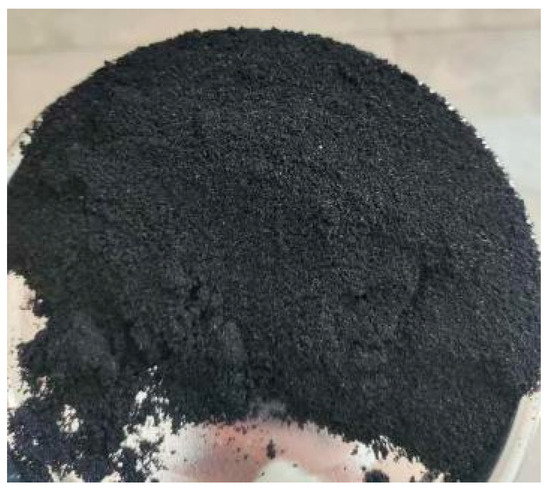
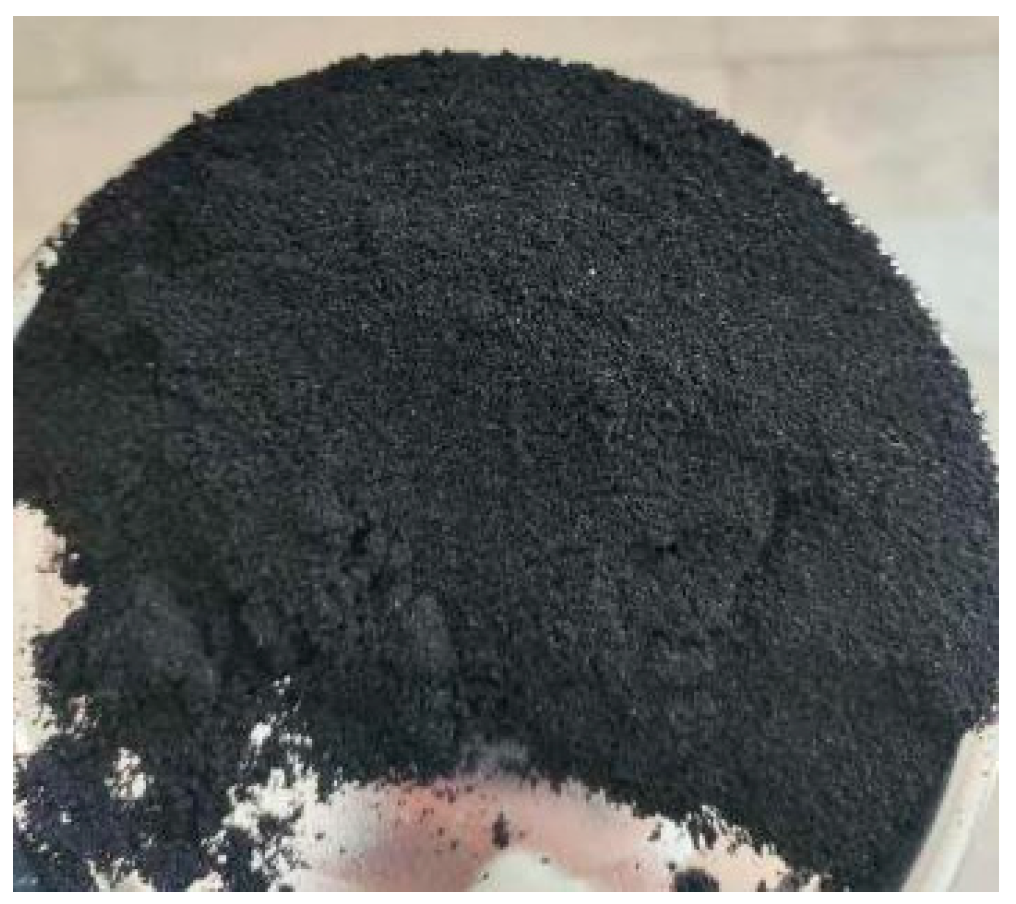
This paper employs Zhenhai No. 90 (ZH-90) bitumen, produced by Gansu Highway and Bridge Construction Group Co., Ltd. (Lanzhou, China). Tests were conducted on the various properties of the asphalt in accordance with the Test Procedures for Asphalt and Asphalt Mixtures for Highway Engineering (JTG E20-2011). The relevant test results are shown in Table 1. Waste rubber is processed into 40-mesh standard rubber powder at the Lanzhou New Area Industrial Park of Gansu Road & Bridge Shanjian Technology Limited Company (Lanzhou, China), primarily sourced from truck tyres and radial tyres. The 40-mesh powder consists of small, flat, spherical particles, as illustrated in Figure 1. The technical specifications for rubber powder, as shown in Table 2, all comply with the requirements of the standard Vulcanised Rubber Powder (GB/T 19208-2020 [28]).
Table 1.
Basic performance indicators for base course asphalt.
Figure 1.
40-mesh granulated desulphurisation rubber powder.
Table 2.
Technical specifications for 40-mesh rubber powder.
2.2. Test Method
2.2.1. Viscosity Test
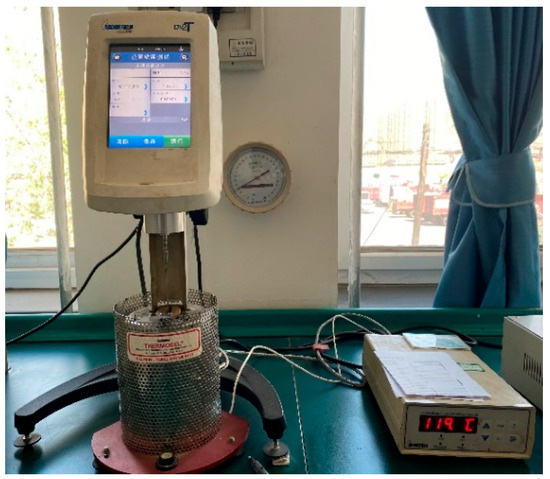
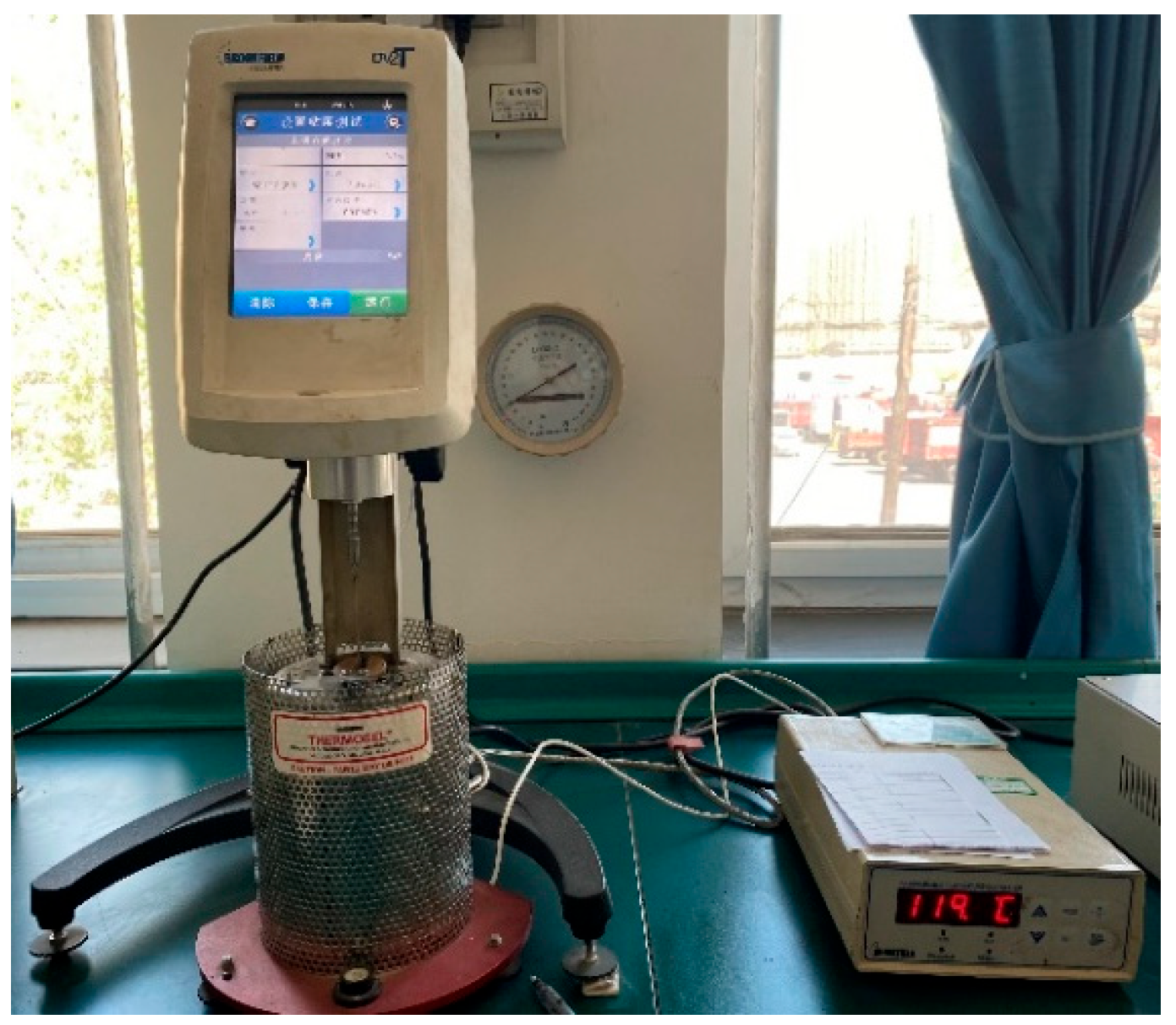
This study employed an imported Brookfield viscometer (DV−∥+Pro model) with a No. 27 rotor by the AMETEK Group, based in Berwyn, PA, USA. A standard asphalt sample weighing 10.5 g was used per test. The Brookfield viscosity at 135 °C for base asphalt and warm-mix asphalt was determined in accordance with the test protocol. The viscometer is shown in Figure 2.
Figure 2.
Brookfield rotary viscometer.
2.2.2. Dynamic Shear Rheology Test
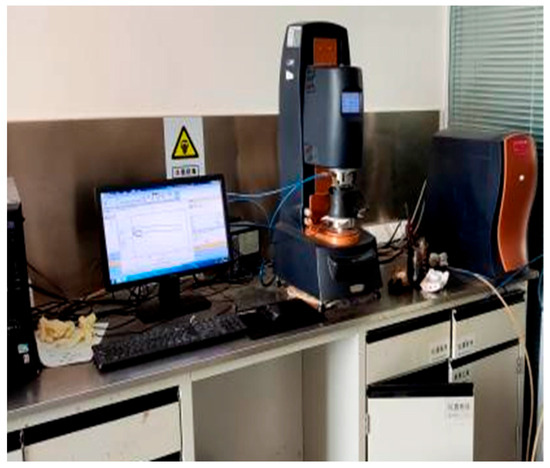
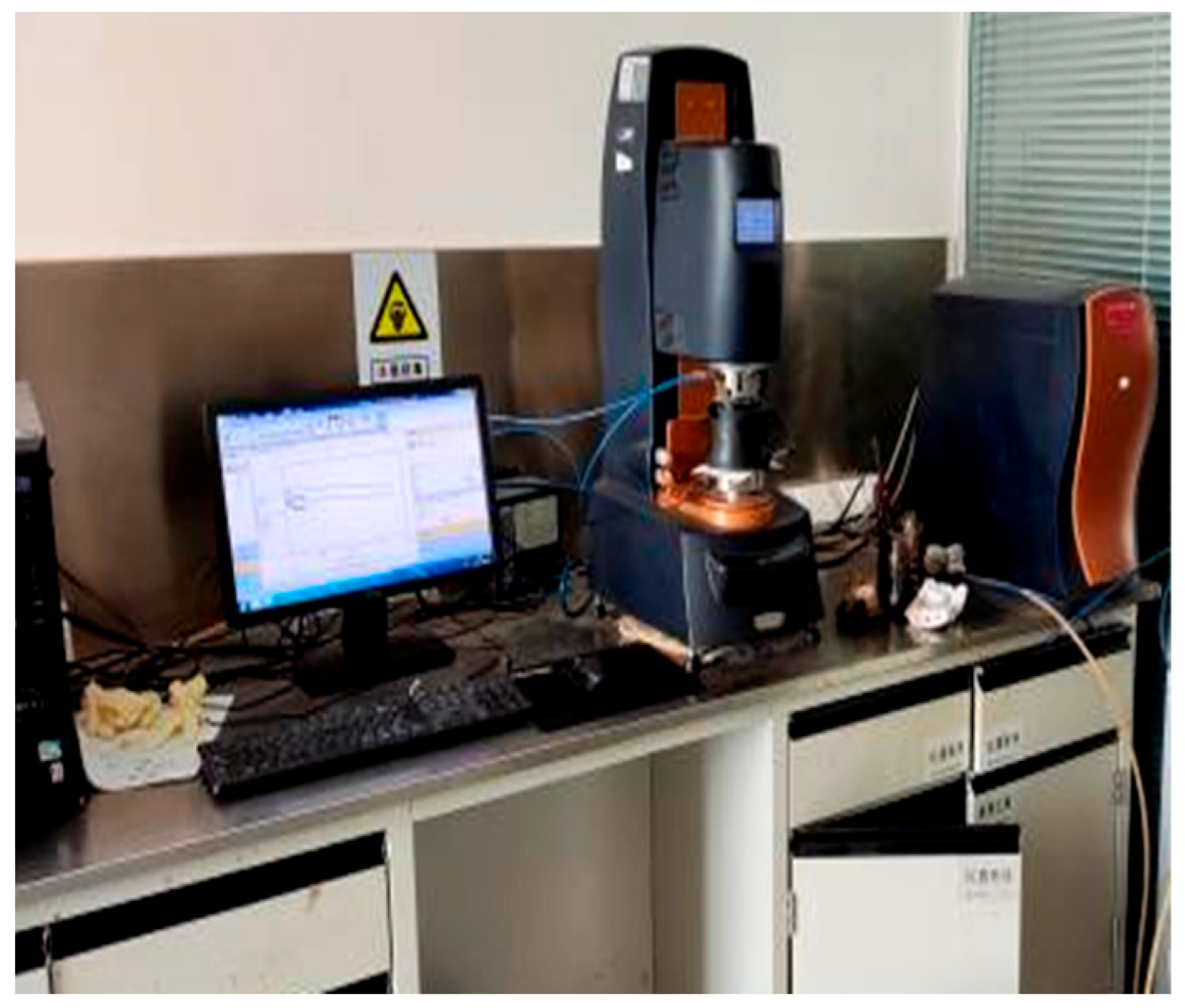
Asphalt materials are typical viscoelastic substances whose properties are influenced by factors such as varying loads, temperatures, and time. This study employs a TA 1500ex dynamic shear rheometer manufactured by TA Instruments of the New Castle, PA, USA to conduct dynamic shear rheological testing for this research topic. The test apparatus is shown in Figure 3. Given that asphalt materials undergo ageing processes during actual service through mixing and compaction, all specimens used for dynamic shear rheological testing were subjected to short-term ageing in a rotating thin-film oven (RTFOT). The molten cracked rubber warm-mix asphalt was poured into a 25 mm silicone mould. Once the asphalt specimen had cooled to room temperature, it was removed from the silicone mould to obtain the DSR specimen. The effect of different blending ratios of cracked rubber on the high-temperature performance of warm-mix asphalt was assessed. The DSR test employs a temperature scan. Employing 25 mm parallel-plate UPH steel fixtures, the test was conducted under strain control mode with a controlled strain of 10%. The temperature was set within the range of 52 °C to 82 °C, featuring a temperature gradient of 6 °C. The loading angular frequency was maintained at 10 rad/s.
Figure 3.
Dynamic shear rheometer.
2.2.3. Bending Beam Rheometer Test
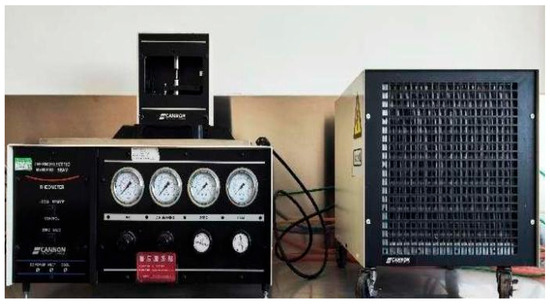
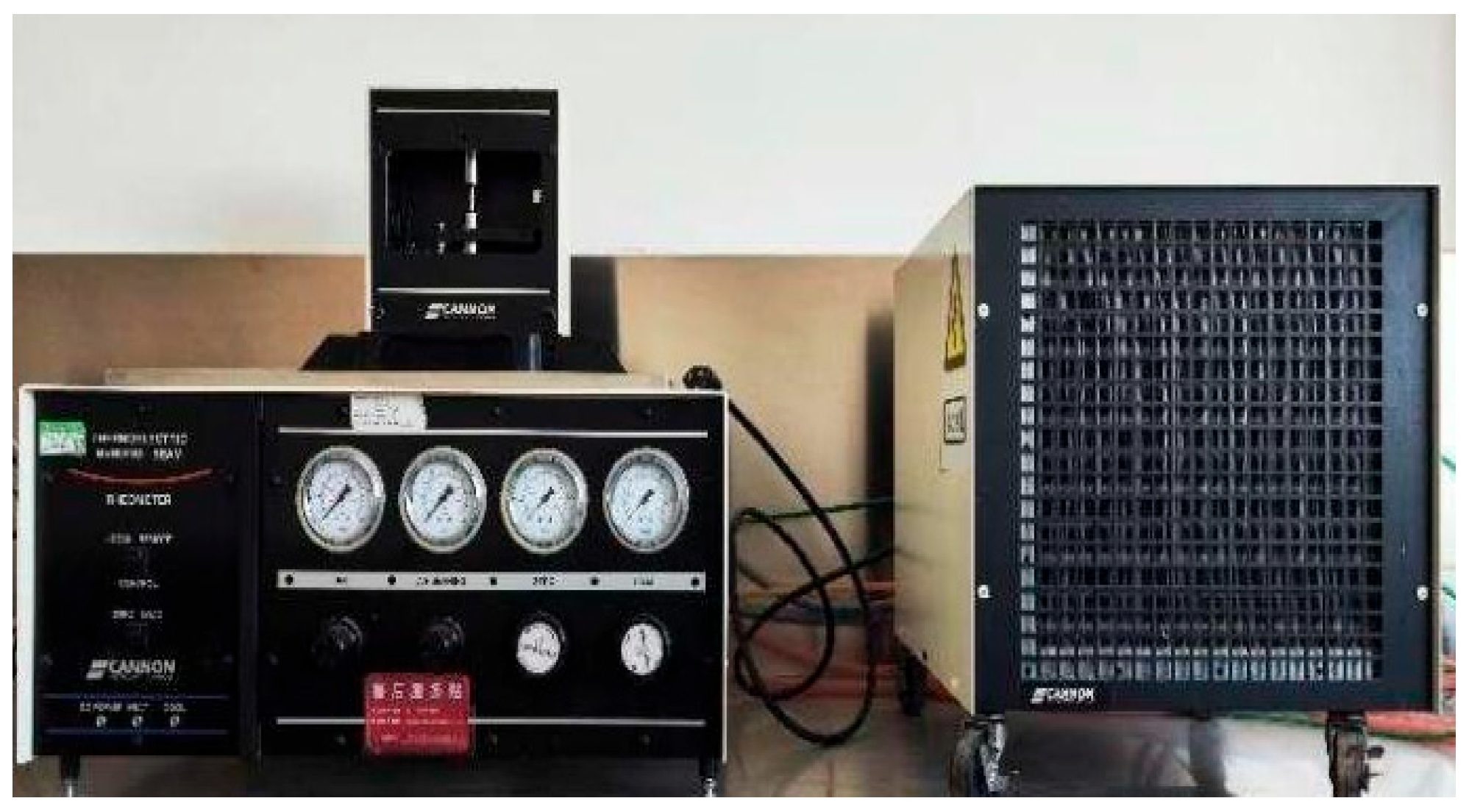
During the low-temperature contraction of asphalt mixtures, the skeletal action of aggregates cannot suppress cracking behaviour, whereas the low-temperature crack resistance of the binder plays a decisive role. The excellent low-temperature properties of the binder will significantly reduce cracking in asphalt pavements under cold conditions [32,33,34,35,36]. This test employed a TE-BBR type flexing beam rheometer manufactured by TA Instruments of the New Castle, PA, USA, as shown in Figure 4. The test temperatures were set at −12 °C, −18 °C and −24 °C.
Figure 4.
Bending beam rheometer.
2.2.4. Micro-Scale Experiments
- (1)
- Electron microscope scanning test
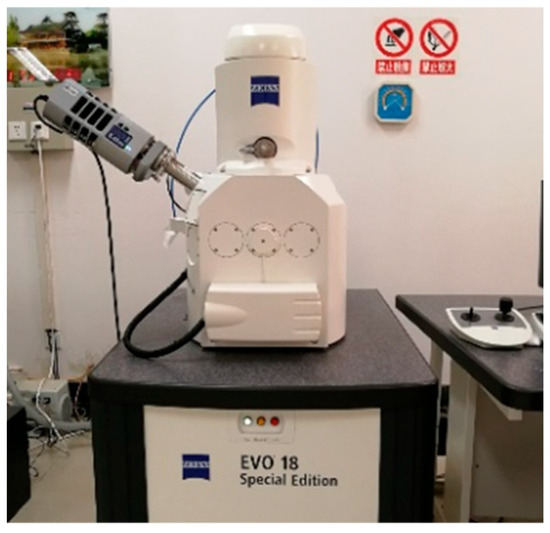
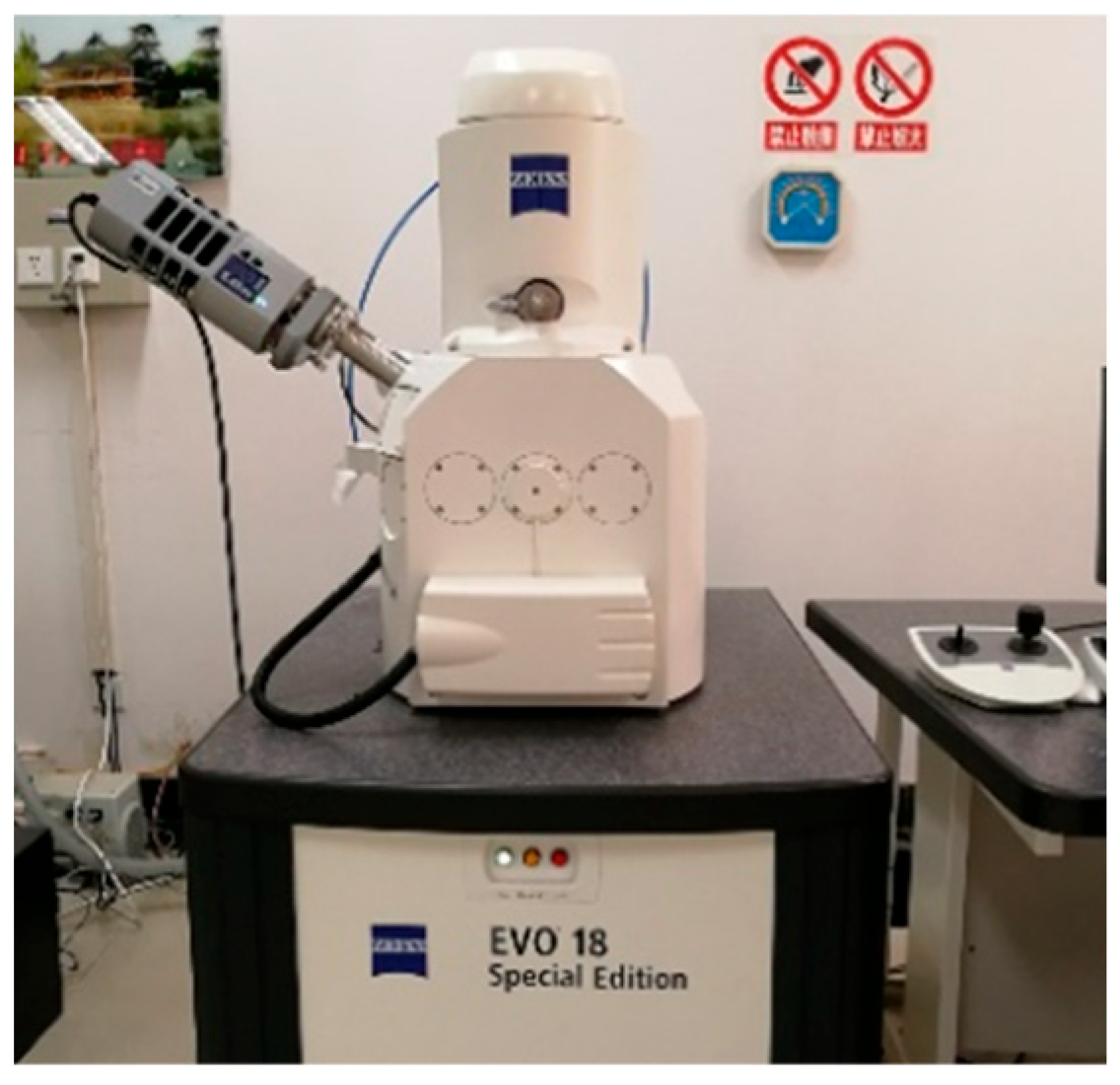
This study employed scanning electron microscopy (SEM) using a ZEISS EVO-18 analytical scanning electron microscope, manufactured by the Carl Zeiss in Jena, Germany. (shown in Figure 5) to investigate the microstructural characteristics of warm-mix cracked rubber-modified asphalt [37]. During testing, different asphalt samples were first subjected to gold spraying. Subsequently, the samples were placed within the specimen chamber, and relevant SEM parameters were adjusted to conduct the analysis.
Figure 5.
Scanning electron microscope.
- (2)
- Fluorescence microscopy test
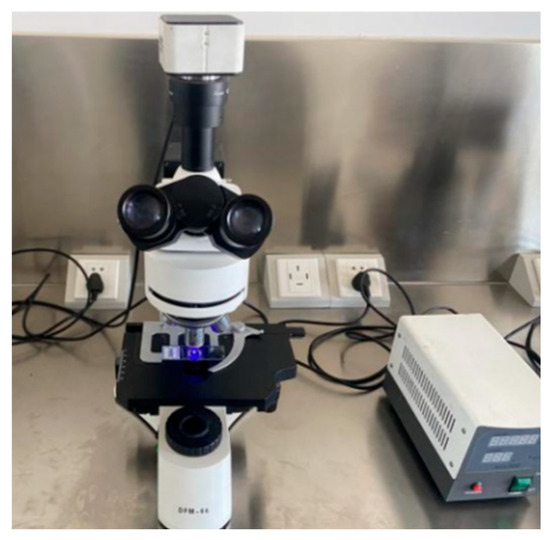
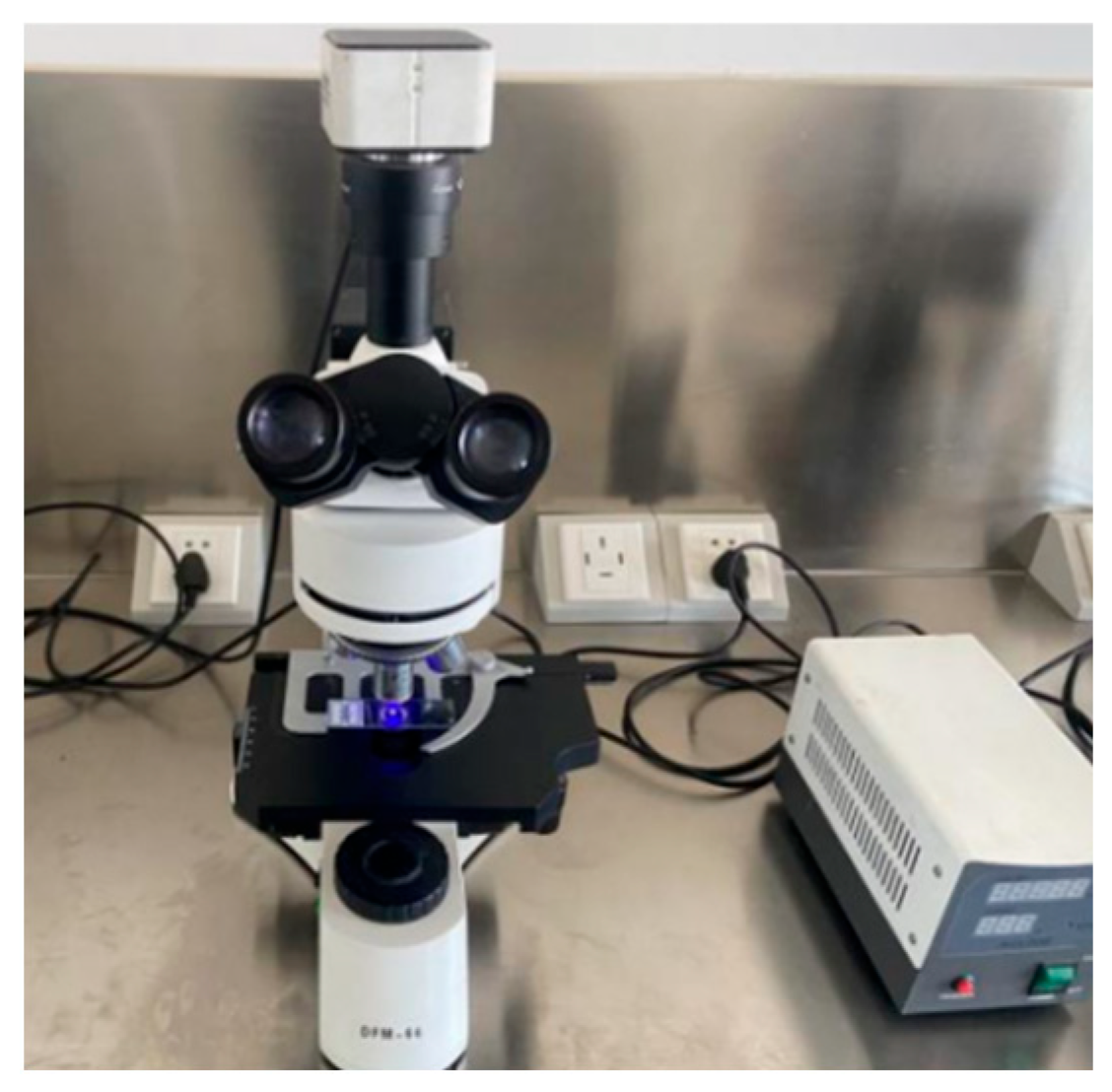
To investigate changes in the internal structural distribution of asphalt following the incorporation of cracked rubber, this experiment employed fluorescence microscopy by the McAodi Industrial Group Co., Ltd., in Xiamen, China. To observe warm-mix rubber-modified asphalt containing varying proportions of cracked rubber. During the experiment, the sample is placed on the specimen stage. By adjusting the magnification, the internal structural changes in the sample can be observed. The test apparatus is shown in Figure 6.
Figure 6.
Fluorescence microscope.
- (3)
- Fourier transform infrared spectroscopy experiment
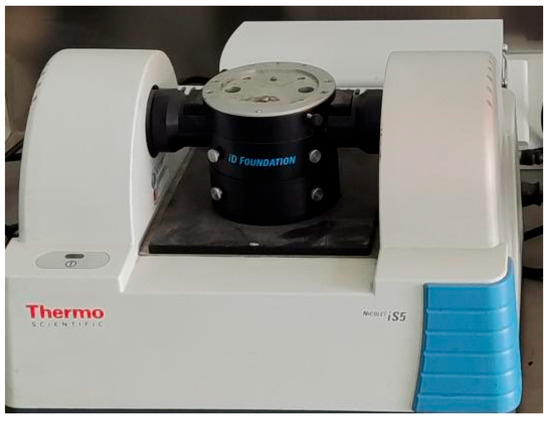
This study employed a Thermo Scientific Nicolet IS5 FTIR spectrometer by the Thermo Fisher Scientific, in Waltham, MA, USA, as shown in Figure 7, to record the characteristic changes in the molecular structure of warm-mix rubberised asphalt [38,39]. The experimental setup comprised 32 scans, with a testing range of 650 cm−1 to 4000 cm−1 and a resolution of 4 cm−1 [40,41]. During testing, the asphalt is first heated to a fluid state. The heated asphalt is then applied to the ZnSe crystal plate of the FTIR spectrometer using a scraper. Subsequently, the Thermo Scientific OMNI software is activated to conduct the sample analysis.
Figure 7.
FTIR spectrometer.
3. Results and Discussion
3.1. Determination of the Preparation Process for Warm-Mix Rubber-Modified Asphalt
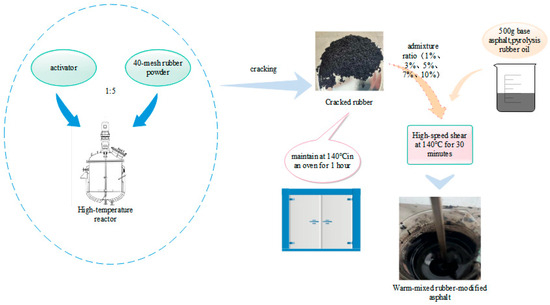
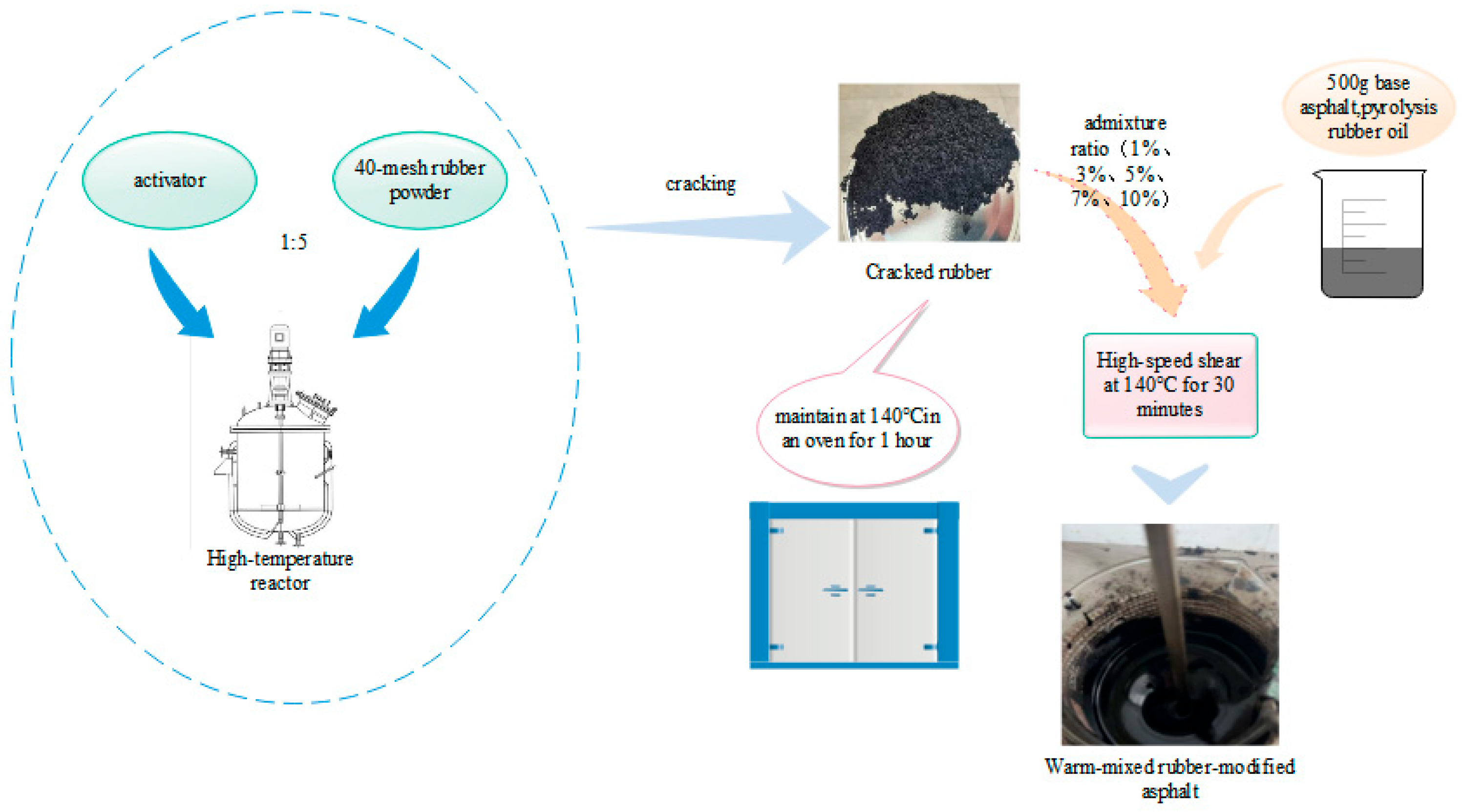
Dry the activator in an oven at 100 °C. and set aside for later use. Clean and preheat the high-temperature reactor in advance. Select 40-mesh granulated desulphurised rubber powder. Add the rubber powder and activator to the reactor in a 5:1 ratio. After sealing the reactor lid, start the stirrer to ensure that the crumb rubber powder and activator are heated evenly. Simultaneously connect the water pump to cool the stirrer shaft during pyrolysis. Five types of cracked rubber are obtained based on varying pyrolysis temperatures and durations. Place the cracked rubber in an oven at 140 °C for 1 h. Using a beaker, weigh out 500 g of the pre-prepared base asphalt and cracked rubber oil. Add varying proportions of cracked rubber (1%, 3%, 5%, 7%, 10%) to the base asphalt. At 140 °C, with high-speed shearing at 3500 rpm for up to 0.5 h, and a total mixing and shearing time of 1 h, warm-mix rubber-asphalt bitumen can be produced. The preparation process is illustrated in Figure 8.
Figure 8.
Preparation process of warm-mix rubber-modified asphalt.
3.1.1. Cracking Rubber Process Determination
This study employed a high-speed fluid shear emulsifier as the shear tool, determining the preparation conditions for cracked rubber by using viscosity and other properties as reference indicators. Cracked rubber is categorised into five types based on the duration of the pyrolysis process and temperature during the pyrolysis process, as shown in Table 3.
Table 3.
Five categories of rubber.
Cracked rubber samples ①, ②, and ③ in the table primarily demonstrate the effect of cracking time, while cracked rubber samples ③, ④, and ⑤ illustrate the influence of cracking temperature on the cracked rubber. The table indicates that pyrolysis time and temperature exert a significant influence on the state of cracked rubber following pyrolysis. As pyrolysis time increases, the decomposition of waste cracked rubber becomes more thorough, the product morphology tends towards uniformity, and the Brookfield viscosity correspondingly decreases. Regarding its variation with increasing pyrolysis time, the viscosity reduction trend is most pronounced within the 20~40 h interval, subsequently slowing as pyrolysis time continues to increase. A decrease in temperature, however, produces the opposite effect. Among them, cracked rubber ③ exhibits the lowest Brookfield viscosity. Based on an evaluation of both the Brookfield viscosity and macroscopic state, cracked rubber samples ② and ③ have been provisionally selected for subsequent in-depth investigation.
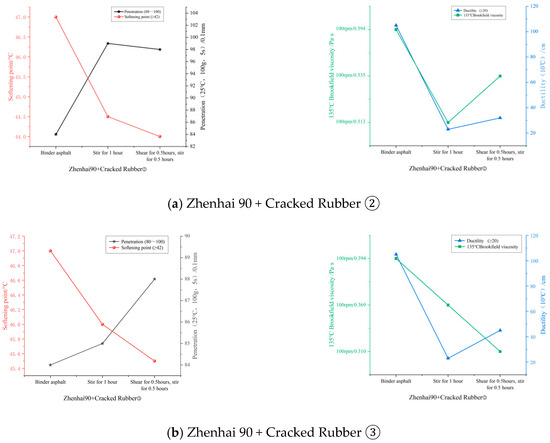
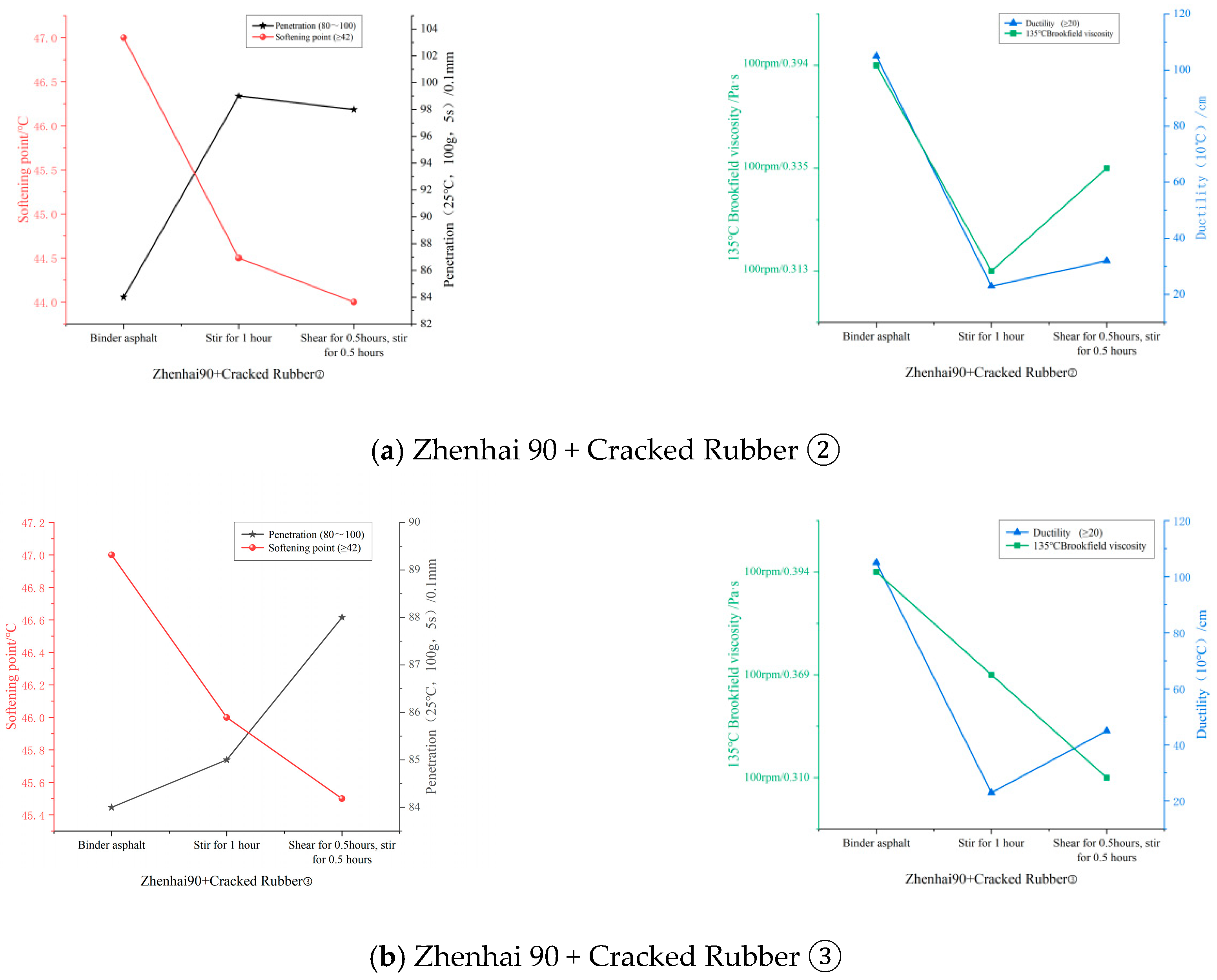
By controlling the duration of the high-speed shear process, the macro-performance indicators of warm-mix asphalt incorporating cracked rubber ② and cracked rubber ③ were determined under different preparation methods. Subsequently, the performance effects of the two cracked rubber warm-mix asphalts under the high-speed shear process were investigated. During preparation, the temperature is uniformly maintained at 140 °C, with shear time not exceeding 0.5 h and stirring and shear time controlled at 1 h. The specific performance results of warm-mix rubber-modified asphalt using cracked rubber ② and cracked rubber ③ at different mixing times are shown in Figure 9.
Figure 9.
Warm-mix rubber-modified asphalt at different mixing times.
As shown in Figure 9a, when blended with Zhenhai 90, cracked rubber ② exhibits increased penetration, reduced elongation and softening point. It is noted that cracked rubber ② exhibits a softening effect on bitumen, diminishing its deformation resistance while slightly reducing both its high-temperature performance and low-temperature ductility. In terms of Brookfield viscosity, the overall viscosity of warm-mix asphalt exhibited a decreasing trend with the incorporation of cracked rubber ②. However, shear time exerts an inverse effect on viscosity, with extended shear periods actually inhibiting its reduction. This phenomenon correlates with the poorer homogeneity of cracked rubber ② and the presence of noticeable residues in samples prepared via direct stirring.
For cracked rubber ③, the shearing process exerts a lesser influence on the three key indicators compared to cracked rubber ②. In terms of viscosity, the shearing process markedly enhances the viscosity-reducing effect of cracked rubber ③. The asphalt sample prepared by 0.5 h of shearing followed by 0.5 h of stirring exhibited the lowest viscosity.
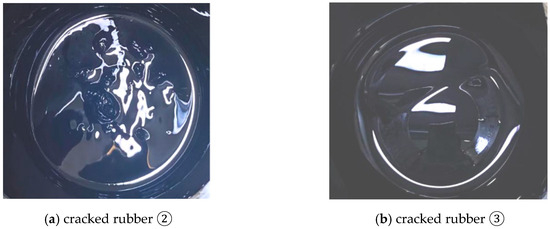
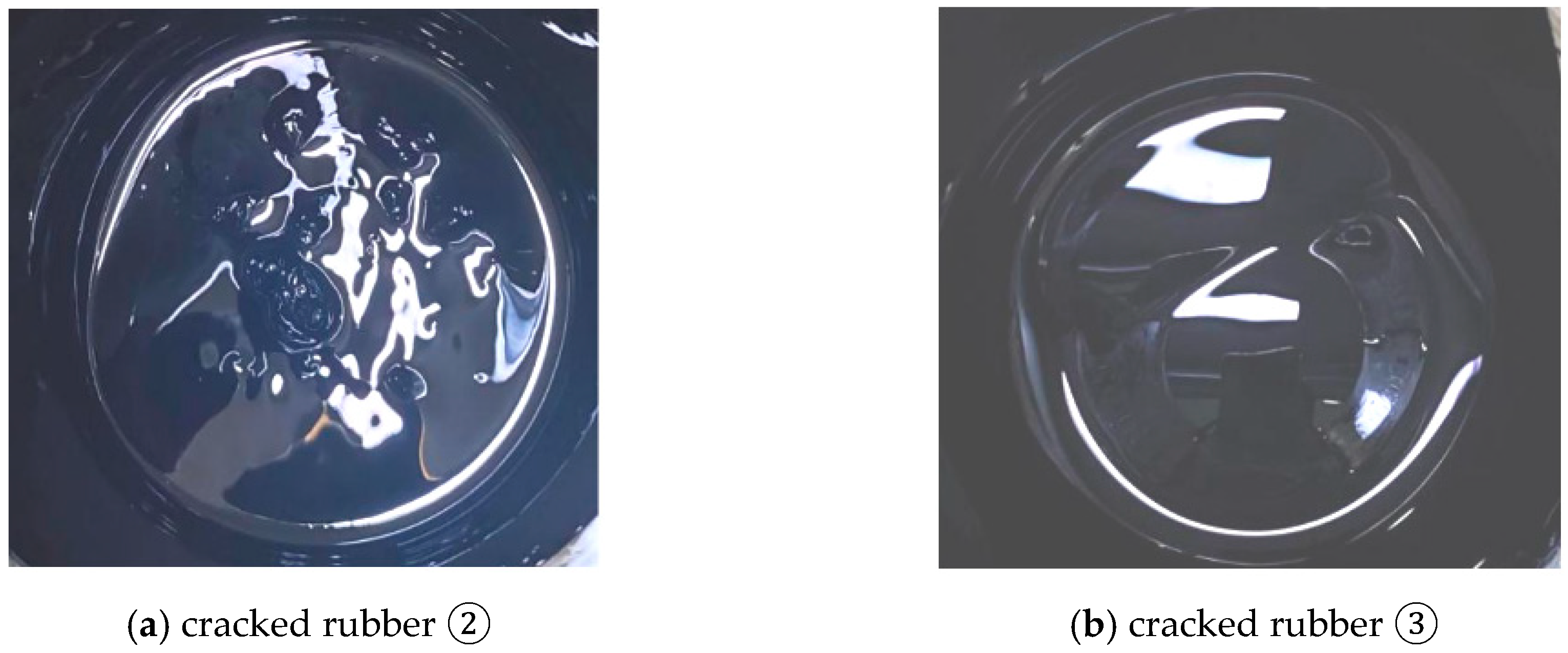
A comprehensive comparison of the performance characteristics of warm-mix asphalt prepared using two types of cracked rubber reveals that different types of cracked rubber exert varying degrees of influence on the three key indicators, though all remain within the specified standards. Under shear processing, the viscosity-reducing effect of cracked rubber ③ in warm-mix asphalt proved markedly superior to that of cracked rubber ②. Moreover, the latter exhibited poorer uniformity, with noticeable residues remaining after direct mixing preparation (shown in Figure 10).
Figure 10.
The condition of beaker base after mixing the two types of cracked rubber with Zhenhai 90 and subsequent heating.
Therefore, after comprehensive consideration of the aforementioned properties, this paper ultimately selected cracked rubber ③, which exhibits more pronounced viscosity-reducing effects, as the subject of study. The preparation process was established with a rubber-to-activator ratio of 5:1, a pyrolysis temperature of 220 °C, a pyrolysis duration of 50 h, and both shearing and stirring times set at 0.5 h.
3.1.2. Determination of Optimal Cracked Rubber Content for Best Process Performance
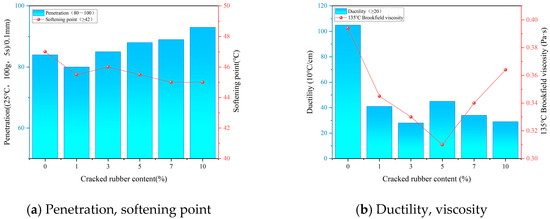
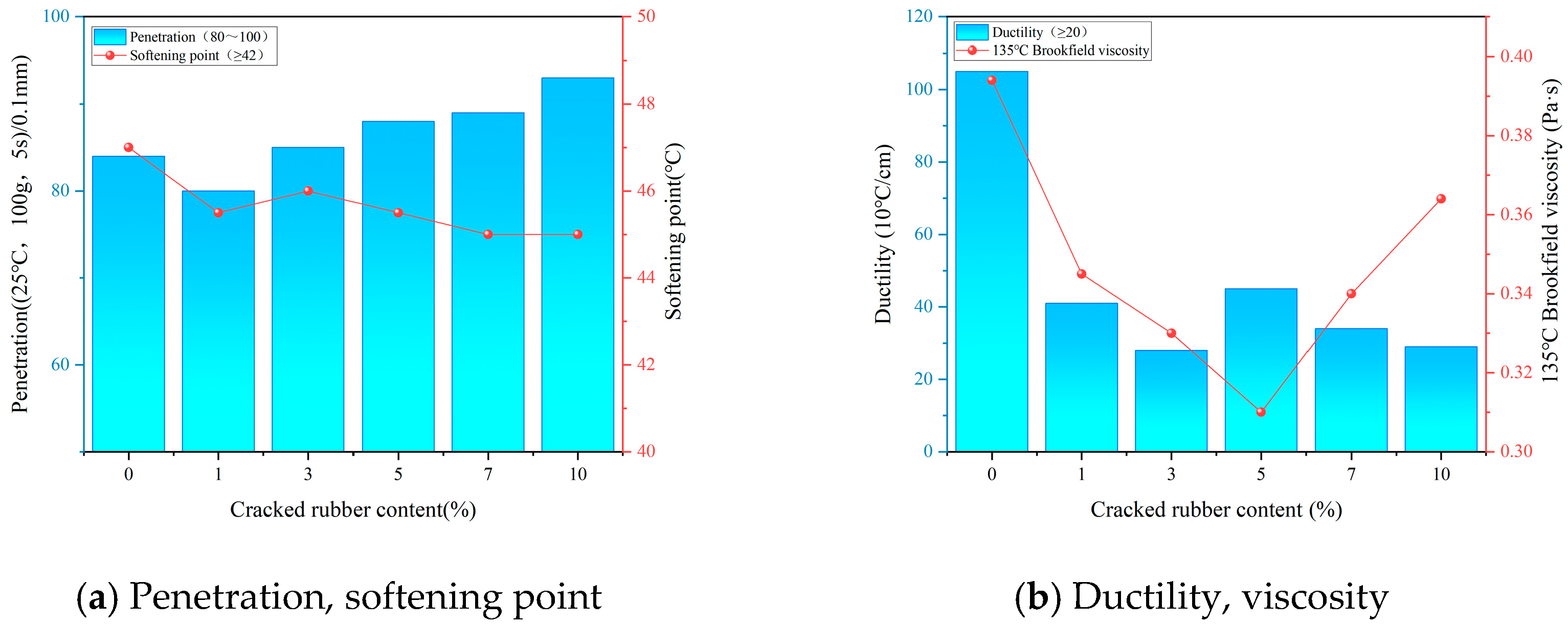
This section analyses the influence of blending ratios when incorporating cracked rubber into Zhenhai 90 base asphalt. All prepared warm-mix asphalt was produced using a method involving high-speed shearing at 140 °C and 3500 rpm for 0.5 h, followed by mixing for 0.5 h. The three key indicators and viscosity test results are presented in Figure 11.
Figure 11.
Technical specifications of warm-mix rubber-modified asphalt at different rubber content levels.
As shown in Figure 11, within the blending ratio range of 1% to 10% for cracked rubber and matrix asphalt, all three key indicators and viscosity meet the specification requirements. As the proportion of cracked rubber increases, the penetration of bitumen exhibits a trend of initially decreasing before subsequently increasing. At a 1% proportion, the penetration reaches its minimum value, and when the proportion rises to 5%, it exceeds the level of the base bitumen. It is demonstrated that incorporating low levels of cracked rubber enhances the deformation resistance of asphalt, though this capability diminishes when the proportion exceeds 5%. The softening point of asphalt is slightly reduced with the addition of cracked rubber compared to the base asphalt, indicating a minor weakening effect on its high-temperature performance. The incorporation of cracked rubber simultaneously resulted in a marked decrease in the asphalt’s elongation compared to the base asphalt, indicating its detrimental effect on the asphalt’s low-temperature ductility. The viscosity of warm-mix asphalt decreases initially then increases with rising levels of cracked rubber content, remaining overall lower than that of base asphalt. At a 5% content, asphalt viscosity reaches a minimum value of 0.310 Pa·s, indicating that cracked rubber effectively enhances the workability of asphalt during construction.
In summary, taking into account the trends in the various performance indicators, penetration returns to the level of the base bitumen at a 5% blend ratio, and the softening point shows only a slight decrease; although the elongation decreases somewhat, it remains within the specified limits. Furthermore, the impact is minimal at a 5% blend ratio, and viscosity reaches its lowest value at 5%. At a 5% blend ratio of cracked rubber, the balance between the various performance indicators is most ideal; therefore, 5% can currently be determined as the optimal blend ratio. The optimal blend ratio will be further determined based on high- and low-temperature studies.
3.2. Study on the Rheological Properties of Warm-Mix Rubber-Modified Asphalt
3.2.1. High-Temperature Rheological Properties
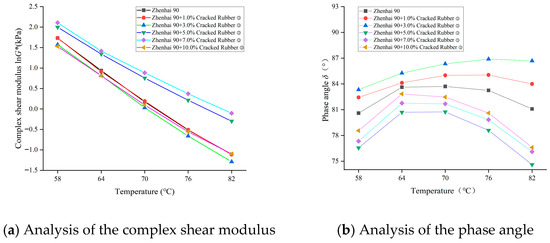
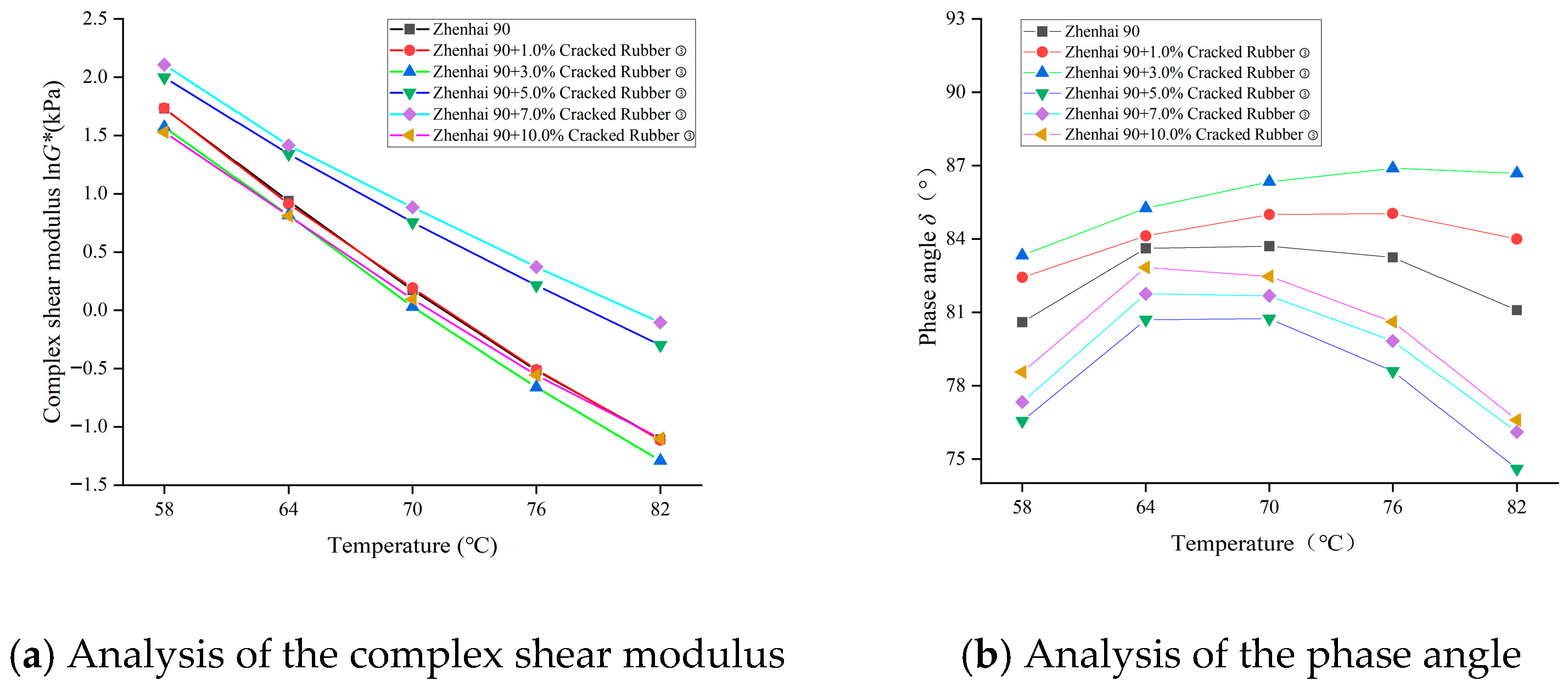
The variation curves of the complex shear modulus (lnG*) of rubber-compound-modified bitumen after short-term ageing, under different rubber content levels, within the PG high-temperature classification temperature range and along the phase angle–temperature relationship curve are shown in Figure 12.
Figure 12.
Analysis of rheological parameters of warm-mix rubber-modified asphalt.
As shown in Figure 12a, at the same temperature, the complex shear modulus of warm-mix asphalt exhibits a trend of first decreasing, then increasing, and subsequently decreasing again with the addition of cracked rubber. The complex shear modulus of warm-mix asphalt is minimal at a cracked rubber content of 3%, slightly lower than that of the base asphalt, and reaches its maximum at a content of 7%. Within the 5~7% content range, the complex shear modulus of the warm-mix asphalt is close to and significantly higher than that of the base asphalt. This indicates that a 3% content of cracked rubber has a slight negative impact on the asphalt’s high-temperature deformation resistance, whereas a 5~7% content significantly enhances this property. Based on the comprehensive evaluation of complex shear modulus within the PG high-temperature range, it is determined that cracked rubber at a 7% dosage provides superior improvement to asphalt’s high-temperature performance compared to a 5% dosage. However, based solely on the trend in lnG*, a 7% blend ratio appears to be superior to a 5% blend ratio. Yet, the complex shear modulus reflects overall stiffness, incorporating contributions from both elastic and viscous components, and therefore does not fully represent the asphalt’s resistance to permanent deformation at high temperatures. Further analysis must be conducted in conjunction with the phase angle.
As shown in Figure 12b, at the same temperature, the asphalt phase angle initially increases with rising content of cracked rubber. It reaches its maximum value at a 3% content and drops to its lowest point at a 5% content. This indicates that the material’s elastic properties are most pronounced at this point, and its potential for deformation recovery is greatest. Compared to the base asphalt, the asphalt phase angle is higher at both 1% and 3% content, while it is generally lower at 5~10% content. This indicates that within the content range of 5~10%, cracked rubber contributes to improving its viscoelastic properties. Furthermore, at identical content levels, the phase angle of warm-mix asphalt exhibits a trend of initially increasing then decreasing with rising temperature. This indicates that the viscoelastic properties of warm-mix rubber-modified asphalt are significantly influenced by temperature.
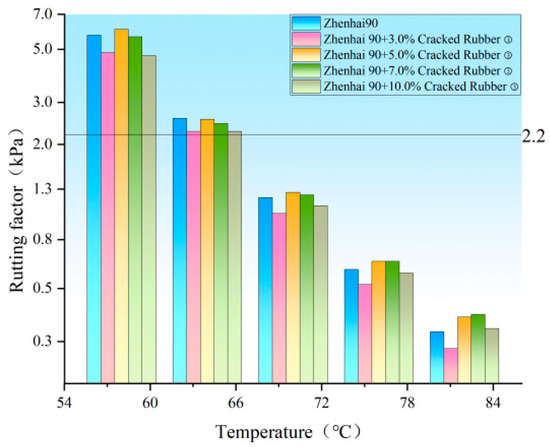
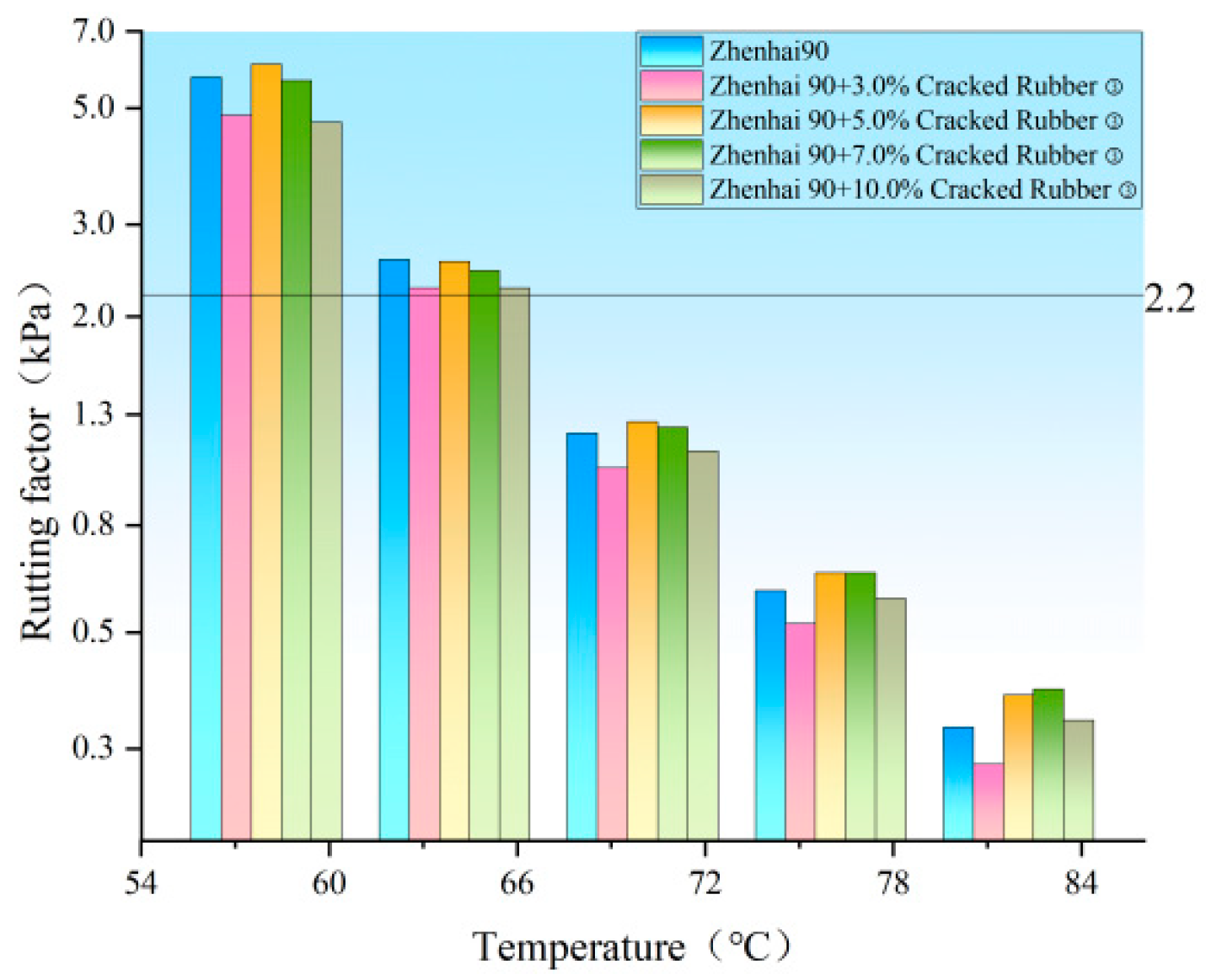
The relationship between the rutting factor and temperature for warm-mix asphalt containing cracked rubber at different dosage levels is shown in Figure 13. As evident from Figure 13, both the Zhenhai 90 matrix asphalt and the thermomixing asphalt containing 3~10% cracked rubber exhibit a rutting factor exceeding 2.2 kPa at 64 °C. However, at 70 °C, the rutting factor for both falls below this threshold. This indicates that their high-temperature performance grade is uniformly 64 °C, and their normal service temperature should not exceed this limit.
Figure 13.
Warm-mixed rubber-compound-modified asphalt rutting factor–temperature histogram.
At different temperatures, the rutting factor initially decreases and then increases with the proportion of cracked rubber. Within the temperature range of 58~64 °C, the rutting factor reaches its peak when the proportion of cracked rubber is 5%. Therefore, using the rutting factor of warm-mix asphalt as an evaluation metric, the optimal cracked rubber content is 5%. Within this temperature range, the rutting index of asphalt at 5% content is marginally higher than or comparable to that of base asphalt, whereas at other contents, it is marginally lower than that of base asphalt. This indicates that only at a 5% content does the cracked rubber marginally enhance the asphalt’s high-temperature rutting resistance, whereas at other contents, it diminishes this property.
In summary, using the rutting factor as the evaluation criterion and taking into account the combined effects of the complex shear modulus and phase angle, the cracked rubber achieved the optimal combination of stiffness and elasticity at a 5% blend ratio, demonstrating the best high-temperature rutting resistance. Therefore, 5% is determined to be the optimal blend ratio. The conclusion that a 7% blend ratio is superior, derived solely from the complex shear modulus, is only partially valid as it does not account for the influence of elastic components. In contrast, the comprehensive evaluation provided by the rutting factor is more thorough and reliable.
3.2.2. Low-Temperature Rheological Properties
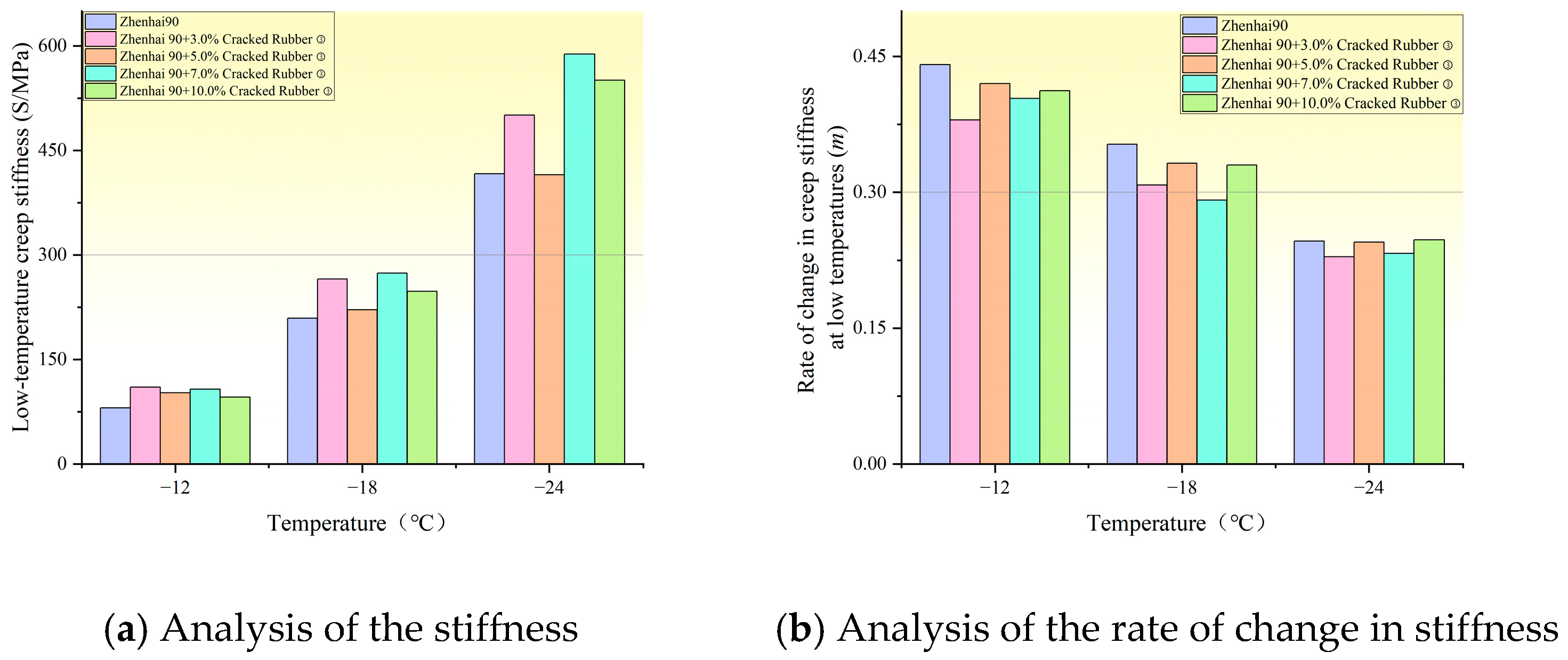
To investigate the low-temperature crack resistance and resistance to low-temperature shrinkage cracking of rubber-modified asphalt, this study examined the low-temperature creep stiffness (s-value) and creep stiffness change rate (m-value) of warm-mix rubber-modified asphalt at different rubber content levels. The results are presented in Figure 14.
Figure 14.
Low-temperature creep analysis of warm-mix rubber-modified asphalt.
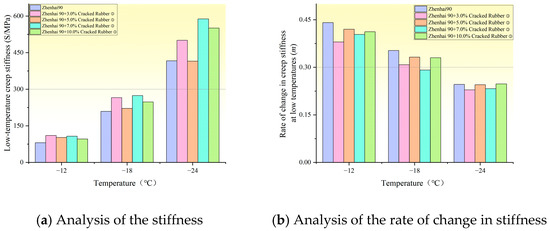
As shown in Figure 14a, all warm-mix rubber-modified asphalt and Zhenhai 90 matrix asphalt exhibit S-values below 300 at −18 °C whilst exceeding 300 at −24 °C. This indicates that their low-temperature performance grades are no greater than −18 °C. Within the low-temperature range (−18~−24 °C), the low-temperature creep stiffness of the asphalt fluctuates with increasing cracked rubber content, exhibiting no clear overall pattern. At a 5% filler content, the creep stiffness most closely resembles that of the base asphalt and represents the lowest value among all warm-mix asphalt formulations. This indicates that cracked rubber exerts a certain negative influence on the low-temperature crack resistance of asphalt, with the least impact observed at a 5% content.
As shown in Figure 14b, at −18 °C, the m-value is lower than 0.3 only at a 7% dosage, while all others exceed this value. At −24 °C, all values are below 0.3. Taking the S-value into account, it is further confirmed that none of the asphalt low-temperature grades are suitable for temperatures below −18 °C. The influence pattern of cracked rubber on the m-value remains consistent across different temperatures, exhibiting minimal variation. As the cracked rubber content increases, the rate of change in the low-temperature creep stiffness of the asphalt fluctuates, initially decreasing before subsequently increasing. Compared to the base asphalt, the m-values of all warm-mix asphalt blends decreased with varying rubber content, maintaining a relatively high level only at the 5% addition rate. This indicates that cracked rubber partially diminishes the asphalt’s low-temperature crack resistance, while the 5% addition rate of cracked rubber in the warm-mix rubber-modified asphalt demonstrates comparatively superior resistance to low-temperature shrinkage cracking. This pattern is consistent with the analysis of the S-value, at a 5% blend ratio, the bitumen exhibits both low stiffness and a high stress relaxation rate, and is therefore less prone to brittle cracking at low temperatures.
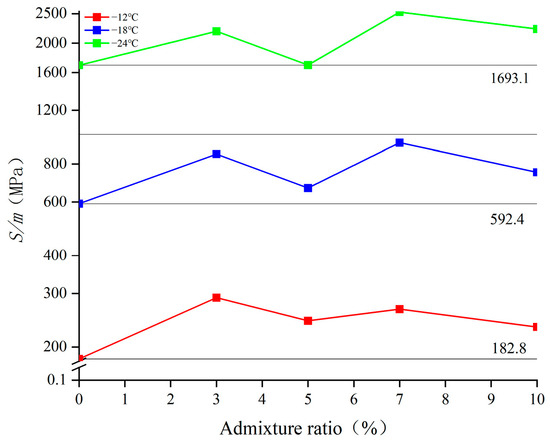
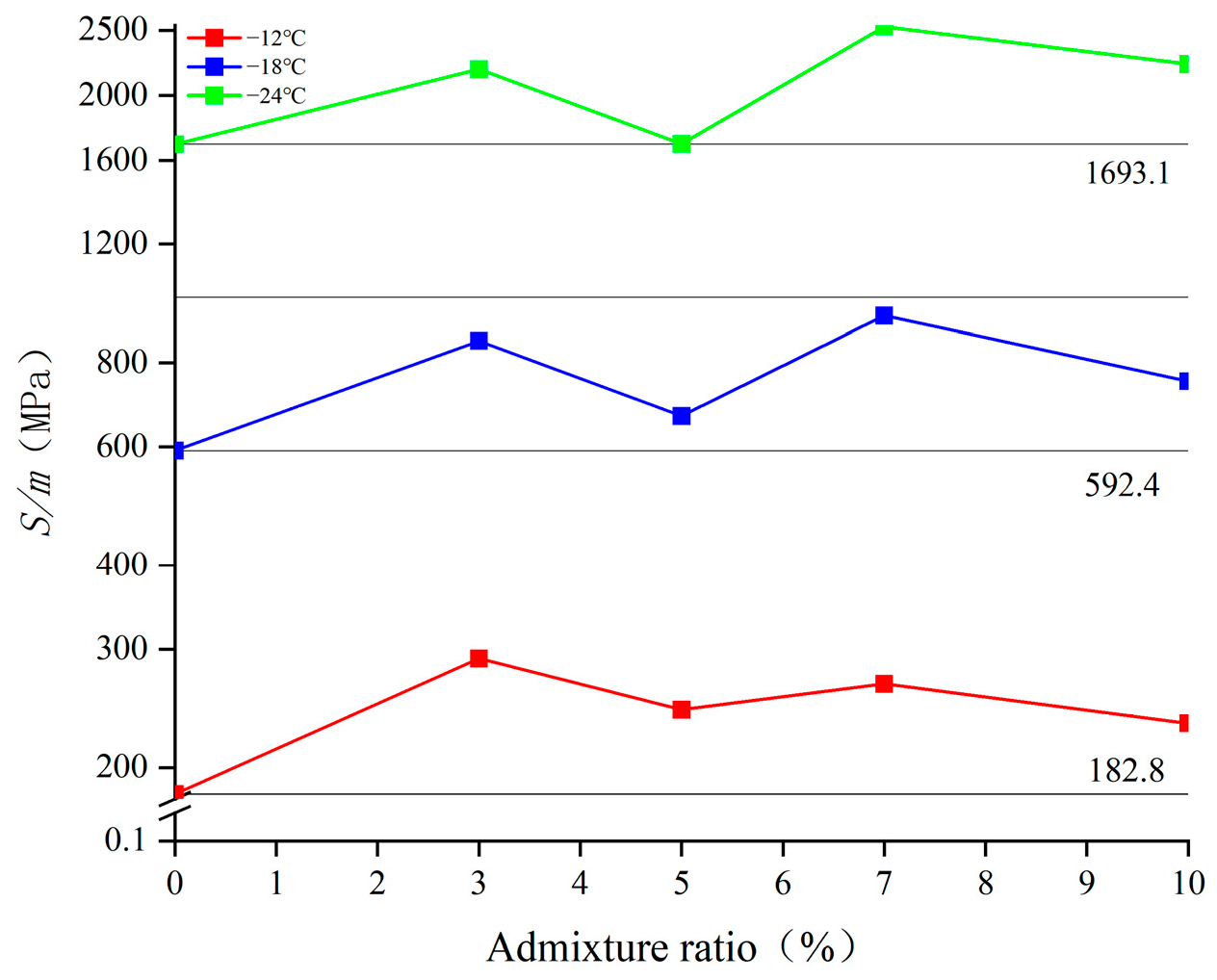
To further analyse the low-temperature rheological properties of warm-mix rubber-modified asphalt, this paper investigates the relationship between the ratio of low-temperature creep stiffness to its rate of change (S/m) for warm-mix rubber-modified asphalt at different rubber content levels, as shown in Figure 15.
Figure 15.
S/m of warm-mix rubber-composite-modified asphalt under different rubber content levels.
As shown in Figure 15, the S/m values of all warm-mix rubber-modified asphalt and Zhenhai 90 base asphalt are below 1000 at −18 °C and exceed 1000 at −24 °C, indicating that the low-temperature grade for all samples is −18 °C. The S/m values of warm-mix asphalt incorporating cracked rubber exhibit a fluctuating upward trend within the low-temperature range as the cracked rubber content increases, though the overall variation remains relatively moderate. This indicates that cracked rubber slightly diminishes the asphalt’s low-temperature crack resistance. The variation trends for warm-mix asphalt with different cracked rubber contents remain largely consistent between −18 °C and −12 °C. Notably, the S/m value of asphalt at the 5% rubber content is relatively low compared to other dosages. As temperature decreases, this value increasingly approaches that of the base asphalt. This indicates that this dosage exerts the least impact on the asphalt’s low-temperature crack resistance.
An analysis of the three low-temperature rheological parameters-S value, m-value and S/m ratio-leads to the following conclusion: the incorporation of cracked rubber has a certain adverse effect on the low-temperature performance of bitumen, but this effect varies significantly depending on the level of incorporation. At a 3% blend ratio, both the S and m-values are unsatisfactory, resulting in poor overall low-temperature performance. At a 5% blend ratio, the S value is lowest, the m-value is relatively high, and the S/m ratio is lowest, the synergy of these three factors results in the best resistance to low-temperature shrinkage cracking at this blend ratio. At blend ratios of 7% to 10%, the S and S/m values increase slightly, whilst the m-value decreases further, leading to a deterioration in low-temperature performance.
Therefore, using low-temperature crack resistance as the evaluation criterion, the adverse effect of pyrolyzed rubber on the low-temperature performance of asphalt is minimal at a 5% blend ratio, making it the optimal blend ratio among all tested levels. This conclusion is fully consistent with the optimal blend ratio (5) determined in the previous study.
In summary, following a systematic study and analysis of the viscosity and high- and low-temperature properties of warm-mix rubber-modified asphalt produced at different rubber content levels, it was found that warm-mix rubber-modified asphalt with a 5% rubber content exhibited superior performance in terms of viscosity reduction, improvement in high-temperature properties, viscoelastic characteristics, high-temperature rutting resistance and low-temperature crack resistance, with these elements being superior to those of the asphalt prepared at other rubber content levels. It can be clearly concluded that pyrolyzed rubber exhibits the best viscosity-reducing effect and excellent high- and low-temperature performance at a rubber content of 5%.
3.3. Microstructural Analysis
3.3.1. Scanning Electron Microscope Image
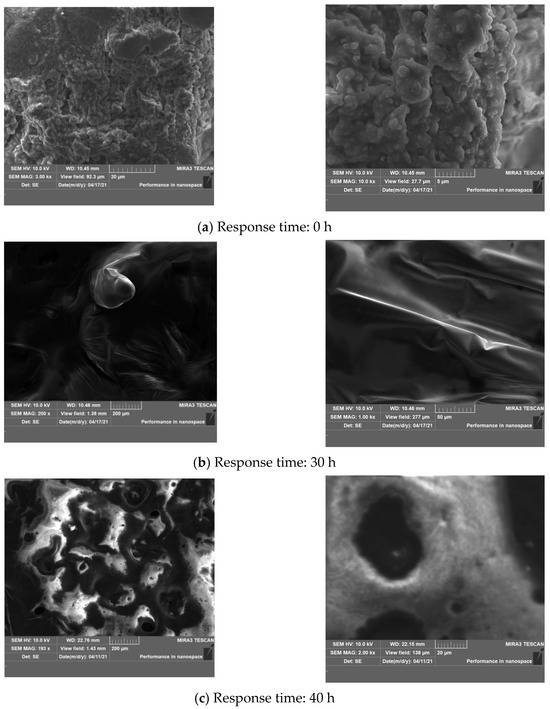
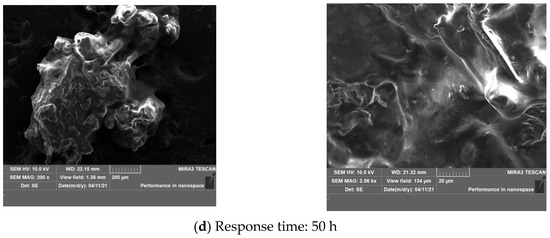
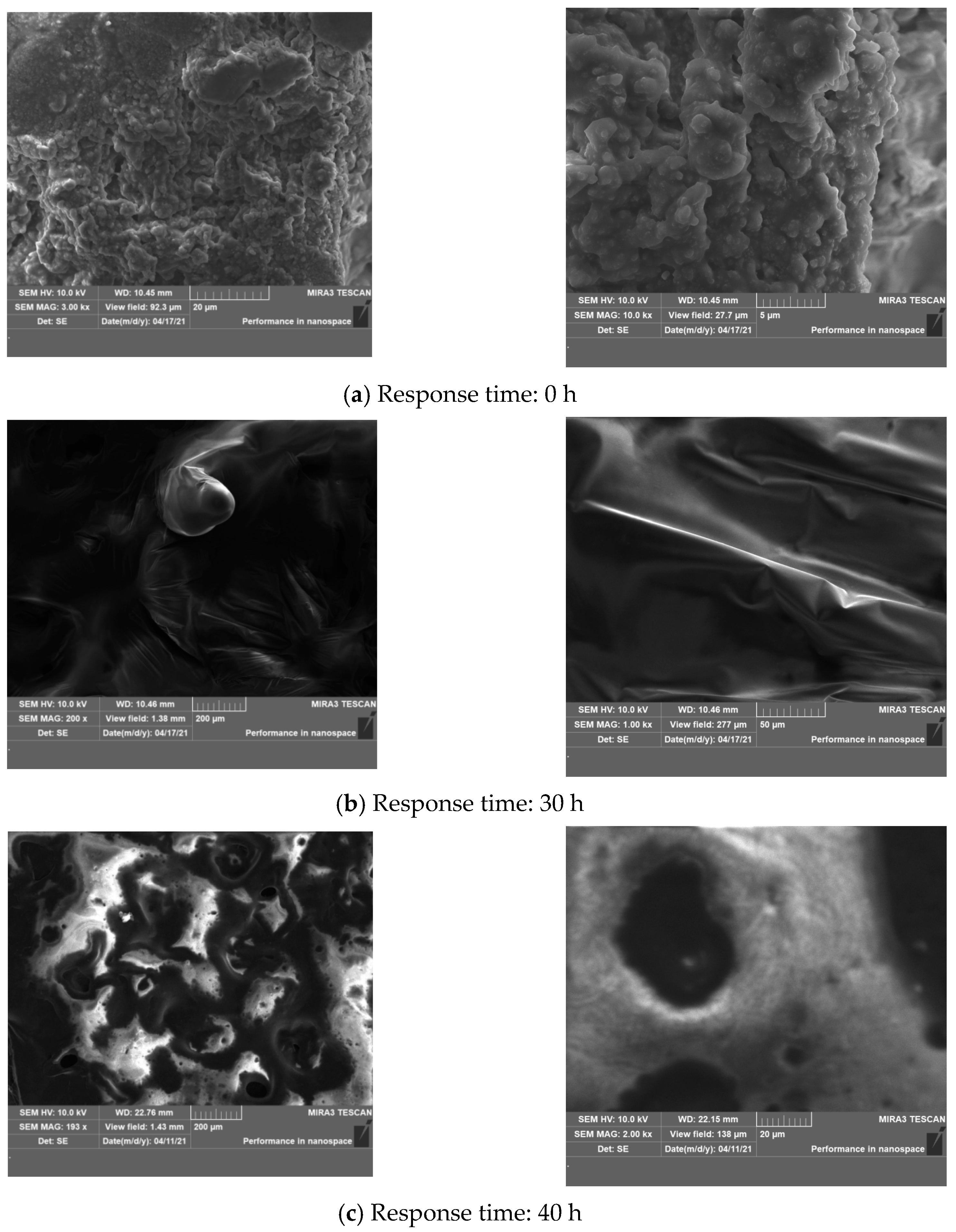
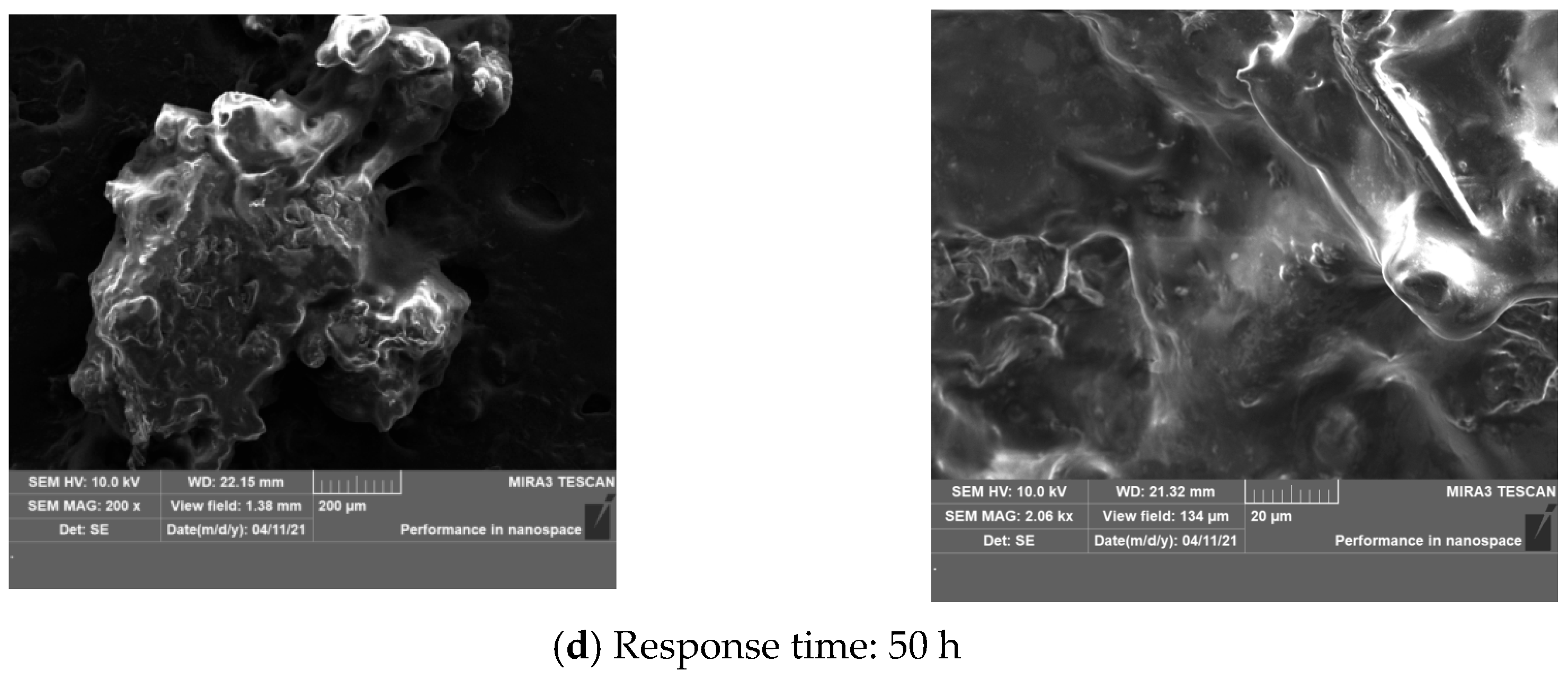
SEM images of the cracked rubber at reaction times of 0 h, 30 h, 40 h, and 50 h are shown in Figure 16.
Figure 16.
Scanning electron microscope image of cracked rubber.
As shown in Figure 16a, the conventional 40-mesh desulphurisation rubber powder exhibits a microstructure characterised by the accumulation of micron-sized particles. Figure 16b reveals that after undergoing 20 h of high-temperature pyrolysis treatment in a reactor, it displays a film-like microstructure. This occurs because the polymeric rubber powder, following pyrolysis under high-temperature reaction conditions, enters a state of slight fragmentation of the polymer macromolecules. Figure 16c indicates that at 30 h reaction time, the microstructure exhibits a plastic state characteristic of polymeric macromolecular material. Figure 16d demonstrates that following further pyrolysis activation treatment under elevated temperatures, the rubber powder material assumes an agglomerated state, reverting to a charred, interlinked condition. This occurs because, under the combined action of the activator and high-temperature pyrolysis, the polymer network structure is rapidly disrupted, resulting in the breakage of cross-linking bonds. Consequently, a significant quantity of existing macromolecular chains detach and are released as sol components. The primary S-S bonds, once broken under high-temperature conditions and in the presence of amine activators, exhibit an excellent active state. Microscopic morphological changes in rubber powder under different pyrolysis processes indicate that combining activators with high-temperature pyrolysis accelerates the opening of cross-linked networks between rubber macromolecules, thereby reducing the viscosity of rubber materials.
3.3.2. Fluorescence Microscope Image
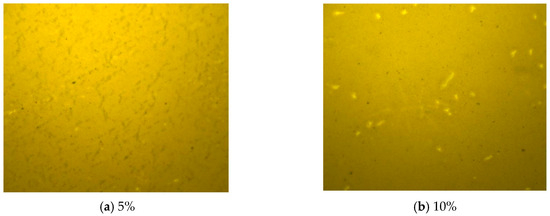
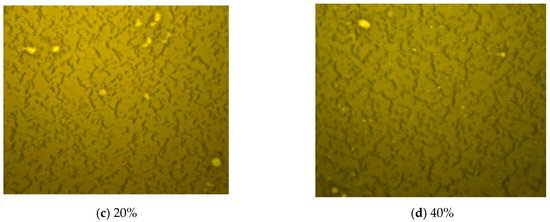
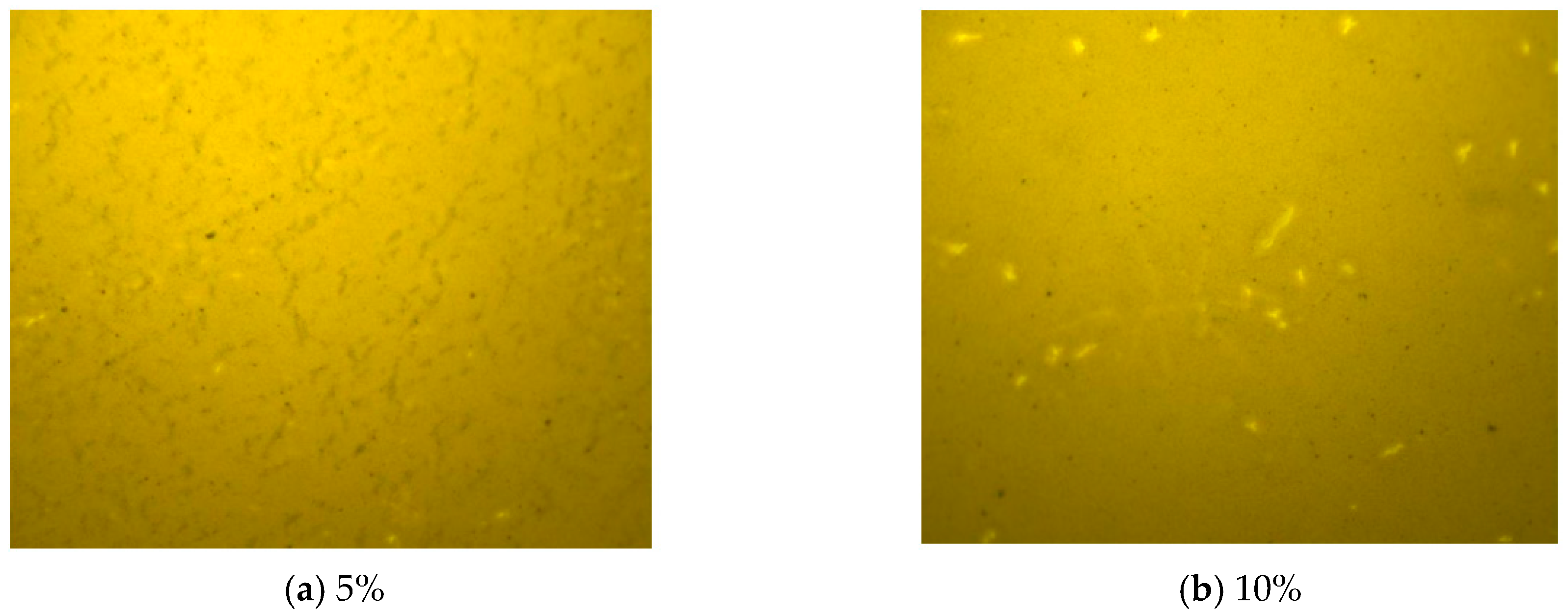
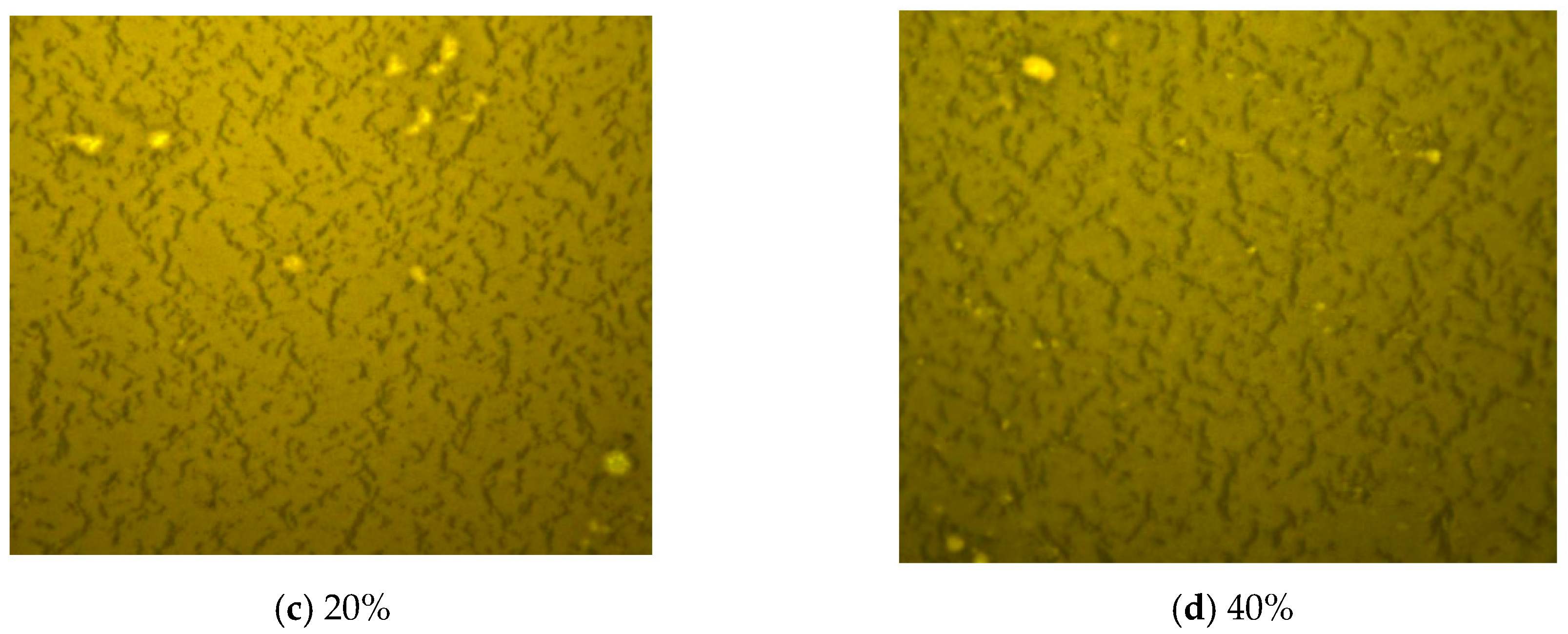
To observe the polymer phase and bitumen phase [42,43], this study examined fluorescence microscopy images of matrix bitumen incorporating varying proportions of cracked rubber, with specific test values shown in Figure 17.
Figure 17.
Fluorescence microscopy images of samples incorporating varying proportions of cracked rubber.
From the fluorescence data diagram, it can be observed that after incorporating cracked rubber into the base asphalt for warm-mix modification, the polymer phase exhibits a distinct yellow hue, while the asphalt phase appears almost black. This is attributable to the reduction in aromatic molecules resulting from the increased cracked rubber content. The surface appears relatively uniform, and in terms of storage stability, cracked rubber demonstrates the capacity to enhance asphalt stability.
3.3.3. Infrared Spectrum
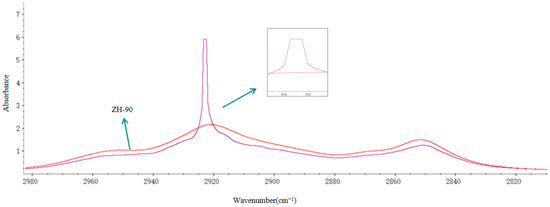
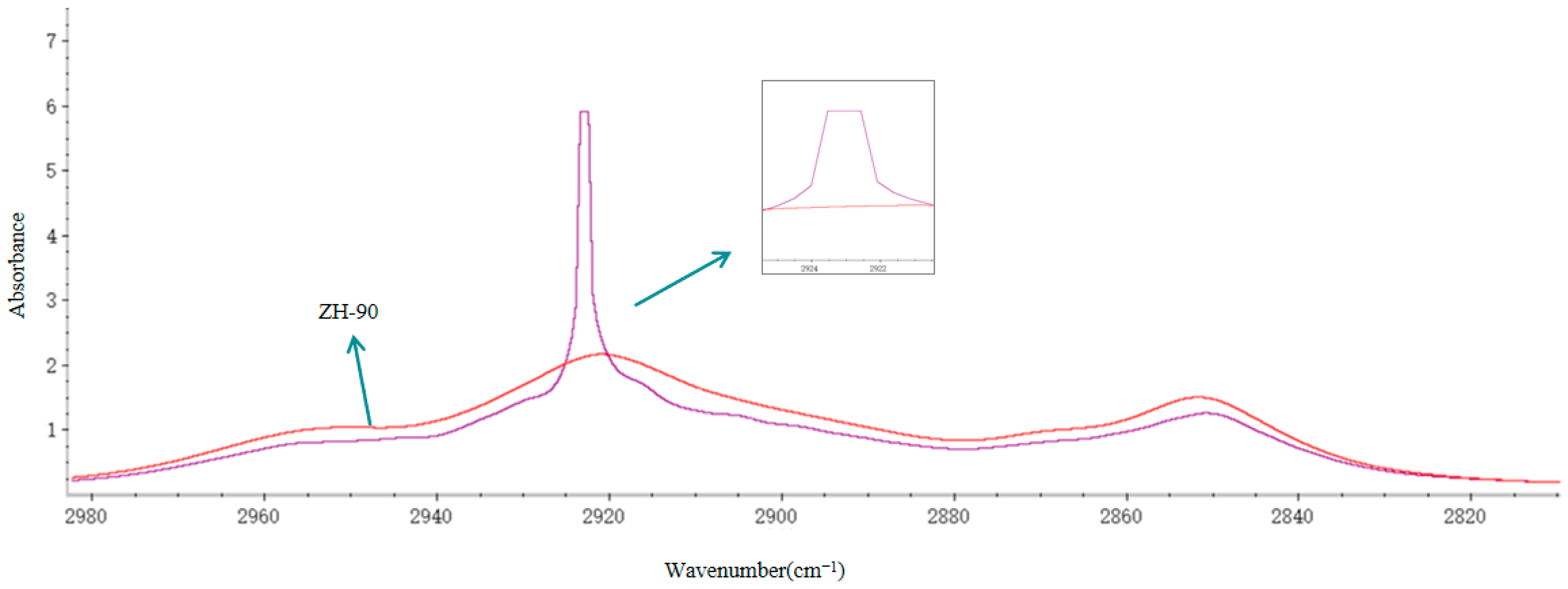
By examining the characteristic absorption peaks in the spectral patterns of functional group regions and fingerprint regions, it is possible to identify the primary molecular composition of functional groups within asphalt materials and detect subtle variations in certain functional groups. Figure 18 presents a comparative infrared spectrum of Zhenhai No. 90 bitumen and warm-mix rubber-modified bitumen at wavenumbers ranging from 2980 cm−1 to 2810 cm−1.
Figure 18.
Infrared spectrum comparison of base asphalt and warm-mix rubber-modified asphalt.
As can be seen from Figure 18, compared with Zhenhai 90 (maked with a red line) base bitumen, the pyrolyzed rubber warm-mix bitumen exhibits a distinct absorption peak at a wavenumber of approximately 2922 cm−1, and this peak is attributed to the vibration of the C-H group; near 2852 cm−1, both materials exhibit a common absorption peak, which is an inherent characteristic peak of the base bitumen and likewise corresponds to the vibration of C-H groups. It can also be observed that, before and after the incorporation of pyrolyzed rubber, no new characteristic peaks appeared in the infrared spectrum of the bitumen across other wavenumber ranges, nor were any significant shifts or disappearances of existing characteristic peaks observed. This phenomenon indicates that the functional group composition of pyrolyzed rubber is highly similar to that of Zhenhai 90 base bitumen, and with no significant introduction of new chemical groups, the interaction at the interface is primarily physical in nature. According to the principle of like dissolves like, substances with similar chemical structures are more readily capable of achieving uniform mixing and stable dispersion. Therefore, the aforementioned similarity at the functional group level essentially explains the underlying reason for the good compatibility between pyrolyzed rubber and base bitumen.
4. Conclusions
To address the high-temperature, high-viscosity issues of rubber-compound-modified bitumen, this study investigated the optimal preparation process for warm-mix rubber-compound-modified bitumen. The effects of varying proportions of cracked rubber on viscosity and rheological properties were evaluated. Finally, through microscopic analysis, the mechanism of cracked rubber’s action within the bitumen system was elucidated, yielding the following conclusions:
- (1)
- Cracked rubber produced under process conditions of 220 °C pyrolysis temperature and 50 h pyrolysis duration, when incorporated at a 5% dosage into modified bitumen, achieves optimal viscosity reduction. Its 135 °C Brookfield viscosity is significantly lower than that of the base bitumen, and it can also reduce the production temperature of rubber-modified bitumen by 40–60 °C whilst exhibiting the most balanced road performance characteristics. This provides a solid basis for the low-temperature application and viscosity control of rubber-modified bitumen. However, the high temperatures involved in the pyrolysis of rubber currently have an environmental impact; this represents a limitation of the present study and constitutes a key focus for future research.
- (2)
- The viscosity of asphalt exhibits a trend of initially decreasing and then increasing with rising levels of cracked rubber content, reaching its lowest value at a 5% addition rate. Analysis of high-temperature rheological properties indicates that a 5% addition effectively improves the viscoelastic characteristics of asphalt and significantly enhances its high-temperature deformation resistance within the 5~7% addition range. Concurrently, modified asphalt at a 5% dosage exhibits optimal performance in low-temperature creep stiffness, stiffness change rate, and glass transition temperature, demonstrating excellent low-temperature crack resistance.
- (3)
- Scanning electron microscopy, fluorescence microscopy and infrared spectroscopy analysis indicate that the pyrolysis process effectively disrupts the cross-linked network structure of rubber powder, promoting its uniform dispersion within the asphalt matrix. This enhances the compatibility and storage stability of the asphalt system.
Author Contributions
Conceptualization, X.W.; Methodology, X.W. and M.L.; Formal analysis, G.Y.; Investigation, P.L.; Resources, P.L.; Data curation, D.Z. and G.Y.; Writing—original draft, D.Z.; Project administration, P.L.; Funding acquisition, X.W. and M.L. All authors have read and agreed to the published version of the manuscript.
Funding
This project was funded by the Central University Special Fund Project (No. 31920260105); Gansu Provincial Department of Education: Major Cultivation Project for University Research and Innovation Platform (No. 2024CXPT-19); National Natural Science Foundation of China (No. 52468066, 52268070); Gansu Provincial Higher Education Industry Support Programme (2026CYZC-024); and Gansu Provincial Department of Transportation Science and Technology Plan Project (No. 2025-56).
Data Availability Statement
Data will be made available on request.
Conflicts of Interest
The authors declare no conflict of interest.
References
- Li, J.; Chen, Z.; Xiao, F.; Amirkhanian, S.N. Surface Activation of Scrap Tire Cracked Rubber to Improve Compatibility of Rubberized Asphalt. Resour. Conserv. Recycl. 2021, 169, 105518. [Google Scholar] [CrossRef] [Scilit]
- Li, X.; Li, Y.; Xu, X. Preparation of Desulfurized Rubber Asphalt Modifier and Study on the Properties of Modified Asphalt. Subgrade Eng. 2021, 5, 62–69. [Google Scholar]
- Lin, M.; Lei, Y.; Li, P.; Wang, Z.L. Study on the Rheological Properties and Modification Mechanism of Graphene/Rubber Composite-Modified Asphalt. Adv. Civ. Eng. Mater. 2025, 14, 1–22. [Google Scholar] [CrossRef] [Scilit]
- Zhang, W.; Zeng, L.; Gao, S. Study on Performance and Micromechanism of Warm Mixing Rubber Compound Modified Asphalt. Hunan Commun. Sci. Technol. 2018, 44, 68–73. [Google Scholar]
- Huang, X.; Ban, Y.; Du, L.; Wang, L. Molecular-Scale Study of the Compatibility of Warm-Mix Agents, Rubber, and Asphalt in Warm-Mix Rubber Asphalt. J. Mater. Civ. Eng. 2025, 37, 04025260. [Google Scholar] [CrossRef] [Scilit]
- Prakash, G.; Suman, S.K. An intensive overview of warm mix asphalt (WMA) technologies towards sustainable pavement construction. Innov. Infrastruct. Solut. 2022, 7, 110. [Google Scholar] [CrossRef] [Scilit]
- Dong, S. Study on Preparation and Performance of Waste Cooking Oil Steel Slag Rubber Modified Asphalt Mixture by Dry Process. Bachelor’s Thesis, Yanshan University, Qinhuangdao, China, 2024. [Google Scholar]
- Guo, C. Research on the Modification of Waste Rubber Powder and Its Application in Rubber Formulations. Bachelor’s Thesis, Henan University, Kaifeng, China, 2024. [Google Scholar]
- Zhao, J.; Zhao, X.; Li, B.; Wang, Y.; Zhao, H.; Kang, K. Optimization of Activated Rubber Asphalt Production Parameters Based on Rheological Properties and Multi-Index Evaluation. Materials 2025, 18, 3712. [Google Scholar] [CrossRef] [Scilit]
- Lin, M.; Ye, R.; Xing, Y.; Chen, X.; Li, P. Evaluation and mechanism of low-carbon fume-suppressed rubber-modified asphalt. Constr. Build. Mater. 2025, 483, 141742. [Google Scholar] [CrossRef] [Scilit]
- Zhang, H.; Lv, Z.; Shi, J.; Jiang, F.; Wang, S.; Li, J. Activated ground car tire rubber and basic properties of asphalt modified with it. China Synth. Rubber Ind. 2012, 35, 143–147. [Google Scholar]
- Ma, T.; Zhao, Y.; Huang, X.; Zhang, Y. Characteristics of desulfurized rubber asphalt and mixture. KSCE J. Civ. Eng. 2016, 20, 1347–1355. [Google Scholar] [CrossRef] [Scilit]
- Sienkiewicz, M.; Borzędowska-Labuda, K.; Wojtkiewicz, A.; Janik, H. Development of methods improving storage stability of bitumen modified with ground tire rubber: A review. Fuel Process. Technol. 2017, 159, 272–279. [Google Scholar] [CrossRef] [Scilit]
- Hao, G.; Wang, Y. Improvements on the analysis methods of asphalt fumes generated in asphalt production and construction. J. Clean. Prod. 2023, 419, 138204. [Google Scholar] [CrossRef] [Scilit]
- Xie, J.; Chen, X.; Luo, H.; Zhao, X.; He, W. Effect of Different Activation Methods on Adhesion Performance of Rubber Asphalt-aggregate. Surf. Technol. 2023, 52, 322–330. [Google Scholar]
- Liu, L.; Fei, W.; Liu, X.; Zhou, J.; Du, M.; Zhao, X. Application of cracked tire rubber in asphalt. China Plast. Ind. 2022, 50, 32–38. [Google Scholar]
- Feng, Y.; Li, Q.; Zhang, Y.; Li, G.; Ding, Q. Influence of swelling time on propererties of rubber powder modified asphalt. Pet. Process. Petrochem. 2017, 48, 38–42. [Google Scholar]
- Chen, Y.; Song, H.; Wen, H.; Wang, H.; Tebaldi, G.; Liu, Z.; Salihovich, S.I. Desulfurization degree characterization of cracked rubber pretreated with heavy bio-oil and its effect on asphalt binder rheological performances and storage stability. Constr. Build. Mater. 2025, 490, 142300. [Google Scholar] [CrossRef] [Scilit]
- Yang, S.; Wang, G.; Yan, M.; Wang, P. Experimental study on compatibility improvement of high-grade waste rubber modified asphalt. J. Chongqing Jiaotong Univ. (Nat. Sci.) 2019, 38, 48–54. [Google Scholar]
- Jin, X.; Ren, D.; Wu, H.; Kong, H.; Yang, Q.; Zhou, T.; Li, J. Enhancing compatibility of waste tire rubber powder in asphalt: A comparative study of acid surface activation and molecular dynamics insights. Constr. Build. Mater. 2025, 478, 141417. [Google Scholar] [CrossRef] [Scilit]
- He, L.; Ma, Y.; Ling, T.; Ma, T.; Huang, X.M. Analysis on crumb rubber modified asphalt and its aging characteristics on microscale. J. Funct. Mater. 2015, 46, 21093–21098. [Google Scholar]
- He, L.; Ma, Y.; Ma, T. Research on asphalt rubber and its aging performance. J. Build. Mater. 2013, 16, 370–374. [Google Scholar]
- Zhang, G.; Fang, Y.; Ye, F. Rheological properties of cracked rubber-modified asphalt prepared by twin-screw extrusion. China J. Highw. Transp. 2019, 32, 57–63. [Google Scholar]
- Guo, J.; Han, X.; Shi, Y.; Xiao, Y.; Wang, L.; Liu, Z. Combinatorial Enhancement of Aging Resistance in High-Content Cracked Rubber Asphalt via Warm-Mix Additives: Rheological and Microstructural Insights. Materials 2025, 18, 5161. [Google Scholar] [CrossRef] [Scilit]
- Fang, Y.; Zhang, Z.; Zhang, K.; Li, Z. Rheological Property Evaluation and Microreaction Mechanism of Rubber Asphalt, Desulfurized Rubber Asphalt, and Their Composites. J. Mater. Civ. Eng. 2021, 33, 04021100. [Google Scholar] [CrossRef] [Scilit]
- Gui, W.; Liang, L.; Wang, L.; Gao, X.; Zhang, F. Performance evaluation of warm-mixed cracked rubber modified asphalt based on rheological characteristics. Constr. Build. Mater. 2021, 285, 122881. [Google Scholar] [CrossRef] [Scilit]
- Xu, S.; Zhao, L.; Liulin, S.; Niu, X.; Jia, X.; Cai, H. Technology and Rheological Properties of Warm Asphalt Rubber Based on an Ultra-Warm Mix Additive (UWM)–Sasobit Composite System. Polymers 2025, 18, 7. [Google Scholar] [CrossRef] [Scilit] [PubMed]
- GB/T 19208-2020; Ground Vulcanized Rubber. Chinese Standards Library: Beijing, China, 2020. Available online: https://www.chinesestandardslibrary.com/p/chinese-standard-gb-t-19208-2020/ (accessed on 1 April 2026).
- GB/T 4498-1-2013; Rubber-Determination of Ash—Part 1: Muffle Furnace Method. Chinese Standards Library: Beijing, China, 2013. Available online: https://www.chinesestandardslibrary.com/p/chinese-standard-gb-t-4498-1-2013/ (accessed on 1 April 2026).
- GB/T 3516-2006; Rubber-Determination of Solvent Extract. Chinese Standards Library: Beijing, China, 2006. Available online: https://www.chinesestandardslibrary.com/p/chinese-standard-gb-t-3516-2006/ (accessed on 30 March 2026).
- GB/T14837-3-2018; Rubber and Rubber Products-Determination of the Composition of Vulcanizates and Uncured Compounds by Thermogravimetry-Part 3: Hydrocarbon Rubbers, Halogenated Rubbers and Polysiloxane Rubbers After Extraction. Chinese Standards Library: Beijing, China, 2018. Available online: https://www.chinesestandardslibrary.com/p/chinese-standard-gb-t-14837-3-2018/ (accessed on 30 March 2026).
- Luo, Y. Research on Multi-Scale Evaluation of Fusion Behavior of New and Old Asphalt. Bachelor’s Thesis, Chongqing Jiaotong University, Chongqing, China, 2021. [Google Scholar]
- Feng, J. Rheological analysis of asphalt tested by bending beam rheometer. J. Wuhan Univ. Technol. (Transp. Sci. Eng.) 2006, 30, 205–208. [Google Scholar]
- Zhang, Y.; Lin, M.; Xue, Y.; Che, Z.; Ma, S. Study on high and low temperature properties of asphalt binder based on ash entropy correlation. Highway 2023, 68, 345–348. [Google Scholar]
- Lin, M.; Wang, Z.L.; Yang, P.W.; Li, P. Micro-structure and rheological properties of graphene oxide rubber asphalt. Nanotechnol. Rev. 2019, 8, 227–235. [Google Scholar] [CrossRef] [Scilit]
- Zhang, Y. Study on Low-Temperature Crack Resistance Properties and Mix Design Methods for Asphalt Mixtures in Permafrost Regions. Bachelor’s Thesis, Chang’an University, Xi’an, China, 2004. [Google Scholar]
- Yu, T.; Wang, J.; Zhang, H.; Sun, J. Microanalysis of behavior characteristics for asphalt binders on different mineral surfaces based on MD and SEM. Constr. Build. Mater. 2024, 438, 137292. [Google Scholar] [CrossRef] [Scilit]
- Mao, Y. Study on Mechanism and Technical Performance of Cracked Rubber Modified Asphalt by Cracking-Polymerizing. Bachelor’s Thesis, Chang’an University, Xi’an, China, 2017. [Google Scholar]
- Mu, S. Analysis of the technical performance of rubber powder used in the road. Highw. Transp. Inn. Mong. 2018, 3, 29–33. [Google Scholar]
- Zeng, X. Study on the Aging Mechanism and Regeneration Performance of Rubber-Modified Asphalt. Bachelor’s Thesis, Guangxi University, Nanning, China, 2015. [Google Scholar]
- Chen, L. Effect of Regenerant on Chemical Components and Rheological Properties of Recycled Asphalt Mortar. Bachelor’s Thesis, Lanzhou University of Technology, Lanzhou, China, 2020. [Google Scholar]
- Luo, H.; Su, Z.; Zheng, P.; Ouyang, C.; Qiu, Y. Analysis of road performance, mechanism and environmental benefits of SMC normal temperature modifier. J. Build. Mater. 2020, 23, 1144–1152. [Google Scholar]
- Zhang, S.; Guo, M.; Sun, C.; Yin, X.; Du, X. Study on recycled LLDPE modified asphalt using fluorescence microscopy and entropy-weight evaluation for process selection. Constr. Build. Mater. 2026, 506, 144977. [Google Scholar] [CrossRef] [Scilit]

Disclaimer/Publisher’s Note: The statements, opinions and data contained in all publications are solely those of the individual author(s) and contributor(s) and not of MDPI and/or the editor(s). MDPI and/or the editor(s) disclaim responsibility for any injury to people or property resulting from any ideas, methods, instructions or products referred to in the content. |
© 2026 by the authors. Licensee MDPI, Basel, Switzerland. This article is an open access article distributed under the terms and conditions of the Creative Commons Attribution (CC BY) license.