Theoretical Analysis and Robustness Optimization of FxLMS-Based Active Road Noise Control Under Non-Coherent Interference


Abstract
1. Introduction
2. Theoretical Analysis of FxLMS Under Non-Coherent Interference
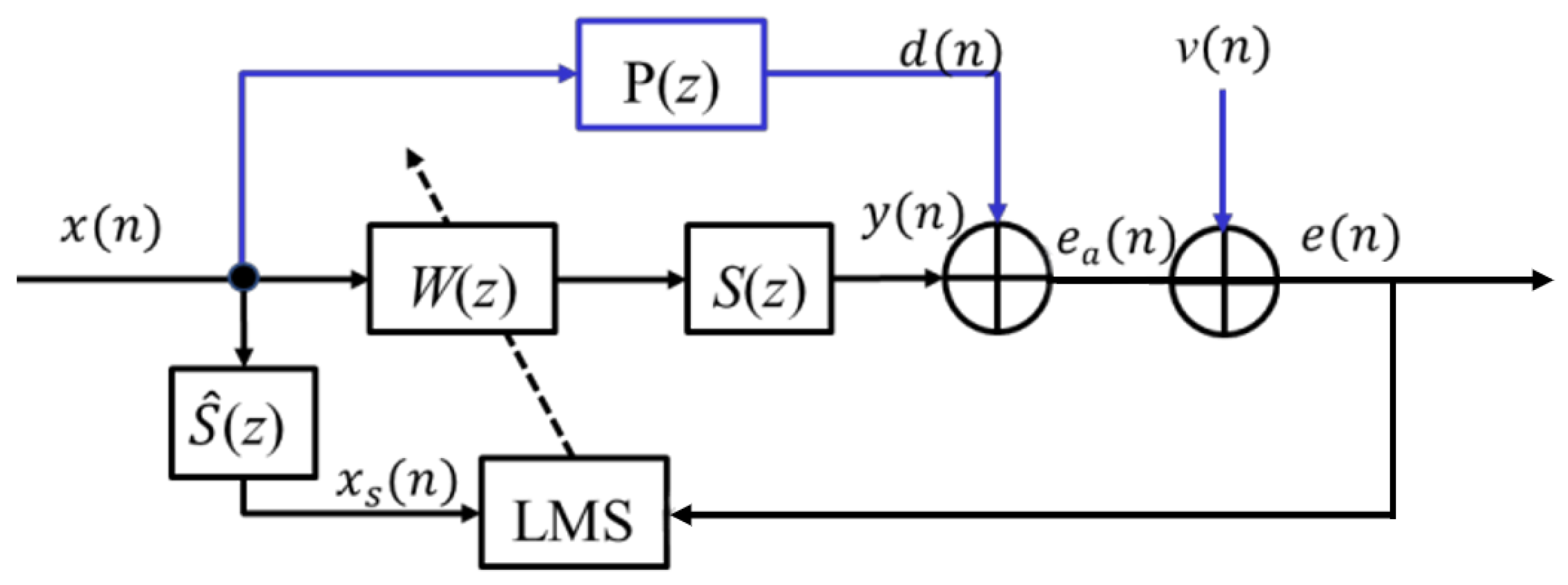
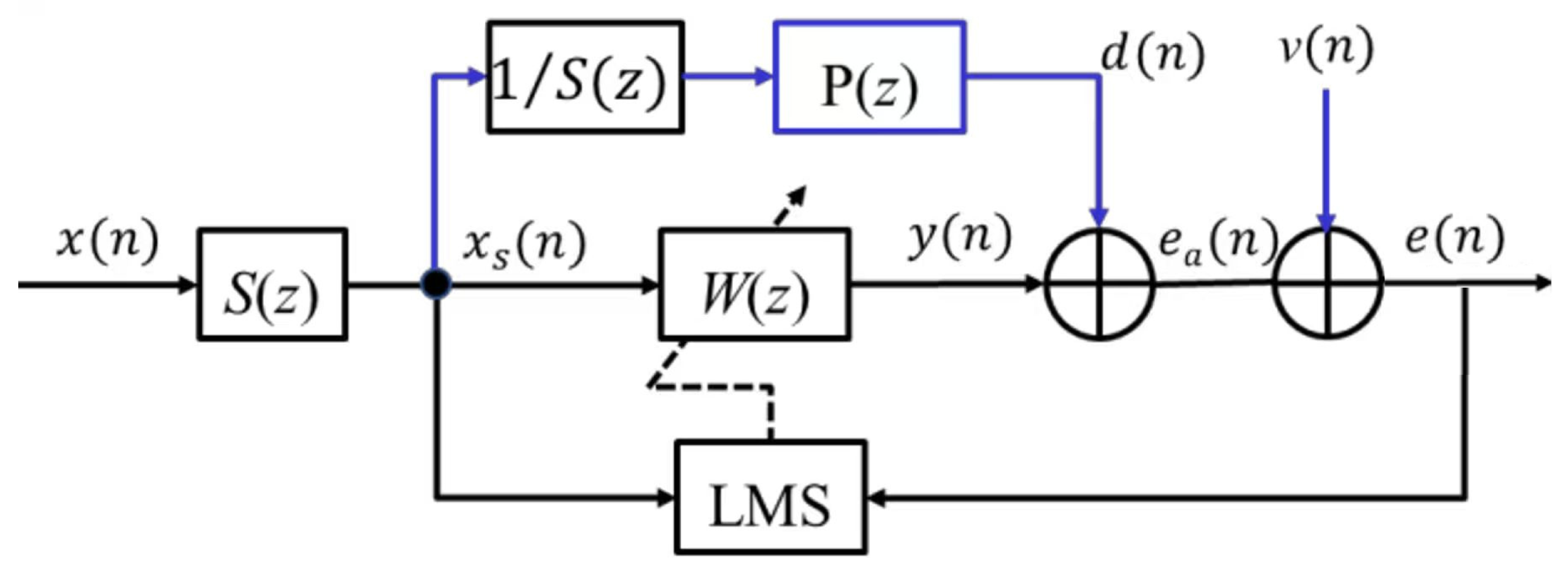
2.1. FxLMS-Based ARNC System and Equivalent Analytical Representation
2.2. Statistical Convergence Modeling
2.3. Convergence Region and Steady-State Error
- A larger accelerates convergence but also magnifies the excess error term once interference is present.
- Even after convergence on the coherent component, the achievable microphone mean-square error remains bounded below by the interference floor plus the adaptation-induced excess error.
3. Robustness Optimization Methods
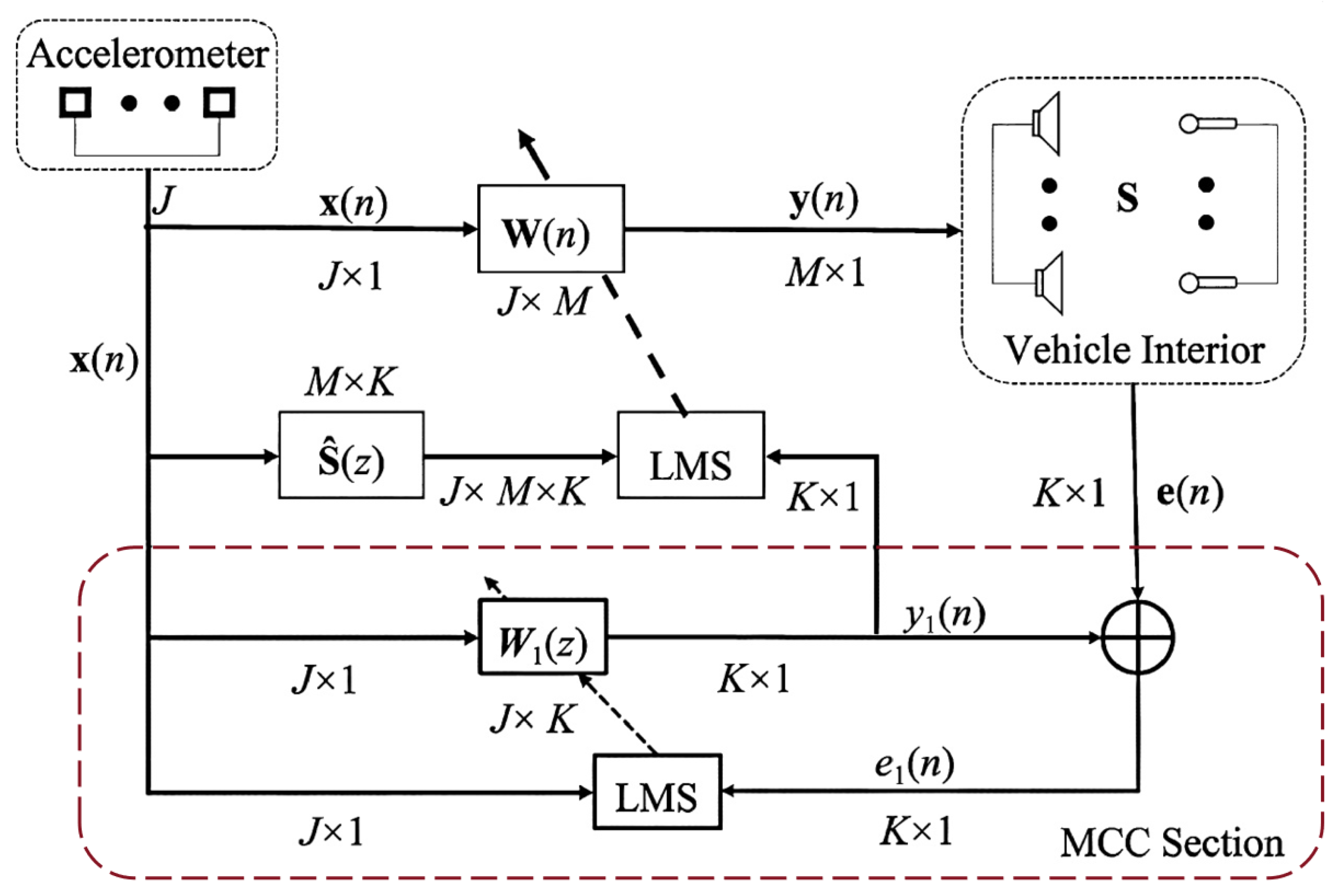
3.1. Multichannel Cascaded Controller
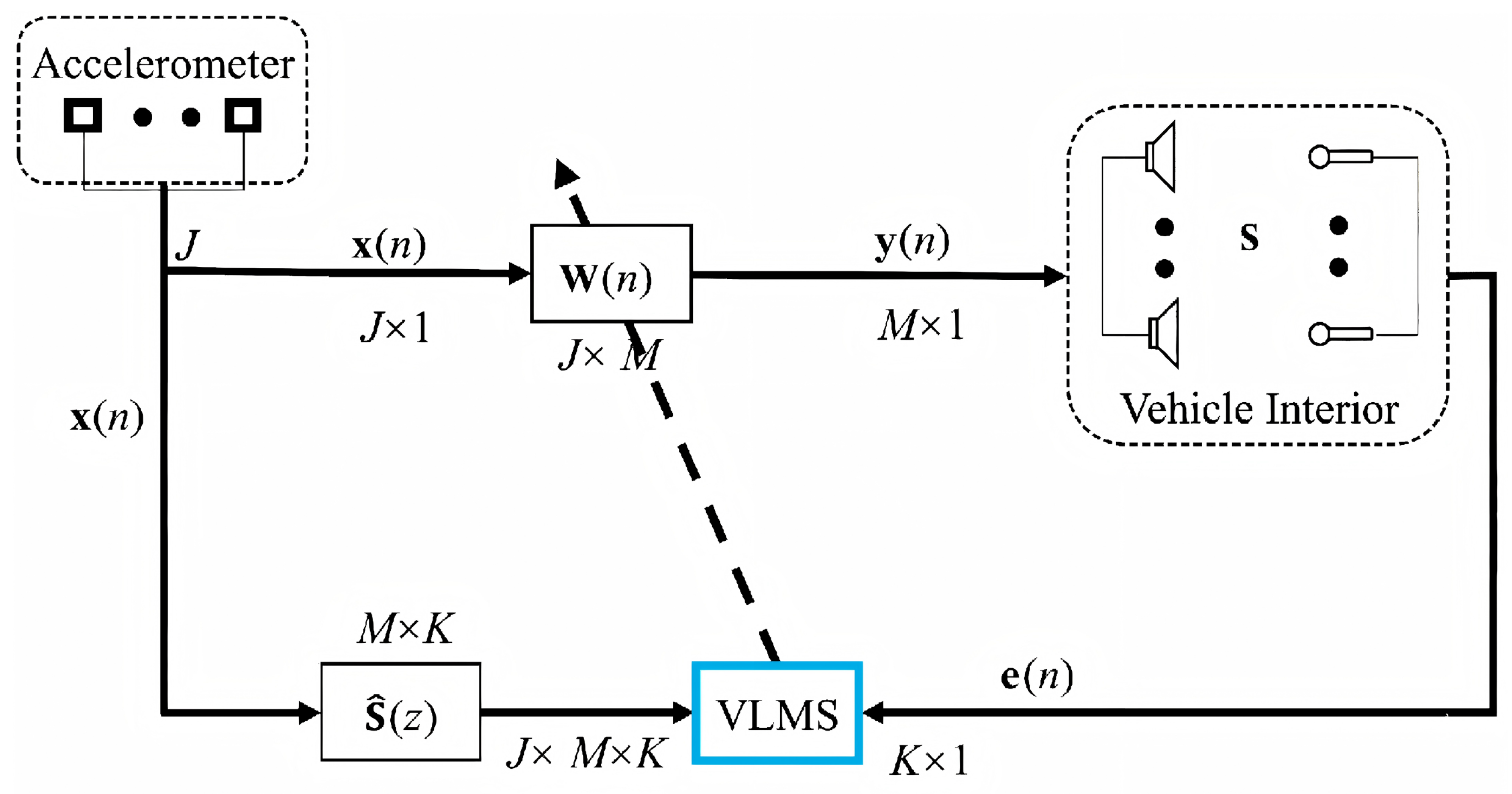
3.2. Variable Step-Size Algorithm
3.3. Computational Complexity and Validation Platforms
3.3.1. Computational Complexity and Engineering Feasibility
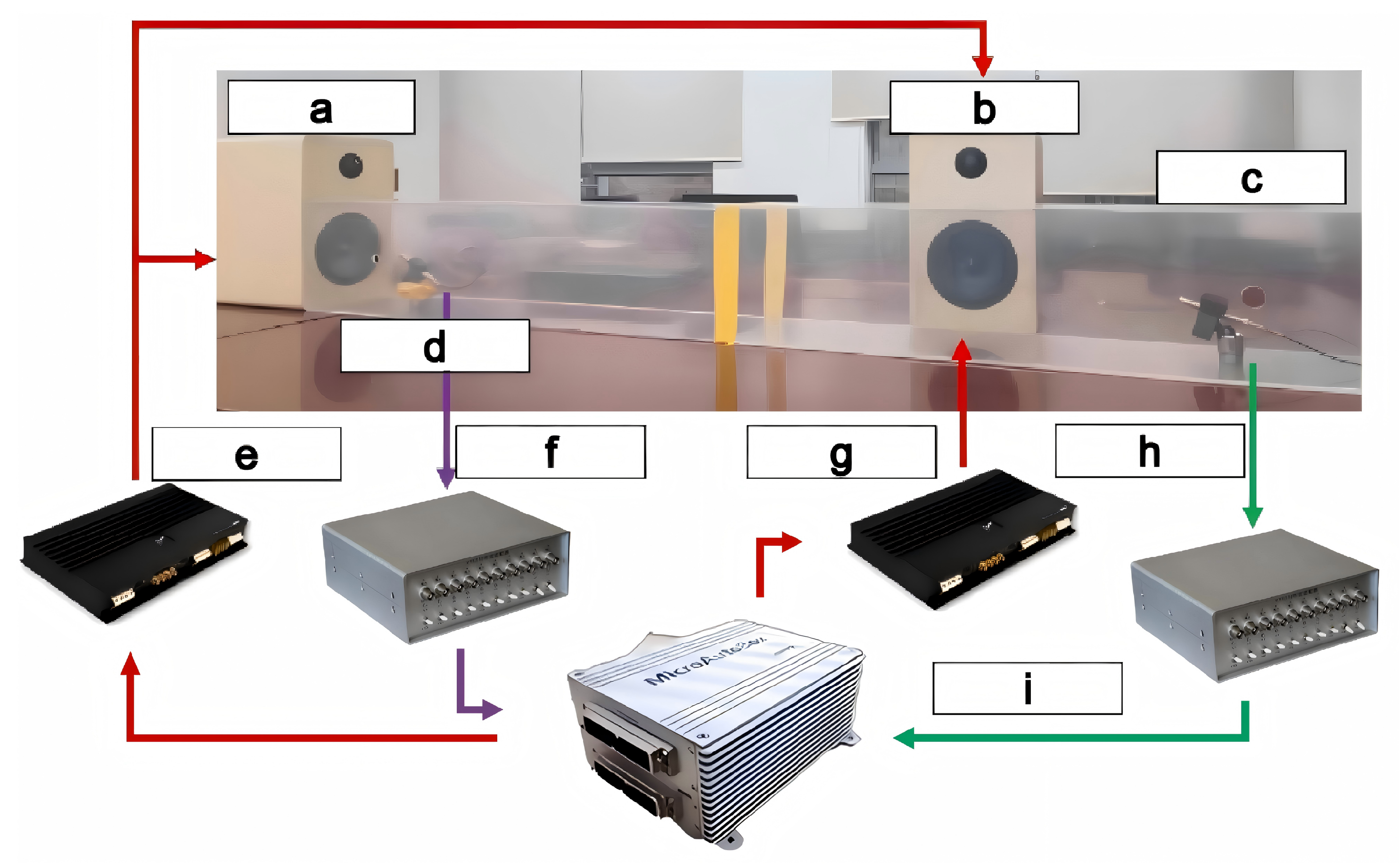
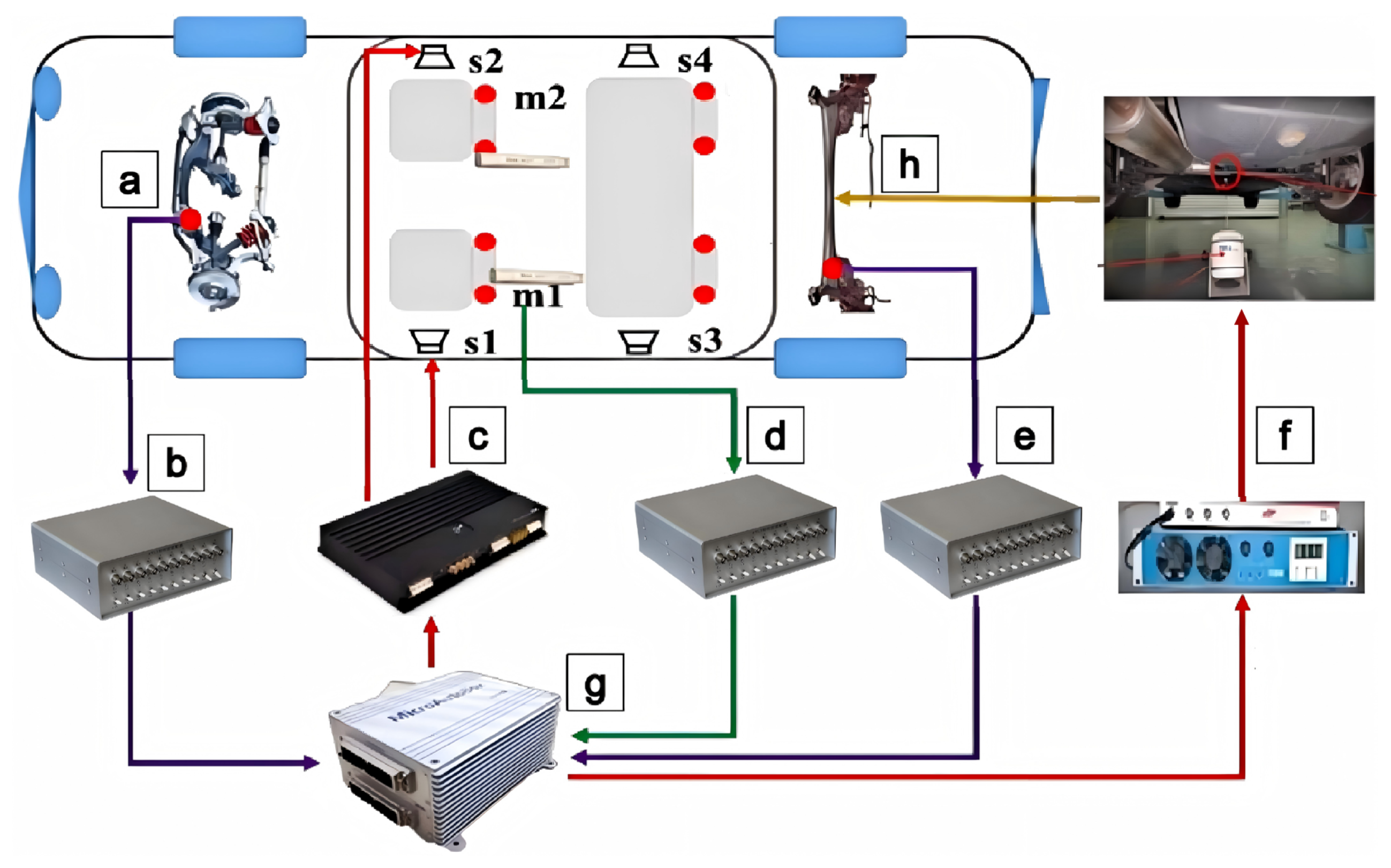
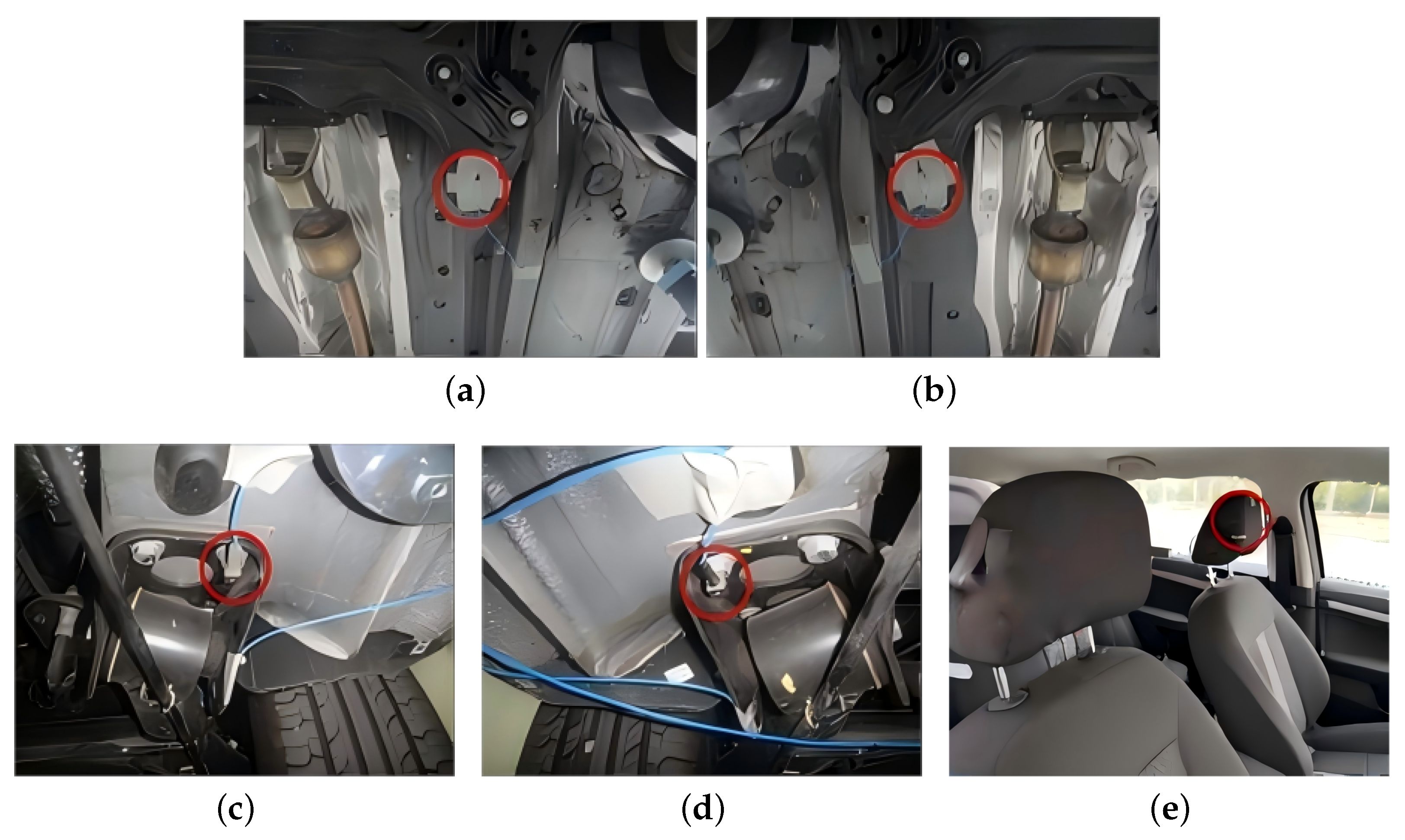
3.3.2. Validation Platforms and Operating Conditions
4. Results and Discussion
4.1. Simulation Verification
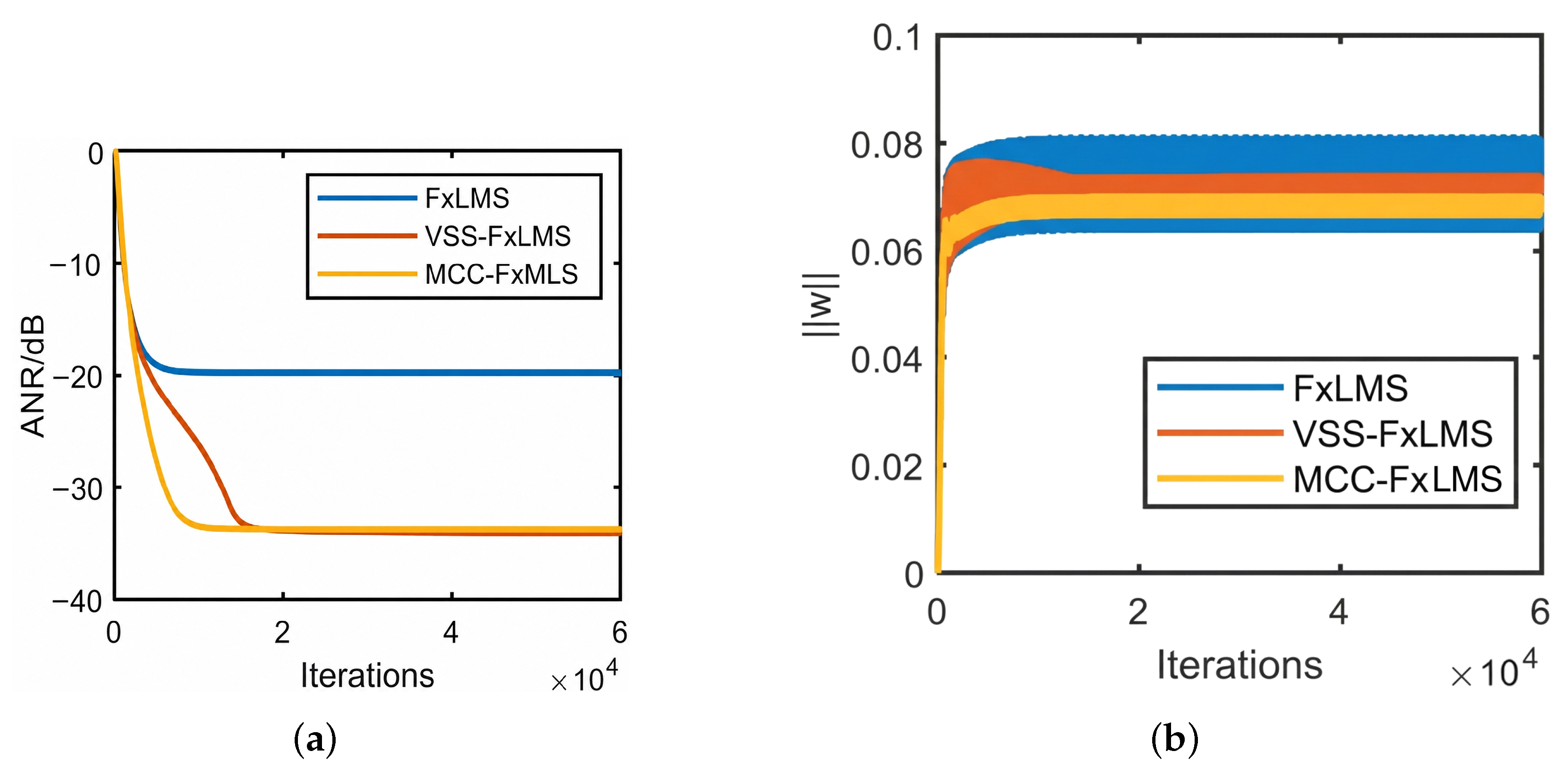
4.1.1. Simulation Verification on the HVAC ANC System
4.1.2. Simulation Verification on the Vehicle ARNC Bench
4.2. Experimental Verification
4.2.1. Experimental Verification on the HVAC ANC System
4.2.2. Experimental Verification on the Vehicle ARNC Bench
5. Conclusions
- Under the small-step-size assumption, an equivalent analytical framework is established for FxLMS with non-coherent interference. The derived convergence region and steady-state error expressions show that filtered-reference statistics mainly determine the formal stability bound, whereas interference power mainly raises the steady-state error floor.
- Two robustness optimization methods are developed. MCC improves robustness by extracting the reference-correlated component of the microphone signal before the main update. VSS improves robustness by reducing the late-stage step size while preserving rapid initial convergence.
- The computational analysis shows a clear engineering difference between the two methods. For representative ARNC parameters, the additional floating-point cost is much higher for MCC, whereas the added cost of VSS is only about 2% relative to the baseline FxLMS controller.
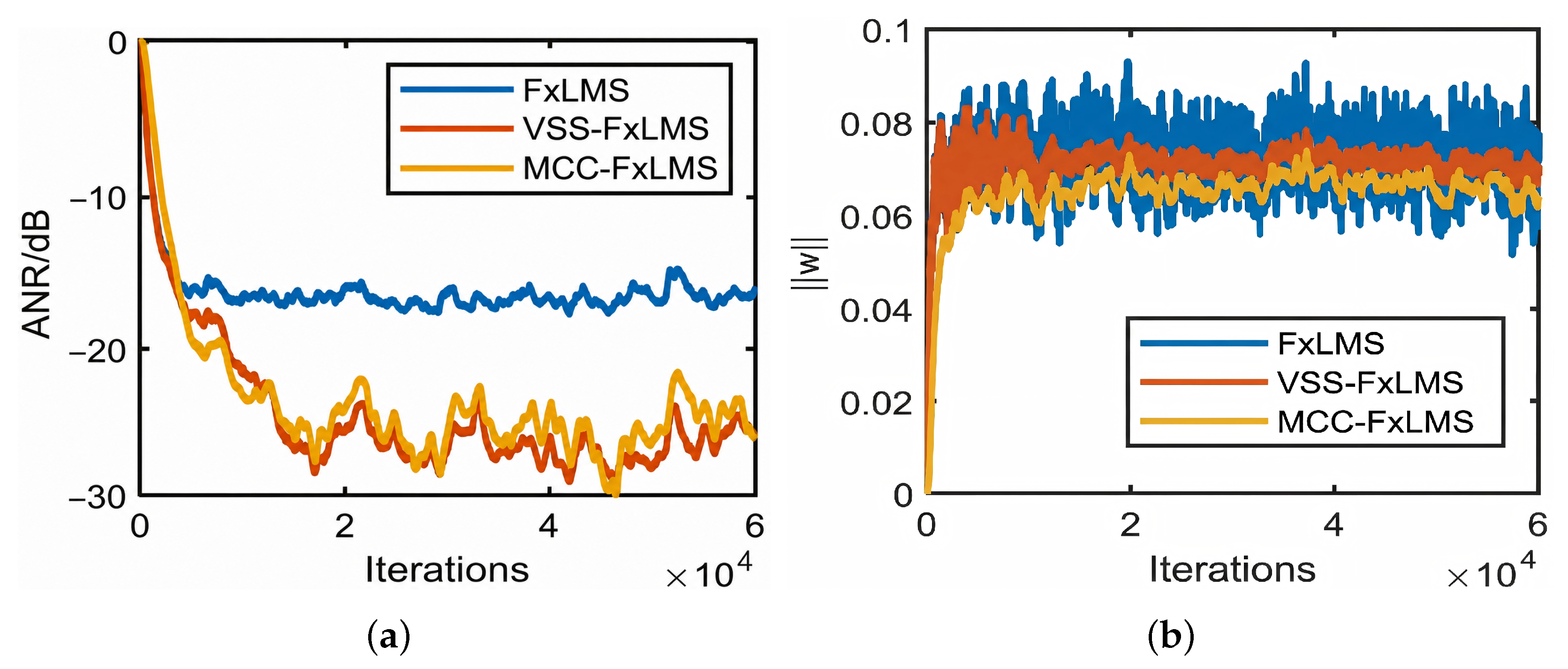
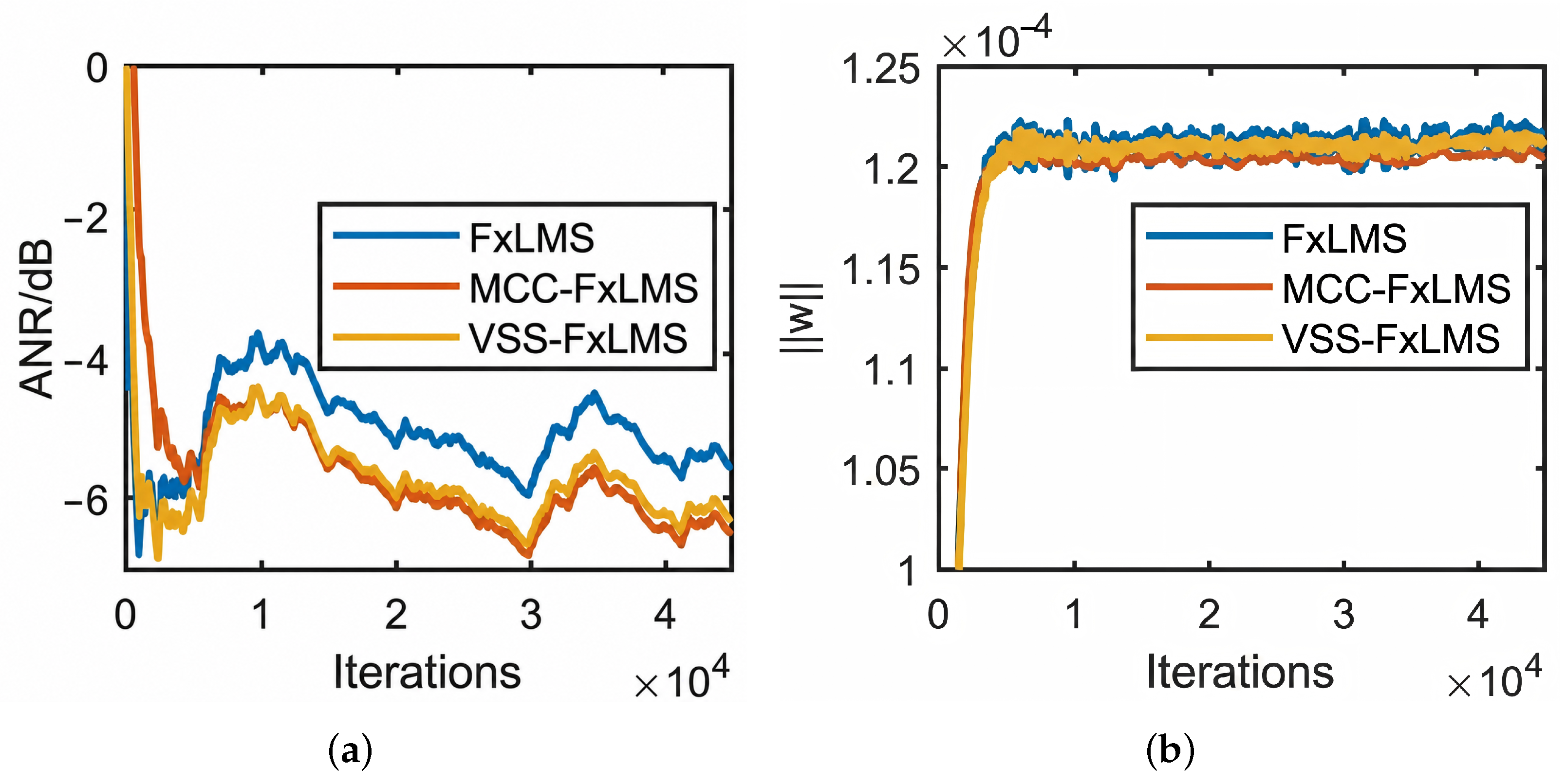
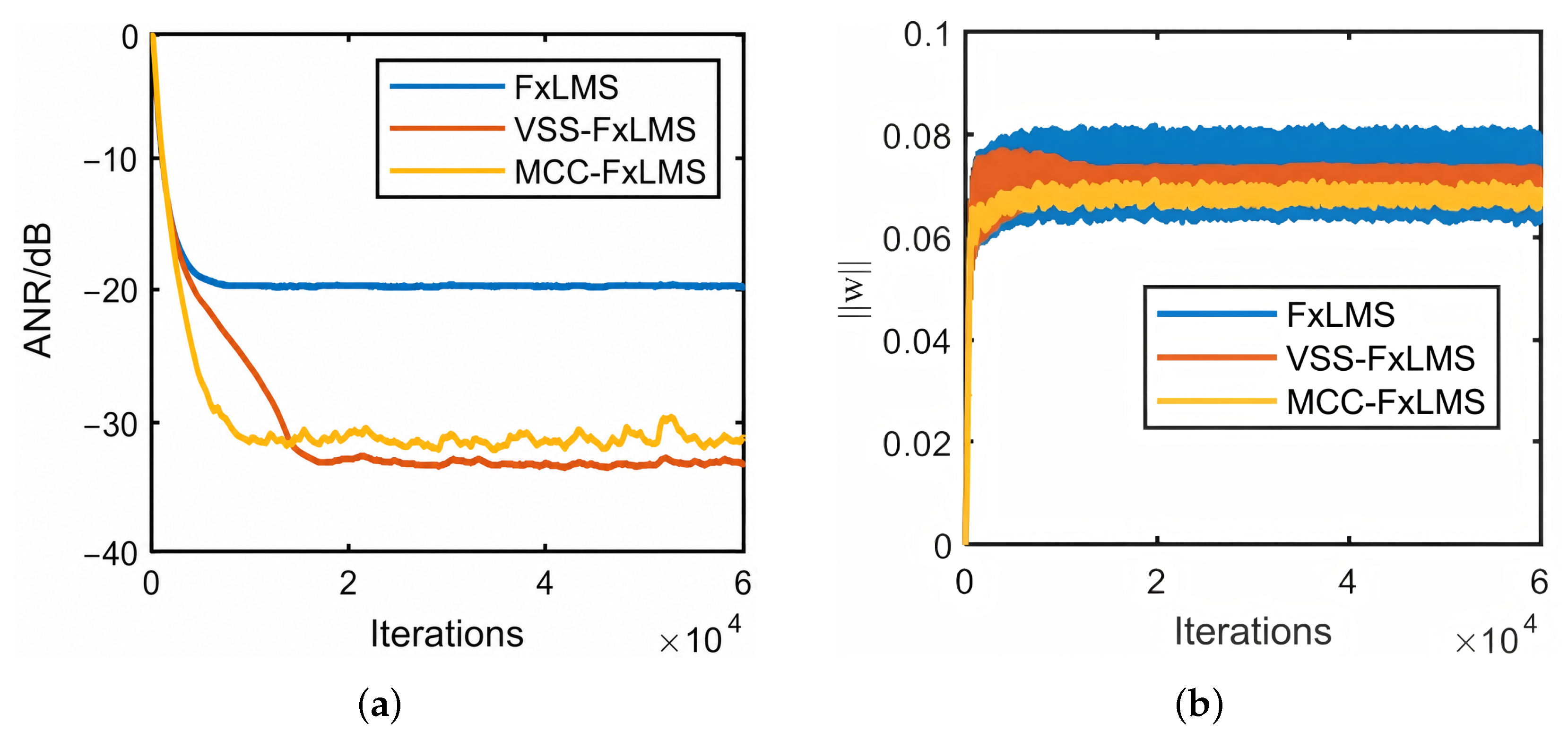
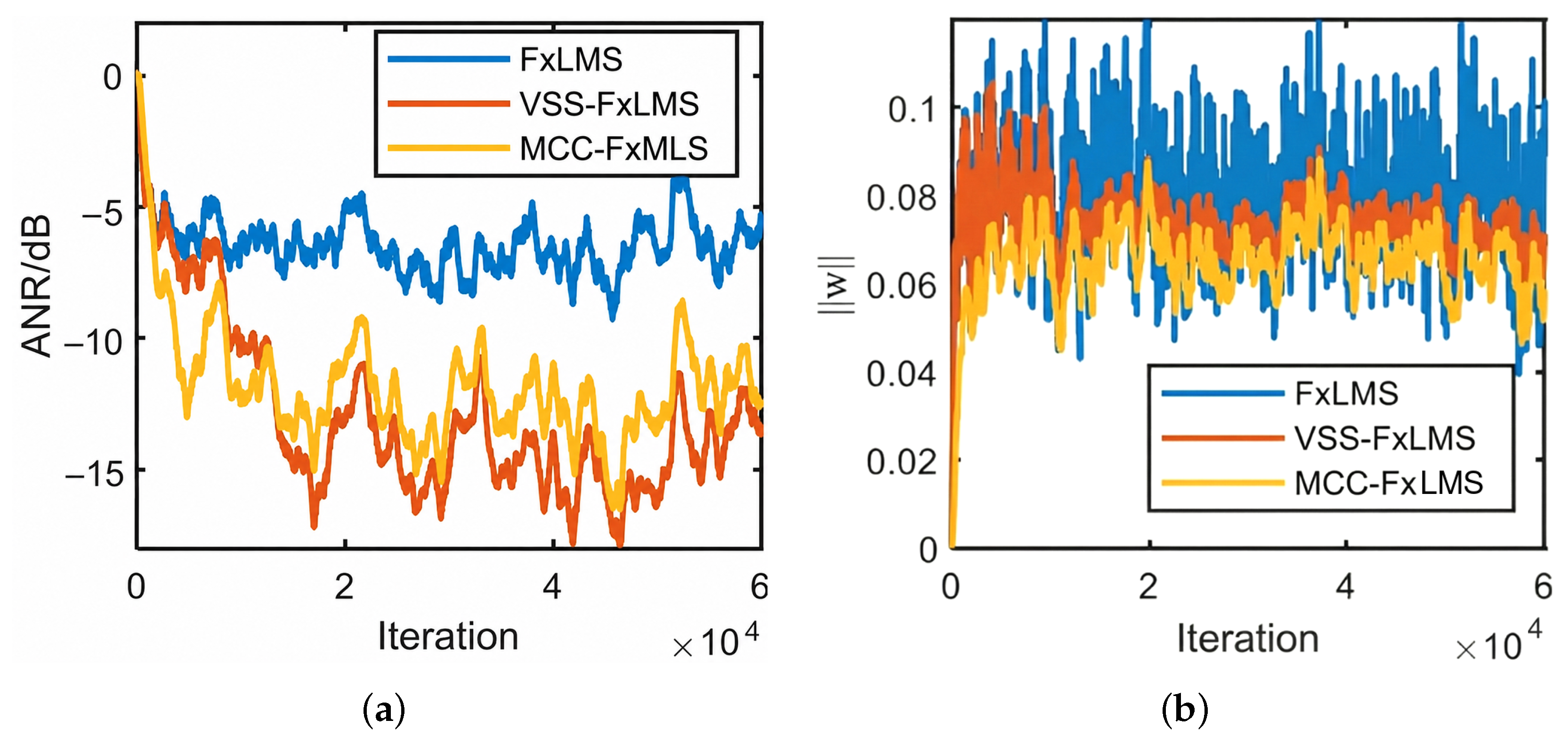
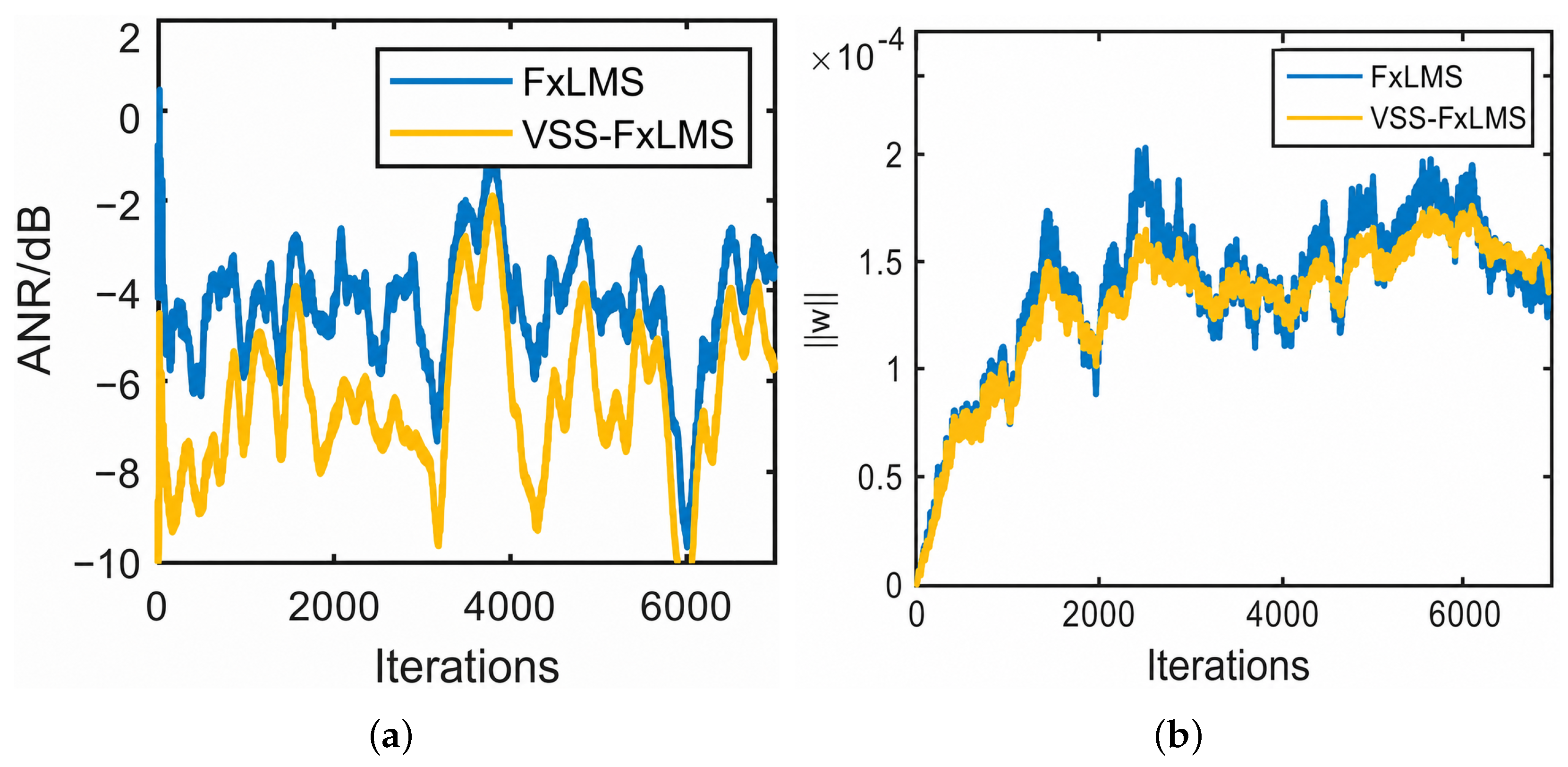
- Offline simulations and duct-platform real-time experiments confirm that both MCC and VSS reduce coefficient fluctuations and improve ANR under controlled non-coherent interference. The vehicle-bench real-time experiment further verifies the lower-complexity VSS implementation, with a 2.3 dB gain over fixed-step FxLMS under controlled tonal excitation. Considering the simulation-level comparability of MCC and VSS, the duct experimental results, and the much lower computational cost of VSS, VSS is the more practical candidate for subsequent onboard ARNC evaluation.
Author Contributions
Funding
Institutional Review Board Statement
Informed Consent Statement
Data Availability Statement
Conflicts of Interest
Abbreviations
| ADC | Analog-to-Digital Converter |
| DAC | Digital-to-Analog Converter |
| ANC | active noise control |
| ANR | average noise reduction |
| ARNC | active road noise control |
| FxLMS | filtered-x least mean square |
| HVAC | heating, ventilation and air conditioning |
| LMS | Least Mean Square |
| MCC | multichannel cascaded controller |
| VSS | variable step size |
References
- Tan, W.; Zhang, C.; Cao, W.; Cui, X. Tire/road noise mechanism and noise reduction pavement. Highw. Automot. Appl. 2008, 4, 85–87. [Google Scholar]
- Kuo, S.M.; Morgan, D.R. Active Noise Control Systems: Algorithms and DSP Implementations; John Wiley & Sons: Hoboken, NJ, USA, 1996. [Google Scholar]
- Elliott, S.J. A Review of Active Noise and Vibration Control in Road Vehicles; ISVR Technical Memorandum 981; University of Southampton, Institute of Sound and Vibration Research: Southampton, UK, 2008. [Google Scholar]
- Editorial Department of China Journal of Highway and Transport. Review on China’s Automotive Engineering Research Progress: 2017. China J. Highw. Transp. 2017, 30, 1–197. [Google Scholar]
- George, N.V.; Panda, G. Advances in active noise control: A survey, with emphasis on recent nonlinear techniques. Signal Process. 2013, 93, 363–377. [Google Scholar] [CrossRef]
- Sun, X.; Kuo, S. Active narrowband noise control systems using cascading adaptive filters. IEEE Trans. Audio Speech Lang. Process. 2007, 15, 586–592. [Google Scholar] [CrossRef]
- Akhtar, M.T.; Mitsuhashi, W. Improving performance of hybrid active noise control systems for uncorrelated narrowband disturbances. IEEE Trans. Audio Speech Lang. Process. 2011, 19, 2058–2066. [Google Scholar] [CrossRef]
- Padhi, T.; Chandra, M. Cascading time-frequency domain filtered-x LMS algorithm for active control of uncorrelated disturbances. Appl. Acoust. 2019, 149, 192–197. [Google Scholar] [CrossRef]
- Jia, Z.; Zheng, X.; Zhou, Q.; Hao, Z.; Qiu, Y. A hybrid active noise control system for the attenuation of road noise inside a vehicle cabin. Sensors 2020, 20, 7190. [Google Scholar] [CrossRef]
- Zhang, Z.; Wu, M.; Yin, L.; Gong, C.; Wang, J.; Zhou, S.; Yang, J. Robust feedback controller combined with the remote microphone method for broadband active noise control in headrest. Appl. Acoust. 2022, 195, 108815. [Google Scholar] [CrossRef]
- Shen, X.; Gan, W.S.; Shi, D. Alternative switching hybrid ANC. Appl. Acoust. 2021, 173, 107712. [Google Scholar] [CrossRef]
- Xu, Z.; Wan, B.; Jia, Z.; Li, R.; Liu, X.; Qiu, Y. A study on active road noise control based on operational transfer path analysis and selective subband adaptive filtering. Appl. Acoust. 2024, 222, 110041. [Google Scholar]
- Kwong, R.H.; Johnston, E.W. A variable step size LMS algorithm. IEEE Trans. Signal Process. 1992, 40, 1633–1642. [Google Scholar] [CrossRef]
- Mathews, V.J.; Xie, Z. A stochastic gradient adaptive filter with gradient adaptive step size. IEEE Trans. Signal Process. 2002, 41, 2075–2087. [Google Scholar] [CrossRef]
- Aboulnasr, T.; Mayyas, K. A Robust Variable Step-Size LMS-Type Algorithm: Analysis and Simulations. IEEE Trans. Signal Process. 1997, 45, 631–639. [Google Scholar] [CrossRef]
- Qin, J.; Ouyang, J. A Variable Step-Size LMS Adaptive Filtering Algorithm Based on Sigmoid Function. J. Data Acquis. Process. 1997, 12, 171–174. [Google Scholar]
- Zhao, S.; Man, Z.; Khoo, S.; Wu, H.R. Variable Step-Size LMS Algorithm with a Quotient Form. Signal Process. 2009, 89, 67–76. [Google Scholar] [CrossRef]
- Bin Saeed, M.O.; Zerguine, A. A Variable Step-Size Diffusion LMS Algorithm with a Quotient Form. EURASIP J. Adv. Signal Process. 2020, 2020, 12. [Google Scholar] [CrossRef]
- Akhtar, M.T.; Abe, M.; Kawamata, M. A new variable step size LMS algorithm-based method for improved online secondary path modeling in active noise control systems. IEEE Trans. Audio Speech Lang. Process. 2006, 14, 720–726. [Google Scholar] [CrossRef]
- Chang, D.C.; Chu, F.T. Feedforward active noise control with a new variable tap-length and step-size filtered-X LMS algorithm. IEEE/ACM Trans. Audio Speech Lang. Process. 2014, 22, 542–555. [Google Scholar] [CrossRef]
- Lian, S.; Li, T.; Zhao, S.; Shi, W.; Burnett, I.S.; Qiu, X. A coherence-based robust frequency-dependent variable step size method for active road noise control. J. Acoust. Soc. Am. 2025, 157, 11–23. [Google Scholar] [CrossRef]
- Gong, C.; Wu, M.; Guo, J.; Chen, J.; Zhang, Z.; Cao, Y.; Yang, J. Statistical analysis of multichannel FxLMS algorithm for narrowband active noise control. Signal Process. 2022, 200, 108646. [Google Scholar] [CrossRef]
- Bjarnason, E. Analysis of the filtered-x LMS algorithm. IEEE Trans. Speech Audio Process. 1995, 3, 504–514. [Google Scholar] [CrossRef]
- Yang, F.; Wu, M.; Yang, J. Stochastic analysis of the filtered-x LMS algorithm for active noise control. IEEE/ACM Trans. Audio Speech Lang. Process. 2020, 28, 2252–2262. [Google Scholar] [CrossRef]
- Ma, Y.; Xiao, Y.; Ma, L.; Khorasani, K. Statistical analysis of narrowband active noise control using a simplified variable step-size FxLMS algorithm. Signal Process. 2021, 183, 108012. [Google Scholar] [CrossRef]



| Algorithm | Floating-Point Multiplications | Floating-Point Additions |
|---|---|---|
| FxLMS | ||
| MCC | ||
| VSS |
| Case | Primary Noise | Non-Coherent Interference |
|---|---|---|
| 1 | Sinusoidal signals (55 Hz, 75 Hz, and 95 Hz) | Sinusoidal signals (65 Hz, 85 Hz, and 105 Hz) |
| 2 | Sinusoidal signals (55 Hz, 75 Hz, and 95 Hz) | Sinusoidal signals (65 Hz, 85 Hz, and 105 Hz) + white noise |
| Algorithm | Parameter | Value |
|---|---|---|
| FxLMS | Step size | 0.0001 |
| Filter order L | 256 | |
| MCC | Step size | 0.0001 |
| Projection step size | 0.0002 | |
| Auxiliary filter order | 128 | |
| VSS | Upper bound | 0.0001 |
| Lower bound | ||
| Time envelope | – | |
| Error-energy scale | Selected so that the initial factor exceeds 0.95 |
| Scenario | Case | Algorithm | ANR (dB) | Fluctuation |
|---|---|---|---|---|
| Duct simulation | Case 1 | FxLMS | 19.7 | Large fluctuations |
| MCC | 35.4 | Small fluctuations | ||
| VSS | 35.5 | Small fluctuations | ||
| Case 2 | FxLMS | 16.7 | Large fluctuations | |
| MCC | 28.5 | Small fluctuations | ||
| VSS | 28.6 | Small fluctuations | ||
| Vehicle-bench simulation | – | FxLMS | 4.6 | Large fluctuations |
| MCC | 7.2 | Small fluctuations | ||
| VSS | 7.1 | Small fluctuations |
| Scenario | Case | Algorithm | ANR (dB) | Fluctuation |
|---|---|---|---|---|
| Duct experiment | Case 1 | FxLMS | 19.3 | Large fluctuations |
| MCC | 32.2 | Small fluctuations | ||
| VSS | 33.5 | Small fluctuations | ||
| Case 2 | FxLMS | 8.1 | Large fluctuations | |
| MCC | 14.5 | Small fluctuations | ||
| VSS | 16.2 | Small fluctuations | ||
| Vehicle-bench experiment | – | FxLMS | 4.8 | Large fluctuations |
| VSS | 7.1 | Small fluctuations |
Disclaimer/Publisher’s Note: The statements, opinions and data contained in all publications are solely those of the individual author(s) and contributor(s) and not of MDPI and/or the editor(s). MDPI and/or the editor(s) disclaim responsibility for any injury to people or property resulting from any ideas, methods, instructions or products referred to in the content. |
© 2026 by the authors. Licensee MDPI, Basel, Switzerland. This article is an open access article distributed under the terms and conditions of the Creative Commons Attribution (CC BY) license.
Share and Cite
Liu, S.; Zhang, L.; Meng, D.; Zhu, Z.; Pi, X. Theoretical Analysis and Robustness Optimization of FxLMS-Based Active Road Noise Control Under Non-Coherent Interference. Appl. Sci. 2026, 16, 4638. https://doi.org/10.3390/app16104638
Liu S, Zhang L, Meng D, Zhu Z, Pi X. Theoretical Analysis and Robustness Optimization of FxLMS-Based Active Road Noise Control Under Non-Coherent Interference. Applied Sciences. 2026; 16(10):4638. https://doi.org/10.3390/app16104638
Chicago/Turabian StyleLiu, Sihan, Lijun Zhang, Dejian Meng, Zhehui Zhu, and Xiongfei Pi. 2026. "Theoretical Analysis and Robustness Optimization of FxLMS-Based Active Road Noise Control Under Non-Coherent Interference" Applied Sciences 16, no. 10: 4638. https://doi.org/10.3390/app16104638
APA StyleLiu, S., Zhang, L., Meng, D., Zhu, Z., & Pi, X. (2026). Theoretical Analysis and Robustness Optimization of FxLMS-Based Active Road Noise Control Under Non-Coherent Interference. Applied Sciences, 16(10), 4638. https://doi.org/10.3390/app16104638