


Abstract
The global electric vehicle (EV) market is experiencing exponential growth, driven by technological advancements, environmental awareness, and government incentives. As EV adoption accelerates, it introduces opportunities and challenges for power systems worldwide due to the large battery capacity, uncertain charging behaviors of EV users, and seasonal variations. This could result in significant peak–valley differences in load in featured time slots, particularly during winter periods when EVs’ heating systems use increases. This paper proposes three future charging strategies, namely the Overnight, Workplace/Other Charging Sites, and Overnight Workplace/Other Charging Sites, to reduce overall charging in peak periods. The charging strategies are based on predicted load utilizing a hybrid machine learning (ML) approach to reduce overall charging in peak periods. The hybrid ML method combines similar day selection, complete ensemble empirical mode decomposition with adaptive noise, and deep neural networks. The dataset utilized in this study was gathered from 1000 EVs across nine provinces in Canada between 2017 and 2019, encompassing charging loads for thirty-five vehicle models, and charging locations and levels. The analysis revealed that the aggregated charging power of EV fleets aligns and overlaps with the peak periods of residential buildings energy consumption. The proposed Overnight Workplace/Other Charging Sites strategy can significantly reduce the Peak-to-Average Ratio (PAR) and energy cost during the day by leveraging predictions made three days in advance. It showed that the PAR values were approximately half those on the predicted load profile (50% and 51%), while charging costs were reduced by 54% and 56% in spring and winter, respectively. The proposed strategies can be implemented using incentive programs to motivate EV owners to charge in the workplace and at home during off-peak times.
1. Introduction
1.1. Problem Statement
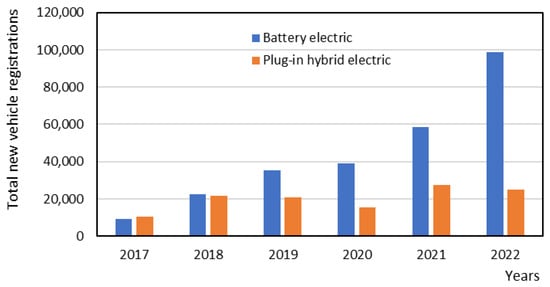
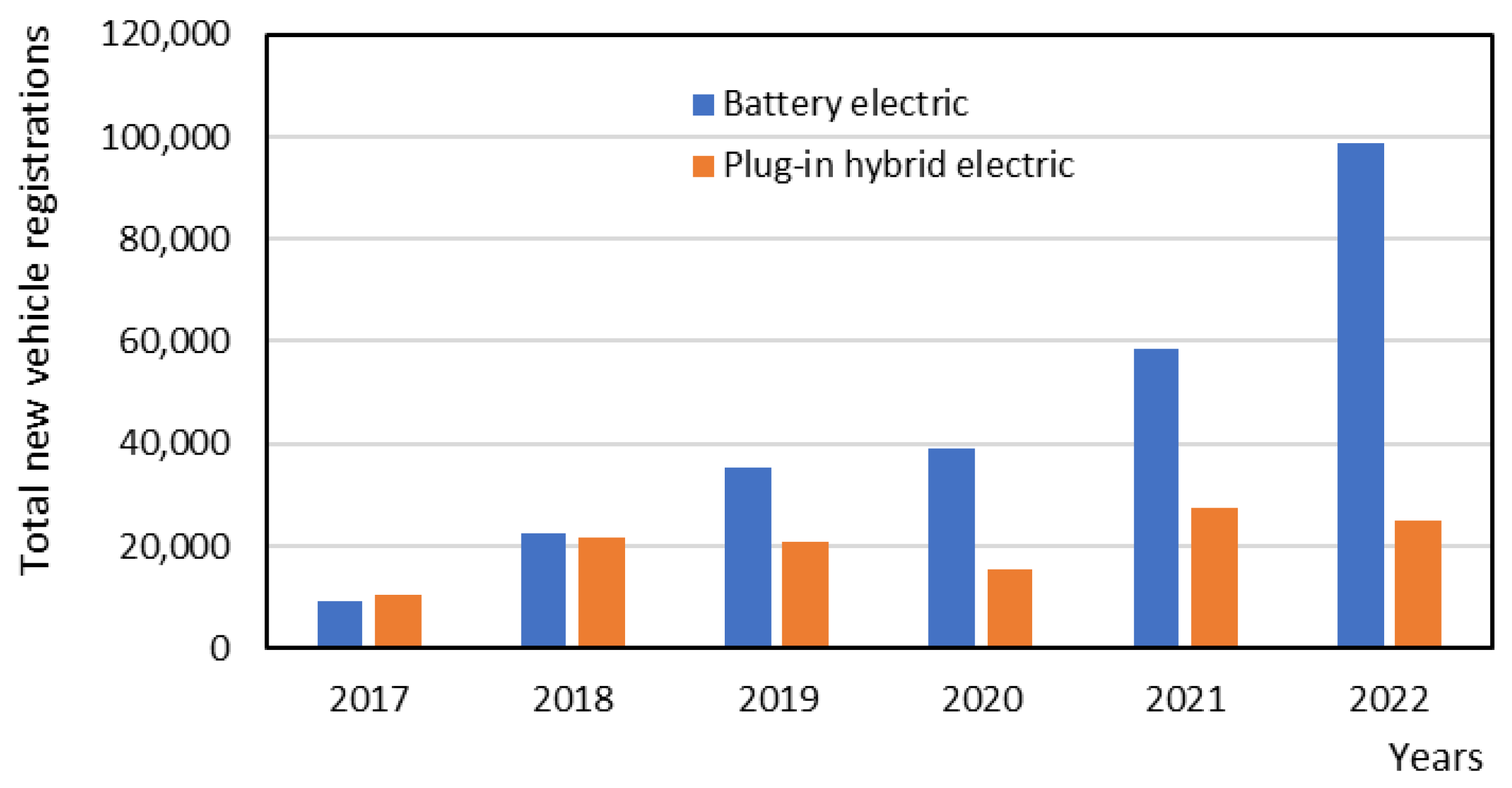
Global sales of electric vehicles (EVs) increased by 55% in 2022 from the year before, according to data from the EV Volumes sales database [1]. In the U.S., it is anticipated that 50% of all new vehicle sales will be electric by 2030 [2]. European EV sales are currently running at an annual rate of about 2 million, with a market share below 20%. In the U.K., EV sales are expected to hit GBP 3.2 million (24% of total vehicle sales) by 2025 and GBP 6.8 million (50%) by 2030 [3]. Meanwhile, in Canada, a record 86,032 battery electric vehicles (BEVs) and plug-in hybrid electric vehicles (PHEVs) were registered in 2021, accounting for 5.3% of total vehicle registrations that year. In comparison, 56,165 BEVs and PHEVs were registered (2.9% of total registrations) in 2019 and 19,696 (1% of total registrations) in 2017 [4]. The highest EV registrations were at 123,562 in 2022 (Figure 1) [4]. BEVs comprise roughly 82% of new registrations, with the rest going to PHEVs [5]. The growing adoption of electric vehicles (EVs) is expected to significantly impact power demand in residential areas, potentially increasing peak loads by 30% [6].
Figure 1.
Number of total new BEVS and PHEV registrations in Canada.
Peak electricity demand in residential buildings typically occurs in the evening, aligning with the peak charging time for electric vehicles (EVs). In winter, colder temperatures negatively affect EV battery performance by reducing battery efficiency, which leads to longer charging times and higher energy consumption. This increased electricity demand is compounded by heightened heating needs during colder months, further contributing to overall load spikes on the grid. As a result, winter periods often see a convergence of higher residential and EV loads, placing significant strain on energy infrastructure. Managed charging strategies could be crucial in reducing the strain on electrical grids and optimizing energy use as EV adoption rises. Despite the rapid expansion of the EV market and infrastructure, utilities and power generators face a major challenge in developing effective charging strategies for residential EV fleets to mitigate peak electricity consumption and rising energy costs.
1.2. Literature Review
Accurate load prediction is a critical component of effective demand-side load management (DSLM), especially with the unpredictable nature of EV charging patterns. Various studies have explored traditional methods, highlighting challenges in meeting user demand due to high prediction errors [7] and non-linear problems [8]. Other studies utilized ML techniques to forecast residential load demand, including EV charging. Zhu et al. (2021) developed a ML-based model that uses historical data and real-time inputs to predict short-term load (STL) demand, enabling more effective load management and grid balancing [9]. Similarly, Kong et al. (2019) proposed a deep-learning approach to predict residential electricity demand. Their model demonstrated superior performance compared to traditional forecasting methods [10]. More recently, Mohsenimanesh et al. (2022) applied the CEEMDAN, the SD methods, and deep neural networks to the problem of STL forecasting in EV fleets Canada-wide [11,12]. The numerical results show that the proposed model outperformed the single and other hybrid models with the smallest error of 2.63%, highlighting the potential of ML in enhancing the efficiency of DSLM systems.
EV charging strategies, including overnight and in the workplace, play a pivotal role in DSLM. According to a study published in Cell Reports Physical Science, strategic management of EV charging can significantly mitigate the effects of peak electricity demand and enhance solar energy utilization [13,14]. The study suggests that overnight/delayed home charging avoids coinciding peak residential demand with peak charging demand. Workplace charging of EVs can help reduce peak electricity demand, store excess solar energy, and lower electricity costs for EV owners and grid operators [14]. Workplace charging can provide a significant amount of power to the grid, especially during daytime hours when solar generation is high and EVs are idle. One study found that workplace charging in the US could reduce the curtailment of solar electricity by half and lower the peak demand by 18% [14]. Another study predicted that workplace charging in Munich could provide up to 200 MW of power by 2030, about 20% of the city’s peak load [15]. A recent study by Stanford University suggests that shifting current EV charging from home to work and night to day could cut costs and help the grid [16]. Proportions for overnight and workplace/other charging sites are influenced by user behavior, local infrastructure, and policy incentives. Hardman found that these proportions for homes, workplaces, and other charging sites are around 50–80%, 15–25%, and 10–20% [17].
The effectiveness of EV charging strategies is often evaluated in terms of their impact on energy costs and the Peak-to-Average load ratio (PAR). DSLM aims to reduce the PAR of the electric grid, achieve a more balanced daily load shape, and improve system efficiency and stability. DSLM is utilized to reduce the PAR across various applications, including renewable energy integration [18] time-of-use pricing incentive schemes [19], load control in a multi-residential building [20] real-time scheduling of EVs charging [21], and future smart grid [22].The utilities consider the overall PAR ratio as an objective or a constraint in formulating the problem of price calculation to reduce the overall peak demand. Thus, peak demand minimization reduces the utility capital cost requirements [23]. The deployment of DSLM will motivate the end-users to utilize less energy during peak hours or to shift energy use to off-peak times [1,5,6], which will help the utility company reduce peak load demand and reshape the load profile.
1.3. Paper Contributions and Organizations
Given the previously highlighted challenges arising from the imminent widespread adoption of EV charging, it is imperative to devise novel strategies that reduce the PAR value and energy cost of the electric grid and effectively address the impact of the fleet of EVs in residential buildings. Although EV charging strategies have been explored, a critical component—load modeling—often relies more recently on traditional statistical methods, such as probabilistic models [13] and Monte Carlo simulations [24,25,26]. These approaches face challenges when dealing with non-linear patterns or non-stationary data, potentially resulting in significant deviations in predicting EV charging demand. Moreover, they underutilize the fleet-level characteristics of EVs, which include diverse real-life charging loads, varying vehicle models, and battery capacities (e.g., long-range, mid-range, and short-range), as well as the influence of weather events. Additionally, limited studies have addressed charging scenarios, particularly in the context of cost optimization and Peak-to-Average ratio (PAR) management to achieve peak shaving and valley filling of the grid load profile [13]. Therefore, improvements are needed to develop both overnight and workplace charging scenarios in residential buildings using reliable load predictions.
This paper proposes three charging strategies based on the STLF approach, namely “the CEEMDAN, the SD methods, and deep neural networks, [12]” to address the problem of peak charging load for EV fleets in residential buildings. For this purpose, the simulation results of aggregated charge power during the day three-day-ahead prediction period in two seasons, spring and winter, are further analyzed under fifteen charging strategy combinations. PAR values and energy cost of all charging strategies were analyzed to provide the impact of EV charging on the aggregated peak in residential buildings.
The contribution of the presented paper is the application of prediction hybrid machine learning method on charging strategies to achieve peak shaving and valley filling of the grid load profile, through the following means:
- Studying the effect of various charging load shifted (%) from evening to overnight or from home to workplace/other charging sites or mix overnight and workplace/other charging sites for residential buildings in Canada
- Comparing the predicted charging model with various combinations of overnight and workplace charging shifts (%)
- Evaluating the effectiveness of EV charging strategies on PAR minimization and energy cost reduction.
2. Materials and Methods
2.1. Data Processing Pipeline
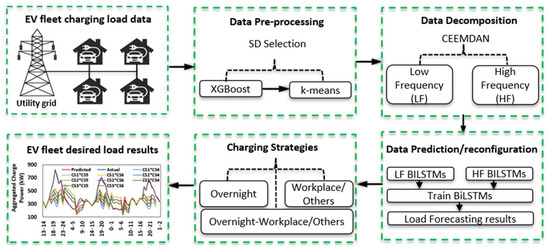
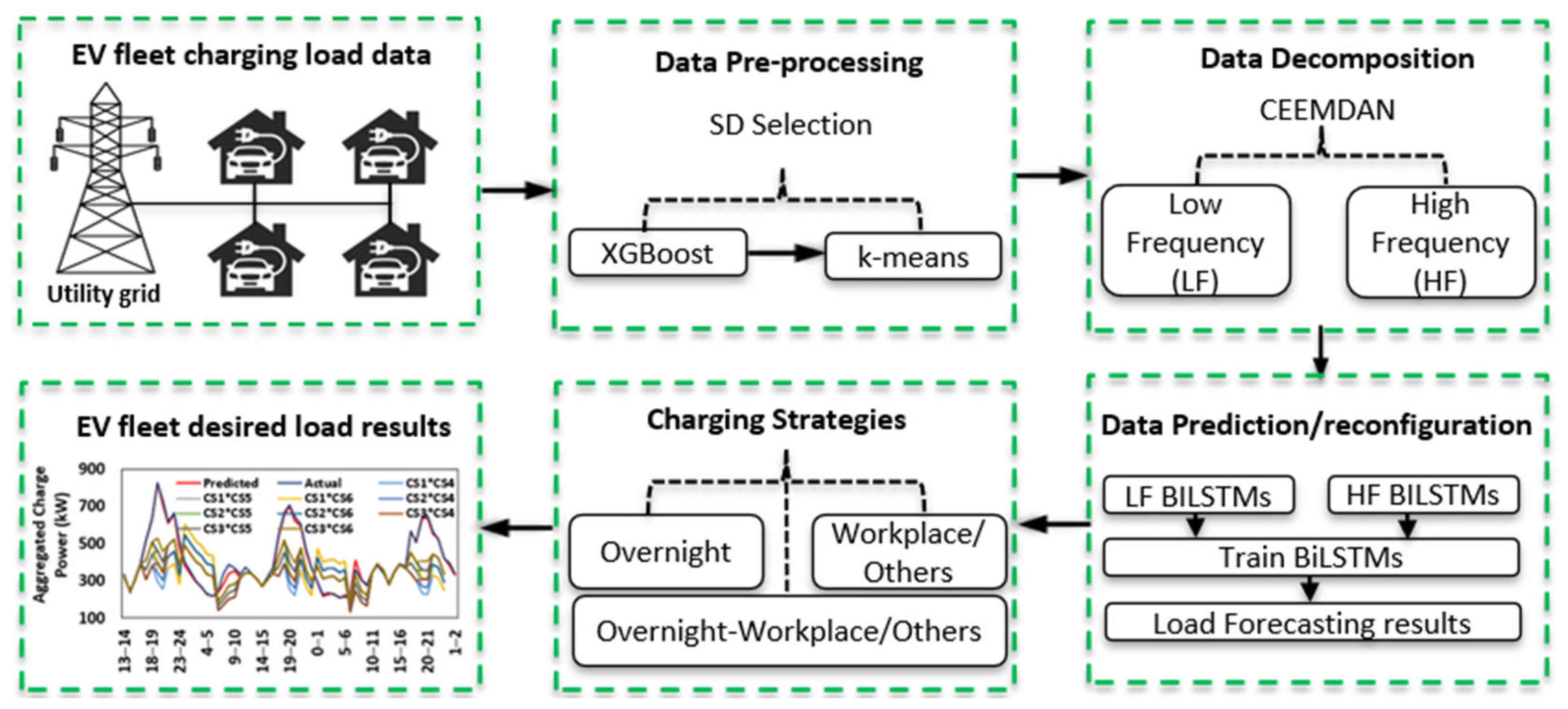
A large dataset comprising over 727,000 charging load events from 1000 EVs was collected across Canada by FleetCarma Inc., Waterloo, ON, Canada, in cooperation with utility companies and the University of Waterloo between 2017 and 2019. The collected data included charging loads of thirty-five vehicle models in nine provinces at three charging locations and three charging levels. The data included charging duration, energy consumption, loss, and the battery state of charge, and the full results of load prediction were reported by Mohsenimanesh et al. (2022 and 2021) [11,12]. The proposed approach comprises the following steps: data collection, data preprocessing, data decomposition, data prediction, charging strategies, and desired load results, as shown in Figure 2.
Figure 2.
Hybrid charging strategy approach based on SD-CEEMDAN-BiLSTM.
In data preprocessing, the XGB method computes the feature weight and merges it with the k-means algorithm to establish the SD cluster. In data decomposition, the CEEMDAN method decomposes the charging load into several frequencies, which are then used as the input to the BiLSTM model for training and obtaining the predicted values, respectively. Section 2.2 describes the charging strategies.
2.2. Development of the Charging Strategies
Three future charging profiles, including the Overnight, Workplace/Other Charging Sites, and Overnight Workplace/Other Charging Sites profiles, were created to describe what may happen when electric utilities use pricing signals in Canada to influence EV charging behavior. These strategies are based on the predicted aggregated charge power (kW) results during the day using the SD-CEEMDAN-BiLSTM model. The full results of the load prediction model were reported by Mohsenimanesh et al. (2022) [12]. The Overnight charging profile reflects a shift in the charging load from the late afternoon/early evening to the overnight period. The Workplace/Other Charging Sites profile reflects the effect of reducing the charging load during peak electricity consumption hours (6–10 a.m. and 5–9 p.m.) by shifting it to workday hours (10 a.m.–4 p.m.), where it aligns well with the higher renewable power production. The Overnight Workplace/Other Charging Sites profile includes the effect of both strategies. The charging strategies were designed with three levels of overnight (20, 30, 40% shifts) and three levels of workplace (30, 30, 40%) shifts (Table 1). The load shift values are determined based on the proportions of homes, and workplaces/other charging sites [17]. Since 50–80% of charging occurs at home, and residential load during the evening is at its highest, assigning a maximum of 40% to the Overnight charging profile is deemed sufficient to achieve the desired load distribution. For the Workplace/Other Charging Sites profile, a single workplace accounts for 20–30% of total charging, while public charging constitutes 10–20%. Therefore, a combined 30–50%, capped at an upper limit of 40%, is allocated to this profile. This allocation aims to achieve a more even load distribution over a 24 h period, enhancing grid efficiency, reducing peak demand stress, and optimizing energy infrastructure.
Table 1.
Overnight and Workplace/Other Charging Sites combination.
2.3. Evaluation Indicators
Two commonly used metrics, namely Peak-to-Average Ratio (PAR) and energy cost, were employed to evaluate the charging strategies’ performance.
2.3.1. Peak-to-Average Ratio (PAR)
The PAR represents the ratio between the highest electricity demand (peak) and the average demand over a specific period.
where is the peak power of the signal, and is the average power. A high PAR indicates that the signal has significant peaks compared to its average power, which can be problematic in power-constrained systems, leading to inefficiencies or potential signal distortions. The PAR values were calculated at numerous intervals under various overnight and workplace charging combinations. This PAR metric can help assess the potential impact of EV charging on overall energy costs at different times of day, accounting for fluctuations in aggregated load.
2.3.2. Energy Cost
The energy cost calculation under various energy pricing schemes is crucial for both consumers and utility providers. Two pricing schemes are considered for Canada: one for Ontario with its peak/mid-peak/off-peak Time of Use (TOU) rate structure provided by the Hydro One utility company (Equation (2)), and the other for all provinces, called “Fixed rates” schedules, including Quebec, British Colombia, Alberta, Manitoba, Saskatchewan, Nova Scotia, Newfoundland, New Brunswick. These two schemes impact the total energy cost, depending on when and how power is used.
These prices were collected from the Hydro Utility at various intervals throughout the day, enabling an analysis of the cost implications associated with EV charging (Table 2).
Table 2.
Weekday TOU hours in Ontario.
TOU pricing for Ontario is as follows:
where TECTB and RTB are the total energy consumed during the time block, and rate for the time block, respectively.
FR pricing for all provinces except Ontario is as follows:
where TEC and FR are the total energy consumed, and the fixed rate, respectively.
3. Experimental Results and Validation
3.1. Effect of Charging Strategies of Fleet of EVs on Peak Shaving and Valley Filling
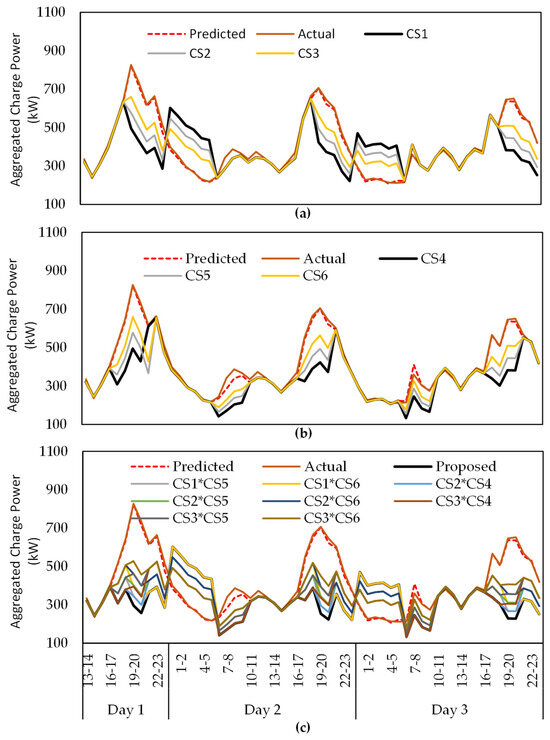
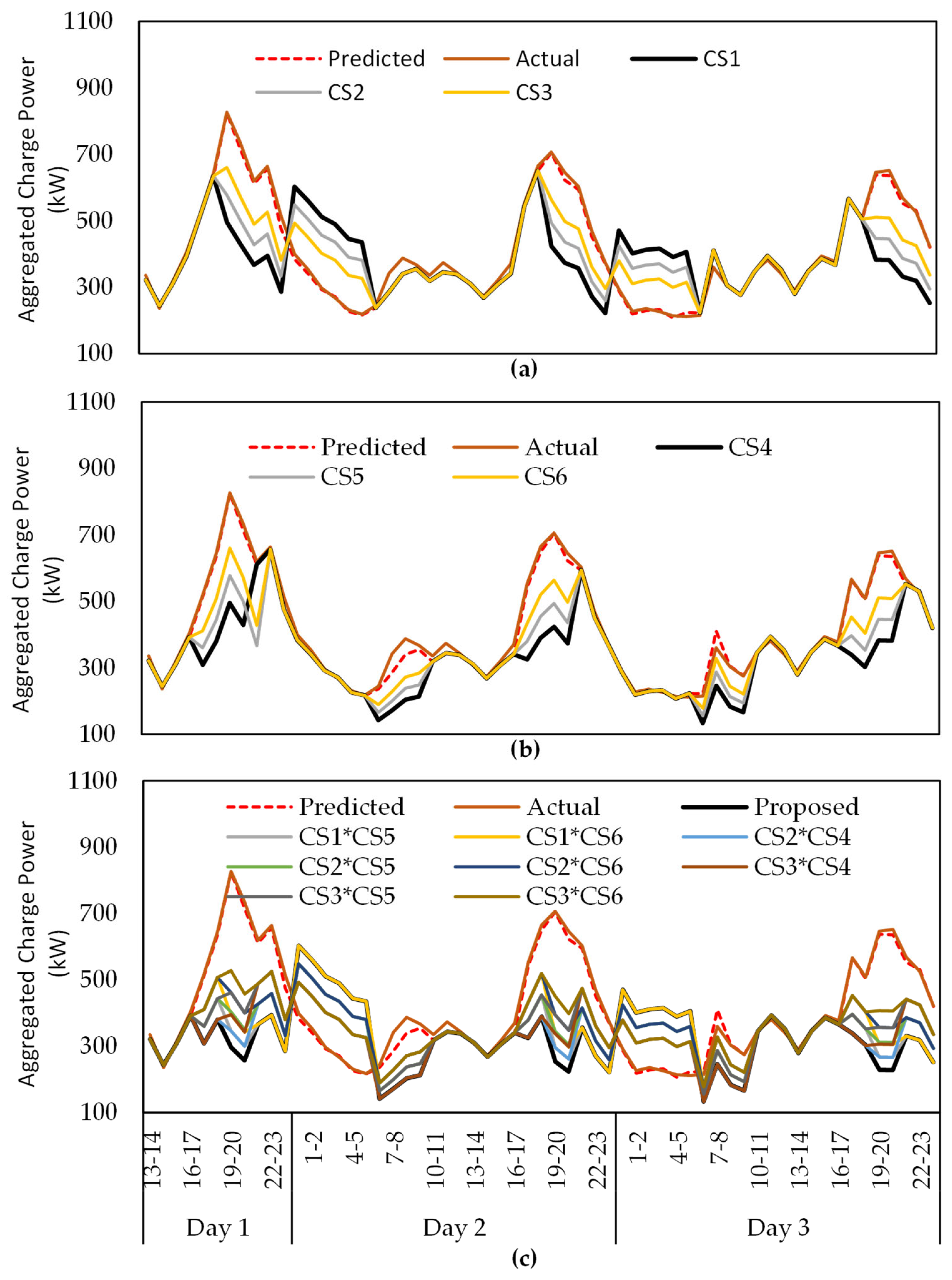
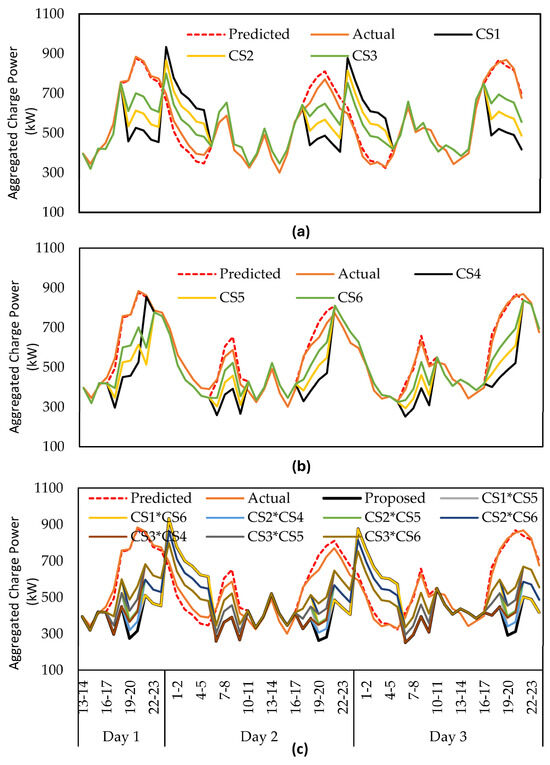
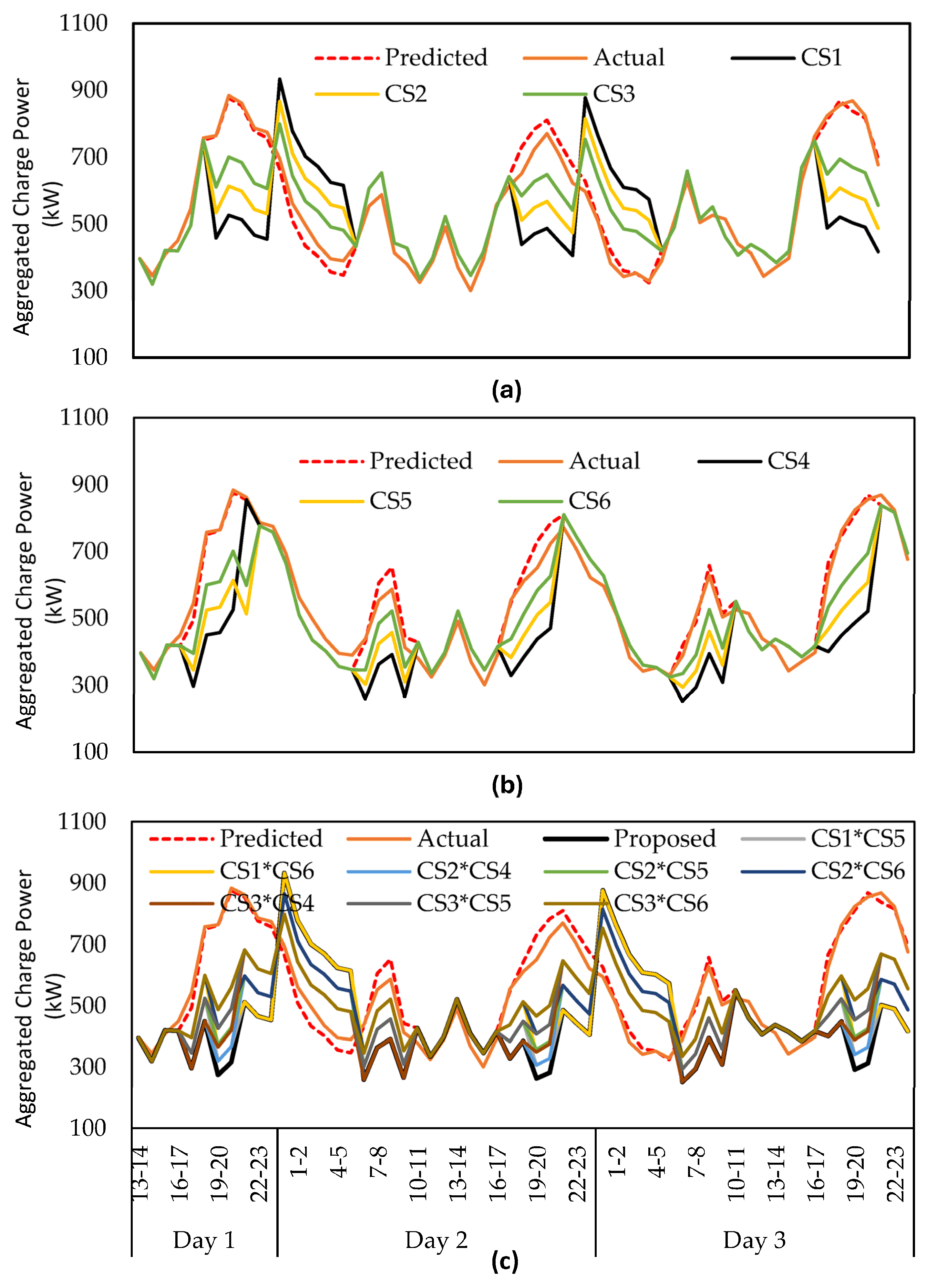
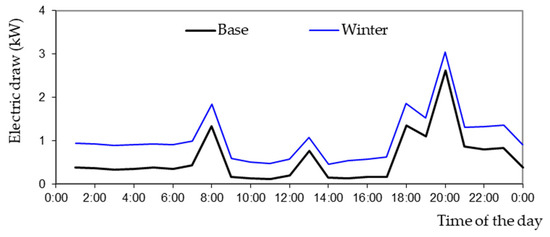
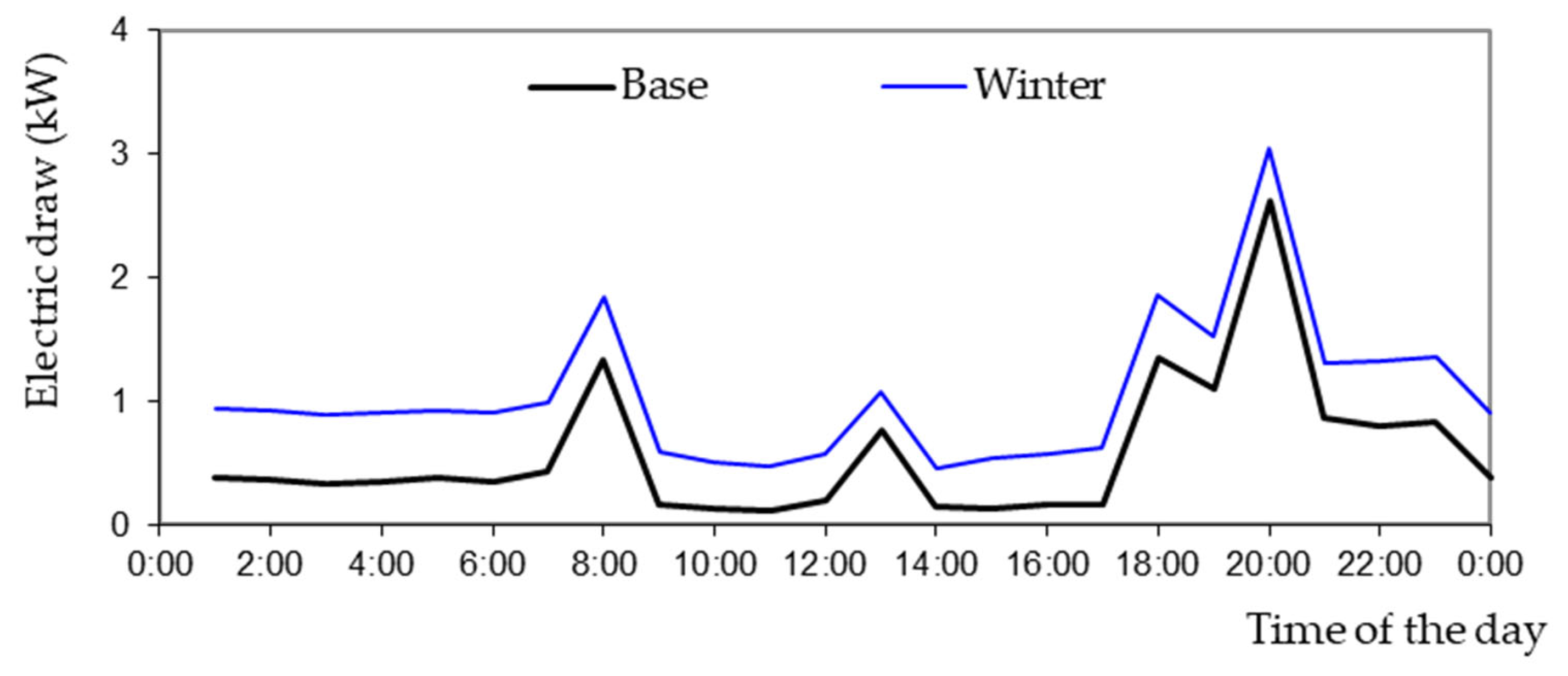
Fifteen charging strategies, including three Overnight, three Workplace/Other Charging Sites, and nine Overnight_Workplace/Other Charging Sites profiles (Table 1), were developed for comparative analysis and to verify the performance of the proposed charging strategy. It is observed that the peak charging load during the three-day-ahead period occurred around 7 p.m. (Figure 3 and Figure 4). The energy performance of residential electric load profiles was evaluated using Twin test houses, specifically single-detached units, by the Canadian Centre for Housing Technology (CCHT) [27,28]. As can be seen from Figure 5, the residential peak load occurred around 8 p.m. The simultaneous peaking of residential and electric vehicle (EV) loads can place significant strain on the energy grid. Shifting or transferring peak EV charging to Overnight or Workplace/Other Charging Sites hours can enhance energy efficiency and improve grid stability. Figure 3 and Figure 4 illustrate that a charging strategy (CS1 × CS4) with a 40% load shift for hybrid Overnight Workplace/Other Charging Sites is more effective than single Overnight charging (CS1, CS2, and CS3) (Figure 3a and Figure 4a) or single Workplace/Other Charging Sites (CS4, CS5, and CS6) (Figure 3b and Figure 4b) during peak periods in spring and winter. This strategy effectively reduces peak electricity usage and excels in both peak shaving and valley filling over a three-day prediction period. Similar results in reducing electricity demand during peak periods using Overnight and Workplace/Other Charging Sites’ have been observed in various experimental studies [13,16].
Figure 3.
Charging strategies, prediction, and actual aggregated charge power during the day in spring from 30 April 2019 to 3 May 2019. (a) Overnight Charging. (b) Workplace/Other Charging Sites. (c) Hybrid Overnight Workplace/Other Charging Sites strategies.
Figure 4.
Charging strategies, prediction, and actual aggregated charge power during the day in winter from 26 January 2019 to 29 January 2019. (a) Overnight Charging. (b) Workplace/Other Charging Sites. (c) Hybrid Overnight Workplace/Other Charging Sites strategies.
Figure 5.
CCHT research house electrical load profiles.
The comparison between the aggregated load in spring and winter revealed that peak periods in spring are shorter than in winter, resulting in a higher overall charging power during winter (Figure 3 and Figure 4). This might be due to reduced battery efficiency, increased cabin heating load, and less effective regenerative braking. The average power during peak periods is 745 and 581 kW, reduced to 391 and 301 kW for winter and spring, respectively (Table 3 and Table 4). These findings demonstrate the potential for three-day-ahead EV charging strategies to significantly reduce residential loads and costs in peak periods and improve grid stability. Overall, the experiments validate the effectiveness of charging strategies based on predicted load using the ML approach.
Table 3.
Peak power in kW, Peak-to-Average ratio (PAR), PAR reduction (%), and cost reduction (%) compared to the prediction for spring Canada-wide.
Table 4.
Peak power in kW, Peak-to-Average ratio (PAR), PAR reduction (%) compared to the reference case, and cost reduction (%) compared to the prediction for winter Canada-wide.
3.2. Effect of Charging Strategies of Fleet of EVs on PAR and Cost Reduction
The experiments aimed to evaluate the performance of different EV charging strategies in minimizing peak load and energy costs over a three-day horizon. The energy costs were calculated using two pricing schemes: the province of Ontario’s TOU rate structure (Table 2), and fixed rates for all other provinces. These schemes influence the energy cost based on the timing and pattern of power consumption. The charging strategies were compared with the predicted values in terms of aggregated peak power (kW), Peak-to-Average Ratio (PAR), PAR reduction, and cost reduction (%) in Table 3 and Table 4 for spring and winter, respectively. The PAR results show that the greatest ratio of Peak-to-Average load was 1.45, with 1.35 for the reference case for spring and winter. The lowest ratio (PAR) was 0.73 and 0.69 for each of the proposed strategies, CS1 × CS4, for spring and winter. Cardenas et al. (2021) [13] obtained similar results by evaluating the overnight charging strategy with a PAR reduction, demonstrating the relief for the grid with lower implementation costs. Rafique et al. (2022) [29], Proposed an aggregated coordination mechanism for EV charge–discharge scheduling to manage the peak demand in low-voltage residential buildings. They found that EV owners experience a reduction in electricity costs, while grid operators benefit from better management of peak demand. Zou et al. (2014) [30], evaluated the impact of a fleet of EVs charging and discharging on the power grid. The findings revealed that optimal charging significantly reduces electricity costs and lowers the PAR of electricity usage. Manasseha et al. (2014) [20], proposed a demand-side management technique for multi-residential end-users connected to a single energy source. They found that PAR and total energy prices could be substantially minimized.
Table 2 represents Ontario’s TOU rates.
4. Conclusions
This study proposes three future charging strategies based on predicted load using a hybrid ML technique. To evaluate its effectiveness, the proposed approach was compared with predicted results hourly over three days ahead in both spring and winter. The performance of the charging strategies was assessed in terms of peak shaving, valley filling, PAR optimization, and cost reduction.
The main conclusions of this study are summarized as follows:
- The EV charging strategy using the ML load forecasting approach for residential buildings developed in the present investigation is a significant step forward in enhancing energy efficiency and improving grid stability.
- Overnight charging reduces home charging during peak periods, reducing the PAR value by 27% and 28% for spring and winter, respectively. Similarly, Workplace/Other Charging Sites contribute to reducing peak home charging demand, resulting in a 25% and 22% drop in PAR value for spring and winter, respectively. The results demonstrate the effectiveness of the proposed strategy in significantly reducing electricity costs for the fleet of EVs while managing the peak demand for grid operators. The result indicates that the proposed approach can improve the PAR by up to 50% and cost up to 54% in spring and 49% and 56% in winter compared to the predicted load.
- Based on a real-life charging load dataset collected from 1000 EVs in nine provinces in Canada, the proposed approach is able to provide a reliable charging strategy for residential buildings under a wide range of overnights and workplaces.
- The current real-life dataset indicates a maximum charging power of 7.7 kW in residential buildings. Comparing these results with the recent literature reveals that introducing electric heat pumps, increasing EV battery capacities, and adopting higher charging power in residential settings lead to higher peak demand and shorter charging times. Consequently, effective charging strategies have become more crucial than ever. Without them, these trends may result in power quality issues, including voltage fluctuations and increased harmonic distortion in distribution networks.
5. Future Work
- Optimized EV charging strategies for individual provinces could be developed to reflect the unique characteristics of their energy grids. For instance, in provinces with high renewable energy penetration, such as wind in Alberta or hydroelectric power in Quebec, charging strategies can be designed to synchronize EV charging with periods of peak renewable energy availability. Such alignment has the potential to enhance grid efficiency, decrease dependence on fossil fuels, and significantly reduce overall emissions.
- A smart charging strategy for a fleet of EVs could be designed to align users’ charging behavior with periods of low electricity demand or high renewable energy generation, thereby minimizing overall energy costs and the peak load.
- Advanced real-time decision-making models could be developed to optimize high-capacity EV charging in residential and commercial buildings and to reduce peak demand and energy costs. These models enhance energy efficiency by integrating Vehicle-to-Grid (V2G) technology, onsite renewable energy, and storage systems for a more resilient and sustainable energy framework.
Author Contributions
Conceptualization, A.M.; methodology, A.M. and E.E.; software, A.M.; formal analysis, A.M.; investigation, A.M.; writing—original draft preparation, A.M.; writing—review and editing, A.M. and E.E. All authors have read and agreed to the published version of the manuscript.
Funding
This research is financially supported by Natural Resources Canada, the Program of Energy Research and Development under grant CEO-19-112.
Institutional Review Board Statement
Not applicable.
Informed Consent Statement
Not applicable.
Data Availability Statement
The original contributions presented in the study are included in the article, further inquiries can be directed to the corresponding author.
Acknowledgments
The authors would like to thank the Office of Energy Research and Development (OERD) of Natural Resources Canada for their valuable financial support.
Conflicts of Interest
The authors declare no conflict of interest.
References
- World Economic Forum Worldwide Sales of EVs. Available online: https://www.weforum.org/agenda/2022/02/electric-cars-sales-evs/ (accessed on 24 February 2022).
- The White House FACT SHEET: Biden-Harris Administration Announces New Private and Public Sector Investments for Affordable Electric Vehicles. Available online: https://www.whitehouse.gov/briefing-room/statements-releases/2023/04/17/fact-sheet-biden-harris-administration-announces-new-private-and-public-sector-investments-for-affordable-electric-vehicles/ (accessed on 13 November 2024).
- Winton, N. Will EU 2030 EV Sales Failure Trigger Weakening of CO2 Rules? Available online: https://www.forbes.com/sites/neilwinton/2024/08/13/will-eu-2030-ev-sales-failure-trigger-weakening-of-co2-rules/ (accessed on 13 November 2024).
- Canada Energy Regulator. Market Snapshot: Record-High Electric Vehicle Sales in Canada. Available online: https://www.cer-rec.gc.ca/en/data-analysis/energy-markets/market-snapshots/2022/market-snapshot-record-high-electric-vehicle-sales-canada.html (accessed on 7 September 2023).
- Statistics Canada. New Motor Vehicle Registrations: Quarterly Data Visualization Tool. Available online: https://www150.statcan.gc.ca/n1/pub/71-607-x/71-607-x2021019-eng.htm (accessed on 7 September 2023).
- Engel, H.; Hensley, R.; Knupfer, S.; Sahdev, S. The potential impact of electric vehicles on global energy systems. In McKinsey Center for Future Mobility; McKinsey & Company: New York City, NY, USA, 2018. [Google Scholar]
- Haq, R. Machine Learning for Load Profile Data Analytics and Short-term Load Forecasting. Electron. Theses Diss. 2019, 3414, 100. [Google Scholar]
- Nie, H.; Liu, G.; Liu, X.; Wang, Y. Hybrid of ARIMA and SVMs for Short-Term Load Forecasting. Energy Procedia 2012, 16, 1455–1460. [Google Scholar] [CrossRef] [Scilit]
- Zhu, K.; Geng, J.; Wang, K. A hybrid prediction model based on pattern sequence-based matching method and extreme gradient boosting for holiday load forecasting. Electr. Power Syst. Res. 2021, 190, 106841. [Google Scholar] [CrossRef] [Scilit]
- Kong, W.; Dong, Z.Y.; Jia, Y.; Hill, D.J.; Xu, Y.; Zhang, Y. Short-Term Residential Load Forecasting Based on LSTM Recurrent Neural Network. IEEE Trans. Smart Grid 2019, 10, 841–851. [Google Scholar] [CrossRef] [Scilit]
- Mohsenimanesh, A.; Entchev, E.; Lapouchnian, A.; Ribberink, H. A Comparative Study of Deep Learning Approaches for Day-Ahead Load Forecasting of an Electric Car Fleet. In Database and Expert Systems Applications—DEXA 2021 Workshops; Kotsis, G., Tjoa, A.M., Khalil, I., Moser, B., Mashkoor, A., Sametinger, J., Fensel, A., Martinez-Gil, J., Fischer, L., Czech, G., et al., Eds.; Springer International Publishing: Cham, Switzerland, 2021; Volume 1479, pp. 239–249. ISBN 978-3-030-87100-0. [Google Scholar]
- Mohsenimanesh, A.; Entchev, E.; Bosnjak, F. Hybrid Model Based on an SD Selection, CEEMDAN, and Deep Learning for Short-Term Load Forecasting of an Electric Vehicle Fleet. Appl. Sci. 2022, 12, 9288. [Google Scholar] [CrossRef] [Scilit]
- Cardenas, A.; Guzman, C.; Martinez, W. EV Overnight Charging Strategy in Residential Sector: Case of Winter Season in Quebec. Vehicles 2021, 3, 557–577. [Google Scholar] [CrossRef] [Scilit]
- Needell, Z.; Wei, W.; Trancik, J.E. Strategies for beneficial electric vehicle charging to reduce peak electricity demand and store solar energy. Cell Rep. Phys. Sci. 2023, 4, 101287. [Google Scholar] [CrossRef] [Scilit]
- SIEMENS. Smoothing the Wave: EVs Enable Significant Peak Shaving; SIEMENS: Munich, Germany, 2023. [Google Scholar]
- Golden, M. Charging Cars at Home at Night Is Not the Way to Go, Stanford Study Finds. Available online: https://news.stanford.edu/stories/2022/09/charging-cars-home-night-not-way-go#:~:text=readScience%20%26%20Engineering-,Charging%20cars%20at%20home%20at%20night%20is%20not%20the%20way,to%20a%20new%20Stanford%20study (accessed on 7 September 2023).
- Hardman, S.; Jenn, A.; Tal, G.; Axsen, J.; Beard, G.; Daina, N.; Figenbaum, E.; Jakobsson, N.; Jochem, P.; Kinnear, N.; et al. A review of consumer preferences of and interactions with electric vehicle charging infrastructure. Transp. Res. Part D Transp. Environ. 2018, 62, 508–523. [Google Scholar] [CrossRef] [Scilit]
- Bogdanova, O.; Viskuba, K.; Zemīte, L. A Review of Barriers and Enables in Demand Response Performance Chain. Energies 2023, 16, 6699. [Google Scholar] [CrossRef] [Scilit]
- Dewangan, C.L.; Singh, S.N.; Chakrabarti, S.; Singh, K. Peak-to-average ratio incentive scheme to tackle the peak-rebound challenge in TOU pricing. Electr. Power Syst. Res. 2022, 210, 108048. [Google Scholar] [CrossRef] [Scilit]
- Manasseh, E.C.; Ohno, S.; Yamamoto, T.; Mvuma, A. Distributed demand-side management optimisation for multi-residential users with energy production and storage strategies. J. Eng. 2014, 2014, 672–679. [Google Scholar] [CrossRef] [Scilit]
- Luo, X.; Chan, K.W. Real-time scheduling of electric vehicles charging in low-voltage residential distribution systems to minimise power losses and improve voltage profile. IET Gener. Transm. Amp; Distrib. 2014, 8, 516–529. [Google Scholar] [CrossRef] [Scilit]
- Nguyen, H.K.; Song, J.B.; Han, Z. Demand side management to reduce Peak-to-Average Ratio using game theory in smart grid. In Proceedings of the 2012 Proceedings IEEE INFOCOM Workshops, Orlando, FL, USA, 25–30 March 2012; IEEE: Piscataway, NJ, USA, 2012; pp. 91–96. [Google Scholar]
- Manasseh, E.; Ohno, S.; Kalegele, K.; Tariq, R. Demand Side Management to Minimize Peak-to-Average Ratio in Smart Grid. Stoch. Syst. Theory Its Appl. 2015, 2015, 102–107. [Google Scholar] [CrossRef] [Scilit]
- Goh, H.H.; Zong, L.; Zhang, D.; Dai, W.; Lim, C.S.; Kurniawan, T.A.; Goh, K.C. Orderly Charging Strategy Based on Optimal Time of Use Price Demand Response of Electric Vehicles in Distribution Network. Energies 2022, 15, 1869. [Google Scholar] [CrossRef] [Scilit]
- Du, W.; Ma, J.; Yin, W. Orderly charging strategy of electric vehicle based on improved PSO algorithm. Energy 2023, 271, 127088. [Google Scholar] [CrossRef] [Scilit]
- Zhang, L.; Sun, C.; Cai, G.; Koh, L.H. Charging and discharging optimization strategy for electric vehicles considering elasticity demand response. eTransportation 2023, 18, 100262. [Google Scholar] [CrossRef] [Scilit]
- Canadian Centre for Housing Technology Research Facility—National Research Council Canada. Available online: https://nrc.canada.ca/en/research-development/nrc-facilities/canadian-centre-housing-technology-research-facility (accessed on 10 October 2024).
- Entchev, E.; Yang, L.; Gusdorf, J.; Manning, M.; Swinton, M.; Szadkowski, F. Performance evaluation of a hybrid internal combustion system/high efficiency furnace system. Canadian Centre for Housing Technology. Final Rep. 2007, CETC-O Project 422-EE2, 84. [Google Scholar]
- Rafique, S.; Nizami, M.S.H.; Irshad, U.B.; Hossain, M.J.; Mukhopadhyay, S.C. EV Scheduling Framework for Peak Demand Management in LV Residential Networks. IEEE Syst. J. 2022, 16, 1520–1528. [Google Scholar] [CrossRef] [Scilit]
- Zou, N.; Qian, L.; Attia, J.; Ai, C. Cost and peak-to-average ratio reduction of electricity usage via intelligent EV charging. In Proceedings of the 2014 9th IEEE Conference on Industrial Electronics and Applications, Hangzhou, China, 9–11 June 2014; IEEE: Piscataway, NJ, USA, 2014; pp. 584–589. [Google Scholar]

Disclaimer/Publisher’s Note: The statements, opinions and data contained in all publications are solely those of the individual author(s) and contributor(s) and not of MDPI and/or the editor(s). MDPI and/or the editor(s) disclaim responsibility for any injury to people or property resulting from any ideas, methods, instructions or products referred to in the content. |
© 2024 by the authors. Licensee MDPI, Basel, Switzerland. This article is an open access article distributed under the terms and conditions of the Creative Commons Attribution (CC BY) license (https://creativecommons.org/licenses/by/4.0/).