Article

Integrated Machine Learning and Region Growing Algorithms for Enhanced Concrete Crack Detection: A Novel Approach


1
School of Computer & Communication Engineering, University of Science and Technology Beijing, Beijing 100083, China
2
Key Laboratory of Urban Security and Disaster Engineering, Ministry of Education, Beijing University of Technology, Beijing 100124, China
*
Author to whom correspondence should be addressed.
Appl. Sci. 2024, 14(21), 9745; https://doi.org/10.3390/app14219745
Submission received: 1 August 2024 / Revised: 16 October 2024 / Accepted: 20 October 2024 / Published: 25 October 2024

Abstract

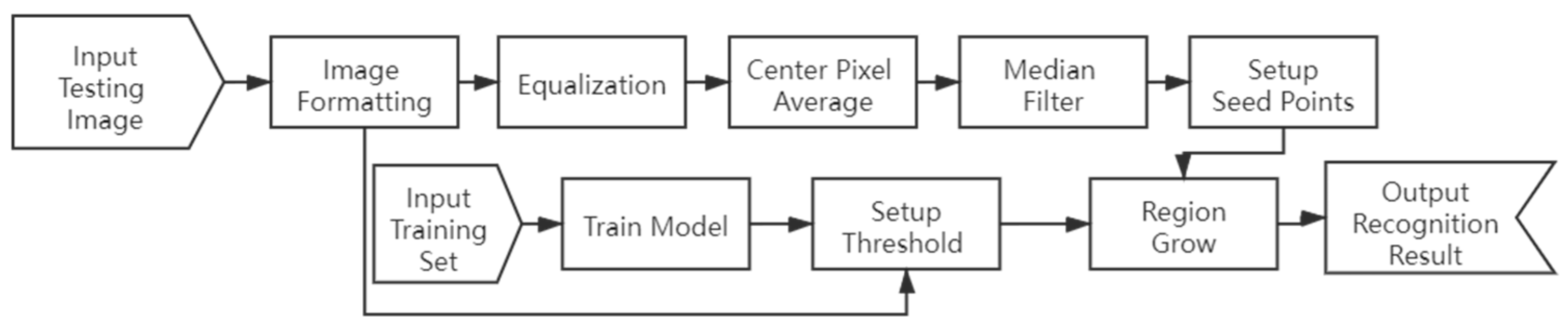
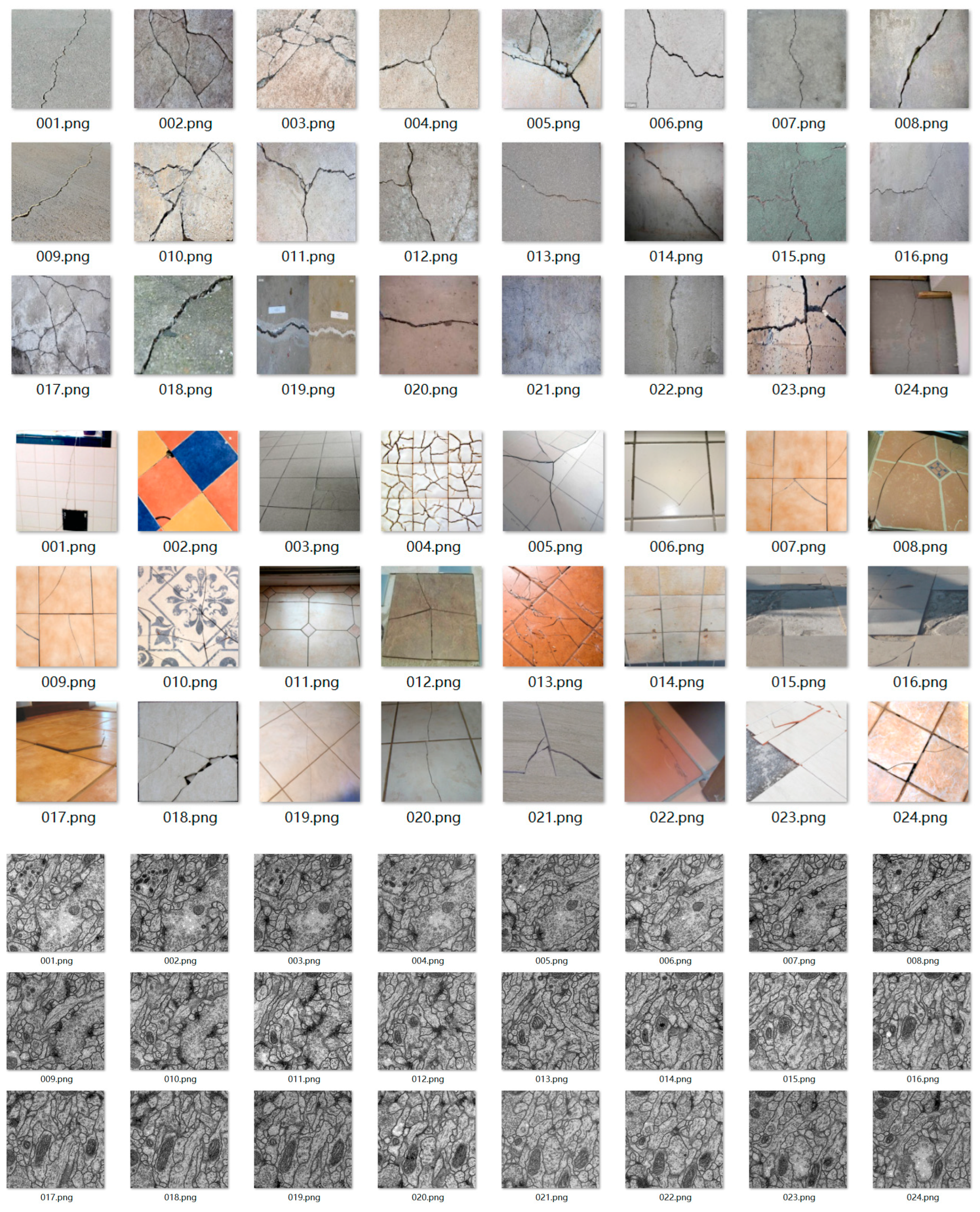
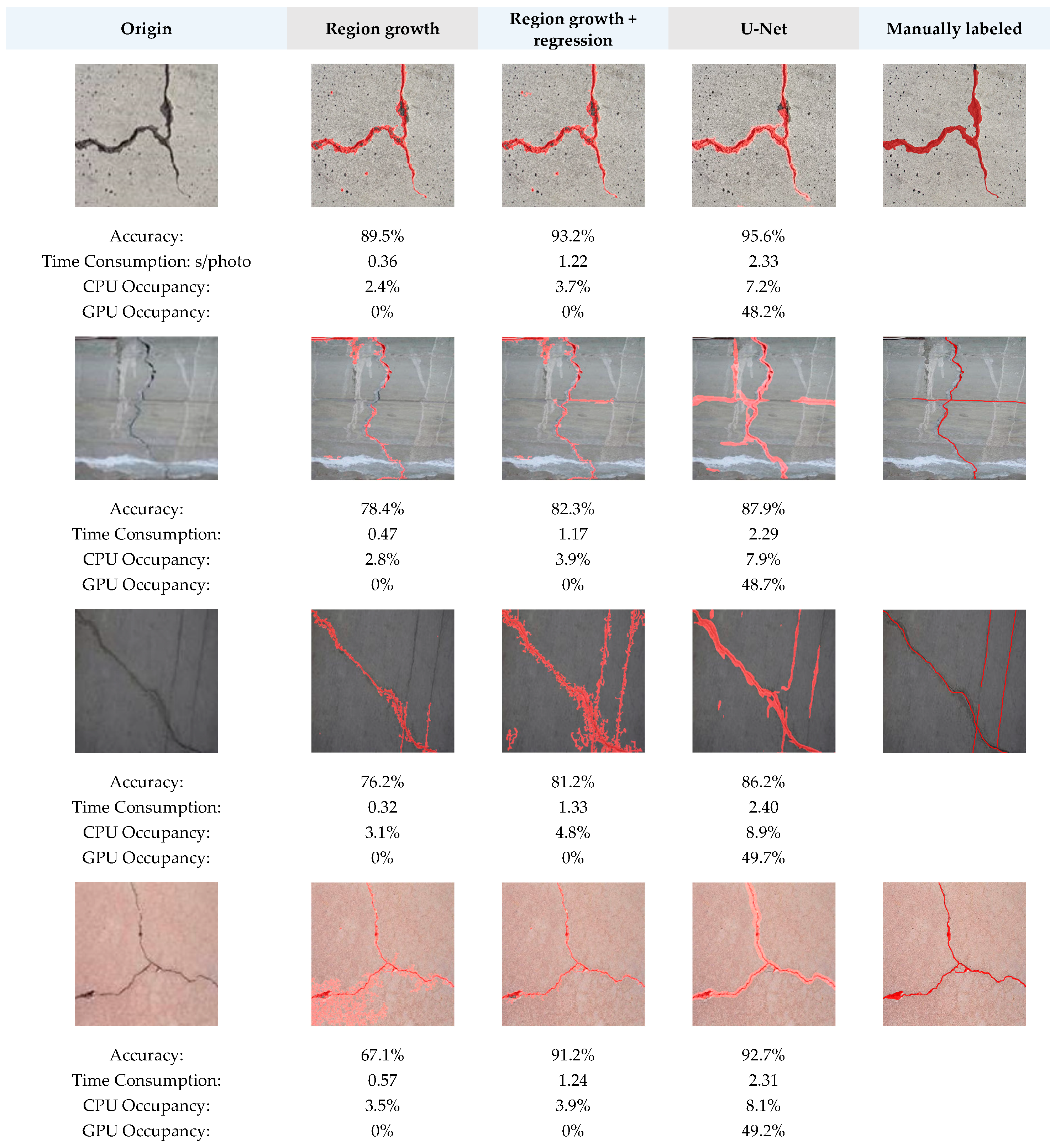
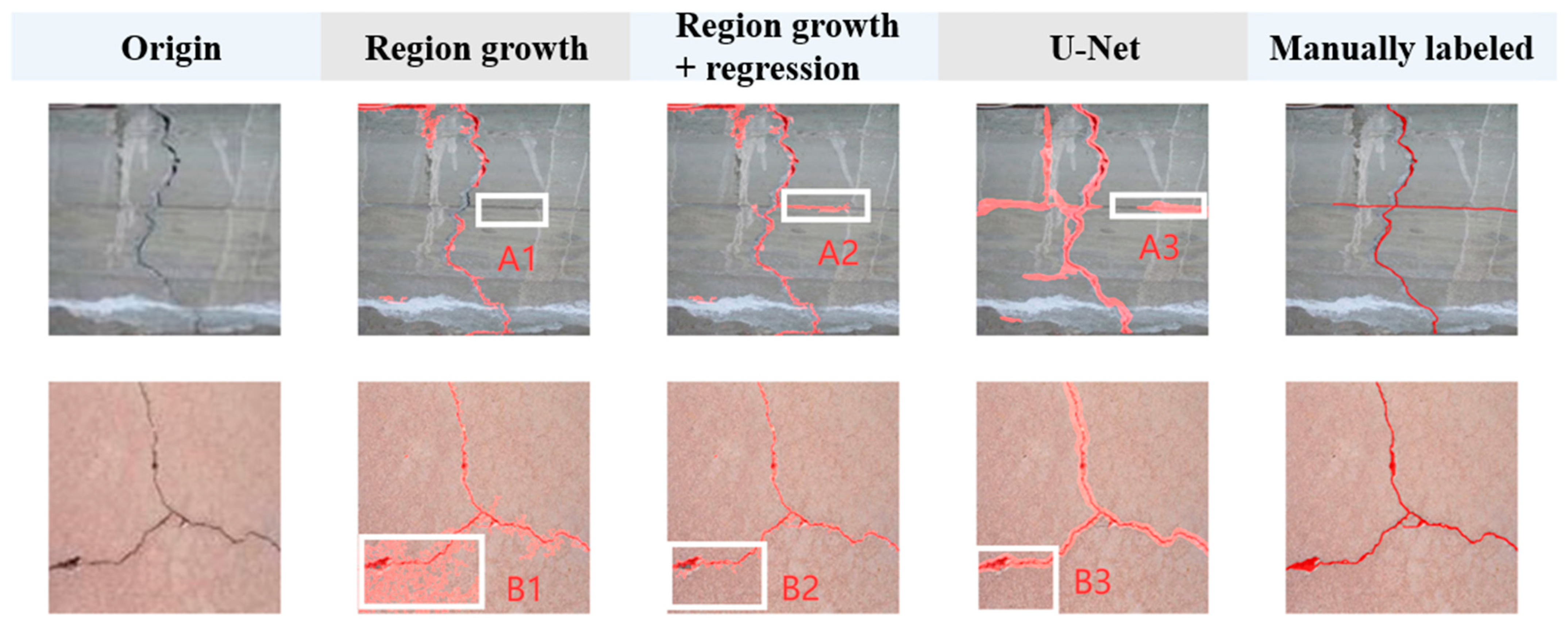
In the field of construction engineering, the cracking of concrete structures is a common engineering problem, which has a great impact on the overall stability and service life of the engineered structure. During structural repair, crack detection is the most critical step. Automatic detection significantly reduces the engineering cost and human factor error compared with manual detection. However, due to the changeable environment of the project site and different image specifications, using a single algorithm makes it difficult to balance high efficiency and high accuracy. In this study, we designed a combined recognition method including the region growth algorithm and machine learning regression that can achieve a tradeoff between accuracy and efficiency. Firstly, the regression method learns the image features of the dataset and the specific region growth threshold, and the regression function is trained by using the open-source dataset to determine the region growth threshold using the characteristics of the images included in the tests. The region growth algorithm is used to expand the threshold from the seed points of the image to obtain the crack recognition results. The results show that this method improves the accuracy of SSIM by 7% compared with the traditional region growth algorithm, and does not significantly increase the computational cost, with an increase of 0.78 s per photo process. Compared with the deep learning method, the recognition accuracy of SSIM is decreased by 5.96%, but it takes less resources and has high efficiency.
Keywords: structure cracks; regional growth; machine learning; regression analysis; crack detection structure cracks; regional growth; machine learning; regression analysis; crack detection