Article

Boron Neutron Capture Therapy: Microdosimetry at Different Boron Concentrations

Istituto Nazionale di Fisica Nucleare INFN, Laboratori Nazionali di Legnaro, Viale dell’Università 2, 35020 Legnaro, Italy
*
Author to whom correspondence should be addressed.
Appl. Sci. 2024, 14(1), 216; https://doi.org/10.3390/app14010216
Submission received: 5 December 2023 / Revised: 21 December 2023 / Accepted: 23 December 2023 / Published: 26 December 2023
(This article belongs to the Section Applied Physics General)

Featured Application

Application of microdosimetric techniques to characterize the mixed radiation field in boron neutron capture therapy.

Abstract

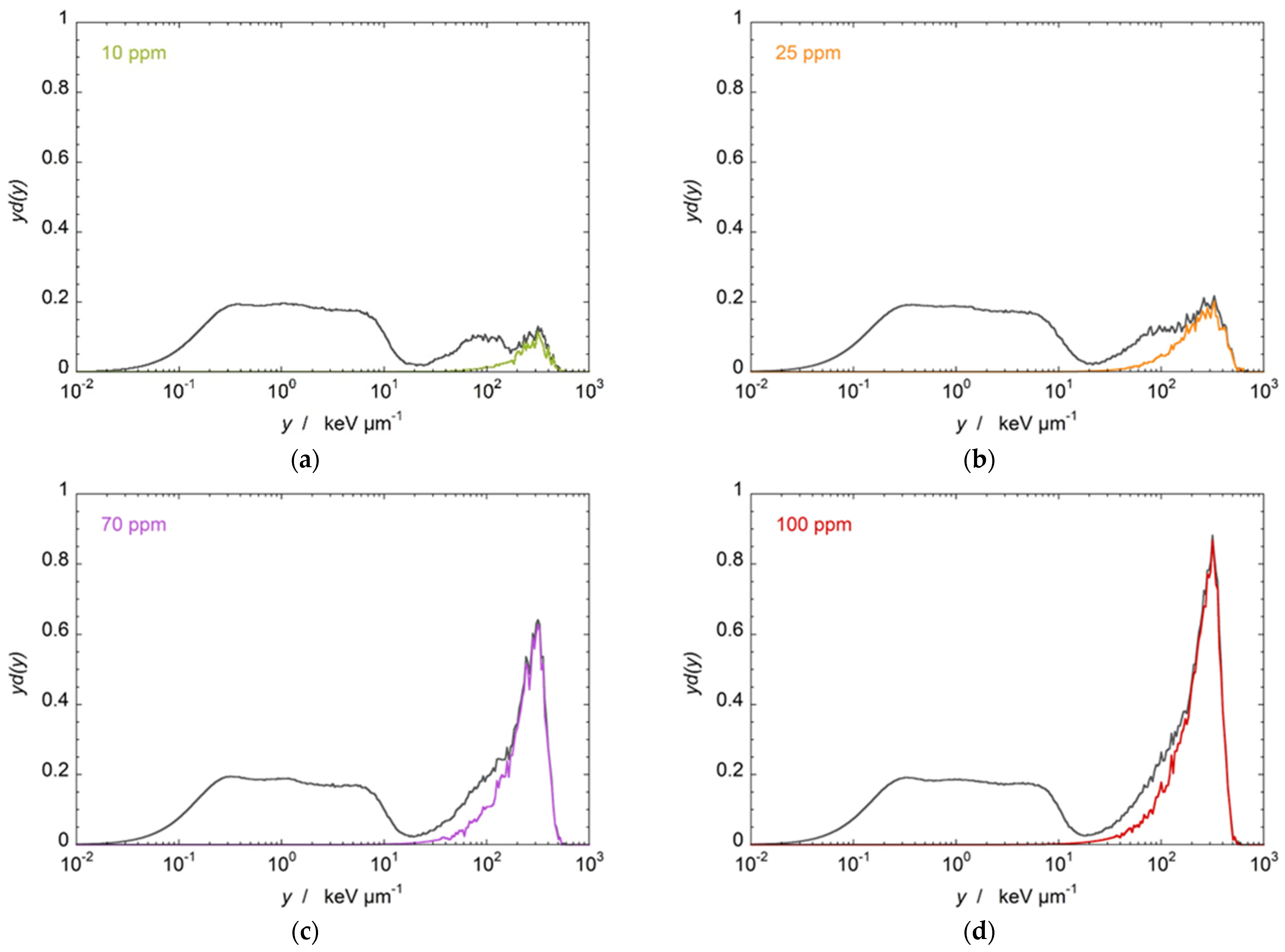
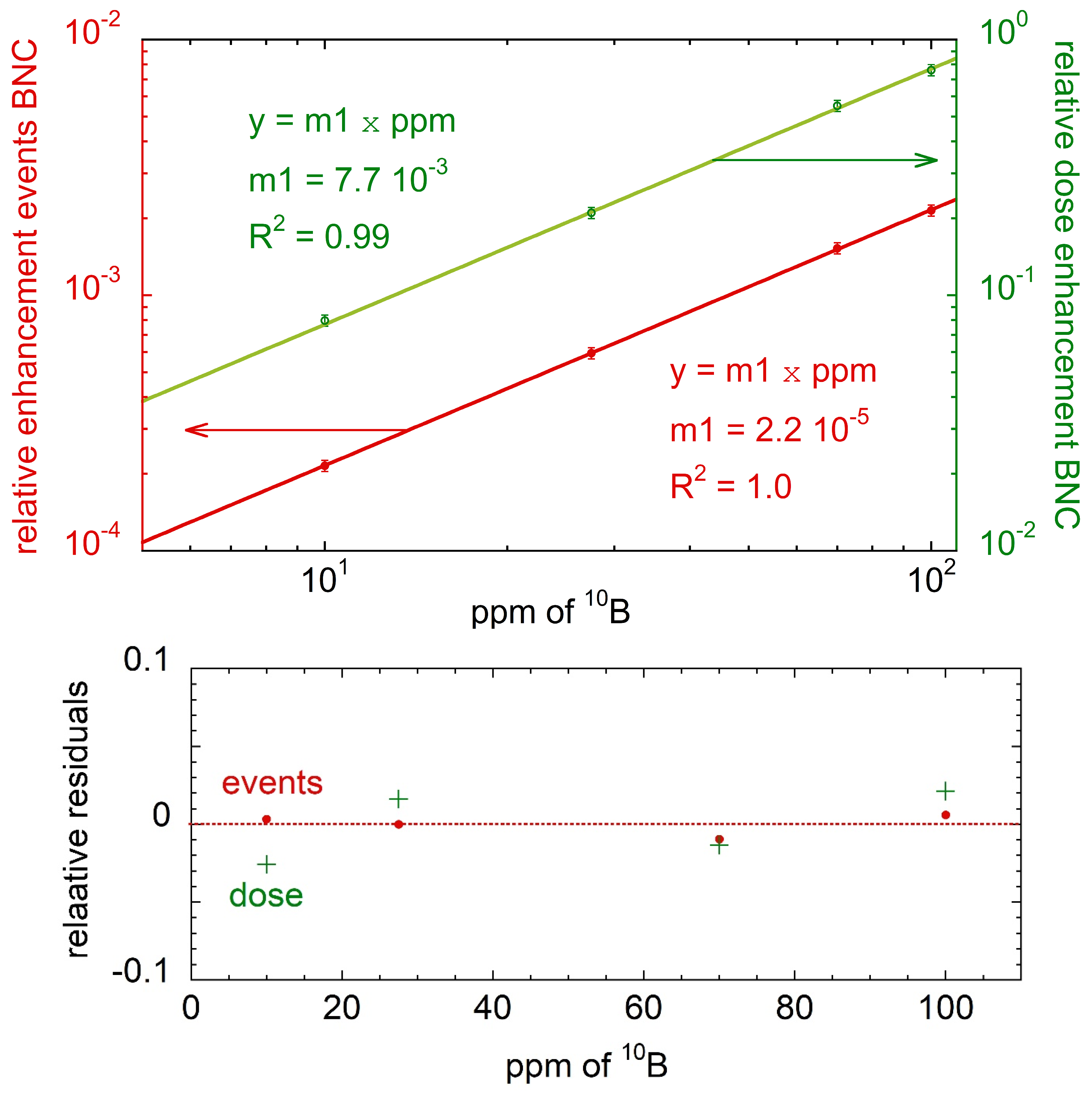
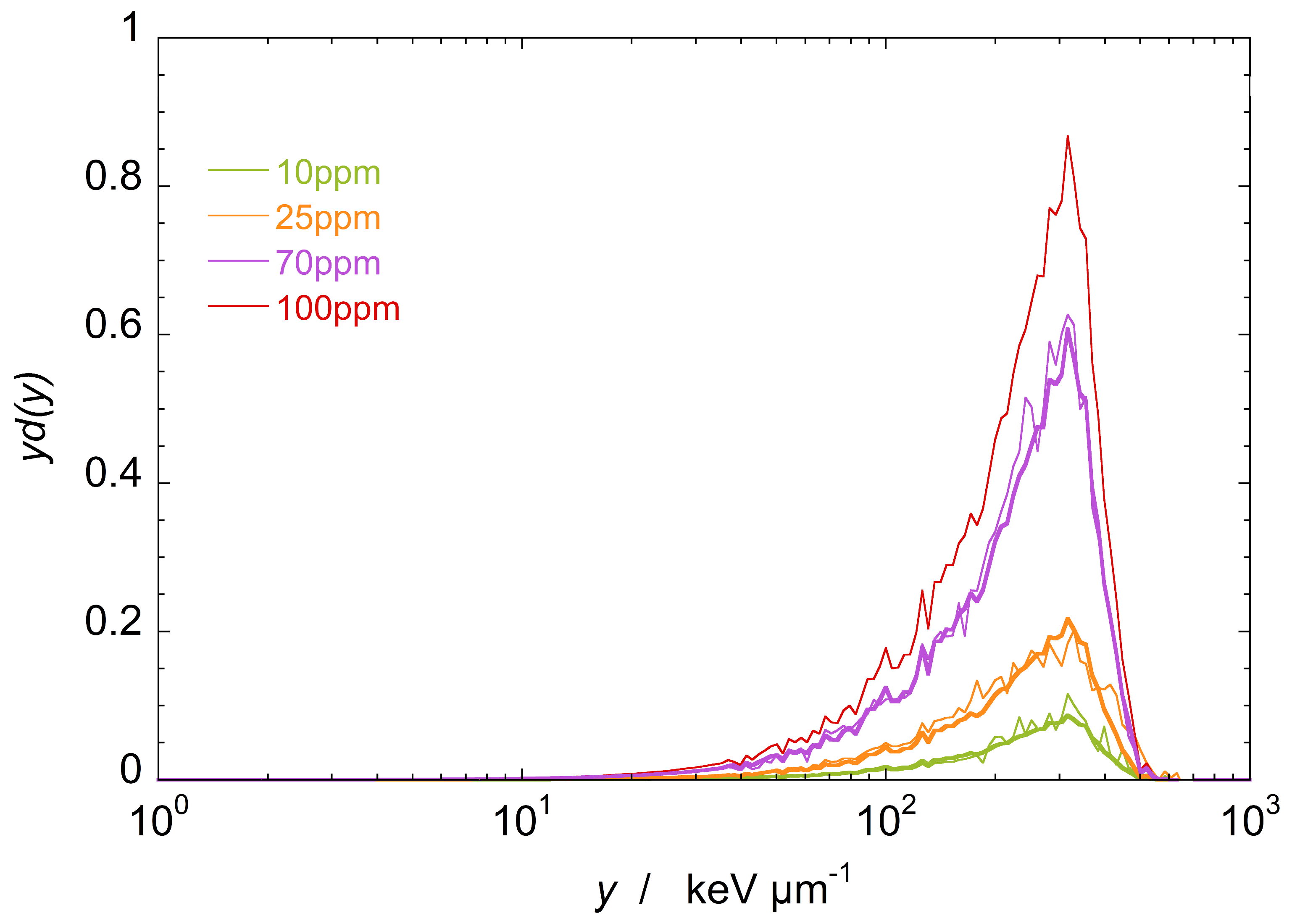
This paper explores the role of microdosimetry in boron neutron capture therapy (BNCT), a cancer treatment involving the selective accumulation of boron-containing compounds in cancer cells, followed by neutron irradiation. Neutron interactions with 10B induces a nuclear reaction, releasing densely ionizing particles, specifically alpha particles and recoiling lithium-7 nuclei. These particles deposit their energy within a small tissue volume, potentially targeting cancer cells while sparing healthy tissue. The microscopic energy distribution, subject to significant fluctuations due to the short particle range, influences treatment efficacy. Microdosimetry, by studying this distribution, plays a crucial role in optimizing BNCT treatment planning. The methodology employs paired tissue equivalent proportional counters (TEPCs), one with cathode walls enriched with boron and the other without. Precise assessment of boron concentration is essential, as well as the ability to extrapolate results to the actual 10B concentration within the treatment region. The effective 10B concentrations within four boronated TEPCs, containing 10, 25, 70, and 100 ppm of 10B, have been determined. Results show variations of less than 3% from nominal values. Additionally, dose enhancement due to BNC interactions was measured and found to be proportional to the 10B concentration, with a proportionality factor of 7.7 × 10⁻³ per ppm of boron. Based on these findings, a robust procedure is presented for assessing the impact of BNCT in the treatment region, considering potential variations in boron content relative to the TEPC used.
Keywords: radiation therapy; BNCT; microdosimetry radiation therapy; BNCT; microdosimetry