Article

Integrated Image Processing Toolset for Tracking Direction of Metal Grain Deformation

by
I Dewa Made Oka Dharmawan
1,2 and
Jinyi Lee
1,2,3,4,*
1
Department of Control, Instrumentation and Robot Engineering, Graduate School, Chosun University, Gwangju 61452, Republic of Korea
2
Interdisciplinary Program in IT-BIO Convergence System, Chosun University, Gwangju 61452, Republic of Korea
3
Department of Electronic Engineering, Chosun University, Gwangju 61452, Republic of Korea
4
IT-Based Real-Time NDT Center, Chosun University, Gwangju 61452, Republic of Korea
*
Author to whom correspondence should be addressed.
Appl. Sci. 2023, 13(1), 45; https://doi.org/10.3390/app13010045
Submission received: 25 November 2022 / Revised: 16 December 2022 / Accepted: 19 December 2022 / Published: 21 December 2022

Abstract

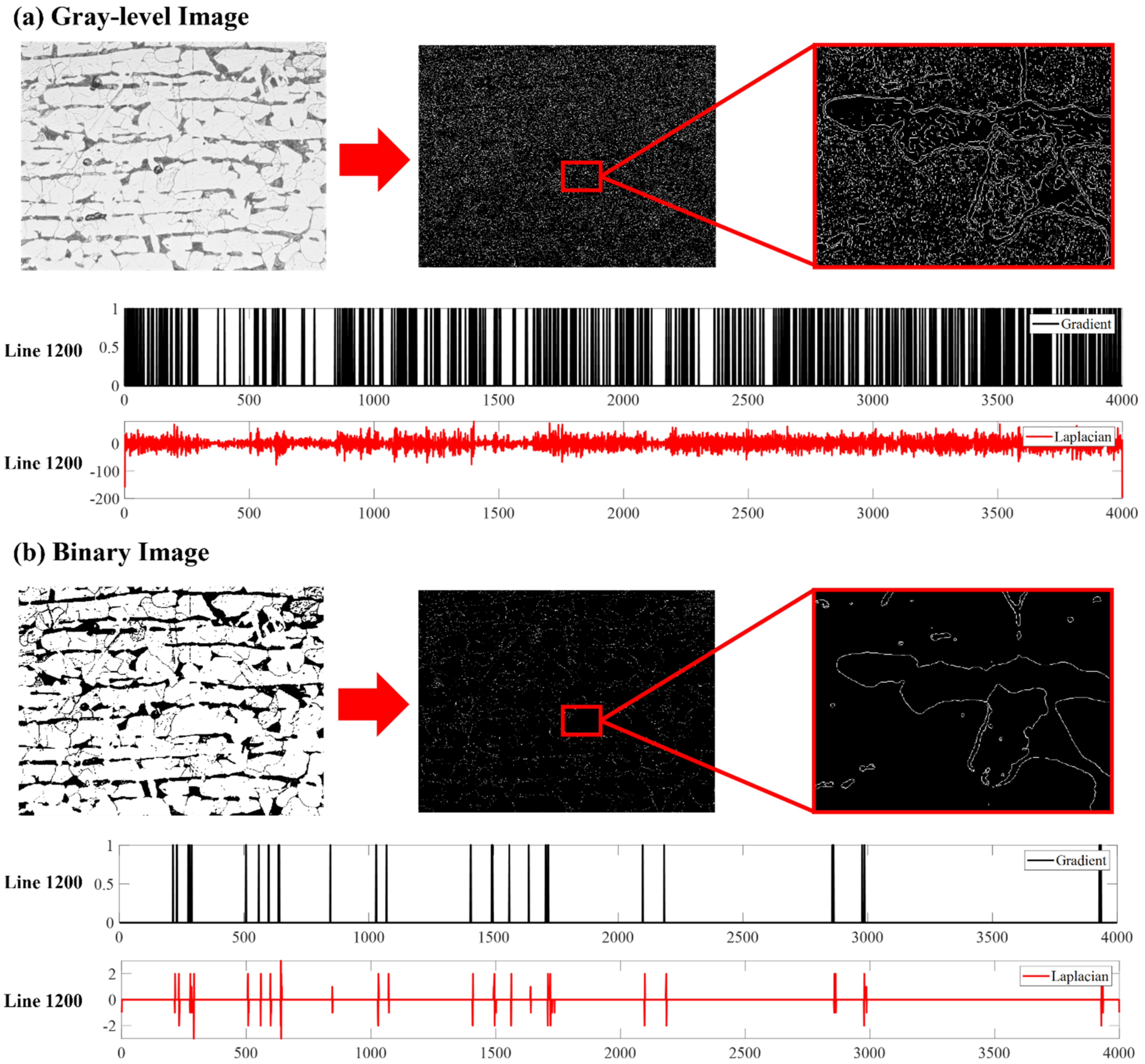
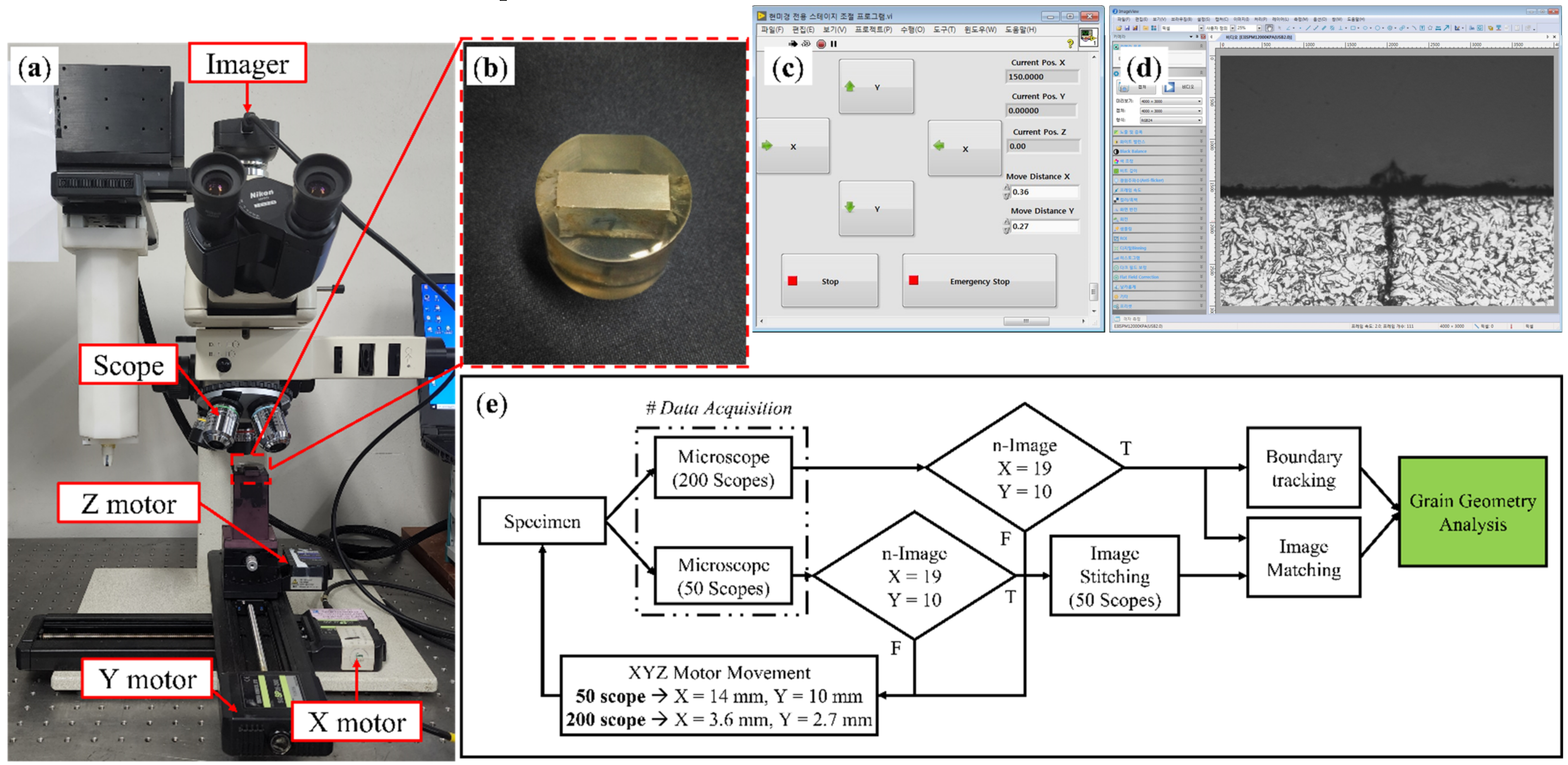
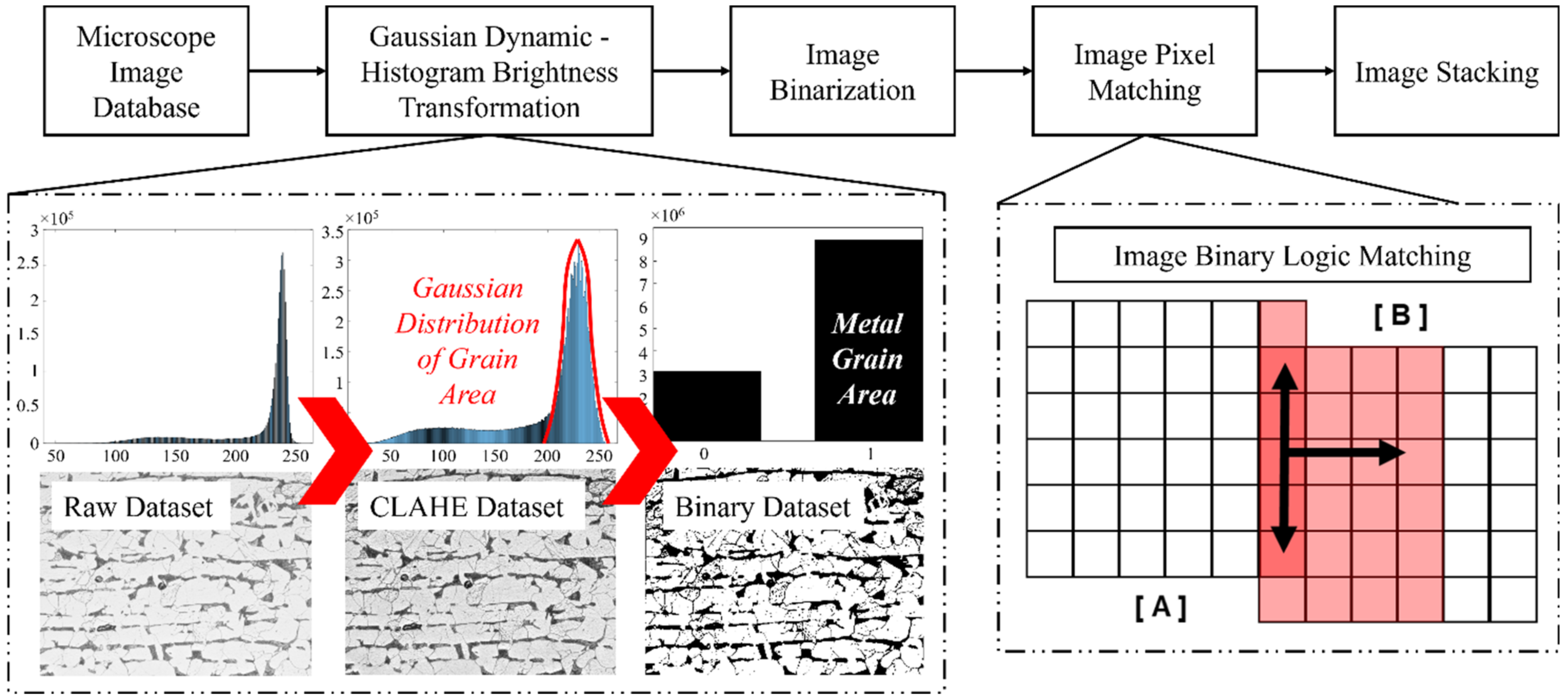
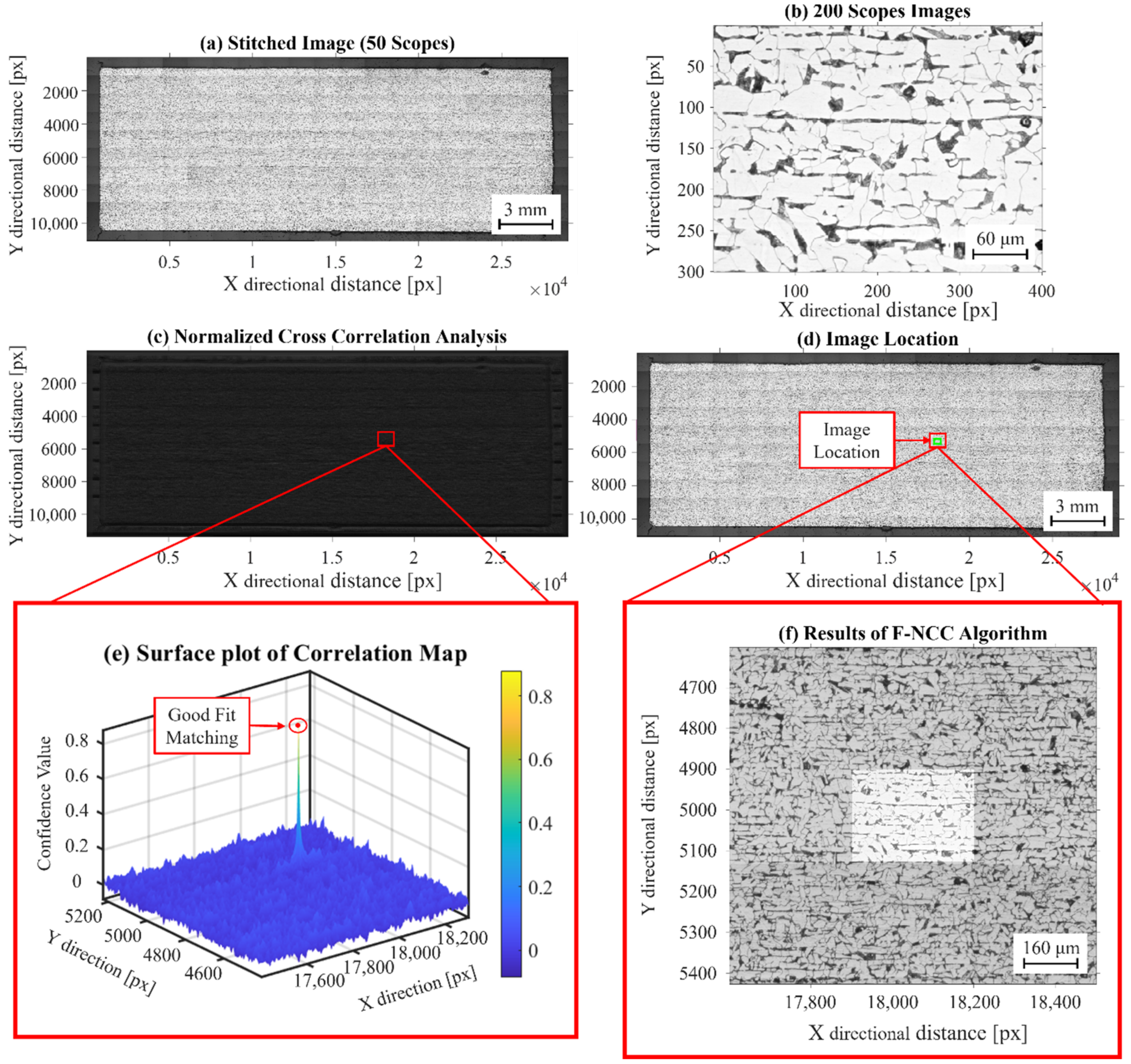
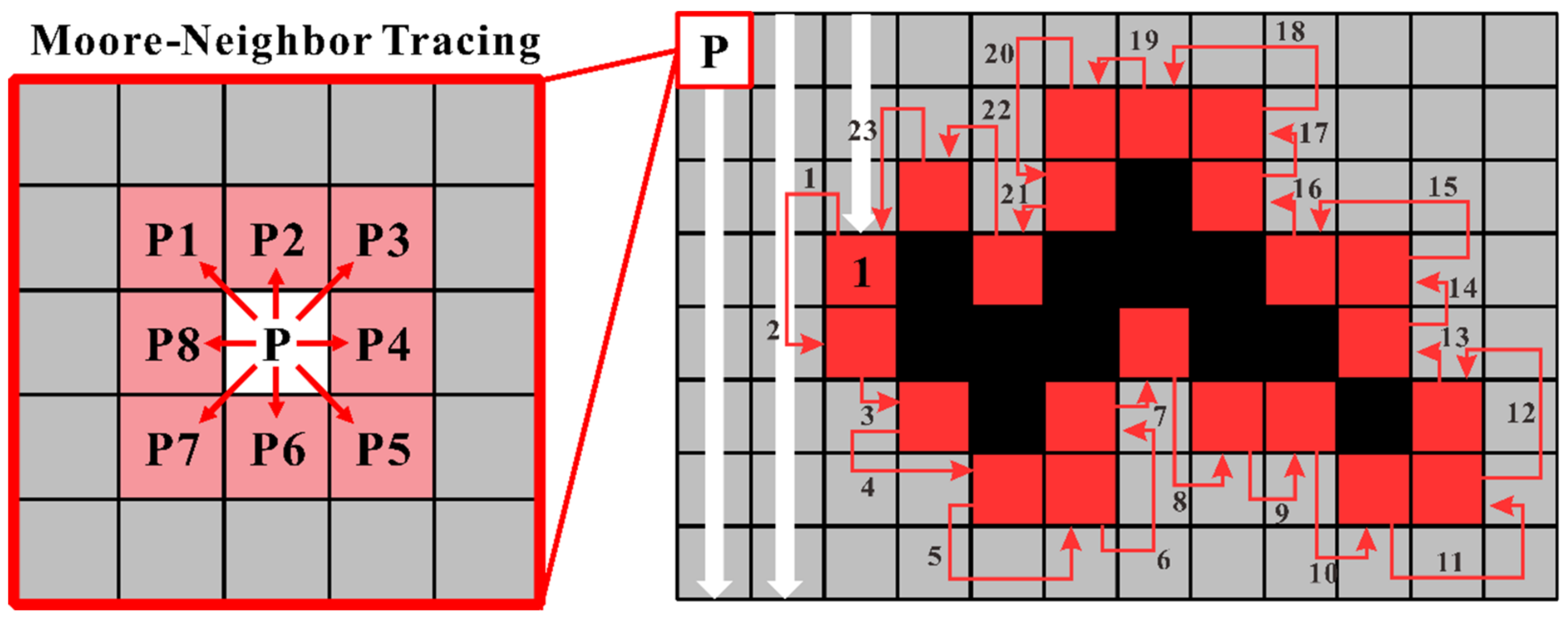
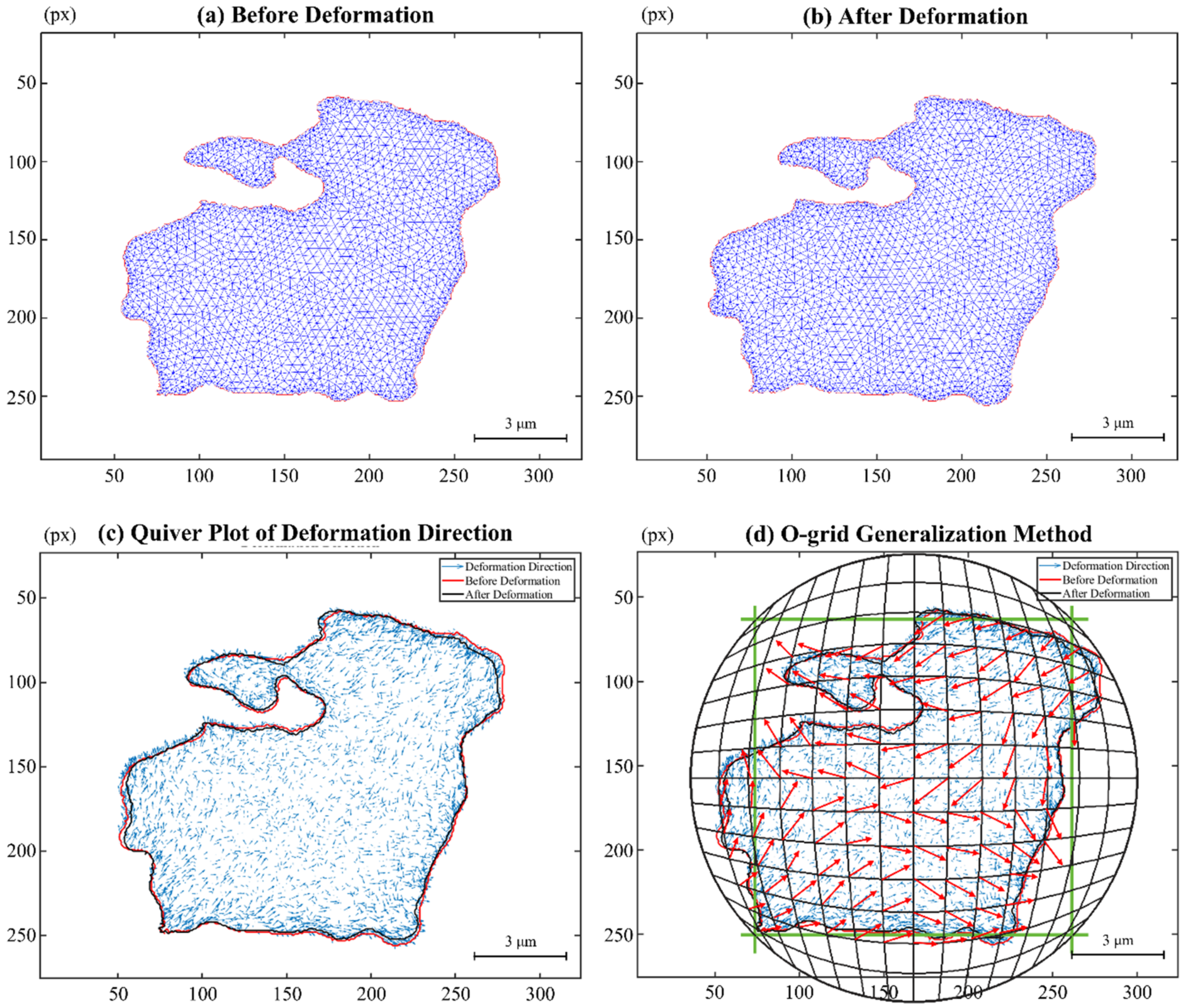
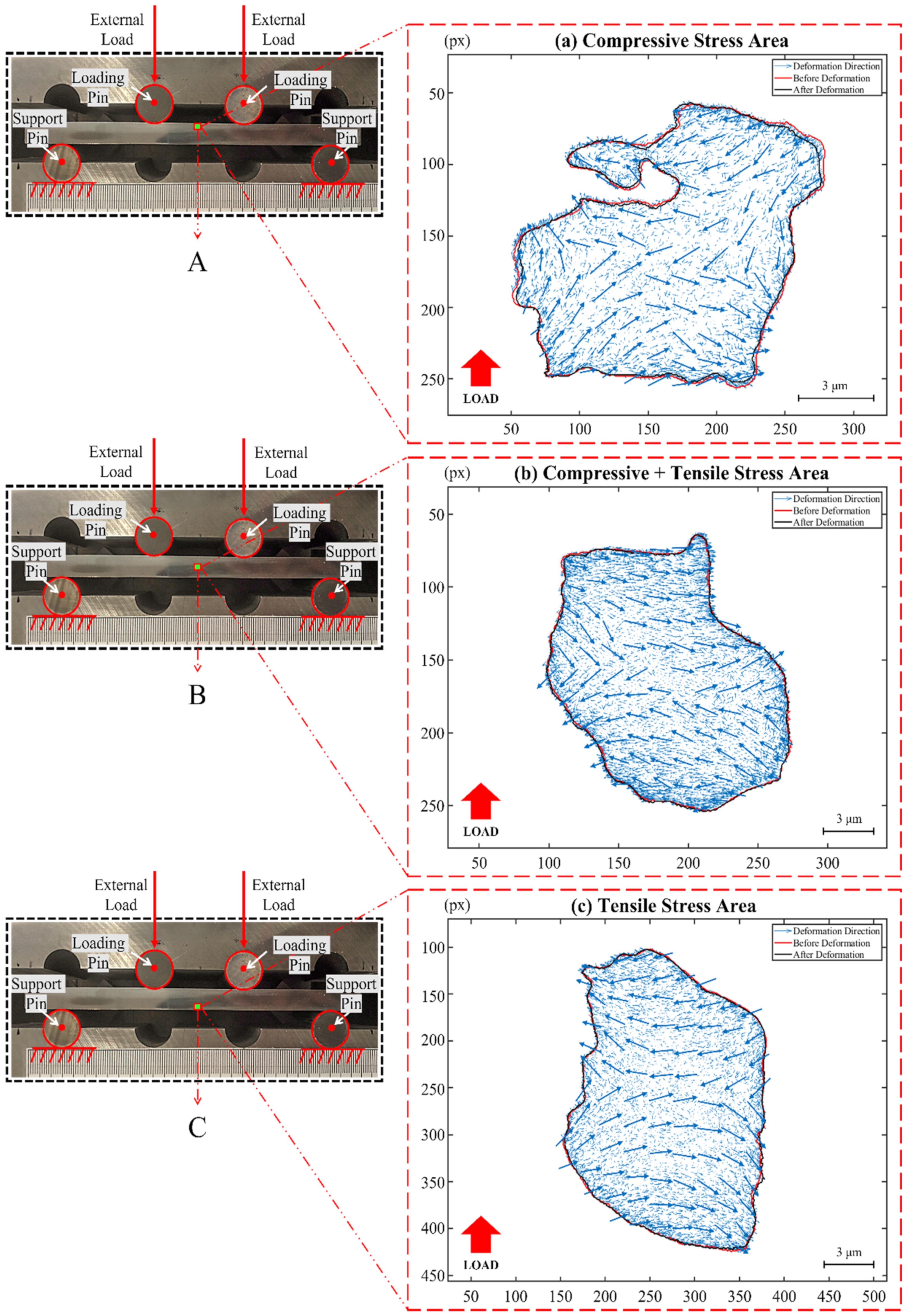
Grain boundaries (GBs), which are among the mechanical properties of a material, are a microstructural aspect that contributes to the overall behavior of metal. A deep understanding of the behavior of the GBs’ deformation, dislocation, and fracture will encourage the rapid development of new materials and lead to the better operation and maintenance of materials during their designed lifetimes. In this study, an integrated image processing toolset is proposed to provide an expeditious approach to extracting GBs, tracking their location, and identifying their internal deformation. This toolset consists of three integrated algorithms: image stitching, grain matching, and boundary extraction. The algorithms are designed to simultaneously integrate high and low spatial resolution images for gathering high-precision boundary coordinates and effectively reconstructing a view of the entire material surface for the tracing of the grain location. This significantly reduces the time needed to acquire the dataset owing to the ability of the low spatial resolution lens to capture wider areas as the base image. The high spatial resolution lens compensates for any weakness of the base image by capturing views of specific sections, thereby increasing the observation flexibility. One application successfully described in this paper is tracking the direction of the metal grain deformation in global coordinates by stacking a specific grain before and after the deformation. This allows observers to calculate the direction of the grain deformation by comparing the overlapping areas after the material experiences a load. Ultimately, this toolset is expected to lead to further applications in terms of observing fascinating phenomena in materials science and engineering.
Keywords: grain boundary; image stitching; grain matching; boundary extraction; gaussian adaptive image binarization grain boundary; image stitching; grain matching; boundary extraction; gaussian adaptive image binarization