Article

A Feasibility Study of an ESG to Suppress Road Noise of a Car
1
Department of Embedded Systems Engineering, Incheon National University, Incheon 22012, Korea
2
Hyundai Motor Company, Hwaseong 18280, Korea
*
Author to whom correspondence should be addressed.
Appl. Sci. 2022, 12(5), 2697; https://doi.org/10.3390/app12052697
Submission received: 27 January 2022 / Revised: 2 March 2022 / Accepted: 3 March 2022 / Published: 4 March 2022
(This article belongs to the Special Issue Latest Advances in Active Noise Control)

Abstract

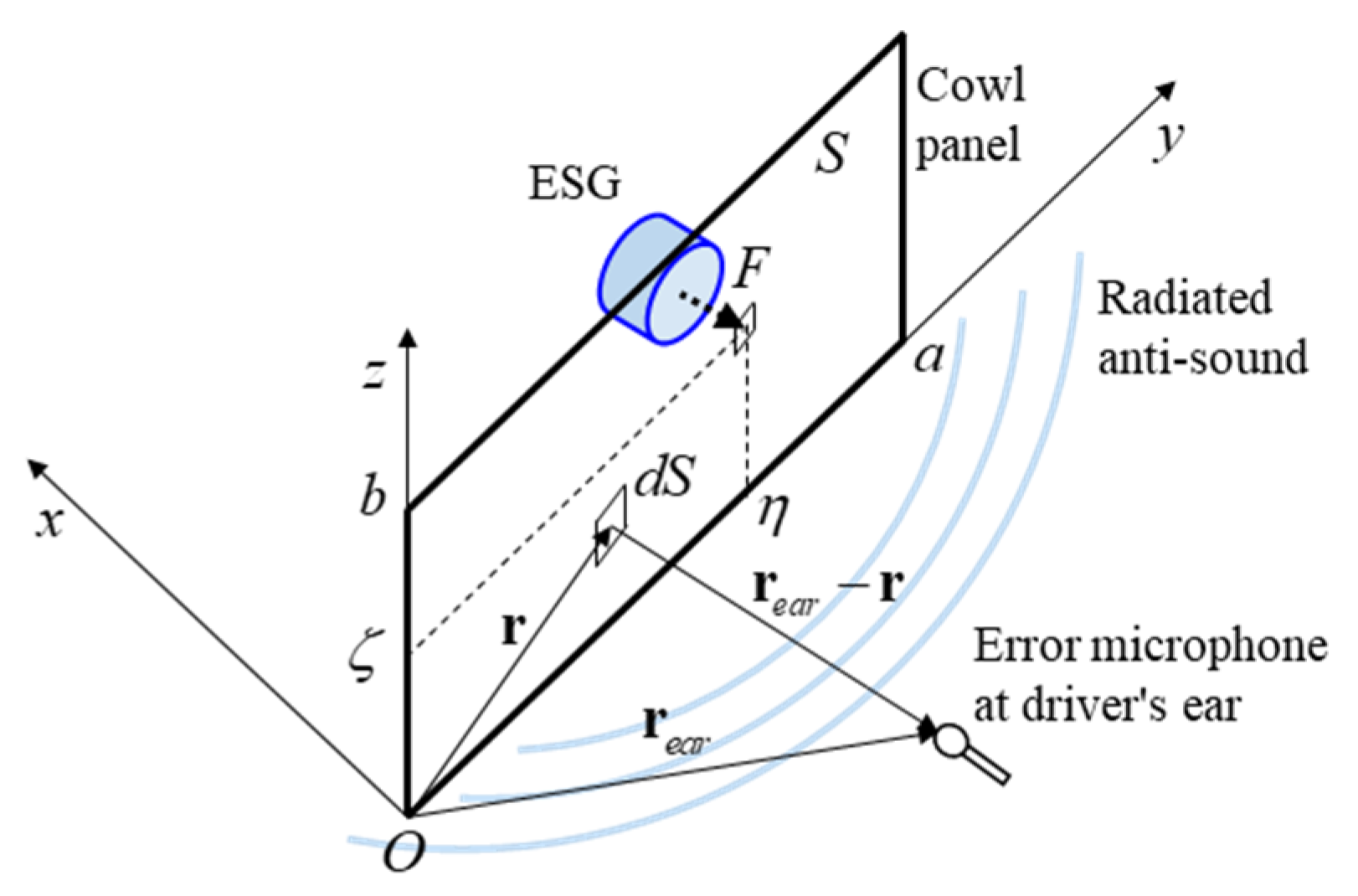
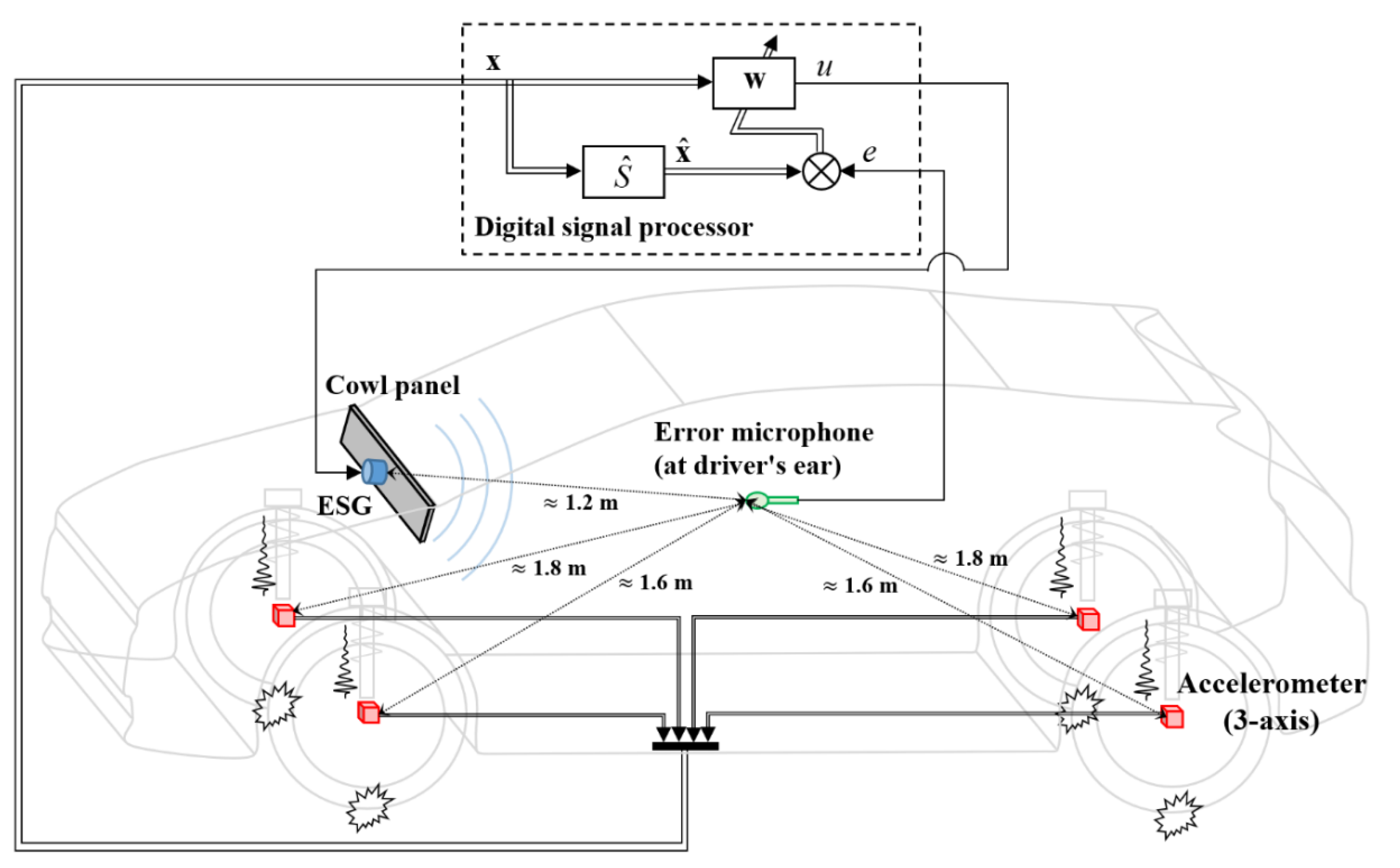
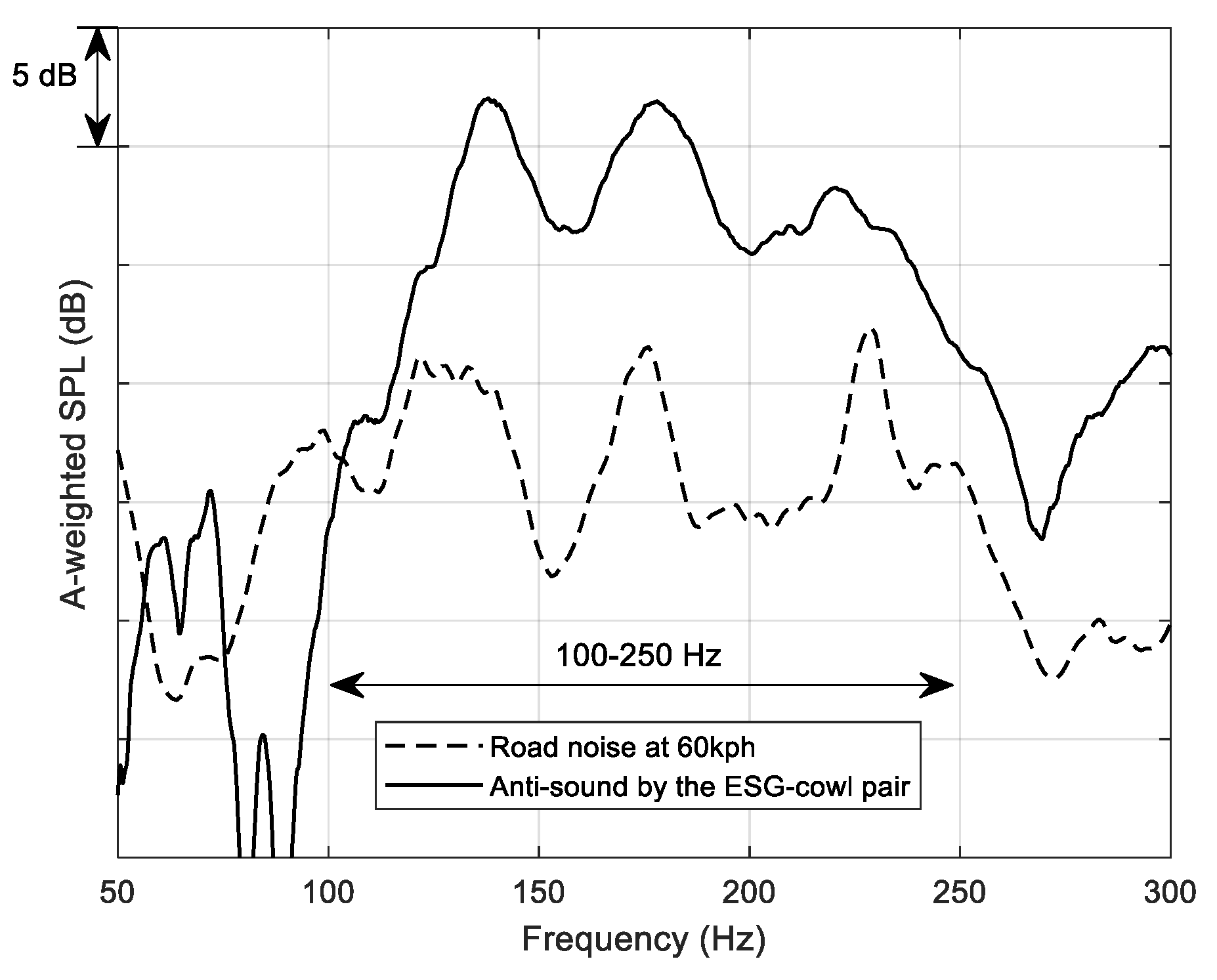
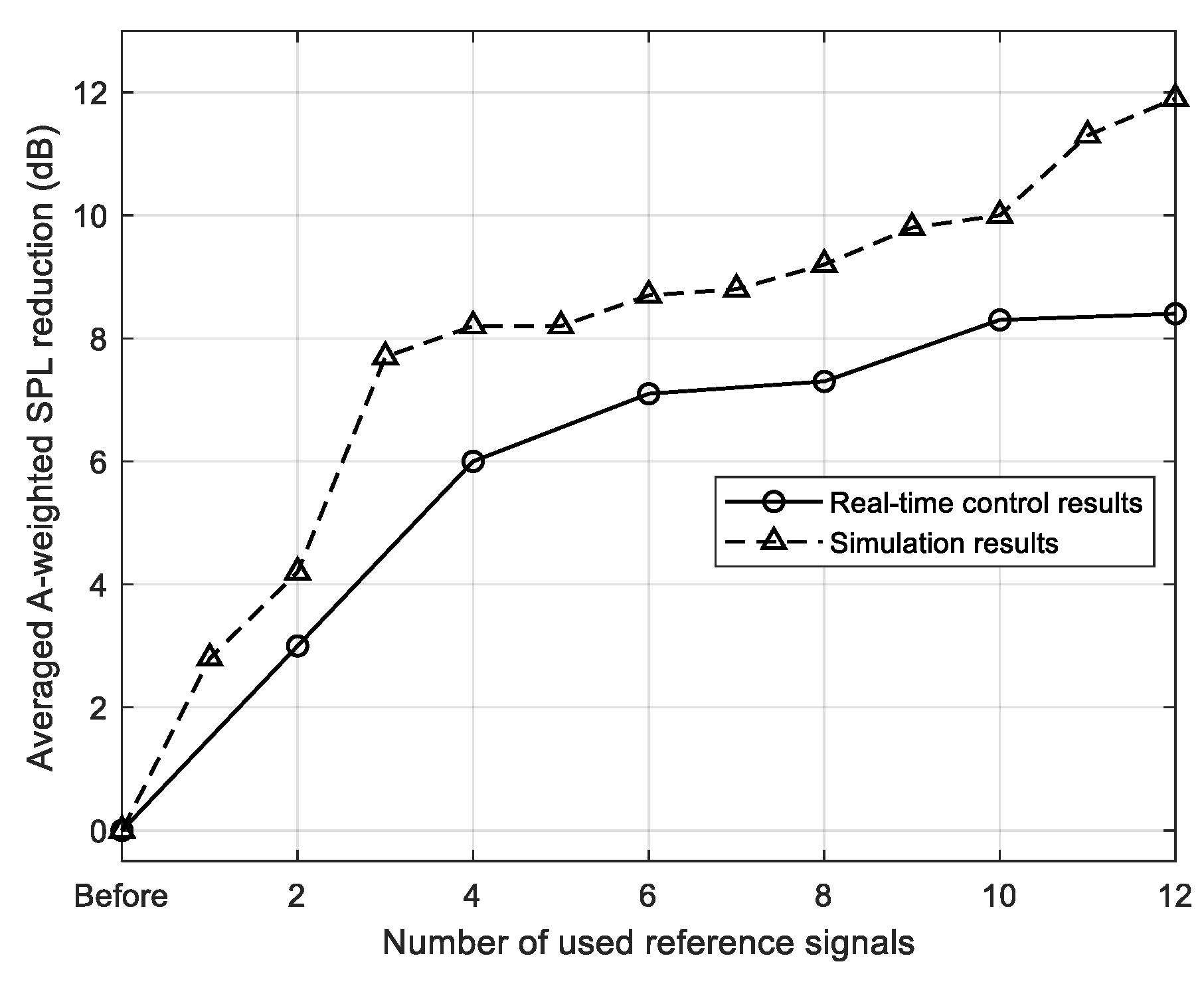
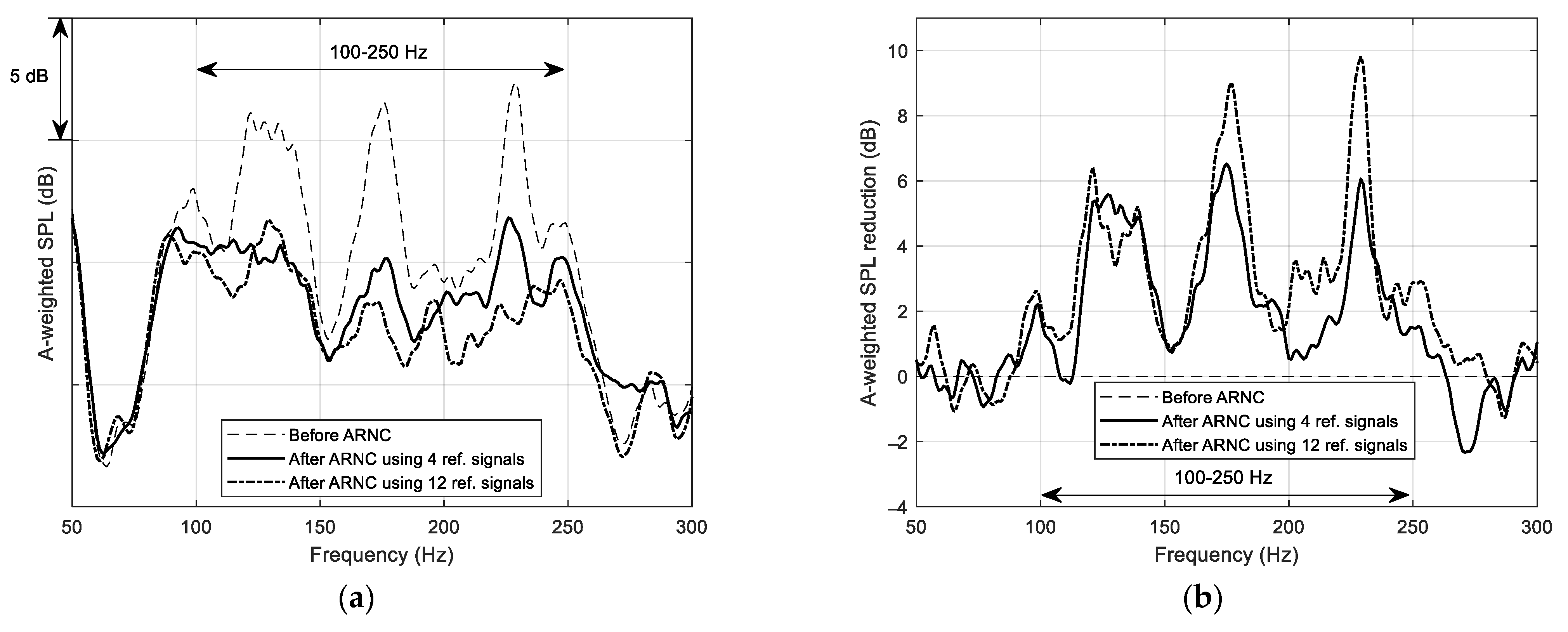
This study considered implementing an active road noise control (ARNC) system using an electronic sound generator (ESG) as a secondary actuator to suppress road noise in a car cabin. The ESG was installed to the cowl panel of a test car to generate structure-borne anti-noise by vibrating the panel. A robust multiple-reference single-input single-output (MR-SISO) ARNC algorithm based on the FxLMS was designed. Four 3-axis accelerometers and a microphone were adopted to acquire the reference signals and the error signal for the control algorithm. The radiated sound pressure from the ESG–cowl pair was high enough to suppress the road noise at a car speed of 60 kph. The optimized least number of reference signals and their locations were determined after computer simulation from the measured primary path data. Real-time control experiments showed an A-weighted sound pressure level reduction of 6.0 dB in the average of three dominant road booming noises in 100–250 Hz with the four optimized reference signals at 60 kph. More reference signals gave a further reduction such as 8.3 dB with 12 reference signals. Thus, this study suggests that the ESG coupled with the cowl panel can be an affordable alternative as a secondary actuator in an ARNC system to suppress road noise in a car.
Keywords: active road noise control; electronic sound generator; structural actuator; optimization; road noise active road noise control; electronic sound generator; structural actuator; optimization; road noise