Article

Model for the Simulation of the Time-Dependent State in RC Elements
1
TUM School of Engineering and Design, Technical University of Munich, 80333 Munich, Germany
2
Faculty of Civil Engineering, Architecture, and Geodesy, University of Split, 21000 Split, Croatia
*
Author to whom correspondence should be addressed.
Appl. Sci. 2022, 12(3), 1501; https://doi.org/10.3390/app12031501
Submission received: 13 December 2021 / Revised: 23 January 2022 / Accepted: 26 January 2022 / Published: 30 January 2022
(This article belongs to the Topic Advances on Structural Engineering)

Abstract

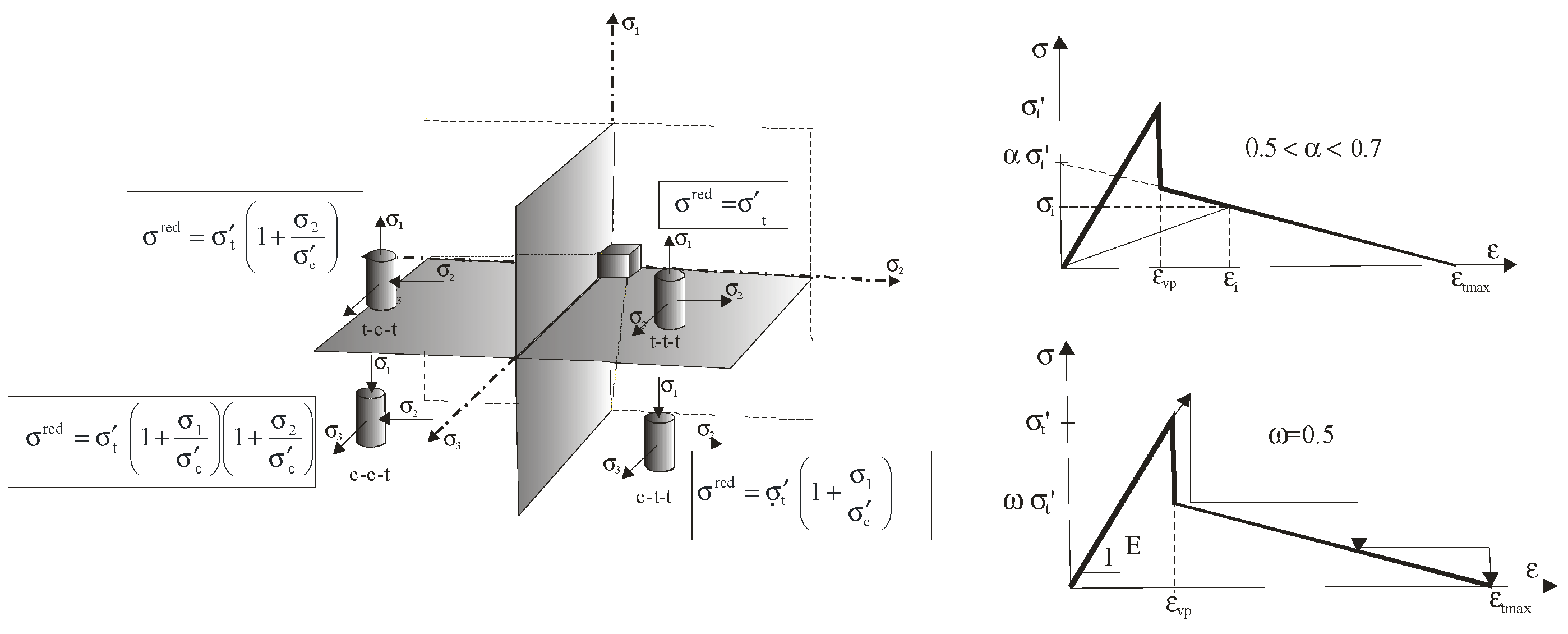
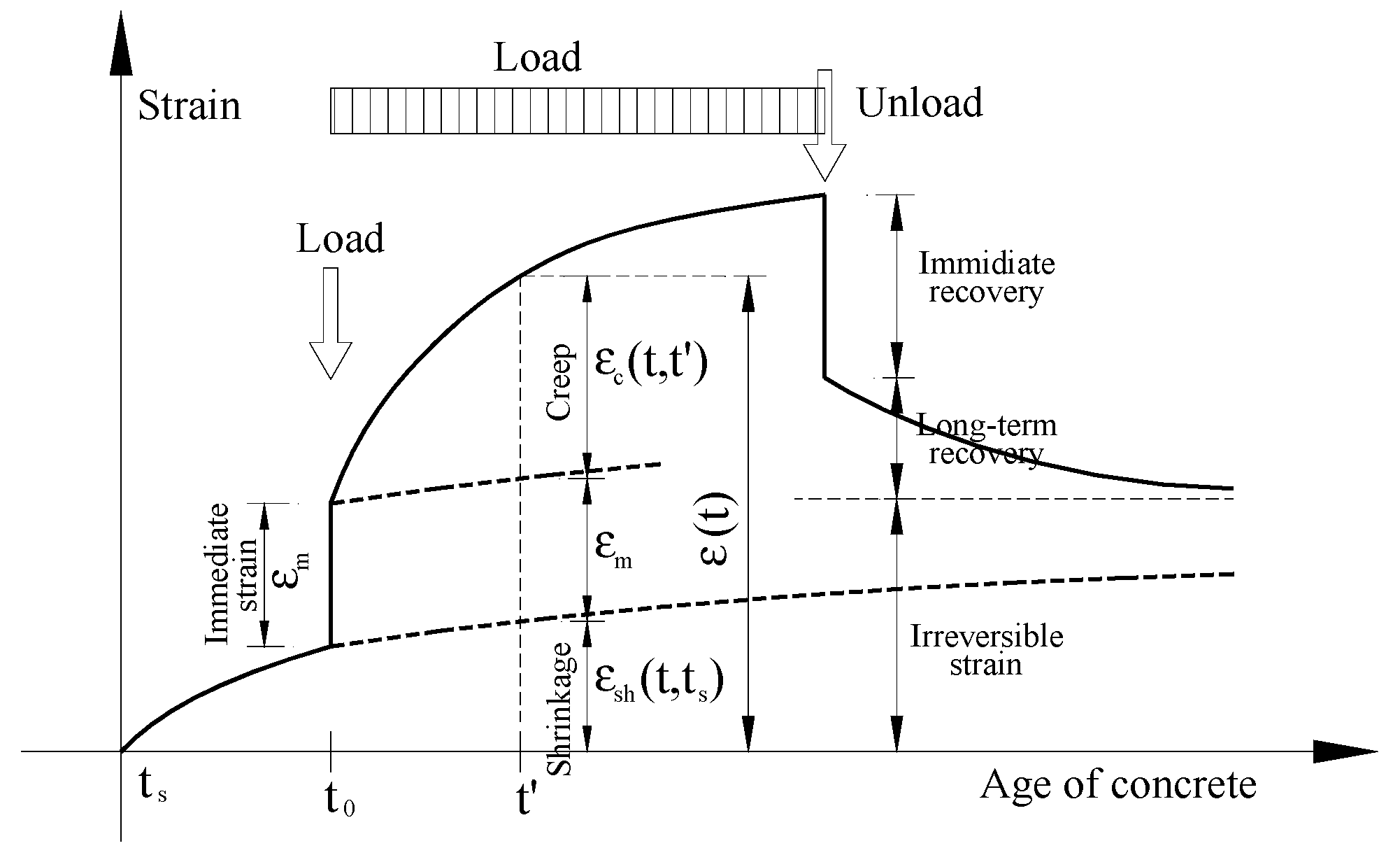
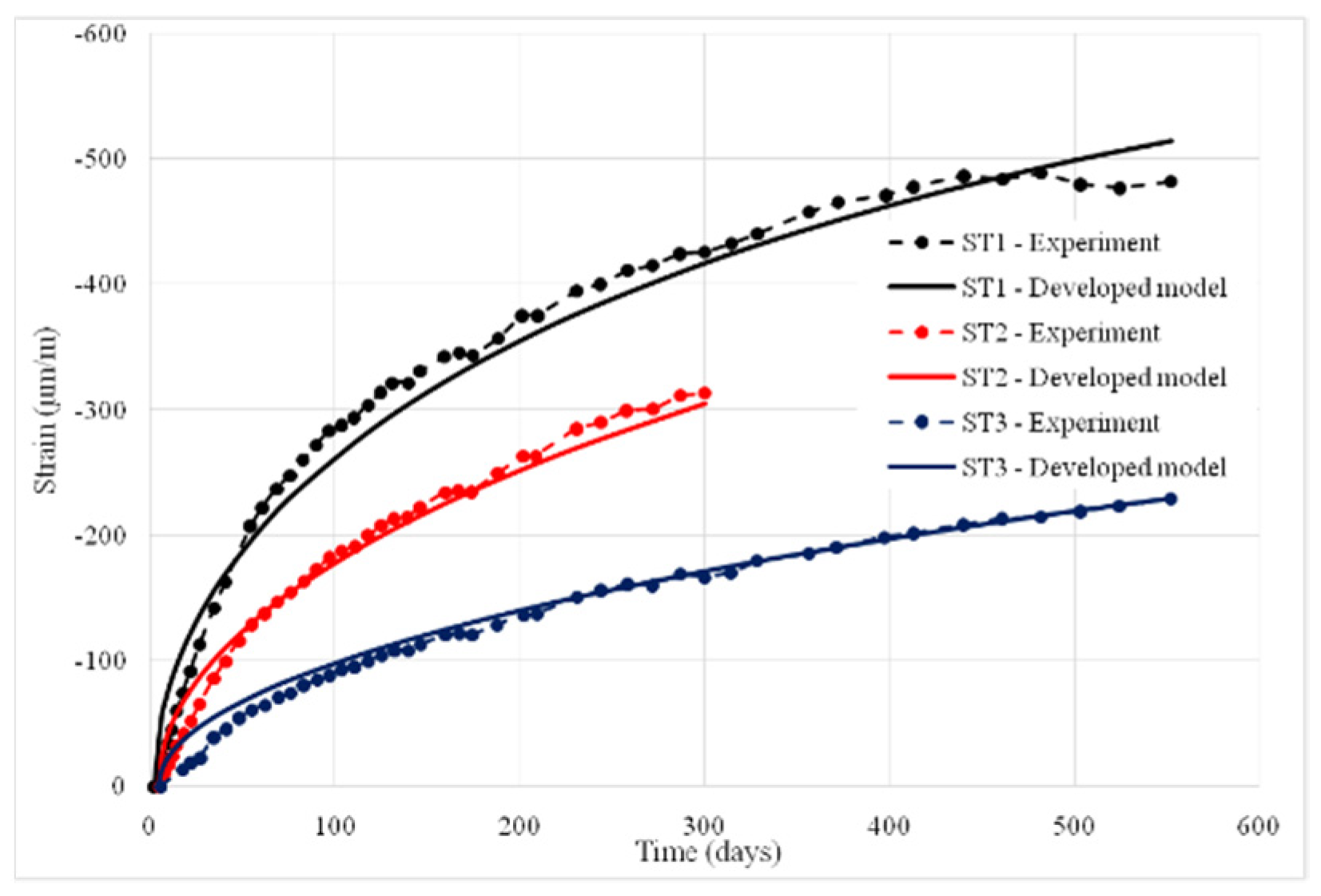
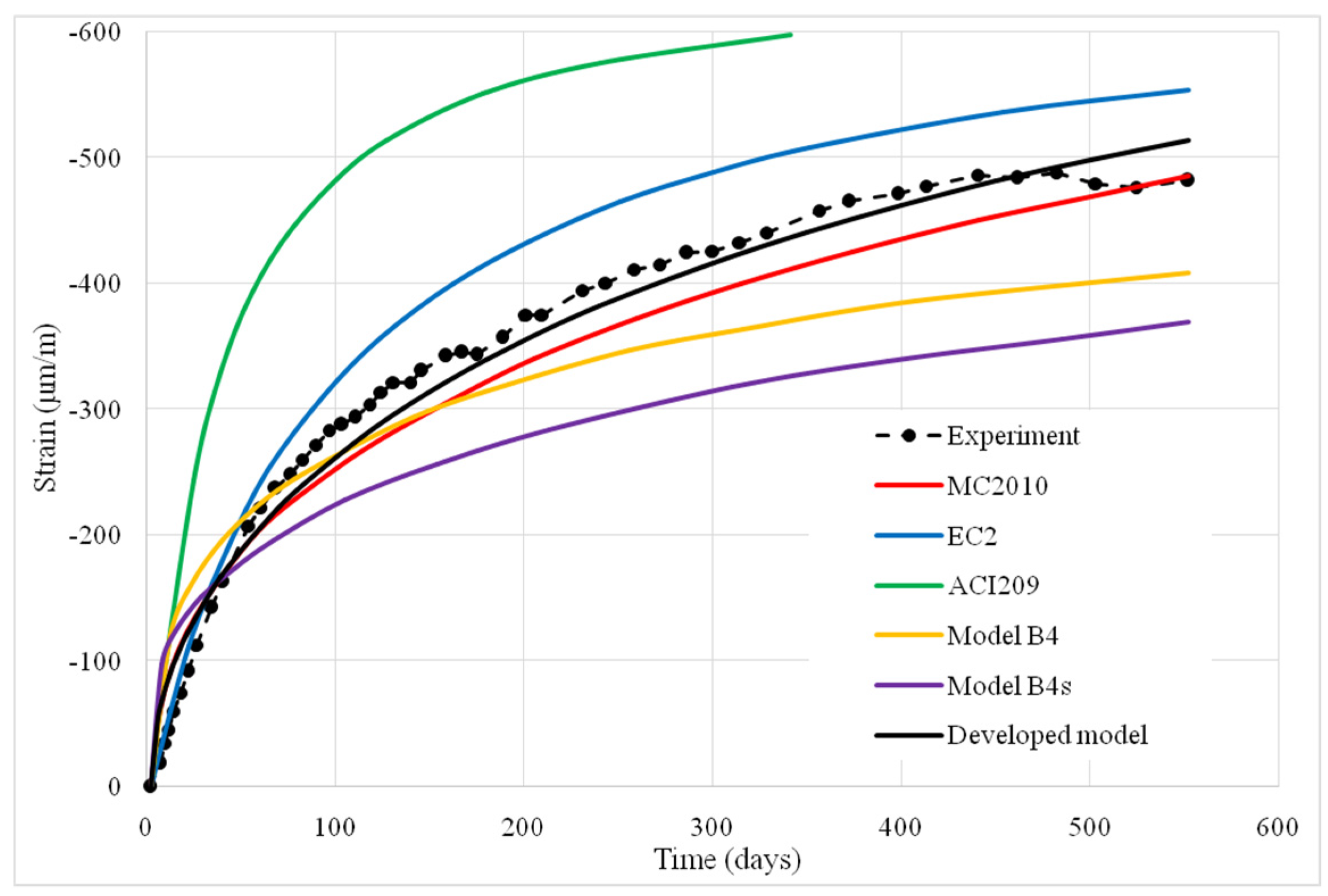
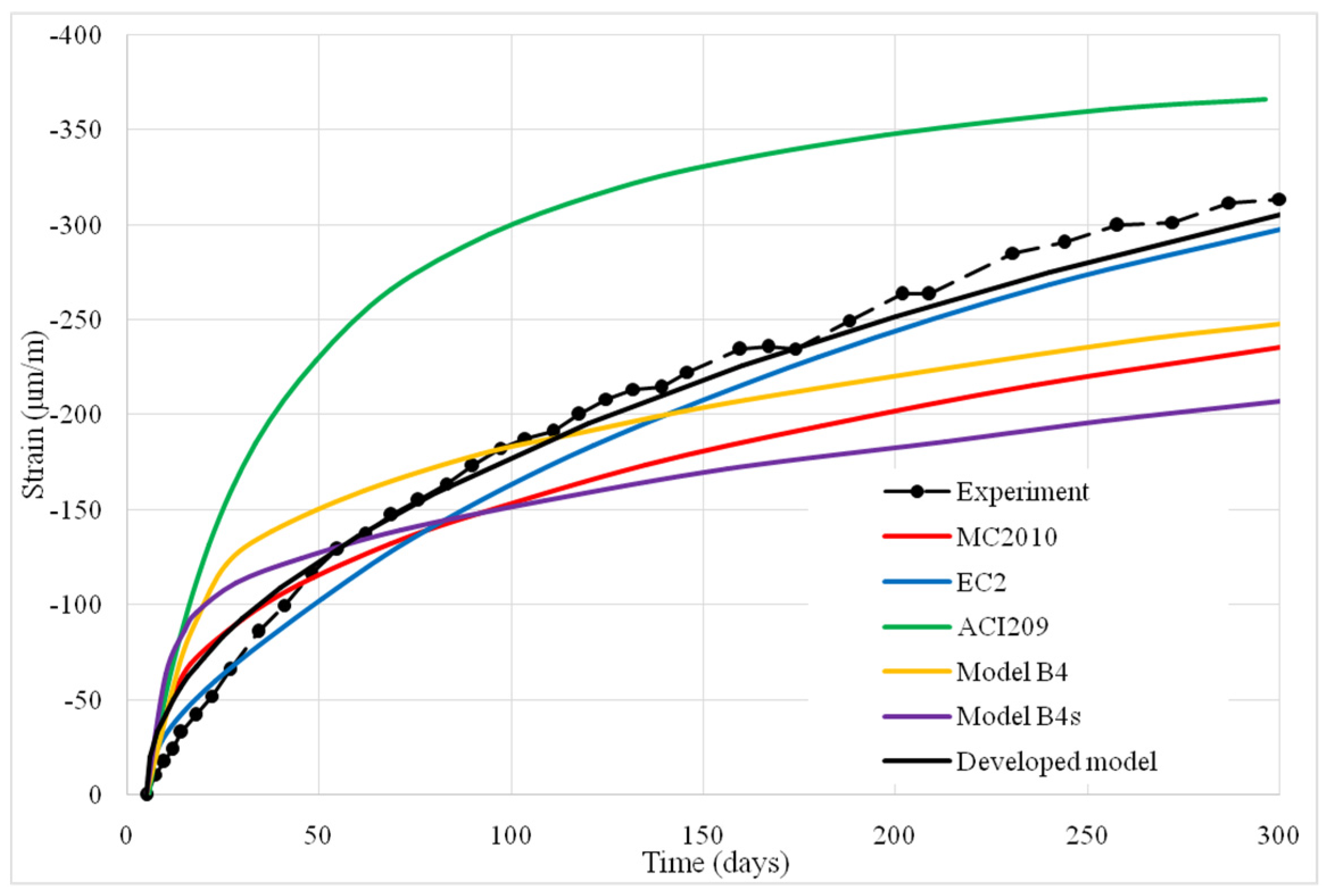
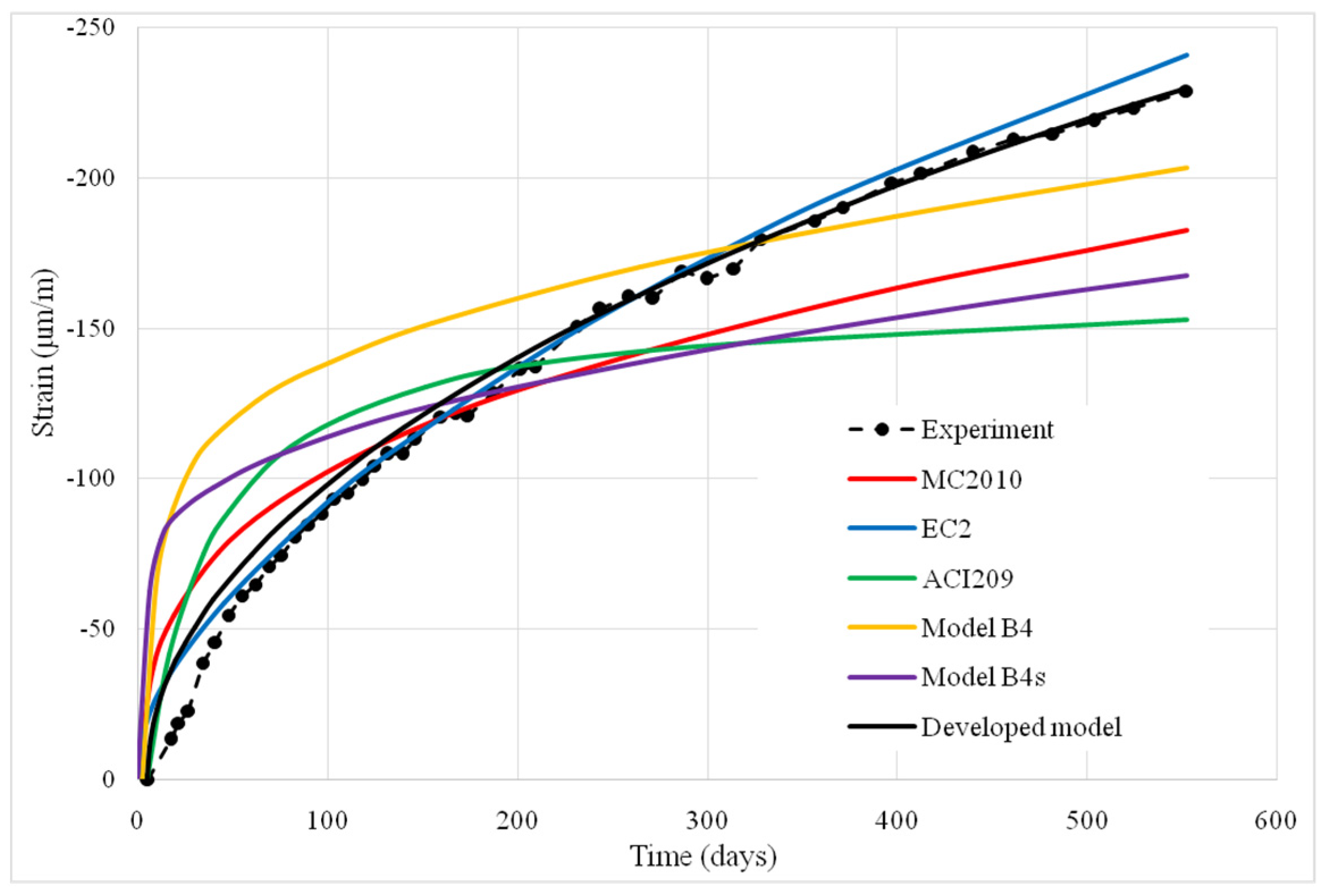
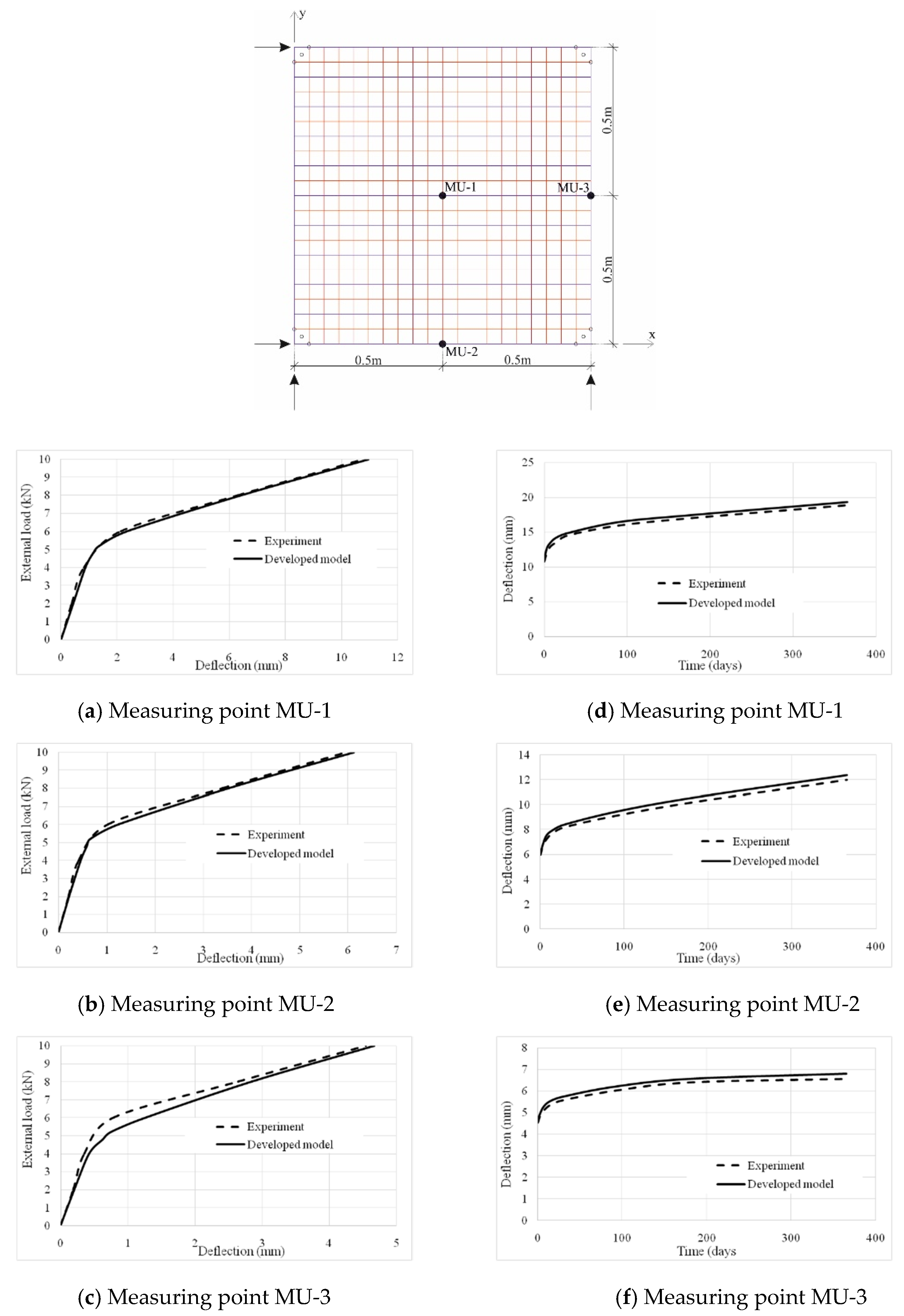
The paper presents an upgrade of the previously developed model for nonlinear 3D analysis of concrete structures extended with the possibility of simulation of the long-term effects (shrinkage and creep) under long-term static load. The origin model is based on the so-called multi-surface principle with modified Rankin criterion for dominant tensile influences (appearance and development of cracks) and the modified Mohr-Coulomb criterion for dominant compressive states (yielding and cracking of concrete). The material behaviour is described with elementary material parameters (modulus of elasticity, Poisson’s coefficient and uniaxial compressive and tensile strength of concrete) by standard tests. Sufficient accuracy along with a simple and effective description of the very complex behaviour of reinforced concrete structures, make this model advantageous. Creep and shrinkage are based on the procedure given by the fib Model Code 2010 and extended with a special extension for non-linear creeping. Two simple examples show the capabilities of the model, while a good agreement between numerical and experimental results indicates that the developed model can well describe long-term effects in reinforced concrete structures, and that the model is appropriate for standard engineering practice.
Keywords: 3D numerical model; reinforced concrete; long-term load; creep; shrinkage 3D numerical model; reinforced concrete; long-term load; creep; shrinkage