


Abstract
Undergraduate programs face the permanent challenge of constantly transforming to keep an up-to-date curriculum according to globalization and internationalization processes. In the case of civil engineers, professional training should respond to the needs of the Architecture, Engineering, Construction, and Operation (AECO) industry. In this context, Building Information Modelling (BIM) constitutes a process involving shared digital representations of built assets to facilitate design, construction, and operations processes within the industry to form a reliable base for decision-making. The present research develops a methodology and a proposal to embed BIM in an undergraduate civil engineering competency-based curriculum. Mixed method research was applied with a descriptive approach and a concurrent design. The results show that it is possible to implement a curricular design to embed BIM transversally. The study concludes that this design was embraced by the AECO industry, as the number of students, the number of employed graduates, and institutional national and international agreements have positively increased from 2017, at the launch of the program, to 2022.
1. Introduction
Undergraduate programs face the challenge of keeping up with globalization and internationalization processes to stay up-to-date and respond to the demands of international quality standards [1]. In this context, UNESCO [2] has declared that higher education programs need to support their training processes with competency-based curricula, as competencies prepare students to live under variable circumstances while building knowledge and easily adapting to changes in the professional and personal environment [3].
Thus, competency-based curricula should answer society’s present-day requirements to provide competent and competitive professionals to each particular field of knowledge while leading it toward progress by proposing potential solutions to the arising challenges. Consequently, competency-based curricula focus on integral performances while developing learning strategies such as self-regulation, autonomy, leadership, teamwork, problem-solving, and critical thinking, among others [4]. Moreover, they enhance lifelong learning (LL), a competency itself, through a dynamic combination of knowledge, skills, attitudes, and values [5].
Therefore, a competency-based curriculum should be constantly revised and updated according to the transformation of each profession. This is what acknowledged accreditation boards worldwide seek to certify [6]. In the case of the Architecture, Engineering, Construction, and Operation (AECO) industry, the Fourth Industrial Revolution or Industry 4.0 [7] has brought some changes to the field, such as introducing new technologies, workflows, and methodologies [8]. Building Information Modelling (BIM) is a process that involves the use of shared digital representations of built assets to facilitate design, construction, and operations processes to form a reliable base for decision-making [9].
BIM relies on tools, technologies, and graphic and non-graphic information for digital representation generation, management, and operation [10]. BIM has been adopted by the AECO industry since mid-2000 as a collaborative process for project management throughout projects’ lifecycle to overcome low construction efficiency [11]. In the last 10 years, BIM technologies have continued to develop, organizing the interdependencies between stakeholders in the design, bidding, construction, operation, and maintenance processes. Furthermore, since BIM benefits have come to governments’ attention, this methodology has also become necessary in public projects [12].
In this context, the study develops a methodology for embedding BIM in an undergraduate civil engineering program within the framework of a competency-based curriculum. This research implies two (2) main products: the curricular design and its implementation. The implementation was measured and assessed through the number of freshmen, employability rate, and the number of international agreements.
1.1. Competency-Based Curriculum
Competencies are complex, integrated, and dynamic capacities that combine knowledge, skills, attitudes, and values that subjects deploy according to particular contexts [1]. Hence, they imply integral human development and are supported by four (4) attributions: knowing, doing, being, and coexisting [13].
As competencies must be developed and reinforced, they are related to proficiency levels or phases with distinctive characteristics. This ensures gradual and continuous progress within the training processes, as posterior levels of proficiency include the characteristics of the previous ones. According to the socio-formative approach, there are five (5) proficiency levels: pre-formal (P), receptive (R), basic (B), autonomous (A), and strategic (S) [5].
The pre-formal level is associated with a general idea of the competency, while the receptive is associated with a specific idea, operational actions, and partial motivation. The basic level implies simple problem-solving, incorporating technical elements and monitoring processes. The autonomous level involves complex problem-solving, initiative, managing and directing processes, and scientific reasoning. Finally, the strategic level is associated with applying strategies for change based on context, innovation processes, flexibility, and commitment [14].
Competencies are classified into three (3) types: primary, generic, and specific. The first competencies are trained during primary and secondary education; the second ones are transversal to all disciplines in higher education, as they are common to all degree programs and professionals of every knowledge field; and the third ones are proper to particular and specialized environments, answering to the requirements of each profession [1]. Moreover, competencies comprise five (5) different components: capacities, purposes, scopes, requirements, and quality conditions [5], as shown in Table 1.
Table 1.
Competencies’ components 1.
On the other hand, curricula are the concretion of pedagogical theories and training plans to make them effective and ensure learning through teaching. They answer to the culture, time, and particular community within which they are immersed [15]. Curricula are the starting point for the goals to be achieved by the educational process and the steps to achieve them, as well as its main reasons: the practical application of a pedagogical theory in the classroom. Curricula should be aligned with the educational model of each institution [3,16].
It is necessary to analyze the requirements and the situational, professional, and labor problems to determine the relevant curriculum [3,17]. The curricular process within competency-based training implies three (3) different stages: contextualization profile, training plan, and implementation. The first stage, contextualization profile, refers to two (2) activities: the study of the context and the construction of the graduation profile. The second stage, the training plan, is properly curricular design, which encompasses establishing a sequence. Finally, the third stage, implementation, is the study plan’s execution with the students [4].
The contextualization ‘profile’s first stage should consider the local, national and international scenarios. It encompasses an examination of the political, economic, social, labor, professional, and entrepreneurial challenges and requirements. The literature suggests the study of secondary sources and conducting interviews and surveys with the stakeholders, considering employers, researchers, professors, graduates, and entrepreneurs. The construction of the graduation profile includes formulating the competencies to train students, which will orient the curriculum [4]. Generic and specific competencies must be equally considered, as their domains determine the profession’s particular contributions to society, and their performance areas describe the scenarios in which the graduates will be developing.
In the second stage, the training plan, the curriculum is developed: the graphical representation of the study plan. It should consider the training areas, the length of the terms or academic periods, and the mandatory and optional subjects with a logical sequence, prerequisites, and credits. More than one subject can contribute to developing and reinforcing the competencies declared in the graduation profile [4].
In the third stage, the implementation, the subjects must be planned, considering the teaching, learning, and assessing methods and the particular educational model of the institution [17]. In addition, the human, technological and infrastructural resources required should also be defined.
1.2. BIM and AECO
Productivity within construction processes has declined over the past years, compared to other engineering fields [18]. Numerous attempts have been made to change this situation, such as the development of collaborative methodologies for project management, like Virtual Design and Construction (VDC), with its elements of Integrated Concurrent Engineering (ICE), Project Production Management (PPM), and BIM. Specifically, BIM supports improving the flow of information, delivering a constructible design, enhancing cost estimation and control, meeting schedule deadlines on time, mitigating conflicts and disputes, increasing productivity, and reducing safety incidents [19,20].
In the past several years, BIM adoption has grown significantly within the AECO industry worldwide [21,22]. From 2011 to 2020, the BIM adoption level significantly changed. According to the NBS [21], while the active use of BIM has increased from 13% to 73% among respondents worldwide, BIM awareness has decreased from 45% to 26% because it has become merely a natural workflow. In 2011, 43% of the respondents were neither aware of nor using BIM; by 2020, this percentage had dropped to 1%. In Latin American countries, BIM adoption has remarkably grown since the end of the last decade, starting with the initiatives from the government of Chile in 2019, with the creation of its public project BIM standard, followed by Argentina, Brazil, Peru, and Colombia [23].
Consequently, the demand for civil engineering professionals with BIM competencies has increased exponentially. This growth of BIM in the AECO industry has motivated its inclusion in education [24]. Moreover, as education is essential to promote productivity in the industry [25,26], universities play an important role in providing BIM-equipped professionals to the industry [27]. However, BIM adoption in education has been solely focused on software operations and skill applications [28,29], even though this change implies not only moving from pedagogical tools in 2D design to 3D visualization [30].
In reality, BIM implementation implicates the way different parties of the project work in collaboration, from the early stages, to coordinate their inputs and improve the quality of the delivered project while ensuring reliability in its schedule and cost [30]. Therefore, communication and collaboration are key factors in BIM implementation. Unfortunately, to this day, only some approaches in education fully integrate these in BIM training throughout the curriculum while facing this process from an active learning approach [27,31], that is, a learning-centered or constructivist pedagogical model [32,33].
1.3. Goals and Research Question
This study aims to provide a methodology for embedding BIM in an undergraduate civil engineering competency-based curriculum. The methodology was validated through its implementation in an existing civil engineering curriculum. The following research question was formulated: How can BIM be embedded in a competency-based curriculum within an undergraduate civil engineering program? Therefore, the study variables are the competency-based curriculum (dependent) and BIM (independent).
2. Materials and Methods
2.1. Context
The study was conducted with an architecture and engineering faculty from a Peruvian private higher education institution. The proposal implied designing, assessing, and implementing a civil engineering curriculum with BIM embedded based on competencies and the presented methodology.
The following three (3) stages were addressed: literature review, application of interviews, and focus groups. Altogether, these were the inputs to develop a state-of-the-art curriculum. To measure and assess the success of the implementation, indicators such as the number of freshmen, employability rate, and number of international agreements were used.
The present section, Materials and Methods, focuses on the second and third stages, as the first has already been detailed in Section 1.
2.2. Design and Participants
This research adopts a descriptive design approach since the goal is to set and describe a methodology for embedding BIM in an undergraduate civil engineering curriculum. The variables were characterized to determine their components and propose correspondent stages within the methodology. Mixed method research was applied, as the qualitative and quantitative research paradigms were used in different study phases. The design is concurrent since both data types were merged during analysis to gain a richer insight into the study variables.
The study population was composed of two (2) groups: academy and industry referred to as the AECO. In addition, both public and private institutions were considered.
Higher education institutions and organizations from the AECO industry were invited to validate the resultant curriculum, including universities from the USA, Colombia, Chile, and Brazil. They participated through their representatives, which included: students, professors, researchers, technicians, chairs, graduates, and professionals.
2.3. Data Collection and Analysis
Data was collected through three (3) different techniques: documental analysis, face-to-face interviews, and focus groups.
Literature review allowed the identification and analysis of curricular designs worldwide, which could be either embedded or not within BIM. Interviews with external experts in an informal context were also conducted. With this information, the curriculum was developed. Finally, this design went through several institutional academic stages for approval.
For the curriculum proposal validation, interviews were conducted with graduates, chairs, and professionals. Focus groups were developed with professionals from the public and private sectors.
Information coding was used for numerical and categorical data processing. The values and evidence recorded were stored for analysis and assessment. These were the main sources of data to improve and validate the methodology for embedding BIM in an undergraduate civil engineering competency-based curriculum. Therefore, this research paper presents the resultant proposal for the aforementioned curriculum.
3. Results
The principal result of this research is the methodology for embedding BIM in an undergraduate civil engineering competency-based curriculum. The curricular design implies the following components: admission profile; graduation profile including domains, performance areas and competencies; academic areas; study plan; curriculum; teaching, learning, and assessing methods; technology and infrastructure; and ‘professors’ profile.
3.1. Admission Profile
Proper alignment with the secondary education graduation profile should be considered in an examination of the admission profile. Basic competencies can be expected: communication, knowledge, interaction with the environment, math, citizenship, culture and art, ICT, learning to learn, and autonomy [34].
The suggested admission profile for a civil engineering program with BIM on its curriculum should consider the following skills: effective written and oral communication, ICT knowledge, meta-learning, intermediate English level, and problem resolution. These skills were transformed into competencies considering the five (5) basic components: capacity, purpose, scope, requirements, and quality conditions. Table 2 exemplifies this process, one developed for each proposed skill with meta-learning. Table 3, based on Table 1, addresses the resulting competencies, including those in Table 2.
Table 2.
Example of the formulation of competencies. Competency: meta-learning.
Table 3.
Formulated competencies from the admission profile.
3.2. Graduation Profile
The graduation profile was built upon the domains, performance areas, and competencies. A BIM professional is expected to be able to conceive, design, project, plan, develop, analyze, coordinate, integrate and manage multidisciplinary projects developed in BIM in the field of architecture, engineering, and construction [35]. Furthermore, as public sector clients worldwide have already started to require BIM in their services and supply chains [36], they must be capable of developing in the academy and the private and public sectors.
Furthermore, the graduation profile should consider related specific competencies for a civil engineering program focused on BIM. The suggested related skills are design, coordination, and planning; ICT, BIM, and CDE software; application of concepts for project management; problem resolution; proposal of sustainable and integral solutions. Generic competencies should also be considered. Communication and teamwork are suggested related skills [37].
For the proposed skills, the student outcomes (SO) from the Accreditation Board for Engineering and Technology (ABET) [38] have been taken into consideration. In addition, the final report from Tuning-Alfa Project Latin America [1], which defines the generic and specific competencies for each higher education program, has also been reviewed.
The five (5) proposed skills were also transformed into competencies, as shown in Table 2. Table 4 addresses the resulting BIM-specific competencies.
Table 4.
Formulated BIM-specific competencies from the graduation profile.
3.3. Training Areas and Subjects
Three (3) training areas for a BIM undergraduate curriculum have been identified: BIM Modelling Information, BIM Fundamentals, and Integrated and Collaborative Project Management. These BIM training areas should be correlated with the competencies of the graduation profile.
Regarding BIM Modelling Information, this area is designed to develop skills in the design, construction, operation, and management of BIM models, with graphic and non-graphic information, through the intensive use of ICT for conceiving digital models and generating documentation for a project file. BIM Fundamentals is designed for the teaching-learning of the essential concepts of the BIM methodology as a new construction paradigm. The knowledge includes standards and regulations, interoperability between platforms and models, and articulation between the documentation of a project and the BIM model. It also involves training in collaborative work, which is achieved through a practical workshop. Finally, Integrated and Collaborative Project Management is focused on understanding the design, construction, operation, and maintenance processes, their relationship with the BIM management process, and sustainability over time. Table 5 presents the proposed subjects for each area.
Table 5.
BIM training areas and subjects.
3.4. Study Plan
The study plan is organized into 5 (five) semesters to gradually train the competencies in accordance with the proficiency levels [14]. Therefore, semester I is associated with a pre-formal level; semester II, with a receptive level; semester III, with a basic level; semester IV, with an autonomous level; and semester V, with a strategic level. Each of the proposed competencies of the graduation profile is developed and reinforced in at least one subject per semester to guarantee this staggering. The proposed sequence also responds to the progression through the BIM maturity levels: BIM 3D, 4D, 5D, and 6D [39].
In fact, over the years, BIM has integrated different dimensions into its methodology. Beginning with the primary spatial dimensions (width, height, and depth) in a 3D BIM model, a fourth dimension was added, incorporating the variable “time”, which refers to the planning or scheduling of a project, and is referred to as BIM 4D. Later, a fifth dimension, corresponding to the variable “cost” was added, known as BIM 5D. After that change, a sixth dimension was included, which answers to the variable “sustainability”. This corresponds to BIM 6D [40].
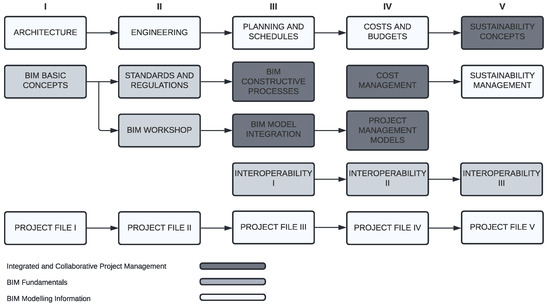
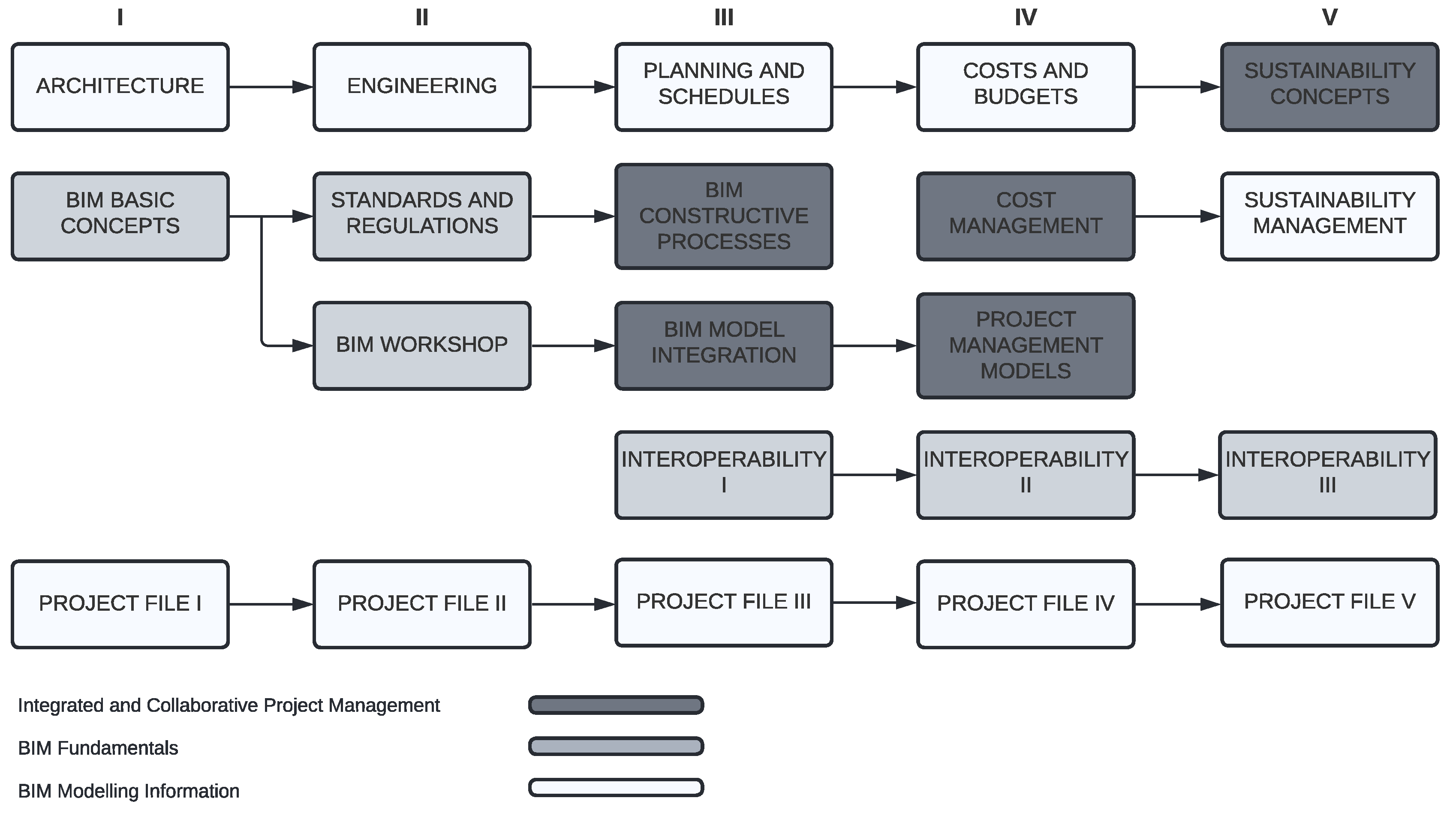
Hence, within the study plan, semester I is related to BIM 3D at a basic level, which corresponds to architectural knowledge; semester II, with BIM 3D at an advanced level, corresponds to engineering knowledge. Later, semester III is focused on BIM 4D, planning and schedules; semester IV, on BIM 5D, costs and budgets; and semester V, with BIM 6D, sustainability. This progression may be observed in Figure 1.
Figure 1.
BIM curriculum with subjects and prerequisites.
A five-level sequence is suggested, even though most civil engineering programs in Latin America are developed within ten (10) semesters [1]. The reason is that the proposed methodology focuses on embedding BIM in an existing undergraduate curriculum, not developing a BIM program. Therefore, the proposed sequence is set to merge with another study plan. Therefore, curriculum managers should consider which subjects to include or not, according to the organization of the semesters.
Regarding the number of credits and the condition of the subjects, whether they are compulsory or optional, these questions should be addressed by the country’s regulations and institutional policies. Finally, as for the prerequisites for the subjects, Figure 1 shows a suggested route. The subjects have been identified, in greyscale, according to the specific BIM training area to which they belong. For a particular curriculum proposal, these proposed subjects should also be correlated to the competencies of the graduation profile.
3.5. Teaching, Learning, and Assessment Methods
For the teaching and learning processes, active methods are preferred, encouraging the active participation of students towards the construction of their learning [39]. These help to develop and reinforce meta-learning, students’ awareness of their strengths and weaknesses through the training process, and lifelong learning [41].
Methods like Project-Based Learning (PrBL) [42], Problem-Based Learning (PBL) [43], Research-Based Learning (RBL) [44], or Team-Based Learning (TBL) [45] are suggested. These enhance a learning-centered or constructivist pedagogical model, in which students have the main role in the training process while professors guide them to achieve shared knowledge construction [33,46]. These methods are also by current project management methodologies since they simulate the need for collaboration in BIM processes and improve educational outcomes [47].
As for the assessment methods, techniques and instruments used to make learning outcomes visible based on the competencies and expected results, they must be properly planned to correspond to a particular intention within the training process. It is recommended to use various techniques and instruments to assess each student properly according to their learning style (active, reflective, theoretical, or pragmatic) [48]. This guarantees the assessment of integral development through the four (4) attributions of competencies [14]. Techniques such as observation, exploration through questions, class exercises, portfolios, tests, written exams, projects, and exhibitions are suggested. In addition, instruments such as checklists, estimation scales, rubrics, and structured evaluation guides are recommended [48].
Specific teaching, learning, and assessment method selection will depend on micro-planning [49,50] and the design of the sessions carried out by the professor in the classroom.
3.6. Technology and Infrastructure
The study plan is the starting point for determining the technology and infrastructure needed. Software and hardware are required in laboratories with computers for BIM collaborative sessions. The operating system, processor, available memory, RAM, graphic card, and monitor size and type should be considered.
3.7. ‘Professors’ Profile
The ‘professors’ profiles should correspond to the institutional and educational model, the context study, the admission and graduation profiles, the curriculum, the internal regulations, and the academic management policies of each institution. In addition, they should be built according to the generic and specific competencies required for a given profession, as well as the necessary prerequisites, such as studies and working experience [4]. Thus, the specific competencies should be related to each of the subjects of the curriculum.
In this context, the suggested generic competencies are collaborative work, communication, mediation of training, assessment of competencies, and management of resources and ICT. On the other hand, the specific ones are related to using BIM and collaborative platforms and knowledge in project management.
4. Discussion
The discussion addresses the implementation of the proposed methodology for embedding BIM in a particular existing undergraduate civil engineering competency-based curriculum. Therefore, a case study is presented.
4.1. Admission Profile
The admission profile for the civil engineering program is based on the fact that the applicant should have oral and written communication and problem-solving skills. Furthermore, they should be autonomous, with a high capacity for self-learning. In addition, they should have basic ICT knowledge, an intermediate English language level, and math and basic skills in the sciences.
Table 6 shows the formulated competencies for the admission profile, which match Table 3. Additionally, a competency regarding basic math and science knowledge has been added.
Table 6.
Formulated competencies for the civil engineering admission profile.
4.2. Graduation Profile
The graduation profile of Universidad de Lima [51] states as follows:
The civil engineer has a solid background in mathematics and engineering sciences that allows him to respond with solvency and promptness to the challenges posed by the design, construction, supervision, operation, and maintenance of all types of infrastructure.
He has knowledge of philosophy, theories, principles, and technological tools to provide technically solid, creative, and innovative responses, emphasizing safety, quality, economy, and care for the environment within construction project management. Civil engineers have generic verbal and written communication, teamwork, and leadership competencies. In addition, he is aware of the need for continuous learning to quickly integrate and assume the global industry’s requirements and modes of action. Finally, the ethical and moral solidity in the exercise of their profession is also characteristic of the civil engineer.
The graduation profile is completed by eight (8) generic and specific competencies, which are presented in Table 7.
Table 7.
Competencies for the civil engineering graduation profile.
4.3. Training Areas and Subjects
The civil engineering program is organized into seven (7) training areas: Engineering Sciences, Construction, Structures, Business Innovation, Project Management, Hydraulics, and Transport and Geotechnics, which develop and reinforce transversally the eight (8) proposed competencies from the graduation profile. Table 8 shows the interrelation between these training areas and their most predominant competencies.
Table 8.
Interrelationship matrix between training areas and competencies from the civil engineering program.
Regarding areas related to BIM, Table 9 presents the proposed BIM-related subjects for each of them.
Table 9.
BIM-related training areas, subjects, and contents from the civil engineering program.
4.4. Study Plan
The study plan is organized into 10 (ten) semesters, distributed over 5 (five) years of studies. The first year corresponds to introductory subjects, called “the general studies program”, in which civil engineering students share the classroom with future professionals in various fields. From the second to the fifth year, the students are enrolled in subjects specific to their degree.
Generic competencies are trained in the first semester, but specific ones are in the third. Table 10 addresses the interrelationship between the expected proficiency level and subject for every generic competency of the graduation profile, while Table 11 does this with the specific ones. Only the BIM-related subjects which correspond to the Construction, Structures, Project Management, Hydraulics, Transportation and Geotechnics, and Project Management training areas are included.
Table 10.
Interrelationship matrix with proficiency levels between subjects and generic competencies from the civil engineering program 2.
Table 11.
Interrelationship matrix with proficiency levels between subjects and specific competencies from the civil engineering program 3.
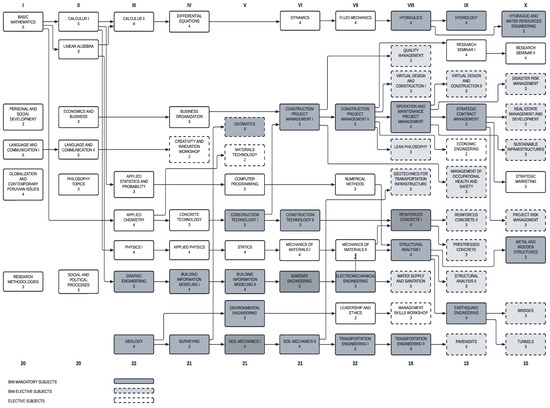
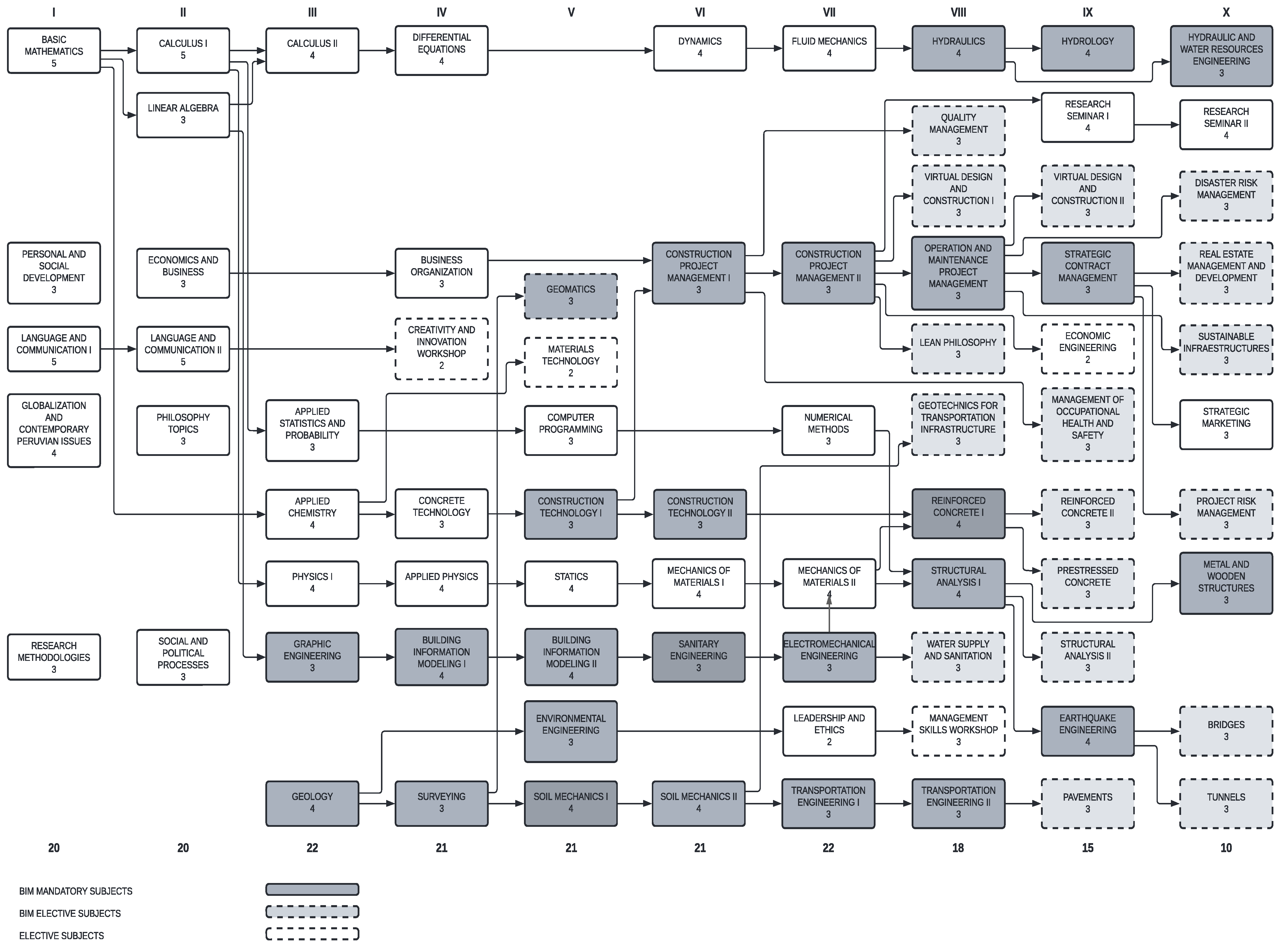
There are gaps within Table 10 and Table 11 regarding the five (5) proficiency levels because these levels are addressed within the subjects that are not detailed in the mentioned tables. Furthermore, even though Table 8 states which competencies are developed and reinforced within the training areas, only some subjects within that particular training area focus on developing and reinforcing all of the mentioned competencies. The entire civil engineering curriculum, with all the subjects, their condition, number of credits, and prerequisites, is shown in Figure 2. BIM-related subjects, mandatory and elective, have been pointed out in grey.
Figure 2.
Civil engineering curriculum with subjects and prerequisites. Adapted from Universidad de Lima [51].
4.5. Teaching, Learning, and Assessment Methods
In line with the learning-centered or constructivist pedagogical model, active methods are preferred for the sessions. The assessment methods respond to it.
ICT, software, CDE, and technologies, such as virtual reality or drones, stand out. Students are exposed to various of these early in the program. Methods like PrBL, PBL, and TBL are used within the classroom. Micro-planning is developed within one-hour coordination sessions between all the professors of each subject, which take place weekly. Additionally, RBL is used throughout the entire curriculum according to the Gradual Implementation Research Competencies (GIRC) Program [5].
4.6. Technology and Infrastructure
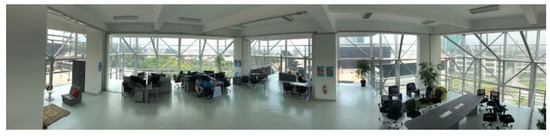
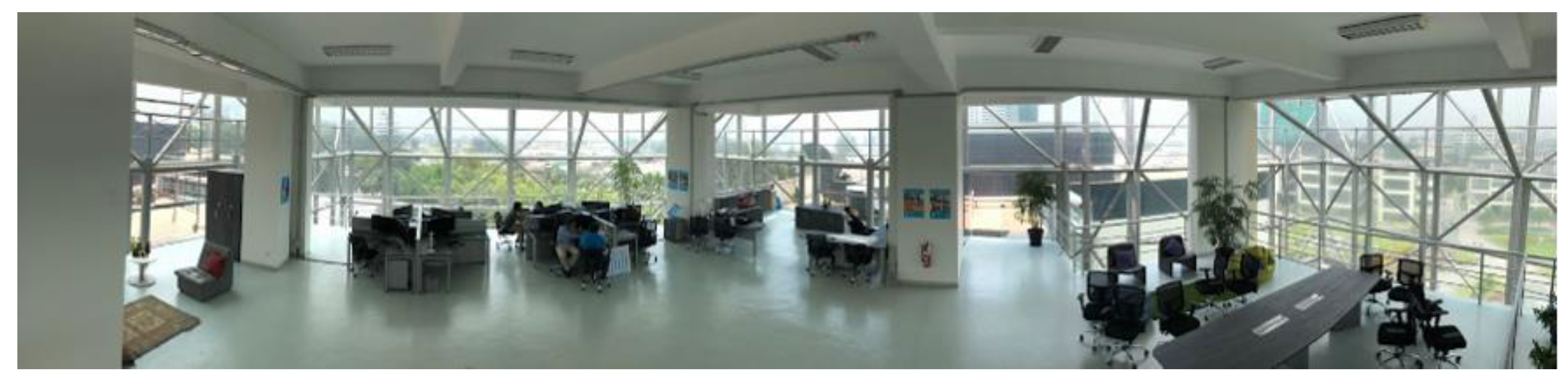
The civil engineering program has a specialized laboratory where students can study and research the following areas: BIM, photogrammetry, virtual and augmented reality, virtual design and construction, and artificial intelligence applied to civil construction. The laboratory is fully equipped with high-performance computers and cutting-edge technology. Additionally, the laboratory was designed to promote integrated and collaborative work between students and professors, creating a friendly non-formal learning environment that encourages creativity and innovation, as seen in Figure 3.
Figure 3.
Laboratory of Simulación de Proyectos.
4.7. ‘Professors’ Profile
The ‘professors’ profiles were defined according to the generic and specific competencies to develop and reinforce each subject. In addition, the suggested generic teaching competencies (collaborative work, communication, mediation of training, assessment of competencies, and management of resources and ICT) were also considered.
5. Conclusions
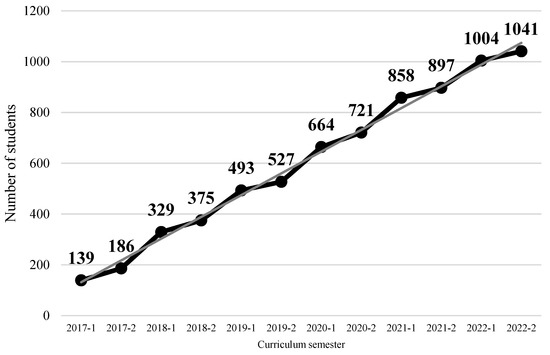
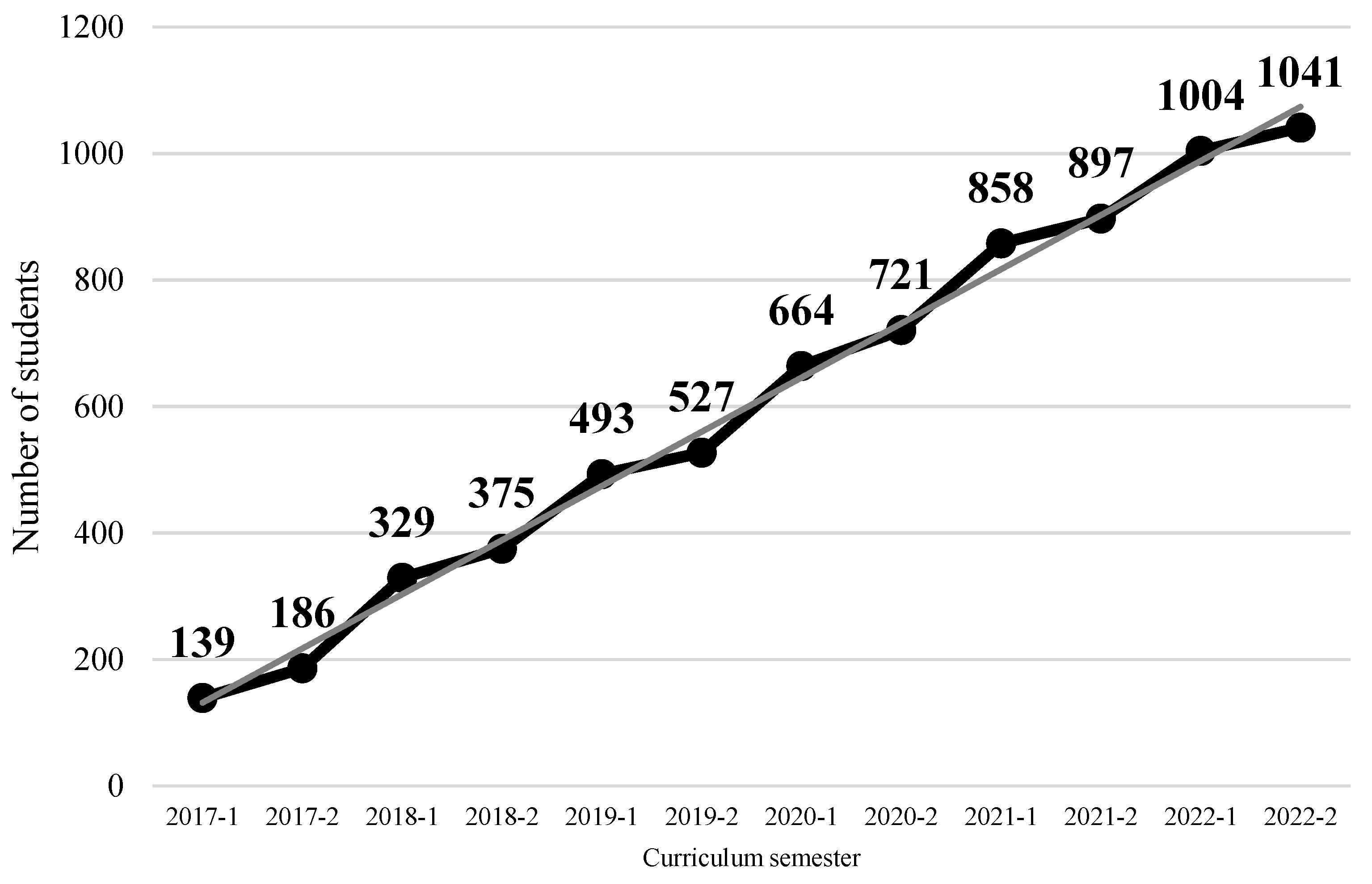
As a result of the civil engineering program, with BIM embedded transversally throughout the curriculum, it can be observed that the number of students had grown from 139 (in 2017, when the program was launched) to 1041 (in 2022). This represents a stable increase for six consecutive years, as shown in Figure 4.
Figure 4.
The number of students per semester within the civil engineering program.
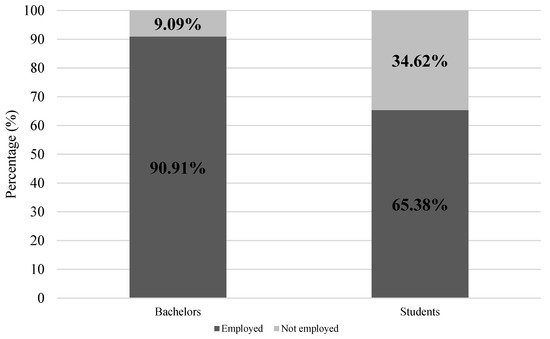
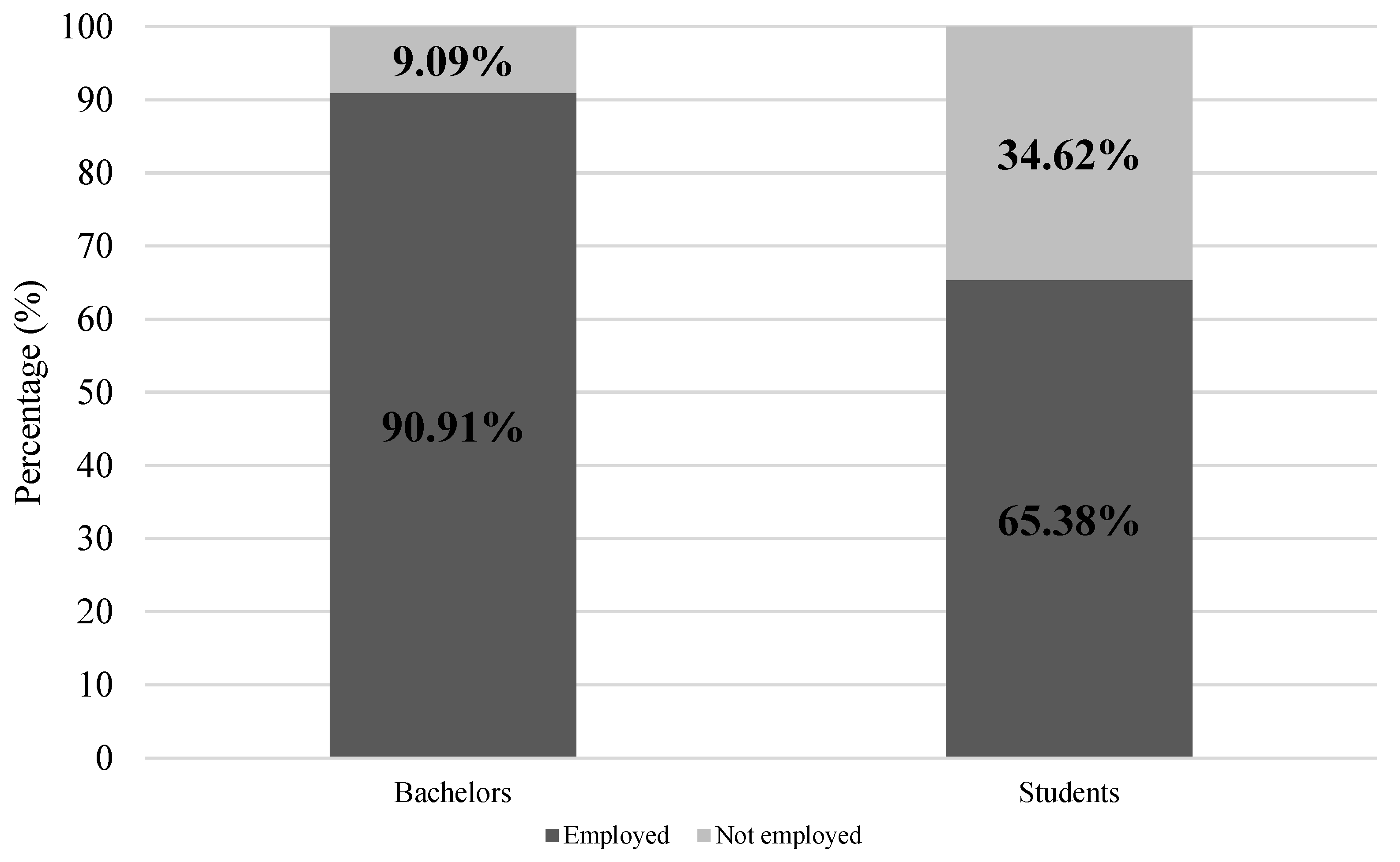
Furthermore, from the first group of graduated students (33 bachelor’s degrees), who finished their studies in December 2021 and graduated in July 2022, 90.91% (30 bachelor’s degrees) are currently employed within the first year of finishing their studies. Likewise, the second group of students finished their studies in July 2022 but still await degree conferral, from which 65.38% (17 students) are employed, as shown in Figure 5. These students anticipate bachelor’s degrees by December 2022, when they finally graduate.
Figure 5.
Percentage of employed B.S. graduates (December 2021) and students (July 2022) from the civil engineering program.
The employment rates reveal a positive reception and recognition within the group of stakeholders, as the employers are transnational, international, and well-recognized national companies of the AECO industry who consider BIM-trained B.S. graduates among their recruitment options. Additionally, some of the most common positions occupied by the graduates are BIM Modeler, Assistant, Supervisor, or Coordinator, which also reveals the industry’s need for this professional.
The interest in research and innovation has increased similarly as the civil engineering program has progressed. The program has established academic alliances with major national and international organizations, such as the Stanford Center for Professional Development, the Global Resilience Institute, the Instituto Nacional de Defensa Civil of the Peruvian Ministry of Defense, and the Instituto Nacional de Calidad of the Peruvian Ministry of Production, among others. These positive results validate the curriculum proposal since they show its visibility in the AECO industry.
However, the above was only possible with the appropriate dissemination activities to show the potentialities and differentials of the implemented curricular design with BIM embedded transversally. Workshops, presentations, conferences, and proper marketing have been a key support to this task. Since its launch in 2017, the civil engineering program has been attractive to the AECO industry due to its innovative BIM approach, which is well connected with VDC [52].
The literature review and experienced industry managers elaborated the curriculum’s design, with stakeholders invited to validate it. Furthermore, the presented curriculum design has been permanently improved according to the changing needs of the AECO industry. Therefore, future works may apply the methodology for embedding BIM in other AECO programs, such as architecture and industrial engineering.
Furthermore, this paper focuses on macro-planning, and further research may include micro-planning, reporting specific ambits within the training areas and particular subjects. Embedding BIM within the Construction training area and its corresponding subjects, as addressed in Table 9, including the mechanisms designed, implemented, and assessed to develop and consolidate BIM-related competencies in undergraduate students, is a matter for further research, including students’ perception of the development and reinforcement of BIM-related competencies.
Finally, considering that BIM supports generating graphic and non-graphic information within the context of a project, the presented curricular approach should be complemented with proper training in process and organization management. The presented civil engineering program attains this training by incorporating VDC in the curricular design, which will be addressed in a future paper.
Author Contributions
Conceptualization, A.A.D.S.; methodology, A.A.D.S., K.G.V. and B.D.-G.; validation, A.A.D.S., K.G.V., B.D.-G. and E.V.P.; formal analysis, K.G.V. and B.D.-G.; investigation, K.G.V.; resources, B.D.-G.; data curation, K.G.V. and B.D.-G.; writing—original draft preparation, K.G.V.; writing—review and editing, A.A.D.S., K.G.V., B.D.-G. and E.V.P.; visualization, A.A.D.S.; supervision, A.A.D.S.; project administration, A.A.D.S.; funding acquisition, A.A.D.S. and B.D.-G. All authors have read and agreed to the published version of the manuscript. Also, they have read and agreed to the published version of the manuscript.
Funding
This research was supported by the Scientific Research Institute (IDIC) of Universidad de Lima, grant number AC.06.016.2022.
Institutional Review Board Statement
The study was reviewed by the Comité de Ética del Instituto de Investigación Científica (IDIC) from Universidad de Lima.
Informed Consent Statement
Informed consent was obtained from the subjects involved in the study.
Data Availability Statement
The data supporting the findings of this study are available within the article.
Acknowledgments
The authors would like to thank the Faculty of Engineering and Architecture from Universidad de Lima, whose support has been invaluable in collecting the data to conduct this research. Also, major gratitude to Universidad de Lima for constantly promoting research culture.
Conflicts of Interest
The authors declare no conflict of interest.
References
- Tuning-Alfa. Reflections on and Outlook for Higher Education in Latin America; University of Groningen: Groningen, The Netherlands; University of Deusto: Bilbao, Spain, 2007. [Google Scholar]
- UNESCO. 2009 World Conference on Higher Education:The New Dynamics of Higher Education and Research For Societal Change and Development; UNESCO: Paris, France, 2009. [Google Scholar]
- Ruiz, M. El Proceso Curricular por Competencias; Trillas: Mexico City, Mexico, 2009. [Google Scholar]
- Tobón, S. Metodología de Gestión Curricular: Una Perspectiva Socioformativa; Trillas: Mexico City, Mexico, 2013. [Google Scholar]
- Del Savio, A.A.; Cáceres, L.M.; Galantini, K. A methodology for embedding research competencies in an undergraduate civil engineering program. Int. J. Eng. Educ. 2021, 37, 1201–1224. [Google Scholar]
- Whiteman, C.W. Mechanical engineering curricula: A baseline study for the future effects of ABET EC2000. Int. J. Mech. Eng. Educ. 2003, 3, 327–338. [Google Scholar] [CrossRef] [Scilit]
- Nguyen, T.T.N.; Nguyen, T.A.; Do, S.T. Identifying Stakeholder’s Behavioral Intentions of Applying BIM to Construction Projects in Vietnam. In Proceedings of the Second International Conference on Sustainable Civil Engineering and Architecture ICSCEA 2021. Lecture Notes in Civil Engineering; Reddy, J.N., Wang, C.M., Luong, V.H., Le, A.T., Eds.; Springer: Singapore, 2023; Volume 268. [Google Scholar] [CrossRef] [Scilit]
- Klinc, R.; Turk, Ž. Construction 4.0—Digital Transformation of One of the Oldest Industries. Econ. Bus. Rev. 2019, 21, 4. [Google Scholar] [CrossRef] [Scilit]
- International Organization for Standardization (ISO). BIM: Building Information Modelling (19650-1); International Organization for Standardization: Geneva, Switzerland, 2019. [Google Scholar]
- Borrmann, A.; König, M.; Koch, C.; Beetz, J. Building Information Modeling: Why? What? How? In Building Information Modeling; Borrmann, A., König, M., Koch, C., Beetz, J., Eds.; Springer: Cham, Switzerland, 2018. [Google Scholar] [CrossRef] [Scilit]
- Mehran, D. Exploring the Adoption of BIM in the UAE Construction Industry for AEC Firms. Procedia Eng. 2016, 145, 1110–1118. [Google Scholar] [CrossRef] [Scilit]
- Aladag, H.; Demirdögen, G.; Isık, Z. Building Information Modeling (BIM) Use in Turkish Construction Industry. Procedia Eng. 2016, 161, 174–179. [Google Scholar] [CrossRef] [Scilit]
- Delors, J.; Al Mufti, I.; Amagi, I.; Carneiro, R.; Chung, F.; Geremek, B.; Nazhao, Z. Learning: The Treasure Within; Report to UNESCO of the International Commission on Education for the Twenty-First Century; UNESCO Publishing: Paris, France, 1996. [Google Scholar]
- Tobón, S. Integral Formation and Competencies. Complex Thinking, Curriculum, Teaching and Assessment; CIFE Institute: Lake Mary, FL, USA, 2015. [Google Scholar]
- International Bureau of Education. Competency-Based Curriculum. 2022. UNESCO. Available online: http://www.ibe.unesco.org/en/glossary-curriculum-terminology/c/competency-based-curriculum (accessed on 15 January 2022).
- Wiles, J. Leading Curriculum Development; Corwin Press: Thousand Oaks, CA, USA, 2008. [Google Scholar]
- Shankar, S.; Gowtham, N.; Surekha, T. Faculty Competency Framework: Towards A Better Learning Profession. Procedia Comput. Sci. 2020, 172, 357–363. [Google Scholar] [CrossRef] [Scilit]
- Kunz, J.; Fischer, M. Virtual Design and Construction: Themes, Case Studies and Implementation Suggestions; Center for Integrated Facility Engineering, Stanford University: Stanford, CA, USA, 2012. [Google Scholar]
- Eastman, C.; Teicholz, P.; Sacks, R.; Liston, K. BIM Handbook: A Guide to Building Information Modeling for Owners, Managers, Designers, Engineers and Contractor; John Wiley & Sons: Hoboken, NJ, USA, 2011. [Google Scholar]
- Ganah, A.; John, G. Integrating Building Information Modeling and Health and Safety for Onsite Construction. Saf. Health Work 2015, 6, 39–45. [Google Scholar] [CrossRef] [Scilit] [PubMed]
- National Building Specification (NBS). 10th Annual BIM Report. 2020. Available online: https://www.thenbs.com/knowledge/national-bim-report-2020 (accessed on 15 January 2022).
- Jung, W.; Lee, G. The Status of BIM Adoption on Six Continents. World Academy of Science, Engineering and Technology. Open Science Index 101. Int. J. Civ. Environ. Eng. 2015, 9, 512–516. [Google Scholar]
- Castillo, A. The State of BIM in Latin America. Autodesk University. 2020. Available online: https://medium.com/autodesk-university/the-state-of-bim-in-latin-america-4a4ac023da14 (accessed on 15 January 2022).
- Ghosh, A.; Parrish, K.; Chasey, A.D. Implementing a Vertically Integrated BIM Curriculum in an Undergraduate Construction Management Program. Int. J. Constr. Educ. Res. 2015, 11, 121–139. [Google Scholar] [CrossRef] [Scilit]
- Klotz, B. Impact of Education & Communication on Productivity. Eng. Issues J. Prof. Act. 1978, 104, 35–41. [Google Scholar] [CrossRef] [Scilit]
- Australian Industry Group (Ai Group). Tackling Foundation Skills in the Workforce. Australian Industry Group. 2016. Available online: http://cdn.aigroup.com.au/Reports/2016/AIG9675_EMAIL.pdf (accessed on 15 January 2022).
- Tang, L.; Jin, R.; Fang, K. Launching the innovative BIM module for the architecture and built environment programme in China. In Building Information Modelling (BIM) in Design, Construction and Operations; WIT Transactions on the Built Environment; WIT Press: Southampton, UK, 2015; Volume 149, pp. 145–156. [Google Scholar]
- Li, J.; Afsari, K.; Li, N.; Peng, J.; Wu, Z.; Cui, H. A review for presenting building information modelling education and research in China. J. Clean. Prod. 2020, 259, 120885. [Google Scholar] [CrossRef] [Scilit]
- Garikano, X.; Garmendia, M.; Manso, A.P.; Solaberrieta, E. Strategic knowledge-based approach for CAD modelling learning. Int. J. Technol. Des. Educ. 2019, 29, 947–959. [Google Scholar] [CrossRef] [Scilit]
- Hardi, J. Case Study: Lessons Learned from Building Information Modelling (BIM) Extracurricular Activity Organised for Architecture, Engineering and Construction Students with a UK University; RICS COBRA AUBEA: London, UK, 2015. [Google Scholar]
- Zhang, J.; Zhao, C.; Li, H.; Huijser, H.; Skitmore, M. Exploring an Interdisciplinary BIM-Based Joint Capstone Course in Highway Engineering. J. Civ. Eng. Educ. 2020, 146, 05020004. [Google Scholar] [CrossRef] [Scilit]
- De Zubiría, J. Los Modelos Pedagógicos: Hacia una Pedagogía Dialogante; Cooperativa Editorial Magisterio: Bogotá, Colombia, 2021. [Google Scholar]
- Samuelowicz, K.; Bain, J. Revisiting academics’ beliefs about teaching and learning. High. Educ. 2001, 41, 299–325. [Google Scholar] [CrossRef] [Scilit]
- Tuning–Alfa. Tuning Educational Structures in Europe. Final Report. Phase One; University of Groningen: Groningen, The Netherlands, 2003. [Google Scholar]
- Barison, M.B.; Santos, E.T. The Competencies of BIM Specialists: A Comparative Analysis of the Literature Review and Job Ad Descriptions. Comput. Civ. Eng. 2011, 2011, 594–602. [Google Scholar] [CrossRef] [Scilit]
- Porwal, A.; Hewage, K.N. Building Information Modeling (BIM) partnering framework for public construction projects. Autom. Constr. 2013, 31, 204–214. [Google Scholar] [CrossRef] [Scilit]
- Davies, K.; McMeel, D.; Wilkinson, S. Soft skills requirements in a BIM project team. In Proceedings of the 32nd CIB W78 Conference 2015, Eindhoven, The Netherlands, 27–29 October 2015; Available online: http://itc.scix.net/data/works/att/w78-2015-paper-011.pdf (accessed on 1 February 2022).
- ABET. Criteria for Accrediting Engineering Programs, 2019–2020. 2020. Available online: https://www.abet.org/accreditation/accreditation-criteria/criteria-for-accrediting-engineering-programs-2019-2020/#GC3 (accessed on 1 February 2022).
- Rodríguez-Rodríguez, K.Y.; Dávila-Perez, J.L. Framework development to introduce BIM into the civil engineering undergraduate curriculum at University of Puerto Rico, Mayagüez Campus. In Proceedings of the Construction Research Congress, San Juan, Puerto Rico, 31 May–2 June 2016. [Google Scholar] [CrossRef] [Scilit]
- Charef, R.; Alaka, H.; Emmitt, S. Beyond the third dimension of BIM: A systematic review of literature and assessment of professional views. J. Build. Eng. 2018, 19, 242–257. [Google Scholar] [CrossRef] [Scilit]
- Frik Et Al, O.W. Active Teaching and Learning Methodologies in Higher Education; GRIN Verlag: Münich, Germany, 2019. [Google Scholar]
- Van Woezik, T.; Koksma, J.; Reuzel, R.; Jaarsma, D.; van der Wilt, G. How to encourage a lifelong learner? The complex relation between learning strategies and assessment in a medical curriculum. Assess. Eval. High. Educ. 2020, 45, 513–526. [Google Scholar] [CrossRef] [Scilit]
- Made Sudana, I.; Apriyani, D.; Nurmasitah, S. Revitalization of vocational high school roadmap to encounter the 4.0 industrial revolution. J. Soc. Sci. Res. 2019, 5, 338–342. [Google Scholar] [CrossRef] [Scilit]
- Das, D. Problem-Based Learning for Undergraduate Civil Engineering Education in South Africa- a Methodological Approach. Lect. Notes Civ. Eng. 2023, 239, 85–95. [Google Scholar] [CrossRef] [Scilit]
- Noguez, J.; Neri, L. Research-based learning: A case study for engineering students. Int. J. Interact. Des. Manuf. 2019, 13, 1283–1295. [Google Scholar] [CrossRef] [Scilit]
- Imran, M.; Halawa, T.F.; Baig, M.; Almanjoumi, A.M.; Badri, M.M.; Alghamdi, W.A. Team-based learning versus interactive lecture in achieving learning outcomes and improving clinical reasoning skills: A randomized crossover study. BMC Med. Educ. 2022, 22, 1–9. [Google Scholar] [CrossRef] [Scilit] [PubMed]
- Hägg, G.; Gabrielsson, J. A systematic literature review of the evolution of pedagogy in entrepreneurial education research. Int. J. Entrep. Behav. Res. 2019, 26, 82–861. [Google Scholar] [CrossRef] [Scilit]
- Boton, C.; Forgues, D.; Halin, G. A framework for Building Information Modeling implementation in engineering education. Can. J. Civ. Eng. 2018, 45, 866–877. [Google Scholar] [CrossRef] [Scilit]
- Cox, K.; Imrie, B.W.; Miller, A. Student Assessment in Higher Education: A Handbook for Assessing Performance; Routledge: London, UK, 1998. [Google Scholar]
- Ortiz, A. Temas Pedagógicos, Didácticos y Metodológicos; Cepedid: Barranquilla, Colombia, 2012. [Google Scholar]
- Universidad de Lima. Carrera de Ingeniería Civil. Universidad de Lima. Available online: https://www.ulima.edu.pe/pregrado/ingenieria-civil (accessed on 23 February 2022).
- Del Savio, A.A.; Vidal Quincot, J.F.; Bazán Montalto, A.D.; Rischmoller Delgado, L.A.; Fischer, M. Virtual Design and Construction (VDC) Framework: A Current Review, Update and Discussion. Appl. Sci. 2022, 12, 12178. [Google Scholar] [CrossRef] [Scilit]

Publisher’s Note: MDPI stays neutral with regard to jurisdictional claims in published maps and institutional affiliations. |
© 2022 by the authors. Licensee MDPI, Basel, Switzerland. This article is an open access article distributed under the terms and conditions of the Creative Commons Attribution (CC BY) license (https://creativecommons.org/licenses/by/4.0/).