


Abstract
The hydrothermal synthesis of aluminophosphate molecular sieve type AlPO4-11 was processed from chemicals containing psueudobohemite, 85% phosphoric acid, water, and di-isopropylamine as templating agent. The crystallization of the samples was studied by taking samples in times from 2 to 74 h. The obtained white powder products were characterized by X-ray diffraction patterns (XRD), Fourier transform infrared spectroscopy (FT-IR), thermogravimetry (TG) and differential scanning calorimetry (DTG) data and pH measurement of the mother liquor. The pore volume, as determined from TG and DTG curves, was ca. 0.17 cm3g−1. The percent relative crystallinity was determined by XRD and FT-IR methods. The crystallization kinetics evidenced that the hydrothermal synthesis of AlPO4-11 exhibited in its initial phase a behavior of first order reaction with a specific velocity constant of ca. 0.25 h−1, as determined from XRD and FT-IR data. The results obtained by both X-ray diffraction and infrared spectroscopy are comparable, and FT-IR is found to be a rapid method for estimating crystallinity and structure of aluminophosphate.
1. Introduction
One of the most important materials in the chemical and petrochemical industry are molecular sieves, as they have open structures containing pores and cavities. These materials generally known as zeolites, aluminophosphates and silicoaluminophosphates are widely used as adsorbents, catalysts and ion exchangers in addition to applications in nanotechnology, in the area of optical sensors, due to their electronic properties [1].
The aluminophosphate molecular sieves represent a class of microporous materials free of silica, first reported in 1982 by Wilson et al. [2], which are synthesized by the hydrothermal method. These solids are denoted as AlPO4-n, where “n” is an indicative number of the structure type. After the discovery of aluminophosphates, various related materials have been synthesized [3,4,5,6].
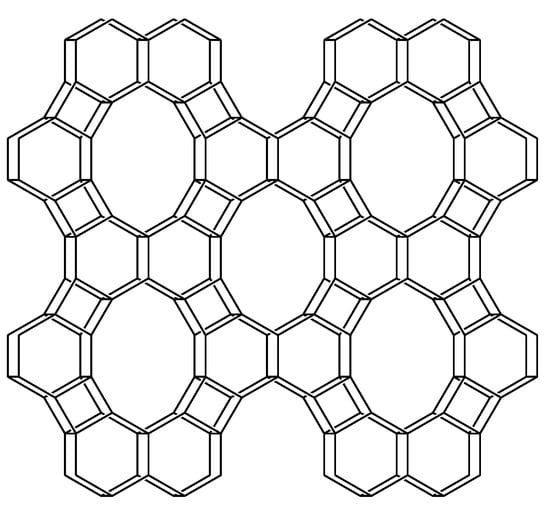
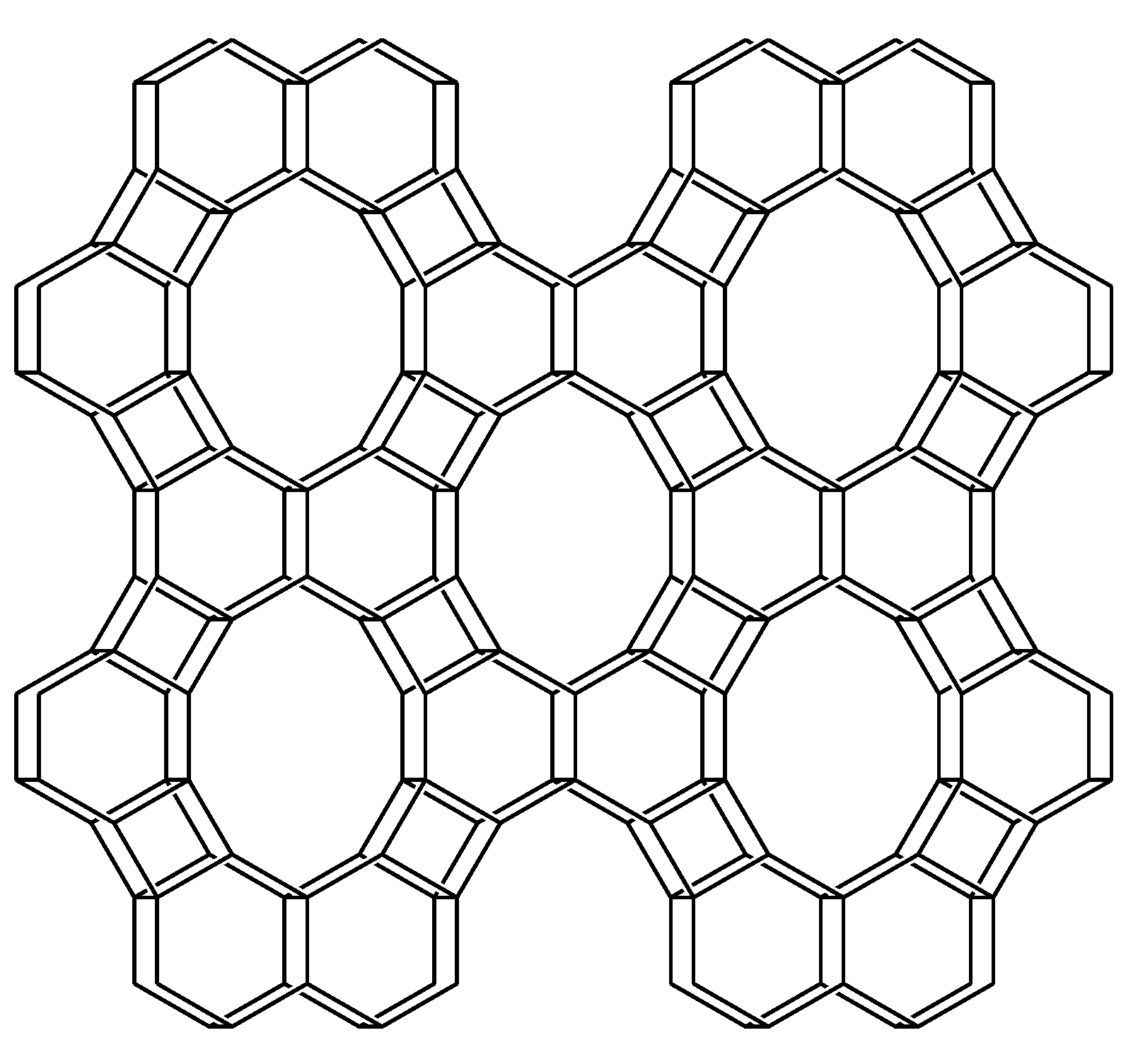
Microporous AlPO4-11 has an AEL topology and is a member of the aluminophosphates molecular sieves family, which exhibits a one-dimensional channel system with 10-membered ring pores. The pore opening is elliptical in shape with diameters of 3.9 × 6,3 Å. The symmetry of AlPO4-11 is orthorhombic with unit cell dimensions a = 13.5336, b = 8.4821 and c = 8.3703 Å [7]. Figure 1 illustrates the framework of AlPO4-11 viewed along (100)direction [7,8].
Figure 1.
Structural framework of the aluminophosphate AlPO4-11 viewed along (100) direction.
It is well known that the catalytic properties exhibited by a microporous material are strongly dependent on the synthesis procedure. Many of the aluminophosphate materials exhibit properties similar to that of zeolites, for instance, molecular sieve effect, specific channel and cage system, indicating that they can be used as adsorbents, catalysts and supports in several chemical processes such as paraffin/isoparaffin separation, isomerization and alkylation. The main advantages of the AlPOs compared with other supports are related with the possibility of varying the following physicochemical properties: pore size, pore shape, dimensionality of the pore system, presence or absence of cages, acid sites properties, surface properties, void volume and framework compositions. Thus, the study of the crystallization parameters and their relation with the characteristics of the final materials is very important. Since the first synthesis of AlPO4-11, several works have been completed concerning this molecular sieve [9,10,11], however, little is known about its crystallization kinetics. Several studies have been reported on the mechanism of crystallization of molecular sieves using dry gel and solid transformation method [12,13], synthesis of nanocrystal [14], ionothermal procedure [15] and membranes with distinctive porosities [16]. Recently, the synthesis of aluminophosphate using eutectic solvent [17] and non-hydrolytic sol-gel reactions [18] have been reported for preparation of high surface materials. However, many processes in hydrothermal crystallization are still not well understood.
In this work, the syntheses procedure and crystallization kinetics of AlPO4-11 were studied as a function of hydrothermal synthesis time, and subsequent analysis by X-ray powder diffraction (XRD), Fourier transform infrared spectroscopy (FT-IR) and thermogravimetric (TG/DTG), as well as the pH measurements of the supernatant liquid.
2. Materials and Methods
The samples were synthesized using the following chemicals as starting materials: phosphoric acid (85%, Merck), pseudoboehmite (Catapal B, Vista Chemical), di-isopropylamine (here named as DIPA, 98%, Riedel) and distilled water. These reactants were combined to obtain a gel with the following stoichiometric proportion:
1.0 DIPA: 1.0 Al2O3: 1.0 P2O5: 80 H2O
The synthesis procedure consists of a modified process described elsewhere [19,20], in relation to the order or mixing the reactants, summarized as follows: (i) pseudoboehmite was slurried in half of total volume of water required at synthesis; (ii) the phosphoric acid was diluted with the volume of remaining water; (iii) the phosphoric acid solution was added to the suspension obtained in step (i) and (iv) addition of DIPA to the mixture.
The obtained gel was divided in seven parts and the portions were transferred to Teflon lined stainless-steel autoclaves and heated in an oven at temperature of 200 °C. For the crystallization process, the autoclaves were removed from the oven in times of 2, 4, 6, 10, 15, 48 and 74 h and then quenched in cold water. The obtained samples were designed as S2h, S4h, S6h, S10h, S15h, S48h and S74h, respectively. The pH of the obtained slurry was carefully measured. The solid products were recovered from the mother liquid by filtration, washed with distilled water and dried at 100 °C for 6 h. The calcinations of the samples were performed by heating at 500 °C in dry air dynamic atmosphere with flow of 60 cm3min−1 for a period of 12 h.
A Philips powder diffractometer with CuKα radiation, with the diffraction angle (2θ) at range of 5–40° was used to identify the AlPO4-11 crystalline phase and to determination of the degree of crystallinity. Infrared measurements were performed in a Fourier transform infrared spectrometer, FT-IR Prospec (Midac Corp.) using the KBr wafer technique. The wafers were prepared by the mixture of ca. 0.5 mg of sample with 150 mg of KBr powder and pressed at approximately 800 MPa. The spectra were attained in the region of 1400–400 cm−1. Thermogravimetric analysis (TG) was performed on a DuPont TA thermobalance, at a heating rate of 10 °C min−1, in the temperature range from ambient to 1000 °C using nitrogen flow of 60 cm3min−1. For these analyses, a mass of 10 mg was used.
3. Results and Discussion
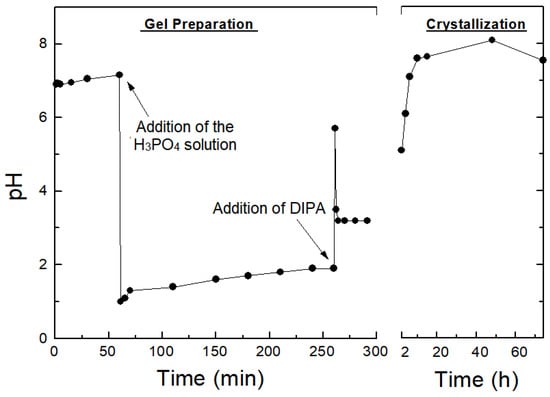
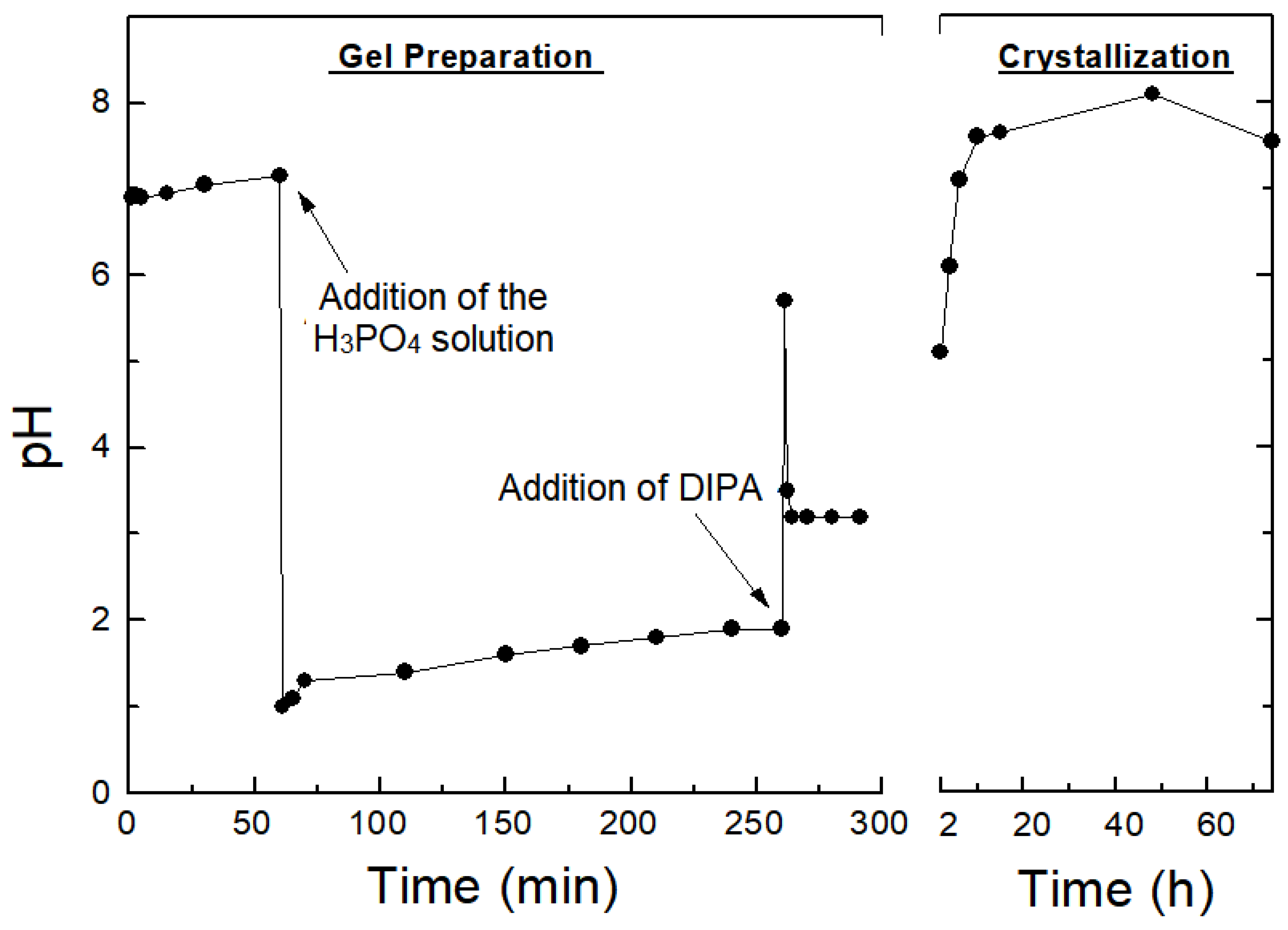
During each step of the gel preparation and after the specific times of the hydrothermal synthesis, the pH of the mixture was carefully measured. The obtained values and behavior of the pH are viewed in Figure 2.
Figure 2.
Curves of pH during the gel preparation and after remotion of each sample during the crystallization process.
During the first step of the gel preparation, the pH for the mixture of pseudoboehmite with water increased slowly from 6.90 to 7.15 in approximately 60 min due to the low reactivity of pseudoboehmite. After addition of phosphoric acid solution for the mixture, the pH decreased to 1.00, and a formation of a viscous gel was observed. The pH of the system increased slowly as the reaction mixture was aged with vigorous agitation until pH 1.90 after 200 min. This evolution of pH is due to the difficulty of phosphoric in reacting with the bulk after the surface has reacted, Equation (1). When the DIPA was added to the mixture, the gel became very viscous, and the pH value skipped to 5.70 and immediately stabilized in 3.20, Equation (2).
H3PO4 + AlOOH = AlPO4 + 2H2O
AlPO4 + (C3H7)2NH = AlPO4 (C3H7)2NH
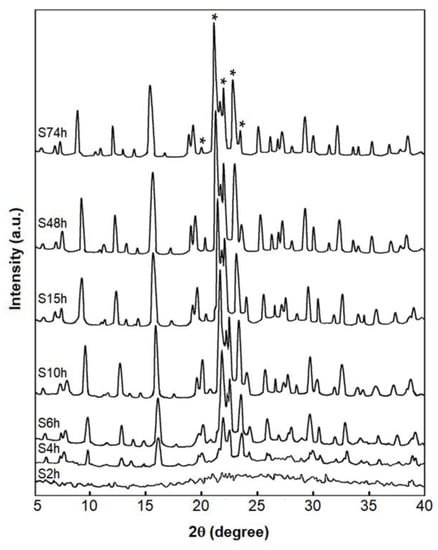
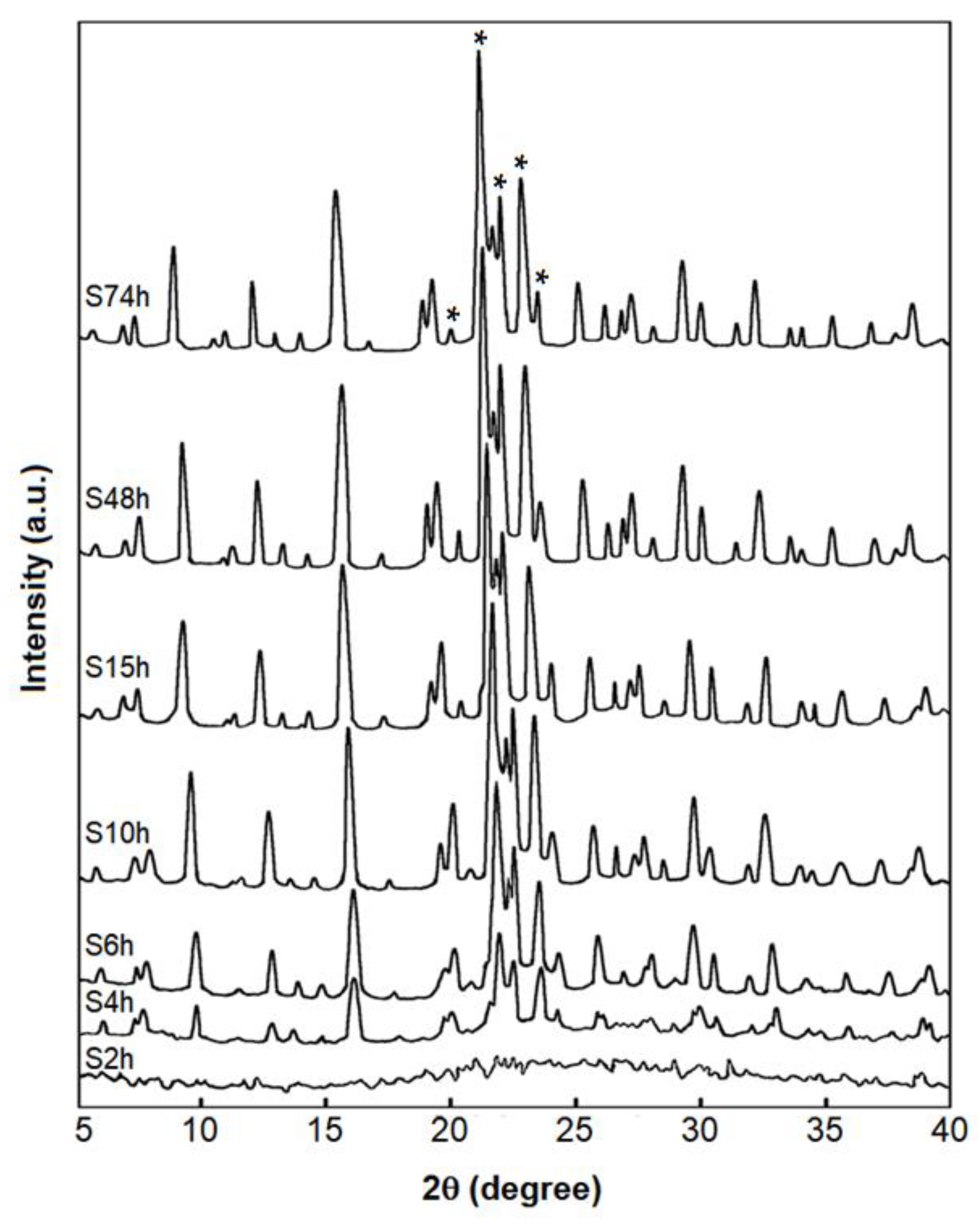
The sample obtained in 2 h of heating presented a pH of 5.10. The XRD analysis of this sample did not indicate a crystalline phase of the material, as shown in Figure 3. It was assumed that this pH increasing was due to the reaction of phosphoric acid with pseudoboehmite to form amorphous aluminum phosphate. The samples S4h, S6h, S10h and S15h exhibited crescent values of pH evidencing that the reaction of formation of amorphous aluminum phosphate is still occurring, however, the XRD profiles show characteristic peaks of AlPO4-11. The pH in the sample S48h presented the greater value among all the samples, ca. 8.10, evidencing that all phosphoric acid was consumed at the reaction with the pseudoboehmite and a basic pH is due to the excess of amine in solution. The pH decreasing for S74h sample probably was occasioned by the dissolution of the material already crystallized in the mother liquor, which released species in solution that lowered the pH. This phenomenon was also observed for synthesis of VPI-5 with di-n-propylamine [21].
Figure 3.
XRD pattern of the samples obtained during the crystallization process of AlPO4-11, monitored at different times. The peaks labeled with (*) were used for determination of the crystallinity.
In addition, a decrease in the crystallinity of the S74h sample was observed, as measured by XRD and FT-IR techniques. XRD patterns were performed with the calcined samples to verify the stability of the AlPO4-11. The results showed the presence of well-defined crystalline phase identified as AEL structure (AEL = Aluminophosphate Eleven) AlPO4-11, as shown in Figure 3.
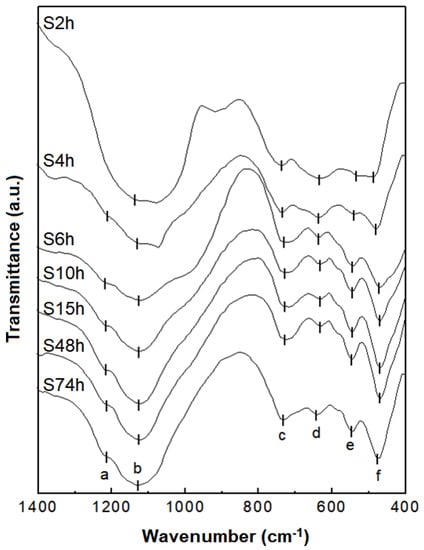
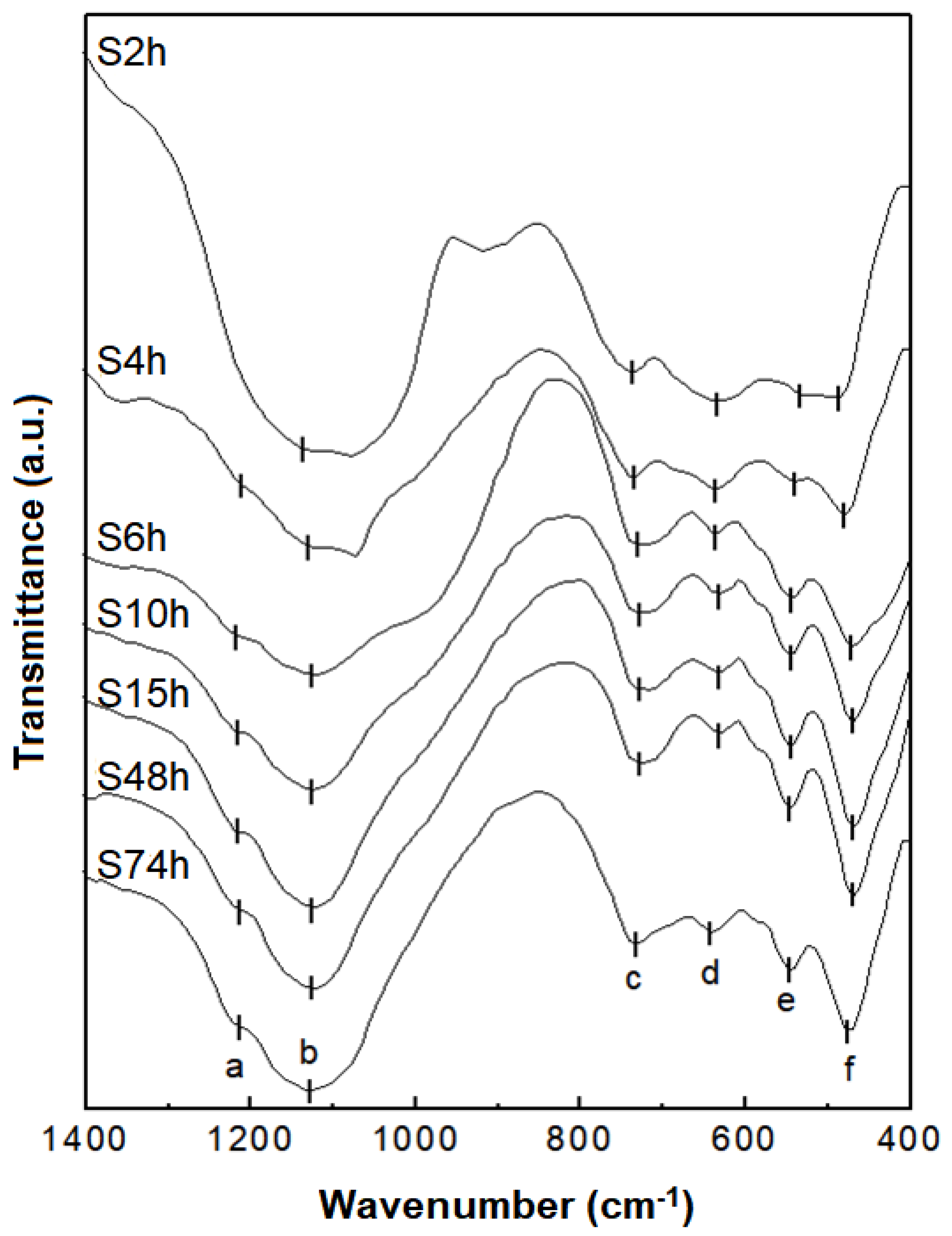
Infrared spectra of the solid phase obtained during the crystallization are shown in Figure 4. These spectra were obtained for the as-synthesized samples. The attribution for the main absorption bands were done in the 1400–400 cm−1 structural region of the spectra [22].
Figure 4.
Infrared spectra of the samples obtained during the crystallization of AlPO4-11, at different synthesis times. The absorption bands (e) and (f) were used for determination of the crystallinity.
From FT-IR data, two kinds of absorption bands are observed, as summarized in Table 1: one due to internal vibrations of the TO4 tetrahedral, with T = Al or P, which are structure insensitive, and other due to external vibrations of the tetrahedral that are structure sensitive. This last type of vibration was used as an indicative property of the degree of crystallinity of the material.
Table 1.
Wavenumbers and assignments for the main absorption bands of the infrared spectra of the ALPO-11.
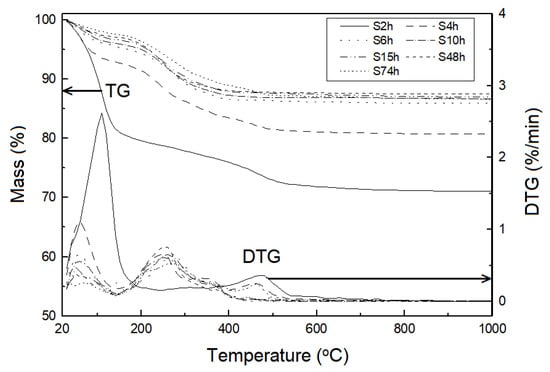
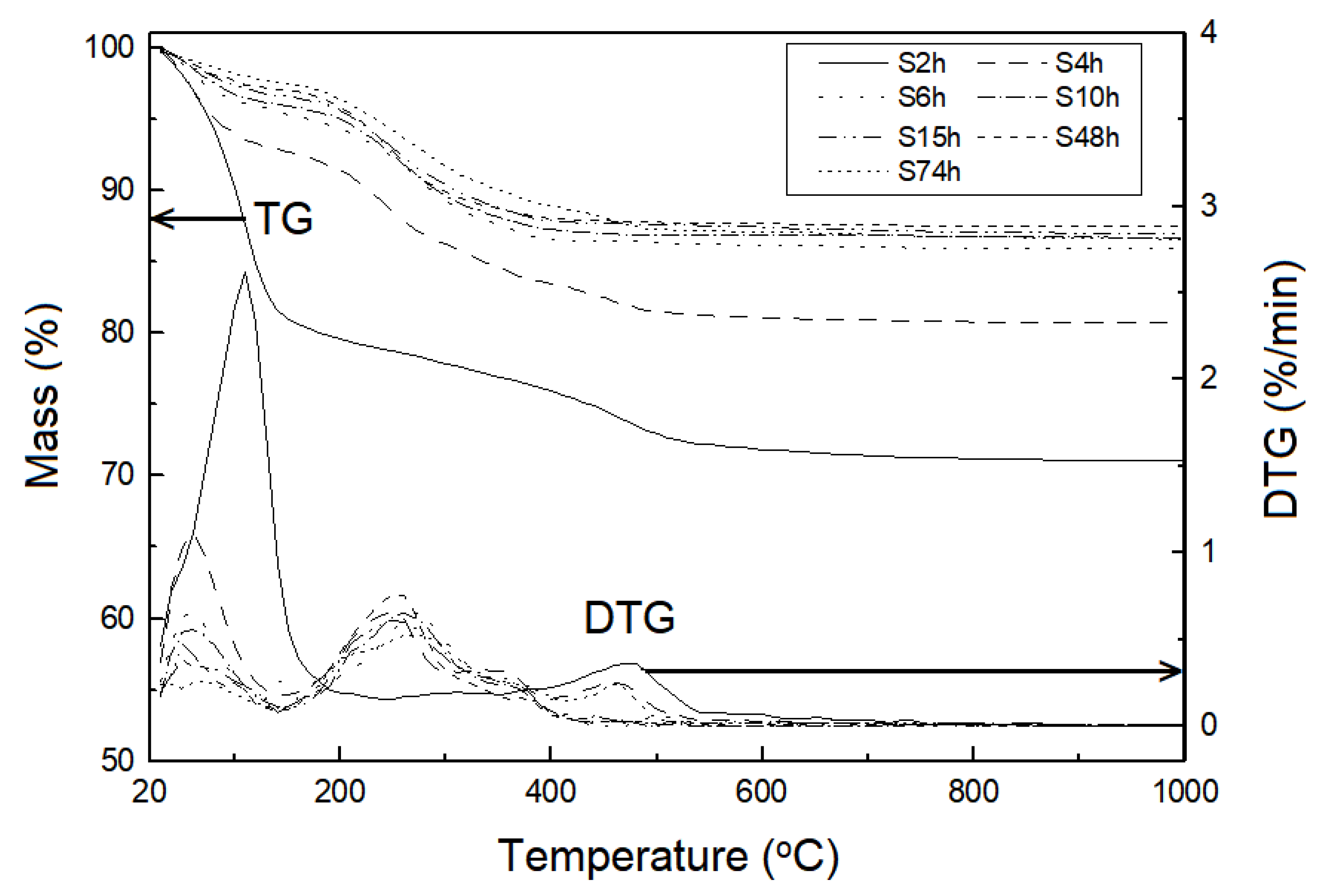
The thermogravimetry (TG) was used to determine the thermal stability, range of temperature to remove the organic template, and pore volume of the samples. Figure 5 illustrates the TG curves and its respective derivatives (DTG). The TG curves of the samples S2h and S4h showed different behavior from the others, because they presented a large amount of amorphous material, as determined by XRD analyses.
Figure 5.
TG and DTG curves of the solids obtained during the crystallization of AlPO4-11, at different synthesis times.
From TG curves is important to observe that the samples removed after 6 h of heating (S6h sample) presented a similar behavior, with two steps of weight losses, except for the S74h sample, that presented a third step of weight loss in the temperature range from 400 to 550 °C which was attributed to the presence of amorphous material, since the samples S2h and S4h also showed the same weight loss, in the same temperature range. The TG/DTG data are given in Table 2.
Table 2.
Pore volume of the AlPO4-11 samples, determined from TG/DTG analyses.
From DTG curves, two steps of weight losses were identified, one relative to the water in the temperature range from ambient to 150 °C and the other relative to the di-isopropylamine in the temperature range from 180 to 380 °C, in which the mass of each event was measured. For transforming the mass values in volume, it was assumed that the water and di-isopropylamine molecules occupy the pores of the AlPO4-11 in the liquid state. A detailed description of this method is found in [23]. It is interesting to note that the value of adsorption capacity reported by Wilson et al. [24] for the AlPO4-11 measured over saturation of water was approximately 0.16 cm3g−1. The values reported here for pore volume total are in excellent agreement with the literature [24]. However, both the values are larger than the theoretical value calculated from XRD crystallographic data, by Davis et al. [25] which was 0.134 cm3g−1. This difference is because, in the condition of saturation, the adsorption occurs on the intergranule pores (meso and macropores) and the theoretical value is only related to the microporous volume. The obtained values suggest that molecules of water are in the meso and macropores whereas the molecules of DIPA are in the micropores of the aluminophosphate. These results were also found for SAPO-5 [26]. It was observed that the values of microporous volume determined over of the molecules of DIPA are very close to the theoretical calculated value.
The crystallinity degree of the samples was determined from XRD by the measurement of the area below the peaks in the range of 2θ from 21 to 24 degrees. The sample that presented larger area was considered as 100% crystalline (S48 sample), and the areas of the others were normalized in relation to this, which was considered as standard sample. Thus, the percent relative crystallinity, % RC(XRD), was estimated for the synthesized samples by taking the sum total of relative areas of five individual characteristic peaks, as:
The other method used in this work to measure the degree of crystallinity was by FT-IR spectra using the absorption band associated to vibration in the double-rings, which is a vibration of the external linkages of the tetrahedral and consequently is structure sensitive. Thus, the percent relative crystallinity, %RC (FT-IR), was determined by the area of absorption bands in the 650–500 cm−1 region, in the same way attained over XRD, as stated below:
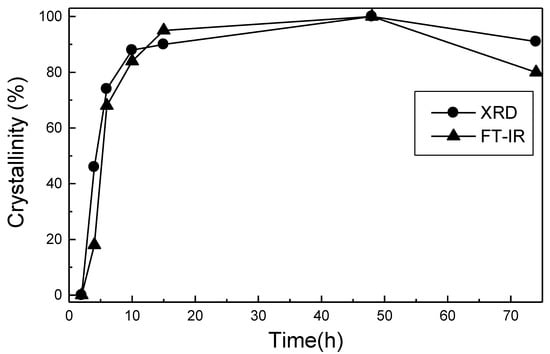
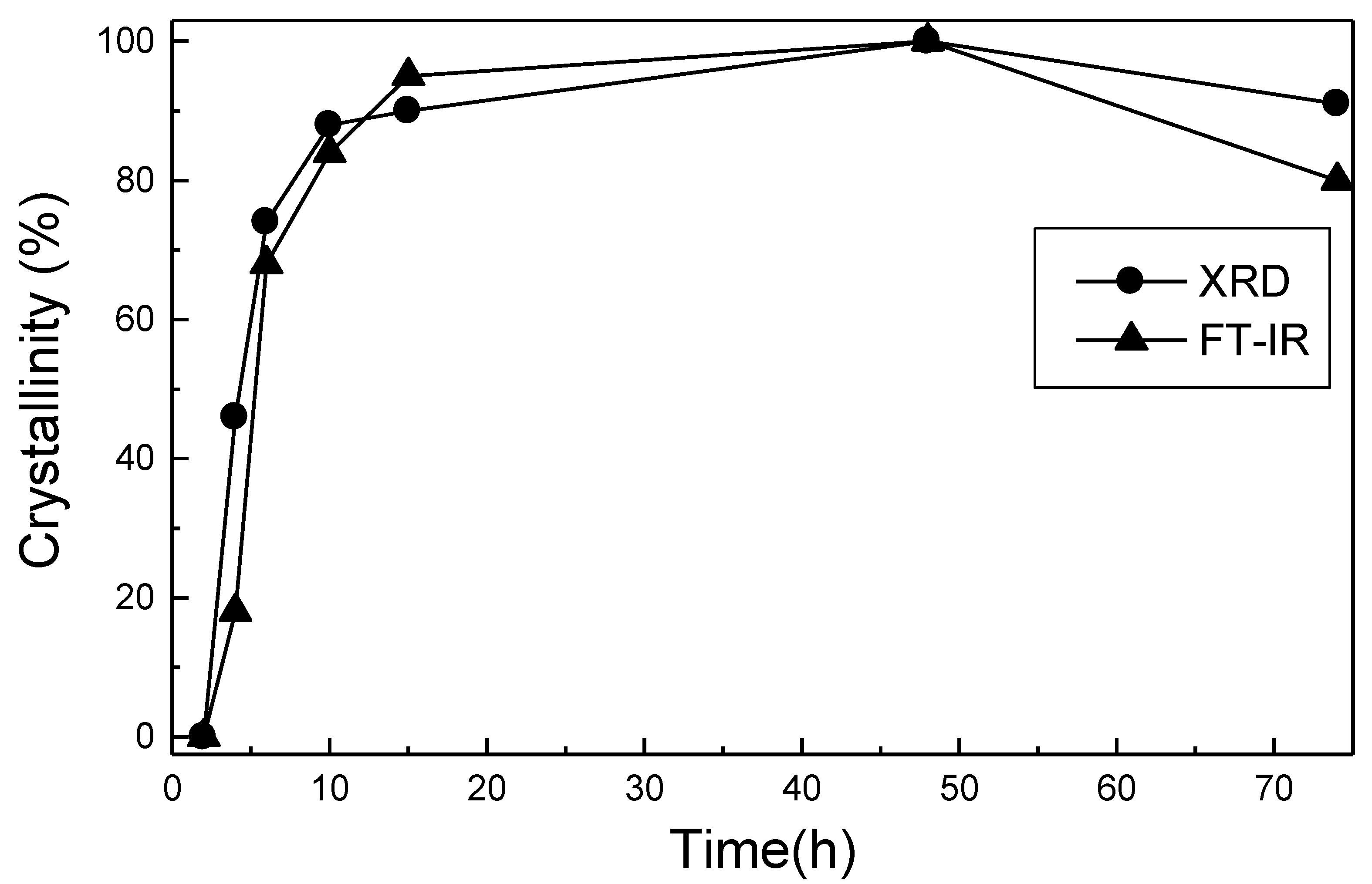
Figure 6 shows the curves of percentage of crystallinity versus the crystallization time obtained from XRD and FT-IR analyses.
Figure 6.
Curves of percentage of crystallinity versus the crystallization time obtained from XRD and FT-IR analyses. The S48h was considered as standard sample.
The AlPO4-11 crystallinity increased rapidly attaining approximately 90% in ca. 10 h, but after this time the velocity of crystallization decreased and at 48 h the best sample (S48h) was obtained with 100% of crystallinity. In 74 h of heating the crystallinity decreased to ca. 90%, due to dissolution of the material already crystallized. It is important to observe that the crystallinity curves obtained from XRD and FT-IR are very similar to the curve of pH after synthesis versus time of crystallization (showed in Figure 2), evidencing that the pH gives an indication of degree of crystallization of the materials.
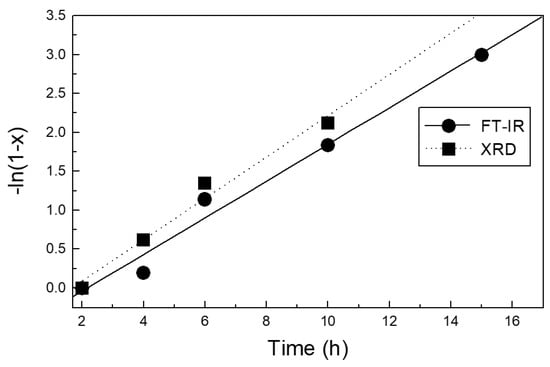
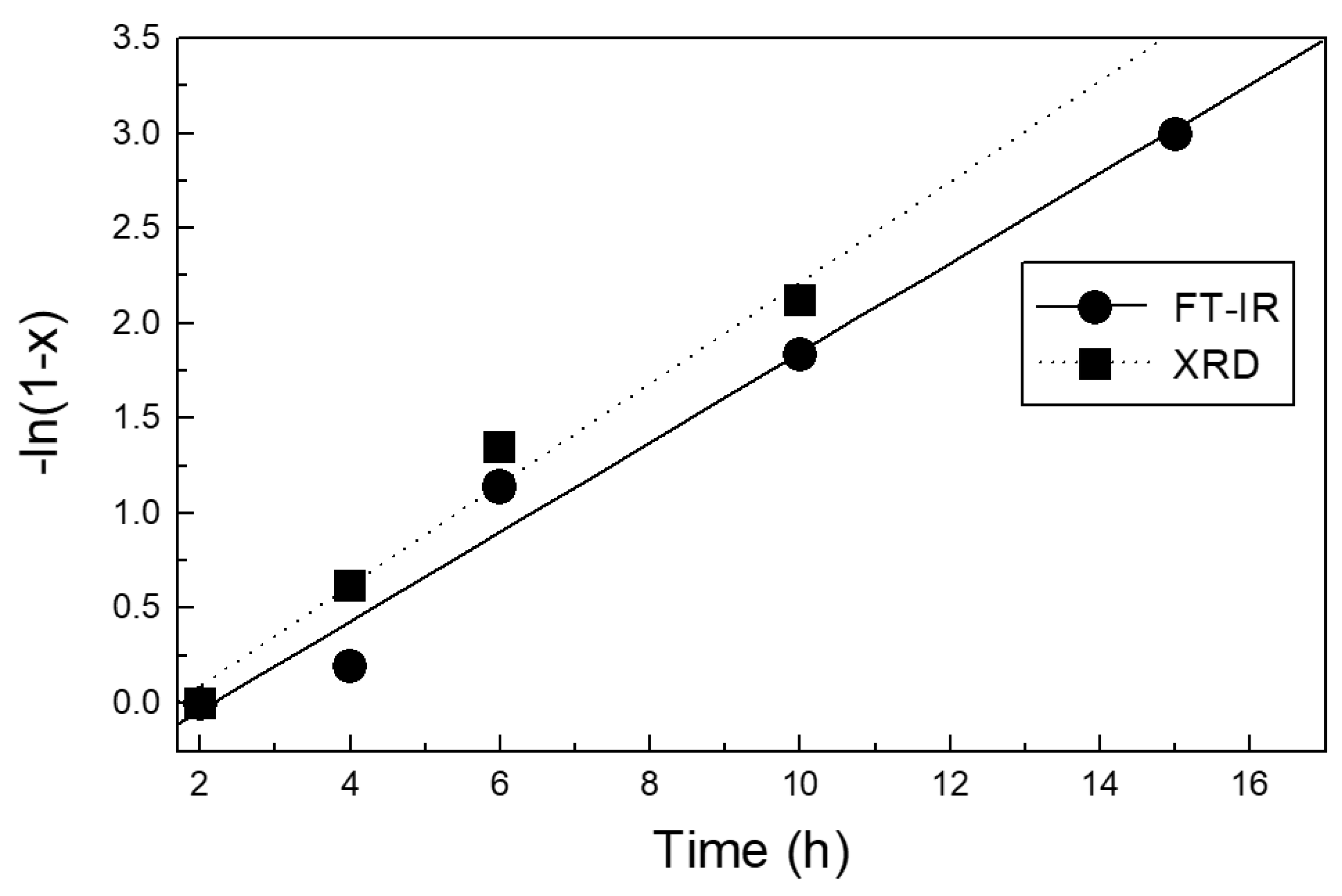
The reaction of amorphous aluminum phosphates to crystalline aluminophosphates was considered as a first order reaction, since it depends only on the concentration of the amorphous aluminum phosphates, once the organic template is in excess. Thus, the degree of crystallinity was used as the conversion degree of this reaction. Kinetics data for the AlPO4-11 crystallization were determined by the plot of [−ln(1−x)] versus the time of crystallization, as shown in Figure 7, where “x” is the crystalline degree, as determined from XRD and FT-IR data.
Figure 7.
Plots of [−ln(1−x)] versus the time of crystallization for AlPO4-11, obtained from XRD and FT-IR data. The dotted and solid lines denote linear fits.
Applying the y = kx + l equation, where k is the velocity constant of crystallization of AlPO4-11, values of 0.26 and 0.24 h−1 were determined from XRD and FT-IR data, respectively. The coefficient of correlation obtained was ca. 0.99, showing that this proposed model is well adjusted to the experimental data, and can be used satisfactorily on the study of crystallization of aluminophosphate molecular sieves, and probably other related materials [27].
4. Conclusions
From a systematic study of the hydrothermal synthesis and crystallization process of aluminophosphate type AlPO4-11, by remotion of samples in specific time, it was concluded that there is an ideal time for crystallize AlPO4-11 material, which at temperature of 200 °C was found to be approximately 48 h. After this time, dissolution of the material already crystallized occurs. The crystallinity of the AlPO4-11 samples can be determined by FT-IR considering the area of the absorption band associated to the external tetrahedral vibration in the double-rings in the 650–500 cm−1 region, that is structure sensitive, with results analogous to those obtained by XRD analysis. Thermogravimetric analysis can be used as an alternative method for the determination of pore volume, which showed an excellent precision. The crystallization reaction of AlPO4-11 exhibited in its initial phase a behavior of a first order reaction, with a specific velocity constant of ca. 0.25 h−1, determined from XRD and FT-IR data. The value obtained for the specific velocity constant represents the nucleation process and crystal growth. Controlled synthesis of the material become important in relation to modeling crystallization kinetics. The realization of a modeling based on control of experimental parameters of aluminophosphate synthesis was important to describe the conditions of time, gel composition and concentration of reagents for monitoring the crystallization processes. Through the hydrothermal synthesis study, new insight into the crystallization of AlPO4-11 was gained and improved the knowledge of its crystallization kinetics. These developments represent a contribution to innovations in synthetic strategies to understanding the hydrothermal synthesis of aluminophosphate molecular sieves, under static conditions.
Author Contributions
Conceptualization, R.O.M.; methodology, A.O.S.S., M.J.B.S. and A.M.G.P.; writing—original draft preparation, G.J.T.F. and A.C.F.C.; writing—review and editing, V.J.F.J. and A.S.A. All authors have read and agreed to the published version of the manuscript.
Funding
This work was supported by the Conselho Nacional de Desenvolvimento Científico e Tecnológico (CNPq), and Agencia Nacional de Petróleo, Gás Natural e Biocombustiveis (ANP).
Institutional Review Board Statement
Not applicable.
Informed Consent Statement
Not applicable.
Acknowledgments
The authors acknowledge the support from Conselho Nacional de Desenvolvimento Científico e Tecnológico (CNPq–Brazil, Process 306780/2018-6), and Coordenação de Aperfeiçoamento de Pessoal de Nível Superior (CAPES Foundation, Brazil).
Conflicts of Interest
The authors declare no conflict of interest.
References
- Cheetham, A.K.; Ferey, G.; Loiseau, T. Open Framework Inorganic Materials. Angew. Chem. Int. Ed. 1999, 38, 3268–3292. [Google Scholar] [CrossRef]
- Flanigen, E.M.; Lok, B.M.; Patton, R.L.; Wilson, S.T. Aluminophosphate Molecular Sieves and the Periodic Table. Stud. Surface Sci. Catal. 1986, 28, 103–112. [Google Scholar]
- Lok, B.M.; Messina, C.A.; Patton, R.L.; Gajek, R.T.; Cannon, T.R.; Flanigen, E.M. Crystalline Silicoaluminophosphates. U.S. Patent 4,440,871, 3 April 1984. [Google Scholar]
- Messina, C.A.; Lok, B.M.; FlSanigen, E.M. Crystalline Ferroaluminophosphates. U.S. Patent 4,554,143, 19 November 1985. [Google Scholar]
- Wilson, S.T.; Flanigen, E.M. Crystalline Metal Aluminophosphates. U.S. Patent 4,567,029, 28 January 1986. [Google Scholar]
- Lok, B.M.; Messina, C.A.; Patton, R.L.; Gajek, R.T.; Cannon, T.R.; Flanigen, E.M. Silicoaluminophosphate molecular sieves: Another new class of microporous crystalline inorganic solids. J. Am. Chem. Soc. 1984, 106, 6092–6093. [Google Scholar] [CrossRef] [Scilit]
- Meier, W.M.; Olson, D.H.; Baerlocher, C. Atlas of Zeolite Structure Types, 4th ed.; Elsevier: New York, NY, USA, 1996. [Google Scholar]
- Bennett, J.M.; Richardson, J.W.; Pluth, J.J.; Smith, J.V. Aluminophosphate molecular sieve AlPO4-11: Partial refinement from powder data using a pulsed neutron source. Zeolites 1987, 7, 160–162. [Google Scholar] [CrossRef] [Scilit]
- Araujo, A.S.; Diniz, J.C.; Silva, A.O.S.; Melo, R.A.A. Hydrothermal synthesis of cerium aluminophosphate. J. Alloys Compd. 1997, 250, 532–535. [Google Scholar] [CrossRef] [Scilit]
- Khouzami, R.; Coudurier, G.; Lefebvre, F.; Vedrine, J.C.; Mentzen, B.F. X-ray diffraction and solid-state nmr studies of AEL molecular sieves: Effect of hydration. Zeolites 1990, 10, 183–188. [Google Scholar] [CrossRef] [Scilit]
- McCullen, S.B.; Reischman, P.T.; Olson, D.H. Hexane and benzene adsorption by aluminophosphates and SSZ-24: The effect of pore size and molecular sieve composition. Zeolites 1993, 13, 640–644. [Google Scholar] [CrossRef] [Scilit]
- Bandyopadhyay, M.; Bandyopadhyay, R.; Kubota, Y.; Sugi, Y. Synthesis of AlPO4-5 and AlPO4-11 Molecular Sieves by Dry-Gel Conversion Method. Chem. Lett. 2000, 29, 1024–1025. [Google Scholar] [CrossRef] [Scilit]
- Wang, C.; Lv, G.; Li, P.; Hou, G.; Qu, W.; Ma, H.; Wang, D.; Tian, Z. Synthesis of regularly shaped AlPO4-11 molecular sieve through a solid transformation approach. Microporous Mesoporous Mater. 2020, 295, 109962. [Google Scholar] [CrossRef] [Scilit]
- Zhu, G.; Qiu, S.; Gao, F.; Wu, G.; Wang, R.; Li, B.; Fang, Q.; Li, Y.; Gao, B.; Xu, X.; et al. Synthesis of aluminophosphate molecular sieve AlPO4-11 nanocrystals. Microporous Mesoporous Mater. 2001, 50, 129–135. [Google Scholar] [CrossRef] [Scilit]
- Martins, A.C.; Fernandez-Felisbino, R.; Ruotolo, L.A.M. Ionothermal synthesis of aluminophosphates used for ion exchange: Influence of choline chloride/urea ratio. Microporous Mesoporous Mater. 2012, 149, 55–59. [Google Scholar] [CrossRef] [Scilit]
- Geng, L.; Dong, H.; Liu, X.; Zhang, B. Efficient Manipulation of Continuous AFI-Type Aluminophosphate Membranes with Distinctive Microstructures on Macroporous α-Al2O3 Substrates. Molecules 2018, 23, 1127. [Google Scholar] [CrossRef] [Scilit]
- Machac, P.; Alauzun, J.G.; Styskalik, A.; Debecker, D.P.; Mutin, P.H.; Pinkas, J. Synthesis of high surface area aluminophosphate and phosphonate xerogels by non-hydrolytic sol-gel reactions. Microporous Mesoporous Mater. 2021, 311, 110682. [Google Scholar] [CrossRef] [Scilit]
- Xu, J.; Liu, Y.; Huang, Y. Ultrafast Crystallization of AlPO4-5 Molecular Sieve in a Deep Eutectic Solvent. J. Phys. Chem. C 2021, 125, 8876–8889. [Google Scholar] [CrossRef] [Scilit]
- Schmidt, W.; Schüth, F.; Reichert, H.; Unger, K.; Zibrowius, B. VPI-5 and related aluminophosphates: Preparation and thermal stability. Zeolites 1992, 12, 2–8. [Google Scholar] [CrossRef] [Scilit]
- Young, D.; Davis, M.E. Studies on SAPO-5: Synthesis with higher silicon contents. Zeolites 1991, 11, 277–281. [Google Scholar] [CrossRef] [Scilit]
- Davis, M.E.; Montes, C.; Hathaway, P.E.; Garces, J.M. Zeolites: Facts, Figures, Future; Jacobs, P.A., Van Santen, R.A., Eds.; Elsevier: Amsterdam, The Netherlands, 1989; p. 199. [Google Scholar]
- Flanigen, E.M. Zeolites Chemistry and Catalysis; ACS Monograph Series 171; Rabo, J., Ed.; American Chemical Society: Washington, DC, USA, 1976; p. 80. [Google Scholar]
- Araujo, A.S.; Fernandes, V.J., Jr.; Silva, A.O.S.; Diniz, J.C.; Silva, C.C.; Santos, R.H.A. Hydrothermal synthesis and crystallographic properties of silicoaluminophosphate with different content of silicon. Mater. Res. Bull. 1999, 34, 1369–1373. [Google Scholar] [CrossRef] [Scilit]
- Wilson, S.T.; Lok, B.M.; Messina, C.A.; Cannan, T.R.; Flanigen, E.M. Aluminophosphate Molecular Sieves: A New Class of Microporous Crystalline Inorganic Solids. Intrazeolite Chem. ACS Symp. Ser. 1983, 218, 79–106. [Google Scholar]
- Davis, M.E.; Montes, C.; Hathaway, P.E.; Arhancet, J.P.; Hasha, D.L.; Garces, J.M. Physicochemical properties of VPI-5. J. Am. Chem. Soc. 1989, 111, 3919–3924. [Google Scholar] [CrossRef] [Scilit]
- Ojo, A.F.; Dwyer, J.; Dewing, J.; O’Malley, P.J.; Nabhan, A. Synthesis and properties of SAPO-5 molecular sieves. Silicon incorporation into the framework. J. Chem. Soc. Faraday Trans. 1992, 88, 105–112. [Google Scholar] [CrossRef] [Scilit]
- Araujo, A.S.; Fernandes, V.J., Jr.; Silva, A.O.S.; Diniz, J.C. Evaluation of the ALPO4-11 Crystallinity by Thermogravimetry. J. Therm. Anal. Cal. 1999, 56, 151–157. [Google Scholar] [CrossRef] [Scilit]

Publisher’s Note: MDPI stays neutral with regard to jurisdictional claims in published maps and institutional affiliations. |
© 2021 by the authors. Licensee MDPI, Basel, Switzerland. This article is an open access article distributed under the terms and conditions of the Creative Commons Attribution (CC BY) license (https://creativecommons.org/licenses/by/4.0/).