


Abstract
This study is two-fold. First, it examines the impact of risk management committee characteristics on the level of risk information disclosure (financial, non-financial, and total risk disclosure). Second, it investigates the effect of risk disclosure on financial performance measured by return on equity (ROE). Data were collected from the annual reports of 39 banking and insurance companies listed on the Amman Stock Exchange (ASE) during the 2019–2023 period, resulting in 195 initial firm-year observations. After excluding 64 firm-year observations for which risk management committee (RMC) characteristics were unavailable, the final regression sample comprised 131 firm-year observations. Multiple linear regression analysis was employed to test the study hypotheses. The findings indicate that risk disclosure improves with greater committee activity, as measured by the frequency of committee meetings. The results also reveal a significant negative relationship between committee size and non-financial risk disclosure. However, no significant relationship was found between risk disclosure and ROE. The findings demonstrate that governance effectiveness depends more on active committee engagement than on formal committee characteristics, extending current understanding of Risk Management Committee effectiveness. By distinguishing between financial and non-financial risk disclosure, the study provides a more nuanced explanation of how governance mechanisms influence organisational transparency within frontier market environments.
1. Introduction
Corporate governance has become increasingly important over the past two decades in response to recurring financial crises, corporate failures, and growing stakeholder demands for greater transparency and accountability (Jensen & Meckling, 1976; Lajili & Zéghal, 2005; Buckby et al., 2015; Jia et al., 2019). Within this developing governance landscape, effective risk oversight has emerged as a strategic responsibility of boards of directors, particularly in financial institutions operating in highly uncertain and risk-sensitive environments (Buckby et al., 2015; Nahar & Jahan, 2021; Hasan et al., 2023; Farooq et al., 2025). Consequently, many organisations have established specialised Risk Management Committees (RMCs) to strengthen board oversight, improve risk management practices, and enhance the quality of corporate risk disclosure (Jia et al., 2019; Karim et al., 2024; Elsayed & Hassanein, 2024; Akbar et al., 2025). Despite the widespread adoption of RMCs as a key governance mechanism, whether these committees genuinely improve organisational transparency and disclosure quality remains an important empirical and theoretical question.
Risk disclosure has become a central component of corporate governance because it reduces information asymmetry, enhances transparency, and enables investors, regulators, creditors, and other stakeholders to evaluate an organisation’s exposure to financial and non-financial risks and make more informed economic decisions (Linsley & Shrives, 2006; M. K. Hassan, 2009; Al-Hadi et al., 2016; Erin et al., 2026). Consequently, considerable attention has been devoted to examining whether governance mechanisms, particularly RMCs, improve the quality and extent of corporate risk disclosure. Although several studies report that committee size, independence, expertise, and meeting frequency positively influence disclosure quality (Buckby et al., 2015; Jia et al., 2019; Akbar et al., 2025), others report weak or insignificant relationships (Hasan et al., 2023; Alajmi & Al-Shammari, 2024). These inconsistent findings suggest that the effectiveness of RMCs may depend on factors beyond their formal structural characteristics.
Despite the growing body of research examining the relationship between RMCs and corporate risk disclosure, several important gaps remain. First, previous studies report inconsistent evidence regarding the effectiveness of RMC characteristics across different institutional settings (Bischof, 2009; Buckby et al., 2015; Jia et al., 2019; Hasan et al., 2023; Akbar et al., 2025). Second, much of the existing literature treats risk disclosure as a single construct, providing limited insight into whether governance mechanisms influence financial and non-financial risk disclosure differently. This distinction is important because financial risk disclosure is largely governed by regulatory reporting requirements, whereas non-financial risk disclosure often involves greater managerial judgement and voluntary disclosure decisions. Third, although evidence has expanded to include emerging economies, findings remain fragmented across different institutional and regulatory environments, making it difficult to determine whether governance mechanisms operate consistently across contexts. Collectively, these limitations indicate that existing research has focused primarily on the existence of RMCs rather than on their effectiveness in enhancing different dimensions of corporate risk disclosure. Addressing this distinction is essential for advancing our understanding of governance effectiveness beyond regulatory compliance.
Against this background, Jordan provides an appropriate context for examining the effectiveness of RMCs in improving corporate risk disclosure. The Jordanian financial sector plays a significant role in the national economy and has been subject to substantial corporate governance reforms aimed at strengthening board oversight, risk management, and organisational transparency (Central Bank of Jordan, 2016; Jordan Insurance Federation, 2020; Jia & Bradbury, 2021; El-Deeb et al., 2024). In particular, the Corporate Governance Instructions for companies listed on the ASE (2017) require listed financial institutions to establish dedicated RMCs responsible for overseeing enterprise risk management and reporting practices. These regulatory developments provide an opportunity to examine whether compliance with governance requirements is associated with more effective risk disclosure or whether the effectiveness of RMCs depends on how actively they perform their oversight responsibilities. Examining this issue within the Jordanian financial sector therefore offers valuable evidence on the effectiveness of governance reforms in an frontier market setting.
In response to these gaps, this study investigates the relationship between RMC characteristics and corporate risk disclosure among financial institutions listed on the Amman Stock Exchange (ASE). Specifically, the study examines whether committee size, independence, expertise, and meeting frequency influences financial, non-financial, and overall risk disclosure. It further investigates whether enhanced risk disclosure contributes to improved financial performance, measured by return on equity (ROE) (M. K. Hassan, 2014; Elamer & Benyazid, 2018; Jiang & Ji, 2024). By distinguishing between financial and non-financial risk disclosure, the study provides a more comprehensive assessment of governance effectiveness than studies relying solely on aggregate disclosure measures.
This study is theoretically grounded in agency theory, signalling theory, and institutional theory. Agency theory suggests that effective governance mechanisms reduce information asymmetry by strengthening monitoring and enhancing managerial accountability (Jensen & Meckling, 1976). Signalling theory argues that organisations voluntarily disclose risk-related information to communicate organisational quality and reduce uncertainty among investors and other stakeholders (Spence, 1973; Ross, 1977). Institutional theory provides a complementary perspective by recognising that governance structures may be adopted primarily to achieve organisational legitimacy and comply with regulatory expectations without necessarily improving governance effectiveness (Meyer & Rowan, 1977; DiMaggio & Powell, 1983). Integrating these theoretical perspectives provides a richer explanation for the inconsistent findings reported in previous studies regarding the effectiveness of RMCs.
This study contributes to the risk-governance literature in four specific ways. First, disclosure is not simply treated as a single entity, but is broken down into financial and non-financial disclosure within the same institutional context. This separation permits the research to analyse whether the characteristics of RMC are linked in different ways to the disclosures that are more regulation-driven and those with more managerial discretion. Second, the study differentiates between the RMC structural attributes (independence, size, and expertise) and the behavioural engagement (meeting frequency). This offers an empirical way to test the association of substantive committee activity with organisational transparency vs. formal adherence to governance structures. Third, the study concurrently investigates the RMC–disclosure relationship and disclosure–financial performance relationship to test whether the relationship between disclosure and financial performance is contemporised. Lastly, the Jordanian setting offers a very informative institutional backdrop, as the RMCs were dedicated and function in a strengthened institutional environment, which enables the study to more clearly differentiate between formal compliance and substantive institutional effectiveness. Collectively, these contributions advance the literature by posing and addressing the more important question of how and when RMCs are connected to meaningful transparency outcomes.
2. Literature Review and Theoretical Development
2.1. Risk Management Committees
The increasing complexity of organisational risks has fundamentally transformed the role of corporate governance, requiring boards of directors to strengthen risk oversight through specialised governance mechanisms (Eltweri et al., 2020). Among these mechanisms, Risk Management Committees (RMCs) have become an increasingly important feature of corporate governance frameworks, particularly within financial institutions that operate in highly regulated and risk-sensitive environments (Lajili & Zéghal, 2005; Buckby et al., 2015; Jia et al., 2019). Unlike traditional board committees that focus primarily on financial reporting or audit functions, RMCs are responsible for overseeing enterprise risk management processes, identifying and assessing emerging risks, evaluating the effectiveness of internal risk controls, and supporting strategic decision-making. Consequently, RMCs are expected to strengthen organisational accountability by ensuring that risk management practices are integrated into corporate governance and communicated effectively to both boards and external stakeholders.
The growing importance of RMCs has been reinforced by regulatory reforms introduced following major corporate failures and the global financial crisis, which exposed weaknesses in board-level risk oversight and highlighted the need for stronger governance mechanisms. In response, regulators and standard-setting bodies have increasingly encouraged organisations, particularly financial institutions, to establish dedicated committees responsible for overseeing enterprise-wide risk management and ensuring that risk exposures are appropriately identified, monitored, and managed (Buckby et al., 2015; Jia et al., 2019). Within the Jordanian context, these developments are reflected in the Corporate Governance Instructions for Companies Listed on the Amman Stock Exchange (2017), which require listed financial institutions to establish Risk Management Committees with responsibility for supporting the board in managing organisational risks and monitoring risk management activities. These regulatory developments reflect the growing recognition that effective governance requires not only appropriate organisational structures but also continuous oversight of an increasingly complex risk environment.
Although the establishment of RMCs is now widely recognised as good governance practice, their effectiveness depends largely on the characteristics of the committee itself. Corporate governance research has consistently argued that committee size, member independence, expertise, and meeting frequency influence the quality of board oversight and organisational decision-making (Buckby et al., 2015; M. S. Hassan et al., 2012; Kakanda et al., 2017; Nahar & Jahan, 2021). Larger committees may benefit from broader knowledge, greater diversity of perspectives, and improved access to specialised expertise, potentially enhancing the committee’s ability to identify and evaluate organisational risks. Similarly, independent committee members are expected to provide objective judgement, reduce managerial opportunism, and strengthen monitoring effectiveness by challenging management decisions and protecting shareholder interests. Financial and risk management expertise is also considered essential because committee members with relevant professional knowledge are better positioned to understand complex financial instruments, evaluate risk exposures, and assess the adequacy of organisational risk management systems. Furthermore, committees that meet more frequently are generally expected to respond more effectively to emerging risks by facilitating continuous monitoring, timely discussion of risk issues, and more proactive governance.
Despite these theoretical expectations, empirical evidence regarding the effectiveness of RMC characteristics remains inconclusive. Several studies report that well-structured and active Risk Management Committees improve organisational transparency and encourage more comprehensive risk disclosure (Buckby et al., 2015; Jia et al., 2019; Bello et al., 2019; Akbar et al., 2025). For example, Bello et al. (2019) found that committee size and meeting frequency significantly enhanced risk disclosure among Nigerian insurance firms, highlighting the importance of active committee engagement in strengthening organisational transparency. Similarly, Erin et al. (2026) demonstrated that committee diversity, professional expertise, and the presence of a Chief Risk Officer contribute positively to both the quantity and quality of corporate risk disclosure, suggesting that governance mechanisms operate more effectively when supported by dedicated risk leadership and organisational commitment to risk management.
Other studies, however, report insignificant or inconsistent relationships between committee characteristics and governance outcomes, particularly with respect to committee independence and expertise (Hasan et al., 2023; Alajmi & Al-Shammari, 2024). Evidence from emerging and developing economies also suggests that governance outcomes are influenced by institutional and organisational contexts. For example, Salem et al. (2019) found that board independence, audit committees, and institutional ownership significantly improved disclosure quality among Tunisian firms, while Alshirah et al. (2022) reported that political connections reduced corporate disclosure in Jordan, although this effect was partially mitigated by family ownership. These findings suggest that organisational transparency is influenced not only by committee characteristics but also by broader governance environments and institutional conditions. Collectively, the evidence indicates that simply establishing an RMC or complying with governance recommendations may not necessarily lead to more effective oversight or higher-quality disclosure. Instead, governance effectiveness appears to depend on how actively committees perform their monitoring responsibilities and engage with organisational risk management processes.
These inconsistencies have important implications for both governance theory and practice. While governance codes generally assume that formal committee structures enhance accountability and transparency, empirical evidence indicates that committee composition alone may be insufficient to improve governance outcomes. This raises an important question regarding whether organisational transparency is driven primarily by the existence of governance structures or by the effectiveness with which those structures operate in practice. Understanding the conditions under which Risk Management Committees contribute to improved corporate disclosure therefore remains an important area of governance research, particularly within financial institutions where risk management plays a central role in organisational performance and stakeholder confidence.
2.2. Corporate Risk Disclosure
Corporate risk disclosure has become an integral component of corporate reporting and an important mechanism for enhancing transparency, reducing information asymmetry, and supporting informed stakeholder decision-making (Linsley & Shrives, 2006; M. K. Hassan, 2009; Al-Hadi et al., 2016; Dominguez & Gamez, 2014). As organisations operate in increasingly complex and uncertain environments, stakeholders require more comprehensive information regarding the risks that organisations face, the strategies adopted to manage those risks, and the potential implications for future performance. Consequently, risk disclosure has changed from a relatively narrow reporting requirement into a broader governance mechanism that strengthens accountability and improves communication between organisations and their stakeholders (Spira & Page, 2003; Erin et al., 2026).
Within the financial sector, the importance of risk disclosure has increased substantially following successive financial crises and regulatory reforms that highlighted deficiencies in organisational transparency and risk reporting (ICAEW, 1997; Basel Committee on Banking Supervision, 2006; Eltweri et al., 2024). Regulatory frameworks such as International Financial Reporting Standard (IFRS) 7 require financial institutions to disclose information relating to the nature, extent, and management of financial risks arising from financial instruments. These requirements aim to improve the quality and comparability of financial reporting while enabling investors and regulators to better evaluate an organisation’s risk profile and risk management practices (IFRS 7; Al-Hadi et al., 2016; Alsarayreh et al., 2022). Consequently, risk disclosure has become an essential component of effective corporate governance and organisational accountability.
Although corporate risk disclosure is often examined as a single reporting construct, it encompasses different categories of information that may be influenced by different governance mechanisms (Miihkinen, 2012). Financial risk disclosure generally relates to risks arising from financial instruments and operational activities, including credit risk, liquidity risk, market risk, and capital adequacy, and is typically subject to mandatory reporting requirements (Yang et al., 2018). In contrast, non-financial risk disclosure includes areas such as strategic risk, operational resilience, legal risk, information security, reputation, and business continuity, where organisations often exercise greater managerial judgement regarding the extent and nature of disclosure. Consequently, the determinants of financial and non-financial risk disclosure may differ because the former is largely shaped by regulatory compliance, whereas the latter is more strongly influenced by organisational governance, managerial discretion, and stakeholder expectations.
Despite this distinction, previous studies have generally measured corporate risk disclosure using a single aggregate disclosure index, providing limited understanding of whether governance mechanisms influence different dimensions of disclosure in the same way (Buckby et al., 2015; Jia et al., 2019; Hasan et al., 2023). This approach may mask important differences in disclosure behaviour, particularly within financial institutions where mandatory disclosure requirements coexist with voluntary disclosure practices. Examining financial and non-financial risk disclosure separately therefore provides a more comprehensive understanding of organisational transparency and allows a more nuanced assessment of the effectiveness of Risk Management Committees.
From a governance perspective, high-quality risk disclosure is expected to improve market transparency, reduce uncertainty, strengthen investor confidence, and facilitate more effective monitoring by regulators and other stakeholders (Linsley & Shrives, 2006; Al-Hadi et al., 2016; Erin et al., 2026). However, achieving these outcomes depends not only on regulatory requirements but also on the effectiveness of governance mechanisms responsible for overseeing organisational risk management and disclosure processes. Although studies conducted in developed economies generally report positive associations between governance quality and corporate disclosure (Buckby et al., 2015; Jia et al., 2019), evidence from emerging markets remains mixed, suggesting that institutional environments, regulatory enforcement, and governance practices may influence disclosure outcomes differently (Hasan et al., 2023; Nkuutu et al., 2021; Alajmi & Al-Shammari, 2024). Furthermore, most existing studies have measured corporate risk disclosure using aggregate disclosure indices, providing limited understanding of whether governance mechanisms influence financial and non-financial disclosure differently. Examining these two dimensions separately therefore offers a more comprehensive understanding of organisational transparency and provides an opportunity to assess whether different governance mechanisms influence mandatory and more discretionary disclosure practices in different ways.
2.3. Theoretical Foundations
2.3.1. Agency Theory
Agency Theory provides one of the principal theoretical foundations for understanding the relationship between corporate governance and organisational disclosure (Ojeka et al., 2017). Jensen and Meckling (1976) argue that conflicts arise because managers possess greater information about organisational activities than shareholders, creating information asymmetry and increasing agency costs. Consequently, governance mechanisms are introduced to strengthen monitoring, align managerial actions with shareholders’ interests, and improve organisational accountability (Samaha & Khlif, 2016).
Within this context, Risk Management Committees represent an important board-level governance mechanism designed to oversee enterprise risk management and strengthen the monitoring of organisational risk exposures (Chairani & Siregar, 2021). Effective RMCs are expected to reduce information asymmetry by improving the quality, reliability, and transparency of corporate risk disclosure (Nahar & Jahan, 2021; Alassuli et al., 2025). Enhanced disclosure enables shareholders and other stakeholders to better evaluate organisational risks, assess managerial performance, and monitor the effectiveness of risk management practices (M. Abdullah et al., 2015; Haddad & Alali, 2022). Accordingly, Agency Theory suggests that organisations with more effective Risk Management Committees should demonstrate higher levels of corporate risk disclosure.
2.3.2. Signalling Theory
Signalling Theory complements Agency Theory by explaining why organisations voluntarily disclose information beyond mandatory reporting requirements. According to Spence (1973), organisations use disclosure to communicate unobservable characteristics and reduce uncertainty among external stakeholders. Within the context of corporate governance, high-quality risk disclosure signals that an organisation possesses effective governance structures, robust risk management systems, and a commitment to transparency (Watts & Zimmerman, 1978; Watson et al., 2002; Jia et al., 2019).
Accordingly, organisations with effective Risk Management Committees are expected to disclose more comprehensive risk information in order to demonstrate sound governance practices, strengthen investor confidence, and distinguish themselves from organisations with weaker governance systems (Akbar et al., 2025; Alassuli et al., 2026). From this perspective, corporate risk disclosure functions not only as a regulatory requirement but also as a strategic communication mechanism through which organisations signal governance quality to the market.
2.3.3. Institutional Theory
Although Agency Theory and Signalling Theory explain why effective governance mechanisms should enhance corporate disclosure, they provide limited explanation for the inconsistent findings frequently reported in the empirical literature. Institutional Theory offers a complementary perspective by suggesting that organisations often adopt governance structures in response to regulatory expectations, professional norms, and pressures to achieve organisational legitimacy rather than solely to improve organisational effectiveness (Meyer & Rowan, 1977; DiMaggio & Powell, 1983).
From this perspective, the establishment of Risk Management Committees may represent compliance with governance regulations without necessarily leading to more effective risk oversight or improved disclosure practices. Consequently, formal committee characteristics such as independence or expertise may not always translate into substantive governance outcomes if committee members have limited influence over organisational decision-making or disclosure processes. Institutional Theory therefore provides an important explanation for the inconsistent empirical evidence reported in previous studies and offers a broader theoretical lens for understanding governance effectiveness within emerging institutional environments.
Taken together, these three theoretical perspectives provide a comprehensive explanation of the relationship between Risk Management Committees and corporate risk disclosure. Agency Theory explains why governance mechanisms are expected to reduce information asymmetry, Signalling Theory explains why organisations disclose risk information to external stakeholders, and Institutional Theory explains why governance structures may not always produce the intended governance outcomes. Integrating these perspectives provides a stronger theoretical foundation for examining how different Risk Management Committee characteristics influence financial and non-financial risk disclosure.
Overall, previous research demonstrates that Risk Management Committees and corporate governance mechanisms play an important role in improving organisational transparency and accountability. Nevertheless, the empirical evidence remains inconsistent across different institutional and regulatory settings. While studies conducted in developed economies generally report positive governance outcomes, evidence from emerging markets suggests that the effectiveness of Risk Management Committees varies according to organisational, institutional, and regulatory contexts (Hasan et al., 2023; Nkuutu et al., 2021; Alajmi & Al-Shammari, 2024). Moreover, most previous studies have focused primarily on formal governance structures and have generally examined risk disclosure as a single construct, providing limited insight into how governance mechanisms influence different dimensions of disclosure. These limitations highlight the need for further research that considers both governance effectiveness and the distinction between financial and non-financial risk disclosure within frontier market environments.
2.4. Research Gap
Despite the growing body of research examining RMCs and corporate risk disclosure, several important issues remain unresolved. First, previous studies have reported inconsistent findings regarding the influence of committee characteristics on disclosure practices. While some studies conclude that committee size, independence, expertise, and meeting frequency improve organisational transparency, others report weak or statistically insignificant relationships. These inconsistencies suggest that the effectiveness of RMCs may depend on organisational and institutional conditions that remain insufficiently understood.
Second, although corporate risk disclosure has received considerable academic attention, many previous studies have measured disclosure using aggregate disclosure indices or have given limited attention to the potential differences between financial and non-financial risk disclosure. Treating disclosure as a single construct may obscure important differences because financial risk disclosure is largely influenced by mandatory reporting requirements, whereas non-financial risk disclosure frequently involves greater managerial judgement and voluntary reporting decisions. Consequently, little is known about whether RMC characteristics influence these two dimensions of disclosure differently.
Third, although empirical evidence has gradually expanded to include emerging economies, findings remain fragmented across different institutional and regulatory environments. This limits our understanding of whether governance mechanisms operate consistently across contexts or whether their effectiveness varies according to institutional conditions. In particular, relatively little evidence exists regarding the effectiveness of RMCs within the Jordanian financial sector following the implementation of strengthened corporate governance requirements.
Accordingly, this study addresses these gaps by examining the relationship between RMC characteristics and financial, non-financial, and overall risk disclosure among financial institutions listed on the ASE. By distinguishing between different dimensions of risk disclosure and evaluating their relationship with committee characteristics, the study provides a more comprehensive assessment of governance effectiveness within an frontier market context.
2.5. Hypothesis Development
2.5.1. RMC Size and Corporate Risk Disclosure
Committee size is widely recognised as an important governance characteristic that may influence the effectiveness of board oversight and organisational transparency. From an agency theory perspective, larger committees are expected to enhance monitoring effectiveness by bringing together a broader range of expertise, experience, and perspectives, thereby reducing information asymmetry between managers and shareholders (Jensen & Meckling, 1976). A larger committee may also improve the quality of risk oversight by distributing monitoring responsibilities more effectively and facilitating more comprehensive evaluation of organisational risks.
Previous empirical studies generally suggest that larger RMCs contribute positively to corporate governance and disclosure quality because they provide greater diversity of knowledge and improve board deliberations (Buckby et al., 2015; Jia et al., 2019). However, the empirical evidence remains mixed, with several studies reporting insignificant or inconsistent relationships across different institutional settings (Hasan et al., 2023; Akbar et al., 2025). These inconsistencies indicate that the influence of committee size on disclosure practices may vary according to organisational and regulatory contexts. Nevertheless, a larger committee is expected to strengthen risk oversight and encourage more comprehensive disclosure of organisational risks.
Accordingly, the following hypotheses are proposed:
H1a.
Risk Management Committee size is positively associated with financial risk disclosure.
H1b.
RMC size is positively associated with non-financial risk disclosure.
H1c.
RMC size is positively associated with overall risk disclosure.
2.5.2. RMC Independence and Corporate Risk Disclosure
RMC independence is widely recognised as a fundamental element of effective corporate governance because independent directors are expected to exercise objective judgement and strengthen board oversight. Agency Theory suggests that independent committee members are better positioned to monitor managerial behaviour, reduce conflicts of interest, and mitigate information asymmetry between managers and shareholders (Jensen & Meckling, 1976). By remaining free from managerial influence, independent members are expected to challenge management decisions more effectively and promote greater organisational accountability and transparency.
Within the context of risk governance, independent Risk Management Committees are expected to improve the quality and credibility of corporate risk disclosure by ensuring that risk-related information is communicated objectively and comprehensively (Hughes, 1986). Independent directors are generally considered more likely to encourage transparent reporting practices because they seek to protect shareholders’ interests and maintain the organisation’s reputation among regulators, investors, and other stakeholders. Consequently, a higher proportion of independent committee members is expected to strengthen oversight of risk management processes and enhance both mandatory and voluntary risk disclosures.
Empirical evidence generally supports the view that committee independence contributes positively to disclosure quality and governance effectiveness (Buckby et al., 2015; Jia et al., 2019; Nahar & Jahan, 2021). However, previous studies also report inconsistent findings, particularly in emerging economies where independent directors may face institutional constraints, limited access to information, or reduced influence over managerial decision-making (Hasan et al., 2023; Alajmi & Al-Shammari, 2024). These mixed findings suggest that the presence of independent committee members alone may not always translate into more effective oversight or higher-quality disclosure. Nevertheless, from both theoretical and governance perspectives, committee independence is generally expected to strengthen organisational transparency by improving the effectiveness of board monitoring.
Accordingly, the following hypotheses are proposed:
H2a.
RMC independence is positively associated with financial risk disclosure.
H2b.
RMC independence is positively associated with non-financial risk disclosure.
H2c.
RMC is positively associated with overall risk disclosure.
2.5.3. RMC Expertise and Corporate Risk Disclosure
RMC expertise is widely regarded as a critical determinant of governance effectiveness because committee members with relevant financial, accounting, or risk management knowledge are better equipped to identify, evaluate, and monitor organisational risks. From an Agency Theory perspective, directors possessing appropriate expertise enhance the board’s monitoring function by improving the quality of oversight, reducing information asymmetry, and strengthening managerial accountability (Jensen & Meckling, 1976). Expertise enables committee members to critically assess complex risk exposures, evaluate the adequacy of internal control systems, and challenge management’s risk management and disclosure decisions more effectively.
Within the context of corporate risk disclosure, knowledgeable committee members are expected to promote more transparent and comprehensive reporting by ensuring that material financial and non-financial risks are appropriately identified and communicated to stakeholders. Their professional competence enhances the committee’s ability to interpret complex financial information, assess emerging risks, and evaluate whether disclosure practices comply with regulatory requirements and reflect the organisation’s actual risk profile. Consequently, RMC expertise is generally viewed as an important governance mechanism that contributes to higher-quality organisational transparency and stronger stakeholder confidence.
Previous empirical studies generally support the view that committee expertise enhances corporate governance and improves disclosure quality by strengthening board oversight and risk management practices (Buckby et al., 2015; Jia et al., 2019; Nahar & Jahan, 2021). However, the empirical evidence remains inconclusive, with several studies reporting insignificant or inconsistent relationships between committee expertise and corporate disclosure (Hasan et al., 2023; Akbar et al., 2025). These findings suggest that possessing relevant expertise alone may not guarantee more effective governance if committee members have limited authority or if organisational processes restrict their ability to influence disclosure decisions (Tao & Hutchinson, 2013). Nevertheless, both theoretical arguments and much of the existing empirical literature support the expectation that greater committee expertise enhances the quality and comprehensiveness of corporate risk disclosure.
Accordingly, the following hypotheses are proposed:
H3a.
RMC expertise is positively associated with financial risk disclosure.
H3b.
RMC expertise is positively associated with non-financial risk disclosure.
H3c.
RMC expertise is positively associated with overall risk disclosure.
2.5.4. RMC Meetings and Corporate Risk Disclosure
The frequency of RMC meetings is widely regarded as an important indicator of committee effectiveness because regular meetings provide opportunities for committee members to monitor organisational risks, review risk management practices, and respond to emerging risk issues in a timely manner. From an Agency Theory perspective, more frequent meetings strengthen the board’s monitoring function by facilitating continuous oversight of management activities, reducing information asymmetry, and enhancing accountability (Jensen & Meckling, 1976). Regular interaction also enables committee members to discuss complex risk exposures, evaluate the effectiveness of internal control systems, and ensure that organisational risks are appropriately identified, assessed, and managed.
Frequent committee meetings are also expected to improve the quality of corporate risk disclosure by providing greater opportunities to review the completeness, accuracy, and timeliness of risk-related information before it is communicated to external stakeholders. Through regular engagement with management, committee members can identify material changes in the organisation’s risk profile, challenge disclosure decisions where necessary, and encourage more transparent reporting practices. Consequently, meeting frequency is often considered a practical measure of committee diligence and commitment to effective governance.
Empirical evidence generally supports a positive relationship between meeting frequency and corporate governance outcomes. Previous studies suggest that committees that meet more frequently are associated with stronger board oversight, improved risk management practices, and higher-quality corporate disclosure because they devote greater attention to monitoring organisational risks and reviewing disclosure processes (Buckby et al., 2015; Khlif & Hussainey, 2016; Jia et al., 2019; Nahar & Jahan, 2021). Although a limited number of studies report insignificant relationships in specific institutional settings, the predominant evidence indicates that active committee engagement, reflected by regular meetings, enhances governance effectiveness and organisational transparency (Hasan et al., 2023; Akbar et al., 2025). Accordingly, organisations with Risk Management Committees that meet more frequently are expected to provide more comprehensive corporate risk disclosure.
Therefore, the following hypotheses are formulated:
H4a.
RMC meeting frequency is positively associated with financial risk disclosure.
H4b.
RMC meeting frequency is positively associated with non-financial risk disclosure.
H4c.
RMC meeting frequency is positively associated with overall risk disclosure.
2.5.5. Corporate Risk Disclosure and Financial Performance
Corporate risk disclosure is widely recognised as an important mechanism for enhancing organisational transparency, reducing information asymmetry, and strengthening stakeholder confidence (Kurniawanto et al., 2017). From a Signalling Theory perspective, organisations voluntarily disclose high-quality risk information to communicate effective governance, sound risk management practices, and long-term organisational stability to investors and other stakeholders (Spence, 1973; Ross, 1977). Such disclosures reduce uncertainty surrounding organisational risk exposures and enable investors to make more informed investment decisions, potentially improving market confidence and organisational performance.
Agency Theory also suggests that greater transparency through comprehensive risk disclosure strengthens accountability by reducing conflicts of interest between managers and shareholders (Jensen & Meckling, 1976). By providing stakeholders with more complete information regarding organisational risks and risk management practices, firms can reduce information asymmetry, improve investor trust, and potentially lower financing costs, thereby contributing to improved financial performance. Consequently, organisations that provide more comprehensive risk disclosure are generally expected to achieve superior financial outcomes compared with organisations that disclose limited risk information (Kayiira et al., 2026).
Despite these theoretical expectations, empirical evidence regarding the relationship between corporate risk disclosure and financial performance remains inconclusive. Several studies report that higher-quality risk disclosure improves organisational performance by enhancing transparency, strengthening investor confidence, and reducing information asymmetry (Linsley & Shrives, 2006; Al-Hadi et al., 2016; Erin et al., 2026). In contrast, other studies find weak, insignificant, or even negative relationships, suggesting that the financial benefits of enhanced disclosure may depend on organisational characteristics, market conditions, and institutional environments (Buckby et al., 2015; Alzead & Hussainey, 2017; Hasan et al., 2023). These mixed findings indicate that while comprehensive risk disclosure is generally regarded as good governance practice, its impact on financial performance may not be immediate or uniform across different organisational settings.
Given the theoretical arguments and the predominance of studies supporting a positive relationship between organisational transparency and financial performance, the following hypotheses are proposed:
H5a.
Financial risk disclosure is positively associated with financial performance.
H5b.
Non-financial risk disclosure is positively associated with financial performance.
H5c.
Overall risk disclosure is positively associated with financial performance.
3. Research Methodology
3.1. Methodology
Sampling and Data Collection Process
The financial sector provides an appropriate setting because banks and insurance companies operate within highly regulated environments characterised by greater exposure to financial and operational risks than many non-financial firms. Consequently, effective risk governance and transparent risk disclosure are particularly important for maintaining stakeholder confidence and regulatory compliance.
The study population comprises all banks and insurance companies listed on the ASE during the 2019–2023 period, including 16 banks and 23 insurance companies. Accordingly, the initial balanced panel consists of 195 firm-year observations (39 firms × 5 years). The disclosure analysis was conducted using these 195 firm-year observations.
For the regression analysis examining the relationship between RMC characteristics and risk disclosure, firm-year observations for which RMC was not present were excluded. This resulted in the removal of 64 firm-year observations, leaving a final regression sample of 131 firm-year observations: 72 for banks and 59 for insurance companies, as shown in Table 1 below.
Table 1.
Sampling procedures.
The distinction between the disclosure sample and the regression sample is important. The risk disclosure frequencies and percentages are based on the full set of 195 firm-year observations, whereas the regression analyses are based on the 131 firm-year observations for which complete RMC characteristic data were available.
3.2. Study Variables
3.2.1. RMC Characteristics
The independent variables in this study include several characteristics of the RMCs for the financial sector companies under investigation, namely committee size, independence of committee members, expertise, and number of meetings. These characteristics have been widely used in previous studies (Kakanda et al., 2017; Kallamu, 2015). Table 2 presents these variables and the methods used to measure them in this study.
Table 2.
Independent Variables and Measurement.
3.2.2. Control Variables
Several control variables have been involved in the study model that may influence the relationship between the independent variables (risk management committee characteristics), the dependent variable, and the mediating variable. These variables have been used in several previous studies (Serrasqueiro & Mineiro, 2018; Kallamu, 2015), as shown in Table 3:
Table 3.
Control Variables and Measurement.
3.2.3. Risk Information Disclosure
The level of risk information disclosure was measured through content analysis of the financial reports of the sample companies, using a disclosure index specifically developed for the purposes of this study.
Disclosure Index
This study uses an unweighted risk disclosure index to measure the level of risk disclosure among financial sector companies listed on the ASE. Each disclosure item is assigned a value of 1 if disclosed and 0 otherwise. The annual reports were systematically reviewed against the predefined disclosure checklist, and each applicable item was coded on a binary basis, with a score of 1 assigned when the relevant risk information was disclosed and 0 when no disclosure was identified. The same coding criteria and disclosure definitions were applied consistently across all companies and years to reduce subjectivity in the content-analysis process. Separate indices were developed for banks and insurance companies to reflect differences in their risk profiles, comprising 24 items for banks (17 items financial and 7 items non-financial) and 16 items for insurance companies (8 items financial and 8 items non-financial), covering both financial and non-financial risk disclosures (see Figure 1).
Figure 1.
Components of the Risk Information Disclosure Index. Source: Prepared by the researcher.
To measure risk disclosure, the researcher developed a disclosure index based on prior studies, including Coulmont et al. (2020), Linsley and Shrives (2006), and M. Abdullah et al. (2015). The selected items were adapted to the characteristics of financial sector companies listed on the ASE and refined through an exploratory review of their annual reports. To enhance validity and reduce bias, the proposed index was reviewed by accounting academics and specialists in disclosure and risk management. Their feedback was used to revise and refine the index. Notably, the original index contained additional items, including competition risk, environmental risk, business cycle risk, empowerment risk, cash flow risk, liquidity ratio, and real estate sector risk. However, these items were excluded from the final index because they were not disclosed by the sample companies during the study period. As a result, the final version is presented in Appendix A.
3.2.4. Financial Performance
Financial performance was measured using Return on Equity (ROE), calculated as net profit after tax divided by total shareholders’ equity. ROE is widely used in the literature as an indicator of profitability and shareholder returns (A. A. N. Abdullah et al., 2015; Coulmont et al., 2020). The required data were obtained from the Securities Depository Center (SDC) and the published annual reports of the sample companies.
3.2.5. Testing Models
Ordinary Least Squares (OLS) regression was used to examine the impact of RMC characteristics (size, independence, expertise, and meeting frequency) on financial, non-financial, and overall risk disclosure, as well as the effect of risk disclosure on ROE. Two regression models were estimated. The first model was tested separately for financial, non-financial, and overall risk disclosure, while the second model examined the effect of each disclosure measure on financial performance.
First Model: The Impact of RMC Characteristics on Risk Information Disclosure
Here, the test will be conducted using three similar models, where the only difference in each model is the name of the dependent variable. The analysis will be performed using the following multiple regression model:
where
TRD = α0 + α1 CSit + α2 CIit + α3 CEit + α4 CNMit + α5 SIZEit + α6 LEVERAGEit + eit Model
- ▪
- Total Risk Disclosure (TRD): the arithmetic means of the level of overall risk information disclosure for financial sector companies;
- ▪
- Committee Size (CS): represents the number of members in the risk management committee;
- ▪
- Committee Independence (CI): represents the proportion of independent and non-executive members in the company;
- ▪
- Committee Experience (CE): represents the proportion of committee members with expertise in risk management;
- ▪
- Committee Number of Meetings (CNM): represents the number of committee meetings held during the year;
- ▪
- SIZE: represents firm size, measured as the natural logarithm of total assets at the end of the year;
- ▪
- LEVERAGE: represents the company’s leverage, measured as the leverage ratio at the end of the year;
- ▪
- α0, …, α6: model coefficients;
- ▪
- e: the error term;
- ▪
- i, t: represent the company and the year, respectively.
The model presented above is repeated identically in the analysis models for non-financial risk disclosure and overall risk disclosure, as follows:
- FRD (Financial Risk Disclosure): the arithmetic means of the company’s level of financial risk disclosure;
- NFRD (Non-Financial Risk Disclosure): the arithmetic means of the level of non-financial risk disclosure for financial sector companies.
Second Model: The Impact of Risk Information Disclosure on Return on Equity
Here, the test will be conducted using three similar models, where the only difference in each model is the name of the independent variable. The analysis will be performed using the following multiple regression model:
where
ROE = α0 + α1 TRDit + α2 SIZEit + α3 LEVERAGEit + eit Model
- ▪
- ROE (Return on Equity): represents the return on equity at the end of the company’s financial year;
- ▪
- TRD (Total Risk Disclosure): the arithmetic mean of the level of overall risk information disclosure for financial sector companies;
- ▪
- SIZE: represents firm size, measured as the natural logarithm of total assets at the end of the year;
- ▪
- LEVERAGE: represents the company’s leverage, measured as the leverage ratio at the end of the year;
- ▪
- α0, …, α6: model coefficients;
- ▪
- e: the error term;
- ▪
- i, t: represent the company and the year, respectively.
The model presented above is repeated identically in the analysis models with respect to the variables of financial and non-financial risk disclosure, as follows:
- FRD (Financial Risk Disclosure): the arithmetic mean of the company’s level of financial risk disclosure;
- NFRD (Non-Financial Risk Disclosure): the arithmetic mean of the level of non-financial risk disclosure for financial sector companies.
4. Data Analysis and Hypothesis Testing
4.1. Descriptive Analysis
4.1.1. Descriptive Analysis of RMC Characteristics in Financial Sector Companies
Table 4 presents the descriptive statistics of the RMCs. The average size of the RMCs was approximately 4 members, with a maximum of 9 members, indicating compliance with the Corporate Governance Instructions (2017), which require committees to consist of at least three members.
Table 4.
Descriptive Statistics of the RMC Characteristics.
The average proportion of independent members was around 30%, reaching a maximum of 75%, suggesting that most sample companies included independent directors on their risk management committees. However, the level of risk management expertise appears relatively low, with an average of 16% of members possessing relevant expertise and a maximum of 50%. Regarding committee activity, the average number of meetings exceeded three per year, with a maximum of 7 meetings. This reflects an active role of RMCs in monitoring and addressing organisational risks.
4.1.2. Descriptive Analysis of the Control Variables
Table 5 presents the descriptive statistics of the control variables, namely firm size and leverage. For ease of interpretation, descriptive statistics for firm size are additionally reported in monetary values, whereas the regression models use the natural logarithm of total assets. Firm size, measured by total assets, has an average value of approximately 230 million, with a standard deviation of around 494 million. This suggests that the financial sector companies are relatively small in size, particularly due to the inclusion of insurance companies, which are generally smaller than banks. The average leverage ratio is approximately 76%, with a standard deviation of about 15%, indicating considerable variation across firms. This variation reflects differences in the degree to which companies rely on external financing sources.
Table 5.
Descriptive Statistics of the Control Variables.
4.2. Levels of Risk Disclosure
4.2.1. Levels of Credit Risk Disclosure in the Banking Sector
Table 6 presents the frequencies and percentages of credit risk disclosure items. Overall, the disclosure level for this category reached 90%, with disclosure rates ranging from 80% to 99%. The non-performing loans ratio and loan loss provisions ratio recorded the highest disclosure levels at 99%, reflecting their importance in assessing banks strategy in reporting risk information. In contrast, the capital adequacy ratio had the lowest disclosure level at 80%, although it remains an important indicator of a bank’s ability to absorb potential losses and maintain financial stability.
Table 6.
Level of Credit Risk Disclosure.
4.2.2. Levels of Market Risk Disclosure for the Banking Sector
Table 7 presents the disclosure items related to market risk, which include five items. The table shows that the overall level of disclosure in this category is 81%. It is observed that 99% of banks disclosed exchange rate risk and foreign currency risk, representing the highest disclosure levels among all items. In addition, equity price fluctuation risk recorded a disclosure level of 95%, which may be attributed to fluctuations in banks’ capital assets that are regulated by central bank instructions and Basel Committee guidelines to mitigate risks that may threaten banking stability. In contrast, commodity risk disclosure recorded the lowest percentage at 38%. Findings suggest that banks tend to focus more on certain types of disclosures, such as exchange rate and foreign currency risks, while paying less attention to commodity-related risks.
Table 7.
Level of Market Risk Disclosure.
4.2.3. Levels of Financial Risk Disclosure for the Banking Sector
Table 8 presents the disclosure items related to financial risks, which include ten items. The overall level of disclosure in this category reached 70%, which is relatively high. However, disclosure levels vary across the items within this category. Liquidity risk and capital adequacy risk recorded the highest disclosure levels at 100% and 99%, respectively. Banks tend to disclose liquidity risk to indicate their ability to manage their financial position and assess risks that are of significant interest to investors and stakeholders. Similarly, the disclosure of capital adequacy risk reflects that banks maintain a high capital adequacy ratio to withstand potential risks. In contrast, capital market risk recorded the lowest disclosure level at 13%, which may be attributed to the high level of risk associated with investing bank funds in capital markets.
Table 8.
Level of Financial Risk Disclosure.
4.2.4. Descriptive Analysis of Non-Financial Risk Disclosure Variables for the Banking Sector
The results presented in Table 9 show the levels of non-financial risk disclosure, which include (7) items. The table indicates that the overall disclosure level in this category reached 56%. It is observed that 99% of banks disclosed information related to sound practices for managing, controlling, and monitoring operational risks. Additionally, 96% of banks disclosed legal risks. Banks also demonstrated considerable attention to compliance risks, with a disclosure rate of 74%, which can be attributed to their adherence to central bank regulations. This is followed by information security risks at 56%, reflecting efforts to develop internal information security systems. Business continuity risks recorded a disclosure rate of 30%, while strategic risks accounted for 20%. Finally, reputation risk had the lowest disclosure level at 19%, as the data revealed that only two banks disclosed information related to this type of risk.
Table 9.
Level of Non-Financial Risk Disclosure.
4.2.5. Descriptive Analysis of Market Risk for the Insurance Sector
Table 10 presents the results of the level of market risk disclosure included in the index, which comprises three items. The table indicates that the overall disclosure level in this category is high, reaching 97%. The disclosure rates are relatively consistent, ranging between 98% and 94%. This high level of disclosure may be explained by the potential increase in returns achieved by insurance companies, which are regulated under central bank instructions to address risks that may threaten their operations. The researcher suggests that insurance companies disclose such information to demonstrate their ability to hedge and protect themselves against these risks, which are of significant concern to investors and other stakeholders.
Table 10.
Level of Market Risk Disclosure.
4.2.6. Levels of Financial Risk Variables for the Insurance Sector
Table 11 presents the levels of financial risk disclosure, which include nine items. The overall disclosure level for this category reached 77%. It is observed that the disclosure levels for credit risk, liquidity risk, and market risk are relatively similar, ranging between 98% and 97%. The researcher suggests that insurance companies disclose these items to demonstrate their ability to manage operations effectively and achieve profitability. In addition, 94% of companies disclosed insurance sensitivity risk. In contrast, investment risk recorded the lowest disclosure level at 12%, as the data revealed that only two companies reported information related to this type of risk.
Table 11.
Level of Financial Risk Disclosure.
4.2.7. Levels of Non-Financial Risk for the Insurance Sector
Table 12 presents the items related to non-financial risk disclosure, which include eight items. The overall level of disclosure in this category reached 67%, indicating a relatively high level of transparency. As shown in the table, 98% of insurance companies disclosed concentration risk, often presenting it in tabular form with detailed geographical distribution of risk exposure. Reinsurance risk recorded a disclosure level of 97%, reflecting the practice of insurance companies entering into reinsurance agreements to reduce exposure to significant financial losses arising from large claims. Additionally, insurance risk was disclosed by 96% of companies, as evidenced by disclosures related to core insurance activities such as fire insurance, accident insurance, medical insurance, and life insurance. In contrast, political and economic risk recorded the lowest disclosure level at 12%, as insurance companies are influenced by the political and economic stability factors associated with Jordan, given their nature as publicly listed companies.
Table 12.
Level of Non-Financial Risk Disclosure.
4.3. Descriptive Analysis of Financial Performance
Table 13 presents the descriptive statistics of the dependent variable. The results show that the mean financial performance of listed financial sector companies that have risk committees and disclose risk information is approximately 6%. A noticeable variation exists among the sample companies, with a standard deviation of approximately 11%. The maximum value reached 18%, indicating the efficiency of some companies in utilizing shareholders’ funds to generate profits. In contrast, the minimum value was (−0.7713), reflecting that some companies experienced significant losses. This may be attributed to various challenges that negatively affected their performance, most notably political and economic factors associated with Jordan, in addition to high levels of corporate indebtedness to lenders.
Table 13.
Descriptive Statistics of Financial Performance (ROE).
4.4. Hypothesis Testing
This section presents the results of the statistical tests conducted to examine the study hypotheses, which include fifteen hypotheses, as outlined in the methodology section. These hypotheses assess the impact of RMC characteristics on the level of risk disclosure (financial, non-financial, and overall) and subsequently examine the effect of risk disclosure on financial performance, measured by ROE. OLS Multiple regression analysis was employed to test the hypotheses and achieve the study objectives, as it is considered an appropriate statistical technique given that the dependent variables in this study are continuous numerical variables. The pooled OLS approach was retained to provide a consistent estimation framework across the study models and to examine the associations between RMC characteristics, risk disclosure, and financial performance using the available firm-year observations. However, as the dataset contains repeated firm-year observations, pooled OLS does not explicitly control for unobserved time-invariant firm-specific heterogeneity. Therefore, the results are interpreted as associations rather than causal effects. This limitation is acknowledged, and future research may assess the robustness of these relationships using panel-data approaches such as fixed-effects or random-effects models and robust standard errors.
4.4.1. Assumptions of Multiple Regression Analysis
Ordinary Least Squares (OLS) Multiple regression analysis was employed to test the hypotheses and achieve the study objectives, as it is considered an appropriate statistical technique given that the dependent variables in this study are continuous variables.
In order to obtain valid and reliable results that can be generalized, a set of assumptions must first be verified. These assumptions include the absence of multicollinearity among the independent variables, the linearity of the regression model, and the normality of the data distribution. These assumptions can be tested using the available diagnostic options within the SPSS software version 30 accompanying multiple regression analysis.
Multicollinearity was assessed using Tolerance and Variance Inflation Factor (VIF) values, as presented in Table 15, which reports the results of multiple regression analysis for each model. The results indicate that no Tolerance value is less than 0.10 and no VIF value exceeds 10. Therefore, it can be concluded that there is no multicollinearity problem among the independent variables in the study. Linearity assumption was examined using scatterplots of residuals. The plots showed that observations are randomly distributed without any specific pattern across all models, indicating that the residuals follow a linear relationship. This confirms that the regression models satisfy the linearity assumption. This result was consistent across all six regression models. Normal P–P plots were used to assess this assumption. The results demonstrated that the residuals in all regression models are normally distributed, as the observations are closely aligned along the diagonal line from the lower left to the upper right.
4.4.2. Regression Analysis Results
This study employs pooled OLS regression analysis to examine the impact of risk management committee characteristics, namely size, independence, expertise, and number of meetings on the level of risk disclosure. The regression analysis was conducted three times in line with the number of dependent variables in the study, which represent different dimensions of risk disclosure: financial risk disclosure, non-financial risk disclosure, and total risk disclosure. The results of these analyses are presented sequentially in this section.
The Impact of RMC Characteristics on the Level of Financial Risk Disclosure
OLS regression analysis was conducted to examine the impact of the independent variables—committee size, independence of committee members, expertise, and number of meetings—on the level of financial risk disclosure for companies in the Jordanian financial sector, while controlling for firm size and leverage. The statistical results reported in Table 14 indicate that the model is statistically significant at the 5% significance level (Sig. < 0.05). Furthermore, the model explains approximately 12% of the variation in the dependent variable, financial risk disclosure (Adjusted R2 = 0.118).
Table 14.
Model Validity Test for Regression Variables—Financial Risk Disclosure.
The results presented in Table 15 indicate that both the number of RMC meetings and firm size make a unique contribution to the explanatory power of the model, as these variables are statistically significant at the 5% significance threshold (p = 0.050). These findings suggest that the level of financial risk disclosure improves with increased committee activity, as reflected in a higher frequency of risk committee meetings during the year. Accordingly, hypothesis H4a is supported. In contrast, financial risk disclosure decreases as firm size increases.
Table 15.
Regression Results for Financial Risk Disclosure.
The Impact of RMC Characteristics on the Level of Non-Financial Risk Disclosure
OLS regression analysis was employed to examine whether the variables—risk committee size, committee independence, expertise, and number of meetings—have a significant impact on the level of non-financial risk disclosure. The model validity results presented in Table 16 indicate that the model is statistically significant (Sig. ≤ 0.05) and explains approximately 17.1% of the variation in the dependent variable, non-financial risk disclosure (Adjusted R2 = 0.171).
Table 16.
Model Validity Test for Regression Variables—Non-Financial Risk Disclosure.
The results presented in Table 17 indicate that two variables make a statistically significant contribution to the model, namely committee size and number of meetings. The number of meetings is positively associated with non-financial risk disclosure (B = 0.027, p = 0.001), whereas committee size is negatively associated with non-financial risk disclosure (B = −0.026, p = 0.011). Thus, although the relationship between committee size and non-financial risk disclosure is statistically significant, it is in the opposite direction to that predicted by H1b. Accordingly, H1b is not supported, while H4b is supported.
Table 17.
Multiple Regression Results for Non-Financial Risk Disclosure Variable.
The Impact of RMC Characteristics on the Level of Total Risk Disclosure
The overall risk disclosure index is constructed as the average of financial and non-financial risk disclosure for each company. OLS regression analysis was employed to examine the impact of the independent variables—committee size, committee independence, expertise, and number of meetings—on the level of total risk disclosure. The results presented in Table 18 indicate that the model is statistically significant at the 5% significance level (Sig. ≤ 0.05). Furthermore, the model explains approximately 13% of the variation in total risk disclosure (Adjusted R2 = 0.131).
Table 18.
Model Validity Test for Regression Variables—Total Risk Disclosure.
The results presented in Table 19 indicate that two variables make a unique contribution to the explanatory power of the model, namely the number of meetings and firm size. The number of meetings has a positive and statistically significant effect at a significance level below 0.05 (Sig. ≤ 0.05), whereas firm size exhibits a negative and statistically significant effect at the same level. These findings suggest that the level of total risk disclosure improves as the frequency of committee meetings increases, reflecting greater committee activity. In contrast, total risk disclosure decreases as firm size increases. Accordingly, hypothesis H4c is supported.
Table 19.
Multiple Regression Results for Total Risk Disclosure Variable.
4.4.3. The Impact of Risk Disclosure on Financial Performance
The Impact of Financial Risk Disclosure on Financial Performance
Multiple regression analysis was applied to examine the expected impact of the independent variable, financial risk disclosure, on financial performance, measured by ROE, for companies listed in the Jordanian financial sector. The results presented in Table 20 indicate that the overall regression model is statistically significant (F = 6.933, p < 0.001), indicating that the predictors considered jointly explain a statistically significant proportion of the variation in ROE. However, examination of the individual coefficients shows that financial risk disclosure is not statistically significant (B = 0.102, p = 0.270), whereas firm size is statistically significant presented in Table 21. Therefore, the statistical significance of the overall model should not be interpreted as evidence that financial risk disclosure itself is significantly associated with ROE. Accordingly, H5a is not supported.
Table 20.
Model Validity Test for Regression Variables.
Table 21.
Multiple Regression Results for the Impact of Financial Risk Disclosure on ROE.
The Impact of Non-Financial Risk Disclosure on Financial Performance
Multiple regression analysis was conducted to examine the impact of the independent variable, non-financial risk disclosure, on financial performance, measured by Return on Equity (ROE). The model validity results presented in Table 22 indicate that the overall regression model is statistically significant (F = 6.933, p < 0.001), indicating that the predictors considered jointly explain a statistically significant proportion of the variation in ROE. However, examination of the individual coefficients shows that financial risk disclosure is not statistically significant (B = 0.102, p = 0.270), whereas firm size is statistically significant presented in Table 23. Therefore, the statistical significance of the overall model should not be interpreted as evidence that financial risk disclosure itself is significantly associated with ROE. Accordingly, H5b is not supported.
Table 22.
Model Validity Test for Regression Variables.
Table 23.
Multiple Regression Results for the Impact of Non-Financial Risk Disclosure on ROE.
The Impact of Total Risk Disclosure on Financial Performance
Multiple regression analysis was conducted to examine the impact of total risk disclosure on financial performance, measured by Return on Equity (ROE). The results presented in Table 24 indicate that the model is statistically significant at the 5% significance level (Sig. ≤ 0.05). Furthermore, the model explains more than 11% of the variation in ROE (Adjusted R2 = 0.114), indicating a modest but meaningful explanatory power.
Table 24.
Model Validity Test for Regression Variables.
The overall model is statistically significant; however, the individual coefficient for total risk disclosure is not statistically significant. The significant contribution to the model is primarily associated with the control variable firm size. Therefore, the overall model significance does not provide evidence that total risk disclosure itself is significantly associated with ROE presented in Table 25. Accordingly, H5c is not supported.
Table 25.
Multiple Regression Results for the Impact of Total Risk Disclosure on Return on Equity (ROE).
4.4.4. Discussion on Findings
Table 26 summarises the outcomes of the hypothesis testing. Rather than discussing each hypothesis individually, the following discussion interprets the findings by examining their theoretical implications, governance significance, and contribution to the corporate governance and risk disclosure literature.
Table 26.
Summary of Hypothesis Testing and Key Empirical Findings.
The findings of this study provide a coherent response to the central question of whether Risk Management Committees (RMCs) in emerging-market financial institutions enhance corporate transparency through their formal characteristics or through their behavioural engagement. The results, when read against the prior empirical and theoretical literature, both reinforce and qualify several established positions, and offer a partial explanation for the persistent inconsistencies in this stream of research.
The strongest and most consistent result across all three disclosure models is the positive and statistically significant effect of committee meeting frequency. This finding aligns closely with Bello et al. (2019), who reported that meeting frequency significantly enhanced risk disclosure among Nigerian insurance firms, with Erin et al. (2026), who identified continuous oversight and dedicated risk leadership as key drivers of disclosure quality, and with Al-Hadi et al. (2016), who reported that lifecycle-stage effects on risk disclosure are mediated through the diligence of risk committees. The result also resonates with Ng et al. (2012), who warned that risk committees risk functioning as procedural compliance bodies unless they meet with sufficient regularity to engage meaningfully with management, and with Linsley and Shrives (2006), who emphasised that the depth of risk reporting depends on the active engagement of those responsible for producing it. From a theoretical standpoint, this finding provides empirical support for agency theory (Jensen & Meckling, 1976), which predicts that more frequent board-level monitoring should reduce information asymmetry and managerial opportunism, and for signalling theory (Spence, 1973; Ross, 1977), which predicts that organisations committed to genuine governance will communicate more comprehensively with their stakeholders. Meeting frequency, in this sense, is the operational mechanism through which formal governance arrangements are translated into observable transparency outcomes.
The significant negative relationship between committee size and non-financial risk disclosure, while not the dominant finding, is theoretically informative and runs against the more common positive association reported in the literature (Buckby et al., 2015; Jia et al., 2019; Bello et al., 2019; Kakanda et al., 2017). The most plausible interpretation, drawing on coordination-cost theory and on the broader corporate-governance literature, is that larger committees experience slower decision-making, diffused responsibility, and reduced opportunities for the kind of substantive deliberation that non-financial risks (strategic, operational, reputational, cybersecurity, legal) require. The effect is specific to non-financial disclosure precisely because such disclosure depends on managerial judgement and committee deliberation rather than regulatory mandate, making it more sensitive to committee dysfunction.
Miihkinen (2012) similarly argued that the determinants of disclosure vary across reporting dimensions, and this finding operationalises that argument within the RMC context. The result also has an institutional-theory reading (Meyer & Rowan, 1977; DiMaggio & Powell, 1983): in contexts where governance codes prescribe committee composition, larger committees may be assembled to satisfy legitimacy expectations rather than to optimise oversight, with the unintended consequence of weakening the deliberative quality required for non-mandatory reporting.
The absence of a significant relationship between committee independence and risk disclosure, and between financial expertise and risk disclosure, is consistent with the inconclusive side of the prior literature. Hasan et al. (2023) and Alajmi and Al-Shammari (2024) similarly reported weak or insignificant effects for these characteristics, while Kallamu (2015) and Karim et al. (2024) noted that the impact of independence and expertise on performance outcomes is contingent on context. From an agency-theory perspective, this is a sobering finding: the appointment of independent directors and members with financial knowledge does not, by itself, appear to translate into improved transparency in the Jordanian banking and insurance sectors. Institutional theory offers a complementary explanation, suggesting that formal governance attributes may be adopted primarily to satisfy regulatory expectations, including the 2017 ASE Corporate Governance Instructions, without delivering proportionate improvements in governance behaviour. In the Jordanian context, where Alshirah et al. (2022) documented that political connections can attenuate disclosure incentives, and where Salem et al. (2019) found governance effects to be conditional on institutional ownership and audit-committee effectiveness, the formal expertise and independence of committee members may be insufficient to overcome broader institutional pressures. This finding therefore reinforces the view that governance effectiveness cannot be evaluated solely by committee composition, and aligns with the conclusion of Ng et al. (2012) that, in many emerging-market contexts, RMCs operate closer to procedural compliance bodies than to substantive oversight mechanisms.
Another empirical explanation could be that the sample size and range of these governance attributes is not very large. The average independent member proportion is about 30%, and the average proportion of members with relevant risk-management knowledge is around 16%. These relatively modest levels might diminish the substantive impact of these attributes on disclosure decisions and the power to detect their relationships. Hence the absence of any significance from the insignificant coefficients does not necessarily mean that independence or expertise was of no importance; these may merely mean that for these attributes to be important, they must be matched by formal presence, adequate representation, and active committee engagement.
A minor association could also be the result of a time lag between disclosure benefits and the accounting measure employed in this study. ROE reflects the profitability measured up to the time of release, while the economic impact of risk transparency may take time to materialize in the form of lower financing costs, improved reputation, diminished information risk or higher market valuation. Furthermore, the financial risk disclosure contains a significant regulatory component, which may reduce the cross-firm variation and restrict the power of financial risk disclosure to explain the variation in profitability. Future studies could then arrive at other conclusions based on lagged performance indicators or market-based measures like Tobin’s Q.
The most theoretically challenging finding is that none of the three risk-disclosure measures (financial, non-financial, or total) significantly affects return on equity. This result contrasts with the agency-theory and signalling-theory prediction that greater transparency should strengthen investor confidence, lower the cost of capital, and ultimately improve firm performance (M. K. Hassan, 2014; Elamer & Benyazid, 2018), and with empirical work such as Chairani and Siregar (2021), who reported that enterprise risk management enhances financial performance, particularly when ESG factors are integrated. However, the result is consistent with a substantial body of evidence showing that accounting-based performance measures often fail to capture the immediate benefits of disclosure. Haddad and Alali (2022) similarly reported mixed and often insignificant results for risk-disclosure effects on the financial performance of GCC banks, Coulmont et al. (2020) observed that risk disclosure tends to influence market-based rather than accounting-based outcomes, and Khlif and Hussainey (2016), in a meta-analysis, found that the disclosure–performance relationship is highly sensitive to measurement choices. The absence of a significant ROE effect is therefore better interpreted as evidence that the benefits of improved transparency are realised through channels such as corporate reputation, stakeholder confidence, financing conditions, and long-term value creation, rather than through short-term profitability ratios. From a signalling-theory perspective, the value of risk disclosure lies in its effect on the inferences that investors and regulators draw about organisational quality, not necessarily on contemporaneous accounting returns (Spence, 1973; Ross, 1977; Hughes, 1986). This reading is consistent with the position of Watts and Zimmerman (1978) that the political and contracting costs of disclosure often dominate its short-term accounting effects.
The positive and statistically significant effect of firm size on ROE is consistent with the well-documented scale economies and market-power advantages of larger financial institutions (M. K. Hassan, 2014; Chairani & Siregar, 2021; Tao & Hutchinson, 2013), and with Nkuutu et al. (2021), who reported that governance effectiveness in financial institutions tends to be moderated by organisational scale. The negative effect of leverage on ROE, where it appears, is consistent with the financial-stability and capital-structure literature (Eltweri et al., 2024; Chairani & Siregar, 2021), which suggests that highly leveraged firms face greater financing risk and earnings volatility that compress equity returns. These control-variable results, while not the focus of the study, lend credibility to the overall specification.
5. Conclusions
This study provides important insights into the role of RMCs in enhancing risk disclosure among Jordanian firms. The findings reveal a significant negative relationship between committee size and non-financial risk disclosure, suggesting that larger committees may face coordination challenges and slower decision-making, whereas smaller committees are more effective in addressing risk-related issues.
The results also show that committee independence and members’ expertise do not have a significant impact on risk disclosure. This indicates that formal governance characteristics alone are insufficient to improve disclosure unless supported by active participation and effective engagement. In contrast, the frequency of committee meetings has a positive and significant effect on both financial and non-financial risk disclosure. Regular RMC meetings are positively associated with the extent of risk disclosure, suggesting that more frequent committee meetings may be accompanied by greater disclosure of risk-related information.
The study advances the literature by demonstrating that governance effectiveness is determined more by active committee behaviour than by formal governance structures.
The study contributes to the corporate governance and risk management literature by demonstrating that committee effectiveness depends more on activity and engagement than on size or formal independence. The positive association between RMC meeting frequency and risk disclosure is broadly consistent with the signalling perspective, which views enhanced disclosure as a potential mechanism through which firms communicate information to external stakeholders. Despite the fact that the present study does not establish a direct empirical measure of information asymmetry, managerial competence, or stakeholder responses, the evidence indirectly supports signalling theory because disclosure reduces information asymmetry and signals managerial competence. Additionally, the study provides evidence from Jordan, highlighting the importance of considering institutional and regulatory contexts when evaluating governance effectiveness in emerging economies.
From a practical perspective, the findings suggest that regulators and policymakers should focus on improving the operational effectiveness of risk committees rather than emphasizing formal characteristics. Greater attention should be given to meeting frequency, practical expertise, and communication with senior management. The results also encourage firms to enhance voluntary risk disclosure as a means of building trust with investors and other stakeholders.
This study has some limitations. The sample is limited to 39 banking and insurance companies in Jordan, thereby reducing the statistical precision of some of the estimations and limiting the generalisability of the results to the banking industry in Jordan. Second, the disclosure index shows the existence of risk disclosure in annual reports but does not necessarily provide more than a superficial indication of the depth, quality or tone or the managerial intent of the disclosure. The relatively modest adjusted R2 values of the disclosure models should also be considered when interpreting the findings. These values indicate that the RMC characteristics and control variables examined in this study explain only part of the variation in corporate risk disclosure. Risk disclosure may also be influenced by other organisational, governance, regulatory, and firm-specific factors that are not captured in the present models. Accordingly, the findings should be interpreted in relation to the specific associations examined rather than as a comprehensive explanation of corporate risk disclosure. Future research could extend the models by incorporating additional theoretically relevant determinants of risk disclosure. Finally, the study measures financial performance through ROE, an accounting measure, while the economic effects of increased transparency can be experienced over longer periods of time, or as market-based results. The restrictions offer opportunities for future studies in larger cross-country samples, alternative disclosure-quality measures, and improved identification strategies.
The study may also be subject to potential endogeneity arising from reverse causality and omitted-variable bias. Although the theoretical framework specifies the relationships from RMC characteristics to risk disclosure and from risk disclosure to financial performance, the observational nature of the data does not establish causality. Unobserved firm-specific factors may influence both governance arrangements and disclosure or performance outcomes. Accordingly, the findings are interpreted as associations rather than causal effects. Future research could address these concerns using lagged variables, instrumental-variable approaches, or alternative panel-data specifications as robustness checks.
Future research could examine the relationship between risk disclosure and long-term market performance, incorporate Environmental, Social, and Governance (ESG) factors into risk disclosure frameworks, and compare disclosure practices across financial and non-financial sectors. Expanding the analysis to other developing countries would also provide broader evidence on risk governance and disclosure practices in the region.
Author Contributions
Conceptualization, K.A.-A., K.A.-H., and A.E.; methodology, K.A.-A., K.A.-H., and A.E.; validation, K.A.-A., K.A.-H., S.M.A. and M.A.; formal analysis, K.A.-A., K.A.-H., and A.E.; investigation, K.A.-A., K.A.-H., A.E., S.M.A., and M.A.; resources, A.E., S.M.A., and M.A.; data curation, K.A.-A., K.A.-H., and A.E.; writing—original draft preparation, K.A.-A., K.A.-H., and A.E.; writing—review and editing, K.A.-A., K.A.-H., A.E., S.M.A., and M.A.; visualization, K.A.-A., K.A.-H., A.E., S.M.A., and M.A.; supervision, K.A.-A., K.A.-H., A.E., S.M.A., and M.A.; project administration, K.A.-A., K.A.-H., A.E., S.M.A., and M.A.; funding acquisition, A.E., and K.A.-H. All authors have read and agreed to the published version of the manuscript.
Funding
This research received no external funding.
Institutional Review Board Statement
Not applicable.
Informed Consent Statement
Not applicable.
Data Availability Statement
Data available upon request from authors.
Conflicts of Interest
The authors declare no conflicts of interest.
Appendix A
Table A1.
Risk Information Disclosure Index.
References
- Abdullah, A. A. N., Hassan, M. K., & McClelland, P. L. (2015). Islamic financial institutions, corporate governance, and corporate risk disclosure in Gulf Cooperation Council countries. Journal of Multinational Financial Management, 31, 63–82. [Google Scholar] [CrossRef] [Scilit]
- Abdullah, M., Shukor, Z. A., Mohamed, Z. M., & Azlina, A. (2015). Risk management disclosure: A study on the effect of voluntary risk management disclosure toward firm value. Journal of Applied Accounting Research, 16(3), 400–432. [Google Scholar]
- Akbar, A., Zeb, S., & Zada, H. (2025). Impact of audit committee characteristics on risk disclosure: Evidence from the banking sector of Pakistan. International Journal of Disclosure and Governance, 22(3), 706–721. [Google Scholar] [CrossRef] [Scilit]
- Alajmi, A. E., & Al-Shammari, B. A. (2024). Corporate governance impact on risk disclosure in Shariah-compliant financial firms of Kuwait. Journal of Islamic Accounting and Business Research. ahead-of-print. [Google Scholar] [CrossRef] [Scilit]
- Alassuli, A., Eltweri, A., Thuneibat, N. S., Al-Hajaya, K., & Ismail, S. M. (2026). Artificial intelligence applications and financial forecasting accuracy in banking platforms: Evidence from Jordan. Administrative Sciences, 16(3), 122. [Google Scholar] [CrossRef] [Scilit]
- Alassuli, A., Thuneibat, N. S., Eltweri, A., Al-Hajaya, K., & Alghraibeh, K. (2025). The impact of accounting digital transformation on financial transparency: Mediating role of good governance. Journal of Risk and Financial Management, 18(5), 272. [Google Scholar] [CrossRef] [Scilit]
- Al-Hadi, A., Haman, N. M., & Habib, A. (2016). Risk committee, firm life cycle, and market risk disclosure. Corporate Governance: An International Review, 24(2), 145–170. [Google Scholar] [CrossRef] [Scilit]
- Alsarayreh, T., Altarawneh, M. S., & Eltweri, A. (2022). The implication of IFRS financial instruments disclosure on value relevance. Journal of Risk and Financial Management, 15(10), 478. [Google Scholar] [CrossRef] [Scilit]
- Alshirah, M. H., Alshira’h, A. F., & Lutfi, A. (2022). Political connection, family ownership and corporate risk disclosure: Empirical evidence from Jordan. Meditari Accountancy Research, 30(5), 1241–1264. [Google Scholar] [CrossRef] [Scilit]
- Alzead, R., & Hussainey, K. (2017). Risk disclosure practice in Saudi non-financial listed companies. Corporate Ownership and Control, 14(4-1), 262–275. [Google Scholar] [CrossRef] [Scilit]
- Basel Committee on Banking Supervision. (2006). International convergence of capital measurement and capital standards: A revised framework. Bank for International Settlements. [Google Scholar]
- Bello, Z. S. U., Yusuf, I., & Nuhu, A. (2019). Effect of board and corporate characteristics on risk management disclosure of listed insurance companies in Nigeria. MJBE Malaysian Journal of Business and Economics, 1(1), 11–26. [Google Scholar]
- Bischof, J. (2009). The effects of IFRS 7 adoption on bank disclosure in Europe. Accounting in Europe, 6(2), 167–194. [Google Scholar] [CrossRef] [Scilit]
- Buckby, S., Gallery, G., & Ma, J. (2015). An analysis of risk management disclosure: Australian evidence. Managerial Auditing Journal, 30(8–9), 812–869. [Google Scholar] [CrossRef] [Scilit]
- Central Bank of Jordan (CBJ). (2016). Instructions of corporate governance for banks. Central Bank of Jordan. [Google Scholar]
- Chairani, C., & Siregar, S. V. (2021). The effect of enterprise risk management on financial performance and firm value: The role of environmental, social and governance performance. Meditari Accountancy Research, 29(3), 647–670. [Google Scholar] [CrossRef] [Scilit]
- Coulmont, M., Berthelot, S., & Talbot, C. (2020). Risk disclosure and firm risk: Evidence from Canadian firm. Risk Governance and Control: Financial Markets and Institutions, 10(1), 52–60. [Google Scholar] [CrossRef] [Scilit]
- DiMaggio, P. J., & Powell, W. W. (1983). The iron cage revisited: Institutional isomorphism and collective rationality in organizational fields. American Sociological Review, 48(2), 147–160. [Google Scholar] [CrossRef] [Scilit]
- Dominguez, L. R., & Gamez, L. C. N. (2014). Corporate reporting on risks: Evidence from Spanish companies. Revista de Contabilidad, 17(2), 116–129. [Google Scholar] [CrossRef] [Scilit]
- Elamer, A. A., & Benyazid, I. (2018). The impact of risk committee on financial performance of UK financial institutions. International Journal of Accounting and Finance, 8(2), 161–180. [Google Scholar] [CrossRef] [Scilit]
- El-Deeb, M. S., Alarabi, Y., & Mohamed, A. (2024). The role of audit committee characteristics in improving the risk disclosure of companies examining the moderating role of audit quality. Future Business Journal, 10(1), 130. [Google Scholar] [CrossRef] [Scilit]
- Elsayed, N., & Hassanein, A. (2024). Is voluntary risk disclosure informative? The role of UK firm-level governance. International Journal of Productivity and Performance Management, 73(6), 1826–1855. [Google Scholar] [CrossRef] [Scilit]
- Eltweri, A., Faccia, A., Moşteanu, N. R., Sawan, N., & Cavaliere, L. P. L. (2020). The role of risk management in auditing e-business. In Proceedings of the 2020 4th international conference on software and e-business (ICSEB 2020), Osaka, Japan, December 18–20 (pp. 39–44). ACM. [Google Scholar]
- Eltweri, A., Sawan, N., Al-Hajaya, K., & Badri, Z. (2024). The influence of liquidity risk on financial performance: A study of the UK’s largest commercial banks. Journal of Risk and Financial Management, 17(12), 580. [Google Scholar] [CrossRef] [Scilit]
- Erin, O., Okoh, J. I., & Okika, N. (2026). Risk governance and risk disclosure quality: An empirical evidence. Journal of Financial Reporting and Accounting, 24(1), 97–122. [Google Scholar] [CrossRef] [Scilit]
- Farooq, M., Khan, I., Kainat, M., & Mumtaz, A. (2025). Corporate social responsibility and firm value: The role of enterprise risk management and corporate governance. Corporate Governance, 25(3), 631–663. [Google Scholar] [CrossRef] [Scilit]
- Haddad, A. E., & Alali, H. (2022). Risk disclosure and financial performance: The case of Islamic and conventional banks in the GCC. Journal of Islamic Accounting and Business Research, 13(1), 54–72. [Google Scholar] [CrossRef] [Scilit]
- Hasan, A., Sufi, U., & Hussainey, K. (2023). Risk committee characteristics and risk disclosure in banks: Evidence from an emerging economy. Journal of Applied Accounting Research, 24(5), 910–932. [Google Scholar] [CrossRef] [Scilit]
- Hassan, M. K. (2009). UAE corporations-specific characteristics and level of risk disclosure. Managerial Auditing Journal, 24(7), 668–687. [Google Scholar] [CrossRef] [Scilit]
- Hassan, M. K. (2014). Risk narrative disclosure strategies to enhance organization legitimacy: Evidence from UAE financial institutions. International Journal of Disclosure and Governance, 11(1), 1–17. [Google Scholar] [CrossRef] [Scilit]
- Hassan, M. S., Saleh, N. M., Yatim, P., & Ridhuan, M. (2012). Risk management committee and financial instrument disclosure. Asian Journal of Accounting and Governance, 3, 13–28. [Google Scholar] [CrossRef] [Scilit]
- Hughes, P. J. (1986). Signalling by direct disclosure under asymmetric information. Journal of Accounting and Economics, 8(2), 119–142. [Google Scholar] [CrossRef] [Scilit]
- Institute of Chartered Accountants in England and Wales (ICAEW). (1997). Financial reporting of risk: Proposals for a statement of business risk. ICAEW. [Google Scholar]
- Jensen, M. C., & Meckling, W. H. (1976). Agency costs and the theory of the firm. Journal of Financial Economics, 3(4), 305–360. [Google Scholar] [CrossRef] [Scilit]
- Jia, J., & Bradbury, M. E. (2021). Risk management committees and firm performance. Australian Journal of Management, 46(3), 369–388. [Google Scholar] [CrossRef] [Scilit]
- Jia, J., Li, Z., & Munro, L. (2019). Risk management committee and risk management disclosure: Evidence from Australia. Pacific Accounting Review, 31(3), 438–461. [Google Scholar] [CrossRef] [Scilit]
- Jiang, L., & Ji, M. (2024). Risk management committee and bank performance: Evidence from the adoption of the Dodd–Frank Act. Journal of Business Finance and Accounting, 51(7–8), 1762–1788. [Google Scholar] [CrossRef] [Scilit]
- Jordan Insurance Federation (JIF). (2020). Annual report of the insurance business in Jordan 2020. Jordan Insurance Federation. [Google Scholar]
- Kakanda, M. M., Salim, B., & Chandren, S. (2017). Do board characteristics and risk management disclosure have any effect on firm performance? Empirical evidence from deposit money banks in Nigeria. Business and Economic Horizons, 13(4), 506–521. [Google Scholar] [CrossRef] [Scilit]
- Kallamu, B. S. (2015). Risk management committee attributes and firm performance. International Finance and Banking, 2(2), 1–24. [Google Scholar] [CrossRef] [Scilit]
- Karim, S., Vigne, S. A., Lucey, B. M., & Naeem, M. A. (2024). Discretionary impacts of the risk management committee attributes on firm performance: Do board size matter? International Journal of Emerging Markets, 19(8), 2222–2240. [Google Scholar] [CrossRef] [Scilit]
- Kayiira, J., Moyo, V., & Munzhelele, F. (2026). The determinants of financial flexibility: Evidence from JSE-listed non-financial firms. Journal of Risk and Financial Management, 19(4), 278. [Google Scholar] [CrossRef] [Scilit]
- Khlif, H., & Hussainey, K. (2016). The association between risk disclosure and firm characteristics: A meta-analysis. Journal of Risk Research, 19(2), 181–211. [Google Scholar] [CrossRef] [Scilit]
- Kurniawanto, H., Suhardjanto, D. B., & Agustiningsih, S. W. (2017). Corporate governance and corporate risk disclosure: Empirical evidence of non-financial companies listed in Indonesia stock exchange. Review of Integrative Business and Economics Research, 6(4), 255–270. [Google Scholar]
- Lajili, K., & Zéghal, D. (2005). A content analysis of risk management disclosures in Canadian annual reports. Canadian Journal of Administrative Sciences, 11(2), 42–125. [Google Scholar]
- Linsley, P. M., & Shrives, P. J. (2006). Risk reporting: A study of risk disclosures in the annual reports of UK companies. The British Accounting Review, 38(4), 387–404. [Google Scholar] [CrossRef] [Scilit]
- Meyer, J. W., & Rowan, B. (1977). Institutionalized organizations: Formal structure as myth and ceremony. American Journal of Sociology, 83(2), 340–363. [Google Scholar] [CrossRef] [Scilit] [PubMed]
- Miihkinen, A. (2012). What drives quality of firm risk disclosure?: The impact of national disclosure standard and reporting incentives under IFRS. The International Journal of Accounting, 47(4), 437–468. [Google Scholar]
- Nahar, S., & Jahan, M. A. (2021). Do risk disclosures matter for bank performance? A moderating effect of risk committee. Accounting in Europe, 18(3), 378–406. [Google Scholar] [CrossRef] [Scilit]
- Ng, T. H., Chong, L. L., & Ismail, H. (2012). Is the risk management committee only a procedural compliance? An insight into managing risk taking among insurance companies in Malaysia. The Journal of Risk Finance, 14(1), 71–86. [Google Scholar]
- Nkuutu, G., Ntayi, J. M., Nkote, I. N., Munene, J., & Kaberuka, W. (2021). Board governance quality and risk disclosure compliance among financial institutions in Uganda. Journal of Asian Business and Economic Studies, 28(1), 64–81. [Google Scholar] [CrossRef] [Scilit]
- Ojeka, S., Iyoha, F. O., & Obigbemi, I. F. (2017). Effectiveness of audit committee and firm financial performance in Nigeria: An empirical analysis. Journal of Accounting and Auditing Research and Practice, 15(5), 1–12. [Google Scholar]
- Ross, S. A. (1977). The determination of financial structure: The incentive-signalling approach. The Bell Journal of Economics, 8(1), 23–40. [Google Scholar] [CrossRef] [Scilit]
- Salem, I. H., Ayadi, S. D., & Hussainey, K. (2019). Corporate governance and risk disclosure quality: Tunisian evidence. Journal of Accounting in Emerging Economies, 9(4), 567–602. [Google Scholar] [CrossRef] [Scilit]
- Samaha, K., & Khlif, H. (2016). Adoption of and compliance with IFRS in developing countries: A synthesis of theories and directions for future research. Journal of Accounting in Emerging Economies, 6(1), 33–49. [Google Scholar]
- Serrasqueiro, R. M., & Mineiro, T. S. (2018). Corporate risk reporting: Analysis of risk disclosure in the interim reports of public Portuguese non-financial companies. Contaduria y Administracion, 63(2), 1–23. [Google Scholar] [CrossRef] [Scilit]
- Spence, M. (1973). Job market signaling. The Quarterly Journal of Economics, 87(3), 355–374. [Google Scholar] [CrossRef] [Scilit]
- Spira, L. F., & Page, M. (2003). Risk management: The reinvention of internal control and the changing role of internal audit. Accounting, Auditing and Accountability Journal, 16(4), 640–661. [Google Scholar] [CrossRef] [Scilit]
- Tao, N. B., & Hutchinson, M. (2013). Corporate governance and risk management: The role of risk management and compensation committees. Journal of Contemporary Accounting and Economics, 9(1), 83–99. [Google Scholar] [CrossRef] [Scilit]
- Watson, A., Shrives, P., & Marston, C. (2002). Voluntary disclosure of accounting ratios in the UK. British Accounting Review, 34(4), 289–313. [Google Scholar] [CrossRef] [Scilit]
- Watts, R. L., & Zimmerman, J. L. (1978). Toward a positive theory of the determination of accounting standard. The Accounting Review, 53(1), 112–134. [Google Scholar] [CrossRef] [Scilit]
- Yang, R., Yu, Y., Liu, M., & Wu, K. (2018). Corporate risk disclosure and audit fee: A text mining approach. European Accounting Review, 27(3), 583–594. [Google Scholar] [CrossRef] [Scilit]
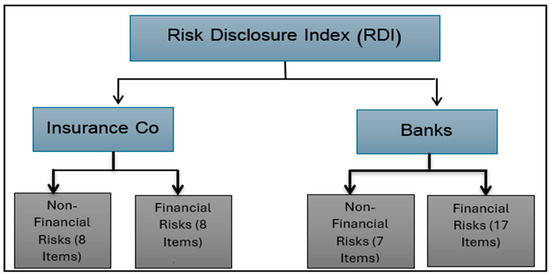
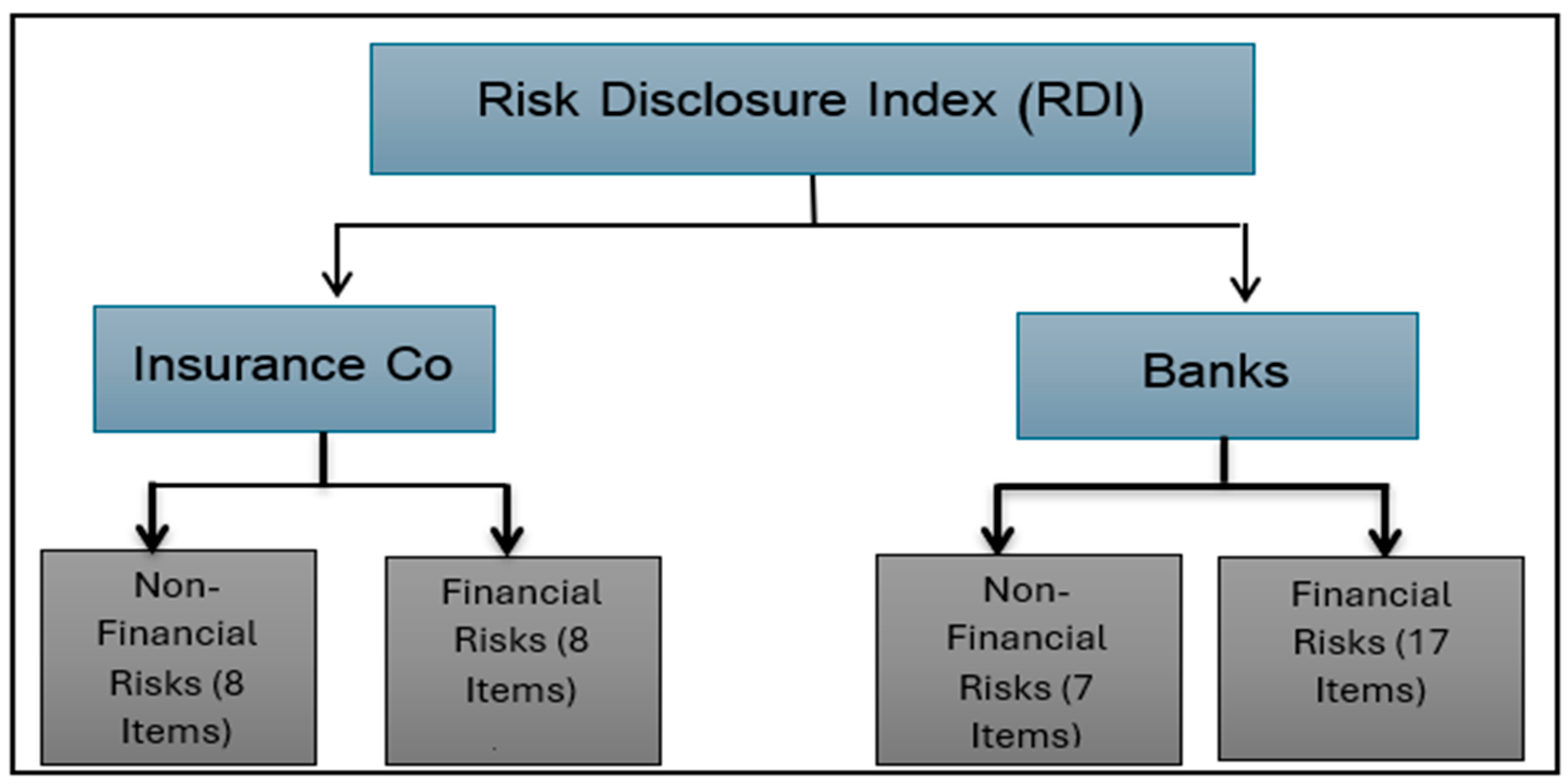

Disclaimer/Publisher’s Note: The statements, opinions and data contained in all publications are solely those of the individual author(s) and contributor(s) and not of MDPI and/or the editor(s). MDPI and/or the editor(s) disclaim responsibility for any injury to people or property resulting from any ideas, methods, instructions or products referred to in the content. |
© 2026 by the authors. Licensee MDPI, Basel, Switzerland. This article is an open access article distributed under the terms and conditions of the Creative Commons Attribution (CC BY) license.