


Abstract
This article examines the cartographic design of nano-scale productive systems led by women nano-entrepreneurs, understood as family-based productive arrangements embedded in everyday domestic spaces. In rural contexts, many women-led ventures operate at a nano-scale and are organized around household dynamics, where entrepreneurial leadership, family labor, and productive activities intersect. Drawing on a qualitative territorial research approach, the study combines semi-structured interviews, fieldwork, and cartographic design to identify productive actions and the spaces in which they take place. The findings show that these nano-scale productive systems function through the articulation of multiple actions rather than formal organizational structures, and that women exercise entrepreneurial leadership by coordinating family-based activities within and beyond the home. As a result, everyday spaces, particularly the household, are resignified as workshops, points of sale, and centers of management, giving rise to locally embedded family-based enterprises in emerging rural economies. Using cartographic design as an analytical tool, the article contributes to research on family entrepreneurship and leadership by highlighting how women-led nanoenterprises reshape spatial organization, and productive practices within emerging family firms.
1. Introduction
1.1. Entrepreneurship and Family Firms in a Global Context
Family firms have long been recognized as central actors in national and regional economies and continue to receive growing scholarly attention as a dynamic field within entrepreneurship research (Anwar et al., 2024). Across developed and emerging contexts, a significant share of productive activity and employment is sustained by businesses where ownership and decision-making remain embedded in family structures (Astrachan & Shanker, 2003; La Porta et al., 1999). Rather than representing a marginal organizational form, family-based enterprises constitute a dominant and enduring component of the global economic system, particularly in settings where formal labor markets are limited.
Within contemporary economic systems, entrepreneurship is commonly associated with innovation, adaptability, and economic resilience (Audretsch et al., 2006; Fritsch, 2017). In family settings, entrepreneurial activities are often shaped by factors such as intergenerational relations, long-term continuity, and the collective use of household resources, particularly under conditions of uncertainty (Zhou & Cen, 2024).
These dynamics are especially visible in rural and emerging economies, where family firms frequently operate as socially embedded livelihood systems connected to local territorial dynamics (OECD, 2018; Welter et al., 2017). Recent scholarship also suggests that family entrepreneurship research is increasingly moving beyond traditional topics such as succession and governance to examine the heterogeneity of entrepreneurial contexts, emphasizing the need to better understand how family-based entrepreneurial processes unfold across diverse social and territorial settings (Anwar et al., 2024). This perspective provides a useful foundation for examining productive systems that remain embedded in household organization and everyday territorial practices.
Many family-based productive activities also fall outside standardized business models. In numerous contexts, production and exchange rely on flexible household arrangements that combine domestic and economic life in ways that challenge conventional definitions of the firm (Welter, 2011).
Instead of prioritizing expansion or formal growth, these systems often focus on continuity, adaptability, and household sustainability. This broadens the understanding of entrepreneurship in contexts where productive life remains closely linked to family and community relations.
1.2. Conceptualizing Nano-Scale Entrepreneurship as a Distinct Productive Scale
Despite the broad recognition of micro, small, and medium-sized enterprises within entrepreneurship research, productive activities operating at smaller organizational scales remain conceptually underexplored. This study introduces nano-scale entrepreneurship as a distinct analytical category for understanding forms of productive organization embedded in household dynamics, family relationships, and everyday economic practices.
In this study, nano-scale entrepreneurship is understood as an analytical and qualitative category rather than as a statistical firm-size classification. Its distinction from microenterprise does not rely primarily on a fixed number of employees, income level, or formal registration status. Instead, it is identified through the convergence of household-based organization, relational leadership, family labor participation, domestic-productive spatial integration, and livelihood-oriented continuity. In this sense, the nano-scale refers to productive systems whose operation is structured through everyday household practices beyond through formal managerial, financial, or organizational arrangements.
Nano-scale entrepreneurship is approached here as a distinct analytical category instead simply a smaller quantitative version of existing business classifications. It refers to forms of economic organization deeply embedded in household dynamics and family relationships that are structured less through formal managerial hierarchies and more through family labor, relational coordination, and adaptive practices (Ramírez-López et al., 2025).
The nano-scale cannot be understood solely through indicators such as low income, minimal employment, or informality. More importantly, it reflects a mode of organizing production through everyday actions, including preparing goods, coordinating household labor, negotiating sales, or adapting domestic spaces for productive use. Although nanoenterprises may operate with different levels of formal recognition, their functioning remains strongly embedded within household and relational structures (Ramírez-López et al., 2025). Entrepreneurial activity at the nano-scale is often sustained through the continuity of everyday practices beyond through formal institutional arrangements, challenging conventional assumptions that legitimacy depends on registration, growth trajectories, or standardized organizational models (Aldrich & Cliff, 2003).
For this reason, nanoenterprises cannot be understood merely as temporary or pre-formal stages within business development processes. In many rural and emerging contexts, business expansion is not necessarily the primary goal (McKelvie & Wiklund, 2010). Instead, productive activities are organized around flexibility, continuity, and the long-term sustainability of the household, particularly in regions where access to formal employment remains limited (Korsgaard et al., 2015a).
Under these circumstances, nano-scale productive systems tend to operate as stable livelihood strategies embedded in everyday life instead as short-term responses to economic vulnerability (N. Williams & Vorley, 2015). Recognizing nanoenterprises as manifestations of nano-scale entrepreneurship shifts the analytical focus away from the formal firm and toward the broader set of relational and productive practices sustaining family-based economic activity.
Building on this conceptual perspective, the present study addresses the following research question: how are women-led nano-scale family productive systems spatially organized within rural contexts, and how can cartographic analysis contribute to examining these entrepreneurial dynamics?
To address this question, the introduction first establishes the conceptual foundations of nano-scale entrepreneurship, then examines the limitations of conventional entrepreneurship frameworks, discusses women’s coordination within household productive systems and the spatial dimensions of entrepreneurial activity, and finally presents cartographic design as the methodological response adopted in this study.
1.3. Limitations of Conventional Entrepreneurship Frameworks
Although entrepreneurship and family business research has expanded considerably, existing frameworks continue to prioritize formal organizational structures and standardized business classifications. Existing research has largely focused on registered firms operating within defined institutional and market environments (De Massis et al., 2018; Laing et al., 2022). This tendency is also reflected in the scales commonly used to classify enterprises. Most studies concentrate on micro, small, and medium-sized firms (MSMEs/SMEs), relying on indicators such as employment size, revenue, or growth orientation (Ács et al., 2014; Welter et al., 2017). While analytically useful, these categories frequently overlook productive activities operating below formal business thresholds.
Similarly, leadership in family firms has often been examined through governance structures, succession, or strategic decision-making (Laing et al., 2022; Nordqvist & Melin, 2010), with less attention given to informal coordination practices embedded in everyday household life (Omri, 2020).
These limitations become especially relevant in research on women’s entrepreneurship. Although gender-focused scholarship has expanded significantly (Ahl et al., 2016; Jennings & Brush, 2013), women’s productive roles within household-based systems often remain underrepresented in dominant entrepreneurial frameworks.
As a result, many small-scale productive activities, particularly those led by women, continue to occupy a marginal position within conventional definitions of entrepreneurship and enterprise.
1.4. Women’s Coordination Within Household Productive Systems
Within nano-scale family systems, women frequently occupy central organizational roles that remain insufficiently recognized in entrepreneurship research. Although studies on women’s entrepreneurship have grown considerably, most continue to focus on formally registered ventures, innovation-oriented firms, or businesses associated with expansion and market growth (Jennings & Brush, 2013; Marlow & McAdam, 2013). Recent evidence further suggests that women’s leadership within family firms contributes to the development of entrepreneurial capabilities, organizational learning, and adaptive decision-making, particularly when entrepreneurial processes are embedded in family relationships instead of formal organizational structures (Hernández-Linares et al., 2023).
Less attention has been given to forms of leadership emerging within household-based productive systems, where economic activities are closely integrated into everyday domestic life. In these environments, leadership is rarely expressed through formal managerial authority. Instead, it emerges through the coordination of labor, caregiving responsibilities, circulation activities, and productive routines within the household.
Many of these decisions occur within domestic settings, yet they directly influence productive continuity and household income generation. This differs from dominant entrepreneurial models that tend to emphasize strategic management, formal governance structures, or organizational hierarchies (De Massis et al., 2018; Marlow & Martinez Dy, 2018).
Under these conditions, the home functions simultaneously as a domestic and productive space in which caregiving, management, and economic activity become deeply interconnected (Reuschke, 2016).
Women’s entrepreneurial practices within nanoenterprises are also shaped by structural constraints, including authority and labor (Ahl et al., 2016). Yet these same conditions often give rise to adaptive forms of organization based on relational coordination, flexibility, and continuous adjustment. Recent studies of rural women entrepreneurs also show that these adaptive organizational practices are strengthened through cooperation, social networks, and community-based relationships that enable women to mobilize resources and sustain entrepreneurial activities despite structural constraints (Chen & Barcus, 2024). Through the continuous reconfiguration of household resources, women transform domestic environments into spaces of production and exchange. Leadership at the nano-scale therefore emerges as situated and relational, sustained through continuity, practical problem-solving, and the capacity to coordinate family and productive life rather than through formal institutional authority.
Recognizing this form of leadership is essential for advancing a more inclusive and context-sensitive understanding of family entrepreneurship, particularly in rural and emerging settings, where women’s entrepreneurial contributions frequently depend on relational forms of coordination that remain insufficiently visible within conventional entrepreneurial frameworks (Chen & Barcus, 2024; Hernández-Linares et al., 2023).
1.5. Space as an Analytical Dimension of Nano-Scale Entrepreneurship
Entrepreneurship research has often approached economic activity as if it were spatially neutral, giving greater attention to institutions, markets, or networks while placing less emphasis on the material and territorial dimensions of productive life (Baumgartner et al., 2013.; McKeever et al., 2015).
Traditional entrepreneurship research has often treated space as a secondary contextual factor. More recent studies, however, argue that place should be understood as socially produced through everyday interactions and practices (Korsgaard et al., 2015a; Welter, 2011). Recent socio-spatial perspectives further argue that entrepreneurial activities are not merely situated within space but are actively constituted through everyday spatial relations, particularly in contexts where women operate within informal and household-based economies (Xheneti & Madden, 2025).
In rural contexts, mobility constraints, proximity, family property, and local social networks directly shape how productive activities are organized and sustained. From this perspective, space is continuously reconfigured through practice (Lefebvre, 1991). Domestic rooms may function as workshops, patios become sales points, and community routes operate as informal distribution channels, illustrating how nano-scale entrepreneurship transforms ordinary environments into productive spaces (Reuschke, 2016).
Similarly, studies of rural women entrepreneurs show that productive practices are closely intertwined with community relationships, cooperation, and place-based social networks, reinforcing the idea that entrepreneurial activity is inseparable from the territorial contexts in which it develops (Chen & Barcus, 2024).
Productive activities in these contexts rarely occur within clearly separated spaces; instead, domestic, social, and economic functions overlap. The concept of spaces of action (Steyaert & Katz, 2004) becomes especially useful for understanding these dynamics because it highlights the relational spaces through which labor coordination, decision-making, and exchange processes take place.
Incorporating space as an analytical dimension allows nano-scale entrepreneurship, and the nanoenterprises through which it materializes, to be examined not only as family-based productive systems but also as processes that actively transform territorial life. Spatial reconfiguration becomes part of entrepreneurial practice itself. This perspective is particularly relevant for understanding women’s leadership within household-embedded systems, since economic coordination frequently involves reorganizing and adapting lived environments to sustain productive activity. From a socio-spatial perspective, these entrepreneurial practices are embedded in the continuous negotiation of domestic, productive, and community spaces, where informal economic activities reshape both social relations and the material organization of everyday life (Xheneti & Madden, 2025).
Although recent studies have advanced understanding of family entrepreneurship, women’s entrepreneurial leadership, and the socio-spatial dimensions of entrepreneurial activity (Anwar et al., 2024; Chen & Barcus, 2024; Hernández-Linares et al., 2023; Xheneti & Madden, 2025), important gaps remain. Existing research continues to privilege formally established firms, giving comparatively limited attention to household-embedded nano-scale productive systems. Likewise, women’s leadership is rarely conceptualized through everyday productive coordination, while the ways entrepreneurial activity reshapes domestic and territorial space remain insufficiently examined. Consequently, the spatial organization of nano-scale family entrepreneurship remains insufficiently theorized and empirically documented. This study addresses these interconnected gaps through a cartographic analysis of women-led nano-scale productive systems.
Approaching entrepreneurship in this way challenges firm-centered perspectives and opens the possibility of developing methodological strategies capable of capturing the spatial dynamics of nano-scale production more directly.
1.6. Cartographic Design as a Methodological Response
If nano-scale entrepreneurship is expressed through dispersed and household-embedded practices, conventional firm-centered methodologies face important limitations when attempting to capture its complexity. Standardized surveys, financial indicators, and business metrics are primarily designed to evaluate formal enterprises with identifiable organizational boundaries and measurable growth trajectories.
Consequently, they tend to overlook the fluid, relational, and spatially distributed dynamics that characterize nanoenterprises. Even though qualitative approaches have contributed to a more contextual understanding of entrepreneurship (Korsgaard et al., 2015a; Welter, 2011), spatial arrangements are often described only narratively, without being systematically examined as interconnected systems of action.
In response to these limitations, cartographic design is proposed here as both an analytical and interpretative tool capable of linking action and space. Cartography is not approached simply as a geographic representation of location, but as a language through which productive dynamics and spatial transformations can be interpreted and articulated (Kitchin & Dodge, 2007).
Mapping processes informed by fieldwork, interviews, and observation make it possible to identify the spatial relationships sustaining nano-scale entrepreneurship (Kitchin et al., 2013). In this sense, maps function not only as visual representations, but also as analytical tools for interpreting territorial organization and productive interdependencies.
By conceptualizing the household as simultaneously a domestic and productive environment, cartographic analysis helps trace the hybrid spaces where kitchens become workshops, patios operate as sales points, and community routes support circulation activities. This approach also makes women’s productive coordination more visible by linking leadership practices to the spatial organization of everyday productive life. Furthermore, by rendering nano-scale systems legible beyond conventional statistical categories (C. C. Williams & Shahid, 2016), cartography challenges dominant understandings of entrepreneurship centered exclusively on firm size, formalization, or organizational growth.
As a methodological approach, it offers a way to capture the territorial dimension of nano-scale productive systems while also contributing to research on gender-sensitive entrepreneurship and family entrepreneurship.
1.7. Objective and Contributions of the Study
Having identified the conceptual, theoretical, and methodological gaps addressed throughout the introduction, this study aims to advance the understanding of nano-scale family entrepreneurship as a distinct productive system embedded in everyday household and territorial dynamics. To this end, the article is guided by two interconnected analytical axes:
- Nano-scale family productive systems and actions;
- Spatial resignification through women’s entrepreneurial leadership.
Rather than approaching entrepreneurship as a bounded organizational structure, the article conceptualizes it as a system of situated actions through which households sustain economic continuity and transform their everyday environments.
From this perspective, nano-scale entrepreneurship is approached as a qualitatively distinct productive scale rather than simply a reduced version of microenterprise activity. Accordingly, the analysis adopts a spatial and relational lens centered on household organization, productive practices, and territorial dynamics, moving beyond classifications based exclusively on firm size, formalization, or growth-oriented indicators to examine how productive activities are sustained through everyday household coordination and spatial organization. The principal findings indicate that:
- Nano-scale productive systems operate through flexible household arrangements shaped by recurring domestic routines and ongoing spatial adaptation.
- The household functions as the main productive space, where domestic environments are constantly reorganized to accommodate income-generating activities alongside caregiving and family responsibilities.
- Women’s entrepreneurial leadership becomes visible through relational and spatial practices embedded in everyday decision-making processes, including labor coordination, mobility management, and territorial exchange dynamics.
- Domestic environments are adapted for productive purposes, creating hybrid spaces where economic activities and family life coexist simultaneously.
- Cartographic analysis reveals territorial connections between households, circulation routes, community spaces, and regional mobility networks that extend beyond strictly local interactions.
- In communities such as Los Juárez, nano-scale entrepreneurship remains closely linked to artisanal traditions, intergenerational knowledge transmission, and household-based production practices.
These findings support three complementary contributions. From a theoretical perspective, the study contributes to entrepreneurship research by approaching entrepreneurial activity as a relational and practice-based process rooted in household organization, while expanding discussions on family business and women’s entrepreneurship beyond formal firms and standardized organizational structures. Methodologically, the research highlights the value of cartographic analysis for interpreting spatial relations and productive organization within informal and territorially embedded systems (Kitchin & Dodge, 2007). Empirically, it documents how women coordinate productive activities through the transformation of domestic environments into spaces of production, circulation, and household organization in rural contexts.
The remainder of the article is structured as follows: Section 2 presents the theoretical framework; Section 3 presents the methodological design and cartographic approach; Section 4 analyzes the mapped spaces of action and empirical findings; Section 5 discusses the theoretical and methodological implications; and Section 6 presents the conclusions, limitations, and directions for future research.
2. Theoretical Framework
This theoretical framework integrates complementary perspectives to explain nano-scale entrepreneurship as a socially and spatially embedded phenomenon. Drawing on Granovetter’s (1985) concept of social embeddedness, entrepreneurial activity is understood as emerging through social relationships rather than as an autonomous economic process. This understanding is extended through spatial embeddedness, which recognizes that entrepreneurial practices are also constituted through everyday interactions with domestic and territorial environments. Together, these ideas connect contextual entrepreneurship, household productive organization, women’s entrepreneurial leadership, and spatial analysis within a common framework for examining nano-scale productive systems.
Women’s entrepreneurial leadership, household productive organization, and the production of space are therefore treated as interconnected dimensions of the same entrepreneurial process. Cartographic design is introduced not only as a methodological technique but also as a means of examining their relational and spatial articulation.
2.1. Nano-Scale Family Productive Systems
Entrepreneurial activity has traditionally been classified according to firm size, most commonly through the categories of micro, small, and medium-sized enterprises (MSMEs). These classifications rely on quantitative indicators such as the number of employees, turnover, and asset levels. They have structured a significant portion of entrepreneurship research and related policy frameworks (Bruhn et al., 2017; OECD, 2005). While analytically useful, such categories tend to assume a formally bounded organizational entity and a degree of structural differentiation between ownership, management, and labor. Even studies of microenterprises and nanoenterprises often remain anchored in size-based thresholds rather than qualitative differences in organizational logic (Marlow & Martinez Dy, 2018).
In contrast, nano-scale entrepreneurship is proposed as a qualitative category rather than as a smaller version of existing quantitative classification (Welter, 2011). The nano scale is characterized by productive systems embedded in household life (McKeever et al., 2015; Reuschke, 2016). Within these systems, economic activity is organized through everyday actions rather than formal organizational structures. Production, administration, storage, and exchange are frequently intertwined within domestic spaces and sustained through family participation. Consistent with social embeddedness, economic activity emerges through family relationships, reciprocity, and everyday interaction rather than as an autonomous market process (Granovetter, 1985).
In these arrangements, growth or market expansion is not always the principal objective. Greater emphasis is commonly placed on continuity, adaptability, and household stability. Analytical attention therefore shifts away from the formal firm and toward the practices that sustain everyday family life.
This form of organization is particularly relevant in rural and emerging economies, where access to formal employment remains limited and household-based activities often function as relatively stable livelihood strategies (Korsgaard et al., 2015b; Welter et al., 2017).
Under these conditions, productive organization tends to emerge through family dynamics and everyday coordination. Labor is distributed according to availability, domestic environments are adapted to productive activity, and decisions usually emerge through informal interaction rather than formal hierarchy.
Conceptualizing nano-scale entrepreneurship as a differentiated productive system makes it possible to examine economic activities that frequently fall outside conventional firm-size classifications.
Table 1 further clarifies the scope of the proposed construct by summarizing the principal distinctions between conventional firm-size classifications and nano-scale family productive systems. The comparison does not introduce a new quantitative category. Instead, it highlights the organizational, relational, spatial, and livelihood-oriented characteristics that collectively distinguish nano-scale entrepreneurship. These dimensions may also provide adaptable criteria for identifying comparable productive systems in future qualitative and mixed-methods research.
Table 1.
Conceptual and analytical distinctions across entrepreneurial and productive scales.
Together, these dimensions show that nano-scale entrepreneurship should not be interpreted as a reduced version of microenterprise but as a qualitatively distinct form of productive organization. Its analytical value lies in explaining how entrepreneurial activity is structured through household organization, relational leadership, domestic-productive spatial integration, and livelihood-oriented continuity. The proposed framework therefore provides a conceptual basis for interpreting the findings and a reference point for future research on household-embedded productive systems.
Analytical Delimitation of Nano-Scale Entrepreneurship
The conceptualization proposed is not intended to establish a new statistical category based on enterprise size. Nano-scale entrepreneurship is instead introduced as an analytical construct for forms of productive organization that cannot be adequately explained through conventional firm-size classifications. Its identification therefore does not depend on thresholds such as employee numbers, annual turnover, or registration status.
Nano-scale entrepreneurship is recognized through the convergence of organizational, relational, spatial, and livelihood-oriented characteristics that distinguish these systems from conventional microenterprises. This perspective emphasizes how productive activity is organized, coordinated, and sustained within household settings, where family participation, domestic space, and everyday productive practices become structurally integrated. The proposed criteria are intended to guide analytical identification rather than establish rigid classificatory boundaries. They may therefore support future qualitative and mixed-methods research on productive systems emerging from the continuous interaction of family relationships, domestic space, and everyday action.
2.2. Relational Leadership and Women’s Coordination in Nano-Scale Systems
Entrepreneurial leadership has traditionally been associated with formal authority, strategic decision-making, and governance structures at the firm level. Within family business research, leadership is commonly linked to ownership, succession, and long-term planning (De Massis et al., 2018).
Although these dimensions remain relevant in formally structured enterprises, they do not fully explain how productive coordination operates within household-based systems. In nano-scale contexts, entrepreneurial leadership is socially embedded and emerges through everyday organization, relational coordination, and productive routines rather than through formally designated authority.
Within nano-scale family systems, women often play central roles in coordinating labor, organizing household resources, and sustaining productive activities over time. Many decisions emerge through informal interactions embedded in domestic life, yet they directly influence production, market exchanges, and household income. Leadership is therefore expressed through everyday practice and relational organization rather than institutional designation.
Research on rural women’s entrepreneurship has increasingly emphasized the importance of moving beyond growth-centered indicators to examine how women mobilize family and community resources within constrained environments (Ahl et al., 2016; Jennings & Brush, 2013). Even so, the relationship among leadership, household organization, and territorial embeddedness remains insufficiently developed in the current literature.
Women’s entrepreneurial leadership within nano-scale family systems can therefore be understood as a relational and spatially situated process. By coordinating productive activities, negotiation domestic responsibilities, and mediating between households and local markets, women actively shape the operation of these systems.
Their leadership is expressed through the continuous alignment of productive action, family organization, and territorial conditions. Recognizing these dynamics reframes entrepreneurial leadership as an embedded practice that sustains productive continuity in rural and emerging settings.
The multidimensional nature of women’s entrepreneurial leadership in nano-scale systems is summarized in Table 2.
Table 2.
Dimensions of women’s entrepreneurial leadership in nano-scale systems.
Leadership in these systems extends beyond formal authority and is expressed through labor coordination, spatial organization, and relational mediation within the household and local territory. This perspective broadens the understanding of entrepreneurial agency in family-embedded productive contexts.
2.3. Actions, Space, and Spatial Resignification
Within the social sciences, entrepreneurial space has increasingly been conceptualized not as a neutral container of activity, but as a socially constructed and relational phenomenon shaped through practice (Lefebvre, 1991). Contextual entrepreneurship research similarly recognizes that economic activity is embedded in place-specific social and institutional conditions (Korsgaard et al., 2015b; Welter, 2011). This view allows productive practices to be examined as processes that generate, reorganize, and redefine spatial configurations rather than as activities merely located within pre-existing spaces (Welter et al., 2017).
From this perspective, actions do not simply occur within space; they actively shape it. Everyday productive activities, including food preparation, storage, labor coordination, and local exchange, progressively transform domestic and community environments into functional productive spaces.
The concept of spaces of action is introduced to describe those dynamic sites where productive decisions, material transformations, and relational exchanges occur. These spaces are not fixed entities, they are continuously constituted through practice. In nano-scale systems, kitchens, patios, corridors, and nearby circulation routes acquire economic meaning through repeated use and functional adaptation.
While social embeddedness explains how entrepreneurial activity is rooted in social relationships, a spatial perspective extends this understanding by recognizing that these relationships are also materially and territorially situated. Entrepreneurial practices therefore not only occur within space but actively participate in its production and continual reconfiguration.
However, entrepreneurship research often continues to treat space as a contextual background rather than as an outcome of entrepreneurial action. Recognizing space as relational makes it possible to examine how repeated productive practices generate new uses, meanings, and territorial configurations.
Figure 1 summarizes the conceptual cycle through which productive actions transform domestic and community environments, generate spatial resignification, and reinforce the continuity of nano-scale family productive systems.
Figure 1.
Conceptual cycle of productive actions, spatial transformation, and spatial resignification in nano-scale family productive systems.
Figure 1 conceptualizes nano-scale entrepreneurship as a cyclical process in which productive practices progressively transform domestic and community environments. These transformations generate new spatial meanings that, in turn, support household-based production over time. The cycle highlights a reinforcing process through which the adaptation of domestic space contributes to the continuity of the nano-scale system. Instead of depicting isolated entrepreneurial activities, the framework illustrates the dynamic relationship among action, space, and territorial reproduction.
2.4. Cartographic Design as an Analytical Approach
Cartography has traditionally been associated with spatial representation and geographic description. Contemporary territorial and social research increasingly conceptualized cartography as an analytical and interpretative practice rather than a purely descriptive tool.
From this perspective, maps do more than represent physical space; they also help interpret spatial relations, lived experiences, and territorial organization (Harley, 1989; Kitchin & Dodge, 2007). Applied to entrepreneurship research, cartographic approaches represent productive systems not only through geographic location but also through relational dynamics and spaces of action (Steyaert & Katz, 2004).
Within nano-scale family productive systems, conventional economic indicators often fail to capture the dispersed and household-embedded nature of productive activity. Cartographic design offers an alternative approach for tracing productive actions, spatial overlaps, family participation, and territorial connections. By following how productive routines unfold across domestic and community environments, cartography reveals the hybrid infrastructures that sustain nano-scale activity, particularly in rural and emerging settings where economic life is closely connected to everyday spatial practices.
Cartographic design is therefore approached not only as a methodological technique but also as a conceptual bridge linking action, space, and leadership. It enables the visualization of spaces of action, the identification of spatial transformation processes, and the recognition of women’s central roles within these productive configurations. Integrating cartographic analysis into the framework allows nano-scale family systems to be examined as territorially embedded, relationally organized, and spatially produced formations.
Together, these perspectives establish the conceptual relationships among nano-scale entrepreneurship, women’s leadership, household organization, and the production of space. Cartographic design provides the means to examine and visualize these relationships systematically. This integrated framework guides the methodological design presented in the following section.
3. Materials and Methods
3.1. Overview of the Methodological Design
A qualitative, territorial, and interpretative approach was adopted to examine nano-scale family entrepreneurship as a situated and spatially embedded phenomenon. Given that productive activity at the nano scale unfolds through everyday practices within domestic environments, the research required an approach capable of capturing relational dynamics and spatial configurations. Conventional firm-level indicators were considered insufficient for identifying systems of action that do not conform to formal organizational structures (Neergaard & Leitch, 2015).
The interpretative orientation allowed entrepreneurial activity to be examined as socially constructed and context-dependent. Particular attention was given to how women organize productive routines, coordinate family labor, and adapt domestic spaces for economic activity.
Territoriality constituted a central component of the analysis, particularly in examining how mobility, spatial proximity, and community networks shape productive organization in rural settings (Huggins & Williams, 2011).
The methodological design was aligned with the conceptualization of nano-scale entrepreneurship adopted in this research. Accordingly, the analysis focused on productive practices, household organization, and spatial transformations rather than business growth or financial performance indicators.
The research was organized in sequential phases:
- Community outreach and an open call for participation;
- An introductory workshop on cartography and nano-scale entrepreneurship;
- Semi-structured interviews and spatial data collection;
- Preliminary cartographic construction using Google MyMaps;
- Spatial systematization and redesign in QGIS.
The process remained flexible throughout the study, allowing the refinement of spatial representations as fieldwork progressed. Figure 2 summarizes the methodological sequence.
Figure 2.
Sequential methodological process used in this study.
The research process combined community engagement, qualitative analysis, and digital cartographic design to examine the spatial organization of nano-scale productive systems.
3.2. Research Approach
The research was grounded in qualitative interpretation and territorial analysis. It purpose was to examined how nano-scale productive systems are organized through everyday practices, family dynamics, and spatial relations rather than to measure firm-level performance.
The design aligns with contextual approaches to entrepreneurship that understand productive activity as socially and territorially situated. The objective was therefore to develop an analytical understanding of household organization and productive spatial dynamics rather than to pursue statistical generalization.
Consistent with the conceptual delimitation proposed in Section 2, the research focused on systems characterized by household-based organization, relational leadership, domestic-productive spatial integration, family participation, and livelihood-oriented continuity. These characteristics provided the basis for identifying nano-scale entrepreneurship throughout the research process.
Because no official records identify women-led nano-scale productive systems in this study area, neither a precise population nor a statistically representative sampling frame could be established. Probabilistic sampling was therefore unsuitable for the exploratory and interpretative objectives of the study.
The research was conducted in rural communities located in Cadereyta de Montes, Querétaro, Mexico, a territory characterized by dispersed settlements, limited access to formal employment, and a strong dependence on small-scale productive activities including artisanal production, food preparation, agriculture, and local commerce.
The region also presents mobility constraints and dense community-based networks that influence how households organize production and connect with local markets. Domestic environments frequently function simultaneously as spaces of care, subsistence, and income generation.
Cadereyta de Montes was selected as a relevant case study because of the presence of sustained household-based productive initiatives led by women. Its territorial configuration provided an appropriate setting for the examining nano-scale entrepreneurship as a livelihood strategy embedded in rural social and spatial dynamics.
3.3. Participants and Sampling Strategy
The study involved eight women leading household-based productive systems in rural communities of Cadereyta de Montes, Querétaro. Participant selection followed a purposive, non-probabilistic sampling strategy consistent with the qualitative and exploratory nature of the research. Rather than relying on conventional firm-size classifications, cases were selected according to the analytical criteria proposed for nano-scale entrepreneurship in this study.
Specifically, participating productive systems exhibited the defining characteristics of household-based organization, predominance of family labor, relational forms of leadership, domestic-productive spatial integration, and livelihood-oriented continuity. These criteria were applied to ensure conceptual consistency between the theoretical framework and the empirical selection of cases.
Because no official registry or formal classification of nano-scale entrepreneurship exists, the number of comparable productive systems in the study area remains unknown. An open community call was therefore used to invite women engaged in household-based productive activities to participate in a workshop on productive system cartography. Participation was voluntary, and all eight respondents met the analytical inclusion criteria. The resulting sample corresponds to a non-probabilistic, self-selected (voluntary) sampling strategy, appropriate for exploratory and qualitative research contexts where the population size is indeterminate.
The study did not seek statistical representativeness but an in-depth understanding of household-embedded productive systems. The sample was considered appropriate for the interpretative objectives because each participant generated multiple forms of empirical material, including a participatory cartographic exercise, a semi-structured interview, field observations, and subsequent digital spatial modeling.
Following the principle of information power (Malterud et al., 2016), the richness and depth of the empirical material provided by each participant supported the analytical scope of the study. During the analytical process, the core dimensions guiding the research, including productive actions, household organization, spatial adaptation, territorial mobility, relational coordination, and spatial meaning became progressively consistent. Later cases primarily reinforced previously identified analytical dimensions rather than generating substantially new conceptual categories.
Accordingly, the objective was not to produce statistically generalizable findings but to develop a context-sensitive understanding that may inform research in comparable rural contexts (Lincoln et al., 1985).
3.4. Data Collection: Participatory Workshop Phase
Before the semi-structured interviews, a participatory workshop was conducted to establish a shared conceptual and methodological foundation with the participants. The workshop took place on 24 October 2025 in Cadereyta de Montes and was conducted in Spanish under the title “Cartografía del sistema productivo de las nanoempresarias de Cadereyta de Montes”, as can be seen in Figure 3.
Figure 3.
Participatory workshop conducted on 24 October 2025. Participants’ facial features have been intentionally blurred to protect their privacy. Authors’ photograph.
The objective of the workshop was threefold:
- To introduce the concept of nano-scale entrepreneurship and clarify its distinction from micro and small enterprises;
- To explain cartography as an analytical tool rather than merely a form of geographic representation;
- To collectively identify productive actions, domestic spaces, and circulation routes relevant to each participant’s economic activity.
During the session, participants engaged in guided discussions and collaborative mapping activities to identify the spatial organization of their productive systems. This phase helped established a shared understanding that informed the interviews and subsequent collection of spatial data. It also generated initial empirical material, including productive nodes, domestic adaptations, and territorial connections later incorporated into the digital cartographic analysis.
Spatial references and preliminary location data collected during the workshop were later transferred to Google MyMaps between November and December 2025 for initial visualization and organization. Beyond generating data, the workshop supported trust-building and methodological transparency, thereby strengthening the interpretative depth of the subsequent phases.
3.5. Semi-Structured Interviews and Field Observation
Following the workshop, individual semi-structured interviews were conducted with the eight participants. The interviews examined family organization, daily routines, decision-making, domestic spatial adaptations, and territorial linkages within each productive system.
Individual interviews lasted approximately 10 to 15 min. Their duration reflected the focused nature of the interview guide and the fact that participants had already completed the participatory cartographic exercise immediately beforehand, allowing the interviews to concentrate on clarifying, expanding, and contextualizing the information generated during the workshop. All interviews were conducted in Spanish immediately after the participatory workshop using a semi-structured interview guide composed of open-ended questions organized around the analytical dimensions presented in Figure 4. This sequencing allowed participants to reflect on the cartographic exercise while describing the organization of their productive systems.
Figure 4.
Analytical axes of the interview questions.
Because the interviews were conducted immediately after the participatory cartographic workshop, participants had already reflected on the organization of their productive systems, the spatial distribution of productive activities, and their daily routines. Consequently, the interviews were not intended as isolated data collection events but as a complementary stage that deepened and clarified issues previously identified during the workshop. This sequential design, together with field observations, participatory maps, and field notes, enabled methodological triangulation and provided sufficient analytical depth despite the relatively short duration of each interview.
The semi-structured format allowed for thematic consistency while preserving flexibility to explore emergent dimensions specific to each participant. Interview questions were organized around three analytical axes, as shown in Figure 4.
Prior to each interview, participants signed an informed consent form authorizing their participation and the use of the information provided for academic research purposes. Immediately before beginning the interview, verbal consent to record was requested again and documented in the audio recording. Interviews were recorded using a mobile phone equipped with an external microphone to improve audio quality.
The interviews were transcribed verbatim in Microsoft Word shortly after fieldwork. Because not all participants completed the printed interview guide manually, the audio recordings served as the primary source for producing complete transcripts. Field notes from the workshop and subsequent observations complemented the interview material throughout the analytical process.
3.6. Digital Cartographic Systematization
Cartographic systematization was conducted in two sequential digital phases, allowing the spatial information derived from the workshop, interviews and field observations to be progressively refined.
3.6.1. Phase 1: Preliminary Mapping in Google MyMaps (November–December 2025)
Between November and December 2025, the spatial references gathered during the workshops, interviews, and field observations were transferred to Google MyMaps as a first stage of spatial systematization. This phase enabled the initial visualization of productive nodes, mobility routes, and territorial connections.
Google MyMaps was selected because of its accessibility and suitability for rapidly organizing spatial information. The platform allowed qualitative annotations to be incorporated and domestic locations to be distinguished from external productive spaces. At this stage, the objective was not to technical cartographic precision but the development of an initial relational representation of each productive system.
Each participant’s productive system was organized into thematic layers. A separate action layer was created for each nano-entrepreneur, while places of action were grouped according to productive function. This structure supported the systematic identification of nodes, routes, and household-based spatial configurations before the information was transferred to QGIS.
3.6.2. Phase 2: Spatial Systematization and Analytical Redesign in QGIS (February–March 2026)
Between February and March 2026, the cartographic information was transferred to QGIS for more detailed spatial processing and analytical refinement. This transition improved georeferencing, layer organization, and the categorization of spatial information.
The QGIS project used OpenStreetMap as its base map. Spatial data were georeferenced in the EPSG:32614 coordinate reference system (WGS 84/UTM Zone 14N). Layers generated in Google MyMaps were exported in KMZ format, converted into shapefiles, and incorporated into the QGIS for subsequent spatial analysis.
During this phase, the cartographic analysis evolved from an exploratory visualization process into a more structured analytical model. The redesign process focused on organizing spatial layers according to:
- Domestic productive spaces;
- External territorial connections;
- Circulation flows.
Spatial information was represented through vector data, including points, lines, and polygons. Customized symbols and color codes were assigned according to the productive actions, places, and routes identified during fieldwork. This standardized protocol supported comparison across participants while preserving the individual configuration of each productive system. The resulting model consolidated cartographic design as an analytical instrument rather than a descriptive mapping output. The progressive cartographic systematization is illustrated in Figure 5.
Figure 5.
Workflow of the proposed digital cartographic methodology and spatial analytical process.
Overall, the workflow progressed from qualitative spatial identification to preliminary digital visualization and finally to structured cartographic modeling. This staged procedure preserved methodological flexibility while progressively improving spatial precision.
Beyond its application in the present study, the proposed cartographic workflow was designed as a flexible methodological procedure that can be replicated in other rural contexts where household-based productive systems remain insufficiently documented. Because the workflow integrates participatory workshops, qualitative interviews, field observation, and open-access GIS platforms through a sequential analytical process, it can be adapted to different territorial, cultural, and institutional settings while preserving a comparable analytical structure. This methodological flexibility also facilitates future comparative studies across regions and countries by providing a consistent framework for documenting and analyzing nano-scale family productive systems.
3.7. Analytical Procedure
The analytical procedure followed a deductive qualitative approach guided by an analytical coding framework presented in Table 3 derived from the conceptual dimensions established in the theoretical framework and operationalized through the interview guide.
Table 3.
Deductive analytical framework used for manual coding.
Rather than generating categories inductively from the data, the framework translated the conceptual dimensions of the study into analytical categories and guiding indicators that structured the manual coding process while remaining sufficiently flexible to accommodate contextual variation across participants.
The analysis examined how predefined analytical dimensions, including productive actions, household organization, spatial adaptation, territorial mobility, relational coordination, and spatial meanings, were expressed across the eight cases.
Coding was conducted manually through repeated reading of the interview transcripts and systematic comparison across participants, supported by field notes and the cartographic material generated during the participatory workshop. The analytical process was iterative, allowing codes to be continuously refined while remaining anchored to the predefined analytical dimensions established in the theoretical framework. Consistency was strengthened through constant comparison between qualitative narratives, field observations, and spatial representations, as well as through regular discussions of coding decisions and emerging interpretations.
3.7.1. Thematic Analysis of Productive Actions
Interview transcripts, field notes, and the cartographic material generated during the participatory workshop were analyzed through deductive qualitative coding using the analytical framework presented in Table 3. The framework was organized around three analytical dimensions derived from the theoretical framework:
- Productive actions and routines;
- Household spatial adaptations;
- Territorial linkages and circulation patterns.
Rather than functioning as rigid coding categories, these analytical dimensions served as interpretative guides during repeated readings of the empirical material, allowing recurring productive actions, spatial practices, and coordination processes to be systematically compared across participants.
Coding prioritized action-based categories such as preparation, coordination, storage, sales, and mobility instead of firm-level indicators. Particular attention was given to women’s roles in organizing productive routines and coordinating movement between domestic and external spaces.
3.7.2. Action–Space Relational Mapping
Following thematic coding, productive actions were linked to their spatial locations through action–space matrices that connected qualitative narratives with mapped territorial nodes.
The matrices were progressively refined through cross-case comparison, enabling common spatial configurations and recurring territorial patterns to be identified before their integration into the digital cartographic model.
The analysis extended beyond geographic location to examine how recurring practices transform domestic environments into productive spaces. Combining thematic and spatial layers revealed the hybrid character of household economic organization.
3.7.3. Cartographic Interpretation of Nano-Scale Systems
In the final stage, the cartographic outputs were interpreted as representations of relational productive systems rather than solely as visual products. The maps were examined for patterns of spatial concentration, mobility routes, domestic centrality, and territorial connections across the communities studied.
The analytical workflow integrated qualitative interpretation with progressive spatial verification. Information from interviews, field notes, and participatory maps was compared throughout its transfer from paper-based cartography to Google MyMaps and subsequently to QGIS. This iterative process connected productive practices, spatial organization, and women’s coordination while ensuring that the final digital representations remained grounded in the empirical narratives generated during fieldwork.
3.8. Ethical Considerations
Prior to participation, all participants received written information describing the objectives of the study, the voluntary nature of their participation, the confidential treatment of the information, and their right to decline answering any question or withdraw from the study at any time without consequences. Written informed consent was obtained before participation in the workshop and interviews.
Before participation, all participants were also asked verbally for permission to begin audio recording, and their agreement was documented at the beginning of each recording. Interview transcripts were anonymized during the analytical process, and all audio recordings and completed interview materials remain securely stored by the principal investigator and are used exclusively for academic research purposes.
Photographs included in the article were processed to prevent participant identification by blurring participants’ facial features, thereby protecting their privacy while documenting the participatory process.
4. Results
4.1. Cartographic Representation of the Nano-Scale Productive System
4.1.1. Organization of the Cartographic Model
The map was organized through a layered structure comprising five interconnected components. Domestic productive nodes represent the households of participating nano-entrepreneurs, while spaces of commercialization include local markets, community exchanges, and regional selling points. Supply nodes identify the sources of raw materials and inputs, and circulation routes represent the short-range mobility pathways connecting different nodes. Finally, extra-local connections capture links to nearby municipalities and regional cities. Together, these layers represent different dimensions of the productive system and make it possible to identify both territorial concentration and broader spatial connections.
4.1.2. Symbolic Structure and Spatial Representation
The cartographic model incorporates a structured symbolic system designed to differentiate productive actors, spatial nodes, and categories of action while preserving visual clarity. First, each nano-entrepreneur was assigned an individual identifying color. This chromatic distinction makes it possible to trace individual productive systems across the map and distinguish each entrepreneurial configuration within the broader territorial network. Second, productive locations were indicated through black graphic symbols combined with textual titles. These markers identify households, supply locations, commercial points, community facilities, and circulation areas associated with everyday productive activities. The use of black distinguishes spatial functions from the individualized color assigned to each participant, thereby preserving visual clarity while the accompanying labels further clarify the roles of these locations within the territorial network. Finally, the color correspondence was maintained across the actions associated with each participant, including raw materials procurement, production, commercialization, service provision, storage, administration, and publicity. Maintaining this color consistency between the entrepreneur and her associated actions reinforces the visual coherence of each nano-scale productive configuration.
The resulting visual structure supports interpretation beyond geographic representation and enables the map to function as a model of nano-scale productive organization, as summarized in Table 4.
Table 4.
Symbolic logic and spatial coding of the cartographic model.
Taken together, this symbolic system can be read at two complementary levels:
- Individual level: each nano-entrepreneur’s productive configuration can be traced separately.
- Systemic level: spatial overlaps, concentration, and relational intersections among the eight systems can be identified.
4.1.3. Cartographic Representation of the Productive System
The final cartographic model was initially developed in Google MyMaps and subsequently refined in QGIS. It integrates information gathered during the workshop and interviews by translating participants’ productive experiences into spatial nodes, relational flows, and territorial scales, as shown in Figure 6.
Figure 6.
Final cartographic model of the nano-scale family productive system developed in QGIS. Source: Authors’ cartographic systematization based on workshop and interview data (October 2025).
The resulting cartographic systematization constitutes a central result of the study. Beyond description, it provides a spatial representation of how nano-scale productive practices are territorially organized.
4.1.4. Domestic Spaces as Productive Concentration Nodes
The cartographic analysis reveals a strong concentration of productive activities around domestic environments. Households operate not only as residential settings but also as the principal organizational bases of nano-scale production. Figure 7 illustrates the distribution of participating households and how these locations structure the broader productive network.
Figure 7.
Spatial distribution of participating households within the productive networks.
The mapped distribution indicates that productive activities rely heavily on domestic infrastructure. Commercial practices, storage, coordination tasks, and small-scale production frequently occur within the same environment, reducing the spatial separation between family and economic life.
This configuration highlights the central role of domestic organization in nano-scale entrepreneurship. From these locations, short-distance routes connect participants with nearby commercial and community sites, creating localized circuits embedded in everyday social relations.
Figure 8 additionally identifies community locations, including parks and religious gathering spaces, that support part of these productive interactions.
Figure 8.
Community environments associated with productive circulation and exchange.
Although these sites were not designed for economic activity, they facilitate encounters, informal exchange, circulation, and social interaction among community members. Their integration into productive routines illustrates how nano-entrepreneurs adapt shared environments to support commercial and relational practices.
Overall, the mapped interactions show that these productive systems remain closely connected to community social dynamics instead of operating through isolated economic structures.
4.1.5. Regional Mobility and Territorial Extension
Despite their strong domestic concentration, the mapped activities extend beyond the immediate local environment of Cadereyta de Montes, as shown in Figure 9.
Figure 9.
Territorial linkages connecting productive activities beyond Cadereyta de Montes.
The map identifies routes connecting nearby localities within the municipality and other municipalities across Querétaro. These movements are associated with the acquisition of supplies, sales, transportation activities, and the maintenance of social and productive relationships.
Although production remains centered in household, nano-entrepreneurs regularly move across different territorial scales to access materials, markets, and commercial opportunities. This circulation pattern suggests that nano-scale entrepreneurship cannot be understood solely as a strictly localized phenomenon.
The results therefore reveal territorially connected systems sustained through proximity networks, recurring mobility, and small-scale regional exchanges rather than isolated local economies.
4.1.6. Territorial Node Highlight: Los Juárez
One of the most active productive concentrations identified through the cartographic analysis was Los Juárez, an artisan community located in the semi-desert region of Querétaro. The locality is widely recognized for lapidary craftsmanship involving marble, onyx, and quartz, activities that continue to support part of the local economy.
In this community, productive practices remain closely connected to family organization and the intergenerational transmission of artisanal knowledge. Workshop activities frequently take place within or around domestic spaces, producing a spatial overlap between household life and small-scale production. Figure 10 presents handcrafted quartz products elaborated by one of the participating nano-entrepreneurs from Los Juárez.
Figure 10.
Quartz handicrafts elaborated by a participating nano-entrepreneur from Los Juárez: (a) carved turtles and (b) bracelet. Source: fieldwork documentation, October 2025. Authors’ photographs.
The products shown in Figure 10 illustrate how artisanal production remains connected to local materials and family labor. The transformation of stone into commercial handicrafts also reflects the continuity of knowledge transmitted through family networks and everyday productive practices.
4.2. Organizational Patterns of Nano-Scale Productive Systems
The cartographic results also provide insight into the internal organization of nano-scale family productive systems. Beyond territorial distribution, the eight cases reveal recurring forms of coordination, circulation, and domestic organization that sustain productive activity over time.
Across the eight cases, productive activities rarely followed formal business structures. Instead, they depended on flexible relational arrangements integrated into household routines and community interactions.
4.2.1. Categories of Productive Actions
The qualitative coding process identified three interconnected groups of actions: core productive actions, organizational actions, and circulation actions. Core productive actions comprise the activities directly involved in producing goods or providing services and were carried out mainly within domestic environments. Organizational actions include the coordination of household labor, the acquisition of materials, scheduling, pricing decisions, and the allocation of family responsibilities. In most cases, women assumed the principal role in managing these activities. Circulation actions involve transportation, supplier visits, deliveries, participation in local markets, and informal sales practices connecting households with external territorial spaces. These actions do not occur separately; rather, they overlap and form recurring sequences that support the continuity of nano-scale production.
4.2.2. Systemic Nano-Scale Logic
The cases reveal organizational dynamics that differ from those commonly associated with conventional microenterprise structures. Productive activities are carried out alongside caregiving responsibilities and other everyday household routines, while domestic environments are repeatedly adjusted and repurposed to support productive activities, often without dedicated commercial infrastructure. Family participation also changes according to daily and seasonal circumstances, including school schedules, health conditions, local celebrations, and variations in demand. Under these conditions, productive continuity is more closely associated with household stability and family autonomy than with business expansion.
4.2.3. Articulation Between Actions
The cartographic results indicate that productive continuity depends less on centralized structures than on relational coordination among households, mobility routes, suppliers, and local commercial spaces.
Although the household serves as the principal productive base, these systems also depend on territorial mobility and recurring social interactions connecting nodes across local and regional environments.
The cross-case comparison of the eight nano-scale productive systems revealed recurring organizational and territorial patterns. These patterns do not describe isolated enterprises; they represent characteristics that emerged consistently across the cases. Table 5 summarizes the principal organizational and territorial patterns identified during the analysis.
Table 5.
Organizational and territorial characteristics identified in nano-scale productive systems.
Together, these characteristics show that nano-scale productive systems are organized through household-centered coordination, relational labor arrangements, and territorially situated practices rather than conventional firm-based models.
4.2.4. Women’s Leadership Within Relational Productive Networks
Across the eight cases, women assumed the central coordinating role in productive activities. This leadership did not depend on formal authority or managerial hierarchies. It emerged through the everyday organization of labor, mobility, household responsibilities, and productive routines.
The maps show that women-led households function as relational centers connecting family labor, mobility, suppliers, and sales activities. Their decisions directly influence the allocation of productive space, the timing and organization of mobility, the integration of family labor, and connections with external territorial nodes. These observations show that nano-scale entrepreneurship in this context involves not only economic activity but also gendered forms of territorial coordination embedded in everyday spatial organization.
4.3. Mobility Patterns and Territorial Circulation
Although nano-scale productive systems remain closely connected to domestic environments, the maps show that their activities extend through broader territorial relationships and everyday mobility. The resulting configuration is multi-scalar: local production is sustained through intercommunity and intermunicipal connections.
The eight systems therefore participate in relational networks connecting households with suppliers, informal markets, and regional exchange spaces rather than functioning as isolated subsistence units.
4.3.1. Local Territorial Embeddedness
At the local scale, circulation routes remain relatively short and concentrated within community boundaries. Most sales occur through direct transactions from the household, neighborhood-level exchange, and participation in community events or informal market spaces. This proximity-based exchange reduces transportation costs and reinforces trust-based economic relationships. However, strong local embeddedness does not imply economic isolation.
4.3.2. Intercommunity and Intermunicipal Connections
The cartographic model identifies recurring outward flows connecting domestic productive nodes with surrounding communities in Cadereyta de Montes and, in some cases, other municipalities in Querétaro. These connections involve the procurement of raw materials, participation in larger periodic markets and regional fairs, and the use of family-based distribution networks. Such flows indicate that nano-scale systems operate through hybrid territorial logics that combine proximity and mobility.
4.3.3. Multi-Scalar Circulation Dynamics
The cartographic analysis identified three interconnected territorial scales through which nano-scale productive systems operate. Figure 11 illustrates these spatial relationships, while Table 6 summarizes their main functional characteristics.
Figure 11.
Territorial connections within nano-scale productive systems.
Table 6.
Territorial connections within nano-scale productive systems.
Although these territorial scales differ in function and spatial reach, they operate as complementary components of the same productive system. Together, they sustain nano-scale entrepreneurship through the articulation of household production, community exchange, and regional circulation. Their main characteristics are presented in Table 6.
Together, these scales show that nano-scale productive systems extend beyond the household without following conventional business expansion trajectories. Domestic, community, and regional interactions do not represent successive stages of firm growth; they operate simultaneously through differentiated functions that collectively sustain household livelihoods.
4.4. Broader Implications of the Cartographic Findings
The cartographic findings extend beyond spatial visualization by revealing recurring patterns related to nano-scale entrepreneurship, territorial organization, and rural production.
Across the cases examined, nano-scale family entrepreneurship appeared as a territorially embedded form of productive organization rather than as a set of isolated or merely informal activities. The mapping process revealed recurring patterns of coordination, territorial interaction, and relational concentration. Productive activities were interconnected through everyday spatial practices and community relationships.
The mapped cases also show productive continuity was associated more closely with territorial rootedness, adaptive domestic organization, and relational flexibility than with business expansion.
Cartographic representation linked everyday productive experiences with territorial patterns. By spatially representing domestic routines, routes, productive nodes, and community interactions, the analysis made visible forms of economic activity that are often absent from official statistics.
The identified patterns are particularly relevant in vulnerable rural settings where productive activities remain intertwined with domestic and community life.
Taken together, the results show that women-led nano-scale entrepreneurship functions not only as a mechanism for sustaining household livelihoods but also as a territorial practice connected to social reproduction, cultural continuity, and the transformation of everyday spaces.
5. Discussion
The findings are interpreted through the integrated theoretical framework developed in this study, which conceptualizes nano-scale entrepreneurship as a socially and spatially embedded process. From this perspective, entrepreneurial activity cannot be understood solely through organizational structures or firm-level characteristics. It must also be examined through the relational and territorial dynamics that sustain household productive systems. This interpretative lens provides the basis for discussing how women-led nano-scale family systems reshape conventional understandings of entrepreneurship, leadership, and productive organization.
5.1. Revisiting Family Firms from a Nano-Scale Perspective
Family firms have been widely examined through perspectives focused on governance structures, intergenerational succession, socioemotional wealth, and strategic growth orientation (e.g., Labaki et al., 2013; Sharma, 2004). Much of this literature conceptualizes family firms as relatively structured organizations in which family participation shapes ownership, management, and long-term continuity.
However, existing scholarship has concentrated mainly on formally established small and medium-sized family firms operating within clearly identifiable business structures. Even studies addressing microenterprises frequently emphasize performance indicators, resource-based capabilities, or growth trajectories (e.g., Calabrò & Mussolino, 2013).
The findings of this study suggest that nano-scale family entrepreneurship in rural contexts operates through different organizational dynamics. Instead of following governance-centered or growth-oriented models, nano-scale systems are characterized by domestic spatial embeddedness, the hybridization of caregiving and production, informal yet coherent action sequencing, and stability-oriented sustainability strategies.
These findings are consistent with Granovetter’s (1985) concept of social embeddedness, which emphasizes that entrepreneurial activity is constituted through social relationships rather than existing independently of them. The present study extends this perspective by showing that such embeddedness also has a spatial dimension. Productive organization is continuously shaped through the adaptation of domestic environments, routines, and territorial infrastructures. Consequently, the household operates not merely as the setting of entrepreneurial activity but as its central productive platform.
Although previous research acknowledges the role of family labor, it rarely conceptualizes the domestic sphere as the central node of a territorially articulated productive system. In nano-scale configurations, the home is not external to productive organization; it constitutes its operational core.
The concept of nano-scale family productive systems therefore contributes to family firms research by shifting attention from governance structures to spatial organization, understanding continuity and household stability as central objectives, rather than business expansion alone, recognizing domestic and informal productive infrastructures as economically significant organizational systems, and integrating gendered spatial coordination as a structural dimension of entrepreneurship.
By emphasizing the territorial organization of productive activity, this study contributes a bottom-up perspective to family firms research, particularly in vulnerable rural contexts where formal business boundaries are often diffuse.
Beyond its empirical contribution, the findings support the usefulness of the conceptual delimitation proposed for nano-scale entrepreneurship. The dimensions summarized in Table 1 consistently characterized the productive systems examined and helped explain their organizational, relational, and spatial dynamics. Instead of operating as isolated descriptive attributes, these dimensions functioned collectively as a framework for interpreting entrepreneurial organization at the nano scale. This perspective may also inform future qualitative and mixed-methods research on household-embedded productive systems in other rural and emerging contexts.
This interpretation also resonates with recent discussions on the diversity of family entrepreneurship, which argue that entrepreneurial processes cannot be fully understood through governance or succession alone. They must also be examined in relation to the heterogeneous social and territorial contexts in which family-based productive activities emerge (Anwar et al., 2024). Building on this perspective, the findings show that household organization and spatial relations are integral components of nano-scale family entrepreneurship rather than merely contextual conditions.
5.2. Spatial Coordination and Women’s Productive Leadership
Traditional leadership literature has generally associated leadership with formal authority, organizational hierarchy, and managerial performance (Martinez, 2014). In entrepreneurship research, leadership is also frequently linked to innovation, strategic growth, or the identification of business opportunities.
The cases examined in this study reflect different organizational dynamics within rural nano-scale family systems. Here, women’s leadership becomes visible through the coordination of productive routines, circulation practices, household organization, and everyday spatial activities.
Under these conditions, leadership is expressed less through formal managerial structures and more through the ability to sustain productive continuity in contexts characterized by limited resources. This form of leadership is reflected in decisions concerning the allocation of domestic space for production, the redistribution of family labor, the organization of circulation routes, and the integration of caregiving and income-generating activities.
This interpretation is consistent with relational and practice-based perspectives in leadership (e.g., Uhl-Bien, 2006), where leadership is understood as a socially situated and context-dependent process rather than solely as a positional attribute.
Relational leadership also acquires a spatial dimension in these contexts. Productive coordination is closely connected to the continuous adaptation of domestic environments and everyday territorial practices. Leadership therefore operates not only through social relations but also through the organization and use of domestic space.
The evidence thus reinforces the theoretical proposition that entrepreneurial leadership in nano-scale family systems is both socially and spatially situated. It emerges less from formal authority than from the continuous interaction of family relationships, productive practices, and the territorial organization of everyday life.
These results are also consistent with recent evidence showing that women’s entrepreneurial contributions frequently emerge through relational coordination, learning processes, and the mobilization of family resources rather than exclusively through formal managerial positions (Hernández-Linares et al., 2023). The present analysis adds a spatial dimension to this argument. These relational processes continuously reorganize domestic and community environments to sustain productive continuity.
5.2.1. Everyday and Informal Expressions of Women’s Leadership
Research on women’s entrepreneurship has extensively documented structural inequalities, informal labor conditions, and gender-related constraints (Welter, 2011). Much of this literature, however, focuses mainly on financial access, institutional barriers, or performance indicators. The present study shows that within nano-scale family systems, women act as central coordinating nodes, leadership incorporates children and extended family in productive sequencing, and decision-making integrates cultural tradition and territorial belonging.
In these settings, leadership is embodied in routine practices and closely connected to spatial organization. These practices do not depend on formal managerial recognition; their relevance lies in sustaining everyday productive activity. The findings align with embedded agency perspectives in entrepreneurship (Welter, 2011), while also suggesting that such agency is materially supported through domestic environments, family organization, and productive spatial arrangements.
Likewise, the findings support socio-spatial perspectives on informal women’s entrepreneurship that conceptualize entrepreneurial practices as being continuously negotiated through domestic, productive, and community spaces (Xheneti & Madden, 2025). Space therefore functions not as a passive background but as an active dimension through which women coordinate productive activities and sustain household livelihoods.
5.2.2. Family Participation and Continuity of Artisanal Knowledge
A further contribution of this research is the identification of intergenerational participation as part of nano-scale productive organization. Children and younger family members do not appear exclusively as dependents within the household structure; in several cases, they participate in circulation activities, artisanal learning processes, or small productive tasks connected to family work.
In these contexts, productive leadership extends beyond individual action and becomes embedded within broader family-based dynamics connected to territorial continuity and artisanal heritage, particularly in communities such as Los Juárez. This perspective broadens conventional leadership approaches by incorporating spatial hybridity through home–work integration, intergenerational labor coordination, cultural continuity as a leadership practice, and stability-oriented decision-making.
Nano-scale leadership can therefore be understood as a form of territorialized coordination that challenges corporate-centered leadership paradigms.
5.3. Cartography as a Tool for Analyzing Productive Organization
Understanding entrepreneurial activity as a socially and spatially embedded phenomenon requires methods capable of representing its relational and territorial dimensions. From this perspective, cartographic analysis extends beyond visualization. It provides a methodological means of making visible the organization of household production and the relationships through which these systems are sustained.
Research on family entrepreneurship and rural enterprise has traditionally relied on interviews, surveys, and performance indicators to examine organizational dynamics (Sharma, 2004, p. 2; Welter, 2011). Although these approaches have contributed significantly to entrepreneurship research, they often pay limited attention to the spatial organization of productive life. Methodologically, this study addresses this dimension by integrating participatory workshops, semi-structured interviews, field observation, and multi-layer cartographic modeling.
Spatial data were not treated as supplementary illustrations. Cartography instead served as an analytical structure through which productive systems were modeled, interpreted, and relationally visualized. This approach differs from conventional qualitative designs because spatial translation forms part of the analytical process itself.
While research on family and rural entrepreneurship has increasingly incorporated contextual and relational perspectives, methodological approaches have largely relied on qualitative interviews, survey instruments, archival data, or conceptual theorization. Even when family embeddedness or socio-emotional dynamics are addressed, spatial configuration and domestic productive infrastructure remain analytically underexplored.
For example, Aldrich and Cliff (2003) examine the pervasive influence of family systems on entrepreneurial processes, although spatial and material arrangements are not modeled as analytical variables. Shepherd (2015) similarly emphasizes emotionally and socially embedded processes without incorporating territorial or infrastructural mapping. Whitin family firm governance research, Chrisman et al. (2013) connected family goals and governance structures to firm outcomes, but their operationalization remains firm-level and performance-oriented and does not model the household as productive infrastructure. From a spatial perspective, Pain (2004) demonstrates the value of participatory engagement in social geography; however, mapping is primarily used as a participatory or representational resource rather than as a systemic framework for examining productive organization.
In contrast, this study incorporates cartography as a central component of the analytical process. Spatial modeling was integrated into the research design through participatory workshops, field observation, semi-structured interviews, and multi-layer cartographic coding. Within this framework, the household was conceptualized as a productive node, circulation routes as functional extensions of domestic space, and intergenerational labor as part of spatial coordination.
To clarify this methodological positioning, Table 7 presents a structured comparison between influential empirical studies in family and entrepreneurship research and the present study.
Table 7.
Comparative methodological positioning.
As shown in Table 7, prior research has substantially advanced the understanding of family influence, governance structures, and participatory spatial engagement. However, these approaches do not systematically combine the modeling of the household as productive infrastructure rather than a background setting, the integration of spatial coding into qualitative analysis, the representation of intergenerational participation within system mapping, and the operationalization of multi-scalar territorial articulation through cartographic visualization.
Consequently, the contribution of this study extends beyond the application of cartographic techniques. By incorporating mapping into a framework of socially and spatially situated entrepreneurship, the research demonstrates the value of cartographic analysis for examining entrepreneurial phenomena whose organization is relational, domestic, and territorially constituted. This contribution strengthens the dialogue between entrepreneurship research and spatial analysis while providing an adaptable framework for future studies of household-embedded production.
5.4. Implications for Rural Policy and Development Strategies
The findings provide relevant insights for rural development initiatives, gender-responsive policies, and entrepreneurship support programs operating in contexts shaped by informality and nano-scale productive organization.
5.4.1. From Firms to Household-Based Productive Systems
Conventional entrepreneurship policies tend to focus on individual entrepreneurs or formally registered firms. The evidence presented here indicates that nano-scale productive systems operate primarily through household forms of organization rather than as isolated business units. This pattern calls for intervention frameworks that recognize productive activities embedded within domestic environments.
Programs focused exclusively on formalization requirements may unintentionally exclude women working through hybrid domestic-productive arrangements. As Welter (2011) argues, entrepreneurial activity is deeply shaped by context, and policies disconnected from everyday realities may produce limited results.
5.4.2. Women’s Productive Roles in Rural Development
The spatial analysis indicates that women coordinate productive activities while simultaneously fulfilling caregiving responsibilities. Both forms of labor frequently remain invisible within conventional economic indicators.
Development frameworks promoting inclusive growth, such as those supported by the World Bank (2023), increasingly recognize women’s economic participation as relevant for poverty reduction and local development. However, many policy initiatives continue to prioritize access to credit, formalization processes, or entrepreneurial training without sufficiently addressing the spatial and temporal constraints associated with home-based production.
As a consequence, interventions frequently overlook how care responsibilities, mobility limitations, and household-based productive arrangements shape women’s economic agency and decision-making capacity.
These findings point toward the need for territorially grounded policy approaches capable of recognizing domestic space not solely as a site of constraint, but also as a productive infrastructure requiring differentiated forms of support. Policy implications emerging from this study include the design of support mechanisms compatible with home-based production, the recognition of intergenerational collaboration in program eligibility criteria, the provision of localized infrastructure support such as transport and market access corridors, and the integration of care-sensitive scheduling into training and capacity-building programs.
5.4.3. Territorial and Multi-Scalar Planning
The cartographic findings demonstrate that nano-scale systems are territorially articulated beyond the household, connecting to community routes, informal market nodes, and regional circulation spaces.
This territorial articulation has implications for development strategies, particularly those associated with neo-endogenous rural development approaches (Ray, 2006), in which local agency and cultural embeddedness play a central role.
By making circulation routes and spatial dependencies visible, cartographic modeling can function as a diagnostic tool for identifying infrastructural limitations and possible intervention points. Rather than imposing external growth-centered models, rural initiatives may benefit from strengthening productive systems already operating within local territories.
5.4.4. Informality and Institutional Recognition
One recurring characteristic of rural nano-scale entrepreneurship is informality. Many of the productive systems examined operate outside formal regulatory structures, not necessarily as an intentional form of resistance, but often as a consequence of structural barriers and restricted institutional access.
Research on informal entrepreneurship (e.g., C. C. Williams & Shahid, 2016) has shown that informal economic activities frequently emerge as adaptive responses to institutional gaps. The findings of this study suggest that policies centered exclusively on formalization could unintentionally disrupt functional family productive systems when household coordination and spatial organization are not adequately considered.
Under these conditions, gradual and support-oriented pathways toward formal integration may be more effective than compliance-driven enforcement approaches. Overall, this research suggests that effective rural development policy should recognize the household as productive infrastructure, integrate gendered spatial coordination into program design, support multi-scalar territorial linkages, and avoid imposing firm-centric models on nano-scale systems.
By grounding policy in empirically modeled productive realities, development strategies can become more context-sensitive and structurally aligned with the lived economic practices of rural women. The results also reinforce recent research on rural women’s entrepreneurship, which argues that local development policies should move beyond firm-centered approaches. Instead, they should recognize household-based production as territorially embedded forms of entrepreneurship sustained through community cooperation and localized social networks (Chen & Barcus, 2024).
6. Conclusions
This research examined nano-scale family productive systems in rural settings through a spatially informed analytical perspective. The findings indicate that, in vulnerable rural environments, nano-scale entrepreneurship operates through forms of productive organization in which labor, caregiving responsibilities, mobility practices, and domestic spaces remain deeply interconnected.
Instead of functioning as isolated economic units, these systems depend on relational coordination, territorial circulation, and the everyday infrastructures of household life.
From a theoretical standpoint, the research contributes to family entrepreneurship scholarship by conceptualizing the household as an active productive space rather than merely a contextual background. It also broadens current discussions on entrepreneurial leadership by illustrating how women sustain productive activities through family coordination, intergenerational participation, and everyday spatial practices.
The study further positions nano-scale entrepreneurship as a differentiated analytical category that challenges conventional assumptions regarding scale, formalization, and organizational growth.
Methodologically, the findings demonstrate the value of cartographic design for examining entrepreneurial processes whose social and spatial organization remain difficult to capture through conventional firm-centered methods. By integrating participatory workshops, qualitative inquiry, and spatial modeling, the research shows how cartographic approaches can support the analysis of informal productive dynamics within specific territorial settings.
This methodological approach may inform future research on rural entrepreneurship, informal economies, and domestic productive arrangements in contexts where statistical information is limited.
Although the framework developed in this study may guide research in comparable rural settings, the findings must be interpreted in relation to the territorial, cultural, and socioeconomic characteristics of the communities examined. Their transferability therefore depends on the presence of similar contextual conditions and should not be understood as direct generalization across different geographical or cultural environments.
Several methodological limitations further define the analytical scope of the study. Because no official registries or statistical classifications identify nano-scale women entrepreneurs in Cadereyta de Montes, it was not possible to establish a precise population or develop a probabilistic sampling framework. The research therefore relied on a voluntary, non-probabilistic sampling strategy based on an open community invitation, resulting in the participation of eight women. Although this sample does not permit statistical generalization, it enabled an in-depth qualitative and spatial analysis consistent with the interpretative and exploratory nature of the research. The findings should consequently be understood as a context-sensitive empirical account of nano-scale productive dynamics rather than as statistically representative of a broader population. The integration of participatory activities, interviews, observations, and cartographic systematization nevertheless strengthened the internal coherence of the analysis.
A further limitation concerns the technical scope of the cartographic model, which remains open to refinement. Although the transition from Google MyMaps to QGIS improved spatial organization and precision, the present analysis prioritized relational interpretation over technical cartographic complexity. Future applications could therefore incorporate additional geospatial detail and more advanced spatial analytical procedures.
Ultimately, recognizing nano-scale family productive systems as socially and spatially situated forms of entrepreneurship extends current understandings of family entrepreneurship beyond formal firms and growth-oriented organizational models. By emphasizing domestic organization, women’s leadership, and territorial dynamics, this study offers a complementary perspective for examining entrepreneurial activity in vulnerable rural environments.
Future research may expand and refine the proposed cartographic framework by adapting the workflow to other rural settings, incorporating longitudinal mapping, and further examining the intergenerational transmission of productive knowledge and practices. Comparative studies may also investigate how territorial, cultural, and institutional conditions shape nano-scale family productive systems and influence the transferability of the proposed approach.
Author Contributions
Conceptualization, K.P.R.-L. and M.S.H.-L.; methodology, K.P.R.-L., M.S.H.-L. and G.H.-R.; soft-ware, K.P.R.-L.; validation, M.S.H.-L. and G.H.-R.; formal analysis, K.P.R.-L. and M.S.H.-L.; investigation, K.P.R.-L. and M.S.H.-L.; data curation, K.P.R.-L. and M.S.H.-L.; writing—original draft preparation, K.P.R.-L. and M.S.H.-L.; writing—review and editing, M.S.H.-L., H.A.-B., A.R.-M., M.M.-S. and J.R.-R.; visualization, M.S.H.-L. and J.R.-R.; supervision, M.S.H.-L. and J.R.-R. All authors have read and agreed to the published version of the manuscript.
Funding
This research received no external funding.
Institutional Review Board Statement
The study was conducted in accordance with the ethical principles for research involving human participants and was approved by the Comité de Ética Aplicada a la Investigación de la Facultad de Ingeniería, Universidad Autónoma de Querétaro, under registration number CEAIFI-159-2024-TP, approved on 10 February 2025.
Informed Consent Statement
Informed consent was obtained from all subjects involved in the study. Written informed consent was obtained from the participants for the use of audio recordings, photographs, and spatial references. Personal identities were protected through anonymization procedures, and household locations were spatially approximated to ensure confidentiality.
Data Availability Statement
The data supporting the findings of this study consist primarily of interview transcripts, field notes, and participatory workshop materials that contain potentially identifiable personal information. In accordance with the approved ethical protocol and the informed consent obtained from participants, these materials are not publicly available in order to protect participant confidentiality and privacy. Anonymized excerpts, aggregated findings, and research instruments—including the survey questionnaires and semi-structured interview guide—may be made available by the corresponding author upon reasonable request, subject to ethical considerations and data protection requirements.
Acknowledgments
The authors gratefully acknowledge Yolany Saraí Ramírez López for her valuable technical expertise and significant support in the design and development of the cartographic modeling using QGIS.
Conflicts of Interest
The authors declare no conflicts of interest.
References
- Ahl, H., Berglund, K., Pettersson, K., & Tillmar, M. (2016). From feminism to FemInc.ism: On the uneasy relationship between feminism, entrepreneurship and the Nordic welfare state. International Entrepreneurship and Management Journal, 12(2), 369–392. [Google Scholar] [CrossRef] [Scilit]
- Aldrich, H. E., & Cliff, J. E. (2003). The pervasive effects of family on entrepreneurship: Toward a family embeddedness perspective. Journal of Business Venturing, 18(5), 573–596. [Google Scholar] [CrossRef] [Scilit]
- Anwar, M., Clauss, T., & Meyer, N. (2024). Entrepreneurship in family firms: An updated bibliometric overview. Review of Managerial Science, 18(2), 539–575. [Google Scholar] [CrossRef] [Scilit]
- Astrachan, J. H., & Shanker, M. C. (2003). Family businesses’ contribution to the U.S. economy: A closer look. Family Business Review, 16(3), 211–219. [Google Scholar] [CrossRef] [Scilit]
- Audretsch, D. B., Keilbach, M. C., & Lehmann, E. E. (2006). Entrepreneurship and economic growth (1st ed.). Oxford University Press. [Google Scholar] [CrossRef] [Scilit]
- Ács, Z. J., Autio, E., & Szerb, L. (2014). National systems of entrepreneurship: Measurement issues and policy implications. Research Policy, 43(3), 476–494. [Google Scholar] [CrossRef] [Scilit]
- Baumgartner, D., Schulz, T., & Seidl, I. (2013). Quantifying entrepreneurship and its impact on local economic performance: A spatial assessment in rural Switzerland. Entrepreneurship & Regional Development, 25(3–4), 222–250. [Google Scholar] [CrossRef] [Scilit]
- Bruhn, M., Hommes, M., Khanna, M., Singh, S., Sorokina, A., & Wimpey, J. S. (2017, January 1). MSME finance gap: Assessment of the shortfalls and opportunities in financing micro, small, and medium enterprises in emerging markets (English). World Bank Group. Available online: http://documents.worldbank.org/curated/en/653831510568517947 (accessed on 15 December 2025).
- Calabrò, A., & Mussolino, D. (2013). How do boards of directors contribute to family SME export intensity? The role of formal and informal governance mechanisms. Journal of Management & Governance, 17(2), 363–403. [Google Scholar] [CrossRef] [Scilit]
- Chen, Z., & Barcus, H. R. (2024). The rise of home-returning women’s entrepreneurship in China’s rural development: Producing the enterprising self through empowerment, cooperation, and networking. Journal of Rural Studies, 105, 103156. [Google Scholar] [CrossRef] [Scilit]
- Chrisman, J. J., Sharma, P., Steier, L. P., & Chua, J. H. (2013). The influence of family goals, governance, and resources on firm outcomes. Entrepreneurship Theory and Practice, 37(6), 1249–1261. [Google Scholar] [CrossRef] [Scilit]
- De Massis, A., Kotlar, J., Wright, M., & Kellermanns, F. W. (2018). Sector-based entrepreneurial capabilities and the promise of sector studies in entrepreneurship. Entrepreneurship Theory and Practice, 42(1), 3–23. [Google Scholar] [CrossRef] [Scilit]
- Fritsch, M. (2017). The theory of economic development—An inquiry into profits, capital, credit, interest, and the business cycle. Regional Studies, 51(4), 654–655. [Google Scholar] [CrossRef] [Scilit]
- Granovetter, M. (1985). Economic action and social structure: The problem of embeddedness. American Journal of Sociology, 91(3), 481–510. [Google Scholar] [CrossRef] [Scilit]
- Harley, J. B. (1989). Deconstructing the map. Cartographica, 26(2), 1–20. [Google Scholar] [CrossRef] [Scilit]
- Hernández-Linares, R., López-Fernández, M. C., Eddleston, K. A., & Kellermanns, F. (2023). Learning to be entrepreneurial: Do family firms gain more from female leadership than nonfamily firms? Strategic Entrepreneurship Journal, 17(4), 971–1001. [Google Scholar] [CrossRef] [Scilit]
- Huggins, R., & Williams, N. (2011). Entrepreneurship and regional competitiveness: The role and progression of policy. Entrepreneurship & Regional Development, 23(9–10), 907–932. [Google Scholar] [CrossRef] [Scilit]
- Jennings, J. E., & Brush, C. G. (2013). Research on women entrepreneurs: Challenges to (and from) the broader entrepreneurship literature? Academy of Management Annals, 7(1), 663–715. [Google Scholar] [CrossRef]
- Kitchin, R., & Dodge, M. (2007). Rethinking maps. Progress in Human Geography, 31(3), 331–344. [Google Scholar] [CrossRef] [Scilit]
- Kitchin, R., Gleeson, J., & Dodge, M. (2013). Unfolding mapping practices: A new epistemology for cartography. Transactions of the Institute of British Geographers, 38(3), 480–496. [Google Scholar] [CrossRef] [Scilit]
- Korsgaard, S., Ferguson, R., & Gaddefors, J. (2015a). The best of both worlds: How rural entrepreneurs use placial embeddedness and strategic networks to create opportunities. Entrepreneurship & Regional Development, 27(9–10), 574–598. [Google Scholar] [CrossRef] [Scilit]
- Korsgaard, S., Müller, S., & Tanvig, H. W. (2015b). Rural entrepreneurship or entrepreneurship in the rural—Between place and space. International Journal of Entrepreneurial Behavior & Research, 21(1), 5–26. [Google Scholar] [CrossRef] [Scilit]
- Labaki, R., Michael-Tsabari, N., & Zachary, R. K. (2013). Emotional dimensions within the family business: Towards a conceptualization. In K. X. Smyrnios, P. Z. Poutziouris, & S. Goel (Eds.), Handbook of research on family business (2nd ed.). Edward Elgar Publishing. [Google Scholar] [CrossRef] [Scilit]
- Laing, E., Van Stel, A., & Storey, D. J. (2022). Formal and informal entrepreneurship: A cross-country policy perspective. Small Business Economics, 59(3), 807–826. [Google Scholar] [CrossRef] [Scilit]
- La Porta, R., Lopez-De-Silanes, F., & Shleifer, A. (1999). Corporate ownership around the world. The Journal of Finance, 54(2), 471–517. [Google Scholar] [CrossRef] [Scilit]
- Lefebvre, H. (1991). The production of space (D. Nicholson-Smith, Trans.). Blackwell. [Google Scholar]
- Lincoln, Y. S., Guba, E. G., & Pilotta, J. J. (1985). Naturalistic inquiry. International Journal of Intercultural Relations, 9(4), 438–439. [Google Scholar] [CrossRef] [Scilit]
- Malterud, K., Siersma, V. D., & Guassora, A. D. (2016). Sample size in qualitative interview studies: Guided by information power. Qualitative Health Research, 26(13), 1753–1760. [Google Scholar] [CrossRef] [Scilit]
- Marlow, S., & Martinez Dy, A. (2018). Annual review article: Is it time to rethink the gender agenda in entrepreneurship research? International Small Business Journal: Researching Entrepreneurship, 36(1), 3–22. [Google Scholar] [CrossRef] [Scilit]
- Marlow, S., & McAdam, M. (2013). Gender and entrepreneurship: Advancing debate and challenging myths; exploring the mystery of the under-performing female entrepreneur. International Journal of Entrepreneurial Behavior & Research, 19(1), 114–124. [Google Scholar] [CrossRef] [Scilit]
- Martinez, J. (2014). Leadership: Theory and practice. Journal of Educational Administration, 52(1), 139–142. [Google Scholar] [CrossRef] [Scilit]
- McKeever, E., Jack, S., & Anderson, A. (2015). Embedded entrepreneurship in the creative re- construction of place. Journal of Business Venturing, 30(1), 50–65. [Google Scholar] [CrossRef] [Scilit]
- McKelvie, A., & Wiklund, J. (2010). Advancing firm growth research: A focus on growth mode instead of growth rate. Entrepreneurship Theory and Practice, 34(2), 261–288. [Google Scholar] [CrossRef] [Scilit]
- Neergaard, H., & Leitch, C. (Eds.). (2015). Handbook of qualitative research techniques and analysis in entrepreneurship. Edward Elgar Publishing. [Google Scholar] [CrossRef] [Scilit]
- Nordqvist, M., & Melin, L. (2010). Entrepreneurial families and family firms. Entrepreneurship & Regional Development, 22(3–4), 211–239. [Google Scholar] [CrossRef] [Scilit]
- OECD. (2005). OECD SME and entrepreneurship outlook 2005. OECD. [Google Scholar] [CrossRef] [Scilit]
- OECD. (2018). Rural 3.0: A framework for rural development (Vol. 93). OECD regional development papers No. 93; OECD regional development papers. OECD. [Google Scholar] [CrossRef] [Scilit]
- Omri, A. (2020). Formal versus informal entrepreneurship in emerging economies: The roles of governance and the financial sector. Journal of Business Research, 108, 277–290. [Google Scholar] [CrossRef] [Scilit]
- Pain, R. (2004). Social geography: Participatory research. Progress in Human Geography, 28(5), 652–663. [Google Scholar] [CrossRef] [Scilit]
- Ramírez-López, K. P., Hernández-López, M. S., Herrera-Ruiz, G., García-Trejo, J. F., Mendoza-Sánchez, M., Nieto-Ramírez, M. I., & Rodríguez-Reséndiz, J. (2025). Female-led rural nanoenterprises in business research: A systematic and bibliometric review of an overlooked entrepreneurial category. Administrative Sciences, 15(8), 321. [Google Scholar] [CrossRef] [Scilit]
- Ray, C. (2006). Neo-endogenous rural development in the EU. In P. Cloke, T. Marsden, & P. Mooney (Eds.), The handbook of rural studies (pp. 278–291). SAGE Publications Ltd. [Google Scholar] [CrossRef] [Scilit]
- Reuschke, D. (2016). The importance of housing for self-employment. Economic Geography, 92(4), 378–400. [Google Scholar] [CrossRef] [Scilit]
- Sharma, P. (2004). An overview of the field of family business studies: Current status and directions for the future. Family Business Review, 17(1), 1–36. [Google Scholar] [CrossRef] [Scilit]
- Shepherd, D. A. (2015). Party on! A call for entrepreneurship research that is more interactive, activity based, cognitively hot, compassionate, and prosocial. Journal of Business Venturing, 30(4), 489–507. [Google Scholar] [CrossRef] [Scilit]
- Steyaert, C., & Katz, J. (2004). Reclaiming the space of entrepreneurship in society: Geographical, discursive and social dimensions. Entrepreneurship & Regional Development, 16(3), 179–196. [Google Scholar] [CrossRef] [Scilit]
- Uhl-Bien, M. (2006). Relational leadership theory: Exploring the social processes of leadership and organizing. The Leadership Quarterly, 17(6), 654–676. [Google Scholar] [CrossRef] [Scilit]
- Welter, F. (2011). Contextualizing entrepreneurship—Conceptual challenges and ways forward. Entrepreneurship Theory and Practice, 35(1), 165–184. [Google Scholar] [CrossRef] [Scilit]
- Welter, F., Baker, T., Audretsch, D. B., & Gartner, W. B. (2017). Everyday entrepreneurship—A call for entrepreneurship research to embrace entrepreneurial diversity. Entrepreneurship Theory and Practice, 41(3), 311–321. [Google Scholar] [CrossRef] [Scilit]
- Williams, C. C., & Shahid, M. S. (2016). Informal entrepreneurship and institutional theory: Explaining the varying degrees of (in)formalization of entrepreneurs in Pakistan. Entrepreneurship & Regional Development, 28(1–2), 1–25. [Google Scholar] [CrossRef] [Scilit]
- Williams, N., & Vorley, T. (2015). Institutional asymmetry: How formal and informal institutions affect entrepreneurship in Bulgaria. International Small Business Journal: Researching Entrepreneurship, 33(8), 840–861. [Google Scholar] [CrossRef] [Scilit]
- World Bank. (2023). Women, business and the law 2023. The World Bank. [Google Scholar] [CrossRef] [Scilit]
- Xheneti, M., & Madden, A. (2025). Women’s entrepreneurship in the informal economy: A socio-spatial perspective. Human Relations, 78(9), 1123–1162. [Google Scholar] [CrossRef] [Scilit]
- Zhou, J., & Cen, W. (2024). Digital entrepreneurial ecosystem embeddedness, knowledge dynamic capabilities, and user entrepreneurial opportunity development in China: The moderating role of entrepreneurial learning. Sustainability, 16(11), 4343. [Google Scholar] [CrossRef] [Scilit]
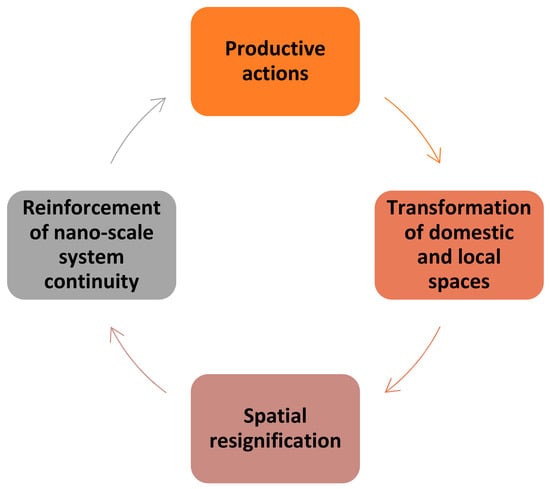
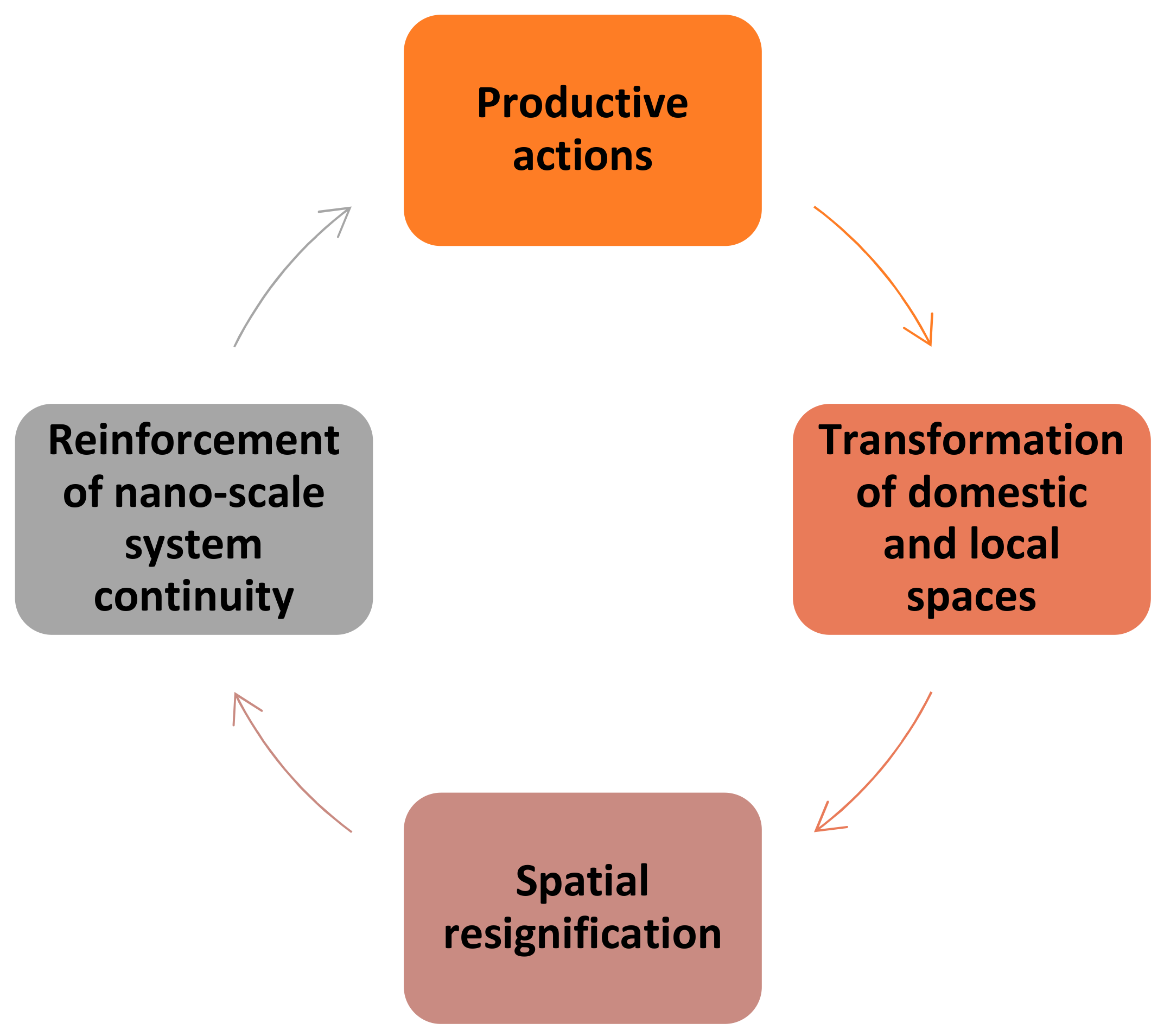
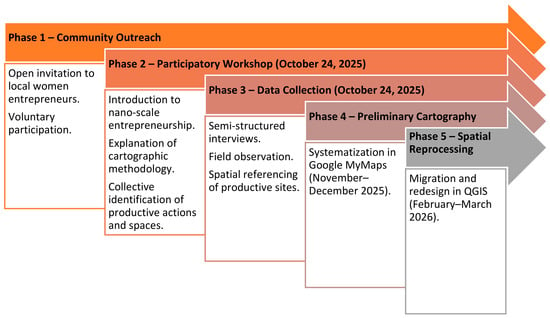
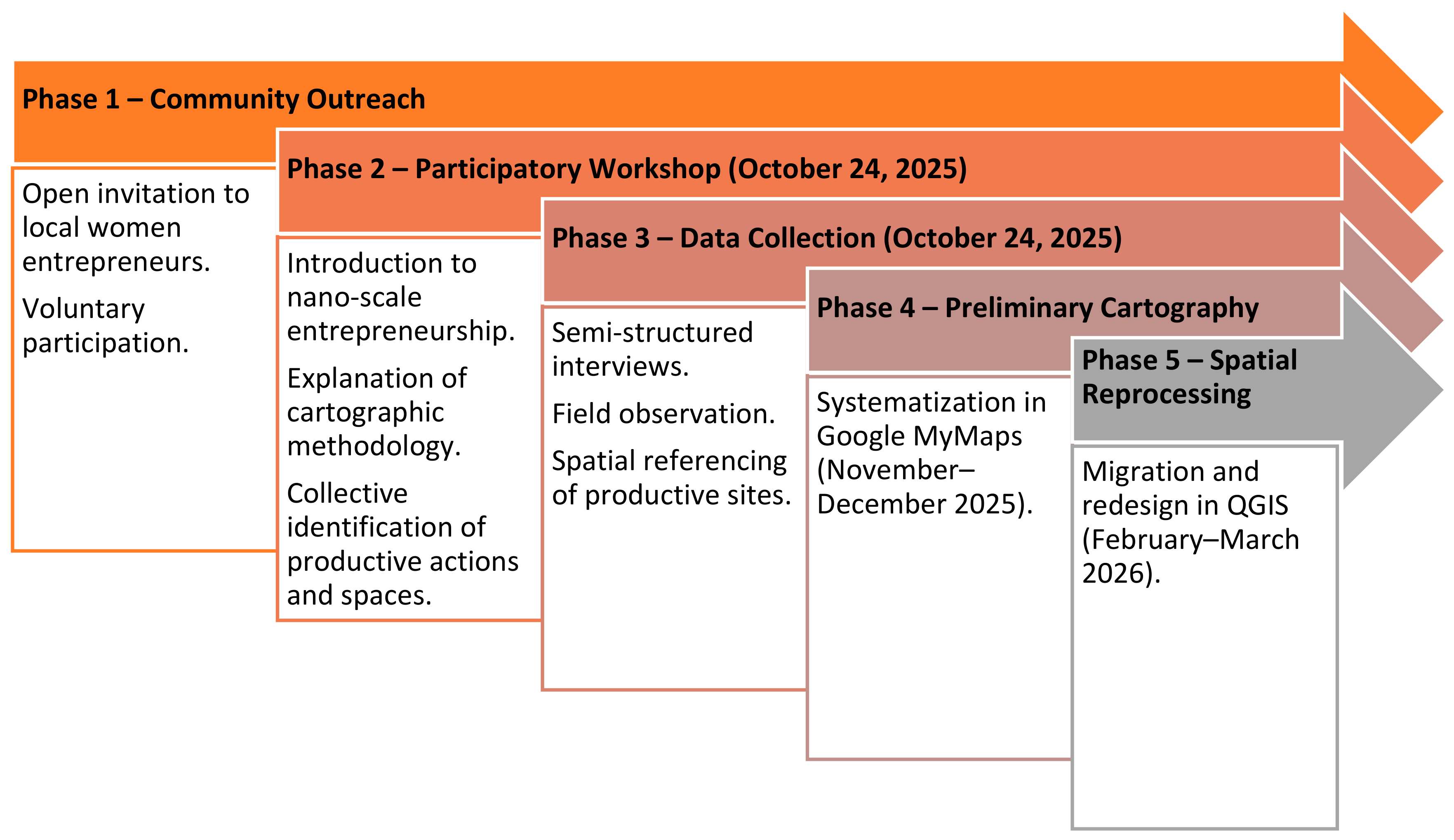
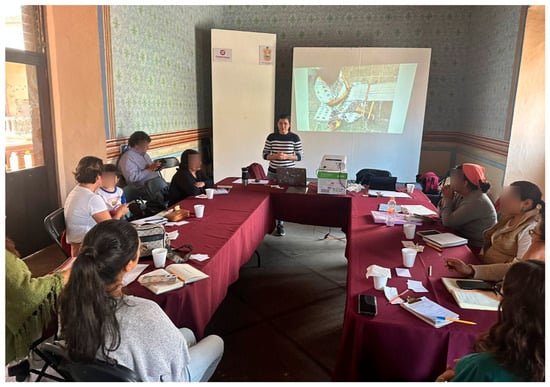
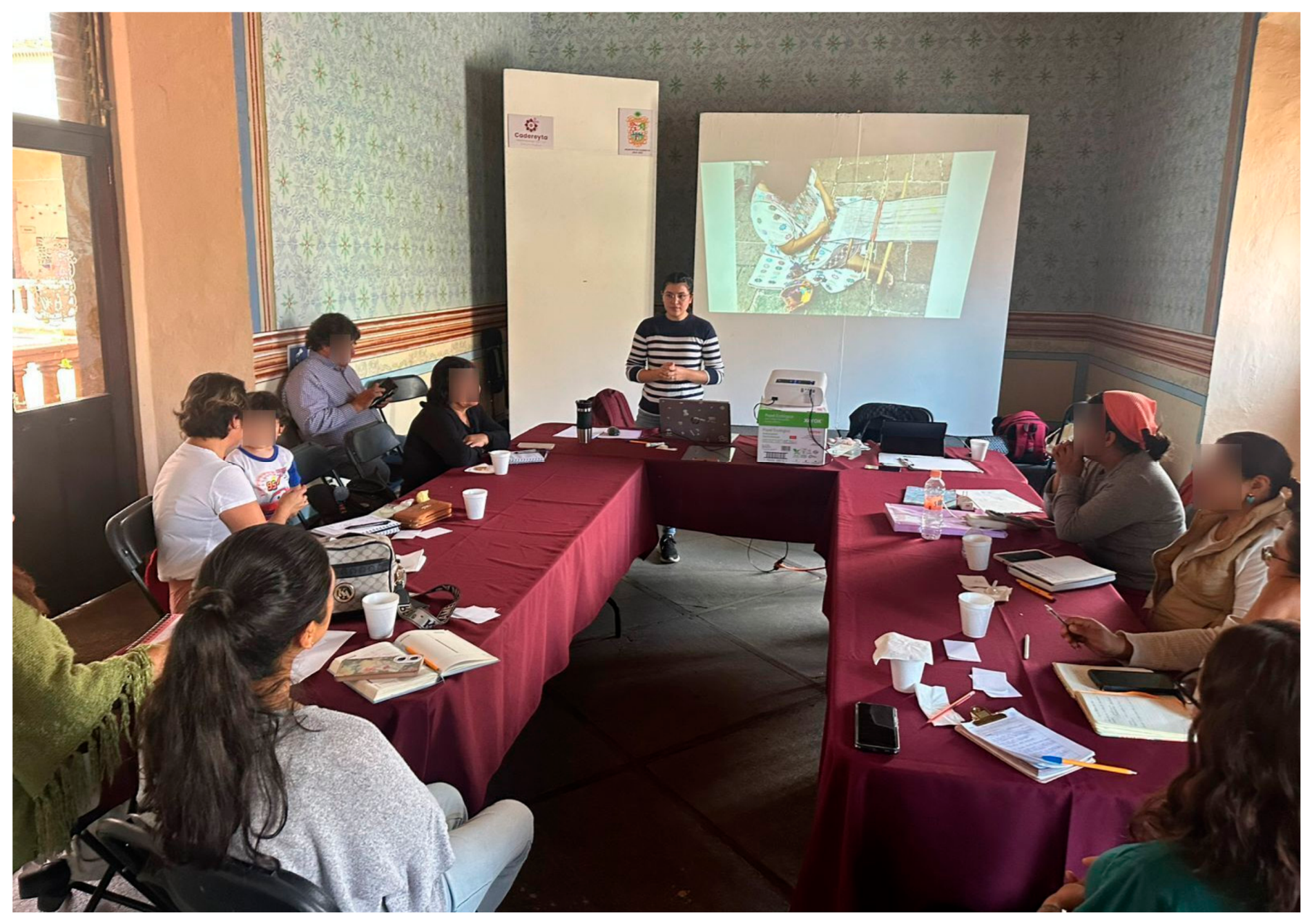
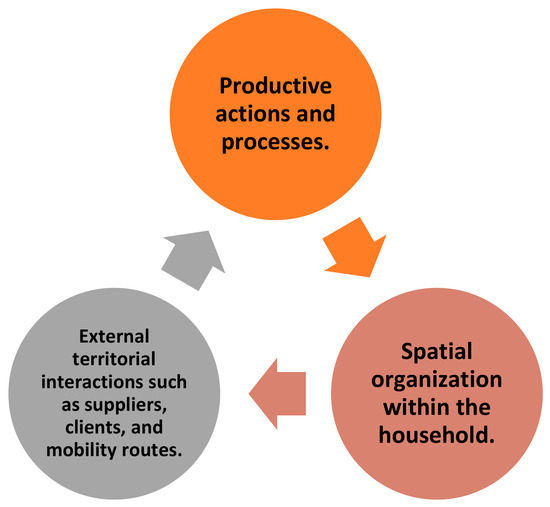
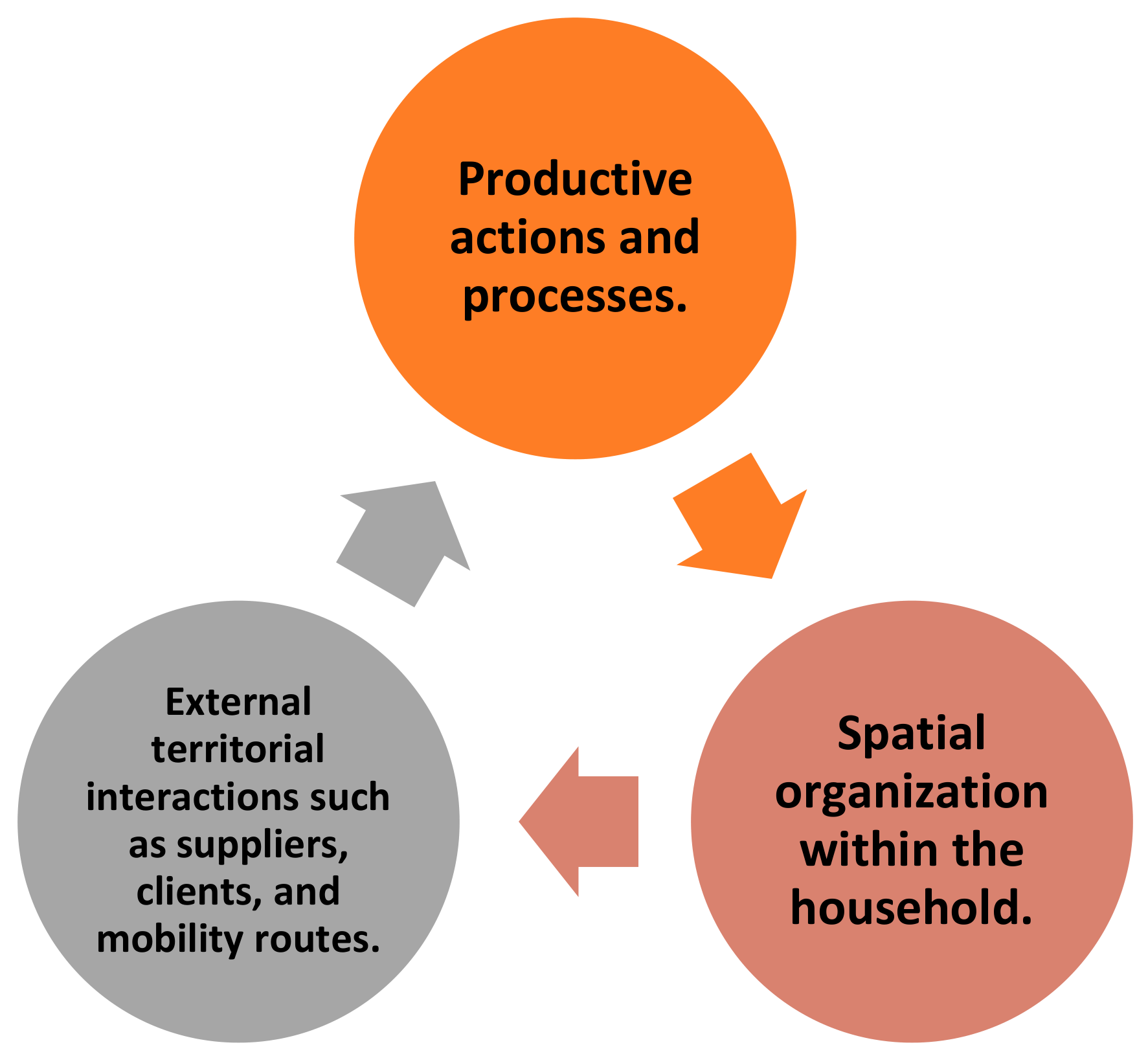
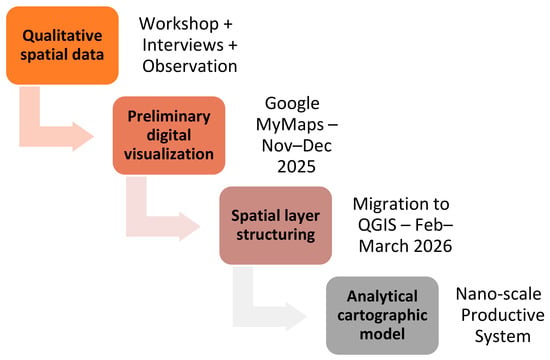
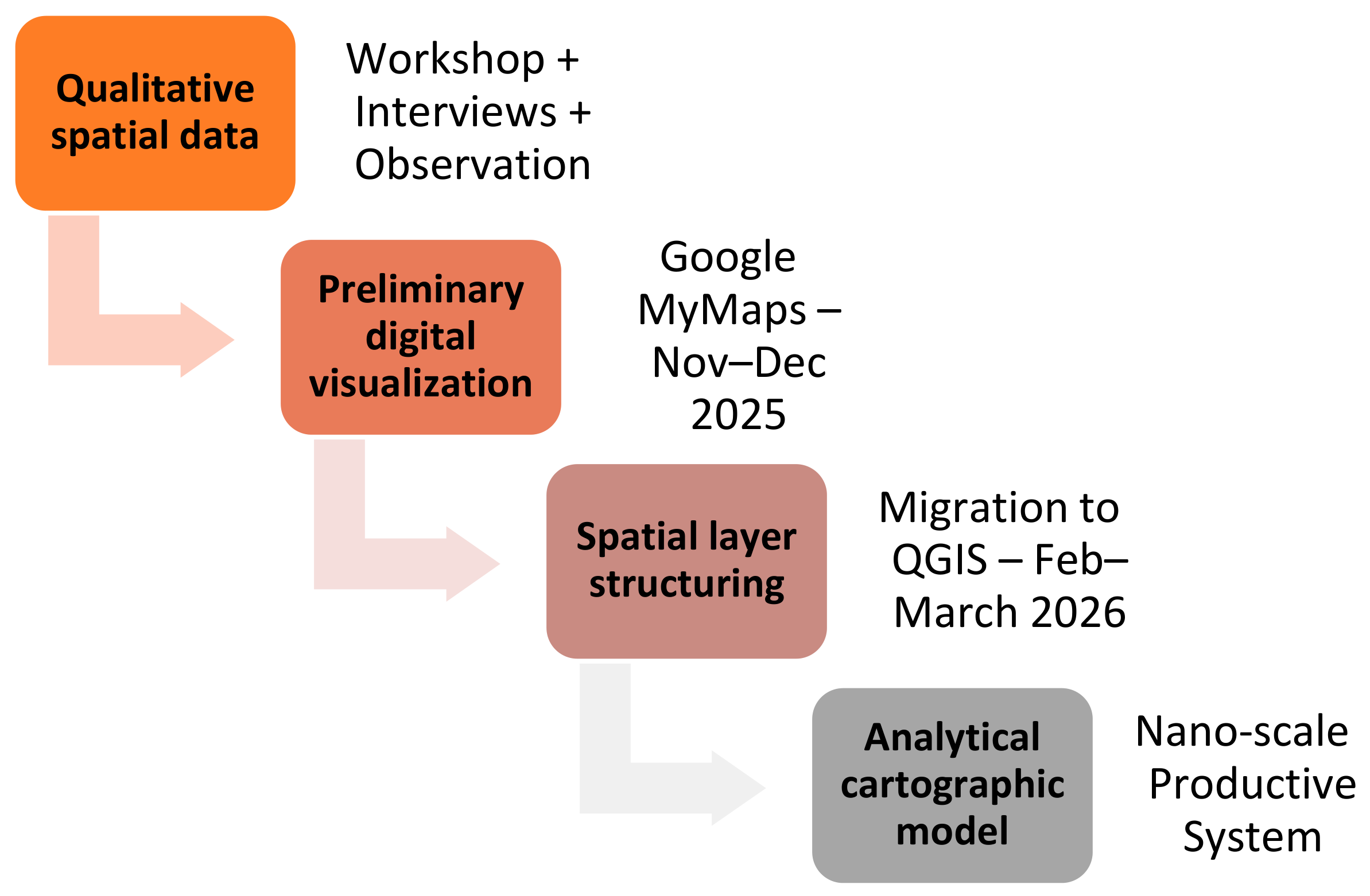
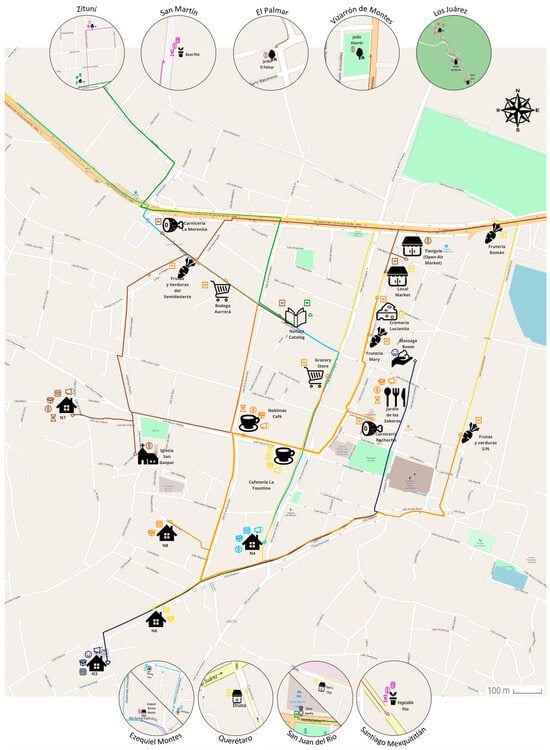
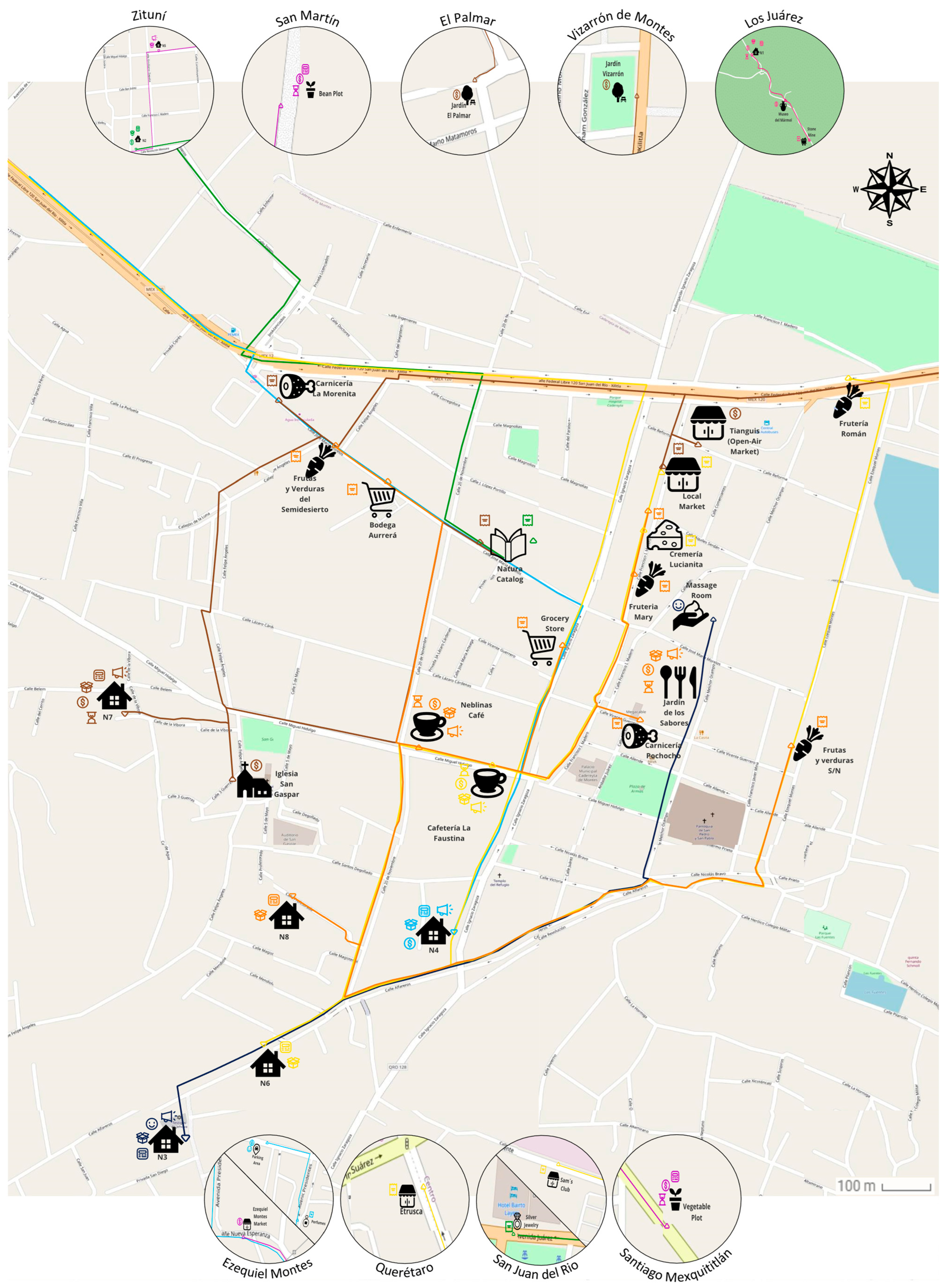
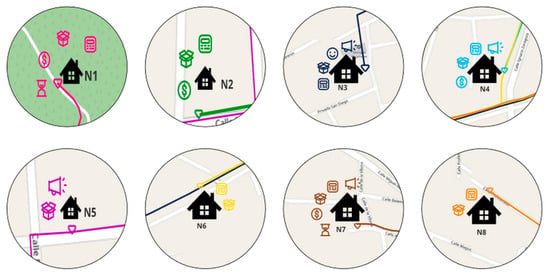
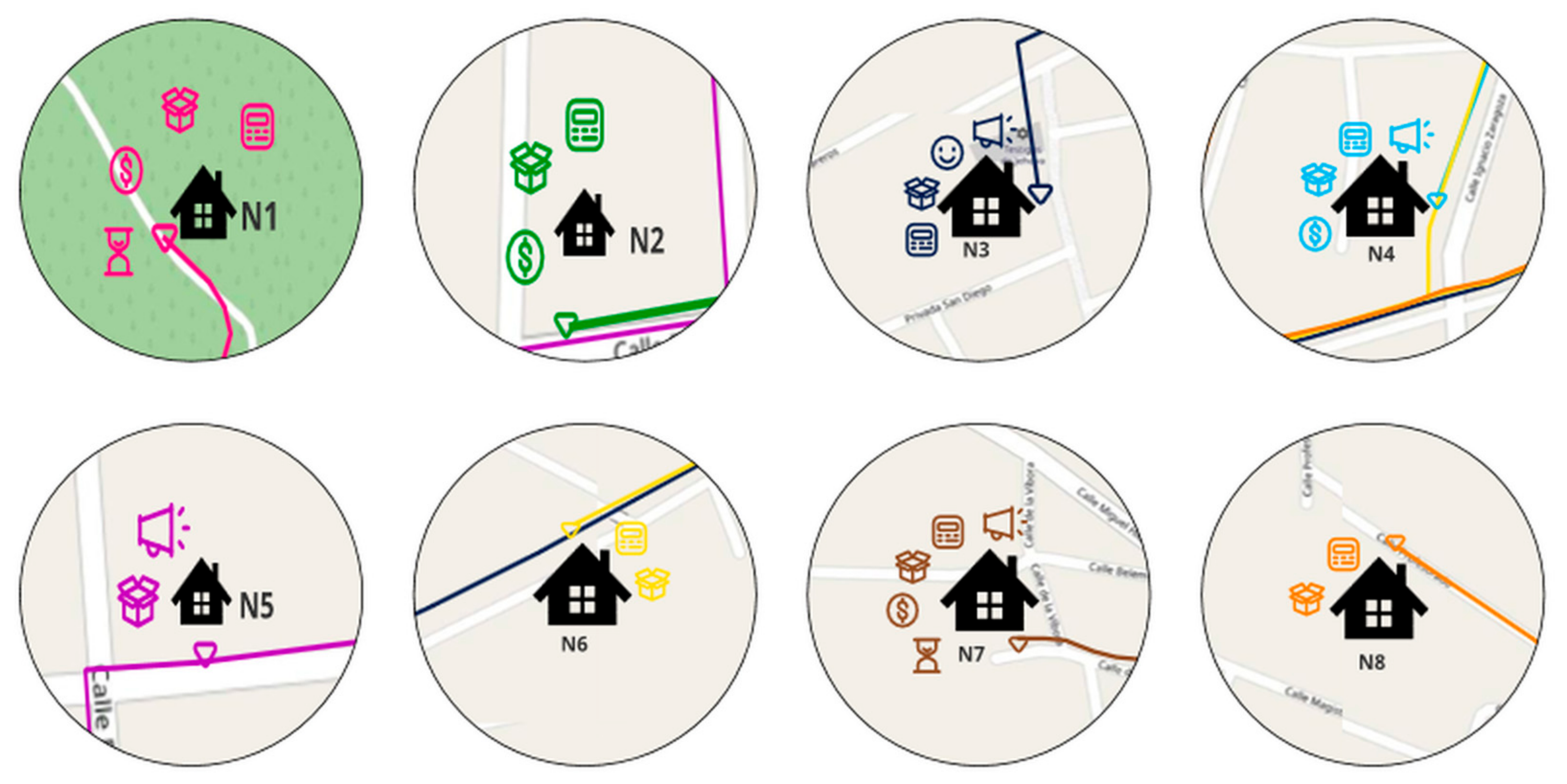
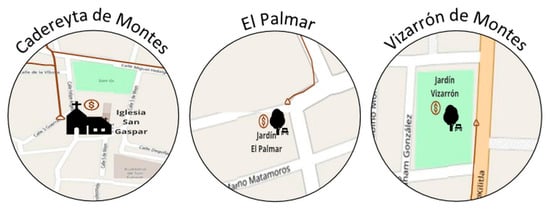
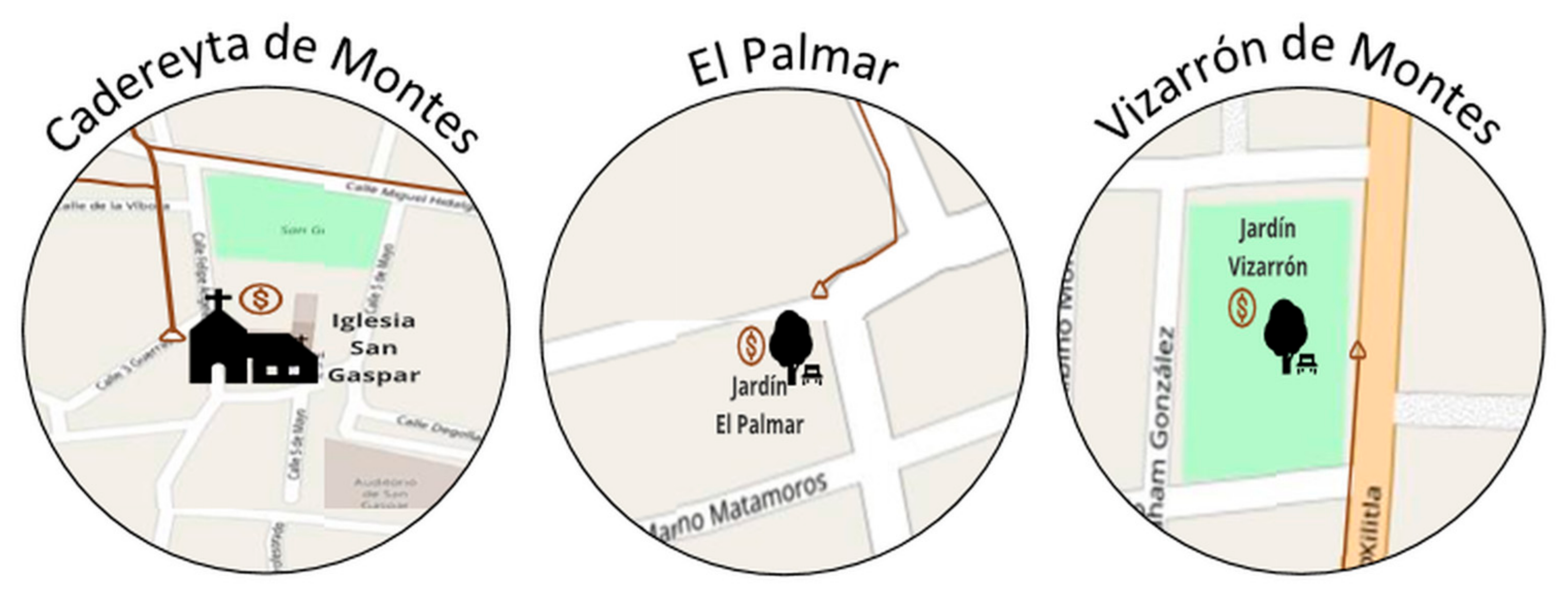
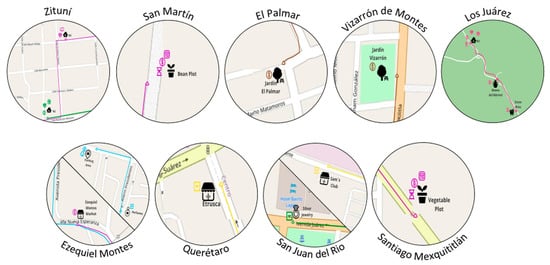
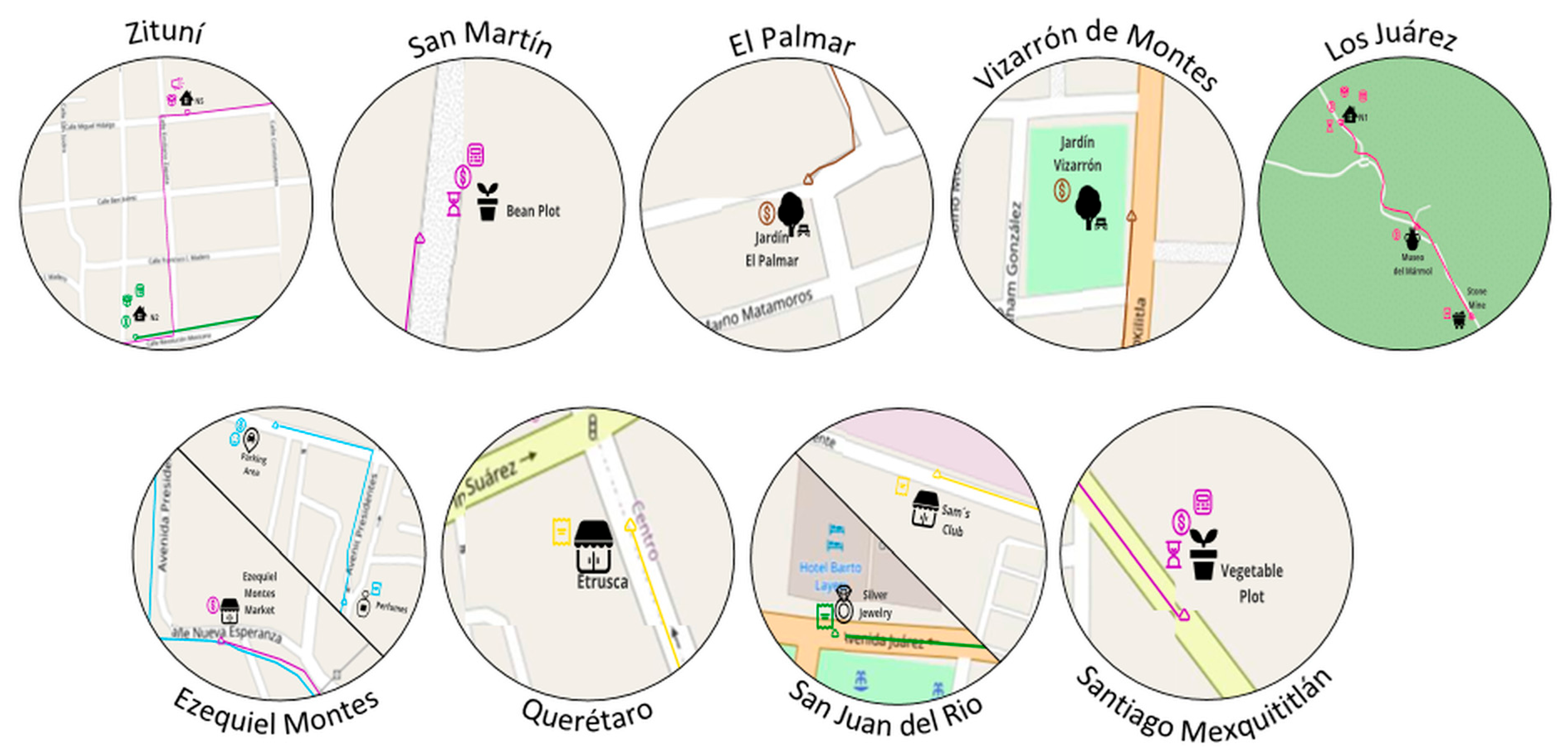


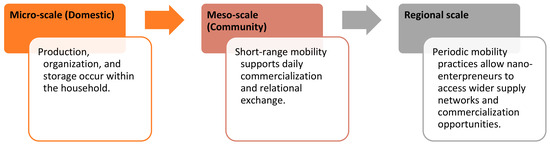
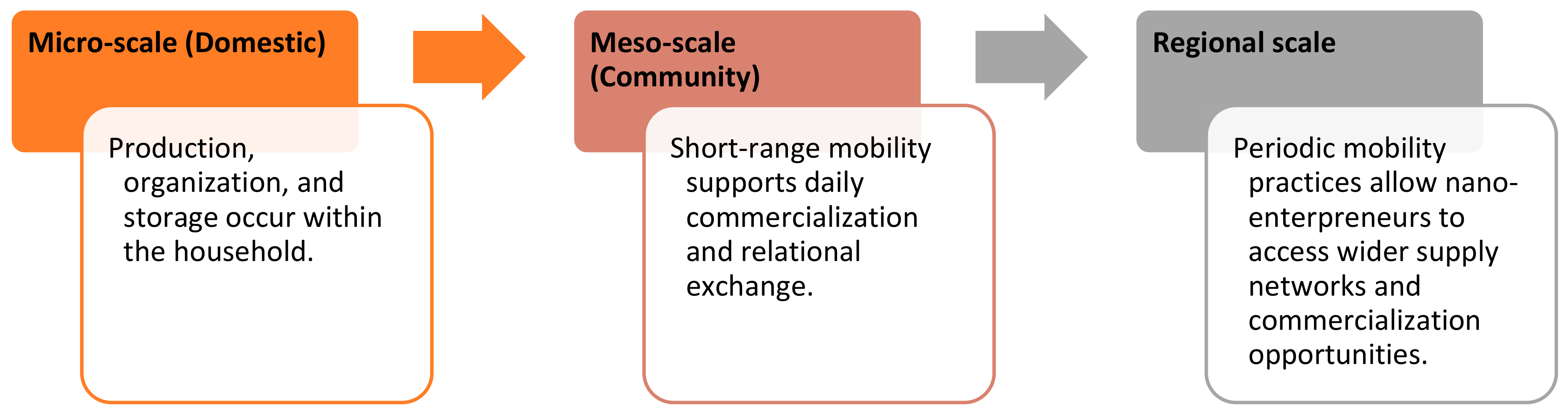



Disclaimer/Publisher’s Note: The statements, opinions and data contained in all publications are solely those of the individual author(s) and contributor(s) and not of MDPI and/or the editor(s). MDPI and/or the editor(s) disclaim responsibility for any injury to people or property resulting from any ideas, methods, instructions or products referred to in the content. |
© 2026 by the authors. Licensee MDPI, Basel, Switzerland. This article is an open access article distributed under the terms and conditions of the Creative Commons Attribution (CC BY) license.