


Abstract
The digital transformation of shrimp aquaculture in Ecuador has accelerated the adoption of traceability technologies to improve transparency, regulatory compliance, and supply chain coordination. However, persistent structural limitations—such as technological fragmentation, low interoperability, and inconsistent data quality—continue to constrain their effectiveness. This study develops an approach to managing informational uncertainty in traceability systems, grounded in information theory and operationalized through the Technological Management Model for Shrimp Production (TMMT-SP). Methodologically, the research follows an abductive systemic modeling approach, integrating a systematic literature review, structural analysis of the production system, and ontological modeling to identify and classify interdomain gaps. The findings show that informational uncertainty emerges as a structural property of the system, resulting from misalignments across informational, technological, and governance dimensions. These misalignments limit the coherence, reliability, and integration of traceability processes. In response, the study proposes a structural entropy-based framework (understood as an operational representation of systemic informational dispersion) to diagnose, prioritize, and address these gaps, shifting the focus from isolated technological adoption toward systemic coherence. This approach provides a conceptual and methodological basis for designing technology management strategies to reduce uncertainty in complex production systems.
1. Introduction
Digital transformation has reshaped agro-industrial production systems, particularly in sectors such as aquaculture, where traceability has become a critical mechanism for ensuring transparency, regulatory compliance, and competitiveness in international markets (Ali et al., 2024; Anwar et al., 2022; Lai et al., 2025).
In Ecuador’s shrimp industry, the adoption of traceability-related technologies has been driven by sustainability standards, regulatory requirements, and increasing market demands for verifiable information (Hoseini, 2020; Peña et al., 2020; Rodríguez-Mañay, 2024; Saavedra Mera et al., 2023). As a result, traceability has evolved into a complex socio-technical system in which technological infrastructures, organizational practices, and regulatory frameworks interact (Giagnocavo et al., 2017; Hallak et al., 2021; Rincón Ballesteros et al., 2017).
Despite these advances, significant structural limitations persist, particularly technological fragmentation, low interoperability, and persistent inconsistencies in data quality and validation processes (Garden et al., 2021; Gómez Gómez et al., 2025; Loose & Paula, 2024; Shet et al., 2026). These conditions contribute to high levels of informational uncertainty in production records (Aben et al., 2021), constraining coordination among stakeholders and reducing the effectiveness of traceability systems in responding to regulatory and market requirements (Cañar Serna et al., 2022; Hallak et al., 2021).
Existing approaches have addressed these challenges from partial perspectives, including blockchain-based solutions focused on data immutability and transparency, and IoT-based systems focused on real-time data capture (Ahmed & MacCarthy, 2022; Borrero, 2019; Brandín & Abrishami, 2024; Spitalleri et al., 2023). Similarly, governance and supply chain management frameworks aim to improve coordination among actors (Giagnocavo et al., 2017; Moradi & Jahanbakht, 2026; Provan & Kenis, 2007). However, these approaches often lack the structural integration required to enable systemic management of informational uncertainty.
This gap points to the absence of a technology management approach that conceptualizes informational uncertainty as a structural property of the system and articulates technological, organizational, and regulatory domains in a coherent manner (Ali et al., 2024; Gross et al., 2022; N. Sharma et al., 2025; V. Sharma et al., 2022). Addressing this limitation is essential for designing traceability systems that go beyond isolated technological adoption and achieve structural coherence.
Based on this gap, the study addresses the following research questions:
RQ1: How is informational uncertainty configured in shrimp traceability systems in terms of their structural dimensions?
RQ2: What types of interdomain misalignments (technological, organizational, and regulatory) explain the gaps in digital traceability?
RQ3: How is informational uncertainty distributed across the different dimensions of the traceability system?
RQ4: What implications do these structural conditions have for the design of a technology management model aimed at reducing informational uncertainty?
In this context, external pressures—such as regulatory requirements, sustainability standards, and market demands—play a critical role in shaping traceability systems. However, their influence operates unevenly across actors, depending on their structural capacity to internalize and operationalize these demands. From a socio-technical perspective, this reveals that traceability is not only driven by exogenous forces but also conditioned by the internal configuration of the production system, where technological, organizational, and informational dimensions interact to either enable or constrain adaptive responses.
Accordingly, the objective of this study is to develop an approach to managing informational uncertainty in traceability systems, operationalized through the Technological Management Model for Shrimp Production (TMMT-SP), grounded in information theory. The research follows an abductive systemic modeling approach that integrates a systematic literature review, structural analysis, and ontological modeling.
This study contributes by reframing traceability as a problem of managing informational uncertainty in complex production systems. It advances management literature by conceptualizing traceability as a problem of systemic coordination under conditions of uncertainty, rather than as a purely technological challenge. Furthermore, it introduces structural entropy as an analytical criterion for identifying interdomain misalignments and guiding intervention strategies, providing a conceptual and methodological basis for the design of technology management models in contexts characterized by high complexity and fragmentation.
2. Theoretical Framework
This theoretical framework integrates concepts from systems thinking, information theory, institutional governance, strategy, and enterprise architecture to support the analysis of digital traceability in aquaculture systems from a systemic perspective. The aim is to conceptualize informational uncertainty as a structural property and to examine the interdomain misalignments that affect the coherence of traceability systems.
2.1. Systems Thinking and Structural Interdependence
The systemic foundation of this study is grounded in general systems theory (Bertalanffy, 1984), which views production systems as configurations of interdependent components. In aquaculture, informational, technological, governance, strategic, and value-generating domains are structurally coupled, meaning that changes in one domain affect the others.
Systems thinking emphasizes that system performance depends on the coherence among its subsystems rather than on the isolated efficiency of individual components (Senge, 2004). Recent contributions have expanded this perspective by characterizing complex production systems as dynamic configurations of interdependent actors, processes, technologies, and information flows whose behavior emerges from feedback mechanisms, adaptive interactions, and cross-domain coordination (Abonguie et al., 2025; Iqbal et al., 2023; Kennedy et al., 2026; Monkhouse et al., 2025).
In such systems, performance is shaped not only by the structure of individual components but also by the system’s capacity to maintain coherence, coordinate distributed knowledge, and manage informational dependencies across interconnected domains.
Under this systemic lens, traceability failures cannot be interpreted solely as technical issues. Instead, they reflect structural misalignments across domains. Accordingly, production systems like shrimp should be understood as interconnected structures in which operational outcomes emerge from patterns of interaction rather than from discrete activities.
Consequently, disruptions affecting information generation, transmission, or interpretation cannot be understood as isolated operational failures, but rather as manifestations of systemic conditions that influence the behavior of the production system. Such conditions may lead to informational inconsistencies, coordination failures, and increased uncertainty across interconnected domains. A systemic approach, therefore, requires mapping these interdependencies to identify how structural misalignments propagate across domains and contribute to increasing informational uncertainty throughout the system.
2.2. Informational Uncertainty and Entropy
Informational uncertainty constitutes the analytical core of this study and is grounded in information theory. Entropy, as originally defined by Shannon (1948), provides a formal measure of uncertainty within a data system. Although initially developed in the context of communication theory, contemporary studies have extended its application to the analysis of organizational, digital, and traceability systems, where uncertainty arises from fragmented information structures, inconsistent data governance practices, and interoperability limitations (Alhakamy, 2026).
In traceability environments, informational entropy may manifest through incomplete records, heterogeneous data standards, fragmented information systems, and asymmetries in data access. These conditions reduce the reliability of information flows, hinder coordination among actors, and compromise the capacity of production systems to generate verifiable and consistent information (Palacio et al., 2024).
Recent studies have further demonstrated that information-theoretic approaches can support the identification of informational imbalances, the assessment of data granularity, and the modeling of traceability performance across complex production networks (Palacio et al., 2024; Rossi et al., 2025). In parallel, emerging digital infrastructures such as blockchain have been explored as mechanisms for strengthening data integrity, transparency, and trust within traceability systems (Chiaraluce et al., 2024).
Information asymmetry has long been recognized as a structural source of inefficiency and risk in systems characterized by incomplete, fragmented, or unevenly distributed information (Akerlof, 1970). Recent studies in aquaculture and digital traceability have shown that information gaps between actors, limited transparency, and heterogeneous access to production data continue to constrain coordination, trust, and decision-making across supply chains (Mahmud et al., 2026).
Furthermore, evidence suggests that low consumer awareness and difficulties in evaluating sustainability claims increase uncertainty about product origin, production practices, and the credibility of certifications, reinforcing the importance of transparent, verifiable information systems (Altintzoglou et al., 2025). In aquaculture supply chains, these conditions undermine trust and reduce the capacity of traceability systems to support coherent coordination among stakeholders.
2.3. Governance, Institutional Alignment, and Strategic Coherence
Governance and institutional alignment are critical for understanding how traceability systems are structured, coordinated, and strategically aligned with organizational boundaries. They provide the mechanisms through which organizational actors coordinate activities, establish shared rules, and pursue collective objectives within complex production systems (Zhou et al., 2023).
Institutional theory suggests that organizational practices are shaped by regulatory, normative, and cultural pressures that influence the adoption of standards, compliance mechanisms, and managerial routines (Scott, 2014). These pressures contribute to the establishment of organizational legitimacy while promoting convergence around common expectations and practices.
Transaction cost theory complements this perspective by explaining governance structures as mechanisms that facilitate coordination among interdependent actors and support the organization of economic activities beyond market transactions alone (Arend, 2022; Williamson, 1981). Effective governance arrangements, therefore, play an important role in defining responsibilities, allocating decision-making rights, and supporting collaboration across organizational boundaries.
From a strategic perspective, organizational performance depends on the alignment between activities, resources, and competitive objectives (Porter, 1991). From a governance perspective, sustaining such consistency across complex organizational environments requires not only strategic alignment but also the effective coordination of roles, responsibilities, and activities among multiple actors. Recent governance research highlights legitimacy, effectuation, and coordination as key principles for assessing governance performance, emphasizing the importance of organizational arrangements that support implementation, learning, and the alignment of collective action (Toonen et al., 2025).
In shrimp production systems, regulatory requirements, market expectations, organizational practices, and technological initiatives frequently evolve through separate decision-making processes. As a result, governance structures may lack the integrative capacity required to align these domains within a coherent traceability strategy. Understanding how governance mechanisms influence such alignment is therefore essential for explaining the organizational conditions that shape traceability system performance.
2.4. Enterprise Architecture and Multilayer Integration
Enterprise architecture provides a framework for analyzing organizations as multilayered systems composed of strategy, processes, information, and technology (Hazra & Unhelkar, 2021). These layers must be aligned to ensure system coherence and effective digital transformation.
Frameworks such as Zachman (1987) offer structured representations of these relationships, enabling the identification of inconsistencies across organizational layers. More recent developments emphasize interoperability, modularity, and integration as key design principles (Jung & Fraunholz, 2021).
Recent research has further highlighted the role of enterprise architecture as a mechanism for integrating governance structures, information systems, data standards, and technological infrastructures in environments characterized by informational uncertainty and increasing digital complexity. In this context, enterprise architecture supports the operationalizing uncertainty management through coordinated architectural layers, facilitating interoperability, data harmonization, information governance, and cross-domain decision-making (Alhakamy, 2026).
In traceability systems, enterprise architecture enables the analysis of how physical production processes are represented within digital infrastructures. Misalignment between these layers can result in inconsistent records, limited interoperability, and fragmented information flows. This perspective provides a basis for identifying structural misalignments as observable configurations, supporting their analysis within a systemic integration framework.
2.5. Conceptual Integration
The integration of systems theory, information theory, institutional governance, strategic alignment, and enterprise architecture provides the theoretical foundation for analyzing traceability as a systemic phenomenon under conditions of informational uncertainty. Despite these perspectives’ contributions, existing approaches remain fragmented, lacking an integrated framework that explicitly addresses informational uncertainty as a structural condition that emerges across interdependent domains.
Within this context, traceability is conceptualized not as a technological artifact but as a coordination mechanism through which informational uncertainty emerges, propagates, and can be systematically reduced. This perspective enables the identification of structural misalignments and provides an analytical basis for designing technology management approaches to improve coherence across the system.
3. Materials and Methods
The methodological approach is framed within an abductive, systemic modeling perspective aimed at developing a technological management approach for traceability in shrimp production systems. This approach enables the integration of empirical evidence, structural analysis, and theoretical foundations to interpret complex system configurations and derive coherent explanatory structures (Dubois & Gadde, 2002).
The research process was organized into sequential and complementary stages, drawing on three primary sources of information: (i) sectoral document review, (ii) semi-structured interviews with key stakeholders in the shrimp production system (n = 5), and (iii) direct observation of production processes. Observation activities focused on operational traceability practices, information recording procedures, coordination dynamics, and interactions between physical production activities and digital or paper-based information systems.
In 2025, interviews were conducted with informants selected through purposive sampling, based on their operational experience, sectoral trajectory, and access to critical system-level knowledge. Participants represented different roles within the shrimp production ecosystem, including production, technical operations, and sector governance. Given the exploratory and structural nature of the study, the objective was not statistical representativeness, but the identification of systemic configurations, interdomain relationships, and structural tensions that shape the traceability system. Analytical rigor was reinforced through triangulation of interviews, sectoral documentation, direct observation, and theoretical analysis.
3.1. Research Design and Data Collection
The empirical phase followed an exploratory and abductive research orientation aimed at supporting the systemic modeling process by integrating expert-informed empirical insights, sectoral evidence, and structural analysis, using semi-structured interviews to capture operational dynamics, structural tensions, coordination mechanisms, and traceability-related practices within the shrimp production ecosystem.
Four in-depth interviews were conducted with production actors (shrimp farmers and technical operators), and one additional interview was conducted with an institutional stakeholder (Sustainable Shrimp Partnership, SSP), providing insight into governance and traceability implementation at the sectoral level.
Participants were selected based on their extensive sectoral experience (in some cases exceeding 30 years) and their direct involvement in operational, commercial, and technical processes. To ensure confidentiality, production stakeholders were anonymized using initials (LH, MC, DS, JM). Rather than seeking numerical representativeness, the selection strategy aimed to incorporate structurally differentiated perspectives that could inform distinct dimensions of the traceability system. Table 1 summarizes the functional roles, sectoral expertise, and analytical contribution of each informant to the systemic modeling process.
Table 1.
Structural Roles and Analytical Contribution of Expert Informants.
All interviews were audio-recorded and analyzed to identify structural conditions, interdomain relationships, and operational constraints relevant to the systemic modeling process, consistent with the abductive approach. Given the exploratory and structural nature of the analysis, emphasis was placed on identifying systemic tensions and interdomain conditions, as well as operational interdependencies, rather than on detailed linguistic transcription. Due to confidentiality considerations and the absence of explicit consent for data sharing, the raw audio data is not publicly available.
The institutional interview was conducted using a structured instrument focused on traceability technologies, including blockchain, as well as interoperability, adoption barriers, and governance mechanisms.
3.2. Structural Analysis of the Production System
A structural analysis of the shrimp production system was conducted to identify its constitutive properties, interdomain relationships, operational patterns, and structural constraints across the production cycle.
This phase integrated sectoral documentation, stakeholder interviews, and field observations, enabling a comprehensive understanding of both formal system configurations and operational dynamics.
The analysis was primarily descriptive and diagnostic, aimed at characterizing systemic behavior without introducing formal modeling at this stage. The outcome of this phase established the analytical basis for identifying functional domains, interdependencies, and structural tensions.
3.3. Ontological Modeling and Domain Definition
Based on the structural diagnosis, a structural ontological model was developed to organize the entities, processes, actors, and conditions identified in the system. This modeling enabled:
- The delimitation of functional domains (informational, technological, governance, strategic, and value);
- The identification of structural relationships among these domains;
- And the clarification of system boundaries.
The model was conceived as an analytical representation to structure interdependencies and identify points of friction between domains. It does not constitute a formal computational ontology but rather a conceptual tool grounded in the patterns observed during the structural analysis phase.
3.4. Structural Gap Identification and Measurement
Building on the ontological model, structural gaps were identified through a cross-domain analytical procedure designed to detect misalignments between system requirements and observed capabilities.
Three criteria were used to assess each domain interaction:
- Structural coherence between functions and capabilities;
- Degree of informational standardization and formalization, and;
- Level of organizational coordination.
A normalized ordinal scale (0–4) was used to evaluate the degree of structural alignment for each variable, with 4 indicating a highly structured state and 0 indicating extreme misalignment. The assignment of values was based on triangulation of empirical evidence and informed interpretative judgment.
A structural gap was defined as a normalized measure of misalignment relative to the reference state, calculated as:
where Gapi ∈ [0, 1], with higher values indicating greater structural misalignment.
Based on these values, the Dimensional Entropy Index (DEI) was calculated as the average of gaps within each domain, and the Integrated Systemic Entropy Index (ISEI) was computed as the average across all domains. Detailed definitions of variables, evaluation criteria, and the ordinal scale are provided in [Appendix A], while the full mathematical formulation and computation procedure are presented in [Appendix B].
3.5. Gap Classification and Systemic Mapping
Identified gaps were classified by nature and systemic impact. The typological classification distinguishes between:
- Structural gaps (architectural inconsistencies);
- Functional gaps (operational execution failures);
- Institutional gaps (governance and coordination deficiencies), and;
- Value gaps (limitations in value generation and capture).
Additionally, gaps were categorized by severity based on their normalized entropic values, enabling differentiation among critical, moderate, and low-impact misalignments.
A systemic mapping process was then conducted to represent the interdependencies, coupling relationships, and propagation mechanisms of these gaps across domains. This mapping enabled the identification of nodes with high entropic concentration and the visualization of how misalignments propagate through the system.
The detailed classification scheme, severity thresholds, and mapping structure are provided in [Appendix C].
3.6. Strategic Prioritization of Structural Gaps
Following identification and classification, a strategic prioritization process was conducted to determine the sequence of intervention. The primary criterion for prioritization was the systemic impact of each gap on informational uncertainty, assessed in terms of its capacity to:
- Affect the coherence and consistency of information;
- Generate or amplify informational asymmetries;
- Propagate across domains, and;
- Compromise traceability of critical production events.
This primary criterion was complemented by contextual factors, including reputational risk, regulatory impact, and economic implications.
Based on these criteria, a progressive intervention logic was defined: Priority is given to structural gaps with high entropic severity and propagation capacity, followed by gaps affecting interoperability and coordination, and finally by localized gaps with limited systemic impact. The full prioritization matrix and decision criteria are detailed in [Appendix D].
3.7. Analytical Integration
The methodological sequence enabled the identification, structuring, and prioritization of structural misalignments within the shrimp production system.
Consistent with the abductive approach, integrating empirical evidence, systemic patterns, and theoretical foundations yielded a coherent analytical framework. This framework establishes the basis for the subsequent development of a technology management approach focused on reducing informational uncertainty and improving system coherence.
3.8. Use of Generative Artificial Intelligence
No generative artificial intelligence tools were used for data generation, analysis, or interpretation in this study. Language editing tools were used solely for grammatical refinement.
4. Conceptualization of the TMMT-SP Model Under Informational Uncertainty
The methodological process enabled the identification of structural misalignments across the shrimp production system and their integration into a coherent analytical structure. Based on these findings, a technological management model for traceability is conceptualized as a systemic response to informational uncertainty.
The model does not constitute a prescriptive framework but rather emerges from observed patterns of fragmentation, interdependence, and misalignment across the system’s functional domains. The following subsections present its core architecture, structural configuration, and operational implications.
4.1. Integrated Conceptual Architecture
The proposed model conceptualizes traceability as a systemic coordination mechanism embedded within the production network, rather than as an isolated technological function. The architecture is grounded in three core premises:
- Traceability operates as a systemic phenomenon across interconnected actors and processes.
- System behavior is shaped by feedback structures and non-linear interactions;
- Informational uncertainty must be explicitly managed to ensure data reliability and effective decision-making.
This approach integrates data governance, systemic analysis, and evaluation based on information theory within a coherent framework aimed at reducing informational uncertainty. Based on the above premises, the model’s architecture is organized into three interrelated conceptual levels:
- Motivational level, defined by structural drivers such as informational uncertainty, limited traceability, and information asymmetry.
- Strategic level, where these drivers are translated into objectives and coordinated courses of action.
- Value generation level, reflecting expected outcomes of reduced uncertainty, improved traceability, and enhanced informational transparency.
This layered structure establishes a transformation logic linking system pressures with organizational responses and value outcomes. The alignment across levels defines how technology management decisions shape data governance, digital integration, and system configuration.
Table 2 summarizes the main components of the model, including drivers, objectives, capabilities, and value streams.
Table 2.
Conceptual Levels of the Proposed TMMT-SP Model Architecture.
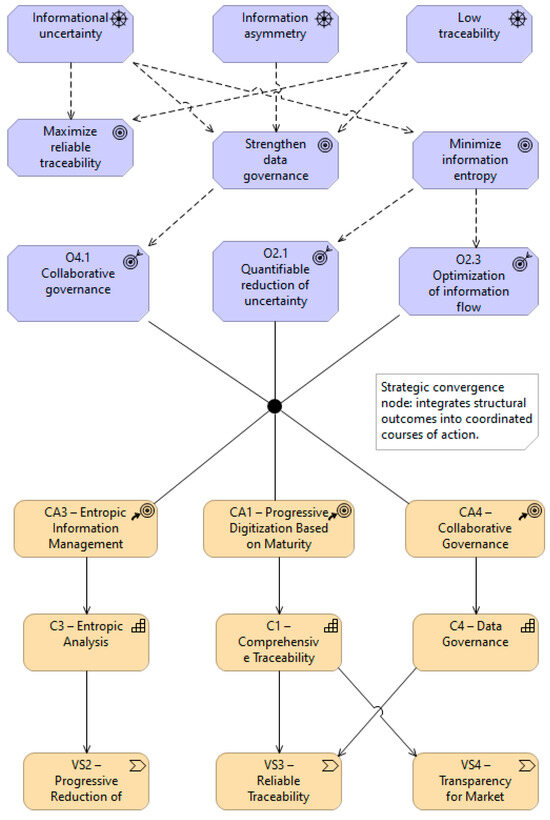
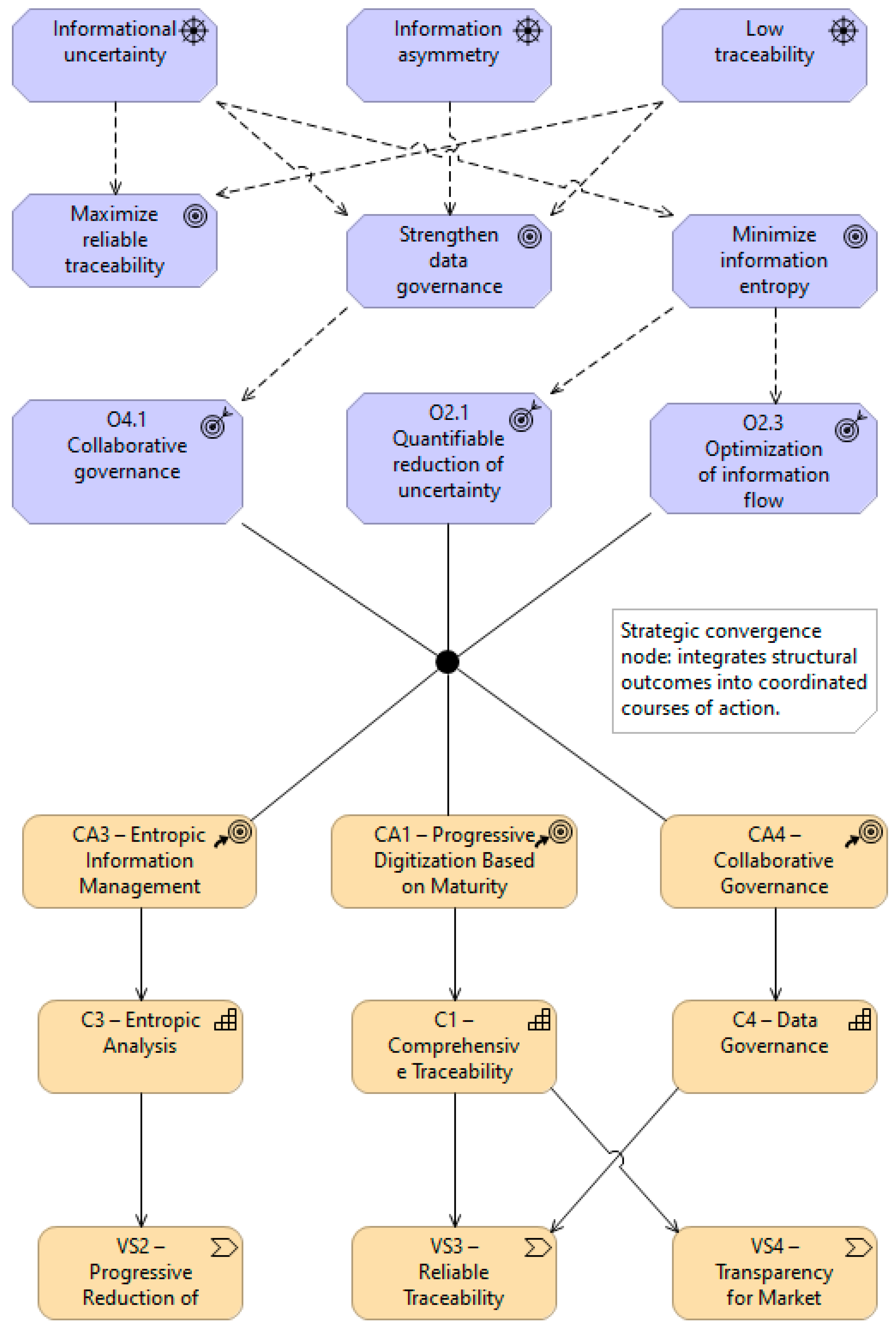
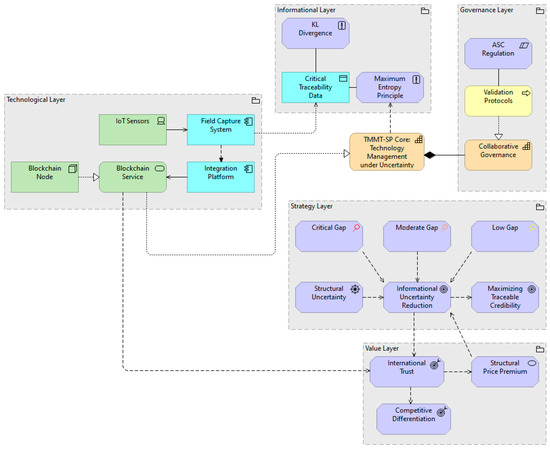
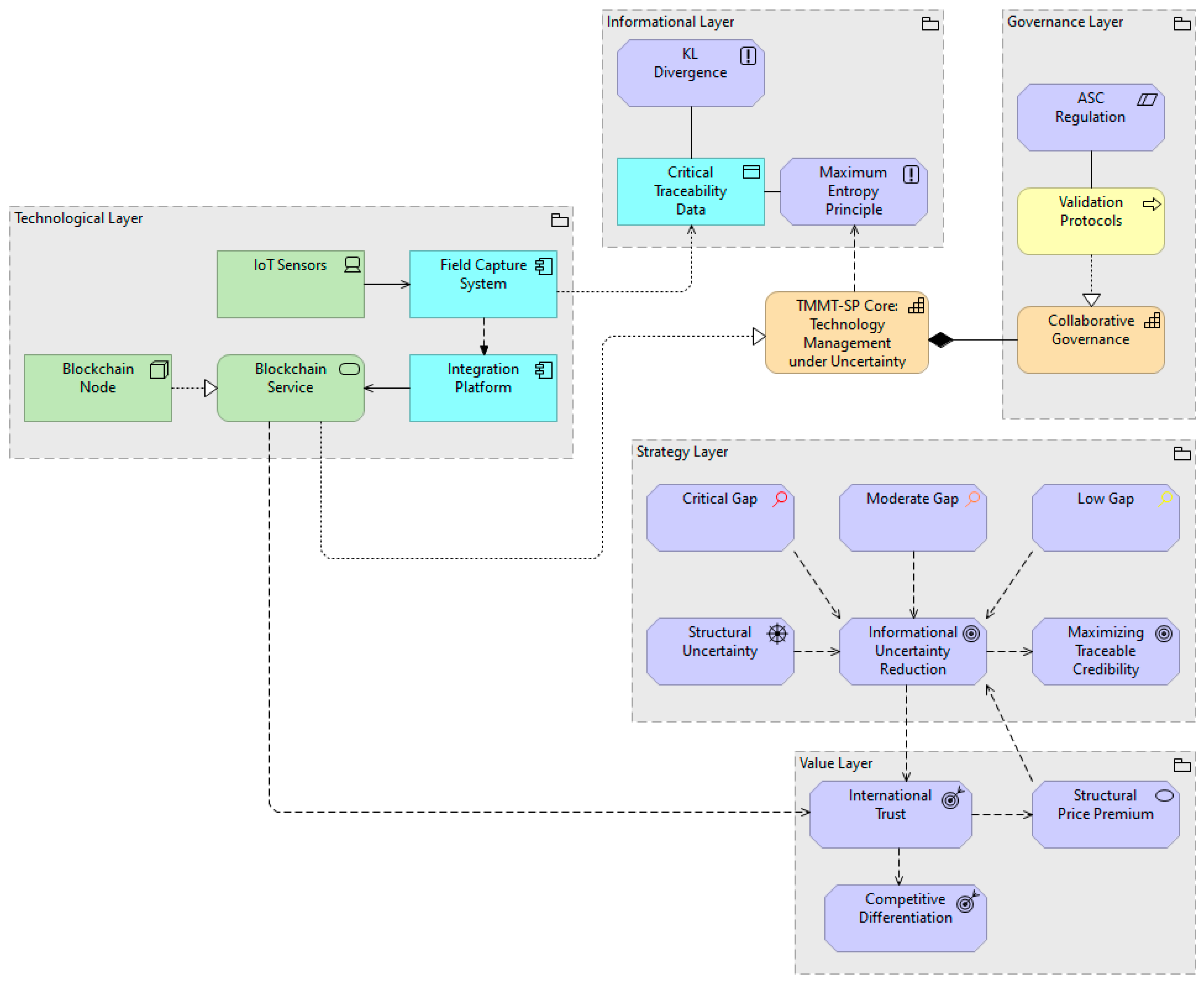
Figure 1 provides a systemic representation of the architecture, illustrating the relationships between levels and the flow of transformation from structural conditions to value generation. The representation illustrates how structural pressures—particularly informational uncertainty, asymmetries, and limitations on traceability—are translated into strategic objectives that shape organizational capabilities and governance mechanisms. It also highlights how these capabilities enable value generation by progressively reducing uncertainty.
Figure 1.
Systemic representation of the conceptual architecture of the proposed model (TMMT-SP).
This systemic view makes explicit the interdependencies and transformation dynamics across the model’s components, providing the basis for the ontological-structural formalization presented in the following section.
4.2. Ontological–Structural Model
The ontological-structural model, derived from the methodological modeling phase, represents the shrimp production system in terms of its components, relationships, and interdependencies. It integrates entities, processes, actors, and empirically identified misalignments, capturing the system’s configuration under conditions of organizational heterogeneity and informational fragmentation.
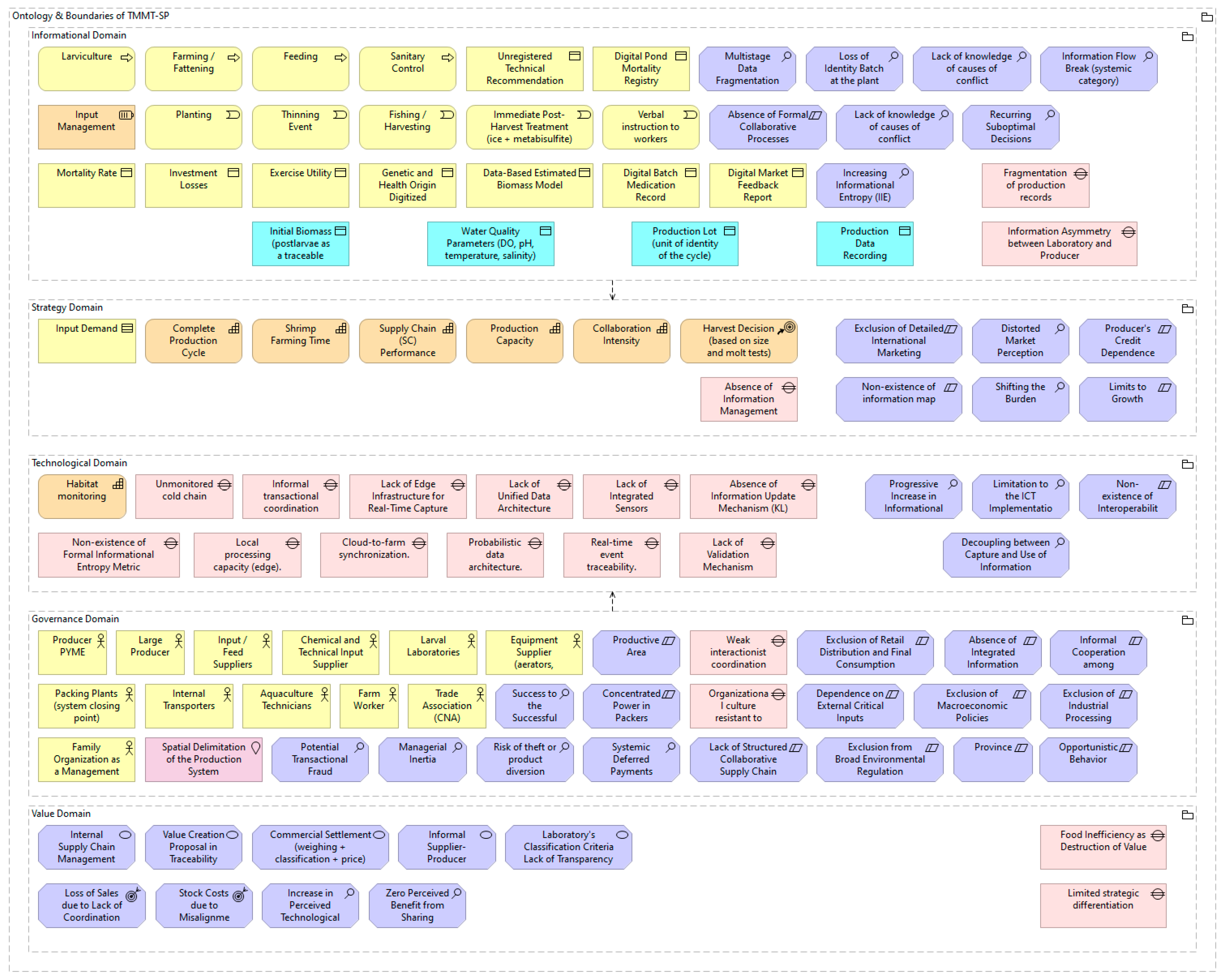
The model is structured into five interrelated functional domains: informational, technological, governance, strategic, and value generation. Their interaction follows a logic of structural interdependence, where variations in one domain affect the coherence of the system as a whole.
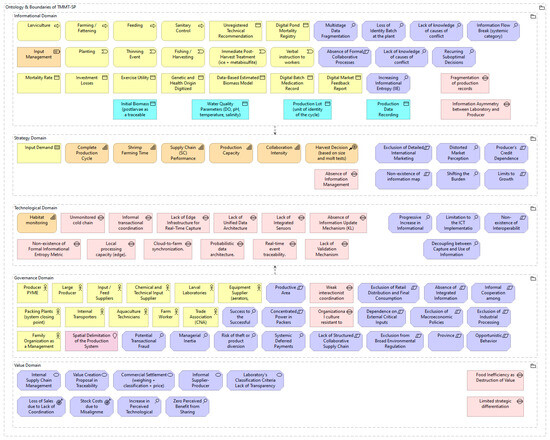
Figure 2 presents the ontological-structural configuration of the production system. Within this framework, structural tensions—such as informational fragmentation, limited interoperability, and coordination weaknesses—are interpreted as emergent properties rather than isolated failures. This perspective enables the identification of misalignment patterns, dependency relationships, and critical nodes that condition traceability performance.
Figure 2.
Ontological–structural view of the shrimp production system.
4.3. Structural Gap Map
Based on the evaluation of critical variables in each dimension, the levels of structural misalignment were estimated using the ordinal scale defined in the methodological phase. Detailed results for each variable are presented in Appendix E. The aggregated values for each dimension demonstrate heterogeneous behavior of the production system with respect to structuring and informational uncertainty.
Table 3 presents the aggregated Dimensional Entropy Indices (DEIs). The Integrated Systemic Index (IESI) was estimated at 0.557, indicating an intermediate level of structural entropy. This result indicates that, while there are partially developed capabilities in strategic and value-generating dimensions, high levels of disorganization persist in the informational and technological components, affecting the coherence of the traceability system.
Table 3.
Dimensional Entropy Indices.
In particular, the dimensions with the highest entropy show fragmentation of information flows, low technological interoperability, and limited integration between physical and digital records. In contrast, the strategic and value dimensions exhibit lower levels of relative misalignment. However, this condition contrasts with the level of entropy observed in the informational dimension (DEI = 0.70), which falls within the high disorganization range of the defined scale.
This suggests the presence of structural asymmetries across the system’s domains. This asymmetry between dimensions reveals a structural disconnect between market positioning capacity and the robustness of the traceability system, a tension that constitutes one of the main tensions within the production system. Based on this, the structural gap map allows us to identify not only the magnitude of misalignments but also their systemic distribution, a key input for defining intervention strategies to reduce informational uncertainty.
4.4. Ontological–Structural Classification of Gaps
This interdependence highlights the role of critical nodes associated with data generation, validation, and management, where misalignments concentrate and exhibit high propagation potential across domains. These nodes represent focal points in the distribution of informational uncertainty and provide a structural basis for subsequent system mapping and intervention design.
Based on this, the structural gap map allows us to identify not only the magnitude of misalignments but also their systemic distribution, a key input for defining intervention strategies to reduce informational uncertainty. As shown in Figure 3, the classification of gaps distinguishes between structural, functional, institutional, and value-related categories.
Figure 3.
Classification of Gaps.
Structural gaps originate from inconsistencies in system architecture, particularly in the articulation between informational and technological domains. These gaps represent foundational misalignments that undermine data flow coherence and limit the integration of traceability mechanisms.
Functional gaps emerge at the operational level and are primarily associated with deficiencies in record management, data validation, and process execution. Rather than isolated failures, they constitute manifestations of underlying structural fragmentation.
Institutional gaps stem from limitations in governance structures, including weak coordination mechanisms, partial formalization of agreements, and uneven enforcement of traceability standards. These gaps extend uncertainty beyond operations into the system’s regulatory and legitimizing processes.
Value-related gaps arise when existing system capabilities are not effectively translated into economic or strategic outcomes. They reflect inefficiencies in leveraging traceability to differentiate, reduce risk, and capture value.
Across categories, the classification reveals that gaps are not independent but structurally interconnected. Informational misalignments tend to originate at the data level, propagate through operational processes, and ultimately affect governance structures and the capacity to generate value.
This interdependence highlights the role of critical nodes associated with data generation, validation, and management, where misalignments concentrate and exhibit high propagation potential across domains. As a result, the classification provides a structured basis for understanding how informational uncertainty is generated, amplified, and distributed throughout the system.
4.5. Systemic Visual Mapping
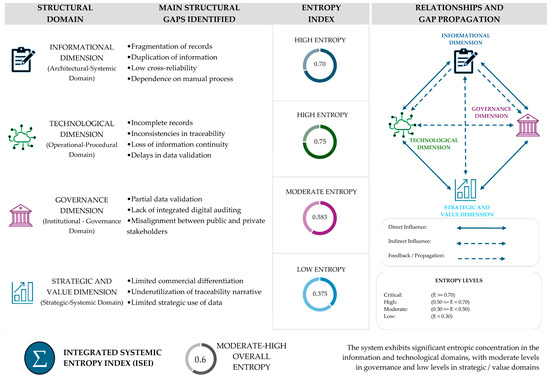
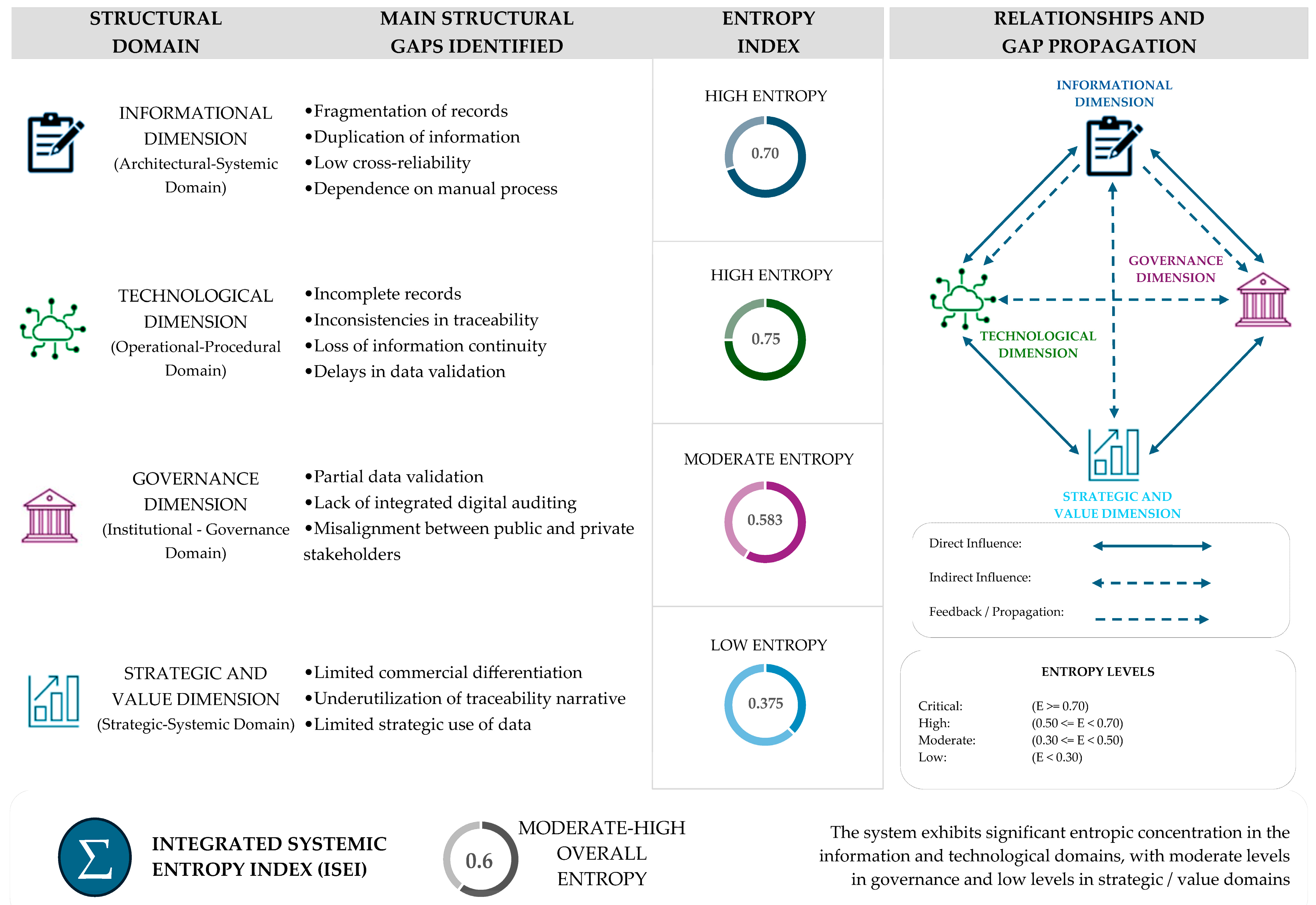
A systemic visual mapping (Figure 4) was developed to represent the interdependencies among the five functional domains and to make explicit the mechanisms by which structural misalignments propagate. Based on the identified structural configuration, a systemic visual mapping was developed to represent the interdependencies among the five functional domains and to make explicit the mechanisms by which structural misalignments propagate.
Figure 4.
Systemic visual mapping of the shrimp production system under conditions of structural misalignment.
The mapping reveals a multi-layered configuration in which informational, technological, governance, strategic, and value-generation dimensions are interconnected through coupling relationships. Structural gaps do not operate in isolation; instead, they propagate across domains, cumulatively affecting system coherence.
Informational uncertainty emerges as a central structuring factor, concentrating in nodes associated with data generation, validation, and exchange. These nodes exhibit high connectivity and act as amplification points, transmitting misalignments into the technological and governance domains.
This propagation dynamic explains how localized inconsistencies evolve into systemic disruptions, affecting traceability reliability and coordination mechanisms. The visualization thus provides an integrated representation of critical nodes, interdomain dependencies, and uncertainty flows, establishing a structural basis for subsequent prioritization and intervention.
4.6. Results of Strategic Prioritization
The integration of dimensional entropy indices enabled the derivation of a hierarchical intervention structure grounded in the systemic impact of structural misalignments.
Higher-priority gaps are associated with domains exhibiting greater entropic concentration and stronger interdomain propagation capacity. In this context, the informational (DEI = 0.70) and technological (DEI = 0.75) dimensions constitute the primary sources of systemic instability, as their misalignments directly affect data consistency, interoperability, and the reliability of traceability across the system.
The governance dimension (DEI = 0.583) occupies an intermediate position, reflecting coordination and validation constraints that condition the effectiveness of corrective actions. In contrast, the strategic and value-generation dimensions (DEI = 0.375) display comparatively lower levels of misalignment, although their performance remains dependent on the stabilization of upstream informational and technological structures.
At the structural level, critical gaps are concentrated in physical–digital integration, system interoperability, formalized data governance, and record consistency. These gaps exhibit high propagation potential, making them leverage points for systemic stabilization.
Based on these conditions, the prioritization follows a progressive intervention logic:
- Structural gaps (informational–technological): very high priority;
- Functional gaps (operational manifestations): high priority;
- Institutional gaps (governance-related): medium priority;
- Value-related gaps: strategic priority.
This hierarchy reflects a dependency-driven sequence in which reducing core structural misalignments enables subsequent improvements in coordination, performance, and value generation. As such, prioritization operates as the transition mechanism between systemic diagnosis and the formulation of intervention logic.
4.7. Intervention Logic of the Model
Building on the structural diagnosis and prioritization, the model defines an intervention logic oriented toward the progressive reduction in informational uncertainty as a core structuring principle.
Intervention is directed at nodes with high entropic concentration and strong interdomain propagation capacity, particularly those associated with data generation, validation, and exchange. Targeting these nodes enables the containment of misalignment diffusion and the stabilization of system coherence.
The intervention logic is structured across three complementary levels:
- Informational level: focused on improving data quality, standardization, and governance mechanisms to reduce inconsistency and asymmetry in information flows.
- Systemic articulation level: aimed at aligning interactions between informational, technological, and governance domains, strengthening interoperability and coordination across the system.
- Value generation level: oriented toward translating improved traceability conditions into competitive capabilities, including enhanced transparency, reduced transactional risk, and more effective market differentiation.
These levels operate iteratively, where interventions at critical informational nodes generate cascading effects across domains, progressively reducing structural entropy and reinforcing system stability. In this sense, the model functions as a dynamic stabilization mechanism, in which uncertainty reduction is both the objective and the driver of systemic coherence.
5. Discussion
The findings suggest that traceability limitations in shrimp production systems cannot be explained by the absence of external pressures or market demands, which, in fact, act as key drivers of the adoption of traceability practices. Rather, the problem lies in actors’ heterogeneous capacity to internalize and operationalize these pressures within coherent system structures.
While external requirements related to market access, regulatory compliance, and sustainability standards create strong incentives for traceability, their translation into consistent operational and informational architectures remains uneven. This asymmetry leads to a fragmented configuration in which different levels of technological and organizational maturity coexist, generating persistent structural misalignments and reinforcing informational uncertainty across the production chain.
This pattern indicates that traceability performance is not solely driven by external pressures, but by their interaction with internal structural conditions. From a socio-technical perspective, this reinforces the view that system performance emerges from the alignment between technological infrastructures, organizational practices, and informational architectures.
From a systemic perspective, informational uncertainty emerges as a structural property concentrated in the informational and technological domains. High entropy levels in these dimensions reflect fragmented data flows, limited interoperability, weak physical–digital integration, and insufficient data governance mechanisms. These results are consistent with prior studies emphasizing the role of data quality and system integration as critical determinants of traceability effectiveness, but extend this view by demonstrating that such limitations are not isolated deficiencies, but manifestations of deeper structural incoherence.
The results further indicate that adopting digital technologies alone is insufficient to ensure effective traceability. In line with existing critiques of technology-centric approaches, the findings highlight that without alignment across informational, technological, and governance domains, digital tools cannot reduce uncertainty. This reinforces the argument that traceability should be understood as a problem of managing informational entropy, where system coherence, rather than technological availability, determines performance.
Interdomain misalignments were identified as key explanatory mechanisms underlying traceability gaps. These misalignments, particularly between informational, technological, and governance structures, generate inconsistencies in records, reliance on non-standardized processes, and fragmented information flows. Consistent with systems theory, these disruptions propagate across domains, amplifying uncertainty and destabilizing the overall system.
The distribution of uncertainty across dimensions reveals a structurally asymmetric configuration. While strategic positioning and value-generation capabilities appear relatively developed, they coexist with deficiencies in the underlying informational infrastructure. This misalignment suggests a decoupling between market-facing capabilities and operational traceability systems, limiting the system’s ability to sustain credible and verifiable information flows. Such asymmetry reflects a broader pattern observed in complex production systems, where front-end competitiveness is not always supported by back-end structural coherence.
These findings have direct implications for the design of technology management approaches. Interventions should prioritize nodes characterized by high entropic concentration and strong interdomain propagation capacity, particularly those related to data generation, validation, and governance. This aligns with the notion that effective system transformation requires targeting leverage points rather than isolated components.
Within this context, the proposed TMMT-SP model contributes by reframing traceability as a systemic coordination problem under conditions of informational uncertainty. Instead of focusing on isolated technological adoption, the model emphasizes structural alignment, progressive capability development, and the reduction in entropy as a guiding principle for intervention. This perspective complements and extends existing approaches in digital traceability and supply chain management by introducing an information-theoretic lens for analyzing and managing system coherence.
From a broader perspective, the results suggest that improving traceability in complex agro-industrial systems requires moving beyond technology deployment toward integrated governance, data standardization, and architectural alignment. This has implications not only for shrimp production but also for other sectors facing similar challenges of fragmentation, heterogeneity, and increasing demands for transparency.
Future research should empirically validate the proposed model across different production contexts and develop quantitative approaches to measure informational entropy in operational environments. Additionally, further work is needed to examine how governance mechanisms and institutional arrangements can facilitate the reduction in structural misalignments and support scalable traceability solutions.
Limitations and Future Research
This study presents certain limitations that should be considered when interpreting the results. First, the estimation of structural entropy indices relies on the availability and granularity of the underlying data, which may constrain the precision of the diagnostic outcomes. While the approach enables the identification of systemic misalignments, it remains sensitive to the level of detail and consistency of the information collected.
Second, the analysis adopts a predominantly static structural perspective. Although this allows for the identification and prioritization of interdomain gaps, it does not capture the temporal dynamics of informational uncertainty or its evolution under changing regulatory, technological, or market conditions.
Future research should therefore focus on extending the model toward dynamic analytical frameworks capable of simulating the evolution of informational uncertainty across different intervention scenarios. In addition, empirical validation of the TMMT-SP model in real production environments would strengthen its applicability and refine its operational parameters. Further work may also explore integrating this approach with organizational and network-based theories to better capture coordination mechanisms and interdependencies in multi-stakeholder systems.
6. Conclusions
The study provides direct answers to the research questions by demonstrating that informational uncertainty in shrimp traceability systems emerges as a multidimensional structural condition distributed unevenly across informational, technological, governance, strategic, and value-related domains.
The findings reveal that the most significant traceability gaps stem from interdomain misalignments, particularly those arising from fragmented information management practices, limited technological interoperability, weak coordination mechanisms, and inconsistencies between operational practices and governance requirements.
This structural asymmetry concentrates uncertainty in the informational and technological dimensions, while strategic and value-oriented dimensions exhibit comparatively greater structural coherence.
These conditions indicate that effective technology management interventions should focus on reducing informational entropy through improved data governance, interoperability, coordination mechanisms, and systemic alignment. Together, these elements constitute the foundation of the proposed TMMT-SP model.
From a theoretical standpoint, the study reframes traceability as a problem of managing informational uncertainty rather than merely as the adoption of digital technologies. By conceptualizing uncertainty as a structural property, the analysis highlights interdomain misalignments as critical determinants of traceability performance.
Methodologically, integrating entropy-based metrics with ontological–structural modeling provides a novel approach to diagnosing, quantifying, and prioritizing structural gaps in complex production systems.
The practical implications suggest that digital transformation initiatives should prioritize information quality, governance mechanisms, and interoperability before pursuing value-optimization strategies.
Effective traceability depends not only on technological capabilities but also on the system’s capacity to coordinate actors, align infrastructures, and reduce informational fragmentation. These insights contribute to technology management, governance design, and decision-making in complex production environments.
The proposed TMMT-SP model offers a systemic framework for managing traceability under conditions of uncertainty by integrating diagnosis, prioritization, and intervention within a coherent structure. Although developed in the context of shrimp production, its conceptual foundations may be transferable to other agro-industrial and multi-stakeholder systems characterized by complexity, fragmentation, and information asymmetries.
Future research should focus on empirically validating the model across diverse contexts, refining entropy-based measurement approaches, and examining how governance mechanisms influence the reduction in structural misalignments and the enhancement of system-wide coherence.
Author Contributions
Conceptualization, R.A.; methodology, R.A.; formal analysis, R.A.; investigation, R.A.; data curation, R.A.; writing—original draft preparation, R.A.; writing—review and editing, R.A., J.M.I.-V. and S.G.Y.; supervision, J.M.I.-V. and S.G.Y. All authors have read and agreed to the published version of the manuscript.
Funding
This research received no external funding.
Institutional Review Board Statement
Ethical review and approval were waived for this study due to the absence of a formally established institutional Research Ethics Committee at the time of the study. The research involved non-invasive, voluntary interviews with adult participants and did not collect sensitive personal data. The study adhered to internationally accepted ethical principles for research involving human participants, ensuring anonymity, confidentiality, and respect for participants. Institutional endorsement regarding the ethical status of the research was provided by the Escuela Politécnica Nacional.
Informed Consent Statement
Informed consent was obtained verbally from all subjects involved in the study prior to participation.
Data Availability Statement
The data presented in this study are not publicly available due to confidentiality and privacy considerations. The interviews were conducted in informal settings and contain context-specific expressions that may allow indirect identification of participants. Aggregated and anonymized data supporting the findings are included within the article.
Acknowledgments
The authors would like to acknowledge the valuable contributions of the stakeholders from the shrimp production sector who participated in this study, as well as the institutional collaboration of the Sustainable Shrimp Partnership (SSP). During the preparation of this manuscript, the authors used ChatGPT (OpenAI, GPT-5.3) to assist in language refinement and structural editing. The authors have reviewed and edited the output and take full responsibility for the content of this publication.
Conflicts of Interest
The authors declare no conflicts of interest.
Abbreviations
The following abbreviations are used in this manuscript:
| TMMT-SP | Technological Management Model for Traceability in Shrimp Production |
| DEIs | Dimensional Entropy Indices |
| ISEI | Integrated Systemic Entropy Index |
| SSP | Sustainable Shrimp Partnership |
| ASC | Aquaculture Stewardship Council |
| RQ | Research Question |
Appendix A. Operationalization of Dimensions and Variables
To enable the structural analysis of the shrimp production system, the conceptual domains identified in the ontological modeling phase were operationalized into observable variables. Each dimension was defined by a set of critical variables and associated evaluation criteria, enabling consistent assessment of structural alignment across the system.
The operationalization process was guided by the need to translate abstract systemic properties—such as informational uncertainty, technological integration, and governance coordination—into analytically tractable components.
Table A1.
Identification of critical dimensions and variables.
These criteria guided the assignment of values on the ordinal structural scale used in the measurement phase. The operationalization ensures that each dimension can be evaluated consistently while preserving its conceptual integrity within the systemic framework.
Appendix B. Measurement Model and Entropy-Based Formulation
Given the absence of standardized quantitative metrics in the analyzed production ecosystem, a normalized ordinal structural assessment scheme was adopted to evaluate the degree of alignment among variables.
Table A2.
Structural Assessment Scale.
This scale enables the estimation of structural conditions across heterogeneous contexts, focusing on dominant systemic patterns rather than case-specific precision.
Appendix B.1. Structural Gap Definition
A structural gap is defined as a normalized measure of misalignment relative to a reference state of full structural coherence. It is calculated as:
where:
Gapi ∈ [0, 1];
Gapi = 0 indicates full structural alignment;
Gapi = 1 indicates maximum structural misalignment.
This formulation allows the gap to be interpreted as an operational proxy of structural uncertainty, consistent with the information-theoretic perspective adopted in the study. While not representing entropy in a strict thermodynamic or probabilistic sense, it provides a functional approximation of systemic disorder.
Appendix B.2. Dimensional Entropy Index (DEI)
The Dimensional Entropy Index is calculated as the average of normalized gaps within each dimension:
where:
is the number of variables in dimension .
Appendix B.3. Integrated Systemic Entropy Index (ISEI)
The overall level of structural misalignment is estimated as:
This index provides a synthetic measure of systemic uncertainty, enabling the identification of dominant structural patterns and supporting comparative analysis across dimensions.
Appendix C. Gap Classification and Systemic Mapping
Appendix C.1. Typological Classification of Structural Gaps
Structural gaps were classified according to their predominant nature within the system:
- Structural Gaps (Architectural Domain): Arise from inconsistencies in system configuration, including fragmentation, lack of interoperability, and weak articulation between domains.
- Functional Gaps (Operational Domain): Emerge from failures in execution despite the existence of structural conditions, such as inconsistent records and non-standardized practices.
- Institutional Gaps (Governance Domain): Result from weak coordination, low formalization of agreements, and limited regulatory alignment among actors.
- Value Gaps (Value Generation Domain): Occur when system capabilities fail to translate into economic or strategic benefits.
Appendix C.2. Classification by Entropic Severity
Table A3.
Entropic Severity Levels.
These thresholds were defined analytically to differentiate levels of systemic disruption and do not represent universal absolute values.
Appendix C.3. Integrated Classification Framework
Table A4.
Comprehensive Typology of Gaps.
Each gap was simultaneously characterized by its type and severity, enabling a multidimensional diagnosis that distinguishes between structural causes and operational manifestations.
Appendix C.4. Systemic Mapping
To capture interdependencies, a systemic mapping process was conducted based on:
- Identification of nodes with high entropic concentration;
- Analysis of interdomain dependencies;
- Representation of propagation pathways of informational uncertainty.
This mapping reveals that structural gaps do not operate in isolation but form part of a network of interactions that condition system behavior. It enables the identification of critical nodes, feedback mechanisms, and cascading effects across domains.
Appendix D. Strategic Prioritization Framework
Appendix D.1. Main Criterion: Systemic Impact on Informational Uncertainty
The prioritization of structural gaps was primarily based on their impact on informational uncertainty. Each gap was evaluated according to its capacity to:
- Affect the coherence and consistency of information;
- Generate or amplify informational asymmetries;
- Propagate across multiple domains;
- Compromise traceability of critical production events.
Gaps with high propagation potential and strong impact on informational consistency were assigned higher priority.
Appendix D.2. Contextual Adjustment Criteria
To ensure contextual applicability, three complementary criteria were incorporated:
- Reputational Risk: Exposure to loss of credibility in external markets;
- Regulatory Impact: Degree of non-compliance with standards and certifications;
- Economic Impact: Effects on efficiency, transaction costs, and system sustainability.
These factors modulate prioritization without replacing the primary uncertainty-based criterion.
Appendix D.3. Intervention Sequencing Logic
The prioritization process resulted in a progressive intervention sequence:
- Critical structural gaps with high entropic severity and propagation capacity;
- Interoperability and coordination gaps affecting system coherence;
- Localized gaps with limited systemic impact.
This sequencing enables a gradual stabilization of the system, starting from core structural issues and advancing toward optimization.
Appendix D.4. Analytical Role of Prioritization
Strategic prioritization serves as the link between systemic diagnosis and intervention design. It provides a structured basis for defining action pathways to reduce informational uncertainty, improve coordination, and strengthen traceability conditions within the production system.
Appendix E. Dimensional Entropy Assessment and Variable-Level Results
Following the structural analysis of each dimension and its associated variables, values were assigned using the ordinal evaluation scale [0,4]. This appendix presents the detailed results for each critical variable, including their assigned values, normalized entropy scores, and interpretative descriptions.
Appendix E.1. Informational Dimension
Table A5.
Assigned values for critical variables in the informational dimension.
Dimensional Entropy Index (): 0.70
This result indicates that the system operates at approximately 70% of maximum informational entropy, reflecting high systemic uncertainty, absence of integrated digital traceability, and high implicit informational costs.
Appendix E.2. Technological Dimension
Table A6.
Assigned values for critical variables in the technological dimension.
Dimensional Entropy Index (): 0.75
The technological dimension exhibits high structural entropy, indicating fragmentation, low interoperability, and limited integration across digital infrastructures.
Appendix E.3. Governance Dimension
Table A7.
Assigned values for governance variables.
Dimensional Entropy Index (): 0.583
The governance dimension reflects moderate entropy, with relative strength in regulatory oversight but structural weaknesses in coordination, inclusion, and institutional articulation.
Appendix E.4. Strategic Dimension
Table A8.
Assigned values for strategic variables.
Dimensional Entropy Index (): 0.375
This dimension shows relatively low entropy, reflecting strong market positioning and regulatory compliance, but with gaps in the strategic use of traceability to differentiate value.
Appendix E.5. Value Dimension
Table A9.
Assigned values for value-related variables.
Dimensional Entropy Index (): 0.375
The value dimension shows low entropy, indicating relatively stable performance, although efficiency gains and value redistribution remain constrained.
Appendix E.6. Integrated Systemic Entropy
Table A10.
Summary of dimensional indices.
Integrated Systemic Entropy Index (): 0.557
The system operates within a moderate range of structural entropy, indicating that although it is not fully disorganized, it exhibits significant internal asymmetries and structural pressures. The highest levels of uncertainty are concentrated in the informational and technological dimensions, whereas strategic and value dimensions show relatively higher levels of structuring.
References
- Aben, T. A. E., Van Der Valk, W., Roehrich, J. K., & Selviaridis, K. (2021). Managing information asymmetry in public–private relationships undergoing a digital transformation: The role of contractual and relational governance. International Journal of Operations & Production Management, 41(7), 1145–1191. [Google Scholar] [CrossRef] [Scilit]
- Abonguie, D. F., Nyam, Y. S., & Hoeyi, P. K. (2025). A systematic analysis of systems thinking and the sustainability of small and medium size enterprises (SMEs): A global evaluation. Scientific African, 28, e02738. [Google Scholar] [CrossRef] [Scilit]
- Ahmed, W. A. H., & MacCarthy, B. L. (2022). Blockchain in the supply chain—A comprehensive framework for theory-driven research. Digital Business, 2(2), 100043. [Google Scholar] [CrossRef] [Scilit]
- Akerlof, G. A. (1970). The market for ‘Lemons’: Quality uncertainty and the market mechanism. The Quarterly Journal of Economics, 84(3), 488. [Google Scholar] [CrossRef] [Scilit]
- Alhakamy, A. (2026). Managing uncertainty and information dynamics with graphics-enhanced TOGAF architecture in higher education. Entropy, 28(3), 361. [Google Scholar] [CrossRef] [Scilit] [PubMed]
- Ali, I., Arslan, A., Khan, Z., & Tarba, S. Y. (2024). The role of industry 4.0 technologies in mitigating supply chain disruption: Empirical evidence from the australian food processing industry. IEEE Transactions on Engineering Management, 71, 10600–10610. [Google Scholar] [CrossRef] [Scilit]
- Altintzoglou, T., Canavari, M., Maesano, G., & Honkanen, P. (2025). Building trust: Consumer awareness, acceptance and attitudes related to European aquaculture and the potential effects of greenwashing. Aquaculture Economics & Management, 29(4), 651–673. [Google Scholar] [CrossRef] [Scilit]
- Anwar, S., Perdana, T., Rachmadi, M., & Noor, T. I. (2022). Traceability information model for sustainability of black soybean supply chain: A systematic literature review. Sustainability, 14(15), 9498. [Google Scholar] [CrossRef] [Scilit]
- Arend, R. J. (2022). The costs of ambiguity in strategic contexts. Administrative Sciences, 12(3), 108. [Google Scholar] [CrossRef] [Scilit]
- Bertalanffy, L. V. (1984). Teoria general de los sistemas fundamentos, desarrollo, aplicaciones. Fondo de Cultura Economica. [Google Scholar]
- Borrero, J. D. (2019). Sistema de trazabilidad de la cadena de suministro agroalimentario para cooperativas de frutas y hortalizas basado en la tecnología blockchain. CIRIEC-España, Revista de Economía Pública, Social y Cooperativa, (95), 71–94. [Google Scholar] [CrossRef] [Scilit]
- Brandín, R., & Abrishami, S. (2024). IoT-BIM and blockchain integration for enhanced data traceability in offsite manufacturing. In Automation in construction (p. 159). Scopus. [Google Scholar] [CrossRef] [Scilit]
- Cañar Serna, D. Y., Sepúlveda Forero, J. L., Martínez Pachón, E., & Tibaduiza Castañeda, L. P. (2022). Diseño de un sistema de trazabilidad como soporte al modelo productivo de cacao en la Cordillera Nariñense Colombiana. Revista de Investigación e Innovación Agropecuaria y de Recursos Naturales, 9(1), 30–41. [Google Scholar] [CrossRef] [Scilit]
- Chiaraluce, G., Bentivoglio, D., Finco, A., Mariantonietta, F., Contò, F., & Galati, A. (2024). Exploring the role of blockchain technology in modern high-value food supply chains: Global trends and future research directions. Agricultural and Food Economics, 12(6), 6. [Google Scholar] [CrossRef] [Scilit]
- Dubois, A., & Gadde, L.-E. (2002). Systematic combining: An abductive approach to case research. Journal of Business Research, 55(7), 553–560. [Google Scholar] [CrossRef] [Scilit]
- Garden, H., Hawkins, N., & Winickoff, D. E. (2021). Building and sustaining collaborative platforms in genomics and biobanks for health innovation (Vol. 102). OECD Science, Technology and Industry Policy Papers No. 102; OECD Science, Technology and Industry Policy Papers. OECD. [Google Scholar] [CrossRef]
- Giagnocavo, C., Bienvenido, F., Ming, L., Yurong, Z., & Antonio Sanchez-Molina, J. (2017). Agricultural cooperatives and the role of organisational models in new intelligent traceability systems and big data analysis. International Journal of Agricultural and Biological Engineering, 10(5), 115–125. [Google Scholar] [CrossRef] [Scilit]
- Gómez Gómez, J., Parra Urueta, C. A., & Guzmán Pineda, J. J. (2025). Sistema de trazabilidad de cacao soportado en Internet de las cosas. Revista Colombiana de Tecnologias de Avanzada (Rcta), 1(45), 204–215. [Google Scholar] [CrossRef] [Scilit]
- Gross, M., Pellizzoni, L., Leonardi, E., & Asara, V. (Eds.). (2022). Technological fixes: Nonknowledge transfer and the risk of ignorance. In Handbook of critical environmental politics (pp. 308–317). Edward Elgar Publishing. [Google Scholar] [CrossRef] [Scilit]
- Hallak, J. C., Tacsir, A., & BID Invest. (2021). Los sistemas de trazabilidad como herramientas de diferenciación para la inserción internacional de cadenas de valor agroalimentarias. Inter-American Development Bank. [Google Scholar] [CrossRef] [Scilit]
- Hazra, T. K., & Unhelkar, B. (2021). Enterprise architecture for digital business: Integrated transformation strategies (1st ed.). CRC Press. [Google Scholar]
- Hoseini, Z. (2020). Shrimp aquaculture’s development perspectives reviewing on improving strategies and management plans in ecuadorian shrimp industry. Journal of Aquaculture Research & Development, 11(6), 1–2. [Google Scholar] [CrossRef]
- Iqbal, S., Bureš, V., Zanker, M., Abdullah, M., & Tootell, B. (2023). A system dynamics perspective on workplace spirituality and employee behavior. Administrative Sciences, 14(1), 7. [Google Scholar] [CrossRef] [Scilit]
- Jung, J., & Fraunholz, B. (2021). Masterclass enterprise architecture management. Springer International Publishing. [Google Scholar] [CrossRef] [Scilit]
- Kennedy, S., Grewatsch, S., Liboni, L., & Cezarino, L. O. (2026). Teaching a systems approach to address the sustainability management disconnect. Business & Society, 65(3), 736–770. [Google Scholar] [CrossRef] [Scilit]
- Lai, M. B., Vergamini, D., & Brunori, G. (2025). Food supply chain: A framework for the governance of digital traceability. Foods, 14(12), 2032. [Google Scholar] [CrossRef] [Scilit] [PubMed]
- Loose, C. E., & Paula, U. F. D. (2024). Ferramentas tecnológicas de rastreabilidade agropecuária. IOSR Journal of Business and Management, 26(12), 6–20. [Google Scholar] [CrossRef] [Scilit]
- Mahmud, A., Parikh, P., Ahmed, J. U., Alam, M. J., Mostafizur, R. M., Shijun, D., Begum, I. A., Akhtar, F., Siddika, S., & McKenzie, A. M. (2026). Fish value chain analysis: A scoping review. Frontiers in Sustainable Food Systems, 10, 1673453. [Google Scholar] [CrossRef] [Scilit]
- Monkhouse, L. L., Yu, J., & Birkin, F. (2025). Implementing “systems thinking” to reach sustainable development goals: Multi-perspective research into China’s ecological civilization. Business Perspectives and Research, 22785337251347693. [Google Scholar] [CrossRef] [Scilit]
- Moradi, M. A., & Jahanbakht, M. (2026). Institutional governance and entrepreneurship: A multi-branch perspective on policy mixes in emerging economies. Administrative Sciences, 16(2), 97. [Google Scholar] [CrossRef] [Scilit]
- Palacio, D. N., Rodriguez-Cardenas, D., Poshyvanyk, D., & Moran, K. (2024). On interpreting the effectiveness of unsupervised software traceability with information theory (Version 1). arXiv. [Google Scholar] [CrossRef] [Scilit]
- Peña, M., Llivisaca, J., & Siguenza-Guzman, L. (2020). Blockchain and its potential applications in food supply chain management in ecuador. In Advances in emerging trends and technologies (Vol. 1066, pp. 101–112). Springer. [Google Scholar] [CrossRef] [Scilit]
- Porter, M. E. (1991). Towards a dynamic theory of strategy. Strategic Management Journal, 12(S2), 95–117. [Google Scholar] [CrossRef] [Scilit]
- Provan, K. G., & Kenis, P. (2007). Modes of network governance: Structure, management, and effectiveness. Journal of Public Administration Research and Theory, 18(2), 229–252. [Google Scholar] [CrossRef] [Scilit]
- Rincón Ballesteros, D. L., Fonseca Ramírez, J. E., & Orjuela-Castro, J. A. (2017). Hacia un marco conceptual común sobre trazabilidad en la cadena de suministro de alimentos. Ingeniería, 22(2), 161. [Google Scholar] [CrossRef] [Scilit]
- Rodríguez-Mañay, L. O. (2024). Assessing the competitive advantage of ecuador’s shrimp industry in the global market using the Balassa index for 2018–2022. Ciencia y Tecnología Agropecuaria, 25(2). [Google Scholar] [CrossRef] [Scilit]
- Rossi, S., Gemma, S., Borghini, F., Perini, M., Butini, S., Carullo, G., & Campiani, G. (2025). Agri-food traceability today: Advancing innovation towards efficiency, sustainability, ethical sourcing, and safety in food supply chains. Trends in Food Science & Technology, 163, 105154. [Google Scholar] [CrossRef] [Scilit]
- Saavedra Mera, K. A., Quiñonez Cabeza, B. M., Quiñonez Klinger, A. H., & Sarango Romero, V. J. (2023). La digitalización de la cadena de suministro: Un impulso innovador para la eficiencia logística en Ecuador. Código Científico Revista de Investigación, 4(2), 210–224. [Google Scholar] [CrossRef] [Scilit]
- Scott, W. R. (2014). W. Richard SCOTT (1995), Institutions and organizations. Ideas, interests and identities.: Paperback: 360 pages Publisher: Sage (1995) Language: English ISBN: 978-142242224. M@n@gement, 17(2), 136. [Google Scholar] [CrossRef] [Scilit]
- Senge, P. M. (2004). The fifth discipline—The art and practice of the learning organization (1st ed., Vol. 29, Issue 2, p. 55). CRC Press. [Google Scholar] [CrossRef] [Scilit]
- Shannon, C. E. (1948). A mathematical theory of communication. The Bell System Technical Journal, 27(3), 379–423. [Google Scholar] [CrossRef] [Scilit]
- Sharma, N., Treem, J. W., Feister, M. K., & Barley, W. C. (2025). Complex technologies and ignorant expertise: The communicative value of not knowing but figuring it out. Management Communication Quarterly, 39(3), 407–434. [Google Scholar] [CrossRef] [Scilit]
- Sharma, V., Tripathi, A. K., & Mittal, H. (2022). Technological revolutions in smart farming: Current trends, challenges & future directions. Computers and Electronics in Agriculture, 201, 107217. [Google Scholar] [CrossRef] [Scilit]
- Shet, S. V., Puthran, S., Dionísio, A., & Panchal, D. (2026). Data science competencies as micro-foundations of digital business capability: A digital dynamic capabilities perspective. Administrative Sciences, 16(3), 149. [Google Scholar] [CrossRef] [Scilit]
- Spitalleri, A., Kavasidis, I., Cartelli, V., Mineo, R., Rundo, F., Palazzo, S., Spampinato, C., & Giordano, D. (2023). BioTrak: A blockchain-based platform for food chain logistics traceability (pp. 105–110). Scopus. [Google Scholar] [CrossRef] [Scilit]
- Toonen, H. M., Bush, S. R., Ibarra, R., O’Sullivan, C., Hudson, E., Asif, F., Bridson, P., Corsin, F., Fitzsimmons, K., Kruk, S. R. L., Madeira, J., Little, D. C., Norden, W., Stark, M., & Tucker, L. (2025). Aquaculture governance indicators: A diagnostic framework for steering towards sustainability. PLoS Sustainability and Transformation, 4(4), e0000165. [Google Scholar] [CrossRef] [Scilit]
- Williamson, O. E. (1981). The economics of organization: The transaction cost approach. American Journal of Sociology, 87(3), 548–577. [Google Scholar] [CrossRef] [Scilit] [PubMed]
- Zachman, J. A. (1987). A framework for information systems architecture. IBM Systems Journal, 26(3), 276–292. [Google Scholar] [CrossRef] [Scilit]
- Zhou, X., Zhu, Q., & Xu, Z. (2023). The role of contractual and relational governance for the success of digital traceability: Evidence from Chinese food producers. International Journal of Production Economics, 255, 108659. [Google Scholar] [CrossRef] [Scilit]

Disclaimer/Publisher’s Note: The statements, opinions and data contained in all publications are solely those of the individual author(s) and contributor(s) and not of MDPI and/or the editor(s). MDPI and/or the editor(s) disclaim responsibility for any injury to people or property resulting from any ideas, methods, instructions or products referred to in the content. |
© 2026 by the authors. Licensee MDPI, Basel, Switzerland. This article is an open access article distributed under the terms and conditions of the Creative Commons Attribution (CC BY) license.