


Abstract
This study examines how Female-Associated Leadership Practices (FALPs) are associated with firm performance in Ecuadorian small and medium-sized enterprises (SMEs) through organizational governance and strategic orientation. Drawing on Upper Echelons Theory, social role theory, expectation states theory, and gender and leadership research, FALPs are conceptualized as perceived leadership practices frequently linked to participative decision-making, collaboration, ethical consideration, innovation stimulation, and long-term orientation. This conceptualization avoids treating leader gender, gender diversity, women’s representation in management, and leadership style as interchangeable constructs. Using a quantitative cross-sectional design, firm-level data from 300 SMEs were analyzed through Partial Least Squares Structural Equation Modeling (PLS-SEM). The results show that FALPs are not directly associated with firm performance. Instead, they are positively associated with governance quality and strategic orientation, both of which are, in turn, positively associated with firm performance. Strategic orientation represents the strongest indirect pathway, while governance is associated with performance both directly and indirectly through strategic orientation. These findings provide a process-based explanation for inconsistent evidence on gender-related leadership practices and firm outcomes. Practically, the study suggests that participative, ethical, collaborative, innovation-oriented, and long-term leadership practices may support SMEs by strengthening governance quality and strategic capabilities.
1. Introduction
Recent research has increasingly emphasized the strategic relevance of women’s representation in corporate leadership, gendered evaluations of leadership behavior, and leadership practices commonly associated with relational, participative, and ethical approaches. However, these dimensions should not be treated as interchangeable. Women’s presence in leadership positions, gender diversity in organizational structures, and specific leadership practices are analytically distinct constructs that may be related but require separate conceptual treatment. This distinction is important because women remain underrepresented in top management across developed and emerging economies, while access to leadership roles and evaluations of leadership competence continue to be shaped by gender stereotypes, role expectations, and evaluative biases (Pletzer et al., 2015; Heilman et al., 2024; Paustian-Underdahl et al., 2024; Yang & Konrad, 2025). Recent reviews also show that female leadership research remains fragmented across themes such as leadership performance, stereotypes, entrepreneurship, leadership styles, and human-capital outcomes, reinforcing the need for greater conceptual precision (Chen et al., 2025; Sutanto et al., 2026). Women’s participation in leadership has also been associated with governance quality, monitoring capacity, innovation, ethical and sustainability initiatives, and organizational climate, although these relationships depend on the organizational and institutional context (Adams & Ferreira, 2009; Terjesen et al., 2016; Kalbarczyk et al., 2025).
Despite the growing interest in gender and leadership, the empirical relationship between women’s participation in leadership and firm performance remains inconclusive. Meta-analytic and firm-level studies report mixed results, ranging from positive associations to weak or non-significant relationships depending on governance arrangements, institutional context, firm characteristics, and performance measures (Pletzer et al., 2015; Simionescu et al., 2021; Chatterjee & Nag, 2022; Hedija & Němec, 2021; Arango-Home et al., 2023; Nguyen et al., 2020; Martínez-Zarzoso, 2023; Lu, 2024; Hordofa & Ionaşcu, 2025). Recent evidence on leadership evaluations further shows that leader gender and perceived leadership competencies should not be treated as equivalent, since gender stereotypes continue to shape how leadership behavior is interpreted (Darvin et al., 2025). These findings suggest that the relationship between gender-related leadership phenomena and firm outcomes should not be examined only through direct effects. Instead, more attention is needed to the internal organizational mechanisms through which leadership practices may be associated with performance.
This issue is particularly relevant in small and medium-sized enterprises (SMEs) in emerging economies. Much of the existing evidence is based on large firms or cross-country datasets, limiting its applicability to smaller organizations. In SMEs, leadership practices are often more visible and closely connected to day-to-day decision-making because these firms usually operate with flatter hierarchies, informal communication channels, less formalized governance structures, and higher managerial discretion. In Latin America, and particularly in Ecuador, gender gaps persist in access to leadership positions, firm growth trajectories, financing, and resource availability, while female-led firms display heterogeneous performance patterns depending on firm size, sector, and organizational structure (Mínguez-Vera & López-Martínez, 2010; Briozzo et al., 2017; Sanchez-Riofrio et al., 2022). Recent evidence also suggests that women’s leadership may be linked to productivity and innovation under supportive institutional and organizational conditions (Kong et al., 2024). This context provides a relevant setting for examining whether leadership practices associated with gendered expectations are linked to firm performance through internal organizational mechanisms rather than through direct performance differences.
From this perspective, organizational governance and strategic orientation are especially relevant. Governance refers to internal mechanisms related to transparency, accountability, role clarity, ethical standards, and internal control, while strategic orientation reflects the firm’s emphasis on innovation, proactiveness, opportunity seeking, and competitive initiative. Prior research suggests that governance mechanisms in SMEs are frequently informal, relational, and closely connected to ownership and managerial behavior (Mejía-Franco et al., 2021). Recent evidence also shows that the returns of formal management practices in SMEs depend on governance conditions and credible execution (Feng et al., 2026). Similarly, entrepreneurial and strategic orientations have been associated with SME performance and innovative outcomes, particularly when supported by internal organizational capabilities (Andrade-Valbuena et al., 2021; Hernández-Ramírez et al., 2021). Recent studies further indicate that strategic leadership may be associated with SME performance through intermediate mechanisms such as corporate entrepreneurship and intrapreneurship, and that innovation-related orientations are especially relevant for Latin American manufacturing SMEs (Woo, 2025; Núñez & Mora-Esquivel, 2026). Therefore, leadership practices may be linked to firm performance not only directly, but also through their association with governance quality and strategic orientation.
In response to these gaps, this study examines the relationships among Female-Associated Leadership Practices (FALPs), organizational governance, strategic orientation, and firm performance in Ecuadorian SMEs. FALPs are defined as perceived leadership practices frequently associated in prior gender and leadership research with participative, collaborative, ethical, innovation-oriented, and long-term decision-making approaches. The study does not treat FALPs as equivalent to leader gender, workforce gender diversity, board gender composition, or transformational leadership. This distinction is consistent with recent calls to clarify the boundaries of female leadership research and avoid conflating leader gender, gender diversity, leadership style, and gendered evaluations of leadership behavior (Buss et al., 2024; Paustian-Underdahl et al., 2024; Shen & Joseph, 2021; Chen et al., 2025). Rather than examining whether firms with female top managers perform better than firms without female top managers, this study analyzes whether FALPs are associated with governance quality, strategic orientation, and firm performance through direct and indirect organizational pathways.
By integrating these elements, the study contributes to the literature on gender and leadership, SME governance, and organizational performance in emerging-economy contexts. It proposes and empirically tests a mediated model in which governance and strategic orientation function as internal mechanisms linking leadership practices with firm performance.
2. Theoretical Framework
2.1. Theoretical Foundations and Conceptual Boundaries of FALPs
The relationship between leadership characteristics and organizational outcomes has been widely examined in management and organizational theory. Upper Echelons Theory argues that organizational outcomes are associated with the characteristics, values, experiences, and cognitive orientations of top managers (Hambrick & Mason, 1984; Meyer & Dean, 1990). However, this does not imply that gender mechanically determines leadership behavior. Rather, managerial characteristics and socially shaped experiences may influence how leaders interpret information, allocate resources, and define strategic priorities. This organizational-level perspective is complemented by social role theory and expectation states theory, which explain how gendered role expectations, status beliefs, and evaluative biases shape perceptions of leadership competence, legitimacy, and effectiveness. Recent research confirms that gender stereotypes continue to influence women’s access to leadership roles and evaluations of leadership behavior (Heilman et al., 2024; Paustian-Underdahl et al., 2024; Darvin et al., 2025), including in SMEs (Iqbal & Piwowar-Sulej, 2025).
In line with this non-essentialist perspective, this study adopts FALPs as a focused set of perceived leadership practices frequently associated in prior gender and leadership research with women’s leadership, relational leadership, and participative approaches. These practices include participative decision-making, collaboration, ethical consideration, innovation stimulation, and long-term orientation. They are linked to related but distinct literature streams: relational, participative, and communal leadership expectations; ethical and relational leadership traditions; leadership support for knowledge sharing and new ideas; and long-term decision-making in SMEs. Recent reviews show that female leadership research spans multiple domains, including performance, stereotypes, entrepreneurship, leadership styles, relational dynamics, structural barriers, and human-capital outcomes, supporting the treatment of FALPs as a focused and non-exhaustive analytical construct rather than as a complete theory of women’s leadership (Chen et al., 2025; Sutanto et al., 2026). Evidence linking participative leadership with team innovation through team cohesiveness also supports the inclusion of participation and collaboration as leadership practices relevant to innovation-related processes (Tran Pham, 2025).
FALPs should therefore not be interpreted as a synonym for female leadership, women’s representation in management, workforce gender diversity, board gender diversity, top management team gender composition, or transformational leadership. Nor should FALPs be interpreted as a shortened version of the Multifactor Leadership Questionnaire or any other comprehensive transformational leadership scale (Bass & Avolio, 2004). Although some indicators overlap with relational, ethical, participative, and transformational leadership traditions, FALPs is used here as an analytical category capturing leadership practices frequently associated with relational, participative, ethical, innovation-oriented, and long-term approaches. These practices are not biologically determined, exclusive to women, or primarily developed by women leaders; they are socially and organizationally situated practices shaped by gendered expectations, socialization processes, institutional constraints, and organizational contexts (Eagly & Carli, 2007; Hoobler et al., 2018; Triana et al., 2019; Yang & Konrad, 2025). This framing follows recent calls to avoid conflating leader gender, gender diversity, leadership style, and gendered evaluations of leadership behavior (Buss et al., 2024; Paustian-Underdahl et al., 2024; Shen & Joseph, 2021; Chen et al., 2025) and is consistent with evidence distinguishing leader gender from perceived leadership behaviors or competencies (Darvin et al., 2025).
This distinction matters because evidence on women’s participation in leadership and firm performance remains mixed. Meta-analytical, systematic, and empirical studies report heterogeneous findings, from positive associations to non-significant relationships, depending on context, level of analysis, governance arrangements, and measurement approach (Pletzer et al., 2015; Post & Byron, 2015; Simionescu et al., 2021; Nguyen et al., 2020). Recent scoping evidence suggests that women’s leadership may be associated with innovation, ethical and sustainability initiatives, organizational climate, and other outcomes, but also emphasizes that these associations depend on the contexts in which leadership is enacted (Kalbarczyk et al., 2025). These inconsistencies suggest that gender-related leadership phenomena are unlikely to be directly or uniformly associated with firm performance. Instead, their association with performance may depend on internal organizational mechanisms, such as governance quality and strategic orientation.
These mechanisms are particularly relevant in SMEs, where decision-making structures are less formalized, interpersonal relationships are closer, communication is more informal, and managerial discretion is comparatively high. In such contexts, leadership practices may be more visible and more closely associated with how firms organize accountability, decision-making, innovation, and strategic behavior. Recent SME research supports this mechanism-based interpretation by showing that strategic leadership may be associated with organizational performance through corporate entrepreneurship and intrapreneurship, and that governance conditions can shape the productivity returns of formal management practices (Woo, 2025; Feng et al., 2026). Accordingly, rather than assuming a direct relationship between FALPs and firm performance, this study examines whether such practices are associated with performance through governance and strategic orientation as intermediate organizational mechanisms.
2.2. FALPs and Organizational Governance
Organizational governance represents one of the key mechanisms through which leadership practices may be associated with organizational outcomes. It encompasses structures, processes, and practices that support accountability, transparency, ethical conduct, role clarity, internal control, and effective decision-making. In SMEs, governance is often less formalized than in large corporations and is frequently shaped by informal routines, ownership structures, managerial discretion, and relational decision-making processes (Mejía-Franco et al., 2021). This makes leadership practices especially relevant for understanding how governance mechanisms are developed and enacted.
Prior research on gender and leadership suggests that women’s participation in leadership has often been associated with stronger monitoring, greater attention to ethical standards, and more inclusive decision-making processes. Adams and Ferreira (2009) show that female directors may contribute to more active monitoring and higher board attendance, while Terjesen et al. (2016) report that gender-diverse boards are associated with governance quality and improved oversight. Systematic evidence also indicates that the relationship between women’s board participation and organizational outcomes depends on governance arrangements and on the mechanisms through which participation is translated into decision-making and control processes (Nguyen et al., 2020). More recent scoping evidence further suggests that women’s leadership may be associated with ethical and sustainability initiatives, organizational climate, team cohesion, communication, and innovation-related outcomes, although these effects remain context-dependent (Kalbarczyk et al., 2025). Rather than implying that governance-related behaviors are biologically determined by gender, these findings suggest that leadership practices frequently associated with women’s leadership—such as participative decision-making, ethical consideration, collaboration, and long-term orientation—may be relevant for strengthening governance mechanisms.
This relationship is especially important in emerging economies and SME contexts, where formal governance structures may be weaker or less institutionalized. Ethical leadership research suggests that leadership behaviors emphasizing integrity, accountability, and social responsibility are linked to stronger governance-related outcomes (Agbim, 2018). Recent SME evidence also indicates that formal management practices may generate stronger productivity effects when they operate within governance conditions that support credible execution, monitoring, and accountability (Feng et al., 2026). Accordingly, FALPs may be associated with governance quality because participative and ethical leadership behaviors can encourage clearer responsibilities, more transparent decisions, stronger accountability, and more consistent internal control practices. Therefore, this study proposes the following hypothesis:
H1.
FALPs are positively associated with organizational governance.
2.3. FALPs and Strategic Orientation
Strategic orientation refers to the firm’s tendency to pursue innovation, proactiveness, opportunity seeking, and competitive initiative in response to changing market conditions. In SMEs, this orientation is particularly relevant because smaller firms often depend on flexibility, rapid adaptation, and the ability to identify and exploit opportunities with limited resources. Leadership practices are closely related to strategic orientation because they shape how firms interpret environmental changes, allocate resources, encourage innovation, and respond to competitive pressures.
Prior gender and leadership research suggests that practices frequently associated with women’s leadership—such as collaboration, stakeholder orientation, ethical consideration, and long-term thinking—may support environments that favor knowledge sharing, creativity, and innovation. Recent review and firm-level evidence indicate that women’s participation in leadership can be associated with innovation-related outcomes, although these relationships remain contingent on organizational and institutional conditions (Jing et al., 2022; Kong et al., 2024; Kalbarczyk et al., 2025). Complementary evidence shows that board gender diversity is positively associated with innovation ambidexterity through mechanisms such as prudent experimentation and organizational trickle-down effects, with stronger relationships when long-term incentives are emphasized (Deore et al., 2025). Although this evidence concerns leadership composition rather than FALPs directly, it supports the plausibility of innovation-related pathways under enabling organizational conditions. Similarly, evidence on participative leadership shows that participation may foster team innovation through cohesion and collaborative interaction, reinforcing the relevance of participation and collaboration as leadership practices connected to idea generation, knowledge sharing, and opportunity recognition (Tran Pham, 2025).
From this perspective, FALPs may be associated with strategic orientation because participative and collaborative leadership behaviors can stimulate new ideas, facilitate opportunity recognition, and encourage proactive responses to market changes, while ethical and long-term orientations may support strategic consistency and reduce short-term decision-making biases. These mechanisms are especially relevant in SMEs, where strategic decisions are closely connected to managerial behavior and day-to-day organizational interaction. Prior evidence indicates that entrepreneurial orientation is positively related to innovative performance in SMEs, particularly when firms develop organizational learning capacity (Hernández-Ramírez et al., 2021), and that governance arrangements may condition the relationship between entrepreneurial orientation and short-term firm performance (Andrade-Valbuena et al., 2021). Recent SME research further supports this mechanism-based view by showing that strategic leadership may be associated with organizational performance through corporate entrepreneurship and intrapreneurship, and that innovation performance in Latin American manufacturing SMEs is shaped by strategic orientations such as green management and digital orientation (Woo, 2025; Núñez & Mora-Esquivel, 2026).
Accordingly, FALPs may help SMEs develop a more proactive and innovation-oriented strategic posture, especially when strategic behavior depends strongly on managerial discretion and informal organizational routines. Therefore, the following hypothesis is proposed:
H2.
FALPs are positively associated with strategic orientation.
2.4. Governance and Strategic Orientation as Organizational Pathways to Firm Performance
Organizational governance and strategic orientation are widely recognized as organizational mechanisms associated with firm performance. Effective governance systems support transparency, accountability, role clarity, internal control, and stakeholder trust, which may contribute to more consistent decision-making and better allocation of organizational resources (Shleifer & Vishny, 1997; Aguilera et al., 2015). In SMEs, these mechanisms are especially relevant because formal structures are often less developed than in large corporations, making internal accountability and decision discipline central to organizational functioning. Recent evidence also indicates that SME governance is frequently shaped by ownership structure, managerial discretion, informal control mechanisms, and relational decision-making processes (Mejía-Franco et al., 2021), and that governance conditions can shape the productivity effects of management practices by supporting credible implementation and accountability (Feng et al., 2026). Therefore, the following hypothesis is proposed:
H3.
Organizational governance is positively associated with firm performance.
Strategic orientation is also strongly associated with firm performance, particularly in SMEs operating in uncertain and competitive environments. Firms with stronger innovation, proactiveness, opportunity-seeking behavior, and competitive initiative are better positioned to identify market opportunities, adapt to environmental changes, and develop differentiated value propositions. Prior research on entrepreneurial orientation has consistently linked innovation and proactiveness with business performance, market growth, and long-term competitiveness (Wiklund & Shepherd, 2005; Rauch et al., 2009). More recent evidence in Latin American SMEs indicates that entrepreneurial orientation is positively associated with innovative performance when firms develop organizational learning capacity (Hernández-Ramírez et al., 2021), while innovation-related orientations, including digital and green orientations, are relevant for innovation performance in manufacturing SMEs (Núñez & Mora-Esquivel, 2026). Thus, the following hypothesis is proposed:
H4.
Strategic orientation is positively associated with firm performance.
Governance and strategic orientation may also be interrelated. Governance mechanisms establish decision-making routines, accountability systems, resource allocation criteria, and internal control processes that can shape strategic behavior. In SMEs, where strategic decisions are frequently concentrated in a small group of owner-managers or senior executives, governance quality may help align opportunity-seeking behavior with coherent strategic priorities, reduce arbitrary decisions, and support more consistent innovation and market-oriented actions. This relationship is consistent with evidence that governance can condition the relationship between entrepreneurial orientation and short-term SME performance (Andrade-Valbuena et al., 2021), and with recent research showing that strategic leadership may be associated with performance through internal entrepreneurial mechanisms that depend on both strategic initiative and organizational conditions (Woo, 2025). Similarly, evidence on formal management practices and informal governance suggests that governance affects whether managerial and strategic practices are effectively translated into productivity gains (Feng et al., 2026).
Accordingly, organizational governance may be associated with strategic orientation because governance mechanisms provide the decision discipline, role clarity, resource allocation routines, and accountability conditions that support proactive and innovation-oriented behavior. In this sense, governance does not replace strategic orientation; rather, it may help create the organizational conditions under which opportunity seeking, innovation priority, and competitive initiative can be pursued more consistently. Accordingly, the following hypothesis is proposed:
H6.
Organizational governance is positively associated with strategic orientation.
2.5. Research Gap and Conceptual Model
Although the literature provides valuable insights into gender and leadership, several gaps remain. First, recent reviews emphasize that research on female leadership still faces conceptual challenges, particularly the tendency to conflate leader gender, gender diversity, leadership style, and gendered evaluations of leadership behavior (Buss et al., 2024; Paustian-Underdahl et al., 2024; Shen & Joseph, 2021). Second, most studies focus on developed economies or large firms, limiting their applicability to SMEs in emerging markets. Third, much empirical research relies on regression-based approaches and direct-effect models, which are less suited to examining complex indirect and sequential relationships among organizational variables. Fourth, few studies simultaneously examine organizational governance and strategic orientation as interconnected mechanisms linking leadership practices to firm performance, especially in Latin American SMEs.
Although the preceding sections emphasize governance and strategic orientation as intermediate organizational mechanisms, prior research has also examined whether leadership-related variables are directly associated with firm performance. However, evidence remains mixed and context dependent, particularly in studies on women’s participation in leadership, gender-related leadership practices, and firm-level outcomes (Nguyen et al., 2020). Therefore, the direct association between FALPs and firm performance is retained as a testable relationship in the proposed model. Testing this path allows the analysis to determine whether FALPs show a direct association with firm performance beyond their indirect associations through organizational governance and strategic orientation. Accordingly, the following hypothesis is proposed:
H5.
FALPs are positively associated with firm performance.
To address these gaps, this study proposes an integrated conceptual model in which FALPs are associated with firm performance through both direct and indirect paths. Organizational governance and strategic orientation are positioned as intermediate organizational mechanisms rather than as isolated predictors. This specification allows the model to assess whether FALPs are associated with firm performance through two parallel pathways—governance and strategic orientation—and through a sequential pathway in which governance is associated with strategic orientation. As shown in Figure 1, the model includes the direct FALPs–firm performance path, the parallel mediating roles of governance and strategic orientation, and the sequential pathway FALPs → GOV → SO → FP.
Figure 1.
Proposed conceptual model. Note: The model includes the direct path between FALPs and firm performance, the parallel mediating roles of organizational governance and strategic orientation, and the sequential pathway through organizational governance and strategic orientation.
By testing this model, the study makes three contributions. Theoretically, it distinguishes leadership practices associated with gendered expectations from gender diversity and leader gender. Methodologically, it uses PLS-SEM to assess direct, indirect, and sequential associations among leadership practices, governance, strategic orientation, and firm performance in Ecuadorian SMEs. Practically, it offers insights for strengthening governance and strategic capabilities through participative, ethical, collaborative, innovation-oriented, and long-term leadership practices.
3. Materials and Methods
3.1. Research Design
This study adopts a quantitative, cross-sectional, and explanatory research design to analyze the relationships among FALPs, organizational governance, strategic orientation, and firm performance in Ecuadorian SMEs. The study follows a theory-driven approach in which hypotheses derived from prior literature are tested using firm-level empirical data. Given the cross-sectional nature of the design, the analysis examines theoretically grounded associations and indirect effects, but does not claim to establish causal relationships or confirm temporal ordering among the variables.
Partial Least Squares Structural Equation Modeling (PLS-SEM) was used because the proposed model includes multiple latent constructs, direct and indirect associations, parallel mediating paths, and a sequential indirect path. This approach is appropriate for assessing the strength, significance, explained variance, and predictive relevance of theoretically specified relationships in a context where the joint analysis of FALPs, governance, strategic orientation, and firm performance in SMEs remains underdeveloped.
3.2. Population and Sample
The target population consisted of small and medium-sized enterprises (SMEs) operating in Ecuador across manufacturing, commerce, services, and other economic activities. SMEs were defined according to national classification criteria based on number of employees and annual revenue. Data were collected from firm-level key informants, specifically owners, general managers, or senior executives, because these respondents were expected to have sufficient knowledge of organizational practices, governance arrangements, strategic orientation, and firm performance.
A non-probabilistic sampling approach was employed, combining convenience and snowball sampling due to accessibility constraints and the lack of a complete and updated sampling frame of Ecuadorian SMEs. Firms were contacted through professional networks, business associations, direct referrals, and direct communication. Participation depended on firm accessibility, willingness to collaborate, and the availability of at least one knowledgeable respondent. Because the sample was not probabilistic or quota-based, its composition should be interpreted as reflecting the firms that agreed to participate rather than as a statistically representative distribution of all Ecuadorian SMEs. In addition, a formal comparison between responding and non-responding firms could not be conducted because complete information on non-respondents was unavailable.
For descriptive and firm-level classification purposes, the gender-related categorical variable was operationalized as a binary indicator identifying whether the highest-ranking executive, owner-manager, or general manager of the firm was female. This variable did not refer to respondent gender and was not computed by aggregating respondent-level gender information. Therefore, in firms with two or three respondents, possible gender differences among respondents did not affect firm classification. A firm was coded as having a female top manager only when the highest-ranking managerial position was held by a woman.
The female top manager variable was not used as a proxy for FALPs. FALPs was measured separately through perceptual leadership-practice indicators and was assessed across all firms in the sample. Accordingly, the structural model was estimated using the full firm-level sample of 300 SMEs, rather than only the 69 firms with a female top manager. Firms without a female top manager were not classified as firms with “female leadership” in a demographic sense; they were assessed only according to the extent to which their leadership practices reflected the behavioral attributes included in the FALPs construct. The study did not collect detailed information on the gender composition of boards of directors or top management teams, which is acknowledged as a limitation.
The main characteristics of the surveyed firms are presented in Table 1. The sample consisted predominantly of small firms, with 54.66% employing between 10 and 49 workers, followed by firms with 50 to 199 workers (36.34%) and firms with 1 to 9 workers (9.00%). Most firms had operated for 5 to 10 years (64.00%), followed by firms operating for 11 to 20 years (28.00%). Services (43.00%) and commerce (35.66%) were the most represented sectors, followed by manufacturing (18.67%) and other activities (2.67%). Regarding internationalization, 45.34% of firms reported occasional export activity, 25.00% were regularly engaged in international markets, and 29.66% reported no international activity. In addition, 23.00% of firms had a female top manager.
Table 1.
Sample characterization of surveyed SMEs.
Data collection involved between one and three respondents per firm, as reported in Table 2. Most firms provided two respondents (64.66%), followed by firms with one respondent (22.34%) and three respondents (13.00%). Perceptual construct indicators were aggregated at the firm level using mean values, resulting in a final dataset of 300 firms based on 572 individual responses. Categorical firm-level attributes, including the female top manager variable, were retained at the firm level without averaging. Interrater agreement and reliability diagnostics are reported in the Data Analysis and Results sections.
Table 2.
Respondent distribution.
3.3. Data Collection Procedure
Data were collected through a structured electronic questionnaire distributed through professional networks, business associations, and direct contact with firms. Firms were initially contacted by email, telephone, or professional referrals and invited to participate if they met the study criteria and at least one owner, general manager, or senior executive was available to complete the questionnaire. When possible, more than one key informant was invited from the same firm to increase the reliability of firm-level information and reduce dependence on a single respondent.
Participation was voluntary, and respondents were informed of the study’s academic purpose, the approximate time required to complete the questionnaire, the confidential treatment of the information, and their right to withdraw before submitting their responses. No personally identifiable information about individual respondents was collected. To preserve respondent anonymity while allowing firm-level aggregation, each participating firm was assigned a unique non-identifying organizational code during the data collection process. Respondents from the same firm used this code when completing the questionnaire. The code did not include firm names, tax identification numbers, personal names, email addresses, IP addresses, or any other directly identifying information; it was used only to match questionnaires from the same firm and was removed after firm-level aggregation.
To reduce common method bias, the questionnaire used clear instructions, neutral wording, and separated sections for the main constructs. Respondents were assured that there were no right or wrong answers and that their responses would be analyzed only in aggregated form. Before full deployment, the questionnaire was pilot tested with 30 SME managers to assess item clarity, contextual relevance, response time, and general comprehension. Minor wording adjustments were made based on the feedback received, without altering the theoretical meaning of the constructs or the structure of the measurement scales. The pilot test was not included in the final analytical sample.
3.4. Measurement of Variables
All constructs were measured using multi-item Likert-type scales adapted from prior literature and adjusted to the SME context. Each construct was operationalized reflectively using five indicators. All items were rated on a 5-point Likert scale ranging from 1 = strongly disagree to 5 = strongly agree. Because the study focuses on firm-level perceptions, the questionnaire was completed by knowledgeable key informants. The measures should be understood as adapted indicators derived from related literature rather than as complete standardized scales covering the full conceptual domain of each construct.
FALPs was measured as a focused set of perceived leadership practices associated in prior gender and leadership research with relational, participative, ethical, innovation-oriented, and long-term decision-making approaches. Consistent with the conceptual clarification developed in Section 2.1, FALPs does not measure leader gender, women’s representation in management, workforce or board gender diversity, or transformational leadership as a full multidimensional leadership style. The measure should therefore be interpreted as a focused and theoretically informed operationalization rather than as a comprehensive or definitive scale. The innovation-related FALPs item refers specifically to leadership-level encouragement of new ideas, knowledge sharing, and participation in improvement efforts; it does not measure whether innovation is a strategic priority of the firm or whether the firm introduces new products, services, or market initiatives. These firm-level aspects are captured separately under strategic orientation.
Organizational governance was measured as a set of internal governance practices related to transparency, accountability, role clarity, ethical standards, and internal control mechanisms. The scale was adapted from recognized corporate governance principles and prior empirical research on governance practices, with adjustments to reflect the SME context, where governance structures are often less formalized than in large corporations.
Strategic orientation was measured as the firm’s tendency to adopt innovation-oriented, proactive, opportunity-seeking, and competitive behaviors in response to market conditions. The scale was adapted from established entrepreneurial orientation and strategic orientation research, particularly the dimensions of innovativeness, proactiveness, and competitive initiative. Although both FALPs and strategic orientation include innovation-related indicators, they refer to different conceptual levels. The innovation-related FALPs item captures leadership-level encouragement of new ideas, whereas the strategic-orientation indicators capture the firm’s strategic posture toward innovation, opportunity seeking, market proactiveness, product/service innovation, and competitive initiative.
Firm performance was measured using subjective comparative indicators of financial and non-financial outcomes relative to competitors. Following the multidimensional view of organizational effectiveness proposed by Quinn and Rohrbaugh (1983), performance was operationalized beyond purely financial results and included profitability growth, sales growth, customer satisfaction, market position, and overall organizational performance. This approach is appropriate for SME research because objective financial data are often difficult to obtain, inconsistently disclosed, or not fully comparable across firms.
All items were adapted to the Ecuadorian context and translated where necessary following standard translation–back-translation procedures. The constructs, item codes, full indicator wording, measurement scales, and sources are summarized in Table 3.
Table 3.
Constructs, indicators, measurement scales, and sources.
3.5. Data Analysis
Data analysis was conducted using Partial Least Squares Structural Equation Modeling (PLS-SEM) implemented in SmartPLS 4 (SmartPLS GmbH, Oststeinbek, Germany), following established recommendations for PLS-SEM assessment (Hair et al., 2022; Sarstedt et al., 2021). PLS-SEM was selected because the study examines a theory-driven but prediction-oriented structural model involving multiple latent constructs, parallel indirect paths, and a sequential indirect path. The objective was to assess the strength, significance, explained variance, and predictive relevance of theoretically specified associations rather than to infer causal effects.
A two-stage analytical procedure was followed. First, the measurement model was assessed in terms of indicator reliability, internal consistency reliability, convergent validity, and discriminant validity. Indicator reliability was evaluated through standardized outer loadings, internal consistency through Cronbach’s alpha and composite reliability, convergent validity through the Average Variance Extracted (AVE), and discriminant validity through the Fornell–Larcker criterion and the Heterotrait–Monotrait ratio (HTMT) (Henseler et al., 2015; Hair et al., 2022; Sarstedt et al., 2021).
Second, the structural model was assessed by examining collinearity diagnostics, path coefficients, explained variance, predictive relevance, and indirect effects. Path coefficients and indirect effects were tested through bootstrapping with 5000 resamples. The explanatory power of the model was evaluated using R2, while predictive relevance was assessed using Stone–Geisser Q2 values. Given the cross-sectional design, indirect effects were interpreted as statistically supported indirect associations rather than as definitive evidence of causal mediation or temporal transmission.
Because the unit of analysis was the firm, individual responses from firms with more than one respondent were aggregated at the firm level. Prior to aggregation, interrater agreement and reliability were assessed using rwg, ICC(1), and ICC(2). These diagnostics were calculated only for perceptual construct indicators and only for firms with multiple respondents. Firms with a single respondent were retained in the final firm-level dataset but were not included in the computation of agreement statistics. Once aggregation was supported, mean values were computed for the perceptual indicators of FALPs, organizational governance, strategic orientation, and firm performance, while categorical firm-level attributes, including the female top manager variable, were retained without averaging.
Firm size, firm age, sector, and internationalization level were examined as descriptive contextual variables to support interpretation of the sample and structural results. They were not included as predictors or control paths in the main structural model because the objective was to test the theoretically specified relationships among FALPs, organizational governance, strategic orientation, and firm performance. The absence of formal control paths is acknowledged as a methodological limitation, and future studies should test whether these variables act as controls, moderators, or boundary conditions.
To assess common method bias, both procedural and statistical remedies were applied (Podsakoff et al., 2003). Procedurally, the questionnaire used anonymity assurances, neutral wording, clear instructions, and separated sections for the main constructs. Statistically, Harman’s single-factor test and full collinearity variance inflation factors (VIFs) were examined. Marker-variable and temporal-separation approaches could not be applied retrospectively because they were not incorporated into the original questionnaire design. Although these procedures reduce concerns regarding common method bias, the possibility of shared method variance cannot be completely ruled out due to the cross-sectional and questionnaire-based design.
3.6. Ethical Considerations
The study complied with internationally recognized ethical standards for research involving human participants. Participation was voluntary, and informed consent was obtained before data collection. Respondents were informed about the academic purpose of the study, the approximate time required to participate, the confidential treatment of the information, and their right to withdraw before submitting their responses.
The study did not involve clinical procedures, biomedical experimentation, psychological intervention, deception, or the collection of sensitive personal data. Respondents were adult owners, general managers, or senior executives who participated in their professional capacity as organizational informants. No personally identifiable information about individual respondents was collected, and the non-identifying organizational code used for firm-level matching was removed after aggregation.
All data were used exclusively for academic research purposes and analyzed in aggregated form. The research posed minimal risk to participants, as it consisted only of an anonymous, non-interventional questionnaire on organizational practices, governance, strategic orientation, and firm performance.
4. Results
4.1. Aggregation Diagnostics
Before estimating the measurement and structural models, interrater agreement and reliability were examined to justify the aggregation of individual responses at the firm level. This analysis was conducted for firms with multiple respondents, since aggregation required empirical support only in those cases. Within-firm agreement was assessed using rwg, while ICC(1) and ICC(2) were calculated to evaluate the extent to which responses reflected firm-level differences and the reliability of the aggregated scores.
The results supported the aggregation procedure. As shown in Table 4, the mean rwg values ranged from 0.908 to 0.933, exceeding the commonly recommended threshold of 0.70 for all constructs. The ICC(1) values ranged from 0.824 to 0.875, indicating that a substantial proportion of variance was attributable to firm-level differences. Likewise, the ICC(2) values ranged from 0.910 to 0.938, supporting the reliability of the aggregated firm-level means. Therefore, the use of mean values to represent firm-level perceptions of FALPs, organizational governance, strategic orientation, and firm performance was considered appropriate.
Table 4.
Aggregation diagnostics for firm-level constructs.
4.2. Descriptive Statistics
Table 5 reports the descriptive statistics and bivariate correlations among the main constructs. Overall, the variables exhibit adequate variability, with no evidence of extreme dispersion, supporting the suitability of the data for PLS-SEM estimation. The mean values indicate moderate-to-high levels across all constructs, suggesting that the surveyed firms report relatively developed governance practices, a clear strategic orientation, favorable firm performance, and the presence of leadership practices associated with participation, collaboration, ethical consideration, innovation stimulation, and long-term orientation.
Table 5.
Descriptive statistics and correlations.
The correlation coefficients are positive and statistically significant, providing preliminary support for the hypothesized relationships. In particular, FALPs show moderate positive correlations with organizational governance (r = 0.48, p < 0.01) and strategic orientation (r = 0.52, p < 0.01), while governance and strategic orientation are more strongly associated with firm performance (r = 0.58 and r = 0.61, respectively; p < 0.01). These patterns are consistent with the theoretical expectations and support proceeding with the structural model estimation.
4.3. Measurement Model Assessment
The measurement model was assessed in terms of indicator reliability, internal consistency reliability, convergent validity, and discriminant validity.
All constructs were operationalized reflectively using five indicators each. Indicator reliability was supported, as all outer loadings exceeded the recommended threshold of 0.70, ranging from 0.815 to 0.889 across constructs, indicating that all items contributed substantially to their respective latent variables. Internal consistency reliability was evaluated using Cronbach’s alpha and composite reliability (ρc), with values ranging from 0.895 to 0.922 and from 0.923 to 0.941, respectively, thus exceeding the recommended threshold of 0.70.
Convergent validity was assessed through the average variance extracted (AVE). All constructs achieved AVE values above the threshold of 0.50, ranging from 0.704 to 0.762, indicating that the constructs explain a substantial proportion of the variance of their indicators. Discriminant validity was examined using the Heterotrait–Monotrait ratio (HTMT), with all values below the conservative threshold of 0.85 (0.299–0.576), supporting the empirical distinction among the constructs, including FALPs and strategic orientation despite the conceptual proximity of their innovation-related indicators.
The detailed results of the measurement model assessment are presented in Table 6, which summarizes the reliability and convergent validity indicators for all constructs. These results are particularly relevant because FALPs and GOV are theoretically related but conceptually distinct constructs. FALPs captures perceived leadership practices, whereas GOV reflects institutionalized organizational mechanisms related to transparency, accountability, role clarity, ethical standards, and internal controls. The discriminant validity results therefore support the empirical distinction between leadership practices and governance mechanisms in the proposed model.
Table 6.
Measurement model assessment (reliability and convergent validity).
A more detailed examination of the item-level results is provided in Table 7. As shown, all standardized outer loadings exceed the recommended threshold of 0.70, ranging from 0.815 to 0.889 across the four constructs. These results support the adequacy of the indicators for measuring their corresponding latent variables, with no evidence of items requiring removal.
Table 7.
Standardized outer loadings.
Discriminant validity was further assessed using the Fornell–Larcker criterion, with results presented in Table 8. In all cases, the square root of the AVE for each construct exceeds its correlations with the remaining constructs, indicating adequate discriminant validity. These results support the empirical distinction among the latent variables and indicate that they capture different conceptual dimensions within the proposed model. Overall, the measurement model demonstrates satisfactory psychometric properties, supporting its adequacy for subsequent structural model estimation.
Table 8.
Discriminant validity (Fornell–Larcker criterion).
Together with the HTMT results, these findings also support the distinction between leadership-related innovation stimulation in FALPs and firm-level strategic innovation orientation in SO.
4.4. Common Method Bias Assessment
Common method bias was assessed using both Harman’s single-factor test and full collinearity variance inflation factors (VIFs). Harman’s single-factor test was conducted using all 20 measurement indicators included in the model. The results showed that the first unrotated factor accounted for 45.76% of the total variance, which is below the commonly used threshold of 50%. This result suggests that a single factor did not explain most of the variance in the data.
In addition, full collinearity VIFs were examined as a complementary diagnostic. The full collinearity VIF values were 1.377 for FALPs, 1.433 for organizational governance, 1.598 for strategic orientation, and 1.574 for firm performance. These values ranged from 1.377 to 1.598, remaining well below the recommended threshold of 3.3. Taken together, these results suggest that common method bias is unlikely to fully account for the observed relationships. However, given the cross-sectional and questionnaire-based design of the study, the possibility of shared method variance cannot be completely ruled out.
4.5. Structural Model Assessment
Following assessment of the measurement model, the structural model was estimated to test the proposed hypotheses.
The model exhibits moderate explanatory power. FALPs explain 17.0% of the variance in organizational governance (R2 = 0.170) and, together with governance, explain 19.5% of the variance in strategic orientation (R2 = 0.195). In turn, organizational governance and strategic orientation jointly explain 33.7% of the variance in firm performance (R2 = 0.337), indicating that the model accounts for a meaningful proportion of variance in the endogenous constructs.
The explained variance and predictive relevance of the endogenous constructs are presented in Table 9. As shown, all Q2 values are above zero, supporting the predictive relevance of the model for all endogenous constructs.
Table 9.
Explained variance and predictive relevance.
The estimated path coefficients and hypothesis testing results are presented in Table 10. The structural model corresponds to the theoretically specified model and does not include firm size, firm age, sector, or internationalization level as control paths. These variables were used descriptively to characterize the sample and contextualize the interpretation of the results, as explained in the Data Analysis section.
Table 10.
Structural model results.
FALPs are positively and statistically significantly associated with organizational governance (β = 0.413, p < 0.001) and strategic orientation (β = 0.305, p < 0.001), thereby supporting H1 and H2. In addition, organizational governance (β = 0.276, p < 0.001) and strategic orientation (β = 0.429, p < 0.001) are positively and statistically significantly associated with firm performance, providing support for H3 and H4. Among these relationships, strategic orientation shows the strongest association with firm performance, highlighting the central role of strategic capabilities in explaining organizational outcomes.
Table 10 also shows a positive and statistically significant association between organizational governance and strategic orientation (β = 0.217, p < 0.001), providing support for H6 and suggesting that governance is associated with firms’ strategic orientation. By contrast, the direct path from FALPs to firm performance is not statistically significant (β = −0.010, p = 0.789), leading to the rejection of H5. This result suggests that the relationship between FALPs and firm performance is not direct in the proposed structural model.
The final structural model is illustrated in Figure 2, which displays the standardized path coefficients and the explained variance of the endogenous constructs. FALPs are positively associated with organizational governance and strategic orientation, while strategic orientation shows the strongest association with firm performance. By contrast, the direct path from FALPs to firm performance is not statistically significant.
Figure 2.
Final structural model results. Note: Standardized path coefficients are reported on the arrows, and R2 values are shown for the endogenous constructs. Solid arrows indicate statistically significant relationships, whereas the dashed arrow represents the non-significant direct path from FALPs to firm performance. * p < 0.001; n.s. = not statistically significant.
Taken together, these results indicate that FALPs are not directly associated with firm performance in the proposed model. Instead, FALPs are positively associated with organizational governance and strategic orientation, which in turn are positively associated with firm performance.
4.6. Indirect Effects Analysis
Indirect effects were assessed using bootstrapping procedures with 5000 resamples, and the corresponding results are reported in Table 11. The results indicate that FALPs have a positive and statistically significant total indirect association with firm performance (β = 0.284, p < 0.001), suggesting that their relationship with performance is linked to multiple intermediate organizational mechanisms.
Table 11.
Indirect effects.
More specifically, the indirect association through organizational governance is positive and significant (β = 0.114, 95% CI [0.080, 0.152]), while the indirect association through strategic orientation is also significant and slightly stronger (β = 0.131, 95% CI [0.092, 0.174]). In addition, a sequential indirect association is observed through the path FALPs → organizational governance → strategic orientation → firm performance (β = 0.038, 95% CI [0.023, 0.058]), suggesting that FALPs are linked to firm performance through a chain of interrelated organizational mechanisms.
Taken together, these results provide evidence of statistically significant indirect associations through both parallel and sequential pathways.
To further clarify the nature of the relationship, the direct and total indirect associations between FALPs and firm performance were compared, as presented in Table 12. The results show that the direct path is not statistically significant (β = −0.010, n.s.), whereas the total indirect association is positive and statistically significant (β = 0.284, p < 0.001).
Table 12.
Direct and indirect associations.
This pattern is consistent with an indirect-only mediation structure in the context of the proposed cross-sectional model. However, the results should be interpreted as statistically supported indirect associations rather than as definitive evidence of causal mediation or temporal transmission.
4.7. Summary of Hypotheses Testing
Overall, the empirical results provide support for the proposed structural model. H1 and H2 are supported, as FALPs are positively and statistically significantly associated with organizational governance and strategic orientation. H3 and H4 are also supported, as organizational governance and strategic orientation are positively and statistically significantly associated with firm performance.
In addition, H6 is supported, indicating a positive and statistically significant association between organizational governance and strategic orientation. This result suggests that governance mechanisms are related to firms’ strategic posture and supports the inclusion of a sequential pathway in the model.
Regarding the indirect effects, the findings show positive and statistically significant indirect associations between FALPs and firm performance through organizational governance, strategic orientation, and the sequential pathway linking governance and strategic orientation. Importantly, the direct path from FALPs to firm performance is not statistically significant, leading to the rejection of H5.
Taken together, these findings suggest that FALPs are not directly associated with firm performance in the proposed model. Rather, their relationship with firm performance appears to be indirect and linked to internal organizational mechanisms, particularly governance quality and strategic orientation. Strategic orientation emerges as the strongest pathway associated with firm performance, highlighting the central role of strategic capabilities in the model.
5. Discussion
5.1. Main Findings and Discussion: Leadership Practices, Governance, Strategic Orientation, and Firm Performance
This study examined whether FALPs are associated with firm performance in SMEs through internal organizational mechanisms. The findings show that FALPs are not directly associated with firm performance. Instead, their relationship with performance appears to operate indirectly through organizational governance and strategic orientation. This result supports a process-based interpretation of leadership and performance and avoids assuming that gender-related leadership phenomena necessarily translate into direct performance advantages.
This finding reframes the central debate. Rather than asking only whether women’s participation in leadership or gender-related leadership practices directly improve firm performance, the results suggest that the more relevant question is how specific leadership practices are associated with the internal mechanisms through which firms organize decisions, allocate resources, and develop strategic capabilities. This interpretation is consistent with meta-analytical and systematic evidence showing that the relationship between women’s representation in leadership and firm performance is heterogeneous, context-dependent, and often weak or non-significant when examined as a direct association (Pletzer et al., 2015; Post & Byron, 2015; Nguyen et al., 2020). It also aligns with recent calls to distinguish more clearly among leader gender, gender diversity, leadership behavior, and gendered evaluations of leadership (Buss et al., 2024; Paustian-Underdahl et al., 2024; Shen & Joseph, 2021).
The governance-related findings are particularly relevant in the SME context. FALPs were positively associated with organizational governance, suggesting that participative and ethical leadership practices may be linked to clearer responsibilities, greater transparency, accountability, and stronger internal control mechanisms. This result is consistent with research showing that women’s participation in boards and leadership structures is often associated with monitoring, oversight, and governance quality (Adams & Ferreira, 2009; Terjesen et al., 2016; Yang & Konrad, 2025). It also aligns with evidence that SME governance is often informal, relational, and closely linked to managerial behavior and ownership structures rather than to fully formalized board systems (Mejía-Franco et al., 2021). However, this should not be interpreted as evidence that governance-related behaviors are biologically determined by gender. Rather, the findings suggest that leadership practices frequently associated with women’s leadership in prior research may be relevant for understanding governance quality as an internal organizational mechanism, consistent with ethical leadership research linking integrity, accountability, and social responsibility to governance-related outcomes (Agbim, 2018).
Strategic orientation emerged as the strongest pathway associated with firm performance. FALPs were positively associated with strategic orientation, and strategic orientation showed the strongest direct association with firm performance in the model. This suggests that leadership practices related to participation, collaboration, innovation stimulation, and long-term thinking may be especially relevant for opportunity recognition, innovation priority, market proactiveness, and competitive initiative. This interpretation is consistent with research linking entrepreneurial orientation and strategic posture to SME performance (Wiklund & Shepherd, 2005; Rauch et al., 2009), as well as with evidence that entrepreneurial orientation is associated with innovative performance in SMEs when supported by organizational learning capacity (Hernández-Ramírez et al., 2021). It also aligns with studies suggesting that women’s participation in leadership may be linked to innovation-related outcomes under supportive organizational and institutional conditions (Jing et al., 2022; Kong et al., 2024). Importantly, innovation stimulation and long-term orientation are not treated here as inherently female attributes, but as leadership practices that may be socially associated with gendered leadership expectations and strategically relevant in SMEs.
The results also show that organizational governance is positively associated with strategic orientation, supporting the view that these mechanisms should be examined jointly rather than separately. Governance quality may provide decision discipline, accountability, role clarity, and resource allocation criteria that help firms develop a more coherent strategic posture. In SMEs, where strategic decisions are often concentrated in a small group of owner-managers or senior executives, transparent decision-making and accountability may help align opportunity-seeking behavior with organizational priorities. This interpretation is consistent with evidence that governance can condition the relationship between entrepreneurial orientation and short-term SME performance (Andrade-Valbuena et al., 2021).
The mediation analysis further supports this process-based interpretation. Although the direct path between FALPs and firm performance was not statistically significant, the indirect paths through governance and strategic orientation were positive and significant. This pattern is consistent with an indirect-only mediation structure in the context of the present cross-sectional model. However, these findings should be interpreted as statistically supported indirect associations rather than as definitive evidence of causal transmission, since cross-sectional mediation models cannot fully establish temporal ordering or causal mechanisms.
Taken together, the findings help clarify why previous studies have reported mixed results on the relationship between women’s participation in leadership, gender diversity, and firm performance. If leadership-related variables are examined only through direct paths to performance, the internal organizational mechanisms through which leadership practices are associated with outcomes may remain hidden. The present findings therefore contribute to opening the “black box” between leadership practices and firm performance by showing that governance and strategic orientation are relevant intermediate mechanisms in Ecuadorian SMEs. This interpretation is consistent with research suggesting that gender-related leadership effects are often contingent on strategic change, governance arrangements, and organizational context (Triana et al., 2019; Ouni et al., 2020; Nguyen et al., 2020).
Overall, the findings support a shift from a simplified “representation–performance” logic toward a more nuanced framework centered on organizational processes. FALPs should not be interpreted as a substitute for leader gender, gender diversity, women’s representation in management, or transformational leadership. Rather, they capture perceived leadership practices that may be enacted by leaders of any gender and that appear to be associated with governance quality, strategic orientation, and, indirectly, firm performance. This distinction is consistent with recent conceptual and meta-analytic work calling for more precise treatment of gender, leadership behavior, and leadership evaluation in organizational research (Buss et al., 2024; Paustian-Underdahl et al., 2024; Shen & Joseph, 2021).
5.2. Theoretical Implications
First, the study contributes to conceptual clarification in gender and leadership research by distinguishing leadership practices associated with gendered expectations from leader gender, women’s representation in management, workforce or board gender diversity, top management team composition, and transformational leadership. Rather than presenting FALPs as a fully established or exhaustive leadership theory, the study uses it as a focused analytical construct grounded in gender and leadership research, social role theory, expectation states theory, and related streams of relational, participative, and ethical leadership. This clarification helps avoid treating gender composition and leadership behavior as interchangeable and provides a more cautious basis for examining how leadership practices are associated with organizational mechanisms in SMEs.
Second, the study moves beyond a direct-effect logic by examining internal organizational mechanisms through which leadership practices may be associated with firm performance. The non-significant direct association between FALPs and firm performance, together with significant indirect associations through governance and strategic orientation, suggests that these practices may be more relevant for understanding organizational processes than for predicting performance directly. This process-based interpretation is consistent with Upper Echelons Theory, which argues that managerial characteristics and orientations are linked to organizational outcomes through strategic choices and internal processes rather than through direct effects alone (Hambrick & Mason, 1984). It also helps explain why prior research on gender diversity, women’s leadership, and firm performance has produced heterogeneous results: relevant intermediate mechanisms may be omitted when models focus only on direct associations.
Third, the study integrates organizational governance and strategic orientation within a unified analytical framework. Previous research has often examined these constructs as separate predictors of performance, despite strong theoretical arguments that both are relevant to firm functioning (Shleifer & Vishny, 1997; Wiklund & Shepherd, 2005; Rauch et al., 2009). By modeling governance and strategic orientation as interrelated mechanisms, the study provides a more comprehensive explanation of how leadership practices may be associated with firm performance through multiple pathways. The findings suggest that governance quality is not only directly associated with performance but also related to strategic orientation, reinforcing the relevance of sequential mechanisms in the analysis of organizational outcomes. This interpretation is consistent with recent SME research showing that governance arrangements and entrepreneurial orientation should be analyzed jointly when explaining firm performance (Andrade-Valbuena et al., 2021).
Fourth, the study extends empirical evidence to Ecuadorian SMEs, a context that remains underrepresented in gender, leadership, and governance research. Much prior evidence is based on large listed firms or developed economies, where governance structures are more formalized and institutional environments are comparatively stable (Adams & Ferreira, 2009; Yang & Konrad, 2025). In contrast, SMEs in emerging economies often operate with less formalized structures, greater managerial discretion, and stronger reliance on informal governance mechanisms. Recent research on SME governance highlights that decision-making, control, and accountability in smaller firms are frequently shaped by ownership, managerial behavior, and relational processes rather than by formal board systems alone (Mejía-Franco et al., 2021). By providing evidence from Ecuadorian SMEs, this study contributes to a more context-sensitive understanding of how leadership practices, governance, and strategic orientation are associated with firm performance in emerging economy settings.
Taken together, these contributions clarify the conceptual boundaries of FALPs, shift the focus from direct performance effects to organizational mechanisms, integrate governance and strategic orientation as interrelated pathways, and extend empirical evidence to SMEs in an emerging economy context.
5.3. Practical Implications
The findings offer relevant implications for managers, SME owners, and policymakers by showing that FALPs are associated with firm performance mainly through governance quality and strategic orientation, rather than through an automatic direct effect.
For firms, this means that leadership development initiatives should not focus only on individual traits or symbolic representation. They should also strengthen the organizational conditions that connect participative, collaborative, ethical, innovation-oriented, and long-term leadership practices with clearer decision-making, accountability, strategic proactiveness, and innovation-related efforts. From a managerial perspective, SMEs should reinforce participative and transparent decision-making routines, clarify roles and accountability procedures, and link leadership development with opportunity recognition, knowledge sharing, innovation, and proactive responses to market changes. These actions are especially relevant in SMEs, where leadership behavior is highly visible and strategic decisions are closely connected to day-to-day operations.
The findings also suggest that increasing women’s representation in leadership remains important but should not be treated as sufficient by itself to improve firm outcomes. Prior research shows that women’s access to leadership may be constrained by stereotypes, role expectations, and evaluative biases that affect access to managerial positions and perceptions of leadership competence (Heilman et al., 2024; Paustian-Underdahl et al., 2024). Therefore, organizations should combine representation-oriented policies with mechanisms that enable leaders of any gender to participate meaningfully in governance, strategy, resource allocation, and innovation processes.
For policymakers, the results support initiatives that expand women’s access to leadership positions in SMEs and emerging economies while also strengthening the internal mechanisms through which leadership practices are associated with organizational functioning. Public programs and business support initiatives could combine gender inclusion policies with training in governance, strategic planning, innovation management, accountability, and decision-making capabilities. These initiatives may be especially useful for women entrepreneurs, owner-managers, and senior executives in SMEs.
Overall, FALPs should be promoted not as a fixed “female” leadership style or as a substitute for women’s representation, but as a set of organizational practices that may support governance quality and strategic orientation. For SMEs, the key managerial challenge is not only to increase diversity or representation, but to create conditions in which leadership practices are associated with stronger accountability, strategic adaptability, and organizational performance.
5.4. Limitations and Future Research
Despite its contributions, this study has several limitations that should be considered when interpreting the findings and that open avenues for future research.
First, the cross-sectional design limits causal inference. Although the proposed relationships are theoretically grounded and statistically supported, the temporal ordering of FALPs, organizational governance, strategic orientation, and firm performance cannot be definitively established. These relationships may be dynamic, reciprocal, or mutually reinforcing over time. Future studies should use longitudinal, panel, or time-lagged designs to examine temporal sequences, lagged effects, and reciprocal relationships.
Second, the reliance on perceptual questionnaire data raises concerns regarding common method bias. Although the study applied procedural and statistical remedies, including anonymity, neutral item wording, separated questionnaire sections, firm-level aggregation when multiple responses were available, Harman’s single-factor test, and full collinearity VIF diagnostics, shared method variance cannot be entirely ruled out. Marker-variable and temporal-separation procedures were not included in the original design and could not be applied retrospectively. Future research should use stronger multi-source and time-separated designs combining managerial responses with employee assessments, archival records, objective financial indicators, independently verified governance data, or marker variables.
Third, FALPs were measured as a perceptual leadership-practice construct rather than as a direct measure of women’s presence in leadership positions. This distinction was necessary to avoid conflating leader gender with leadership behavior, but the current operationalization should not be interpreted as a comprehensive or definitive scale. The five indicators capture a focused set of practices supported by related gender and leadership literature, while additional dimensions such as mentoring, empowerment, inclusiveness, care orientation, stakeholder orientation, conflict management, psychological safety, and employee development may also be relevant. Further validation is also needed to confirm the distinction between innovation stimulation as a leadership practice and innovation as a firm-level strategic posture. Future studies should refine the conceptual domain of FALPs, develop additional items, compare the construct with established leadership frameworks, and validate alternative dimensional structures across samples, sectors, countries, and data sources. They should also examine workforce gender structure and productivity-related outcomes more directly, since prior evidence suggests that gender composition may be associated with firm productivity in ways not captured by leadership-practice measures alone (Tsou & Yang, 2019).
Fourth, although PLS-SEM was appropriate for the prediction-oriented objective and the indirect-pathway structure of the model, it entails methodological trade-offs. PLS-SEM prioritizes variance explanation and predictive relevance over global model fit and may be sensitive to model specification. Future research could complement these findings using covariance-based SEM, multilevel modeling, longitudinal SEM, or endogeneity-sensitive approaches to provide additional evidence on model fit, robustness, and possible reciprocal relationships.
Fifth, the non-probabilistic sampling strategy and the focus on Ecuadorian SMEs limit the generalizability of the findings. Although convenience and snowball sampling facilitated access to knowledgeable SME informants, the sample is not statistically representative of all Ecuadorian SMEs, and non-response bias could not be formally assessed because information on non-participating firms was unavailable. The sectoral distribution should therefore be interpreted as a characteristic of participating firms rather than as a population-level estimate. In addition, firm size, firm age, sector, and internationalization level were examined descriptively but were not included as formal control paths in the structural model. Future studies should use probabilistic or stratified sampling designs and test whether the proposed relationships remain stable across sectors, firm-size categories, regions, levels of internationalization, ownership structures, and institutional contexts.
Sixth, the model does not exhaust the possible mechanisms through which leadership practices may be associated with firm performance. Organizational culture, human capital development, innovation capability, organizational learning, digital transformation, stakeholder engagement, and employee-level outcomes may also shape firm outcomes. In the Ecuadorian entrepreneurial context, recent evidence suggests that gender is relevant for understanding job satisfaction in startups, reinforcing the need to examine human-capital and employee-level mechanisms alongside firm-level governance and strategic variables (De Miguel-Guzmán et al., 2025). Future research could also assess whether environmental uncertainty, firm lifecycle stage, ownership structure, or sectoral dynamics moderate the relationships among FALPs, governance, strategic orientation, and performance.
Finally, the findings should be interpreted in light of the broader structural and organizational conditions that shape women’s access to leadership and the functioning of SMEs. In many Latin American contexts, including Ecuador, women face persistent barriers related to unequal access to leadership positions, gendered power dynamics, caregiving responsibilities, and stereotype-based evaluations of managerial competence, which may influence how leadership practices are enacted, perceived, and rewarded (Heilman et al., 2024; Iqbal & Piwowar-Sulej, 2025). Similarly, governance was measured at a general firm level and did not capture the full complexity of SME governance practices, including informal routines, ownership concentration, family involvement, relational control, and managerial discretion (Mejía-Franco et al., 2021). Future studies should develop more fine-grained measures of SME governance and examine how formal and informal governance arrangements interact with leadership practices, strategic orientation, entrepreneurial orientation, and organizational learning in emerging economy contexts (Andrade-Valbuena et al., 2021; Hernández-Ramírez et al., 2021).
Taken together, these limitations highlight the need for more integrative, multi-method, longitudinal, and context-sensitive research designs. Advancing this agenda is essential for refining the conceptualization of FALPs and better understanding how leadership practices, governance mechanisms, and strategic capabilities are associated with firm performance in SMEs.
6. Conclusions
This study examined how FALPs are associated with firm performance in Ecuadorian SMEs, mediated by organizational governance and strategic orientation. The findings show that FALPs are not directly associated with firm performance. Instead, their relationship with performance appears to operate through internal organizational mechanisms, particularly governance quality and strategic orientation.
The results contribute to a more nuanced understanding of the mixed evidence reported in prior research on women’s participation in leadership, gender-related leadership practices, and firm outcomes. The absence of a significant direct association does not imply that leadership practices are irrelevant for organizational performance. Rather, it suggests that their relevance may depend on the organizational processes and strategic capabilities associated with them.
More specifically, FALPs are positively associated with organizational governance and strategic orientation, both of which are positively associated with firm performance. Strategic orientation emerges as the strongest indirect pathway, highlighting the importance of innovation, proactiveness, opportunity recognition, and competitive initiative in SME performance. Governance also plays an important role, both through its direct association with firm performance and through its positive association with strategic orientation.
Theoretically, the study advances a process-based understanding of leadership practices and firm performance by shifting attention from direct effects to intermediate organizational mechanisms. It also contributes to gender and leadership research by distinguishing FALPs from leader gender, women’s representation in management, gender diversity, top management composition, and transformational leadership. This distinction supports a non-essentialist interpretation of leadership practices as socially and organizationally situated behaviors that may be enacted by leaders of any gender.
From a practical perspective, the findings suggest that SMEs should not assume that gender-related leadership phenomena automatically translate into performance improvements. Instead, firms should strengthen the internal conditions that allow participative, ethical, collaborative, innovation-oriented, and long-term leadership practices to be connected with governance quality and strategic orientation. For policymakers, initiatives aimed at promoting women’s access to leadership should be complemented by programs that strengthen SME governance capabilities, strategic decision-making, innovation management, and inclusive participation.
Overall, this study provides a more precise and theoretically grounded explanation of how leadership practices associated with gendered expectations may be related to firm performance. By moving beyond direct-effect models, it highlights the importance of governance and strategic orientation as intermediate organizational mechanisms. Future research should continue refining the FALP construct, use longitudinal and multi-source designs, and examine how formal and informal governance structures, gender composition, and contextual conditions shape the relationship between leadership practices and firm-level outcomes.
Author Contributions
Conceptualization, A.S.-R.; methodology, G.G.-V., A.S.-R. and R.P.-C.; software, A.G.T.-M. and G.G.-V.; validation, M.F.N.-B., A.G.T.-M. and V.A.C.-M.; formal analysis, A.S.-R., M.F.N.-B. and G.G.-V.; investigation, A.S.-R., V.A.C.-M., R.P.-C., G.G.-V. and M.F.N.-B.; resources, G.G.-V.; data curation, A.S.-R., R.P.-C. and A.G.T.-M.; writing—original draft preparation, A.S.-R.; writing—review and editing, V.A.C.-M. and M.F.N.-B.; visualization, V.A.C.-M. and A.G.T.-M.; supervision, R.P.-C.; project administration, R.P.-C. All authors have read and agreed to the published version of the manuscript.
Funding
This research received no external funding.
Institutional Review Board Statement
This study was conducted through an anonymous, non-interventional questionnaire administered to adult owners, general managers, and senior executives of Ecuadorian SMEs. It did not involve clinical procedures, biomedical experimentation, psychological intervention, deception, or the collection of sensitive personal data. Participation was voluntary, and respondents were informed about the academic purpose of the study, the confidential treatment of their responses, and their right to withdraw before submitting the questionnaire. No personally identifiable information about individual respondents was collected. A non-identifying organizational code was used solely to match questionnaires from the same firm and was removed from the analytical dataset after aggregation. Given the non-clinical, non-interventional, and minimal-risk nature of the research, formal ethical review was not required under the applicable national framework. All procedures were carried out in accordance with internationally recognized ethical principles for research involving human participants, including respect for autonomy, privacy, confidentiality, and voluntary participation. The study was conducted in accordance with the ethical principles of the Declaration of Helsinki.
Informed Consent Statement
Informed consent was obtained from all subjects involved in the study. Before completing the questionnaire, participants were informed about the academic purpose of the research, the voluntary nature of their participation, the approximate time required to complete the questionnaire, the confidential treatment of their responses, and their right to withdraw before submitting the survey without any consequence. No personally identifiable information was collected, and the final analytical dataset did not contain direct personal or firm identifiers.
Data Availability Statement
The original contributions presented in this study are included in the article. Further inquiries can be directed to the corresponding author.
Acknowledgments
The authors thank the anonymous reviewers of the journal for their constructive suggestions, which significantly improved the quality of the article.
Conflicts of Interest
The authors declare that they have no conflicts of interest.
References
- Adams, R. B., & Ferreira, D. (2009). Women in the boardroom and their impact on governance and performance. Journal of Financial Economics, 94(2), 291–309. [Google Scholar] [CrossRef] [Scilit]
- Agbim, K. C. (2018). Effect of ethical leadership on corporate governance, performance and social responsibility: A study of selected deposit money banks on Benue State, Nigeria. Informing Science: International Journal of Community Development & Management Studies, 2, 19–35. [Google Scholar] [CrossRef] [Scilit]
- Aguilera, R. V., Desender, K., Bednar, M. K., & Lee, J. H. (2015). Connecting the dots: Bringing external corporate governance into the corporate governance puzzle. The Academy of Management Annals, 9(1), 483–573. [Google Scholar] [CrossRef]
- Andrade-Valbuena, N. A., González-Araya, P., & Llanos-Herrera, G. (2021). Entrepreneurial orientation and SMEs: Governance as moderator of a firm’s short-term performance. Estudios de Administración, 28(2), 52–75. [Google Scholar] [CrossRef] [Scilit]
- Arango-Home, M. C., González-Ruiz, J. D., & Valencia-Arias, A. (2023). Relationship between women on board directors and economic value added: Evidence from Latin American companies. Sustainability, 15(17), 13179. [Google Scholar] [CrossRef] [Scilit]
- Bass, B. M., & Avolio, B. J. (2004). Multifactor leadership questionnaire: Manual and sampler set (3rd ed.). Mind Garden. [Google Scholar]
- Briozzo, A., Albanese, D., & Santolíquido, D. (2017). Corporate governance, financing and gender: A study of SMEs from Argentinean Securities Markets. Contaduría y Administración, 62(2), 299–714. [Google Scholar] [CrossRef] [Scilit]
- Buss, M., Andler, S., & Tiberius, V. (2024). Female leadership: An integrative review and research framework. The Leadership Quarterly, 35(6), 101858. [Google Scholar] [CrossRef] [Scilit]
- Chatterjee, C., & Nag, T. (2022). Do women on boards enhance firm performance? Evidence from top Indian companies. International Journal of Disclosure and Governance, 20(2), 155–167. [Google Scholar] [CrossRef] [Scilit]
- Chen, C., Lai, I. K. W., & Kuang, T. (2025). A systematic literature review of female leadership in business (2014–2023). Sage Open, 15(2), 21582440251340140. [Google Scholar] [CrossRef] [Scilit]
- Covin, J. G., & Slevin, D. P. (1989). Strategic management of small firms in hostile and benign environments. Strategic Management Journal, 10(1), 75–87. [Google Scholar] [CrossRef] [Scilit]
- Darvin, L., Lotspeich, S., Hindman, L., & Pegoraro, A. (2025). “Who” makes a “good” leader? Examining the influence of leader gender with perceptions of leader competency and employee outcomes. Gender Issues, 42, 27. [Google Scholar] [CrossRef] [Scilit]
- De Miguel-Guzmán, M., Villagómez-Monteros, C. R., Pérez-Campdesuñer, R., Martínez-Vivar, R., & Sánchez-Rodríguez, A. (2025). Gender matters: A study on job satisfaction in the dynamic environment of Ecuadorian startups. Environment and Social Psychology, 10(10), 4034. [Google Scholar] [CrossRef] [Scilit]
- Deore, A., Krishnan, R., & Mani, D. (2025). Board gender diversity, innovation ambidexterity, and firm performance. Accounting, Organizations and Society, 115, 101613. [Google Scholar] [CrossRef] [Scilit]
- Eagly, A. H., & Carli, L. L. (2007). Women and the labyrinth of leadership. Harvard Business Review, 85(9), 62–71. [Google Scholar] [PubMed]
- Feng, Y., Henley, A., & Kochanova, A. (2026). When formal management practices meet informal governance: Family ownership and productivity in UK firms. Small Business Economics, 67, 581–618. [Google Scholar] [CrossRef] [Scilit] [PubMed]
- Hair, J. F., Hult, G. T. M., Ringle, C. M., & Sarstedt, M. (2022). A primer on Partial Least Squares Structural Equation Modeling (PLS-SEM) (3rd ed.). SAGE Publications, Inc. [Google Scholar]
- Hambrick, D. C., & Mason, P. A. (1984). Upper echelons: The organization as a reflection of its top managers. Academy of Management Review, 9(2), 193–206. [Google Scholar] [CrossRef] [Scilit]
- Hedija, V., & Němec, D. (2021). Gender diversity in leadership and firm performance: Evidence from the Czech Republic. Journal of Business Economics and Management, 22(1), 156–180. [Google Scholar] [CrossRef] [Scilit]
- Heilman, M. E., Caleo, S., & Manzi, F. (2024). Women at work: Pathways from gender stereotypes to gender bias and discrimination. Annual Review of Organizational Psychology and Organizational Behavior, 11, 165–192. [Google Scholar] [CrossRef] [Scilit]
- Henseler, J., Ringle, C. M., & Sarstedt, M. (2015). A new criterion for assessing discriminant validity in variance-based structural equation modeling. Journal of the Academy of Marketing Science, 43, 115–135. [Google Scholar] [CrossRef] [Scilit]
- Hernández-Ramírez, M., Mora-Esquivel, R., & Leiva, J. C. (2021). Orientación emprendedora y desempeño innovador en las pymes: El rol de la capacidad de aprendizaje organizativo. Tec Empresarial, 15(3), 38–62. [Google Scholar]
- Hoch, J. E., Bommer, W. H., Dulebohn, J. H., & Wu, D. (2018). Do ethical, authentic, and servant leadership explain variance above and beyond transformational leadership? A meta-analysis. Journal of Management, 44(2), 501–529. [Google Scholar] [CrossRef] [Scilit]
- Hoobler, J. M., Masterson, C. R., Nkomo, S. M., & Michel, E. J. (2018). The business case for women leaders: Meta-analysis, research critique, and path forward. Journal of Management, 44(6), 2473–2499. [Google Scholar] [CrossRef] [Scilit]
- Hordofa, D. F., & Ionaşcu, A. E. (2025). Moderating effects of board gender diversity and size on bank profitability: Panel evidence from Ethiopia. Discover Sustainability, 6, 1259. [Google Scholar] [CrossRef] [Scilit]
- Iqbal, Q., & Piwowar-Sulej, K. (2025). Gender and spiritual leadership: Examining sustainable performance. Management Decision. Ahead-of-print. [Google Scholar] [CrossRef] [Scilit]
- Jing, Z., Hou, Q., Zhang, Y., & Zhao, Y. (2022). The relationship between female leadership traits and employee innovation performance—The mediating role of knowledge sharing. Sustainability, 14(11), 6739. [Google Scholar] [CrossRef] [Scilit]
- Kalbarczyk, A., Banchoff, K., Perry, K. E., Pram Nielsen, C., Malhotra, A., & Morgan, R. (2025). A scoping review on the impact of women’s global leadership: Evidence to inform health leadership. BMJ Global Health, 10(2), e015982. [Google Scholar] [CrossRef] [Scilit] [PubMed]
- Kaplan, R. S., & Norton, D. P. (1996). The balanced scorecard: Translating strategy into action. Harvard Business School Press. [Google Scholar]
- Kong, L., Usman, M., Yue, W., Yasmin, F., & Sokolova, M. (2024). Leadher: Role of women leadership in shaping corporate innovation. Humanities and Social Sciences Communications, 11, 1313. [Google Scholar] [CrossRef] [Scilit]
- Lu, H. (2024). The impact of gender diversity in top management on firm performance. Highlights in Business, Economics and Management, 29, 85–93. [Google Scholar] [CrossRef] [Scilit]
- Lumpkin, G. T., & Dess, G. G. (1996). Clarifying the entrepreneurial orientation construct and linking it to performance. Academy of Management Review, 21(1), 135–172. [Google Scholar] [CrossRef] [Scilit] [PubMed]
- Martínez-Zarzoso, I. (2023). Female top managers and firm performance. PLoS ONE, 18(2), e0273976. [Google Scholar] [CrossRef] [Scilit] [PubMed]
- Mejía-Franco, N., Echeverri-Rubio, A., & Vieira-Salazar, J. A. (2021). Gobernanza corporativa en pequeñas y medianas empresas: Una revisión sistemática de literatura. Revista Venezolana de Gerencia, 26(93), 245–263. [Google Scholar] [CrossRef] [Scilit]
- Meyer, G. D., & Dean, T. J. (1990). An upper echelons perspective on transformational leadership problems in high-technology firms. Journal of High Technology Management Research, 1(2), 223–242. [Google Scholar] [CrossRef] [Scilit]
- Miller, D. (1983). The correlates of entrepreneurship in three types of firms. Management Science, 29(7), 770–791. [Google Scholar] [CrossRef] [Scilit]
- Mínguez-Vera, A., & López-Martínez, R. (2010). Female directors and SMEs: An empirical analysis. Journal of Global Strategic Management, 4(2), 34–46. [Google Scholar] [CrossRef] [Scilit]
- Nguyen, T. H. H., Ntim, C. G., & Malagila, J. K. (2020). Women on corporate boards and corporate financial and non-financial performance: A systematic literature review and future research agenda. International Review of Financial Analysis, 71, 101554. [Google Scholar] [CrossRef] [Scilit]
- Núñez, E., & Mora-Esquivel, R. (2026). Innovation performance in manufacturing SMEs: The influence of green management and digital orientation. Tec Empresarial, 20(2), 64–81. [Google Scholar] [CrossRef] [Scilit]
- Organisation for Economic Co-operation and Development (OECD). (2015). G20/OECD principles of corporate governance. OECD Publishing. [Google Scholar] [CrossRef] [Scilit]
- Ouni, Z., Ben Mansour, J., & Arfaoui, S. (2020). Board/executive gender diversity and firm financial performance in Canada: The mediating role of Environmental, Social, and Governance (ESG) orientation. Sustainability, 12(20), 8386. [Google Scholar] [CrossRef] [Scilit]
- Paustian-Underdahl, S. C., Sockbeson, C. E. S., Hall, A. V., & Halliday, C. S. (2024). Gender and evaluations of leadership behaviors: A meta-analytic review of 50 years of research. The Leadership Quarterly, 35(6), 101859. [Google Scholar] [CrossRef] [Scilit]
- Pletzer, J. L., Nikolova, R., Kedzior, K. K., & Voelpel, S. C. (2015). Does gender matter? Female representation on corporate boards and firm financial performance: A meta-analysis. PLoS ONE, 10(6), e0130005. [Google Scholar] [CrossRef] [Scilit] [PubMed]
- Podsakoff, P. M., MacKenzie, S. B., Lee, J. Y., & Podsakoff, N. P. (2003). Common method biases in behavioral research: A critical review of the literature and recommended remedies. Journal of Applied Psychology, 88(5), 879–903. [Google Scholar] [CrossRef] [Scilit] [PubMed]
- Post, C., & Byron, K. (2015). Women on boards and firm financial performance: A meta-analysis. Academy of Management Journal, 58(5), 1546–1571. [Google Scholar] [CrossRef] [Scilit]
- Quinn, R. E., & Rohrbaugh, J. (1983). A spatial model of effectiveness criteria: Towards a competing values approach to organizational analysis. Management Science, 29(3), 363–377. [Google Scholar] [CrossRef] [Scilit]
- Rauch, A., Wiklund, J., Lumpkin, G. T., & Frese, M. (2009). Entrepreneurial orientation and business performance: An assessment of past research and suggestions for the future. Entrepreneurship Theory and Practice, 33(3), 761–787. [Google Scholar] [CrossRef] [Scilit]
- Sanchez-Riofrio, A. M., Lupton, N. C., Camino-Mogro, S., & Acosta-Ávila, Á. (2022). Gender-based characteristics of micro, small and medium-sized enterprises in an emerging country: Is this a man’s world? Journal of Entrepreneurship in Emerging Economies, 15(3), 652–673. [Google Scholar] [CrossRef] [Scilit]
- Sarstedt, M., Ringle, C. M., & Hair, J. F. (2021). Partial least squares structural equation modeling. In C. Homburg, M. Klarmann, & A. Vomberg (Eds.), Handbook of market research (pp. 587–632). Springer. [Google Scholar] [CrossRef] [Scilit]
- Shen, W., & Joseph, D. L. (2021). Gender and leadership: A criterion-focused review and research agenda. Human Resource Management Review, 31(2), 100765. [Google Scholar] [CrossRef] [Scilit]
- Shleifer, A., & Vishny, R. W. (1997). A survey of corporate governance. The Journal of Finance, 52(2), 737–783. [Google Scholar] [CrossRef]
- Simionescu, L. N., Gherghina, Ș. C., Tawil, H., & Sheikha, Z. (2021). Does board gender diversity affect firm performance? Financial Innovation, 7, 52. [Google Scholar] [CrossRef] [Scilit]
- Sutanto, L., Sukoco, B. M., Juansih, & Herachwati, N. (2026). Women’s leadership on human capital performance: A systematic review. Journal of Intellectual Capital. Advance online publication. [Google Scholar] [CrossRef] [Scilit]
- Terjesen, S., Couto, E. B., & Francisco, P. M. (2016). Does the presence of independent and female directors impact firm performance? A multi-country study of board diversity. Journal of Management & Governance, 20(3), 447–483. [Google Scholar] [CrossRef] [Scilit]
- Tran Pham, T. K. (2025). Participative leadership and team innovation: The roles of team cohesiveness and digital platform adoption. International Journal of Innovation Science. Advance online publication. [Google Scholar] [CrossRef] [Scilit]
- Triana, M. d. C., Richard, O. C., & Su, W. (2019). Gender diversity in senior management, strategic change, and firm performance: Examining the mediating nature of strategic change in high-tech firms. Research Policy, 48(7), 1681–1693. [Google Scholar] [CrossRef] [Scilit]
- Tsou, M.-W., & Yang, C.-H. (2019). Does gender structure affect firm productivity? Evidence from China. China Economic Review, 55, 19–36. [Google Scholar] [CrossRef] [Scilit]
- Wiklund, J., & Shepherd, D. (2005). Entrepreneurial orientation and small business performance: A configurational approach. Journal of Business Venturing, 20(1), 71–91. [Google Scholar] [CrossRef] [Scilit]
- Woo, H. R. (2025). Strategic leadership in SMEs: The mediating roles of corporate entrepreneurship and intrapreneurship in organizational performance. Administrative Sciences, 15(4), 151. [Google Scholar] [CrossRef] [Scilit]
- Yang, Y., & Konrad, A. M. (2025). Effects of women on corporate boards: An integrative review from a political capital perspective. The Leadership Quarterly, 36(1), 101841. [Google Scholar] [CrossRef] [Scilit]
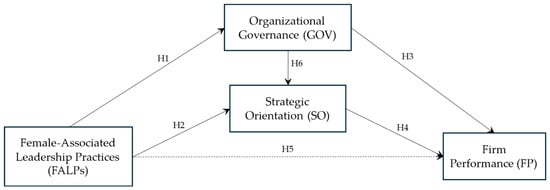
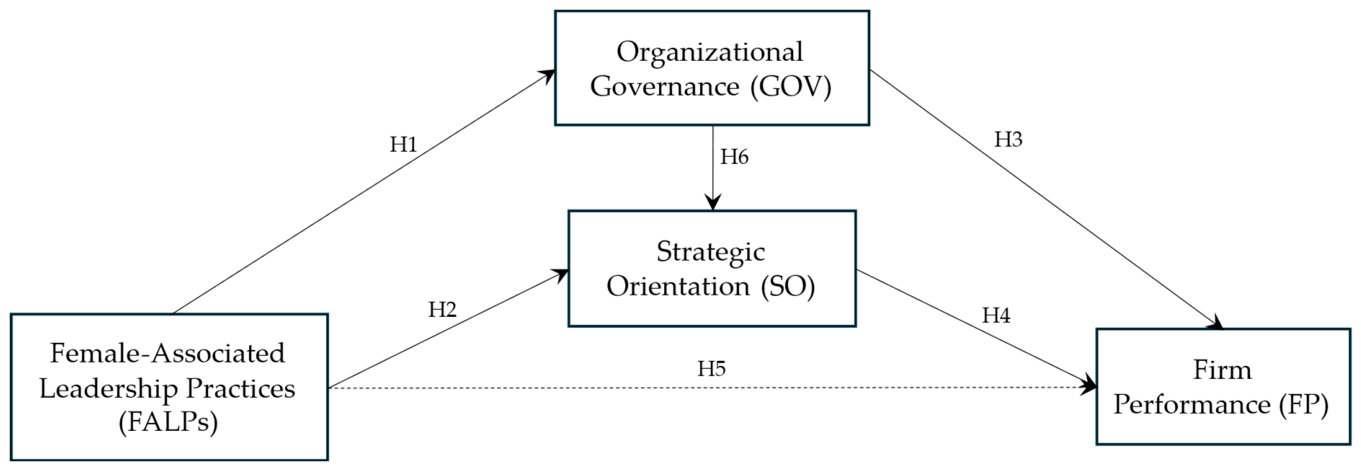
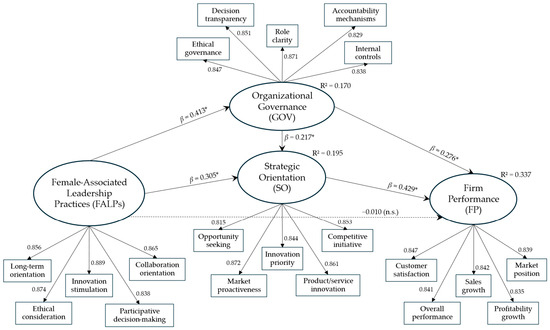
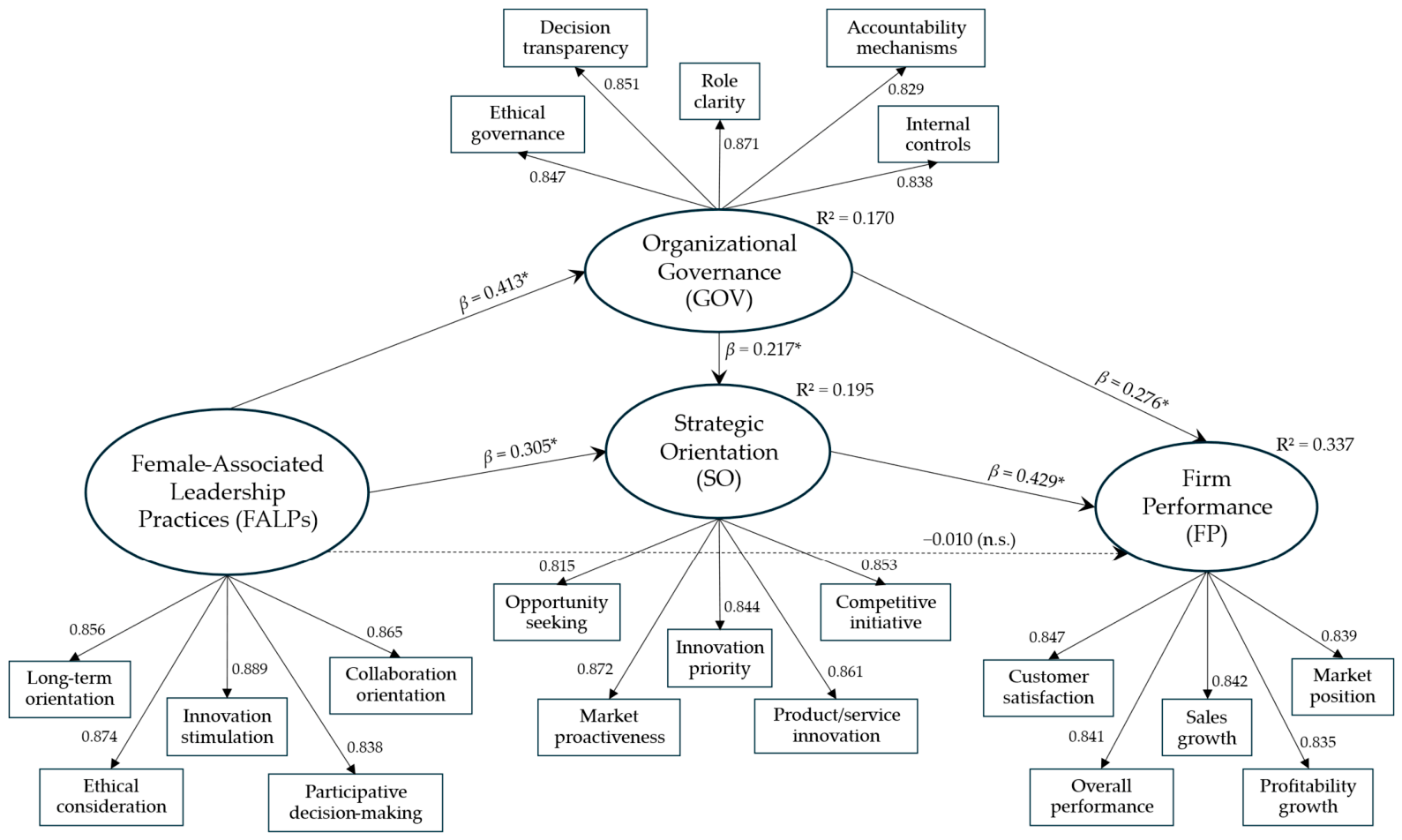

Disclaimer/Publisher’s Note: The statements, opinions and data contained in all publications are solely those of the individual author(s) and contributor(s) and not of MDPI and/or the editor(s). MDPI and/or the editor(s) disclaim responsibility for any injury to people or property resulting from any ideas, methods, instructions or products referred to in the content. |
© 2026 by the authors. Licensee MDPI, Basel, Switzerland. This article is an open access article distributed under the terms and conditions of the Creative Commons Attribution (CC BY) license.