


Abstract
Innovation ecosystems are recognized as drivers of regional development and technological transformation, yet empirical studies remain concentrated in metropolitan areas, limiting the understanding of emerging agroindustrial territories. This study examines the innovation ecosystem of Rio Verde (Brazil), highlighting how structural configurations and functional asymmetries influence collaboration and distributed innovation outcomes. Grounded in the Regional Innovation System perspective and the Six-Helix model, an exploratory survey was conducted with 41 actors through a digital mapping platform. Results reveal institutional diversity and strong willingness to collaborate, but innovation capabilities and outputs remain concentrated in a few central organizations, while funding and coordination mechanisms are weak. The study refines the concept of the collaboration paradox—high engagement without broad diffusion of results—and demonstrates the methodological value of combining digital ecosystem mapping with the Six-Helix framework. Practically, it suggests that regional policies should move beyond stimulating collaboration to prioritize funding, institutional coordination, and the diffusion of innovation capabilities across emerging agroindustrial ecosystems.
1. Introduction
Innovation is increasingly understood as an ecosystem phenomenon rather than the outcome of isolated organizational efforts. As technological complexity, knowledge specialization, and interorganizational interdependence intensify, the capacity of regions to innovate depends on coordinated interactions among heterogeneous actors who can create, share, and combine complementary knowledge and resources. This perspective has established innovation ecosystems as one of the dominant analytical frameworks for understanding regional competitiveness and innovation dynamics, emphasizing that value creation emerges from collaborative relationships involving firms, universities, governments, intermediary organizations, financial institutions, and innovation support environments rather than from individual organizations acting independently (Moore, 1993; Adner, 2006; Russell & Smorodinskaya, 2018; Rong et al., 2020). Recent studies further argue that ecosystem evolution depends not only on the existence of these actors but also on the quality of knowledge flows, the complementarity of ecosystem functions, and the governance mechanisms that enable collaboration to generate collective innovation outcomes (Nan & Huang, 2024; Da Silva Rabelo Neto et al., 2024; Pang et al., 2026).
Despite the rapid expansion of innovation ecosystem research, important theoretical and empirical questions remain unresolved. Most existing studies have focused on metropolitan regions, high-technology clusters, and mature innovation ecosystems characterized by diversified knowledge bases, dense institutional infrastructures, and relatively abundant financial resources (Stam, 2015; Rong et al., 2020; Topoleva, 2024). Consequently, current theoretical explanations have largely been developed in contexts where ecosystem functions are relatively consolidated and institutional coordination mechanisms are well established. Comparatively less attention has been devoted to understanding how innovation ecosystems evolve in medium-sized, non-metropolitan regions of emerging economies, where productive specialization, institutional asymmetries, uneven resource distribution, and incomplete support structures frequently shape innovation dynamics (Thomas et al., 2020; Boru et al., 2025; Bravaglieri et al., 2025).
This limitation is particularly significant in agro-industrial regions. Unlike diversified metropolitan innovation hubs, agro-industrial ecosystems are strongly embedded in territorial production systems and involve complex interactions among producers, cooperatives, agro-industries, universities, research institutes, extension services, technology firms, financial organizations, innovation habitats, and multiple levels of government. Their innovation processes are simultaneously influenced by technological advances—including digital agriculture, biotechnology, automation, artificial intelligence, traceability, and data-driven decision-making—and by structural constraints such as long production cycles, infrastructure limitations, restricted access to financial resources, and heterogeneous institutional capacities (Pigford et al., 2018; Bowman & Chisoro, 2024; Xie et al., 2025; Ashinova et al., 2025). These characteristics make agro-industrial regions particularly well-suited to examining how collaborative structures influence the generation and diffusion of innovation among heterogeneous actors.
Although collaboration is widely recognized as one of the defining characteristics of innovation ecosystems, the relationship between collaboration and innovation performance remains less straightforward than often assumed. Ecosystem research generally associates dense interaction networks, knowledge sharing, and collaborative partnerships with superior innovation capacity because these relationships facilitate learning, reduce uncertainty, and enable the mobilization of complementary resources (Powell & Grodal, 2005; Stam & Spigel, 2018). However, emerging evidence suggests that high levels of interaction do not necessarily produce distributed innovation outcomes. Ecosystems may exhibit active collaboration while simultaneously maintaining strong asymmetries in knowledge diffusion, resource allocation, governance capacity, and innovation performance (Nan & Huang, 2024; Serrano et al., 2025; Helman, 2025). Consequently, relational density alone should not be interpreted as a reliable indicator of ecosystem maturity.
To address this theoretical tension, this study introduces the concept of the collaboration paradox. Rather than treating collaboration as an inherently positive indicator of ecosystem performance, the collaboration paradox describes a specific ecosystem configuration in which intensive collaborative engagement coexists with a limited capacity to transform relational capital into broadly distributed innovation outcomes. The paradox is therefore distinct from institutional asymmetry, governance failure, or structural imbalance. These conditions may contribute to its emergence, but they do not fully explain why ecosystems characterized by active collaboration frequently concentrate innovation capabilities, strategic resources, and innovation outputs within a restricted group of organizations. By focusing on this mismatch, the collaboration paradox shifts analytical attention from whether collaboration exists to how collaborative relationships are converted into innovation capabilities across the ecosystem (Sultana & Turkina, 2023; Jütting, 2024; Da Silva Rabelo Neto et al., 2024).
However, the empirical setting of this study is the innovation ecosystem of Rio Verde, Goiás, Brazil, a medium-sized agroindustrial region characterized by strong productive specialization and an expanding network of innovation-support organizations. Using data collected from 41 ecosystem actors through a digital ecosystem mapping platform and analyzed within the Six-Helix framework, the study examines how institutional composition, collaboration patterns, and functional asymmetries shape innovation dynamics in an emerging regional ecosystem.
Beyond its theoretical contribution, this study also provides practical insights for firms, startups, universities, research organizations, innovation intermediaries, business associations, and public agencies involved in regional innovation ecosystems. By identifying structural asymmetries, collaboration patterns, and functional gaps, the proposed framework can help ecosystem actors strengthen partnerships, improve coordination, prioritize investments, and design governance strategies that foster more balanced innovation ecosystems.
The remainder of the article is organized as follows. Section 2 presents the theoretical framework, discussing innovation ecosystems, regional innovation systems, functional diversity, Six-Helix structures, and the collaboration paradox. Section 3 describes the empirical context of Rio Verde and its agroindustrial relevance. Section 4 presents the materials and methods, including data collection, platform design, actor identification, and analytical procedures. Section 5 reports the results of the ecosystem mapping. Section 6 discusses the theoretical and practical implications of the findings. Finally, Section 7 presents the conclusions, limitations, and directions for future research.
2. Theoretical Framework
2.1. Innovation Ecosystems, Regional Innovation Systems, and Emerging Agroindustrial Regions
Innovation is increasingly understood as a systemic and relational process shaped by interactions among heterogeneous actors embedded in specific institutional and territorial contexts. The foundational literature on innovation systems has shown that technological development depends not only on firms’ internal capabilities, but also on institutions, public policies, knowledge circulation, and learning processes distributed across organizations (Freeman, 1987; Lundvall, 1992; Nelson, 1993). This systemic perspective later evolved toward the regional scale through the Regional Innovation System (RIS) approach, which emphasizes that proximity, institutional arrangements, territorial learning, and localized knowledge flows influence innovation dynamics (Cooke, 2008; Asheim & Gertler, 2005; Doloreux & Parto, 2005).
The innovation ecosystem perspective complements the RIS literature by emphasizing the interdependence among actors that jointly contribute to value creation, technological development, and innovation diffusion. The ecosystem concept, initially advanced by Moore (1993) and later refined by Adner (2006), highlights that innovation depends on coordinated arrangements among organizations with distinct but complementary roles. In this sense, ecosystems are not merely agglomerations of firms and institutions, but relational structures in which knowledge, resources, capabilities, and expectations are coordinated around innovation processes (Tsujimoto et al., 2018; Dedehayir et al., 2018).
Recent ecosystem scholarship has reinforced the need to move beyond broad descriptions of actors and networks toward a clearer understanding of the mechanisms through which ecosystems evolve and generate outcomes. Stam and Van de Ven (2021), for example, argue that ecosystem performance depends on the articulation of multiple interdependent elements, including institutions, networks, leadership, talent, knowledge, and financial capital. Similarly, Wurth et al. (2022) emphasize that ecosystem research still requires stronger theoretical explanations of the mechanisms connecting actors, structures, and outcomes. This debate is particularly relevant for emerging regions, where institutional conditions, resource availability, and coordination capacities differ substantially from those observed in mature metropolitan innovation hubs (Goletsis et al., 2024; Tskhadadze, 2026).
Although the literature has advanced our understanding of entrepreneurial and innovation ecosystems, studies remain more concentrated in developed, urban, and technologically dense regions. Emerging agroindustrial territories require a more specific analytical approach because productive specialization, long value chains, territorial dependence, logistical conditions, climatic factors, and uneven access to technological and financial resources shape their innovation dynamics. In these contexts, innovation may involve research and development, digital agriculture, biotechnology, process improvement, logistics, traceability, sustainability practices, organizational innovation, and new market arrangements. Therefore, agroindustrial ecosystems should be analyzed not only for the presence of collaboration but also for the distribution of innovation capabilities across different types of actors (Bravaglieri et al., 2025; Bowman & Chisoro, 2024).
This distinction is important because agroindustrial regions may combine strong productive capacity with incomplete innovation structures. Producers, cooperatives, agroindustries, input suppliers, research institutions, government agencies, innovation habitats, investors, and anchor firms may interact in the same territory. However, their access to knowledge, funding, infrastructure, and decision-making power is often uneven. As a result, the existence of an active ecosystem does not necessarily imply that innovation capabilities are broadly distributed or that collaborative relationships are converted into systemic innovation outcomes (Rock et al., 2026).
2.2. Functional Diversity, Six-Helix Structures, and Structural Asymmetries
The increasing complexity of innovation dynamics has intensified the need for analytical frameworks capable of capturing not only interactions among actors but also the functional diversity that sustains innovation ecosystems. While traditional innovation system approaches emphasized institutional relationships and knowledge exchange, more recent studies argue that ecosystem performance depends on the presence and articulation of complementary functions, such as knowledge production, entrepreneurial activity, coordination, financing, infrastructure, regulation, market access, and technological experimentation (Autio & Thomas, 2014; Stam, 2015; Stam & Van de Ven, 2021).
This functional perspective is relevant because ecosystems may exhibit high levels of interaction yet lack key structural conditions for the diffusion of innovation. For example, a region may have firms, universities, and government agencies that interact frequently, yet still exhibit weak funding mechanisms, limited innovation ecosystems, low absorptive capacity among smaller actors, or excessive dependence on a few central organizations. In such cases, relational connectivity may create the appearance of ecosystem dynamism, while functional gaps continue to restrict the distribution of innovation outcomes.
Helix-based models provide useful analytical tools for examining these relationships. The Triple Helix model proposed by Etzkowitz and Leydesdorff (2000) emphasized the interaction among university, industry, and government as a basis for knowledge-based innovation. The Quadruple Helix expanded this perspective by incorporating civil society and media as relevant dimensions of knowledge production and social innovation, while the Quintuple Helix added environmental and sustainability concerns to the dynamics of innovation (Carayannis & Campbell, 2009; Carayannis et al., 2012). These models contributed to the understanding of innovation as an interactive, multi-actor process.
However, emerging regional ecosystems often require a more detailed functional reading. The Six-Helix approach, grounded in the analysis of knowledge flows in regional innovation systems proposed by Labiak Junior (2012) and later applied by Colini et al. (2018), distinguishes six complementary groups of actors: business actors, knowledge actors, government actors, funding actors, innovation habitats, and institutional actors. This model is useful because it separates functions that may be aggregated or hidden in broader helix approaches, especially the roles of funding actors, innovation habitats, and institutional coordination bodies.
Each helix contributes differently to ecosystem functioning. Business actors transform knowledge into products, services, processes, and market solutions. Knowledge actors generate, adapt, and disseminate scientific and technical knowledge. Government actors create policies, regulations, incentives, and institutional support conditions. Funding actors reduce uncertainty and enable experimentation, scaling, and technological development. Innovation habitats provide spaces, programs, infrastructure, mentoring, and connections that support entrepreneurship and collaborative experimentation. Institutional actors contribute to articulation, representation, coordination, and the stabilization of collective agendas (Helman, 2025).
The complementarity among these functions is central to ecosystem development. When one or more functions are absent, weak, or concentrated in a limited number of organizations, the ecosystem may experience structural asymmetries. These asymmetries do not refer only to the unequal number of actors across categories, but to the unequal distribution of capabilities, resources, coordination power, and innovation outputs. In this sense, a structurally diverse ecosystem may still be functionally imbalanced if innovation activities, funding, and strategic coordination remain concentrated in a restricted group of actors (Rabelo Neto et al., 2026).
2.3. Collaboration, Interaction, and Structural Imbalances in Innovation Ecosystems
Collaboration occupies a central position in the literature on innovation ecosystems and regional innovation systems. Collaborative relationships are commonly associated with knowledge circulation, collective learning, uncertainty reduction, and regional competitiveness (Powell & Grodal, 2005; Stam & Spigel, 2018). From this perspective, interaction density and network connectivity are often interpreted as indicators of ecosystem vitality and potential innovation performance. However, recent ecosystem studies have questioned the assumption that collaboration automatically produces stronger or more distributed innovation outcomes (Autio et al., 2014; Stam & Van de Ven, 2021; Wurth et al., 2022).
This critique is especially relevant in emerging agroindustrial ecosystems. In these contexts, actors may express a high willingness to collaborate. They may maintain visible networks of interaction, but innovation outcomes may remain concentrated among organizations with greater technological, financial, managerial, or institutional capacity. Therefore, collaboration may be present as relational engagement without necessarily becoming a mechanism for distributed innovation. This gap between collaborative intensity and distributed outcomes is the core of what this study conceptualizes as the collaboration paradox (Xie et al., 2025).
The collaboration paradox differs from institutional asymmetry, structural imbalance, and innovation system failure. Institutional asymmetry refers to unequal capacities, legitimacy, resources, or influence among actors. Structural imbalance refers to the uneven presence or weakness of specific ecosystem functions, such as funding, coordination, or innovation habitats. Innovation system failure refers to barriers that prevent systems from performing innovation functions effectively, including weak institutions, missing capabilities, or coordination failures. All these conditions may influence the collaboration paradox. However, it refers to a more specific configuration: the coexistence of active collaboration or strong collaborative willingness with limited conversion of relational capital into distributed innovation capabilities and outcomes (Serrano et al., 2025).
This distinction strengthens the study’s theoretical contribution by shifting the analytical focus from whether actors collaborate to how collaboration translates into innovation outcomes across the ecosystem. A network may be dense, active, or institutionally diverse and still reproduce concentration if the resources needed for innovation remain controlled by a few central actors. In this sense, collaboration becomes paradoxical when it signals ecosystem vitality at the relational level but fails to produce an equivalent diffusion of innovation capabilities at the functional and structural levels (Irwin et al., 2025).
In agroindustrial regions, this paradox may be intensified by the characteristics of the productive system. Long value chains, dependence on anchor firms, uneven access to digital technologies, concentration of technical knowledge, logistical constraints, and the strategic role of funding and public policy may create conditions in which collaboration is necessary but insufficient. Interaction among producers, cooperatives, firms, research institutions, public organizations, and support entities can generate learning opportunities. However, the effective dissemination of innovation depends on actors’ access to financial resources, absorptive capacity, technical support, infrastructure, and coordination mechanisms (Huma et al., 2024).
Therefore, the collaboration paradox offers an analytical lens for understanding why emerging ecosystems may appear collaborative yet exhibit limited performance in distributed innovation. It does not reject the importance of collaboration. Instead, it argues that collaboration should be analyzed together with functional balance, institutional coordination, funding structures, and the distribution of innovation capabilities. This perspective is particularly useful for examining agroindustrial ecosystems, where strong productive specialization and active networks may coexist with structural bottlenecks that restrict the diffusion of innovation outcomes (Bravaglieri et al., 2025).
Based on this theoretical synthesis, the study understands the collaboration paradox as a configuration in which high collaborative engagement coexists with structural and functional conditions that limit the conversion of relational capital into distributed innovation outcomes.
This theoretical discussion highlights a central gap in the literature. Although collaboration is widely recognized as a key dimension of innovation ecosystems, there remains a limited understanding of how emerging agroindustrial ecosystems may exhibit active collaborative networks yet show low conversion of relational engagement into distributed innovation outcomes. Addressing this gap requires analyzing collaboration not only in terms of network connectivity but also in relation to functional balance, funding structures, institutional coordination, and the distribution of innovation capabilities among ecosystem actors.
3. Empirical Context: Rio Verde and the Agroindustrial Innovation Ecosystem
Rio Verde is located in the southwestern region of the state of Goiás, in Central Brazil, and represents one of the most economically dynamic non-metropolitan municipalities in the country. Although it is not part of a large metropolitan area, the municipality combines demographic growth, territorial scale, productive specialization, and institutional density. According to official demographic data, Rio Verde has a population of more than 240,000 and occupies a large area, reinforcing its position as a regional hub for economic, logistical, educational, and technological activities.
The municipality’s economic trajectory is closely tied to agribusiness and agroindustrial development. Rio Verde occupies a prominent position in the agricultural economy of Goiás, particularly in soybean, cereal, poultry, and swine production. This productive base has supported the emergence of a diversified agroindustrial structure that connects agricultural production, input suppliers, cooperatives, food-processing industries, logistics operators, technical services, and commercial organizations. As a result, the municipality is not only a site of primary agricultural production but also a territorial platform for value aggregation, technological diffusion, and agroindustrial coordination.
The agroindustrial relevance of Rio Verde is also evident in its role within the state economy. The municipality has been identified as one of the leading contributors to agricultural value added in Goiás. It has consolidated itself as a major productive center within the Brazilian agribusiness system. A combination of large-scale grain production, animal protein chains, industrial processing, cooperative structures, logistics infrastructure, and specialized services supports this position. The presence of companies and organizations associated with food processing, agricultural inputs, storage, transportation, and technological solutions strengthens the municipality’s role as an agroindustrial hub.
Logistics constitutes another important dimension of Rio Verde’s agroindustrial development. The municipality is strategically located in Central Brazil and is connected to relevant road, rail, and air transport infrastructures. These conditions facilitate the circulation of grains, inputs, industrialized products, technologies, and specialized services. The presence of multimodal logistics infrastructure, including connections to the North–South Railway, helps integrate the local productive system with national and international markets. In agroindustrial ecosystems, such logistical conditions are particularly relevant because innovation depends not only on knowledge generation but also on the capacity to organize production flows, supply chains, market access, and the adoption of technologies across territories.
Rio Verde also presents an expanding institutional environment related to science, technology, entrepreneurship, and innovation. The municipality includes higher education institutions, applied research organizations, innovation habitats, entrepreneurial support organizations, public agencies, and private-sector initiatives. These actors contribute to professional training, technological experimentation, business support, knowledge transfer, and innovation-oriented projects. The existence of innovation-related initiatives, such as technology hubs, incubators, applied research centers, and local policy instruments for science, technology, and innovation, indicates that the municipality has been developing an institutional infrastructure that goes beyond its traditional agroproductive base.
This context makes Rio Verde a relevant case for analyzing innovation ecosystems in emerging agroindustrial regions. On the one hand, the municipality exhibits strong productive specialization, diversified agroindustrial chains, and an active set of organizations engaged in innovation. On the other hand, it also exhibits typical challenges of emerging regional ecosystems, such as unequal access to funding, uneven distribution of innovation capabilities, dependence on specific coordinating actors, and possible gaps between collaboration and the diffusion of innovation outcomes. Therefore, Rio Verde offers an appropriate empirical setting for examining how collaboration is structured and how structural and functional asymmetries may influence the distribution of innovation capabilities across an agroindustrial ecosystem.
By focusing on Rio Verde, this study contributes to the analysis of innovation ecosystems outside large metropolitan and technologically mature regions. The case allows the investigation of how agroindustrial territories combine productive strength, institutional articulation, technological demand, and structural limitations. It also provides empirical conditions for examining whether collaborative engagement among heterogeneous actors is sufficient to generate distributed innovation outcomes or whether the conversion of collaboration into innovation depends on broader functional balance among business actors, knowledge actors, government actors, funding actors, innovation habitats, and institutional actors.
4. Materials and Methods
4.1. Research Design and Study Context
This study adopts an applied research design with a quantitative approach and exploratory-descriptive objectives. The applied nature of the research lies in its focus on generating practical and analytical insights into the structural dynamics of regional innovation ecosystems. The exploratory dimension seeks to deepen the understanding of ecosystem interactions and organizational roles. At the same time, the descriptive component aims to systematically characterize the actors, relationships, and structural conditions that shape innovation performance within the studied context.
The empirical setting of the study is the innovation ecosystem of Rio Verde, a medium-sized agroindustrial municipality located in the state of Goiás, Brazil. Rio Verde was selected because it combines strong productive specialization in agribusiness, the presence of agroindustrial chains, and an expanding set of organizations connected to entrepreneurship, technology, education, research, public policy, and innovation support. The unit of analysis is the organizational actor belonging to the regional innovation ecosystem. For this study, an ecosystem actor was defined as any formal organization that performs, supports, promotes, coordinates, finances, or enables innovation-related activities in the regional context, including firms, startups, agroindustrial companies, educational institutions, research centers, government agencies, innovation habitats, incubators, business support organizations, communities, investors, funding actors, anchor companies, and institutional coordination bodies.
4.2. Sampling and Data Collection
The research was conducted voluntarily with actors in Rio Verde’s innovation ecosystem. The identification and mobilization of participants were supported by a local task force composed of organizations directly connected to innovation in the municipality, including the Municipal Department of Innovation of Rio Verde, HUB Goiás, an innovation-related body linked to the state of Goiás, and the Inova Rio Verde group, formed by local innovation actors. This collective mobilization was important for reaching organizations recognized by local stakeholders as part of the ecosystem. The list of potential participants was based on previous mappings and institutional knowledge held by HUB Goiás, the Municipality of Rio Verde, and the Inova Rio Verde group.
Based on this mobilization process, 41 valid responses were obtained. The sample should be interpreted as an exploratory, voluntary mapping of relevant ecosystem actors, rather than a complete census of all innovation-related organizations in the municipality. The authors recognize that additional innovation actors may exist in Rio Verde and may not have participated in the study. Nevertheless, the number of respondents is considered adequate for the local ecosystem context and for the exploratory-descriptive objectives of the research, especially because the mobilization involved the main institutional organizations involved in innovation in the municipality.
The questionnaire consisted of categorical, multiple-choice, and Likert-scale items. Questions explicitly indicating minimum and maximum numbers of selections allowed multiple responses, whereas all remaining categorical questions required a single answer. The perceived degree of interaction with the ecosystem was measured using a five-point Likert scale ranging from “Very low” (1) to “Very high” (5). Variables describing organizational roles and competencies were used only for sample characterization and ecosystem mapping, whereas inferential analyses focused on the interaction indicators described in Section 5.
At the time of data collection, the exact number of organizations formally belonging to the Rio Verde innovation ecosystem was not available because no official registry or consolidated ecosystem database existed. The local task force—including HUB Goiás, the Municipal Department of Innovation, and the Inova Rio Verde group—identified and mobilized the organizations recognized as the principal actors within the regional ecosystem. Consequently, the study should be interpreted as an exploratory mapping of the most relevant organizations rather than as a probabilistic survey of a predefined population.
The questionnaire was answered by senior institutional representatives with broad knowledge of each organization’s activities, partnerships, innovation projects, and strategic positioning within the ecosystem. Respondents included owners, managing partners, directors, campus directors, rectory representatives, coordinators, and institutional managers formally responsible for representing their organizations in innovation-related initiatives. This respondent profile was considered appropriate because the study required information on organizational roles, existing partnerships, innovation activities, support needs, and interaction patterns within the ecosystem. Therefore, the responses were provided by individuals occupying decision-making or institutional representation positions, with access to comprehensive information about the organizations they represented.
4.3. Digital Platform and Research Instrument
Data were collected through a digital platform developed by the authors at CEINA (the Center for Research in Innovation and Agribusiness), which is linked to the Graduate Program in Administration at the Federal Institute of Goiano, Rio Verde Campus. The platform, named Innovation Ecosystem Map, was designed to support ecosystem mapping, actor registration, interaction analysis, and visualization of innovation-related relationships in the regional ecosystem. The research instrument was developed specifically for this study, based on the theoretical dimensions of Regional Innovation Systems, innovation ecosystems, and the Six-Helix model. It was not directly adapted from a single pre-existing scale. However, it was constructed to operationalize the research objectives, particularly the identification of actor profiles, institutional functions, innovation activities, existing partnerships, collaboration intensity, support needs, and perceived challenges.
The questionnaire included questions on organizational identification, ecosystem positioning, area of activity, size, functional contribution, priority areas of interest, innovation activities, projects, initiatives, existing partnerships, interaction intensity, perceived barriers, support needs, contact information, and geolocation. The instrument also captured information related to innovation outputs and practices, including research and development projects, new products, new processes, digital solutions, technological adoption, knowledge transfer, training initiatives, organizational innovations, commercial innovations, marketing strategies, sustainability practices, new services, and agroindustrial solutions. This broad operationalization was adopted because innovation in agroindustrial ecosystems may occur not only through patents or formal R&D, but also through technological adoption, process improvement, organizational change, market strategies, and collaborative projects.
Before data collection, the platform and the questionnaire underwent validation by eight independent specialists from HUB Goiás and members of the Inova Rio Verde working group. These specialists had professional experience in information technology, marketing, innovation, entrepreneurship, and strategy. The specialists did not participate as respondents in the final data collection and were not included among the 41 mapped ecosystem actors. Their role was limited to evaluating the research instrument and the digital platform prior to application. The validation process assessed the clarity of the questions, the adequacy of the terminology, the relevance of the response categories, the alignment between the instrument and the local innovation ecosystem, and the usability of the platform interface. Based on this process, adjustments were made to the wording of questions, the classification of ecosystem actors, the categories used to identify partnerships, and the structure of the platform interface. These adjustments sought to ensure that the instrument was understandable to heterogeneous actors and capable of capturing the specific characteristics of the Rio Verde innovation ecosystem.
4.4. Variables and Measures
Collaboration among actors was measured using data collected via the platform’s embedded questionnaire. Respondents were asked to indicate their existing innovation partnerships and the actors with whom they had involvement in innovation projects, institutional initiatives, or collaborative activities. Thus, the relational data used in the study were based on declared interactions reported by the participating organizations. The platform allowed each respondent to indicate their degree of interaction with the innovation ecosystem using a five-level scale: very low, low, medium, high, and very high. “Very low” indicated few or almost no interactions with other actors; “low” indicated occasional interactions; “medium” indicated a moderate level of interaction; “high” indicated many active partnerships; and “very high” indicated that the organization operated as a hub of connections within the ecosystem.
The collaboration intensity measure was constructed from respondents’ self-reported partnership ties, a common approach for mapping innovation-platform networks (Cunningham et al., 2022; Rocha et al., 2021). That design is useful because collaboration in ecosystems is relational and often needs to be made quantitatively visible through reported connections, centrality, density, and interaction strength (Serrano-Ruiz et al., 2024; Cunningham et al., 2022; Qi et al., 2021).
The main caveat is that declared interactions are not complete records of interactions. Studies comparing data sources show that any single source underestimates knowledge interactions, and survey wording can bias which actors appear central or influential (Fritsch et al., 2019; Hermans et al., 2017). Even so, self-reported network data remain widely used because they capture collaboration, information sharing, trust, and perceived ecosystem embeddedness that public databases often miss (Cobben et al., 2023; Cantù et al., 2021; De Freitas Nascimento et al., 2022).
In the field related to existing partnerships, respondents could indicate relationships with actors already mapped by HUB Goiás, the Municipality of Rio Verde, and the Inova Rio Verde group. These partnerships were classified according to the following categories: educational institutions, communities, public sector, research centers, innovation environments, incubators, investors, venture capital or funding organizations, and anchor companies. This procedure enabled the identification of both the perceived intensity of interaction and the specific types of actors involved in collaborative relationships. Because the interaction data were self-reported, the study treats them as declared relational evidence, capturing how each respondent perceives and reports their connections within the ecosystem. The relationships were not necessarily validated by the other actors involved, a methodological limitation acknowledged.
The analysis considered five main groups of variables: actor classification, functional contribution, collaboration intensity, innovation activity, and structural asymmetry. Actor classification was based on the Six-Helix model. Functional contributions were treated as multiple-response variables because the same organization could perform more than one function in the ecosystem. Collaboration intensity was operationalized through the five-level self-reported interaction scale. Innovation activity was operationalized through the reported existence of innovation-related projects, initiatives, outputs, or practices. Structural asymmetries were identified through the combined analysis of actor distribution across the Six-Helix categories, the presence or absence of specific actor groups, the concentration of innovation activities or outputs in certain organizations, the distribution of collaboration intensity, and the relational patterns reported among actors.
4.5. Data Analysis
The data were analyzed using descriptive statistics and ecosystem mapping procedures. Descriptive statistics were used to characterize the distribution of actors, institutional categories, functional contributions, organizational size, collaboration intensity, innovation activities, reported challenges, and support needs. The relational data were analyzed based on the partnerships and interactions that respondents declared on the platform. These reported ties were used to examine interaction patterns, identify central and peripheral positions, verify connections among different categories of actors, and assess whether collaboration was broadly distributed or concentrated in specific organizations or groups.
The density of interactions was assessed by examining the relationship between reported partnerships and the potential connections among mapped actors, while accounting for the limitations of self-reported data. In addition, the analysis considered the number of reported ties, the distribution of ties across actor categories, the concentration of partnerships within specific groups, and the presence or absence of connections involving funding actors, research centers, innovation environments, public-sector organizations, and anchor companies. These relational indicators supported a more objective interpretation of the collaboration structure and helped identify potential gaps between collaborative engagement and distributed innovation outcomes.
The identification of the collaboration paradox followed a comparative analytical strategy. First, the study examined collaborative engagement in the ecosystem, based on self-reported interaction intensity, existing partnerships, and interest in joint initiatives. Second, it analyzed the distribution of innovation capabilities and innovation-related outputs across actors, considering the concentration of reported projects, initiatives, and functional contributions. Third, it compared collaborative engagement with the distribution of innovation outcomes and structural conditions. The collaboration paradox was considered present when evidence indicated high collaborative willingness or active relational engagement, combined with limited distribution of innovation capabilities, a concentration of innovation outputs, weak funding structures, or an incomplete functional balance across the Six-Helix categories.
4.6. Ethical Considerations and Study Limitations
The study did not systematically examine ownership structures, corporate control, or cross-participation among mapped actors. Therefore, possible ownership links or formal governance ties between organizations were not used as analytical criteria in the network interpretation and should be considered a methodological limitation. Also, in the case of Rio Verde, there is no official ecosystem registry, which constitutes a methodological limitation.
The study complied with ethical standards for research involving organizational respondents. Participants were informed about the objectives of the research, the voluntary nature of participation, and the study’s academic purpose. The information was analyzed in aggregate form, and no personally identifiable information was disclosed in the manuscript.
The methodological design has limitations. First, the sample is voluntary and exploratory, which limits the generalizability of the results. Second, the study does not claim to represent all innovation-related actors in Rio Verde, since additional organizations may exist beyond those mobilized through the local innovation task force. Third, the data are based on self-reported information from organizational representatives, which may be subject to perception bias. Fourth, some interaction data were declared by one actor and may not have been reciprocally validated by the other actors involved. Finally, the study provides a cross-sectional view of the ecosystem during the data collection period and does not capture longitudinal changes in collaboration or innovation performance.
5. Results
5.1. Structural and Institutional Composition of the Innovation Ecosystem
The results presented in this section refer to the 41 actors that voluntarily participated in the ecosystem mapping. Therefore, the findings should be interpreted as an exploratory representation of relevant innovation actors in Rio Verde rather than as a complete census of all organizations involved in innovation-related activities in the municipality. The analysis focuses on the institutional composition of the ecosystem, the distribution of actors across the Six-Helix categories, the functional roles organizations perform, and the structural gaps identified through the digital platform.
The innovation ecosystem of Rio Verde comprises actors from multiple organizational categories, including firms, educational and research institutions, government agencies, innovation habitats, and intermediary organizations. This composition reflects the systemic nature of regional innovation processes, in which innovation depends on the articulation of heterogeneous actors embedded in territorial contexts (Freeman, 1987; Lundvall, 1992; Cooke, 2008). However, rather than treating institutional diversity as direct evidence of ecosystem maturity, the results are interpreted more cautiously as an indication that the mapped ecosystem contains different organizational groups with the potential to support collaborative innovation dynamics.
Figure 1 presents the institutional, functional, and organizational composition of the Rio Verde innovation ecosystem. The figure summarizes three dimensions of the mapping: the distribution of actors by institutional helix, the functional roles performed by ecosystem actors, and the distribution of organizational size. This analytical structure follows the Six-Helix perspective, which distinguishes business actors, knowledge actors, government actors, funding actors, innovation habitats, and institutional actors as complementary components of regional innovation systems (Labiak Junior, 2012; Colini et al., 2018).
Figure 1.
Institutional, functional, and organizational composition of the Rio Verde innovation ecosystem (n = 41). (A) Distribution of actors by institutional helix. (B) Functional roles performed by ecosystem actors. (C) Organizational size distribution. Source: Authors.
As shown in Figure 1, business actors constitute the largest institutional group within the mapped ecosystem, accounting for 43.9% of organizations (18 actors). This group includes startups, technology-based firms, agribusiness companies, service providers, and agroindustrial organizations. The predominance of business actors reflects Rio Verde’s productive profile, a municipality strongly associated with agribusiness and agroindustrial chains. This finding is consistent with the argument that regional innovation systems are shaped by local productive structures, sectoral specialization, and territorial economic trajectories (Cassiolato & Lastres, 2005; Asheim & Gertler, 2005). Therefore, this concentration should not be automatically interpreted as an imbalance but rather as an expression of the territory’s agroindustrial specialization.
Knowledge actors account for 17.1% of the mapped ecosystem, comprising seven organizations. This group includes universities, research centers, and education-oriented institutions. Their presence indicates that the ecosystem has organizations capable of supporting knowledge generation, professional training, applied research, and technology transfer. In regional innovation systems, knowledge organizations contribute to interactive learning and to the circulation of scientific and technical capabilities across firms, governments, and support institutions (Lundvall, 1992; Cooke, 2008). In an agroindustrial region, this function is particularly relevant because innovation often depends on the articulation between scientific knowledge, technical assistance, productive experimentation, and organizational learning.
Innovation habitats also account for 17.1% of the mapped actors, totaling seven organizations. These actors include environments that support entrepreneurship, experimentation, networking, mentoring, and innovation-oriented initiatives. Their presence suggests that Rio Verde has developed institutional spaces to connect firms, entrepreneurs, researchers, public organizations, and support entities. As Labiak Junior (2012) argues, innovation habitats serve mediation and support functions that extend beyond physical infrastructure, fostering interaction, knowledge circulation, and collaborative experimentation. However, the existence of innovation habitats does not necessarily indicate that innovation capabilities are broadly distributed across the ecosystem, since their effectiveness depends on their capacity to connect different actors and support the development of collaborative projects.
Institutional actors account for 14.6% of the mapped ecosystem, comprising six organizations. These actors perform articulation, representation, training, coordination, and support functions. Their presence is relevant because regional innovation ecosystems often depend on organizations capable of reducing coordination barriers, mobilizing actors, and sustaining collective agendas. This finding aligns with studies that emphasize the importance of institutional coordination and ecosystem governance in transforming interaction networks into innovation outcomes (Stam, 2015; Stam & Van de Ven, 2021). In the Rio Verde case, institutional actors appear to contribute to the organization of local innovation initiatives and to the connection between productive, educational, governmental, and entrepreneurial actors.
Government actors account for 7.3% of the mapped ecosystem, representing three organizations. Although this share is smaller than that of business, knowledge, and innovation habitat actors, public-sector organizations perform relevant functions in creating policy conditions, supporting innovation programs, mobilizing stakeholders, and connecting local initiatives with state-level innovation structures. This role is consistent with the innovation systems literature, which emphasizes the importance of public policy and institutional arrangements in supporting technological development and regional innovation capacity (Freeman, 1987; Nelson, 1993).
The most evident structural gap in the institutional composition concerns the absence of locally based funding actors among the mapped organizations. No organization was classified primarily within the funding helix, which represents 0% of the mapped ecosystem. This does not mean that actors in Rio Verde have no access to external funding agencies, public calls, credit lines, or innovation support programs. Rather, it indicates that the local ecosystem does not yet present a clearly embedded funding helix whose main function is to finance innovation, reduce uncertainty, support startups, and enable the scaling of technology-based initiatives within the territory. This gap is relevant because financial actors and funding mechanisms are frequently identified as important conditions for experimentation, risk reduction, and technological scaling in innovation ecosystems (Mazzucato, 2013; Stam & Van de Ven, 2021).
Taken together, the institutional composition of the Rio Verde innovation ecosystem indicates diversity among mapped actors, with strong business participation, relevant knowledge-generation capacity, and the presence of innovation habitats and institutional support organizations. At the same time, the distribution across the Six-Helix categories points to functional asymmetries, especially the absence of locally based funding actors and the comparatively smaller participation of government organizations. These findings suggest that the ecosystem presents relational and institutional conditions for collaboration, but also contains structural gaps that may affect the distribution and scaling of innovation activities.
5.2. Systemic Interactions and the Collaboration Paradox
The analysis of systemic interactions provides evidence about the relational dynamics of the Rio Verde innovation ecosystem. Based on data collected through the digital mapping platform, this section examines declared connections, interaction intensity, the most frequently mentioned partners, innovation-related projects, thematic areas of innovation, and the empirical configuration associated with the collaboration paradox. Since the relational data were self-reported by participating organizations, the results should be interpreted as declared interactions within the mapped ecosystem rather than as a complete and reciprocally validated representation of all possible relationships among innovation actors in Rio Verde.
The relational mapping identified 835 declared connections among the 41 mapped actors, corresponding to an average of approximately 20.4 declared connections per respondent. This indicator was calculated by dividing the total number of declared connections by the number of respondents. Since the platform may count duplicated or reciprocal mentions, this measure is interpreted as a descriptive indicator of relational activity rather than as a formal network density measure. Even with this methodological caution, the volume of declared connections suggests a highly active relational environment within the mapped ecosystem.
The intensity of interaction also indicates relevant collaborative engagement among the mapped actors. Organizations were classified into five interaction levels, ranging from very low to very high, based on the degree of interaction reported on the platform. Among the 41 actors, one organization reported a very low level of interaction, corresponding to 2.4% of the sample; five reported low interaction, corresponding to 12.2%; 16 reported medium interaction, corresponding to 39.0%; 14 reported high interaction, corresponding to 34.1%; and five reported very high interaction, corresponding to 12.2%. Taken together, the medium, high, and very high categories represent 35 actors, or 85.4% of the mapped ecosystem. In addition, 19 actors (46.3%) reported high or very high levels of interaction.
These data suggest that most mapped organizations perceive themselves as having at least moderate interaction with the ecosystem. However, interaction intensity should not be interpreted as direct evidence of ecosystem maturity. It indicates relational engagement but does not necessarily demonstrate that innovation capabilities, funding mechanisms, or innovation outputs are broadly distributed. This distinction is important because ecosystem performance depends not only on the existence of interactions but also on the capacity to transform relational engagement into distributed innovation outcomes (Stam, 2015; Stam & Van de Ven, 2021).
The analysis of the most frequently mentioned partners provides additional evidence of the ecosystem’s relational structure. The actors most cited in declared partnerships were HUB Goiás, with 28 mentions; INOVA Rio Verde, with 27; the Municipal Department of Science, Technology and Innovation, with 24; IF Goiano, with 23; FAPEG, with 21; UNIRV and Área 64, with 20 mentions each; the Municipal Department of Economic Development and Agro HUB UNIRV, with 19 mentions each; CEAGRE, with 18; and Espaço Capital, with 14. These actors appear to perform visible articulation functions within the mapped ecosystem by connecting firms, knowledge institutions, public organizations, innovation environments, and support entities.
This pattern is consistent with the literature on innovation networks, which emphasizes that bridging actors may facilitate information flows, knowledge circulation, and collaborative opportunities among heterogeneous organizations (Granovetter, 1973; Powell & Grodal, 2005). In the Rio Verde case, organizations such as HUB Goiás, INOVA Rio Verde, the Municipal Department of Science, Technology, and Innovation, IF Goiano, UNIRV, Agro HUB UNIRV, and CEAGRE appear to contribute to ecosystem cohesion. Nevertheless, their prominence also suggests that relational articulation may depend on a limited set of organizations, reinforcing the importance of examining whether collaboration is broadly distributed or concentrated among specific actors.
The database identified 256 innovation-related projects reported by the mapped actors. These projects reflect different forms of innovation activity and should not be interpreted only as patents or formal laboratory-based R&D. In the context of an agroindustrial ecosystem, innovation may include applied research, technological adoption, digital solutions, process improvements, training initiatives, knowledge transfer actions, organizational innovations, commercial innovations, sustainability-oriented practices, new services, and agroindustrial solutions. This broader understanding is necessary because innovation in agroindustrial regions often occurs through practical, technological, organizational, and market-oriented changes.
The thematic areas associated with the reported projects reinforce this applied and multidimensional profile. Among the most recurrent areas were agribusiness, with 20 projects; artificial intelligence, with 14; information technology, with nine; big data and analytics, with seven; biotechnology, health, and bioeconomy, with six projects each; sustainability, Internet of Things, and smart cities, with five projects each; and healthtech, circular economy, industrial automation, and Industry 4.0, with three projects each. These areas indicate that the ecosystem combines traditional agroindustrial specialization with emerging technological fields, especially digital technologies, data-driven solutions, sustainability, biotechnology, and automation.
Although the ecosystem presents a diversified thematic profile, the distribution of innovation-related projects is uneven. CEAGRE reported 98 of the 256 projects, corresponding to approximately 38.3% of the total. This concentration should be interpreted with caution. On the one hand, it may reflect CEAGRE’s institutional mission, operational capacity, research orientation, and role as a center dedicated to innovation and agribusiness. On the other hand, the magnitude of this concentration is analytically relevant because it suggests that innovation-related outputs are not evenly distributed across the mapped ecosystem.
Therefore, the concentration of projects within CEAGRE should not be automatically treated as an ecosystem weakness. A strong research and innovation-oriented organization can contribute positively to the development of the regional ecosystem by generating projects, mobilizing partnerships, and supporting applied technological initiatives. However, when a substantial share of reported innovation projects is concentrated in a single actor, the evidence also suggests that other organizations may still have limited capacity to generate, coordinate, or scale innovation initiatives. This interpretation is consistent with the idea that ecosystems may contain active collaboration while still presenting functional asymmetries in the distribution of innovation capabilities.
Table 1 summarizes the empirical evidence associated with the collaboration paradox in the Rio Verde innovation ecosystem. The data indicate that the ecosystem is relationally active, with a high number of declared connections and a large proportion of actors reporting medium-to-very-high interaction levels. However, innovation-related outputs remain concentrated, especially in CEAGRE, and the mapped Six-Helix structure does not include a locally embedded funding actor. This combination provides the empirical basis for interpreting the mismatch between collaboration and distributed innovation outcomes.
Table 1.
Empirical evidence associated with the collaboration paradox in the Rio Verde innovation ecosystem.
The empirical evidence for the collaboration paradox rests on the combination of three observed patterns. First, the mapped ecosystem shows high levels of declared relational engagement, as indicated by 835 declared connections, an average of 20.4 connections per respondent, and 85.4% of actors reporting medium, high, or very high levels of interaction. Second, innovation-related outputs are concentrated, with CEAGRE alone accounting for 38.3% of the projects reported in the database. Third, the institutional composition discussed in Section 5.1 indicates the absence of locally embedded funding actors in the mapped Six-Helix structure, which may limit experimentation, scaling, and broader diffusion of innovation capabilities.
This interpretation does not imply that all actors should generate the same volume or type of innovation output. Differences in organizational mission, size, resources, technical capacity, and specialization are expected within any innovation ecosystem. However, the paradox emerges because broad collaborative engagement coexists with concentrated innovation production and incomplete functional support structures. Thus, the Rio Verde case suggests that collaboration is present as a relational condition, but its conversion into distributed innovation outcomes remains constrained by structural and functional asymmetries.
The collaboration paradox should therefore be understood neither as a simple absence of collaboration nor as the expected result of organizational heterogeneity. Rather, it reflects a specific configuration in which relational engagement is relatively widespread, while innovation outputs and enabling conditions remain concentrated or unevenly distributed. This finding reinforces the need to analyze innovation ecosystems beyond interaction intensity alone, considering funding structures, institutional coordination, functional balance, and the diffusion of innovation capabilities across actors.
5.3. Structural Implications for Ecosystem Maturation
The findings presented in the previous sections indicate that the Rio Verde innovation ecosystem is an emerging agro-industrial ecosystem characterized by an active collaborative environment yet constrained by structural imbalances that limit the widespread diffusion of innovation outcomes. Although the ecosystem exhibits institutional diversity, a substantial number of reported partnerships, and predominantly medium-to-very-high interaction intensity among actors, these characteristics alone do not indicate ecosystem maturity. Rather, they reveal the existence of an important relational foundation upon which more advanced innovation capabilities may develop. This interpretation is consistent with recent studies arguing that ecosystem maturity cannot be inferred solely from network density or interaction frequency but depends on the capacity to transform collaborative relationships into sustained knowledge flows, distributed innovation capabilities, and collective value creation (Russell & Smorodinskaya, 2018; Rong et al., 2020; Nan & Huang, 2024).
From the Six-Helix perspective adopted in this study, ecosystem evolution depends not only on the presence of heterogeneous actors but also on the effective articulation of their complementary functions. The Rio Verde ecosystem includes firms, universities, research institutions, innovation habitats, government organizations, and representative institutions, demonstrating considerable structural diversity. However, the limited presence of locally embedded funding organizations reveals an important functional imbalance. Recent studies emphasize that mature innovation ecosystems require complementary institutional functions to operate in an integrated manner, rather than the mere coexistence of multiple organizations (Da Silva Rabelo Neto et al., 2024; Helman, 2025). In this sense, the absence of strong financial actors weakens one of the critical mechanisms through which innovation projects evolve from collaborative ideas into scalable technological and organizational solutions.
This structural limitation is particularly relevant in agro-industrial innovation ecosystems, where innovation processes typically involve long development cycles, technological adaptation, applied research, infrastructure investment, and coordination across interconnected value chains. Financial actors perform functions that extend beyond resource provision by reducing uncertainty, supporting experimentation, enabling risk sharing, and facilitating interactions among multiple stakeholders. Consequently, the lack of locally embedded funding mechanisms may constrain the ecosystem’s capacity to convert collaborative potential into distributed innovation performance. This interpretation aligns with functional governance perspectives, which argue that financial support is an essential component of regional innovation ecosystem governance rather than an isolated economic resource (Ordóñez-Matamoros et al., 2021; Pang et al., 2026).
Another important implication concerns the concentration of innovation outputs within a limited number of organizations. The prominent role of CEAGRE in reported innovation projects reflects its institutional mission, technical expertise, and strategic position as an innovation-oriented agribusiness center. Rather than representing a weakness, this finding suggests that CEAGRE currently serves an orchestration function similar to that observed in other regional innovation ecosystems, in which universities, innovation centers, or intermediary organizations coordinate knowledge creation and collaborative initiatives (Thomas et al., 2020; Sultana & Turkina, 2023). However, ecosystem maturation requires that these innovation capabilities progressively diffuse beyond a single leading organization toward firms, producer organizations, research institutions, startups, and other ecosystem participants. From this perspective, the concentration of innovation projects suggests that innovation remains institutionally anchored rather than broadly distributed across the regional network.
The importance of intermediary and coordinating organizations also emerges as a defining characteristic of the Rio Verde ecosystem. Frequently cited organizations, including HUB Goiás, INOVA Rio Verde, the Municipal Department of Science, Technology and Innovation, IF Goiano, UNIRV, Agro HUB UNIRV, CEAGRE, and other support institutions, perform essential boundary-spanning functions by connecting actors from different institutional spheres. These organizations facilitate knowledge exchange, partnership formation, resource mobilization, and collective agenda setting, functions widely recognized as central to ecosystem evolution (Sultana & Turkina, 2023; Jütting, 2024). Nevertheless, the findings also suggest that coordination capacity remains concentrated within a relatively small group of highly visible organizations. As ecosystems mature, governance mechanisms tend to become increasingly institutionalized, reducing dependence on individual actors and strengthening collective coordination across the entire network (Ordóñez-Matamoros et al., 2021; Da Silva Rabelo Neto et al., 2024).
The results further contribute to the growing literature on agro-industrial innovation ecosystems by demonstrating that innovation performance depends not only on technological capabilities but also on the quality of interactions among producers, universities, research centers, intermediary organizations, public institutions, and innovation environments. This observation supports recent arguments that agricultural innovation ecosystems evolve through coordinated, multi-actor collaboration that integrates scientific knowledge, technological development, institutional support, and productive activities (Pigford et al., 2018; Bowman & Chisoro, 2024; Bravaglieri et al., 2025; Xie et al., 2025). In this context, increasing the number of interactions among ecosystem actors is unlikely to yield significant gains in innovation unless these relationships also enhance knowledge circulation, reduce functional asymmetries, and strengthen firms’ capacity to participate directly in innovation processes.
Overall, the evidence suggests that the principal challenge facing the Rio Verde innovation ecosystem is not the creation of additional collaborative relationships, since relational engagement is already well established. Instead, the central challenge lies in transforming this collaborative foundation into distributed innovation capabilities through stronger functional integration among the six helices. This transformation requires expanding access to financial resources, strengthening knowledge transfer between research organizations and firms, increasing business participation in collaborative innovation projects, reinforcing intermediary organizations, and institutionalizing governance mechanisms that can coordinate diverse actors over time.
Therefore, ecosystem maturation should be understood as a transition from relational connectivity toward functional balance, adaptive governance, and distributed innovation capacity. Collaboration remains a necessary condition for ecosystem development. However, it is insufficient when critical ecosystem functions remain structurally underdeveloped, innovation outputs remain concentrated in a few organizations, and coordination depends excessively on a restricted set of institutional actors. By integrating the Six-Helix perspective with recent advances in regional and agro-industrial innovation ecosystem research, this study argues that emerging ecosystems evolve not simply by increasing interaction intensity but by progressively balancing complementary functions that enable collaboration to generate sustained and widely distributed innovation outcomes.
6. Discussion
The findings of this study contribute to contemporary debates on regional innovation ecosystems by demonstrating that intensive collaboration does not necessarily lead to distributed innovation outcomes in emerging agro-industrial regions. The empirical evidence from Rio Verde reveals an ecosystem characterized by extensive interorganizational relationships, a high frequency of medium-to-very-high interaction levels among actors, and a diversified institutional structure involving firms, universities, research organizations, public agencies, innovation habitats, and representative institutions. Nevertheless, innovation projects remain concentrated in a relatively small number of organizations, particularly CEAGRE, while the ecosystem lacks a locally embedded funding actor. This combination of active collaboration, functional imbalance, and concentrated innovation provides empirical support for the collaboration paradox conceptualized in this study.
The collaboration paradox extends existing perspectives on innovation ecosystems by arguing that relational engagement and ecosystem maturity are not synonymous. While the innovation ecosystem literature consistently recognizes collaboration, knowledge exchange, and interorganizational interaction as fundamental drivers of innovation (Moore, 1993; Adner, 2006; Powell & Grodal, 2005), recent studies increasingly suggest that ecosystem performance depends less on the quantity of relationships than on the quality of knowledge flows, the complementarity of actors’ functions, and the institutional mechanisms that transform collaboration into collective innovation outcomes (Russell & Smorodinskaya, 2018; Rong et al., 2020; Nan & Huang, 2024). The Rio Verde ecosystem illustrates this distinction by showing that dense interaction networks may coexist with limited diffusion of innovation capabilities across the regional system.
Accordingly, the principal theoretical contribution of this study is not simply the identification of structural imbalances within a regional innovation ecosystem but the refinement of the collaboration paradox as a distinct analytical construct. Unlike concepts such as institutional asymmetry, governance failure, or structural imbalance, the collaboration paradox captures a specific configuration in which actors maintain active partnerships, participate in collaborative initiatives, and report high levels of interaction. However, these relational assets translate into innovation outcomes only for a restricted group of organizations. The paradox, therefore, shifts analytical attention from the existence of collaboration to the mechanisms by which collaboration is—or is not—translated into distributed innovation capabilities throughout the ecosystem.
This perspective also contributes to current discussions on ecosystem evolution. Recent research argues that mature innovation ecosystems emerge through the continuous co-evolution of actors, institutions, governance arrangements, and knowledge flows rather than through the simple expansion of organizational networks (Pang et al., 2026; Da Silva Rabelo Neto et al., 2024). From this viewpoint, ecosystem development depends on the progressive alignment of complementary functions that enable organizations to generate, absorb, combine, and diffuse knowledge across institutional boundaries. Consequently, relational density should be interpreted as a necessary but insufficient condition for ecosystem maturation.
The Rio Verde case reinforces this interpretation. Although the mapped actors reported strong collaborative engagement and numerous institutional connections, innovation outputs remained concentrated, particularly within CEAGRE. This finding should not be interpreted as evidence of organizational weakness among the remaining actors, nor as an indication that CEAGRE’s leadership is undesirable. On the contrary, CEAGRE’s prominence reflects its institutional mission, accumulated technical capabilities, and strategic orientation toward agribusiness innovation. However, from the perspective of ecosystem evolution, the concentration of innovation activities suggests that innovation capabilities remain institutionally concentrated rather than broadly distributed across firms, universities, intermediary organizations, and public institutions.
This interpretation is consistent with recent studies emphasizing the importance of orchestration and intermediary organizations in regional innovation ecosystems. Universities, innovation centers, technology hubs, and specialized support organizations frequently perform coordinating functions by connecting heterogeneous actors, facilitating knowledge exchange, mobilizing resources, and reducing institutional fragmentation (Thomas et al., 2020; Sultana & Turkina, 2023; Jütting, 2024). In emerging ecosystems, these organizations often assume central leadership roles because institutional structures are still evolving. Nevertheless, ecosystem maturity requires that these coordinating functions gradually become embedded in broader governance arrangements, allowing innovation capabilities to spread throughout the regional network rather than remaining dependent on a limited number of highly visible organizations.
The findings further demonstrate the analytical value of examining innovation ecosystems through functional rather than purely institutional perspectives. Traditional Triple Helix models have substantially advanced understanding of interactions among universities, industry, and government (Etzkowitz & Leydesdorff, 2000), while Quadruple and Quintuple Helix approaches incorporated civil society and environmental sustainability into ecosystem analysis (Carayannis & Campbell, 2009; Carayannis et al., 2012). However, the Rio Verde case indicates that emerging agro-industrial ecosystems benefit from a more differentiated understanding of ecosystem functions. The Six-Helix perspective adopted in this study enables identification not only of which actors participate in the ecosystem but also of whether essential functions—including knowledge generation, business development, institutional coordination, innovation support, and financial intermediation—are effectively balanced. This functional perspective reveals structural gaps that may remain hidden when actors are examined solely according to broad institutional categories.
7. Conclusions
This study examined how the structural configuration of a regional innovation ecosystem influences its capacity to transform collaboration into distributed innovation outcomes. Focusing on Rio Verde, a medium-sized agroindustrial region in Brazil, the research integrated the Regional Innovation System perspective with the Six-Helix model to analyze the distribution of actors, functional roles, declared interactions, and innovation-related outputs within an emerging agroindustrial ecosystem.
The findings show that the Rio Verde ecosystem presents relevant relational activity and institutional diversity. The mapped actors reported a high volume of declared connections, and most organizations indicated medium, high, or very high levels of interaction with the ecosystem. These results suggest that collaboration is present as an important relational condition. However, the study also identified structural and functional constraints that limit the broader distribution of innovation outcomes.
The main empirical evidence for this limitation is the concentration of innovation-related projects within a narrow set of organizations. CEAGRE reported 98 of the 256 innovation projects identified in the database, corresponding to approximately 38.3% of the total. This concentration should not be interpreted only as a weakness, since CEAGRE’s prominence reflects its institutional mission, technical capacity, and orientation toward innovation and agribusiness. Nevertheless, from an ecosystem perspective, it indicates that innovation capabilities and outputs remain unevenly distributed among the mapped actors.
Another relevant finding concerns the absence of locally embedded funding actors in the mapped Six-Helix structure. Although actors may access external funding agencies, public calls, and support programs, the lack of a local funding helix may restrict experimentation, reduce agility in resource allocation, and limit the scaling of innovation initiatives. This result reinforces the argument that innovation ecosystems require not only interaction among actors but also functional balance and enabling conditions that convert relational engagement into distributed innovation performance.
The study contributes theoretically by refining the concept of the collaboration paradox. The paradox does not refer to the absence of collaboration, nor is it simply another term for structural asymmetry or innovation system failure. It describes a specific configuration in which active relational engagement coexists with concentrated innovation outputs and incomplete functional support structures. By identifying this configuration in an emerging agroindustrial region, the research advances the analysis of innovation ecosystems beyond the lens of relational density. It highlights the importance of structural composition, funding mechanisms, institutional coordination, and capability distribution.
The study also contributes methodologically by demonstrating the usefulness of combining digital ecosystem mapping with a functionally differentiated Six-Helix framework. This approach made it possible to identify not only the presence of actors and interactions, but also functional gaps that might remain less visible in more aggregated models, such as the Triple or Quadruple Helix. In practical terms, the findings suggest that regional innovation policies should move beyond promoting collaboration as an isolated objective. In contexts where interaction already exists, policy efforts should prioritize local or regionally accessible funding mechanisms, stronger coordination structures, broader participation of firms in innovation projects, and the diffusion of innovation capabilities across different groups of actors.
7.1. Theoretical Contributions
This study offers several theoretical contributions to the literature on innovation ecosystems and regional innovation systems. First, it advances the emerging debate on innovation ecosystems by introducing and empirically refining the concept of the collaboration paradox. Rather than assuming that extensive collaboration necessarily leads to superior innovation performance, the findings demonstrate that ecosystems may exhibit high levels of relational engagement. However, innovation capabilities and outputs remain concentrated among a limited number of organizations. This conceptual refinement shifts analytical attention from the mere presence of collaboration to the conditions under which collaborative relationships yield distributed innovation outcomes.
Second, the study contributes to the Regional Innovation Systems (RIS) literature by showing that ecosystem performance should be interpreted not only through institutional diversity or network connectivity but also through the functional balance among complementary ecosystem actors. The empirical evidence suggests that structural asymmetries—particularly the absence of locally embedded funding actors and the concentration of coordination and innovation activities—can constrain the diffusion of innovation despite the existence of active collaborative networks. This finding reinforces the argument that ecosystem maturity depends on the interaction between relational and functional dimensions.
Third, the research extends the application of the Six-Helix framework beyond its traditional descriptive use. Rather than employing the model merely to classify ecosystem actors, this study demonstrates its analytical value for identifying functional complementarities, structural gaps, and coordination bottlenecks that influence innovation dynamics. In doing so, the Six-Helix model is positioned as a diagnostic framework that explains how different institutional functions shape the evolution of emerging regional ecosystems.
Fourth, the study contributes to the relatively limited literature on agroindustrial innovation ecosystems in emerging economies. Most existing studies focus on metropolitan or technology-intensive environments. In contrast, this research demonstrates that medium-sized agroindustrial regions exhibit distinct innovation dynamics characterized by strong productive specialization, active collaboration, but uneven distribution of innovation capabilities. The findings therefore broaden the geographical and sectoral scope of ecosystem theory and suggest that existing theoretical assumptions derived from mature metropolitan ecosystems cannot be generalized without considering territorial and institutional specificities.
Finally, the study contributes methodologically by demonstrating the usefulness of integrating digital ecosystem mapping with the Six-Helix perspective to examine both structural composition and relational dynamics. This combined approach provides a replicable framework for investigating emerging innovation ecosystems and offers researchers a systematic way to connect ecosystem architecture, collaboration patterns, and innovation outcomes.
7.2. Policy and Managerial Implications
The findings of this study have important implications for policymakers, regional development agencies, and ecosystem managers seeking to strengthen innovation ecosystems in emerging agroindustrial regions.
First, the results indicate that policies should move beyond simply encouraging collaboration among ecosystem actors. Although the Rio Verde ecosystem exhibits high levels of interaction, collaborative engagement alone has not been sufficient to ensure the widespread diffusion of innovation capabilities. Consequently, innovation policies should prioritize mechanisms that translate collaborative relationships into tangible innovation outcomes through coordinated governance, long-term institutional support, and capacity-building initiatives.
Second, the absence of locally embedded funding actors underscores the need to strengthen regional financial support mechanisms. Public agencies, development banks, venture capital organizations, innovation funds, and private investors should be encouraged to establish stronger local connections to reduce uncertainty, support experimentation, and facilitate the scaling of innovative projects. Expanding access to financial resources is likely to improve the ecosystem’s functional balance and reduce excessive dependence on a few leading organizations.
Third, the concentration of innovation activities within a small group of organizations suggests that ecosystem governance should prioritize the diffusion of innovation capabilities across a broader range of actors. Universities, research institutions, innovation hubs, intermediary organizations, and business associations can play an important role in disseminating knowledge, supporting collaborative projects, strengthening absorptive capacity, and facilitating technology transfer among firms, startups, cooperatives, and public organizations.
Fourth, the findings emphasize the strategic role of intermediary organizations in ecosystem coordination. Organizations such as innovation hubs, business support institutions, research centers, and local innovation networks should be recognized not only as providers of support services but also as ecosystem orchestrators that connect heterogeneous actors, mobilize resources, reduce coordination failures, and foster long-term collaborative governance.
Finally, the methodological approach adopted in this study demonstrates the practical value of digital ecosystem mapping for regional innovation management. The integration of digital platforms with the Six-Helix framework enables policymakers and ecosystem managers to identify structural gaps, monitor collaboration patterns, assess functional complementarities, and support evidence-based decision-making. Similar mapping initiatives may therefore serve as strategic governance tools for other emerging regions seeking to strengthen innovation capacity and promote more balanced ecosystem development.
Overall, the findings are relevant for organizations directly participating in regional innovation ecosystems. Firms and startups may use the results to identify strategic collaboration opportunities and strengthen innovation partnerships beyond traditional business relationships. Universities and research institutes can better align knowledge-transfer activities with regional innovation needs. In contrast, innovation hubs and intermediary organizations may employ the proposed framework to identify structural bottlenecks, coordinate collaborative initiatives, and improve ecosystem governance. Business associations, cooperatives, and development agencies may also benefit from the ecosystem mapping approach by identifying missing actors, strengthening functional complementarities, and supporting more inclusive innovation networks.
7.3. Limitations and Future Research
Although this study advances the understanding of emerging agroindustrial innovation ecosystems and introduces empirical evidence consistent with the collaboration paradox, several limitations should be acknowledged.
First, the study adopted an exploratory, cross-sectional design using self-reported data collected via a digital ecosystem mapping platform. Consequently, the findings represent the perceptions and declared interactions of participating organizations at a specific point in time. They should not be interpreted as a complete representation of all innovation-related relationships within the Rio Verde ecosystem. Longitudinal studies would provide valuable insights into how collaborative structures and innovation capabilities evolve.
Second, although the study examined collaboration patterns using declared partnerships and interaction intensity, it did not employ formal Social Network Analysis (SNA) metrics such as degree, betweenness, or closeness centrality, or network density. The primary objective was to provide an exploratory mapping of ecosystem actors and identify structural patterns rather than to develop a complete network analysis. Moreover, because the relational data were based on self-reported interactions rather than systematically validated with complete actor-to-actor network matrices, the application of formal SNA measures could have yielded misleading structural interpretations. Future studies should collect complete relational datasets that enable the application of advanced network analysis techniques.
Third, the interpretation of the collaboration paradox should be understood as evidence consistent with the proposed theoretical framework rather than as definitive proof of a universal ecosystem mechanism. Differences may also influence the observed configuration in organizational size, institutional missions, technological capabilities, absorptive capacity, and resource availability. Comparative studies involving multiple innovation ecosystems would help assess the generalizability and boundary conditions of the collaboration paradox.
Fourth, ecosystem maturity was not assessed using a validated maturity framework or standardized maturity indicators. Instead, the study interpreted ecosystem development in terms of institutional diversity, functional balance, collaboration patterns, and innovation outputs. Future research may combine the Six-Helix framework with formal ecosystem maturity assessment models to provide more robust comparative analyses.
Fifth, although the study identified structural asymmetries through the distribution of actors, functional roles, collaboration intensity, and innovation outputs, it did not investigate ownership structures, governance arrangements, financial relationships, or informal power dynamics among organizations. These dimensions may influence ecosystem coordination and deserve further investigation.
Finally, the study focused on a single emerging agroindustrial ecosystem in Brazil. While this case offers valuable insights into the dynamics of regional innovation ecosystems outside major metropolitan areas, comparative studies across different agroindustrial regions, sectors, and countries would help evaluate the transferability of the findings and further refine the theoretical understanding of collaboration and innovation diffusion in emerging ecosystems. Also, in the case of Rio Verde, there is no official ecosystem registry, which constitutes a methodological limitation.
Additionally, these limitations do not diminish the study’s contributions. Rather, they define a research agenda to advance understanding of collaboration, governance, functional balance, and the diffusion of innovation in regional innovation ecosystems. Future research could replicate the Six-Helix-based mapping strategy in other Brazilian and Latin American agroindustrial regions to examine whether the patterns observed in Rio Verde are recurrent in similar territories. Comparative studies involving regions such as Sorriso/MT, Uberlândia/MG, or other non-metropolitan agroindustrial hubs could help assess whether the absence of local funding actors, the concentration of innovation outputs, and the collaboration paradox are broader characteristics of emerging agroindustrial ecosystems. Longitudinal studies could also examine whether the creation of funding mechanisms, the strengthening of innovation habitats, and improved institutional coordination increase the conversion of relational capital into more distributed and sustainable innovation outcomes over time.
Overall, future research may build upon the exploratory ecosystem mapping presented in this study by examining causal relationships among collaboration, functional complementarities, institutional coordination, and innovation outcomes. Quantitative approaches such as Partial Least Squares Structural Equation Modeling (PLS-SEM) may provide opportunities to test and validate the conceptual relationships proposed here, particularly if future studies involve larger samples and multiple regional innovation ecosystems. Such advances would complement the exploratory nature of the present research and contribute to theory development regarding ecosystem dynamics.
Author Contributions
Conceptualization, M.C.d.S.V.B. and Í.J.B.G.; methodology, J.M.N.; software, O.O.-S.; validation, J.S.S., T.M.d.F. and M.C.d.S.V.B.; formal analysis, Í.J.B.G.; investigation, T.M.d.F.; resources, O.O.-S.; data curation, J.S.S.; writing—original draft preparation, J.M.N.; writing—review and editing, M.C.d.S.V.B.; visualization, Í.J.B.G.; supervision, O.O.-S.; project administration, J.S.S.; funding acquisition, T.M.d.F. All authors have read and agreed to the published version of the manuscript.
Funding
This study received funding from the Federal Institute of Education, Science and Technology Goiano (IF Goiano) for the publication payment.
Institutional Review Board Statement
This study did not require ethical approval. Not involving humans or animals.
Informed Consent Statement
Not applicable.
Data Availability Statement
The data presented in this study are available on request from the corresponding author due to privacy or ethical restrictions.
Acknowledgments
The authors thank the Federal Institute of Education, Science and Technology Goiano (IF Goiano) for the institutional support provided for the development of this research.
Conflicts of Interest
The authors declare no conflicts of interest.
Abbreviations
The following abbreviations are used in this manuscript:
| IFGoiano | IF Goiano (Instituto Federal de Educação, Ciência e Tecnologia Goiano) |
| CEAGRE | Centro de Excelência em Agricultura Exponencial |
| SEBRAE | Serviço Brasileiro de Apoio às Micro e Pequenas Empresas |
| FINEP | Financiadora de Estudos e Projetos |
| FAPEG | Fundação de Amparo à Pesquisa do Estado de Goiás |
References
- Adner, R. (2006). Match your innovation strategy to your innovation ecosystem. Harvard Business Review, 84(4), 98–107. [Google Scholar]
- Asheim, B., & Gertler, M. S. (2005). The geography of innovation: Regional innovation systems. In J. Fagerberg, D. C. Mowery, & R. R. Nelson (Eds.), The Oxford handbook of innovation (pp. 291–317). Oxford University Press. [Google Scholar]
- Ashinova, M., Prigoda, L., Eshugova, S., & Kadakoeva, G. V. (2025). The concept of forming an innovative ecosystem of the regional agro-industrial complex in the context of digitalization. Economic Analysis: Theory and Practice, 24(9), 4–18. [Google Scholar] [CrossRef] [Scilit]
- Autio, E., Kenney, M., Mustar, P., Siegel, D., & Wright, M. (2014). Entrepreneurial innovation: The importance of context. Research Policy, 43(7), 1097–1108. [Google Scholar] [CrossRef] [Scilit]
- Autio, E., & Thomas, L. (2014). Innovation ecosystems: Implications for innovation management. In M. Dodgson, D. Gann, & N. Phillips (Eds.), The Oxford handbook of innovation management (pp. 204–228). Oxford University Press. [Google Scholar]
- Boru, E. M., Hwang, J., & Ahmad, A. (2025). Governance and institutional frameworks in Ethiopian integrated agro-industrial parks: Enhancing innovation ecosystems and multi-stakeholder coordination for global market competitiveness. Economies, 13(3), 79. [Google Scholar] [CrossRef] [Scilit]
- Bowman, A., & Chisoro, S. (2024). Inclusive agro-industrial development and sectoral systems of innovation: Insights from South Africa. Innovation and Development, 15, 285–314. [Google Scholar] [CrossRef] [Scilit]
- Bravaglieri, S., Åberg, H. E., Bertuca, A., & De Luca, C. (2025). Multi-actor rural innovation ecosystems: Definition, dynamics, and spatial relations. Journal of Rural Studies, 114, 103492. [Google Scholar] [CrossRef] [Scilit]
- Cantù, C., Schepis, D., Minunno, R., & Morrison, G. (2021). The role of relational governance in the growth of innovation platforms: The context of living labs. Journal of Business & Industrial Marketing, 36(13), 236–249. [Google Scholar] [CrossRef] [Scilit]
- Carayannis, E. G., Barth, T. D., & Campbell, D. F. J. (2012). The Quintuple Helix innovation model: Global warming as a challenge and driver for innovation. Journal of Innovation and Entrepreneurship, 1(2), 2. [Google Scholar] [CrossRef] [Scilit]
- Carayannis, E. G., & Campbell, D. F. J. (2009). ‘Mode 3’ and ‘quadruple helix’: Toward a 21st-century fractal innovation ecosystem. International Journal of Technology Management, 46(3–4), 201–234. [Google Scholar] [CrossRef] [Scilit]
- Cassiolato, J. E., & Lastres, H. M. M. (2005). Sistemas de inovação e desenvolvimento: Implicações políticas. São Paulo em Perspectiva, 19(1), 34–45. [Google Scholar] [CrossRef] [Scilit]
- Cobben, D., Ooms, W., & Roijakkers, N. (2023). Indicators for innovation ecosystem health: A Delphi study. Journal of Business Research, 162, 113860. [Google Scholar] [CrossRef] [Scilit]
- Colini, C. G., Rasoto, V. I., & Labiak Junior, S. (2018). Cidades intensivas em inovação: Uma análise do setor eletroeletrônico e de sua relação com a hélice sêxtupla da rede de inovação de pato branco, no paraná. Cadernos de Prospecção, 11(3), 830–847. [Google Scholar] [CrossRef] [Scilit]
- Cooke, P. (2008). Regional innovation systems, clean technology, and Jacobian cluster-platform policies. Regional Science Policy & Practice, 1(1), 23–45. [Google Scholar] [CrossRef] [Scilit]
- Cunningham, F., Potts, B. A., Ramanathan, S., Bailie, J., Bainbridge, R., Searles, A., Laycock, A., & Bailie, R. (2022). Network evaluation of an innovation platform in continuous quality improvement in Australian indigenous primary healthcare. Health Research Policy and Systems, 20, 119. [Google Scholar] [CrossRef] [Scilit] [PubMed]
- Da Silva Rabelo Neto, J., Figueiredo, C., Gabriel, B., & Valente, R. (2024). Factors for innovation ecosystem frameworks: Comprehensive organizational aspects for evolution. Technological Forecasting and Social Change, 203, 123383. [Google Scholar] [CrossRef] [Scilit]
- Dedehayir, O., Mäkinen, S. J., & Ortt, J. R. (2018). Roles during the genesis of the innovation ecosystem: A literature review. Technological Forecasting and Social Change, 136, 18–29. [Google Scholar] [CrossRef] [Scilit]
- De Freitas Nascimento, S., Lima, M. C., & Gondim, I. J. C. (2022). Level of collaboration and knowledge transfer among actors of the innovation ecosystem: The proposition of an analytical model. International Journal of Innovation, 10(3), 434–460. [Google Scholar] [CrossRef] [Scilit]
- Doloreux, D., & Parto, S. (2005). Regional innovation systems: Current discourse and unresolved issues. Technology in Society, 27(2), 133–153. [Google Scholar] [CrossRef] [Scilit]
- Etzkowitz, H., & Leydesdorff, L. (2000). The dynamics of innovation: From national systems and ‘mode 2’ to a triple helix of university–industry–government relations. Research Policy, 29(2), 109–123. [Google Scholar] [CrossRef] [Scilit]
- Freeman, C. (1987). Technology policy and economic performance: Lessons from Japan. Pinter Publishers. [Google Scholar]
- Fritsch, M., Titze, M., & Piontek, M. (2019). Identifying cooperation for innovation—A comparison of data sources. Industry and Innovation, 27, 630–659. [Google Scholar] [CrossRef] [Scilit]
- Goletsis, Y., Christogeorgou, K., & Mylonidis, N. (2024). Exploring the effect of institutions on entrepreneurial ecosystems: A meta–analysis. Journal of Small Business Management, 63, 936–984. [Google Scholar] [CrossRef] [Scilit]
- Granovetter, M. S. (1973). The strength of weak ties. American Journal of Sociology, 78(6), 1360–1380. [Google Scholar] [CrossRef] [Scilit] [PubMed]
- Helman, J. (2025). Mapping functional roles in manufacturing innovation ecosystems. Communications of International Proceedings, 2025, 4546425. [Google Scholar] [CrossRef] [Scilit]
- Hermans, F., Sartas, M., Van Schagen, B., Van Asten, P. V., & Schut, M. (2017). Social network analysis of multi-stakeholder platforms in agricultural research for development: Opportunities and constraints for innovation and scaling. PLoS ONE, 12, e0169634. [Google Scholar] [CrossRef] [Scilit] [PubMed]
- Huma, S., Muslim, S., & Ahmed, W. (2024). Understanding the role of organizational intellectual capital on developing absorptive capacity to strategize innovation ambidexterity. Review of International Business and Strategy, 34(3), 433–453. [Google Scholar] [CrossRef] [Scilit]
- Irwin, R., Short, I., & Dhubháin, Á. N. (2025). Understanding the barriers and enablers to agroforestry adoption in Ireland through an innovation systems approach. Journal of Rural Studies, 117, 103641. [Google Scholar] [CrossRef] [Scilit]
- Jütting, M. (2024). Crafting mission-oriented innovation ecosystems: Strategic levers for directing collaborative innovation toward the grand challenges. IEEE Transactions on Engineering Management, 71, 12053–12067. [Google Scholar] [CrossRef] [Scilit]
- Labiak Junior, S. (2012). Método de análise dos fluxos de conhecimento em sistemas regionais de inovação [Ph.D. thesis, Universidade Federal de Santa Catarina]. Repositório Institucional da UFSC. [Google Scholar]
- Lundvall, B.-Å. (1992). National systems of innovation: Towards a theory of innovation and interactive learning. Pinter Publishers. [Google Scholar]
- Mazzucato, M. (2013). The entrepreneurial state: Debunking public vs. private sector myths. Anthem Press. [Google Scholar]
- Moore, J. F. (1993). Predators and prey: A new ecology of competition. Harvard Business Review, 71(3), 75–86. [Google Scholar]
- Nan, M., & Huang, L.-Y. (2024). Innovation ecosystems: A cross-industry examination of knowledge flows and collaboration dynamics. Journal of the Knowledge Economy, 16, 26–64. [Google Scholar] [CrossRef] [Scilit]
- Nelson, R. R. (Ed.). (1993). National innovation systems: A comparative analysis. Oxford University Press. [Google Scholar]
- Ordóñez-Matamoros, G., Díaz, J. F., Centeno, J. P., & Guevara, C. A. (2021). Towards a functional governance framework for regional innovation systems in emerging economies: The case of Risaralda (Colombia). Innovation and Development, 12, 497–520. [Google Scholar] [CrossRef] [Scilit]
- Pang, H., Jiang, Y., Wu, L., & Wang, L. (2026). Optimizing regional innovation ecosystems through actor-environment coevolution: A dynamic configurational analysis from a CAS perspective. PLoS ONE, 21, e0341011. [Google Scholar] [CrossRef] [Scilit] [PubMed]
- Pigford, A.-A. E., Hickey, G., & Klerkx, L. (2018). Beyond agricultural innovation systems? Exploring an agricultural innovation ecosystems approach for niche design and development in sustainability transitions. Agricultural Systems, 164, 116–121. [Google Scholar] [CrossRef] [Scilit]
- Powell, W. W., & Grodal, S. (2005). Networks of innovators. In J. Fagerberg, D. C. Mowery, & R. R. Nelson (Eds.), The Oxford handbook of innovation (pp. 56–85). Oxford University Press. [Google Scholar]
- Qi, G., Hou, L., Chen, J., Liang, Y., & Zhang, Q. (2021). How does user social network improve innovation outcomes on a virtual innovation platform? Evidence from LEGO ideas platform. Journal of Global Information Management, 29, 188–211. [Google Scholar] [CrossRef] [Scilit]
- Rabelo Neto, J. D. S., Coelho, B. F. C., Valente, R., & Figueiredo, C. R. C. (2026). Metrics and indicators in assessing innovation and entrepreneurial ecosystems: A comparative analysis of GII and GEM. Journal of Science and Technology Policy Management, 17(11), 1–25. [Google Scholar] [CrossRef] [Scilit]
- Rocha, A., Brown, R., & Mawson, S. (2021). Capturing conversations in entrepreneurial ecosystems. Research Policy, 50, 104317. [Google Scholar] [CrossRef] [Scilit]
- Rock, K., Schlaile, M. P., Busse, M., & Zscheischler, J. (2026). Agri-startups and their regional embeddedness: A qualitative network analysis on the German ‘silicon valley of agriculture’. Progress in Economic Geography, 4, 100067. [Google Scholar] [CrossRef] [Scilit]
- Rong, K., Lin, Y., Yu, J., Zhang, Y., & Radziwon, A. (2020). Exploring regional innovation ecosystems: An empirical study in China. Industry and Innovation, 28, 545–569. [Google Scholar] [CrossRef] [Scilit]
- Russell, M. G., & Smorodinskaya, N. (2018). Leveraging complexity for ecosystemic innovation. Technological Forecasting and Social Change, 136, 114–131. [Google Scholar] [CrossRef] [Scilit]
- Serrano, M. F., Fuentelsaz, L., & Latorre, P. (2025). Regional knowledge asymmetries and innovation performance from collaborations across European regions. The Journal of Technology Transfer, 50, 1491–1523. [Google Scholar] [CrossRef] [Scilit]
- Serrano-Ruiz, J. C., Ferreira, J., Jardim-Gonçalves, R., & Ortiz, Á. (2024). Relational network of innovation ecosystems generated by digital innovation hubs: A conceptual framework for the interaction processes of DIHs from the perspective of collaboration within and between their relationship levels. Journal of Intelligent Manufacturing, 36, 1505–1545. [Google Scholar] [CrossRef] [Scilit]
- Stam, E. (2015). Entrepreneurial ecosystems and regional policy: A sympathetic critique. European Planning Studies, 23(9), 1759–1769. [Google Scholar] [CrossRef] [Scilit]
- Stam, E., & Spigel, B. (2018). Entrepreneurial ecosystems. In R. Blackburn, D. De Clercq, & J. Heinonen (Eds.), The SAGE handbook of small business and entrepreneurship (pp. 407–422). SAGE Publications. [Google Scholar]
- Stam, E., & Van de Ven, A. (2021). Entrepreneurial ecosystem elements. Small Business Economics, 56, 809–832. [Google Scholar] [CrossRef] [Scilit]
- Sultana, N., & Turkina, E. (2023). Collaboration for sustainable innovation ecosystem: The role of intermediaries. Sustainability, 15(10), 7754. [Google Scholar] [CrossRef] [Scilit]
- Thomas, E., Faccin, K., & Asheim, B. (2020). Universities as orchestrators of the development of regional innovation ecosystems in emerging economies. Growth and Change, 52(2), 770–789. [Google Scholar] [CrossRef] [Scilit]
- Topoleva, T. (2024). Modeling of a digital platform of an innovative production ecosystem of the region. Vestnik of Kazan State Agrarian University, 19, 135–143. [Google Scholar] [CrossRef] [Scilit]
- Tskhadadze, N. V. (2026). Regional digital platforms and industrial ecosystems as a new environment for scaling innovation and cooperation of producers, suppliers and consumers in the agro-industrial complex. Economy of Agricultural and Processing Enterprises, 2, 90–94. [Google Scholar] [CrossRef] [Scilit]
- Tsujimoto, M., Kajikawa, Y., Tomita, J., & Matsumoto, Y. (2018). A review of the ecosystem concept. Technological Forecasting and Social Change, 136, 49–58. [Google Scholar] [CrossRef] [Scilit]
- Wurth, B., Stam, E., & Spigel, B. (2022). Toward an entrepreneurial ecosystem research program. Entrepreneurship Theory and Practice, 46(3), 729–778. [Google Scholar] [CrossRef] [Scilit]
- Xie, A., Yang, Y., Leh, F. C., Rambeli, N., & Miao, Y. (2025). Exploring the driving mechanisms behind the formation of agricultural science and technology innovation clusters: A case study of Lanling County, China. Frontiers in Sustainable Food Systems, 9, 1607580. [Google Scholar] [CrossRef] [Scilit]
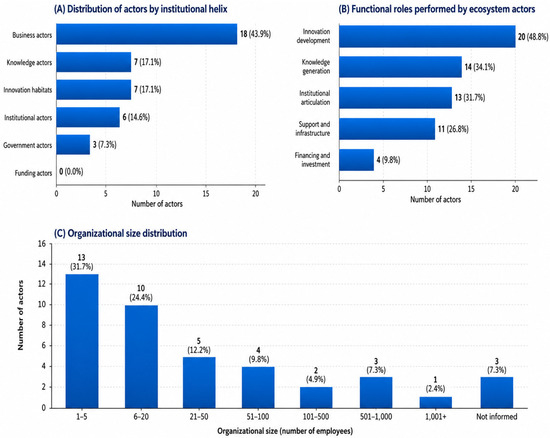
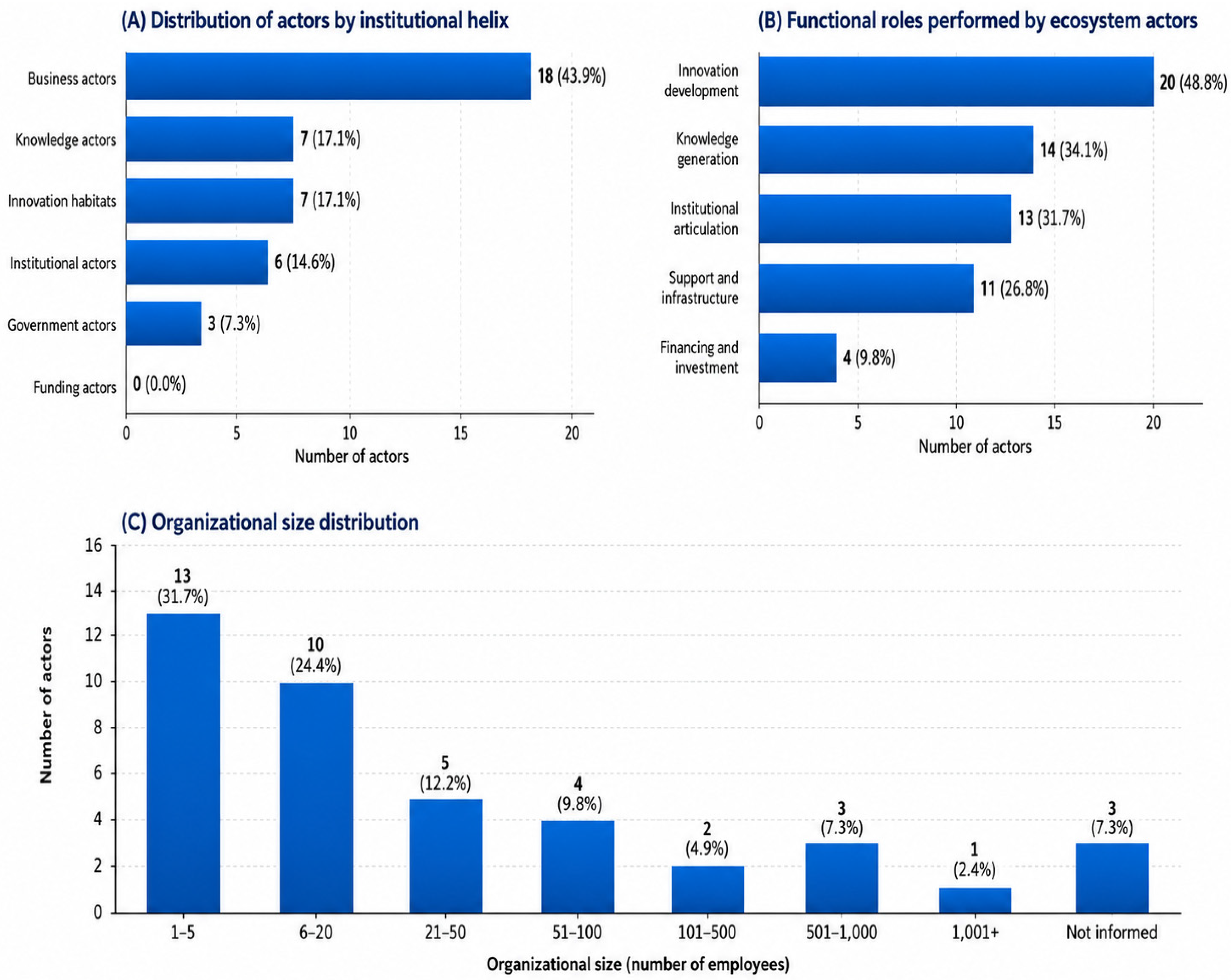

Disclaimer/Publisher’s Note: The statements, opinions and data contained in all publications are solely those of the individual author(s) and contributor(s) and not of MDPI and/or the editor(s). MDPI and/or the editor(s) disclaim responsibility for any injury to people or property resulting from any ideas, methods, instructions or products referred to in the content. |
© 2026 by the authors. Licensee MDPI, Basel, Switzerland. This article is an open access article distributed under the terms and conditions of the Creative Commons Attribution (CC BY) license.