


Abstract
Non-governmental organizations (NGOs) routinely invest in servant leadership, a follower-centered and ethically grounded approach to leading, as a driver of project performance. Yet whether servant leadership is necessary for success, or whether strong team dynamics can compensate for its absence, remains unclear. Using cross-national data from 451 NGO project participants and fuzzy-set qualitative comparative analysis, we examine how servant leadership, team identification, and team climate combine to produce sustainable project success. Three distinct routes emerge. Two involve servant leadership: one in which leadership strengthens team cohesion (Relational Alignment), and one in which leadership reinforces the team’s evaluative climate (Structured Empowerment). A third route achieves success through strong team identification and team climate alone, without servant leadership (leadership substitution). This pathway carries the highest consistency score, making it the most reliable route to success. Project failure follows a different logic, requiring the simultaneous weakening of at least two conditions rather than any single deficit alone. Career stage also matters: servant leadership alone is sufficient for junior staff, whose team-level resources are still developing, while senior staff exhibit a more heterogeneous success landscape with no dominant pathway. These findings reposition servant leadership as one of several sufficient configurations and offer managers guidance for differentiating leadership investment across organizational levels.
Keywords:
servant leadership; fuzzy-set qualitative comparative analysis; equifinality; leadership substitution; team identification; team climate; NGOs; sustainable organizational performance JEL Classification:
M12; L31; M14; D23
1. Introduction
Leadership effectiveness in mission-driven organizations depends on an ethically grounded, follower-centered approach that prioritizes community stewardship over positional authority (Greenleaf, 1970; Liden et al., 2008). Originating in the foundational proposition that the leader is servant first, servant leadership has been positioned as a universal performance driver in non-governmental organization (NGO) contexts (Martens & Minh Little, 2024; Van Dierendonck, 2011). However, the theoretical basis for this universality claim often relies on variable-oriented methods that treat leadership as an independent input, structurally unable to detect whether core leadership functions are functionally replaceable by team-level relational resources (Fiss, 2011; Greckhamer et al., 2018; Ragin, 2008).
NGOs provide a theoretically precise setting to examine these boundary conditions because their prosocial mission aligns directly with the servant leader’s emphasis on follower growth and community stewardship (Fransen et al., 2020; Malik et al., 2022). Unlike commercial firms, NGOs depend heavily on intangible relational assets such as trust, legitimacy, and volunteer engagement (Ilyas et al., 2020; Wellard & Copestake, 1993). A pivotal yet underspecified dimension in this context is accountability, which in a servant leadership framework is prospective and developmental rather than punitive (Liden et al., 2008; Van Dierendonck, 2011). By establishing clear performance standards and shared responsibility, servant leaders provide an evaluative architecture that enables team ownership of project outcomes (Eva et al., 2019; Greenleaf, 1970). Leadership substitution theory predicts that when team members develop strong psychological identification and operate within a reflexive team climate, these motivational and normative functions are already fulfilled by the team system itself, rendering formal leadership potentially redundant (Eva et al., 2021; Howell & Dorfman, 1986; Kerr & Jermier, 1978).
This study investigates the configurational pathways through which servant leadership (SL), team identification (TI), and team climate (TC) combine to produce and fail to produce sustainable NGO project success (PS). Team identification provides the motivational alignment where members internalize collective goals, while team climate provides the normative structure through shared reflexive evaluation (Anderson & West, 1998; F. Mael & Ashforth, 1992; West, 1996). Their joint sufficiency as a substitute for the accountability and empowerment functions of servant leadership represents a critical gap in NGO research that requires set-theoretic methods to identify (Greckhamer et al., 2018; Ragin, 2008; Schippers et al., 2014).
Seniority is introduced as a structural boundary condition to examine whether these pathways differ between junior and senior staff (Howell & Dorfman, 1986; Kerr & Jermier, 1978). Leadership substitution theory suggests that team-level substitutes are less developed among junior staff, making servant leadership a more salient driver of performance at earlier career stages (Dionne et al., 2002; Howell & Dorfman, 1986). Conversely, senior staff occupy structurally diverse positions with access to functional substitutes that may expand the viable success space. Testing this developmental boundary condition allows the study to assess where in the organizational hierarchy substitution is most likely to occur.
This paper proceeds as follows. Section 2 reviews theoretical foundations and develops the study hypotheses. Section 3 details the data, calibration, and fsQCA methodology. Section 4 presents the configurational results. Section 5 discusses theoretical and practical implications for sustainable NGO management. Section 6 concludes with limitations and future research directions.
2. Conceptual and Theoretical Foundations
2.1. Servant Leadership in NGO Contexts
Servant leadership originates in Greenleaf’s foundational proposition that the leader is servant first, and that leadership legitimacy is judged by whether those served grow and benefit (Greenleaf, 1970). This orientation prioritizes follower well-being, ethical conduct, and community stewardship over positional authority, and has been formalized into multidimensional behavioral constructs measured through validated instruments (Liden et al., 2008; Van Dierendonck, 2011). The Servant Leadership Survey developed by Van Dierendonck (2011) identifies eight dimensions, standing back, humility, authenticity, interpersonal acceptance, providing direction, stewardship, courage, and accountability, each reflecting the leader’s orientation toward others rather than toward self-interest. Liden et al. (2008) identify seven behavioral dimensions in their parallel instrument, including emotional healing, creating value for the community, conceptual skills, empowering, helping subordinates grow and succeed, putting subordinates first, and behaving ethically. Empirically, servant leadership is distinguishable from transformational leadership, with meta-analytic evidence reporting a moderate corrected correlation between the two constructs (), confirming that servant leadership captures relational and moral dimensions that transformational leadership does not fully address (Deng et al., 2023; Eva et al., 2019).
Among these dimensions, accountability occupies a theoretically pivotal position that has received insufficient attention in NGO research. Unlike accountability in transactional frameworks, which is primarily backward-looking and punitive, servant leadership accountability is prospective and developmental: it holds team members responsible not to enforce compliance but to enable growth and foster ownership of project outcomes (Liden et al., 2008; Van Dierendonck, 2011). Servant leaders who exhibit strong accountability behaviors establish clear performance standards, make responsibilities explicit, and create structures within which followers can exercise and develop their own judgment (Eva et al., 2019; Greenleaf, 1970). In NGO project settings, where resource constraints and multi-stakeholder environments complicate performance management, this accountability function is especially consequential: it provides the evaluative architecture that team climate later internalizes at the collective level (Anderson & West, 1998; West, 1996). When servant leaders consistently model transparent standards and shared responsibility, the team progressively absorbs these norms into its collective climate, reducing the marginal contribution of the leader’s ongoing accountability investment and creating the conditions under which team climate can substitute for formal leadership. Conceptual work linking servant leadership dimensions with job design identifies accountability, clear goals, and responsibility for results as the mechanisms through which servant leadership most directly enhances motivation and team outcomes (Currie, 2026), while empirical team-effectiveness research confirms that providing accountability, communicating with clarity, and fostering collaboration are among the servant-leadership behaviors most strongly associated with team functioning (Weber, 2025). Servant leadership should therefore not be interpreted as permissive or relational in isolation; it combines developmental support with disciplined expectations, thereby preserving performance standards while sustaining follower commitment and trust. This substitution dynamic is theoretically central to the Structured Empowerment pathway examined in this study, in which servant leadership’s accountability and stewardship dimensions complement the team’s reflexive norms to produce project success (Hu & Liden, 2011; Liden et al., 2014).
The NGO context provides a theoretically rich and practically demanding setting for examining servant leadership effects. NGOs depend heavily on intangible assets such as trust, legitimacy, volunteer engagement, and partnership quality, which are particularly sensitive to leadership orientation (Minh Little & Martens, 2024; Wellard & Copestake, 1993). Unlike commercial organizations, NGOs operate with mixed paid and volunteer workforces, resource constraints, and multi-stakeholder accountability structures that render transactional and directive leadership styles insufficient (Aboramadan, 2022; Ilyas et al., 2020). Servant leadership is especially well suited to these conditions because its emphasis on follower growth and community stewardship align directly with the prosocial mission that motivates volunteer engagement and staff commitment (Fransen et al., 2020; Malik et al., 2022). Empirical evidence supports this alignment: servant leadership demonstrates strong meta-analytic associations with trust in manager (), organizational commitment (), and work engagement (), outcomes that are plausibly upstream of the NGO project effectiveness (Chaudhry et al., 2021; Eva et al., 2019).
Within NGO project teams specifically, servant leadership has been linked to project success through mediating mechanisms, including emotional intelligence, work engagement, and extra-role behavior (Aboramadan, 2022; Malik et al., 2022). In third-sector organizations, servant leadership is associated with approximately 35% of variance in performance, with this relationship fully mediated by innovative capacity, suggesting that leadership operates through enabling team-level processes rather than through direct influence alone (Hernández-Perlines & Araya-Castillo, 2020). Evidence on servant leadership’s team-level effects reinforces this process logic: servant leaders facilitate team effectiveness by establishing psychological safety, modeling role-consistent behavior that team members internalize, and creating a shared climate of accountability that raises collective performance standards (Hu & Liden, 2011; Liden et al., 2014). Chiniara and Bentein (2016) demonstrate that servant leadership enhances team performance by satisfying the basic psychological needs of autonomy, competence, and relatedness simultaneously, a need-satisfaction pattern that closely mirrors the motivational substrate that strong team identification independently provides, supplying a theoretical rationale for why team identification can substitute for servant leadership when these needs are already met at the collective level. Recent evidence further shows that servant leadership improves project success indirectly through stronger team cohesion, and that differentiated support under servant leaders is accepted by followers when leader intentions are perceived as ethical and altruistic, indicating that accountability and differentiated resource allocation are viewed as legitimate when embedded within a servant framework (Hotta et al., 2025; Khalil et al., 2025).
Despite this evidence, the literature largely treats servant leadership as a universal additive driver, assuming that more servant leadership is consistently sufficient for better outcomes (Singh, 2014; Van Dierendonck, 2011). Leadership substitution theory challenges this universality directly: if team-level relational conditions already fulfill the motivational and normative functions that servant leadership supplies, the marginal return to additional leadership investment diminishes (Howell & Dorfman, 1986; Kerr & Jermier, 1978). Recent contingency evidence supports this view, showing that servant leadership reduces turnover intentions and emotional exhaustion, but that these benefits diminish when employees perceive severe job insecurity, consistent with the substitution logic that stable structures reduce the marginal value of formal leadership (Pircher Verdorfer et al., 2025). Experimental intervention research similarly demonstrates that teams receiving servant-leadership training report greater effectiveness over time, suggesting that servant leadership can institutionalize routines and norms that continue functioning even when direct leader involvement declines (Weber, 2025). Yet the specific team-level conditions under which substitution obtains in NGO settings, and how those conditions interact with servant leadership’s sub-dimensions, have not been identified using set-theoretic methods capable of detecting the configurational conditions for substitution (Greckhamer et al., 2018; Ragin, 2008).
2.2. Team Identification and Team Climate
Team identification refers to the degree to which individuals define themselves through membership in their project team, experience psychological belonging, share goals, and feel an emotional attachment to the collective (F. Mael & Ashforth, 1992; Thomas et al., 2019). Drawing on social identity theory (Tajfel & Turner, 1979) and self-categorization traditions (J. C. Turner et al., 1987), team identification shifts self-definition from the personal to the collective level, motivating cooperation-relevant behaviors that sustain team functioning (Haslam, 2004). When individuals categorize themselves as team members, they internalize group goals as personal goals, increasing discretionary effort and reducing the coordination failures that formal leadership ordinarily manages (Ellemers et al., 2004). In set-theoretic terms, it is through this mechanism, the internalization of collective goals and the motivational alignment it constitutes, that high team identification is a member of sufficient configurations for outcomes that servant leadership would otherwise be required to produce (Howell & Dorfman, 1986).
Prior research, including both cross-sectional and longitudinal designs, consistently associates team-level identification with team performance through citizenship behaviors, information integration, collective efficacy, and learning (Ellemers et al., 2004; Saleem et al., 2023; Van Knippenberg et al., 2004). Importantly, longitudinal multilevel designs in prior samples establish temporal precedence for this association, with the reverse direction unsupported (Van Knippenberg et al., 2004); the present study’s cross-sectional design limits inference to set-theoretic co-presence rather than temporal ordering. A large meta-analysis comparing identification targets across 483 studies confirms an identity-matching principle: team identification is most strongly associated with team-level outcomes, and direct effects exceed those transmitted through self-esteem (Riketta, 2008). In set-theoretic terms, the prior literature is consistent with the view that high team identification is a member of sufficient configurations for team performance. However, it does not, on its own, constitute a necessary condition (Greckhamer et al., 2018; Ragin, 2008).
However, the literature flags a theoretically important boundary condition: strong identification can suppress dissent and encourage conformity that impedes critical evaluation (Jetten & Hornsey, 2014; M. E. Turner & Pratkanis, 1998; Van Knippenberg et al., 2004). This conformity risk is directly relevant to NGO project contexts where adaptive problem-solving and reassessment of proposed solutions are essential performance requirements (Gutheil, 2021; Ika et al., 2020). Critically, this dark side of identification is also the theoretical reason why team identification alone is insufficient as a leadership substitute, and why its joint presence with a reflexive team climate is required. When climate norms explicitly demand evaluative scrutiny and constructive critique (Anderson & West, 1998; West, 1996), the conformity pressures generated by strong identification are structurally counteracted, diverse expertise is leveraged rather than suppressed, and the adaptive problem-solving that servant leadership would otherwise facilitate through accountability and stewardship behaviors is instead embedded in the team’s normative architecture (Schippers et al., 2014; Van Dierendonck, 2011). This argument provides the theoretical rationale for the leadership substitution hypothesis (developed formally in Section 2.5): the conjunction of TI and TC is required rather than either condition alone, because identification without reflexivity risks groupthink, and reflexivity without identification lacks the motivational substrate that sustains discretionary effort (Haslam, 2004; Van Knippenberg et al., 2004).
Team climate, operationalized here as shared perceptions of reflexivity, evaluative norms, and constructive critique within the team environment, shapes the collective standards that govern task engagement (Anderson & West, 1998; West, 1996). This operationalization deliberately departs from warmth- or safety-oriented climate frameworks (Edmondson, 1999) to capture the evaluative scrutiny characteristic of task-complex NGO settings, where adaptive problem-solving and critical reassessment of proposed solutions are essential performance requirements (Ika et al., 2020; West, 2002). The distinction between reflexivity-based and safety-based climate operationalizations is not merely taxonomic: reflexivity specifically predicts performance in task-complex and uncertain environments where teams must critically evaluate and revise their strategies, whereas psychological safety primarily predicts knowledge-sharing and voice behaviors in stable team contexts (Edmondson, 1999; Schippers et al., 2014). Empirical evidence confirms that reflexive team climates produce stronger performance benefits precisely in the adaptive, resource-constrained settings that characterize NGO project work (Schippers et al., 2014; West, 2002).
Within a social identity framework (Haslam, 2004; Tajfel & Turner, 1979), reflexive climates define the normative context within which identification and leadership dynamics unfold: when climate norms emphasize critical evaluation and structured feedback, teams are better equipped to leverage diverse expertise and counteract the conformity risks associated with strong identification (Edmondson, 1999; Van Knippenberg et al., 2004). It is through this normative structuring function, providing the evaluation standards and accountability norms that servant leadership ordinarily supplies through stewardship and ethical conduct behaviors (Liden et al., 2008; Van Dierendonck, 2011), that team climate can substitute for formal leadership when identification is simultaneously high (Siangchokyoo & Klinger, 2022).
Together, team identification and team climate constitute the joint relational architecture within which servant leadership operates. Team identification provides motivational alignment; team climate provides normative structure. When both are sufficiently developed, the functional inputs that servant leadership ordinarily mediates are already present in the team system, rendering formal leadership potentially redundant (Howell & Dorfman, 1986; Lee et al., 2020). This configurational logic, that the joint presence of identification and climate may substitute for servant leadership, is the central theoretical proposition examined empirically in this study.
2.3. Leadership Substitution Theory
Leadership substitution theory, introduced by Kerr and Jermier (1978), proposes that characteristics of subordinates, tasks, and organizations can substitute for, neutralize, or enhance the effects of formal leader behaviors. The foundational claim is that leadership may explain limited variance in outcomes when other features of the work system already provide the guidance, motivation, or socioemotional support that leaders typically supply. The original theory distinguishes between substitutes, factors that functionally replace leadership by providing equivalent sources of structure or support, and neutralizers. These factors block leader influence without necessarily replacing its function (Kerr & Jermier, 1978; Schriesheim, 1997). This distinction is theoretically important: a neutralizer creates an influence vacuum, whereas a substitute renders leadership unnecessary because its function is already fulfilled by other means.
Servant leadership is theoretically among the styles most susceptible to substitution precisely because its core functions, follower development, motivational alignment, community stewardship, and ethical norm-setting (Sangwa, 2025; Van Dierendonck, 2011), are the same functions that strong team identification and reflexive team climate independently provide. When team members have already internalized collective goals through identification and already hold one another accountable through evaluative climate norms, the incremental contribution of a servant leader performing these same functions is diminished (Howell & Dorfman, 1986; Kerr & Jermier, 1978). This logic does not apply equally to all leadership styles: transactional leadership’s exchange-based functions or transformational leadership’s vision-articulation functions are less directly replicable by team-level relational conditions, making servant leadership the theoretically most proximate candidate for substitution in mission-driven team settings (Avolio et al., 2009; Eva et al., 2021).
Recent evidence extends this argument specifically to servant leadership in organizational contexts. Eva et al. (2021) demonstrate using configurational analysis that organizational structure, specifically the joint presence of formalization and decentralization, functions as a substitute for servant leadership, producing equivalent project outcomes without formal leadership investment. Critically, their analysis shows that substitution operates configurationally rather than additively: no single structural feature neutralizes servant leadership, but their conjunction renders it functionally redundant. This finding directly anticipates the leadership substitution pathway identified in the present study and provides prior configurational evidence for the theoretical mechanism examined later.
Similarly, Lisak et al. (2022) demonstrates that team interdependence substitutes for empowering leadership in producing team meaningfulness and performance, confirming that team-level relational conditions can displace the need for formal leadership investment across different leadership styles and organizational contexts. Together, these findings establish that leadership substitution is not limited to the classical structural variables examined by Kerr and Jermier (1978), but extends to team-level relational conditions, as operationalized in the present study.
The teamwork literature further strengthens this claim by documenting the mechanisms through which team-level conditions fulfill functions that servant leadership would otherwise provide. Hu and Liden (2011) demonstrate that servant leaders enhance team potency and team effectiveness by establishing clear collective goals and providing a process-oriented support structure—precisely the functions that strong team identification and reflexive climate collectively replicate when sufficiently developed. Liden et al. (2014) show that servant leadership influences unit performance partly by creating a serving culture within which accountability norms, discretionary helping, and collective commitment become shared behavioral standards rather than individually managed behaviors. Once such a serving culture is embedded in team climate, the servant leader’s contribution to maintaining it becomes functionally redundant, providing a process-level mechanism for the substitution pathway identified in this study. The accountability sub-dimension of servant leadership is particularly relevant here: Chiniara and Bentein (2016) show that servant leaders who satisfy followers’ need for competence, which corresponds closely to the accountability and goal-clarity functions of the construct, generate the strongest team performance effects, but these same competence-need satisfactions are independently cultivated by reflexive team climates that hold members to high evaluative standards (Anderson & West, 1998; West, 1996). This convergence of accountability functions across servant leadership and team climate provides the proximate theoretical basis for TC’s participation in both the Structured Empowerment pathway (as a complement to SL’s accountability dimension) and the Substitution pathway (as a functional replacement for it).
Meta-analytic evidence provides strong support for substitutes as direct and joint predictors of outcomes, even where classic moderation evidence remains mixed (Dionne et al., 2002). In a synthesis of 13 substitute variables across multiple criteria, Podsakoff et al. (1996) demonstrates that substitutes uniquely explained 40% of variance in general satisfaction compared with 17% explained by leader behavior alone, and that substitute effects on performance criteria remained significant and practically meaningful after controlling for leadership. This meta-analytic baseline establishes that the substitution mechanism is robust across organizational contexts and outcome criteria, providing empirical grounding for the configurational substitution hypothesis examined in this study.
2.4. Configurational Logic and the Case for fsQCA
Conventional regression-based approaches assume additive, symmetric, and linear relationships among variables, estimating the average net effect of each independent variable while holding others constant (Fiss, 2011; Ragin, 2008). This net-effects logic is poorly matched to the causal structure of complex organizational phenomena, where outcomes emerge from combinations of conditions rather than from any single factor in isolation (Furnari et al., 2021; Greckhamer et al., 2018). Configurational theory addresses this limitation by treating organizations as integrated gestalts in which conditions combine conjuncturally, such that the effect of any element depends on the presence or absence of others (Fiss, 2011; Meyer et al., 1993). Three principles distinguish configurational from variable-centric approaches: conjunctural causation, equifinality, and causal asymmetry (Fiss, 2011; Ragin, 2008).
Equifinality—the principle that multiple distinct configurations can produce the same outcome—is particularly relevant to the present study (Doty et al., 1993; Ragin, 2008; von Bertalanffy, 1950). In open systems, comparable end-states can be reached through different trajectories because adaptive pathways are available rather than a single deterministic route (von Bertalanffy, 1950). Applied to NGO project success, equifinality implies that servant leadership, team identification, and team climate may combine in multiple sufficient ways to produce high performance, with no single combination necessarily dominant (Greckhamer et al., 2018; Kumar et al., 2022). This logic is invisible to regression, which identifies average relationships across the full sample, but cannot detect that different subsets of cases follow distinct causal recipes (Fiss, 2011; Ragin, 2008).
Causal asymmetry further distinguishes configurational from symmetric approaches: the conditions producing project success are not simply the mirror image of those producing failure (Fiss, 2011; Ragin, 2008). A configuration sufficient for high success does not, by logical necessity, produce low success when negated. This has direct implications for leadership research, where the absence of servant leadership does not automatically predict project failure if an alternative sufficient configurations exist (Greckhamer et al., 2018). Fuzzy-set qualitative comparative analysis (fsQCA) is uniquely suited to detect these patterns because it operationalizes outcomes as sets, identifies both necessary and sufficient conditions, and returns multiple solutions terms representing distinct equifinal pathways (Dul, 2016a; Ragin, 2008). Unlike regression, fsQCA can reveal that team identification combined with team climate is sufficient for success without servant leadership—revealing a substitution pathway that symmetric methods would either miss or mischaracterize as a moderation effect (Fiss, 2011; Furnari et al., 2021).
2.5. Hypotheses Development
Building on the theoretical foundations developed above, six hypotheses are proposed. Together, they operationalize equifinality, the three sufficient pathways to project success, asymmetric failure conditions, and seniority as a structural boundary condition.
- :
- Multiple distinct configurations of servant leadership, team identification, and team climate are each sufficient for high NGO project success, such that no single configuration is necessary (Equifinality).
- :
- The combination of high servant leadership and high team identification constitutes a sufficient configuration for high project success in NGO settings (Relational Alignment Pathway).
- :
- The combination of high servant leadership and high team climate constitutes a sufficient configuration for high project success in NGO settings (Structured Empowerment Pathway).
- :
- The combination of high team identification and high team climate constitutes a sufficient configuration for high project success without requiring high servant leadership (Leadership Substitution Pathway).
- :
- Low project success is associated with the simultaneous absence of at least two conditions rather than any single absent condition alone, such that the relational architecture exhibits structural redundancy—any single deficit is insufficient for collapse, provided that at least one other condition compensates (Asymmetric Failure and Structural Redundancy). This prediction follows from causal asymmetry logic rather than constituting an independent empirical claim, and its value lies in confirming that success and failure conditions are structurally distinct rather than mirror images of one another.
- :
- Among junior staff, servant leadership operates as a stand-alone sufficient condition for high project success, reflecting the underdeveloped state of team-level substitutes in early-career organizational positions (Seniority Boundary Condition: Junior Staff).
- :
- Among senior staff, multiple sufficient configurations will be present in the solution space with no single pathway achieving dominant coverage, reflecting the structural diversity of experienced organizational positions and the expanded range of functional substitutes available to senior team members (Seniority Boundary Condition: Senior Staff—Configurational Dispersion).
The hypothesized configurational logic is summarized in Figure 1.
Figure 1.
Conceptual Framework: Equifinal configurations of servant leadership, team identification, and team climate for NGO project success. Dashed boxes indicate configurational pathways (H2–H4); seniority serves as a structural boundary condition (H6a, H6b).
3. Data and Methodology
3.1. Sample and Data Collection
The empirical foundation of this study draws on publicly available secondary data obtained from the Harvard Dataverse (Mombeuil et al., 2023), comprising 451 individuals actively participating in NGO projects across multiple sectors and geographic regions. The original dataset was designed and collected by Mombeuil et al. (2023) to examine leadership and team dynamics in NGO project settings, with measurement instruments selected and validated for this organizational context before data collection. All constructs employed in the present study, servant leadership, team identification, team climate, and project success, were operationalized using the same validated instruments as in the original design, ensuring construct consistency between the primary and present analytical purposes (Martens et al., 2023).
Sectoral representation spans environmental advocacy (20.2%), healthcare delivery (14.6%), community and child development (16.9%), and additional mission-driven domains. Geographic coverage includes North America (US: 37.7%), Asia (26.2%), Latin America (15.5%), Europe (10.6%), and Africa (10.0%), providing cross-national variation in organizational context that strengthens the external validity of the configurational findings. Full descriptive statistics, including regional and sectoral breakdowns, are reported in Appendix A.
Field data collection occurred between March and June 2022, with each geographic region assigned a dedicated one-month collection window. This staggered temporal design reduces the risk that shared regional situational factors, such as concurrent policy changes or sector-wide events, inflate within-region construct associations, providing a procedural safeguard against common method bias at the geographic level (Podsakoff et al., 2003). Statistical controls for common method bias are described in Section 3.2.
Participant recruitment was structured to capture role-based diversity within NGO project teams. Project managers were deliberately excluded to prevent conflation of leadership perceptions with self-reports from individuals occupying formal authority positions. The resulting sample encompasses volunteers, frontline project employees, supervisory NGO managers, and other project-affiliated personnel. Of the 451 participants, 342 (75.8%) are paid staff (Local NGO Employees), and 109 (24.2%) are volunteers.
The seniority-based subgroup analysis reported in Section 3.4 distinguishes junior staff () from senior staff () based on job position classifications available in the original dataset. Junior staff comprises frontline project employees, volunteer team members, and entry-level project coordinators, positions characterized by lower structural autonomy, limited decision-making authority, and shorter organizational tenure. Senior staff comprises supervisory NGO managers, project portfolio managers, specialists, advisors, and chief-level officers, positions characterized by higher structural autonomy, broader organizational access, and accumulated institutional experience. This classification reflects organizational role level and structural position rather than employment type, and the junior/senior boundary was determined by the position hierarchy in the original dataset prior to analysis, not post-hoc to optimize configurational results (Fiss, 2011; Kerr & Jermier, 1978).
3.2. Measures
All constructs were assessed using a 7-point Likert response format, adapted from well-validated instruments with established psychometric properties in organizational and leadership research.
Servant leadership was operationalized using 13 items from Liden et al. (2008), capturing behavioral dimensions including ethical conduct, community stewardship, and follower-centered prioritization. Team identification was assessed with six items reflecting the extent to which individuals perceive themselves as psychologically embedded within their project team (Doosje et al., 1995; F. A. Mael & Tetrick, 1992). Team climate was operationalized through six items emphasizing reflexive evaluation and structured critique within the team environment (Doosje et al., 1995; Figl & Saunders, 2011; West & Altink, 1996). This operationalization deliberately departs from warmth- or safety-oriented climate frameworks (Edmondson, 1999), reflecting instead the evaluative scrutiny characteristic of task-complex NGO settings where adaptive problem-solving is an essential performance requirement (Gutheil & Koch, 2023; West, 2002). The implications of this divergence from psychological-safety-based operationalizations for cross-study comparability are acknowledged in Section 6. Project success was captured through nine items addressing both process and outcome dimensions, including budget discipline and community impact (Ika et al., 2020). Full item wordings are reported in Appendix A.
3.2.1. Measurement Quality
Measurement quality was evaluated through confirmatory factor analysis (CFA). Composite reliability exceeded 0.70, and average variance extracted met the 0.50 threshold for all constructs, confirming convergent validity. Discriminant validity was verified across all construct pairs using the heterotrait–monotrait (HTMT) ratio criterion (Henseler et al., 2015), with all HTMT values falling below the conservative 0.85 threshold. Full CFA results, including factor loadings and fit statistics, are reported in Appendix A.
3.2.2. Common Method Bias
Common method bias (CMB) was addressed through complementary procedural and statistical means (Podsakoff et al., 2003). Procedurally, the staggered regional collection design reduced the likelihood that shared situational factors would inflate construct associations across geographic subsamples. Role-based stratification ensured structural diversity in participant positions, further reducing the conditions under which uniform perceptual inflation might arise.
Statistically, three independent tests were applied. First, a latent common method factor (CMF) test was conducted by introducing an unmeasured latent factor with loadings on all indicators; the chi-square difference between constrained and unconstrained models was non-significant (, ), indicating that a latent common method factor did not improve model fit (Podsakoff et al., 2003). Second, a full collinearity diagnostic following Kock (2020) confirmed that all variance inflation factors ranged from 2.09 to 2.94, well below the 3.3 threshold. Third, Harman’s single-factor test confirmed that no single factor accounted for the majority of variance. Critically, the configurational nature of the fsQCA analysis itself provides an additional structural safeguard: common method inflation characteristically elevates bivariate correlations uniformly, whereas the asymmetric, combinatorial patterns identified by fsQCA—in particular the compound-deficit failure structure reported in Section 4.7—are inconsistent with the signature of uniform perceptual inflation (Cooper & Glaesser, 2011). The convergence of procedural controls and three independent statistical tests, alongside the structural asymmetry of the configurational solution, provides strong assurance that common method variance is unlikely to be the primary driver of the reported findings.
3.3. Fuzzy-Set Calibration
Prior to configurational analysis, all conditions and the outcome variable were transformed into fuzzy membership scores bounded between 0 and 1, following the direct calibration method recommended by Ragin (2008). Three anchors were specified for each variable: full membership (0.95), the crossover point of maximum ambiguity (0.50), and full non-membership (0.05). Following established practice in organizational fsQCA research (Fiss, 2011; Greckhamer et al., 2018), these anchors were set at the empirical 75th percentile (full membership), median (crossover point), and 25th percentile (full non-membership) of each construct’s composite score distribution.
3.3.1. Justification for Percentile-Anchored Calibration
The percentile-anchored approach is theoretically and empirically justified on two reinforcing grounds. First, the Likert scale’s theoretical midpoint of 4.0 does not correspond to a substantively meaningful ambiguity threshold in this organizational context. In NGO settings characterized by strong prosocial mission alignment, a composite servant leadership score at the scale midpoint does not represent an ambiguity point but rather a failure to engage with the follower-centered and community stewardship orientation that defines servant leadership in mission-driven organizations (Liden et al., 2008; Van Dierendonck, 2011). The same logic applies to team identification and team climate: a score of 4.0 on a prosocially oriented 7-point scale indexes collective disengagement rather than genuine ambiguity (F. A. Mael & Tetrick, 1992; West & Altink, 1996). Setting the crossover at the empirical median, therefore, anchors the calibration in the substantive properties of this NGO sample rather than in an arbitrary scale artifact (Ragin, 2008; Schneider & Wagemann, 2012).
Second, the left-skewed distributions documented in Appendix A, with skewness values ranging from to across all four constructs, confirm that the scale midpoint falls well below the empirical center of the distribution. Applying a midpoint-based crossover would assign the large majority of cases to the full-membership zone, collapsing the within-sample variation that fsQCA analysis requires (Ragin, 2008). The percentile approach preserves this variation by anchoring the crossover at the empirical maximum of ambiguity rather than at a nominal midpoint.
3.3.2. Calibration Quality Diagnostics
Crossover zone diagnostics confirmed that between 6.4% and 9.1% of cases fell near the 0.50 ambiguity threshold across conditions, within acceptable limits (Ragin, 2008). The even distribution of empirical cases across all eight truth table rows, documented in Appendix A, confirms that the calibration does not produce degenerate configurations driven by a small number of extreme cases. No contradictory cases were identified, confirming internal consistency across the truth table. Full calibration anchors are reported in Section 4.2.
3.4. Analytical Strategy
Fuzzy-set qualitative comparative analysis (fsQCA) serves as the primary method of analysis (Ragin, 2008). This approach is selected over regression-based alternatives for three methodological reasons. First, fsQCA identifies combinations of conditions sufficient for outcomes rather than estimating the average net effect of individual variables, making it appropriate for research questions that concern configurational rather than additive causation (Fiss, 2011). Second, it accommodates equifinality, recognizing that multiple distinct configurations may produce equivalent outcomes (Greckhamer et al., 2018). Third, it treats the conditions associated with success and failure as analytically distinct, rather than assuming that the predictors of positive outcomes are the mirror image of those associated with negative outcomes (Fiss, 2011; Ragin, 2008).
A truth table was constructed enumerating all logically possible combinations of the three conditions, servant leadership (SL), team identification (TI), and team climate (TC), yielding eight possible configurations. All eight configurations were populated by empirical cases exceeding the minimum frequency threshold. Rows were retained for analysis if they met a minimum frequency threshold of two cases and a raw consistency threshold of 0.80, reflecting the standard criterion for set-theoretic sufficiency (Ragin, 2008). The frequency threshold of two was selected given the moderate sample size () and the need to retain configurational diversity across all eight truth table rows; robustness checks reported in Section 3.4 confirm that raising this threshold to five produces identical solutions. The Quine–McCluskey Boolean minimization algorithm was then applied to derive parsimonious configurational solutions. Conservative, parsimonious, and intermediate solutions were compared with assess solution stability (Fiss, 2011).
Necessary condition analysis (NCA) was conducted as a complementary procedure prior to the sufficiency analysis (Dul, 2016b). NCA assesses whether any individual condition constitutes a necessary prerequisite for the outcome, that is, whether the absence of a condition categorically prevents success regardless of how other conditions are configured. Both the ceiling free disposal hull (ce-fdh) and ceiling regression (cr-fdh) approaches were applied; a condition is classified as necessary when its NCA effect size exceeds 0.10, and its super-subset consistency exceeds 0.90 (Dul, 2016b). NCA results are reported in Section 4.5 and bear directly on whether the equifinality claim in H1 is empirically supported.
Four robustness procedures were implemented to assess the stability of the configurational findings across analytical and sampling specifications.
3.4.1. Seniority Subgroup Analysis
Seniority was introduced as a structural boundary condition by splitting the sample into junior staff (, position categories 1–3) and senior staff (, position categories 4–7) and replicating the full fsQCA procedure independently within each subgroup. Identical calibration anchors, frequency thresholds, and consistency criteria were applied across both subgroups to ensure comparability. This procedure tests whether the configurational pathways identified in the full sample hold uniformly or differ systematically by organizational position, providing the empirical basis for H6a and H6b.
3.4.2. Paid Staff Subsample Analysis
A paid staff subsample analysis was conducted by restricting the sample to the 342 paid staff participants and rerunning the complete fsQCA procedure. Of the 451 total participants, 342 (75.8%) are paid staff (Local NGO Employees), and 109 (24.2%) are volunteers, as determined by the volunteer classification variable in the original dataset (Mombeuil et al., 2023). Given that paid staff operate under stronger structural accountability than volunteers, this subsample provides a conservative test of whether the three equifinal pathways remain stable within the most organizationally constrained subgroup. The paid staff solution yields the same three-pathway structure (SL·TI + SL·TC + TI·TC → PS) with marginally higher solution coverage (0.844 versus 0.825), confirming pathway stability within this subgroup.
The volunteer subsample () could not yield a consistent fsQCA solution: the truth table analysis returned no configurations meeting the consistency threshold, suggesting that volunteers in this dataset cluster into configurations that do not sufficiently differentiate between project success and failure. This outcome is itself substantively informative—it suggests that volunteers in this NGO sample exhibit structural homogeneity with respect to the conditions examined, likely reflecting the narrower range of organizational roles and accountability structures available to unpaid participants. This pattern is reported as a substantive finding rather than an analytical limitation, and its implications for volunteer management in NGOs are discussed in Section 6.
3.4.3. Consistency and Frequency Threshold Sensitivity
Consistency and frequency threshold sensitivity was assessed by raising the minimum raw consistency threshold from 0.75 to 0.80 and the frequency threshold from 2 to 5, replicating the full analysis under each specification. Both specifications produce identical three-pathway solutions with unchanged pathway-level consistency scores and overall solution consistency of 0.811, confirming that the core solution structure is not sensitive to threshold choice within the conventional range.
3.4.4. Calibration Sensitivity Analysis
Sensitivity to calibration anchor choice was assessed across three specifications. The primary specification uses percentile-anchored calibration as described in Section 3.3 (crossover at empirical median). A tighter specification anchors the crossover at the scale theoretical midpoint (4.0), following the approach used in prior research on this dataset (Mombeuil et al., 2023). An intermediate specification shifts the crossover anchor to the midpoint between the empirical median and the scale theoretical midpoint, testing whether the solution is stable across a gradient of anchor choices.
The primary specification yields the three-pathway solution reported throughout this paper (overall consistency = 0.811, coverage = 0.825). The tighter specification produces a complete solution failure: all truth table configurations are minimized simultaneously, rendering the solution analytically uninformative. This outcome is consistent with the calibration argument in Section 3.3—anchoring the crossover at 4.0 places the large majority of cases in the full-membership zone given the left-skewed distributions documented in Appendix A, collapsing within-sample variation and eliminating the set-theoretic differentiation that fsQCA requires (Ragin, 2008; Schneider & Wagemann, 2012).
The intermediate specification produces a structurally different outcome: the solution collapses to a single condition (TC alone, consistency = 0.934), with team climate emerging as the dominant pathway when anchors partially compress variation toward the scale midpoint. This result is itself theoretically informative. It reveals that as calibration anchors move toward the scale midpoint, the joint configurational structure dissolves into a single dominant condition, confirming that the three-pathway solution depends on preserving the within-sample variation captured by the percentile-anchored approach. Taken together, the intermediate and tighter specifications provide distributional support for the appropriateness of percentile-anchored calibration in this left-skewed sample, though readers should note that fsQCA solutions are sensitive to calibration choices and these sensitivity results should be interpreted with appropriate caution (Ragin, 2008). The primary three-pathway solution remains the preferred analytical basis for interpretation given its theoretical grounding and stability across all primary threshold specifications, with the caveat that alternative calibrations produce structurally different outcomes.
4. Results
4.1. Sample Characteristics and Descriptive Statistics
Table 1 presents the geographic, sectoral, and construct-level descriptive statistics for the full sample. All four constructs exhibit negative skew: servant leadership (), team climate (), project success (), and team identification (). These left-skewed distributions support the percentile-anchored calibration described in Section 3.3.
Table 1.
Sample Characteristics and Construct Descriptive Statistics.
4.2. Truth Table and Calibration Quality
The truth table for the full sample (N = 451) yielded eight logically possible configurations across the three conditions—servant leadership (SL), team identification (TI), and team climate (TC)—with all eight configurations populated by empirical cases exceeding the minimum frequency threshold of two. The even distribution of cases across all eight configurations confirms that no single dominant configuration drives the solution space; the full truth table with per-row case counts is reported in Appendix A. Calibration anchors (percentile-based, as detailed in Section 3.3) are reproduced in Table 2 for reference.
Table 2.
Fuzzy-Set Calibration Anchors.
Crossover zone diagnostics confirmed that between 6.4% and 9.1% of cases fell near the 0.5 ambiguity threshold across conditions, within acceptable limits (Ragin, 2008). No contradictory cases were identified, confirming internal consistency across the truth table. Four configurations were assigned outcome value 1 (project success), and four were assigned outcome value 0 (project failure), producing a balanced and empirically well-populated solution space.
4.3. Necessary Condition Analysis
Prior to sufficiency analysis, necessary condition analysis (NCA) was conducted to determine whether any single condition constitutes a prerequisite for project success (Dul, 2016b). NCA effect sizes for servant leadership, team identification, and team climate were each 0.000 using both the ceiling free disposal hull (ce-fdh) and the ceiling regression (cr-fdh) approaches, with ceiling zones of zero across all three conditions. Supersubset consistency scores confirmed this pattern: SL (0.770), TI (0.762), and TC (0.791) each fell below the 0.900 threshold conventionally required to claim necessity (Ragin, 2008). These results establish that no single condition is universally prerequisite for project success, providing support for H1 and confirming that the analytical focus appropriately shifts to configurational sufficiency. Full necessity results are reported in Table 3.
Table 3.
Necessary Condition Analysis Results.
4.4. Sufficiency Analysis: Equifinal Pathways to Project Success
The conservative, parsimonious, and intermediate solutions converge on an identical three-pathway model, a pattern that strengthens confidence in the configurational findings by confirming that no simplifying assumptions or logical remainders alter the solution structure (Fiss, 2011). The three sufficient configurations are:
The overall solution achieves a consistency of 0.811 and a solution coverage of 0.825, indicating that the three pathways collectively account for 82.5% of the outcome space. All three pathway-level consistency scores exceed the 0.80 sufficiency threshold, and all PRI scores exceed 0.75, confirming that no pathway is simultaneously associated with the negated outcome (Ragin, 2008). Bootstrap 95% confidence intervals confirm the stability of each pathway estimate. Full sufficiency results are reported in Table 4.
Table 4.
fsQCA Sufficiency Results: Configurations for High NGO Project Success.
4.4.1. Pathway 1: Relational Alignment ()
The combination of servant leadership and team identification is sufficient for high project success (inclS = 0.832, PRI = 0.786, covS = 0.649, covU = 0.068), supporting H2. This pathway reflects a configuration in which the follower-development and emotional-healing sub-dimensions of servant leadership are most active: leaders who prioritize helping subordinates grow and succeed and who are attuned to followers’ emotional states strengthen members’ psychological attachment to the team, reinforcing cooperative effort and discretionary contribution (Liden et al., 2008; Thomas et al., 2019). In this pathway, team identification functions as the amplifying mechanism: the leader’s follower-centered behaviors raise the salience of collective membership, converting the leader’s relational investment into team-level motivational alignment. The unique coverage of 0.068 indicates that this pathway explains approximately 6.8% of the outcome space not covered by the other two pathways.
4.4.2. Pathway 2: Structured Empowerment ()
The combination of servant leadership and team climate is sufficient for high project success (inclS = 0.836, PRI = 0.795, covS = 0.674, covU = 0.093), supporting H3. In this pathway, the accountability, stewardship, and community-value-creation sub-dimensions of servant leadership are most salient: leaders who establish clear standards, model transparent responsibility, and orient the team toward its broader mission complement and reinforce the team’s own reflexive evaluative norms, creating an integrated structure for critical problem-solving and adaptive performance (Liden et al., 2014; Van Dierendonck, 2011; West, 1996). The servant leader’s accountability infrastructure and the team’s climate norms are mutually reinforcing: accountability behaviors supply the evaluative standards that climate then internalizes as shared norms, producing a structured performance environment that neither element could constitute alone. The highest unique coverage among the three pathways (0.093) indicates that this configuration captures a distinct subset of success cases not explained by the others.
4.4.3. Pathway 3: Leadership Substitution (∼)
The combination of team identification and team climate without servant leadership is sufficient for high project success (inclS = 0.845, PRI = 0.804, covS = 0.665, covU = 0.079), supporting H4. This is the key finding of the study. The sub-dimension perspective clarifies the substitution mechanism precisely: team identification fulfills the motivational functions provided by servant leadership’s empowerment, follower-growth, and putting-subordinates-first sub-dimensions, while team climate fulfills the normative and evaluative functions provided by servant leadership’s accountability and ethical-conduct sub-dimensions (Chiniara & Bentein, 2016; Liden et al., 2008). When both substitutes are jointly present, the full functional profile of servant leadership is already embedded in the team system, rendering formal leadership unnecessary for outcome achievement. The highest consistency score among the three pathways (0.845) confirms that this configuration most reliably predicts project success, and its PRI score of 0.804 exceeds 0.80, confirming it is not simultaneously associated with failure (Kerr & Jermier, 1978; Podsakoff et al., 1996).
4.5. Asymmetric Failure Conditions
Consistent with H5, the negated outcome analysis reveals that project failure is produced by compound deficits rather than any single absent condition. The failure solution yields three sufficient configurations:
The failure solution achieves a consistency of 0.823 and coverage of 0.808. Full failure condition results are reported in Table 5.
Table 5.
fsQCA Sufficiency Results: Configurations for Low NGO Project Success (Negated Outcome).
Each failure pathway requires the simultaneous absence of two conditions, the absence of servant leadership combined with the absence of either team identification or team climate, or the simultaneous absence of both team conditions (Table 6, Panel B). No single absent condition alone is sufficient to produce failure, confirming the asymmetric structure of outcomes predicted by configurational theory (Fiss, 2011). Critically, the drivers of failure are not the mirror image of the drivers of success: the success pathways each require the presence of at least two conditions in combination, while the failure pathways each require the absence of two conditions (Table 6, Panel A vs. Panel B). This structural non-correspondence between the success and failure solution spaces confirms H5 and is visible directly in the panel comparison: no failure configuration is the logical negation of any success configuration, and no success configuration is simply the inverse of any failure configuration. The practical implication follows directly: eliminating a single deficit is insufficient to produce success if complementary conditions remain absent, and investing in a single condition is insufficient to prevent failure if a second condition simultaneously deteriorates.
Table 6.
Asymmetric Configurational Solutions for High and Low NGO Project Success.
4.6. Seniority as Structural Boundary Condition
Subgroup analysis by seniority provides support for H6. Among junior staff (), two sufficient configurations emerge:
Notably, servant leadership alone (SL, inclS = 0.803, covU = 0.173) constitutes a stand-alone sufficient configuration for junior staff. This is consistent with leadership substitution theory’s prediction that substitutes matter less when followers lack the structural autonomy and organizational experience to provide functional alternatives to formal leadership (Howell & Dorfman, 1986; Kerr & Jermier, 1978). The leadership substitution pathway (TI · TC, inclS = 0.846) also appears among junior staff, confirming that equifinality is preserved even within this subgroup: junior staff can achieve project success either through servant leadership alone or through the joint presence of team identification and climate without formal leadership intervention.
Among senior staff (), the fsQCA solution could not be minimized into a consistent configurational solution. Rather than indicating analytical failure, this outcome is itself theoretically informative. Senior staff exhibits diverse combinations of conditions associated with project success, without any single configuration dominating the solution space. This configurational heterogeneity is consistent with the theoretical expectation that senior staff occupy structurally diverse positions with access to a wider range of functional substitutes for formal leadership, producing a heterogeneous success landscape that resists parsimonious configurational reduction (Kerr & Jermier, 1978). However, the inability to minimize the senior-staff solution is suggestive of configurational dispersion rather than definitive confirmation of H6b: this pattern is consistent with the prediction of structural diversity but does not rule out alternative explanations, including insufficient sample size within the senior subgroup or unmeasured heterogeneity in senior roles. Together, the subgroup results provide partial support for H6, with H6a more directly confirmed than H6b.
4.7. Robustness Procedures
Four robustness checks confirm the stability of the core findings. Results are summarized in Table 7.
Table 7.
Parameter Stability Across Robustness Specifications.
Consistency threshold robustness. Raising the consistency threshold from 0.75 to 0.80 produced an identical three-pathway solution with unchanged pathway-level consistency scores and overall solution consistency of 0.805, confirming that the core solution is not sensitive to threshold choice.
Frequency threshold robustness. Raising the minimum frequency threshold from 2 to 5 cases per configuration produced identical results, confirming that the solution structure is not driven by low-frequency configurations at the margins of the truth table.
Paid staff subsample robustness. Replicating the analysis on the paid staff subsample () yielded the same three-pathway solution with marginally higher solution coverage (0.844 versus 0.825), confirming pathway stability within the most structurally accountable subgroup. The volunteer subsample () lacked sufficient configuration diversity for independent fsQCA analysis, as volunteers clustered predominantly in low-cohesion configurations reflecting structural homogeneity rather than configurational variation. This pattern is reported descriptively as a substantive finding rather than an analytical limitation.
Bootstrap confidence intervals. Bootstrap 95% confidence intervals confirmed that all three pathway consistency point estimates were stable: (0.832, CI: 0.800–0.864), (0.836, CI: 0.803–0.867), and (0.845, CI: 0.810–0.878). Interval widths are narrow and symmetric, indicating that the configurational solution is not sensitive to sampling variation.
Calibration sensitivity results are fully reported in Section 3.4 and Table 7. The core three-pathway solution based on percentile-anchored calibration remains the primary basis for interpretation given its stability across all primary threshold specifications.
5. Discussion
5.1. Re-Anchoring the Central Findings
Three equifinal pathways to NGO project success emerge with consistency scores exceeding 0.80 and collectively covering 82.5% of the outcome space. Each pathway is independently sufficient, no single pathway is necessary, and the conservative, parsimonious, and intermediate solutions converge on an identical structure. This convergence signals configurational robustness rather than analytical artifact. The most consistency-efficient pathway (, inclS = 0.845) achieves project success without servant leadership, while failure requires the simultaneous compound absence of two conditions rather than the deficit of any single one. Among junior staff, servant leadership alone constitutes a stand-alone sufficient condition. Among senior staff, a high-entropy success landscape emerges in which no single configuration dominates. The configurational structure of NGO project success is plural, asymmetric, and context-dependent in ways that symmetric analyses are not designed to reveal.
5.2. Interpreting the Underlying Mechanism: Leader-Driven Versus System-Driven Pathways
The three-pathway structure reflects a coherent underlying logic: project success in NGO settings requires that the team’s motivational and normative architecture be sufficiently developed, but that architecture can be assembled through fundamentally different combinations of leadership and team-level resources. Importantly, the pathways are not merely quantitatively different; they are qualitatively distinct in the drivers that propel them and in the source of the investment that produces success.
The Relational Alignment pathway () and the Structured Empowerment pathway () are both leader-driven configurations. In the Relational Alignment pathway, servant leadership activates team identification by signaling follower-centered priorities that align with the prosocial values motivating NGO participation (Eva et al., 2019; Liden et al., 2008). The leader’s emphasis on follower growth and ethical stewardship strengthens members’ psychological attachment to the collective, producing the cooperative effort and discretionary contribution that project success requires (Janssen & Huang, 2008; Thomas et al., 2019). In the Structured Empowerment pathway, servant leadership operates through a different channel, not by building identification but by reinforcing the team’s evaluative climate. The leader’s accountability orientation and community stewardship complement the team’s reflexive norms, creating a structured environment in which critical evaluation and adaptive problem-solving can occur (Anderson & West, 1998; West, 1996). In both leader-driven pathways, formal leadership is the active ingredient that compensates for the absence of one team-level condition: servant leadership substitutes for climate when identification is high, and for identification when climate is strong.
The leadership substitution pathway () represents a qualitatively different logic, a system-driven configuration in which the team’s own relational architecture provides the motivational and normative inputs that leadership would otherwise supply. Strong identification provides the motivational alignment, shared goals, collective efficacy, and discretionary cooperation that servant leadership generates through interpersonal influence (Podsakoff et al., 1996; Van der Vegt & Bunderson, 2005). Strong team climate provides the normative structure, evaluative standards, reflexive scrutiny, and constructive critique that servant leadership generates through accountability and stewardship behaviors (Kerr & Jermier, 1978). When both are present simultaneously, the team is functionally self-sufficient with respect to the performance-relevant inputs that formal leadership ordinarily mediates. This is substitution in the sense Kerr and Jermier (1978) intended: the function is fulfilled by other means, rendering the formal source unnecessary.
The leader-driven versus system-driven contrast carries an important implication for how NGOs sustain project performance under resource constraints. Leader-driven pathways consume leadership capital, the finite attention, relational energy, and time that servant leaders invest in follower development and team coordination. When leadership capital is directed toward daily project maintenance, it is unavailable for the strategic, boundary-spanning, and institutional functions that determine long-run organizational sustainability (Eva et al., 2019; Hernández-Perlines & Araya-Castillo, 2020). The system-driven pathway preserves this capital. When teams develop sufficient identification and climate to operate without intensive leadership investment, the NGO’s leadership capacity is freed for higher-order functions, stakeholder management, resource mobilization, and mission stewardship, which are not substitutable by team-level conditions. In this sense, the leadership substitution pathway is not merely an alternative route to project success; it is a structural condition for sustainable NGO performance under the leadership capacity constraints that characterize mission-driven organizations (Aboramadan, 2022; Malik et al., 2022).
The high PRI scores across all three pathways (0.786, 0.795, and 0.804, respectively) further strengthen this interpretation. PRI scores above 0.75 confirm that each pathway reliably leads to success without being associated with failure. The system-driven pathway achieves the highest PRI score (0.804), indicating that the configuration is the most consistent of the three in predicting success without simultaneous association with failure.
5.3. Situating the Findings in the Current Literature
A full account of the study’s contribution requires distinguishing what the findings share with prior research, where they depart from it, and what is genuinely novel.
5.3.1. Consistent with Prior Research
The two leader-driven pathways replicate the direction of effect reported in the dominant servant leadership literature. The positive relationship between servant leadership and NGO project performance, mediated through follower-centered mechanisms, is consistent with meta-analytic evidence linking servant leadership to organizational commitment (), trust (), and work engagement () (Chaudhry et al., 2021; Eva et al., 2019). Similarly, the effectiveness of servant leadership when combined with team identification aligns with Hu and Liden (2011), who show that servant leadership operates through goal clarity and process support to elevate team potency, and with Liden et al. (2014), who document that servant leadership effects on unit performance are amplified when a serving culture is co-present. The accountability-and-climate synergy in the Structured Empowerment pathway echoes Chiniara and Bentein (2016)’s evidence that servant leaders improve team performance by satisfying competence needs—a function that team climate reinforces through its normative evaluative demands. These convergences confirm that the configurational findings are not artifacts of the fsQCA approach but replicate real-world causal structures identifiable across methods.
5.3.2. Where Findings Differ from Prior Research
Prior NGO studies have typically treated servant leadership as the primary or sufficient driver of project performance, with team dynamics treated as mediators or contextual covariates rather than as potential substitutes (Aboramadan, 2022; Hernández-Perlines & Araya-Castillo, 2020; Malik et al., 2022). This study departs from that framing on two dimensions. First, it shows that servant leadership is not necessary: a substantial portion of the outcome space (captured by the substitution pathway’s unique coverage of 0.079) is accounted for by cases where servant leadership is absent, and team conditions alone are sufficient. This is inconsistent with any account that treats servant leadership as a universal prerequisite. Second, the compound-deficit failure structure diverges from the implicit assumption in net-effects research that the largest positive predictor, when absent, should be the most reliable driver of failure. The data show instead that no single absent condition, including servant leadership, is sufficient for failure: the failure architecture is compound, not hierarchical. Both departures are invisible to regression-based approaches and represent structurally new information about the causal logic of NGO project performance.
5.3.3. What Is Novel
Three findings have no direct precedent in the existing literature. First, this is the first study to identify team identification and team climate in conjunction as a sufficient substitute for servant leadership in an NGO project setting using set-theoretic methods, extending Eva et al. (2021)’s structural-level substitution evidence to relational team-level conditions. Second, the seniority boundary condition—that servant leadership alone suffices for junior staff but no analogous parsimonious solution exists for senior staff—provides a developmental specification for when and for whom substitution is available that prior cross-sectional studies cannot supply. Third, the asymmetric failure structure (compound deficits required, single deficits insufficient) has not been documented for servant leadership in the NGO context and carries direct implications for organizational risk management that success-only analyses structurally cannot reveal. Together, these novel findings reposition the servant leadership—team performance relationship from a universal net effect to a context-dependent configurational property.
5.4. Scope and Boundary Conditions: The Developmental Arc of Substitution
The seniority subgroup results reveal where and for whom the leader-driven and system-driven logics operate, tracing a developmental arc from leadership dependence to configurational equifinality at scale. As organizational experience and structural positions diversify, the conditions for project success become less dependent on formal leadership and more distributed across a wider, more varied set of team-level and positional resources.
Among junior staff (), servant leadership alone is a sufficient condition for project success (inclS = 0.803, covU = 0.173), indicating that leader-driven configurations retain primary salience when team-level identification and climate are still developing. Intensive servant leadership investment is therefore most productive and most necessary at the junior end of the organizational hierarchy, where the motivational and normative architecture that could substitute for formal leadership has not yet closed (Howell & Dorfman, 1986).
Among senior staff (), the high-entropy success landscape means that no single leadership or team-level intervention reliably moves teams toward success across the full diversity of senior positions. The practical implication is not that servant leadership becomes irrelevant for senior staff, but that its marginal return diminishes as structural diversity and accumulated relational resources expand the viable success space (Eva et al., 2021; Kerr & Jermier, 1978). For senior teams, the more productive organizational investment is in the conditions that sustain team identification and reflexive climate, the relational foundations of the system-driven pathway, rather than in direct leadership intensity. Applying uniform leadership investment across seniority levels risks misallocating leadership capital: over-investing in leadership for senior teams whose relational architecture already provides functional substitutes, while under-investing in the developmental contexts where leader-driven pathways remain the primary route to success (Howell & Dorfman, 1986; Kerr & Jermier, 1978).
NGOs can operationalize this differentiation through a diagnostic assessment of team-level substitute maturity at project initiation. Teams scoring below threshold on identification and climate measures warrant greater servant-leadership investment; teams above threshold are better served by organizational investments that protect and reinforce the team-level conditions already in place.
5.5. The Asymmetric Failure Structure
The failure solution deserves interpretive attention in its own right because it reveals a structural property of NGO project performance that the success pathways alone cannot demonstrate. The three failure pathways each require the simultaneous absence of two conditions, and the failure conditions are not the mirror image of the success conditions. This asymmetry is a property of the causal structure rather than a methodological artifact (Fiss, 2011; Ragin, 2008).
The success side of the outcome space has three distinct routes. Three doors through which project success can be achieved via different combinations of relational resources. The failure side has a different architecture. Failure functions as a trapdoor that opens only when two of the three relational supports are simultaneously withdrawn. A team lacking servant leadership but possessing strong identification and climate can still succeed, as the substitution pathway demonstrates. A team lacking servant leadership and identification, or leadership and climate, or identification and climate cannot. The NGO project team’s relational architecture, therefore, exhibits structural redundancy. Any single relational resource can be absent without necessarily producing failure, provided that at least one other resource compensates. Failure requires a more fundamental collapse, the simultaneous withdrawal of two of the three relational foundations on which project success depends, as summarized in Figure 2.
Figure 2.
Asymmetric causal structure of NGO project outcomes. Three equifinal configurations produce high project success; three compound-absence configurations produce low project success (∼success ≠ failure). Success and failure pathways are structurally distinct, confirming causal asymmetry.
This asymmetry also clarifies a potential misreading of the substitution finding. The leadership substitution pathway does not imply that servant leadership is organizationally irrelevant or that its absence is inconsequential. It implies that servant leadership is one of three relational resources whose presence contributes to success and whose absence, in combination with another resource’s absence, produces failure. Its functional contribution is real; its necessity is conditional on what else is present in the team system.
5.6. Synthesis: A Configurational Account of Sustainable NGO Project Performance
The findings converge on a coherent configurational account of sustainable NGO project performance. Project success is not produced by any single leadership or team-level variable acting in isolation. It is produced by the sufficient co-presence of relational resources that together provide the motivational alignment, normative structure, and adaptive capacity required for complex project work. Servant leadership, team identification, and team climate are functionally interchangeable in the specific sense that any two of them in combination are sufficient for success. Still, they are not interchangeable in a general sense because they operate through distinct mechanisms, consume distinct organizational resources, and carry distinct implications for long-run sustainability.
The distinction between leader-driven and system-driven pathways is particularly consequential for how NGOs approach the challenge of sustainable performance under structural resource constraints. Leader-driven success is achievable but costly in terms of leadership capital. System-driven success through team identification and climate preserves that capital for the strategic and institutional functions that no team-level substitute can replace. The seniority findings extend this logic across the organizational lifecycle. Leadership dependence characterizes early-career positions, where team-level substitutes are underdeveloped. In contrast, configurational equifinality at scale characterizes senior positions, where structural diversity has expanded the success landscape beyond any single recipe. The asymmetric failure structure reveals that this relational architecture is resilient to single-condition deficits but vulnerable to compound ones. This finding reframes the question of organizational risk from which condition matters most to which combinations of absences produce collapse.
Taken together, these findings reposition servant leadership from a universal performance driver to one node in a broader relational system whose configuration, rather than whose individual elements, determines whether NGO project teams succeed or fail. The configurational logic that produces this repositioning is not a theoretical preference but an empirical result. Across all robustness specifications, the three-pathway structure is stable, the asymmetric failure structure is consistent, and the seniority boundary condition holds. The implication is that sustainable NGO project performance is a systemic property of teams rather than a leadership property of individuals.
6. Conclusions
6.1. The Configurational Nature of NGO Project Performance
This study examined whether servant leadership is a necessary condition for sustainable NGO project success, or whether sufficiently developed team-level relational conditions can produce equivalent outcomes through a different causal logic. The evidence indicates that NGO project success is a systemic property of teams rather than a leadership property of individuals. No single condition, including servant leadership, is universally prerequisite. Success emerges from sufficient co-presence of relational resources, which can be assembled through multiple distinct configurations depending on what the team’s organizational context makes available. The configurational architecture of success is structurally redundant: three independent routes exist, any two relational resources together are sufficient, and failure requires the simultaneous withdrawal of two supports. This redundancy represents organizational flexibility rather than fragility and constitutes a defining structural feature of sustainable project performance in mission-driven settings.
6.2. Theoretical Contributions
This study makes four theoretical contributions to the literature on servant leadership, leadership substitution theory, teamwork, and configurational methods in mission-driven research.
The first contribution advances the servant leadership literature by demonstrating that servant leadership is neither universally necessary nor uniformly sufficient for NGO project performance. The dominant literature treats servant leadership as a global performance driver, with meta-analytic evidence confirming strong associations with trust, commitment, and work engagement (Chaudhry et al., 2021; Eva et al., 2019). This study does not dispute these associations, but shows that they are contingent on what else is present in the team system: servant leadership adds performance value when team identification or team climate is not yet sufficiently developed, and becomes functionally redundant when both are. More precisely, it is the accountability and stewardship sub-dimensions of servant leadership—those most directly concerned with performance standards and collective responsibility—that the team’s evaluative climate can replicate at the normative level, and the follower-development and empowerment sub-dimensions that strong team identification can replicate at the motivational level (Chiniara & Bentein, 2016; Liden et al., 2008; Van Dierendonck, 2011). This sub-dimension specificity provides a more theoretically precise account of why and how servant leadership can be substituted than prior research has offered.
The second contribution advances teamwork research by establishing that the joint sufficiency of team identification and team climate for project success is not merely additive but configurational. Prior teamwork studies document independent main effects of identification and climate on performance (Schippers et al., 2014; Thomas et al., 2019), but do not establish whether these conditions must co-occur to replace formal leadership. This study shows they must: neither team identification alone nor team climate alone appears as a sufficient configuration in the solution, and the substitution pathway requires their conjunction. This conjunctural logic—that the motivational substrate (identification) and the normative structure (climate) must simultaneously be present to render leadership unnecessary—extends teamwork theory by identifying the precise joint condition under which team-level self-sufficiency obtains. It also reframes the organizational value of teamwork investment: in addition to its direct performance benefits, mature team identification and reflexive climate create the structural preconditions for reducing dependence on leadership capital.
The third contribution provides an empirical specification for leadership substitution theory (Kerr & Jermier, 1978). While the claim that organizational characteristics can render formal leadership unnecessary has received mixed support, regression-based tests often fail to identify the specific combinatorial conditions under which substitution occurs (Dionne et al., 2002; Podsakoff et al., 1996). This study identifies the precise configurational chemistry: team identification and team climate operating in conjunction (, inclS = 0.845, PRI = 0.804) constitute a sufficient substitute for servant leadership in NGO project settings. The high PRI score (0.804) confirms this substitution is unambiguous: the pathway is not simultaneously associated with failure. When motivational alignment and normative structure are simultaneously embedded in the team system, the functional contribution of formal servant leadership is already fulfilled. This finding extends Eva et al. (2021), who demonstrate structural substitution at the organizational level, by establishing that substitution operates through relational team-level conditions—a distinction with direct implications for where and how NGOs should invest to build leadership independence.
The fourth contribution establishes seniority as a theoretically meaningful developmental boundary condition. Among junior staff, servant leadership alone is a sufficient condition for success: a leader-dependent configuration consistent with early-career contexts where team-level substitutes are underdeveloped (Howell & Dorfman, 1986). Conversely, among senior staff, a high-entropy success landscape emerges in which no single configuration dominates, reflecting the structural diversity and accumulated relational resources that expand the viable success space beyond any parsimonious recipe. This arc—from leadership dependence to configurational equifinality at scale—provides a novel developmental specification for how the leadership-performance relationship evolves across organizational career stages and contributes a theoretically grounded basis for differentiated leadership investment that neither substitution theory nor teamwork research has previously supplied (Avolio et al., 2009; Kerr & Jermier, 1978).
6.3. Practical Implications
Three practical implications follow from these configurational findings, each grounded in empirical results rather than general prescriptions.
The first concerns leadership capital allocation. The existence of a system-driven pathway () implies that NGOs with strong team identification and reflexive climates do not require intensive leadership for daily project coordination. Where team-level relational conditions are sufficient, leadership capital is more productively deployed toward strategic, institutional, and boundary-spanning functions, such as stakeholder management, resource mobilization, and mission stewardship, which team-level substitutes cannot replace (Eva et al., 2019). Diagnosing whether a team has reached the substitution threshold is therefore a strategic management decision rather than a simple leadership development question.
The second concerns organizational risk management. The asymmetric failure structure reveals that project performance is resilient to single-condition deficits but vulnerable to compound ones. NGOs facing resource constraints that threaten one relational condition, such as leadership turnover, volunteer attrition, or climate deterioration, may sustain performance provided at least one other relational resource remains intact. The risk threshold is defined by the simultaneous erosion of two conditions, which reframes risk assessment from identifying the most important individual condition to identifying which combinations of deficits are most likely to co-occur under specific resource constraints.
The third concerns workforce differentiation by seniority. Junior staff benefits from intensive servant-leadership investment; the leader-driven pathway remains their most reliable route to success, even as team-level substitutes are still developing (Howell & Dorfman, 1986; Kerr & Jermier, 1978). Senior staff, by contrast, operate most effectively in high-autonomy environments where structural diversity and accumulated experience generate heterogeneous success conditions that characterize their landscape (Eva et al., 2021; Kerr & Jermier, 1978). Applying uniform leadership intensity across seniority levels risks over-investing in leadership for senior teams while under-investing in junior ones. NGOs can operationalize this differentiation through a diagnostic assessment of team identification and climate at project initiation: teams below the threshold warrant greater servant-leadership investment; teams above the threshold are better served by protecting the relational conditions already in place.
6.4. Limitations and Future Research
Four limitations define the scope of these findings and suggest directions for future research.
First, the cross-sectional design captures configurational relationships at one point in time and does not reveal whether pathways are stable or evolve across project stages. The developmental pattern identified here, from leadership dependence among junior staff to broader configurational diversity among senior staff, should therefore be interpreted as group differences rather than longitudinal change. Future panel studies could test whether leader-driven pathways transition into system-driven pathways as teams mature.
Second, the volunteer subsample () showed limited configurational diversity, preventing a separate fsQCA solution. Although informative in itself, this restricts direct comparison between volunteers and paid staff. Future research using larger and more heterogeneous volunteer samples would extend understanding of leadership and team dynamics in volunteer-based NGOs (Aboramadan, 2022).
Third, the results remain sensitive to calibration choices, as tighter anchors generated an alternative solution structure with lower consistency. This is inherent to fsQCA and reinforces the need for calibration to be theoretically justified, particularly in left-skewed organizational samples (Ragin, 2008).
Fourth, although the sample spans multiple regions and NGO sectors, broad regional coding limits finer analysis of cultural and institutional variation. Given evidence that identification processes differ across contexts (Greco et al., 2021), future cross-national studies with more granular country-level measures could refine the boundary conditions of the proposed model.
Funding
This research received no external funding.
Institutional Review Board Statement
Not applicable.
Informed Consent Statement
Not applicable.
Data Availability Statement
Upon reasonable request.
Conflicts of Interest
The author declares no conflicts of interest.
Appendix A
Appendix A.1. Descriptive Statistics
Table A1.
Geographic Region of Data Collection and Project Types.
Appendix A.2. Measurement Instruments
Table A2.
Measurements of the Variables via Quantitative Questionnaire.
Appendix A.3. Supplementary Results
Table A3.
Standardized Confirmatory Factor Analysis Results.
Appendix A.4. Distribution Figures
Figure A1.
Team Identification.
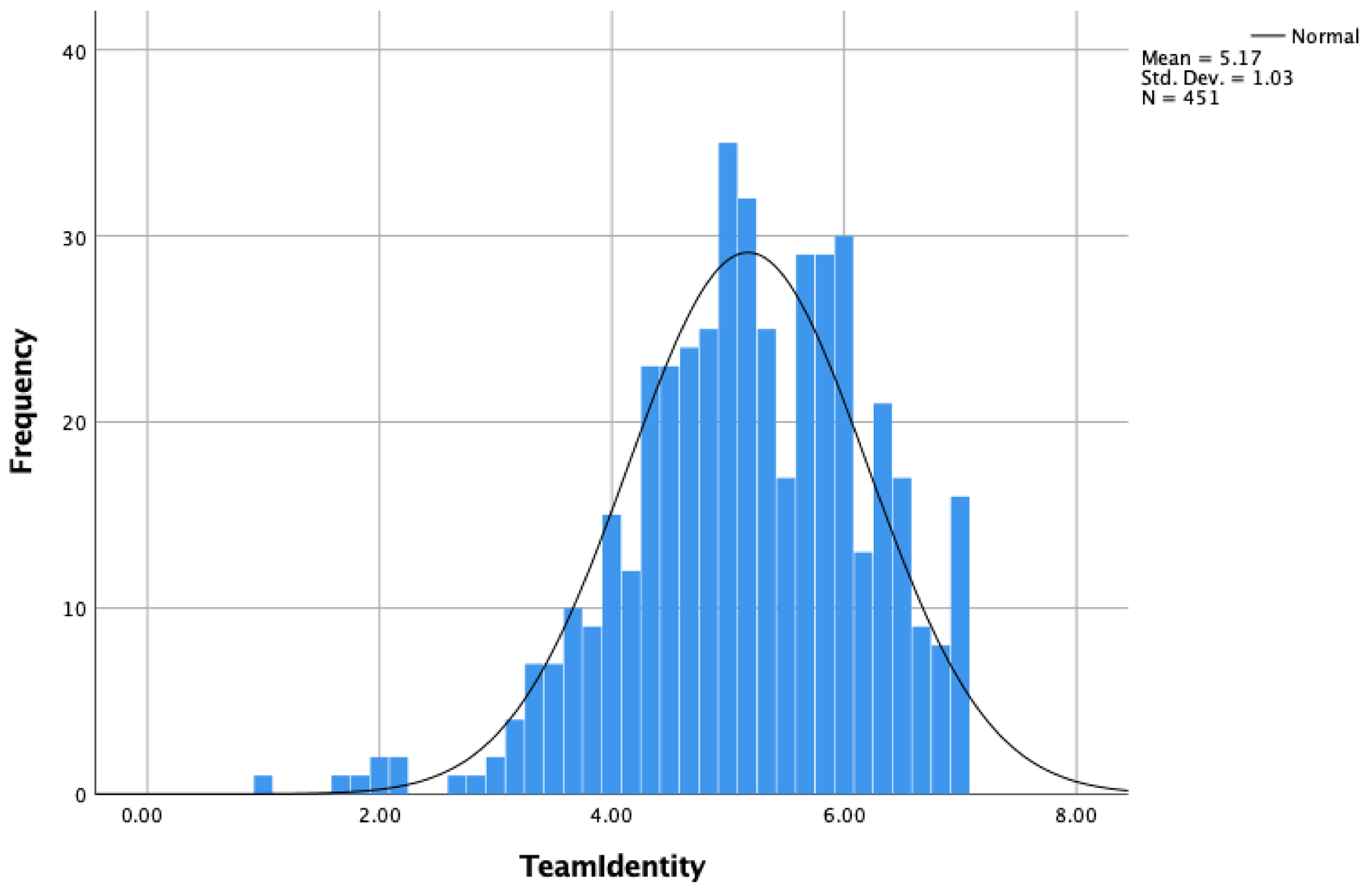
Figure A2.
Servant Leadership.
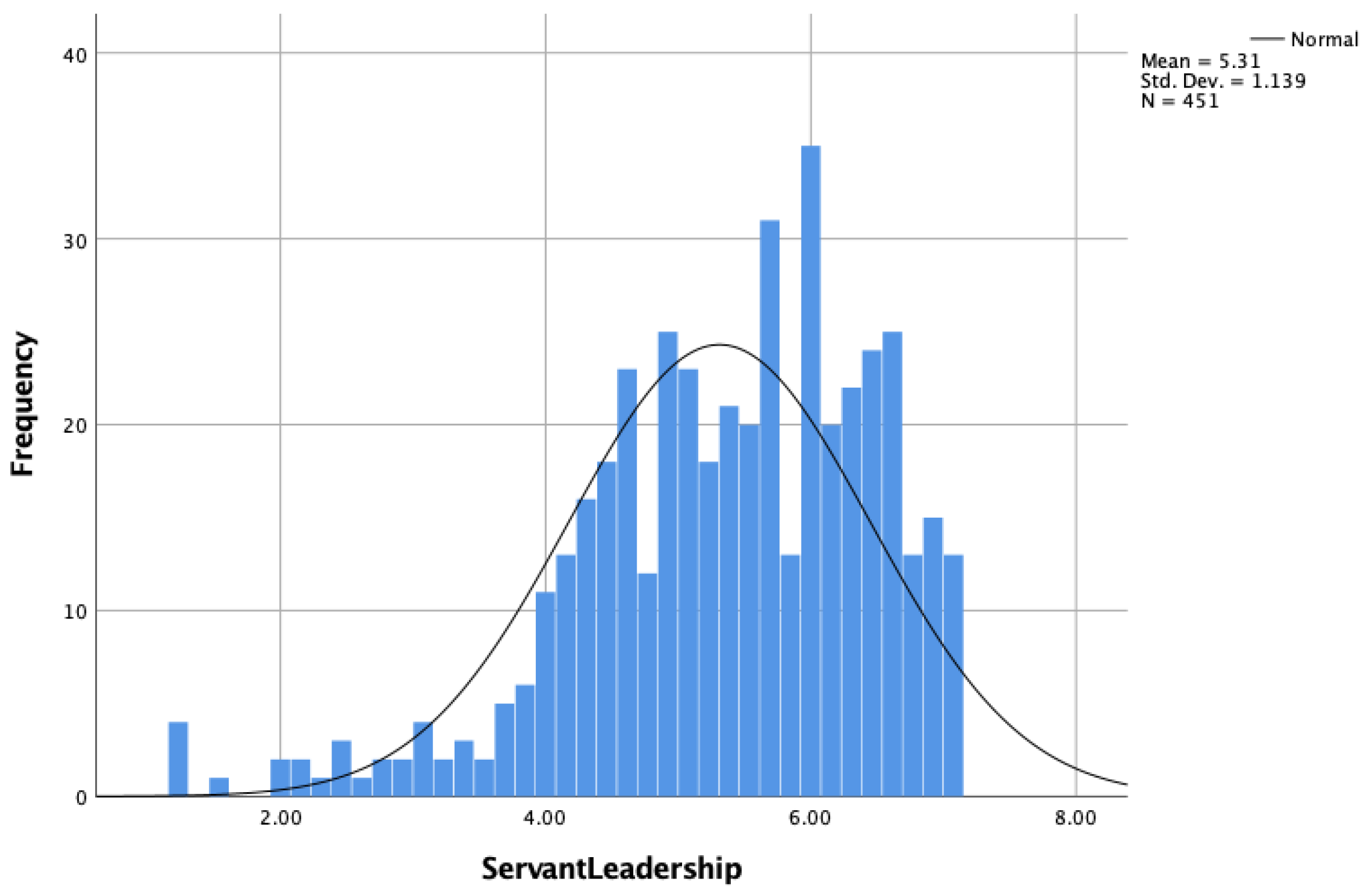
Figure A3.
Team Climate.
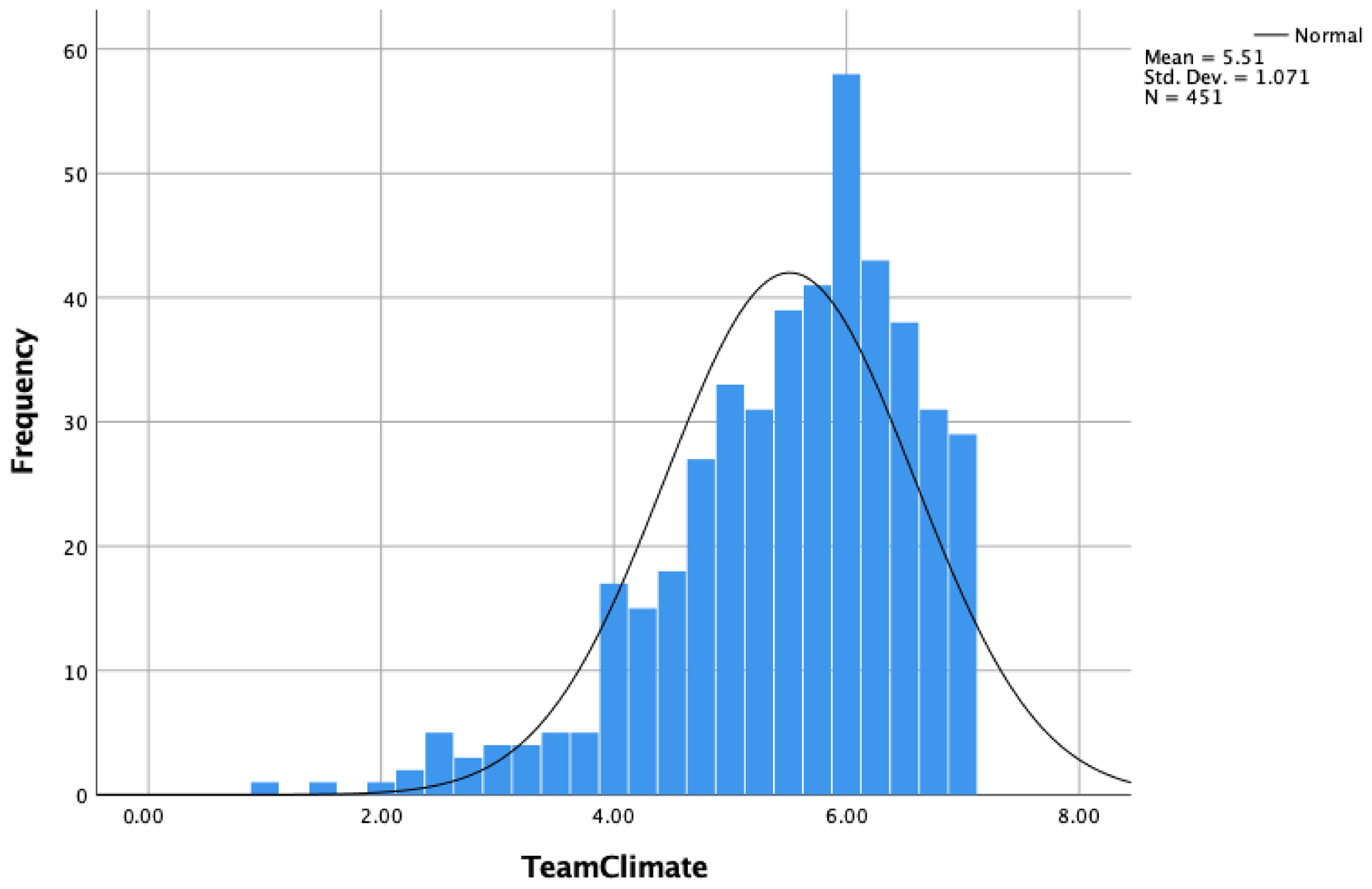
References
- Aboramadan, M. (2022). The effect of servant leadership on employees’ extra-role behaviors in NPOs: The role of work engagement. Nonprofit Management & Leadership, 33, 109–129. [Google Scholar] [CrossRef] [Scilit]
- Anderson, N. R., & West, M. A. (1998). Measuring climate for work group innovation: Development and validation of the team climate inventory. Journal of Organizational Behavior, 19(3), 235–258. [Google Scholar] [CrossRef]
- Avolio, B. J., Walumbwa, F. O., & Weber, T. J. (2009). Leadership: Current theories, research, and future directions. Annual Review of Psychology, 60, 421–449. [Google Scholar] [CrossRef] [Scilit]
- Chaudhry, A., Cao, X., Liden, R. C., Point, S., & Vidyarthi, P. R. (2021). A meta-review of servant leadership: Construct, correlates, and the process. Journal of Comparative International Management, 24(2), 59–99. [Google Scholar] [CrossRef] [Scilit]
- Chiniara, M., & Bentein, K. (2016). Linking servant leadership to individual performance: Differentiating the mediating role of autonomy, competence and relatedness need satisfaction. The Leadership Quarterly, 27(1), 124–141. [Google Scholar] [CrossRef] [Scilit]
- Cooper, B., & Glaesser, J. (2011). Using case-based approaches to analyse large datasets: A comparison of Ragin’s fsQCA and fuzzy cluster analysis. International Journal of Social Research Methodology, 14(1), 31–48. [Google Scholar] [CrossRef] [Scilit]
- Currie, N. T. (2026). Alignment of servant leadership dimensions with desirable job characteristics drives team performance. Servant Leadership: Theory & Practice, 13(1), 13–30. [Google Scholar]
- Deng, C., Gulseren, D., Isola, C., Grocutt, K., & Turner, N. (2023). Transformational leadership effectiveness: An evidence-based primer. Human Resource Development International, 26(5), 627–641. [Google Scholar] [CrossRef] [Scilit]
- Dionne, S. D., Yammarino, F. J., Atwater, L. E., & James, L. R. (2002). Neutralizing substitutes for leadership theory: Leadership effects and common-source bias. Journal of Applied Psychology, 87(3), 454–464. [Google Scholar] [CrossRef] [Scilit] [PubMed]
- Doosje, B., Ellemers, N., & Spears, R. (1995). Perceived intragroup variability as a function of group status and identification. Journal of Experimental Social Psychology, 31(5), 410–436. [Google Scholar] [CrossRef] [Scilit]
- Doty, D. H., Glick, W. H., & Huber, G. P. (1993). Fit, equifinality, and organizational effectiveness: A test of two configurational theories. Academy of Management Journal, 36(6), 1196–1250. [Google Scholar] [CrossRef] [Scilit]
- Dul, J. (2016a). Identifying single necessary conditions with NCA and fsQCA. Journal of Business Research, 69(4), 1516–1523. [Google Scholar] [CrossRef] [Scilit]
- Dul, J. (2016b). Necessary condition analysis (NCA) logic and methodology of “necessary but not sufficient” causality. Organizational Research Methods, 19(1), 10–52. [Google Scholar] [CrossRef] [Scilit]
- Edmondson, A. (1999). Psychological safety and learning behavior in work teams. Administrative Science Quarterly, 44(2), 350–383. [Google Scholar] [CrossRef] [Scilit]
- Ellemers, N., de Gilder, D., & Haslam, S. A. (2004). Motivating individuals and groups at work: A social identity perspective on leadership and group performance. Academy of Management Review, 29(3), 459–478. [Google Scholar] [CrossRef] [Scilit]
- Eva, N., Robin, M., Sendjaya, S., van Dierendonck, D., & Liden, R. C. (2019). Servant leadership: A systematic review and call for future research. The Leadership Quarterly, 30(1), 111–132. [Google Scholar] [CrossRef] [Scilit]
- Eva, N., Sendjaya, S., Prajogo, D., & Madison, K. (2021). Does organizational structure render leadership unnecessary? Configurations of formalization and centralization as a substitute and neutralizer of servant leadership. Journal of Business Research, 129, 43–58. [Google Scholar] [CrossRef] [Scilit]
- Figl, K., & Saunders, C. (2011). Team climate and media choice in virtual teams. AIS Transactions on Human-Computer Interaction, 3(4), 189–213. [Google Scholar] [CrossRef] [Scilit]
- Fiss, P. C. (2011). Building better causal theories: A fuzzy set approach to typologies in organization research. Academy of Management Journal, 54(2), 393–420. [Google Scholar] [CrossRef] [Scilit]
- Fransen, K., McEwan, D., & Sarkar, M. (2020). The impact of identity leadership on team functioning and well-being in team sport: Is psychological safety the missing link? Psychology of Sport and Exercise, 51, 101763. [Google Scholar] [CrossRef] [Scilit]
- Furnari, S., Crilly, D., Misangyi, V. F., Greckhamer, T., Fiss, P. C., & Aguilera, R. V. (2021). Capturing causal complexity: Heuristics for configurational theorizing. Academy of Management Review, 46(4), 778–799. [Google Scholar] [CrossRef] [Scilit]
- Greckhamer, T., Furnari, S., Fiss, P. C., & Aguilera, R. V. (2018). Studying configurations with qualitative comparative analysis: Best practices in strategy and organization research. Strategic Organization, 16(4), 482–495. [Google Scholar] [CrossRef] [Scilit]
- Greco, L. M., Porck, J. P., Walter, S. L., Scrimpshire, A. J., & Zabinski, A. M. (2021). A meta-analytic review of identification at work: Relative contribution of team, organizational, and professional identification. Journal of Applied Psychology, 107(5), 795–830. [Google Scholar] [CrossRef] [Scilit] [PubMed]
- Greenleaf, R. K. (1970). The servant as leader. Robert K. Greenleaf Center. [Google Scholar]
- Gutheil, L. (2021). Adaptive project management for the civil society sector: Towards an academic research agenda. International Development Planning Review, 43(3), 393–418. [Google Scholar] [CrossRef] [Scilit]
- Gutheil, L., & Koch, D.-J. (2023). Civil society organizations and managerialism: On the depoliticization of the adaptive management agenda. Development Policy Review, 41(1), e12630. [Google Scholar] [CrossRef] [Scilit]
- Haslam, S. A. (2004). Psychology in organizations: The social identity approach (2nd ed.). Sage. [Google Scholar]
- Henseler, J., Ringle, C. M., & Sarstedt, M. (2015). A new criterion for assessing discriminant validity in variance-based structural equation modeling. Journal of the Academy of Marketing Science, 43(1), 115–135. [Google Scholar] [CrossRef] [Scilit]
- Hernández-Perlines, F., & Araya-Castillo, L. A. (2020). Servant leadership, innovative capacity and performance in third sector entities. Frontiers in Psychology, 11, 290. [Google Scholar] [CrossRef] [Scilit]
- Hotta, A., Souma, T., & Haraguchi, Y. (2025). Is differentiated support under servant leadership acceptable? Japanese Psychological Research. [Google Scholar] [CrossRef] [Scilit]
- Howell, J. P., & Dorfman, P. W. (1986). Leadership and substitutes for leadership among professional and non-professional workers. The Journal of Applied Behavioral Science, 22(1), 29–46. [Google Scholar] [CrossRef] [Scilit]
- Hu, J., & Liden, R. C. (2011). Antecedents of team potency and team effectiveness: An examination of goal and process clarity and servant leadership. Journal of Applied Psychology, 96(4), 851–862. [Google Scholar] [CrossRef] [Scilit]
- Ika, L. A., Söderlund, J., Munro, L. T., & Landoni, P. (2020). When project management meets international development, what can we learn? International Journal of Project Management, 38(8), 469–473. [Google Scholar] [CrossRef] [Scilit]
- Ilyas, S., Butt, M., Ashfaq, F., & Acquadro Maran, D. (2020). Drivers for non-profits’ success: Volunteer engagement and financial sustainability practices through the resource dependence theory. Economies, 8(4), 101. [Google Scholar] [CrossRef] [Scilit]
- Janssen, O., & Huang, X. (2008). Us and me: Team identification and individual differentiation as complementary drivers of team members’ citizenship and creative behaviors. Journal of Management, 34(1), 69–88. [Google Scholar] [CrossRef] [Scilit]
- Jetten, J., & Hornsey, M. J. (2014). Deviance and dissent in groups. Annual Review of Psychology, 65, 461–485. [Google Scholar] [CrossRef] [Scilit]
- Kerr, S., & Jermier, J. M. (1978). Substitutes for leadership: Their meaning and measurement. Organizational Behavior and Human Performance, 22(3), 375–403. [Google Scholar] [CrossRef] [Scilit]
- Khalil, S. A., Khan, I., Ahmad, A., & Ullah, W. (2025). Servant leadership and project success: Exploring the interplay between team cohesion and top management support. Journal of Asian Development Studies, 14(1), 713–725. [Google Scholar] [CrossRef] [Scilit]
- Kock, N. (2020). Harman’s single factor test in PLS-SEM: Checking for common method bias. Data Analysis Perspectives Journal, 2(2), 1–6. [Google Scholar]
- Kumar, S., Sahoo, S., Lim, W. M., Kraus, S., & Bamel, U. (2022). Fuzzy-set qualitative comparative analysis (fsQCA) in business and management research: A contemporary overview. Technological Forecasting and Social Change, 178, 121599. [Google Scholar] [CrossRef] [Scilit]
- Lee, A., Lyubovnikova, J., Tian, A. W., & Knight, C. (2020). Servant leadership: A meta-analytic examination of incremental contribution, moderation, and mediation. Journal of Occupational and Organizational Psychology, 93(1), 1–44. [Google Scholar] [CrossRef] [Scilit]
- Liden, R. C., Wayne, S. J., Liao, C., & Meuser, J. D. (2014). Servant leadership and serving culture: Influence on individual and unit performance. Academy of Management Journal, 57(5), 1434–1452. [Google Scholar] [CrossRef] [Scilit]
- Liden, R. C., Wayne, S. J., Zhao, H., & Henderson, D. (2008). Servant leadership: Development of a multidimensional measure and multi-level assessment. The Leadership Quarterly, 19(2), 161–177. [Google Scholar] [CrossRef] [Scilit]
- Lisak, A., Harush, R., Icekson, T., & Harel, S. (2022). Team interdependence as a substitute for empowering leadership contribution to team meaningfulness and performance. Frontiers in Psychology, 13, 637822. [Google Scholar] [CrossRef] [Scilit]
- Luhtanen, R., & Crocker, J. (1992). A collective self-esteem scale: Self-evaluation of one’s social identity. Personality and Social Psychology bulletin, 18(3), 302–318. [Google Scholar] [CrossRef] [Scilit]
- Mael, F., & Ashforth, B. E. (1992). Alumni and their alma mater: A partial test of the reformulated model of organizational identification. Journal of Organizational Behavior, 13(2), 103–123. [Google Scholar] [CrossRef] [Scilit]
- Mael, F. A., & Tetrick, L. E. (1992). Identifying organizational identification. Educational and Psychological Measurement, 52(4), 813–824. [Google Scholar] [CrossRef] [Scilit]
- Malik, A. A., Muneeb, D., Khan, N., Usman, M., & Latif, K. F. (2022). The nexus of servant leadership and project success: The mediation of emotional intelligence and job stress and moderation of team effectiveness. Leadership & Organization Development Journal, 43(8), 1186–1200. [Google Scholar] [CrossRef] [Scilit]
- Martens, W., & Minh Little, C. N. (2024). Beyond authority: Servant leadership as a catalyst for transformation in NGOs. Qeios. [Google Scholar] [CrossRef] [Scilit]
- Martens, W., Pham, D. T. H., & Pang, J. M. (2023). A computational approach to transparency in corporate governance across borders. The VMOST Journal of Social Sciences and Humanities, 65(3), 51–65. [Google Scholar] [CrossRef] [Scilit]
- Meyer, A. D., Tsui, A. S., & Hinings, C. R. (1993). Configurational approaches to organizational analysis. Academy of Management Journal, 36(6), 1175–1195. [Google Scholar] [CrossRef] [Scilit]
- Minh Little, C. N., & Martens, W. (2024). Unlocking success in NGOs: The power of servant leadership. Qeios. [Google Scholar] [CrossRef]
- Mombeuil, C., Diunugala, H. P., & Jeune, L. (2023). Relationships between servant leadership, team identity, team climate, and project success in NGO settings. Harvard Dataverse. [Google Scholar] [CrossRef]
- Pircher Verdorfer, A., Feng, X., Peus, C., & Frey, D. (2025). How does servant leadership work in times of uncertainty? Examining servant leadership and perceived job insecurity during significant organizational change. Journal of Managerial Psychology, 1–15. [Google Scholar] [CrossRef] [Scilit]
- Podsakoff, P. M., MacKenzie, S. B., & Bommer, W. H. (1996). Meta-analysis of the relationships between Kerr and Jermier’s substitutes for leadership and employee job attitudes, role perceptions, and performance. Journal of Applied Psychology, 81(4), 380–399. [Google Scholar] [CrossRef] [Scilit]
- Podsakoff, P. M., MacKenzie, S. B., Lee, J.-Y., & Podsakoff, N. P. (2003). Common method biases in behavioral research: A critical review of the literature and recommended remedies. Journal of Applied Psychology, 88(5), 879–903. [Google Scholar] [CrossRef] [Scilit]
- Ragin, C. C. (2008). Redesigning social inquiry: Fuzzy sets and beyond. University of Chicago Press. [Google Scholar]
- Riketta, M. (2008). The causal relation between job attitudes and performance: A meta-analysis of panel studies. Journal of Applied Psychology, 93(2), 472–481. [Google Scholar] [CrossRef] [Scilit]
- Saleem, S., Ayub, M., Raziq, M. M., & Iqbal, M. Z. (2023). A multilevel study of authentic leadership, collective efficacy, and team performance and commitment. Current Psychology, 42(22), 18473–18487. [Google Scholar] [CrossRef] [Scilit]
- Sangwa, S. (2025). Reclaiming elder-led governance: A biblical critique of youth-first globalism. SSRN. [Google Scholar] [CrossRef] [Scilit]
- Schippers, M. C., Edmondson, A. C., & West, M. A. (2014). Team reflexivity as an antidote to team information-processing failures. Small Group Research, 45(6), 731–769. [Google Scholar] [CrossRef] [Scilit]
- Schneider, C. Q., & Wagemann, C. (2012). Set-theoretic methods for the social sciences: A guide to qualitative comparative analysis. Cambridge University Press. [Google Scholar]
- Schriesheim, C. A. (1997). Substitutes-for-leadership theory: Development and basic concepts. The Leadership Quarterly, 8(2), 103–108. [Google Scholar] [CrossRef] [Scilit]
- Siangchokyoo, N., & Klinger, R. L. (2022). Shared leadership and team performance: The joint effect of team dispositional composition and collective identification. Group & Organization Management, 47(1), 109–140. [Google Scholar]
- Singh, K. (2014). Servant leadership in non-governmental organizations (NGOs). Journal of Administrative Science, 11(1), 1–11. [Google Scholar]
- Tajfel, H., & Turner, J. C. (1979). An integrative theory of intergroup conflict. In W. G. Austin, & S. Worchel (Eds.), The social psychology of intergroup relations (pp. 33–47). Brooks/Cole Publishing Company. [Google Scholar]
- Thomas, W. E., Brown, R., Easterbrook, M. J., Vignoles, V. L., Manzi, C., D’Angelo, C., & Holt, J. J. (2019). Team-level identification predicts perceived and actual team performance: Longitudinal multilevel analyses with sports teams. British Journal of Social Psychology, 58(2), 473–492. [Google Scholar] [CrossRef] [Scilit] [PubMed]
- Turner, J. C., Hogg, M. A., Oakes, P. J., Reicher, S. D., & Wetherell, M. S. (1987). Rediscovering the social group: A self-categorization theory. Blackwell. [Google Scholar]
- Turner, M. E., & Pratkanis, A. R. (1998). Twenty-five years of groupthink theory and research: Lessons from the evaluation of a theory. Organizational Behavior and Human Decision Processes, 73(2–3), 105–115. [Google Scholar] [CrossRef] [Scilit]
- Van der Vegt, G. S., & Bunderson, J. S. (2005). Learning and performance in multidisciplinary teams: The importance of collective team identification. Academy of Management Journal, 48(3), 532–547. [Google Scholar] [CrossRef] [Scilit]
- Van Dierendonck, D. (2011). Servant leadership: A review and synthesis. Journal of Management, 37(4), 1228–1261. [Google Scholar] [CrossRef] [Scilit]
- Van Knippenberg, D., De Dreu, C. K., & Homan, A. C. (2004). Work group diversity and group performance: An integrative model and research agenda. Journal of Applied Psychology, 89(6), 1008. [Google Scholar] [CrossRef] [Scilit] [PubMed]
- von Bertalanffy, L. (1950). The theory of open systems in physics and biology. Science, 111, 23–29. [Google Scholar] [CrossRef] [Scilit]
- Weber, J. R. (2025). Enhancing team effectiveness: A study on the efficacy of servant leadership experiential training as an intervention. Servant Leadership: Theory & Practice, 12(1), 4. [Google Scholar]
- Wellard, K., & Copestake, J. G. (1993). Non-governmental organizations and the state in Africa: Rethinking roles in sustainable agricultural development. Routledge. [Google Scholar]
- West, M. A. (1996). Reflexivity and work group effectiveness: A conceptual integration. International Review of Industrial and Organizational Psychology, 11, 555–579. [Google Scholar]
- West, M. A. (2002). Sparkling Fountains or stagnant ponds: An integrative model of creativity and innovation implementation in work groups. Applied Psychology: An International Review, 51, 355–387. [Google Scholar] [CrossRef] [Scilit]
- West, M. A., & Altink, W. M. (1996). Innovation at work: Individual, group, organizational, and socio-historical perspectives. European Journal of Work and Organizational Psychology, 5(1), 3–11. [Google Scholar] [CrossRef] [Scilit]
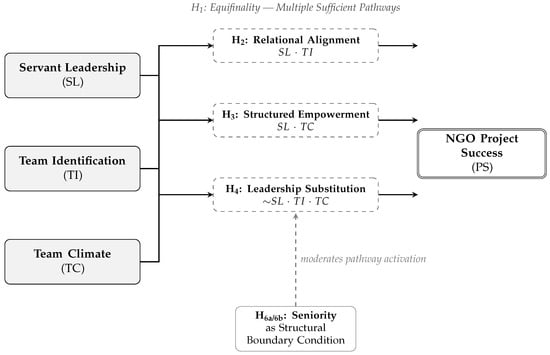
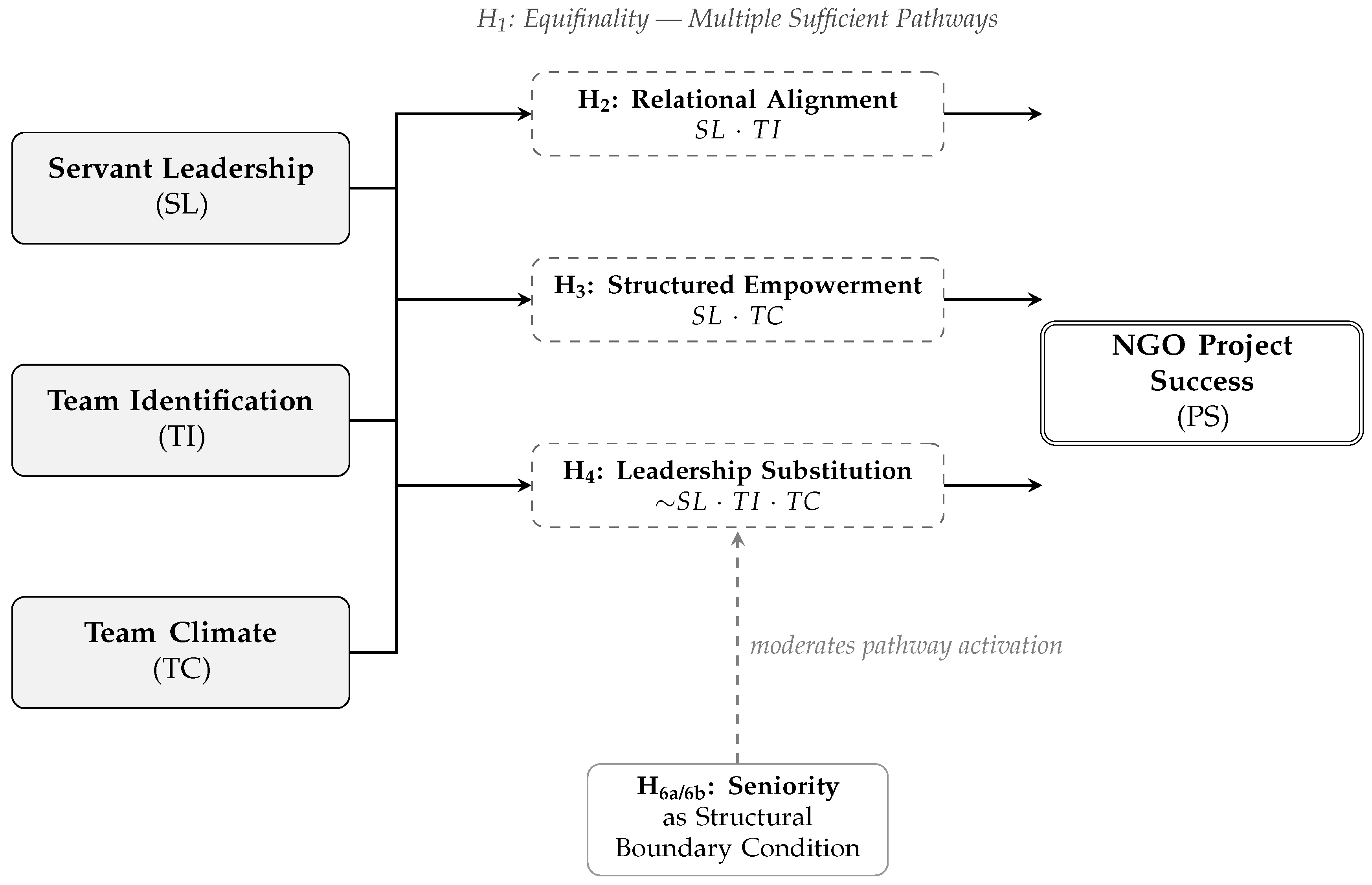
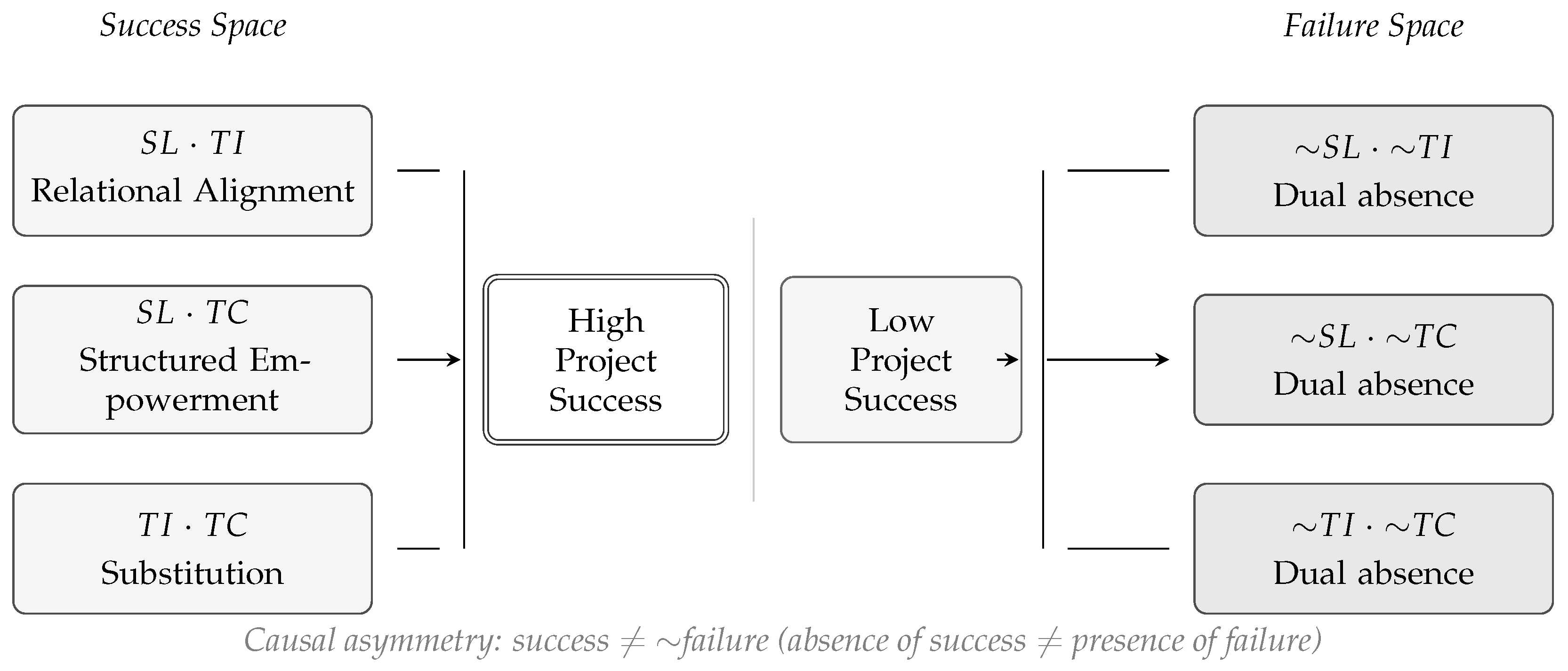

Disclaimer/Publisher’s Note: The statements, opinions and data contained in all publications are solely those of the individual author(s) and contributor(s) and not of MDPI and/or the editor(s). MDPI and/or the editor(s) disclaim responsibility for any injury to people or property resulting from any ideas, methods, instructions or products referred to in the content. |
© 2026 by the author. Licensee MDPI, Basel, Switzerland. This article is an open access article distributed under the terms and conditions of the Creative Commons Attribution (CC BY) license.