1. Introduction
The ongoing digital transformation of work is redefining the foundations of human resource management, with recruitment and selection emerging as one of the domains most visibly affected by technological change. In this context, artificial intelligence (AI) has moved from experimental use to practical integration in hiring processes, supporting activities such as résumé screening, candidate ranking, video interview analysis, automated communication, and algorithmic matching between applicants and job requirements (
Black & van Esch, 2020;
Hmoud & Várallyai, 2019;
Ooi et al., 2025;
Upadhyay & Khandelwal, 2018). This expansion reflects increasing organizational pressure to process large volumes of applications efficiently while maintaining decision quality in highly competitive labor markets (
Pillai & Sivathanu, 2020).
From an organizational perspective, AI-based recruitment is commonly associated with improvements in speed, scalability, and consistency. By enabling the analysis of extensive datasets and the detection of complex patterns, these systems are expected to support more structured and potentially more accurate decision-making processes (
Pillai & Sivathanu, 2020;
Vrontis et al., 2021). However, this narrative of efficiency is not uncontested. A growing body of research points to persistent concerns related to algorithmic bias, limited transparency, and adverse applicant reactions, particularly when decision processes are perceived as opaque or insufficiently justified (
Acikgoz et al., 2020;
Köchling & Wehner, 2020;
Raghavan et al., 2020). Rather than representing isolated issues, these concerns coexist with performance gains, suggesting that AI-based recruitment operates within a socio-organizational context characterized by simultaneous benefits and risks.
The expansion of this field has generated a growing number of review studies that contribute valuable insights, yet offer only partial perspectives. Interdisciplinary reviews of AI in human resource management provide broad overviews of technological applications and strategic implications, but typically treat recruitment and selection as one domain among many, without examining its specific dynamics in depth (
Pan & Froese, 2023). Scoping reviews focused on AI-enabled HR functionalities map tools across the employee lifecycle, but do not fully explore how these technologies reshape selection processes or affect organizational and human outcomes in differentiated ways (
Ali & Kallach, 2024). More targeted analyses, such as systematic reviews on ethical issues in AI-based recruitment, offer detailed discussions of fairness, discrimination, and accountability, yet often privilege normative concerns without systematically connecting them to performance outcomes and applicant experience (
Mori et al., 2025).
This dispersion of perspectives reveals a deeper limitation in the literature. Existing studies tend to examine efficiency, decision quality, fairness, transparency, and applicant reactions as separate analytical domains, even though they coexist within the same hiring systems (
Köchling & Wehner, 2020;
Vrontis et al., 2021). This separation prevents cumulative theory-building because it disconnects claims of efficiency from evidence on fairness, candidate experience, and governance, which in practice are tightly interrelated. More specifically, three gaps remain evident: the lack of syntheses explicitly centered on recruitment and selection as a core organizational function; the absence of integrative analyses linking performance outcomes, applicant experience, and governance mechanisms; and the limited development of theoretical explanations capable of accounting for the coexistence of these outcomes as structurally connected tensions.
In response to these limitations, this study conducts a scoping review to systematically map and synthesize the literature on the advantages, challenges, and underlying tensions of AI-based recruitment and selection from a socio-technical perspective. Scoping reviews are particularly suitable for fields characterized by conceptual diversity and rapid evolution, as they allow the integration of heterogeneous evidence while identifying dominant patterns and knowledge gaps (
Peters et al., 2021;
Tricco et al., 2016). The present study seeks to characterize the structure of the literature, identify the mechanisms through which AI contributes to organizational value, and examine the human, ethical, and experiential risks associated with its implementation. Building on this synthesis, it also aims to develop an integrative conceptual framework and outline a structured research agenda.
Guided by this objective, the study addresses the following research questions:
What are the main characteristics of the literature on AI-based recruitment and selection in terms of publication trends, methodologies, and research contexts?
What advantages are associated with AI-based recruitment, particularly regarding efficiency, decision quality, and organizational outcomes?
What challenges, risks, and ethical concerns are identified, especially in relation to fairness, transparency, and applicant experience?
How does the literature reflect the coexistence and tension between performance-oriented outcomes and legitimacy-based concerns?
What conceptual gaps remain, and how can they inform future research and responsible organizational practice?
By addressing these questions, the study advances a socio-technical interpretation of AI-based recruitment as a decision ecosystem shaped by the interaction between performance objectives and legitimacy expectations. Within this perspective, efficiency, fairness, transparency, candidate experience, and governance are not independent dimensions but interdependent elements that jointly define how AI operates in contemporary hiring systems.
2. Literature Review and Conceptual Positioning
The increasing use of artificial intelligence (AI) in recruitment and selection has generated a body of research that is both extensive and conceptually dispersed. Contributions originate from different fields, including human resource management, information systems, organizational psychology, and business ethics, each approaching the phenomenon from distinct assumptions and vocabularies. While this plurality has broadened the scope of analysis, it has also limited theoretical accumulation, as findings are rarely integrated into a shared explanatory framework. The main limitation of the field is therefore not the absence of evidence, but the lack of a conceptual language capable of explaining how technical and social dimensions jointly shape selection outcomes.
2.1. AI in Recruitment and Selection: Applications and Decision Architectures
Within human resource management, AI is commonly understood as a set of computational capabilities that enable systems to replicate or support cognitive processes such as learning, classification, and decision-making (
Brougham & Haar, 2018). In recruitment contexts, these capabilities are operationalized through tools designed to screen résumés, match candidates to job requirements, analyze video interviews, and manage communication with applicants (
Black & van Esch, 2020;
Chamorro-Premuzic et al., 2016). Describing these applications, however, does not fully capture how AI influences organizational decisions.
A more informative perspective emerges when attention shifts from tools to decision architectures. The literature differentiates between autonomous, assistive, and hybrid configurations, each implying a distinct distribution of decision authority. Autonomous systems rely primarily on algorithmic outputs, minimizing human intervention. Assistive systems support human judgment through recommendations or rankings, while hybrid configurations combine both logics, allocating decision responsibility across human and technological actors (
Davenport & Ronanki, 2018;
Jarrahi, 2018). These configurations are not merely technical variations; they shape how decisions are produced, justified, and experienced. Treating AI as a uniform instrument obscures these differences and limits analytical precision.
2.2. Fragmented Evidence Streams: Efficiency, Fairness, and Candidate Experience
The literature on AI-based recruitment has developed along lines that rarely converge. One line of work focuses on organizational performance, emphasizing efficiency, scalability, and standardization. From this perspective, AI is positioned as a mechanism for accelerating hiring processes and improving consistency in evaluation (
Köchling & Wehner, 2020;
Upadhyay & Khandelwal, 2018).
A different line of research examines how these systems are perceived by candidates, paying particular attention to fairness, transparency, and trust. In this review, fairness refers to the extent to which AI-supported selection processes are perceived as procedurally just, non-discriminatory, and open to contestation when outcomes are considered questionable. Transparency refers to the degree to which applicants and recruiters can understand how AI is used, what information is considered, and how algorithmic outputs inform selection decisions. Trust refers to stakeholders’ confidence that AI-supported recruitment is competent, accountable, and aligned with legitimate organizational and ethical expectations. Evidence shows that applicants respond critically when decision processes are not clearly explained or when human involvement is limited (
Acikgoz et al., 2020;
Langer et al., 2021). Concerns about discrimination reinforce this perspective, as algorithmic systems may reproduce patterns embedded in historical data and organizational practices (
Raghavan et al., 2020;
van den Broek et al., 2020).
These streams remain largely disconnected. As a result, efficiency gains and ethical risks are often discussed independently, even though they arise within the same organizational processes. This separation weakens theoretical development because it prevents a clear understanding of how performance-oriented and legitimacy-oriented outcomes emerge simultaneously.
2.3. Toward a Socio-Technical Synthesis of AI-Based Personnel Selection
Recent contributions suggest that a more coherent interpretation requires moving beyond isolated perspectives and adopting a socio-technical view. From this standpoint, recruitment outcomes are not determined by algorithms alone but emerge from the interaction between technological systems, organizational practices, and human interpretation (
Arrieta et al., 2020;
Jarrahi, 2018;
Kellogg et al., 2020). This shift changes the analytical focus from tools to configurations. Rather than treating AI as an autonomous technological force, the socio-technical perspective emphasizes that organizational outcomes are shaped by the continuous interaction between technical infrastructures, human actors, institutional practices, and governance arrangements. In this sense, the present study extends socio-technical reasoning specifically to AI-based recruitment and selection, a context in which performance pressures, human evaluation, and legitimacy expectations converge within the same decision processes.
Within this perspective, the coexistence of benefits and risks can be understood as a structural condition rather than an anomaly. Paradox theory provides a useful lens for interpreting this dynamic, as it conceptualizes organizational outcomes as the result of interdependent and often competing demands (
Smith & Lewis, 2011). In the context of AI-based recruitment, the pursuit of efficiency does not eliminate the need for legitimacy; both must be addressed simultaneously.
Legitimacy becomes particularly relevant when considering how decisions are received by candidates and other stakeholders. Acceptance depends not only on technical performance but also on whether processes are perceived as fair, transparent, and accountable (
Suchman, 1995). When these conditions are not met, efficiency gains may be accompanied by distrust and resistance, undermining the intended benefits of AI adoption. Despite these insights, the literature still lacks integrative syntheses that explain how these dimensions interact within concrete recruitment processes. The relationship between efficiency, candidate experience, and governance remains insufficiently articulated, especially across different decision architectures. Accordingly, the contribution of this review does not lie in proposing an entirely new theoretical tradition, but in integrating fragmented evidence streams into a recruitment-specific socio-technical framework capable of explaining how organizational performance and legitimacy concerns are jointly produced within AI-enabled hiring systems.
2.4. Conceptual Integration: A Socio-Technical Framework of AI-Based Personnel Selection
The preceding discussion points to the need for a framework that brings together the dispersed elements identified in the literature. In response, this study proposes a socio-technical model that conceptualizes AI-based recruitment as a decision ecosystem shaped by the interaction of technical, social, and governance components. The framework builds upon existing socio-technical and organizational perspectives, but adapts them specifically to the context of AI-based personnel selection, where algorithmic systems influence not only operational efficiency but also perceptions of fairness, accountability, and organizational legitimacy.
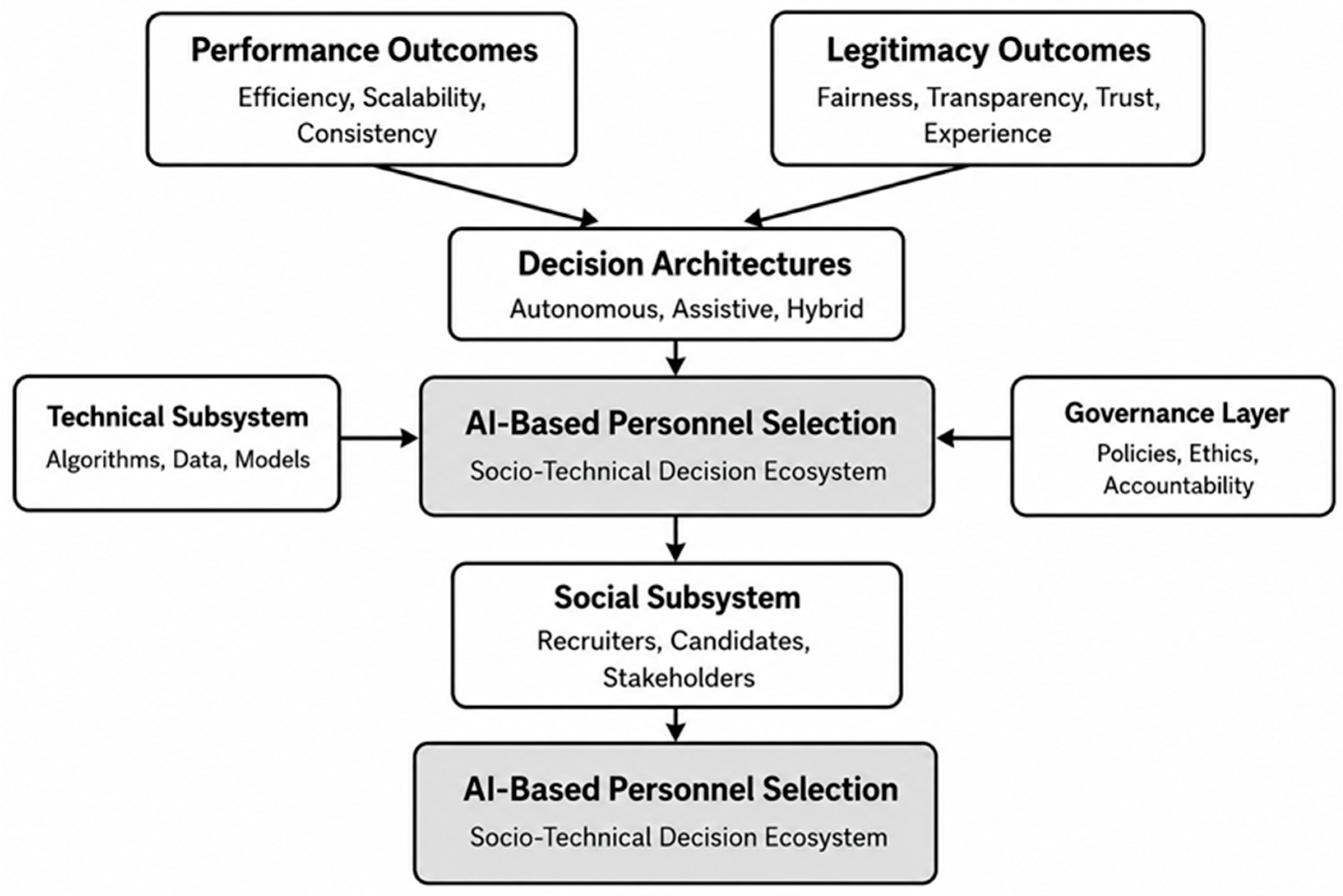
Within this model, recruitment outcomes are produced through the interplay of three interdependent layers. The technical subsystem comprises algorithms, data structures, and models that enable automated or semi-automated decisions. The social subsystem includes recruiters, candidates, and organizational stakeholders, whose interpretations and actions influence how these systems operate in practice. The governance layer introduces rules, policies, and accountability mechanisms that regulate the relationship between technological processes and human actors.
Decision architectures act as the connecting mechanism across these layers. Whether decisions are made autonomously, supported by AI, or shared between humans and algorithms determines not only the outcome itself but also how that outcome is interpreted and evaluated (
Davenport & Ronanki, 2018;
Jarrahi, 2018). In this sense, organizational performance and human responses are co-produced rather than sequentially generated. This configuration-oriented perspective represents a central contribution of the framework, as it shifts the analysis away from isolated technological effects toward the interactional conditions through which recruitment outcomes emerge.
A central implication of this framework is that advantages and challenges should not be treated as independent phenomena. Instead, they reflect the expression of a deeper structural tension. Drawing on paradox theory (
Smith & Lewis, 2011), AI-based recruitment is characterized by the simultaneous pursuit of performance and legitimacy. Efficiency, scalability, and consistency are sought through algorithmic decision-making, while fairness, transparency, and trust remain essential for social acceptance.
This relationship is not reducible to a simple trade-off. Systems that maximize efficiency without ensuring legitimacy risk generating resistance and undermining their own effectiveness. Conversely, reliance on purely human decision-making limits scalability and consistency. The key issue lies in how organizations configure socio-technical systems to sustain both demands over time.
Within this configuration, legitimacy plays a central role. Following
Suchman (
1995), legitimacy depends on the extent to which organizational practices are perceived as appropriate within a given social context. In AI-based recruitment, this perception is shaped by how decisions are communicated, justified, and governed. Human oversight and governance mechanisms therefore become essential elements for aligning technological capabilities with social expectations.
The proposed framework captures these relationships by conceptualizing AI-based recruitment as a socio-technical decision ecosystem in which performance and legitimacy are structurally interconnected.
Figure 1 illustrates this configuration, showing how technical, social, and governance subsystems interact through decision architectures to generate both performance-oriented outcomes (efficiency, scalability, consistency) and legitimacy-oriented outcomes (fairness, transparency, trust, and candidate experience). These outcomes are linked through a persistent structural tension, reflecting the paradoxical nature of AI-enabled organizational processes (
Smith & Lewis, 2011). Accordingly, the originality of the framework lies not in introducing entirely new constructs, but in reorganizing fragmented dimensions of the literature into an integrated explanatory structure specifically adapted to AI-based recruitment and selection. This framework provides a coherent foundation for interpreting the findings of this study and guiding future research.
3. Methodology
3.1. Review Design and Protocol
This study adopts a scoping review approach to examine how the literature addresses the advantages, challenges, and tensions associated with AI-based recruitment and selection. This design is particularly suitable for research areas characterized by conceptual diversity and rapid development, as it allows different types of evidence to be combined while identifying patterns and gaps across studies (
Colquhoun et al., 2014;
Munn et al., 2018;
Peters et al., 2021;
Peterson et al., 2017). The review process was informed by the framework proposed by
Arksey and O’Malley (
2005), together with subsequent methodological refinements aimed at improving analytical consistency and transparency (
Levac et al., 2010;
Pham et al., 2014). Reporting was structured in line with PRISMA-ScR recommendations (
Tricco et al., 2016). To enhance traceability, the protocol was registered in the Open Science Framework (OSF), making the research process accessible and reproducible.
3.2. PCC Framework and Eligibility Criteria
The selection criteria were defined using the Population–Concept–Context (PCC) structure to ensure alignment with the study’s analytical focus.
The population comprises applicants, recruiters, human resource professionals, and organizations involved in hiring processes. The concept refers to AI-based tools applied to recruitment and selection, including screening systems, matching algorithms, and decision-support technologies. The context encompasses organizational hiring environments across sectors and geographical settings. Studies were retained when they explicitly examined AI within recruitment or selection processes, were published in peer-reviewed journals, written in English, and addressed organizational, human, or ethical dimensions. Studies were excluded when they focused exclusively on technical developments without organizational application, addressed HRM without specific reference to recruitment or selection, or corresponded to grey literature. This approach ensured conceptual clarity and analytical relevance (
Peters et al., 2021;
Pham et al., 2014).
3.3. Information Sources and Search Strategy
The search process was designed to balance coverage and reproducibility. Three sources were used: Web of Science and Scopus as primary databases, and Google Scholar as a complementary tool for citation tracking. The search was conducted between March and August 2025. It combined controlled vocabulary and free-text terms related to artificial intelligence and recruitment processes, adapting expressions to the syntax of each database.
In Web of Science, searches targeted topic fields using combinations of terms such as “artificial intelligence,” “machine learning,” and “algorithmic decision-making” with “recruitment,” “selection,” “hiring,” and “talent acquisition.” In Scopus, equivalent terms were applied to titles, abstracts, and keywords, incorporating variations such as “AI recruitment” and “algorithmic hiring.” Google Scholar was not used to construct the corpus, but to identify additional references through backward and forward citation tracking. Search terms were iteratively refined to maintain a balance between breadth and precision, following PRESS recommendations. This process resulted in an initial dataset of 326 records.
3.4. Selection Process
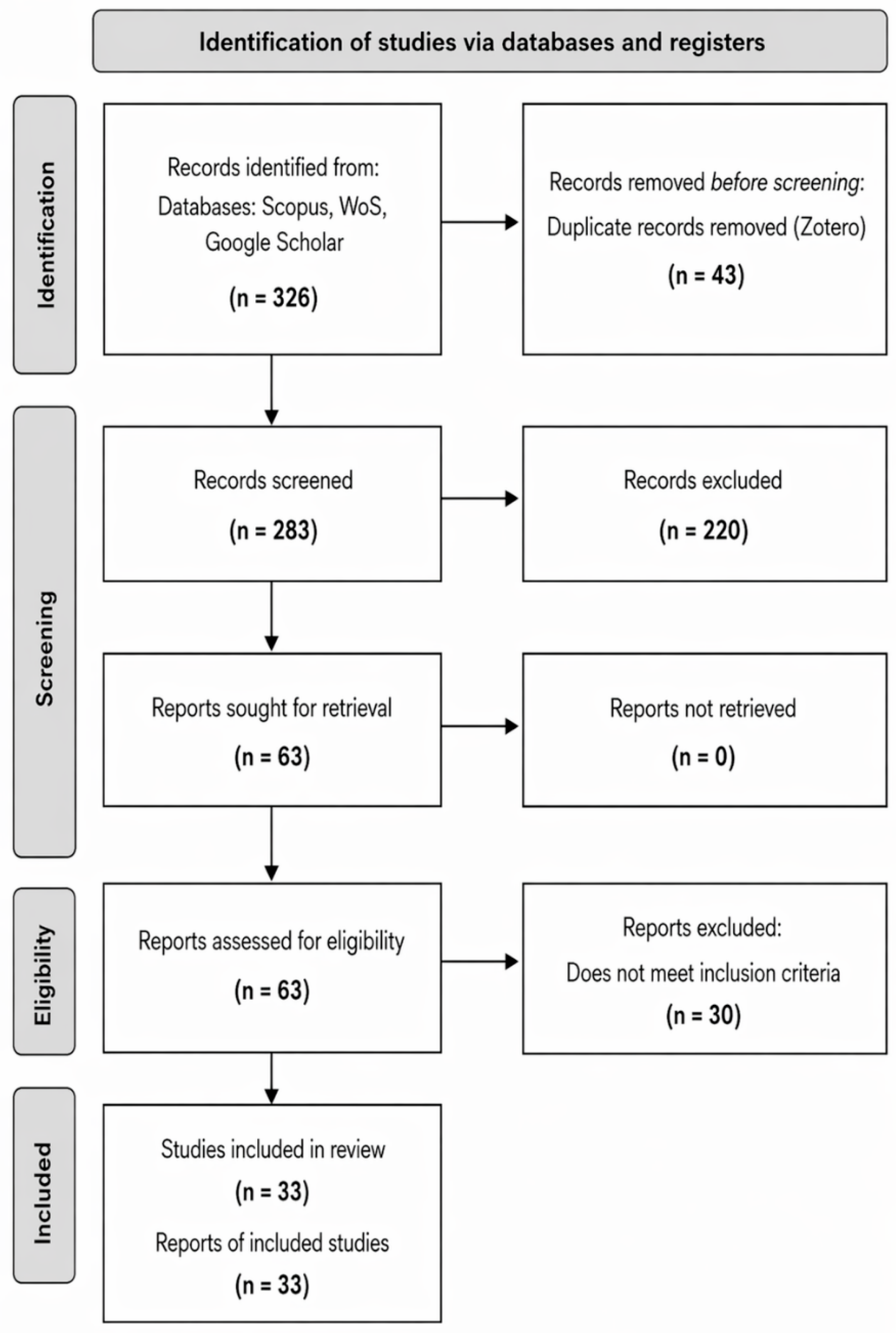
The screening procedure followed a staged approach aimed at ensuring consistency and transparency. After removing duplicates using Zotero (Version 8) (n = 43), a total of 283 records remained. Titles and abstracts were independently assessed by two reviewers based on predefined criteria. Studies that met the initial conditions were then examined at the full-text level. A calibration exercise was conducted at the beginning of the process to align interpretation criteria. This calibration involved jointly reviewing an initial subset of records to clarify the application of inclusion and exclusion criteria before independent screening began. Agreement between reviewers was evaluated using Cohen’s kappa coefficient at both screening stages. Inter-coder reliability was therefore assessed not only during title and abstract screening, but also during full-text eligibility assessment, allowing consistency to be monitored across the main decision points of the review. Divergences were resolved through discussion and, when required, with the involvement of a third reviewer. The process was supported by Rayyan, which facilitated systematic comparison and documentation of decisions.
3.5. Study Selection Flow and PRISMA-ScR Diagram
The selection process is summarized in
Figure 2, which presents the PRISMA-ScR flow diagram. This figure details each stage of identification, screening, eligibility assessment, and final inclusion. The diagram shows how the initial set of 326 records was reduced to a final corpus of 33 studies, specifying duplicate removal, exclusion decisions, and full-text screening outcomes. This representation ensures transparency and provides a clear audit trail of the selection process (
Tricco et al., 2015;
Tricco et al., 2016).
Figure 2 illustrates the study selection process, including identification, screening, eligibility, and inclusion stages.
3.6. Corpus Definition
The final analytical corpus consists of 33 studies selected for their direct relevance to the research questions and their explicit focus on AI-based recruitment and selection. This corpus should be understood as a focused core corpus rather than an exhaustive representation of all publications on artificial intelligence and human resource management. The inclusion decision prioritized studies that made a direct and substantive contribution to understanding recruitment and selection processes, particularly in relation to organizational advantages, human implications, ethical risks, and governance challenges.
Additional studies were retained to support conceptual development and contextual interpretation. This distinction reflects a deliberate emphasis on analytical coherence rather than exhaustive inclusion, in line with methodological guidance for scoping reviews (
Khalil et al., 2024;
McMeekin et al., 2020). Thus, broader AI-HRM publications and adjacent studies were used as supporting literature when they helped frame the topic conceptually, but they were not incorporated into the core corpus unless they directly informed the analysis of AI-based recruitment and selection. This decision was especially important given the rapid expansion of publications in this field, as it allowed the review to maintain a clear analytical focus while acknowledging that the evidence base is evolving quickly.
3.7. Data Charting and Coding
Data extraction followed a structured charting process designed to ensure consistency across studies (
Colquhoun et al., 2014;
Levac et al., 2010). Extracted information included publication characteristics, methodological approaches, types of AI applications, reported advantages, identified challenges, and the role of human involvement in decision-making. The charting form also included specific fields for fairness-related concerns, transparency and explainability issues, applicant reactions, and governance mechanisms, which allowed the extracted information to be aligned with the research questions and the conceptual framework.
A standardized charting form was developed and refined throughout the process. To strengthen reliability, a subset of studies was coded independently by two reviewers. Differences were documented and resolved through discussion, and an audit trail was maintained to ensure transparency. For example, evidence referring to faster screening, reduced administrative burden, or improved handling of large applicant pools was grouped under “efficiency and decision support”; evidence concerning discriminatory risk, biased data, or unequal treatment was grouped under “bias and fairness”; and evidence related to explanations, perceived opacity, or trust in AI-supported decisions was grouped under “transparency and trust.” This procedure made the transition from extracted data to thematic categories more explicit and auditable.
The final corpus, presented in
Appendix A, provided the basis for both descriptive and thematic analyses.
3.8. Quality and Robustness Procedures
Although exclusion based on methodological quality is not standard practice in scoping reviews, an appraisal was conducted to support interpretation. Empirical studies were assessed using the Mixed Methods Appraisal Tool (MMAT) (
Hong et al., 2018), while conceptual contributions were evaluated using criteria appropriate to their design. The appraisal process was not used as an exclusion criterion, but rather as an interpretive layer intended to strengthen the analytical robustness of the review. More specifically, it helped differentiate findings supported by empirical evidence from those derived primarily from conceptual, exploratory, or narrative contributions. This distinction was particularly relevant given the methodological heterogeneity of the literature and allowed the synthesis to interpret claims regarding efficiency, fairness, transparency, trust, and applicant experience with greater caution and contextual sensitivity.
Additional robustness was introduced through sensitivity analyses, including comparisons between empirical and conceptual studies and analyses focusing on more recent publications. These procedures allowed for a more nuanced interpretation of the findings without restricting the scope of the review. In addition, the quality appraisal contributed to identifying areas where the evidence base remains methodologically limited, especially in relation to longitudinal organizational evidence and real-world evaluations of AI-based recruitment systems.
3.9. Synthesis Strategy
The synthesis combined deductive and inductive approaches. Initial coding was guided by the research questions, while additional themes were identified through iterative analysis. Deductive coding was used to organize evidence around the central concerns of the review, including organizational advantages, ethical risks, applicant experience, and governance. Inductive coding was then used to refine these initial categories when recurring patterns appeared across studies, such as the interdependence between decision support, fairness perceptions, and human oversight.
This process resulted in five interconnected analytical dimensions: efficiency and decision support; bias and fairness; transparency and trust; applicant experience; and governance and ethics. Alongside this thematic synthesis, a descriptive analysis was conducted to examine publication trends, methodological approaches, and contextual patterns. The final thematic structure was therefore not imposed mechanically, but developed through an iterative process in which initial categories were compared, refined, and consolidated according to their recurrence and relevance across the corpus.
3.10. Methodological Limitations
Certain limitations should be acknowledged. The exclusion of grey literature improves consistency but may reduce the representation of emerging organizational practices. The selection of databases and search parameters may also influence the scope of retrieved studies. These considerations are taken into account in the interpretation of the findings.
4. Results
This section presents the findings of the review through a combined descriptive and thematic synthesis. The analysis follows the logic of the research questions, moving from the structural characteristics of the literature to the identification of key advantages, risks, and underlying tensions associated with AI-based recruitment and selection.
4.1. Descriptive Characteristics of the Literature
The final corpus of 33 studies reflects a research field that has expanded rapidly while remaining uneven in its methodological development. A clear increase in publications is observed from 2018 onwards, which coincides with the broader organizational adoption of AI-driven hiring tools and the growing academic attention to their implications (
Albert, 2019;
Strohmeier & Piazza, 2015;
Vrontis et al., 2021). The concentration of studies between 2019 and 2024 suggests that the field is still consolidating its empirical and theoretical foundations.
The methodological composition of the literature is heterogeneous. Conceptual contributions, exploratory empirical studies, and integrative reviews coexist without a clearly dominant approach (
Acikgoz et al., 2020;
Geetha & Bhanu, 2018;
Hmoud & Várallyai, 2019;
Kaushal et al., 2023;
Pereira et al., 2023;
Pillai & Sivathanu, 2020;
Vrontis et al., 2021;
Weinert et al., 2020). Empirical studies tend to focus on specific applications or stakeholder perceptions, whereas conceptual work is more oriented toward model development and theoretical reflection. This configuration indicates that the field is still in a stage of theoretical articulation rather than empirical consolidation.
Across the corpus, AI is applied to multiple stages of the recruitment process, including résumé screening, chatbot interaction, candidate matching, video interview analysis, and decision-support systems (
Albert, 2019;
Brin et al., 2023;
Gélinas et al., 2022;
Krakowski et al., 2023;
Nawaz & Gomes, 2019;
Saad et al., 2021;
Wu et al., 2020). This functional diversity expands the scope of AI applications, but also contributes to conceptual dispersion, as different studies operationalize AI in distinct ways.
4.2. Efficiency, Automation, and Decision Support
Efficiency and decision support emerge as the most consistently reported organizational outcomes associated with AI-based recruitment. The evidence links AI adoption with shorter hiring cycles, improved handling of large applicant volumes, and greater consistency in initial screening processes (
Albert, 2019;
Johnson et al., 2021;
Upadhyay & Khandelwal, 2018). Automation plays a central role in these improvements, particularly in tasks that are repetitive or data-intensive, allowing recruiters to redirect attention toward more strategic activities (
Strohmeier & Piazza, 2015;
Tambe et al., 2019).
At the same time, the literature does not support a shift toward fully autonomous decision-making. Instead, AI systems are typically embedded as support mechanisms that structure information, generate rankings, or estimate candidate fit (
Allal-Chérif et al., 2021;
Huang et al., 2023;
König & Langer, 2022). In high-volume contexts, this form of augmentation is associated with greater perceived consistency and, in some cases, improved decision quality (
Pillai & Sivathanu, 2020;
Vedapradha et al., 2023).
However, these benefits are contingent rather than inherent. Their realization depends on the quality of input data, the design of the system, and the presence of active human oversight. When algorithmic outputs are accepted without critical interpretation, performance gains may diminish and bias may be reinforced (
Budhwar et al., 2022;
A. Malik et al., 2023). Efficiency, therefore, appears as a conditional outcome shaped by socio-technical configurations.
4.3. Bias, Fairness, and Algorithmic Discrimination
Concerns related to bias and fairness constitute one of the most prominent lines of inquiry within the corpus. Some contributions indicate that algorithmic systems may reduce certain forms of human inconsistency by introducing standardized evaluation criteria (
Chen, 2023a;
Pan et al., 2023). At the same time, a substantial body of evidence points to the capacity of these systems to reproduce or amplify existing inequalities when trained on biased historical data (
Acikgoz et al., 2020;
Chen, 2023b;
Ore & Sposato, 2022).
Perceptions of fairness are closely tied to how candidates interpret the decision process. When AI-based decisions are perceived as consistent and procedurally transparent, acceptance tends to increase (
Acikgoz et al., 2020;
Weinert et al., 2020). In contrast, opacity and limited interpretability contribute to skepticism regarding algorithmic neutrality (
Rana et al., 2022;
Zhou et al., 2023).
These findings reveal that fairness cannot be attributed solely to the use of AI. Instead, it reflects how systems are designed, trained, and integrated into organizational practices. The same technological logic can generate both standardization and discrimination, depending on contextual conditions.
4.4. Transparency, Explainability, and Trust
Transparency and explainability operate as key mechanisms linking technological processes to user acceptance. When the logic of AI systems can be articulated in a clear and accessible manner, both recruiters and applicants tend to express higher levels of trust (
Budhwar et al., 2023;
A. Malik et al., 2021;
Qamar et al., 2021).
The absence of explainability, by contrast, is associated with uncertainty, perceived risk, and reduced confidence in decision outcomes (
Ore & Sposato, 2022;
Zhou et al., 2023). Importantly, explainability is not limited to technical transparency. It also depends on how decisions are communicated and justified within the organizational context (
König & Langer, 2022;
Tambe et al., 2019).
Trust emerges as a relational construct shaped by the interaction between system transparency, perceived competence, and the visibility of human involvement. This reinforces the idea that technological performance alone is insufficient to ensure acceptance.
4.5. Applicant Reactions and Candidate Experience
The evidence suggests that candidate experience is not determined by the presence of AI alone, but by how it is implemented and integrated within broader organizational practices.
4.6. Governance, Ethics, and Regulatory Concerns
Governance and ethics represent a critical, yet still underdeveloped, dimension of the literature. Many studies highlight the absence of clearly defined structures for responsibility, accountability, and ethical oversight in AI-based recruitment (
Budhwar et al., 2022;
N. Malik et al., 2022;
Vrontis et al., 2021).
Calls for ethical guidelines, auditing mechanisms, and regulatory frameworks are recurrent, particularly in relation to risks associated with discrimination, privacy, and data misuse (
Chen, 2023b;
Ore & Sposato, 2022;
Rana et al., 2022). Within this perspective, AI is framed as part of a broader socio-technical system rather than as an isolated tool (
Qamar et al., 2021;
Tambe et al., 2019).
Despite these normative advances, empirical evidence on how governance mechanisms are implemented remains limited. This gap suggests a disconnect between conceptual discussions and organizational practice. In practical terms, organizations may face significant difficulties when translating abstract principles such as transparency, accountability, and fairness into operational routines. Auditing AI-based recruitment systems requires access to data, technical expertise, clear responsibility allocation, and procedures for reviewing or contesting algorithmic outputs. These requirements are not always available within HR departments, which may depend on external vendors or opaque proprietary systems. Consequently, governance should not be understood only as a formal compliance requirement, but as an organizational capability that must be developed, resourced, and embedded into recruitment practice.
4.7. Cross-Cutting Tensions and Emerging Gaps
When the five thematic dimensions are considered jointly, a set of cross-cutting tensions becomes visible. Evidence on efficiency and performance is more developed than research on ethical and human implications. References to human oversight are frequent, yet detailed explanations of how decision authority is distributed remain scarce. Governance is widely discussed, but primarily at a conceptual level.
These patterns indicate that the literature continues to examine performance, experience, and ethics as separate domains, even though they operate simultaneously within recruitment systems. The absence of integrative approaches limits the capacity to explain how these dimensions interact in practice.
This fragmentation provides the foundation for the Discussion Section, where the identified tensions are interpreted through a socio-technical lens to develop a more coherent understanding of AI-based personnel selection.
5. Discussion
This review set out to examine how the literature addresses the advantages, challenges, and underlying tensions associated with AI-based recruitment and selection, considering both organizational outcomes and human implications. The synthesis of descriptive patterns and thematic findings points toward a common conclusion: AI-based personnel selection cannot be meaningfully interpreted as a set of isolated technological tools. Its effects emerge within a system in which technological infrastructures, human actors, and governance arrangements operate in continuous interaction.
This systemic perspective aligns with the conceptual framework introduced earlier, where decision architectures connect technical, social, and regulatory layers. Within this configuration, performance-related outcomes and legitimacy-related responses are not independent consequences but interconnected expressions of the same process (
Budhwar et al., 2022;
Chowdhury et al., 2023;
Renkema, 2022). Understanding AI-based recruitment therefore requires moving beyond additive interpretations and focusing instead on how these elements co-produce outcomes.
The structure of the literature reflects a field that is expanding rapidly while remaining uneven in its development. The increase in publications since the late 2010s mirrors both technological progress and the growing relevance of AI in organizational contexts (
Haenlein & Kaplan, 2019;
Khatri et al., 2020). At the same time, the predominance of conceptual contributions and exploratory empirical work indicates that theoretical consolidation has not yet been matched by robust, longitudinal evidence (
França et al., 2023;
Rezzani et al., 2020). This imbalance is further reinforced by the concentration of studies in specific geographical and institutional contexts (
Dawson & Agbozo, 2024;
Tappaskhanova et al., 2020), which limits the generalizability of current insights. These patterns provide a direct response to the first research question, clarifying how the field is structured in terms of trends, methodologies, and contextual focus.
Efficiency, automation, and decision support emerge as central elements in how organizations justify the adoption of AI in recruitment. Faster hiring processes, the ability to manage large volumes of applications, and increased consistency in screening are recurrent themes (
Bhardwaj et al., 2020;
Pillai & Sivathanu, 2020;
Vedapradha et al., 2023). These outcomes correspond to the performance dimension of the proposed framework and address the second research question. Yet, the evidence does not support the idea of fully automated decision-making. AI is typically embedded as a structuring mechanism that informs, rather than replaces, human judgment (
Allal-Chérif et al., 2021;
França et al., 2023;
Strohmeier & Piazza, 2015). The expected gains in decision quality are therefore conditional, often inferred from theoretical assumptions or controlled settings rather than consistently demonstrated in real organizational environments.
Alongside these performance-oriented outcomes, the literature foregrounds a set of challenges that relate to fairness, transparency, and applicant experience, directly addressing the third research question. These dimensions correspond to the legitimacy layer of the framework and reveal that AI-based recruitment is evaluated not only in terms of effectiveness but also in terms of acceptability. Algorithmic systems can both reduce and reproduce bias depending on how they are designed and implemented (
Acikgoz et al., 2020;
Belanche et al., 2024;
Chen, 2023b). Similarly, the degree to which decision processes can be understood and justified plays a decisive role in shaping trust (
König & Langer, 2022;
Rana et al., 2022;
Rezzani et al., 2020). When transparency is limited, candidates are more likely to interpret decisions as arbitrary, which in turn affects their reactions to the organization (
A. Malik et al., 2021;
Weinert et al., 2020).
Considering these dimensions together reveals that recruitment outcomes cannot be decomposed into independent effects. Practices aimed at increasing efficiency often rely on standardization, which influences perceptions of fairness. Transparency shapes how these practices are interpreted, thereby affecting candidate experience. Governance mechanisms cut across all these processes, determining how responsibilities are defined and how decisions can be questioned or validated. What emerges is not a set of separate domains, but a tightly interwoven system in which changes in one dimension reverberate across the others.
This tension becomes clearer when translated into concrete recruitment practices. Automated résumé screening, for example, can reduce time-to-hire and increase consistency in the initial review of large applicant pools, but it may also disadvantage candidates with non-linear trajectories, atypical credentials, or career interruptions if historical data are treated as neutral indicators of future fit. Similarly, AI-supported video interviews may standardize assessment conditions and facilitate comparison across candidates, while also raising concerns about opacity, explainability, and the interpretation of verbal or non-verbal cues. Chatbots offer another example of this dual effect: they may improve responsiveness and reduce administrative workload, but they can also weaken the perceived human quality of the selection process when they replace rather than complement interpersonal contact. These examples illustrate that performance gains and legitimacy concerns are not separate consequences, but can emerge from the same AI-enabled practice.
Within this system, a persistent tension becomes evident, providing a clear answer to the fourth research question. The mechanisms that enable scalability and consistency may simultaneously introduce risks related to bias, opacity, and reduced human agency. This coexistence is frequently acknowledged in the literature but rarely theorized in a coherent way. As a result, analyses tend to oscillate between technological optimism and critical concern without offering an integrative explanation. The absence of such an explanation represents a central limitation of the field.
The framework advanced in this study addresses this limitation by conceptualizing AI-based recruitment as a socio-technical decision ecosystem characterized by structural interdependencies. Efficiency and legitimacy are not alternative outcomes but interconnected possibilities shaped by decision architectures, human oversight, and governance arrangements. This perspective allows for a more precise understanding of how organizational performance and human experience are jointly produced.
At the same time, translating governance principles into organizational practice remains considerably more complex than normative discussions often suggest. Ensuring transparency, accountability, and meaningful human oversight requires not only formal policies but also technical expertise, access to auditable data, and clear procedures for reviewing algorithmic decisions. In many organizational settings, these conditions may be difficult to achieve, particularly when recruitment systems depend on proprietary technologies or external vendors. This reinforces the idea that governance should be understood not merely as a regulatory requirement, but as an organizational capability embedded within socio-technical configurations.
Viewed in this way, AI-based recruitment becomes less a question of technological capability and more a matter of organizational configuration. The interaction between systems, actors, and rules determines whether efficiency gains are sustained or whether legitimacy concerns undermine them. Together, these findings also respond to the fifth research question by identifying a central conceptual gap: the lack of integrative, recruitment-specific frameworks capable of explaining how performance and legitimacy are co-produced within the same decision systems. By linking empirical evidence to this integrative perspective, the present study fulfills its objective of systematically mapping and synthesizing the literature while advancing a socio-technical interpretation that informs both future research and responsible organizational practice.
5.1. Theoretical and Practical Implications
5.1.1. Theoretical Implications
The contribution of this review lies in shifting the understanding of AI-based recruitment and selection from a descriptive accumulation of findings toward a more integrated and explanatory perspective grounded in the patterns observed across the five thematic dimensions.
The evidence supports a reinterpretation of AI-based recruitment as a socio-technical decision ecosystem in which outcomes are co-produced through the interaction of algorithms, human actors, and governance structures. Within this configuration, efficiency, fairness, transparency, applicant experience, and governance do not operate as separate analytical categories. Instead, they evolve in parallel and shape one another continuously. This perspective challenges static views of AI as a discrete tool and instead emphasizes process-oriented dynamics, where feedback loops and recursive effects become central to understanding how selection systems function over time.
This interdependence also clarifies why AI-based recruitment cannot be adequately explained through linear models of improvement. The same mechanisms that enhance efficiency through automation and standardization simultaneously affect how decisions are perceived and evaluated. As a result, performance outcomes are intrinsically linked to legitimacy-related responses. Interpreting this relationship as a persistent structural tension, rather than as a temporary imbalance, opens the door to paradox-based theoretical approaches that account for the coexistence of apparently contradictory effects within the same system. Such an interpretation provides a clearer explanation for the inconsistencies reported in prior studies, where organizational benefits and ethical concerns have often been examined in isolation.
The analysis further reframes algorithmic bias as a phenomenon that cannot be reduced to technical deficiencies. Bias emerges from the interaction between historical data, organizational priorities, and system design, and is subsequently shaped by governance and oversight practices. This suggests that fairness should be understood as an emergent property of socio-technical configurations rather than as the direct outcome of algorithmic correction, extending existing approaches that focus primarily on technical mitigation.
A similar reorientation is evident in the treatment of explainability. Transparency does not function solely as a feature of the system, but as a relational process that influences how decisions are interpreted and accepted. Its effects depend on how algorithmic outputs are communicated, contextualized, and embedded within organizational practices. This highlights the need for multi-level theoretical models that integrate system design, organizational communication, and user perception within a single analytical framework.
The role of governance becomes particularly salient in this context. The limited empirical attention devoted to how organizations operationalize accountability, oversight, and ethical safeguards reveals a significant gap in current theoretical models. Conceptualizing governance as the layer that coordinates the interaction between efficiency, fairness, and transparency allows for a more comprehensive understanding of how AI-based recruitment systems are structured and controlled.
5.1.2. Practical Implications
The patterns identified in the analysis translate into several implications for organizational practice, all of which stem directly from the interaction between performance-oriented and legitimacy-oriented outcomes.
Evaluating AI-based recruitment systems solely through efficiency indicators such as speed or cost reduction provides only a partial view of their impact. Organizational performance is closely tied to how these systems are perceived by candidates and other stakeholders. Perceived fairness, transparency, and the quality of the candidate experience play a decisive role in sustaining trust and legitimacy. Incorporating these dimensions into evaluation frameworks allows organizations to capture both operational effectiveness and relational consequences.
The configuration of decision-making processes also requires greater clarity. The coexistence of algorithmic outputs and human judgment introduces ambiguity regarding responsibility and accountability. Defining when algorithmic recommendations should be followed, questioned, or overridden becomes essential for reducing automation bias and ensuring consistent decision-making. Formalizing these boundaries transforms human oversight into a structured organizational function rather than an implicit expectation.
The increasing reliance on AI systems also places new demands on HR capabilities. Interpreting outputs, identifying potential biases, and situating recommendations within specific organizational contexts require a combination of analytical, ethical, and operational competencies (
Santiago-Torner, 2025). Developing this form of algorithmic literacy becomes a necessary condition for responsible implementation.
From a leadership perspective, the implementation of AI-based recruitment systems also requires forms of ethical leadership capable of balancing technological efficiency with human-centered values. Leaders play a critical role in fostering responsible AI use, promoting transparency, encouraging critical oversight of algorithmic recommendations, and ensuring that organizational decisions remain aligned with principles such as fairness, inclusion, and accountability. In this context, ethical leadership becomes an important mechanism for reinforcing trust, legitimacy, and responsible governance in AI-supported recruitment processes.
The dynamic behavior of AI-based recruitment systems further underscores the need for continuous monitoring. Issues related to bias, transparency, and performance do not remain stable over time but evolve as systems interact with new data and organizational conditions. Establishing ongoing auditing processes and adaptive governance mechanisms enables organizations to identify emerging risks and recalibrate practices accordingly (
Santiago-Torner et al., 2026a,
2026b).
The way in which AI is communicated to candidates also plays a critical role. Trust is strongly influenced by the clarity with which decision processes are explained and justified. Providing accessible information about how AI is used, which criteria are applied, and how decisions can be reviewed reduces uncertainty and supports acceptance. Transparency, in this sense, becomes a strategic dimension of the recruitment process rather than a purely technical requirement.
At a broader level, the integration of AI into recruitment cannot be separated from organizational identity and values. Embedding principles such as fairness, inclusion, and accountability within algorithmic practices allows organizations to align technological adoption with their broader strategic positioning. This alignment reinforces legitimacy and supports the long-term sustainability of AI-based recruitment systems.
6. Limitations
This review is subject to several limitations that stem both from the methodological choices adopted and from the characteristics of the available evidence.
A first constraint relates to the nature of the literature itself. Although research on AI-based recruitment and selection has expanded notably, it remains largely shaped by conceptual contributions, reviews, and exploratory empirical studies. The limited presence of large-scale and longitudinal investigations restricts the ability to draw robust causal conclusions regarding the impact of AI on organizational performance and human outcomes.
The structure of the literature introduces an additional limitation. Organizational and human dimensions are frequently examined in parallel rather than as interdependent components of the same process. This separation constrains the depth of synthesis and contributes to the persistence of unresolved tensions, as the interaction between these dimensions is rarely analyzed directly.
The exclusion of grey literature also has implications. While this decision enhances the consistency and reliability of the evidence base, it may reduce the visibility of emerging practices that have not yet been captured in peer-reviewed publications. As a result, some recent organizational developments may not be fully represented.
The methodological approaches used across the reviewed studies further condition the findings. A significant proportion of the evidence relies on experimental settings, simulated scenarios, or self-reported perceptions. These approaches provide valuable insights into mechanisms and attitudes, yet they do not fully reflect how AI-based recruitment systems operate in real organizational environments over time.
Finally, conceptual variability across studies represents a persistent challenge. Core constructs such as fairness, bias, transparency, and explainability are defined and operationalized in different ways, complicating comparison and contributing to divergent conclusions. This heterogeneity limits the accumulation of knowledge and highlights the need for greater conceptual alignment in future research.
7. Future Research Directions
The synthesis developed in this review points toward several research directions that directly address the structural gaps identified in the literature.
Advancing the field requires research designs capable of capturing the joint evolution of organizational and human outcomes. Moving beyond fragmented analyses calls for longitudinal and mixed-method approaches that examine how efficiency, fairness, and candidate experience interact within the same recruitment systems over time.
The configuration of decision-making processes represents another critical area for future work. Greater attention should be paid to how human judgment and algorithmic outputs are combined in practice, particularly regarding the distribution of responsibility, discretion, and accountability within socio-technical systems.
Contextual variation remains insufficiently explored. Differences in regulatory environments, cultural norms, labor market conditions, and organizational values are likely to shape both the design and the evaluation of AI-based recruitment systems. Incorporating these dimensions would significantly strengthen the explanatory scope of future studies.
The implementation of governance mechanisms also requires deeper empirical examination. While ethical principles and regulatory concerns are widely discussed, there is limited evidence on how organizations operationalize auditing, ensure transparency, or enable contestability in practice. Bridging this gap is essential for connecting normative frameworks with organizational realities.
Applicant experience constitutes another area where further integration is needed. Future research could examine how perceptions of AI-based recruitment influence broader organizational outcomes, including employer reputation, applicant self-selection, and workforce diversity. This would allow a more comprehensive understanding of how individual-level responses scale into organizational consequences.
8. Conclusions
This study set out to examine how the literature conceptualizes and evaluates AI-based recruitment and selection, focusing on both organizational outcomes and human implications. The synthesis reveals a field that is expanding rapidly while remaining conceptually dispersed and unevenly developed.
The analysis confirms that AI contributes to improved efficiency, scalability, and decision support within recruitment processes. At the same time, these benefits are inseparable from challenges related to fairness, transparency, trust, and candidate experience. Rather than representing isolated issues, these elements form part of a single socio-technical configuration in which technological design, human judgment, and governance arrangements interact continuously.
Interpreting these dynamics through a socio-technical lens shifts the focus away from the question of whether AI improves recruitment, toward how different configurations shape the balance between performance and legitimacy. This perspective highlights that organizational outcomes and human responses are jointly produced rather than sequentially generated.
By integrating these dimensions within a coherent analytical framework, the study addresses a central gap in the literature: the absence of recruitment-specific syntheses capable of explaining how organizational benefits and human-centered risks coexist within the same systems. The framework developed here provides a basis for advancing both theoretical and empirical work, while supporting more informed and responsible approaches to the design and governance of AI-based recruitment practices.