


Abstract
Although organisational climate is increasingly examined, explicit modelling of demographic interaction effects remains comparatively underrepresented. A search strategy was conducted (25 September 2025), and 358 records were identified and filtered in the Scopus and Covidence databases; subsequently, 60 peer-reviewed articles met the inclusion criteria following PRISMA-guided screening. R-project, reference to VOSviewer, and Biblioshiny were used to perform the bibliometric mapping to demonstrate three (3) large thematic clusters: (1) conceptual models with a focus on the Job Demands–Resources (JD–R) framework; (2) growing cross-sector and post-COVID literature; and (3) small but growing incorporation of interactive demographic variables (age, gender, tenure) other than control-variable treatment. The results show that organisational climate is always placed at the forefront as an important predictor of satisfaction, but intersectional demographic modelling is underdeveloped and geographically biased to Western and Asian factors. Yet improvements have been made in theoretical integration; however, a lack of constructs, methodological conservatism, and geographic skewness limit theoretical cumulation and practical translation. The proposed multi-factor model is conceptually derived from bibliometric patterns and requires empirical validation using CFA, SEM, and multilevel modelling. However, organisations should integrate satisfaction policies that reflect diverse demographic and contextual realities, rather than adopting a general approach. The study advances the model of employee satisfaction research by offering practical evidence and a theoretical framework to support the sustainability of industrial and organisational psychology.
1. Introduction
Studies have modelled employee satisfaction as a fundamental aspect of organisational effectiveness within the workforce, where stability and motivation directly impact service delivery (Addabbo & Sarti, 2022; Tobler & Stummer, 2021). Most of these studies were constructed around isolated factors, such as workload, leadership, and job autonomy, without sufficiently integrating concepts such as organisational climate and interactive demographics. The development of a cohesive knowledge of the factors influencing employee satisfaction has been hampered by this unequal approach (Akomah & Ramani, 2024; Bregenzer et al., 2025). One of the most important determinants of employee attitudes and behaviours, organisational climate refers to how individuals collectively perceive policies, procedures, and working situations (Bogerd et al., 2025; Sarbat, 2024). Unfortunately, the results of researchers reveal a discrepancy in organisational climate, focusing on a situation-specific, narrowly defined approach to occupational groups.
Similarly, previous studies have shown that interactive demographics (for example, age, gender, tenure, experience, and professional role) are frequently referred to in the background as mere control variables, rather than being explored as dynamic factors that may significantly interact with organisational climate to shape satisfaction outcomes (Bogerd et al., 2025). This neglect leaves a critical gap in understanding how diverse workforces intersect to influence employee satisfaction. At the same time, prior studies have produced a dispersed body of literature that lacks systematic integration, except for the work by Porkodi and Pundhir (2025). Recently, bibliometric methods have been shown to be an underutilised approach for mapping research trends and intellectual structures (Koch et al., 2023; Nurizka et al., 2024). Therefore, this study will employ a bibliometric analysis that maps conceptual models, identifies thematic patterns and trends, and strengthens theoretical and practical foundations.
A critical analysis of the Scopus database revealed the absence of a systematic synthesis of conceptual models of employee satisfaction, leading to theoretical fragmentation. However, few studies have examined organisational climate as a determinant of employee satisfaction (Castro et al., 2025; Porkodi & Pundhir, 2025); there is a lack of integrative analyses across health professions (Adamopoulos et al., 2022; Aman-Ullah et al., 2022; Andrukonis & Protopopova, 2020). Meanwhile, evidence from these studies further suggests that it is unclear whether climate factors exert the strongest influence. Aside from that, prior studies often treated the construct “interactive demographics” as control variables rather than examining it as an interactive factor that may moderate or amplify the influence of organisational climate on satisfaction. Although the number of Scopus studies on employee satisfaction between 2020 and 2025 is voluminous. Only two studies were found to have adopted bibliometric analysis (Porkodi & Pundhir, 2025; Yadav et al., 2024). Other studies, such as those by Bregenzer et al. (2025) and Gündüz-Çekmecelioğlu et al. (2025), have primarily focused on specific audiences, including nurses, midwives, and physicians. This implies that prior studies have not synergised cross-professional and therefore do not have a holistic picture of satisfaction in the contemporary workplace.
Other bibliometric reviews have described job satisfaction more broadly (burnout, wellbeing, sectoral applications) and identified prevailing theoretical frameworks, including JD–R (Roczniewska et al., 2021; Yadav et al., 2024). Nonetheless, the prior reviews have not (1) been systematic in their study of whether the integration of organisational climate and interactive/intersectional demographic constructs in satisfaction models, (2) analytic in their study of the treatment of demographics (as control/moderator/intersection), and (3) synthesised the cross-professional evidence in a single conceptual framework. The current review stands out by clearly charting the overlap between organisational climate and demographic factors in the literature on employee satisfaction, and by proposing an integrative conceptual framework grounded in this bibliometric analysis.
2. Theoretical Framework
2.1. Employee Satisfaction
Scholars and industry experts have widely debated the concept of employee satisfaction from various viewpoints, ranging from conceptual, empirical and theoretical framings. The question is, what does literature mean by employee satisfaction? Studies have shown that “employee satisfaction” is often used interchangeably with “job satisfaction” as a subjective, affective and cognitive evaluation of one’s job and work environment and a set of domain-specific attitudes (pay, supervision, work itself) (Chalise et al., 2025; Wang & Ahoto, 2022). Meanwhile, many of these scholars have adopted classic theoretical models, like Herzberg’s Two-Factor Theory (Chalise et al., 2025; Halim Özkan & Başol, 2025), Job Characteristics Model, Social Exchange Theory (Akinwale et al., 2021; Chalise et al., 2025), Affective Events Theory, and equity/expectancy (Addabbo & Sarti, 2022) perspectives to explain the term “employee satisfaction”.
However, Addabbo and Sarti (2022) identified measurement as the most significant conceptual pressure point. This is based on the reasons why researchers use single-item global measures, multidimensional inventories (such as the Minnesota Satisfaction Questionnaire), and organizationally bespoke scales (Akinwande et al., 2025b). This heterogeneity makes cross-study comparisons difficult. Chalise et al. (2025) affirmed that problems include inconsistent construct operationalisation (global vs facet), limited reporting of validity evidence (especially cross-cultural invariance), and frequent reliance on short or ad hoc scales without thorough validation. This suggests that studies about how organisations implement satisfaction measurement systems have shown that measurement is not neutral, but stakeholders interpret and act on measures differently, which can change what the instrument appears to capture (measurement reactivity/social construction of metrics) (Castro-Solano & Lupano Perugini, 2025; Gillani et al., 2022).
Meanwhile, the common predictors in the indexed literature are work design (task variety, autonomy) (Chalise et al., 2025), leadership and HR practices, compensation, workplace health, and coworker relations (Akinwande et al., 2025b). Contextual moderators (culture, national institutions, sector) are frequently noted but unevenly studied. Therefore, it can be documented that employee satisfaction is empirically linked to organisational commitment, lower turnover intention, and (often but not always strongly) to performance and recommendation behaviours. More so, there were methodological limitations across the databases. For example, much of the literature is cross-sectional and survey-based, which weakens causal claims about antecedents, satisfaction and outcomes (Porkodi & Pundhir, 2025). Longitudinal and experimental designs remain underrepresented, which creates common-method bias (Chalise et al., 2025). The literature indicates that a heavy reliance on self-report for both predictors and outcomes inflates correlations, unless studies employ time separation, multiple sources, or statistical controls, which many do not. Many instruments were developed in Western contexts; measurement invariance and context-specific drivers (informal sector, emerging economies, gig work) were under-examined.
The critical literature has highlighted the conceptual ambiguities and debates surrounding the distinctions between “employee satisfaction,” “job satisfaction, experience, engagement, and wellbeing.” This was observed as conceptual overlap and creeping synonymy, where researchers sometimes conflate satisfaction with engagement, commitment, or well-being measures, which muddies theory and practical implications (Addabbo & Sarti, 2022). Aside from that, there is an ongoing debate over whether satisfaction is sufficiently explanatory in the modern workplace or should be nested within broader constructs (wellbeing, experience) (Bilderback, 2025). This debate raises more questions about whether satisfaction is an antecedent or an outcome. Although it depends on the theoretical lens, satisfaction is viewed as both an outcome of HR and work design and a mediator between work conditions and performance/turnover (Brossoit et al., 2025).
2.2. Organisational Climate
Much literature defines organisational climate as employees’ shared perceptions of the work environment, the “meaning” people attach to recurrent bundles of experiences, policies and procedures in an organisation (Anguelov et al., 2020; Castro et al., 2025). The highly cited scholars Goodman et al. (2023) identify significant conceptual confusion in empirical work regarding molar climate (broad, shared perceptions) and facet climates (climate for safety, climate for innovation). Weziak-Bialowolska et al. (2023) link climate (safety climate, ethical climate, innovative climate) to employee attitudes and behaviours (job satisfaction, performance, innovation), but effects commonly operate via mediators (motivation, trust, psychological safety) and are contingent on leadership and HR practices.
Despite the unanimous agreement of most scholars on organisational climate, measurement variability and aggregation problems exist. For example, studies vary in whether they: (a) collect perceptions from individuals and treat them as individual-level outcomes (Harrison et al., 2025); (b) aggregate to team/organisational level (requiring justification and interrater agreement) (Chalise et al., 2025). Poor practice in aggregation and the separation of climate from culture continue to be recurring methodological critiques. Halim Özkan and Başol (2025) emphasise that climate is dynamic (capable of shifting with leadership change or shocks) and that facet climates can interact; for instance, a punitive performance climate may neutralise an innovation climate. The critical issues and limitations of previous studies included construct conflation, cross-sectional prevalence, and overgeneralisation from facet climates. This can be seen in Reegård et al. (2025), where climate, culture, and work-environment conditions are often used interchangeably; this reduces cumulative progress unless studies explicitly define their levels and scopes. In response, Weziak-Bialowolska et al. (2023) noted that many studies are cross-sectional; therefore, causal claims about climate and performance are fragile. Likewise, the empirical strength for facet climates (safety climate) does not automatically justify claims about “the climate” generally; researchers should be explicit about which facet and why (Chalise et al., 2025).
2.3. Interactive Demographics
The interactive demographics have been used in the literature to explain how employee demographic characteristics (age, gender, race/ethnicity, nationality, tenure, experience and combinations/alignments of these) shape social processes, outcomes, and the interactional dynamics among employees (including the moderating/mediating role of context) (Akinwande et al., 2025a; Rohlf et al., 2024). This literature has shown two (2) primary theoretical mechanisms (Akinwande et al., 2025b; Rigas et al., 2024): (1) social categorisation/similarity–attraction (surface-level demographic differences can lead to ingroup/outgroup formation, worse communications, and lower cohesion); (2) information/decision-making perspective (demographic heterogeneity brings diverse perspectives and cognitive resources, which can improve creativity and performance when integration mechanisms exist. This implies that the same demographic mix can produce positive, neutral, or negative outcomes, depending on the following moderators: leadership, inclusive climate, task interdependence, faultline strength, and organisational practices (Akinwande et al., 2025b).
Researchers use multiple operationalisations (variance indices, Blau’s index, faultline metrics, categorical contrasts) to measure the construct. Each has interpretive implications; for example, a high Blau index (heterogeneity) does not evolve the salient subgroup boundaries (faultlines) that may drive relational conflict (Rigas et al., 2024). The limitations of previous studies were that they reported only one diversity index without testing subgroup structure or interaction effects, which could lead to misleading conclusions. Most studies treat demographic dimensions separately (age, gender, ethnicity). There is growing recognition (and some recent work) that intersectional configurations and lived experiences must be modelled explicitly (Saleh et al., 2025). Unfortunately, Scopus coverage of intersectional organisational studies is improving, but it remains limited. This implies a need for more mechanism tests, i.e., show how (communication patterns, conflict, social network bridging) demographic differences produce outcomes, not only that they correlate with outcomes.
In this study, interactive demographics refers to the demographic attributes discussed not as independent control variables but as interacting or moderating conditions that determine the relationship between organisational climate and employee satisfaction. These are (a) statistical interaction effects (climate and gender), (b) inter-sectional configurations (age, gender and tenure), and (c) contextual moderation in which demographic positioning is used to affect climate perceptions. Nonetheless, the bibliometric results suggest that many indexed studies still focus primarily on demographics as major predictors rather than on explicit interactions or intersectional effects. As such, the term is applied conceptually to define a new direction, as opposed to an empirical practice in the discipline that is fully developed.
3. Materials and Methods
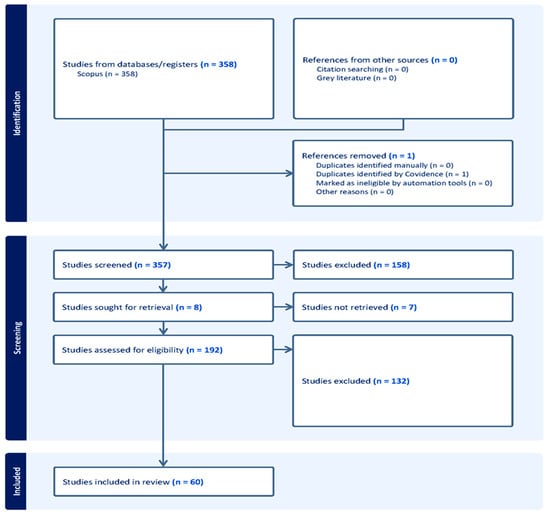
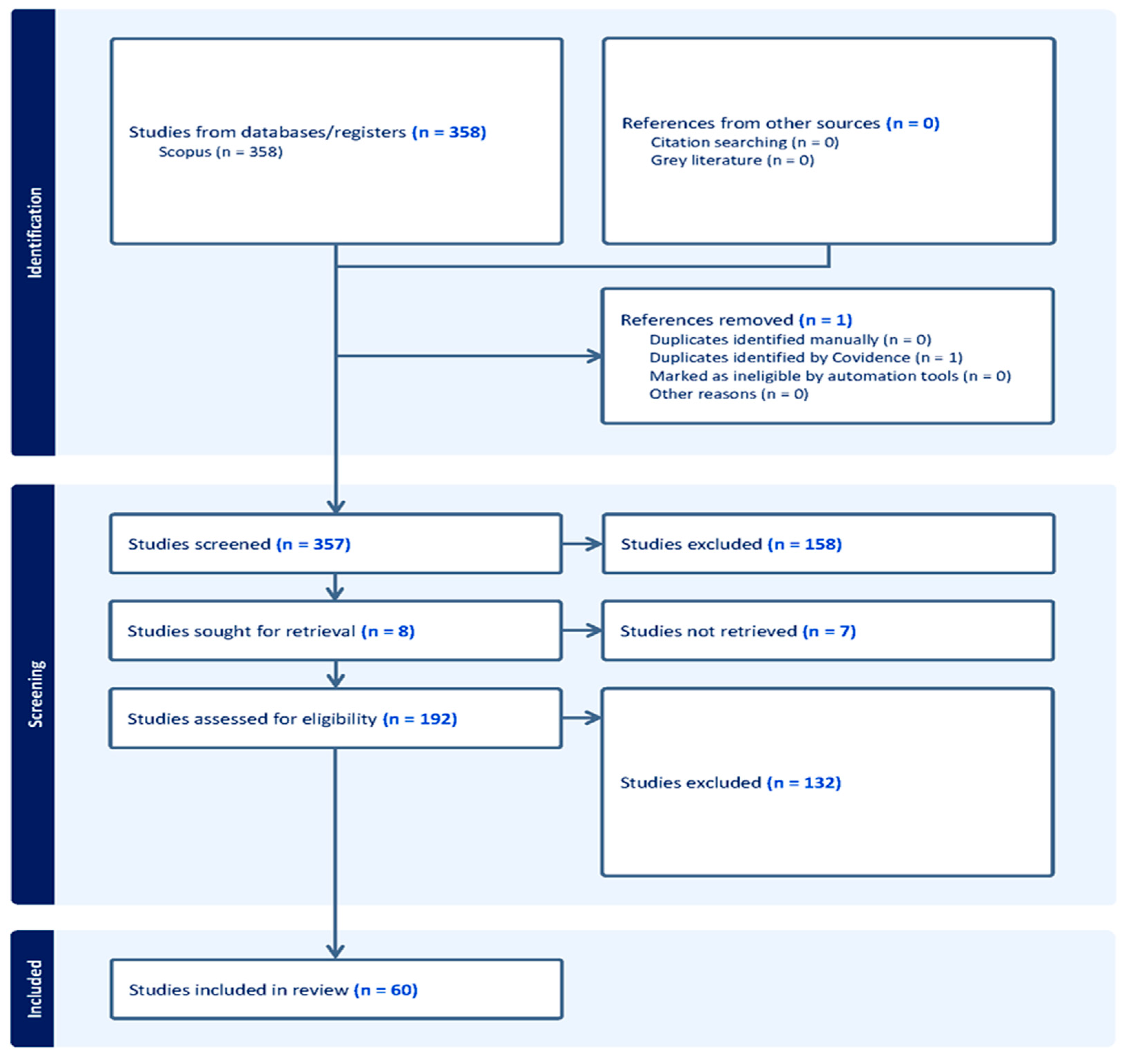
This review was conducted and reported in accordance with the PRISMA 2020 guidelines, and a completed PRISMA checklist is provided in the Supplementary Materials (Table S1). The study selection process is illustrated using a PRISMA flow diagram (Figure 1), detailing identification, screening, eligibility, and inclusion of studies. The review protocol was not prospectively registered (Page et al., 2020; Nath et al., 2025; Nurizka et al., 2024). A panel of professionals in human resources and organisational psychology was formed prior to the commencement of the planning process to critically review the constructs represented the model of employee satisfaction and formulate relevant emerging issues related to employee satisfaction in the multidimensional workplace. They provided constructive feedback on formulating the extensive review methodology, and a scoping and comprehensive literature review of the system informed their scholarship. Subsequently, this was conducted to identify and understand the emerging trends in the literature, which also guided the research questions for this review:
Figure 1.
PRISMA framework using Covidence.
- (a)
- What are the existing conceptual models of employee satisfaction with reference to organisational climate and interactive demographics?
- (b)
- What are the trends of research outputs on employee satisfaction with reference to organisational climate and interactive demographics?
- (c)
- What is the co-occurrence of interactive demographics on employee satisfaction as reflected in the literature?
Second, the search method was extracted from the Scopus database (2020–2025) (search date: 25 September 2025) using predefined inclusion and exclusion criteria (Table 1) and implemented using the Covidence platform to generate the PRISMA flow diagram (Figure 1). This is to ensure transparency in the selection process and reduce possible bias (Akomah & Ramani, 2024). The search string was redesigned to be inclusive of the focal constructs rather than exclusive. Studies that incorporated employee/job satisfaction, organisational climate, and demographic or intersectional variables were identified and captured using the Boolean operators (Russo et al., 2025; Tobler & Stummer, 2021).
Table 1.
Inclusion/exclusion parameters.
TITLE-ABS-KEY ((“employee satisfaction” OR “job satisfaction”) AND (“organisa-tional climate” OR “organizational climate” OR “work climate” OR “psychological cli-mate” OR “safety climate” OR “ethical climate” OR “innovation climate” OR “work en-vironment”) AND ((demographic OR gender OR age OR tenure OR ethnicity OR race OR nationality OR “professional role”) OR (“intersectionality” OR “intersectional” OR “interaction effect” OR “moderating effect” OR “interactive demographic”)) AND PUBYEAR > 2019 AND PUBYEAR < 2026 AND (LIMIT-TO (DOCTYPE, “ar”)) AND (LIMIT-TO (LANGUAGE, “English”)) AND (LIMIT-TO (SUBJAREA, “SOCI”) OR LIM-IT-TO (SUBJAREA, “BUSI”) OR LIMIT-TO (SUBJAREA, “PSYC”)).
Figure 1 illustrates the detailed process of inclusion/exclusion criteria via the Covidence platform, which shows that 358 records were retrieved from the Scopus database on 25 September 2025. After removing 1 duplicate, 357 studies remained for screening. Of these, 158 records were excluded based on a title and abstract synthesis, leaving 199 studies for potential inclusion. Of them, 8 studies were requested in full text; however, 7 were not available. As a result, 192 full-text manuscripts were evaluated on the eligibility basis. After a thorough analysis, 132 articles were excluded for failing to meet the inclusion criteria. This resulted in the inclusion of 60 studies that met the eligibility criteria and were incorporated into the final review. Table 1 illustrates the inclusion/exclusion parameters that were methodically applied using the subscribed Covidence platform to streamline and synthesise evidence (Chen et al., 2021).
Meanwhile, Table 1 justifies the inclusion/exclusion parameters adopted for transparency and reliability. However, there is a need to add that there was a pilot search, which shows that when the concepts of organisational climate and interactive demographics were excluded, a conceptual incongruency with the study purpose emerged. Thus, the last search strategy directly incorporates organisational climate synonyms (psychological climate, safety climate, work environment) and demographic interaction terms (intersectionality, moderating effects, interaction effects). This has been to ensure alignment between the review’s goal and the database retrieval strategy.
Reporting Bias Assessment/Keyword Sensitivity Test
Due to the nature of this study (a bibliometric review rather than an intervention meta-analysis), standard statistical tests for publication bias could not be used. Rather, we determined the risk of reporting bias at the review level by measuring (Kraus et al., 2020; Page et al., 2021): (i) database and indexing bias due to using Scopus as the only source; (ii) language bias due to confinement to English-language publications; (iii) document-type bias due to the use of a minimum citation threshold to perform eligibility screening; (iv) and citation-related selection bias due to the use of a minimum citation threshold to perform eligibility screening. This was done by ensuring that titles/abstracts/full texts were independently screened by two reviewers based on preset inclusion and exclusion criteria (Table 1). Conflicts detected by Covidence were resolved through discussion and consensus. To ensure transparency, all motives of exclusion at the full-text level were recorded (Peltokorpi & Ramaswami, 2021).
Meanwhile, the studies were evaluated for quality by testing keyword sensitivity to ensure construct congruence, complete parameter disclosure (search query, inclusion criteria, citation cut-offs), removal of duplicate records in EndNote, and independent double-screening (through Covidence) before analysis using VOSviewer (v.1.6.20) and Biblioshiny (R-package). The search terms related to climate conditions and demographics were refined for a sensitivity test, in which the search terms and their outputs were evaluated and compared. The retrieval of construct relevance was stronger with the inclusion of interaction- and intersectionality-related terms, and false exclusions were minimised. This was an iterative test that ensured conceptual fit between the study purpose and the database coverage (Kraus et al., 2020; Yadav et al., 2024).
4. Results
To achieve the study’s objectives, a bibliometric analysis was conducted using R-stat to evaluate and analyse the academic literature, which is sequentially presented in the order of document analysis, citations, prominent sources, prolific authors and their affiliations, co-occurrence network, and thematic mapping (Porkodi & Pundhir, 2025; Yadav et al., 2024).
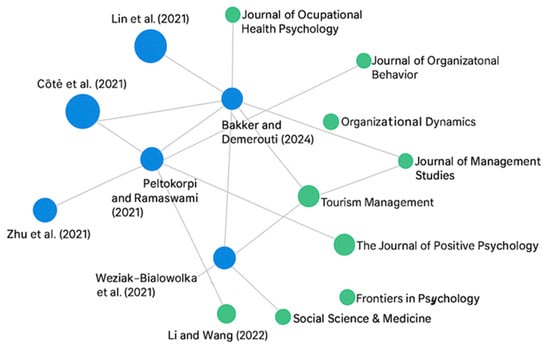
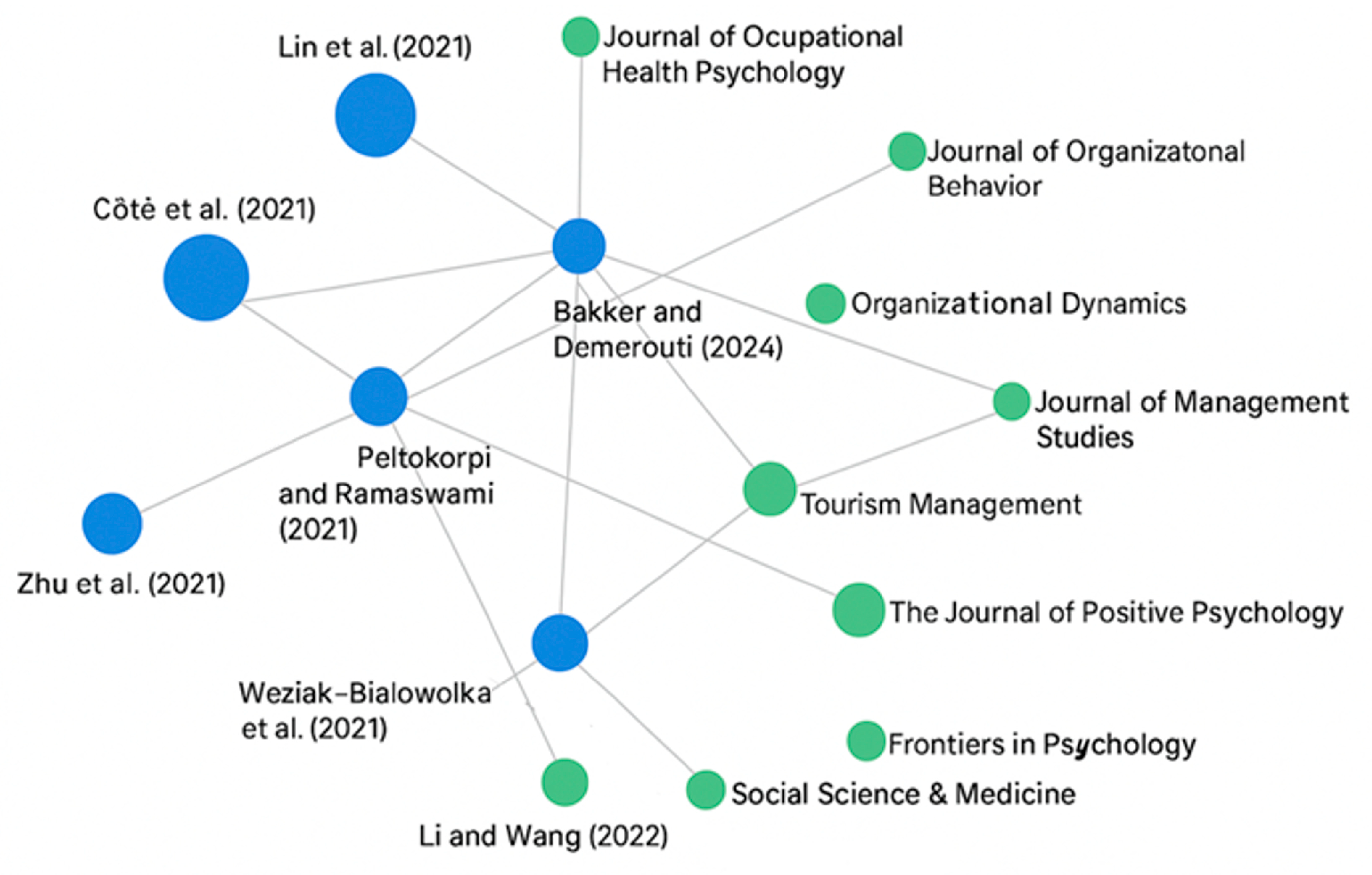
Figure 2 illustrates a network connecting authors/articles and journals. The central node Bakker and Demerouti (2024) is linked to several papers published between 2021 and 2025, as well as to a set of journals. The map identifies JD–R employee satisfaction as the organising theme and indicates that current empirical research has been published in occupational health, management, tourism, and psychology journals. The network confirms that JD–R remains the basis for analysing employee satisfaction, well-being, motivation, and performance. (Côté et al., 2021; Lin et al., 2021). The visualisation suggests scholars are using latent profile analysis (Fröhlich et al., 2025; Petitta et al., 2025), structural equation modelling (Peltokorpi & Ramaswami, 2021; Weziak-Bialowolska et al., 2021), and multilevel approaches (Bilotta et al., 2022) to test JD–R relationships. The implication is that there is a growing shift toward integrating psychological, organisational, and health perspectives in the study of employee satisfaction. The blue nodes represent selected cited manuscripts, while green nodes represent journals in which related studies are published.
Figure 2.
Authors’ affiliation link. Source: Biblioshiny Output, 2025. (Lin et al., 2021; Côté et al., 2021; Bakker & Demerouti, 2024; Zhu et al., 2021; Peltokorpi & Ramaswami, 2021; Weziak-Bialowolska et al., 2021; Li & Wang, 2022).
4.1. Thematic Analysis
4.1.1. Theme 1: Conceptual Models of Employee Satisfaction
Prior literature has advanced our understanding of employee satisfaction as a multidimensional construct, validated through internal consistency and practical categories (Dzimbiri & Molefi, 2022; Iwu, 2012; Martadiani et al., 2022). Similarly, the importance of interactive demographics in shaping how organisational climates are perceived and acted upon was equally acknowledged (Castro et al., 2025; Halim Özkan & Başol, 2025). However, the strength of role clarity varied across age groups and income brackets (Peltokorpi & Ramaswami, 2021), suggesting that “one-size-fits-all” approaches to organisational development and employee satisfaction may be ineffective. This contributes to the growing body of research on organisational contingency perspectives.
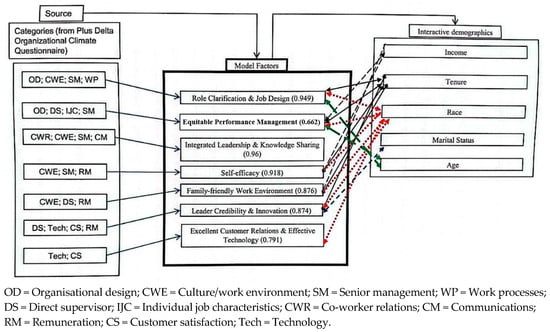
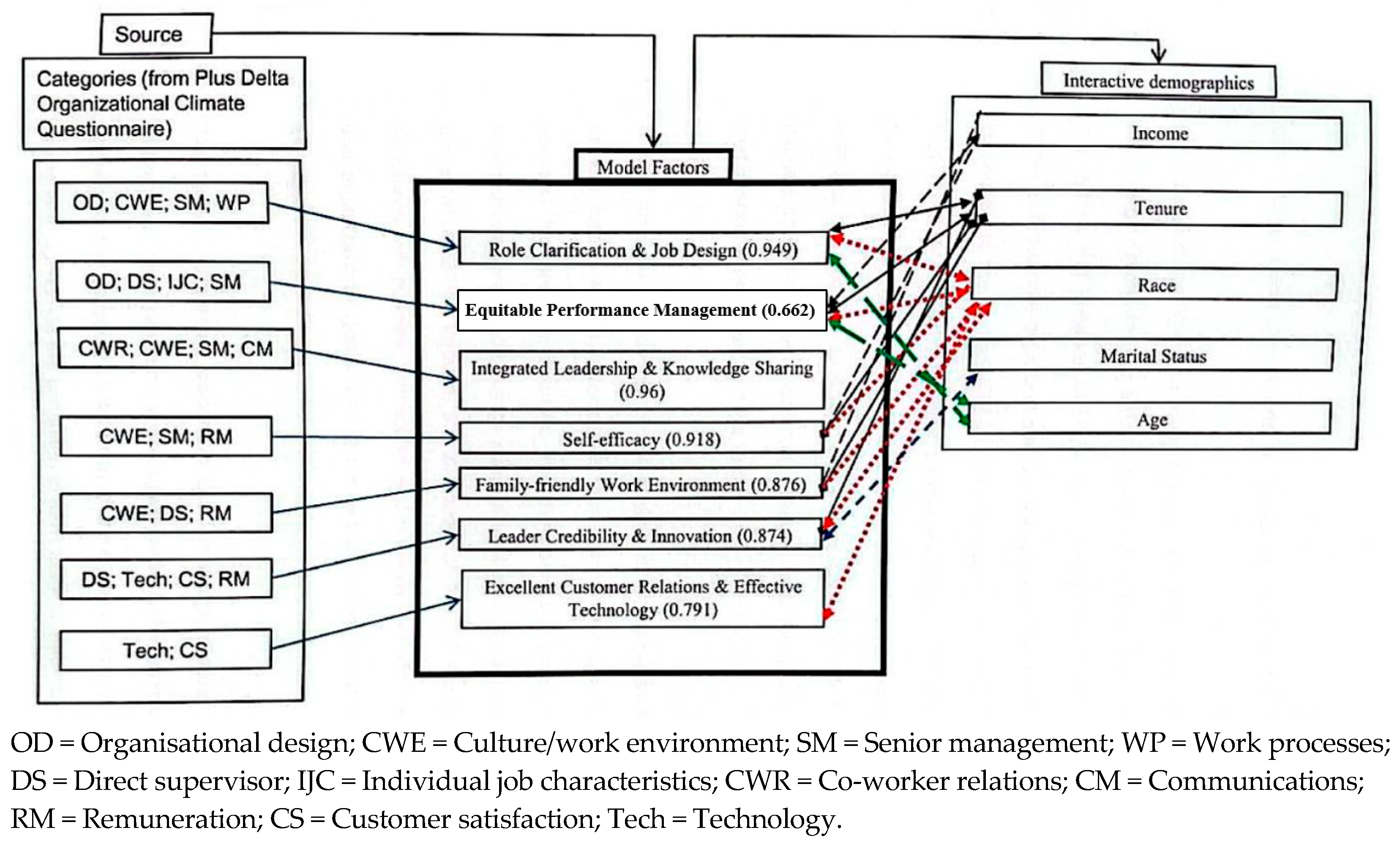
Figure 3 maps the relationships between organisational climate categories, derived employee satisfaction model factors, and their interaction with demographic variables. The categories (OD, CWE, SM, WP, DS, Tech, etc.) aggregate into 7 latent model factors: (1) Role Clarification and Job Design, (2) Equitable Performance Management, (3) Integrated Leadership and Knowledge Sharing, (4) Self-efficacy, (5) Family friendly Work Environment, (6) Leader Credibility and Innovation, and (7) Excellent Customer Relations and Effective Technology. Each factor shows strong reliability coefficients (ranging from 0.662 to 0.96), indicating significant measurement validity. The arrows connecting these model factors to demographics (income, tenure, race, marital status, age) suggest that organisational climate and employee satisfaction are not universal experiences but are moderated by interactive demographics (Kang et al., 2021).
Figure 3.
Adapted model of employee satisfaction, Iwu (2012).
The conceptual model augments the existing literature on organisational climate by offering a multidimensional framework that explains how organisations interact with their employees through organisational practices. Research on the organisational climate has consistently shown its impact on work satisfaction (Fung et al., 2024; Weziak-Bialowolska et al., 2021). Many previous models, however, viewed climate as a largely uniform construct (Castro et al., 2025; Chalise et al., 2025). The 7 components of the model highlight the unique processes by which organisations’ climates can be improved. They also have high reliability coefficients, which further validate the psychometric strength of these constructs and can be utilised as reliable variables in empirical research (Li & Wang, 2022; Meese et al., 2021). The findings from previous studies show that a theoretical model was developed and significantly predicted by psychosocial risks, but work satisfaction was associated with organisational risks and emotional weariness (Saleh et al., 2025; Wilczek-Rużyczka & Wyszyńska-Michalec, 2023). However, the research contributes to the conceptual models of employee satisfaction by proposing a combination of the notions of organisational climate and interactive demographics into conventional models of satisfaction. Aside from the current study, it will enhance existing models by incorporating organisational climate as a new factor in satisfaction, to be empirically validated in the post-COVID workplace. However, the different colours suggest the degree of alignment. For instance, the model factor’s role clarification & design (0.949) and equitable performance management (.662) strongly correlate with Age (an interactive demographic).
4.1.2. Theme 2: Trends in Outputs of Employee Satisfaction
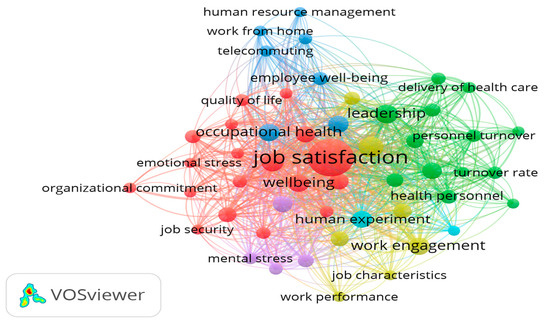
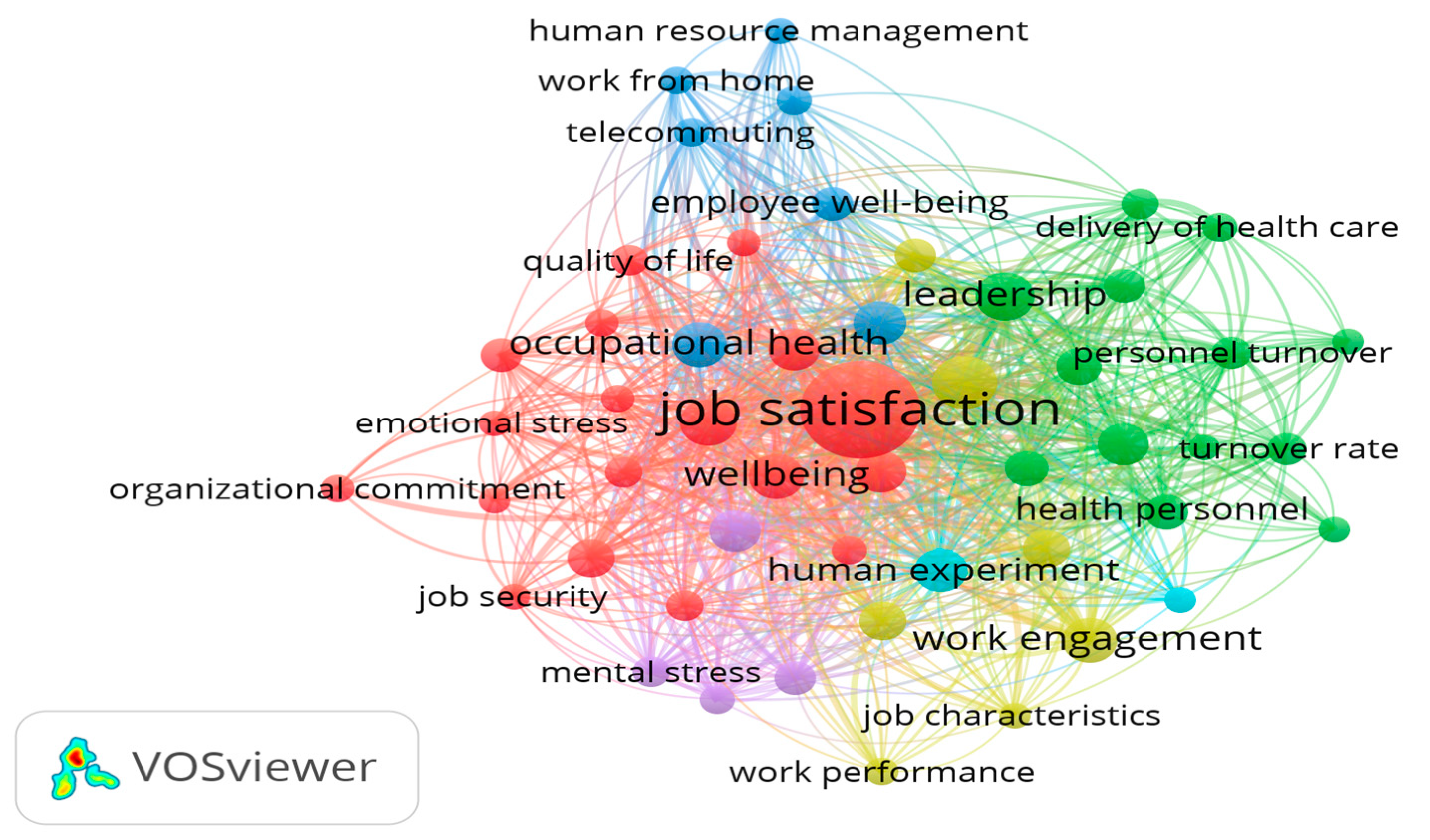
The trends in research output related to employee satisfaction, with reference to organisational climate and interactive demographics, are presented in Figure 3. Node size represents the frequency of keyword occurrence, and the thickness of the connecting lines indicates the strength of co-occurrence between keywords. The different colours represent clusters of closely related research themes identified by the clustering algorithm. The largest node is “job satisfaction”, indicating that this is the dominant theme in the literature and co-occurs most closely with other terms. This implies that a holistic approach to employee satisfaction levels is increasingly represented in modern research. The tendency towards contextualised and cross-cultural analyses is also evident, driven by globalisation and workforce diversity. For example, Pimenta de Brito et al. (2025) emphasised the significance of intrinsic motivators as even more accurate indicators of happiness than extrinsic elements, such as compensation. All these trends point to a shift in viewing employee satisfaction as a context-dependent and dynamic construct that lies at the core of sustainable organisational performance (Côté et al., 2021; Lin et al., 2021).
Figure 4 further indicates that employee satisfaction is trending toward integrative models where organisational climate (leadership, culture, engagement) and interactive demographics (role, sector, stress, remote work) are inseparable (Côté et al., 2021; Lin et al., 2021). Meanwhile, studies (Akinwande et al., 2025b; Saleh et al., 2025) emphasise identifying predictors of satisfaction and understanding how climate and demographics interact to shape outcomes related to their wellbeing. In a study by Cheng et al. (2024), the impact of organisational climate on employee job satisfaction and wellbeing, considering the role of technological influence. This study confirms that organisational climate has a positive effect on job satisfaction and that moderating or interacting variables can shape the strength of this effect. Despite this, noticeable gaps remain; few studies explicitly integrate interactive demographics (not just demographics as control variables, but also demographic interactions, where gender, tenure, rank, etc., influence the relationship between climate and satisfaction) (Akinwande et al., 2025a; Lin et al., 2021; Rohlf et al., 2024; Wilczek-Rużyczka & Wyszyńska-Michalec, 2023). Also, bibliometric work by Porkodi and Pundhir (2025) shows that although “job satisfaction”, “organisational commitment”, “leadership”, “work environment”, etc., are frequent keywords, the conjunction of “organisational climate”, “employee satisfaction”, and interactive demographics is less common and under-emphasised in many keyword co-occurrence maps. Thus, in terms of trends, there is an increasing amount of research, but less so in interactive demographics. This is supported by the findings of Yadav et al. (2024), who noted that trends in bibliographic coupling are more prevalent in certain sectors (public sector, education) and regions (Asia, Europe), which limits their generalizability.
Figure 4.
The trends in outputs of employee satisfaction.
4.1.3. Theme 3: Interactive Demographics
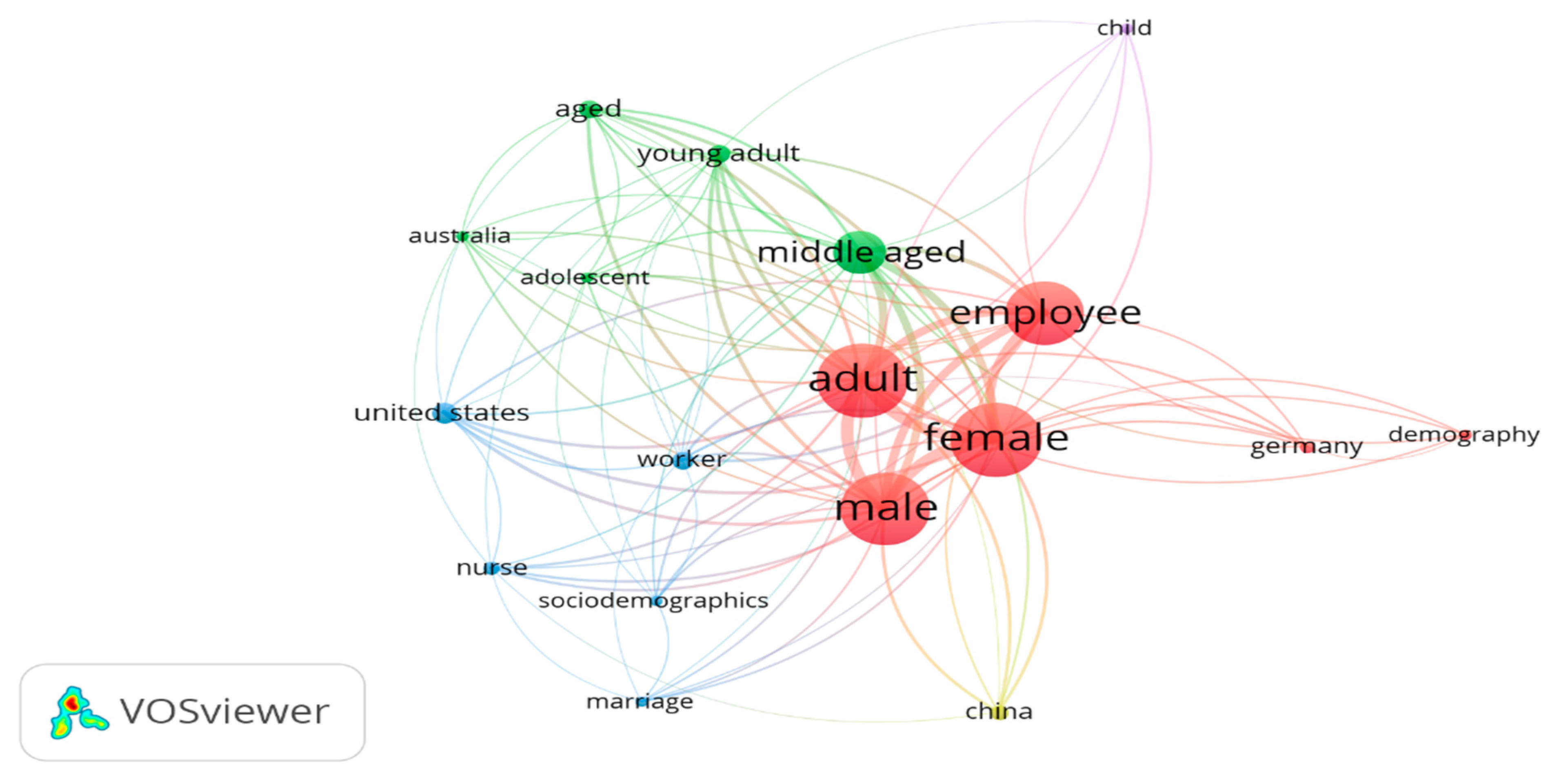
Figure 5 illustrates that the literature on employee satisfaction heavily emphasises gender and age demographics, while also integrating national, occupational, and social variables to capture the workforce experiences in different organisational climates. The prominence of male, female, adult, and middle-aged individuals suggests that these demographic variables are the most studied in shaping employee satisfaction. Occupations (e.g., nurses), marital status, and sociodemographic profiles contribute to understanding how demographic diversity interacts with organisational climate. The interconnectedness of gender, age, geography, and sociodemographic variables suggests that employee satisfaction is not studied in isolation, but rather through the intersection of demographic identities (Akinwande et al., 2025b; Çelebi & Ünver, 2024).
Figure 5.
Co-occurrence of interactive demographics.
There is a need to understand that a stronger emphasis on interactive demographics is necessary, acknowledging that employee satisfaction cannot be explained by single variables alone, but rather by their intersections within broader organisational and cultural contexts (Bakker & Demerouti, 2024; Budnick et al., 2020). From the analysis, the observable gaps are hinged on the sparse use of interactive demographic terms as keyword clusters. They are often included but not emphasised in models (Alboroto et al., 2025; Braunheim et al., 2024). Few experimental studies track how different demographic groups respond over time to changes in organisational climate (Koizumi & Kato, 2025; Nath et al., 2025). However, there is a lack of cross-national, multi-industry studies that allow for comparisons of demographic interactional effects.
5. Discussion
The literature review reveals three prevailing intellectual streams in the employee satisfaction literature. First, organisational climate is repeatedly mentioned as a significant predictor of satisfaction outcomes, with leadership behaviour emerging as a recurring subtheme. Nonetheless, the use of cross-sectional survey designs has the disadvantage of reducing the possibility of causal inferences. Second, most studies do not consider demographic factors as interactive but instead categorise them by gender and age. The assumption limits the interpretation of intersectional effects and cultural differences (Budnick et al., 2020; Semyonov-Tal, 2024). Third, current research associates satisfaction with well-being and retention, particularly in hybrid or remote work settings. On the geographical plane, the dominance of Western and Asian studies highlights the need for enhanced representation of African and Middle Eastern studies. The low co-citation ties among clusters indicate the theoretical disintegration in the field.
Despite extensive employee satisfaction studies over the decades, most models still presume a general uniformity in employee perceptions and reactions to organisational behaviours. This assumption limits their application in complex organisational situations (Semyonov-Tal, 2024). Likewise, whereas intersectional studies (Suardana et al., 2024) emphasise the influence of organisational climate on working experiences, few frameworks explicitly include demographics into proven models (Akinwande et al., 2025a). The current model addressed this deficiency by providing a multi-factor, demographically interactive framework that is both psychometrically sound and theoretically indicated. This enhances existing literature by moving from shared perceptions to a context-sensitive, conditional understanding of climate, thereby suggesting a firmer basis for developing customised interventions that address the diverse realities of modern organisations.
Theoretical Positioning
The prevalence of JD–R theory suggests that the notion of employee satisfaction is predominantly theorised within the demand-resource balancing framework. Nonetheless, organisational climate studies are also informed by climate theory and the psychological safety literature, whereas the demographic interaction studies are better aligned with the theory of intersectionality and social categorisation. The fact that these perspectives are only partially integrated is why we are finding fragmentation in co-citation clusters. The theoretically combined methodology would contextualise climate as a resource structure, demographics as situational conditions, and satisfaction as an outcome in the mediational attitudinal process.
In practice, organisations are not supposed to have universal satisfaction interventions. HR policies should be sensitive to demographics (leadership support that depends on tenure of employment, work design that is gender-sensitive, and career development that is age-sensitive). Climate diagnostics needs to be addressed at the intersection of global surveys with segmented analysis. Few studies have been contextually tested in African and Middle Eastern contexts due to the geographic clustering of studies in Europe and Asia. A cross-national comparative analysis is needed to assess the effects of measurement invariance and institutional moderation.
6. Conclusions
This bibliometric review has three key contributions. Theoretically, it incorporates organisational climate and interactive demographics into the discussion of worker satisfaction and points to the unresolved issue of intersectional modelling in the existing literature. Methodologically, it visualises co-occurrence networks, citation patterns, and thematic clusters across 60 studies using Scopus as the index (2020–2025), providing an ordered intellectual perspective on the field. In practice, it highlights why HR policies must be demographically sensitive and why climate-based interventions should align with the various workforce contexts. The conceptual framework proposed is theoretically grounded and must be empirically tested through multilevel and cross-national designs. Although this research, in theory, has the potential to integrate the interactive nature of demographics, it was not conducted experimentally to explore the effects of characteristics, and thus limits the findings.
This implies suggestions for further research. Intersectional frameworks and multilevel models are needed to understand the complexity of employee experience across different organisational climates. In practice, comparative cross-national and sectoral research is required to generalise and apply the results to different organisational contexts. Future research should therefore attempt to formulate integrative patterns that factor interactive population and organisational climate contexts to create context-sensitive and encompassing theories of satisfaction. Hypothetically, the multilevel designs, cross-sector comparisons, and intersectional demographic modelling should be used in future research. The generalisability and accuracy of future bibliometric studies will be enhanced by expanding the dataset to include not only Scopus but also Web of Science, Dimensions, Lenses, PsycINFO, PubMed, and other relevant databases.
Supplementary Materials
The following supporting information can be downloaded at: https://www.mdpi.com/article/10.3390/admsci16050217/s1, Table S1. PRISMA 2020 Checklist.
Author Contributions
Conceptualization, M.O.A. and C.G.I.; methodology, M.O.A.; software, M.O.A.; validation, B.P.M. and C.G.I.; formal analysis, M.O.A.; investigation, M.O.A. and C.G.I.; resources, B.P.M.; data curation, M.O.A.; writing—original draft preparation, M.O.A.; writing—review and editing, C.G.I. and B.P.M.; visualization, M.O.A.; supervision, B.P.M.; project administration, B.P.M.; funding acquisition, M.O.A., B.P.M. and C.G.I. All authors have read and agreed to the published version of the manuscript.
Funding
This research received no external funding, and the APC was funded by the University of South Africa and the Sibusiso Bengu Development Grant (SBDG) Chair in Entrepreneurship Education, University of the Western Cape, South Africa.
Institutional Review Board Statement
Not applicable.
Informed Consent Statement
Not applicable.
Data Availability Statement
The publicly available datasets were analysed in this study. This data can be found in https://zenodo.org/records/17472060 (accessed on 30 September 2025).
Acknowledgments
The authors acknowledge the support given by the University of South Africa and the Sibusiso Bengu Development Grant (SBDG) Chair in Entrepreneurship Education, University of the Western Cape, South Africa.
Conflicts of Interest
The authors declare no conflicts of interest.
References
- Adamopoulos, I., Lamnisos, D., Syrou, N., & Boustras, G. (2022). Public health and work safety pilot study: Inspection of job risks, burnout syndrome and job satisfaction of public health inspectors in Greece. Safety Science, 147, 105592. [Google Scholar] [CrossRef] [Scilit]
- Addabbo, T., & Sarti, E. (2022). Job satisfaction, work-related stress and disability. Rivista Internazionale di Scienze Sociali, 130(2), 107–124. [Google Scholar] [CrossRef]
- Akinwale, A. A., Shadare, O. A., & Aliyu, M. O. (2021). Breach of psychological contracts and discretionary behaviour in Nigerian academics. Journal of Business Management and Accounting, 11(1), 21–44. [Google Scholar] [CrossRef]
- Akinwande, D. V., Boustras, G., Varianou-Mikellidou, C., Dimopoulos, C., & Akhagba, O. M. (2025a). Employee teleworking (working-from-home) experience assessment during COVID-19 lockdown: A dual-edged sword. Safety Science, 183, 106732. [Google Scholar] [CrossRef] [Scilit]
- Akinwande, D. V., Boustras, G., Varianou-Mikellidou, C., Dimopoulos, C., & Akhagba, O. M. (2025b). Evaluating the work quality metrics of COVID-19-induced teleworking experience among workers: A means to assess the effectiveness of teleworking. Safety Science, 191, 106936. [Google Scholar] [CrossRef] [Scilit]
- Akomah, B. B., & Ramani, P. V. (2024). Employee-related factors influencing health and safety in the Ghanaian construction industry: A confirmatory factor analysis of professionals’ perspectives. International Journal of Occupational Safety and Health, 14(4), 533–546. [Google Scholar] [CrossRef] [Scilit]
- Alboroto, R., Garza, T., & McNaughtan, J. (2025). Enhancing caseworker job satisfaction through empowerment: An innovative tool for employee retention. Child Maltreatment, 30(3), 553–564. [Google Scholar] [CrossRef] [Scilit] [PubMed]
- Aman-Ullah, A., Ibrahim, H., Aziz, A., & Mehmood, W. (2022). Impact of workplace safety on employee retention using sequential mediation: Evidence from the health-care sector. RAUSP Management Journal, 57(2), 182–198. [Google Scholar] [CrossRef] [Scilit]
- Andrukonis, A., & Protopopova, A. (2020). Occupational health of animal shelter employees by live release rate, shelter type, and euthanasia-related decision. Anthrozoos, 33(1), 119–131. [Google Scholar] [CrossRef] [Scilit]
- Anguelov, K., Stoyanova, T., & Tamošiūnienė, R. (2020). Research of motivation of employees in the it sector in Bulgaria. Entrepreneurship and Sustainability Issues, 7(3), 2556–2567. [Google Scholar] [CrossRef] [Scilit]
- Bakker, A. B., & Demerouti, E. (2024). Job demands–resources theory: Frequently asked questions. Journal of Occupational Health Psychology, 29(3), 188–200. [Google Scholar] [CrossRef] [Scilit]
- Bilderback, S. (2025). Employee development programs as catalysts for suicide prevention and organizational change. International Journal of Organizational Analysis, 33(5), 1132–1143. [Google Scholar] [CrossRef] [Scilit]
- Bilotta, I., Dawson, J. F., & King, E. B. (2022). The role of fairness perceptions in patient and employee health: A multilevel, multisource investigation. Journal of Applied Psychology, 107(9), 1441–1458. [Google Scholar] [CrossRef] [Scilit]
- Bogerd, R., Silkens, M. E. W. M., Henriques, J. P. S., & Lombarts, K. M. J. M. H. (2025). Appreciating appreciation: Residents’ experience feeling valued differently as learners, physicians, and employees. Academic Medicine, 100(5), 578–584. [Google Scholar] [CrossRef] [Scilit]
- Braunheim, L., Dragano, N., Khachatryan, K., Beutel, M. E., & Braehler, E. (2024). The effects of effort-reward imbalance on the job, overcommitment, and income on life satisfaction in Germany from a longitudinal perspective. Social Science and Medicine, 341, 116523. [Google Scholar] [CrossRef] [Scilit]
- Bregenzer, A., Milfelner, B., Šarotar-Žižek, S., & Jimenez, P. (2025). Health-promoting leadership and leaders’ listening skills have an impact on the employees’ job satisfaction and turnover intention. International Journal of Business Communication, 62(3), 542–561. [Google Scholar] [CrossRef] [Scilit]
- Brossoit, R. M., Stark, H. P., Bickley, A. L., & Leslie, J. J. (2025). The benefits of nature contact at work and home on well-being: A path to healthier and more satisfied employees. Ecopsychology, 17(4). [Google Scholar] [CrossRef] [Scilit]
- Budnick, C. J., Rogers, A. P., & Barber, L. K. (2020). The fear of missing out at work: Examining costs and benefits to employee health and motivation. Computers in Human Behavior, 104, 106161. [Google Scholar] [CrossRef] [Scilit]
- Castro, K. C., Allen, J. A., Eden, E., & Thiese, M. S. (2025). Safety climate in small construction companies: The relationship with burnout, anxiety, and depression among workers. Safety Science, 190, 106903. [Google Scholar] [CrossRef] [Scilit]
- Castro-Solano, A., & Lupano Perugini, M. L. (2025). The high five model as a predictor of the optimal occupational and personal functioning of workers through machine learning algorithms. Psychological Reports, Online ahead of print. [Google Scholar] [CrossRef] [Scilit]
- Chalise, D. R., Sharma, B., Chalise, M., Timilsina, J., & Lekhak, H. (2025). Does job satisfaction moderate the nexus of employee motivation and productivity? Evidence from Nepalese hospitals. Asian Economic and Financial Review, 15(2), 297–308. [Google Scholar] [CrossRef] [Scilit]
- Chen, Q., Hu, J., Zhang, W., Evans, R., & Ma, X. (2021). Employee use of public social media: Theories, constructs and conceptual frameworks. Behaviour and Information Technology, 40(9), 855–879. [Google Scholar] [CrossRef] [Scilit]
- Cheng, F., Wu, Y., Yao, M., Wang, X., & Li, L. (2024). Exploring the relationship between adverse working environments and poor psychological states of Chinese workers: A comprehensive study. Journal of Affective Disorders, 351, 442–448. [Google Scholar] [CrossRef] [Scilit]
- Côté, K., Lauzier, M., & Stinglhamber, F. (2021). The relationship between presenteeism and job satisfaction: A mediated moderation model using work engagement and perceived organizational support. European Management Journal, 39(2), 270–278. [Google Scholar] [CrossRef] [Scilit]
- Çelebi, C. O., & Ünver, G. (2024). Toxic leadership, mental well-being and work engagement among nurses: A scale adaptation study and structural equation model approach. Journal of Health Organization and Management, 38(1), 49–69. [Google Scholar] [CrossRef] [Scilit] [PubMed]
- Dzimbiri, G. L., & Molefi, M. A. (2022). Model of talent management for registered nurses in Malawian public hospitals. SA Journal of Industrial Psychology, 48, a1953. [Google Scholar] [CrossRef] [Scilit]
- Fröhlich, L. S., Krick, A., & Felfe, J. (2025). When followers do not emulate their leaders: Unraveling the health-related role model effect of leaders. Journal of Applied Social Psychology, 55(12), 967–989. [Google Scholar] [CrossRef] [Scilit]
- Fung, E. N., Cowden, R. G., Chen, Y., Weziak-Bialowolska, D., Bialowolski, P., Lee, M. T., McNeely, E., & VanDerWeele, T. J. (2024). Prospective associations of multidimensional well-being with work distraction and job satisfaction: A two-wave study of US employees. Frontiers in Psychology, 15, 1326655. [Google Scholar] [CrossRef] [Scilit]
- Gillani, A., Dierst-Davies, R., Lee, S., Robin, L., Li, J., Glover-Kudon, R., Baker, K., & Whitton, A. (2022). Teachers’ dissatisfaction during the COVID-19 pandemic: Factors contributing to a desire to leave the profession. Frontiers in Psychology, 13, 940718. [Google Scholar] [CrossRef] [Scilit]
- Goodman, J., Humphrys, E., & Newman, F. (2023). Working in heat: Contrasting heat management approaches among outdoor employees and contractors. Safety Science, 165, 106185. [Google Scholar] [CrossRef] [Scilit]
- Gündüz-Çekmecelioğlu, H., Balkaş, J., Altaş, S. S., & Sevimli Güler, D. (2025). The effect of health professionals’ perceptions of organizational impediments on emotional labor and job satisfaction. Frontiers in Psychology, 16, 1537830. [Google Scholar] [CrossRef] [Scilit]
- Halim Özkan, A., & Başol, O. (2025). From safety climate to life satisfaction: The mediating role of job stress and job satisfaction. Safety and Health at Work, 16(3), 349–354. [Google Scholar] [CrossRef] [Scilit]
- Harrison, L., Reynolds, E., Quitmann, C., Till, L., Franke, B., Zeitz, C., Danquah, I., & Herrmann, A. (2025). Planetary health diet in a hospital cafeteria: Increasing employee satisfaction and reducing greenhouse gas emissions and costs. Zeitschrift fur Evidenz, Fortbildung und Qualitat im Gesundheitswesen, 192, 77–87. [Google Scholar] [CrossRef] [Scilit]
- Iwu, C. G. (2012). A model of employee satisfaction amongst health-related professionals in South Africa: The case of Western Cape Province. African Journal of Business Management, 6(34), 9658–9670. [Google Scholar]
- Kang, S. E., Park, C., Lee, C. K., & Lee, S. (2021). The stress-induced impact of COVID-19 on tourism and hospitality workers. Sustainability, 13(3), 1327. [Google Scholar] [CrossRef] [Scilit]
- Koch, J., Drazic, I., & Schermuly, C. C. (2023). The affective, behavioural and cognitive outcomes of agile project management: A preliminary meta-analysis. Journal of Occupational and Organizational Psychology, 96(3), 678–706. [Google Scholar] [CrossRef] [Scilit]
- Koizumi, M., & Kato, T. (2025). The role of empathetic company philosophy and advanced technologies in shaping job attitudes. Business Systems Research, 16(1), 60–79. [Google Scholar] [CrossRef] [Scilit]
- Kraus, S., Breier, M., & Dasí-Rodríguez, S. (2020). The art of crafting a systematic literature review in entrepreneurship research. International Entrepreneurship and Management Journal, 6(3), 1023–1042. [Google Scholar] [CrossRef] [Scilit]
- Li, L. Z., & Wang, S. (2022). Do work-family initiatives improve employee mental health? Longitudinal evidence from a nationally representative cohort. Journal of Affective Disorders, 297, 407–414. [Google Scholar] [CrossRef] [Scilit] [PubMed]
- Lin, W., Shao, Y., Li, G., Guo, Y., & Zhan, X. (2021). The psychological implications of COVID-19 on employee job insecurity and its consequences: The mitigating role of organization adaptive practices. Journal of Applied Psychology, 106(3), 317–329. [Google Scholar] [CrossRef] [Scilit]
- Martadiani, A. A. M., Supartha, I. W. G., Manuati, D. I. G. A., & Riana, I. G. (2022). The role of job satisfaction and embeddedness in managing turnover intention in healthcare industries. Polish Journal of Management Studies, 25(1), 228–241. [Google Scholar] [CrossRef] [Scilit]
- Meese, K. A., Colón-López, A., Singh, J. A., Burkholder, G. A., & Rogers, D. A. (2021). Healthcare is a team sport: Stress, resilience, and correlates of well-being among health system employees in a crisis. Journal of Healthcare Management, 66(4), 304–322. [Google Scholar] [CrossRef] [Scilit] [PubMed]
- Nath, A., Schimmelpfennig, S., Kreienbaum, C., & Konradt, U. (2025). Move to improve: Meta-analysis of workplace physical activity interventions. Journal of Occupational Health Psychology, 30(3), 176–198. [Google Scholar] [CrossRef] [Scilit] [PubMed]
- Nurizka, M. S., Wahyuningsih, S. H., & Rahayu, M. (2024). Work life balance and job satisfaction: A systematic literature review. Quality—Access to Success, 25(203), 244–256. [Google Scholar] [CrossRef] [Scilit]
- Page, M., McKenzie, J., Bossuyt, P., Boutron, I., Hoffmann, T., Mulrow, C., Shamseer, L., Tetzlaff, J. M., Akl, E. A., Brennan, S. E., Chou, R., Glanville, J., Grimshaw, J. M., Hróbjartsson, A., Lalu, M. M., Li, T., Loder, E. W., Mayo-Wilson, E., McDonald, S., … Moher, D. (2020). The PRISMA 2020 statement: An updated guideline for reporting systematic reviews. Systematic Reviews, 10, 89. [Google Scholar] [CrossRef] [Scilit]
- Page, M., McKenzie, J., Bossuyt, P., Boutron, I., Hoffmann, T., Mulrow, C., Shamseer, L., Tetzlaff, J. M., Akl, E. A., Brennan, S. E., Chou, R., Glanville, J., Grimshaw, J. M., Hróbjartsson, A., Lalu, M. M., Li, T., Loder, E. W., Mayo-Wilson, E., McDonald, S., … Moher, D. (2021). The PRISMA 2020 statement: An updated guideline for reporting systematic reviews. PLoS Medicine, 18(3), 1003583. [Google Scholar] [CrossRef]
- Peltokorpi, V., & Ramaswami, A. (2021). Abusive supervision and subordinates’ physical and mental health: The effects of job satisfaction and power distance orientation. International Journal of Human Resource Management, 32(4), 893–919. [Google Scholar] [CrossRef] [Scilit]
- Petitta, L., Jiang, L., & Ghezzi, V. (2025). Contextual emotions in organizations: A latent profile analysis of their co-occurrence and their effects on employee well-being. European Journal of Investigation in Health, Psychology and Education, 15(7), 122. [Google Scholar] [CrossRef] [Scilit]
- Pimenta de Brito, A., Palma-Moreira, A., & Sousa, M. J. (2025). Validation of a job satisfaction scale for predicting employee churn in commercial airlines in Portugal. Industrial and Commercial Training, 57(2), 137–156. [Google Scholar] [CrossRef] [Scilit]
- Porkodi, S., & Pundhir, S. (2025). Job satisfaction and burnout among healthcare employees: A bibliometric analysis before and after COVID-19 pandemic. Quality and Quantity, 59, 4377–4408. [Google Scholar] [CrossRef] [Scilit]
- Reegård, K., Fernandes, A., & Bloch, M. (2025). Perceptions of technology-related job insecurity among healthcare personnel: A cross-sectional study. International Journal of Social Robotics, 17, 1693–1705. [Google Scholar] [CrossRef] [Scilit]
- Rigas, N., Kyritsis, Z., Gouroundi, K., Soldatou, A., Dagla, M., Orovou, E., & Antoniou, E. (2024). The mediating role of anxiety in the relationship between job satisfaction and psychosocial functions of nurses and pediatricians in PICUs. Materia Socio-Medica, 36(1), 26–32. [Google Scholar] [CrossRef] [Scilit]
- Roczniewska, M., Smoktunowicz, E., Coo, C. C., von Thiele Schwarz, U., Hasson, H., & Richter, A. (2021). Beyond the individual: A systematic review of the effects of unit-level demands and resources on employee productivity, health, and well-being. Journal of Occupational Health Psychology, 27(2), 240–257. [Google Scholar] [CrossRef] [Scilit]
- Rohlf, V. I., Scotney, R., Monaghan, H., & Bennett, P. (2024). Wellbeing predictors in animal shelter workers: Exploring the roles of job demands, job resources, and job crafting. Anthrozoos, 37(5), 997–1013. [Google Scholar] [CrossRef] [Scilit]
- Russo, A., Zammitti, A., Catania, C., Magnano, P., & Santisi, G. (2025). Unlocking the power of meaningful work: Elevating engagement and satisfaction in the realm of decent jobs. International Journal of Organization Theory and Behavior, 28(1), 56–70. [Google Scholar] [CrossRef] [Scilit]
- Saleh, Z. T., Aslanoglu, A., Elshatarat, R. A., Al-Za’Areer, M. S., Almagharbeh, W. T., Alhejaili, A. A., Alhumaidi, B. N., Al-Akash, H. Y., Al-Momani, M. M., & Alfanash, H. A. (2025). Exploring the reasons and significant influencing factors of serious turnover intentions among nurses in Saudi Arabia. Journal of Education and Health Promotion, 14(1), 206. [Google Scholar] [CrossRef] [Scilit] [PubMed]
- Sarbat, I. (2024). A MCDM-based measurement proposal of job satisfaction comprising psychosocial risks. Ergonomics, 67(12), 1909–1924. [Google Scholar] [CrossRef] [Scilit] [PubMed]
- Semyonov-Tal, K. (2024). Website posts and the voice of frontline healthcare workers: A thematic analysis. Journal of Health Organization and Management, 38(7), 1072–1089. [Google Scholar] [CrossRef] [Scilit]
- Suardana, I. B. R., Martini, L. K. B., & Yuesti, A. (2024). The effect of employee engagement, job satisfaction, and superior-subordinate relationships on the desire to change job and its implications in employee resignation. Revista de Gestao Social e Ambiental, 18(6), e05856. [Google Scholar] [CrossRef] [Scilit]
- Tobler, S., & Stummer, H. (2021). Determinants of inpatient satisfaction: Evidence from Switzerland. International Journal of Health Care Quality Assurance, 34(1), 19–34. [Google Scholar] [CrossRef] [Scilit]
- Wang, W., & Ahoto, A. T. (2022). Influence of supervisors’ fairness on work climate, job satisfaction, task performance, and helping behavior of health workers during COVID-19 outbreak. Frontiers in Psychology, 13, 822265. [Google Scholar] [CrossRef] [Scilit] [PubMed]
- Weziak-Bialowolska, D., Bialowolski, P., VanDerWeele, T. J., & McNeely, E. (2021). Character strengths involving an orientation to promote good can help your health and well-being. Evidence from two longitudinal studies. American Journal of Health Promotion, 35(3), 388–398. [Google Scholar] [CrossRef] [Scilit] [PubMed]
- Weziak-Bialowolska, D., Lee, M. T., Cowden, R. G., Bialowolski, P., Chen, Y., VanDerWeele, T. J., & McNeely, E. (2023). Psychological caring climate at work, mental health, well-being, and work-related outcomes: Evidence from a longitudinal study and health insurance data. Social Science and Medicine, 323, 115841. [Google Scholar] [CrossRef] [Scilit] [PubMed]
- Wilczek-Rużyczka, E., & Wyszyńska-Michalec, J. (2023). Level of occupational burnout, perceived stress and life satisfaction amongst university teachers. Acta Neuropsychologica, 21(1), 1–20. [Google Scholar] [CrossRef] [Scilit]
- Yadav, A., Saxena, P., Garg, S., Goswami, R., Gaikwad, S. V., Singhal, A., Dixit, A., & Raghuwanshi, S. (2024). Navigating the shift from work-life balance to work-life integration in remote work: A bibliometric analysis. Journal of Logistics, Informatics and Service Science, 11(5), 487–507. [Google Scholar] [CrossRef] [Scilit]
- Zhu, Y., Chen, T., Wang, J., Wang, M., Johnson, R. E., & Jin, Y. (2021). How critical activities within COVID-19 intensive care units increase nurses’ daily occupational calling. Journal of Applied Psychology, 106(1), 4–14. [Google Scholar] [CrossRef] [Scilit]

Disclaimer/Publisher’s Note: The statements, opinions and data contained in all publications are solely those of the individual author(s) and contributor(s) and not of MDPI and/or the editor(s). MDPI and/or the editor(s) disclaim responsibility for any injury to people or property resulting from any ideas, methods, instructions or products referred to in the content. |
© 2026 by the authors. Licensee MDPI, Basel, Switzerland. This article is an open access article distributed under the terms and conditions of the Creative Commons Attribution (CC BY) license.