


Abstract
This study investigates emotional patterns in state government disaster guideline documents using keyword-level emotion analysis and TF–IDF based topic modeling, framing disaster policy communication as an emotional–cognitive dual structure, drawing from Situational Crisis Communication Theory. The findings demonstrate a strong negative relationship between fear and neutrality, indicating a functional separation between risk awareness and administrative clarity. Nine topics were identified and organized into clusters centered on operational support, administrative structures, and policy frameworks, while content related to hazards and recovery emerged as a distinct semantic category based on cosine similarity analysis. In the integrated analysis of sentiment and topics, neutral language predominates, reflecting the cognitive dimension of government guidelines, with fear and sadness appearing as secondary but systematically patterned emotions. Fear concentrates in topics addressing hazardous conditions and risk-related content. Emotionally neutral language has traditionally been privileged in public administration, but the findings highlight disaster policy communication shaped by governance objectives that privilege specific emotional orientations aligned with coordination, participation, and risk management. State disaster guidelines function not only as technical instructions but also as structured communicative instruments that operate along a dual cognitive–emotional model, shaping public attention and response.
1. Introduction
The language used by policymakers and public institutions does more than convey information; it shapes public risk perception, emotional responses, and behavioral decisions (Reynolds & Seeger, 2005; Heath & O’Hair, 2020). Emotional cues guide attention, threat appraisal, and action readiness in the human brain, providing interpretive frames through which disasters are understood and responded to (LeDoux, 2012; Pessoa, 2008). Fear operates as a primary risk-signaling emotion, increasing vigilance when policy messages emphasize severity and uncertainty (Slovic et al., 2005). Other emotions also contribute to policy effects: surprise redirects attention, while sadness supports empathy and prosocial orientation, shaping how risk is collectively interpreted (Lerner et al., 2015; Van Bavel et al., 2020).
As the most widely recognized emotional status, fear-based government messaging can effectively signal urgency and risk by heightening perceived threat and shaping public risk judgments; however, it is most effective when paired with clear and actionable guidance, as messages that emphasize threat without response pathways often produce avoidance or fatigue (Slovic et al., 2004; Witte & Allen, 2000). In contrast, neutrality, understood as an impartial affective orientation that maintains cognitive awareness while minimizing overt emotional expression, redirects attention toward situational clarity and coordinated response through informational guidance (Sellnow et al., 2018). Such communication structures help stabilize interpretation under uncertainty and facilitate collective coordination by making instructions easier to understand and share across individuals and groups (Drury, 2018; Drury et al., 2019; Nabi & Myrick, 2019).
The following subsections review the relevant literature and develop the conceptual background for the study.
1.1. Disaster Policy Guidelines as Cognitive and Emotional Governance Instrument
Policy guidelines in disaster contexts function as institutional mechanisms for reducing uncertainty by defining procedures, responsibilities, and priorities before, during, and after crises (Renn, 2008; March & Simon, 1993). Disasters disrupt routine expectations and generate ambiguity regarding risk severity, authority, and appropriate action. In response, policy guidelines translate uncertain and rapidly evolving situations into administratively manageable frameworks, enabling coordinated action across institutions and jurisdictions (Sørensen & Torfing, 2007; Boin et al., 2017; Comfort, 2007; Coombs, 2015; Moynihan, 2008). By codifying response protocols and chains of command, these documents provide stabilizing reference points for both officials and the public.
Research in crisis communication suggests that emotional framing plays an important role in shaping public responses to risk information. Situational Crisis Communication Theory (SCCT) emphasizes that communication strategies vary depending on the nature of the crisis and the communicative goals of institutions (Coombs, 2007). Messages designed to alert audiences to threats tend to employ stronger emotional cues, whereas communications focused on operational coordination or reputation management often rely on more informational and neutral framing.
Beyond their operational role, disaster policy guidelines shape how crises are interpreted and understood. Through framing choices and procedural emphasis, policy texts signal whether a situation is controllable, escalating, or stabilized, thereby influencing perceptions of institutional competence and legitimacy (Entman, 2007; Reynolds & Seeger, 2005). As a result, policy documents operate not only as technical instructions but also as communicative and learning materials that structure meaning on disasters.
1.2. Emotional Effects of Disaster Policy Guidelines
Disaster policy guidelines influence public emotional responses, including fear, anxiety, reassurance, and trust. Emotional reactions are shaped not only by the physical characteristics of hazards but also by how risks are communicated through institutional discourse (Entman, 1993; Sellnow et al., 2018; Slovic, 1987; Fischhoff et al., 2003; Van der Meer et al., 2017). Language emphasizing escalation or uncertainty may heighten fear, whereas language highlighting preparedness, procedural clarity, and coordination can stabilize emotional responses.
Fear is particularly sensitive to cues of uncertainty and perceived lack of control, and is conveyed in policy texts through language emphasizing unpredictability, potential intensification, or incomplete information (Lerner et al., 2015). Expressions such as ‘rapidly evolving situation’, ‘uncertain conditions’, ‘worsening risk’, and ‘unknown extent of impact’ signal indeterminacy and heighten perceived risk, while phrases like ‘ongoing assessment’, ‘coordination in progress’, and ‘subject to change’ further imply limited control (Lerner et al., 2015; Reynolds & Seeger, 2005). A comparable pattern appears in catastrophe insurance communication, where fear is conveyed through linguistic indicators such as references to potential loss, damage, hazard exposure, and financial vulnerability (Browne & Hoyt, 2000; Kunreuther & Pauly, 2006)
In contrast, neutrality is conveyed through procedural and informational language, including ‘follow designated evacuation routes’, ‘report to assigned shelters’, and ‘contact local authorities’, which provide clear, actionable guidance (Sellnow et al., 2018; Drury et al., 2019). Standard formulations such as ‘roles and responsibilities are defined as follows’ or ‘the process consists of the following steps’ frame disasters as administratively manageable, reducing affective intensity and supporting coordinated response (Gross, 2008; Drury et al., 2019).
Importantly, emotional effects in policy language are often implicit. Although policy documents rarely use overt emotional expressions, emotions are conveyed through structural features such as emphasis, repetition, and conditional phrasing. These latent affective signals are difficult to detect through close reading alone, underscoring the value of systematic text-analytic approaches (Pennebaker et al., 2015).
1.3. Policy Language and Public Judgment Under Uncertainty
In addition to shaping emotions, disaster policy guidelines influence public judgment and decision-making. Judgment under uncertainty is affected by framing, authority cues, and perceived legitimacy embedded in policy texts (Tversky & Kahneman, 1981; Tyler, 2006; Levi & Stoker, 2000; Christensen et al., 2016). By defining appropriate behavior and credible information, guidelines provide a cognitive structure that shapes how individuals evaluate risk and decide how to respond.
Administrative clarity plays a central role in judgment formation. Clear specification of roles and chains of command reinforces perceptions of institutional competence and procedural fairness, supporting compliance and cooperation (Tyler & Huo, 2002; Tyler, 2011). Conversely, fragmented or ambiguous guidelines may undermine confidence, leading individuals to rely on informal heuristics or emotional cues rather than institutional directives (Gigerenzer, 2008a, 2008b). Policy language also shapes attributions of responsibility, with implications for accountability, trust, and compliance during crises (Ansell et al., 2010; Boin et al., 2017).
1.4. Emotional–Cognitive Dual Structures in Disaster Policy Communication
Research in crisis communication has long emphasized how institutional actors strategically frame information during crises to influence public interpretation and behavioral responses (Coombs, 2007; Sellnow et al., 2018). In particular, Situational Crisis Communication Theory explains how organizations select communication strategies based on perceived crisis responsibility and risk, emphasizing cognitive processes such as attribution and the strategic framing of information (Coombs, 2007).
Beyond guiding cognition, crisis communication also shapes emotional responses, reflecting the emotional–cognitive structure implied by Situational Crisis Communication Theory (Coombs, 2015). Emotion is conceptualized as closely linked to evaluative judgments, through which individuals assess the significance of events for their well-being, indicating that emotional responses are deeply intertwined with cognitive appraisal (Nussbaum, 2001). Emotions circulate through discourse, becoming attached to objects, risks, and social situations via repeated communicative practices (Ahmed, 2004). These perspectives suggest that public communication simultaneously conveys informational meaning and emotional orientation.
In public discourse, neutrality and fear can be seen as opposing rhetorical strategies, with neutrality often appearing as a calm, detached tone that conveys information objectively and builds trust. In the context of public administration, this neutrality extends to formal bureaucratic practices, shaping how information is communicated and decisions are implemented. Neutral administrative text communicates in a detached, objective manner, helping to avoid conflict and reinforce credibility. Huber (2007) argues that neutrality is a strategic asset, granting bureaucratic agencies autonomy by combining impartial implementation of the law with the strategic pursuit of organizational goals. Administrative neutrality is embedded in bureaucratic practice and institutional norms, forming part of a larger, complex system rather than a simple politics–administration divide (Olsen, 2007; Moe, 1990). This neutrality reflects three related ideas: administrative rationality, where decisions follow rules and efficiency rather than politics (Huber, 2007); depoliticization, where bureaucratic processes are kept free from partisan influence (Christensen & Lægreid, 2007); and technocratic framing, where expert knowledge guides how policies are discussed and implemented (Olsen, 2007). In contrast, fear-laden language emphasizes threats, legitimizes policies, or mobilizes action, but it does not always capture attention or motivate behavioral responses effectively (Witte, 1992).
Building on these insights, this study conceptualizes disaster policy guidelines as operating through dual communicative channels. The cognitive channel conveys risk information and governance priorities, organizing the informational structure of policy guidance, while the emotional channel shapes how audiences are expected to emotionally orient themselves toward the crisis through cues such as urgency, vigilance, reassurance, or caution. Disaster policy communication therefore reflects the interaction of cognitive governance logics, as the underlying policy priorities and rationales guiding how governments structure disaster communication, and emotional signaling in policy language.
Drawing on the emotional–cognitive dual structure framework, this study hypothesizes that different emotions—such as fear, anger, and sadness—underlie governance messages and vary across specific topics, including risk awareness (e.g., potential hazards, emergency preparedness), administrative coordination (e.g., inter-agency roles), and operational support (e.g., relief services). It is further hypothesized that as fear increases, neutral language decreases, reflecting a systematic trade-off between risk-oriented and procedural reporting. Neutral language is anticipated to be present across multiple topics, whereas fear will be selectively activated depending on the substantive topic.
This study contributes to the crisis communication and disaster governance literature by demonstrating how cognitive governance logics and emotional signaling co-occur in policy texts, revealing the dual cognitive–emotional architecture through which disaster policy communication structures public interpretation and response during crises.
1.5. The Methodological Value of Text Analysis in Disaster Policy Research
Because disaster policy guidelines perform operational, emotional, and cognitive functions simultaneously, text analysis provides a critical methodological tool (Roberts et al., 2014; Van Atteveldt et al., 2022). Traditional policy analysis often overlooks how language itself shapes public perception and response (Stone, 2012; Yanow, 2000). Text-analytic approaches enable systematic identification of latent emotional patterns and thematic structures across large policy corpora, revealing how emotional cues align with governance functions.
Disaster policy guidelines extend beyond technical or administrative functions, operating as communicative instruments that reduce uncertainty, regulate emotional responses, and shape public judgment in crises. This study employs computational text-analytic methods to examine how disaster governance is enacted through policy language. The objectives are to analyze the overall emotional profile of state disaster guidelines, to identify thematic structures through topic modeling, and to examine variation in emotional distributions across topic domains through an integrated emotion–topic analysis. By integrating sentiment analysis with topic modeling, this study highlights how disaster policy guidelines structure the fear–neutral trade-off across topic domains, balancing risk awareness and administrative clarity through distinct emotional patterns embedded in policy language. The study aims to explore and explain how policy language organizes emotional signals to shape risk perception and coordinated response in disaster policy communication.
2. Text Analysis Methods and Procedures
This study employs a computational text analysis framework to examine emotional and thematic structures in disaster policy documents. The analysis proceeds through sentiment analysis to estimate emotional distributions and proportions, topic analysis using keyword embedding and clustering to identify thematic structures, and integrative sentiment–topic analysis to assess how emotional patterns vary across topics.
2.1. Data Selection
Disaster guideline documents issued by fifty state governments were initially reviewed, with twenty-two selected for detailed investigation based on publication between 2017 and 2019, as summarized in Table 1. Exclusions included guidelines issued prior to 2017, which were removed due to outdated information and institutional references (4 documents); materials heavily reliant on visual illustrations targeting specific age groups, such as children, which differed in wording and sentence structure (4 documents); and documents focused on a single disaster type, particularly those addressing only pandemic response after 2019 (9 documents). To ensure comparability and capture generalizable patterns of emotional and thematic structure, the analysis focused on multi-hazard disaster policy guidelines; however, guidelines that incorporated pandemic response as one component of broader disaster planning were retained. Guidelines that incorporated pandemic response as one component of broader disaster planning were retained. An additional six documents were removed during preprocessing because their structure or formatting did not allow consistent keyword extraction and TF–IDF-based comparison. Importantly, these exclusions were based on technical considerations related to document comparability rather than geographic location or specific hazard types.
Table 1.
Disaster policy document summary.
The dataset comprises state government materials, including emergency operations plans, response frameworks, and hazard mitigation plans, which delineate the roles, coordination mechanisms, and phases of disaster preparedness and response. These documents reflect how states institutionalized and communicated disaster management practices and communicated.
To address sensitivity and disclosure concerns, individual states are anonymized through the use of randomly assigned numeric identifiers (e.g., State-01, State-02). The analysis emphasizes document types and structural features rather than specific titles or institutional names, enabling systematic comparison across state-level disaster planning frameworks.
2.2. Data Processing
The dataset comprises state level disaster guideline documents. All documents underwent systematic cleaning and standardization to remove noise and ensure comparability across sources (Guo et al., 2020; Grimmer & Stewart, 2013). Each document was then structured to retain key metadata, including the original filename, the optimal number of topics, and the criterion used for topic selection, either coherence or silhouette.
Topic modeling was conducted at the document level. Most documents were divided into two to seven topics, with coherence scores at the optimal topic number typically ranging from 0.32 to 0.45, indicating moderate topic quality. Each topic was indexed and represented by a set of salient keywords reflecting its dominant semantic content. Common terms across documents included emergency, plan, and management.
A TF–IDF (Term Frequency–Inverse Document Frequency) output file was generated to identify characteristic terms within each document, providing weighted keyword representations for topic comparison. Because the data consist of keywords and TF–IDF values rather than full textual context, a keyword-based emotion estimation approach was employed. Emotion classification was conducted using a transformer-based model implemented through the Hugging Face transformers library in Python 3.10.12. Specifically, the pretrained model j-hartmann/emotion-english-distilroberta-base was used, which produces probability scores across seven emotion categories (anger, disgust, fear, joy, neutral, sadness, and surprise). The model was applied to keyword-level units derived from the TF–IDF outputs, and the resulting emotion probabilities were aggregated to estimate the emotional orientation of documents and topics.
2.3. Sentiment Analysis
2.3.1. Unit of Analysis
The unit of analysis consists of keywords and their associated TF–IDF weights, which represent each topic within the documents. Emotional characteristics—such as risk or warning orientation, damage or loss, and procedural or administrative emphasis—are inferred indirectly from these key terms rather than from full sentence-level context.
2.3.2. Emotion Distribution Analysis
Emotion scores were averaged across the entire dataset to identify the overall emotional profile of the corpus. Given the primarily factual and procedural nature of state disaster guidelines, particular attention was paid to the dominance of neutral emotion and the presence of risk-related emotions such as fear. The analysis assesses the global distribution of emotional categories, ordered as neutral, fear, and sadness, to examine whether the documents emphasize informational and procedural communication, with emotional signals appearing primarily through anticipatory risk framing rather than explicit emotional expression.
2.3.3. Fear–Neutral Emotional Analysis
At the topic level, the relationship between fear and neutral emotions was examined to assess whether topics could be differentiated by communicative function. The correlation between fear and neutral emotion is analyzed to determine whether an inverse relationship exists, which is used to distinguish between topics oriented toward risk warnings and those characterized by administrative or procedural content.
2.3.4. Emotion Proportions by Textual Focus
Fear and neutral scores were extracted across the corpus and emotion distributions were visualized by textual focus to compare patterns of emotional composition; distinguishing documents oriented toward risk awareness from those emphasizing administrative clarity. Two documents, one with the highest fear score and the other with the highest neutral score, were selected to examine within-document variation in emotional proportions.
2.4. Topic Analysis
2.4.1. Topic Etraction and Model Selection
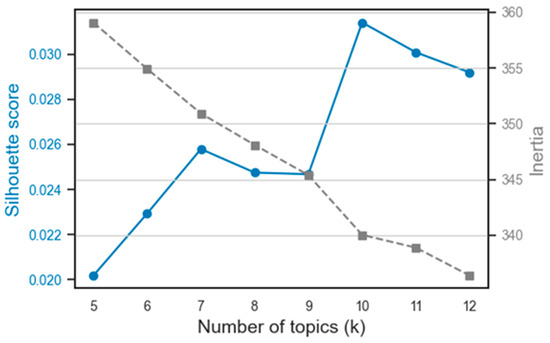
Keywords extracted from each document were embedded and clustered to generate topic structures. Specifically, the top TF–IDF keywords extracted from the corpus were embedded into a semantic vector space using the pre-trained Sentence-BERT model (all-MiniLM-L6-v2). The resulting embeddings were then grouped using the K-means clustering algorithm to construct thematic keyword clusters. The optimal number of topics was determined by jointly evaluating silhouette scores and inertia values across a range of k = 5 to 12. The silhouette score peaked at k = 10 (approximately 0.031), while the inertia curve exhibited a marked inflection between k = 9 and k = 10. Based on these criteria, k = 10 was selected as the optimal solution. One topic consisting primarily of language noise was subsequently excluded, resulting in a final set of nine topics for analysis.
2.4.2. Top Keywords per Topic Based on TF-IDF
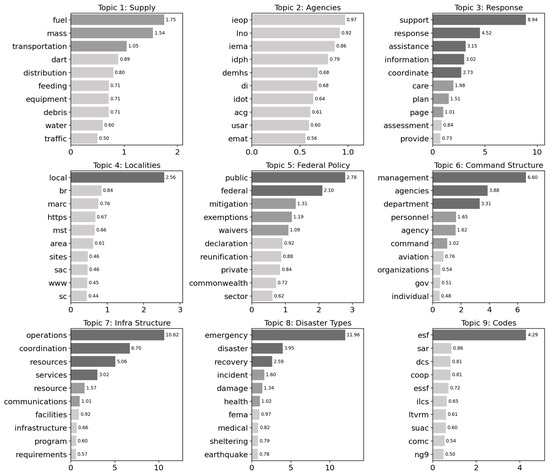
Each topic was interpreted using representative keywords with high TF–IDF weights. The semantic focus of each topic was inferred from its keyword composition, which served as the conceptual basis for subsequent analyses. These topic definitions provided the reference framework for examining topic–emotion relationships and included themes such as logistics and operations, agency acronyms, response procedures, federal policy, disaster types and recovery, and ESF, SAR, and EOC codes.
2.4.3. Topic Similarity Based on Heatmap
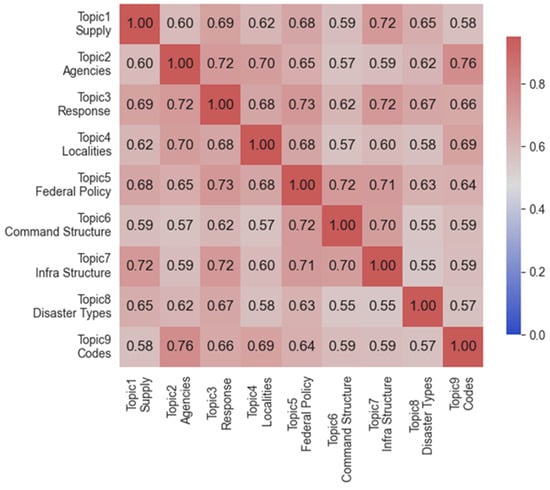
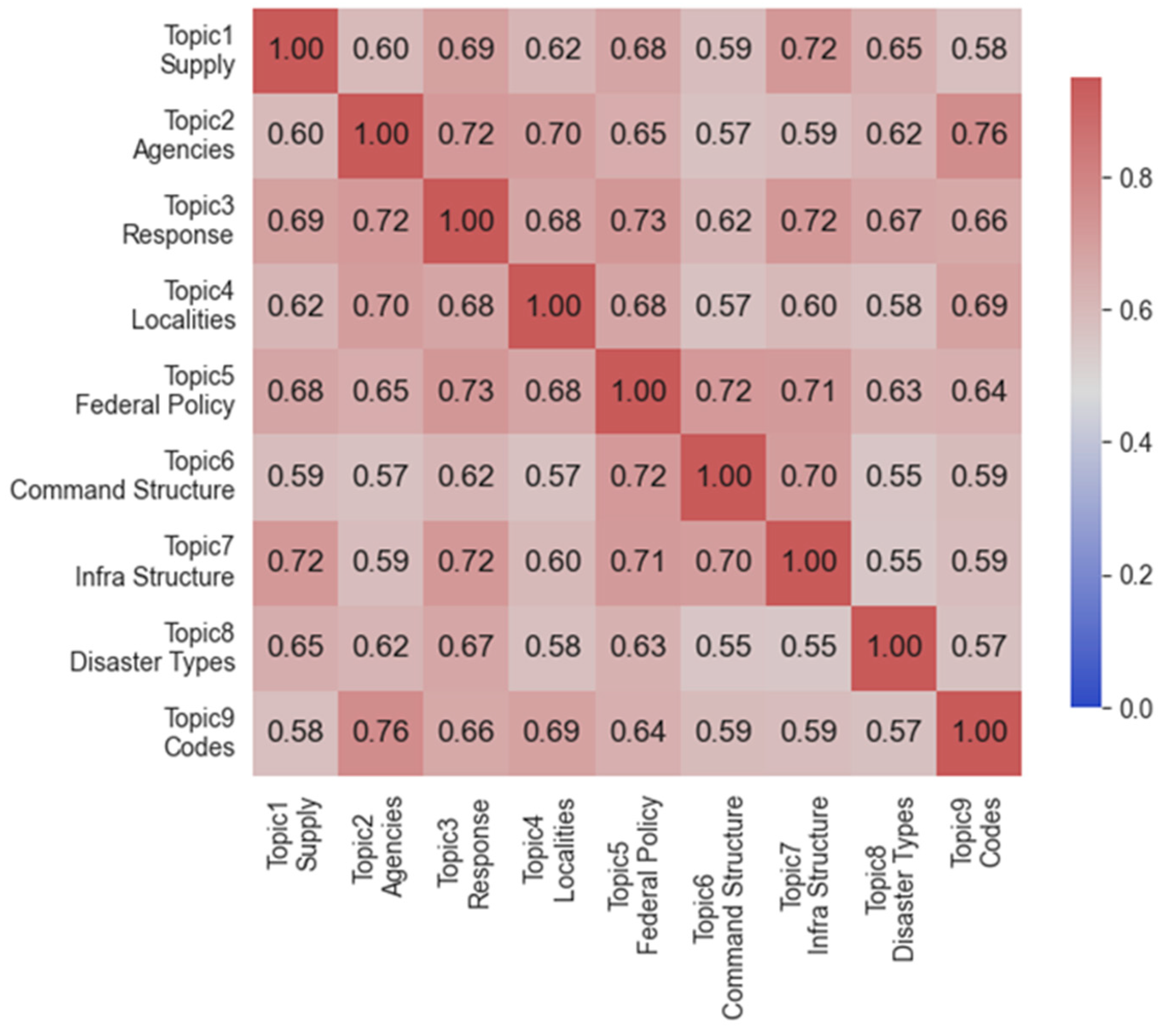
Structural relationships among topics were examined using cosine similarity between topic centroid vectors, visualized through a similarity heatmap. Owing to the standardized and formulaic nature of disaster guideline documents, overall similarity scores were relatively high, ranging from approximately 0.55 to 0.75. Despite this general similarity, clear structural groupings emerged, including an operations and support cluster, an agency- and code-related based meta-information cluster, and a policy and command-structure cluster. The disaster and recovery topic exhibited relatively weaker proximity to these groups, indicating a distinct semantic orientation.
2.5. Integration: Topic-Sentiment Analysis
Emotion signals were overlaid onto the topic structure obtained from topic modeling to interpret how specific topics are associated with particular emotions. Rather than relying on simple emotion averages, this step aims to explain the functional characteristics of the documents—such as warning, response, recovery, or administration—through topic-specific emotion profiles.
2.5.1. Emotion-Topic Network
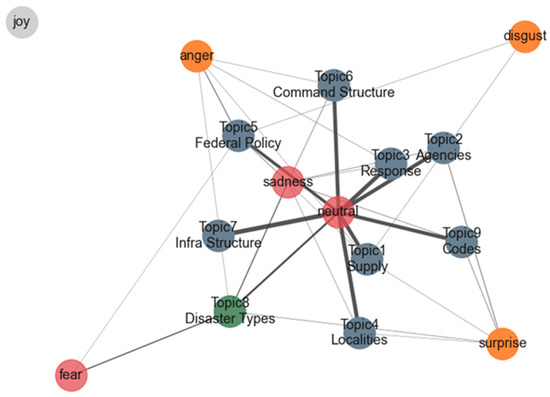
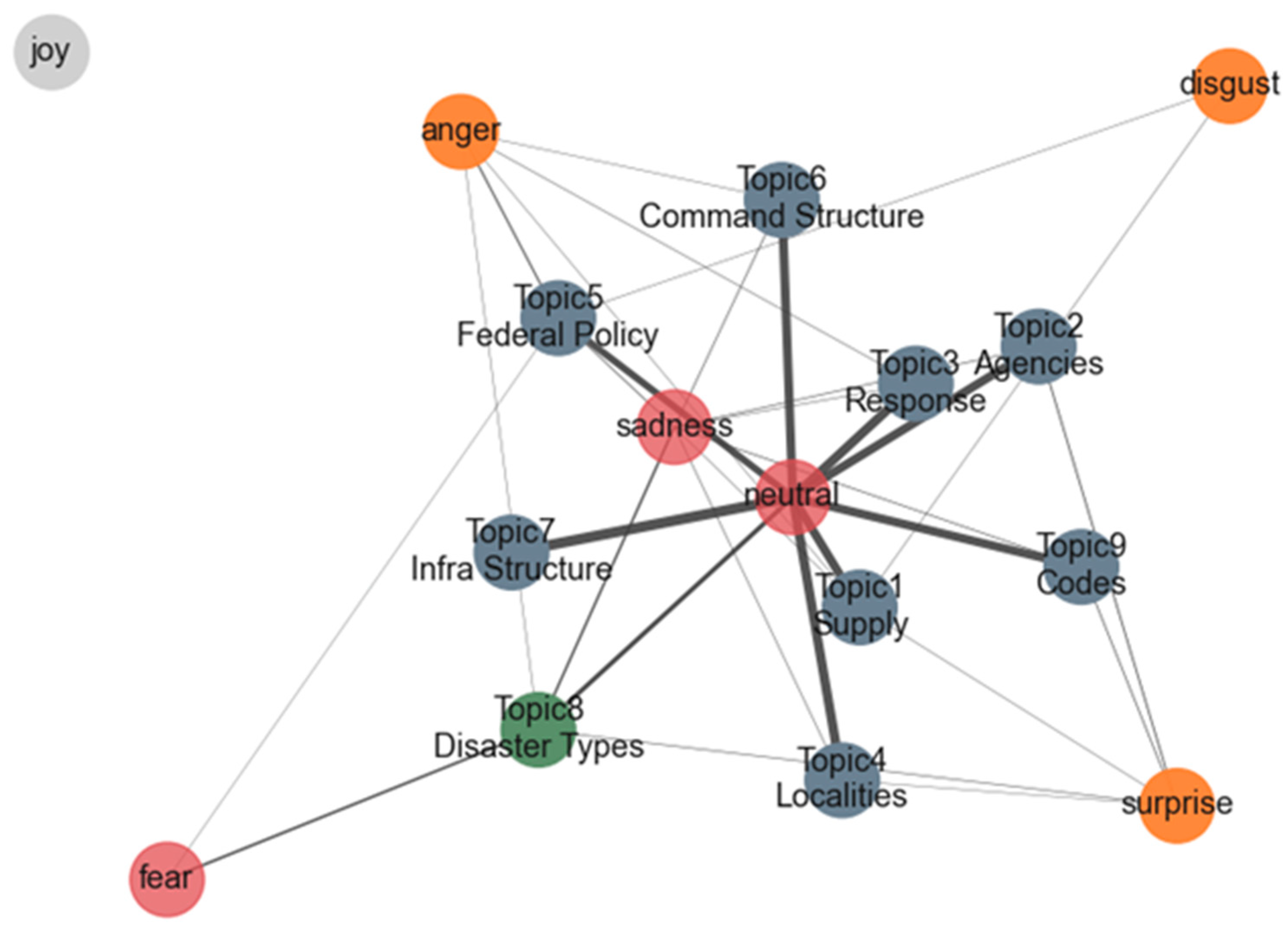
Finally, a network was constructed linking topic nodes and emotion nodes. Edge thickness represents the average strength of the topic–emotion association, and emotions positioned near the center of the network (e.g., neutral, sadness) indicate baseline emotional or narrative tones shared across multiple topics. In contrast, emotions located toward the periphery, such as fear, can be interpreted as being selectively activated in specific topics. This visualization serves to summarize topic-level emotion interpretations from a global structural perspective.
2.5.2. Emotion Composition (Non-Neutral Only) in Total Topic
Because disaster guideline documents have a very high proportion of neutral content, topic-level emotion comparisons were conducted by excluding neutral and normalizing only non-neutral emotions (e.g., fear, sadness, anger). This approach makes it possible to reveal topic-specific emotional emphases—such as risk warnings or assumptions of loss and damage—even within largely procedural documents. In practice, sadness accounts for a consistent proportion across most topics, which can be interpreted as reflecting the nature of these documents: they focus on post-crisis situations, response actions, and recovery processes that inherently presuppose loss and damage.
2.5.3. Key Keywords Contributing to Fear
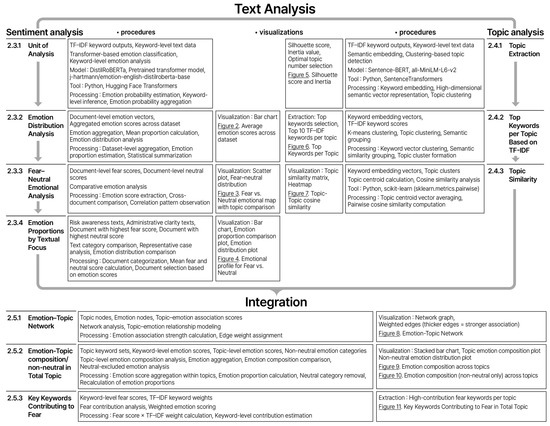
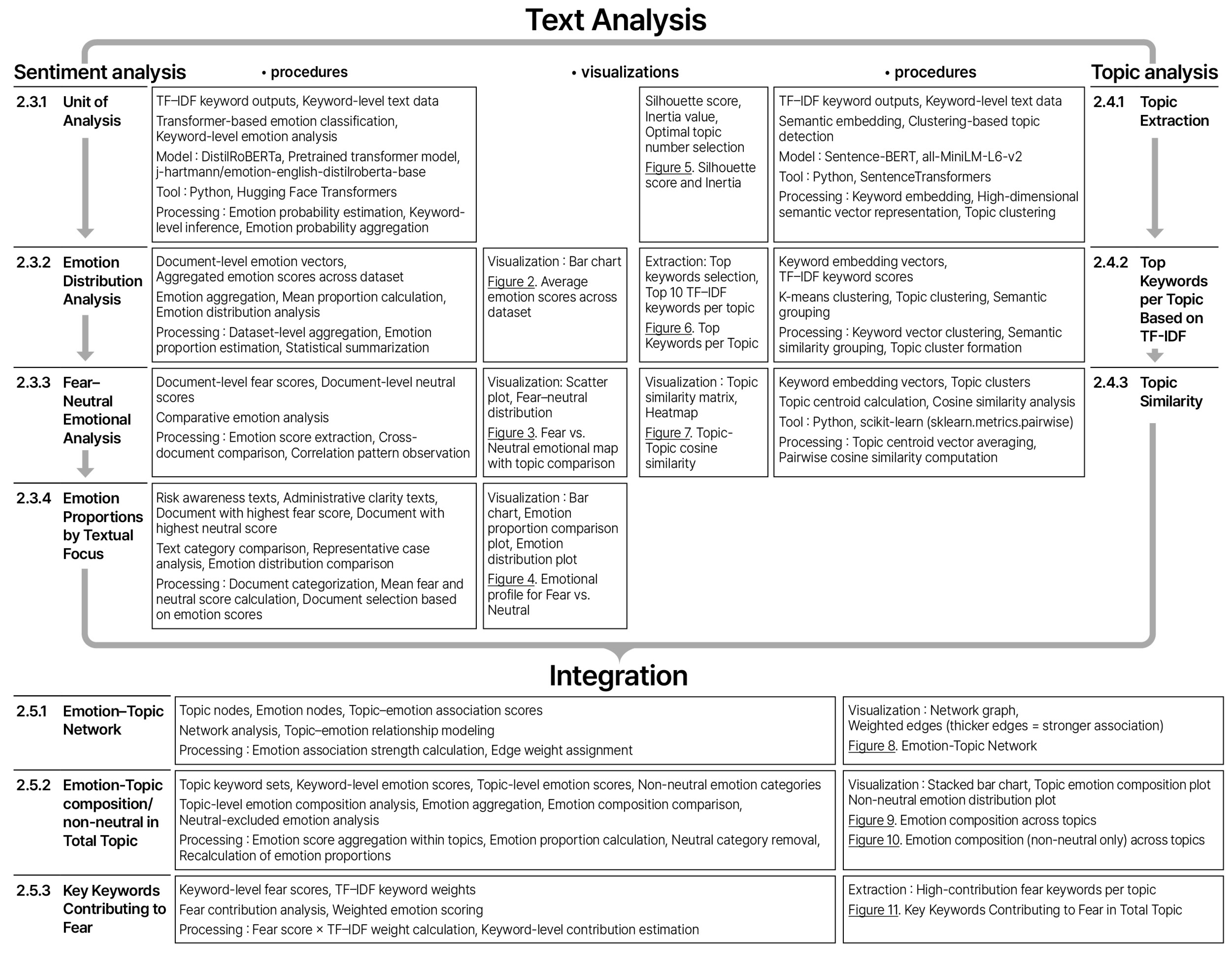
To identify which keywords drive fear within each topic, keywords with the highest contributions to fear were presented in a bar chart. This allows fear to be decomposed and interpreted by topic—for example, whether it is driven by direct threats such as death or infection, operational instability such as supply disruptions or management failures, or uncertainty arising from opaque codes and systems. Figure 1 outlines the complete text analysis workflow, from preprocessing to visualization, to ensure transparency and reproducibility.
Figure 1.
Text Analysis Procedure and Visualizations.
3. Results
3.1. Sentiment Analysis
The sentiment text analysis results indicate that the state government guideline dataset is characterized by a predominance of emotionally neutral language. Emotionally salient content is primarily associated with anticipatory risk framing and warning-oriented expressions, reflected in elevated levels of fear-related language. Sadness emerges as one of the three most predominant emotions in the corpus, although its relative prevalence remains substantially lower than that of neutrality and fear. References to damage and loss are generally conveyed in a factual and procedural manner, reinforcing the overall emotional neutrality of the dataset.
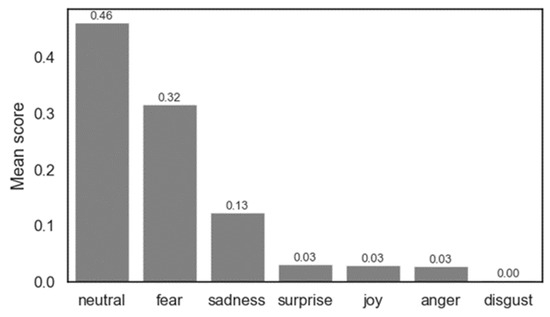
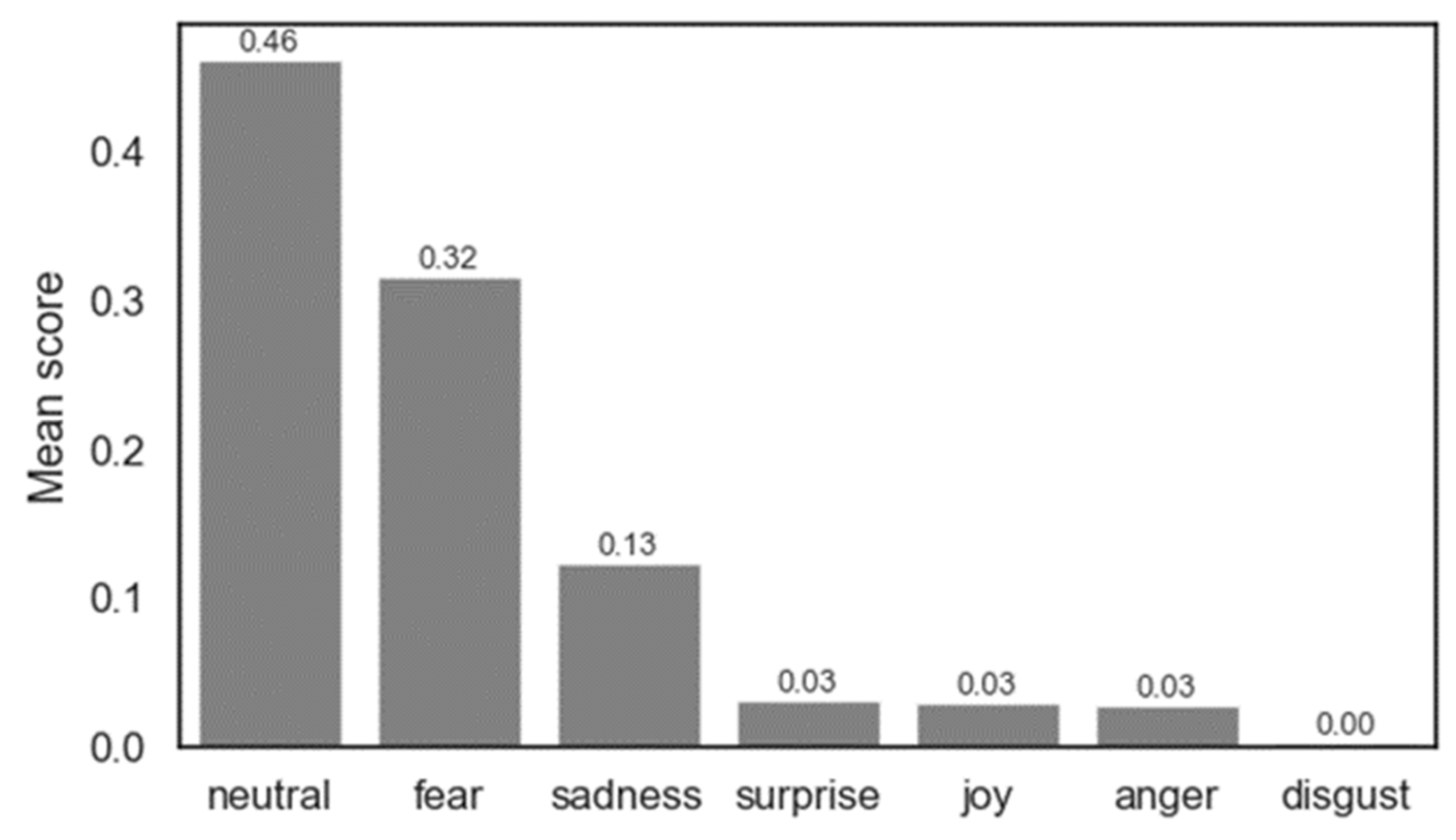
The bar chart illustrates the average proportions of emotional categories across the entire dataset. The overall distribution indicates that neutral emotion is most prevalent, followed by fear and then sadness (see Figure 2).
Figure 2.
Average emotion scores across dataset.
The neutral category accounts for the largest proportion, at 0.45, suggesting that the documents predominantly adopt a factual, informational, and procedural tone. This pattern indicates that much of the language used in the corpus, particularly terms related to reporting practices, guidelines, and operational descriptions, is interpreted by the model as emotionally neutral.
Fear represents approximately 0.32 of the overall distribution. This relatively high proportion likely reflects the frequent use of terminology associated with disaster-related risks, hazards, emergency alerts, and response measures. Such language is commonly linked to anticipatory threat framing and risk communication, leading the model to classify these expressions as fear-related.
Sadness ranks as the third most prevalent emotion in the corpus, with a proportion of 0.12, following neutral and fear. Although the documents reference damage, loss, and adverse disaster outcomes, such content is typically conveyed in a factual and report-oriented manner. Consequently, sadness is less salient than fear, which is more closely associated with anticipatory risk framing, and neutral language, which dominates procedural and informational reporting.
Fear vs. Neutral Framing
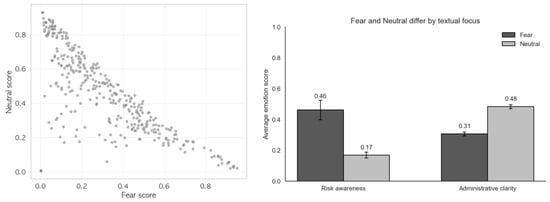
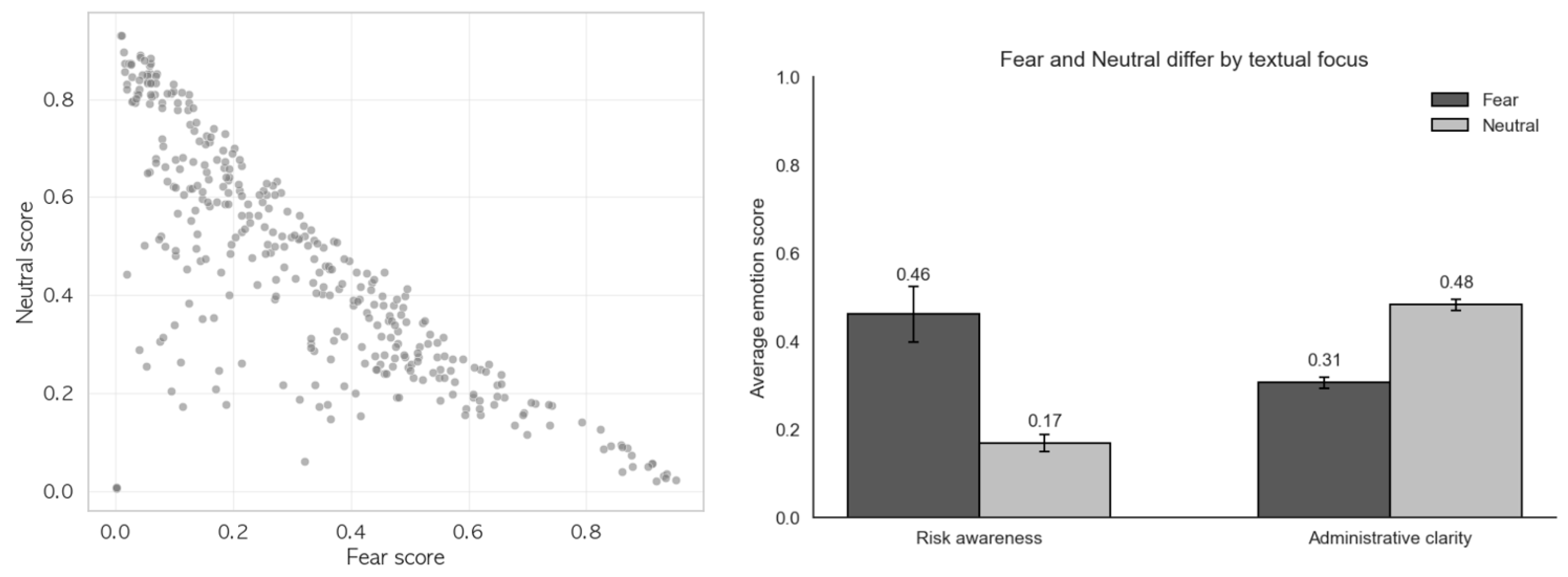
A near-perfect negative correlation is observed between fear and neutral scores, indicating a strong inverse relationship between these two emotional dimensions (see Figure 3). As fear-related language increases, the prevalence of neutral expressions correspondingly decreases, and vice versa. This pattern suggests that, within the corpus, emotional framing is structured around a trade-off between risk-oriented affective language and neutral, procedural reporting, rather than the independent coexistence of these emotional dimensions.
Figure 3.
Fear vs. Neutral emotional map with topic comparison.
Substantively, this inverse relationship implies that topics emphasizing disaster-related risks, hazards, and potential threats are predominantly associated with fear-related language, thereby reducing the prevalence of emotionally neutral expressions. Conversely, topics focused on administrative procedures, operational guidelines, and institutional responses tend to rely on technical and descriptive language, resulting in higher neutral scores and minimal emotional activation. These findings indicate a clear differentiation in emotional orientation across topics, reflecting a systematic distinction between risk-oriented discourse and procedural or managerial discourse in disaster-related media coverage.
With fear and neutral scores available at the topic level for each document, topics were classified by their communicative function into risk awareness (e.g., hazard, flood) and administrative/procedural clarity (e.g., coordination, organizations). Keywords that directly indicate risk, potential harm, or the need for protection were treated as risk awareness, whereas keywords specifying roles, coordination, and procedures were treated as administrative clarity. Fear was higher on average in risk-awareness topics, while neutral was higher on average in administrative-clarity topics.
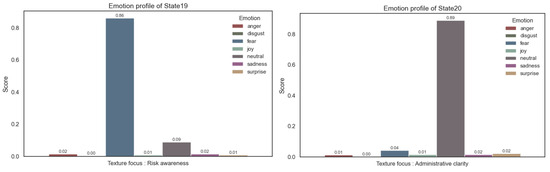
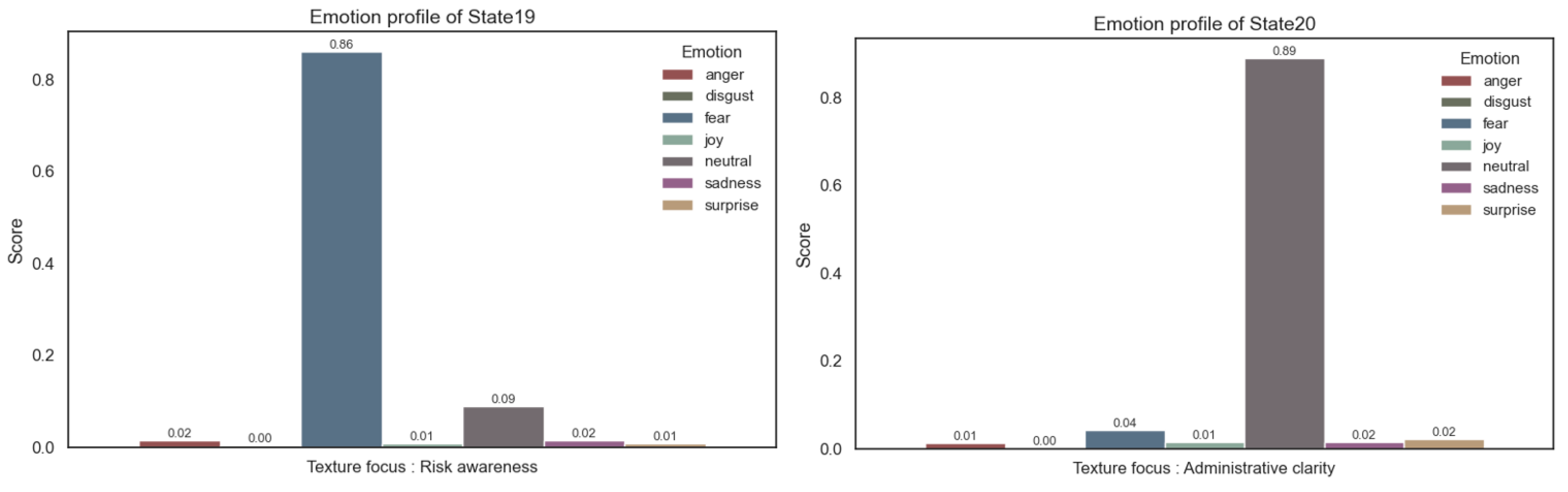
Two documents were selected for further analysis to enable a comparative examination of cases exhibiting sharply contrasting emotional profiles, particularly with respect to fear and neutral dimensions, in disaster policy communication (see Figure 4).
Figure 4.
Emotional profile for Fear vs. Neutral.
Among all documents analyzed, document ID State-19 exhibits the highest proportion of fear-related sentiment, with values ranging from 0.86 to 0.94. This pronounced fear profile is consistent with the document’s mitigation-oriented focus, which foregrounds risk characterization, potential damage, and adverse consequences associated with inadequate preparedness. The elevated fear scores reflect a strong reliance on risk-focused framing to emphasize the urgency and necessity of mitigation measures.
In contrast, document ID State-20 exhibits the highest levels of emotional neutrality with neutral scores consistently ranging from 0.87 to 0.89 across topics. This pronounced neutrality is consistent with the document’s focus on integrating community actors into disaster response frameworks, emphasizing institutional roles, coordination mechanisms, and procedural arrangements. The low presence of fear and other affective signals suggests that the document prioritizes administrative clarity and operational guidance over risk-oriented or emotionally evocative framing.
These findings indicate that state government documents strategically vary emotional framing in accordance with communicative intent. Fear is selectively emphasized in contexts designed to heighten risk awareness and motivate action, whereas neutral framing predominates in documents oriented toward implementation, administrative clarity, and institutional coordination.
3.2. Topic Analysis
3.2.1. Optimal Number of Topics
To determine the optimal number of topics (k) for keyword-embedding-based clustering, we evaluated both the silhouette score and inertia across a range of k values from 5 to 12, as shown in Figure 5. The silhouette score, which assesses the degree of separation and cohesion among clusters, reached its highest value at k = 10 (approximately 0.031), indicating relatively improved cluster distinctiveness at this point compared to other candidate solutions.
Figure 5.
Silhouette score and Inertia.
In parallel, inertia exhibited its most pronounced decrease between k = 9 and k = 10, suggesting a meaningful improvement in within-cluster compactness and signaling a structural transition in the clustering solution.
These two criteria indicate that k = 10 represents a point at which the clustering structure becomes comparatively more stable and interpretable. Accordingly, k = 10 was selected as the initial optimal number of topics. However, upon qualitative inspection of the resulting clusters, one topic was found to consist entirely of non-English tokens and noise rather than semantically meaningful content. This topic was therefore excluded from further analysis. As a result, nine topics were retained as the final set used in subsequent analyses.
3.2.2. Top Keywords per Topic Based on TF-IDF
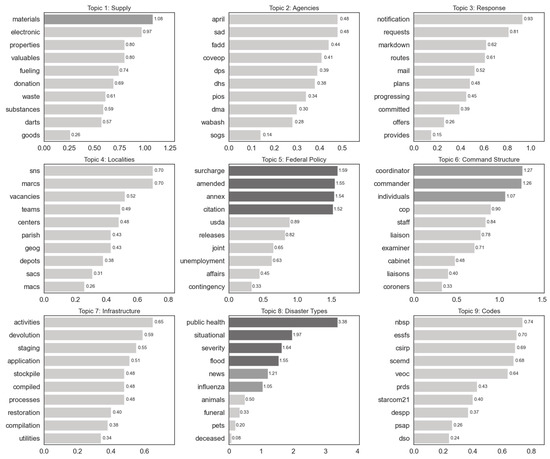
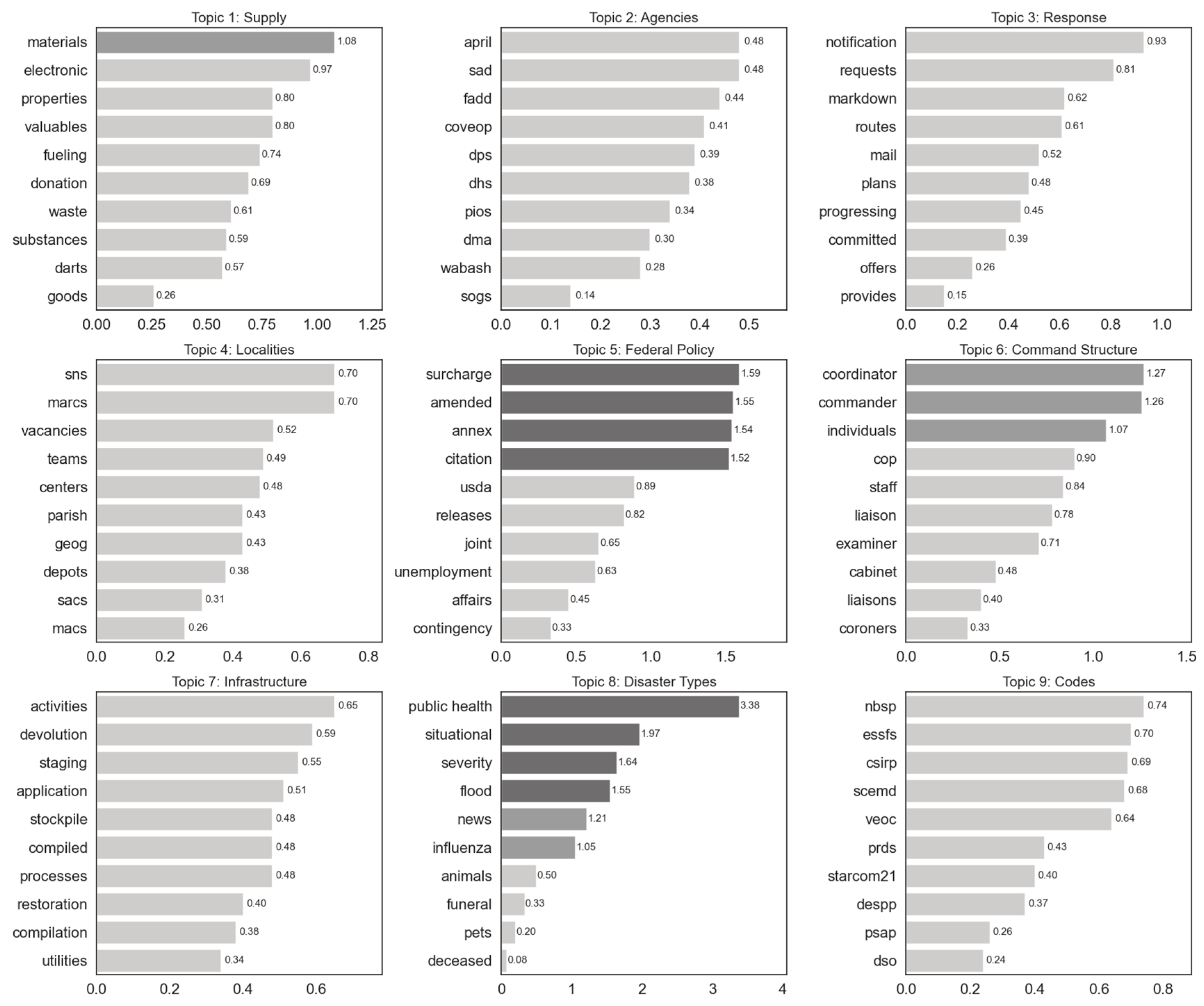
Term Frequency–Inverse Document Frequency is a widely used statistical weighting method in text analysis that quantifies the importance of a term within a document relative to its distribution across a corpus (Chen, 2024; Wang, 2024). Applied to state government guidelines, the method differentiates topic-specific policy language from general procedural content and yields nine distinct topics, as summarized in Table 2 and illustrated in Figure 6.
Table 2.
Nine Topics.
Figure 6.
Top Keywords per Topic. Grayscale shading was applied in a stepwise manner using TF–IDF thresholds of 1.0, 2.0, and 5.0 to visually distinguish the relative importance of key terms across topics.
3.2.3. Topic Similarity Results from Heatmap
The average cosine similarity between topics ranges from 0.55 to 0.75, indicating a generally high level of similarity across topics. Despite this overall similarity, clear variation is observed in the degree of relatedness among topics, with some showing stronger clustering and others weaker connections. The heatmap visualizes these pairwise cosine similarity values, where darker cells represent greater lexical and contextual overlap between topics, and lighter cells indicate lower similarity (see Figure 7).
Figure 7.
Topic-Topic cosine similarity.
Heatmap analysis indicates that disaster guideline documents are organized around four core components: operational and support processes, agency- and code-related meta-information, policy and command structures, and disaster and recovery content. The separation of the disaster and recovery component suggests that narrative descriptions of specific events and recovery processes occupy a semantic space that is structurally and functionally distinct from procedural, administrative, and institutional content.
3.2.4. Related Topic Group: Logistics, Operations, and Coordination (Topic 1, 3, 7)
The Logistics, Operations, and Coordination group, comprising Topic 1 (Logistics and Supply), Topic 3 (Response and Assistance), and Topic 7 (Operations and Infrastructure), exhibits a high level of internal similarity, with scores ranging from 0.68 to 0.72, indicating strong semantic cohesion. Substantively, these topics emphasize core components of disaster response, including field operations, resource allocation, and the coordination of support activities. Because these elements frequently co-occur during the execution phase of disaster response, they form a coherent and functionally integrated cluster within the overall topic structure.
3.2.5. Related Topic Group: Agency- and Code-Based Meta-Information (Topic 2, 4, 9)
The Agency- and Code-Based Meta-Information group, consisting of Topic 2 (Acronyms), Topic 4 (Local and Web Information), and Topic 9 (ESF and SAR Codes), demonstrates high semantic similarity, with scores ranging from 0.65 to 0.76. These topics are dominated by metadata elements, including acronyms, standardized operational codes, geographic and administrative references, and system-level labels. Such elements function as structural components of the documents, appearing in titles, headings, formatting conventions, and agency identifiers. This structural role accounts for their close proximity in the vector space and their convergence into a coherent meta-information cluster.
3.2.6. Related Topic Group: Policy and Command Structure (Topics 5, 6)
The Policy and Command Structure group, comprising Topic 5 (Federal Policy) and Topic 6 (Command Structure), exhibits strong semantic similarity, with a similarity score of 0.72. Both topics capture high-level institutional and managerial frameworks, encompassing policy provisions, disaster declarations, command directives, and organizational roles that define authority, coordination, and governance within disaster response systems.
3.2.7. Separated Group: Disaster/Recovery (Topic 8)
Topic 8 forms a distinct category within the topic structure, showing relatively low similarity with other topics (0.55–0.65). In the PCA map, it is positioned apart from the central cluster, indicating semantic independence. This separation reflects its focus on descriptive narratives of disaster events, damage, and recovery processes, which differ fundamentally from operational, administrative, and policy-oriented content.
3.3. Integration: Topic-Sentiment Analysis
3.3.1. Emotion-Topic Network
This network is constructed based on the average strength of associations between topics and emotions, with edge thickness representing the magnitude of each topic–emotion linkage, as shown in Figure 8. Emotion nodes are highlighted in red when their association strength exceeds the threshold of 0.15.
Figure 8.
Emotion-Topic Network. Note: Emotion node colors represent average topic–emotion association strength: red (>0.15), orange (0.10–0.15), and gray (<0.10). Line thickness likewise reflects topic–emotion association strength. The green topic has the strongest fear association.
Neutral and sadness occupy central positions in the network and are connected to multiple topics, indicating that the corpus is characterized less by overt emotional expression than by fact-oriented descriptions, damage assessments, and loss-centered narratives. In contrast, fear appears at the periphery and is not uniformly connected across topics, suggesting that it does not function as a pervasive emotional tone but rather emerges in a topic-specific manner.
Fear exceeds the threshold only in Topic 8, which corresponds to disaster-related content. Topic 8 exhibits the strongest association with fear and is also linked to sadness and surprise. Given its focus on the description of disaster events themselves, this topic directly conveys risk awareness, with fear signaling crisis severity and the urgency of immediate response. In this sense, Topic 8 serves as a key conduit between emotional activation and behavioral mobilization.
By contrast, Topic 1 shows strong associations with neutral and sadness and only a weak connection to fear. As it centers on logistics and operational processes—such as response, processing, and post-impact management—it presupposes that damage has already occurred. Consequently, this topic tends to motivate action through acknowledgment of loss and pragmatic assessment rather than through fear-based arousal. This orientation shapes public responses through practical judgment rather than heightened risk perception.
Overall, the networking technique shows that emotional tone is structured by topic domains, with fear concentrated in disaster-related topics and neutral or sadness more prominent in procedural and post-impact contexts. This pattern indicates that emotional signals are selectively aligned with the communicative functions of each topic rather than being uniformly distributed across the corpus.
3.3.2. Emotion Composition in Total Topic
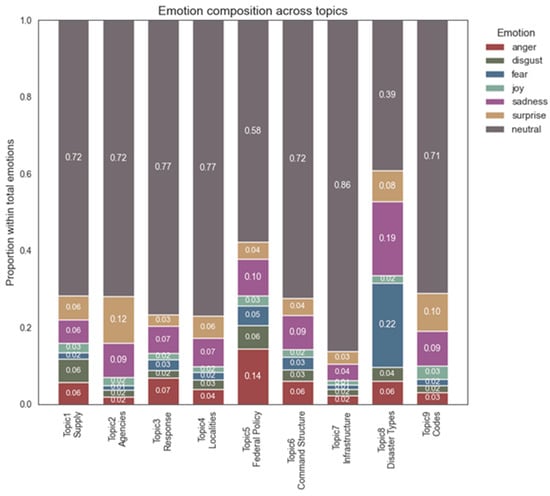
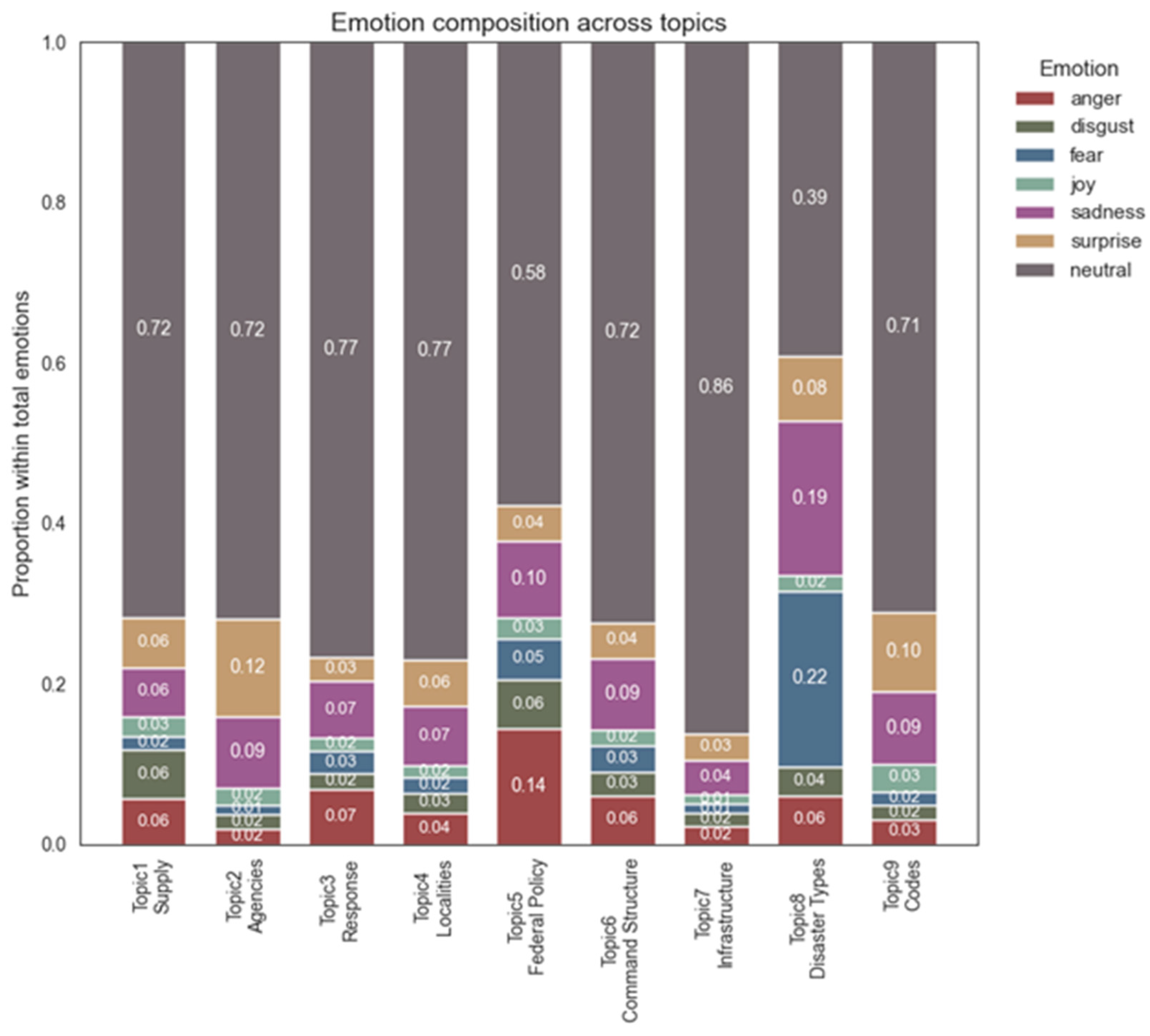
The topic-level emotional map (Fear vs. Neutral) in Figure 2 shows a clear negative correlation between fear and neutral emotions, indicating that as threat- or uncertainty-related expressions increase, neutral descriptions correspondingly decline. This inverse relationship is consistently observed across topics, extending beyond individual document-level patterns (see Figure 9). Topics 1 through 4 show minimal fear (≈0.02) and a predominance of neutral emotion (over 0.70). Topic 5 marks a shift, with fear increasing to 0.05 and neutral emotion declining to approximately 0.58. This pattern intensifies in Topic 8, which exhibits the highest fear level (0.22) and the lowest neutral proportion (0.39). Overall, topics that directly address disaster types or hazardous conditions place greater emphasis on threat-related emotional cues than on neutral, informational framing.
Figure 9.
Emotion composition across topics.
The analysis shows that emotional tone varies systematically with topic distribution, with hazard-related topics exhibiting higher fear and lower neutrality, while procedural topics are characterized by predominantly neutral expressions.
3.3.3. Non-Neutral Emotion Composition Across Topics
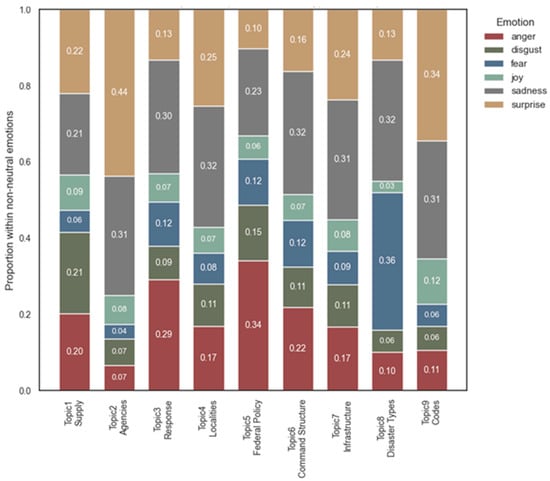
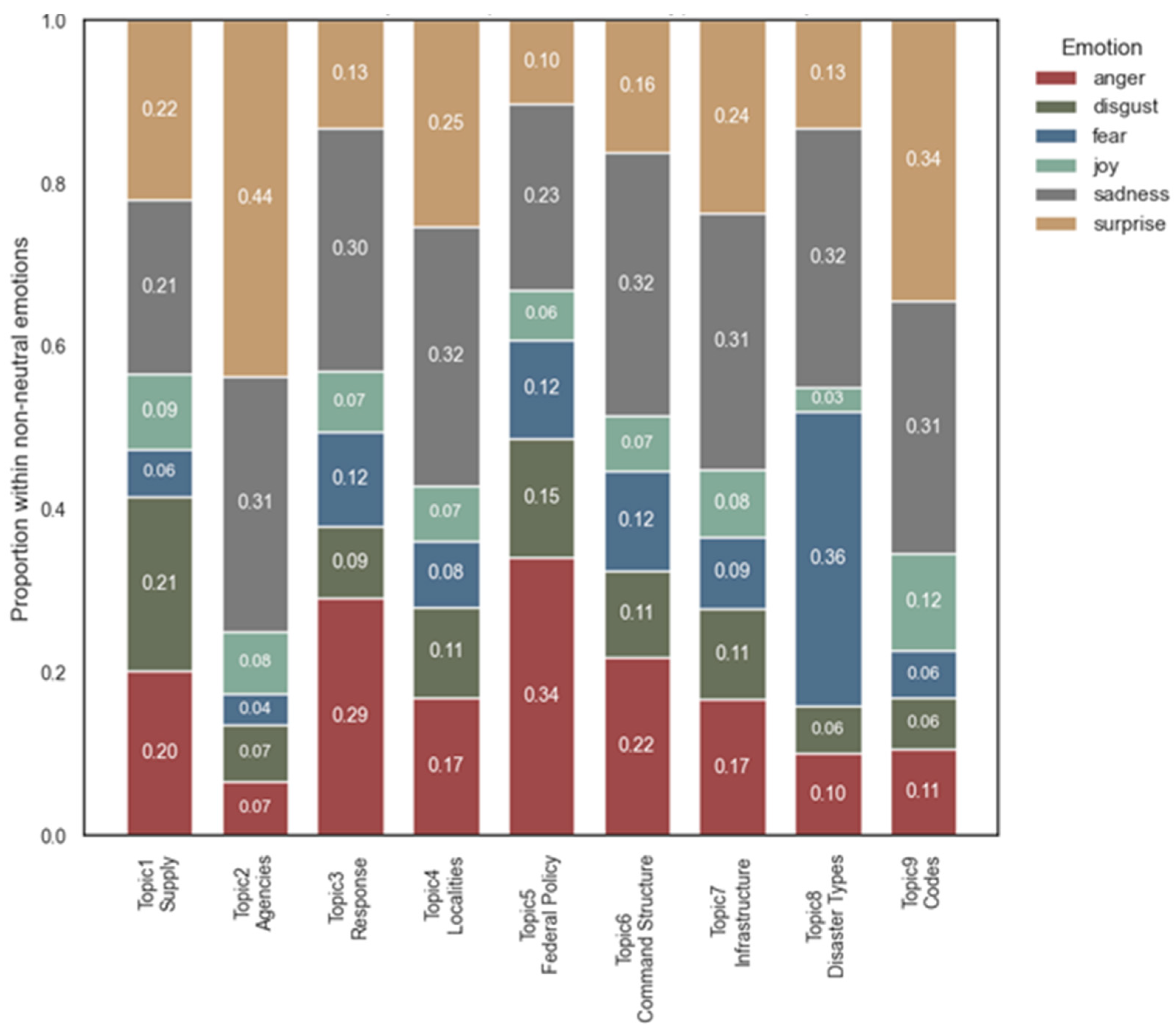
When comparing the distribution of non-neutral emotions across all topics, a common pattern emerges in which sadness accounts for a noticeable proportion in most topics (see Figure 10).
Figure 10.
Emotion composition (non-neutral only) across topics.
This can be interpreted as a consequence of the nature of disaster guideline documents: they primarily focus on post-crisis situations, response actions, and recovery procedures, which, beyond neutral and procedural descriptions, often include references to loss, damage, and exceptional circumstances. The proportions of anger and fear vary clearly by topic. Topic 8 shows a distinctly higher proportion of fear, which can be directly associated with its focus on describing disaster events and hazardous situations.
The analysis shows that emotional tone varies by topic, with sadness broadly distributed across topics and fear concentrated in disaster-related content, indicating a systematic alignment between topic distribution and emotional expression.
3.3.4. Key Keywords Contributing to Fear in Total Topic
Figure 11 displays the relative contribution of keywords within each topic to fear. In Topics 1 through 4, fear is primarily associated with material loss, operational disruption, administrative complexity, procedural delays, and uneven local response capacity, rather than direct threats to life. These patterns indicate that fear arises from uncertainty surrounding assets, coordination, information flow, and regional readiness. Topics 5 through 7 link fear to institutional and governance related factors, including policy change, economic burden, leadership clarity, and the complexity and timing of recovery processes. In these topics, fear reflects perceived instability in regulatory frameworks, accountability structures, and restoration trajectories.
Figure 11.
Key Keywords Contributing to Fear in Total Topic. Note: Grayscale shading was applied in a stepwise manner using TF–IDF thresholds of 1.0 and 1.5 to enhance visual contrast and indicate the relative importance of key terms within each topic.
Topic 8 exhibits the strongest and most conventional fear profile, driven by disaster specific terms related to death, disease, and large-scale hazards, indicating fear rooted in physical risk and survival threats. In Topic 9, fear is associated with opaque technical systems and acronyms, suggesting that limited interpretability and system complexity themselves function as sources of anxiety.
4. Discussion
State government disaster guideline documents are characterized by a strong reliance on emotionally neutral language, which accounts for the largest share of the emotional distribution. This dominance reflects the procedural, instructional, and administrative orientations of the texts, which prioritize standardization, coordination, and clarity over explicit emotional engagement. Such linguistic restraint aligns with long-standing norms in public management that associate neutrality with professionalism, objectivity, and institutional legitimacy. Within this framework, disaster guidelines primarily function as managerial instruments designed to reduce uncertainty by specifying roles, procedures, and response mechanisms prior to crisis situations.
Alongside this neutral baseline, fear emerges as a prominent secondary emotional dimension, comprising nearly one-third of the emotional content across the corpus. The prevalence of fear-related language reflects the central role of risk communication in disaster governance. References to hazards, emergency conditions, alerts, and potential consequences introduce anticipatory threat framing that signals urgency and risk severity. Importantly, fear is not uniformly distributed across policy content but appears selectively in contexts where heightened awareness and behavioral readiness are required. This pattern suggests that fear operates as a functional element of policy communication rather than as an expressive or rhetorical feature.
The analysis relies on transformer-based sentiment classification at the sentence level and topic modeling using keyword embedding and clustering techniques. These approaches shape how emotional categories such as fear and neutrality are identified and interpreted, as classification models assign probabilistic emotion labels while topic modeling organizes these signals across thematic domains. As a result, fear tends to be captured as explicit threat- and uncertainty-related expressions, whereas neutrality is more frequently associated with procedural and informational language. While these techniques enable the identification of systematic patterns across large corpora, they may simplify context-dependent or implicitly expressed emotions. Accordingly, the identified emotional structures should be understood as analytically derived approximations rather than exhaustive representations of affective meaning.
The strong inverse relationship between fear and neutral language clarifies how emotional tone is structured within state policy documents. As fear-related expressions (e.g., emergency, outbreak, threat, risk, hazard, warning, exposure) increase, neutral language (e.g., management, coordination, resources, agency, information, plan) correspondingly decreases, indicating a systematic trade-off between risk-oriented framing and procedural reporting. Emotional and neutral modes of communication are therefore deployed in relation to policy function. Topics addressing disaster types, hazardous conditions, and impact descriptions rely more heavily on fear-related cues, whereas topics centered on logistics, coordination, and administration remain largely neutral. This differentiation reflects an underlying communicative logic in which emotional framing aligns with governance objectives.
Topic modeling and similarity analysis further illustrate this functional organization. The corpus is structured around clusters corresponding to operational processes, administrative meta-information, governance frameworks, and disaster and recovery narratives. Although overall similarity across topics reflects the standardized nature of policy language, distinct groupings emerge that correspond to different stages and functions of disaster response. Operational and coordination-related topics exhibit strong internal cohesion and are characterized primarily by neutral language, with sadness appearing in contexts where damage and post-impact management are addressed. In contrast, disaster and recovery content forms a semantically distinct category and displays the strongest association with fear, sadness, and surprise, underscoring its role as the primary site of emotional activation.
Emotion–topic network analysis reinforces this distinction by showing that fear does not function as a pervasive background tone but emerges in a topic-specific manner. Neutral and sadness-related expressions occupy central positions in the network and connect to multiple topics, reflecting the dominance of factual descriptions, loss acknowledgment, and administrative reporting. Fear appears at the periphery and exceeds the association threshold only in disaster-focused content, indicating that emotional arousal is concentrated where crisis severity and immediate risk are communicated.
Keyword-level analysis provides additional insight into how fear is constructed across policy domains. In operational and administrative topics, fear is associated less with direct threats to life than with uncertainty surrounding coordination, procedural delays, uneven response capacity, and material loss. In governance-related topics, fear reflects concerns about policy change, economic burden, leadership clarity, and the complexity of recovery processes. These patterns suggest that fear in state disaster guidelines is not limited to physical danger but extends to institutional and systemic risks. In this sense, fear may arise not from the disaster itself but from perceived administrative complexity or institutional ambiguity embedded in policy language.
These patterns have important implications for disaster governance and emergency communication. While emotionally neutral language has traditionally been privileged in public administration, restrained affect may be less effective in capturing attention or motivating behavioral change under conditions of threat. Risk communication research suggests that fear-based messages are most effective when accompanied by clear, actionable guidance, whereas threat framing without efficacy cues can produce avoidance or anxiety fatigue, thereby undermining sustained public engagement and compliance. At the same time, neutral language is not inherently stabilizing. Policy texts that emphasize conditional decision-making, evolving procedures, or multi-agency coordination may inadvertently increase uncertainty among recipients, thereby amplifying fear rather than reducing it. This is particularly consequential because disaster guidelines are intended to function as institutional tools for uncertainty reduction.
Rather than reflecting emotional neutrality by default, disaster policy communication appears to be shaped by governance logics as the fundamental rationales and policy priorities that privilege specific emotional orientations aligned with coordination, participation, and risk management objectives. In this respect, state disaster guidelines operate not only as administrative instruments but also as implicit learning materials that shape public understanding of risk, institutional competence, and appropriate response behavior through calibrated emotional cues embedded in policy language.
5. Conclusions
This study demonstrates that emotional signals in state-level, multi-hazard disaster policy guidelines are systematically structured to balance fear-oriented risk awareness with neutral administrative clarity, reflecting distinct communicative functions within policy language. Risk-related topics tended to exhibit higher fear signals, whereas coordination and procedural topics were characterized by predominantly neutral emotional tone. These patterns suggest that disaster governance documents simultaneously convey urgency and administrative manageability.
The study focuses on state-level, multi-hazard documents and does not compare emotional framing across government levels or specific disaster types; however, differences in institutional roles and communication responsibilities likely lead federal, state, and local entities to adopt distinct communication strategies and emotional orientations, shaping the balance between fear-based and neutral messaging (Coombs, 2007). Similarly, communication strategies may vary by hazard type: natural disasters often involve language emphasizing environmental threats and damage, increasing fear-related cues, whereas technological or industrial disasters tend to rely on technical and procedural language that supports neutrality (Mileti & Sorensen, 1990). Further investigation could examine these variations empirically to better understand how institutional context and disaster characteristics influence emotional and cognitive framing in policy communication.
By integrating topic modeling with emotion analysis, the study provides a methodological approach for examining how emotional cues are embedded in policy texts, and future research may extend this framework to other policy domains or compare emotional structures across institutional and hazard-specific contexts—an important direction for further investigation.
Author Contributions
Conceptualization S.K. 70%, W.K. 25% and R.C.F. 5%; methodology, S.K. 100%; data curation S.K., 100%; writing—original draft preparation, S.K. 100%; writing—review and editing, S.K. 65% W.K. 10%, R.C.F. 20%; project administration, S.K. 50%, W.K. 50%; funding acquisition, S.K. 50%, W.K. 50%. All authors have read and agreed to the published version of the manuscript.
Funding
This work was supported by the Ministry of Education of the Republic of Korea and the National Research Foundation of Korea (NRF-2020S1A5A2A03046573).
Institutional Review Board Statement
Not applicable.
Informed Consent Statement
Not applicable.
Data Availability Statement
The original contributions presented in this study are included in the article. Further inquiries can be directed to the corresponding author.
Acknowledgments
The authors have reviewed and edited the output and take full responsibility for the content of this publication.
Conflicts of Interest
The authors declare no conflicts of interest.
References
- Ahmed, S. (2004). The cultural politics of emotion. Routledge. [Google Scholar]
- Ansell, C., Boin, A., & Keller, A. (2010). Managing transboundary crises: Identifying the building blocks of an effective response system. Journal of Contingencies and Crisis Management, 18(4), 195–207. [Google Scholar] [CrossRef] [Scilit]
- Boin, A., ’t Hart, P., Stern, E., & Sundelius, B. (2017). The politics of crisis management: Public leadership under pressure (2nd ed.). Cambridge University Press. [Google Scholar]
- Browne, M. J., & Hoyt, R. E. (2000). The demand for flood insurance: Empirical evidence. Journal of Risk and Insurance, 67(2), 291–306. [Google Scholar] [CrossRef] [Scilit]
- Chen, L. (2024). An extended TF-IDF method for improving keyword extraction in traditional corpus-based research: An example of a climate change corpus. Data & Knowledge Engineering, 153, 102322. [Google Scholar] [CrossRef] [Scilit]
- Christensen, T., & Lægreid, P. (2007). The whole-of-government approach to public sector reform. Public Administration Review, 67(6), 1059–1066. [Google Scholar] [CrossRef] [Scilit]
- Christensen, T., Lægreid, P., & Rykkja, L. H. (2016). Organizing for crisis management: Building governance capacity and legitimacy. Public Administration Review, 76(6), 887–897. [Google Scholar] [CrossRef] [Scilit]
- Comfort, L. K. (2007). Crisis management in hindsight: Cognition, communication, coordination, and control. Public Administration Review, 67(s1), 189–197. [Google Scholar] [CrossRef] [Scilit]
- Coombs, W. T. (2007). Protecting organization reputations during a crisis: The development and application of situational crisis communication theory. Corporate Reputation Review, 10(3), 163–176. [Google Scholar] [CrossRef] [Scilit]
- Coombs, W. T. (2015). Ongoing crisis communication (4th ed.). SAGE. [Google Scholar]
- Drury, J. (2018). The role of social identity processes in mass emergency behaviour. European Review of Social Psychology, 29(1), 38–81. [Google Scholar] [CrossRef] [Scilit]
- Drury, J., Carter, H., Cocking, C., Ntontis, E., Tekin Guven, S., & Amlôt, R. (2019). Facilitating collective psychosocial resilience in the public in emergencies: Twelve recommendations based on the social identity approach. Frontiers in Public Health, 7, 141. [Google Scholar] [PubMed]
- Entman, R. M. (1993). Framing: Toward clarification of a fractured paradigm. Journal of Communication, 43(4), 51–58. [Google Scholar] [CrossRef] [Scilit]
- Entman, R. M. (2007). Framing bias: Media in the distribution of power. Journal of Communication, 57(1), 163–173. [Google Scholar] [CrossRef] [Scilit]
- Fischhoff, B., Brewer, N. T., & Downs, J. S. (2003). Communicating risks and benefits: An evidence-based user’s guide. U.S. Food and Drug Administration.
- Gigerenzer, G. (2008a). Gut feelings: The intelligence of the unconscious. Viking. [Google Scholar]
- Gigerenzer, G. (2008b). Rationality for mortals. Oxford University Press. [Google Scholar]
- Grimmer, J., & Stewart, B. M. (2013). Text as data: The promise and pitfalls of automatic content analysis methods for political texts. Political Analysis, 21(3), 267–297. [Google Scholar] [CrossRef] [Scilit]
- Gross, J. J. (2008). Emotion regulation. In M. Lewis, J. M. Haviland-Jones, & L. F. Barrett (Eds.), Handbook of emotions (3rd ed.). Guilford Press. [Google Scholar]
- Guo, W., Zeng, Q., Duan, H., Ni, W., Liu, T., Liu, C., & Xie, N. (2020). Text quality analysis of emergency response plans. IEEE Access, 8, 9441–9456. [Google Scholar] [CrossRef] [Scilit]
- Heath, R. L., & O’Hair, H. D. (2020). Handbook of risk and crisis communication. Routledge. [Google Scholar]
- Huber, G. A. (2007). The craft of bureaucratic neutrality: Interests and influence in governmental regulation of occupational safety. Cambridge University Press. [Google Scholar]
- Kunreuther, H., & Pauly, M. V. (2006). Rules rather than discretion: Lessons from Hurricane Katrina. Journal of Risk and Uncertainty, 33, 101–116. [Google Scholar] [CrossRef] [Scilit]
- LeDoux, J. E. (2012). A neuroscientist’s perspective on debates about the nature of emotion. Emotion Review, 4(4), 375–379. [Google Scholar] [CrossRef] [Scilit]
- Lerner, J. S., Li, Y., Valdesolo, P., & Kassam, K. S. (2015). Emotion and decision making. Annual Review of Psychology, 66, 799–823. [Google Scholar] [CrossRef] [Scilit]
- Levi, M., & Stoker, L. (2000). Political trust and trustworthiness. Annual Review of Political Science, 3, 475–507. [Google Scholar] [CrossRef] [Scilit]
- March, J. G., & Simon, H. A. (1993). Organizations (2nd ed.). Blackwell. [Google Scholar]
- Mileti, D. S., & Sorensen, J. H. (1990). Communication of emergency public warnings: A social science perspective and state-of-the-art assessment. Oak Ridge National Laboratory. [Google Scholar]
- Moe, T. M. (1990). The politics of bureaucratic structure. In J. E. Chubb, & P. E. Peterson (Eds.), Can the government govern? (pp. 267–329). Brookings Institution Press. [Google Scholar]
- Moynihan, D. P. (2008). The dynamics of performance management. Georgetown University Press. [Google Scholar]
- Nabi, R. L., & Myrick, J. G. (2019). Uplifting fear appeals: Considering the role of hope in fear-based persuasive messages. Health Communication, 34(4), 463–474. [Google Scholar] [CrossRef] [Scilit]
- Nussbaum, M. C. (2001). Upheavals of thought: The intelligence of emotions. Cambridge University Press. [Google Scholar]
- Olsen, J. P. (2007). The institutional dynamics of the European university. In P. Maassen, & J. P. Olsen (Eds.), University dynamics and European integration (pp. 25–54). Springer. [Google Scholar]
- Pennebaker, J. W., Boyd, R. L., Jordan, K., & Blackburn, K. (2015). The development and psychometric properties of LIWC2015. University of Texas at Austin. [Google Scholar]
- Pessoa, L. (2008). On the relationship between emotion and cognition. Nature Reviews Neuroscience, 9(2), 148–158. [Google Scholar] [CrossRef] [Scilit]
- Renn, O. (2008). Risk governance: Coping with uncertainty in a complex world. Earthscan. [Google Scholar]
- Reynolds, B., & Seeger, M. W. (2005). Crisis and emergency risk communication. Journal of Health Communication, 10(1), 43–55. [Google Scholar] [CrossRef] [Scilit]
- Roberts, M. E., Stewart, B. M., & Tingley, D. (2014). Structural topic models for open-ended survey responses. American Journal of Political Science, 58(4), 1064–1082. [Google Scholar] [CrossRef] [Scilit]
- Sellnow, T. L., Ulmer, R. R., Seeger, M. W., & Littlefield, R. S. (2018). Effective risk communication (3rd ed.). Springer. [Google Scholar]
- Slovic, P. (1987). Perception of risk. Science, 236(4799), 280–285. [Google Scholar] [CrossRef] [Scilit] [PubMed]
- Slovic, P., Finucane, M. L., Peters, E., & MacGregor, D. G. (2004). Risk as analysis and risk as feelings. Risk Analysis, 24(2), 311–322. [Google Scholar] [CrossRef] [Scilit] [PubMed]
- Slovic, P., Peters, E., Finucane, M. L., & MacGregor, D. G. (2005). Affect, risk, and decision making. Health Psychology, 24, S35–S40. [Google Scholar] [CrossRef] [Scilit]
- Sørensen, E., & Torfing, J. (2007). Theories of democratic network governance. Palgrave Macmillan. [Google Scholar]
- Stone, D. (2012). Policy paradox: The art of political decision making (3rd ed.). W. W. Norton. [Google Scholar]
- Tversky, A., & Kahneman, D. (1981). The framing of decisions and the psychology of choice. Science, 211(4481), 453–458. [Google Scholar] [CrossRef] [Scilit]
- Tyler, T. R. (2006). Why people obey the law (2nd ed.). Princeton University Press. [Google Scholar]
- Tyler, T. R. (2011). Why people cooperate. Princeton University Press. [Google Scholar]
- Tyler, T. R., & Huo, Y. J. (2002). Trust in the law: Encouraging public cooperation with the police and courts. Russell Sage Foundation. [Google Scholar]
- Van Atteveldt, W., Trilling, D., & Calderón, C. A. (2022). Computational analysis of communication: A practical introduction to the analysis of texts, networks, and images. Wiley. [Google Scholar]
- Van Bavel, J. J., Baicker, K., Boggio, P. S., Capraro, V., Cichocka, A., Cikara, M., Crockett, M. J., Crum, A. J., Douglas, K. M., Druckman, J. N., & Drury, J. (2020). Using social and behavioural science to support COVID-19 responses. Nature Human Behaviour, 4, 460–471. [Google Scholar] [CrossRef] [Scilit]
- Van der Meer, T. G. L. A., Verhoeven, P., Beentjes, H. W. J., & Vliegenthart, R. (2017). Communication in times of crisis: The stakeholder relationship under pressure. Public Relations Review, 43(2), 426–440. [Google Scholar] [CrossRef] [Scilit]
- Wang, Y. (2024). Research on the TF–IDF algorithm combined with semantics for automatic extraction of keywords from network news texts. Journal of Intelligent Systems, 33(1), 20230300. [Google Scholar] [CrossRef] [Scilit]
- Witte, K. (1992). Putting the fear back into fear appeals: The extended parallel process model. Communication Monographs, 59(4), 329–349. [Google Scholar] [CrossRef] [Scilit]
- Witte, K., & Allen, M. (2000). A meta-analysis of fear appeals: Implications for effective public health campaigns. Health Education & Behavior, 27(5), 591–615. [Google Scholar] [CrossRef] [Scilit]
- Yanow, D. (2000). Conducting interpretive policy analysis. SAGE. [Google Scholar]

Disclaimer/Publisher’s Note: The statements, opinions and data contained in all publications are solely those of the individual author(s) and contributor(s) and not of MDPI and/or the editor(s). MDPI and/or the editor(s) disclaim responsibility for any injury to people or property resulting from any ideas, methods, instructions or products referred to in the content. |
© 2026 by the authors. Licensee MDPI, Basel, Switzerland. This article is an open access article distributed under the terms and conditions of the Creative Commons Attribution (CC BY) license.