


Abstract
This study examines how organizational design, competency management, and workforce planning can be integrated to support coordination and operational capacity in a growing Colombian technology company. Drawing on information processing theory and a competency-based perspective, it adopts a single-case design combining document analysis, functional mapping, aggregated workforce data, and an exploratory survey of 41 employees. The findings identify hierarchical dependence, unclear decision rights, cross-functional frictions, and changing competency priorities. Based on this evidence, the study develops the ON Competency Model and an integrated framework linking structural diagnosis, competency requirements, and workforce planning. It proposes that workforce composition should be determined after clarifying processes, interdependencies, decision rights, and required capabilities. The framework remains to be validated through longitudinal and comparative research.
1. Introduction
Technology companies operate in environments shaped by continuous innovation, digital transformation, and rapidly changing markets (Joseph & Sengul, 2025; O’Reilly & Tushman, 2013). In their early stages, they often rely on flexible structures, broadly defined roles, and informal coordination. As headcount, product portfolios, and operational interdependencies grow, however, these arrangements may generate role ambiguity, overlapping responsibilities, and difficulties in processing the information required for effective coordination (Galbraith, 2012). Organizations must therefore align strategy, structure, competencies, and integration mechanisms without losing the adaptability that supports agility (Bagni et al., 2025).
Organizational design concerns more than headcount or the formal chart. It determines how information flows, where decisions are made, and how interdependent activities are coordinated. Information processing theory argues that organizational arrangements should match the uncertainty and information requirements of the work (Galbraith, 1974). As complexity and reciprocal interdependence increase, rules and vertical supervision may become insufficient (Tushman & Nadler, 1978). Some coordination problems arise from missing information, whereas others reflect competing interpretations and require direct interaction and shared meaning-making (Daft & Lengel, 1986). Accordingly, no single structure is universally effective; its suitability depends on strategy, environment, technology, interdependencies, and available integration mechanisms (Burton & Obel, 2018). This challenge is particularly relevant for technology companies seeking to improve current operations while developing new solutions (Joseph & Sengul, 2025; O’Reilly & Tushman, 2013).
Structural redesign also depends on the capabilities of the people who operate the organization. Competency models identify the knowledge, skills, and behaviors required to execute strategy. To be useful, they must emerge from organizational needs, draw on multiple sources of evidence, and translate competencies into observable behaviors (Campion et al., 2011). They complement job analysis by introducing a cross-functional and forward-looking view of how roles should evolve (Sanchez & Levine, 2009). While functional analysis identifies activities, responsibilities, overlaps, and gaps, competency management provides a common language for selection, development, assessment, and internal mobility (Rodriguez et al., 2002). Integrating these perspectives can strengthen the alignment among structure, responsibilities, and capabilities in highly interdependent settings (Bagni et al., 2025).
This relationship is particularly important when structural change involves greater employee discretion and decentralized decision-making. Autonomy can create organizational and psychological value when employees possess the capabilities required to exercise it responsibly. Evidence from Colombian organizations indicates that autonomy is associated with important motivational, self-regulatory, and well-being outcomes, reinforcing the need to consider human capabilities alongside structural arrangements (Santiago-Torner, 2024).
Strategic workforce planning adds a third dimension by anticipating how many people and which capabilities will be required, in which processes, and under what operating conditions. It directs attention toward roles and workforce segments where talent gaps may have the greatest strategic impact (Boudreau & Ramstad, 2005). This requires connecting available headcount and skills with forecast demand and organizational constraints (De Bruecker et al., 2015), using methods appropriate to the decision problem, time horizon, and quality of the available data (Peck, 2025).
This perspective is especially important when hiring, replacement, or redeployment decisions are driven by efficiency pressures. Workforce changes based only on cost or average productivity may shift workload to other processes, weaken service quality, or erode critical knowledge. Capacity decisions should instead consider interdependencies, required competencies, and the wider work system (Levenson, 2018). Their quality also depends on combining reliable data, analytical capability, and a clear understanding of the organizational problem (Margherita, 2022; Marler & Boudreau, 2017; Minbaeva, 2018).
Data availability alone does not guarantee sound decisions. The uncritical adoption of analytical tools may create technological dependence and interpretations detached from actual work conditions (Angrave et al., 2016). It may also intensify surveillance, opacity, bias, and loss of autonomy when transparency, participation, and ethical governance are absent (Giermindl et al., 2022; Tursunbayeva et al., 2022). Workforce design should therefore balance efficiency, legitimacy, and responsibility. This principle is consistent with sustainable human resource management, which evaluates talent decisions not only through their immediate financial contribution but also through their longer-term effects on employees and the organization (Kramar, 2014, 2022).
This broader perspective is also consistent with evidence showing that digitally mediated work arrangements may generate both resources and psychosocial demands, depending on how autonomy, intensity, relational conditions, and organizational support are configured (Santiago-Torner et al., 2026c). Accordingly, organizational optimization should not be understood as workforce minimization, but as a sustainable alignment among capacity, productivity, competencies, employee well-being, and operational continuity.
Despite the maturity of these three research streams, an important integration problem remains. Organizational design explains how information, authority, and interdependence should be configured; competency research explains the capabilities and behaviors required to perform effectively; and strategic workforce planning addresses future workforce quantity and composition. However, these perspectives generally provide field-specific answers to different parts of the organizational problem rather than specifying how decisions in one domain condition decisions in the others (Campion et al., 2011; De Bruecker et al., 2015; Galbraith, 1974). In particular, the literature offers limited guidance on the sequence through which coordination problems should be diagnosed, translated into role and competency requirements, and subsequently incorporated into workforce-capacity decisions. This fragmentation creates a practical and theoretical risk: structures may be redesigned without the capabilities required to operate them, competency models may remain disconnected from actual coordination problems, and staffing decisions may be made before the underlying work architecture has been clarified.
The research gap addressed in this study therefore does not arise from the absence of organizational design, competency, or workforce-planning models individually. Rather, it concerns the limited conceptual articulation of these domains as an interdependent decision process, particularly in rapidly growing technology firms where formalization must coexist with adaptability.
This study examines ON OFF Soluciones en Línea S.A.S., a Colombian technology company that grew from approximately ten employees to more than 240. Its expansion increased interdependence among Sales, Customer Onboarding, Customer Experience, Development, Technology Infrastructure, and support functions. The diagnosis identified rework, potential functional overlaps, multiple approval layers, uneven workloads, and the absence of integrated criteria connecting structure, competencies, and workforce sizing. These issues were examined through document analysis, functional mapping, comparative analysis of organizational practices, aggregated workforce data, and an exploratory survey completed by 41 employees.
The case brings together three fields that are often developed through separate conceptual and methodological traditions: organizational design, competency management, and strategic workforce planning. Their integration is particularly relevant for technology companies in emerging economies that must formalize their structures without undermining adaptability.
Against this background, the objective is not to test whether a new organizational framework improves firm performance, but to develop and apply an analytically grounded integrative framework that clarifies how structural diagnosis, competency requirements, and workforce-planning decisions can be connected within a single organizational process.
The research question is: How can the integration of organizational design, competency management, and strategic workforce planning support operational capacity and internal coordination in a growing technology company? To address this question, the study examines structural tensions associated with growth, gaps in role definition, leadership, and competencies, the incorporation of a competency model into organizational redesign, and the criteria required for future workforce-sizing decisions. It also considers the analytical transferability of the findings to comparable organizations.
The study makes three related contributions. First, at the conceptual level, it proposes a process-based framework that goes beyond placing organizational design, competency management, and workforce planning alongside one another. It specifies their decision sequence and interdependence: coordination and structural requirements are diagnosed first; role and capability requirements are then clarified; and workforce quantity and composition are considered only after those organizational conditions have been established. This reframes workforce sizing as a downstream consequence of organizational architecture rather than as an independent headcount exercise. Second, at the empirical level, the study provides contextualized evidence from a Latin American technology company, a setting that remains comparatively underrepresented in these research streams. Third, at the applied level, it offers a traceable sequence connecting organizational frictions with capability requirements and subsequent workforce-planning criteria. The framework is analytically informed by the case, but its effectiveness has not yet been empirically tested; consequently, it should be understood as a proposition for subsequent validation rather than as a validated model of organizational performance.
2. Theoretical Framework
2.1. Organizational Design and Information Processing
Organizational design determines how responsibilities are distributed, activities grouped, authority assigned, and interdependent tasks coordinated. It extends beyond the formal chart because it also shapes information flows, decision rights, and the resolution of problems spanning multiple units. Its effectiveness therefore depends on the alignment among strategy, work characteristics, and coordination capacity. Information processing theory explains that uncertainty increases the amount of information required to perform work effectively. Predictable activities can be coordinated through rules, procedures, and supervision, whereas variability and interdependence require lateral mechanisms, cross-functional teams, information systems, or selective decentralization (Galbraith, 1974). Under reciprocal interdependence, vertical coordination may generate delays, repeated consultations, unnecessary approvals, and inconsistent decisions (Tushman & Nadler, 1978). Daft and Lengel (1986) further distinguish uncertainty, caused by insufficient information, from ambiguity, which arises from competing interpretations. The former can be reduced through better data; the latter requires direct interaction and shared meaning. Additional procedures therefore do not necessarily resolve unclear priorities, responsibilities, or decision criteria.
Growth intensifies these demands. Portfolio expansion, specialization, and workforce growth multiply process interfaces and increase the need for lateral coordination (Galbraith, 2012). The challenge is not to centralize every decision, but to determine which decisions should remain at senior levels, which can move closer to operations, and how organizational units should interact. From a contingency perspective, design must fit the organization’s strategy, environment, technology, and specific interdependencies (Burton & Obel, 2018). Formal architecture should also be examined alongside decision processes, dependency relationships, and adaptive capacity (Joseph & Sengul, 2025). This alignment is particularly important in technology companies that must improve current operations while developing new solutions. Balancing exploitation and innovation requires deliberate choices regarding differentiation, integration, leadership, and resources (O’Reilly & Tushman, 2013).
Dynamic capabilities provide a complementary explanation of adaptation. Organizations must integrate, build, and reconfigure resources and competencies in response to environmental change (Teece et al., 1997) through processes of sensing opportunities, mobilizing resources, and transforming the organization (Teece, 2007). These capabilities are expressed through strategic decision-making, resource recombination, and alliance formation, whose configuration varies with environmental dynamism (Eisenhardt & Martin, 2017). Resilience likewise depends not only on possessing resources but also on reorganizing and redeploying them (Joussen et al., 2025). In digital settings, this process includes creating and integrating the knowledge required to transform structures, processes, and work practices (Mele et al., 2024). The evolution of the concept confirms its relevance for understanding how organizations renew their resource base in response to technological, competitive, and social change (Teece, 2022). Organizational design can therefore be understood as a continuous alignment among complexity, information, coordination, and human capabilities. Even a formally coherent structure may fail when employees lack the competencies required to make decisions, collaborate, and anticipate the wider consequences of their actions.
2.2. Competency Models and Strategic Alignment
Competencies encompass knowledge, skills, attributes, and behaviors associated with performance. They may refer to individual characteristics or to capabilities required by a role, profession, or organization (Salman et al., 2020). This conceptual diversity makes it necessary to specify both the level of analysis and the purpose of the model (Mills et al., 2020).
In this study, a competency model is understood as an architecture of capabilities and observable behaviors that supports strategy execution. It provides a common language for selection, development, assessment, mobility, and succession, thereby increasing consistency across human resource practices (Rodriguez et al., 2002). Competency modeling complements rather than replaces job analysis. Job analysis identifies tasks, responsibilities, and functional relationships, whereas competency models provide a strategic and forward-looking view of how roles should be performed and developed (Sanchez & Levine, 2009). Moving toward a competency-based approach requires connecting expected behaviors with everyday work and organizational outcomes (Soderquist et al., 2010).
A robust model should derive from strategy, draw on multiple sources of information, involve relevant stakeholders, and translate competencies into observable behaviors and proficiency levels (Campion et al., 2011). It should also document how competencies were selected and which evidence supported their definition. Without this traceability, a model may be presented as strategic while lacking sufficient methodological rigor (Shippmann et al., 2000). Competencies become operationally useful when they are linked to observable behavior and performance outcomes. Broad competency domains can support performance criteria when they are coherently defined and adapted to different levels of responsibility (Bartram, 2005). Their integration with organizational design helps align responsibilities with the capabilities needed to perform them, particularly when processes span several areas and require shared expectations regarding collaboration, decision-making, and results (Bagni et al., 2025). Technology can support gap identification, assessment, and learning, but only when it is built on clear definitions and established organizational processes (Draganidis & Mentzas, 2006).
Competency management should also connect individual development with collective capabilities. Individual behaviors create strategic value when they support coordination, learning, innovation, and execution (Škrinjarić, 2022). In emerging economies, this connection may be constrained by limited formalization, weak information systems, or centralized decision-making, making leadership, organizational support, and explicit strategic alignment particularly important (Shet et al., 2022; Santiago-Torner, 2025a). The expression of competencies also depends on the interpersonal context. Psychological safety allows team members to raise concerns, acknowledge mistakes, and share information, thereby supporting collective learning in interdependent work (Edmondson, 1999). This condition becomes especially important when organizations seek to expand autonomy and strengthen cross-functional coordination.
Multisource assessment can provide complementary perspectives on competency expression, although its effects depend on acceptance, perceived usefulness, and translation into development goals (Atwater & Brett, 2005). Differences between self-ratings and external evaluations should not automatically be treated as deficiencies because they may reflect context, interpersonal relationships, or self-awareness (Fleenor et al., 2010). Improvements following 360-degree feedback are generally modest and depend on coaching, follow-up, and a developmental orientation (Smither et al., 2005). Its relationship with innovative behavior may also be influenced by perceived organizational justice (Souki et al., 2025). Competency models should therefore be integrated with roles, coordination mechanisms, employee development, and strategic workforce planning.
2.3. Strategic Workforce Planning and Operational Capacity
Strategic workforce planning anticipates future people and capability requirements, compares them with available resources, and defines actions to close identified gaps. Unlike administrative headcount management, it seeks to ensure that the appropriate capabilities are available where and when they create the greatest value. Boudreau and Ramstad (2005) distinguish efficiency, effectiveness, and impact, challenging uniform approaches to workforce sizing because roles differ in strategic relevance and talent gaps do not produce equivalent consequences. Contemporary models integrate workforce numbers, skills, demand, availability, and organizational constraints (De Bruecker et al., 2015). A workforce may appear sufficient in aggregate while still presenting capability shortages or overloads in critical processes. Operational capacity should therefore be assessed through volume, variability, time, quality, complexity, and interdependence rather than through general ratios alone.
Quantitative methods can represent workforce size, experience, hiring, and cost to support decision scenarios (Doumic et al., 2017). Their usefulness, however, depends on data quality and process clarity. Organizations that are still formalizing their structures may need to diagnose functions, relationships, and competencies before adopting advanced workforce models. Planning can combine modeling, scenarios, and stakeholder participation to integrate quantitative and qualitative considerations (Willis et al., 2018). No single methodology is universally appropriate; the choice should reflect the planning horizon, demand complexity, and available information (Sutton et al., 2023). Ratio-based methods, forecasting, optimization, simulation, and scenarios address different questions and levels of uncertainty (Peck, 2025).
People analytics can support this process by connecting data on people, processes, and outcomes. However, conceptual diversity within the field requires clarity about whether the analysis concerns human resource practices, workforce configuration, or organizational outcomes (Tursunbayeva et al., 2018). Applications include selection, performance, mobility, and planning, but they remain vulnerable to problems of data quality, interpretation, and bias (Cho et al., 2023). Analytics should begin with a relevant organizational question and combine reliable data, technical capability, and strategic understanding (Marler & Boudreau, 2017; Margherita, 2022; Minbaeva, 2018). It risks becoming a management fashion when it starts with available data rather than the problem to be solved (Rasmussen & Ulrich, 2015). Its sustainability also depends on integration with strategy, human resource configuration, and information systems (Van den Heuvel & Bondarouk, 2017).
Creating value requires turning analysis into decisions, building internal credibility, and overcoming organizational and professional barriers (Di Lauro et al., 2025; Thakur et al., 2025). Forecasting can anticipate future needs when it complements rather than replaces human judgment (Di Prima et al., 2024). Artificial intelligence further expands the capacity to process information and identify patterns, but its outputs must be interpreted within the organizational context and combined with human and strategic judgment. As AI becomes more deeply embedded in organizational processes, its effective use also depends on leadership capabilities, governance arrangements, and the management of emerging ethical and organizational risks (Venugopal et al., 2024). Uncritical adoption may create vendor dependence, weak interpretations, and decisions detached from actual work (Angrave et al., 2016). It can also intensify surveillance, reduce autonomy, and reproduce bias or opacity (Giermindl et al., 2022). Governance should therefore incorporate privacy, transparency, fairness, and participation (Tursunbayeva et al., 2022).
Strategic workforce planning should not be reduced to cost savings. Sustainable human resource management considers long-term economic, social, and human outcomes (Kramar, 2014, 2022). Evidence from the Colombian context also shows that work arrangements can affect employee well-being through their interaction with ethical climate, affective commitment, and work intensity, reinforcing the need to evaluate workforce decisions beyond purely economic criteria (Santiago-Torner, 2025b). The field increasingly emphasizes the balance among performance, well-being, and sustainability (Faisal, 2023), while evidence links sustainable practices with stronger employee engagement and satisfaction (Sypniewska et al., 2023). Capacity decisions should therefore account for both efficiency and their effects on people and operational continuity.
2.4. Proposed Integrated Framework
Organizational design, competency management, and strategic workforce planning address distinct but connected dimensions of the same organizational problem. Organizational design determines how work, authority, and coordination are structured; competency management specifies the capabilities required to operate that structure; and workforce planning identifies the amount and combination of talent needed to sustain it. Applied separately, these approaches may produce structural changes unsupported by adequate capabilities, competency models disconnected from actual work, or staffing decisions that overlook interdependencies and critical knowledge.
The framework proposed here differs from approaches that address these domains independently by treating them as a sequence of mutually dependent organizational decisions. Its theoretical contribution lies less in introducing new constructs than in specifying the relationships and ordering among established ones. Information-processing requirements define the coordination problem; process and role analysis makes those requirements organizationally observable; competency modeling translates them into human capabilities; structural redesign aligns authority and coordination mechanisms with those capabilities; and workforce planning subsequently addresses the quantity and composition of talent required to sustain the resulting configuration.
This sequence introduces an explicit dependency principle: later workforce decisions should be conditioned by the organizational architecture established in earlier stages. In this sense, competency modeling acts as a conceptual bridge between structural requirements and workforce planning, connecting what the organization requires people to do with the capabilities and staffing configuration needed to perform that work. The framework therefore theorizes workforce sizing as an organizational-design outcome rather than as an isolated calculation of headcount.
The framework connects these perspectives through five components. First, complexity and coordination diagnosis examines growth, specialization, authority, interdependencies, and information flows to identify mismatches between work demands and organizational processing capacity (Galbraith, 1974; Tushman & Nadler, 1978). Second, process, role, and friction analysis identifies overlaps, gaps, overloads, bottlenecks, and unclear decision rights.
Third, strategic competency modeling translates identified gaps into observable capabilities and behaviors, supported by multiple sources of evidence, stakeholder participation, and differentiated contribution levels (Campion et al., 2011). This stage is particularly important because autonomy or decentralization cannot be inferred from structural redesign alone; they depend on employees having the capability and judgment required to exercise discretion effectively. Research in Colombian work settings has similarly shown the organizational relevance of autonomy, self-efficacy, intrinsic motivation, and creativity when employees operate under changing work arrangements (Santiago-Torner, 2024).
Fourth, structural and integration redesign reviews roles, groupings, authority, and vertical and lateral mechanisms to balance clarity with flexibility. Fifth, capacity and workforce planning estimates future requirements, critical positions, risks, and supply-and-demand scenarios after processes, responsibilities, and required competencies have been clarified (De Bruecker et al., 2015; Peck, 2025). The sequencing is analytically important. The five components should not be interpreted as independent tools or as a universal linear prescription. Rather, they represent conditional decision stages: shortcomings identified at one stage may require reconsideration of earlier stages, and changes in strategy, technology, or demand may reactivate the sequence. This recursive logic distinguishes the framework from a simple aggregation of organizational design, competency, and workforce-planning practices.
As shown in Figure 1, people analytics and ethical governance cut across all five components. They integrate information about people, processes, and performance, support monitoring, and enable continuous learning without replacing organizational judgment. Data quality, privacy, transparency, and fairness are therefore foundational conditions of the framework. The human implications of these decisions are also relevant to this transversal layer. Digital and technology-mediated work can reshape autonomy, relational experiences, and employee well-being, reinforcing the need to interpret organizational data within their social and interpersonal context rather than as neutral indicators detached from work experience (Santiago-Torner et al., 2026b).
Figure 1.
Proposed integrated framework for organizational design, competency management, and strategic workforce planning. Note. The framework integrates insights from information processing theory (Galbraith, 1974; Tushman & Nadler, 1978), strategic competency modeling (Campion et al., 2011), and strategic workforce planning (De Bruecker et al., 2015; Peck, 2025). People analytics is conceived as a cross-cutting infrastructure for evidence, monitoring, and learning, governed by principles of data quality, privacy, transparency, and fairness. Source: authors’ own elaboration.
The framework identifies five intended organizational outcomes: stronger coordination and agility, clearer roles and decisions, more consistent operational performance, capabilities aligned with strategy, and sustainable use of talent. These outcomes represent theoretically expected directions rather than effects demonstrated by the present study. Because the research is based on a single cross-sectional case and does not evaluate post-implementation performance, the framework should be regarded as an analytically derived proposition whose effectiveness requires longitudinal and comparative empirical validation.
Its logic is iterative because changes in strategy, technology, or demand may require earlier stages to be revisited. The central premise is that organizational optimization cannot be reduced to isolated changes in headcount. It requires closer alignment among work, capabilities, coordination, and strategy.
Accordingly, the framework advances a specific theoretical proposition: workforce size and composition should be treated as dependent on prior clarification of work processes, decision rights, coordination requirements, and required capabilities. This proposition provides the conceptual basis for examining the ON OFF case; it does not imply that the framework has already been validated as a general model of organizational effectiveness.
3. Methodology
3.1. Research Design
The study adopted an applied, descriptive single-case design combining organizational diagnosis with the development of a redesign proposal. This approach enabled the examination of growth, structure, operational interdependencies, competencies, and strategic workforce planning within the real context of a Colombian technology company. Case study research is appropriate when the phenomenon cannot be clearly separated from the conditions in which it occurs (Yin, 2018). Structure, processes, competencies, and operational capacity were therefore treated as interdependent elements of a single organizational configuration.
The study did not seek to establish causal relationships or statistically generalize its findings. Its purpose was to develop an analytically grounded explanation of the case and identify mechanisms that may be transferable to comparable organizational settings (Eisenhardt, 1989). Qualitative and quantitative evidence was used in a complementary manner. Quantitative information described workforce distribution and survey response patterns, while documentary and functional evidence supported the interpretation of interdependencies, organizational frictions, and coordination gaps.
3.2. Case Context and Selection
ON OFF Soluciones en Línea S.A.S. is a technology company located in Pereira, Colombia, that develops digital solutions for commercial, operational, and financial management. It grew from approximately ten employees to a workforce of more than 240, alongside portfolio expansion, functional specialization, and the introduction of additional levels of responsibility. The organization operates through strategic, core, and support processes. Sales, Customer Onboarding, Customer Experience, Development, and Technology Infrastructure are highly interdependent because commercial and implementation decisions affect customer service, operational workloads, and technical requirements.
The case was selected because it represents the transition from an organically developed structure to a configuration requiring greater formalization, clearer decision rights, and stronger cross-functional coordination. Its analytical relevance lies in the convergence of rapid growth, operational interdependence, expanding leadership levels, and the need to integrate organizational design, competencies, and workforce planning. Alignment between case selection and the research problem is an important quality criterion in case-based research (Goffin et al., 2019).
3.3. Sources of Evidence
The study combined organizational documents, aggregated workforce information, functional mapping, comparative organizational analysis, and an internal survey. Documentary analysis covered the organizational chart, process and subprocess maps, workforce distribution, functional relationships, and materials related to organizational identity, leadership, and human resource management. These sources were used to reconstruct the formal structure, identify authority levels, and examine the main interfaces between organizational areas. Aggregated workforce data provided contextual information about the relative distribution of employees across processes. They were not used to calculate an optimal workforce size because complete measures of demand, processing times, variability, productivity, and service levels were unavailable.
Cross-functional mapping examined processes, roles, and critical activities to identify situations involving several areas, unclear responsibilities, repeated approvals, or rework transferred from one process to another. Its purpose was exploratory. Accordingly, the findings were interpreted as evidence-based hypotheses concerning functional overlaps, responsibility gaps, overloads, and dependencies rather than as a conclusive job audit. The comparative analysis considered organizational principles related to hierarchical simplification, operational autonomy, cross-functional coordination, value-based units, leadership, and competency management. External practices were not treated as directly transferable models, but as interpretive references for assessing possible development paths.
The internal survey, Co-creating ON OFF Leadership, targeted a population of 185 operational employees. C-level executives, directors, managers, coordinators, and process leaders were excluded. This exclusion criterion was adopted because the survey sought primarily to capture the perceptions of employees who experience leadership and coordination practices in their day-to-day work, rather than the self-assessments of those formally responsible for exercising managerial or supervisory authority. Separating these perspectives also reduced the possibility that responses would reflect managerial self-evaluation rather than employees’ experience of leadership, communication, autonomy, and cross-functional coordination.
Within this target population, the principal inclusion criterion was organizational tenure of at least one year. This criterion was established to ensure that participants had sufficient exposure to the company’s leadership practices, organizational routines, coordination mechanisms, and evolution over time to provide informed assessments of both current and required competencies. Employees with less than one year of tenure were therefore not included because their more limited organizational experience could restrict their ability to compare established practices with the capabilities required for the company’s next stage of development.
After applying the inclusion and exclusion criteria, 51 employees met the eligibility requirements. All 51 eligible employees were invited to participate; therefore, they were not selected through random, stratified, or quota sampling. The survey should instead be understood as an invitation to the complete eligible subgroup defined by the study criteria. Of these 51 employees, 41 completed the survey, yielding an 80.4% response rate among eligible participants and representing approximately 22.2% of the total target population of 185 employees.
The instrument combined closed- and open-ended questions concerning perceived leadership, current and required competencies, communication, autonomy, performance, and the prospective use of 360-degree feedback. Its scope was exploratory and descriptive. Because participation was restricted by predefined eligibility criteria and the survey was not designed as a probability sample, the findings are interpreted as descriptive patterns within the eligible respondent group and not as statistically representative estimates for the entire workforce.
The survey was used to identify patterns and complement the organizational diagnosis, not to support statistical inference, validate a psychometric scale, or provide conclusive measures of leadership, organizational climate, or culture. This distinction is particularly important because the survey formed one component of a broader triangulated case-study design rather than an independent population survey. The complete questionnaire is provided in Supplementary File S1, and the eligibility criteria, exclusions, and respondent profile are reported in Supplementary File S2.
3.4. Analytical Procedure
The analysis was conducted in three stages. First, the organizational chart, process map, workforce distribution, and functional relationships were compared. The resulting tensions were organized into four interpretive categories: concentration of decision-making, partial definition of responsibilities, overload in core or support processes, and dependence on cross-functional coordination. Closed-ended survey responses were analyzed using frequencies and descriptive comparisons. Because some questions allowed multiple selections, frequencies represent mentions rather than mutually exclusive response categories. Open-ended responses were examined through inductive thematic categorization. Recurring themes included communication, empathy, autonomy, innovation, team orientation, and the balance between performance expectations and respectful interpersonal treatment. These categories were subsequently compared with the documentary and functional evidence.
Second, documentary, functional, and perceptual evidence was examined to identify convergence, divergence, and plausible interpretive relationships. For example, concentrated approval structures were considered alongside demands for greater empowerment, while frictions among Sales, Customer Onboarding, and Customer Experience were related to communication needs and limited awareness of how decisions affected other processes. Comparative organizational evidence was used to assess principles such as lateral coordination, selective decentralization, and organization around value flows without automatically treating them as recommendations.
Third, the competency model was developed by triangulating recurring survey themes, identified organizational frictions, and the strategic capabilities required to address them. Related behaviors and organizational needs were grouped into broader competency domains and subsequently reviewed with General Management, Human Talent Management, and the consulting team to assess their organizational relevance and conceptual coherence. This process produced four domains: Strategic Execution and Results, Mobilizing Leadership, Systems Awareness, and Interpersonal Intelligence. This stage constituted model development and internal stakeholder review rather than empirical validation; the latter remains a subsequent research requirement.
3.5. Methodological Rigor
Methodological rigor was strengthened through the triangulation of sources, procedures, and organizational actors, as well as through explicit limitations on the interpretation of findings. Internal documents, aggregated data, functional mapping, organizational references, employee perceptions, and assessments from different company stakeholders were compared. Triangulation was not intended to produce complete agreement among all sources, but to identify convergences, discrepancies, and alternative explanations while reducing dependence on any single form of evidence (Schlunegger et al., 2024). A chain of evidence was maintained between the sources examined, the tensions identified, their interpretation, and the proposed guidelines. The triangulation matrix linking evidence sources, observed issues, analytical interpretations, and proposed organizational responses is provided in Supplementary File S3.
When the available evidence did not confirm a functional duplication or a specific workforce requirement, the finding was reported as a potential area for improvement rather than as a definitive conclusion. This distinction separated evidence-supported observations from analytically derived recommendations. Transparency in case selection, procedural description, and the connection between evidence and conclusions reflects established quality criteria for case-based research (Goffin et al., 2019; Yin, 2018).
3.6. Ethics and Confidentiality
Survey participation was voluntary and anonymous. Before responding, participants were informed about the diagnostic purpose of the instrument and the aggregated treatment of their responses. No directly identifying information was collected or included in the study. ON OFF Soluciones en Línea S.A.S. authorized the academic use of information concerning its organizational structure, process map, general workforce distribution, anonymized survey results, the ON Competency Model, and relevant institutional materials. Personal, financial, commercial, customer-related, and strategically sensitive information was excluded.
Following an institutional assessment by Universidad Internacional de La Rioja (UNIR), formal review by a research ethics committee was not considered necessary. Nevertheless, the study followed principles of voluntary participation, anonymity, confidentiality, responsible academic use, and protection of organizational information. One researcher’s internal position within the company facilitated access to documents and contextual knowledge but also created a potential risk of bias in evidence selection and interpretation. This risk was addressed through triangulation, consultation with different organizational actors, procedural documentation, and cautious reporting. Exploratory observations were explicitly distinguished from conclusive audits and from recommendations derived through analytical interpretation.
3.7. Use of Generative Artificial Intelligence
Generative artificial intelligence tools were used only to support language editing, translation into English, and stylistic condensation of the manuscript. They were not used to collect data, recruit participants, conduct the survey, code responses, perform statistical analyses, generate findings, or make methodological and interpretive decisions. All AI-assisted content was reviewed, corrected, and approved by the authors, who retain full responsibility for the accuracy, originality, and integrity of the manuscript.
4. Results
4.1. Structural Evolution and Complexity
The analysis revealed a growing mismatch between the structure developed during ON OFF’s early stages and the demands associated with its current scale. The company expanded from approximately ten employees to more than 240, distributed across strategic, core, and support processes and coordinated through several leadership levels. Portfolio expansion and functional specialization strengthened technical capacity but also increased interdependence among Sales, Customer Onboarding, Customer Experience, Development, and Technology Infrastructure. Decisions made in one process consequently affected workloads, response times, and service quality in subsequent processes. Coordination remained highly dependent on hierarchical approval channels. Although these mechanisms supported control and traceability, senior-level intervention was frequently required to resolve recurring operational matters. Formal assignment of positions and responsibilities was not always accompanied by equally clear decision rights.
The concentration of employees in core processes was consistent with the company’s technological and service orientation. However, headcount by area was insufficient to determine whether staffing levels were adequate because processes differed in volume, variability, customer exposure, technological dependence, and strategic importance. The evidence therefore did not support immediate workforce adjustments. Instead, demand, workload, productivity, quality, and service-level indicators should be established before workforce-sizing decisions are made.
4.2. Organizational Frictions and Potential Functional Overlaps
Cross-functional mapping identified nine areas of friction involving approval structures, process interfaces, functional boundaries, and shared responsibilities, as summarized in Table 1.
Table 1.
Main Sources of Friction Identified in the Organizational Structure.
The evidence did not confirm complete duplication of positions. Problems were concentrated in partial activity overlaps, insufficiently defined functional boundaries, and reliance on multiple approvals. Centralization constrained autonomy and increased response times, while some activities crossed several areas without clearly establishing who should decide, execute, or remain accountable for the outcome.
Certain support functions had also accumulated additional activities as the company expanded without an equivalent review of their capacity. Meanwhile, customer-related processes required forms of cross-functional coordination that could not be managed effectively through hierarchy alone. These frictions were therefore not attributable solely to individual performance. They reflected an uneven relationship between organizational growth and the development of processes, decision rights, and coordination mechanisms.
4.3. Leadership and Competency Gaps
Survey findings indicated that current leadership was primarily associated with execution. Results orientation was selected by 24 respondents (58.5%), while monitoring and control and teamwork were each selected by 18 (43.9%). Overall, leadership was perceived mainly through goal achievement, supervision, and operational coordination.
Different priorities emerged when respondents assessed the competencies needed for future growth. Effective communication was the most frequently selected competency, with 27 mentions (65.9%), followed by team empowerment with 15 (36.6%), teamwork with 14 (34.1%), and decision-making and innovation with 13 each (31.7%) (Table 2).
Table 2.
Most Frequently Reported Current and Required Leadership Competencies.
Because both questions allowed respondents to select more than one option, percentages indicate the proportion of the 41 respondents who selected each item and do not sum to 100%. They should therefore be interpreted as descriptive indicators of relative salience rather than as mutually exclusive distributions or inferential estimates.
The descriptive contrast suggests a shift in emphasis from execution and control toward capabilities that support communication, empowerment, autonomy, and adaptation. Teamwork remained salient in both assessments, whereas effective communication emerged as the most prominent competency for future growth. These differences indicate changing perceived priorities rather than statistically tested competency gaps.
Open-ended responses associated the desired leadership profile with empathy, emotional intelligence, clear expectations, employee support, adaptability, innovation, and a balance between performance demands and respectful treatment. These findings converged with the structural diagnosis. Empowerment was linked to concentrated approvals; communication to cross-functional friction; decision-making to hierarchical dependence; and innovation to the need to preserve flexibility while formalizing the organization.
4.4. The ON Competency Model
The ON Competency Model emerged from the integration of three sources of evidence: recurring patterns in the survey, structural and coordination problems identified in the organizational diagnosis, and strategic capability requirements discussed with organizational stakeholders. The four domains should therefore be understood as analytically developed and internally reviewed competencies rather than empirically validated constructs.
Strategic Execution and Results refers to translating strategic priorities into objectives, indicators, and sustained action through operational discipline, monitoring, and accountability. It preserves the company’s existing results orientation while preventing execution from being reduced to supervision and control. Mobilizing Leadership concerns the ability to influence others, build commitment, develop employees, and progressively expand their autonomy. It responds to the identified gaps in empowerment, support, and decision-making.
Systems Awareness involves understanding interdependencies and anticipating how decisions affect other processes and the customer experience. It addresses functional fragmentation and rework arising at organizational interfaces. Interpersonal Intelligence integrates communication, empathy, relationship-building, and the management of interpersonal situations. Its inclusion responds both to the principal survey gap and to the need for stronger cross-functional coordination.
The model was organized around progressive contribution levels defined by autonomy, decision complexity, scope of impact, and responsibility rather than formal hierarchy alone. The same competency could therefore be expressed differently in operational, coordination, and strategic roles. At this stage, these levels provide a proposed architecture for development and assessment rather than validated measurement categories. Their reliability, discriminant properties, and relationship with organizational outcomes require subsequent empirical examination. The ON Competency Model provides a shared language for development and assessment while supporting differentiated expectations and future decisions concerning structure, responsibilities, and talent planning.
4.5. Evidence-Informed Redesign and Workforce-Sizing Proposals
The empirical findings reported in Section 4.1, Section 4.2, Section 4.3 and Section 4.4 provide the basis for, but should be distinguished from, the organizational proposals that follow. These proposals represent analytical implications of the observed approval dependencies, cross-functional frictions, competency patterns, and limitations in available capacity data; they have not yet been tested as interventions.
First, given the observed dependence on hierarchical approvals, supervisory levels and approval channels should be reviewed so that recurring decisions can be made closer to operations, while senior management remains focused on issues involving greater risk or strategic scope. This redistribution does not eliminate control but replaces unnecessary escalation with explicit boundaries and accountability. Second, because the mapping identified recurring frictions across customer-related processes, coordination among Sales, Customer Onboarding, Development, and Customer Experience should be strengthened through shared objectives, clearly defined responsibilities, and end-to-end indicators. This process-oriented approach is intended to reduce the risk that local improvements transfer costs, delays, or rework to other areas.
Third, the combination of centralized decision patterns and survey demand for greater empowerment supports a gradual rather than immediate decentralization approach, accompanied by adequate information, competencies, and accountability. The contribution levels within the ON Competency Model can help align decision rights with demonstrated capability and the scope of responsibility. Fourth, the competency findings support progressive implementation rather than immediate organization-wide adoption of the model. It should initially inform role profiles, development, mentoring, and assessment. The proposed 360-degree feedback process should have a developmental purpose, supported by feedback conversations and individual development plans, rather than serving as the sole basis for compensation or employment decisions.
Finally, the absence of complete baseline data on demand, processing times, rework, productivity, and service levels means that the evidence does not support an immediate staffing recommendation. Workforce sizing should therefore follow process clarification rather than precede it. Critical processes should first be identified and baseline indicators established. Competency requirements, continuity risks, and alternative staffing scenarios could then be assessed with the managers responsible for each process.
Process priority should reflect customer impact, contribution to revenue, workload, technological dependence, rework, operational continuity risk, and strategic importance. Accordingly, these proposals should be treated as evidence-informed directions for implementation and subsequent evaluation rather than as empirically demonstrated solutions.
5. Discussion
The findings answer the research question by showing that organizational design, competency management, and strategic workforce planning can be articulated within a common analytical sequence in a growing technology company. This process should not begin by calculating headcount. It should begin by understanding the work system: how responsibilities are distributed, where decisions are concentrated, which interdependencies shape operations, and which capabilities employees need to act autonomously. Workforce sizing thus becomes the outcome of a joint diagnosis of processes, coordination, competencies, and capacity rather than an isolated staffing exercise.
The study also addresses the fragmentation between three fields that are usually developed separately. In the ON OFF case, their integration suggests a conditional sequence rather than three independent managerial interventions: organizational design defines how work should be organized and coordinated; competency management identifies the capabilities required to operate that configuration; and workforce planning translates both dimensions into future needs concerning the number and composition of employees.
ON OFF’s growth strengthened technical specialization but also increased interdependence among Sales, Customer Onboarding, Customer Experience, Development, and Technology Infrastructure. Empirically, the case showed unclear decision rights, shared responsibilities, and reliance on hierarchical approval. Interpreted through information processing theory, these patterns are consistent with the proposition that increasing uncertainty and reciprocal interdependence reduce the sufficiency of exclusively vertical coordination (Galbraith, 1974; Tushman & Nadler, 1978). Hierarchy remains necessary for direction and control, but the findings suggest that it should be complemented by lateral mechanisms when decisions in one process affect workloads, response times, or quality elsewhere.
The central problem was therefore not the absolute number of hierarchical levels, but the observed mismatch between structural evolution and current coordination requirements. This interpretation is consistent with contingency theory, which links organizational effectiveness to the alignment among strategy, environment, structure, and integration mechanisms (Burton & Obel, 2018), and with the need to examine formal architecture together with interdependencies and decision processes (Joseph & Sengul, 2025).
This distinction is important when interpreting potential duplication. The empirical evidence identified partial overlaps, responsibility gaps, and cross-area dependencies, but did not establish complete duplication of positions. Participation by several units in the same process is not inherently dysfunctional. Our interpretation is that the relevant problem lies in unclear decision, execution, escalation, and accountability boundaries rather than in overlap per se. Consequently, eliminating apparently repeated functions without first examining these interfaces would be a recommendation unsupported by the available evidence.
External organizational practices should likewise not be transferred mechanically. Flatter structures, value-based units, and greater autonomy may support agility, but their effectiveness depends on process maturity and available capabilities. Reducing levels without clarifying responsibilities may shift ambiguity toward operations, while decentralizing without adequate information, criteria, and competencies may increase error. Organizational principles must therefore be adapted to the specific work, technology, and strategy of the company (Burton & Obel, 2018), while balancing operational efficiency with the development of new solutions (O’Reilly & Tushman, 2013).
Within this context, the ON Competency Model extends beyond a conventional human resource function. The survey provided descriptive evidence of a contrast between leadership currently associated with results orientation, monitoring, and control and capabilities considered more relevant for future growth, particularly communication, empowerment, decision-making, collaboration, and innovation. Strategic Execution and Results, Mobilizing Leadership, Systems Awareness, and Interpersonal Intelligence were developed from this evidence together with the structural diagnosis; they should not be interpreted as empirically validated competency dimensions.
The model is therefore not a generic competency catalogue. It connects selection, development, assessment, and mobility with strategy (Rodriguez et al., 2002), while drawing on multiple evidence sources, stakeholder participation, and observable behaviors (Campion et al., 2011). Conceptually, the model proposes that greater autonomy is sustainable only when employees can decide, coordinate, and remain accountable for results, thereby strengthening the alignment between responsibilities and competencies (Bagni et al., 2025). Its progressive contribution levels also differentiate expectations according to autonomy, decision complexity, impact, and responsibility rather than relying exclusively on hierarchical titles.
The proposed 360-degree feedback process requires similar caution. Multisource feedback does not automatically improve performance; its effects depend on coaching, receptiveness, and follow-up (Smither et al., 2005). Participant reactions influence its usefulness (Atwater & Brett, 2005), while differences between self-ratings and external assessments require contextual interpretation (Fleenor et al., 2010). The process should therefore remain developmental, include feedback conversations and action plans, and protect perceptions of organizational justice (Souki et al., 2025).
The case further shows that adequate staffing cannot be determined solely through headcount or cost comparisons. More precisely, the evidence shows that available headcount data alone were insufficient to establish whether particular processes were over- or understaffed. Workforce decisions must integrate operational capacity, competency composition, and process relevance. Talent investments create greater value when they focus on positions and activities where a capability gap has significant strategic consequences (Boudreau & Ramstad, 2005) and when workforce availability is assessed together with required skills (De Bruecker et al., 2015).
This explains why the study does not propose a definitive staffing figure. Without reliable information on demand, processing times, variability, rework, productivity, quality, and service levels, such an estimate would be premature. Rather than treating the absence of a staffing figure as a limitation of the diagnosis, the analysis identifies the baseline information required before such a decision can be justified. Ratios, scenarios, simulation, or optimization could subsequently be selected according to the problem and the quality of available data (Peck, 2025; Sutton et al., 2023; Willis et al., 2018).
Capacity must also be examined at the level of the work system. Leaving a vacancy unfilled may reduce one unit’s costs while increasing delays, escalations, or rework elsewhere. Conversely, adding employees will not resolve overload caused by poor inputs, unclear responsibilities, or unnecessary approvals. The unit of analysis should therefore extend beyond individual positions to include the process relationships that shape strategic execution (Levenson, 2018).
People analytics can support this process after processes, responsibilities, competencies, indicators, and decision questions have been defined. Its value depends on reliable information, professional capability, and understanding of the organizational problem (Marler & Boudreau, 2017; Margherita, 2022; Minbaeva, 2018). Technology creates value only when analysis is converted into understandable, accepted, and useful decisions (Di Lauro et al., 2025; Thakur et al., 2025).
Ethical governance is equally necessary. Workforce measurement may intensify surveillance, opacity, or unfairness when data are separated from the work context (Giermindl et al., 2022). Privacy, transparency, participation, and fairness should be built into the system from the outset (Tursunbayeva et al., 2022). People analytics should function as an infrastructure for learning and review rather than as an automated mechanism for control or workforce reduction.
Overall, the case suggests that operational capacity may be more coherently addressed when structure, processes, decision rights, competencies, and talent planning are aligned in a deliberate sequence: understand the work system, clarify processes and responsibilities, define the required capabilities, and then construct evidence-based workforce scenarios. Four analytical inferences follow. First, increasing interdependence appears to reduce the sufficiency of exclusively hierarchical coordination. Second, competency models may strengthen organizational design when they emerge from real frictions and are linked to autonomy, coordination, and accountability. Third, workforce planning is likely to be more defensible when it integrates demand, capacity, process importance, and competencies. Fourth, people analytics is positioned to generate greater value when it responds to a previously defined organizational architecture and set of decision questions.
These inferences do not establish causal relationships or support statistical generalization. They are analytical explanations derived from a single case and require comparative and longitudinal examination. The effectiveness of both the ON Competency Model and the integrated framework therefore remains an empirical question rather than a demonstrated outcome of this study. Nevertheless, they help explain how a technology company can move from an organically developed structure toward a more deliberate configuration. Formalization need not eliminate flexibility; it can provide the clarity, capabilities, and information required to exercise flexibility in a coordinated and sustainable manner.
6. Practical Implications
The findings support a staged implementation sequence rather than simultaneous organizational change. The first priority is to clarify processes, interfaces, and decision rights; the second is to pilot the competency model and associated development practices; and only after reliable operational baselines are available should alternative workforce-capacity scenarios be evaluated. This ordering reduces the risk that staffing changes address symptoms rather than the underlying sources of coordination or workload problems. Table 3 summarizes the proposed implementation sequence, its principal indicators, and their managerial purpose.
Table 3.
Priority Implementation Sequence and Suggested Performance Indicators.
A first priority is to clarify the interfaces among Sales, Customer Onboarding, Customer Experience, Development, Support, and Technology Infrastructure. Required inputs, expected outputs, responsibilities, escalation criteria, and decision rights should be specified for each interface. Distinguishing who proposes, decides, executes, is consulted, and is informed can reduce unnecessary approvals without weakening control. Decentralization should remain gradual and be supported by explicit boundaries, accessible information, adequate competencies, and accountability.
The ON Competency Model should also be implemented progressively. Behavioral indicators and contribution levels should be reviewed and subsequently empirically validated with employees and managers before wider implementation. Evaluators should receive training, and multisource assessments should be accompanied by feedback and development plans because their effectiveness depends on interpretation, receptiveness, and follow-up (Atwater & Brett, 2005; Smither et al., 2005). Full definitions and contribution levels are provided in Supplementary File S4.
As summarized in Table 3, workforce-capacity decisions should initially rely on a limited set of operational baselines. Demand volume establishes the amount of work entering each process, end-to-end cycle time identifies delays across process interfaces, and rework rate helps distinguish genuine capacity shortages from workload generated by process failures. Service-level attainment and available capacity can be incorporated once this baseline is established. The objective is not to accumulate metrics, but to understand the sources of workload and the wider consequences of local decisions.
Technology platforms should be selected only after the management model, competencies, indicators, and governance rules have been established. Technology may facilitate data collection and monitoring, but it cannot replace conceptual clarity or professional judgment. The credibility of people analytics depends on data quality, strategically relevant questions, and the conversion of findings into understandable and legitimate decisions (Minbaeva, 2018; Thakur et al., 2025), while protecting privacy, transparency, and fairness (Tursunbayeva et al., 2022).
The adoption of artificial intelligence will additionally require differentiated capabilities to understand its potential, critically interpret its outputs, and recognize its limitations. AI literacy should correspond to employees’ responsibilities and forms of interaction with technology rather than assuming a uniform level of digital competence across the organization (Chee et al., 2025). At the leadership level, however, these capabilities should extend beyond technical literacy to include strategic judgment, responsible delegation, ethical oversight, and governance mechanisms capable of addressing the risks created by increasingly AI-mediated organizational decisions (Santiago-Torner et al., 2026a).
7. Limitations and Future Research
The findings should be interpreted in light of several limitations. As a single-case study, the research does not support statistical generalization to technology companies as a whole. Its contribution lies in contextual depth and in the cautious analytical transfer of insights to organizations experiencing rapid growth, strong interdependence, and increasing formalization needs (Yin, 2018). Accordingly, the proposed integrated framework should be understood as analytically derived from one organizational context rather than as an empirically validated model applicable across firms.
The functional mapping was exploratory rather than an exhaustive organizational audit. It identified potential overlaps, responsibility gaps, and dependencies but did not confirm complete position duplication. Future studies should test these interpretations through workshops with process owners, direct observation, and data on demand, processing times, rework, and service levels.
The survey also requires caution. Although 41 of the 51 invited employees responded, representing an 80.4% response rate, participants accounted for approximately 22% of the target population. The instrument supported the diagnosis but was not designed as a validated psychometric scale. Its findings therefore represent perceptual tendencies rather than conclusive measures of leadership, climate, or culture.
Excluding employees with managerial responsibilities focused the analysis on those who experience leadership but prevented comparison with the perspectives of those who exercise it. Future research should combine self-assessments with evaluations by employees, peers, and supervisors. Differences among sources may provide relevant information when interpreted within their organizational context (Fleenor et al., 2010). Longitudinal examination of multisource feedback is also needed, particularly given the recent protocol for a systematic review and meta-analysis of its relationship with performance and potential moderators (Wietrak et al., 2026).
The cross-sectional design did not permit evaluation of the implementation of the ON Competency Model or its effects on coordination, productivity, quality, well-being, and sustainability. It also remains unclear whether reducing approvals and increasing autonomy would generate lasting improvements or new tensions. The effectiveness of both the competency model and the integrated framework therefore remains untested. Longitudinal research should examine their implementation over time and assess whether changes in coordination, capabilities, and workforce configuration are associated with subsequent organizational outcomes.
One researcher’s internal position enabled access to organizational information and contextual knowledge but may have influenced evidence selection and interpretation. Triangulation reduced, but did not eliminate, this risk. External review, independent coding, and more detailed documentation of analytical decisions would strengthen future studies.
Further research should quantitatively validate the ON Competency Model across broader samples of technology SMEs, involving employees and managers at different organizational levels. Its behavioral indicators and proposed domains could be examined through factor-analytic procedures, while longitudinal designs and structural equation modeling could test the relationships proposed by the integrated framework among organizational coordination, competency development, operational capacity, and relevant organizational outcomes. Organizations should also measure demand, variability, processing times, and capacity before developing staffing scenarios. Comparative studies across Latin American technology companies could distinguish case-specific findings from more transferable mechanisms. Future evaluations should integrate performance, well-being, and sustainability rather than reducing organizational optimization to economic outcomes (Kramar, 2014, 2022).
8. Conclusions
This study examined how organizational design, competency management, and strategic workforce planning can jointly guide the development of a growing technology company. In the ON OFF case, expansion and specialization strengthened technical capacity but also increased interdependencies, hierarchical approvals, and frictions across processes.
These difficulties did not arise solely from the performance of particular individuals or areas. They reflected a mismatch among organizational growth, formal structure, decision rights, and coordination mechanisms. Within this case, the evidence therefore suggests that organizational redesign should extend beyond changes to the organizational chart or the number of positions and address the underlying relationships among processes, authority, and coordination.
The survey identified a leadership model associated mainly with results orientation, monitoring, and control, alongside a demand for stronger communication, empowerment, autonomy, decision-making, and innovation. Combined with the structural diagnosis, these findings informed the development of the ON Competency Model: Strategic Execution and Results, Mobilizing Leadership, Systems Awareness, and Interpersonal Intelligence. The model should be understood as an analytically developed and internally reviewed proposal rather than as an empirically validated competency structure.
The case further suggests that organizational optimization requires alignment among processes, responsibilities, decision rights, coordination mechanisms, competencies, and operational information. Only after this architecture has been clarified can the required number and composition of employees be estimated defensibly. Strategic workforce planning is therefore treated in the proposed framework as an outcome of organizational design rather than as an isolated cost-control decision.
The study’s main contribution is an integrated sequence that begins with the diagnosis of complexity and organizational frictions, continues with the definition of capabilities and coordination mechanisms, and concludes with capacity and workforce planning. People analytics supports measurement, learning, and revision across this sequence, but requires a prior architecture of processes, roles, competencies, and indicators. This contribution is conceptual and analytical: the study does not demonstrate that the proposed sequence produces superior organizational outcomes. Its effectiveness requires longitudinal and comparative empirical validation.
The ON OFF case illustrates that formalization need not necessarily eliminate the flexibility associated with technology companies. Rather, when responsibilities, coordination mechanisms, and decision boundaries are clarified, formalization may provide conditions for more consistent and accountable adaptation. Organizational design structures and connects the work; competencies enable people to perform it; and strategic workforce planning can help ensure that the necessary capabilities are available where and when they create the greatest value.
Supplementary Materials
The following supporting information can be downloaded at: https://www.mdpi.com/article/10.3390/admsci16110539/s1, Supplementary File S1: Survey Instrument, the questionnaire used for organizational data collection; Supplementary File S2: Sample and Analysis, supplementary information on sample characteristics and analytical procedures; Supplementary File S3: Triangulation and Frictions, supporting evidence on data triangulation and identified organizational frictions; Supplementary File S4: ON Competency Model, a description of the proposed competency framework and its application to organizational design and talent management.
Author Contributions
Conceptualization, C.S.-T. and A.-P.M.-H.; methodology, C.S.-T. and A.-P.M.-H.; formal analysis, C.S.-T.; validation, C.S.-T. and A.-P.M.-H.; writing—original draft preparation, C.S.-T. and A.-P.M.-H.; writing—review and editing, C.S.-T. and A.-P.M.-H.; project administration, C.S.-T. and A.-P.M.-H. All authors have read and agreed to the published version of the manuscript.
Funding
This research received no external funding.
Institutional Review Board Statement
The study was conducted in accordance with the Declaration of Helsinki, and approved by the Ethics Committee of the University of Vic–Central University of Catalonia (UVic-UCC) (protocol code 170/2021 and 7 July 2021).
Informed Consent Statement
Informed consent was obtained from all participants involved in the study.
Data Availability Statement
The anonymized data supporting the findings of this study are available from the corresponding author upon reasonable request, subject to institutional and organizational requirements regarding the sharing and use of research data.
Conflicts of Interest
The authors declare no conflict of interest.
References
- Angrave, D., Charlwood, A., Kirkpatrick, I., Lawrence, M., & Stuart, M. (2016). HR and analytics: Why HR is set to fail the big data challenge. Human Resource Management Journal, 26(1), 1–11. [Google Scholar] [CrossRef] [Scilit]
- Atwater, L. E., & Brett, J. F. (2005). Antecedents and consequences of reactions to developmental 360 feedback. Journal of Vocational Behavior, 66(3), 532–548. [Google Scholar] [CrossRef] [Scilit]
- Bagni, G., Marçola, J. A., Escrivão Filho, E., Nagano, M. S., & Philippsen, L., Jr. (2025). Designing a hybrid organization structure based on competences: The importance of the organizational structure. Business Process Management Journal, 31(7), 2849–2870. [Google Scholar] [CrossRef] [Scilit]
- Bartram, D. (2005). The Great Eight competencies: A criterion-centric approach to validation. Journal of Applied Psychology, 90(6), 1185–1203. [Google Scholar] [CrossRef] [Scilit]
- Boudreau, J. W., & Ramstad, P. M. (2005). Talentship, talent segmentation, and sustainability: A new HR decision science paradigm for a new strategy definition. Human Resource Management, 44(2), 129–136. [Google Scholar] [CrossRef] [Scilit]
- Burton, R. M., & Obel, B. (2018). The science of organizational design: Fit between structure and coordination. Journal of Organization Design, 7(1), 5. [Google Scholar] [CrossRef] [Scilit]
- Campion, M. A., Fink, A. A., Ruggeberg, B. J., Carr, L., Phillips, G. M., & Odman, R. B. (2011). Doing competencies well: Best practices in competency modeling. Personnel Psychology, 64(1), 225–262. [Google Scholar] [CrossRef] [Scilit]
- Chee, H., Ahn, S., & Lee, J. (2025). A competency framework for AI literacy: Variations by different learner groups and an implied learning pathway. British Journal of Educational Technology, 56(5), 2146–2182. [Google Scholar] [CrossRef] [Scilit]
- Cho, W., Choi, S., & Choi, H. (2023). Human resources analytics for public personnel management: Concepts, cases, and caveats. Administrative Sciences, 13(2), 41. [Google Scholar] [CrossRef] [Scilit]
- Daft, R. L., & Lengel, R. H. (1986). Organizational information requirements, media richness and structural design. Management Science, 32(5), 554–571. [Google Scholar] [CrossRef] [Scilit]
- De Bruecker, P., Van den Bergh, J., Beliën, J., & Demeulemeester, E. (2015). Workforce planning incorporating skills: State of the art. European Journal of Operational Research, 243(1), 1–16. [Google Scholar] [CrossRef] [Scilit]
- Di Lauro, S., Tursunbayeva, A., Antonelli, G., & Moschera, L. (2025). Disrupting human resource management with people analytics: A study of applications, value, enablers and barriers in Italy. Personnel Review, 54(2), 697–721. [Google Scholar] [CrossRef] [Scilit]
- Di Prima, C., Cepel, M., Kotaskova, A., & Ferraris, A. (2024). Help me help you: How HR analytics forecasts foster organizational creativity. Technological Forecasting and Social Change, 206(1), 123540. [Google Scholar] [CrossRef] [Scilit]
- Doumic, M., Perthame, B., Ribes, E., Salort, D., & Toubiana, N. (2017). Toward an integrated workforce planning framework using structured equations. European Journal of Operational Research, 262(1), 217–230. [Google Scholar] [CrossRef] [Scilit]
- Draganidis, F., & Mentzas, G. (2006). Competency based management: A review of systems and approaches. Information Management & Computer Security, 14(1), 51–64. [Google Scholar] [CrossRef] [Scilit]
- Edmondson, A. (1999). Psychological safety and learning behavior in work teams. Administrative Science Quarterly, 44(2), 350–383. [Google Scholar] [CrossRef] [Scilit]
- Eisenhardt, K. M. (1989). Building theories from case study research. Academy of Management Review, 14(4), 532–550. [Google Scholar] [CrossRef] [Scilit]
- Eisenhardt, K. M., & Martin, J. A. (2017). Dynamic capabilities: What are they? In The SMS Blackwell handbook of organizational capabilities (pp. 341–363). Wiley-Blackwell. [Google Scholar] [CrossRef] [Scilit]
- Faisal, S. (2023). Twenty-years journey of sustainable human resource management research: A bibliometric analysis. Administrative Sciences, 13(6), 139. [Google Scholar] [CrossRef] [Scilit]
- Fleenor, J. W., Smither, J. W., Atwater, L. E., Braddy, P. W., & Sturm, R. E. (2010). Self–other rating agreement in leadership: A review. The Leadership Quarterly, 21(6), 1005–1034. [Google Scholar] [CrossRef] [Scilit]
- Galbraith, J. R. (1974). Organization design: An information processing view. Interfaces, 4(3), 28–36. [Google Scholar] [CrossRef] [Scilit]
- Galbraith, J. R. (2012). The evolution of enterprise organization designs. Journal of Organization Design, 1(2), 1–13. [Google Scholar] [CrossRef] [Scilit]
- Giermindl, L. M., Strich, F., Christ, O., Leicht-Deobald, U., & Redzepi, A. (2022). The dark sides of people analytics: Reviewing the perils for organisations and employees. European Journal of Information Systems, 31(3), 410–435. [Google Scholar] [CrossRef] [Scilit]
- Goffin, K., Åhlström, P., Bianchi, M., & Richtnér, A. (2019). Perspective: State-of-the-art: The quality of case study research in innovation management. Journal of Product Innovation Management, 36(5), 586–615. [Google Scholar] [CrossRef] [Scilit]
- Joseph, J., & Sengul, M. (2025). Organization design: Current insights and future research directions. Journal of Management, 51(1), 249–308. [Google Scholar] [CrossRef] [Scilit]
- Joussen, T. P., Kanbach, D. K., & Kraus, S. (2025). Enabling strategic change toward resilience: A systematic review from a dynamic capabilities perspective. Strategic Change, 34(3), 373–405. [Google Scholar] [CrossRef] [Scilit]
- Kramar, R. (2014). Beyond strategic human resource management: Is sustainable human resource management the next approach? The International Journal of Human Resource Management, 25(8), 1069–1089. [Google Scholar] [CrossRef] [Scilit]
- Kramar, R. (2022). Sustainable human resource management: Six defining characteristics. Asia Pacific Journal of Human Resources, 60(1), 146–170. [Google Scholar] [CrossRef] [Scilit]
- Levenson, A. (2018). Using workforce analytics to improve strategy execution. Human Resource Management, 57(3), 685–700. [Google Scholar] [CrossRef] [Scilit]
- Margherita, A. (2022). Human resources analytics: A systematization of research topics and directions for future research. Human Resource Management Review, 32(2), 100795. [Google Scholar] [CrossRef] [Scilit]
- Marler, J. H., & Boudreau, J. W. (2017). An evidence-based review of HR Analytics. The International Journal of Human Resource Management, 28(1), 3–26. [Google Scholar] [CrossRef] [Scilit]
- Mele, G., Capaldo, G., Secundo, G., & Corvello, V. (2024). Revisiting the idea of knowledge-based dynamic capabilities for digital transformation. Journal of Knowledge Management, 28(2), 532–563. [Google Scholar] [CrossRef] [Scilit]
- Mills, J. A., Middleton, J. W., Schafer, A., Fitzpatrick, S., Short, S., & Cieza, A. (2020). Proposing a re-conceptualisation of competency framework terminology for health: A scoping review. Human Resources for Health, 18(1), 15. [Google Scholar] [CrossRef] [Scilit]
- Minbaeva, D. B. (2018). Building credible human capital analytics for organizational competitive advantage. Human Resource Management, 57(3), 701–713. [Google Scholar] [CrossRef] [Scilit]
- O’Reilly, C. A., III, & Tushman, M. L. (2013). Organizational ambidexterity: Past, present, and future. Academy of Management Perspectives, 27(4), 324–338. [Google Scholar] [CrossRef] [Scilit]
- Peck, W. J. (2025). Workforce planning: A review of methodologies. Annals of Operations Research, 352(1), 251–294. [Google Scholar] [CrossRef] [Scilit]
- Rasmussen, T., & Ulrich, D. (2015). Learning from practice: How HR analytics avoids being a management fad. Organizational Dynamics, 44(3), 236–242. [Google Scholar] [CrossRef] [Scilit]
- Rodriguez, D., Patel, R., Bright, A., Gregory, D., & Gowing, M. K. (2002). Developing competency models to promote integrated human resource practices. Human Resource Management, 41(3), 309–324. [Google Scholar] [CrossRef] [Scilit]
- Salman, M., Ganie, S. A., & Saleem, I. (2020). The concept of competence: A thematic review and discussion. European Journal of Training and Development, 44(6–7), 717–742. [Google Scholar] [CrossRef] [Scilit]
- Sanchez, J. I., & Levine, E. L. (2009). What is (or should be) the difference between competency modeling and traditional job analysis? Human Resource Management Review, 19(2), 53–63. [Google Scholar] [CrossRef] [Scilit]
- Santiago-Torner, C. (2024). Teletrabajo y autoeficacia laboral en el sector eléctrico colombiano: El papel moderador de la creatividad y el mediador de la motivación intrínseca. Innovar, 34(91), e102656. [Google Scholar] [CrossRef] [Scilit]
- Santiago-Torner, C. (2025a). Benevolent climates and burnout prevention: Strategic insights for HR through job autonomy. Administrative Sciences, 15(7), 277. [Google Scholar] [CrossRef] [Scilit]
- Santiago-Torner, C. (2025b). Moderating effects of telework intensity on the relationship between ethical climate, affective commitment and burnout in the Colombian electricity sector amid the COVID-19 pandemic. Behavioral Sciences, 15(10), 1409. [Google Scholar] [CrossRef] [Scilit]
- Santiago-Torner, C., Corral-Marfil, J. A., & Tarrats-Pons, E. (2026a). Artificial intelligence and leadership in organizations: A PRISMA systematic review of challenges, risks, and governance dynamics. Sustainability, 18(8), 4085. [Google Scholar] [CrossRef] [Scilit]
- Santiago-Torner, C., Corral-Marfil, J. A., & Tarrats-Pons, E. (2026b). Digital relationality and emotional well-being: An integrative review on empathy, ghosting, narcissism, loneliness, and emotional regulation in online interactions (2015–2025). Human Behavior and Emerging Technologies, 2026(1), 2867288. [Google Scholar] [CrossRef] [Scilit]
- Santiago-Torner, C., Corral-Marfil, J. A., & Tarrats-Pons, E. (2026c). Teleworking and burnout (2020–2025): A critical narrative review and research agenda. Intangible Capital, 22(1), 305–347. [Google Scholar] [CrossRef] [Scilit]
- Schlunegger, M. C., Zumstein-Shaha, M., & Palm, R. (2024). Methodologic and data-analysis triangulation in case studies: A scoping review. Western Journal of Nursing Research, 46(8), 611–622. [Google Scholar] [CrossRef] [Scilit]
- Shet, S. V., Del Giudice, M., & Rammal, H. G. (2022). Managerial challenges to promoting competency-based intellectual capital in emerging market economies–developing a framework for implications. Journal of Intellectual Capital, 23(1), 85–102. [Google Scholar] [CrossRef] [Scilit]
- Shippmann, J. S., Ash, R. A., Batjtsta, M., Carr, L., Eyde, L. D., Hesketh, B., Pearlman, K., Prien, E. P., & Sanchez, J. I. (2000). The practice of competency modeling. Personnel Psychology, 53(3), 703–740. [Google Scholar] [CrossRef] [Scilit]
- Smither, J. W., London, M., & Reilly, R. R. (2005). Does performance improve following multisource feedback? A theoretical model, meta-analysis, and review of empirical findings. Personnel Psychology, 58(1), 33–66. [Google Scholar] [CrossRef] [Scilit]
- Soderquist, K. E., Papalexandris, A., Ioannou, G., & Prastacos, G. (2010). From task-based to competency-based: A typology and process supporting a critical HRM transition. Personnel Review, 39(3), 325–346. [Google Scholar] [CrossRef] [Scilit]
- Souki, K., Aad, S. S., & Karkoulian, S. (2025). The impact of 360-degree feedback on innovative behavior within the organization: The mediating role of organizational justice. International Journal of Organizational Analysis, 33(3), 584–602. [Google Scholar] [CrossRef] [Scilit]
- Sutton, C., Prowse, J., McVey, L., Elshehaly, M., Neagu, D., Montague, J., Alvarado, N., Tissiman, C., O’Connell, K., Eyers, E., Faisal, M., & Randell, R. (2023). Strategic workforce planning in health and social care—An international perspective: A scoping review. Health Policy, 132(1), 104827. [Google Scholar] [CrossRef] [Scilit]
- Sypniewska, B., Baran, M., & Kłos, M. (2023). Work engagement and employee satisfaction in the practice of sustainable human resource management–based on the study of Polish employees. International Entrepreneurship and Management Journal, 19(3), 1069–1100. [Google Scholar] [CrossRef] [Scilit]
- Škrinjarić, B. (2022). Competence-based approaches in organizational and individual context. Humanities and Social Sciences Communications, 9(1), 28. [Google Scholar] [CrossRef] [Scilit]
- Teece, D. J. (2007). Explicating dynamic capabilities: The nature and microfoundations of (sustainable) enterprise performance. Strategic Management Journal, 28(13), 1319–1350. [Google Scholar] [CrossRef] [Scilit]
- Teece, D. J. (2022). The evolution of the dynamic capabilities framework. In Artificiality and sustainability in entrepreneurship: Exploring the unforeseen, and paving the way to a sustainable future (pp. 113–129). Springer International Publishing. [Google Scholar] [CrossRef] [Scilit]
- Teece, D. J., Pisano, G., & Shuen, A. (1997). Dynamic capabilities and strategic management. Strategic Management Journal, 18(7), 509–533. [Google Scholar] [CrossRef] [Scilit]
- Thakur, S. J., Bhatnagar, J., Farndale, E., & Aeron, P. (2025). How do human resources analytics create value for organizations? A qualitative investigation. Journal of Organizational Effectiveness: People and Performance, 12(3), 438–458. [Google Scholar] [CrossRef] [Scilit]
- Tursunbayeva, A., Di Lauro, S., & Pagliari, C. (2018). People analytics—A scoping review of conceptual boundaries and value propositions. International Journal of Information Management, 43, 224–247. [Google Scholar] [CrossRef] [Scilit]
- Tursunbayeva, A., Pagliari, C., Di Lauro, S., & Antonelli, G. (2022). The ethics of people analytics: Risks, opportunities and recommendations. Personnel Review, 51(3), 900–921. [Google Scholar] [CrossRef] [Scilit]
- Tushman, M. L., & Nadler, D. A. (1978). Information processing as an integrating concept in organizational design. Academy of Management Review, 3(3), 613–624. [Google Scholar] [CrossRef] [Scilit]
- Van den Heuvel, S., & Bondarouk, T. (2017). The rise (and fall?) of HR analytics: A study into the future application, value, structure, and system support. Journal of Organizational Effectiveness: People and Performance, 4(2), 157–178. [Google Scholar] [CrossRef] [Scilit]
- Venugopal, M., Madhavan, V., Prasad, R., & Raman, R. (2024). Transformative AI in human resource management: Enhancing workforce planning with topic modeling. Cogent Business & Management, 11(1), 2432550. [Google Scholar] [CrossRef] [Scilit]
- Wietrak, E., Cioca, I. A., Gifford, J., & Urbano, C. (2026). PROTOCOL: Multisource feedback and work performance: A systematic review and meta-analysis. Campbell Systematic Reviews, 22(2), 18911803261451264. [Google Scholar] [CrossRef]
- Willis, G., Cave, S., & Kunc, M. (2018). Strategic workforce planning in healthcare: A multi-methodology approach. European Journal of Operational Research, 267(1), 250–263. [Google Scholar] [CrossRef] [Scilit]
- Yin, R. K. (2018). Case study research and applications (Vol. 6). Sage. [Google Scholar]
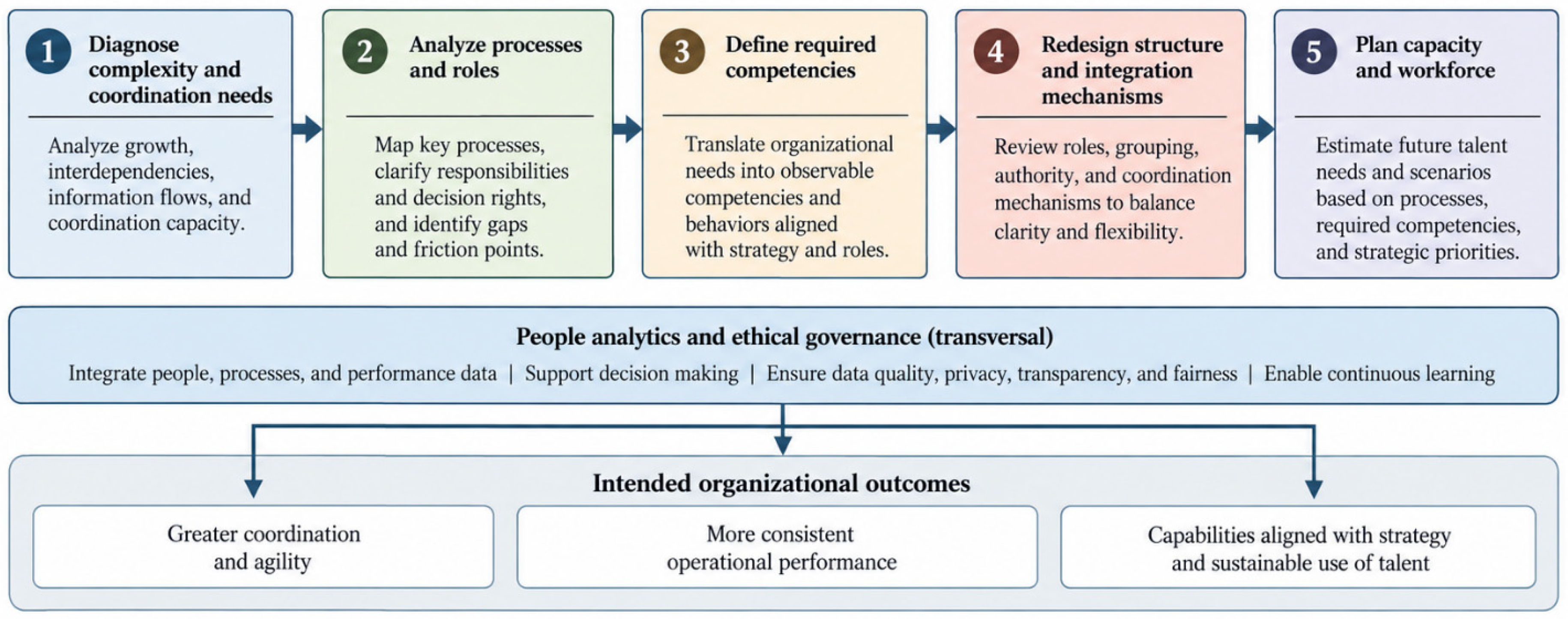

Disclaimer/Publisher’s Note: The statements, opinions and data contained in all publications are solely those of the individual author(s) and contributor(s) and not of MDPI and/or the editor(s). MDPI and/or the editor(s) disclaim responsibility for any injury to people or property resulting from any ideas, methods, instructions or products referred to in the content. |
© 2026 by the authors. Licensee MDPI, Basel, Switzerland. This article is an open access article distributed under the terms and conditions of the Creative Commons Attribution (CC BY) license.