


Abstract
AI tools have sharply reduced the cost of producing marketing content, but reduced cost does not by itself produce marketing performance. This review asks how micro-enterprises in Greece, which make up 94.7% of the country’s non-agricultural firms, adopt AI in marketing, and what determines whether adoption succeeds. Following established integrative review protocols, it synthesizes 74 sources under a single evidence-type classification: 41 peer-reviewed empirical studies, 8 peer-reviewed reviews, 11 conceptual contributions, 6 computational benchmarks, 4 official statistical sources, and 4 policy or legal documents. Three findings emerge. First, AI tools reduce marketing costs but require absorptive capacity to deliver performance; access to tools and possession of capability have become decoupled. Second, the constraints binding Greek micro-firms are environmental and institutional rather than technological, and include grant eligibility rules that exclude the smallest firms and a language resource gap whose cost implications remain unquantified. Third, the disclosure obligations of the EU AI Act interact with a documented authenticity penalty that falls hardest on firms with no brand equity to absorb it. This review develops a contextualized adoption model for Greek micro-enterprises, organized as four layers: production, capability, environment, and legitimacy. Because no existing study observes AI marketing adoption in this population directly, the model is presented as six testable propositions rather than as a validated account, and a structured research agenda is set out.
1. Introduction
Artificial intelligence has become a central instrument of marketing practice, reshaping how firms produce content, target audiences, and manage customer relationships (Grewal et al., 2025). The literature describing this shift has been built almost entirely from the experience of large organizations with dedicated marketing functions, data infrastructure, and budgets for capability development. Micro-enterprises remain underexplored, despite constituting the overwhelming majority of firms in most European economies and facing a materially different adoption problem: they encounter the same tools without the organizational apparatus the literature assumes. This gap is the point of departure for the present review, and Greece offers an unusually clear case in which to examine it (Angelakis & Manioudis, 2025).
The Greek productive structure is unusual even by the standards of the European Union, where small firms predominate, and that structure is the starting point for any account of how technology is adopted in the country (Angelakis & Manioudis, 2025). Of approximately 731,829 Greek enterprises, 99.9% are small or medium-sized, together employing 83.5% of the workforce and generating 57% of value added. Within that population, the concentration at the smallest end is even more pronounced: 94.7% of non-agricultural enterprises employ fewer than ten people, a figure that rises to 98.7% in professional, scientific, and technical activities, the sector in which most digital service ventures are classified. The Greek economy is therefore not merely an SME economy, but a micro-enterprise economy, and any technology whose adoption is theorized based on the experience of larger firms will describe a population that barely exists in the Greek case (Angelakis & Manioudis, 2025).
Against this structural backdrop, artificial intelligence has entered the marketing function with unusual speed, and its effects on the economics of content production are already documented (Cillo & Rubera, 2025). Generative systems now produce text, images, and video at marginal costs approaching zero, and experimental evidence indicates that the resulting assets can perform comparably to professionally produced material in live advertising environments (Hartmann et al., 2025). Interview research with content marketing agencies describes the consequence as a redistribution of capability, in which the production advantage that separated specialist providers from their clients erodes, and agencies are pushed toward strategy and personalization (Wahid et al., 2025). For a solo operator, this is, in principle, a transformative development: the capacity to produce marketing assets at scale has historically been the resource that such a firm most conspicuously lacked (Grewal et al., 2025).
The empirical picture in Greece, however, does not yet reflect that promise, and the gap between potential and practice is wide (Eurostat, 2025). The headline indicators are summarized in Table 1 rather than recited in the text, and the coverage column is included because it is analytically consequential. The 2026 Digital Decade country report for Greece states that enterprise AI adoption remains low and that progress in the digital transformation of SMEs is slow, limiting its contribution to economic growth (European Commission, 2026a).
Table 1.
Enterprise AI adoption and digital capacity: Greece and the EU-27.
These figures are standard reference points in policy discussions, yet they share a rarely stated limitation: the Eurostat enterprise survey covers firms with 10 or more employees and therefore cannot capture the roughly 673,000 Greek micro-enterprises that constitute the overwhelming majority of the business population (Eurostat, 2026a). The consequence for this manuscript is stated here rather than left to the reader. The 8.93% figure describes Greek enterprises above the micro-enterprise threshold and cannot be used to characterize adoption among firms below it. Statements elsewhere in this paper about low adoption among Greek micro-enterprises should be read as claims about the conditions those firms face, evidenced by the financing, eligibility, and capability findings reported in Section 4 and Section 6, and not as estimates of their adoption rate, which no source in the corpus provides (Eurostat, 2025). That measurement boundary recurs across the available evidence, and its consistency turns it from a nuisance into a finding (Eurostat, 2025). The national enterprise survey conducted by the National Documentation Center covers 12,213 firms and reports that digital transformation is a continuous strategy for 51.5% of large enterprises, compared with 33.1% of SMEs, but again defines the SME band as 10 to 249 employees (National Documentation Center, n.d.). The Digital Decade assessment draws on the same Eurostat key performance indicators as the European Commission (2026b). Three independent official sources, then, are structurally incapable of observing the population this paper concerns, which means the absence of evidence on Greek micro-enterprise AI adoption is partly an artifact of how the evidence is collected rather than a reflection of what those firms do (Angelakis & Manioudis, 2025). Four specific problems motivate this review, each of which the Greek evidence renders in a distinctive form (Angelakis & Manioudis, 2025). The first is an adoption gap that persists despite sustained national digitalization efforts and that policy analysis attributes to the coexistence of dynamic entrepreneurial activity and entrenched administrative burden (Plimakis & Mantas, 2026). The second is a pattern of resource asymmetry and tool fragmentation, in which entrepreneurs assemble marketing capability from freemium and low-cost applications without an integrated data infrastructure or strategic alignment. The third is institutional and regulatory friction, encompassing localized consumer trust, the constraints of natural language processing in Modern Greek, and compliance obligations under the EU AI Act and the General Data Protection Regulation. The fourth is an empirical knowledge gap: the marketing literature has extensively documented AI adoption in large organizations, yet offers few integrated frameworks for resource-constrained ventures in peripheral Southern European economies (Sitaridis & Kitsios, 2024). The last of these deserves particular emphasis, because it is the gap this paper addresses and because it has been independently identified from within the digital entrepreneurship field (Sitaridis & Kitsios, 2024). A structured review of 89 papers at the intersection of digital entrepreneurship and entrepreneurship education concluded that the reviewed corpus did not engage with the consequences of more specialized AI technologies and identified generative AI and its implications for customer support, decision-making, and conversion as an unexamined area. Reviews in adjacent sectors reach compatible conclusions, calling for attention to the financial and operational constraints that shape adoption in resource-constrained environments (Żyminkowska & Zachurzok-Srebrny, 2025). The void is therefore not asserted here on the authority of the present authors alone; it is a documented feature of the field (Cillo & Rubera, 2025). Three features distinguish this review from existing work and concern emphasis and scope rather than discovery. First, the marketing literature on AI adoption has been built from organizations with dedicated marketing functions; we did not locate a prior synthesis taking the sub-10-employee firm as its unit of analysis, or one observing that the official statistical infrastructure does not reach that unit. Second, existing treatments of entrepreneurial bricolage document what resource-constrained firms achieve with tools at hand, whereas this review specifies where bricolage stops working: it substitutes for production capability but not for absorptive capability, a boundary condition that reframes the adoption problem from one of access to one of conversion. Third, we did not locate a study connecting the disclosure obligations of the EU AI Act to the experimental literature on authenticity penalties, although the two intersect from August 2026 and do so most sharply for firms without accumulated brand equity. The contribution we claim is therefore a boundary condition on an established theory, applied to a population the evidence base has not previously isolated; it remains conceptual pending the empirical work specified in Section 10 (Karanasios et al., 2025). The guiding question of this paper is how digital entrepreneurs in Greece leverage and integrate artificial intelligence into their marketing practices, and what mechanisms determine successful adoption versus operational bottlenecks within a resource-constrained environment (Torraco, 2016). The level at which a review can answer that question requires statement at the outset. No study currently observes AI marketing practice among Greek micro-enterprises directly, and the question therefore cannot be answered descriptively from existing evidence. The review consequently pursues three subordinate questions that are answerable: what the available evidence establishes about the conditions under which Greek micro-enterprises encounter AI marketing tools (RQ1); what mechanisms the convergence of adjacent evidence implies are operative (RQ2); and what propositions would have to be tested for the guiding question to be answered empirically (RQ3). Claims throughout are labeled according to which of these they address, and no inference from adjacent populations is presented as direct evidence about the target population. The remainder of the paper is organized as follows. Section 2 sets out the integrative review methodology and the eligibility criteria applied. Section 3 develops the theoretical framework by combining the technology–organization–environment perspective with dynamic capabilities and entrepreneurial bricolage. Section 4, Section 5, Section 6 and Section 7 present the synthesis across four thematic domains. Section 8 proposes an integrative conceptual framework, and Section 9 and Section 10 discuss implications and set out a research agenda (Whittemore & Knafl, 2005).
2. Methodology
Two features of this review should be stated before the protocol is described, because both shape what follows. First, an integrative rather than a systematic design was chosen because the relevant evidence is distributed across marketing, information systems, entrepreneurship, computational linguistics, and policy analysis, communities that do not routinely cite one another; the contribution of the review lies in relating them rather than in aggregating comparable estimates. Second, the Greece-specific evidence proved too thin to support synthesis on its own, and the scope was therefore widened to comparable Southern European and small peripheral economies under the tier protocol set out in Section 2.3. Readers should carry both facts through the sections that follow (Cronin & George, 2023).
2.1. Review Design and Rationale
The study adopts an integrative review design, following the five-stage protocol of Whittemore and Knafl (2005) and the guidance for framework-building reviews set out by Torraco (2005, 2016). An integrative review was selected in preference to a systematic or scoping review because the evidence relevant to this question is distributed across communities of practice that do not routinely cite one another: marketing scholarship, information systems research, entrepreneurship studies, computational linguistics, and policy analysis. Cronin and George (2023) argue that this is precisely the condition under which integrative synthesis adds value, since the contribution lies in relating bodies of work that have developed in parallel rather than in aggregating comparable effect sizes. Recent guidance on distinguishing review types in management research supports the same reasoning, and the choice is documented here because reviewers increasingly expect the selection among review genres to be justified rather than assumed (Grønstad, 2026). The review is developmental rather than confirmatory in orientation, which has implications for how its rigor should be assessed (Snyder, 2019). Where a systematic review seeks to eliminate bias through exhaustive and reproducible retrieval, an integrative review of an emerging topic seeks trustworthy synthesis while retaining the interpretive latitude needed to build conceptual structure. The protocol below is therefore reported in full to permit replication, but the analysis does not claim the completeness that a systematic review of a mature literature would assert. This is a standard position in reviews of emerging phenomena and is adopted deliberately here, given that the object of study has existed in its current form for only a few years (Torraco, 2016).
2.2. Problem Identification and CIMO Framing
The first stage of the protocol specified the review problem using the context-intervention-mechanisms-outcomes framing, which structures the boundaries of the synthesis (Whittemore & Knafl, 2005). The context is Greek digital entrepreneurs and micro-enterprises, defined as ventures with fewer than 10 employees that operate primarily through digital channels. The intervention is an AI-driven digital marketing tool that encompasses predictive, generative, and conversational applications. The mechanisms of interest are dynamic capabilities, perceived ease of use, and cost-reduction drivers. The outcomes considered are customer acquisition, brand equity, conversion efficiency, and compliance burden; the last of these is included because regulatory obligation functions as an outcome of adoption rather than solely as an antecedent (Regulation (EU) 2024/1689, 2024).
2.3. Search Strategy and Eligibility
Literature was retrieved from Scopus, Web of Science, ScienceDirect, and IEEE Xplore, supplemented by Greek academic repositories and targeted searches of institutional grey literature (Snyder, 2019). The core Boolean string combined four blocks: terms for the technology (“Artificial Intelligence” OR “AI” OR “Generative AI” OR “Machine Learning”), for the function (“Digital Marketing” OR “Customer Engagement” OR “Content Creation”), for the unit of analysis (“Digital Entrepreneurship” OR “SMEs” OR “Startups” OR “micro-enterprise” OR “microenterprise” OR “micro-firm” OR “sole trader” OR “self-employed” OR “solopreneur” OR “freelancer” OR “one-person business”), and for the context (“Greece” OR “South Europe” OR “Emerging Tech Adoption”). The population block was extended with these terms after an initial audit revealed that the original string named only aggregate categories, while the manuscript’s unit of interest is the sub-10-employee firm. The supplementary population search was executed across all four databases using the same technology and function blocks; it returned 47 additional records, of which 6 met the eligibility criteria and were added to the corpus. Their inclusion did not alter the direction of any finding reported below, but the omission is recorded because it affects the reconstructability of the search. Because the Greece-specific yield was insufficient to support synthesis, the context block was relaxed according to a three-tier protocol. To state the sequence without ambiguity, and consistently with Section 9.3: the protocol was not registered in advance. It was formulated after the initial Greece-only search had been completed and its yield assessed. Once formulated, it was specified in full and then applied uniformly to all subsequent screening, rather than being adjusted case by case as records were encountered. The distinction that matters is therefore between advance registration, which did not occur, and uniform application after formulation, which did. Tier 1 comprised Greek-context studies, which were retained without further condition. Tier 2 comprised studies from other small or peripheral European economies, admitted where the sampled population met two criteria: enterprises predominantly below the European Commission’s SME thresholds, and a national context recording below-EU-average enterprise digitalization. The second criterion was operationalized on a single named indicator: the share of enterprises with 10 or more employees using at least one AI technology, Eurostat dataset isoc_eb_ai, 2025 reference year, assessed against the EU-27 average of 19.95% for that year. Each comparator country was assessed against that threshold, and the tier assigned to every non-Greek source is recorded in the extraction matrix. Tier 2 sources in the final corpus are drawn from Slovenia, Spain, Italy, Portugal, and Cyprus. Studies from Northern European and large-economy contexts were admitted only as contrast cases and are labeled as such at every point of use. Tier 3 comprised non-European studies, admitted only where they made a theoretical contribution unavailable elsewhere in the corpus. Exactly one Tier 3 source is used in this way, and Section 3.3 states the basis on which its framework is transferred and the respects in which the contexts differ. The tier assigned to each comparator source is recorded in the extraction matrix and is stated in text wherever a comparator finding carries analytical weight. Backward and forward citation searching was applied recursively to the retained set until no further concepts emerged, following the saturation criterion used in comparable reviews (Sitaridis & Kitsios, 2024). Eligibility criteria admitted peer-reviewed empirical and conceptual work in English, together with official statistics and policy documents where these constituted the authoritative source for a factual claim (Tyndall, 2010). Conference proceedings in business and management were excluded on the grounds that they represent research in progress and are not subject to the quality standards applied to journal articles, a criterion adopted from prior reviews in this field. One qualification is required, because the criterion as previously stated conflicted with the corpus. In computational linguistics, the proceedings of the Association for Computational Linguistics and its affiliated conferences are the primary peer-reviewed publication venue rather than a preliminary one, and full papers there undergo peer review equivalent to journal review in other fields. Two such papers are therefore admitted and are classified as computational benchmarks rather than as conference proceedings. A third item, a non-indexed conference paper on digital business ecosystems in Bulgarian industrial enterprises, was neither within the review population nor peer-reviewed to a comparable standard, and has been removed from the evidence base in this revision. Its removal is the reason the corpus figure is now 74 rather than 75. Preprints were admitted only where they represented the primary description of a language resource with no published equivalent, and are identified as such throughout. PRISMA is referenced here only as the reporting benchmark against which review transparency is conventionally assessed, and not as a claim to systematic review status; Section 2.4 explains what this review can and cannot report against that benchmark and why. (Page et al., 2021). Section 2.4 sets out what this review can and cannot report against that structure.
2.4. Corpus Assembly and Composition
This review reports no PRISMA-style funnel of identification, duplicate-removal, screening, and exclusion counts, and the reason is a property of the design rather than an oversight of execution alone. The PRISMA flow diagram was developed for reviews that address a fixed question through a single search executed once against stable inclusion criteria, and its counts are interpretable because every record enters the funnel under the same conditions (Page et al., 2021). The retrieval underlying this review did not have that structure. Searching proceeded in successive rounds, and the population and context blocks were deliberately revised between rounds for the reasons set out in Section 2.3: the population block was extended once the mismatch between the original terminology and the manuscript’s unit of interest became apparent, and the context block was relaxed through the tier protocol once the Greece-specific yield proved insufficient to support synthesis. Records retrieved under the first specification and records retrieved under the third are therefore not commensurable, and aggregating them into a single funnel would report a one-pass process that did not occur. The stopping rule compounds this. Retrieval terminated on conceptual saturation, when successive rounds of backward and forward citation searching ceased to yield new concepts, rather than on exhaustion of a defined record set (Whittemore & Knafl, 2005; Torraco, 2016). Under a saturation criterion the meaningful unit of reporting is the concept and the sources that evidence it, not the number of records inspected, because the same concept may be retrieved through many records and a high screening count may indicate redundancy rather than coverage. A funnel would therefore measure search effort rather than corpus adequacy, and would invite an inference about completeness that a developmental review is not designed to support. This is the reporting consequence of the distinction drawn in Section 2.1 between integrative and systematic review genres, and guidance on selecting among those genres is explicit that the evidentiary claims, and therefore the reporting conventions, differ between them (Grønstad, 2026; Cronin & George, 2023). Two distinct issues have so far been run together, and they should be separated. The first is a property of the design: under an iterative search with a saturation stopping rule, a single funnel would not be an interpretable reporting unit, and this holds however diligently records are kept. The second is a shortcoming in how this review was conducted: no contemporaneous search or screening records were maintained, and that omission was avoidable. A review may adopt a developmental design and still log each round’s retrieval, the terms used, the dates of execution, and the records inspected. Had we done so, the retrieval would have been at least partly reconstructable. It is not, and responsibility for that lies with the conduct of this review rather than with the genre to which it belongs. Transparency is accordingly pursued through complete reporting of the corpus rather than of the retrieval. Every source in the evidence base is classified by type in Table 2; every non-Greek source carries the comparability tier assigned in Section 2.3; every source carries the admissible-use rule set out in Table 3; every source bearing analytical weight carries the appraisal outcome reported in Table 4; and the Greek subset is enumerated so that the limits of the Greek evidence are visible without recourse to the full corpus. We do not present this as equivalent to a screening log. A reader can assess what was synthesized and how each item was weighted, but cannot reproduce the process that located it, and Section 9.3 records that limitation in those terms. Had counts been logged at each round they would have added a partial record of search effort even under an iterative design, and their absence is a shortcoming of execution that the foregoing rationale explains but does not excuse (Snyder, 2019).
Table 2.
Composition of the evidence base under the single evidence-type classification (n = 74).
Table 3.
Evidence types, admissible use, and weight (n = 74).
Table 4.
Quality appraisal outcomes for sources carrying analytical weight.
This is the same classification used in Table 3 and in the Abstract, and it supersedes the ten-category grouping used in the previous version. The regrouping is explained as follows: publication form and evidence type were previously conflated, so that a monograph, a preprint, and a conference paper appeared as separate categories although two of them serve the same evidentiary function. Evidence type now determines the category and publication form is reported alongside it, which is the basis on which admissible use is assigned in Table 3.
The Greek-context subset warrants separate statement, since it determines what the review can claim about its target population. Fifteen of the 41 peer-reviewed empirical studies sample Greek firms or Greek respondents. The same figure is used in Section 2.8 and in Table 2, and no other count of the evidence base appears in the manuscript. Of these, four address artificial intelligence: two at consumer level (Agapitou et al., 2025; Markou et al., 2025) and two at firm level (Cadène et al., 2026; Marinakou & Papavasileiou, 2025). Neither firm-level study concerns marketing, the first addressing operational workflows in a single specialist sector and the second addressing talent acquisition. No study in the corpus samples Greek firms below 10 employees as a defined population. This is the empirical basis for the claim-level restriction set out in Section 1 and revisited in Section 9.3.
2.5. Evidence Types, Commensurability, and Weighting
The corpus combines peer-reviewed studies, official statistics, policy and legal texts, and computational linguistics benchmarks. These are not equivalent kinds of evidence and were not treated as such. Each type was admitted to answer a different kind of question, and the rule governing what each may be used to support is stated in Table 3 and applied throughout. Peer-reviewed empirical studies are the only source type permitted to support a claim about firm or consumer behavior. Official statistics establish population parameters and the boundaries of what is observed, and are never used to characterize firms outside their sampling frame. Policy and legal documents establish what obligations exist and when they take effect, and are not used as evidence that firms comply or respond. Computational benchmarks establish the technical performance of language models, and are not used to infer anything about marketing practice. The inclusion of computational benchmarks in a study of micro-firm adoption is not conventional and requires justification. The manuscript advances a claim that operating in Modern Greek imposes a constraint on generative AI use. That claim is about a technical property of the tools, not about firm behavior, and it can only be evidenced by sources that measure model performance in Greek. Excluding them would leave the claim asserted rather than supported. Their evidentiary role is correspondingly narrow: they establish that a performance and tokenization differential exists between general-purpose and Greek-adapted models, and nothing further. The step from that differential to any consequence for a Greek micro-enterprise’s marketing operations is explicitly labeled in Section 5.4 as an untested implication, and appears in Section 10 as a research priority rather than as a finding.
2.6. Quality Appraisal
Empirical studies were appraised using the Mixed Methods Appraisal Tool, which accommodates the methodological heterogeneity characteristic of an integrative corpus (Hong et al., 2018). Because the MMAT is not designed for grey literature, institutional and policy sources were appraised separately using the AACODS checklist, which assesses authority, accuracy, coverage, objectivity, date, and significance (Tyndall, 2010). Two appraisal outcomes are worth recording because they affected the synthesis. Sánchez et al. (2025) is classified in the corpus as a conceptual review, whose proposed roadmap, the authors state, has yet to be validated with field data; it is therefore cited for its consolidation of prior studies rather than as evidence. Similarly, the Spanish SME study of Mammadov et al. (2024) reports that only 85 of 836 surveyed firms had used AI, with the analytic sample balanced through synthetic observation generation, and its coefficients are cited with that qualification attached (Mammadov et al., 2024). Because naming two illustrative cases does not demonstrate that appraisal informed the synthesis, Table 4 reports the appraisal outcome for every empirical and quasi-empirical source that carries analytical weight in Section 4, Section 5, Section 6, Section 7 and Section 8. Sources were assigned to three confidence bands. High confidence denotes a defined sampling frame, a sample adequate to the analysis performed, an analytical method appropriate to the design, and findings reported with sufficient detail to be independently interpreted. Moderate confidence denotes studies meeting most but not all of these conditions, typically through non-probability sampling, small samples, or limited reporting. Low confidence denotes sources retained for conceptual content but not treated as evidence, whether because the venue could not be verified as indexed, because the authors themselves disclaim causal or empirical status, or because the design is simulation-based. No claim in Section 8, Section 9, Section 10 and Section 11 rests solely on a low-confidence source. On the labeling of moderate-confidence sources, we adopt a rule precise enough to be checked: wherever a moderate-confidence source is the sole or principal support for a substantive claim, its band is named in text at that point. Where such a source appears alongside high-confidence sources supporting the same claim, or is cited descriptively rather than evidentially, the band is not repeated and Table 4 remains the reference. The instances meeting the first condition occur in Section 4.3 and Section 6.1 and are marked there.
2.7. Data Extraction and Analysis
Data were extracted into a standardized matrix recording the author, year, country, methodology, sample, theoretical lens, AI tool category, marketing function addressed, reported enablers, reported barriers, and contextual findings (Whittemore & Knafl, 2005). Analysis proceeded through constant comparison, with iterative cycles of data reduction, data display, and conclusion verification. The extraction matrix recorded 14 fields for each source: author, year, country, sector, unit of analysis, sample and size, design, theoretical lens, evidence type per Table 3, comparability tier per Section 2.3, AI tool category, marketing function addressed, reported enablers, and reported barriers. Extraction was performed on the full text of every included item rather than on abstracts, and the evidence-type and tier fields were completed before any finding was drafted, so that the admissibility rules in Table 3 constrained what each source could be used to support. Open coding of extracted findings produced descriptive categories; axial coding identified relationships among them; and selective coding consolidated these into the four thematic domains presented in Section 4, Section 5, Section 6 and Section 7. The relationship between this coding process and the theoretical framework in Section 3 requires clarification, since the two could be read as describing incompatible procedures. The analysis was abductive rather than purely inductive. The three theoretical lenses were selected before extraction and functioned as sensitizing concepts that shaped the extraction matrix, which records theoretical lens as a field. The capability-tool gap proposition, by contrast, was formulated during selective coding, from the observed convergence between the Greek firm-level and individual-level findings and the bricolage literature’s own statement of its limits. It is presented in Section 3 for expositional coherence, so that readers encounter the analytical apparatus before the evidence organized by it, but it was not available to guide extraction and did not do so. Because a description of coding procedure is not the same as a demonstration of it, the sequence that produced the three headline findings is set out here in full. At open coding, extracted findings were labeled with descriptive codes drawn from the studies’ own language; the codes that recurred most often included cost reduction, content volume, skills deficit, absorptive capacity, eligibility threshold, administrative burden, disclosure, authenticity, and language performance. At axial coding, these were related to one another, and three relationships proved stable across source types. Cost-reduction codes co-occurred with content-volume codes but not with performance codes, which is the observation underlying the first finding. Eligibility-threshold and administrative-burden codes clustered with Greek-context sources and were absent from the large-sample European studies, which is the observation underlying the second finding, and which also explains why a European analysis reporting limited impact of environmental support is not inconsistent with it. Disclosure and authenticity codes co-occurred only in the experimental literature and never in the adoption literature, which is the observation underlying the third finding and the reason it is presented as an unexamined intersection rather than as an established result. At selective coding, these three relationships were consolidated into the layered structure presented in Section 8, with each layer defined by the constraint its codes described. The framework in Section 8 elaborates this proposition rather than deriving it independently of theory, and the manuscript makes no claim to have induced its framework from an atheoretical reading of the corpus (Torraco, 2016).
2.8. Limitations of the Evidence Base
The evidence base is thin in the respect that matters most: no located study observes AI marketing adoption among Greek micro-enterprises, and the composition of the Greek subset reported in Section 2.4 shows why. The findings below are therefore interpretive rather than exhaustive, and are assembled by relating adjacent evidence across sectors, countries, and units of analysis. Every such inference is labeled at the point of use, and the propositions in Section 8 state what would have to be measured for the account to be tested. Readers should treat the review as establishing what can be inferred and what must be investigated, not as a description of observed practice (Torraco, 2016).
3. Theoretical Framework
Explaining AI marketing adoption in micro-enterprises requires accounting simultaneously for the adoption decision, the strategic process through which capability is built, and the improvisational manner in which resource-constrained founders actually assemble their tooling (Tornatzky & Fleischer, 1990). No single theory addresses all three. The three are combined as follows, and the statement is made here rather than deferred: TOE identifies the drivers of adoption, dynamic capabilities specify the process through which capability is built, and bricolage characterizes the improvisational manner in which resource-constrained founders actually assemble their tooling. Their integration yields the capability-tool gap set out in Section 3.4 and illustrated in Figure 1, which is the organizing proposition of the paper. The lenses were applied in parallel rather than sequentially, each to a different question about the same body of evidence, and they determined what counted as relevant data in a specific and reportable way: a source was coded as relevant to the framework if it reported a determinant of adoption mappable to one of the three TOE contexts, a process of capability formation, or a pattern of resource recombination. Two of the lenses reinforce one another. TOE identifies which conditions matter and dynamic capabilities explains how firms act on them, and no finding required choosing between them. The third stands in genuine tension with the second, and the tension is productive rather than incidental: dynamic capabilities theory presupposes deliberate investment in sensing, seizing, and transforming, whereas bricolage describes firms that cannot invest and therefore recombine what is already to hand. Where the two conflicted, we did not select between them but treated the conflict as the phenomenon to be explained, which is how the capability–tool gap was arrived at. Section 9.1 states what this resolution implies for each theory. The framework developed here, therefore, uses the technology-organization-environment perspective as an organizing scaffold, dynamic capabilities to specify the process, and entrepreneurial bricolage to characterize the mode of action. The three are not simply juxtaposed: the paper’s argument turns on a productive tension between the second and the third, which the following subsections develop (Baker & Nelson, 2005). As Section 2.6 records, these lenses were selected before data extraction and operated as sensitizing concepts, while the integrative proposition stated in Section 3.4 was formulated during analysis and is presented here for expositional coherence rather than as an a priori hypothesis (Cronin & George, 2023).
Figure 1.
The capability-tool gap. The cost of acquiring production capability falls steeply as generative tooling becomes accessible, while the absorptive capability required to convert output into performance is unchanged. The widening shaded area is the gap within which tool access and capability possession diverge. Two independent findings give this proposition empirical grounding before the synthesis begins, and both come from Greek samples (Kastelli et al., 2024). A survey of 1014 Greek manufacturing firms found that digital capacity contributes positively to innovation performance, but that the indirect effect through absorptive capacity is stronger than the direct effect, leading the authors to conclude that digital capacity is not an unquestionable asset. Separately, a structural equation modeling analysis of 467 Greek students found that domain-specific IT knowledge was the only construct to have a direct effect on nascent digital entrepreneurial activity. In contrast, entrepreneurial program learning and general computer self-efficacy operated only indirectly through opportunity competence (Sitaridis & Kitsios, 2026). Both results point in the same direction: possession of digital tools is not equivalent to the capability to exploit them, and it is the capability, rather than the tool, that predicts action (Kastelli et al., 2024). The evidential status of this convergence should not be overstated. The first study samples manufacturing firms rather than digital marketing ventures and measures innovation performance rather than marketing outcomes; the second samples students rather than operating entrepreneurs and measures nascent activity rather than established practice. Neither observes the target population, and their agreement is therefore theoretical convergence across adjacent settings rather than statistical evidence about Greek micro-enterprises. The proposition is advanced on that basis, and Section 10 specifies the design that would test it directly (Sitaridis & Kitsios, 2026).
3.1. The Technology-Organization-Environment Scaffold
The TOE framework holds that the characteristics of the technology shape technology adoption, the attributes of the adopting organization, and the conditions of the external environment (Tornatzky & Fleischer, 1990). Reviews of AI adoption in SMEs have converged on TOE as the dominant organizing structure, with a bibliometric synthesis of 78 studies clustering the determinants of adoption into dimensions consistent with the three contexts (Ayinaddis, 2025; Yesuf et al., 2025). In the present application, the technological context comprises relative advantage, subscription cost, interoperability, and user experience; the organizational context comprises entrepreneurial digital literacy, data readiness, and resource constraints; and the environmental context comprises Greek market dynamics, localized consumer trust, competitive pressure, and regulatory compliance. The framework is used here as a scaffold rather than as a predictive model, since its breadth is simultaneously its strength and its principal limitation (Sánchez et al., 2025). One large-sample European finding complicates the environmental leg of the framework and warrants registration at the outset (Arroyabe et al., 2024). Analyzing 12,108 EU SMEs, Arroyabe and colleagues found that digital and innovation capabilities drive adoption while business environmental support demonstrates limited impact. If external support matters less than internal capability, then the environmental context may operate less as a direct determinant than as a boundary condition that shapes which internal capabilities can be built. The Greek case, as Section 6 argues, offers a specific illustration of that mechanism, since the environmental constraint takes the form of eligibility rules that determine whether micro-firms can access capability-building resources at all (Angelakis & Manioudis, 2025).
3.2. Dynamic Capabilities
The dynamic capabilities perspective specifies the process through which firms sense opportunities, seize them, and transform their operations accordingly (Teece, 2007). Applied to marketing, the framework describes how entrepreneurs sense market shifts through social listening and analytics, seize opportunities through rapid content generation, and transform conventional marketing funnels into automated workflows. Empirical applications of AI in marketing settings have established the micro-foundations of this process, though the evidence base is drawn from large organizations rather than small ones (Mikalef et al., 2021). Subsequent work has extended the framework to SMEs, both as a general account of adoption for sustainable growth and as an analysis of how AI reduced business risk during the pandemic, drawing on data from 317 firms in London (Drydakis, 2022). For present purposes, the most directly relevant application concerns the seizing capabilities of small marketing organizations under conditions of technological uncertainty (Zabel & Duckwitz, 2025). Interviews with eighteen German influencer marketing agencies found that seizing occurred through decentralized, trial-and-error experimentation rather than through planned capability development, a pattern that fits firms without the resources to conduct structured technology evaluation. Resource orchestration research in Nordic manufacturing SMEs reaches a compatible conclusion, identifying data maturity gaps and internal champions as decisive (Peretz-Andersson et al., 2024). Taken together, these studies suggest that dynamic capabilities in small firms are enacted improvisationally, which is precisely the point at which the framework meets bricolage (Cimino et al., 2025).
3.3. Entrepreneurial Bricolage and Its Limits
Entrepreneurial bricolage describes the practice of making do by combining available resources to address new problems and opportunities, and it was developed from field studies of firms operating under severe resource constraints (Baker & Nelson, 2005). Subsequent work established that bricolage provides a pathway to innovativeness for resource-constrained new firms (Senyard et al., 2014), and more recent research links resource bricolage to business model innovation through digital transformation (Wang et al., 2025). The concept maps directly onto the observed behavior of digital solopreneurs, who assemble marketing capability from freemium and low-cost applications rather than commissioning agencies or building proprietary systems. A recent conceptual contribution explicitly names the stack, describing how ventures now automate and build using tools such as Canva, Zapier, Trello, Airtable, and ChatGPT without in-house development capacity (Yordanova & Shotarov, 2026). The most important theoretical development for this paper is the distinction between digital bricolage and its analog predecessor, together with the specification of its limits (Karanasios et al., 2025). Studying microenterprises undertaking digitalization in a resource-constrained environment, Karanasios and colleagues distinguish digital bricolage from entrepreneurial and IT bricolage and identify three pathways: parallel bricolage, selective bricolage, and digital planning. Their setting is Ghana, and the transfer of their framework to a peripheral European economy therefore requires justification rather than assumption; the argument advanced here is that Greek micro-enterprises face resource constraints without the institutional voids characteristic of a developing economy, which makes the comparison analytically useful precisely because it isolates the resource variable. Their central contribution for present purposes is the word “limits”: bricolage is not an unlimited substitute for capability, and identifying where it fails is more informative than celebrating where it succeeds (Karanasios et al., 2025).
3.4. Integration: The Capability-Tool Gap
The three lenses are integrated here through a single proposition, which the empirical sections test and which constitutes the paper’s principal theoretical claim (Teece, 2007). Generative AI allows micro-enterprises to perform marketing activities that dynamic capabilities theory associates with deliberate investment in sensing, seizing, and transforming, but to do so through bricolage rather than investment. Cheap tools substitute for capability at the production level while leaving the underlying capability requirement intact; the TOE environment determines whether that residual requirement can be met. The result is a gap between what a micro-firm can produce and what it can strategically deploy, and the mechanisms that determine whether this gap closes or widens are the subject of the synthesis that follows (Karanasios et al., 2025).
4. The Landscape of Digital Entrepreneurship in Greece
A labeling convention applies from this point to the end of Section 8. Every substantive claim is marked as one of three kinds. [Direct] denotes evidence concerning the target population, namely Greek firms below 10 employees. [Adjacent] denotes evidence from related but non-equivalent populations, including Greek SMEs above the micro threshold, Greek consumers, specific Greek sectors, firms in other Southern European economies, and larger organizations. [Inference] denotes an analytical proposition suggested by convergence across sources rather than observed in any of them. The convention is applied because the distinction between what has been observed and what has been inferred is, on the evidence presently available, the most useful one this review can draw. [Direct] appears rarely, which is itself the finding.
4.1. Structure and Financing of the Greek Micro-Enterprise
The dominance of very small firms in Greece is a historical formation rather than a recent development, and understanding it as such changes how the adoption problem should be posed (Angelakis & Manioudis, 2025). The pattern originates in nineteenth-century land reform and limited industrialization, was reinforced by de-industrialization after the 1980s, and was intensified by the fiscal crisis of the 2010s, during which micro-businesses employing fewer than five people contracted more sharply than the broader enterprise population. Their central argument is that policy discourse has treated small-scale as a structural weakness and a cause of low productivity, when limited access to strategic resources is better understood as the cause and low productivity as the consequence. This reframing matters for the present review because it reverses the direction of the adoption question: the issue is not why small Greek firms fail to adopt sophisticated technology, but what resource conditions would make adoption possible (Angelakis & Manioudis, 2025). The financing pattern of these firms is the most consequential single fact for any analysis of AI marketing adoption, and it is unusually well documented (Angelakis & Manioudis, 2025). [Direct] Greek small and micro enterprises finance their investment activity overwhelmingly from their own funds, with their own resources accounting for approximately 82% of investment, while funded programs and bank loans together account for between 3% and 6%. A firm financing technology adoption from operating cash flow faces a different decision calculus from one drawing on grant or credit finance: the relevant threshold is not return on investment over a multi-year horizon but affordability within a monthly cash position. This is the structural condition that makes low-cost and freemium AI tooling not merely attractive but nearly the only feasible option. Stated directly: self-financing explains reliance on freemium AI tools, and the financing structure summarized in Table 5 is therefore the material basis of the bricolage behavior the theoretical framework describes (Baker & Nelson, 2005).
Table 5.
Sources of investment finance among Greek small and micro enterprises.
Table 5 has been corrected in this revision. The previous version reported grants and bank lending on separate lines while describing the figure as a combined share, which was internally inconsistent. The underlying source reports the two together. No comparable EU-level breakdown of micro-enterprise investment financing was located in the corpus, so the table reports the Greek position without a European benchmark. Source: Angelakis and Manioudis (2025), citing IME GSEVEE.
No comparable EU-level breakdown of micro-enterprise investment financing was located in the corpus, so the table reports the Greek position without a European benchmark rather than supplying one that could not be sourced. Source: Angelakis and Manioudis (2025), citing IME GSEVEE.
4.2. Digital Maturity and the National Context
Research on Greek digital maturity has developed a reasonably consistent picture across successive surveys of the business population (Kargas et al., 2023). A study of 147 Greek SMEs found a positive relationship between digital maturity and the presence of a digital transformation strategy, as well as employee training and investment in new technologies, while noting that the pandemic delayed rather than accelerated transformation for many firms. Building on this work, the same research group reported that the technologies Greek SMEs adopted most were those related to sales and the collection of customer data, placing the marketing funnel at the leading edge of Greek digital adoption rather than at its periphery (Kargas et al., 2024). A subsequent survey of 156 Greek firms identified the key drivers of digital transformation across the business ecosystem, confirming the association between strategic intent and maturity (Gkika et al., 2025). The macro-institutional backdrop to these firm-level findings has been characterized as a sequencing problem in which contractionary measures were front-loaded while institutional and digital modernization were back-loaded (Tsiaousi et al., 2026). Early-stage entrepreneurial activity in Greece fell to 4.8% in 2017 before recovering to 8.2% by 2019, a rebound that coincided with administrative simplification and the rollout of digital public services such as Diavgeia and gov.gr. The authors are explicit that this association is not causally identified, and that qualification should be preserved when the finding is used. Nonetheless, the pattern is suggestive for the present argument: entrepreneurial activity recovered as administrative friction fell, which is consistent with the proposition that environmental conditions determine whether internal capability can be built (Tsiaousi et al., 2026). Sectoral and regional evidence adds texture to this national picture without altering it (Samara et al., 2024). System dynamics modeling of Western and Central Macedonia examines how smart technologies influence regional development through the regional innovation system, thereby reminding us that Greek digital entrepreneurship is not concentrated exclusively in Athens and Thessaloniki. Macroeconomic forecasting for the information and communication industry across six European entities found that the sector’s contribution to national GDP rose in most cases, with Greece as the exception and carrying high provisional risk (Karavasilis et al., 2024). Together, these studies suggest that the Greek digital economy is neither uniformly distributed nor securely on a growth trajectory, thereby qualifying the optimism sometimes attached to the startup ecosystem narrative (Samara et al., 2024).
4.3. What Is Known About Greek Digital Entrepreneurs Specifically
Direct evidence on how Greek digital entrepreneurs operate is scarce, and the most substantial study available is a qualitative, cross-border study (Komodromos et al., 2026). [Adjacent] Drawing on interviews and observations with sixty entrepreneurs across sectors in Greece and Cyprus, Komodromos and colleagues examine how communication infrastructures and platform dynamics shape entrepreneurial success. Their findings identify multi-platform orchestration, algorithm optimization, and culturally attuned communication strategies as the practices that distinguish successful market participation, and note a national contrast: Cypriot entrepreneurs benefit from state-led infrastructure development, whereas Greek entrepreneurs demonstrate innovation in working around infrastructure limitations. That characterization of Greek practice—innovating around constraint rather than being enabled by provision—is a description of bricolage in all but name, and it is the closest empirical anchor available for the theoretical position adopted here (Karanasios et al., 2025). Two documented examples give this concreteness. Greek geoinformatics firms, operating in a sector in which roughly 80% of contracts are public and most firms lack the scale to expand internationally, report AI integration in operational workflows at 30%, with 65% not having begun and 5% at the research stage (Cadène et al., 2026). Greek tourism enterprises in Kefalonia, surveyed on their adoption of infographics as a marketing tool, illustrate the same pattern at the level of marketing technology specifically: adoption is driven by perceived usefulness and ease of use among owner-managers rather than by organizational capability, because in firms of this size the owner–manager is the organization (Dragotis & Karayanni, 2025). Both cases show adoption decisions taken personally, incrementally, and without supporting infrastructure, which is the behavioral signature the framework in Section 8 attempts to capture (Komodromos et al., 2026). Firm-level evidence on AI adoption in Greece exists but is confined to specific sectors, and it should be read with those boundaries in view (Cadène et al., 2026). [Adjacent] A study of the Greek geoinformatics sector identified 76 firms and surveyed twenty of them, reporting that 30% had integrated AI and automation into operational processes and workflows, 65% had not, and a further 5% remained at the research stage (moderate confidence; Table 4). The sector is atypical in that roughly 80% of its contracts are with public bodies, and its activity is heavily concentrated in Athens, so the adoption rate should not be generalized to consumer-facing digital ventures. The study establishes that Greek firm-level AI adoption data can be collected and that adoption is partial rather than absent, which is a more useful starting point than assuming a blank slate (Cadène et al., 2026). Studies of technology adoption among Greek firms in adjacent domains complete the picture (Dragotis & Karayanni, 2025). Research on 187 tourism enterprises in Kefalonia applied the technology acceptance model to the adoption of infographics as a marketing tool, providing rare firm-side evidence on Greek marketing technology decisions outside the metropolitan centers. Qualitative work with Greek luxury hotels examined AI in talent acquisition through 23 interviews, and analysis of digital marketing analytics in Mediterranean hospitality drew on clickstream data from a small set of luxury properties (Reklitis et al., 2025). A larger survey of 747 Greek SME owner-managers, conducted between October 2025 and January 2026, demonstrates that this population can be reached at scale, although the authors note their targeted sample is not statistically representative (moderate confidence; Table 4) (Balaskas & Komis, 2026).
5. AI Applications Across the Marketing Funnel
5.1. Attract: Content Generation and the Democratization of Production
The clearest evidence of AI’s marketing impact concerns the top of the funnel, where generative systems have altered the economics of content production (Wahid et al., 2025). Interview research with content marketing agencies and their clients describes a redistribution of core creation, technical, and economic capabilities, in which agencies lose the production advantage that historically justified their role and must reposition toward creativity, strategy, and personalization. The mechanism matters as much as the outcome: what collapses is not the value of marketing expertise but the scarcity of production capacity. For a firm whose defining constraint has always been its inability to produce enough marketing material, this is the single most consequential development in the field (Grewal et al., 2025). Experimental and field evidence support the claim that AI-produced creative assets can compete on effectiveness rather than merely on cost (Hartmann et al., 2025). Hartmann and colleagues generated 10,320 synthetic images across seven models, collected 254,400 human evaluations, and ran a field study with more than 173,000 advertising impressions, finding that AI-generated banner advertisements could compete with professionally produced ones. Parallel work on generative AI marketing in small businesses reaches compatible conclusions, both in a propositional synthesis and in an emerging-economy sample of 225 firms (Abrokwah-Larbi, 2026; Abrokwah-Larbi & Awuku-Larbi, 2024). Systematic review evidence identifies the tool stack through which such capability reaches small operators, naming ChatGPT, DALL·E, Midjourney, Jasper, and comparable applications (Salih et al., 2025). Conceptual work has begun to frame the resulting practice as collaborative rather than substitutive, positioning generative AI to work alongside employees and customers rather than replace marketing labor outright (Li & Xiao, 2025).
5.2. Engage and Convert: Conversational and Predictive Applications
Beyond content generation, AI enters the middle and lower funnel through conversational agents and predictive analytics, though the evidence base here is thinner for small firms (Żyminkowska & Zachurzok-Srebrny, 2025). A PRISMA-based review of 55 empirical studies on AI in customer engagement and social media marketing found substantial activity in the tourism and hospitality sectors, which is directly relevant given the weight of tourism in the Greek economy. Greek-specific evidence on conversational applications comes primarily from the consumer side, with a UTAUT2 study examining how chatbots shape the customer experience for end users in Greek tourism (Agapitou et al., 2025). Evidence on the adoption of predictive applications by small firms is available by application category, with adoption rates varying considerably across use cases rather than moving as a single block (Cooper, 2025). European survey evidence indicates that, where SMEs adopt AI, the returns depend on its combination with complementary data infrastructure (Ardito et al., 2025). Analyzing 11,429 EU SMEs, Ardito and colleagues found that AI adoption, in conjunction with the Internet of Things or big data analytics, substantially increased the likelihood of high-growth outcomes and raised the possibility of technological leapfrogging in disadvantaged Southern European regions. Analysis of Flash Eurobarometer data across European SMEs links AI adoption specifically to marketing innovation, with adoption rates of 6.9% for AI and 8.3% for robotics in the sampled population (Segarra-Blasco et al., 2025). The implication for micro-enterprises is uncomfortable: the configurations associated with the strongest returns are precisely those that require integrated data infrastructure, which a solo operator assembling freemium tools conspicuously lacks (Ardito et al., 2025).
5.3. The Distribution of Adoption Across Technology Types
Aggregate European statistics show that adoption is concentrated in generative and text-oriented applications rather than in complex predictive analytics (Eurostat, 2026b). Across EU enterprises, text mining was used by 11.75%, technologies generating written or spoken language by 8.76%, and technologies generating images, video, or audio by 9.55%. This distribution is consistent with the pattern expected if adoption were driven by accessibility rather than strategic planning, since generative tools require no data infrastructure, no integration, and minimal configuration. Sectoral concentration reinforces the point, with adoption far higher in information and communication and in professional, scientific, and technical activities than in the economy at large (Eurostat, 2026a). The evidence, therefore, supports a specific characterization of AI marketing adoption in a micro-enterprise, distinct from the enterprise-scale accounts that dominate the literature (Salih et al., 2025). It is generative rather than predictive, tool-based rather than infrastructure-based, oriented to the attract stage of the funnel rather than distributed across it, and assembled from independent applications rather than integrated into a stack. Research that distinguishes market-facing technologies, such as e-commerce and digital marketing platforms, from production-oriented technologies, such as machine learning analytics and cloud infrastructure, suggests that the former operate through demand expansion and market access. In contrast, the latter operate by optimizing processes (Challoumis et al., 2026). If that distinction holds, micro-enterprise adoption is concentrated almost entirely in the market-facing category, which would explain why it produces visible marketing output without corresponding gains in operational productivity (Challoumis et al., 2026).
5.4. The Modern Greek Language Constraint
A constraint specific to the Greek context, and largely absent from the marketing literature, concerns the performance of general-purpose language models in Modern Greek (Bakagianni et al., 2025). A systematic survey of natural language processing for Greek documents the state of resources for the language, which remains under-resourced relative to English despite recent progress. The development of dedicated Greek models has been the principal response, beginning with the first open large language model for the language and continuing with a successor built on a larger base architecture (Voukoutis et al., 2024; Roussis et al., 2025; Giarelis et al., 2026). Benchmark evaluation across 24 models in a low-resource Greek domain documents persistent gaps and, importantly, the limits of cross-lingual transfer as a solution (Peng et al., 2025). Two findings from this literature bear directly on marketing practice and deserve to be brought into the marketing conversation (Roussis et al., 2025). The first is quantitative: tokenizer fertility for Greek, measured as tokens produced per word, is 2.73 for a general-purpose model against 1.65 for a Greek-adapted one. This is a measurement of tokenization behavior across model configurations, not an estimate of a monetary differential, and it should not be read as one. Because commercial generative services are priced per token, a fertility differential of this magnitude implies that Greek-language operations may incur higher per-unit processing costs than equivalent English-language operations, conditional on the pricing model, the service used, and the composition of the text. Whether that implication holds in practice, and at what magnitude, has not been estimated in any study located for this review, and the claim is therefore advanced as a plausible mechanism requiring empirical verification rather than as an established cost penalty. Section 10 sets out the study that would establish it. The second is qualitative: benchmark research notes that existing Greek evaluation datasets are frequently machine-translated from English and fail to capture Greek linguistic and cultural characteristics, which is the failure mode most likely to damage marketing copy intended to read as locally authentic (Zhang et al., 2026).
6. Determinants and Barriers to AI Marketing Adoption
6.1. Knowledge as the Most Frequently Reported Barrier
Across the SME adoption literature, knowledge emerges as the most frequently reported barrier, with unusual consistency (Oldemeyer et al., 2025). A systematic review of the state of the art in AI for SMEs found knowledge cited as an obstacle in 35 of the reviewed articles, far more frequently than any other challenge. Bibliometric synthesis of the adoption literature reaches compatible conclusions about the centrality of knowledge and capability clusters (Ayinaddis, 2025). Survey evidence from Italian SMEs illustrates the depth of the deficit: fewer than 14% reported active AI use, only around 11% were familiar with generative AI, and roughly 70% had never used it (moderate confidence, preprint; Table 4) (Proietti & Magnani, 2025). The consistency of this finding across methods and national contexts establishes knowledge as the most frequently reported barrier to adoption. These constraints sit on top of a longer-standing pattern in which small firms underuse the digital marketing channels already available to them, and in which adoption is shaped by resistance as well as by capability (Taiminen & Karjaluoto, 2015; Ahmad & Rasheed, 2025). It does not establish knowledge as the most influential barrier, and the distinction matters. A count of 35 articles is a frequency of reporting, not an estimate of comparative effect size, and the underlying studies differ in design, sample, measurement, and outcome to a degree that precludes their aggregation into a ranking of causal importance. Frequency of reporting may reflect the salience of a barrier to respondents, the interests of researchers, or the ease with which a construct can be measured, as readily as it reflects explanatory weight. The claim advanced here is accordingly the weaker one that knowledge is the barrier most consistently identified across an otherwise heterogeneous literature, and that this consistency makes it a priority candidate for the effect-size estimation that the corpus does not contain (Oldemeyer et al., 2025). The Greek evidence specifies what kind of knowledge matters, which is a more useful result than the general finding (Sitaridis & Kitsios, 2026). Modeling of 467 Greek respondents found that domain-specific IT knowledge had a direct effect on nascent digital entrepreneurial activity, whereas general computer self-efficacy did not, operating only indirectly through opportunity competence. The authors interpret this as a distinction between confidence in using applications and understanding of the underlying technology, and conclude that the latter is what converts intention into action. Applied to marketing, this suggests that the prompt literacy required to obtain reliable output from generative systems is not reducible to general digital comfort, and that a founder who is fluent with social platforms may nonetheless lack what is needed to deploy generative tools strategically (Sitaridis & Kitsios, 2026). The Greek firm-level evidence reinforces this reading and extends it from individuals to organizations (Kastelli et al., 2024). [Adjacent] Analysis of 1014 Greek manufacturing firms found that the effect of digital capacity on innovation performance ran more strongly through absorptive capacity than directly, and concluded that digital capacity is not an unquestionable asset for innovation performance. Comparable European evidence identifies competences and skills as central determinants of adoption in Spanish SMEs, with cooperation with universities and research centers associated with the largest effect in the estimated model. However, that analysis is based on a sample in which only 85 of 836 firms had actually used AI (moderate confidence; Table 4) (Mammadov et al., 2024). [Inference] The convergent implication is that tools without absorptive capacity do not produce performance, which is the empirical form of the capability-tool gap proposed in Section 3 (Kastelli et al., 2024). Both supporting studies fall outside the target population: the Greek evidence samples manufacturing firms, and the Spanish evidence samples SMEs across the size distribution with only 85 confirmed adopters. The convergence is reported as a mechanism worth testing in micro-enterprise marketing settings, not as a demonstrated property of them (Mammadov et al., 2024).
6.2. Environmental Constraints: Resource Asymmetry, Regulatory Burden, and the Language Gap
Three environmental constraints are distinguished here, and they are distinguished from the governance obligations examined in Section 7. The constraints in this subsection concern access to the resources required to build capability; Section 7 concerns the legal and reputational conditions attached to using that capability once built. Conflating the two would make the two sections read as repetitions of one another, and the distinction is therefore stated explicitly (Tornatzky & Fleischer, 1990). Resource asymmetry. The most concrete institutional barrier identified in the Greek evidence concerns the design of digitalization support rather than its quantity (Angelakis & Manioudis, 2025). In the first open calls of the Competitiveness 2021–2027 program for the digital transformation of SMEs, the Annual Work Unit criterion served as an eligibility condition, and the resulting minimum-employee requirements, together with low grant levels for the smallest companies, discouraged many micro-enterprises from applying. This policy instrument, intended to promote digital adoption, operates in practice to exclude firms with the least capacity to adopt without assistance. It is a precise illustration of the environmental context of the TOE framework, acting not as generalized support or its absence, but as a specific rule that determines which firms can convert public resources into capabilities (Tornatzky & Fleischer, 1990). Regulatory burden. Policy analysis of the Greek AI landscape situates this within a broader pattern of administrative friction (Plimakis & Mantas, 2026). Examining AI policy reform and implementation between 2019 and 2025 with a focus on entrepreneurship, Plimakis and Mantas describe a paradox in which Greece’s emergence as an innovation hub coexists with the inertia of a historically overregulated administrative state. Research on digital governance frames the corresponding reforms as friction-reducing complements to structural change rather than as independent drivers of growth, noting that transparency platforms and unified service portals lowered the administrative time cost borne by firms (Tsiaousi et al., 2026). The framing is useful for the present argument because it positions institutional reform as a precondition for capability rather than a substitute for it, mirroring the relationship between tools and capability at the firm level (Plimakis & Mantas, 2026). The language gap, examined in Section 5.4, is the third environmental constraint and is the only one specific to operating in Greek rather than to operating at small scale; it is not repeated here. Comparative evidence from a small peripheral European economy offers the closest available analog to the Greek micro-enterprise case (Kukanja & Planinc, 2025). A study of 286 Slovenian micro and small hospitality enterprises, combining survey data with official financial records, found that firm size and structural characteristics alone were not closely linked to digital transformation. Adoption was instead associated with managers’ positive attitudes toward AI, non-family ownership, and, counterintuitively, smaller firm size. If attitude rather than scale predicts adoption among micro-enterprises, then interventions targeting perception and understanding may be more effective than those targeting resources alone, which is consistent with the knowledge-centered reading of the barrier literature developed above (Kukanja & Planinc, 2025). This source is assigned to Tier 2 of the comparability protocol described in Section 2.3, on the grounds that Slovenia is a small European economy recording below-average enterprise digitalization and that the sampled firms fall below the micro-enterprise threshold. It nonetheless differs from the target population in sector and in national institutional setting, and its findings are carried forward as hypotheses for the Greek case rather than as evidence about it (Kukanja & Planinc, 2025).
6.3. Trust, Authenticity and the Relational Marketing Tradition
Greek consumer evidence indicates that acceptance of AI-based marketing is driven more by trust and ethical perceptions than by technical performance (Markou et al., 2025). [Adjacent] Surveying 650 Greek consumers between December 2024 and April 2025, Markou and colleagues found that trust and ethical considerations were dominant determinants of acceptance and reported that identity-related consumption was negatively associated with acceptance of AI-based marketing. The latter finding is significant for micro-enterprises, whose competitive position frequently rests on personal relationships and locally embedded identity rather than on scale or price. For such firms, the risk of AI-driven marketing is not that it fails to perform but that it succeeds in a register that undermines the basis of their differentiation (Markou et al., 2025). This concern is substantiated by experimental research on the effect of generative AI on brand perception (Brüns & Meißner, 2024). Specifically investigating social media content creation, Brüns and Meißner found that using generative AI for this purpose diminishes perceived brand authenticity. The finding is directly on point because social media content creation is the activity for which micro-enterprises are most likely to adopt generative tools. Earlier work reported a null effect of AI-disclosed brand voice on brand authenticity and attitude, so the evidence is not unanimous and should be presented as contested rather than settled (Kirkby et al., 2023).
7. Ethical, Legal and Governance Dimensions
7.1. The Compliance Burden on Single-Operator Businesses
The EU Artificial Intelligence Act establishes a phased set of obligations whose implications for micro-enterprises differ from those for larger organizations (Regulation (EU) 2024/1689, 2024). Prohibitions on certain practices took effect in February 2025, and on the same date, an obligation was brought into force on deployers to ensure a sufficient level of AI literacy among staff responsible for the operation of AI systems, a provision that binds a sole trader as much as a corporation. Transparency obligations covering interactions with AI systems and the marking of synthetic content apply from August 2026, and obligations relating to high-risk systems follow later. Analysis of the EU Artificial Intelligence Act’s effects on business organizations documents the disproportionate compliance-cost argument advanced on behalf of smaller firms, although that analysis is framed principally around e-commerce rather than micro-enterprises as such (Selgas Cors & Thiébaut, 2025). Policy analysis warns that the regulatory architecture risks reproducing a documented precedent (Mariniello, 2026). Mariniello argues that the AI Act, conceived as an ex ante product safety regulation, risks replicating the outcome of the General Data Protection Regulation, which contributed to market concentration by imposing burdens that fell disproportionately on smaller firms. The relevance of that precedent to the present case is direct: the compliance obligation is fixed in kind, but its cost is borne against radically different revenue bases, so an obligation that is trivial for a firm with a legal department may be material for a sole operator. This is a structural asymmetry rather than a transitional inconvenience, and it belongs in the environmental context of the adoption framework, alongside the grant-eligibility problem discussed above (Angelakis & Manioudis, 2025).
7.2. Disclosure and the Authenticity Penalty
The transparency provisions of the AI Act intersect with an experimental literature on how consumers respond to disclosure, and that intersection produces the sharpest problem identified in this review (Regulation (EU) 2024/1689, 2024). Experimental work with 304 participants found that AI disclosures influence trust in advertisements and in the organizations behind them, working through persuasion, knowledge, and a construct the authors term conceptual AI knowledge (Koning & Voorveld, 2025). Further experimental research characterizes consumer responses to AI disclosure labels as a double-edged phenomenon in which novelty and authenticity operate in opposing directions (Shi & Jiang, 2026). The literature is therefore not uniformly negative about disclosure, but it consistently finds that disclosure has effects, which is sufficient to make mandatory disclosure a strategic matter rather than a purely administrative one (Koning & Voorveld, 2025). [Adjacent] One finding specifies the conditions under which the disclosure penalty is most severe, and those conditions resemble those of the micro-enterprise, although no study has tested the correspondence (Nobel et al., 2026). Across two experiments, Nobel and colleagues found that when source credibility is low, AI-disclosed messages are evaluated less favorably, and that AI-assisted messages outperform fully AI-created ones, particularly under low-credibility conditions. Their context is political advertising, so the transfer to commercial marketing requires care, but the mechanism is general: low source credibility is the default condition for an unknown micro-brand that has no accumulated reputation to buffer a negative inference. Combining this with the finding that the use of generative AI in social media content diminishes perceived brand authenticity yields the review’s most consequential synthetic claim (Brüns & Meißner, 2024). The argument advanced here has previously been stated in a way that outran the legal obligation, and it is now separated into four distinct propositions. The first is legal. Article 50 of Regulation (EU) 2024/1689 has applied since 2 August 2026 and operates through four routes, which allocate duties differently between providers and deployers. Article 50(1) requires providers to design systems intended to interact directly with natural persons so that those persons are informed they are interacting with an AI system. Article 50(2) requires providers to mark synthetic audio, image, video, and text output in a machine-readable format and to make it detectable as artificially generated, with compliance for systems already on the market required from 2 December 2026. Article 50(3) requires deployers to notify persons exposed to emotion recognition or biometric categorization. Article 50(4) requires deployers to disclose deep fakes, defined as image, audio, or video content resembling real persons, objects, places, or events, and separately to disclose AI-generated or manipulated text published for the purpose of informing the public on matters of public interest, subject to a carve-out where the content has undergone human review or editorial control and a person holds editorial responsibility. The consequence for a micro-enterprise using a generative tool to produce ordinary marketing copy is narrower than this manuscript previously implied: the marking duty under Article 50(2) falls on the model provider rather than on the firm, and routine commercial copy is not ordinarily text published to inform the public on matters of public interest. The duties that do attach directly to such a firm as deployer are the deep-fake disclosure where synthetic depictions of real persons are used in promotional material, the notification duties under Article 50(3) where applicable, and the AI literacy obligation under Article 4, in force since February 2025. Penalties under Article 99(4) reach EUR 15 million or 3% of worldwide annual turnover, whichever is higher, although for SMEs and start-ups the lower of the two applies.
The second proposition concerns compliance consequence. Even where the directly attaching duties are narrow, they impose fixed determination costs: a sole operator must still establish which of the four routes applies to which of its outputs, and the proportionality provision reduces exposure to penalty without reducing the cost of making that determination. This is a claim about burden, not about legal exposure, and it is an inference from the structure of the obligation rather than an observed cost.
The third proposition concerns consumer response and is independent of the legal position. Experimental evidence indicates that disclosure of AI-generated content affects trust and perceived authenticity, that the effect is not uniformly negative, and that it is most adverse where source credibility is low (Nobel et al., 2026). This evidence is drawn from experimental samples in advertising contexts outside Greece and outside the micro-enterprise population.
The fourth is a research proposition, and it is the one this review advances as a contribution. Where a micro-enterprise discloses AI use, whether because a route of Article 50 applies or because it chooses to, the authenticity penalty documented in adjacent experimental work is expected to fall more heavily on it than on an established brand, because it has no accumulated reputation to buffer the inference. No study in the reviewed corpus tests this, and Section 10 specifies the design that would (Brüns & Meißner, 2024).
7.3. Data Protection and Personalization
Compliance obligations under data protection law compound the picture, particularly where personalization is the marketing objective (Mariniello, 2026). The tension is intrinsic rather than incidental: the personalization that makes AI marketing valuable depends on consumer data whose collection and processing carry the heaviest regulatory obligations, and evidence from Greek consumers indicates that trust and ethical perception are the dominant determinants of acceptance in that market (Markou et al., 2025). A micro-enterprise pursuing hyper-personalization, therefore, incurs compliance costs and reputational risk simultaneously, in a market where reputational risk is elevated. The resulting strategic position favors restraint in the depth of personalization, thereby forgoing much of the value proposition that predictive AI marketing offers (Markou et al., 2025).
8. Synthesis: An Integrative Framework for Resource-Constrained Digital Ventures
The synthesis presented here organizes the reviewed evidence into a four-component framework that describes how AI marketing adoption proceeds in micro-enterprises (Torraco, 2016). The components are a production layer at which cost constraints have collapsed, a capability layer at which they have not, an environmental layer that determines whether the capability gap can be closed, and a legitimacy layer at which consumers and regulators evaluate the output of the first layer. The framework’s central proposition is that the relative weight of these constraints has shifted: where production capacity was formerly the binding constraint, the capability and legitimacy layers are now expected to be the more consequential ones. This is offered as a conceptual synthesis and a redirection of research attention, not as a description of observed micro-enterprise behavior, and the propositions at the end of this section state what would have to be measured to establish it. This proposed reallocation of explanatory weight is the principal conceptual contribution the paper advances (Karanasios et al., 2025). Figure 2 presents the framework, and the six propositions stated at the end of this section specify what each layer implies for empirical test.
Figure 2.
The four-layer integrative framework. Generative tooling removes the production constraint; the capability constraint persists; the environmental layer gates whether capability can be formed; and the legitimacy layer imposes a counter-pressure that increases as production cost falls.
[Inference] At the production layer, the framework proposes that the constraint which historically defined the micro-enterprise marketing problem has been substantially relaxed. This is a conceptual claim about the relative importance of constraints, derived from evidence on content-production economics in agencies and experimental settings, and it has not been observed in Greek micro-enterprises (Wahid et al., 2025). Generative tools produce text, image, and video assets at negligible marginal cost; those assets can perform competitively against professionally produced material, and the required tool stack is available on freemium or low-cost subscription terms (Hartmann et al., 2025). For a firm financing investment with roughly 82% own funds, this accessibility is decisive, since it converts a capital expenditure decision into an operating one (Angelakis & Manioudis, 2025). Bricolage is the appropriate description of what follows: founders combine the applications at hand into workflows that approximate agency output without incurring agency costs (Yordanova & Shotarov, 2026). At the capability layer, the constraint persists, and the Greek evidence is unusually clear on this point (Kastelli et al., 2024). Digital capacity contributes to innovation performance principally through absorptive capacity rather than directly. At the individual level, domain-specific technical knowledge, rather than general digital confidence, predicts the translation of intention into action (Sitaridis & Kitsios, 2026). Knowledge is the most frequently cited barrier across the SME adoption literature, and the depth of the deficit in comparable Southern European contexts is substantial (Proietti & Magnani, 2025). The implication for the framework is that access to tools and possession of capability have become decoupled in a way they were not previously, because when tools were expensive, their acquisition selected for firms that had already invested in capability (Oldemeyer et al., 2025). At the environmental layer, Greek conditions determine whether the capability gap can be closed, and the evidence indicates that they frequently prevent it (Angelakis & Manioudis, 2025). Grant eligibility rules based on Annual Work Units excluded micro-enterprises from the principal digital transformation support instrument; administrative burden persists alongside genuine reform; and the language resource position imposes a token-level cost penalty for operating in Greek, together with a quality penalty for culturally specific content (Roussis et al., 2025). Large-sample European evidence that business environmental support has a limited impact on adoption should be read in this light: support that micro-firms cannot access is not support (Arroyabe et al., 2024). The environmental layer thus functions as a gate on capability formation rather than as an independent driver of adoption (Plimakis & Mantas, 2026). Certain disclosure duties under Article 50 have applied since 2 August 2026, though as Section 7.2 sets out, those attaching directly to a micro-enterprise deploying a generative tool for ordinary marketing copy are narrower than a general disclosure requirement (Regulation (EU) 2024/1689, 2024). Greek consumers weigh trust and ethical perception heavily and respond negatively where AI marketing intersects with identity-related consumption; generative AI in social media content diminishes perceived brand authenticity; and experimental evidence indicates that disclosure penalties are most adverse where source credibility is low, a finding obtained outside the target population and carried here as adjacent evidence (Brüns & Meißner, 2024). From August 2026, disclosure will no longer be discretionary (Regulation (EU) 2024/1689, 2024). The legitimacy layer, therefore, imposes a constraint that runs counter to the production layer: the cheaper it becomes to produce marketing content, the greater the reputational exposure attached to producing it this way (Nobel et al., 2026). Read through the dynamic capabilities lens, the framework describes a distinctive pattern of capability enactment (Teece, 2007). Micro-enterprises now sense market conditions through accessible analytics, seize opportunities through rapid generative production, and transform workflows through low-cost automation, but they do so through improvisation rather than through the deliberate investment the theory ordinarily assumes. This resembles the decentralized, trial-and-error seizing documented among small marketing agencies facing technological uncertainty (Zabel & Duckwitz, 2025). The theoretical contribution is to specify that generative AI enables micro-firms to develop dynamic capabilities they could not afford to build, while the capability and legitimacy layers determine whether that performance yields a durable advantage (Karanasios et al., 2025). Table 6 records which sources support each principal claim, where the literature disagrees, and what evidential status each claim therefore carries. Two entries warrant notice. The claim about disclosure is contested rather than settled, since one study reports a null effect, and it is presented on that basis. The claim about environmental constraints appears to conflict with a large-sample European finding, and Section 9.1 explains why the two are compatible.
Table 6.
Principal claims, evidence class, supporting sources, and countervailing evidence.
The framework yields six propositions, stated explicitly so that subsequent research can test rather than reinterpret them. P1. Generative AI adoption is expected to reduce the marginal cost of marketing content production in Greek micro-enterprises to a level at which production capacity ceases to be the binding constraint. Antecedent: adoption of generative tools. Outcome: marginal cost per marketing asset. Population: Greek firms below 10 employees. Testable by cost-per-asset comparison before and after adoption.
P2. AI marketing tool adoption is expected to predict marketing output volume but not, on its own, marketing performance. Antecedent: tool adoption. Outcomes: output volume and marketing performance, measured separately. Population: as P1. Testable by estimating both paths in the same sample.
P3. Absorptive capacity is expected to moderate the relationship between AI marketing tool adoption and marketing performance, such that the relationship is positive where absorptive capacity is high and null or negative where it is low. Antecedent: tool adoption. Moderator: absorptive capacity. Outcome: marketing performance. Population: as P1. This proposition is derived from evidence in Greek manufacturing firms and in a student sample, neither of which is the target population, and is advanced on that basis.
P4. Domain-specific technical knowledge, rather than general digital self-efficacy, is expected to predict the strategic deployment of AI marketing tools. Antecedents: domain-specific knowledge and general self-efficacy, measured separately. Mechanism: opportunity recognition competence. Outcome: strategic deployment. Population: as P1.
P5. The accessibility of capability-building resources, rather than their aggregate provision, is expected to condition whether the capability-tool gap closes; support instruments with eligibility thresholds above the micro-enterprise size band are expected not to close it. Antecedent: eligibility for support. Mechanism: capability formation. Outcome: gap closure. Population: as P1.
P6. Where a micro-enterprise discloses AI use in marketing, the authenticity penalty is expected to be larger than for an established brand, because source credibility moderates the disclosure effect. Antecedent: disclosure of AI use. Moderator: source credibility or brand familiarity. Outcome: perceived authenticity and brand attitude. Population: Greek consumers evaluating Greek micro-brands. This proposition extrapolates from experimental evidence in advertising contexts outside Greece and outside the target population; it is not a claim about the legal obligation, which Section 7.2 states separately.
9. Discussion
9.1. Theoretical Implications
The principal theoretical implication concerns the boundary conditions of bricolage as an explanation of micro-enterprise technology behavior (Karanasios et al., 2025). The digital bricolage literature has established that microenterprises digitalize by recombining resources at hand and has identified distinct pathways through which they do so, while insisting on the existence of limits. This review specifies one such limit with unusual precision: bricolage substitutes effectively for production capability but not for absorptive capability, and the Greek evidence indicates that the latter determines performance (Kastelli et al., 2024). Bricolage in the AI marketing context, therefore, produces output without necessarily conferring advantage, thereby refining rather than contradicting the existing theory (Baker & Nelson, 2005). A second implication concerns the transferability of dynamic capabilities theory to firms without the resources it presupposes (Teece, 2007). The micro-foundations of AI-enabled marketing capability were established in large organizations, and subsequent SME applications have generally examined firms with employees, management structures, and identifiable functions (Mikalef et al., 2021). Extending the framework to single-operator ventures requires acknowledging that sensing, seizing, and transforming may be performed by one person using tools rather than by an organization using routines, which raises the question of whether such capability is durable or merely episodic (Cimino et al., 2025). The reviewed evidence does not resolve this question; it is therefore proposed below as a priority for primary research (Zabel & Duckwitz, 2025). A third implication concerns the environmental context in TOE, which this review suggests should be specified more precisely than the framework ordinarily encourages (Tornatzky & Fleischer, 1990). Where large-sample analysis finds environmental support to have limited impact, the present synthesis suggests that this may be because support is measured in aggregate, whereas its accessibility varies by firm size (Arroyabe et al., 2024). This resolves what would otherwise be a direct contradiction in the corpus, recorded as such in Table 6. A study measuring whether support exists will find weak effects if the firms most in need of it are ineligible, because the variable measured is provision while the variable that operates is accessibility. The Greek eligibility rule is the mechanism that makes this distinction concrete rather than merely plausible. The Annual Work Unit eligibility rule is a case in which environmental provision and environmental accessibility diverge completely, and treating them as a single construct would render the mechanism invisible (Angelakis & Manioudis, 2025). Disaggregating environmental support into provision and accessibility is a modest but useful refinement of the framework (Sánchez et al., 2025).
9.2. Practical Implications
For founders, the synthesis supports a sequencing recommendation that runs against the intuitive order of adoption (Sitaridis & Kitsios, 2026). Because domain-specific knowledge, rather than general confidence, predicts effective use, investment in understanding the technology should precede the expansion of the tool stack rather than follow it. The evidence on complementarity points in the same direction, indicating that returns are concentrated where AI is combined with supporting data capabilities rather than adopted in isolation (Ardito et al., 2025). A practical implication is that a founder is likely to gain more from using fewer tools competently than from assembling a broader stack superficially, notwithstanding the low marginal cost of adding applications (Kastelli et al., 2024). On the legitimacy dimension, the evidence supports a specific strategic posture rather than a general caution (Nobel et al., 2026). Given that AI-assisted content outperforms fully AI-created content under low-credibility conditions, and that disclosure becomes mandatory for synthetic content, a defensible position for a micro-enterprise is to use generative tools for drafting and ideation while retaining visible human authorship in the final asset. This preserves the production benefit while limiting exposure to the authenticity penalty documented in social media contexts (Brüns & Meißner, 2024). The recommendation is provisional, since the disclosure literature remains contested and includes null findings, but it follows from the balance of current evidence (Kirkby et al., 2023). For policymakers, the clearest implication concerns instrument design rather than funding levels (Angelakis & Manioudis, 2025). An eligibility criterion that excludes firms below an employment threshold from digital transformation support systematically excludes the majority of the Greek enterprise population from the instrument intended to address their principal weakness. Evidence that adoption among micro-enterprises is associated with managerial attitudes rather than firm size suggests that awareness and capability interventions may be more efficient than capital subsidy at this scale (Kukanja & Planinc, 2025). Framing digital governance reform as a friction-reducing complement to capability formation rather than as a substitute for it is consistent with both the Greek institutional evidence and the firm-level findings (Tsiaousi et al., 2026).
9.3. Limitations
The review’s limitations follow principally from the state of the evidence rather than from the design (Cronin & George, 2023). The absence of direct evidence on the target population, set out in Section 1 and Section 2.8, means that inferences accumulate across sectoral, national, and unit-of-analysis boundaries, so the framework should be regarded as a set of propositions for testing rather than an established account. This is stated plainly because the alternative, presenting a synthesis of adjacent evidence as though it were direct evidence, is the characteristic failure mode of reviews in thin bodies of literature (Grønstad, 2026). Three further limitations warrant explicit statement (Snyder, 2019). First, the Greece-specific corpus was thin enough to require relaxing the geographic block in the search string, so comparator evidence from Slovenia, Spain, Italy, and Ghana carries substantial analytical weight, and transfer from the last of these, in particular, requires the justification set out in Section 3. Second, the review included preprint material in the language technology domain where no published equivalent existed, and although the principal benchmark claim rests on peer-reviewed work, the model descriptions do not (Peng et al., 2025). Third, the regulatory position described is a moving target: implementation deadlines under the AI Act have already been adjusted once, and the compliance analysis should be re-verified upon publication (Mariniello, 2026). Fourth, the search boundaries were widened after an initial assessment of yield, and although Section 2.3 now specifies the tiers and criteria governing that widening, the protocol was formalized in response to the corpus rather than registered in advance. Fifth, the original population block omitted micro-enterprise terminology, and while a supplementary search has been executed and its yield reported, a search that had included those terms from the outset might have returned a different corpus. Sixth, and most consequentially, no contemporaneous search or screening records were kept. We state this as a limitation of how the review was conducted rather than as an implication of its design. An iterative, saturation-based search does not require a single PRISMA funnel, but it does not preclude logging each round’s search terms, execution dates, databases queried, and records inspected, and such a log would have made the retrieval substantially reconstructable. Its absence means that a reader can evaluate the corpus we assembled but cannot verify how we arrived at it. That limitation attaches to this review specifically, not to integrative reviews in general. These limitations are inherent to a developmental review of an emerging topic, but none should be concealed behind the reporting apparatus (Grønstad, 2026).
9.4. What Is Specific to Greece
A review organized around a national case must distinguish what is local from what would hold in any resource-constrained economy, and the distinction has not been made explicit in the manuscript to this point. Table 7 separates the two. The honest summary is that few of the individual conditions are uniquely Greek. The knowledge barrier is international, the AI Act applies identically across the Union, and every lower-resource language faces a version of the language disadvantage. What is specific is the magnitude of some conditions, the particular design of certain instruments, and above all the combination. Three conditions are genuinely local in the strong sense. The first is the design of the Annual Work Unit eligibility criterion, which is a Greek policy instrument whose effect was to exclude micro-firms from the principal national digitalization support program. The second is the documented position of Modern Greek as a language whose resource state has been measured, with dedicated models and benchmarks now available, so that the gap between general-purpose and adapted performance can be quantified rather than assumed. The third is the consumer finding that identity-related consumption is negatively associated with acceptance of AI-based marketing among Greek consumers, which bears directly on firms competing on personal relationship rather than scale. Beyond these, the Greek contribution of this review lies in the conjunction: a business population that is 94.7% micro, financing investment almost entirely from own funds, operating in an under-resourced language, under an eligibility regime that excluded it from support, and facing a consumer market in which authenticity concerns are pronounced.
Table 7.
Distinguishing the Greek-specific from the generic.
Researchers extending this work to other settings should therefore expect the mechanisms to transfer and the parameters not to. The four-layer framework in Section 8 is offered as portable; the values that populate it are not (Kukanja & Planinc, 2025).
9.5. Policy Implications
Two policy instruments bear directly on the mechanisms identified, and the implications for each can be stated concretely. The first is Greek digitalization support. The Annual Work Unit eligibility criterion applied in the first Competitiveness 2021–2027 calls excluded micro-enterprises through minimum-employee conditions and low grant ceilings, which means the principal instrument for addressing the digital weakness of Greek firms was closed to the firms that constitute 94.7% of them. Replacing employment-based thresholds with turnover-based or activity-based eligibility, and pairing capital support with capability provision, would address the gate identified at the environmental layer. The second is the EU AI Act. Its obligations are fixed in kind but borne against radically different revenue bases, and the literacy duty binding since February 2025 applies to a sole trader exactly as it applies to a corporation (Regulation (EU) 2024/1689, 2024). For entrepreneurs, the implications follow from the capability layer rather than the production layer. Investment in understanding a small number of tools should precede expansion of the tool stack, because the evidence indicates that returns concentrate where capability rather than access is present. Retaining visible human authorship in final marketing assets, while using generative tools for drafting and ideation, preserves the production benefit while limiting exposure to the disclosure penalty documented at the legitimacy layer (Nobel et al., 2026).
10. Future Research Agenda
The most pressing requirement is primary empirical work with Greek micro-enterprises on the use of marketing-specific AI, since this is the gap the review has documented rather than closed (Sitaridis & Kitsios, 2024). Feasibility is not in doubt: a recent study reached 747 Greek SME owner-managers over a four-month field period, and firm-level AI adoption data have been successfully collected in at least one Greek sector (Balaskas & Komis, 2026). A survey instrument capturing tool stack composition, prompt practices, disclosure behavior, and self-assessed capability would establish the descriptive baseline that currently does not exist. Sampling should deliberately include firms below the ten-employee threshold at which official statistics cease to observe the population (Eurostat, 2025). A second priority is to test the capability-tool gap directly rather than inferring it from adjacent findings (Kastelli et al., 2024). The proposition is that AI marketing tool adoption predicts marketing output volume, but that absorptive capacity moderates the relationship between output and performance. Both the Greek firm-level and individual-level studies support the underlying logic without testing this specific relationship (Sitaridis & Kitsios, 2026). A design that combines tool adoption measures, an absorptive capacity instrument, and objective marketing performance data would provide a direct test. Qualitative work would complement this by establishing whether the improvisational seizing documented in small marketing agencies is also characteristic of solo founders (Zabel & Duckwitz, 2025). A third priority concerns the legitimacy interaction identified in Section 7, which does not appear to have been examined in any of the reviewed studies (Nobel et al., 2026). Experimental designs that manipulate disclosure across varying levels of brand familiarity in a Greek consumer sample would establish whether the low-credibility penalty documented in political advertising transfers to commercial micro-brands. Such work would also permit testing whether the negative association between identity-related consumption and AI marketing acceptance observed among Greek consumers moderates the disclosure effect (Markou et al., 2025). Given that the relevant transparency obligations take effect in August 2026, this research has an unusually clear practical timeline (Regulation (EU) 2024/1689, 2024). A fourth priority is comparative, extending the Southern European and small peripheral economy evidence base that this review has had to assemble opportunistically (Kukanja & Planinc, 2025). The Slovenian micro-enterprise study offers a template that could be replicated in Greece, Portugal, Croatia, or Cyprus, generating the cross-national variation needed to separate resource constraint from national institutional effects. Comparable work in Spain and Italy exists but addresses SMEs broadly rather than micro-enterprises specifically (Mammadov et al., 2024). A coordinated multi-country design focused on firms with fewer than ten employees would address the measurement gap that this review has identified as structural rather than incidental (Proietti & Magnani, 2025). In summary, the agenda comprises six priorities: 1. Establish a descriptive baseline through primary survey work with Greek micro-enterprises, sampling deliberately below the 10-employee threshold at which official statistics cease to observe the population. 2. Study absorptive capacity in micro-enterprises directly, testing P3 through a design combining tool adoption measures, an absorptive capacity instrument, and objective marketing performance data. 3. Assess the language resource gap, estimating whether the tokenization differential translates into measurable cost and quality differences for Greek-language marketing operations. 4. Evaluate compliance costs under the EU AI Act for single-operator businesses, and test experimentally whether the low-credibility disclosure penalty transfers to commercial micro-brands. 5. Extend the comparative base across small peripheral European economies using a common instrument focused on firms below 10 employees. A final priority concerns the language dimension, which sits at the intersection of computational linguistics and marketing practice and is currently studied by neither in relation to the other (Bakagianni et al., 2025). Research establishing whether the tokenizer fertility differential translates into measurable cost differences for Greek-language marketing operations, and whether output quality in culturally specific Greek marketing copy differs between general-purpose and Greek-adapted models, would connect two bodies of literature that have developed independently (Roussis et al., 2025). The benchmark infrastructure required for such work now exists (Zhang et al., 2026).
11. Conclusions
This review set out to establish how Greek digital entrepreneurs integrate artificial intelligence into their marketing practices and what determines successful adoption in a resource-constrained setting (Torraco, 2016). The synthesis indicates that the familiar framing of the problem, in which small firms lag because technology is expensive and unfamiliar, no longer accurately describes the situation. Generative AI has removed the cost barrier to marketing production, and evidence indicates that the resulting assets can compete in terms of effectiveness (Hartmann et al., 2025). What has not been removed is the capability requirement, and the Greek evidence shows with unusual clarity that digital capacity without absorptive capacity does not convert into performance (Kastelli et al., 2024). Three contributions follow (Karanasios et al., 2025). Theoretically, the paper specifies a limit to digital bricolage: it substitutes for production capability but not for absorptive capability, which locates the constraint on micro-enterprise AI marketing at a different point in the value chain than the adoption literature typically assumes. Empirically, the review documents that the constraints binding Greek micro-enterprises are environmental and institutional rather than technological, ranging from grant eligibility rules to a language resource gap with a measurable cost dimension (Angelakis & Manioudis, 2025). Practically, it identifies an interaction between mandatory AI disclosure and the authenticity penalty borne by low-credibility brands that has not been examined in the existing literature, and that becomes operative in August 2026 (Regulation (EU) 2024/1689, 2024). The limits of what a review can establish should be stated as clearly as its contributions (Cronin & George, 2023). No study currently directly examines AI marketing adoption among Greek micro-enterprises, and the framework proposed here is therefore a structured set of propositions rather than a validated model. Its value lies in specifying what should be measured and why, in a domain where the measurement infrastructure itself excludes the population of interest (Eurostat, 2025). The guiding question posed in Section 1 is, on the present evidence, unanswerable at the descriptive level, and this paper’s contribution is to establish that fact rigorously, to specify the mechanisms that adjacent evidence implies, and to define the studies that would resolve it. The Greek micro-enterprise sector comprises the overwhelming majority of the country’s businesses and remains largely invisible in the evidence base on which technology policy is built; making it visible is a precondition for any serious account of how artificial intelligence will reshape marketing in a peripheral European economy (Angelakis & Manioudis, 2025). AI Acknowledgement: During the preparation of this work, the author(s) used Grammarly (https://app.grammarly.com) to edit the text for academic writing style and English-language spelling and grammar. After using this tool/service, the authors reviewed and edited the content as needed and take full responsibility for the publication’s content.
Author Contributions
Conceptualization, T.H., B.A.A., D.H. and F.A.; methodology, T.H., B.A.A., D.H. and F.A.; validation, T.H., B.A.A., D.H. and F.A.; formal analysis, T.H., B.A.A., D.H. and F.A.; investigation, T.H., B.A.A., D.H. and F.A.; resources, T.H., B.A.A., D.H. and F.A.; writing—original draft preparation, T.H., B.A.A., D.H. and F.A.; writing—review and editing, T.H., B.A.A., D.H. and F.A.; visualization, T.H., B.A.A., D.H. and F.A.; supervision, T.H., B.A.A., D.H. and F.A.; project administration, T.H., B.A.A., D.H. and F.A. All authors have read and agreed to the published version of the manuscript.
Funding
This research received no external funding.
Institutional Review Board Statement
Not applicable.
Informed Consent Statement
Not applicable.
Data Availability Statement
No new data were created or analyzed in this study. Data sharing is not applicable to this article.
Acknowledgments
During the preparation of this manuscript, the authors used Grammarly for the purposes of language editing. The authors have reviewed and edited the output and take full responsibility for the content of this publication.
Conflicts of Interest
The authors declare no conflict of interest.
References
- Abrokwah-Larbi, K. (2026). The role of generative artificial intelligence marketing in small business competitive marketing performance. Marketing Intelligence & Planning. Advance online publication. [Google Scholar] [CrossRef] [Scilit]
- Abrokwah-Larbi, K., & Awuku-Larbi, Y. (2024). The impact of artificial intelligence in marketing on the performance of business organizations: Evidence from SMEs in an emerging economy. Journal of Entrepreneurship in Emerging Economies, 16(4), 1090–1117. [Google Scholar] [CrossRef] [Scilit]
- Agapitou, C., Sabazioti, A., Bouchoris, P., Folina, M.-T., Folinas, D., & Tsaramiadis, G. (2025). How can chatbots help companies to improve the customer experience offered to their end users/customers in the tourism industry? Tourism and Hospitality, 6(4), 207. [Google Scholar] [CrossRef] [Scilit]
- Ahmad, N., & Rasheed, H. M. W. (2025). Tourism and hospitality SMEs and digital marketing: What factors influence their attitude and intention to use from the perspective of BRT, TAM and IRT. Journal of Hospitality and Tourism Insights, 8, 1546–1563. [Google Scholar] [CrossRef] [Scilit]
- Angelakis, A., & Manioudis, M. (2025). The historical evolution of small and medium-sized enterprises (SMEs) in Greece: The exploration of growth policies aiming to accelerate innovation-based economic transformation and knowledge economy. Journal of the Knowledge Economy, 16(2), 9603–9623. [Google Scholar] [CrossRef] [Scilit]
- Ardito, L., Filieri, R., Raguseo, E., & Vitari, C. (2025). Artificial intelligence adoption and revenue growth in European SMEs: Synergies with IoT and big data analytics. Internet Research, 35(4), 1508–1534. [Google Scholar] [CrossRef] [Scilit]
- Arroyabe, M. F., Arranz, C. F. A., Fernandez De Arroyabe, I., & Fernandez de Arroyabe, J. C. (2024). Analyzing AI adoption in European SMEs. Technology in Society, 79, 102733. [Google Scholar] [CrossRef] [Scilit]
- Ayinaddis, S. G. (2025). Artificial intelligence adoption dynamics and knowledge in SMEs and large firms: A systematic review and bibliometric analysis. Journal of Innovation & Knowledge, 10(3), 100682. [Google Scholar] [CrossRef] [Scilit]
- Bakagianni, J., Pouli, K., Gavriilidou, M., & Pavlopoulos, J. (2025). A systematic survey of natural language processing for the Greek language. Patterns, 6(11), 101313. [Google Scholar] [CrossRef] [Scilit] [PubMed]
- Baker, T., & Nelson, R. E. (2005). Creating something from nothing: Resource construction through entrepreneurial bricolage. Administrative Science Quarterly, 50(3), 329–366. [Google Scholar] [CrossRef] [Scilit]
- Balaskas, S., & Komis, K. (2026). Do digital nomads count as tourists? Greek SMEs’ classification beliefs, policy support, and market adoption. Tourism and Hospitality, 7(6), 154. [Google Scholar] [CrossRef] [Scilit]
- Brüns, J. D., & Meißner, M. (2024). Do you create your content yourself? Using generative artificial intelligence for social media content creation diminishes perceived brand authenticity. Journal of Retailing and Consumer Services, 79, 103790. [Google Scholar] [CrossRef] [Scilit]
- Cadène, P., Hatzichristos, T., Pigaki, M., Koumouli, V., & Alinat, S. (2026). The entrepreneurial environment of geoinformatics in Greece. Survey Review. Advance online publication. [Google Scholar] [CrossRef] [Scilit]
- Challoumis, C., Eriotis, N., & Vasiliou, D. (2026). Insights into digital technologies sustainability and the economic performance of Greek enterprises. Digital Technologies Research and Applications, 5(3), 56–88. [Google Scholar] [CrossRef] [Scilit]
- Cillo, P., & Rubera, G. (2025). Generative AI in innovation and marketing processes: A roadmap of research opportunities. Journal of the Academy of Marketing Science, 53(3), 684–701. [Google Scholar] [CrossRef] [Scilit]
- Cimino, A., Corvello, V., Troise, C., Thomas, A., & Tani, M. (2025). Artificial intelligence adoption for sustainable growth in SMEs: An extended dynamic capability framework. Corporate Social Responsibility and Environmental Management, 32(5), 6120–6138. [Google Scholar] [CrossRef] [Scilit]
- Cooper, R. G. (2025). SMEs’ use of AI for new product development: Adoption rates by application and readiness-to-adopt. Industrial Marketing Management, 126, 159–167. [Google Scholar] [CrossRef] [Scilit]
- Cronin, M. A., & George, E. (2023). The why and how of the integrative review. Organizational Research Methods, 26(1), 168–192. [Google Scholar] [CrossRef] [Scilit]
- Dragotis, E., & Karayanni, D. A. (2025). Visualizing the accessibility: Exploring Greek tourism enterprises’ adoption of infographics as marketing tool. Tourism and Hospitality, 6(5), 269. [Google Scholar] [CrossRef] [Scilit]
- Drydakis, N. (2022). Artificial intelligence and reduced SMEs’ business risks: A dynamic capabilities analysis during the COVID-19 pandemic. Information Systems Frontiers, 24(4), 1223–1247. [Google Scholar] [CrossRef] [Scilit] [PubMed]
- European Commission. (2026a). Greece’s 2026 digital decade country report. Available online: https://digital-strategy.ec.europa.eu/en/factpages/greeces-2026-digital-decade-country-report (accessed on 1 October 2026).
- European Commission. (2026b). State of the digital decade 2026: Closing structural gaps and mobilising investments for 2030 and beyond. Available online: https://digital-strategy.ec.europa.eu/en/library/state-digital-decade-2026-closing-structural-gaps-and-mobilising-investments-2030-and-beyond (accessed on 1 October 2026).
- Eurostat. (2025). Use of artificial intelligence in enterprises [Data set isoc_eb_ai]. Available online: https://ec.europa.eu/eurostat (accessed on 1 October 2026).
- Eurostat. (2026a). Digital economy and society statistics—Enterprises. Available online: https://ec.europa.eu/eurostat (accessed on 1 October 2026).
- Eurostat. (2026b). The use of artificial intelligence (AI) technologies in the European Union (KS-01-26-009-EN-N). Publications Office of the European Union.
- Giarelis, N., Mastrokostas, C., & Karacapilidis, N. (2026). Maistros: A Greek large language model adapted through knowledge distillation from large reasoning models. arXiv, arXiv:2605.01870. [Google Scholar] [CrossRef] [Scilit]
- Gkika, E. C., Kargas, A., Salmon, I., & Drosos, D. (2025). Unveiling digital maturity: Key drivers of digital transformation in the Greek business ecosystem. Administrative Sciences, 15(3), 96. [Google Scholar] [CrossRef] [Scilit]
- Grewal, D., Satornino, C. B., Davenport, T., & Guha, A. (2025). How generative AI is shaping the future of marketing. Journal of the Academy of Marketing Science, 53(3), 702–722. [Google Scholar] [CrossRef] [Scilit]
- Grønstad, A. (2026). Scoping reviews vis-à-vis systematic reviews and integrative reviews in management research: Guidelines for good practice. Review of Managerial Science, 20(1), 221–250. [Google Scholar] [CrossRef] [Scilit]
- Hartmann, J., Exner, Y., & Domdey, S. (2025). The power of generative marketing: Can generative AI create superhuman visual marketing content? International Journal of Research in Marketing, 42(1), 13–31. [Google Scholar] [CrossRef] [Scilit]
- Hong, Q. N., Fàbregues, S., Bartlett, G., Boardman, F., Cargo, M., Dagenais, P., Gagnon, M.-P., Griffiths, F., Nicolau, B., O’Cathain, A., Rousseau, M.-C., Vedel, I., & Pluye, P. (2018). The Mixed Methods Appraisal Tool (MMAT) version 2018 for information professionals and researchers. Education for Information, 34(4), 285–291. [Google Scholar] [CrossRef] [Scilit]
- Karanasios, S., Senyo, P. K., Zorina, A., & Effah, J. (2025). Digital bricolage and its limits: How microenterprises undertake digitalization in resource-constrained environments. Information Systems Research, 37(1), 526–548. [Google Scholar] [CrossRef] [Scilit]
- Karavasilis, I., Vrana, V., & Karavasilis, G. (2024). Forecasting the evolution of the digital economy in the industry of the European Union. Journal of Risk and Financial Management, 17(9), 393. [Google Scholar] [CrossRef] [Scilit]
- Kargas, A., Gialeris, E., Filios, S., Komisopoulos, F., Lymperiou, A., & Salmon, I. (2024). Evaluating the progress of digital transformation in Greek SMEs. In F. Theofanidis, O. Abidi, A. Erturk, S. Colbran, & E. Coşkun (Eds.), Digital transformation and sustainable development in cities and organizations (pp. 81–105). IGI Global. [Google Scholar] [CrossRef] [Scilit]
- Kargas, A., Gialeris, E., Komisopoulos, F., Lymperiou, A., & Salmon, I. (2023). Digital maturity and digital transformation strategy among Greek small and medium enterprises. Administrative Sciences, 13(11), 236. [Google Scholar] [CrossRef] [Scilit]
- Kastelli, I., Dimas, P., Stamopoulos, D., & Tsakanikas, A. (2024). Linking digital capacity to innovation performance: The mediating role of absorptive capacity. Journal of the Knowledge Economy, 15, 238–272. [Google Scholar] [CrossRef] [Scilit] [PubMed]
- Kirkby, A., Baumgarth, C., & Henseler, J. (2023). To disclose or not disclose, is no longer the question: Effect of AI-disclosed brand voice on brand authenticity and attitude. Journal of Product & Brand Management, 32(7), 1108–1122. [Google Scholar] [CrossRef] [Scilit]
- Komodromos, M., Harkiolakis, T., Papalexandris, S., & Anastasiadou, S. (2026). Communication infrastructures and platform dynamics in shaping entrepreneurial success: A qualitative study of market participation in Greece and Cyprus. In C. Christodoulou Volos, & A. Masouras (Eds.), Co-constructing economic transformation through enterprise, narrative, and systemic design (pp. 275–315). IGI Global Scientific Publishing. [Google Scholar] [CrossRef] [Scilit]
- Koning, B., & Voorveld, H. A. M. (2025). Disclaimer! This content is AI-generated: How AI-disclosures influence trust in advertisements and organizations. Journal of Interactive Advertising, 25(3), 240–253. [Google Scholar] [CrossRef] [Scilit]
- Kukanja, M., & Planinc, T. (2025). Adoption of artificial intelligence in micro and small hospitality enterprises: The role of organisational characteristics and managers’ attitudes toward AI in relation to operating revenues. Tourism and Hospitality, 6(5), 268. [Google Scholar] [CrossRef] [Scilit]
- Li, X., & Xiao, L. (2025). A conceptual framework for exploring the application of generative AI in content marketing: Emphasizing its collaborative role with employees and customers. Australasian Marketing Journal, 34(2), 145–161. [Google Scholar] [CrossRef] [Scilit]
- Mammadov, H., Ruiz-Gándara, Á., González-Abril, L., & Romero, I. (2024). Adoption of artificial intelligence in small and medium-sized enterprises in Spain: The role of competences and skills. Amfiteatru Economic, 26(67), 848–866. [Google Scholar] [CrossRef] [Scilit]
- Marinakou, E., & Papavasileiou, E. F. (2025). The use of AI in talent acquisition: The case of Greek luxury hotels. Strategic Change, 34(4), 533–543. [Google Scholar] [CrossRef] [Scilit]
- Mariniello, M. (2026). The right balance: How to fix European Union artificial intelligence regulation (Policy Brief No. 12/2026). Bruegel. [Google Scholar] [CrossRef] [Scilit]
- Markou, V., Serdaris, P., Antoniadis, I., & Spinthiropoulos, K. (2025). Personalization, trust, and identity in AI-based marketing: An empirical study of consumer acceptance in Greece. Administrative Sciences, 15(11), 440. [Google Scholar] [CrossRef] [Scilit]
- Mikalef, P., Conboy, K., & Krogstie, J. (2021). Artificial intelligence as an enabler of B2B marketing: A dynamic capabilities micro-foundations approach. Industrial Marketing Management, 98, 80–92. [Google Scholar] [CrossRef] [Scilit]
- National Documentation Center. (n.d.). Digital transformation at the core of Greek business strategy (Publication No. 412). Available online: https://metrics.ekt.gr/en/publications/412 (accessed on 1 October 2026).
- Nobel, S. K., Lim, R. E., & Kim, S. (2026). AI as a creator or a helper: How disclosure and source credibility shape public perception of political advertising messaging. International Journal of Advertising. Advance online publication. [Google Scholar] [CrossRef] [Scilit]
- Oldemeyer, L., Jede, A., & Teuteberg, F. (2025). Investigation of artificial intelligence in SMEs: A systematic review of the state of the art and the main implementation challenges. Management Review Quarterly, 75(3), 1185–1227. [Google Scholar] [CrossRef] [Scilit]
- Page, M. J., McKenzie, J. E., Bossuyt, P. M., Boutron, I., Hoffmann, T. C., Mulrow, C. D., Shamseer, L., Tetzlaff, J. M., Akl, E. A., Brennan, S. E., Chou, R., Glanville, J., Grimshaw, J. M., Hróbjartsson, A., Lalu, M. M., Li, T., Loder, E. W., Mayo-Wilson, E., McDonald, S., … Moher, D. (2021). The PRISMA 2020 statement: An updated guideline for reporting systematic reviews. BMJ, 372, n71. [Google Scholar] [CrossRef] [Scilit] [PubMed]
- Peng, X., Papadopoulos, T., Soufleri, E., Giannouris, P., Xiang, R., Wang, Y., Qian, L., Huang, J., Xie, Q., & Ananiadou, S. (2025). Plutus: Benchmarking large language models in low-resource Greek finance. In Proceedings of the 2025 conference on empirical methods in natural language processing (pp. 30176–30202). Association for Computational Linguistics. [Google Scholar]
- Peretz-Andersson, E., Tabares, S., Mikalef, P., & Parida, V. (2024). Artificial intelligence implementation in manufacturing SMEs: A resource orchestration approach. International Journal of Information Management, 77, 102781. [Google Scholar] [CrossRef] [Scilit]
- Plimakis, S., & Mantas, C. (2026). From digitalization lag to artificial intelligence revolution? Entrepreneurial innovation and red tape pitfalls in Greece. (Chapter 9, pp. 245–282). IGI Global Scientific Publishing. [Google Scholar] [CrossRef] [Scilit]
- Proietti, S., & Magnani, R. (2025). Assessing AI adoption and digitalization in SMEs: A framework for implementation. arXiv, arXiv:2501.08184. [Google Scholar] [CrossRef] [Scilit]
- Regulation (EU) 2024/1689 of the European Parliament and of the Council of 13 June 2024 laying down harmonised rules on artificial intelligence (artificial intelligence act), O.J. (L 2024/1689). (2024). Available online: https://eur-lex.europa.eu/eli/reg/2024/1689/oj (accessed on 1 October 2026).
- Reklitis, D. P., Terzi, M. C., & Sakas, D. P. (2025). Harnessing digital marketing analytics for knowledge-driven digital transformation in the hospitality industry. Information, 16(10), 868. [Google Scholar] [CrossRef] [Scilit]
- Roussis, D., Voukoutis, L., Paraskevopoulos, G., Sofianopoulos, S., Prokopidis, P., Papavasileiou, V., Katsamanis, A., Piperidis, S., & Katsouros, V. (2025). Krikri: Advancing open large language models for Greek. arXiv, arXiv:2505.13772. [Google Scholar] [CrossRef] [Scilit]
- Salih, S., Husain, O., Almohamedh, R. M., Tajelsier, H., Hashim, A. H. A., Elshafie, H., & Motwakel, A. (2025). From ideation to execution: Unleashing the power of generative AI in modern digital marketing and customer engagement—A systematic literature review and case study. Array, 29, 100630. [Google Scholar] [CrossRef] [Scilit]
- Samara, E., Kilintzis, P., Katsoras, E., Martinidis, G., & Kosti, P. (2024). A dynamic analysis to examine regional development in the context of a digitally enabled regional innovation system: The case of Western and Central Macedonia (Greece). Systems, 12(6), 200. [Google Scholar] [CrossRef] [Scilit]
- Sánchez, E., Calderón, R., & Herrera, F. (2025). Artificial intelligence adoption in SMEs: Survey based on TOE–DOI framework, primary methodology and challenges. Applied Sciences, 15(12), 6465. [Google Scholar] [CrossRef] [Scilit]
- Segarra-Blasco, A., Tomàs-Porres, J., & Teruel, M. (2025). AI, robots and innovation in European SMEs. Small Business Economics, 65(1), 719–745. [Google Scholar] [CrossRef] [Scilit]
- Selgas Cors, M., & Thiébaut, R. (2025). Artificial intelligence and the impact of the EU AI Act in business organizations. AI Magazine, 46(4), e70039. [Google Scholar] [CrossRef] [Scilit]
- Senyard, J., Baker, T., Steffens, P., & Davidsson, P. (2014). Bricolage as a path to innovativeness for resource-constrained new firms. Journal of Product Innovation Management, 31(2), 211–230. [Google Scholar] [CrossRef] [Scilit]
- Shi, Y., & Jiang, Z. (2026). Consumer responses to AI disclosure labels: The role of novelty and authenticity. SAGE Open. Advance online publication. [Google Scholar] [CrossRef] [Scilit]
- Sitaridis, I., & Kitsios, F. (2024). Digital entrepreneurship and entrepreneurship education: A review of the literature. International Journal of Entrepreneurial Behavior & Research, 30(2/3), 277–304. [Google Scholar] [CrossRef] [Scilit]
- Sitaridis, I., & Kitsios, F. (2026). From entrepreneurship education to nascent digital entrepreneurship: The role of digital human capital. The International Journal of Management Education, 24, 101414. [Google Scholar] [CrossRef] [Scilit]
- Snyder, H. (2019). Literature review as a research methodology: An overview and guidelines. Journal of Business Research, 104, 333–339. [Google Scholar] [CrossRef] [Scilit]
- Taiminen, H. M., & Karjaluoto, H. (2015). The usage of digital marketing channels in SMEs. Journal of Small Business and Enterprise Development, 22(4), 633–651. [Google Scholar] [CrossRef] [Scilit]
- Teece, D. J. (2007). Explicating dynamic capabilities: The nature and microfoundations of (sustainable) enterprise performance. Strategic Management Journal, 28(13), 1319–1350. [Google Scholar] [CrossRef] [Scilit]
- Tornatzky, L. G., & Fleischer, M. (1990). The processes of technological innovation. Lexington Books. [Google Scholar]
- Torraco, R. J. (2005). Writing integrative literature reviews: Guidelines and examples. Human Resource Development Review, 4(3), 356–367. [Google Scholar] [CrossRef] [Scilit]
- Torraco, R. J. (2016). Writing integrative literature reviews: Using the past and present to explore the future. Human Resource Development Review, 15(4), 404–428. [Google Scholar] [CrossRef] [Scilit]
- Tsiaousi, E., Dimitriou, D., & Chionis, D. (2026). Digital governance as an enabler of economic recovery and developmental transformation: Insights from Greece’s 2010–2018 financial adjustment programmes. Encyclopedia, 6(1), 22. [Google Scholar] [CrossRef] [Scilit]
- Tyndall, J. (2010). AACODS checklist. Flinders University. [Google Scholar]
- Voukoutis, L., Roussis, D., Paraskevopoulos, G., Sofianopoulos, S., Prokopidis, P., Papavasileiou, V., Katsamanis, A., Piperidis, S., & Katsouros, V. (2024). Meltemi: The first open large language model for Greek. arXiv, arXiv:2407.20743. [Google Scholar] [CrossRef] [Scilit]
- Wahid, R., Mero, J., & Ritala, P. (2025). Technology-enabled democratization: Impact of generative AI on content marketing agencies. Industrial Marketing Management, 131, 1–16. [Google Scholar] [CrossRef] [Scilit]
- Wang, X., Zhang, Z., & Chun, D. (2025). Resource bricolage, digital transformation, and business model innovation. Systems, 13(5), 355. [Google Scholar] [CrossRef] [Scilit]
- Whittemore, R., & Knafl, K. (2005). The integrative review: Updated methodology. Journal of Advanced Nursing, 52(5), 546–553. [Google Scholar] [CrossRef] [Scilit] [PubMed]
- Yesuf, Y., Fields, Z., Jain, A., & Kassa, E. (2025). Artificial intelligence adoption as a driver of innovation and competitiveness in SMEs: A bibliometric and systematic review. F1000Research, 14, 1187. [Google Scholar] [CrossRef] [Scilit] [PubMed]
- Yordanova, Z., & Shotarov, A. (2026). From resource scarcity to digital leverage: A framework for sustainable technology and circular-economy-oriented social entrepreneurship. Sustainable Technology and Entrepreneurship, 5(1), 100127. [Google Scholar] [CrossRef] [Scilit]
- Zabel, C., & Duckwitz, A. (2025). Seizing AI: Dynamic seizing capabilities in emerging technology markets. The case of artificial intelligence adoption by German influencer marketing agencies. Emerging Media. Advance online publication. [Google Scholar] [CrossRef] [Scilit]
- Zhang, Y., Konomi, M., Xypolopoulos, C., Divriotis, K., Skianis, K., Nikolentzos, G., Stamou, G., Shang, G., & Vazirgiannis, M. (2026). GreekMMLU: A native-sourced multitask benchmark for evaluating language models in Greek. In Findings of the association for computational linguistics: ACL 2026. Association for Computational Linguistics. [Google Scholar]
- Żyminkowska, K., & Zachurzok-Srebrny, E. (2025). The role of artificial intelligence in customer engagement and social media marketing: Implications from a systematic review for the tourism and hospitality sectors. Journal of Theoretical and Applied Electronic Commerce Research, 20(3), 184. [Google Scholar] [CrossRef] [Scilit]
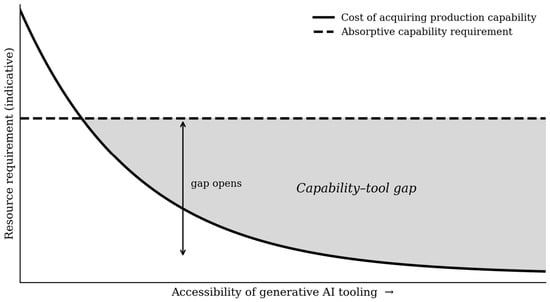
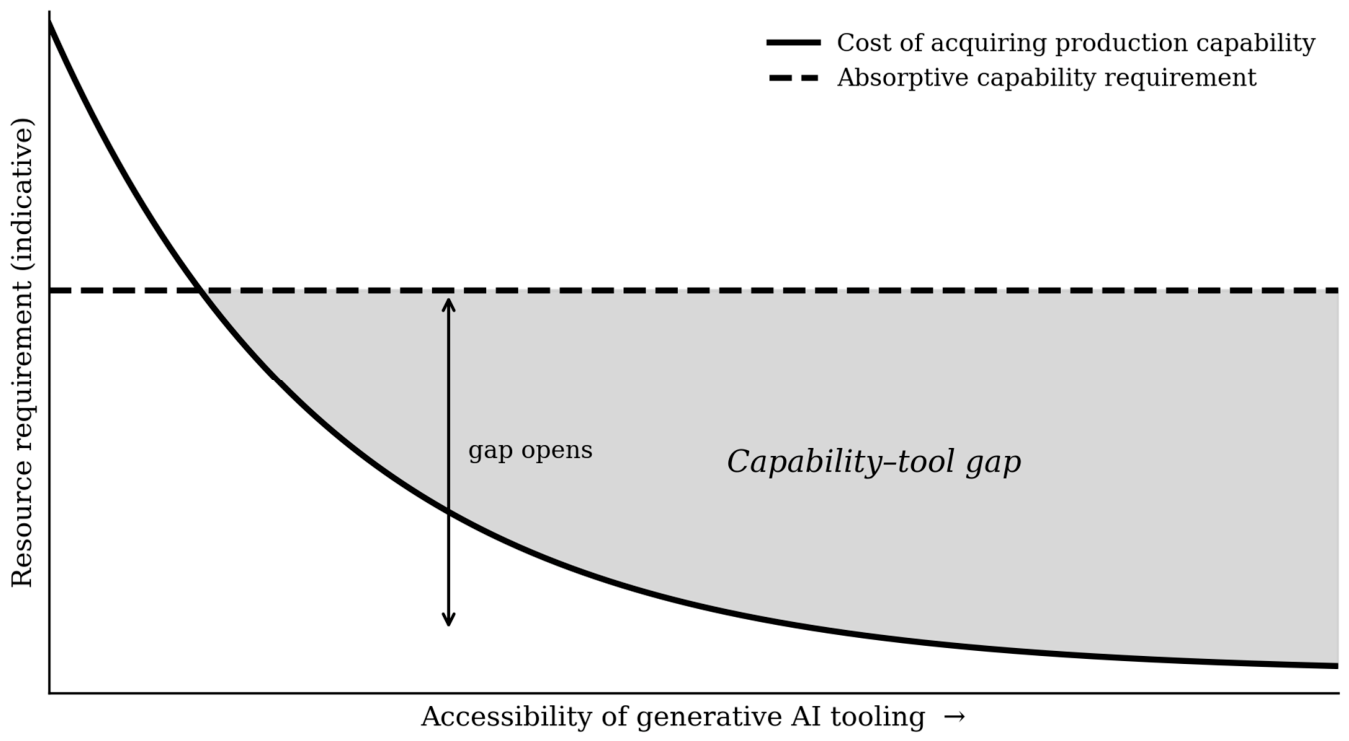
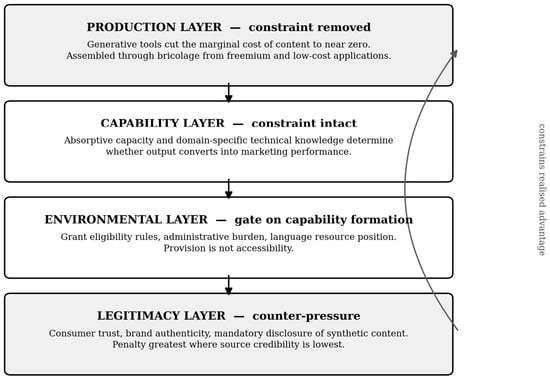
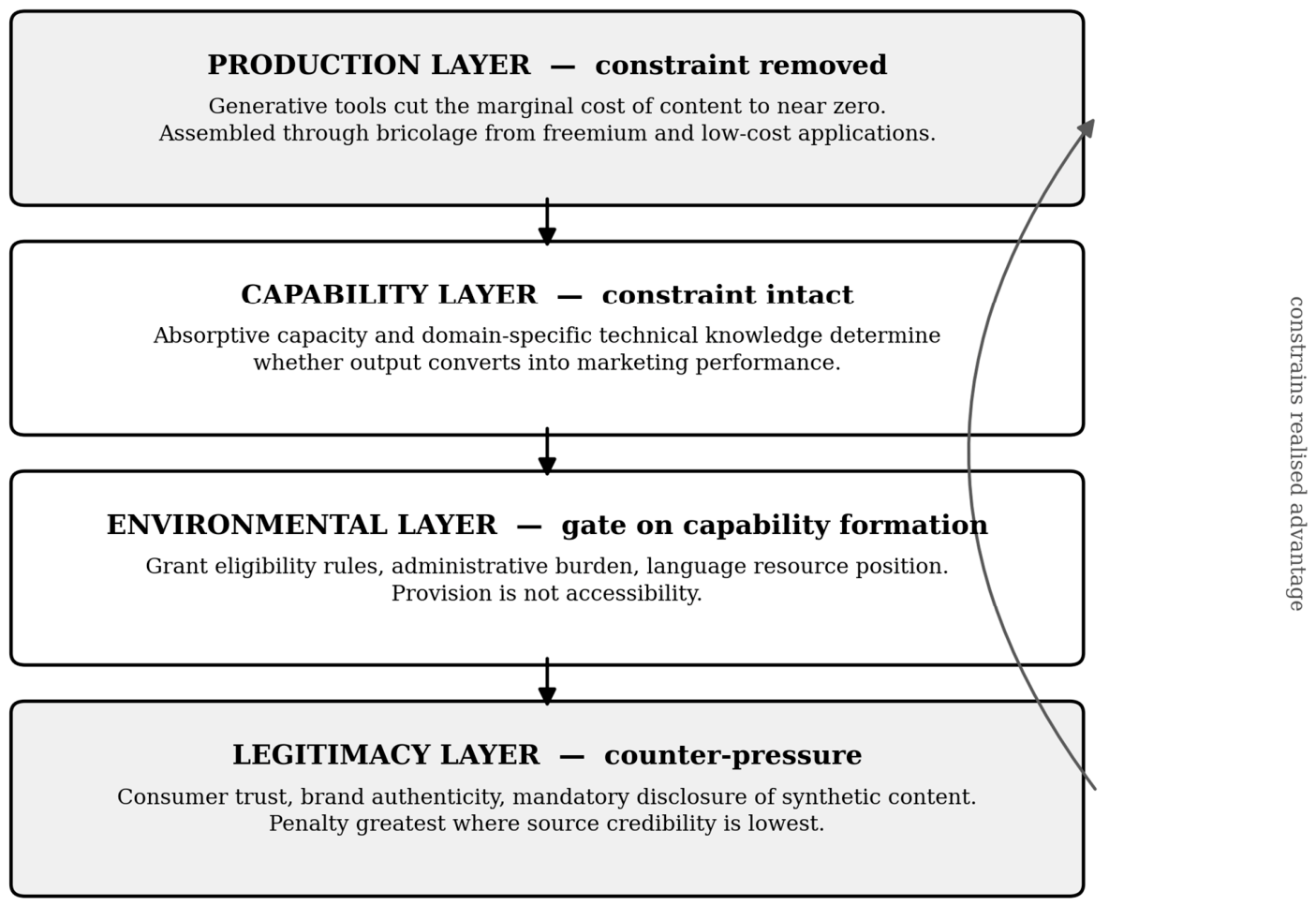

Disclaimer/Publisher’s Note: The statements, opinions and data contained in all publications are solely those of the individual author(s) and contributor(s) and not of MDPI and/or the editor(s). MDPI and/or the editor(s) disclaim responsibility for any injury to people or property resulting from any ideas, methods, instructions or products referred to in the content. |
© 2026 by the authors. Licensee MDPI, Basel, Switzerland. This article is an open access article distributed under the terms and conditions of the Creative Commons Attribution (CC BY) license.